
At the heart of every extraordinary achievement, behind every unforgettable melody, lies the elusive principle of perfect unison. This concept may initially appear to dwell within the realm of music theory only.
But on closer examination, it becomes evident that it is a living idea that resonates through all aspects of our lives. If you’ve ever listened to a choir hitting the same notes in perfect pitch or watched as a team pulls together one common goal, you learn just what perfect unison can look like.
It’s not merely about uniformity or alignment. Rather, it’s about different elements working together harmoniously.
Each lends its distinctive strengths to produce a collective force more potent than any individual piece. Bask in the skill and joy that can arise from operating in perfect unison.
Table of Contents
What is Perfect Unison?
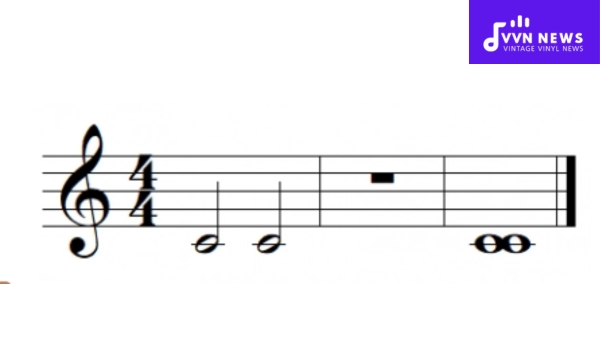
Perfect Unison, in the realm of music, refers to when two or more musical notes are played or sung at the same pitch or frequency.
The result is breathtakingly pure and harmonious, creating a sonic experience that can truly be described as “perfect.”
Perfect Unison symbolizes unity and collective coherence where individual elements form an insurmountable whole.
This resonates far beyond music into various aspects of daily life, capturing the power of seamless cooperation and conjuring a fruitful symphony of synergies.
Also Read: Phrygian Mode [Adding Exotic Flair To Your Musical Compositions]
What is the difference between Perfect Unison Vs Octaves?
In illuminating the difference between perfect unison and octaves, we’ll venture into the heart of musical theory.

This distinction may seem subtle initially, but once grasped, it can provide profound insights into the inner workings of music structure.
Perfect Unison:
- Represented in terms of frequency ratio, perfect unison typically accounts for a 1:1 ratio. This denotes that the frequencies in question are identical.
- Indicative of pitch alignment, i.e., two sounds or more generating harmony due to identical pitch.
- Perfect unison often remains imperceptible in conventional music composition since it blends two similar sounds.
Octaves:
- Unlike perfect unison’s 1:1 frequency ratio, an octave represents a 2:1 or half (1:2) frequency ratio; The frequency at one end of the octave is double or half that at the other end.
- Octaves denote two tones that may differ in pitch but yet share an identical tonal quality. Various keys on a piano producing the same tonal sound at different pitches characterize this feature.
- Far from being imperceptible, octaves form a tangible part of melodies, forming the backbone of musical scales across genres and cultures.
Gripping these intriguing facets helps us appreciate music’s profound versatility and dynamism.
Also Read: F Sharp Minor Pentatonic Scale [How To Use In Your Compositions]
How Perfect Unison can be used in choral music?
Choral music thrives on the blend of diverse voices singing together in harmony.
Perfect unison occurs when all members of a choir sing the same pitch at the same time, creating a singular sound that seems to come from one voice rather than many.
This is not merely a technique; it’s an art form that, when executed precisely, can evoke deep emotions and unity among both singers and the audience.
Achieving Perfect Unison
- Matching Pitch: Singers must listen keenly to each other to match the pitch exactly. This is crucial to prevent dissonances that may arise from even slight variations.
- Uniform Vowel Shapes: The choir should form their vowels uniformly to ensure their voices blend seamlessly.
- Dynamic Consistency: All singers must maintain the same volume level so that no single voice stands out above the rest.
Utilizing Perfect Unison
- Perfect unison is often used at poignant moments within a piece for dramatic effects such as emphasizing a resolution or highlighting thematic material.
- In contemporary compositions, it’s used as a tool for contrast before branching into lush harmonies.
- Periodically, choirs will revert to unison to unify the group after complex sections that might cause individual voices to stray.
Perfect unison reflects precision and unity in choral performances. When members synchronize their tones immaculately.
They produce an incredibly powerful and unified sound, showcasing not only technical skill but also their collective spirit.
Also Read: F Sharp Major Triad [Enhance Your Musical Compositions]
How can you Identify Perfect Unison with ear training?
Identifying perfect unison through ear training requires patience and targeted exercises to fine-tune your listening skills.

To swiftly recognize when two notes are in perfect unison, follow these step-by-step methods:
Become Acquainted with the Sound
Immerse yourself in the singular quality of perfect unison. Instruments or voices sounding in unison produce a blended tone that stands out because of its purity and lack of harmonic tension.
It is as if one source is playing since there are no discernible intervals or variations between pitches.
Active Listening Exercises
To sharpen your auditory perception, engage in exercises where you actively listen to unison pitches:
- Use online resources like music theory websites, which often provide audio clips specifically designed for this purpose.
- Analyze simple melodies played both as solo lines and doubled at the unison so you can compare and contrast.
Sing Along
Practice singing or humming along with a chosen pitch. When your voice matches it exactly without any vibration or wobble from clashing tones, that’s the pureness of unison.
Employ Technology
Consider using tuner apps that visually display pitch accuracy; this can enhance your ability to detect when sounds are perfectly aligned.
Incorporate Instruments
Play around with musical instruments (like pianos or guitars) to strike two identical notes simultaneously.
By doing this repetitively, your ears will start to automatically pick up the homogeneity of sound.
Perfecting this skill comes down to consistent training. As with all aspects of musicianship, regular practice will lead to an innate grasp of identifying perfect unison just by listening—a valuable skill transferring across various musical settings.
Also Read: Transposition Chart [A Lifesaver For All Musicians]
Famous Songs That Employ Perfect Unison
Throughout musical history, a variety of songs have showcased the beauty of perfect unison, leaving a mark on listeners.
“I Want to Hold Your Hand” by The Beatles
In this timeless classic, John Lennon and Paul McCartney unite their voices in a seamless blend during the chorus.
The song’s catchy hook reaches higher heights as their singular sound comes across as both raw and pure.
“Seven Nation Army” by The White Stripes
The opening of this rock anthem uses perfect unison to kickstart the melody.
It’s the combination of Jack White’s guitar riff matched with the bass line that creates an unforgettable musical impact.
“Somebody That I Used to Know” by Gotye featuring Kimbra
The chorus hits with such striking force because Gotye and Kimbra sing certain parts in perfect unison before branching off into harmony.
It’s a compelling dynamic that helps convey the song’s emotional narrative.
“California Dreamin'” by The Mamas & The Papas
Notice how “California Dreamin'” leverages unison singing in its verse alongside its iconic harmonies.
When members converge on a single pitch, it exudes a sense of nostalgia and collective longing.
“We Will Rock You” by Queen
Queen’s anthem utilizes unison stomp-clap sections where the uniformity adds to the overall power of participation – as if encouraging an entire stadium to join in as one voice.
These artists demonstrate how they align different voices or instruments precisely together without any harmonic deviation.
They know that sometimes the most significant effect is achieved not through complexity but through simplicity and unity – capturing audiences worldwide with clarity and force.
Also Read: A Guide Transposing Into The Alto C [Navigate Music Transposition]
FAQs
What exactly is perfect unison in music?
Perfect unison occurs when two or more musical parts produce the same pitch simultaneously, sounding as one note.
Can perfect unison be considered harmony?
No, perfect unison isn’t typically classified as harmony since it involves identical pitches, whereas harmony requires different notes.
Is it possible to have perfect unison in instruments with different timbres?
Yes, instruments with different timbres can achieve perfect unison, resulting in a unique blend of sounds that maintains the same pitch.
Are there any genres where perfect unison is particularly prominent?
Choral and orchestral music often employ perfect unison to create powerful, unified sections within a piece.
How does perfect unison contribute to the emotional impact of a song?
The unity and clarity of perfect unison often heighten a song’s emotional intensity through focused sound strength.
Conclusion
In essence, the phenomenon of perfect unison reveals the beauty and strength of collective harmony.
It underscores that when different elements – be they musical notes, team members, or community efforts -align with a singular purpose and mutual support, the result is exponentially more impactful.
By fostering perfect unison in our lives, you don’t just create beautiful music; you orchestrate a symphony of collaborative success.
Embrace this principle, and watch as your endeavors fuse into a majestic and resonant whole – truly a masterpiece of concerted effort.