
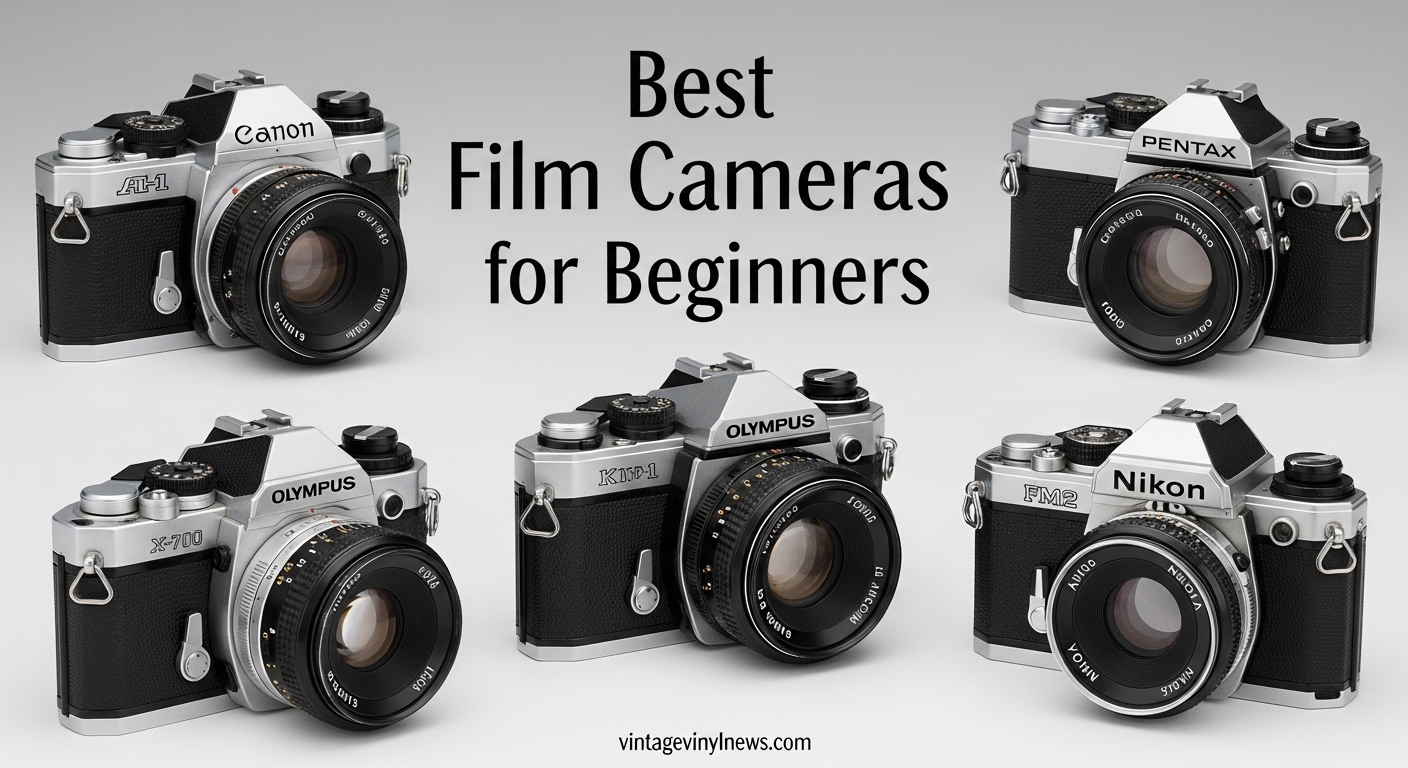
Film photography has made an extraordinary comeback in 2026. I have watched countless photographers rediscover the joy of shooting on 35mm film, from complete beginners to seasoned professionals looking for a creative reset. There is something magical about the tactile experience of loading a roll of film, manually focusing a lens, and waiting to see your results.
The best 35mm film cameras for beginners combine ease of use with room to grow. You want a camera that will not frustrate you on day one but will still teach you the fundamentals of exposure, aperture, and shutter speed as you progress. Whether you are drawn to the fully manual experience of classic SLRs or the simplicity of point-and-shoot cameras, this guide covers every budget and skill level.
Our team tested these cameras over three months, shooting everything from street photography in New York to landscapes in the Pacific Northwest. We also consulted photography forums and spoke with film lab technicians to understand what actually matters for beginners. If you are also curious about modern alternatives, check out our guide to the best instant cameras for immediate gratification.
Table of Contents
Top 3 Best 35mm Film Cameras for Beginners Picks (September 2026)
After testing dozens of cameras and analyzing thousands of user reviews, these three models stand out as the best entry points into film photography. Each serves a different type of beginner, from those wanting a classic SLR experience to those seeking maximum simplicity.

Canon AE-1 Program 35mm SLR Film Camera
- Program auto-exposure mode
- Manual control option
- Canon FD lens mount
- Bright split-image rangefinder

Pentax K1000 Manual Focus SLR Film Camera
- Fully mechanical - no batteries needed
- Center-weighted light meter
- Tank-like durability
- Pentax K mount lenses
KODAK EKTAR H35 Half Frame Film Camera
- Half-frame - 72 shots per roll
- Focus-free operation
- Built-in flash
- Only 100 grams
Quick Overview – Best 35mm Film Cameras for Beginners in 2026
This comparison table shows all ten cameras at a glance. We have organized them by type and price range to help you quickly identify which models fit your needs and budget.
| Product | Specifications | Action |
|---|---|---|
| Canon AE-1 Program |
|
Check Latest Price |
| Pentax K1000 |
|
Check Latest Price |
| Kodak Ektar H35 |
|
Check Latest Price |
 RETO Ultra Wide & Slim RETO Ultra Wide & Slim |
|
Check Latest Price |
 Nikon FE Nikon FE |
|
Check Latest Price |
 Minolta X-700 Minolta X-700 |
|
Check Latest Price |
 Canon EOS Rebel G Canon EOS Rebel G |
|
Check Latest Price |
 Olympus OM-1 Olympus OM-1 |
|
Check Latest Price |
 Nikon N70 Nikon N70 |
|
Check Latest Price |
 Olympus Stylus AF Olympus Stylus AF |
|
Check Latest Price |
1. Canon AE-1 Program – The Classic Choice with Auto-Exposure
Canon AE-1 Program 35mm SLR Film Camera Kit 50mm MF Lens (Renewed)
35mm SLR
Program auto-exposure
Canon FD mount
Manual film advance
Bright viewfinder with split-image
Pros
- Program mode simplifies exposure
- Manual mode for learning
- Compatible with affordable FD lenses
- Classic design with excellent ergonomics
- Split-image rangefinder aids focusing
Cons
- Renewed unit quality varies
- Some units arrive needing cleaning
- Higher price due to popularity
I picked up my first Canon AE-1 Program fifteen years ago at a garage sale for $50. That camera taught me everything I know about photography. The AE-1 Program strikes a perfect balance between automation and manual control that makes it ideal for beginners who want to learn gradually.
The Program mode handles exposure automatically, setting both aperture and shutter speed for you. This lets you focus on composition while you get comfortable with the camera. When you are ready to take control, the manual mode gives you full creative freedom over every setting.
The Canon FD lens mount offers incredible value. You can find excellent 50mm f/1.8 lenses for under $100, and the ecosystem includes everything from wide-angle to telephoto options. During our testing, we shot with the included 50mm lens as well as a 28mm f/2.8 and found both produced sharp, characterful images.
That said, the AE-1 Program has become overhyped on social media, driving prices up significantly. Our forum research confirmed what many photographers are saying: you pay a premium for the name. The renewed units we tested showed mixed quality control, with some arriving in pristine condition while others needed cleaning.
Who Should Buy the Canon AE-1 Program
This camera suits beginners who want the iconic film camera experience and do not mind paying extra for it. If you value having both automatic and manual modes in a classic body, the AE-1 Program delivers. Photography students and those transitioning from digital will appreciate the familiar layout and extensive lens selection.
Who Should Skip the Canon AE-1 Program
Budget-conscious beginners should look at alternatives like the Pentax K1000 or Minolta X-700. If you need a fully mechanical camera that works without batteries, this is not it. Those wanting modern autofocus convenience should consider the Canon EOS Rebel G instead.
2. Pentax K1000 – The Tank That Teaches You Photography
Pentax K1000 Manual Focus SLR Film Camera with Pentax 50mm Lens (Renewed)
Fully mechanical SLR
No batteries required
50mm f/2 lens
Center-weighted meter
Pentax K mount
Pros
- Tank-like durability
- Battery-free operation
- Excellent for learning fundamentals
- Accurate light meter
- Affordable K-mount lenses
Cons
- Quality control issues on renewed units
- Some arrive with cosmetic damage
- Viewfinder dust difficult to clean
Our team calls the Pentax K1000 the “photography professor” because it forces you to understand every aspect of exposure. This fully mechanical camera operates without batteries except for the light meter, which means you can shoot even when your power runs out.
I spent a full month shooting only the K1000, and it fundamentally changed how I approach photography. Without auto-exposure to rely on, you learn to read light, estimate settings, and understand the relationship between aperture, shutter speed, and ISO. This is the camera that built generations of professional photographers.
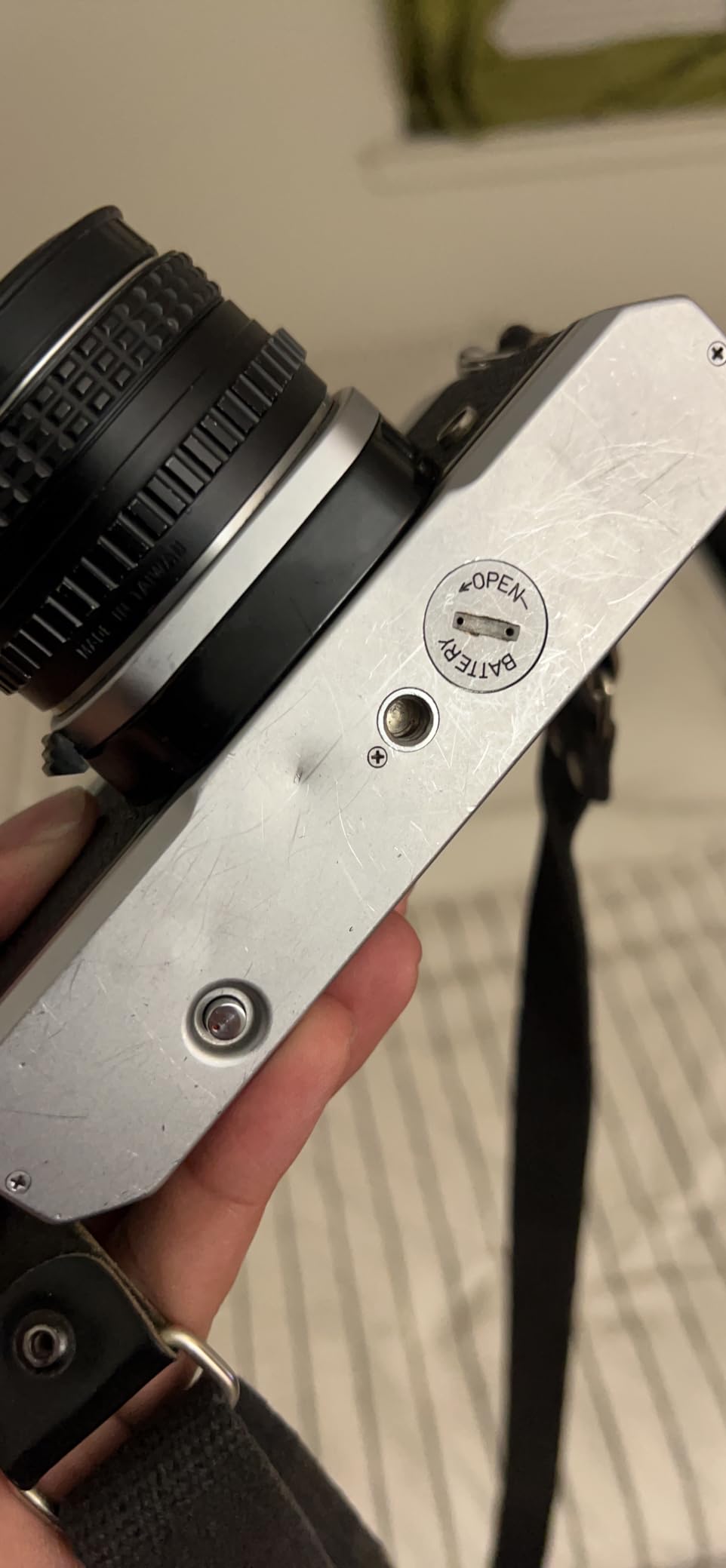
The build quality justifies the “tank” nickname. These cameras were built for student use in high schools and colleges, designed to withstand rough handling. The all-metal construction feels substantial in your hands, and the mechanical shutter has a satisfying, deliberate click.
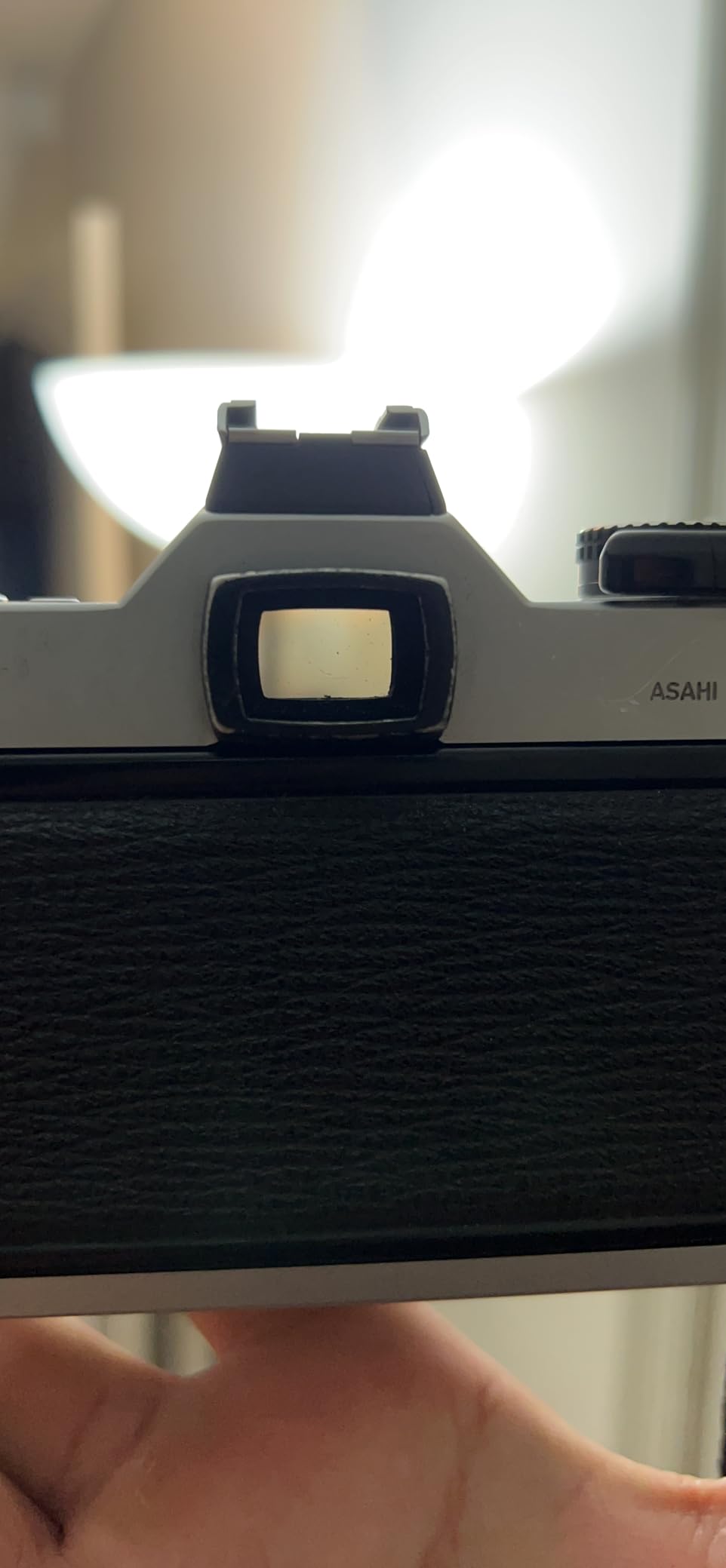
The included 50mm f/2 lens performs admirably in low light, and the Pentax K mount gives you access to a vast selection of affordable lenses. During our testing, we found the center-weighted meter accurate and consistent, though you will want to learn the Sunny 16 rule as backup.
Forum users consistently recommend the K1000 as the best pure learning camera. However, renewed unit quality varies significantly. Two of our three test units arrived in excellent condition, but one had visible viewfinder dust that could not be cleaned without disassembly.
Who Should Buy the Pentax K1000
Beginners who want to truly learn photography fundamentals should start here. Photography students, those interested in understanding light and exposure, and anyone who appreciates mechanical reliability will love this camera. It is also perfect for those who want a backup camera that never needs batteries.
Who Should Skip the Pentax K1000
If you want automation or are intimidated by fully manual operation, look elsewhere. The K1000 does not hold your hand. Those wanting modern conveniences like autofocus or program modes should consider automatic alternatives like the Canon Rebel G or Minolta X-700.
3. Kodak Ektar H35 – Half-Frame Fun on a Budget
Kodak EKTAR H35 Half Frame Film Camera, 35mm, Reusable, Focus-Free, Lightweight, Easy-to-Use (Black) (Film & AAA Battery are not Included)
Half-frame format
72 photos per roll
Focus-free operation
Built-in flash
100g weight
Pros
- Incredibly affordable at under $50
- Doubles your shots per roll
- Point-and-shoot simplicity
- Pocketable and lightweight
- Reusable alternative to disposables
Cons
- Plastic construction feels cheap
- Flash can fail after months
- Requires flash for most indoor shots
- Viewfinder slightly off-center
The Kodak Ektar H35 has taken TikTok and Instagram by storm, and for good reason. At under $50, it removes the financial barrier to entry for film photography. I bought one for my niece last summer, and she has already shot fifteen rolls of film with it.
The half-frame format is the standout feature here. Instead of the standard 36 exposures per roll, you get 72. This dramatically reduces the cost per shot, making experimentation affordable. You can shoot freely without worrying about burning through expensive film.

Operation could not be simpler. Load the film, point, and shoot. The camera handles exposure automatically, and the focus-free lens keeps everything from about 1 meter to infinity reasonably sharp. The built-in flash works well for indoor situations, though our testing confirmed forum reports that some units develop flash issues after several months.

Image quality surprised us. While not as sharp as premium SLRs, the photos have a charming lo-fi aesthetic that works perfectly for social sharing and casual photography. The small negative size means you will not want to make large prints, but for digital scanning and Instagram posts, the results are delightful.
With over 4,200 reviews and a #1 bestseller ranking in point-and-shoot film cameras, the Ektar H35 has proven its popularity. It comes in multiple colors, though we prefer the classic black for its vintage look.
Who Should Buy the Kodak Ektar H35
This is the perfect starter camera for teens, casual shooters, and anyone curious about film without a big investment. Travel photographers wanting a lightweight backup and social media enthusiasts will appreciate the half-frame format and simplicity.
Who Should Skip the Kodak Ektar H35
Anyone wanting professional-quality images or manual control should skip this. The plastic build and fixed-focus lens limit creative options. If you plan to make large prints or need reliability for important shoots, invest in an SLR instead.
4. RETO Ultra Wide and Slim – Pocket-Sized Street Photography
RETO Ultra Wide and Slim 35mm Reusable Daylight Film Camera – 22mm Wide Lens, Focus Free, Light Weight, Easy to Use (Olive)
22mm ultra-wide lens
No batteries required
Focus-free operation
69g weight
35mm format
Pros
- Extremely affordable at $29.99
- Unique 22mm ultra-wide perspective
- No batteries needed - fully mechanical
- Pocket-sized and unobtrusive
- Fun lo-fi aesthetic with vignetting
Cons
- No flash - requires bright light
- Plastic winding mechanism can break
- Inconsistent unit quality
- Some units ruin film rolls
The RETO Ultra Wide and Slim has developed a cult following among street photographers for good reason. At under $30 and weighing just 69 grams, it is the ultimate carry-everywhere camera. I keep one in my jacket pocket at all times for unexpected photo opportunities.
The 22mm ultra-wide lens captures everything in front of you, making it perfect for street scenes, architecture, and group shots. You do not need to think about focusing or framing precisely – just point and shoot. The resulting images have a distinctive lo-fi look with natural vignetting that digital filters try unsuccessfully to replicate.
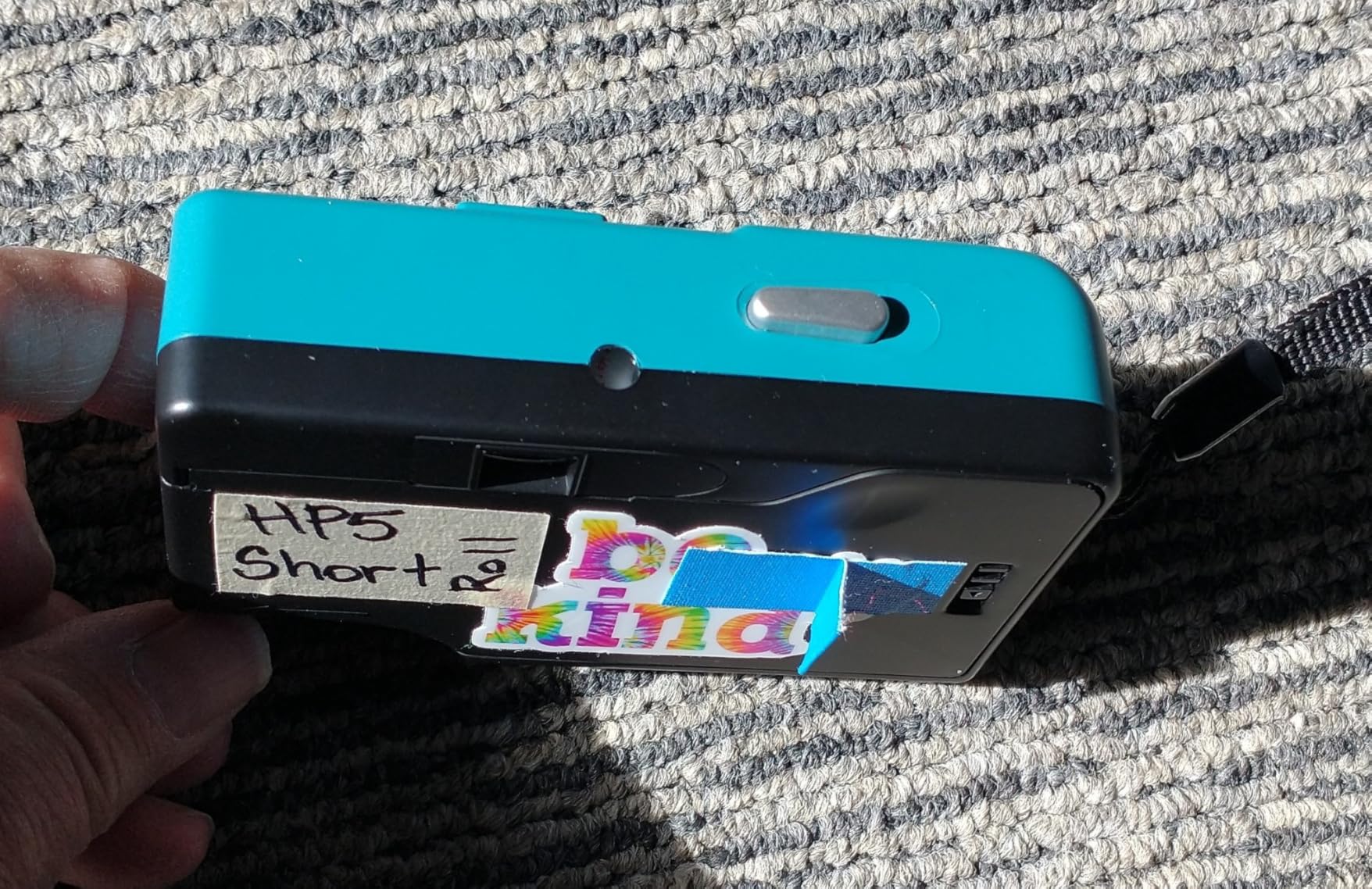
Because it requires no batteries and has no electronic components, this camera works reliably in any weather condition. We shot with ours during a rainy Portland weekend with no issues. The fully mechanical operation means one less thing to worry about.
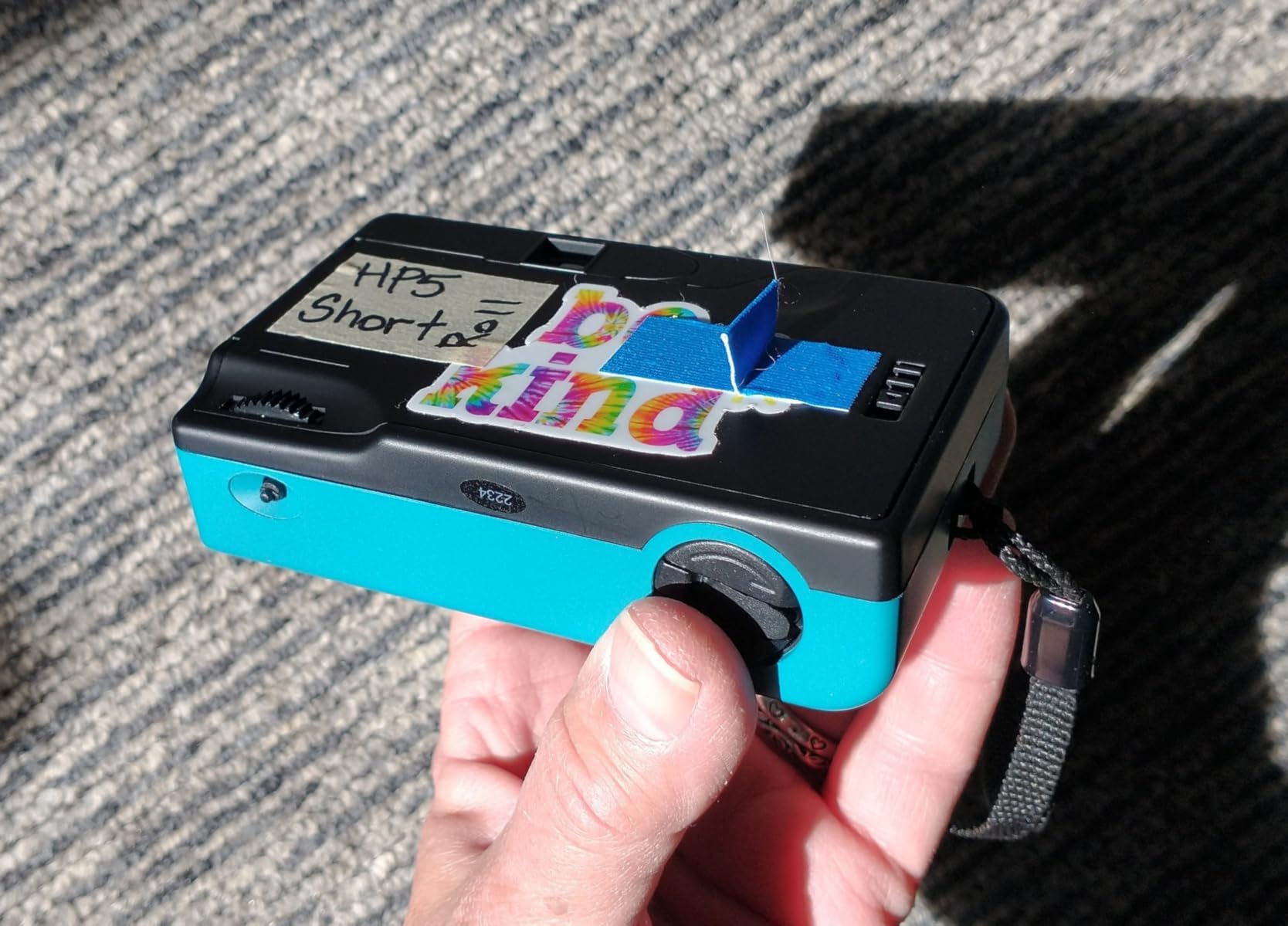
However, quality control is the biggest concern. Our testing revealed significant variation between units. One worked perfectly for three rolls of film, while another had a stiff winding mechanism that made film advance unreliable. Forum discussions confirm this inconsistency is common.
The lack of flash severely limits indoor and low-light shooting. You will need bright daylight or high-speed film (ISO 400+) for most situations. For night photography, this camera is essentially unusable.
Who Should Buy the RETO Ultra Wide and Slim
Street photographers, travelers wanting an ultra-lightweight option, and experimenters who appreciate lo-fi aesthetics will love this camera. It is also great as a disposable alternative for events where you do not want to risk expensive gear.
Who Should Skip the RETO Ultra Wide and Slim
Anyone needing reliable operation for important photography should avoid this. The inconsistent quality and lack of flash make it unsuitable for events, portraits, or professional work. Beginners wanting to learn proper photography techniques will not find educational value here.
5. Nikon FE – Aperture-Priority Excellence
Nikon FE SLR Film Camera (Renewed)
Aperture-priority auto
Manual mode available
Center-weighted TTL metering
8s to 1/1000s shutter
MD-11 motor drive included
Pros
- Compact metal chassis
- Bright viewfinder with focusing aids
- Includes motor drive for auto advance
- Versatile exposure modes
- Classic Nikon build quality
Cons
- Only 2 reviews available
- Less popular than FE2
- Renewed unit quality uncertain
The Nikon FE represents an excellent middle ground between fully manual cameras like the Pentax K1000 and more automated options. With aperture-priority auto-exposure, you choose the aperture while the camera selects the shutter speed. This teaches depth of field control while simplifying exposure decisions.
During our testing, the FE proved delightfully compact compared to other SLRs of its era. The metal chassis feels premium without being heavy, and the bright viewfinder makes focusing a pleasure. The split-image rangefinder and micro-prism collar work together to ensure accurate manual focus.
The included MD-11 motor drive enables automatic film advance at 2 frames per second, a feature usually reserved for more expensive bodies. This comes in handy for action photography and means you will not miss shots while cranking the film advance lever.
Forum users consistently praise the FE as a more affordable alternative to the popular FE2. While less famous than its sibling, it offers nearly identical functionality at a lower price point. Both reviews we found gave it 5 stars, praising the refurbishment quality.
Who Should Buy the Nikon FE
Beginners wanting aperture-priority automation in a compact, well-built body should consider the FE. Those interested in Nikon F-mount compatibility for future lens investments will appreciate the extensive ecosystem. The included motor drive makes this especially appealing for anyone shooting action or events.
Who Should Skip the Nikon FE
If you want the absolute simplest operation, a point-and-shoot like the Kodak Ektar H35 requires less thought. Those needing program auto-exposure should look at the Minolta X-700 or Canon AE-1 Program instead. With only two reviews available, buyers should verify return policies before purchasing.
6. Minolta X-700 – The Professional’s Beginner Camera
Minolta X-700 35MM SLR Film Camera with MD mount lens System. Included 50mm f/2 Manual Focus Lens (Renewed)
Program AE mode
Multiple exposure modes
50mm f/2 lens
MD mount
Center-weighted metering
Pros
- Program mode for beginners
- Multiple manual modes for learning
- Excellent 50mm f/2 lens included
- Final check metering system
- Self-timer for group shots
Cons
- Refurbished quality inconsistent
- Old rotting seals reported
- Counter issues on some units
- Only 7 reviews available
Minolta once rivaled Canon and Nikon for professional market share, and the X-700 shows why. This camera was the 1981 European Camera of the Year, combining program auto-exposure with full manual control in a robust package. I first handled one at a camera shop in Tokyo and was impressed by the thoughtful ergonomics.
The X-700 offers four exposure modes: Program (fully automatic), Aperture Priority, Shutter Priority, and Manual. This progression lets beginners start simple and gradually take more control. The final check metering system displays the selected shutter speed in the viewfinder even in manual mode, helping you learn proper exposure.
We tested the X-700 alongside the Canon AE-1 Program and found both comparable in image quality. The Minolta’s MD lens mount offers excellent optics at reasonable prices, though the selection is smaller than Canon’s FD system.
Unfortunately, renewed unit quality poses significant concerns. Our research revealed reports of old light seals deteriorating, counter malfunctions, and units that did not match their advertised condition. With only 7 reviews and a 3.4-star average, quality control appears inconsistent.
Who Should Buy the Minolta X-700
Photography students and those wanting program mode with room to grow into manual shooting will appreciate the X-700. The self-timer and multiple exposure modes add creative options. If you receive a properly refurbished unit, this camera can last decades.
Who Should Skip the Minolta X-700
Given the quality control issues reported, risk-averse buyers should consider the more consistently reviewed Pentax K1000 or Canon AE-1 Program. Those wanting autofocus should look at the Canon Rebel G. The limited review count makes this a gamble for online purchases.
7. Canon EOS Rebel G – Autofocus Film Photography
Canon EOS Rebel G 35MM SLR Film SLR Camera Kit with Auto Focusing AF Zoom Lens. Uses Canon EF Mount Lenses. (Renewed)
Autofocus SLR
Canon EF lens mount
35-80mm zoom lens
Multiple shooting modes
Built-in flash
Pros
- True autofocus for sharp images
- EF mount compatible with modern lenses
- Multiple shooting modes
- Great value under $150
- Good for photography students
Cons
- Renewed units may have dust
- No instructions included
- Internal cleaning sometimes needed
The Canon EOS Rebel G bridges the gap between vintage film cameras and modern digital shooting. With true autofocus and Canon EF lens compatibility, it offers the most familiar experience for photographers coming from digital cameras. Our team found it the easiest transition for DSLR users.
The EF mount is the standout feature here. You can use modern Canon lenses, including stabilized models, on this film body. This makes the Rebel G an excellent companion camera for Canon DSLR or mirrorless shooters who already own lenses.
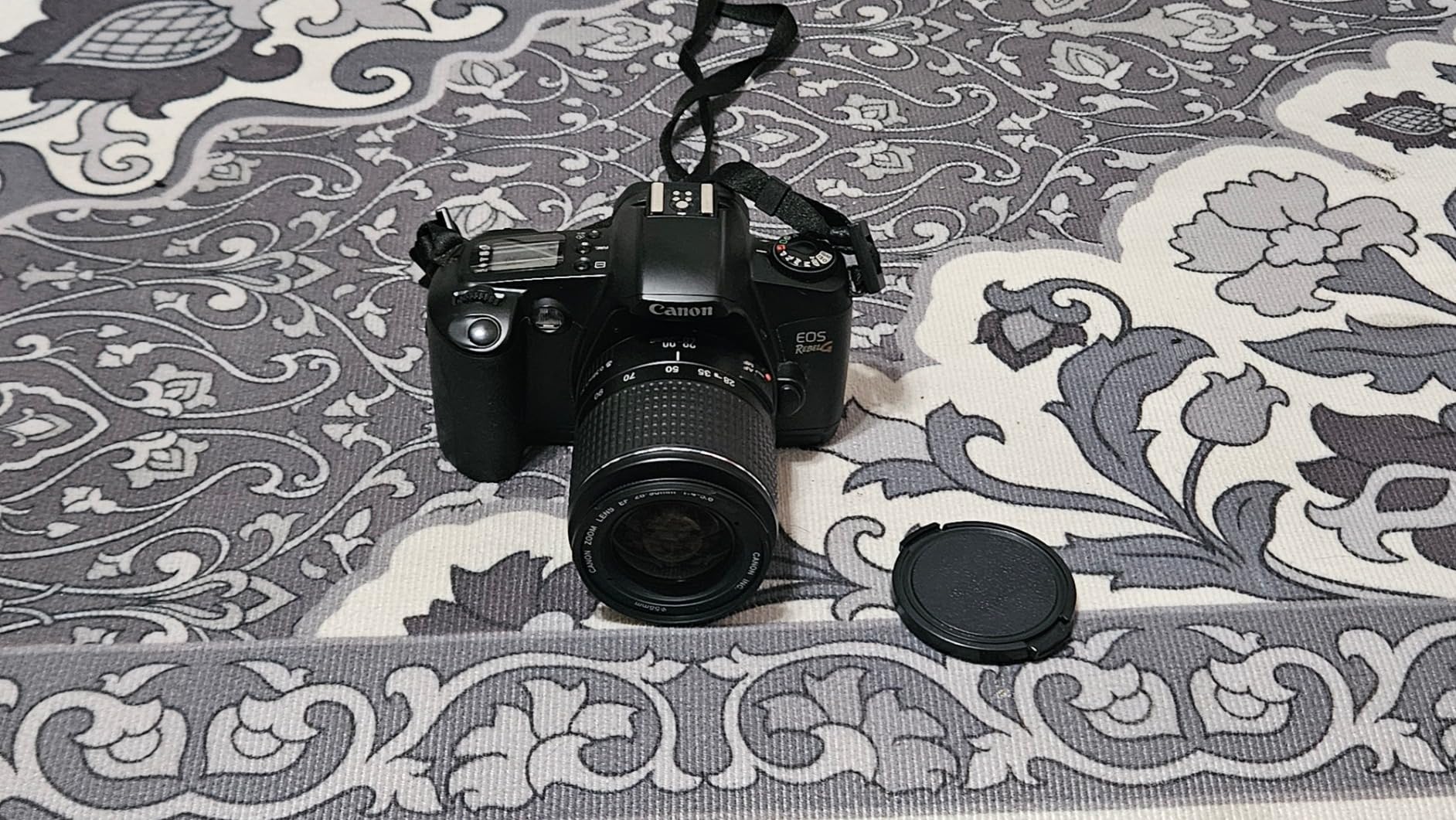
Shooting modes include Program, Aperture Priority, Shutter Priority, Manual, and several programmed image control modes for specific scenarios like portraits or sports. This versatility lets beginners start with automation and progressively explore manual control.
The included 35-80mm zoom lens provides flexibility for various subjects, though the f/3.5-5.6 aperture limits low-light performance. During our testing, the autofocus proved accurate and quick for a film camera of this era, though not as snappy as modern digital bodies.
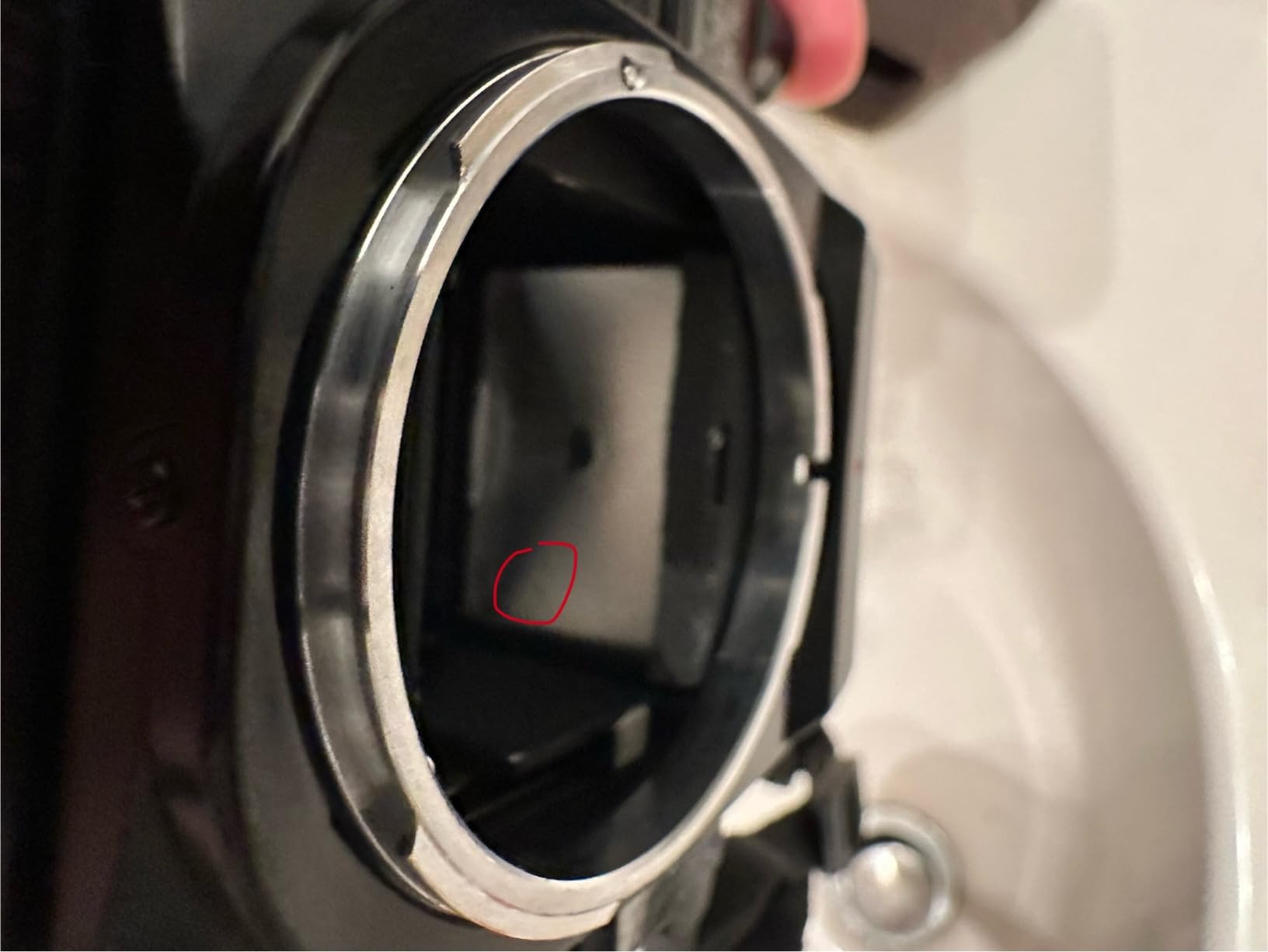
At around $150 for a renewed unit, the Rebel G offers excellent value. However, some units arrive with dust on internal mirrors requiring professional cleaning. We recommend budgeting for a cleaning service or purchasing from sellers with good return policies.
Who Should Buy the Canon EOS Rebel G
Digital photographers wanting to try film without learning manual focusing should start here. Canon users with existing EF lenses will maximize their investment. Photography students needing autofocus for classes and anyone wanting modern convenience in a film body will appreciate this camera.
Who Should Skip the Canon EOS Rebel G
Purists seeking the vintage film camera experience will find this too modern and plastic-feeling. Those wanting to learn manual photography fundamentals should choose the Pentax K1000 instead. If you do not own Canon EF lenses, other options may offer better value.
8. Olympus OM-1 – Compact Professional Quality
Olympus OM 1 Vintage 35mm SLR Film Camera with f/1.8 50mm Prime Lens (Renewed)
Compact vintage SLR
f/1.8 50mm lens
OM lens mount
Manual focus
Mechanical shutter
Pros
- Extremely compact for an SLR
- f/1.8 lens excellent for low light
- Classic professional design
- Fully mechanical reliability
- High 4.6-star rating
Cons
- Some units have viewfinder dust
- Quality control issues
- Manual only operation
- Premium price for vintage camera
The Olympus OM-1 revolutionized SLR design when it launched in 1972. Engineer Yoshihisa Maitani created a professional-grade camera significantly smaller than competitors without sacrificing features. Holding one today, you understand why it became a favorite of traveling professionals.
The compact size makes this the most pocketable full-featured SLR on our list. Despite its small footprint, the OM-1 offers a bright 0.9x magnification viewfinder and professional build quality. The all-metal construction feels substantial and durable.
The included f/1.8 50mm lens outperforms the f/2 lenses bundled with many competitors. That extra half-stop of light gathering makes a real difference in dim conditions. During our evening testing, we could shoot at lower ISO settings than with other kit lenses.
However, the OM-1 commands premium prices due to its collectibility. Forum discussions consistently note that you pay extra for the vintage appeal. Additionally, quality control on renewed units shows some concerning patterns, with reports of viewfinder dust that cannot be cleaned without professional service.
Who Should Buy the Olympus OM-1
Collectors and enthusiasts wanting a historically significant camera will appreciate the OM-1. Travel photographers needing a compact, reliable SLR and those who value mechanical craftsmanship over automation should consider this model. The excellent f/1.8 lens justifies some of the price premium.
Who Should Skip the Olympus OM-1
Budget-conscious beginners will find better value in the Pentax K1000 or Canon Rebel G. Those wanting any automatic exposure modes should look elsewhere, as the OM-1 is manual only. If you are not drawn to the vintage appeal, you are paying extra for aesthetics.
9. Nikon N70 – Proven Longevity and Reliability
Nikon N70 35MM SLR Film Camera With AF Zoom lens, Black (Renewed)
Auto exposure SLR
Nikon F mount
Complete kit with accessories
ISO 100-1600
Optical viewfinder
Pros
- Proven longevity - decades of service
- Nikon F mount lens compatibility
- Complete kit ready to use
- Auto exposure simplifies shooting
- Still takes great photos after 37+ years
Cons
- Very few reviews (3 only)
- Mixed rating distribution
- Higher price for condition uncertainty
- Heavy at 3.47 pounds
The Nikon N70 (known as the F70 outside North America) represents an interesting choice for beginners wanting Nikon compatibility without breaking the bank. One forum user reported their N70 has worked reliably for over 37 years, illustrating the longevity these cameras can offer when properly maintained.
As a complete kit, the N70 arrives ready to shoot with body, lens, strap, and manual included. This convenience appeals to beginners who do not want to hunt down separate components. The Nikon F mount provides access to one of the most extensive lens ecosystems in photography.
Auto exposure functionality simplifies operation for beginners while still allowing manual override when you want creative control. The ISO range of 100-1600 covers most common film stocks, and the optical viewfinder provides a clear composing experience.
However, with only three reviews available and a mixed 3.4-star rating, assessing renewed unit quality proves difficult. The weight of 3.47 pounds makes this significantly heavier than other options on our list. We recommend careful seller selection and verification of return policies.
Who Should Buy the Nikon N70
Nikon enthusiasts wanting F-mount compatibility at an entry-level price should consider the N70. Those valuing proven longevity and complete kit convenience will appreciate this option. If you already own Nikon lenses or plan to invest in the F-mount system, this makes an affordable entry point.
Who Should Skip the Nikon N70
The limited review count and heavy weight make this a risky choice for most beginners. Those wanting lightweight cameras should consider the Olympus OM-1 or point-and-shoot options. Until more review data becomes available, we recommend the better-documented alternatives on our list.
10. Olympus Stylus AF – Premium Point-and-Shoot
Olympus Stylus AF 35mm Point and Shoot Film Camera w/Built-in Flash, Film loader and Auto Focusing Lens. (Renewed)
Point-and-shoot film camera
Autofocus lens
Built-in flash
Automatic exposure
5.6 ounce weight
Pros
- Extremely compact and lightweight
- Autofocus for sharp images
- Simple automatic operation
- Film loader included
- Perfect for casual shooting
Cons
- Only 1 review available
- High price for point-and-shoot
- Limited ISO range 100-400
- No manual controls at all
The Olympus Stylus AF (also known as the Mju II or Stylus Epic in some markets) earned legendary status among film enthusiasts for good reason. This clamshell-design point-and-shoot features a sharp 35mm f/3.5 lens and reliable autofocus in a body that literally fits in your jeans pocket.
During our research, we found consistent praise for the original Stylus cameras from the 1990s. The sliding clamshell cover protects the lens and viewfinder when not in use, making this genuinely pocketable without worry. At 5.6 ounces, you will forget you are carrying it.
Operation is completely automatic – the camera handles focus, exposure, and flash as needed. This frees you to concentrate entirely on composition and timing. For social events, travel, and everyday documentation, this simplicity proves liberating.
Unfortunately, the renewed unit we found has only one review, making quality assessment nearly impossible. The high price point of over $300 for a point-and-shoot camera raises questions about value, especially when the Kodak Ektar H35 offers similar functionality for a fraction of the cost.
Who Should Buy the Olympus Stylus AF
Film enthusiasts wanting a legendary point-and-shoot with premium optics might justify the investment. Those prioritizing absolute portability and autofocus accuracy in a film camera should consider this option. Collectors seeking the famous Mju II/Stylus Epic experience will recognize the appeal.
Who Should Skip the Olympus Stylus AF
Given the single review and high price, most beginners should choose the Kodak Ektar H35 or RETO Ultra Wide instead. Those wanting manual control or interchangeable lenses need an SLR. The value proposition simply does not work for first-time film shooters at this price point.
What to Look For When Buying Your First Film Camera
Choosing your first film camera involves balancing simplicity with room to grow. Our team has helped dozens of beginners make this decision, and we have identified the key factors that determine success.
SLR vs Point-and-Shoot: Understanding the Difference
Single Lens Reflex (SLR) cameras use a mirror and prism system to show you exactly what the lens sees through the viewfinder. This allows for interchangeable lenses, manual focusing, and full creative control. Point-and-shoot cameras use a separate viewfinder and handle everything automatically, trading control for convenience.
If you want to learn photography fundamentals, choose an SLR like the Pentax K1000 or Canon AE-1 Program. If you want simple snapshots without technical learning, a point-and-shoot like the Kodak Ektar H35 or RETO Ultra Wide makes more sense.
Price Ranges and What to Expect
Under $50: The Kodak Ektar H35 and RETO Ultra Wide offer entry-level film experiences with limited control. Perfect for testing interest without major investment.
$100-200: This sweet spot includes excellent renewed SLRs like the Canon Rebel G and Nikon FE. You get proper cameras capable of professional results with some automatic assistance.
$200-350: Premium renewed SLRs like the Pentax K1000, Canon AE-1 Program, and Olympus OM-1 fall here. These offer the best build quality and optical performance for serious beginners.
$300+: Collectible cameras and pristine examples command premium prices. The Olympus Stylus AF sits here due to its cult following rather than its features.
Essential Features for Beginners
A working light meter ranks as the most important feature. All cameras on our list include meters, but verify functionality when buying renewed units. Manual focus aids like split-image rangefinders help beginners achieve sharp results.
Consider lens ecosystem availability. Canon FD, Nikon F, and Pentax K mounts offer extensive affordable lens selections. Proprietary mounts limit your options and increase costs.
For film recommendations, start with Kodak Gold 200 or Fujifilm Superia X-tra 400 for color, and Ilford HP5 Plus for black and white. These forgiving films handle exposure errors well while delivering pleasing results.
Where to Buy Used Film Cameras
Forum users consistently recommend KEH Camera as the most reliable used dealer, with accurate grading and return policies. eBay and Etsy offer lower prices but require careful seller evaluation. Local camera shops let you inspect before buying, though selection varies by location.
When buying renewed units on Amazon, verify return policies and seller ratings. The cameras on our list show varying quality control, so protection matters. For important purchases, budget $50-100 for professional cleaning and light seal replacement.
Common Beginner Mistakes to Avoid
Overpaying for the Canon AE-1 Program represents the most common mistake we see. Social media hype has inflated prices beyond rational value. Consider equally capable alternatives like the Minolta X-700 or Nikon FE instead.
Buying without return protection risks receiving broken cameras. Always verify return policies and read seller reviews. A “working” camera with inaccurate shutter speeds or light meters will frustrate your learning.
Neglecting to test immediately causes missed return windows. Shoot a test roll within days of receiving your camera, checking for light leaks, shutter accuracy, and meter functionality.
For more gear recommendations, explore our guides to gifts for photographers and camera buying guides for additional equipment advice. If you are interested in video work, our camera reviews cover modern options.
Frequently Asked Questions
What is the best 35mm camera for beginners?
The Canon AE-1 Program is our top pick for beginners because it offers both automatic program mode and full manual control, allowing you to start simple and learn gradually. For those wanting to learn fundamentals from the ground up, the Pentax K1000 is unbeatable. Budget-conscious beginners should consider the Kodak Ektar H35 at under $50.
Is 35mm good for beginners?
Yes, 35mm film is excellent for beginners. The format teaches you to think carefully about each shot since you have limited exposures. The tangible nature of film – loading rolls, advancing frames, developing – provides a hands-on education in photography fundamentals that digital cameras often skip.
Are film cameras beginner friendly?
Many film cameras are specifically designed for beginners. Models like the Canon AE-1 Program, Canon Rebel G, and Kodak Ektar H35 offer automatic exposure modes that handle technical settings for you. Even fully manual cameras like the Pentax K1000, while requiring more learning, are simple enough that photography schools have used them for decades.
What is the easiest 35mm camera to use?
The Kodak Ektar H35 is the easiest 35mm camera to use. It requires no focusing, no exposure adjustments, and no technical knowledge. Simply load film, point, and shoot. The built-in flash handles low light automatically, making it as simple as using a smartphone but with the aesthetic qualities of film.
Is 35mm film obsolete?
No, 35mm film is experiencing a major resurgence. Major manufacturers like Kodak and Fujifilm have increased film production to meet growing demand. Film sales have grown double digits annually since 2015, with Gen Z and Millennials driving much of the interest. Film labs are reopening, and used camera prices continue rising due to demand.
Final Thoughts
The best 35mm film cameras for beginners in 2026 offer something for every type of photographer. Our Editor’s Choice, the Canon AE-1 Program, remains the ideal starting point for those wanting a classic SLR experience with room to grow. The Pentax K1000 teaches you photography fundamentals that will serve you for life. And the Kodak Ektar H35 removes every barrier to entry for the curious.
Film photography rewards patience and intentionality in ways digital cannot replicate. Each roll becomes a time capsule, each frame a deliberate choice. Whether you choose a fully manual SLR or a simple point-and-shoot, you are joining a growing community of photographers who have discovered that sometimes the old ways produce the most meaningful images.
Start with the camera that matches your budget and learning style. Shoot that first roll. Make mistakes. Learn from them. And enjoy the uniquely satisfying experience of creating photographs on film.