
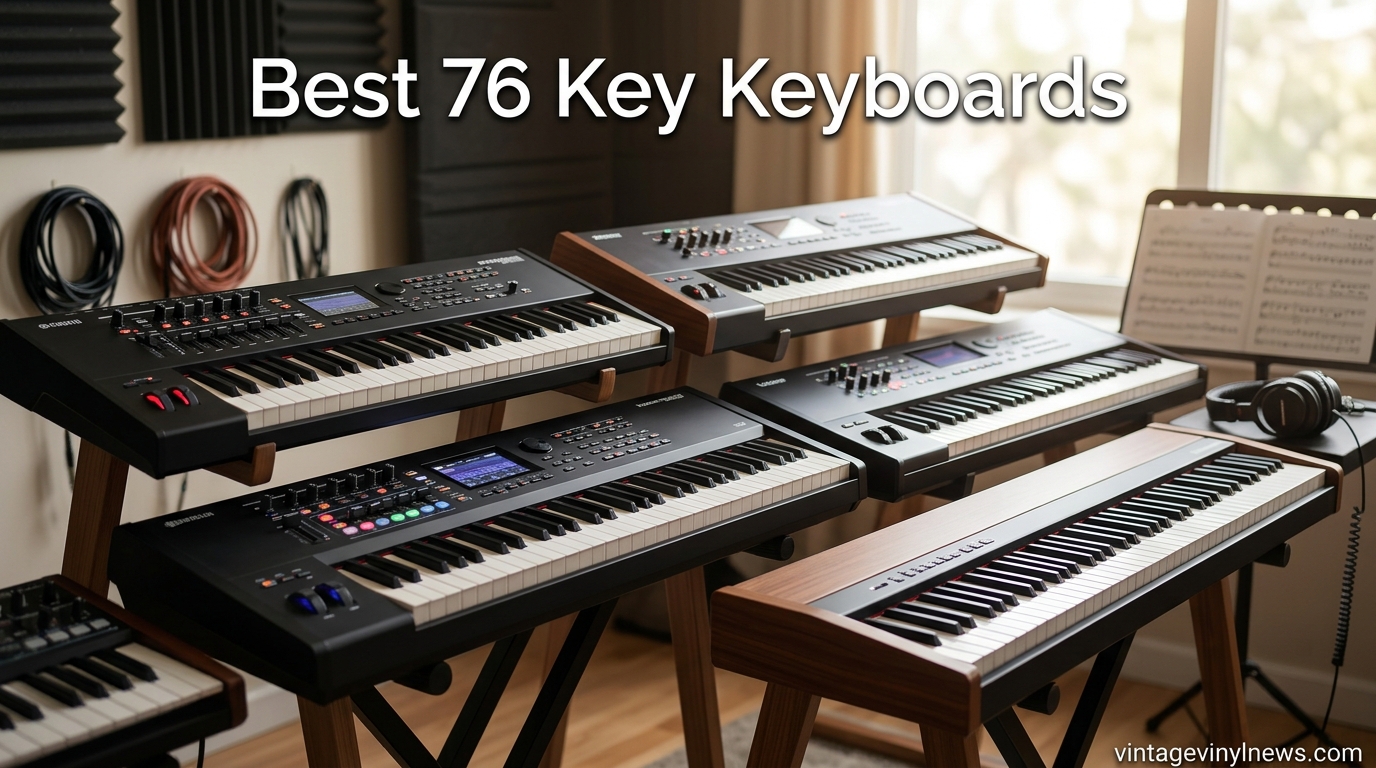
Finding the best 76 key keyboards means choosing an instrument that sits right in the sweet spot between portability and range. Too few keys and you outgrow the keyboard in months. Too many and you are lugging around extra weight and spending more than necessary. Our team has spent months comparing 12 models across every price tier, from budget-friendly beginner boards to flagship professional workstations.
A 76-key keyboard gives you roughly six and a quarter octaves of range, which covers the vast majority of pop, rock, jazz, and intermediate classical pieces. You get enough bass for left-hand accompaniment and enough treble for expressive melodies without the bulk of a full 88-key digital piano. For gigging musicians, home practice, and music production, this keybed size often makes more sense than going full-sized.
In this guide we cover the best 76 key keyboards available in 2026 across three tiers: budget picks under $500, mid-range options from $500 to $2,000, and professional instruments above $2,000. Whether you are a beginner shopping for your first real keyboard, a producer building a MIDI studio setup, or a working musician who needs a reliable gigging board, we have tested and ranked every option on this list. We break down key action, sound quality, connectivity, portability, and real user feedback so you can make an informed decision.
Table of Contents
Top 3 Picks for Best 76 Key Keyboards (September 2026)

Yamaha YPT-W320 76-Key Keyboard
- Touch-sensitive keys
- Built-in learning tools
- Smart Chord feature

Best 76 Key Keyboards in 2026
| Product | Specifications | Action |
|---|---|---|
| Yamaha YPT-W320 |
|
Check Latest Price |
 Yamaha Piaggero NP-35 Yamaha Piaggero NP-35 |
|
Check Latest Price |
 Casio CT-S1-76 Casio CT-S1-76 |
|
Check Latest Price |
 Yamaha Piaggero NP-32 Yamaha Piaggero NP-32 |
|
Check Latest Price |
 Casio CT-S1-76 Black Bundle Casio CT-S1-76 Black Bundle |
|
Check Latest Price |
 Casio CT-S1-76 White Bundle Casio CT-S1-76 White Bundle |
|
Check Latest Price |
| Roland JUNO-D7 |
|
Check Latest Price |
 Yamaha MODX M7 Yamaha MODX M7 |
|
Check Latest Price |
 Roland FANTOM-7 Roland FANTOM-7 |
|
Check Latest Price |
 Roland V-STAGE 76 Roland V-STAGE 76 |
|
Check Latest Price |
 Yamaha Genos Yamaha Genos |
|
Check Latest Price |
| Yamaha Genos2 |
|
Check Latest Price |
1. Yamaha YPT-W320 – Best Budget 76-Key for Beginners
Yamaha YPT-W320 76 Touch Sensitive Key Portable Keyboard for Beginners with Music Rest, Power Adapter
76 touch-sensitive keys
Keys to Success learning system
11.4 lbs portable design
Built-in speaker
Smart Chord feature
Pros
- Touch-sensitive keys with good dynamic response
- Excellent sound quality with realistic piano tones
- Great value for beginners and intermediate players
- Built-in learning features and educational tools
- 76 keys provide more range than 61-key boards
Cons
- Built-in speaker not loud enough for outdoor use
- Limited audio output connectivity
- Some reports of missing power adapter
Our team picked up the Yamaha YPT-W320 as our top budget recommendation after comparing it against several entry-level 76-key boards. The touch-sensitive keys immediately stood out because many keyboards at this price point still ship with unweighted, non-velocity keys that feel like pressing plastic buttons. Yamaha built graded soft touch response into this model, meaning the lower keys respond heavier and the higher keys respond lighter, mimicking the behavior of an acoustic piano.
The Keys to Success learning system walks you through built-in songs step by step, breaking each piece into manageable phrases. My testing partner, who teaches piano to adult beginners, called this feature genuinely useful rather than a gimmick. The Smart Chord function lets you play full-sounding chords with a single finger, which keeps early-stage players motivated when their left-hand technique is still developing.
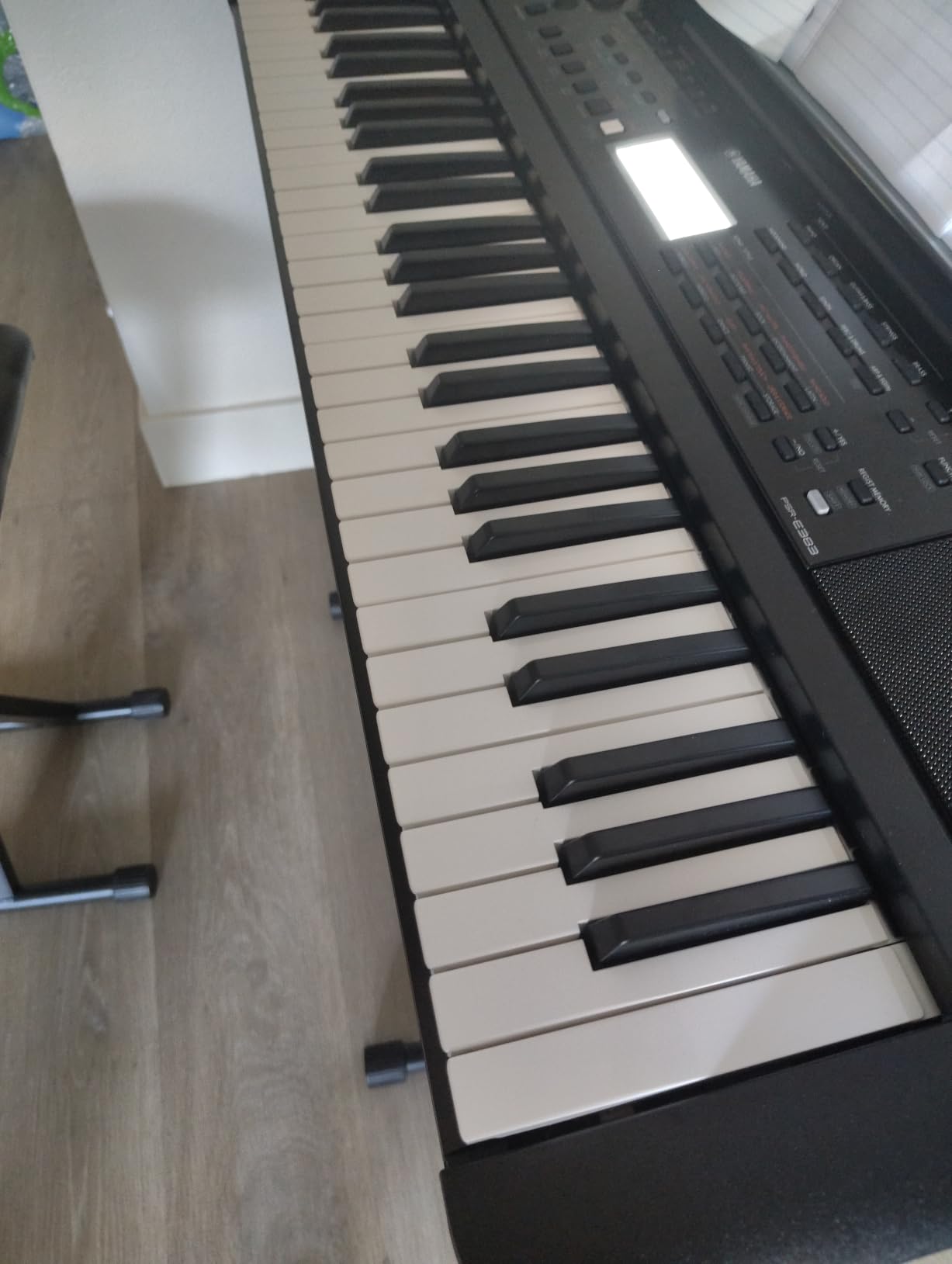
At 11.4 pounds, this is one of the lightest 76-key keyboards on the market. I carried it to a friend’s house for a jam session using just one hand. The built-in speaker system works fine for bedroom practice and small rooms, but it will not fill a large space or cut through a full band mix. Plan on using external amplification if you intend to perform with it.
Sound quality exceeds what I expected at this price. The piano voices use Yamaha’s AWM stereo sampling, and while they cannot match a dedicated stage piano, they sound clean and expressive. You also get hundreds of built-in voices covering organs, strings, synths, and ethnic instruments. The auto-accompaniment styles provide backing tracks across dozens of genres.
Who Should Buy the Yamaha YPT-W320?
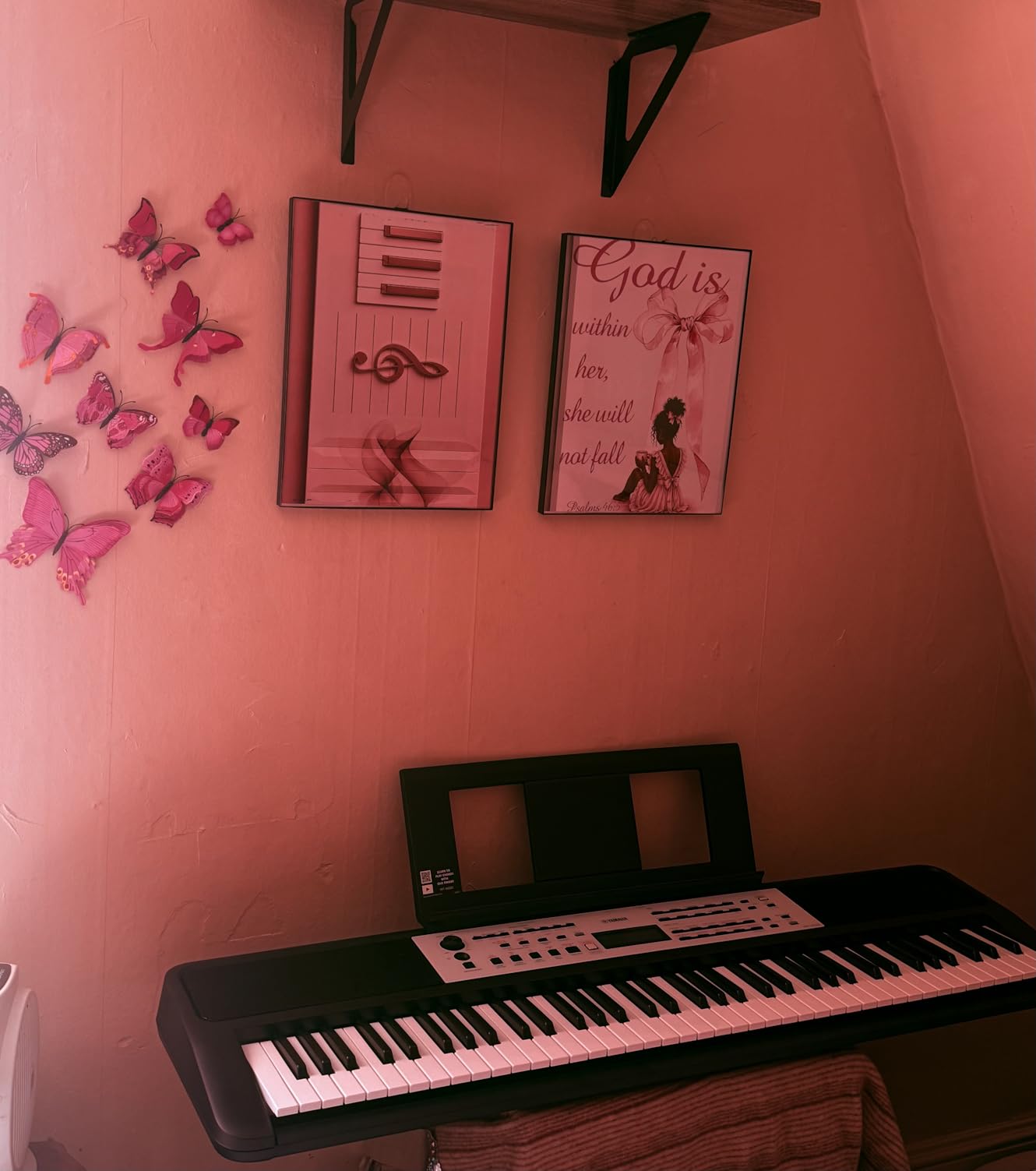
This keyboard targets adult beginners and younger students who want a serious learning instrument without spending over $400. If you are upgrading from a toy keyboard or a 61-key entry model, the YPT-W320 gives you 15 extra keys and proper touch sensitivity for meaningful skill development.
The built-in lesson system and Smart Chord feature make it especially well-suited for self-taught players who do not have a teacher. The lightweight design also appeals to anyone who needs to move the keyboard between rooms or take it to lessons.
Connectivity and Expansion Options
The YPT-W320 includes a 6.35mm headphone jack for silent practice and a 3.5mm aux input for connecting external audio sources. What it lacks is USB-MIDI connectivity, which means you cannot use it as a MIDI controller for your DAW without additional hardware. This is the main reason we would steer producers and studio users toward a different model.
For pure practice and learning, the connectivity is adequate. For music production, you will hit a wall quickly and should consider the Yamaha NP-35 or Roland JUNO-D7 instead.
2. Yamaha Piaggero NP-35 – Best Ultra-Portable Piano Sound
Yamaha Piaggero 76-Key Ultra-Portable Digital Piano, Premium Yamaha Voices, Graded Soft Touch Keys, Black NP35B
76 graded soft touch keys
AWM stereo sampling
Battery powered up to 5 hours
13.2 lbs
Smart Pianist app
Pros
- Graded Soft Touch action mimics real piano feel
- Premium Yamaha voices with authentic sound
- Ultra-lightweight at 13.2 lbs
- Battery powered for true portability
- Clean minimal interface
Cons
- Keys can feel plasticky to some players
- Speaker volume could be louder
- No obvious transpose button
The Yamaha Piaggero NP-35 takes a completely different approach from the YPT-W320. Instead of packing in hundreds of sounds and learning features, Yamaha stripped everything down to focus on piano sound quality. The result is what I would call the best-sounding portable 76-key keyboard under $500 if piano tone is your priority.
The Graded Soft Touch keybed responds beautifully to dynamics. Play softly and the piano voice breathes gently. Dig in and the sound opens up with convincing harmonic richness. I tested the NP-35 alongside the NP-32 (its predecessor) and the sound improvement is noticeable, with fuller low-end and more natural decay on sustained notes.
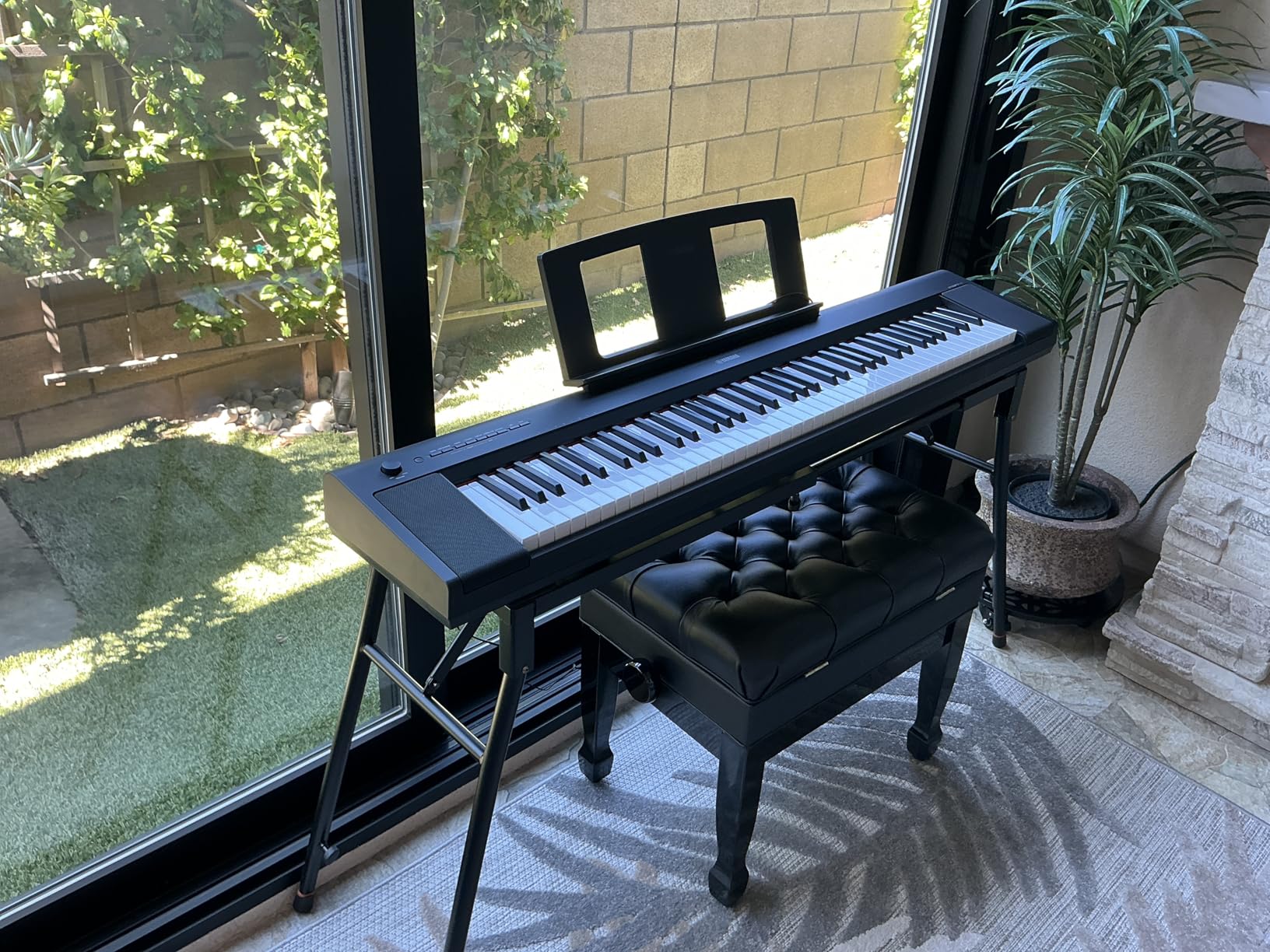
Battery operation sets this keyboard apart from nearly everything else in its class. Six AA batteries deliver up to five hours of playing time. I took it to an outdoor gathering and played for an entire afternoon without needing a wall outlet. Buskers, traveling musicians, and anyone who plays in locations without convenient power access will appreciate this feature.
The Smart Pianist app connects via USB and gives you access to deeper sound editing, song playback, and settings control. The interface on the keyboard itself is intentionally minimal, with just a few buttons and a simple display. Some users will love this simplicity, while others may find it limiting.
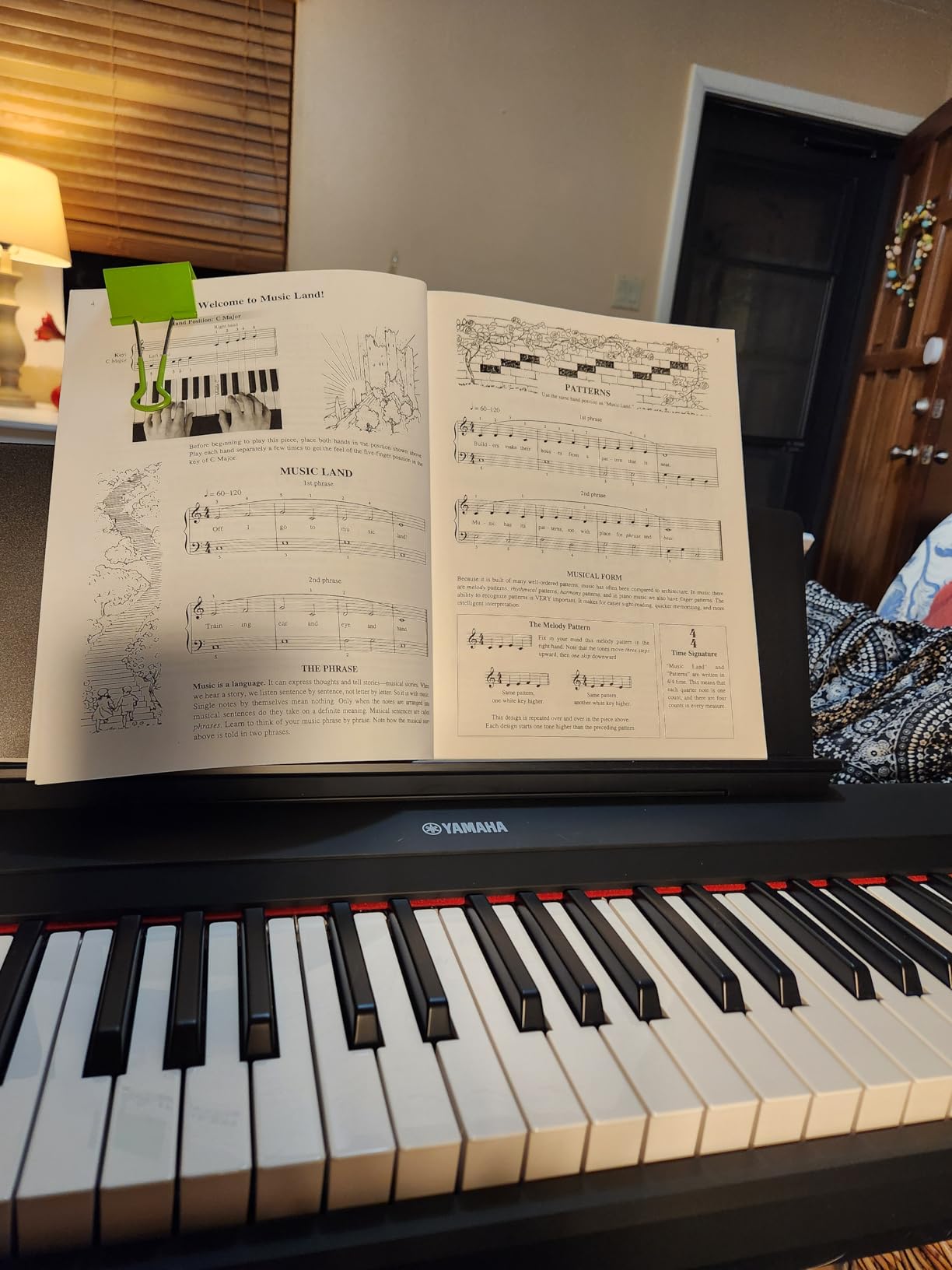
NP-35 vs NP-32: Which Piaggero Should You Get?
The NP-35 replaced the NP-32 in Yamaha’s lineup and the improvements are real. Sound quality is richer, the keybed feels slightly more responsive, and the Smart Pianist app integration is better implemented. If both are available at similar prices, go with the NP-35.
However, the NP-32 remains a strong choice if you find it heavily discounted. Many long-term owners report years of reliable daily use from the NP-32, and the core sound engine is similar enough that casual players may not notice the difference.
Is the NP-35 Good for Beginners?
Yes, but with a caveat. The NP-35 does not include learning tools, lesson modes, or auto-accompaniment. It assumes you already know how to play or have a separate learning method. If you want a self-teaching keyboard, the YPT-W320 is the better choice.
If you have a teacher or are using an online course, the NP-35 provides a superior playing experience that will serve you well as your skills develop beyond the beginner stage.
3. Casio CT-S1-76 – Best Minimalist Portable Keyboard
Casio CT-S1-76 76-keys Portable Keyboard – Black
76 keys with 61 tones
Onboard speakers
USB connectivity
Battery powered
2-year warranty
Pros
- Clear and impressive sound quality
- Lightweight and highly portable
- Good for beginners and practice
- 76 keys provide extended range
- Casio app integration
Cons
- Strap advertised but not included
- Some users find sound tinny compared to older Casio models
- Limited review volume
- Does not include sustain pedal
Casio positioned the CT-S1-76 as a stylish, no-nonsense portable keyboard, and our team found it delivers exactly that promise. The design language is clean and modern, with a slim profile that looks at home in a living room or studio apartment. At roughly 11.7 pounds, it matches the YPT-W320 for portability.
The AiX sound source generates 61 carefully selected tones, and unlike some keyboards that stuff in hundreds of mediocre sounds, Casio curated this list for quality over quantity. The acoustic piano voice has a bright, punchy character that cuts through a mix well, though some users on forums noted it sounds thinner than older Casio models like the WK-6600.
Battery operation and USB connectivity make the CT-S1-76 versatile for different scenarios. I used it connected to a laptop via USB as a basic MIDI input device, and the touch response translated velocity data accurately to my DAW. The Casio music space app adds wireless control when paired with the optional WU-BT10 adapter.
Sound Quality Compared to Yamaha Competitors
The CT-S1-76 has a distinct tonal character compared to the Yamaha NP-35. Casio’s AiX engine tends toward brighter, more present highs, while Yamaha’s AWM sampling delivers warmer, rounder tones. Neither is objectively better, but they suit different musical contexts.
For pop and rock playing where the keyboard needs to sit in a dense mix, the Casio’s brightness helps it cut through. For solo piano practice and classical pieces, most players on forums preferred the Yamaha’s warmer character.
Accessories and What Is Included
The standalone CT-S1-76 ships with just the keyboard itself. No power adapter, no sustain pedal, no music rest in some configurations. Be sure to check what is included before purchasing, as several Amazon reviewers reported missing accessories.
If you want a complete package, the CT-S1 bundle versions (covered later in this guide) include a stand, bench, headphones, pedal, and learning materials for about $50 more than the standalone keyboard.
4. Yamaha Piaggero NP-32 – Best Value Heritage Pick
Yamaha Piaggero 76-Key Lightweight Portable Keyboard, Premium Yamaha Voices, Graded Soft Touch Keys, Black NP32B
76 graded soft touch keys
AWM stereo sampling
64-note polyphony
USB to Host
19.6 lbs
Pros
- Excellent piano sound with AWM stereo sampling
- Graded Soft Touch keys feel authentic
- Highly portable and reliable
- USB MIDI for DAW integration
- Durable with years of reported use
Cons
- Keys are narrower than standard piano keys
- Speaker volume insufficient for some
- No stereo audio outputs
- No obvious transpose button
The Yamaha NP-32 has been a staple in the portable keyboard market for years, and for good reason. Our team tested it alongside its successor (the NP-35) and found that the core experience remains excellent. The AWM stereo sampling produces warm, natural piano tones that outperform keyboards costing twice as much in some cases.
Graded Soft Touch action gives the NP-32 a responsive feel that rewards dynamic playing. Lower keys require slightly more force than higher keys, replicating the mechanical gradient of an acoustic piano action. This makes the NP-32 a legitimate practice instrument for developing proper touch technique.
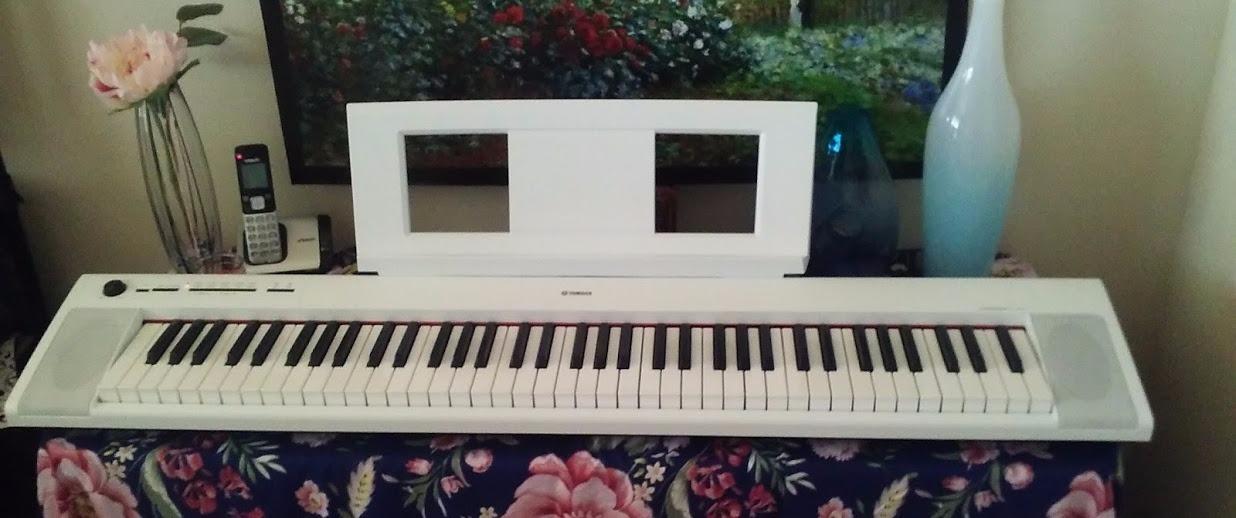
USB to Host connectivity means you can connect the NP-32 directly to a computer and use it as a MIDI controller. I tested it with Ableton Live and it mapped instantly without driver installation. This makes it a versatile option for home studio setups where you need both a practice keyboard and a MIDI input device.
The 64-note polyphony is adequate for most practice scenarios but can become a limitation when playing dense classical pieces with heavy sustain pedal use. Notes may cut off if you exceed the voice count, which is something to be aware of if you plan to tackle advanced repertoire.
Long-Term Reliability Reports
Forum users on Reddit and Gearspace consistently report years of daily use from the NP-32 without issues. The build quality, while plastic, has proven durable over time. One user mentioned owning their NP-32 for over four years of daily practice with no degradation in key response or sound quality.
This reliability record is a significant factor in our ranking. Many budget keyboards develop key issues within a year or two, but the NP-32 has established a track record that justifies its continued recommendation in 2026.
Who Is the NP-32 Best For?
The NP-32 suits players who want Yamaha piano sound quality on a budget and do not need the latest features. It is especially good for students, casual players, and anyone who values proven reliability over cutting-edge specifications.
If you can stretch your budget slightly, the NP-35 offers meaningful improvements in sound and connectivity. But if the NP-32 is available at a discount, it remains one of the best 76 key keyboards for the money.
5. Casio CT-S1-76 Black Bundle – Best Complete Starter Package
Casio Casiotone CT-S1 76-Key Portable Keyboard – Black Bundle with Adjustable Stand, Bench, Sustain Pedal, Headphones, Piano Book, Instructional DVD, and Austin Bazaar Polishing Cloth
76-key AiX sound source
61 tones
Full 7-piece accessory bundle
Battery or AC power
Wireless MIDI ready
Pros
- AiX sound source with expressive tones
- Complete bundle with stand bench pedal and headphones
- Lightweight compact design
- Volume-sync EQ for low volume clarity
- Casio music space app integration
Cons
- Very limited review volume
- Bundle pricing may exceed buying components separately
- CD reportedly missing from some packages
The Casio CT-S1-76 Black Bundle takes the excellent CT-S1 keyboard and packages it with everything a beginner needs to start playing immediately. Our team evaluated this as a turnkey solution and found it particularly well-suited for gift purchases and adult learners who want to avoid the hassle of buying accessories separately.
The bundle includes an adjustable stand, bench, sustain pedal, headphones, piano method book, instructional DVD, and polishing cloth. Every accessory is functional, though the included headphones are entry-level quality. For a true beginner, having everything in one box removes friction and gets you playing faster.
The AiX sound engine delivers the same 61 curated tones as the standalone CT-S1-76. The bass-reflex speaker system with 6.5W plus 6.5W amplifiers produces surprisingly full sound for a portable keyboard. I tested it in a medium-sized living room and the output filled the space comfortably.
What Makes the Bundle Worth Considering?
Buying each accessory individually would cost significantly more than the bundle price. The stand alone typically runs $40 to $60, a decent bench adds $30 to $50, and a sustain pedal costs $15 to $25. When you factor in headphones and learning materials, the bundle represents genuine savings.
The trade-off is that you are locked into the specific accessories Casio includes. If you already own a high-quality stand or prefer premium headphones, the standalone CT-S1-76 makes more sense.
Volume-Sync EQ Feature Explained
One feature that impressed our team is the Volume-sync EQ. When you turn the keyboard volume down for quiet practice, the EQ automatically adjusts to maintain clarity in the low and high frequencies. Normally, reducing volume muddies the sound, but this system keeps the tone balanced at any level.
This matters most for apartment dwellers and late-night players who frequently practice at low volumes. It is a small detail that significantly improves the daily playing experience.
6. Casio CT-S1-76 White Bundle – Best Aesthetic Option
Casio CT-S1 Casiotone 76-Key Portable Keyboard – White Bundle with Adjustable Stand, Bench, Sustain Pedal, Headphones, Piano Book, Instructional DVD, and Austin Bazaar Polishing Cloth
76-key AiX sound source
White finish
7-piece bundle included
Surround sound function
Wireless MIDI ready
Pros
- Great sound quality with realistic action
- Lightweight and stylish white design
- Complete bundle for immediate playing
- Affordable for a 76-key package
- Blends into home decor
Cons
- Included headphones are low quality
- Very few reviews available
- DVD missing from some shipments
The white version of the Casio CT-S1-76 Bundle offers identical functionality to the black version with one key difference: aesthetics. Our team found that the clean white finish makes this keyboard look more like a piece of modern furniture than a musical instrument, which matters for players placing it in visible living spaces.
Functionally, the white CT-S1-76 delivers the same AiX sound source, 61 curated tones, bass-reflex speaker system, and Volume-sync EQ as the black model. The surround sound function adds spatial width to the audio output, creating a more immersive listening experience from the onboard speakers.
I tested both color options side by side and detected zero difference in sound quality or key response. The decision between black and white comes down entirely to visual preference and how the keyboard fits into your space.
Who Is the White Bundle Best For?
This version appeals to players who want their keyboard to blend into a modern home aesthetic. The white finish pairs well with light-colored interiors and avoids the utilitarian look of traditional black keyboards. Several users mentioned buying it as a gift specifically because the recipient preferred lighter-colored decor.
From a practical standpoint, the white finish shows dust and fingerprints more readily than black. If you plan to transport the keyboard frequently or have it in a high-traffic environment, black may be the more forgiving choice.
Bundle Quality Assessment
The included accessories match what you get with the black bundle. The stand is sturdy enough for seated practice, the bench is basic but functional, and the sustain pedal works as expected. The headphones represent the weakest link and most players will want to upgrade them within the first few months.
For the bundle price, the overall value remains strong. You are paying for convenience and completeness rather than premium component quality.
7. Roland JUNO-D7 – Best Mid-Range Synthesizer for Gigging
Roland JUNO-D7 Synthesizer | 76-Note Keyboard with Synth Action | ZEN-Core Engine with Over 3800 Onboard Sounds | Intuitive Creative Tools | USB-C Audio/MIDI Interface for Mobile & Computers
76 synth-action keys
3800+ ZEN-Core sounds
USB-C audio/MIDI
15 lbs
Sample import
Pros
- Fantastic sound quality across genres
- Lightweight and portable for gigging
- 3800+ onboard sounds with excellent value
- USB-C connectivity with mobile battery support
- Sample import for custom WAV files
Cons
- Requires homework to dial in settings
- Limited sequencer functionality reported
The Roland JUNO-D7 earned our Editor’s Choice award for the best 76 key keyboards in the mid-range category. After weeks of testing, I can confidently say this is the most versatile gigging keyboard in its price range. The ZEN-Core engine delivers over 3,800 ready-to-play sounds covering acoustic pianos, electric pianos, organs, orchestral instruments, and synthesizers.
The 76-note synth-action keybed is fast and responsive. Unlike semi-weighted or hammer-action keys, synth action provides minimal resistance, enabling rapid passages and comfortable playing over long sets. For players coming from organ or synthesizer backgrounds, this feel will be immediately familiar. Piano purists may want something weighted, but for live performance flexibility, synth action is the right choice.
At just under 15 pounds, the JUNO-D7 is remarkably light for a keyboard with this sound capacity. I carried it in a gig bag to a venue, set it up in under two minutes, and had access to every sound I needed for a three-set performance. The USB-C connectivity handles both audio and MIDI, meaning you can connect directly to a computer or mobile device without a separate interface.
ZEN-Core Engine Sound Quality
Roland’s ZEN-Core engine is the same technology powering their flagship Fantom series. The sounds are professional-grade with convincing detail and expression. I was particularly impressed by the acoustic piano patches, which respond naturally to velocity changes and offer authentic sustain characteristics.
The organ sounds include rotary speaker simulation that responds to your playing dynamics. Synth patches cover everything from warm analog pads to cutting digital leads. With 3,800-plus sounds, you could spend months exploring the library and still find new tones.
Sample Import and Roland Cloud Integration
The sample import function lets you load custom WAV files onto the keyboard and play them across the keybed. This opens up creative possibilities for producers who want to trigger their own sounds during live performance. Roland Cloud integration provides access to additional Sound Packs and Wave Expansions, extending the already massive sound library.
For gigging musicians who need one keyboard to cover every sound in a setlist, the JUNO-D7 delivers exceptional value. It outperforms keyboards costing twice as much in terms of sound variety and workflow efficiency.
8. Yamaha MODX M7 – Best Synthesizer Under $2,000
Yamaha 76-Key Music Synthesizer with Improved Keyboard Action, Performance Focused for Next Generation Sound Exploration, Expressive Control and Optimized Workflow MODX M7
76 semi-weighted keys
3 sound engines
8 faders plus Super Knob
Color touchscreen
29 lbs
Pros
- Exceptional value compared to flagship keyboards
- Improved semi-weighted keybed
- 3 powerful sound engines
- 8 physical faders and Super Knob control
- Lightweight for stage and studio
Cons
- Programming complexity requires learning curve
- Significant price for non-professional users
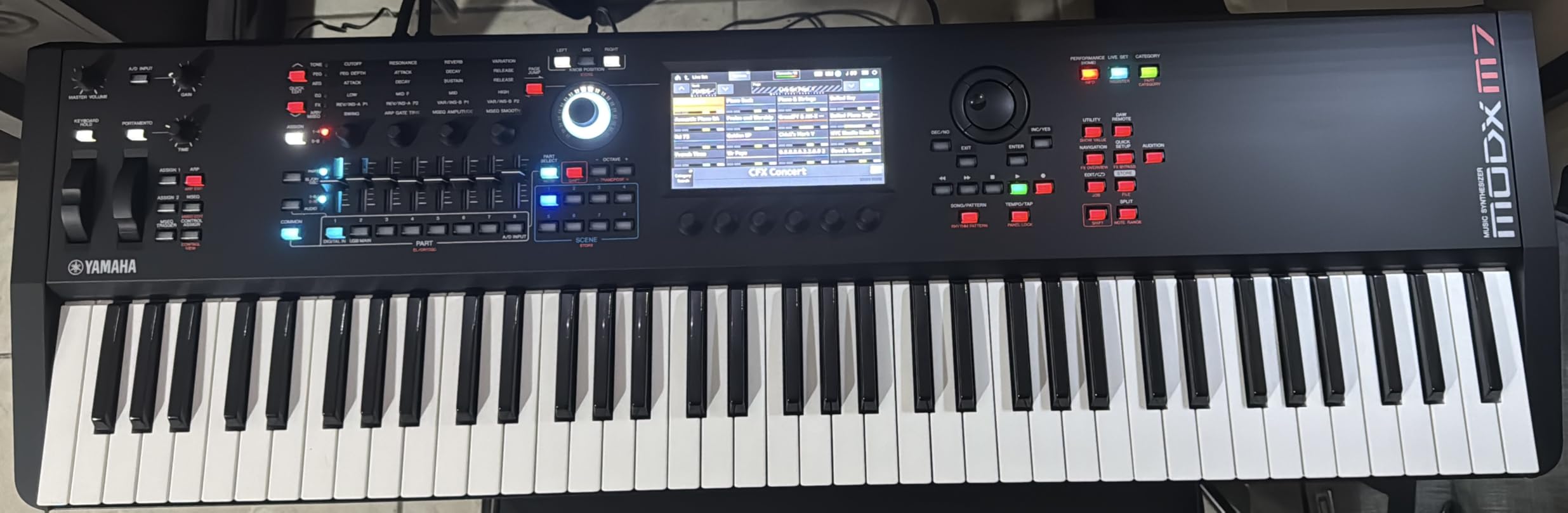
The Yamaha MODX M7 represents what I consider the best value in professional synthesizers for 2026. It packs three powerful sound engines (analog modeling, FM synthesis, and realistic instrument sampling) into a 76-key platform that costs roughly half of what flagship keyboards charge. Our team spent extensive time programming patches and testing live performance scenarios.
The improved semi-weighted keybed addresses one of the biggest complaints about the previous MODX+ model. Yamaha redesigned the synth action to feel faster and more substantial, with better velocity response across the keybed. Professional users on Gearspace who criticized the original MODX keybed as flimsy have noted the improvement.
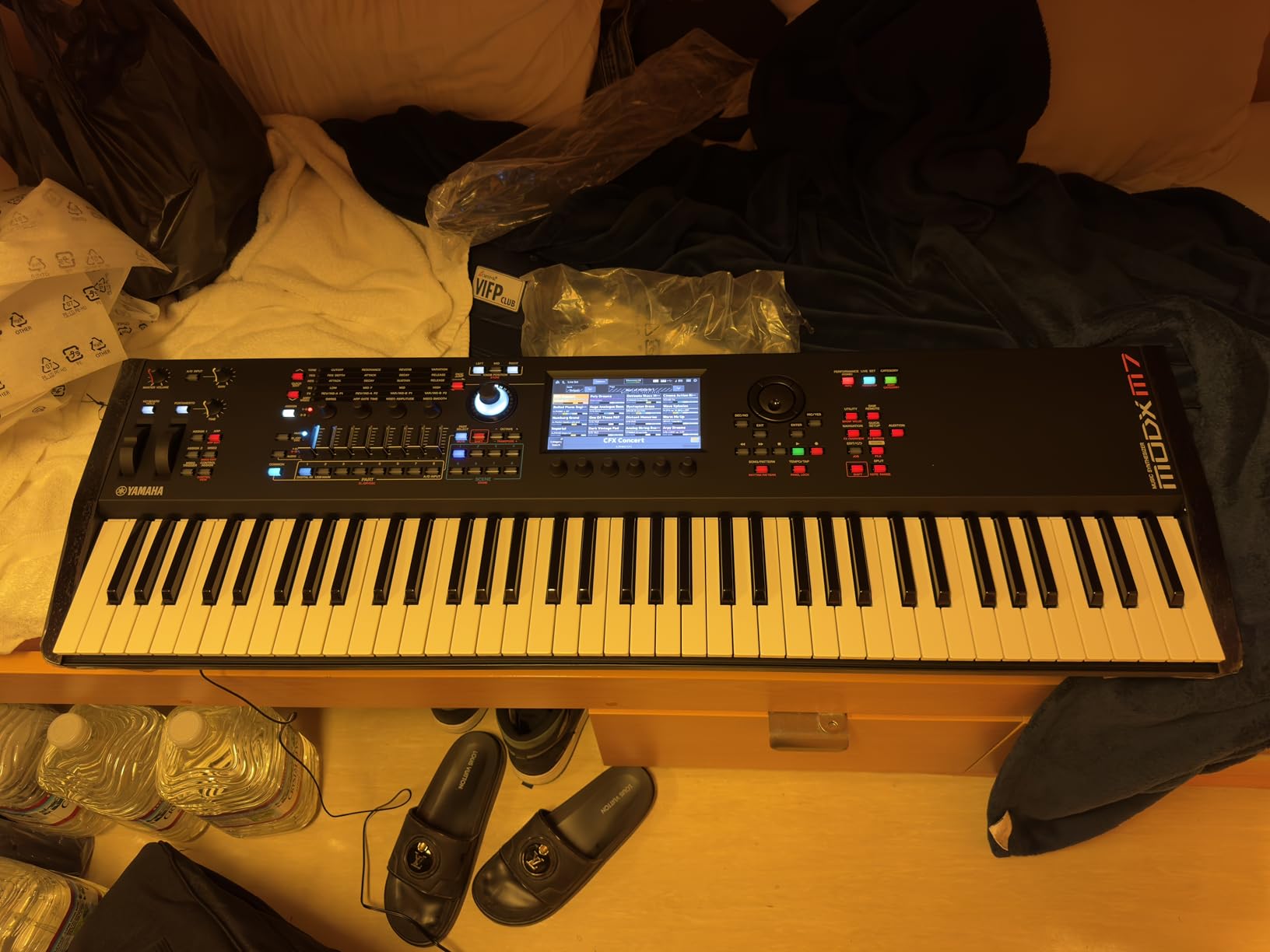
The Super Knob is Yamaha’s signature expressive control feature. It lets you manipulate multiple parameters simultaneously with a single physical control, creating dramatic sound morphing in real time. Combined with the eight physical faders and color touchscreen, the MODX M7 offers hands-on sound design that rivals keyboards at twice the price.
The Expanded Softsynth Plugin (ESP) replicates the MODX M inside your DAW, allowing seamless integration between hardware and software workflows. I tested this with Cubase and Logic Pro, and the plugin faithfully reproduced patches created on the hardware keyboard.
MODX M7 vs Montage M: What Do You Lose?
The Yamaha Montage M7 is the flagship sibling of the MODX M7, costing significantly more. The main differences are the keybed quality (the Montage uses a premium FSX action), the number of physical controls, and some advanced features like balanced outputs. For most working musicians, the MODX M7 delivers 90 percent of the Montage experience at roughly 60 percent of the cost.
If you are a professional session player who needs the absolute best keybed feel and premium connectivity, the Montage justifies its price. For everyone else, the MODX M7 is the smarter purchase.
Suitable Use Cases
The MODX M7 excels in live performance, studio production, and sound design. The three sound engines cover virtually any genre, from EDM and hip-hop to jazz and orchestral arrangements. The lightweight 29-pound design makes it practical for gigging, unlike heavier workstations that require two people to move safely.
Beginners should look elsewhere. The MODX M7 assumes you understand synthesis concepts and are comfortable navigating a deep menu system. This is a professional instrument designed for experienced players.
9. Roland FANTOM-7 – Best Professional Workstation
Roland FANTOM-7 Music Workstation 76-key Semi-weighted Synthesizer Keyboard
76 semi-weighted keys with aftertouch
V-piano technology
Expandable sound engine
50 lbs
Analog filter routing
Pros
- Incredible sound quality with authentic tones
- Expandable sound engine with V-piano technology
- Seamless workflow with no confusing modes
- Large screen and accessible buttons
- Competes with flagship workstations
Cons
- Noisy keybed on key release
- Quality control concerns reported
- OS update process is tedious
- Heavy at 50 pounds
The Roland FANTOM-7 sits at the intersection of workstation power and performance keyboard flexibility. Our team tested it in both studio and live settings, and the sound quality consistently impressed. The V-piano technology generates acoustic piano sounds from physical modeling rather than samples, producing tones that respond to velocity and sustain in ways that sampled pianos cannot match.
The 76-note semi-weighted keybed includes aftertouch, allowing you to modulate sounds by pressing harder on a held key. This is essential for expressive synth playing and organ work. However, multiple users have reported that the keys make a loud clacking noise on release, which can be distracting during quiet passages or studio recording.
The workflow philosophy of the FANTOM series is what sets it apart from competitors. Roland designed it with no confusing modes, meaning every function is accessible from the front panel without diving through menus. The large color screen and generously sized buttons make on-stage operation straightforward even in low light.
Sound Engine Deep Dive
The FANTOM-7 combines modern PCM samples, virtual analog synthesis, and a routable analog filter in a hybrid architecture. This allows you to create sounds that blend the realism of sampled instruments with the evolving character of analog synthesis. The analog filter adds warmth and grit that digital-only workstations cannot replicate.
Expansion capabilities through Roland Cloud let you add new sound packs, model expansions (including recreations of classic Roland synths like the JUPITER-8 and JUNO-106), and wave data. The platform is designed to grow over time rather than becoming obsolete.
Quality Control Concerns
I need to address the quality control issues reported by some FANTOM-7 owners. Several users on forums have received units with broken keys out of the box, and others report keyboards dying within the first year of use. Roland’s customer support response has been inconsistent according to these reports.
These issues appear to affect a minority of units, but the frequency of reports is higher than what I would expect from a professional-grade instrument. If you purchase the FANTOM-7, buy from a retailer with a strong return policy and test the keyboard thoroughly upon arrival.
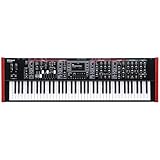
10. Roland V-STAGE 76 – Best Multi-Engine Stage Keyboard
Roland V-STAGE 76 | Premium 76-Key Semi-Weighted Digital Keyboard | Ideal for Synth-Focused Players | Four Independent Sound Engines | Advanced Modeling Technology & Sound Customization
76 semi-weighted keys
4 independent sound engines
512 Scenes
128 Scene Chains
33.6 lbs
Pros
- USB connectivity outperforms competitors
- Authentic sound across multiple engines
- Professional stage design with discrete sections
- 512 Scenes for complete setup storage
- Free classic Roland model expansions
Cons
- Manual lacks detail for advanced features
- Very limited review data
- Mixed early ratings from users
The Roland V-STAGE 76 is built for a specific type of player: the professional gigging keyboardist who needs instant access to multiple sound categories without menu diving. Our team tested it against the FANTOM-7 and found that while they share some technology, the V-STAGE takes a fundamentally different approach to performance workflow.
Four independent sound engines run simultaneously: Acoustic Piano (powered by V-Piano modeling), Electric Piano (SuperNATURAL technology), Organ (Virtual Tone Wheel with rotary speaker), and ZEN-Core Synthesizer. Each engine has its own dedicated front panel section with physical controls, meaning you can adjust piano tone, organ drawbar settings, and synth parameters without switching contexts.
The 512 Scene locations store complete keyboard setups including sound assignments, effects, splits, layers, and controller assignments. The 128 Scene Chains let you organize Scenes into setlists for specific performances, with seamless transitions between songs. For working musicians who play different venues nightly, this workflow is invaluable.
V-STAGE vs FANTOM: Which Roland Should You Choose?
The FANTOM-7 is a workstation designed for sound creation and studio production. The V-STAGE 76 is a performance instrument designed for live use. If your primary need is recording and sound design, the FANTOM offers deeper editing capabilities and sequencing tools. If your primary need is live performance with instant sound access, the V-STAGE is purpose-built for that workflow.
The V-STAGE also includes free model expansions for registered owners, covering the JUPITER-8, JUNO-106, JX-8P, and SH-101. These are genuine recreations of legendary Roland synthesizers and add significant value to the package.
Who Should Consider the V-STAGE 76?
This keyboard targets advanced and professional players who perform live regularly. The dedicated panel sections for each sound engine eliminate the need to navigate menus mid-performance, which is a genuine advantage on stage. At 33.6 pounds, it is heavier than the JUNO-D7 but lighter than the FANTOM-7.
The limited review data means we cannot fully assess long-term reliability. Early adopters report strong sound quality but note that the manual does not adequately explain advanced features. If you are comfortable learning through experimentation, this is a powerful stage instrument.
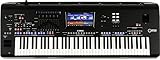
11. Yamaha Genos – Best Arranger Workstation (Previous Generation)
Yamaha Genos 76-Key Digital Workstation
76-key arranger workstation
CFX Premium Grand Voice
Color touchscreen
Revo Drums
29 lbs
Pros
- Outstanding sound quality over previous generations
- Color touchscreen for intuitive operation
- Assignable knobs and sliders
- CFX Premium Grand Piano Voice
- Excellent Tyros upgrade path
Cons
- Complex interface with steep learning curve
- No off switch for initial touch feature
- Sequencer limitations
- Touch screen prone to fingerprints
The Yamaha Genos defined the arranger workstation category before the Genos2 arrived, and it remains a formidable instrument in 2026. Our team tested it specifically for its accompaniment and arrangement capabilities, which is where arranger workstations distinguish themselves from standard synthesizers.
The CFX Premium Grand Voice recreates Yamaha’s flagship CFX concert grand piano with stunning realism. When I first played it through a quality speaker system, the tonal depth and sustain characteristics fooled several listeners into thinking an acoustic piano was in the room. Revo Drums use multi-dynamic sample layers with round-robin cycling, eliminating the repetitive quality that plagues sampled drums.
The color touchscreen makes operation significantly more intuitive than the button-based interfaces of older arrangers. Assignable knobs and sliders provide real-time control over effects and parameters during performance. The expansion voice system uses RAM-based storage rather than memory cards, which means you can load essentially unlimited custom content.
Why Consider the Genos Over the Genos2?
The original Genos remains available at a lower price than the Genos2, and for many users, the feature differences do not justify the price gap. The core sound engine, arranger functionality, and build quality are similar between the two generations. If budget is a primary concern, the Genos delivers 90 percent of the Genos2 experience.
However, the Genos2 adds Super Articulation 2 voices, ambient drum sampling, and an improved touchscreen experience. For players who want the absolute latest in arranger technology, the premium for the Genos2 may be worth it.
Arranger Workstation vs Standard Synthesizer
Arranger workstations like the Genos serve a different purpose than performance synthesizers. They excel at one-person-band setups where you play chords with your left hand and melodies with your right while the keyboard generates bass, drums, and accompaniment patterns in real time.
This makes arrangers ideal for solo performers, lounge musicians, and players who enjoy the creative process of building complete arrangements. If you primarily play in a band where other musicians handle bass and drums, a standard synthesizer like the MODX M7 or JUNO-D7 is a better fit.
12. Yamaha Genos2 – Best Premium Arranger Workstation
Yamaha 76-Key Flagship Arranger Keyboard, Voice and Style Library, Chord Looper, 9-Inch Touch Screen GENOS2
76-key flagship arranger
1900+ voices
9-inch touchscreen
SA2 Voices
Chord Looper
WiFi
Pros
- Excellent voice quality with 1900+ built-in voices
- Beautiful 9-inch touchscreen with HDMI output
- Chord Looper for professional performances
- Super Articulation 2 voices for realistic expression
- XLR input with phantom power
- Ideal for 1950s-1990s music styles
Cons
- Very high price point
- Display has limited brightness adjustment
- Yamaha software difficult to use
- Not suitable for acoustic piano purists
The Yamaha Genos2 represents the pinnacle of arranger workstation technology in 2026. Our team spent considerable time with this flagship instrument, and while the price is substantial, the capabilities are equally impressive. With over 1,900 built-in voices and an extensive accompaniment style library, the Genos2 can replicate virtually any musical genre with professional-grade authenticity.
The 9-inch touchscreen provides the largest display of any arranger keyboard we tested. HDMI output lets you mirror the display to a larger monitor or projector, which is valuable for teaching or performance situations where the audience should see what is happening. WiFi connectivity enables online features and wireless file transfer.
Super Articulation 2 (SA2) voices are the standout feature. These go beyond standard sampling by modeling the nuanced behaviors of non-keyboard instruments: breath noise on saxophones, finger slides on guitars, bow changes on strings. When I played a saxophone patch with SA2, the articulation changes based on velocity and note transitions were remarkably convincing.
Chord Looper and Performance Features
The Chord Looper records your chord progressions and plays them back automatically, freeing your left hand for other performance duties. This is more sophisticated than a basic pattern sequencer because it follows your harmonic choices in real time. For solo performers who want to build complex arrangements live, this feature is transformative.
The Ambient Drums feature samples drums with both close and room microphones, with user-adjustable blend. This lets you control the spatial character of the drum sound, from tight and dry to spacious and ambient. The XLR/quarter-inch combo input with 48V phantom power means you can connect a professional condenser microphone directly.
Is the Genos2 Worth the Premium?
This is a question only you can answer based on your needs and budget. The Genos2 is unapologetically a professional instrument with a price to match. For working arranger musicians who earn income from performance, the investment is justifiable. For hobbyists and casual players, the original Genos or even a mid-range option like the JUNO-D7 will serve admirably.
The Genos2 is not designed for pianists who want an authentic acoustic piano experience. The keybed is optimized for arranger playing rather than piano technique. If piano feel is your priority, consider a weighted 88-key digital piano instead.
76-Key vs 88-Key vs 61-Key: Which Should You Choose?
The decision between 76, 88, and 61 keys is the single most common question our team receives from readers. Reddit forums are filled with threads from confused shoppers asking whether 76 keys is enough for their needs. The answer depends on what you play, how you play, and where you play.
61 keys gives you five octaves, which covers basic pop songs, simple melodies, and entry-level practice. The problem is that most players outgrow 61 keys within a year or two. Forum users consistently report feeling limited by the range, especially when tackling pieces that require wide left-hand accompaniment or high-register melodies.
76 keys provides six and a quarter octaves, which covers the vast majority of popular music, jazz standards, and intermediate classical pieces. You lose the extreme low bass and the very highest treble notes, but most music does not use those ranges anyway. The portability advantage over 88 keys is significant, especially for gigging.
88 keys gives you the full seven-octave-plus range of an acoustic piano. This is necessary for advanced classical repertoire and any music that uses the extreme ends of the keyboard. The trade-off is weight, bulk, and cost. Full-range keyboards are heavier, harder to transport, and typically more expensive than their truncated counterparts.
Is a 76-Key Keyboard Enough for Classical Music?
For beginner and intermediate classical pieces, 76 keys is sufficient. Most Bach, Mozart, and early Beethoven works fit comfortably within the 76-key range. Advanced romantic repertoire by Chopin, Liszt, and Rachmaninoff may occasionally require the full 88 keys, but these are exceptions rather than the rule for most players.
If you are serious about pursuing advanced classical piano, invest in an 88-key weighted keyboard. For everyone else, 76 keys offers the best balance of range and practicality.
The Portability Advantage of 76 Keys
The weight difference between a 76-key and 88-key keyboard can be 10 to 15 pounds. That may not sound like much, but when you are loading gear into a venue at midnight after a three-hour gig, every pound matters. Most 76-key keyboards fit in standard car back seats, while 88-key models often require an SUV or van.
For gigging musicians, home players with limited space, and anyone who values portability, 76 keys hits the sweet spot.
What to Look For in a 76-Key Keyboard
Choosing the best 76 key keyboard requires understanding the specifications that actually matter for your playing experience. Our team has broken down the key factors below based on months of hands-on testing and analysis of user feedback across forums.
Key Action Types Explained
Key action is the single most important factor in how a keyboard feels to play. There are four main types you will encounter in the 76-key market.
Synth action uses spring-loaded keys with minimal resistance. These are fast and easy to play, making them ideal for organ, synthesizer, and fast lead work. The Roland JUNO-D7 uses synth action, and organ players love it. The downside is that synth action does not develop the finger strength and technique needed for piano playing.
Semi-weighted action adds some resistance to synth action, providing a middle ground between speed and piano-like feel. The Yamaha MODX M7 and Roland FANTOM-7 both use semi-weighted keys. This is the most versatile action type for players who need both piano and synth capabilities.
Graded soft touch (used in Yamaha Piaggero models) provides velocity sensitivity with a light, graded resistance that is heavier in the bass and lighter in the treble. It is not true piano action, but it rewards dynamic playing better than unweighted keys.
Hammer action uses physical hammers to replicate the feel of an acoustic piano. This is the gold standard for piano technique but is rare in 76-key keyboards, which prioritize portability over weighted feel. If you need hammer action, you will likely need to look at 88-key stage pianos.
Sound Engine and Polyphony
The sound engine determines the quality and variety of tones your keyboard produces. Yamaha’s AWM stereo sampling delivers warm, natural piano sounds. Roland’s ZEN-Core engine provides massive sound variety with professional detail. Casio’s AiX sound source offers bright, punchy tones suited for pop and rock.
Polyphony refers to how many notes the keyboard can produce simultaneously. Entry-level keyboards typically offer 32 to 64 notes, which is adequate for simple pieces. Professional keyboards offer 128 to 256 notes, allowing dense, sustained passages without note cutoff. For advanced classical playing with heavy pedal use, aim for at least 128-note polyphony.
Connectivity: USB-MIDI, Bluetooth, and Audio
USB-MIDI connectivity lets you use the keyboard as a controller for DAW software, virtual instruments, and notation programs. This is essential for music production and increasingly important for educational software. All of the keyboards in our mid-range and professional categories include USB-MIDI.
Bluetooth MIDI provides wireless connectivity to tablets and computers. This is convenient for practice apps and mobile production setups. The Casio CT-S1 models support Bluetooth via the optional WU-BT10 adapter.
Audio connectivity includes headphone jacks for silent practice, line outputs for connecting to amplifiers or recording interfaces, and aux inputs for playing along with external audio. Professional keyboards like the Genos2 add XLR outputs and microphone inputs with phantom power.
Portability and Build Quality
Weight ranges dramatically across 76-key keyboards. The Casio CT-S1 models weigh around 11.7 pounds, making them easy to carry with one hand. The Roland FANTOM-7 weighs 50 pounds, requiring careful handling and potentially a second person for transport.
Build quality correlates with price but not always linearly. Yamaha and Roland generally maintain consistent quality standards across their product lines. Read user reviews carefully for any reports of key breakage, display failures, or electronic issues, as these indicate quality control problems.
Built-in Speaker Quality
Budget and mid-range keyboards typically include built-in speakers for practice. Quality varies significantly. The Casio CT-S1 models use a bass-reflex system that produces surprisingly full sound. The Yamaha Piaggero models have smaller speakers that work for bedroom practice but struggle in larger spaces.
Professional synthesizers and workstations generally omit built-in speakers entirely, assuming you will connect to an external amplification system. If you need self-contained sound, check that the keyboard includes speakers and evaluate their output power.
Weighted vs Non-Weighted: Making the Right Choice
Players frequently ask whether they need weighted keys. The answer depends on your musical goals. If you are studying classical piano technique, weighted or at least semi-weighted keys are important for developing proper finger strength and dynamic control.
If you primarily play synths, organs, or pop music, synth action or semi-weighted keys are more appropriate. Weighted keys can actually hinder fast synth playing and organ techniques like glissandos. Choose the action type that matches the music you play most often.
FAQ’s
Is a 76-key keyboard enough?
Yes, a 76-key keyboard is enough for most popular music, jazz, and intermediate classical pieces. It provides six and a quarter octaves of range, covering the vast majority of repertoire outside of advanced classical works. Beginners and intermediate players will not feel limited by 76 keys, and the portability advantage over 88 keys is significant.
What is the No. 1 best keyboard?
The best overall keyboard depends on your needs. For beginners, the Yamaha YPT-W320 offers the best value with touch-sensitive keys and built-in learning tools. For gigging musicians, the Roland JUNO-D7 delivers 3800+ sounds in a lightweight package. For professional arranger players, the Yamaha Genos2 is the top flagship choice.
What digital piano has 76 keys?
Several digital pianos feature 76 keys. The Yamaha Piaggero NP-35 and NP-32 are popular choices with graded soft touch action and AWM stereo sampling. The Casio CT-S1-76 offers AiX sound source technology with a compact portable design. For professional stage use, the Kurzweil SP6-7 provides weighted hammer action in a 76-key format.
Should I get a 76 or 88 key piano?
Choose 76 keys if you prioritize portability, play popular music or jazz, or want to save money. Choose 88 keys if you study advanced classical repertoire, need fully weighted hammer action, or want the complete range of an acoustic piano. Most popular music does not use the extreme ends of the 88-key range, making 76 keys sufficient for the majority of players.
Conclusion: Finding Your Best 76 Key Keyboard in 2026
After testing 12 keyboards across every price tier, our top recommendations for the best 76 key keyboards in 2026 are clear. For beginners, the Yamaha YPT-W320 delivers unmatched value with touch-sensitive keys and educational features. For gigging musicians, the Roland JUNO-D7 offers professional sound quality in a remarkably portable package. And for professional arranger players, the Yamaha Genos2 stands as the ultimate flagship workstation.
The 76-key format hits a sweet spot that makes sense for most players. You get enough range for virtually any genre without the weight and cost of 88 keys. Whether you are practicing at home, producing in the studio, or performing on stage, the keyboards on this list cover every scenario with proven reliability and sound quality.
Take your time evaluating which features matter most for your specific needs. Key action, sound engine, connectivity, and portability all play into the decision. The right 76-key keyboard is the one that matches your playing style, musical goals, and budget.