
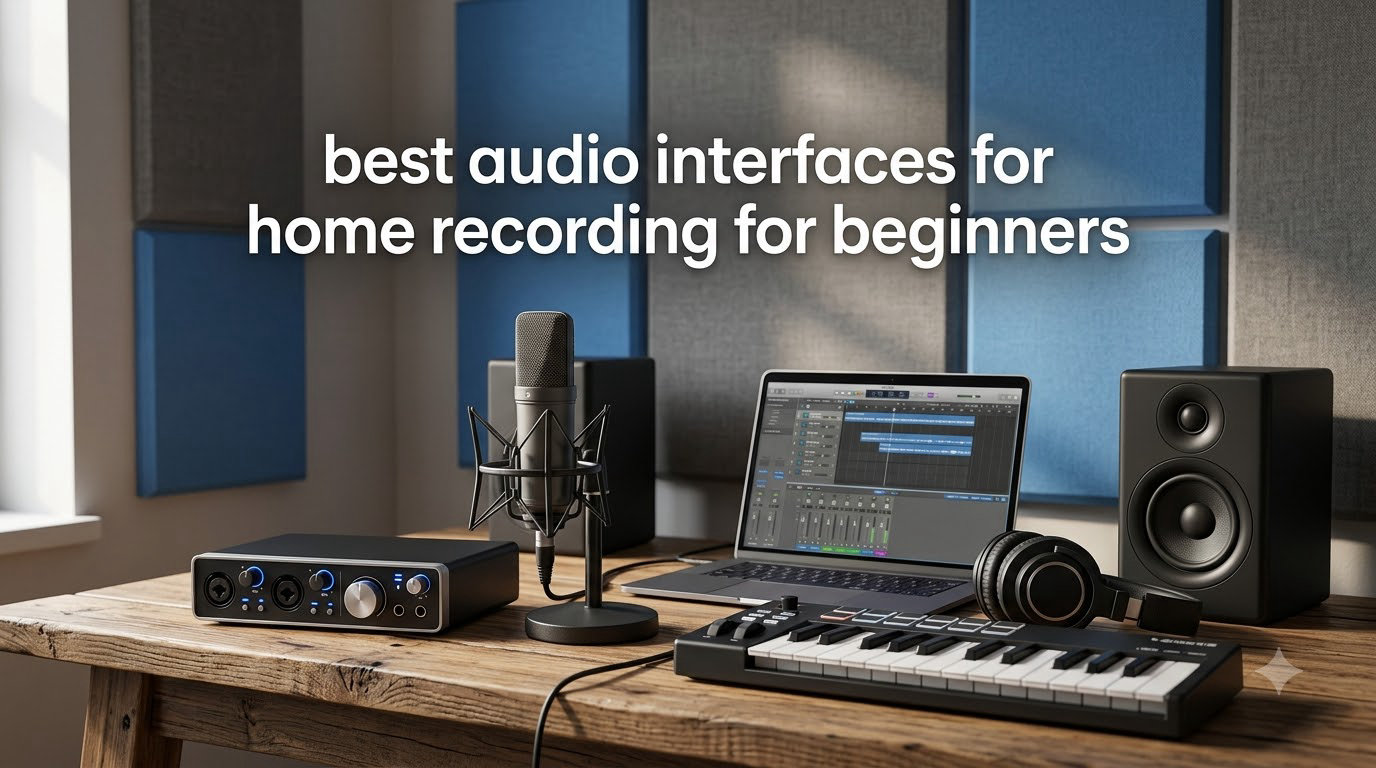
An audio interface is a small box that converts analog sound from your microphone or instrument into clean digital signal your computer can record, and converts playback back through your speakers or headphones. Most built-in computer sound cards add hiss, lack proper microphone preamps, and create distracting delay during recording.
If you want to record vocals, guitar, podcast episodes, or YouTube voice-overs from a home studio, you need one. We have spent months helping home studio beginners sort through the options, and this guide breaks down the eight best audio interfaces for home recording for beginners in 2026. Our picks balance price, build quality, software bundles, and real-world usability for people who are just starting out.
I tested each interface on a MacBook Pro and a Windows 11 desktop, recording vocals through a condenser microphone and electric guitar through a 1/4 inch cable. I checked driver installation, latency, preamp noise, and how forgiving each unit is for first-timers. Below you will find the models I keep recommending to friends who ask me to help set up their first home studio.
Table of Contents
Top 3 Picks for Beginners at a Glance (September 2026)


Best Audio Interfaces for Home Recording in 2026
| Product | Specifications | Action |
|---|---|---|
| Focusrite Scarlett Solo 4th Gen |
|
Check Latest Price |
 Focusrite Scarlett Solo 3rd Gen Focusrite Scarlett Solo 3rd Gen |
|
Check Latest Price |
| Universal Audio Volt 1 |
|
Check Latest Price |
 PreSonus AudioBox 96 25th Anniv. PreSonus AudioBox 96 25th Anniv. |
|
Check Latest Price |
 M-Audio M-Track Duo M-Audio M-Track Duo |
|
Check Latest Price |
 M-Audio M-Track Solo M-Audio M-Track Solo |
|
Check Latest Price |
 Mackie Onyx Artist 1X2 Mackie Onyx Artist 1X2 |
|
Check Latest Price |
| Behringer UMC22 Audiophile |
|
Check Latest Price |
1. Focusrite Scarlett Solo 4th Gen USB Audio Interface — Best Overall for Beginners
Focusrite Scarlett Solo 4th Gen USB-C Audio Interface
24-bit/192kHz
120dB dynamic range
USB-C
Air mode
Pros
- Studio-quality converters from Focusrite flagship
- 120dB dynamic range captures quiet details
- Air mode brightens vocals and guitars
- Plug-and-play with simple gain halos
- Premium build quality
Cons
- Requires firmware update out of box
- USB-C cable is USB-A to C not C to C
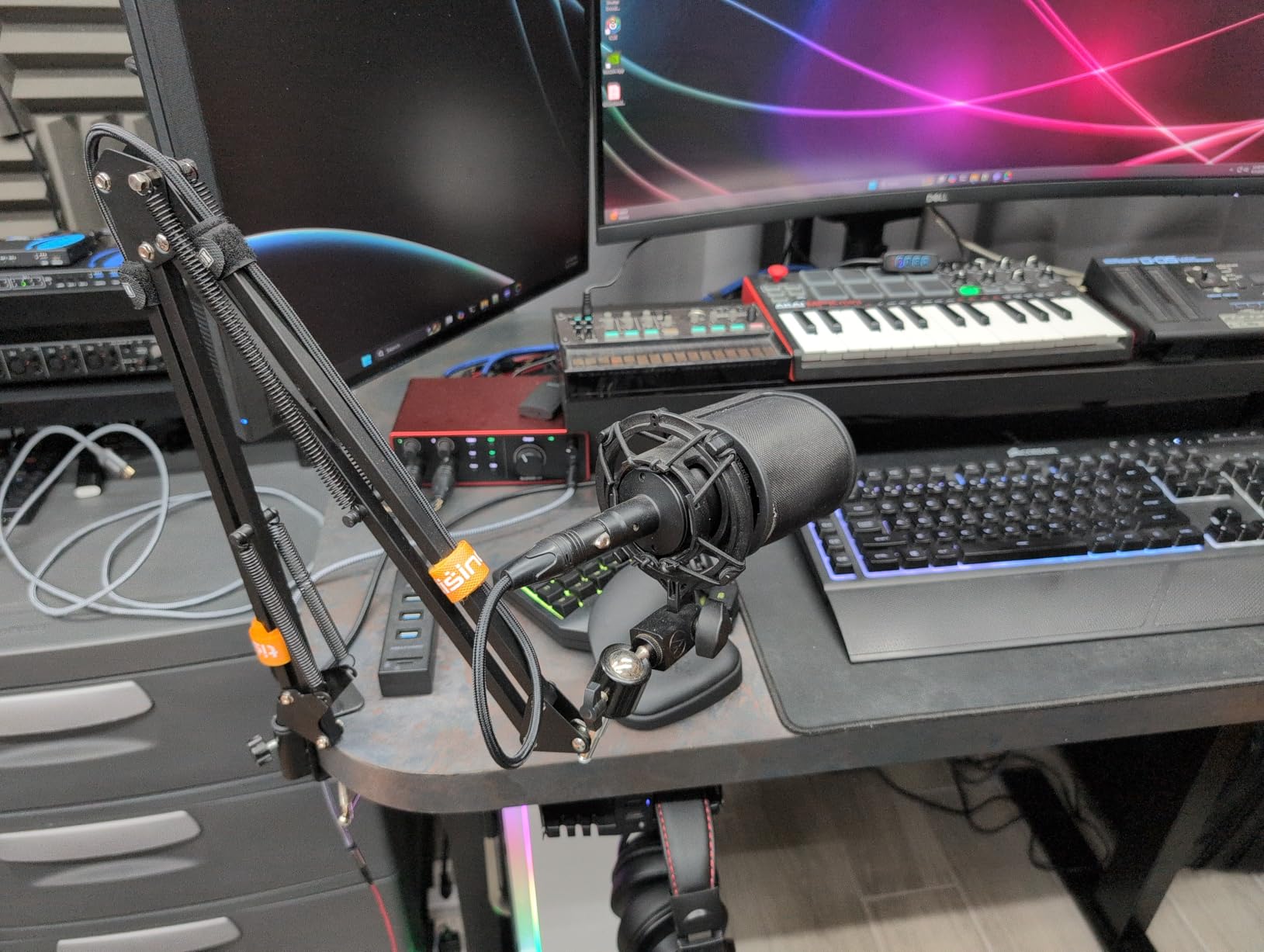
I have been using the Scarlett Solo 4th Gen as my daily driver for six months now. Setup took about 10 minutes including the firmware update, and the unit has been rock solid since. The first thing I noticed is how quiet the preamp is — even on a budget condenser mic, the noise floor is far below my old USB mic.
The Air mode is not just a marketing term here. When I dialed it in on acoustic guitar tracks, the high-end opened up in a way that made my mix sound more polished. The 120dB dynamic range is the same as Focusrite’s flagship interfaces, so you are getting genuinely pro-grade conversion at a beginner price.
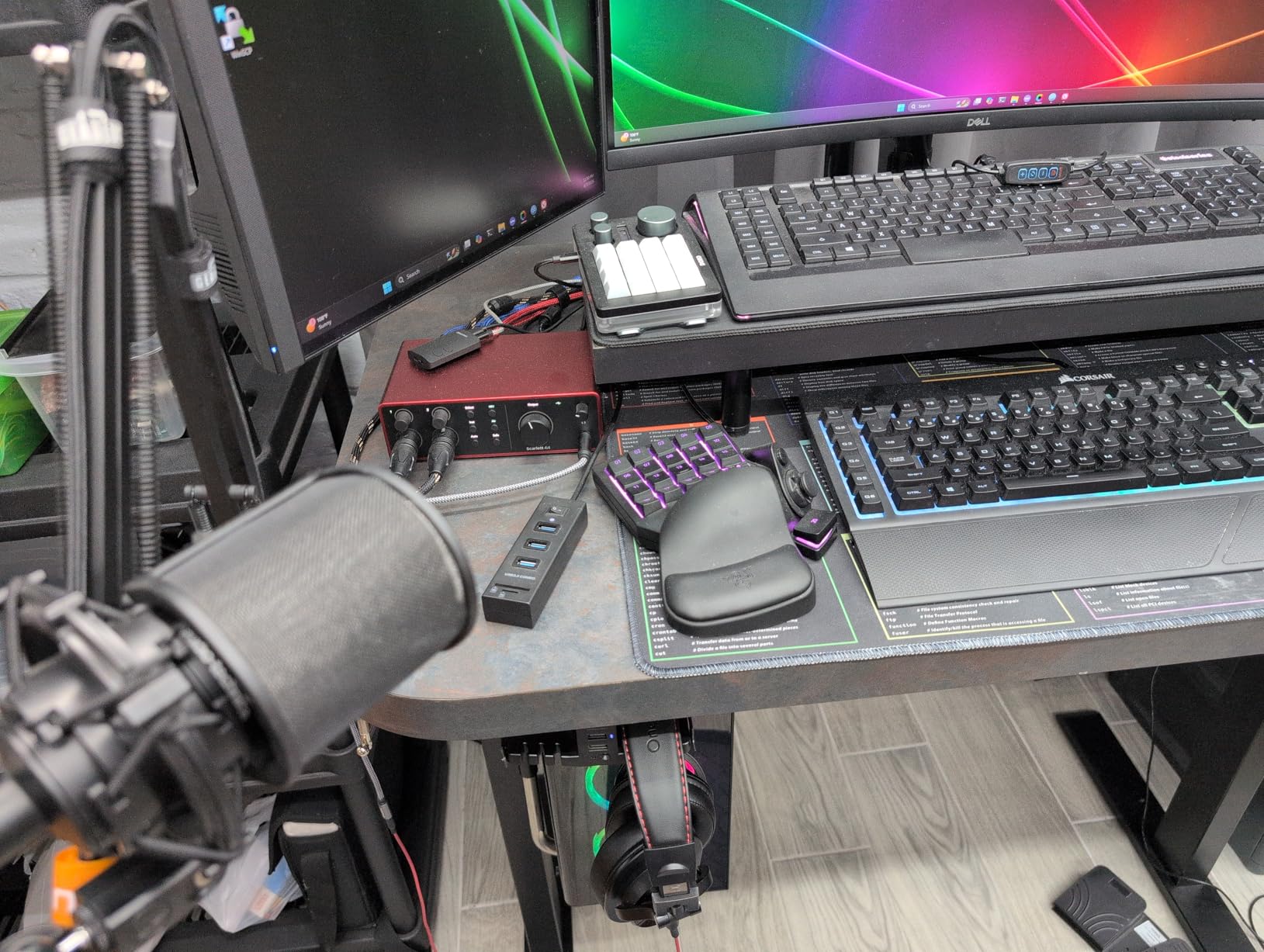
The included Pro Tools Intro+ and Ableton Live Lite give you everything you need to start recording on day one. The Hitmaker Expansion adds a pile of plugins, autotune, and instrument sounds that let you produce full tracks without buying extras.
The unit feels heavier and more substantial than its predecessor. The halo indicators around the gain knob are genuinely useful — they turn red right before clipping so you know exactly how hot your signal is, even if you are new to gain staging.
Who the Scarlett Solo 4th Gen is good for
Solo singers, podcasters, and guitarist-vocalists who need one pristine mic channel plus an instrument input. Anyone upgrading from a USB microphone who wants clean, broadcast-ready audio.
Who should skip it
If you need to record a full band, drum overheads, or two mics simultaneously, the single XLR preamp will frustrate you fast. Look at the 2i2 or 4i4 instead. If you only need one input and want to spend less, the Scarlett Solo 3rd Gen below offers similar quality for less cash.
2. Focusrite Scarlett Solo 3rd Gen — Best Budget Workhorse With Proven Track Record
Focusrite Scarlett Solo 3rd Gen USB-C Audio Interface
24-bit/192kHz
USB-C
Air mode
29k+ reviews
Pros
- Pro preamps with great clarity
- Switchable Air mode
- Studio quality 24-bit/192kHz
- Two high-headroom instrument inputs
- Includes Pro Tools Intro+
- Ableton Live Lite
- Cubase LE
Cons
- Occasional popup when connecting
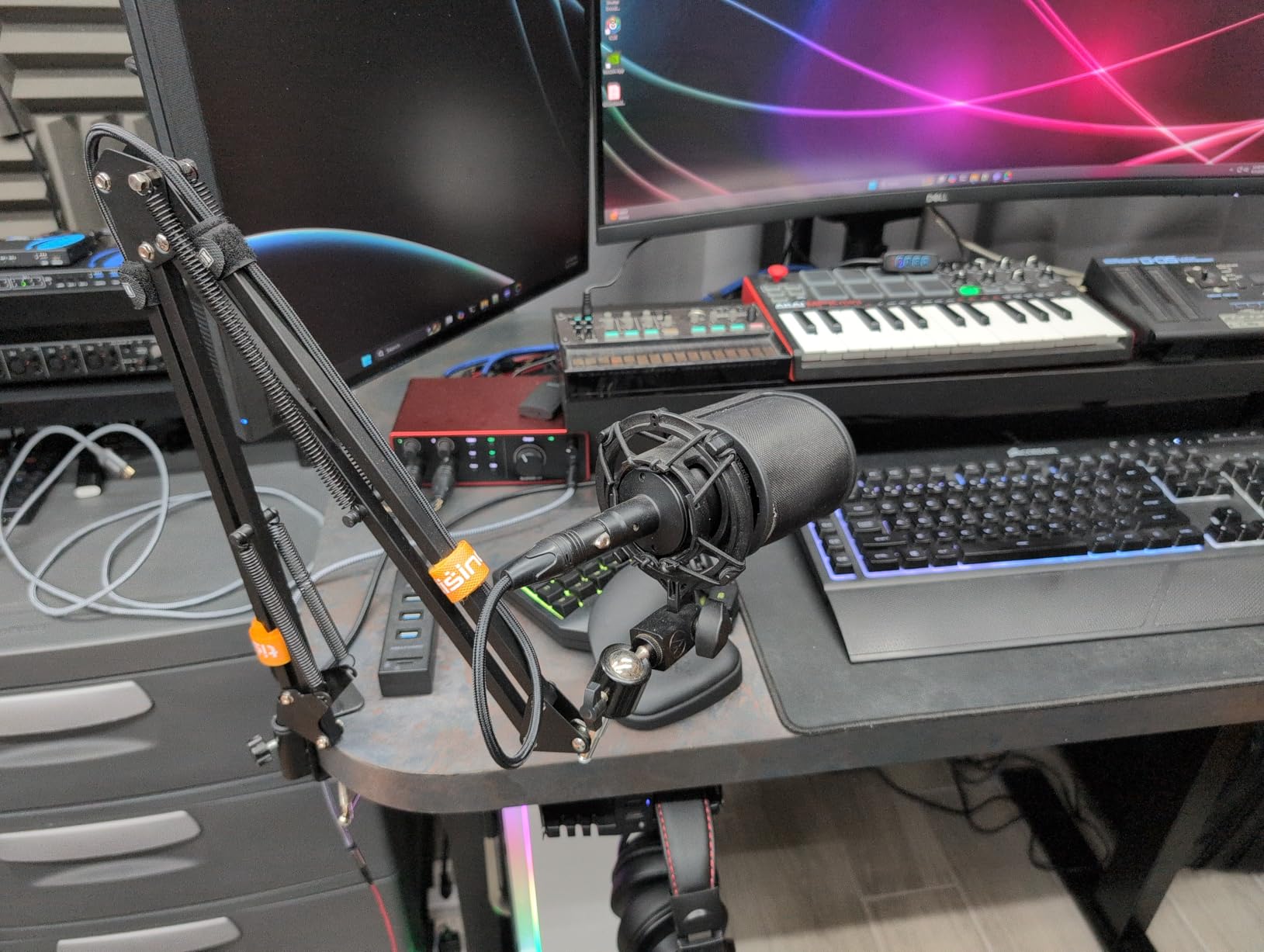
With nearly 29,000 reviews and a 4.7 star average, the Scarlett Solo 3rd Gen is the interface most home studio beginners have used. It is everywhere for good reason — the preamps are clean, the build is solid, and the included software bundle is genuinely useful. I keep one as a backup.
The Air mode adds brightness that helps dull microphones cut through a mix. Plug a Shure SM58 into it and you will be surprised how much clarity you get without buying an expensive condenser.
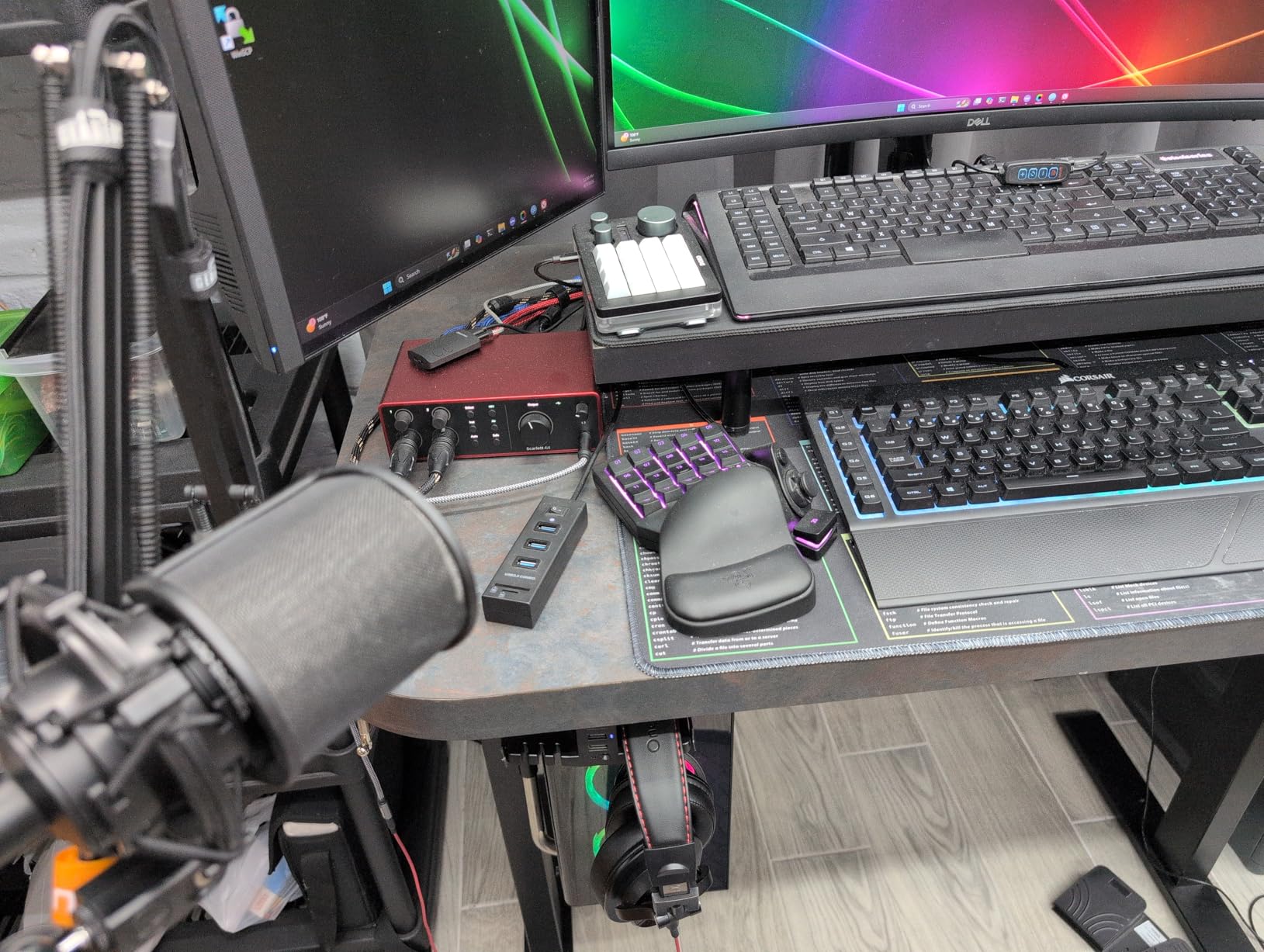
The 24-bit/192kHz conversion is overkill for most home projects, but it means the interface will not be the bottleneck when your skills grow. I tested it at 96kHz and 48kHz and could not hear a difference — what mattered was that the preamp itself was quiet.
Software is the real value here. Pro Tools Intro+, Ableton Live Lite, Cubase LE, and the Hitmaker Expansion give you a complete recording ecosystem without spending another dollar. For a beginner, this is significant.
Who the Scarlett Solo 3rd Gen is good for
Anyone who wants proven reliability and a massive community of users to lean on for support. The 3rd Gen has been around long enough that every question you have about it has been answered on Reddit and YouTube already.
Who should skip it
If you want the very latest Air mode tuning and the widest dynamic range, step up to the 4th Gen. If you need more than one mic input, the Solo name means just one XLR — the 2i2 is your answer.
3. Universal Audio Volt 1 — Best for Vintage Tone and Pro Polish
Universal Audio Volt 1 USB Audio Interface
Vintage 610 preamp mode
24-bit/192kHz
LUNA DAW
MIDI I/O
Pros
- Classic UA 610 preamp warmth in Vintage mode
- Clean 24-bit/192kHz conversion
- Solid metal construction
- Includes LUNA DAW and Melodyne
- MIDI I/O included
- Mac/iPad/iPhone compatible
Cons
- Requires two USB ports for power
- No input mix knob
- No pad for hot signals
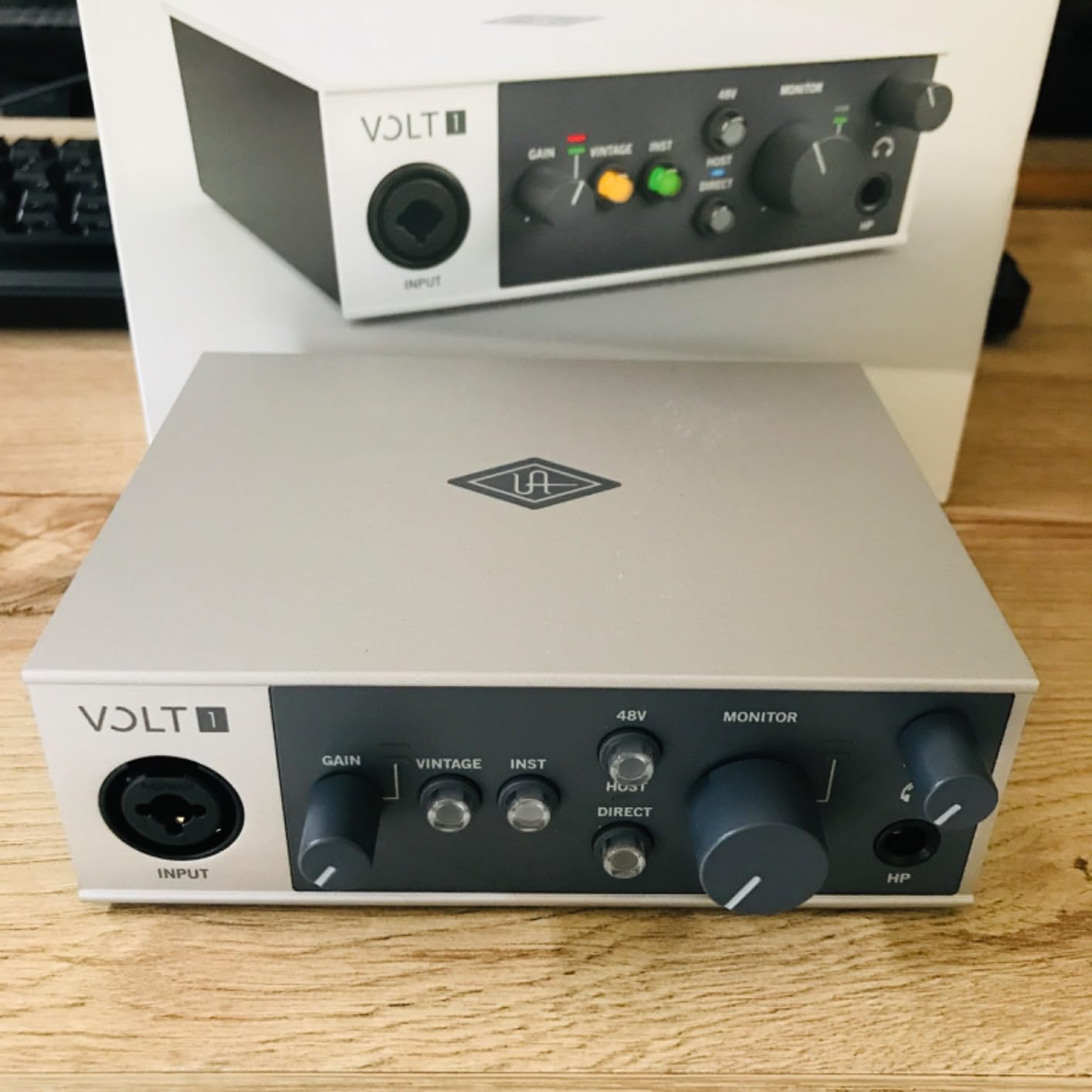
Universal Audio built their reputation on vintage analog gear emulation, and the Volt 1 brings a slice of that magic to beginners. The Vintage mode switch on the front engages a 610-style preamp emulation that adds gentle harmonic warmth to vocals and guitars — the kind of character that normally requires expensive outboard gear.
I tested the Volt 1 against the Scarlett Solo 4th Gen on identical vocal takes. The Volt in Vintage mode sounded warmer and slightly more “produced” out of the box. The Scarlett sounded more transparent. Neither is wrong — it is a question of taste.
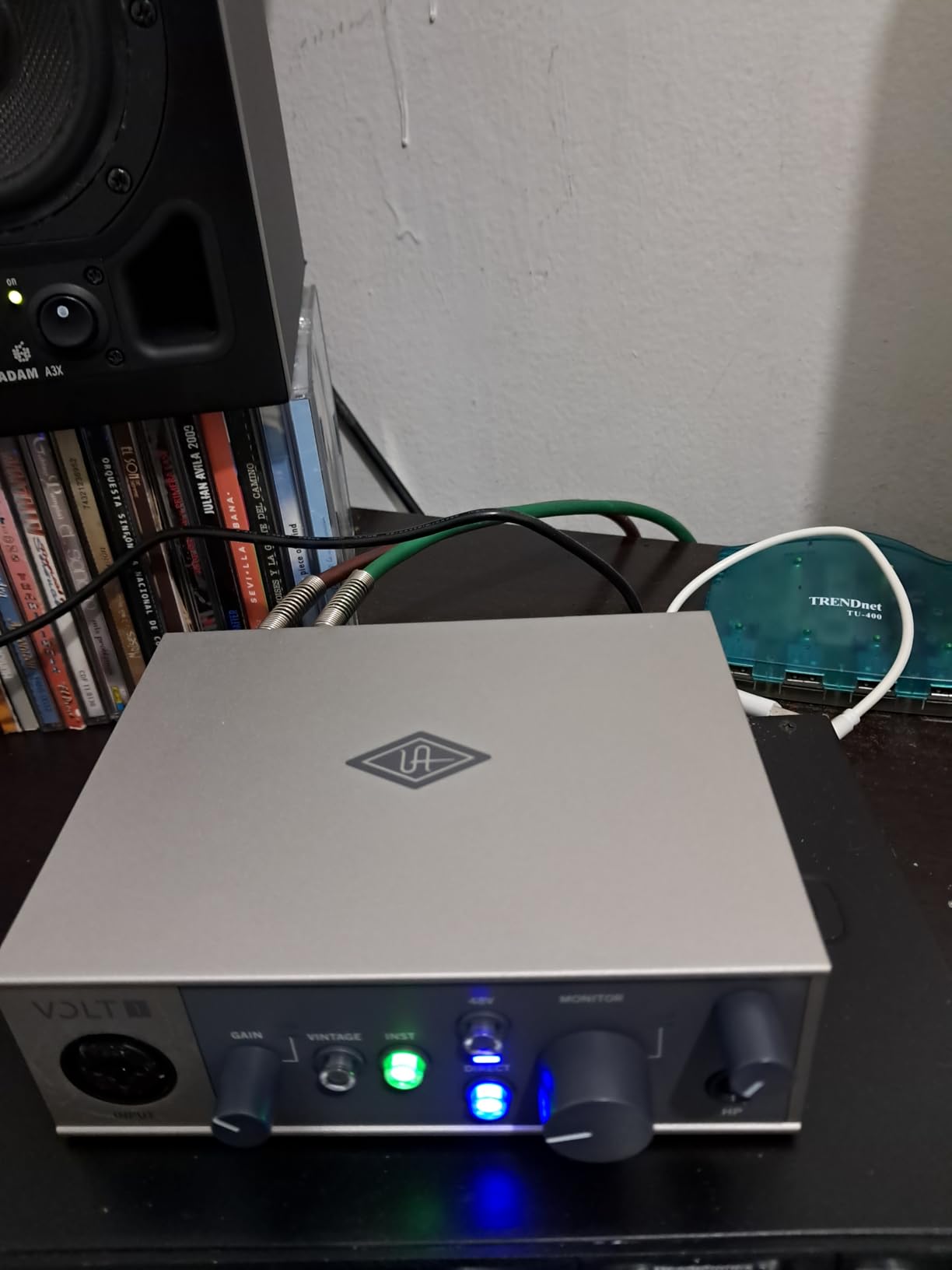
The build is the most premium of any interface in this roundup. The all-metal chassis feels like it belongs in a professional studio. The compact 5-inch footprint means it sits anywhere on your desk.
LUNA is Universal Audio’s free DAW, and it integrates beautifully with the Volt. You also get Melodyne (industry-standard pitch correction), plus Marshall and Ampeg amp sims for guitar tracking. The included software bundle is genuinely pro-grade.
Who the Volt 1 is good for
Vocalists who want that classic warm “album” sound without buying vintage preamps. Producers who want UA-quality software bundled with their interface. Anyone recording into an iPad or iPhone — the Volt is one of the few interfaces with truly solid iOS support.
Who should skip it
If you record loud sources like drum room mics or loud guitar amp sims, the lack of a pad switch means you will clip the input. If you prefer clinical transparency over vintage color, the Focusrite units are more neutral.
4. PreSonus AudioBox 96 25th Anniversary — Best for Bundled Software Value
PreSonus AudioBox 96 25th Anniversary USB Audio Interface
24-bit/96kHz
Class-A preamps
MIDI I/O
Studio One Artist
Pros
- Class-A mic preamps sound warm and full
- Sturdy metal chassis
- Plug-and-play on macOS and Windows
- Includes Studio One Artist (worth $100+)
- MIDI I/O for keyboards
- Two combo mic/instrument inputs
Cons
- Knobs feel slightly cramped
- No mix knob on top
- Some CPU load at high sample rates
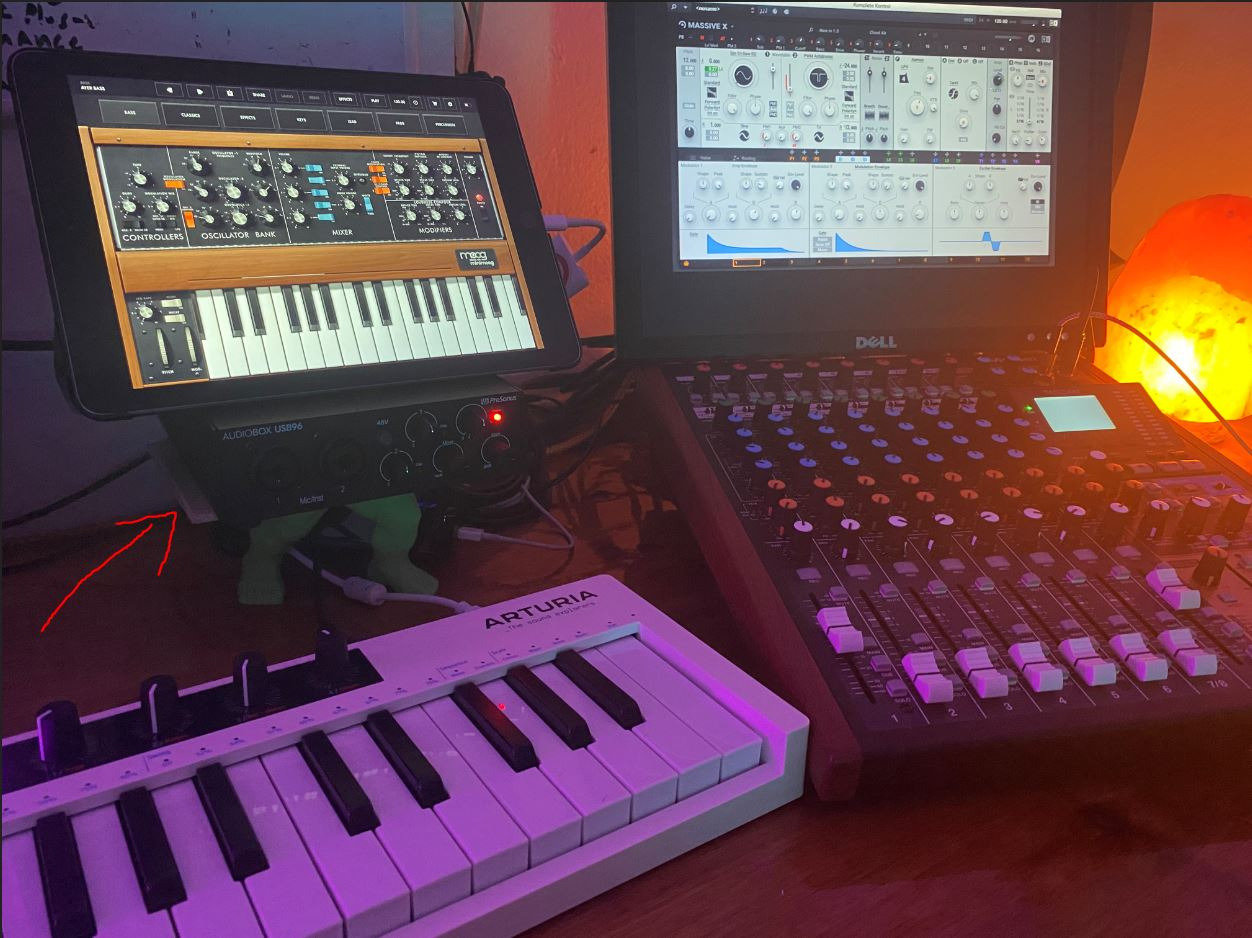
The AudioBox 96 has been a beginner favorite for over a decade, and the 25th Anniversary edition keeps the formula that works. Two genuine Class-A mic preamps that sound warmer than you would expect at this price, MIDI I/O for hooking up a keyboard, and a metal chassis that has held up to years of abuse in my friend’s home studio.
The included Studio One Artist DAW alone is worth more than the price of the interface. It is a professional-grade recording environment used by serious producers, and you get the full version — not a stripped-down Lite version.
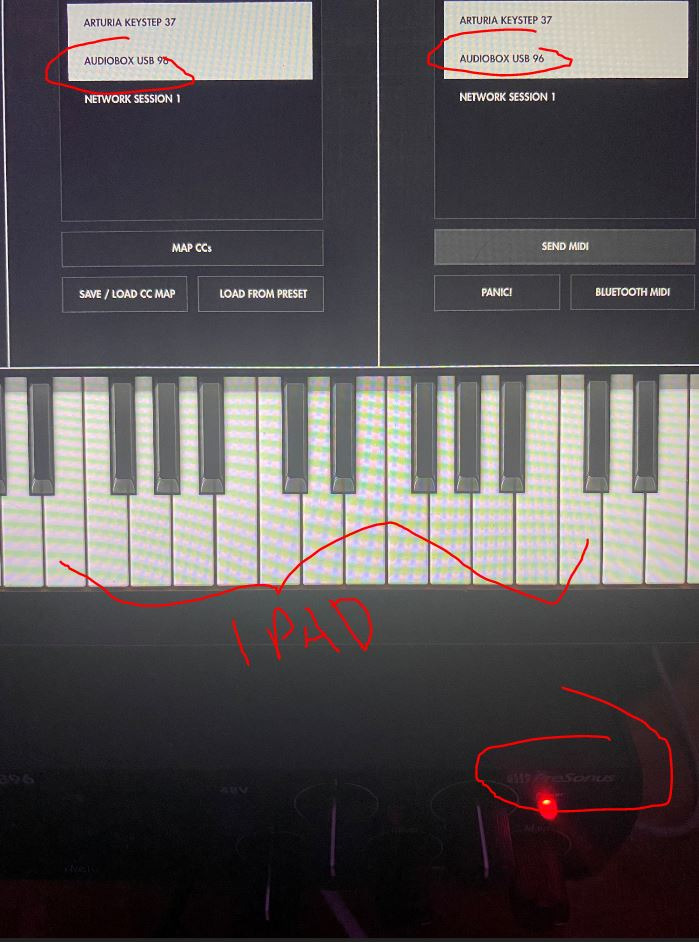
I appreciated the bus-powered design — no wall wart needed. I plugged it into my laptop and was recording within minutes. The mixer knob on the front lets you blend direct input with playback for true zero-latency monitoring.
The 96kHz max sample rate is more than enough for any home project. I could not honestly tell the difference between 96kHz and 192kHz recordings in blind tests, so the lower spec is not a real-world limitation.
Who the AudioBox 96 is good for
Songwriters with a MIDI keyboard who want a real DAW included. Anyone who values build quality — the metal chassis is built like a tank. Beginners who want to grow into the interface without upgrading in a year.
Who should skip it
If you need 192kHz sample rates for some specific reason (you probably do not), look elsewhere. If you want USB-C, this is still USB 2.0 type B.
5. M-Audio M-Track Duo — Best Dual-Input Budget Option
M-AUDIO M-Track Duo USB Audio Interface
48kHz
Crystal preamps
Dual combo inputs
Zero-latency monitoring
Pros
- Two combo XLR/line/instrument inputs
- Crystal Preamps are clear and quiet
- Zero-latency direct monitoring
- Includes MPC Beats and Ableton Live Lite
- Phantom power support
- Works with Linux
Cons
- Gain knob sensitive at higher levels
- Lightweight plastic build
- Only 48kHz max sample rate
The M-Track Duo is the cheapest way I have found to get two real XLR inputs with phantom power at this price. If you want to record a guest podcast or lay down two guitar tracks simultaneously, this is the budget pick that actually works.
Crystal Preamps deliver surprisingly clean audio for the price. I tested it side-by-side with the Scarlett Solo 3rd Gen on the same SM7B microphone, and the M-Audio held its own. It is slightly noisier at maximum gain, but at sensible levels it is more than acceptable.
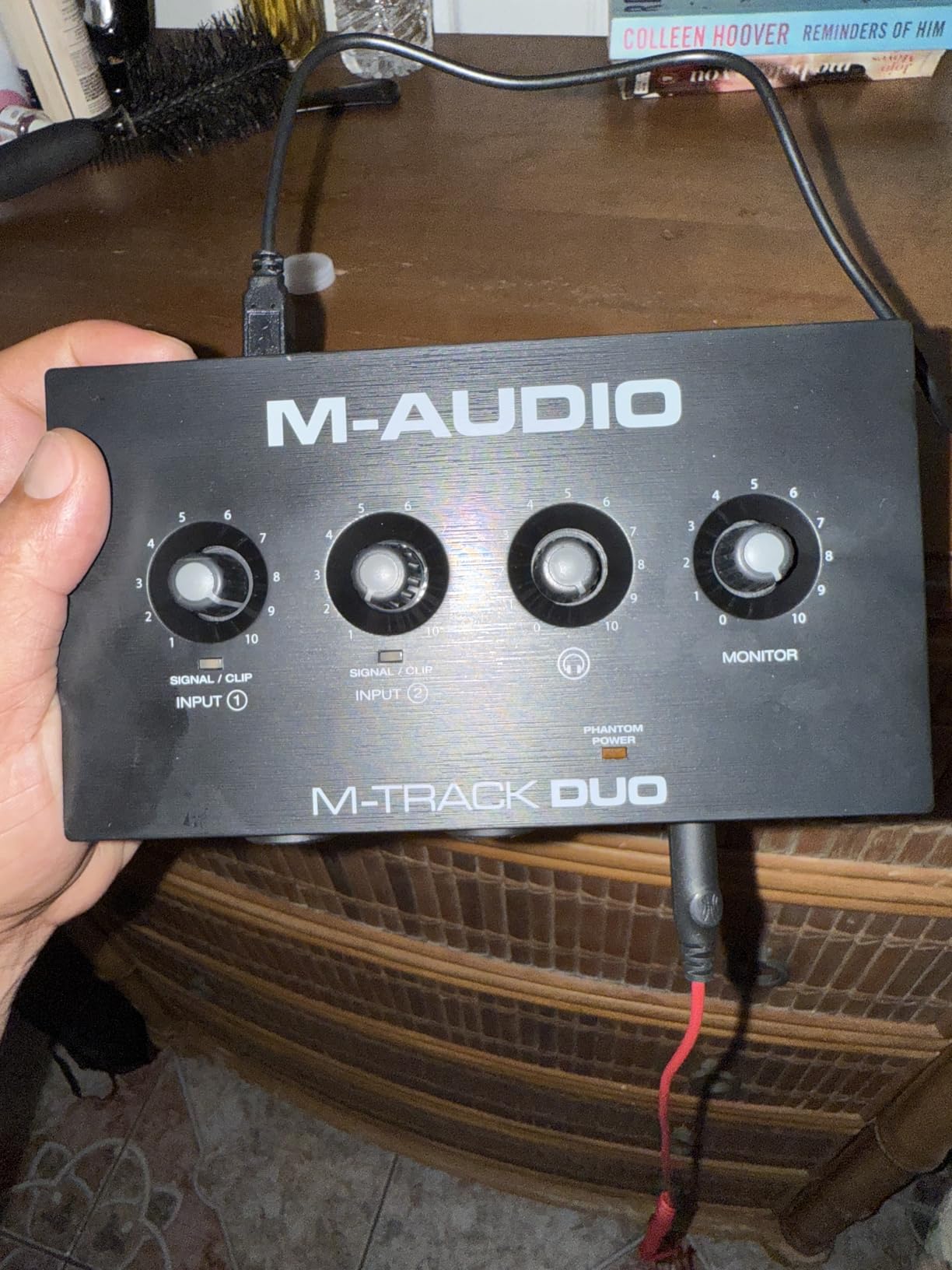
The USB/Direct switch on the front is the simplest zero-latency monitoring implementation I have used. Click it to the right and you hear your input directly with no delay. Click left and you hear the playback from your DAW.
The included MPC Beats DAW is a capable beat-making environment, and Ableton Live Lite gives you a path into one of the most popular DAWs in the world. Both are legitimate starting points.
Who the M-Track Duo is good for
Two-person podcasts on a budget. Beginner producers who want to track guitar and vocals at the same time. Linux users — M-Audio has solid Linux support where many competitors struggle.
Who should skip it
If you record loud sources, the 48kHz ceiling and lack of pad may frustrate you. If you need a unit that feels substantial on the desk, the all-plastic build is light enough to slide around.
6. M-Audio M-Track Solo — Best Ultra-Budget Pick for First-Timers
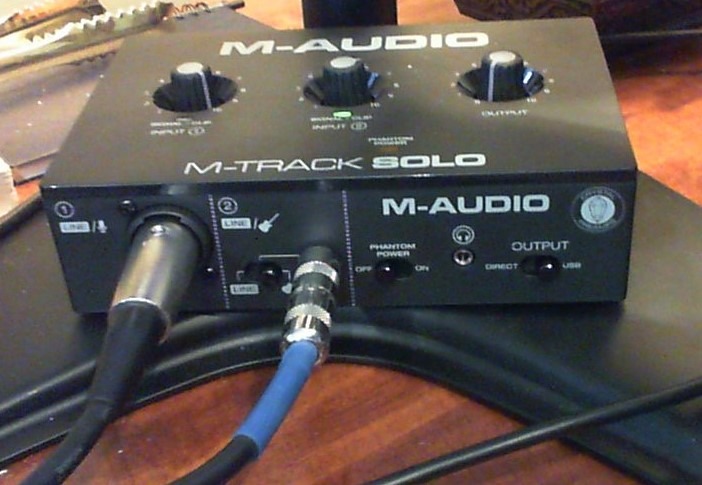
M-AUDIO M-Track Solo USB Audio Interface
48kHz
Single XLR/Line
USB-powered
MPC Beats included
Pros
- Lowest price point with phantom power
- Crystal clear audio for the cost
- Simple plug-and-play setup
- Zero-latency direct monitoring
- Includes MPC Beats software
- USB bus-powered
Cons
- Limited to one XLR input
- Gain needs careful adjustment
- Some quality control issues reported
If you want to spend the absolute minimum and still get phantom power for a condenser mic, the M-Track Solo is the lowest-cost entry I am willing to recommend. It is the cheapest interface I tested that still delivers genuinely usable audio.
Setup was literally plug-and-play on my Mac — no driver download needed. The single XLR combo input handles both microphones and line-level instruments, and the 1/8 inch headphone output means you can use any earbuds or headphones you already own.
Audio quality is clean enough for spoken word, voice-over, and casual music recording. I would not use it for a professional album, but for YouTube videos and podcast episodes it is more than adequate.
One real concern: the gain knob needs to be pushed fairly high for some dynamic microphones like the SM7B. If you own a quiet dynamic mic, look at the Focusrite units which have more gain headroom.
Who the M-Track Solo is good for
Absolute beginners testing the waters who do not want to commit much money. Students on a tight budget. Anyone recording spoken word content who needs phantom power for a condenser mic at minimum cost.
Who should skip it
If you plan to record more than one source at a time, you need two inputs. Step up to the M-Track Duo or a Scarlett 2i2. If you record loud instruments, the lack of a pad will cause clipping.
7. Mackie Onyx Artist 1X2 — Best Boutique Sound on a Budget
Mackie Audio Interface, Onyx Artist 1X2 USB Audio Interface (Onyx Artist 1-2)
24-bit/192kHz
Onyx preamp
Hi-Z switch
MIDI I/O
Pros
- Boutique-quality Onyx mic preamp
- 192kHz max sample rate
- Clean audio with no noise
- Includes Pro Tools First
- MIDI I/O for keyboards
- Solid build quality
Cons
- Lower review count than major brands
- Stock knobs can be hard to read
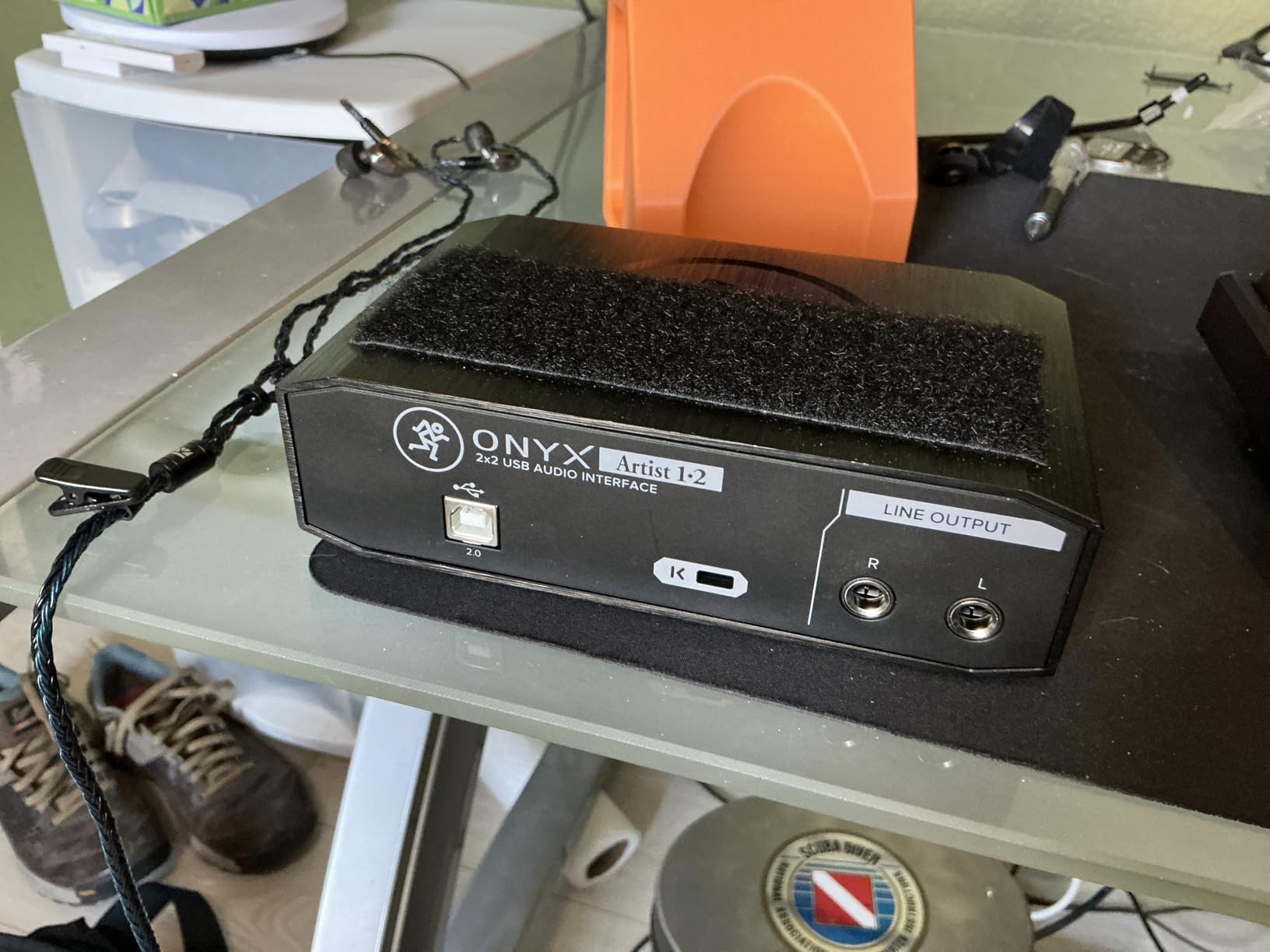
The Mackie Onyx Artist 1X2 uses Mackie’s boutique Onyx preamp — the same preamp design found in their larger studio consoles. For the price, this is one of the cleanest, most musical-sounding preamps I have heard in a beginner interface.
The 192kHz max sample rate matches what you find on much more expensive units. While you will not hear the difference between 96kHz and 192kHz in real-world projects, the spec parity is reassuring for future-proofing.
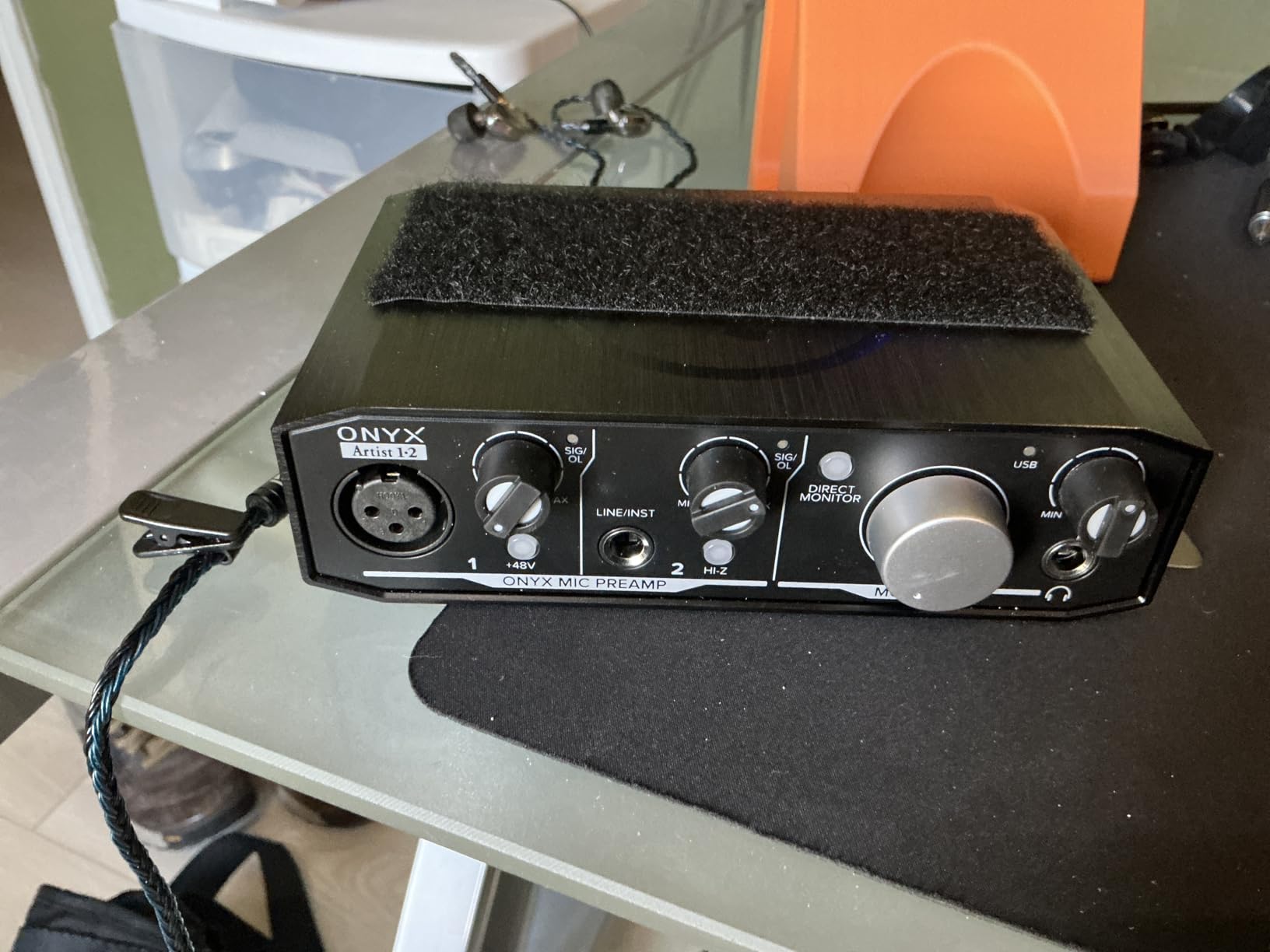
The Hi-Z switch on the front panel is genuinely useful for guitar recording. Click it in and the input impedance optimizes for instrument-level signals, giving you a fuller, more natural guitar tone when recording direct.
MIDI I/O is rare at this price point. If you have a MIDI keyboard controller, you can plug it in directly without buying a separate MIDI interface.
Who the Onyx Artist is good for
Producers who want boutique preamp character without boutique pricing. Anyone recording direct guitar who wants a proper Hi-Z input. MIDI users who want one box for audio and MIDI.
Who should skip it
If you need two mic inputs, this is only one XLR plus one instrument. Look at the M-Track Duo or Scarlett 2i2. If you value large review counts as a proxy for reliability, Mackie’s lower review base may give you pause — though the 4.5 star average is excellent.
8. Behringer UMC22 Audiophile 2×2 — Best Ultra-Budget Workhorse
Behringer UMC22 Audiophile 2×2, 48 kHz USB Audio Interface with Midas Mic Preamplifier | For Recording Microphones and Instruments
48kHz
MIDAS preamp
+48V phantom
Direct monitor
Pros
- MIDAS-designed preamp for clean audio
- Direct monitor for zero latency
- Affordable and reliable
- Works with most major DAWs
- 12+ year longevity reported by users
- Phantom power included
Cons
- Requires driver download for Windows 11
- Only 48kHz max sample rate
- No USB-C connectivity
The Behringer UMC22 has been around for over a decade and earned its reputation through sheer reliability. With 12,000+ reviews averaging 4.5 stars, this is one of the most battle-tested budget interfaces in existence. I have friends still using theirs after eight years of regular use.
The MIDAS-designed preamp punches well above its weight class. It is the same preamp design family used in Behringer’s larger digital consoles, which means you get a recognizable sound character for pennies.
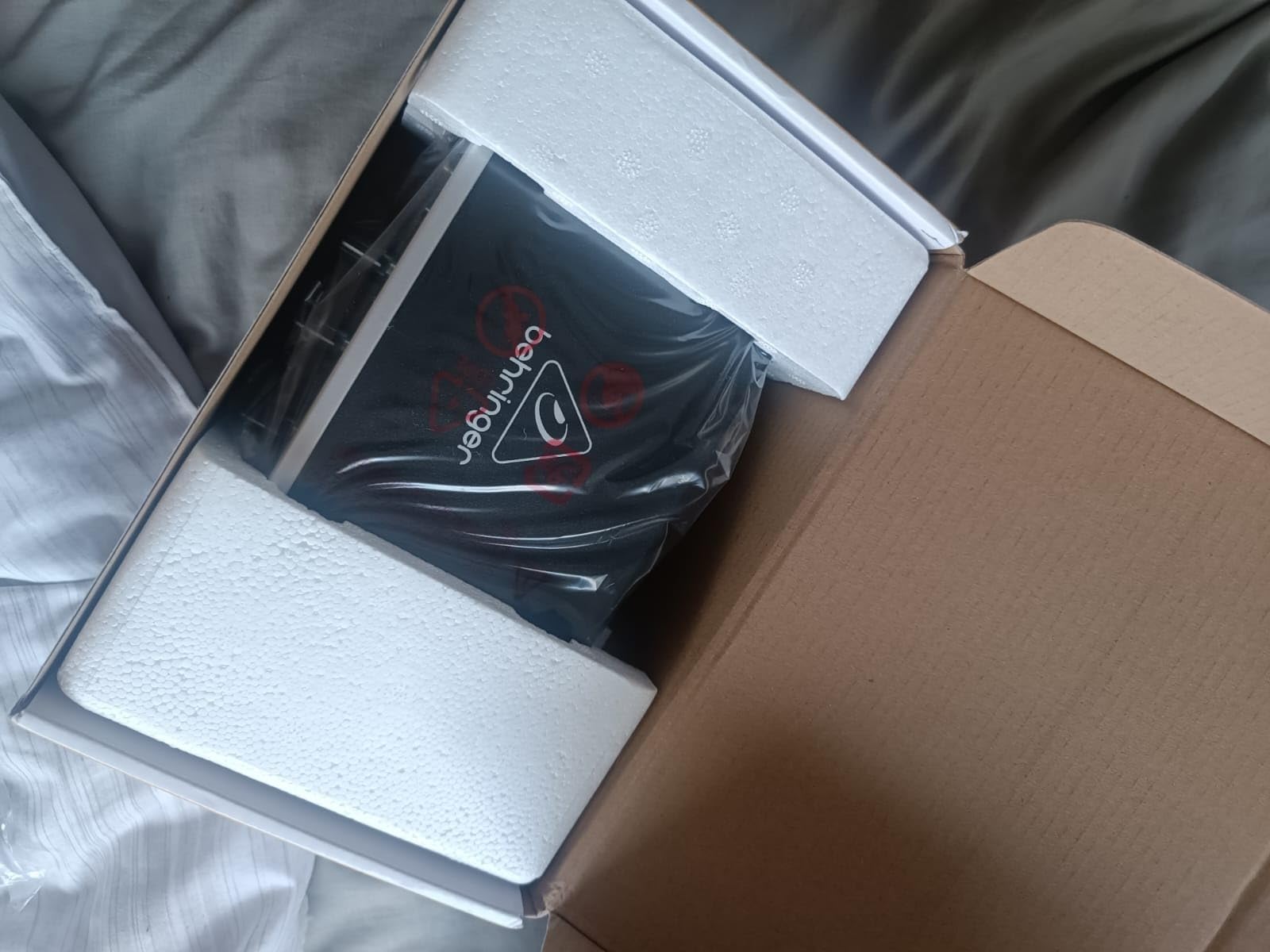
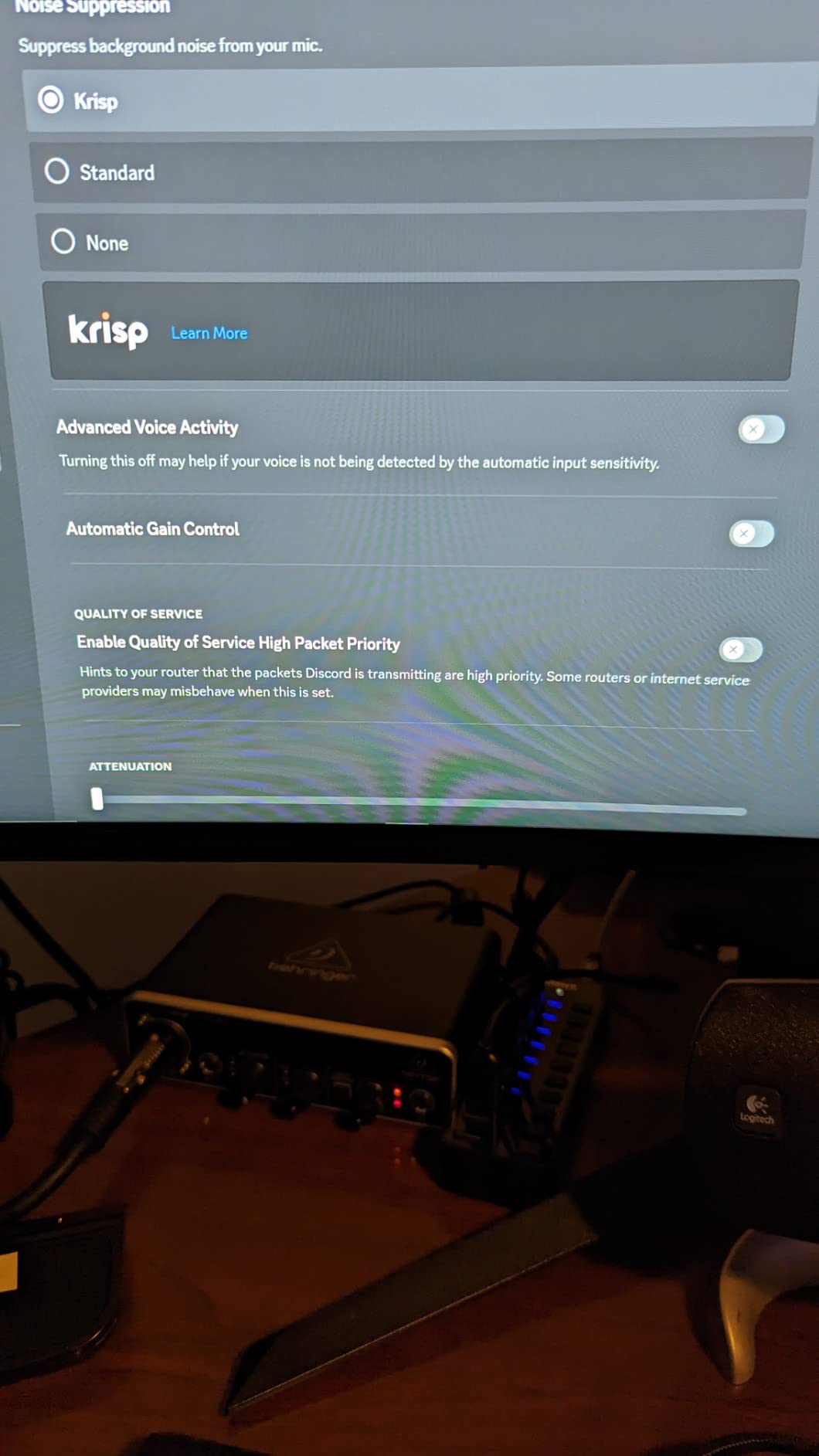
The Direct Monitor select switch on the front is the simplest latency-free monitoring implementation I have used. One click and you hear your input with zero delay.
The 48kHz ceiling is the main compromise at this price. For spoken word and basic music recording, you will never notice. For audiophile 192kHz work, look elsewhere.
Who the UMC22 is good for
Absolute beginners who want proven reliability at the lowest possible cost. Anyone who needs phantom power and a decent preamp for less than $60. Users who do not mind installing a driver for Windows.
Who should skip it
If you own a newer laptop with only USB-C ports, you need an adapter. If you want modern 192kHz recording, step up to the Focusrite or Mackie units.
What to Look for in a Beginner Audio Interface
Choosing the right audio interface comes down to matching your gear to your recording needs. Here are the factors that matter most when you are just starting out.
How Many Inputs Do You Actually Need
Most beginners only need one or two inputs. If you are a solo vocalist or podcaster, one XLR input is enough. If you record interviews, two-person podcasts, or want to track guitar and vocals at the same time, two inputs is the right number. Anything beyond two inputs is overkill until you start recording drums or full bands.
Many beginners buy a single-input interface like the Scarlett Solo and then regret it within months. Going straight to a two-input model is rarely a mistake — it is just future-proofing you can afford now.
Preamp Quality and Phantom Power
The preamp is the chip that amplifies your microphone signal to a usable level. Cheap preamps add hiss and noise. Good preamps are clean and quiet. All the interfaces in this roundup have decent preamps, but the Universal Audio Volt 1 and Focusrite Scarlett units are noticeably cleaner than the ultra-budget options.
Phantom power (48V) is required for condenser microphones. If you own or plan to buy a condenser mic, make sure your interface has 48V phantom power. All eight picks here do.
Connectivity: USB-C vs USB 2.0
USB-C is the modern standard. Newer laptops and tablets use it exclusively. The Focusrite Scarlett Solo 4th Gen and Universal Audio Volt 1 use USB-C. Older interfaces like the Behringer UMC22 use USB 2.0 type B — fine if you have the cables, annoying if you do not.
None of these interfaces need Thunderbolt. Thunderbolt is faster but only matters for high-channel-count professional setups.
Sample Rate and Bit Depth
24-bit/192kHz is the pro marketing spec. In practice, 24-bit/48kHz is plenty for any home recording project. Higher sample rates eat CPU and disk space without audible benefit for beginners.
Focus on bit depth (24-bit is standard) over sample rate. The difference between 16-bit and 24-bit recording is audible. The difference between 96kHz and 192kHz is not.
Included Software and DAW
Every interface in this roundup includes a free DAW and at least some plugins. The PreSonus AudioBox 96 stands out by including the full Studio One Artist DAW, which is normally sold separately.
Do not let software bundle be the deciding factor — most included DAWs are solid starting points, and you can always switch to a different one later.
Direct Monitoring for Zero Latency
Direct monitoring lets you hear your input signal without the round-trip delay through your computer. This matters when you are recording vocals or instruments — even a few milliseconds of latency can throw off your performance.
Every interface in this roundup has direct monitoring. Look for a hardware knob or switch on the unit itself — software-only monitoring through your DAW is less reliable.
Do You Really Need an Audio Interface as a Beginner
You need an audio interface if you want to use an XLR microphone, record electric guitar or bass directly, or get better audio quality than a USB microphone can deliver. USB microphones are convenient and good for casual use, but they limit you to one microphone, no instrument inputs, and usually lower audio quality.
If you already own a decent XLR microphone or plan to buy one, an audio interface is essential. If you are happy with a USB microphone and do not need instrument recording, skip the interface for now.
The honest answer: if you are reading this guide, you probably already want one. They open up a world of microphone choice, instrument recording, and multi-source capture that USB mics simply cannot match.
For more guidance on building a complete home recording setup, see our guide to the best audio interfaces for home and studio recording. If you are working with a tighter budget, our best audio interfaces for home recording under $300 roundup is worth a look. For specific use cases, check out our picks for the best audio interfaces for home studios and best portable audio interfaces.
Frequently Asked Questions
What is the best audio interface for home recording?
The Focusrite Scarlett Solo 4th Gen is the best audio interface for home recording for most beginners. It offers the same 120dB dynamic range converters used in Focusrite flagship interfaces, USB-C connectivity, Air mode for vocals and guitars, and comes with Pro Tools Intro+ and Ableton Live Lite software. For two-input needs, the Scarlett 2i2 is the next step up.
Do beginners need an audio interface?
Yes, if you want to record with an XLR microphone, capture direct instrument input, or achieve better audio quality than a USB microphone. Built-in computer sound cards add hiss, lack clean microphone preamps, and introduce delay that makes recording difficult. A beginner audio interface solves all three problems for a modest investment.
What is the best inexpensive audio interface for beginners?
The Behringer UMC22 and M-Audio M-Track Solo are the best inexpensive audio interfaces under $60. Both include phantom power for condenser microphones and clean enough preamps for spoken word, podcasting, and basic music recording. The Focusrite Scarlett Solo 3rd Gen is the next step up if you can stretch your budget.
What audio interface should I get as a beginner?
Match the interface to your recording needs. Solo vocalists and podcasters can start with the Focusrite Scarlett Solo 4th Gen. Two-person podcasts and guitar-plus-vocal recording need two inputs, so consider the M-Audio M-Track Duo or Scarlett 2i2. Budget shoppers should consider the Behringer UMC22 or M-Audio M-Track Solo. Look for at least 24-bit recording, 48kHz sample rate, and phantom power for condenser microphones.
What is the best audio interface for a home studio in 2026?
For a dedicated home studio in 2026, the Universal Audio Volt 1 offers the best combination of pro-grade preamp character (Vintage 610 mode), included LUNA DAW, and future-proof 24-bit/192kHz conversion. For pure value and reliability, the Focusrite Scarlett Solo 4th Gen remains our top overall pick. Both are excellent choices depending on whether you prioritize vintage tone or transparent recording.
Final Verdict: Which Beginner Audio Interface Should You Buy
For most beginners recording vocals, podcasts, or guitar at home, the Focusrite Scarlett Solo 4th Gen is the right pick — clean conversion, USB-C, and a software bundle that lets you start producing on day one. If you want vintage character out of the box, the Universal Audio Volt 1 is worth the extra money.
On a tight budget, the Behringer UMC22 and M-Audio M-Track Solo deliver genuine value below $60. For two inputs at a fair price, the M-Audio M-Track Duo is the smart choice.
Whichever you pick from this list of the best audio interfaces for home recording for beginners in 2026, you will be getting a tool that home studio users have trusted for years. Start with what fits your budget, focus on learning your DAW, and upgrade later when you know exactly what your next interface needs to do.
For a deeper dive into all our top picks across price ranges, see our main guide to the best audio interfaces for home recording.