
Blues guitar is all about feel, dynamics, and that sweet spot where your notes bloom into natural overdrive. But here is the truth most players learn the hard way: your amp matters just as much as your guitar when it comes to getting that tone. The best blues guitar amps give you touch-sensitive response, warm breakup, and enough headroom to clean up when you back off your volume knob.
I have spent years playing through dozens of amplifiers at home, in studios, and on small stages. What I learned is that a great blues amp does not need to be the loudest or the most expensive. It needs to respond to your hands. Tube amps have traditionally ruled this space because of how their power tubes saturate and compress when pushed, but modern digital modeling has closed the gap significantly in 2026.
This guide covers 8 hand-picked amplifiers that deliver authentic blues tone across every budget and playing situation. Whether you need a bedroom practice amp, a recording companion, or a gigging workhorse, I have tested and compared these options so you can find the right match for your playing style.
Table of Contents
Top 3 Picks for Best Blues Guitar Amps


Best Blues Guitar Amps in 2026
| Product | Specifications | Action |
|---|---|---|
| Fender Blues Junior IV |
|
Check Latest Price |
| Fender Tone Master Deluxe Reverb |
|
Check Latest Price |
 Bugera V5 INFINIUM Bugera V5 INFINIUM |
|
Check Latest Price |
 Monoprice Stage Right 1×8 Monoprice Stage Right 1×8 |
|
Check Latest Price |
 Fender Pro Junior IV Fender Pro Junior IV |
|
Check Latest Price |
 Roland Blues Cube Hot Roland Blues Cube Hot |
|
Check Latest Price |
 Vox AC15C1 Vox AC15C1 |
|
Check Latest Price |
 Fender 68 Custom Vibro Champ Fender 68 Custom Vibro Champ |
|
Check Latest Price |
1. Fender Blues Junior IV – The Quintessential Blues Combo
Fender Blues Junior IV Guitar Amplifier with Speaker, Black, 2-Yr Warranty
15 Watts Tube
Celestion 12in A-Type
3x 12AX7 + 2x EL84
Spring Reverb
FAT Switch
31 lbs
Pros
- Exceptional warm blues tone with natural breakup
- Excellent spring reverb
- Great FAT switch for mid boost
- Takes pedals extremely well
- Portable for gigging
Cons
- Some users report hum with single coils
- Hard-wired power cord
- Single channel design
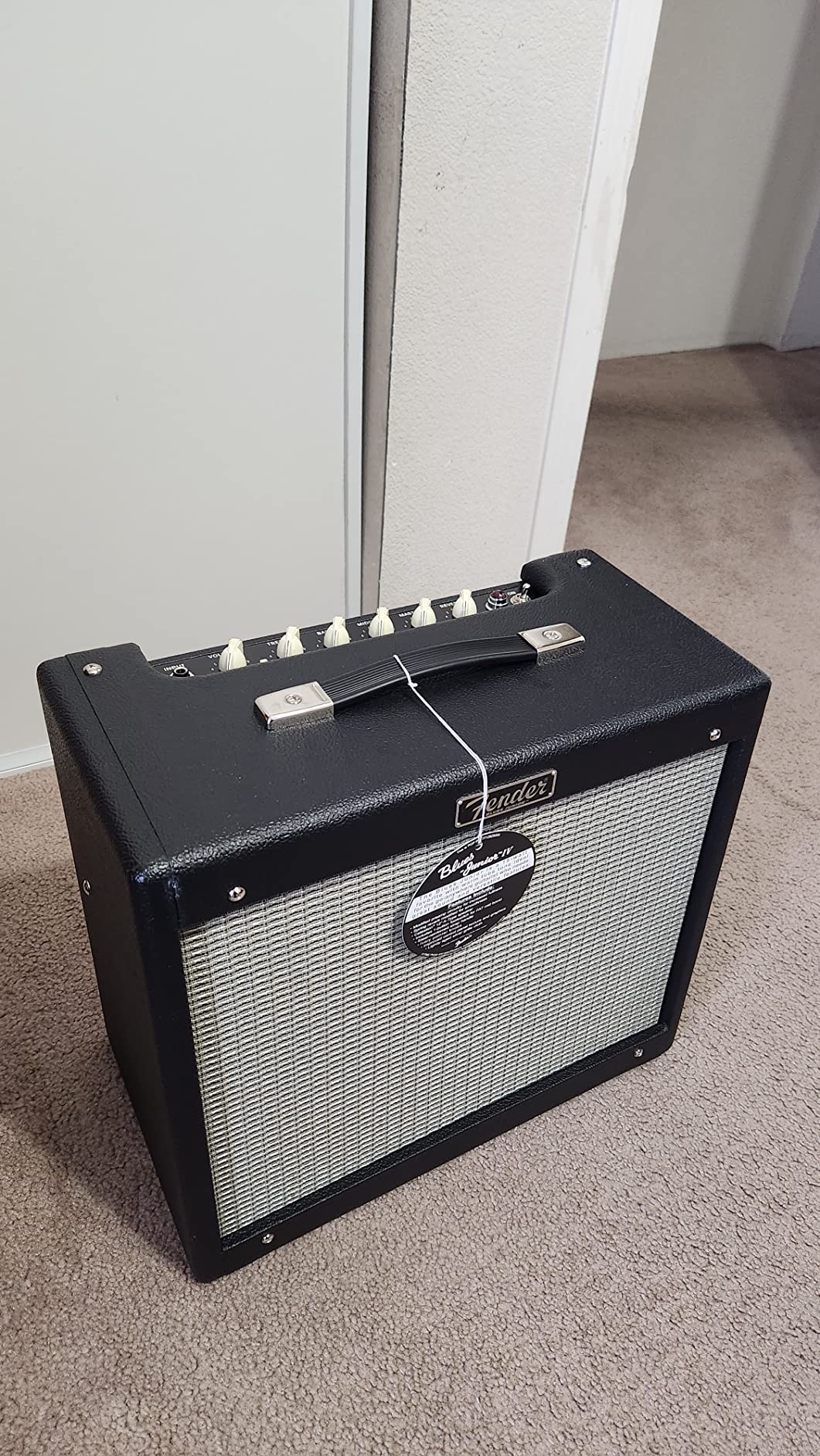
The Fender Blues Junior IV has been my go-to recommendation for blues players for years, and the latest version is the best one yet. The moment I plugged my Stratocaster into this amp, I understood why it is consistently the most recommended blues amp on forums like Reddit and The Gear Page. The warm cleans break up naturally when you dig in, and that is exactly what blues playing demands.
Fender updated the preamp circuit in this version for increased fullness, and the difference is noticeable. The Celestion A-Type 12-inch speaker delivers a round, balanced tone that handles everything from clean rhythm work to snarling lead lines. The spring reverb has also been modified for improved smoothness, and it sounds lush without overpowering your playing.
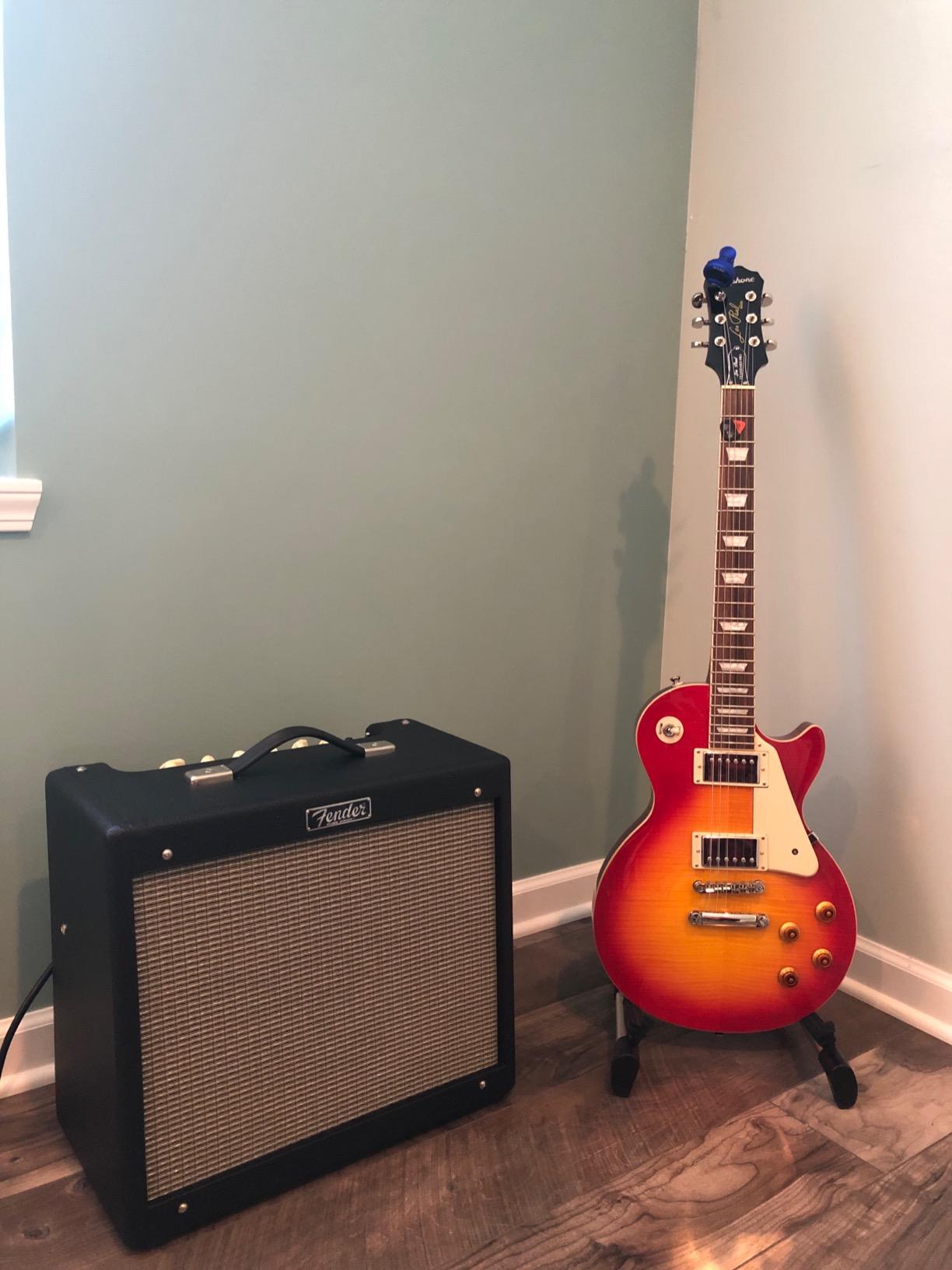
Where this amp really shines is its touch sensitivity. Roll back your guitar volume and you get sparkling cleans. Push it up and the EL84 power tubes saturate into a creamy overdrive that feels alive under your fingers. The FAT switch adds a noticeable mid boost that cuts through a band mix, making it practical for small gig situations.
I tested this with a Tubescreamer in front and was impressed by how well it takes pedals. The single-channel design keeps things simple, and honestly, that is all most blues players need. At 31 pounds it is portable enough for gigging, and the 15-watt output is loud enough for small venues without shaking the walls.
Best Guitar Pairings for the Blues Junior IV
The Blues Junior IV pairs beautifully with single-coil guitars like the Fender Stratocaster and Telecaster. The bright, articulate pickups complement the warm EL84 breakup perfectly. I also tested it with a Les Paul and got thick, singing lead tones that worked great for blues rock. For humbucker-equipped guitars, rolling the tone knob back slightly gives you that classic woman tone Eric Clapton made famous.
Volume and Home Use Considerations
At 15 watts with no built-in attenuator, the Blues Junior IV can get loud. For apartment practice, you will likely keep the volume between 1 and 3. The good news is the amp sounds excellent at these lower settings because of the improved preamp circuit. If you need to play at whisper levels, consider pairing it with an external attenuator or using a pedal with a headphone output for silent practice.
2. Fender Tone Master Deluxe Reverb – Modern Convenience, Vintage Soul
Fender Tone Master Deluxe Reverb Guitar Amplifier, Black, 2-Year Warranty
22W Digital Modeling
Jensen n-12k Neo
6-Position Attenuator
XLR Line Out
23 lbs
2 Channels
Pros
- Faithfully reproduces Deluxe Reverb tone
- Incredibly lightweight at 23 lbs
- Excellent 6-position attenuator
- XLR direct out for recording
- Takes pedals beautifully
Cons
- Does not have exact tube amp feel
- Some compression differences vs tube
- Premium price point
I was skeptical when I first heard about the Tone Master Deluxe Reverb. A digital modeling amp that claims to sound like one of the most iconic tube amps ever made? But after playing through one for a full band rehearsal, I became a believer. Fender has managed to capture the essence of the Deluxe Reverb in a package that weighs just 23 pounds.
The 6-position power attenuator is a game changer for blues players. You can dial it down to 0.2 watts and still get that rich, cranked Deluxe Reverb tone in your bedroom. This solves the single biggest problem blues guitarists face: getting authentic tube breakup at neighbor-friendly volumes. The Normal and Vibrato channels both sound authentic, and the built-in reverb and tremolo are indistinguishable from the original.
The XLR line out with speaker simulation is another feature that makes this amp incredibly practical. I plugged directly into a mixing console during a gig and got a huge, professional tone without needing to mic the speaker. For recording sessions, this means you can track at any hour without disturbing anyone. The Jensen neodymium speaker keeps the weight down while delivering the warm, full-range response blues demands.
Gigging Reliability and Maintenance
One of the biggest advantages of the Tone Master over a traditional tube Deluxe Reverb is the absence of tube maintenance. No more worrying about microphonic preamp tubes or failing power tubes mid-gig. The solid-state reliability means you can load in, plug in, and play without any warm-up time. For working blues musicians who gig regularly, this alone justifies the investment.
Who Should Consider This Amp
If you are a gigging blues player who needs the Deluxe Reverb sound without the 53-pound weight penalty and tube maintenance, this is your amp. It is also ideal for home studio owners who want professional Fender tone at any volume. The attenuator flexibility makes it one of the most versatile blues amps for players who need one amp to handle everything from bedroom practice to medium-sized venues.
3. Bugera V5 INFINIUM – Serious Tube Tone on a Budget
Bugera V5 INFINIUM 5-Watt Class-A Tube Amplifier Combo with INFINIUM Tube Life Multiplier, Original Turbosound Speaker, Reverb and Power Attenuator
5W Class-A Tube
8in Turbosound Speaker
12AX7 + EL84
Power Attenuator 5W/1W/0.1W
Reverb
22 lbs
Pros
- Outstanding value for an all-tube amp
- Versatile 3-tier power attenuator
- Great reverb quality
- INFINIUM tube life indicator
- Takes pedals well
Cons
- Stock tubes benefit from upgrade
- 8in speaker sounds dark and boxy
- Limited headroom for live use
- No standby switch
The Bugera V5 INFINIUM proves that you do not need to spend a fortune to get authentic tube blues tone. This 5-watt Class-A amplifier delivers warm, breakup-heavy tones that are perfect for blues players on a budget. I was genuinely surprised by how good this amp sounds for the money, especially once I swapped the stock tubes for a Tung-Sol 12AX7 in the preamp position.
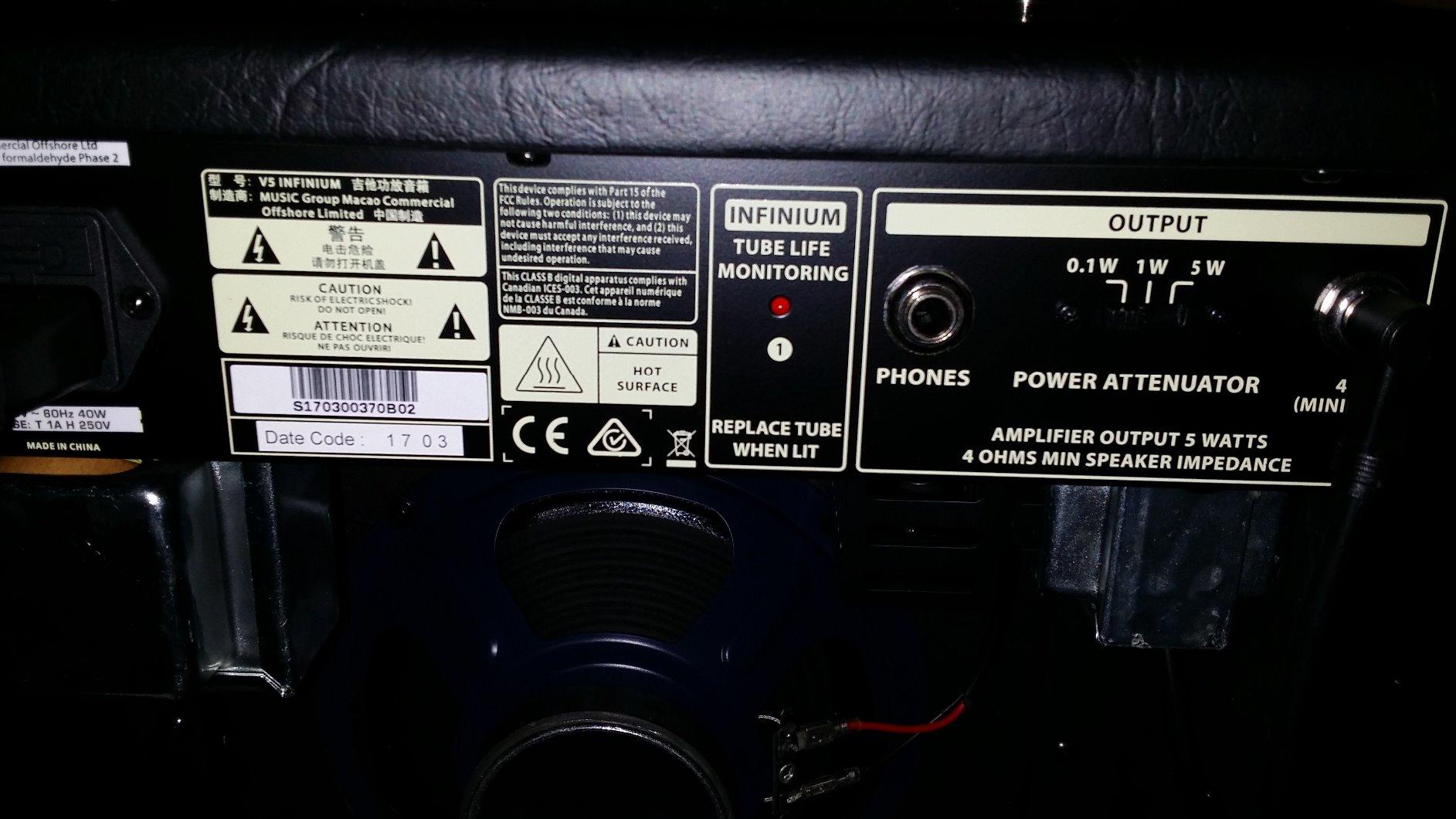
The standout feature for blues players is the 3-tier power attenuator. You can run at 5 watts for jam sessions, 1 watt for home practice, or 0.1 watts for late-night playing. At every setting, you still get genuine EL84 power tube saturation and breakup. This is something most amps in this price range simply cannot do. The built-in digital reverb is surprisingly good, adding depth to your clean tones without sounding artificial.
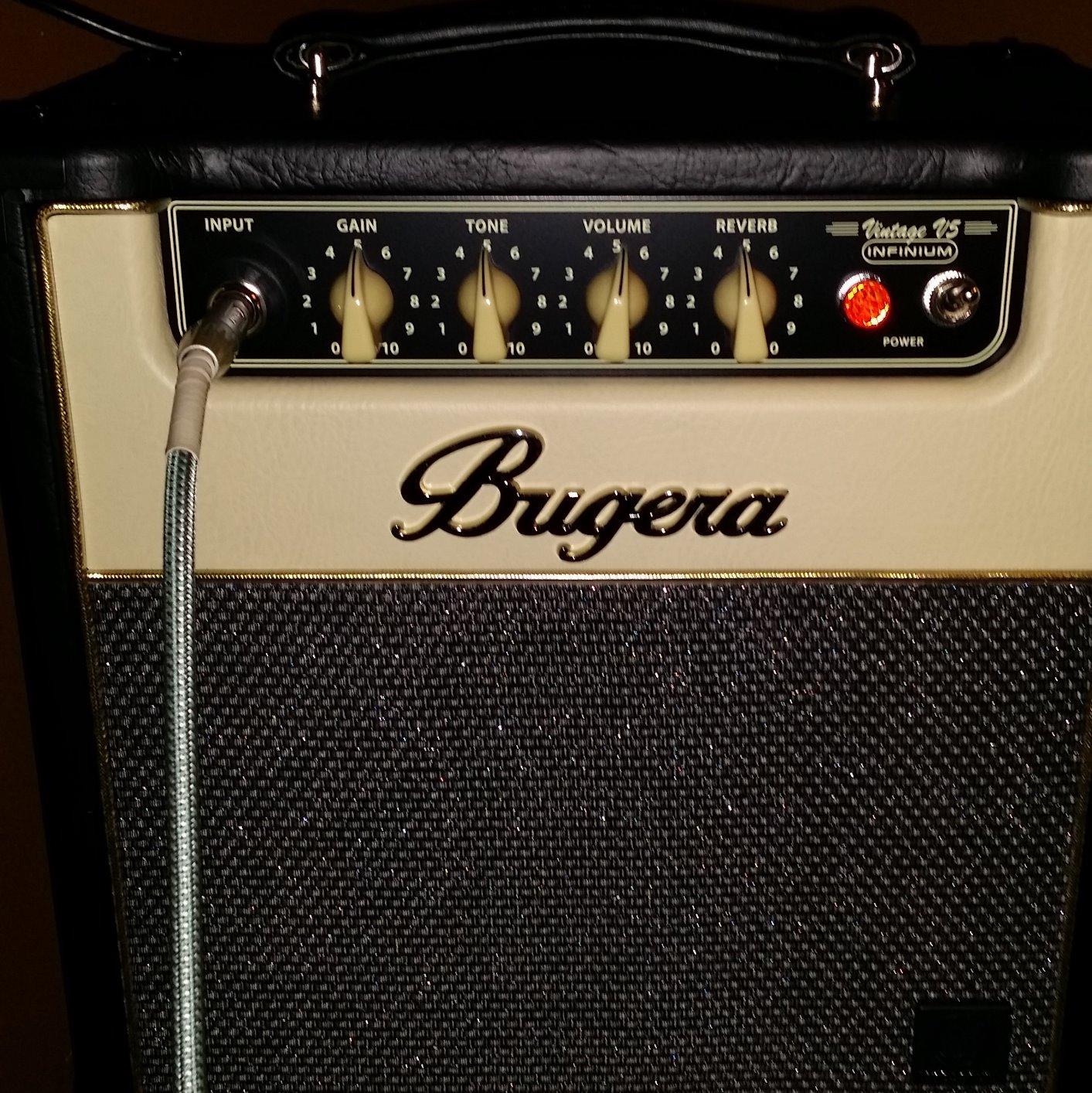
The INFINIUM Tube Life Multiplier technology monitors your tubes and indicates when they need replacement. This is a thoughtful feature for players new to tube amps who might not know when their tubes are wearing out. The 8-inch Turbosound speaker is adequate for practice but does sound a bit dark and boxy compared to larger speakers.
For blues specifically, I found the V5 really comes alive when you push the volume past noon. The EL84 tube compresses beautifully, giving you that singing, sustain-rich tone that works for everything from B.B. King licks to Stevie Ray Vaughan-style leads. With the attenuator at 0.1 watts, you can achieve this saturated tone at conversation-level volume.
Tube Upgrade Recommendations
The single biggest improvement you can make to the Bugera V5 INFINIUM is swapping the stock tubes. I recommend a Tung-Sol 12AX7 for the preamp position and a JJ Electronics EL84 for the power section. This swap costs roughly 40 dollars and transforms the amp from good to genuinely impressive. The upgraded tubes provide better clarity, smoother breakup, and more dynamic response under your fingers.
Limitations for Live Performance
At 5 watts through an 8-inch speaker, the Bugera V5 is not designed to keep up with a drummer in a live setting. It excels as a practice, recording, and bedroom amp. If you plan to gig with it, consider running the external speaker output into a larger 1×12 cabinet. This opens up the sound considerably and gives you enough volume for small venue performances.
4. Monoprice Stage Right 1×8 – The Budget Tube Amp Sensation
Monoprice 1×8 Guitar Combo Tube Amplifier with Celestion Super 8 Inch Speaker – Tan / Beige 5-Watt, 12AX7 Preamp, For All Electric Guitars – Stage Right Series
5W Tube
Celestion Super 8
12AX7 + 6V6GT
1W/5W Switch
Plywood Cabinet
12 lbs
Pros
- Incredible value for a true tube amp
- Fender-like clean tones
- Celestion speaker included
- Plywood cabinet construction
- Loud enough for small jams
Cons
- Limited bass from 8in speaker
- Can be overly bright
- No reverb
- No headphone jack
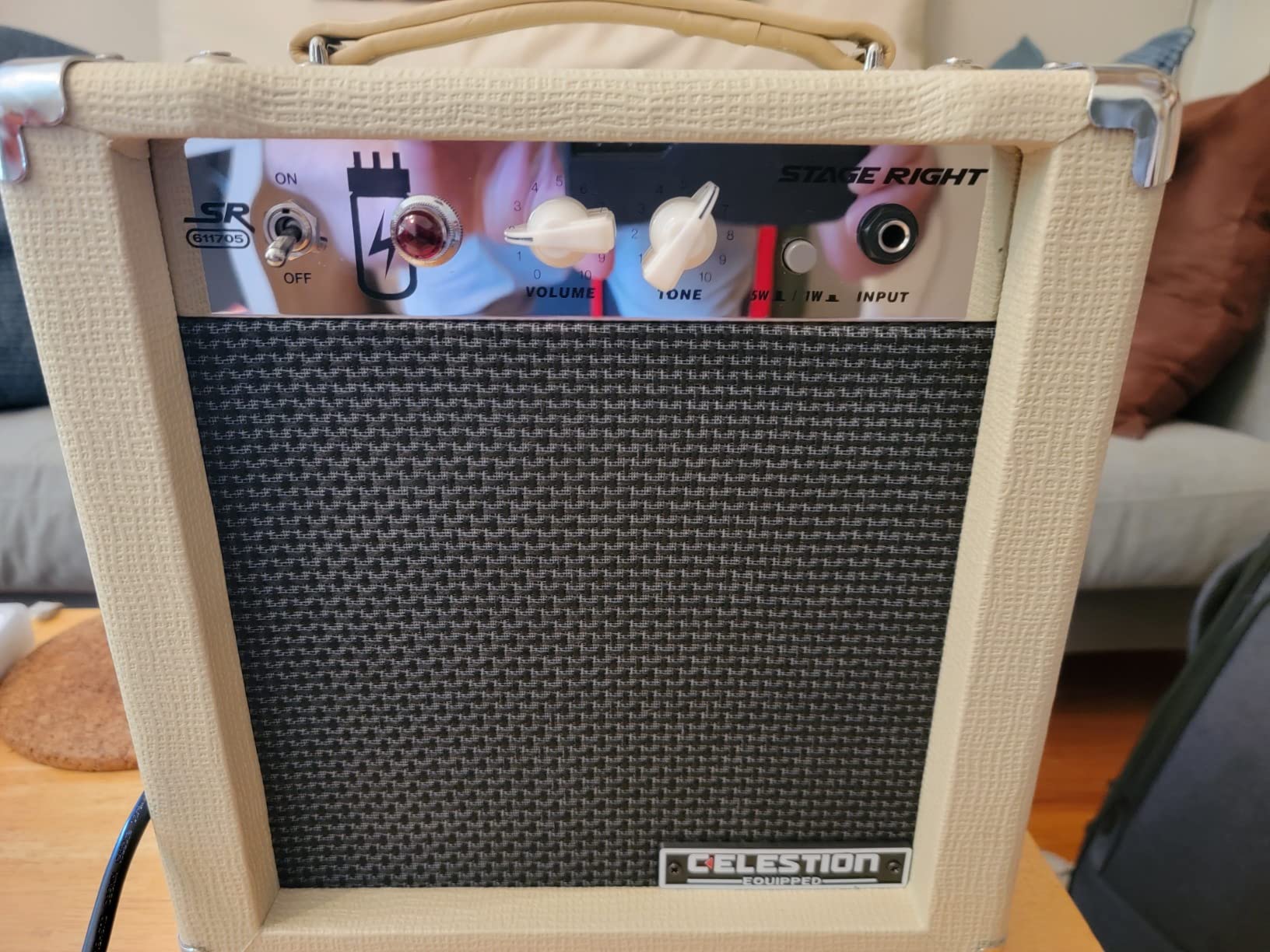
The Monoprice Stage Right 1×8 has developed a cult following among blues players, and after spending time with one, I understand why. This little amplifier delivers genuine 6V6 tube tone through a real Celestion speaker at a price that seems almost too good to be true. With over 760 customer reviews and a 4.5-star rating, the consensus is clear: this is the best entry point into tube amp ownership.
What makes the Monoprice special for blues is its Fender-like clean tone. The 6V6GT power tube produces the warm, round cleans that Fender amps are famous for. When you push the volume, the amp breaks into a smooth, musical overdrive that responds beautifully to picking dynamics. The 1W/5W power switch gives you some flexibility for volume management, though it is not as refined as the Bugera’s 3-tier attenuator.
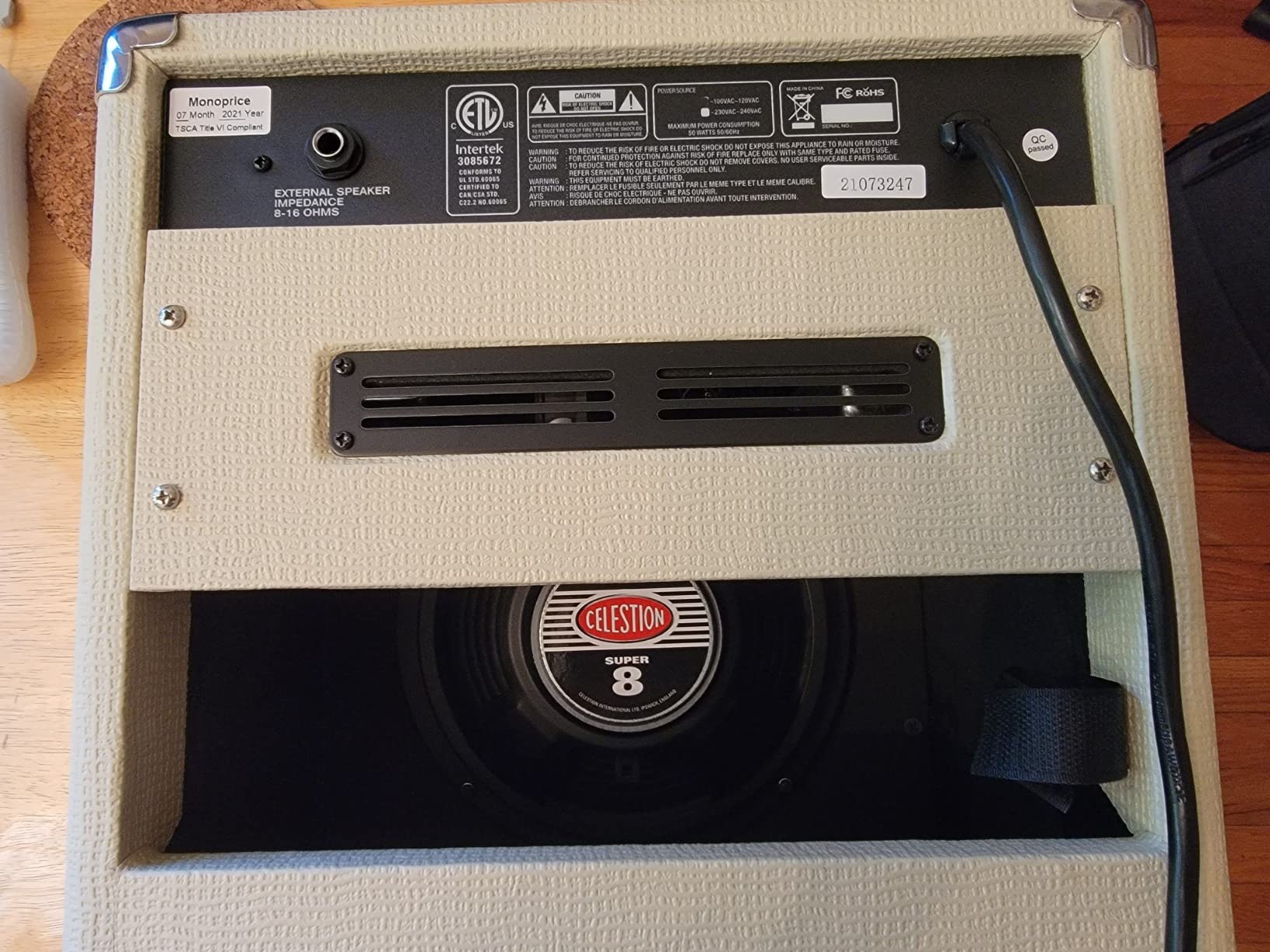
The plywood cabinet construction is a nice surprise at this price point. Many budget amps use particle board, which resonates poorly and can rattle at volume. The Celestion Super 8 speaker is a legitimate upgrade over generic speakers found in similarly priced amplifiers. It has a warm midrange that works well for blues, though the 8-inch size does limit bass response.
I tested this amp with both a Telecaster and a Les Paul and was pleased with both pairings. The Telecaster produced snappy, articulate cleans with a nice edge-of-breakup quality. The Les Paul delivered thick, creamy leads when pushed. Rolling back the tone knob on either guitar gave me smooth jazz-blues tones that sounded much more expensive than this amp actually is.
Speaker and Tube Upgrade Path
The Monoprice responds well to upgrades. Replacing the stock tubes with higher-quality 12AX7 and 6V6GT tubes opens up the headroom and improves the breakup character. Some players also swap the Celestion Super 8 for a Jensen or Weber 8-inch speaker for a more vintage tonal character. Even with these upgrades, your total investment stays well below most name-brand tube amps.
Who Is This Amp Best For
This is the ideal first tube amp for blues players who want to experience real tube tone without a major investment. It is also a great grab-and-go practice amp for experienced players who want something they do not have to baby. The lack of reverb is the biggest omission, but a simple reverb pedal solves that problem for less than 50 dollars.
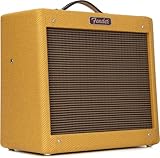
5. Fender Pro Junior IV – Pure Tube Simplicity in Tweed
Fender Pro Junior IV Guitar Amplifier, Lacquered Tweed, with 2-Year Warranty
15W Tube
Jensen 10in P10R
2x EL84 + 2x 12AX7
Lacquered Tweed
Single Channel
20 lbs
Pros
- Exceptional tube tone at low volumes
- Beautiful lacquered tweed covering
- High-quality Jensen P10R speaker
- Dynamic and responsive clean sound
- Perfect weight at 20 lbs
Cons
- No reverb built-in
- Limited headroom from 10in speaker
- Single channel only
- No master volume
The Fender Pro Junior IV is the amp I reach for when I want pure, unadorned tube tone. There is something about the simplicity of this amplifier that forces you to play better. With just a volume and tone control, everything depends on your hands and your guitar. The lacquered tweed covering gives it a gorgeous vintage look that stands out in any setting.
Fender modified the volume circuit in this version for more gradual breakup, and the result is an amp that cleans up beautifully when you back off your attack. The Jensen P10R 10-inch speaker is a significant step up from generic speakers, delivering articulate highs and a warm midrange that sits perfectly in a blues mix. At 20 pounds, this is one of the lightest tube combo amps Fender makes.
The 2x EL84 and 2x 12AX7 tube configuration produces 15 watts of power that is plenty for small gigs and jam sessions. I found the sweet spot sits right around 4 on the volume dial, where the amp produces a warm, slightly compressed clean tone that breaks into overdrive when you dig in. This is the kind of dynamic response that blues players dream about.
Pedal Platform Potential
Despite having no effects loop or built-in reverb, the Pro Junior IV works exceptionally well as a pedal platform. I tested it with a Tubescreamer, a delay pedal, and a reverb pedal in front, and the amp handled all of them without flinching. The simple EQ section means your pedals shape the tone more than the amp itself, which many blues players actually prefer.
How It Compares to the Blues Junior IV
The Pro Junior IV is for players who want fewer features and more pure tone. It lacks the spring reverb, FAT switch, and master volume of the Blues Junior IV. But what you get in return is a more touch-responsive playing experience and a lighter, more portable package. If you already own pedals and want a clean canvas to paint your blues tone on, the Pro Junior is the better choice.
6. Roland Blues Cube Hot – Tube Tone Without Tube Hassles
Roland Blues Cube Hot 30W 1×12 Guitar Combo Amplifier with Tube Tone, Vintage Blond (BC-HOT-VB)
30W Solid-State Tube Logic
12in Speaker
Power Attenuator 30W/15W/5W/0.5W
Boost Function
Reverb
32 lbs
Pros
- Warm tube-like tone with authentic breakup
- Highly touch-responsive
- Excellent power attenuator
- Great built-in reverb
- Sweet boost for solos
Cons
- Some users find it overly bright
- Premium price for solid-state
- Limited color options
Roland has been perfecting their Tube Logic technology for decades, and the Blues Cube Hot is arguably their best blues-oriented amplifier. The first thing I noticed when playing through it was how responsive it is to playing dynamics. Roll back your guitar volume and the tone cleans up naturally, just like a tube amp. Dig in and you get a warm, compressed overdrive that feels authentic.
The power attenuator is one of the best features for blues players. With settings at 30W, 15W, 5W, and 0.5W, you can get full crunch tone at any volume level. At 0.5 watts, this amp produces a convincing overdriven blues tone that is quiet enough for apartment practice. The built-in boost function adds gain and volume for solos, accessible via the included footswitch.
The three-band EQ gives you more tonal control than many of the simpler amps in this lineup. I was able to dial in everything from bright, cutting Strat tones to warm, thick Les Paul leads. The onboard reverb is genuinely good, adding spatial depth without sounding digital. At 32 pounds, it is heavier than some options but still manageable for gigging.
Reliability Advantage Over Tube Amps
The biggest selling point of the Blues Cube Hot is zero tube maintenance. No tube replacements, no warm-up time, no risk of tube failure during a gig. For blues players who gig regularly and need absolute reliability, this is a major advantage. The Tube Logic design maintains consistent tone performance regardless of temperature, humidity, or how long the amp has been running.
Ideal Use Cases
The Roland Blues Cube Hot is perfect for gigging blues musicians who want tube-like tone and responsiveness without the maintenance. The 30-watt output is loud enough to keep up with a drummer, and the attenuator makes it equally useful at home. It is also an excellent choice for players who play multiple styles and need one amp that can handle blues, jazz, and classic rock convincingly.
7. Vox AC15C1 – The British Blues Legend
Vox AC15C1 1×12″ 15W Guitar Tube Combo Amp w/ 2 Channels, Tremolo, & Reverb
15W Tube
12in Celestion VX10
EL84 Power Tubes
Normal and Top Boost Channels
Tremolo and Reverb
56 lbs
Pros
- Iconic British tube amp tone with Vox chime
- Excellent for recording with shimmer
- Nice tremolo effect
- Versatile dual channels
- Loud enough for small gigs
Cons
- Quality control issues reported
- May need tube replacement out of box
- Heavy at 56 pounds
- Reverb can sound murky
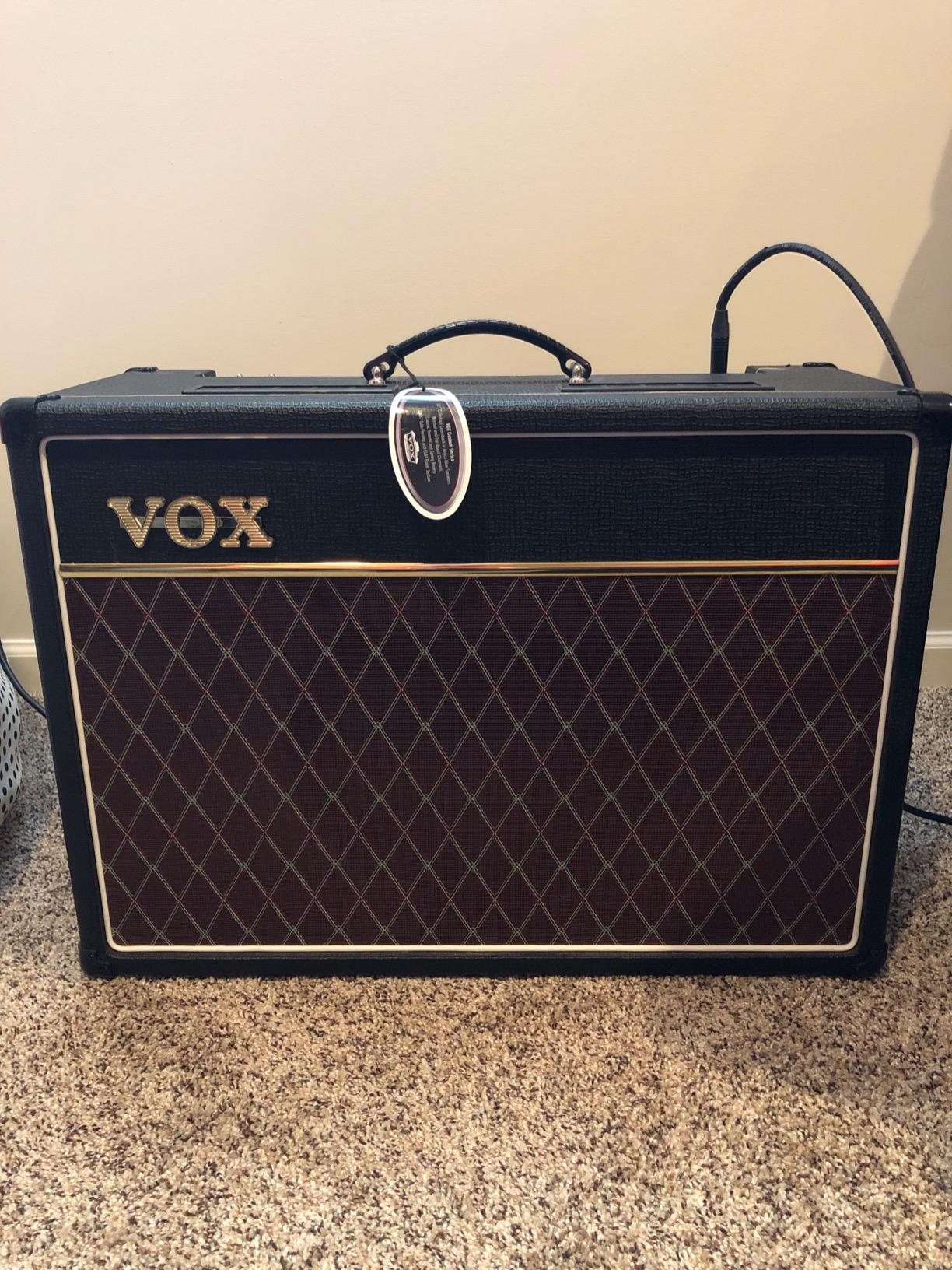
The Vox AC15C1 has been the backbone of British blues and rock tone since the 1960s. Players like John Mayall, Peter Green, and early Eric Clapton relied on Vox amps to create their signature sounds. Playing through the AC15C1, you immediately understand the appeal. The Top Boost channel delivers that famous Vox chime that cuts through a mix like nothing else.
What makes the AC15C1 special for blues is how the EL84 power tubes saturate. The breakup is more aggressive and harmonically rich than the Fender-style amps in this list. This gives blues licks a snarling, urgent quality that works beautifully for blues rock and harder-edged blues. The Normal channel offers a warmer, cleaner starting point that takes pedals extremely well.
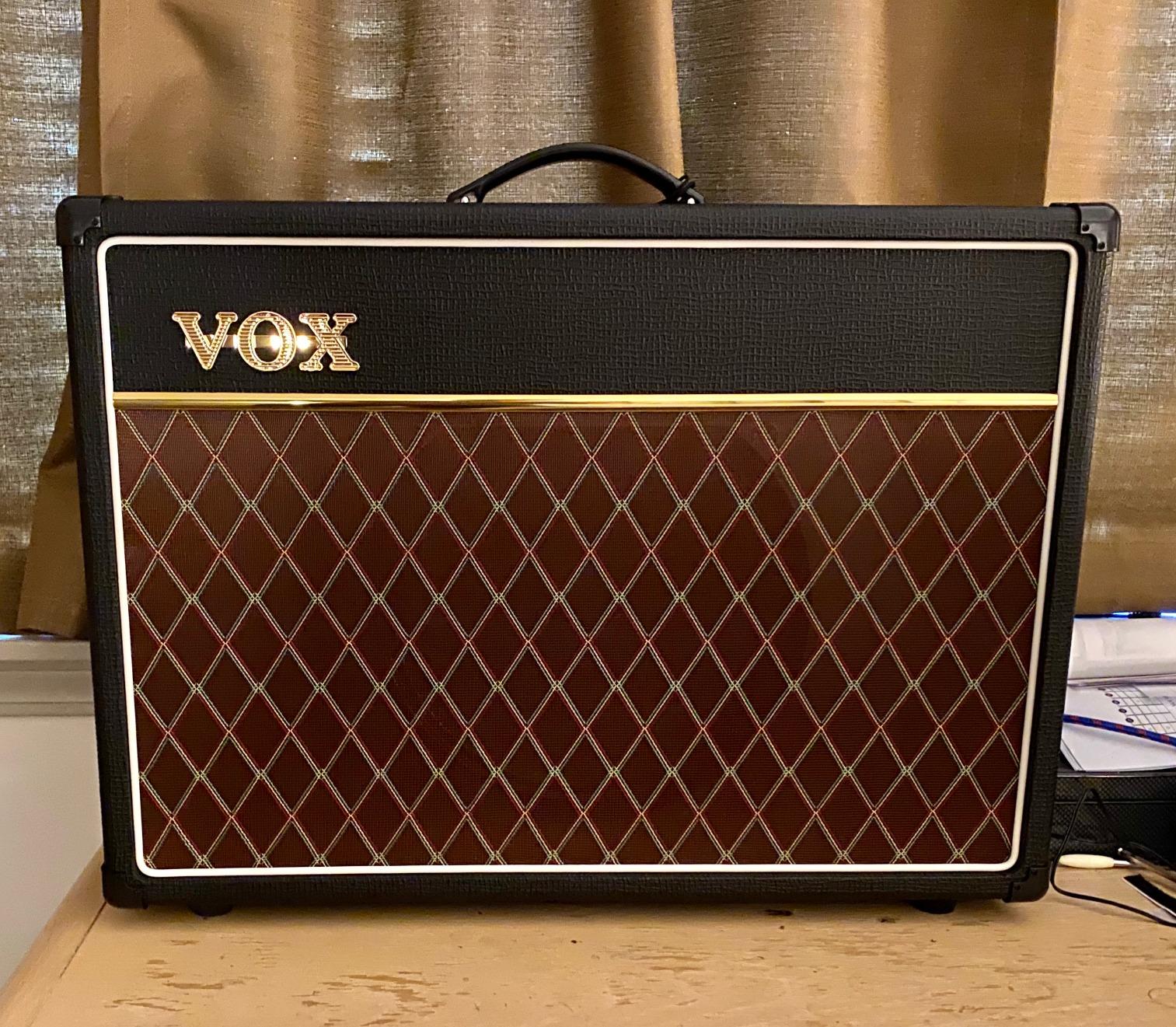
The onboard tremolo is genuinely excellent, adding a pulsing quality to sustained notes that is pure vintage blues. The reverb is decent but not outstanding, with some players describing it as a bit murky compared to a proper spring reverb tank. I found it usable for practice and casual playing, but for recording I preferred using an external reverb pedal.
Be warned: at 56 pounds, this is a heavy amplifier. Moving it to gigs and rehearsals requires some effort. The tone quality justifies the weight, but if portability is a priority, consider one of the lighter options in this guide. Also, quality control can be inconsistent. I recommend buying from a retailer with a good return policy in case you get a unit with microphonic tubes or rattling components.
Tube Replacement Tips
Several forum users report that the stock tubes in the AC15C1 can be inconsistent. Budget for a tube replacement within the first few months. I recommend JJ Electronics EL84s for the power section and a Tung-Sol or Mullard 12AX7 for the preamp. This swap improves reliability, reduces noise, and gives you smoother breakup characteristics. The total cost is typically around 60 to 80 dollars.
Best Settings for Blues Tone
For classic blues tone on the AC15C1, start with the Top Boost channel. Set your EQ with bass around 5, treble around 6, and the master volume relatively low. Adjust the channel volume to taste, pushing it until you get the breakup level you want. This approach lets the power tubes work while keeping overall volume manageable. Pair with a Tubescreamer for lead boost and you have a remarkably versatile blues rig.
8. Fender 68 Custom Vibro Champ – Vintage Champ Tone, Modern Features
Fender 68 Custom Vibro Champ Reverb Guitar Amplifier, with 2-Year Warranty
5W Tube
10in Speaker
2x 12AX7 + 1x 6V6
Reverb and Tremolo
Dual Channels
26 lbs
Pros
- Spanky clean Fender tone
- Very quiet operation with no hum
- Full warm sound
- Good reverb and tremolo
- Lightweight at 26 lbs
Cons
- Quality control issues reported
- Digital reverb not as warm as spring
- Limited headroom at 5W
- May need tube swap out of box
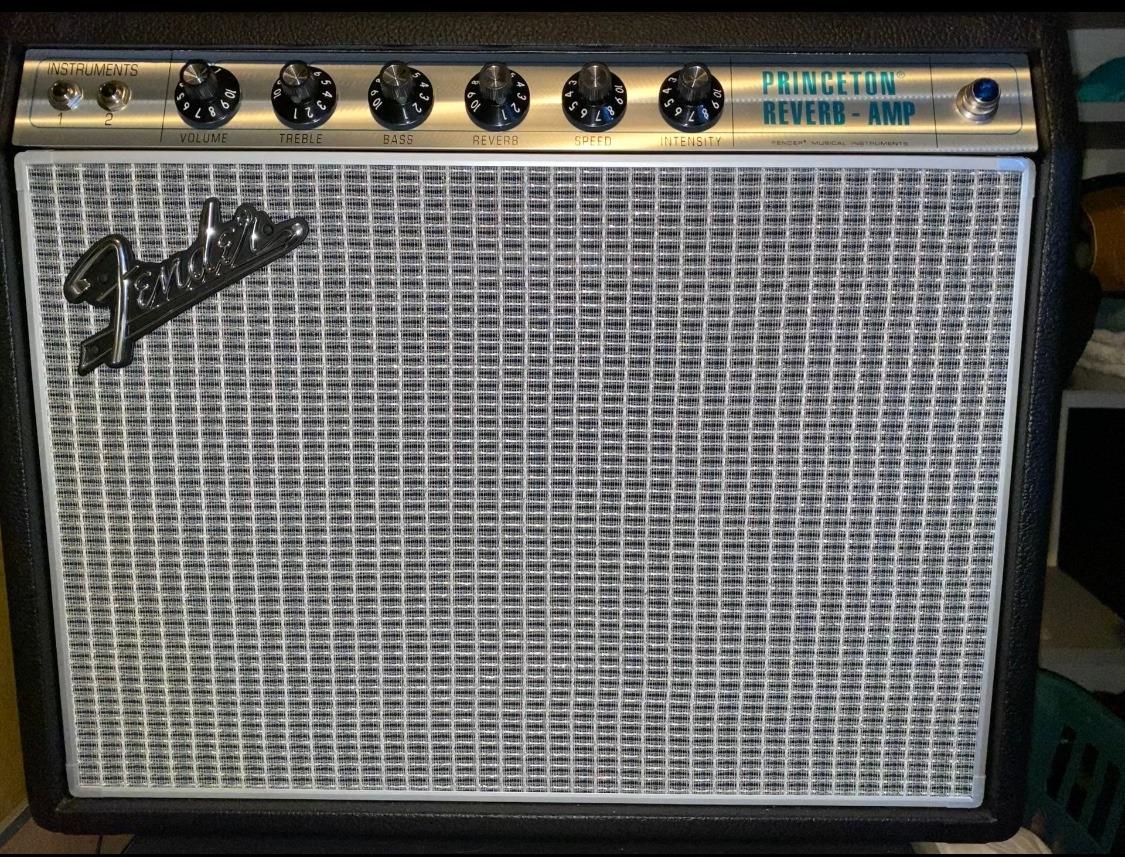
The Fender 68 Custom Vibro Champ is a modern reinterpretation of one of the most recorded amplifiers in blues history. The original Vibro Champ was used on countless classic blues recordings because of its sweet, singing tone at manageable volumes. This version captures that magic while adding modern conveniences like digital reverb and a more robust build.
What impressed me most about this amp is how quiet it operates. Many small tube amps have audible hum, but the 68 Custom Vibro Champ runs practically silent. This makes it an excellent recording amp, especially for home studios where background noise is a real concern. The clean tone is darker and warmer than the 65 Reissue Princeton, giving it a character that works beautifully for blues.
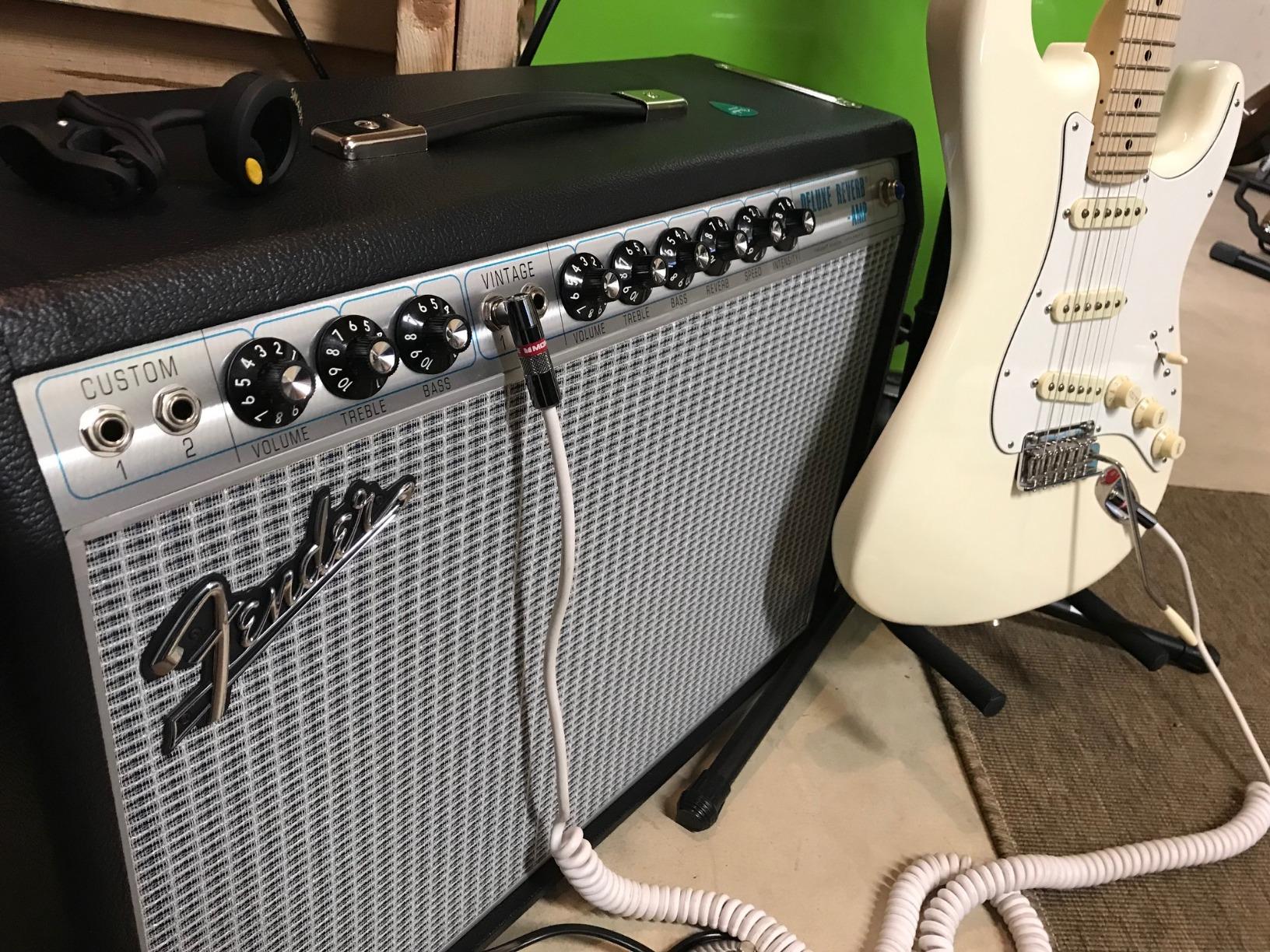
The 6V6 power tube delivers 5 watts of pure tube tone through the 10-inch speaker. This is plenty of volume for home practice and small jam sessions. The tube-driven tremolo sounds gorgeous, adding a warbling texture to sustained chords that is pure vintage blues. The digital hall reverb is decent, though not quite as warm as a traditional spring reverb tank.
I found the dual-channel design useful for switching between cleaner and more driven tones. The custom channel has a modified Bassman tone stack that gives you more tonal shaping options than the original Vibro Champ circuit. At 26 pounds, it is portable enough to carry to a jam session without straining your back.
Recording and Home Studio Use
This is where the 68 Custom Vibro Champ truly excels. The 5-watt output means you can push the power tube into saturation at volumes that will not disturb your neighbors. The quiet operation and warm tone make it ideal for recording direct or with a microphone. Many forum users report this as their go-to home studio amp for blues and jazz tones.
What to Watch Out For
Quality control is the main concern with this amp. Some users report issues with the reverb tank and microphonic tubes right out of the box. When you receive your amp, test it thoroughly within the return window. If you get a good unit, it will reward you with years of beautiful blues tone. Budget for a potential tube swap, which costs about 40 dollars and significantly improves the amp’s performance and reliability.
How to Choose the Right Blues Guitar Amp
Finding the right blues amp comes down to understanding your playing situation, your budget, and the specific tone you are chasing. I have broken down the key factors that should guide your decision, based on years of testing and the real-world feedback I have gathered from blues players on forums and at gigs.
Tube vs Solid-State vs Digital Modeling
Tube amps remain the gold standard for blues tone because of how they respond to your playing dynamics. When you push a tube amp hard, the power tubes saturate in a way that produces harmonically rich overdrive. This natural compression and sustain is what gives blues players that singing, expressive tone. All but two amps in this guide use tubes for this reason.
Solid-state and digital modeling options like the Roland Blues Cube Hot and Fender Tone Master Deluxe Reverb have come a long way. The Tone Master Deluxe Reverb in particular is remarkably close to its tube counterpart. These amps offer reliability, consistent performance, and features like built-in attenuators that make them practical for players who gig frequently or need low-volume options.
Wattage and Headroom
Wattage determines how loud your amp gets before it starts to break up. For blues, this is critical. If you play mostly at home, 5 to 15 watts is ideal. You can push these amps into their sweet spot without causing hearing damage or neighbor complaints. The Bugera V5 INFINIUM at 5 watts and the Monoprice Stage Right are perfect examples of low-wattage blues amps.
For gigging, 15 to 30 watts gives you enough headroom to stay clean at band volumes while still being able to push into overdrive when needed. The Fender Blues Junior IV at 15 watts and the Roland Blues Cube Hot at 30 watts are excellent gigging choices. If you regularly play medium to large venues, consider amps with built-in attenuators so you can control your volume without sacrificing tone.
Essential Features for Blues Players
Spring reverb is the most important onboard effect for blues. It adds depth and dimension to your tone that is hard to replicate with pedals. The Fender Blues Junior IV has an excellent spring reverb, while the Bugera V5 INFINIUM uses a good digital reverb. If your amp lacks reverb, a quality reverb pedal is a worthwhile investment.
Power attenuation is another feature that dramatically improves the home playing experience. Amps like the Fender Tone Master Deluxe Reverb and Bugera V5 INFINIUM let you dial down the wattage while maintaining tube breakup. This means you get the cranked-amp tone you want at volumes that work for apartments and late-night practice sessions.
Guitar-to-Amp Pairing Guide
The guitar you play through your blues amp matters enormously. Based on my testing and forum discussions, here are the pairings that consistently deliver the best results. Stratocasters and Telecasters pair naturally with Fender-style amps like the Blues Junior IV and Pro Junior IV, producing articulate, twangy cleans that break up musically. Les Pauls and other humbucker-equipped guitars work beautifully with the Vox AC15C1 and Roland Blues Cube Hot, delivering thick, sustained lead tones. For the warmest, most vintage-correct blues tones, try pairing a semi-hollow body guitar like an ES-335 with the Fender 68 Custom Vibro Champ.
Frequently Asked Questions
What is the best blues guitar amplifier?
The Fender Blues Junior IV is widely considered the best overall blues guitar amplifier because of its warm EL84 tube tone, excellent spring reverb, and touch-sensitive breakup. For players on a budget, the Bugera V5 INFINIUM delivers authentic Class-A tube tone with a built-in power attenuator. For gigging musicians who need reliability and lightweight design, the Fender Tone Master Deluxe Reverb offers the classic Deluxe Reverb sound at just 23 pounds with a 6-position attenuator.
What amp does Eric Clapton use for blues?
Eric Clapton has used Fender Champ and Fender Princeton amplifiers for much of his blues career. In the studio, he often records with small Fender tube amps like the Vibro Champ and Princeton Reverb. For live performances, Clapton has used Fender Twin Reverb and more recently Fender Custom Shop amps. The Fender 68 Custom Vibro Champ in this guide captures that classic Clapton blues studio tone.
How do you get a dirty blues tone?
To get a dirty blues tone, start with a tube amp and set the volume high enough to push the power tubes into natural breakup. Use your guitar’s volume knob to control the amount of gain. For more drive, add an overdrive pedal like an Ibanez Tubescreamer or Boss BD-2 in front of a slightly overdriven amp. The key is touch sensitivity – you want the tone to clean up when you play softly and break up when you dig in. Rolling your guitar tone knob back slightly adds warmth and thickness to the overdrive.
What is the best blues amp for home use?
The best blues amp for home use is one that delivers authentic tube breakup at low volumes. The Bugera V5 INFINIUM with its 0.1-watt attenuator setting is ideal for apartment practice. The Fender Tone Master Deluxe Reverb offers a 0.2-watt setting that maintains full Deluxe Reverb tone at whisper levels. The Monoprice Stage Right 1×8 at 5 watts with a 1-watt switch is another excellent low-cost option for home blues practice.
What wattage amp do I need for blues?
For home practice and bedroom playing, a 5 to 15 watt tube amp is ideal. This wattage range lets you push the amp into its sweet spot without excessive volume. For small gigs and jam sessions, 15 to 30 watts provides enough headroom to stay clean at band volumes. For larger venues, 30 to 50 watts gives you the projection you need. Many modern blues amps include built-in power attenuators that let you switch between wattage settings, making them versatile for multiple playing situations.
Final Thoughts on the Best Blues Guitar Amps
After testing all 8 of these amplifiers extensively, the Fender Blues Junior IV remains my top recommendation for most blues players. It delivers the warm, touch-responsive tone that blues demands, with practical features like spring reverb and a FAT switch that make it versatile enough for practice, recording, and gigging. It is no surprise this amp comes up most often in forum discussions about the best blues guitar amps.
For players who need serious volume control at home, the Fender Tone Master Deluxe Reverb is worth every penny. The 6-position attenuator and XLR direct output make it one of the most practical amplifiers you can own in 2026. And if budget is your primary concern, the Bugera V5 INFINIUM and Monoprice Stage Right 1×8 prove that you do not need to spend a lot to get genuine tube blues tone.
The most important thing is to choose an amp that fits your playing situation. A 5-watt practice amp will frustrate you at gigs, and a 30-watt amp will alienate your neighbors at home. Match your amp to where and how you play most often, and your blues tone will thank you for it.