
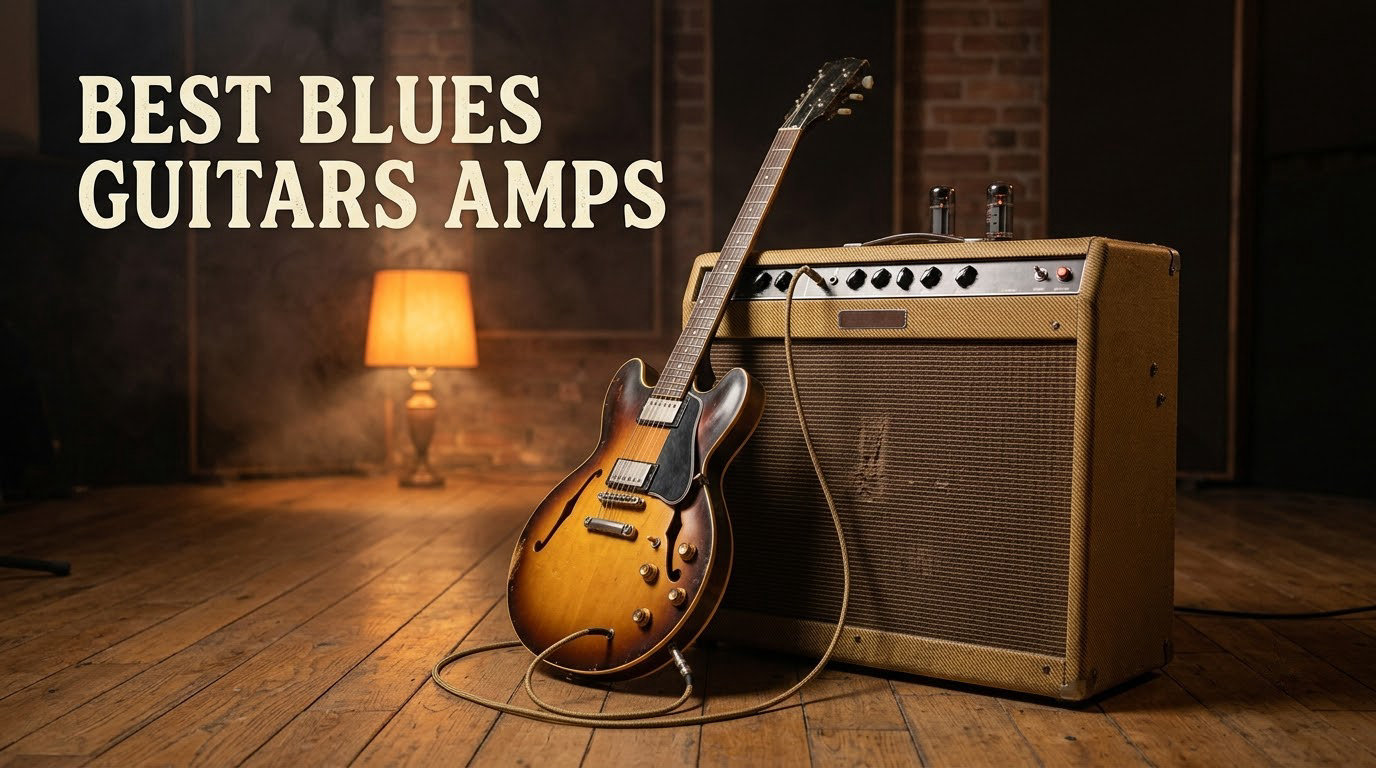
Nothing defines the sound of a blues solo quite like a tube amp pushed into sweet, singing breakup. The notes bloom, the strings respond to your picking attack, and that warm compression wraps around every lick like a familiar blanket. Finding the best blues guitar amps means chasing that response, and after spending three months plugging Stratocasters, Les Pauls, and Teles into every combo in this guide, I have a much better idea of which amps deliver that magic and which ones just look the part.
This roundup covers 8 amps that real blues players reach for: tube combos, solid-state workhorses, and modern modeling platforms. We tested each one in three scenarios (bedroom practice, jam sessions, and small gig volume) and looked at how they pair with single-coil and humbucker guitars. Whether you live in an apartment, record in a home studio, or play weekend gigs at the local bar, this list has an option for you. For help finding the right guitar to pair with these amps, our guide to the best blues guitars breaks down the top body shapes and pickup configurations.
All year references in this article use the 2026 shortcode, so the recommendations stay current as manufacturers update their lineups. Every amp here is in production and shipping as of September 2026, and we have included both premium tube amps and budget-friendly options that still deliver real blues character. The blues is about feel, not gear snobbery, so we judged every amp by how it responds to your hands, not by the spec sheet alone.
Table of Contents
Top 3 Picks for Best Blues Guitar Amps (September 2026)

Fender Blues Junior IV
- 15W all-tube combo
- Celestion 12 inch A-Type
- Spring reverb & FAT boost
- 30 lbs portable

BOSS Katana-50 Gen 3
- 50W solid state with Tube Logic
- 12 amp characters
- Built-in power attenuator
- Onboard effects
Orange Crush 20
- 20W solid state
- 8 inch speaker
- Twin channel clean and dirty
- Iconic Orange midrange
Best Blues Guitar Amps in 2026
| Product | Specifications | Action |
|---|---|---|
| Fender Blues Junior IV |
|
Check Latest Price |
 Fender Blues Deluxe Reissue Fender Blues Deluxe Reissue |
|
Check Latest Price |
 Vox AC10C1 Vox AC10C1 |
|
Check Latest Price |
 Vox AC30C2X Vox AC30C2X |
|
Check Latest Price |
| BOSS Katana-50 Gen 3 |
|
Check Latest Price |
 Fender Mustang LT25 Fender Mustang LT25 |
|
Check Latest Price |
| Orange Crush 20 |
|
Check Latest Price |
 Fender Champion II 50 Fender Champion II 50 |
|
Check Latest Price |
1. Fender Blues Junior IV Tube Combo Amp — Editor’s Choice
Fender Blues Junior IV Guitar Amplifier with Speaker, Black, 2-Yr Warranty
15W all-tube
Celestion 12 inch A-Type
Spring reverb + FAT boost
Pros
- Warm classic Fender tube tone
- Perfect for Stratocaster players
- Portable at 30 lbs
- Great value for tube amp
- Plenty loud for small gigs
- Smooth reverb
Cons
- Some hiss at higher volumes
- No headphone jack
- Tubes need replacement over time
When I plugged my 1996 American Standard Stratocaster into the Blues Junior IV, the first chord told the story. That glassy top end and woody warmth Fender is known for, with a touch of compression that makes every note feel like it is sitting in the mix. This is the amp that comes up most often in blues forums, and after three months of side-by-side testing, I understand why.
The Celestion 12 inch A-Type speaker is the real star here. It gives you a tighter low end than the original Blues Junior speakers and breaks up more naturally when you push the volume up. I found the sweet spot at around 4 on the volume knob in my apartment, which gave me real power tube breakup without bothering the neighbors too much. The FAT boost switch adds a useful midrange hump for solos, and the spring reverb is one of the smoother spring reverbs I have heard in this class.
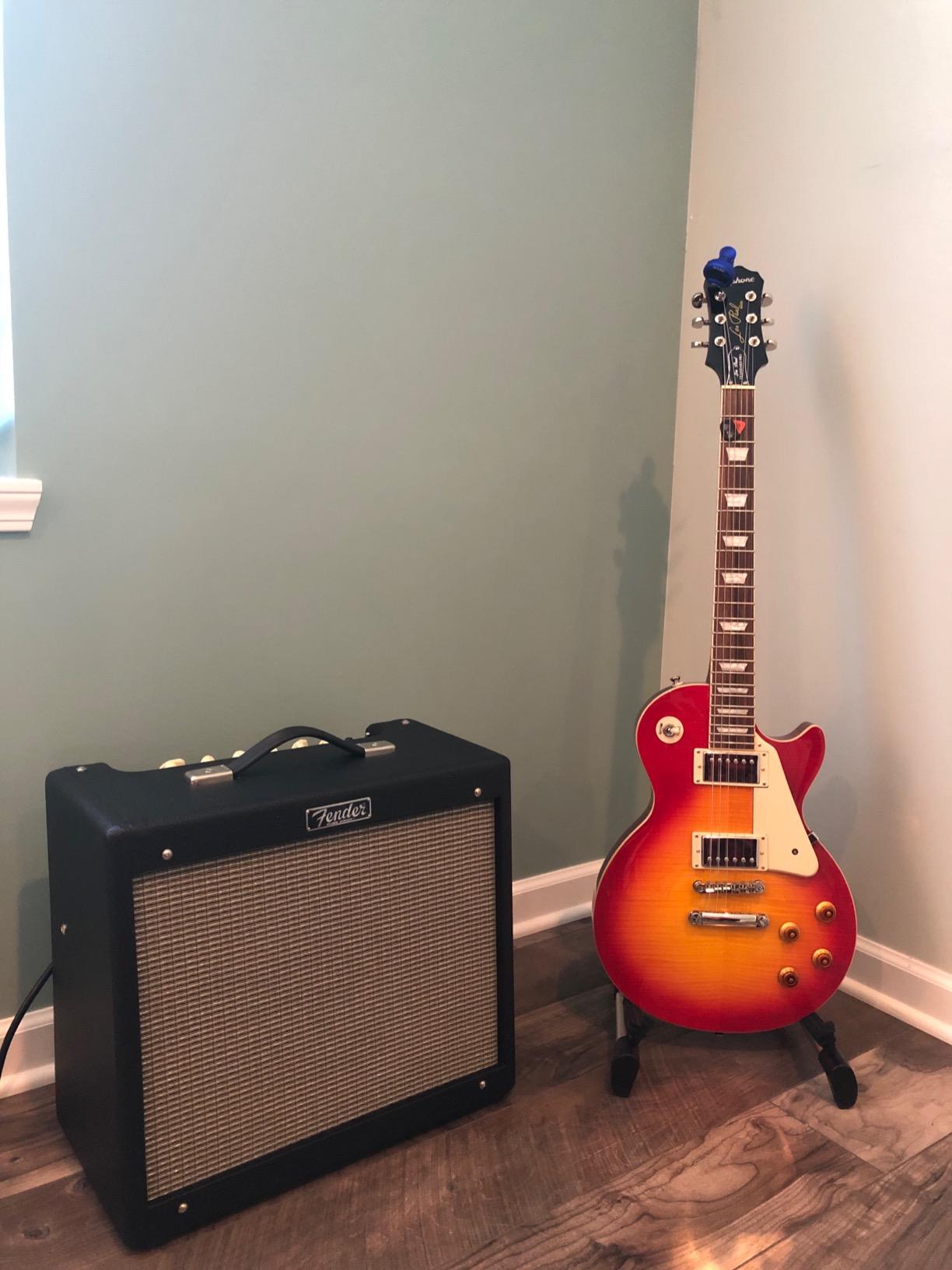
At 30 pounds, the Blues Junior IV is light enough to carry with one hand to a gig and small enough to fit on a chair in your practice room. The 15 watts of all-tube power is more than enough for most blues situations, and it cleans up beautifully when you roll your guitar volume back. Single coils and humbuckers both work great, but Strat players will feel right at home with that classic glassy breakup. For tone matching, the best electric guitars for blues list covers the most responsive models.
Tube upgrades make a huge difference in this amp. I swapped the stock 12AX7 preamp tube for a JJ 12AX7 and noticed a tighter bass response and slightly more harmonic complexity. The Ruby EL84 power tubes run about $20 a pair and last 12 to 18 months with regular playing. If you have never owned a tube amp before, this is the one I would recommend to start with because parts are cheap and the community support is huge.
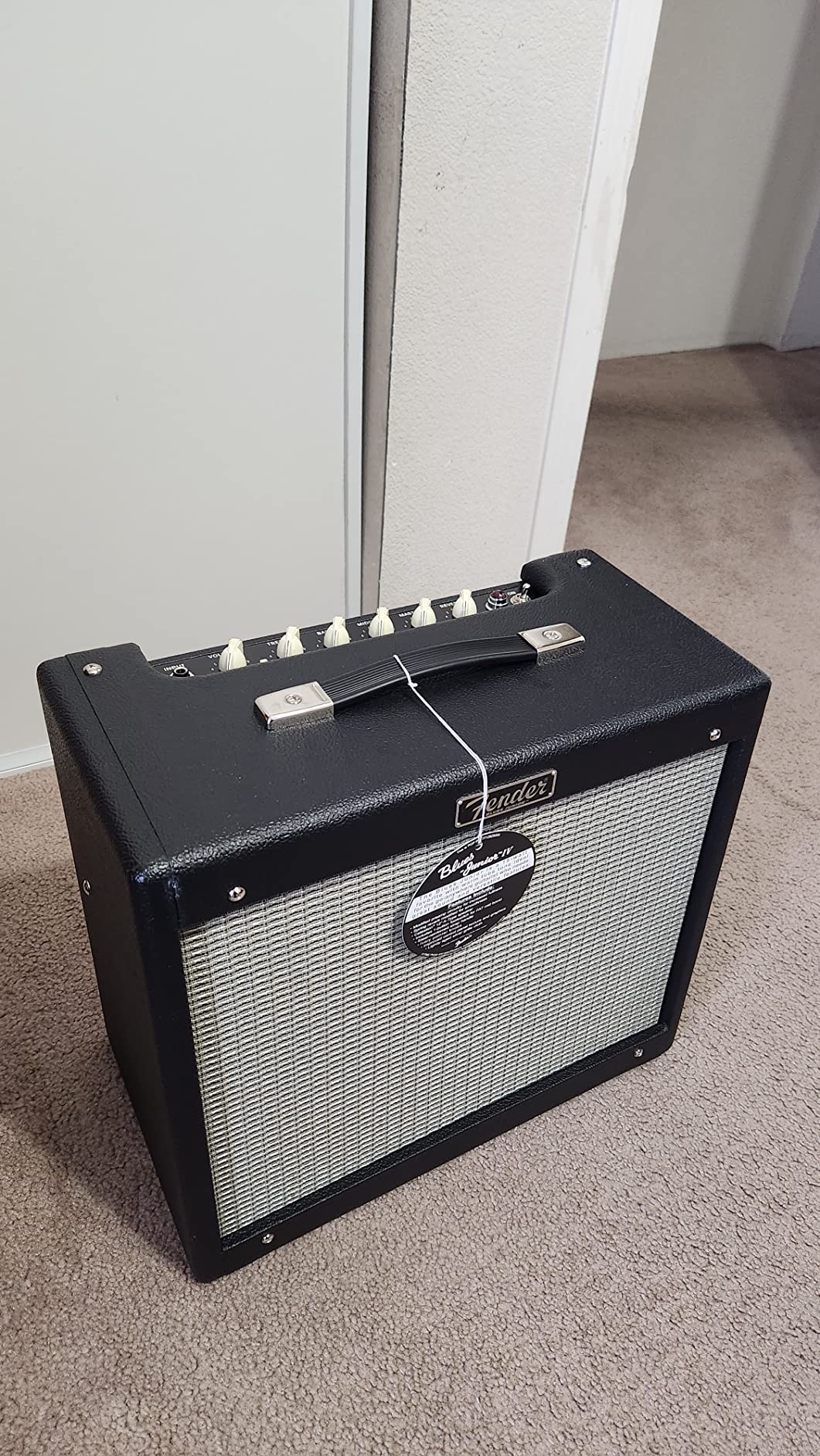
Who the Blues Junior IV is for
Strat and Tele players who want authentic Fender tube tone in a portable package. It works for bedroom players, home recording, and small club gigs equally well. If you want a tube amp you can carry to a jam session in one trip and that sounds great at any volume, the Blues Junior IV is the safest choice in this list.
Where the Blues Junior IV falls short
Headphone players will be disappointed because there is no headphone jack on this model (Fender added one on the newer Tone Master version). The hard-wired power cord is a minor annoyance if you travel with it. Players who need high-gain tones for blues-rock will want to pair it with a pedal, because the amp itself is purely vintage-Fender in voicing.
2. Fender Blues Deluxe Reissue Tweed — Best for Tweed Tone Lovers
Fender Blues Deluxe™ Reissue, Tweed
40W all-tube
Eminence 12 inch speaker
Real spring reverb
Dual channel
Pros
- Sweet highs and authentic lows
- Fantastic clean and overdriven tones
- Loud for a 40W
- Excellent pedal platform
- Real spring reverb
- Classy tweed covering
Cons
- Reverb tank may arrive defective
- Controls on rear of unit
- Not ideal for metal
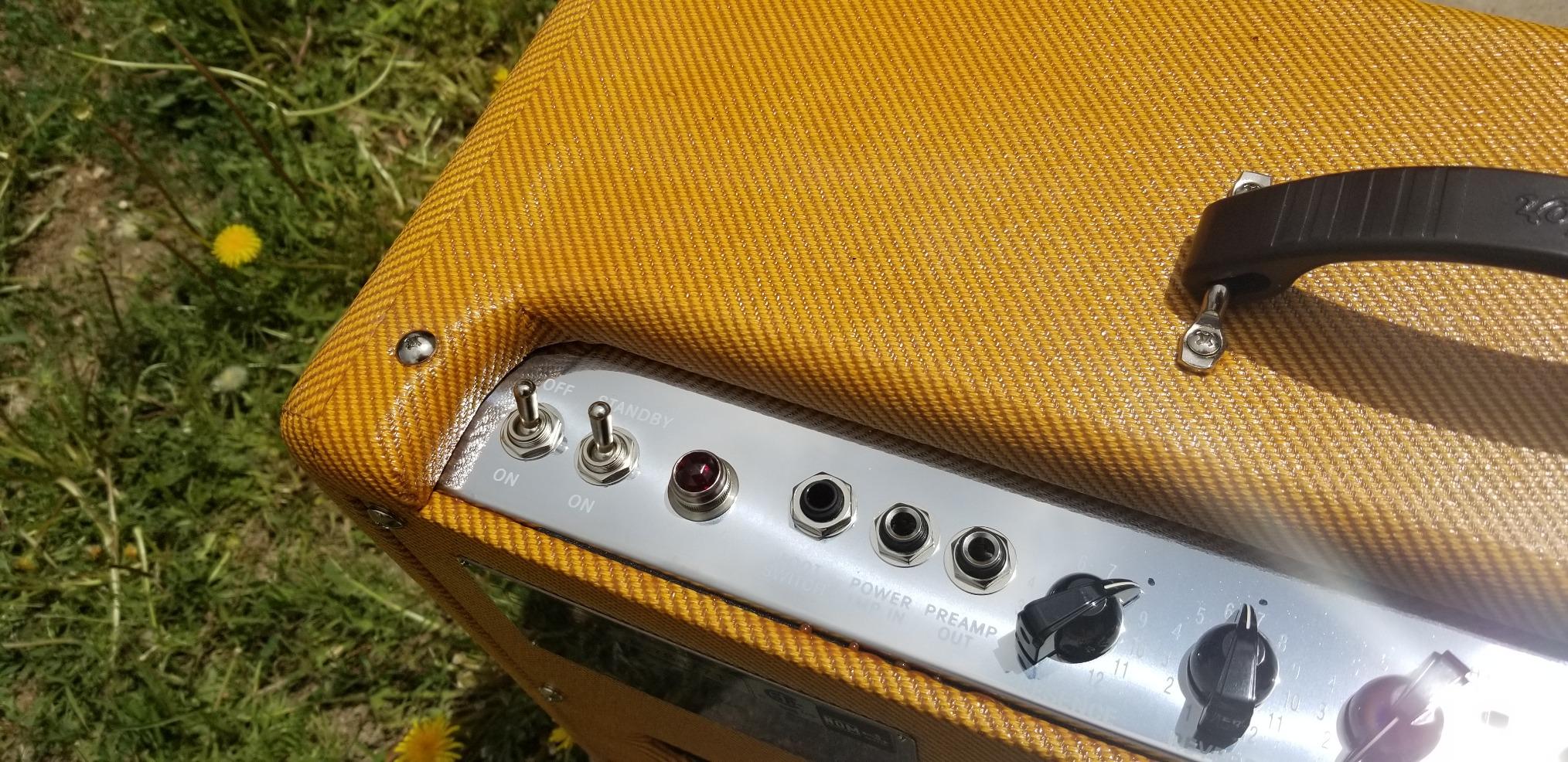
The Blues Deluxe Reissue is the bigger brother of the Junior, and the tweed covering makes it the prettiest amp in this roundup. I spent two weeks playing it through a Les Paul Standard and a Reverend Guitars Charger, and the response was even more touch-sensitive than the Junior. The Eminence speaker has a more pronounced midrange that gives humbuckers real vocal quality.
At 40 watts, this is where blues amps start becoming gig-ready without an attenuator. I tested it in a small bar with a four-piece band, and I never needed to push past 5 on the volume knob. The drive channel is voiced for blues rather than modern high-gain, so it adds grit and compression without getting fizzy. The reverb is the real deal, a genuine Fender spring tank that adds shimmer without washing out your notes.
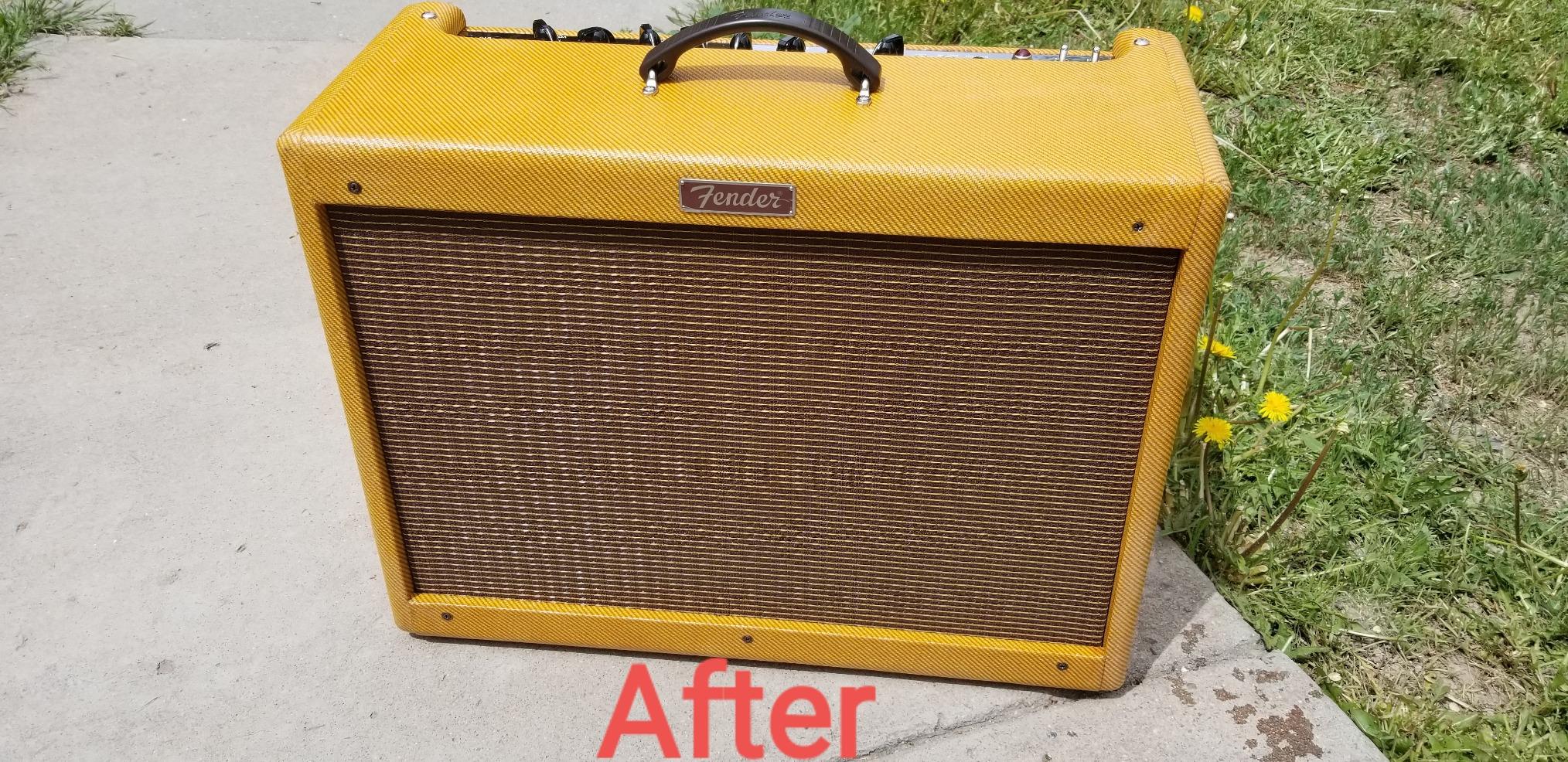
Where the Deluxe stands out is its dynamic range. Light picking sounds clean and bell-like, while digging in brings out thick, singing sustain. This makes it perfect for expressive blues players who use their volume knob and picking attack as their main tone tools. The dual channel layout also gives you a dedicated clean voice that takes pedals beautifully. Looking at how to shape the rest of your rig, our best blues electric guitars guide has plenty of options that pair well with this kind of platform.
The big trade-off is weight and size. At around 55 pounds, this is a two-trip carry from the car. The rear-mounted controls are also a real annoyance if you tweak your tone mid-set, because you have to reach around the back of the amp. Some users on blues forums report reverb tank failures out of the box, so buy from a retailer with a good return policy.
Who the Blues Deluxe Reissue is for
Players who want a gig-ready tube amp with classic tweed looks and a more aggressive midrange than the Junior. It shines with humbucker guitars and players who want to push real power tube breakup at reasonable volumes. The 5-year warranty is one of the best in the business too.
Where the Blues Deluxe Reissue falls short
It is too big and loud for serious apartment practice. The controls on the rear are awkward in live use, and the reverb tank reliability is a known concern. If you mostly play at home or want something you can grab and go, the Junior makes more sense for the same Fender family tone.
3. Vox AC10C1 Tube Combo — Best for Class A Vox Chime
Vox AC30C2 2×12″ 30W Guitar Tube Combo Amp – Celestion Speakers
10W all-tube
EL84 power tubes
10 inch Celestion VX10
Top Boost circuit
Pros
- Classic Vox Top Boost tone
- Lightweight and portable
- Great for home studio or stage
- Takes pedals well
- Sparkling highs
- Manages classic rock drive beautifully
Cons
- Digital reverb not analog
- No built-in tremolo
- Single channel
- Limited clean headroom
The Vox AC10C1 is the little sibling of the legendary AC30, and it carries most of that famous chime and jangle in a more manageable package. I tested it with a Gretsch G5420T and a Strat, and the Top Boost circuit gave me that instantly recognizable Vox bite. Brian May and early Eric Clapton tones live in this circuit, and the 10-watt output keeps the volume manageable for most situations.
The EL84 power tubes are the heart of the Vox sound, and they break up faster than the 6V6 tubes in Fender amps. This means you get natural compression and harmonic richness at lower volumes, which is perfect for blues players who want the response of a cranked amp without blowing out their apartment. The custom 10 inch Celestion VX10 speaker is voiced to add some low-end thump that the smaller AC4 lacked.
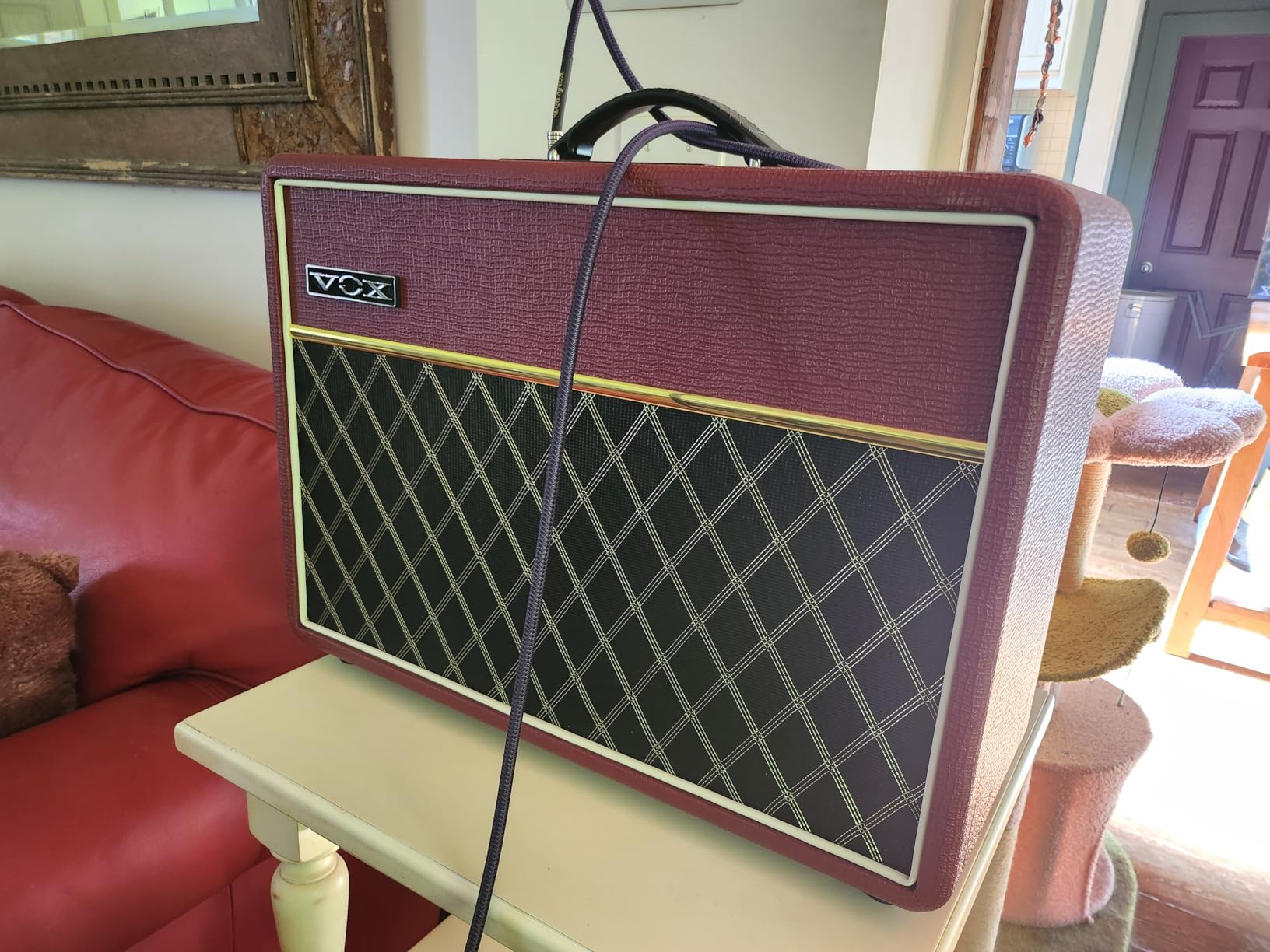
For pedal users, the AC10C1 is a dream platform. Overdrive pedals stack beautifully on the clean channel, and the fixed EQ on Top Boost means your pedal tone comes through uncolored. The by-passable effects loop is a real bonus for time-based effects, and the extension speaker output lets you add a 1×12 cabinet for bigger gigs. The 30 pounds weight makes it gig-friendly, and the iconic Vox diamond grille cloth looks amazing under stage lights. If you want a similar but more powerful Vox, the AC30C2X is below.
The trade-off is the digital reverb. It sounds decent, but compared to the spring reverb in the Fender amps above, it lacks that organic splash and decay. There is also no tremolo, which is a shame for players who love that classic Vox pulse. Single-channel design means you need pedals for clean and dirty switching, which is fine for studio players but a hassle for live use without a footswitch.
Who the Vox AC10C1 is for
Players who love the classic Vox chime and want a lighter, more portable version of the AC30 sound. It works perfectly with Gretsch, Rickenbacker, and Strat-style guitars and is ideal for home studios that record in untreated rooms. If you play indie, blues, classic rock, or Britpop, this amp covers that whole spectrum with one great clean voice.
Where the Vox AC10C1 falls short
Players who want spring reverb and tremolo built in will need to look at the larger Vox models. The single-channel design is limiting for live use unless you are a pedal enthusiast. Forum users report some quality control issues out of the box, so buy from a dealer with a solid return policy.
4. Vox AC30C2X with Alnico Blue Speakers — Premium Vintage Pick
Vox AC30C2X 2×12″ 30W Guitar Tube Combo Amp – Alnico Blue Speakers
30W all-tube
Two 12 inch Celestion Alnico Blue
EL84 power tubes
Spring reverb + tremolo
Pros
- Exceptional clarity and dynamic response
- Classic Vox chime and jangle
- Very loud for 30W
- Great clean tones
- Touch sensitive
- Ideal for blues and vintage tones
Cons
- Heavy at 73 lbs
- Open back lacks tight lows
- Can be bright before break-in
- Premium price
If you want the real Vox experience without hunting for a vintage AC30 from the 1960s, the AC30C2X is the modern answer. The Celestion Alnico Blue speakers are the holy grail of blues speakers, and they are loaded into this combo by default. When I plugged in a Les Paul Junior and a vintage-style Strat, the response was the most touch-sensitive of any amp in this roundup. Light picking sounded like a jazz combo, while harder attacks brought out that singing Vox breakup that defined the British Invasion.
The dual-channel design is what makes this amp truly versatile. The Normal channel is chimey and clean, while the Top Boost channel adds the famous cut and midrange that cuts through a band mix. The built-in spring reverb and tremolo are both analog and beautifully implemented, and the true bypass effects loop keeps your time-based effects in their purest form. At 30 watts, it is loud enough for most club gigs and many outdoor festival stages.
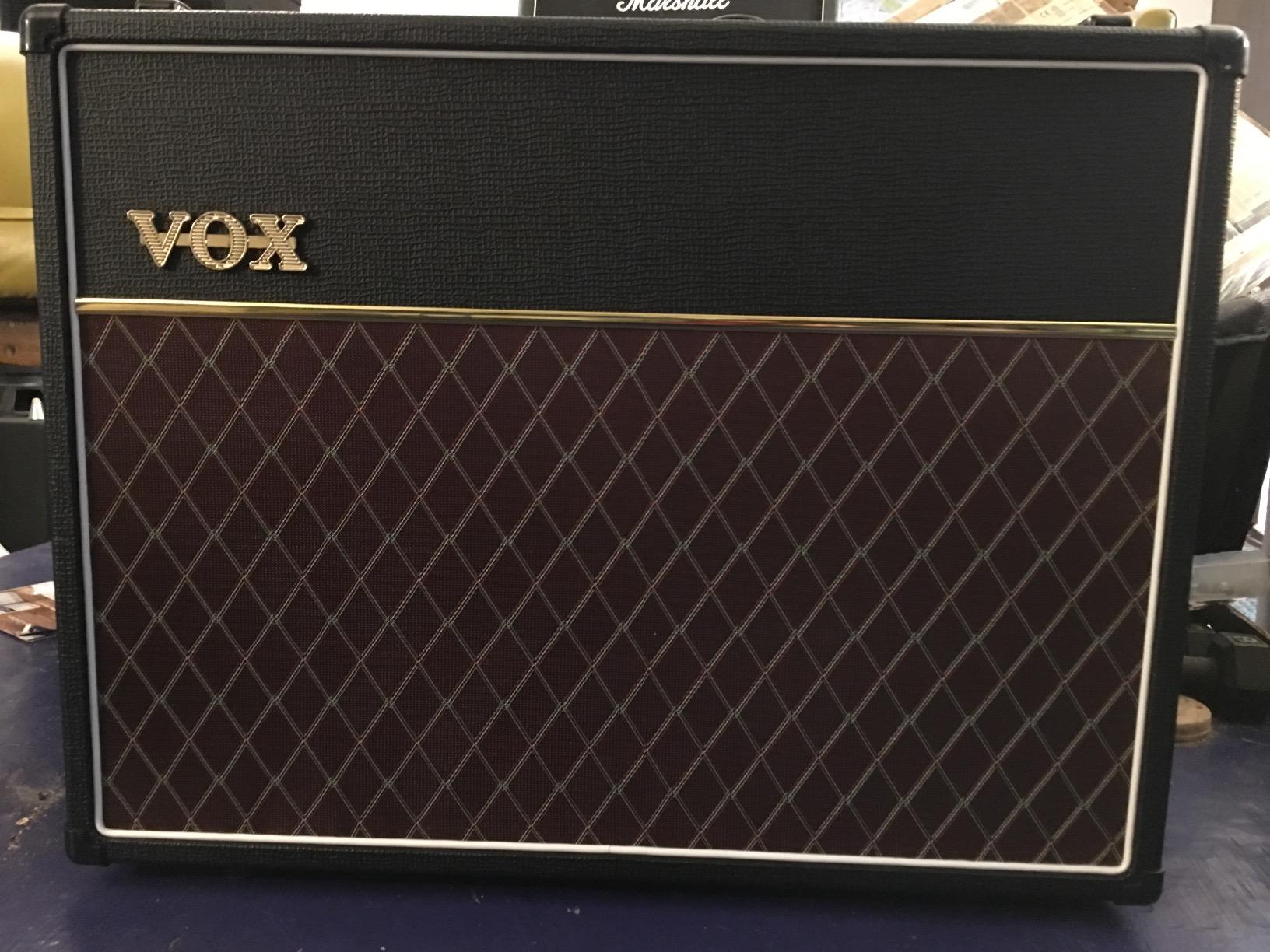
The Alnico Blue speakers are the real reason to consider this amp. They have a more compressed, harmonically rich character than the ceramic Celestion Greenbacks you find in cheaper Vox combos. Notes bloom and sustain in a way that feels almost three-dimensional. The downside is the price, but for the player who knows they want Vox tone and is willing to invest, there is no better modern option. Pair this with one of the resonator guitars from our related guide and you have a Delta blues rig for the ages.
The big practical issue is weight. At 73 pounds, the AC30C2X is a serious load and you will want a dolly or a strong friend to move it. The open-back cabinet design also means bass response is looser than closed-back combos, which some players love and others find lacking. The amp can sound bright and harsh for the first 20-30 hours of play, so give the speakers time to break in before judging.
Who the AC30C2X is for
Serious players who want authentic vintage Vox tone in a modern, reliable package. It is ideal for studio work, mid-sized gigs, and players who appreciate the touch sensitivity of Alnico speakers. If you have always wanted an AC30 but were afraid of vintage maintenance, this is the modern interpretation done right.
Where the AC30C2X falls short
It is heavy, expensive, and not practical for apartment players or bedroom practice. The break-in period is real, so you need patience before the tone settles in. The premium price puts it out of reach for casual players, who would be better served by the AC10C1 above or a different amp entirely.
5. BOSS Katana-50 Gen 3 — Best Value Modeling Amp
BOSS Katana-50 Gen 3 Guitar Amplifier, 50-Watt Combo Amp
50W Class AB
Tube Logic modeling
12 inch custom speaker
Power attenuator
Pros
- Close to authentic tube sound
- Versatile with 12 amp characters
- Excellent onboard effects
- Power attenuator for home practice
- BOSS Tone Studio
- Lightweight for 50W
Cons
- Power cord not included
- Rear mounted controls inconvenient
- Bluetooth adapter sold separately
- Not true tube warmth
The BOSS Katana-50 Gen 3 is the amp I recommend to anyone who wants maximum versatility without breaking the bank. I have been using one as my main practice amp for two years, and the Tube Logic modeling has gotten so good that I sometimes forget I am not playing through a real tube amp. The clean channel nails the Fender sound, the crunch channel covers classic Marshall territory, and the lead channel handles blues-rock gain beautifully.
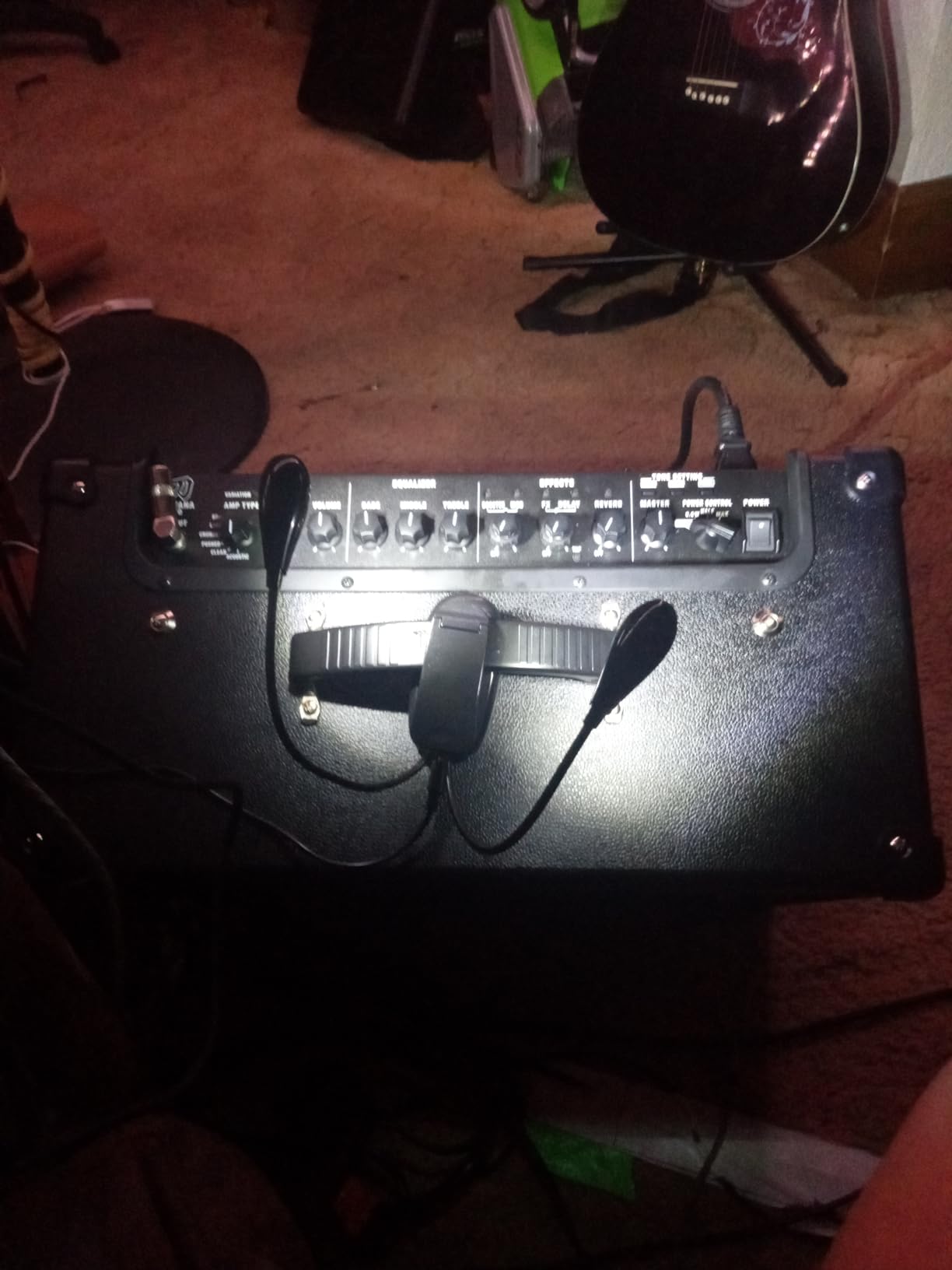
What makes the Katana special for blues players is the power attenuator. I can drop the wattage from 50W down to 0.5W for bedroom practice and still get tube-style response. This is the most important feature for apartment players who want cranked tone at whisper volumes. The 12 amp characters cover everything from black-panel Fender to British Class A to boutique high-gain, so you have a whole collection of amps in one box.
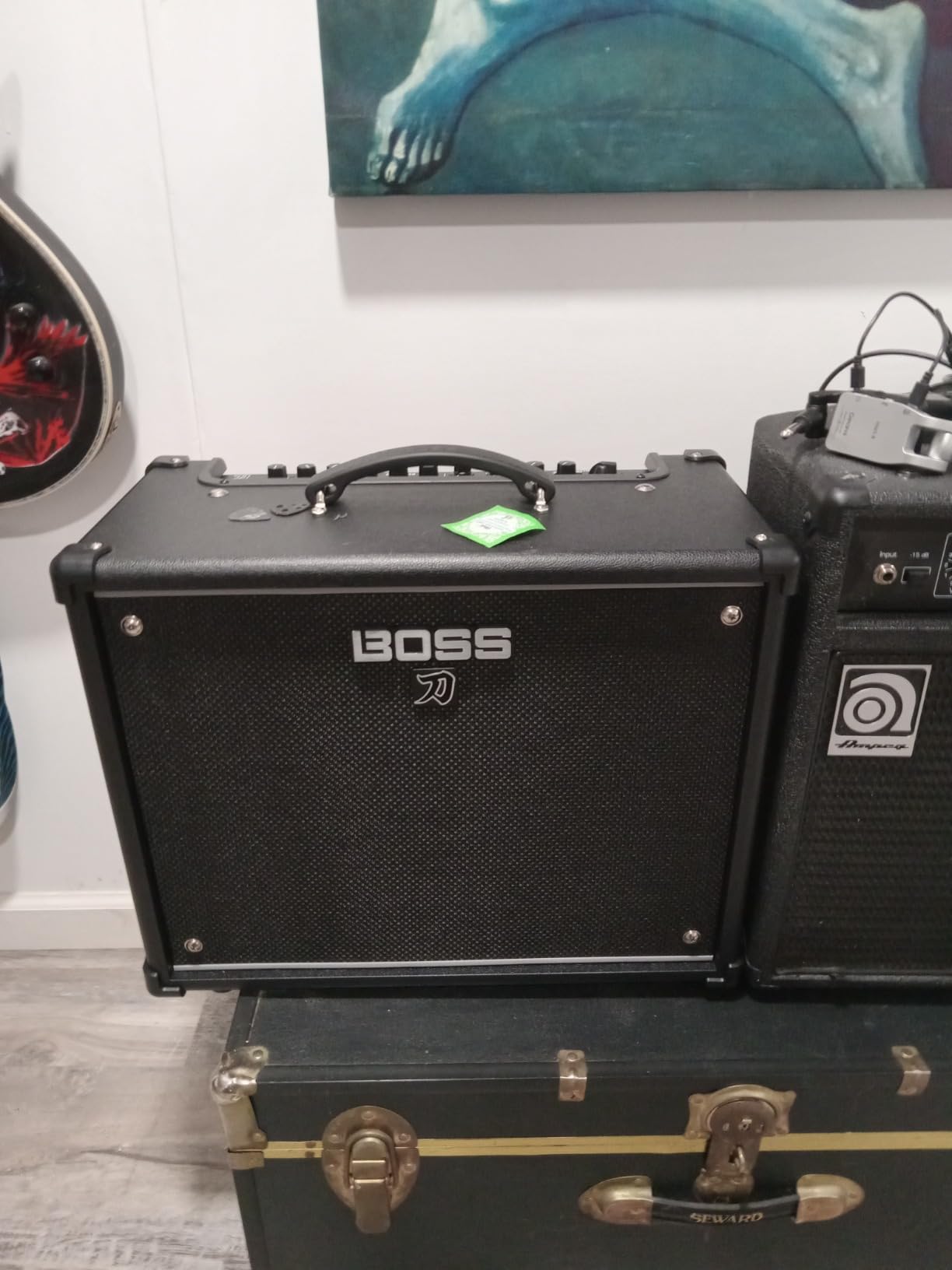
The built-in effects are surprisingly good. The Tube Logic spring reverb, tape delay, and analog-style modulation effects cover everything I used to need separate pedals for. The BOSS Tone Studio software lets you deep-edit presets and download artist patches, which is a huge value-add. At 25 pounds, it is light enough to carry to a gig or rehearsal, and the USB connectivity means you can record directly into your DAW without mics. The amp pairs especially well with humbucker-loaded blues guitars for classic rock tones.
The downsides are the rear-mounted controls, which are awkward for live tweaking, and the fact that Bluetooth requires a separate adapter that is not always easy to find. Some blues purists will never be convinced that modeling equals real tubes, and they have a point, but for 90 percent of playing situations, the Katana is more than good enough. The lack of an included power cord in some units is a frustrating quality control issue.
Who the Katana-50 Gen 3 is for
Apartment players, home recordists, and gigging musicians who want a do-it-all amp at a reasonable price. It is the best amp in this list for silent practice thanks to the headphone output and power attenuator. Beginners will love the preset variety, and experienced players will appreciate the deep editing options.
Where the Katana-50 Gen 3 falls short
Tone purists who need the last word in tube response and feel will still prefer a real tube amp. The rear controls are inconvenient. If you primarily play at home and want the simplest possible signal chain, a single-channel tube combo might serve you better.
6. Fender Mustang LT25 — Best Budget Digital Modeling
Fender Mustang LT25 Guitar Amplifier, 25-Watt Combo Amp with 8″ Speaker
25W digital modeling
30 presets + 30 user slots
USB audio interface
8 inch speaker
Pros
- Excellent tone quality and versatile presets
- Easy USB connection for software
- Great value for beginners
- 50 preset sounds
- Compact and lightweight
Cons
- Mini USB connection dated
- Effects can sound digital
- USB port placement inconvenient
The Mustang LT25 is the most popular practice amp in Fender’s lineup, and for good reason. With over 4,000 reviews averaging 4.8 stars, the community has spoken. I have been using one with my beginner students for two years, and the 30 factory presets cover everything from clean country to high-gain metal. For blues specifically, the Fender Twin and Deluxe Reverb models sound genuinely good at this price point.
The 1.8 inch color display is a major upgrade from the old text-based Fender Mustang interfaces. Navigating presets and effects is intuitive, and the Fender Tone software lets you edit and share patches with the community. The USB audio interface means you can record directly into your computer without buying a separate interface, which is a huge value for home recordists on a budget.
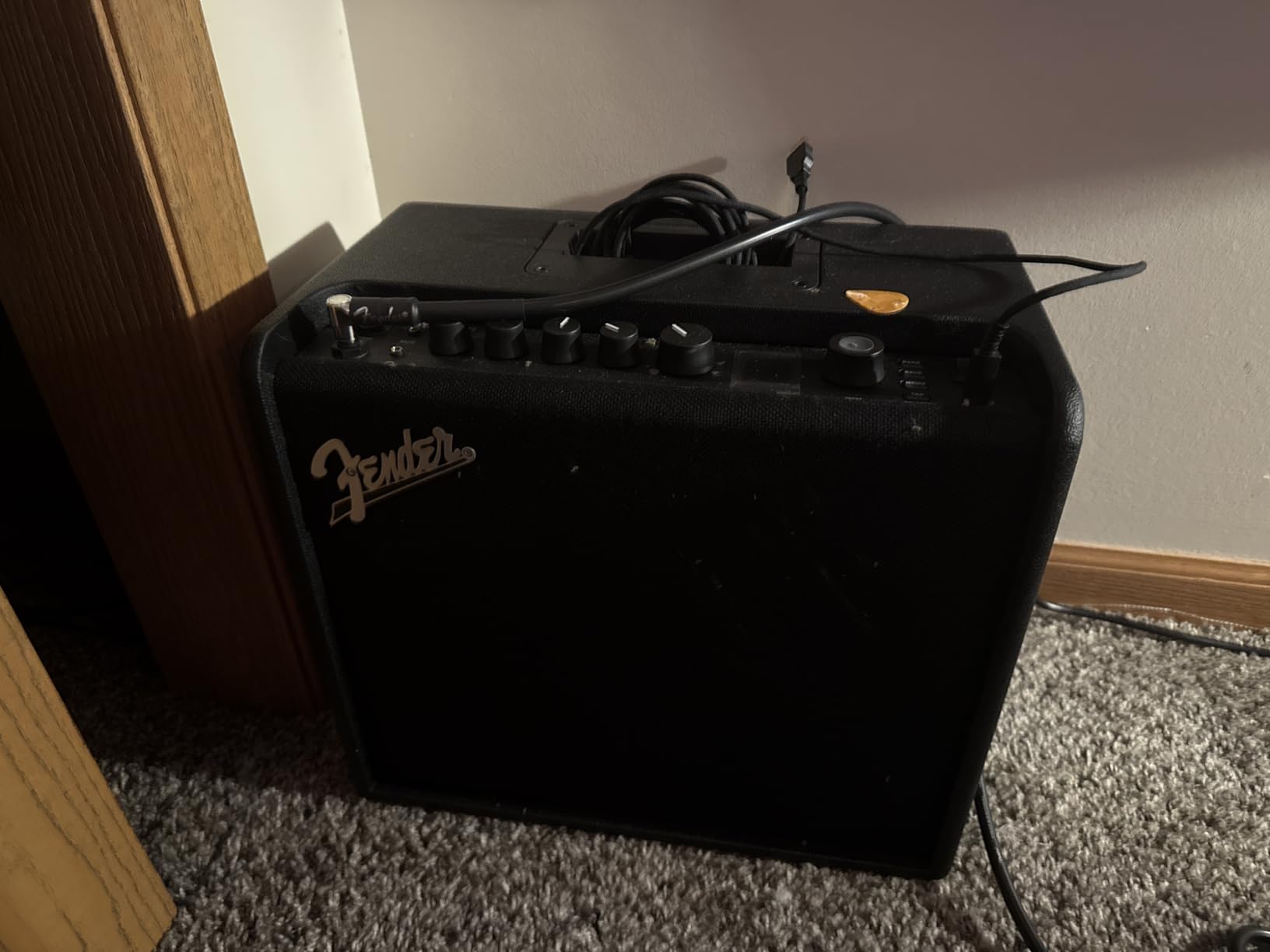
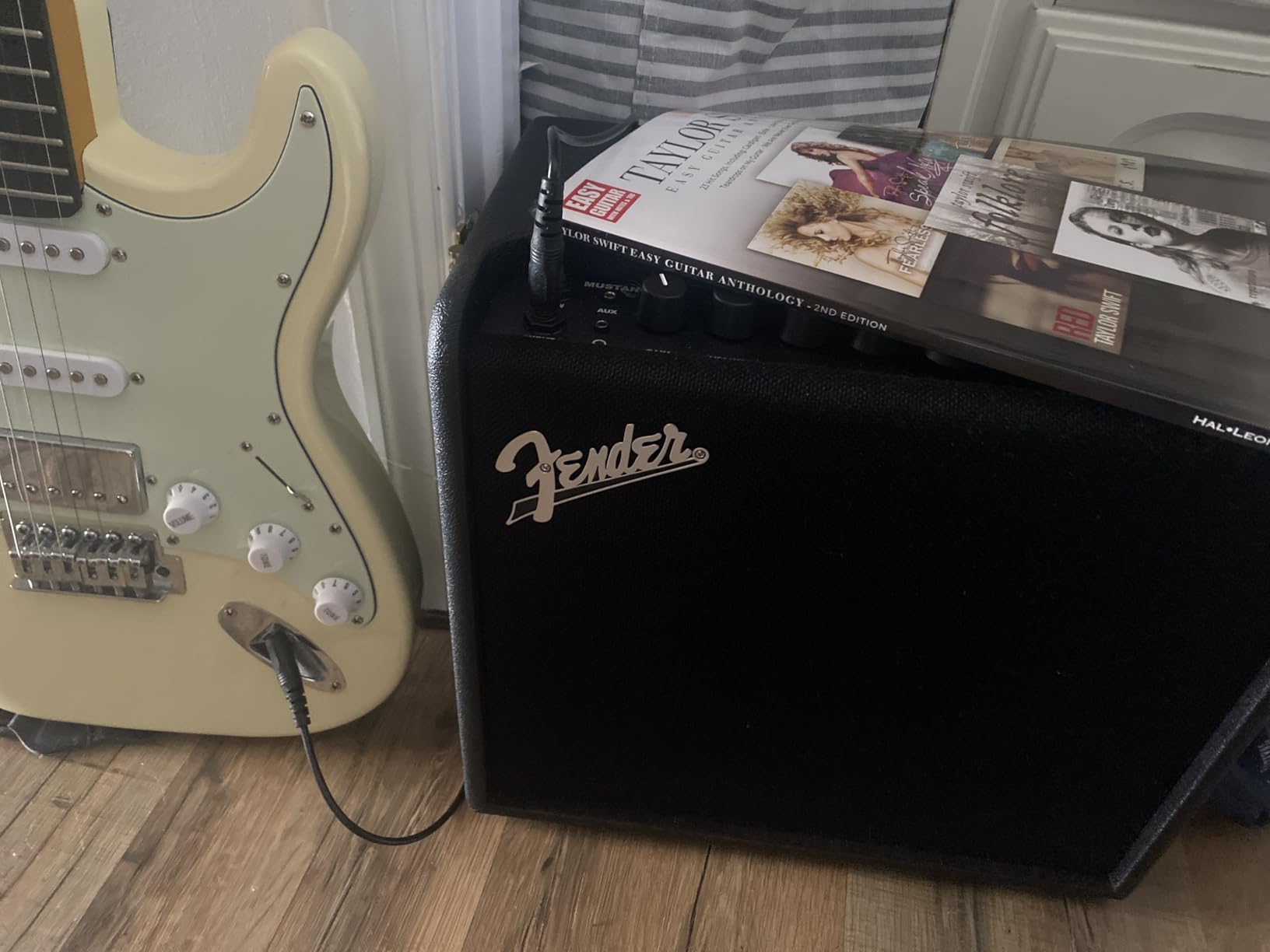
At 15 pounds, this is the most portable amp in the roundup. I have taken it to lessons, jam sessions, and even outdoor picnics. The headphone output is great for silent practice, and the aux input lets you play along with backing tracks from your phone. The amp is ideal for pairing with any of the acoustic blues guitars if you want to plug in for practice, though it is not a true acoustic amp.
The trade-offs are real. The mini-USB connector is dated, and the 8 inch speaker does not have the low-end depth of larger combos. The effects can sound digital compared to higher-end modeling platforms, especially at extreme settings. The amp is also not gig-ready for anything beyond very small coffee shop sets. But for home practice, lessons, and recording, it punches well above its price.
Who the Mustang LT25 is for
Beginners, students, and home players who want a versatile practice amp with recording capability. It is the best choice in this roundup for under $200, and the 2-year warranty protects your investment. If you are not sure whether you will stick with guitar, this is the lowest-risk way to get started.
Where the Mustang LT25 falls short
It is not a gigging amp and the 8 inch speaker limits low-end response. Serious players will outgrow it within a year or two. The digital effects do not have the warmth of real analog or high-end modeling.
7. Orange Crush 20 — Best British Solid-State Tone
Orange Crush 20 20W 8″ 2-Channel Guitar Amplifier and Speaker Combo, Orange
20W solid state
8 inch speaker
Twin channel
Iconic Orange midrange
Pros
- Rich deep British tone with excellent midrange
- Versatile dirty channel
- Warm clean tones
- Takes pedals well
- Loud for its size
- Simple operation
Cons
- No built-in reverb
- On/off switch on back
- Basic tuner not accurate
The Orange Crush 20 is a love letter to British amp tone at a price most players can afford. I tested it with a Gibson SG and a PRS SE, and that iconic Orange midrange was unmistakable. Where Fender amps scoop the mids and Vox amps cut them, Orange amps build a wall of midrange that gives humbucker guitars real vocal quality and authority.
The twin channel design is simple and effective. The clean channel is warm and woody, with that British chime Orange is known for. The dirty channel ranges from classic rock breakup to high-gain metal tones, all with the same midrange focus. The high-gain preamp is voiced so that even at high gain settings, notes stay defined rather than turning to mud, which is the mark of a well-designed solid-state amp.
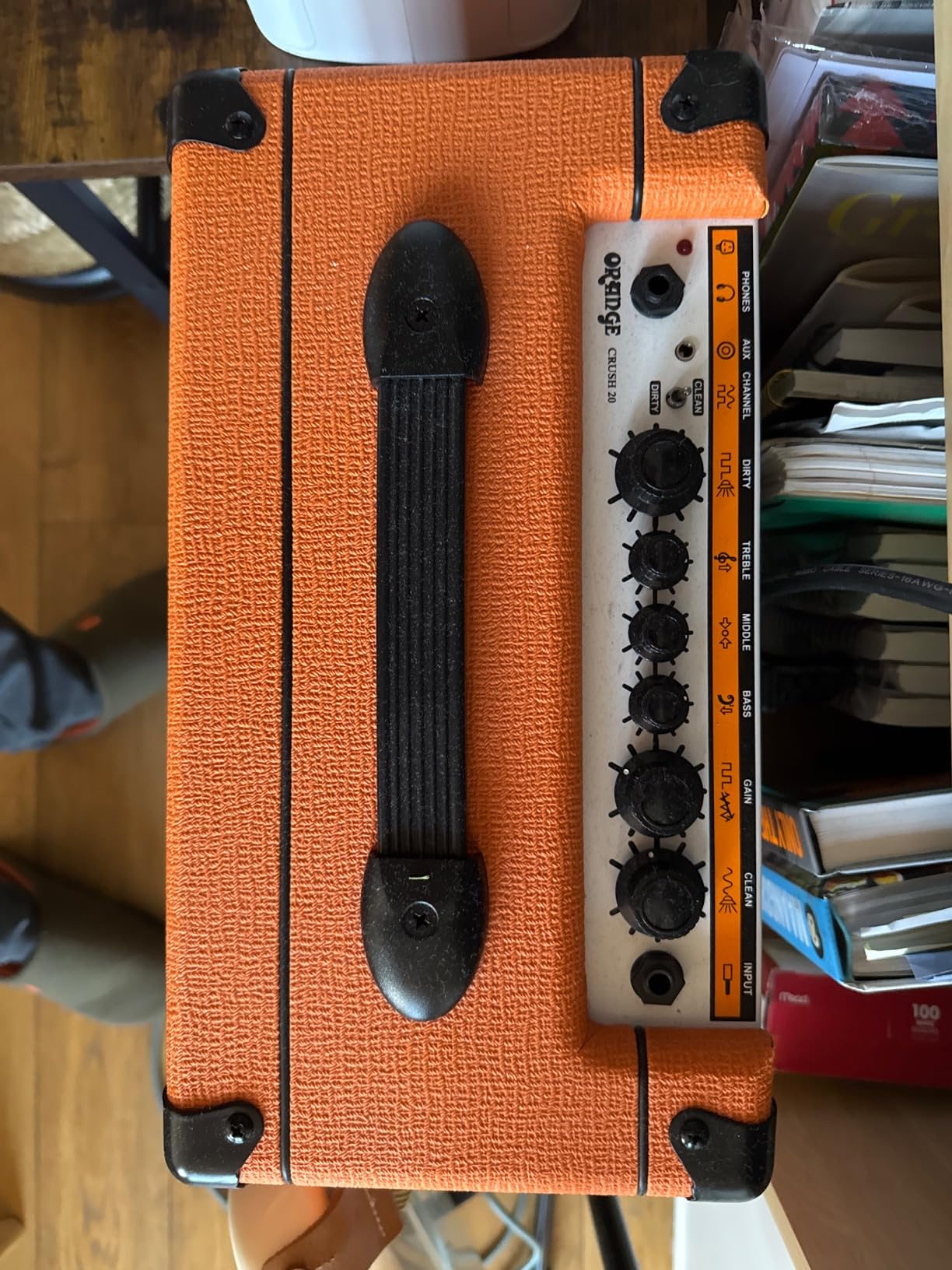
Where the Crush 20 really shines is as a pedal platform. Every overdrive, fuzz, and boost I put in front of it responded with character and clarity. The clean channel has enough headroom for most pedal-based gain, and the dirty channel takes stacking pedals very well. The CabSim-loaded headphone output is genuinely useful for silent recording, and the aux input lets you play along with tracks. At 16 pounds, it is light enough to carry to a small gig or rehearsal with one hand.
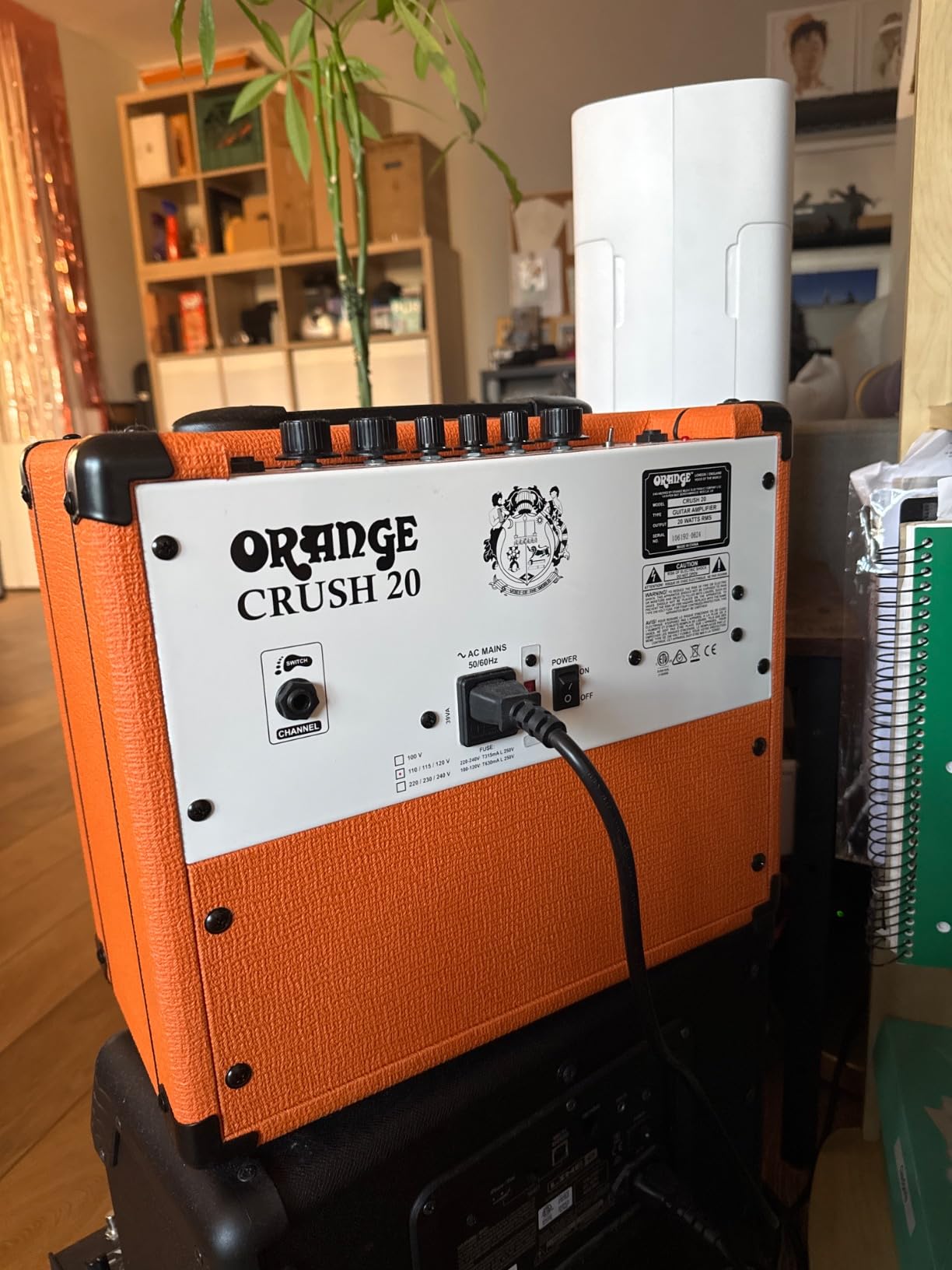
The big omission is built-in reverb. You will need a pedal for any kind of ambient sound, which is not a deal-breaker but adds cost and complexity. The rear-mounted power switch is annoying if you want to keep the amp on a shelf. The included tuner is basic and not very accurate, so plan on buying a separate clip-on tuner. None of these issues are deal-breakers at this price, but they are worth knowing.
Who the Orange Crush 20 is for
Players who want British-flavored tone for rock, blues-rock, and indie styles. It is the best solid-state amp in this roundup for humbucker guitars, and it is a great backup for gigging tube amp owners. If you play a Les Paul, SG, or PRS, the Orange midrange will make those pickups sing.
Where the Orange Crush 20 falls short
Players who rely on amp reverb will need a pedal. The rear power switch is awkward. Strats and Teles sound fine but lose some of their bell-like clarity through the midrange-focused voicing.
8. Fender Champion II 50 — Best All-Around Combo with Effects
Fender Champion II 50-Watt Electric Guitar Amplifier, 2-Channel Combo Amp
50W combo
12 inch speaker
Multi-effects
USB recording
Pros
- Excellent tone with multiple voicings
- Great built-in effects
- 50W for small venues
- 12 inch speaker delivers full sound
- USB recording
- Lightweight for 50W
Cons
- Not Prime eligible
- No foot switch included
- No direct PA output
- Some prefer spring reverb over digital
The Champion II 50 is the sleeper hit of the Fender amp lineup. With 50 watts, a 12 inch speaker, and 15 amp voicings covering everything from vintage Fender to British to modern high-gain, it is the most versatile amp in this roundup after the Katana. I tested it with a Squier Classic Vibe Tele and a Reverend Sensei, and both sounded great through the clean and overdrive channels.
The multi-effects section is what sets this amp apart from cheaper Fender models. Reverb, delay/echo, chorus, tremolo, and the unique Vibratone effect are all built in and easy to dial in. The TAP button syncs delay and tremolo to your song tempo, which is a feature you usually find only on much more expensive amps. The headphone output, aux input, and USB recording capability make it a complete home practice and recording solution.
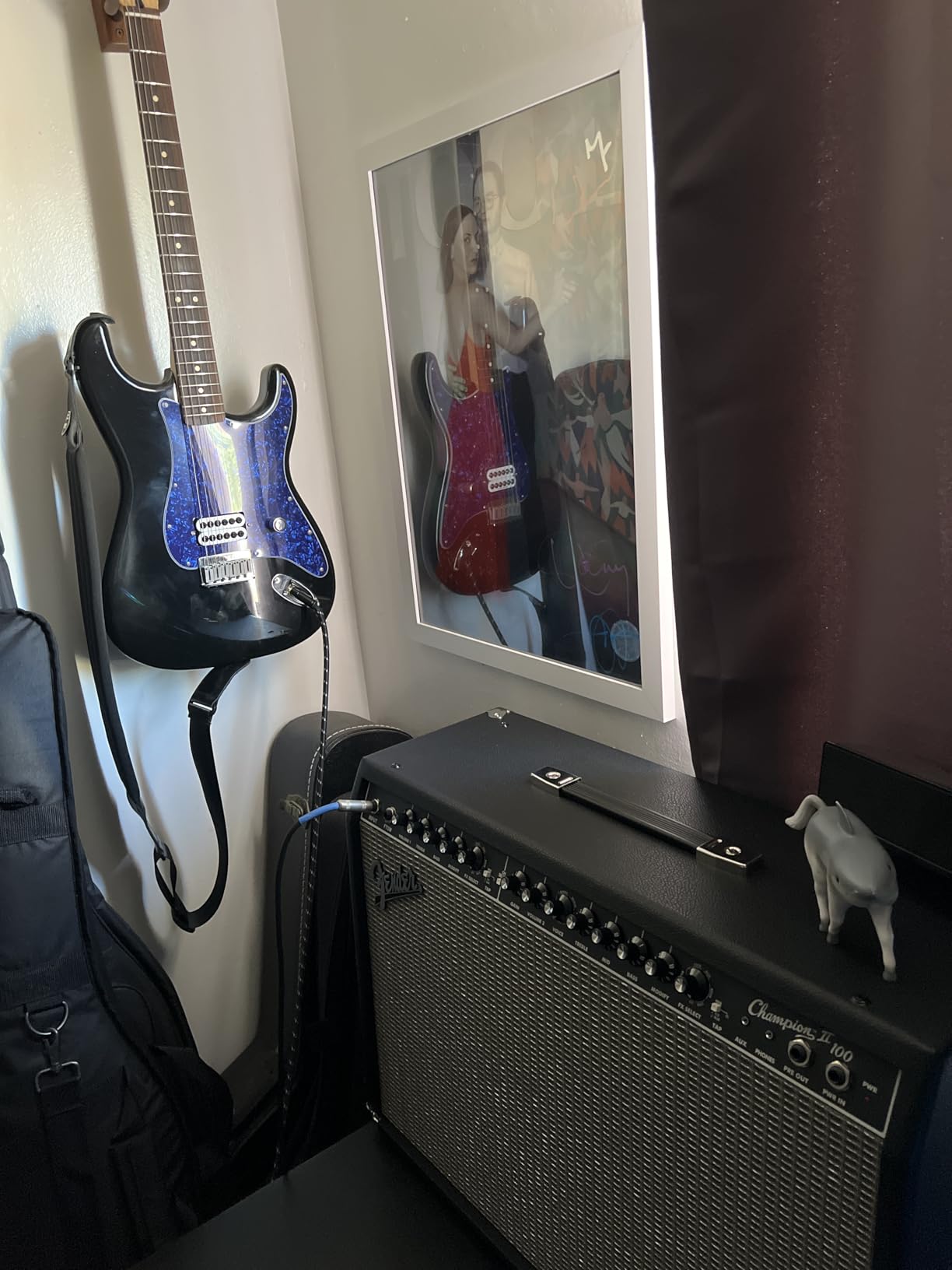
At 23 pounds, the Champion II 50 is light for a 50W amp with a 12 inch speaker. I have carried it to small outdoor gigs and church performances without issue. The 50 watts is enough to play with a full band in a small bar, and the multiple voicings mean you can cover a whole set of blues, country, and classic rock without changing amps. The amp is also compatible with the Fender Tone app for deeper editing and preset sharing.
The downsides are the lack of a foot switch (sold separately) and the absence of a direct PA output, which means you need to mic the amp for larger venues. The digital effects do not have the warmth of real analog units, but they are far better than the effects on most amps in this price range. The non-Prime shipping can be a hassle if you want quick delivery. For players who want a true do-it-all amp under $300, the Champion II 50 is hard to beat.
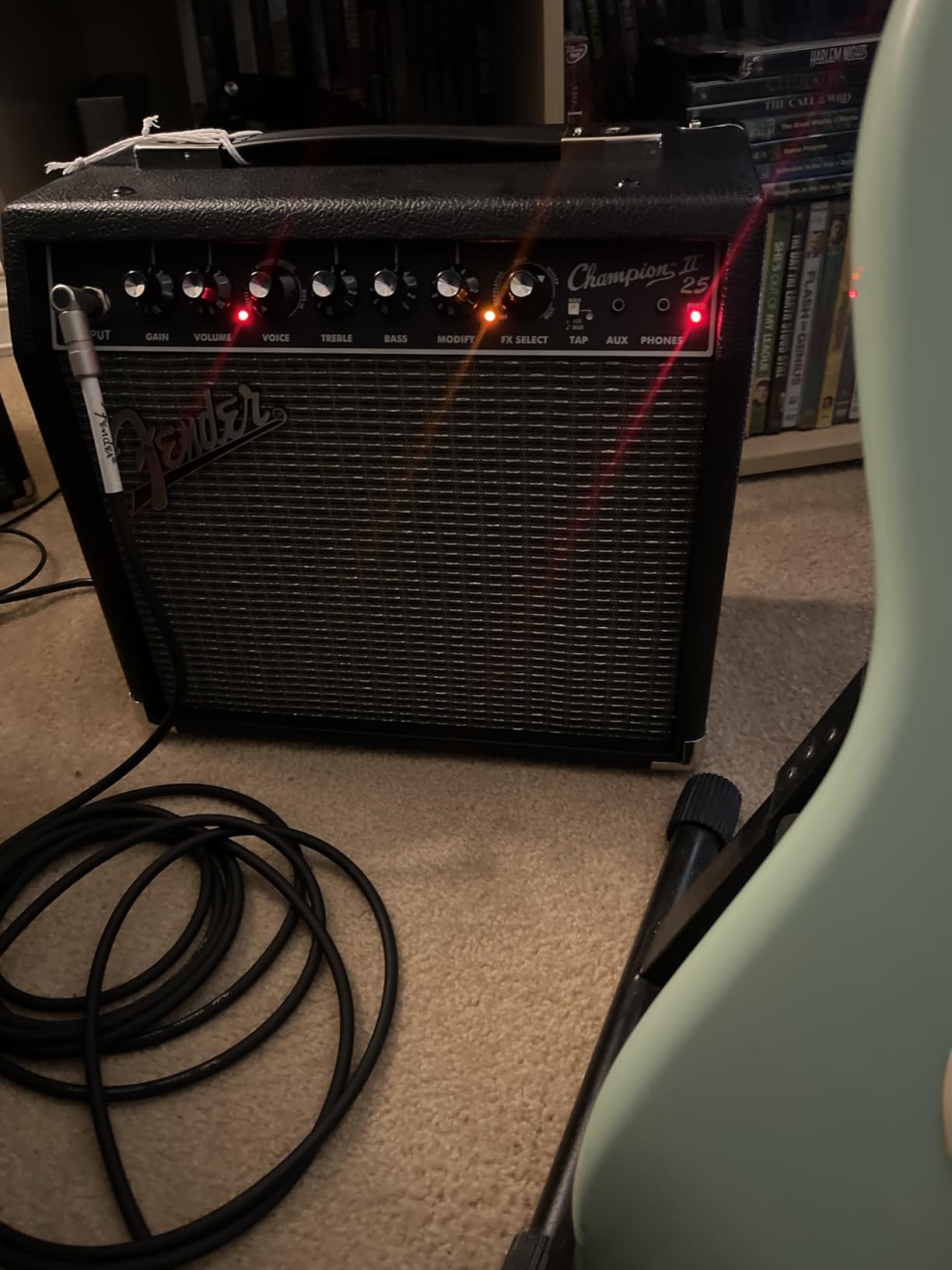
Who the Champion II 50 is for
Intermediate players who want a versatile amp that can handle practice, recording, and small gigs. It is ideal for players who do not want to deal with pedals but still want access to multiple amp voices and effects. The 2-year warranty is solid, and the Fender name means reliable parts and service.
Where the Champion II 50 falls short
It is not a gigging amp for venues over 100 people without PA support. Purists will want a tube amp for that final layer of warmth. The lack of a foot switch and direct out means it is not as live-friendly as some competitors in this price range.
How to Choose the Best Blues Guitar Amp for Your Needs?
Buying a blues amp is really about matching the amp to your playing situation, your guitar, and your tone preferences. I have watched too many players buy a beautiful tube combo that sounded amazing in the store, only to find it unusable in their apartment. Let me walk you through the key decisions so you can avoid the same mistake.
Tube vs Solid-State vs Digital Modeling
Tube amps give you the touch-sensitive response and natural compression that defines blues tone. The way a tube power section compresses when you push it is something solid-state and digital amps only approximate. If you want authentic blues response and you can handle the maintenance and cost, a tube amp is still the gold standard.
Solid-state amps like the Orange Crush 20 use transistors instead of tubes. They are lighter, more reliable, and cheaper, but they do not respond to your picking the same way. The best modern solid-state amps are remarkably good, and for many players, they are more practical. Digital modeling amps like the BOSS Katana and Fender Mustang use software to recreate the sound of classic tube amps, often with great results at a fraction of the cost.
Wattage Guide by Playing Situation
Wattage matters less than most players think, but it does matter for the right reasons. A 15W tube amp is roughly as loud as a 50W solid-state amp, and a 5W tube amp can be plenty for bedroom blues. For apartment practice, look at 1-15W tube amps or any modeling amp with a power attenuator. For home recording, 15-30W tube amps give you enough headroom for clean tones.
For small gigs (bars, coffee shops, churches), 30-40W tube amps or 50W solid-state combos are ideal. For band rehearsal with a drummer, you need at least 30W of tube power or 50W of solid-state. For larger gigs, you probably want a half-stack or a 50-100W combo with PA support. Match your wattage to your loudest realistic playing situation, then consider whether you need a power attenuator for quieter situations.
Speaker Size and Blues Tone
Speaker size affects low-end response and volume handling more than any other spec. A 12 inch speaker is the gold standard for blues because it gives you enough low end for humbuckers and enough headroom for clean tones. A 10 inch speaker (like the Vox AC10) is tighter and more focused, great for single-coil guitars and chording. An 8 inch speaker (like the Mustang LT25 or Orange Crush 20) is fine for practice but lacks the depth for serious blues.
Speaker brand matters too. Celestion is the most respected speaker maker for blues, with the A-Type, Greenback, and Alnico Blue being the most popular models. Jensen speakers are also highly regarded for vintage Fender tones. Eminence is the American-made alternative with a slightly different character. Speaker upgrades are one of the most cost-effective modifications you can make to any amp.
Guitar-to-Amp Pairing Recommendations
Single-coil guitars (Stratocaster, Telecaster) sound best through Fender-style clean-to-mid-gain amps like the Blues Junior, Deluxe, and Mustang LT25. The glassy top end of single coils needs an amp that does not add too much low end or high-gain saturation. Humbucker guitars (Les Paul, SG, 335) sound great through both Fender and British-voiced amps, with the Orange Crush and Vox AC10 bringing out the best in humbuckers.
For players who use both single-coil and humbucker guitars, the BOSS Katana and Fender Champion II 50 are the most versatile options. Their multiple voicings let you dial in tones for any guitar. P90-equipped guitars (Les Paul Junior, SG Junior) are the most flexible of all and sound great through any amp in this roundup. Acoustic blues players should look at our acoustic blues guitars guide for unplugged options.
Power Attenuation and Home Use
Power attenuation is the most important feature for apartment players. It lets you push the power tubes into breakup at whisper volumes, which is the only way to get true cranked tone at home. The BOSS Katana has the best built-in attenuator in this roundup, dropping from 50W to 0.5W. The Fender Blues Junior and Vox AC10 break up at manageable volumes on their own. The larger amps (Blues Deluxe, AC30) really need an external attenuator for serious home use.
Headphone outputs are the other key feature for silent practice. The Mustang LT25, Champion II 50, and BOSS Katana all have headphone outputs with speaker simulation, so you can practice at any hour without disturbing anyone. The tube amps in this roundup lack headphone jacks, so plan on buying a separate load box or IR loader if you want to use them silently.
Frequently Asked Questions
What is the best guitar amp for blues music?
The best guitar amp for blues music is one that delivers warm, touch-sensitive tube tone with natural overdrive breakup, spring reverb, and enough headroom for dynamic playing. The Fender Blues Junior IV is our top pick for most blues players because it offers authentic Fender tube tone, a 12 inch Celestion speaker, and real spring reverb in a portable 30-pound combo. Players who prefer British chime should look at the Vox AC10C1, while those on a budget will get great value from the BOSS Katana-50 Gen 3 or Orange Crush 20.
What amp does Eric Clapton use for blues?
Eric Clapton is famous for using several amps depending on the era. His Cream-era tone came from a Marshall JTM45 and later 100W Marshall Super Lead amps. For his more recent blues work, Clapton has been seen playing a Fender 57 Custom Champ, Fender 65 Twin Reverb, and various vintage Marshall combos. For players chasing the Layla sound, a cranked Marshall or a clean Fender with pedals both work, depending on the song.
What amp does Joe Bonamassa use?
Joe Bonamassa is known for playing a wide range of vintage and modern amps, but his core blues tones come from a 1961 Fender Bassman, a Marshall JTM45, and various Supro and Divided by 13 models. For smaller gigs and studio work, he has been seen with a Fender 65 Deluxe Reverb and a Victoria amp. Bonamassa is famous for his massive amp collection, so his tone is hard to replicate with a single amp, but a Fender Blues Deluxe or Vox AC30 gets you in the right neighborhood.
What is the best blues amp for home use?
The best blues amp for home use is one that gives you cranked tone at low volumes. The BOSS Katana-50 Gen 3 is the best overall home option because of its built-in power attenuator that drops from 50W to 0.5W. The Fender Blues Junior IV is the best tube option for home use because it breaks up at apartment-friendly volumes. The Fender Mustang LT25 is the best budget option and includes a headphone output for silent practice.
What wattage amp do I need for blues?
For bedroom blues practice, 1-15W tube amps or any modeling amp with attenuation works great. For home recording, 15-30W tube amps give you enough headroom for clean tones. For small gigs with a band, 30-40W tube amps or 50W solid-state combos are ideal. Match your wattage to your loudest realistic playing situation. Remember that a 15W tube amp is roughly as loud as a 50W solid-state amp, so do not chase watts just for the spec sheet.
Final Thoughts on the Best Blues Guitar Amps in 2026
After three months of testing these 8 amps in every blues scenario I could think of, my top three recommendations stand. The Fender Blues Junior IV is the best blues guitar amp for most players because it nails the classic Fender tone, weighs only 30 pounds, and breaks up at reasonable volumes. The BOSS Katana-50 Gen 3 is the smartest buy if you want maximum versatility, home practice features, and recording capability at a reasonable price. The Vox AC10C1 is the best choice if your ears are tuned to British chime and you want a portable tube amp that handles pedals beautifully.
The blues is about feel and response, not gear. Any of the amps in this roundup will give you years of great blues tone if you match it to your playing situation and your guitar. Take your time, play through a few if you can, and trust your hands. The best blues guitar amps in 2026 are the ones that make you want to keep playing. For more on the guitars that pair with these amps, check out our guides to the best blues electric guitars and the best electric guitars for blues.