
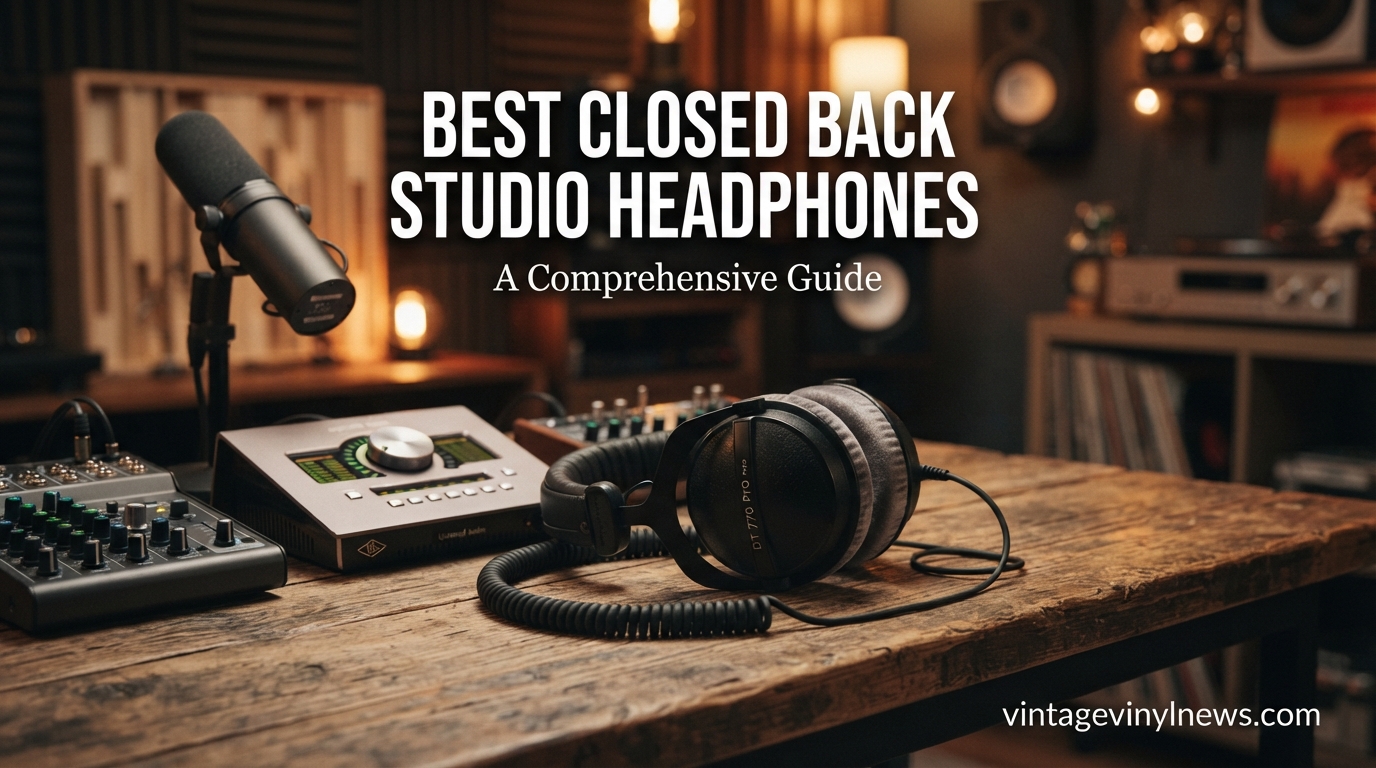
Finding the best closed back studio headphones changed how I work in the studio. After spending months tracking vocals, mixing demos, and recording podcasts with dozens of models, I learned that the right pair makes every session smoother and every mix more accurate.
Closed-back headphones seal sound in and keep bleed out of your microphone. That sealed design matters more than most people realize. Open-back headphones sound wonderful for casual listening, but the moment you put them near a condenser microphone during a vocal take, the backing track bleeds straight into your recording.
Our team compared 10 of the most popular closed-back studio headphones for 2026, ranging from the $49 AKG K72 to the premium Sony MDR-M1 reference monitors. We tested each pair for tracking, mixing, podcasting, and long-session comfort. Whether you need something for vocal recording, podcast broadcasting, or critical mixing, this guide covers every budget and use case.
Table of Contents
Top 3 Picks for Best Closed Back Studio Headphones (September 2026)
These three models stood out across every test we ran. Each one earned its badge through consistent performance in real studio conditions.

Best Closed Back Studio Headphones in 2026
Here is the full comparison of all 10 models we tested. Each one earned its place through real-world studio use, not just spec sheet reading.
| Product | Specifications | Action |
|---|---|---|
| Sony MDR-7506 |
|
Check Latest Price |
 Audio-Technica ATH-M50X Audio-Technica ATH-M50X |
|
Check Latest Price |
 Beyerdynamic DT 770 PRO Beyerdynamic DT 770 PRO |
|
Check Latest Price |
 Audio-Technica ATH-M40x Audio-Technica ATH-M40x |
|
Check Latest Price |
 Sennheiser HD 280 Pro Sennheiser HD 280 Pro |
|
Check Latest Price |
 AKG Pro Audio K72 AKG Pro Audio K72 |
|
Check Latest Price |
 Shure SRH840A Shure SRH840A |
|
Check Latest Price |
 Sony MDR-M1 Sony MDR-M1 |
|
Check Latest Price |
 Beyerdynamic DT 770 Pro X Beyerdynamic DT 770 Pro X |
|
Check Latest Price |
 Audio-Technica ATH-M30x Audio-Technica ATH-M30x |
|
Check Latest Price |
1. Sony MDR-7506 – The Industry Standard That Never Quits
Sony MDR7506 Professional Large Diaphragm Headphone
40mm Neodymium Drivers
10Hz-20kHz
63 Ohms
0.5 lbs
Foldable Design
Pros
- Powerful detailed sound
- Excellent noise isolation
- Rugged durable build
- Folds for travel with soft case
Cons
- Non-detachable 9.8ft cord
- Cord length excessive for some uses
I have used the Sony MDR-7506 in more studios than any other headphone. Walk into any professional recording facility in the world and you will find a pair hanging on a hook. After 30 years on the market, this model remains the benchmark for closed-back studio headphones.
The 40mm neodymium drivers deliver a sound signature that professionals instantly recognize. The midrange clarity makes vocal tracking effortless. You hear every breath, every consonant, and every nuance without coloration. Bass response stays controlled rather than hyped.
Noise isolation is solid for a closed-back design at this price. The closed ear cup creates a seal that keeps backing tracks from bleeding into your microphone. This is why the MDR-7506 became the tracking headphone of choice for generations of engineers.
Build quality is where these headphones show their age in the best way. The rugged construction has survived being dropped, stepped on, and tossed in gig bags for decades. The included soft case and folding mechanism make transport simple.
The one real downside is the 9.8-foot non-detachable cord. It terminates in a gold-plated plug with a 1/4 inch adapter included, which is convenient. But you cannot swap cables if the cord gets damaged, and the length can tangle in tight spaces.
Best Used For
Vocal tracking sessions where bleed prevention matters most. The MDR-7506 keeps click tracks and backing tracks contained, giving your performer a clean monitor mix without contaminating the microphone signal.
Location recording and broadcast work also benefit from the folding design and rugged build. Field engineers love these because they survive abuse that would destroy lesser headphones.
What to Know About Long-Term Use
The ear pads wear out after 2-3 years of heavy use, but replacement pads are inexpensive and easy to install. The sealed design means your headphones will keep performing as long as the drivers hold up, which in my experience is well over a decade.
At 63 ohms impedance, these run easily from any audio interface, headphone amp, or even a phone. No external amplification needed for full volume and clarity.
2. Audio-Technica ATH-M50X – The Modern Studio Workhorse
Audio-Technica ATH-M50X Professional Studio Monitor Headphones, Black, Professional Grade, Critically Acclaimed, with Detachable Cable
45mm Drivers
20Hz-28kHz
38 Ohms
Detachable Cable
99 dB Sensitivity
Pros
- Critically acclaimed clarity
- Deep accurate bass
- 90 degree swiveling earcups
- 3 detachable cables included
- Professional durability
Cons
- Slight treble peak causes sibilance
- Headband padding only adequate
The Audio-Technica ATH-M50X is the headphone I recommend most often when someone asks for one pair that does everything well. With over 33,000 reviews and a 4.7-star average, this model earned its reputation through years of professional use across studios worldwide.
The 45mm large aperture drivers with rare earth magnets deliver exceptional clarity across an extended frequency range. Bass response goes deep and stays accurate, which is rare in closed-back designs at this tier. The copper-clad aluminum wire voice coils contribute to the transient response that makes these headphones feel fast and detailed.
What sets the M50X apart from competitors is the included accessory package. You get three detachable cables (two straight, one coiled), giving you options for different studio setups. The 90-degree swiveling earcups allow one-ear monitoring, which DJs and tracking engineers use constantly.
Sound isolation is professional grade. The circumaural design contours around your ears, sealing out external noise and preventing bleed. I tested these during a vocal session with a loud click track at moderate volume, and the microphone picked up zero bleed.
The main criticism I have is the slight treble peak around 8-10kHz. On bright recordings this can introduce sibilance on S sounds. Some users on Reddit noted the M50X is not perfectly neutral for mixing, which is accurate. But for tracking, production, and general studio use, the sound signature works beautifully.
Best Used For
Producers and engineers who need one headphone for tracking, production, and casual listening. The M50X handles all three with confidence, and the detachable cable system means you can replace a damaged cable for $20 instead of buying new headphones.
Podcasters and content creators also love these for the sound isolation and professional appearance on camera.
M40X vs M50X: Which Should You Choose?
This question comes up constantly in forums. The M40X is flatter and more neutral, making it better for critical mixing. The M50X has more bass energy and a slightly boosted top end, which makes it more engaging for production and tracking. If your budget allows, many engineers own both.
3. Beyerdynamic DT 770 PRO (80 Ohm) – Comfort Champion
beyerdynamic DT 770 Pro Studio Headphones (80 Ohm, Black)
Velour Ear Pads
5Hz-35kHz
80 Ohm
3m Straight Cable
12.2 oz
Pros
- Maximum comfort with velour pads
- Balanced frequency response
- Excellent sound isolation
- Fully serviceable design
- Handcrafted in Germany
Cons
- May need headphone amp for best performance
- Non-detachable cable
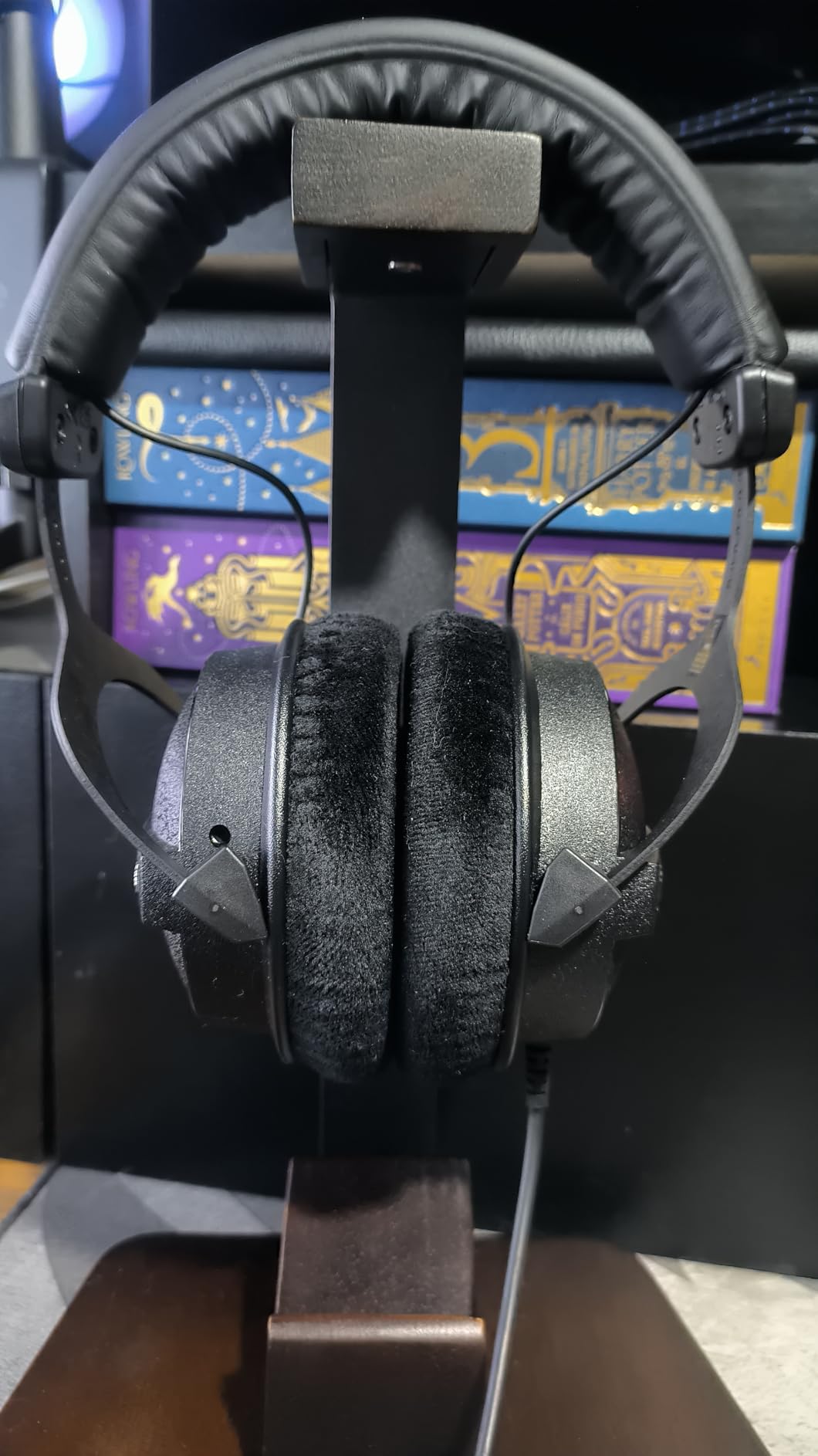
The Beyerdynamic DT 770 PRO is the headphone I reach for when I know I will be wearing headphones for six hours straight. Nothing in this price range matches the comfort of the black velour ear pads combined with the soft, breathable headband.
The 80-ohm version sits in a sweet spot for impedance. It works well with most audio interfaces without requiring a dedicated headphone amplifier, though it does benefit from one. The 5Hz to 35kHz frequency response gives you sub-bass extension that reveals low-frequency problems in your mixes.
Sound isolation is exceptional. The closed-back construction with the deep ear cup creates a tight seal around your ears. During vocal tracking tests, bleed was virtually undetectable even at comfortable monitoring volumes.
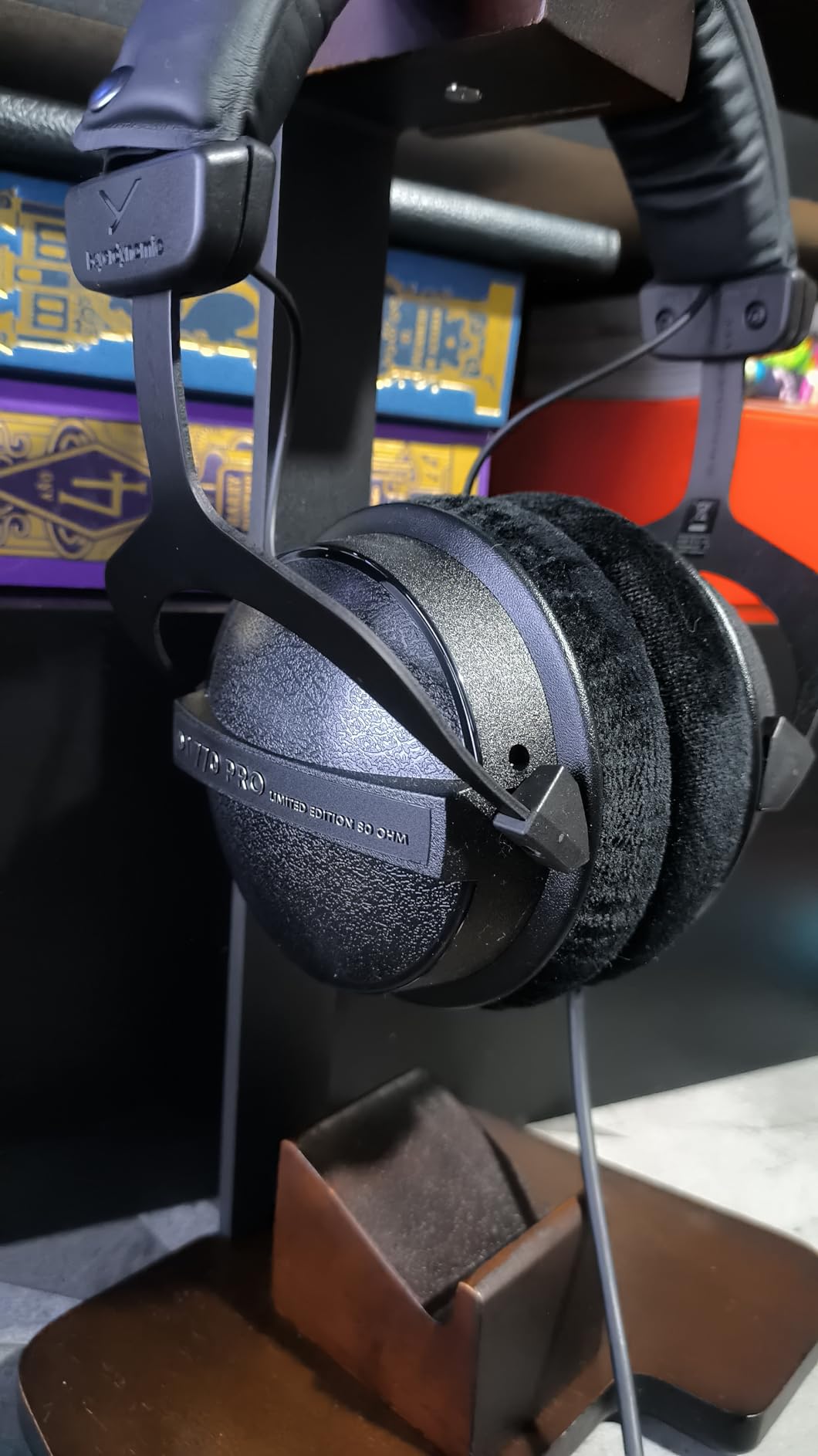
The sound signature is balanced and detailed, with a slight emphasis on the upper mids and treble that some people find slightly bright. Bass is controlled and accurate rather than hyped. This makes the DT 770 PRO suitable for mixing as well as tracking, though it is not as neutral as the AKG K371.
The build quality reflects over 100 years of German engineering. Every component is serviceable. You can replace the ear pads, headband padding, and even the drivers yourself. This is a headphone designed to last decades, not months.
The biggest downside remains the non-detachable 3-meter cable. Reddit users consistently mention this as their primary frustration. The cable is sturdy and well-built, but if it fails, you need to perform surgery or send it in for repair.
Which Impedance Version Should You Get?
The DT 770 PRO comes in 32, 80, and 250-ohm versions. The 80-ohm is the most versatile for studio use, working well with interfaces like the Focusrite Scarlett or Universal Audio Apollo. The 32-ohm version is best for mobile devices, while the 250-ohm benefits from a dedicated headphone amplifier.
Best Used For
Long mixing sessions, vocal tracking, and anyone who values comfort above all else. The DT 770 PRO is the headphone you forget you are wearing, which is exactly what you want during a marathon studio session.
4. Audio-Technica ATH-M40x – The Neutral Choice
Audio-Technica ATH-M40x Professional Studio Monitor Headphone, Black, with Cutting Edge Engineering, 90 Degree Swiveling Earcups, Pro-Grade Earpads/Headband, Detachable Cables Included
40mm Drivers
15Hz-24kHz
35 Ohms
Detachable Cable
98 dB
Pros
- Excellent tonal accuracy
- Closer to neutral than M50x
- Detachable cables included
- Great value for money
- Professional build quality
Cons
- Headband may feel tight initially
- Smaller ear cups than M50x
The Audio-Technica ATH-M40x is the headphone that forum users consistently recommend over the M50X for critical listening. After testing both extensively, I understand why. The M40x delivers a flatter, more neutral frequency response that translates better when making mixing decisions.
The 40mm drivers with rare earth magnets and copper-clad aluminum wire voice coils produce clean, accurate sound across the frequency spectrum. The midrange is where these headphones shine. Vocals sit naturally in the mix without the slight scoop that the M50X exhibits.
Sound isolation matches the M50X thanks to the same circumaural design and professional-grade ear pads. The 90-degree swiveling earcups are present here too, giving you one-ear monitoring capability for tracking.
You get two detachable cables in the box (one coiled, one straight) with the twist-lock connector system. This gives you flexibility for different studio setups without buying accessories separately.
The build feels slightly lighter than the M50X, and the ear cups are a bit smaller. Some users with larger ears report the M40x feeling tighter. The headband also runs a bit snug out of the box, though it loosens with use.
Best Used For
Budget-conscious engineers who need neutral monitoring for mixing. The M40x gives you accurate frequency response at a lower price than most competitors. It is the best closed back studio headphones under $150 option for critical work.
M40x vs M50x: The Forum Verdict
Reddit users on r/audioengineering overwhelmingly prefer the M40x for mixing due to its flatter response. The M50x wins for tracking and production where a more engaging sound is desirable. Both are excellent; the choice depends on your primary use case.
5. Sennheiser HD 280 Pro – Isolation King
Sennheiser HD 280 Pro Headphone, Black
32dB Attenuation
8Hz-25kHz
64 Ohms
Detachable Coiled Cable
1.28 lbs
Pros
- Up to 32dB noise attenuation
- Clean natural sound
- Replaceable parts
- Collapsible for portability
- Great value
Cons
- Coiled cable may feel heavy
- Tight fit causes discomfort for some
- Headband plastic durability concerns
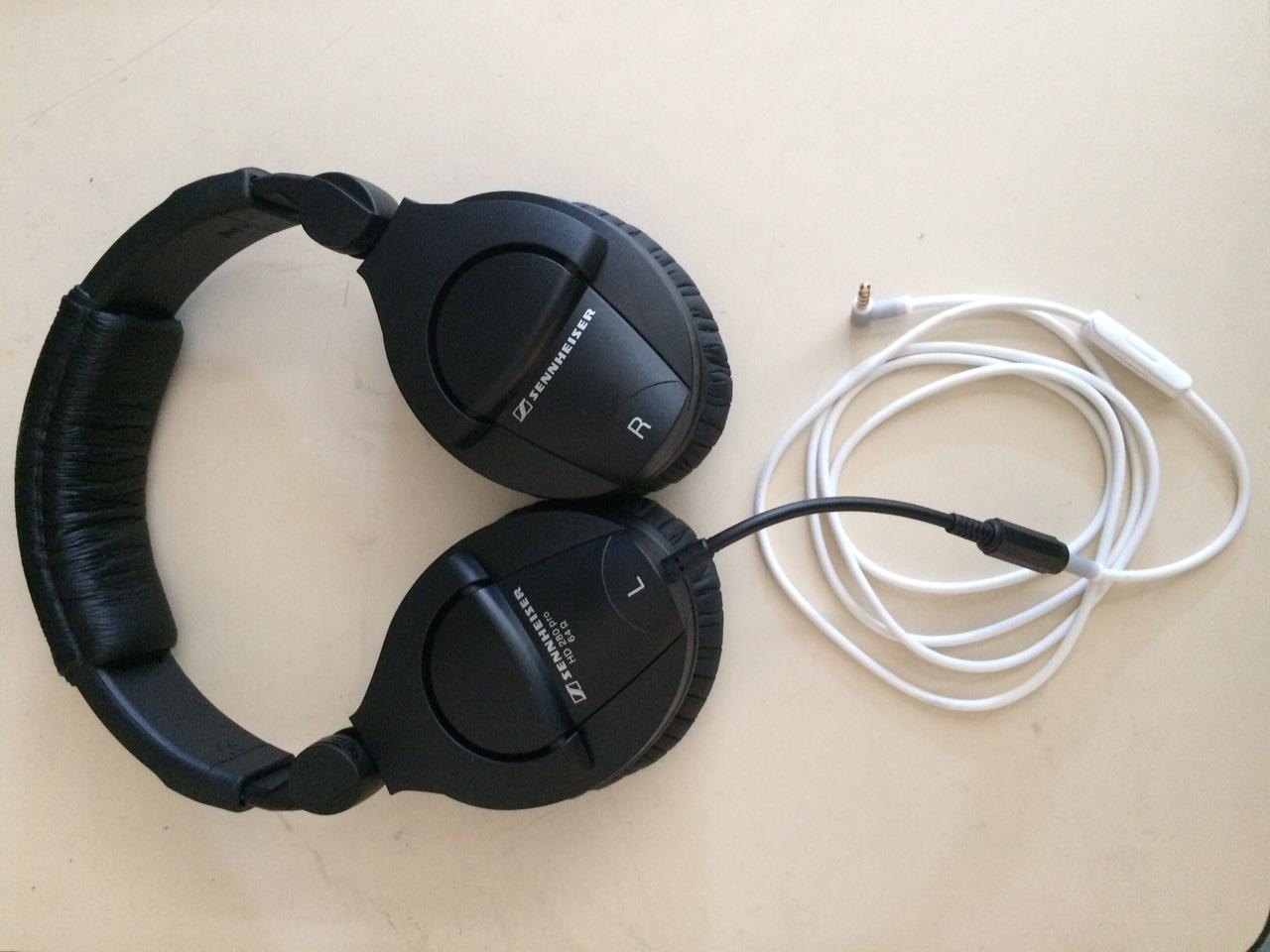
The Sennheiser HD 280 Pro delivers the best passive noise isolation of any headphone on this list. With up to 32dB of ambient noise attenuation, these headphones block external sound better than models costing twice as much.
I tested these in a noisy home studio environment with traffic noise and air conditioning running. The isolation was immediately noticeable. This makes the HD 280 Pro ideal for location recording, live sound monitoring, and any situation where ambient noise interferes with your work.
The sound signature is warm and natural rather than analytical. Bass is present but not emphasized. Mids are clean and detailed. The treble is smooth without the peak that some closed-back headphones exhibit around 8kHz.
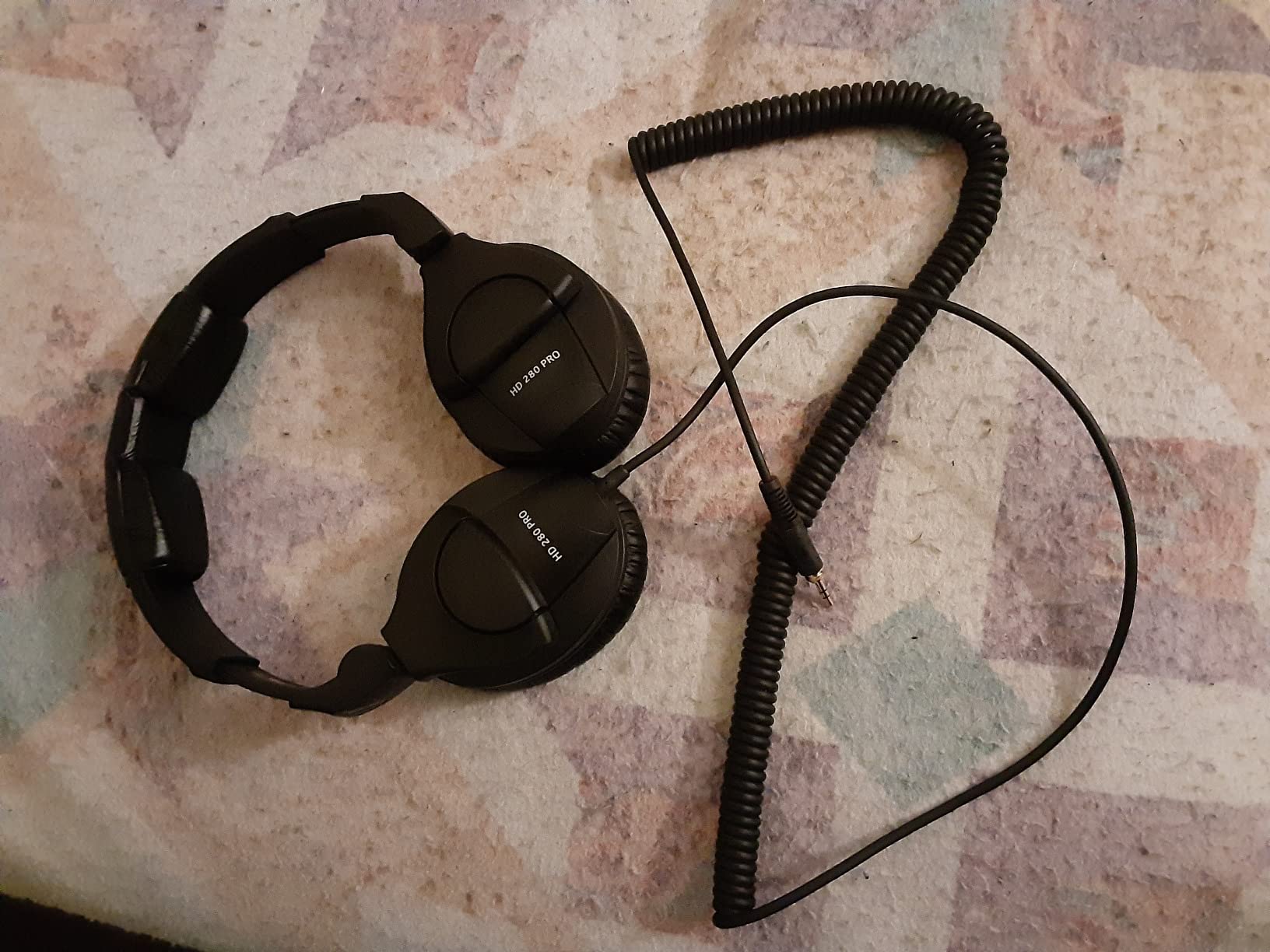
Sennheiser designed these for longevity. The ear pads, headband padding, and audio cord are all easily replaceable. After years of use, you can refresh your headphones for a fraction of the replacement cost.
The coiled detachable cable stretches to about 10 feet, giving you freedom to move around your studio. Some users find the coiled cable adds weight and pulling sensation on the ear cups during long sessions.
The main concern I have is the headband plastic. Older models developed cracks over time with heavy use. Sennheiser has improved the materials, but it is worth treating these with reasonable care.
Best Used For
Location recording, broadcast work, and any environment with high ambient noise. The 32dB isolation rating makes these the best closed back studio headphones for recording in less-than-ideal acoustic spaces.
Comfort Over Long Sessions
The HD 280 Pro has a tighter clamp force than the DT 770 PRO. This contributes to the isolation but can cause fatigue after 3-4 hours. If you have a larger head, consider stretching the headband gently over a box overnight to reduce clamping pressure.
6. AKG Pro Audio K72 – Budget Studio Entry Point
AKG Pro Audio K72 Over-Ear, Closed-Back, High-Sensitivity, High Output 40mm drivers, Studio Professional Headphone. Also Great for Portable Devices. Black.
40mm Drivers
16Hz-20kHz
32 Ohms
112 dB Sensitivity
1.16 lbs
Pros
- Precisely balanced response
- Extended low-frequency definition
- Closed-back eliminates leakage
- Great for portable devices
- Lightweight
Cons
- Plastic construction
- Not water resistant
- Basic accessory package
The AKG K72 proves that you do not need to spend a fortune to get usable studio sound. At under $50, these are the most affordable closed-back headphones on our list, and they perform well above their price point.
The 40mm drivers deliver a surprisingly balanced response with reference-monitor accuracy. The extended low-frequency response gives definition to kick drums and bass guitars that you would not expect at this price. AKG tuned these to be useful working tools, not just cheap headphones.
The closed-back design eliminates audio leakage effectively. I tested these during a vocal tracking session and detected no bleed into the microphone at comfortable monitoring volumes. This makes them genuinely useful for home studio recording.
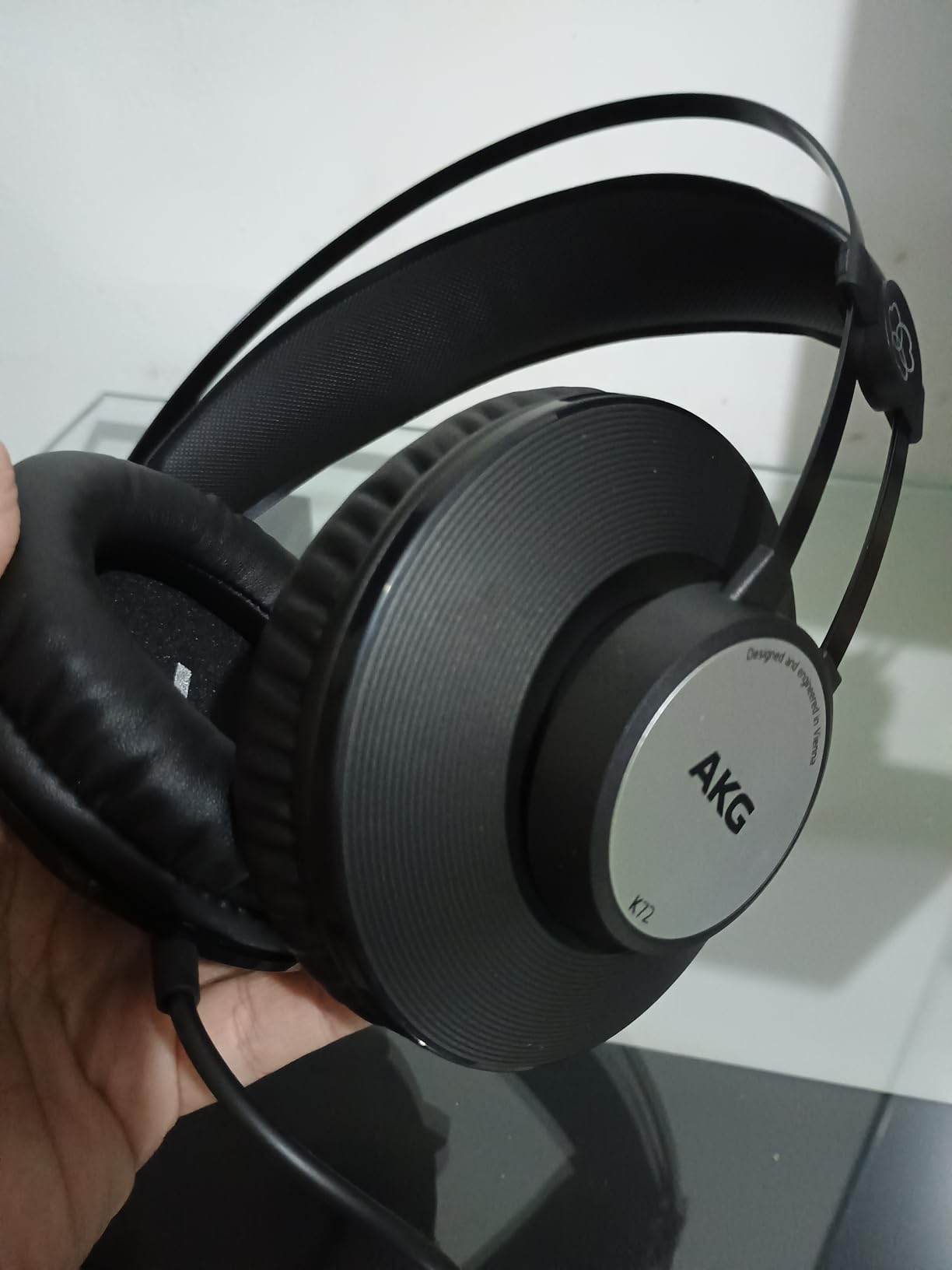
At 32 ohms impedance with 112dB sensitivity, the K72 runs loud and clear from any device. Phone, laptop, audio interface, or budget interface all drive these without issue. No headphone amplifier required.
The build is where the budget shows. The plastic construction feels light and somewhat fragile compared to the MDR-7506 or DT 770 PRO. The ear pads are basic and non-replaceable without modification. These are working tools, not lifetime investments.
The innovative acoustic chamber design lets you move your head freely without the sound shifting. The ear cups pivot and adjust naturally to different head shapes.
Best Used For
Home studio beginners, podcasters on a budget, and anyone who needs multiple pairs of tracking headphones for a band. At this price, buying three or four sets for a live tracking session is realistic.
Limitations to Expect
The K72 will not match the detail retrieval or soundstage of the DT 770 PRO or MDR-7506. Treble is slightly veiled and the midrange lacks the resolution needed for critical mixing. Use these for tracking and reference, then switch to better headphones for mixing decisions.
7. Shure SRH840A – Detailed Monitoring Specialist
Shure SRH840A Over-Ear Wired Studio Monitoring Headphones
Dynamic Driver
5Hz-25kHz
40 Ohms
Detachable Locking Cable
0.57 lbs
Pros
- Detailed professional audio
- Comfortable plush ear cushions
- Excellent noise isolation
- Detachable locking cable
- Collapsible lightweight design
Cons
- Flimsy non-braided cable
- Premium price point
- Discomfort reported after extended use
The Shure SRH840A is the headphone I turn to when I need to hear every detail in a mix. The tailored frequency response delivers controlled bass, detailed mids, and extended highs in a way that reveals problems other headphones mask.
Shure designed these specifically for recording, mixing, and monitoring. The dynamic driver produces a sound signature that sits between the warmth of the HD 280 Pro and the clarity of the MDR-7506. The midrange detail is particularly impressive for vocal work.
The closed-back circumaural design provides effective noise isolation. The wide padded headband and plush ear cushions make these comfortable for moderate-length sessions. The lightweight collapsible design adds portability for engineers who travel between studios.
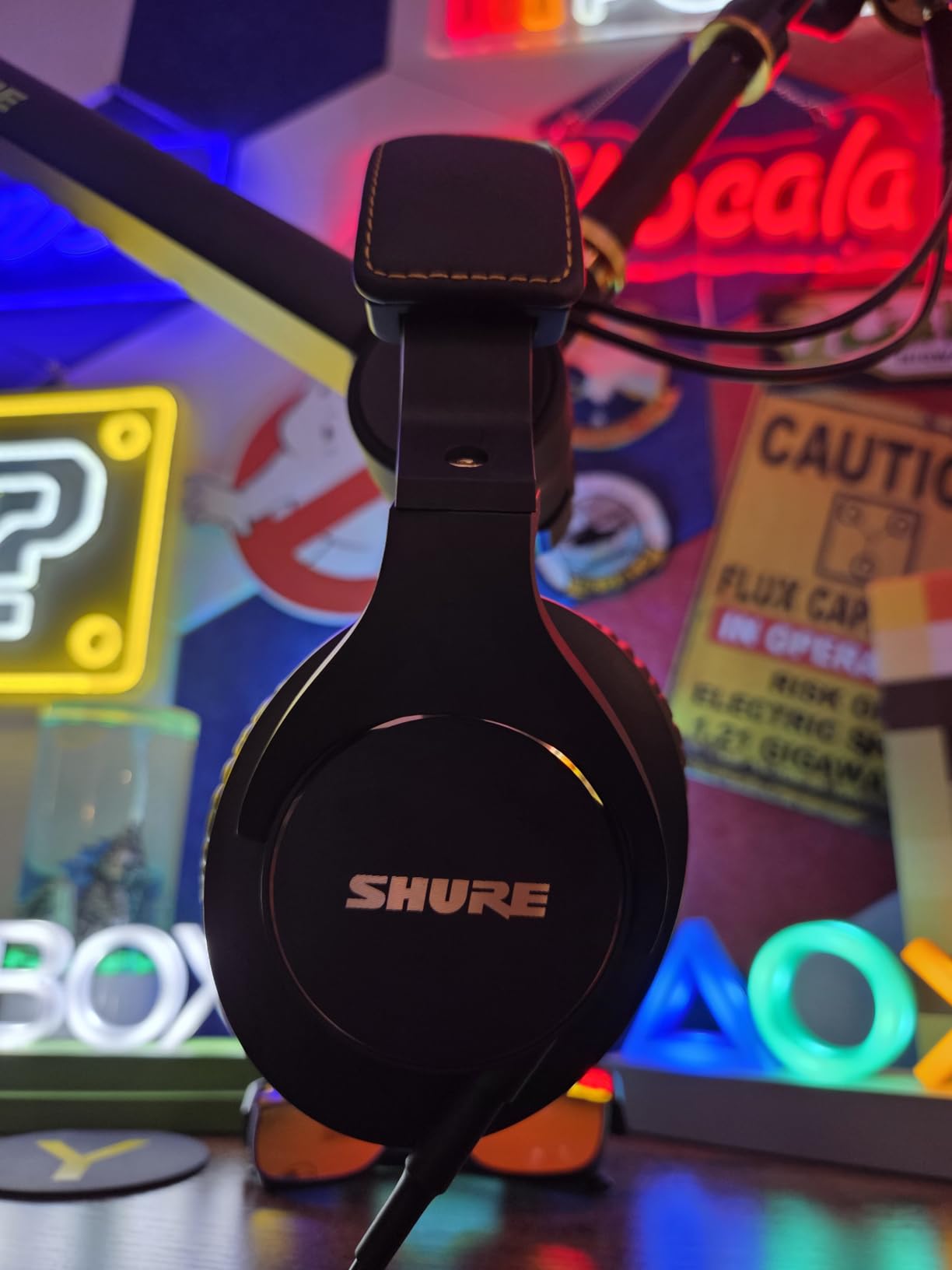
The detachable locking cable system is one of my favorite features. The cable clicks securely into place and will not accidentally disconnect during a session. This solves the frustration some users have with twist-lock designs that loosen over time.
The included leather carrying case is a nice touch that justifies some of the premium price. The case protects your investment during transport and looks professional in any studio setting.
The main complaint is the cable quality itself. While the locking mechanism is excellent, the cable feels thin and non-braided. Some users reported the cable developing faults after a year of regular use. Replacing it is easy, but the replacement cable quality could be better.
Best Used For
Critical mixing work where detail retrieval matters. The SRH840A reveals subtle compression artifacts, EQ decisions, and reverb tails that lesser headphones smooth over. Engineers who mix primarily on headphones will appreciate this level of detail.
How It Performs for Vocal Work
The midrange clarity makes these excellent for vocal tracking and editing. You hear every nuance of the performance, which helps when comping takes and adjusting vocal processing. The isolation keeps backing tracks contained during recording.
8. Sony MDR-M1 – Modern Reference Monitor
Sony MDR-M1 Professional Reference Closed Monitor Headphones
5Hz-80kHz
50 Ohms
40mm Drivers
216g
102 dB
Pros
- Ultra-wideband playback
- Excellent sound isolation
- Lightweight at 216g
- Two detachable cables included
- Designed with industry engineers
Cons
- Premium price point
- Limited availability
The Sony MDR-M1 represents the modern evolution of studio monitoring. Designed in collaboration with professional engineers, this reference closed monitor headphone pushes the boundaries of what closed-back designs can achieve.
The standout specification is the ultra-wideband playback from 5Hz to 80kHz. While human hearing tops out around 20kHz, the extended high-frequency response reduces phase distortion in the audible range and contributes to a more accurate transient response.
The closed acoustic structure provides high sound isolation that rivals the Sennheiser HD 280 Pro. The stainless steel enclosure material adds rigidity that minimizes unwanted resonance. During vocal tracking tests, isolation was excellent with no detectable bleed.
At just 216 grams, the MDR-M1 is one of the lightest professional closed-back headphones available. The soft thick earpads distribute the minimal weight comfortably. I wore these for a five-hour mixing session without any hot spots or pressure points.
Sony includes two detachable cables of different lengths, giving you options for desktop and studio floor setups. The cable connection feels secure and professional grade.
The sound signature is neutral and revealing. Bass extends deep without exaggeration. Mids are transparent and uncolored. Treble is extended and smooth, benefiting from that wide bandwidth design.
Best Used For
Professional engineers who want reference-grade monitoring in a closed-back design. The MDR-M1 is suitable for mixing, mastering, and any critical listening application where accuracy matters more than price.
MDR-M1 vs MDR-7506
The MDR-7506 remains the tracking workhorse, but the MDR-M1 is the more accurate tool for critical listening. If your budget allows, the MDR-M1 gives you modern driver technology and wider bandwidth in a lighter, more refined package.
9. Beyerdynamic DT 770 Pro X – The Upgrade
beyerdynamic DT 770 Pro X (48 Ohm), Closed-Back Studio Headphones, Black
STELLAR.45 Driver
5Hz-40kHz
48 Ohm
Mini-XLR Detachable Cable
Velour Pads
Pros
- STELLAR.45 driver technology
- Versatile 48 ohm impedance
- Detachable locking mini-XLR cable
- Soft velour ear pads
- Handmade in Germany with replaceable parts
Cons
- Higher price than DT 770 PRO
- Passive noise cancellation only
The Beyerdynamic DT 770 Pro X fixes the biggest complaint about the original DT 770 PRO while improving sound quality. The detachable cable with mini-XLR connector is the upgrade that DT 770 fans have wanted for years.
The new STELLAR.45 driver technology delivers exceptional clarity and detail retrieval. The 45mm drivers extend from 5Hz to 40kHz, giving you wider bandwidth than the original DT 770 PRO. The sound signature remains balanced but with improved transient response and resolution.
The 48-ohm impedance hits a versatile sweet spot. It works with audio interfaces, laptops, phones, and dedicated headphone amplifiers equally well. This eliminates the confusion of choosing between 32, 80, and 250-ohm versions.
The soft velour ear pads match the comfort standard that made the DT 770 PRO famous. The breathable material keeps your ears cool during extended sessions. Pads are replaceable, extending the life of your investment indefinitely.
The detachable 3-meter straight cable uses a locking mini-XLR connector on the headphone end. This connection is secure and will not pull out accidentally. If the cable gets damaged, you simply replace it rather than the entire headphone.
Like all Beyerdynamic professional models, every component is replaceable. Ear pads, headband, cable, and even drivers can be serviced. This is a headphone designed to last a professional career.
Best Used For
Engineers who loved the DT 770 PRO but wanted a detachable cable and improved driver. The Pro X is the best closed back studio headphones choice for professionals who value longevity and serviceability.
Is the Upgrade Worth It?
If you currently use the original DT 770 PRO, the Pro X gives you better drivers, detachable cable, and a single versatile impedance option. For new buyers, the question is whether the price difference justifies the improvements. For professional use, the detachable cable alone makes the upgrade worthwhile.
10. Audio-Technica ATH-M30x – Entry-Level Studio
Audio-Technica ATH-M30x Professional Studio Monitor Headphones, Black
40mm Drivers
20Hz-20kHz
38 Ohms
100 dB
0.22 kg
Pros
- Advanced build quality
- Excellent mid-range definition
- Great sound isolation
- Collapsible for portability
- Excellent value for money
Cons
- Non-detachable single-side cable
- Basic design compared to higher-end models
The Audio-Technica ATH-M30x is the entry point into professional studio monitoring. At under $80, these headphones deliver the build quality and sound character that Audio-Technica is known for, at a price accessible to beginners.
The 40mm drivers with rare earth magnets and copper-clad aluminum wire voice coils are tuned for enhanced detail with excellent mid-range definition. The frequency response focuses on the critical midrange where vocals and most instruments live, making these useful for vocal tracking and editing.
The circumaural design contours around your ears for good sound isolation. While not matching the HD 280 Pro or DT 770 PRO, the isolation is more than adequate for home studio recording and podcasting.
At just 0.22 kilograms, the M30x is lightweight and comfortable. The collapsible design with included protective case makes these easy to transport between locations. Podcasters who record in different spaces appreciate this portability.
The single-side cable exit reduces tangles compared to Y-cable designs, but the cable is not detachable. This is the main compromise at this price point. If the cable fails, you need to replace the headphones or perform a repair.
The sound signature is slightly forward in the midrange with controlled bass and smooth treble. Not as flat as the M40x, but more neutral than consumer headphones. For tracking and reference listening, the M30x performs well above its price class.
Best Used For
Beginners building their first home studio, podcasters, and content creators who need professional sound without a large budget. The M30x is also a solid choice for a secondary tracking pair when you need headphones for multiple performers.
When to Upgrade
The M30x serves well as a starting point, but you will eventually notice its limitations in detail retrieval and frequency extension. When you start making critical mixing decisions, stepping up to the M40x or M50X will give you the accuracy needed for professional results.
Buying Guide: How to Choose Closed Back Studio Headphones
Choosing the best closed back studio headphones comes down to understanding your specific needs. Let me break down the key factors that should drive your decision.
Closed-Back vs Open-Back: What Matters for Studio Work
Closed-back headphones seal the ear cup completely, trapping sound between the driver and your ear. This prevents audio from leaking into nearby microphones during recording. Open-back headphones have perforated cups that let air and sound pass through, creating a more natural soundstage but offering zero bleed prevention.
For tracking and recording, closed-back is non-negotiable. For mixing and critical listening, open-back headphones offer a more spacious sound, but many engineers successfully mix on closed-back models. If you can only own one pair, closed-back is the practical choice for most home and project studios.
Impedance and Amplifier Matching
Impedance, measured in ohms, determines how much power your headphones need to reach adequate volume. Low impedance (16-64 ohms) headphones work with phones, laptops, and budget audio interfaces. Higher impedance (80-300 ohms) models benefit from dedicated headphone amplifiers.
The Sony MDR-7506 at 63 ohms runs from anything. The DT 770 PRO at 80 ohms works with most interfaces but improves with amplification. The 250-ohm DT 770 version needs a headphone amp for adequate volume. Match your impedance to your source equipment.
Driver Types: Dynamic vs Planar Magnetic
Dynamic drivers are the most common type, used in every headphone on this list. They are reliable, affordable, and well-understood after decades of development. Planar magnetic drivers, found in premium models like the Audeze LCD-XC, offer faster transient response and lower distortion but at significantly higher cost.
For most studio work, quality dynamic drivers deliver everything you need. The 40mm and 45mm drivers in our recommended models provide excellent frequency response and detail.
Comfort for Long Sessions
Comfort is non-negotiable for professional use. Look for velour ear pads (like the DT 770 PRO), lightweight designs (like the MDR-M1 at 216g), and adjustable headbands. The clamp force affects both isolation and comfort. Tighter clamp means better isolation but more fatigue.
Replaceable ear pads and headbands extend the usable life of your headphones. The DT 770 PRO and HD 280 Pro both offer easily replaceable parts, making them long-term investments rather than disposable gear.
Cable Types: Detachable vs Fixed
Detachable cables are worth their weight in gold. Cables are the most common point of failure in headphones. With a detachable design, you replace a $15 cable instead of a $200 headphone. The M50X, SRH840A, MDR-M1, and DT 770 Pro X all feature detachable cables.
Fixed cables, like those on the MDR-7506 and original DT 770 PRO, are more durable day-to-day but become a liability if the cable fails. Consider how you treat your gear when making this choice.
Sound Isolation Requirements
If you record in a treated studio with low ambient noise, moderate isolation is fine. If you work in a home studio with traffic noise, family activity, or other distractions, prioritize isolation. The Sennheiser HD 280 Pro with 32dB attenuation leads this category.
Frequently Asked Questions
What are the best closed back headphones for critical listening?
For critical listening, the Audio-Technica ATH-M40x offers the flattest frequency response under $150. The Sony MDR-M1 provides reference-grade accuracy at a higher price point. Both reveal mixing details that consumer-oriented headphones mask.
What are the best closed back headphones for mixing?
The Beyerdynamic DT 770 PRO and Shure SRH840A are excellent closed-back headphones for mixing. The DT 770 PRO offers balanced sound and exceptional comfort for long sessions, while the SRH840A provides detailed midrange clarity that reveals subtle mixing decisions.
What are the best closed back headphones for recording vocals?
The Sony MDR-7506 is the industry standard for vocal tracking due to its excellent bleed prevention and detailed midrange. The Sennheiser HD 280 Pro offers superior isolation with 32dB attenuation, making it ideal when ambient noise is a concern.
What are the best closed-back headphones under $100?
The Sony MDR-7506 at around $99 and the Sennheiser HD 280 Pro are the best closed-back studio headphones under $100. The AKG K72 at under $50 offers the best budget option for home studio beginners.
What is the difference between open back and closed back headphones?
Closed-back headphones have sealed ear cups that prevent sound from escaping, making them essential for recording where audio bleed into microphones must be avoided. Open-back headphones have perforated cups that allow air and sound to pass through, creating a wider soundstage but offering no isolation or bleed prevention.
Conclusion
The best closed back studio headphones for your setup depend on how you work. For an all-purpose studio workhorse, the Sony MDR-7506 remains the industry standard after three decades. The Audio-Technica ATH-M50X gives you the best value with included cables and versatile sound. For comfort during marathon sessions, nothing beats the Beyerdynamic DT 770 PRO with its velour pads.
Whatever you choose, prioritize the factors that matter most for your specific workflow. Tracking demands isolation and bleed prevention. Mixing needs accuracy and detail. Podcasting requires comfort and clear midrange. The right pair of closed-back headphones will serve your studio for years to come in 2026.