
I have spent more hours than I can count hunched over a pedalboard, swapping cables, twisting knobs, and comparing distortion pedals side by side. After testing dozens of stompboxes across tube amps, solid-state amps, and modeling rigs, I can tell you that finding the best distortion pedals comes down to matching the right circuit to your playing style and gear.
Whether you are chasing the grinding punk tone of the 90s, the saturated crunch of classic rock, or the surgical tightness of modern metal, the right distortion pedal transforms your sound. The wrong one makes you sound like a wasp trapped in a tin can. This guide cuts through the noise.
Our team pulled together 12 of the most popular distortion pedals on the market in 2026, ranging from the $38 budget champions to the $140 boutique contenders. We tested each one through the same signal chain, same guitar, and same amp to keep comparisons fair. We looked at gain range, EQ flexibility, build quality, noise performance, and how each pedal responded to dynamics and volume rollbacks.
If you are a beginner overwhelmed by the sheer number of options, you are not alone. Reddit’s r/guitarpedals community sees the same question weekly: “What distortion pedal should I buy first?” The answer depends on your genre, budget, and existing gear, so we have broken down each pedal by who it suits best and who should look elsewhere.
One thing to note before we get started: distortion, overdrive, and fuzz are not the same thing. Many players confuse them, and some pedals blur the lines. Distortion pedals use hard-clipping circuits to produce aggressive, compressed, high-gain tones. Overdrive uses soft-clipping for a warmer, more dynamic breakup. Fuzz squares off the waveform for a woolly, sustaining sound. We cover the differences in detail in our buying guide section below.
Table of Contents
Top 3 Picks for Best Distortion Pedals (September 2026)
Before we get into the full lineup, here are our three standout picks. These rose to the top across multiple testing sessions and earned their spots through consistency, versatility, and value.


Pro Co RAT2 Distortion
- Multi-genre versatility
- Filter control
- Boost to fuzz
- Tank-tough build

The Fender Pugilist earned our Editor’s Choice for its dual-engine design that gives you two independent distortion sounds in one pedal. The Pro Co RAT2 took Best Value because it covers everything from light overdrive to near-fuzz at a mid-range price. The Boss DS-1 grabbed Budget Pick honors as the most iconic, affordable, and moddable distortion pedal ever made.
Best Distortion Pedals in 2026: Quick Overview
Here is the complete lineup of all 12 pedals we tested, with key features to help you compare at a glance.
| Product | Specifications | Action |
|---|---|---|
| Boss DS-1 Distortion |
|
Check Latest Price |
 Boss MT-2 Metal Zone Boss MT-2 Metal Zone |
|
Check Latest Price |
| Pro Co RAT2 Distortion |
|
Check Latest Price |
 MXR Distortion+ MXR Distortion+ |
|
Check Latest Price |
 MXR Super Badass Distortion MXR Super Badass Distortion |
|
Check Latest Price |
| Fender Pugilist Distortion |
|
Check Latest Price |
 JHS 3 Series Distortion JHS 3 Series Distortion |
|
Check Latest Price |
 EHX Big Muff Pi EHX Big Muff Pi |
|
Check Latest Price |
 JOYO High Gain JF-04 JOYO High Gain JF-04 |
|
Check Latest Price |
 Wampler Ratsbane Distortion Wampler Ratsbane Distortion |
|
Check Latest Price |
 Donner Dark Mouse Distortion Donner Dark Mouse Distortion |
|
Check Latest Price |
 MXR Fullbore Metal MXR Fullbore Metal |
|
Check Latest Price |
1. Boss DS-1 Distortion – The Iconic Benchmark Since 1978
BOSS DS-1 Distortion Compact Distortion Pedal
Hard-edged attack and smooth sustain
Analog circuit
3 knobs: Dist, Tone, Level
9V powered
4399 reviews
Pros
- Legendary tone since 1978
- Cleans up beautifully with guitar volume
- Extremely durable Boss build
- Excellent value
- 5-year warranty
Cons
- Tone gets bright at high settings
- Not enough gain for modern metal
- No AC adapter included
I have owned a Boss DS-1 since I first started playing guitar, and it is the one pedal I keep coming back to. There is something about the simplicity of three knobs and a circuit that has remained largely unchanged for over four decades. It does one thing extremely well: classic rock and grunge distortion with a hard-edged attack.
Plugging into the DS-1 through a clean tube amp immediately gives you that familiar, aggressive bite. The distortion knob offers a wide range, from a near-clean boost at minimum to full saturated grind at maximum. What impresses me most is that the attack stays clear even at the highest gain settings. You never lose pick definition.
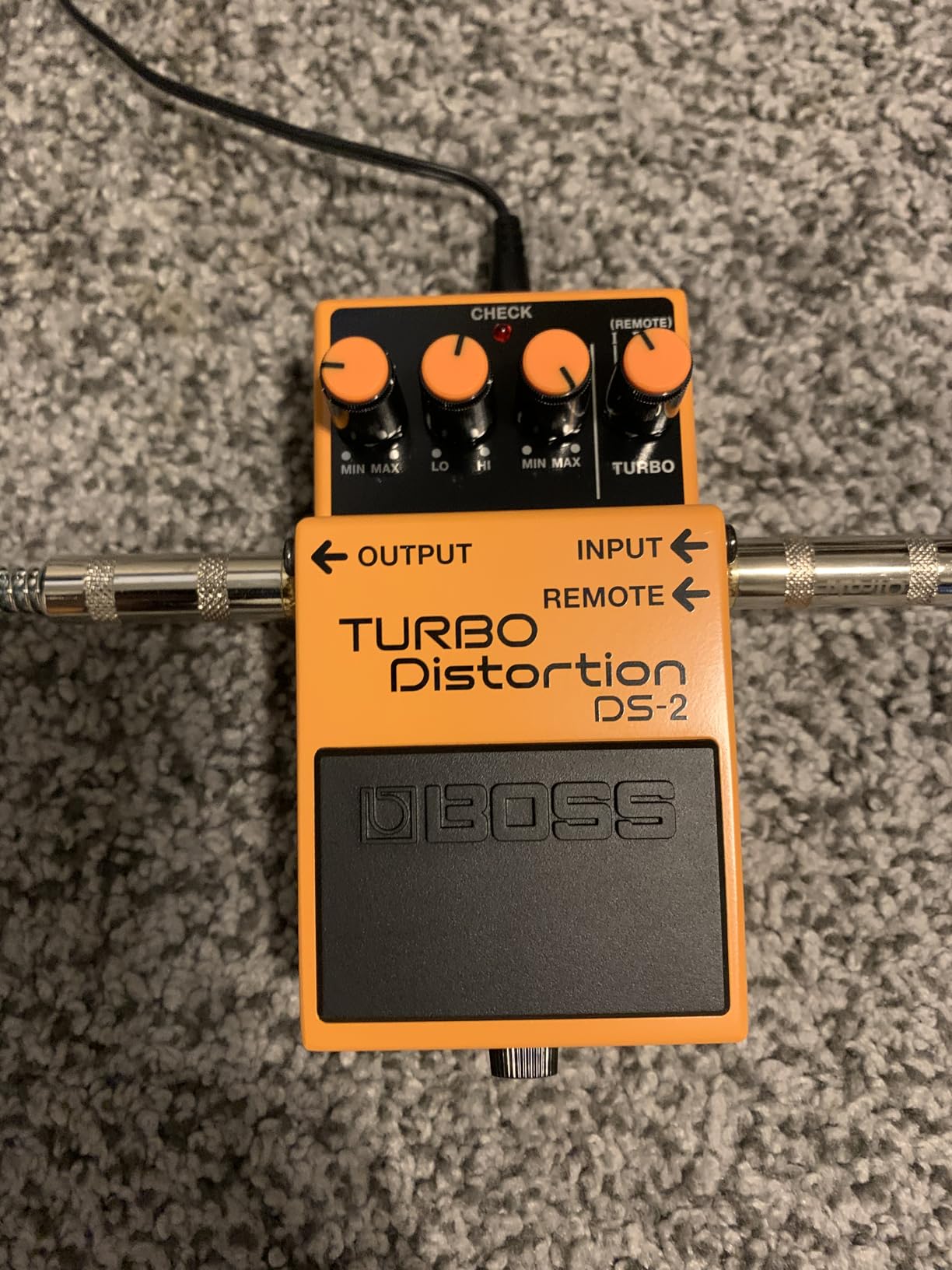
The tone control is where opinions divide. Turned clockwise, it gets very bright, almost piercing through single-coil pickups. Turned counterclockwise, it warms up considerably. I found the sweet spot around 10 o’clock with humbuckers and noon with single coils. The DS-1 is famous for its mid-scoop, which some players love for cutting through a mix and others hate for sounding thin in a band context.
One of the most underrated features is how the DS-1 cleans up when you roll back your guitar’s volume knob. At moderate gain settings, turning down to 5 or 6 on your guitar gives you a crunchy, dynamic rhythm tone that responds beautifully to pick attack. This is not something every distortion pedal does well.
What Kind of Amps Pair Best with the DS-1
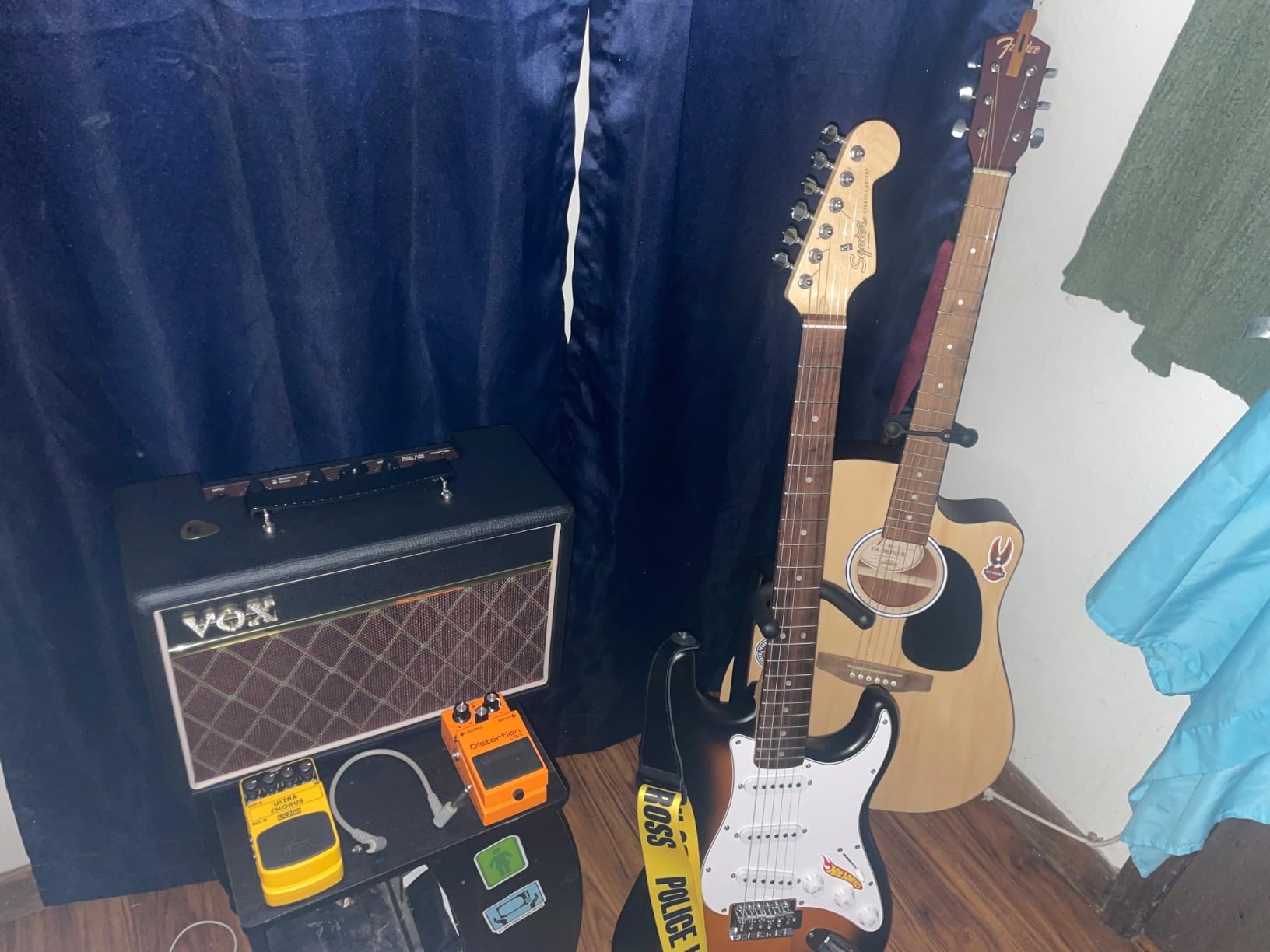
The Boss DS-1 shines through clean or slightly broken-up tube amps. Through a Fender Twin or a Roland JC-120, the pedal delivers its characteristic aggressive tone without muddying up the signal. Through an already-distorted amp channel, it works better as a boost than a primary distortion.
If you are running a solid-state practice amp, the DS-1 can breathe life into a sterile clean channel. The pedal’s mid-scoop actually complements the often mid-forward voicing of budget solid-state amps nicely.
Is the DS-1 Good for Modding
One of the reasons the DS-1 has such a cult following is the modding community. Companies like Keeley and Analogman offer modification services that change the diode clipping, adjust the EQ, and tighten the low end. A stock DS-1 is a great pedal, but a modded DS-1 can rival boutique pedals costing three times as much.
For under the retail price, you get a piece of guitar history that is built to survive a nuclear apocalypse. The Boss compact enclosure is legendary for durability, and the five-year warranty backs that up. If you are starting out or want a reliable backup, the DS-1 is hard to beat.
2. Boss MT-2 Metal Zone – The Metal Workhorse
Boss MT-2 Metal Zone Distortion Guitar Pedal
Dual-stage gain circuit
3-band EQ with parametric mids
Analog signal path
9V powered
1002 reviews
Pros
- Massive high-gain saturation
- Parametric mid EQ is powerful
- Iconic 80s metal tone
- Boss build quality
- 5-year warranty
Cons
- Can sound harsh if EQ is not dialed in
- Steep learning curve
- High current draw at 110mA
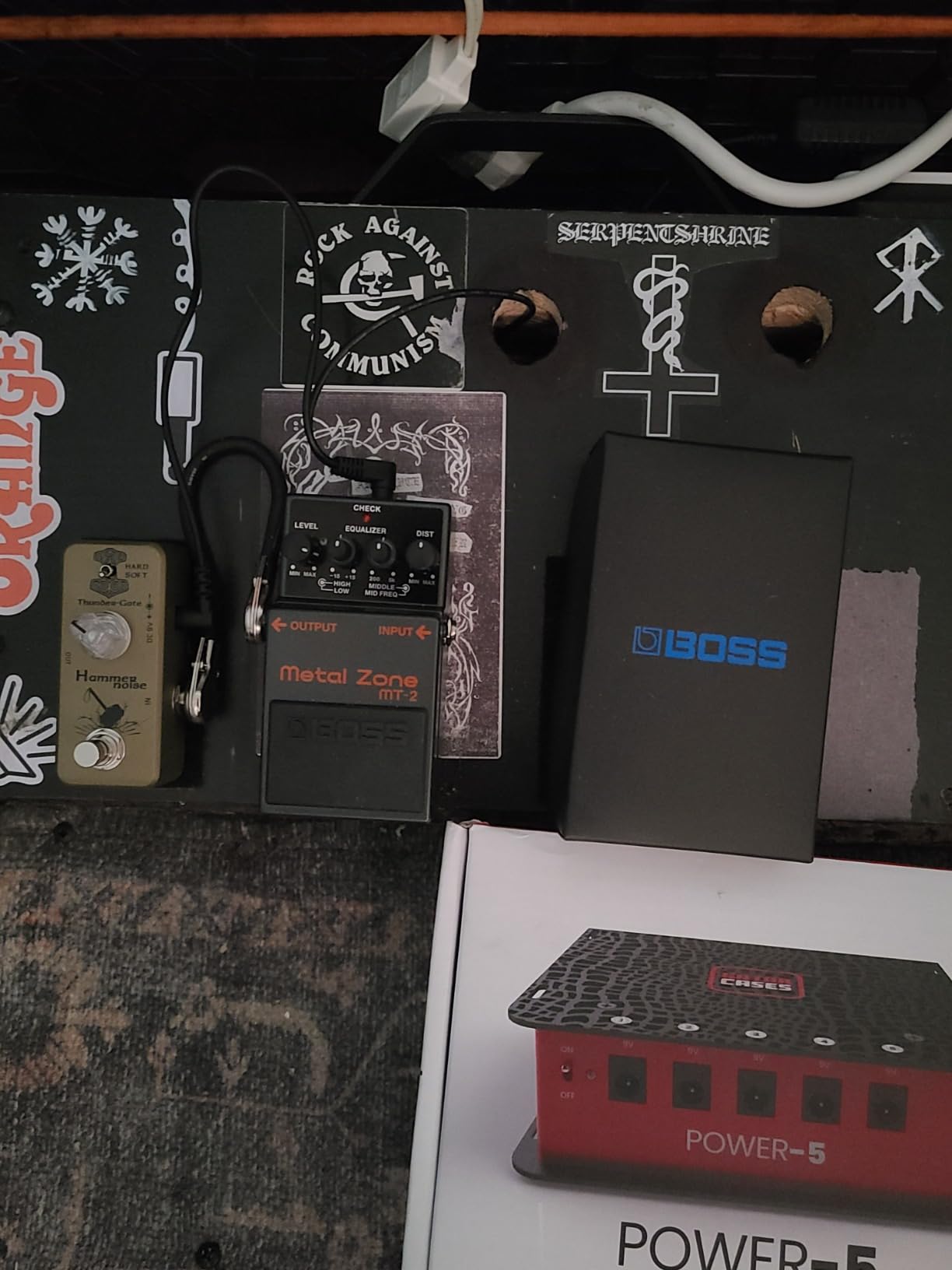
The Boss MT-2 Metal Zone is one of the most polarizing pedals in the guitar world. People either love it or call it a “can of bees.” After spending extensive time dialing it in, I can tell you the bees only show up when the EQ is set wrong. Spend an hour learning the parametric mid EQ, and you unlock a ferociously versatile high-gain machine.
The dual-stage gain circuit is the secret sauce here. The first stage provides the initial saturation, while the second stage adds harmonic richness and sustain. The result is a thick, compressed wall of distortion that sustains notes forever. It is tailor-made for soaring solos and chugging palm-muted rhythms.
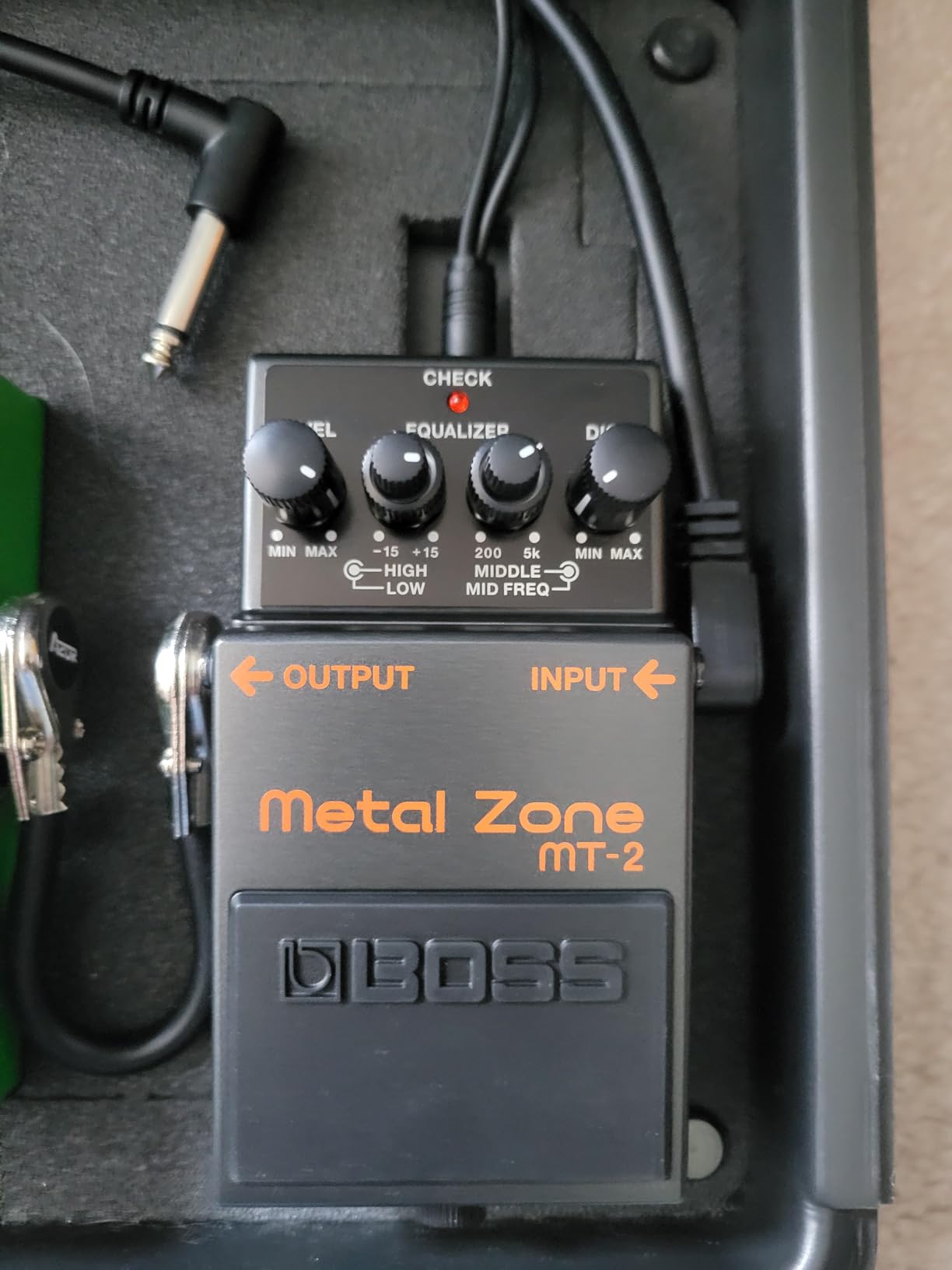
What sets the MT-2 apart from simpler distortion pedals is the three-band EQ with a sweepable mid-frequency control. The mid EQ knob lets you choose which frequency to cut or boost, giving you surgical control over your tone. Want that classic scooped-mid metal sound? Cut the mids. Want to cut through a dense mix? Boost the mids around 1kHz.
The learning curve is real, and this is the main complaint I hear from new owners. The EQ is extremely powerful, which means it is also easy to get terrible sounds. I recommend starting with all EQ knobs at noon, then making small adjustments. The Metal Zone rewards patience.
What Genres Beyond Metal Can the MT-2 Handle
Despite its name, the Metal Zone is not a one-trick pony. With the gain dialed back to around 9 o’clock, it produces a thick, singing overdrive that works surprisingly well for classic rock lead tones. The parametric mid EQ lets you shape this lower-gain sound to suit anything from blues-rock to hard rock.
Where it falls short is very low-gain, touch-sensitive breakup territory. If you want a transparent, dynamic crunch that responds to every nuance of your picking, look elsewhere. The MT-2 is about saturation and sustain, not subtlety.
How Does the MT-2 Compare to the DS-1
The DS-1 offers a rawer, more open distortion with a characteristic mid-scoop. The MT-2 is more compressed, more saturated, and offers far more tonal control through its parametric EQ. The DS-1 is simpler to use and better for rock, punk, and grunge. The MT-2 excels at metal, djent, and any genre requiring massive, controlled gain.
Many players run both on their pedalboard: the DS-1 for rhythm parts and the MT-2 kicked on for solos. The MT-2 draws 110mA of current, which is significantly more than most compact pedals. Make sure your power supply can handle it.
3. Pro Co RAT2 – The Swiss Army Knife of Distortion
Pro Co RAT2 Distortion Pedal
3-knob layout: Dist, Filter, Volume
Analog hard-clipping
9V powered
2110 reviews
Glow-in-the-dark knobs
Pros
- Covers overdrive to near-fuzz
- Transparent tone
- Incredibly durable
- Excellent value across all genres
- Silent switching
Cons
- Larger enclosure size
- Requires specific AC adapter type
- Battery door can be fragile
- Not tight enough for extreme metal
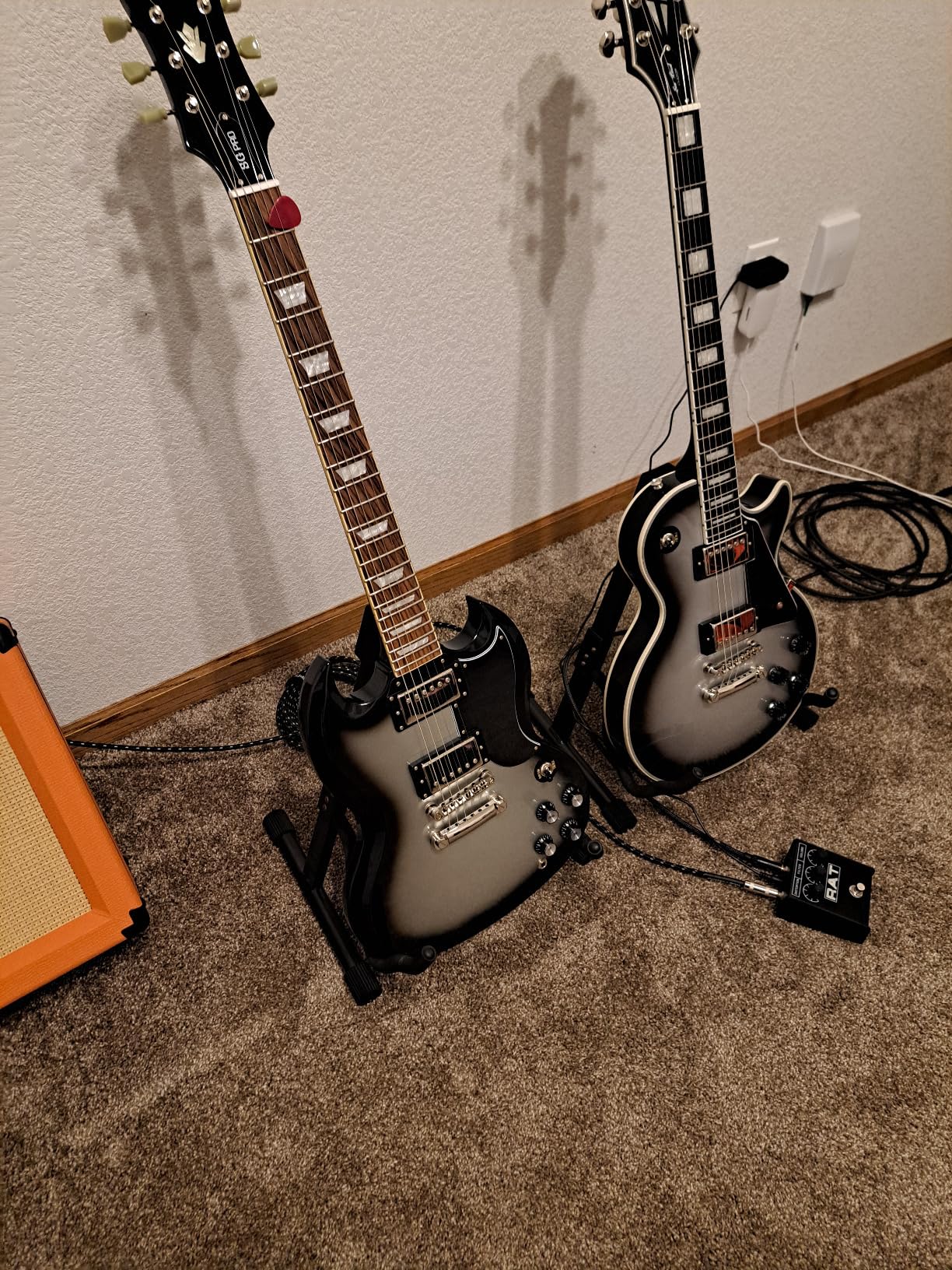
The Pro Co RAT2 is the pedal I recommend more than any other when someone asks “what distortion pedal should I buy?” It is the most versatile dirt pedal I have ever played, covering territory from light blues overdrive to roaring sludge metal and everything in between. The fact that it has been in continuous production since 1979 tells you everything you need to know.
The genius of the RAT2 is its deceptive simplicity. Three knobs: Distortion, Filter, and Volume. The Filter knob is the star of the show here. Unlike a standard tone control that just rolls off highs, the Filter is a high-cut that operates differently depending on where the distortion is set. This means your tone stays full and rich at any gain level.
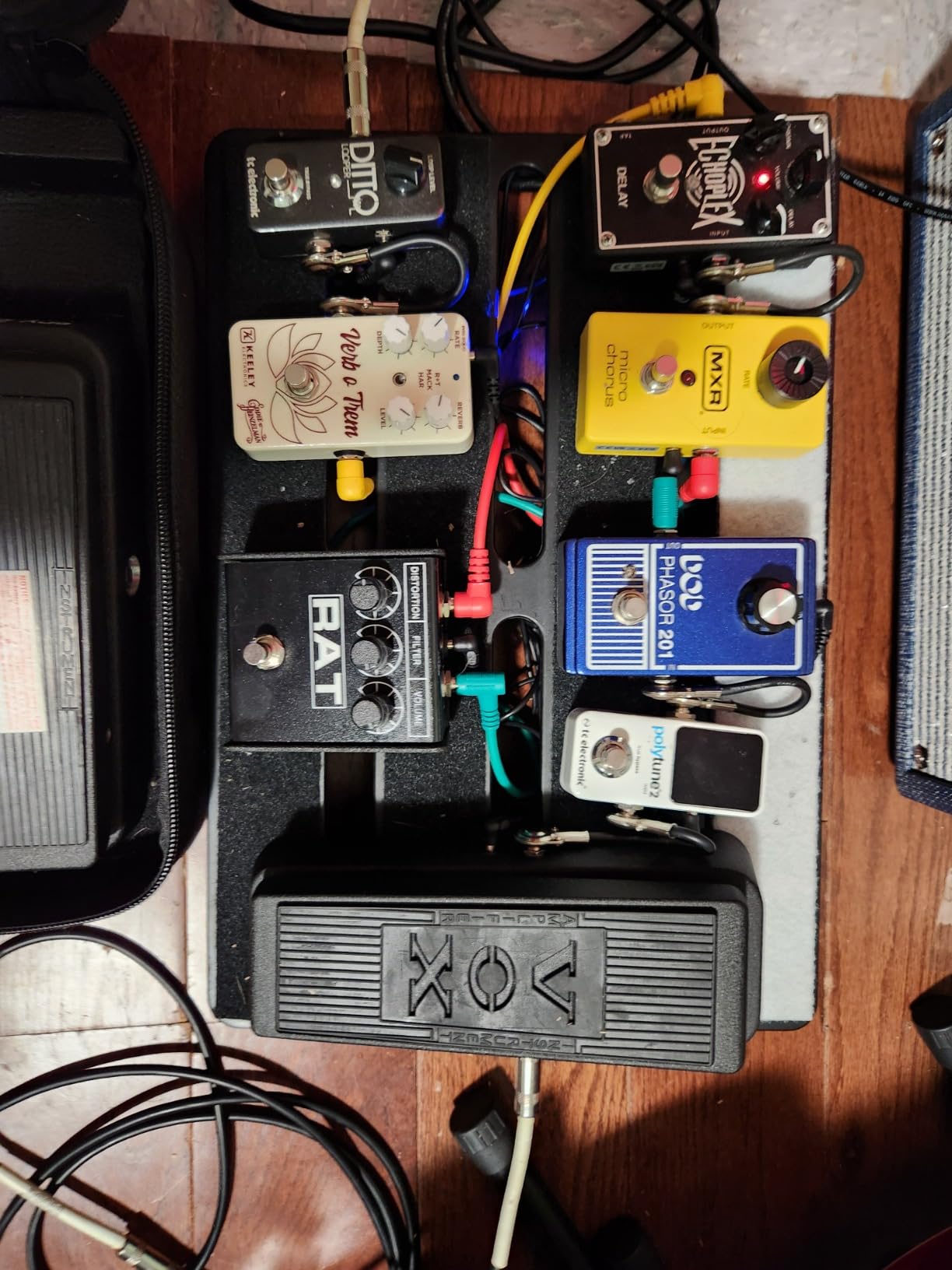
With the Distortion knob at minimum, the RAT2 acts as a clean boost with a slight grit. Push it to 9 o’clock and you get warm, touch-sensitive overdrive. At noon, you are in classic rock territory with singing sustain. Crank it fully and you enter near-fuzz territory with massive, woolly saturation. No other single pedal I have tested covers this much ground.
The build quality is legendary. The RAT2 enclosure is a heavy steel box that feels like it could stop a bullet. Reddit users routinely report decades of use without a single issue. The glow-in-the-dark knobs are a fun touch that actually helps on dark stages.
How the RAT2 Filter Control Works
The Filter knob on the RAT2 confuses many new users because it works opposite to a standard tone knob. Turning it clockwise makes the sound darker and warmer. Turning it counterclockwise makes it brighter and more cutting. This design means you can dial in a bright, aggressive tone for cutting through a band mix without losing bass response.
I found the most useful range between 9 and 12 o’clock for most applications. Below 9 gets very bright and aggressive, which works well for lead lines. Above 12 gets warm and smooth, ideal for rhythm parts and cleaner passages.
Does the RAT2 Work for Modern Metal
The RAT2 is excellent for classic metal, stoner rock, punk, and grunge. It delivers the thick, aggressive tones that defined bands like Soundgarden, Nirvana, and The Foo Fighters. For modern metal genres like djent, metalcore, or death metal, the RAT2 may not offer enough tightness and definition.
If you play extended-range guitars or need surgically tight low-end response for modern metal, consider the Boss MT-2, MXR Fullbore Metal, or a Wampler pedal instead. For everything else, the RAT2 is nearly impossible to beat at this price point.
4. MXR Distortion+ – The Vintage Classic
MXR® Distortion+
Germanium-powered soft clipping
2 knobs: Output and Distortion
Analog circuit
9V powered
Classic 70s tone
Pros
- Authentic vintage 70s and 80s tone
- Simple two-knob operation
- Highly transparent sound
- Works as boost or distortion
- Legendary MXR durability
Cons
- Only two controls limits flexibility
- Not enough gain for modern metal
- One specific tonal character
- No true bypass
The MXR Distortion+ is a time machine. The moment I plugged this pedal in, I was transported to the tones of Randy Rhoads, Alex Lifeson, and early 80s hard rock. The germanium-powered soft-clipping circuit produces a warm, musical distortion that feels distinctly different from the hard-clipped aggression of modern pedals.
With only two knobs, Output and Distortion, there is not much to fiddle with. The Output knob controls the overall volume level, which also makes this pedal useful as a clean boost. The Distortion knob sets the amount of gain, ranging from a slight edge to a medium-crunch hard rock tone.
What stands out to me about the Distortion+ is how transparent it is. The pedal does not mask the character of your guitar or pickups the way some high-gain pedals do. A Stratocaster still sounds like a Stratocaster, and a Les Paul still sounds like a Les Paul. The distortion sits on top of your natural tone rather than replacing it.
Who Is the MXR Distortion+ Made For
This pedal is ideal for players who want authentic 70s and early 80s hard rock tones. If you play classic rock, early metal, or blues-rock, the Distortion+ nails those Randy Rhoads and Rush tones effortlessly. It is also a great choice for players who value simplicity and want a pedal they can set and forget.
Modern metal players should look elsewhere. The Distortion+ does not have the gain, the tightness, or the tonal flexibility required for contemporary high-gain styles. It is a product of its era, and that is precisely its charm.
How Does Buffered Bypass Affect Your Tone
The MXR Distortion+ uses buffered bypass rather than true bypass. This means the pedal always has some effect on your signal, even when off. The buffer can actually be beneficial if you have long cable runs or many true-bypass pedals on your board, as it maintains signal strength and prevents high-frequency loss.
However, some tone purists prefer true bypass because it removes the pedal entirely from the signal path when disengaged. If you are running a short chain with few pedals, the buffered bypass of the Distortion+ is unlikely to cause any issues. If you are building a large pedalboard, be aware of how buffers interact with each other.
5. MXR Super Badass Distortion – The All-Rounder
MXR® Super Badass® Distortion
Full-spectrum analog distortion
3-band EQ: Bass, Mid, Treble
True bypass
9V powered
505 reviews
Pros
- Highly versatile across all genres
- 3-band EQ for precise control
- True bypass preserves tone
- Sounds like a cranked tube amp
- Excellent note clarity at high gain
- Stacks beautifully with other pedals
Cons
- Output level runs very hot
- Higher price point
- Can overlap with other dirt pedals on your board
- Volume management needed
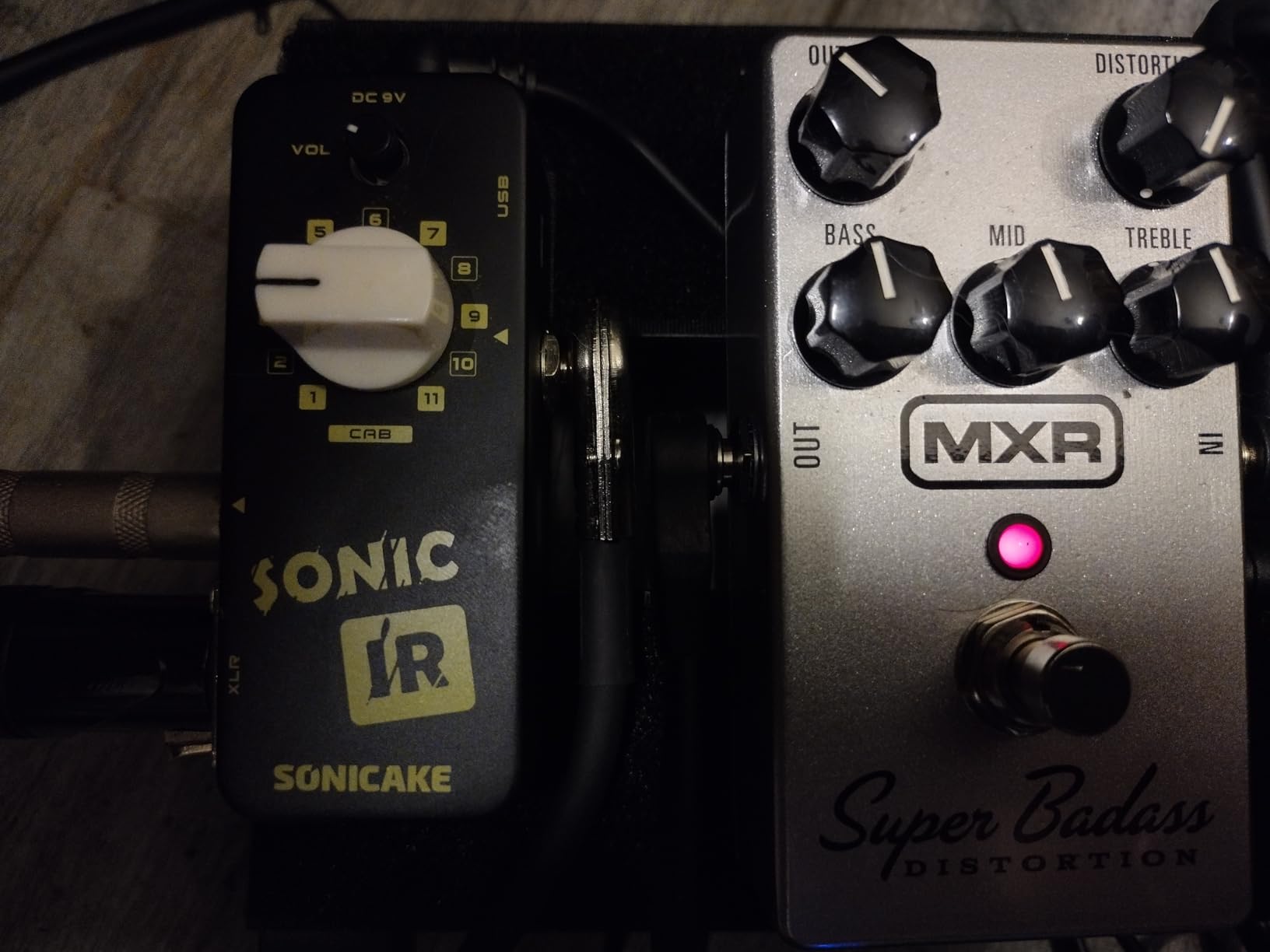
The MXR Super Badass Distortion is the pedal I reach for when I need one distortion to cover multiple genres in a single set. From blues to punk to modern metal, this pedal handles it all with a natural, organic tone that sounds like a cranked tube amp rather than a stompbox.
The standout feature is the three-band EQ. Having dedicated Bass, Mid, and Treble controls gives you the same tonal flexibility as a good amplifier. I was able to dial in a scooped-mid metal tone, a mid-forward classic rock crunch, and a bass-heavy stoner doom sound all from the same pedal.
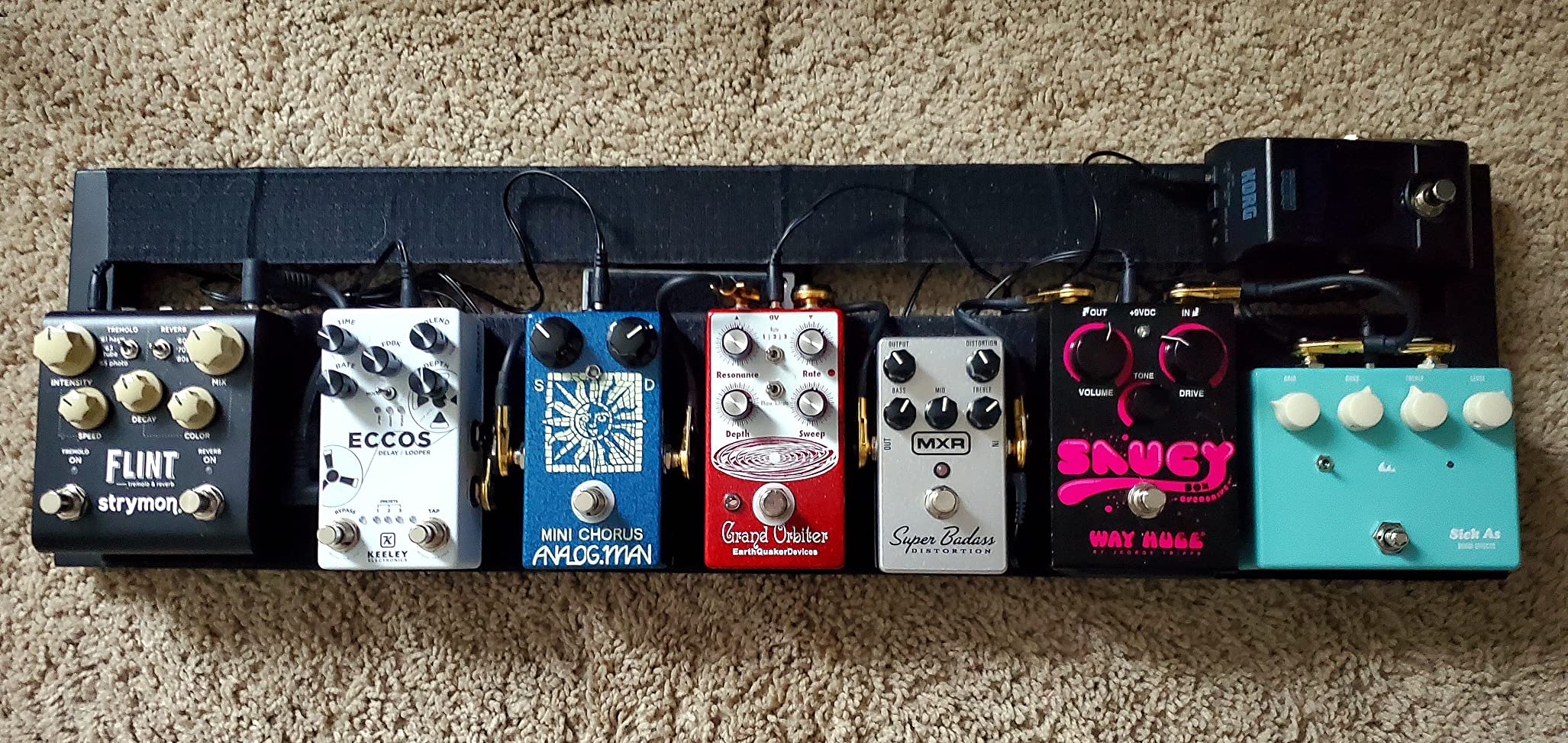
The 100% analog circuit with true bypass means your tone stays pure when the pedal is off and richly saturated when it is on. The dynamic response is excellent, responding to your pick attack and volume knob changes with satisfying sensitivity.
One thing to watch out for is the output level. The Super Badass can run very hot, especially at higher gain settings. I had to be careful with my amp’s input gain to avoid unwanted clipping. Once I got the levels sorted, though, the pedal sounded fantastic.
How Does It Compare to the Boss MT-2
The Super Badass offers a warmer, more organic distortion compared to the MT-2’s aggressively compressed saturation. The MT-2 has more gain on tap and a parametric mid EQ that offers more surgical midrange control. The Super Badass has a simpler three-band EQ but produces a more natural, amp-like tone.
If you want surgical tone control and maximum gain for metal, the MT-2 wins. If you want a natural-sounding distortion that works across genres and responds to your playing dynamics, the Super Badass is the better choice.
Does It Stack Well with Overdrive Pedals
The Super Badass is one of the best stacking pedals I have tested. Running a Tube Screamer-style overdrive into the front of the Super Badass tightens the low end and adds midrange punch for modern metal tones. Running the Super Badass into a Big Muff creates a massive, layered wall of sound.
This stacking flexibility makes the Super Badass a great centerpiece for a pedalboard. Even if you already own an overdrive or a fuzz, this pedal complements rather than competes with them.
6. Fender Pugilist Distortion – The Dual-Engine Powerhouse
Fender Pugilist Distortion Pedal
Dual distortion engines
Series and Parallel modes
Bass Boost switch
LED-backlit knobs
9V powered
386 reviews
Pros
- Two independent distortion sounds in one pedal
- Series and Parallel blend modes
- Bass Boost for extra low-end thickness
- LED-backlit knobs are gorgeous
- Natural analog response
- Stacks well with other pedals
Cons
- Not suited for extreme metal
- Larger footprint than standard Boss pedals
- Minor noise at low gain
- No footswitch to toggle channels
The Fender Pugilist is the most innovative distortion pedal I tested for this guide. Having two independent distortion engines in a single pedal gives you a level of tonal flexibility that no other pedal here can match. You can set one engine for a clean boost and the other for full saturation, or run both at moderate gain for a thick, layered sound.
The Series and Parallel modes are where the real magic happens. In Parallel mode, the two engines are blended together, letting you mix their tonal characteristics. In Series mode, one engine feeds into the other, creating cascading gain structures that produce massive, complex distortion tones.
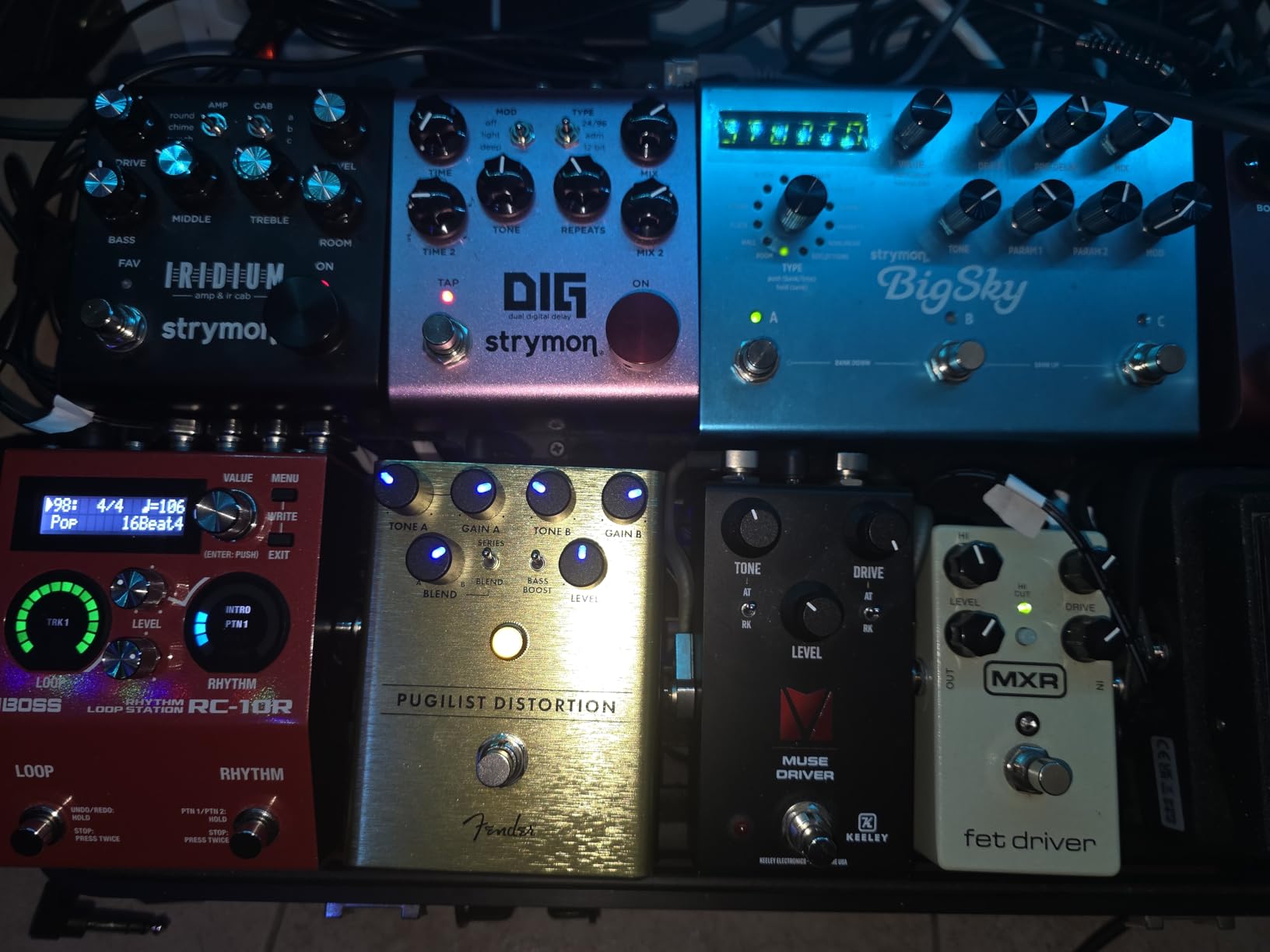
I set up Engine A for a light, crunchy rhythm tone and Engine B for a soaring lead sound. Switching between blend modes gave me everything from subtle texture to face-melting saturation. The Bass Boost switch adds extra low-end thickness that is perfect for drop-tuned guitars and stoner rock.
The LED-backlit knobs are not just a gimmick. On a dark stage, being able to see your settings at a glance is genuinely useful. You can toggle the backlighting off if you prefer a stealth look. The build quality feels premium, with a robust enclosure and smooth-feeling knobs.
What Genres Does the Pugilist Excel At
The Pugilist shines in classic rock, hard rock, alternative, and stoner metal territory. It has enough gain for heavy rhythms and saturated solos, though it is not designed for extreme metal subgenres. If you play seven-string or eight-string guitars tuned below standard, you may want something tighter.
For players who gig regularly and need multiple distortion sounds without tap-dancing across several pedals, the Pugilist is a game-changer. The dual-engine design effectively replaces two separate pedals on your board.
Is the Larger Footprint a Problem
The Pugilist is larger than a standard Boss compact pedal, which is something to consider if you have a crowded pedalboard. However, the offset input and output jacks help conserve space by allowing tighter placement of adjacent pedals. Fender clearly designed the layout with pedalboard efficiency in mind.
If board space is tight, measure before you buy. For most players, the extra real estate is well worth the dual-engine functionality you get in return.
7. JHS 3 Series Distortion – The Modern Classic
JHS 3 Series Distortion
Medium-gain crunch to heavy distortion and fuzz
3 knobs: Volume, Filter, Distort
Gain toggle switch
9V DC powered
1401 reviews
Made in USA
Pros
- Wide tonal range from crunch to fuzz
- Toggle switch adds two distinct voicings
- Compact enclosure
- Made in Kansas City USA
- Great value
- Tough build with 4-year warranty
Cons
- Filter knob range somewhat limited
- Noise floor noticeable at high gain
- Less tonal control than full-size boutique pedals
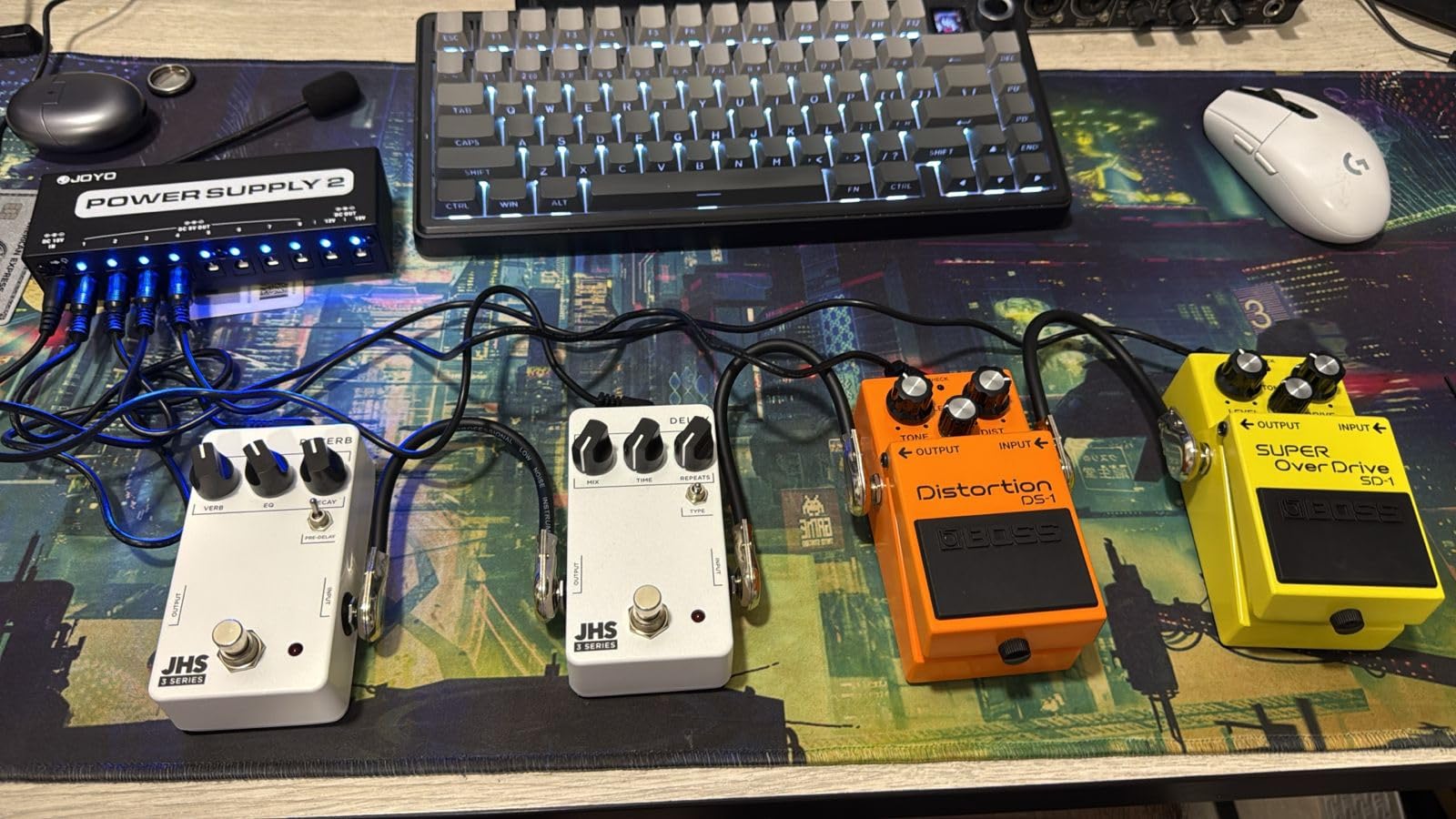
JHS Pedals has built a reputation for boutique quality at accessible prices, and the 3 Series Distortion delivers on that promise. This pedal surprised me with how much tonal ground it covers. From medium-gain crunch to heavy distortion and even fuzz-adjacent tones, the 3 Series does it all in a compact, affordable package.
The three-knob layout is straightforward: Volume, Filter (tone), and Distort. What sets this pedal apart is the gain toggle switch, which offers two distinct modes. One position gives you a saturated, compressed distortion with smooth sustain. The other opens up the sound for a more dynamic, crunchy, vintage-style breakup.
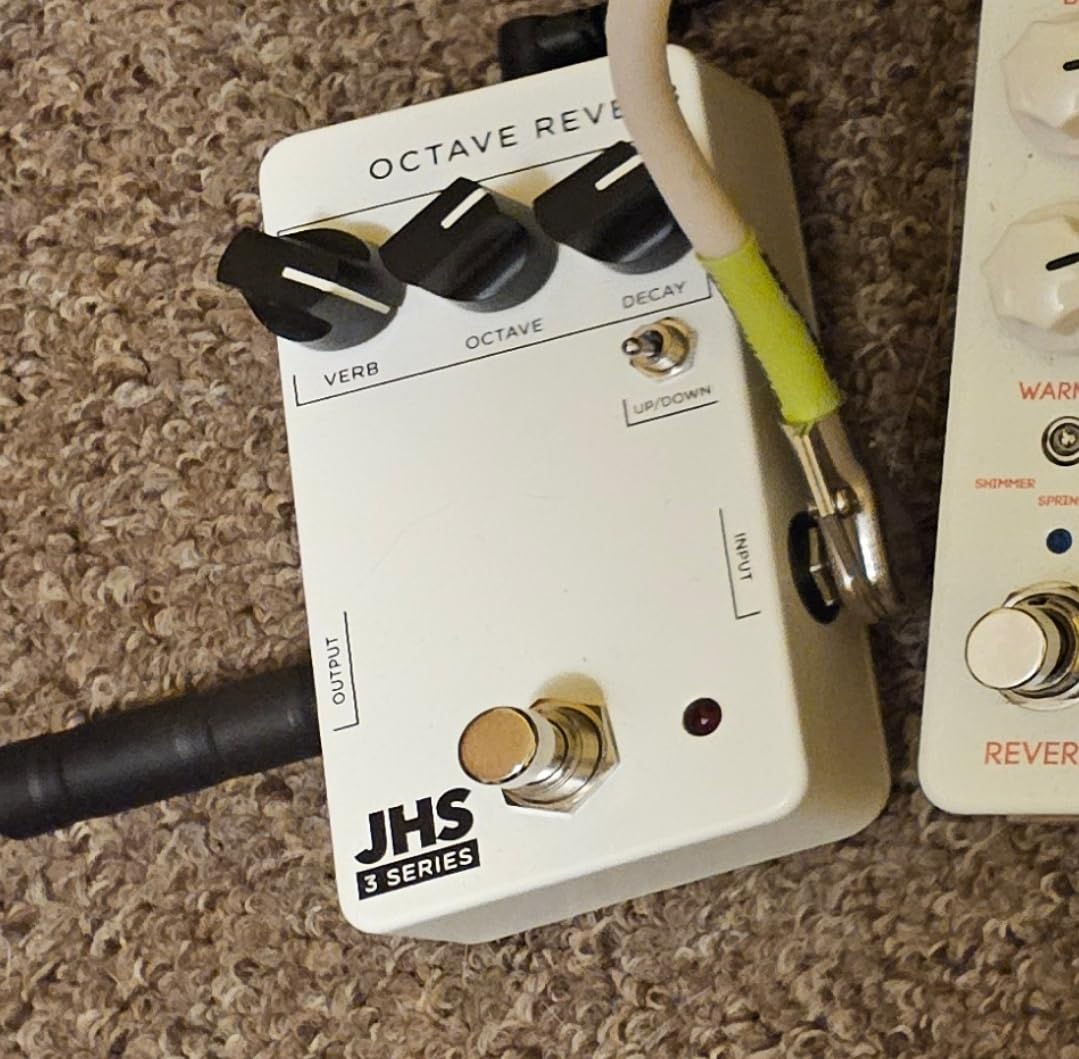
I found myself spending most of my time in the open, crunchy mode for rhythm parts and switching to the compressed mode for lead lines. The toggle is easy to reach and makes a noticeable difference in the pedal’s character. This effectively gives you two pedals in one.
The touch sensitivity of this pedal is excellent for the price. It responds to your picking dynamics in a way that makes the distortion feel alive rather than static. Light picking produces a gentle crunch, while digging in brings full saturation.
How Does the JHS 3 Series Compare to Boutique Pedals
The 3 Series is designed to deliver JHS quality at a lower price point than their full-size pedals. While it does not offer the same level of tonal control as a JHS Morning Glory or a JHS Charlie Brown, it captures the essence of what makes JHS pedals special: organic tone, responsive dynamics, and solid construction.
For players who want boutique quality without the boutique price tag, the 3 Series is an excellent entry point. The four-year warranty (within the USA, with registration) is significantly longer than most competitors at this price.
Is the Noise Floor a Dealbreaker
At higher gain settings, the JHS 3 Series does produce some audible noise. This is common for analog distortion pedals and is not unique to this model. Using a noise gate in your signal chain or a quality shielded power supply will mitigate the issue significantly.
For most playing situations, the noise floor is not a problem. It only becomes noticeable when you stop playing with the gain cranked and the pedal engaged in a quiet room.
8. Electro-Harmonix Big Muff Pi – The Legend
Electro-Harmonix Big Muff Pi Guitar Effects Pedal
Iconic fuzz and distortion
Singing sustain
3 knobs: Volume, Sustain, Tone
True bypass
9V battery included
589 reviews
Made in NYC
Pros
- Legendary tone used by countless rock icons
- Incredible singing sustain
- True bypass preserves natural tone
- Retains high-end clarity unlike most fuzz
- 9V battery included
- Excellent value vs vintage originals
Cons
- Primarily a one-trick fuzz tone
- Not ideal for extreme metal
- Confusing power supply requirements
- Larger enclosure
The Electro-Harmonix Big Muff Pi is not strictly a distortion pedal. It straddles the line between distortion and fuzz, producing a massive, sustaining tone that has shaped the sound of rock music for decades. From Smashing Pumpkins to Pink Floyd to Black Sabbath, the Big Muff’s sonic fingerprint is everywhere.
What makes the Big Muff special is its ability to produce singing sustain without losing note definition. Most fuzz pedals turn your tone into a woolly mess when you play chords. The Big Muff retains enough high-end clarity that chords stay articulate even at maximum sustain settings.
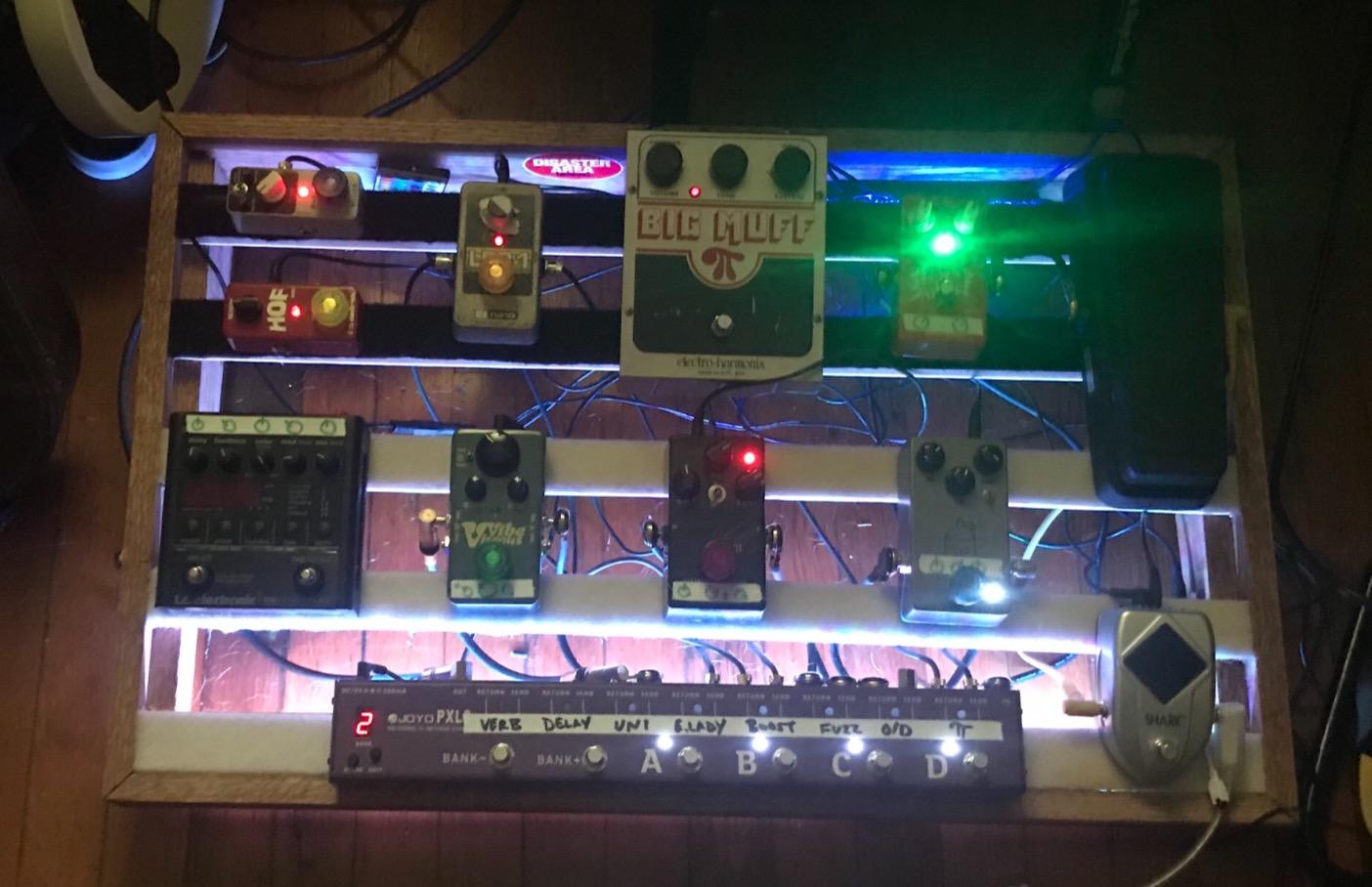
The three-knob layout is simple: Volume, Sustain, and Tone. The Sustain knob controls how much gain and compression are applied. At lower settings, you get a warm overdrive-like crunch. Cranked fully, notes sustain indefinitely with a thick, creamy wall of harmonics.
I found the Big Muff excels at lead playing. The sustain it provides makes bends feel effortless and gives solos a vocal, singing quality that few other pedals can match. For rhythm playing, it produces a massive wall of sound that is perfect for grunge, stoner rock, and alternative.
What Is the Difference Between Big Muff Versions
The Big Muff Pi has gone through numerous circuit revisions over the decades, and tone enthusiasts debate which version sounds best. The current production model is based on the classic Triangle-era circuit, which offers a balanced, versatile tone. Earlier Ram’s Head and Russian versions have distinct tonal characteristics that some players prefer.
For most players, the current production Big Muff delivers the iconic tone at an accessible price. If you are chasing a specific vintage sound, there are boutique builders who clone specific Big Muff eras, but you will pay significantly more.
Will the Big Muff Work for My Genre
The Big Muff is ideal for alternative rock, grunge, stoner metal, shoegaze, and any genre that benefits from massive, sustaining walls of distortion. It is not designed for tight, surgical metal tones or dynamic, touch-sensitive blues breakup.
If you play in a band where you need to cut through a dense mix with clarity, the Big Muff can sometimes get lost. Pairing it with an overdrive pedal in front tightens the low end and adds midrange presence, solving this problem effectively.
9. JOYO High Gain Distortion JF-04 – The Budget Champion
JOYO High Gain Distortion Guitar Pedal, Analog Circuit with Full Range EQ for Classic Rock to Heavy Metal Tones, True Bypass (JF-04)
Wide gain range from rock to metal
Full-range EQ with Treble and Mid
Analog circuit
True bypass
9V DC
603 reviews
#1 Best Seller
Pros
- Exceptional value under $40
- Wide gain range covering many genres
- Full-range EQ controls
- Compact aluminum build
- #1 Best Seller in category
- True bypass design
Cons
- Noise floor issues when bypassed
- Volume output can feel under-powered
- Narrow sweet spots on knobs
- Occasional reliability concerns
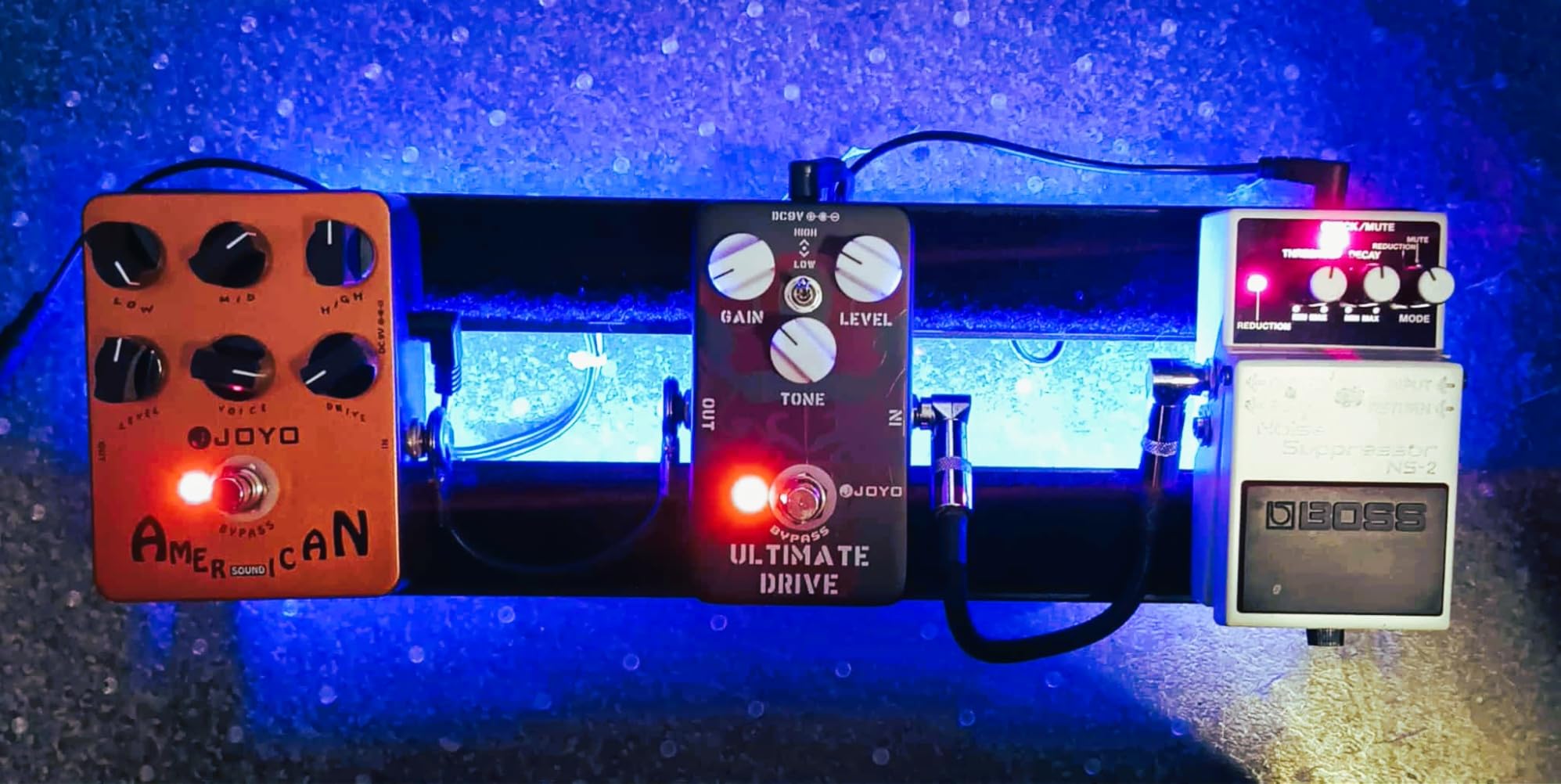
The JOYO JF-04 High Gain Distortion holds the number one best-seller spot in its category, and the price tag tells you why. At under $40, this pedal offers a remarkable amount of tonal range and build quality that punches well above its weight class.
I was skeptical going in, given the price, but the JF-04 genuinely surprised me. The gain range is wide enough to cover everything from bluesy crunch to heavy metal chugging. The dedicated Treble and Mid EQ controls give you more tone-shaping capability than many pedals at twice the price.
The analog circuit provides a touch-sensitive response that reacts to your playing dynamics in a way that feels organic. This is not a sterile, digital-sounding distortion. The aluminum alloy casing feels solid and durable, with smooth knobs and a positive-feeling footswitch.
Where the JF-04 shows its budget nature is in the details. The noise floor is higher than premium pedals, particularly noticeable when the pedal is engaged but you are not playing. The knob sweet spots are narrow, meaning small turns make big tonal changes. Some users have reported reliability issues after extended use.
Is the JOYO JF-04 Good Enough for Gigging
For bedroom practice and casual jamming, the JF-04 is more than adequate. For gigging, the higher noise floor becomes more noticeable, especially through a loud PA system or in a quiet venue between songs. The reliability concerns also give me pause for situations where a pedal failure means a disrupted performance.
If you are on a strict budget and need a distortion pedal now, the JF-04 delivers excellent value. If you can stretch your budget, the Boss DS-1 or Donner Dark Mouse offer better long-term reliability and lower noise.
How Does It Compare to the Boss DS-1
The DS-1 offers a more refined, consistent tone with better build quality and a decades-long track record of reliability. The JF-04 offers more tonal flexibility with its Treble and Mid EQ controls and a wider gain range. The DS-1 is the safer, more proven choice. The JF-04 is the more adventurous, feature-rich option.
For a first distortion pedal, I would lean toward the DS-1 for its simplicity and reliability. For a player who wants more tonal control on a budget, the JF-04 is worth considering.
10. Wampler Ratsbane – The Premium RAT Upgrade
Wampler Ratsbane Distortion Pedal (Rats Bane)
Rat-style enhanced distortion
Filter and Distortion controls
3-position gain switch
Voice switch for modern clipping
9-18V powered
62 reviews
Made in USA
Pros
- Improved Rat tone with more adjustability
- 3-position gain switch adds variety
- Voice switch for modern high-gain
- Compact and quiet
- 5-year warranty
- Made in USA
Cons
- No battery compartment
- Noise floor elevation at high gain
- Limited number of reviews
- Higher price point
The Wampler Ratsbane takes the beloved Pro Co RAT circuit and refines it with the kind of thoughtful improvements that only a boutique builder like Brian Wampler can deliver. If you love the RAT sound but wish it had more tonal options and a quieter noise floor, this is your pedal.
The core tone will be immediately familiar to any RAT enthusiast. That same warm, versatile distortion that works from blues to sludge metal is present and accounted for. But Wampler has added a 3-position gain switch that gives you stock RAT gain, a boosted setting, and a maxed-out creamy distortion mode that the original cannot achieve.
The Voice switch is the other major addition. It alters the compression and clipping characteristics, giving you access to modern, tighter high-gain distortion tones that the standard RAT struggles with. This effectively makes the Ratsbane two pedals in one.
Is the Ratsbane Worth the Upgrade from a Standard RAT
If you already own and love a standard RAT2, the Ratsbane offers meaningful improvements rather than cosmetic changes. The 3-position gain switch and Voice switch add genuine tonal variety. The compact enclosure is smaller than the original RAT, saving pedalboard space. And the operation is noticeably quieter.
However, the standard RAT2 is still an incredible value at a lower price point. If budget is your primary concern, the RAT2 covers 90% of what the Ratsbane does. The Ratsbane is for players who want the RAT sound refined to its absolute best.
What Does the Voice Switch Actually Do
The Voice switch changes the clipping diode configuration in the circuit. In the standard position, you get the classic RAT asymmetrical clipping that produces that warm, slightly compressed character. In the modern position, the clipping becomes tighter and more aggressive, with increased definition for modern metal riffing.
I spent considerable time A/B testing both positions and found the modern setting particularly useful for palm-muted chugging on drop-tuned guitars. The standard setting remained my go-to for lead lines and classic rock rhythms.
11. Donner Dark Mouse – The Compact RAT Clone
Donner Dark Mouse Distortion Pedal for Electric Guitar, 2 Modes Classic Hyper Crunch to Fuzzy Guitar Pedal True Bypass
RAT-style distortion
2 modes: Classic and Hyper
True bypass
Compact aluminum enclosure
9V DC
568 reviews
Pros
- Authentic RAT-family tone at budget price
- Ultra-compact footprint
- Two distinct modes
- Responds well to volume rollback
- Durable aluminum build
- True bypass
Cons
- Hyper mode can be too extreme
- Tiny knobs hard to read and adjust
- Level knob baseline very loud
- Noise increases in Hyper mode
The Donner Dark Mouse is a compact, affordable take on the RAT distortion circuit. At the same price point as the JOYO JF-04, it offers a different flavor of distortion that leans more toward the woolly, aggressive character of the classic RAT.
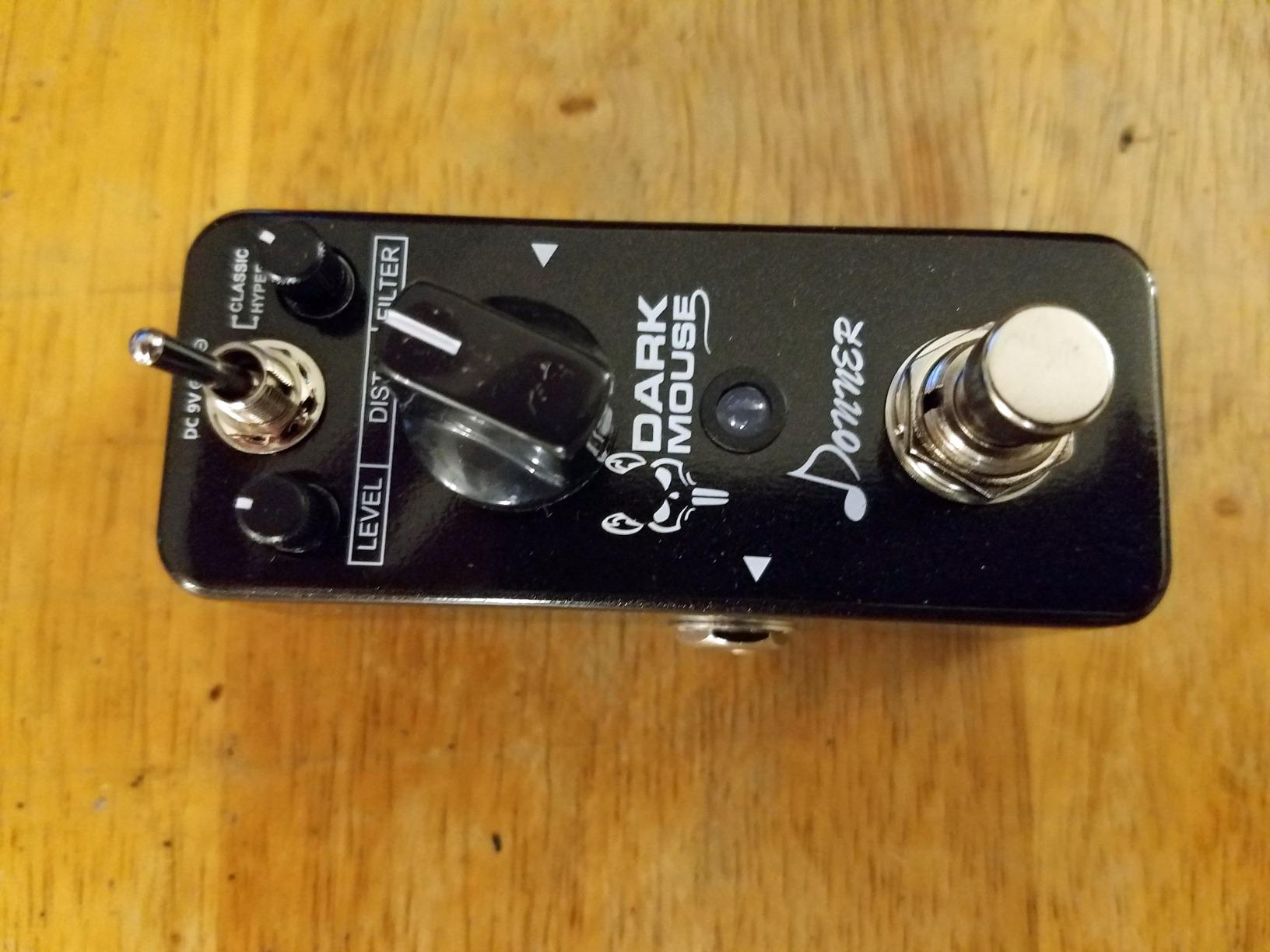
The two-mode operation is the Dark Mouse’s defining feature. Classic mode delivers warm, thick distortion with a fuzz-like feel that works well for classic rock and punk. Hyper mode pushes the gain and aggression significantly, producing a more cutting, edgy tone suited to harder styles.
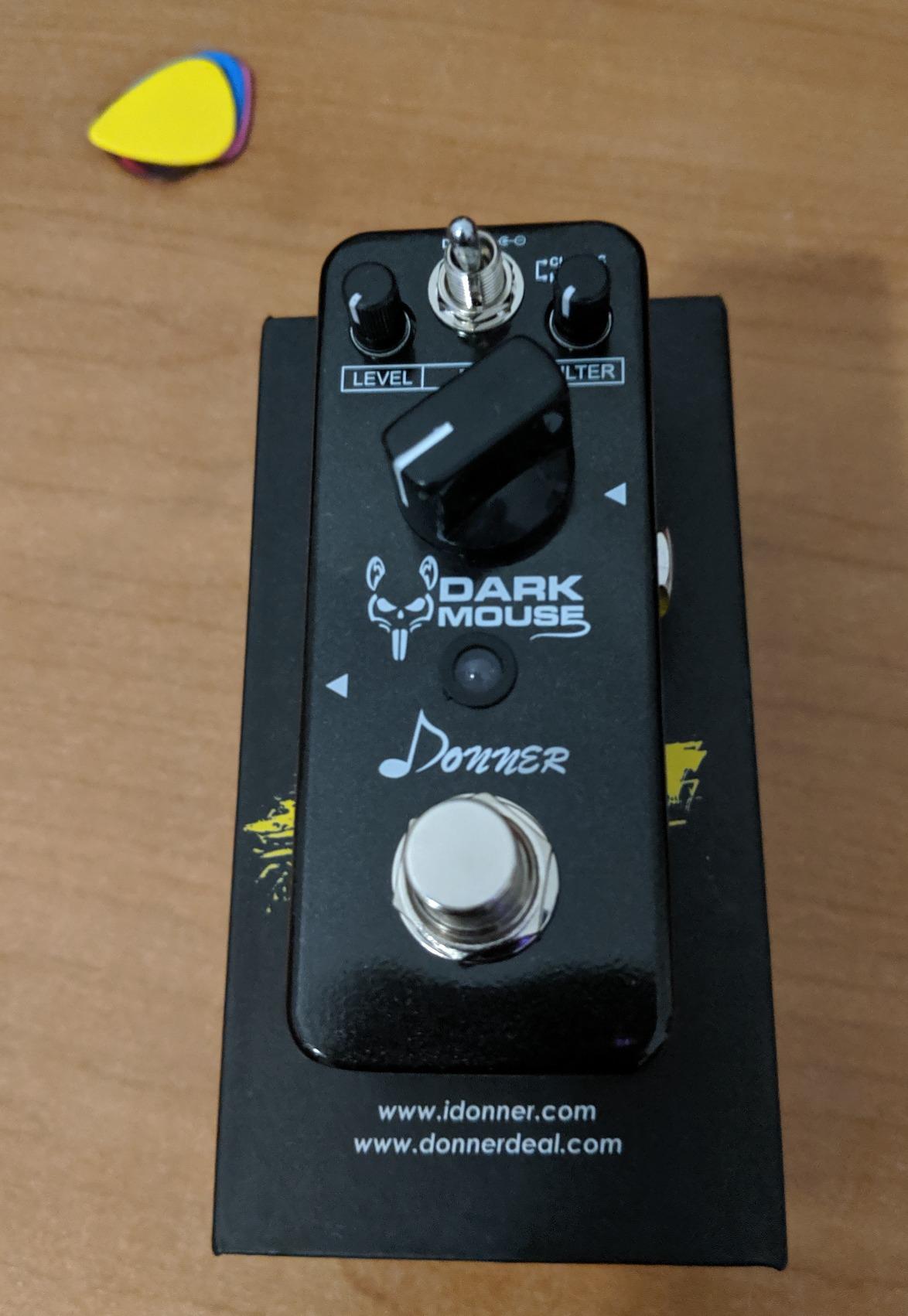
The compact size is a genuine advantage for players with limited pedalboard space. The Dark Mouse takes up roughly half the real estate of a standard Boss pedal while delivering a surprisingly beefy sound. The aluminum-alloy construction feels solid despite the small footprint.
The main drawback is the control layout. The knobs are tiny and the labels can be hard to read, especially on a dark stage. The level knob has a very high baseline output, meaning even at minimum settings, the pedal can be louder than your bypassed signal.
How Does the Dark Mouse Compare to the Real RAT
The Dark Mouse captures the general character of the RAT distortion but does not replicate it exactly. The Classic mode is warmer and less transparent than the original RAT2. The Hyper mode adds gain that the RAT2 does not offer natively. Think of the Dark Mouse as inspired by the RAT rather than a perfect clone.
For players who want the RAT sound on a budget and in a compact format, the Dark Mouse is a solid choice. For players who want the authentic, full-range RAT experience, the original RAT2 remains the gold standard.
Is the Dark Mouse Good for Beginners
The simplicity of the Dark Mouse makes it accessible for beginners. Two modes and three knobs give you enough control without being overwhelming. The price point means you are not making a major financial commitment while you are still exploring what kind of distortion tones you prefer.
However, the tiny knobs and loud baseline output can be frustrating for new players who are still learning how to manage their signal chain. If you value ease of use above all, the Boss DS-1 with its larger knobs and smoother output range is a friendlier option.
12. MXR Fullbore Metal – The Tight Metal Machine
MXR Fullbore Metal Distortion
Super high-gain distortion
3-band EQ with sweepable mids
Built-in switchable noise gate
Analog signal path
9V powered
326 reviews
Pros
- Massive gain for modern metal
- Sweepable mid EQ for surgical tone shaping
- Built-in noise gate is genuinely useful
- Compact MXR design
- Excellent sustain and harmonics
- Pairs well with tube amps
Cons
- Noise gate adjustment requires removing back plate
- Can generate white noise at certain EQ settings
- Treble and mids can sound brittle
- Not suitable for blues or warm overdrive
The MXR Fullbore Metal is built for one purpose: delivering surgically tight, high-gain metal distortion. If you play djent, metalcore, death metal, or any genre that requires maximum tightness and definition, this pedal deserves your attention. It is one of the few distortion pedals that includes a built-in noise gate as a standard feature.
The gain on tap here is massive. Even at halfway on the gain knob, the Fullbore Metal produces more saturation than most pedals at maximum. The three-band EQ with sweepable mid frequencies lets you sculpt your tone with precision, from scooped-mid thrash to mid-forward modern metal.
The built-in noise gate is a thoughtful addition that addresses one of the biggest complaints about high-gain pedals. When engaged, it silences the hiss and hum that typically accompanies heavy distortion. The gate is fast and effective, keeping your palm-muted chugging tight and articulate.
The one significant design flaw is the internal gate threshold adjustment. To change the sensitivity of the noise gate, you have to unscrew the back plate of the pedal. This is a frustrating design choice that makes on-the-fly adjustments impossible.
How Does the Fullbore Compare to the Boss MT-2
Both pedals target the metal market, but they take different approaches. The MT-2 uses a dual-stage gain circuit for thick, sustaining saturation. The Fullbore focuses on tightness and definition, with a built-in noise gate that the MT-2 lacks. The MT-2 has a parametric mid EQ; the Fullbore has a sweepable mid that is slightly less precise but more intuitive.
If you prioritize maximum sustain and a wall-of-sound approach, the MT-2 wins. If you prioritize tightness, note definition, and noise control, the Fullbore is the better metal pedal.
What Amps and Guitars Work Best with the Fullbore
The Fullbore Metal pairs exceptionally well with tube amps, particularly those with clean or slightly broken-up channels. The pedal’s high output and massive gain push the front end of a tube amp into saturated territory that the amp alone could never achieve.
For guitars, humbucker-equipped instruments work best. The Fullbore’s high gain can overwhelm single-coil pickups, producing excess noise and losing definition. If you play a Strat or Tele, consider a noiseless pickup setup or look at pedals with lower noise floors.
How to Choose the Best Distortion Pedal for Your Needs
Choosing the right distortion pedal comes down to understanding your needs as a player. The sheer number of options can feel overwhelming, but breaking it down into a few key categories makes the decision much more manageable.
Distortion vs Overdrive vs Fuzz: What Is the Difference
This is one of the most common questions I hear from players shopping for their first dirt pedal. The three types of gain pedals use different clipping circuits to produce distinctly different sounds.
Distortion uses hard-clipping circuits that aggressively chop off the peaks of your guitar signal. This produces a compressed, saturated, high-gain tone that is essential for rock, metal, and punk. Distortion pedals offer the most gain and the most consistent sound regardless of your guitar’s volume position.
Overdrive uses soft-clipping circuits that gently round off the signal peaks. The result is a warmer, more dynamic breakup that responds to your playing intensity. Overdrive pedals sound best when pushing an already-warm tube amp into natural compression. They clean up beautifully when you roll back your guitar volume.
Fuzz uses extreme clipping that squares off the waveform almost entirely. This produces a thick, woolly, sustaining tone that borders on a synthesizer-like quality. Fuzz is the most extreme and least versatile of the three, but it produces sounds that neither distortion nor overdrive can replicate.
Key Factors to Consider When Buying a Distortion Pedal
Gain Range
Consider how much gain you actually need. If you play blues-rock or classic rock, a medium-gain pedal like the MXR Distortion+ or the Boss DS-1 is ideal. If you play metal, you need the massive gain of the Boss MT-2 or MXR Fullbore Metal. Buying a pedal with more gain than you need wastes its potential and can introduce unwanted noise.
EQ Controls
Simple pedals with a single tone knob are easy to use but limit your tonal flexibility. Pedals with three-band EQ (Bass, Mid, Treble) give you amp-like control over your sound. Parametric mid controls, like on the Boss MT-2, offer surgical precision but require time to master. Decide how much tone-shaping control you actually want.
True Bypass vs Buffered Bypass
True bypass removes the pedal’s circuit entirely from your signal chain when disengaged, preserving your core tone. Buffered bypass keeps a buffer circuit active at all times, which can prevent signal degradation over long cable runs. If you have many pedals on your board, a mix of both types is ideal. If you run a simple chain, true bypass is generally preferred.
Build Quality and Warranty
A distortion pedal takes a lot of physical abuse on a pedalboard. Look for metal enclosures, robust footswitches, and smooth knobs. Boss pedals come with a five-year warranty, MXR offers one year, and JHS provides four years with registration. The warranty length tells you how confident the manufacturer is in their build quality.
Noise Performance
High-gain distortion pedals inherently produce noise. The question is how much. Pedals with built-in noise gates, like the MXR Fullbore Metal, address this problem directly. Quality power supplies and shielded cables also help minimize noise. If you play at high volumes, noise performance becomes critical.
Signal Chain Placement for Distortion Pedals
Where you place your distortion pedal in your signal chain significantly affects your tone. The conventional wisdom is that distortion pedals go early in the chain, right after your tuner and wah pedal but before modulation effects like chorus and delay.
Standard signal chain order: Guitar, Tuner, Wah, Compression, Overdrive/Distortion, Modulation (chorus, phaser), Delay, Reverb, Amp.
This order works because distortion pedals sound best when they receive your guitar’s raw, unprocessed signal. Placing a distortion pedal after modulation effects produces unnatural, sometimes unpleasant artifacts. Placing it before delay and reverb allows those time-based effects to process the distorted signal naturally.
If you run multiple gain pedals, the general rule is lowest gain first. Overdrive goes before distortion, and distortion goes before fuzz. This prevents the high-gain pedals from being overwhelmed by the lower-gain pedals’ output.
Budget Tiers for Distortion Pedals
Under $50: The JOYO JF-04 and Donner Dark Mouse dominate this tier. Both offer surprising quality for the price, though they sacrifice noise performance and long-term reliability compared to pricier options. Best for beginners and bedroom players.
$50 to $150: This is the sweet spot for most players. The Boss DS-1, Boss MT-2, Pro Co RAT2, MXR Distortion+, JHS 3 Series, and EHX Big Muff Pi all live here. These pedals offer professional-grade tone and build quality at accessible prices. Most gigging musicians find everything they need in this range.
$150 and above: The MXR Super Badass, Fender Pugilist, Wampler Ratsbane, and MXR Fullbore Metal occupy this tier. These pedals offer premium features like dual engines, three-band EQ, noise gates, or enhanced circuit designs. Worth the investment if you have specific tonal needs that budget pedals cannot meet.
FAQ’s
What is the holy grail of guitar pedals?
What 5 pedals should every guitarist have?
What do most guitarists use for distortion?
What distortion pedal did Kurt Cobain use?
Should I get distortion or overdrive as my first pedal?
Where should a distortion pedal go in my signal chain?
Final Thoughts on the Best Distortion Pedals
After testing all 12 pedals extensively, three clear favorites emerged. The Fender Pugilist takes our top spot for its innovative dual-engine design that covers more tonal ground than any single pedal should. The Pro Co RAT2 remains the best overall value, delivering unmatched versatility at a mid-range price. And the Boss DS-1 continues to be the best distortion pedal for beginners and budget-conscious players who want iconic tone without breaking the bank.
For metal players, the Boss MT-2 Metal Zone and MXR Fullbore Metal deliver the gain and tightness that modern heavy genres demand. For players who want premium boutique quality, the Wampler Ratsbane refines the classic RAT circuit to perfection. And for those on the tightest budget, the JOYO JF-04 and Donner Dark Mouse offer impressive performance at a fraction of the cost.
The best distortion pedals in 2026 are the ones that match your playing style, your gear, and your budget. Take the time to consider what you actually need before making your choice. Your tone is worth the effort.