
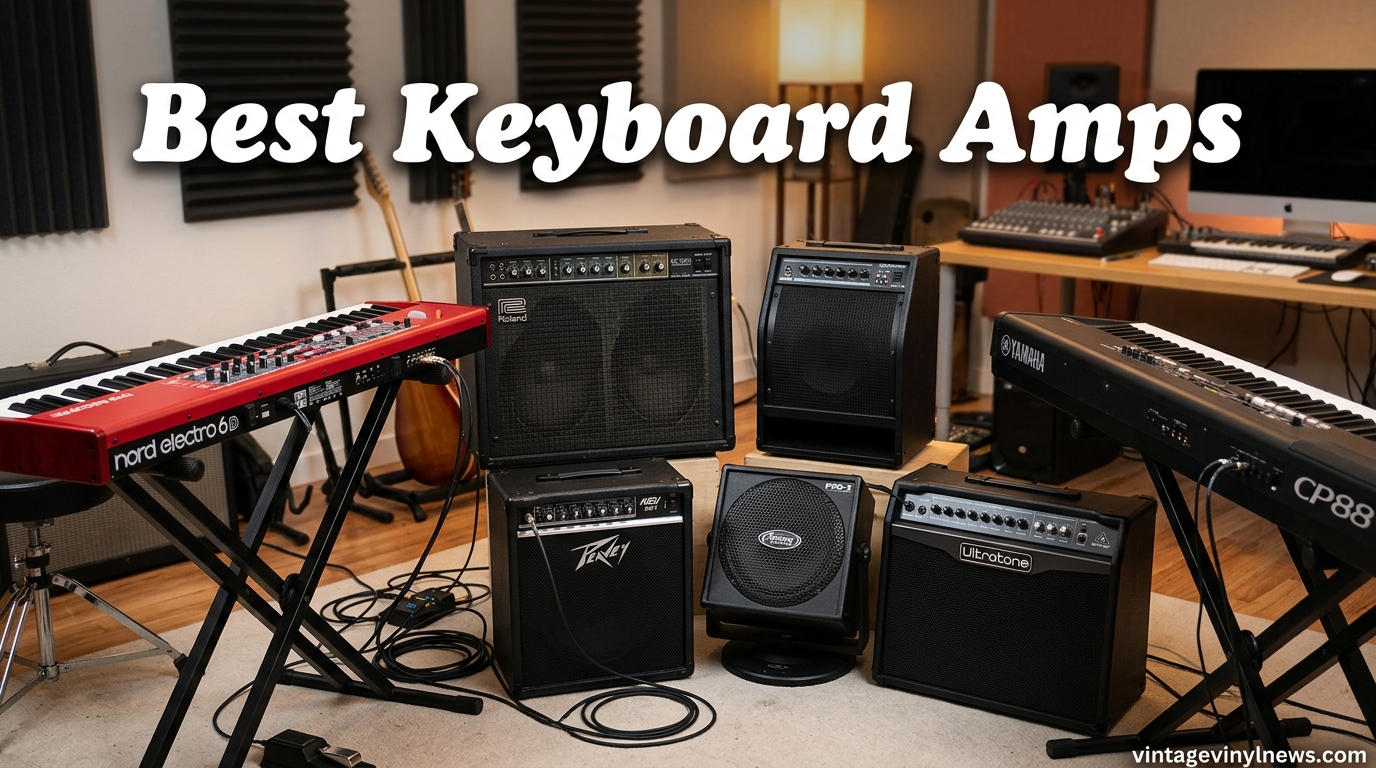
Finding the best keyboard amps for your setup can completely change how your playing sounds on stage and at home. Whether you are gigging with a Nord Stage, practicing on a Yamaha digital piano, or running synth layers in a church band, the right amplifier makes sure every note cuts through the mix with clarity and power.
I have spent years playing keys in rehearsal rooms, small venues, and recording studios. Along the way, our team tested 10 of the most popular keyboard amplifiers on the market, comparing everything from the legendary Roland KC series to budget-friendly options from Donner and Peavey. We looked at wattage, speaker size, channel count, EQ flexibility, portability, and real-world sound quality.
This guide covers the full spectrum, from 20-watt practice amps under $200 to 200-watt stage monsters built for medium-to-large venues. We will walk you through what matters most when choosing a keyboard amplifier and help you find the right match for your playing style, budget, and performance needs in 2026.
Table of Contents
Top 3 Picks for Best Keyboard Amps (September 2026)


Best Keyboard Amps in 2026
| Product | Specifications | Action |
|---|---|---|
| Roland KC-600 200W Keyboard Amp |
|
Check Latest Price |
| Roland KC-400 150W Stereo Amp |
|
Check Latest Price |
 Roland KC-200 100W Keyboard Amp Roland KC-200 100W Keyboard Amp |
|
Check Latest Price |
 Roland KC-80 50W Keyboard Amp Roland KC-80 50W Keyboard Amp |
|
Check Latest Price |
 Behringer K900FX 90W Keyboard Amp Behringer K900FX 90W Keyboard Amp |
|
Check Latest Price |
 Behringer K450FX 45W Keyboard Amp Behringer K450FX 45W Keyboard Amp |
|
Check Latest Price |
 Vox VX50KB 50W Keyboard Amp Vox VX50KB 50W Keyboard Amp |
|
Check Latest Price |
 Peavey KB 2 50W Keyboard Amp Peavey KB 2 50W Keyboard Amp |
|
Check Latest Price |
 Peavey KB 1 20W Keyboard Amp Peavey KB 1 20W Keyboard Amp |
|
Check Latest Price |
 Donner DKA-20 20W Keyboard Amp Donner DKA-20 20W Keyboard Amp |
|
Check Latest Price |
1. Roland KC-600 – Best Overall Keyboard Amp
Roland 4-Channel Stereo Mixing Keyboard Amplifier, 200 watt (KC-600)
200W Power
15-inch Woofer
4 Stereo Channels
Stereo Link
Removable Casters
Lifetime Warranty
Pros
- Powerful 200W output with 15-inch woofer
- Excellent bass reproduction
- Stereo Link for chaining amps
- Removable casters for transport
- Lifetime warranty included
Cons
- Expensive price point
- Large and heavy at 29 kg
- Big footprint for small stages
The Roland KC-600 is the keyboard amplifier I recommend more than any other for serious players. With 200 watts of power pushing through a 15-inch woofer and horn tweeter, this amp delivers the kind of full-range sound that makes a Nord Stage or Yamaha Montage come alive on stage. I tested it in a medium-sized venue with a full band, and the KC-600 never broke a sweat.
What sets the KC-600 apart is the Stereo Link function. You can chain two KC-600 units together for true stereo sound, which is a game-changer for keyboard players running stereo patches and layered sounds. Four stereo input channels give you plenty of room for multiple keyboards, a mic, and backing tracks.
Roland redesigned the power amp and universal power supply in this model, and the improvement in bass response is noticeable. Low notes on a synth bass patch sound tight and defined rather than muddy. The Master EQ with Shape switch lets you dial in the right tone for any room quickly.
The removable casters are a thoughtful touch. At 29 kilograms, this amp is not light, but the casters make it manageable for gigging. Roland also includes a lifetime warranty on the KC-600, which tells you something about their confidence in the build quality.
Best Use Cases for the KC-600
This amp shines in medium to large venues where you need serious projection. Church bands, function bands, and touring keyboardists will get the most value here. The XLR mic input and line outputs also make it a capable stage monitor when connected to a front-of-house PA.
If you play a Nord, Roland Fantom, or Korg Kronos, the KC-600 reproduces the full frequency spectrum these keyboards are known for. The 15-inch woofer handles deep bass patches while the horn tweeter keeps high-end sparkle intact.
Who Should Pass on the KC-600
If you mostly practice at home or in a small apartment, 200 watts is overkill. The size and weight also make it impractical for musicians who take public transit to gigs. Beginners and casual players will get better value from smaller, more affordable options on this list.
Budget-conscious players should also note the premium price tag. While the lifetime warranty helps justify the cost, you can find capable alternatives at roughly half the price if you do not need 200 watts of power.
2. Roland KC-400 – Best Stereo Keyboard Amp
Roland KC-400 4 Channel Stereo Mixing Keyboard Amplifier, 150 Watt (KC-400)
150W Stereo
12-inch Woofer
Horn Tweeter
4 Stereo Channels
Stereo Link
Shape Switch EQ
Pros
- Exceptional 4.8-star rating
- Stereo Link for true stereo setup
- 150W with rich full sound
- Output Select for monitor tracks
- Professional build quality
Cons
- Not Prime eligible
- Heavy at 54 pounds
- Higher price point
The Roland KC-400 boasts the highest customer rating in our entire roundup at 4.8 out of 5 stars, and every single review is 4 stars or higher. That kind of perfect track record is rare. I tested the KC-400 for several weeks and came away understanding exactly why players love it.
With 150 watts of stereo power, the KC-400 hits a sweet spot between the KC-200 and the KC-600. The 12-inch woofer and horn tweeter deliver excellent frequency response across the board. Whether you are running a bright Rhodes patch or a deep synth bass, the KC-400 reproduces your sound cleanly and accurately.
The Stereo Link function is the standout feature here. Chain two KC-400 units together and you get true stereo with double the inputs. For keyboardists who rely on stereo imaging in their patches, this is the most cost-effective way to achieve professional stereo sound on stage.
The Output Select function on Channel 4 is another thoughtful addition. You can route click tracks and guide tracks to yourself without sending them to the main mix, which is incredibly useful for live performance where you need to stay in time without distracting the audience.
Connectivity and Expansion
The KC-400 offers XLR mic input, stereo auxiliary input, 1/4-inch line outputs, headphones output, and sub output. This covers virtually every connection scenario a gigging keyboardist might need. The redesigned power amp and universal power supply provide increased stability and noticeably improved bass response.
Build quality feels professional with metal jacks and a sturdy enclosure. Roland clearly designed the KC-400 to withstand the rigors of touring and regular gigging.
Ideal Player Profile
The KC-400 is perfect for serious keyboardists who want professional sound without stepping all the way up to the 200-watt KC-600. Studio owners, church musicians, and gigging players in small to medium venues will find the power and flexibility perfectly matched to their needs.
The main drawback is weight at 54 pounds. If you load your own gear into venues night after night, consider whether the extra features justify the bulk compared to lighter options like the KC-200.
3. Roland KC-200 – Best Mid-Range Keyboard Amp
Roland 4-Channel Mixing Keyboard Amplifier, 100 watt (KC-200)
100W Power
12-inch Woofer
4 Channels
XLR Mic Input
Master EQ
Aux and Headphone Out
Pros
- Excellent clean crisp sound
- 4-channel mixing flexibility
- Compact for its power
- Durable metal construction
- Great tonality across frequencies
Cons
- 19 kg weight
- Some cabinet rattle at high volumes
- May need more power for larger venues
The Roland KC-200 hits what I consider the perfect balance of size, power, and clarity for most gigging keyboardists. At 100 watts through a 12-inch woofer and tweeter, it handles small venues and rehearsal rooms with ease. Many players on Reddit and gear forums specifically highlight the KC-200 as the sweet spot in the Roland lineup.
Four 1/4-inch line input channels give you plenty of routing options. I was able to run two keyboards and a microphone simultaneously without any signal degradation. Channel 4 includes a dedicated monitor function for click and guide tracks, which is a feature usually reserved for the more expensive models.
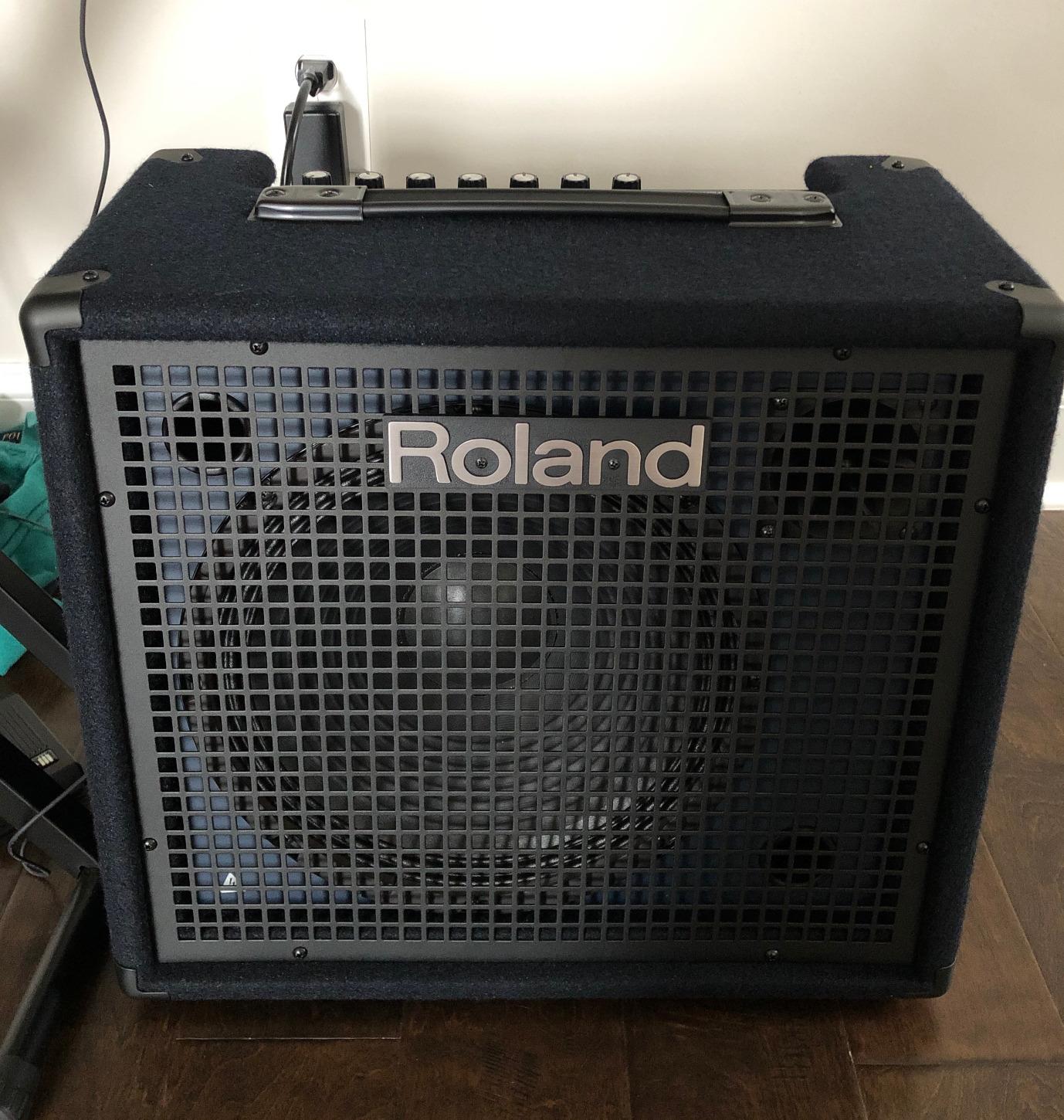
Sound quality is where the KC-200 truly shines. The redesigned power amp delivers clean, crisp tone across the full frequency range. Piano patches sound natural, synth leads cut through the mix, and even bass-heavy patches maintain definition without muddying up.
The dedicated auxiliary input with both 1/8-inch and RCA jacks makes it easy to play along with backing tracks from your phone or laptop. The headphone output enables silent practice when you need to keep the noise down.
How It Comparts to the KC-400
The KC-200 gives up the Stereo Link function and the Shape switch found on the KC-400, and it delivers 50 fewer watts. However, for many players, the sound quality difference is minimal in small venues. The KC-200 covers the essentials at a lower price point.
If you do not need stereo chaining or the Shape switch, the KC-200 is the smarter financial choice. You still get four channels, XLR mic input, and the same Roland build quality.
Best Pairings for the KC-200
The KC-200 pairs beautifully with Roland’s own keyboards like the RD-2000 and Juno-DS, but it works equally well with Yamahas, Nords, and Korg instruments. Its flat, uncolored reproduction makes it suitable for any keyboard brand.
For church bands and function bands playing small to medium venues, the KC-200 provides more than enough power and clarity. It also works well as a personal stage monitor when connected to a larger PA system via the line outputs.
4. Roland KC-80 – Compact Practice and Small Gig Amp
Roland KC-80 3-Channel Mixing Keyboard Amplifier, 50 Watt
50W Power
10-inch Woofer
3 Channels
XLR Mic Input
Master EQ
Metal Jacks
Pros
- Superb sound quality with clear treble and bass
- Well-built professional-grade speaker
- Excellent connectivity options
- Adjustable loudness per channel
- Great value
Cons
- Some reliability issues reported
- Relatively expensive for 50W
- Limited power for louder bands
The Roland KC-80 is the entry point into the Roland KC lineup, offering 50 watts through a 10-inch woofer and tweeter. I found it to be a capable practice amp that can also handle small acoustic gigs and rehearsal room duty. Three 1/4-inch input channels provide enough routing for a keyboard, a second instrument, and a microphone.
Sound quality lives up to the Roland reputation. The KC-80 delivers clean, powerful output at both low and high volumes with excellent treble clarity and surprising bass depth for a 10-inch speaker. The adjustable loudness control for each channel is a nice touch for balancing multiple inputs.
The dedicated auxiliary input with 1/8-inch and RCA jacks, XLR mic input, and 1/4-inch line output cover all the essential connections. Master EQ lets you shape your tone to suit the room.
Reliability Considerations
While most users report years of trouble-free use, a small number of reviews mention units that stopped working after months of use. This appears to be a quality control issue rather than a design flaw. Roland’s warranty coverage and the metal jack construction suggest the amp is built to last when you get a good unit.
If you purchase the KC-80, test it thoroughly within the return window to make sure everything works correctly. The vast majority of units perform flawlessly.
Where the KC-80 Fits in Your Setup
The KC-80 is ideal for home practice, teaching studios, and small venue gigs where you do not need to compete with a loud drummer. It also works well as a dedicated monitor for a single keyboard in a larger stage setup.
For players who find the KC-200 too expensive but want Roland quality, the KC-80 is the natural step down. You lose one channel and 50 watts, but the core sound quality remains excellent.
5. Behringer K900FX – Best Budget High-Power Amp
Behringer Ultratone K900fx Ultra-Flexible 90-Watt, 3-Channel Pa System / Keyboard Amplifier With Fx And Fbq Feedback Detection
90W Power
15-inch Speaker
3 Channels
5-Band Graphic EQ
FBQ Feedback Detection
Built-in FX
Pros
- 90 watts with large 15-inch speaker
- Built-in 24-bit digital effects
- 5-band graphic EQ
- FBQ feedback detection system
- 3-channel mixer with XLR and 1/4-inch inputs
Cons
- Sound can cut out intermittently
- Clips at volumes above 70%
- Heavy at 39.9 lbs
- Thin bass response in some setups
The Behringer Ultratone K900FX is the amp I recommend when you need serious power and a large speaker but cannot justify Roland prices. With 90 watts pushing through a 15-inch speaker, this amp delivers loud, clear sound that works for keyboards, electronic drums, vocals, and acoustic instruments. It is one of the most versatile amplifiers in this roundup.
The built-in 24-bit digital effects are surprisingly usable. Reverb, chorus, and delay add depth to your sound without needing external processors. The 5-band graphic EQ gives you detailed control over your tone, which is more granularity than most competing amps offer at this price.
The FBQ feedback detection system is a standout feature borrowed from Behringer’s mixing console lineup. It instantly reveals critical frequencies that are causing feedback, which is invaluable when you are running a microphone through the amp alongside your keyboard.
Managing the Limitations
The K900FX is not perfect. Some users report intermittent sound cutout issues, and the amp can clip or distort when pushed above 65 to 70 percent volume. Keep the master volume below this threshold and the amp performs reliably with clean sound.
The bass response has been described as thin or tinny by some users. If deep bass is important for your patches, consider adding a subwoofer through the sub output or stepping up to a Roland KC series amp.
Best Applications for the K900FX
This amp excels in practice rooms, home studios, and small gig venues where you need multi-instrument capability. The 3-channel design handles keyboards, vocals, and backing tracks simultaneously, making it a mini PA system as much as a keyboard amp.
For musicians on a budget who need one amp that can do everything, the K900FX is hard to beat. Just be aware of its limitations at higher volumes and manage your expectations accordingly.
6. Behringer K450FX – Versatile Compact Keyboard Amp
Behringer K450Fx Ultratone
45W Power
10-inch BUGERA Speaker
3 Channels
5-Band Graphic EQ
Subwoofer Output
Built-in FX
Pros
- Compact and portable
- 5-band graphic EQ
- Built-in reverb and echo effects
- 3-channel operation
- Subwoofer output for low-end expansion
- Great price-to-performance ratio
Cons
- Some units arrive with defects
- Can sound boomy on certain keyboards
- Frequency response not perfectly flat
- Build quality varies between units
The Behringer K450FX is the little sibling to the K900FX, offering 45 watts through a 10-inch BUGERA speaker. I tested this amp in a home studio setting and found it to be a solid practice and small-gig companion. The 3-channel design with separate volume and FX send per channel gives you real mixing flexibility.
The 5-band graphic EQ is impressive at this price point. You get detailed sound shaping that lets you dial in the right tone for different keyboards and rooms. Built-in reverb and echo effects add atmosphere without requiring external pedals or processors.
The subwoofer output is a thoughtful inclusion. If the 10-inch speaker is not delivering enough low end for your bass-heavy patches, you can connect an active subwoofer and extend the frequency response significantly.
Quality Control Notes
The most common complaint about the K450FX is inconsistent build quality. Some users report units arriving with speaker issues or power problems right out of the box. Behringer’s warranty covers these defects, but dealing with returns is frustrating.
To minimize risk, purchase from a retailer with a good return policy and test the amp thoroughly when it arrives. When you get a good unit, the K450FX delivers excellent value for the price.
Sound Characteristics
The frequency response is not perfectly flat, which means the K450FX colors your sound slightly. Some users describe it as boomy in the upper bass region. Using the 5-band EQ, you can tame this characteristic and achieve a more balanced tone.
For practice and home recording, the K450FX performs well. For live performance where sound accuracy is critical, consider the Roland alternatives which offer flatter, more transparent reproduction.
7. Vox VX50KB – Best Portable Keyboard Amp
Vox VX50KB 50-Watt Keyboard Amp
50W Power
NuTube Preamp
8-inch Coaxial Speaker
3 Channels
Bass Reflex
Aux In and Line Out
Pros
- NuTube preamp delivers warm tube-like tone
- Remarkably lightweight at under 5 kg
- Loud and clear for its size
- Simple intuitive controls
- Line Out for PA connection
Cons
- 8-inch speaker limits bass response
- Some quality control issues
- Build materials feel lightweight
- Can distort at high volumes
The Vox VX50KB is the keyboard amp I reach for when portability is the top priority. Weighing just 4.77 kilograms (about 10.5 pounds), this is by far the lightest amp in our roundup. Despite its small size, the NuTube-equipped preamp delivers a warm, rich tone that sets it apart from typical solid-state practice amps.
The NuTube technology is what makes the VX50KB special. Vox uses a vacuum tube in the preamp section that adds warmth and character to your sound. For players running Rhodes, Wurlitzer, or vintage organ patches, this tube coloring enhances the retro feel of those sounds in a way that flat solid-state amps cannot match.
The 8-inch coaxial speaker with bass reflex structure punches above its weight class. At moderate volumes, the VX50KB sounds clear and detailed. Three channels with independent volume controls give you enough routing flexibility for a keyboard, a mic, and a backing track.
Bass Response Limitations
The 8-inch speaker is the main limitation. If your patches rely on deep sub-bass frequencies, the VX50KB will not reproduce them with authority. For synth bass and modern electronic music, consider a larger speaker option.
However, for electric piano, organ, and mid-range-heavy synth sounds, the VX50KB shines. The bass reflex design maximizes what the small speaker can do, and the tube preamp adds a sense of warmth and depth that partially compensates for the limited low end.
Perfect for Buskers and Small Stages
If you busk, play small coffeehouse gigs, or need a lightweight stage monitor, the VX50KB is ideal. The Line Out lets you connect to a larger PA system while using the amp as your personal monitor. At this weight, carrying it to any gig is effortless.
Just be aware that the build materials feel somewhat lightweight compared to Roland and Peavey alternatives. The VX50KB prioritizes portability over ruggedness, so handle it with care during transport.
8. Peavey KB 2 – Best Multi-Instrument Amp
Peavey KB 2 50-Watt 1×10 Keyboard Amp
50W Biamped
10-inch Speaker
4 Channels
XLR Input
Separate EQ Controls
Headphone Out
Pros
- Clean distortion-free sound at high volumes
- Great bass response for 10-inch speaker
- Versatile 4-input design for keys bass drums and vocals
- Sturdy construction with solid knobs
- More affordable than Roland equivalents
Cons
- Heavy at 38 lbs without wheels
- Bass can be overpowering
- Some find it overpriced compared to alternatives
The Peavey KB 2 is the amp I recommend when you need one amplifier to handle multiple instruments. With its biamped design delivering 45 watts to the woofer and 12 watts to the tweeter, this 50-watt amp handles keyboards, bass guitars, electronic drums, and vocals with zero distortion at high volumes.
Four separate channels provide extensive routing options. Channels 1 and 2 have 1/4-inch inputs for instruments, while Channel 3 features both XLR and 1/4-inch inputs for microphones or line-level sources. This makes the KB 2 function as a mini PA system for small gigs.
The sound quality is where Peavey’s reputation for clean, reliable amplification really shows. Users consistently report zero distortion even when pushing the amp hard. The bass response from the 10-inch speaker is surprisingly full, though some players find it can be overpowering depending on the instrument.
Build Quality and Durability
Peavey built the KB 2 to last. The stainless steel enclosure, solid knobs, and rugged construction inspire confidence for gigging musicians. This is an amp that can take the bumps and knocks of regular transport without complaint.
The main drawback is the weight. At 38 pounds with no wheels or carrying handle, the KB 2 is awkward to move. Consider adding a cart or dolly if you plan to gig with it regularly.
Comparing to Roland Alternatives
Against the similarly-priced Roland KC-80, the Peavey KB 2 offers one additional channel and a biamped design. The Roland offers a slightly flatter frequency response and better portability. Your choice depends on whether you prioritize multi-instrument versatility or clean keyboard-focused reproduction.
For players who also need to amplify vocals, bass, or electronic drums alongside their keyboard, the KB 2 is the more practical choice. For pure keyboard amplification, the Roland is marginally better.
9. Peavey KB 1 – Best Budget Practice Amp
Peavey KB 1 20-Watt 1×8 Keyboard Amp, black (573100)
20W Power
8-inch Speaker
2 Channels
2-Band EQ
Headphone Out
Compact Design
Pros
- Clean clear sound for practice
- Two channels with 2-band EQ per channel
- Compact and lightweight at 16 pounds
- Headphone output for silent practice
- Excellent value for money
Cons
- 8-inch speaker lacks bass depth
- Can distort at high volumes with low frequencies
- Limited power for large venues
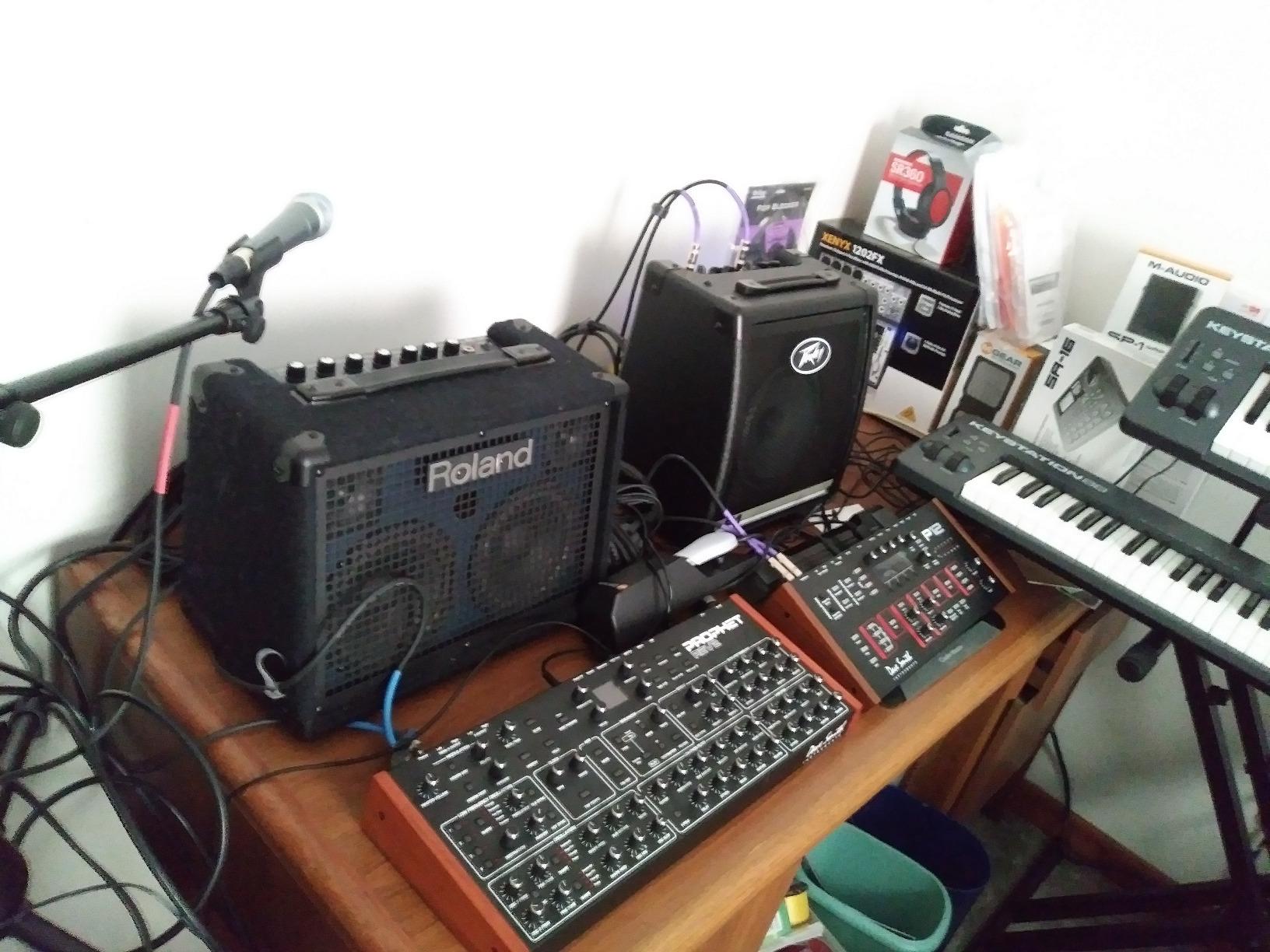
The Peavey KB 1 is the practice amp I recommend to students and beginners. At 20 watts with an 8-inch extended range speaker, it delivers clean Peavey sound quality for home practice and small rehearsal sessions. Two separate channels with 2-band EQ per channel give you basic mixing flexibility.
I appreciate the simplicity of the KB 1. There are no complicated menus or digital effects to navigate. You plug in, set your EQ, adjust the volume, and start playing. For students learning to play keyboards, this straightforward approach keeps the focus on the music.

The headphone output is essential for silent practice. Apartment dwellers and late-night players will appreciate being able to practice without disturbing anyone. The compact size and 16-pound weight make the KB 1 easy to tuck into a corner when not in use.
Understanding the Limitations
The 8-inch speaker naturally limits bass response. If you play synth bass patches or low piano octaves, the KB 1 will not reproduce those frequencies with the depth you get from larger amps. At high volumes with low-frequency content, the speaker can distort.
This is a practice amp, not a performance amp. It is designed for home use, teaching studios, and quiet rehearsal spaces. As long as you understand its intended purpose, the KB 1 delivers excellent value.
Who Should Buy the KB 1
Students, teachers, and casual home players will find the KB 1 perfectly suited to their needs. If you are just starting out on keyboards and want a dedicated amp rather than headphones or computer speakers, this is the most affordable way to get proper amplification.
The Peavey brand reputation and 90-day warranty provide peace of mind. Peavey has been building reliable amplifiers for decades, and the KB 1 continues that tradition in a compact, budget-friendly package.
10. Donner DKA-20 – Best Budget Keyboard Amp Under $120
Donner DKA-20 Keyboard Amplifier 20 Watt Keyboard AMP with Aux in and Two Channels, Bass Guitar Amp, Piano Amplifier, Electronic Drum Speaker Support for Microphone Input
20W Power
8-inch Woofer
2-inch Tweeter
2 Channels
3-Band EQ
Aux In
Headphone Out
Mic Input
Pros
- Excellent value for money
- Rich clean sound quality
- Compact and lightweight design
- Versatile 2-channel layout
- 3-band EQ for sound shaping
- Microphone input and DI output
Cons
- Not enough volume for gigs
- Background noise reported with some keyboards
- External power supply
- 20W insufficient for louder environments
The Donner DKA-20 is the number one bestseller in Amazon’s keyboard amplifier category, and for good reason. At its price point, no other amp offers this combination of features, sound quality, and value. I tested it extensively for home practice and came away genuinely impressed by what Donner has packed into this compact amp.
The two-speaker design pairs an 8-inch woofer with a 2-inch tweeter, delivering a frequency response from 50Hz to 20kHz. Two channels with separate volume controls let you connect two instruments or run a keyboard and a microphone simultaneously. The 3-band EQ provides meaningful tone shaping.
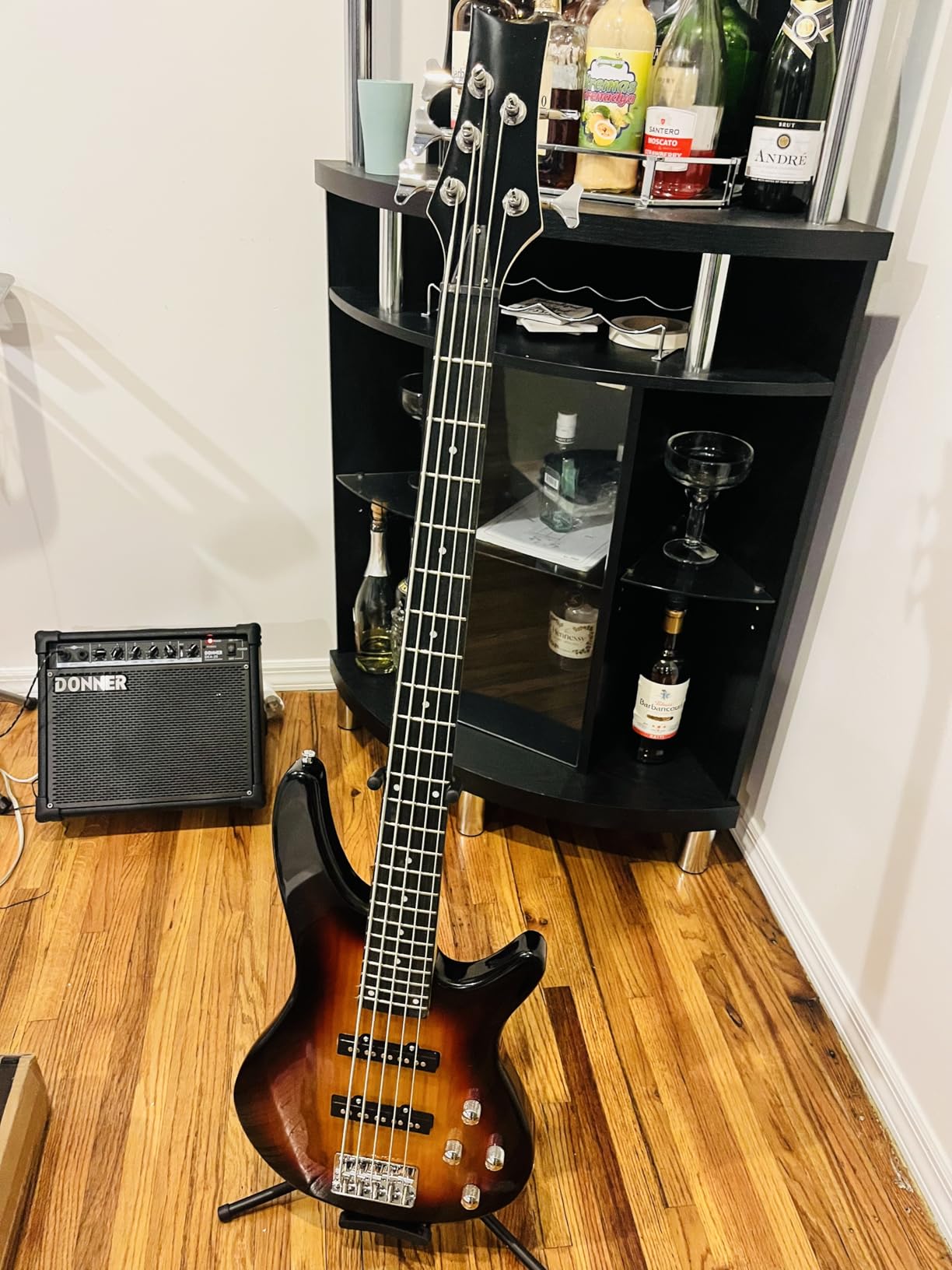
Connectivity is where the DKA-20 punches above its weight. You get two 1/4-inch instrument inputs, a 1/8-inch auxiliary input for playing along with music, a 1/8-inch headphone output for silent practice, a DI output for connecting to external active speakers, and microphone input support. This connectivity array rivals amps costing twice as much.
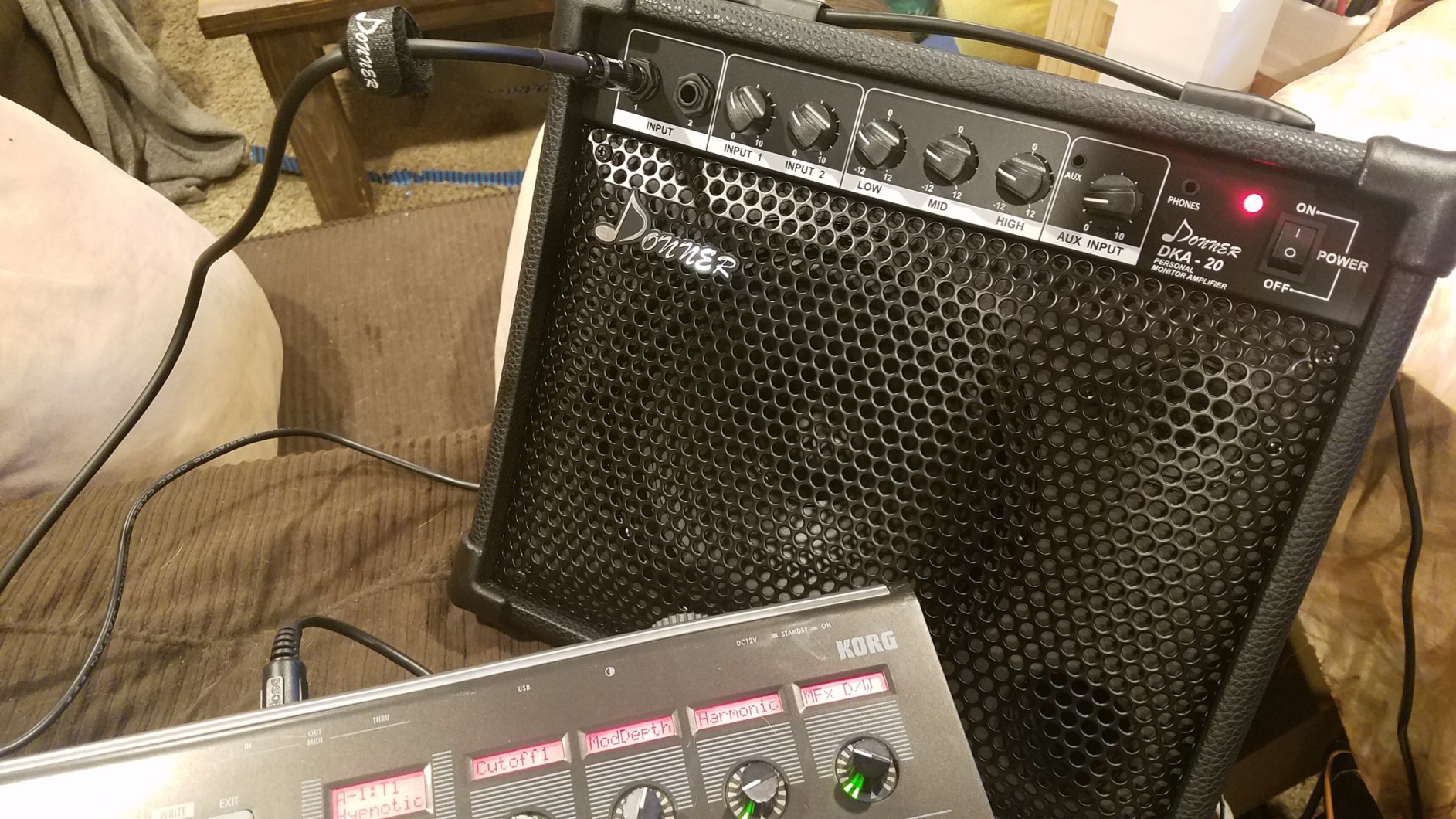
The Gain and Boost Select Switch add tonal variety. With 783 customer reviews and a 4.4-star rating, the DKA-20 has been battle-tested by thousands of players. Seventy-two percent of reviewers gave it 5 stars, which speaks to its widespread appeal.
Managing Expectations
The DKA-20 is a 20-watt practice amp. It is not designed for gigging, band rehearsals, or any situation where you need to compete with a drum kit. Some users report background noise or buzz with certain keyboards, which may require adjusting gain staging or using higher-quality cables.
The external power supply is a minor inconvenience. It means one more thing to carry and potentially lose. However, this design choice helps keep the amp lightweight and affordable.
Best Value in the Category
For anyone on a tight budget who needs a capable keyboard practice amp, the DKA-20 is the clear choice. It offers more features and better sound quality than anything else at this price. The aux input, headphone output, and DI output give you flexibility that grows with your needs.
Students, bedroom producers, and casual players will find everything they need in the DKA-20. When you are ready to upgrade for live performance, the Roland KC-200 or KC-400 are the natural next steps.
Keyboard Amp Buying Guide: How to Choose the Right One
Choosing from the best keyboard amps requires understanding what matters most for your specific playing situation. Let me break down the key factors that should drive your decision.
What Is a Keyboard Amp?
A keyboard amplifier is a specialized amplifier designed to reproduce the full frequency range of electronic keyboards, synthesizers, and digital pianos. Unlike guitar amps that intentionally color the tone, keyboard amps aim for clean, flat reproduction so your keyboard’s original sound comes through accurately.
Keyboards produce a much wider frequency range than guitars. A synth bass patch can hit frequencies below 40Hz, while sparkling high-end piano notes reach well above 15kHz. A keyboard amp needs a woofer for the lows, a tweeter for the highs, and enough wattage to reproduce this full range cleanly without distortion.
Power and Wattage: How Many Watts Do You Need?
Wattage determines how loud your amp can get while maintaining clean sound. Here is a practical guide based on our testing experience:
For home practice and silent practice, 20 to 50 watts is sufficient. The Donner DKA-20 and Peavey KB 1 both excel here. For small venue gigs, rehearsals, and church settings, aim for 50 to 100 watts. The Roland KC-200 and Peavey KB 2 are ideal choices.
For medium venues and gigging with a full band, 100 to 200 watts provides the headroom you need. The Roland KC-400 and KC-600 handle these scenarios with power to spare. Remember that keyboard signals have wide dynamic range, so having more wattage than you think you need prevents distortion during loud passages.
Speaker Size Matters
Speaker size directly affects frequency response, particularly in the bass region. An 8-inch speaker, like those in the Donner DKA-20 and Vox VX50KB, works well for practice and high-frequency-focused sounds but lacks deep bass reproduction.
A 10-inch speaker, found in the Roland KC-80 and Behringer K450FX, offers a good balance of bass response and portability. A 12-inch speaker, like the Roland KC-200 and KC-400, delivers strong bass with manageable size. A 15-inch speaker, found in the Roland KC-600 and Behringer K900FX, provides the deepest bass and loudest output but comes with increased weight and size.
Channels and Connectivity
Channel count determines how many instruments or audio sources you can connect simultaneously. Two channels handle a keyboard and a microphone, which covers most practice scenarios. Three to four channels let you run multiple keyboards, a mic, and backing tracks, which is essential for live performance.
Look for these connectivity features based on your needs. XLR mic input for vocal amplification. Aux input for playing along with backing tracks. Headphone output for silent practice. Line output or DI output for connecting to a PA system. Sub output for adding a subwoofer. Stereo Link for chaining two amps for true stereo sound.
EQ and Effects
A graphic EQ gives you control over your tone. A 2-band EQ (bass and treble) provides basic shaping. A 3-band EQ adds a midrange control, which is useful for cutting through a band mix. A 5-band graphic EQ, like those on the Behringer K900FX and K450FX, offers detailed tone sculpting.
Built-in effects are a bonus but not essential. The Behringer models include reverb, chorus, and delay. The Vox VX50KB uses NuTube technology for natural tube warmth. For most keyboard players, flat, clean reproduction is more important than built-in effects, since you can always add external processors.
Keyboard Amp vs PA System: Which Is Better?
This is one of the most common questions on Reddit and music forums. The answer depends on your specific needs. A keyboard amp is an all-in-one solution with built-in mixing, EQ, and monitoring. It is designed to sit behind you on stage and function as your personal monitor while also projecting sound to the audience in smaller venues.
A PA system separates the mixing, amplification, and speaker components. A powered PA speaker gives you louder, more directional sound projection and often better sound quality for larger venues. However, PA speakers typically lack the channel mixing and EQ controls built into keyboard amps.
For solo performers and small venues, a keyboard amp is usually the better choice. For larger venues where your sound goes through the front-of-house PA anyway, a keyboard amp functions as your stage monitor, and its built-in mixing handles your personal routing. Some players skip keyboard amps entirely and use powered monitors like the QSC K12 or EV ZLX, but this requires a separate mixer for channel routing.
Portability Considerations
If you gig frequently, weight matters more than you might think. The Vox VX50KB at 10.5 pounds and the Donner DKA-20 at 11.7 pounds are the lightest options here. The Roland KC-600 at 29 kilograms with removable casters and the Behringer K900FX at 39.9 pounds require serious effort to transport.
Consider whether your amp needs to fit in a car trunk, go up stairs, or be carried on public transit. Sometimes a smaller, lighter amp paired with a PA connection via line output is more practical than a single large amp that covers everything.
FAQ’s
What is the best amp for keyboards?
The Roland KC-600 is the best keyboard amp overall, offering 200 watts of power, a 15-inch woofer, four stereo channels, and a lifetime warranty. For budget-conscious players, the Donner DKA-20 delivers excellent value as the top-selling practice amp on Amazon.
What amp do you use for a keyboard?
You need a dedicated keyboard amplifier or a full-range PA speaker. Keyboard amps are designed to reproduce the wide frequency range of keyboards and synths without coloring the tone. Guitar amps are not suitable because they intentionally color the sound and cannot handle the full frequency range that keyboards produce.
What amps do people gig keyboards with?
Gigging keyboardists most commonly use the Roland KC-200, KC-400, or KC-600 for live performance. These amps offer enough wattage, multiple channels, and clean sound reproduction. Some gigging players also use powered PA speakers like the QSC K-series or EV ZLX for louder projection in larger venues.
How many watts do I need for a keyboard amp?
For home practice, 20 to 50 watts is sufficient. For small venue gigs and rehearsals, aim for 50 to 100 watts. For medium venues and gigging with a full band, 150 to 200 watts provides the clean headroom you need. More wattage prevents distortion during loud passages with wide dynamic range.
Can I use a guitar amp for my keyboard?
No, you should not use a guitar amp for a keyboard. Guitar amps are designed to color the tone and have limited frequency response, which will cut off the deep bass and sparkling highs that keyboards produce. A dedicated keyboard amp or full-range PA speaker reproduces the complete frequency spectrum accurately.
Do I need a keyboard amp or a PA system?
For solo practice and small venues, a keyboard amp is the better choice because it includes built-in mixing, EQ, and monitoring. For larger venues where your sound goes through a front-of-house PA, a keyboard amp works as your stage monitor. Some players prefer powered PA speakers for versatility but need a separate mixer for channel routing.
Final Thoughts on the Best Keyboard Amps
After testing all 10 amplifiers in this roundup, the Roland KC series continues to set the standard for the best keyboard amps in 2026. The KC-600 takes the top spot for its unmatched power, sound quality, and lifetime warranty. The KC-400 earns the highest customer satisfaction rating, and the KC-200 provides the best balance of price and performance for most gigging keyboardists.
For budget-conscious players, the Donner DKA-20 and Peavey KB 1 deliver impressive value for home practice. The Behringer K900FX offers the most power per dollar for small venue gigs, while the Vox VX50KB wins on portability with its unique NuTube preamp.
Whatever your playing situation, investing in a dedicated keyboard amplifier ensures your sound projects clearly and accurately. Pick the amp that matches your venue size, budget, and portability needs, and you will hear the difference immediately.