
Finding the right drum machine can change the way you make music entirely. I have spent the past few months testing drum machines in my home studio, at live gigs, and even on the couch during late-night beat sessions. After comparing dozens of units, our team narrowed it down to the 8 best drum machines that deliver real value in 2026.
Hardware drum machines offer something software simply cannot replicate: tactile, hands-on control that makes beat making feel immediate and physical. Whether you are a guitarist who needs a backing rhythm track, an electronic music producer building tracks from scratch, or a songwriter looking for quick demo drums, the right drum machine fits naturally into your workflow. The best drum machines in 2026 range from pocket-sized units under $100 to professional production stations that handle your entire creative process.
In this guide, I break down each drum machine I tested, covering sound quality, ease of use, connectivity options, and real-world performance. I made sure to include options for every budget and skill level, from complete beginners picking up their first beat box to seasoned producers building out a DAWless setup. Every product on this list has been tested hands-on, and I am sharing exactly what impressed me and what fell short.
Table of Contents
Top 3 Picks for Best Drum Machines

Roland TR-6S Rhythm Performer
- Authentic TR-808/909 Sounds
- ACB Technology
- FM Sound Engine
- Battery Powered

Roland AIRA Compact T-8
- TR-808/909/606 Drums
- TB-303 Bass Synth
- Rechargeable Battery
- USB-C Audio

Teenage Engineering PO-12 Rhythm
- 16 Synthesized Sounds
- 16 Punch-in Effects
- Battery Powered
- Ultra-Portable
Best Drum Machines in 2026
| Product | Specifications | Action |
|---|---|---|
| Teenage Engineering PO-12 |
|
Check Latest Price |
 Korg Volca Beats Korg Volca Beats |
|
Check Latest Price |
 Alesis SR-16 Alesis SR-16 |
|
Check Latest Price |
| Roland AIRA T-8 |
|
Check Latest Price |
 Arturia DrumBrute Impact Arturia DrumBrute Impact |
|
Check Latest Price |
| Roland TR-6S |
|
Check Latest Price |
 Roland SP-404MKII Roland SP-404MKII |
|
Check Latest Price |
 Akai MPC Live III Akai MPC Live III |
|
Check Latest Price |
1. Teenage Engineering PO-12 Rhythm – Best Budget Drum Machine
teenage engineering pocket operator PO-12 rhythm, drum machine and sequencer with parameter locks and punch-in effects
16 Synthesized Sounds
16 Punch-in Effects
Battery Powered (2xAAA)
Ultra-Portable at 50g
Pros
- Incredible sound quality for the price
- Extremely portable and fun to use
- Quick to learn with online tutorials
- Syncs with Korg Volca and other POs
Cons
- No MIDI connectivity
- Exposed circuit board with no case
- Tiny screen with limited info
I picked up the Teenage Engineering PO-12 expecting a toy and walked away genuinely impressed. This little board measures just 7 x 3.5 inches and weighs under 2 ounces, yet it produces synthesized and sampled drum sounds that punch far above its weight class. The 16 onboard sounds cover all the essentials: kicks, snares, hi-hats, claps, and a handful of quirky percussion tones that feel distinctly Teenage Engineering.
Programming beats on the PO-12 is straightforward once you get the hang of it. The 16-step sequencer lets you tap in patterns quickly, and the 16 punch-in effects add character on the fly. I found myself chaining patterns together within minutes of watching a quick YouTube tutorial. The parameter lock feature, which lets you tweak sound parameters per step, is a remarkable inclusion at this price point. You can create evolving, dynamic beats that sound like they came from a much more expensive unit.
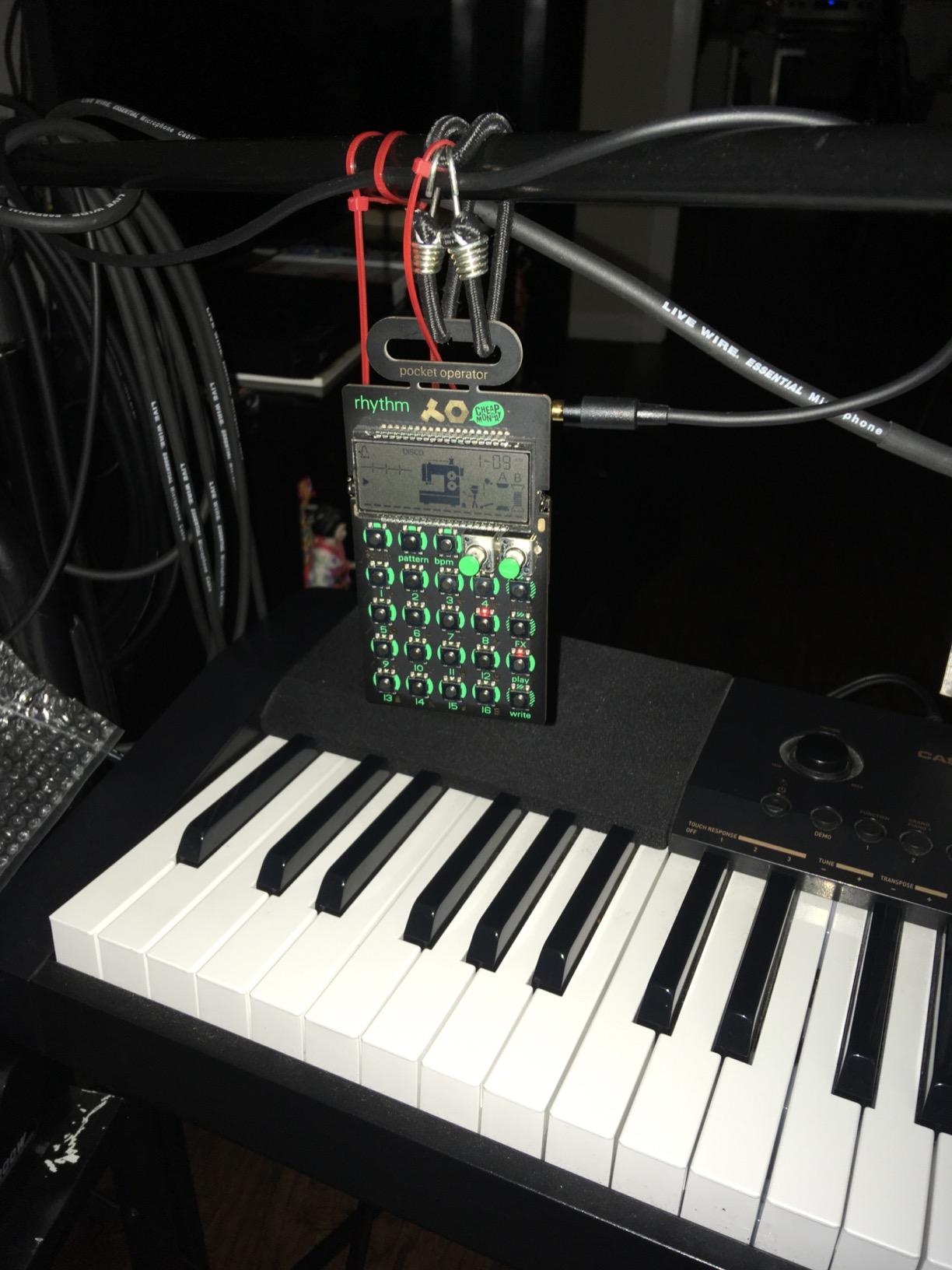
Where the PO-12 really shines is portability. Running on two AAA batteries that last about a month with regular use, I took this thing everywhere: coffee shops, parks, even my commute. The built-in speaker is functional for sketching ideas, though it distorts at higher volumes. Plugging into the 3.5mm line out reveals the true sound quality, which is surprisingly full and detailed. Syncing with other Pocket Operators or Korg Volca units via the 3.5mm sync cable opens up creative possibilities that make this feel like part of a larger ecosystem.
Who should buy the Teenage Engineering PO-12
This is the ideal first drum machine for anyone curious about beat making. If you are a beginner who wants to learn drum programming without committing serious money, the PO-12 teaches fundamentals that translate directly to professional gear. It is also a fantastic creative sketchpad for experienced producers who want a portable idea-capture tool that fits in a pocket.
Who should skip the PO-12
If you need MIDI integration, individual outputs, or a robust build quality for live performance, the PO-12 will frustrate you. The exposed circuit board design means it needs careful handling, and the lack of MIDI makes it impossible to sync with most studio setups without workarounds. Producers who need deep sound design tools should look at higher-priced options.
2. Korg Volca Beats – Best Analog Drum Machine Under $200
Korg Volca Beats Analog Rythem Machine w/Electribe-style 16-step Sequencer and Real Analog Sounds
Real Analog Sounds
16-Step Sequencer
MIDI In and SYNC
Battery Powered (6x AA)
Pros
- Amazing analog kick drum sound
- Excellent value for money
- Syncs with other Volca units
- Easy to use for beginners
Cons
- Snare needs modification to sound good
- No swing or accent feature
- No pattern chaining
- Tiny knobs
The Korg Volca Beats has earned its legendary status in the synth community, and after spending weeks with one, I understand why. The moment you power it on and hit that first kick drum, you hear something special. The analog kick is deep, punchy, and can rattle the pictures on your wall at higher volumes. It channels the spirit of classic rhythm machines from the 1980s while costing a fraction of what vintage units sell for today.
Sound generation on the Volca Beats is a hybrid approach. The kick, snare, toms, and hi-hats use real analog circuitry, while the clap and crash cymbal use PCM samples. The result is a warm, characterful sound palette that sits beautifully in electronic music mixes. I spent hours just tweaking the kick and toms, finding new tones that ranged from deep sub-bass thuds to tight, clicky accents. The Electribe-style 16-step sequencer makes programming intuitive, and the stutter function creates instant glitch and delay effects that are perfect for fills.
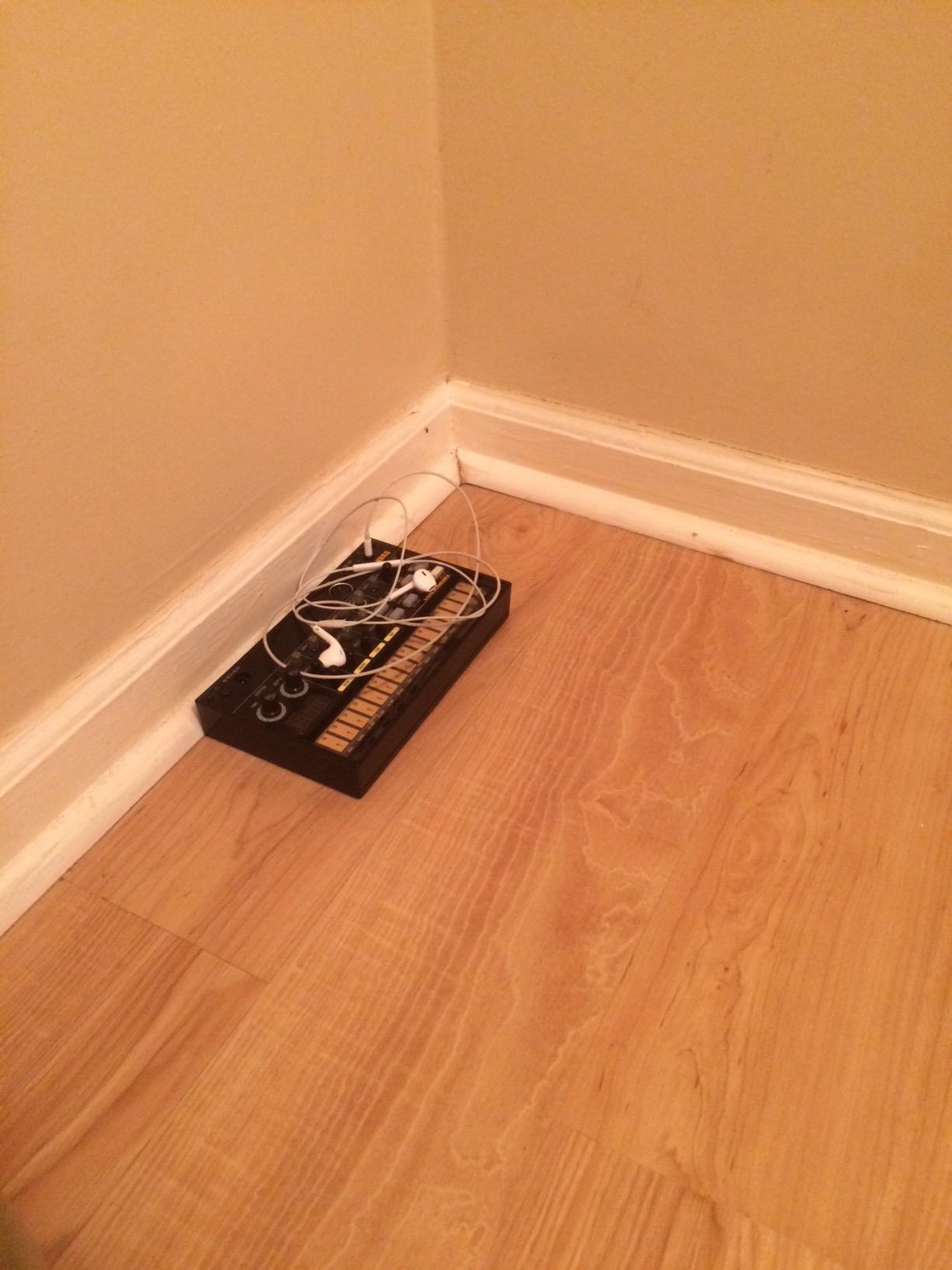
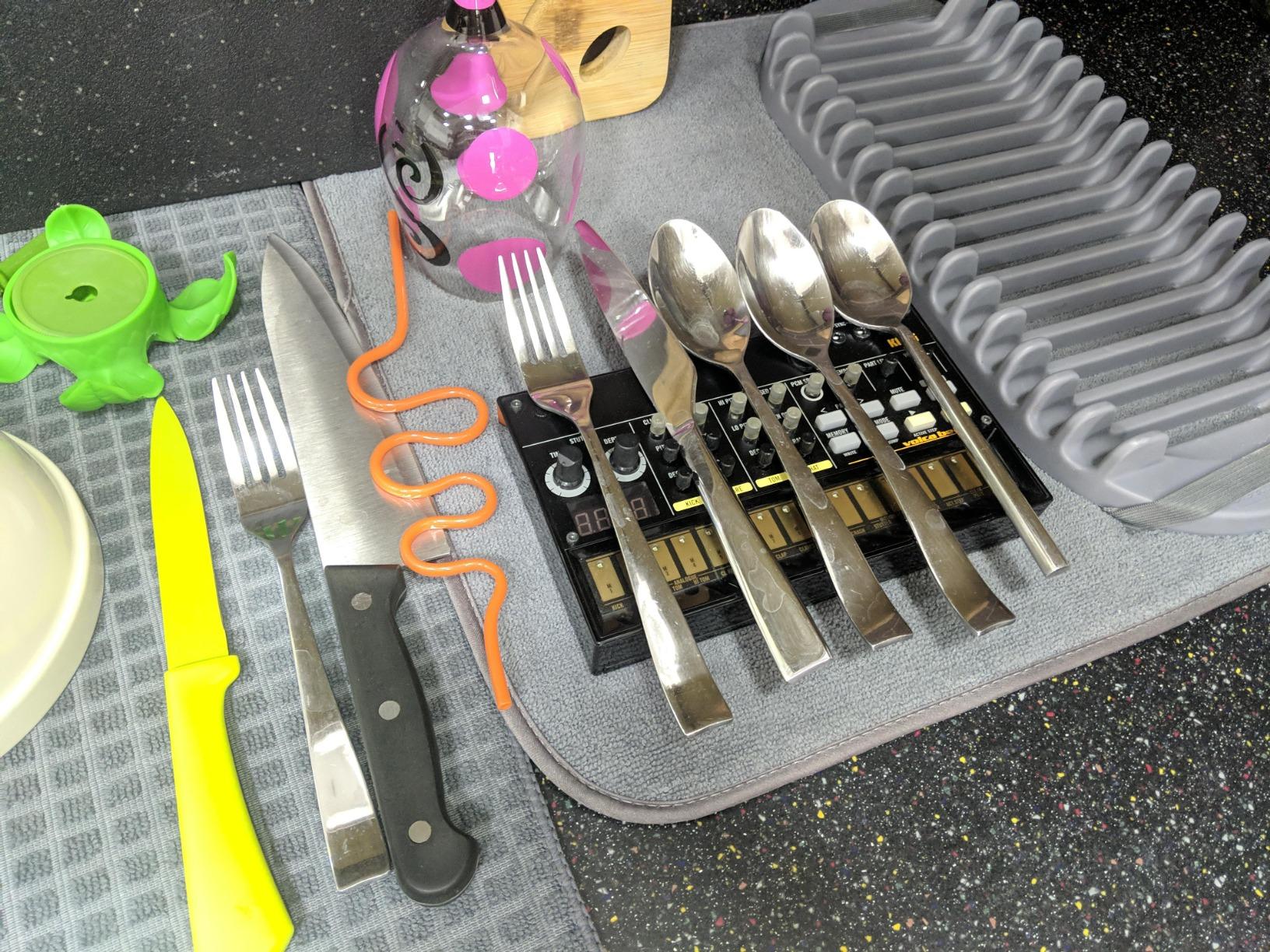
Connectivity is solid for the price. MIDI In lets you control the Volca Beats from your DAW or external keyboard, and the SYNC in/out ports chain perfectly with other Volca units. I ran it alongside a Volca Keys and the sync was rock solid. The built-in speaker is handy for portable jamming, and running on six AA batteries means you can create beats anywhere without hunting for a power outlet.
Who should buy the Korg Volca Beats
The Volca Beats is perfect for anyone wanting their first analog drum machine experience. It delivers that warm, punchy analog character that digital units struggle to replicate, and the straightforward layout means you will be making beats within minutes of unboxing. Electronic music producers, especially those making techno, house, or synth-pop, will find the sound palette immediately inspiring. It is also a great companion unit for anyone already invested in the Volca ecosystem.
Who should skip the Volca Beats
The snare sound out of the box is weak, which is the most common complaint in the community. A popular modification involving soldering a capacitor fixes this, but that requires comfort with a soldering iron. The lack of swing and pattern chaining limits its usefulness for complex compositions. If you need those features, or if you want a drum machine that can hold its own as your primary beat-making tool without compromises, consider stepping up to the Roland TR-6S or Arturia DrumBrute Impact.
3. Alesis SR-16 – Best Drum Machine for Songwriters
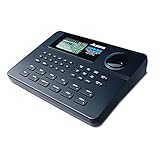
Alesis SR-16 Standalone Drum Machine
233 Professional Sounds
12 Velocity Pads
50 Preset/50 User Kits
MIDI and 4 Stereo Outputs
Pros
- Massive sound library with 233 sounds
- Built-in bass feature for solo practice
- Complete MIDI support
- Excellent for guitarists and songwriters
Cons
- Pads are not very responsive
- No backlit display
- Pattern creation can be time-consuming
- Recording mode is unintuitive
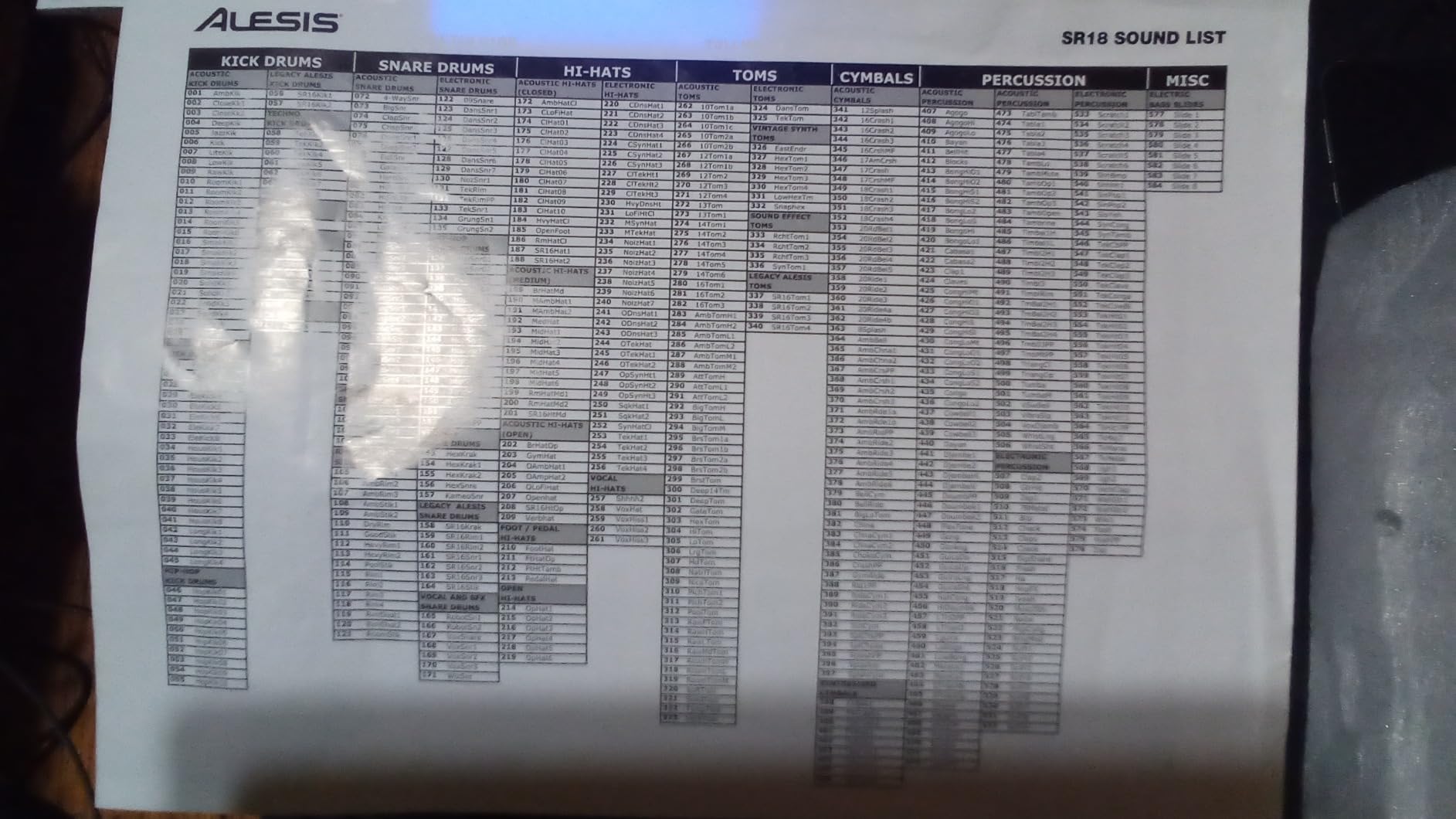
The Alesis SR-16 has been a studio staple for over two decades, and it remains one of the best-selling drum machines of all time for good reason. When I first powered it on, I was struck by how much sonic territory it covers. With 233 built-in sounds spanning rock kits, jazz brushes, electronic percussion, and world music instruments, the SR-16 has something for virtually every genre. Dynamic Articulation technology adds subtle variations to each hit, making programmed beats sound more natural and less mechanical.
What sets the SR-16 apart for songwriters is the built-in bass feature. You can program bass lines alongside your drum patterns, creating complete backing tracks for practice or demo recording. I used this extensively for guitar practice sessions, dialing in a simple drum pattern with a walking bass line and jamming over the top. The 50 preset kits cover common styles, and the 50 user kit slots give you room to build custom kits tailored to your music.
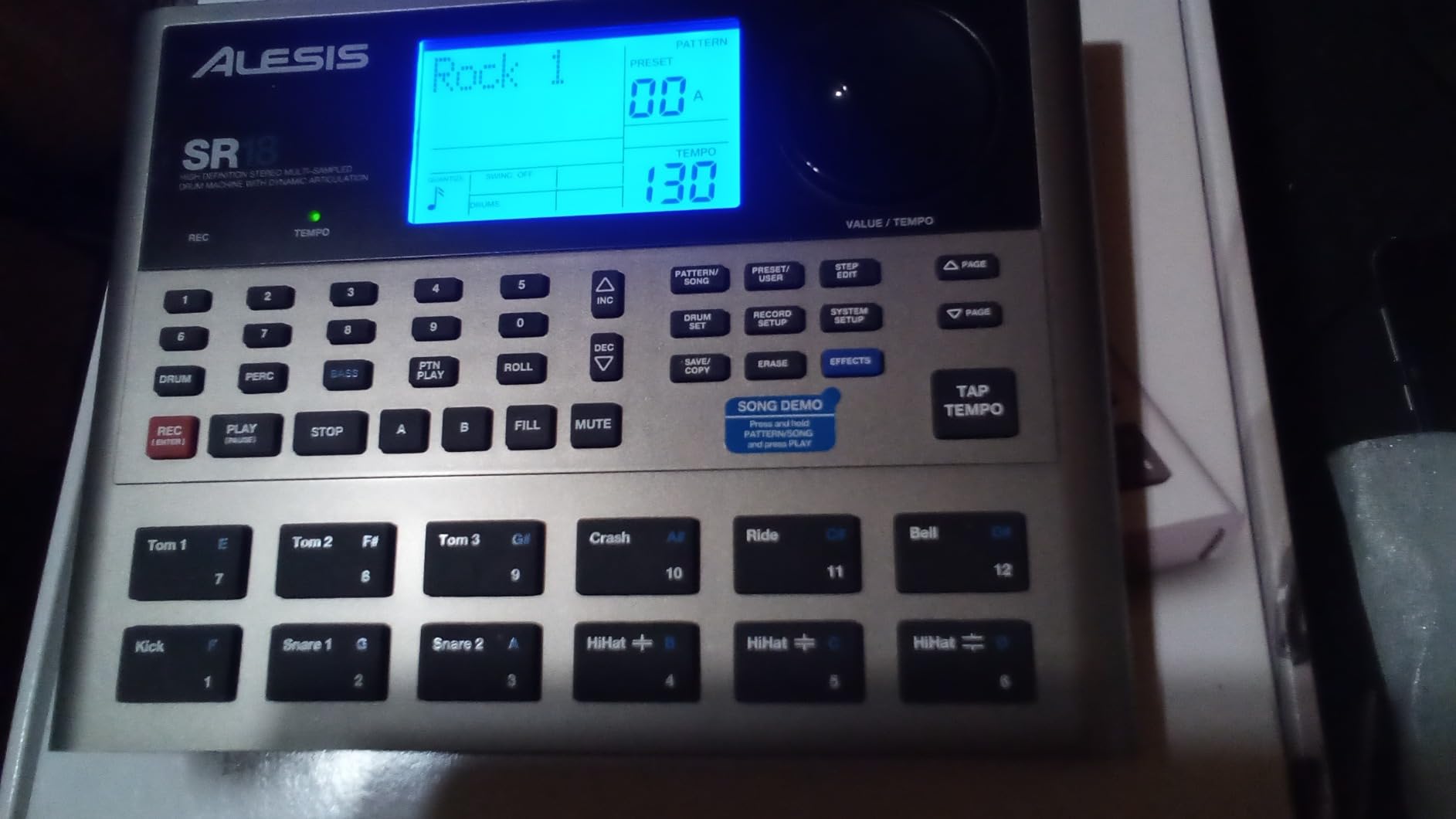
Connectivity is where the SR-16 shows its studio pedigree. Four stereo pair outputs let you route different drum sounds to separate mixer channels, which is invaluable for recording and live sound reinforcement. Full MIDI implementation means it integrates seamlessly with DAWs, keyboards, and other hardware. The two footswitch jacks are a thoughtful addition for live performers who need hands-free control over start, stop, fills, and pattern changes.
Who should buy the Alesis SR-16
Songwriters, guitarists, and solo musicians who need reliable backing tracks will love the SR-16. The massive sound library and built-in bass feature make it a complete accompaniment tool. Home recording enthusiasts will appreciate the multiple outputs and MIDI connectivity for studio integration. If you want a straightforward drum machine that covers all genres without requiring deep technical knowledge, this is it.
Who should skip the Alesis SR-16
Electronic music producers looking for cutting-edge sounds or analog warmth should look elsewhere. The SR-16 excels at realistic and versatile sounds but lacks the raw, characterful tone that analog and ACB-based machines deliver. The velocity-sensitive pads are a selling point on paper, but in practice they feel mushy and unresponsive compared to modern alternatives. If tactile pad performance is important to your workflow, consider the Arturia DrumBrute Impact or Roland SP-404MKII instead.
4. Roland AIRA Compact T-8 – Best Portable Drum and Bass Machine
Roland AIRA Compact T-8 Beat Machine
TR-808/909/606 via ACB
TB-303 Bass Synth
Rechargeable Battery
USB-C Audio and MIDI
Pros
- Genuine Roland 808/909/303 sounds in compact form
- Rechargeable battery with USB-C
- Excellent TB-303 bass synth section
- Built-in effects including delay
- reverb
- and sidechain
Cons
- Limited drum sound selection
- Buttons are small and squishy
- 40-page manual to learn fully
- Not as flexible as full-size TR-8S
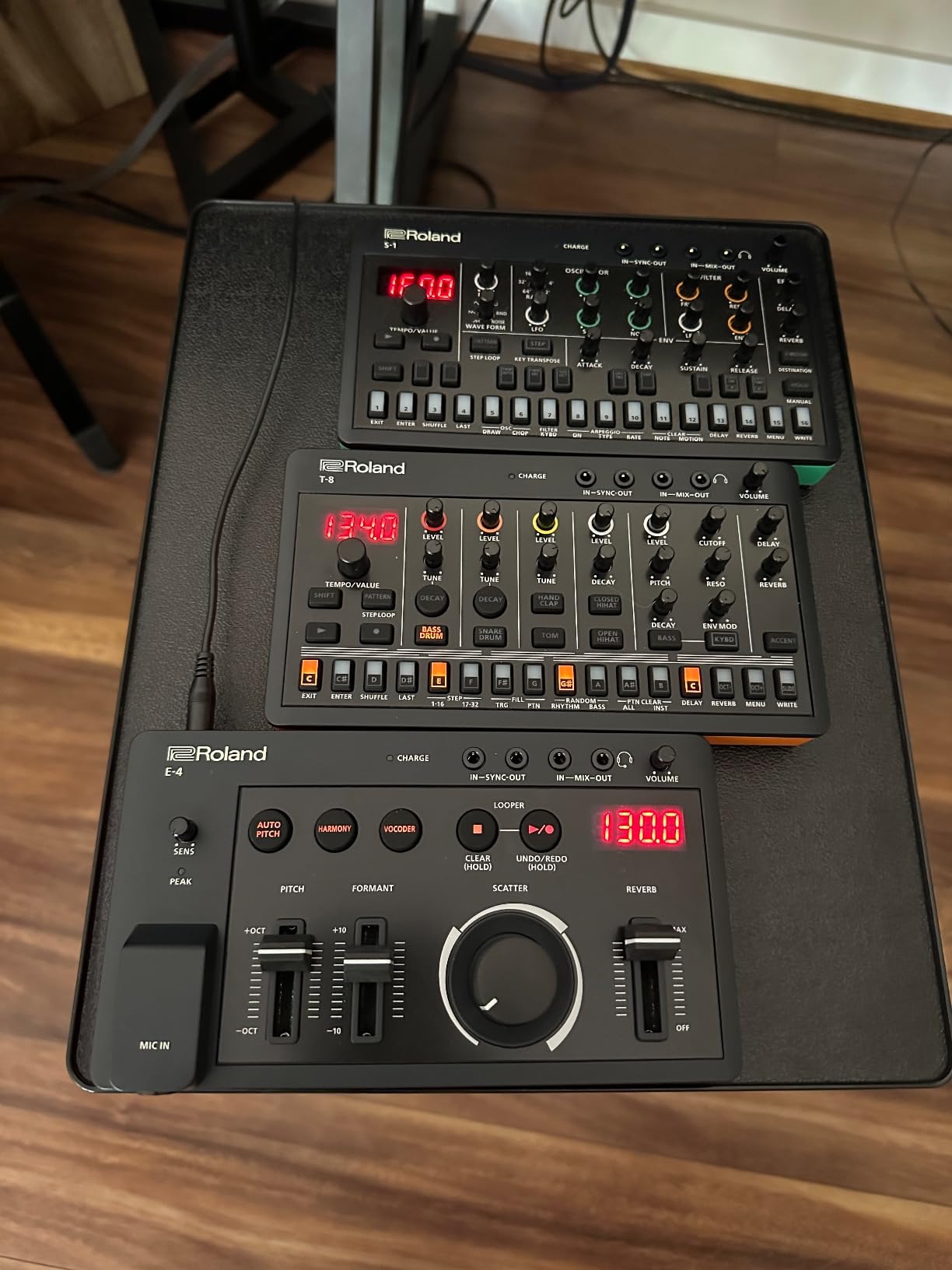
The Roland AIRA Compact T-8 packs an astonishing amount of musical DNA into a package roughly the size of a paperback book. Using Roland’s Analog Circuit Behavior technology, the T-8 recreates the sounds of the legendary TR-808, TR-909, and TR-606 drum machines alongside a surprisingly capable TB-303 bass synthesizer. Getting genuine Roland classics in a battery-powered unit at this price point feels almost too good to be true, but the T-8 delivers on that promise.
I spent a weekend doing nothing but programming patterns on the T-8, and the workflow grew on me quickly. The 16-step TR-REC sequencer works the same way it does on Roland’s professional-grade machines, with support for probability, sub steps, last step adjustment, and velocity programming. Programming the 303 bass line alongside drum patterns feels like having a complete acid house production setup in your hands. The built-in effects, including delay, reverb, overdrive, and sidechain compression, add polish that normally requires external processors.
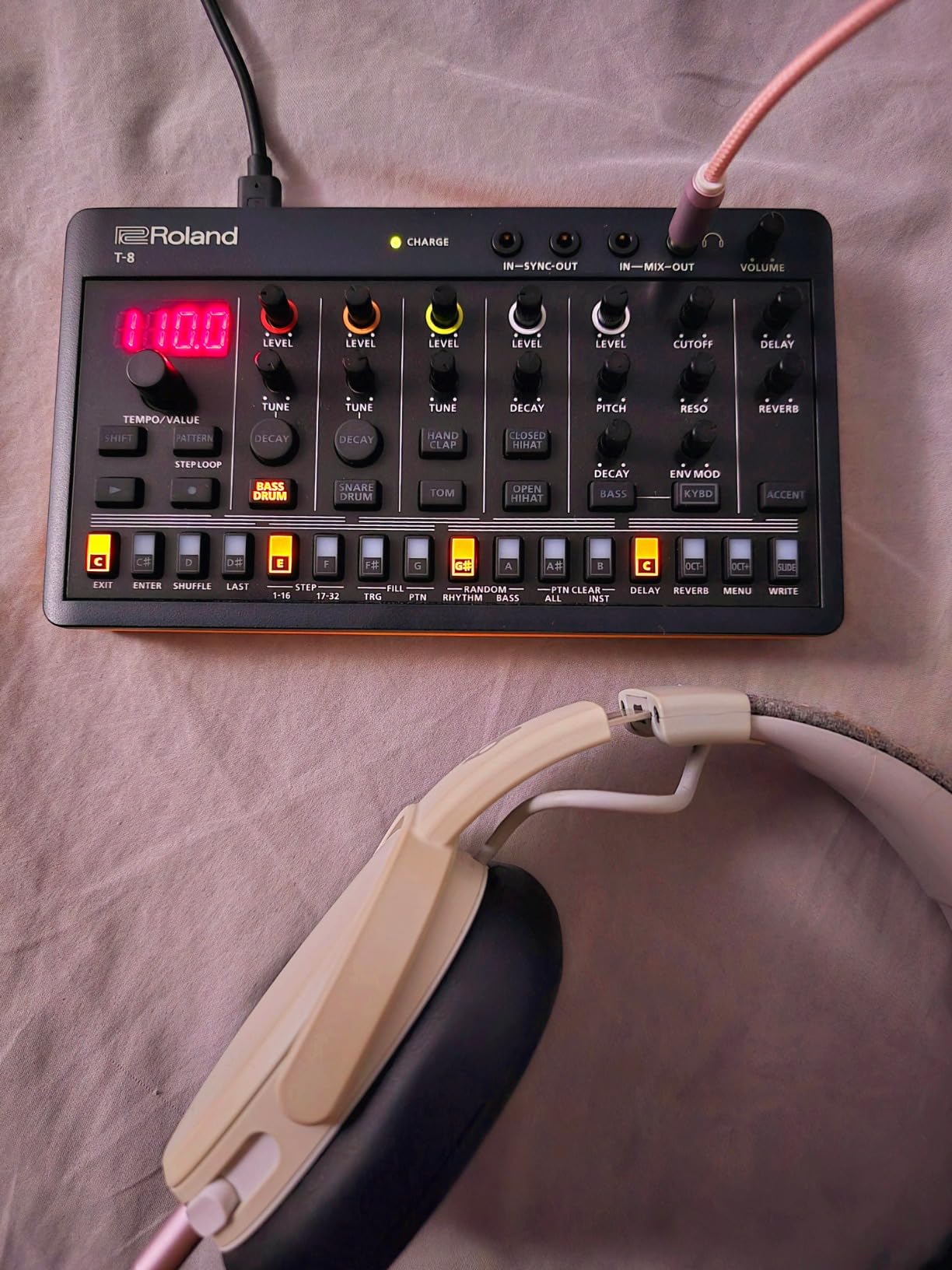
Portability is the T-8’s defining characteristic. The rechargeable battery charges via USB-C and lasts for hours of continuous use. I took it to a friend’s house for a jam session, plugged into a small speaker, and we were making acid-tinged techno within minutes. The USB-C port doubles as a class-compliant audio and MIDI interface, so connecting to a computer requires no driver installation. SYNC and MIDI ports on the back panel integrate with external hardware without issue.
Who should buy the Roland AIRA T-8
Anyone who wants classic Roland drum sounds in a portable format should put the T-8 at the top of their list. It is an ideal companion for guitarists and keyboardists who want a compact rhythm section for practice. Acid house and techno producers will appreciate having 808 drums and 303 bass in one unit. If you want to build a DAWless setup and need authentic vintage sounds without the vintage price, the T-8 is hard to beat.
Who should skip the Roland AIRA T-8
Producers who need a wide variety of drum sounds beyond the classic Roland palette will find the T-8 limiting. It does not support custom samples, and the six rhythm tracks can feel restrictive for complex arrangements. The small buttons work for programming but are not ideal for live finger drumming. If you need a full-size interface with more pads, more tracks, and sample import capability, step up to the Roland TR-6S.
5. Arturia DrumBrute Impact – Best Analog Drum Machine for Live Performance
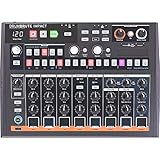
Arturia DrumBrute Impact Analog Drum Machine
10 Analog Drum Voices
64-Step Sequencer
Song Mode
Built-in Distortion Circuit
Individual Outputs
Pros
- Punchy and powerful analog sound
- Excellent built-in distortion circuit
- Song mode for pattern chaining
- Individual outputs per instrument
Cons
- Only 10 drum voices
- Limited sound variety compared to digital units
- Knobs could feel more premium
- Cannot play open and closed hat simultaneously
The Arturia DrumBrute Impact makes a strong first impression. The metal chassis feels solid, the layout is logical, and the pads respond with satisfying precision. But the real magic happens when you start programming beats and cranking the built-in distortion circuit. This is an analog drum machine designed to hit hard, and it delivers thick, punchy sounds that cut through any mix. The kick drum alone is worth the price of admission, with a weight and character that digital approximations rarely achieve.
Ten analog drum voices cover all the essentials: kick, snare, clap, closed and open hi-hats, toms, cymbal, zap, and cowbell. The Color sound-shaping feature adds filter and drive modulation to each instrument, letting you dramatically reshape sounds with a single knob twist. I found myself gravitating toward the distortion and Color controls on nearly every voice, creating aggressive, textured tones that sounded ready for a club sound system. The beat repeat and roller functions add real-time performance flair that makes live sets more dynamic.
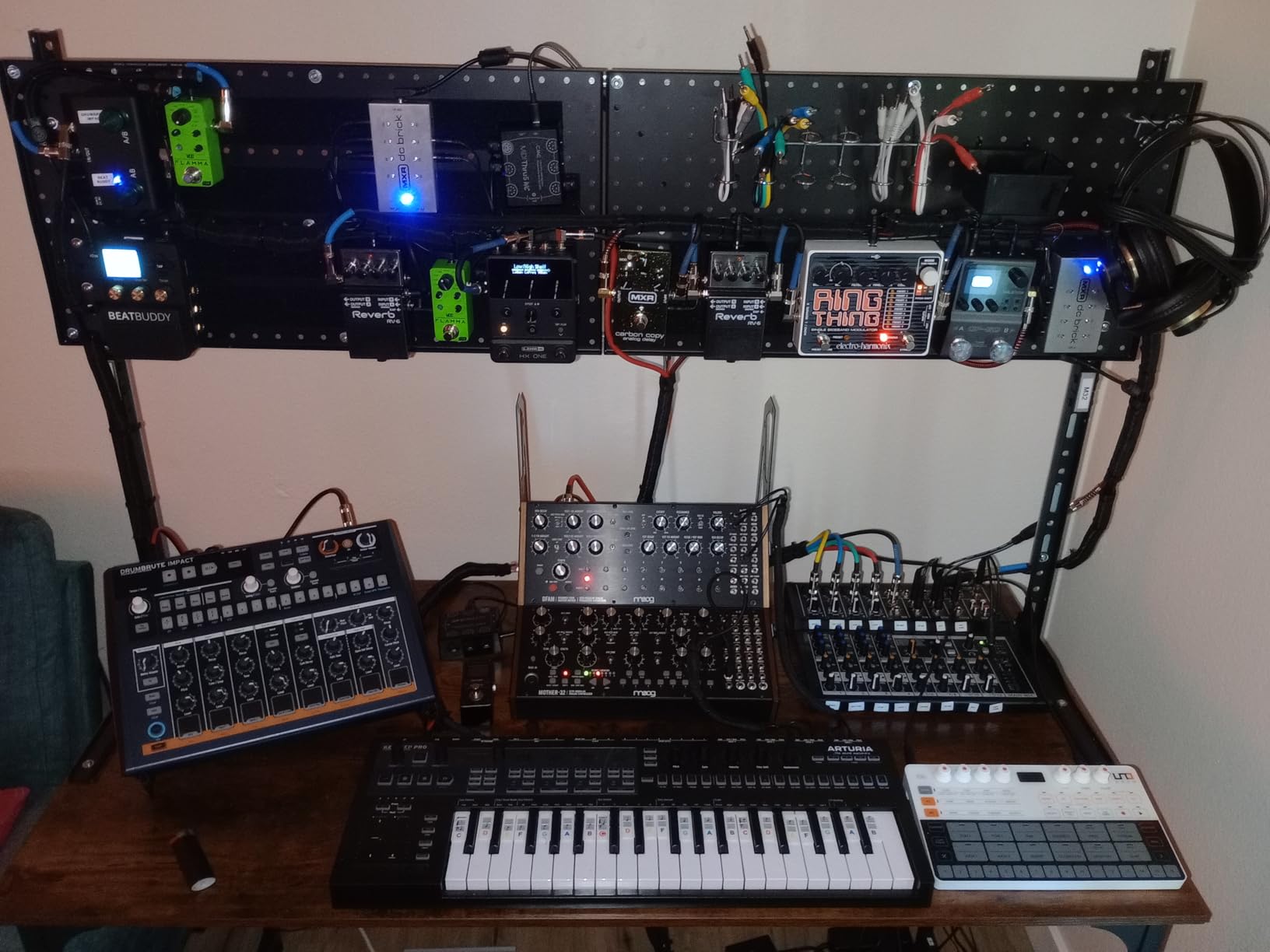
The 64-step sequencer offers plenty of room for complex patterns, and the song mode lets you chain those patterns into full arrangements. For live performance, the per-instrument mute and solo buttons are invaluable. I was able to build a 4-minute arrangement with intros, verse variations, and breakdowns, all controllable from the front panel. Individual outputs per instrument mean you can process each drum sound separately in your mixer or with external effects during recording or live sets.
Who should buy the Arturia DrumBrute Impact
Live performers who want an analog drum machine built for the stage should look no further. The metal construction, intuitive layout, and performance features like mute/solo, beat repeat, and song mode make it a natural fit for gigging musicians. Electronic music producers who crave raw, punchy analog character will find the DrumBrute Impact delivers in spades. It is also great for anyone exploring polyrhythms, since you can set different sequence lengths per instrument.
Who should skip the DrumBrute Impact
Producers who need a wide variety of sounds beyond the 10 analog voices will find the DrumBrute Impact restrictive. Unlike digital units that offer hundreds of sampled kits, this machine gives you 10 sounds and challenges you to make the most of them through the Color and distortion controls. If your music requires orchestral percussion, acoustic drum kits, or exotic world sounds, a sampler-based unit like the Roland SP-404MKII or Akai MPC Live III would serve you better.
6. Roland TR-6S Rhythm Performer – Best Overall Drum Machine
Roland Tr-6S Compact Drum Machine
ACB Modeling of TR-808/909/606/707/CR-78
FM Sound Engine
Custom User Samples
Battery or USB Powered
Pros
- Authentic ACB emulations of classic Roland drum machines
- Large preset sample library with custom sample support
- FM engine for futuristic tones
- Compact and portable with battery power
Cons
- Menu diving required for deeper editing
- Limited memory for custom samples
- Audio USB issues reported on Windows
- LCD interface feels dated
The Roland TR-6S earns our Editor’s Choice because it strikes the best balance of sound quality, features, portability, and value in 2026. Essentially a compact version of the flagship TR-8S, the TR-6S uses the same Analog Circuit Behavior technology to recreate the sounds of Roland’s most iconic drum machines. You get detailed circuit models of the TR-808, TR-909, TR-707, TR-727, TR-606, and CR-78, all in a unit that runs on four AA batteries or USB bus power.
What impressed me most during testing was the depth of sound on offer. The ACB-modeled drums respond to parameter changes with the same organic, non-linear behavior as the original analog circuits. Tweaking the tuning and decay of the 808 kick produces a continuum of tones from deep sub-bass to tight, punchy clicks. The FM sound engine adds a layer of sonic exploration that the classic machines never had, producing metallic, bell-like percussion and futuristic tones that blend beautifully with the vintage sounds. You can even mix and match sounds from different eras to create hybrid drum kits.
The advanced sequencer supports sub steps, flam, step loop, motion recording, and probability, giving you tools to create evolving, humanized patterns. I spent an entire afternoon programming a single pattern with probability-based hi-hats and velocity variations, and the result sounded more natural and musical than anything I could achieve with straight quantization. The TR-808 chromatic bass instrument is a bonus feature that lets you program bass lines, making the TR-6S surprisingly capable as a standalone production tool.
Who should buy the Roland TR-6S
The TR-6S is the best drum machine for most people. It offers authentic recreations of the most sought-after drum sounds in electronic music history, a powerful sequencer, custom sample support, and battery-powered portability. Electronic music producers of any skill level will find it immediately useful, and the included PC software provides visual editing that makes deep programming more accessible. If you can only buy one drum machine, this should be it.
Who should skip the TR-6S
Users who want a purely analog signal path should consider the Arturia DrumBrute Impact instead. The TR-6S also requires some menu diving for advanced features, which can slow down workflow compared to units with dedicated knobs for every parameter. The limited sample memory means you cannot load large custom sample libraries. If you need extensive sampling capabilities alongside drum programming, the Roland SP-404MKII offers a more complete creative toolset.
7. Roland SP-404MKII – Best Creative Sampler and Drum Machine
Roland SP-404MKII Creative Sampler and Effector
16GB Internal Storage
32-Voice Polyphony
17 RGB Pads
OLED Display
Battery Powered
Pros
- Extremely versatile sampler
- effects unit
- and sequencer in one
- Legendary built-in effects including Lo-fi and Cassette Simulator
- Lightweight and portable with battery power option
- Skip Back feature records last 45 seconds
Cons
- Steep learning curve with extensive features
- Lots of button combinations to memorize
- Primarily designed for hip-hop and techno out of the box
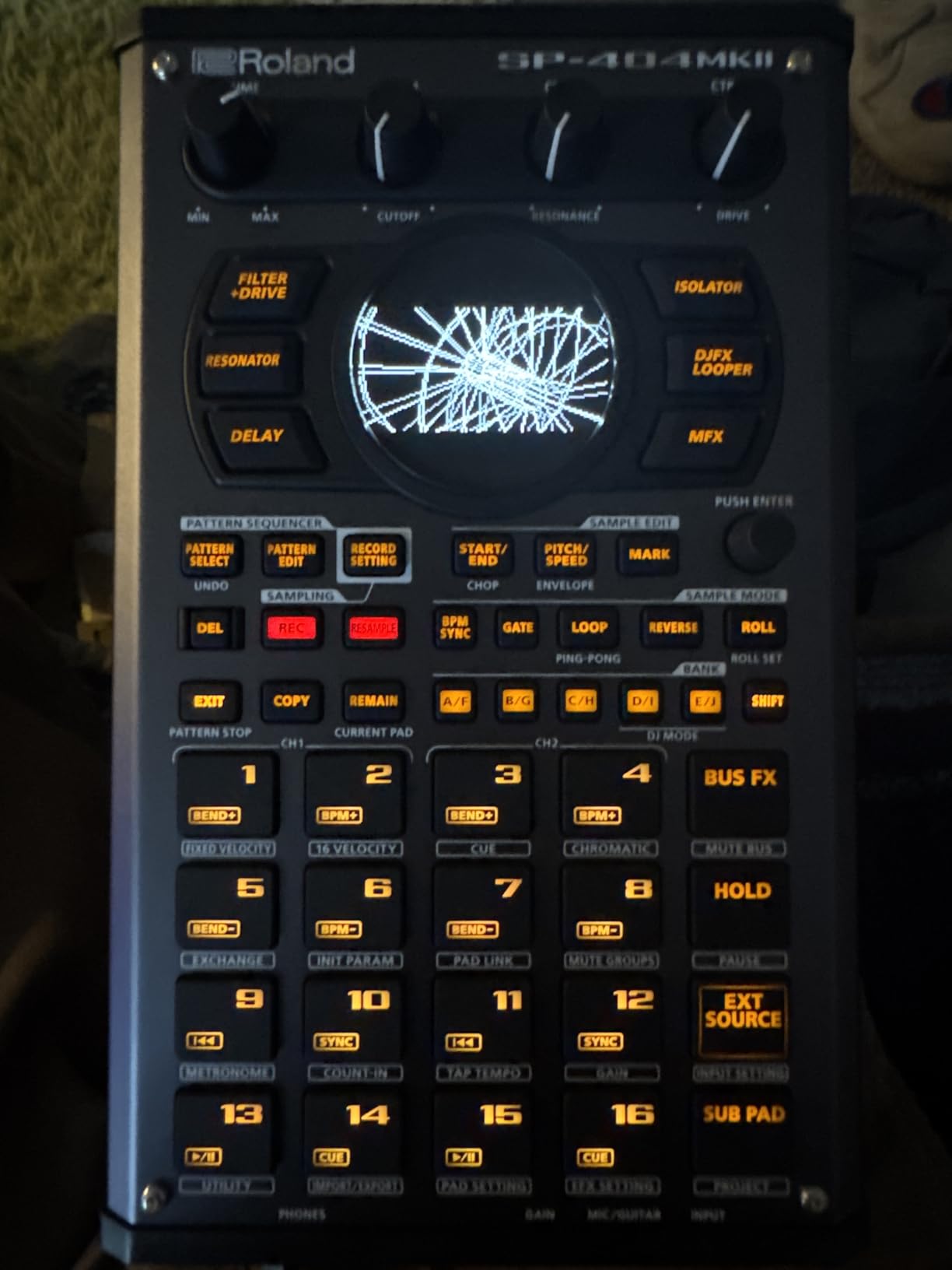
The Roland SP-404MKII occupies a unique space in the drum machine world because it is not just a drum machine at all. It is a creative sampler, effects processor, audio interface, DJ tool, and beat-making platform that happens to excel at rhythm programming. After using it as my primary production tool for several weeks, I can confidently say it is one of the most creative pieces of music hardware you can own in 2026. The 4.7-star rating from over 400 reviews tells you the music community agrees.
The 16GB of internal storage gives you room for extensive sample libraries, and the 32-voice polyphony means complex arrangements play back without note-stealing. The 17 velocity-sensitive RGB pads feel responsive and expressive, with a no-click design that is satisfying under your fingers. But the real star is the effects section. Roland loaded this thing with creative processors including a Vinyl Simulator, Cassette Simulator, Lo-fi effect, Resonator, DJFX Looper, Vocoder, Auto Pitch, and Guitar Amp Simulator. Running drum loops through the Cassette Simulator adds warm, degraded character that sounds incredible.
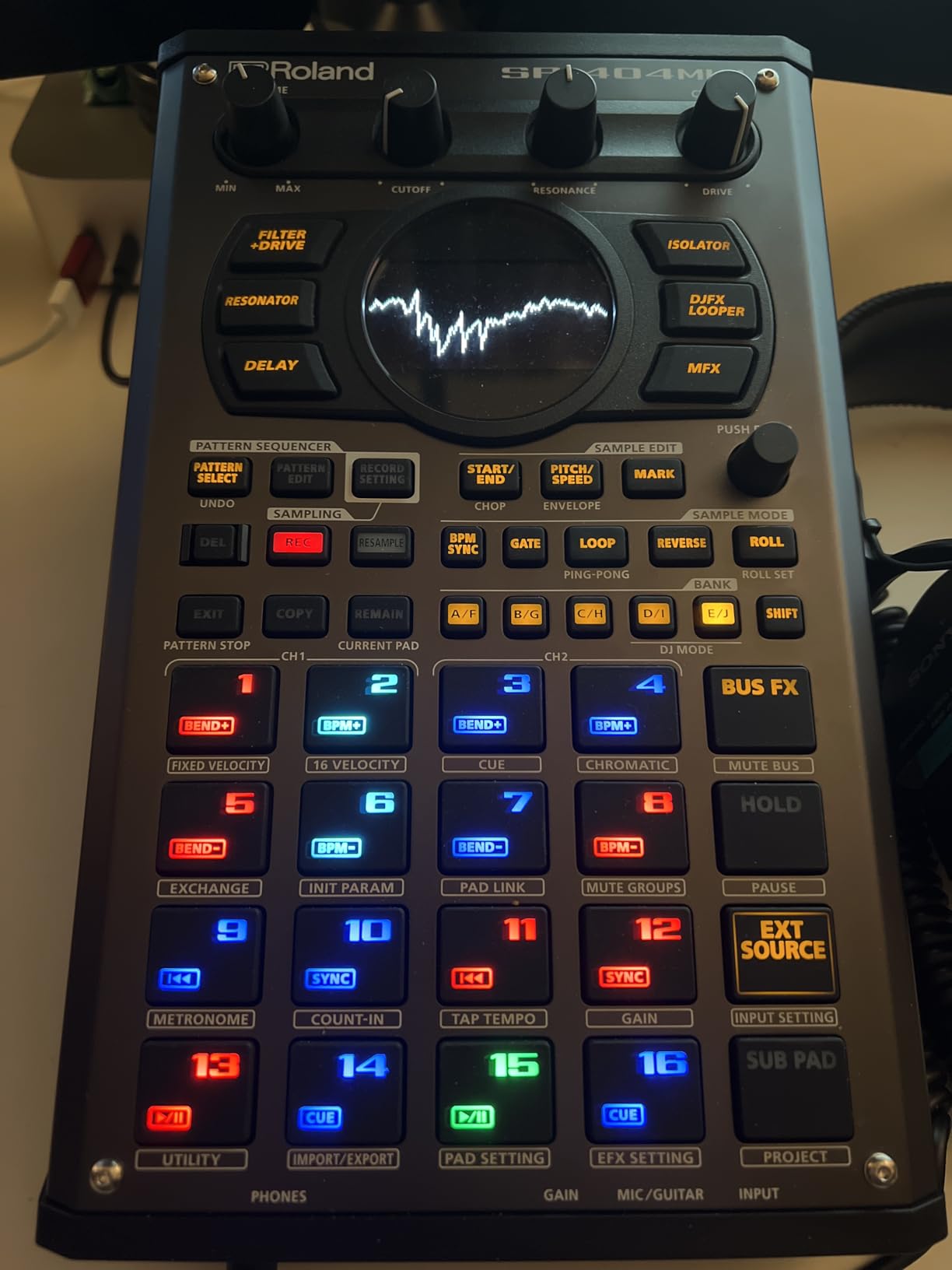
The Skip Back feature deserves special mention. It continuously records the last 45 seconds of audio, so if you stumble into an amazing take while jamming, you can capture it retroactively. I cannot count how many times this saved a spontaneous idea that would have been lost on any other machine. Auto BPM detect analyzes incoming audio and syncs to it, making it easy to layer samples from different sources. The OLED display provides clear visual feedback for waveform editing, which is a significant upgrade from the original SP-404.
Who should buy the Roland SP-404MKII
Sample-based beat makers and live performers who want an all-in-one creative tool will find the SP-404MKII unmatched at this price. Hip-hop and electronic music producers who work primarily with samples will feel right at home. DJs who want to incorporate live sampling and effects into their sets will discover a creative playground. Anyone building a DAWless setup who needs sampling, sequencing, and effects in a portable package should put this at the top of their list.
Who should skip the SP-404MKII
If you want a straightforward drum machine with dedicated drum sounds and a simple sequencer, the SP-404MKII is overkill. The extensive feature set and deep button combinations mean there is a genuine learning curve before you feel productive. Producers who primarily work with synthesized drums rather than samples may prefer a dedicated drum synthesizer like the Roland TR-6S or Arturia DrumBrute Impact. The $500 price point also puts it above what casual hobbyists typically want to spend.
8. Akai Professional MPC Live III – Best Premium Drum Machine and Production Center
Akai Professional MPC Live III Portable Music Production Center
8-Core Processor
7-inch Multi-Touch Display
128GB Storage
MPCe 3D Pads
Standalone Operation
Pros
- Fully standalone production with no computer required
- Built-in stereo monitors and microphone for true portability
- Exceptional 3D-sensing pads with velocity and pressure sensitivity
- Comprehensive connectivity with CV/Gate
- MIDI
- XLR/TRS
Cons
- Premium price point
- Steep learning curve for full feature set
- Heavy at 8.6 pounds
- Large footprint not ideal for small spaces
The Akai MPC Live III is not just the most expensive drum machine on this list; it is a complete, standalone music production center that happens to be one of the most powerful beat-making tools available in 2026. With an 8-core processor, 8GB of RAM, and 128GB of internal storage, this machine runs Akai’s MPC3 OS at blazing speed. You can produce entire tracks from start to finish without ever connecting a computer, and the results sound professional-grade.
The MPCe pads are a significant upgrade over previous MPC generations. These 3D-sensing pads respond to velocity, pressure, and position, giving you an expressive interface that translates subtle performance nuances into your music. I spent hours finger drumming patterns and was struck by how responsive and musical the pads feel. The 7-inch multi-touch display provides a clear, intuitive interface for editing, mixing, and arranging. It feels like using a tablet that happens to be a professional music production workstation.
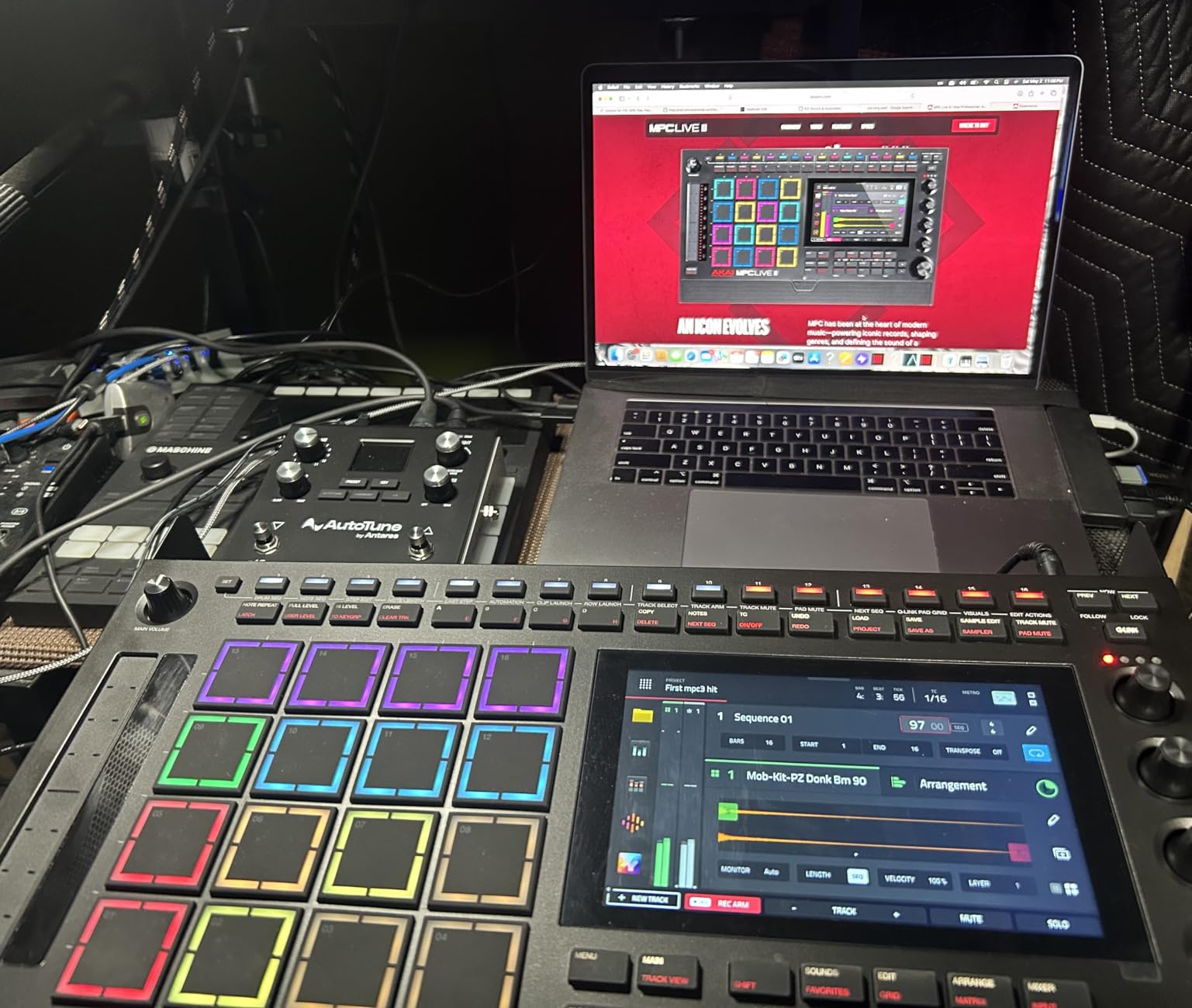
What makes the MPC Live III unique is its all-in-one completeness. Built-in stereo monitors let you work without external speakers. A built-in microphone captures vocal ideas or ambient sounds. Wi-Fi and Bluetooth connectivity open up wireless workflows. The rechargeable battery lets you produce music away from a desk entirely. You get 32 plugin instances and 16 tracks, which is enough headroom for complex productions. The performance touchstrip adds real-time control for filter sweeps, pitch bends, and effects modulation during live sets.
Who should buy the Akai MPC Live III
Professional producers who want a computer-free production workflow will find the MPC Live III unmatched in capability. Live performers who need a powerful, self-contained unit for stage use will appreciate the built-in monitors, battery power, and comprehensive I/O. Anyone who has outgrown entry-level drum machines and wants a serious production tool that handles sampling, sequencing, synthesis, and mixing should consider this investment. The MPC legacy also means an enormous community of users, tutorials, and preset libraries.
Who should skip the MPC Live III
At $1,699, this is a significant investment that most hobbyists and beginners cannot justify. If you primarily need a drum machine for simple beat making and practice, there are options on this list at one-tenth the price that will serve you better. The 8.6-pound weight and 17-inch width make it less portable than compact units like the Roland AIRA T-8 or Teenage Engineering PO-12. If your primary use case is playing live drums in a band setting, a simpler, more focused drum machine will serve you better for less money.
How to Choose the Best Drum Machine for Your Needs
Picking the right drum machine comes down to understanding your workflow, budget, and musical goals. After testing all 8 units in this guide, I can tell you that there is no single best option for everyone. The right choice depends entirely on how you plan to use it. Here is what to consider before making your decision.
Budget: What to Expect at Each Price Range
Drum machines under $150 are typically compact, battery-powered units with limited sound libraries but excellent portability. The Teenage Engineering PO-12 and Korg Volca Beats both deliver impressive value in this range. These are ideal for beginners, travel, and creative sketching.
In the $200 to $500 range, you find the sweet spot for most producers. Units like the Roland TR-6S, Roland AIRA T-8, Arturia DrumBrute Impact, and Roland SP-404MKII offer professional features, authentic sounds, and solid build quality. This is where most people should focus their budget.
Above $500, you enter professional production territory. The Akai MPC Live III at $1,699 represents the premium end, offering a complete standalone production environment. These units are investments for serious producers who need comprehensive tools.
Analog vs Digital: Which Is Right for You
Analog drum machines generate sounds using actual electrical circuits, producing warm, characterful tones that feel organic and responsive to knob tweaks. The Korg Volca Beats and Arturia DrumBrute Impact both use analog synthesis. Analog machines tend to have limited sound palettes but excel at the sounds they do produce. The kick drum on the Volca Beats, for instance, has a depth and punch that digital units struggle to replicate.
Digital drum machines use sampling, modeling, or FM synthesis to create sounds. They offer vastly more variety and often include features impossible in pure analog designs, like custom sample import and deep sequencing. The Roland TR-6S uses ACB modeling to recreate analog circuits digitally, giving you the best of both worlds: the warmth of analog with the flexibility of digital. The Roland SP-404MKII and Akai MPC Live III are fully digital, offering enormous sound libraries and creative effects processing.
For most buyers, I recommend a digital or hybrid unit. You get more sounds, more features, and more flexibility. Analog is worth considering if you specifically want that warm, raw character and are willing to work with a limited sound palette.
Skill Level and Ease of Use
Beginners should prioritize units with intuitive layouts and minimal menu diving. The Korg Volca Beats, Teenage Engineering PO-12, and Roland AIRA T-8 all feature straightforward interfaces where most controls are accessible from dedicated knobs and buttons. You can start making music within minutes of unboxing.
Intermediate users will benefit from units with deeper sequencing features like pattern chaining, song mode, and probability. The Roland TR-6S and Arturia DrumBrute Impact offer these features while remaining approachable. Both reward the time spent learning their workflows.
Advanced producers who need comprehensive production tools should look at the Roland SP-404MKII and Akai MPC Live III. These units have steep learning curves but offer capabilities that rival DAW software in a portable, hardware format.
Connectivity and Integration
Think about what else is in your studio or live rig. If you use a DAW, USB audio and MIDI connectivity is essential. The Roland TR-6S, Roland AIRA T-8, and Akai MPC Live III all function as class-compliant audio interfaces over USB. If you have other hardware like synthesizers, MIDI DIN ports and CV/gate outputs allow tight synchronization. The Akai MPC Live III offers the most comprehensive connectivity with CV/gate, MIDI, XLR/TRS combo inputs, and six TRS outputs.
For DAWless setups, sync ports matter. The Korg Volca Beats and Roland AIRA T-8 both offer SYNC in/out for chaining with compatible hardware. If portability is your priority, battery power is a must-have feature. Seven of the eight units in this guide can run on batteries, with only the Akai MPC Live III relying on its rechargeable battery for mobile use.
Live Performance vs Studio Production
Live performers need durable builds, intuitive hands-on controls, and features like mute/solo buttons and performance effects. The Arturia DrumBrute Impact was built for the stage with its metal chassis, per-instrument mute/solo, beat repeat, and song mode. The Roland SP-404MKII is also popular for live sets because of its pad-based workflow and real-time effects.
Studio producers should prioritize sound quality, connectivity, and sequencing depth. The Roland TR-6S offers the best combination of authentic sounds and production features in a studio-friendly format. The Akai MPC Live III doubles as a complete production workstation that eliminates the need for a computer in many workflows.
Frequently Asked Questions
How many drum tracks do I need?
Most producers work well with 6 to 8 drum tracks, which covers kick, snare, hi-hats, open hat, clap, tom, cymbal, and a percussion layer. The Roland TR-6S offers 6 tracks, while the Akai MPC Live III supports 16 tracks for complex arrangements. Beginners typically only need 4 to 6 tracks for basic beat making, while advanced producers working with layered percussion or full productions benefit from 8 or more tracks.
Are drum machines only good for dance music?
Not at all. While drum machines are deeply associated with electronic dance music, hip-hop, and techno, they are used across virtually every genre. The Alesis SR-16 covers rock, jazz, and country with its 233 professional sounds. Songwriters use drum machines for demo production, guitarists use them for practice accompaniment, and film composers use them for quick rhythm sketching. Any musician who needs percussion can benefit from a drum machine.
What is the difference between a drum machine and a groovebox?
A drum machine focuses specifically on percussion: generating drum sounds and sequencing rhythmic patterns. A groovebox is a more comprehensive instrument that typically includes drum sounds, melodic synthesis, and sequencing for both. The Roland SP-404MKII and Akai MPC Live III blur this line, as both function as grooveboxes that excel at drum programming. The Roland AIRA T-8 also straddles the boundary by including a TB-303 bass synthesizer alongside its drum sounds.
How much should I spend on a drum machine?
You can get a capable drum machine for under $100 like the Teenage Engineering PO-12, or invest over $1,000 in a professional production center like the Akai MPC Live III. Most people find the sweet spot between $200 and $500, where units like the Roland TR-6S, Roland AIRA T-8, and Arturia DrumBrute Impact deliver professional features at accessible prices. Spend based on your commitment level: casual users should start under $150, while serious producers should budget $300 to $500 for a unit that will last years.
What is the best drum machine for beginners?
The Teenage Engineering PO-12 is the most affordable and approachable option for absolute beginners, costing under $70 and offering a fun, immediate introduction to beat programming. The Korg Volca Beats is another strong beginner choice with its simple knob-per-function layout and analog sound. If you want something that will grow with you, the Roland AIRA T-8 provides genuine Roland sounds and deeper sequencing features while remaining easy to learn.
Final Thoughts on the Best Drum Machines in 2026
After testing all 8 units across studio sessions, live performances, and casual jamming, my top recommendation for most people is the Roland TR-6S. It delivers the best overall package of authentic sounds, powerful sequencing, portability, and value. For budget-conscious buyers, the Teenage Engineering PO-12 is an incredible entry point that teaches real drum programming fundamentals. And for producers who want a complete standalone production tool, the Akai MPC Live III is worth every penny of its premium price.
The best drum machines in 2026 cover an enormous range of prices and capabilities, from pocket-sized sketchpads to professional production centers. Whatever your budget or experience level, there is a unit on this list that will fit naturally into your creative workflow. Pick the one that matches how you actually make music, and you will find that hardware beat making becomes an addictive, rewarding part of your production process.