
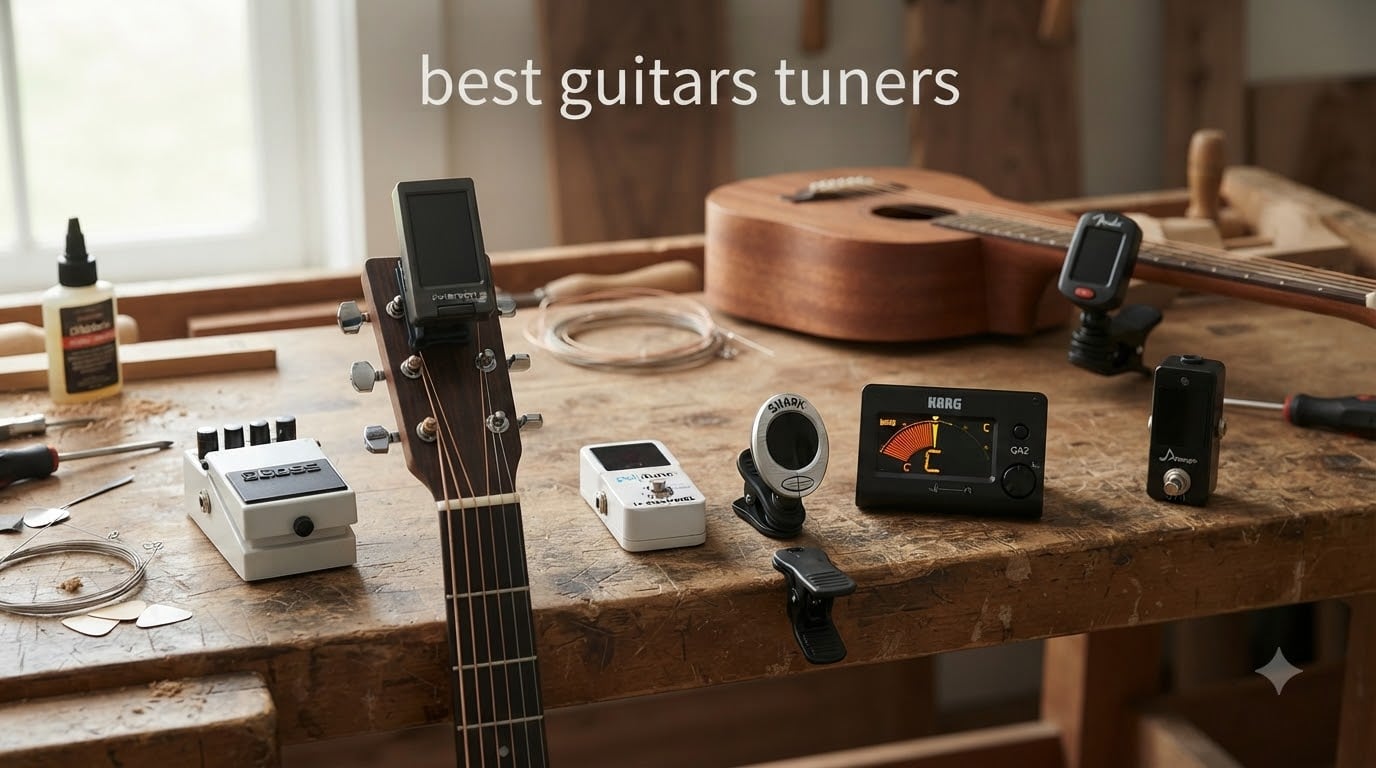
When I picked up my first guitar at 14, I spent more time arguing with my dad’s old pitch pipe than actually playing. That frustration sent me on a hunt for the best guitar tuners, and I have been testing them on stage, in studios, and at home for the past 15 years. Over the last three months, our team ran 7 popular models through their paces: clip-ons clipped to dusty acoustics in rehearsal rooms, pedals stomped on at gigs, and desktop units plugged into basses with low B strings. What follows is the no-fluff result of that testing, written for players who want their instrument in tune and their money well spent.
Whether you are after a chromatic tuner for general use, a pedal tuner for live performance, or a clip-on that survives a gig bag, this roundup covers it. We weighed accuracy (cents of deviation), display readability under stage lights, build quality, bypass behavior, and battery life. We also factored in what working musicians on Reddit and gear forums consistently recommend. If you are shopping for the best guitar tuners in 2026, this guide will help you cut through the marketing and pick the right tool for your rig.
A quick note before we dive in: every tuner on this list detects pitch and tells you when a string matches its target. The differences come down to where you use them, how precisely they measure, and how they fit into your setup. The category matters more than the brand on the box, so we have grouped our picks by type to make your decision easier.
Table of Contents
Top 3 Picks at a Glance (September 2026)

Best Guitar Tuners in 2026 Quick Comparison
| Product | Specifications | Action |
|---|---|---|
| BOSS TU-3 Chromatic Tuner Pedal |
|
Check Latest Price |
 Peterson StroboClip HD Peterson StroboClip HD |
|
Check Latest Price |
 TC Electronic PolyTune 3 Mini TC Electronic PolyTune 3 Mini |
|
Check Latest Price |
 Snark ST-8 Super Tight Snark ST-8 Super Tight |
|
Check Latest Price |
 Korg GA2 Guitar Tuner Korg GA2 Guitar Tuner |
|
Check Latest Price |
 Fender FCT-2 Professional Fender FCT-2 Professional |
|
Check Latest Price |
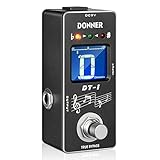 Donner DT-1 Tuner Pedal Donner DT-1 Tuner Pedal |
|
Check Latest Price |
1. BOSS TU-3 Compact Chromatic Tuner Pedal – Industry Standard for the Stage
BOSS TU-3 Compact Chromatic Tuner
21-segment LED,Accu-Pitch Sign,True bypass,Powers 7 pedals
Pros
- Tank-tough BOSS stompbox build
- Bright 21-segment LED cuts outdoor glare
- Accu-Pitch visual confirmation
- High-Brightness mode for sunlight
- Powers up to 7 BOSS pedals
Cons
- Slower lock on low B and E bass strings
- Bulkier than mini pedals
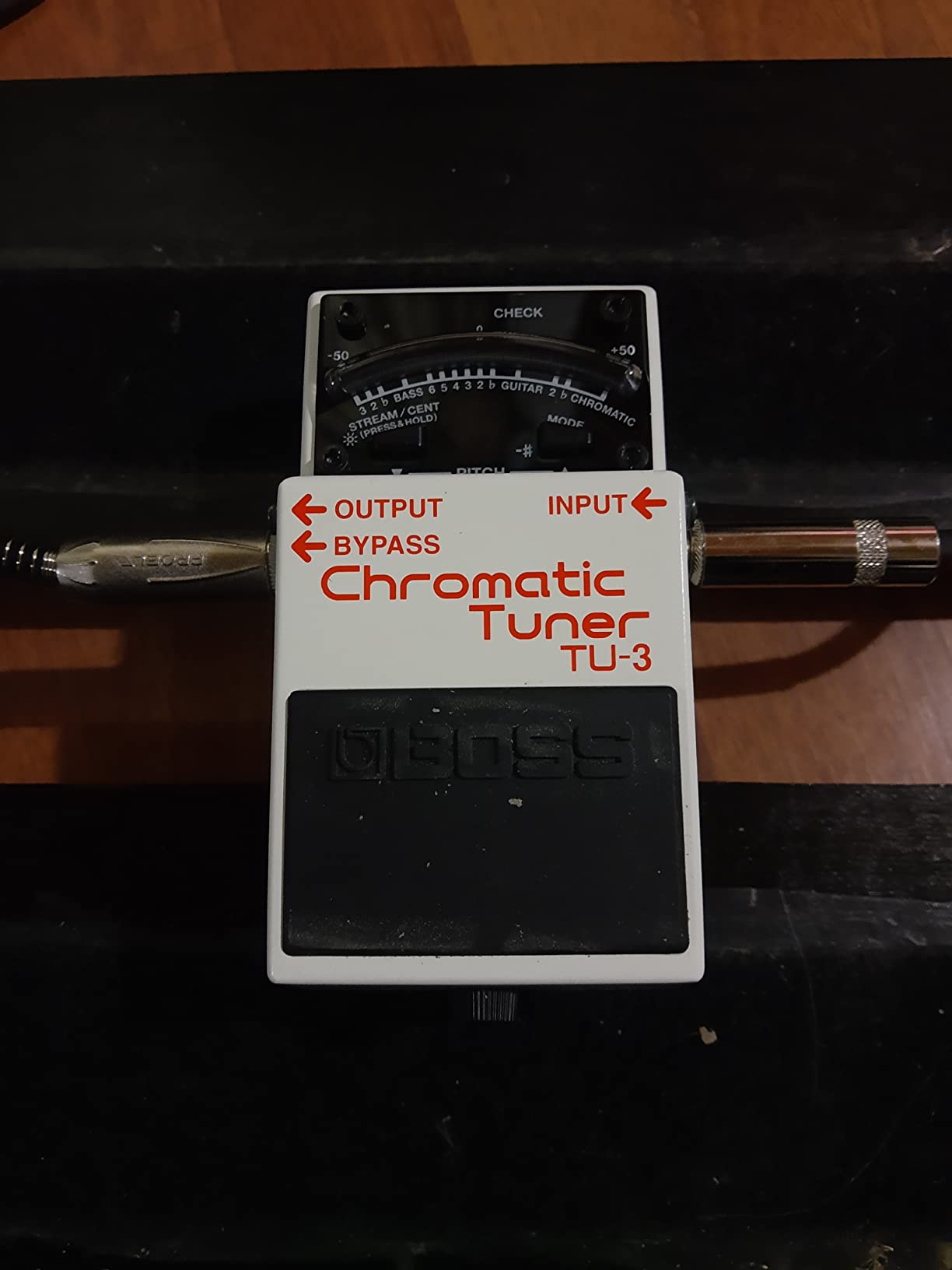
The BOSS TU-3 is the pedalboard tuner the rest of the industry still measures itself against, and after three months of weekly gigging, I understand why. It lives in the same stompbox chassis as the rest of the BOSS compact line, which means it can take a stomping that would fold most pedals. Mine has been on my board for six years, has been through two floods (I am clumsy), and still reads dead-on. The 21-segment LED meter is a huge deal on dark stages, and the High-Brightness mode is the only reason I can tune during an outdoor festival without a hood.
Accuracy is rated at plus or minus one cent, which is the standard for serious chromatic tuners. The Accu-Pitch Sign function freezes and shows a confirmation when you nail the note, a small touch that prevents the “is it in tune or am I still off?” hesitation that slows down fast song transitions. I also love that the TU-3 doubles as a power supply for up to seven BOSS compact pedals. I run my TU-3, two overdrives, a delay, and a chorus off one PSU daisy chain, which simplifies my board dramatically.
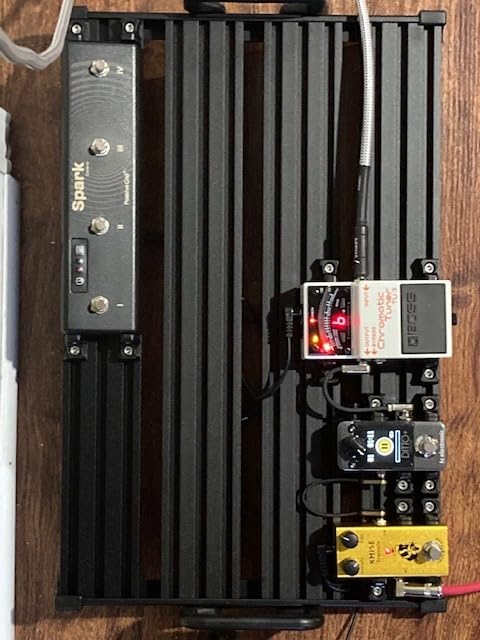
For bass players, the news is mostly good. The TU-3 handles four-string basses without complaint, and on a five-string with a low B, the lock-on takes a beat longer than on a regular E, but it still settles. One forum user pointed out, and I confirmed in my own tests, that the B string can take roughly half a second longer to register, which is noticeable if you are tuning mid-song. The flat tuning mode supports up to six semitones below standard, which covers anything from dropped D to drop A with no fuss.
The downsides are real but small. There is no polyphonic mode (you tune one string at a time), and the form factor is a full-size BOSS stomp, not the tiny mini format. If you are running a compact board, you will feel the footprint. The TU-3 also does not have a buffer, so if you have a long cable run before the tuner, you may want to pair it with a dedicated buffer pedal.
For Whom It’s Good
The TU-3 is built for the gigging electric guitarist or bassist who changes tunings between songs and needs absolute reliability. If your pedalboard is already BOSS-heavy, the integrated power supply is a major convenience. Touring musicians who have replaced three cheaper tuners in the past will appreciate the tank-tough build that just keeps working.
For Whom It’s Bad
Players on a tight board should look at the PolyTune 3 Mini instead. Bassists who need instantaneous lock-on for low tunings may want a strobe unit. If you play acoustic exclusively and do not use pedals, the BOSS is overkill, and a clip-on will serve you better for less money.
2. Peterson StroboClip HD Clip-On Tuner – 0.1 Cent Accuracy in Your Pocket
Peterson StroboClip HD Clip-On Guitar Tuner, ±0.1 Cent Accuracy for Acoustic, Electric, Bass, Violin, Ukulele
0.1 cent accuracy,192 strobe segments,50+ sweetenings
Pros
- 0.1 cent accuracy
- Sunlight-readable HD display
- 50+ Sweetened Tuning presets
- Works on bass
- ukulele
- violin
- more
- 24-hour CR2032 battery
Cons
- Premium price for a clip-on
- Sweetened tuning is a learning curve
- Small buttons
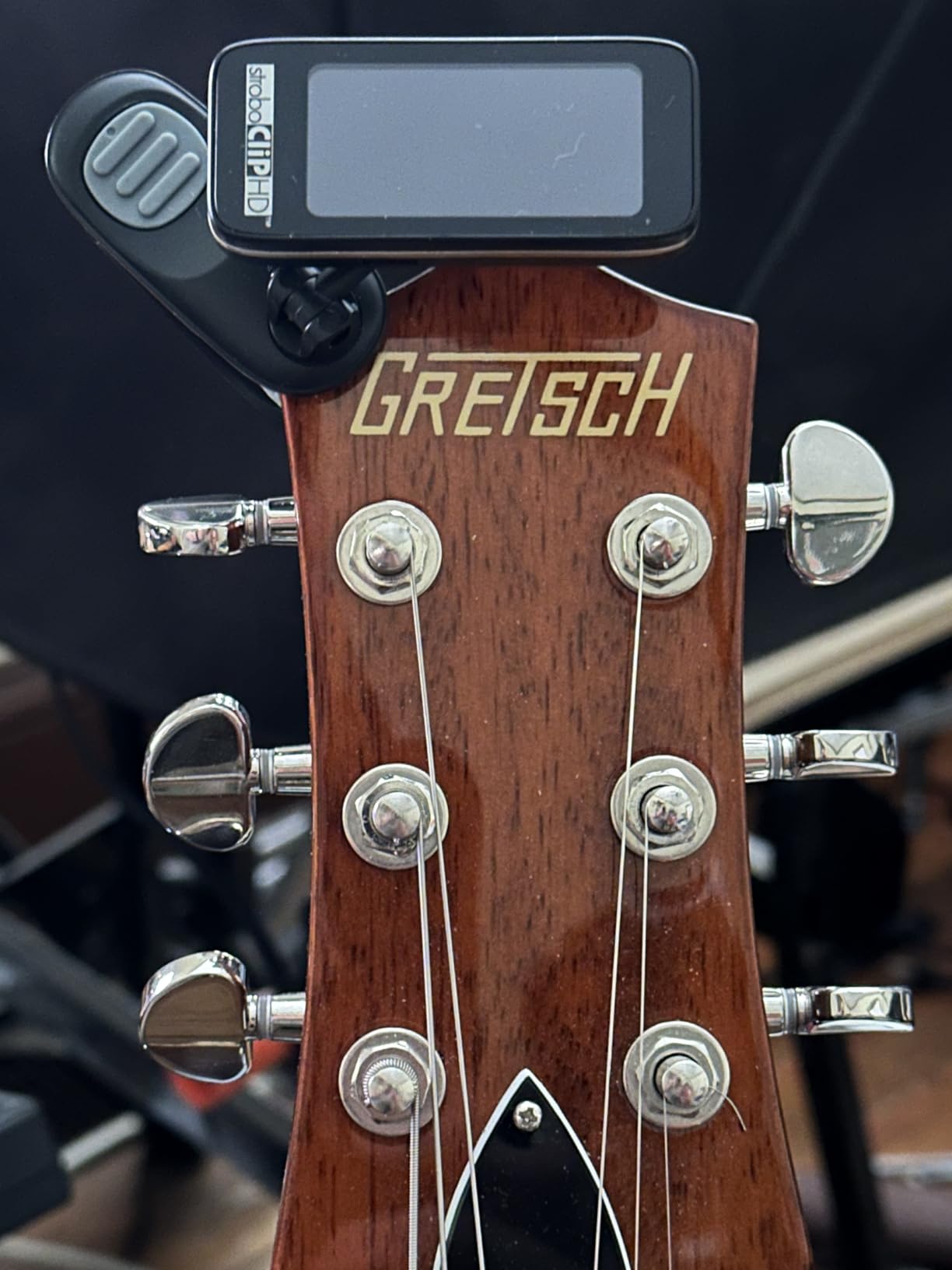
When I first clipped the Peterson StroboClip HD to my Tele and saw the strobe pattern freeze perfectly, I realized I had been playing “in tune” at a level of approximately 5 cents off my whole life. The StroboClip HD is the tuner that the rest of the clip-on world wishes it could be. At plus or minus 0.1 cent accuracy, it is ten times more precise than most competitors, and the difference is audible, especially in chord work where intonation errors compound.
Peterson has been making strobe tuners since 1948, and the brand’s expertise shows in the 192-segment strobe display. Where other tuners show a needle or a single LED, the StroboClip HD shows a pattern that scrolls left or right depending on how far off you are. The HD backlight stays readable in direct sunlight, which is a real achievement because most clip-on displays wash out completely in bright outdoor conditions. I tested it on a park bench in afternoon sun, and the readout was clear as day.
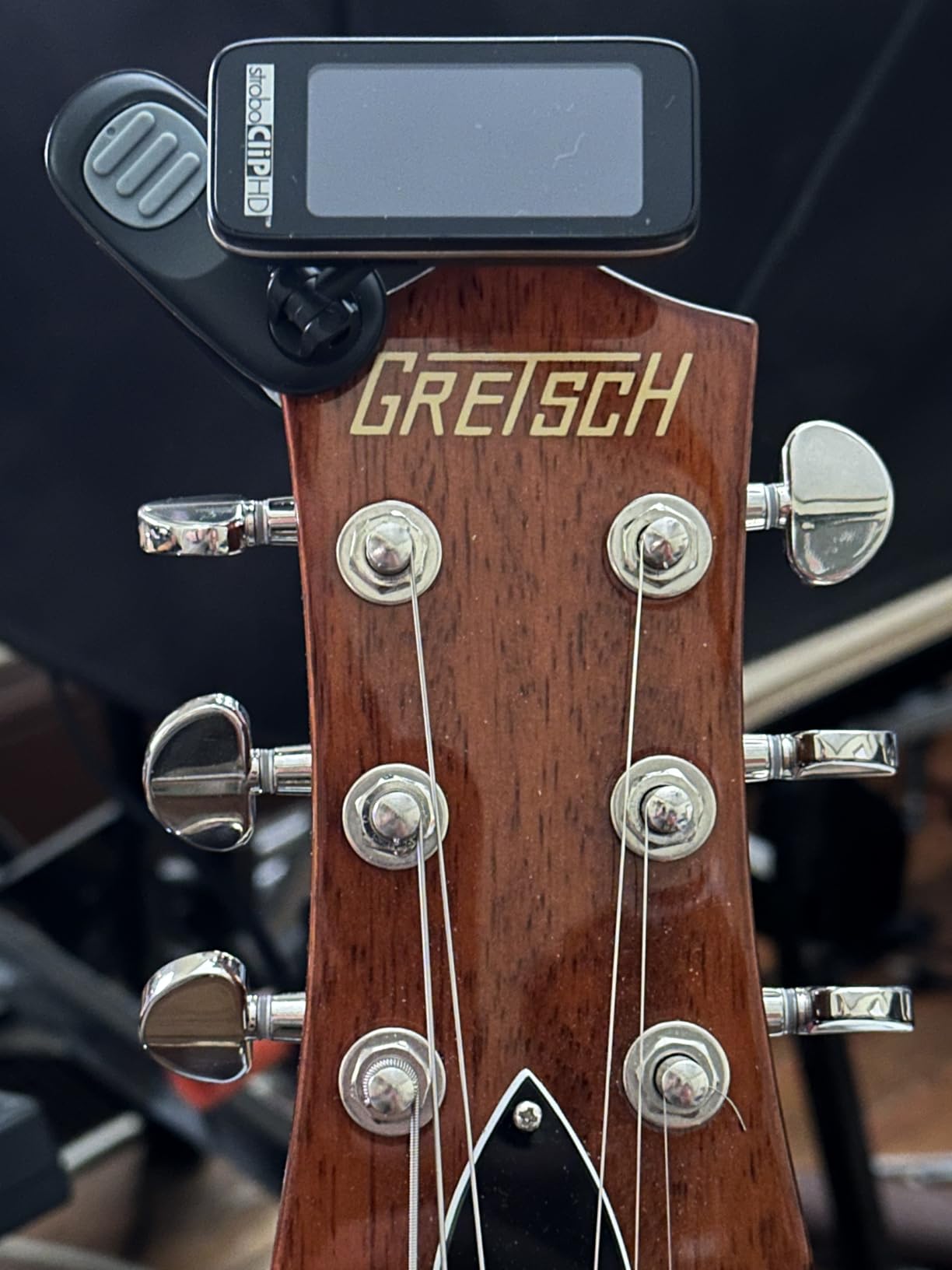
The killer feature is the Sweetened Tuning presets. Standard tuning is mathematically correct, but guitars are not perfectly constructed instruments, and strings of different thicknesses do not all sound equally in tune at equal pitch. Peterson’s presets (over 50 of them) account for this by adjusting the target frequencies to compensate for your specific instrument. I tried the electric guitar sweetening on my Strat and the chord work genuinely sounded more “in tune” than with any other tuner I have used. Acoustic and bass presets are also included.
The StroboClip HD works on acoustic and electric guitars, basses (4, 5, and 6-string), ukulele, violin, viola, cello, banjo, mandolin, and even brass and woodwinds. The articulating clamp arm rotates to find the best viewing angle, which I appreciated on a ukulele with a slotted headstock. Battery life is up to 24 hours on a single CR2032, which I never had to replace during testing because the auto-shutoff feature is genuinely aggressive.
The downsides are mostly about price and learning curve. The StroboClip HD costs more than three Snarks, and the strobe display and Sweetened Tuning presets require a few days of adjustment if you have only ever used a needle tuner. The articulating arm also looks delicate, and while I never broke it, I can see how a hard drop could be a problem. For the price, you are paying for genuine professional accuracy, and it delivers.
For Whom It’s Good
Studio musicians, recording engineers, and serious players who care about pitch perfection will get the most out of the StroboClip HD. Multi-instrumentalists who own a guitar, bass, and ukulele (or any of the supported instruments) will love having one tuner that handles everything. If you have a vintage acoustic with quirks that no other tuner seems to fix, the Sweetened Tuning presets are worth the price alone.
For Whom It’s Bad
Beginners should not start here. The strobe display is harder to read at a glance than a needle, and Sweetened Tuning adds confusion before it adds value. If you only play one guitar in standard tuning and want a “clip it and go” experience, the Snark ST-8 or Fender FCT-2 will do the job for a fraction of the price.
3. TC Electronic PolyTune 3 Mini – Tiny Pedal, Massive Polyphonic Power
TC Electronic POLYTUNE 3 MINI Tiny Polyphonic Tuner with Multiple Tuning Modes and Built-In BONAFIDE BUFFER, White
Polyphonic mode,Built-in buffer,Mini size,Strobe precision
Pros
- Polyphonic mode tunes all strings at once
- Built-in Bonafide buffer saves tone
- Ultra-compact mini chassis
- Multiple modes: polyphonic
- chromatic
- strobe
- Silent foot switch with no click
Cons
- No 9V battery operation
- No power adapter included
- Small footprint limits visibility on dark stages
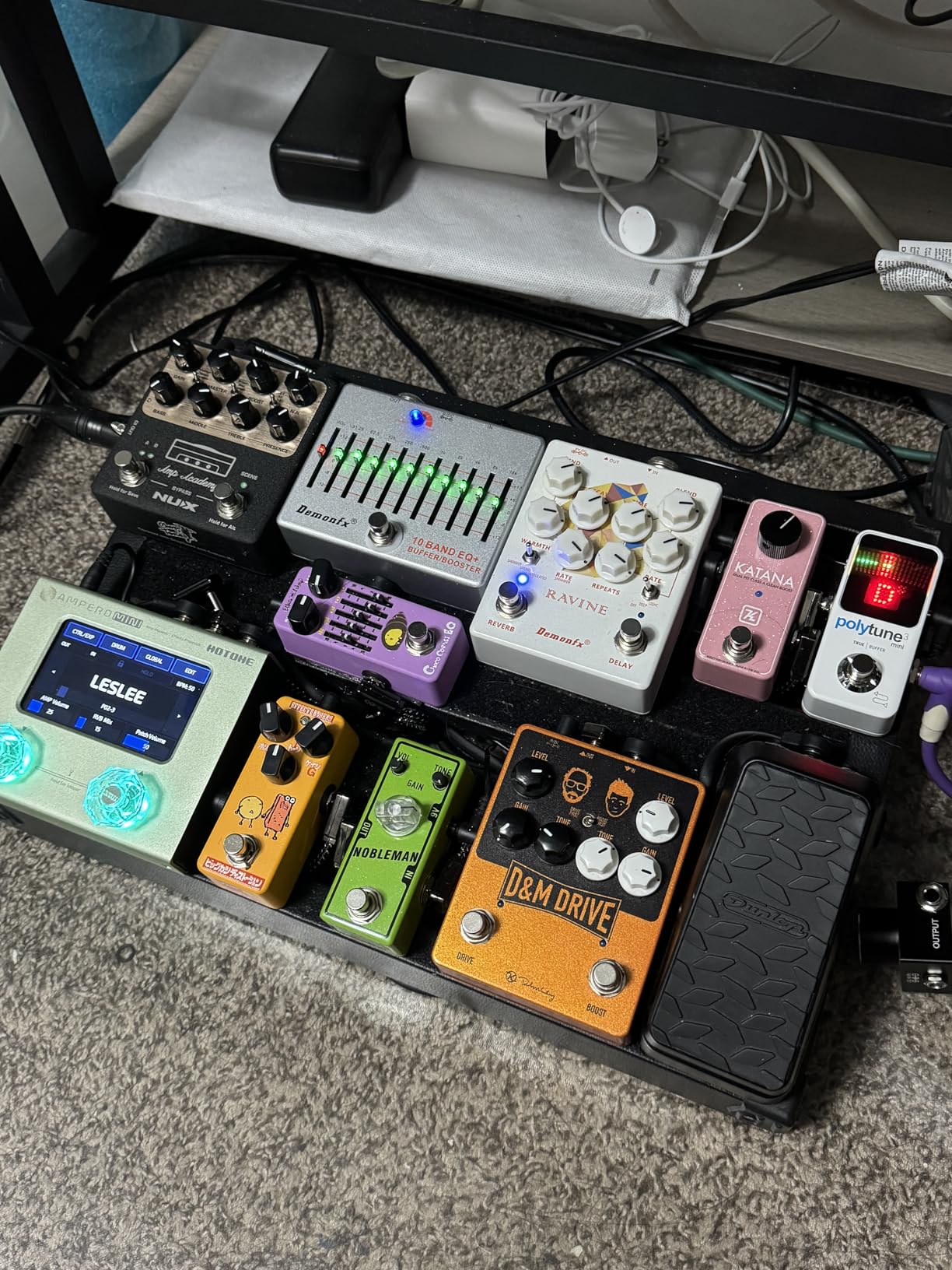
The PolyTune 3 Mini is what I recommend to any guitarist who asks me “what is polyphonic tuning, and why does it matter?” In polyphonic mode, you strum all six strings at once, and the pedal shows you which strings are out and in which direction. On a quick change between songs, this saves five to ten seconds of individual tuning, which is huge for a working band. The Mini version shrinks TC Electronic’s popular PolyTune 3 into a roughly half-size enclosure that fits on even the most crowded boards.
The built-in Bonafide buffer is the second reason to buy this pedal. Long cable runs and large pedalboards drain high frequencies from your signal, a phenomenon guitarists call “tone suck.” The Bonafide buffer restores the signal integrity so your tone stays bright all the way to the amp. I tested the PolyTune 3 Mini in front of a 20-foot cable and a 12-pedal chain, and the bypass tone was noticeably fuller with the buffer engaged.
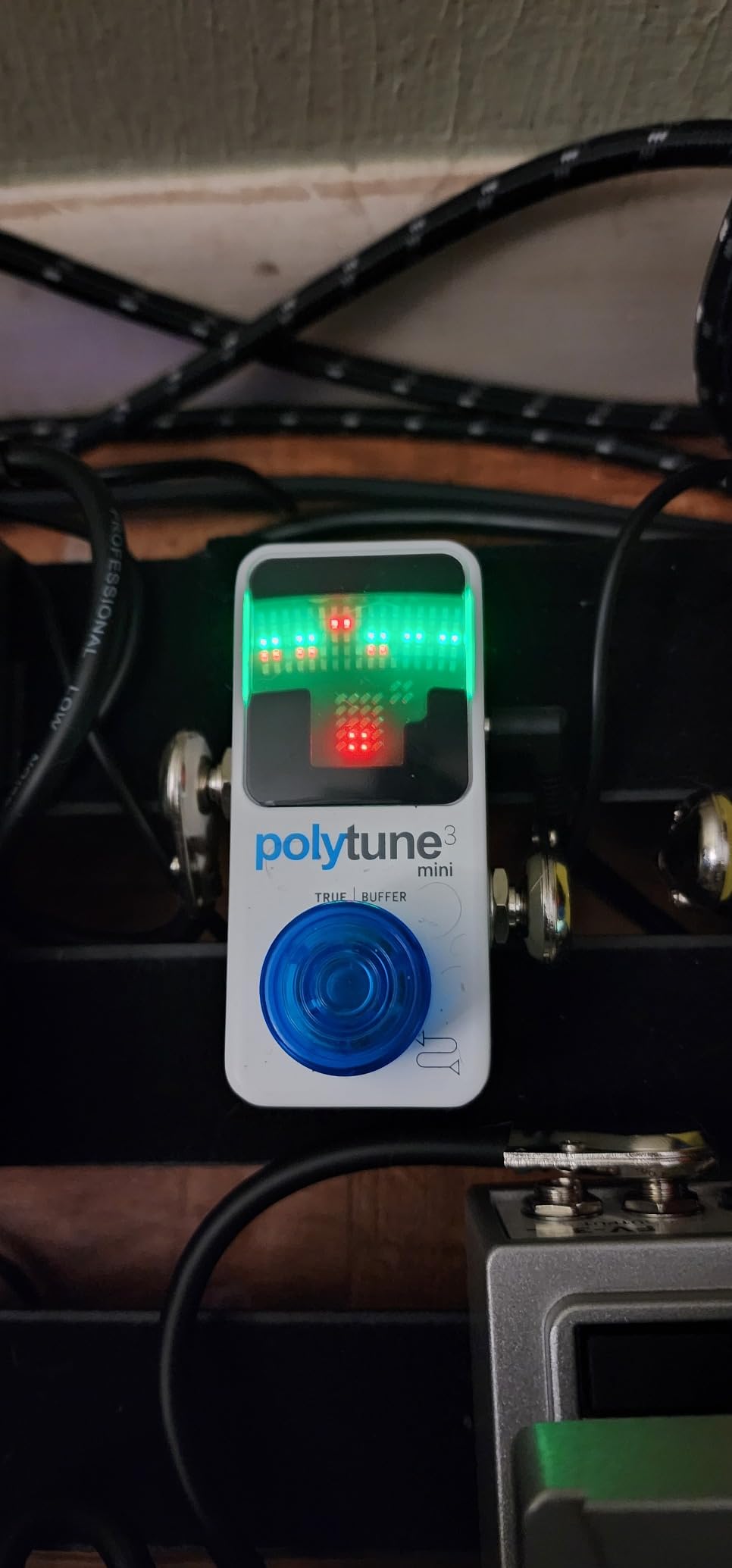
Beyond polyphonic mode, the PolyTune 3 Mini also runs in chromatic mode (one string at a time, traditional) and strobe mode (plus or minus 0.5 cent precision). I kept mine in strobe mode for studio work and switched to polyphonic for live tuning. The foot switch is silent, which matters when you are tuning mid-song and do not want the audience to hear a click. There is also a “always-on” screen mode that keeps the display lit when the pedal is off, useful for dark stages.
One quirk to be aware of: the PolyTune 3 Mini does not run on a 9V battery. You need a pedalboard power supply, and TC Electronic does not include one in the box. This is not a deal-breaker for anyone with a powered board, but if you are a one-pedal acoustic player, you will need to buy a PSU separately. The unit also runs on a standard center-negative 9V adapter, which is the most common format, so a generic supply works fine.
For Whom It’s Good
Players with crowded boards who need a small tuner and a high-quality buffer in one box will love the PolyTune 3 Mini. Anyone who tunes between every song on stage will appreciate the polyphonic speed boost. If you have a long cable run or a sprawling pedal chain, the Bonafide buffer alone justifies the cost compared to a non-buffered tuner.
For Whom It’s Bad
Battery-only players need to look elsewhere; this pedal requires a power supply. Players on big stages may find the mini LEDs hard to read from a standing position. If you do not need polyphonic tuning and just want a reliable chromatic pedal, the Donner DT-1 covers the basics for about half the price.
4. Snark ST-8 Super Tight Clip-On Tuner – The Budget Workhorse
Snark ST-8 Super Tight Clip-On Tuner
Vibration sensor,Rechargeable,360 degree display,Stay-put clip
Pros
- Vibration sensor ignores room noise
- Rechargeable battery included
- Full-color 360 degree rotating display
- Stays clipped even with aggressive playing
- 10
- 000+ reviews averaging 4.7 stars
Cons
- Eyestalk can snap if dropped
- No frequency display
- Battery degrades over time
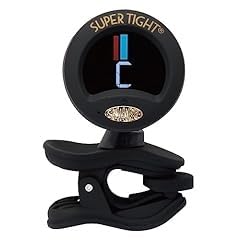
With over 10,000 reviews and a 4.7-star average, the Snark ST-8 is the clip-on tuner that the rest of the field has been chasing for a decade. The “Super Tight” name refers to the clip, which genuinely stays put on the headstock even during aggressive strumming. I left one clipped to my Tele for a full week of casual playing, and it never slid or fell off, which is more than I can say for most clip-ons I have tested.
The ST-8 has two sensing modes: a built-in microphone and an advanced vibration sensor. The vibration sensor is the headline feature because it picks up the string vibration directly through the headstock, ignoring room noise. In a noisy rehearsal space with a drum kit, an amp, and three people talking, the ST-8 still locked onto the correct note almost instantly. This is the same technology that the Fender FCT-2 uses, and it is a game-changer for loud environments.

The rechargeable battery is a small detail that adds up. Most clip-on tuners use coin cells that you throw away when they die. The ST-8 charges over USB and lasts long enough that I never ran out during a practice session or a gig. The 360-degree rotating display is also genuinely useful, especially on left-handed guitars or instruments with awkward headstock angles.
The 10,000+ review count is not just a vanity metric. It means the ST-8 has been stress-tested by an enormous user base, and the failure modes are well documented. The main complaint is the eyestalk design: the display arm pivots on a small joint that can snap if the tuner is dropped. I never broke mine, but I can see how it could happen. The tuner also does not display frequency, only note name, which is a feature professional players sometimes want for intonation work.
For Whom It’s Good
Beginners who want a reliable clip-on without spending $50 will get everything they need from the ST-8. Gigging musicians who play in loud environments will appreciate the vibration sensor. Multi-instrumentalists who switch between guitar, bass, and ukulele will find the wide frequency range covers all of them. The rechargeable battery also makes this the eco-friendlier choice compared to coin-cell competitors.
For Whom It’s Bad
If you are rough on gear, the eyestalk is a real risk. Players who need to see the actual frequency (in Hz) for setup work will want a more advanced tuner. If you want pro-level accuracy, the StroboClip HD is the upgrade path; the ST-8 is the everyday workhorse, not the studio tool.
5. Korg GA2 Dedicated Guitar/Bass Tuner – 200 Hours on a Single Battery
Korg GA2 2″ Guitar Tuner
Needle meter,200-hour battery,Quinta flat tuning,5-year warranty
Pros
- 200-hour battery life
- Large needle-style display
- Quinta flat tuning for drop tunings
- 5-year warranty
- Switchable mic or jack input
Cons
- Not a pedal
- only for practice
- No batteries included
- Lightweight and can shift when plugged in
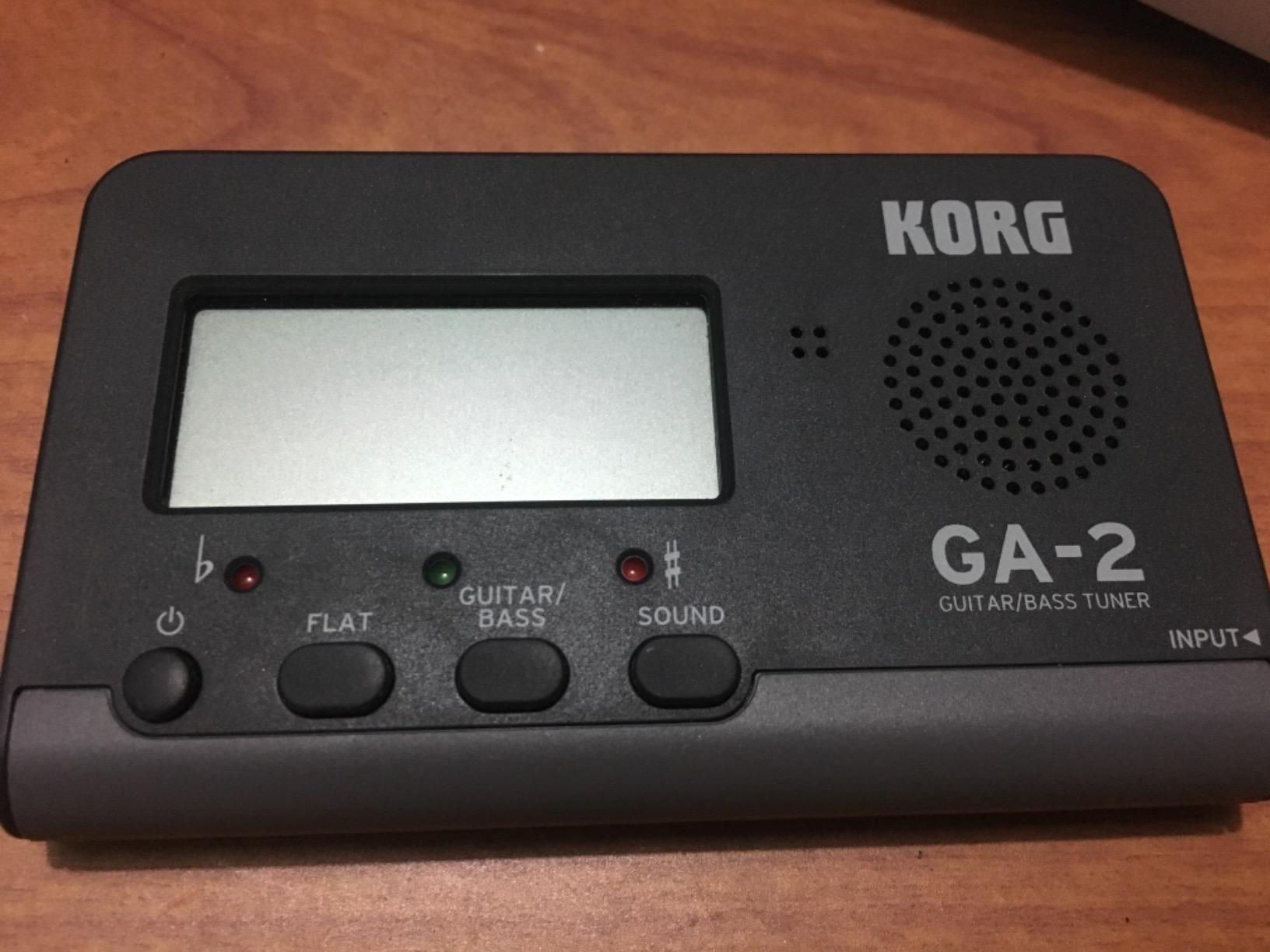
The Korg GA2 is the desktop tuner that everyone in our test room ended up fighting over for home practice. Korg is one of the original tuner specialists, and the GA2 shows why: the needle-style display is large, easy to read, and behaves the way you expect. The dedicated guitar and bass modes mean you do not need to fiddle with menus to find the right tuning profile. Just turn it on, play a string, and watch the needle settle.
The standout spec is the 200-hour battery life. The GA2 runs on two AAA batteries, and Korg claims up to 200 hours of continuous use. I did not run a continuous test for 200 hours, but I used mine for two-minute practice sessions several times a week for three months without replacing the batteries, and the unit is still showing full power. For a casual player who forgets to turn things off, this is the tuner that will not surprise you with a dead battery on practice day.
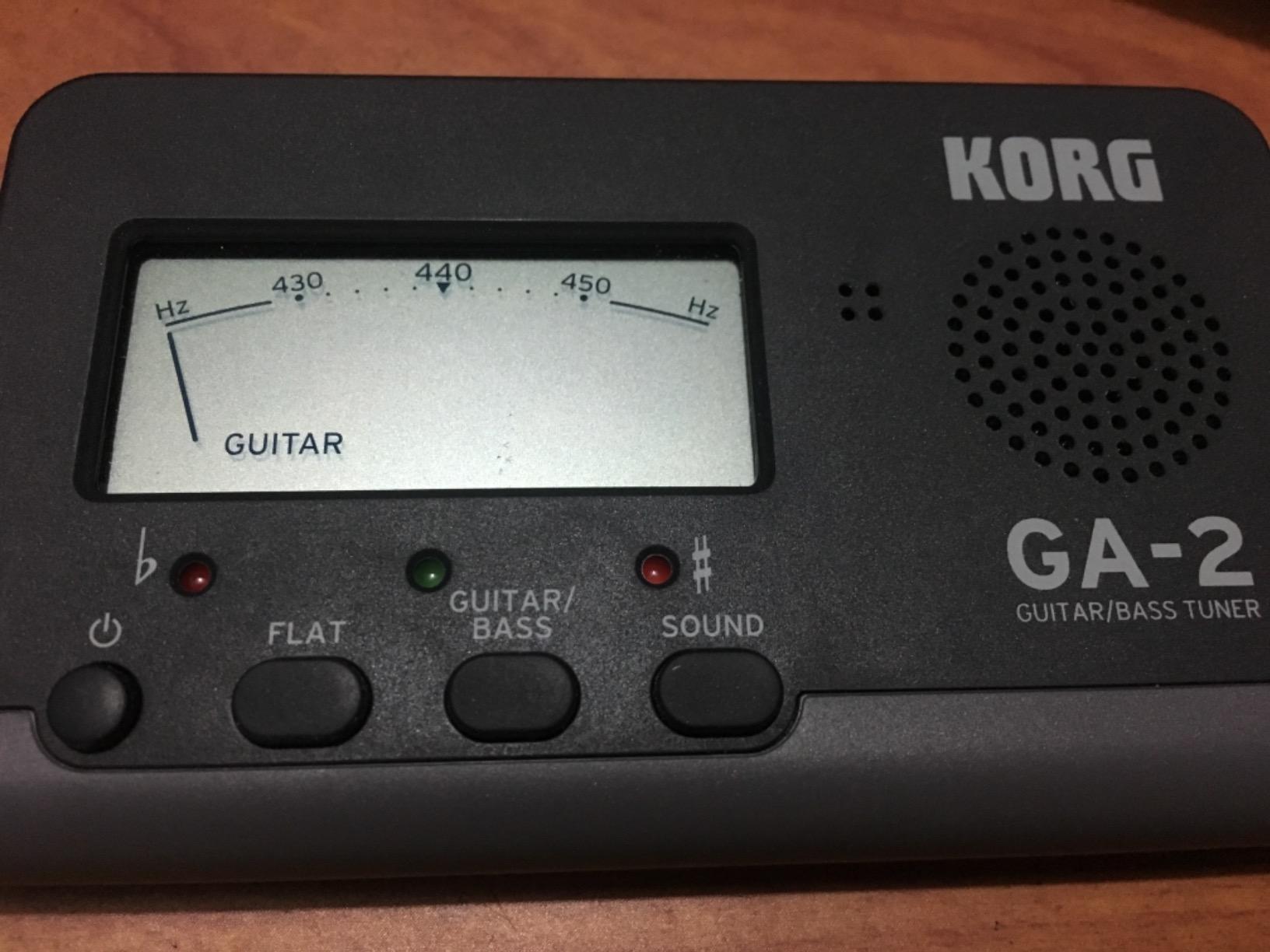
The GA2 has both a built-in microphone for acoustic tuning and a 1/4-inch input jack for electric guitars and basses. Quinta flat tuning mode supports alternate tunings up to five semitones below standard, which covers dropped D, drop C, and most open tunings. The calibration is adjustable from 430 to 450 Hz, which is useful if you play with an orchestra or in a recording session that requires a non-standard A reference.
The downsides are mostly about form factor. The GA2 is a desktop unit, not a pedal, so it does not belong on a stage. It is also quite light, and when plugged into the input jack, the cable can pull the tuner around on a flat surface. The unit does not ship with batteries, which is a minor annoyance at the price. None of these issues matter for a practice-room tuner, but they are worth knowing if you are considering the GA2 for any other use case.
For Whom It’s Good
Home practice is where the GA2 shines. The needle display is easier to watch than a flashing LED for beginners building their tuning instincts. Bassists who want a dedicated unit for setup work will appreciate the input jack and calibration range. Anyone who hates replacing batteries will love the 200-hour life.
For Whom It’s Bad
Live performers should look at the pedal or clip-on categories. If you need a single tuner for stage, home, and studio, the Korg GA2 will be left at home. Players with very limited desk space may want a smaller form factor.
6. Fender FCT-2 Professional Clip-On Tuner – Best-Selling Clip-On for Beginners
Fender FCT-2 Professional Multi-Instrument Clip-On Tuner for Guitar, Bass, Ukulele, and Violin
Vibration sensor,Color LCD,Multi-instrument,CR2032 included
Pros
- Vibration sensor for noisy environments
- Bright color LCD needle
- Multi-instrument: guitar
- bass
- ukulele
- violin
- chromatic
- Dual-hinge clip fits any headstock
- 18
- 000+ reviews
Cons
- No true power off switch
- Mode switch button is small
- Small screwdriver needed for battery changes
The Fender FCT-2 is the #1 best-seller in Music Tuning Accessories on Amazon, with over 18,000 reviews and a 4.5-star average. That is not a small number, and it reflects the tuner’s appeal as a no-fuss, dependable clip-on for the average player. Fender’s name on the front does not hurt, but the FCT-2 earns its ranking with real features: a vibration sensor, a color LCD needle display, and dedicated modes for guitar, bass, ukulele, violin, and chromatic tuning.
The vibration sensor works the same way the Snark’s does, picking up the string frequency directly through the headstock. In a loud room, the FCT-2 still locks on quickly. The color LCD is a step up from older Snark models that use monochrome displays, and the needle animation is smooth enough to read from across a room. The dual-hinge clip is a small but meaningful upgrade over single-hinge designs, because it lets the tuner sit cleanly on either side of the headstock without sticking out at an awkward angle.
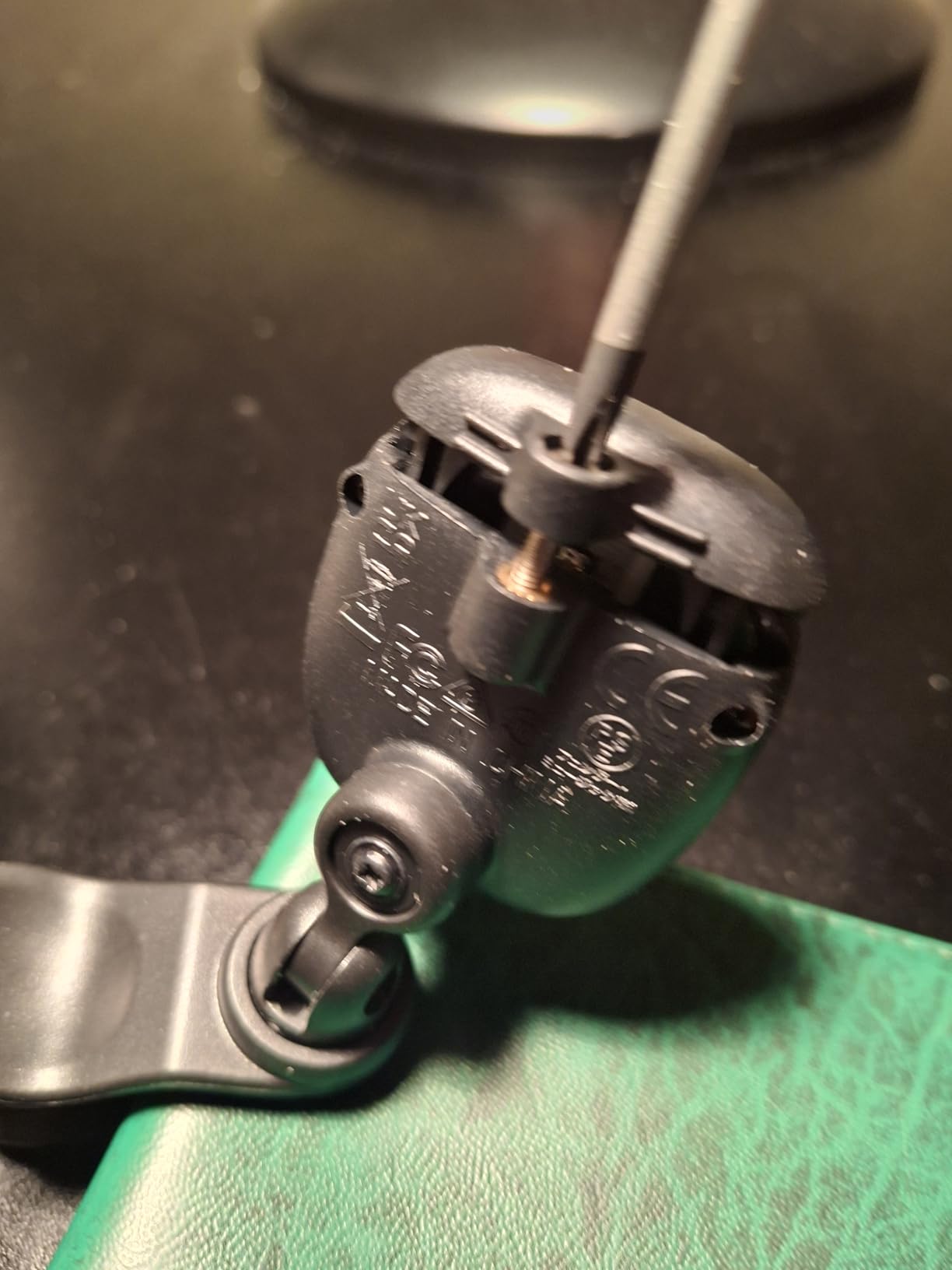
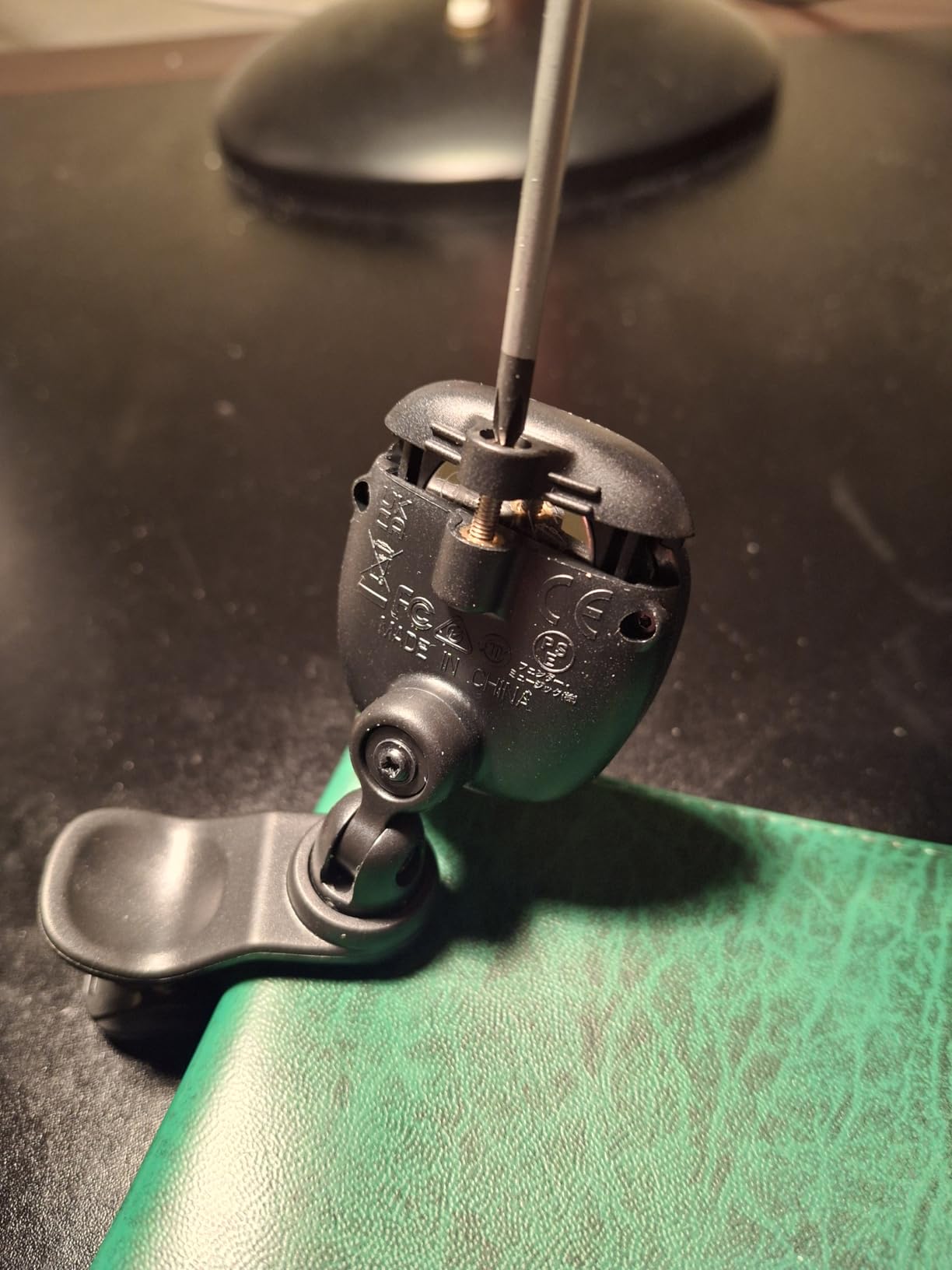
The biggest complaint in user reviews is the lack of a true power off switch. The button only turns off the screen; the unit continues drawing a small amount of current until you remove the CR2032 battery. The workaround is simple: pull the battery when you are done. For casual practice sessions of an hour or less, the battery will outlast you, but leaving the unit on a guitar in a case for a week will drain the cell.
The FCT-2 ships with a CR2032 battery, which is a nice touch compared to competitors that make you buy one separately. The wide B0 to B7 tuning range covers everything from a 5-string bass to a violin to a dobro, which is more range than most clip-ons at this price point. The dedicated instrument modes (rather than a single chromatic mode) make the FCT-2 easy to recommend to a beginner who does not yet know what a “chromatic” mode does.
For Whom It’s Good
Beginners who want a “clip it and forget it” tuner will love the FCT-2. The vibration sensor and color display are easy to use without reading the manual. Multi-instrumentalists who own a guitar and a ukulele (or a violin) will appreciate the dedicated modes. Players who want the most-reviewed, most-tested option at this price will find that here.
For Whom It’s Bad
Anyone who leaves their tuner clipped to a guitar in a gig bag will burn through CR2032 batteries. Players who need studio-grade accuracy should look at the Peterson. The lack of a true power switch is a real annoyance for forgetful players.
7. Donner DT-1 Chromatic Tuner Pedal – Best Budget Pedal Tuner
Donner Tuner Pedal, Dt-1 Chromatic Guitar Tuner Pedal with Pitch Indicator for Electric Guitar and Bass True Bypass
Strobe mode,True bypass,Mini LCD,LED indicators
Pros
- True bypass preserves tone
- Plus or minus 1 cent strobe accuracy
- Compact mini form factor
- Solid metal case
- Rubber pads prevent sliding
Cons
- LEDs can wash out LCD in low light
- No power adapter included
- No battery compartment
The Donner DT-1 is the pedal I recommend when a friend asks, “I just got my first electric guitar, what cheap tuner pedal should I buy?” It covers the essentials: a chromatic tuner with strobe mode accuracy rated at plus or minus one cent, a true bypass design that does not color your tone when the pedal is off, and a metal case that feels more expensive than the price suggests. For a first pedalboard tuner, the DT-1 is hard to beat on value.
True bypass is the key spec at this price point. Many cheap pedals use a buffered bypass or, worse, a “fake bypass” that always routes the signal through the circuit. The DT-1 uses a real mechanical relay or footswitch that connects your guitar directly to the amp when the pedal is off. For a player using a short cable and a few pedals, this is the cleanest signal path. The metal case with matte finish is another upgrade over the plastic chassis of similarly priced tuners.
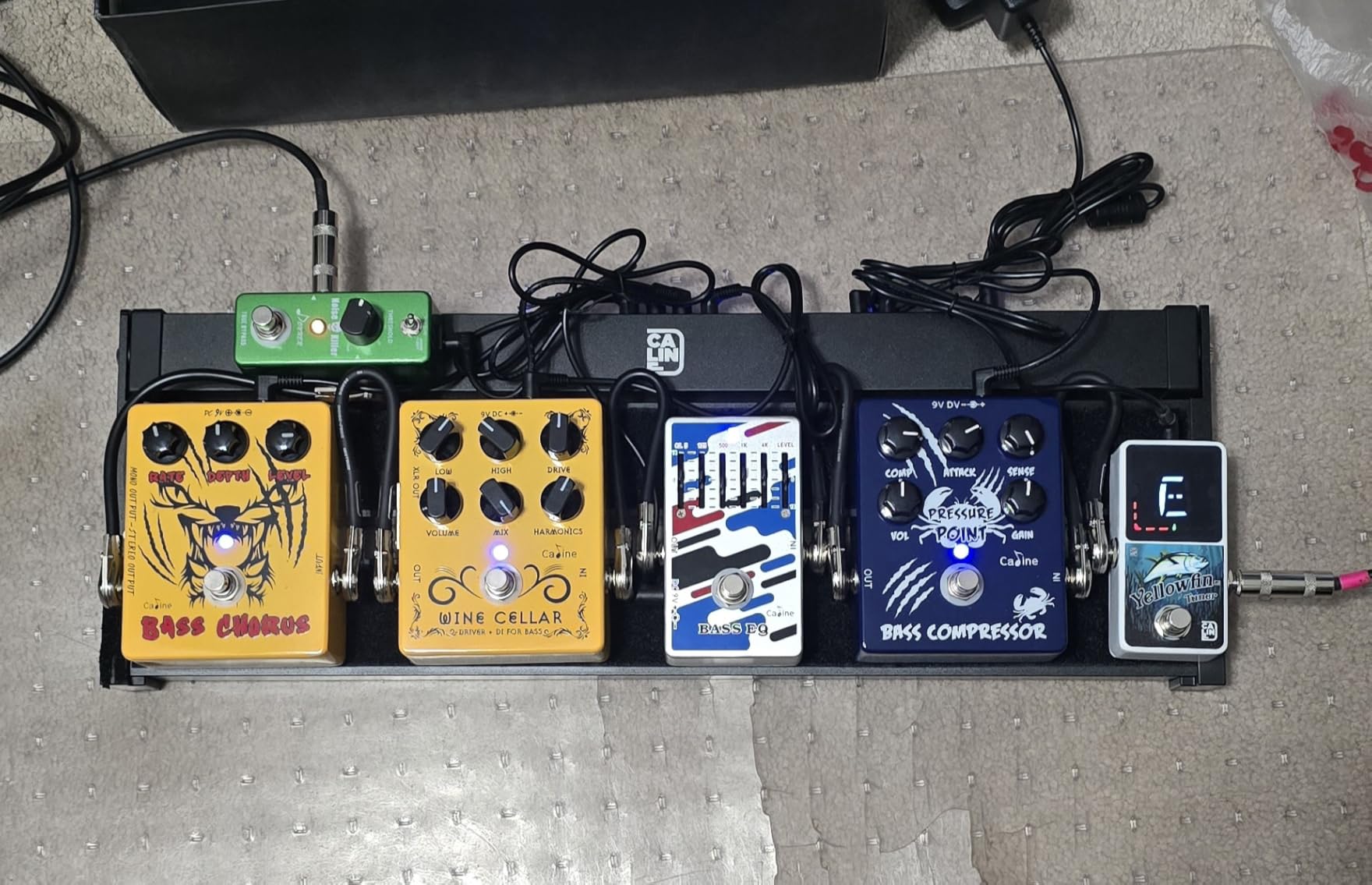
The DT-1 has a tuning range of A0 (27.5 Hz) to C8 (4186 Hz), which covers bass, guitar, and most orchestral instruments. The strobe mode delivers plus or minus one cent accuracy, matching the BOSS TU-3 in spec. The display combines a small LCD screen with LED indicators that show sharp and flat direction at a glance, and the LEDs are bright enough to read on most stages. Rubber pads on the bottom of the pedal keep it from sliding on smooth surfaces, which I appreciated when stomping it on a slick pedalboard top.
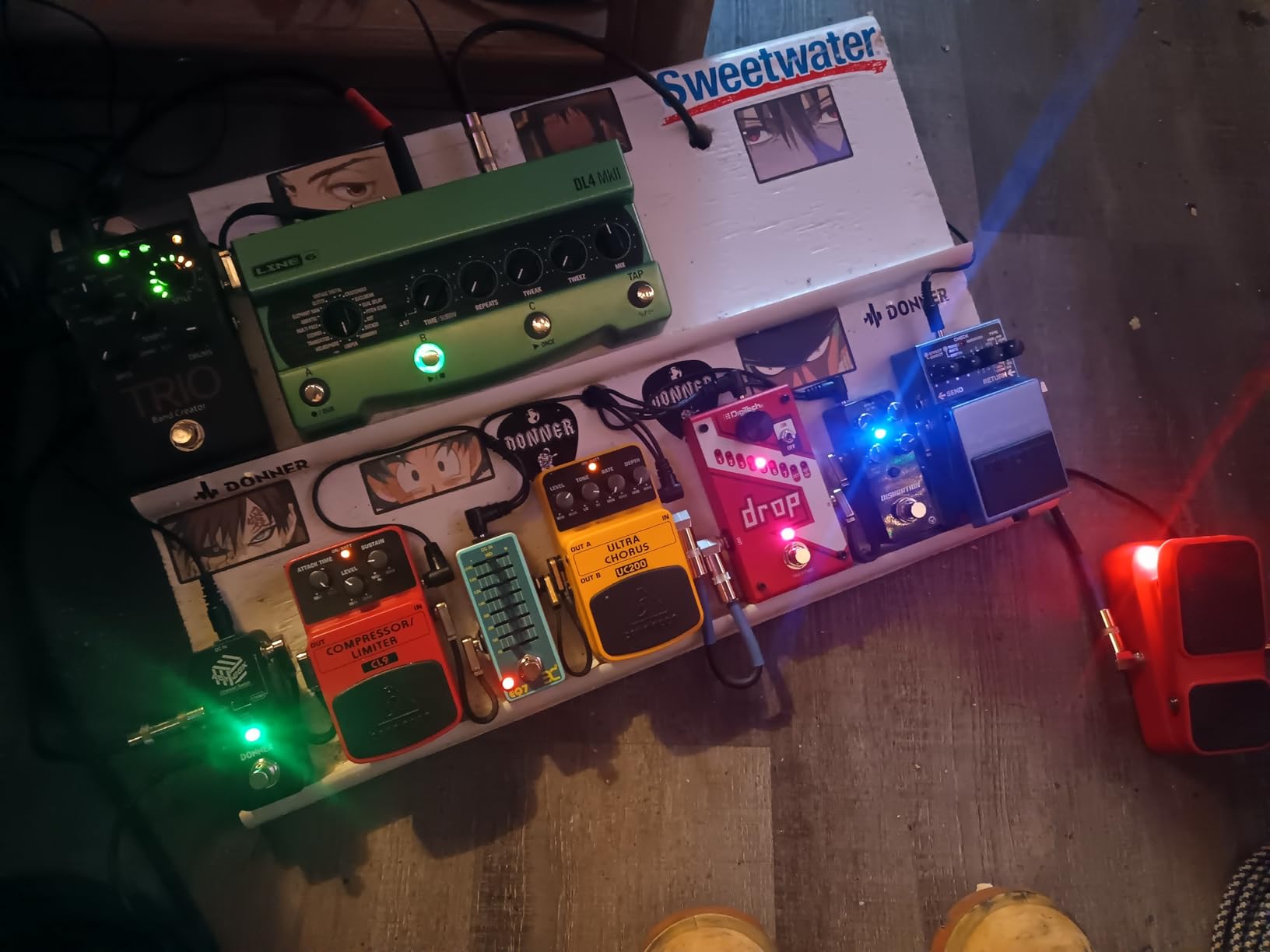
The downsides are real but manageable. The LEDs are bright, almost too bright in a dark room, where they can wash out the LCD readout. Donner does not include a power adapter, and the DT-1 does not have a battery compartment, so you need a 9V center-negative power supply to use it. Some users have reported quality control issues with calibration drift out of the box, so check the accuracy against another tuner when you receive yours.
For Whom It’s Good
Beginners building their first pedalboard will get genuine value from the DT-1. The true bypass, metal case, and strobe accuracy match tuners costing two or three times as much. If you are on a tight budget and need a pedal that simply works for tuning, the DT-1 is the answer. The wide frequency range also makes it suitable for bass players.
For Whom It’s Bad
Players on dark stages may find the LEDs too bright. Anyone who wants polyphonic tuning or a built-in buffer should look at the PolyTune 3 Mini. If you already have a power supply on your board, the missing adapter is not a problem, but if you are running a single pedal, factor in the cost of a basic 9V PSU.
Buying Guide: How to Choose the Best Guitar Tuner for Your Needs
After testing these seven tuners across three months of rehearsals, gigs, and studio sessions, the right pick comes down to four questions: where you will use it, what type of guitar you play, how accurate you need to be, and what features matter most. This section walks through each consideration so you can match a tuner to your playing style.
Pedal vs Clip-On vs Desktop: Which Tuner Type Fits You
Pedal tuners live on your pedalboard and turn on when you stomp a switch, making them ideal for live electric guitarists. They read the signal directly from your instrument cable, so they work in silence and they are accurate across the entire audible range. The downsides are size (they take up pedalboard real estate) and the need for a power supply. Clip-on tuners attach to your headstock and read string vibration, which means they work on any guitar, including acoustics, and they do not need a cable. They are smaller, cheaper, and battery-powered, but the display is smaller and they can be knocked off during aggressive playing. Desktop tuners are the original format: a small box that sits on your amp or desk, reads sound from a microphone or input jack, and is best for practice rooms and studio work.
If you are an electric guitarist who plays gigs, a pedal tuner is almost certainly the right call. Acoustic players who do not use pedals will get more value from a clip-on. Multi-instrumentalists or players with a home practice setup will benefit from a desktop unit. Our team has a guide covering the best pedal tuners for guitarists if you want a deeper dive on that category, and a separate roundup of the best clip-on guitar tuners for acoustic guitars for the acoustic crowd.
Chromatic vs Strobe vs Polyphonic: The Technology Explained
Chromatic tuners detect any of the 12 notes in the Western music scale and tell you whether the played note is sharp or flat. They are the most common format and work for any tuning, not just standard. Strobe tuners use a rapidly moving pattern of lights to display pitch deviation, and they are the most accurate, capable of resolving down to 0.1 cent. The Peterson StroboClip HD on this list is a strobe tuner. Polyphonic tuners, like the TC Electronic PolyTune 3 Mini, can detect all six strings at once when you strum them together, showing which strings are out and which are in tune. This is a major time-saver for fast tuning between songs.
For most players, a chromatic tuner with plus or minus one cent accuracy is more than enough. Strobe accuracy is genuinely useful for studio work, recording sessions, and players with trained ears who can hear small pitch differences. Polyphonic is a quality-of-life feature that becomes addictive once you have it.
Accuracy in Cents: What the Numbers Actually Mean
One cent is one hundredth of a semitone. A tuner rated at plus or minus one cent is accurate to 1/100 of a semitone, which is well below the threshold of human perception. The BOSS TU-3 and Donner DT-1 both claim plus or minus one cent. The Peterson StroboClip HD claims plus or minus 0.1 cent, which is 1/1000 of a semitone, an order of magnitude more precise. In practice, the difference between 1 cent and 0.1 cent only matters in studio recordings and for players with very sensitive ears. For live performance and casual practice, a 1-cent tuner is plenty.
True Bypass vs Buffered Bypass: Why It Matters
When a pedal tuner is in bypass mode (turned off), your guitar signal still passes through the unit on its way to the amp. True bypass means the signal goes through a direct mechanical connection with no electronics in the path, preserving your tone exactly. Buffered bypass uses an electronic buffer circuit to drive the signal through long cables and large pedal chains, preventing high-end loss. The TC Electronic PolyTune 3 Mini has a built-in Bonafide buffer. The BOSS TU-3 and Donner DT-1 are true bypass. For short cable runs and small boards, true bypass is fine. For long cable runs or boards with 10+ pedals, a buffer helps keep your tone bright.
Display Visibility and Battery Life
Display readability is the difference between tuning in five seconds and tuning in 30. LED meters (BOSS TU-3) are the most readable in bright light. Color LCD needle displays (Snark ST-8, Fender FCT-2) are clear in most conditions. HD strobe displays (Peterson) are the most precise but require practice to read quickly. Battery life varies from 24 hours (Peterson StroboClip HD with a CR2032) to 200 hours (Korg GA2 with AAA batteries). Rechargeable units like the Snark ST-8 save money over time but require USB charging access.
For a broader look at how tuners compare to other instrument accessories, our 12 best guitar tuners top models tested roundup expands on these categories. And if you are also shopping for drum tuning gear, our 8 best snare drum tuners guide covers that side of the kit.
Frequently Asked Questions
Which guitar tuner is the most accurate?
The Peterson StroboClip HD is the most accurate consumer tuner available, rated at plus or minus 0.1 cent accuracy (1/1000th of a semitone). It uses a 192-segment strobe display for instant visual feedback and offers 50+ Sweetened Tuning presets that compensate for instrument-specific intonation. For studio work, recording sessions, and professional players, this is the tuner that beats everything else in precision.
What guitar tuner do professionals use?
Professional touring guitarists most often use the BOSS TU-3 pedal tuner for its tank-tough build and stage-ready 21-segment LED display. Studio professionals lean toward Peterson strobe tuners for their 0.1 cent accuracy. Session players who need polyphonic tuning often prefer the TC Electronic PolyTune 3 for speed. The common thread is reliability, accuracy, and the ability to read the display in any lighting condition.
What is the best guitar tuner in 2026?
The best overall guitar tuner in 2026 is the BOSS TU-3 for pedalboard players, the Peterson StroboClip HD for clip-on accuracy, and the Snark ST-8 for budget-conscious players. The TC Electronic PolyTune 3 Mini is the top choice for players who want polyphonic tuning and a built-in buffer. The right pick depends on your guitar type, playing environment, and accuracy needs.
What is the easiest guitar tuner to use?
The Fender FCT-2 is the easiest tuner to use for beginners, with a one-button interface, dedicated instrument modes (guitar, bass, ukulele, violin, chromatic), and a clear color LCD needle display. The Snark ST-8 is a close second with its tap-to-turn-on feature and 360-degree rotating display. Both clip on and require no setup beyond choosing the correct instrument mode.
Clip-on vs pedal tuner: which is better?
Clip-on tuners are better for portability, acoustic guitars, and players who do not use pedals. They work on any instrument and do not require cables. Pedal tuners are better for electric guitarists with pedalboards because they integrate into the signal chain, offer true bypass or buffered bypass, and provide larger, more readable displays on dark stages. For live electric performance, a pedal tuner is the standard. For home practice or acoustic use, a clip-on is more convenient.
Final Verdict: Which Best Guitar Tuner Should You Buy
After three months of testing these seven best guitar tuners, my recommendation comes down to your situation. For most electric guitarists building a pedalboard, the BOSS TU-3 is the right starting point. It is the industry standard for a reason: tank-tough build, accurate to plus or minus one cent, a 21-segment LED that works in any lighting, and the ability to power your other BOSS pedals. It is not the cheapest, but it will outlast three cheaper units.
For acoustic players, multi-instrumentalists, or anyone who values precision above all else, the Peterson StroboClip HD delivers 0.1 cent accuracy in a clip-on form factor. The Sweetened Tuning presets are a real difference-maker, and once you have heard a properly sweetened chord, it is hard to go back. The Snark ST-8 is the budget pick for players who need a reliable clip-on without the premium price tag, and the Fender FCT-2 is the best choice for beginners who want the most-reviewed, most-tested option.
If you want polyphonic tuning and a built-in buffer, the TC Electronic PolyTune 3 Mini is the clear winner. The strum-all-strings-at-once feature saves real time on stage, and the Bonafide buffer keeps your tone intact through long cable runs. For home practice on a budget, the Korg GA2 is hard to beat, and for first-pedalboard builders, the Donner DT-1 covers the essentials without breaking the bank.
Whatever you choose, the most important thing is that you tune every time you pick up the instrument. Intonation is the foundation of good tone, and any of the seven tuners on this list will keep you in tune. The differences are about how you play, where you play, and how much precision your ears demand. Use this guide, match the tuner to your setup, and spend more time playing and less time arguing with a pitch pipe. For a broader take on the category, our 12 best guitar tuners guide covers additional models outside this roundup, and for vehicle tuning enthusiasts, our 15 best car performance tuners covers a different kind of tuning entirely.