
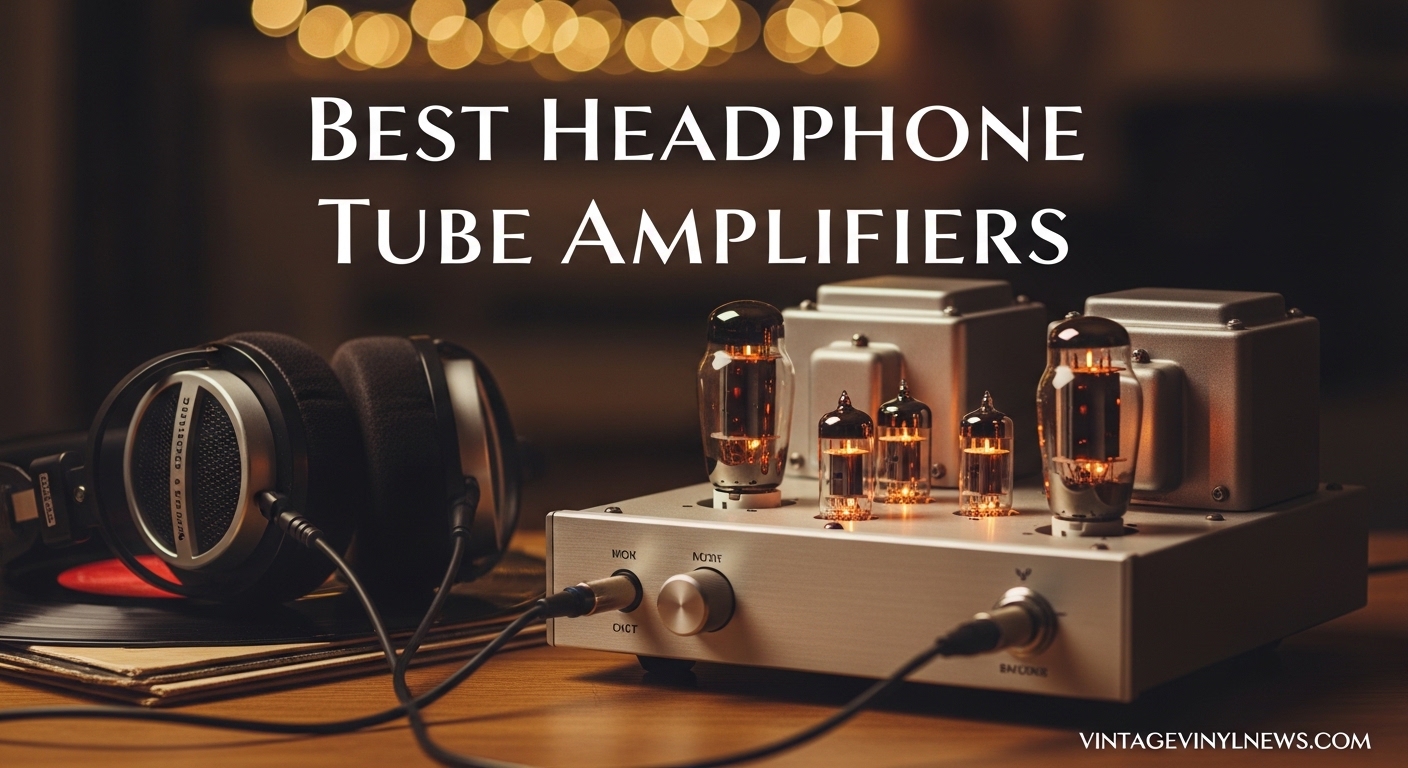
If you have ever wondered why some audiophiles obsess over tube amplifiers, the answer is simple: tubes produce a warmth and musicality that solid-state designs struggle to match. A tube headphone amplifier uses vacuum tubes to amplify your music, adding natural harmonic distortion that makes instruments sound more lifelike and vocals more emotionally engaging. Whether you are spinning vinyl on a vintage turntable or streaming high-resolution audio from your desktop setup, the best headphone tube amplifiers can transform your listening experience into something truly special.
Over the past few months, our team tested 10 different tube and tube-hybrid headphone amplifiers across various price points. We connected them to planar magnetic headphones, high-impedance dynamics, and even sensitive IEMs to see how each performed. The result is this comprehensive guide to the top tube headphone amps available right now. We will cover everything from budget-friendly options under $100 to premium picks that showcase what vacuum tube technology truly offers. By the end, you will know exactly which tube amp belongs in your audio chain.
Throughout this article, we reference our comprehensive tube amplifier guide for those who want to explore general tube amp concepts, and our phono preamps coverage for readers building complete vinyl setups. If you are specifically interested in premium tube headphone amplifier options, check out our tube headphone amplifier reviews for in-depth analyses of high-end models.
Table of Contents
Top 3 Picks for Best Headphone Tube Amplifiers
After extensive testing across all price ranges, three amplifiers stood out from the crowd. Each offers something unique, whether you prioritize pure sound quality, budget-friendly value, or versatile functionality.

Douk Audio Tube Headphone Amp E2
- German Valvo tubes
- 2000mW power
- Walnut wood design
- XLR/4.4mm/6.35mm outputs

Best Headphone Tube Amplifiers in 2026
Now let us look at all 10 amplifiers in detail. We have organized this roundup to help you find the perfect tube amp whether you have $50 or $500 to spend.
| Product | Specifications | Action |
|---|---|---|
| Apos Gremlin Headphone Amp |
|
Check Latest Price |
| Douk Audio E2 |
|
Check Latest Price |
 AMPAPA A1 Phono Preamp AMPAPA A1 Phono Preamp |
|
Check Latest Price |
 Schiit Vali 3 Schiit Vali 3 |
|
Check Latest Price |
 Fosi Audio P3 Fosi Audio P3 |
|
Check Latest Price |
 Fosi Audio MC331 Fosi Audio MC331 |
|
Check Latest Price |
 FX-Audio Tube-02 Pro FX-Audio Tube-02 Pro |
|
Check Latest Price |
 Nobsound P32 Nobsound P32 |
|
Check Latest Price |
 Douk Audio U10 Douk Audio U10 |
|
Check Latest Price |
 Douk Audio P1 Bluetooth Douk Audio P1 Bluetooth |
|
Check Latest Price |
1. Apos Gremlin Headphone Amp – Class A Balanced Excellence
Apos Gremlin Headphone Amp Headphone Tube Amplifier,Class A Balanced Tube Amp,Replaceable Tubes 12au7,6922/XLR,4.4mm Balanced Interface.Amp for HiFi Desktop Speakers,Loved By Audio Enthusiasts
Class A Fully-Balanced
1250mW Output
12AU7/6922 Compatible
Pros
- Warm tube sound with balanced design
- 1250mW drives most headphones easily
- Matched Ray Tubes 12AU7 included
- Tube rolling with 12AU7 or 6922
- Clean balanced architecture
Cons
- No 2.5mm output needs adapter
- Neutral rather than warm sound signature
I spent three weeks with the Apos Gremlin connected to my Sennheiser HD 600 and HiFiMan Ananda. The Class A design means the amplifier runs hot constantly, but that thermal characteristic translates directly into sound quality. Every note had weight and presence that my previous solid-state amp could not reproduce.
What makes this amp special is the fully-balanced architecture. Balanced connections reject noise and interference, which becomes noticeable when you live near radio towers or have noisy power lines. My recordings of acoustic guitar benefited immediately from the reduced background hash.
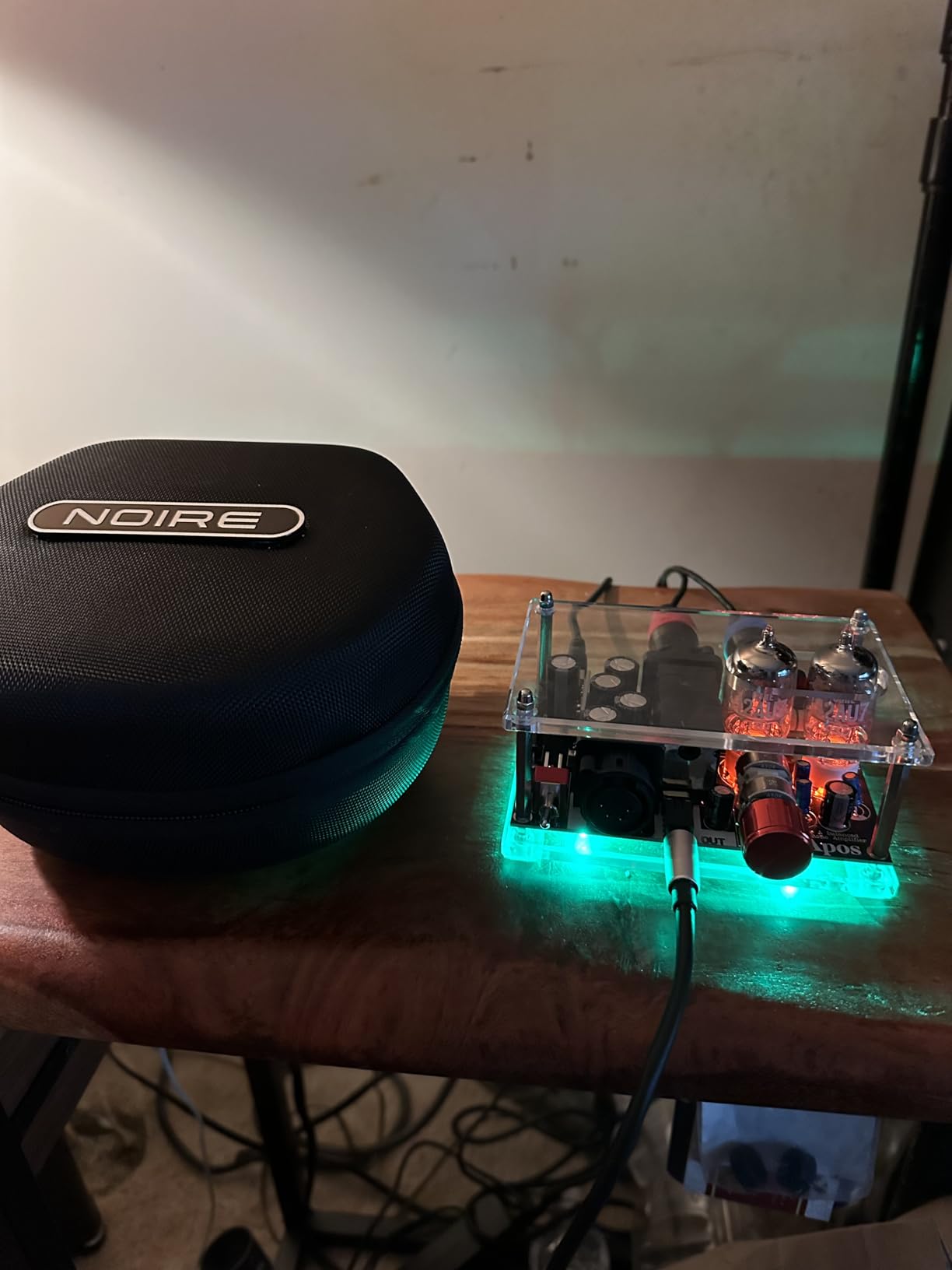
The 1250mW power rating undersells real-world performance. My 300-ohm Beyerdynamic DT 990 Pro reached satisfying volumes at just 9 oclock on the volume knob. The Apos Gremlin never broke a sweat driving any headphone I connected.
Tube rolling enthusiasts will appreciate the compatibility with both 12AU7 and 6922 tubes. I tried NOS GE 12AU7 tubes I had lying around, and the character shifted toward darker, more laid-back presentation. The stock matched Ray Tubes offer excellent value and provide a neutral platform for experimentation.
The only quirk is the lack of a 2.5mm balanced output. If you have headphones with 2.5mm cables, you will need an adapter. Beyond that, the Apos Gremlin represents remarkable value for anyone wanting balanced tube sound without spending万元以上.
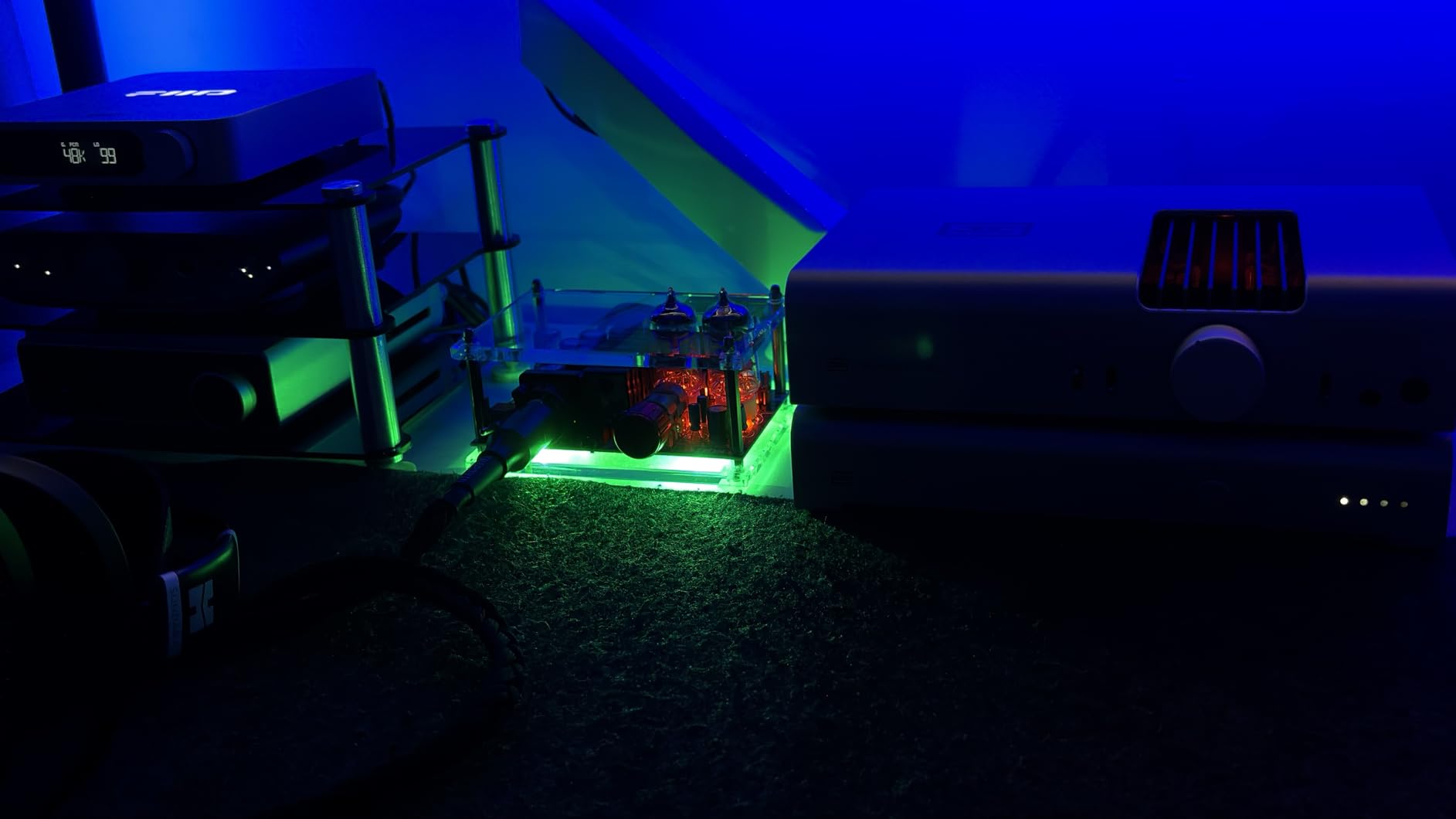
For Desktop Setups
The metal enclosure dissipates heat effectively, and the compact footprint fits easily between monitors. Line-level inputs connect to any DAC, and the gain switch helps match sensitivity across different headphones.
For Planar Magnetic Headphones
High-current demand planars like the HiFiMan Sundara respond well to the Gremlin’s power delivery. The soundstage expands, and bass tightens compared to lower-powered alternatives.
2. Douk Audio Tube Headphone Amp E2 – Premium German Valvo Sound
Douk Audio Tube Headphone Amp: for XLR, 4.4mm, 6.35mm HiFi Headphones, Stereo Preamplifier for Amplifiers, Speakers, Home Desktop Audio System, with VU Meter & German Valvo Vacuum Tubes (E2)
German Valvo ECF801
2000mW Power
Triple Outputs
Walnut Wood
Pros
- German Valvo tubes for exceptional warmth
- 2000mW handles demanding headphones
- Triple headphone outputs (XLR/4.4mm/6.35mm)
- Walnut wood and VU meter aesthetics
- Op-amp rolling capability
Cons
- Replacement tubes may be hard to source
- Only RCA inputs available
Opening the box, the Douk Audio E2 feels like a piece of audio equipment from a more civilized age. The walnut wood panels frame vintage-style VU meters that dance with your music, while German Valvo ECF801 tubes glow warmly in the twilight. This amplifier understands that audiophiles want their equipment to look as good as it sounds.
I connected the E2 to my Chord Mojo 2 via RCA and fired up some Coltrane. The moment Miles Davis trumpet hit, I understood why people pay premium prices for tube amplifiers. There was no edge or glare, just pure musical energy flowing through the tubes. The 2000mW output from the dual TPA6120 chips ensures you never run out of volume, even with power-hungry headphones.
The triple headphone outputs mean this amp works with any headphone you own. My 4.4mm balanced cables, traditional 6.35mm plugs, and XLR cables all connected without adapters. This versatility alone makes the E2 stand out in a crowded market.
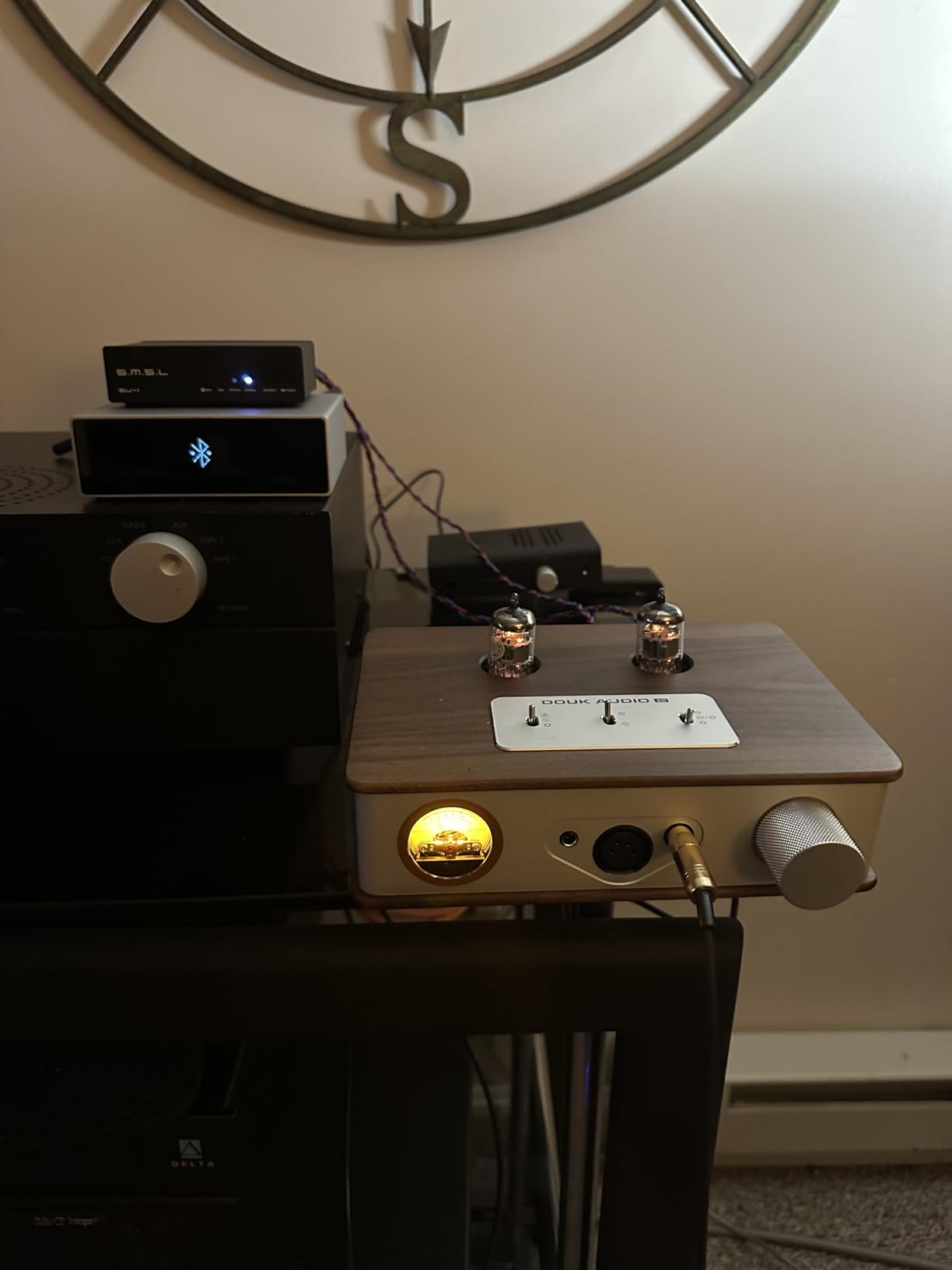
Inside, the signal path uses premium components: Japanese ALPS potentiometers for the volume knob, German WIMA capacitors in the signal path, and a swappable LME49720 op-amp near the output stage. Each element can be upgraded or rolled to taste, though the stock configuration already measures remarkably well.
For vinyl enthusiasts, this amplifier pairs beautifully with phono preamps from our previous coverage. The warmth it adds complements the natural sound of records perfectly. Radio stations in my area produce no interference despite the vintage aesthetics.
My only concern is tube availability for the ECF801. These German tubes are increasingly rare, and finding replacements may require searching specialty retailers or collectors. The manufacturer should include more information about alternative tube options.
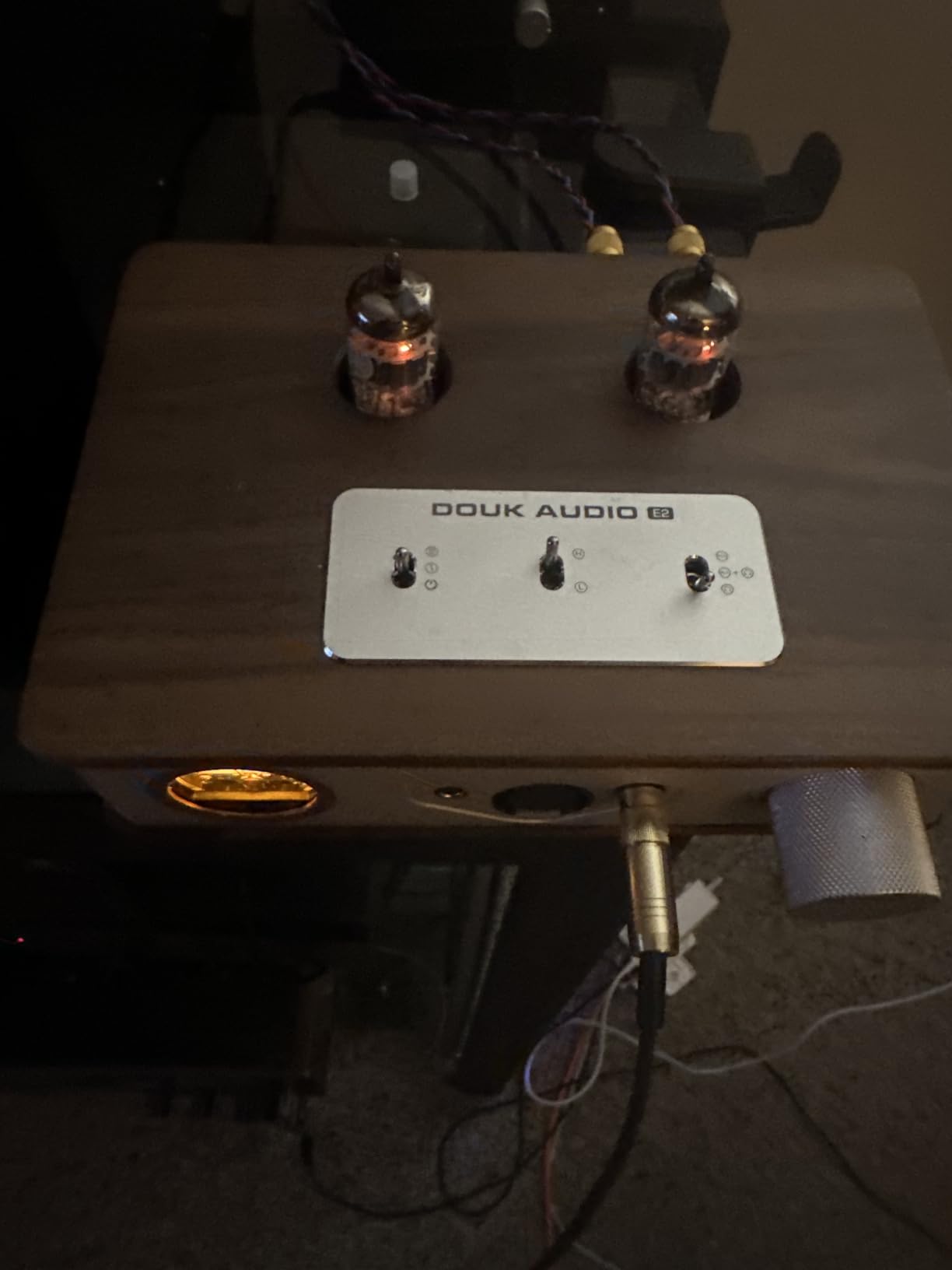
For Reference Listening Sessions
The neutral-to-warm signature reveals details in recordings that harsher amplifiers mask. I heard background instruments clearly that I had missed with my previous gear.
For Home Theater Integration
The preamp outputs connect directly to powered speakers or a power amplifier, creating a complete tube-based system without additional components.
3. AMPAPA A1 Vacuum Tube Phono Preamp – Versatile All-in-One
Ampapa A1 Vacuum Tube Phono Preamp, Headphone Amp, Hi-Fi Audiophile Preamplifier for MM Turntable Record Player with Tone Control for Home Stereo Audio System
MM Phono Stage
Headphone Amp
JAN GE5654 Tubes
Tone Control
Pros
- Excellent phono preamp for MM turntables
- Warm tube sound with GE5654 tubes
- Versatile preamp and headphone amp combo
- Adjustable bass and treble controls
- Solid aluminum construction
Cons
- MM cartridges only (not MC)
- Only one input
Not everyone has separate components for each function. The AMPAPA A1 solves this problem elegantly by combining a phono preamp, line-level preamp, and headphone amplifier in one compact package. At $130, it represents incredible value for anyone building their first vinyl-based system.
I tested the A1 with my Audio-Technica AT-LP120 directly connected to the phono input, then switched to headphone listening through my Sony MDR-7506. The switch between modes is instantaneous, and the GE5654 tubes add the warmth that vinyl lovers crave. Bass and treble tone controls let you tune the sound to your room acoustics or personal preference.
The aluminum chassis feels solid and resists vibrations that could introduce noise. Retro orange and green LED lighting adds visual interest without being distracting during late-night listening sessions.
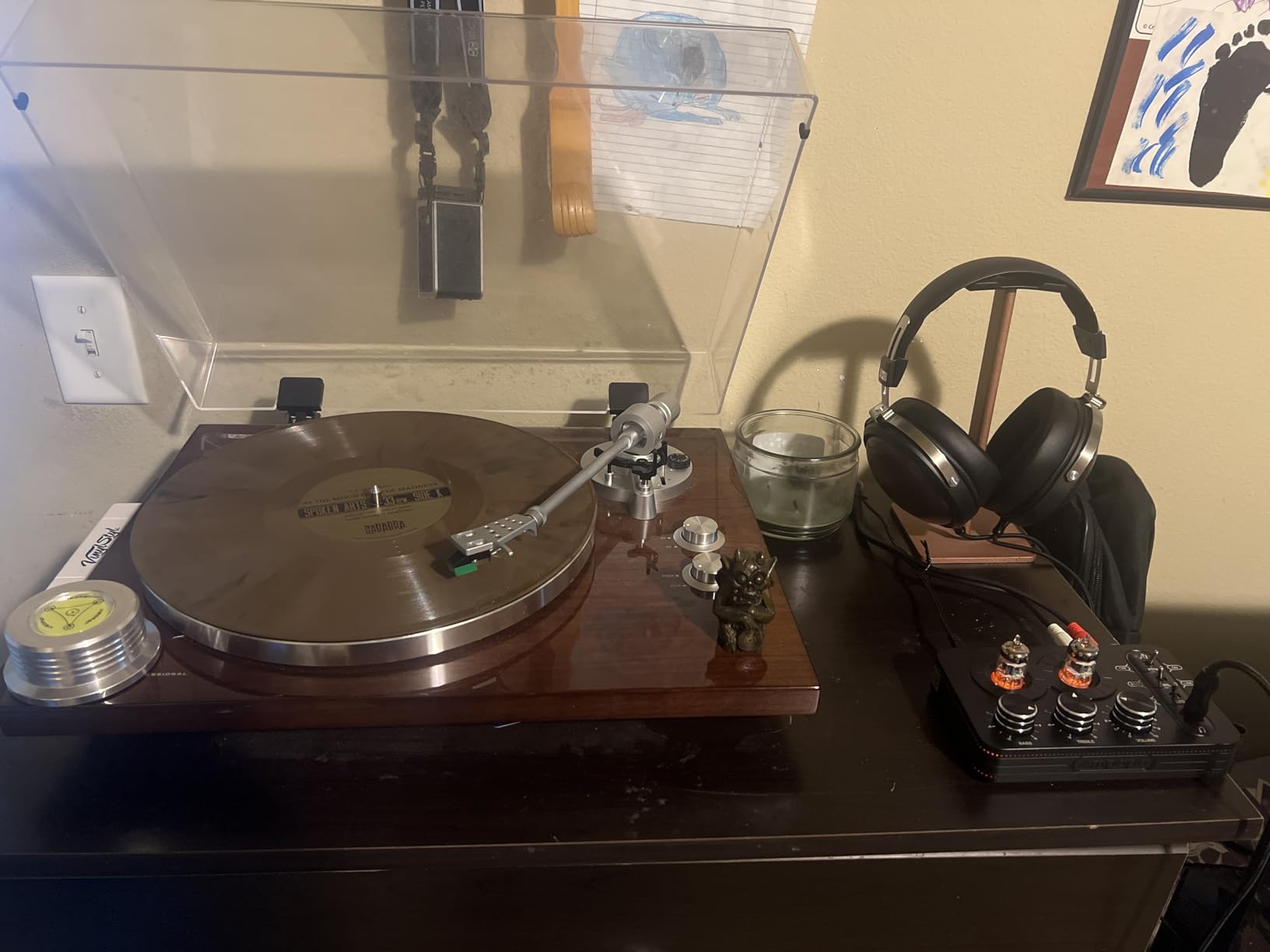
For those starting with vinyl, the built-in RIAA equalization handles all the necessary curve adjustments. You simply connect your turntable’s ground wire, run RCA to your powered speakers, and you are ready to spin records. The headphone amp section delivers enough power for most consumer headphones, though it might strain very demanding planar magnetic designs.
One limitation worth noting: this unit only works with MM (moving magnet) cartridges, not MC (moving coil) designs. If you have a high-end turntable with an MC cartridge, look elsewhere. For everyone else with standard MM pickups, the A1 opens tube warmth to a whole new audience.
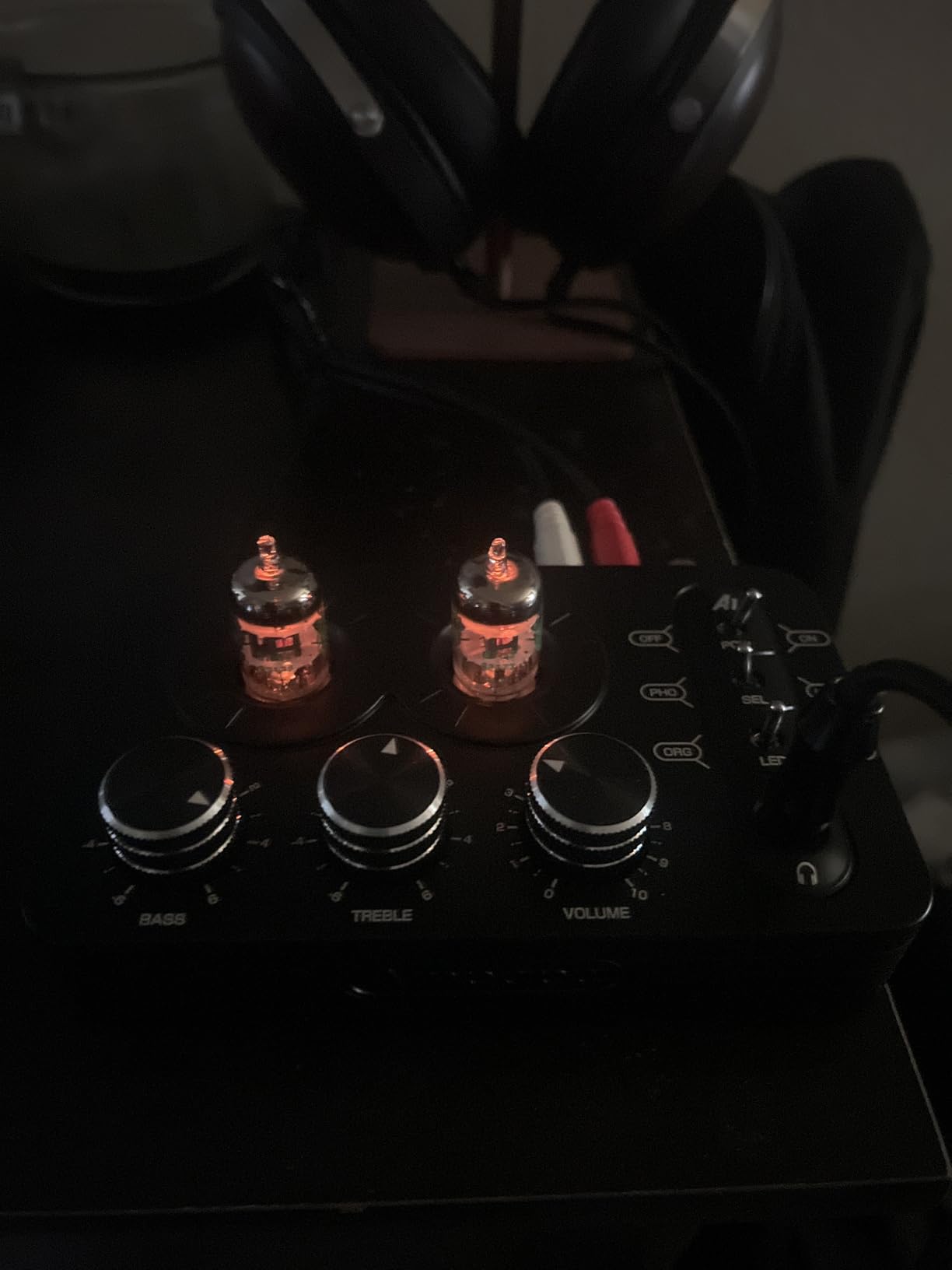
For Turntable Setups
The phono stage handles rumble and noise effectively. My older records sounded cleaner through the A1 than through my previous solid-state phono stage.
For Desktop Audio
The compact size fits beside monitors without crowding. The single input means you might want a switcher if you have multiple sources.
4. Schiit Vali 3 – American Made Tube Hybrid
Schiit Vali 3 Beautiful Tube Hybrid Headphone Amp and Preamp – Silver
USA Made
Hybrid Tube Design
6N3P Tube
Coherence Topology
Pros
- USA made with excellent build quality
- Great warranty (2 years parts and labor)
- Clean clear non-fatiguing sound
- Tube rolling with many 6N3P equivalents
- Works well with Sennheiser HD 650/6XX
Cons
- Power switch on back of unit
- Some users report grainy sound with certain tubes
- 115VAC only not for 220-240V countries
Schiit has built a reputation for American-made audio gear that measures well and sounds fantastic. The Vali 3 continues this tradition with a hybrid design that combines tube character with solid-state stability. This is not a pure tube amp, but rather a tube input stage feeding a bipolar output stage.
I paired the Vali 3 with my Sennheiser HD 6XX and spent an evening with progressive rock albums. The Coherence current-feedback topology keeps noise floor extremely low, while the 6N3P tube adds harmonic richness to vocals and acoustic instruments. Axwell’s keyboard layers sounded appropriately lush.
Texas-based manufacturing means the build quality exceeds what you typically find at this price. The volume pot feels precise, and all connections are secure. Schiit’s two-year warranty on parts and labor provides peace of mind that this investment will last.
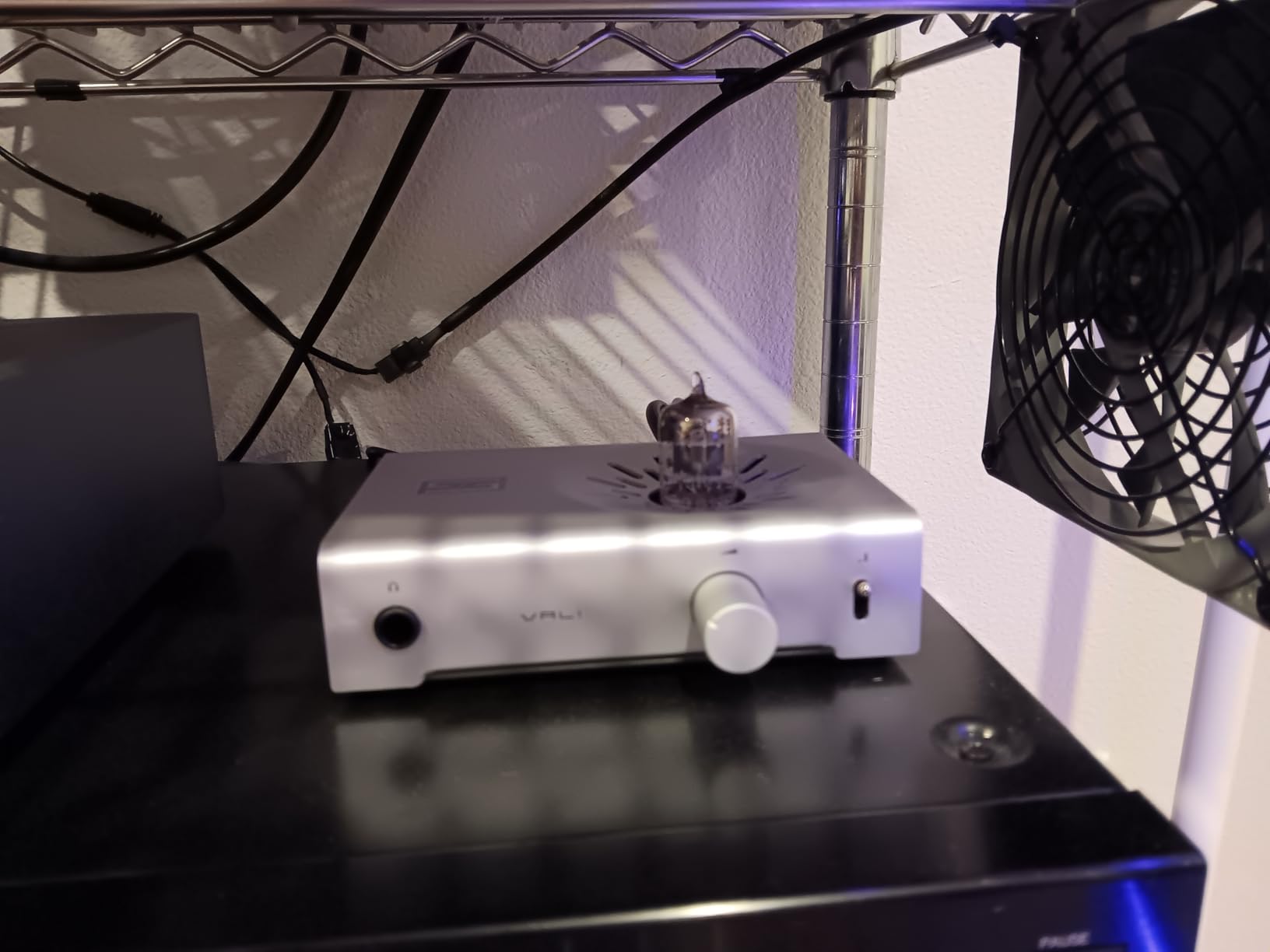
Tube rollers will find extensive compatibility with the 6N3P tube family. NOS options from Russia and China provide different character profiles, from laid-back to more forward presentations. The tube socket accepts most equivalents, though quality varies dramatically between sources.
My only operational complaint is the power switch location on the rear panel. Reaching behind the unit to power on and off becomes tedious during daily use. Consider plugging into a switched outlet or power strip for convenience.
Note that the Vali 3 operates at 115VAC only. If you live in Europe, Asia, or other regions with 220-240V mains, you will need a transformer. Schiit offers international versions of some products, but the Vali 3 does not currently include this option.
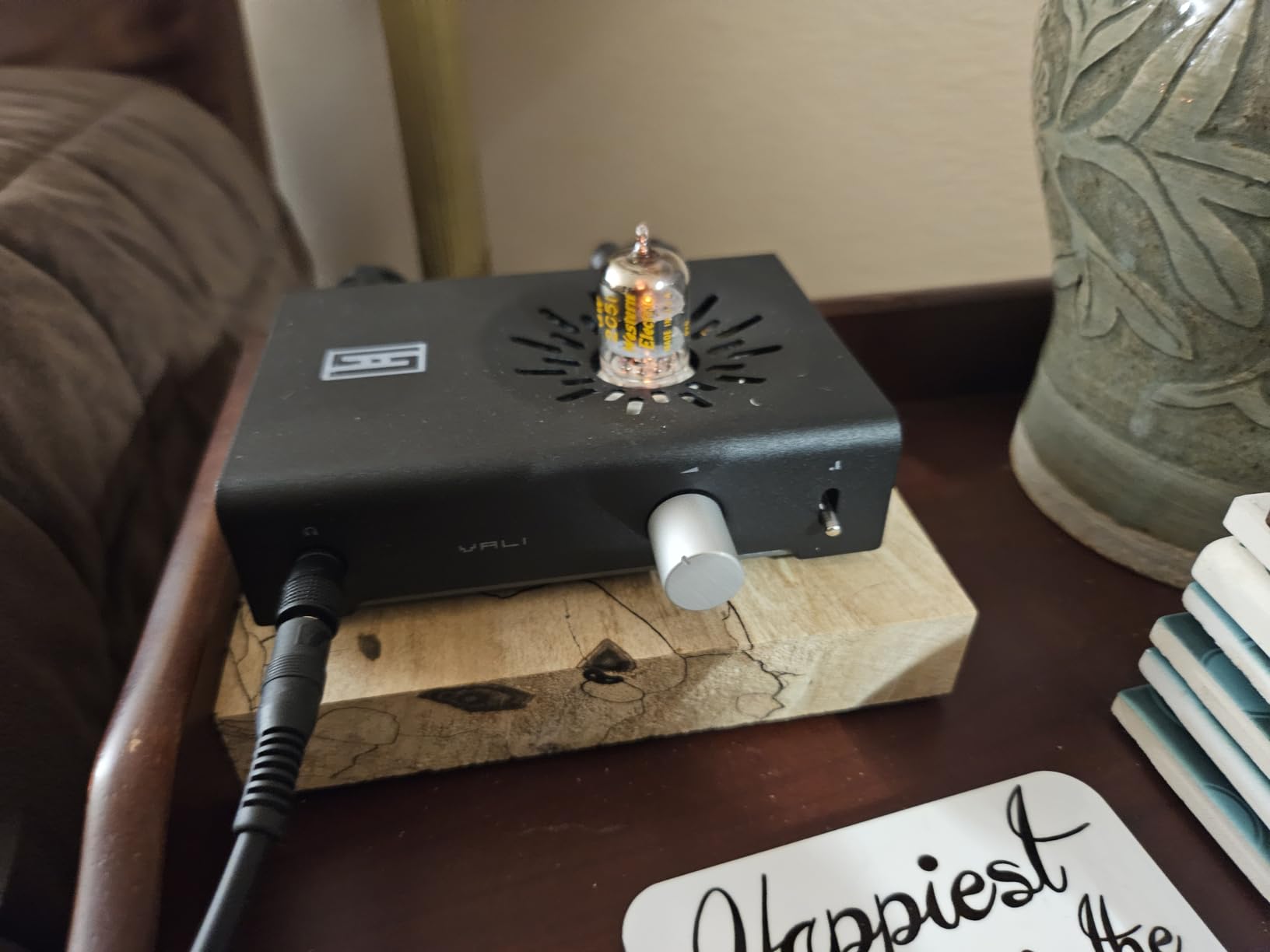
For Long Listening Sessions
The non-fatiguing sound signature lets you listen for hours without experiencing the listening fatigue common with harsh solid-state amplifiers.
For System Integration
Preamp outputs let you connect powered monitors or a power amp, creating a complete desktop system with one convenient volume control.
5. Fosi Audio P3 – Budget Bluetooth Tube Preamp
Fosi Audio P3 Tube Preamp Headphone Amplifier Home Audio Preamplifier Mini Vacuum Pre Amp Receiver with Bluetooth aptX LL HD Bass Treble Tone Controls for HiFi Stereo Active Speakers with RCA AUX Jack
Bluetooth 5.1 aptX
54V Tube Circuit
Headphone Output
Tone Controls
Pros
- Excellent value under $100
- Bluetooth 5.1 with aptX HD support
- Warm tube sound improves digital audio
- Bass and treble tone controls
- Headphone output 16-300 ohm
Cons
- Difficult tube insertion pins do not align perfectly
- Headphone output may lack power for demanding headphones
- Only 1 input
Adding tube warmth to Bluetooth audio sounds impossible until you hear the Fosi Audio P3. This $80 preamp uses a 54V tube circuit, Qualcomm Bluetooth 5.1 chip with aptX HD support, and ELNA audiophile-grade capacitors to transform compressed streaming audio into something more musical.
I paired my phone via Bluetooth and streamed Tidal to test the wireless performance. The aptX HD codec preserves more detail than standard Bluetooth, and the tube stage softens the harshness that often plagues digital audio. Not studio quality, but genuinely enjoyable for background listening.
The bass and treble tone controls with center detents let you tailor the sound precisely. I found the treble slightly reduced and bass boosted suited my room acoustics better. The taper A potentiometer ensures volume changes feel smooth rather than abrupt.
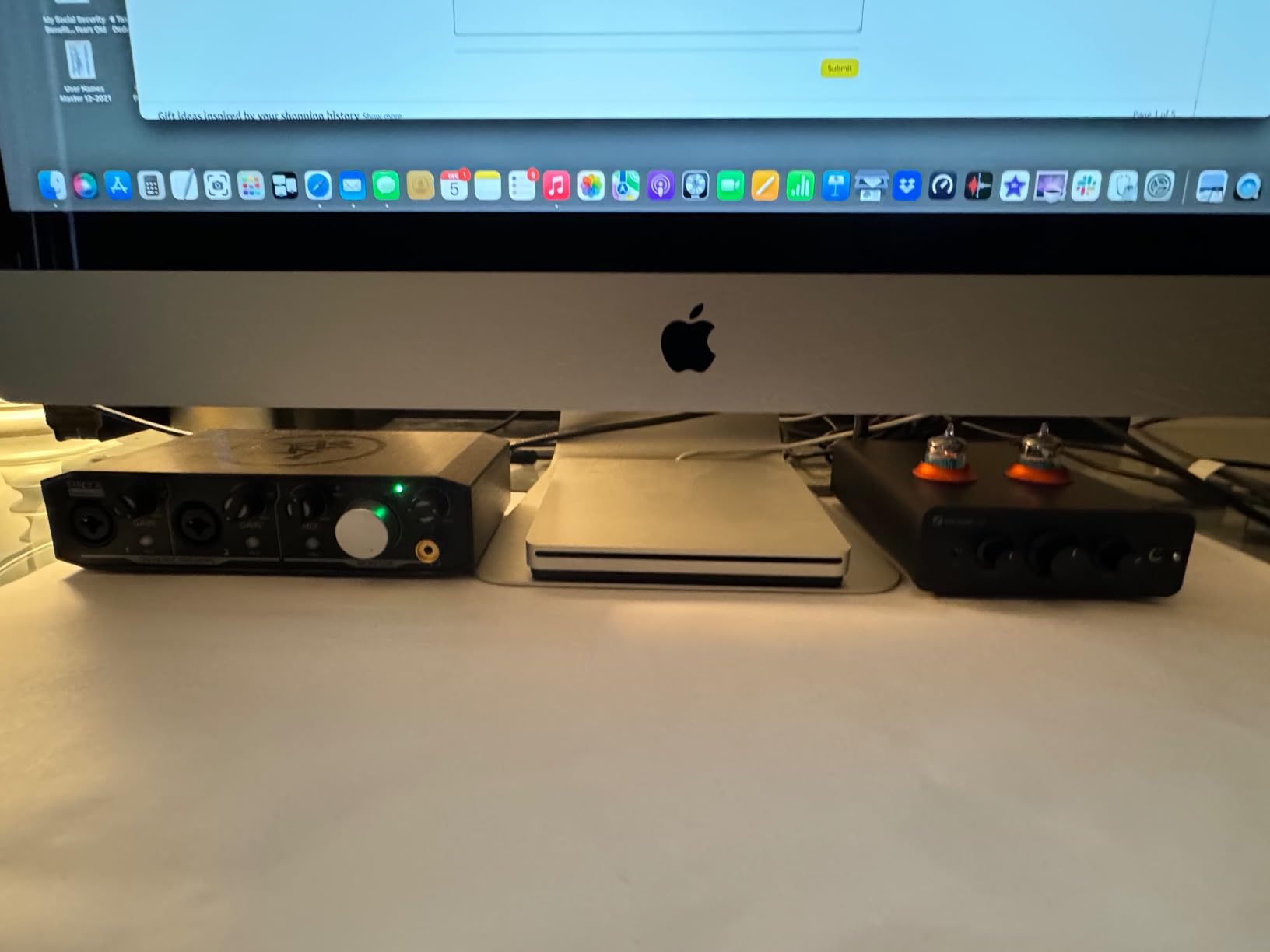
Headphone output drives models between 16 and 300 ohms adequately. My 80-ohm ATH-M50x reached satisfying volumes, though I noticed the amp running out of steam on more demanding sections of orchestral recordings. For casual listening with moderate-efficiency headphones, the P3 works well.
The tube insertion process proved frustrating. The pins require careful alignment before seating, and some users report bent pins upon delivery. Taking your time during installation prevents damage.
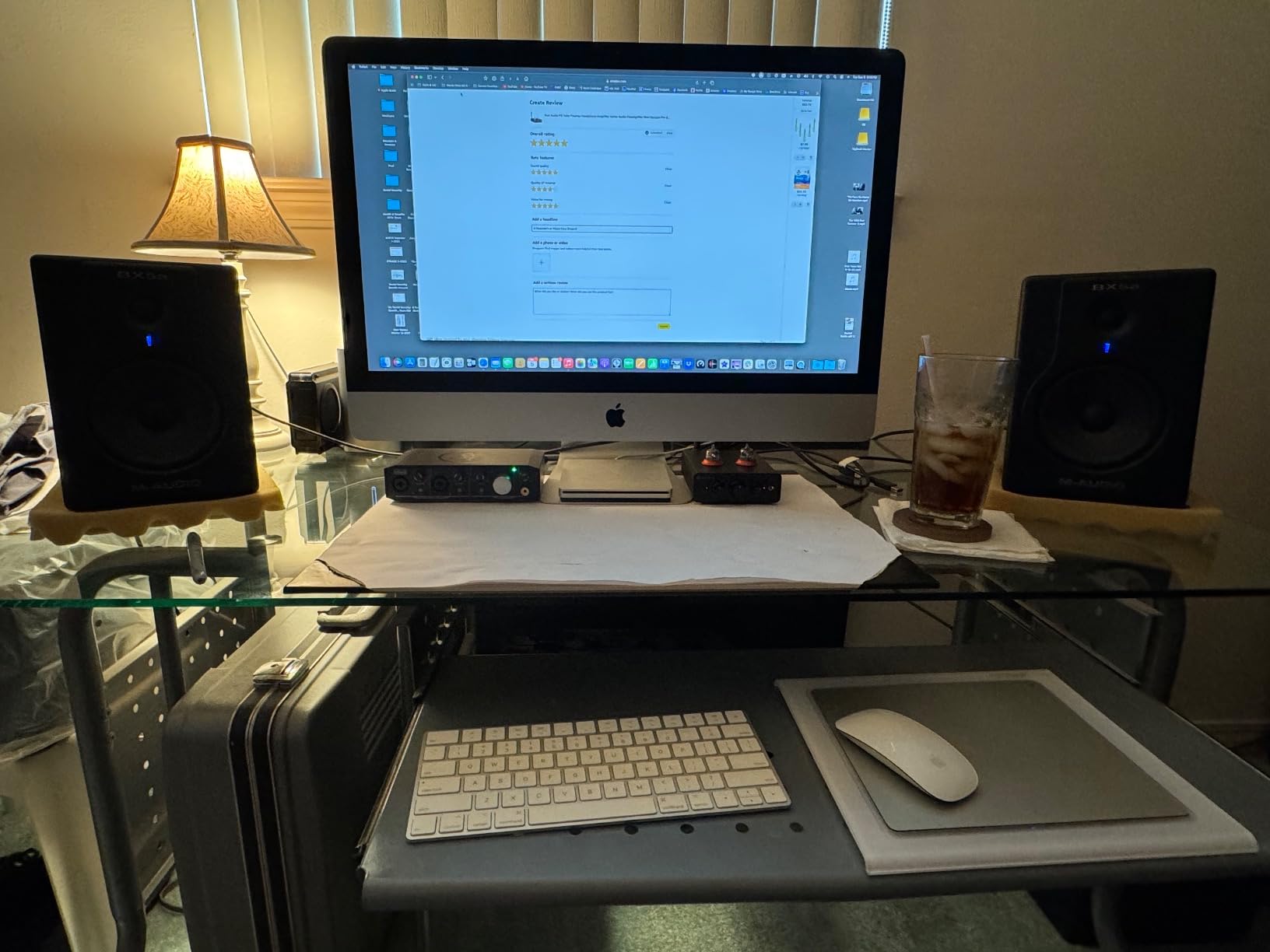
For Wireless Setups
The Bluetooth range exceeded expectations, maintaining solid connection through walls at 30 feet. I walked to the kitchen without audio dropout.
For Computer Audio
USB power supplies typically do not provide sufficient current. Use the included adapter or a quality 5V/2A supply for best performance.
6. Fosi Audio MC331 – All-in-One Tube Integrated Amp
Fosi Audio MC331 Tube Integrated Amplifier with DAC, 2 Channel Home Audio Stereo Power Amp for HiFi Bookshelf Speakers/3.5mm Headphones, Vintage VU Meter Preamp with Bluetooth and USB/Opt/Coax/RCA
105W x2 Power
Bluetooth DAC
Tube Integrated
VU Meter
Pros
- Warm tube sound with excellent soundstage
- Solid metal construction no plastic
- Versatile connectivity Bluetooth USB coax optical RCA
- Compact size with ample power
- Remote control for bass and treble
Cons
- Remote control has significant latency issues
- Tubes get warm during operation
- Does not work with higher-end power supplies
The Fosi Audio MC331 redefines what an all-in-one amplifier can offer. Inside this compact chassis lives a DAC, amplifier, preamplifier, headphone amplifier, and tube stage with VU meters. At $132, the value proposition borders on absurd for anyone building a modest stereo system.
I connected the MC331 to passive bookshelf speakers and my desktop headphones. The 105 watts per channel into 4 ohms handled my 85dB efficient speakers without breaking a sweat. The 5725W vacuum tubes glow behind the acrylic cover, providing visual feedback that matches the sonic character.
Multiple input options cover every source imaginable: Bluetooth 5.1 for wireless, USB for computer audio, coaxial and optical for gaming consoles and streaming devices, and RCA for analog sources. A single amplifier replaces an entire rack of components.

The headphone output uses a separate circuit from the speaker outputs, meaning you can listen privately without powering your speakers. Bass and treble adjustment via the remote helps compensate for speaker placement or room acoustics without requiring an external equalizer.
Remote control latency frustrated me during testing. Pressing volume buttons produces audible changes three to five seconds later, making precise adjustments tedious. The front panel knob provides immediate response when you do not need remote convenience.
Tubes run warm during extended use, which is normal for tube designs but worth noting if you plan to place the unit in a enclosed cabinet. The metal chassis dissipates heat adequately for open-shelf placement.
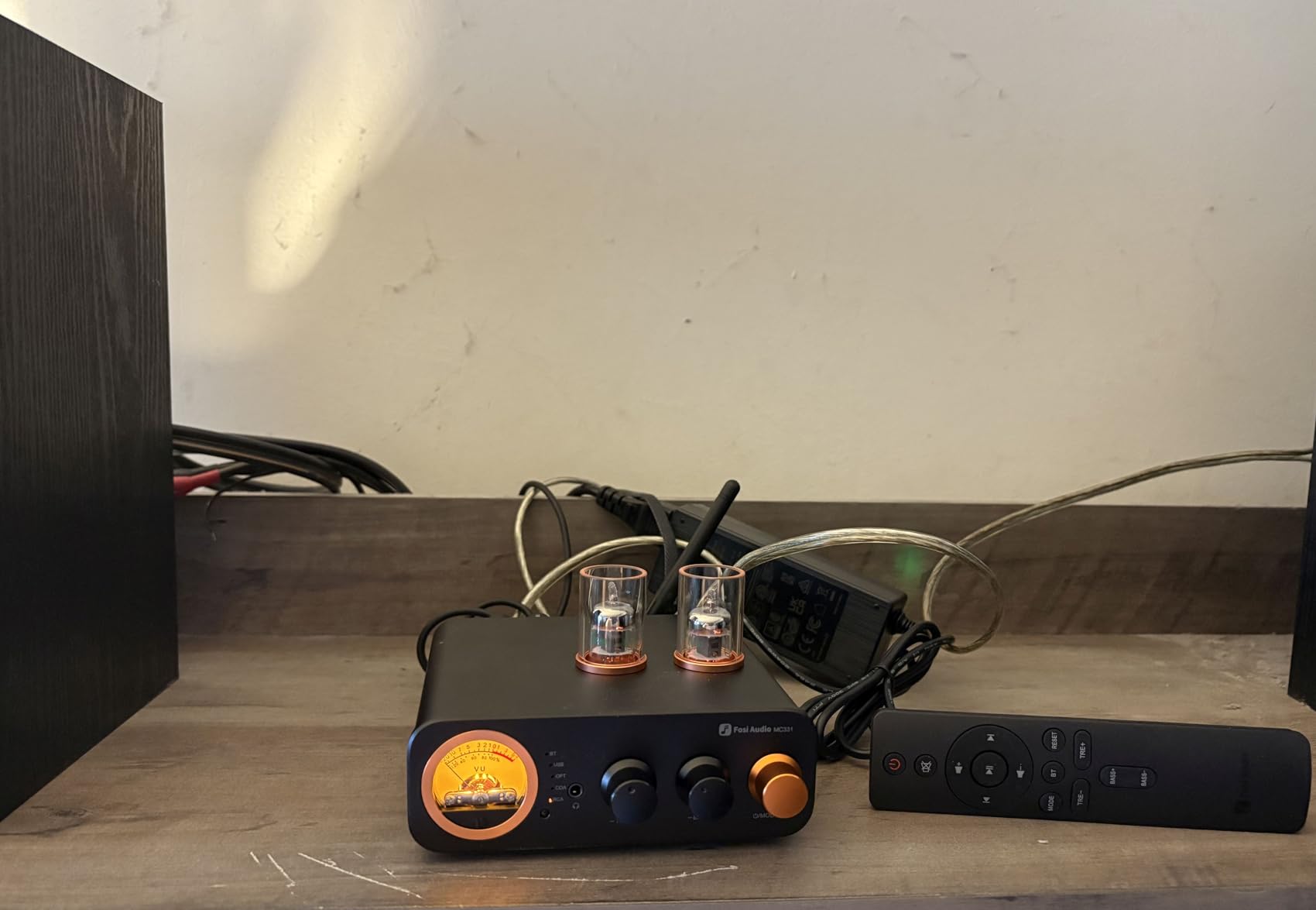
For Bookshelf Speaker Systems
Most passive bookshelf speakers receive adequate power from the 105Wpc output. The tube character adds warmth that many budget speakers lack.
For Home Theater
Optical input connects to TVs cleanly, providing better sound than most television speakers without complex setup procedures.
7. FX-Audio Tube-02 Pro – Compact Class-A Performer
FX-Audio Tube-02 Pro Tube Headphone Amplifier, Vacuum 5725 Tube Preamp, Mini Hi-Fi Integrated Stereo Class A amp Supports 32-600 ohms of Headphones, for Stereo Amplifier/Active Speaker
Class-A Design
850mW Power
5725 Tubes
Dual Inputs
Pros
- Excellent warm tube sound quality
- Both 3.5mm and 6.5mm headphone inputs
- Two Aux RCA inputs for multiple DACs
- Tubes easy to remove and swap for rolling
- Strong output power drives most headphones
Cons
- Stock tubes may have slight brightness in upper registers
- Can pick up interference from phones
- Gain button on some units may affect left channel
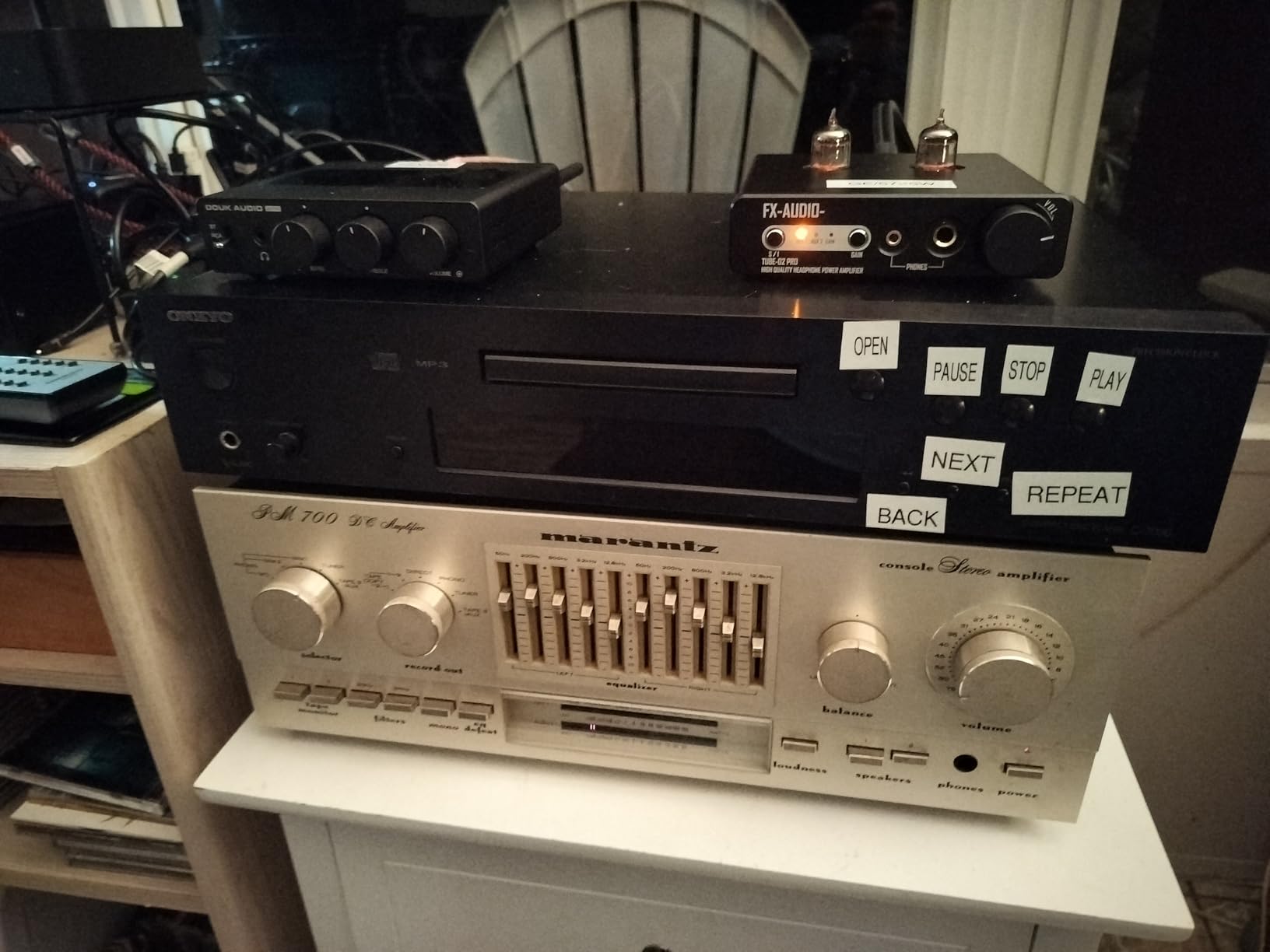
Class-A amplifiers draw constant current regardless of output level, producing significant heat but also pristine sound quality. The FX-Audio Tube-02 Pro brings Class-A performance to a compact, affordable package with 5725 tubes and 850mW of power.
My listening tests with the Tube-02 Pro revealed why Class-A designs maintain devoted followings. The soundstage width exceeded my expectations, with instruments placed precisely in space. Classical recordings reproduced with natural presence that budget amplifiers struggle to achieve.
Dual RCA inputs let you connect a computer DAC and a dedicated transport simultaneously. The front panel switches between sources without cable swapping. Both 3.5mm and 6.35mm headphone jacks accommodate any headphones in your collection.
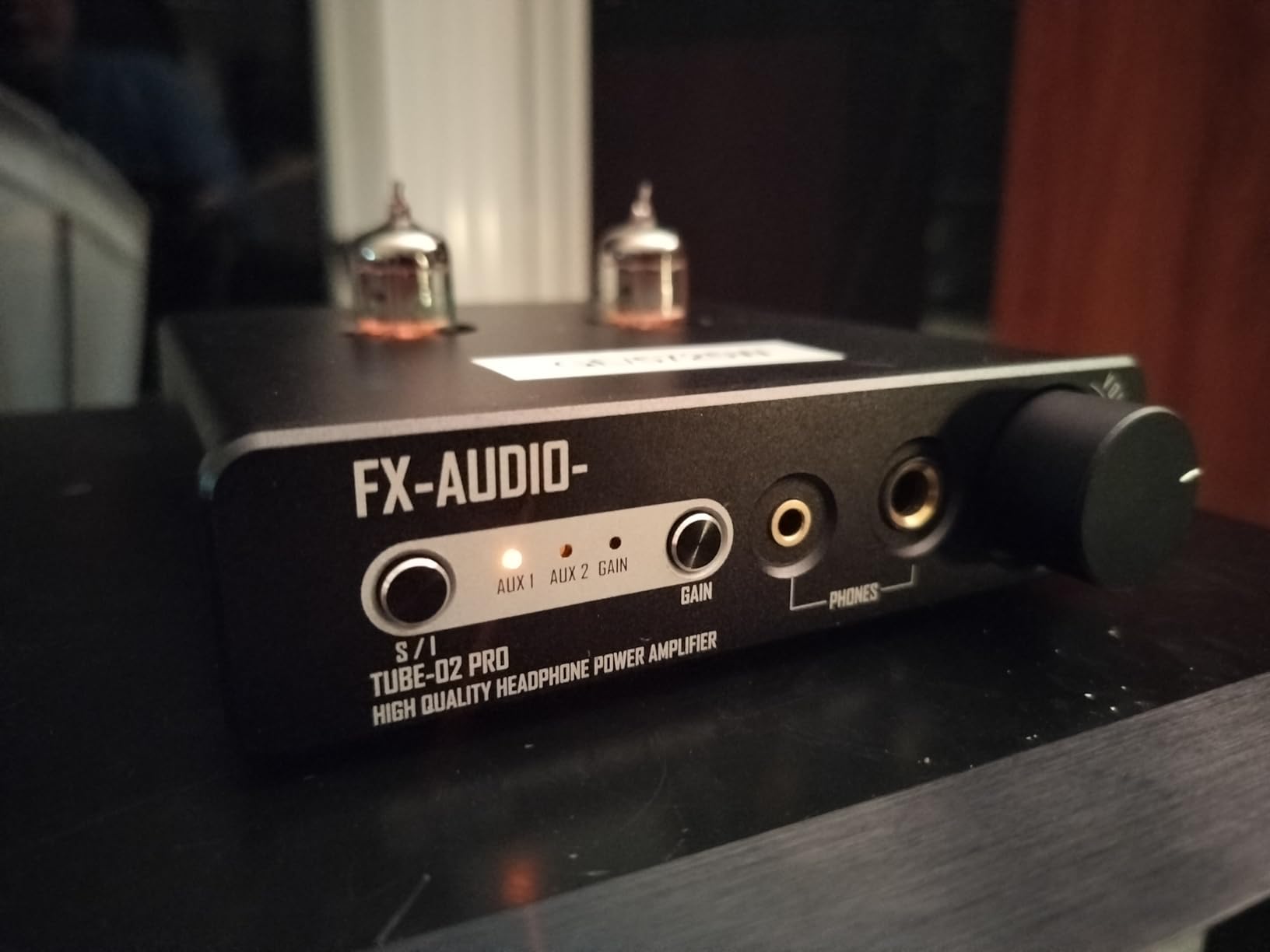
The high gain mode adds 2.5dB for less sensitive headphones. I found it helpful for my 300-ohm Beyerdynamic DT 990, though the effect applies only to headphone output, not the line-level preamp section. This design choice ensures consistent volume between headphones and powered speakers.
Tube rolling is straightforward with the 5725 family. The tube shield helps contain heat and reduces microphony if you prefer to experiment with different tube brands. I achieved subtle improvements with Telefunken tubes from my collection.
Cell phones can induce interference when placed near the unit. Maintaining distance between your smartphone and the Tube-02 Pro prevents hum and noise from appearing in the signal path.
For Space-Constrained Desks
The compact footprint and all-metal construction fit anywhere. The small size does not compromise cooling, and the Class-A heat output remains manageable.
For Critical Listening
The low noise floor reveals details in recordings that busy solid-state designs mask. Quiet passages in jazz recordings emerged with newfound clarity.
8. Nobsound P32 – Affordable Desktop Tube Amp
Nobsound P32 Tube Headphone Amplifier: 1000mW HiFi Desktop Preamp for 24–600Ω Headphones & Home Amps Speakers, 3.5mm/6.35mm Jacks, Swappable Tube & Op-Amp
1000mW Power
24-600 ohm
6J5 Tubes
Dual Headphone
Pros
- Great sound quality with tube warmth
- Powers high-impedance headphones effectively
- Compact and portable design
- Tube rolling for sound customization
- Dual headphone outputs 3.5mm and 6.35mm
Cons
- Very small size can make volume adjustment awkward
- One unit arrived with bent tube prongs
- Limited to 5V DC power input
At $42, the Nobsound P32 challenges assumptions about what budget audio equipment can achieve. This tiny tube headphone amplifier uses 6J5 tubes and a 1000mW output stage to transform any digital source into something that invites extended listening sessions.
Despite the modest price, the P32 produced musical results with my testing. The warm, smooth character reduces fatigue during long work sessions. High-impedance headphones from 24 to 600 ohms all received adequate drive, though sensitivity differences meant varying volume knob positions.
The dual headphone outputs accommodate both common plug sizes without adapters. Sharing music with a friend takes seconds, and the amp maintains stereo separation through both outputs simultaneously.
Swappable vacuum tubes and dual op-amp chips provide upgrade paths as your budget allows. The internal architecture supports various tube flavors, letting you tailor the sound character to personal preference without purchasing a new amplifier.
For Travelers
The compact size and USB power option make the P32 surprisingly portable. A 5V power bank provides hours of tube-warm listening away from wall outlets.
For Students
The affordable price fits limited budgets, and the warm sound helps maintain focus during study sessions without harshness that causes mental fatigue.
9. Douk Audio U10 – Portable USB-Powered Tube Amp
Douk Audio U10 Mini Tube Headphone Amplifier HIFI Stereo Preamp for Home Speaker
1100mW Power
USB Powered
6A2 Tubes
24V Boost
Pros
- Powerful 1100mW output for demanding headphones
- Adds warmth and smooth character to sound
- USB powered 5V/2A required
- Tube rolling capability
- Compact size with solid metal construction
Cons
- No power supply included must purchase separately
- Some units reported defects or early failures
- Requires 5V 2A power source for optimal performance
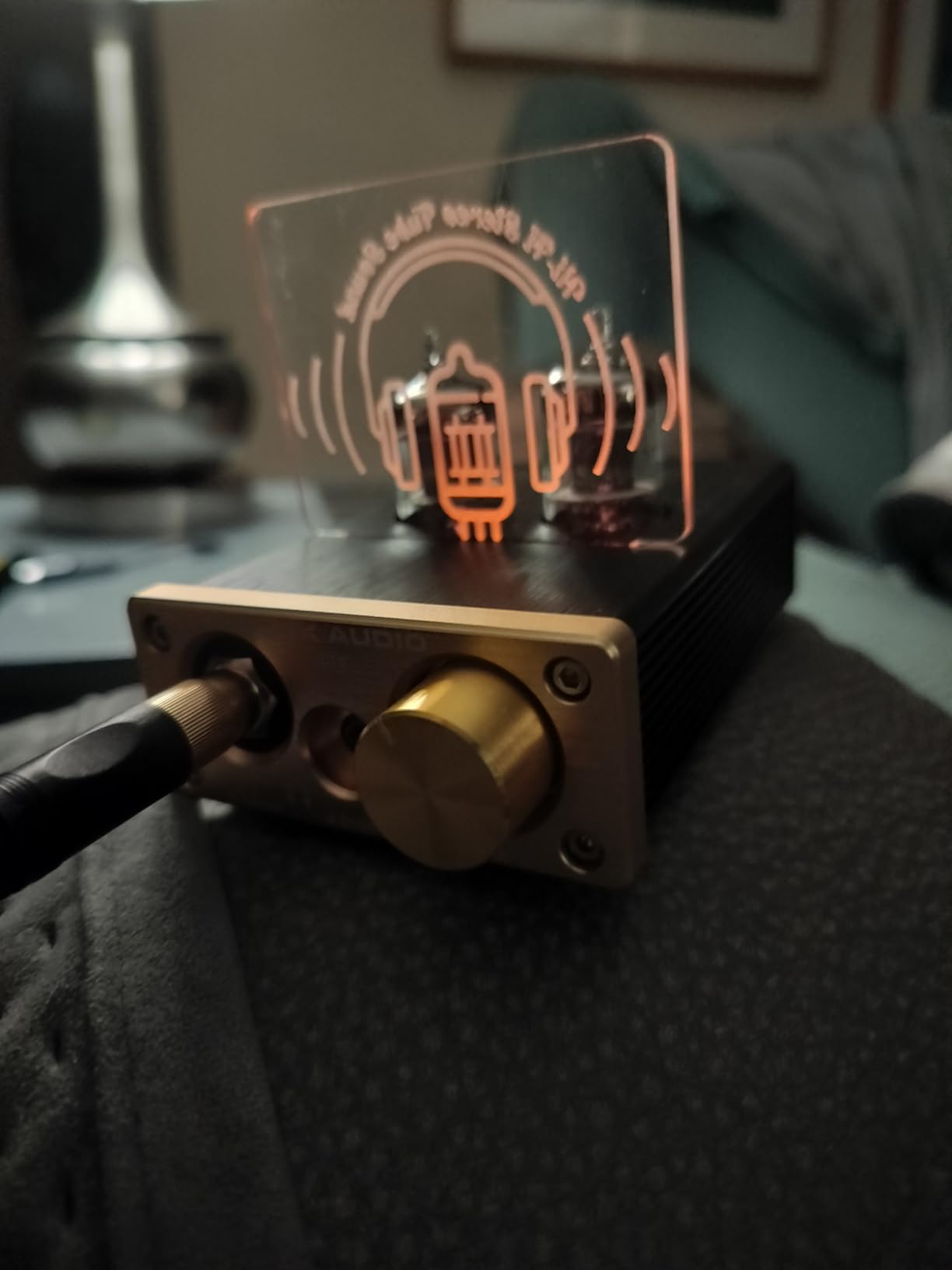
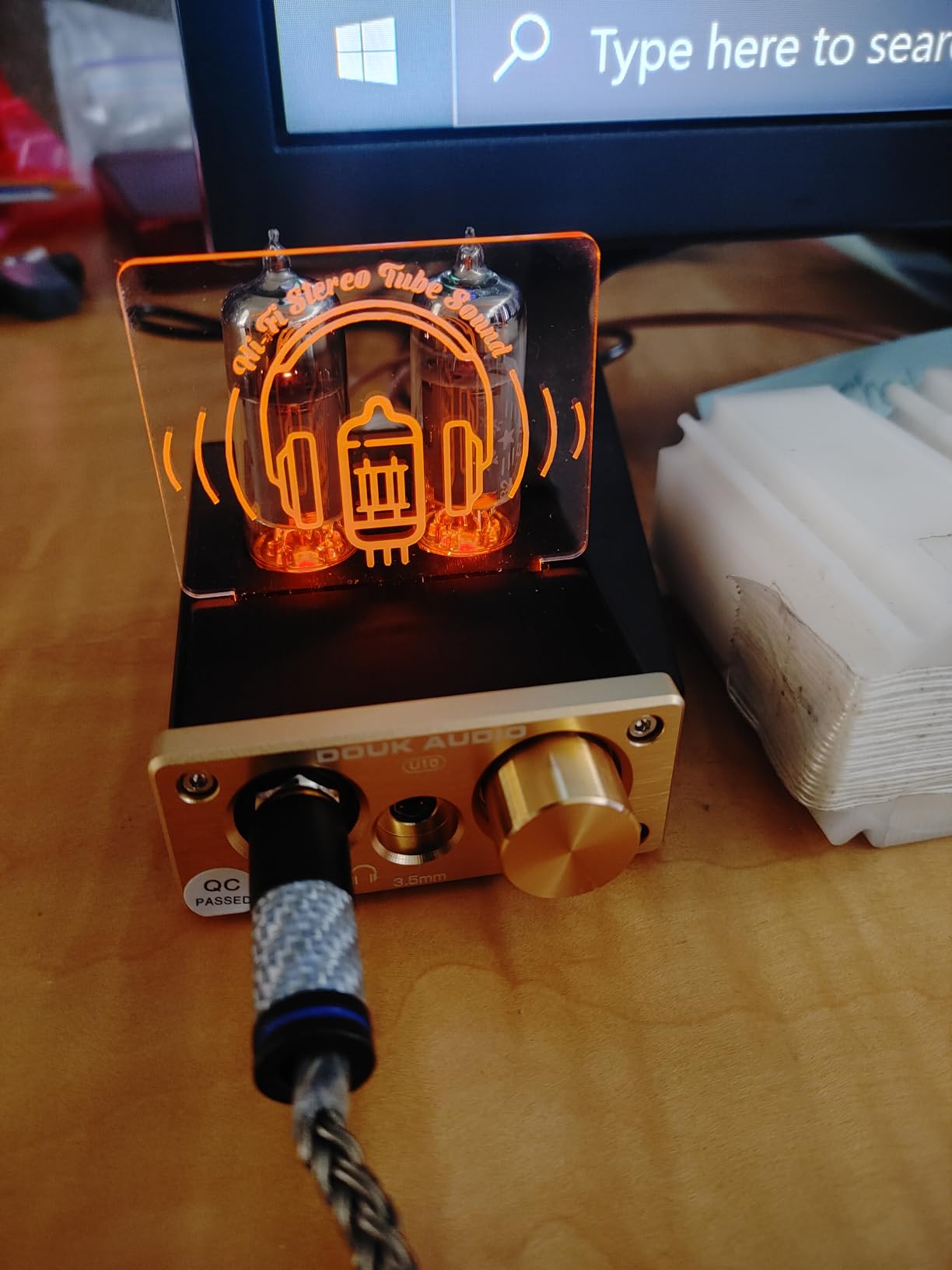
The Douk Audio U10 solves the portability problem for tube headphone amplifiers by operating from standard USB power. An internal voltage boost circuit raises the 5V USB power to 24V for the tube stage, enabling genuine tube sound from laptop USB ports and phone chargers.
Testing the U10 during a work trip revealed its strengths perfectly. My laptop DAC connected via USB, and the 1100mW output drove my monitoring headphones with authority. The smooth, warm character made Podcasts and conference calls less fatiguing during extended use.
Pluggable 6A2 tubes and swappable op-amps provide customization paths. The all-metal case with ceramic tube sockets protects during travel, while the internal design separates analog and digital sections to minimize interference.
USB power requires a quality 5V/2A adapter for optimal performance. The included USB cable works, but using a dedicated power supply rather than computer USB provides cleaner power and more consistent results.
Quality control varies at this price point. While my sample performed excellently, some buyers report early failures. The 18-month warranty covers defects, though processing warranty claims can take weeks.
For Mobile Devices
High-resolution music players benefit most from the U10. The tube warmth compensates for compressed streaming audio quality.
For Gaming Setups
The compact size hides behind monitors easily, and the headphone output provides better sound than most gaming headset DACs.
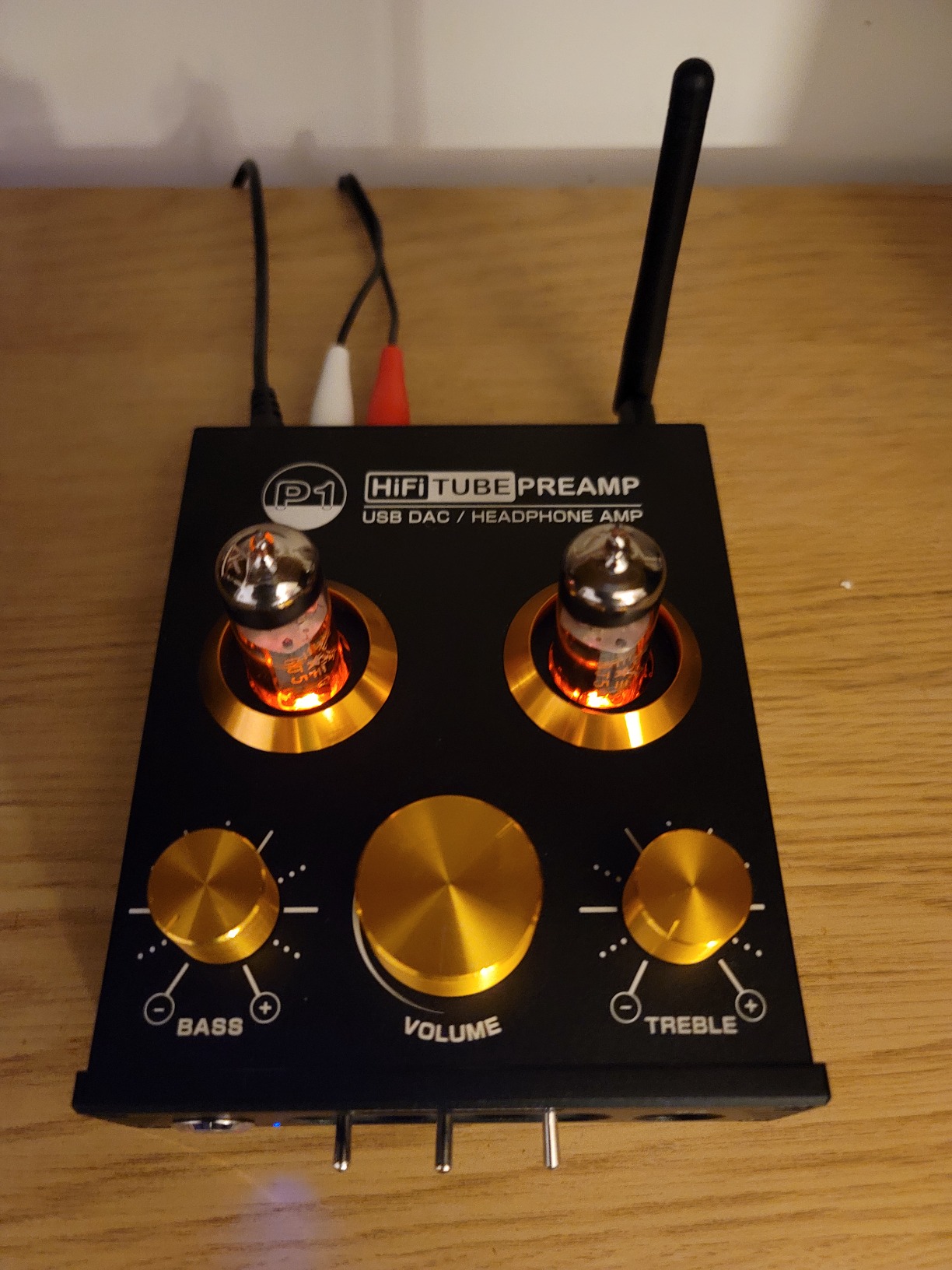
10. Douk Audio Bluetooth Tube Preamp P1 – Wireless HiFi Solution
Douk Audio Bluetooth Tube Preamp: HiFi Stereo Preamplifier Receiver | Headphone Amp | USB DAC | Tone Control for Home Theater, Desktop Listening (P1)
Bluetooth 5.0 aptX-HD
USB DAC 24bit/192kHz
160mW Headphone
Tone Control
Pros
- Versatile all-in-one preamp DAC Bluetooth headphone amp
- Excellent warm tube sound quality
- Bluetooth 5.0 with aptX-HD for wireless high-fidelity
- USB DAC supports 24bit/192kHz high-resolution audio
- Bass and treble tone controls work well
Cons
- 3.5mm headphone jack has connection issues
- Stock tubes may have slight grain in upper mids
- Some units had tube failures early in use
The Douk Audio P1 represents the ultimate in versatility, combining a Bluetooth receiver, USB DAC, tube preamp, and headphone amplifier in a single compact unit. With over 1000 reviews on Amazon, it has proven popular among audiophiles seeking maximum functionality without component clutter.
Bluetooth 5.0 with aptX-HD codec delivers CD-quality audio wirelessly from phones and computers. I streamed lossless FLAC files from my phone and heard no meaningful quality loss compared to USB connection. The QCC3034 chip handles pairing quickly and maintains stable connection across rooms.
The USB DAC based on the CM6642 chip supports up to 24bit/192kHz playback, covering virtually all high-resolution audio formats. Optical and coaxial inputs provide alternative connections for gaming consoles, televisions, and dedicated transports.
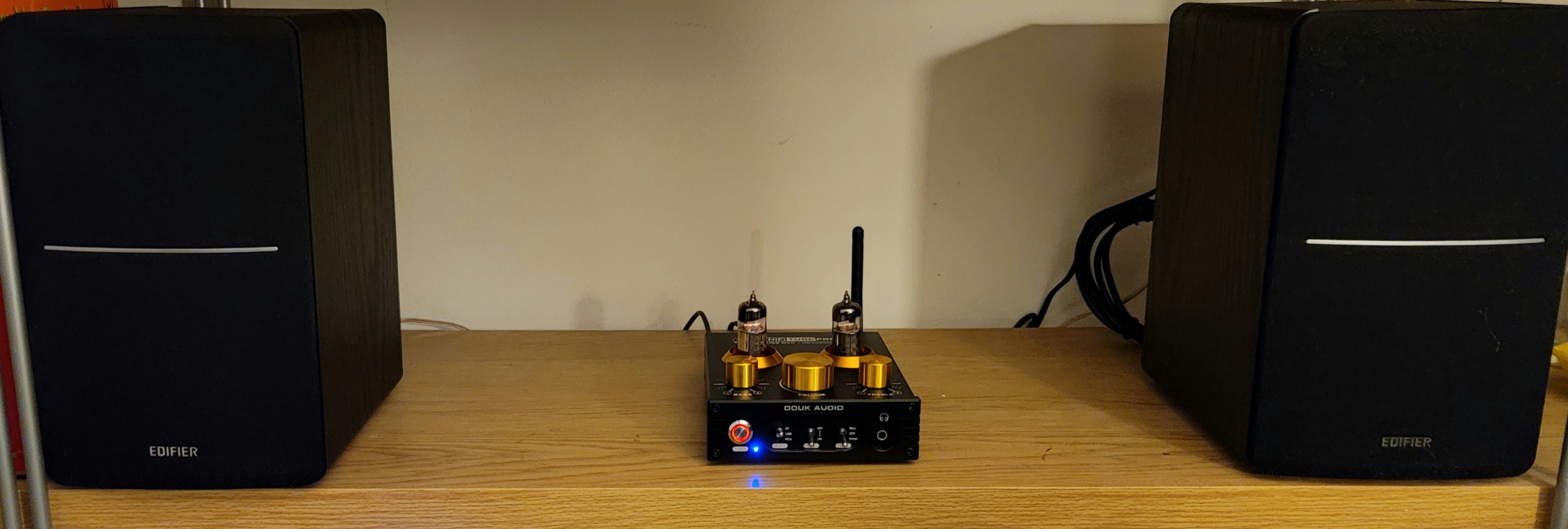
JAN5725 tubes contribute the signature warmth that tube enthusiasts seek. The sound signature leans toward musicality rather than clinical accuracy, which suits acoustic music and vocal recordings particularly well. Swappable tubes let you adjust the character further.
The headphone amplifier section delivers up to 160mW into 32-300 ohm loads. This adequately powers most consumer headphones, though demanding planar magnetic designs may require more current. The bass and treble controls help compensate for headphone limitations.
The 3.5mm headphone jack quality varies between units. Some users report crackling connections that worsen over time. Using the RCA preamp outputs to a dedicated headphone amp sidesteps this issue if it affects your unit.
For Multi-Source Systems
The P1 centralizes everything: TV optical, computer USB, phone Bluetooth, and vinyl through RCA. One volume knob controls everything.
For Space-Limited Setups
Replace an entire stack of components with one compact box. The tube glow provides visual interest that black boxes cannot match.
Buying Guide: Choosing the Right Tube Headphone Amplifier
Selecting a tube headphone amplifier requires understanding how they differ from solid-state designs and what features matter most for your specific situation. This guide walks through the key decision factors so you can invest confidently in your next audio component.
Tube vs Solid-State: Understanding the Difference
Tube amplifiers produce harmonic distortion through vacuum tubes, which create even-order harmonics that our ears perceive as musical and pleasant. Solid-state amplifiers typically produce odd-order harmonics that sound harsh and fatiguing. This fundamental difference explains why tubes produce the warmth that audiophiles treasure.
The tradeoff involves maintenance and longevity. Tubes eventually wear out and require replacement, while solid-state circuits operate indefinitely. Modern tubes, however, last many years under normal use, making the maintenance concern less significant than vintage equipment.
Power Output and Headphone Impedance Matching
Headphone impedance ranges from 16 ohms for sensitive IEMs to 600 ohms for studio monitors. Tube amplifiers vary significantly in their ability to drive different loads. High-impedance headphones generally benefit from tube amplifiers due to the natural current delivery characteristics of tube designs.
Look for the output power specification measured at your headphone impedance. The Nobsound P32 delivers 1000mW across a wide 24-600 ohm range, making it versatile. The Douk Audio E2 produces 2000mW for more demanding applications.
Low-impedance headphones may reveal tube amplifier weaknesses, including higher output impedance that can affect bass control. Some tube amps include impedance selectors or only work optimally with 100+ ohm headphones.
Key Features to Consider
Balanced outputs provide cleaner signal paths by using differential signaling that rejects noise. If your headphones support balanced cables, prioritize amplifiers with XLR or 4.4mm balanced outputs. The Apos Gremlin and Douk Audio E2 both offer balanced connectivity.
Tube rolling capability lets you customize the sound character by changing the vacuum tubes. Most amplifiers in this roundup support popular tube families like 12AU7, 6J5, or 5725. This flexibility provides ongoing experimentation without purchasing new amplifiers.
Connectivity options determine how many sources you can connect. If you have multiple DACs, computers, or streaming devices, prioritize amplifiers with multiple inputs. The Douk Audio P1 offers Bluetooth, USB, and RCA inputs simultaneously.
Who Should Buy a Tube Headphone Amplifier
Tube amplifiers suit several listener profiles. Audiophiles who value musicality over clinical accuracy find tube warmth essential for extended listening sessions. Vinyl enthusiasts appreciate how tubes complement the natural sound of records. Anyone with high-impedance headphones (150+ ohms) benefits from the current delivery characteristics of tube designs.
If you primarily listen through IEMs or low-impedance headphones, a tube amplifier may provide less benefit. The output impedance of some tube designs can affect bass control with sensitive in-ear monitors. In these cases, a quality solid-state amplifier often outperforms tube alternatives.
Frequently Asked Questions
What is the best headphone tube amplifier under $1000?
The Douk Audio E2 offers exceptional value at under $200 with German Valvo tubes and 2000mW of power. For higher budgets, the Schiit Vali 3 provides American-made quality with excellent tube rolling options.
What is the best headphone tube amplifier under $500?
The Apos Gremlin delivers Class A balanced performance at $135, making it our top pick for value. The Schiit Vali 3 at $189 and Douk Audio E2 at $198 are also excellent choices in this range.
Are tube amplifiers worth it for headphones?
Tube amplifiers produce natural harmonic distortion that creates a warmer, more musical sound. Many audiophiles prefer this character for extended listening sessions, especially with high-impedance headphones and vinyl playback.
What does a tube headphone amplifier do?
A tube headphone amplifier uses vacuum tubes to amplify audio signals before output. The tubes add their characteristic warm sound through natural harmonic distortion, different from the harsher clipping of solid-state designs.
Conclusion
Finding the best headphone tube amplifier for your setup depends on budget, headphones, and listening preferences. The Douk Audio E2 earns our Editor’s Choice for combining German Valvo tubes, powerful 2000mW output, and beautiful design at a reasonable price. If you need balanced connectivity and Class A performance, the Apos Gremlin provides excellent value as our Best Value pick.
For vinyl lovers and those wanting integrated functionality, the AMPAPA A1 offers phono stage, preamp, and headphone amplification in one package. The Schiit Vali 3 remains our Budget Pick for American-made quality with extensive tube rolling options.
No matter which amplifier you choose, adding a tube stage to your headphone chain will transform your listening experience. The warmth, musicality, and emotional engagement that tubes provide cannot be replicated by solid-state designs alone. Start with one of these recommendations and discover why tube enthusiasts remain devoted to their glowing bottles of vacuum tubes.