
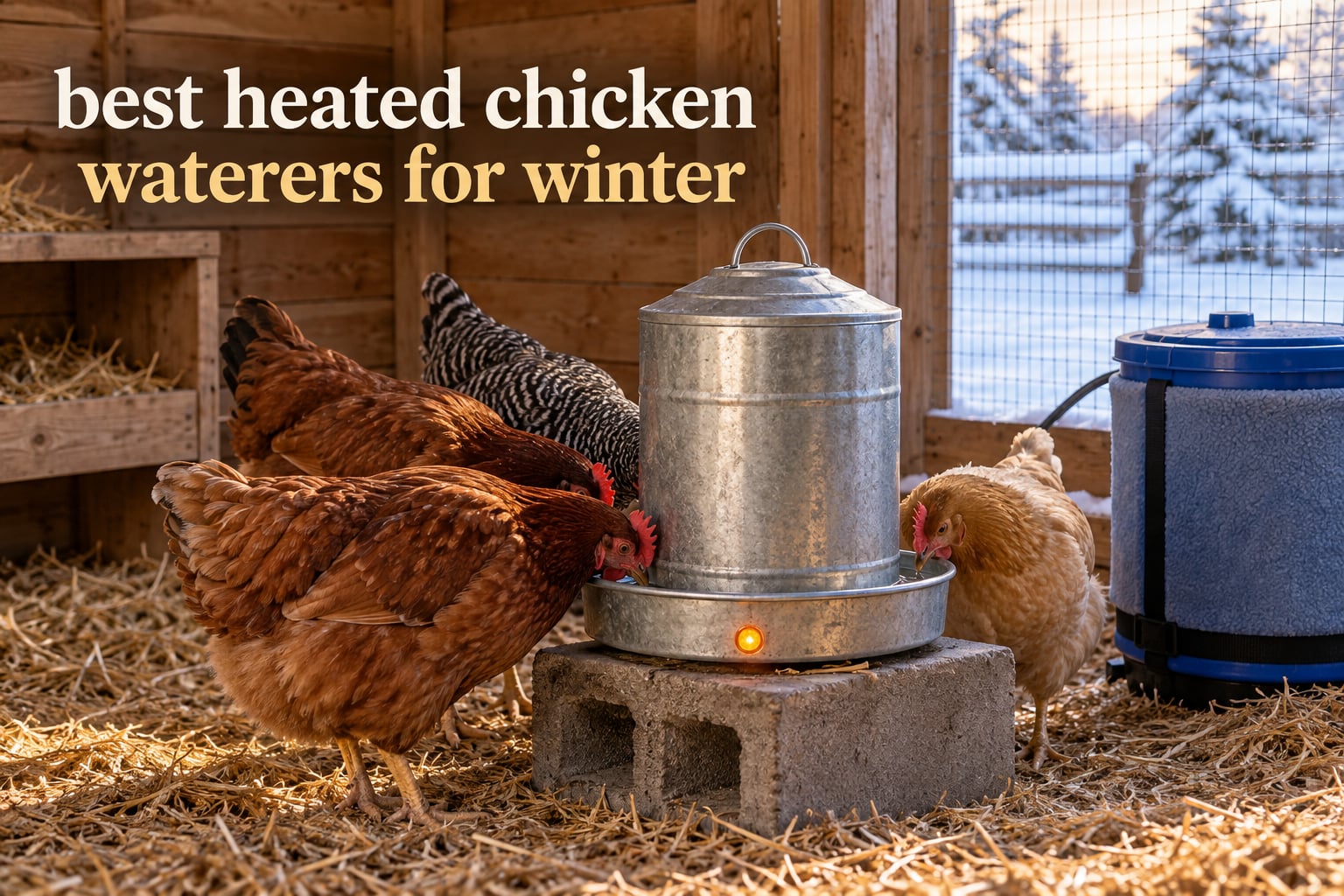
The best waterer for chickens in the winter is a thermostatically controlled heated poultry waterer sized to your flock, kept inside a sheltered coop and wired to a GFCI outlet. Water outranks heat in a cold-weather flock: a frozen waterer can take a hen off feed within hours, and a hen that stops drinking loses condition fast.
That is the whole argument for spending money on a heated chicken waterer rather than a lamp, a heated pad, or a second space heater. Chickens are cold-hardy animals that handle freezing temperatures well as long as they are dry, draft-free, and stocked with feed. What they cannot handle is ice. A standard plastic fount in a northern winter turns into a solid block overnight, and the flock wakes up to nothing.
We spent weeks reading owner reviews, comparing published temperature ratings, wattage, capacity, cord length and thermostat behaviour across 12 heated waterers and heated bases, and comparing what those owners actually report after a real season rather than a first week. The list below covers everything from a 2-gallon plastic unit for a backyard flock to 5-gallon buckets for 30 birds and heated bases that turn a metal fount you already own into a winter waterer. If you want the general waterer category first, our guide to the best chicken waterers reviewed and ranked covers the non-winter options too.
Short version: the Farm Innovators HB-60P is the pick most flocks should buy, the Premier 1 3-gallon is the one to get if you want a single unit to last many seasons, and the Farm Innovators HP-125 heated base is the answer if you already own a double-wall metal fount. Everything else on this list earns its place for a specific flock size, budget, or climate. All picks were reviewed for the 2026 winter season.
Table of Contents
Top 3 Picks for Winter Chicken Watering in 2026

Farm Innovators HB-60P 2-Gallon
- 60W thermostatically controlled element
- 2 gallon capacity serves up to 15 chickens
- Removable top and metal hang handle
- Rated for outdoor winter use

Premier 1 All-Season 3-Gallon
- 100W element with 40F to 60F thermostat
- 3 gallons suits up to 35 adult chickens
- 16 ft detachable cord
- Three recessed nipples plus spares

Farm Innovators HP-125 Heated Base
- 125W thermostatically controlled base
- Activates below 35F
- Keeps water liquid down to 10F
- Fits double-wall metal founts
Best Heated Chicken Waterers Compared Side by Side (September 2026)
Twelve heated waterers and heated bases, ordered roughly from the most proven to the newest. Read the type column first: an integrated unit heats its own reservoir, a base or belt heats whatever container you set it on, and a trough is an open bowl that also works for ducks and geese.
| Product | Specifications | Action |
|---|---|---|
| Farm Innovators HB-60P 2-Gallon |
|
Check Latest Price |
| Premier 1 All-Season 3-Gallon |
|
Check Latest Price |
| Farm Innovators HP-125 Heated Base |
|
Check Latest Price |
 API 3 Gallon Heated Waterer API 3 Gallon Heated Waterer |
|
Check Latest Price |
 Lilyang Heated Waterer 3 Gallon Lilyang Heated Waterer 3 Gallon |
|
Check Latest Price |
 Eggluuz 5 Gallon Heated Waterer Eggluuz 5 Gallon Heated Waterer |
|
Check Latest Price |
 ZenxyHoC 5 Gallon Heated Bucket ZenxyHoC 5 Gallon Heated Bucket |
|
Check Latest Price |
 GHWMYD 125oz Heated Water Bowl GHWMYD 125oz Heated Water Bowl |
|
Check Latest Price |
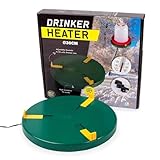 My Favorite Chicken 28W Heated Base My Favorite Chicken 28W Heated Base |
|
Check Latest Price |
 Lil Clucker 125W Heated Base Lil Clucker 125W Heated Base |
|
Check Latest Price |
 Gsbomzap 12 Inch Heated Base Gsbomzap 12 Inch Heated Base |
|
Check Latest Price |
 RentACoop Thermo Bucket Belt RentACoop Thermo Bucket Belt |
|
Check Latest Price |
1. Farm Innovators HB-60P 2-Gallon Heated Waterer – the pick most flocks should buy
Farm Innovators HB-60P Heated Poultry Waterer Drinker, 2-Gal, 60W
60W thermostatically controlled element
2 gallon capacity for up to 15 chickens
Removable top with metal hang handle
Rated for outdoor winter use
Pros
- Kept water unfrozen through several winters for multiple owners
- Compact 2-gallon footprint suits flocks up to 15 birds
- Thermostat runs the element only when needed
- Top lifts off for fast refills
Cons
- 2 gallons means frequent refills for larger flocks
- Plastic body is less rugged than a metal fount over many seasons
This is the unit I recommend first, and the reason is the review depth rather than the spec sheet. With more than 6500 ratings averaging 4.2, this is a product with a long public record, and that record is unusually consistent: owners in Iowa and elsewhere report the water staying liquid all winter and then reporting the same thing again the following season. Cheaper 2-gallon heated waterers come and go. This one has been available since 2011 and the element keeps working.
The 60W element is thermostatically controlled, so it only draws power when the water needs it. In practice that means it cycles in a hard freeze and drops out entirely on a mild day. It is a modest wattage, which is exactly what you want in a plastic bucket that has to survive a season of bedding, droppings and birds pecking at it.
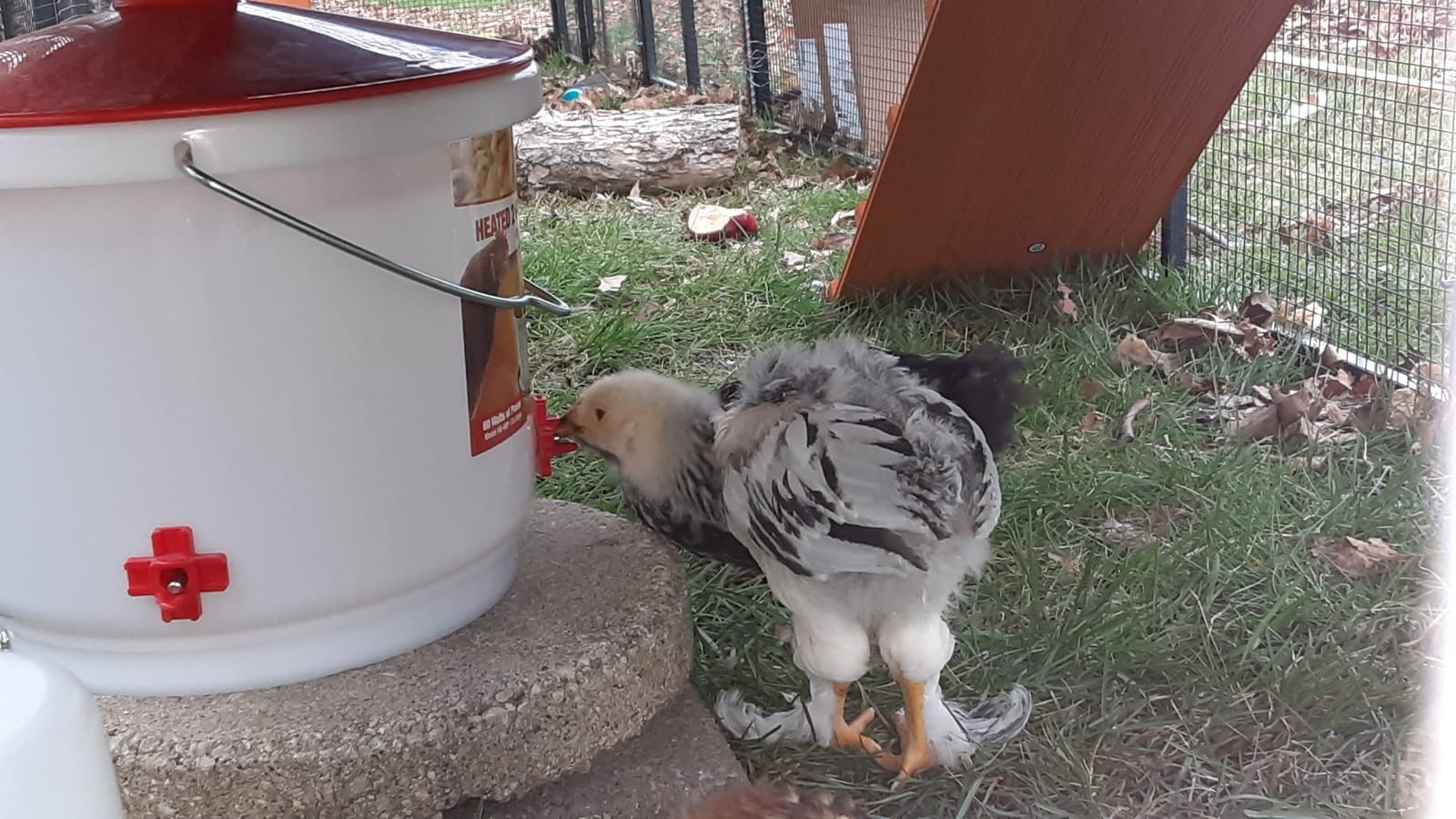
Capacity is the real trade-off. Two gallons is rated for up to 15 chickens, and that rating assumes normal winter water consumption. In a cold snap birds drink noticeably more, so a flock sitting at 15 birds will need a refill most days. The removable top makes that refill quick, but it is still a twice-daily job on a cold week.
The side-mounted nipples are described as drip-free and freeze-free, and the metal handle lets you hang the unit or set it on the ground. It weighs 2.58 pounds, so moving it around a coop is not a chore. If your flock is under 15 birds and you want one unit that does everything, this is the buy. Our broader livestock and farm animal roundup on the best heated livestock waterers covers options if you also keep goats or sheep.
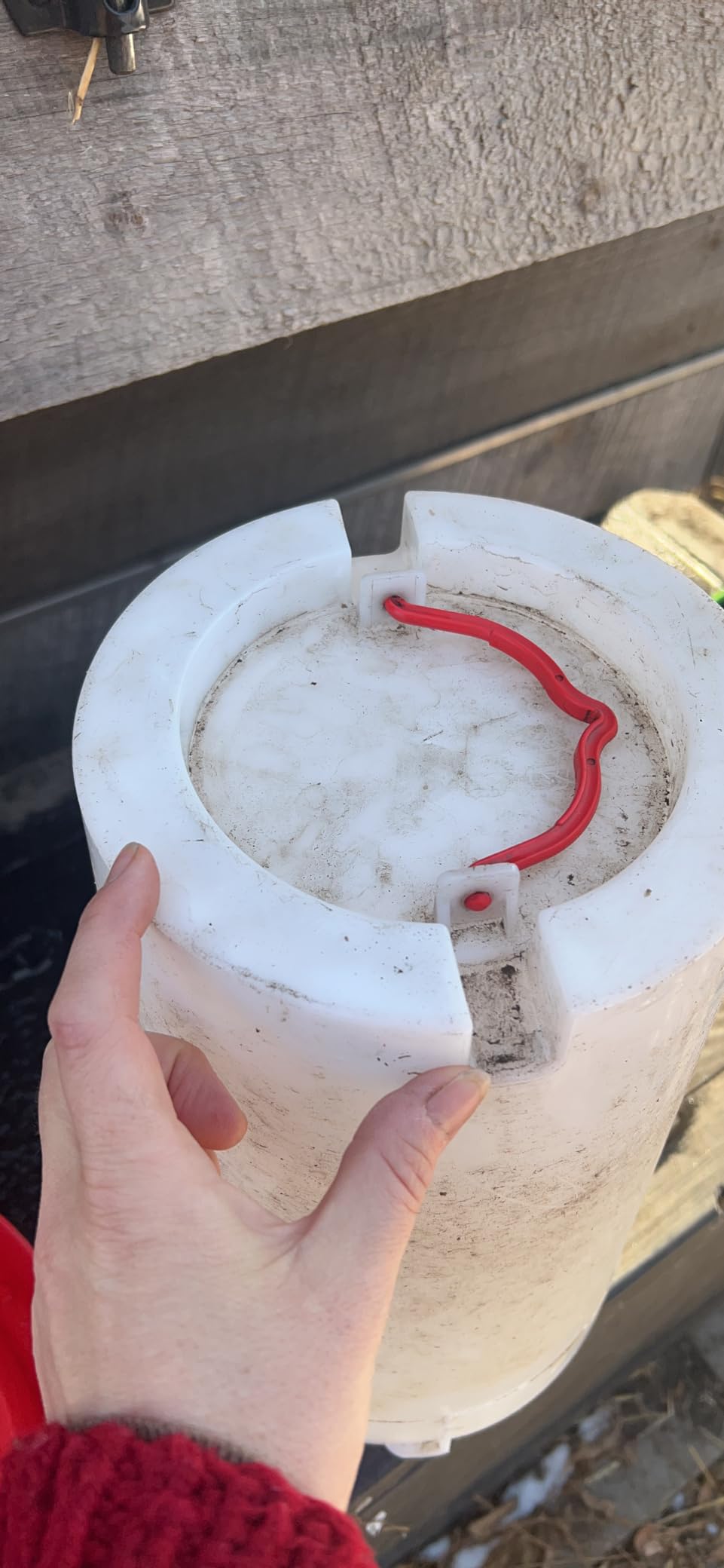
Who the 2-gallon size actually works for
Flocks of 6 to 15 birds, including first-year keepers and anyone who wants to avoid running a cord across the run. A 2-gallon reservoir is easy to lift, easy to scrub and cheap to replace if a bird finds a weakness in the plastic.
When you should step up to a bigger unit
Any flock above 15 birds, or anyone who does not want a twice-daily refill commitment through a northern January. A 3-gallon or 5-gallon unit cuts the number of refills dramatically and gives you a buffer if a freeze knocks out power for a few hours.
2. Premier 1 All-Season Heated Waterer 3-Gallon – the one built to last
Premier 1 All-Season Heated Poultry Waterer for Chickens & Ducks – 3 Gallon
100W element on below 40F off at 60F
3 gallon capacity for up to 35 adult chickens
16 ft detachable power cord
Three recessed nipples with spares
Pros
- Owners report five-plus winters of continuous service
- Recessed nipples keep the water cleaner
- Detachable cord makes it a year-round unit
- 3 gallons suits flocks up to 35 birds
Cons
- A badly seated plug can stop heating without warning
- Birds need training before they use the nipples
- Lid can ice shut in deep cold
The Premier 1 is the pick for anyone who is tired of replacing heaters every second winter. The 4.3 rating across 840 reviews sits below the star average of some cheaper units, but the longevity reports are what stand out: owners describe the same unit carrying them through many snowy seasons, and one has been running it since 2019.
Its 100W element is governed by a thermostat that switches on below 40F and off at 60F, a wider band than some competitors use. The manufacturer is explicit that it melts the water rather than heating it hot, which is the right behaviour for a plastic reservoir with birds and bedding in contact with it.
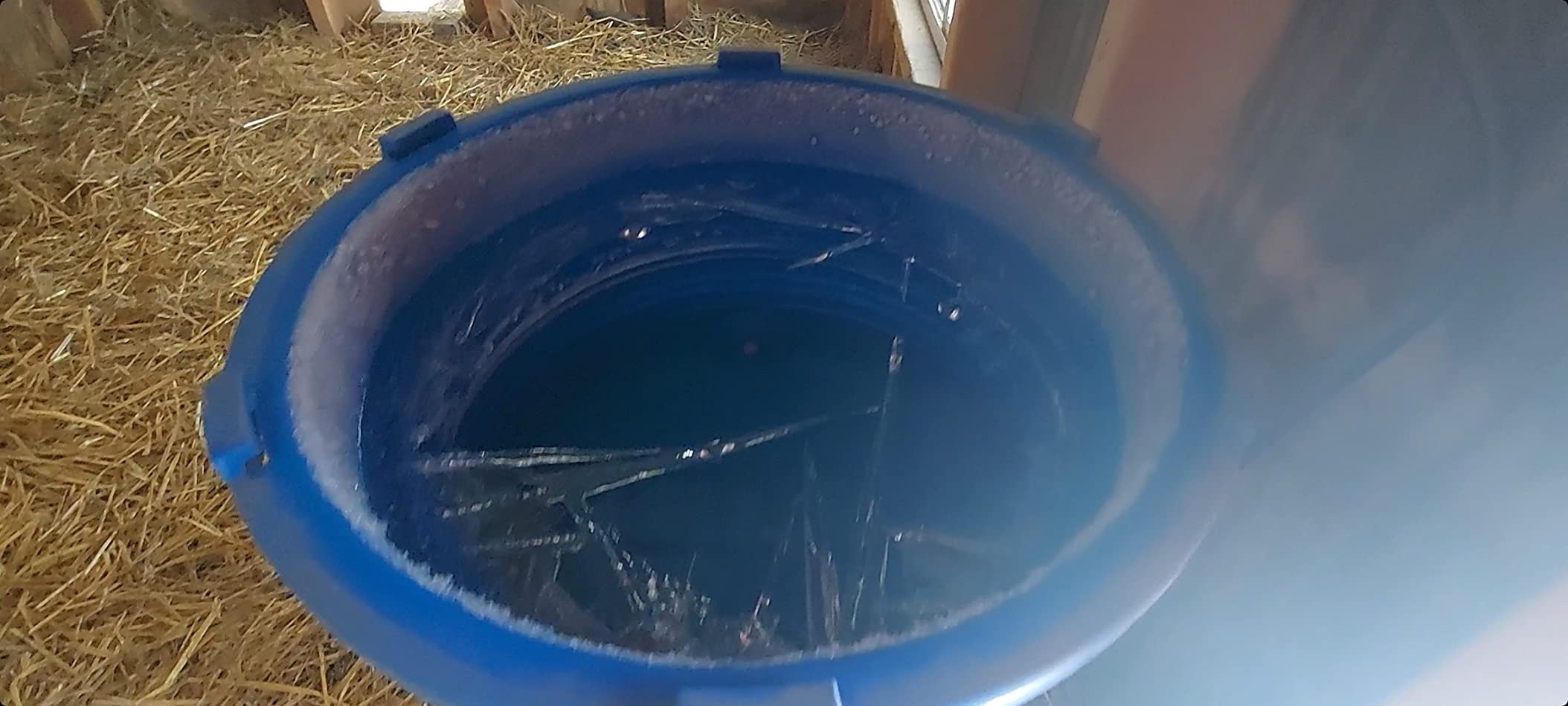
Capacity is 3 gallons, rated for up to 35 adult chickens, and the hinged quick-fill cap takes a hose or a watering can without removing the whole lid. That detail matters more than it sounds in a frozen coop, where removing a full lid is a two-handed job. The 16 ft detachable cord is long enough to reach a GFCI outlet from a typical coop without an extension cord, which removes the single most common wiring complaint in this category.
The recurring failure report is not the element. It is the connection. Owners describe a plug that looks seated but is not delivering power, and the water then freezes solid with no obvious sign of what went wrong. Check the connection deliberately rather than assuming. The other honest drawback is bird training: an established flock that has never used nipples needs a few days of guidance.
Why owners keep buying this one for more seasons
Construction quality is the story. A heavy-duty carry and hang handle, a 6.3-pound body and a thermostat that holds a set band rather than hunting all night. It is also the most expensive integrated unit here, and the honest reason to pay it is a longer service life per dollar.
What to watch in sustained deep cold
The published rating goes down to -20F, but a handful of buyers in sustained deep cold report the nipples freezing even when the bucket itself stays liquid. If you are in northern Minnesota or northern Maine, plan to check the nipples on the coldest nights rather than trusting the rating alone.
3. Farm Innovators HP-125 Heated Base 125W – the best base for metal founts
Farm Innovators HP-125 Heated Base for Metal Poultry Founts, 125W
125W thermostatically controlled heating base
Activates below 35F
Keeps water liquid down to 10F
Fits all double-wall metal poultry founts
Pros
- Two decades of owner reports back the claim
- Owners report zero ice in single-digit and extreme cold
- Thermostat cycles on and off automatically
- Sealed bottom cover protects the element
Cons
- Short power cord that birds peck
- Pan is too wide for a small coop
- Some buyers advise against plastic waterers on it
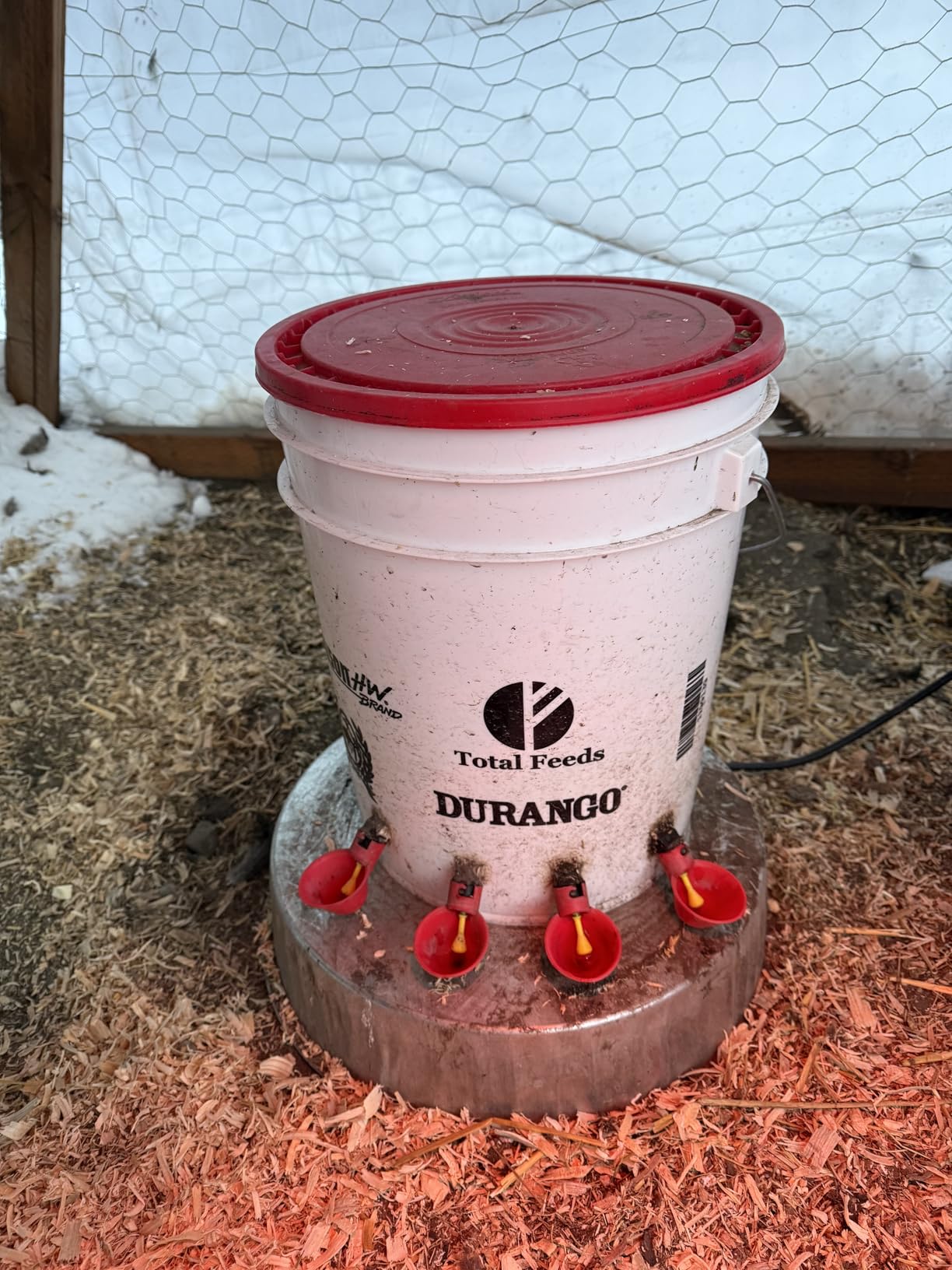
This heated base has been available since 2006, and that longevity is the entire pitch. It is not a waterer; it is a 125W pan you set a double-wall metal fount into, and the reason to choose it is that metal conducts heat far better than plastic. An Iowa owner running 25 chickens reports a heated drinker that never froze once, and owners in Maine, Minnesota and Quebec describe the same result in single-digit temperatures.
The thermostat activates below 35F automatically, and the surface runs hot to the touch without being hot enough to ignite bedding. That is the correct trade for a unit living in a coop full of pine shavings. The base height also helps keep shavings out of the water, which is a small daily quality-of-life win.
It is rated to keep water from freezing down to 10F, and one Canadian owner reports a winter in an enclosed run at -35F. The wide pan footprint fits 3- and 5-gallon metal founts, and the protective bottom cover shields the element from dirt and debris, which matters when you are topping up the fount with a hose every day or two.
The complaints cluster around the cord. It is short, birds peck at it, and there is no strain relief on the lead. Several owners add their own strain relief or route the cord through conduit. A small number of owners report a base that died after a season or two, and manufacturer support has been described as inconsistent, so keep your receipt if you buy one.
Why a heated base beats a plastic heated waterer in real cold
Heat moves through metal. A base under a double-wall fount puts the element directly against the water, so less wattage does more work. That is why a 125W base can hold water liquid in conditions where a lower-watt plastic unit struggles.
Where this base is the wrong choice
Small coops. The 17 by 16.5 inch footprint takes up real floor space, and if you already own a plastic fount you will also see advice against placing plastic on a hot base. Buy a dedicated plastic waterer instead, or use the lower-watt bases further down this list.
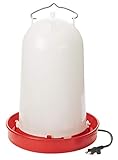
4. API 3 Gallon Heated Waterer with Funnel Fill – a steel jug for temperate winters
API 3 Gallon Heated Chicken or Bird Waterer with Overheating Protection, Galvanized Steel Handle, and Easy to Fill Funnel Design, White
100W thermostat-controlled heater pad at 120V
3 gallon gravity water dispenser
Keeps water ice-free to -5F
4 foot cord with lock-and-dry fittings
Pros
- Funnel-fill top makes refills fast
- Rounded jug top discourages roosting
- Overheating protection built in
- Galvanized steel handle for carrying
Cons
- Lowest average rating here at 4.0 with a 13 percent one-star share
- Shorter 4 foot cord limits placement
- Only rated to about -5F
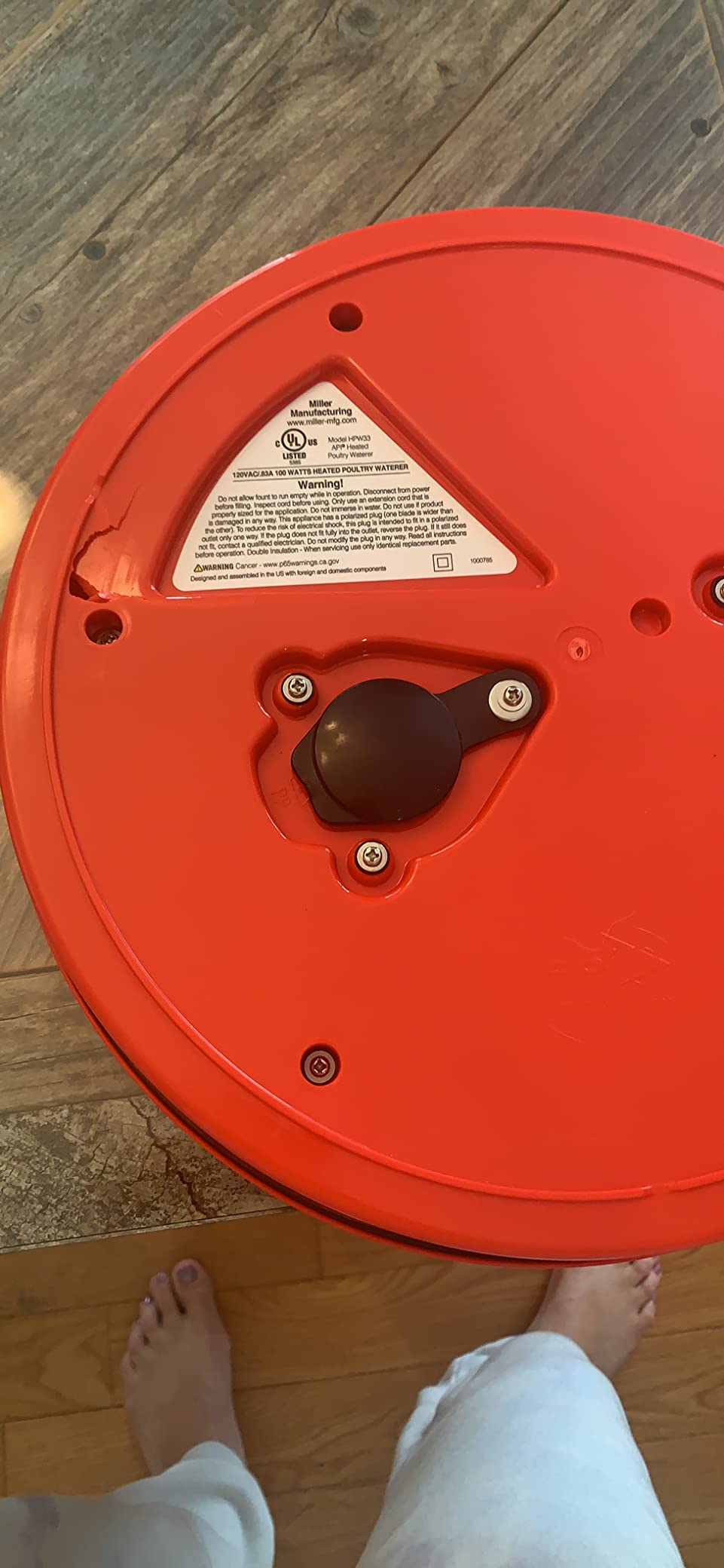
The API HPW33 is an older design from a long-established poultry brand, and it is a steel-jug waterer rather than a plastic bucket. The 100W thermostat-controlled pad gives even heating with automatic on and off cycling, and the jug holds 3 gallons with a gravity dispenser format that most poultry keepers already understand.
What owners like is the funnel. The easy-fill funnel top turns a two-handed refill into a controlled pour, and the rounded jug top discourages birds from roosting on the lid, which keeps droppings out of the reservoir. The galvanized steel handle makes it straightforward to lift, hang, or move when you clean under it.
I want to be straight about the limitation: the 4.0 rating is the lowest average in this roundup, and one-star reviews make up a double-digit share. The -5F rating is the reason for that pattern. This is a waterer for a climate where your coldest nights sit in the single digits and teens, not for a Minnesota January or a northern Maine February.
The 4 foot cord is also short. You will likely be running an extension cord or positioning the jug close to your outlet, and in a damp coop a short cord plus an extension is exactly the combination that causes trouble. Treat this as a mild-winter and short-run option rather than a deep-winter solution.
Where a steel jug genuinely helps
Steep-sided steel jugs are heavier and harder to tip, and birds treat them differently than a light plastic fount. In a run with larger birds or a mixed flock, the weight is a real advantage against tipping and spillage.
Who should skip it
Anyone in a hard-winter region. The -5F rating is a specification, not a marketing puff, and buying under-rated equipment for genuine sub-zero conditions is how flocks end up with an ice block at 6am. Pick a unit rated to -10F or colder.
5. Lilyang 3-Gallon 250W Heated Waterer – high wattage with one serious safety caveat
Lilyang Heated Chicken Waterer 3 Gallon, 250W Thermostat Control
250W thermostat control, on at 35F and off at 70F
Rated to prevent ice down to -20F
Detachable cast aluminum heating plate
6.5 foot cold-weather cord
Pros
- Stopped ice for two flocks through a hard winter
- Does not leak and is easy to fill and clean
- Detachable plate covers every season
- Chickens learned the nipples quickly
Cons
- One report of the unit running hot enough to melt the container bottom
- Lid is awkward to remove and reseal
- Legs are narrow and can be tipped by birds
Lilyang is a newer 3-gallon unit, available since late 2025, and the spec sheet is aggressive for the money: a 250W thermostatically controlled element, rated to prevent ice down to -20F, with a detachable cast aluminum heating plate. Owners confirm it did its job, with one report of it holding off ice through one of the coldest recent winters across two flocks.
The detachable plate is the feature I would design around. Pull the plate, run the same reservoir as a plain waterer through spring and summer, put the plate back in October. Included legs let it stand clear of a wet floor, and the removable 50-degree lid discourages perching and droppings. It also does not leak, which is more than several plastic competitors manage.
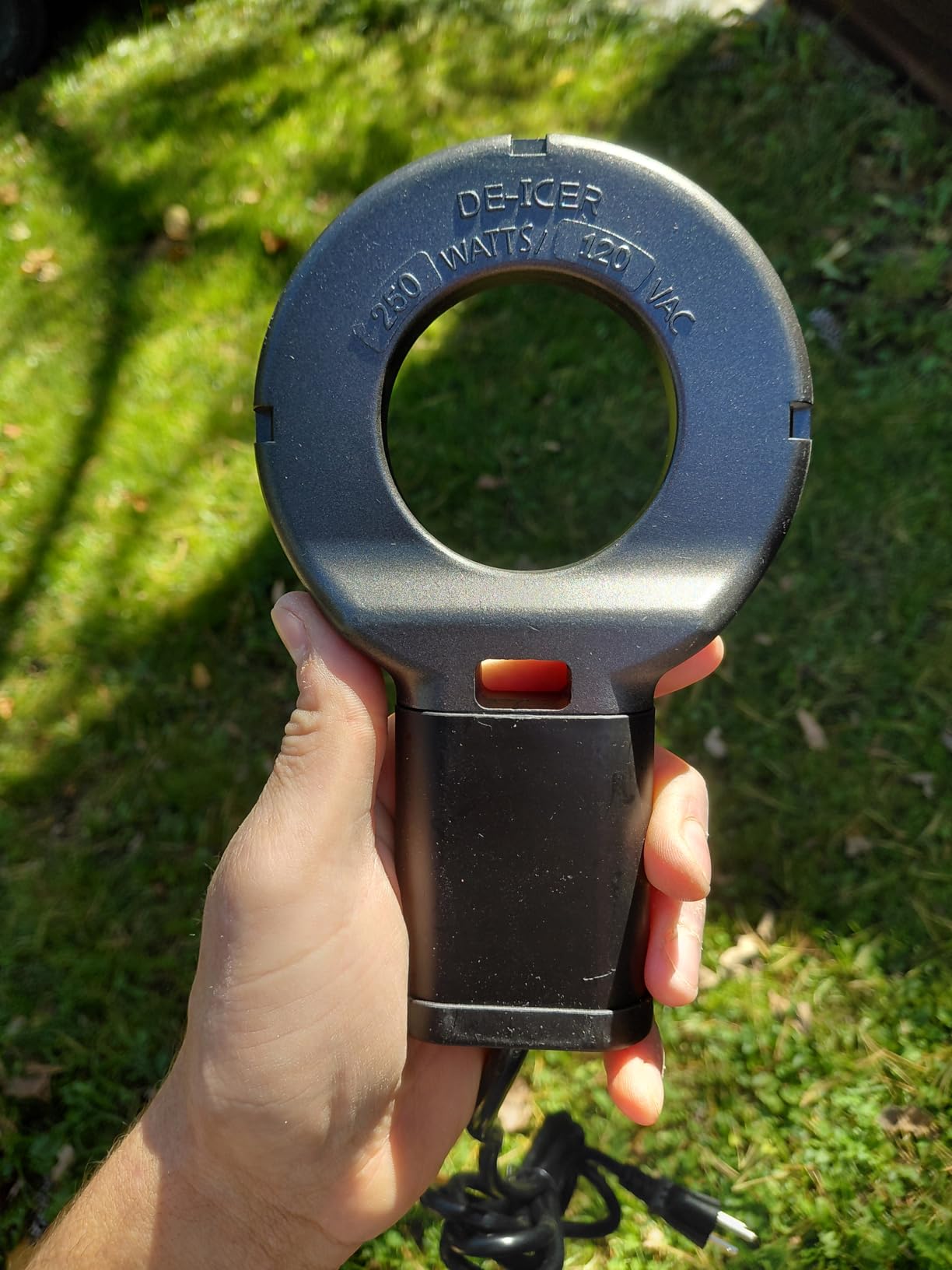
Now the part that gives me pause. The 4.1 rating sits alongside a 250W element cycling in a plastic container, and at least one owner reports the unit running hot enough to melt through the container bottom and ignite bedding. That is a rare report, and rare does not mean nothing in a coop full of dry shavings. Place it on a non-combustible surface, keep it clear of bedding, and check it early in the first cold snap rather than trusting it blind.
Other drawbacks: the lid is awkward to remove and reseal, which slows every refill, and the narrow legs can be tipped by a determined bird. A few owners also report complete freeze-ups in sustained cold and leaks after a few months. The 6-month warranty is short for a seasonal appliance you expect to run for years.
Why the 250W rating matters in deep cold
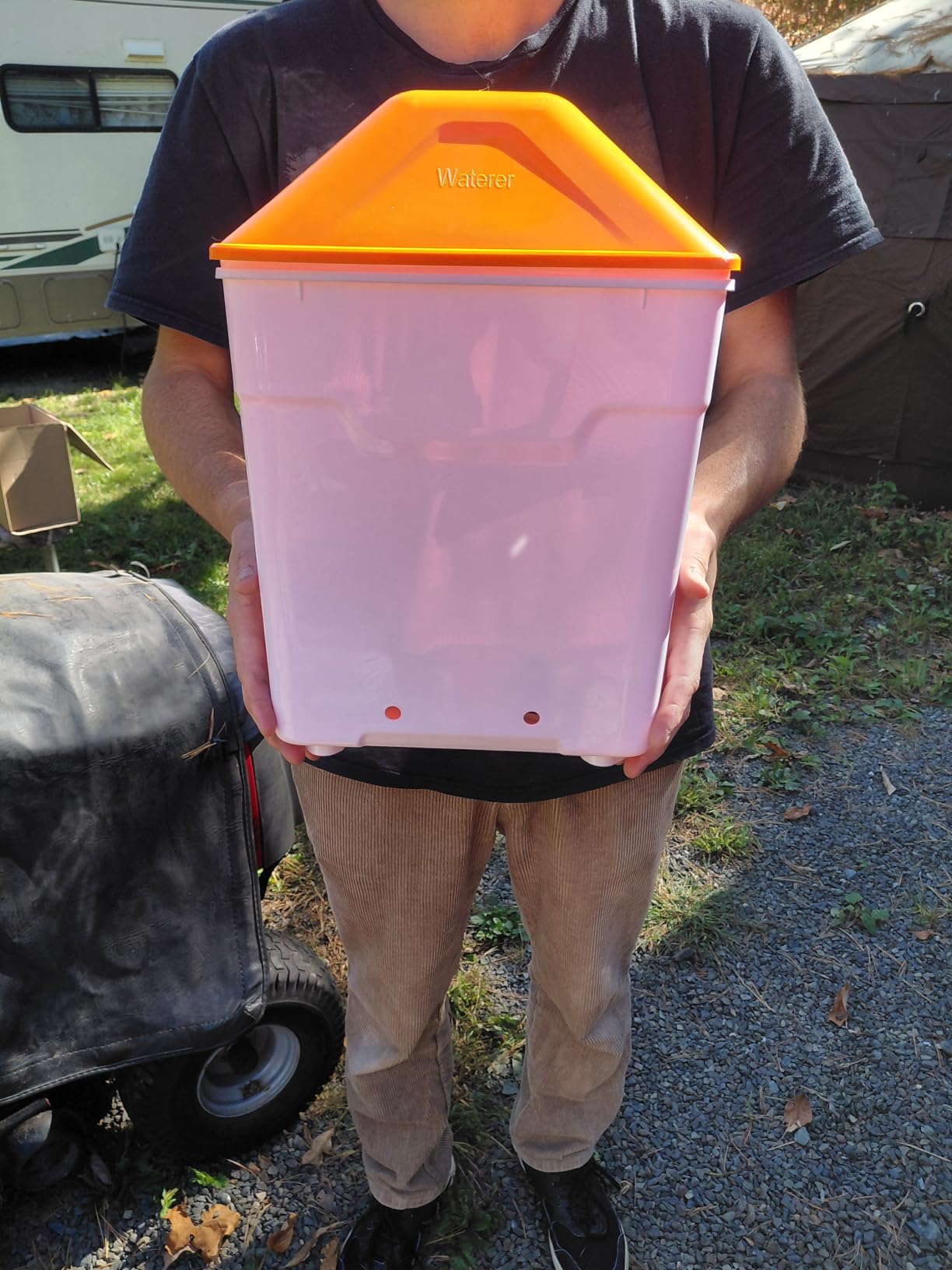
Wattage is headroom. A 250W element moves the water temperature faster and recovers after a lid is opened or the wind hits it. In a region that regularly drops well below freezing, that extra recovery capacity is worth something real.
Where the extra heat becomes a liability
Near its 70F cut-off the unit runs hotter than any other pick here. In a warm climate that is wasted energy, and on a plastic base it is a durability question. Check your lowest average temperature before paying for wattage you do not need.
6. Eggluuz 5-Gallon Heated Waterer with 8 Nipples – built for 30-bird flocks
Eggluuz Heated Chicken Waterer 5 Gallon Thermostatically Controlled Poultry Water Heater with 8 Horizontal Nipples for Winter
5 gallon reservoir rated to prevent freezing to 10F
Thermostat on below 35F and off near 77F
8 horizontal side-mounted nipples
Foldable adjustable legs
Pros
- Nearly two years of service for a 30-bird flock in northern Minnesota
- Held sub-zero nights in an uninsulated coop
- Tight lid keeps the water clean
- Transports with little spillage
Cons
- Two owners report the heater died within about a year
- Lid can freeze shut in deep cold
- Birds need a few days of nipple training
Five gallons is the capacity that changes daily life for a larger flock. At 5 gallons, a 30-bird flock goes days between refills rather than twice a day, which matters more in winter than any other single feature, because checking and topping up a waterer in the dark in freezing weather is where mistakes happen.
The Eggluuz HCW-5 uses 8 horizontal side-mounted nipples, the highest count in this roundup, and that translates directly into less crowding at the waterer. The built-in thermostatic control cycles the heater on below 35F and off near 77F, and the unit is rated to prevent freezing as low as 10F. One owner has run it nearly two years for 30 chickens in northern Minnesota and reports it still looks new.
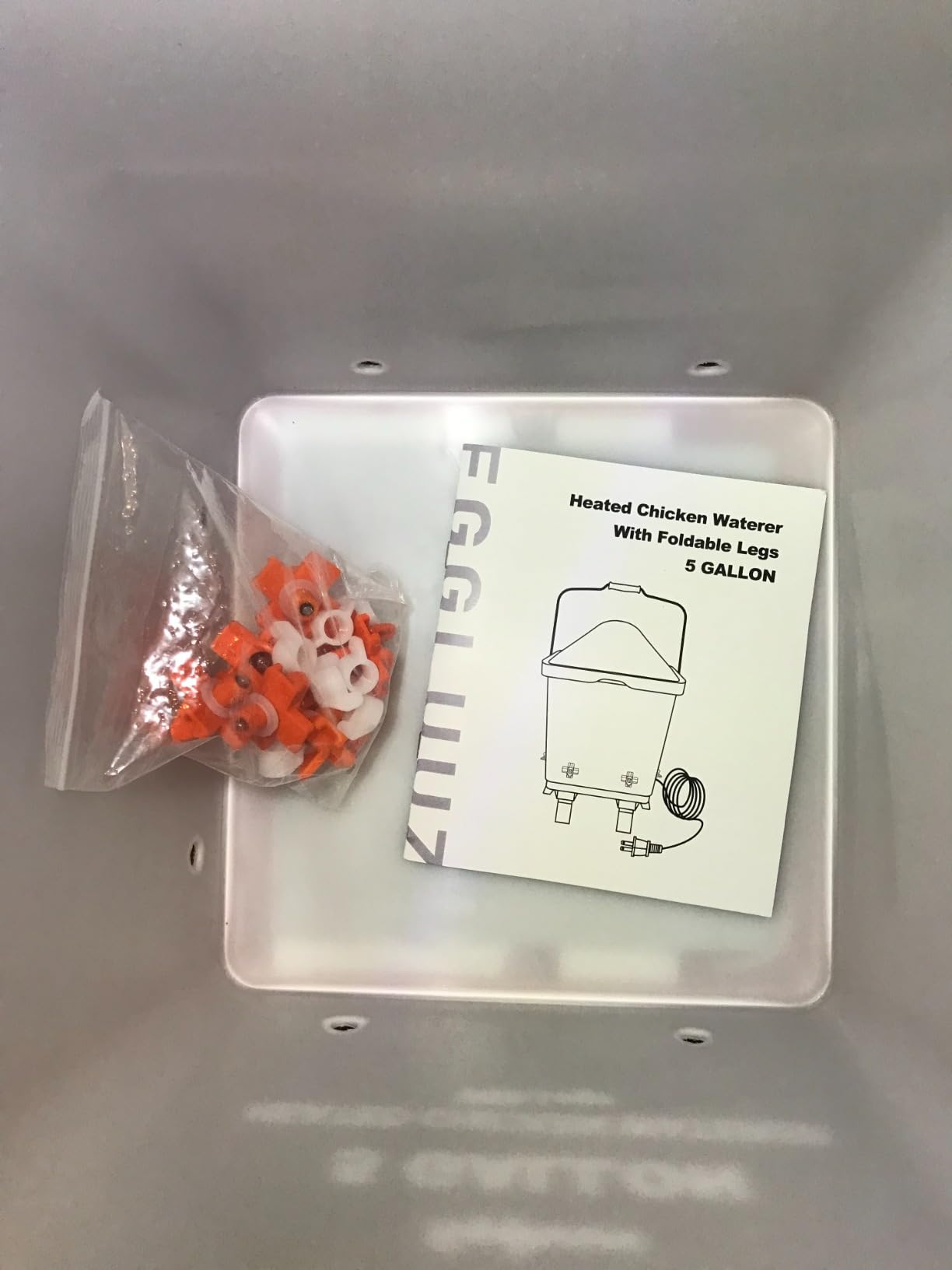
That same owner keeps it in an uninsulated coop through sub-zero nights, which is the hardest test in this category. The removable anti-roost cone lid keeps the water clean, foldable adjustable legs adapt the height to different setups, and owners note it transports with very little spillage when they are moving water to an off-site setup.
The weak point is longevity. Two separate owners report the heater dying after roughly a year of light seasonal use, which is exactly the failure pattern that shows up in reviews across this whole category. The 4.3 rating with a 75 percent five-star share suggests that most units are fine and a minority are not. The lid can also ice flush in deep cold and need to be slanted to reopen, and its built-in thermostat conflicts if you plug it into an external controller.
Why nipple count matters more than most buyers expect
Nipple waterers eliminate the trough. With 8 outlets, 30 birds can drink without crowding, and a dominant hen cannot block access the way she can with a single float fount. More nipples also mean more surface area that can freeze, which is the trade-off you will read about in the next section.
What to do if your heater fails mid-winter
Know your fallback before you need it. A stainless bowl set in an old lawn mower tire, dumped and refilled once or twice a day, is the approach several owners in cold states describe using. It is labor-intensive and it is the thing that keeps a flock drinking on the night the element quits.
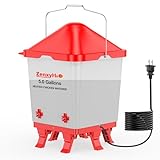
7. ZenxyHoC 5-Gallon Heated Bucket – the best rating and a visible water level
5.0 Gal Heated Chicken Waterer Bucket with 4 Horizontal Water Nipples
5.0 gallon translucent bucket with visible water level
On below 35F and off near 77F
10 ft power cord
Six adjustable legs with anti-roost cone
Pros
- Highest average rating among these picks with a 4.6
- Held liquid water at -15F in Michigan
- See-through body means fewer wasted lid openings
- Kept 30 chickens watered through a two-day trip
Cons
- Only four nipples and some wish there were more
- Legs could be taller and one owner set it on blocks
The translucent bucket is the idea I wish more heated waterers had copied. Every covered waterer in this roundup is opaque, and every owner complaint about them is the same: you cannot see how much water is left in a covered run, so you either open the lid constantly or you guess and hope. With a see-through body you glance over and know.
It also carries a 4.6 average, the highest rating among the picks in this roundup, with an 80 percent five-star share across 85 reviews. Owners in Michigan, Tennessee and elsewhere report water staying liquid down to -15F. At 5 gallons, one owner kept 30 chickens watered through a two-day trip away, which is a reasonable stress test for a large-flock waterer.
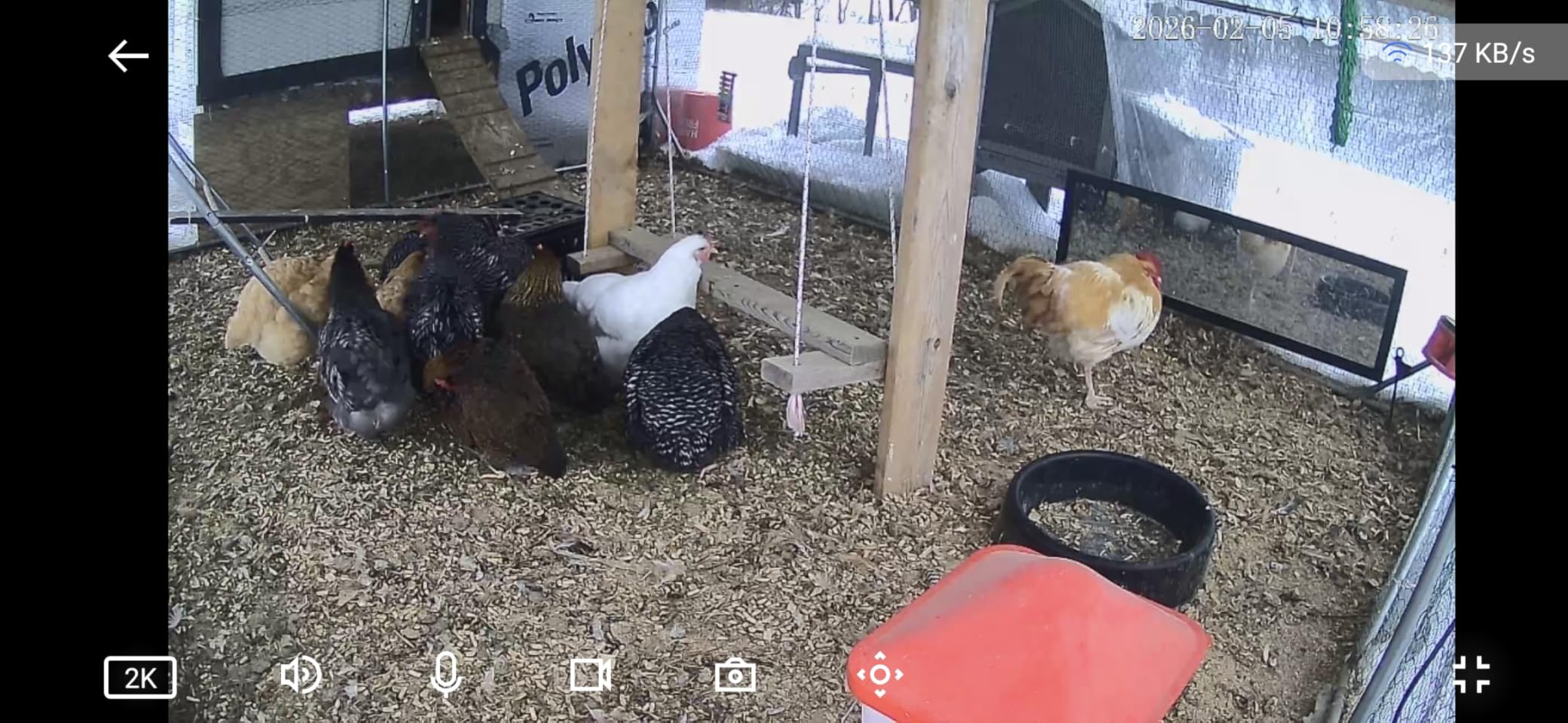
Water stays clean because the anti-roost cone lid blocks perching, so droppings never reach the surface. Birds learned the nipples on the first day according to owners, which is faster than the training period most nipple waterers on this list require. The 10 ft cord gives reasonable placement flexibility, and the six adjustable legs handle height and stability on uneven ground.
Two limitations are worth stating plainly. There are only 4 horizontal nipples, which is fewer than the 8 on the Eggluuz, and a few owners wish there were more when 30 birds line up in the morning. The legs are also short, and at least one owner set the unit on blocks to raise it. With 85 reviews this is the thinnest evidence base in the roundup, so treat the 4.6 as promising rather than proven.
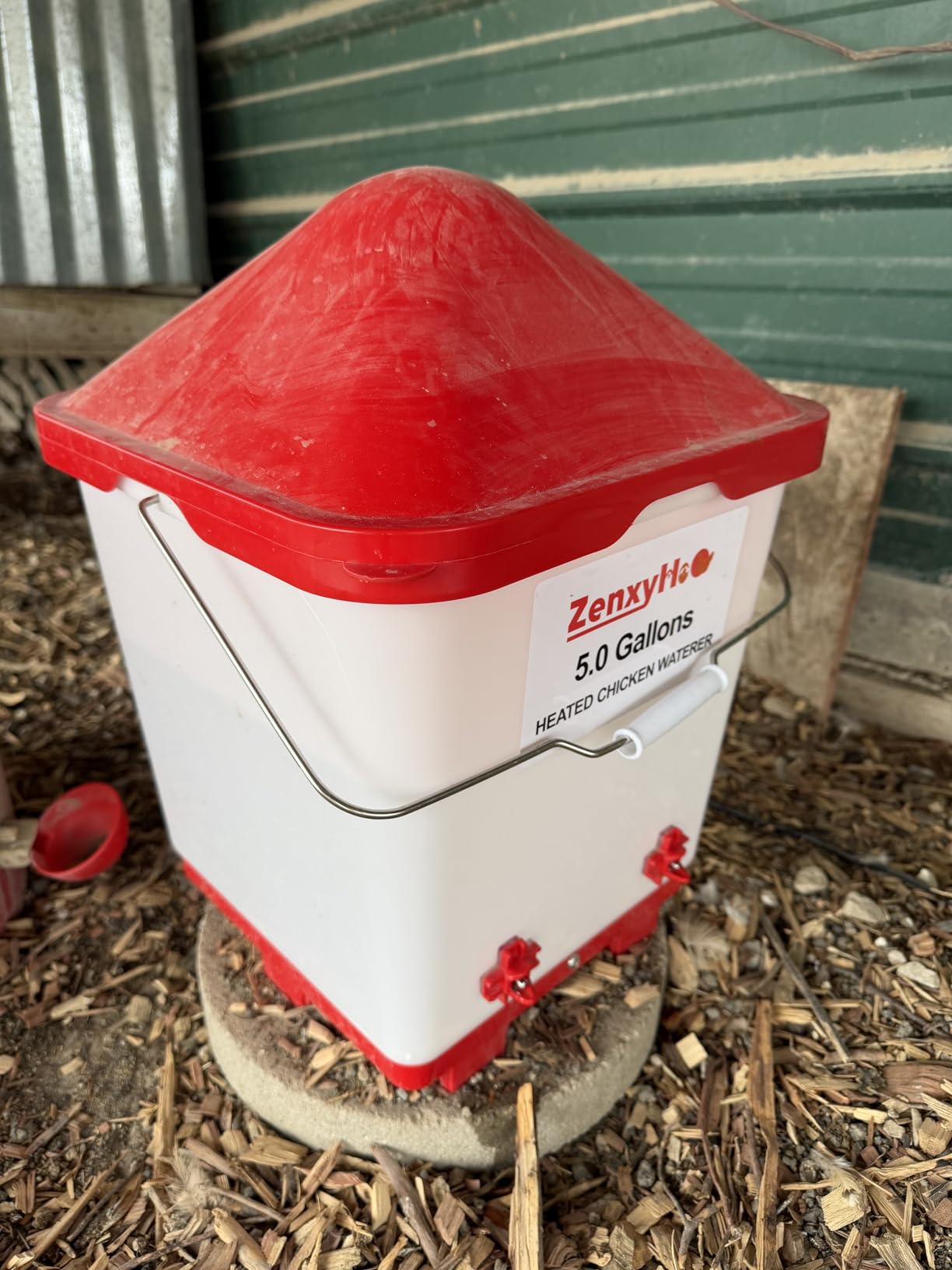
Why water level visibility saves you time
Checking water by opening a frozen lid in a dark run takes minutes and encourages frozen fingers. A see-through wall turns a two-minute chore into a glance. Over a 120-day winter that is a real difference, and it is the reason this bucket stands out despite the small review count.
When four nipples is not enough
If you run 30 birds or more and you see crowding at the waterer in the morning, four outlets will be a bottleneck. In that case the Eggluuz 5-gallon with 8 nipples serves a larger flock better, and you trade water-level visibility for throughput.
8. GHWMYD 125oz Heated Water Bowl – a sealed trough for mixed farmyard birds
GHWMYD Heated Water Bowl for Chicken,125OZ Water Heater for Hens Goose Duck
Maintains water between 41F and 100.4F
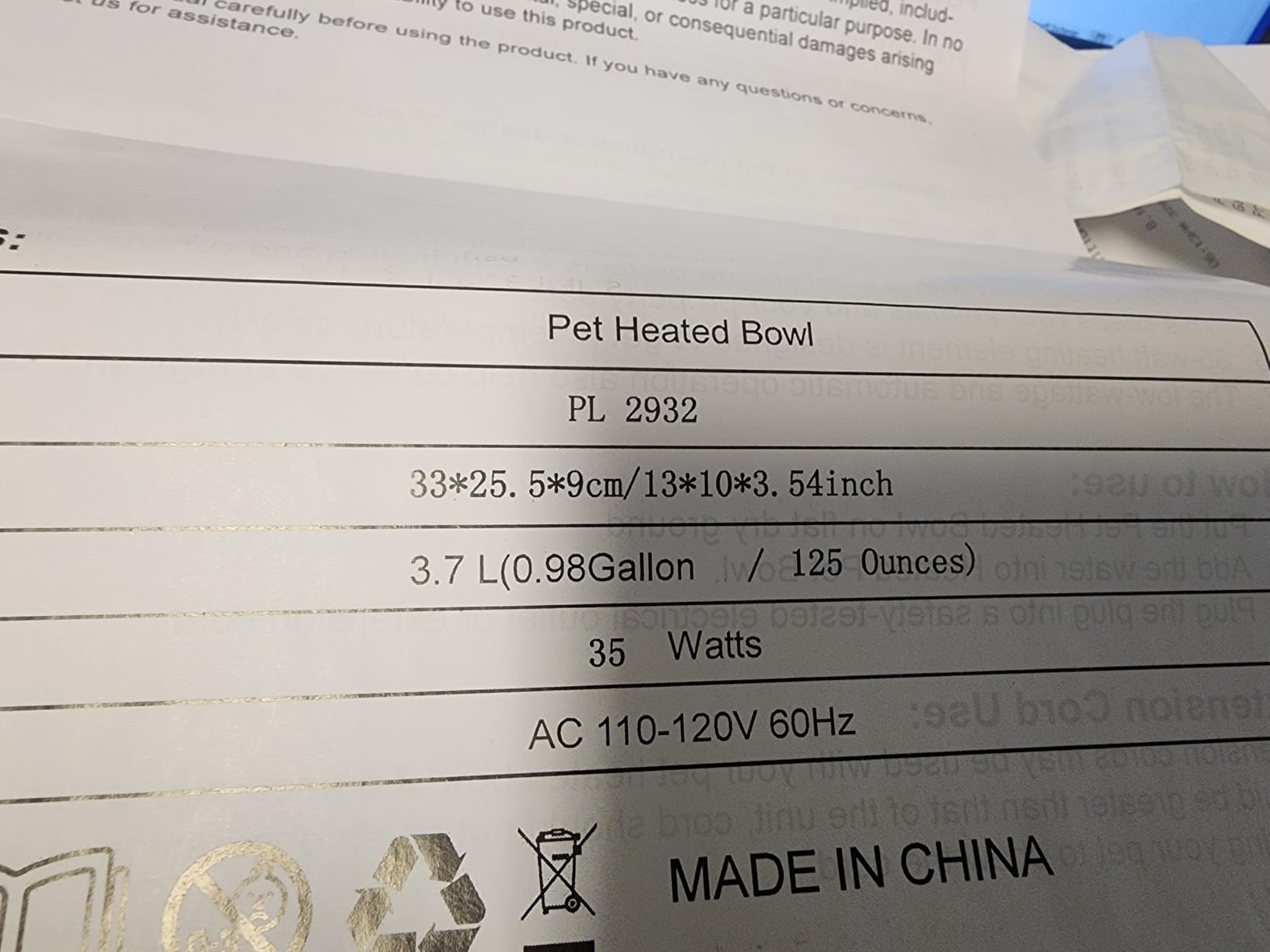
125oz / 3.7L open trough,13 by 10 by 3.54 inches
Element sealed in BPA-free plastic
6.56 ft abrasion-resistant cord
Pros
- 4.6 rating with 79 percent five-star reviews
- Open trough makes water level and cleanliness easy to check
- Sealed element and BPA-free casing rated waterproof
- Large 3.7L capacity in a compact footprint
Cons
- Open trough is more exposed to fouling than a covered nipple waterer
- Manufacturer advises sheltering it from wind
- Must be unplugged when empty and never submerged
Most heated waterers on this list are nipple drinkers designed for chickens. This one is an open heated trough, and that changes who it suits. Ducks, geese and other farmyard birds will not reliably use nipples, and their combs and wattles are more vulnerable to frostbite, so they need open water they can dunk their heads into.
Once powered, it holds water between 41F and 100.4F, which is continuous thermostatic heat rather than a cycling element. The heating element is fully sealed inside a BPA-free plastic casing for waterproofing, and the 6.56 ft cord is described as abrasion-resistant, which matters in a coop where cords get pecked.
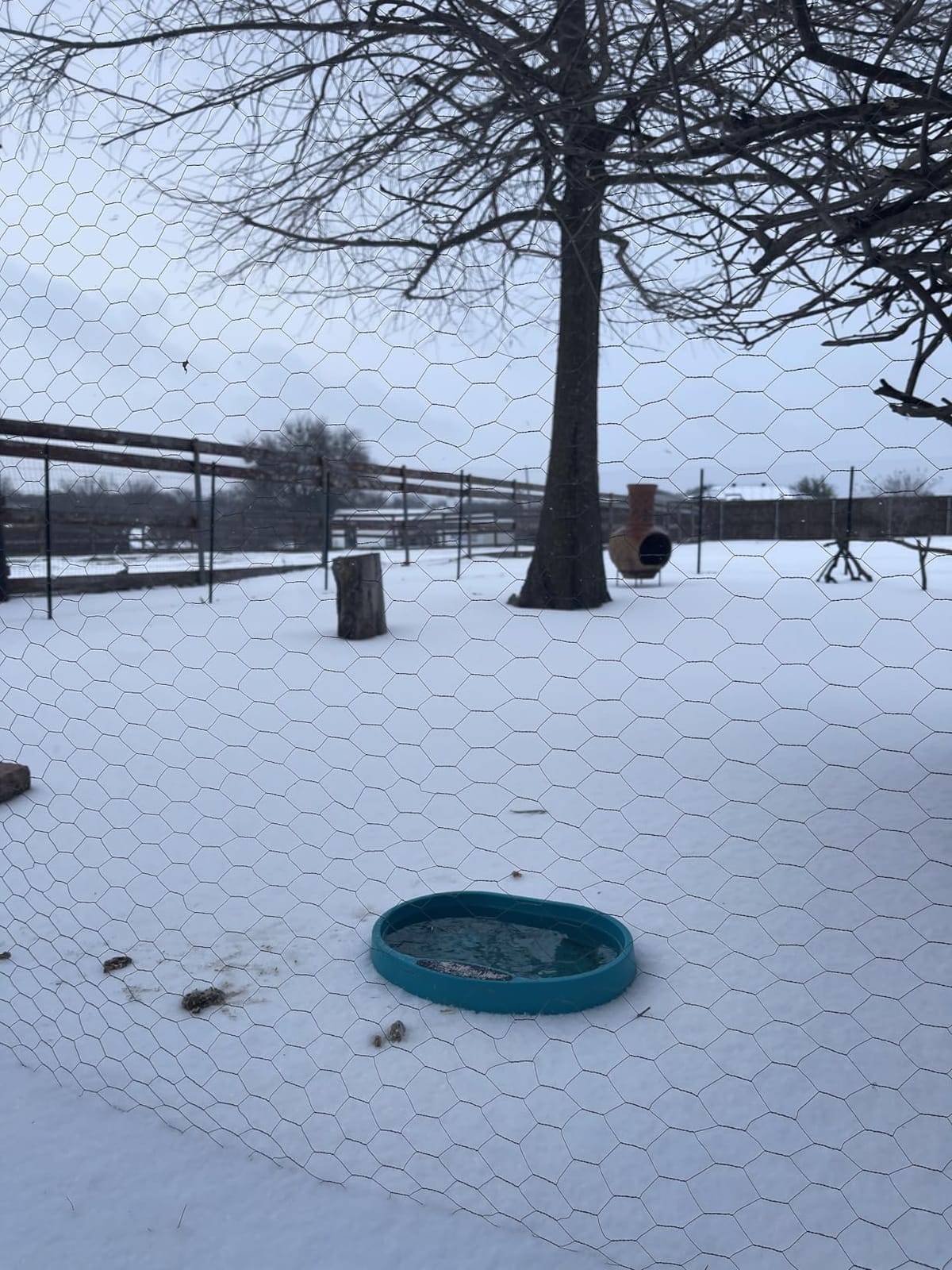
The 3.7L capacity in a 13 by 10 inch footprint is genuinely useful in a small run, and it carries a 4.6 rating with 79 percent five-star reviews. Owners also use it as an outdoor heated bird bath, which is a nice secondary use if you have a garden. It is CE, FCC and UL certified, and includes 6 months of after-sale service.
The open format is the trade-off. An exposed trough collects fouling faster than a covered nipple waterer, and the manufacturer recommends placing it in a sheltered area away from wind. It must be unplugged when empty and never submerged. If your birds are chickens only and you dislike scrubbing a water bowl every few days, a covered nipple unit will save you work.
Why open water matters for waterfowl
A duck needs to submerge its bill and nostril to filter feed properly. Nipple drinkers force them to drink vertically, which many flocks never adapt to. An open heated trough also lets waterfowl monitor water temperature and avoid freezing-cold surfaces, which matters when their combs are the frostbite risk.
What you give up with a trough
Cleanliness and discretion. Droppings, bedding and feed dust land straight in the bowl, and in winter you will be scraping ice and grit out of it more often than you would scrubbing a nipple waterer. Place it under a roof and away from the wind.
9. My Favorite Chicken 28W Heated Base – the lowest power draw
My Favorite Chicken Heated Poultry Waterer Base – 28W Electric Chicken Water Heater for Winter, Freeze-Proof to -20°F, Adjustable Heated Waterer Base for Chicken Waterers & Founts
28W low-draw base rated freeze-proof to -20F
Sliding tabs expand to 11.8 inches
Runs on a low-wattage wall adapter
Sealed housing resists moisture and ammonia
Pros
- Draws roughly 25W against 60W to 250W competitors
- Surface stays only lukewarm so no burn or fire risk
- Plastic housing survived four Virginia winters outdoors
- Adjustable tabs fit small founts to 5 gallon buckets
Cons
- No built-in thermostat so it runs continuously
- Will not work with a hanging waterer
- Weak output in hard freezes for some owners
This is the restraint option. The 28W element draws roughly a quarter of what the bigger heated waterers pull, and the high-density insulation directs heat upward into the container rather than down into frozen ground. Owners with three of these running four Virginia winters report the plastic housing surviving intact, with no cracks and no UV fading.
The safety argument is the strongest part of the design. The surface reaches only lukewarm, so it will not scorch pine shavings, it will not burn a hen’s feet, and it keeps 120V inside a wall adapter in the house rather than running mains voltage into a damp coop. That makes it the easiest heated base to live with in a small or cluttered space.
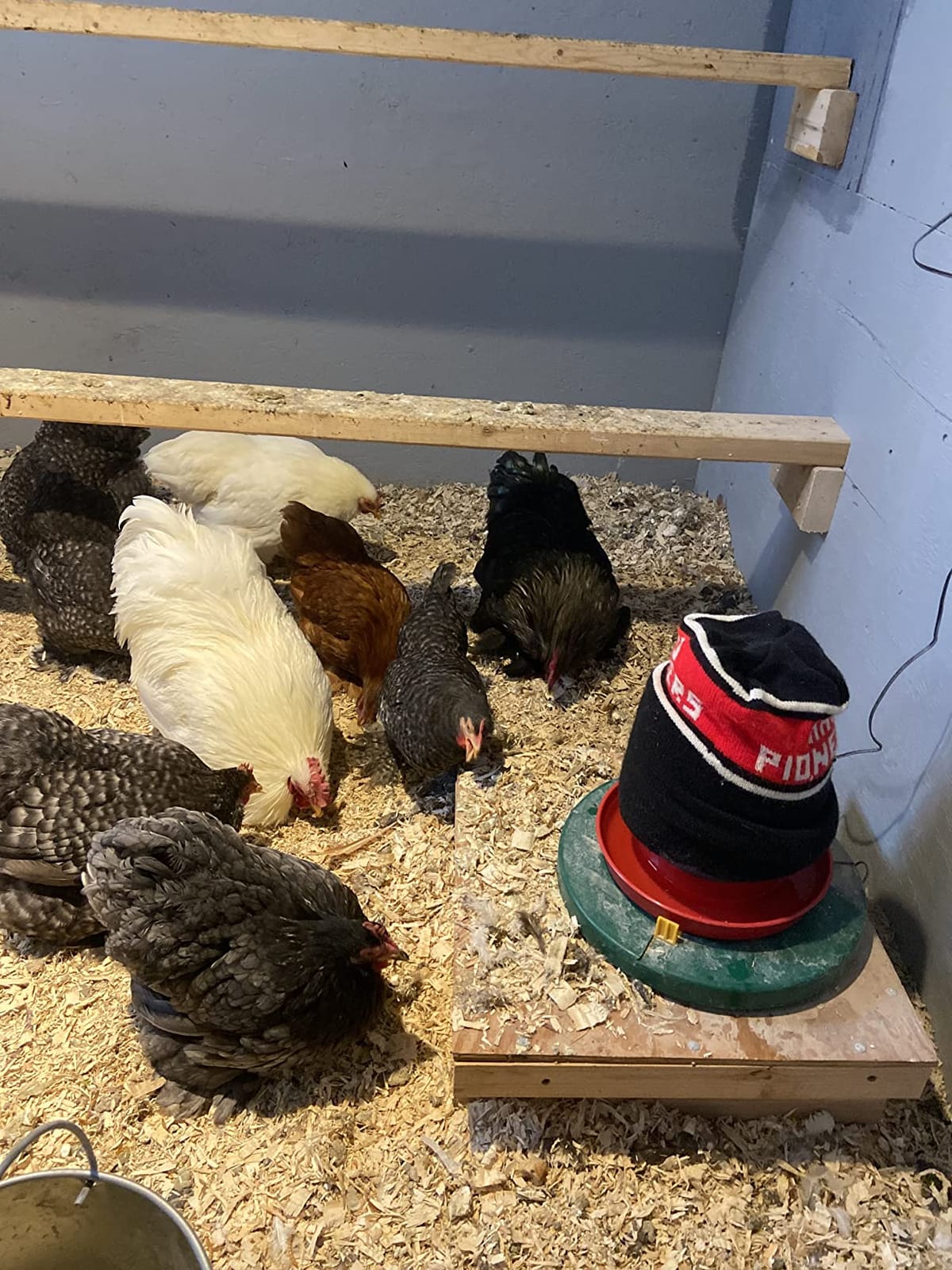
The adjustable sliding tabs expand to 11.8 inches, so it fits everything from a 1-gallon fount to a 5-gallon bucket, and owners use it for quail and pigeons in compact enclosures. It is also one of very few options on this list that works with a metal fount rather than demanding a plastic bucket.
There is no built-in thermostat, which is the main compromise. It runs continuously while plugged in, and owners who want control add an external controller such as a TC-3. With no sensor, the 25W of output is also modest, and a New England owner reported the water still freezing in the first cold snap. A flimssy cord is the other recurring complaint, with one owner’s connection cracking and sparking after a season.
How the wall adapter changes coop safety
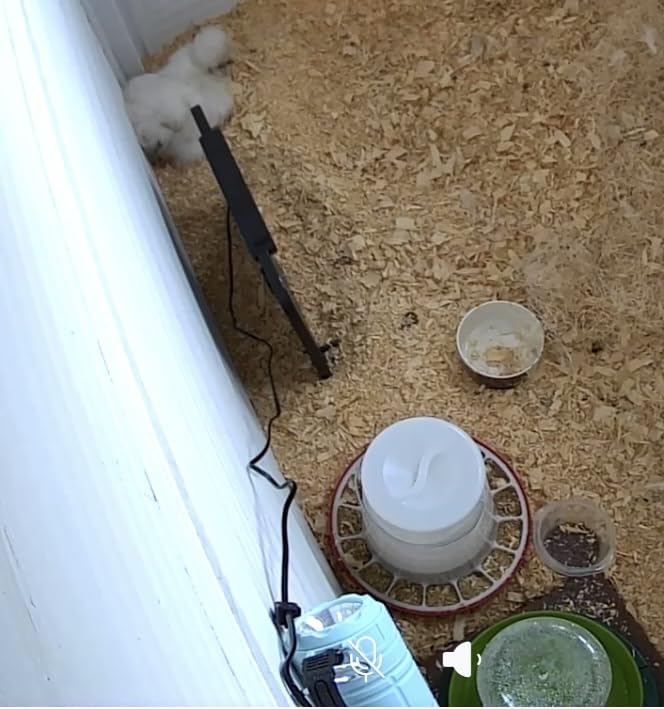
Only a low-voltage cord enters the coop. That is a meaningful reduction in shock and fire risk in a damp, ammonia-laden, beaky space, and it is why this base works in situations where a 125W mains element makes you nervous.
When low wattage is the wrong trade
When your winters are genuinely brutal. Owners in single-digit and negative temperatures are generally satisfied, but there are documented freeze-ups in hard snaps. In Maine or northern Minnesota, spend the watts. In Virginia or the Carolinas, this is the economical answer.
10. Lil Clucker 125W Heated Base – indicator lights for a dark coop
Lil’Clucker Heated Base for Chicken Waterer – Automatic Metal Freeze Proof Heated Chicken Waterer with Heater & LED – Poultry Heated Waterer for Winter (Blue, 11 Inch)
125W thermostatic element, on below 35F off at 77F
10 ft power cord
LED indicators for power and heat status
11 inch and 13 inch sizes
Pros
- 4.6 rating with 80 percent five-star and only 2 percent one-star
- LED power and heat lights make monitoring simple
- Kept water unfrozen through Ohio and Wisconsin winters
- Plate runs warm without getting dangerously hot
Cons
- Recessed lip around the base collects dust and slush
- One unit stopped working after a few weeks
- One owner received a cracked power cord out of the box
- Waterer not included
The small thing that makes this base different is the LED indicators. There is one light for power and one for active heating, and in an unlit coop at 6am that is the difference between knowing your flock has water and guessing. Most heated bases tell you nothing until the water is already frozen.
Underneath, it is a conventional 125W thermostatically controlled plate that activates below 35F and switches off at 77F, with a 10 ft cord that is longer than most in this category. The review profile is among the strongest here: 4.6 with an 80 percent five-star share and only 2 percent one-star. Owners in northeast Ohio and Wisconsin report dependable freeze protection without excessive surface heat under pine shavings.
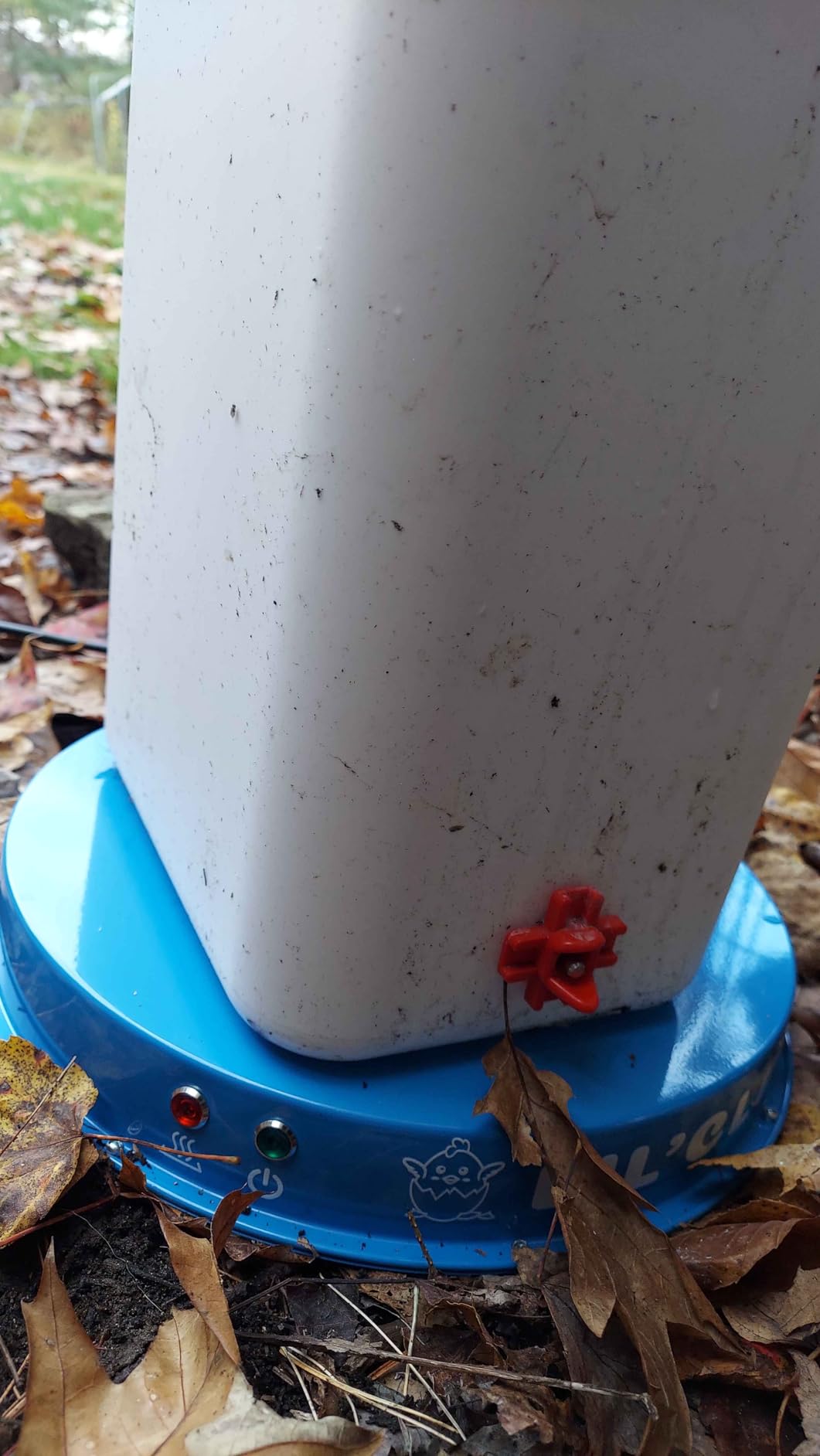
It works with a metal poultry drinker or a metal dog dish, which widens the options if you are not replacing your waterer. Colours include orange and blue, and the 11 inch and 13 inch sizes cover different waterer footprints.
Two practical notes. The recessed lip around the edge of the base collects dust and slush and is hard to clean in winter, which is a small but real annoyance in a season when you do not want to be outside with a brush. And the waterer is not included, so budget for the fount or bucket as well. There is one report of a unit failing after a few weeks and one of a cord arriving already cracked at the attachment point, so inspect it on arrival.
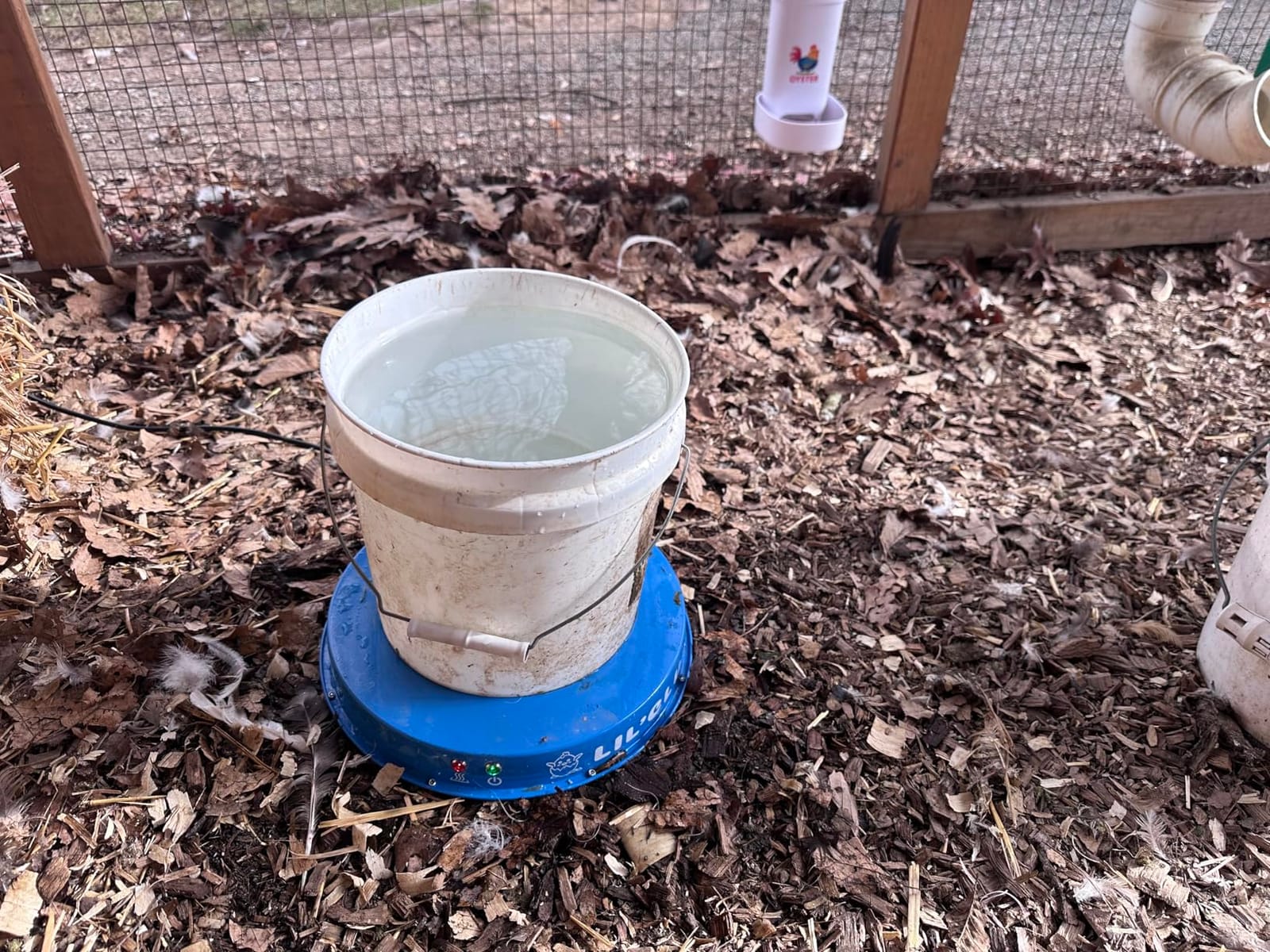
Why status lights matter more than they sound
The most common way a heated waterer kills a flock quietly is a heater that stopped cycling and nobody noticed until the water was solid. A glowing indicator turns an invisible failure into an obvious one, and the on-below-35F cut-off means the second light tells you the element is actually working rather than just the plug being in the wall.
Who should buy this base instead of a complete waterer
Anyone who already owns a 3 or 5 gallon metal or plastic waterer and wants freeze protection without replacing it. Match the base diameter to the waterer footprint, and put it on a stand if your run floods, because a submerged heating element is the one failure mode with no safe workaround.
11. Gsbomzap 12 Inch Heated Base 55W – the value pick for small coops
12 Inch Chicken Water Heater Base, 5 Gallons Poultry Drinker Heater Base with Thermostat and Power Cord, Automatic Electric Poultry Winter Deicer Heated Base for Plastic/Metal Chicken Waterer
55W thermostatically controlled heating base
11.8 inch galvanised steel base
Sealed underside protects the coil
5.8 ft power cord
Pros
- Lowest cost in this roundup while drawing only 55W
- Galvanised base resists rust and corrosion
- Built-in thermostat prevents overheating and boiling
- Owners confirm it works at -20C in Canadian winters
Cons
- Base is slightly smaller than some 3.5 gallon waterer bottoms
- Adjustable dial means settings are trial and error
This is the budget entry that does not feel like a compromise, and the 4.5 rating across 236 reviews backs that up. The 55W element is low enough that the thermostat stops heating above 25C and reheats below 0C, so it never boils water and never becomes a fire risk in pine shavings. That is a genuinely useful safety margin in a coop.
The base is galvanised steel, which resists rust and corrosion better than painted mild steel, and the underside is sealed so pests, debris and water stay away from the heating coil. Several owners have bought a second one, and Canadian owners confirm it held up at -20C through their winters. Multiple owners also report it working on 7-gallon waterers.
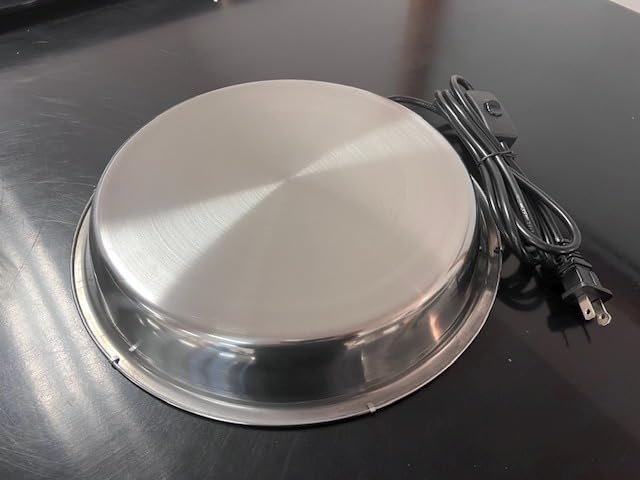
The 11.8 inch footprint is what makes this the small-coop pick. It is small enough for a corner of a compact run and light at under 2 pounds, and it suits coops, cages, pens and covered outdoor areas. There are no spare parts and no assembly, which matters if you are setting it up in poor light.
Two real caveats. The pan is slightly smaller than some 3.5 gallon waterer bottoms, so alignment matters and a waterer that overhangs the base loses contact. And the temperature control is an adjustable dial rather than a fixed thermostat, which means you set it by trial and error. Expect to check the water the first couple of cold mornings and then leave it alone.
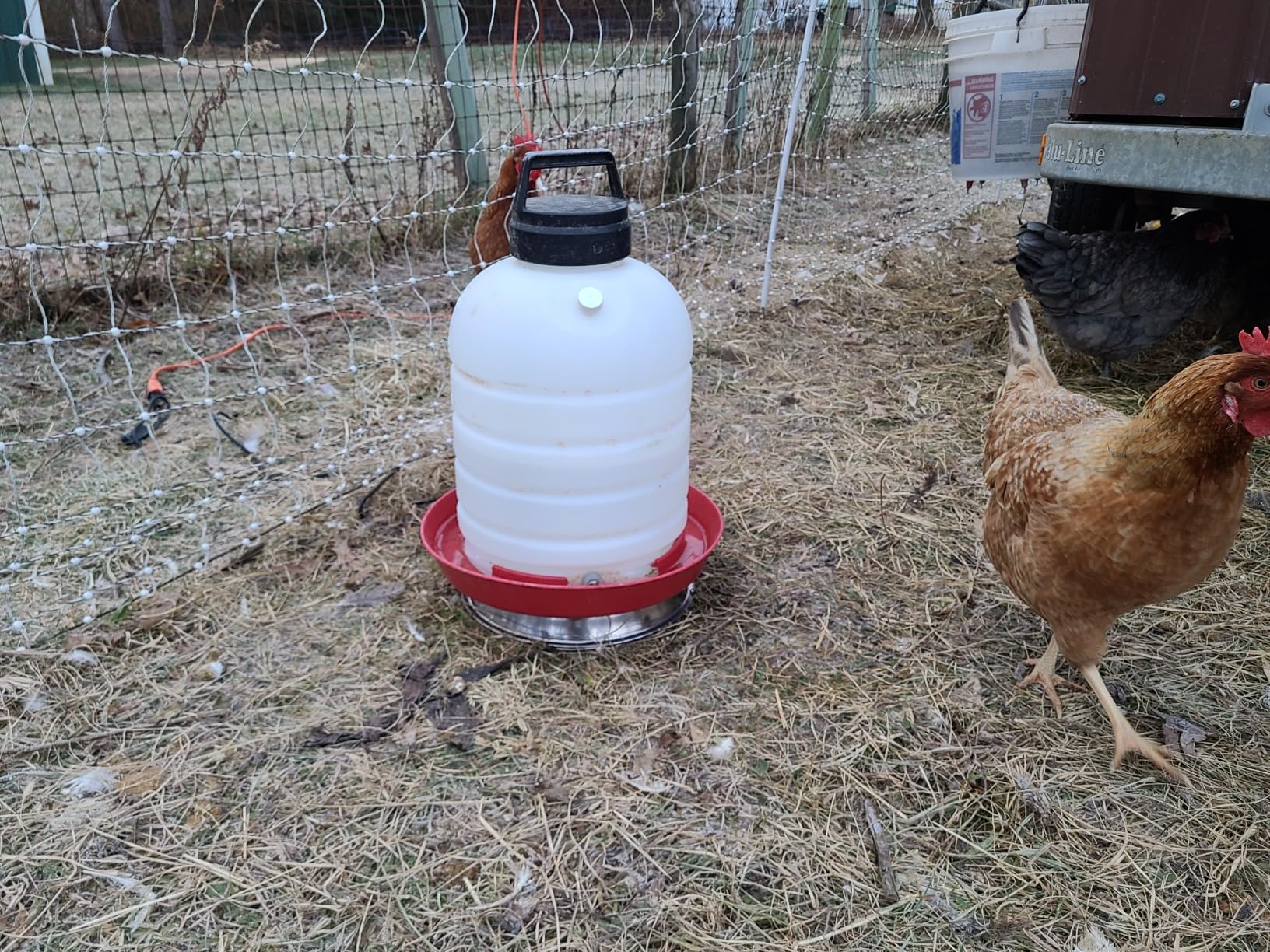
Why 55W is enough for a lot of winters
Most of the heat loss is through the container walls and the lid, not through the base. If you set the waterer on an insulating surface rather than cold concrete, 55W moves a 3 to 5 gallon reservoir more slowly than a 125W pan but keeps it above freezing. Place it on a cinder block and the difference shrinks further.
When to spend more watts instead
When the waterer sits on bare soil, in an exposed run, or in a climate that regularly goes well below freezing. In those conditions, wattage beats price. This base is the right buy in a sheltered small coop in a temperate or mild-winter region.
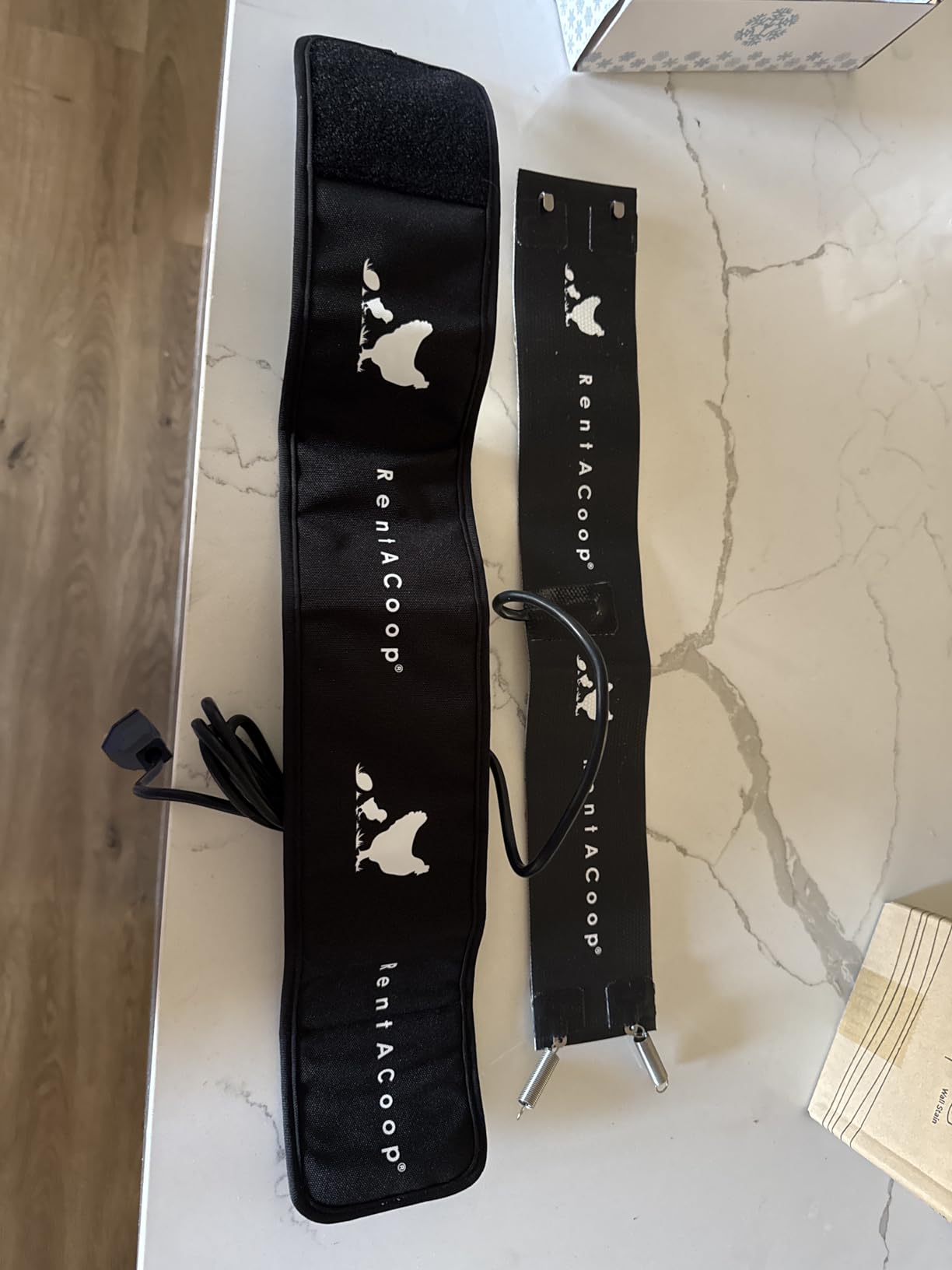
12. RentACoop Thermo Bucket Belt – turn any bucket into a winter waterer
RentACoop LG Thermo Bucket Belt Chicken Waterer Heater with Insulated Wrap
40W belt heater rated to -10F with the included wrap
Activates below 38F and turns off at 42F
Fits any 2-5 gallon bucket 24-34 inches around
6 ft cold-weather cord
Pros
- Fiberglass-reinforced silicone belt will not melt plastic
- 40W draw is among the most efficient here
- No tools needed to convert an ordinary bucket
- Works for chickens turkeys and other farm birds
Cons
- A bucket must be bought separately
- Belt range means oversized buckets will not fit
- Only rated to -10F
The RentACoop Thermo Bucket Belt is the most flexible option here, and for a good reason: it does not need a proprietary waterer. The belt wraps around any 2 to 5 gallon bucket measuring 24 to 34 inches around, and it turns that bucket into a heated poultry waterer in about a minute with no tools. If you already have buckets, this is the cheapest path to winter water.
The 40W draw is among the most efficient in this roundup, well below the 125W and 250W options, and the thermostat band is unusually tight: on below 38F, off at 42F. A narrow band around freezing means very little wasted runtime, which is why owners like the running cost.
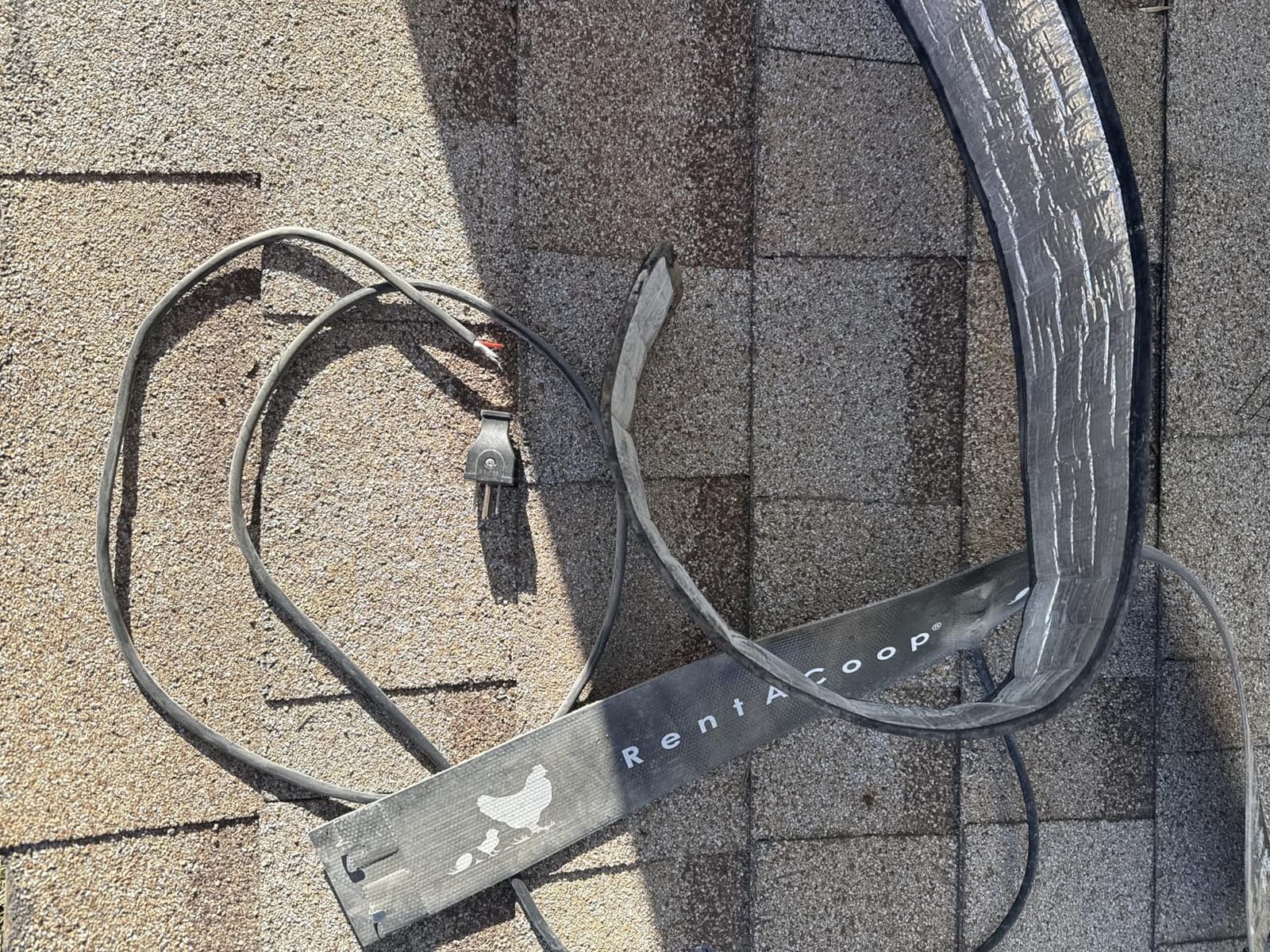
The material choice is the standout. It is fiberglass-reinforced silicone rubber, which will not melt a plastic bucket and is safe to touch, unlike a bare metal base in a plastic container. The included insulated wrap adds cold protection, and the whole thing weighs just over a pound, so it stores away easily in summer.
The limits are structural. You supply the bucket, so a complete winter waterer costs more than a single integrated unit. The 24 to 34 inch belt range excludes oversized buckets, which is a real problem if you run a large-format container. And the -10F rating suits ordinary winters rather than severe cold, so it is not the choice for northern Minnesota or Maine.
Why wrapping a bucket beats an integrated unit
You can swap the container. A bucket that cracks or develops algae gets replaced in minutes instead of meaning a new appliance. You can also size the water to your flock across the season, moving from 2 gallons in October to 5 gallons in January, and use the same belt all year.
What the wrap actually adds
The insulated wrap covers the belt and part of the bucket, cutting heat loss through the band and slowing the rate at which the water cools after the element cycles off. It is the difference between steady freeze protection in single-digit temperatures and marginal performance when a cold front arrives. Keep it on for the whole winter.
How to Keep Chicken Water From Freezing
The best waterer for chickens in the winter is one that never freezes, which sounds obvious until you look at the failure reports: the bucket stayed liquid while the nipples iced shut, or the lid froze, or the plug looked fine but was not delivering current. These steps are ordered by how often they actually solve the problem.
Match capacity to flock size before anything else. A waterer that is too small empties faster than you can refill it in a cold snap, and a half-empty waterer freezes faster than a full one. Allow roughly a gallon per 10 to 12 birds per day in cold weather and round up.
Put the waterer inside the coop or a sheltered run. Every manufacturer in this roundup rates its units for cold, not for weather exposure. Wind chill and radiant cold from a night sky will freeze a rated-to-minus-20F unit sitting in the open. Sheltering the waterer is worth more than any wattage upgrade.
Set the waterer on an insulating surface. A cinder block, a pallet, or stacked scrap lumber stops heat sinking into frozen ground. This single change is why a modest 55W base can outperform a much larger unit sitting on bare soil.
Run the cord so water cannot travel along it. Make a drip loop so any water on the cable runs off instead of following it back to the outlet, and keep the run out of reach of beaks.
Plug into a GFCI-protected outlet. Damp bedding, ammonia vapour and a warm metal or plastic surface are a poor combination for an unprotected connection. GFCI is not optional in a coop.
Check the nipples and the lid on the coldest nights. Buckets routinely stay liquid while nipples and lid rims freeze first. Press each nipple and make sure it moves before you rely on it.
Keep a manual backup within reach. A stainless bowl in an old lawn mower tire, filled once or twice a day, is the fallback several owners in cold states describe. It is labor, but it is what covers a heater failure overnight.
Plug the waterer in before the first hard freeze, not on the night you need it. A first cold snap is when you learn whether your flock will drink from nipples and whether your cord reaches the outlet without an extension.
Do Chickens Actually Need a Heated Coop in Winter?
No. Chickens do not need a heated coop in the winter. Chickens are built for cold, and a warm, humid, poorly ventilated coop is more dangerous than a cold one. The reason a heated waterer works so well is that it targets the one need cold genuinely threatens, which is water, without adding the moisture, dust and fire risk that a heat lamp introduces.
What cold does threaten is the parts that are poorly insulated. Combs and wattles have thin skin with no feathers over them, and prolonged sub-zero wind can cause frostbite there first. Most keepers handle that with petroleum jelly on the combs before a hard freeze rather than by heating the whole building. Ventilation stays open at the top, dry bedding stays dry, and water stays available.
The one case where a heated coop makes sense is a sick, very young, or recently shipped bird, where a brooder at a controlled temperature matters. Our advice is to spend the budget on water and on frostbite prevention, and to leave the heat off the rest of the flock.
How to Keep Water Liquid Without Electricity
How can I keep my chicken water from freezing without electricity? Use a submersible bird bath heater in an insulated fount, set a fount on a hot plate controlled by a thermostat, or accept a manual twice-daily fill. All three are common in the owner discussions we reviewed, and all three trade convenience for either labor or safety.
Submersible heater in an insulated fount. A bird bath heater drops into a metal fount and warms the water directly. It is the most frequently recommended no-cord solution and works well in an insulated container.
Hot plate with an external controller. Popular, but a New England owner abandoned raised hot plates because they took up too much coop space and never shut off properly on warm days. Pair it with a controller and never leave it unattended near dry bedding.
Manual fill, no heat at all. A stainless steel bowl set in an old lawn mower tire, dumped and refilled once or twice daily, is what several members in Minnesota and the Northeast actually do. One owner tried a DIY system using buried PVC with heat tape and it still froze overnight; the solution that worked for that person was a frost-free yard hydrant plus a galvanized fount on a heating stand, filled each morning.
Several owners in Minnesota also report heated dog bowls failing to survive consecutive winters, so if you go that route buy two. If you keep more than a handful of birds, the manual option is honestly hard to sustain for 120 days. It works as a backup plan rather than a primary one.
Winter Waterer Setup and GFCI Safety Checklist
Run through this once, in daylight, before the first freeze. None of these steps takes more than a few minutes, and the ones that matter most are the ones people skip when the waterer is already frozen solid.
Install a GFCI-protected outlet inside the coop if one does not exist, ideally on its own circuit, and confirm it trips with the test button before you need it.
Reach the outlet without an extension cord wherever you can. Every short-cord complaint in owner reviews traces back to an extension cord running through wet bedding. Bury conduit or use outdoor-rated cable if you must run further.
Form a drip loop at the outlet: cable hangs down in a U before rising to the plug, so any water on the line drips off instead of running into the connection.
Secure the cord above the birds. Run it along a wall or through conduit at a height beaks cannot reach, and add strain relief at both ends.
Set the waterer on a cinder block or pallet inside the coop rather than on the ground, and away from the doorway where snow blows in.
Place a roof or partial cover over the waterer to keep snow and falling debris out without sealing it, and check that a lid or cover cannot slide over the waterer in wind.
Keep combustible bedding clear of the base, and check the surface temperature by hand during the first cold snap.
Mark your fallback plan. Put the spare bowl, the bucket for carrying water, and the location of your GFCI reset where you can find them in the dark.
Nipple Drinkers vs Open Founts in Cold Weather
Only half of my chickens will drink from nipple waterers is a complaint that shows up over and over in owner discussions, and it is real. Some birds take to nipples in a day, and some never do. That behaviour is the single biggest reason people switch waterers mid-winter, and it is worth deciding on deliberately rather than discovering it at 6am in a freeze.
Nipple waterers keep the water cleaner because there is no open surface for droppings, bedding and feed dust. They also have more places to freeze: every nipple and every water line is a small cold spot that can ice even when the reservoir is liquid, and a frozen nipple that cracks is a part you have to replace. Forum discussion in this category repeatedly warns that freezing destroys nipples.
Open founts are the format every bird already understands, so there is no training period and no risk of a thirsty bird refusing to drink. The cost is fouling, snow blowing in, and a floating valve that can stick when ice forms around the rim.
How do you train chickens to use a nipple waterer? Put the new waterer in alongside the old one for at least a week rather than replacing it, press a nipple or two yourself so a drop forms at the tip, hang it at the height the birds can reach comfortably, and place it near where they already drink. Keep the old fount until you have watched every bird you care about take a drink from the new one. Some owners also mark nipples with a bright tape so birds peck at the visible point.
If you cannot watch every bird, the safe move for a first winter is to run both waterers. It costs one extra unit and it removes the only failure mode with no recovery.
Frequently Asked Questions
What is the best waterer for chickens in the winter?
The best waterer for chickens in the winter is a thermostatically controlled heated poultry waterer sized to your flock and kept inside a sheltered coop on a GFCI outlet. A 2-gallon model suits flocks up to about 15 birds, while 3 to 5 gallon units serve 20 to 35 birds. Water matters more than warmth, because a frozen waterer stops a hen eating within hours.
Do heated chicken waterers actually work?
Yes, in the conditions they are rated for. A thermostat switches the element on near 35 to 40F and off between 60 and 77F, so the water stays liquid without boiling. They work best inside a coop or sheltered run, since wind and falling snow will freeze units that are rated well below zero. The most common failure is a power connection that looks seated but is not.
How long can chickens go without water in freezing temperatures?
Not long at all. A chicken that cannot drink quickly stops eating, and in cold weather that combination causes rapid condition loss. Owners treat an empty or frozen waterer as an immediate problem to solve, which is why a manual backup bowl is the standard advice among experienced keepers. Assume hours, not days.
Can you use a bird bath heater for chickens?
Yes. A submersible bird bath heater dropped into an insulated metal fount is one of the most frequently recommended setups among chicken keepers without a convenient outlet. It works best in a well-insulated container, since the heater only maintains water temperature and cannot replace lost heat on its own. Keep the cord out of the water and away from beaks.
How much electricity does a heated chicken waterer use?
It depends on the element. Heated bases in this category run from 28W to 55W, mid-size plastic waterers use 60W to 100W, and high-output 3-gallon units use 125W to 250W. Thermostats cycle the element only when the water needs warming, so actual consumption is well below the rated draw for most of the season.
Our Final Verdict on the Best Heated Chicken Waterers for 2026
For most backyard flocks, the best heated chicken waterer for winter is the Farm Innovators HB-60P 2-gallon. It has the deepest public record in the category, a thermostat that keeps the draw low, and a size that suits up to 15 birds without dominating a small coop. If your flock is larger or you want one unit to last many seasons, move up to the Premier 1 3-gallon and plan a few days of nipple training. If you already own a double-wall metal fount, the Farm Innovators HP-125 heated base will hold water in colder conditions than any plastic unit here, with the shortest cord as the only real caveat.
Two final pieces of advice. First, give the waterer a sheltered home and an insulating base before you give it more watts, because both do more per dollar than any upgrade in this list. Second, keep a non-electric backup within arm’s reach of the coop, because a heater failure at 10pm is the one winter problem you cannot solve with a product recommendation. Every pick above was reviewed against owner reports and published ratings for the 2026 season, and the check is the same for all of them: walk out at first light and confirm your birds are drinking.