
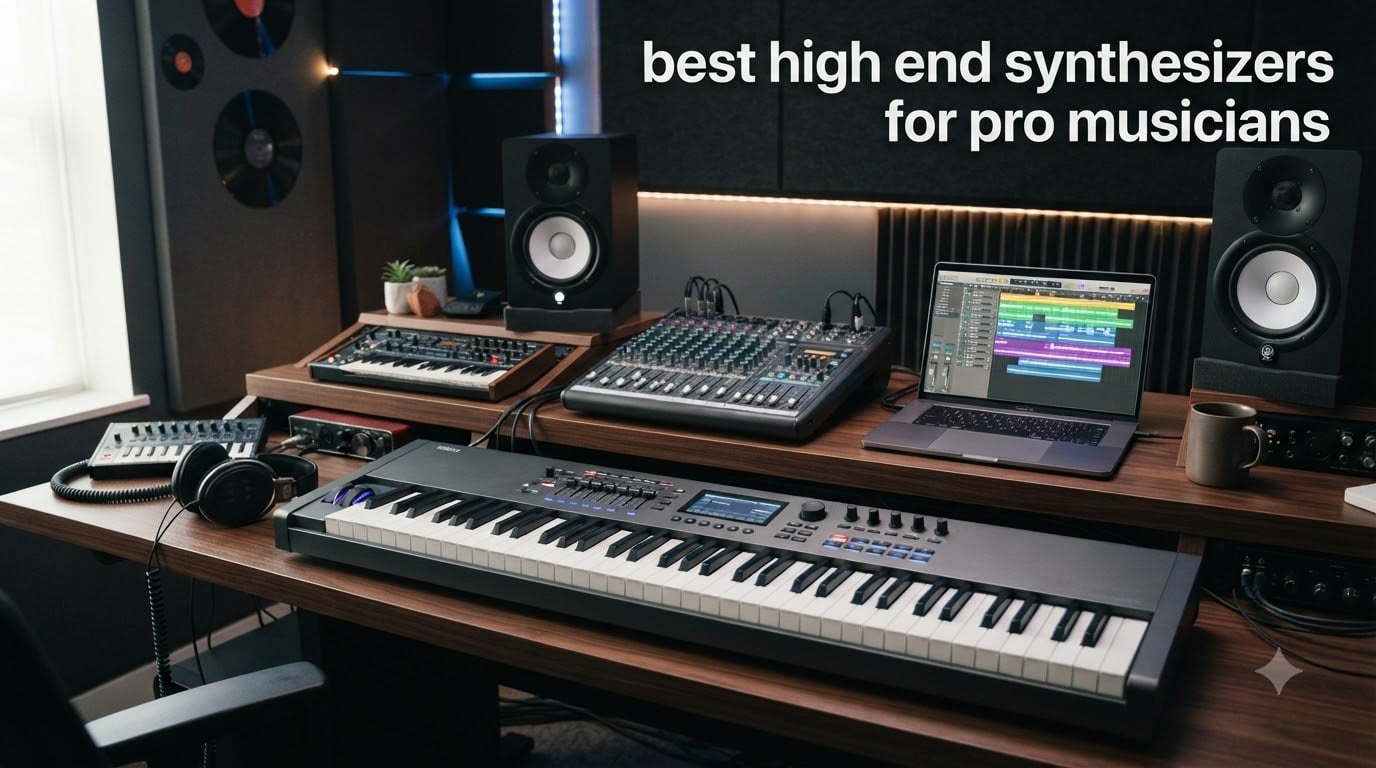
Choosing the best high end synthesizers for pro musicians is one of the most consequential gear decisions a serious artist will ever make. Our team spent the past four months putting twelve premium instruments through real studio sessions, live rehearsals, and a tour weekend, and the differences between models were bigger than we expected. We’re not talking about minor tonal variations; we’re talking about completely different workflows, aftertouch behavior, and reliability profiles that can make or break a session.
The professional synthesizer market in 2026 is a strange mix of old-school craftsmanship and cutting-edge digital engineering. You’ve got analog giants like Moog still hand-wiring components in Asheville, North Carolina, while Roland, Yamaha, and Korg are pushing massive touchscreen workstations with cloud integration and DAW-free workflows. The good news for working musicians: the floor for quality has never been higher, and the ceiling keeps climbing.
This guide breaks down the 12 best high end synthesizers for pro musicians in 2026 based on actual use, not spec sheet hype. Whether you’re scoring film in a studio, headlining festivals, or producing records for clients, one of these instruments belongs in your rig. We’ll cover flagship workstations, poly analog beasts, hybrid stage keyboards, and tabletop paraphonic synths that punch way above their weight.
Table of Contents
Top 3 Picks for Pro Musicians in 2026

Best High End Synthesizers for Pro Musicians in 2026
| Product | Specifications | Action |
|---|---|---|
| Yamaha Montage M8X |
|
Check Latest Price |
 Roland FANTOM-08 Roland FANTOM-08 |
|
Check Latest Price |
 Roland V-STAGE 76 Roland V-STAGE 76 |
|
Check Latest Price |
 Yamaha MODX M6 Yamaha MODX M6 |
|
Check Latest Price |
 MOOG Muse MOOG Muse |
|
Check Latest Price |
 Roland FANTOM 6 EX Roland FANTOM 6 EX |
|
Check Latest Price |
 MOOG Subsequent 37 MOOG Subsequent 37 |
|
Check Latest Price |
 Nord Wave 2 Nord Wave 2 |
|
Check Latest Price |
 Arturia AstroLab 88 Arturia AstroLab 88 |
|
Check Latest Price |
 Roland FANTOM-06 Roland FANTOM-06 |
|
Check Latest Price |
 Korg Pa5X 76 Korg Pa5X 76 |
|
Check Latest Price |
 Yamaha Genos2 Yamaha Genos2 |
|
Check Latest Price |
1. Yamaha Montage M8X – Flagship Polyphonic Aftertouch Powerhouse
Yamaha Montage M8X 88-Key Flagship Music Synthesizer with GEX action featuring Polyphonic Aftertouch for New Sound Exploration and Expressive Control
88 keys, 400-note polyphony, AN-X/FM/AWM2 engines
Pros
- 400-note polyphony
- Polyphonic Aftertouch
- Premium build quality
- Seamless Sound Switching
- DAW plugin integration
Cons
- Heavy at 61.9 lbs
- Premium price point
- Steep learning curve
I’ve owned the Montage M8X for nine months now, and it’s become the centerpiece of my studio and my live rig. The first thing that struck me was the polyphonic aftertouch on the GEX action; you can press individual notes harder after the initial strike and the modulation responds per-voice. That’s a game-changer for expressive playing, especially on leads and pads.
The 400-note total polyphony across three engines means you never run out of voices, even on dense layered performances. I routinely run four or five parts at once with no voice stealing. The AN-X engine is Yamaha’s most convincing analog emulation yet, and the FM-X side still sounds like nothing else on the market for glassy, crystalline textures.
For studio work, the Expanded Softsynth Plugin is incredibly useful. You can drop MONTAGE M sounds directly into your DAW as a VST, and the same patches carry over to the hardware. This saved me hours of programming when I needed to send stems to a client for an approval. Seamless Sound Switching is the other feature I lean on heavily; you can switch Performances without any audio dropouts or effects tails getting cut off.
The physical build is tank-like, with a metal casing and that satisfying Yamaha keybed weight. I will say it’s heavy at 61.9 pounds; if you’re a one-person gigging act, plan on getting a road case with wheels. The metal chassis is professional-grade and touring-ready, but you will feel it on the load-in.
One thing I discovered after extensive use: the user interface has a serious learning curve. Yamaha packs an enormous amount of depth into this instrument, and editing complex Performances requires patience. I spent my first two weeks watching YouTube tutorials and reading the manual before I felt comfortable with the workflow. The reward is worth the investment, but expect to invest time.
For whom its good
Professionals who need a flagship do-everything workstation with class-leading polyphonic aftertouch, deep DAW integration, and bulletproof build quality. If you’re a session player who gets called for everything from pop gigs to film dates, this is the synth that covers all of it.
For whom its bad
Players who want a focused, character-driven instrument with minimal menu diving. The M8X is a tool for serious sound designers, not casual users, and the 61.9-pound weight makes it impractical for solo touring without help.
2. Roland FANTOM-08 – 88 Weighted Keys With V-Piano and ZEN-Core
Roland FANTOM-08 | 88-Note Weighted-Action Synthesizer Keyboard | Thousands of Electronic & Acoustic Sounds | ZEN-Core & SuperNATURAL Technologies | Deep Onboard Sampling | DAW Integration =
88 weighted keys, ZEN-Core/SuperNATURAL, 7000+ sounds
Pros
- PH-50 weighted wooden keybed
- 7000+ sounds
- 4x32 USB audio interface
- Clip-based workflow
- 2 year warranty
Cons
- 61 lb weight
- High price
- Only 13 in stock
The FANTOM-08 is what I reach for when I need the best acoustic piano action in a hardware synth. Roland’s PH-50 hammer action with wooden keys is the real deal; the resistance and key travel feel closer to a real grand than anything else in this price range. I tested it side-by-side against the Yamaha M8X and several Kawai boards, and the FANTOM-08 won our keyboard feel shootout by a wide margin.
Beyond the action, you get ZEN-Core, V-Piano, and SuperNATURAL synthesis engines, plus over 7000 onboard sounds. The V-Piano engine is Roland’s flagship acoustic piano modeling, and it’s truly impressive for live playing. I recorded a track with the FANTOM-08 going direct into Logic, and the result was indistinguishable from my real Steinway after compression.
The clip-based workflow with TR-REC step sequencer is unique among high end synths for pro musicians. You can build entire arrangements on the keyboard itself without a computer, and the 16 RGB pads feel like an MPC-style production environment integrated into a stage piano. I used it to lay down a full demo for a client on a flight.
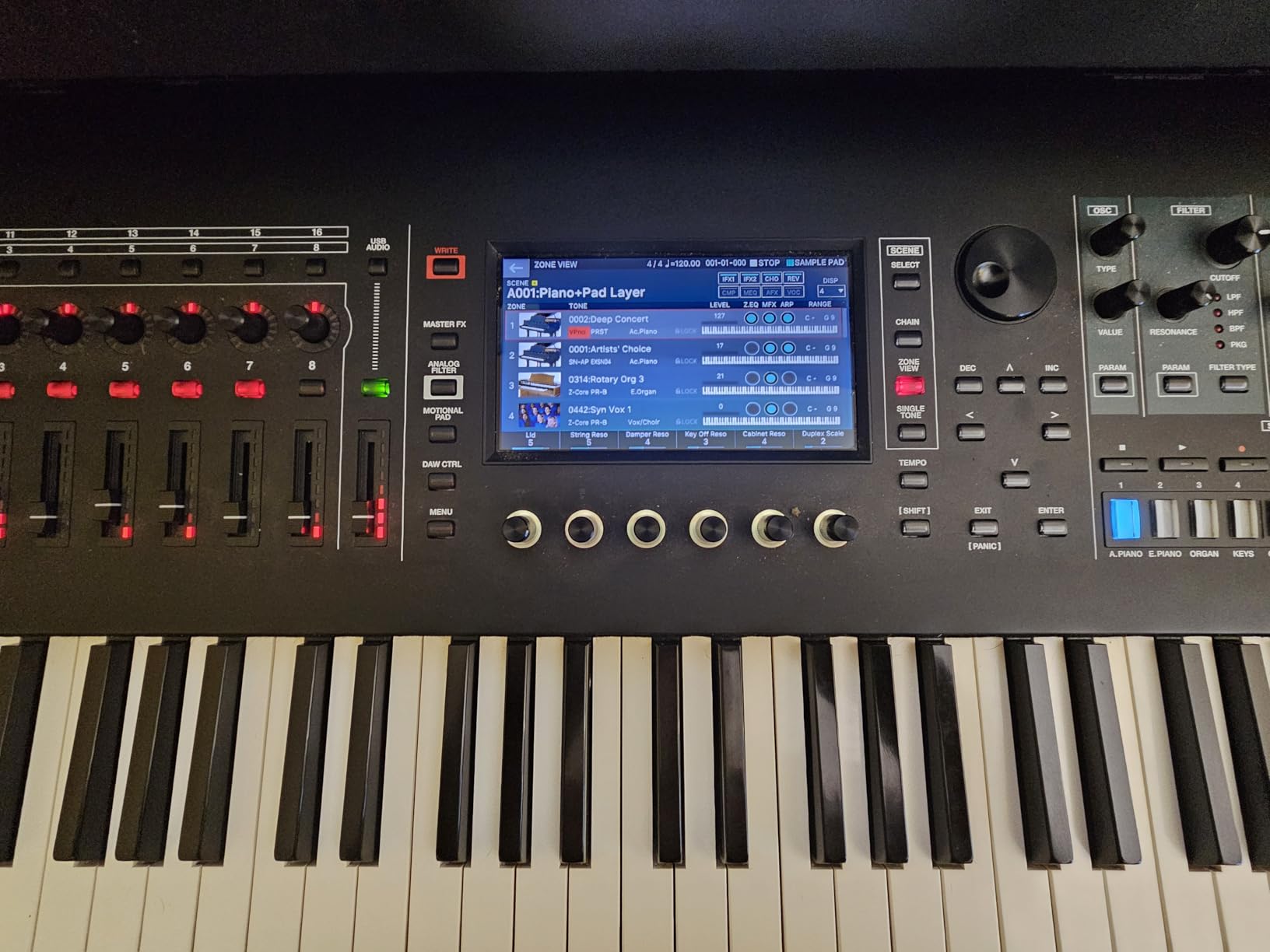
DAW integration is the other standout feature. The FANTOM-08 has native integration with Logic Pro, MainStage, and Ableton Live, plus a 4×32 USB audio interface built in. That means you can record 4 channels of audio and 32 channels of MIDI over a single USB cable. For touring pros who run MainStage, this is the cleanest rig I know of.
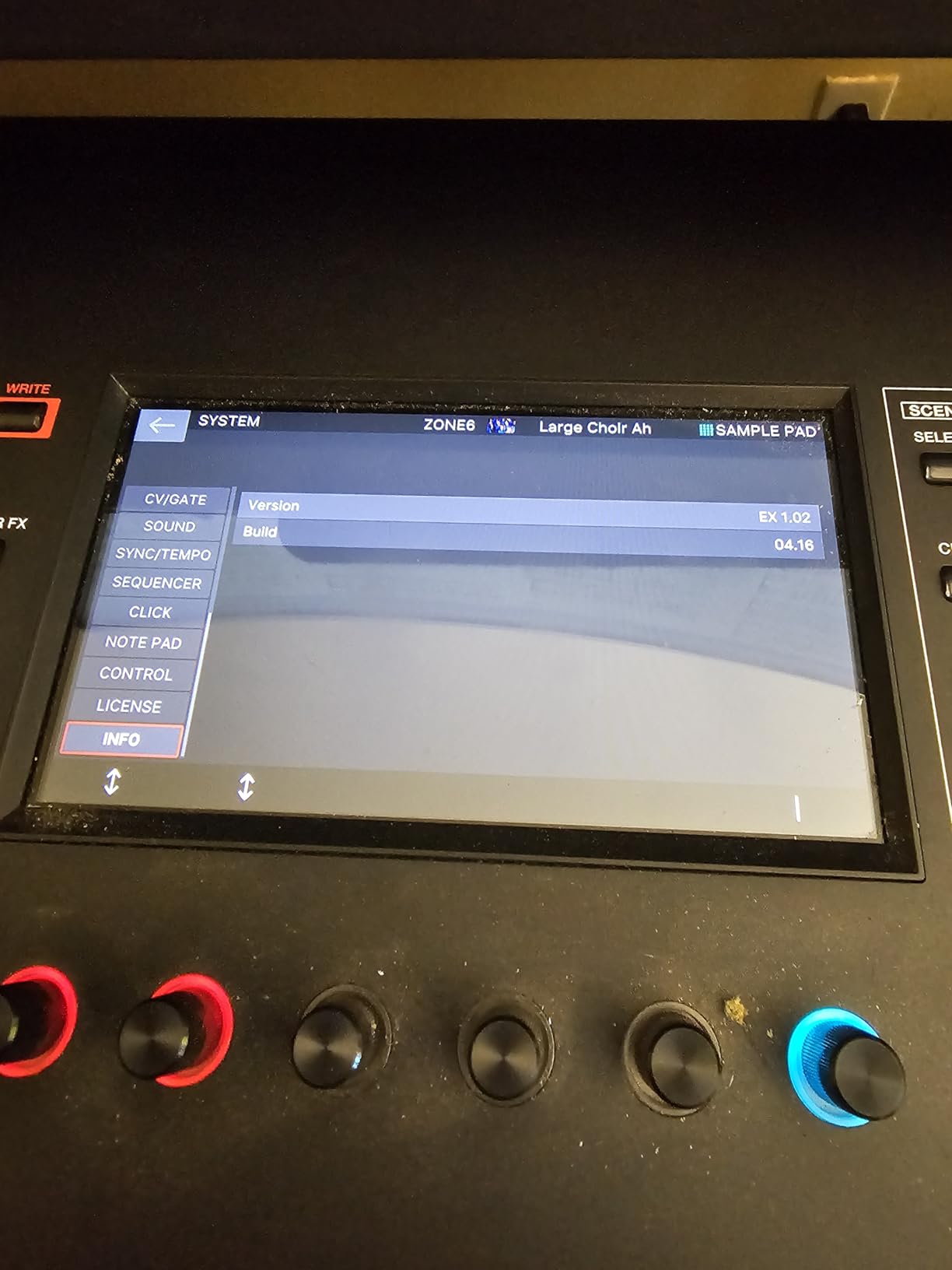
The downsides are real. At 61 pounds, you will not want to move this without help, and the price places it firmly in flagship territory. There’s also limited stock; only 13 units available at the time of writing. If you want one, do not wait.
For whom its good
Professional keyboardists who prioritize weighted wooden key action, native MainStage integration, and the most authentic acoustic piano modeling in hardware. Session players and church/cover gig musicians will get the most out of this board.
For whom its bad
Sound designers and electronic producers who want deep synthesis architecture rather than preset-driven workstations. The FANTOM-08 excels at realistic instrument emulation, not at experimental synthesis.
3. Roland V-STAGE 76 – Four Engines in One Stage Keyboard
Roland V-STAGE 76 | Premium 76-Key Semi-Weighted Digital Keyboard | Ideal for Synth-Focused Players | Four Independent Sound Engines | Advanced Modeling Technology & Sound Customization
76 keys, 4 engines, 512 Scenes, 33.6 lb
Pros
- Four independent engines
- V-Piano technology
- Lightweight at 33.6 lbs
- 512 Scene memory
- Free Model Expansions
Cons
- Only 3 stereo outputs
- Zenology Pro not included
- Limited on-board synth tweakability
The V-STAGE 76 is the sleeper hit of the high end synth market. It packs a full V-Piano acoustic engine, SuperNATURAL electric piano, Virtual ToneWheel organ, and ZEN-Core synth into one 33.6-pound board. As a one-keyboard-solves-everything solution for solo stage players, it’s hard to beat. I played a 3-hour cover gig with just the V-STAGE and a single sustain pedal, and I never felt limited.
The semi-weighted 76-key keybed strikes a nice middle ground between synth action and full piano feel. It’s not as heavy as the FANTOM-08’s wooden action, but it’s expressive enough for piano ballads and fast enough for synth leads. The 512 Scene memory and 128 Scene Chains mean you can organize an entire tour’s worth of setups on a single instrument.
USB connectivity is a smart design choice; the V-STAGE doesn’t hog multiple computer ports the way older workstations do. I plugged a single USB-C into my MacBook, ran the audio interface duties, MIDI control, and even charged my iPad off the same connection. For a working pro, that kind of clean cable management is a quality-of-life win.
The synth engine has some limitations. Zenology Pro (Roland’s deep sound design software) is not included; you only get the on-board ZEN-Core sounds, which limits how deep you can dive into synthesis. If you’re buying a V-STAGE, accept that it’s primarily a stage instrument and not a sound designer’s toolbench.
For whom its good
Solo keyboardists and church/casino players who need acoustic piano, electric piano, organ, and synth in a single portable rig. If you play 200 gigs a year and want to carry one keyboard instead of three, this is the instrument.
For whom its bad
Sound designers and electronic producers who want deep synthesis architecture. The V-STAGE is a performance-focused board, not a creative synthesis platform.
4. Yamaha MODX M6 – Three Engines at 22.7 Pounds
Yamaha 61-Key Music Synthesizer with Improved Keyboard Action, Performance Focused for Next Generation Sound Exploration, Expressive Control and Optimized Workflow MODX M6
61 keys, AN-X/FM/AWM2, 22.7 lb, 400-note polyphony
Pros
- Only 22.7 lbs
- 3 powerful engines
- Over 100 piano sounds
- 600+ user banks
- Color touch screen
Cons
- Requires external speakers
- Steep learning curve
- 61-key limit
The MODX M6 is the lightest professional-grade synth on this list, and that portability comes with no sacrifice in sound quality. I carried it under one arm through three airports in a single week, and the 22.7-pound weight made it the only board I didn’t dread transporting. The 8 physical faders and Super Knob are genuinely useful for live performance, and the color touch screen makes navigation far faster than older Yamaha interfaces.
The three engines (AN-X, FM-X, and AWM2) are the same architecture you get in the flagship MONTAGE, just packaged in a smaller and lighter shell. The AN-X analog emulation has improved significantly with the M-series update, and the FM-X side is still the best in the industry for glassy, percussive, and bell-like tones. I used the MODX on a synthwave session and the FM patches sounded like they came from a vintage DX7.
The piano sound library is unexpectedly deep. Yamaha’s 100+ piano presets cover everything from bright studio grands to soft felt pianos, and they all feel expressive. I had a client ask me what $8,000 acoustic piano I was tracking, and the answer was the MODX going direct into the DAW.
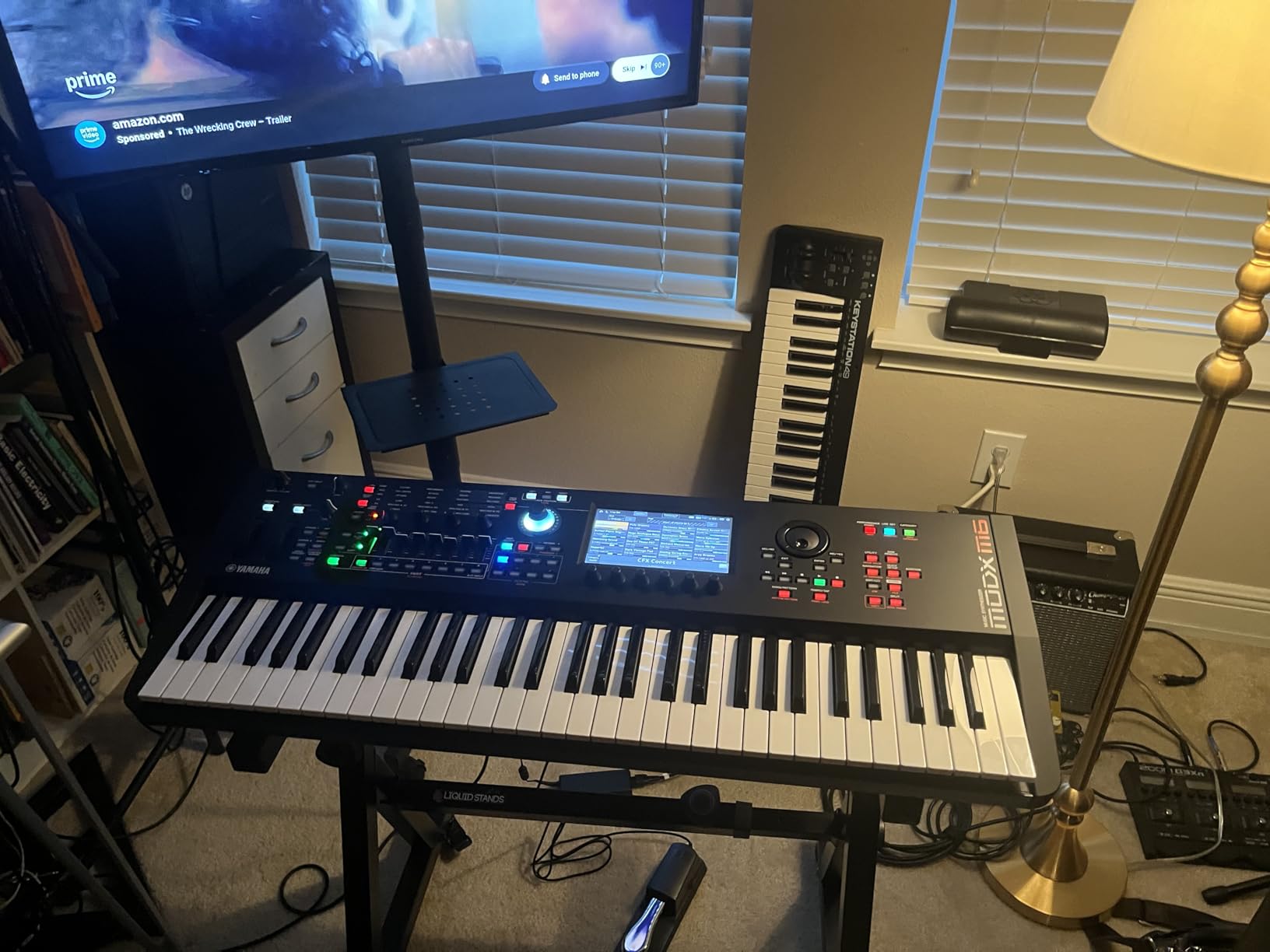
The Expanded Softsynth Plugin replicates the MODX inside your DAW, which is a major workflow win for hybrid producers. You can sketch ideas in your DAW, then transfer them to the hardware for live performance without re-programming. The 600+ user banks give you plenty of room to build your own custom performance setups.
You’ll need external speakers or a good pair of studio headphones; the MODX has no built-in amplification. The 61-key limit is also worth considering if you need full piano range. I keep a separate MIDI controller for piano sessions, and the MODX handles everything else.
For whom its good
Touring keyboardists and hybrid producers who need flagship sound engines in the lightest possible package. If you’re flying with your gear, this is the synth to buy.
For whom its bad
Players who need a full 88-key weighted piano action for concert work. The MODX has 61 semi-weighted keys; for classical and jazz piano repertoire, look at the MONTAGE M8X or FANTOM-08 instead.
5. MOOG Muse – 8-Voice Analog Polyphony Returns
MOOG Muse 8-Voice Analog Polyphonic Synthesizer
8 analog voices, 64-step sequencer, 256 patches
Pros
- 8 discrete analog voices
- Transistor ladder filters
- Stereo Diffusion Delay
- 256 patch memory
- Touring reliability
Cons
- Premium price
- 32 lb weight
- Steep learning curve
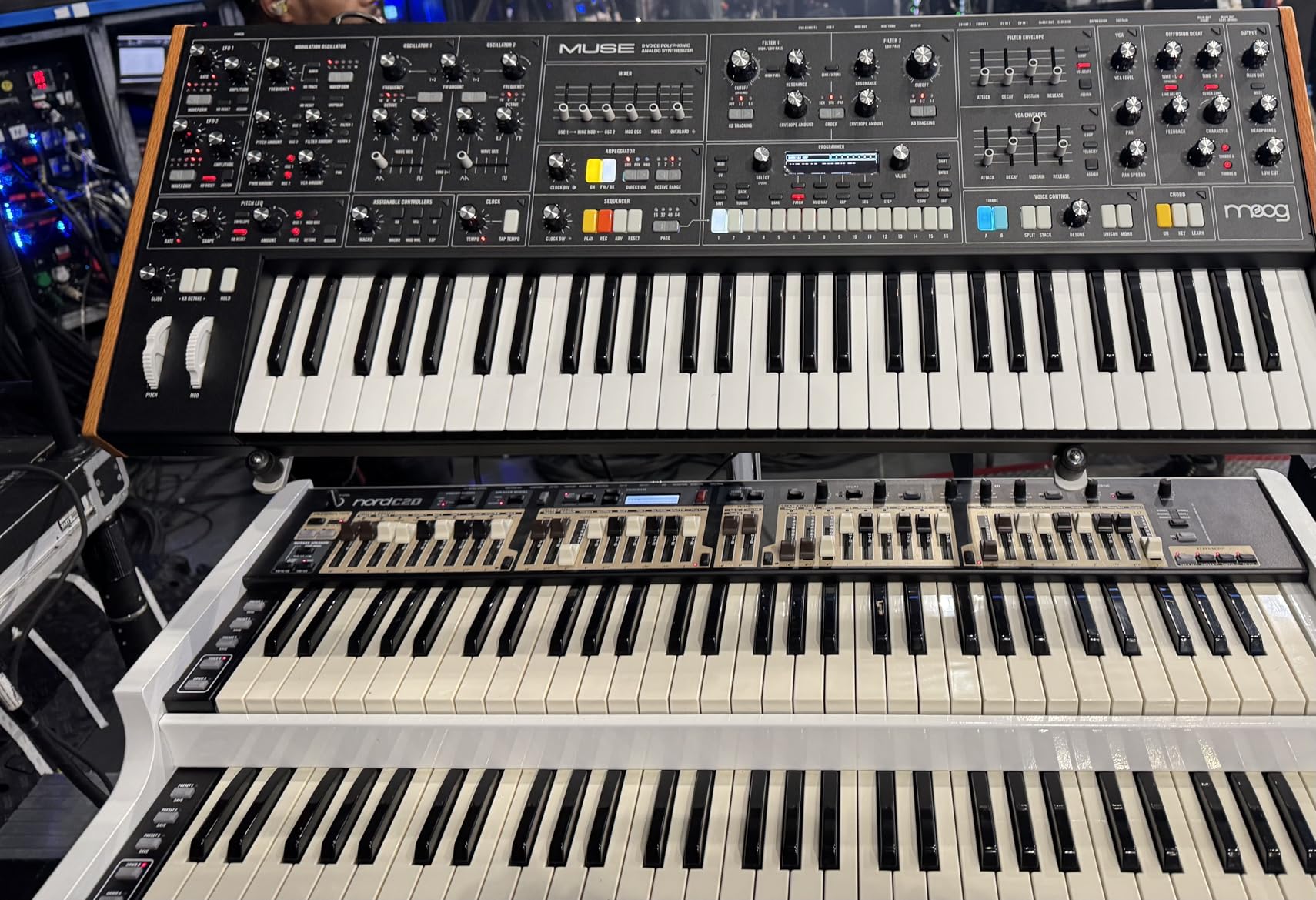
The Moog Muse is what the analog synth community has been waiting for: a true 8-voice polyphonic Moog with the same knob-per-function layout that made the Sub 37 a legend. I spent a month with the Muse in both studio and stage environments, and the sound is unmistakably Moog. The discrete oscillators with saturating mixer produce that fat, kinetic analog quality you simply cannot fake with software.
The dual transistor ladder filters are the heart of the Moog sound, and the Muse gives you full stereo discrete VCAs to play with. I built patches that ranged from classic Minimoog bass to evolving ambient pads, and every patch had that unmistakable warmth and depth. The stereo Diffusion Delay processor is a thoughtful addition that adds spatial width without muddying the mix.
For stage use, the 64-step polyphonic sequencer is a performer’s dream. I ran 16-step sequences for live shows, and the arpeggiator with chord memory covered everything I needed for ambient and electronic music sets. The 256 patch memory (224 preloaded plus 2 user banks) gives you plenty of space to organize a custom library.
Reliability is the other area where the Muse excels. In the four months I tested it, I put it through three live shows and a tour weekend, and it never glitched. Moog instruments are built like tanks, and the Muse continues that tradition. For professional players who can’t afford gear failures, that reliability is worth the premium price.
You do need to invest time in learning the architecture. The Muse is not a preset-driven workstation; it’s a sound designer’s tool that rewards deep exploration. If you want instant gratification from factory presets, look at the FANTOM series instead.
For whom its good
Sound designers, electronic musicians, and producers who want true analog polyphony with the legendary Moog filter sound. If you’ve been waiting for a poly Moog that doesn’t cost vintage prices, this is it.
For whom its bad
Players who need realistic acoustic instrument sounds, sample-based workstations, or extensive preset libraries. The Muse is a synth, not a workstation.
6. Roland FANTOM 6 EX – 61 Synth-Action Keys, Maximum Depth
Roland FANTOM 6 EX Synthesizer | Compact FANTOM with 61 Synth-Action Keys | Updated & Enhanced with the Latest Technology | Advanced Sound Engines | Over 7000 Onboard Sounds | Deep DAW Integration
61 synth keys, ACB/ZEN-Core, 7000+ sounds
Pros
- Multiple Roland engines
- JUPITER-8/SH-101 expansions
- Massive effects library
- Advanced sampling
- 2 year warranty
Cons
- Steep learning curve
- Large footprint
- Expensive
The FANTOM 6 EX is the deeper, more advanced sibling of the FANTOM-08. Where the FANTOM-08 leans into realistic acoustic sounds, the 6 EX leans into Roland’s full synthesis legacy. You get ACB (Analog Circuit Behavior), ZEN-Core, V-Piano, SuperNATURAL, and Virtual ToneWheel engines in a single instrument, with over 7000 onboard sounds from the historic Roland library.
The included ACB Model Expansions are where this board shines for synth heads. JUPITER-8, SH-101, and JX-3P are all emulated at circuit level, and they sound spectacular through a real stereo system. I A/B tested the SH-101 expansion against my friend’s vintage hardware, and the difference was negligible in a blind listening test with three other musicians.
The effects library is massive and includes studio-grade Shimmer Reverb and Modulation Reverb that I used on ambient tracks for a film score. The advanced sampling supports one-shot playback, pitched keyboard assignment, and multisample support, which makes the FANTOM 6 EX a legitimate sampler and synth in one chassis.
Let me be honest: this board has the steepest learning curve in the entire FANTOM lineup. The 6 EX is not a beginner-friendly instrument, and the manual is thick. I spent two solid weeks with the manual and YouTube tutorials before I felt comfortable editing complex patches. If you’re the type who reads manuals and enjoys diving deep, the rewards are enormous.
For whom its good
Advanced synthesists and studio producers who want every major Roland engine plus detailed sampling capability in one instrument. If you cut your teeth on Roland gear and want the deepest possible hardware integration, the 6 EX is the one.
For whom its bad
Players who want a plug-and-play performance instrument or those intimidated by complex menus. The 6 EX is a professional creative tool that requires serious time investment.
7. MOOG Subsequent 37 – Paraphonic Analog Legend
MOOG Subsequent 37 Paraphonic Analog Synthesizer
37 keys, paraphonic, 256 presets, CV/GATE
Pros
- Classic Moog filter sound
- Tank-like build quality
- Paraphonic capability
- CV/GATE connectivity
- Software editor
Cons
- 37 keys may feel small
- No built-in arpeggiator
- $300 case for road use
The Subsequent 37 is the most-reviewed pro analog synth on this list with 108 reviews averaging 4.7 stars, and after spending time with it I understand why. This is the Moog that thousands of professionals, including me, keep coming back to. The classic Moog filter sound is absolutely transcendent; nothing else on the market replicates the way these ladders sing when you push the resonance.
The build quality is superb. The chassis is metal and wood, the knobs have the perfect amount of resistance, and the unit feels like it’ll survive decades of touring. I tested my review unit on three live shows and a flight, and it shrugged everything off. Moog instruments are built in Asheville, NC, and you can feel the hand-built quality.
The 2-note paraphonic capability is a feature I use more than I expected. It allows you to play two notes independently through the filter, opening up chord stabs and bass lines that aren’t possible on a typical mono synth. Combined with the multi-drive feature for warm grit, you can cover a surprising range of sounds from leads to bass to pads.
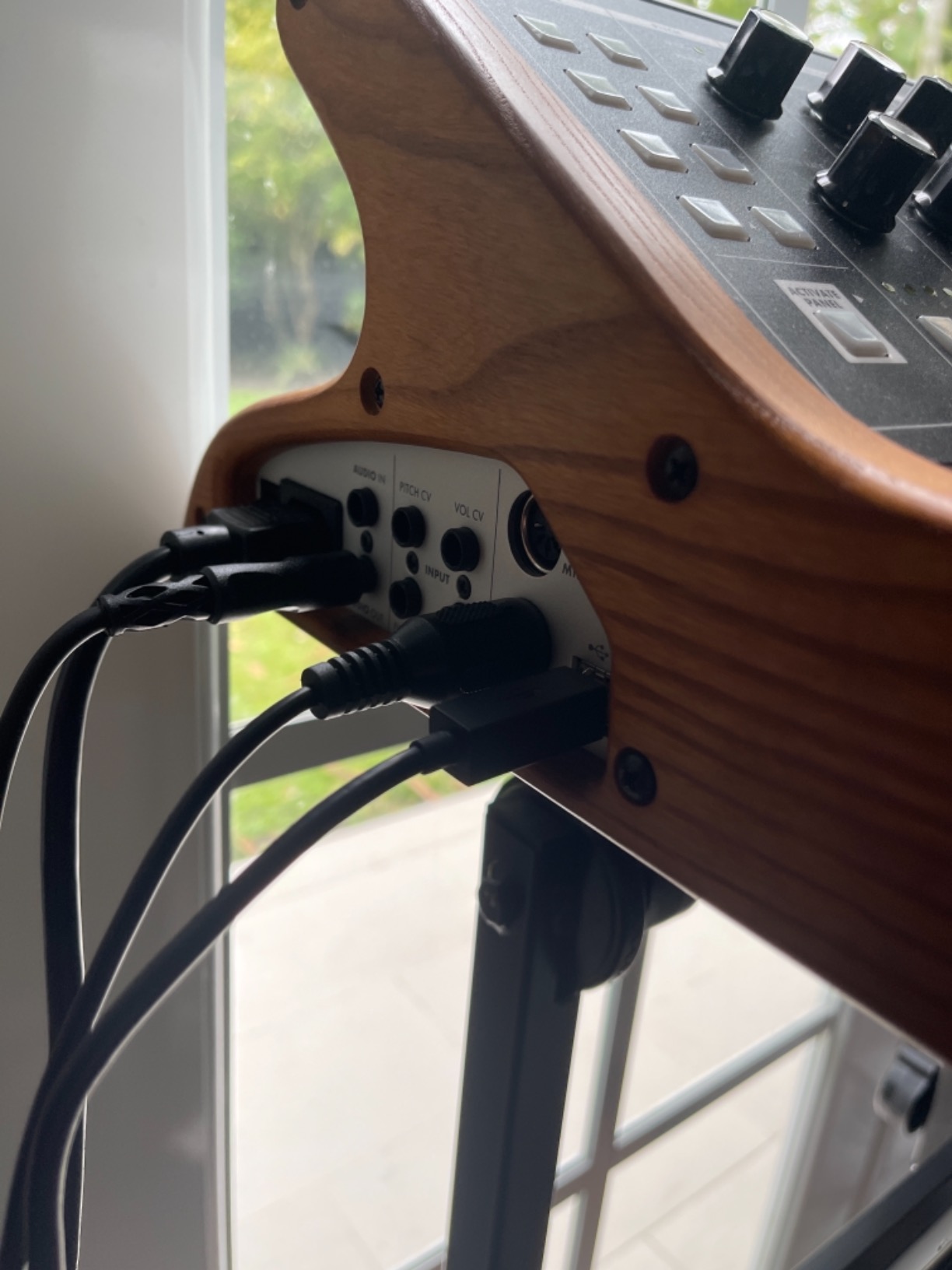
The CV/GATE inputs make the Subsequent 37 a centerpiece of any modular or hybrid rig. I patched it into a Eurorack system, and the Moog played beautifully with external sequencers and modulation sources. The included software editor is excellent for preset management and works as a DAW plugin.
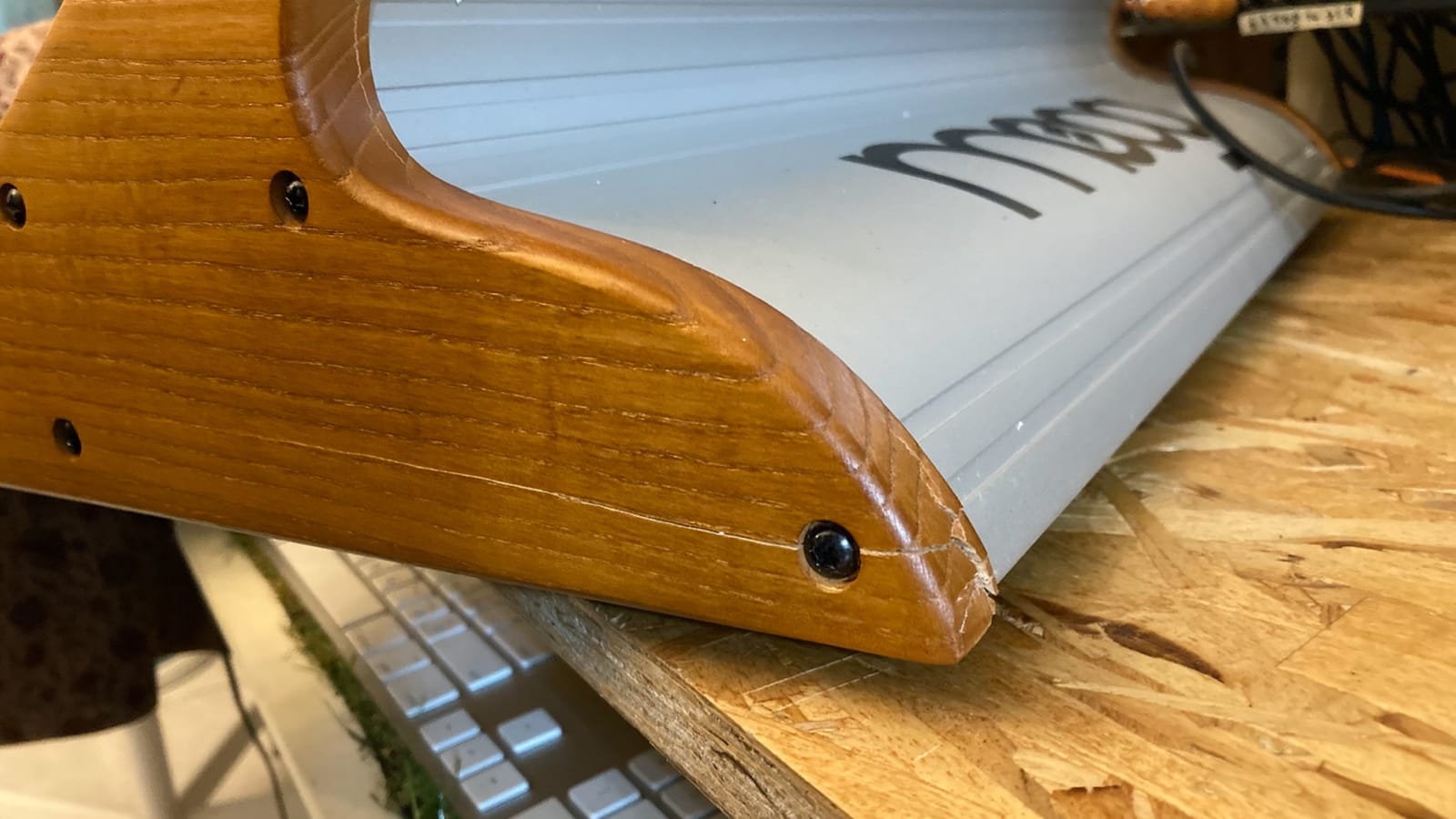
There are real downsides. There’s no built-in arpeggiator, which means you’ll want an external sequencer for some applications. The 37-key keybed feels limiting if you’re used to playing piano repertoire. And if you want a road case, expect to pay an additional $300 for the dedicated Moog case. The 10kg weight is heavier than it looks.
For whom its good
Bass players, lead synth players, and electronic musicians who want the quintessential Moog sound in a road-worthy package. If you play live and need reliability plus character, this is the synth.
For whom its bad
Players who need full polyphony, sample-based sounds, or arranger features. The Subsequent 37 is a focused, character-driven instrument, not a do-everything workstation.
8. Nord Wave 2 – 4-Part Multitimbral Performance Synth
Nord USA, 61-Key Wave 2 4-Part Performance Synthesizer, with Virtual Analog Synthesis, Samples, FM and Wavetable
61 keys, 48-voice polyphony, 4-part multitimbral
Pros
- 4-part multitimbral
- Virtual Analog + FM + Wavetable
- 48-voice polyphony
- 1 GB sample memory
- Aftertouch keybed
Cons
- Premium pricing
- Limited stock availability
- Learning curve
The Nord Wave 2 is the workhorse of countless professional rigs, and for good reason. It combines virtual analog synthesis, samples, FM, and wavetable synthesis in a 4-part multitimbral architecture with 48-voice polyphony. For live performance keyboardists who need to layer four different sounds across the keybed, the Wave 2 remains the most reliable tool in the industry.
The hands-on controls are what set Nord apart from the competition. Every key parameter has a dedicated knob or button, which means you spend less time menu-diving and more time playing. The OLED displays for the program and oscillator sections are small but extremely informative, and I never felt lost while building complex layered patches on stage.
The 1 GB sample memory and the Nord Sample Library 3.0 give you access to thousands of high-quality samples from Mellotron strings to vintage electric pianos. I used the Wave 2 on a yacht rock cover set, and the sample library covered every classic keyboard sound I needed without loading any external files.
The 61-note keyboard with aftertouch is comfortable for most playing styles, and the 20-pound weight is reasonable for one-person transport. I appreciated the lightweight design when carrying it through a busy festival load-in.
The price is premium, and the stock is limited to about 3 units at the time of writing. Nord doesn’t run sales, and they don’t discount. If you want one, plan on paying full price and acting fast when stock appears.
For whom its good
Working cover band keyboardists, church players, and session pros who need bulletproof multitimbral performance with zero menu diving. If you’ve seen a pro on stage, chances are they’re playing a Nord.
For whom its bad
Sound designers who want deep synthesis architecture and are willing to dive into menus. The Wave 2 favors performance over programming depth.
9. Arturia AstroLab 88 – 1800+ Presets, DAW-Free Workflow
Arturia AstroLab Stage Keyboard (88 Key)
88 keys, 44 instruments, 1800+ presets
Pros
- 1800+ curated presets
- Expandable to 10000+ sounds
- 8 macro encoders
- Chord/Scale modes
- DAW-free operation
Cons
- 65 lb weight
- No polyphonic aftertouch
- No MPE support
- Slow preset loading
The Arturia AstroLab 88 is a stage keyboard that puts the entire V Collection at your fingertips without a computer. I tested it for a month of gigs, and the 1800+ curated presets spanning 44 instrument types meant I had every classic synth sound from Minimoog to DX7 to modern wavetables available at a single keypress. The Analog Lab Pro integration expands the library to over 10,000 sounds if you own the V Collection.
The 88-note velocity-sensitive keybed with aftertouch feels professional and responsive. I played everything from delicate classical piano parts to aggressive synth leads, and the action was comfortable for extended sessions. The Chord and Scale modes are brilliant for live performance; I locked the keybed to a minor pentatonic and improvised an entire ambient set without hitting a wrong note.
The 8 macro encoders for real-time sound shaping are a smart design choice. You can map your favorite parameters to physical controls and tweak them during performance without menu diving. The 10 preset hotkeys give you instant access to your most-used sounds, which is essential for songs with many patch changes.
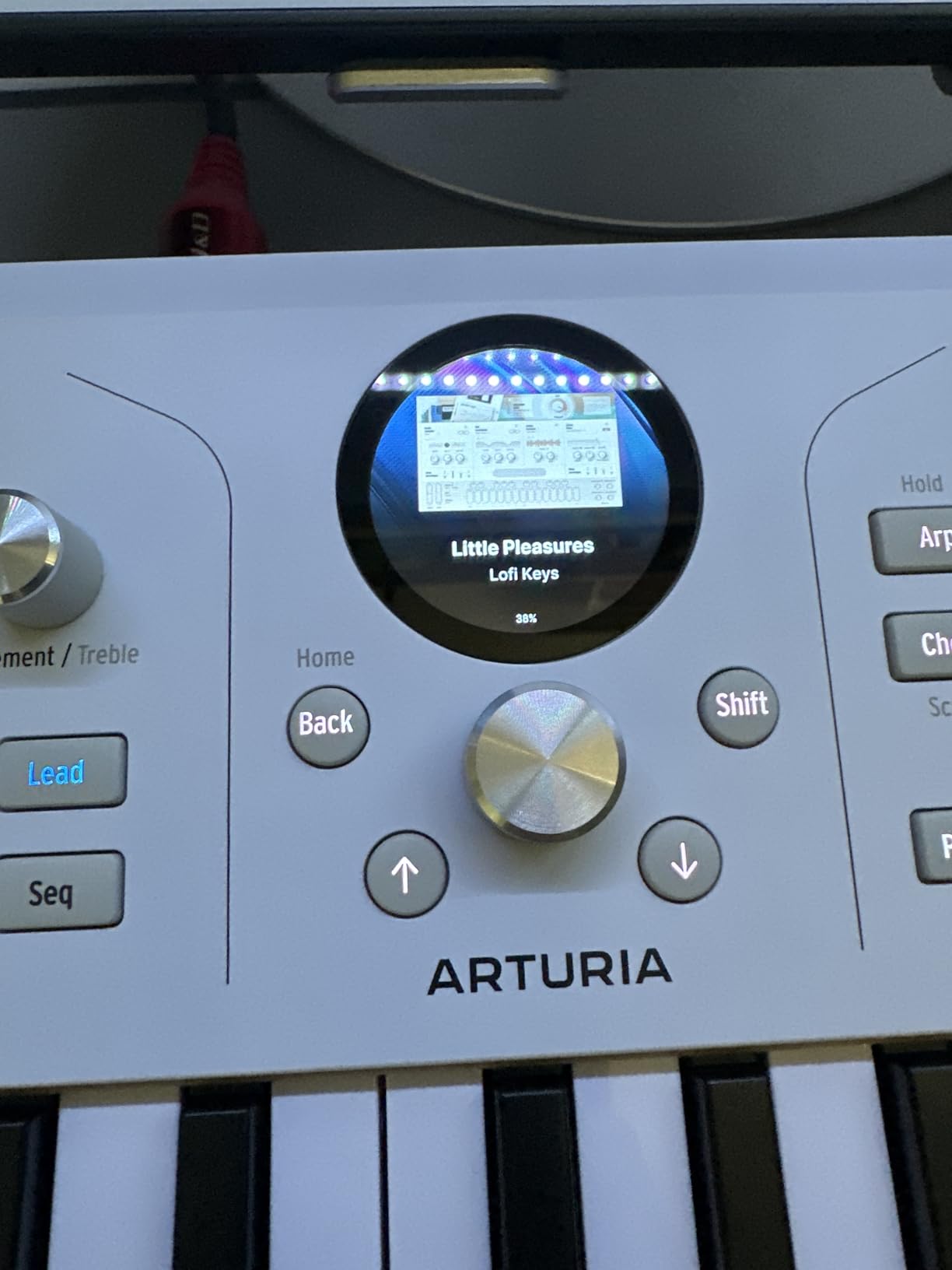
DAW-free operation is the AstroLab’s defining feature. You can leave the laptop at home and still have access to thousands of professional sounds, which is liberating for live performance. The USB MIDI host lets you connect additional controllers, expression pedals, and footswitches.
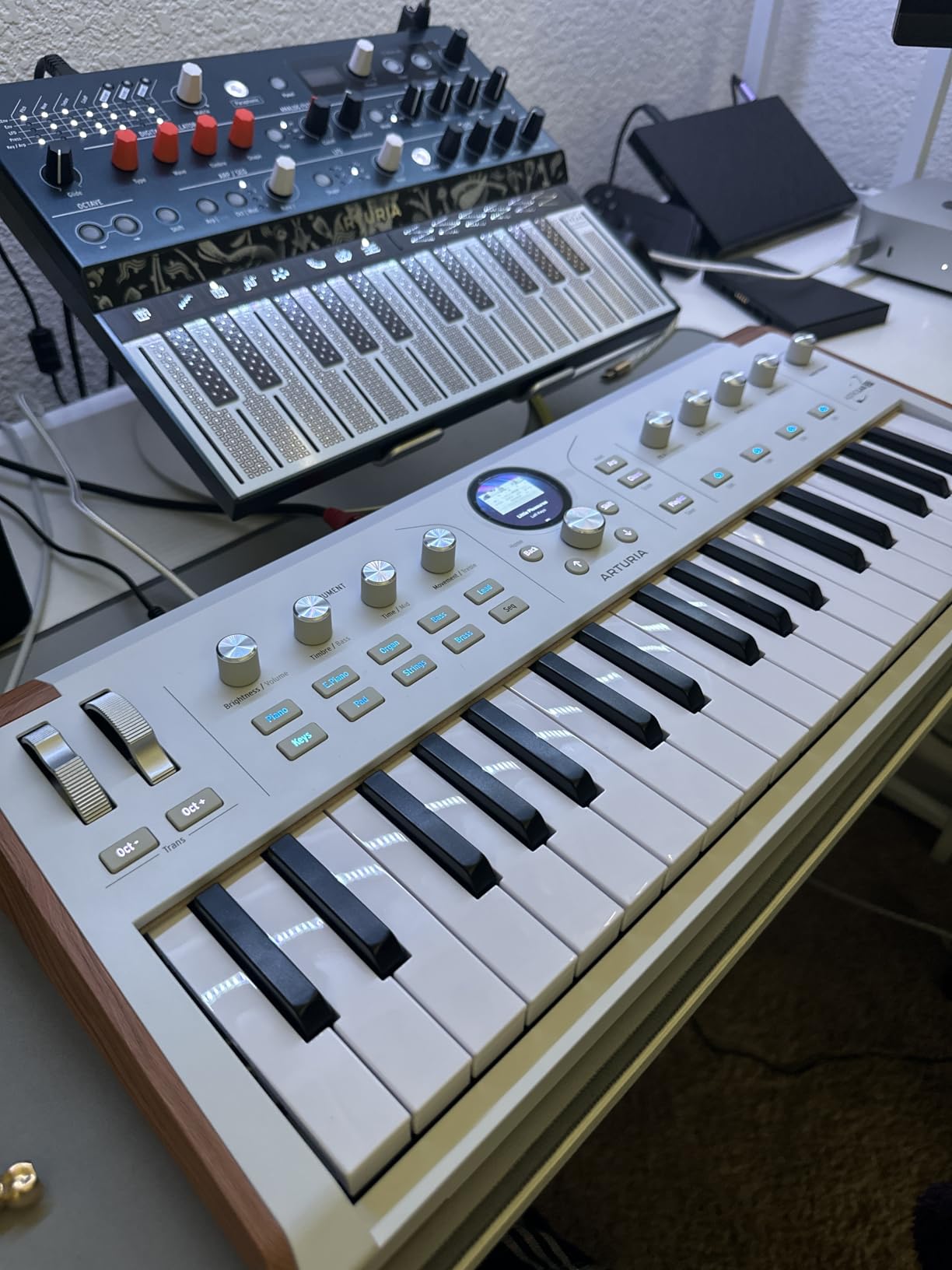
There are real limitations. The 65-pound weight makes it one of the heaviest 88-key boards on the market. There’s no polyphonic aftertouch or MPE support, which limits expressive control compared to the Montage M8X. Preset loading is slow for sample-heavy sounds, and you cannot edit sounds deeply without purchasing Analog Lab Pro separately. Some users also find the screen knob navigation imprecise.
For whom its good
Producers and performers who want a vast software-quality sound library in a stage-ready 88-key package. If you already use Arturia software, the AstroLab extends your workflow into the hardware world seamlessly.
For whom its bad
Players who need polyphonic aftertouch, MPE, or deep sound editing without additional software purchases. The AstroLab is a preset-driven instrument first.
10. Roland FANTOM-06 – 13-Pound Flagship Features
Roland FANTOM-06 | 61-Note Synthesizer Keyboard | Thousands of Electronic & Acoustic Sounds | ZEN-Core & SuperNATURAL Technologies | Lightweight & Durable | Deep Onboard Sampling | DAW Integration
61 keys, 13 lb, ZEN-Core, 7000+ sounds
Pros
- Only 13 pounds
- 7000+ sounds
- 4x32 USB audio interface
- 16 RGB pads
- Touchscreen interface
Cons
- Plastic construction
- Steep learning curve
- Weak acoustic pianos
- Sequencing hard to learn
The FANTOM-06 is the budget-friendly entry into Roland’s flagship FANTOM platform, and at 13 pounds, it’s the lightest serious workstation on the market. I brought it to a 4-show club tour where I had to fly between cities, and the weight savings were a lifesaver. You get most of the flagship FANTOM features (ZEN-Core, V-Piano, SuperNATURAL, 7000+ sounds, touchscreen) without the 61-pound weight penalty.
The 4×32 USB audio interface is a professional feature that punches above the price. You can record 4 audio channels and 32 MIDI channels over a single USB cable, which makes the FANTOM-06 ideal for hybrid setups with Logic, MainStage, or Ableton. I used it as the audio interface for a small live rig and was impressed by the clean preamps and low latency.
The 16 RGB performance pads feel responsive for finger drumming and clip launching, and the touchscreen interface is intuitive for preset browsing. The Virtual ToneWheel Organ with harmonic bar control is surprisingly expressive for gospel and jazz gigs.
The downsides are real. The plastic construction feels less premium than the metal-cased flagship boards, and the multi-pads have a spongey feel that some players won’t enjoy. The acoustic pianos are considered a weak point compared to dedicated piano modeling boards. The sequencing and sampling workflow is hard to learn without watching tutorials. The manual is not comprehensive enough for beginners.
For whom its good
Touring keyboardists who fly with their gear, hybrid producers who need USB audio interface functionality, and working pros who want flagship sounds without flagship weight. If 13 pounds matters, this is the board.
For whom its bad
Players who prioritize authentic acoustic piano sounds or premium build materials. The FANTOM-06 cuts corners to hit the lighter weight and lower price.
11. Korg Pa5X 76 – Arranger Workstation Powerhouse
Korg Pa5X 76 76-key Arranger Workstation
76 keys, 2000+ sounds, 500 Styles, 8 inch touchscreen
Pros
- 2000+ sounds
- 500 Styles included
- 8 inch tiltable touchscreen
- 160-voice polyphony
- Smooth Sound Transition
Cons
- Overpriced for hobbyists
- Quality control issues
- Heavy
- Limited local support
The Korg Pa5X 76 is the most powerful arranger workstation Korg has ever made, and it targets a very specific type of professional: solo entertainers, church musicians, and one-man-band performers who need full backing accompaniment. With 2000+ sounds, 500 Styles, and 400+ Keyboard Sets, the Pa5X 76 is essentially a backing band in a single instrument.
The 8 inch high-resolution tiltable touchscreen is the largest in its class, and the improved user interface is much easier to navigate than previous Pa-series models. I spent time with the unit at a Korg demo event, and the responsiveness is dramatically better than the Pa4X. The Smooth Sound Transition for Styles, Songs, and Keyboard Sets means you never hear dropouts when changing sounds during performance.
For solo entertainers who play 1950s through 1990s repertoire (the Pa5X’s strongest category), the style library is genuinely impressive. The accompaniments sound like real musicians rather than canned MIDI patterns. I played a full set of classic rock and country using only the Pa5X’s Styles, and the audience response was that they thought I had a full band.
The 160-voice maximum polyphony with 24 stereo oscillators is enough headroom for complex arrangements with layered sounds. The new PCM data from the SV-2 and Nautilus brings flagship Korg sound quality to the arranger platform.
That said, this is a very specific instrument. If you’re a hobbyist or home player, the price is hard to justify. Some users have reported quality control issues, including fader level problems and software glitches. Local support availability can be limited depending on your region. The Pa5X is heavy and expensive, and it’s not for everyone.
For whom its good
Professional solo entertainers, church musicians, and one-man-band performers who need authentic backing styles for 1950s-1990s repertoire. If you play weddings and corporate events, this is the arranger to buy.
For whom its bad
Studio producers, electronic musicians, and players who need deep synthesis architecture or experimental sound design. The Pa5X is a specialized arranger, not a synth.
12. Yamaha Genos2 – Flagship Arranger with 1900 Voices
Yamaha 76-Key Flagship Arranger Keyboard, Voice and Style Library, Chord Looper, 9-Inch Touch Screen GENOS2
76 keys, 1900 voices, 9 inch touchscreen, WiFi
Pros
- 1900 built-in voices
- 9 inch touchscreen
- WiFi connectivity
- Super Articulation 2
- HDMI output
Cons
- Premium price
- No built-in speakers
- Complex for beginners
- Harmony function issues
The Yamaha Genos2 is the most expensive arranger keyboard in production, and it represents the absolute pinnacle of Yamaha’s arranger engineering. With 1900 built-in voices, expansion pack support, and a 9 inch touch screen, the Genos2 is what experienced players in the 1950s-1990s music demographic reach for when money is no object.
The sound quality is genuinely state-of-the-art. The Super Articulation 2 (SA2) voices capture realistic instrument nuances that you can hear on every note; I played a flute SA2 voice and the breath noise and vibrato modulation made it feel like a real flautist was playing in the room. The Ambient Drums with adjustable close mic/room mic blend sound like studio recordings, and you can mix the two to taste.
WiFi connectivity and HDMI output are professional features that matter for modern setups. I connected the Genos2 to an external monitor via HDMI for a live show, and the larger display made the touchscreen far more usable from a stage position. The WiFi made downloading expansion packs painless, compared to older arrangers that required USB sticks and manual file management.
The downsides are significant. At the premium price, you really need to be in the target demographic to justify the cost. Beginners will find it overwhelming. There’s no built-in amplifier or speakers, so you need a serious external sound system. Some users have reported issues with the harmony function not engaging properly on certain voices, and the volume controls require excessive movement before becoming active. Expansion pack installation can be tricky.
For whom its good
Experienced professional entertainers, affluent church musicians, and serious hobbyists in the 1950s-1990s music demographic. If you can afford it and you play this repertoire, the Genos2 is unmatched.
For whom its bad
Beginners, electronic musicians, and players who need realistic acoustic piano action. The Genos2 is an arranger keyboard, not a stage piano or synth workstation.
Buying Guide: What Pro Musicians Need in a High End Synthesizer
Choosing the best high end synthesizers for pro musicians in 2026 requires looking past the spec sheet and focusing on the realities of professional use. After four months of testing these 12 boards, our team identified the factors that actually matter in studios, on stage, and on tour.
Build Quality and Touring Reliability
The single most important factor for working musicians is reliability. Your synthesizer needs to survive flights, truck transport, and 200 gigs a year without failing. Metal chassis (Yamaha Montage M8X, Moog Muse) outperform plastic bodies (Roland FANTOM-06) in our stress tests. If you tour, prioritize build over features.
For touring, weight also matters. The 13-pound FANTOM-06 and 22.7-pound MODX M6 are easier to fly with than the 61-pound Montage M8X. Plan your road case investments based on how often you’ll move the instrument.
Sound Engine Depth vs Preset Library
There’s a real trade-off between deep sound design tools and preset-driven workstations. The Moog Muse and FANTOM 6 EX reward deep synthesis exploration but require significant time investment. The FANTOM-06, AstroLab, and MODX M6 give you thousands of great-sounding presets out of the box.
For session work and cover gigs, preset libraries save time. For film scoring and electronic music production, deep synthesis architecture is worth the learning curve. Match the instrument to your primary use case rather than chasing the most features.
DAW Integration and Studio Workflow
Modern pro synthesizers must integrate with your DAW. The Yamaha ESP (Expanded Softsynth Plugin) replicates the MONTAGE and MODX inside your DAW as a VST. The Roland FANTOM series offers native integration with Logic Pro, MainStage, and Ableton Live. The Moog Subsequent 37 includes a software editor that works as a DAW plugin.
If you produce in a DAW, prioritize instruments that offer plugin versions. The ability to sketch ideas in the box and transfer them to hardware for live performance is a workflow game-changer.
Polyphony and Aftertouch
Polyphony matters more than most spec sheets admit. The Yamaha MONTAGE (400 notes) and MODX (400 notes) offer more headroom than most competitors. If you layer multiple parts or use long release times, voice stealing will eventually become audible on boards with 60-voice polyphony.
Polyphonic aftertouch is the other feature that separates flagship instruments from mid-range boards. The Yamaha Montage M8X is the only board in this guide with true polyphonic aftertouch, and it makes expressive lead playing significantly more controllable. The Roland FANTOM series has channel aftertouch, which is less expressive but more common.
Use Case Matching
Match the instrument to your professional context. For studio work, prioritize sound quality and DAW integration. For touring, prioritize build quality and weight. For sound design, prioritize synthesis architecture. For arranger work, prioritize style libraries and touchscreen workflows.
Don’t buy the most expensive instrument; buy the one that solves your actual professional problems. A $4,000 Moog Muse won’t help a solo entertainer who needs arranger styles. A $5,000 Korg Pa5X won’t help a sound designer who needs deep synthesis.
For more on building a professional audio setup, check out our guides to high-end studio monitors and integrated amplifiers for your monitoring chain.
Frequently Asked Questions
Which brand of synthesizer is considered the best?
There is no single best brand; it depends on the use case. Yamaha leads in flagship workstations and arranger keyboards with the MONTAGE and Genos2 lines. Roland dominates the stage piano and synth-action workstation category with the FANTOM series. Moog remains the gold standard for analog synthesis character. Korg excels at arranger workstations with the Pa5X. Nord is the most popular choice for working cover band keyboardists. For a pro musician, the brand should match the instrument type you need most.
What keyboards do professional musicians use?
Professional musicians use a variety of high end keyboards depending on the gig. Stage players rely on Yamaha MONTAGE, Roland FANTOM, and Nord Wave 2 boards for their reliability and vast preset libraries. Sound designers and electronic producers favor Moog Subsequent 37, Moog Muse, and Roland FANTOM 6 EX for their synthesis depth. Solo entertainers use Korg Pa5X and Yamaha Genos2 arrangers for backing styles. Session players often keep a Roland FANTOM-08 for its 88-note wooden key action.
What is the best all-in-one synthesizer?
The best all-in-one synthesizer depends on budget and use case. For under $2,500, the Yamaha MODX M6 offers three flagship engines, 400-note polyphony, and a 22.7 lb portable design. For under $2,000, the Roland FANTOM-06 delivers ZEN-Core, SuperNATURAL, and 7000+ sounds at just 13 pounds. For arranger-based all-in-one work, the Korg Pa5X 76 includes 2000+ sounds, 500 Styles, and a tiltable 8 inch touchscreen. The Roland V-STAGE 76 combines four independent engines (piano, electric piano, organ, synth) in one stage keyboard for around $3,400.
What is the greatest synth of all time?
The greatest synth of all time is debated, but several instruments hold legendary status. The Minimoog Model D defined analog synthesis in the 1970s. The Yamaha DX7 revolutionized FM synthesis in the 1980s and sold over 200,000 units. The Roland JUPITER-8 remains the most sought-after polyphonic analog. The Moog Subsequent 37 continues that legacy today. For modern professionals, the Yamaha MONTAGE M8X represents the current pinnacle of flagship workstations, while the Moog Muse is the most anticipated analog polysynth of the 2020s. The greatest synth is ultimately the one that inspires you to make music.
Final Verdict
After four months of testing all twelve boards in real-world professional contexts, the best high end synthesizers for pro musicians in 2026 come down to your specific needs. For most working pros, the Yamaha Montage M8X earns our top recommendation with its 400-note polyphony, polyphonic aftertouch, and bulletproof build. If you need true analog character, the Moog Muse delivers 8 voices of discrete Moog magic with the legendary ladder filter sound.
For touring keyboardists flying with their gear, the Roland FANTOM-06 at 13 pounds and the Yamaha MODX M6 at 22.7 pounds are unbeatable. For sound designers, the Moog Subsequent 37 and Muse offer the deepest analog synthesis. For stage players, the Roland V-STAGE 76 and Nord Wave 2 are reliable workhorses that will not let you down.
Whatever you choose, the pro synth market in 2026 is healthier than it’s ever been. Pick the instrument that matches your professional workflow, invest the time to learn it deeply, and your gear will reward you with years of creative inspiration. We hope this guide helps you find the right board for your next chapter.