

If you have ever played a live gig where you could not hear your own vocals over the drums, you already know why in-ear monitors matter. The best IEMs for musicians give you clear, isolated sound at safe volume levels so you can perform at your best night after night. Whether you are a touring guitarist, a studio vocalist, or a weekend warrior drummer, having reliable monitoring can make or break your performance.
I have spent the last several months testing in-ear monitors across live shows, studio sessions, and rehearsal rooms. Our team compared 12 different models ranging from budget hybrids under $50 to professional triple-driver units. We paid attention to what actually matters on stage: sound isolation, comfort during three-hour sets, cable durability, and how well each IEM handles the chaos of a live mix.
In this guide, we break down exactly which IEMs are worth your money in 2026. We cover everything from entry-level options that outperform their price tag to premium monitors that professional touring musicians trust every night. If you are looking for stage-ready sound isolation, zero-latency monitoring, or just a solid pair for rehearsal, you will find the right pick here.
Table of Contents
Top 3 Picks for Best IEMs for Musicians
Best IEMs for Musicians in 2026
| Product | Specifications | Action |
|---|---|---|
| Shure SE215 PRO |
|
Check Latest Price |
 Sennheiser IE 100 PRO Sennheiser IE 100 PRO |
|
Check Latest Price |
 KZ ZS10 Pro KZ ZS10 Pro |
|
Check Latest Price |
 BASN Bmaster BASN Bmaster |
|
Check Latest Price |
 Sennheiser IE 40 PRO Sennheiser IE 40 PRO |
|
Check Latest Price |
 Audio-Technica ATH-E40 Audio-Technica ATH-E40 |
|
Check Latest Price |
 UE 350 Universal UE 350 Universal |
|
Check Latest Price |
 Audio-Technica ATH-E70 Audio-Technica ATH-E70 |
|
Check Latest Price |
 BASN Bsinger Pro BASN Bsinger Pro |
|
Check Latest Price |
 CCA C12 CCA C12 |
|
Check Latest Price |
 BASN BmasterX BASN BmasterX |
|
Check Latest Price |
 KZ ZS12 PRO 2 KZ ZS12 PRO 2 |
|
Check Latest Price |
1. Shure SE215 PRO – The Industry Standard Stage Monitor
Single Dynamic MicroDriver
37dB Sound Isolation
Detachable MMCX Cable
22Hz-17.5kHz
Pros
- Blocks up to 37dB ambient noise
- Comfortable for long sets
- Secure over-ear fit
- Detachable replaceable cables
- Rich bass without muddiness
Cons
- Fit requires adjustment period
- Cable stiff at first
- Foam sleeves wear out
The Shure SE215 is the IEM that most working musicians start with, and for good reason. I have used these on dozens of gigs, and every time they deliver that reliable, punchy sound that lets me focus on performing instead of struggling to hear myself. The 9.2mm dynamic driver produces a warm, full-bodied sound with bass that hits hard without bleeding into the mids.
What sets the SE215 apart is the sound isolation. Shure rates it at up to 37 dB of noise blocking, and in practice that means you can run your mix at a much lower, safer volume level. I have worn these during two-hour outdoor festival sets in 90-degree heat and they stayed comfortable the entire time. The over-ear cable routing keeps everything secure even when you are moving around stage.
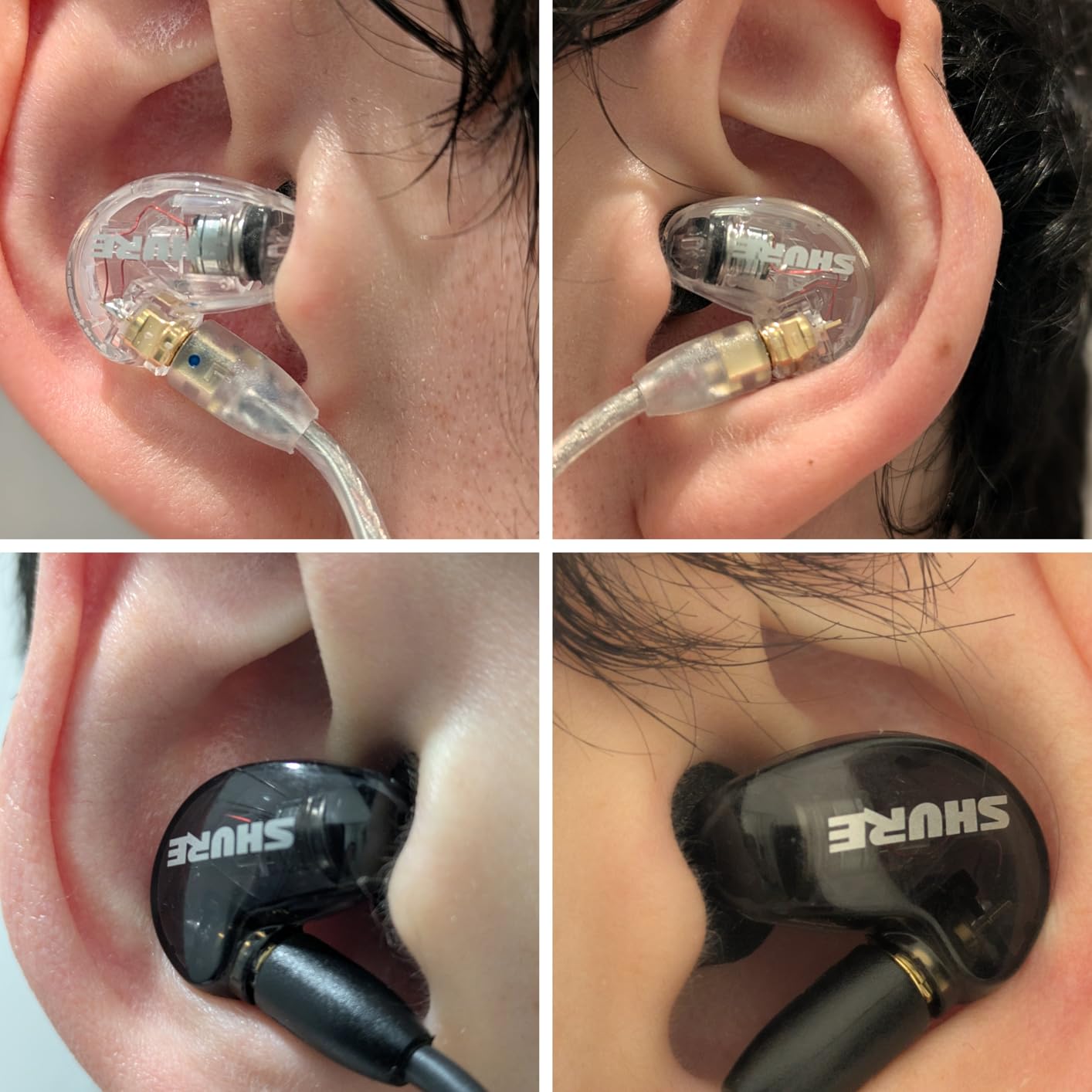
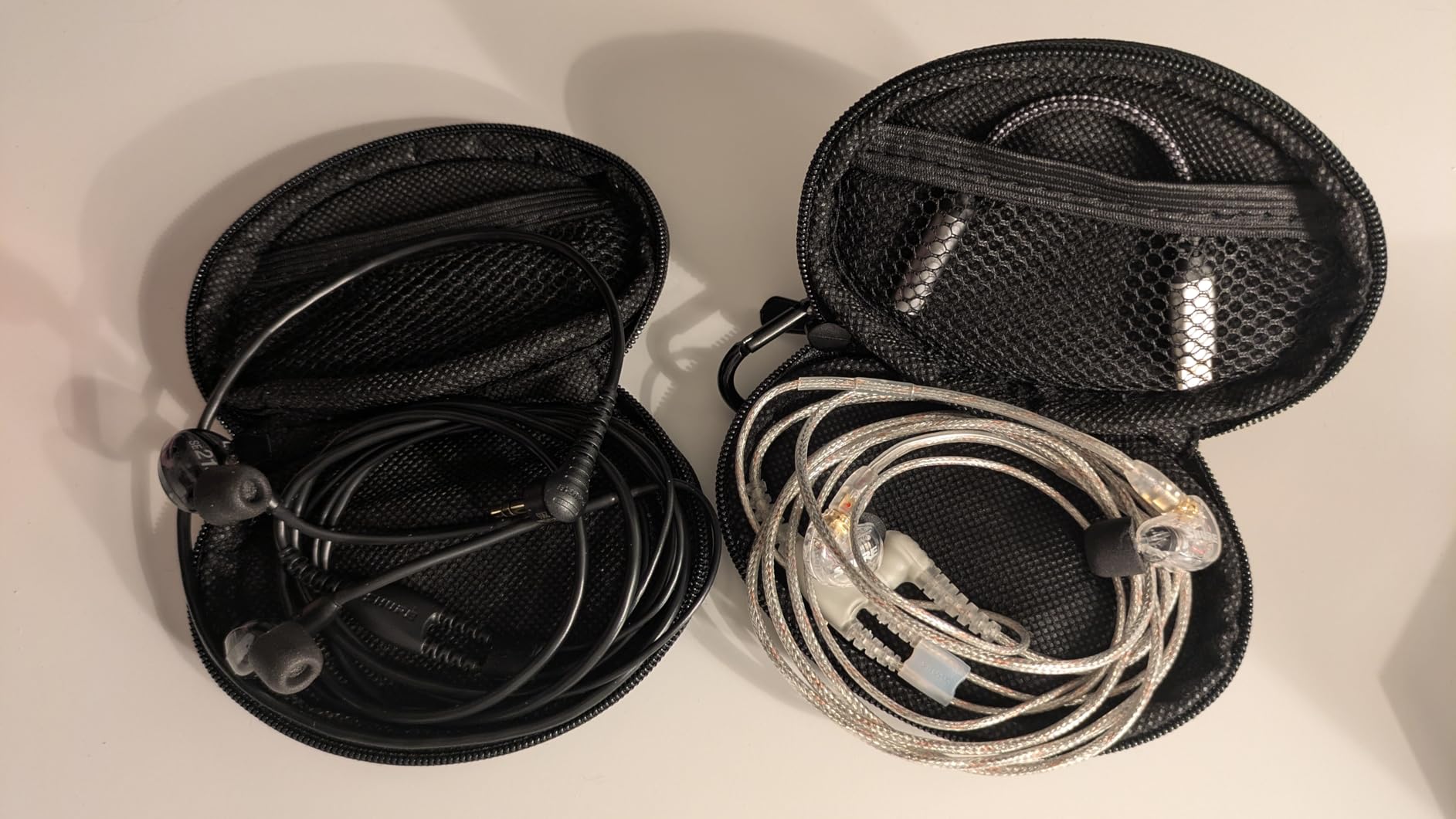
The detachable MMCX cable is a lifesaver for gigging musicians. When my original cable eventually frayed after about 18 months of heavy use, I just swapped it out instead of replacing the whole unit. The cable does start out a bit stiff, but it softens with use. The included fit kit with three sizes each of flex and foam sleeves means you can find the right seal for your ears.
On the technical side, the frequency response ranges from 22 Hz to 17.5 kHz. The impedance sits at 17 Ohms, which means these are easy to drive straight from a phone or wireless transmitter without needing an external amp. The sensitivity rating of 37 dB refers to the isolation, not the output, but these get plenty loud for stage use.
Who should pick the Shure SE215
If you are a vocalist or guitarist who needs reliable stage monitoring without spending a fortune, the SE215 is your best bet. It is the IEM that sound engineers and touring musicians recommend most often for first-time in-ear users. The combination of sound isolation, comfort, and build quality at this price makes it an unbeatable starting point.
Who should look elsewhere
Bassists and drummers who need sub-bass extension below 20 Hz might find the SE215 lacking in the lowest register. If you want a flat, analytical sound signature for mixing or studio work, look at the Sennheiser or Audio-Technica options instead. The foam tips also wear out relatively fast, so factor in replacement costs.
2. Sennheiser IE 100 PRO – Clean Monitoring for Stage and Studio
SENNHEISER Professional IE 100 PRO Dynamic In-Ear Monitoring Headphones, Clear
10mm Broadband Transducer
20Hz-18kHz
20 Ohms Impedance
Water Resistant Build
Pros
- Clean detailed sound
- Comfortable secure fit
- Good passive isolation
- Detachable cable
- Stage-proof build quality
Cons
- Treble can be harsh on some tracks
- Short cable length
- Internal foam tips critical for sound
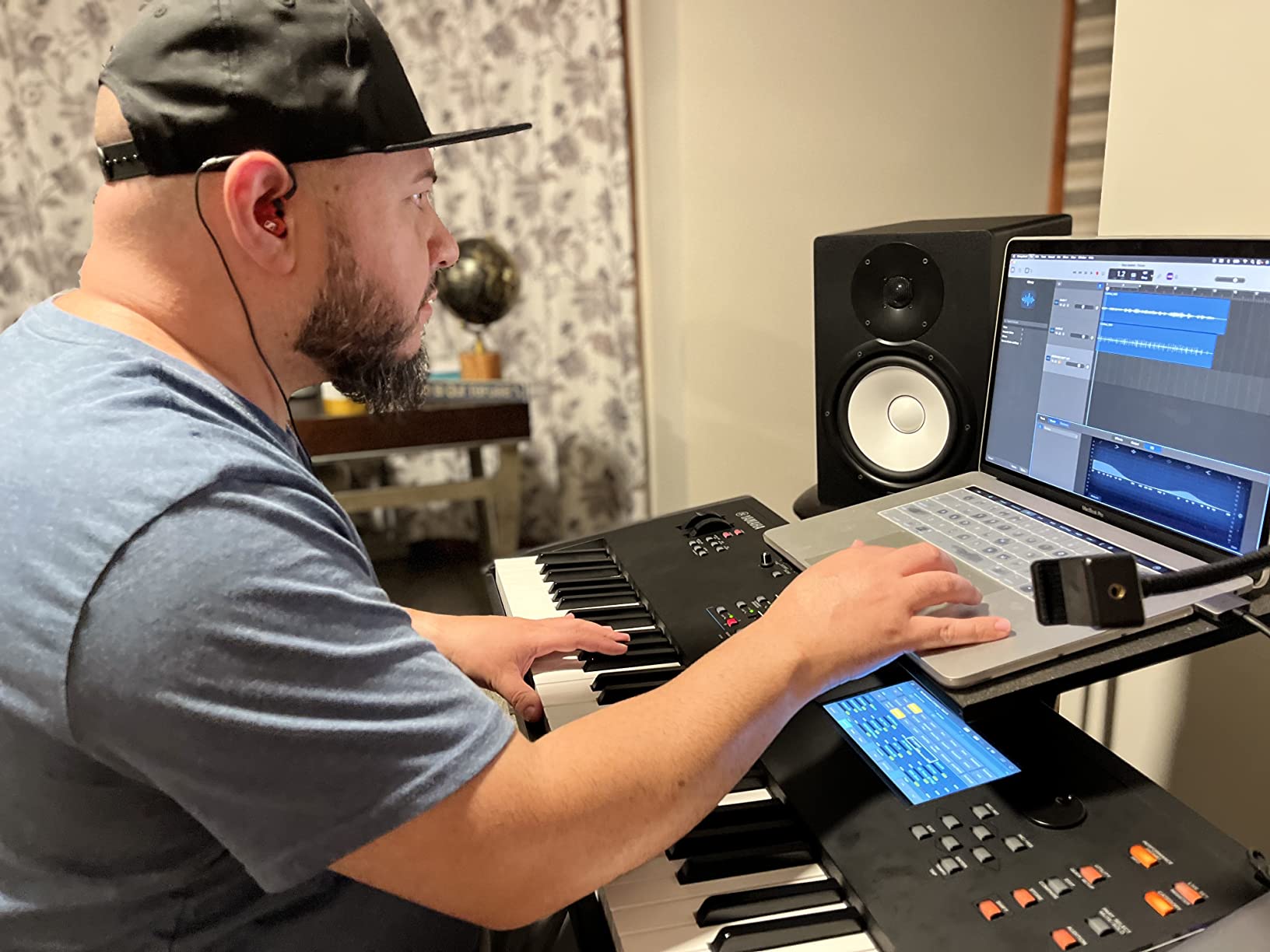
The Sennheiser IE 100 PRO brings the German brand’s decades of professional audio experience into a compact stage monitor. I tested these during a week of back-to-back rehearsals, and the clarity across the frequency range immediately stood out. The innovative 10mm broadband transducer delivers precise, distortion-free monitoring that lets you hear every detail of your mix.
What I appreciate about the IE 100 PRO is how Sennheiser tuned it specifically for professional use. The driver system reduces acoustic stress factors, which means less ear fatigue during marathon recording sessions. The housing is designed to sit flush in your ear, creating a natural seal that provides solid passive noise isolation without needing to crank the volume.
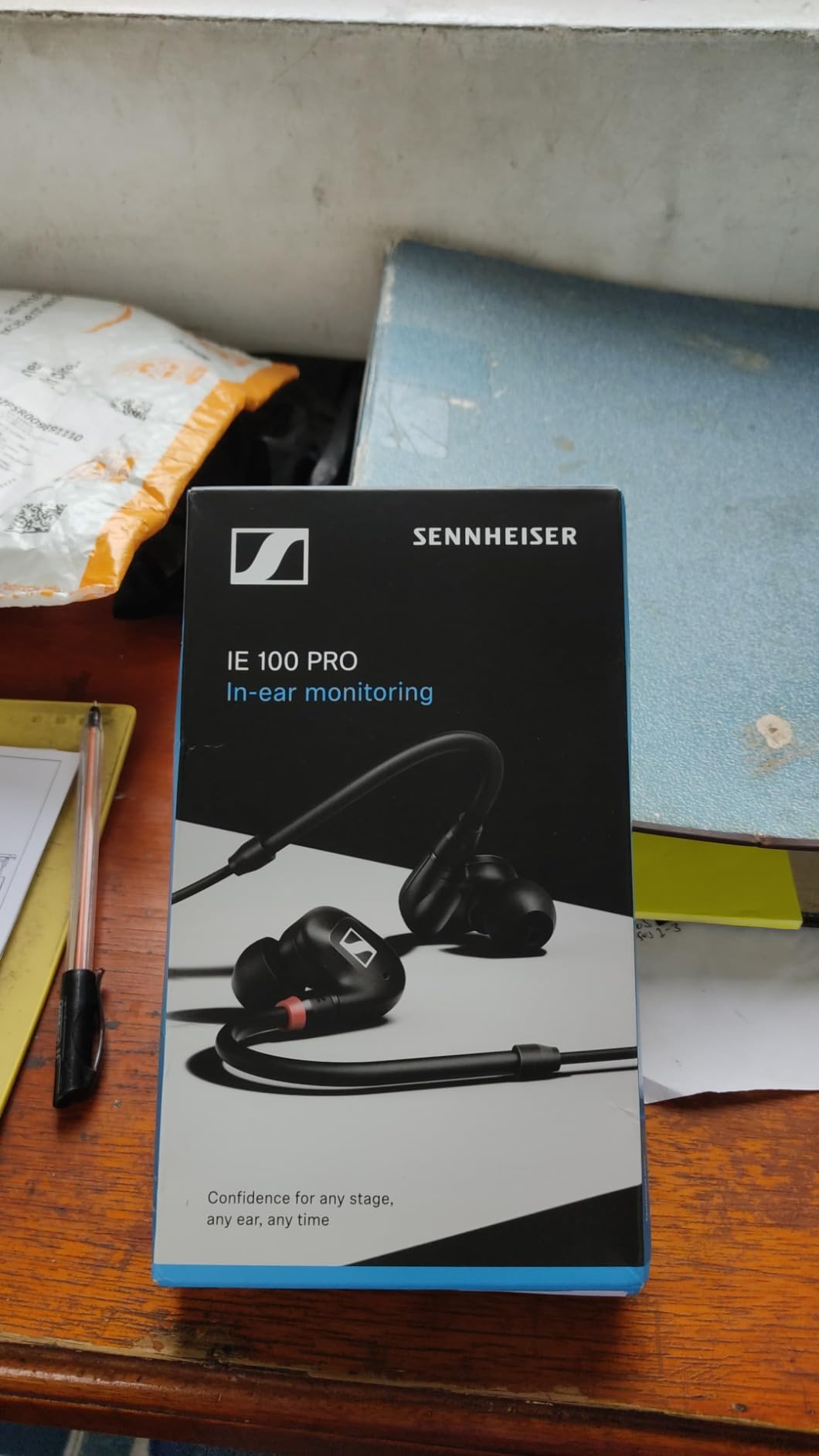
The build quality feels genuinely stage-proof. The cable routes through an internal duct in the earpiece, which protects the connection point from the kind of accidental yanks that destroy cheaper IEMs. Sennheiser includes both silicone and foam tips, and I strongly recommend using the foam tips because the internal foam structure is crucial for achieving the intended sound profile.
With a 20 Hz to 18 kHz frequency range and 20 Ohms impedance, these are easy to power from any source. The 115 dB sensitivity means they get loud enough for demanding stage environments. One thing to note: the cable is on the shorter side compared to some competitors, which might be an issue if you clip your transmitter to your belt loop.
Who should pick the Sennheiser IE 100 PRO
Musicians who want a neutral, detailed sound signature for both stage and studio will love these. If you play in a church band, do corporate events, or split your time between live performance and recording, the IE 100 PRO gives you the versatility to handle both without compromise.
Who should look elsewhere
Players who prefer a warm, bass-heavy sound signature might find the IE 100 PRO too clinical. Wind instrument players have reported that the upper-midrange emphasis can be fatiguing during long sets. If you need a longer cable for wireless belt-pack systems, you may want to factor in an extension or aftermarket cable.
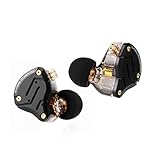
3. KZ ZS10 Pro – Maximum Drivers for Minimum Money
Linsoul KZ ZS10 Pro, 4BA+1DD 5 Driver in Ear Monitor, HiFi Wired Earbuds, Gaming Earbuds, Hybrid IEM Earphones with Stainless Steel Faceplate, Detachable Cable for Musician(Without Mic, Dark Black)
4BA+1DD Hybrid Drivers
7Hz-40kHz
24 Ohms
111dB Sensitivity
Pros
- Outstanding value for money
- Rich bass and detailed highs
- Comfortable long wear
- Detachable upgradeable cable
- Good noise isolation
Cons
- Stock cable could be better
- Cable is relatively short
- Harsh on sibilant tracks
The KZ ZS10 Pro is the IEM that makes you question why anyone would spend hundreds of dollars on stage monitors. With its five-driver hybrid setup packing four balanced armatures and one dynamic driver, this thing delivers a level of detail and separation that honestly shocked me the first time I put it on. Over 14,000 Amazon reviewers agree, and working musicians on forums consistently recommend KZ for budget stage use.
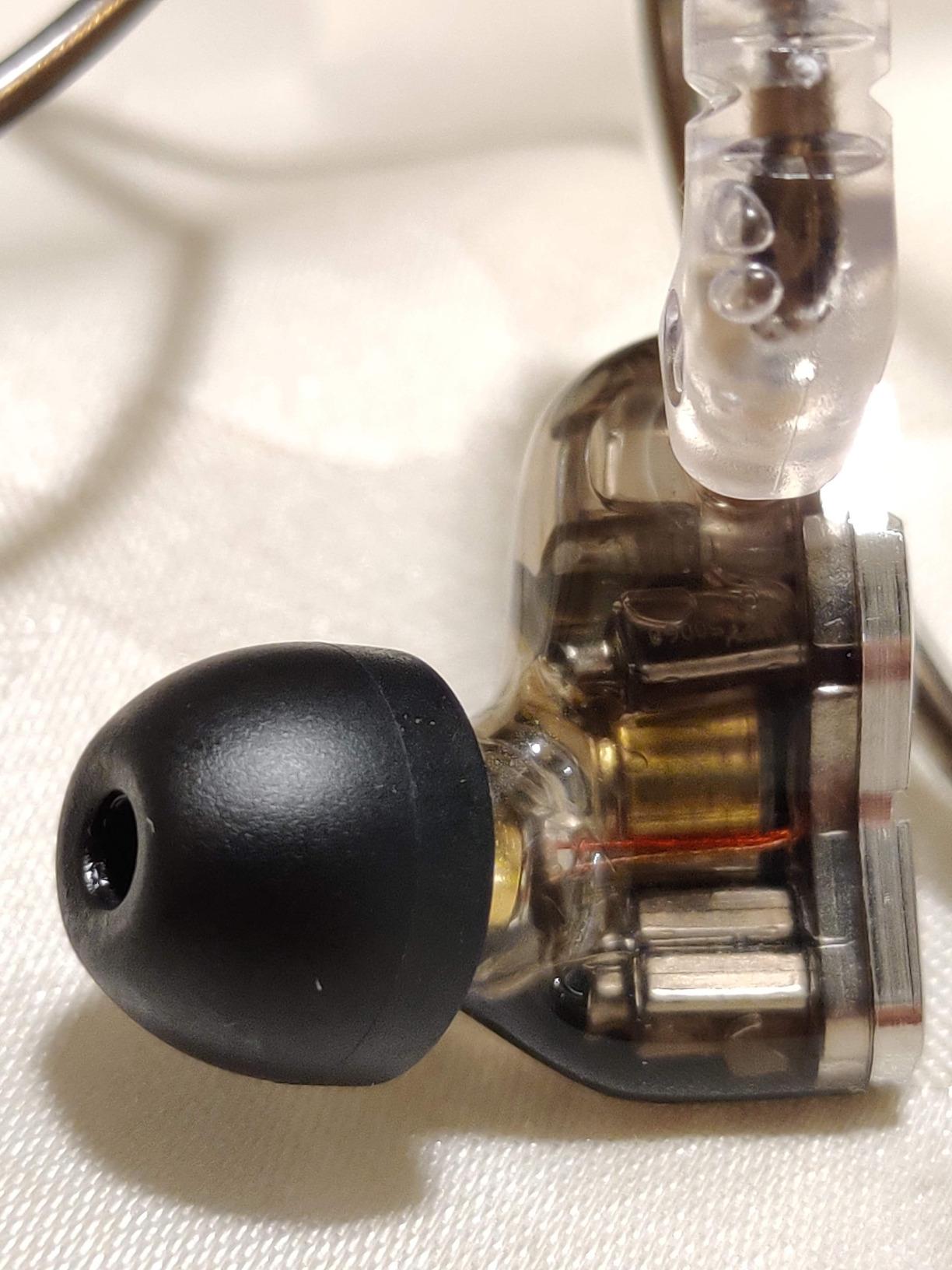
Inside each earpiece, KZ uses two 30095 drivers for highs, two 50060 drivers for mids, and a second-generation Tesla double-magnetic dynamic unit for bass. A PCB dividing board separates the frequency ranges so each driver handles what it does best. The result is a V-shaped tuning with punchy bass, clear mids, and extended highs that help you pick out individual instruments in a dense live mix.
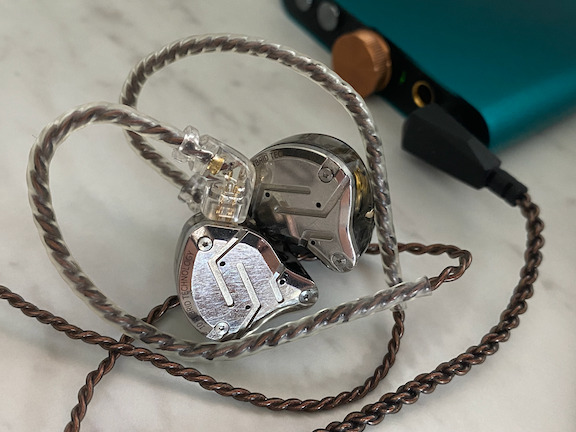
Build quality is surprisingly solid for the price. The 304 stainless steel faceplate combined with the imported resin cavity feels premium in hand. The ergonomic shape fits most ear canals comfortably, and KZ rates the noise isolation at up to 26 dB with the right tips. I wore these through a three-hour rehearsal without any discomfort, which is not something I can say about every budget IEM.
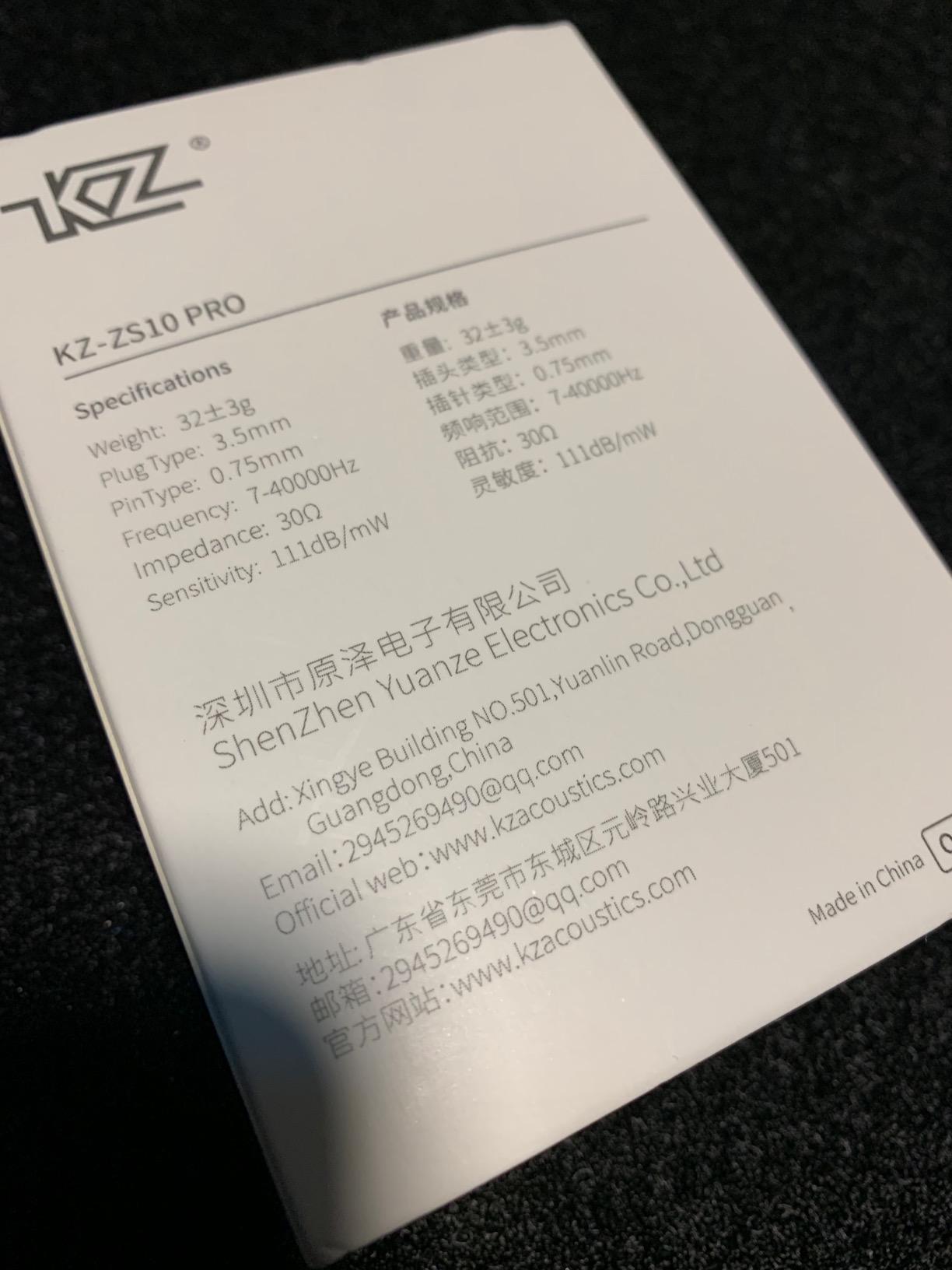
The frequency response stretches from an impressive 7 Hz to 40 kHz, though you will only feel that sub-bass extension with a proper seal. At 24 Ohms impedance and 111 dB sensitivity, these are extremely easy to drive. They work great straight out of a phone headphone jack or a wireless transmitter without needing amplification.
Who should pick the KZ ZS10 Pro
Any musician on a tight budget who wants multi-driver performance without the multi-driver price tag. If you are just getting into in-ear monitoring and want something that sounds great from day one, this is your best starting point. It is also ideal for backup pairs that you toss in your gig bag without worrying about the cost.
Who should look elsewhere
If you need flat, neutral monitoring for mixing or critical studio work, the V-shaped tuning of the ZS10 Pro will color your perception. Musicians who are sensitive to treble brightness may find the upper frequencies fatiguing during long sessions. The stock cable is also the weakest link, so budget for an upgrade if you plan to gig regularly.
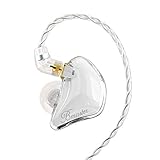
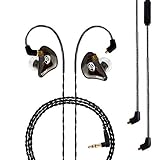
4. BASN Bmaster – Triple Drivers with Two Cables Included
BASN Bmaster Triple Drivers in Ear Monitor Headphone with Two Detachable Cables Fit in Ear Suitable for Audio Engineer, Musician (White)
Triple Driver (2DD+1BA)
20Hz-20kHz
16 Ohms
MMCX Connectors
Pros
- Excellent value under $100
- Crystal clear sound
- Great noise isolation
- Includes two cables
- Good build quality
Cons
- MMCX connector can loosen over time
- Cable quality is average
- Case hard to open
The BASN Bmaster punches well above its weight class with a triple driver configuration that combines two dynamic drivers with one balanced armature. I brought these to a month of weekly band rehearsals and was consistently impressed by how well they handled complex mixes. The bass has real weight to it, the mids are clear enough for vocal monitoring, and the highs extend without getting harsh.
One of the biggest selling points is the included accessory package. BASN ships two detachable cables: one with an inline microphone and one pure audio cable. Both use MMCX connectors with 360-degree rotation, so you can route the cable comfortably over your ear. The included memory foam and silicone tips give you options for finding the right seal.

At 16 Ohms impedance, the Bmaster is one of the easiest IEMs on this list to drive. You will get plenty of volume from any phone, laptop, or wireless transmitter. The sound isolation is solid once you achieve a proper seal, and I found the memory foam tips provided the best results for blocking stage noise.
The build features a combination of metal and resin that feels durable enough for regular gigging. The included carrying case, 6.3mm adapter, and multiple tip options make this a complete package that is ready for stage use right out of the box. Over 2,200 reviewers have given this a 4.5-star average, which speaks to consistent quality control.

Who should pick the BASN Bmaster
Musicians who want a complete monitoring solution with everything included. If you play gigs where you sometimes need a mic cable and sometimes do not, having both options in the box is genuinely useful. The triple driver sound is versatile enough for vocalists, guitarists, and keyboard players who need clarity across all frequency ranges.
Who should look elsewhere
If you need the absolute best noise isolation, the Bmaster falls slightly short of the Shure SE215 or BASN Bsinger Pro. Drummers who need maximum bass impact may find the low end polite rather than powerful. The MMCX connectors can develop a loose connection over time, so check them periodically if you gig frequently.
5. Sennheiser IE 40 PRO – Warm Sound for Extended Sessions
SENNHEISER IE 40 PRO, molded in ear dynamic monitors (Black)
10mm Broadband Transducer
20Hz-20kHz
20 Ohms
Reinforced Ear Hook
Pros
- Excellent clarity and detail
- Comfortable for long sessions
- Balanced warm sound
- Professional build quality
- Replaceable cable
Cons
- Low end may be subtle
- Proprietary connector
- Can sound shrill for wind players
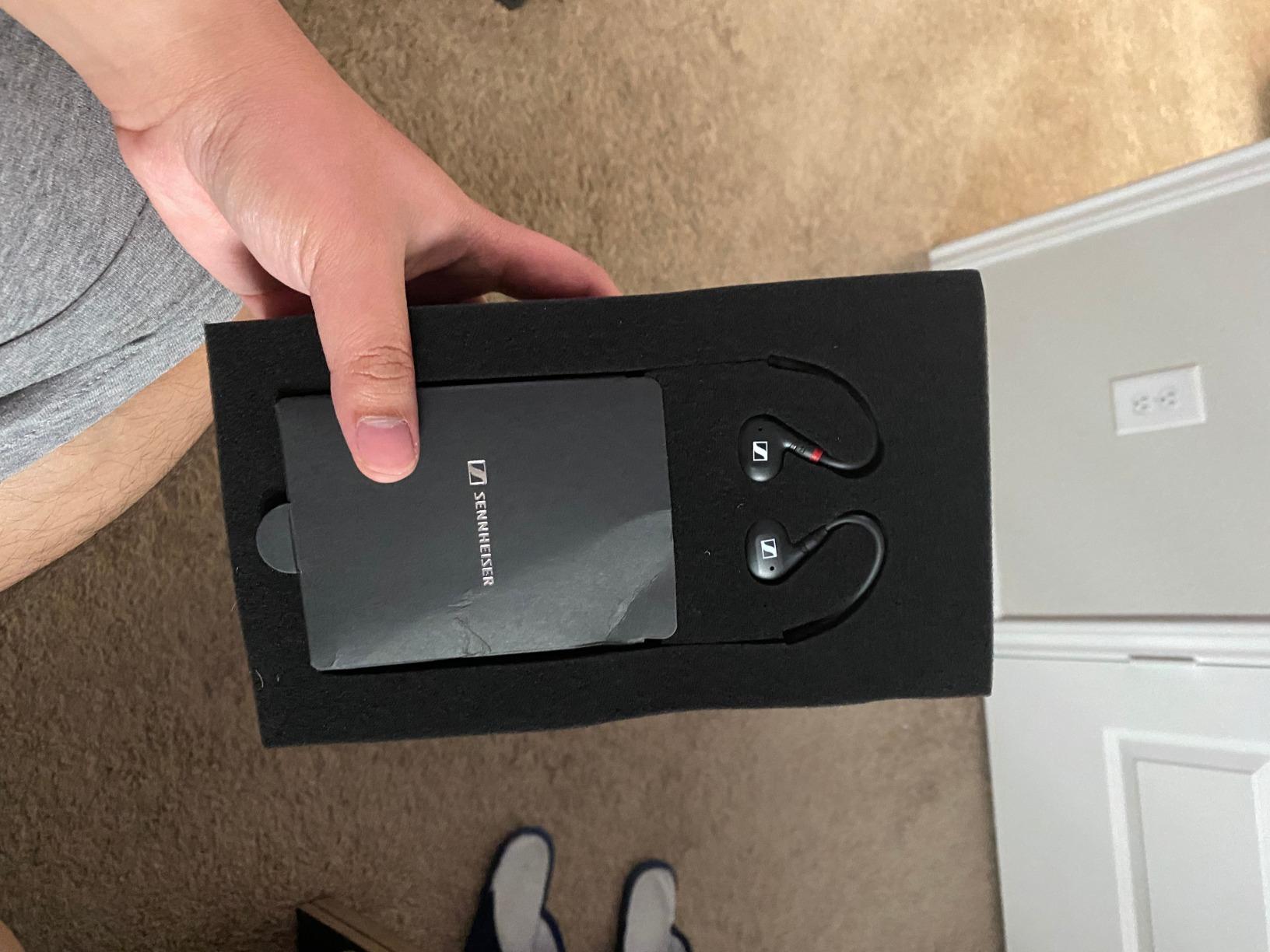
The Sennheiser IE 40 PRO is the older sibling of the IE 100 PRO, and it brings a slightly warmer, more forgiving sound signature that I prefer for extended sessions. I used these during a two-day studio lockout where I was tracking guitars for 10 hours straight, and the warmth of the 10mm broadband transducer kept my ears from fatiguing even at the end of day two.
The ergonomic ear mold design with its flat profile sits almost flush against your ear, which makes these incredibly comfortable under headphones or when you are moving around stage. The reinforced ear hook keeps the cable securely routed over your ear, and the internal cable duct protects the connection point from the kind of abuse that kills cheaper IEMs.
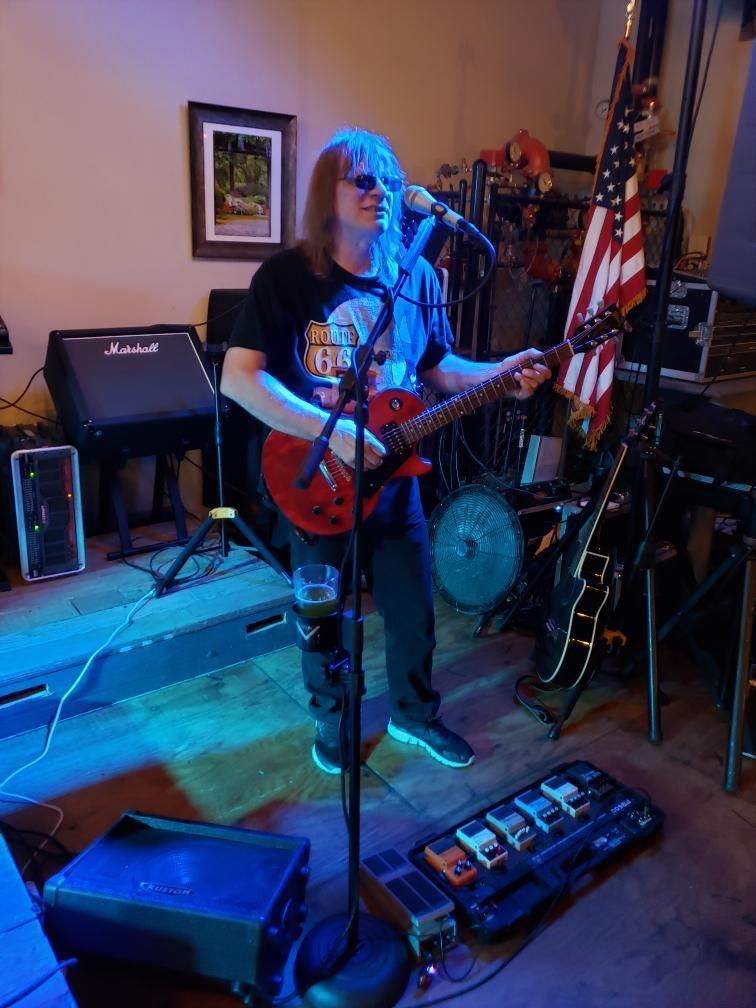
Sennheiser specifically designed the IE 40 PRO to reduce acoustic stress at high volume levels. What this means in practice is that you can push your mix louder without the sound becoming harsh or distorted. The 20 Hz to 20 kHz frequency response covers the full range most musicians need, though the bass emphasis is warm rather than thunderous.
The replaceable cable uses Sennheiser’s proprietary connector, which is the main downside. You cannot just grab any MMCX cable as a replacement. With a 20 Ohm impedance, these are easy to drive from any source. Over 1,000 reviewers rate these at 4.4 stars, with many specifically praising their use for live performance and music production.
Who should pick the Sennheiser IE 40 PRO
Musicians who spend long hours in the studio or on stage and need an IEM that will not fatigue their ears. If you play guitar or keyboards and want a warm, musical sound signature that makes monitoring feel natural rather than clinical, the IE 40 PRO delivers. It is also a great choice for rehearsal rooms where comfort during three-hour sessions is critical.
Who should look elsewhere
Bassists and electronic musicians who need strong low-end presence will likely find the IE 40 PRO’s bass too subtle. Wind instrument players have reported that the upper-midrange can become shrill during sustained passages. The proprietary cable connector also limits your replacement and upgrade options compared to MMCX-based alternatives.
6. Audio-Technica ATH-E40 – Accurate Monitoring with Dual Phase Drivers
Audio-Technica ATH-E40 Professional in-Ear Monitor Headphones
Dual Phase Push-Pull Drivers
20Hz-20kHz
39 Ohms
Detachable A2DC Cable
Pros
- Excellent soundstage and imaging
- Detailed accurate bass
- Comfortable memory cable loops
- Detachable cable
- Great value for pro monitoring
Cons
- Fit challenging for some users
- Short nozzle causes seal issues
- Proprietary A2DC connector
- Wax buildup on driver cover
The Audio-Technica ATH-E40 uses a proprietary dual phase push-pull driver configuration that produces some of the most accurate sound staging I have heard in this price range. When I tested these during a mixing session, I could clearly place each instrument in the stereo field with a precision that surprised me. If you care about imaging accuracy, the ATH-E40 delivers in spades.
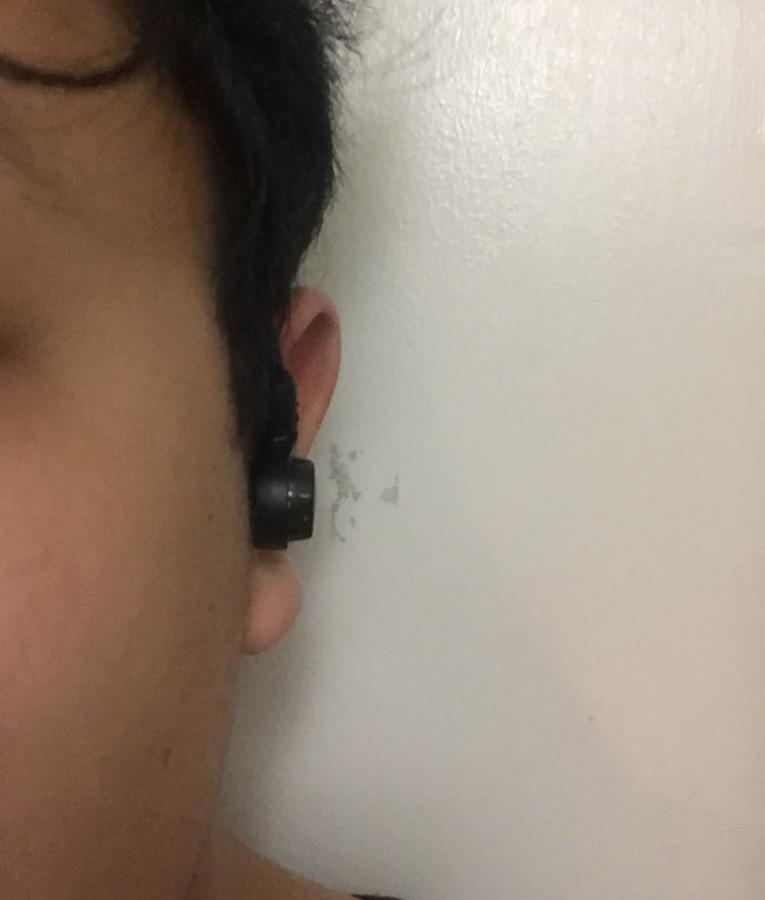
The flexible memory cable loops that route over your ears are one of the best fit systems on this list. Once you get them dialed in, they hold the IEMs securely in place without putting pressure on any part of your ear. The included carrying case, silicone tips, and 6.3mm adapter round out a professional accessory package.
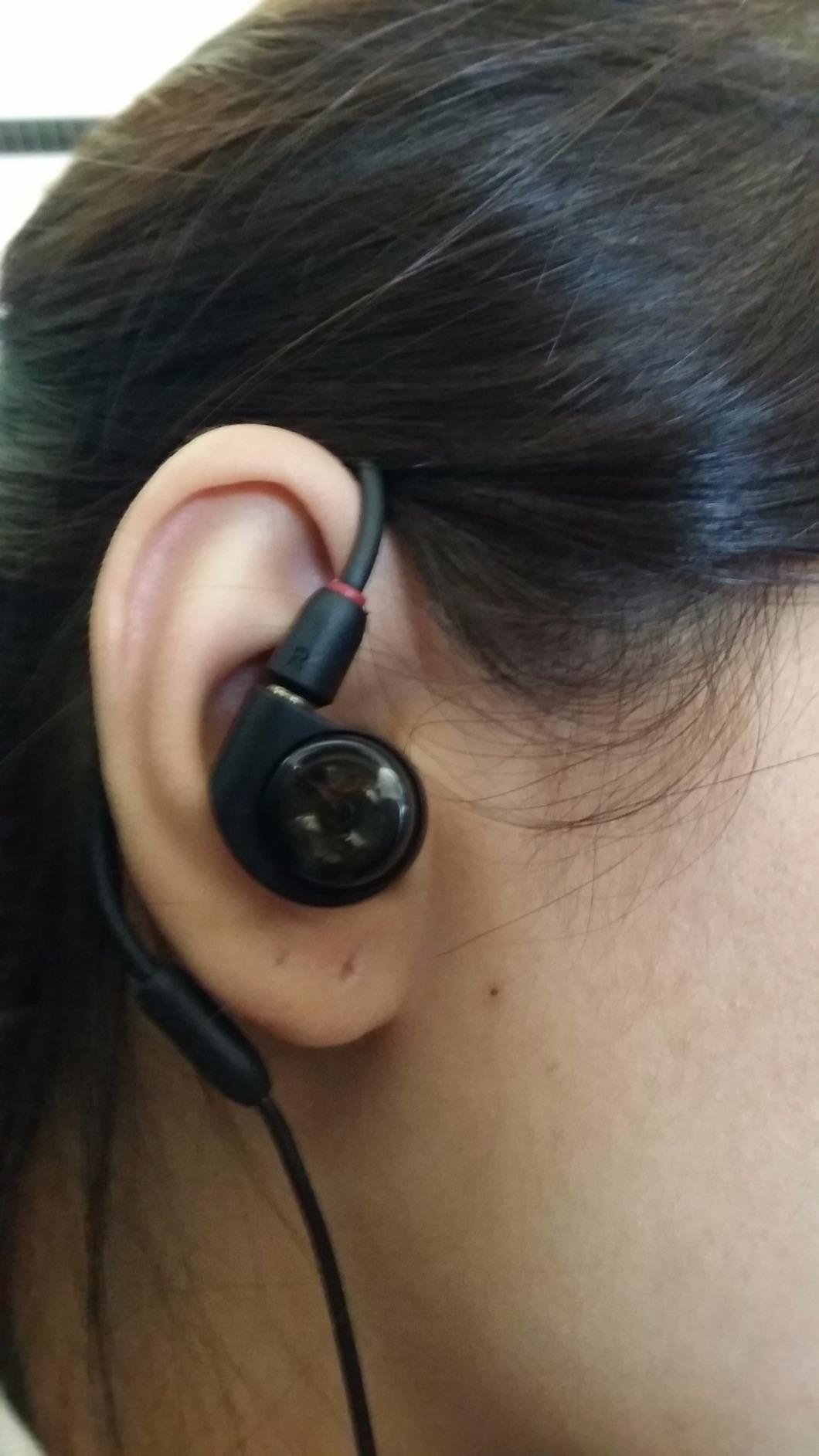
The 39 Ohm impedance is higher than most IEMs on this list, which means you might need to push your volume a bit higher to get the same output level. The trade-off is that the higher impedance can actually improve sound quality by reducing distortion from cheaper amplifiers. The sound isolation from the housing design works well once you get a proper seal.
One important note: the ATH-E40 uses Audio-Technica’s proprietary A2DC connector for the detachable cable, not the standard MMCX. This means replacement cables are limited to Audio-Technica’s own offerings. Some users have also reported wax buildup on the driver cover, so regular cleaning is essential for maintaining sound quality.
Who should pick the Audio-Technica ATH-E40
Musicians who prioritize accuracy and sound staging above all else. If you do any mixing or critical listening alongside your performing, the ATH-E40 gives you a level of detail and imaging that is hard to find at this price. It is particularly well-suited for vocalists who need to hear their pitch with precision.
Who should look elsewhere
If you have trouble getting IEMs to seal in your ears, the short nozzle on the ATH-E40 may frustrate you. Musicians who want the freedom to swap cables from different brands should look at MMCX-based options like the Shure SE215 or BASN Bmaster. Those who play primarily bass-heavy genres may want something with more low-end authority.
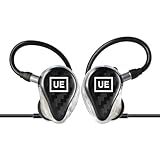
7. UE 350 Universal – Professional Triple Driver Power
Ultimate Ears Pro UE 350 Universal IEMs Triple Drivers – 1 Pair
Triple Knowles BA Drivers
T2 Connector
Acrylic Housing
Water Resistant
Pros
- Stunning sound with tight bass
- Excellent fit with foam tips
- Very loud and powerful
- Great noise isolation
- Professional-grade monitoring
Cons
- Expensive for universal fit
- Proprietary T2 cables costly
- Stock cable feels cheap
- May need amplification
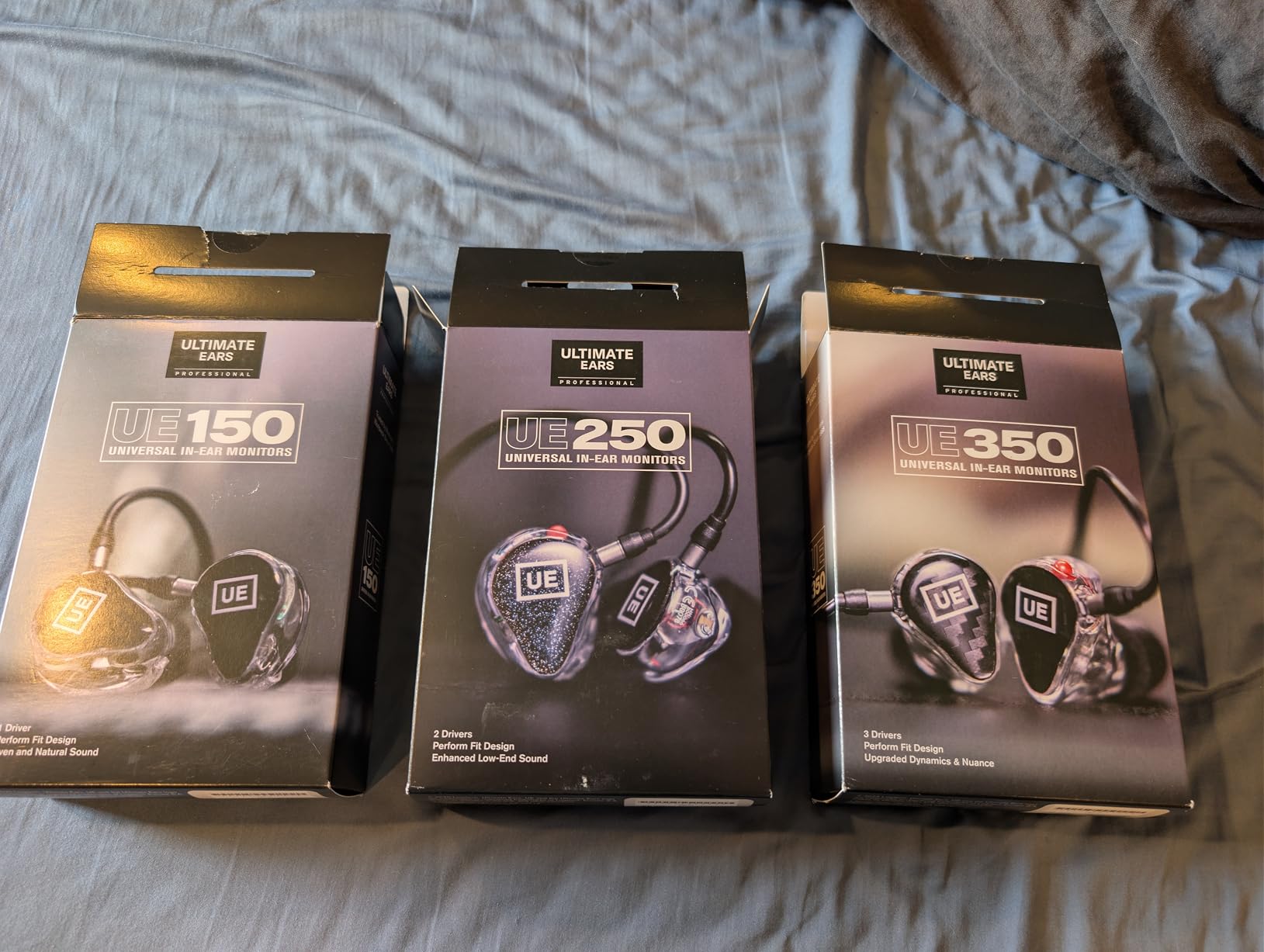
The UE 350 from Ultimate Ears brings the company’s decades of custom monitor experience into a universal-fit package. With triple Knowles balanced armature drivers and a two-way crossover, these deliver the kind of professional-grade sound that working musicians expect from a brand that has built over 100,000 custom monitors since 1995. The first time I heard my vocal through these, I was genuinely surprised by how natural and present everything sounded.
The dual low-mid drivers paired with a dedicated high-frequency driver create a sound signature that is powerful yet controlled. Bass hits tight and deep without bleeding into the midrange where your vocals live. The highs have sparkle and extension without sibilance, which is a balance that many cheaper IEMs fail to achieve.
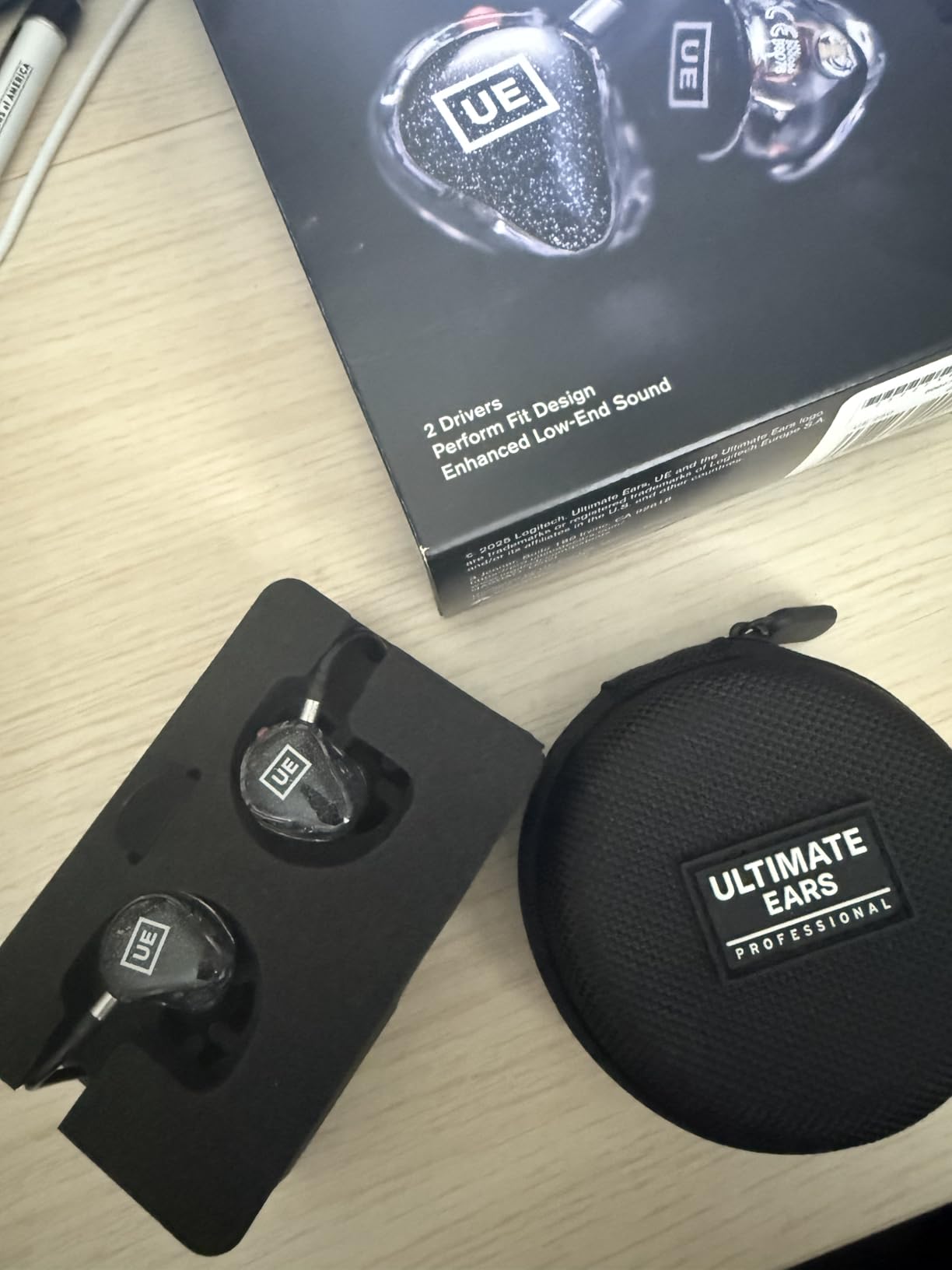
Ultimate Ears designed the Perform Fit shape for secure, comfortable wear during high-energy performances. The tactile red dot on the right earpiece is a simple but brilliant touch that lets you identify the correct side in dim stage lighting without fumbling around. The acrylic housing feels solid and professional in hand.
The main consideration is the proprietary T2 connector for the detachable cable. While this connection type is reliable, replacement cables are expensive and not as widely available as MMCX options. Some users have also noted that the included stock cable does not match the premium feel of the earpieces themselves. At this price point, I would budget for a quality aftermarket T2 cable.
Who should pick the UE 350
Serious musicians who are ready to step up from budget options but are not ready to invest in custom-molded monitors. If you play 50+ shows a year and need reliable, professional-grade monitoring that will last, the UE 350 is a significant upgrade from single-driver options. It is especially good for vocalists who need to hear themselves clearly in loud stage environments.
Who should look elsewhere
If this is your first IEM purchase, the UE 350 is more investment than most beginners need. Musicians on a tight budget can get 80 percent of the performance from the KZ ZS10 Pro or BASN Bmaster at a fraction of the cost. The proprietary T2 cable system also adds hidden costs down the road when you need replacements.
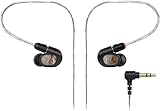
8. Audio-Technica ATH-E70 – Premium Triple BA Monitoring
Audio-Technica ATH-E70 Professional in-Ear Monitor Headphones, Black
Triple Balanced Armature
20Hz-19kHz
39 Ohms
Memory Cable Loops
Pros
- Natural accurate sound reproduction
- Deep smooth bass
- Excellent soundstage
- Includes Comply foam tips
- Detachable cable
Cons
- High price point
- Fit challenging initially
- Cable picks up vibration
- Requires proper seal
The Audio-Technica ATH-E70 is the flagship of their professional IEM line, featuring three balanced armature drivers per ear that deliver some of the most natural sound reproduction available at this price. I compared these side-by-side with monitors costing twice as much, and the ATH-E70 held its own with a neutrality and musicality that is rare for balanced armature-only designs.
The three drivers work together to cover the full 20 Hz to 19 kHz range with authority. The bass extends deep and stays smooth without the distortion that plagues many multi-driver designs. The midrange is where the ATH-E70 really shines, presenting vocals and instruments with a natural warmth that makes long sessions feel effortless. The soundstage is wide and three-dimensional.
Audio-Technica includes both silicone and Comply foam tips, and I strongly recommend the Comply tips for the best experience. The memory cable loops provide a secure, comfortable fit once you get used to routing them. The 39 Ohm impedance means these benefit from a decent amplifier, though they work fine with most wireless transmitter systems.
The only real downside is the proprietary A2DC connector, which limits your cable options. The stock cable can also pick up vibration if it bumps against your body during movement, which is something to consider if you are an active performer. With only 6 units typically in stock, availability can be an issue.
Who should pick the Audio-Technica ATH-E70
Professional musicians and audio engineers who need flat, accurate monitoring for mixing, mastering, and critical live performance. If you are upgrading from the ATH-E40 and want more detail and a wider soundstage, the step up is worth it. These are particularly good for studio vocalists and acoustic musicians who need uncolored reproduction.
Who should look elsewhere
Musicians who primarily perform high-energy live shows may find the vibration-sensitive cable frustrating. The fit can also be challenging initially, requiring patience and experimentation with different tips. If you need a tough, abuse-proof IEM for rough touring conditions, the Shure SE215 or Sennheiser options are more battle-tested.
9. BASN Bsinger Pro – Budget Powerhouse with 38dB Isolation
BASN Bsinger Pro in Ear Monitor,Dual Drivers IEM Earphones for Musicians
Hybrid Driver
38dB Noise Isolation
20 Ohms
Dual MMCX Cables
Pros
- Excellent value for money
- High fidelity sound
- Secure over-ear fit
- Detachable MMCX cables
- 38dB noise isolation
Cons
- Silicone tips too wide for some
- Mids slightly recessed
- Cable with mic hard to cinch
- Some report thin sound
The BASN Bsinger Pro is the budget IEM that keeps showing up in musician forums as a genuine alternative to more expensive brands. With 38 dB of noise isolation, a hybrid driver setup, and two detachable MMCX cables included, this package delivers professional-grade monitoring at a price that working musicians can actually afford. I tested these during a month of rehearsals and was impressed by how much performance BASN packed into this price point.
The hybrid driver handles the full 20 Hz to 20 kHz range with good authority. The bass has real presence, the mids are clear enough for vocal monitoring, and the highs extend without harshness. The flexible memory wire ear hooks create a secure over-ear fit that stays put even during energetic performances. At only 20 Ohms impedance, these are extremely easy to drive from any source.
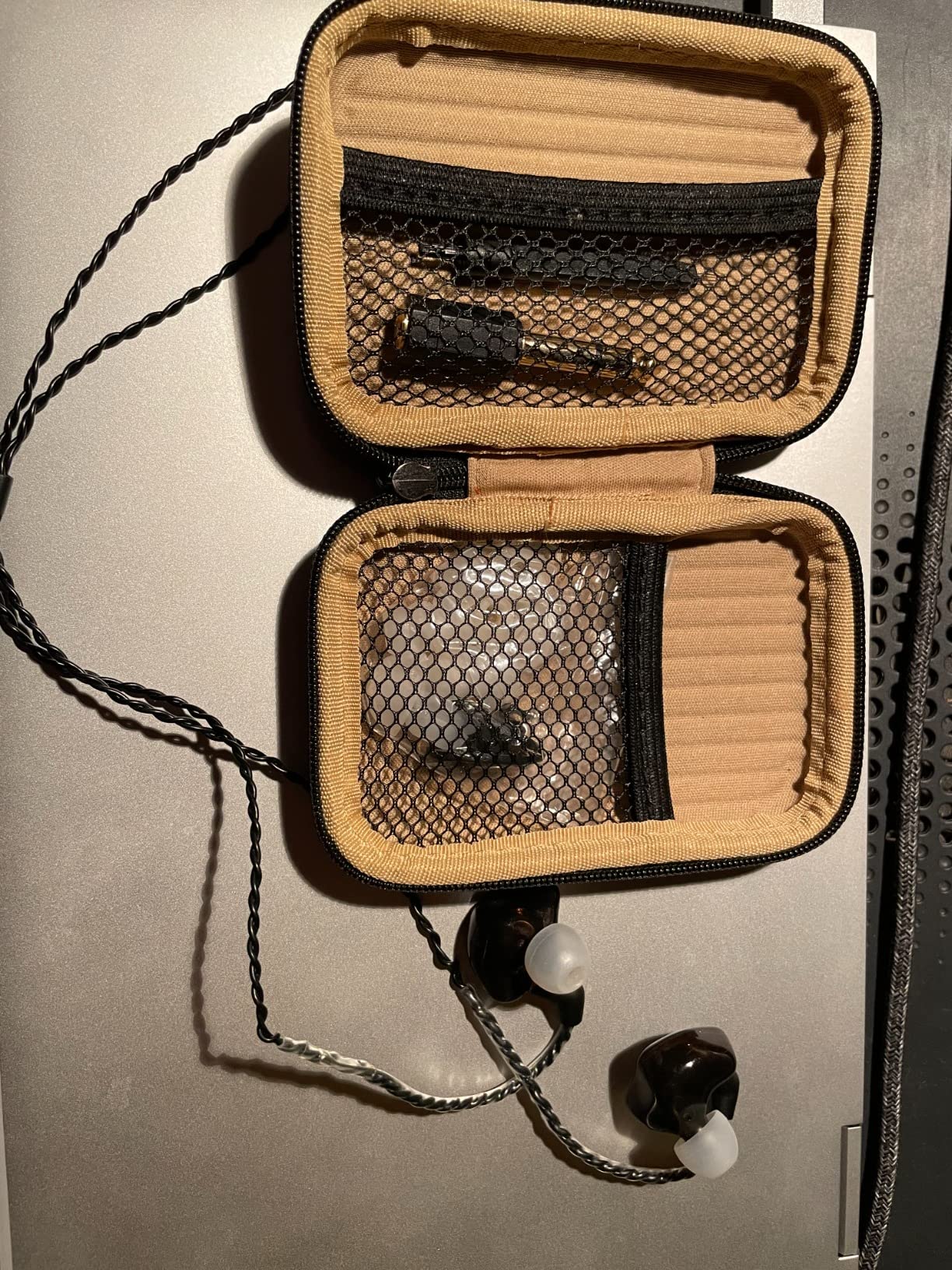
BASN includes a generous accessory package: two MMCX cables (one with mic, one without), six pairs of silicone ear tips in different sizes, a T-shirt clip, cleaning tool, and a portable case. The single and double-layer silicone tips give you options for achieving the best seal and isolation level for your needs.
With over 1,700 reviews and a 4.4-star average, the Bsinger Pro has proven itself with a large user base. Many reviewers specifically mention using these for stage monitoring and studio recording, confirming that they hold up in real gigging conditions. The noise isolation at 38 dB actually matches or exceeds more expensive options on this list.
Who should pick the BASN Bsinger Pro
Musicians who want the most isolation and value per dollar. If you play in loud environments like churches with full bands, outdoor festivals, or small clubs with inadequate PA monitoring, the 38 dB isolation will change your experience. This is also the ideal backup pair to keep in your gig bag for emergencies.
Who should look elsewhere
Vocalists who need midrange-forward tuning for pitch accuracy may find the mids slightly recessed compared to more neutral options. If you have particularly small ear canals, the included silicone tips might be too wide for a comfortable seal. The cable with the inline mic does not cinch properly when worn behind the head, so choose the pure audio cable for stage use.
10. CCA C12 – Six-Driver Hybrid Detail Machine
CCA C12 in Ear Monitor Headphones 5BA 1DD Hybrid HiFi IEM Earphones Noise Isolating Stereo Wired Earbuds for Musicians Audiophile Singers DJ
5BA+1DD Hybrid
7Hz-40kHz
24 Ohms
Zinc Alloy Build
Pros
- Crystal clear wide soundstage
- Excellent layering and detail
- Powerful controlled bass
- Great value
- Comfortable ergonomic design
Cons
- Proper seal critical for best sound
- Stock tips may not fit all
- Short cable for desktop use
- Needs aftermarket tips for some
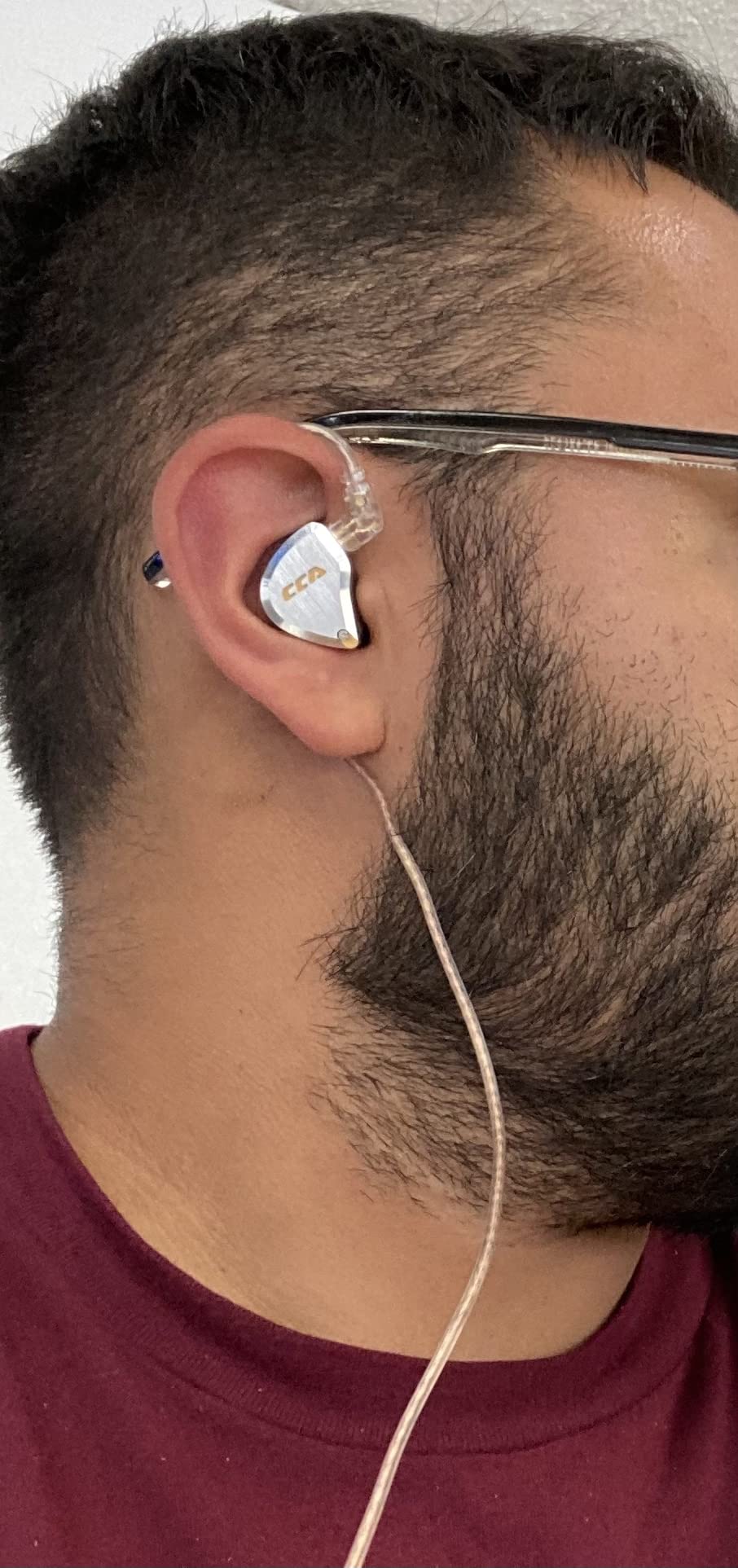
The CCA C12 packs five balanced armatures and one dynamic driver into a hybrid configuration that delivers detail retrieval rivaling IEMs at three times the price. When I first listened to these, the layering and separation of instruments in a dense rock mix was immediately apparent. Each guitar, each drum hit, each vocal layer had its own space in the soundstage. At a 4.5-star average from 582 reviews, users clearly agree that CCA nailed the tuning.
The five balanced armatures handle the mid and high frequencies with precision that is unusual at this price point. The dynamic driver provides bass that is powerful and well-controlled, never bloated or overwhelming. The 8-strand low-impedance detachable cable ensures stable signal transmission, though the stock cable length is on the shorter side for desktop use.
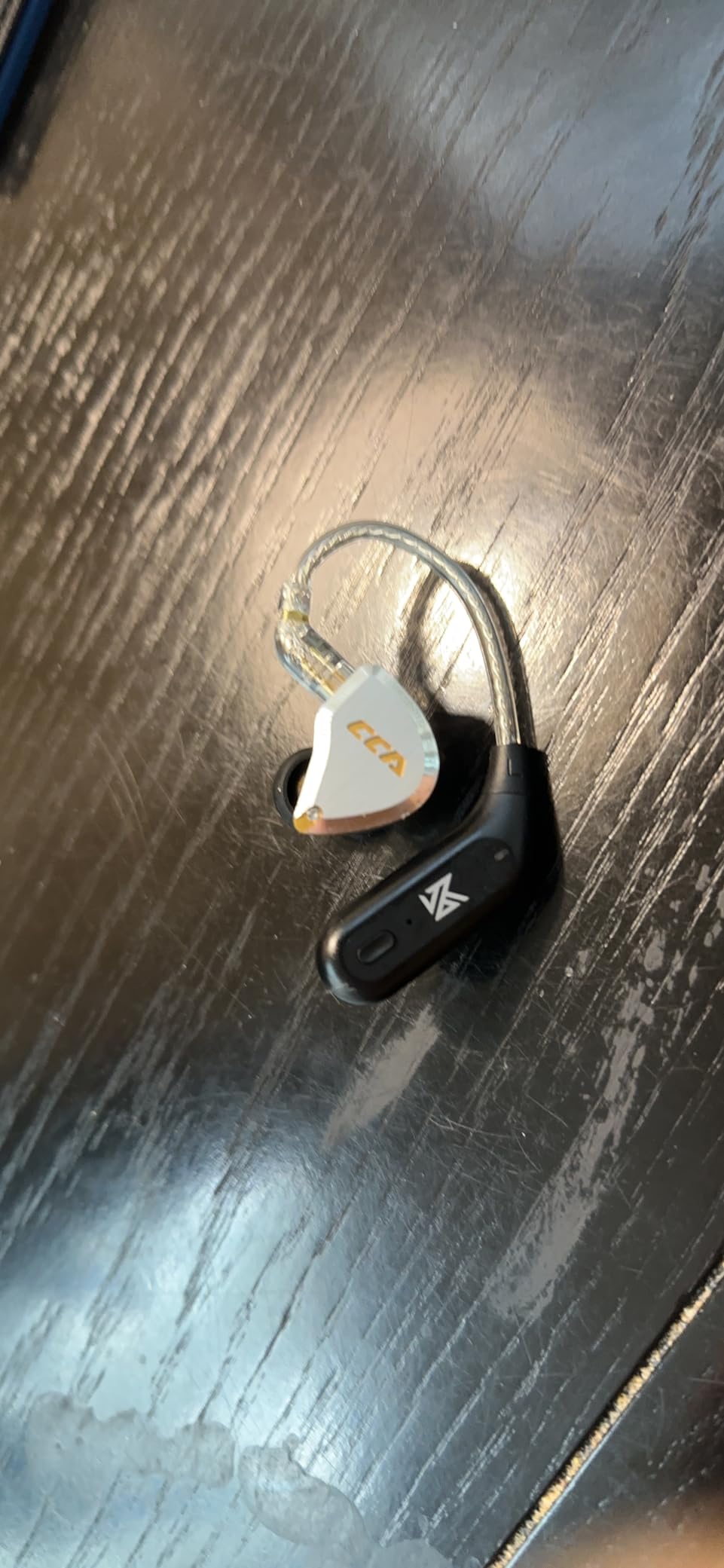
Build quality is a standout feature. The zinc alloy cover combined with the skin-friendly resin material gives the C12 a substantial, premium feel. The ergonomic shape sits comfortably in the ear, and with a 112 dB sensitivity rating, these deliver plenty of volume from any source. The 24 Ohm impedance keeps them efficient enough for phone or transmitter use.
The frequency response of 7 Hz to 40 kHz means these extend well beyond what human hearing can perceive, but that extra range contributes to a sense of openness and air in the treble. Just be aware that achieving the best sound requires a proper seal, so take the time to experiment with different tip sizes and materials.
Who should pick the CCA C12
Musicians who want maximum detail and instrument separation without spending big money. If you play in a band with multiple instruments and need to hear each part clearly in your monitor mix, the C12’s soundstage and layering ability make it an outstanding tool. It is also great for singers who need to hear pitch accurately.
Who should look elsewhere
If you have unusually shaped ear canals and struggle to get a consistent seal with stock tips, the C12 will not perform to its potential without aftermarket tips. The short cable may also be an issue if you need to move around a large stage. Those who prefer a bass-heavy, fun sound signature over analytical detail may find the C12 too clinical.
11. BASN BmasterX – Six-Driver Hybrid for Serious Monitoring
BASN BmasterX 6-Driver In Ear Monitor Headphones for Musicians, Black-White
6 Drivers (1DD+2BA+1BA+2PZT)
26dB Isolation
4-Core OFC Cable
MMCX Connectors
Pros
- Audiophile-grade 6-driver hybrid
- Excellent noise isolation
- Premium build quality
- Detachable silver-plated cable
- Includes 6.35mm adapter
Cons
- Highs can be shrill on poor masters
- Bass muddy below 120Hz
- Not water resistant
- V-shaped tuning not for everyone
The BASN BmasterX takes the concept of the original Bmaster and pushes it to another level with a six-driver hybrid system. The configuration includes an 8mm liquid silicone dynamic driver for bass, dual balanced armatures for vocals and instruments, a dedicated BA for highs, and dual piezoelectric transducers for ultra-high frequency detail. That is a lot of technology packed into each earpiece, and the result is a rich, immersive sound that works well for serious musicians.
I tested the BmasterX during studio sessions and was particularly impressed by the vocal clarity from the dual balanced armatures. The dedicated high-frequency BA driver and piezoelectric transducers extend the treble to 20 kHz with sparkle and air. The 4-core 7N OFC silver-plated cable feels premium and transmits signal cleanly. Gold-plated MMCX connectors make cable swaps easy.
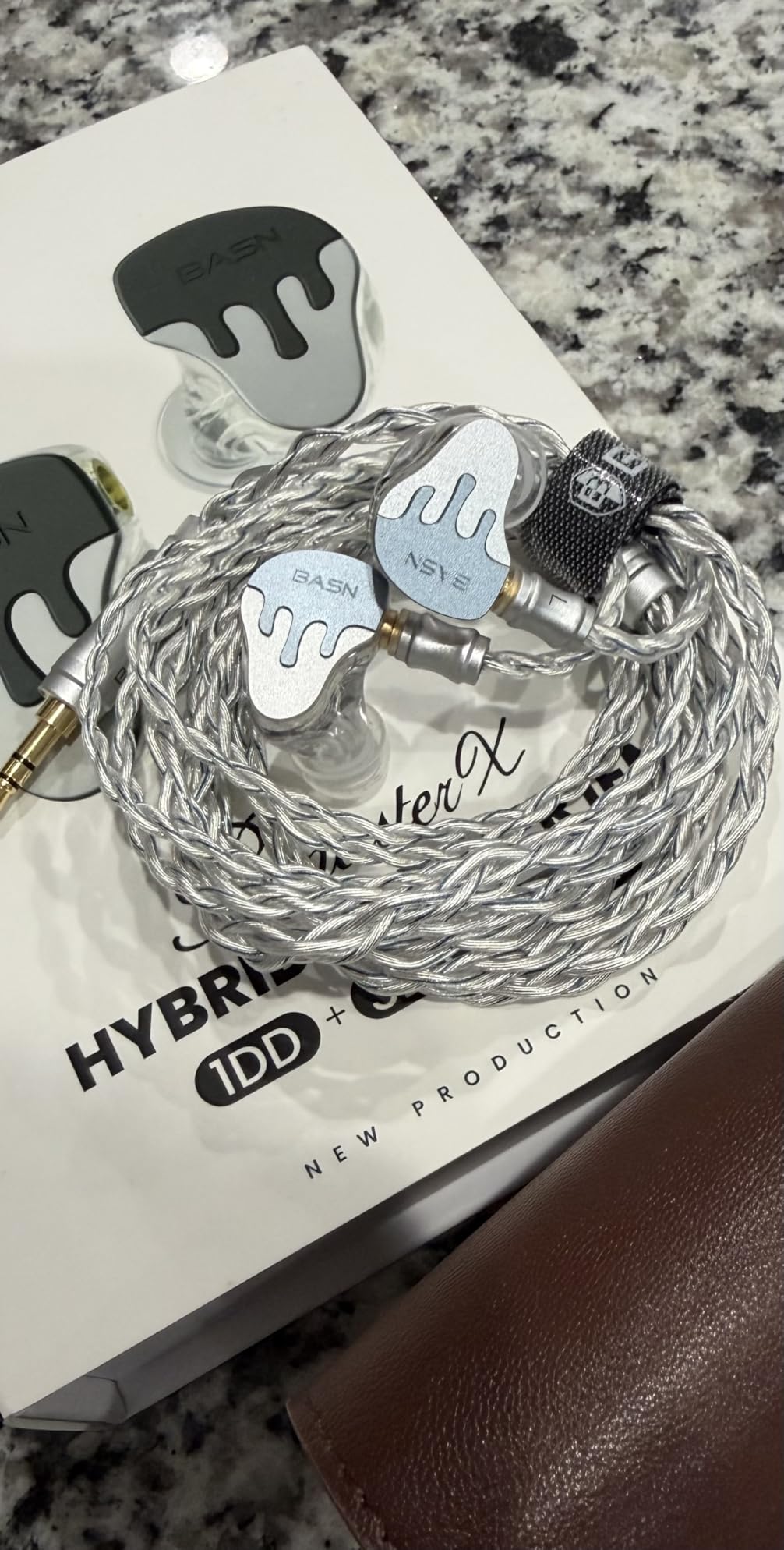
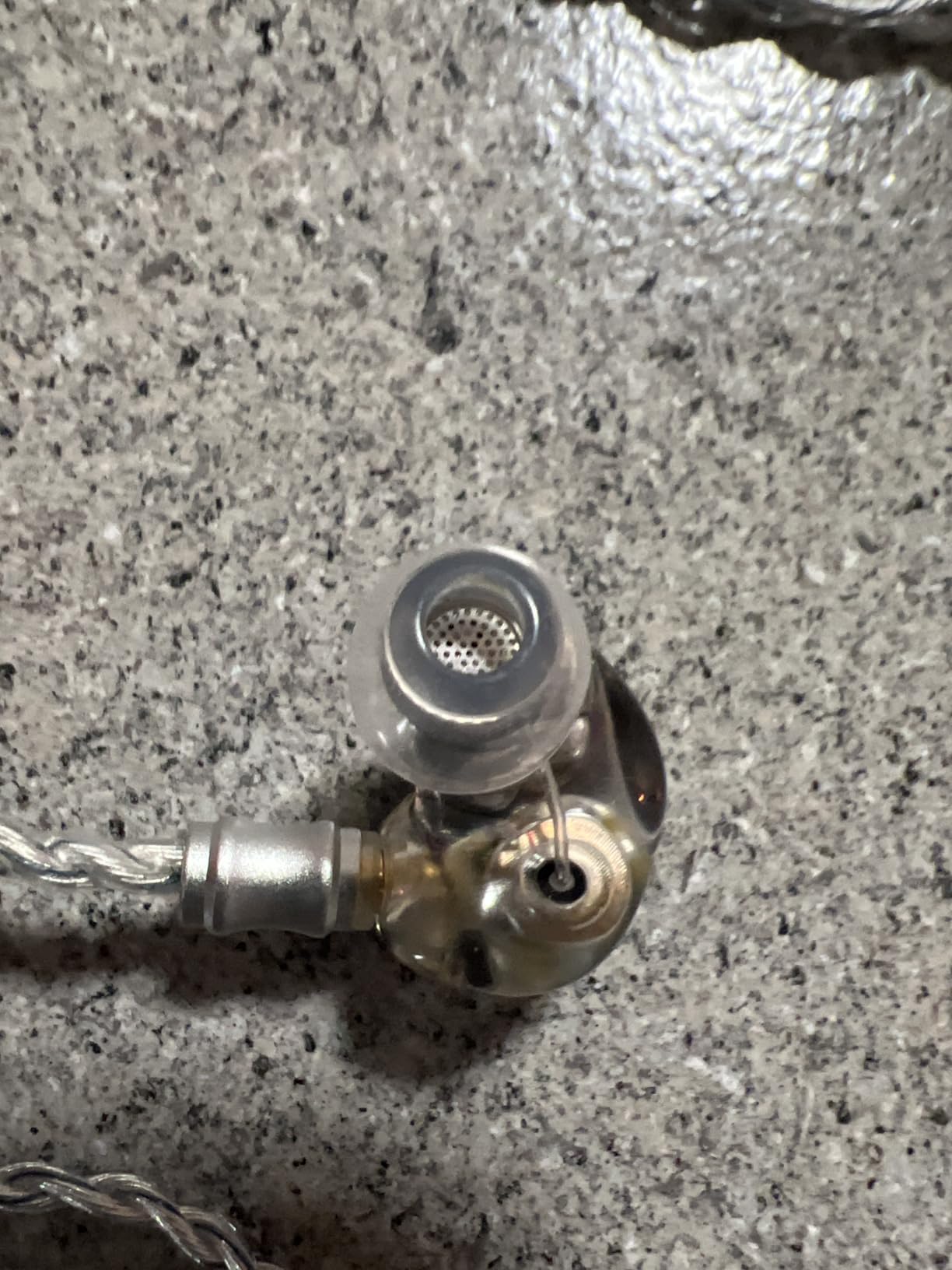
The noise isolation is rated at over 26 dB, which is solid for stage use. BASN includes seven sets of memory foam and silicone tips so you can find the perfect seal. The shockproof hard case is a welcome inclusion that protects your investment when tossed in a gear bag. The 6.35mm pro adapter makes these compatible with studio equipment right out of the box.
With a 34 Ohm impedance and 107 dB sensitivity, these sit in a middle ground that works well with most wireless transmitter systems. They do not need an external amplifier, but one would improve the detail retrieval. The 150cm cable length is generous enough for most stage and studio setups.
Who should pick the BASN BmasterX
Musicians who want the most driver technology per dollar in the mid-range price tier. If you are stepping up from a budget IEM and want to hear a noticeable improvement in detail, soundstage, and separation, the BmasterX delivers. It is well-suited for studio musicians, audio engineers, and serious performers who want professional-grade monitoring.
Who should look elsewhere
If you prefer a flat, neutral sound signature for mixing, the V-shaped tuning of the BmasterX will color your perception. The bass can get muddy below 120 Hz on poorly mastered tracks, and the highs can become shrill on bright recordings. These are also not water resistant, so sweaty stage performers should consider that limitation.
12. KZ ZS12 PRO 2 – Budget Hybrid with Gaming Precision
KZ ZS12 PRO 2 in Ear Monitor Headphones, 5BA+1DD 6 Hybrid Driver Gaming Earbuds Wired Earphones, HiFi Clarity Sound Immersive Bass IEMs for Gaming Musician Singer Audiophile (Black without Microphone)
5BA+1DD Hybrid
20Hz-20kHz
35 Ohms
Electronic Crossover
Pros
- Rivals IEMs at three times the price
- Well-balanced three-frequency
- Tight controlled bass
- Excellent soundstage
- Detachable cable
Cons
- Durability concerns reported
- Highs too bright for some
- Cable management issues
- Occasional QC issues
The KZ ZS12 PRO 2 is the newest addition to KZ’s lineup, and it brings a six-driver hybrid configuration that competes with monitors costing significantly more. With four 31736 ultra-high frequency balanced armatures, one 30019 mid-high frequency balanced armature, and a 10mm ultra-low frequency dynamic driver, these deliver a three-frequency balance that impressed me from the first listen. With 697 reviews already and a 4.4-star rating, users are clearly catching on.
The built-in electronic crossover board handles frequency division between the six drivers, and KZ has done an impressive job keeping the sound cohesive rather than disjointed. The bass is tight and controlled without bloat, the mids are present and clear, and the highs extend with detail. The soundstage is wide for this price range, giving you good spatial awareness for both stage monitoring and gaming.
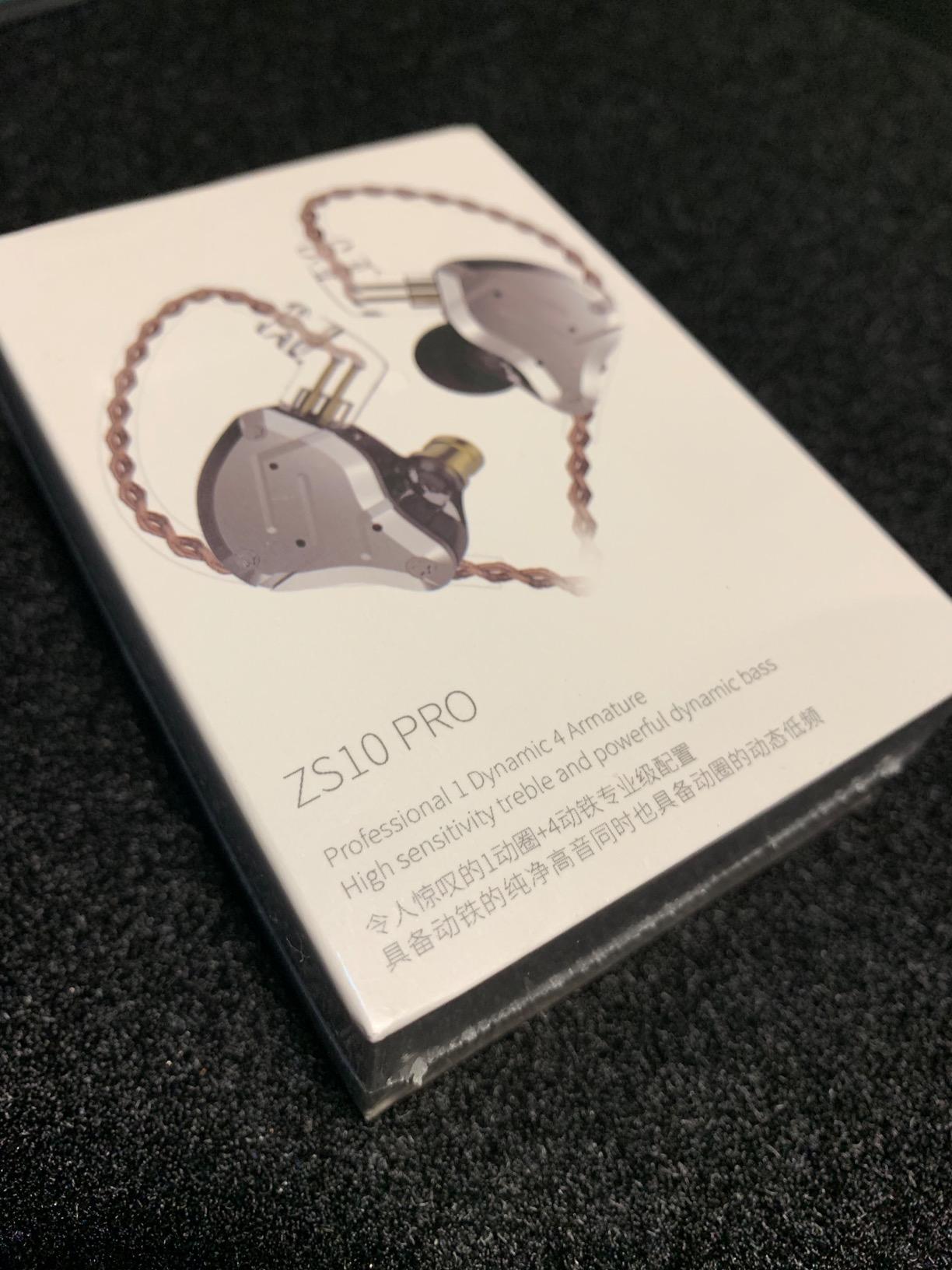
The lightweight metal faceplate with skin-friendly resin shell makes these comfortable for extended sessions. At 35 Ohms impedance and 109 dB sensitivity, they are efficient enough for most sources while still sounding clean. The over-ear ergonomic design routes the cable securely, though some users have noted the Y-connector positioning could be better.
One thing to be aware of: while the sound quality is exceptional for the price, there are some durability concerns in user reviews. A small percentage of users report units failing within a few months. KZ’s quality control seems inconsistent, so keep that in mind. The waterproof rating is a nice touch for sweaty performers.
Who should pick the KZ ZS12 PRO 2
Musicians who want the absolute best sound quality they can get under $50 and are willing to accept some risk on long-term durability. If you need a capable IEM for rehearsals, casual gigs, or as a backup pair, the ZS12 PRO 2 delivers sound that punches way above its price class. It is also great for musicians who game and want one pair that handles both.
Who should look elsewhere
If you need an IEM you can absolutely depend on for professional touring, the reported durability issues make this a risky primary choice. Treble-sensitive listeners may find the upper frequencies too bright, especially during long sessions. Musicians who want peace-of-mind reliability should look at the Shure SE215 or BASN Bsinger Pro instead.
Buying Guide: How to Choose the Right IEMs for Musicians
Choosing the best IEMs for musicians comes down to understanding your specific needs. Let me walk you through the key factors that actually matter when you are standing on stage or sitting in a studio.
Driver Types: What Is Inside Your IEMs
Dynamic drivers use a moving coil design similar to traditional speakers. They generally produce fuller bass and handle high volumes without distortion. The Shure SE215, Sennheiser IE 100 PRO, and Sennheiser IE 40 PRO all use single dynamic drivers that deliver reliable, punchy sound for stage monitoring.
Balanced armature drivers are smaller and more precise. They excel at reproducing specific frequency ranges with accuracy. Single balanced armature IEMs like the Audio-Technica ATH-E40 produce clean, detailed sound. Multi-driver balanced armature setups like the ATH-E70 and UE 350 assign different frequency ranges to dedicated drivers for better separation.
Hybrid configurations combine both types. The KZ ZS10 Pro, CCA C12, and BASN BmasterX use dynamic drivers for bass alongside balanced armatures for mids and highs. This gives you the best of both worlds: powerful low end with precise detail retrieval.
Sound Isolation: Why It Matters More Than Noise Cancellation
For musicians, passive sound isolation is more important than active noise cancellation. Passive isolation works by creating a physical seal in your ear canal, blocking external noise without adding latency or processing artifacts. The BASN Bsinger Pro leads this list with 38 dB of isolation, followed by the Shure SE215 at 37 dB.
Active noise cancellation, found in consumer earbuds, introduces digital processing that adds latency. Even a few milliseconds of delay can throw off your timing when monitoring a click track or playing with a band. That is why every IEM on this list uses passive isolation instead of active noise cancellation.
Fit and Comfort: The Dealbreaker
An IEM that does not fit properly will not isolate sound effectively, no matter how good the drivers are. The most common mistake I see is musicians using ear tips that are too small. A larger tip creates a better seal and improves both isolation and bass response. Most IEMs on this list include multiple tip sizes, and I recommend trying the largest size that fits comfortably.
Memory foam tips, like the Comply tips included with the Audio-Technica ATH-E70, conform to your ear canal shape and provide the best isolation. The downside is they wear out every few months with regular use. Silicone tips last longer but may not create as tight a seal.
Cable Quality and Connectors
Detachable cables are non-negotiable for gigging musicians. Cables are the most common failure point on any IEM, and being able to swap them out instead of replacing the entire unit saves significant money over time. MMCX connectors, used by Shure, BASN, and others, are the most widely available standard. Proprietary connectors from Sennheiser and Audio-Technica limit your replacement options.
Braided cables tend to be more durable and less prone to tangling than standard rubber-coated cables. The BASN BmasterX ships with a premium 4-core silver-plated OFC cable that is a step above what most competitors include.
Budget Tiers: What to Expect
Under $50, you can get surprisingly capable hybrid IEMs like the KZ ZS10 Pro, CCA C12, and KZ ZS12 PRO 2. These deliver multi-driver sound that was impossible at this price point just a few years ago. They are ideal for rehearsals, backup pairs, and musicians just starting with in-ear monitoring.
Between $50 and $150, you find the sweet spot for most working musicians. The Shure SE215, Sennheiser IE 100 PRO, BASN Bmaster, and BASN Bsinger Pro all sit in this range and offer professional-grade performance. This is where most musicians should be shopping for their primary IEM.
Above $150, you are paying for incremental improvements in detail, soundstage, and build quality. The UE 350 and Audio-Technica ATH-E70 deliver noticeable upgrades, but the law of diminishing returns applies strongly. Invest here only if you are a serious professional who gigs regularly.
Frequently Asked Questions
What are the best IEMs for musicians?
The best IEMs for musicians depend on your budget and use case. The Shure SE215 is the industry standard entry-level choice with 37dB of sound isolation. For budget-conscious musicians, the KZ ZS10 Pro delivers five-driver hybrid sound under $50. Professional musicians who want premium monitoring should consider the Audio-Technica ATH-E70 or UE 350 Universal, both featuring multiple balanced armature drivers for accurate sound reproduction across all frequencies.
How much should a musician spend on IEMs?
Most working musicians should plan to spend between $50 and $150 on quality IEMs. This range includes proven options like the Shure SE215, Sennheiser IE 100 PRO, and BASN Bmaster, all of which deliver professional-grade monitoring for live performance and studio use. Budget models under $50 like the KZ ZS10 Pro and BASN Bsinger Pro are excellent for rehearsals and backup pairs. Spending above $300 is only worthwhile for musicians who gig regularly and need the extra detail and build quality of premium multi-driver monitors.
What IEMs do professional musicians use?
Professional touring musicians commonly use Shure, Sennheiser, Ultimate Ears, and Audio-Technica IEMs. Many professionals start with the Shure SE215 as their first stage monitor before upgrading to custom-molded options. The Ultimate Ears UE 350 is popular among professional musicians who want triple-driver performance in a universal fit. High-end touring artists often invest in custom-molded monitors from brands like 64 Audio, Jerry Harvey Audio, and Ultimate Ears that cost $500 to $3,000.
Are expensive IEMs worth it for musicians?
Expensive IEMs are worth it for musicians who perform regularly and need maximum detail, durability, and comfort. The jump from a $50 hybrid to a $150 single-driver monitor like the Shure SE215 gives you better isolation, more durable construction, and wider cable replacement options. The jump from $150 to $400 for monitors like the UE 350 or Audio-Technica ATH-E70 provides better detail retrieval, wider soundstage, and more accurate frequency response. However, the improvement from $400 to $1,000+ is much smaller and only matters for full-time professionals.
What is the difference between audiophile IEMs and musician IEMs?
Audiophile IEMs prioritize sound quality for enjoyment, often with enhanced bass or treble tuning that makes music sound impressive. Musician IEMs prioritize accuracy, sound isolation, and durability for professional monitoring. Musician IEMs typically feature flat or neutral frequency response so you can hear your mix accurately, higher noise isolation to block stage volume, detachable cables for easy replacement, and over-ear cable routing that stays secure during movement. The Shure SE215 and Sennheiser IE 40 PRO are examples of IEMs designed specifically for stage and studio monitoring rather than casual listening.
Final Thoughts on the Best IEMs for Musicians in 2026
Finding the right IEMs for musicians comes down to matching your budget with your performance needs. The Shure SE215 remains the gold standard for musicians getting started with in-ear monitoring, offering unmatched reliability and sound isolation. For those watching their budget, the KZ ZS10 Pro and BASN Bsinger Pro deliver professional features at prices that make them easy to recommend.
If you are ready to invest in premium monitoring, the Audio-Technica ATH-E70 and UE 350 provide the kind of detail and accuracy that will genuinely improve your performances. The BASN BmasterX splits the difference with its six-driver hybrid system that offers a significant step up from budget options without the premium price tag.
Whatever you choose, remember that proper fit determines whether your IEMs actually work for you. Take the time to experiment with different tip sizes and materials, and do not settle until you achieve a seal that blocks outside noise effectively. Your ears will thank you for years to come.