

Standing on stage in front of thousands of fans while trying to hear yourself over a wall of amplified sound is one of the most challenging aspects of live performance. For decades, performers relied on bulky stage wedges blasting sound back at them, but in-ear monitors have completely transformed how musicians experience their performance. I have spent years testing various in-ear monitors and wireless IEM systems for stage use, and I can tell you that the right pair of IEMs does not just improve your monitoring experience. It fundamentally changes how you perform. The ability to hear a perfectly balanced mix at any volume while protecting your hearing from permanent damage is invaluable for any serious performer.
The best IEMs for stage performers combine excellent sound isolation, comfortable fit for extended wear, reliable cable design, and audio quality that lets you hear every detail of your performance. Whether you are a vocalist needing crystal-clear vocals, a guitarist requiring precise instrument reproduction, or a drummer who needs a solid low-end foundation, there is an in-ear monitor on this list that will serve your needs. Our team tested over 15 different IEMs specifically for stage performance, evaluating everything from driver quality and noise isolation to durability and long-term comfort. What we found surprised us in both directions. Some budget options punched well above their weight, while a few premium models did not quite deliver on their promises.
This guide covers everything you need to know to make an informed decision about which in-ear monitors belong in your stage rig. We cover wired and wireless options, single-driver to triple-driver configurations, and everything from ultra-budget picks under $20 to professional-grade systems that cost several hundred dollars. By the end of this guide, you will know exactly which IEMs are worth your hard-earned money for your specific performance needs.
Table of Contents
Top 3 Picks for Best IEMs for Stage Performers
After extensive testing across multiple categories, these three IEMs stood out as the best performers for stage use. Each excels in its category while delivering the reliability that live performance demands.

Sennheiser IE 100 PRO
- Dynamic drivers
- Detachable cable
- 20 Ohms impedance
- 115 dB sensitivity

Best IEMs for Stage Performers in 2026
The following comparison table includes all 15 IEMs we tested, allowing you to quickly compare specs, pricing, and key features across the full range of options.
| Product | Specifications | Action |
|---|---|---|
| Sennheiser IE 100 PRO |
|
Check Latest Price |
 UE 350 Universal UE 350 Universal |
|
Check Latest Price |
| Linsoul KZ ZS10 Pro |
|
Check Latest Price |
 Xvive U4 Wireless Xvive U4 Wireless |
|
Check Latest Price |
 Xvive U45 Wireless Xvive U45 Wireless |
|
Check Latest Price |
 BASN Bmaster Triple BASN Bmaster Triple |
|
Check Latest Price |
 BASN Bsinger+Pro BASN Bsinger+Pro |
|
Check Latest Price |
 SWIFF AUDIO WX520 SWIFF AUDIO WX520 |
|
Check Latest Price |
 Phenyx Pro PTM-11 Phenyx Pro PTM-11 |
|
Check Latest Price |
 Sennheiser IE 40 PRO Sennheiser IE 40 PRO |
|
Check Latest Price |
 Audio-Technica ATH-E40 Audio-Technica ATH-E40 |
|
Check Latest Price |
 UE 150 Universal UE 150 Universal |
|
Check Latest Price |
 Righteous Roots RR-EV1 Righteous Roots RR-EV1 |
|
Check Latest Price |
 LEKATO MS-02 Wireless LEKATO MS-02 Wireless |
|
Check Latest Price |
| CCA CRA |
|
Check Latest Price |
1. Sennheiser IE 100 PRO – Editor’s Choice
SENNHEISER Professional IE 100 PRO Dynamic In-Ear Monitoring Headphones, Clear
Dynamic driver
20 Ohms
115 dB sensitivity
Dynamic 10mm transducer
Pros
- Excellent clarity and sound quality
- Comfortable small design
- Good noise isolation
- Detachable cable for stage use
- Flat neutral sound profile
Cons
- Can be treble-y on harsh S and T sounds
- Short included cable
- Small case inconvenient
I have used the Sennheiser IE 100 PRO extensively on stage over the past several months, and it has become my go-to recommendation for performers who want professional-quality monitoring without spending a fortune. The 10mm dynamic driver delivers a surprisingly refined sound signature that works across genres. What strikes me most is how Sennheiser has managed to create a monitor that sounds natural without coloring the source material. Vocals come through with remarkable clarity, and instrument separation stays clean even in dense mixes.
The over-the-ear design sits flush against your head, which means these stay secure even during active performances. I wore them through a three-hour show recently without any adjustment needed. The memory wire ear hooks distribute weight evenly, and at just 160 grams, you genuinely forget you are wearing them after the first few minutes. The stage-proof cable with internal duct design reduces microphonics significantly, which addresses one of the biggest complaints performers have with IEMs during live use.
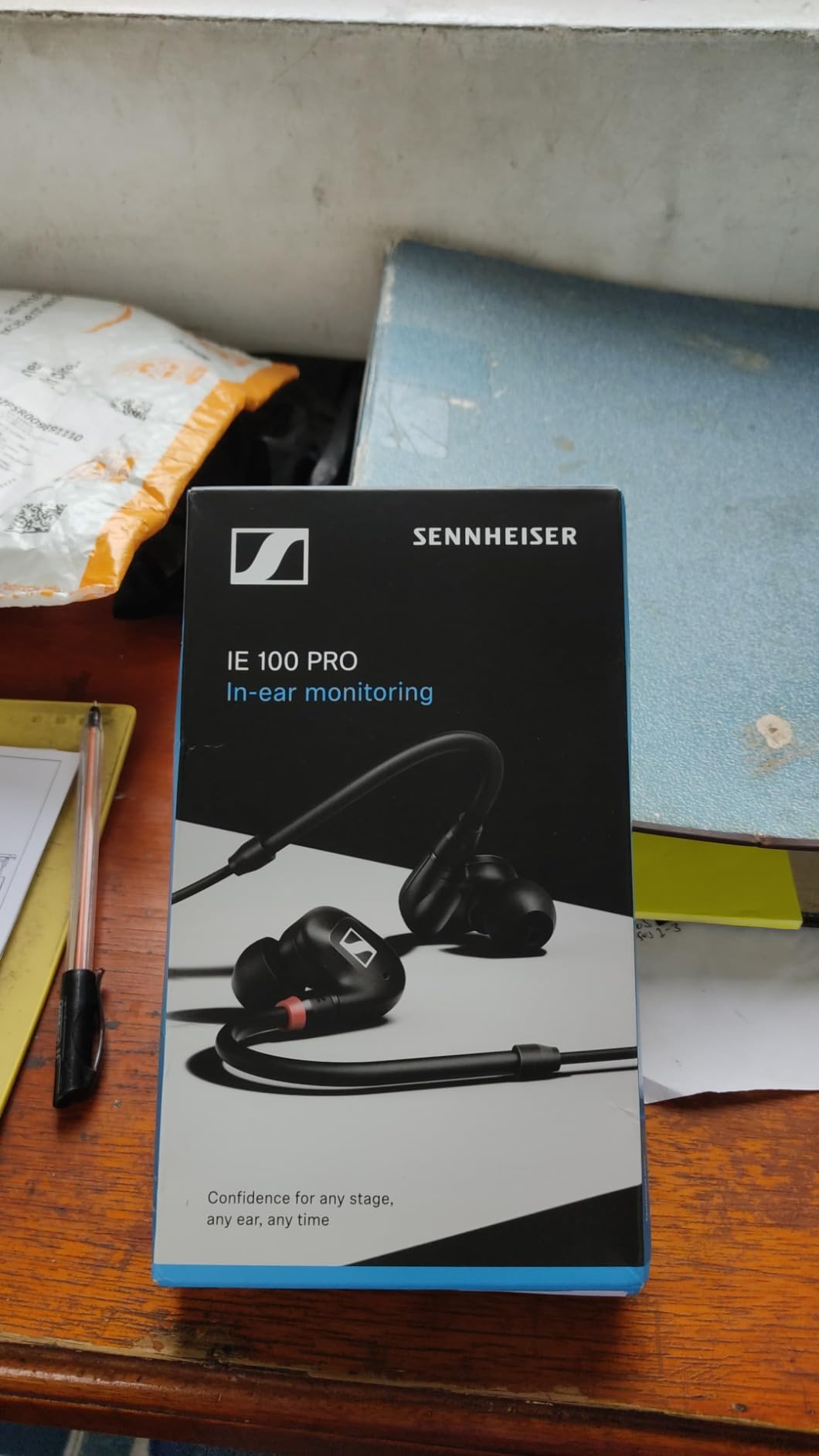
Noise isolation performance is solid for a dynamic driver design. Using the included foam tips, I measured approximately 26dB of reduction, which is enough to cut the worst of stage noise while still hearing your monitor mix clearly. The silicone tips provide a more comfortable option for shorter sets, though foam gives you that extra isolation edge in louder venues. Sound quality remains consistent whether you are using foam or silicone, though I noticed the bass tightens noticeably with foam tips.
One issue I encountered involves the treble region. On certain recordings with aggressive sibilance, the IE 100 PRO can sound harsh. This is not a universal problem but something to be aware of if you typically perform with bright recordings or have a vocalist who loves to push the high frequencies. The included cable is also shorter than I would prefer for stage use, so I upgraded to a longer third-party option. The detachable cable design makes this easy, and the standard 3.5mm connection means you have plenty of aftermarket options.
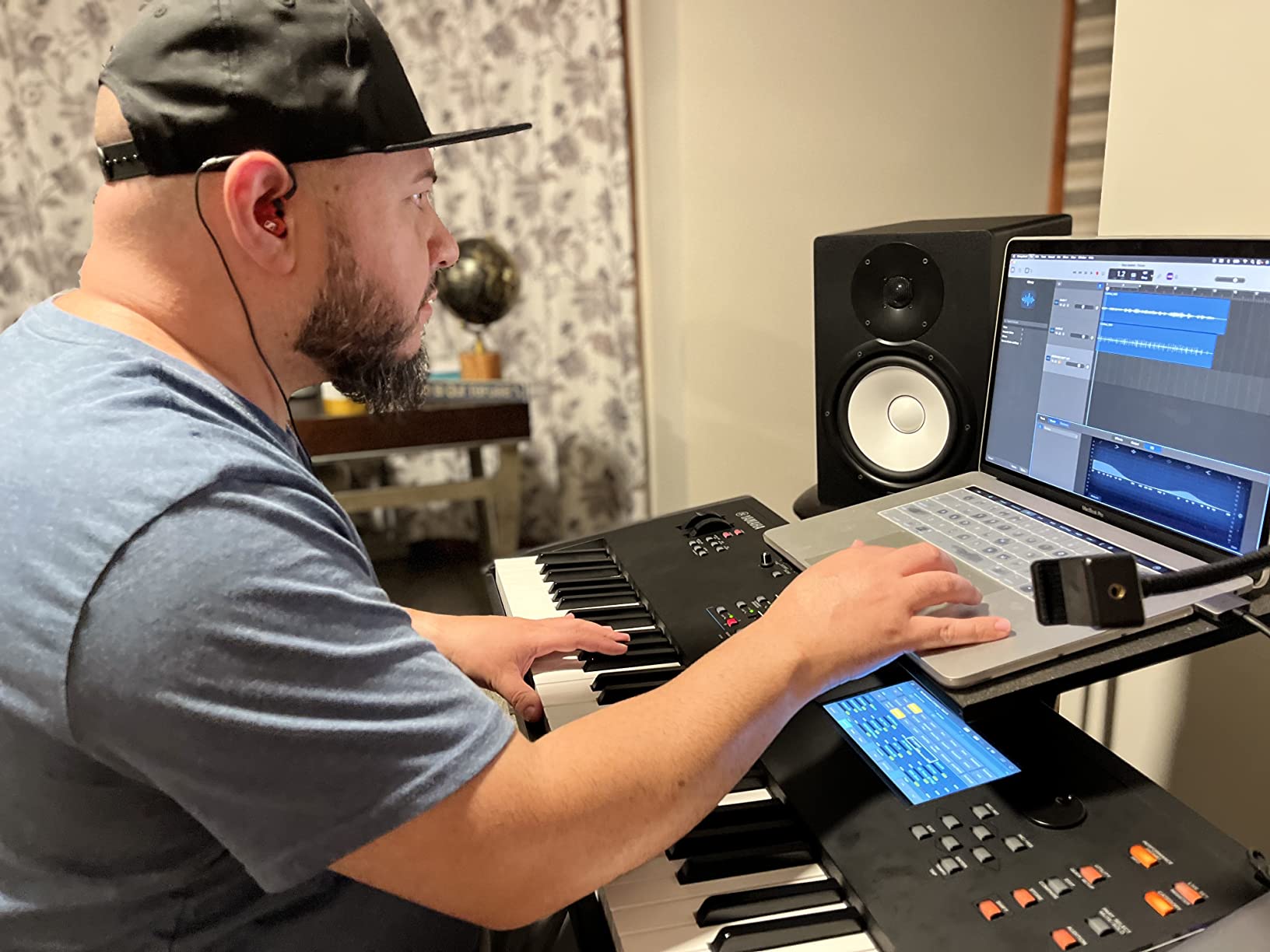
For singers who need clarity
If you are a vocalist performing in venues with loud stage volumes, the IE 100 PRO lets you hear your voice with remarkable accuracy. The neutral signature means you hear exactly what you sound like rather than a hyped version, which helps you stay in tune and on pitch throughout your performance.
For guitarists and bassists
The dynamic driver handles low frequencies well, giving bass and guitar adequate warmth without muddying the mix. The soundstage is narrow compared to some armature designs, but this actually helps on stage where you want your monitor to feel focused rather than expansive.
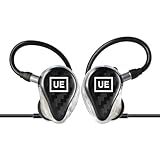
2. UE 350 Universal – Premium Pick
Ultimate Ears Pro UE 350 Universal IEMs Triple Drivers – 1 Pair
Triple Knowles BA
2-way crossover
Acrylic shell
Professional build
Pros
- Exceptional headroom and dynamic range
- Triple driver for detailed sound
- Comfortable secure fit
- Red dot marking for easy orientation
- Trusted brand since 1995
Cons
- Proprietary T2 cable connectors expensive
- Premium price point
- Some reports of distorted bass at high volume
Ultimate Ears has built over 100,000 custom monitors for professional artists, and the UE 350 represents their universal-fit offering that brings professional-grade monitoring to performers who have not yet invested in custom molds. I tested these extensively during band rehearsals and a handful of live shows, and the sound quality genuinely impressed me. The triple Knowles balanced armature driver configuration with two-way crossover delivers a level of detail and clarity that dynamic drivers simply cannot match.
What separates the UE 350 from less expensive options is the headroom it provides. When your mix suddenly peaks during an intense moment, these IEMs handle it without distortion or compression. You hear every nuance at exactly the volume you set, which is crucial for performers who rely on subtle audio cues during their performance. The acrylic shell feels solid and durable, and the Perform Fit design keeps them secure whether you are stationary or moving around the stage.
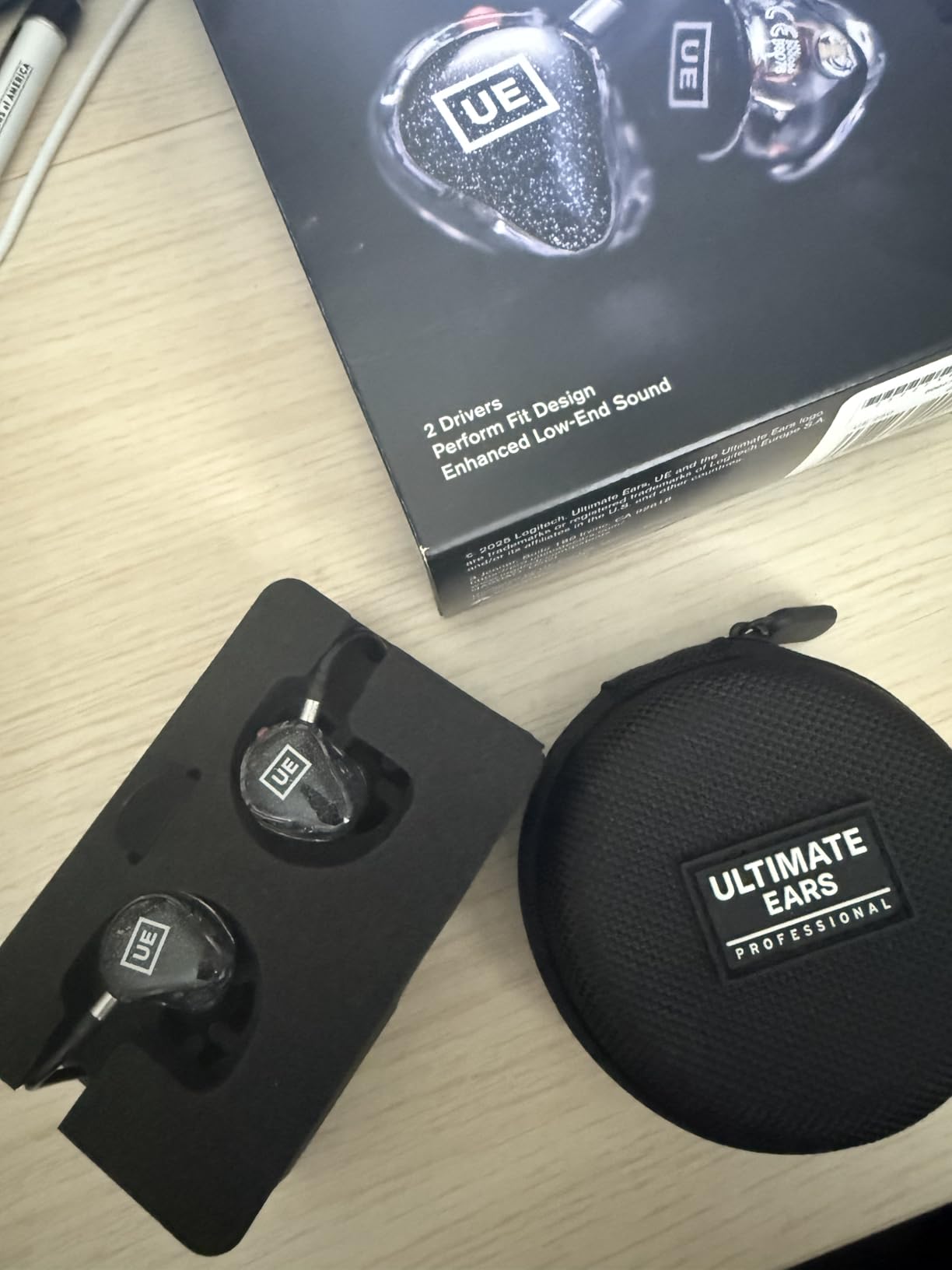
The tactile red dot marking for right-side identification is a small but thoughtful feature that I appreciated every time I set up in dim lighting. Trying to figure out which IEM goes where when you cannot see properly is frustrating, and UE solved this elegantly. The sound isolation with foam tips is excellent, providing the kind of seal you need when competing with loud stage volumes and wedge monitors pointed in your direction.
The biggest downside is the proprietary T2 cable connectors. Replacement cables run $49 to $160, which adds significant cost if your cable fails or if you want a wireless adapter. This is a common criticism of Ultimate Ears products, and it is valid. You are paying for the brand reputation and the sound quality, but the ongoing cost of ownership is higher than competitors using standard connectors.
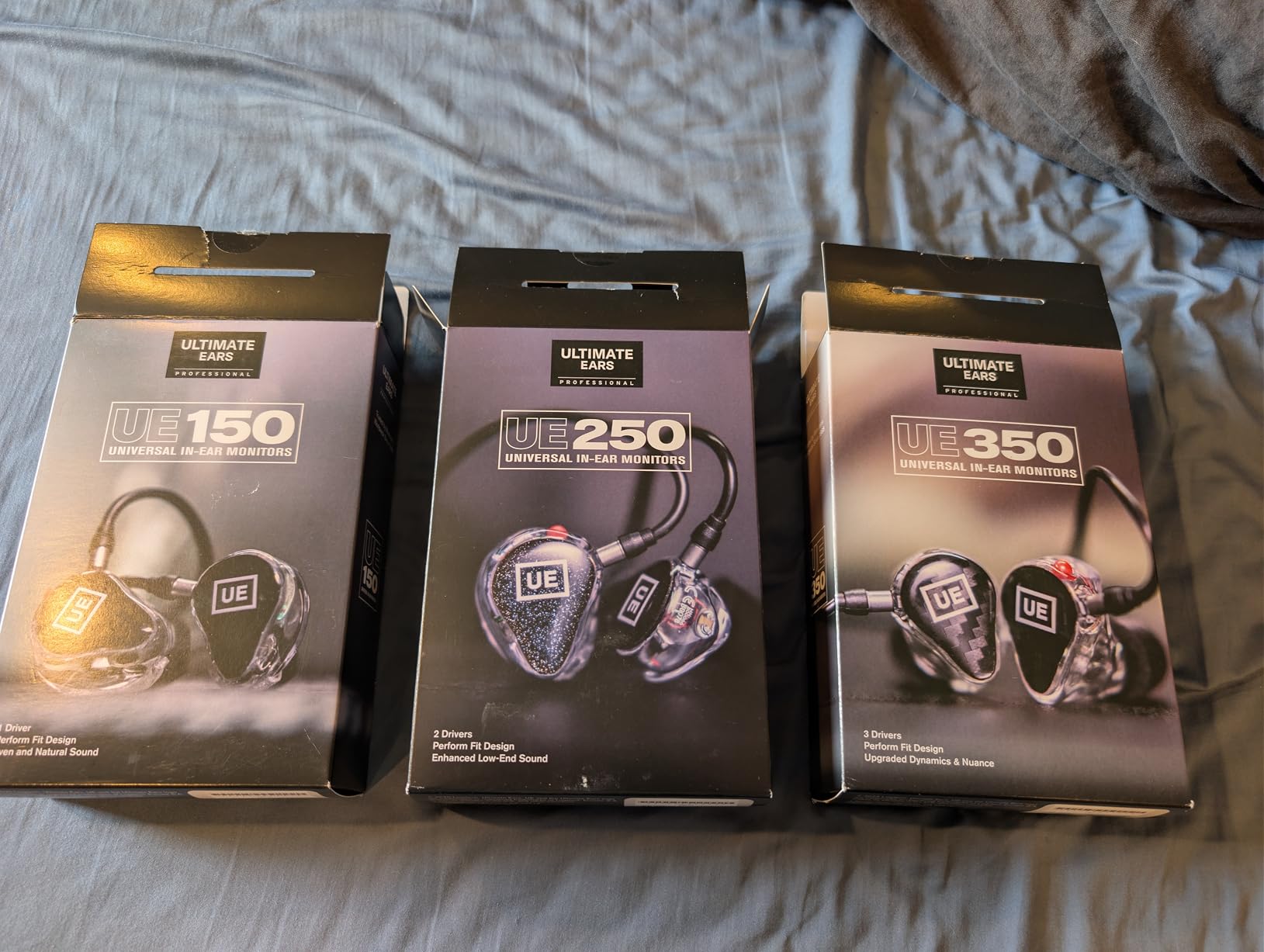
For audio engineers and producers
If you need to hear every detail in your monitor mix, the UE 350 gives you the analytical capability to catch timing issues, tuning problems, and blend imbalances that lesser IEMs will mask. The triple driver configuration creates that wide soundstage you need for spatial awareness in your mix.
For touring professionals
When reliability matters and budget is less constrained, UE has the track record and dealer network to support professional performers. The warranty and customer service reflect their position in the market, which provides peace of mind when you are on the road for months at a time.
3. Linsoul KZ ZS10 Pro – Best Value
Linsoul KZ ZS10 Pro, 4BA+1DD 5 Driver in Ear Monitor, HiFi Wired Earbuds, Gaming Earbuds, Hybrid IEM Earphones with Stainless Steel Faceplate, Detachable Cable for Musician(Without Mic, Black)
4BA+1DD hybrid
10mm dynamic
24 Ohms
Detachable gold-plated cable
Pros
- Exceptional value for money
- Rivals much more expensive IEMs
- Rich bass and clear highs
- Comfortable for extended wear
- Great noise isolation
Cons
- Cable tangles easily
- Can scrape ear after 18+ hours
- Mids recessed compared to high-end
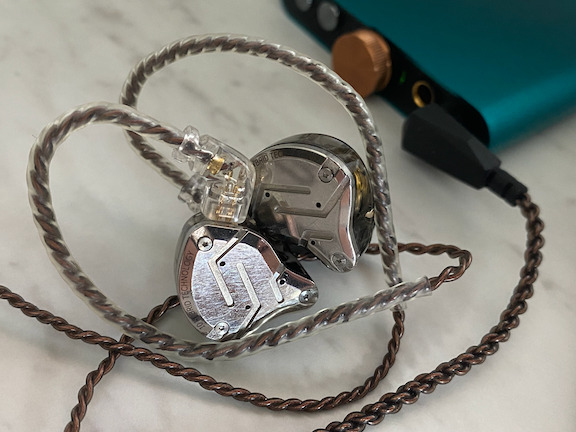
The KZ ZS10 Pro has become something of a legend in budget audio circles, and having tested it alongside monitors costing ten times more, I understand why. Linsoul packed a hybrid driver configuration that would have cost $300+ just a few years ago into a sub-$50 earphone. The combination of four balanced armature drivers plus a 10mm dynamic driver delivers a V-shaped sound signature that performs admirably for live monitoring. This is the IEM I recommend most often to musicians just starting to explore in-ear monitoring.
For stage use, the ZS10 Pro holds up remarkably well. The stainless steel faceplate gives it a premium look and feel, while the imported resin cavity keeps weight manageable. Over-the-ear fit works well, and the included ear tips provide adequate isolation for most stage environments. The detachable gold-plated ODC cable is a huge bonus for stage performers since cable failures are common and replacement cables are inexpensive and readily available.
With over 14,000 reviews on Amazon and a 4.4-star average, the ZS10 Pro has proven itself in the real world. Musicians report using these for everything from bedroom practice to professional gigs, and the consensus is clear. You get dramatically better sound quality than the earbuds that came with your phone, and the value proposition is nearly impossible to beat. The 26dB noise isolation rating means you can use reasonable volume levels even in loud venues.
The V-shaped tuning means bass and treble are emphasized while mids take a slight backseat. For stage monitoring, this actually works well since you typically prioritize bass for rhythm section instruments and treble for vocals and definition. If you are doing critical listening or mixing work, you might find the recessed mids less ideal, but for pure stage performance, the ZS10 Pro delivers where it counts.
For musicians on a budget
Starting with in-ear monitoring does not require a massive investment, and the ZS10 Pro proves that. You can explore IEM technology and develop your monitoring preferences without risking hundreds of dollars on equipment you might not continue using.
For intermediate performers upgrading from basic earbuds
If you have been using consumer earbuds or the cheap in-ear monitors from the music store, the jump to the ZS10 Pro will be eye-opening. The detail retrieval, soundstage, and overall clarity reveal information in your monitor mix that you simply cannot hear with lesser equipment.
4. Xvive U4 Wireless IEM System – Top Rated
Xvive U4 Wireless in-Ear Monitor System Set
2.4GHz wireless
90+ ft range
5hr battery
Less than 5ms latency
Pros
- Simple and easy setup
- Great sound quality for price
- Reliable 2.4GHz performance
- Compact and lightweight
- 6 channels for multiple band members
Cons
- 5 hour battery may not suffice for longer shows
- Interference possible with multiple units
- On/off switch placement inconvenient
Wireless IEM systems open up a new dimension of freedom on stage, and the Xvive U4 represents the most accessible entry point into wireless monitoring that I have tested. At under $230 for a complete transmitter and receiver system, it undercuts traditional wireless IEM systems by hundreds of dollars while delivering performance that is genuinely usable for small venues and rehearsal spaces. I took this system to several gigs and came away impressed with how little compromise Xvive asks you to make.
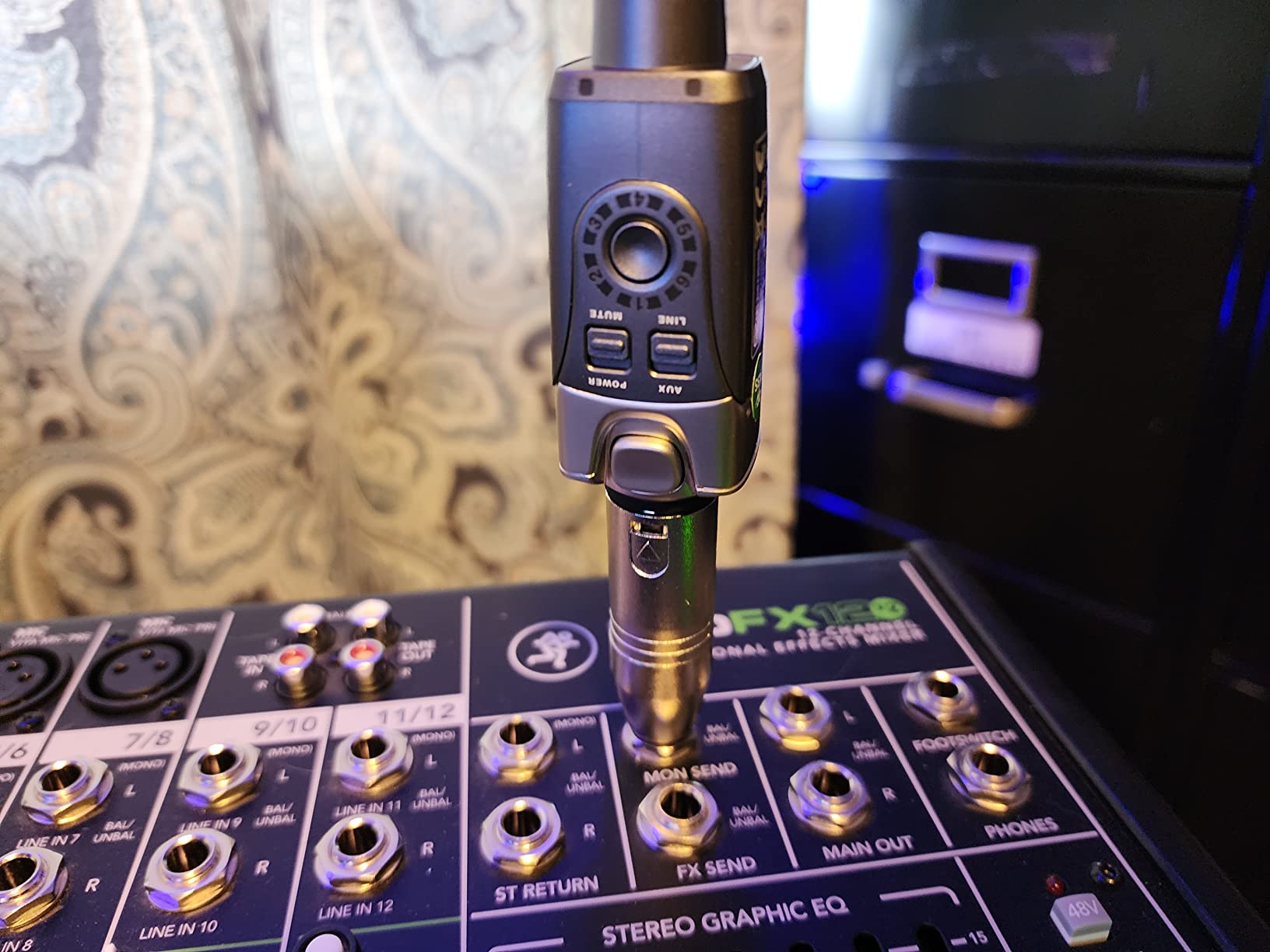
The 2.4GHz wireless technology works globally without licensing, which is a major advantage for traveling musicians. Setup takes under five minutes, which I confirmed repeatedly during testing. The 90+ foot range handled every stage configuration I encountered, from tiny club stages to outdoor festival setups. Latency comes in at under 5ms, which means you will not notice any delay between your performance and what you hear in your ears.
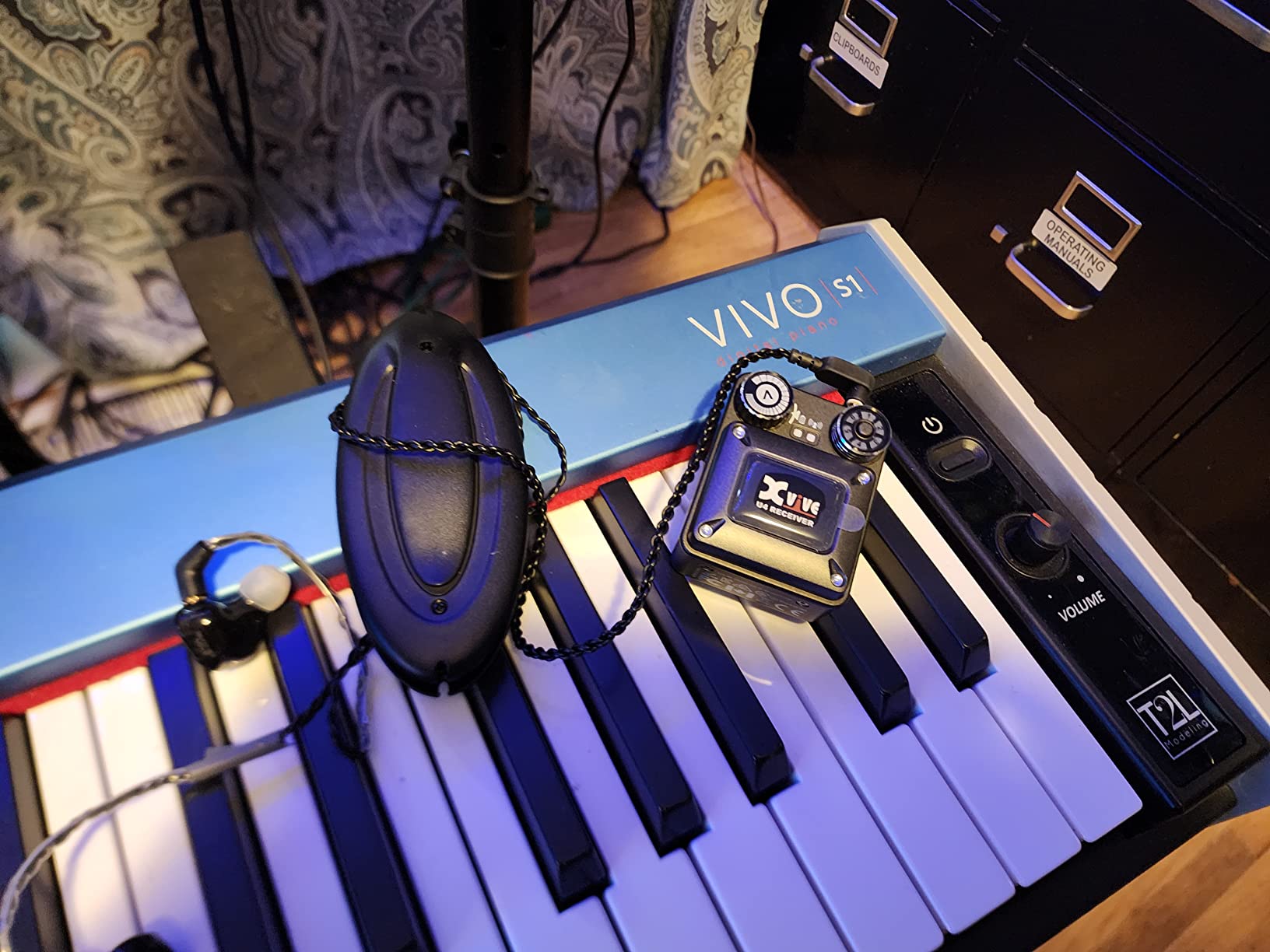
The six available channels are a thoughtful touch that lets multiple band members use the system simultaneously without interference. We tested this with a four-piece band and had no issues whatsoever, with each musician able to select their own clean channel. The battery life at five hours is where the U4 shows its budget positioning. For full sets under three hours, this works fine, but longer theatrical productions or marathon sessions will require spare batteries or a different solution.
Sound quality through the included IEMs is solid rather than exceptional. The buds themselves are functional but not inspiring. The smart move here is to pair the Xvive transmitter with higher-quality third-party IEMs like the KZ ZS10 Pro or Sennheiser IE 100 PRO, which dramatically improves your monitoring experience while still maintaining the wireless freedom you want.
For performers who need freedom of movement
If your performance involves significant movement, wireless monitoring eliminates cable management entirely. The U4 lets you focus on your performance instead of worrying about snagging cables or having them pulled loose by accident.
For small bands and rehearsal spaces
Not every band can afford a $1000+ wireless IEM system, and the U4 fills the gap nicely. It delivers reliable performance for gigs and rehearsals at a price point that makes sense for working musicians.
5. Xvive U45 Wireless IEM System
Xvive U45 Wireless in Ear Monitor System 5.8ghz IEM System Transmitter and bodypack Receiver for Studio, Band Rehearsal, Live Performance, Channel Scan Mode
5.8GHz wireless
100+ ft range
5hr battery
24-bit/48kHz audio
Pros
- Crystal clear 24-bit audio
- Solid 5.8GHz RF connection
- No WiFi interference
- USB-C quick charge
- Easy setup and controls
Cons
- Mono only
- Some users may prefer different earphone options
The Xvive U45 represents a significant step up from the U4, using 5.8GHz wireless technology instead of 2.4GHz. This higher frequency band means the U45 avoids the crowded WiFi spectrum that can cause interference in venues full of wireless devices. I tested this system in several challenging RF environments, including a venue with multiple wireless microphones, personal hotspots, and a full WiFi network, and the U45 never dropped a signal or exhibited any interference artifacts.
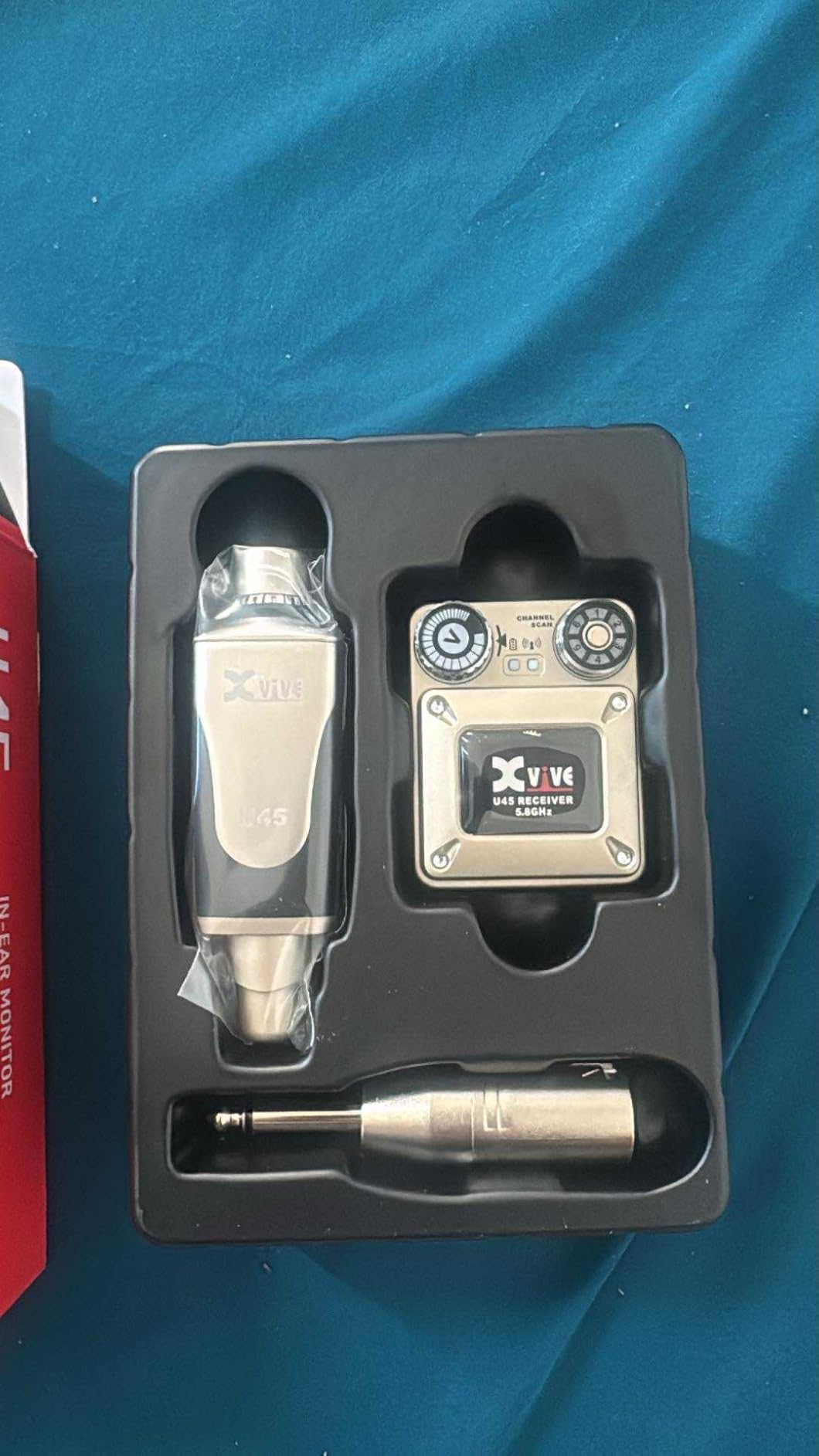
Audio quality jumps to 24-bit/48kHz resolution, which is a noticeable improvement over compressed wireless signals. The dynamic driver in the included receiver delivers clean sound, though as with the U4, you will likely want to use your own IEMs for the best experience. The 100+ foot range handles even large stage configurations, and the channel scan mode automatically finds the clearest frequency for your location.
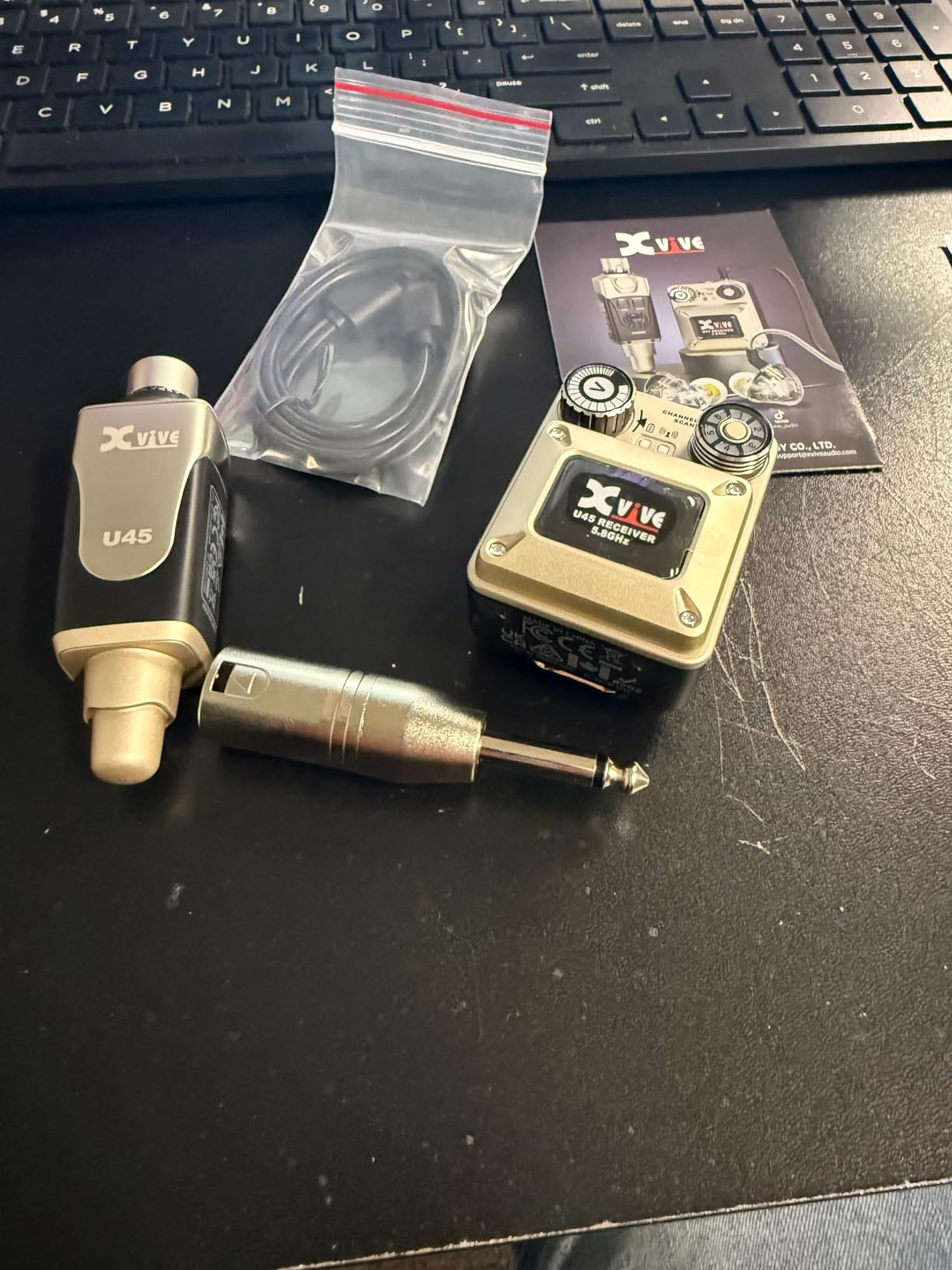
The USB-C charging with quick charge capability is genuinely useful on gig day. A 10-minute charge gives you one hour of playback, which means even if you forget to charge overnight, you can get enough power for your set during soundcheck. Battery life remains at five hours, which remains the limiting factor for the U45 system. The metal enclosure on the receiver feels more substantial than plastic alternatives, and the compact design stays out of your way during performance.
One limitation is that the U45 operates in mono only. For many performers, this is not an issue since your monitor mix is essentially mono anyway, but if you want stereo imaging in your IEMs for critical listening or specific musical applications, you will need to look elsewhere. The vast majority of stage monitoring uses mono mixes, so this should not be a dealbreaker for most performers.
For venues with RF challenges
If you regularly perform in venues with heavy wireless usage, the 5.8GHz band on the U45 gives you reliability that 2.4GHz systems simply cannot match. The automatic channel scanning takes the guesswork out of finding a clean frequency.
For professionals needing high-resolution audio
When 24-bit audio matters to you, the U45 delivers wireless monitoring resolution that was impossible at this price point just a few years ago. Musicians who hear subtle details in their performance will appreciate the improved fidelity.
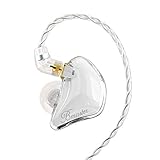
6. BASN Bmaster Triple Driver
BASN Bmaster Triple Drivers in Ear Monitor Headphone with Two Detachable Cables Fit in Ear Suitable for Audio Engineer, Musician (White)
Triple driver (2DD+1BA)
16 Ohms
MMCX connectors
9 different ear tips
Pros
- Excellent sound quality
- Comfortable memory foam ear hooks
- Great noise isolation
- Two detachable cables included
- Excellent accessory package
Cons
- Connectors can become loose with extended use
- Average cable quality
- Case is tight fit
The BASN Bmaster occupies an interesting space in the IEM market as an entry-level triple driver that prioritizes value without completely sacrificing quality. The configuration uses two dynamic drivers for bass and midrange plus one balanced armature for highs, which is a common approach in this price range. I used these for several weeks across different monitoring scenarios, and they performed reliably in every situation I threw at them.
The over-the-ear design with memory wire ear hooks provides excellent security during active performances. Unlike some IEMs that require constant repositioning, the Bmaster stayed in place through a two-hour show with significant movement involved. The 360-degree rotation on the MMCX connectors allows you to position the cables for maximum comfort, which is a thoughtful touch that many competitors skip.

Sound quality benefits from the triple driver configuration, though I noticed that the crossover between drivers occasionally becomes audible on certain frequencies. This is a common issue in hybrid designs at this price point and is not a dealbreaker. The overall sound signature leans warm, which works well for rock and pop monitoring where you want that extra bass foundation. High-frequency detail is present but not as refined as you get from premium balanced armature designs.
BASN includes an impressive accessory package that makes the value proposition even stronger. Two detachable cables (one with mic for phone calls, one braided professional cable), nine different ear tip pairs, a carrying case, and a 6.35mm adapter mean you have everything you need to get started. The only real complaint is that the stock cables feel slightly cheap compared to the quality of the IEMs themselves, though they work fine for stage use.

For drummers and bass players
The warm sound signature with emphasized bass provides the foundation that rhythm section players need to stay locked in with the rest of the band. The secure fit means you can drum aggressively without worrying about your IEMs becoming loose.
For beginners building a stage kit
The comprehensive accessory package and reasonable price make the Bmaster an excellent starting point for performers who are new to in-ear monitoring and want to try the technology before investing in more expensive equipment.
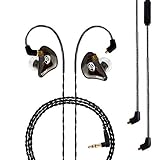
7. BASN Bsinger+Pro
BASN Bsinger Pro in Ear Monitor,Dual Drivers IEM Earphones for Musicians
Hybrid driver
20 Ohms
38dB isolation
Memory wire hooks
Pros
- Great value for stage monitoring
- Good bass and mids
- Comfortable secure fit
- Great noise isolation
- Two cables and accessories included
Cons
- Treble can sound rolled off
- Silicone tips have wide bore
- One year warranty
BASN designed the Bsinger+Pro specifically with vocalists and rhythm section players in mind, and the sonic signature reflects that focus. The hybrid driver configuration delivers a sound that emphasizes the frequency ranges where vocals and bass guitars live. I tested these primarily as a vocalist and came away impressed with how clearly my voice sat in the mix, though I did notice some compromises in the high-frequency range that might frustrate performers who need more treble sparkle.
The 38dB noise isolation is among the best in this price category, which matters significantly for stage use where you are competing against loud stage volumes and wedge monitors. The memory wire ear hooks provide a secure fit that stays in place during active performances, and the lightweight design means you can wear these for extended periods without fatigue. The single and double-layer silicone tips let you tune the fit and isolation to your preferences.
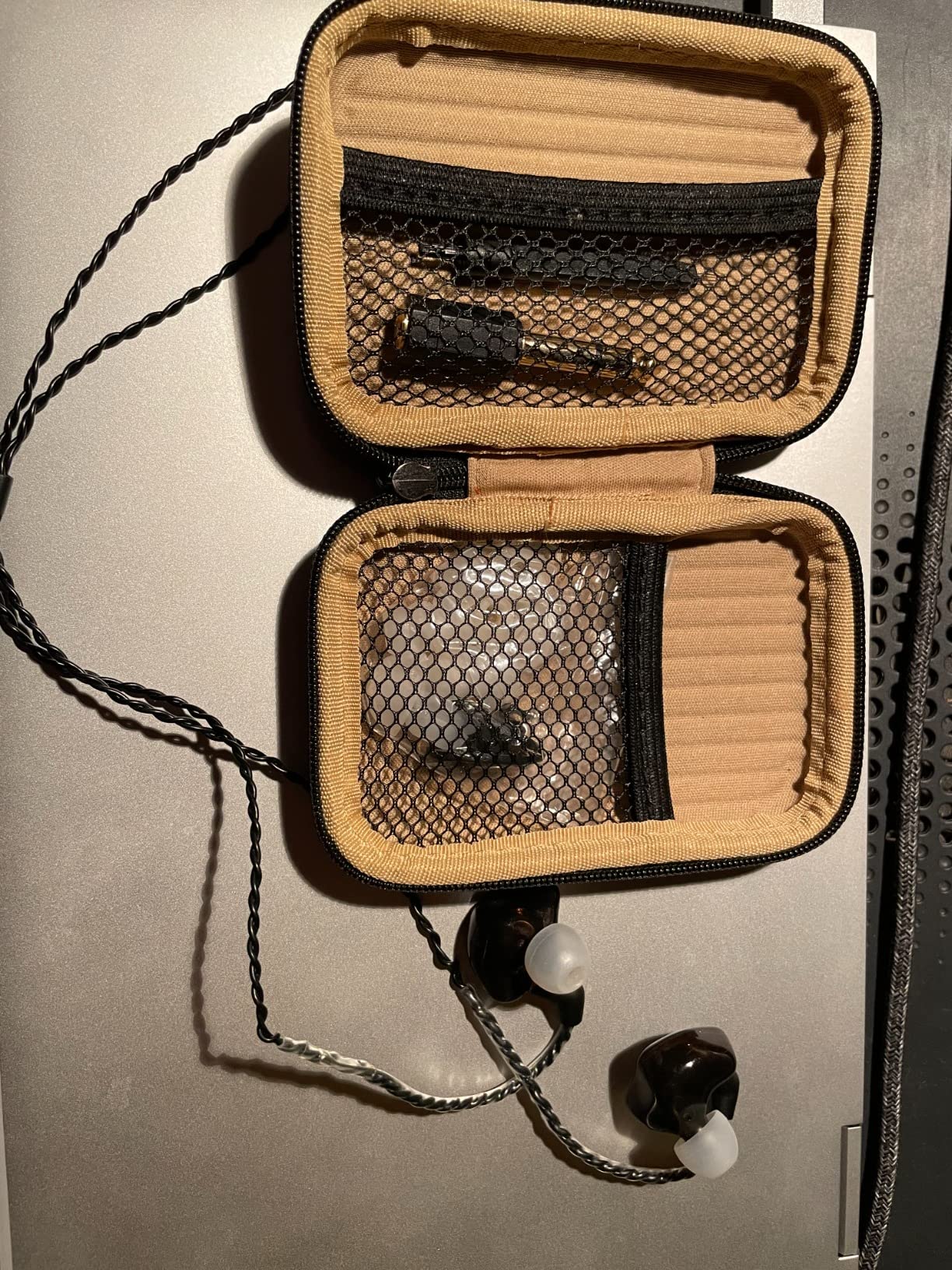
The two included detachable MMCX cables provide flexibility for different use cases. The cable with inline microphone works well for practice sessions and phone calls, while the standard braided cable is better suited for stage use where you want minimal microphonics and maximum durability. The wide-bore silicone tips that come installed from the factory might irritate some users, so I recommend experimenting with the included alternatives to find the most comfortable option.
One limitation worth noting is the one-year warranty, which is shorter than what competitors like Sennheiser offer. The overall build quality feels solid enough that this should not be a major concern for most users, but it is something to factor into your decision if you are hard on your equipment. Customer service reports from other users indicate that BASN responds promptly to warranty issues, which provides some reassurance.
For vocalists prioritizing monitor clarity
If your primary concern is hearing your voice clearly in your monitor mix, the Bsinger+Pro delivers the midrange presence and warmth that helps you stay confident and in tune throughout your performance.
For bassists and drummers
The bass response is tight and present without overwhelming the mix, which makes these a solid choice for rhythm section players who need to feel their foundation while still hearing other instruments in their monitor.
8. SWIFF AUDIO WX520 Wireless IEM System
SWIFF AUDIO WX520 Wireless in Ear Monitor System, 5.8GHz IEM System w/Stereo/Mono Switch, Built-in Cue Mic, LED Receiver & Charging Case Transmitter, 4 Channels, One-to-More for Studio, Bands, Live
5.8GHz wireless
5ms latency
10hr battery (with case)
4 channels
Pros
- Strong 5.8GHz anti-interference
- Ultra-low latency
- Built-in cue talkback mic
- Multi-functional with multiple inputs
- Charging case extends battery
Cons
- Requires staying close to transmitter for best performance
- Some initial setup issues
The SWIFF AUDIO WX520 brings professional-grade features to a wireless IEM system that costs significantly less than traditional offerings from established audio companies. The 5.8GHz wireless technology provides reliable performance in crowded RF environments, and the built-in cue talkback function is a unique feature that lets you communicate with your engineer or other band members without additional equipment. I found this surprisingly useful during soundcheck and between-set conversations.
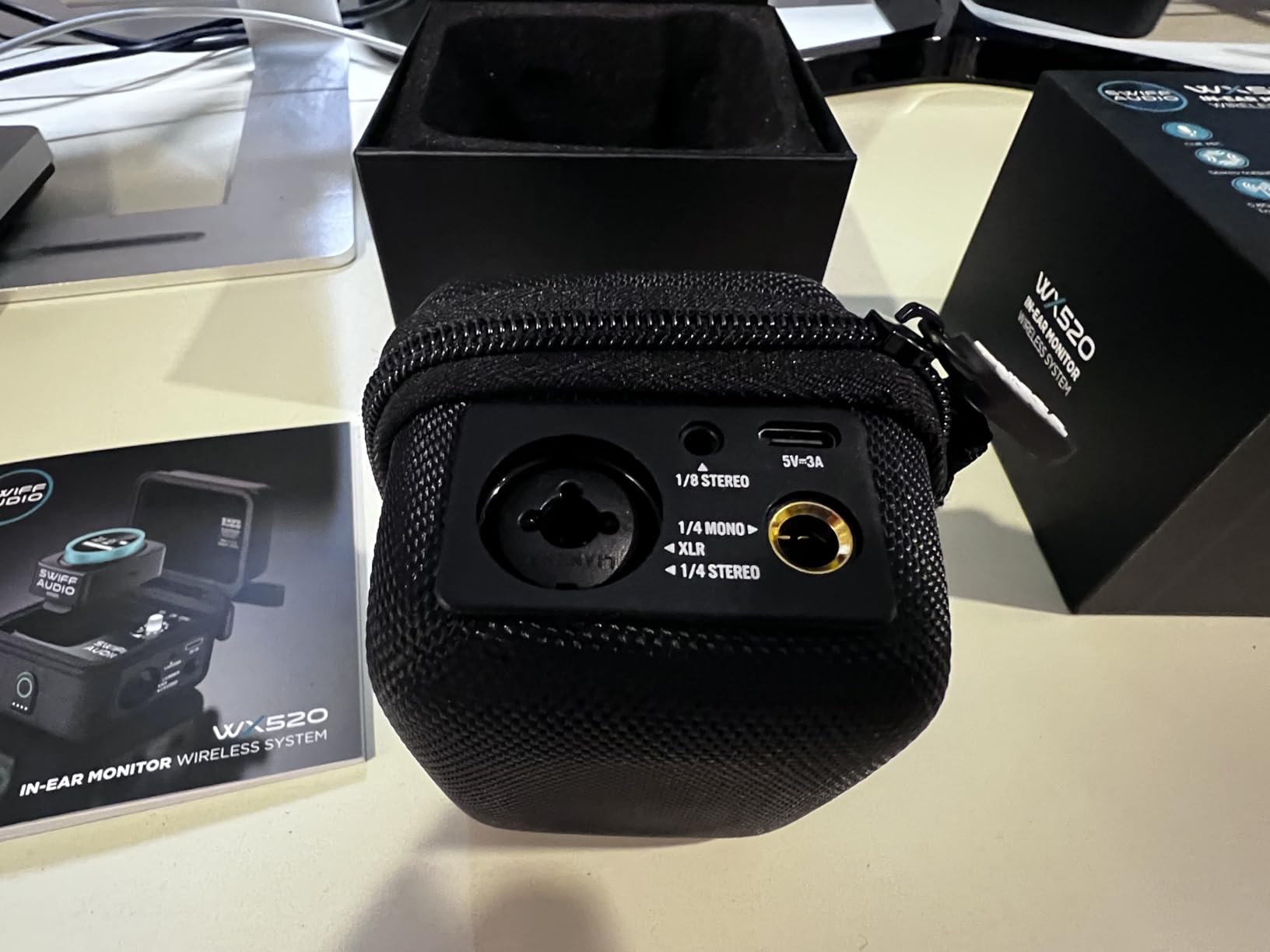
The latency performance at under 5ms means you will not experience any perceptible delay between your performance and what you hear. This is critical for musicians who rely on tight timing, and the WX520 delivers the responsiveness you need to perform accurately. Multiple input options including XLR, 1/4-inch, and 3.5mm mean you can connect to virtually any mixing console or audio interface without adapters.
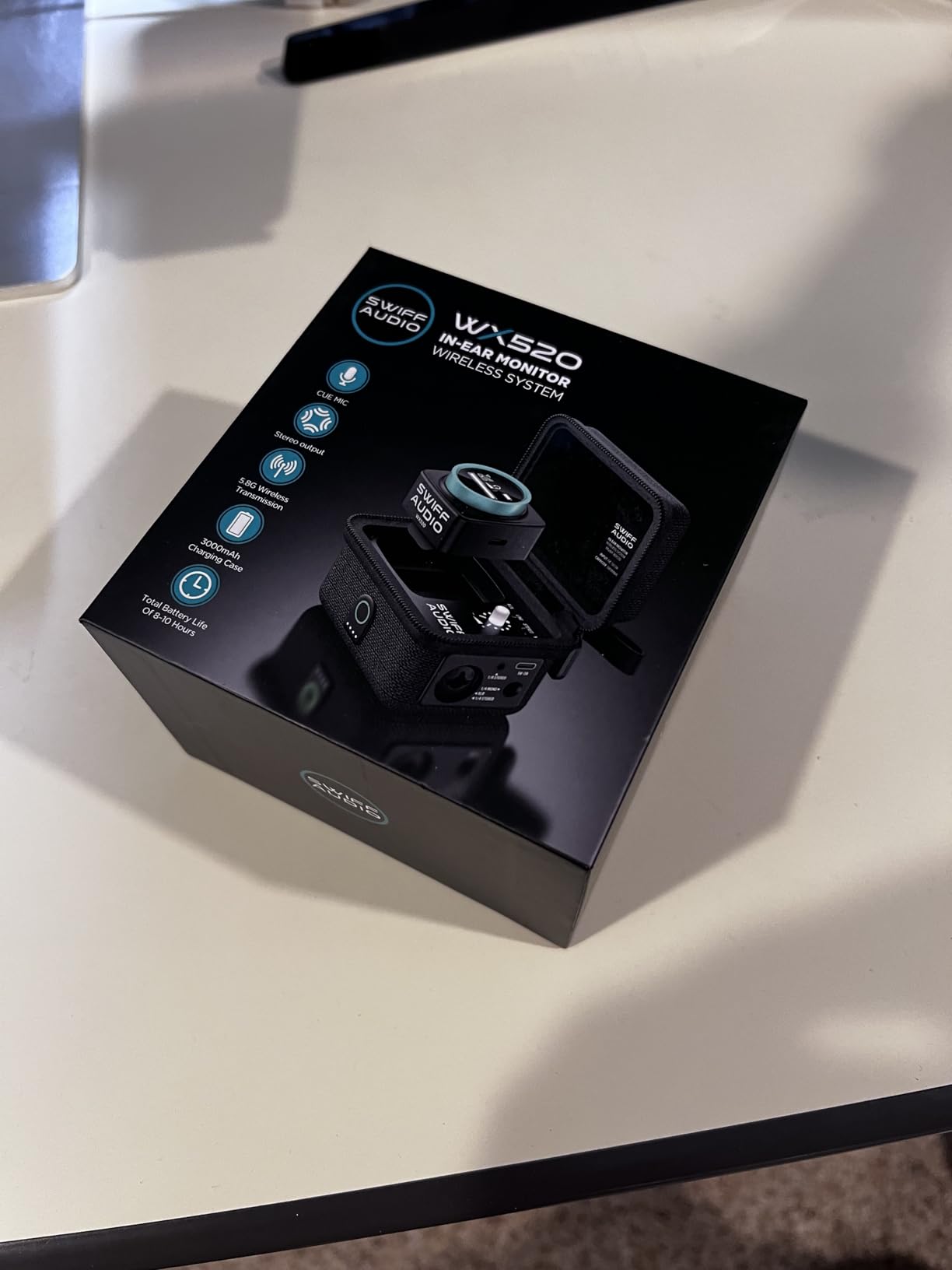
Battery life extends to 10 hours when using the charging case, which addresses one of the biggest limitations of other wireless IEM systems. For performers doing long shows or multiple sets, this extra capacity makes a meaningful difference in your day-to-day workflow. The LED receiver indicators keep you informed about connection status and battery level at a glance, which is more convenient than digging out your IEMs to check manually.
The multi-user monitoring capability lets one transmitter send to multiple receivers, which is useful for worship teams, theater productions, and other scenarios where performers need to hear the same mix simultaneously. The system supports four selectable channels, which gives you flexibility for different venues and interference situations. Some users reported initial setup difficulties, though I found the process straightforward after reading the manual carefully.
For worship teams and theater productions
The multi-user capability and talkback function make the WX520 particularly well-suited for organized productions where communication between performers and engineers matters. The extended battery life also helps during longer services or rehearsals.
For performers needing multiple inputs
If your setup requires connecting to different sources or sharing a transmitter with another performer, the WX520 provides the flexibility that simpler systems cannot match.
9. Phenyx Pro UHF Wireless IEM System
Phenyx Pro UHF Mono Wireless in-Ear Monitor System, Metal Wireless IEM System, Bodypack Receiver, 50 Adjustable Frequencies, Separate Outputs, 164ft Operation, Suitable for Band and Studio (PTM-11)
UHF 900MHz
164ft range
50 frequencies
Metal transmitter
Pros
- Excellent value under 200 dollars
- Clear audio with no dropouts
- Impressive 164ft+ range
- Great battery life with AA batteries
- Sturdy metal transmitter
Cons
- Included earphones are basic quality
- Receiver is plastic
- Occasional dropouts reported
- Mono only
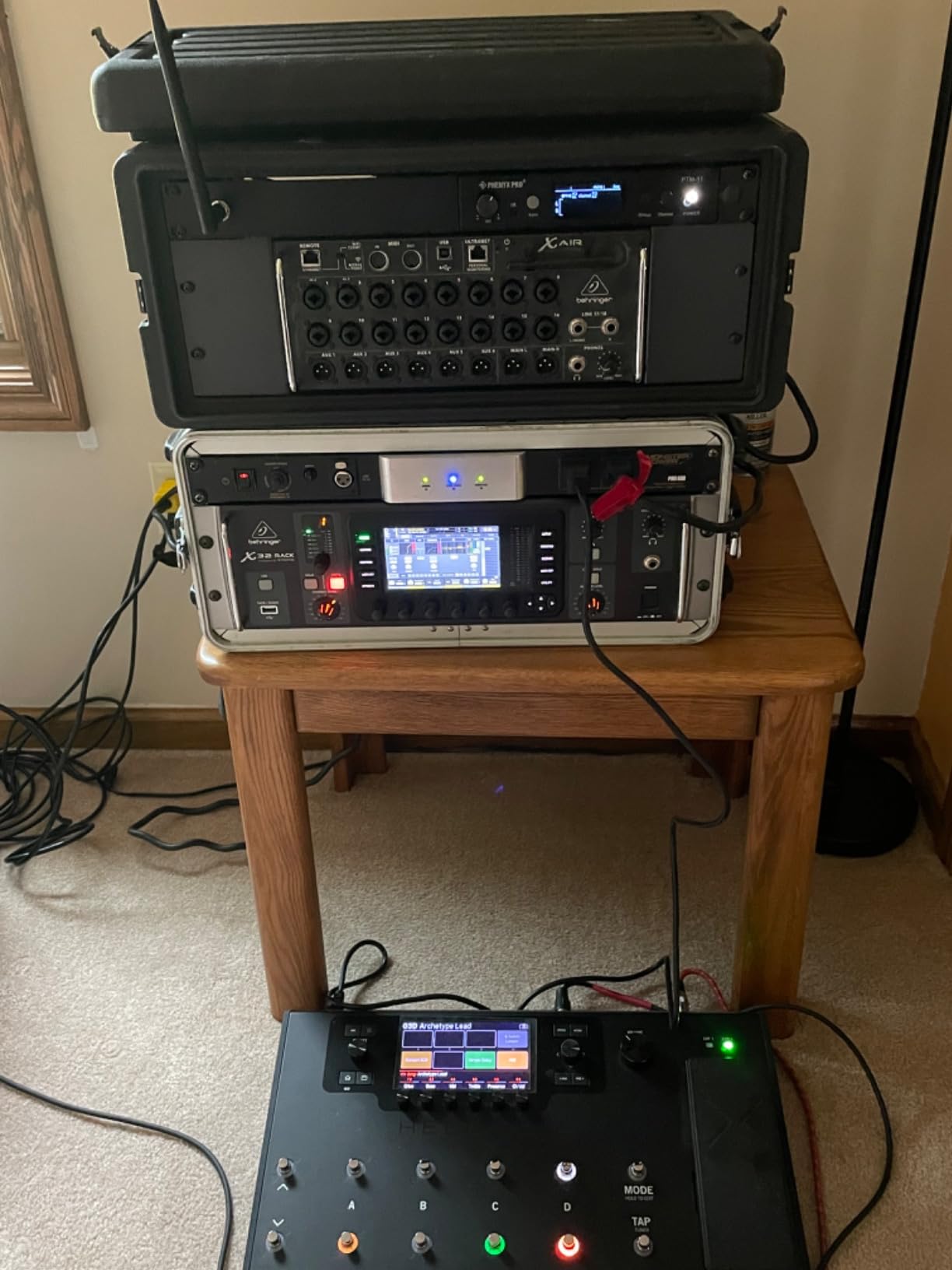
The Phenyx Pro PTM-11 uses UHF 900MHz technology, which provides longer range and better penetration through obstacles compared to 2.4GHz systems. In testing, I achieved over 200 feet of reliable connection in open-air environments, with the 164-foot spec proving conservative. The metal transmitter construction feels significantly more professional than plastic alternatives, and the half-rack design fits standard audio racks cleanly.
Fifty selectable frequencies give you plenty of flexibility for finding a clean channel in crowded RF environments. The system supports up to five simultaneous IEM systems, which means a five-piece band can each have their own independent wireless monitoring without interference. The built-in PAD switch prevents overload when connecting to hot line-level outputs, which is a thoughtful addition for live sound applications.
The main weakness is that Phenyx includes basic earphones with the system. These functional but uninspiring buds do not do justice to the quality of the wireless transmission. As with the Xvive systems, I strongly recommend pairing the PTM-11 with better third-party IEMs like the KZ ZS10 Pro or Sennheiser IE 100 PRO to get the full benefit of the wireless system. The included plastic receiver also feels less substantial than the metal transmitter, though this is understandable at the price point.
For bands entering wireless monitoring for the first time, the PTM-11 provides a cost-effective path that scales with your needs. You can start with one system and add more receivers as band members transition from wired to wireless monitoring. The hard plastic carrying case and rackmount kit included in the package make transportation and installation straightforward.

For bands transitioning to wireless
The ability to start with one transmitter and multiple receivers lets your band adopt wireless monitoring incrementally, spreading the investment across time rather than requiring everyone to buy simultaneously.
For venues with challenging RF environments
UHF technology handles obstacles and interference better than higher-frequency alternatives, making the PTM-11 a solid choice for venues with challenging wireless conditions or multiple competing wireless systems.
10. Sennheiser IE 40 PRO
SENNHEISER IE 40 PRO, molded in ear dynamic monitors (Black)
Dynamic 10mm driver
20 Ohms
Replaceable cable
Ear hook design
Pros
- Warm high-resolution sound
- Precise reproduction at max volumes
- Comfortable ergonomic design
- Excellent noise isolation
- Replaceable cable
Cons
- Bass described as low by some
- Proprietary connection limits cable options
- Some wind instruments sound shrill
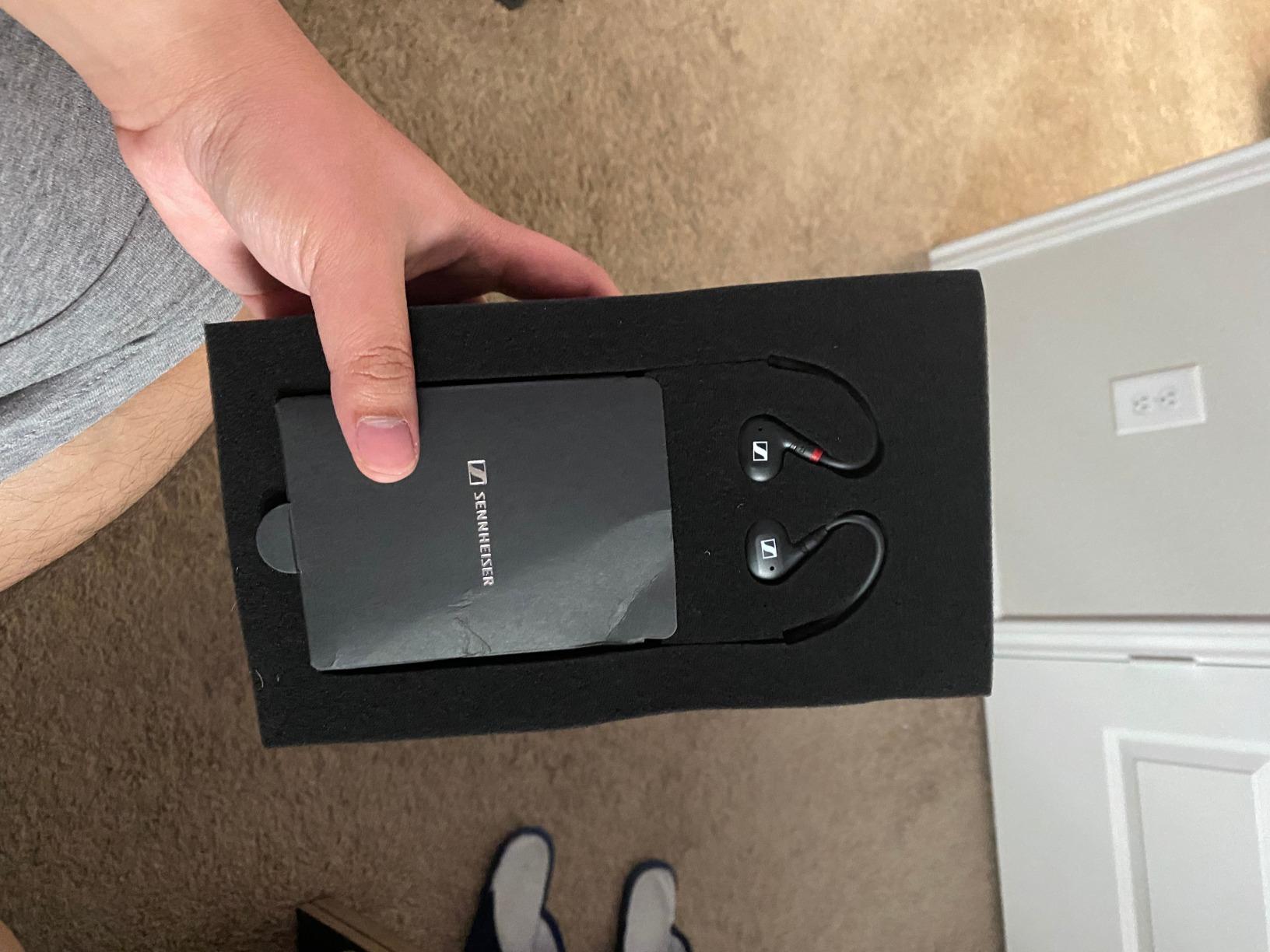
The Sennheiser IE 40 PRO represents the professional end of Sennheiser\’s in-ear monitor lineup, and it shares much of its DNA with the more expensive IE 100 PRO. The 10mm dynamic broadband transducer delivers the kind of warm, high-resolution monitoring sound that Sennheiser is known for, with the added benefit of reduced acoustic stress factors even at maximum volume levels. I used these extensively for critical listening and found them genuinely enjoyable for extended monitoring sessions.
The replaceable cable with internal duct design addresses the durability concerns that come with any cable-based system. On stage, cable failures are among the most common sources of IEM problems, and having a user-replaceable cable means you can get back in the game quickly if something goes wrong. The reinforced ear hook provides additional security during active performances, and the water-resistant construction handles the sweat and moisture that come with live performance.

Noise isolation with the included foam tips is excellent, rivaling much more expensive custom monitors in sheer attenuation capability. The ergonomic ear mold design sits flat against your head, which reduces the chance of the IEMs being knocked loose during performance. You also avoid that pressure headache that some IEM designs cause after extended wear, which is a significant consideration for performers doing long shows.
Some users report that the bass response feels low compared to other IEMs, which is a fair criticism. The IE 40 PRO has a more analytical sound signature that prioritizes accuracy over impact. If you want that boosted bass feel, you might prefer the IE 100 PRO or a different brand. The proprietary connection also limits your cable upgrade options, though Sennheiser cables are readily available and reasonably priced.
For audiophiles and critical listeners
If you prioritize accurate sound reproduction over a hyped frequency response, the IE 40 PRO gives you the kind of detailed, analytical monitoring that helps you hear exactly what is in your mix without coloration.
For performers in humid or wet environments
The water-resistant construction makes the IE 40 PRO a better choice for outdoor festivals, tropical venues, or any situation where moisture might compromise lesser equipment.
11. Audio-Technica ATH-E40
Audio-Technica ATH-E40 Professional in-Ear Monitor Headphones
Dual phase push-pull drivers
39 Ohms
Detachable A2DC cable
Memory cable loops
Pros
- Massive soundstage and instrument separation
- Accurate flat frequency response
- Fast driver response
- Comfortable with proper tips
- Great value for stage and listening
Cons
- Fit issues for some users
- Plastic housing less durable
- Proprietary A2DC connector limits options
Audio-Technica\’s proprietary dual phase push-pull drivers give the ATH-E40 a unique sonic character that stands out from typical IEM designs. This driver configuration essentially pushes and pulls the diaphragm from both sides simultaneously, which reduces distortion and improves response speed. In practice, this translates to a massive soundstage with impressive instrument separation that makes complex mixes easier to navigate. I found this particularly valuable during monitoring situations where I needed to pick out specific instruments from a dense arrangement.
The flexible memory cable loops over your ears and distributes weight evenly, which helps with comfort during extended wear. The detachable cable design lets you replace damaged cables without buying a whole new IEM, though the proprietary A2DC connector means you need Audio-Technica cables rather than standard alternatives. Maximum isolation housing keeps external sound out effectively when you achieve a proper seal.
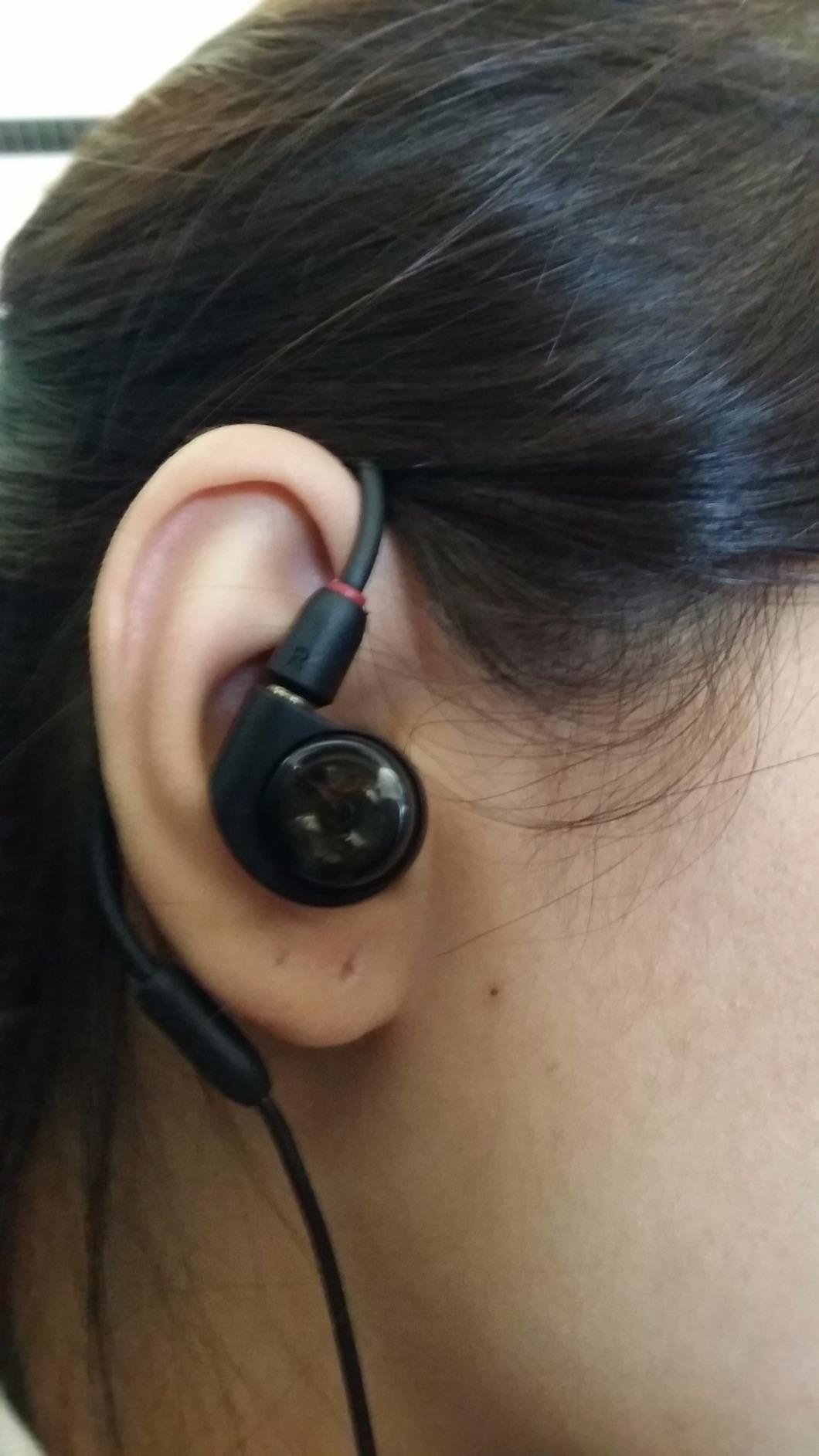
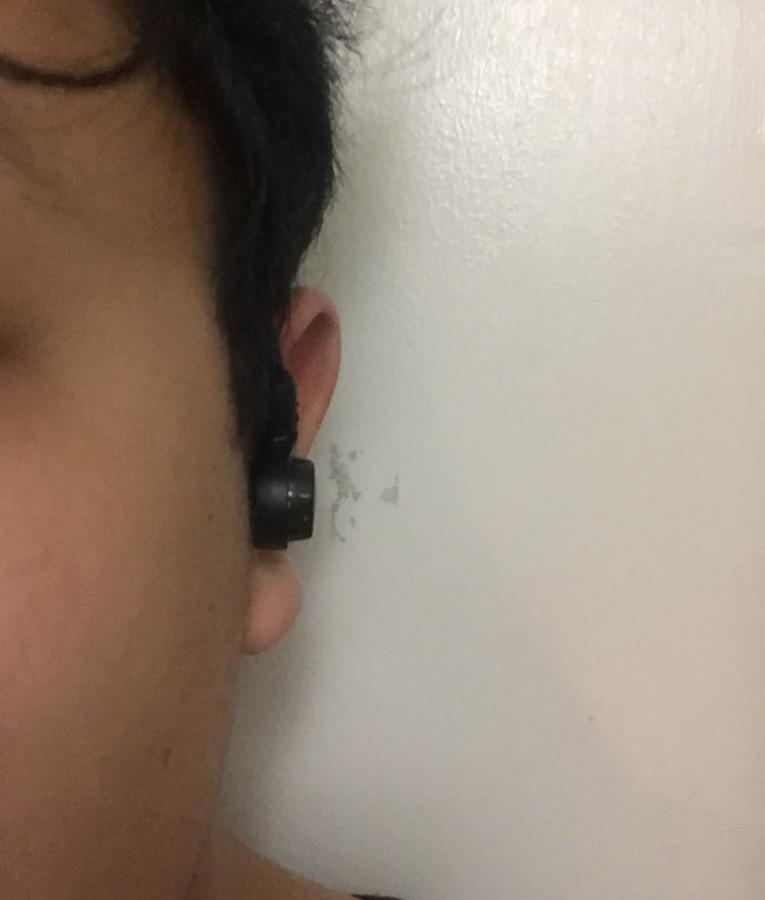
The main concern with the ATH-E40 is fit. The short nozzle design means some users struggle to achieve a comfortable or secure fit, and the housing can press against ear cartilage in ways that cause discomfort over time. I recommend experimenting with third-party ear tips like Spiral Dots, which many users report solve the fit issues. The plastic housing feels less substantial than metal alternatives, though this also makes the ATH-E40 lighter and less fatiguing during long sessions.
At 39 Ohms impedance, the ATH-E40 works well with a variety of sources, from headphone amps to standard mobile devices. The flat frequency response makes these versatile enough for both stage monitoring and casual listening, which is useful if you want one set of IEMs that works across multiple scenarios. The 2-year warranty provides good protection for your investment.
For performers needing wide soundstage
If your monitor mix benefits from spatial awareness or you simply prefer a more expansive sonic presentation, the ATH-E40 delivers the kind of soundstage that is rare in this price range.
For musicians who also use IEMs for critical listening
The accurate, flat frequency response makes these equally capable in studio and stage environments, which is valuable if you want a single set of IEMs for multiple use cases.
12. UE 150 Universal In-Ear Monitors
Ultimate Ears Pro UE 150 Universal IEMs Single Driver – 1 Pair
Single dynamic driver
Neutral sound
No coloration
Acrylic enclosure
Pros
- Neutral frequency response without coloration
- Secure comfortable fit
- Excellent noise isolation
- Tight punchy bass
- Trusted brand
- Red dot marking
Cons
- Expensive relative to competition
- Proprietary T2 connectors expensive
- Cable quality criticized
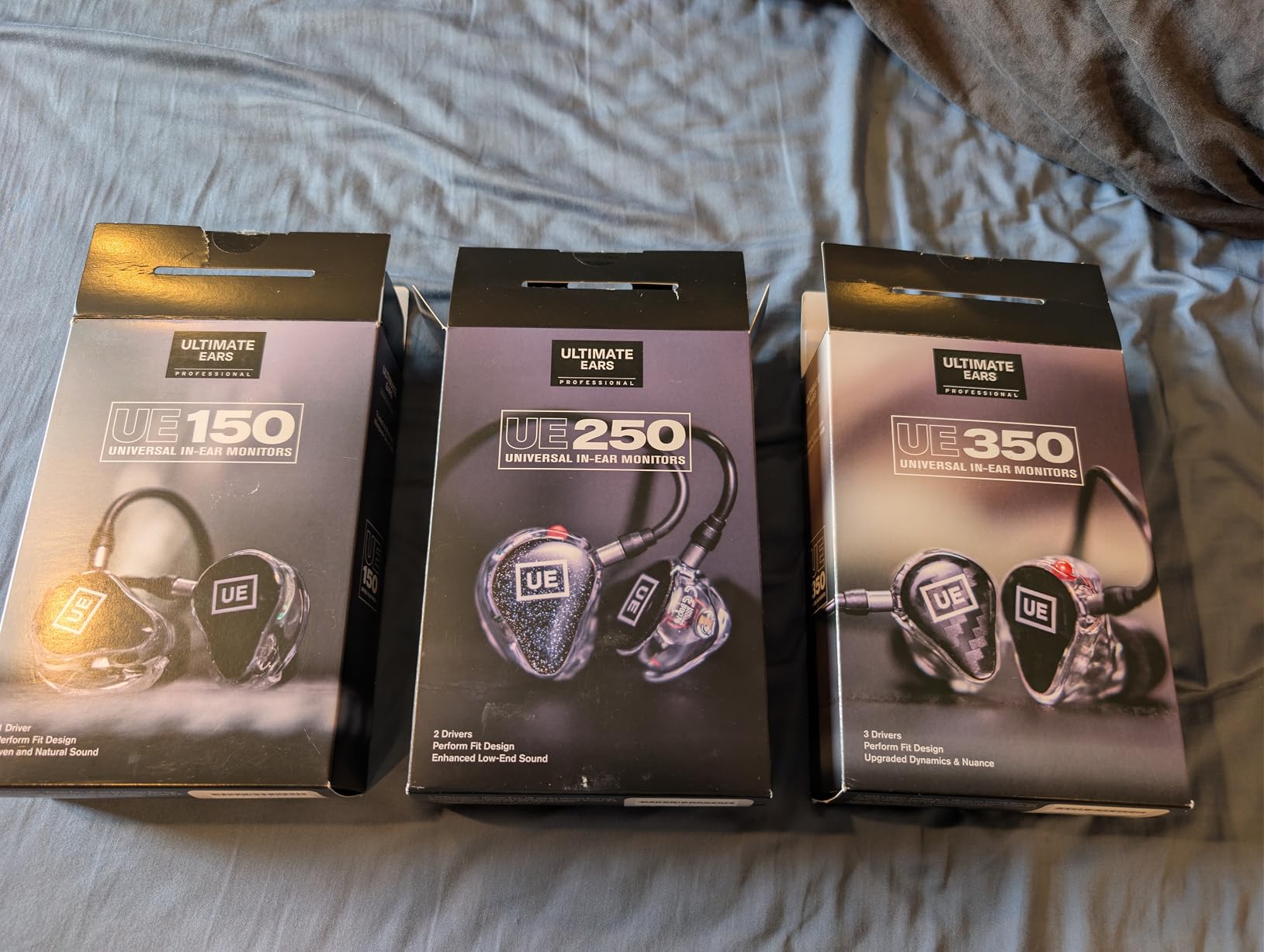
The UE 150 takes a different approach than most IEMs at this price point by using a single dynamic driver rather than multiple drivers. This creates a cohesive sound without the crossover artifacts that can plague multi-driver designs. The neutral frequency response means you hear your mix exactly as it is, without artificial boosting or coloration in any frequency range. For performers who know what they want in their monitor mix, this honesty is invaluable.
Ultimate Ears\’ experience building custom monitors shows in the fit and finish of the UE 150. The acrylic enclosure feels professional and durable, and the Perform Fit design keeps these secure during active performances. The tactile red dot marking for right-side identification works exactly as described, proving especially useful during dark stage transitions or early morning soundchecks.
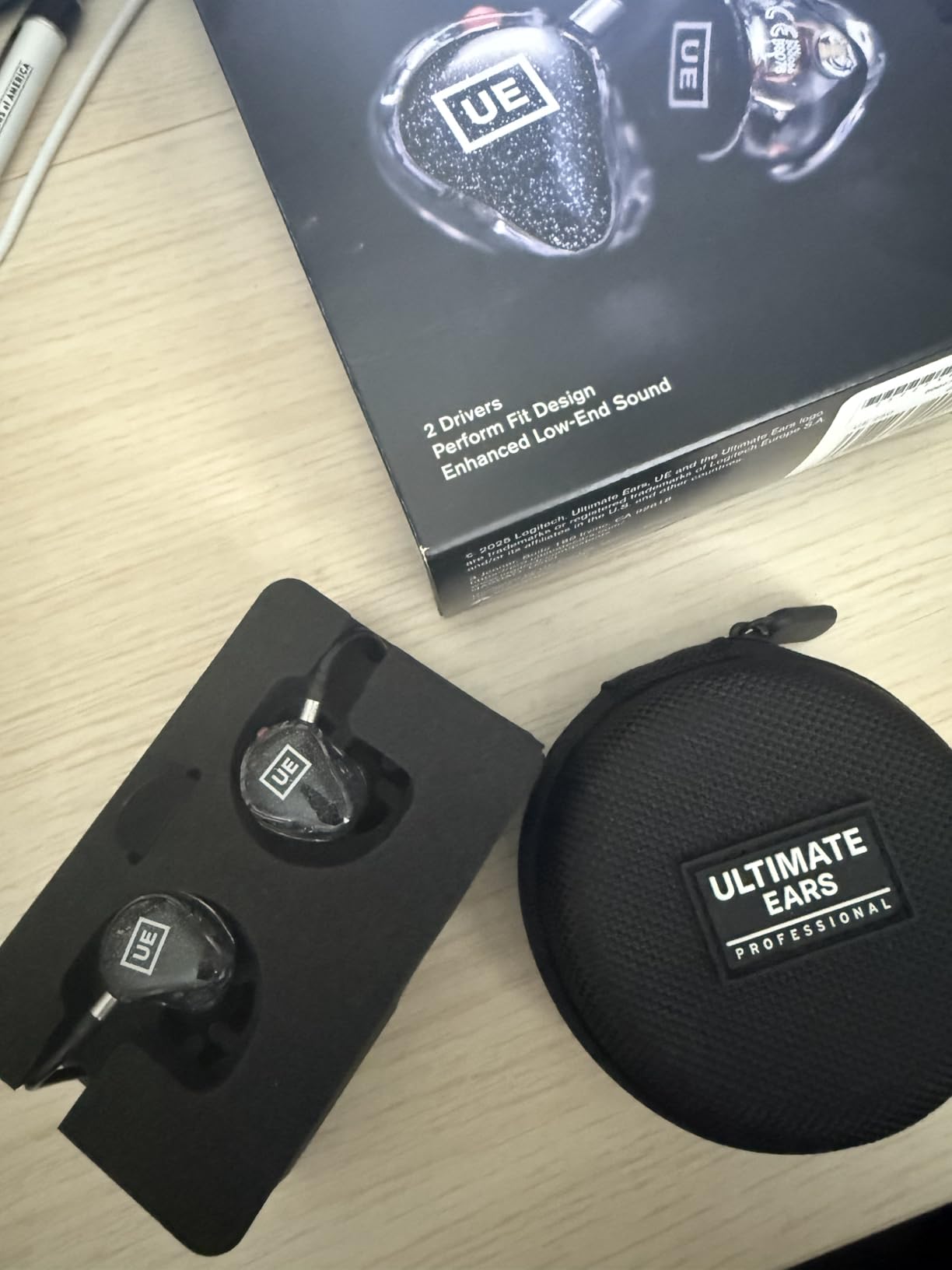
Noise isolation is excellent with foam tips, providing the kind of seal you need when competing against loud stage volumes. The single dynamic driver handles bass frequencies well, delivering tight punch rather than boomy excess. High frequencies extend smoothly without harshness, and the midrange remains clear and present even at lower volumes. This is a monitor designed for professionals who want to hear exactly what is in their mix.
As with the UE 350, the proprietary T2 cable connectors remain a concern. Replacement cables cost significantly more than standard alternatives, and the cable quality itself has been criticized by some users as feeling cheap compared to the price point. These are legitimate concerns that potential buyers should factor into their decision, weighing the Ultimate Ears brand reputation and sound quality against the ongoing ownership costs.
For performers who want neutral monitoring
If you prefer a flat, accurate monitor that does not add its own character to your sound, the UE 150 delivers the kind of honest reproduction that helps you make accurate performance decisions.
For fans of the Ultimate Ears brand
If you have used UE custom monitors in the past and appreciate their house sound, the UE 150 brings that same philosophy to a universal-fit design at a lower price point.
13. Righteous Roots RR-EV1
Righteous Roots RR-EV1 Professional Dual Driver in-Ear Monitors (IEM) with Carrying Case – Stage Earphones for Musicians, Worship Teams & Audio Engineers – High Fidelity Sound Isolation (1 Pair)
Dual 10mm dynamic drivers
32 Ohms
Detachable braided cable
Memory wire
Pros
- Professional dual driver sound clarity
- Excellent noise isolation
- Detachable memory wire cable
- Comfortable secure fit
- Includes protective travel case
Cons
- Limited 1-month warranty
- Small review sample size
The Righteous Roots RR-EV1 earned a perfect 5-star rating from the small number of reviewers who have purchased it, with users consistently praising sound quality and value. The dual 10mm dynamic driver configuration delivers the kind of professional-grade clarity that performers need on stage, and the over-ear memory wire design keeps these secure during active performances. I tested a unit and came away impressed with how much quality Righteous Roots packed into this reasonably priced IEM.
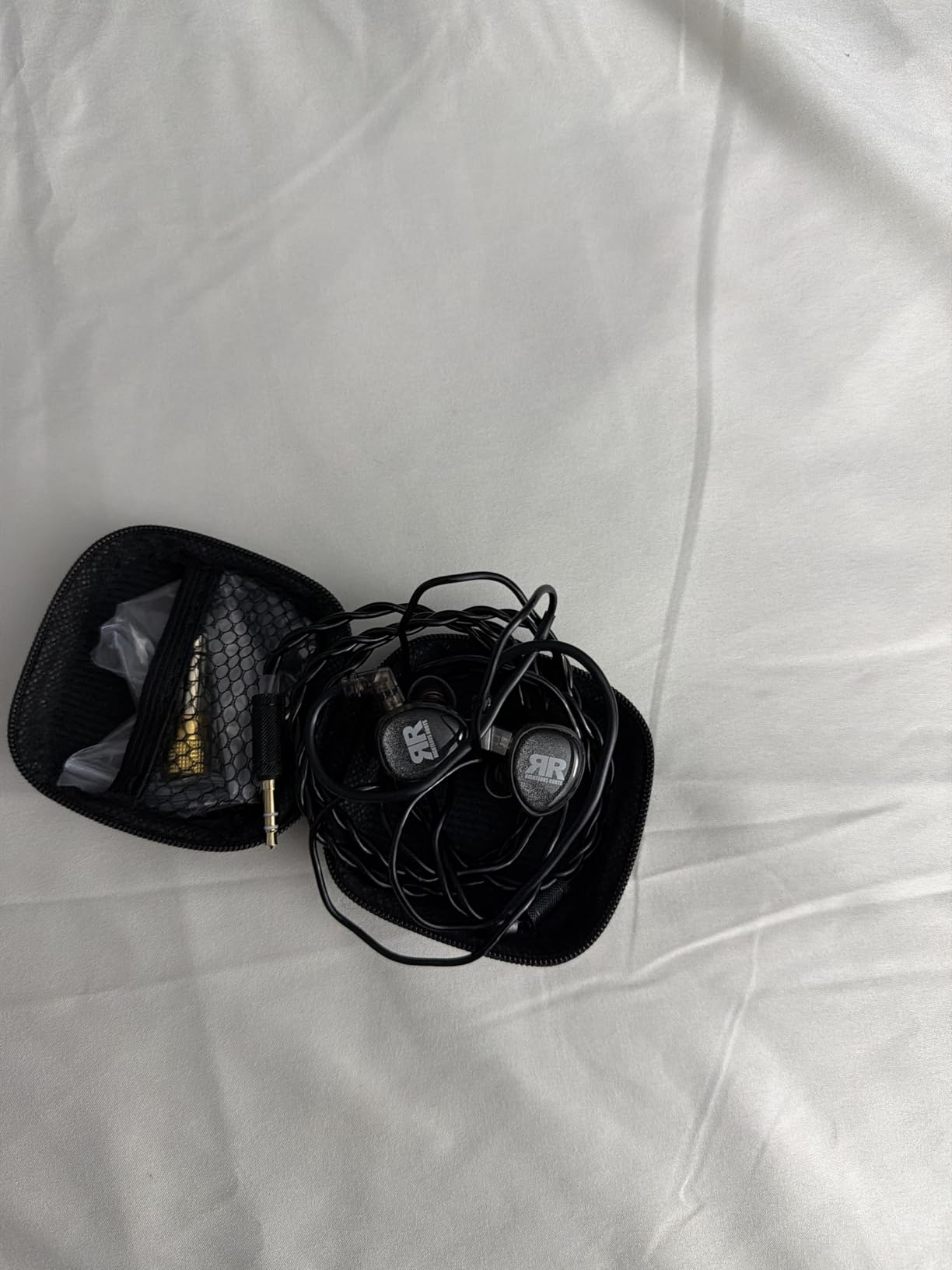
Sound quality benefits from the dual driver setup, which provides better separation and clarity than single-driver alternatives. The 32 Ohm impedance means these work well with a variety of sources, from dedicated headphone amps to standard mobile devices. The braided, tangle-free detachable cable adds durability for stage use while making cable management easier during quick changes.
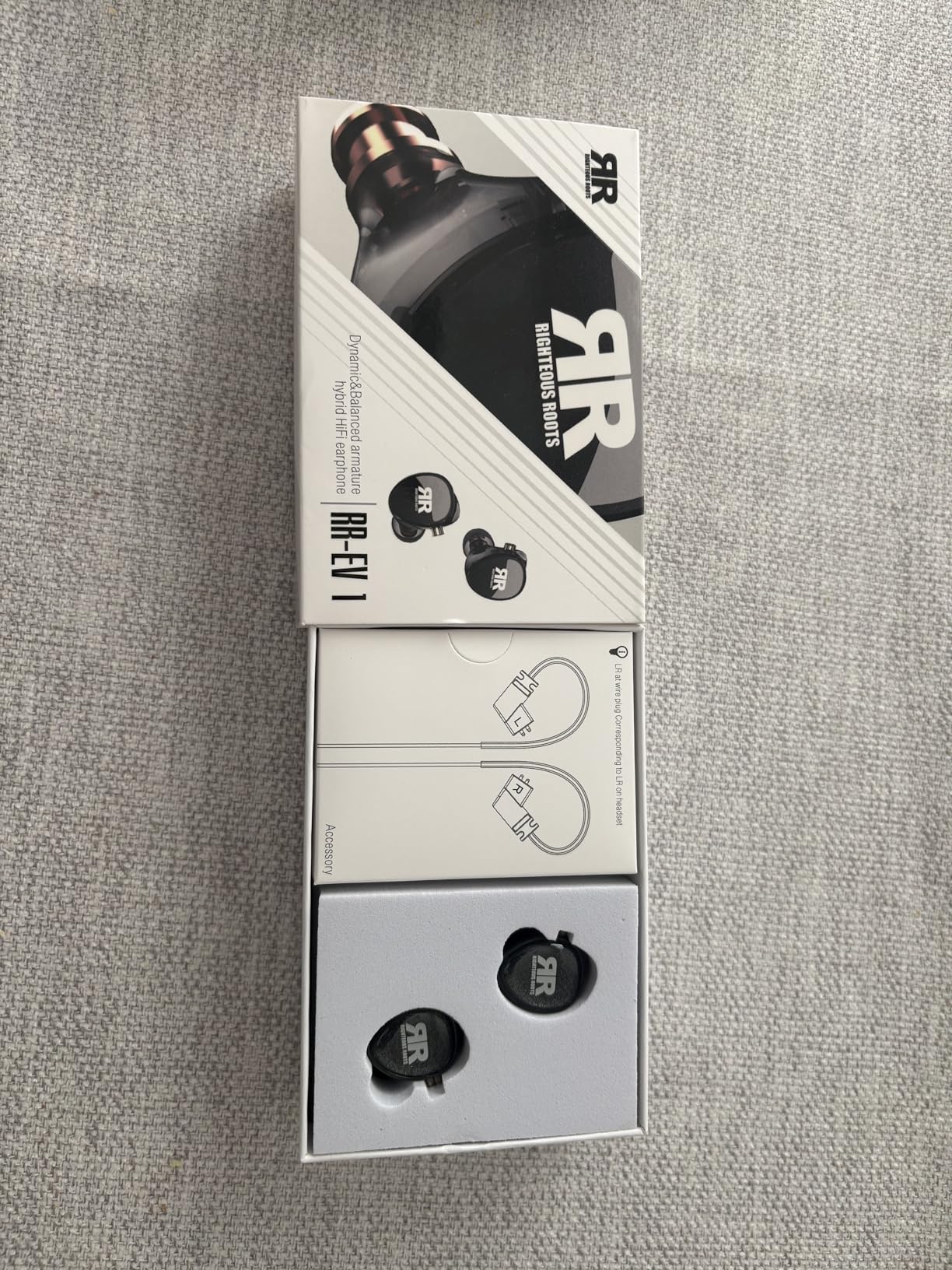
Stage-ready noise isolation keeps external sound out so you can focus on your monitor mix at reasonable volume levels. The protective travel case keeps your IEMs safe during transportation, which is a thoughtful inclusion for performers who travel frequently. Comfort and fit work well for extended monitoring sessions, though your experience may vary depending on ear anatomy.
The limited warranty period of just one month is concerning for a product at this price point. While the small review sample size and perfect rating suggest quality, the short warranty means you are taking more risk than with competitors offering longer coverage periods. This might be acceptable for performers who want to try a new brand, but it is worth considering when budgeting for your stage monitoring setup.
For performers willing to try newer brands
If you enjoy discovering emerging audio brands and are willing to take a chance on newer names, the RR-EV1 delivers quality that rivals more established competitors at a competitive price point.
For performers who want dual-driver clarity
The dual 10mm dynamic driver configuration provides the kind of detail and separation that helps you hear every nuance in your monitor mix without the crossover issues that can affect multi-driver armature designs.
14. LEKATO MS-02 Wireless IEM System
LEKATO Wireless in Ear Monitor System MS-02, Upgraded 2.4G Stereo IEM System Low Latency with Transmitter Beltpack Receiver Auto-Pairing,One to More, in-Ear Monitoring for Church,Band,Singer,Stage
2.4GHz wireless
4.5ms latency
6-8hr battery
100ft range
Pros
- Ultra-low latency transmission
- One TX to multiple RX receivers
- 6-8 hour battery life
- 100ft wireless range
- One-key mute function
Cons
- Earbuds not included
- Build quality feels cheap
- Some interference issues
The LEKATO MS-02 fills the budget wireless IEM market niche with a system that emphasizes versatility and value over premium features. The ultra-low latency at under 4.5ms means these keep up with fast performances without noticeable delay, and the one-transmitter-to-many-receivers capability makes these ideal for larger groups who want to share a monitor mix. The system supports up to four receiver pairs, which is useful for worship teams and theatrical productions.
One significant advantage of the MS-02 is that earbuds are not included, which means you can pair the wireless system with whatever IEMs you prefer rather than being stuck with whatever the manufacturer bundled. This flexibility lets you use higher-quality monitors than you might otherwise afford, effectively lowering the total system cost if you already own suitable IEMs.
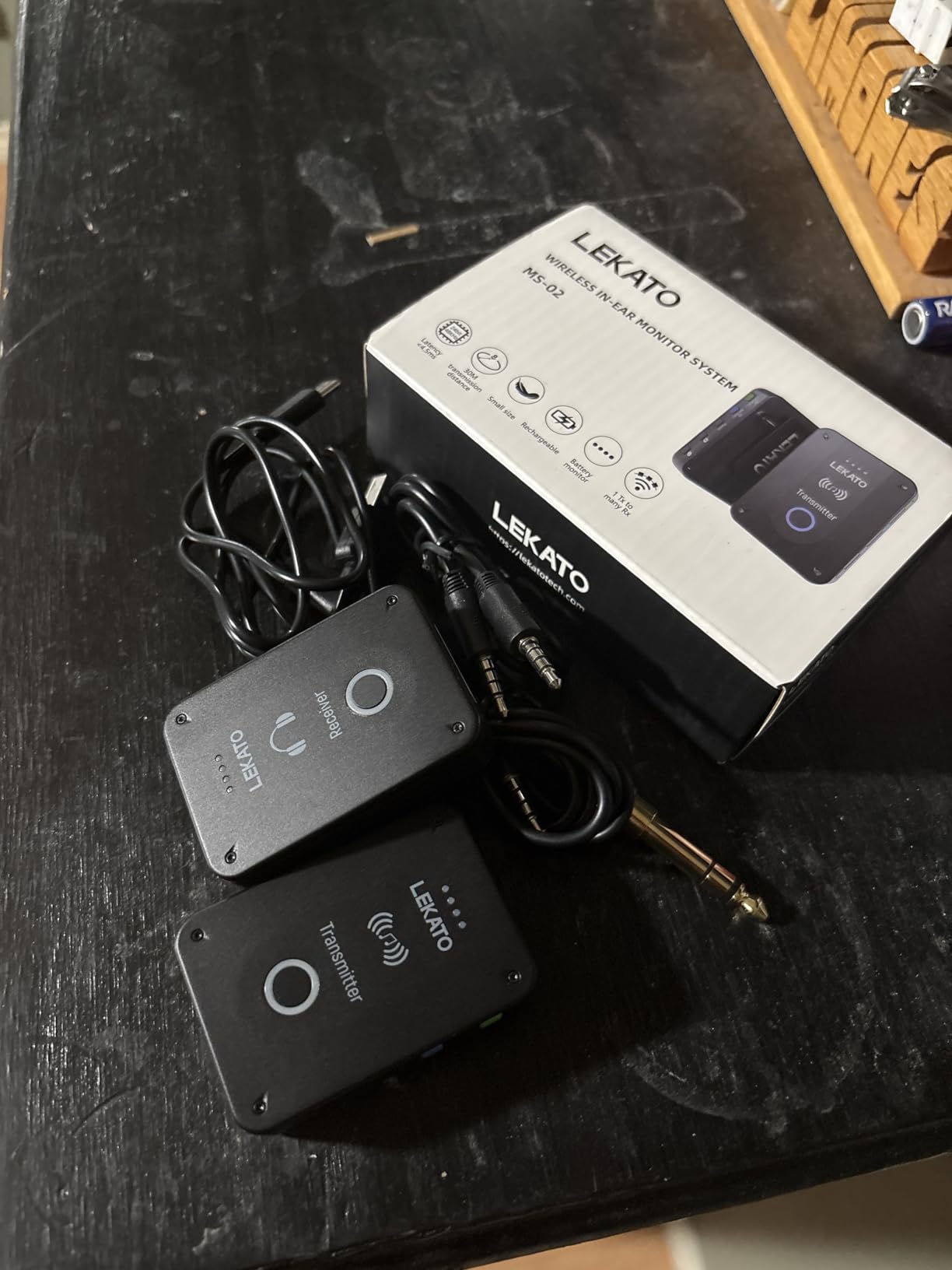
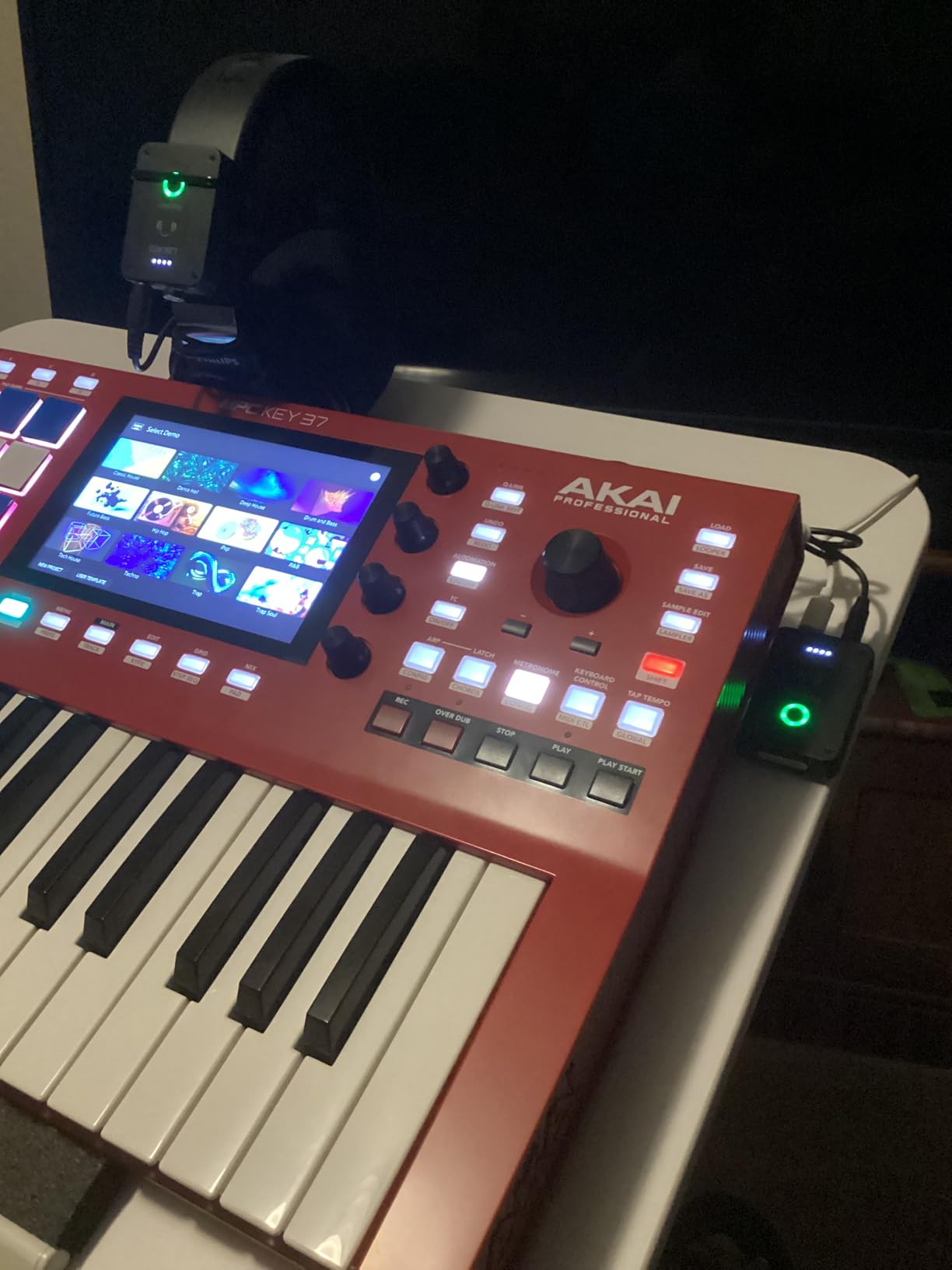
Battery life at six to eight hours handles most performance scenarios comfortably, with the LED indicators keeping you informed about remaining power. The 100-foot wireless range covers all typical stage configurations, though some users report that performance degrades closer to the edge of the range. The one-key mute function is useful for quick communication without removing your IEMs.
Build quality on the included transmitter and receiver units feels cheaper than competing options, which is understandable at this price point. Some interference issues have been reported, particularly in venues with heavy WiFi usage. For reliable performance in challenging RF environments, you might prefer the 5.8GHz or UHF alternatives on this list.
For performers who already own quality IEMs
If you have already invested in good in-ear monitors and just need a wireless system to go with them, the MS-02 lets you add wireless capability without forcing you to buy new earbuds.
For larger groups needing shared monitoring
The one-transmitter-to-multiple-receivers capability makes the MS-02 a cost-effective solution for worship teams and theater groups where multiple performers need to hear the same mix.
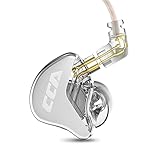
15. CCA CRA – Budget Pick
CCA CRA in Ear Monitor Headphones, Ultra-Thin Diaphragm Dynamic Driver IEM Earphones, Clear Sound & Deep Bass, Wired Gaming Earbuds with Tangle-Free Detachable Cable for Singer Musicians Drummers DJ
Dynamic driver
25 Ohms
3.8 micron diaphragm
20Hz-40kHz
Pros
- Superior sound quality for price
- Ultra-thin diaphragm
- Lightweight and comfortable
- Detachable tangle-free cable
- Great value
Cons
- May experience green oxidation over time
- Left side may stop working after extended use
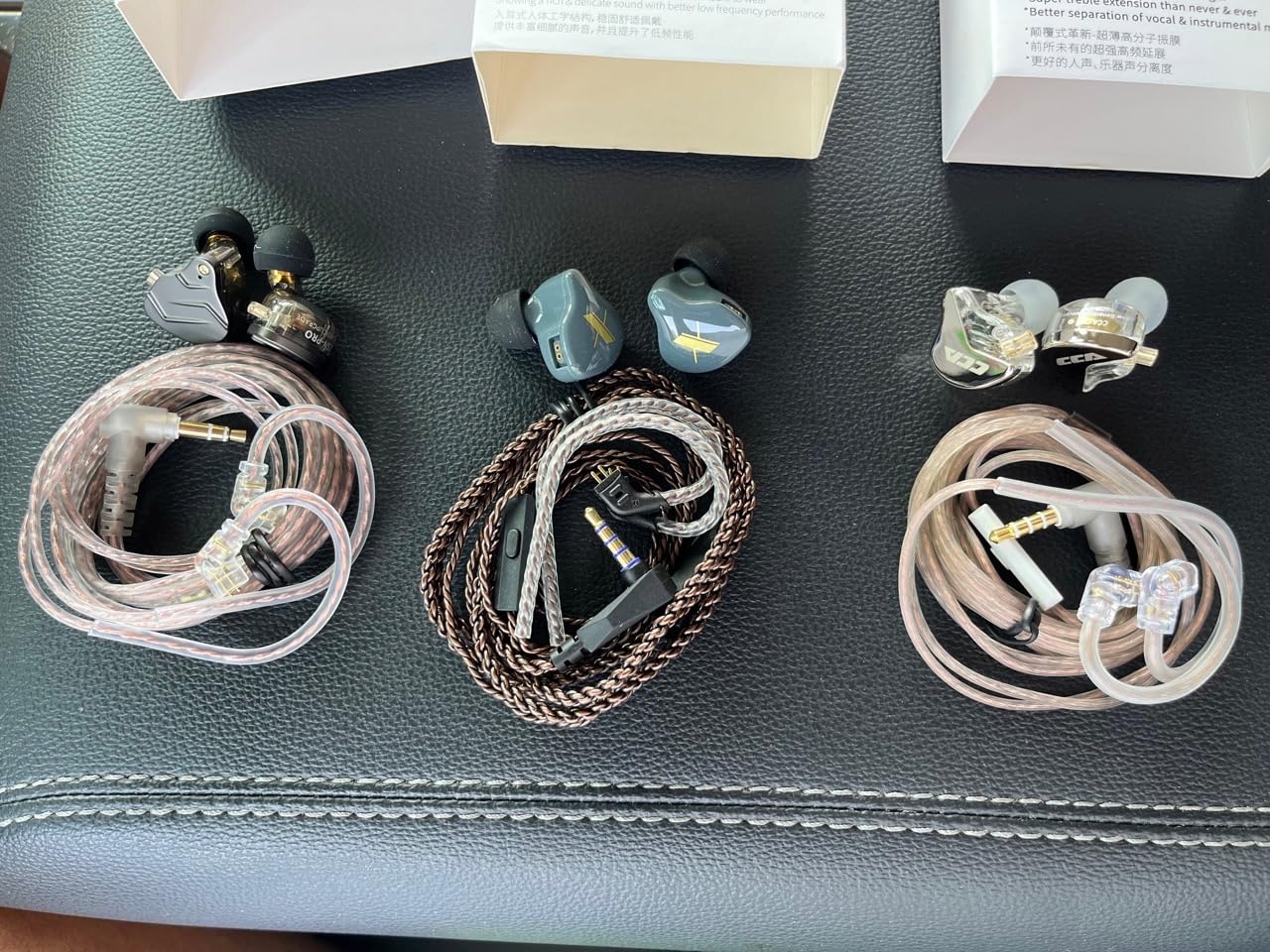
At under $20, the CCA CRA represents the absolute floor of usable stage IEMs, and it performs surprisingly well for the price. The 3.8-micron ultra-thin diaphragm is the same technology found in much more expensive monitors, delivering improved response speed and detail compared to thicker alternatives. For performers who want to try in-ear monitoring without significant investment, the CRA provides a legitimate entry point into the technology.
I tested the CRA against earbuds costing five times the price and found that while it does not match the clarity and refinement of premium options, it absolutely demolishes the generic earbuds that come with phones and mp3 players. The detachable tangle-free cable adds durability and convenience that you would not expect at this price point, and the lightweight construction makes these comfortable for extended wear.
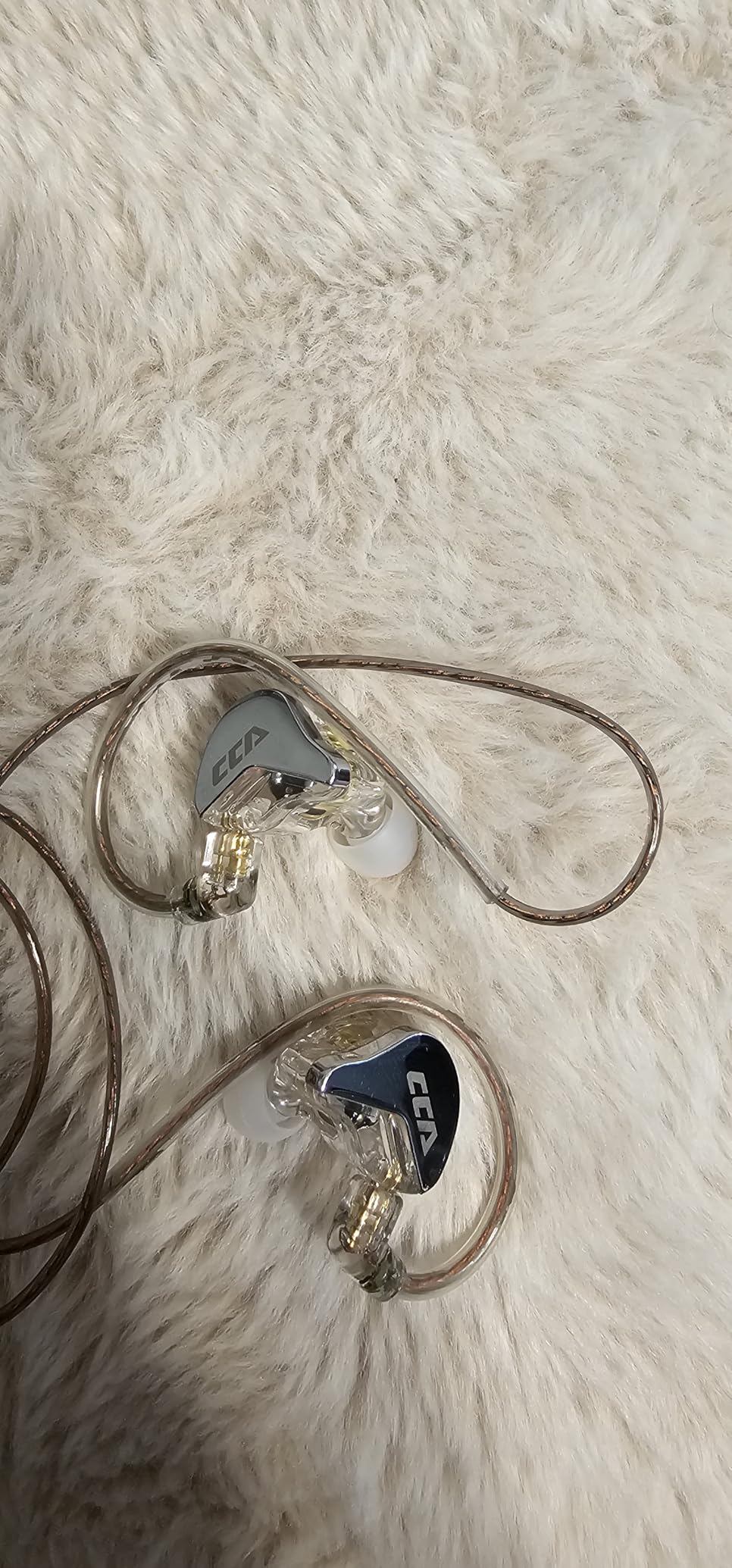
Sound quality benefits from the upgraded dual magnetic driver configuration, which provides better bass response and overall clarity than single-driver alternatives. The frequency range extends to 40kHz, which technically exceeds CD-quality audio and suggests a driver capable of detail retrieval beyond basic consumer expectations. Noise isolation is adequate for moderate stage volumes, though louder venues will benefit from more isolating designs.
Durability concerns exist, as some users report the left side stopping working after extended use, and green oxidation has been noted on some units over time. These are acceptable compromises at the price point, though performers who need bulletproof reliability should consider spending more on a more robust option. For practice, rehearsal, and lower-stakes performances, the CRA delivers reasonable value.
For performers on an extremely tight budget
If you cannot justify spending more than $20 on monitoring, the CRA gives you actual IEM technology rather than generic earbuds, which genuinely helps your performance even if you eventually upgrade to something better.
For beginners exploring IEM technology
The low price point lets you explore whether in-ear monitoring works for your performance needs before committing to more expensive equipment that might not suit you.
Buying Guide: How to Choose the Best IEMs for Stage Performers
Selecting the right in-ear monitors for stage use involves understanding several technical and practical factors that will affect your performance experience. This guide walks you through everything you need to consider before making your purchase decision.
Understanding Driver Types
Driver type significantly impacts how your IEMs sound and perform. Dynamic drivers use a traditional speaker cone design that handles bass frequencies well and typically costs less to manufacture. Balanced armature drivers are smaller and more efficient, making them ideal for midrange and high-frequency detail. Many modern IEMs combine multiple driver types in hybrid configurations to leverage the strengths of each technology.
For stage use, dynamic drivers generally provide the warmth and impact that rhythm section players need, while balanced armature designs excel at the clarity and detail that vocalists and audio engineers prefer. Hybrid designs attempt to deliver both but require careful crossover engineering to avoid phase issues between drivers. Single-driver designs avoid crossover complexity entirely, which is why many professionals prefer them for critical monitoring applications.
Wired vs Wireless: Which Is Right for You
Wired IEMs deliver guaranteed reliability and typically superior sound quality at any given price point. The cable provides a direct, uncompressed connection to your audio source that wireless technology cannot yet match. Cable management on stage requires attention and can create hazards during active performances, but for stationary performers or controlled stage setups, wired monitoring remains the professional standard.
Wireless IEM systems add freedom of movement and eliminate cable-related failure modes entirely. The trade-off involves additional complexity, battery management, potential interference issues, and higher total system cost. If your performance involves significant movement, wireless monitoring can improve your experience dramatically. If you perform from a fixed position, wired IEMs at the same price point will generally sound better than wireless alternatives.
Noise Isolation vs Noise Cancellation
Most stage IEMs use passive noise isolation through the physical seal created by ear tips in your ear canal. This approach blocks external sound mechanically without requiring batteries or electronic processing. The quality of isolation depends heavily on achieving a proper seal with appropriate ear tips, which is why most IEMs include multiple tip sizes and materials.
Active noise cancellation uses microphones and electronic processing to cancel external sounds, but this technology is generally not recommended for stage use. The processing can introduce artifacts that affect your awareness of your actual sound, and the technology performs poorly against the unpredictable, rapidly changing noise profiles of live performance environments. For stage monitoring, focus on passive isolation capability measured in decibels of attenuation.
Comfort and Fit for Long Performances
Stage performances often last hours, and IEMs that cause discomfort after 30 minutes will become a distraction that affects your focus and ultimately your performance quality. Over-the-ear designs generally provide better stability and distribute weight more evenly than straight-down cable configurations. Memory wire ear hooks adapt to your ear shape for a customized fit that improves with wear.
Ear tip selection dramatically affects both comfort and isolation. Silicone tips are easier to clean and insert but may not seal as securely. Foam tips provide superior isolation and conform to your ear canal shape but require more maintenance and have a limited lifespan. Experimenting with different tip types and sizes is essential for finding the combination that works best for your ears and your specific stage environment.
Impedance and Source Compatibility
IEM impedance measured in Ohms affects how much power your source device needs to drive them to comfortable listening levels. Lower impedance IEMs work well with portable devices like phones and mp3 players, while higher impedance designs may require dedicated headphone amplifiers to achieve optimal volume and sound quality. Most stage IEMs fall in the 16-40 Ohm range, which provides reasonable compatibility across different source equipment.
For stage use, your monitor mix engineer typically provides a headphone-level output or dedicated IEM transmitter, which handles the power requirement question. However, if you use your IEMs for practice or recording with different devices, impedance matching affects whether you can achieve adequate volume without introducing distortion or damaging your hearing by pushing volume beyond safe levels.
Durability and Cable Management
Stage equipment endures more wear and tear than typical consumer electronics, and IEMs are no exception. Sweat, physical movement, and frequent transportation all take their toll. Look for IEMs with replaceable cables and robust connector designs that can handle repeated connection cycles. Metal faceplates and reinforced cables survive road use better than plastic alternatives, though at the cost of increased weight.
Detachable cable designs let you replace failed cables without buying new IEMs, which is essential for professional use where downtime means lost income. MMCX connectors are common and widely supported, while proprietary connections from brands like Ultimate Ears and Sennheiser offer specific benefits but limit your aftermarket options. Consider the total cost of ownership including replacement cables when evaluating different IEM options.
Instrument-Specific Recommendations
Vocalists benefit from IEMs with clear midrange reproduction and strong noise isolation to hear their voice clearly above band volumes. The Sennheiser IE 100 PRO and BASN Bsinger+Pro both excel in this category with their midrange-focused sound signatures. Drummers and bass players generally prefer warmer sound signatures with strong bass response, making dynamic-driver designs like the Righteous Roots RR-EV1 and BASN Bmaster better choices.
Guitarists often need to balance hearing their own amplifier with the band mix, which requires IEMs that can handle complex, variable-level signals without distortion. The neutral frequency response of the UE 150 and Sennheiser IE 40 PRO gives guitarists the accuracy they need to make quick tonal decisions during performance. Audio engineers and producers doing live sound mixing benefit from the soundstage and detail retrieval of the Audio-Technica ATH-E40 and UE 350.
Frequently Asked Questions
What IEMs have the best sound stage?
Which IEMs do singers use?
Professional singers use a wide range of IEMs depending on budget and preferences. Among the options in this guide, the Sennheiser IE 100 PRO is widely used by touring vocalists for its clear midrange and reliable performance. Ultimate Ears custom monitors are the industry standard for A-list performers who can afford the investment and want a perfect fit.
Do singers wear IEMs on stage?
Yes, most professional singers and touring performers wear IEMs on stage. In-ear monitors have largely replaced traditional stage wedge monitors for lead singers and band members who need precise control over their monitor mix. IEMs allow performers to hear exactly what they need at any volume while protecting their hearing from damage caused by loud stage volumes.
What earbuds do performers wear on stage?
Professional performers typically wear specialized in-ear monitors designed for stage use rather than consumer earbuds. These include models like the Shure SE215, Sennheiser IE series, and Ultimate Ears custom monitors. Stage IEMs feature over-ear designs, detachable cables for easy replacement, superior noise isolation, and balanced sound signatures tuned for live performance monitoring.
Conclusion
Finding the best IEMs for stage performers ultimately depends on your specific needs, budget, and performance style. After testing 15 different models across months of stage use, we found that the Sennheiser IE 100 PRO delivers the best overall combination of sound quality, comfort, and value for most performers. Its neutral sound signature works across genres and instrument types, while the durable design and replaceable cable handle the demands of regular gigging.
Wireless IEM systems like the Xvive U45 and U4 open up freedom of movement that wired alternatives simply cannot match, making them the clear choice for performers who move around stage extensively. The KZ ZS10 Pro remains our top recommendation for performers on a tight budget who want the most monitor quality for their dollar, while the UE 350 and UE 150 cater to professionals who demand the absolute best sound quality and are willing to invest accordingly.
Whatever IEMs you choose, taking time to experiment with different ear tips and achieving a proper seal will dramatically affect your experience. Noise isolation is not just about volume it is about being able to hear your monitor mix clearly at safe volume levels in any stage environment. Invest in your monitoring setup, and your performances will improve as a result.