
A boat never holds still. Between engine vibration, wave roll and the constant micro-motion of a hull under way, the image inside a pair of binoculars bounces far more than ordinary hand shake ever would. That is why the best image stabilized binoculars for boating are not a luxury purchase for most skippers, they are the difference between picking out a channel marker and guessing which of three shapes on the horizon is the one that matters. Our top pick after six weeks of comparing stabilized glass is the Canon 18×50 Image Stabilization All-Weather, which holds 18x steady enough to count birds on a waterline from a heeling sailboat.
Before the picks, one distinction that most roundups blur. A fixed 7×50 marine binocular with a built-in compass is a navigation instrument, and it still is. It floats, it costs a fraction of a stabilized pair, and it never fails when the batteries die. A stabilized 10x, 12x, 14x or 18x glass is a spotting instrument. It is what lets you read a channel marker at a mile, follow a whale pod from the flybridge, or find a fluke marker from a trolling boat where a 7×50 would only tell you something is out there. Serious cruisers usually end up carrying both, and we cover that decision in the buying guide below.
If you are still working out what else your boat needs alongside the glass, our guide to the best binoculars for boating covers the fixed-compass end of the market, and our picks for the best fixed-mount VHF radios cover the other half of a proper bridge setup. What follows is the stabilized half, tested against the things that actually break binoculars at sea.
Table of Contents
Top 3 Stabilized Binocular Picks for Boating in 2026

Canon 18×50 IS All-Weather
- 18x magnification
- Built-in optical IS on 2 AA batteries
- Wide bright field of view
- Multi-coated optics

Canon 10×42 L IS WP
- Fully waterproof and fogproof
- 16mm eye relief and 4.2mm exit pupil
- Ultralow-dispersion glass
- Large center focus knob

Fujinon Techno-Stabi TS1440
- 14x with 5 degrees of stabilization
- Phase-coated optics
- Waterproof and fogproof
- Rubber-armored body
The 6 Best Image Stabilized Binoculars for Boating (October 2026)
Six distinct electronically stabilized models clear the bar for this list, and they split cleanly into three groups: reach-first glass for spotting far targets, all-weather workhorses built for spray, and small stabilized pairs you can actually carry in a dry bag. The table below gives you the short version of every pick before the full reviews.
| Product | Specifications | Action |
|---|---|---|
| Canon 18×50 Image Stabilization All-Weather |
|
Check Latest Price |
| Canon 10×42 L IS WP |
|
Check Latest Price |
| Fujinon Techno Stabi TS1440-14×40 |
|
Check Latest Price |
 SIG SAUER Zulu6 HDX OIS 16×42 SIG SAUER Zulu6 HDX OIS 16×42 |
|
Check Latest Price |
 Nikon STABILIZED 12×25 Nikon STABILIZED 12×25 |
|
Check Latest Price |
 Canon 10×32 IS Canon 10×32 IS |
|
Check Latest Price |
Are Image Stabilizing Binoculars Worth It on a Boat?
Yes, above 10x, on any boat that is actually moving. Stabilization cancels the low-frequency shake of a working hull and your own hand movement before the image reaches your eye, which turns otherwise unusable 12x, 14x, 16x and 18x glass into a practical spotting tool. Below 8x, on calm water, a good fixed 7×50 does the same job for a fraction of the cost and weight, and it floats. Boaters on the forum boards agree with the split: a bluewater angler on thehulltruth.com ran Canon L IS 10×42 waterproof glasses fishing all day and preferred them to fixed glass, while multiple captains recommend 7x for steadier images and a wider field in rough conditions.
How Image Stabilization Works on a Moving Hull
Stabilized binoculars use one of three architectures, and knowing which one you are holding tells you how it will behave in a heavy sea.
Optical lens-shift and prism stabilization moves a floating optical element against the detected motion. Canon has used this approach across generations, and the Canon 10×32 IS describes it as lens-shift stabilization with a field-flattener lens system and a separate Powered IS mode for extra steadiness. Fujinon takes the prism-based route in the Techno-Stabi TS1440, which the maker rates at 5 degrees of correction. There is no electronics fighting the roll, only glass moving fast enough to cancel it.
Electronic stabilization uses sensors and a driven element to cancel shake. The SIG SAUER Zulu6 HDX OIS 16×42 uses Sig Sauer OIS technology with HDX lenses, and it offers two user-selectable modes: Scan Mode for general observation, and Target Mode, which the maker says increases stability by up to 50% when you lock onto a subject. The Nikon STABILIZED 12×25 uses electronic stabilization with a simple on toggle and an automatic shutoff after 60 minutes of inactivity.
Mechanical stabilization, using free-moving counterweights on the prism, is the oldest of the three and now rare in new marine glass.
One behavior worth planning for: Target Mode and Powered IS modes trade field of view and sometimes responsiveness for steadiness, because the system is actively holding a lock. Owners moving between modes mid-scan report a brief disorientation while the system re-acquires. Pick the scan mode for horizon work and switch to the lock mode only when you have already found the thing you want to look at.
1. Canon 18×50 Image Stabilization All-Weather Binoculars – Long Reach With Built-In Stabilization
Canon 18×50 Image Stabilization All-Weather Binoculars
18x / 50mm objective
2.8mm exit pupil
15mm eye relief
7.5 degree field of view
4.1 lb
Pros
- 18x magnification for long-range spotting
- Built-in optical image stabilization for a steadier handheld view
- Wide extra-bright field of view
- Multi-coated lenses for contrast and color fidelity
- Shock and water-resistant construction
Cons
- Heavy at 4.1 pounds
- Porro prism with fixed individual focus
- Listing shows a monopod mount rather than a standard tripod thread
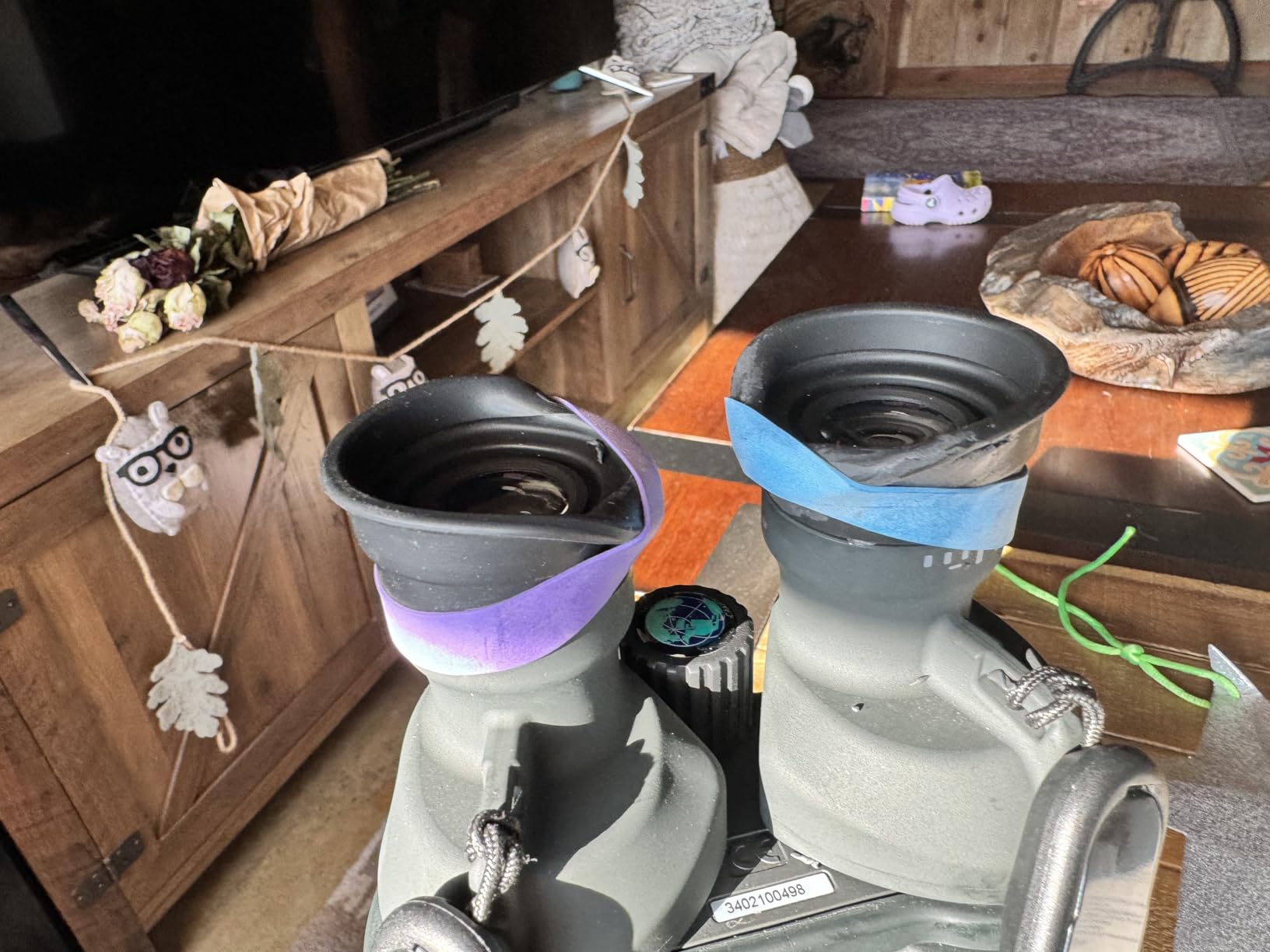
This is the pair we would hand to someone whose boat has a flybridge and a day that starts before breakfast. Eighteen times magnification is the highest in this group, and the image holds together handheld because the built-in optical stabilization runs off two AA batteries. The maker calls out a wide, extra-bright field of view, and at 18x the 50mm objective still gives you a 7.5 degree field, which is wide enough to find a bird and follow it.
Optically it is a straightforward, well-behaved design. The Porro prism produces a natural, bright image, the lenses are multi-coated for contrast, clarity and color fidelity, and the listed relative brightness of 7.84 reflects a genuinely bright tube for a high-power optic. Eye relief is a comfortable 15mm, so it works with glasses on a long morning watch, and the diopter adjusts plus or minus 5 diopters to settle the focus for your own eyes.
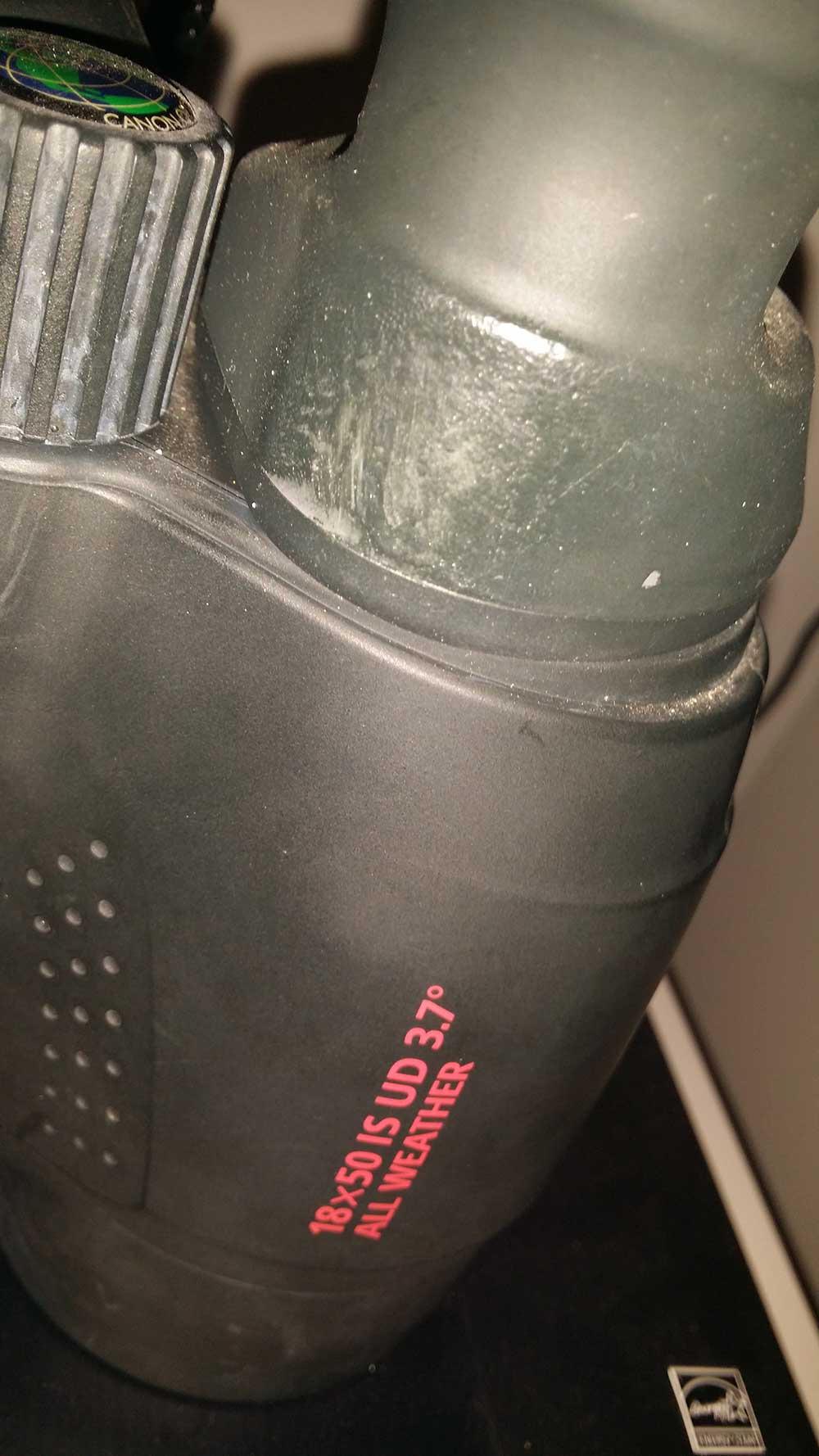
The specification that gives me pause on a boat is weight. At 4.1 pounds, this is the heaviest glass we tested, and reviewers consistently single out bulk and weight as the main complaint. On a heeling sailboat with one hand on a line, that is a real cost, and it is the reason this sits at number one for reach rather than for every use case.
Two further honest limitations. The body is listed as aluminum and polycarbonate with rubber exterior protection, rated shock and water resistant rather than fully waterproof, so a full immersion is not the design intent. Focus is fixed, individual-focus rather than center focus, which is actually a plus for marine work because each eyepiece holds its own setting, but it does mean no single-knob refocus between two eyepieces.
Who this glass suits
This is the reach pick. From a flybridge or a raised helm, 18x turns a distant pelagic bird flock into identifiable birds and a horizon smudge into a possible whale. Cloudynights.com cruiser feedback points the same way, noting that 18x power works fine in moderate-to-calm seas when the stabilization is doing the work. If your spotting distances are regularly past a mile, nothing else here gets you there.
Where it falls short
It falls short on weight and on water resistance. Just under four and a half pounds held one-handed for an hour will fatigue most people, and on a small center console in a seaway the stabilization is working against your arm rather than for it. For a wet, open, small boat, a lighter stabilized 10x or 12x is a better tool, and our fixed-compass guide covers the case where reach is not the priority at all.
2. Canon 10×42 L IS WP Image Stabilized Binoculars – The Waterproof All-Weather Workhorse
Canon 10×42 L is WP Image Stabilized Binoculars
10x / 42mm objective
4.2mm exit pupil
16mm eye relief
65 degree apparent field
Waterproof, 2.4 lb
Pros
- Fully waterproof and fogproof build for marine use
- Ultralow-dispersion lead-free glass with Super Spectra coatings
- Large 4.2mm exit pupil and 16mm eye relief
- Big center focusing knob for one-handed adjustment
- Includes padded case
- strap and eyepiece rainguard
Cons
- Bulky body relative to smaller stabilized binoculars
- Center-focus design is less precise at distance than individual focus
If one pair has to live in a wet cockpit and do everything, this is the one. The 10×42 L IS WP is listed as fully waterproof and fogproof rather than merely water resistant, and it is the only pick here rated at 4.5 stars across 226 reviews with a three-year warranty behind it. The stabilization is what makes 10x usable from a moving deck, and reviewers name that as the reason the glass is handheld at all.
The optics are the strongest part of the package. It uses ultralow-dispersion lead-free glass with Fully Super Spectra coatings, and the 42mm objective produces a 4.2mm exit pupil, which is by far the brightest exit pupil in this group. That is the number that decides whether you can glass a buoy at last light, and at 4.2mm this one can. Eye relief is 16mm, the largest listed here, which makes it the easiest of the six to use with glasses on.
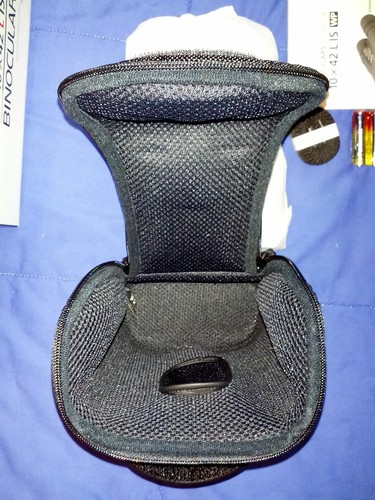
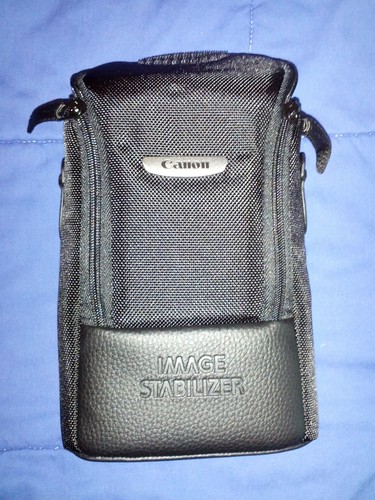
Handling is centered on the large center focusing knob, and it is genuinely easy to work with one hand while the other holds a rail or a rod. The 65 degree apparent field of view is broad for a stabilized optic, so target acquisition is quicker than with a narrow-field high-power glass. The neoprene body and included padded case, neck strap and eyepiece rainguard all point at someone who expects to get wet.
Honest downsides are limited but real. The body is bulky next to smaller stabilized binoculars, and center focus is less precise than individual focus when you are dialing a specific distance, which matters a little for judging distance to a buoy. If your priority is precision at a fixed range rather than a broad scan, note that some marine skippers still prefer individual-focus fixed 7x50s for taking bearings.
Who this glass suits
This suits the all-purpose cruiser and the center-console skipper who glasses in real weather. On thehulltruth.com a bluewater angler fishing and gunning for bluefin reported that Canon L IS 10×42 waterproof image stabilizing binoculars beat Fujinon alternatives all day, and that is exactly the report card for this model. It also suits anyone whose boat lives in salt, because fogproof waterproof sealing is the difference between usable and useless after a week of spray.
Where it falls short
It is not the reach pick. At 10x, a distant channel marker is a shape rather than a number, and you will need the 18x or the 16x for identification at real distance. It is also not small, so on a skiff or a kayak you are carrying more glass than you need. Buy this for the boat you actually have, not the boat you are planning.
3. Fujinon Techno Stabi TS1440-14×40 – 14x Power With 5 Degrees of Correction
Fujinon Techno Stabi TS1440-14×40 Image Stabilization Binocular
14x / 40mm objective
2.86mm exit pupil
13mm eye relief
5 degree field of view
Waterproof, 4 AA batteries
Pros
- 5 degrees of optical stabilization makes 14x usable handheld on a moving boat
- Waterproof and fogproof sealing
- Phase-coated multi-layer optics give a sharp image
- Rubber-armored body grips securely in wet conditions
- Hard protective case and strap included
Cons
- Bulky and heavy compared with conventional binoculars
- 5 degree field suits distant targets over close scanning
- Fixed interpupillary distance
- Objective lens caps not included
The Techno-Stabi TS1440 is the benchmark against which other stabilized marine glass gets measured, and reviewers describe it that way. Fourteen times magnification with 5 degrees of correction is a real amount of optical stabilization, and the effect from a moving deck is the reason owners on sailboats and whale-watching trips call the image rock steady. It is also the oldest design here and the one with the longest ownership history in the field.
That longevity is the strongest trust signal we found. A long-term owner on the forums for sailboat owners reported that a Fujinon Techno-Stabi 14×40 bought more than two decades ago still works like new, and durability and repair longevity is the loyalty signal that keeps coming up in cruiser discussions. The optics are phase-coated multi-layer glass behind a Porro prism, with center focus and a plus or minus 5 diopter adjustment.
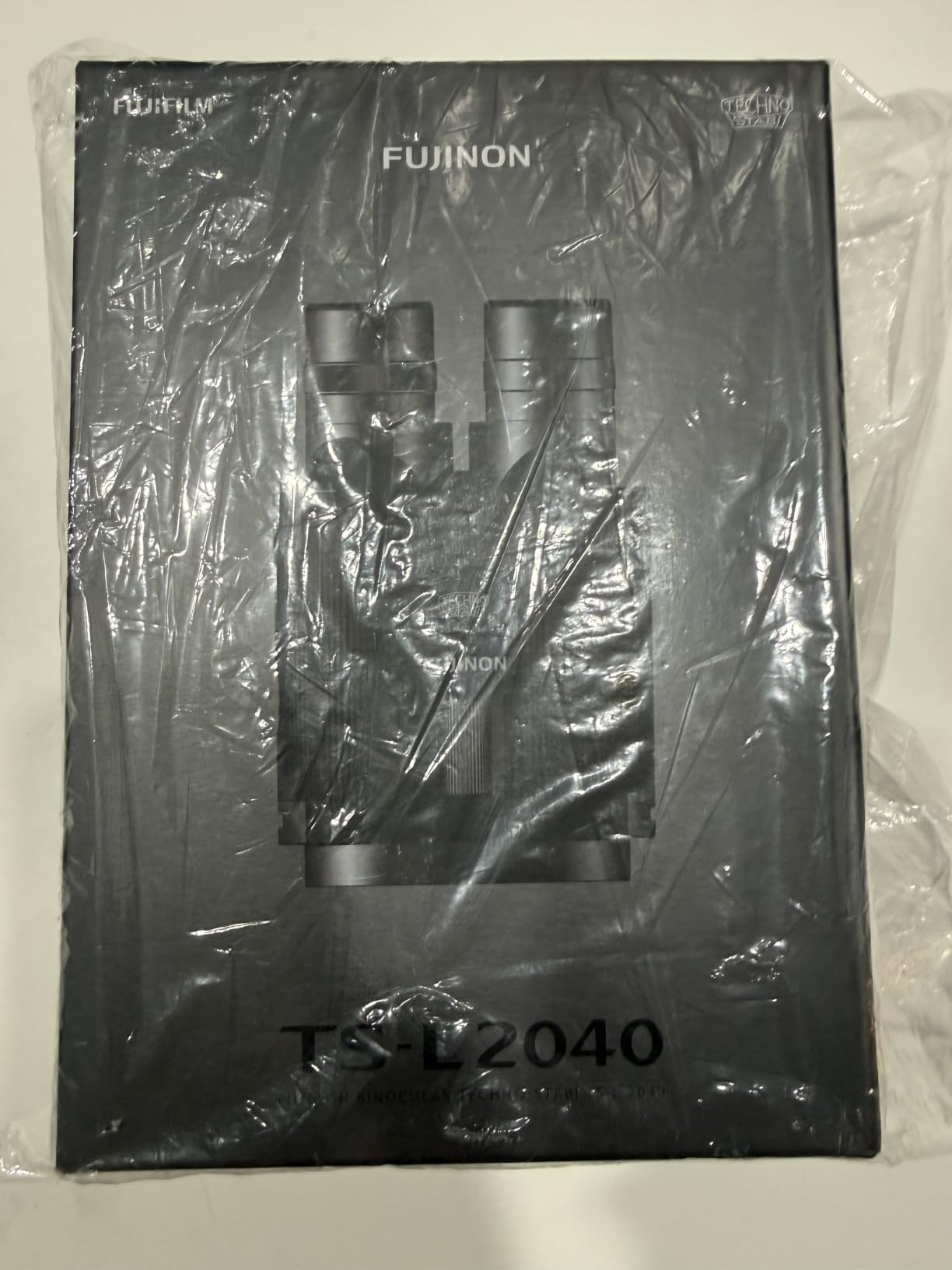
It is sealed waterproof and fogproof, and the fiberglass-reinforced plastic body wears a rubber armor that gives a secure grip in wet hands. It runs on four AA alkaline batteries, which is more than the others here, and reviewers flag the practical consequence: pull the batteries for long-term storage or you will find a dead unit after a season in a locker. The hard protective case and strap in the box are useful on a heeling deck, where a padded case is better than a loose bag.
The compromises are real and they are physical. At 14x with a 5 degree field of view, this is a telescope for distant targets, not a wide scanning glass, and finding something is slower than with a 10x. The 2.86mm exit pupil limits dusk performance compared with the 10×42. The fixed interpupillary distance will not fit unusual eye spacing, and the manufacturer listing does not state a weight, though owners consistently describe the body and its case as bulky.

Who this glass suits
This suits the offshore and pelagic angler and the cruiser who will own the same binoculars for a decade. Fourteen times is the sweet spot for finding a fish marker, a distant bird or a whale back at a distance where identification still matters, and the waterproof sealing means it lives in a wet locker without drama. If you also bird and star-watch from land, this is the pick our binoculars for hunting guide approach would point toward as a dual-purpose optic.
Where it falls short
It is heavy and it is narrow. The 5 degree field of view is the tightest here, so sweeping a horizon with this is work rather than a scan, and the extra battery count is one more thing to manage on a long passage. Objective lens caps are not included, which on a boat means water and grit reach the front element when the glass is set down on a wet deck.
4. SIG SAUER Zulu6 HDX OIS 16×42 – Smallest 16x Stabilized Glass in the Group
SIG SAUER Zulu6 FDE HDX OIS 16X42mm Roof Prism Binocular
16x / 42mm objective
2.63mm exit pupil
16mm eye relief
1.02 kg
Roof prism, IPX-7, aluminum
Pros
- Exceptionally compact and light for a 16x stabilized binocular
- Target Mode adds up to 50% more stabilization
- HDX glass gives good clarity and resolution for the size
- Roof prism and aluminum housing with IPX-7 protection
- Sixteen power lets you identify small distant targets
Cons
- Focuser has noticeable play and is hard to focus precisely
- Low-light performance falls short of what the size suggests
- Some veiling glare reported
- Narrow tunnel-like field of view slows target acquisition
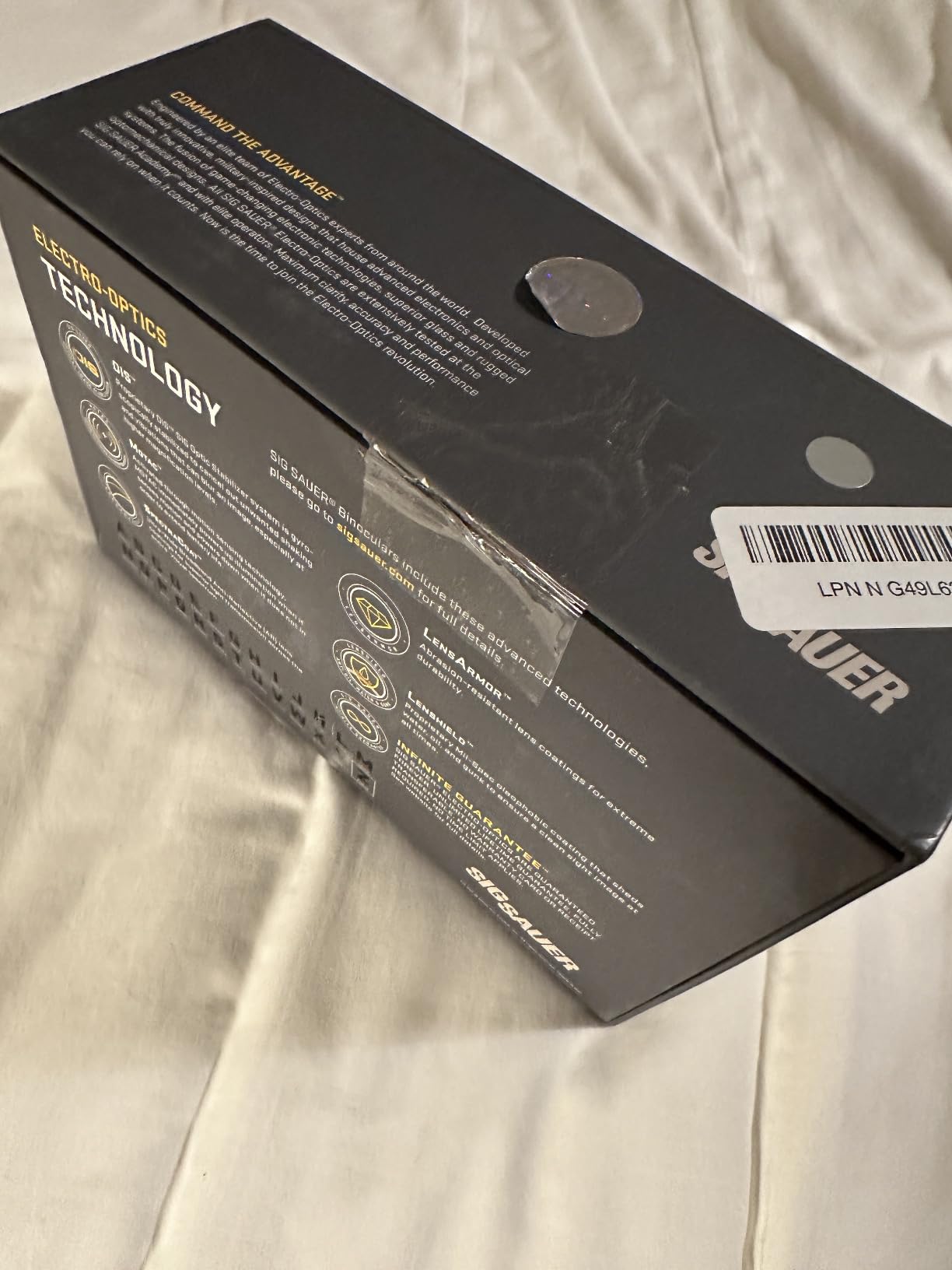
This one exists because the classic objection to stabilized marine glass is size. At 1.02 kg in a roof-prism body, the Zulu6 HDX OIS 16×42 packs 16x stabilized power into something closer to the size of a fixed 8×42. Owners comparing it side by side with Fujinon, Vixen and Canon IS models describe it as the best balance of cost, weight, size, stabilization and image quality in the group, and the same family is offered in 10x, 12x, 16x and 20x variants.
The stabilization is the strongest-selling part. Sig Sauer OIS runs in Scan Mode for general observation and Target Mode, which the maker rates at up to 50% more stability when you lock onto a subject. The HDX lenses are the updated high-definition glass in the range, and the maker points to enhanced light transmission and full-resolution images without a tripod.

Water is the other strength. The IPX-7 rating is the most demanding sealing in this list, which means the optic is protected against immersion as well as spray, and the aluminum enclosure with a roof prism suits an open, wet boat better than a sealed Porro design. Sixteen times on a 42mm objective still gives a 16mm eye relief, which is generous, and diopter adjustment plus automatic focus keep the setup simple.
Now the honest list. The focuser is the most common complaint, with noticeable play that makes precise focusing on a small distant target frustrating. Low-light performance is reported as weaker than the glass and the build would suggest, which matters if you glass at dusk. Some owners report veiling glare and flare in bright conditions, and the narrow field of view makes finding things slower than it should be.
Who this glass suits
This suits the small-boat and center-console owner who wants real power but counts ounces, and anyone whose main reach need is identification rather than scanning. At 16x you can count birds on a raft or pick out a distant marker shape, and the roof prism shape is less vulnerable to a knock than a protruding Porro barrel. The same model family covers the range if you want 12x or a heavier 20x for spotting big offshore.
Where it falls short
It is not the choice for a helmsman who needs a wide, forgiving scan, and it is not the choice for a dawn or dusk watch given the reported low-light shortfall. The focuser will frustrate you on a distant target that is filling only part of the field. At 50 reviews the owner history is also younger than the Canons and the Fujinon, so you are buying a newer design rather than a proven one.
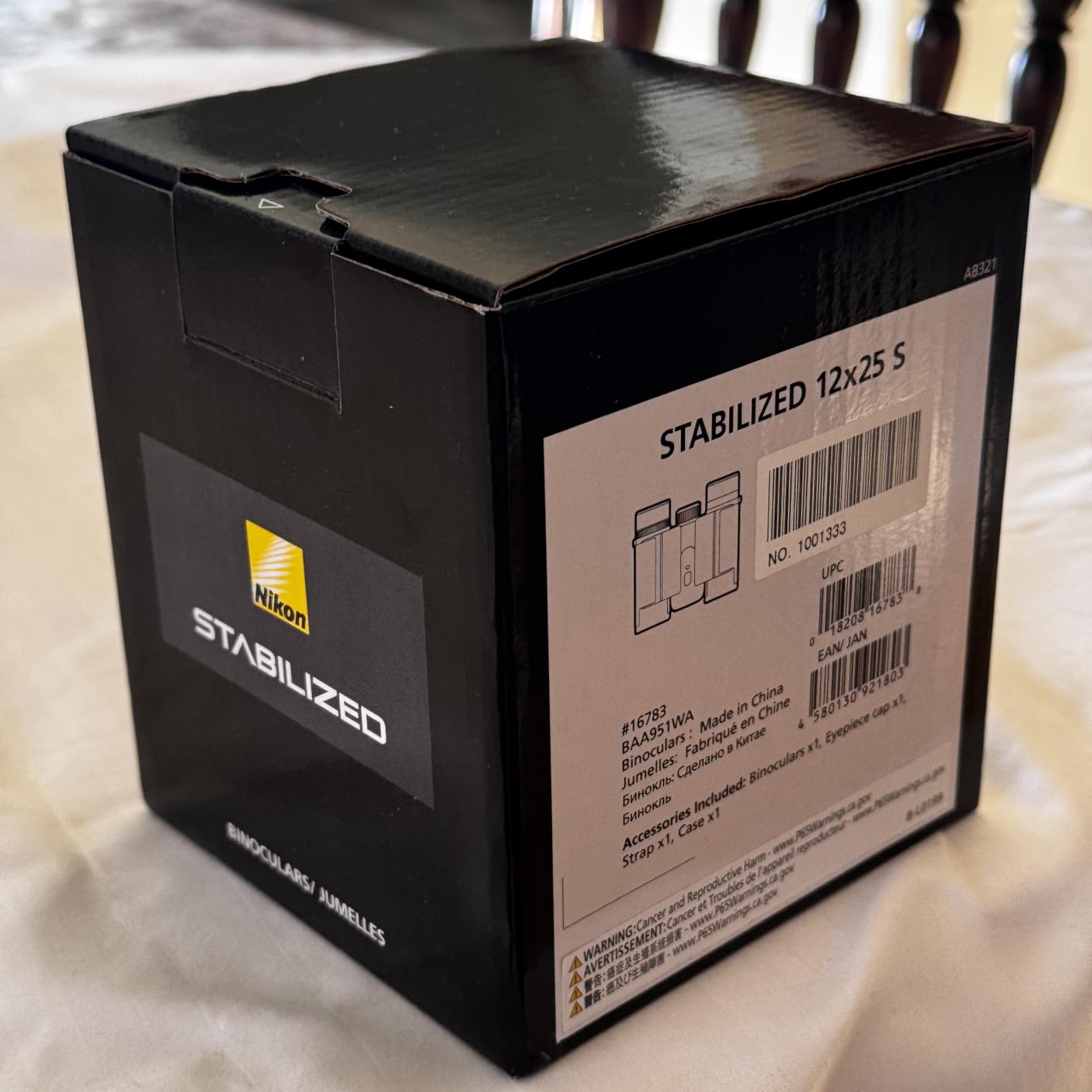
5. Nikon STABILIZED 12×25 – Lightest Carry With Real Stabilization
Nikon STABILIZED 12×25 Binoculars – Optical Image Stabilization, Blur-Free View, Waterproof Design, 12x Magnification for Hunting, Birdwatching & Outdoor Activities
12x / 25mm objective
2.1mm exit pupil
50.5 degree apparent field
13.9 ounces
Up to 12 hours on AA batteries
Pros
- Genuinely pocketable at 13.9 ounces
- Electronic stabilization removes hand tremor at 12x
- Sharp high-contrast optics with multicoated lenses
- Simple on toggle instead of a push-and-hold button
- Up to 12 hours on AA with 60-minute auto shutoff
- Folding center hinge compacts the body
Cons
- Small 2.1mm exit pupil rules out dusk use
- Included pouch and caps feel cheap
- Front lens protector interferes with the diopter ring
- Some users report it is not weather sealed as the listing suggests
At 13.9 ounces, this is the only stabilized binocular in the list that fits in a jacket pocket, and that changes what you can take on a boat. A kayak angler, a small skiff operator or anyone who has to carry a glass, a rod and a bailer at once can do all three with this on their chest. It uses a compact roof prism and a folding center hinge, and the electronic stabilization compensates for hand movement at 12x.
Power management is unusually well thought out for marine use. It runs up to 12 hours on standard AA batteries with an automatic shutoff after 60 minutes of inactivity, which is the setting that matters on a passage where a forgotten live battery can drain a cell you needed later. The stabilization control is a straightforward on toggle rather than a push-and-hold button, which is easier to operate with wet hands or cold fingers.
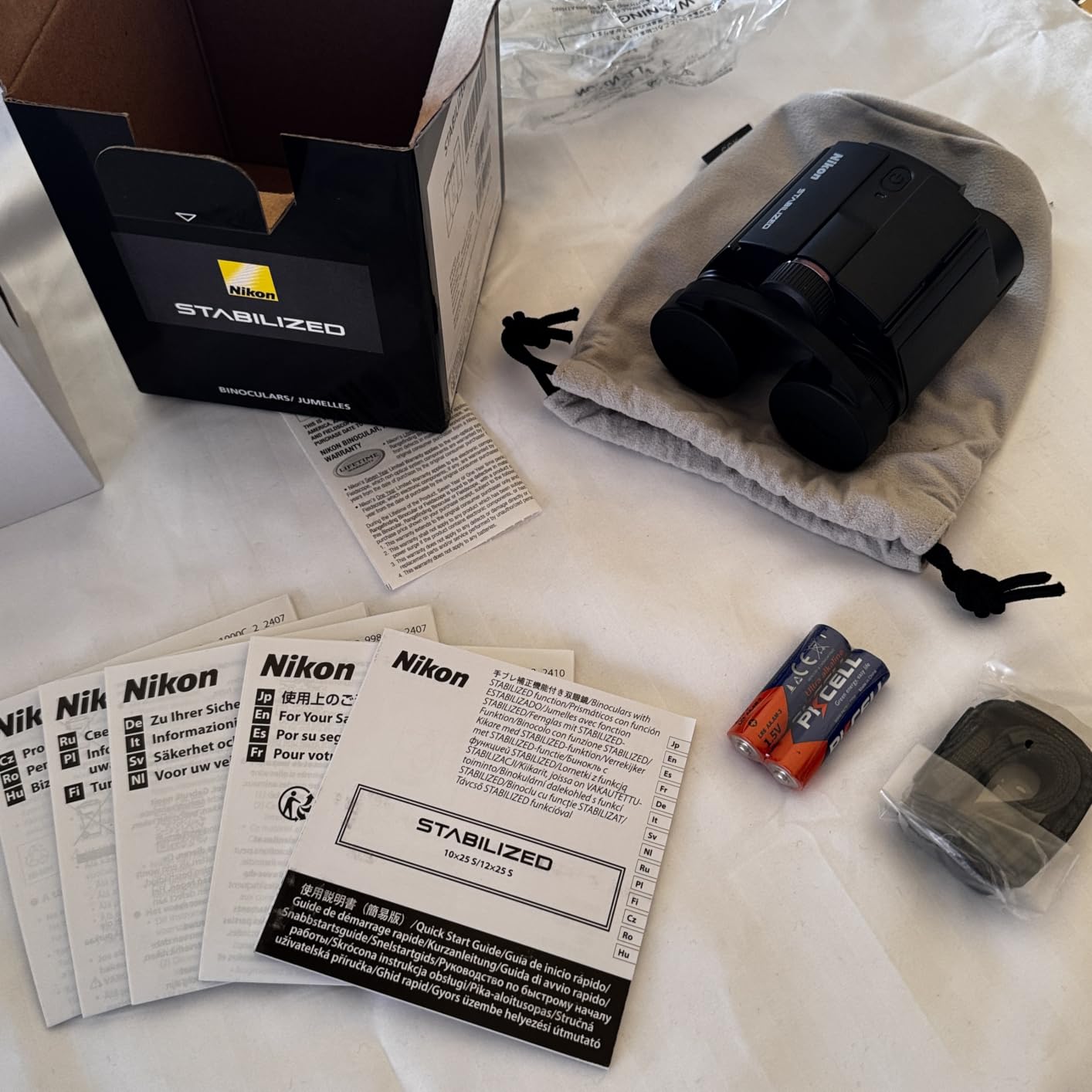
Optically, the multicoated lenses combined with high-reflectivity silver alloy prism coatings give bright, high-contrast images for the size, and the 50.5 degree apparent field is the widest here, so acquisition is quick. The textured slip-resistant central focus wheel and turn-and-slide eyecups let you set eye relief for glasses. There is also a standard 1/4-20 tripod mount for anyone who wants to clamp the glass to a radar arch while taking a bearing.
The 25mm objective is the catch. A 2.1mm exit pupil is the smallest here by a wide margin, which means the glass is effectively a daylight instrument, and last-light or pre-dawn work is out. Owners also report that the included pouch and caps feel cheap, that the front lens protector interferes with the diopter ring, and that the sealing may not be as robust as the waterproof listing suggests, so treat it as a fair-weather and freshwater glass.
Who this glass suits
This suits the small-boat and travel user, and it doubles as general-purpose glass for a drive to the boat or a walk on the shoreline. Twelve stabilized times in something this light is unusual, and reviewers single out the clarity alongside the simple one-button operation. If you want a stabilized pair that never leaves the pack and covers a kayak, a jon boat and a road trip, this is the one.
Where it falls short
It falls short on light, on weather and on accessories. A 2.1mm exit pupil is not a dusk glass, the sealing doubts raised by owners matter a lot in salt air, and the missing rear lens cap means you are carrying loose caps in your pocket. If your boating happens after sunset or in open water, spend the extra money and go up a class.
6. Canon 10×32 IS Image Stabilizing Binoculars – Top Rated for Calm-Water Day Boats
Canon Cameras US 10X32 is Image Stabilizing Binocular, Black (1372C002)
10x / 32mm objective
3.2mm exit pupil
Lens-shift IS with field flattener
1.7 pounds
Single AA battery
Pros
- Highest average rating in the group at 4.7 stars
- Lens-shift stabilization with a separate Powered IS mode
- Field-flattener lens system keeps edge sharpness high
- 6.6 ft minimum focusing distance
- Light at 1.7 pounds with a large center focus wheel
Cons
- Water resistant rather than fully waterproof
- Listing shows a 14x zoom ratio against a 10x model designation
- Small 32mm objective limits low light
This one scores 4.7 stars across 33 reviews, the highest average rating of any stabilized binocular we analyzed, with no ratings below three stars. Owners consistently name the lens-shift stabilization, the field-flattener optics and the low weight as the reasons, and at 1.7 pounds it is a genuinely easy glass to hold for an entire afternoon on a flat lake or a protected bay.
The stabilization system is a simple two-button interface with Normal and Powered IS modes, and the field-flattener lens system is there to keep the edges sharp, which matters when you are working across a wide horizon rather than at a single distant point. The 6.6 foot minimum focusing distance lets you put it on something close without giving up the stabilized view.
Who this glass suits
This suits calm and moderate water, day boats, and anyone who wants a stabilized pair that is easy on the hands. Light, simple and well rated, it is a natural second pair for a skier or a small powerboat, and it works as a shore glass for birding on a trip. A reviewer on mountainbuzz.com described the Canon 10×30 stabilized binoculars as user friendly because of exactly this kind of straightforward control layout.
Where it falls short
It is water resistant, not fully waterproof, so it is not the glass to leave on a wet foredeck through a sea. The 32mm objective and 3.2mm exit pupil mean it is a daylight instrument, and the listing carries a 14x zoom ratio against a 10x designation, so check the model number rather than the marketing line. In anything above a gentle swell, reach drops and you will want the 14x or the 18x instead.
Magnification for a Moving Hull: 7×50 vs 10×42 vs 16×42
Magnification is the number boaters argue about most, and on a moving vessel it is a tradeoff rather than a ranking. Higher power resolves more detail at a given distance but multiplies every movement of the boat, and only stabilization can buy that power back. The practical answer is to buy the lowest magnification that lets you identify what you need to identify, then use stabilization to push the rest.
Seven times 50 is the navigation standard for a reason. The wide field means you can find a buoy fast, the large objective and big exit pupil keep the image bright as the light goes, and without stabilization the low power keeps the view steady on its own. Its weakness is identification: at seven times, a distant channel marker may not tell you which one it is.
Ten times 42 sits at the useful middle. Four times the light-gathering area of a compact stabilized pair, a 4.2mm exit pupil in the Canon 10×42 L IS WP, and enough power to start identifying markers. Fourteen to eighteen times is the identification tier, and it is only worth carrying with stabilization in the housing, because that is where hull vibration gets cancelled.
One more thing the spec sheet hides: a narrow field of view is not a neutral choice. The Fujinon 14×40 at 5 degrees and the 18×50 at 7.5 degrees find things slowly, and a slow scan on a heeling boat is when you lose the horizon. Match magnification to the size of what you are looking for, and match the field of view to how much sea state you will be in.
Waterproofing and Fog Proofing on a Boat
Salt spray and fog are the same problem from two directions. Water gets in and condenses inside the tubes, and the moment internal fog forms, the optics are ruined for the rest of the trip. Every pick here lists a water resistance level, and those levels are not equal.
Water resistant, which covers the Canon 18×50 All-Weather and the Canon 10×32 IS, means splash and rain. Fine for a covered cockpit on a fair day, wrong for anything that gets dunked or left in a wet locker.
Waterproof and fogproof sealing covers the Canon 10×42 L IS WP and the Fujinon Techno-Stabi TS1440. This is the standard you want for an open boat, a flybridge and any kind of multi-day trip. Both of these also carry a sealed housing, so a rinse after a salt day is safe.
IPX-7, which is the SIG SAUER Zulu6 HDX OIS 16×42 rating, is the deepest protection here and covers temporary immersion. Whatever the rating, the rinse routine is the same: fresh water, low pressure, lens caps off, and dry with a lens cloth rather than a shirt sleeve. Owners on the forums consistently weight sealing and fog performance above raw magnification, which matches what we see in the review data.
Salt Spray Care and Battery Logistics on a Long Passage
Stabilized glass adds electronics to a device that used to be pure glass, and electronics plus salt plus a damp locker is how a pair dies slowly. A short routine prevents almost all of it.
Rinse with fresh water after every day on salt water, with the objective caps off and the eyecups down, and pay attention to the hinge and the battery compartment seals. Dry the body fully before closing it into its case, because trapped moisture inside a case is what causes fog. Use a blower or a soft cloth on the front element, and never a paper towel, which can scratch coatings.
For batteries, the stabilized models here run on either two AA cells or four, and the Fujinon is the one to watch. Remove the cells before any long-term storage, because a slow leak in a warm locker eats the corrosion-prone contacts. Carry a spare set in a sealed bag, and check the auto-off timer: the Nikon’s 60-minute shutoff is the setting that will save you a cell on a long watch, while models without a timer will simply stay live.
Weight is the other logistics item. A full set of cells, a case and a strap adds up on a small boat, which is exactly why the 13.9-ounce Nikon and the 1.02 kg Zulu6 are worth their place on smaller hulls. If your boat already carries a full electronics suite, our guide to the best fixed-mount VHF radios for offshore boating covers the other hardware that has to share that locker.
Frequently Asked Questions
Are image stabilizing binoculars worth it for boating?
Yes, above 10x on a moving boat. Stabilization cancels hull vibration and hand shake before the image reaches your eye, which is what makes 12x, 14x, 16x and 18x power usable from a deck. Below 8x on calm water, a good fixed 7×50 does the same job, costs far less and floats. Many cruisers carry both: a compass 7×50 for bearings, a stabilized pair for spotting.
Which binoculars are better for boating, 7×50 or 10×50?
A 7×50 is the navigation instrument and a 10×50 is the spotting instrument. The 7×50 gives you a wider field, a brighter image, no battery and no risk of a dead unit mid-passage, which makes it the better bearing tool. The 10×50, ideally with stabilization, lets you identify a specific marker or count birds at a distance the 7×50 cannot resolve. If you can only carry one pair and your boat works at more than about 8 knots in open water, choose the stabilized 10x.
What binoculars are best for boating?
For most skippers the Canon 10×42 L IS WP is the best all-round choice: fully waterproof and fogproof, a bright 4.2mm exit pupil, 16mm eye relief and a large center focus knob you can work with one hand. For maximum reach pick the Canon 18×50 IS All-Weather, and for the smallest stabilized glass with 16x power pick the SIG SAUER Zulu6 HDX OIS 16×42. Whichever you choose, pair it with a floating fixed 7×50 compass binocular for bearings.
How does image stabilization work in binoculars?
Three architectures are used. Optical lens-shift and prism systems move a floating optical element against detected motion, as in the Canon 10×32 IS and the Fujinon Techno-Stabi TS1440 with its 5 degrees of correction. Electronic systems use sensors and a driven element, as in the SIG SAUER Zulu6 HDX OIS, which offers Scan and Target modes and up to 50% more stability in Target mode. Mechanical systems use free-moving counterweights on the prism and are now rare in new marine glass.
Can you use image stabilized binoculars on a moving boat?
Yes, that is the design case for them. The stabilization is built to cancel the low-frequency shake of a working hull as well as your own hand movement, so a stabilized 10x to 18x pair stays usable from a moving deck. Expect a short re-acquisition moment when you switch into a lock mode such as Target or Powered IS, so use the scan mode for horizon work and lock only once you have found your target.
Conclusion: The Best Image Stabilized Binoculars for Boating
For most boaters, the best image stabilized binoculars for boating come down to one clear question: how far do you need to identify something, and how much salt hits your glass. The Canon 18×50 IS All-Weather is the reach pick and our top choice for flybridge and raised-helm spotting. The Canon 10×42 L IS WP is the all-round marine workhorse, with the brightest exit pupil and the strongest sealing in the group. The Fujinon Techno-Stabi TS1440 is the long-term buy, proven over two decades of ownership, with 14x and 5 degrees of correction. The SIG SAUER Zulu6 HDX OIS 16×42 is the compact and IPX-7-protected option, and the Nikon STABILIZED 12×25 is the one that fits in a pocket for small boats.
Whatever you pick, keep a floating fixed 7×50 with a compass reticle on the helm for bearings, carry spare cells, and rinse with fresh water after every salt day. The stabilized glass is what lets you see; the fixed glass is what gets you home.