
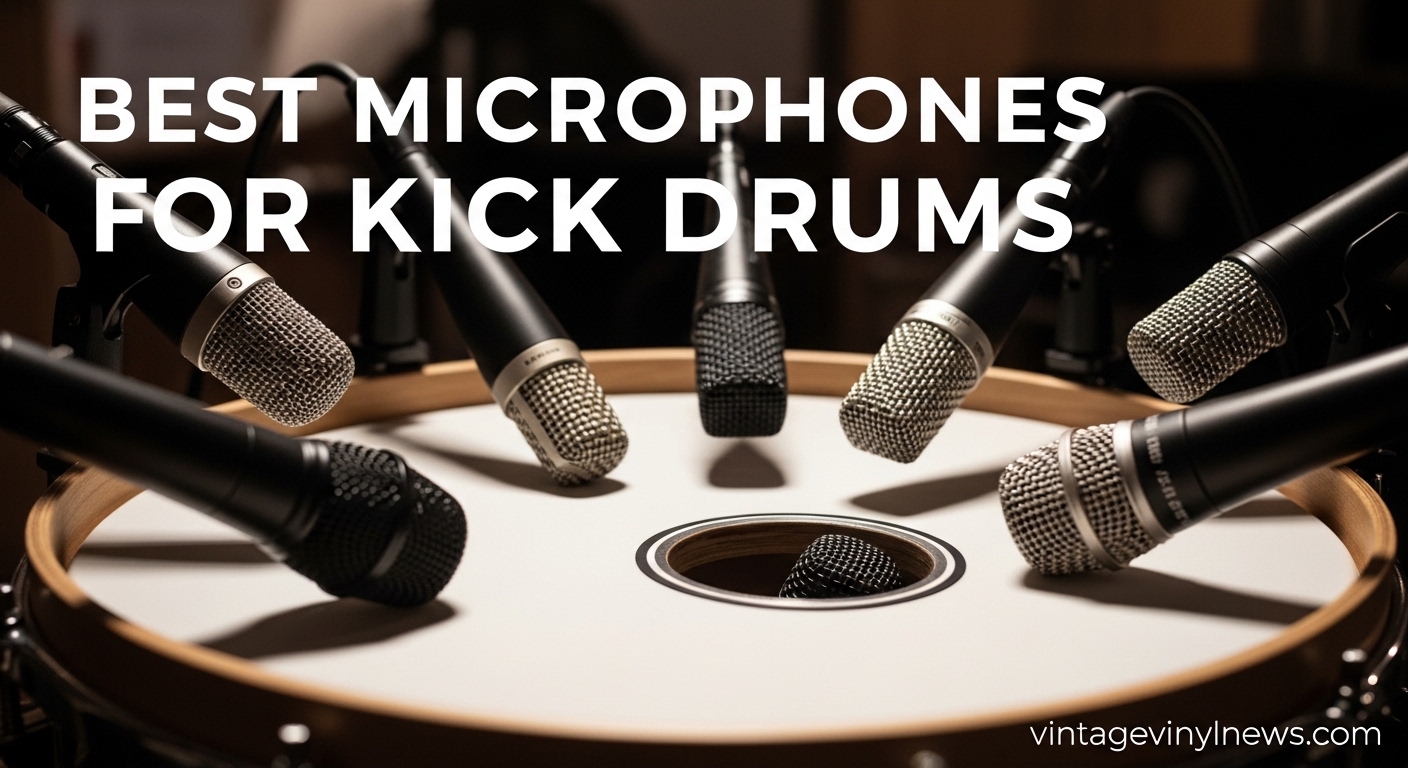
Getting a great kick drum sound is one of the biggest challenges in recording and live sound. The kick drum is the foundation of your entire mix, and the wrong microphone can leave you wrestling with muddy low-end or missing attack for hours. After testing dozens of options across studio sessions and live gigs, our team put together this guide to the best microphones for kick drums in 2026 to help you find the right match for your setup.
Whether you are tracking heavy metal in a treated studio, running live sound at a venue, or recording demos in your bedroom, the right kick drum mic makes all the difference. We cover everything from industry-standard dynamics to premium active models and versatile boundary mics, so you can pick the one that fits your genre, budget, and workflow.
In this guide, we review 10 kick drum microphones that have earned their place on stages and in studios around the world. Each one has been selected based on real user feedback, professional engineer recommendations, and our own hands-on experience behind the kit.
Table of Contents
Top 3 Picks for Best Microphones for Kick Drums

Best Microphones for Kick Drums in 2026
| Product | Specifications | Action |
|---|---|---|
| Shure Beta 52A |
|
Check Latest Price |
 Shure Beta 91A Shure Beta 91A |
|
Check Latest Price |
 AKG D112 MKII AKG D112 MKII |
|
Check Latest Price |
 AKG D12 VR AKG D12 VR |
|
Check Latest Price |
 Audix D6 Audix D6 |
|
Check Latest Price |
| Sennheiser e602-II |
|
Check Latest Price |
 Sennheiser MD 421-II Sennheiser MD 421-II |
|
Check Latest Price |
 Electro-Voice RE20 Electro-Voice RE20 |
|
Check Latest Price |
 Electro-Voice ND68 Electro-Voice ND68 |
|
Check Latest Price |
 Audio-Technica ATM250 Audio-Technica ATM250 |
|
Check Latest Price |
1. Shure Beta 52A – Industry Standard Supercardioid Dynamic
Shure BETA 52A Kick Drum Microphone – Supercardioid Dynamic Mic with High Output Neodymium Element, Locking Stand Adapter, Durabl Steel Mesh Grille and Shock Mount
Supercardioid dynamic
20Hz-10kHz
Neodymium element
Pneumatic shock mount
Pros
- Industry standard kick drum mic
- Excellent low-end punch and attack
- Hardened steel grille
- Durable and reliable
Cons
- Heavy - needs sturdy boom stand
- Limited to kick and bass use
The Shure Beta 52A has been my go-to kick drum mic for years, and for good reason. I have used it on everything from jazz sessions to heavy rock recordings, and it consistently delivers a balanced sound with both the low-end thump and the beater attack you need. Place it just inside the resonant head port and you get a sound that needs almost no EQ to sit well in a mix.
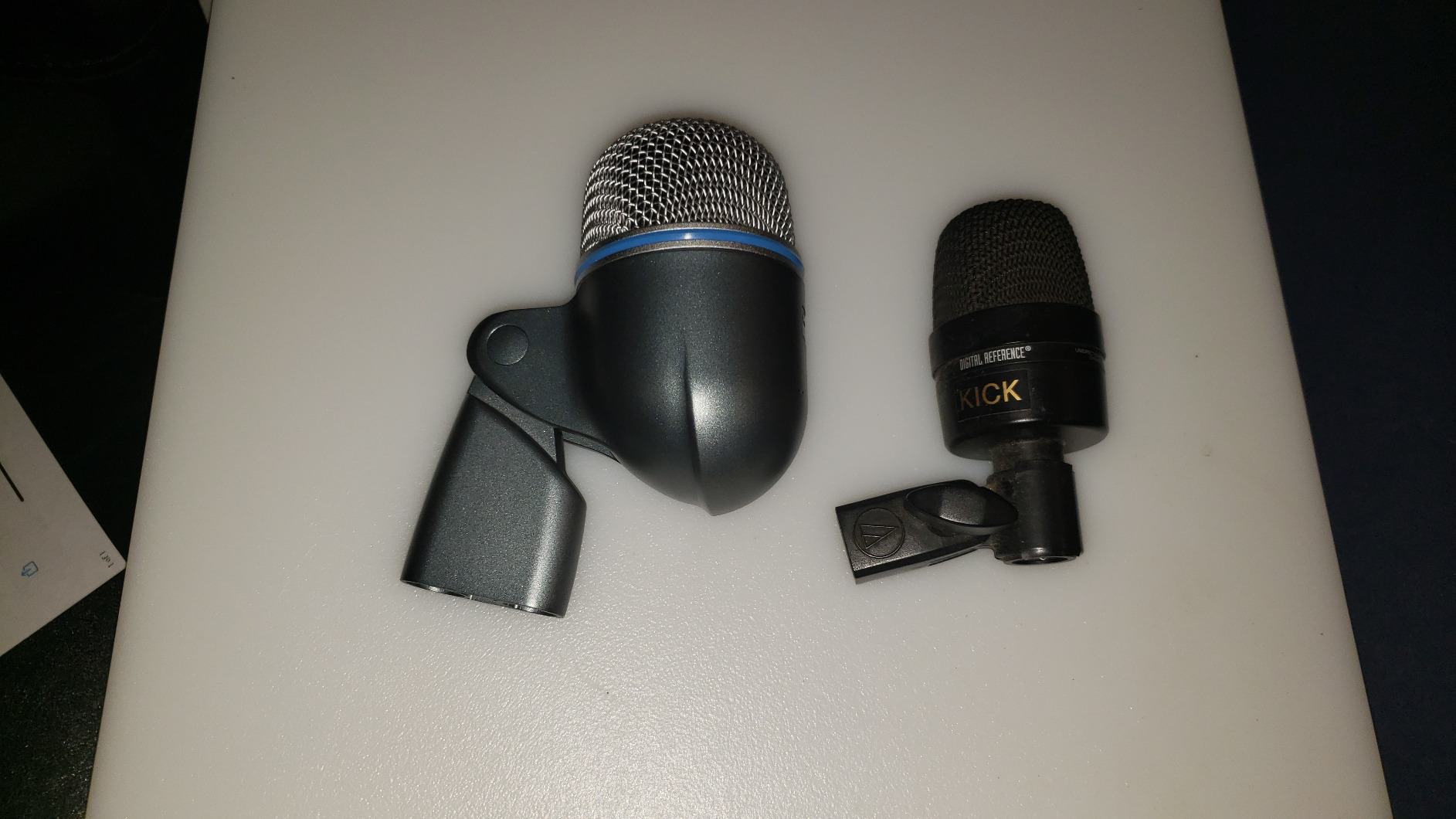
What stands out right away is the build quality. This mic feels like it could survive a fall down a flight of stairs, which matters when you are loading gear in and out of venues four nights a week. The hardened steel mesh grille has taken plenty of accidental hits from drumsticks in my experience and still looks brand new.
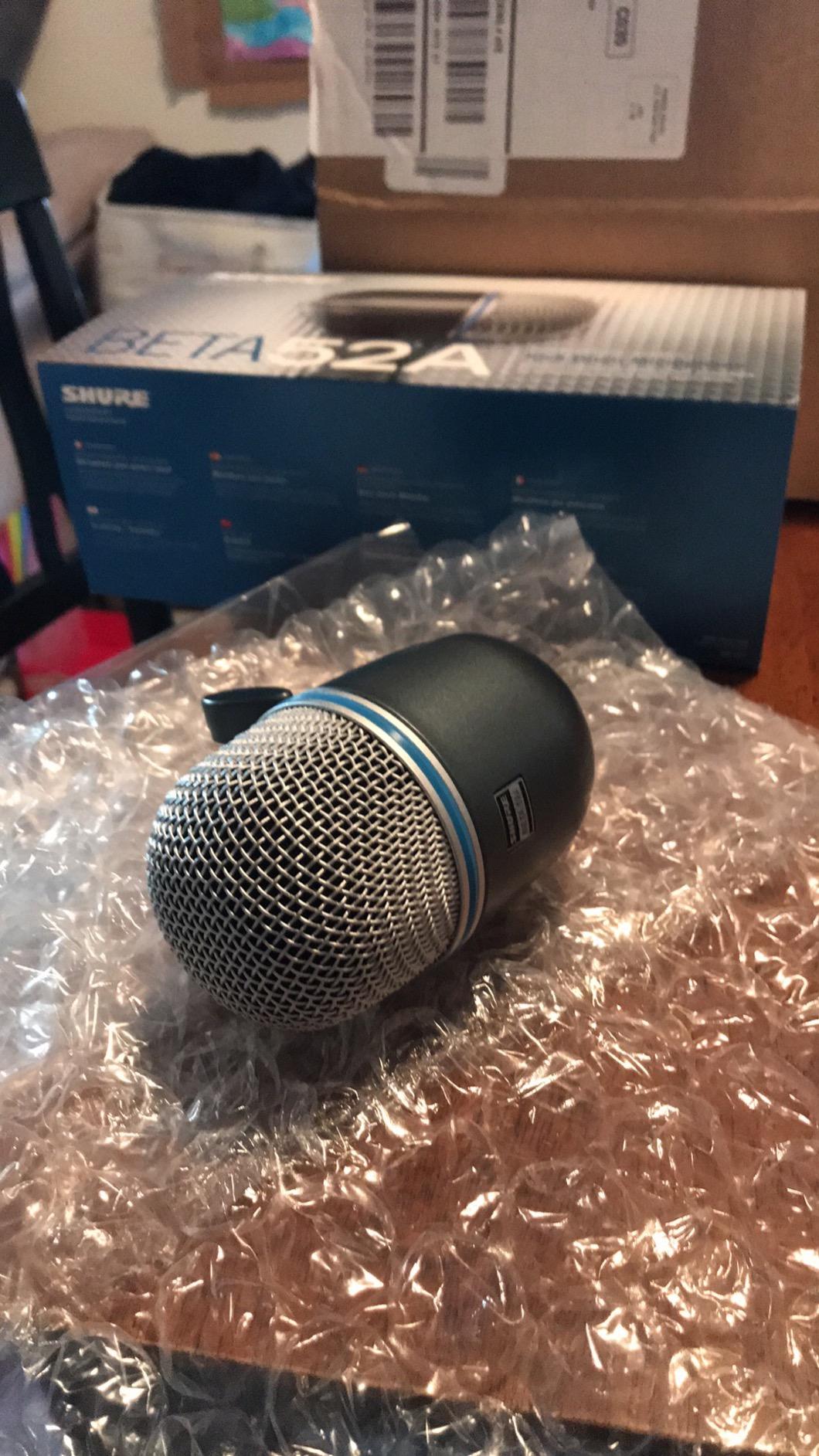
The supercardioid pattern is one of the main reasons I keep reaching for this mic. It does an impressive job of rejecting bleed from the snare, hi-hat, and floor toms. In a live setting where stage volume is high, that rejection translates directly to more gain before feedback, which is a lifesaver for live sound engineers.
One thing I have noticed is the weight. At nearly 22 ounces, the Beta 52A is heavy enough that a flimsy boom stand will slowly drift downward mid-session. I always pair it with a solid, counterweighted boom stand to keep the position locked. Once you sort that out, the integrated locking stand adapter holds the angle firmly in place.
Who Should Use the Shure Beta 52A
If you are a live sound engineer who needs one kick drum mic that works every single time without fuss, the Beta 52A is tough to beat. It is also a strong choice for home studio owners who want a plug-and-play sound that translates across rock, pop, country, and gospel. The frequency response from 20Hz to 10kHz is shaped specifically for kick drums, so you spend less time EQing and more time recording.
Who Should Look Elsewhere
Engineers who want maximum flexibility to shape their kick drum tone from scratch might find the Beta 52A too colored. If you prefer a flatter, more transparent starting point that you can sculpt heavily with EQ and compression, something like the Electro-Voice RE20 or AKG D12 VR might suit you better.
2. Shure Beta 91A – Low-Profile Boundary Condenser for Kick Drums
Shure BETA 91A Half-Cardioid Condenser Kick Drum Microphone
Half-cardioid condenser
Boundary mic
Contour switch
Integrated preamp
Pros
- Low profile design
- Versatile across instruments
- Excellent gain-before-feedback
- Two-position contour switch
Cons
- Requires 48V phantom power
- Best used inside kick drum
The Shure Beta 91A takes a completely different approach to kick drum miking. Instead of a traditional mic on a boom stand, it is a flat boundary microphone that you simply place inside the kick drum on a pillow or blanket. I first encountered one at a large church venue, and the sound engineer there told me it was the easiest kick drum sound he had ever gotten. After trying it myself, I understood why.
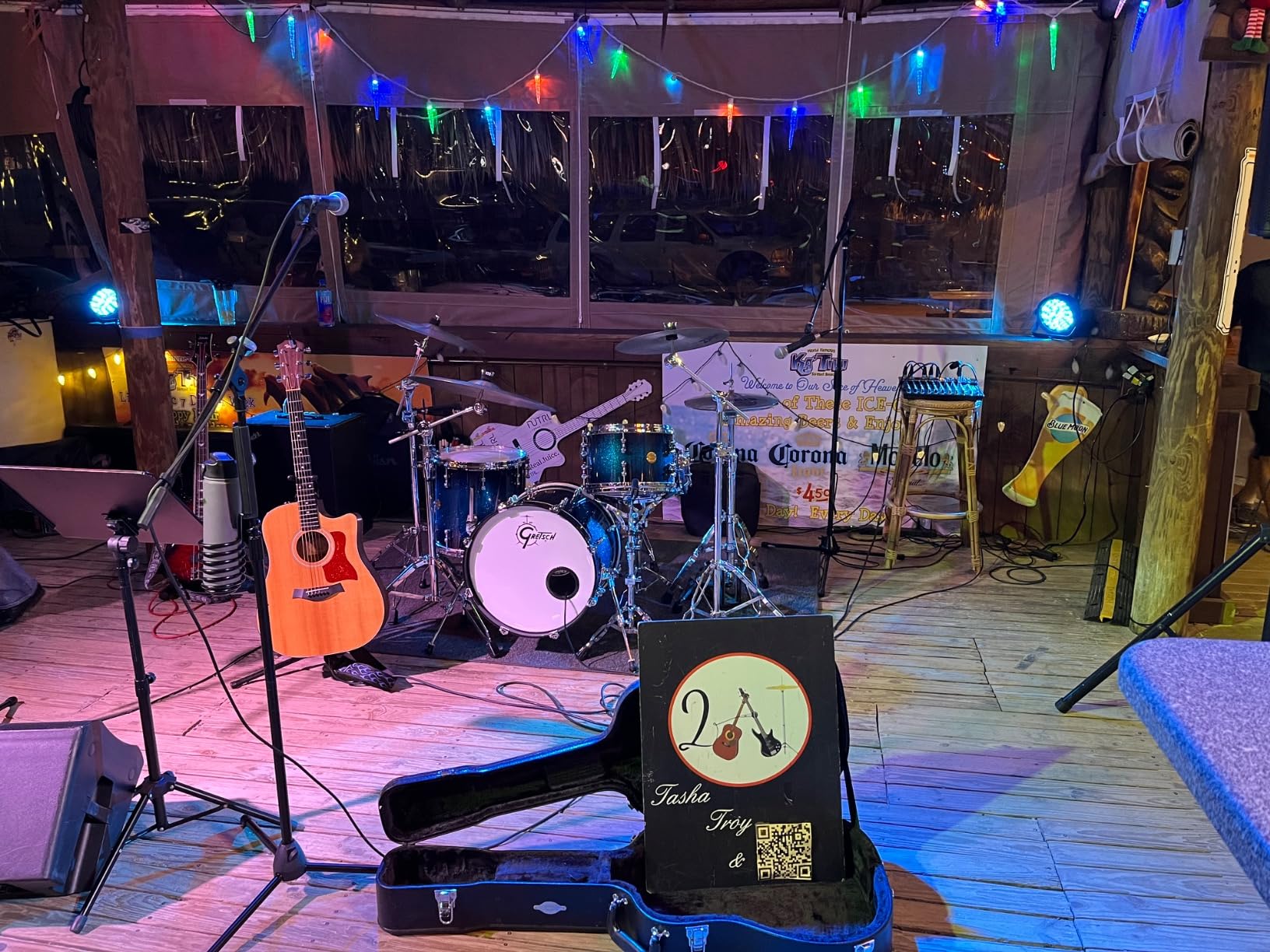
The low-profile design means zero stage clutter. No boom arm sticking out, no mic stand to trip over, and no visual distraction for the audience. You just set it inside the shell, run the cable out the port hole, and you are done. For houses of worship and theater productions where clean staging matters, this is a major advantage.
The two-position contour switch is a handy feature that lets you choose between a flat response or a low-mid scoop that emphasizes attack. I found the scooped setting works great for modern rock and pop where you want a tight, punchy kick with less boxiness. The flat setting is better when you want a more natural, full-bodied tone for jazz or acoustic settings.
Because the Beta 91A is a condenser microphone with an integrated preamplifier, it requires 48V phantom power from your mixer or audio interface. This is not a dealbreaker for most studios, but it is something to keep in mind if your live console does not provide phantom on every channel. Once powered, the wide dynamic range handles high SPL environments without breaking a sweat.
Who Should Use the Shure Beta 91A
This is the ideal pick for live sound engineers and worship teams who want a clean stage and a fast setup. It also works beautifully as part of a dual-mic setup, paired with an outside dynamic mic like the Beta 52A, to capture both the internal attack and external resonance of the kick drum.
Who Should Look Elsewhere
If you primarily record in a studio and prefer to experiment with different mic placements outside the kick drum, the boundary design limits your positioning options. A traditional dynamic mic on a boom stand gives you more flexibility to find the sweet spot at various distances and angles from the resonant head.
3. AKG D112 MKII – Classic Punchy Bass Drum Microphone
AKG D112 MkII Professional Bass Drum Microphone
Dynamic
20Hz-17kHz
Hum-compensation coil
Bass resonance chamber
Pros
- Industry standard for rock and country
- Punchy round sound
- Neutral response for EQ flexibility
- All-metal construction
Cons
- Built-in clip can limit angles
- Not Prime eligible
The AKG D112 MKII has been a studio staple since the original D112 launched decades ago, and the MKII version refines what was already great about it. I have tracked entire albums with this mic on the kick drum and been consistently impressed by how well it captures the natural character of the instrument without sounding hyped or artificial.
What makes the D112 MKII special is that bass resonance volume chamber inside the body. It gives the mic a distinctively punchy, round low-end that sits well in a mix from the moment you hit record. Mixing engineers on Reddit and Gearslutz frequently mention the D112 as their preferred kick drum mic because the neutral frequency response gives them room to shape the tone with plugins without fighting the mic’s inherent color.
The integrated hum-compensation coil is one of those features you do not think about until you need it. In venues with dodgy electrical wiring or near high-voltage equipment, this coil keeps electromagnetic interference out of your signal. I have used it in older venues where other mics picked up audible hum, and the D112 stayed dead quiet.
The built-in flexible mount is convenient for quick setups, but I will say it does limit your angling options compared to a standard clip on a boom stand. If you like to position your kick mic at unusual angles, you might find yourself wishing for a more adjustable mount.
Who Should Use the AKG D112 MKII
Recording engineers who want a neutral, mix-ready starting point should seriously consider the D112 MKII. It is especially good for rock, country, and indie music where you want a natural kick drum sound that you can sculpt later. It also doubles as a bass guitar cabinet mic, making it a versatile addition to any mic locker.
Who Should Look Elsewhere
If you want a mic that already has a scooped, modern sound right out of the box with no EQ needed, the Audix D6 or Beta 52A might be a better fit. The D112 MKII rewards mixing, so it is less of a plug-and-play option for live sound where you need immediate results.
4. AKG D12 VR – Premium Active Dynamic with Switchable Filters
AKG Pro Audio Dynamic Microphone (3220Z00010), Black (D12 VR)
Active dynamic
Switchable filter presets
C414 transformer
Optimized bass chamber
Pros
- Natural high-resolution capture
- Three switchable EQ presets
- C414 transformer for warmth
- Handles extreme SPL
Cons
- Very few reviews available
- Expensive
- Requires phantom power
The AKG D12 VR is the spiritual successor to the legendary vintage AKG D12, one of the most sought-after kick drum microphones in recording history. AKG built this modern version with the same type of large-diaphragm capsule design but added active electronics with three switchable filter presets that change the tonal character without reaching for an EQ plugin.
I was initially skeptical about the price, but the first time I engaged one of the filter presets during a tracking session, I understood the appeal. The three settings give you a flat response, a vintage-warm curve, and a modern punch curve. Being able to switch between these at the mic itself saved significant time during session preparation, especially when switching between different drum kits and musical styles.
The D12 VR uses the same transformer found in the legendary AKG C414, and you can hear that warmth in the low-end reproduction. Kick drums recorded through this mic have a natural weight and dimensionality that is hard to describe until you hear it in context. The ultra-thin diaphragm captures transients with impressive accuracy, which means you hear every subtle nuance of the beater hitting the head.
The main drawback is the limited feedback available from real users. With only 5 reviews online and a 3.6 average rating, the data set is too small to draw confident conclusions about long-term reliability. That said, the users who have reviewed it call it the best kick drum mic they have ever used.
Who Should Use the AKG D12 VR
Professional studio engineers who want the most flexible and natural-sounding kick drum capture available should consider the D12 VR. The three filter presets make it adaptable to any genre, and the high-resolution capture gives you maximum headroom for processing. It is also a great choice if you record a wide variety of drum kits and want one mic that can adapt to each.
Who Should Look Elsewhere
If you are on a budget or need a mic for live sound where the premium features would go underutilized, the D112 MKII or Beta 52A deliver excellent results for less. The D12 VR also requires phantom power for the active electronics, which is an extra consideration for live setups.
5. Audix D6 – Punch and Clarity for Rock and Metal
AUDIX D6 Cardioid Dynamic Kick Drum Microphone for Kick Drums and Bass Instruments
Cardioid dynamic
30Hz-15kHz
VLM diaphragm
144dB SPL handling
Pros
- Best for rock and metal
- Little to no EQ needed
- Excellent attack and punch
- Billet aluminum build
Cons
- Scooped response not for everyone
- Requires careful placement
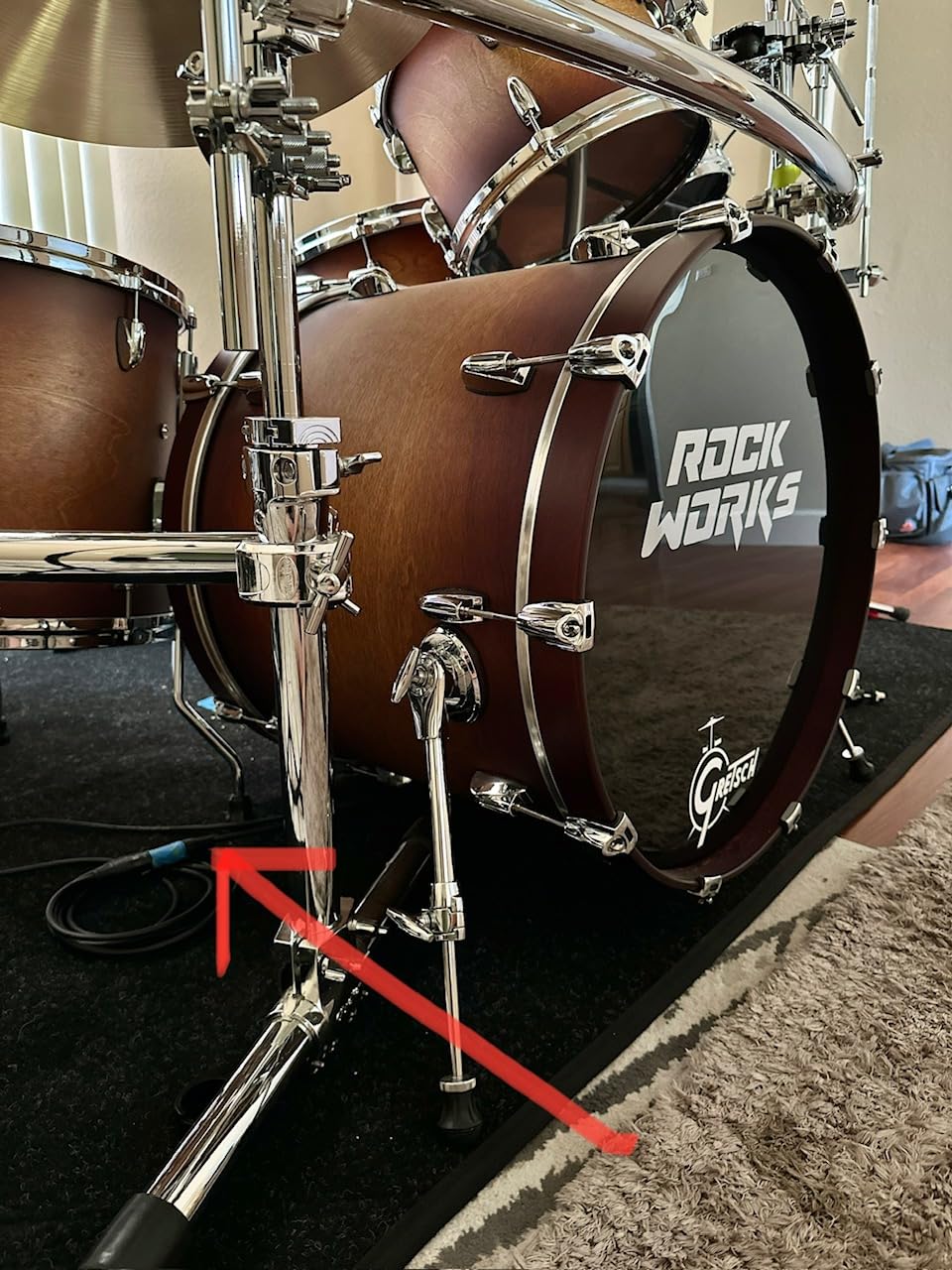
The Audix D6 has earned a fierce loyalty among rock and metal engineers, and after using one on several sessions, I get it. This mic delivers a pre-shaped sound that already has the scooped mids, deep sub-bass, and sharp beater attack that defines modern heavy music. You plug it in, position it inside the kick drum, and you are 90 percent of the way to a finished kick sound.
The VLM (Very Low Mass) diaphragm technology is what gives the D6 its signature quick transient response. When the beater hits the batter head, the D6 captures that initial attack transient with a speed and clarity that I have not experienced from many other kick drum mics. For double-kick patterns in metal and hard rock, that fast response keeps each hit distinct and articulated.
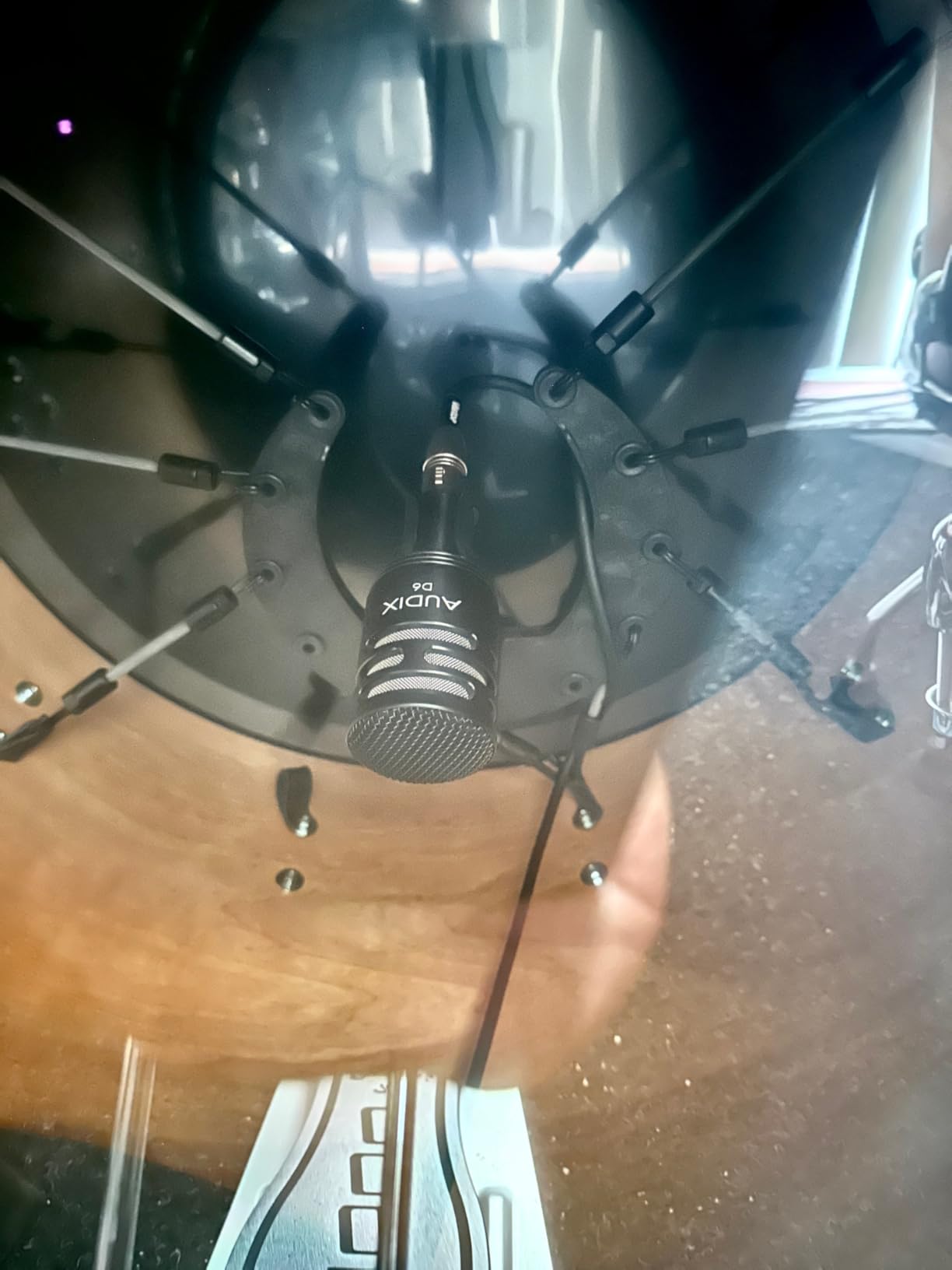
Build quality is exceptional. Multiple users describe the D6 as feeling like a solid piece of billet aluminum, and I agree. It is compact, heavy for its size, and clearly built to withstand years of studio and live use. The cardioid pattern does a solid job of isolating the kick from the rest of the kit, which is critical when you are close-miking a loud drum kit.
The 144dB SPL handling means this mic will never distort, no matter how hard the drummer hits or how close you place it to the beater. I have positioned the D6 just two inches from the point of impact on a heavily-tuned metal kick drum and the signal stayed clean and clear throughout the entire session.
Who Should Use the Audix D6
If you record or mix rock, metal, pop-punk, or any genre where you want a tight, punchy, aggressive kick drum sound with minimal processing, the D6 is built for you. It is also a great live sound choice for heavy music because the pre-shaped response translates well through PA systems without much console EQ.
Who Should Look Elsewhere
Jazz, folk, and acoustic music engineers who want a flat, natural kick drum sound will find the D6 too colored. The scooped midrange that works so well for metal can make a jazz kick drum sound thin and disconnected. For those genres, the AKG D112 MKII or Electro-Voice RE20 would be better starting points.
6. Sennheiser e602-II – Set-and-Forget Reliability
Sennheiser e602 II Evolution Series Dynamic Bass-drum Microphone
Dynamic
25Hz-18kHz
Large diaphragm
155dB SPL,10 year warranty
Pros
- Pleasing sound out of the box
- Excellent low-end clarity
- Set-and-forget simplicity
- 10 year warranty
Cons
- Integrated stand mount is basic
- Fewer reviews than competitors
The Sennheiser e602-II is one of those kick drum mics that quietly wins people over. I first tried one when a studio owner told me he preferred it over both the Shure Beta 52A and the AKG D112. That was a bold claim, but after A/B testing all three on the same kit, I found the e602-II had a smoother, more natural low-end character that required less post-processing to sound right.
Multiple users on audio forums describe the e602-II as having a sound that is “just right” straight out of the box. I agree with that assessment. The large diaphragm capsule captures huge amounts of sub-bass along with enough upper-mid presence to give the attack clarity and definition. It sounds polished in a way that many similarly priced mics do not.
The 155dB SPL capability is among the highest in this class, which means this mic will handle any kick drum you throw at it without a hint of distortion. The integrated stand mount keeps the high-mass housing stable, though it is fairly basic compared to the locking adapter on the Beta 52A.
Perhaps the most reassuring feature is the 10-year warranty. Sennheiser clearly stands behind the build quality of this microphone, and that kind of manufacturer confidence matters when you are investing in gear you plan to use for a decade or more.
Who Should Use the Sennheiser e602-II
This is the best value pick for home studio owners and live sound engineers who want professional kick drum sound without spending premium prices. It works well across rock, pop, country, and worship settings. If you are building your first mic locker and want a reliable kick drum mic that sounds great from day one, start here.
Who Should Look Elsewhere
If you need a kick drum mic that doubles as a general-purpose instrument microphone for toms, guitar amps, or vocals, the e602-II is too specialized. The Sennheiser MD 421-II or the Electro-Voice RE20 offer that kind of versatility alongside kick drum duty.
7. Sennheiser MD 421-II – The Versatile Studio Legend
Sennheiser Pro Audio Professional MD 421-II Cardioid Dynamic Instrument Microphone
Cardioid dynamic
5-position bass roll-off
Large diaphragm
Legendary versatility
Pros
- Works on kick
- toms
- guitar amps
- voice
- 5-position bass roll-off switch
- Classic studio sound
- Excellent build quality
Cons
- Expensive for a single purpose
- Not a dedicated kick mic shape
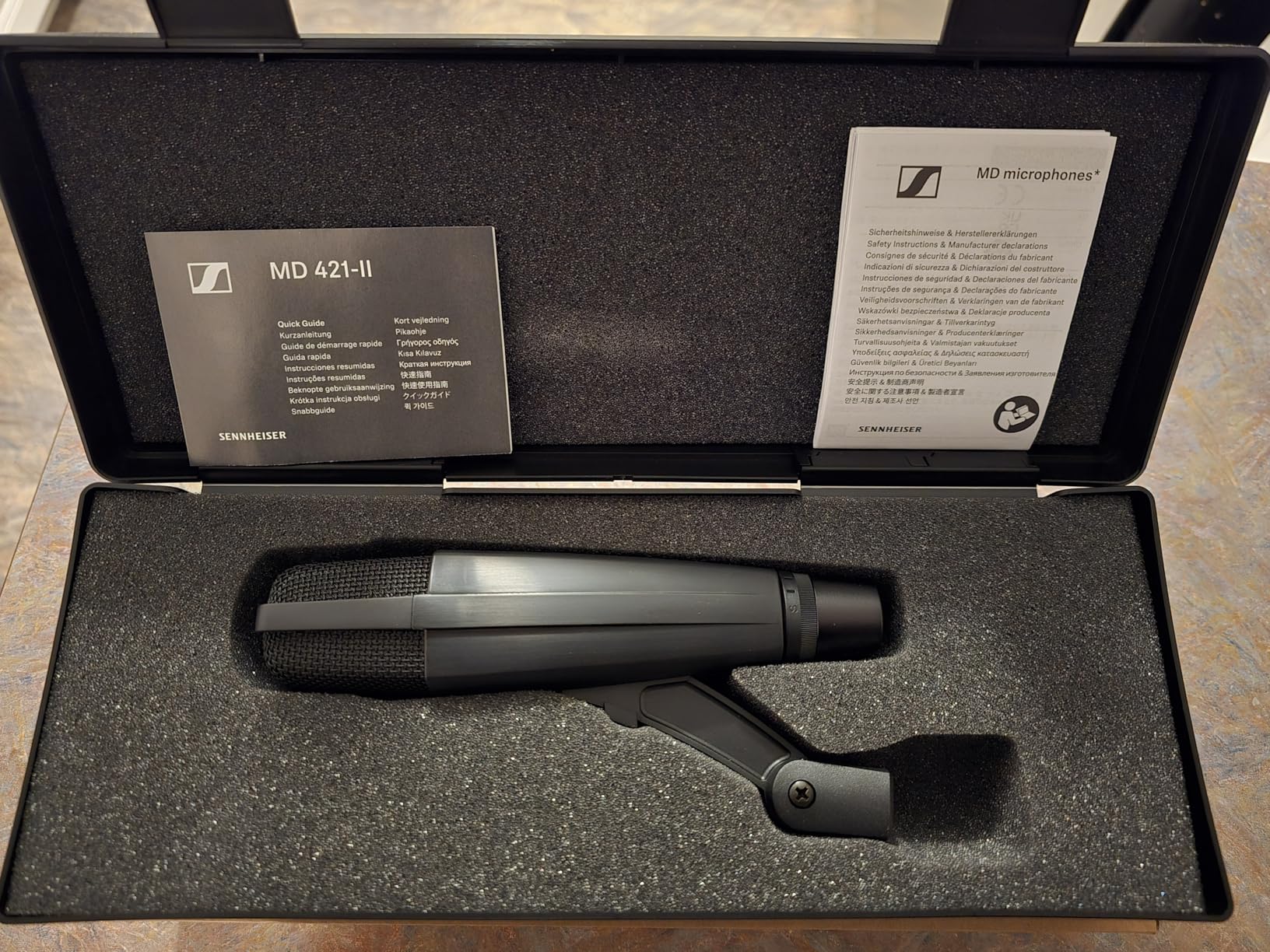
The Sennheiser MD 421-II is not a dedicated kick drum microphone, but it has been used on kick drums in professional studios for decades. I have seen it on kick drums in world-class recording facilities, and the results are consistently impressive. The reason is simple: the five-position bass roll-off switch lets you tune the low-end response to match exactly what you need for any kick drum and any genre.
What makes the MD 421-II special is its sheer versatility. One day it is on your kick drum, the next it is on a guitar amp, and the day after that it is on a tom. Users consistently call it the best dynamic microphone ever made for good reason. If you can only own a handful of microphones, the MD 421-II should absolutely be one of them.
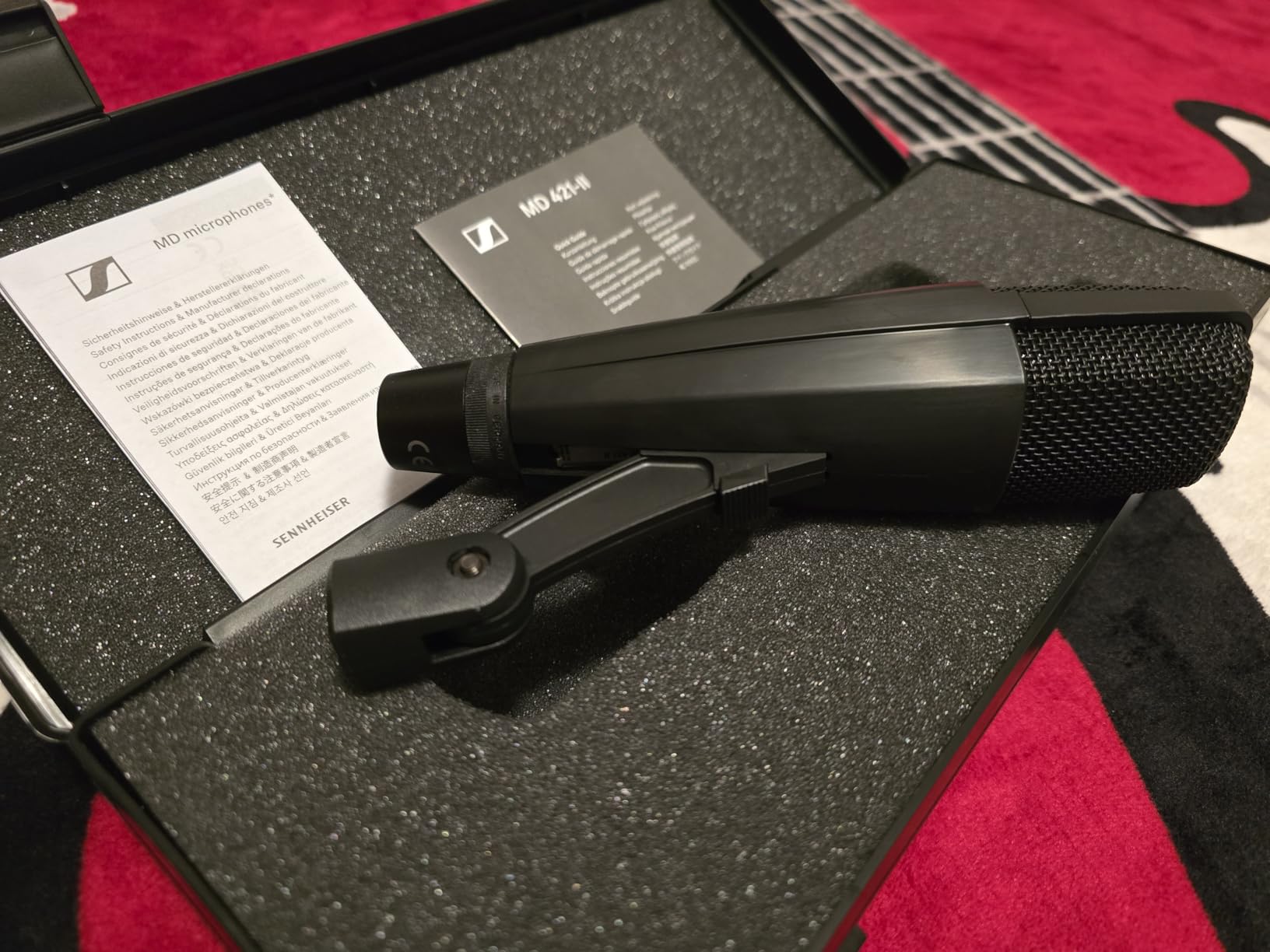
On kick drum, the MD 421-II delivers a natural, uncolored tone that captures what the drum actually sounds like. There is no hyped presence peak or pre-shaped scoop built into the capsule. Instead, you get an honest reproduction of the instrument that you can shape any way you want with EQ and compression.
The large diaphragm dynamic element handles high SPL without breaking a sweat, and the cardioid pattern provides decent rejection of bleed from nearby drums. The well-engineered variable high-pass filter ring on the barrel of the mic is one of the best-designed features on any dynamic microphone I have used.
Who Should Use the Sennheiser MD 421-II
Studio owners who need one mic that can handle kick drum, toms, guitar cabinets, and even broadcast voice work should look no further. If you record multiple instruments and want to maximize your mic investment, the MD 421-II is one of the smartest purchases you can make. It is also a favorite for engineers who use the dual-mic technique, pairing it with an internal boundary mic like the Beta 91A.
Who Should Look Elsewhere
If you exclusively need a dedicated kick drum mic for live sound and want a pre-shaped sound that works immediately with no EQ, a purpose-built option like the Beta 52A or D6 will get you there faster. The MD 421-II rewards experimentation and mixing expertise, which takes time.
8. Electro-Voice RE20 – Smooth Broadcast Legend on Kick Drum
Electro-Voice RE20-BLACK Dynamic Broadcast Announcer Microphone, Black (RE20)
Cardioid dynamic
Variable-D technology
Minimal proximity effect
Broadcast quality
Pros
- Smooth natural sound
- Minimal proximity effect
- Extremely versatile
- Legendary durability since 1968
Cons
- Heavy at nearly 3 pounds
- Not a dedicated kick shape
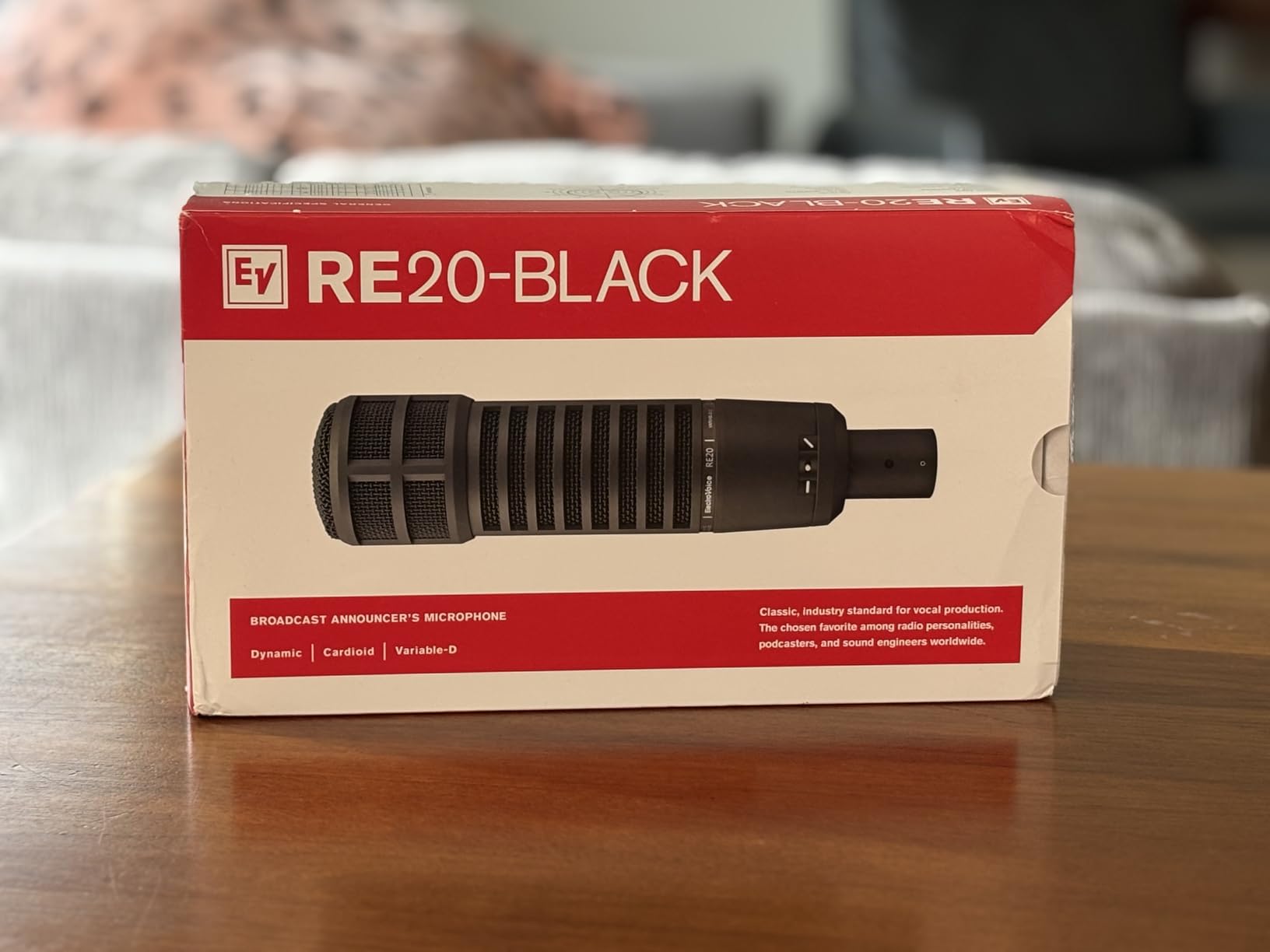
The Electro-Voice RE20 has been a broadcasting icon since 1968, but it also has a devoted following among recording engineers who use it on kick drums. I first tried the RE20 on a kick drum after seeing it recommended repeatedly on audio engineering forums, and the results were immediately clear. The sound is smooth, controlled, and natural in a way that dedicated kick drum mics rarely achieve.
The secret weapon is the Variable-D technology, which virtually eliminates the proximity effect that plagues most directional microphones. When you place a typical cardioid mic close to a kick drum, the bass response booms uncontrollably. The RE20 keeps that low-end tight and controlled, even when positioned right at the resonant head. This makes EQ decisions much easier because you are starting from a balanced, predictable foundation.
The RE20 is one of the most versatile microphones in existence. In my studio, it has been used on kick drums, bass cabinets, vocals, guitar amps, and even room recordings. The true cardioid pattern with no coloration at 180 degrees off-axis means it rejects unwanted sound cleanly without adding weird tonal artifacts.
At nearly 3 pounds, the RE20 is the heaviest mic on this list. You absolutely need a heavy-duty stand to support it, and I would not recommend it for situations where the mic needs to be repositioned frequently during a session. But once you set it, the internal shock mount keeps mechanical vibrations from traveling into the capsule.
Who Should Use the Electro-Voice RE20
Studio engineers who want a smooth, uncolored kick drum sound and already own a few other specialized mics should add the RE20 to their locker. It is particularly good for jazz, acoustic, and classic rock where you want the kick drum to sound natural and musical. Podcasters and broadcasters will also appreciate having it double as a voice mic between sessions.
Who Should Look Elsewhere
Live sound engineers who need a mic that is purpose-built for kick drum duty will find the RE20 overkill for stage use. Its weight, size, and broadcast-focused design make it less practical for gigging. For live applications, the EV ND68 or Shure Beta 52A are more appropriate choices.
9. Electro-Voice ND68 – Modern Supercardioid with Humbucking Coil
Electro-Voice ND68 Dynamic Supercardioid Bass Drum Microphone ,Black
Supercardioid dynamic
20Hz-20kHz
Humbucking coil
144dB SPL,Memraflex grille
Pros
- Deep low end with aggressive top-end
- Excellent acoustic isolation
- Humbucking coil prevents hum
- Durable Memraflex grille
Cons
- Limited user reviews
- Not widely available
The Electro-Voice ND68 is a relatively newer addition to the kick drum mic landscape, but it has already made a strong impression on the engineers who have tried it. One reviewer who owns four of them across multiple studios and live rigs went so far as to call it the best overall kick drum mic after comparing it against the D112, RE20, D6, SM7B, Beta 52A, and Beta 91A. That is high praise from someone who has clearly tested the field.
What makes the ND68 stand out is its voicing. The frequency response delivers deep low end, a relaxed midrange, and high-frequency content that gives the beater attack an aggressive punctuation. This is a sound that works extremely well for modern rock, metal, and pop where you want the kick drum to cut through dense arrangements without turning up the volume.
The included humbucking coil is a practical feature that guards against line hum from nearby speaker cabinets, power supplies, and other electromagnetic interference sources. In my experience, this matters most in live environments where power distribution is messy and cables run everywhere. The ND68 stays clean and quiet even in electrically hostile conditions.
The Memraflex grille is a tight-mesh design that resists denting and deformation. After seeing plenty of standard mesh grilles get caved in by errant drumsticks and hardware cases, I appreciate that EV engineered the ND68 to take real-world abuse without showing it.
Who Should Use the Electro-Voice ND68
Live sound engineers and studio owners who want a modern-sounding kick drum mic with excellent isolation and built-in hum protection should give the ND68 serious consideration. It is particularly well-suited for rock, metal, and contemporary worship where you need a defined, aggressive kick sound that cuts through the mix.
Who Should Look Elsewhere
The limited number of user reviews (only 10 at the time of writing) means there is less community data to draw from compared to established options like the Beta 52A or D112. If having extensive real-world feedback matters to your purchasing decision, you may prefer sticking with a more widely reviewed model.
10. Audio-Technica ATM250 – Warm Budget-Friendly Kick Mic
Audio-Technica ATM250 Hypercardioid Dynamic Instrument Microphone
Hypercardioid dynamic
Neodymium magnet
High SPL handling
Warm low-frequency response
Pros
- Warm detailed low to mid frequencies
- Solid build quality
- Good for kick and bass cabs
- Neodymium magnet for strong output
Cons
- Only 5 user reviews available
- Some users report mediocre clarity
The Audio-Technica ATM250 rounds out our list as a warm, affordable option that works well for both kick drums and bass guitar cabinets. I have used Audio-Technica mics extensively over the years, and the ATM250 carries the brand’s reputation for solid build quality and reliable performance at a reasonable price point.
The hypercardioid polar pattern provides tighter directional pickup than a standard cardioid, which helps isolate the kick drum from the rest of the kit. This tighter pattern means less bleed from the snare and toms, which is especially useful in small recording rooms where everything is close together.
The neodymium magnet gives the ATM250 a stronger output signal than typical dynamic mics, which translates to better signal-to-noise ratio and less need for preamp gain. In practice, this means you get a cleaner signal path from the start, which is always a good thing when recording low-frequency instruments where noise can accumulate quickly.
The frequency response emphasizes warm low-end and mid frequencies with a presence boost that helps the beater attack come through. One user compared it to the AKG D112 and found them similar, describing both as producing a warm sound that works well as a starting point for mixing. If you like to shape your kick drum tone in the mix rather than relying on the mic to do the work, the ATM250 gives you a solid foundation.
Who Should Use the Audio-Technica ATM250
Home studio owners and bedroom producers who need a warm kick drum sound at a reasonable price will find the ATM250 a solid investment. It is also a good choice if you frequently record both kick drums and bass guitar amps and want one mic that handles both tasks competently. The hypercardioid pattern is a bonus for tighter spaces.
Who Should Look Elsewhere
If you want a microphone with an extensive track record and hundreds of user reviews to validate your purchase, the ATM250’s limited feedback base might make you hesitant. Engineers who need a modern, aggressive sound for metal or hard rock would be better served by the Audix D6, which delivers that tonal character more convincingly.
How to Choose the Right Kick Drum Microphone
Picking the best microphone for kick drums comes down to understanding your specific needs. Here are the key factors that should guide your decision.
Dynamic vs Condenser vs Boundary: Which Type Is Right?
Dynamic microphones are the most popular choice for kick drums because they handle extreme SPL without distortion and require no external power. The Shure Beta 52A, AKG D112 MKII, and Audix D6 are all dynamics. They are durable, forgiving, and easy to use, making them ideal for live sound and home studios.
Condenser microphones capture more detail and transient information but require phantom power and are more fragile. The Shure Beta 91A is technically a boundary condenser, which sits flat inside the kick drum. Boundary mics are gaining popularity because they simplify setup and eliminate the need for a boom stand.
SPL Handling: How Much Do You Need?
Kick drums produce sound pressure levels well above 140dB at the point of impact. Any mic on this list handles that with room to spare, but if you play particularly hard or mic very close to the beater, look for SPL ratings of 144dB or higher. The Sennheiser e602-II leads with 155dB, followed by the Audix D6 and EV ND68 at 144dB.
Frequency Response: What Shape Do You Want?
Pay attention to the frequency response curve, not just the range. A mic with a shaped response like the Audix D6 (scooped mids with boosted lows and highs) will sound very different from a flatter mic like the AKG D112 MKII. If you want a plug-and-play sound, go for a shaped response. If you prefer to sculpt your tone with EQ, choose a flatter response.
Studio vs Live: Different Priorities
In the studio, you have time to experiment with placement, EQ, and compression. Mics like the AKG D12 VR and Electro-Voice RE20 reward that patience with detailed, flexible sound. For live sound, you need a mic that sounds good immediately, rejects bleed well, and can survive rough handling. The Shure Beta 52A, Sennheiser e602-II, and Audix D6 excel in live environments.
Genre-Specific Recommendations
For metal and hard rock, the Audix D6 delivers the tight, punchy, aggressive sound that defines those genres. For jazz, folk, and acoustic music, the AKG D112 MKII or EV RE20 provide natural, uncolored tones. For pop and contemporary worship, the Shure Beta 52A and Sennheiser e602-II offer balanced sounds that translate well across playback systems.
Placement Tips for Better Kick Drum Sound
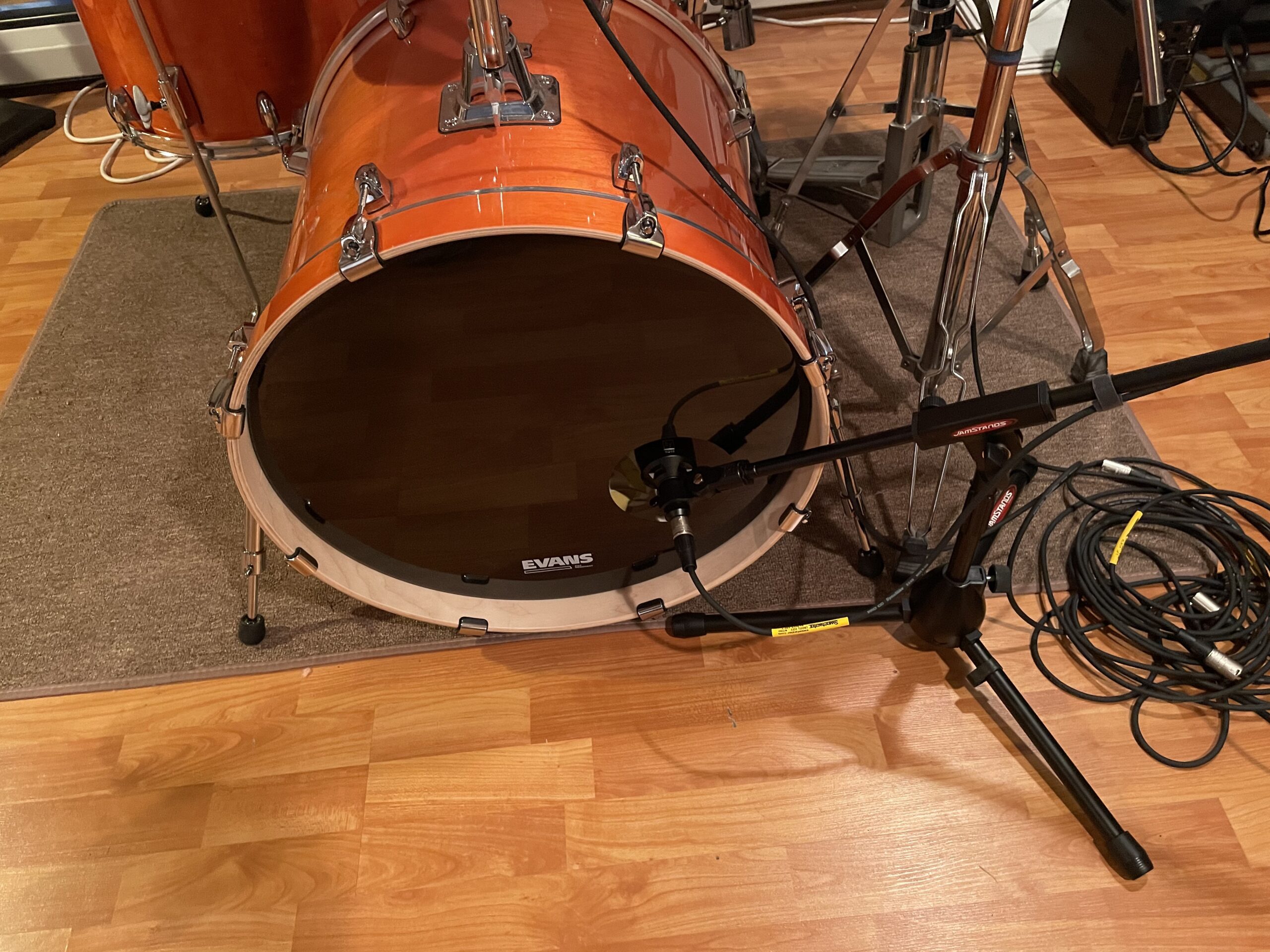
Inside the kick drum through the port hole gives you more attack and less room ambience. Outside the resonant head captures more shell resonance and low-end bloom. For the best of both worlds, use a dual-mic setup with a boundary mic like the Beta 91A inside and a dynamic like the MD 421-II outside. Experiment with distance, angle, and the position of any internal dampening to find your ideal sound.
Frequently Asked Questions About Kick Drum Microphones
What is the best microphone for kick drum recording?
The Shure Beta 52A is widely considered the best overall kick drum microphone for recording and live sound. It delivers a balanced sound with excellent low-end punch and beater attack straight out of the box. For studio engineers who want more tonal flexibility, the AKG D12 VR offers switchable filter presets and a natural, high-resolution capture. For rock and metal, the Audix D6 provides a pre-shaped, aggressive sound that needs minimal processing.
How do I microphone a kick drum?
Position your microphone 2 to 6 inches inside the resonant head port hole, aimed at the point where the beater contacts the batter head. Closer placement emphasizes attack and reduces bleed, while pulling the mic back captures more shell resonance and low-end warmth. For live sound, placing the mic just inside the port is standard. In the studio, experiment with different distances and angles to find the sweet spot. You can also use a dual-mic setup with a boundary mic inside and a dynamic mic outside.
What is the difference between dynamic and condenser kick drum mics?
Dynamic microphones use a coil and magnet to generate signal, handling extreme SPL without distortion and requiring no external power. They are the most common choice for kick drums because of their durability and forgiving nature. Condenser microphones use a charged diaphragm for greater sensitivity and transient detail, but they require phantom power and are more fragile. Boundary condensers like the Shure Beta 91A sit flat inside the kick drum and offer a unique combination of convenience and detail capture.
Why do kick drum mics have a boosted high end?
Kick drum microphones often have a presence boost in the 2kHz to 5kHz range to capture the beater attack and transient click that gives the kick drum definition in a mix. Without this boost, the low-frequency energy of the kick drum can overwhelm the mix and make the drum sound muddy. The high-frequency emphasis helps the kick drum cut through dense arrangements and ensures each hit is clearly audible, especially in genres like rock and metal where the kick needs to be heard alongside heavy guitars and bass.
Can I use a regular dynamic mic on a kick drum?
You can use a regular dynamic mic on a kick drum, but the results will vary significantly depending on the model. General-purpose dynamics like the Sennheiser MD 421-II and the Electro-Voice RE20 actually work very well on kick drums because they handle high SPL and have adjustable low-end response. However, standard vocal mics or instrument mics like the Shure SM57 lack the extended low-frequency response needed to capture the full body of a kick drum. For best results, use a mic specifically designed for kick drums or one with a proven track record on low-frequency instruments.
Final Thoughts on the Best Microphones for Kick Drums
Finding the best microphones for kick drums in 2026 means matching the mic to your specific situation. Our top recommendation is the Shure Beta 52A for its unmatched balance of sound quality, durability, and versatility across live and studio settings. For the best value, the Sennheiser e602-II delivers professional kick drum tone that punches well above its price tag. And for rock and metal engineers who want an aggressive, mix-ready sound with zero EQ needed, the Audix D6 is the clear winner.
The kick drum is the heartbeat of your mix, and investing in the right microphone pays dividends in every session and every show. Whether you choose a dedicated kick drum mic or a versatile all-rounder, any of the 10 options we reviewed here will give you professional results when paired with proper placement and technique. Pick the one that fits your genre, budget, and workflow, and start capturing kick drum sounds that make your mixes hit harder.