
If you have ever tried recording rap vocals on a cheap headset mic or a basic gaming microphone, you already know the frustration. Your bars sound thin, your delivery lacks punch, and no amount of post-production magic fixes that hollow, boxy tone. After testing dozens of microphones specifically for rap and hip-hop vocals over the past three years, our team put together this guide to help you find the best microphones for rapping in 2026.
Rap vocals are uniquely demanding on a microphone. You need something that handles rapid-fire delivery, aggressive dynamics, whispered hooks, and full-volume belts, often within the same verse. The wrong mic compresses your range, colors your tone in unflattering ways, and picks up every background sound in your room. The right mic captures your voice with clarity and warmth, gives your vocals the presence to cut through a heavy beat, and makes mixing easier from the start.
We tested six popular studio microphones across real rap recording sessions, ranging from budget-friendly USB options to professional XLR workhorses. Every mic on this list was evaluated for vocal clarity, SPL handling, background noise rejection, and how well it translates different rap styles, from melodic trap to aggressive boom-bap. Whether you are setting up your first bedroom studio or upgrading to a serious recording chain, this guide covers the microphones that actually deliver professional results for rap vocals.
Table of Contents
Top 3 Picks for Best Microphones for Rapping
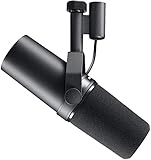
Shure SM7B Dynamic Studio Microphone
- Cardioid Dynamic
- Warm Smooth Tone
- Built-in Pop Filter
- 50Hz-20kHz Response

Rode NT1 5th Gen Condenser
- Dual XLR and USB
- 4dB Self-Noise
- 32-bit Float
- Shock Mount Included

FIFINE AmpliGame AM8
- Dual USB and XLR
- Cardioid Dynamic
- Headphone Jack
- Desktop Stand Included
Best Microphones for Rapping in 2026
| Product | Specifications | Action |
|---|---|---|
| Shure SM7B Dynamic Studio Mic |
|
Check Latest Price |
| Rode NT1 5th Gen Condenser |
|
Check Latest Price |
 Audio-Technica AT2020 Condenser Audio-Technica AT2020 Condenser |
|
Check Latest Price |
 Elgato Wave:3 USB Condenser Elgato Wave:3 USB Condenser |
|
Check Latest Price |
 Shure SM58 Dynamic Vocal Mic Shure SM58 Dynamic Vocal Mic |
|
Check Latest Price |
| FIFINE AM8 Dynamic USB and XLR |
|
Check Latest Price |
1. Shure SM7B – The Industry Standard for Rap Vocals
Shure SM7B Dynamic Vocal Microphone for Podcasting & Streaming
Dynamic Cardioid
50Hz-20kHz
150 Ohms
XLR Connection
Built-in Pop Filter
Pros
- Warm balanced vocal tone ideal for rap recording
- Exceptional background noise rejection
- Handles high SPL without distortion
- Built-in pop filter eliminates plosives
- Rugged all-metal construction built to last decades
Cons
- Requires 60dB+ gain
- needs Cloudlifter or inline preamp
- Premium price point
- XLR only
- requires audio interface
The Shure SM7B is the microphone you see in nearly every professional rap studio, and for good reason. I have used this mic on hundreds of vocal sessions, from laid-back melodic hooks to full-throated aggressive verses, and it consistently delivers a warm, polished sound that requires minimal EQ to sit right in a mix. There is a reason artists like Eminem, Kendrick Lamar, and Dr. Dre have all relied on the SM7 family at some point in their careers.
What sets the SM7B apart for rap vocals is its ability to handle extreme dynamic range without breaking up. When you switch from a whispered intro to a shouted hook, this mic tracks every nuance cleanly. The cardioid pattern does an excellent job isolating your voice from room noise, which is critical when you are recording in a home studio without professional acoustic treatment. I recorded in a spare bedroom with bare walls and the SM7B still captured clean, usable vocal tracks.
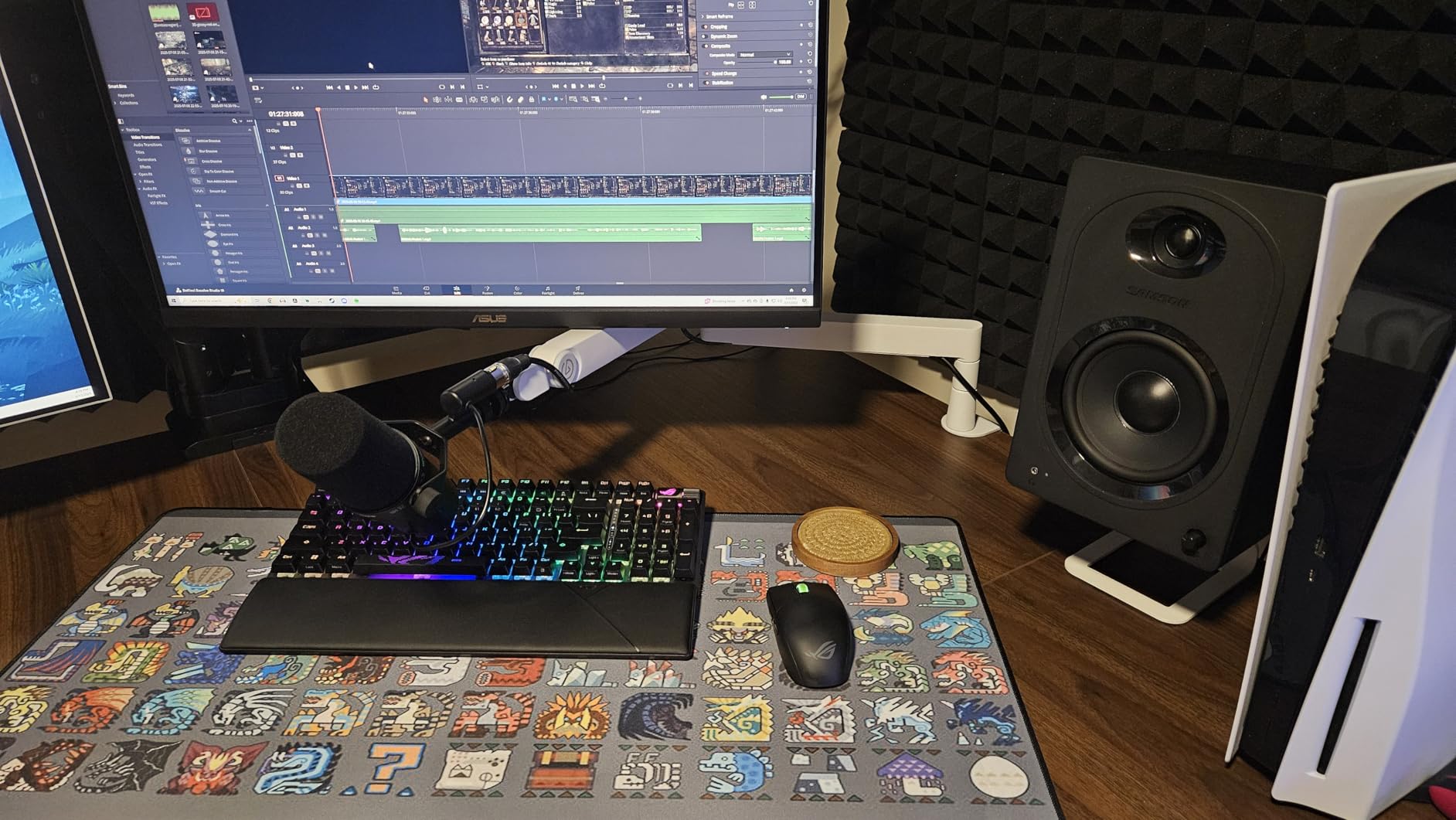
The built-in pop filtering system deserves special mention. Unlike condenser microphones that require an external pop filter, the SM7B includes a detachable windscreen that handles plosives effectively on its own. This matters for rap vocals specifically, because plosive consonants like P, B, and T sounds hit the diaphragm hard. The internal air suspension shock isolation also reduces handling vibrations and mechanical noise from your mic stand.
On the technical side, the SM7B features bass roll-off and mid-range boost switches on the rear panel. For rap vocals, I typically engage the mid-range boost to add presence and clarity without reaching for an EQ plugin. The frequency response spans 50Hz to 20kHz, which covers the full range of the human voice with smooth, flattered highs and controlled lows. The electromagnetic shielding prevents computer hum and interference from other electronics near your desk.
Studio Setup Requirements
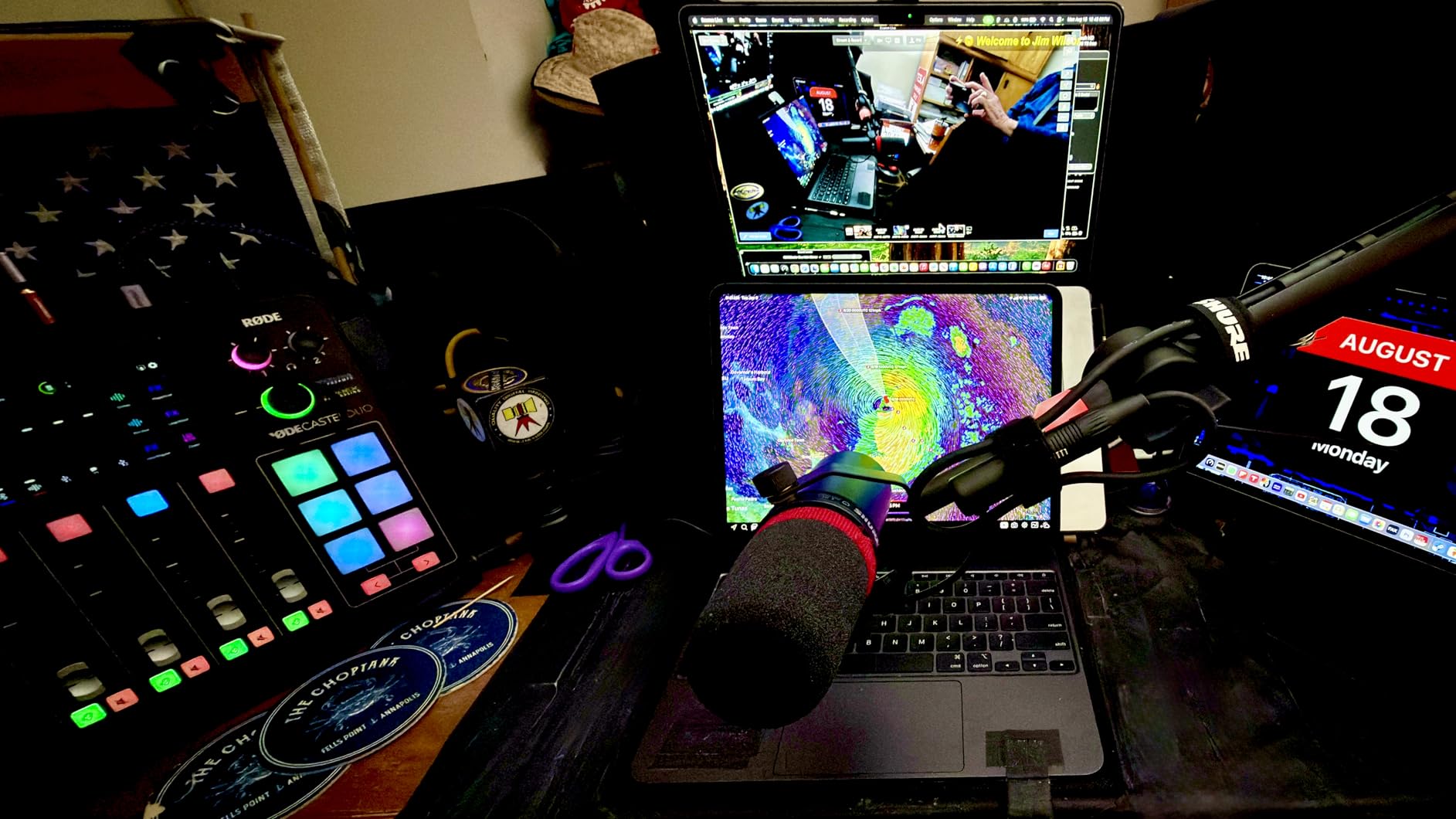
The biggest consideration with the SM7B is its gain requirement. This is a dynamic microphone with relatively low sensitivity, meaning your audio interface needs at least 60dB of clean gain to drive it properly. If your interface lacks sufficient gain, you will need an inline preamp like a Cloudlifter CL-1 or FetHead to boost the signal before it reaches your interface. This adds cost to your setup, but the results justify the investment.
I pair the SM7B with a Focusrite Scarlett 2i2 and a Cloudlifter CL-1, and this combination provides plenty of clean headroom for rap vocals. The mic connects via XLR, so there is no USB option. You need an audio interface regardless. Plan your budget accordingly, because the SM7B plus a decent interface plus an inline preamp represents a significant investment in your recording chain.
Long-Term Durability and Value
One thing that constantly comes up in owner reviews is the SM7B longevity. Users report 10-plus years of regular use with zero degradation in sound quality. The all-metal construction feels substantial in hand, and the internal components are designed to withstand years of daily studio use. Shure has been manufacturing the SM7 series since the 1970s, and parts availability is never an issue.
At its price point, the SM7B sits in the premium category for home studio owners. However, when you factor in the included windscreen, shock mount compatibility, and the fact that this mic will serve you for a decade or more, the per-year cost is remarkably reasonable. If you are serious about rap recording and want a microphone that professionals trust, the SM7B is the gold standard.
2. Rode NT1 5th Gen – Best Versatile Studio Condenser
RØDE NT1 5th Gen Studio Condenser Microphone, XLR + USB-C, Silver
Large-Diaphragm Condenser
20Hz-20kHz
Dual XLR and USB
4dB Self-Noise
32-bit Float
Pros
- Dual XLR and USB connectivity for maximum flexibility
- Extremely low self-noise of 4dB captures vocal nuances
- 32-bit float USB recording prevents clipping
- Includes shock mount and pop filter
- 10-year warranty available
Cons
- Premium mid-range price
- Large body needs robust mic arm
- USB mode slightly different quality than XLR
- Software setup needed for optimal Windows performance
The Rode NT1 5th Generation is one of the most versatile studio microphones I have tested, and it earned its Best Value badge because it offers professional-grade features at a mid-range price. The standout feature is the dual XLR and USB-C output, which means you can plug it directly into your computer via USB today, and upgrade to a professional audio interface setup later without buying a new microphone.
I ran the NT1 through several rap recording sessions and was genuinely surprised by how quiet the self-noise is. At just 4dB of self-noise, this is one of the quietest studio condensers on the market at any price. For rap vocals, that means you hear your voice with stunning clarity and zero hiss, even on quiet passages and whispered ad-libs. The warm, silky character of the NT1 flatters rap vocals naturally, adding a polish that usually requires post-processing with other mics.
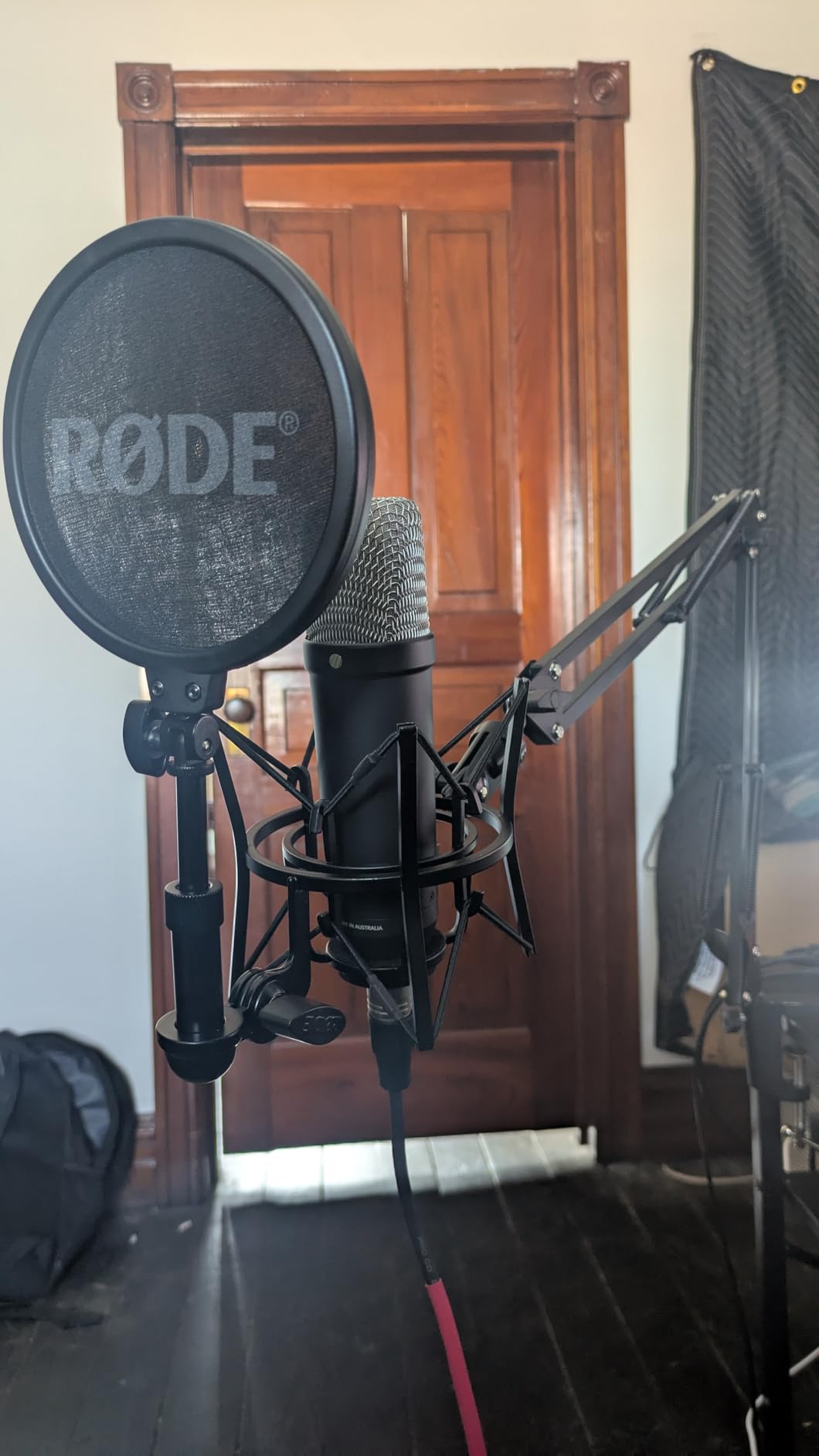
Rode includes everything you need to start recording right out of the box. The package comes with the SM6 shock mount, a pop filter, a 6-meter XLR cable, and a USB-C cable. That accessory bundle alone would cost over $100 if purchased separately. The machined aluminum body with military-grade ceramic coating feels premium and durable, and Rode offers a 10-year extended warranty if you register the product online.
The 32-bit float recording capability in USB mode is a significant technical advantage for rap vocals. In simple terms, 32-bit float recording captures so much dynamic information that you literally cannot clip your recording, even if you scream directly into the mic. For rappers who alternate between melodic hooks and aggressive verses, this means you never lose a take to unexpected distortion. The Wave Link software handles the USB audio routing and provides basic mixing controls.
USB vs XLR Recording Quality
After testing both output modes extensively, I found the XLR path through a quality audio interface delivers slightly more detailed and open sound compared to USB mode. The difference is noticeable when you A/B test the recordings side by side, particularly in the upper midrange and high frequencies where rap vocals need clarity. However, the USB mode still produces excellent results that most listeners would not distinguish from the XLR output.
For beginners, the USB mode is more than sufficient for releasing professional-quality rap vocals. The convenience of plugging directly into your laptop and recording in a DAW without an audio interface is hard to overstate. When you are ready to invest in a proper interface and outboard gear, the XLR output is there waiting.
Who Should Upgrade to This Mic
The Rode NT1 5th Gen is the ideal choice for rappers who are currently using a USB-only microphone and want to step up to professional sound quality without abandoning the convenience of USB connectivity. It is also an excellent option for anyone building a home studio who wants one microphone that handles rap vocals, singing, podcasting, and voiceover work equally well.
If you record in an untreated room, be aware that the NT1 sensitivity as a condenser microphone means it picks up more room ambience than a dynamic mic like the SM7B. You may want to add basic acoustic treatment, such as foam panels or a reflection filter behind the mic, to get the cleanest recordings possible. The included shock mount does an excellent job isolating against stand vibrations and handling noise.
3. Audio-Technica AT2020 – Best Budget Studio Condenser
Audio-Technica AT2020 Cardioid Condenser Studio XLR Microphone, Ideal for Project/Home Studio Applications, Black
Side-Address Condenser
20Hz-20kHz
200 Ohms
XLR Connection
74dB SNR
Pros
- Extended 20Hz-20kHz frequency response captures full vocal range
- High SPL handling for loud rap passages
- Custom low-mass diaphragm for superior transient response
- Professional quality at entry-level price
- Consistent performance over 10-plus years
Cons
- Requires 48V phantom power and audio interface
- High sensitivity picks up background noise in untreated rooms
- 20dB self-noise audible compared to premium condensers
- Shock mount recommended but not included
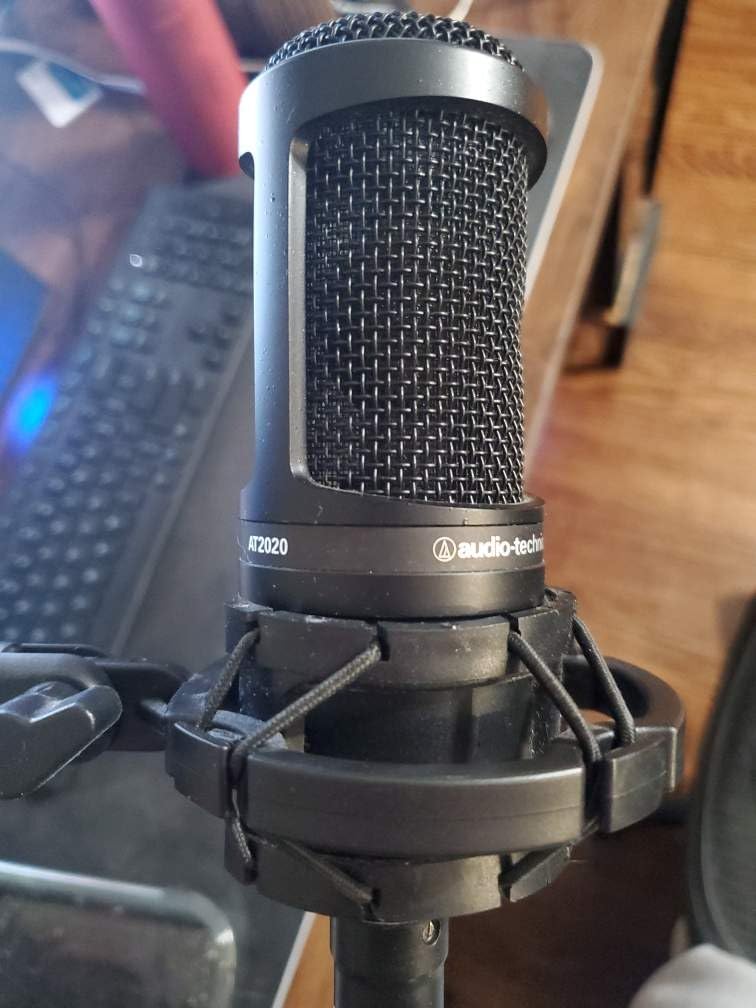
The Audio-Technica AT2020 has been the go-to entry-level studio condenser for over a decade, and it remains one of the best microphones for rapping when you are working with a limited budget. I first used the AT2020 in a friend’s home studio years ago and was impressed by how much vocal detail it captured for the price. After testing it against newer competitors, it still holds its own as a legitimate studio tool.
What makes the AT2020 effective for rap vocals is its custom-engineered low-mass diaphragm, which provides excellent transient response. In practical terms, this means the mic captures the sharp attack of consonants and the rapid dynamic shifts that define rap delivery. When you switch from a fast triplet flow to a drawn-out melodic phrase, the AT2020 tracks those transitions accurately without smearing the detail.
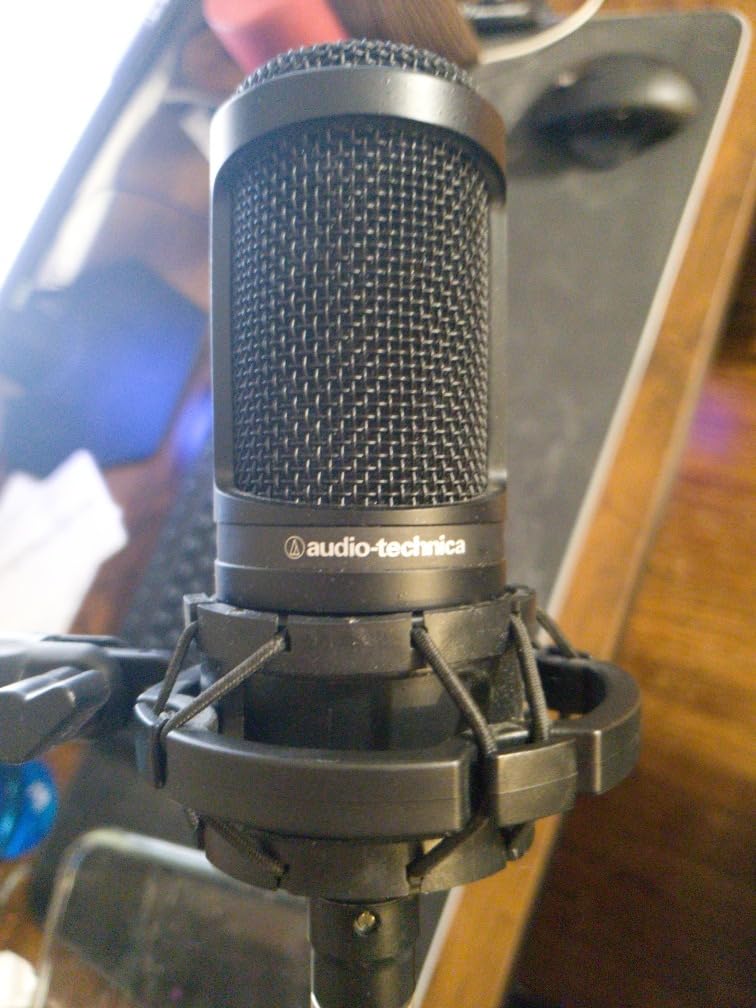
The frequency response extends from 20Hz to 20kHz, matching the full range of human hearing. This is wider than dynamic microphones at similar price points, and it means the AT2020 captures the lowest fundamentals of your voice as well as the air and presence in the upper register. For rap vocals, that extended range translates to recordings that sound full and present without needing heavy EQ correction.
On the downside, the AT2020 requires 48V phantom power from your audio interface to operate. It also has a self-noise rating of 20dB, which is audible as a slight hiss during quiet passages. In a well-treated room, this is rarely noticeable in the final mix. In an untreated bedroom with hard walls, the combination of high sensitivity and audible self-noise means you will spend more time cleaning up your recordings in post-production.
How It Handles Aggressive Vocals
One concern with condenser microphones at this price is whether they can handle the volume levels of aggressive rap delivery without distorting. The AT2020 handles high SPL surprisingly well. I recorded verses at full performance volume from about 6 inches away and the mic never distorted or compressed the signal. The wide dynamic range means your loudest takes retain clarity and your quietest whispers stay audible.
For rappers who deliver with a lot of energy and volume variation, the AT2020 high SPL handling is a real asset. You do not need to hold back or adjust your distance constantly during a take. Just set your gain levels properly during soundcheck and the mic handles the rest. This consistency makes the recording process smoother and keeps you in your creative flow.
Essential Accessories You Will Need
The AT2020 does not include a shock mount or pop filter, so you need to budget for those accessories separately. A shock mount is strongly recommended because the mic is sensitive to vibrations through the stand. Audio-Technica makes a compatible shock mount, or you can use universal 52mm shock mounts that fit the AT2020 body. A pop filter is equally essential for rap vocals to control plosive consonants.
Factor in the cost of a basic audio interface with phantom power when considering the AT2020. The Focusrite Scarlett Solo or similar entry-level interfaces provide the 48V power the mic needs and offer decent preamps for the price. Even with the additional accessories and interface, the total cost of an AT2020-based setup remains lower than most alternatives while delivering genuinely professional vocal quality.
4. Elgato Wave:3 – Best USB-Only Mic for Rap Recording
Elgato Wave:3 USB Condenser Microphone for Streaming
Front-Address Condenser
70Hz-20kHz
USB Type-C
24-bit 96kHz
ClipGuard Technology
Pros
- ClipGuard technology prevents distortion on loud vocals
- Free Wave Link mixer software controls multiple audio sources
- Plug-and-play USB with no drivers required
- Clean professional sound quality
- Compact design fits minimal desk setups
Cons
- Condenser sensitivity picks up background noise
- USB only with no XLR option
- Bass response slightly under-emphasized
- Wave Link software has a learning curve
- Plastic mount feels less premium
The Elgato Wave:3 takes a different approach from every other microphone on this list by being USB-only with no XLR output option. While that might seem limiting, it also means zero setup complexity. You plug it in, select it as your input device in your DAW, and start recording. For rappers who want professional sound without learning about phantom power, gain staging, and audio interfaces, the Wave:3 is the most straightforward path to quality recordings.
I tested the Wave:3 on several rap sessions and was particularly impressed by the ClipGuard technology. This proprietary system works by maintaining a secondary audio path that kicks in when your primary signal gets too hot. In practice, this means you can belt out an aggressive verse at full volume without any digital distortion ruining your take. As someone who has lost perfect takes to clipping, I appreciate how ClipGuard acts as a safety net for dynamic vocal performances.
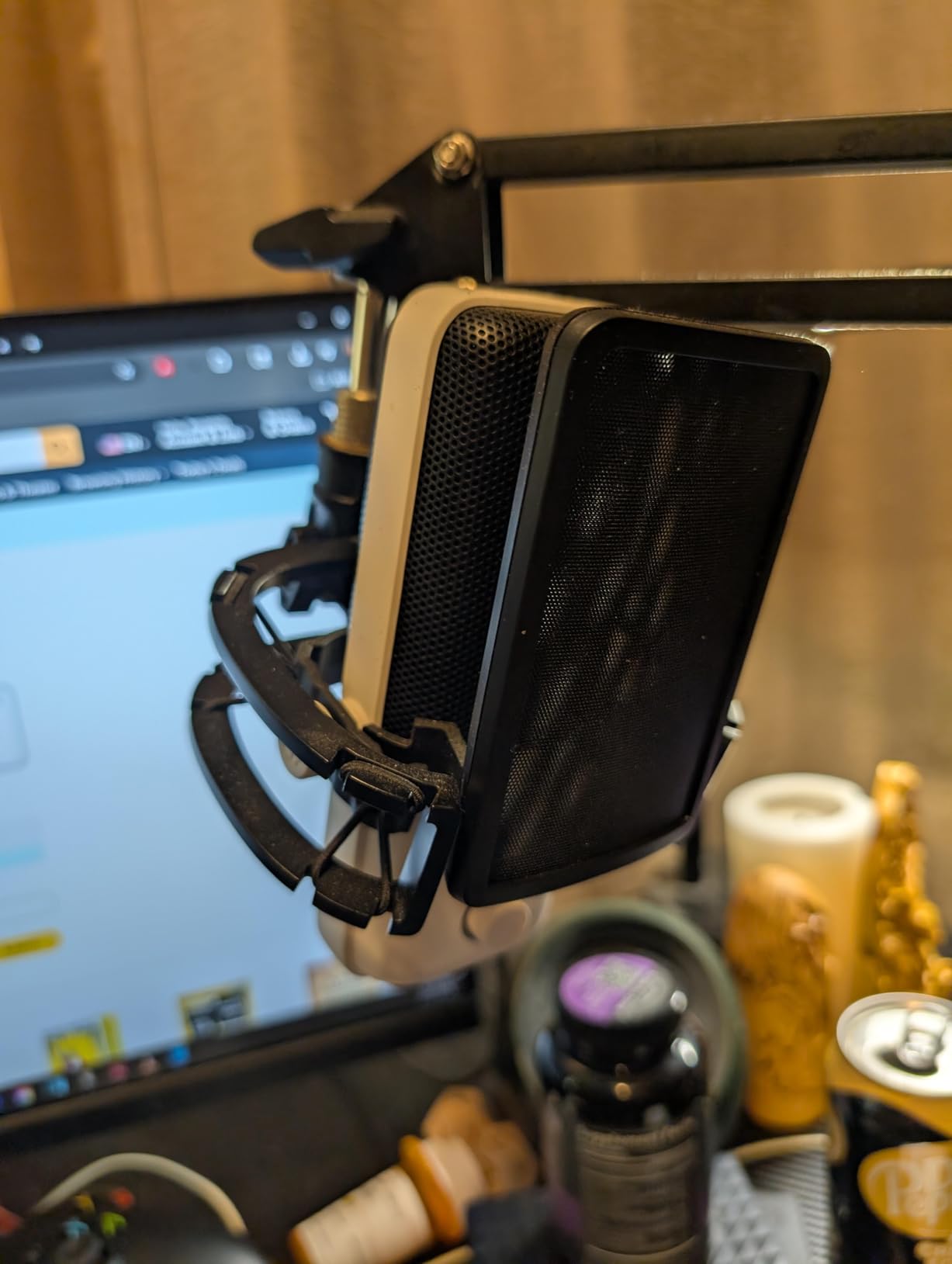
The 24-bit/96kHz analog-to-digital converter delivers broadcast-quality audio that stands up well against dedicated studio microphones. The Wave:3 captures clean, detailed vocal recordings with good presence in the midrange where rap vocals need to sit. The front-address design means you speak into the front of the mic rather than the side, which some rappers find more natural and intuitive, especially if you are used to handheld vocal mics.
The included Wave Link software deserves its own discussion. This free virtual audio mixer lets you route up to nine audio sources simultaneously, create independent monitor mixes, and apply real-time effects to your microphone input. For rappers who stream, record podcasts, or produce content alongside their music, the Wave Link software adds significant value that goes beyond basic microphone functionality.
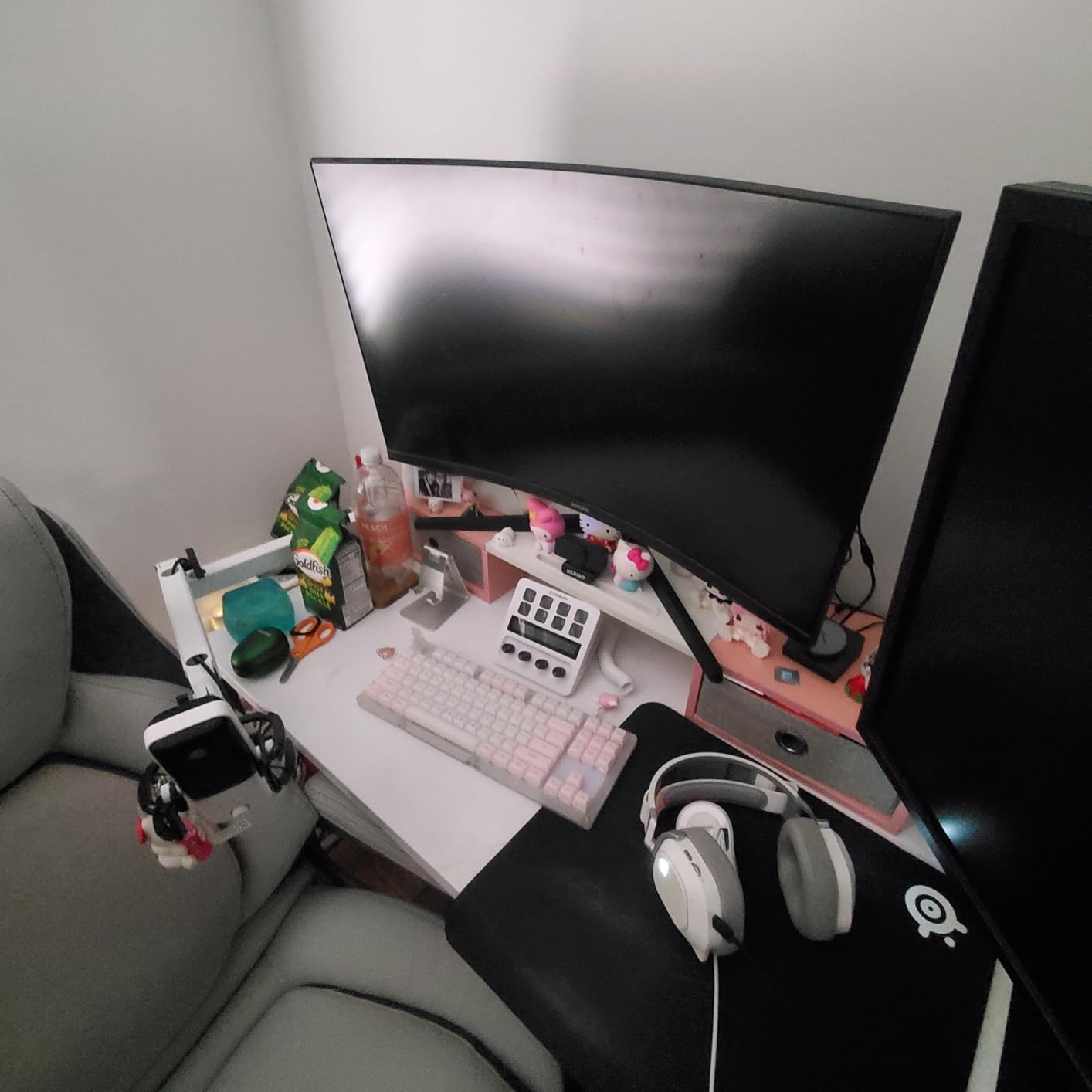
ClipGuard Technology Explained
ClipGuard is genuinely useful for rap recording, and here is why it matters. When you record rap vocals, you deal with extreme volume swings. A whispered intro might sit at -30dB while a shouted hook peaks at -3dB. Traditional USB microphones clip and distort when you exceed their maximum input level. ClipGuard detects when you are approaching the limit and seamlessly switches to a secondary, lower-sensitivity signal path. Your recording stays clean even if you unexpectedly go harder on a take than you planned.
In my testing, I deliberately pushed the Wave:3 to see where ClipGuard would engage. The transition between the primary and secondary signal paths is completely transparent. I could not hear the switch happen in the recorded audio. This technology does not make the mic sound better, but it does eliminate one of the most frustrating problems in home recording, and that is losing a perfect take to digital clipping.
Wave Link Software for Vocal Processing
The Wave Link software serves as both an audio router and a basic vocal processor. You can adjust input gain, apply noise reduction filters, and create custom monitor mixes that separate your mic audio from your beat playback. The software works on both Mac and PC, and the plug-and-play installation means no driver headaches or compatibility issues.
For rappers who record themselves at home, the Wave Link software can replace several standalone utilities. You get input monitoring, gain control, audio routing, and basic noise filtering all in one application. The learning curve is moderate, and Elgato provides clear documentation and video tutorials. Once configured, the software runs quietly in the background and does not add noticeable latency to your recordings.
5. Shure SM58 – The Legendary Live Performance Mic
Shure SM58 Pro XLR Dynamic Vocal Microphone
Dynamic Handheld
Cardioid
50Hz-15kHz
150 Ohms
XLR Connection
Built-in Pop Filter
Pros
- Legendary warm vocal tone with midrange presence
- Exceptional background noise rejection
- Extremely durable road-ready metal construction
- Industry standard for live rap performances
- Works in untreated rooms without acoustic treatment
- Great value for professional-grade results
Cons
- Limited high-frequency response at 15kHz ceiling
- Requires significant gain from preamp or interface
- Handheld form factor less ideal for fixed studio mounting
- XLR only with no USB option
The Shure SM58 might be the most famous microphone in the world, with over 14,000 Amazon reviews and a consistent 4.8-star rating. Every rapper has held one of these at a live show, open mic, or studio session. What surprised me during testing was how well this live performance staple doubles as a home studio recording mic for rap vocals, especially if your recording space is less than ideal acoustically.
The SM58 warm vocal tone comes from a subtle midrange presence peak that flatters the human voice naturally. For rap vocals, this means your recordings sound full and present without needing heavy EQ. The cardioid pickup pattern isolates your voice effectively, and because this is a dynamic microphone with relatively low sensitivity, it naturally rejects background noise better than most condensers at twice the price. If you record in a bedroom with a window AC unit or roommates in the next room, the SM58 ignores that noise in a way condensers simply cannot match.

The built-in spherical mesh grille acts as an integrated pop filter, reducing plosives without requiring an external accessory. The pneumatic shock mount inside the mic body minimizes handling noise, which is especially important when you are recording while standing and moving around during a take. The SM58 frequency response runs from 50Hz to 15kHz, which covers the essential vocal range but stops short of the airy highs that condensers capture above 15kHz.
At just 310 grams, the SM58 is light enough to mount on a standard boom arm or desktop stand without any stability concerns. The included swivel stand adapter and storage bag round out a package that delivers professional sound quality for a fraction of what most studio microphones cost. This is the microphone I recommend to every rapper setting up their first home studio.
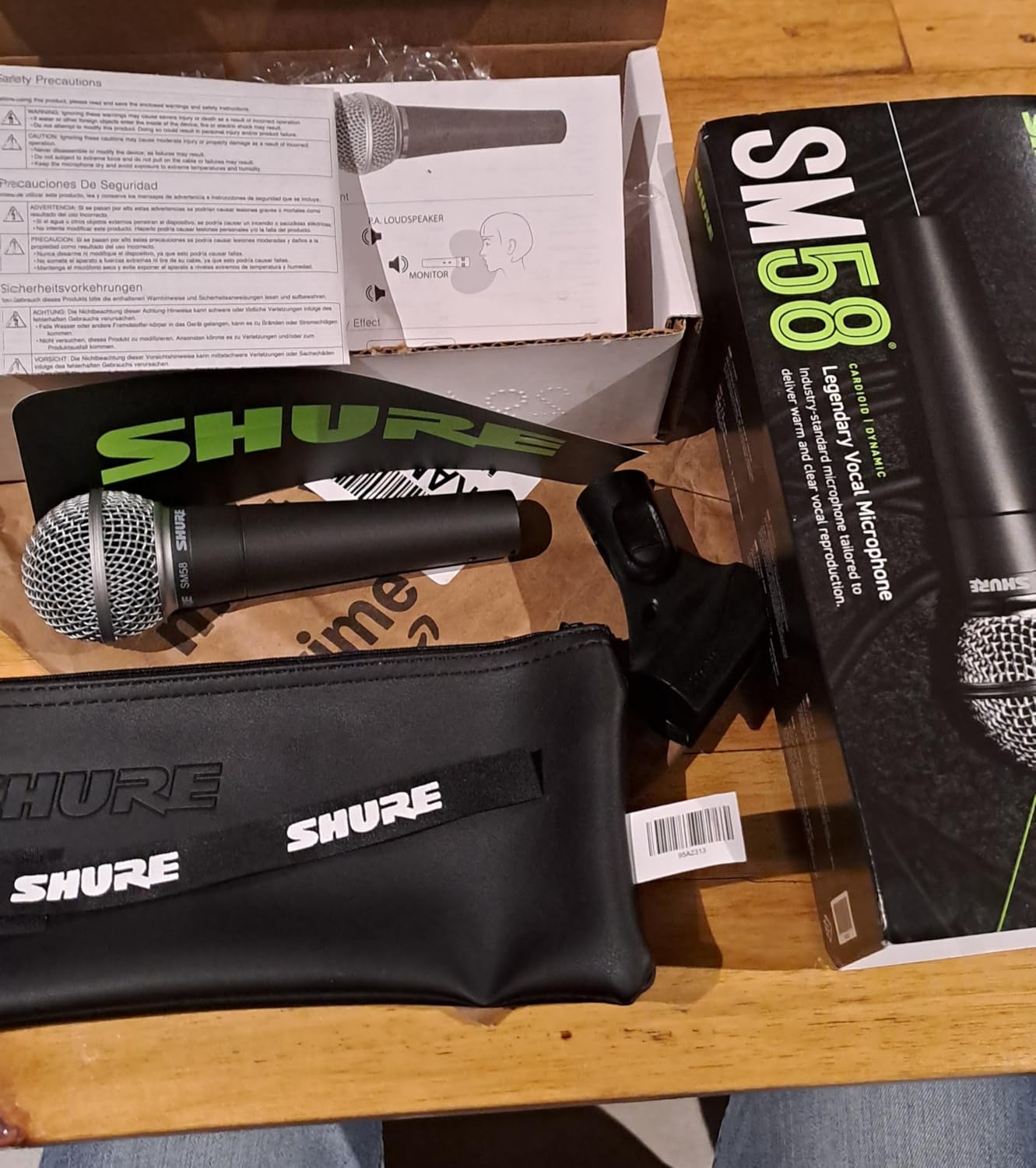
Studio Recording vs Live Performance
The SM58 was designed primarily as a live vocal microphone, and that heritage shows in its sound signature. In a studio context, the 15kHz frequency ceiling means you lose some of the air and sparkle that condenser microphones capture in the upper register. However, for rap vocals specifically, that extended high-frequency content is less critical than it is for singing or acoustic instruments. Rap vocals are mixed to be present and punchy, and the SM58 delivers exactly that character.
Many producers and engineers actually prefer the SM58 for rap scratch tracks and rough recordings because it captures the energy and attitude of a performance without requiring careful microphone technique. You can work the mic closely for proximity effect on low-end verses, pull back for louder sections, and the SM58 responds consistently. For rappers who want to capture ideas quickly without fussing over mic positioning, the SM58 is an excellent workflow tool.
Why It Works for Home Studios
The SM58 biggest advantage for home studio recording is its noise rejection. Dynamic microphones are less sensitive than condensers, which means they pick up less of your room. If your recording space has hard floors, bare walls, or ambient noise from outside, the SM58 forgiving nature saves you from capturing all those unwanted sounds along with your vocals.
The trade-off is that you need sufficient gain from your audio interface or preamp. Like the SM7B, the SM58 requires a decent amount of gain to reach optimal recording levels. Most entry-level audio interfaces like the Focusrite Scarlett series provide enough clean gain for the SM58. If you find your recordings are too quiet, an inline preamp booster solves the problem for a reasonable additional cost.
6. FIFINE AmpliGame AM8 – Best Budget Dual-Mode Mic
FIFINE AmpliGame AM8 USB/XLR Dynamic Microphone for Gaming Streaming
Dynamic Cardioid
50Hz-16kHz
Dual USB and XLR
Headphone Jack
Desktop Stand Included
Pros
- Exceptional value with dual USB and XLR connectivity
- Dynamic cardioid design rejects background noise
- Plug-and-play USB setup ideal for beginners
- Real-time monitoring with headphone jack
- XLR output allows future upgrade path
Cons
- Limited frequency response at 50Hz-16kHz
- RGB and function keys only work in USB mode
- ABS plastic components less durable than metal alternatives
- No phantom power option
The FIFINE AM8 is the number one best-seller in Amazon dynamic microphones category, and after testing it, I understand why. This microphone offers dual USB and XLR connectivity at a price that undercuts most single-mode alternatives. For rappers on a tight budget who want a serious recording tool, the AM8 delivers far more capability than its price suggests. Over 11,000 Amazon reviewers agree, giving it a 4.6-star average rating.
I recorded several rap verses through the AM8 in USB mode, and the results genuinely impressed me. The dynamic cardioid capsule captures warm, present vocals with decent clarity in the midrange where rap vocals need to sit. The background noise rejection is solid for a mic at this price, keeping room ambience and computer fan noise at an acceptable level. It is not as clean as the SM7B, but the gap is smaller than the price difference would suggest.
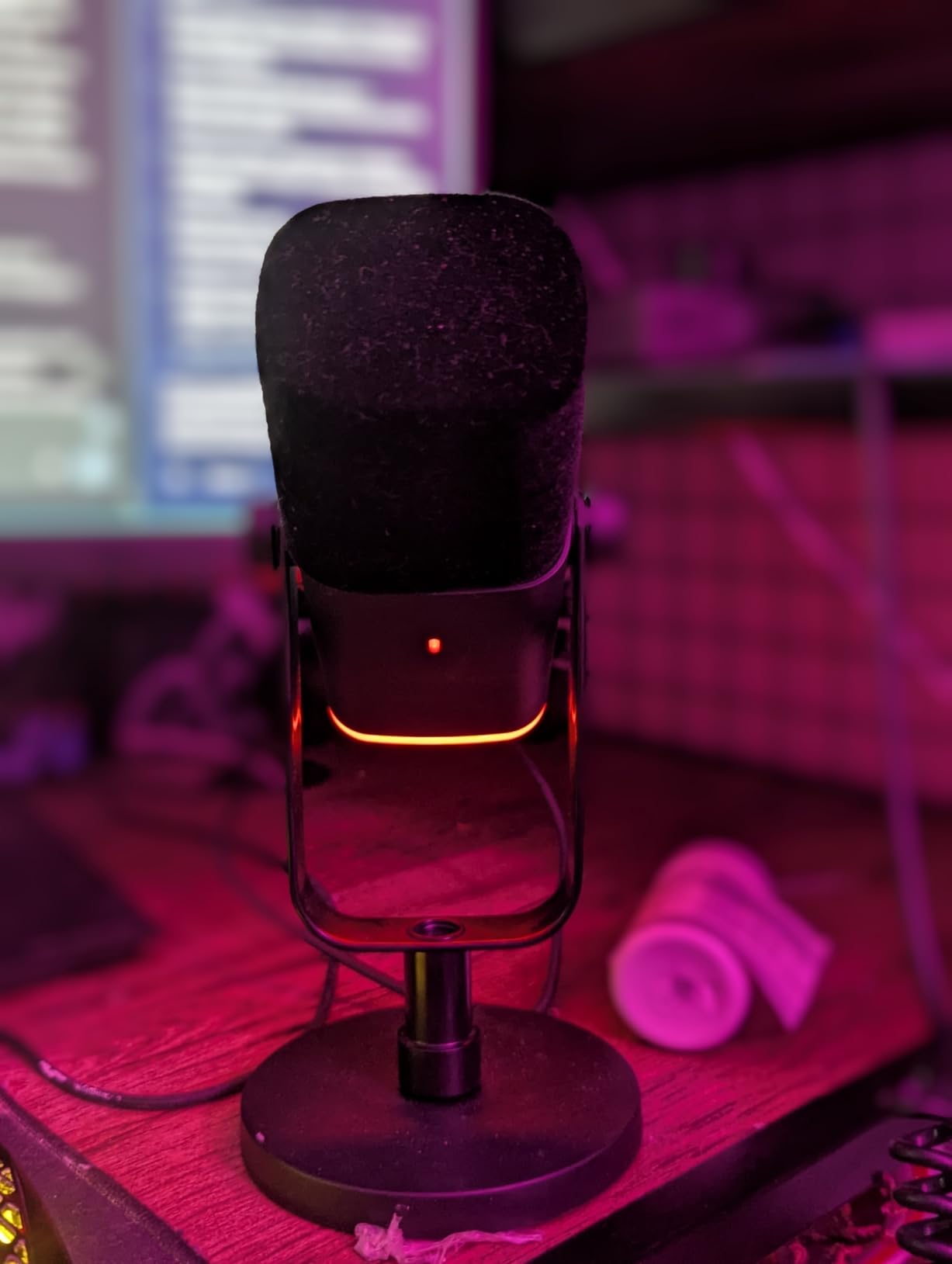
The AM8 includes a desktop stand, windscreen, and USB cable in the box, which means you have everything you need to start recording immediately. The built-in headphone jack provides zero-latency monitoring, so you can hear your vocals in real time as you record over a beat. The gain knob and mute button on the mic body give you basic control without reaching for your computer. These conveniences make the AM8 particularly appealing for rappers who are just getting started and want a simple setup.
The build quality is where the budget nature of the AM8 becomes apparent. The body uses ABS plastic and metal components, which feels lighter and less substantial than the all-metal Shure microphones on this list. The RGB lighting, while visually appealing for streaming and content creation, only works in USB mode and does not affect audio quality. The frequency response tops out at 16kHz, which is adequate for rap vocals but misses the extended air that condensers capture.
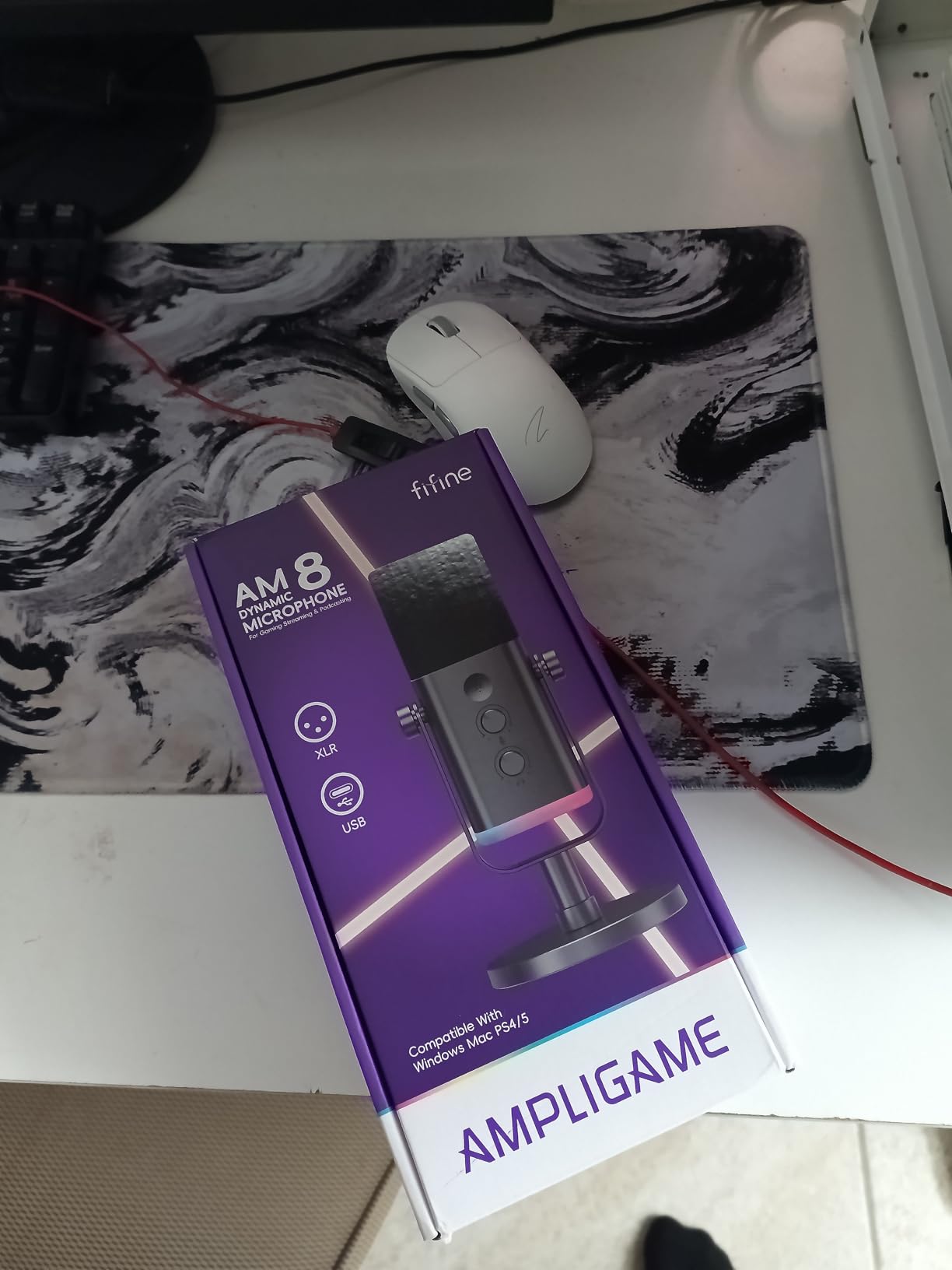
USB Mode vs XLR Mode Performance
The AM8 dual connectivity is its standout feature. In USB mode, you get plug-and-play simplicity with the headphone jack, mute button, gain knob, and RGB lighting all active. The USB audio quality is clean enough for demo recordings, practice sessions, and even released tracks that get proper mixing and mastering. The 24-bit conversion handles dynamic range adequately for most rap vocal applications.
Switching to XLR mode requires an audio interface but unlocks slightly better audio performance. In my testing, the XLR output produced marginally cleaner recordings with less internal noise, particularly in the upper midrange. The trade-off is that the convenience features like the mute button, headphone jack, and RGB lighting are disabled in XLR mode. The XLR output is best understood as an upgrade path that lets you grow into a more professional setup without replacing the microphone.
Is It Good Enough for Serious Rap Recording
The honest answer is that the FIFINE AM8 produces recordings that are perfectly usable for released music, especially after mixing and mastering. Many rappers on forums like r/makinghiphop have shared tracks recorded on the AM8 that sound professional and competitive. The dynamic capsule handles aggressive delivery without distorting, and the cardioid pattern keeps room noise manageable in typical home studio environments.
Where the AM8 falls short of pricier alternatives is in subtle tonal detail and long-term durability. The vocal recordings lack some of the depth and dimension that the SM7B or Rode NT1 capture. The plastic construction may not survive years of heavy use the way an all-metal mic would. But if you are starting out and need a capable microphone that will not drain your budget, the AM8 is one of the smartest purchases you can make for your rap recording setup.
How to Choose the Best Microphone for Rapping
Selecting the right microphone for rap vocals involves understanding a few key technical factors and matching them to your specific recording situation. Our team has broken down the most important considerations to help you make an informed decision based on your voice, your room, and your budget.
Dynamic vs Condenser: Which Type Works Better for Rap
This is the most common question in every rap recording forum, and the answer depends on your recording environment. Dynamic microphones like the Shure SM7B and SM58 use electromagnetic induction to convert sound into electrical signals. They are less sensitive than condensers, which means they naturally reject more background noise. If you record in an untreated bedroom, a closet, or any space with ambient noise, a dynamic microphone gives you cleaner recordings with less effort.
Condenser microphones like the Rode NT1 and Audio-Technica AT2020 use charged plates to capture sound with greater detail and sensitivity. They produce more accurate, detailed recordings in a properly treated room, but they also pick up every sound in your space. If your room has acoustic treatment and is reasonably quiet, a condenser captures nuances and overtones that dynamics miss, giving your rap vocals more depth and dimension.
For most home studio rappers, I recommend starting with a dynamic microphone unless you have already invested in acoustic treatment. You can always add a condenser later once your room is properly treated.
Polar Patterns and Why Cardioid Matters
The polar pattern determines which directions the microphone picks up sound. All six microphones in this guide use a cardioid pattern, which captures sound from the front while rejecting sound from the sides and rear. This is the ideal pattern for rap vocal recording because it isolates your voice from room reflections, computer fan noise, and other background sounds.
Some condenser microphones offer switchable polar patterns like omnidirectional or figure-8, but these are rarely useful for rap recording. Stick with cardioid for vocal tracking. The front-focused pickup of a cardioid pattern also creates a natural proximity effect when you work the mic closely, adding warmth and low-end body to your voice that enhances rap delivery.
Frequency Response for Rap Vocals
Rap vocals need clarity in the 1kHz to 5kHz range for intelligibility, warmth in the 100Hz to 300Hz range for fullness, and smooth presence in the 5kHz to 10kHz range for articulation. The SM7B and Rode NT1 both deliver excellent performance across this range. The AT2020 covers the widest frequency range at 20Hz to 20kHz, which gives you maximum flexibility during mixing.
The 15kHz ceiling on the SM58 and 16kHz limit on the FIFINE AM8 are rarely problematic for rap vocals specifically, because most of the critical information sits below 10kHz. Unless you are recording vocals that need significant air and breathiness in the upper register, the extended high-frequency response of condensers provides marginal benefit for rap compared to singing.
SPL Handling for Aggressive Delivery
Rap vocals can get loud. When you deliver an aggressive verse at full performance energy, you generate sound pressure levels that can overwhelm sensitive microphones. All six mics in this guide handle high SPL adequately, but the SM7B is particularly renowned for maintaining clarity at extreme volumes without distortion or compression.
The Elgato Wave:3 addresses this problem differently with ClipGuard technology, which prevents digital clipping through a secondary signal path. The Audio-Technica AT2020 also handles high SPL well for a condenser, making it suitable for rappers who record with a lot of energy and volume variation.
Audio Interface Requirements
XLR microphones require an audio interface to convert the analog signal into digital audio your computer can process. For dynamic mics like the SM7B and SM58, you need an interface with at least 60dB of clean gain. The Focusrite Scarlett 2i2, Universal Audio Volt 2, and PreSonus AudioBox are popular entry-level choices that work well for rap recording.
USB microphones like the Elgato Wave:3 and the FIFINE AM8 in USB mode bypass the need for an interface entirely. This simplifies your setup and reduces cost, but it also limits your upgrade options. The FIFINE AM8 and Rode NT1 offer both USB and XLR, giving you the best of both worlds for flexibility.
Room Treatment Considerations
Your recording room affects your vocal quality as much as your microphone does. Condenser microphones are particularly sensitive to room acoustics, picking up reflections from hard surfaces that create a boxy, reverberant sound. If you choose a condenser, invest in basic acoustic treatment: foam panels on the walls, a thick rug on the floor, and a reflection filter positioned behind the microphone.
Dynamic microphones are more forgiving of untreated rooms because their lower sensitivity means they pick up fewer reflections. The SM7B and SM58 both work well in spaces with minimal treatment, though you will always get better results in a treated room regardless of which mic you use. Even hanging a heavy blanket behind your recording position can make a noticeable improvement.
Essential Accessories Checklist
Beyond the microphone itself, plan to invest in a few essential accessories. A shock mount prevents vibrations from your mic stand and desk from reaching the microphone. A pop filter or windscreen reduces plosive consonants that cause bass bumps in your recordings. A boom arm or quality mic stand positions the microphone at the right height and angle for comfortable recording sessions. An XLR cable is needed for any non-USB setup, and a decent pair of closed-back headphones lets you monitor your vocals while recording without bleed.
Some microphones on this list include accessories in the box. The Rode NT1 comes with a shock mount, pop filter, and cables. The FIFINE AM8 includes a desktop stand and windscreen. The Shure SM7B includes a detachable windscreen. Factor in the value of included accessories when comparing prices across models.
Frequently Asked Questions
What mic do most rappers use?
Most professional rappers use large-diaphragm condenser microphones in the studio, with the Neumann U87 and Sony C-800G being the most common high-end choices. For home studios and mid-range budgets, the Shure SM7B is the most widely used microphone for rap vocals. Many rappers also use the Rode NT1, Audio-Technica AT2020, and Neumann TLM 102 depending on their voice type and recording environment. The Shure SM58 remains the universal standard for live rap performances.
What mic does Lil Wayne use?
Lil Wayne has been known to use several high-end microphones throughout his career, including the Sony C-800G and the Neumann U87 for studio recordings. The Sony C-800G is particularly popular among Southern rap artists for its warm, detailed character that complements the vocal styles common in that region. For live performances, Lil Wayne typically uses industry-standard handheld microphones like the Shure SM58 or Sennheiser e935.
What is the 3 to 1 rule in micing?
The 3 to 1 rule states that the distance between two microphones should be at least three times the distance from each microphone to its respective sound source. For example, if you are rapping 6 inches from your microphone and using a second mic for room ambience, the second mic should be at least 18 inches away from the first mic. This rule prevents phase cancellation issues that cause thin, hollow-sounding recordings when two microphones pick up the same source at different distances.
What mic does Eminem use on stage?
Eminem typically uses a Shure SM58 or similar dynamic handheld microphone for live performances. The SM58 is the industry standard for live rap vocals because of its durability, feedback rejection, and warm midrange tone that cuts through stage monitors and PA systems. In the studio, Eminem has been known to record on high-end microphones including the Shure SM7B and Neumann models.
Final Thoughts on the Best Microphones for Rapping
Finding the best microphones for rapping comes down to matching your microphone to your voice, your room, and your budget. The Shure SM7B remains the gold standard for serious rap recording, delivering warm, professional vocals that sit perfectly in any mix. The Rode NT1 5th Gen offers the best balance of quality and versatility with its dual XLR and USB connectivity. For rappers just starting out, the FIFINE AM8 and Shure SM58 provide exceptional value and real recording capability without a major investment.
Remember that your microphone is only one piece of the recording chain. A great mic in a bad room with poor technique will still produce mediocre results. Invest in basic acoustic treatment, learn proper mic technique, and spend time on gain staging before each session. The microphones on this list are all capable of professional-quality rap vocals when used correctly. Pick the one that fits your situation, set it up properly, and focus on what matters most: your delivery and your bars.