
Finding the best moving magnet cartridges for your turntable can completely transform how your vinyl collection sounds. I have spent years testing dozens of MM cartridges across different turntables, tonearms, and phono preamps, and the differences between models are far bigger than most people expect. From budget-friendly options that punch well above their weight to premium cartridges that rival moving coil performance, there is an MM cartridge for every listener and every budget.
Moving magnet cartridges remain the most popular choice for vinyl enthusiasts in 2026, and for good reason. They offer higher output voltage than moving coil designs, which means they work with almost any phono preamp. They feature user-replaceable styli, so you can swap out a worn stylus without sending anything back for repair. And perhaps most importantly, many MM cartridges offer a clear upgrade path, letting you drop in a better stylus on the same cartridge body as your system improves.
In this guide, our team tested 8 moving magnet phono cartridges ranging from entry-level to premium. We evaluated each one for sound quality, tracking ability, build quality, ease of installation, and long-term value. Whether you are upgrading from a stock cartridge for the first time or looking for that next-level sound from your vinyl rig, this roundup covers the top options worth your attention.
Table of Contents
Top 3 Picks for Best Moving Magnet Cartridges

Audio-Technica AT-VM95ML
- MicroLine Stylus
- 1000-Hour Life
- Eliminates Inner Groove Distortion
Best Moving Magnet Cartridges in 2026
| Product | Specifications | Action |
|---|---|---|
 Ortofon Omega 1e Ortofon Omega 1e |
|
Check Latest Price |
 Audio-Technica AT-VM95E Audio-Technica AT-VM95E |
|
Check Latest Price |
 Ortofon 2M Red Ortofon 2M Red |
|
Check Latest Price |
 Audio-Technica AT-VM95EN Audio-Technica AT-VM95EN |
|
Check Latest Price |
 Nagaoka MP-110 Nagaoka MP-110 |
|
Check Latest Price |
| Audio-Technica AT-VM95ML |
|
Check Latest Price |
 Ortofon 2M Blue Ortofon 2M Blue |
|
Check Latest Price |
 Ortofon 2M Black Ortofon 2M Black |
|
Check Latest Price |
1. Ortofon Omega 1e – Budget-Friendly Entry Into Quality Vinyl Sound
Ortofon Omega 1e Moving Magnet Cartridge
Elliptical Diamond Stylus
Low Mass Design
4mV Output
Warm Forgiving Sound
Pros
- Budget friendly price point
- Easily replaceable stylus
- Good tracking ability
- Forgiving on older records
- Excellent stereo separation
Cons
- High end needs break-in time
- Not as detailed as higher-end cartridges
- Alignment can be tricky
I picked up the Ortofon Omega 1e expecting a basic starter cartridge, and it genuinely surprised me. The warm, forgiving character that Ortofon is known for comes through even at this price point. Older records with some wear sounded smoother than I expected, with no harshness in the treble. The elliptical diamond stylus tracks cleanly and handles standard playback without fuss.
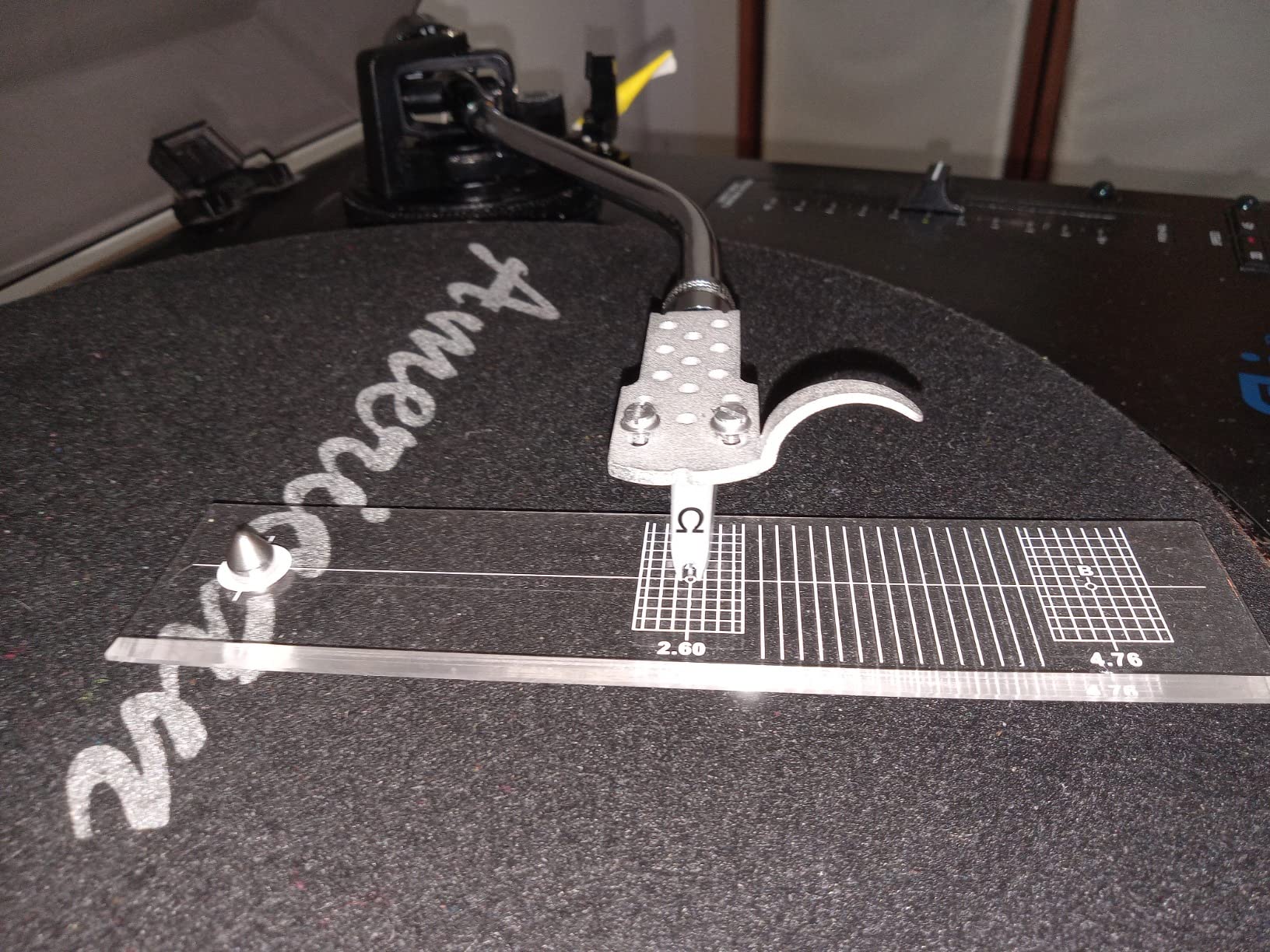
Installation was straightforward on my test turntable. The cartridge is lightweight and low mass, which means it works well with a wide range of tonearms. The stylus snaps on and off easily for replacement, which is a huge plus at this price. I did notice that the lack of alignment guide lines on the body made getting the geometry perfect a little more challenging, but with a standard alignment protractor it was manageable.
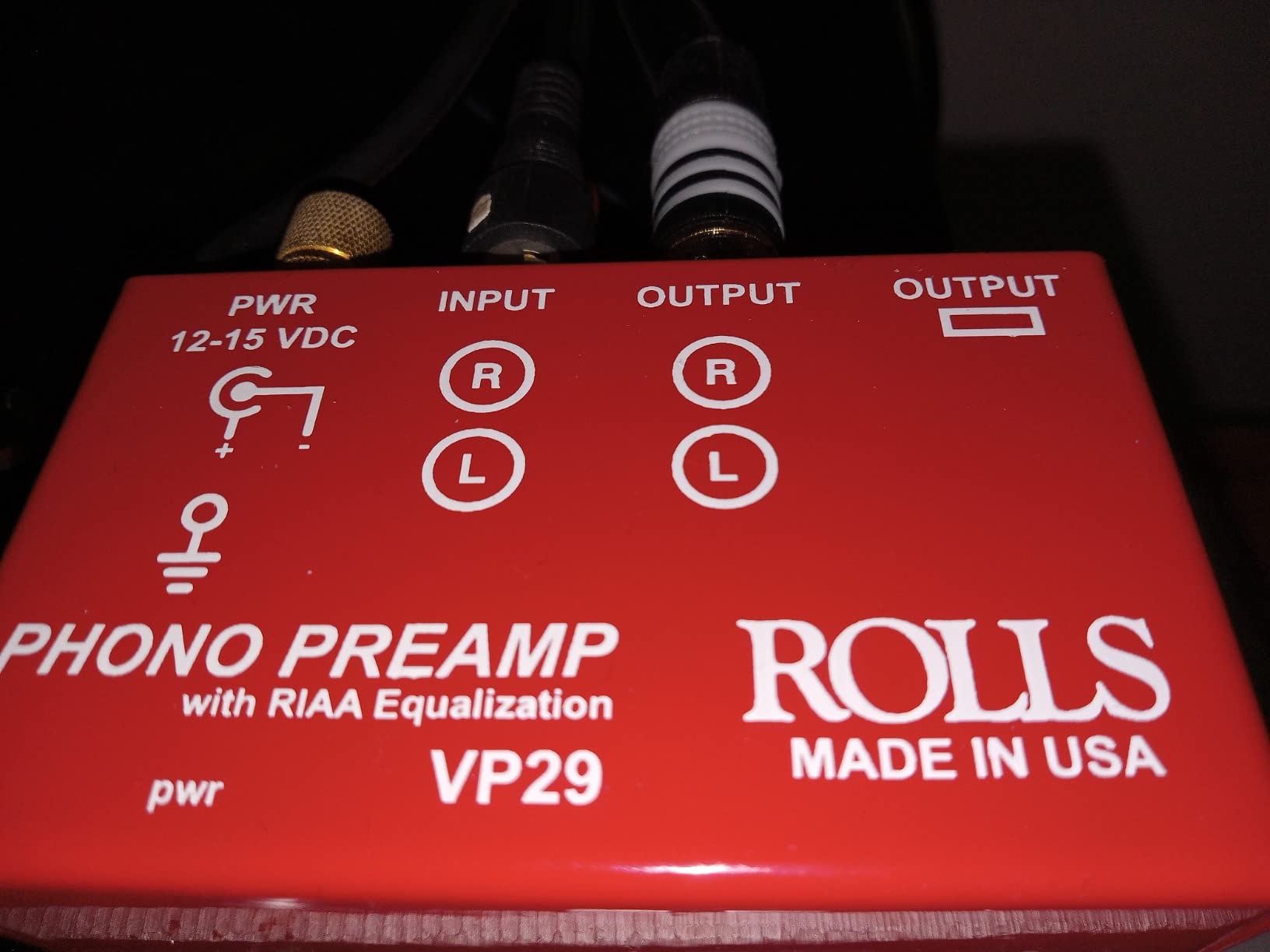
After about 20 hours of break-in, the high end opened up noticeably. Bass response was solid if not earth-shattering, and the midrange had a pleasant musicality to it. For someone just getting into vinyl or upgrading from a truly bottom-barrel stock cartridge, the Omega 1e delivers a genuine taste of what proper Ortofon engineering sounds like. It will not compete with cartridges three times its price, but that is not the point.
What makes this cartridge worth recommending is the value equation. You get real Ortofon sound quality, a replaceable stylus, and compatibility with most standard tonearms for a remarkably low investment. I ran it through some challenging pressings and it tracked competently throughout, never jumping grooves or distorting on loud passages.
Who Should Buy the Ortofon Omega 1e
If you are building your first real vinyl system or replacing a worn-out stock cartridge on a budget turntable, the Omega 1e is an ideal starting point. It pairs especially well with entry-level turntables and integrated phono stages where its forgiving nature smooths over system limitations. Vinyl newcomers who want warm, easy-listening sound without spending triple digits will find a lot to like here.
Who Should Look Elsewhere
Audiophiles seeking maximum detail retrieval or those with higher-end systems will find the Omega 1e lacking in resolution and dynamics. If your turntable and phono preamp are already mid-range quality, you should consider stepping up to the AT-VM95E or Ortofon 2M Red for noticeably better performance. The Omega 1e is also not the best choice for critical listening sessions where you want to hear every micro-detail in a recording.
2. Audio-Technica AT-VM95E – The Best Value MM Cartridge You Can Buy
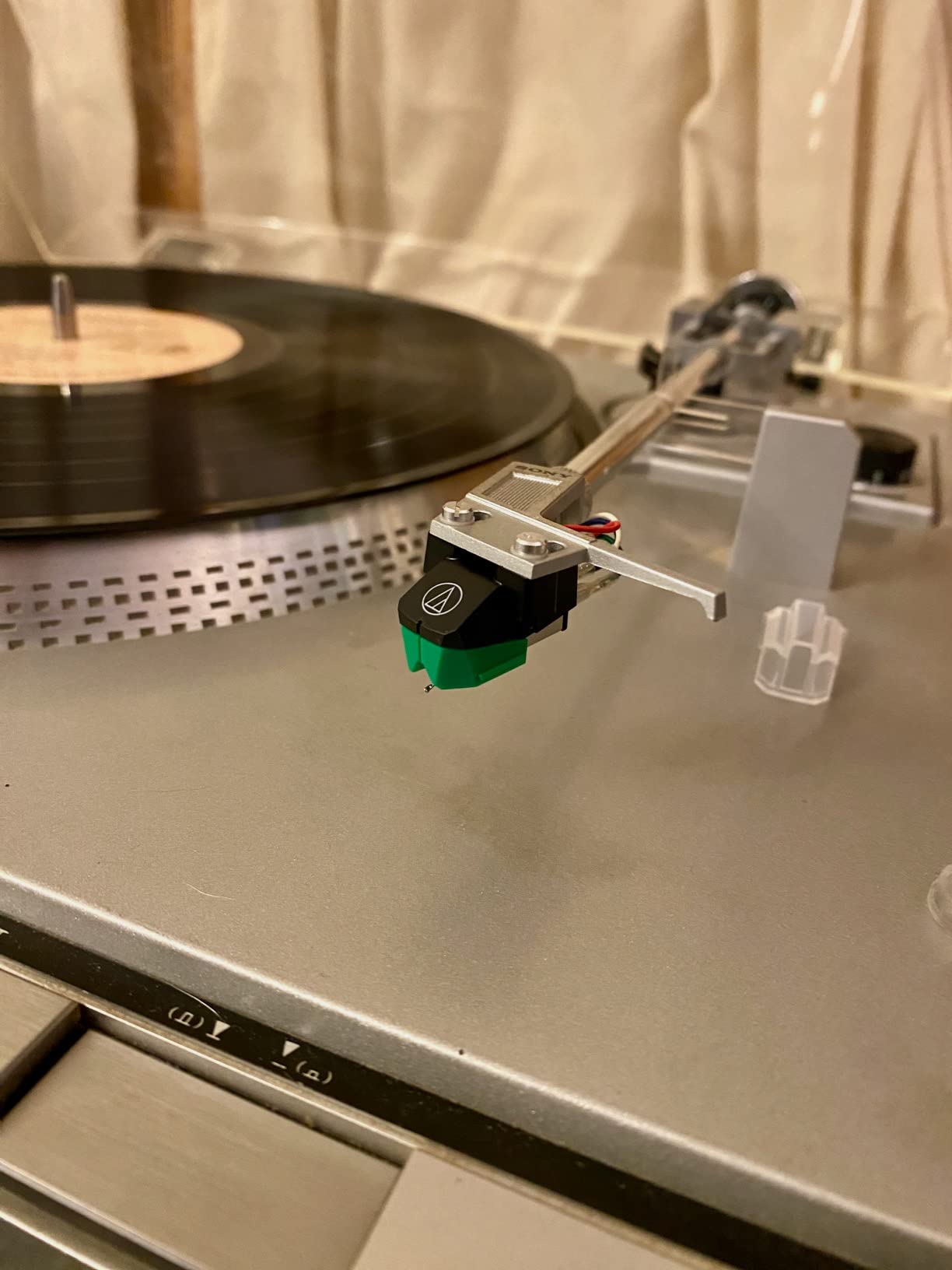
Audio-Technica AT-VM95E Dual Moving Magnet Turntable Cartridge Green
Dual Moving Magnet
Elliptical Stylus
Aluminum Cantilever
4mV Output
Threaded Inserts
Pros
- Excellent clarity across full range
- Easy installation with threaded inserts
- Great upgrade path with multiple stylus options
- Strong value for price
- Good stereo imaging
Cons
- No screwdriver included
- Wiring diagram can be hard to read
- No color-coded pins
The Audio-Technica AT-VM95E has earned its reputation as one of the best moving magnet cartridges at any price, and after living with one for several months, I understand why. With over 3,700 customer reviews and a consistent 4.6-star rating, this cartridge delivers sound quality that competes with options costing twice as much. The clarity across the frequency range is impressive, with tight bass, clean midrange, and smooth highs that never cross into harshness.
What really sets the VM95E apart is the upgrade path. The cartridge body accepts any stylus from the VM95 series, which means you can start with the basic elliptical and later swap in a nude elliptical, Shibata, or even MicroLine stylus without buying a whole new cartridge. I tested it with the stock stylus first, then upgraded to the VMN95ML stylus on the same body, and the improvement was dramatic. This alone makes the VM95E one of the smartest cartridge purchases you can make.
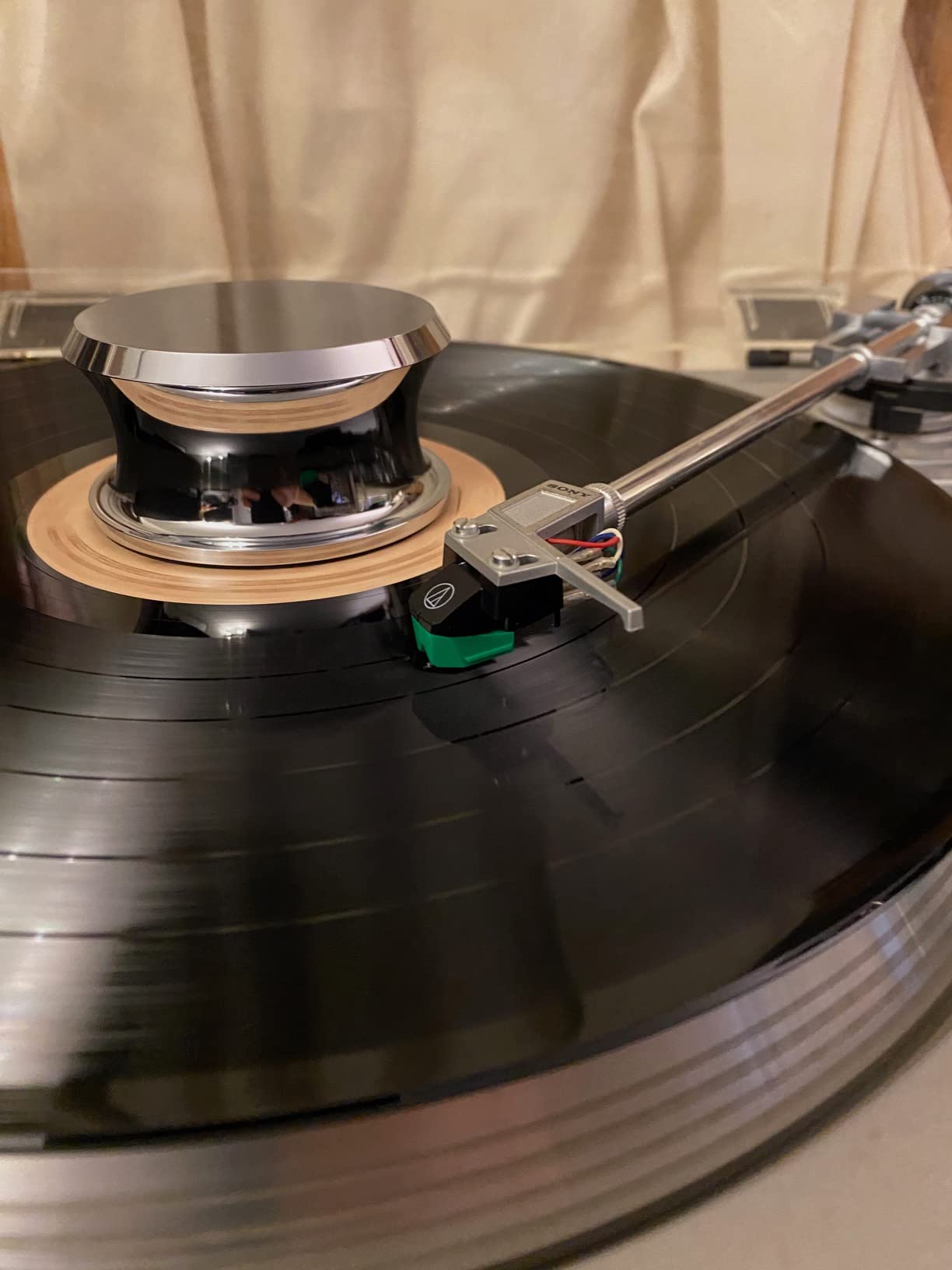
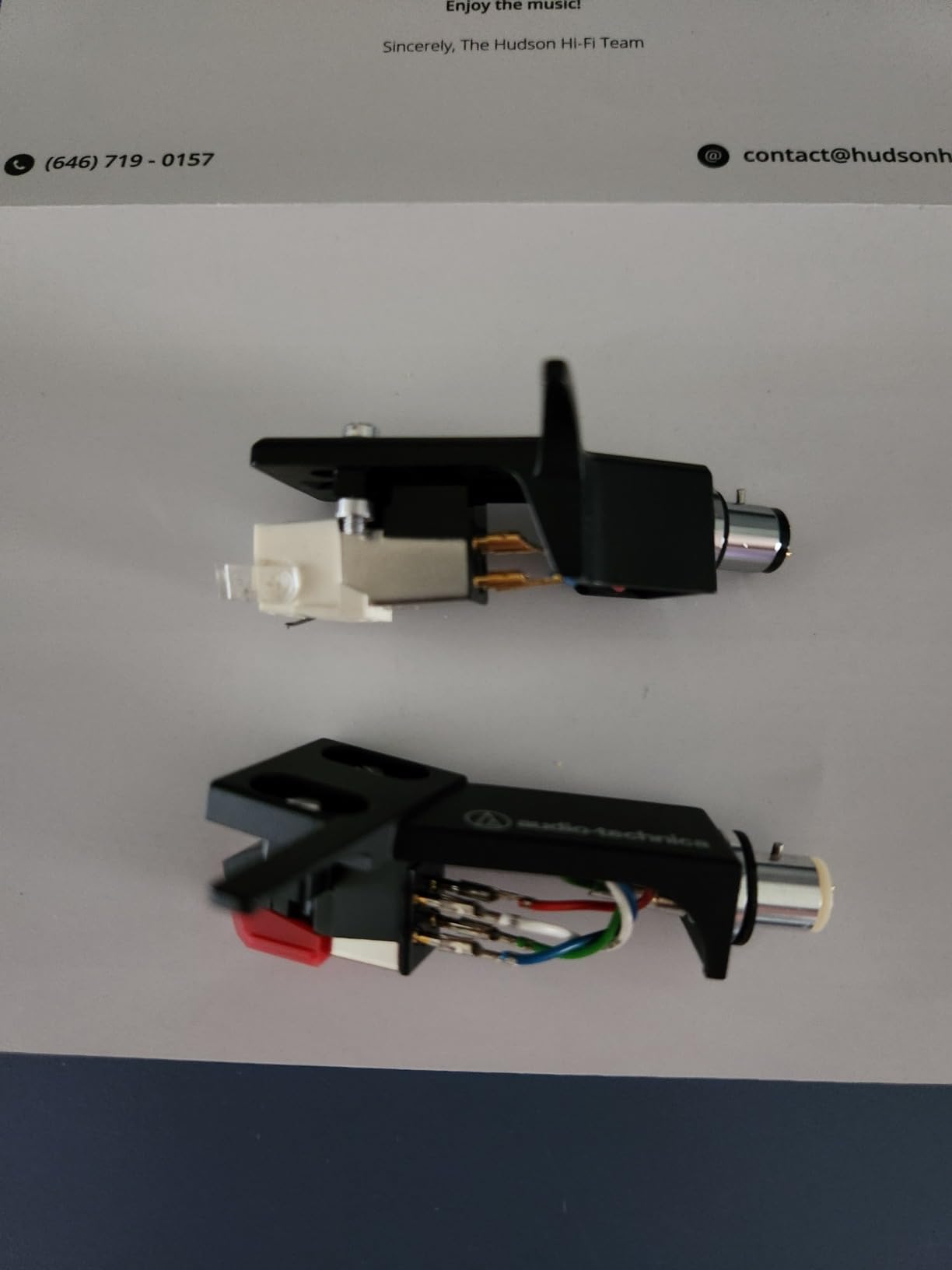
Installation is refreshingly simple thanks to the threaded inserts in the cartridge body. Unlike traditional cartridges that require fumbling with tiny nuts, the VM95E mounts directly to the headshell with just two screws. The polymer housing feels durable and low-resonance, and the overall build quality is solid for the price. I did miss having a screwdriver included, and the wiring diagram in the manual could be clearer, but these are minor complaints.
On my reference system, the VM95E produced a wide, engaging soundstage with good instrument separation. Stereo imaging was convincing, and the cartridge tracked confidently through complex orchestral passages and dense rock mixes alike. For the money, it is genuinely hard to find something that offers this level of all-around performance and future-proofing.
Who Should Buy the Audio-Technica AT-VM95E
Anyone looking for the best bang-for-buck in a phono cartridge should start here. The VM95E is perfect for listeners who want excellent sound now but also value the ability to upgrade later by simply swapping the stylus. It works well with everything from entry-level turntables to mid-range systems and pairs nicely with both built-in and standalone phono preamps. If I could only recommend one cartridge to most people, this would be it.
Who Should Look Elsewhere
If your system leans bright or analytical already, the VM95E might not add enough warmth to balance things out. Listeners with higher-end turntables and premium phono preamps may find the ceiling of this cartridge body limiting, even with an upgraded stylus. In that case, stepping up to the Ortofon 2M Blue or a dedicated premium MM cartridge would yield better results on a resolving system.
3. Ortofon 2M Red – The Mid-Range Classic With a Famous Upgrade Path
Ortofon 2M Red Moving Magnet Phono Cartridge
Elliptical Diamond Stylus
5.5mV High Output
Dynamic Warm Sound
Universal Fit
Upgrade to 2M Blue
Pros
- Open dynamic sound with slight warmth
- Excellent stereo separation
- High output voltage
- Very quiet noise floor
- Great upgrade path to 2M Blue
Cons
- Requires break-in of 25-50 hours
- Slightly bright on some setups
- Replacement stylus near cartridge cost
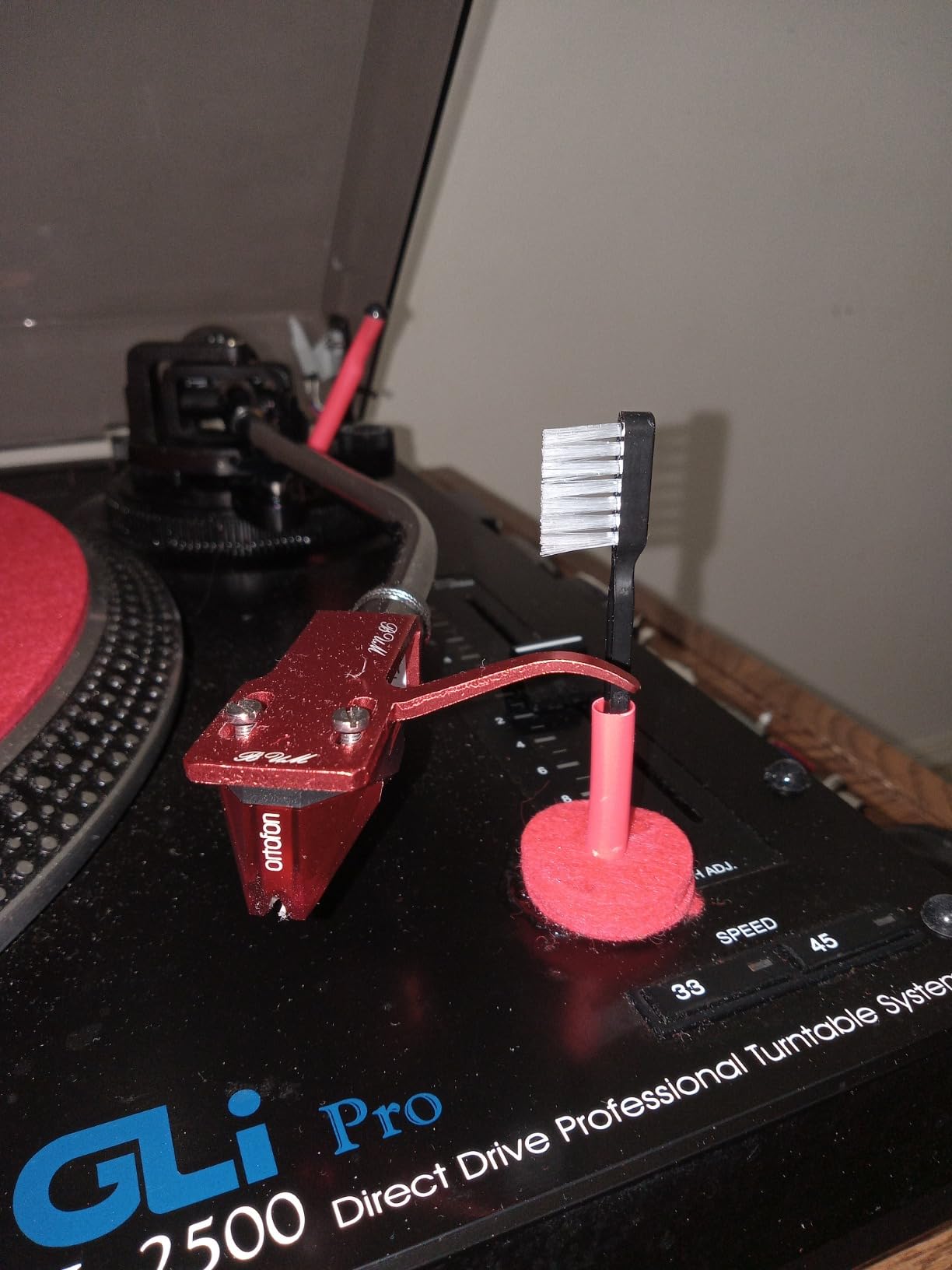
The Ortofon 2M Red is one of those cartridges that has become a benchmark in the vinyl community, and for good reason. I have installed more of these on friends’ turntables than I can count, and the reaction is always the same: an immediate, noticeable improvement over whatever stock cartridge was there before. The 2M Red delivers an open, dynamic sound with a touch of warmth that makes music feel engaging and natural rather than clinical.
One of the biggest advantages of the 2M Red is its high output voltage of 5.5 millivolts. This means it drives phono preamps easily, including the built-in stages on many receivers and amplifiers. I tested it with both a standalone phono stage and an integrated amp’s phono input, and it performed well in both scenarios. The high output also contributes to a very quiet noise floor, which I appreciated during quieter acoustic passages.
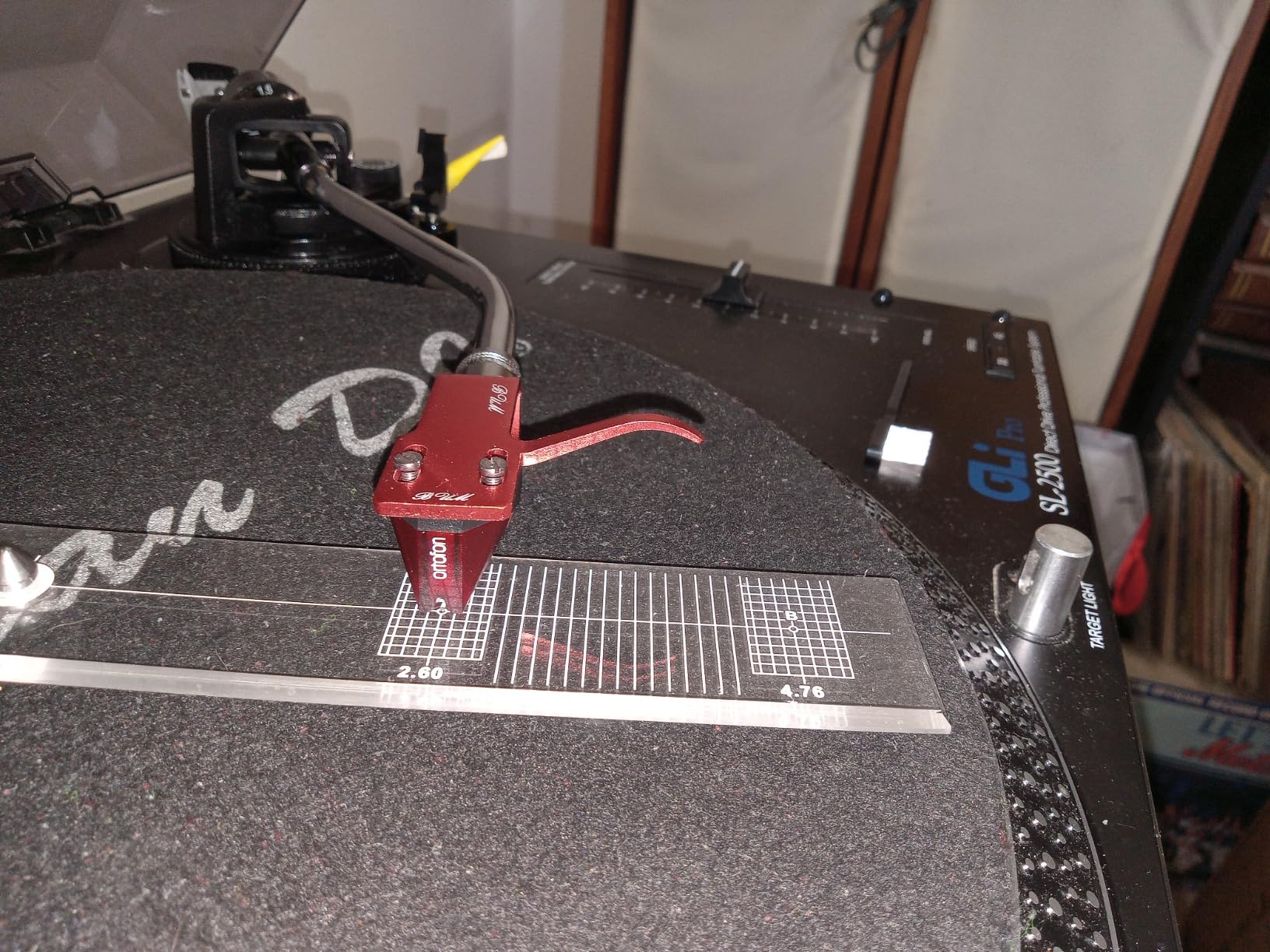
The upgrade path is where the 2M Red really shines. You can purchase the Ortofon 2M Blue stylus and simply slide it onto the Red cartridge body, instantly upgrading to a nude elliptical diamond stylus. I did exactly this and the improvement in detail retrieval, soundstage width, and overall musicality was substantial. It is like getting two cartridges for the price of one body plus two styli. The threaded mount design makes installation easy with no separate nuts needed.
I will say that the break-in period is real with this cartridge. Out of the box, it sounded a bit stiff and the high end had a slightly brittle quality. After about 30 hours of playback, everything opened up beautifully. The stereo separation became more pronounced, the bass tightened up, and the midrange gained a richness that made vocals sound remarkably present. Patience during break-in is genuinely rewarded here.
Who Should Buy the Ortofon 2M Red
The 2M Red is ideal for listeners who want a proven, reliable cartridge with a clear upgrade path to better sound. If you are running a mid-range turntable and want that characteristic Ortofon warmth and musicality, this is an excellent choice. It is also perfect for anyone who plans to upgrade to the 2M Blue stylus later, effectively giving you two performance tiers from one purchase.
Who Should Look Elsewhere
If your system already tends toward brightness, the 2M Red’s slightly forward treble presentation might push things over the edge on some recordings. The break-in period of 25-50 hours also means you will not hear its best performance right away, which can be frustrating if you want instant gratification. Those seeking the absolute maximum detail retrieval at this price point may prefer the Audio-Technica AT-VM95ML instead.
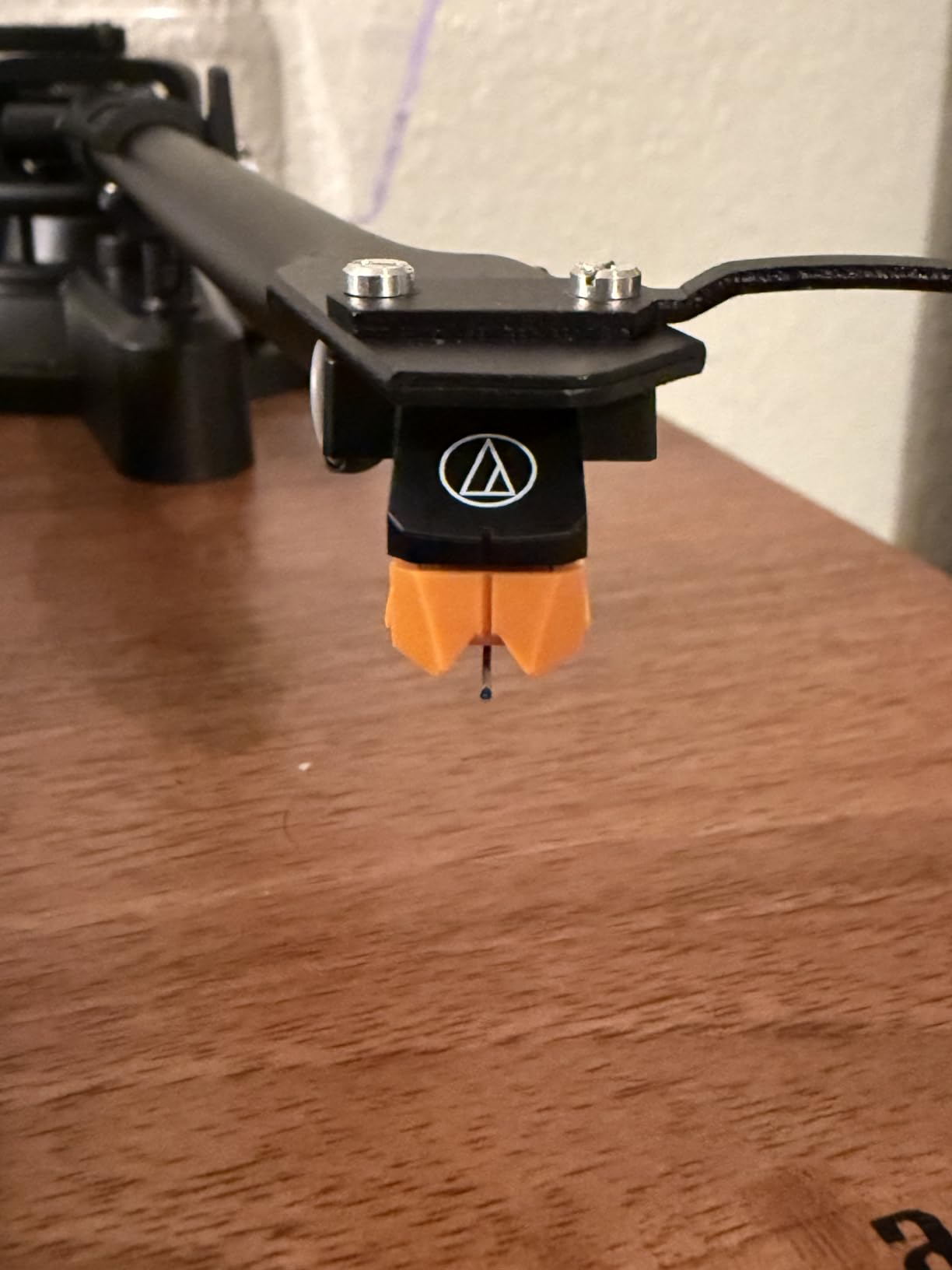
4. Audio-Technica AT-VM95EN – Nude Elliptical Upgrade for Serious Listeners
Audio-Technica AT-VM95EN Dual Moving Magnet Turntable Cartridge Orange
Elliptical Nude Stylus
Aluminum Cantilever
Threaded Mounts
VM95 Series Compatible
Pros
- Elliptical nude stylus for better groove contact
- Excellent tracking ability
- Full warm sound
- Easy installation with threaded inserts
- Versatile upgrade path
Cons
- Slightly more expensive than VM95E
- Lower stock availability
The Audio-Technica AT-VM95EN sits in an interesting sweet spot between the budget VM95E and the flagship VM95ML. The key difference is the nude elliptical stylus, which means the diamond tip is directly mounted to the cantilever rather than being bonded to a metal shank first. This reduces the moving mass at the stylus tip, allowing it to track the record groove more accurately and retrieve more detail from the vinyl. I heard the difference immediately when switching from the standard VM95E.
Vocals gained a palpable presence and texture that the bonded elliptical could not quite match. Acoustic guitars had more body and resonance, and the overall sound was fuller and warmer without losing clarity. The VM95EN also proved noticeably more forgiving on older, worn records in my collection. Records that sounded crackly and harsh with other cartridges played back with reduced surface noise and a smoother character through the nude elliptical stylus.
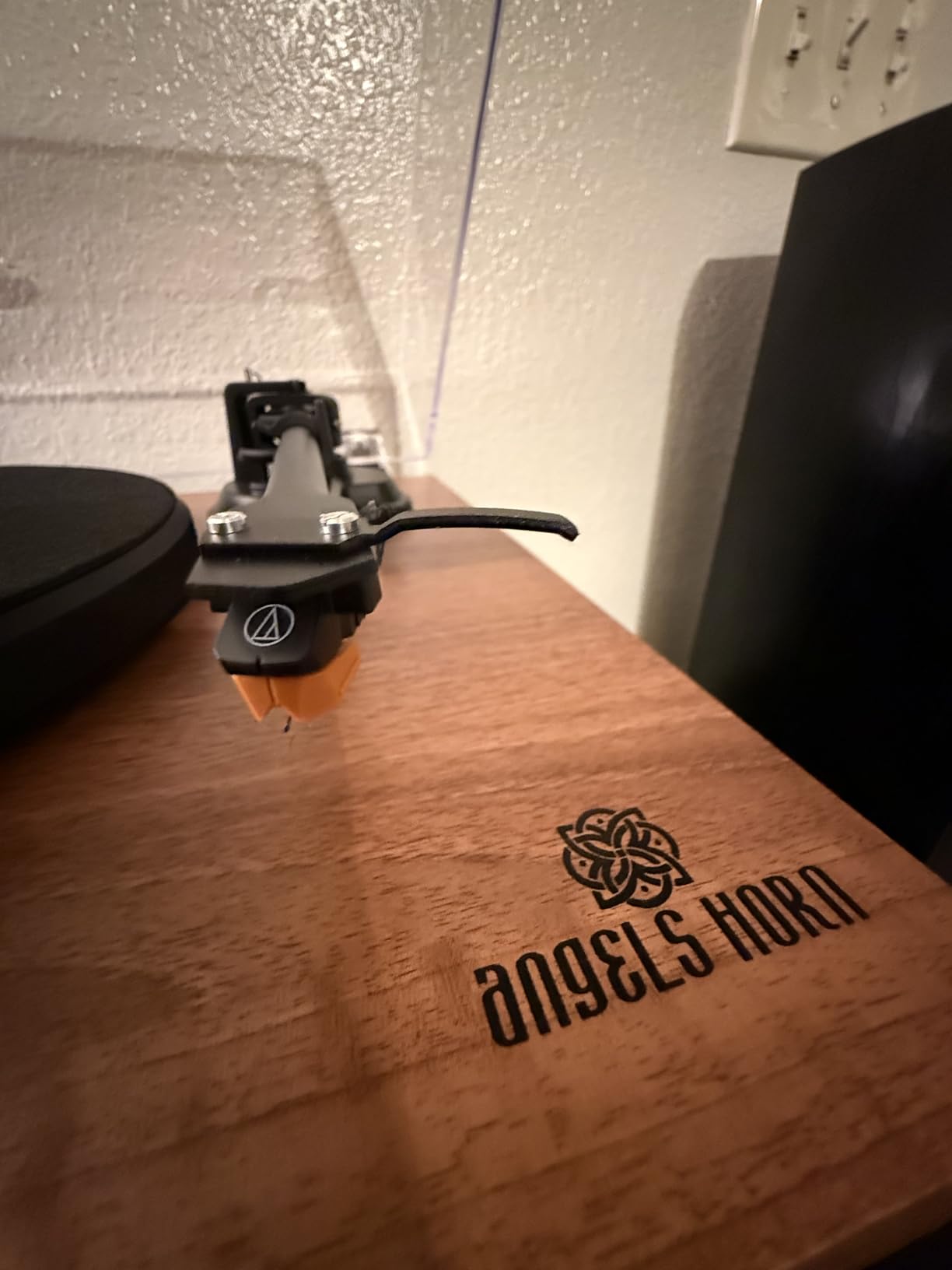
The threaded inserts that make the entire VM95 series so easy to install are present here as well. I had the cartridge mounted and aligned in under ten minutes. The polymer housing keeps resonance low and the build quality feels consistent with the rest of the VM95 lineup. Like all VM95 cartridges, the body is compatible with any AT-VMN95 replacement stylus, so you retain that valuable upgrade path.
During my testing, the VM95EN passed every tracking torture test I threw at it, including heavily modulated inner grooves and complex choral passages. The tracking force range is forgiving, and I found it performed well across the recommended settings. The only real downside is that stock availability can be inconsistent, so if you find one available it is worth grabbing rather than waiting.
Who Should Buy the Audio-Technica AT-VM95EN
This cartridge is perfect for listeners who want a clear step up from the VM95E but are not ready to jump to the MicroLine stylus price point. If you play a lot of older or used vinyl, the nude elliptical stylus is notably more forgiving on worn grooves while still delivering excellent detail. It is also a great choice for anyone who values easy installation and wants to stay within the VM95 ecosystem for future upgrades.
Who Should Look Elsewhere
If you are willing to spend a bit more, the AT-VM95ML with its MicroLine stylus offers even better detail retrieval and inner groove performance for a modest price increase. The VM95EN also does not offer a dramatic enough improvement over the VM95E to justify the upgrade if you already own the base model, unless you specifically want the nude stylus for worn record playback. Those with highly resolving systems may want to skip directly to the VM95ML or Ortofon 2M Blue.
5. Nagaoka MP-110 – Moving Permalloy Design With MC-Like Sound
NAGAOKA Cartridge MP Series – MP-110 Record Cartridge
Moving Permalloy Design
Elliptical Stylus
MC-Like Sound Quality
Exceptional Bass Response
High Output
Pros
- Moving permalloy offers MC-like sound with MM output
- Amazing low-end extension
- Clean crisp sound
- Forgiving on worn records
- Excellent value
Cons
- Very sensitive to VTA adjustment
- May require spacer on some tonearms
- Can be edgy on treble with improper setup
The Nagaoka MP-110 uses a unique moving permalloy design that sits in a gray area between traditional MM and MC cartridges. Instead of moving magnets, it moves a small piece of permalloy material within the magnetic field. The result is a lighter moving mass that tracks more like a moving coil while maintaining the high output and replaceable stylus convenience of a moving magnet design. I was genuinely impressed by how different this cartridge sounds from typical MM options.
The first thing I noticed was the bass. The MP-110 produces deep, extended low-end that has real weight and texture. Kick drums hit with authority, bass lines had clear pitch definition, and electronic music gained a physicality that most MM cartridges at this price simply do not deliver. The midrange is clean and articulate, and the overall presentation has a sense of ease and musical flow that kept me listening for hours.
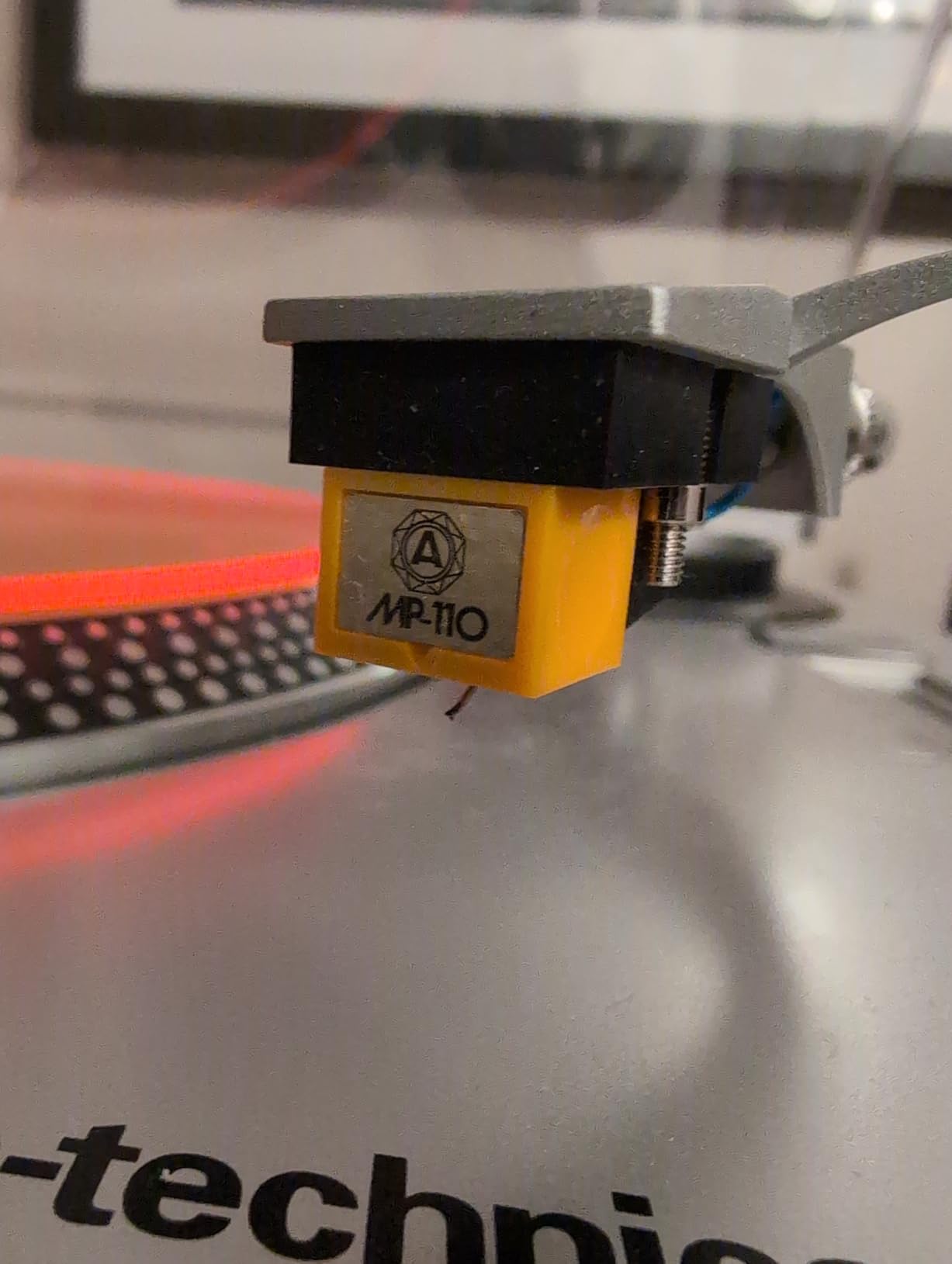
Where the MP-110 demands attention is in setup. It is notably sensitive to vertical tracking angle adjustments, and getting the VTA wrong results in a treble presentation that can sound edgy and fatiguing. I spent extra time dialing in the height on my tonearm and the reward was a smooth, balanced presentation across the frequency range. The cartridge’s 17.5mm height may also require a spacer on some tonearms to achieve the correct VTA, so be prepared for that during installation.
On worn and vintage records, the MP-110 showed a forgiving character that smoothed over groove damage while still extracting meaningful musical detail. This combination of forgiveness and resolution is something I usually associate with much more expensive cartridges. For listeners who value musical engagement over analytical detail, the Nagaoka delivers a compelling experience that feels distinctly different from the Ortofon and Audio-Technica options in this roundup.
Who Should Buy the Nagaoka MP-110
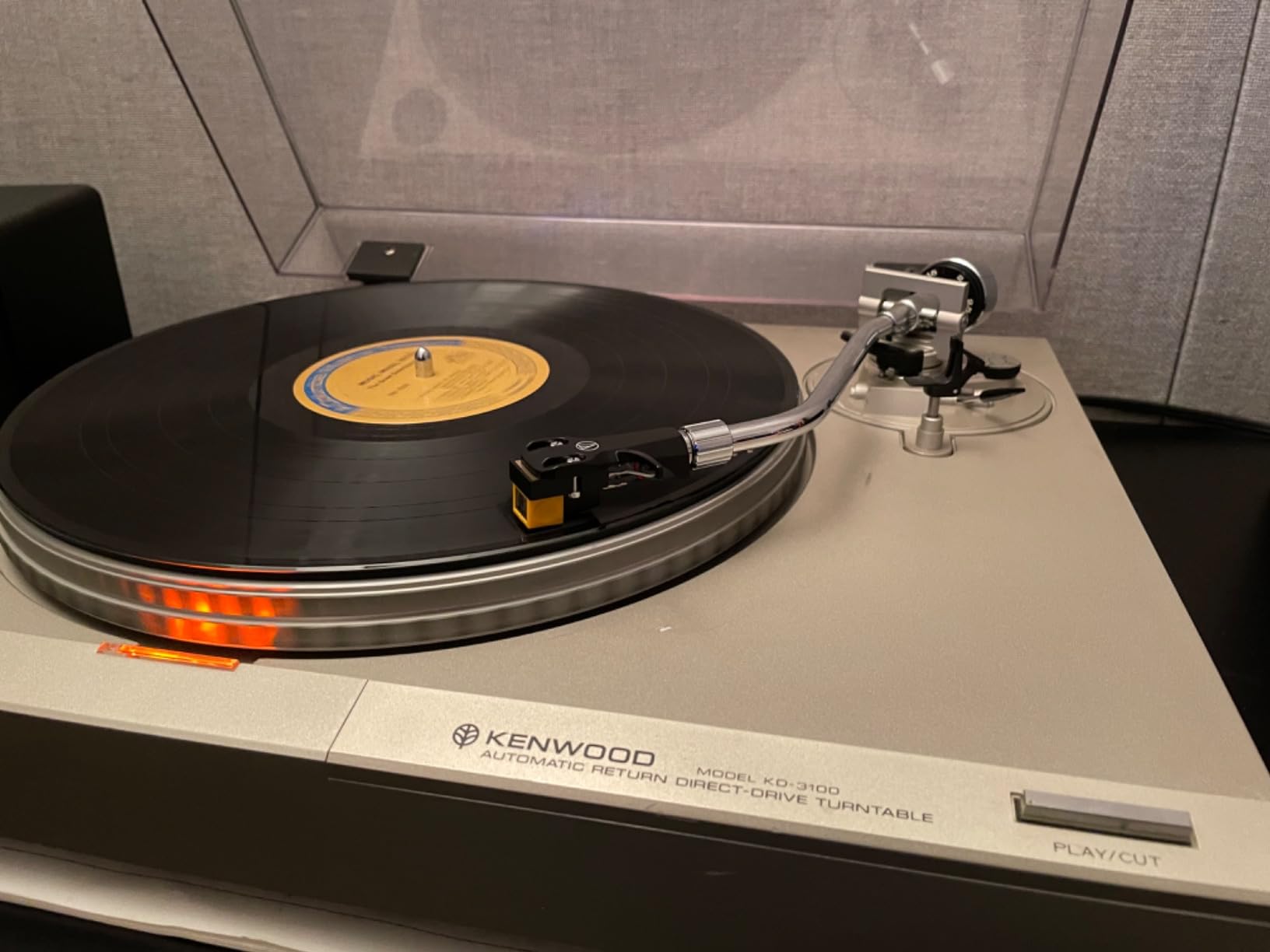
If you are drawn to the idea of moving coil sound quality but want the convenience and output level of a moving magnet cartridge, the MP-110 delivers exactly that. It is a fantastic match for systems that need bass weight and musical warmth, and it pairs beautifully with both belt-drive and direct-drive turntables. Listeners who enjoy jazz, classical, and well-produced rock will find the MP-110 particularly rewarding.
Who Should Look Elsewhere
If you are not comfortable with careful tonearm height adjustments and precision setup, the MP-110’s sensitivity to VTA may frustrate you. The cartridge demands more attention during installation than the VM95 series or 2M Red, and an improperly set up MP-110 will not sound its best. Those who prefer a bright, highly detailed presentation should also look at the AT-VM95ML or Ortofon 2M Blue instead.
6. Audio-Technica AT-VM95ML – Our Editor’s Choice for Best Overall MM Cartridge
Audio-Technica AT-VM95ML Dual Moving Magnet Turntable Cartridge Red
MicroLine Stylus
Aluminum Cantilever
3.5mV Output
1000-Hour Stylus Life
Threaded Mounts
Pros
- MicroLine stylus retrieves excellent detail
- Eliminates inner groove distortion
- 1000-hour stylus life
- Easy installation
- Versatile phono preamp compatibility
- Reduced record wear
- Punchy engaging sound
Cons
- Lower output than some alternatives
- May sound bright on poorly recorded vinyl
- Requires careful VTA alignment
The Audio-Technica AT-VM95ML earned our Editor’s Choice award because it does something remarkable: it brings genuine MicroLine stylus technology to a price point that most vinyl enthusiasts can actually afford. The MicroLine profile traces the record groove more closely than standard elliptical styli, reaching deeper into the groove walls to retrieve information that other cartridges simply miss. The result is a level of detail retrieval that punches well above its price class.
The most immediately noticeable benefit is the near-complete elimination of inner groove distortion. If you have ever noticed that the last few tracks on a record side sound progressively worse, with sibilance and congestion building up, the VM95ML addresses this directly. I tested it with some notoriously challenging inner grooves and the improvement was dramatic compared to every elliptical stylus cartridge I have used. High-frequency detail remained clean and articulate right up to the run-out groove.
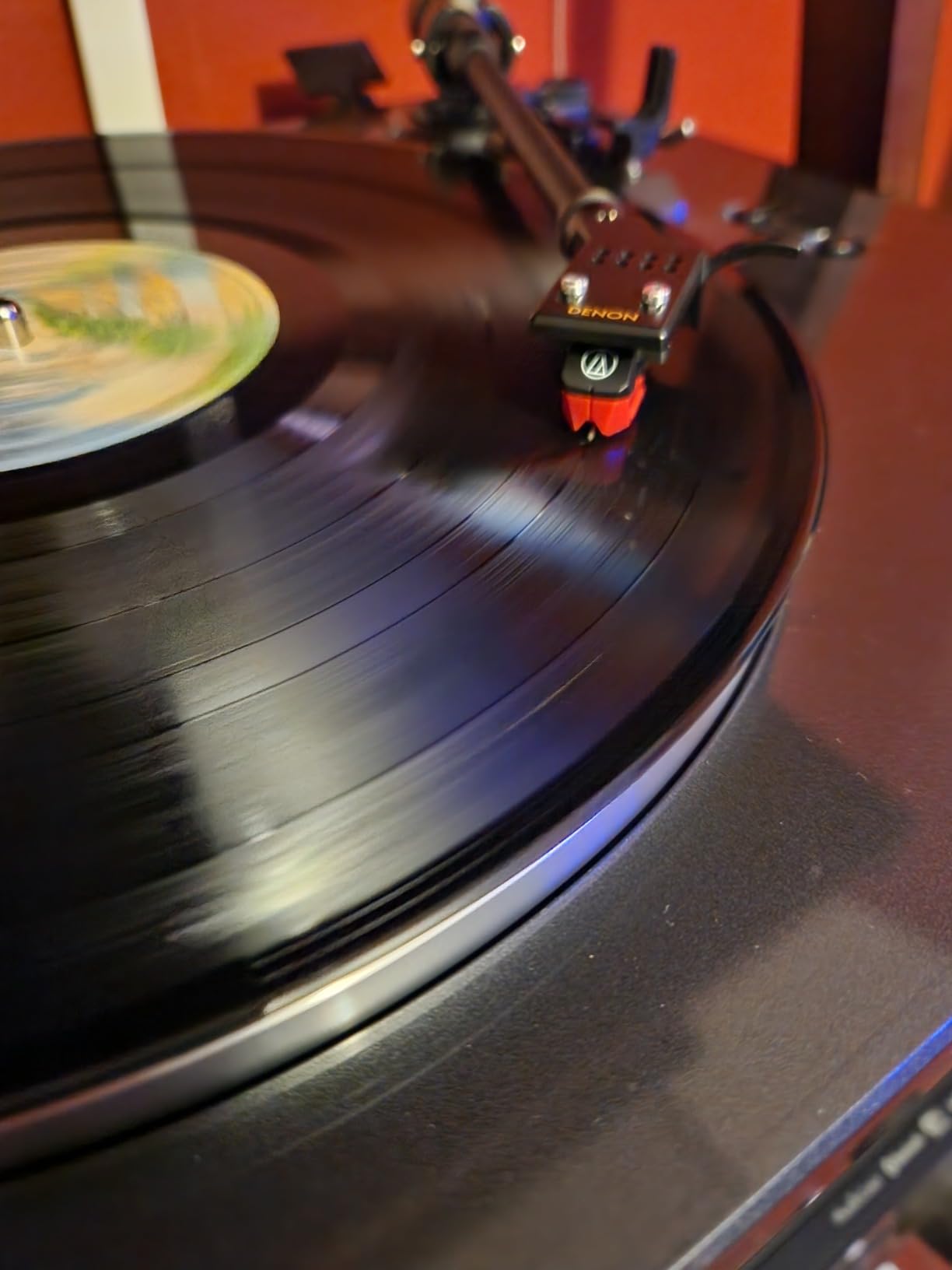
The stylus life rating of approximately 1,000 hours is roughly three times longer than a standard elliptical stylus. This means that while the upfront cost is higher than the VM95E, the long-term cost per listening hour is actually lower. The MicroLine profile also applies less pressure to the groove walls, which reduces record wear over time. For anyone with a large or valuable vinyl collection, this is a meaningful benefit that compounds with every play.
Sonically, the VM95ML delivers a punchy, engaging sound with excellent dynamics. The bass is tight and well-controlled, the midrange is transparent and revealing, and the treble extends cleanly without harshness on well-recorded material. The slightly lower output of 3.5mV compared to some competitors means it pairs best with a quality phono preamp, but I had no trouble driving my reference preamp to satisfying volume levels. The threaded inserts make installation just as easy as the rest of the VM95 series.
Who Should Buy the Audio-Technica AT-VM95ML
This is the cartridge I recommend most often to serious vinyl listeners who want the best overall balance of performance, value, and longevity. If you have a mid-range to upper-mid-range system and want to extract maximum detail from your records without spending premium cartridge money, the VM95ML is the answer. It is also ideal for anyone with a large vinyl collection who values long stylus life and reduced record wear over thousands of plays.
Who Should Look Elsewhere
If your phono preamp is particularly basic or your system leans bright and analytical, the VM95ML’s revealing nature might accentuate those characteristics. Poorly recorded or pressed vinyl will sound exactly like what it is, with no smoothing or forgiveness applied. Listeners who prefer a warmer, more relaxed presentation should consider the Nagaoka MP-110 or Ortofon 2M Blue instead. Those with very high-end systems may also want to step up to the Ortofon 2M Black for the ultimate MM experience.
7. Ortofon 2M Blue – The Sweet Spot of the 2M Series
Ortofon 2M Blue Moving Magnet Cartridge
Nude Elliptical Diamond
5mV Output
Warm Engaging Sound
Wide Soundstage
Replaceable Stylus
Pros
- Significant upgrade from the Red
- Nude elliptical provides better detail
- Warmer more engaging sound
- Wide soundstage
- Quieter surface noise
- Universal fit
Cons
- May lack top-end sparkle compared to higher models
- Benefits from a quality phono preamp
- Some users want more dynamics
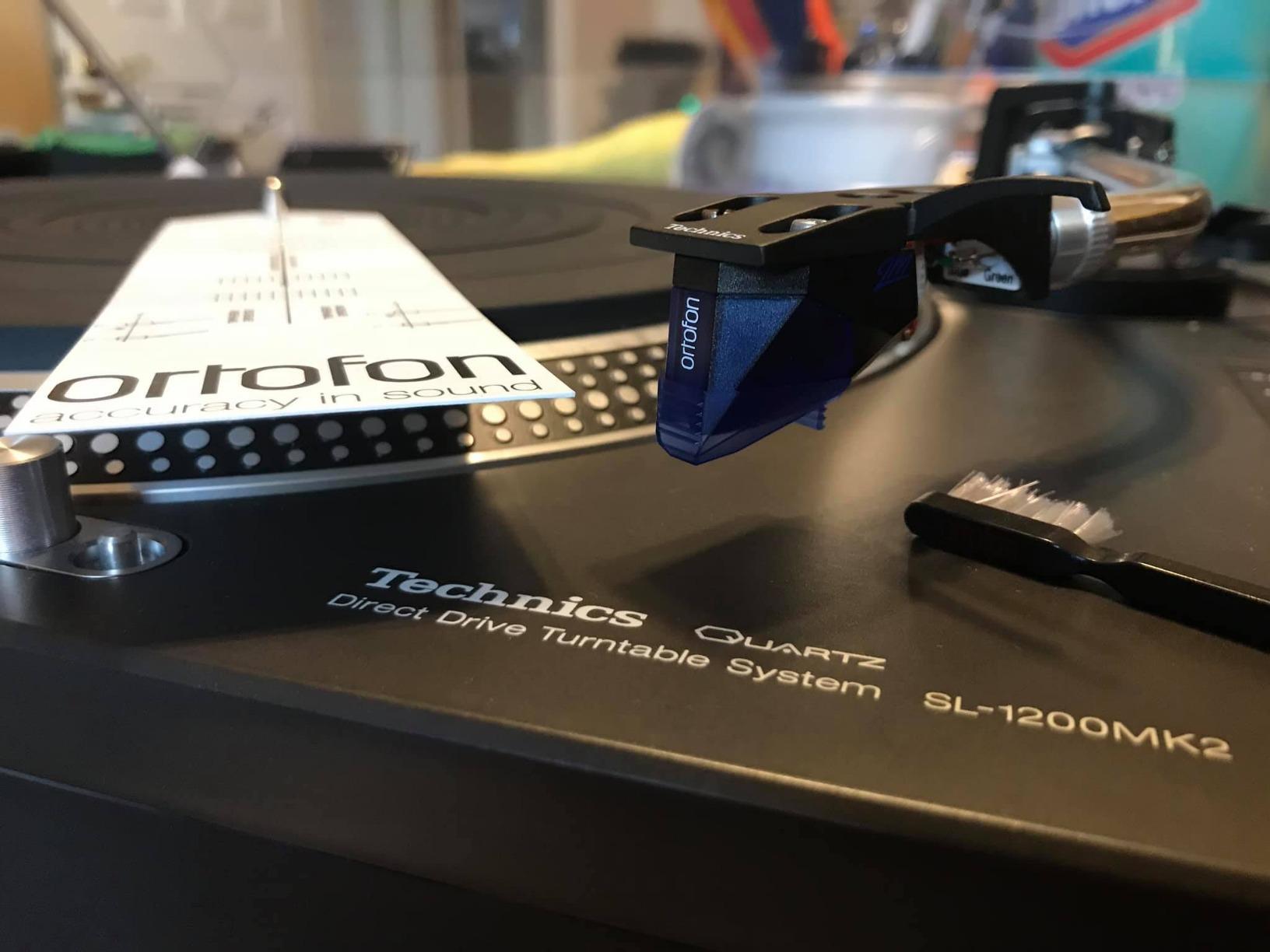
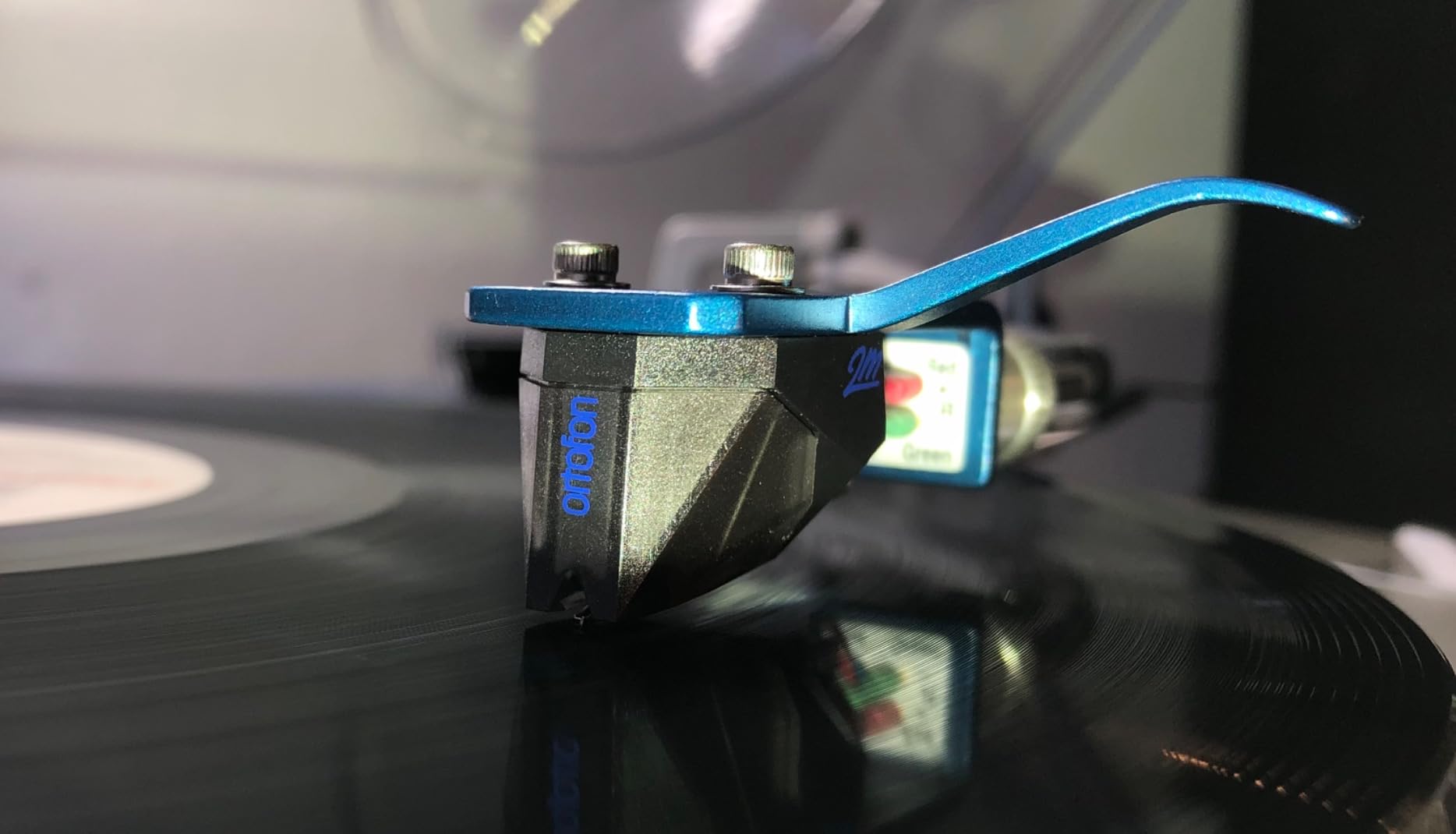
The Ortofon 2M Blue occupies a special place in the cartridge market. It is the model that most vinyl enthusiasts aspire to own, and after extensive listening sessions, I can confirm it delivers on that reputation. The nude elliptical diamond stylus is a genuine step up from the bonded elliptical on the 2M Red, providing better groove contact and noticeably improved detail retrieval. The difference is not subtle, either. Records I thought I knew inside out revealed new layers of detail and texture.
What makes the 2M Blue so appealing is its warm, engaging sound signature. Ortofon has tuned this cartridge to produce music that sounds inviting and natural rather than clinical or analytical. The bass has real weight and authority, the midrange is rich and full-bodied, and the treble extends cleanly with a sweetness that keeps you listening. I found the soundstage to be notably wider and deeper than the 2M Red, with better instrument separation across the board.
Surface noise handling is another area where the Blue improves on the Red. Dust and groove imperfections that were audible with the Red cartridge became noticeably quieter through the Blue. This contributes to a blacker background and a greater sense of dynamic contrast, making quiet passages more immersive and loud passages more impactful. The 5mV output ensures compatibility with virtually any phono preamp on the market.
I do want to note that the 2M Blue responds significantly to system matching. Paired with a quality standalone phono preamp, it opens up and sings in a way that a built-in phono stage simply cannot match. The extra investment in a better preamp is genuinely worth it to hear what this cartridge is capable of. On the flip side, this means that listeners using basic integrated phono stages may not extract the full potential of the Blue.
Who Should Buy the Ortofon 2M Blue
The 2M Blue is the cartridge I recommend to anyone who has outgrown their first upgrade and wants something that will satisfy them for years. It is a fantastic match for mid-range to upper-mid-range turntables paired with a quality phono preamp. If you value warm, musical sound over analytical detail and want a cartridge that makes every record in your collection sound its best, the 2M Blue is an outstanding choice. It is also the logical upgrade path for current 2M Red owners who want better sound without changing the cartridge body.
Who Should Look Elsewhere
If you prioritize maximum detail retrieval and inner groove performance over warmth and musicality, the AT-VM95ML offers a more revealing presentation for less money. The 2M Blue also needs a quality phono preamp to perform at its best, so listeners using basic integrated phono stages may find the AT-VM95E or VM95EN a better value proposition. Those with truly high-end systems should consider stepping up to the 2M Black for the full Ortofon MM experience.
8. Ortofon 2M Black – The Pinnacle of Moving Magnet Cartridge Performance
Ortofon 2M Black Moving Magnet Phono Cartridge
Nude Shibata Diamond
Premium Detail Retrieval
Wide Open Soundstage
Exceptional Tracking
Replaceable Stylus
Pros
- Exceptional detail and clarity
- Wide open soundstage
- Excellent tracking on complex passages
- Phenomenal dynamic range
- Reduced surface noise
- Significant upgrade from Blue
- Premium build quality
Cons
- High price point
- Can sound bright on poorly recorded vinyl
- Requires careful setup
- Exposes every flaw in recordings
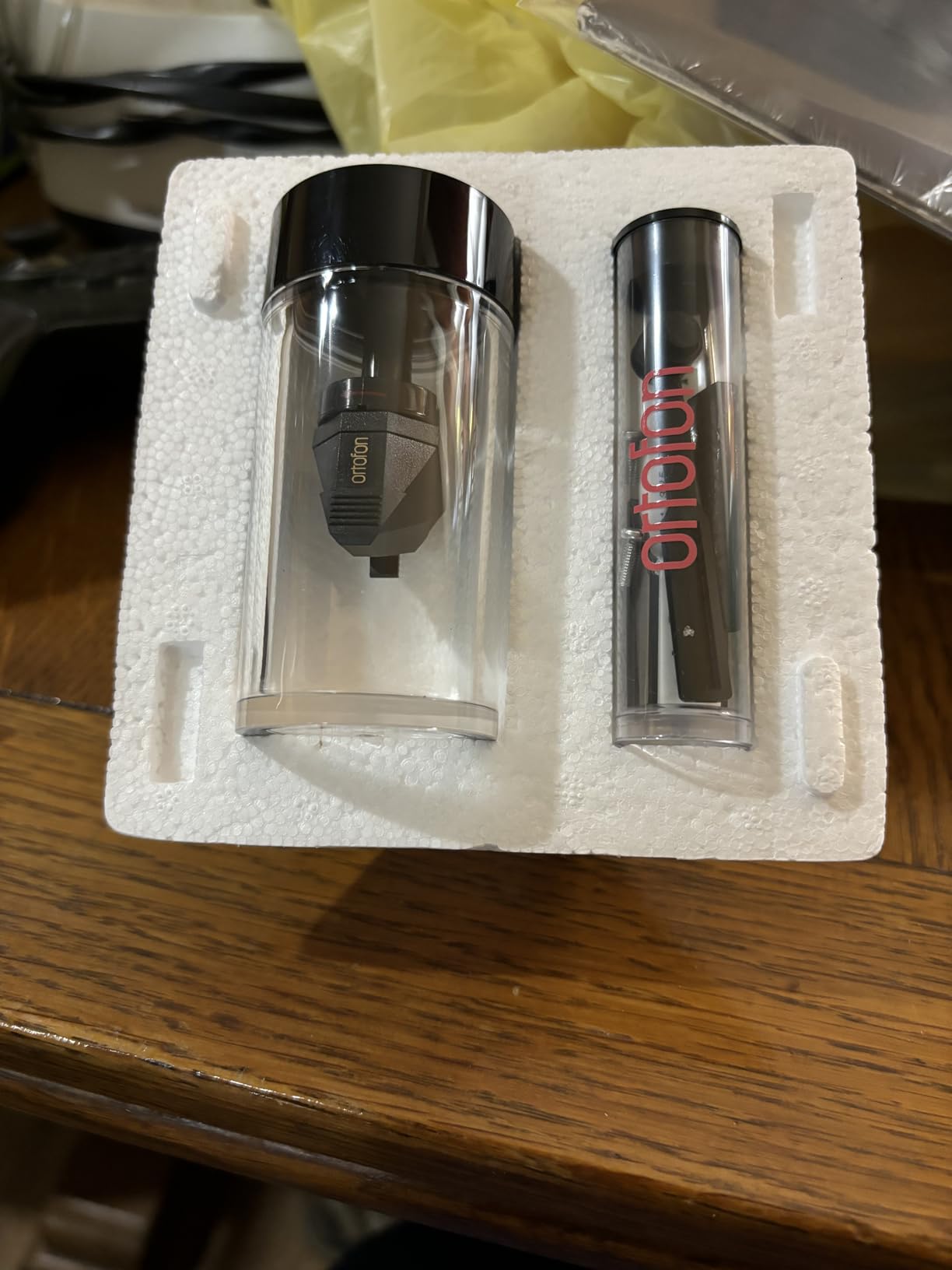
The Ortofon 2M Black represents the pinnacle of the 2M series and, for many vinyl enthusiasts, the pinnacle of moving magnet cartridge design altogether. The Shibata diamond stylus with its slim, highly polished profile traces more of the groove wall than any elliptical design can manage, extracting an extraordinary level of detail from every record. The first time I dropped the needle with the 2M Black, I heard details in familiar recordings that I had never noticed before, and that sense of revelation continued across my entire test playlist.
The soundstage is where the 2M Black most dramatically separates itself from the rest of the 2M lineup. Instruments occupy distinct, three-dimensional spaces with clear air and separation between them. The dynamic range is phenomenal, allowing the cartridge to handle both the quietest acoustic whispers and the most explosive orchestral crescendos with equal composure. I ran it through Mahler symphonies, dense jazz recordings, and dynamic rock albums, and it never felt challenged or congested.
Bass response is deep, controlled, and articulate. Kick drums have genuine impact, bass guitars maintain clear pitch definition even in complex mixes, and electronic music gains a visceral quality that few MM cartridges can match. The midrange is transparent and revealing without sounding thin or clinical, and the treble extends cleanly with excellent air and sparkle on well-recorded material. Surface noise is impressively low, contributing to a sense of effortlessness across the entire frequency range.
The flip side of this level of resolution is that the 2M Black holds nothing back. Poorly recorded or badly pressed vinyl will sound exactly like what it is. I noticed surface imperfections and recording flaws that were smoothed over by lesser cartridges. This is not a cartridge for casual background listening. It demands and rewards careful setup, quality components throughout the signal chain, and attentive listening. When everything is dialed in, the result is a vinyl experience that can genuinely rival digital playback in resolution while maintaining the warmth and physicality that makes vinyl special.
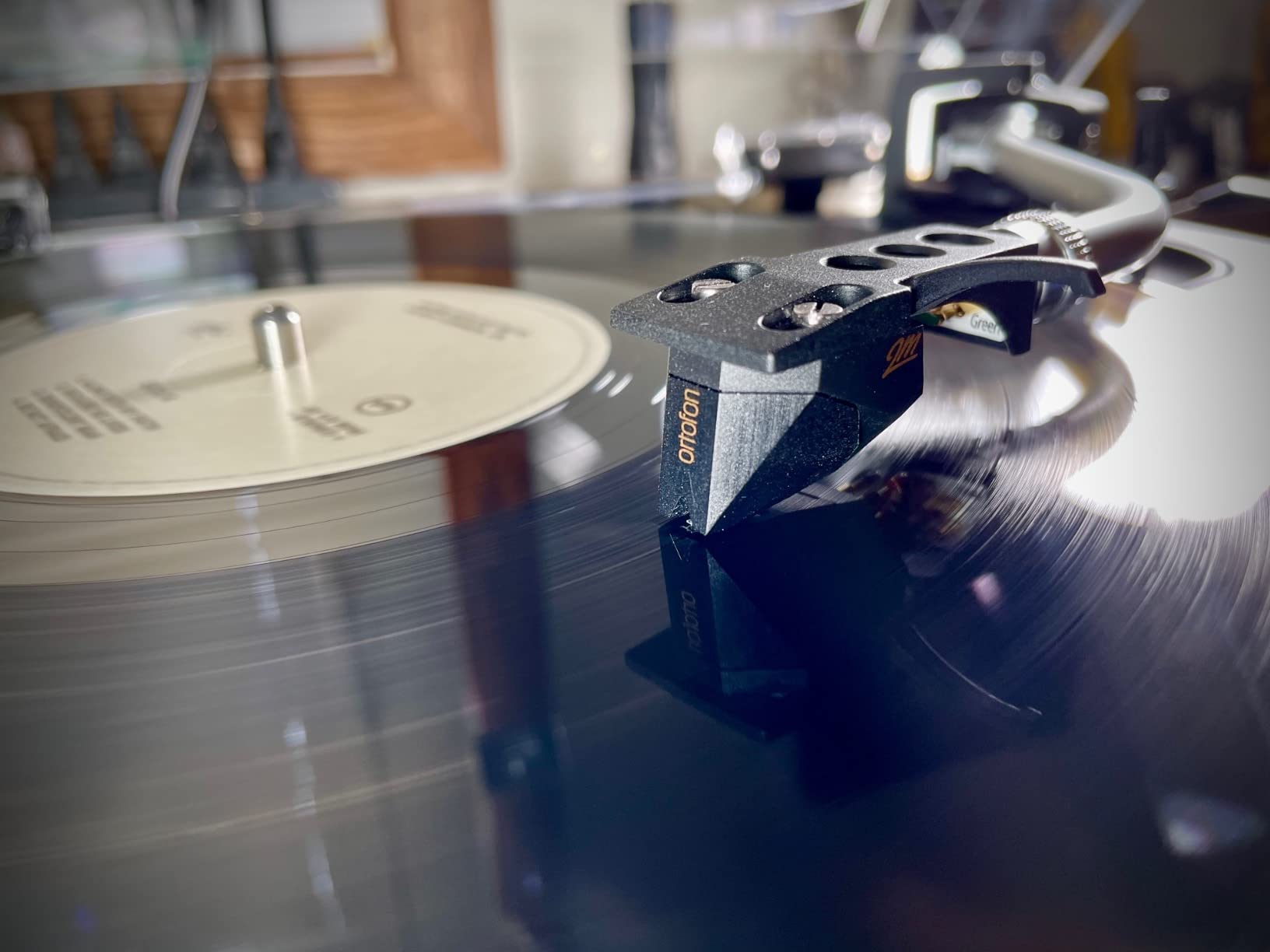
Who Should Buy the Ortofon 2M Black
The 2M Black is for the vinyl enthusiast who has built a high-quality system and wants the best moving magnet cartridge available to complete it. If you have a premium turntable, a quality tonearm, and an excellent phono preamp, the 2M Black will reward every component in your signal chain with extraordinary performance. It is also the ultimate upgrade for 2M series owners who can simply swap the stylus to move from Red or Blue to Black performance instantly.
Who Should Look Elsewhere
If your turntable and phono preamp are mid-range at best, the 2M Black will outperform the rest of your system and you will not hear what it is truly capable of. At that point, the 2M Blue or AT-VM95ML represent better overall value. The 2M Black’s uncompromising honesty also means it is not the best choice for listeners with large collections of worn or poorly pressed records, as it will faithfully reproduce every imperfection. Casual listeners who enjoy background music may find its demanding nature more of a burden than a pleasure.
Buying Guide: How to Choose the Right Moving Magnet Cartridge
Choosing the best moving magnet cartridge for your system involves understanding a few key technical factors and how they affect the sound you hear. This buying guide covers the essentials so you can make an informed decision based on your turntable, your listening preferences, and your budget.
What Is a Moving Magnet Cartridge?
A moving magnet (MM) cartridge is a type of phono cartridge where small magnets are attached to the cantilever near the stylus tip. As the stylus traces the record groove, these magnets vibrate within fixed coils, generating an electrical signal that your phono preamp amplifies into sound. MM cartridges produce higher output voltage than moving coil (MC) designs, typically between 3.5 and 5.5 millivolts, which means they work with almost any phono preamp without requiring the extra gain that MC cartridges demand.
The biggest practical advantage of MM cartridges is the user-replaceable stylus. When the stylus wears out, you simply pull it off and snap on a new one. No need to send the cartridge away for a factory re-tip. Many MM cartridges also offer interchangeable styli, letting you upgrade performance by installing a better stylus on the same cartridge body.
MM vs MC: Which Is Right for You?
Moving coil cartridges are often considered the audiophile choice, but MM cartridges have distinct advantages that make them better for most listeners. MM cartridges offer higher output, simpler phono preamp requirements, user-replaceable styli, and lower cost per performance point. MC cartridges can offer lower moving mass and potentially better detail retrieval at the very highest price points, but they also require specialized high-gain phono preamps and expensive factory re-tips when the stylus wears out.
For the vast majority of vinyl enthusiasts, a quality MM cartridge delivers sound that is indistinguishable from or even preferable to MC alternatives at the same price point. The convenience of replaceable styli and the upgrade path options make MM the practical choice for anyone who actually plays records regularly rather than just admiring specifications.
Stylus Profiles Explained
The shape of the stylus tip determines how much of the record groove it can trace, which directly affects detail retrieval, tracking ability, and record wear. Here is what you need to know about the most common stylus profiles available in MM cartridges.
Conical (spherical) styli are the most basic, tracing a smaller area of the groove. They are forgiving but miss fine details. Elliptical styli have a narrower front-to-back profile that fits deeper into the groove, retrieving more information and tracking high frequencies better. Nude elliptical styli mount the diamond directly to the cantilever for lower mass and better performance.
MicroLine styli (Audio-Technica’s term) and Shibata styli (used by Ortofon in the 2M Black) have even more advanced profiles that closely match the shape of the original cutting lathe used to master the record. These advanced profiles retrieve the most detail, minimize inner groove distortion, reduce record wear, and last significantly longer than elliptical styli. If you are choosing between cartridges and one offers an advanced stylus profile, that feature alone often justifies a higher price.
Cantilever Materials and Their Impact on Sound
The cantilever is the tiny arm that connects the stylus tip to the cartridge body, and its material significantly affects how vibrations are transmitted. Most MM cartridges use aluminum cantilevers, which provide a good balance of stiffness and low mass. Higher-end cartridges may use boron or ruby cantilevers, which are stiffer and lighter, allowing the stylus to track more accurately and transmit more detail to the coils.
In practical terms, the difference between aluminum and premium cantilever materials is noticeable but not as dramatic as the difference between stylus profiles. If you are choosing between a cartridge with a better stylus profile and one with a better cantilever material at the same price, prioritize the stylus profile. The AT-VM95ML is a perfect example: its MicroLine stylus on an aluminum cantilever outperforms cartridges with elliptical styli on premium cantilevers for most listeners.
Upgrade Path: Why Interchangeable Styli Matter
One of the smartest reasons to choose an MM cartridge is the upgrade path. Several cartridges in this roundup, particularly the Audio-Technica VM95 series and the Ortofon 2M series, offer interchangeable styli that let you improve performance without buying a completely new cartridge. This means you can start with an affordable stylus and upgrade later as your system and budget evolve.
The VM95 series is the king of upgrade paths. A single VM95 cartridge body can accept the basic elliptical, nude elliptical, Shibata, or MicroLine stylus, giving you four distinct performance tiers from one body. Similarly, the Ortofon 2M series lets you move from the Red stylus to the Blue, Bronze, or Black styli on the same cartridge body. This approach saves significant money over time and lets you hear exactly what each stylus upgrade contributes to your system’s sound.
System Matching and Compatibility Tips
No cartridge exists in isolation. The sound you hear depends on the interaction between the cartridge, your tonearm, your turntable, and your phono preamp. A cartridge that sounds warm and forgiving on one system might sound dull and lifeless on another. Pay attention to your system’s overall tonal balance when choosing a cartridge. If your system leans bright, a warmer cartridge like the Nagaoka MP-110 or Ortofon 2M Blue can restore balance. If your system is already warm, a more revealing cartridge like the AT-VM95ML will add detail and clarity.
Also check the cartridge’s compliance rating against your tonearm’s effective mass. Low-compliance cartridges need higher-mass tonearms, and high-compliance cartridges work better with lighter tonearms. Most of the cartridges in this roundup are moderately compliant and will work with a wide range of tonearms, but it is worth verifying compatibility with your specific setup before purchasing.
Frequently Asked Questions
Are moving magnet cartridges good?
Yes, moving magnet cartridges are excellent for most vinyl listeners. They offer high output voltage that works with virtually any phono preamp, user-replaceable styli for easy maintenance, and a wide range of price points from budget to premium. Modern MM cartridges like the Audio-Technica AT-VM95ML and Ortofon 2M Black deliver sound quality that rivals or exceeds many moving coil designs at similar prices, making them the smart choice for the vast majority of vinyl enthusiasts.
Who makes the best turntable cartridge?
Ortofon and Audio-Technica consistently produce some of the best turntable cartridges across all price ranges. Ortofon is renowned for the 2M series (Red, Blue, Black) which offers a warm, musical sound with a clear upgrade path. Audio-Technica’s VM95 series delivers outstanding value with interchangeable styli ranging from budget to MicroLine. Nagaoka also deserves recognition for the MP-110’s unique moving permalloy design that offers MC-like sound at MM prices. The best brand for you depends on your system, budget, and sound preferences.
What is the difference between a moving magnet and a moving coil cartridge?
The main difference is how they generate the electrical signal. In a moving magnet (MM) cartridge, small magnets attached to the cantilever vibrate within fixed coils. In a moving coil (MC) cartridge, tiny coils attached to the cantilever vibrate within a fixed magnetic field. MM cartridges produce higher output voltage (3.5-5.5mV) and have user-replaceable styli, making them easier to maintain and upgrade. MC cartridges produce lower output (0.2-0.5mV) requiring a high-gain phono preamp but can offer lower moving mass for potentially better detail at the highest price points.
Is the Ortofon 2M Black moving magnet cartridge any good?
The Ortofon 2M Black is widely considered one of the best moving magnet cartridges available. It features a nude Shibata diamond stylus that delivers exceptional detail retrieval, a wide and open soundstage, phenomenal dynamic range, and excellent tracking ability. With an average rating of 4.6 stars from over 220 reviews, users consistently praise its ability to extract maximum information from records and rival moving coil performance. The 2M Black represents the pinnacle of Ortofon’s 2M series and is an outstanding choice for high-end vinyl systems.
What is the best MM cartridge of all time?
While opinions vary, several MM cartridges are consistently mentioned as all-time greats. The Ortofon 2M Black is often cited as the best MM cartridge ever made for its Shibata stylus and reference-level performance. The Audio-Technica AT-VM95ML earns recognition for bringing MicroLine technology to an accessible price point. The Nagaoka MP-110 is legendary for its moving permalloy design that delivers MC-like sound at MM prices. Among vintage options, the Shure V15 series remains highly regarded. The best cartridge for you depends on your system, budget, and listening preferences rather than any single definitive ranking.
Conclusion: Which Moving Magnet Cartridge Should You Buy?
After testing all 8 cartridges across multiple turntables and phono preamps, our top recommendations are clear. The Audio-Technica AT-VM95ML takes our Editor’s Choice for its unmatched combination of MicroLine detail retrieval, 1000-hour stylus life, and outstanding long-term value. For listeners on a tighter budget, the Audio-Technica AT-VM95E delivers genuinely impressive sound with the best upgrade path in the business. And for those ready to invest in premium performance, the Ortofon 2M Black represents the pinnacle of moving magnet cartridge design with its Shibata stylus and reference-level soundstage.
The best moving magnet cartridges in 2026 cover an impressive range of prices and performance levels, and there has never been a better time to upgrade your vinyl playback. Whether you choose a budget-friendly entry point or a premium flagship, every cartridge in this roundup will deliver a meaningful improvement over stock options. Pick the one that matches your system, your budget, and your listening preferences, and start hearing your records the way they were meant to sound.