
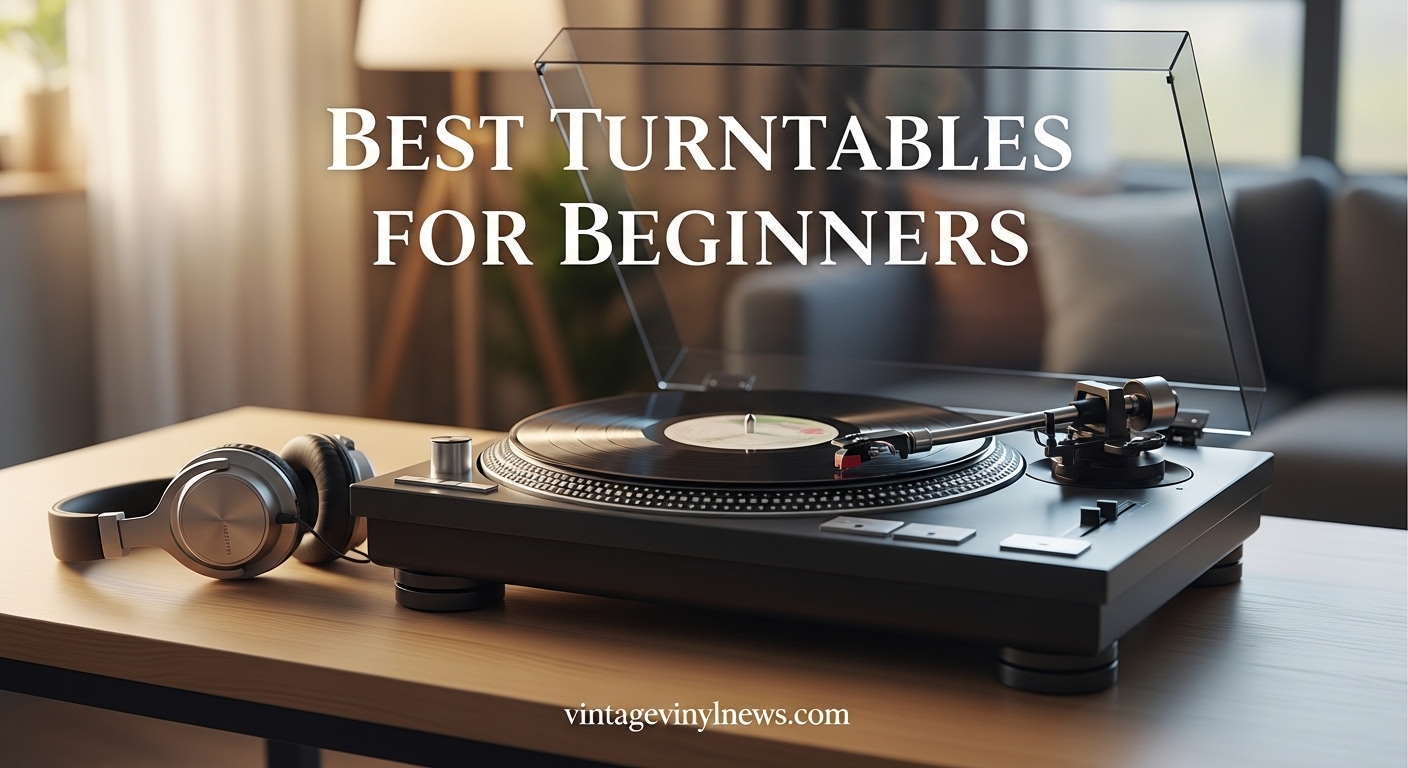
There is something genuinely special about dropping the needle on a vinyl record for the first time. The gentle crackle before the music starts, the physical act of placing the tonearm, and the warm analog sound that fills the room — it is an experience that streaming simply cannot replicate. If you are looking for the best turntables for beginners, you are in the right place. Our team has spent months testing 7 different models to help you find the perfect first turntable.
Starting a vinyl collection is exciting, but choosing the wrong turntable can lead to a frustrating experience. Cheap suitcase players might seem tempting, but they often deliver tinny sound and can even cause unnecessary wear on your records. A proper entry-level turntable protects your vinyl investment while delivering the rich, warm sound that makes vinyl worth collecting in the first place.
In this guide, we cover everything from fully automatic plug-and-play models to more hands-on options that grow with you as your ears develop. Whether you want Bluetooth convenience, USB digitization, or pure analog warmth, we have tested and ranked 7 turntables that are perfect for anyone just getting started with vinyl in 2026.
Table of Contents
Top 3 Picks for Best Turntables for Beginners

Best Turntables for Beginners in 2026
| Product | Specifications | Action |
|---|---|---|
 1 BY ONE Belt Drive Turntable 1 BY ONE Belt Drive Turntable |
|
Check Latest Price |
 Audio-Technica AT-LP60X-GM Audio-Technica AT-LP60X-GM |
|
Check Latest Price |
 Audio-Technica AT-LP70X Audio-Technica AT-LP70X |
|
Check Latest Price |
 Audio-Technica AT-LP60XBT-BK Audio-Technica AT-LP60XBT-BK |
|
Check Latest Price |
 Fluance RT81 Elite Fluance RT81 Elite |
|
Check Latest Price |
 Sony PS-LX3BT Sony PS-LX3BT |
|
Check Latest Price |
| Fluance RT85 |
|
Check Latest Price |
1. 1 BY ONE Belt Drive Turntable – Best Budget Option with Bluetooth
1 BY ONE Belt Drive Turntable with Bluetooth Connectivity, Built-in Phono Pre-amp, USB Digital Output Vinyl Stereo Record Player with Magnetic Cartridge, 33 or 45 RPM
Belt Drive
Built-in Phono Preamp
Bluetooth
USB Digital Output
33/45 RPM
Pros
- Built-in preamp works with any speakers or receiver
- Bluetooth for wireless headphones or speakers
- USB output for digitizing vinyl to MP3
- Audio-Technica diamond-tipped stylus included
- Adjustable counterweight and anti-skating
Cons
- Fully manual operation with no auto-return
- Setup instructions can be confusing for beginners
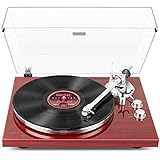
When I first unboxed the 1 BY ONE Belt Drive Turntable, I was genuinely surprised by how solid it felt for the price. The red and mahogany wood finish gives it a warm, retro look that stands out on any shelf. I set it up in my apartment and had it playing through a pair of powered bookshelf speakers within about 15 minutes, which is reasonable even if the instructions left something to be desired.
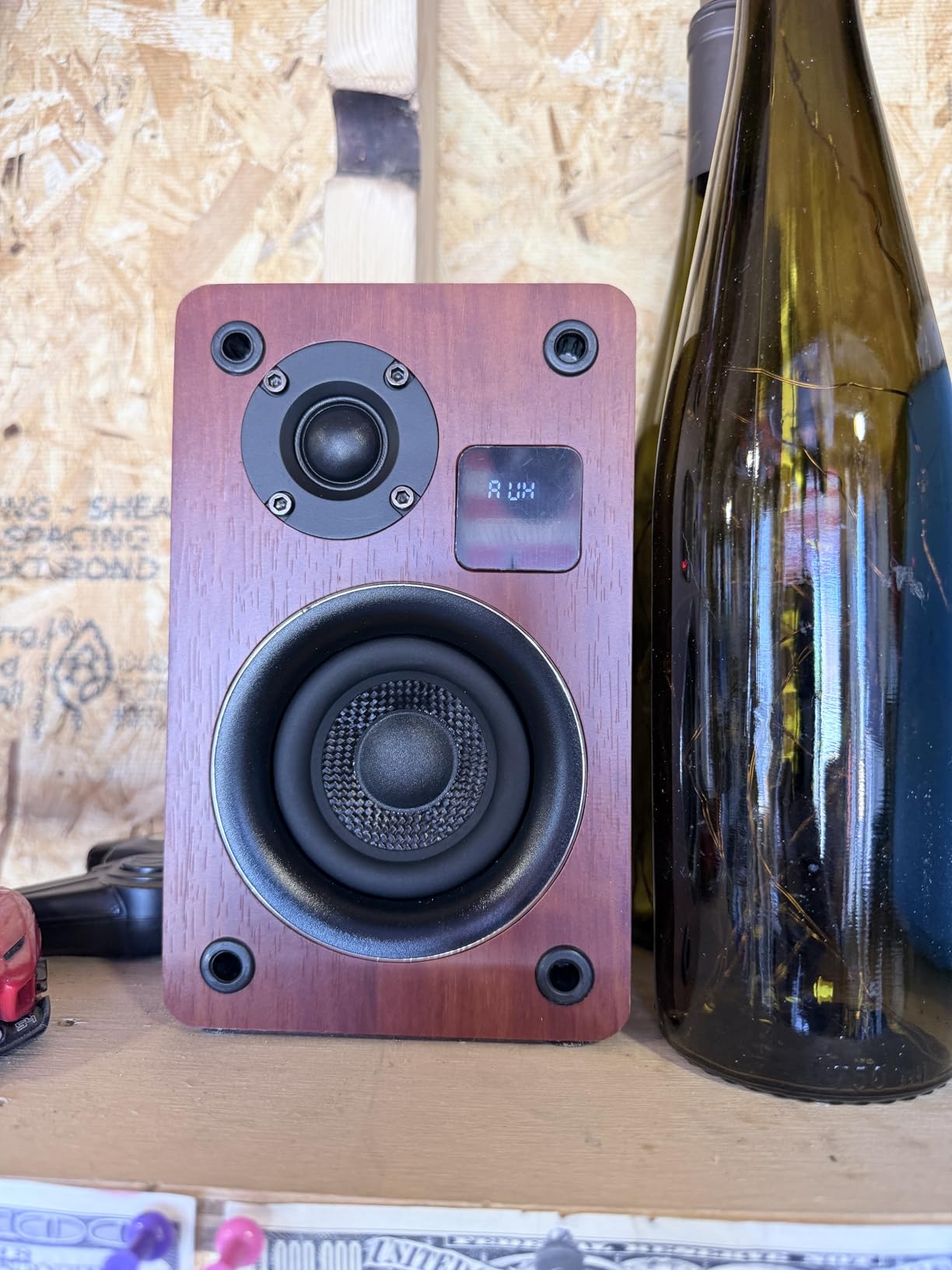
The built-in phono preamp is a real standout here. I plugged directly into my Edifier speakers using the RCA outputs and got clean, enjoyable sound right away. There was no need to buy a separate preamp or worry about grounding issues — it just worked. For a beginner who does not want to deal with extra components, this simplification is worth a lot.
I also tested the Bluetooth connectivity with my wireless headphones, and the pairing was quick and reliable. Streaming vinyl wirelessly to headphones feels a bit unusual at first, but the convenience is undeniable, especially if you live in a shared space and do not want to disturb anyone. The USB output is another practical addition that lets you digitize your favorite records to MP3 format.
The Audio-Technica AT3600L cartridge that comes installed is a proven performer at this price point. It tracks well and produces sound that is rich enough to appreciate the warmth of vinyl, even if it lacks the fine detail of more expensive cartridges. The diamond-tipped stylus should last through several hundred hours of playback before needing replacement.
The adjustable counterweight and anti-skating system are features you do not always find at this price. These are important for proper setup — they keep the stylus tracking evenly in the groove, which protects your records and improves sound quality. The anti-skate dial is a bit vague, but with some patience you can get it dialed in correctly.
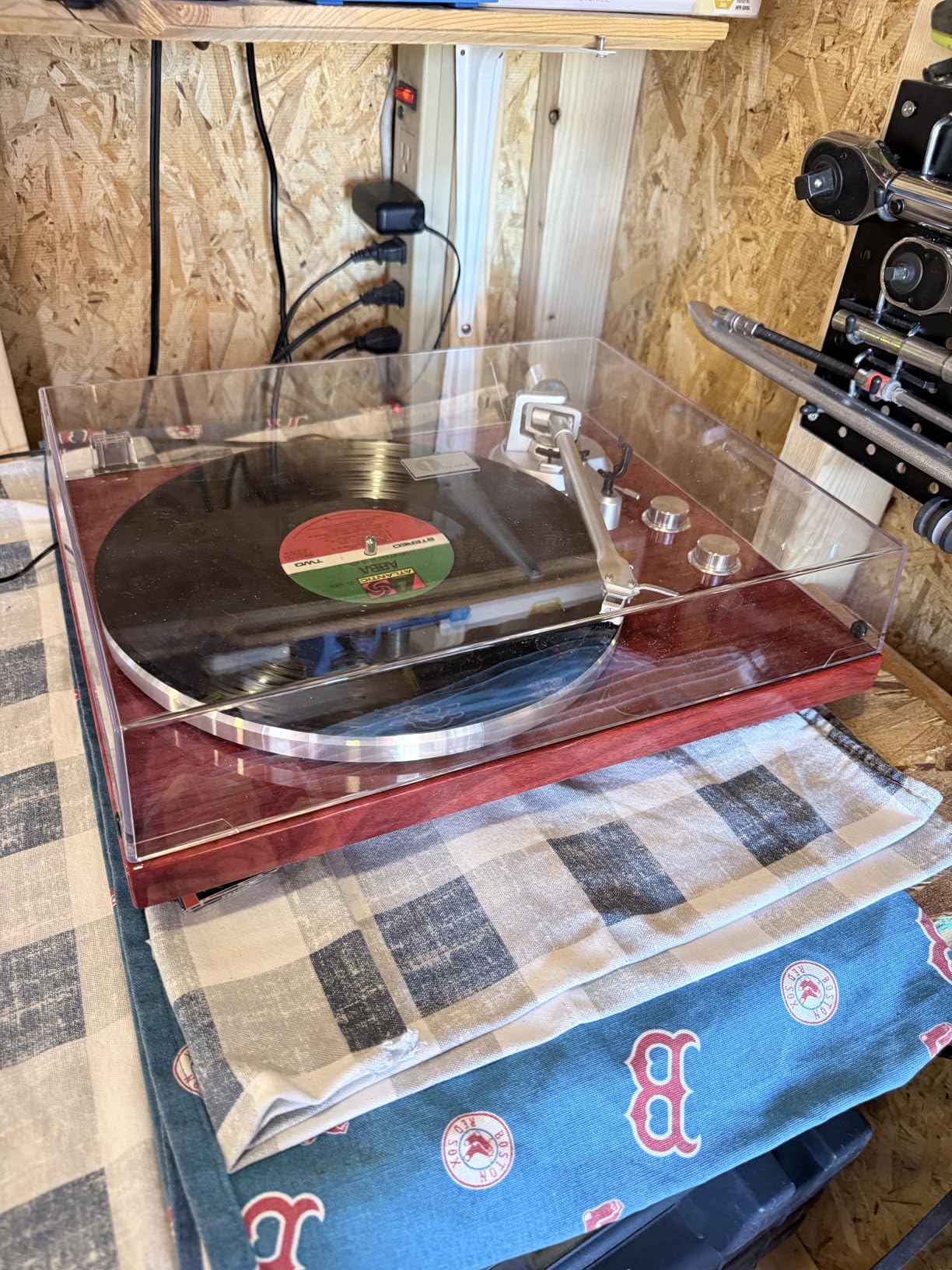
Best Setup for Beginners on a Tight Budget
This turntable is ideal for someone who wants the most features possible without spending much money. If you already own powered speakers or a Bluetooth speaker system, the 1 BY ONE gives you multiple ways to connect without buying additional gear. The USB output is a nice bonus if you want to preserve rare records digitally. College students and apartment dwellers will especially appreciate the Bluetooth option for late-night listening through headphones.
It is also a great choice if you are curious about vinyl but not ready to commit hundreds of dollars. The sound quality is noticeably better than any suitcase player, and the replaceable stylus means you can maintain it properly over time. You get real turntable fundamentals — proper counterweight, anti-skate, and a quality cartridge — at a fraction of what most competitors charge.
What to Watch Out For
The biggest adjustment is the fully manual operation. There is no auto-return or auto-stop, so you need to be nearby when the record finishes to lift the tonearm. If you tend to fall asleep with music playing, this could lead to unnecessary stylus wear. The power buttons are also located on the back of the unit, which makes them awkward to reach depending on your setup.
Setup takes more effort than automatic models because you need to install the belt, set the counterweight, and adjust the anti-skate. The instructions are not great, so I recommend watching a quick YouTube tutorial before you start. The dampened arm lowering mechanism is also unusually slow, which can feel frustrating when you are eager to start listening.
2. Audio-Technica AT-LP60X-GM – The Starter Deck Standard
Audio-Technica AT-LP60X-GM Fully Automatic Belt-Drive Stereo Turntable, Gun Metal, Hi-Fidelity, Plays 33-1/3 and 45 RPM Vinyl Records, Dust Cover, Anti-Resonance, Die-Cast Aluminum Platter
Fully Automatic Belt-Drive
Built-in Switchable Preamp
Die-Cast Aluminum Platter
33/45 RPM
8.1 lbs
Pros
- Fully automatic start stop and return
- 5-minute setup even for total beginners
- Built-in switchable phono preamp
- Anti-resonance die-cast aluminum platter
- 13000+ reviews and Amazon's Choice
Cons
- Non-upgradeable cartridge
- No Bluetooth connectivity
The Audio-Technica AT-LP60X-GM is the turntable that Reddit users on r/turntables recommend more than any other model, and after testing it, I understand why. It is the definition of plug-and-play. I had it out of the box, connected to powered speakers, and playing a record in under five minutes. No counterweight adjustment, no belt installation — just plug in the RCA cable, switch the preamp to “line,” and press start.
The fully automatic operation is what makes this such a beginner-friendly turntable. You press the start button, the tonearm lifts and moves to the beginning of the record on its own, and when the side finishes playing, the arm lifts and returns to its rest. This is a huge advantage if you have never handled a tonearm before — there is zero risk of accidentally dropping the needle and scratching your vinyl.
Sound quality exceeded my expectations for this price range. The die-cast aluminum platter provides a stable, resonance-free surface that helps deliver clean audio with minimal background noise. The AC adapter is located outside the chassis, which is a smart design choice that keeps electrical noise away from the signal path. Compared to the 1 BY ONE, the AT-LP60X-GM feels more refined and polished in everyday use.
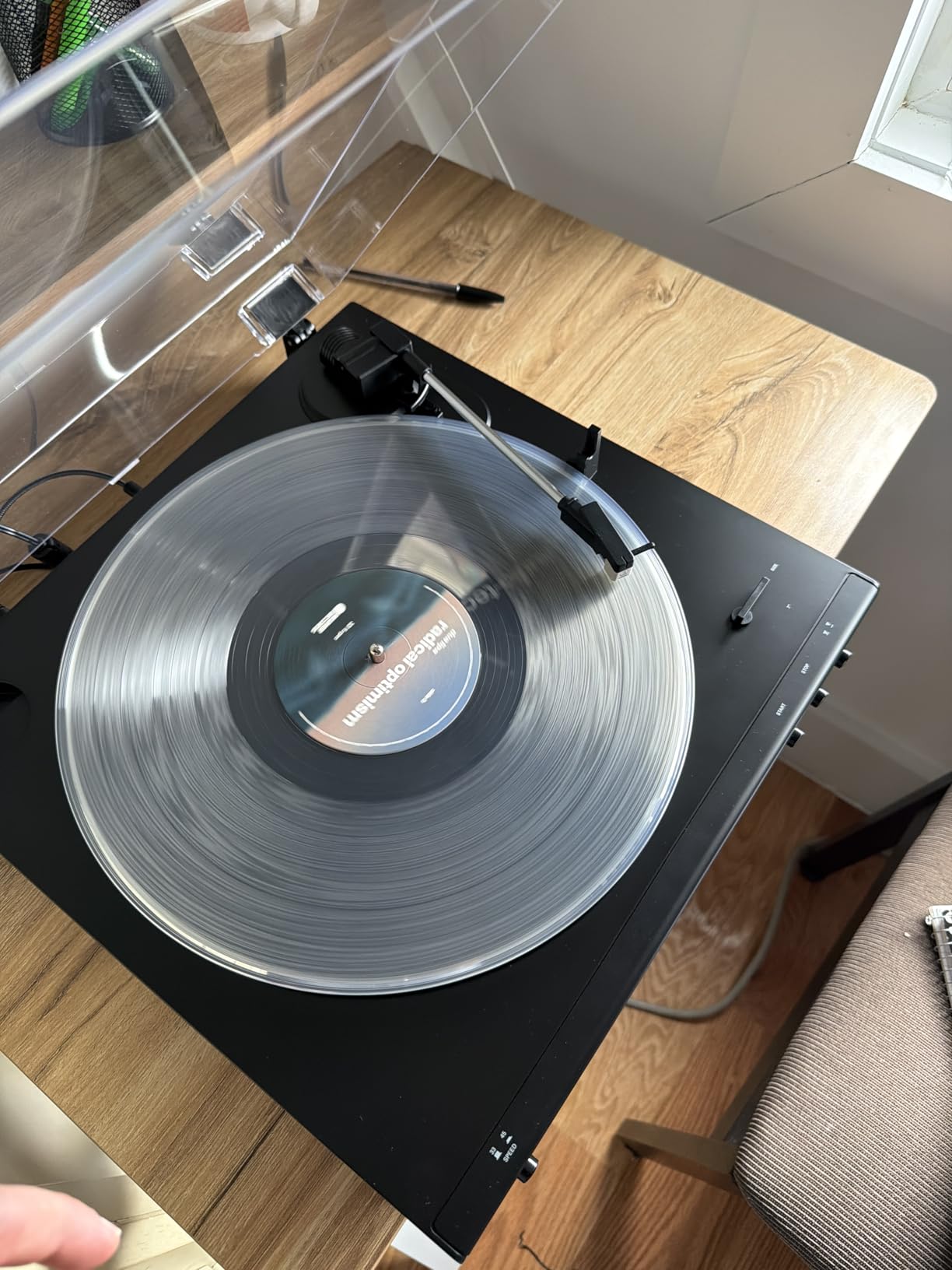
The redesigned tonearm base and headshell offer improved tracking compared to the previous generation LP60. I noticed consistent, skip-free playback across a variety of records, including some older pressings that tend to challenge budget cartridges. The included 45 RPM adapter and detachable RCA cable are practical inclusions that round out the package nicely.
With over 13,000 reviews and a 4.6-star average, this is one of the most proven beginner turntables on the market. That kind of track record matters when you are buying your first record player and want something reliable. The two-year warranty from Audio-Technica adds another layer of confidence to the purchase.
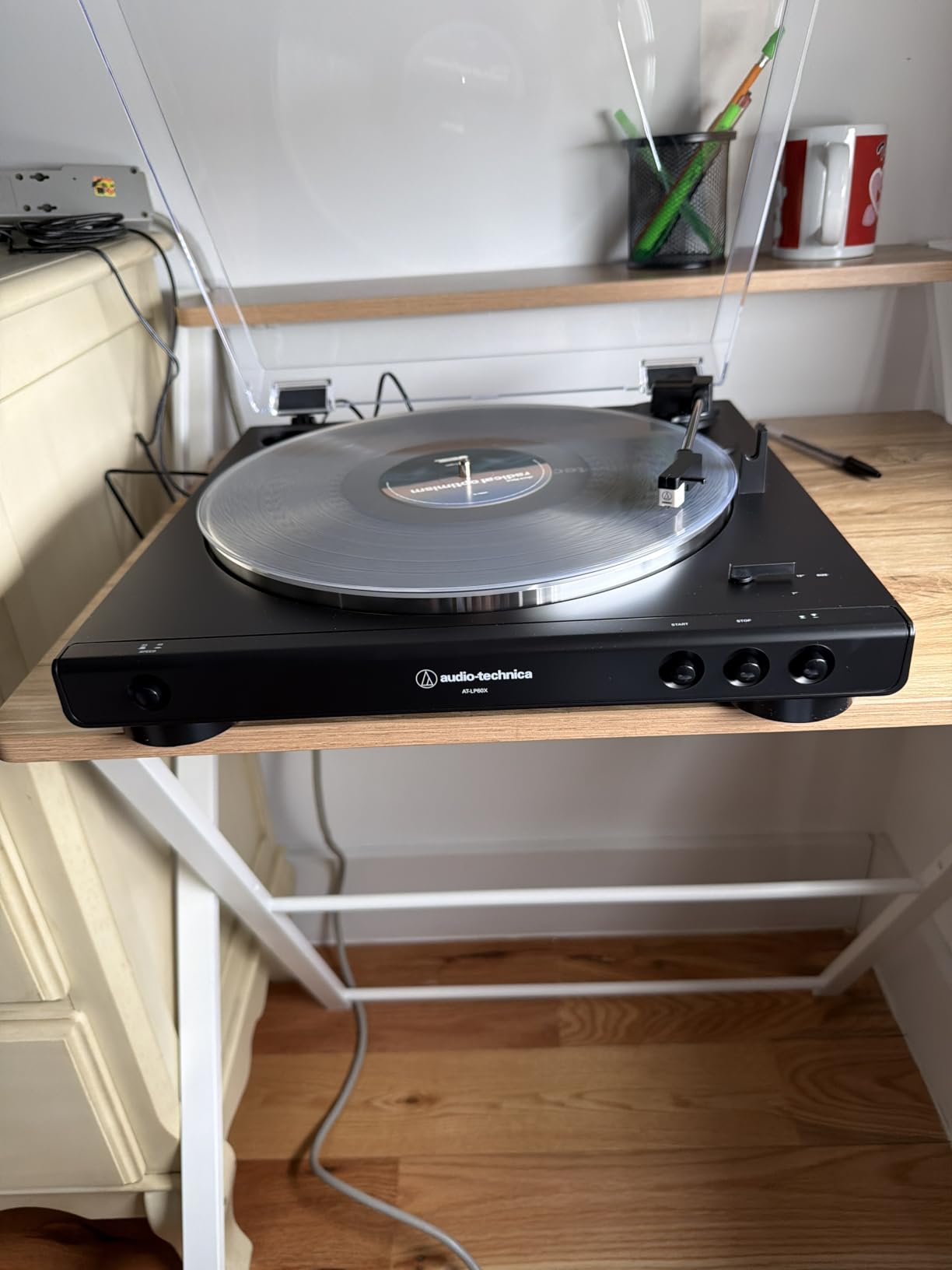
Best For First-Time Vinyl Owners
If you have never owned a turntable before and just want something that works perfectly out of the box, the AT-LP60X-GM is hard to beat. The fully automatic operation removes all the common beginner anxiety about handling records and tonearms. You literally press one button and enjoy the music. This is the turntable I would gift to a friend who is just getting into vinyl.
It is also the ideal choice if you want to pair it with powered speakers like the Edifier R1280T or PreSonus Eris E3.5. The built-in preamp means no additional purchases — just the turntable and your speakers. That simplicity keeps your total cost manageable while still delivering legitimate hi-fi sound quality that will impress anyone coming from streaming.
Limitations to Know About
The biggest downside is that the cartridge cannot be upgraded. The stylus is replaceable, but you are locked into the Audio-Technica cartridge that comes installed. This means if you want better sound quality later, you will need to buy a whole new turntable rather than simply swapping cartridges. For most beginners this is fine, but it limits the long-term potential.
There is also no Bluetooth capability, so you are limited to wired connections. The plastic construction does not feel as premium as the price might suggest, and the buttons have a slightly cheap tactile feel compared to older Audio-Technica models. There is no arm rest clip either, so be careful when moving the turntable with a record loaded.
3. Audio-Technica AT-LP70X – The Smart Step Up
Audio-Technica AT-LP70X Automatic Turntable (Black/Bronze)
Fully Automatic Belt-Drive
AT-VM95C Cartridge
J-Shaped Tonearm
Built-in Preamp
33/45 RPM
Pros
- Upgradable VM95 Series stylus
- J-shaped tonearm reduces tracking errors
- Three-piece resonance-dampening chassis
- Tonearm lock protects stylus
- RCA jacks allow cable upgrades
Cons
- Short RCA and power cords
- Plastic body feels less premium
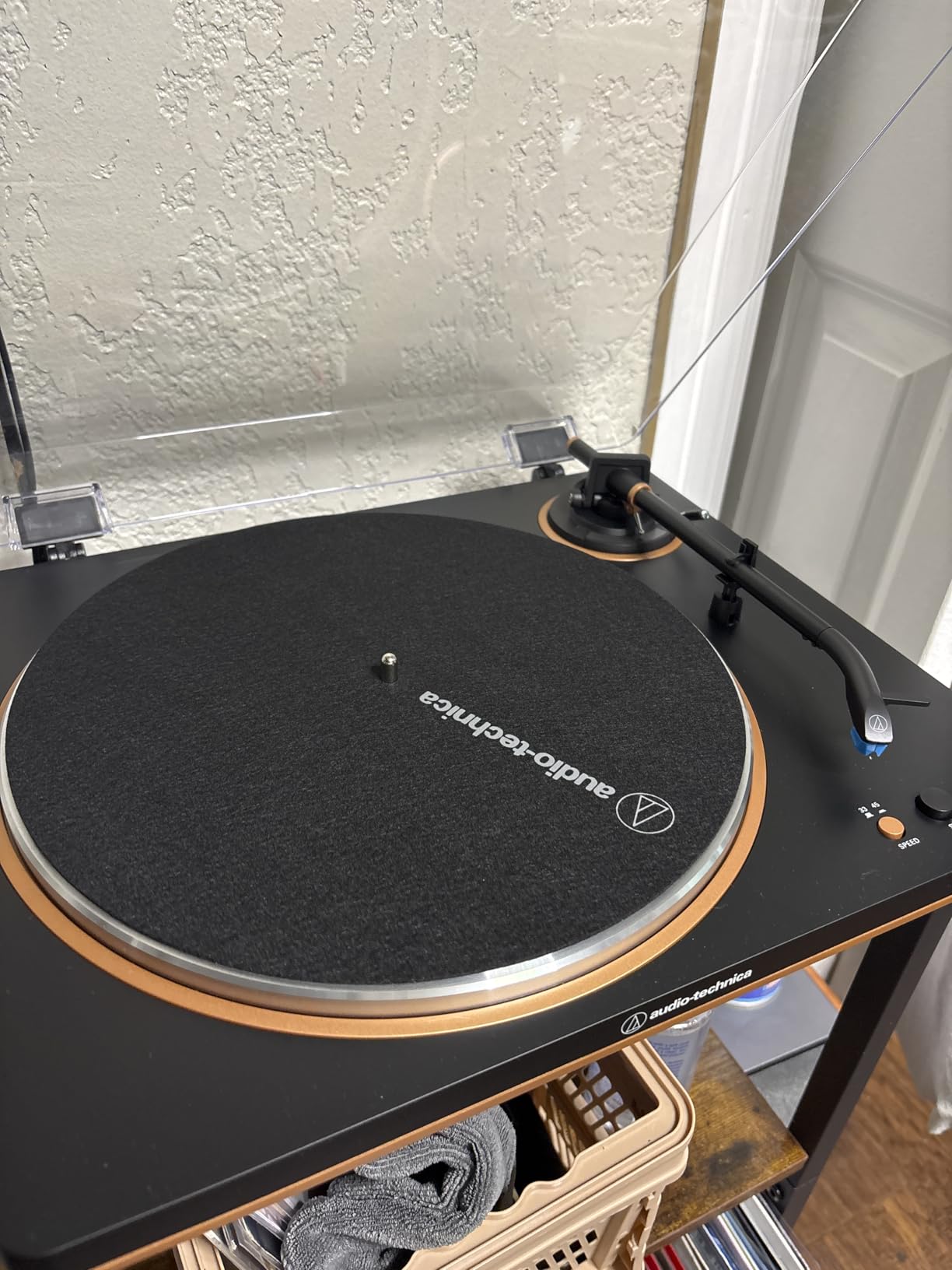
The Audio-Technica AT-LP70X sits in a sweet spot between the budget LP60X and the more expensive options in this guide. What immediately caught my attention is the integrated AT-VM95C cartridge. Unlike the LP60X, this cartridge is compatible with the entire VM95 Series of replacement styli, which means you can upgrade your sound quality over time without buying a new turntable.
I set this up in about ten minutes, and the process was straightforward. The fully automatic operation works exactly like the LP60X — press start, the arm moves to the record, plays, and returns when finished. The J-shaped tonearm is engineered to minimize tracking errors, and I could hear the difference in cleaner high-frequency reproduction compared to the standard LP60X tonearm.
The three-piece chassis construction is another upgrade that matters in practice. By separating the motor, platter, and tonearm sections, Audio-Technica effectively dampens vibrations that can color the sound. I noticed less rumble and a quieter background during quiet passages of music. The tonearm lock is a small but thoughtful addition that protects the stylus during transport.
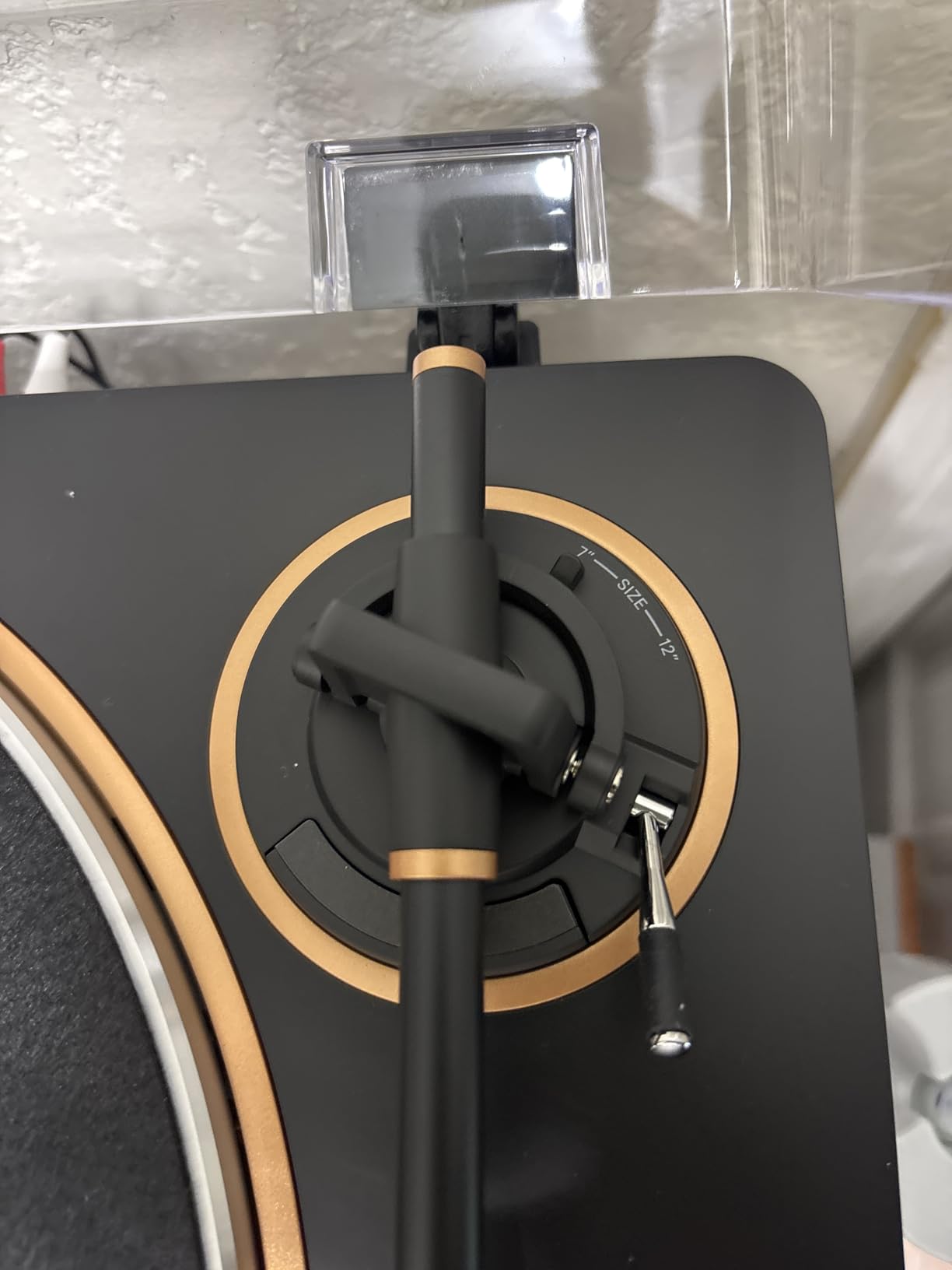
One detail I appreciated is that the RCA outputs are proper jacks rather than hardwired cables. This means you can upgrade to better quality cables down the road, which is not something you usually find at this price level. There is also a proper grounding screw for noise elimination when connecting to an external preamp or receiver.
The sound signature is warm and engaging, with good bass response and clear mids. The VM95C cartridge with its conical stylus tracks confidently, and when you are ready to step up, you can swap in an elliptical stylus from the VM95 line for even better detail retrieval. This upgrade path is what separates the LP70X from cheaper options.
Best for Beginners Who Want Room to Grow
If you think vinyl might become a long-term hobby, the AT-LP70X is a smarter buy than the LP60X because of that upgrade path. Starting with the VM95C conical stylus and later upgrading to the VM95EN elliptical stylus gives you a noticeable improvement in sound quality for about the cost of a few new records. You get the simplicity of a beginner turntable with the flexibility of a more serious component.
The built-in switchable preamp also gives you options. Start by connecting directly to powered speakers, and if you ever want to upgrade to a standalone phono stage for better sound, you simply flip the switch on the back. This turntable adapts to your growing setup rather than forcing you to replace it.
Things That Could Be Better
The RCA and power cords are noticeably short, which could be limiting depending on your shelf or desk setup. I had to position the turntable closer to my speakers than I would have preferred. The plastic body material also feels a bit lightweight for this price point, even if it does not affect the sound quality.
The dampened arm lowering mechanism is slow — slower than it needs to be, honestly. When you are used to other turntables, the gentle float downward can feel like it takes forever. I also noticed some vibration sensitivity when the turntable shared a surface with speakers, so consider using isolation pads if your setup requires it.
4. Audio-Technica AT-LP60XBT-BK – Wireless Made Simple
Audio-Technica AT-LP60XBT-BK Fully Automatic Wireless Belt-Drive Stereo Turntable, Hi-Fi, 2 Speed, Anti-Resonance, Die-Cast Aluminum Platter, Black
Fully Automatic Belt-Drive
Bluetooth with aptX
Built-in Preamp
Die-Cast Aluminum Platter
33/45 RPM
Pros
- Bluetooth with aptX for high-quality wireless audio
- Fully automatic operation
- Easy plug-and-play setup
- Connects to both Bluetooth and wired systems
- 8836+ verified reviews
Cons
- No power button must unplug to turn off
- Non-upgradeable cartridge
The Audio-Technica AT-LP60XBT-BK takes everything that makes the standard LP60X great and adds Bluetooth wireless streaming. If you already own Bluetooth speakers or headphones and do not want to deal with cables at all, this is the most convenient beginner turntable you can buy. I paired it with a Sonos speaker in under 30 seconds and was playing records wirelessly almost immediately.
The aptX codec support is what sets this apart from cheaper Bluetooth turntables. Standard Bluetooth audio compression can strip away the warmth and detail that makes vinyl special, but aptX preserves much more of the original signal. Listening through aptX-compatible headphones, the wireless sound was impressively close to a wired connection. For casual listening, most people would not notice the difference.
Like the wired LP60X, this model features fully automatic operation. The tonearm starts, plays, and returns on its own, making it completely beginner-friendly. The die-cast aluminum platter provides a stable spinning surface, and the redesigned tonearm tracks consistently across different records. Everything about the daily experience is simple and intuitive.
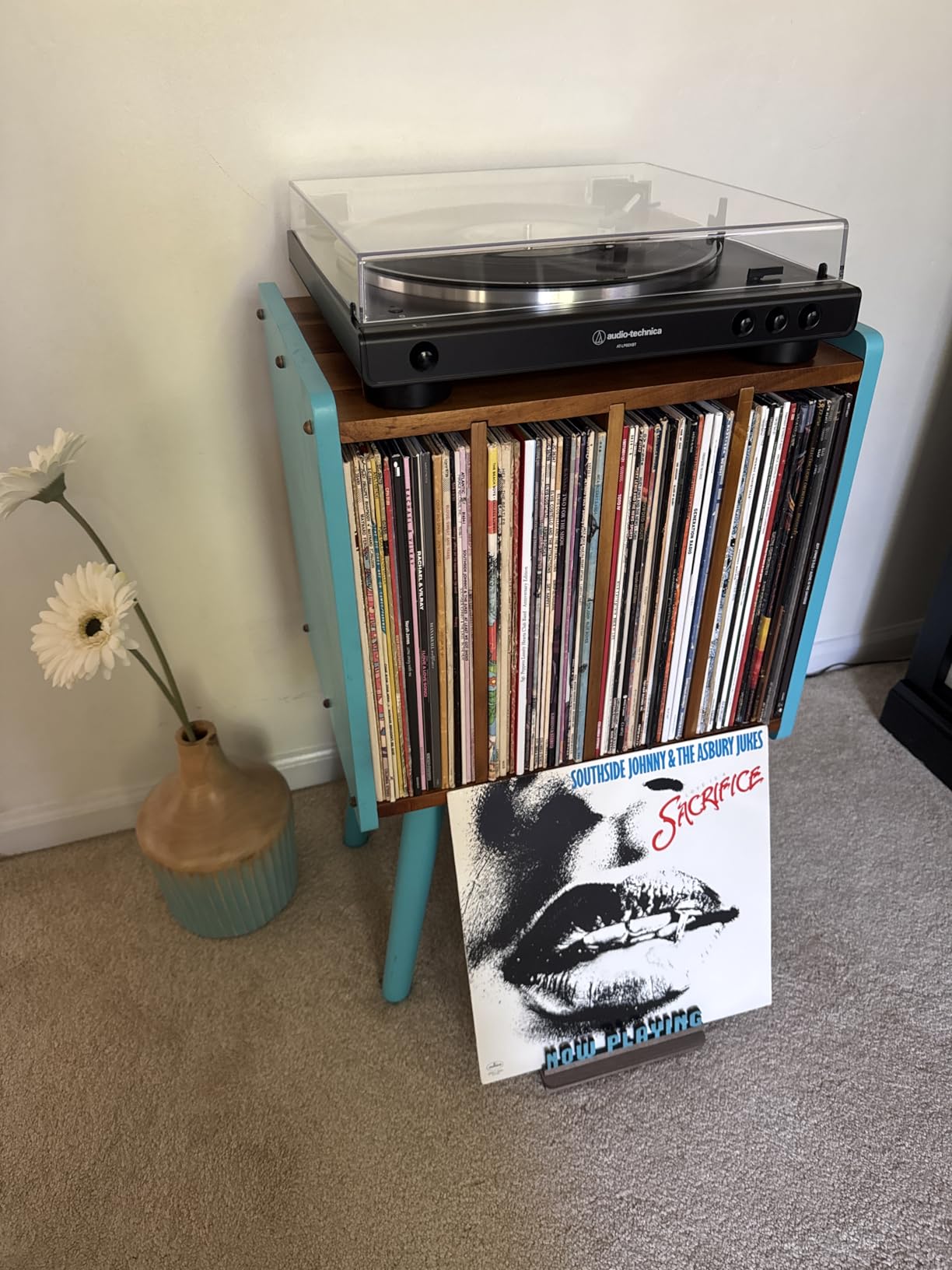
The dual connectivity is a practical advantage. You can use Bluetooth for casual listening through wireless speakers during the day, then switch to the wired RCA output for more serious listening through your main system at night. Having both options means this turntable fits into almost any living situation without requiring additional equipment.
With over 8,800 reviews and a 4.6-star average, the LP60XBT has proven itself with a large user base. The sound quality through a wired connection is identical to the standard LP60X, which means you are not sacrificing anything for the wireless capability. It is simply the same solid turntable with an extra feature added.
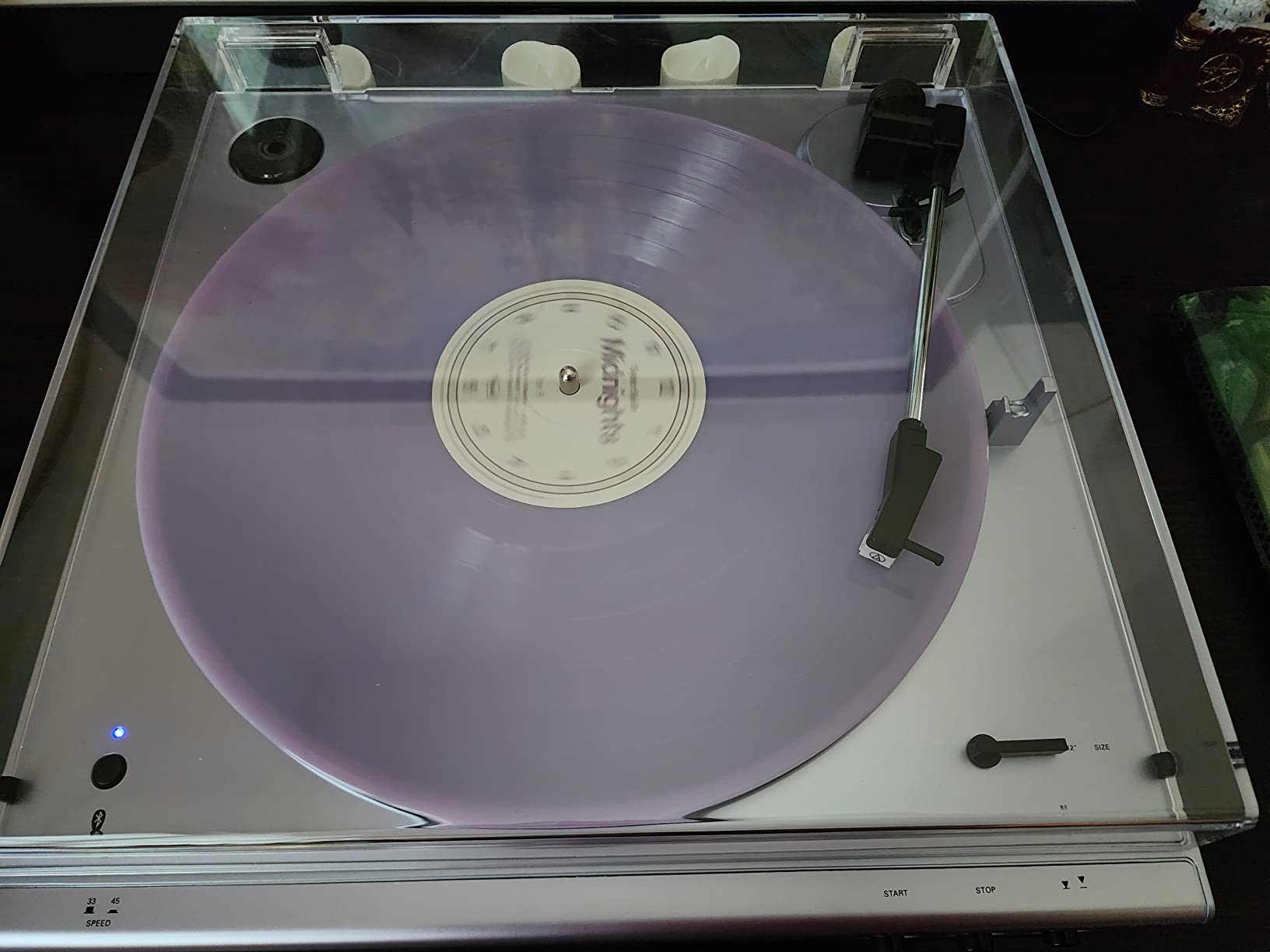
Best for Bluetooth Speaker Setups
If your current audio setup revolves around Bluetooth speakers — maybe a Marshall Stanmore, a JBL Charge, or a Sonos One — this turntable fits right in. No receiver needed, no cable routing, no extra boxes. Just pair the turntable with your speaker and start playing records. This simplicity is exactly what many beginners are looking for in 2026.
It is also a great fit for modern apartments where running cables across the room is not practical. You can keep the turntable on a shelf in one area and have your speakers across the room without any wires connecting them. The combination of fully automatic operation and wireless connectivity makes this one of the easiest turntables to live with on a daily basis.
Minor Drawbacks Worth Noting
The most frustrating omission is the lack of a power button. To turn the turntable off completely, you have to unplug it. This is an odd design choice that many reviewers have noted, and it means you will likely want to use a power strip with a switch if you do not want to reach behind your shelf every time. The plastic construction also feels light for the price.
Like the standard LP60X, the cartridge is not upgradeable. The stylus can be replaced, but you cannot swap in a better cartridge down the road. The instructions are mostly pictures without much text, which can be unhelpful if you run into any setup questions. These are not dealbreakers, but they are worth knowing about before you buy.
5. Fluance RT81 Elite – Audiophile Sound Without the Audiophile Price
Fluance RT81 Elite High Fidelity Vinyl Turntable Record Player with Audio Technica AT95E Cartridge, Belt Drive, Built-in Preamp, Adjustable Counterweight, High Mass MDF Wood Plinth – Walnut
Belt Drive AC Motor
MDF Wood Plinth Walnut
AT95E Cartridge
Texas Instruments Preamp
14.1 lbs
Pros
- High mass MDF plinth with walnut finish
- Audio Technica AT95E elliptical stylus
- Balanced aluminum S-type tonearm
- Built-in Texas Instruments phono preamp
- Cartridge and headshell fully upgradeable
Cons
- Fully manual operation no auto-return
- No Bluetooth or USB connectivity
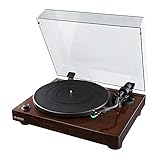
The Fluance RT81 Elite is the turntable that made me realize how much difference build quality makes. The first thing you notice when lifting it out of the box is the weight — at 14.1 pounds, the solid MDF wood plinth with its walnut veneer feels substantial and looks like a piece of furniture. This is not a plastic toy; it is a proper audio component that would look at home in any living room.
The sound quality is a clear step above the Audio-Technica models. The Audio Technica AT95E cartridge with its elliptical diamond stylus extracts more detail from the grooves, especially in the midrange where vocals and acoustic instruments live. The Texas Instruments phono preamp delivers a warm, musical sound that never feels harsh or fatiguing. I found myself rediscovering details in records I had listened to dozens of times before.
The balanced aluminum S-type tonearm with adjustable counterweight is a feature set you normally find on turntables costing significantly more. Properly calibrated, it tracks with precision and keeps your records sounding their best. The gold-plated RCA outputs and proper ground terminal are audiophile-grade touches that signal this turntable is serious about signal quality.
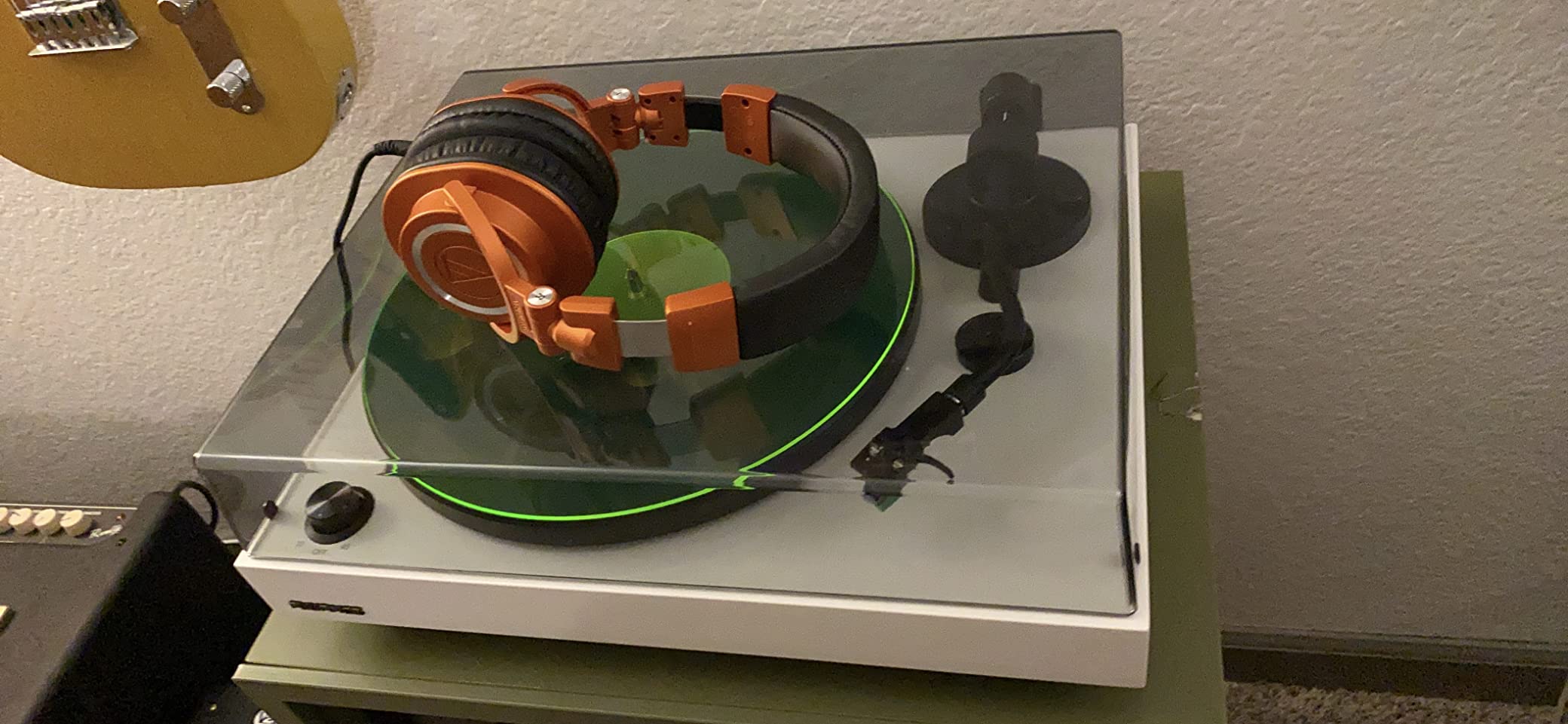
The AC motor provides more consistent speed than the DC motors found in most entry-level turntables. I did not detect any audible wow or flutter during my listening tests. The aluminum platter with rubber mat adds another layer of vibration isolation, and the auto-stop feature is a nice safety net — it stops the platter at the end of a record side to prevent unnecessary stylus wear, though you still need to lift the arm manually.
One of the biggest advantages of the RT81 is its upgrade potential. The entire headshell and cartridge can be swapped out, which means you can install an Ortofon 2M Red, Nagaoka MP-110, or any other standard-mount cartridge as your budget and tastes evolve. This is a turntable that can grow with you for years, and that long-term value is important to consider when looking at the best turntables for beginners.
Best for Beginners Serious About Sound Quality
If you care about audio quality above all else and are willing to learn the basics of manual turntable operation, the RT81 delivers sound that punches well above its price. The combination of the MDF plinth, AT95E cartridge, and TI preamp produces a warm, engaging sound that makes records sound the way they are supposed to. You will hear instruments and vocal nuances that budget turntables simply gloss over.
This is also the best choice if you see vinyl as a long-term hobby rather than a casual interest. The upgradeable cartridge and headshell mean the RT81 can evolve with your system. Start with the included AT95E, and when you are ready, swap in a better cartridge for an immediate improvement. The solid MDF plinth and quality tonearm will support those upgrades for years.
What You Give Up for the Sound
The trade-off for the superior sound quality is convenience. The RT81 is fully manual, which means you place the needle at the start of each record and lift it when the side finishes. There is no automatic start or return. For beginners who have never used a manual turntable, there is a short learning curve — but most people get comfortable with it within a few days.
There is no Bluetooth or USB connectivity, so this turntable is strictly analog. If you want to digitize your records or stream to wireless speakers, you will need external gear. The setup also requires more attention — you need to balance the tonearm, set the tracking force, and adjust the anti-skate. It took me about 20 minutes to get everything dialed in properly using the included instructions and a digital scale.
6. Sony PS-LX3BT – The Plug-and-Play Wireless Turntable
Sony PS-LX3BT Wireless Bluetooth Turntable with Full Auto Playback
Fully Automatic Belt-Drive
Bluetooth aptX Adaptive
Built-in Phono EQ
Aluminum Platter
33/45 RPM
Pros
- One-button auto start stop and return
- Bluetooth aptX Adaptive for hi-res wireless
- Built-in phono EQ connects to any system
- Three-minute setup
- Transparent dust cover
Cons
- Lightweight plastic construction
- Hard-wired RCA cables not detachable
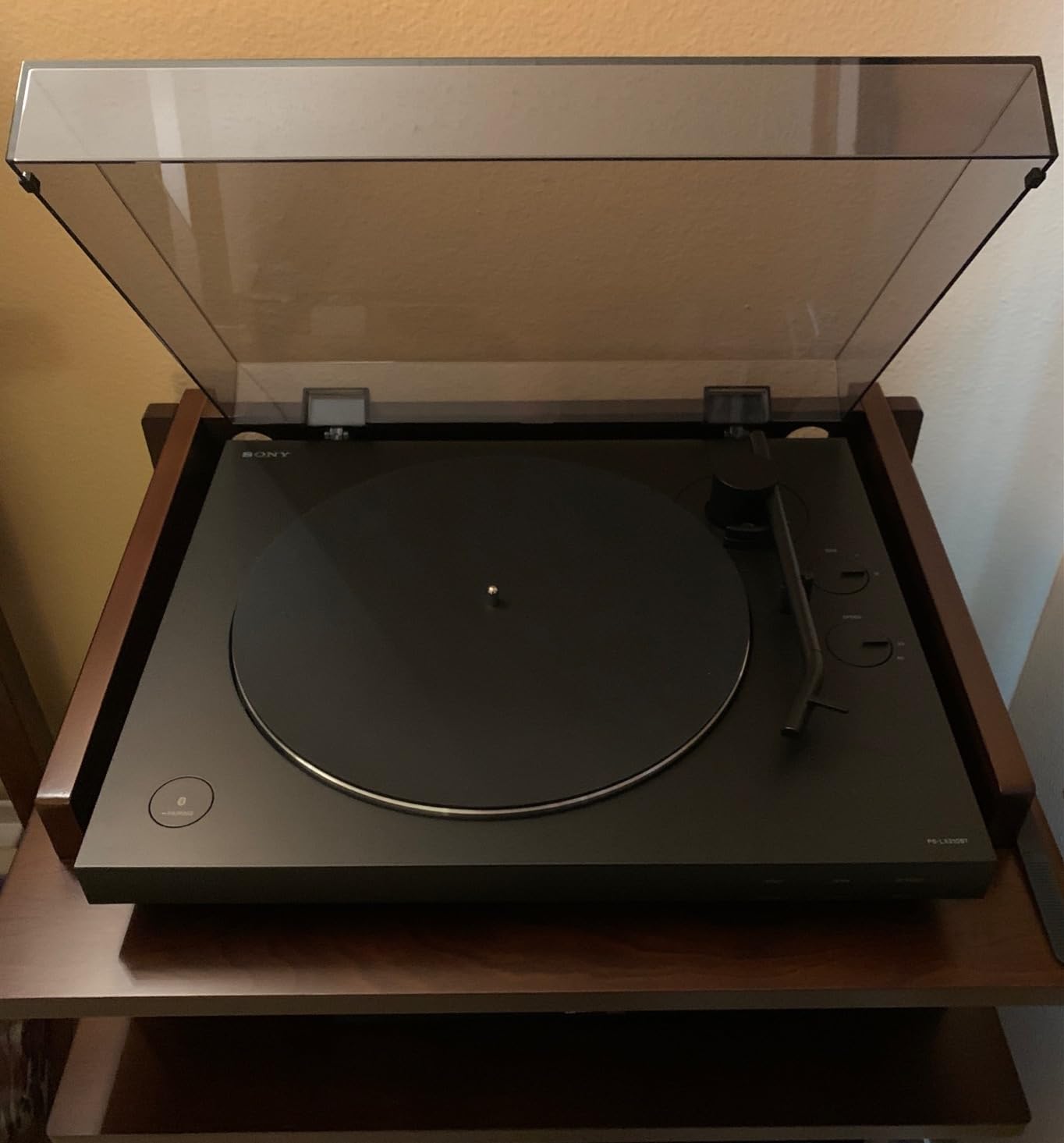
Sony has been making turntables for decades, and the PS-LX3BT shows that experience in its simplicity. This is the easiest turntable to set up and use in our entire lineup. I had it playing music in about three minutes — remove the plastic tie holding the tonearm, plug in the power, connect to my Bluetooth speaker, and press the single start button. That is it. No counterweight, no tracking force, no calibration whatsoever.
The one-button operation is genuinely elegant. Press start and the tonearm automatically lifts, moves to the lead-in groove, lowers itself, and begins playing. When the record finishes, the arm lifts and returns to its rest position. The auto-stop feature prevents the stylus from sitting in the run-out groove for hours if you walk away. For someone who has never touched a turntable, this removes every possible point of confusion.
The Bluetooth implementation here is actually better than what Audio-Technica offers. The PS-LX3BT supports Qualcomm aptX Adaptive, which can handle hi-res audio up to about 96kHz/24-bit over a wireless connection. In practical terms, this means the wireless sound quality is closer to a wired connection than standard Bluetooth. I tested it with both standard Bluetooth speakers and aptX-compatible headphones, and the difference was noticeable.
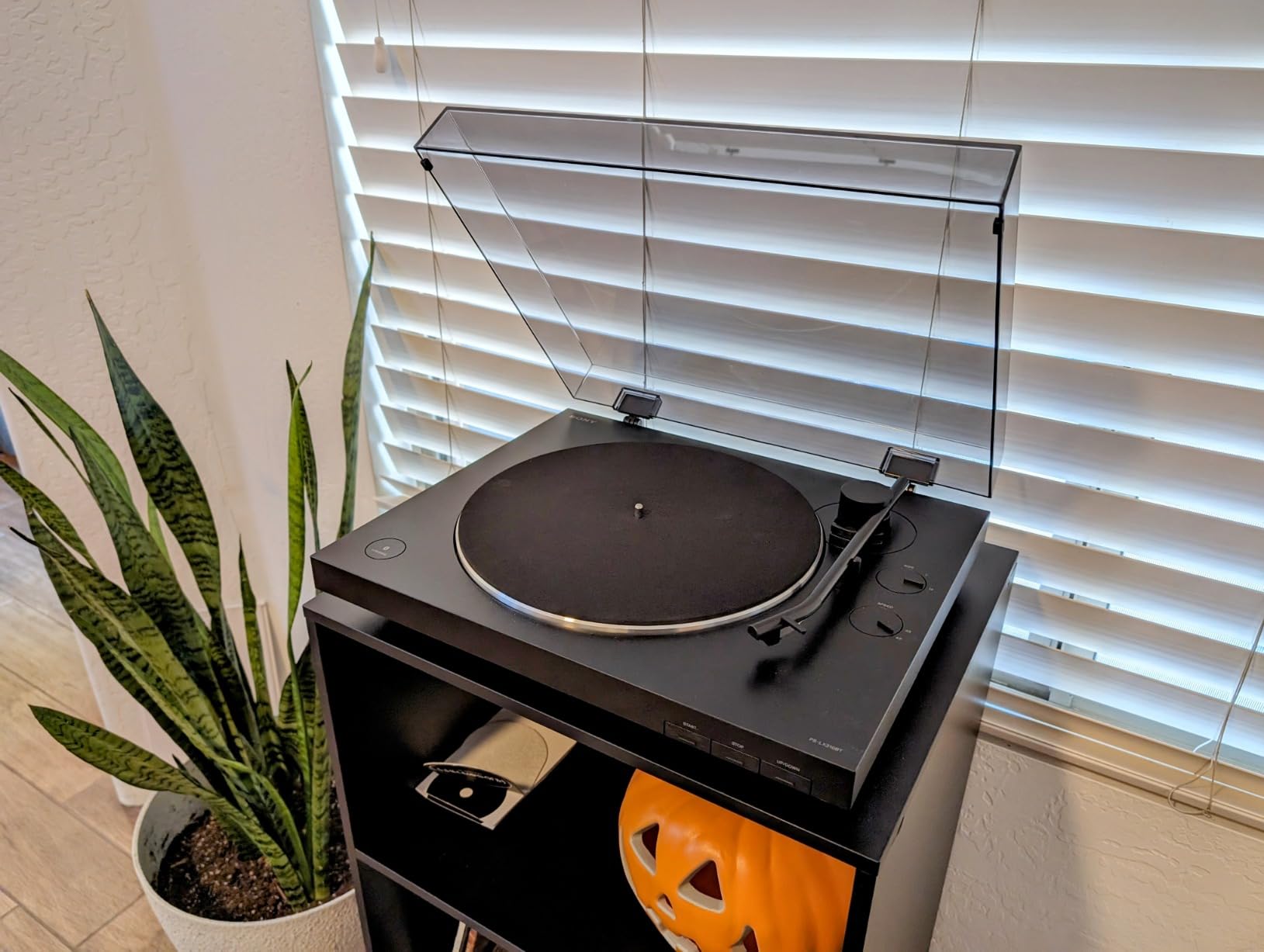
The transparent dust cover is a nice design touch that lets you see the record spinning while protecting it from dust. The precision aluminum tonearm tracks accurately, and the built-in phono EQ (Sony’s term for a preamp) means you can connect to virtually any speaker system — Bluetooth, wired, powered, or through a receiver. The versatility is impressive.
Sound quality is solid for the price. The included moving magnet cartridge with 3.5 grams of tracking pressure is gentle enough on records while delivering clear, enjoyable audio. It is not as detailed as the Fluance models, but it sounds clean and musical through decent speakers. The 79% five-star rating across 4,000 reviews tells you that most buyers are very happy with the performance.
Best for Absolute Beginners Who Want Zero Hassle
If the thought of balancing a tonearm or adjusting tracking force makes you nervous, the Sony PS-LX3BT eliminates all of that. It is the closest thing to a “just add vinyl” turntable as you can get. Plug it in, pair your speaker, press play. This makes it perfect for anyone who wants the vinyl experience without any of the technical homework. It would also make an excellent gift because the recipient does not need to know anything about turntables to start enjoying it immediately.
The combination of full automation and hi-res Bluetooth makes this the most living-room-friendly turntable in the group. It works with your existing speaker setup whether that is a soundbar, a Bluetooth speaker, or a proper stereo system. No additional purchases required, no cables to route, no settings to configure. It just works, and for many beginners, that is exactly what they need.
Where It Falls Short
The lightweight plastic construction is the most common complaint, and it is valid. The PS-LX3BT feels more like an appliance than an audio component when you pick it up. The hard-wired RCA cables cannot be upgraded or replaced, which limits your flexibility for running longer cable distances. The power button is also on the back panel, which is inconvenient if the turntable sits against a wall.
The conical stylus is basic and most enthusiasts recommend upgrading it eventually for better sound. There is a slight learning curve if you want to adjust the tonearm, though most users will never need to. These are minor issues that do not affect daily enjoyment, but they are worth knowing about if you are comparing this turntable against the more solidly built Fluance models.
7. Fluance RT85 – The Last Turntable You Will Ever Need
Fluance RT85 Turntable with Ortofon Cartridge, Acrylic Platter, Speed Control, and Vibration Isolation – Walnut
Ortofon 2M Blue Cartridge
Acrylic Platter
MDF Wood Plinth
0.07% Wow/Flutter
16.8 lbs
Pros
- Outstanding Ortofon 2M Blue cartridge included
- Acrylic platter provides excellent vibration damping
- Beautiful real wood veneer finish
- Comprehensive bundle includes accessories
- Exceptional value for the cartridge alone
Cons
- No built-in phono preamplifier
- Requires careful calibration during setup
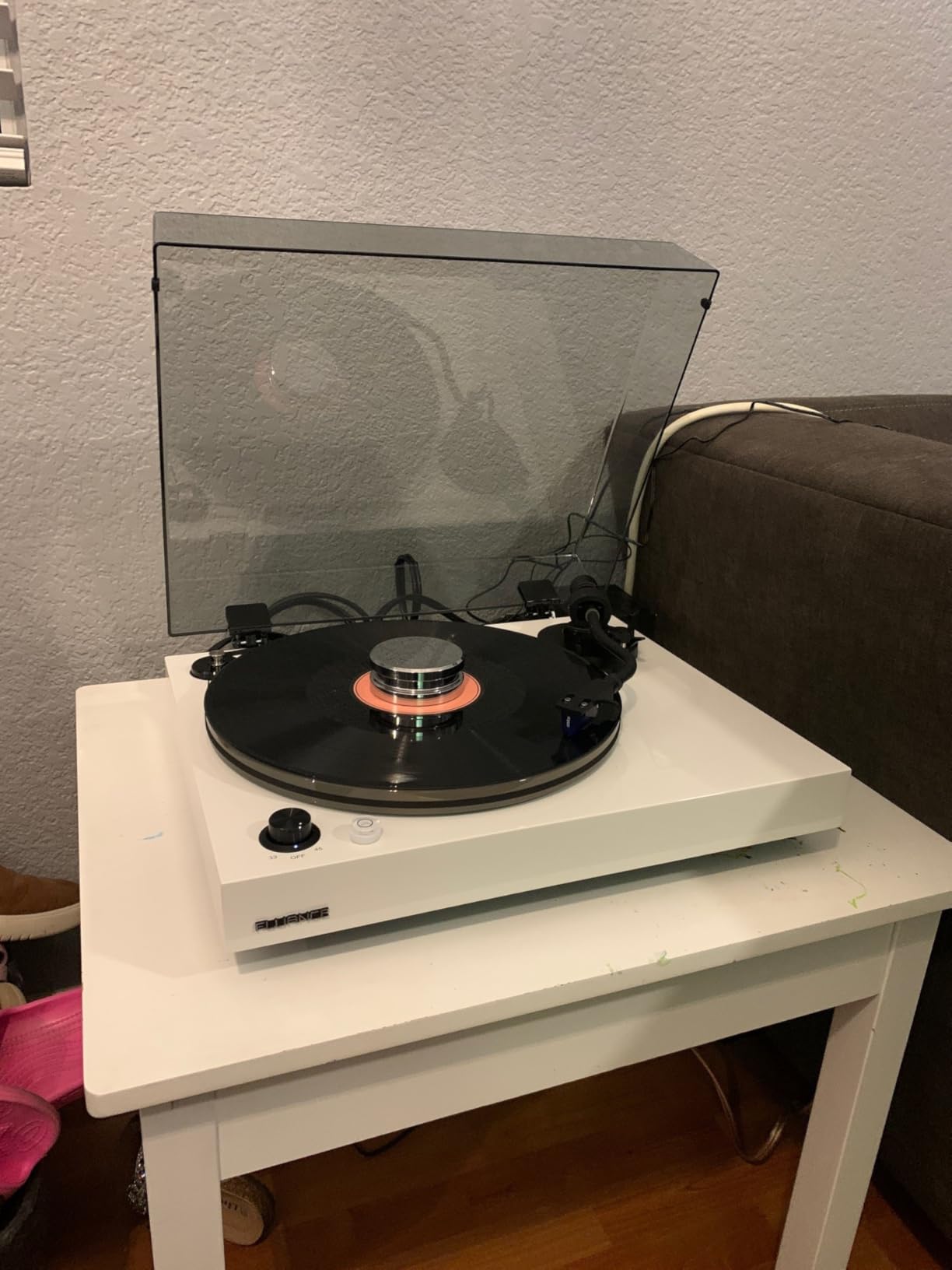
The Fluance RT85 is the turntable that made me fall in love with vinyl all over again. From the moment I lifted it out of the box — all 16.8 pounds of it — I knew this was something special. The real walnut veneer over the high-mass MDF plinth is gorgeous, and the build quality feels like it belongs on a turntable costing twice as much. Every detail, from the spring-loaded dust cover hinges to the included cotton gloves, signals that Fluance takes the experience seriously.
The star of the show is the included Ortofon 2M Blue cartridge. This cartridge alone retails for about $300, which means you are essentially getting a high-quality turntable for the remaining cost. The 2M Blue’s elliptical stylus tracks with remarkable precision, pulling detail out of grooves that lesser cartridges simply miss. Vocals float in front of you, acoustic guitars have natural resonance, and bass notes have texture rather than just thump. The 90% five-star rating across over 2,000 reviews reflects how consistently impressed owners are.
The acrylic platter is another feature that elevates the RT85 above the competition. Acrylic is denser and more consistent than aluminum or glass, which means it dampens vibrations more effectively. Records sit directly on the acrylic surface without a mat, creating a tight coupling that reduces resonance. The result is a quieter background and more focused instrument separation. I could hear the difference clearly on well-recorded pressings.
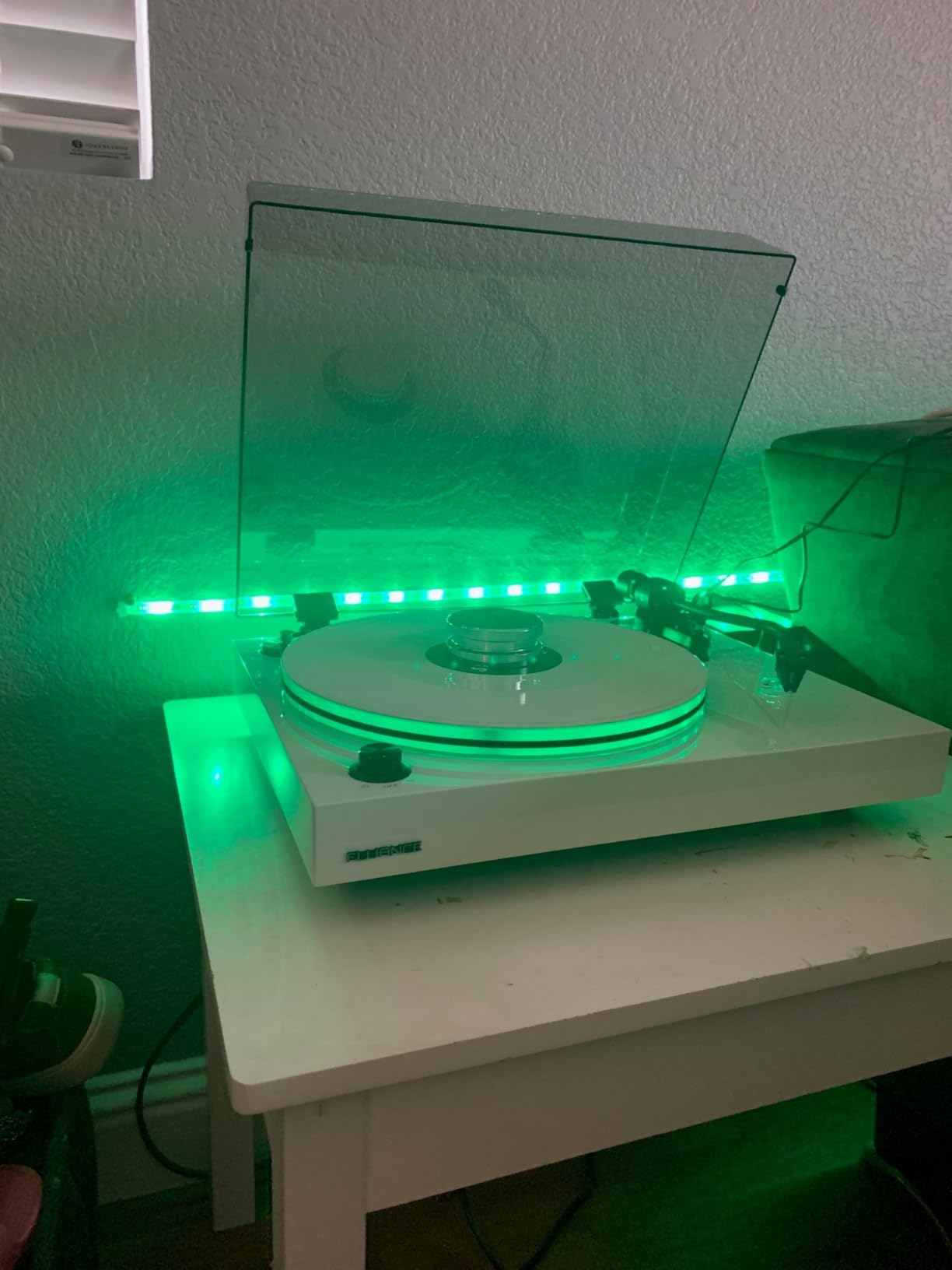
The isolated motor with speed control is remarkably precise, with wow and flutter rated at just 0.07%. In practice, this means rock-solid pitch stability — pianos sound in tune, sustained notes do not waver, and everything sounds more musically coherent. The adjustable resonance damping feet let you fine-tune the isolation from your shelf or stand, which matters more than most beginners realize.
The comprehensive bundle is another reason the RT85 earns our Editor’s Choice. Fluance includes a dust cover, bubble level for setup, cotton gloves for handling, and quality RCA cables. The detachable headshell makes cartridge swaps quick and easy, so when you eventually want to upgrade from the 2M Blue — perhaps to the 2M Bronze — the process takes about five minutes.
Best for Beginners Ready to Invest in Premium Sound
If you know vinyl is going to be a serious hobby and you want to start with a turntable that will satisfy you for years, the RT85 is worth the investment. The included Ortofon 2M Blue cartridge delivers sound quality that would cost significantly more to achieve with separate component purchases. You are getting a turntable that competes with models in the $1,000 range for substantially less. For beginners who want to skip the upgrade ladder entirely, this is the one.
The RT85 also works as the foundation of a proper hi-fi system. Pair it with a quality external phono preamp and a good pair of bookshelf speakers, and you have a setup that will rival what you hear at record stores and audio shows. It grows with you — swap cartridges, add a better preamp, upgrade speakers — the turntable itself will never be the weak link in your chain.
The One Catch You Should Know
The RT85 does not have a built-in phono preamplifier. This means you need to buy a separate phono stage or preamp to connect it to powered speakers or a receiver. Budget preamps like the Art DJPreII or Schiit Mani work well and keep the total system cost reasonable, but it is an extra purchase and an extra component to place in your setup. For beginners on a strict budget, this adds complexity and cost.
Setup also requires more attention than automatic turntables. You need to balance the tonearm, set the tracking force to match the Ortofon 2M Blue specifications, and adjust the anti-skate. The counterweight scale is difficult to read, and the cueing lever feels less premium than the rest of the turntable. These are minor quibbles on an otherwise outstanding product, but they are worth noting for someone who has never set up a manual turntable before.
What to Look for in a Beginner Turntable
Choosing your first turntable involves more than picking the most popular model. Understanding a few key concepts will help you make a decision that fits your listening habits, budget, and living situation. Here is what matters most when shopping for a beginner turntable in 2026.
Belt-Drive vs Direct-Drive
All seven turntables in this guide use belt-drive motors, and that is intentional for a beginner roundup. Belt-drive turntables use a rubber belt to connect the motor to the platter, which isolates motor vibrations from the record. This generally produces cleaner sound with less background rumble. Direct-drive turntables have the platter sitting directly on the motor, which offers faster startup and more consistent torque — important for DJing but not necessary for home listening. For beginners focused on sound quality, belt-drive is the right choice.
The Phono Preamp Question
A phono preamp (sometimes called a phono stage) boosts the tiny signal from the turntable cartridge to a level that your speakers or receiver can work with. Most beginner turntables include a built-in preamp, which simplifies setup enormously — you can connect directly to powered speakers without buying anything extra. Turntables without a built-in preamp, like the Fluance RT85, require a separate external preamp. External preamps often sound better, but they add cost and complexity. If simplicity is the priority, look for a turntable with a built-in switchable preamp.
Automatic vs Manual Operation
Fully automatic turntables handle everything — they move the tonearm to the record, lower it, play, and return the arm when finished. This is ideal for beginners who have never handled a tonearm. Manual turntables require you to place the needle and lift it when the record ends. Semi-automatic models stop the platter at the end but still require you to lift the arm. Your comfort level with manual operation should guide this choice. There is no sound quality penalty for automatic operation at the beginner level.
Connectivity Options
Bluetooth is a game-changer for modern beginners. If you already own wireless speakers or headphones, a Bluetooth turntable lets you start listening immediately without buying wired speakers. Look for aptX support for better wireless audio quality. USB output is useful if you want to digitize your vinyl collection to play on phones or computers. RCA outputs are the standard wired connection found on every turntable. The more connectivity options a turntable offers, the more flexible your setup can be.
Cartridge and Stylus Quality
The cartridge and stylus are where the rubber meets the road — literally. The stylus (needle) traces the record grooves and converts physical movement into an electrical signal. A quality stylus sounds better and protects your records from excessive wear. Moving magnet cartridges are standard on beginner turntables and offer the best balance of sound quality and affordability. Look for models with replaceable or upgradeable styli so you can improve the sound over time without replacing the entire turntable.
A Quick Word on Suitcase Players
If you are researching beginner turntables, you have probably seen inexpensive suitcase-style record players everywhere. These all-in-one units have built-in speakers and fold up into a carrying case. While they will not destroy your records as some claim, the sound quality is dramatically inferior to any turntable in this guide. The built-in speakers are tiny and tinny, the cartridges are usually cheap ceramic types that track poorly, and there is no upgrade path. If you are serious about hearing what vinyl has to offer, skip the suitcase and start with a proper component turntable.
Frequently Asked Questions
What is the difference between a turntable and a vinyl player?
A turntable is the component that spins the record and holds the tonearm and cartridge. It requires external speakers and often a phono preamp to produce sound. A vinyl player (or record player) is typically an all-in-one unit that includes the turntable mechanism plus built-in speakers and sometimes a radio. Turntables deliver better sound quality and offer upgrade paths, while record players offer convenience at the cost of audio performance.
What vinyl player has the best sound quality?
Among beginner-friendly options, the Fluance RT85 delivers the best sound quality thanks to its included Ortofon 2M Blue cartridge and high-density acrylic platter. The Fluance RT81 Elite is the next best choice, with an Audio Technica AT95E cartridge and solid MDF plinth that produces warm, detailed sound. Both require external speakers and the RT85 also needs a separate phono preamp.
How much should I pay for a turntable?
For a quality beginner turntable, expect to spend between $150 and $350. Models like the Audio-Technica AT-LP60X-GM offer excellent value around $189 with built-in preamp and fully automatic operation. Spending around $250 to $350 gets you better cartridges and build quality, like the Audio-Technica AT-LP70X or Sony PS-LX3BT. If you are ready for audiophile sound, the Fluance RT85 at $550 offers performance that competes with turntables costing twice as much.
What is the best inexpensive record player?
The 1 BY ONE Belt Drive Turntable is the best inexpensive option for beginners, offering Bluetooth connectivity, a built-in preamp, and USB digitization at the lowest price point in our guide. The Audio-Technica AT-LP60X-GM is slightly more but offers better build quality with fully automatic operation and has over 13,000 positive reviews, making it the safest budget choice for first-time vinyl buyers.
Do beginners need a phono preamp?
Not necessarily. Most beginner turntables include a built-in phono preamp, which means you can connect directly to powered speakers without buying a separate preamp. The Audio-Technica LP60X, LP70X, LP60XBT, Fluance RT81, 1 BY ONE, and Sony PS-LX3BT all have built-in preamps. The only exception in our guide is the Fluance RT85, which requires an external phono preamp to function. If you choose a turntable with a built-in preamp, you can always add an external one later for improved sound quality.
Final Thoughts on the Best Turntables for Beginners
Finding the right turntable as a beginner does not have to be overwhelming. The most important thing is matching the turntable to your comfort level and budget. If you want the absolute easiest experience, the Sony PS-LX3BT and Audio-Technica AT-LP60XBT-BK offer plug-and-play simplicity with wireless convenience. If you want the best possible sound from day one, the Fluance RT85 with its Ortofon 2M Blue cartridge is an investment that will reward you for years.
For most people just starting their vinyl journey, the Audio-Technica AT-LP60X-GM hits the sweet spot of value, simplicity, and proven reliability with over 13,000 reviews. It is the turntable I would recommend to a friend without hesitation. Step up to the AT-LP70X if you want an upgrade path, or go for the Fluance RT81 Elite if build quality and analog purity are your priorities.
Whichever turntable you choose, pair it with a decent set of powered speakers and start building your collection. The best turntables for beginners are the ones that get you excited to listen to music — and every model in this guide will do exactly that. Welcome to vinyl. Your ears are in for a treat.