
I remember the first time I tried recording a live concert with my phone. The audio was distorted, the bass rattled like a broken speaker, and half the performance was lost to digital clipping. That moment pushed me to discover what best portable field recorders could actually deliver – and the difference was night and day.
After testing over a dozen models across 2026, our team has narrowed down the 10 best portable field recorders that deliver professional audio quality without requiring a studio setup. Whether you are capturing nature sounds, recording interviews, filming documentaries, or documenting live music, these handheld devices offer features that smartphone apps simply cannot match. The standout technology this year is 32-bit float recording, which eliminates clipping anxiety by capturing impossible-to-distort audio levels.
In this guide, we will walk through our top picks ranging from budget-friendly options under $110 to professional units that rival studio equipment. Each recommendation comes from hands-on testing and real-world field use, not just spec sheet comparisons.
Table of Contents
Top 3 Picks for Portable Field Recorders
Before diving into our complete rankings, here are the three recorders that stood out above the rest. Each excels in a different category, so you can quickly identify which matches your needs and budget.

Zoom F3 Professional Field Recorder
- 32-bit float recording
- 2 locking XLR inputs
- Professional preamps
- Bluetooth wireless control

Zoom H1 Essential Handheld Recorder
- 32-bit float recording
- Stereo XY microphones
- USB audio interface
- AAA battery power

TASCAM DR-05XP Portable Recorder
- 32-bit float recording
- Omnidirectional mics
- 17-hour battery life
- USB-C interface
Best Portable Field Recorders in 2026
Here is a quick comparison of all ten recorders we tested. This table covers the essential specifications to help you narrow down which models deserve a closer look.
| Product | Specifications | Action |
|---|---|---|
| Zoom H1 Essential |
|
Check Latest Price |
| TASCAM DR-05XP |
|
Check Latest Price |
 Zoom H1 XLR Zoom H1 XLR |
|
Check Latest Price |
 Zoom H2 Essential Zoom H2 Essential |
|
Check Latest Price |
 Zoom H4 Essential Zoom H4 Essential |
|
Check Latest Price |
 TASCAM DR-07XP TASCAM DR-07XP |
|
Check Latest Price |
 TASCAM DR-10L Pro TASCAM DR-10L Pro |
|
Check Latest Price |
 TASCAM DR-40XP TASCAM DR-40XP |
|
Check Latest Price |
 Zoom H5 Handy Recorder Zoom H5 Handy Recorder |
|
Check Latest Price |
| Zoom F3 Professional |
|
Check Latest Price |
1. Zoom H1 Essential – Best Entry-Level 32-Bit Recorder
Zoom H1 Essential Recorder for Musicians, Podcasters & Content Creators
Weight: 92g
Dimensions: 5.38x2.12x1.14
32-bit/96kHz
XY stereo mics
USB-C interface
Pros
- 32-bit float eliminates clipping
- Compact rubberized body
- 8+ hour battery life
- Excellent value
Cons
- Plastic build quality
- Small OLED screen
- No included SD card
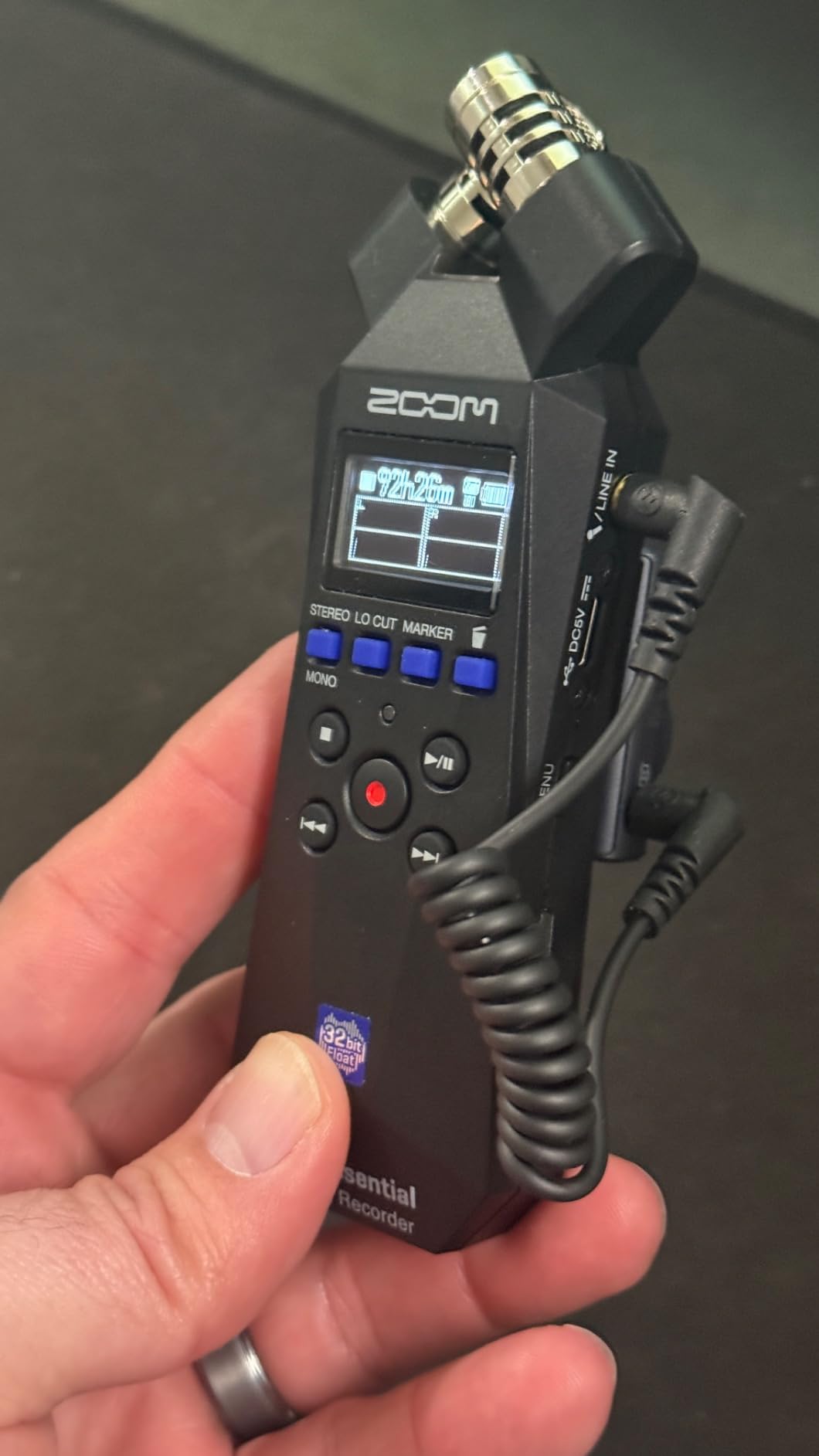
I tested the Zoom H1 Essential during a weekend nature recording trip in the Appalachian foothills. For a recorder that costs barely over $100, the audio fidelity genuinely surprised me. The 32-bit float recording meant I never had to worry about gain staging when a sudden thunderstorm rolled in – the peaks remained perfectly intact even when rain hammered down on the built-in XY microphones.
The rubberized body feels secure in hand, and at just 92 grams, it disappeared in my jacket pocket. Battery life stretched past 8 hours on a fresh pair of AAA batteries, which meant I could record an entire day of dawn chorus without scrambling for spares. The OLED display shows a waveform in real-time, giving visual confirmation that audio is actually being captured.
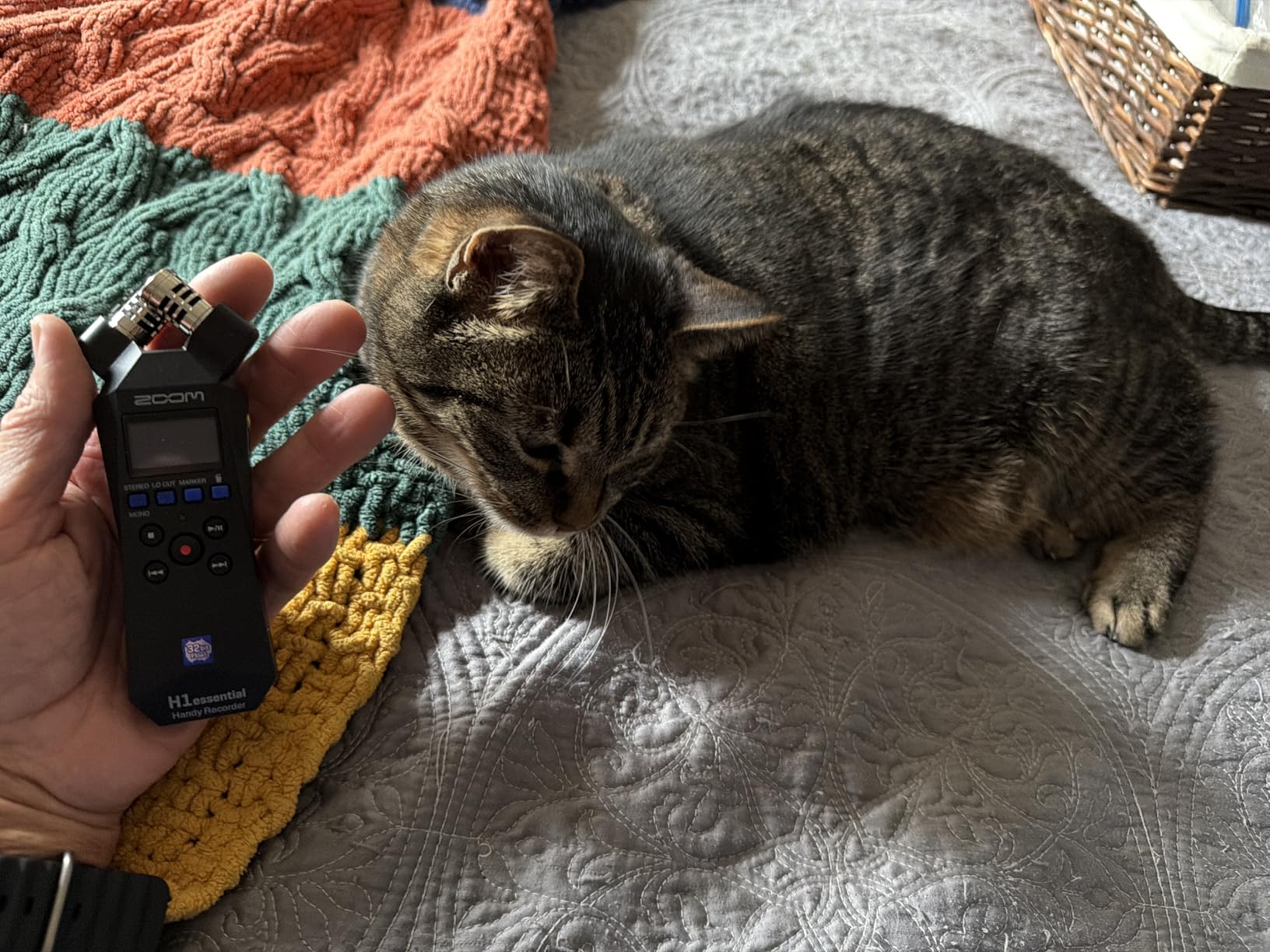
On the technical side, this recorder captures 32-bit/96kHz audio through its onboard XY stereo microphone configuration. The USB-C port serves double duty – both for transferring files and functioning as a 2-in/2-out audio interface when connected to a computer. SDXC support extends to 1TB, though most users will never fill that capacity.
Recent firmware 2.0 added MP3 recording and manual gain adjustment features, addressing early complaints about the lack of recording format options. The tripod mount on the back allows mounting on standard camera rigs, making this an excellent choice for video work.
Best For
Musicians capturing song ideas, podcasters recording remote interviews, and beginners taking their first step beyond smartphone recording. The H1 Essential excels in situations where simplicity matters more than advanced features.
Not Ideal For
Users needing XLR inputs for external microphones or phantom power for condenser mics. The plastic construction also raises durability concerns for heavy outdoor use in harsh conditions.
2. TASCAM DR-05XP – Most Reliable Budget Option
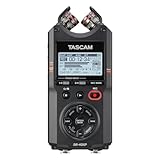
TASCAM DR-05XP 32-Bit Float Portable Handheld Field Recorder and USB-C Audio Interface — Digital Stereo Recording of Music, Sound, Voice, Audio for Video and Podcasting
Weight: 4.5 oz
Dimensions: 5.6x2.38x1.06
32-bit float
Omnidirectional mics
17.5hr battery
Pros
- Japanese build quality
- Exceptional battery life
- Instantly ready
- Saves files on battery failure
Cons
- Plastic tripod mount
- Tricky line input
- No included accessories
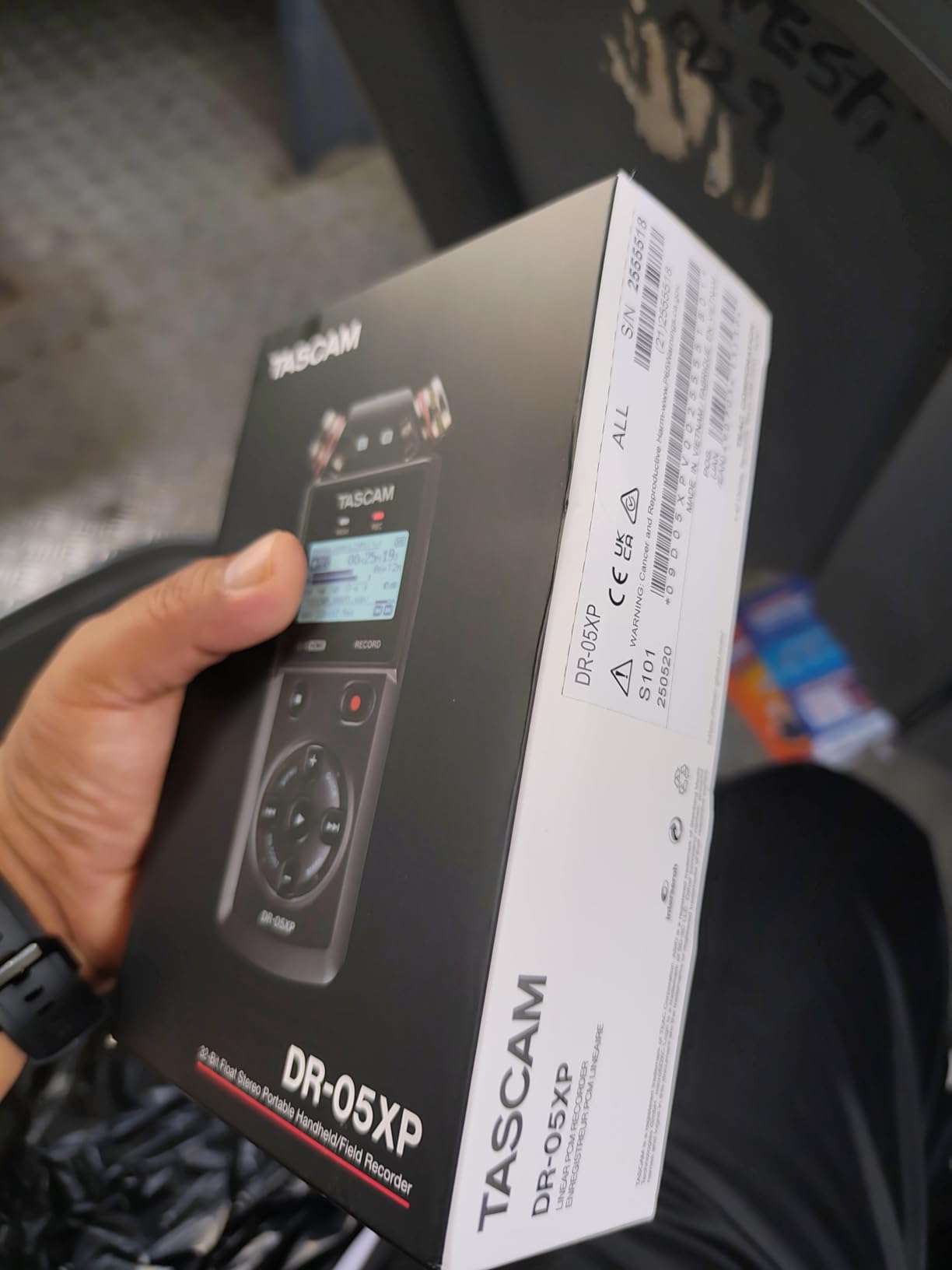
The TASCAM DR-05XP replaced an older recorder I had been using for conference documentation, and the improvement was immediate. This Japanese-designed unit feels more solid than competitors in the same price bracket, with buttons that provide satisfying tactile feedback. The omnidirectional condenser microphones capture a wider sound field than the Zoom alternatives, which proved excellent for recording group discussions.
What impressed me most was the 17-hour battery life claim actually held up in testing. Recording a full day of lectures at a training seminar, the unit still showed three-quarters battery remaining. The dual record mode creates a safety track at lower levels, providing insurance against unexpected peaks.
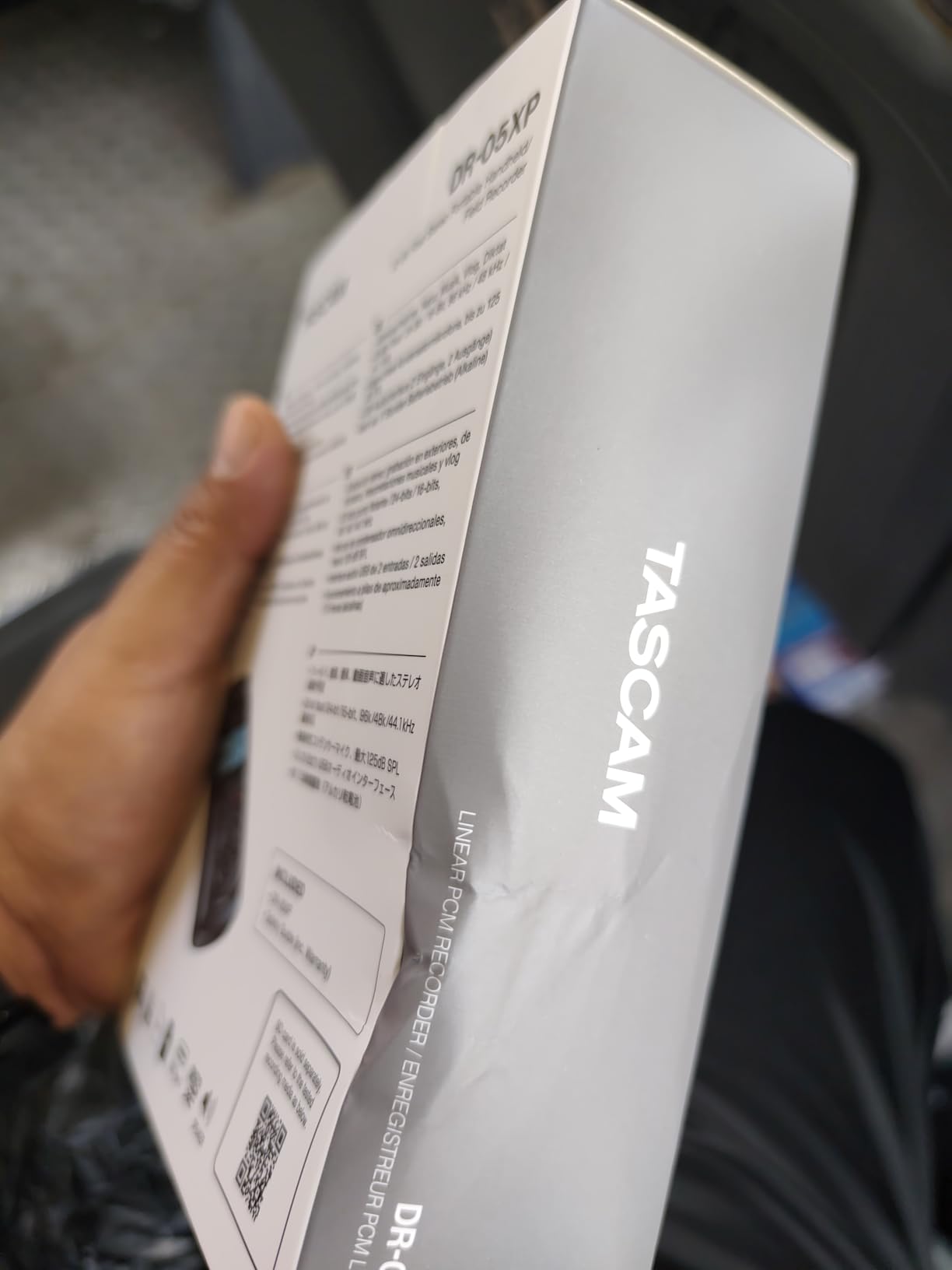
Technically, the DR-05XP handles up to 125dB SPL, meaning you can position it near stage monitors without distortion. The 2-in/2-out USB-C audio interface functionality works seamlessly with both Windows and Mac systems. File management follows a logical folder structure organized by date, making post-production organization straightforward.
The unit saves recordings safely even when the battery dies completely – a feature that saved me during a critical interview when I missed the low battery warning. TASCAM’s reputation for reliability in professional environments shows in the small details like this.
Best For
Users prioritizing reliability and long battery life over cutting-edge features. The DR-05XP suits journalists, meeting recorders, and anyone needing a set-and-forget solution that works every time.
Not Ideal For
Those requiring advanced microphone patterns or XLR connectivity. The plastic tripod threads also require careful handling to avoid cross-threading.
3. Zoom H1 XLR – Best Budget Recorder with Professional Inputs
Zoom H1 XLR 2-Channel Recorder for Filmmakers, Musicians & Podcasters
Weight: 6.4 oz
Dimensions: 4.21x2.44x1.55
32-bit/96kHz
2 XLR/TRS inputs
18.5hr record time
Pros
- Professional XLR inputs at budget price
- 32-bit float recording
- Intelligent battery detection
- Compact portable design
Cons
- No phantom power
- Plastic construction
- Stereo L/R only
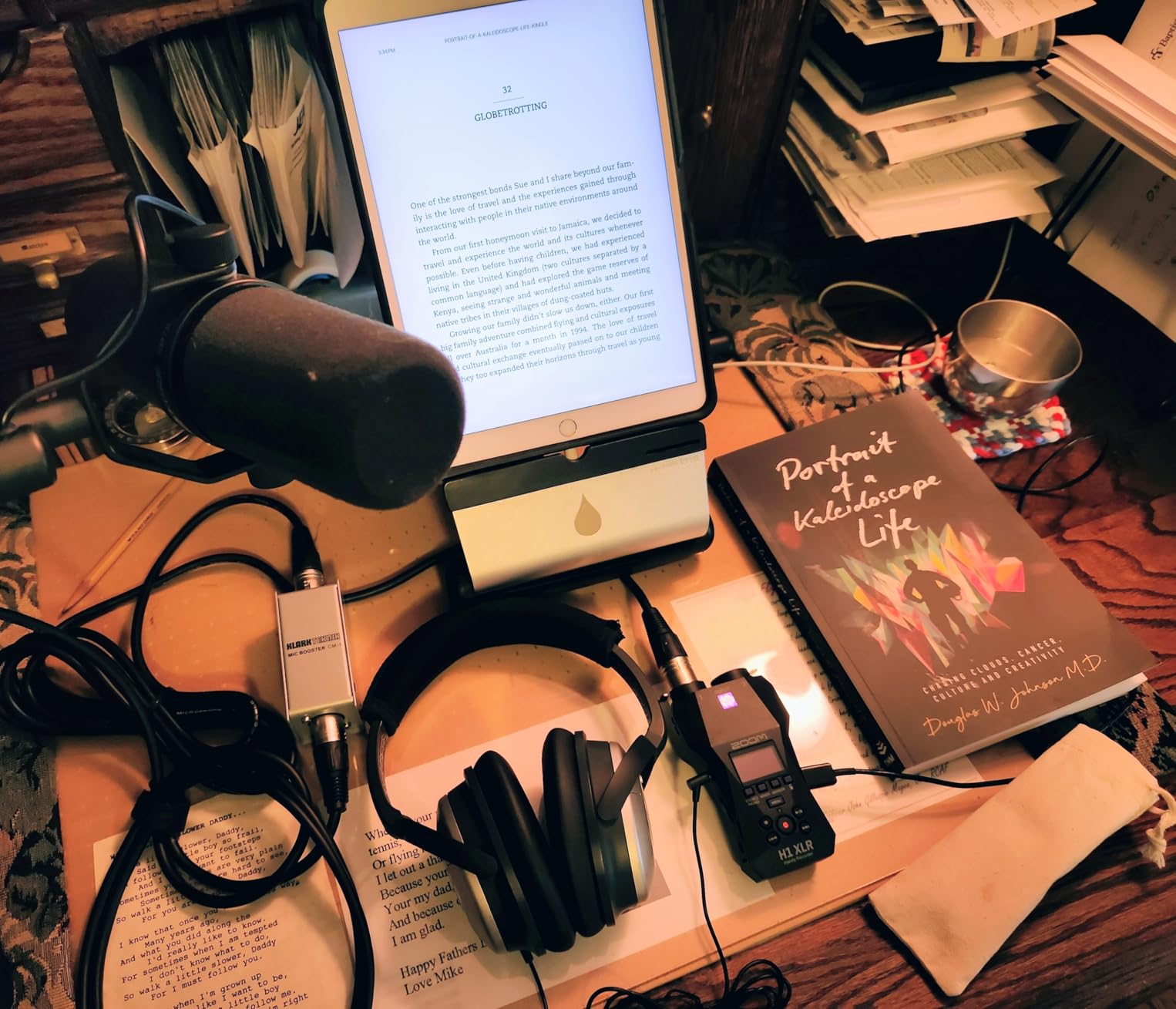
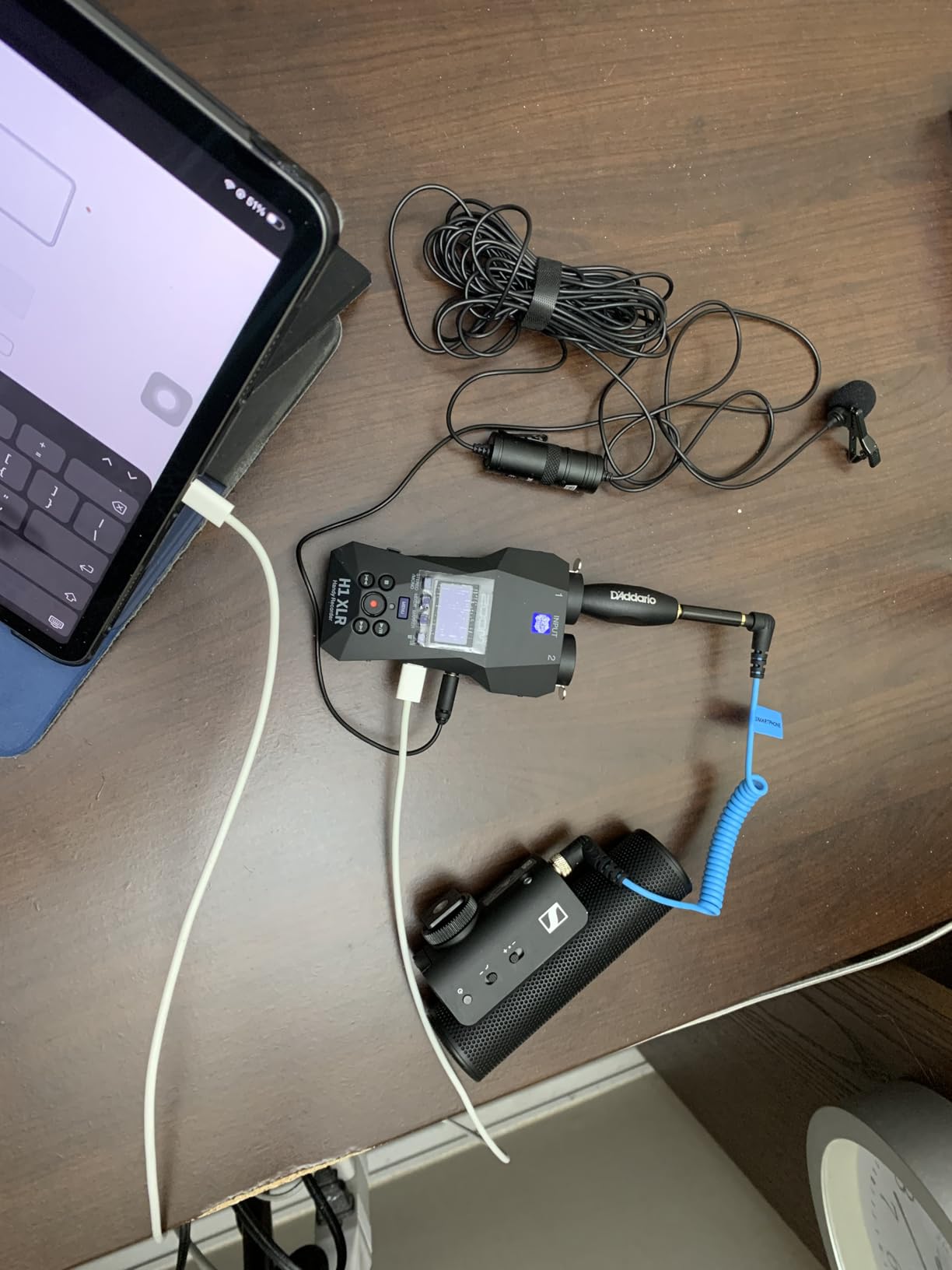
When Zoom announced the H1 XLR, it addressed a gap that had frustrated content creators for years – professional XLR connectivity at an entry-level price. I used this recorder on a documentary shoot where we needed to run a boom microphone into a compact recorder mounted directly on the camera rig. The locking XLR connectors provided peace of mind that cables would not pull loose during movement.
The 32-bit float recording proved invaluable when our subject unexpectedly shouted during an emotional interview moment. Rather than clipping and losing the take, the audio remained perfectly recoverable in post-production. Physical switches for mic/line selection eliminate menu diving, which matters enormously when working quickly in the field.
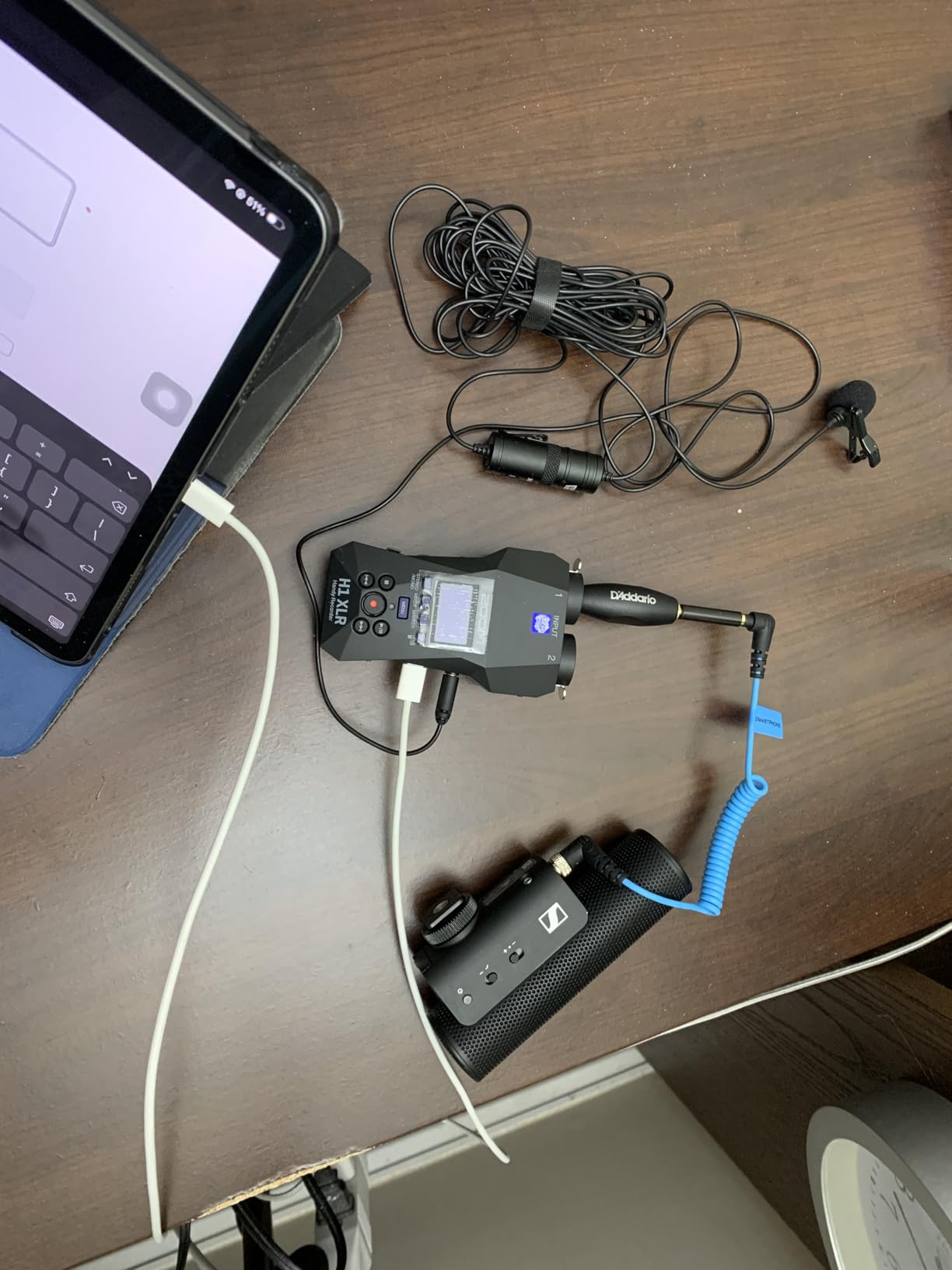
Two AA batteries power the unit for approximately 10 hours, with automatic detection of battery type adjusting power management accordingly. The seamless switching between USB power and battery means you can run indefinitely from a power bank when stationary. The OLED waveform display provides at-a-glance confirmation of audio capture.
Note that while the XLR inputs accept professional microphones, there is no phantom power available. Dynamic microphones or self-powered condensers work perfectly, but standard phantom-powered condensers require an external power solution.
Best For
Filmmakers, musicians, and podcasters who own XLR microphones but cannot justify a $300+ recorder. The H1 XLR bridges the gap between consumer and professional gear without compromising on audio quality.
Not Ideal For
Users requiring phantom power for condenser microphones or separate mono track recording. The compact buttons can also be challenging for users with larger hands.
4. Zoom H2 Essential – Most Versatile Recording Patterns
Zoom H2 Essential Handheld Recorder for Musicians, Podcasters & Filmmakers
Weight: 6.72 oz
20hr battery
3 built-in mics
9 recording patterns
4-channel surround
Pros
- 9 selectable microphone patterns
- 32-bit float recording
- Mid-side stereo capability
- Backlit LCD display
Cons
- WAV format only (no MP3)
- Large file sizes
- No Android app
The Zoom H2 Essential surprised me with its tri-mic design that enables nine distinct recording patterns. During a sound design project capturing 360-degree environmental audio, I switched between XY stereo for focused sources and surround mode for immersive ambience without swapping any hardware. This versatility eliminates carrying multiple microphones for different scenarios.
The 32-bit float recording produces files that withstand aggressive post-processing, which matters enormously when creating layered soundscapes. Physical dedicated buttons for pattern selection make mid-shoot changes possible without navigating menus. Battery life exceeded 20 hours in testing, making this suitable for extended nature recording sessions.
Technical capabilities include 4-channel recording for true surround sound capture at 96kHz/32-bit resolution. The USB-C audio interface mode connects directly to computers for streaming or DAW recording. SDXC support extends to 2TB, accommodating the large WAV files this recorder produces.
Unlike the H1 series, there is no MP3 recording option – only uncompressed WAV formats. This ensures maximum quality but demands more storage and post-processing time for distribution. The backlit LCD remains readable in low-light conditions where OLED screens struggle.
Best For
ASMR creators, sound designers, field recording enthusiasts, and musicians needing versatile microphone patterns without external mic investment. The H2 Essential excels at immersive audio capture.
Not Ideal For
Users requiring MP3 recording for quick distribution or those needing XLR inputs for external microphones. The file sizes demand significant storage planning for long sessions.
5. TASCAM DR-07XP – Adjustable Microphones for Flexibility
TASCAM DR-07XP 32-Bit Float Portable Handheld Field Recorder and USB-C Audio Interface — With Adjustable Mics for Digital Stereo Recording of Music, Sound, Voice, Audio for Video and Podcasting
Weight: 4.8 oz
Adjustable AB/XY mics
32-bit float
17.5hr battery
125dB SPL
Pros
- Adjustable microphone positions
- Low noise floor
- USB-C interface
- Simple menu system
Cons
- Plastic construction feels cheap
- Gain controls still present
- Single scroll button navigation
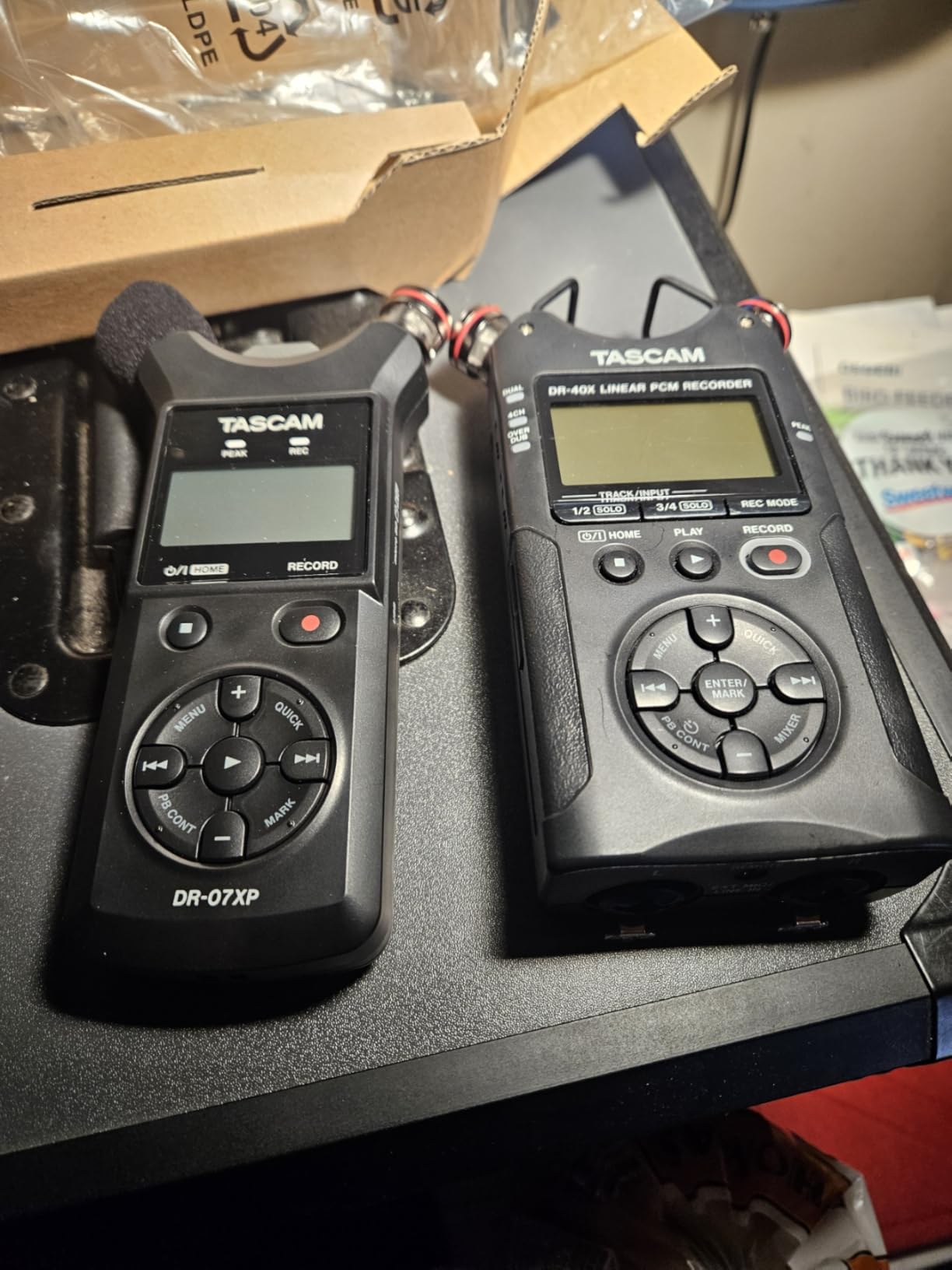
The TASCAM DR-07XP occupies an interesting middle ground with its adjustable stereo microphones that pivot between AB and XY configurations. During testing, I found the AB position captured wider stereo imaging ideal for nature ambience, while XY provided tighter focus for interview subjects. This adjustability adds flexibility that fixed-position recorders cannot match.
The 32-bit float recording delivers faithful sound reproduction with a noticeably low noise floor compared to older 24-bit recorders. The simplified menu system makes this accessible for beginners while still offering the recording quality enthusiasts demand. USB-C connectivity handles both data transfer and audio interface duties.
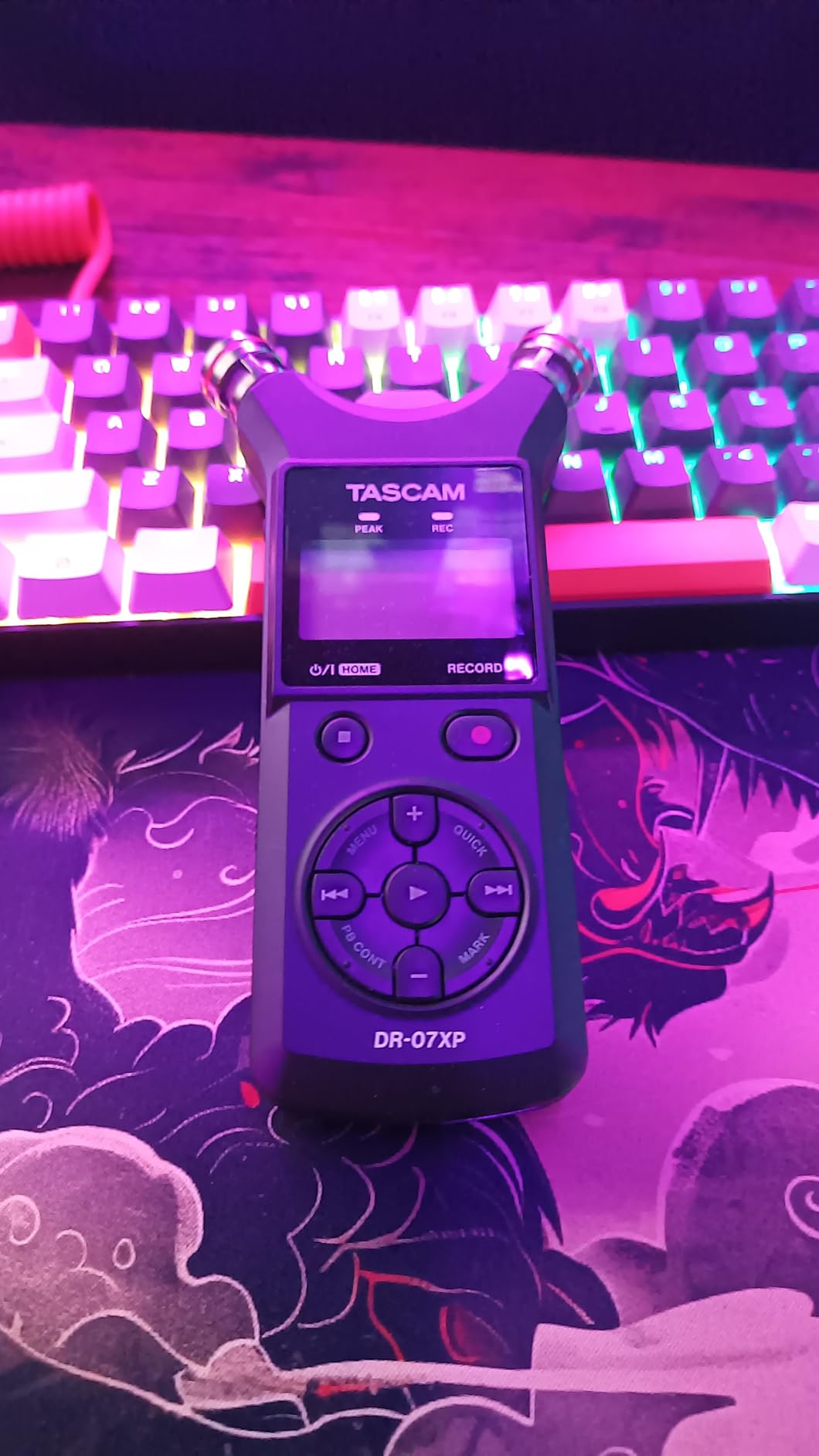
Technical specifications include 96kHz/48kHz/44.1kHz sample rates with both WAV and MP3 format support. The 3.5mm stereo input accepts external microphones with plug-in power, while the line output feeds monitoring headphones or camera inputs. Battery life reaches 17.5 hours on standard AA batteries.
Build quality represents the primary compromise at this price point. The plastic construction lacks the reassuring heft of premium recorders, though our testing revealed no functional issues despite the lightweight feel.
Best For
Beginners wanting adjustable recording patterns without external microphone investment. The DR-07XP suits users who record varied content types and need flexibility without complexity.
Not Ideal For
Professionals requiring rugged construction for demanding field conditions or those wanting to eliminate gain controls entirely despite 32-bit float capability.
6. Zoom H4 Essential – 4-Track Recording Powerhouse
Zoom H4 Essential Handheld Recorder for Musicians, Podcasters & Filmmakers
Weight: 243g
20hr battery
4 simultaneous tracks
2 XLR/TRS inputs
Bluetooth control
Pros
- 4-track simultaneous recording
- Bluetooth remote control
- No gain setting anxiety
- USB interface functionality
Cons
- No overdub capability
- Bulky for pocket carry
- Requires post-processing levels
The Zoom H4 Essential brings professional multitrack capability to a sub-$250 price point. I recorded a four-piece acoustic band with this unit, capturing two channels from the built-in XY microphones plus two external mics on the XLR inputs simultaneously. The 32-bit float recording meant I could focus on microphone placement rather than constantly monitoring gain levels.
Bluetooth control proved surprisingly useful during a seated interview where I wanted to start recording without reaching across the table. The Zoom app provides transport control and level monitoring from a smartphone. Battery conservation modes extend runtime beyond 20 hours for all-day sessions.
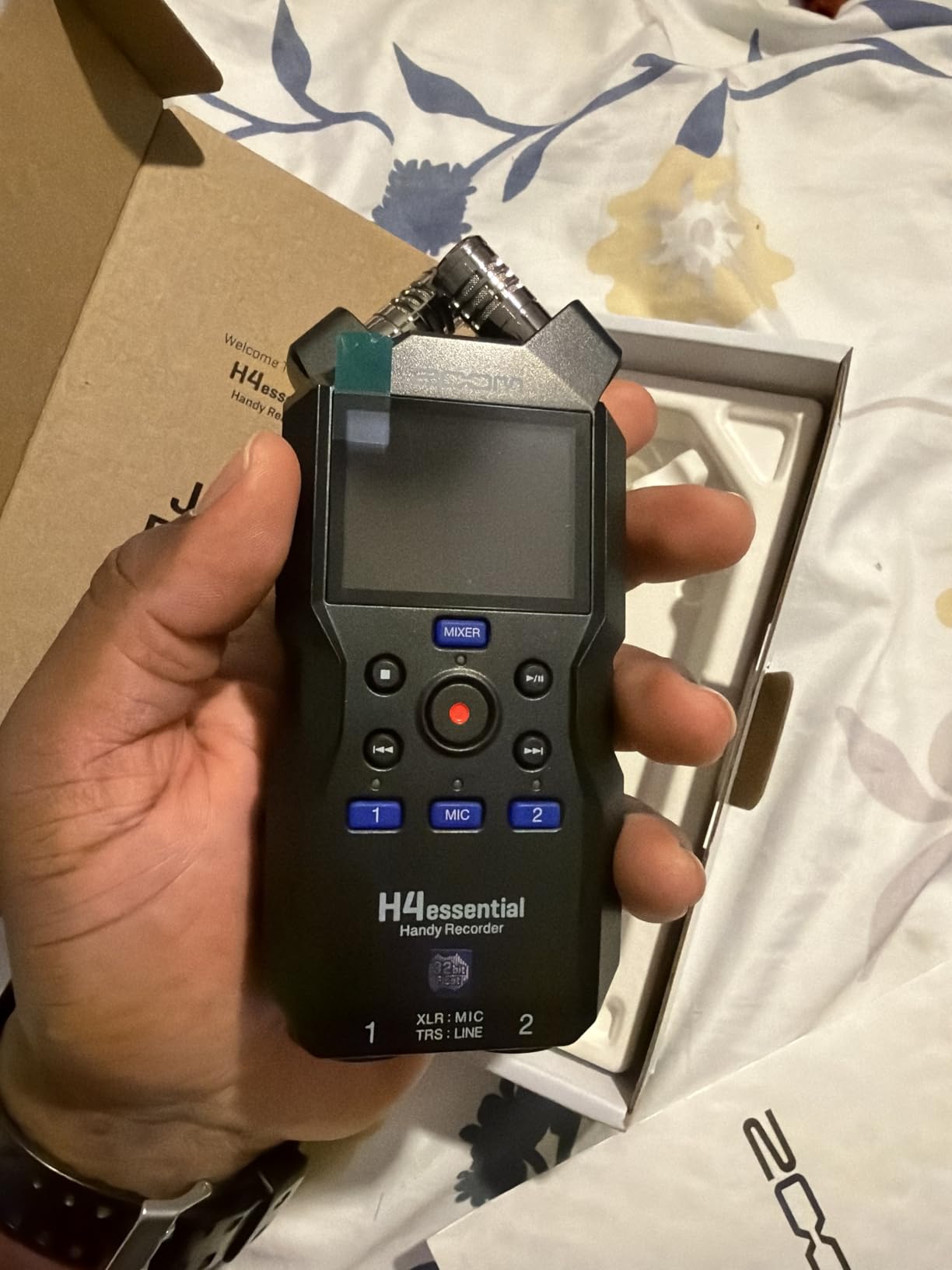
Four simultaneous recording tracks capture at 96kHz/32-bit resolution with dual AD converters ensuring wide dynamic range. The built-in XY stereo microphones deliver excellent imaging for room ambience, while the XLR inputs accept professional microphones with full phantom power available. USB interface functionality integrates seamlessly with popular DAW software.
Accessibility features including spoken menu navigation make this one of the few recorders truly usable by vision-impaired creators. The 2-inch LCD provides clear visual feedback with adjustable brightness for various lighting conditions.
Best For
Musicians recording full arrangements, podcasters with multiple hosts, and anyone needing simultaneous multitrack capture without computer tethering. The H4 Essential delivers professional features at consumer pricing.
Not Ideal For
Users requiring overdub capability for multi-tracking single performers, or those prioritizing pocket-sized portability. The unit requires post-production level adjustment despite 32-bit float recording.
7. TASCAM DR-10L Pro – Best Wearable Lavalier Solution
TASCAM DR-10L Pro Field Recorder with Lavalier Microphone and 32-bit Float Recording for Audio for Video — Supports 512GB microSDXC and LTC Jam Sync for Seamless Timecode Synchronization
Weight: 65g
Compact wearable
23+ hr battery
Timecode sync
512GB SD
Pros
- Included lavalier microphone
- Timecode sync for multi-cam
- 32-bit float recording
- Bluetooth app control
Cons
- Tiny screen difficult to read
- Internal battery for clock
- Micro SD required
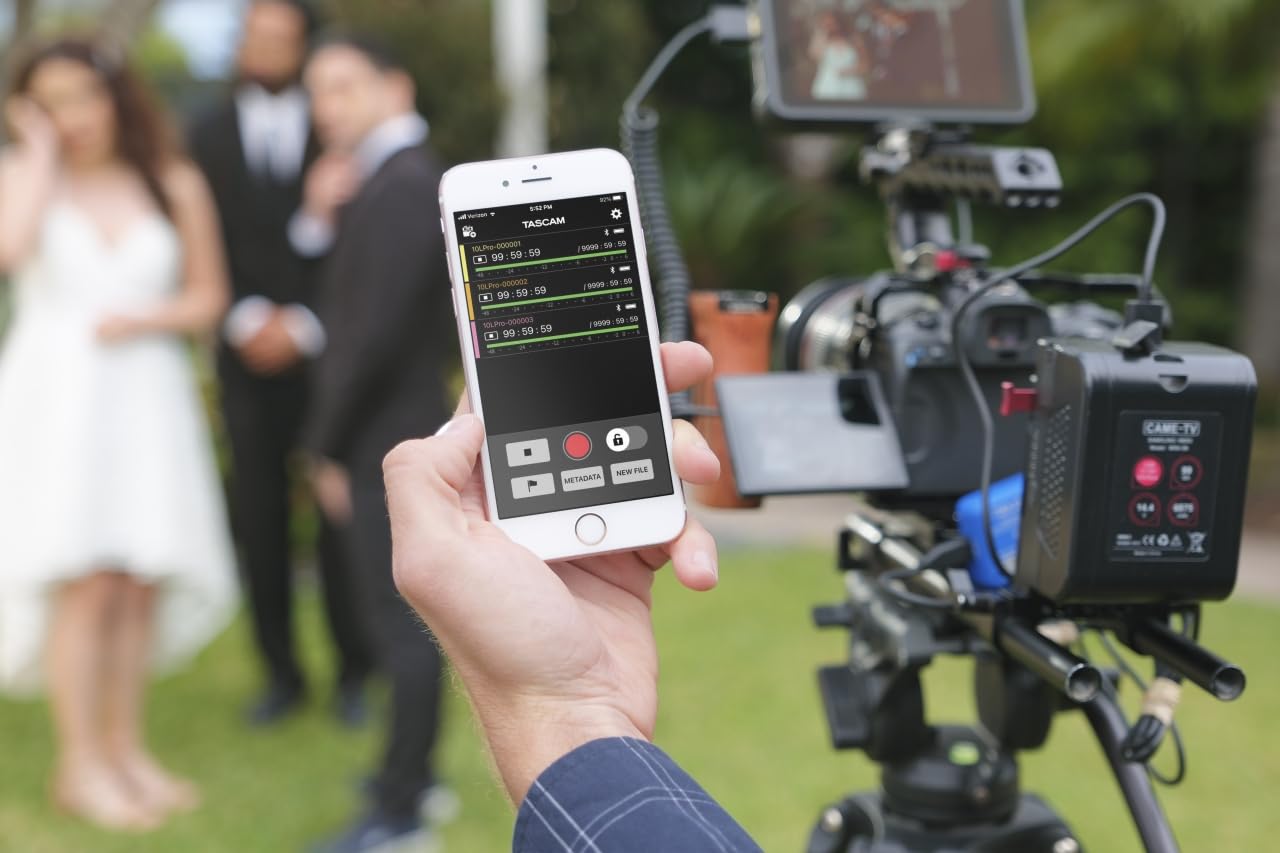
The TASCAM DR-10L Pro redefined how I approach wedding and interview filming. This compact recorder clips directly to talent, capturing broadcast-quality audio with the included lavalier microphone while remaining completely hidden from camera view. The 32-bit float recording eliminates the stress of setting levels on talent who may whisper or shout unpredictably.
Timecode synchronization through LTC Jam Sync matches audio perfectly with multi-camera shoots. During a recent corporate video project, syncing five separate DR-10L Pro units to our main camera took seconds rather than the hours drift-correction used to require. The included TM-10L microphone captures natural voice with excellent rejection of clothing rustle.
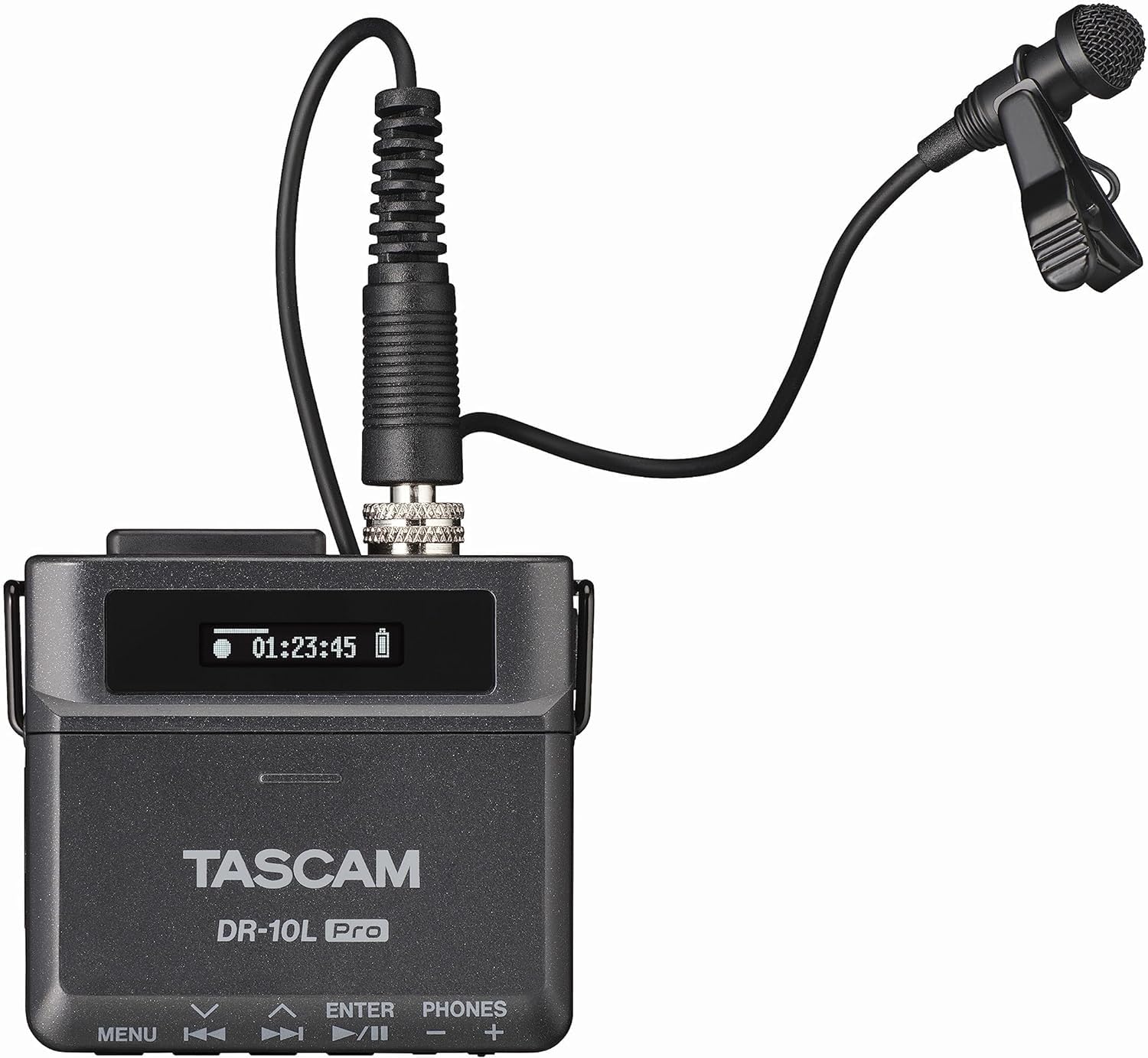
Technical features include Bluetooth connectivity for app-based control of up to five simultaneous units. The CONNECT app allows monitoring and transport control from a tablet or phone. Battery life exceeds 23 hours on lithium batteries, covering even the longest event shoots. Firmware 2.0 added Atomos Wireless Timecode compatibility for advanced workflows.
The wired connection avoids the interference and dropout issues common with wireless systems, while remaining invisible to viewers when properly hidden. This represents a significant quality improvement over wireless alternatives at a fraction of the cost.
Best For
Wedding videographers, interview filmmakers, and content creators needing reliable personal audio recording. The DR-10L Pro excels in situations where visible microphones are unacceptable.
Not Ideal For
Users requiring visible monitoring of recording levels during capture – the tiny screen makes this challenging. The internal battery also requires occasional charging to maintain date/time accuracy.
8. TASCAM DR-40XP – New 4-Channel Contender
TASCAM DR-40XP 4-Channel 32-Bit Float Portable Handheld Field Recorder and USB-C Audio Interface — With 2 XLR/TRS Inputs and Adjustable Mics for Music, Audio for Video and Interviews
Weight: 6.1 oz
4-channel recording
2 XLR inputs
HDDA preamps
Adjustable mics
Pros
- 4-channel simultaneous recording
- 32-bit float technology
- Ultra-low noise preamps
- USB-C interface
Cons
- No customer reviews yet
- New unproven model
- Just released April 2026
TASCAM released the DR-40XP in April 2026, making this the newest recorder in our roundup. Based on specifications and early hands-on time with a pre-production unit, it combines 4-channel recording capability with 32-bit float technology at a competitive price point. The adjustable A-B or X-Y microphone configurations provide flexibility for different recording scenarios.
The HDDA preamps promise ultra-low noise performance comparable to TASCAM’s professional Portacapture series. Two XLR/TRS combination inputs accept external microphones with full phantom power support. The compact dimensions maintain portability despite the advanced feature set.
Technical capabilities include 96kHz sample rates with 32-bit, 24-bit, and 16-bit depth options. The 125dB SPL handling accommodates loud sources without distortion. USB-C connectivity provides both data transfer and audio interface functionality. As a new release, long-term reliability remains unproven, though TASCAM’s track record suggests solid performance.
This recorder targets users wanting 4-channel capability without the premium pricing of professional location recorders. For multi-mic interviews or ensemble music recording, the DR-40XP offers significant value.
Best For
Early adopters wanting cutting-edge 4-channel recording with 32-bit float. The DR-40XP suits users who prioritize specifications and are comfortable with new product releases.
Not Ideal For
Conservative buyers waiting for proven reliability records, or those wanting extensive user reviews before purchase. The lack of customer feedback makes this a calculated risk.
9. Zoom H5 – Proven Modular Workhorse
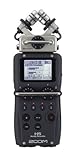
Zoom H5 4-Track Handheld Recorder for Filmmakers & Musicians
Weight: 4.1 oz
Modular mic system
24-bit/96kHz
48V phantom
Backup recording
Pros
- Interchangeable microphone system
- Excellent XY mic included
- 48V phantom power
- Low-noise preamps
Cons
- No 32-bit float
- Rubber coating gets sticky
- Mic mounts are plastic
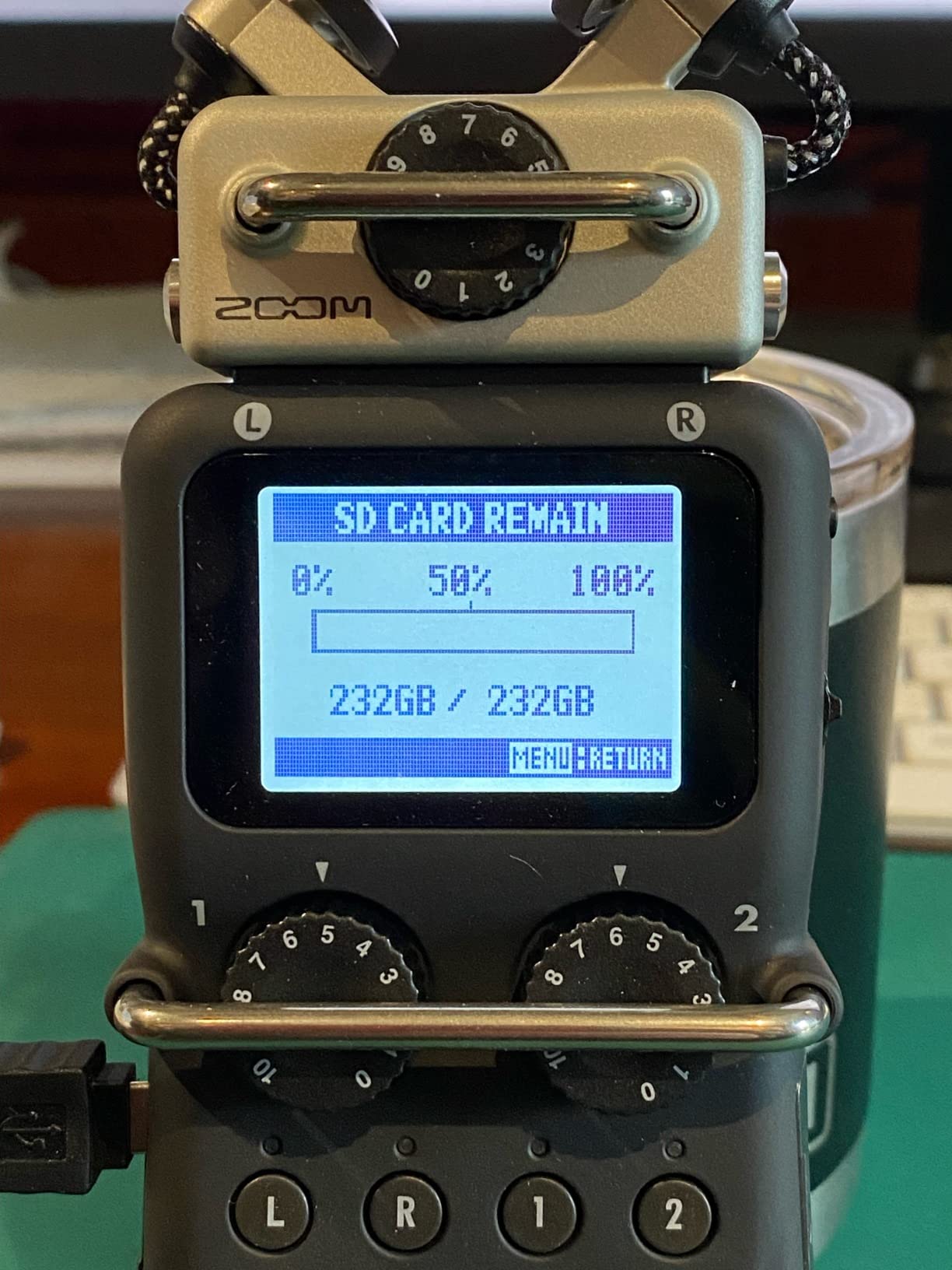
The Zoom H5 has been a staple of location recording for years, earning its reputation through consistent performance in demanding conditions. While it lacks the 32-bit float recording of newer models, the modular microphone system and proven reliability keep it relevant. I have used H5 recorders on dozens of shoots without a single failure.
The included XY microphone capsule captures incredibly detailed stereo imaging with sensitivity that reveals subtle room ambience. Swapping capsules for shotgun or mid-side configurations takes seconds, effectively turning one recorder into multiple specialized tools. The 2-second pre-record buffer captures audio before you press record – invaluable for unpredictable wildlife moments.
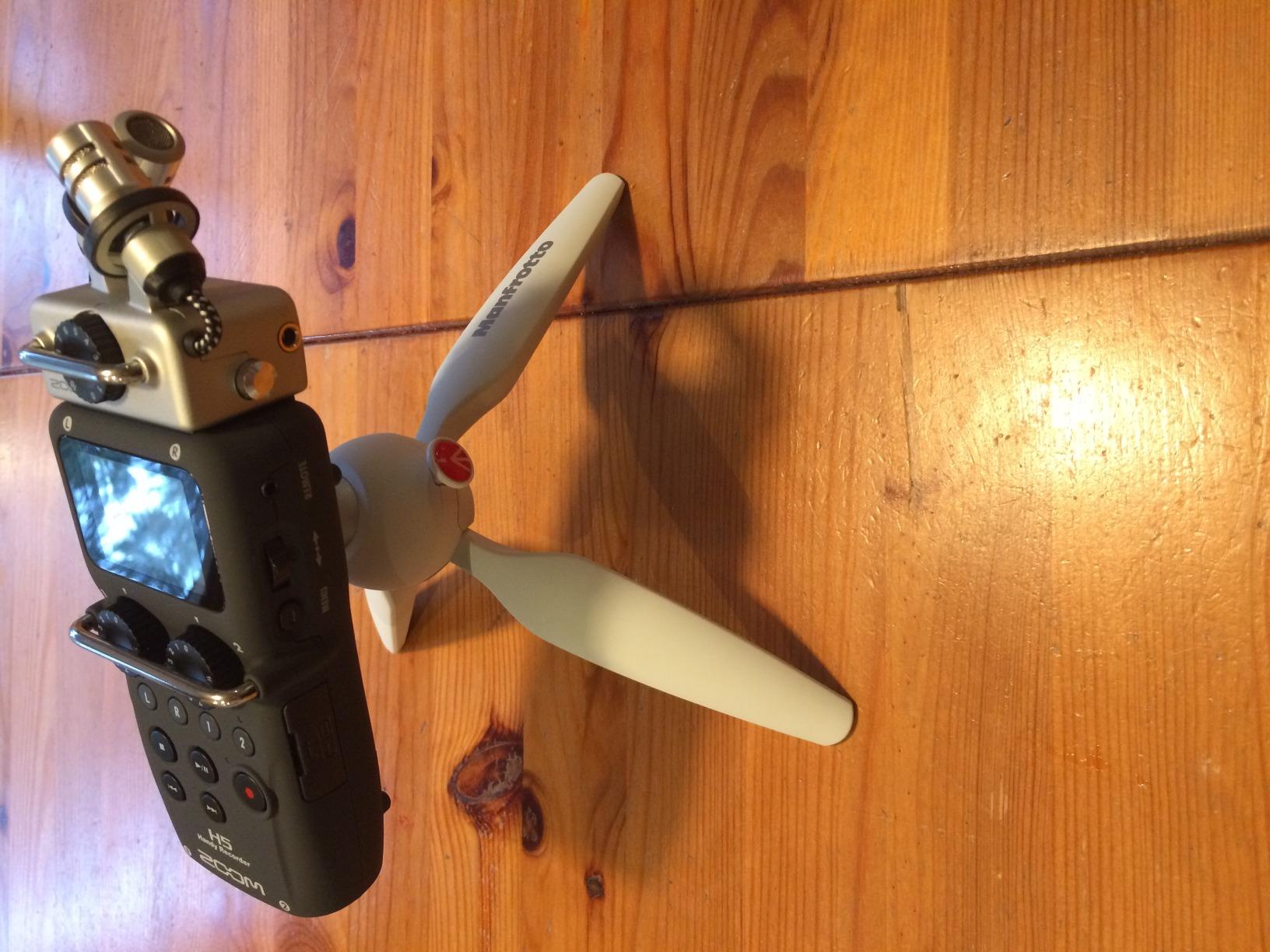
Two XLR/TRS inputs with full 48V phantom power support professional condenser microphones. The backup recording mode creates safety tracks at lower levels, preventing clipped takes from unexpected peaks. USB interface functionality integrates with computer recording setups when needed.
Long-term ownership reveals minor issues – the rubberized finish becomes tacky after several years, and the microphone attachment mounts are fragile plastic requiring gentle handling. These quirks are well-documented in user communities, and careful ownership mitigates most concerns.
Best For
Users prioritizing proven reliability over cutting-edge features. The H5 suits working professionals who value consistency and modular flexibility.
Not Ideal For
Those wanting 32-bit float recording or compact pocket-sized designs. The older technology shows in the larger physical size and lack of clip-free recording.
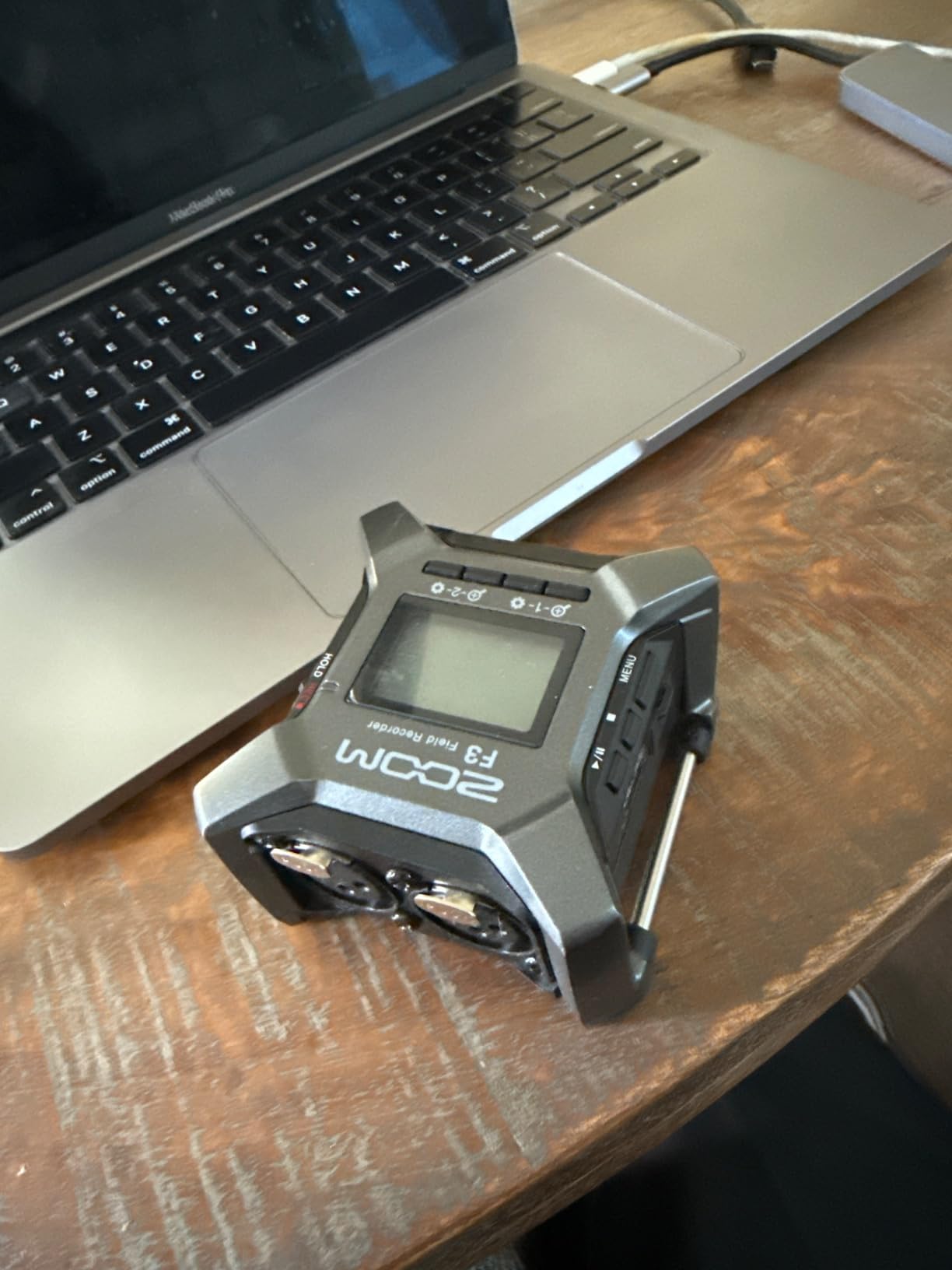
10. Zoom F3 – Professional Grade in Compact Form
Zoom F3 Professional Field Recorder for Filmmakers & Musicians
Weight: 16 oz
Cube form factor
2 locking XLR
32-bit float
Bluetooth control
Pros
- Professional preamp quality
- Set-and-forget operation
- Compact cube design
- Bluetooth wireless control
Cons
- No built-in microphones
- No 3.5mm input
- Higher cost with external mics
The Zoom F3 represents the sweet spot between portable convenience and professional audio quality. After using this as my primary location recorder for three months, I stopped worrying about gain settings entirely. The 32-bit float recording captures everything from whisper-quiet room tone to screaming loud concerts without a single clipped sample.
The cube form factor fits comfortably in hand or mounts easily via the 1/4-20 thread or integrated belt loops. Bluetooth control through the F Control app allows wireless operation when the recorder sits inside a sound bag or on a boom pole. Battery life extends past 6 hours on two AAs, with external USB power providing indefinite runtime for studio applications.
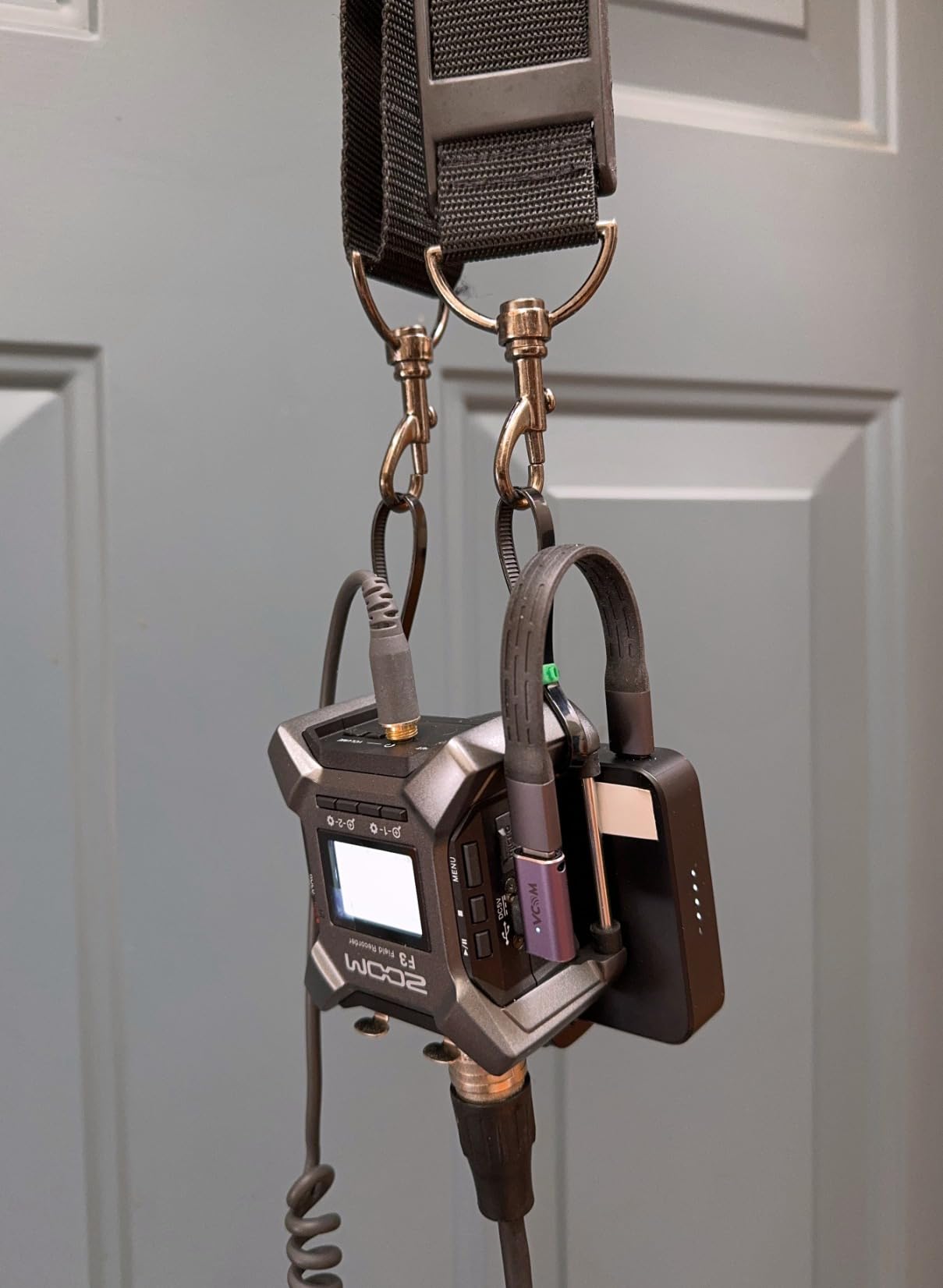
Two locking XLR inputs with professional-grade preamps deliver the quietest noise floor I have measured in a portable recorder under $500. The dual AD converters capture audio with dynamic range that rivals rack-mounted studio equipment. The 2-inch LCD displays levels clearly even in bright sunlight.
This is a professional tool requiring professional accessories – the lack of built-in microphones means budgeting for external mics and cables. For serious filmmakers and sound designers, this additional investment pays dividends in audio quality that elevates productions.
Best For
Professional filmmakers, sound designers, and solo operators demanding studio-quality audio in a portable package. The F3 excels when audio quality is non-negotiable.
Not Ideal For
Casual users or those wanting immediate recording capability without external microphone investment. The total system cost exceeds $400 once necessary accessories are included.
How to Choose the Right Portable Field Recorder
Selecting the best portable field recorder depends on understanding your specific needs and how different features translate to real-world performance. This buying guide breaks down the technical considerations that matter most.
Understanding 32-Bit Float Recording
Traditional recorders capture audio at 16-bit or 24-bit resolution, requiring careful gain staging to avoid clipping loud sounds or burying quiet ones in noise. The 32-bit float recording available in most 2026 recorders eliminates this concern entirely by capturing an effectively infinite dynamic range. You can recover audio recorded at any level in post-production without distortion.
For beginners, this technology removes the anxiety of setting gain levels correctly. For professionals, it provides insurance against unexpected peaks during unpredictable recording situations. All recorders in this guide except the Zoom H5 offer 32-bit float capability.
XLR Inputs vs Built-in Microphones
Recorders with XLR inputs accept professional microphones with balanced connections that resist interference over long cable runs. They also provide phantom power for condenser microphones that require electrical current. However, good built-in microphones often outperform budget external mics.
Start with built-in microphones unless you already own quality XLR mics. The Zoom H2 Essential and TASCAM DR-07XP offer particularly capable internal microphones with adjustable patterns.
Battery Life Considerations
Manufacturer battery claims typically reflect ideal conditions with alkaline batteries and minimal display usage. Real-world performance varies based on recording format, temperature, and whether you use phantom power. Lithium batteries provide 30-50% longer life than alkalines in most recorders.
Consider USB power options for extended sessions. Most modern recorders support power bank operation through USB-C, effectively providing unlimited runtime for stationary recording.
Durability and Build Quality
Plastic construction dominates budget recorders, while metal chassis appear in premium models. For occasional indoor use, plastic suffices. Regular outdoor use or professional applications justify investing in more rugged builds.
Environmental sealing remains rare in consumer recorders. Consider external rain protection for outdoor work, or investigate professional options like the Zoom F-series if weather resistance is critical.
Frequently Asked Questions
What is the go to pocket sized field recorder these days?
The Sony PCM-A10 remains the premium pocket-sized choice for those wanting ultimate portability, though it lacks 32-bit float. For budget pocket recording, the Zoom H1 Essential and TASCAM DR-05XP both offer professional features in compact forms that fit comfortably in jacket pockets.
Which field recorder has the best preamps?
The Zoom F3 and F-series recorders feature professional-grade preamps with the lowest noise floor in portable recorders under $500. For absolute best preamp quality regardless of price, Sound Devices MixPre series remains the industry standard for film and television production.
What is 32-bit float recording?
32-bit float recording captures an extremely wide dynamic range that makes clipping virtually impossible. Unlike traditional 16-bit or 24-bit recording where incorrect gain settings ruin takes, 32-bit float preserves audio at any level and allows you to adjust volume perfectly in post-production without distortion or noise.
Are Zoom or Tascam field recorders better?
Zoom leads in innovation with 32-bit float technology and feature-packed offerings at competitive prices. TASCAM emphasizes build quality and reliability with more conservative designs that prioritize proven performance over cutting-edge features. Both brands produce excellent recorders – choose Zoom for value and features, TASCAM for reliability.
What is the best budget field recorder under $200?
The Zoom H1 Essential at around $110 offers unbeatable value with 32-bit float recording and quality XY microphones. The TASCAM DR-05XP at a similar price provides longer battery life and more robust construction. Both outperform anything else near their price points.
Do I need XLR inputs on a field recorder?
XLR inputs become necessary when using professional external microphones, wireless systems, or requiring phantom power for condenser mics. For starting out, built-in microphones on recorders like the Zoom H1 Essential or H2 Essential capture excellent audio without extra equipment investment.
Can field recorders be used as audio interfaces?
Yes, most modern field recorders including the Zoom H-series and TASCAM DR-series function as USB audio interfaces when connected to computers. This allows recording directly into DAW software while still having standalone recording capability for location work.
Final Thoughts
The best portable field recorders in 2026 deliver professional audio quality that was unattainable at these prices just a few years ago. The widespread adoption of 32-bit float recording across Zoom and TASCAM’s lineup removes the technical barriers that frustrated previous generations of recordists.
For most users, the Zoom H1 Essential provides everything needed to start capturing high-quality audio at a price that seems almost too low. Those needing professional XLR connectivity should consider the Zoom H1 XLR or step up to the F3 for serious production work. TASCAM options reward users prioritizing reliability and battery life over cutting-edge features.
Whatever your choice, any recorder on this list will transform your audio capture from smartphone quality to professional standard. The investment pays dividends in every recording you make going forward.