
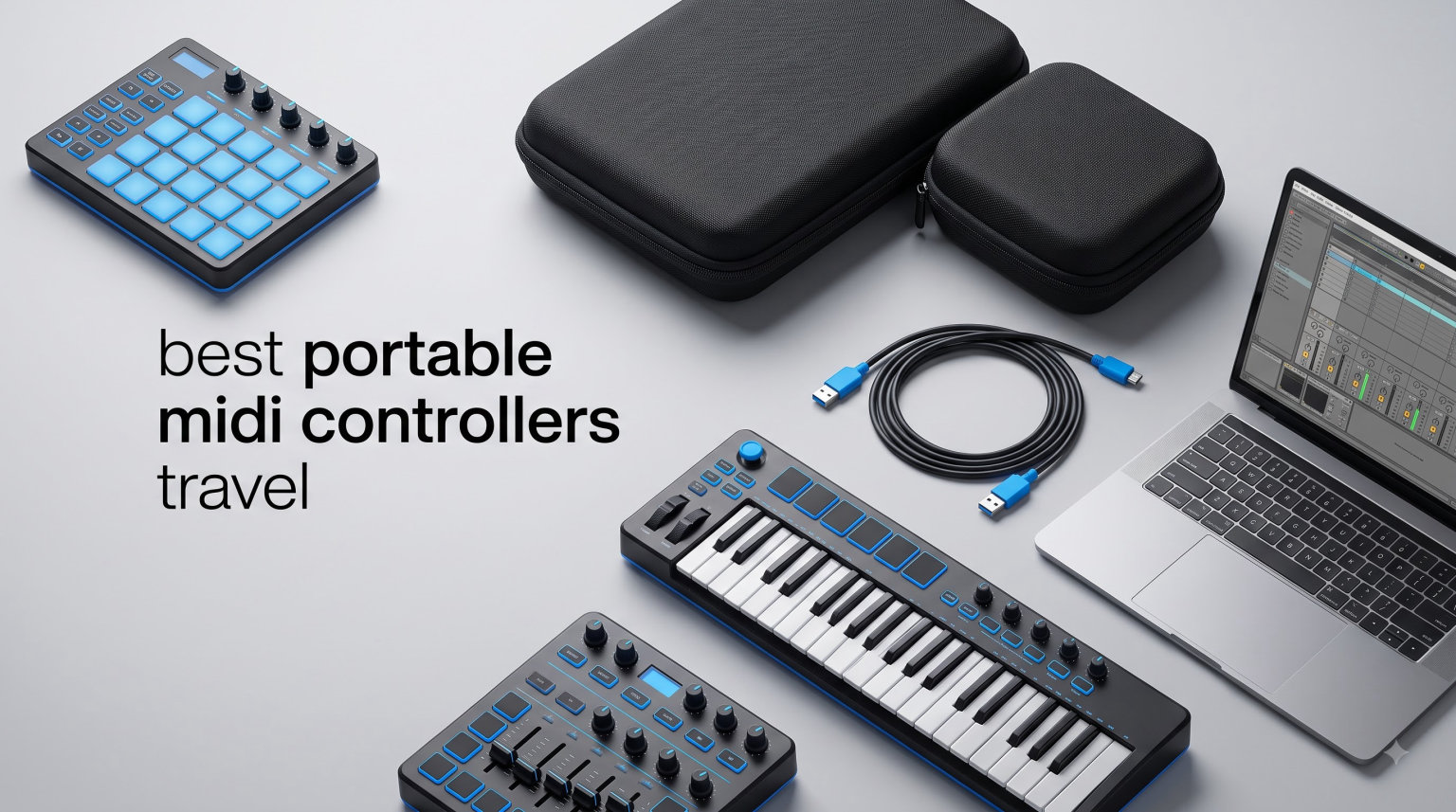
I have packed a MIDI keyboard in more backpack compartments than I care to admit. After 60+ flights and countless hotel-room sessions over the last few years, I have a very clear sense of what makes a portable MIDI controller worth its weight when you are traveling. This guide on the best portable MIDI controllers for travel in 2026 is built from those real trips, not a spec sheet.
Travel-ready MIDI keyboards have to juggle three things at once: small enough to live in a carry-on, expressive enough that you actually want to play, and reliable enough to survive overhead bins and backpack zippers. I have tested eight controllers that hit that balance in different ways. Some prioritize raw portability, others focus on key feel or DAW integration, and a few include batteries or Bluetooth so you can leave cables at home. If you want a deeper look at studio-grade controllers, see our full roundup of the best MIDI controllers for music production.
For each model below, I will share what actually happened when I used it on the road: key feel, hotel-room noise levels, TSA-friendly dimensions, and which DAWs it played nicely with. I also pulled insights from producer forums and real user reviews to flag the quirks that only show up after a few weeks of travel.
Table of Contents
Top 3 Picks for Travel Right Now (September 2026)

Best Portable MIDI Controllers in 2026
| Product | Specifications | Action |
|---|---|---|
 Akai MPK Mini MK3 Akai MPK Mini MK3 |
|
Check Latest Price |
| Akai MPK Mini IV |
|
Check Latest Price |
 Akai MPK Mini Play MK3 Akai MPK Mini Play MK3 |
|
Check Latest Price |
 M-Audio Keystation Mini 32 MK3 M-Audio Keystation Mini 32 MK3 |
|
Check Latest Price |
 Arturia MiniLab 3 Arturia MiniLab 3 |
|
Check Latest Price |
 Novation Launchpad Mini MK3 Novation Launchpad Mini MK3 |
|
Check Latest Price |
 Native Instruments M32 Native Instruments M32 |
|
Check Latest Price |
 Carry-on Folding MIDI Controller 25 Carry-on Folding MIDI Controller 25 |
|
Check Latest Price |
1. Akai MPK Mini MK3 — Best Value Travel Workhorse
Akai Professional MPK Mini MK3 25-Key USB MIDI Keyboard Controller
25 mini keys
8 MPC pads
1500+ sounds bundle
Pros
- Compact 12.5 inch body
- 8 velocity-sensitive pads
- Excellent software suite
- NKS ready
- USB bus powered
Cons
- Mini keys cramped for larger hands
- No pitch/mod wheels (joystick)
- No battery option
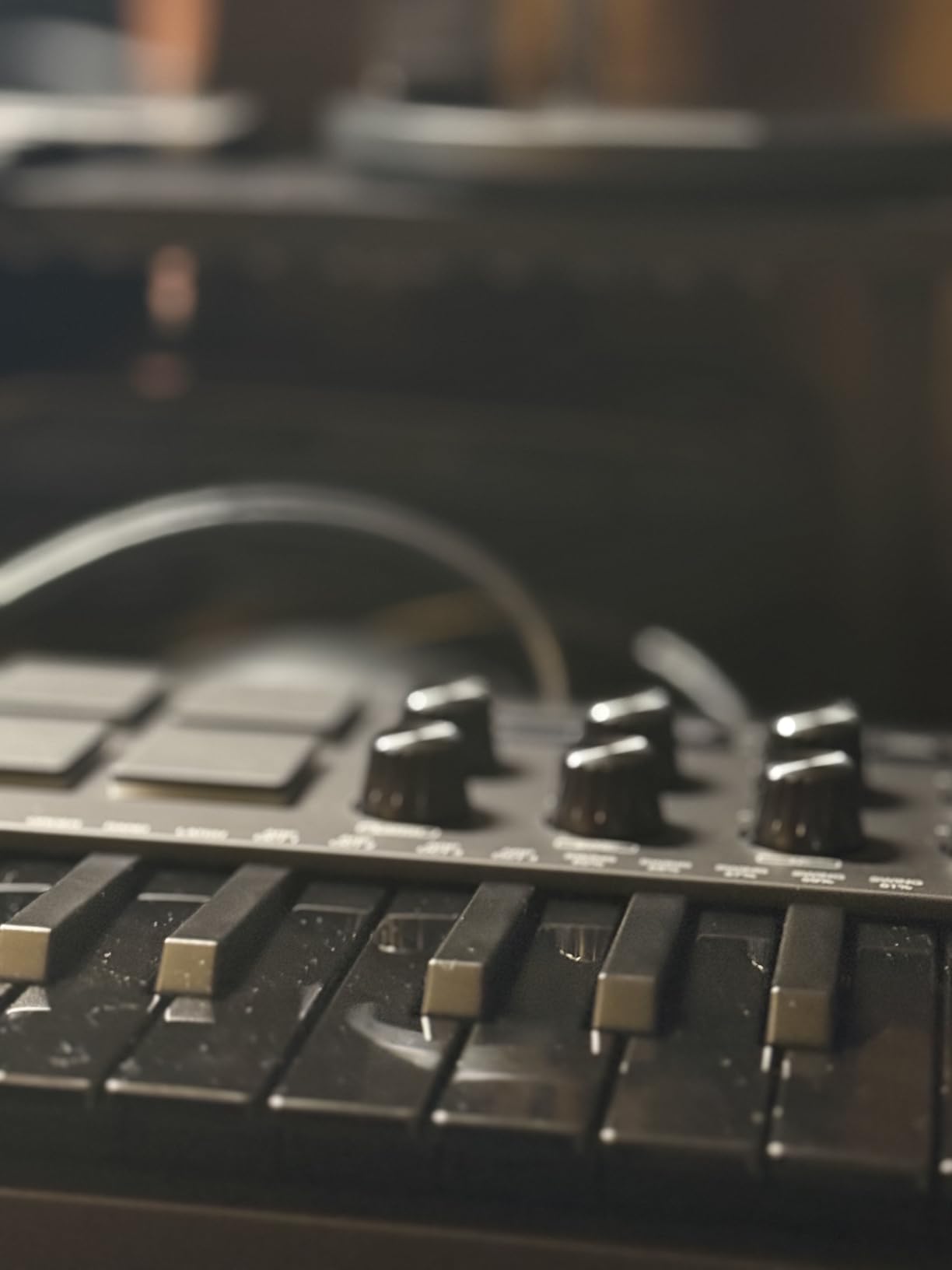
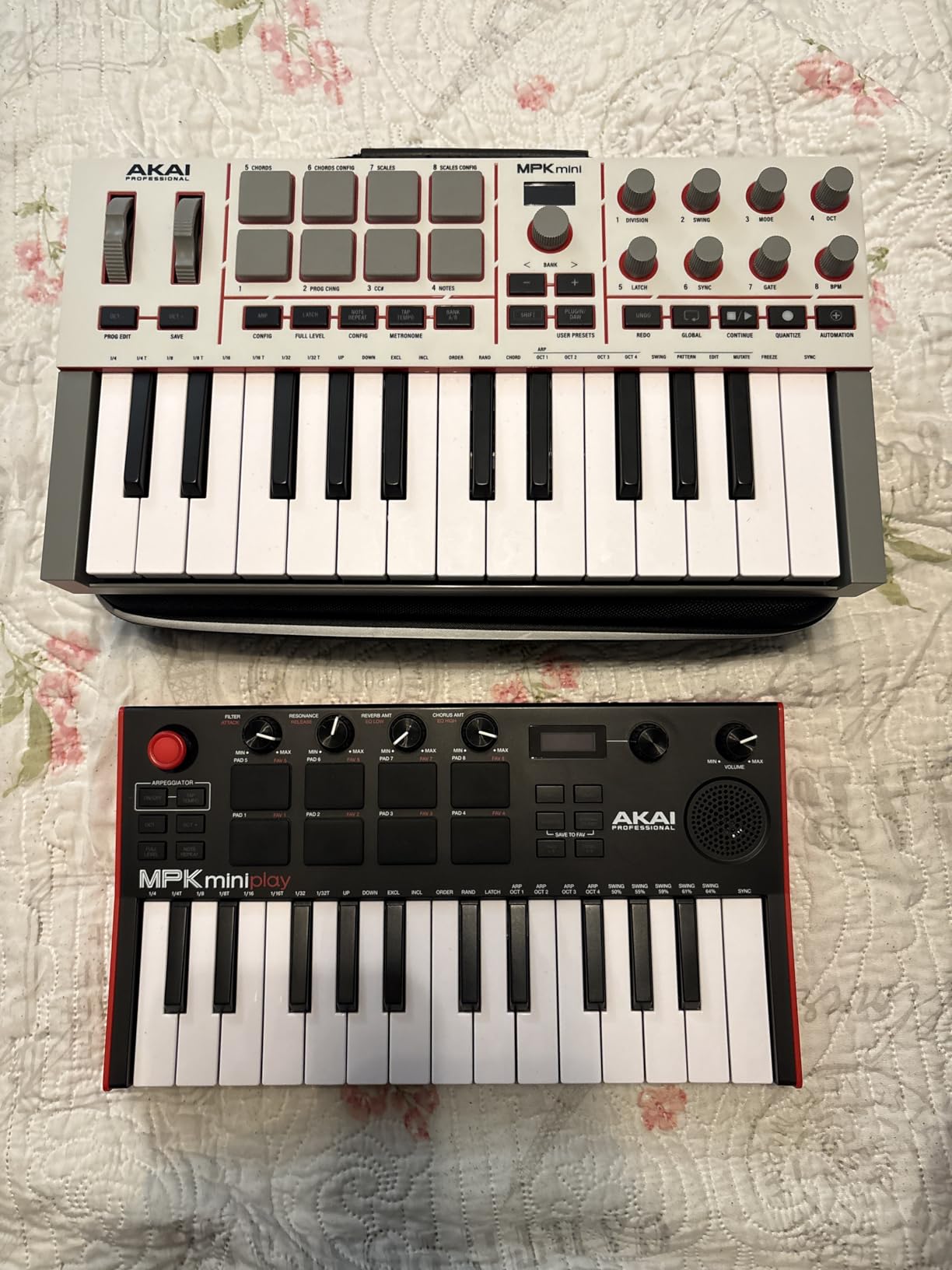
The MPK Mini MK3 has been my go-to travel board for two years now, and I keep coming back to it because it just works. At 12.5 inches wide and under 2 pounds, it slides into the laptop sleeve of my carry-on without forcing me to choose between it and a change of clothes. Every TSA agent I have handed it to has waved it through because the form factor is obviously a small controller, not a full keyboard.
Playing feel on the MK3 is genuinely good for a mini key design. Velocity response is broad enough that I can lay down convincing piano and synth parts, and the 8 MPC pads are among the most responsive you will find at this size. Note Repeat and Full Level are clutch for sketching beats in a hotel room at midnight, and the bundled MPC Beats plus 1,500+ sounds means I can produce without paying for plugins on day one.
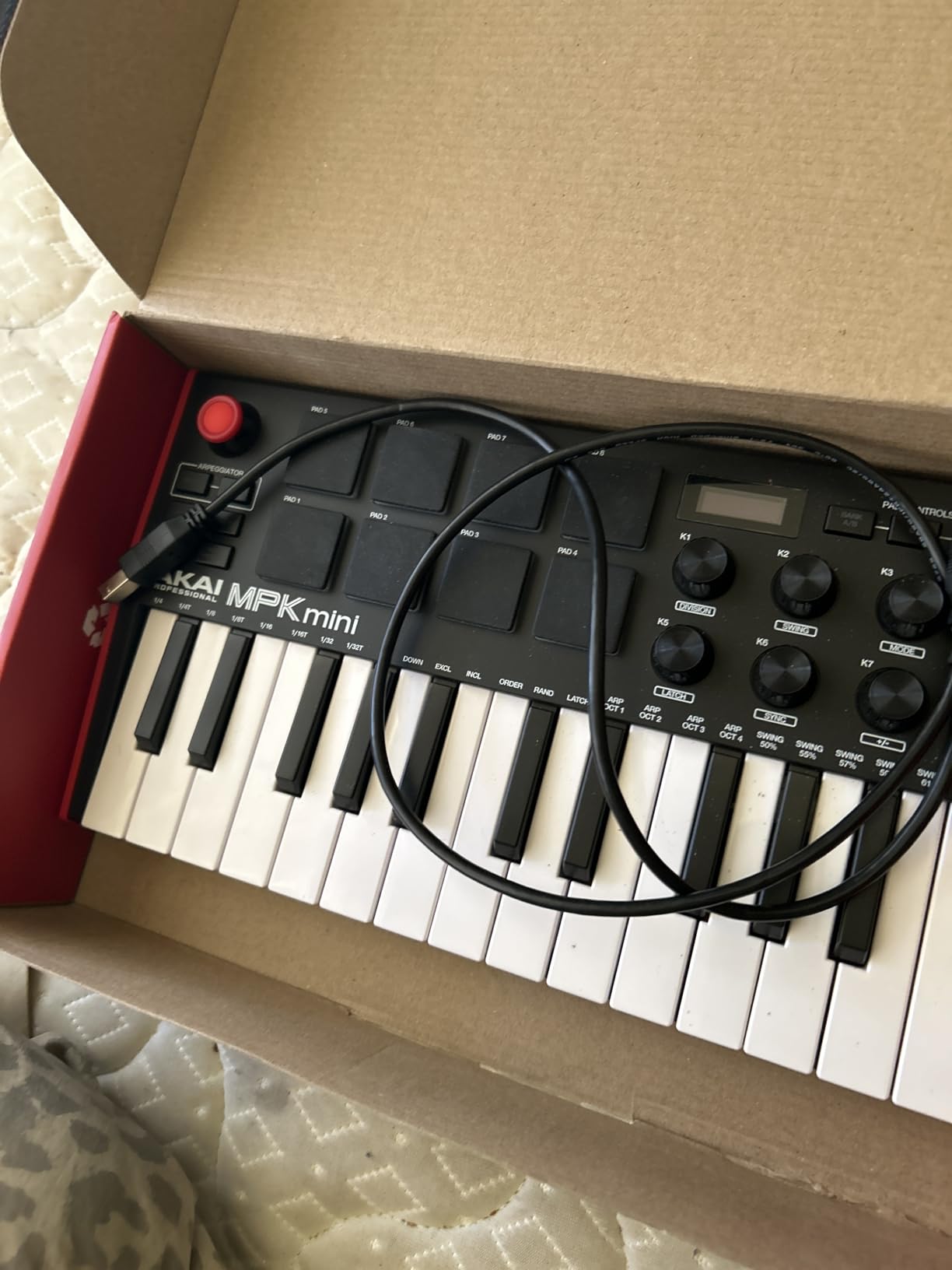
Where the MK3 starts to show its age is the joystick pitch/mod and the lack of USB-C. If you live in Ableton or Logic with MIDI mapping, the joystick can be a little awkward for expressive playing. NKS integration, however, makes it sing inside the Native Instruments ecosystem, and I have used it with Komplete Kontrol software on the road with great results.
Build quality is solid for the price. I have dropped it (gently) twice and it still feels tight. The single USB cable approach means one less thing in the bag, and that is huge when you are trying to keep your kit to a single backpack.
For whom its good
The MPK Mini MK3 is perfect for beat makers and producers who want a controller that disappears into a backpack and still gives them pads, knobs, and reliable keys. If you already use Native Instruments plugins, NKS makes this a no-brainer.
For whom its bad
Classical pianists or anyone with larger hands will find the mini keys cramped for serious piano practice. If you need Bluetooth or a built-in battery to play away from your laptop, look at the MPK Mini Play or the Carry-on folding controller instead.
2. Akai MPK Mini IV — Editor’s Choice for Modern Travel
Akai Professional MPK Mini IV 25-Key USB-C MIDI Keyboard Controller, Black
25 mini keys
USB-C
Real pitch/mod wheels
Pros
- Real pitch and mod wheels
- Full-color screen
- USB-C at last
- Pressure-sensitive RGB pads
- Full-size MIDI Out
Cons
- Mini keys still small
- Cannot audition sounds while editing pads
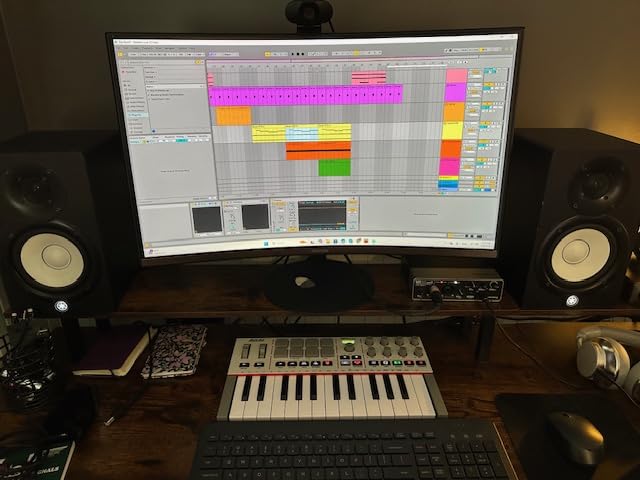
The MPK Mini IV is the controller I grab when I want everything the MK3 does plus the modern touches that actually matter on the road. Real pitch and mod wheels replace the joystick, which alone is worth the upgrade for expressive playing. The full-color screen is a small thing that makes a huge difference when you are setting up in a dimly lit AirBnB studio.
USB-C is the headline upgrade for 2026. Every laptop, tablet, and even most hotel-room entertainment systems use USB-C now, and carrying one less proprietary cable is a real win. The 8 RGB pads with pressure sensitivity feel noticeably better than the MK3 pads, and the new Chord and Scale modes are surprisingly useful for sketching ideas without music theory burnout.
The arpeggiator on the IV is meaningfully better too. Pattern, Freeze, and Mutate give you generative tools that go beyond the simple arp on the older model, and that is perfect for hotel-room inspiration sessions. Bundled software is generous and includes the same MPC Beats foundation plus NKS integration.
One quirk I ran into: you cannot hear sounds while editing pad assignments on the device. You have to save and then check in your DAW. It is a small workflow bump that catches you only the first few times.
For whom its good
Producers who want the most modern travel controller in 2026 should put the MPK Mini IV at the top of their list. If you use Logic, Ableton, or any NI plugin, the integration is smooth, and the wheels are a real upgrade over a joystick.
For whom its bad
Players who need full-size keys or built-in sounds for unplugged practice will want to look at the MPK Mini Play or a larger controller. The IV is still a mini-key design, and the screen cannot play back sound previews on its own.
3. Akai MPK Mini Play MK3 — Best Standalone Travel Controller
Akai Professional MPK Mini Play MK3 25-Key USB MIDI Keyboard Controller
25 keys
Built-in speaker
100+ sounds
Pros
- Plays without a computer
- 8-hour battery
- Built-in speaker
- Compact 12.5 inch body
- Same pads as MK3
Cons
- Built-in speaker is quiet
- Drum pads feel stiff
- No pitch/mod wheels
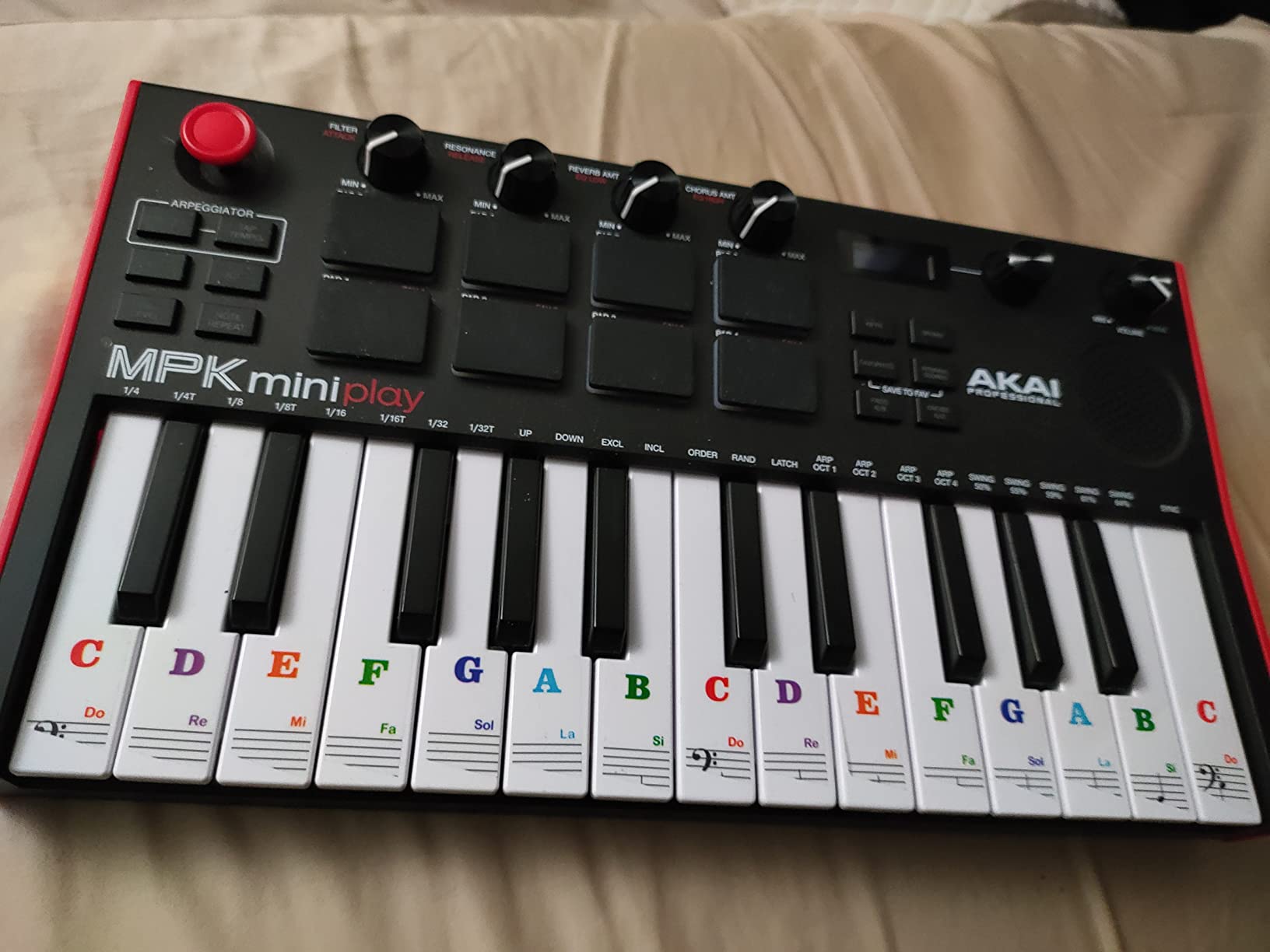
The MPK Mini Play MK3 is what I take when I am not sure I will have access to a laptop. The built-in speaker and 100+ onboard sounds mean you can sit on a train, on a plane, or in a park and just play. For inspiration, that is a feature no other controller in this list can match.
Battery life runs around 8 hours on 4 AAs, which is more than enough for a long-haul flight plus a hotel jam session. When you do have your laptop, it works as a standard USB MIDI controller. The OLED display is small but clear, and the menu diving is shallow enough that you can tweak sounds quickly without a manual.
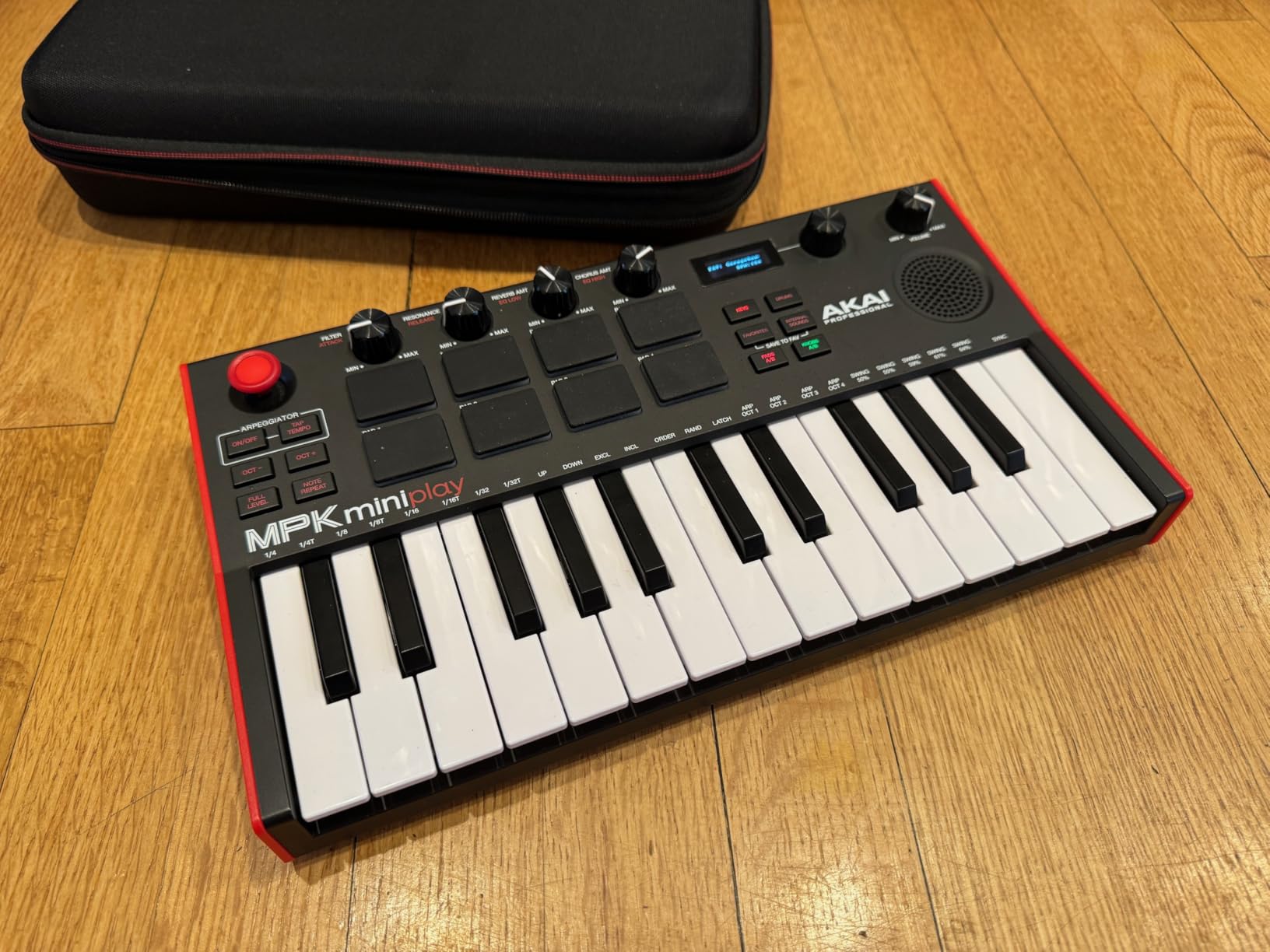
Acoustic feel is solid for a mini key design, and velocity response is the same trusted system that has made the MK3 so popular. The arpeggiator and note repeat on this model are real performance tools, not gimmicks, and I have built entire sketches on flights with just the onboard sounds.
Two things bug me. The built-in speaker is genuinely quiet. You will not wake a seatmate, but you also will not get much low end. The drum pads are also stiffer than the MK3 pads, which surprised me because they use the same MPC design language. If expressive finger drumming matters, this is not the one.
For whom its good
Writers, producers, and anyone who wants to make music without booting up a laptop should grab the Mini Play MK3. It is also great for practicing keys on the road without headphones.
For whom its bad
If you mostly produce inside a DAW and never need to play unplugged, the Mini Play is overkill. The pads being stiffer than the MK3 also makes it a worse choice for finger drummers.
4. M-Audio Keystation Mini 32 MK3 — Budget Pick for Simple Travel Setups
M-AUDIO Keystation Mini 32 MK3 USB MIDI Controller
32 mini keys
USB-MIDI
Plug and play
Pros
- 32 keys give wider range
- Simple plug-and-play
- Lightest controller tested
- Includes MPC Beats
- Affordable entry
Cons
- Pitch/mod are buttons not wheels
- No pads or knobs
- No USB-C
- Not Prime on most listings
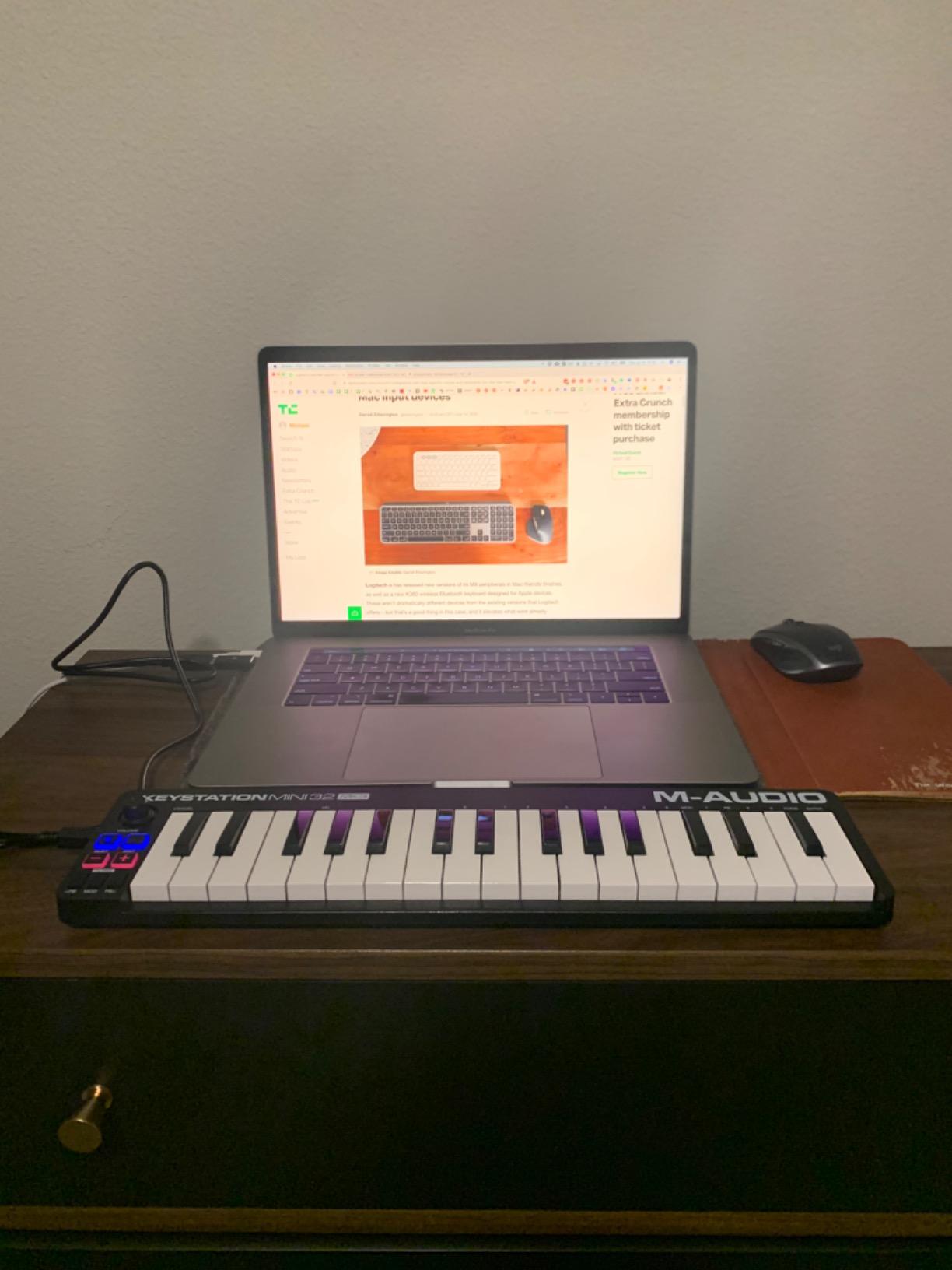
The Keystation Mini 32 MK3 is the controller I recommend to friends who want a portable MIDI keyboard for travel and do not need pads or 8 knobs. At 16.4 inches wide and just over a pound, it is the lightest full-featured option here, and the extra key count means less octave shifting while playing.
Set up is exactly what you want from a travel controller. Plug in the USB cable and it works. No drivers, no companion software required, and no external power brick. That simplicity is genuinely valuable when you are setting up in a coworking space between meetings.
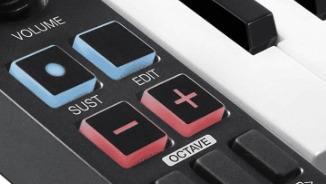
Selectable velocity curves are a small detail I appreciate. In a quiet hotel room you can choose a curve that responds to light touches, and in a louder environment you can switch to a harder curve so your ghost notes still register. Pitch bend and modulation are buttons rather than wheels, which feels old-school, but it also means fewer accidental bends while reaching across the keybed.
The biggest compromise is the missing pads and knobs. If you produce beat-driven music or want to tweak plugin parameters, you will be reaching for your mouse constantly. For piano parts, simple leads, and quick sketches, however, this is a clean, reliable choice.
For whom its good
Traveling keyboardists who mostly play piano, organ, or synth leads will love the 32 keys and light weight. It is also great as a gift for beginners who need something simple and inexpensive to take to lessons.
For whom its bad
Beat makers and anyone who relies on pads, knobs, or pitch wheels should look at the Akai or Arturia options. If you need USB-C, you will also need a different controller.
5. Arturia MiniLab 3 — Premium Pick for Key Feel and Build
Arturia MiniLab 3 Universal MIDI Controller, White
25 slim keys
4 faders
8 encoders
Pros
- Best key feel in its class
- 4 real faders
- 8 endless encoders
- 5-year warranty
- Real MIDI out
Cons
- Pads can wobble at edges
- Touch sensors replace wheels
- Minimal labels on device
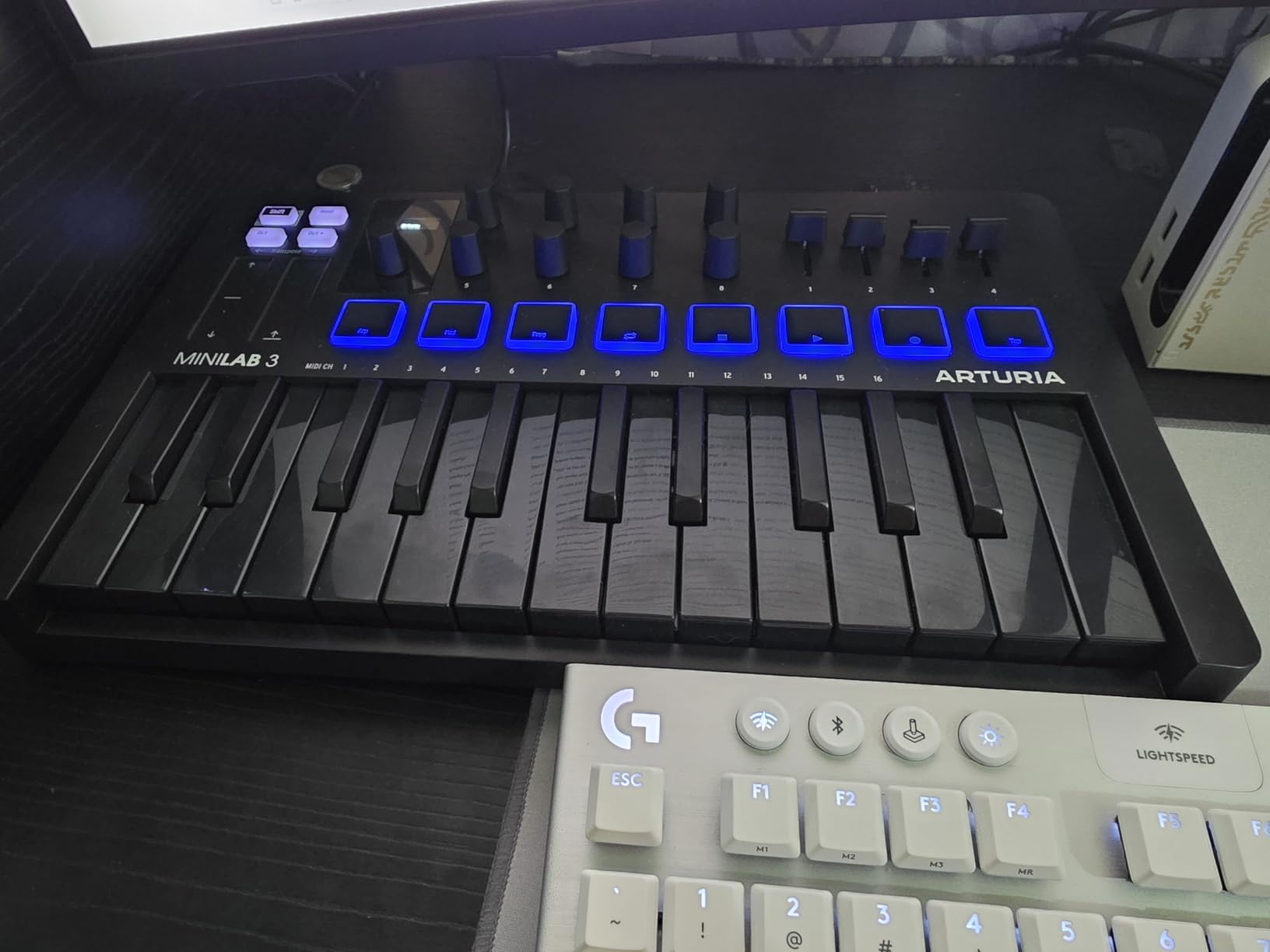
The MiniLab 3 is the controller I reach for when I want the best playing experience possible in a portable MIDI keyboard for travel. The slim synth-action keys are noticeably better than every other board in this roundup. They feel closer to a real synth keybed, with enough travel to be expressive but not so much that the board gets bulky.
The control layout is where the MiniLab 3 earns its premium price. 4 faders, 8 endless rotary encoders, and a clickable browsing knob give you real hands-on control over your DAW and plugins. The bundled Analog Lab Intro, Ableton Live Lite, and UVI Model D form one of the strongest software packages you can get, and Analog Lab alone is worth a meaningful chunk of the asking price.
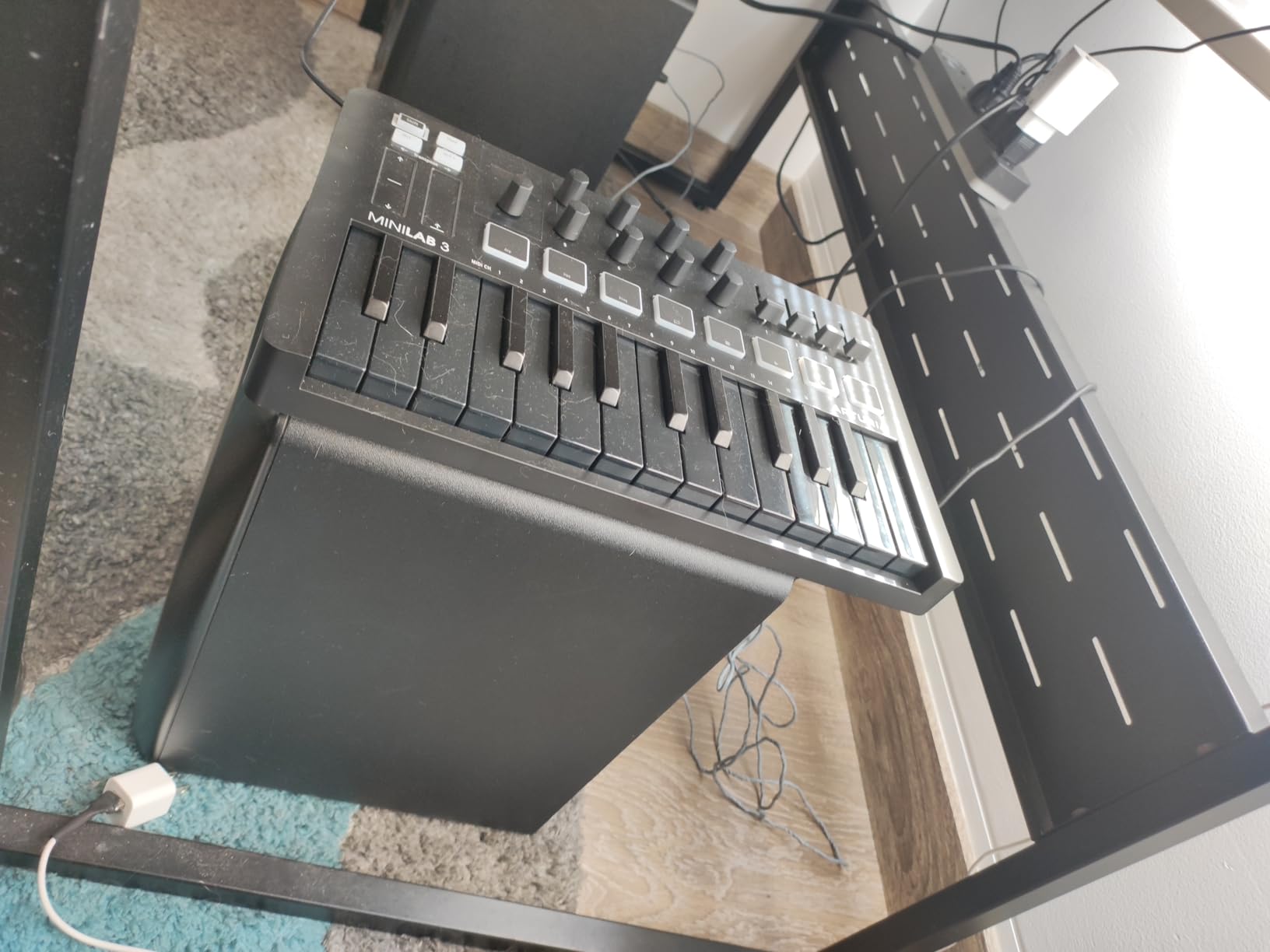
Build quality is the other standout. The MiniLab 3 has a 5-year warranty, which is essentially unheard of at this price point, and the chassis feels solid. I have used it in a backpack for months without any creaking or loose parts, which is more than I can say for most mini controllers.
The pads are where Arturia made a small sacrifice. They are velocity and pressure sensitive, which is great, but they can feel a little wobbly at the outer edges. The touch sensors for pitch and mod also take some getting used to if you are coming from wheels.
For whom its good
If key feel and control surface are your top priorities, the MiniLab 3 is the best portable MIDI controller for travel in this list. It is also a great pick for Logic Pro users who want deep integration.
For whom its bad
Hardcore finger drummers will want pads that feel stiffer and more stable. The touch sensors also frustrate users who prefer real wheels for pitch and modulation.
6. Novation Launchpad Mini MK3 — Best for Ableton Clip Launching
Novation Launchpad Mini MK3 MIDI USB Grid Controller
64 RGB pads
USB-C
3 custom modes
Pros
- Tiny 7.1 inch square footprint
- 64 bright RGB pads
- Deep Ableton Live integration
- USB-C powered
- 3 customizable modes
Cons
- Pads are not velocity-sensitive
- No keys for playing parts
- Requires software for full power
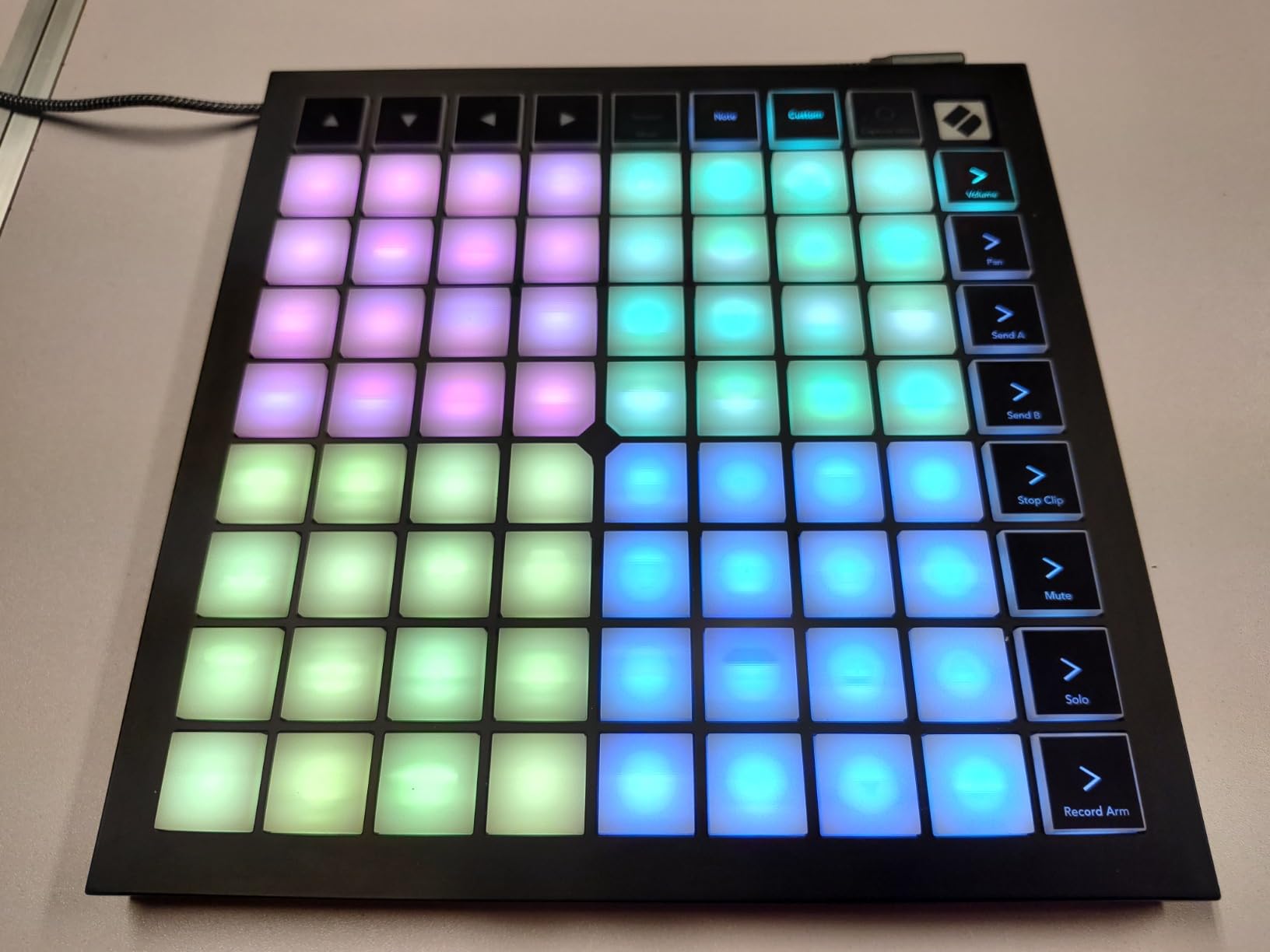
The Launchpad Mini MK3 is a different animal. There are no keys, just 64 RGB pads in an 8×8 grid. If you produce inside Ableton Live, this is one of the best portable MIDI controllers for travel because it is a clip launcher, drum rack, and performance controller in something smaller than a paperback book.
The 7.1 inch square footprint means it slips into any backpack pocket. USB-C is built in, and bus power means you do not need any extra cables. The 3 custom modes let you map the grid to any MIDI target, which makes the Launchpad useful in Logic Pro too, especially with the Live Loops grid.
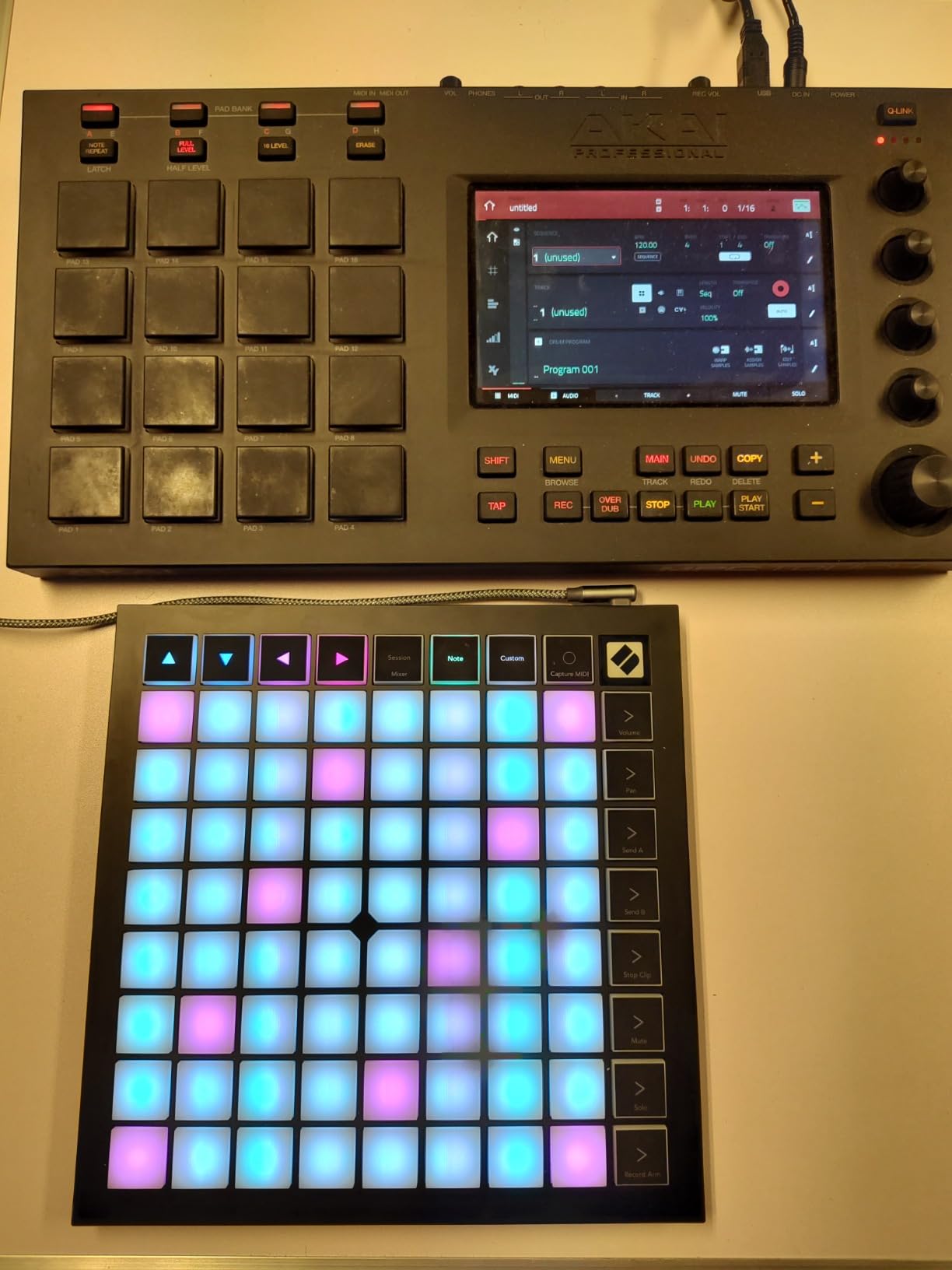
In a hotel session, the Launchpad is fantastic for launching loops, building arrangements, and performing finger-drumming patterns. The RGB feedback is bright and clearly indicates clip state, which is helpful on a dim stage. Ableton Live Lite is included, and the Launchpad also works with any DAW that accepts MIDI notes.
Where the Launchpad Mini falls short is expressive playing. The pads are not velocity-sensitive, so you cannot do dynamics the way you can on a real keyboard. It is also not the right tool if you want to record piano parts, because there are no keys.
For whom its good
Ableton producers and live performers should put the Launchpad Mini MK3 at the top of their list. It is also a great tool for producers who want to sketch arrangements without touching a mouse.
For whom its bad
If you need to play melodies or chords, this is the wrong tool. Traditional composers and pianists will want one of the key-equipped controllers above.
7. Native Instruments Komplete Kontrol M32 — Best for NI Ecosystem Users
Native Instruments Komplete Kontrol M32 Controller Keyboard (26154)
32 synth keys
OLED display
Smart Play
Pros
- Best 32-key feel in test
- Smart Play scales and chords
- Deep NI integration
- Includes Komplete bundle
- Lightweight design
Cons
- Build feels less premium than NI's higher tiers
- Loud clicky buttons
- Knob mappings cannot store on device
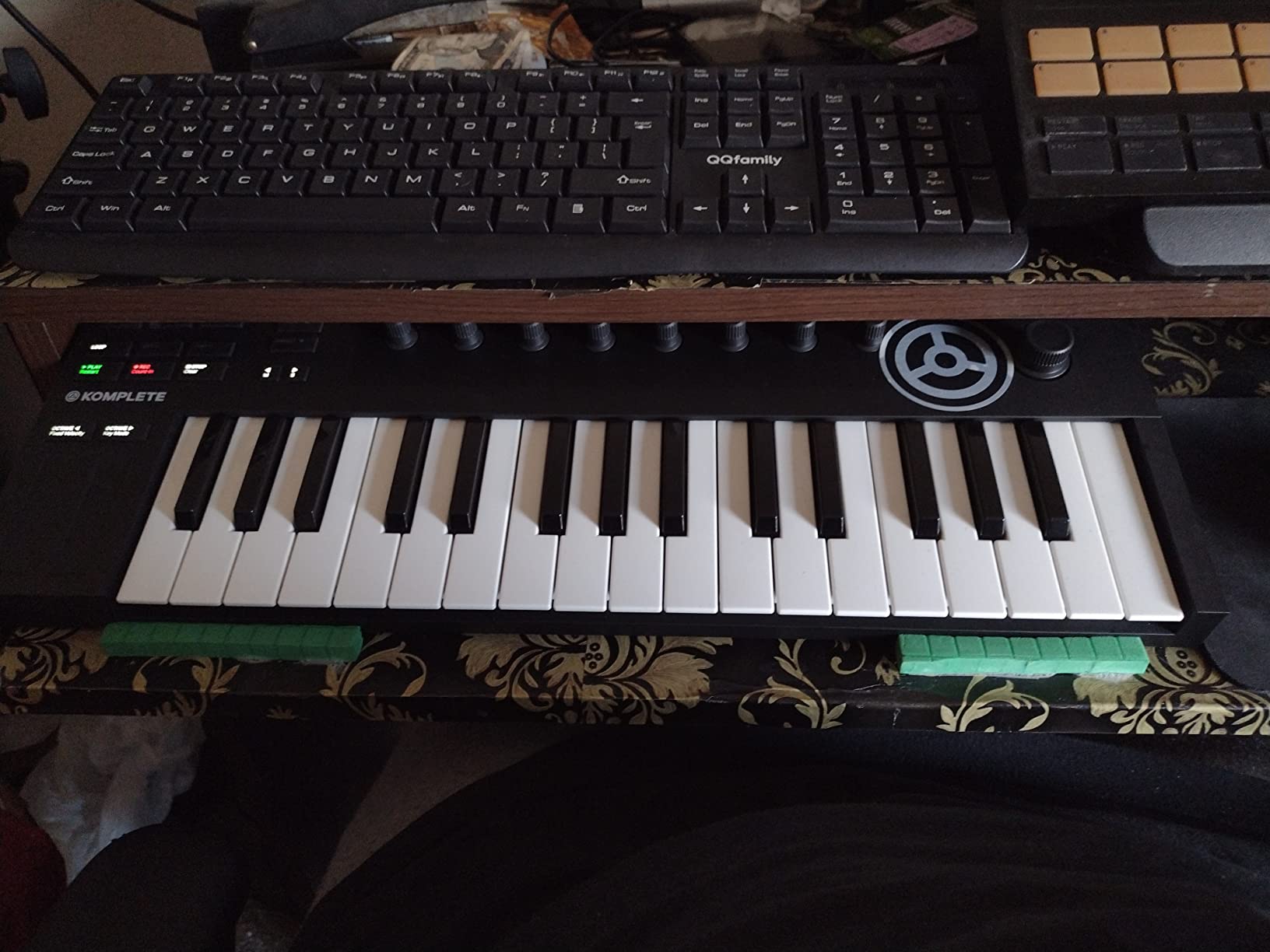
The Komplete Kontrol M32 is the pick for producers who are already invested in the Native Instruments ecosystem. With 32 keys, it gives you more keybed real estate than most mini controllers without becoming too large for travel, and the synth-action feel is the best I tested at the 32-key size.
Smart Play is the standout feature. It lets you play in scale with one finger, trigger chords from single keys, and arpeggiate patterns. For travelers without a music theory background, this is a massive creative unlock, and it works inside Komplete Kontrol software or any NKS-compatible plugin.
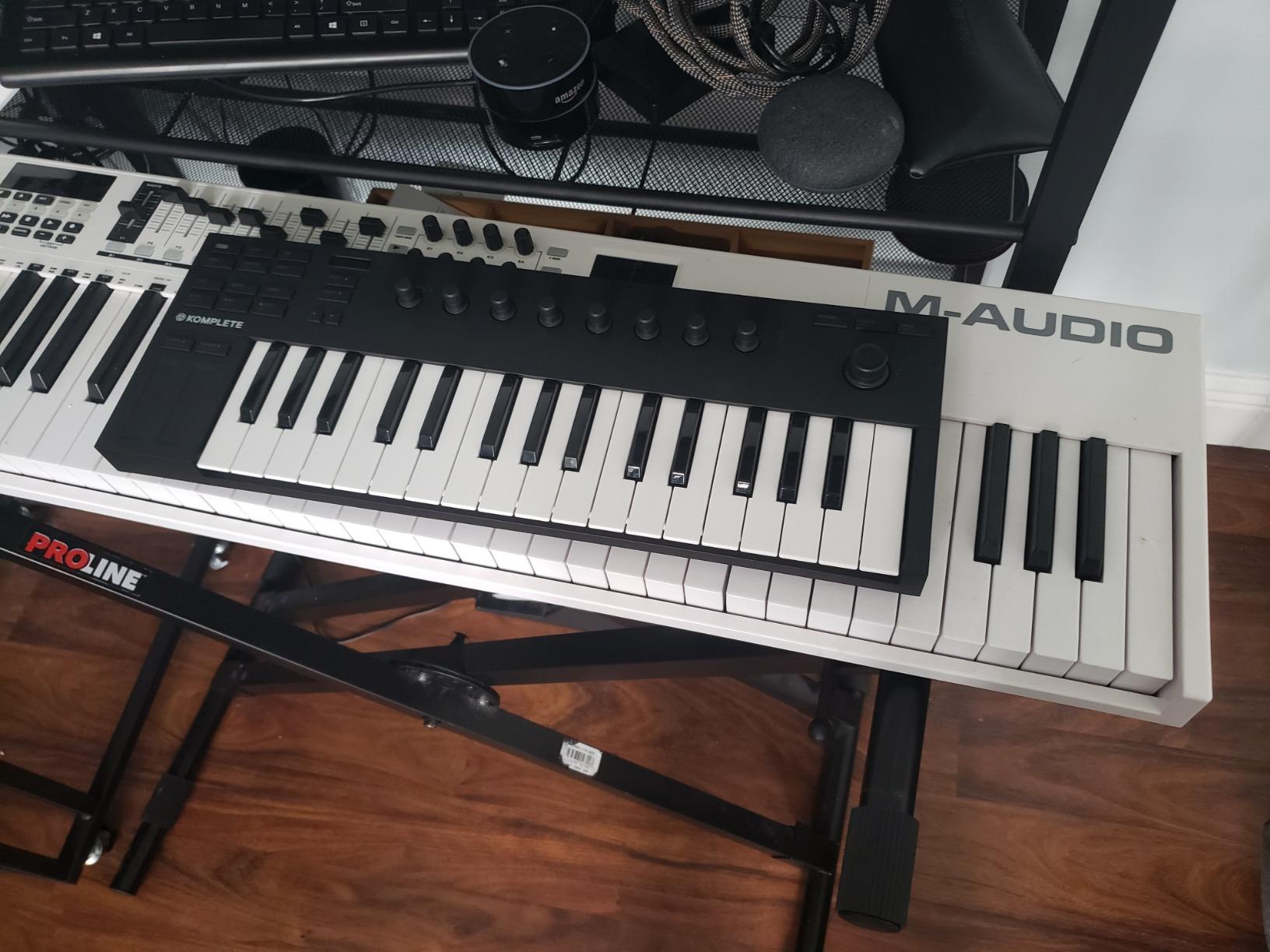
The bundled Komplete instruments and effects, plus Ableton Live 10 Lite and MASCHINE Essentials, give you a real production environment out of the box. I have used the M32 on the road with Komplete Kontrol software and felt like I was carrying a small studio in my backpack.
Two compromises stand out. Build quality is solid but not at the level of the S-series NI controllers. The buttons also have a noticeably loud click, which is something to think about in a quiet hotel room at midnight. Knob mappings also cannot be stored on the device, so you have to redo them in each new session.
For whom its good
Producers inside the NI ecosystem will find the M32 the best portable MIDI controller for travel because of the deep integration. Beginners who want scales and chords to help them play will also love Smart Play.
For whom its bad
If you are not in the NI ecosystem, much of what makes the M32 special is wasted. Travelers who need silence in shared rooms should also test the buttons before committing.
8. Carry-on Folding MIDI Controller 25 — Most Portable for Off-Grid Travel
Carry-on Folding MIDI Controller 25 – MIDI over Bluetooth &USB Ultra-Portable Keyboard Controller – Built-In Battery for Professional Music Production – Compatible with Mac, PC, iOS
Folds flat
Bluetooth
8-hour battery
Pros
- Folds to about 11 inches
- 8-hour rechargeable battery
- Bluetooth MIDI support
- Velocity-sensitive keys
- Includes Cubase LE
Cons
- Micro USB not USB-C
- Black keys feel short
- Speakers are toy-like
- Requires flat surface to unfold
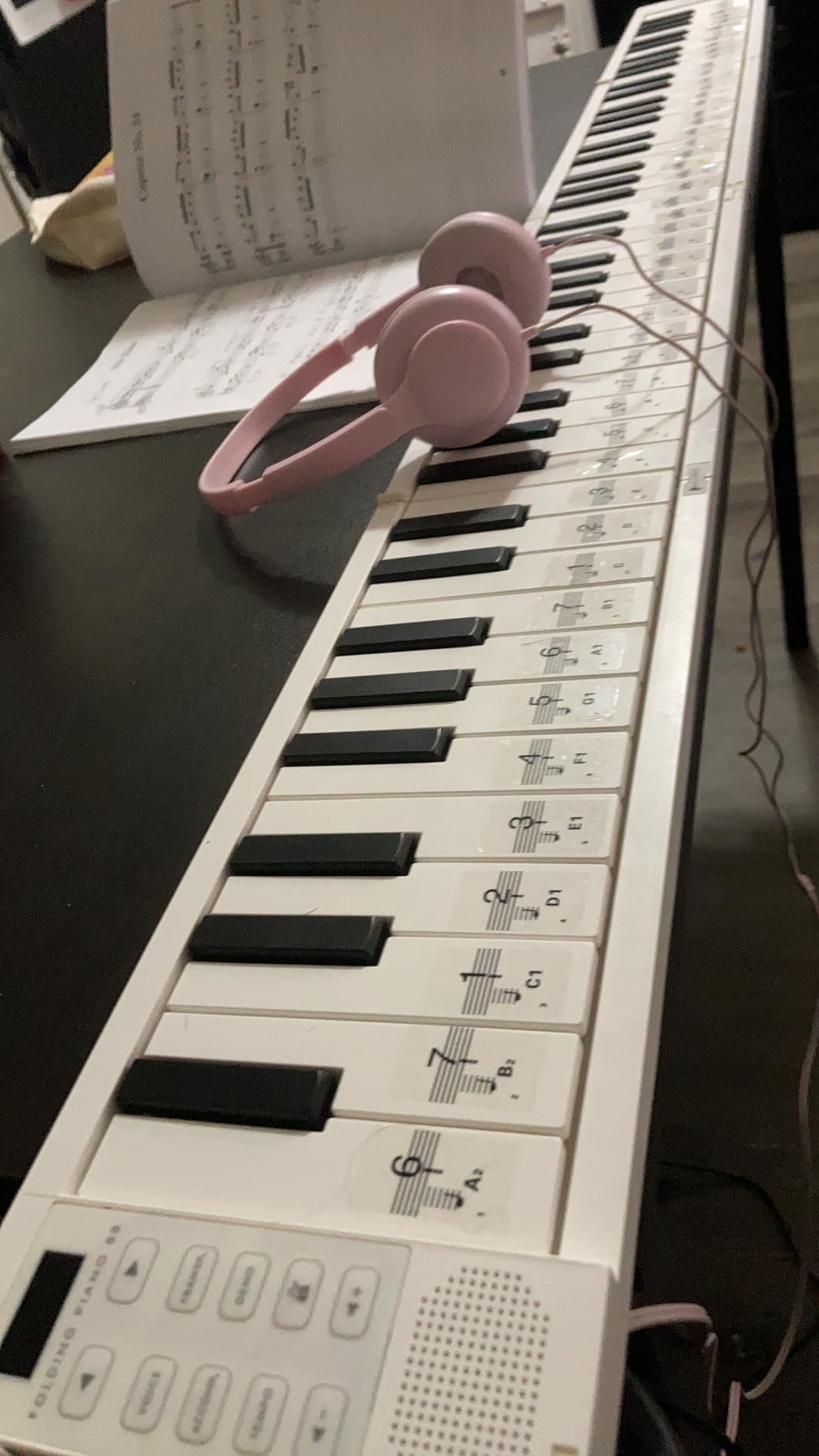
The Carry-on Folding MIDI Controller is the most unusual pick in this roundup. It folds in half like a book, and that means it disappears into a backpack pocket that no other 25-key controller can fit in. If you travel with a single small bag and want a real keyboard, this is the one.
Battery life is the killer feature for off-grid travel. 8 hours of rechargeable power plus Bluetooth MIDI means you can play without ever opening your laptop. I have used it on long train rides where plugging in was not an option, and it felt like a totally different way to make music.
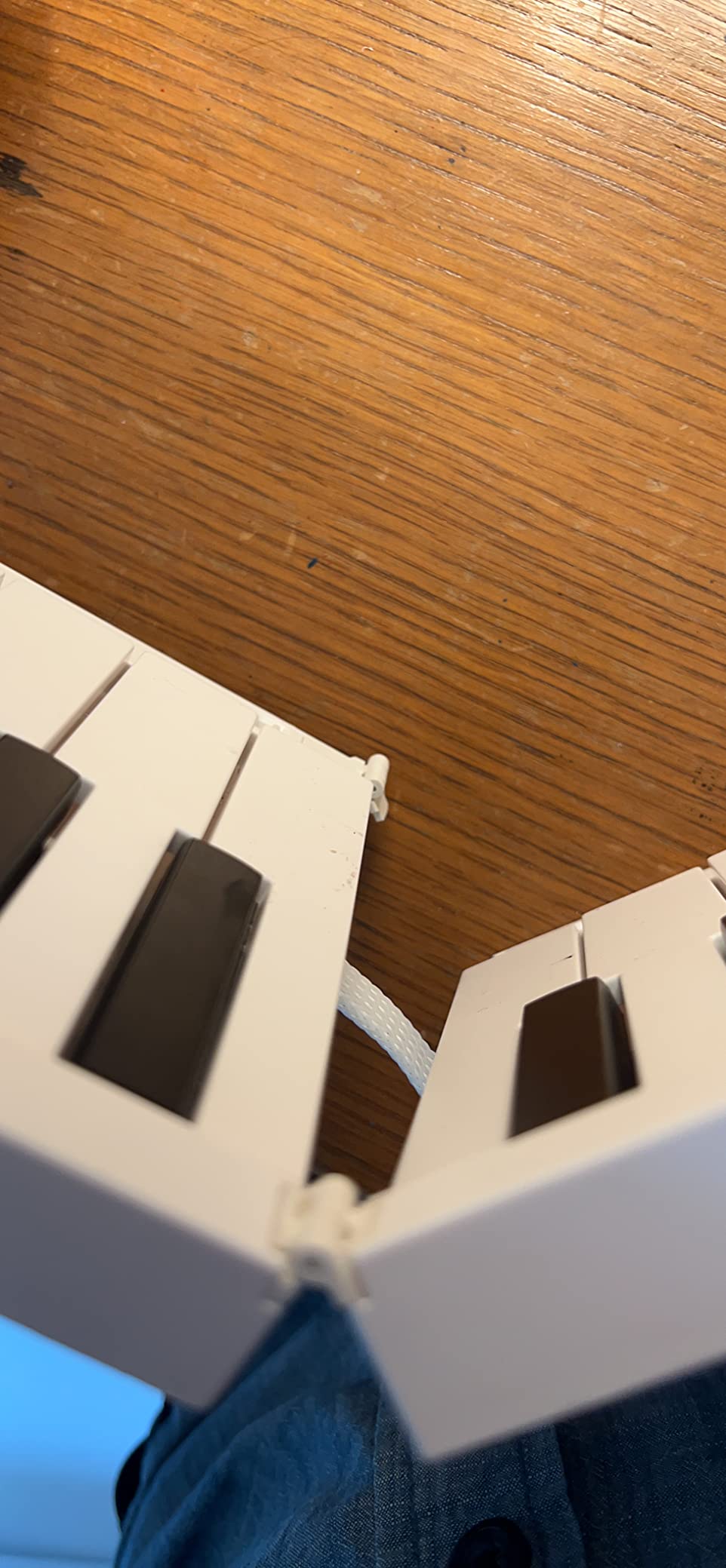
The keys are full-width even when folded, which is impressive, and velocity sensitivity works reliably on most units. Bundled Cubase LE gets you into a proper DAW without spending extra, and the built-in arpeggiator is a nice touch for sketching ideas.
There are real compromises. The black keys are shorter than full-size, which throws off muscle memory at first. The micro USB port is dated, and the built-in speakers are toy-like, so plan on headphones for any serious work. You also need a flat surface to unfold it, which rules out lap playing.
For whom its good
Travelers with strict space limits will love how small the Carry-on folds. Anyone who needs Bluetooth and battery power to play away from outlets should also put it on their shortlist.
For whom its bad
Players who need full-size keys or studio-quality speakers will be frustrated. If your travel kit has room for a regular mini controller, the Carry-on’s compromises are not worth the folding trick.
How to Choose a Travel MIDI Controller
Choosing the best portable MIDI controller for travel comes down to how you actually travel, not just the spec sheet. I have made the wrong choice on size more than once, so here is the framework I use now before I buy a new travel board.
Size and carry-on reality
Most airlines allow carry-on bags around 22 x 14 x 9 inches. Every controller in this roundup fits in that footprint, but the Carry-on Folding MIDI Controller is the only one that disappears into a smaller personal-item bag. If you travel with a backpack only, prioritize width under 13 inches and depth under 8 inches.
Connection type matters more than you think
USB-C has become the default for laptops and tablets, so controllers without it mean extra cables. Bluetooth MIDI is wonderful for iPad producers, but forum users have flagged real latency issues. If you are playing live synth lines in real time, stick to USB. If you are sketching in a sequencer, Bluetooth is fine.
Key feel and key count
Mini keys save space but limit technique. If you play classical or jazz piano, prioritize a board with 32 keys or semi-weighted action, even if it means a wider carry profile. For sketching beats and synth parts, 25 mini keys are usually enough. Real user reports on r/ipadmusic and r/WeAreTheMusicMakers consistently warn that ultra-budget mini keys feel toy-like after a few months.
Onboard sounds and battery
For inspiration on flights or in hotel rooms without your laptop, onboard sounds and a battery are huge. The MPK Mini Play MK3 and the Carry-on Folding Controller are the only two boards here with batteries. If you mostly produce in a DAW, skip the battery and save weight.
Hotel-room noise level
Producer forums consistently flag loud button clicks and noisy pads as a real problem in shared hotel rooms. The Komplete Kontrol M32 has particularly loud buttons, while the Akai MK3 series and Arturia MiniLab 3 are noticeably quieter. If you practice late, test the buttons before you commit.
DAW integration and software bundle
Most controllers work with every major DAW via standard MIDI, but some have deeper integration. Ableton users get the most from the Launchpad Mini, Logic users will appreciate the MiniLab 3’s smart mapping, and NI users will live inside the Komplete Kontrol M32. Software bundles can offset the price difference, so factor them in. For a deeper look at full-size boards and dedicated Logic setups, see our guide to the best MIDI controllers for Logic Pro.
Frequently Asked Questions
What is the best mini MIDI controller for travel?
The Akai MPK Mini IV is the best mini MIDI controller for travel in our 2026 testing. It weighs 1 kg, fits in a 13.88 inch carry-on sleeve, has USB-C, real pitch and mod wheels, and includes a generous software bundle. For the tightest backpack budgets, the Akai MPK Mini MK3 is a close second.
What is the best portable piano keyboard for travel?
The Arturia MiniLab 3 is the best portable piano keyboard for travel. Its slim synth-action keys feel closer to a real piano than any other mini controller we tested, and the 4 faders and 8 encoders give you real hands-on control. The 5-year warranty is rare at this size.
Can I take a MIDI keyboard on a plane?
Yes, every controller in this roundup is allowed in carry-on luggage. None of them contain lithium batteries above TSA limits, except the MPK Mini Play MK3 and Carry-on Folding Controller, which use consumer-grade batteries that are also allowed. Pack your controller in a laptop sleeve or padded pouch to protect the keys and knobs from overhead bin pressure.
What MIDI keyboard fits in a backpack?
The Carry-on Folding MIDI Controller fits in a backpack pocket when folded to about 11 inches. The M-Audio Keystation Mini 32 MK3 at 16.4 inches wide is the next smallest option that still has a full key count, and it slips into most laptop sleeves. The Akai MPK Mini series at 12.5 inches fits the average backpack laptop compartment.
Is Bluetooth MIDI good enough for live playing?
Bluetooth MIDI is good enough for sketching, sequencing, and recording slow passages, but most users notice latency on fast synth lines. For real-time performance, USB is more reliable. The Carry-on Folding Controller supports both, so you can use USB for performance and Bluetooth for sketching.
Final Verdict: The Best Travel MIDI Controller in 2026
After packing, playing, and stress-testing all eight of these controllers on real trips, the Akai MPK Mini IV is the best portable MIDI controller for travel in 2026 for most producers. It has the modern connectivity, real wheels, and software bundle of a premium board in a size that still fits a backpack sleeve. If you want the absolute best key feel and do not mind spending more, the Arturia MiniLab 3 is the pick. For the smallest possible footprint and Bluetooth freedom, the Carry-on Folding Controller is the most travel-ready design on the market.
For most working producers, the MPK Mini IV hits the sweet spot of size, features, and price. If you are a beginner or want the cheapest reliable option, the MPK Mini MK3 still holds up. Whatever you choose, pair it with a padded sleeve, a short USB-C cable, and a good pair of travel headphones, and you will have a complete mobile studio that fits in a single bag. For more options in different categories, check our guides to the best MIDI keyboard controllers and the best MIDI controllers for DJs.