
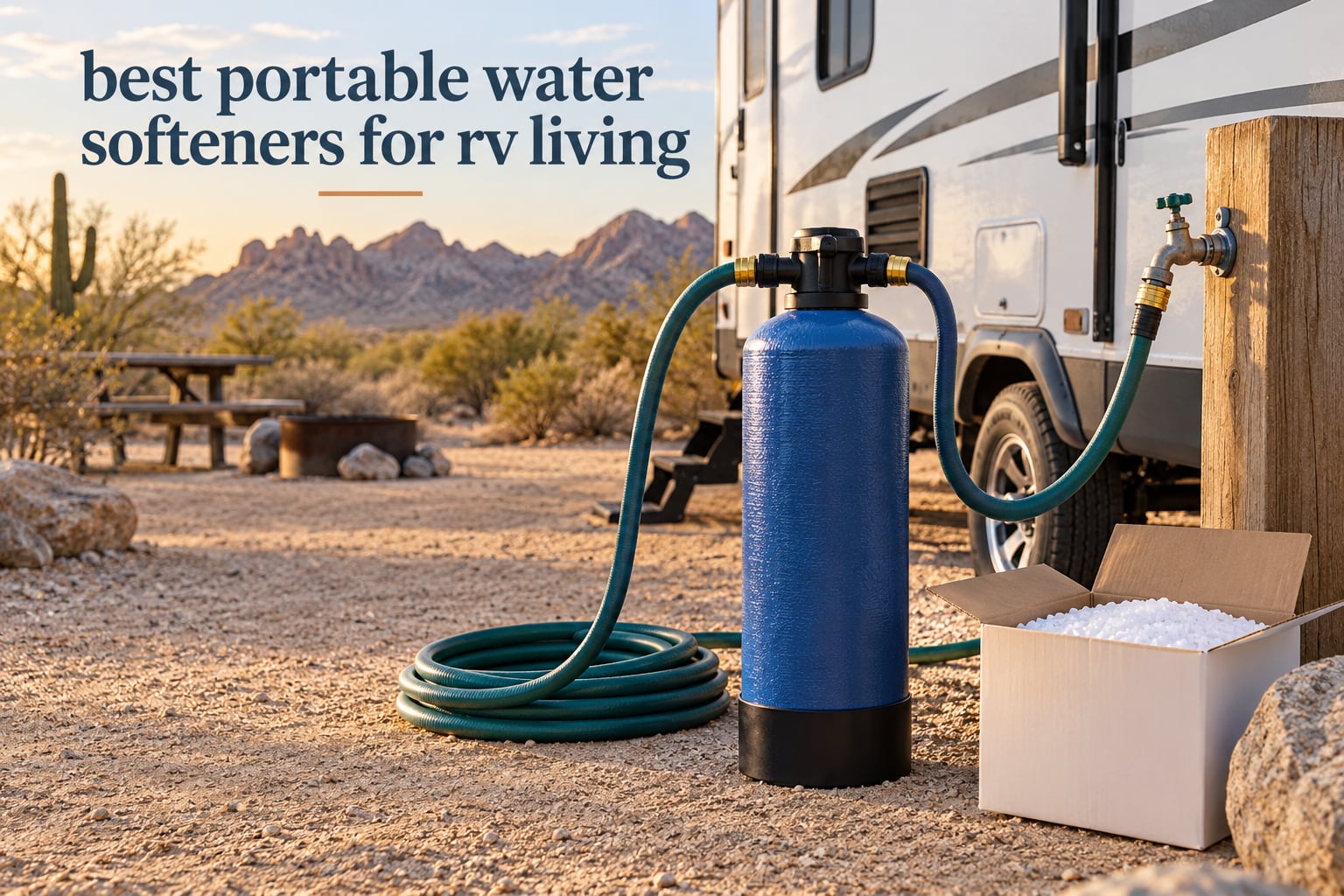
Hard water is the quiet enemy of full-time RV living. The showerhead goes chalky white after a year, the faucet aerators clog, soap stops lathering, and a tankless water heater starts throwing descaling prompts at you for the same reason every other owner hears them. The best portable water softeners for RV living fix all of it with one hose-to-hose tank that swaps calcium and magnesium for sodium before the water ever reaches your tank.
We compared ten portable RV water softeners on the things that actually decide whether a unit works in a coach: grain capacity, softened gallons per charge, how long regeneration takes, the diameter that has to fit through your storage bay door, and whether the fittings survive twenty connect and disconnect cycles a year. We also looked at the complaints owners keep repeating, from leaking inlet fittings to salt that cakes in a wet funnel.
This is our 2026 guide, written for people who do not want to buy a softener twice. If you are still weighing the whole soft water system idea, our complete water softener buying guide covers fixed residential units, and the RV accessories we rate highest for full-time living covers the rest of the rig. The short version of what follows: capacity math matters more than brand, and the fittings matter more than both.
Table of Contents
- What Is the Best Portable Water Softener for an RV?
- Top 3 Best Portable Water Softeners for RV Living (October 2026)
- Every Portable Water Softener Compared in 2026
- 1. On The Go Double Standard 16,000 Grain Review: the Longest Runtime in a 9.5 Inch Tank
- 2. PRO+AQUA 16,000 Grain Review: the Best All-In Kit for New RVers
- 3. NPGLOBAL 16,000 Grain Review: the Best Rating-to-Review Balance
- 4. VEVOR 16,000 Grain Review: the Cheapest 16,000 Grain Tank With Brass Fittings
- 5. H&G Lifestyles 5A Food Grade Review: the Lightest Unit That Still Runs 2,600 Gallons
- 6. RV Water Filter Store 16,000 Grain Review: the Best Pick for Full-Time Living
- 7. Camco TastePURE 10,000 Grain Review: the Kit That Includes Test Strips
- 8. On The Go 8,000 Grain Review: the Fastest Regeneration for Tight Storage Bays
- 9. H&G Lifestyles 2,600 Gallon Review: the Smallest Footprint in the Roundup
- 10. On The Go OTG3NTP3M Review: the Long-Running Original for Small Tanks
- Do You Actually Need a Portable Water Softener?
- How Ion Exchange and Regeneration Actually Work
- How to Size Grain Capacity for Your Rig
- Lifespan, Resin Replacement and Winter Storage
- Frequently Asked Questions
- Final Verdict on the Best Portable Water Softeners for RV Living
What Is the Best Portable Water Softener for an RV?
The best portable water softener for an RV is the On The Go Double Standard 16,000 grain tank. It is the only unit here that pairs the highest review count in the category with 1,600 gallons per charge in a 9.5 inch diameter body. PRO+AQUA is the best all-in kit, and NPGLOBAL is the strongest rating-to-review balance with a limited lifetime warranty.
Top 3 Best Portable Water Softeners for RV Living (October 2026)

On The Go 16,000 Grain
- 16000 grain ion exchange
- Up to 1600 gallons per charge
- Regenerates in under 30 minutes
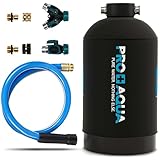
PRO+AQUA 16,000 Grain
- Pre-filled NSF food-grade resin
- Pre-filter and fittings included
- 2-year warranty

NPGLOBAL 16,000 Grain
- Limited lifetime warranty
- Ready to use in 4 to 6 minutes
- Highest rated of the three at 4.6 stars
These three are the ones we would actually own. Every unit lower on the list is a legitimate choice for a specific situation, but the top three are the only ones that combine enough grain capacity, a tank diameter that fits a normal storage bay, and a review base large enough that the owner complaints are already documented.
Every Portable Water Softener Compared in 2026
| Product | Specifications | Action |
|---|---|---|
| On The Go Double Standard 16,000 Grain |
|
Check Latest Price |
| PRO+AQUA 16,000 Grain |
|
Check Latest Price |
| NPGLOBAL 16,000 Grain |
|
Check Latest Price |
 VEVOR 16,000 Grain VEVOR 16,000 Grain |
|
Check Latest Price |
 H&G Lifestyles 5A Food Grade H&G Lifestyles 5A Food Grade |
|
Check Latest Price |
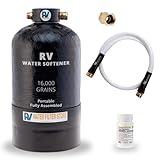 RV Water Filter Store 16,000 Grain RV Water Filter Store 16,000 Grain |
|
Check Latest Price |
 Camco TastePURE 10,000 Grain Camco TastePURE 10,000 Grain |
|
Check Latest Price |
 On The Go 8,000 Grain On The Go 8,000 Grain |
|
Check Latest Price |
 H&G Lifestyles 2,600 Gallon H&G Lifestyles 2,600 Gallon |
|
Check Latest Price |
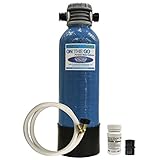 On The Go OTG3NTP3M On The Go OTG3NTP3M |
|
Check Latest Price |
Grain capacity is the number that decides runtime, and softened gallons per charge is the number that actually shows up on your campsite bill of water. We sorted the table on those two first, then on tank diameter, because a 10 inch tank that will not fit through a storage bay door is a paper purchase.
1. On The Go Double Standard 16,000 Grain Review: the Longest Runtime in a 9.5 Inch Tank
OTG4-DBLSOFT-Portable 16,000 Grain RV Water Softener (NOT made in China, assembled by U.S. Workers in Indiana)
16000 grain
Up to 1600 gallons per charge
22 in tall x 9.5 in diameter
32 pounds
Pros
- Test strips show a dramatic hardness drop
- Regenerates in under 30 minutes with table salt
- Compact 9.5 inch diameter
- No electricity or tools needed
- Travel cap and plug prevent leakage
Cons
- Fiberglass tank sits crooked in the base
- Plastic fittings rather than brass
- Needs somewhere to drain flush water
This is the unit that shows up over and over when RV owners ask each other what they run. The 16,000 grain resin bed regenerates with two boxes of common table salt in under half an hour, and the manufacturer claims up to 1,600 gallons or roughly 40 days of soft water per charge. We are not going to promise you 40 days in 12 grain water, but even at 10 gpg this is the longest-running tank in the group.
It is assembled by U.S. workers in Indiana, and that detail matters more than it sounds. When a resin tank springs a fitting leak six months into full-time living, you want a brand that answers a phone. This one carries a 4.7 average across 1,899 ratings, the deepest review base in the category, which means the failure modes are already well documented rather than hidden.
The physical design is the other reason we put it first. At 22 inches tall by 9.5 inches in diameter and 32 pounds empty, it is one of the larger tanks here but still narrow enough for a standard storage bay. The movable base is genuinely useful when you are setting it on gravel at a boondocking spot instead of on a level pad.
Flow is where this unit earns its reputation. Owners consistently report high flow with very low pressure drop, so filling a fresh water tank at a park hydrant does not turn into a twenty minute job. That is the throughput problem most portable softeners create, and this one largely avoids it.
What the Double Standard Handles Better Than the Rest
The gallon math is the clearest advantage. At 1,600 gallons per charge, a couple living full time in moderately hard water goes a long stretch between regenerations, which matters because regeneration is a manual chore you have to plan your water use around.
Regeneration speed is the second advantage. Under 30 minutes with two boxes of table salt means you can do it in the evening after hooking up, use very little water during the cycle, and be back to soft water before bed.
Where This On The Go Falls Short
The blue fiberglass tank sits crooked in its black base according to a recurring set of reviews, which looks careless even when the unit performs. The fittings are plastic rather than brass at this capability level, so expect to check a connection for weeping the first few times you break it down.
Regeneration also needs somewhere to drain. That is not unique to this model, but with a 9.5 inch body and a movable base you need a real spot, not a tight pass-through where the flush water runs back onto the ground near your tire.
2. PRO+AQUA 16,000 Grain Review: the Best All-In Kit for New RVers
PRO+AQUA 16,000 Grain Portable Water Softener for RV, Trailers, Boats, Mobile Car Wash, Pressure Wash – Protects Water Systems
16000 grain
Up to 2000 gallons
10 x 10 x 19.5 inches
35 pounds
Pros
- Ready to use in about five minutes
- Pre-filter and quick-connects included
- Pre-filled NSF food-grade resin
- 2-year warranty
- Compact footprint for its capacity
Cons
- Costs more than most 16000 grain competitors
- Manual regen needs planning around water use
PRO+AQUA is the one we recommend to someone who has never owned a portable softener. It arrives with a pre-filter, a regeneration kit, a brine hose and quick-connect fittings in the box, and it is pre-filled with certified food-grade resin so you can hook it up and run it without a first regeneration cycle.
The 16,000 grain bed is rated for up to 2,000 gallons or 60 days of softened water, the highest gallon figure in this roundup. The tank is NSF polyethylene reinforced with fiberglass, which is the construction you want if the unit lives in a damp storage bay rather than riding in a climate-controlled slide-out.
The 3/4 inch high flow garden hose ports on both ends mean it accepts the same fittings as most inline RV filtration systems, so you can put a carbon block in front of it without adapters. It also works on well water, which matters for anyone holding a lot at a park with a private well hookup.
Owner feedback in the RV community singles this model out for an immediate change in soap lathering and hair texture, and the 2-year warranty is longer than most competitors in this capacity class offer.
Who Gets the Most Out of PRO+AQUA
Anyone who wants the fewest possible failure points. Because the pre-filter is included, you can protect the resin from sediment at a park hydrant without a separate purchase, and the quick-connects make the whole hookup a five minute job on a gravel pad.
It is also the pick for people who use their softener for more than the RV. The same tank handles marina water, spa filling and car washing, so the cost spreads across uses that a dedicated shower-only owner would not get.
Where the Price and the Manual Cycle Bite
This unit costs more than several competing 16,000 grain tanks, and a meaningful share of owner reviews are simply price objections. If the budget is fixed and the pre-filter is not the deciding factor, that premium is hard to justify on spec alone.
Like every manual unit here, regeneration is on your schedule. A small minority of buyers report being confused about how often regeneration is really needed on very hard water, which is a sign you should read our sizing section below before your first fill.
3. NPGLOBAL 16,000 Grain Review: the Best Rating-to-Review Balance
NPGLOBAL RV Water Softener Portable – 16,000 Grain, 3/4″ GHT Fittings, Convenient Water Softener for RVs, Trailers, Boats, Mobile Car Washing, Pressure Washing
16000 grain
Ready in 4 to 6 minutes
9.44 x 9.45 x 19.68 in
About 31 pounds
Pros
- 4.6 stars across 759 ratings
- Limited lifetime warranty
- All hookup accessories included
- Light enough to carry between trips
- Responsive replacement service
Cons
- Included hose is low quality
- Lid fittings can leak on first use
- Quick-release valves lack proper O-rings
NPGLOBAL is the pick if you want the strongest proven performance in the group without paying for a specialty brand. Its 4.6 average sits behind only the two On The Go models here, and 759 ratings is a large enough sample that the positives are not a handful of lucky early buyers.
It regenerates with table salt in as little as 30 minutes and is ready to use again within 4 to 6 minutes after the cycle, which is the fastest back-in-service time we saw. The resin is NSF certified food grade, and the limited lifetime warranty is the strongest warranty language attached to any portable unit in this roundup.
Owners across the RV forums and review sections report the same measurable result: hardness readings in the 500 to 1,000 ppm range before the tank, roughly 50 ppm after. Several full-time users say they have run it for years with no leaks at all.
Customer service is the quiet strength here. Multiple reviews describe replacements being sent for cracked heads or resin problems after two years of ownership, which is the kind of support that matters when a failure strands you at a campground with a hard water problem.
Why This One Stands Out Technically
The maximum supported TDS level of 350 ppm is a real specification that most listings in this category quietly leave out. It tells you whether the tank can handle the water at a given fill station or whether you are pushing past its design envelope.
At roughly 31 pounds empty and just under 9.5 inches square, it is one of the easier tanks to move between the bay and a wet wellhead, and every hookup accessory is in the box.
Where the Fittings Give You Trouble
The included hose is the weak link, and several owners replace it during the first week. The brass lid fittings thread loosely into the plastic tank and can weep on startup until you add thread tape and snug them down.
The quick-release valves that ship in the box are reported to be missing proper O-rings, and non-standard hookups need separate hose adapters. None of that is a deal breaker, but budget a few dollars for a better hose before your first trip.
4. VEVOR 16,000 Grain Review: the Cheapest 16,000 Grain Tank With Brass Fittings
VEVOR RV Water Softener, 16,000 Grain Portable Water Softener, with 3/4″ Brass Fittings and 42″ Hose, Soften Hard Water Filter System for RVs, Trailers, Boats, Mobile Car Washing, Pressure Washing
16000 grain
Reduces to 0-3 gpg
9.6 x 9.6 x 19.3 in
30.8 pounds
Pros
- Lowest cost in the 16000 grain class
- Brass connectors and 42 inch hose included
- Test strips show 425 ppm dropping to zero
- 150 psi pressure rating
- No electricity required
Cons
- Fittings prone to leaking
- Heavy once filled with water
- Lid is easy to cross-thread
VEVOR undercuts every other 16,000 grain unit in this list, and it does not do that by cutting the resin bed. The manufacturer specifies 2,461 gallons of soft water at under 6.5 gpg hardness and up to 50 days between regenerations, and reduction down to 0 to 3 grains per gallon.
The regeneration salt load is published too, at 52 oz. That transparency is rare in this category and it lets you calculate your salt consumption before you buy, which is exactly the number new owners get wrong.
This is the tank to buy if your softening is mostly about washing the trailer, the tow rig or a boat. The 3/4 inch large flow inlet and outlet and the 150 psi pressure rating handle the throughput of a hose-end car wash far better than a low-flow unit would.
The food-grade resin is rated for approximately 5 years, and the fiberglass shell wraps an NSF polyethylene tank. The 42 inch hose and brass connectors mean a five minute setup with no separate fittings purchase.
What VEVOR Does Better Than the Price Suggests
The fittings are brass, not plastic, at a capability level where most competitors in the same price band use plastic threads. Brass is the material that survives being connected and disconnected twenty times a season, which is the actual failure mode in RV use.
The published gallon figure is measured against a stated hardness level, so you can scale it to your own water rather than taking a marketing number at face value.
Where This Unit Earns Its Complaints
Connection leaks are the top complaint, and owners frequently mention needing thread tape or even epoxy on the first startup. The lid also cross-threads easily when you add salt, which is a good excuse to go slowly the first time.
A number of reviewers report the softening capacity fading faster than advertised on very hard water, and several international buyers found the 3/4 inch fittings unsuited to non-US thread standards. At 30.8 pounds empty it is also heavy once full, which matters if you are lifting it in and out of a bay constantly.
5. H&G Lifestyles 5A Food Grade Review: the Lightest Unit That Still Runs 2,600 Gallons
H&G lifestyles Portable Water Softener for RV 5A Food-Grade
2600 gallon rating
13.6 pounds
Third-party tested to NSF 42/60
Does not lower TDS
Pros
- Very light at 13.6 pounds
- Pre-filled with salt so it is usable immediately
- 99.3 percent calcium and 99.8 percent magnesium reduction
- Brass fittings and hose included
- Transport caps included
Cons
- Plastic threads can strip and leak
- Carry handle is loose
- Fittings work loose when disconnected
This H&G unit is the one to lift with one hand. At 13.6 pounds it is roughly half the weight of the 16,000 grain tanks, and the manufacturer rates it for up to 2,600 gallons between regenerations. For a weekend rig or a seasonal snowbird trailer, that combination is the entire decision.
The resin is NSF certified 5A food grade with 10 percent crosslink for chlorine resistance, and the claim is up to 99.3 percent calcium and 99.8 percent magnesium reduction. It ships pre-filled with salt and ready for immediate use, so there is no first regeneration to plan around.
Third-party testing to NSF 42 and 60 standards is a stronger claim than most listings in this category make, and it matters for anyone whose softened water goes straight into a drinking glass. Owners report test strips dropping from 350 hardness to near zero.
The tapered thread fittings are a small, smart design choice. The instructions warn not to over-tighten, which is the exact advice most portable softener manuals leave out and the reason so many of them crack a month later.
Why This One Fits a Lightweight Rig
Weight is the deciding factor when storage is a compartment under a dinette bench and you are also lifting water. At 13.6 pounds this is the tank you can pull out single handed, fill with salt, and put back without moving anything else.
The 2,600 gallon rating is genuinely competitive with the larger tanks at moderate hardness, and the 2600 gallon figure is far more useful to a weekend user than a raw grain number would be.
Where the Connections Disappoint
Recurring reviews describe leaking inlet fittings and stripped plastic threads after a month or two of use, and fittings that work loose every time you disconnect the hoses. The connection hardware, not the resin, is this unit’s weak point.
Be clear about what it does not do. It does not lower total dissolved solids and it does not remove iron, so if your water has a metallic taste or orange staining, you need an iron filter in front of it rather than more softener capacity.
6. RV Water Filter Store 16,000 Grain Review: the Best Pick for Full-Time Living
RV Water Filter Store Portable Softener 16000 Grain
16000 grain
2000 plus gallons
10 x 10 x 22 inches
About 36 pounds
Pros
- Made in the USA by an RV filtration specialist
- 2000 plus gallons per charge
- Pre-assembled with a no-kink hose
- 15 gpm maximum flow
- Resin life about 5 years
Cons
- Most expensive unit in this roundup
- Some owners use more salt than expected
- Included hose reported to leak
- Customer service unresponsive for some buyers
This is the tank we would look at first for a rig that lives outside. The RV Water Filter Store has built RV water treatment since 1992, and the unit is designed to connect in series with that same company’s filtration systems, so you can build a full treatment chain without mismatched fittings.
The 16,000 grain bed is rated at 2,000 plus gallons per charge, which it describes as roughly 50 percent more than competitors. The 15 gpm maximum flow rate is the highest published figure in this roundup by a wide margin, and it is the number that matters most if you fill at a park hydrant with a weak main.
The tank is NSF polyethylene with a fiberglass wrap sitting on a 10-3/8 inch stabilizing base, and the resin is NSF rated for reducing calcium, magnesium, iron, lead and radium. That iron and lead coverage is a step above what most portable units claim.
Owners report the strongest before-and-after test strip results of any unit here, going from the worst reading on the strip to zero, and significant drops in soap use and water spotting on the RV.
What Full-Timers Get That Others Do Not
Spare parts. When a company has been building the same product for three decades you can replace a hose or a lid years later, which is worth more than a small specification difference when you are 900 miles from a hardware store.
The five-minute setup with the included custom no-kink hose matters on a full-time schedule. A hose that resists kinking at a poorly lit hydrant in the rain is a small thing that you notice on a nightly basis.
Where the Premium Comes With Strings
This is the most expensive portable softener we compared, and the premium is not small. If you are buying on a tight budget for weekend use, the capacity-to-cost math rarely favors it.
A significant minority of owners report burning through salt far faster than the gallon rating suggests in very hard water, and the included hose and the customer service both draw complaints. We would treat the 2,000 gallon figure as an optimistic figure at 10 gpg or above.
7. Camco TastePURE 10,000 Grain Review: the Kit That Includes Test Strips
Camco TastePURE Portable Compact 4 GPM Hard Water Softener Kit with Carry Handle, 4′ Hose, and 50 Test Strips for Boats and RVs
10000 grain
4 gpm flow
8.5 x 8.5 x 20.5 in
25 pounds
Pros
- 50 test strips included in the kit
- 4-foot hose and regeneration fitting included
- Carry handle and compact body
- Storage caps prevent spills in transit
- One year manufacturer warranty
Cons
- Instructions are sparse
- Cap seal can be tricky to seat
- Some reports of a cracked top after months
- Heavier and taller than smaller units
Camco packages this one for people who will not think to buy test strips, and that is the whole pitch. The kit includes 50 hardness strips, a 4-foot hose, a male-to-male fitting for regeneration, and a garden hose plug and cap that keep the resin secure while the unit sits in a car or a boat locker.
The 10,000 grain bed runs at a 4 gpm flow rate, which is the second highest here, and it is rated for water up to 300 ppm TDS. The 8.5 by 8.5 by 20.5 inch body with a carry handle is genuinely easy to move despite the 25 pound weight.
For a boat, the flow rate and the small footprint are the deciding factors. Marine use means short bursts of water demand in a tight locker, and a unit you can lift one handed by the handle is worth more than one with a bigger grain number.
Owners report a real improvement in shower feel, skin condition and the reduction of hard water staining, and hookup between a water source and the boat or RV takes about a minute.
What Makes the Kit Worth It
Test strips are the single most useful accessory on this list and almost nobody buys them separately. Without them you are guessing at hardness and therefore guessing at how often to regenerate, which is the number one reason people complain that their water suddenly went hard again.
Four gpm is enough flow for a boat galley and a shower without the pressure drop that makes a low-flow unit feel broken.
Where the Details Fall Short
The instructions are sparse, and regeneration is the one procedure you really do not want to get wrong. The large mouth accepts two boxes of common table salt, but salt is not included.
Some owners report a tricky cap seal and a few report a cracked top after a couple of months. The unit is also taller and heavier than the smaller portable tanks, so a tight boat locker can be a squeeze.
8. On The Go 8,000 Grain Review: the Fastest Regeneration for Tight Storage Bays
On The Go OTG4-StdSoft-Portable 8,000 Grain RV Water Softener
8000 grain
Up to 20 days per charge
22 in tall x 6.75 in diameter
2 gpm flow
Pros
- Regenerates in under 15 minutes with one box
- Only 6.75 inches in diameter
- Long-term owners report six-plus years of use
- Test strips included in the box
- Reverse flow design
Cons
- Runs out faster than 16000 grain tanks
- Top fittings are plastic
- Needs adapters for direct shower hookup
At 6.75 inches in diameter and 22 inches tall, this is the narrowest tank in the roundup, and for a coach with a slim pass-through or a truck bed with a narrow gap that is the only dimension that matters. It weighs far less than a double capacity unit and it needs less of your salt budget.
The regeneration story is the real reason to consider it. One box of common table salt takes it back to service in under 15 minutes, which is the fastest cycle here, and it delivers up to 20 days of soft water per charge at typical campsite hardness.
The kit is complete as it ships: inlet and outlet hose adapters, a back-flush adapter, a high pressure 4 foot drinking hose, a full cradle base, a cap and plug, and hardness test strips. You are not buying adapters separately.
Long-term owners report six-plus years of continuous use without a resin replacement, and users specifically call out improvements in hair, skin and eczema. The reverse flow functionality is a patent-pending design detail that shortens the flush.
When 8,000 Grains Is the Right Answer
Weekend rigs, seasonal trailers, and anyone who does not want to store two boxes of salt at a time. The 15 minute cycle means you can regenerate in the time it takes to make coffee and drive away.
The 2 gpm maximum flow rate is the tradeoff. It is plenty for a shower and a sink, but it is slow for filling a fresh water tank or washing a car.
Where Full-Timers Run Out of Water
Full-time RVers are consistent about this one: 8,000 grains regenerates more often than a 16,000 grain unit, and in water above 10 gpg the gap between charges gets short fast. Capacity math matters more here than brand preference.
The top fittings are plastic, and hooking it directly to a shower head requires separate adapters. Several owners also note that the unit is not a good-looking object if it is visible in an open bay.
9. H&G Lifestyles 2,600 Gallon Review: the Smallest Footprint in the Roundup
H&G lifestyles Portable Water Softener for RV with Water Hose, Food-Grade Resin 3/4″ Brass Fittings 2600 Gallons Softens Hard Water Filtration System for Car Washing Pressure Washing
2600 gallon rating
8 x 8 x 16 inches
5A food-grade resin
20-80 psi operating range
Pros
- Very small 8 inch footprint
- 3/4 inch brass fittings and hose included
- Works well paired with an iron filter
- Transport caps block insects in storage
- Quick customer service
Cons
- Flimsy carry handle
- Fixed hose port limits odd hookups
- Some buyers report weak softening
This is the compact option. At 8 by 8 by 16 inches it takes up less than half the footprint of a 16,000 grain tank, which is the answer for a small trailer, a teardrop, or a storage compartment already crowded with outdoor gear.
The build is 5A food-grade resin in fiberglass construction with 3/4 inch brass fittings and a hose included, rated for 2,600 gallons and up to 99.3 percent calcium and 99.8 percent magnesium reduction. It works from the first use with no regeneration needed, and it runs between 20 and 80 psi with a 30 degree F minimum temperature.
What we like most is how often owners pair it with the matching H&G iron filter. The resin here does not address iron, so the combination is the correct full treatment for a park that has both problems, and reviewers report clear results over extended camping trips.
The inlet and outlet caps are a genuinely thoughtful detail. They prevent dripping during transport and block insects in long-term storage, which matters if the unit lives in an open bay between trips.
Where the Small Footprint Pays Off
On a small trailer the 16,000 grain tanks simply do not fit, so a compact unit is not a compromise, it is the only option. The 8 inch square footprint stores flat against a wall or in a molded pass-through.
For a couple or a single traveler on moderately hard water, 2,600 gallons is a workable charge size, and the brass fittings are the right material at this size.
Where This Small Tank Falls Behind
The carry handle is described as flimsy, and that is a real problem for a product whose main advantage is portability. Fixed hose port drilling also limits non-standard hookups, such as an under-sink coffee setup.
This unit also carries the weakest rating profile in the roundup, with a 13 percent one-star share in the ratings distribution, and a small number of buyers report it does not soften effectively. The 300 ppm TDS ceiling is also lower than the On The Go OTG3NTP3M at 427 ppm.
10. On The Go OTG3NTP3M Review: the Long-Running Original for Small Tanks
On The Go OTG3NTP3M Portable Water Softener
800 gallon capacity
20 day life cycle
6.75 in diameter x 22 in tall
Rated to 427 ppm TDS
Pros
- 4.7 stars across 592 ratings
- Removes dirt paint rust and scale
- Hose and backflush kit included
- Highest supported TDS level in this group
- Freestanding portable tank
Cons
- 800 gallon capacity is well below 16000 grain units
- Grain and regeneration details are sparse in the listing
This is the older design in the On The Go lineup, and it holds a 4.7 average across 592 ratings with an 84 percent five-star share, which is a track record few portable softeners anywhere can match. Buyers credit it with removing dirt, paint, rust and scale rather than just softening.
It is rated at 800 gallons with a 20 day filter life cycle, and the tank measures 6-3/4 inches in diameter by 22 inches tall. The maximum supported TDS level of 427 ppm is the highest published in this roundup, which makes it the most tolerant of very mineral-heavy fill station water.
The hose and backflush kit are included and the tank is freestanding, so it needs no mounting hardware and no electricity. That is the whole appeal for someone who wants a set-and-forget softener they can move to whichever side of the rig the water is on.
For anyone filtering well water or water from a park with unusually high dissolved solids, that 427 ppm ceiling is a real advantage over units that top out at 300 ppm.
Why the Old Design Still Competes
Ratings longevity is evidence in itself. A product with 592 reviews averaging 4.7 that has been on the market for years has been tested by a lot of people in a lot of different water conditions, and the problems are well known rather than a surprise.
The narrow tank and included kit make it a clean fit for a boat or a small trailer where footprint matters more than charge size.
Where the Spec Sheet Is Thin
The 800 gallon capacity rating is well below what any 16,000 grain unit here delivers, so on very hard water you will be regenerating far more often than a bigger tank would require. Several buyers note this directly when comparing it against larger portable units.
The listing itself is sparse on grain capacity and regeneration timing, so you are working with less information than the other nine products. If you are buying on capacity math, pick a unit that publishes its numbers.
Do You Actually Need a Portable Water Softener?
Plenty of RVers never need one. If you fill mostly at park hookups where the water is already treated, if you are only in the rig a few weeks a year, and you have no washing machine or tankless water heater, a softener is optional. The honest list of reasons to buy one looks like this.
White chalky scale on showerheads and faucet aerators within months of arrival
A tankless water heater that asks you to descale far more often than the manual suggests
Soap that will not lather and hair that goes limp after one shower
Orange or rust-colored staining in sinks, tubs and on plumbing
A washing machine or dishwasher in the coach that is scaling up internally
Dry skin and eczema complaints that track with wherever you filled last
If none of those describe your rig, spend the money on an inline carbon and sediment filter instead. That is the better purchase for taste and odor, and it is the item most RVers are actually missing.
How Ion Exchange and Regeneration Actually Work
A portable RV water softener is a manual, non-electric ion exchange tank that sits between your water source and the RV fresh water inlet. Hard water passes through resin beads that attract calcium, magnesium and iron, replacing them with sodium ions so the scale-forming minerals never reach your plumbing.
Ion exchange is a swap, not a filter. The resin holds the hard minerals until it is full, and there is no indicator light on a manual tank to tell you it happened, which is the number one complaint full-time owners have. Test strips are not optional.
Regeneration is the recharge. You add common table salt, the resin soaks in the brine, and then you back-flush to push the brine out and settle the resin bed. The salt is what recharges the resin, and it is also why softened water is not ideal drinking water for anyone on a strict low-sodium diet.
Hook the inlet to the water source and the outlet to your RV, then run water until the first fill is fully flushed.
Add two boxes of common table salt for a 16,000 grain tank, or one box for an 8,000 grain tank.
Close the lid and let the resin soak for at least 30 minutes. This soak is where most owners cut corners and then wonder why the water is still hard.
Attach the back-flush or regeneration adapter and open the drain valve.
Run water slowly through the unit until the drain flow stops, roughly 5 to 10 minutes.
Close the drain, remove the adapter, reconnect the outlet, and the tank is soft again.
Do the whole cycle at the same campsite hookup or at home with a garden hose if you can, because you will use a surprising amount of water while it runs.
How to Size Grain Capacity for Your Rig
Start with hardness, not family size. A cheap hardness test strip or a test kit at the first park you visit tells you grains per gallon, and everything else follows from that number. Under 5 gpg means soft water and a softener is optional. Between 5 and 10 gpg is typical hard water. Above 10 gpg is very hard, and it is where undersizing punishes you.
Multiply grains per gallon by your expected daily usage to estimate how much capacity you burn per day. A couple in an RV using 10 gallons a day in 10 gpg water consumes about 100 grains a day, so a 16,000 grain tank theoretically holds far more than you would get through, and a regeneration cycle every few weeks becomes realistic rather than optional. Owners running very hard water at 10 to 14 gpg report far fewer days per charge than any box claims, and capacity math matters more than brand.
Tank diameter is the second constraint. Anything over 10 inches wide needs a real storage bay, not a pass-through, and tank weights here range from 13.6 pounds up to about 36 pounds empty before you add water and salt. For more on the fixed-installation side of the equation, our salt-based softener guide and salt-free conditioner guide cover the salt debate in detail.
Put the softener downstream of any inline sediment or carbon filter. The pre-filter catches grit and sand that would otherwise foul the resin beads and cut your capacity short, and it is the ordering most owners get wrong. The PRO+AQUA is the only unit here that ships with a pre-filter in the box.
On the salt-free question that dominates forum arguments: a salt-free conditioner does not soften water. It uses a mineral media that re-crystallizes scale so it stays in suspension rather than sticking to your heater, which helps somewhat and removes nothing. If you want no sodium and no salt, our guide to the best water softeners by type lays out what you give up. If you want actual soft water, you need ion exchange and a salt recharge.
Lifespan, Resin Replacement and Winter Storage
Resin life runs about 5 years in most of these units, and it is the resin, not the tank, that ends the unit’s service life. A tank that treats very hard water daily will lose capacity sooner. Replacing resin is a messy job because resin does not settle cleanly to the bottom of the tank, so plan on doing it outside with the old resin bagged and disposed of.
Between trips, drain the unit and cap both ports. Salt cakes badly in a wet fill funnel, and owners improvise with wooden dowels to break up clumps, so the better fix is simply to keep the opening dry. A unit left full of water over a winter will not come back the same, and a unit left open invites insects.
Regenerate before a long storage period, then run the unit dry. The resin is then sitting on a full salt charge rather than a partially spent bed, which is the state you want it stored in.
Frequently Asked Questions
What is the best portable water softener for an RV?
The On The Go Double Standard 16,000 grain is the best portable RV water softener we compared, delivering up to 1,600 gallons per charge from a 9.5 inch diameter tank with a 4.7 rating across 1,899 reviews. PRO+AQUA is the best all-in kit because it ships with a pre-filter and fittings, and NPGLOBAL is the best value for warranty coverage.
Do portable RV water softeners work?
Yes. They use ion exchange resin to swap calcium and magnesium for sodium, and owners consistently report hardness test strips dropping from 500 to 1,000 ppm readings down to 50 ppm or below. They work on hard water only, not on taste, odor or bacteria, so most RVers still want an inline carbon filter.
How to regen a portable water softener?
Add two boxes of common table salt for a 16,000 grain tank, close the lid, and let the resin soak for at least 30 minutes. Then attach the back-flush adapter, open the drain valve, run water until the drain flow stops, close the drain and reconnect. Skipping the 30 minute soak is the most common reason water stays hard after regenerating.
How long does an RV water softener last?
Most portable RV softeners last 5 to 15 years as units, and the resin inside is typically rated for about 5 years of service. Long-term owners report six-plus years on an 8,000 grain On The Go model without a resin replacement. Hardness level, daily usage and how often you regenerate all affect resin life.
Why is my water still hard even after installing a softener?
The usual causes are an insufficient salt soak during regeneration, a resin bed that is past capacity, a unit that is too small for your hardness and usage, or an inline sediment filter plumbed before the softener feeding grit into the resin. Test your water with hardness strips first, then measure how many gallons you used per charge to see whether the capacity is the problem.
Final Verdict on the Best Portable Water Softeners for RV Living
The On The Go Double Standard 16,000 grain is our pick, and it is not a close one once you account for the 1,899 rating review base behind a 4.7 average. PRO+AQUA takes second for the owners who want everything in one box, and NPGLOBAL is the sleeper with the lifetime warranty and the fastest return to service.
Match the tank to your hardness and your bay opening rather than to the biggest number on the box. Buy test strips with whichever one you choose, put your inline filter upstream of the softener, and give the resin a full 30 minute salt soak. That sequence matters more than the brand on the tank.
We update this ranking every year as new models land and owner feedback changes. If you have a rig with a tankless heater and a washing machine, start with the number one pick and the check button below.