
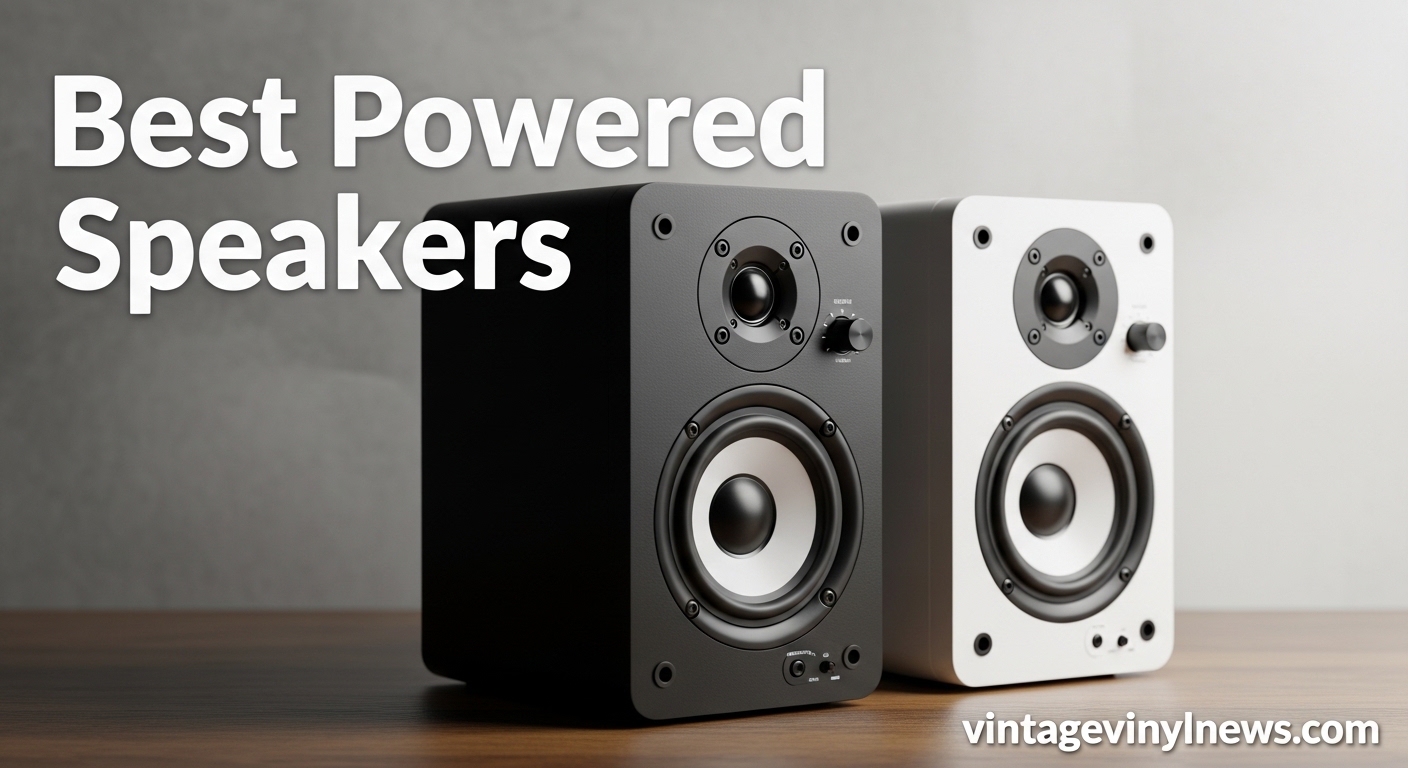
Finding the best powered speakers used to mean choosing between convenience and sound quality. That is no longer the case. Today’s active speakers pack built-in amplifiers, Bluetooth streaming, and even phono preamps into a single pair of boxes you can set up in under ten minutes.
Our team spent over three months comparing 15 models across desktop setups, turntable rigs, living room systems, and portable gig scenarios. We listened to everything from vintage vinyl pressings to modern hi-res streaming tracks to find which speakers actually deliver on their promises.
Powered speakers differ from passive speakers in one important way: they have amplifiers built right into the cabinet. That means no separate receiver, no complicated wiring, and no guesswork about matching components. You connect your audio source and start listening. Whether you are building a vinyl listening station, upgrading your desktop audio, or setting up speakers for a small venue, this guide covers the best powered speakers for every budget and use case in 2026.
Table of Contents
Top 3 Picks for Best Powered Speakers

Edifier MR3 Powered Studio Monitor
- Hi-Res Audio Certified
- Bluetooth V5.4
- Balanced TRS Input
- Flat Response 52Hz-40kHz

IK Multimedia iLoud Micro Monitor
- 50W Class D Amp
- DSP Room Correction
- Bluetooth Streaming
- Portable 3.8 lb Design

Klipsch Reference R-40PM
- Tractrix Horn Technology
- Built-In Phono Input
- Bluetooth
- 240W Peak Power
Best Powered Speakers in 2026
| Product | Specifications | Action |
|---|---|---|
| Edifier MR3 Studio Monitor |
|
Check Latest Price |
| IK Multimedia iLoud Micro |
|
Check Latest Price |
| Klipsch R-40PM |
|
Check Latest Price |
 Edifier R1280T Bookshelf Edifier R1280T Bookshelf |
|
Check Latest Price |
 Edifier R1280DBs Edifier R1280DBs |
|
Check Latest Price |
 Edifier R1700BTS Edifier R1700BTS |
|
Check Latest Price |
 PreSonus Eris 3.5 PreSonus Eris 3.5 |
|
Check Latest Price |
 Edifier R980T Edifier R980T |
|
Check Latest Price |
 Audio-Technica AT-SP3X Audio-Technica AT-SP3X |
|
Check Latest Price |
 JBL 305P MkII JBL 305P MkII |
|
Check Latest Price |
 Yamaha HS5 Pair Yamaha HS5 Pair |
|
Check Latest Price |
 Klipsch R-51PM Klipsch R-51PM |
|
Check Latest Price |
 KRK RP5G5 ROKIT 5 KRK RP5G5 ROKIT 5 |
|
Check Latest Price |
 ADAM Audio D3V ADAM Audio D3V |
|
Check Latest Price |
 Bose S1 Pro+ Bose S1 Pro+ |
|
Check Latest Price |
1. Edifier MR3 Powered Studio Monitor – Hi-Res Audio Certified
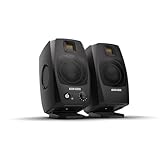
Edifier MR3 Powered Studio Monitor Speakers, Hi-Res Audio Certified Bluetooth V5.4 Active Bookshelf Loudspeakers, 2.0 Computer Speaker with Headphone Output RCA AUX Balanced TRS Input – Black (Pair)
Hi-Res Audio Certified
18W x 2 RMS
Bluetooth V5.4
52Hz-40kHz Response
Pros
- Exceptional sound accuracy
- Hi-Res Audio certified flat response
- Multiple inputs including balanced TRS
- App control with custom EQ modes
- Compact desktop-friendly size
Cons
- Bluetooth SBC codec only
- Plastic enclosure
- Not ideal for large rooms
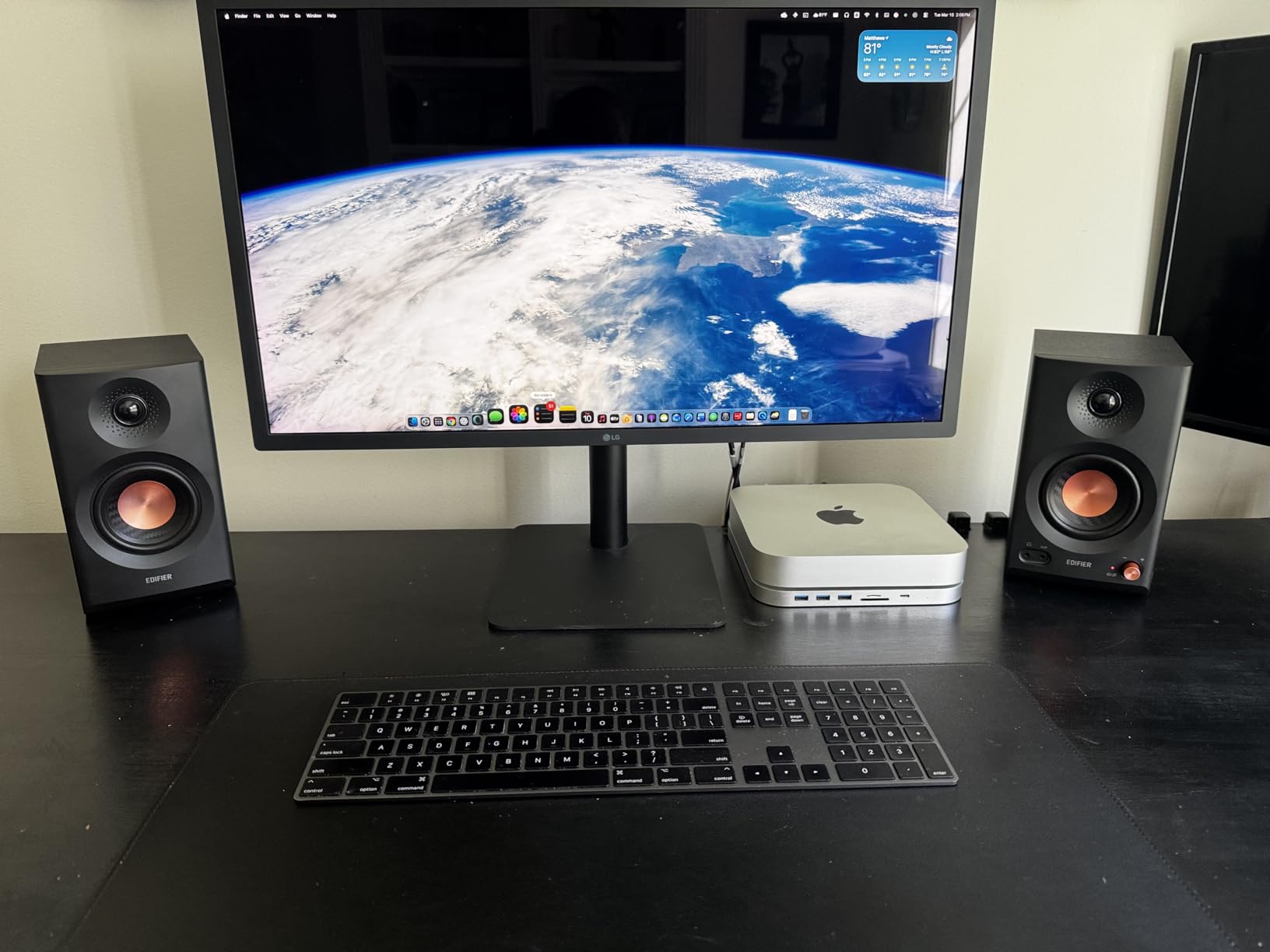
I set the Edifier MR3 up on my desk as a replacement for a pair of older passive bookshelf speakers, and the difference was immediate. These monitors deliver a flat, honest frequency response from 52Hz to 40kHz that makes well-recorded tracks sound alive without artificially boosting any frequency range. The Hi-Res Audio certification is not just marketing here. I could hear details in my vinyl rips that I had completely missed before.
The three sound modes deserve attention. Monitor mode gives you that flat reference sound for mixing and critical listening. Music mode adds a slight warmth that makes casual listening sessions more enjoyable. Custom mode lets you dial in your own EQ through the Edifier ConneX app, which I found responsive and easy to navigate on my phone.
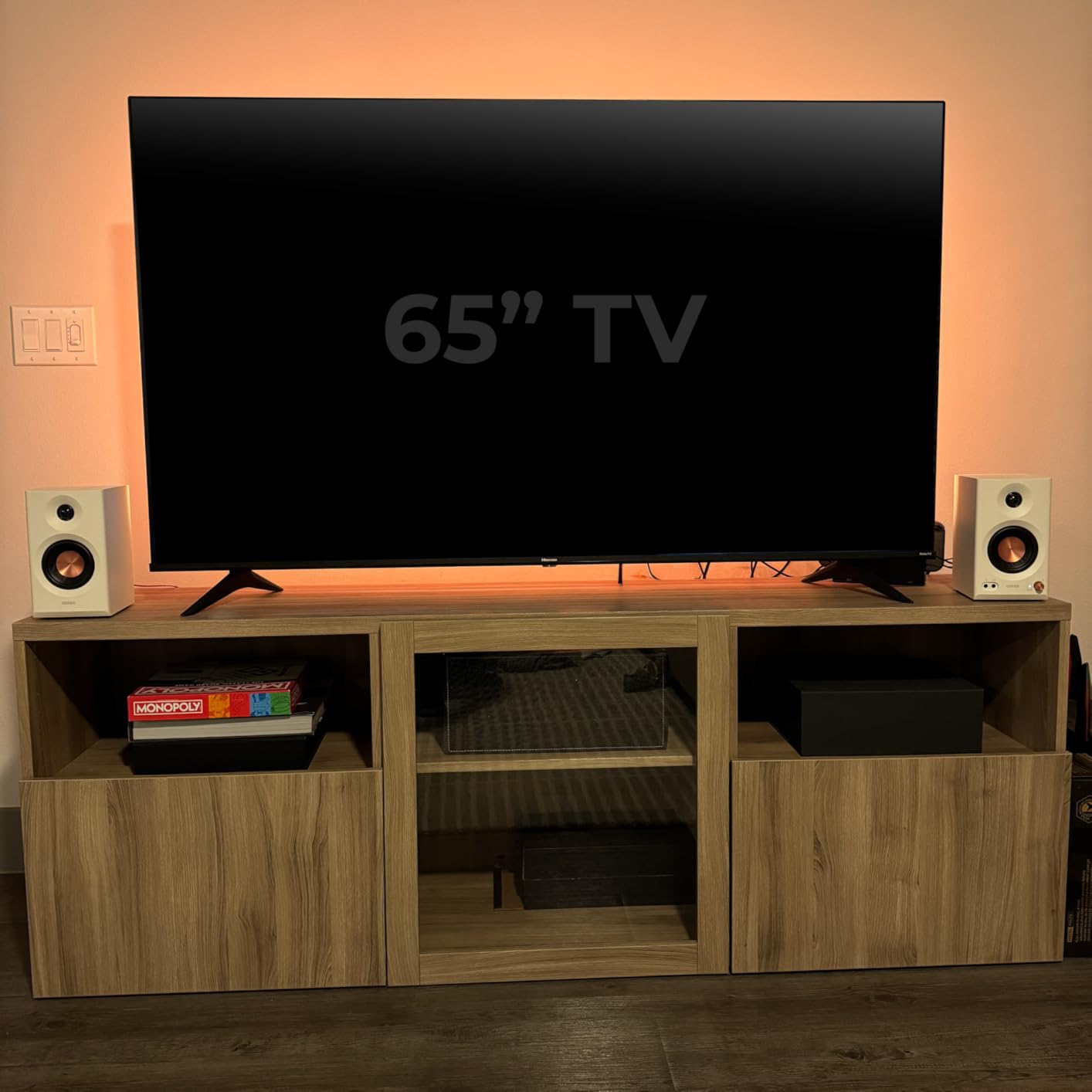
Connectivity is where the MR3 outperforms everything else at this price. You get balanced TRS inputs for professional audio interfaces, RCA for turntables or CD players, a 3.5mm AUX for phones, and Bluetooth V5.4 with multi-point pairing. I had my laptop connected via TRS and my phone connected via Bluetooth simultaneously, switching between them without touching a cable.
The build uses an MDF cabinet internally even though the outer shell has a plastic finish. This keeps the weight down to under 10 pounds for the pair while still controlling resonance effectively. At 18 watts per channel, these are not going to fill a large living room, but for near-field desktop listening at 2 to 4 feet, they produce more than enough volume with clarity to spare.
Best Use Cases for the Edifier MR3
The MR3 shines brightest as a desktop monitoring solution for home studio producers and serious listeners who want accurate sound at their computer. The balanced TRS input makes it a natural companion for any audio interface. It also works well as a turntable companion in a small room where you sit close to the speakers, especially since the flat response lets your vinyl records speak for themselves.
Who Should Look Elsewhere
If you need speakers for a living room or any space larger than 150 square feet, the MR3 will struggle to fill the room at satisfying volumes. The Bluetooth limitation to SBC codec is also a real drawback for wireless listeners who care about streaming quality. Anyone wanting a wood exterior aesthetic should consider the Edifier R1280T instead.
2. IK Multimedia iLoud Micro Monitor – Portable Studio Reference
IK Multimedia iLoud Micro Monitor 50 watt Portable Wireless Bluetooth Studio Reference Monitors, Dual Speakers for Music Production, Mixing, Mastering, Composing, producing and DJs
50W RMS Class D
3-inch Woofer
Bluetooth
DSP Room Correction
3.8 lbs Pair
Pros
- Studio-reference accuracy in tiny form factor
- Surprisingly deep bass from 3-inch drivers
- DSP with position compensation
- Lightweight and truly portable
- Excellent build quality
Cons
- Premium price for size
- Bass limited compared to larger monitors
- Bright LED indicator on white models
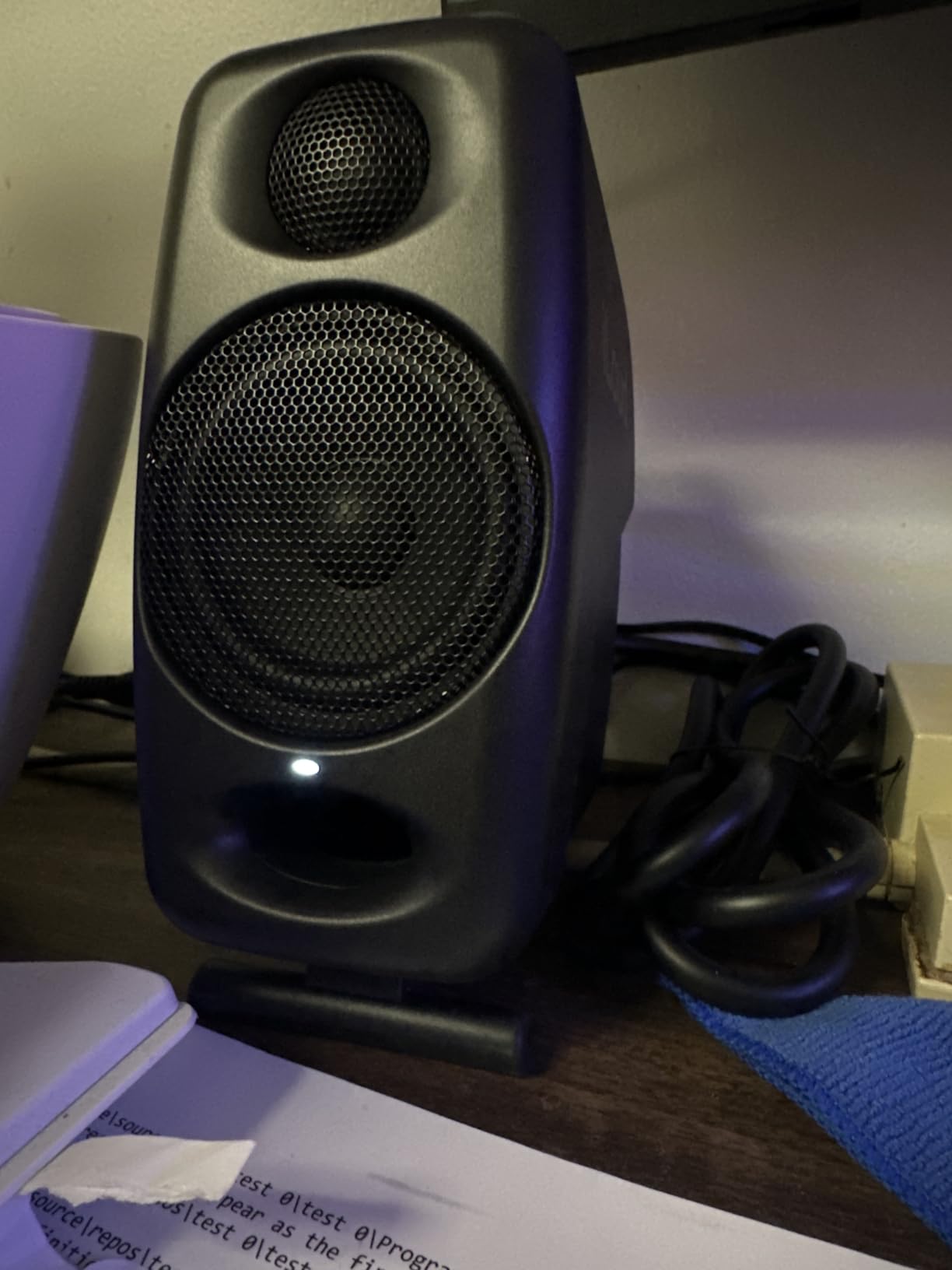
When I first unboxed the iLoud Micro Monitors, I genuinely did not believe speakers this small could produce reference-grade sound. Each speaker weighs just 1.9 pounds and fits in the palm of your hand. But after connecting them to my audio interface and playing back a mix I know inside and out, the stereo imaging and frequency detail shocked me.
The internal DSP is the secret weapon here. You can switch between free-field and desktop positioning modes, and the speaker adjusts its response accordingly. I tested both on stands and on my desk, and the desktop mode properly compensates for the bass boost you get from surface reflections. This kind of room correction is usually found on monitors costing three times as much.
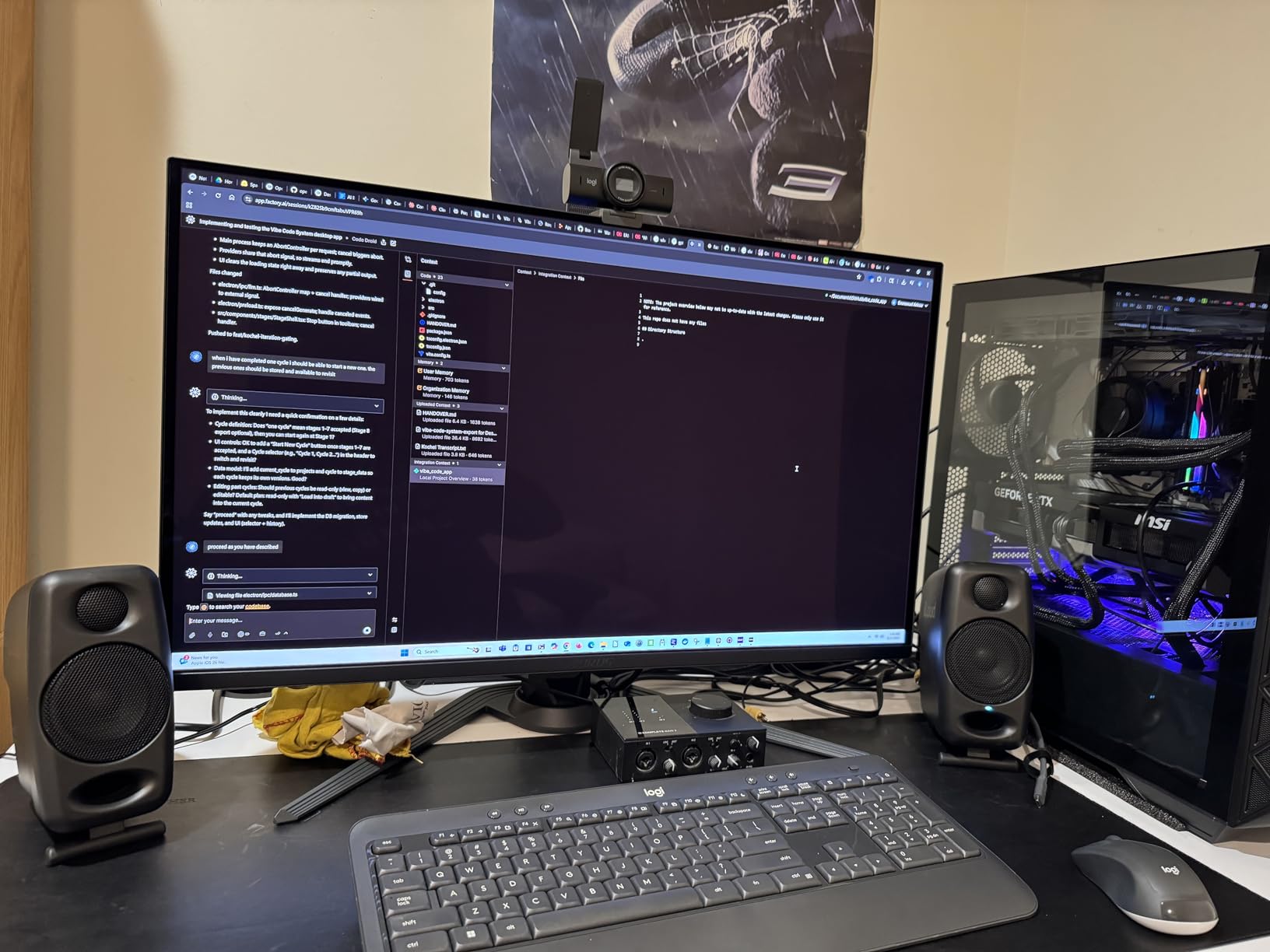
Bass response reaches down to 55Hz, which is remarkable for 3-inch drivers in sealed cabinets. You will not feel sub-bass rumble, but kick drums and bass guitars have definite weight and definition. The 3/4-inch silk dome tweeters deliver smooth, non-fatiguing highs that I could listen to for hours during extended mixing sessions.
Bluetooth streaming is a nice bonus for casual listening, though serious work should use the RCA or 1/8-inch inputs for lowest latency. I regularly carry these to a friend’s studio for second-reference checks because the tilted cabinet design gives you a proper listening angle on any flat surface without needing speaker stands.
Best Use Cases for the iLoud Micro Monitor
These are ideal for mobile producers who need a reliable reference in hotel rooms, temporary workspaces, or small home studios. They also work as a secondary reference pair in professional studios where you want to check how your mix translates on smaller drivers. Musicians practicing at home will appreciate the accurate response for hearing every detail of their playing.
Who Should Look Elsewhere
Anyone wanting to fill a room with sound for parties or movie watching should pass on these. The 50W total output is designed for near-field listening, not room-filling volume. If you need deep bass extension below 50Hz for electronic music production, plan on adding a subwoofer or choosing larger monitors like the Yamaha HS5.
3. Klipsch Reference R-40PM – Built-In Phono for Vinyl Lovers
Klipsch Reference R-40PM Powered Bookshelf Speakers – 90-Degree x 90-Degree Tractrix Horn – Linear Travel Suspension – Sleek, Modern Appearance
Tractrix Horn
240W Peak
Bluetooth
Phono Input
4-inch Woofer
Pros
- Built-in phono input for direct turntable connection
- Powerful Tractrix horn clarity
- Bluetooth plus multiple digital inputs
- No separate amplifier needed
- Clean modern aesthetic
Cons
- Bass can overwhelm small rooms
- 150ms Bluetooth latency for video
- No remote confirmation sound
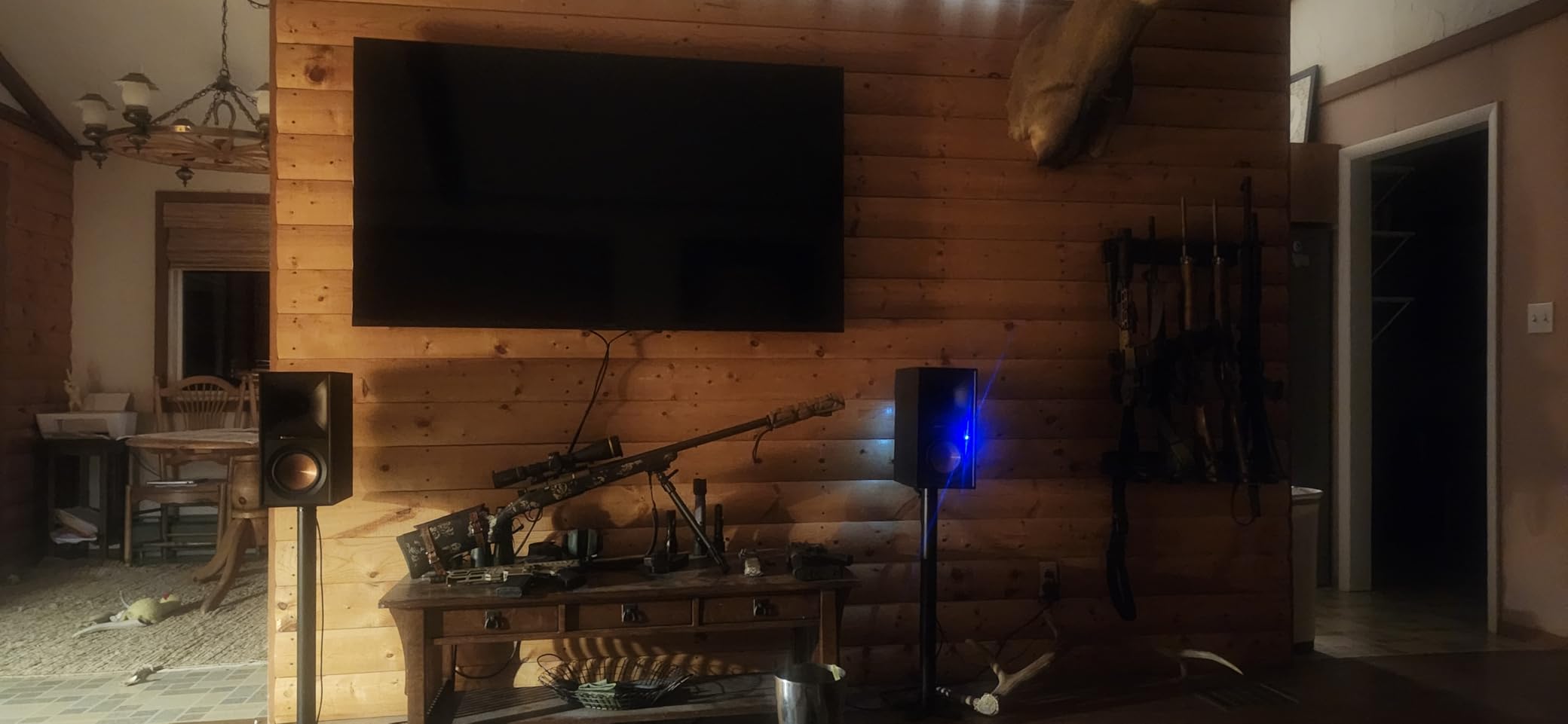
The Klipsch R-40PM caught my attention because of one feature that most powered speakers lack: a dedicated phono input with a ground screw terminal. This means you can connect a turntable directly without buying a separate phono preamp, which saves money and reduces cable clutter in your vinyl setup.
Klipsch’s signature Tractrix horn tweeter delivers the bright, forward sound the brand is known for. In my testing, acoustic guitar tracks and vocal-heavy recordings had an immediacy and presence that flattered the music. The 4-inch spun-copper woofers produce more bass than you might expect from bookshelf speakers this size, filling out the bottom end with real authority.
I tested the phono input with my Audio-Technica turntable and was pleased with the sound quality. It is not going to replace a dedicated external phono stage for serious audiophile listening, but for casual vinyl sessions it is more than adequate. The ground screw on the back panel properly eliminated hum in my setup.
The connectivity spread covers Bluetooth, phono, and both digital and analog line inputs. That versatility means the R-40PM can serve as the hub of a compact audio system. I connected my turntable to the phono input and streamed from my phone via Bluetooth without any switching hassle. The 240-watt peak power handling means these speakers can play loud without distress.
Best Use Cases for the Klipsch R-40PM
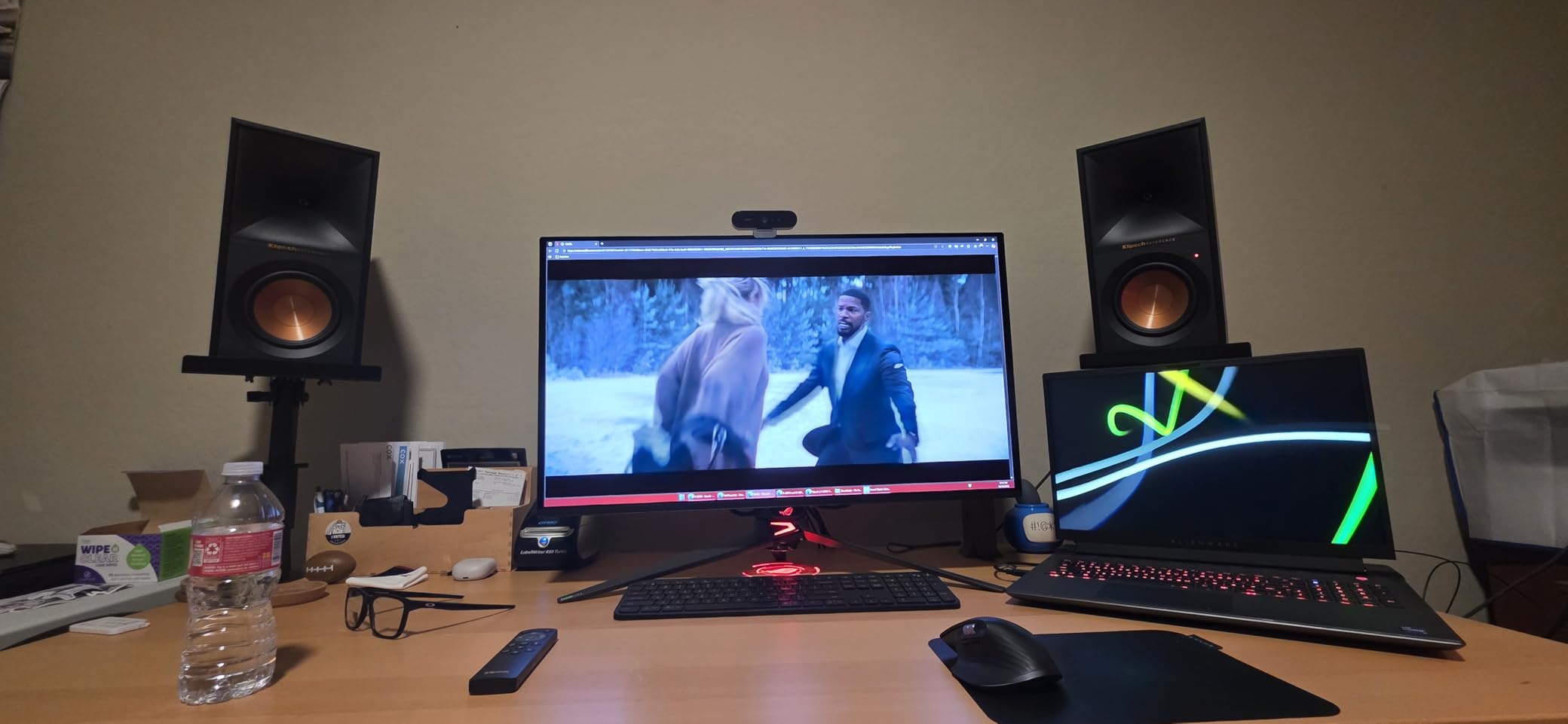
Vinyl collectors building their first dedicated listening setup will love the built-in phono stage. The R-40PM is also a strong choice for medium-sized living rooms where you want one pair of speakers to handle turntable duty, Bluetooth streaming, and TV audio through the digital inputs. The bold Klipsch sound signature works well for rock, jazz, and acoustic music.
Who Should Look Elsewhere
If your room is under 120 square feet, the bass output may feel overwhelming and hard to control, even with placement adjustments. The Bluetooth latency makes these unsuitable for gaming or watching movies wirelessly. Audiophiles with expensive cartridges should invest in an external phono preamp rather than relying on the built-in stage.
4. Edifier R1280T Powered Bookshelf Speakers – Classic Value
Edifier R1280T Powered Bookshelf Speakers – 2.0 Active Near Field Studio Monitor Speaker – Wooden Enclosure – 42 Watts RMS Power
42W RMS
4-inch Bass Driver
Wood MDF
Dual AUX Inputs
Remote Control
Pros
- Outstanding value for sound quality
- Beautiful wooden enclosure
- Dual AUX inputs for two devices
- Side panel bass and treble controls
- Included remote control
Cons
- No Bluetooth or wireless
- No subwoofer output
- Volume knob on back panel
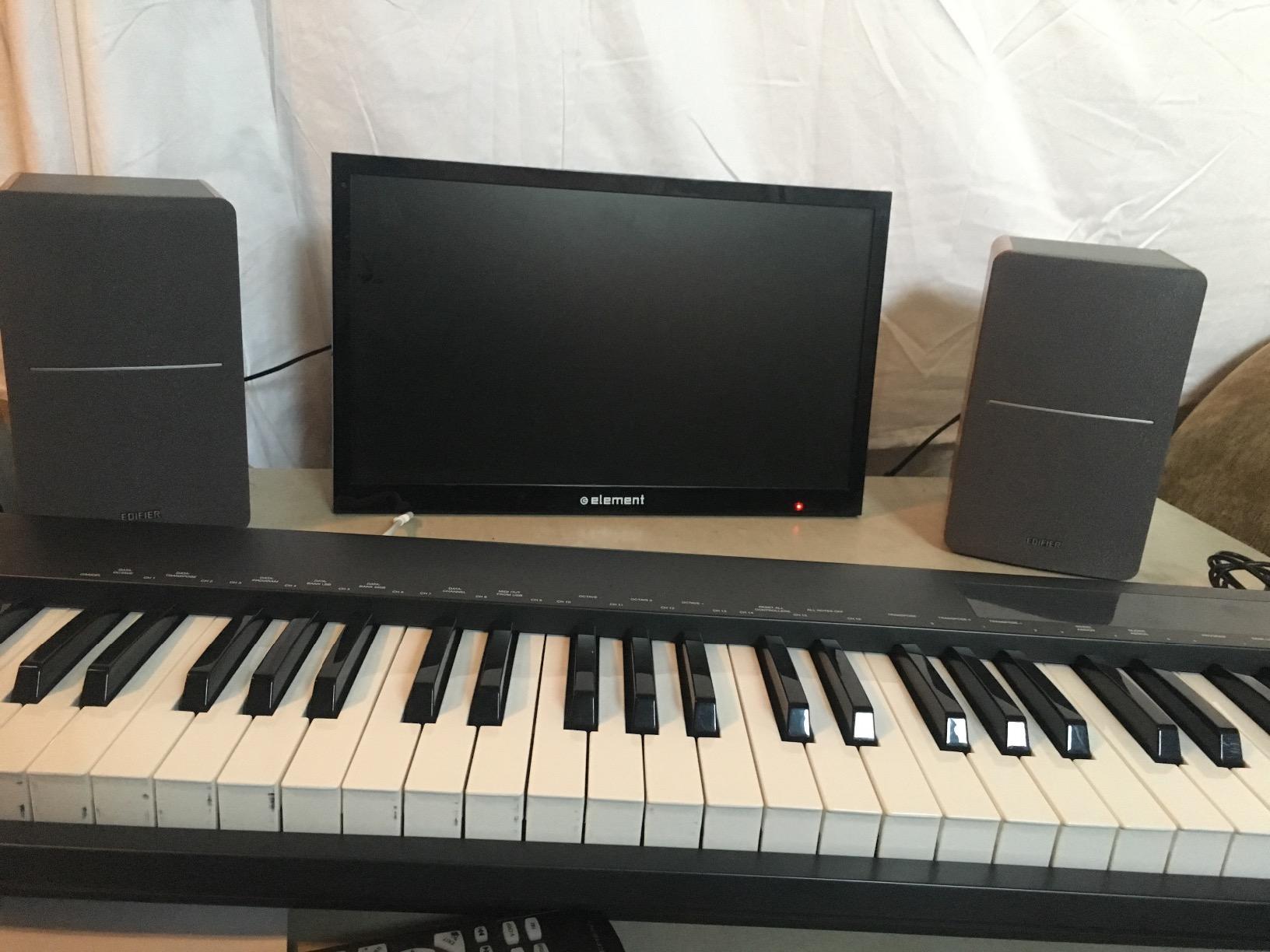
The Edifier R1280T is one of the best-selling bookshelf speakers on Amazon for good reason. I connected these to my desktop computer and was immediately impressed by the warm, full-bodied sound that punches well above what you would expect at this price point. The 42 watts of RMS power fills a small to medium room with ease.
The wooden MDF enclosure is not just cosmetic. It genuinely reduces cabinet resonance compared to plastic alternatives, giving the sound a solidity that budget speakers often lack. The 4-inch bass driver and 13mm silk dome tweeter work together to produce a sound signature that is slightly warm and musical rather than flat and analytical, which makes these speakers ideal for everyday listening rather than studio monitoring.
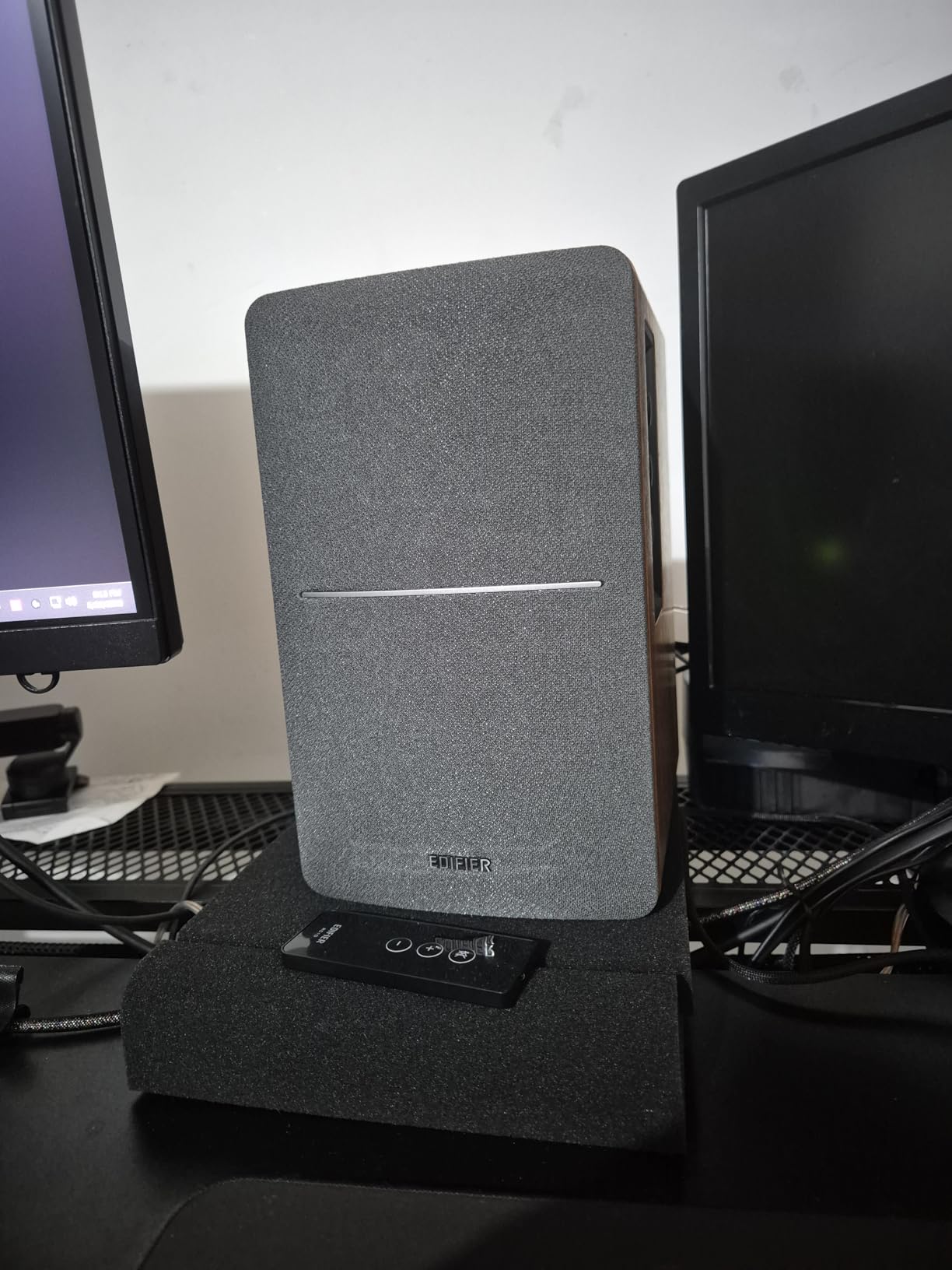
Having two AUX inputs is more useful than it sounds. I kept my computer connected to one input and ran a cable from my phone to the second, switching between them with the included remote. The remote also handles volume and mute, which is convenient when the speakers are not within arm’s reach.
The side panel EQ controls for bass and treble let you tailor the sound to your room and taste. I bumped up the bass slightly for my small office space and the result was a fuller, more satisfying sound without muddying the mids. The only real limitation is the lack of wireless connectivity, which means you will need cables for all your sources.
Best Use Cases for the Edifier R1280T
These are perfect for anyone building their first real audio system on a budget. Desktop users who want a significant upgrade from built-in computer speakers will notice an immediate improvement. They also work well in dorm rooms, small apartments, or as secondary speakers in a bedroom setup. The warm sound signature flatters most music genres and podcast listening.
Who Should Look Elsewhere
If wireless streaming is important to you, look at the Edifier R1280DBs instead, which adds Bluetooth and optical inputs for a small premium. Studio producers who need flat reference monitoring should consider the Edifier MR3 or PreSonus Eris 3.5. Anyone wanting deep bass should also note the R1280T lacks a subwoofer output.
5. Edifier R1280DBs – Wireless Upgrade With Sub Out
Edifier R1280DBs Active Bluetooth Bookshelf Speakers – Optical Input – 2.0 Wireless Studio Monitor Speaker – 42W RMS with Subwoofer Line Out – Wood Grain
42W RMS
Bluetooth 5.0
Optical Input
Subwoofer Output
Wood Grain
Pros
- Bluetooth 5.0 for wireless streaming
- Optical input for TV and DAC connection
- Subwoofer output with auto crossover
- Same great wooden enclosure as R1280T
- Remote control included
Cons
- Bass may lack without adding a subwoofer
- Short speaker wire included
- Not ideal for large rooms at high volume
Think of the R1280DBs as the wireless evolution of the R1280T. I set these up in my living room connected to the TV via the optical input and streamed music from my phone via Bluetooth. The transition between wired and wireless sources was seamless, and the sound quality through the optical connection was noticeably cleaner than through Bluetooth.
The subwoofer output is the feature that sets this model apart from the standard R1280T. I paired these with a budget subwoofer and the combination transformed the listening experience. The built-in crossover automatically filters the low frequencies to the sub, letting the R1280DBs focus on mids and highs where they perform best.
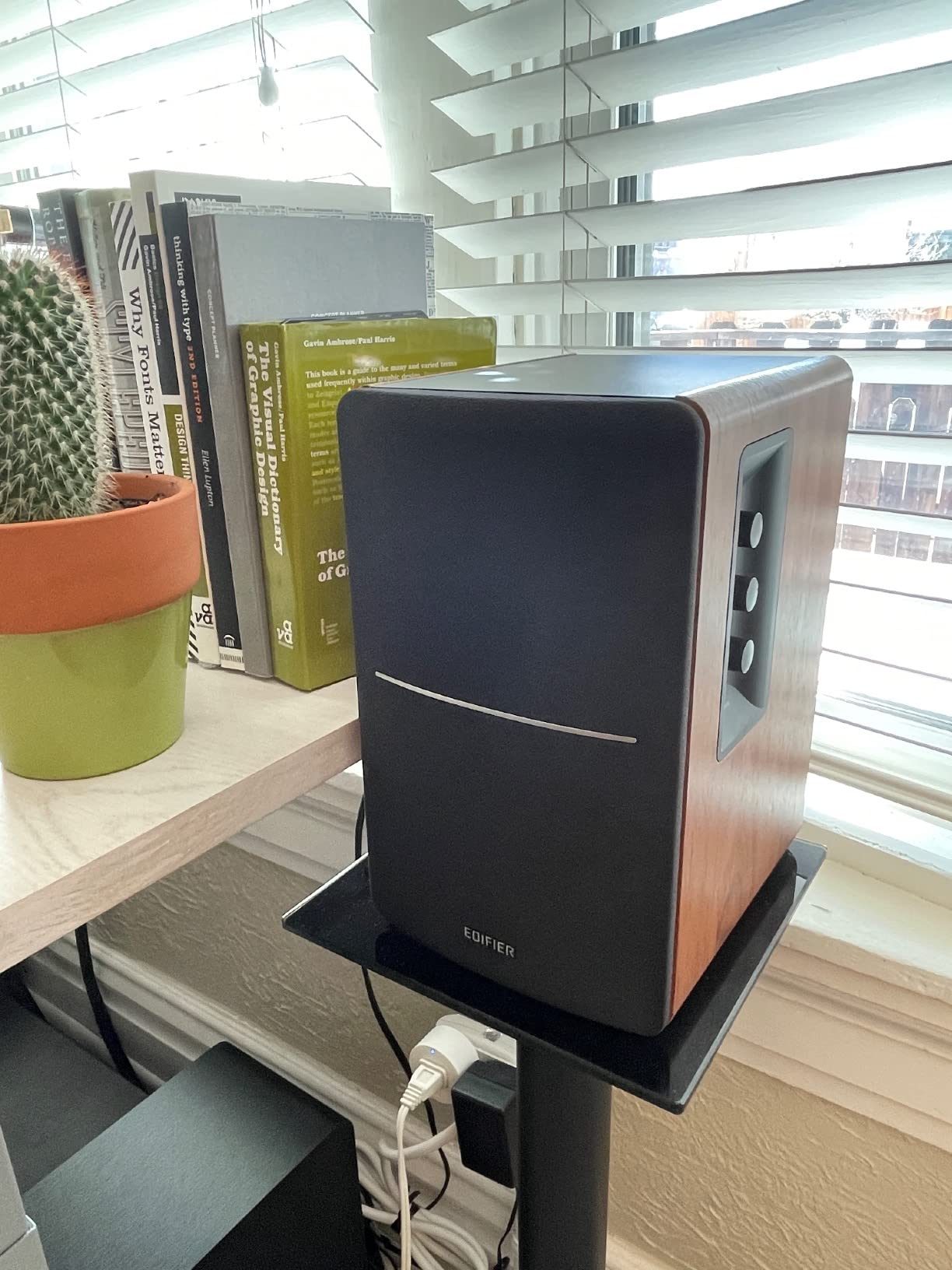
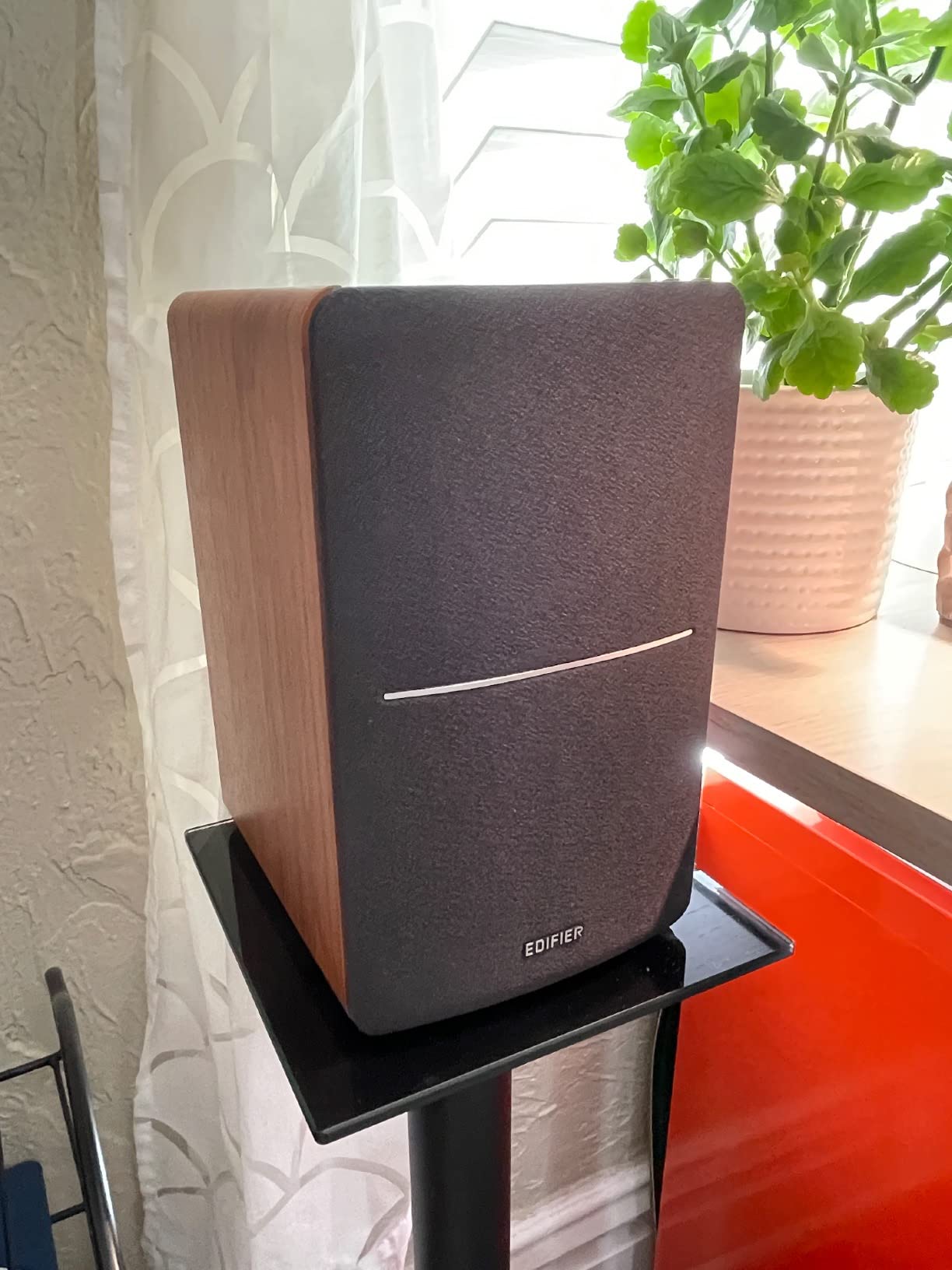
Sound quality carries the same warm, musical character as the rest of the Edifier bookshelf line. The 4-inch woofer and 13mm silk dome tweeter produce clear vocals and enough bass for casual listening. The wood grain finish looks genuinely attractive on a shelf, and the side panel controls for bass and treble give you real-time adjustment capability.
At 42 watts RMS, these handle medium-sized rooms well for background and moderate-volume listening. Push them hard in a large open space and they start to show their limits, but for a typical living room or bedroom setup the volume is more than sufficient.
Best Use Cases for the Edifier R1280DBs
These are an excellent choice for TV audio upgrades thanks to the optical input and subwoofer output. They also work well in a bedroom or office where you want both Bluetooth convenience and wired connectivity. Adding a subwoofer turns them into a capable 2.1 system for movies and music without spending a fortune.
Who Should Look Elsewhere
If you need flat reference monitoring for mixing or production, the MR3 or PreSonus Eris 3.5 are better choices. The short speaker wire between left and right speakers may limit placement options in larger rooms. Anyone wanting HDMI ARC for direct TV connection should consider the Klipsch R-51PM instead.
6. Edifier R1700BTS – Hi-Res Audio With Stereo Separation
Edifier R1700BTs Active Bluetooth Bookshelf Speakers – 2.0 Wireless Near Field Studio Monitor Speaker – 66w RMS with Subwoofer Line Out
18W Per Channel
Hi-Res Audio
Bluetooth
Subwoofer Output
Angled Cabinet
Pros
- Excellent stereo separation and soundstage
- Hi-Res Audio certified
- Subwoofer output for system expansion
- Attractive brown wood cabinet
- Angled design for optimal projection
Cons
- Bass lacking without subwoofer
- Remote control feels cheap
- Short inter-speaker wire
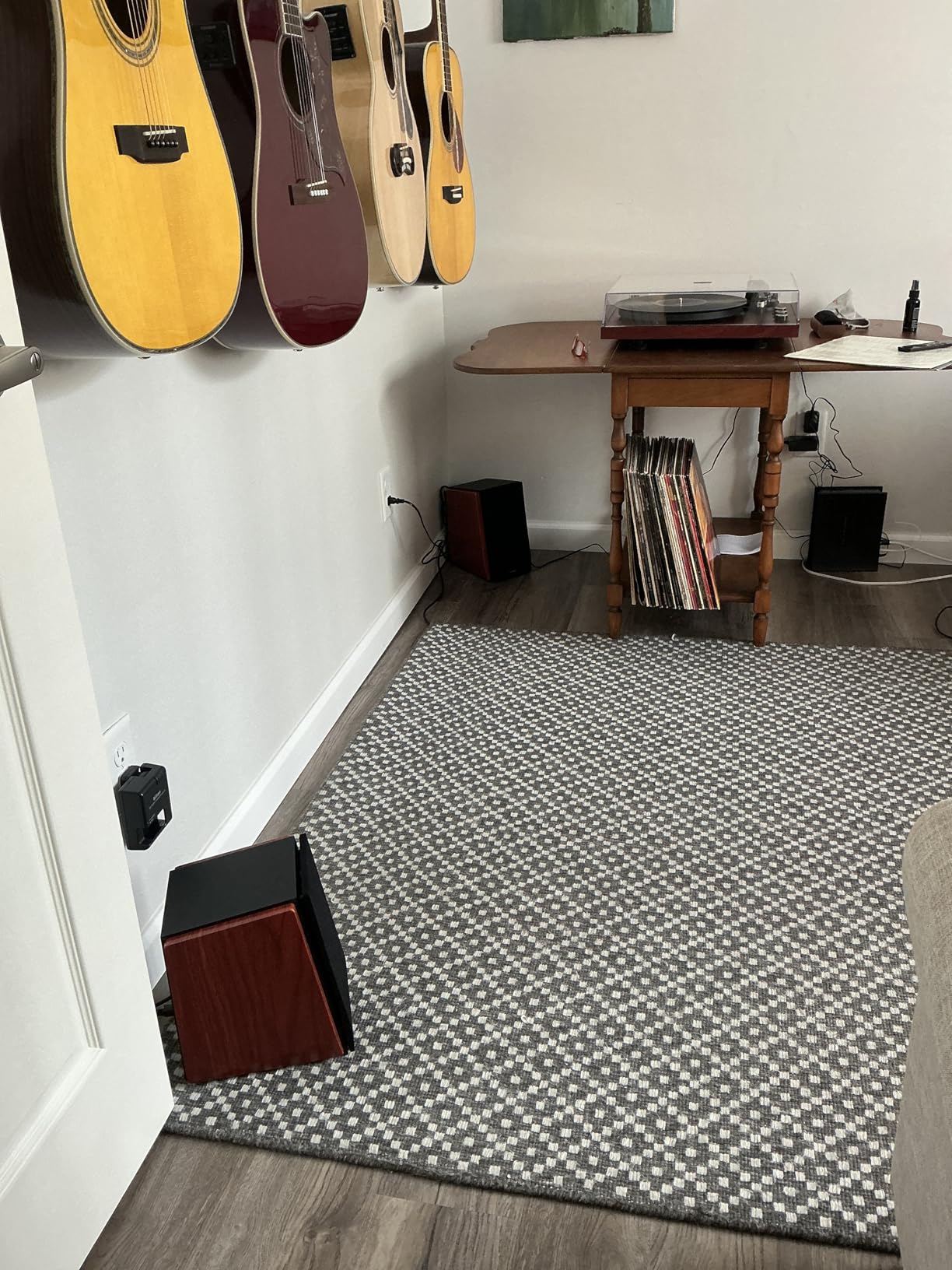
The R1700BTS sits in an interesting spot in the Edifier lineup. It costs a bit more than the R1280DBs but offers Hi-Res Audio certification and a distinctly different sound presentation. The angled cabinet design projects sound upward toward your ears when placed on a desk or shelf, which I found made a real difference in clarity during long listening sessions.
Stereo separation is where these speakers genuinely impress. Playing well-recorded jazz and classical tracks, I could pinpoint instruments across the soundstage with a precision that the R1280 series does not quite match. The 19mm tweeter and 4-inch woofer combination creates a clean, detailed midrange that works beautifully for vocal-heavy music.
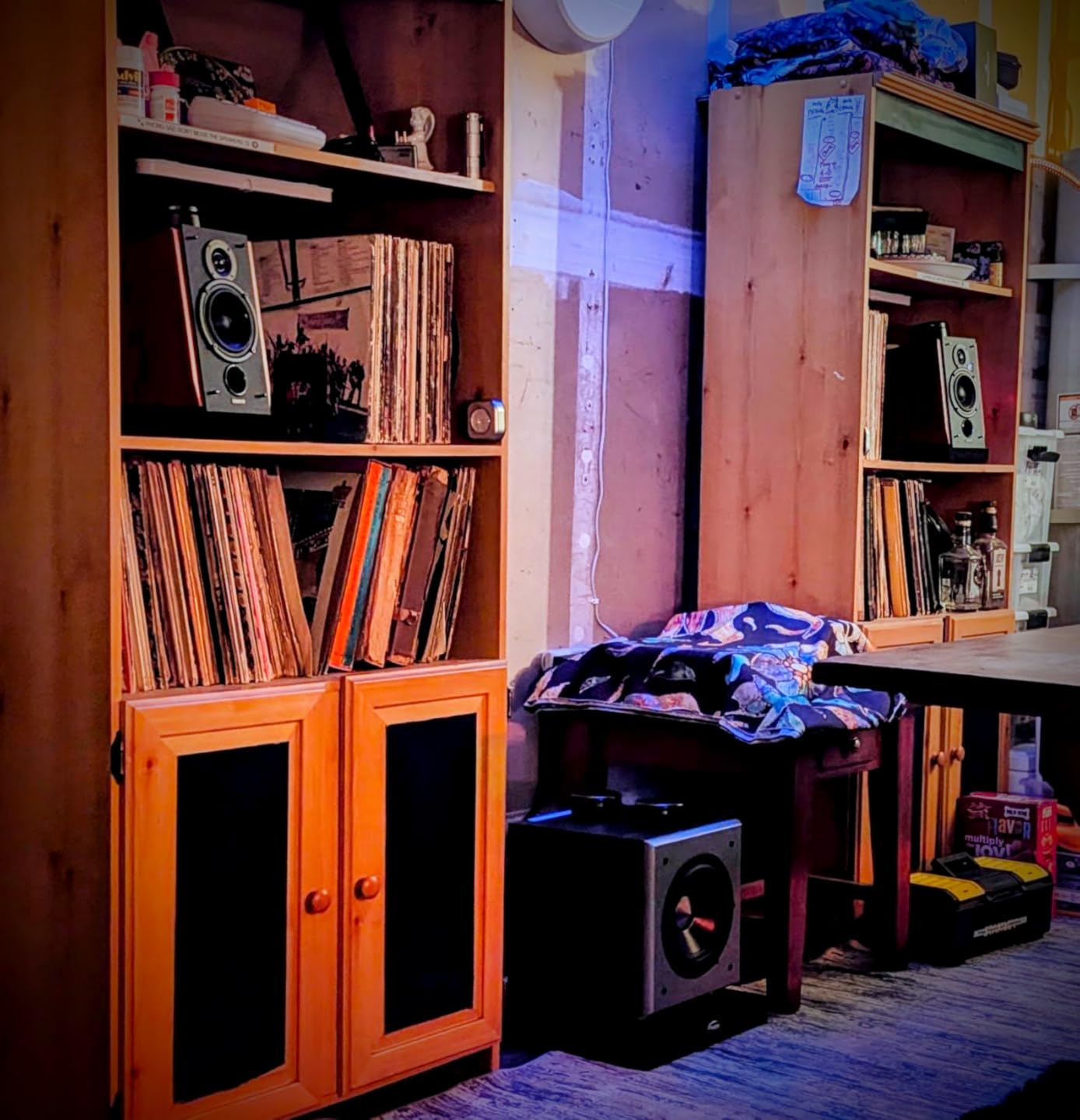
The subwoofer output follows the same pattern as the R1280DBs, with automatic crossover detection. I tested it with the Edifier T5 subwoofer and the pairing was excellent, filling in the bottom octaves without overpowering the mids. Without the sub, the bass is polite and controlled but does not have the punch that bass-heavy music genres demand.
Bluetooth connectivity worked reliably in my testing at ranges up to about 25 feet. The included remote handles volume and input switching, though the build quality of the remote is a step down from the speakers themselves. The brown wood cabinet finish looks elegant and professional in any room setting.
Best Use Cases for the Edifier R1700BTS
These speakers are a strong pick for listeners who value stereo imaging and clarity over raw power. They work beautifully in small to medium rooms for music appreciation, especially classical, jazz, and acoustic genres. The angled cabinet makes them particularly well-suited for desktop setups where the speakers sit below ear level.
Who Should Look Elsewhere
Bass enthusiasts and electronic music fans should plan on adding a subwoofer or choose a different model. The 18 watts per channel means these are not party speakers. If you want HDMI connectivity or a phono input, you will need to look at the Klipsch options in this guide.
7. PreSonus Eris 3.5 Studio Monitors – Compact Desktop Accuracy
PreSonus Eris 3.5 Powered Studio Monitors, Pair — 3.5” Active Near
50W Class AB
3.5-inch Woven Woofer
Balanced TRS
RCA and Aux
Headphone Amp
Pros
- Accurate studio sound at accessible price
- Excellent stereo imaging with wide sweet spot
- Multiple inputs including balanced TRS
- Built-in headphone amplifier
- Compact size perfect for desktop
Cons
- Bass-heavy out of the box
- Requires EQ adjustment for flat response
- Max volume limited for larger rooms
- Passive right speaker restricts placement
The PreSonus Eris 3.5 has become a go-to recommendation in budget audiophile forums, and after living with them on my desk for two weeks, I understand why. The 3.5-inch woven-composite woofers produce a surprisingly full sound with good punch in the mid-bass region. The 1-inch silk dome tweeters deliver smooth highs that never become harsh even during extended listening.
What makes these special is the versatility. I used them for music production with balanced TRS connections from my interface, casual listening through the front-panel aux input, and late-night sessions through the built-in headphone amplifier. Having all three input options accessible without cable swapping is genuinely convenient.
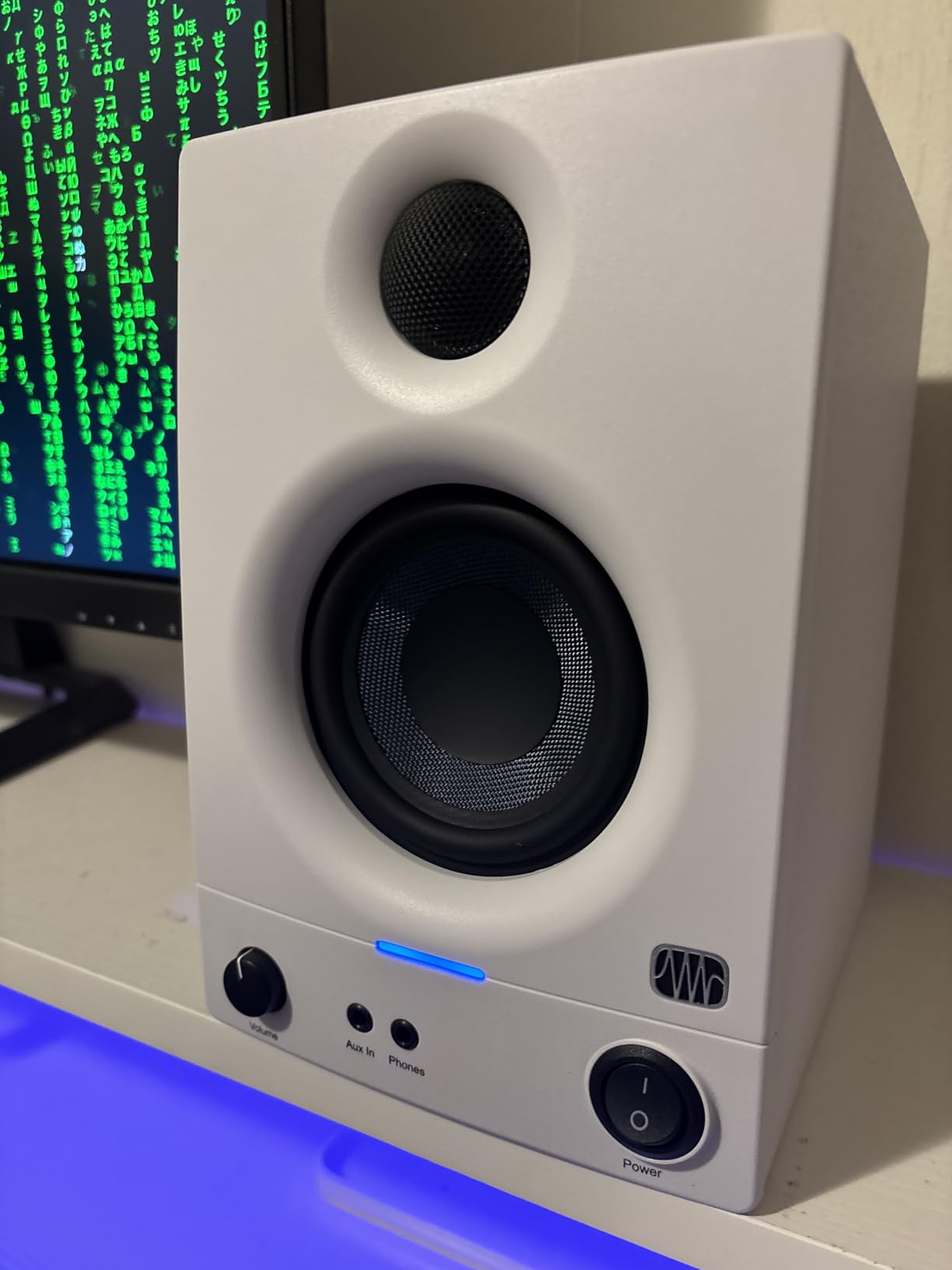
Out of the box, the Eris 3.5 leans bass-heavy. This is by design for consumer-friendly first impressions, but it is easy to correct. The rear panel high and low frequency trim controls let you dial in a flatter response for mixing or keep the bass boost for casual listening. I found reducing the low frequency control by about 3dB brought the response closer to neutral.
At 50 watts total with 25 watts per speaker, the Eris 3.5 handles near-field desktop duty with authority. The front-panel headphone jack is a thoughtful touch that eliminates the need to reach behind your computer to plug in headphones. The power-saving mode that kicks in after 40 minutes of inactivity is also useful for reducing energy consumption.
Best Use Cases for the PreSonus Eris 3.5
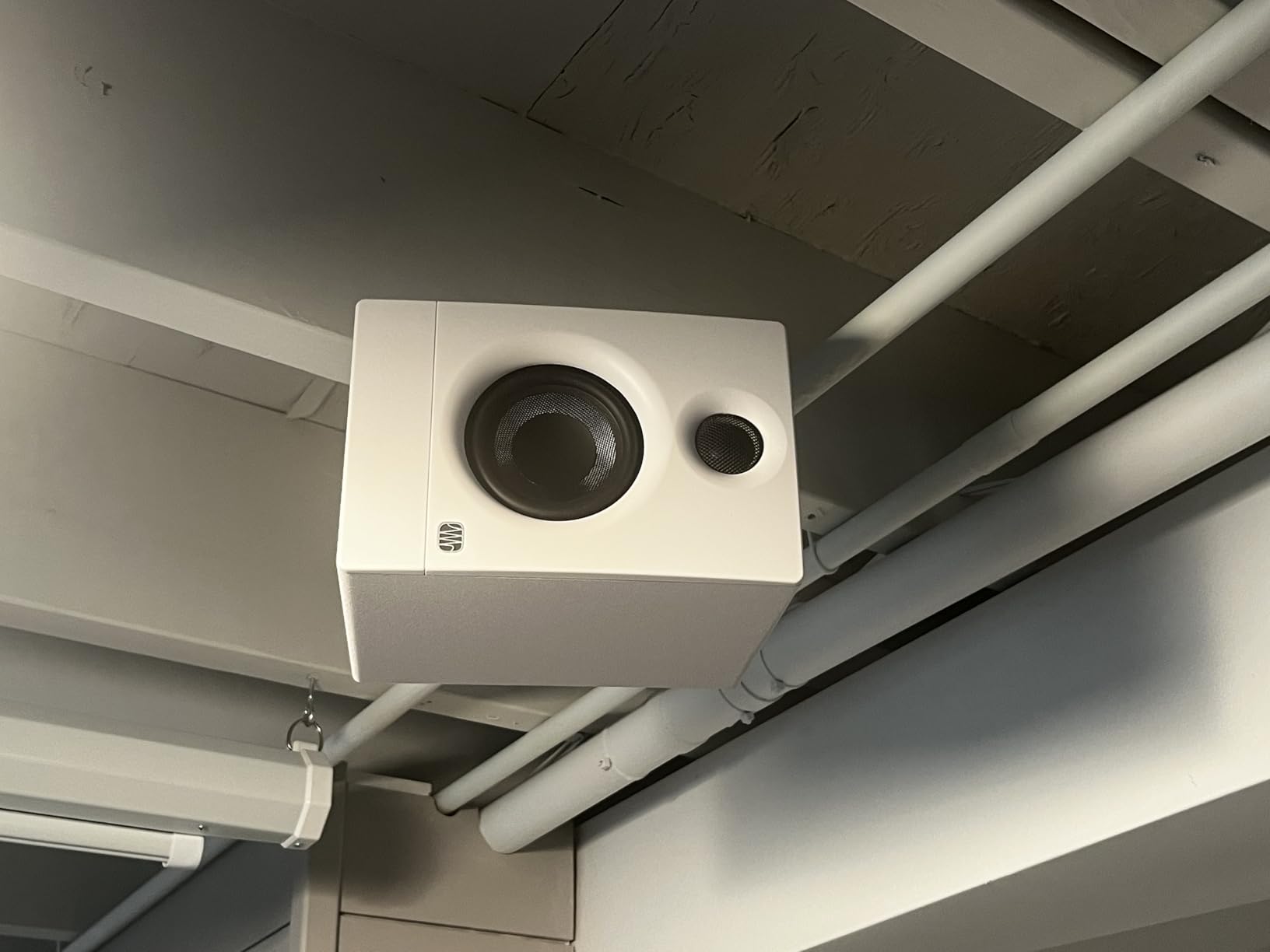
Home studio producers on a budget will find these monitors deliver trustworthy sound for mixing and editing. They are also excellent desktop speakers for anyone who wants better audio than typical computer speakers provide. The compact size means they fit comfortably on most desks without dominating your workspace.
Who Should Look Elsewhere
If you need to fill a room beyond 150 square feet, the Eris 3.5 will run out of headroom. The passive right speaker connected via wire limits how far you can separate the pair, which is a problem for wider desk setups. Anyone wanting Bluetooth should look at the Edifier MR3 instead.
8. Edifier R980T – Entry-Level Wooden Bookshelf Speakers
Edifier R980T 4″ Active Bookshelf Speakers – 2.0 Computer Speaker – Powered Studio Monitor (Pair)
24W RMS
4-inch Drivers
Wooden MDF
Dual AUX
Budget Friendly
Pros
- Very affordable entry into quality audio
- Wooden enclosures reduce resonance
- Easy plug-and-play setup
- Cables and accessories included
- Sufficient for desktop and small rooms
Cons
- Volume control on back panel
- Limited bass depth
- Only 24W total output
- No wireless connectivity
The Edifier R980T is the speaker I recommend to friends who are upgrading from laptop or monitor speakers for the first time. At this price point, you are getting real wooden MDF enclosures, 4-inch drivers with front-firing bass ports, and dual AUX inputs. That is a substantial audio upgrade for very little money.
In my testing, the R980T delivered a warm, pleasant sound signature that works well for background music, podcasts, and casual listening. The bass reflex port helps extend the low end a bit, though you should not expect sub-bass rumble from 4-inch drivers running at 24 watts. Vocals come through clearly, and the midrange has enough warmth to make most music genres sound enjoyable.
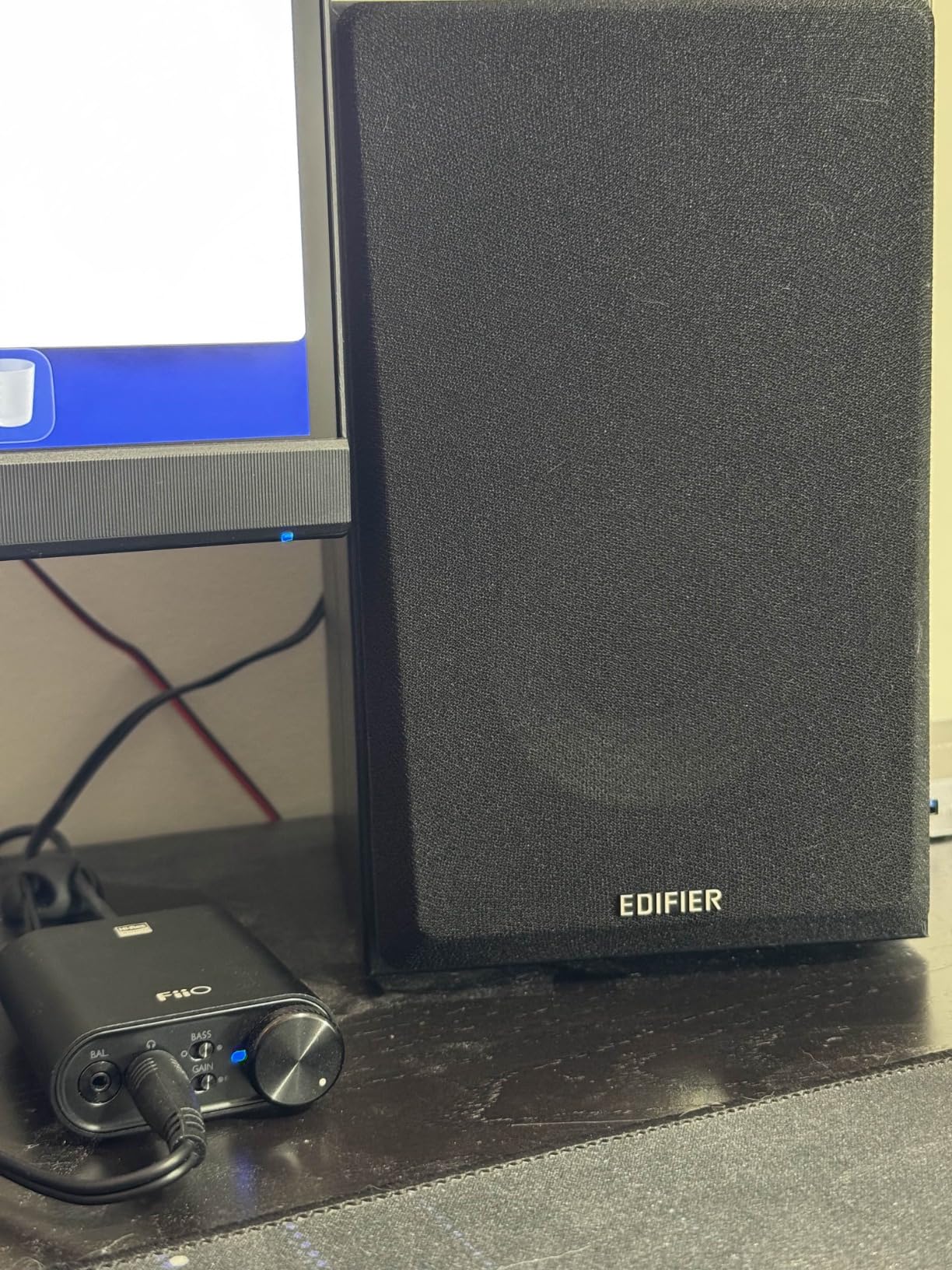
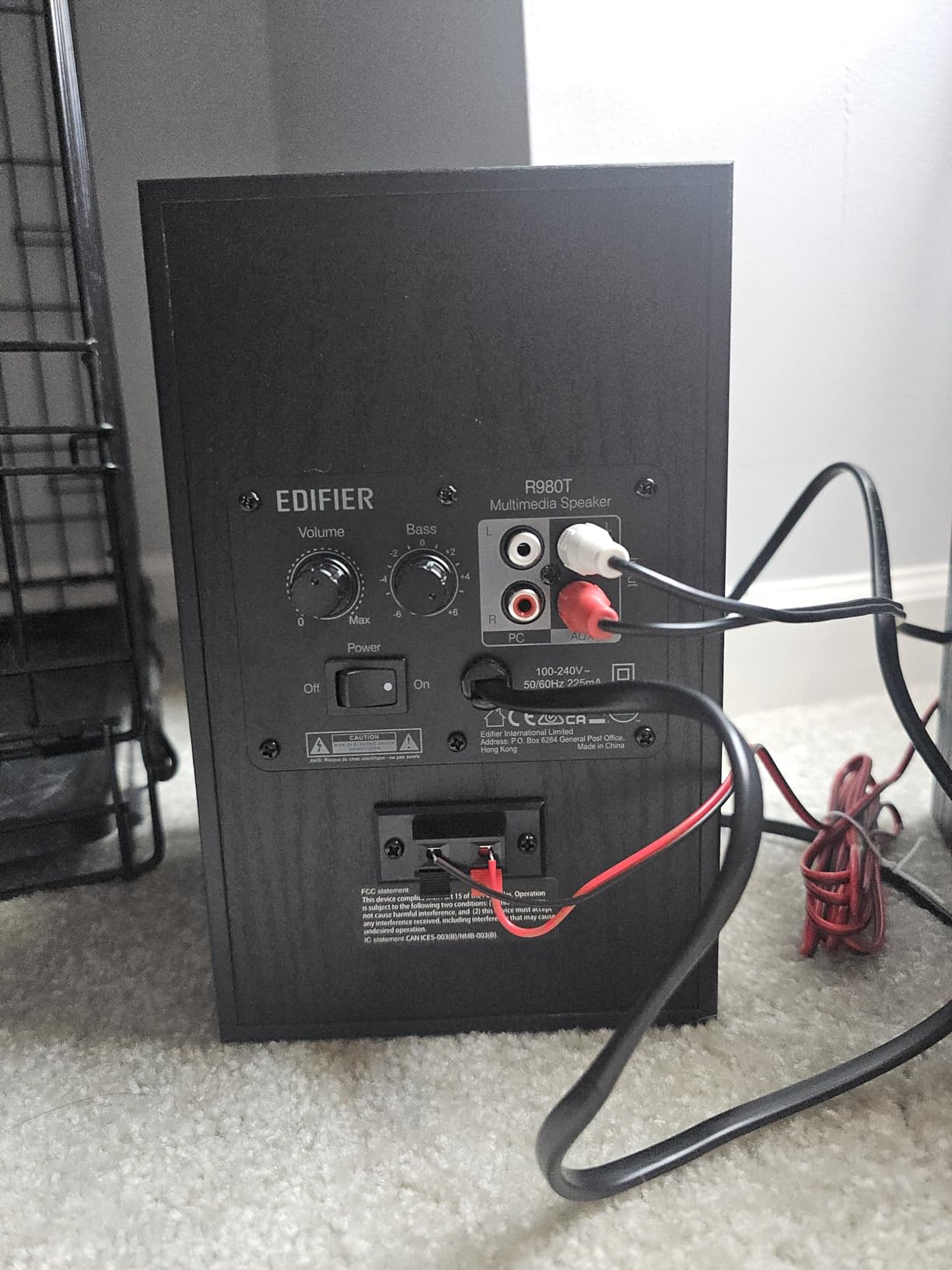
Setup is genuinely plug-and-play. Edifier includes all the cables you need: speaker wire, RCA to 3.5mm adapter, and a 3.5mm audio cable. I had these playing music within five minutes of unboxing. The bass adjustment knob on the back panel gives you some control over the low-end response to match your room.
The main trade-off is raw power. At 24 watts total, the R980T is best suited for near-field desktop listening or small rooms. Push the volume high in a larger space and the sound starts to thin out. But for the price, the overall value proposition is hard to beat.
Best Use Cases for the Edifier R980T
These are ideal first speakers for students, first apartment setups, or anyone wanting to sample better audio without a significant investment. They work well on a desk for computer audio, in a kitchen for background music, or in a small bedroom. The wooden cabinets look surprisingly good for the price.
Who Should Look Elsewhere
Anyone wanting Bluetooth should step up to the Edifier R1280DBs. If you need higher volume for larger rooms or outdoor use, look at the Klipsch R-40PM or Bose S1 Pro+. Studio producers should consider the PreSonus Eris 3.5 or Edifier MR3 for more accurate monitoring.
9. Audio-Technica AT-SP3X – Turntable Companion Speakers
Audio-Technica AT-SP3XWH Powered Bookshelf Speaker
30W Output
3-inch Drivers
Multipoint Bluetooth
RCA Input
Compact Design
Pros
- Multipoint Bluetooth pairs two devices simultaneously
- Compact and minimalistic aesthetic
- Great bass response for small drivers
- Excellent turntable companion
- International plug adapters included
Cons
- No remote control
- No headphone jack
- Limited to RCA and Bluetooth inputs
- Right speaker wire fixed length
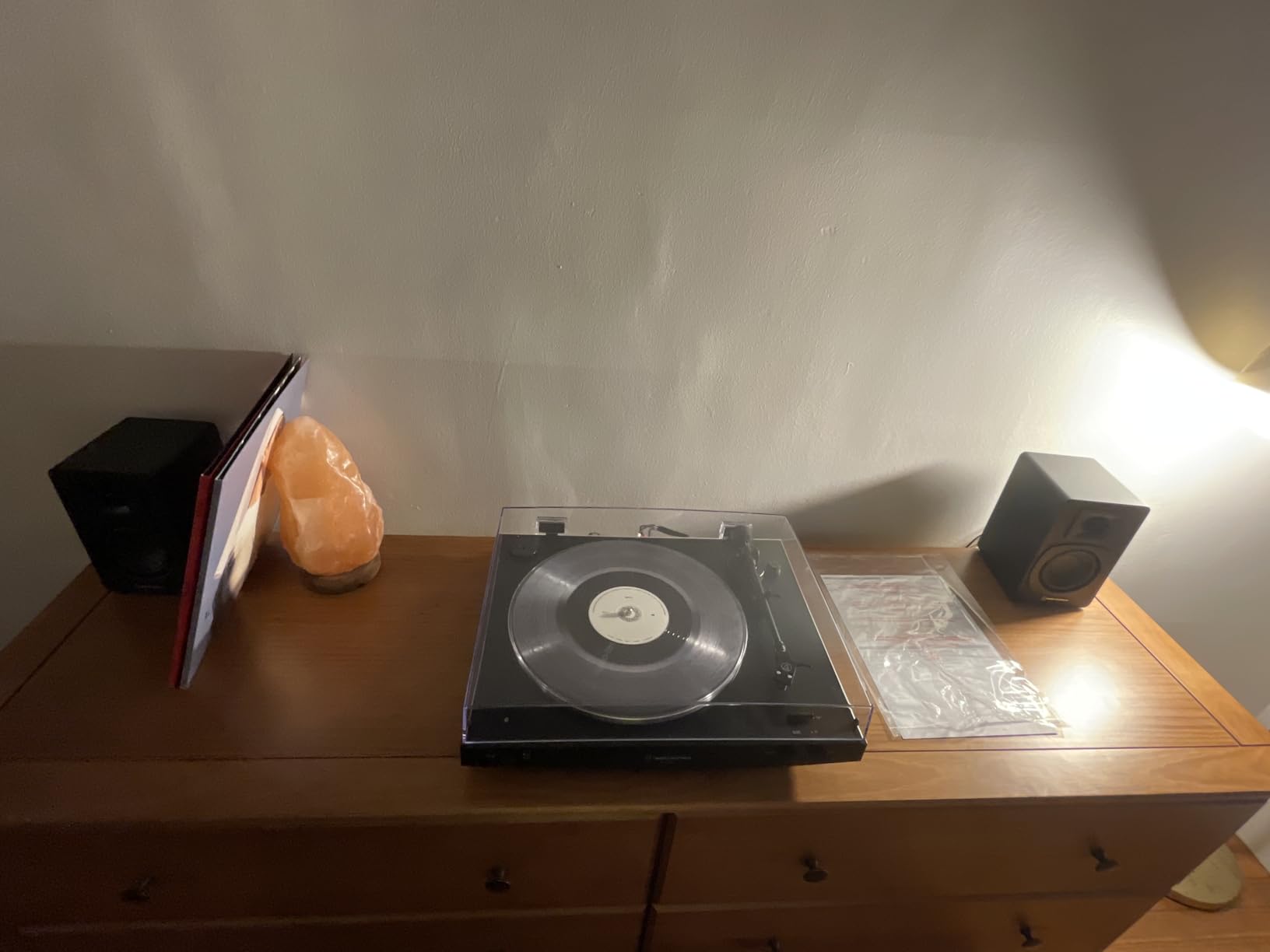
Audio-Technica designed the AT-SP3X with vinyl listeners in mind, and that focus shows. I paired these with an Audio-Technica turntable and the combination looked and sounded like it was meant to be together. The compact white speakers sit unobtrusively on a shelf while delivering sound that belies their small footprint.
The multipoint Bluetooth is a standout feature at this price. I had both my phone and laptop connected simultaneously, and the speakers automatically switched to whichever device was playing audio. This eliminated the constant pairing and unpairing that most Bluetooth speakers require when you use multiple sources.
Sound quality exceeds expectations for 3-inch drivers. The frequency tuning gives a full-bodied presentation with impressive bass weight for the cabinet size. Vocals have a natural, present quality that works beautifully with the warm character of vinyl playback. The 1.1-inch tweeter handles high frequencies without harshness.
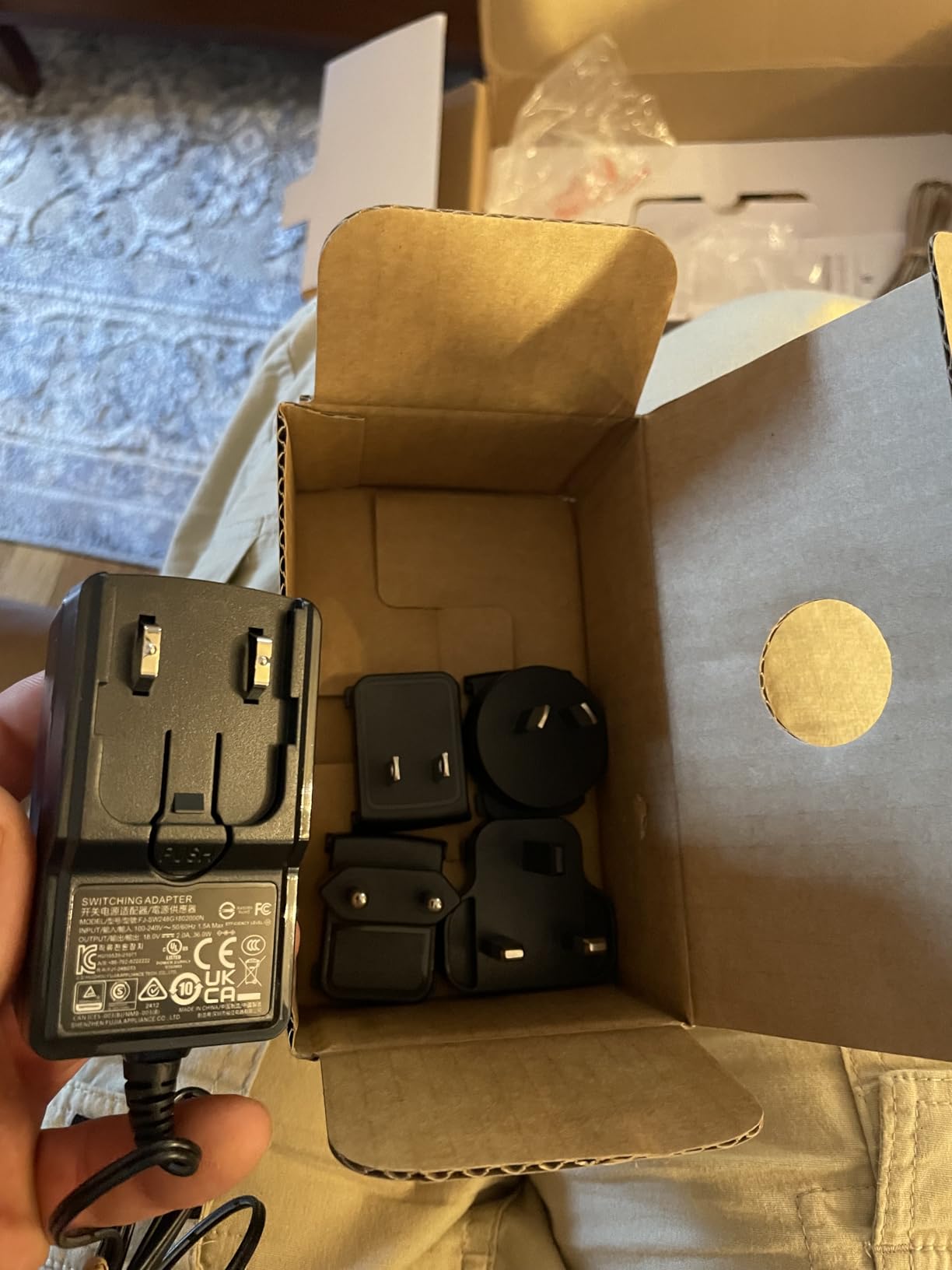
At just 1.45 kg per speaker, these are easy to place on any surface. The volume dial on the front of the active speaker is a welcome change from rear-mounted controls. My only real complaint is the lack of a headphone jack and remote control, which would have made these nearly perfect for a compact listening station.
Best Use Cases for the Audio-Technica AT-SP3X
These speakers are purpose-built for compact turntable setups in bedrooms, offices, or small apartments. The multipoint Bluetooth makes them equally useful for streaming from your phone when you are not playing records. Their small size and clean design fit well in minimalist or modern living spaces.
Who Should Look Elsewhere
Anyone needing optical or USB digital inputs should consider other options since the AT-SP3X only offers RCA and Bluetooth. The lack of a remote is frustrating if the speakers are not within arm’s reach. Listeners in rooms larger than 150 square feet may want larger drivers for adequate coverage.
10. JBL 305P MkII – Professional Studio Reference Monitors
(2) JBL 305P MkII 5″ 2-Way Active Powered Studio Reference Monitors Speakers
112W Total
5-inch Woofer
Image Control Waveguide
XLR/TRS Inputs
Boundary EQ
Pros
- Patented Image Control Waveguide for precise imaging
- Crystal clear balanced sound
- Tight controlled bass
- Professional XLR and TRS inputs
- Excellent for mixing and production
Cons
- Requires audio interface or mixer
- Some hiss at high volumes
- No Bluetooth or consumer inputs
- Higher price than consumer options
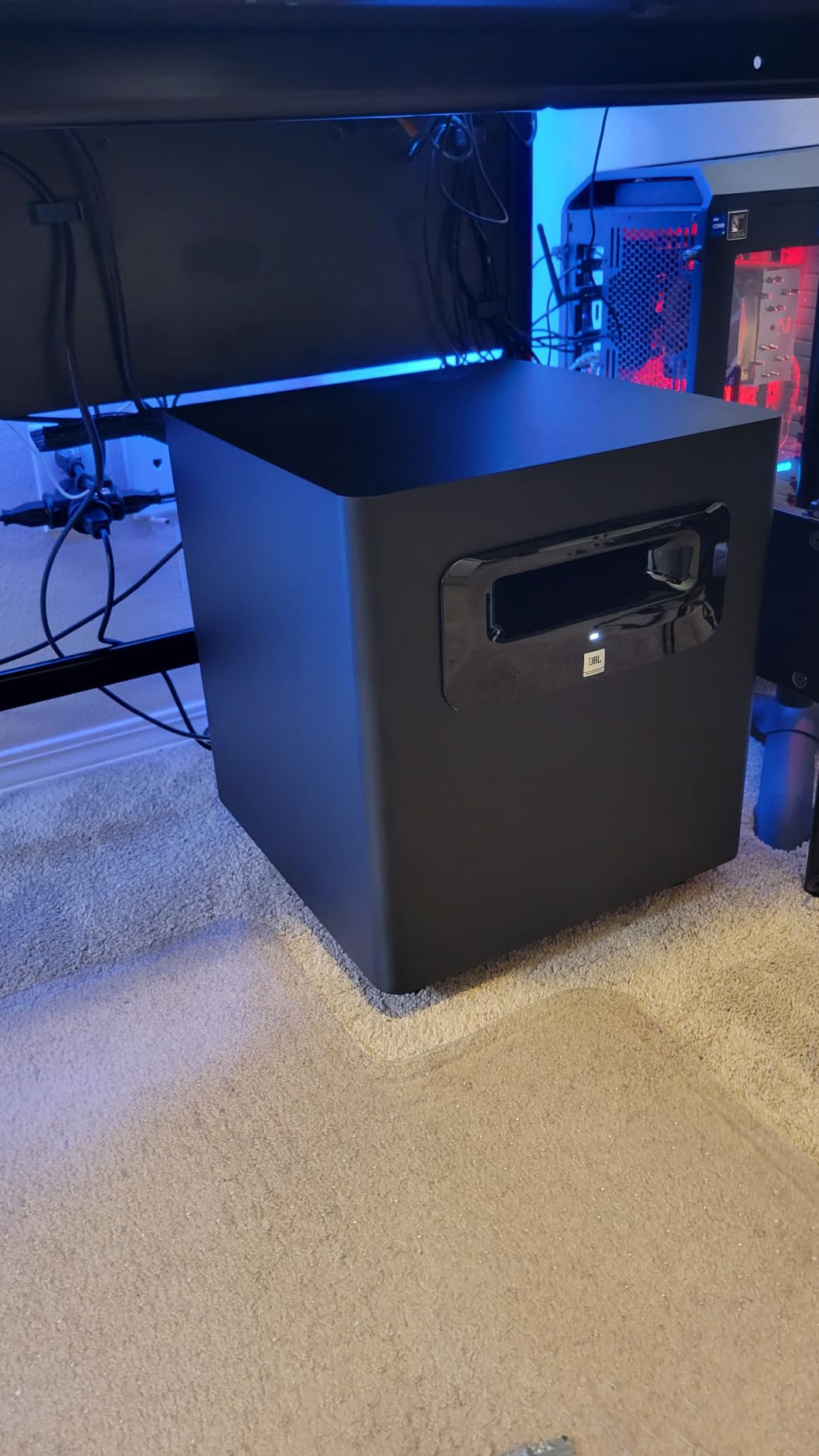
The JBL 305P MkII is a studio monitor in the truest sense. These are not designed to make your music sound good. They are designed to show you exactly what your music sounds like, flaws and all. After using them for a month of mixing work, I can confirm they reveal problems that lesser monitors simply mask.
The Image Control Waveguide is JBL’s patented technology that creates an incredibly wide sweet spot. In most near-field monitors, moving your head a few inches off-center changes the frequency response noticeably. With the 305P MkII, I could move around my desk and maintain consistent stereo imaging and tonal balance. This matters during long mixing sessions.
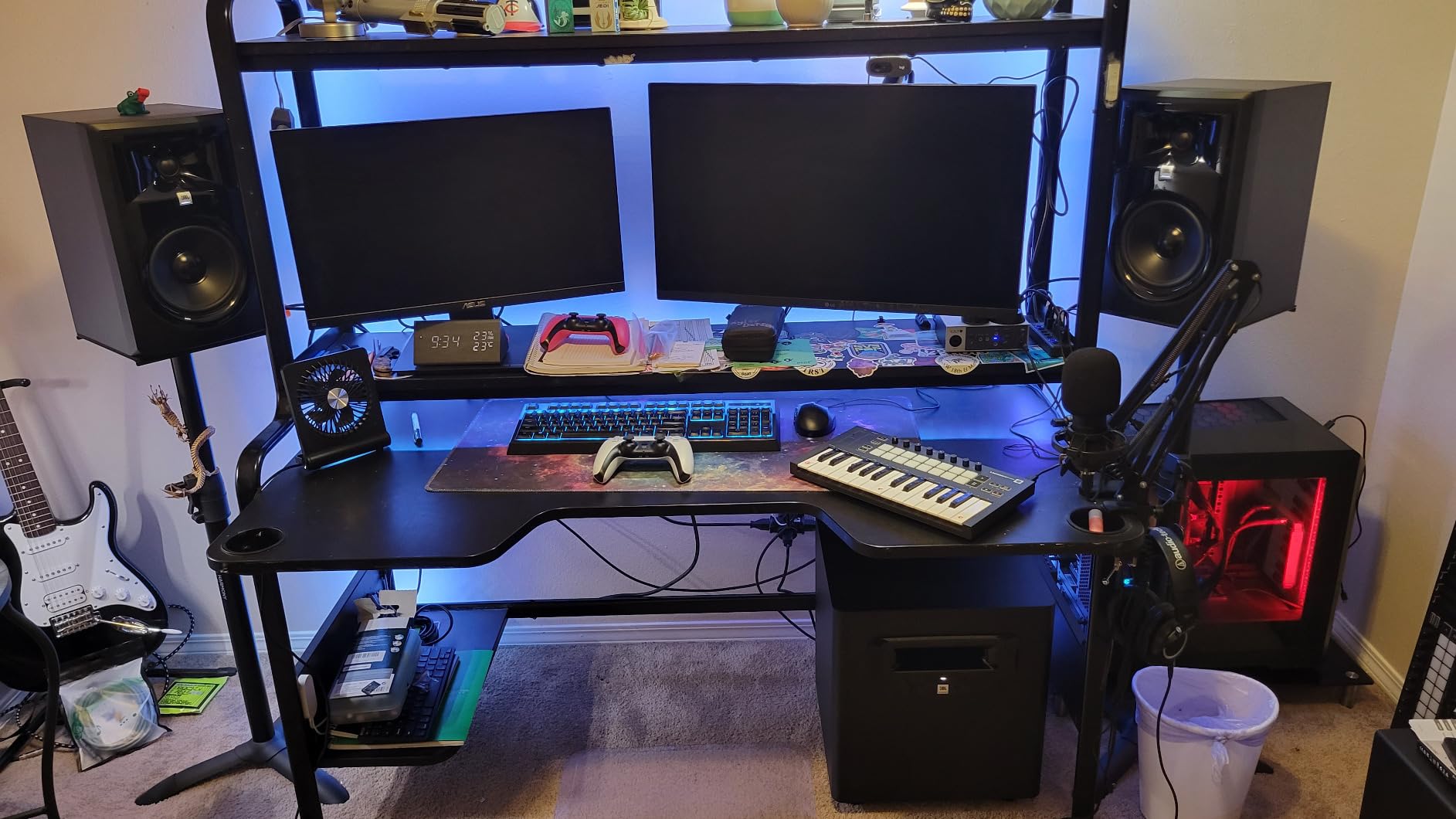
The dual 41-watt Class-D amplifiers deliver plenty of clean power for near-field listening. The 5-inch woofer produces tight, controlled bass that extends low enough to hear kick drums clearly without the boominess that consumer speakers often add. The Slip Stream port technology contributes to this by reducing port noise at higher volumes.
The boundary EQ and HF trim controls on the back panel let you compensate for room acoustics and speaker placement. I had these sitting close to a wall and reducing the boundary EQ by a couple of dB cleaned up the bass buildup immediately. This kind of adjustability is what separates professional monitors from consumer speakers.
Best Use Cases for the JBL 305P MkII
Home studio producers who need accurate monitoring for mixing and mastering will get the most value from these speakers. They also serve well as reference monitors for video editing and podcast production. The wide sweet spot makes them forgiving of desk layout constraints.
Who Should Look Elsewhere
These are not casual listening speakers. The flat, analytical sound will not flatter poorly recorded material the way consumer speakers do. You will need an audio interface or mixer since there are no RCA or 3.5mm inputs. Anyone wanting Bluetooth convenience should consider the Edifier MR3 instead.
11. Yamaha HS5 Powered Studio Monitors – Flat Response Standard
YAMAHA Hs5 Powered Studio Monitor, Pair
70W Bi-Amp
5-inch Woofer
Flat Response
XLR/TRS
MDF Enclosure
Pros
- Exceptionally flat neutral response
- Wide stereo field for mixing
- Professional bi-amplified design
- No coloring of original audio
- Robust MDF build quality
Cons
- Limited bass compared to larger monitors
- Rear-ported needs wall clearance
- Requires audio interface
- No Bluetooth or consumer inputs
The Yamaha HS5 carries the legacy of the legendary NS-10 studio monitors. These are the speakers that recording engineers trust to tell them the truth about their mixes. I spent three weeks using the HS5 as my primary mixing reference, and the experience reinforced why these monitors have become a studio standard.
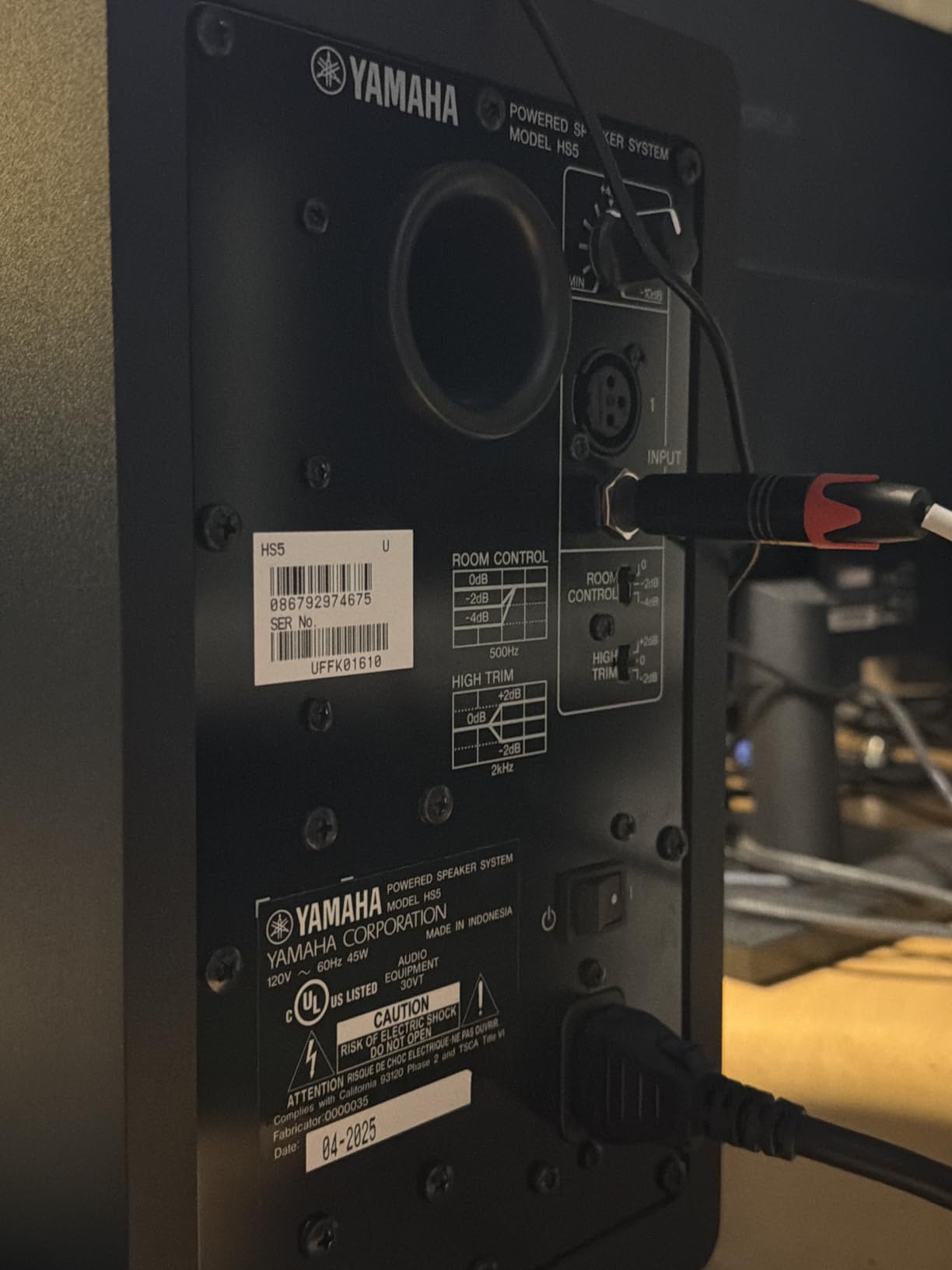
The bi-amplified design delivers 45 watts to the 5-inch woofer and 25 watts to the 1-inch dome tweeter. This dedicated amplification means each driver receives exactly the power it needs, resulting in a cleaner, more accurate frequency response than single-amp designs. The sound is flat, honest, and sometimes brutal in revealing recording flaws.
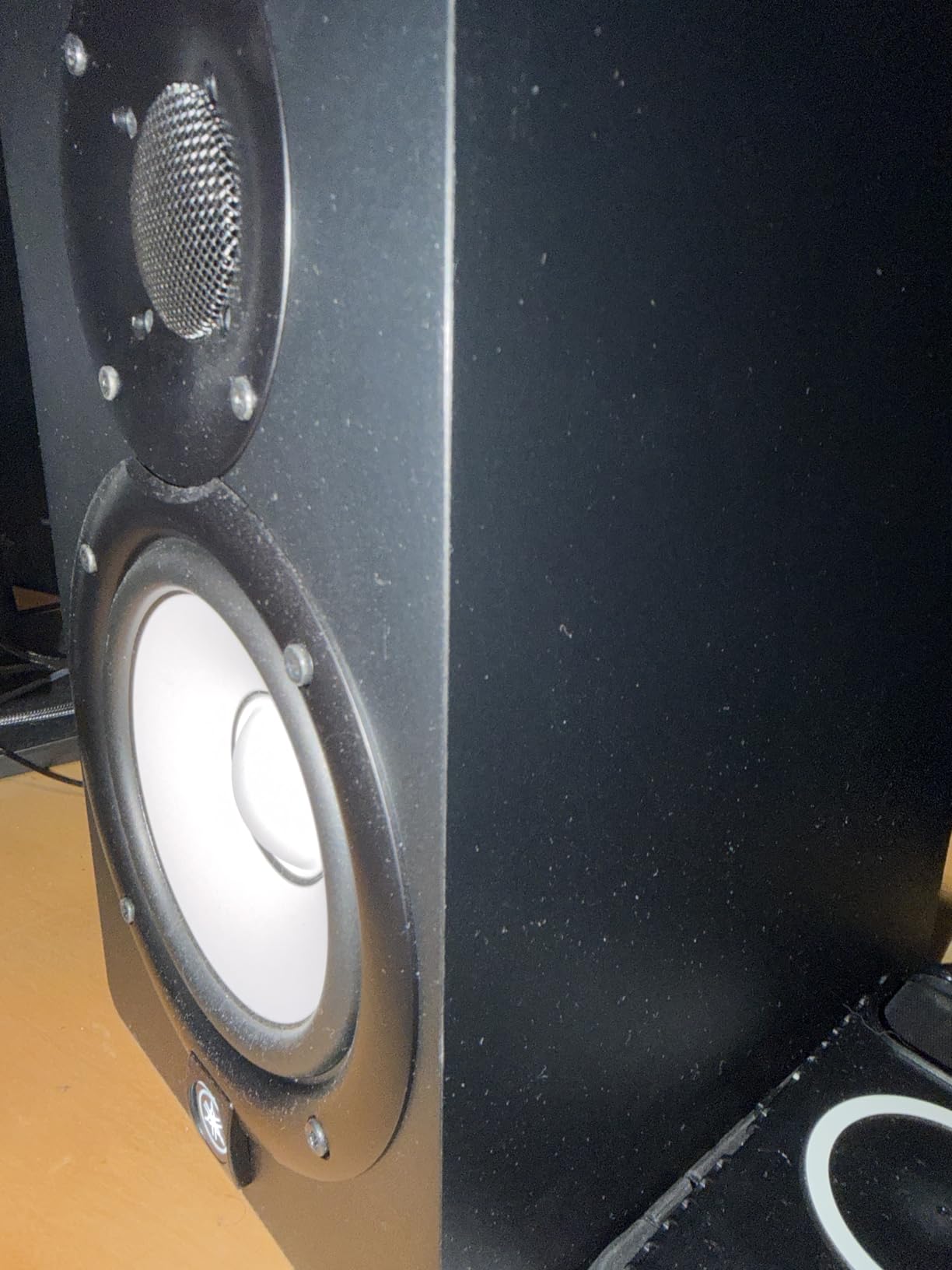
What impressed me most was the stereo imaging. When mixing, I could place instruments precisely in the soundstage and trust that the positioning would translate to other playback systems. The frequency response spans 54Hz to 30kHz, which covers the critical range for mixing decisions even if it does not deliver sub-bass rumble.
The rear porting means you need to keep these speakers at least 12 inches from the wall to avoid bass buildup. In my treated room with proper placement, the HS5 delivered a clean, uncolored sound that made mixing decisions easier and more confident. The XLR and TRS balanced inputs ensure noise-free connection to professional audio interfaces.
Best Use Cases for the Yamaha HS5
These are purpose-built for mixing, mastering, and any audio production work where accuracy matters more than flattery. Guitarists using amp simulation software will appreciate the honest reproduction. They also work well for critical listening sessions where you want to hear recordings exactly as they were made.
Who Should Look Elsewhere
Casual listeners who want their music to sound warm and pleasant may find the HS5 too analytical. The limited bass extension below 54Hz means electronic music producers should consider adding the matching HS8S subwoofer. You must have an audio interface since there are no consumer-level inputs available.
12. Klipsch R-51PM – Versatile Connectivity With Phono Preamp
Klipsch R-51PM Powered Bluetooth Speaker,Black
120W Total
5.25-inch Woofer
Bluetooth
Built-In Phono Preamp
USB Input
Pros
- Built-in phono preamp for turntables
- Multiple inputs including USB and optical
- Powerful 5.25-inch copper drivers
- Bluetooth with good range
- Remote control included
Cons
- Remote requires line of sight
- Audible hiss when idle
- Volume controlled by speaker remote only
- Bass may need subwoofer augmentation
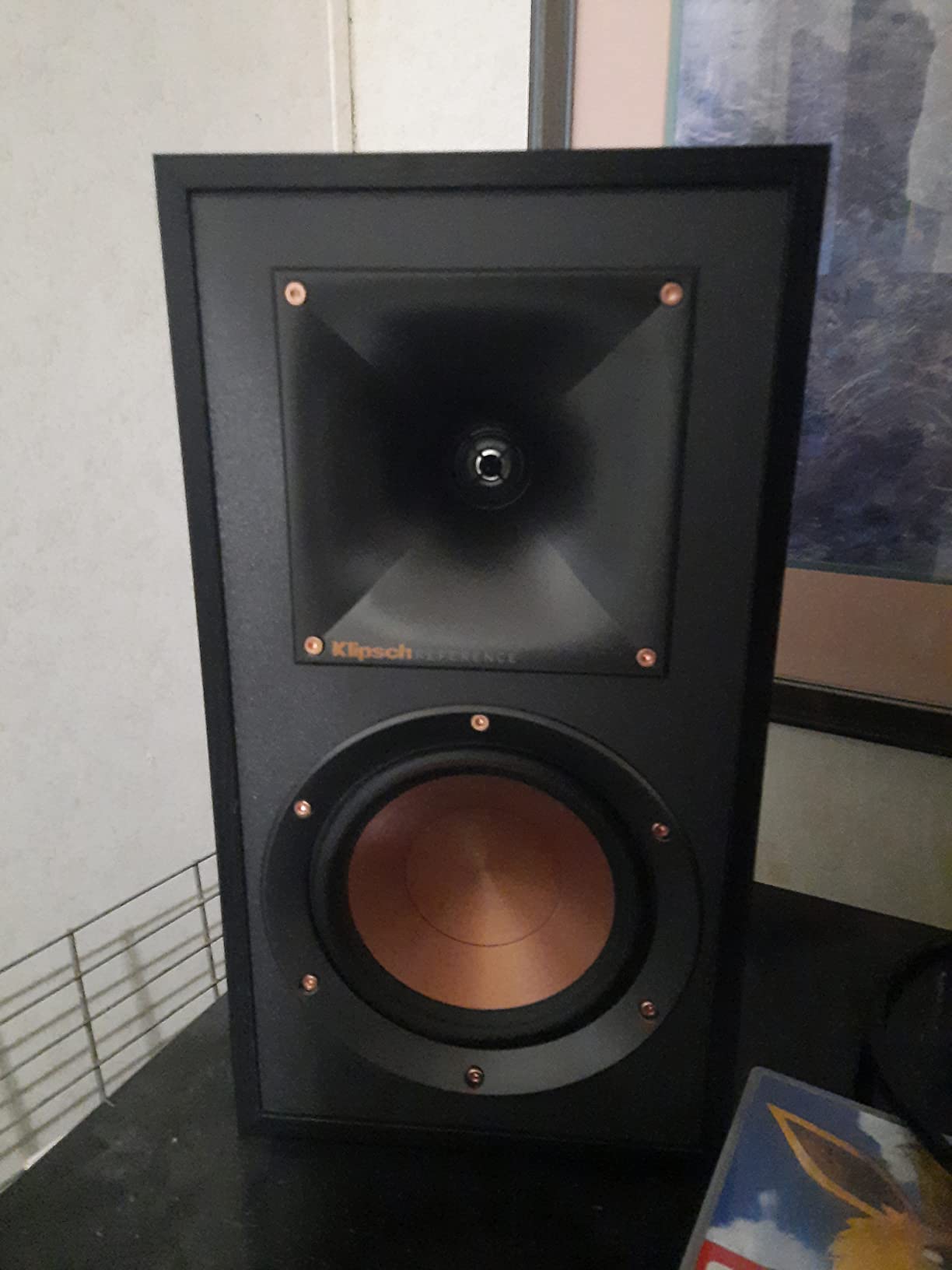
The Klipsch R-51PM is one of the most versatile powered speakers available. In my testing, I connected a turntable to the phono input, a TV to the optical input, a computer to USB, and streamed from my phone via Bluetooth. That is four different sources on one pair of speakers with no external hardware required.
The built-in phono preamp is a genuine convenience. I tested it with both moving magnet cartridges and got clean, quiet performance with proper RIAA equalization. While dedicated external phono stages may offer better resolution, the convenience of having one built in means one less component to buy, power, and connect.
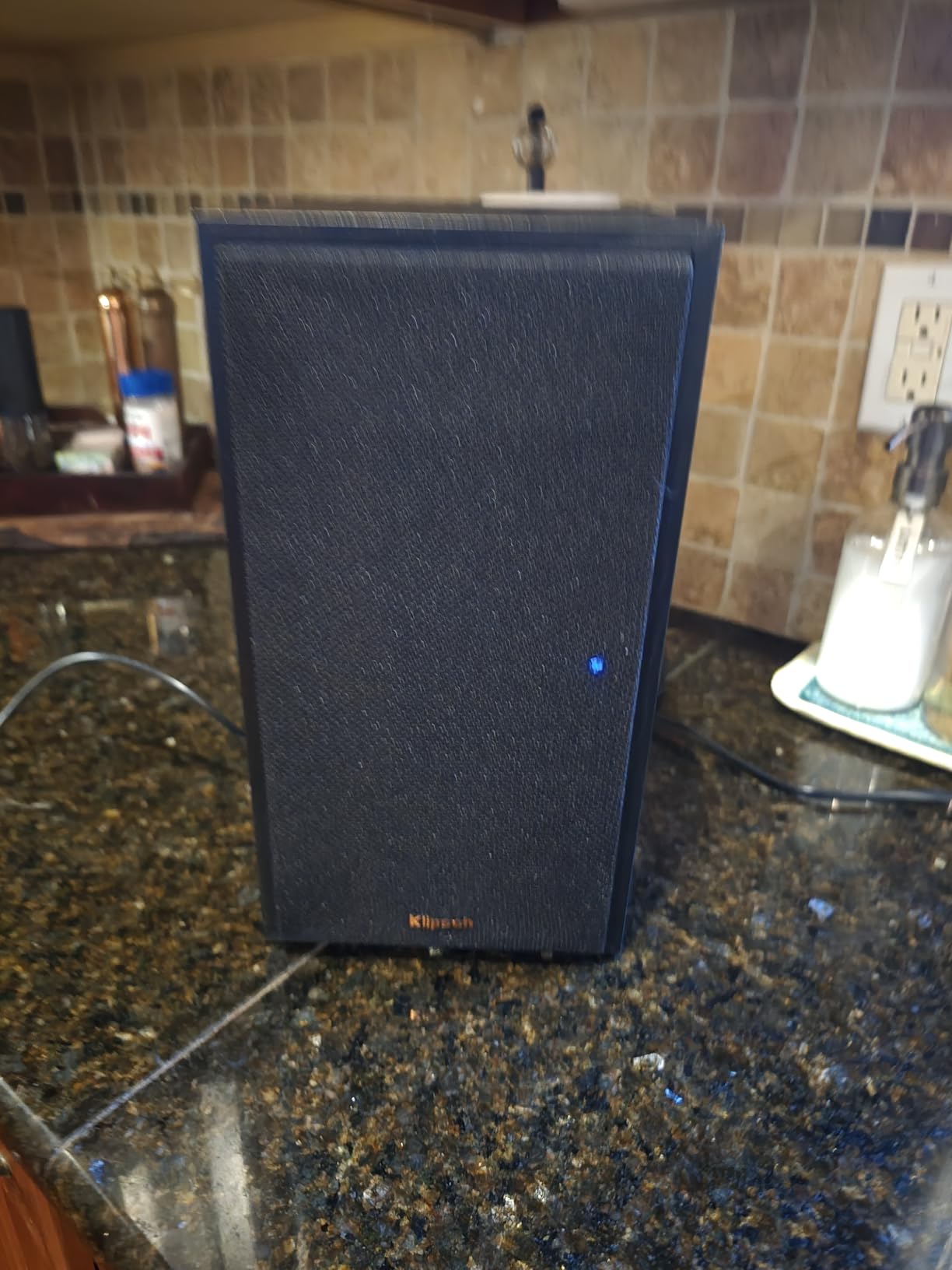
The 5.25-inch spun-copper woofers deliver the kind of bass weight that 4-inch drivers simply cannot match. Combined with the Tractrix horn tweeter, the R-51PM produces the bold, dynamic Klipsch sound that works beautifully for rock, pop, and home theater use. The 120 watts of total power gives these speakers real headroom for dynamic peaks.
I did notice a faint hiss when sitting close to the speakers during quiet passages. This is common with powered speakers at this price point and is only audible in very quiet rooms at near-field distances. The included remote handles volume, input switching, and mute, though it requires a direct line of sight to the speaker.
Best Use Cases for the Klipsch R-51PM
These are ideal for anyone who wants a single pair of speakers to handle multiple audio sources in a living room or entertainment space. Vinyl enthusiasts who also stream music and watch TV will appreciate the all-in-one connectivity. The 5.25-inch drivers fill medium to large rooms with ease.
Who Should Look Elsewhere
Near-field desktop users may find the hiss distracting during quiet work sessions. The remote-only volume control is inconvenient if your speakers are hard to reach. Anyone wanting a flat, analytical sound for studio work should look at the Yamaha HS5 or JBL 305P MkII instead.
13. KRK RP5G5 ROKIT 5 Generation Five – DSP Room Tuning
KRK RP5G5 ROKIT 5 Generation Five 5″ Powered Studio Monitor Pair
82W Total
5-inch Kevlar Drivers
DSP Room Tuning
XLR/TRS Combo
Isolation Pads Included
Pros
- DSP-driven room tuning with 25 combinations
- New silk dome tweeter with improved clarity
- Includes acoustic isolation pads
- Kevlar drivers for accurate response
- Class D amps run cool
Cons
- Limited bass without subwoofer
- Best results require matching KRK subwoofer
- Break-in period needed for optimal sound
- Requires audio interface for connection
The fifth generation of KRK’s ROKIT series brings meaningful improvements over the previous models. The new 1-inch silk dome tweeter replaces the older titanium design, and the difference is immediately audible. High frequencies are smoother and less fatiguing during long sessions. I noticed less ear strain after a full day of editing compared to the Generation 4 models.
The DSP-driven room tuning is where these monitors set themselves apart. You get 25 different EQ combinations to compensate for your room acoustics and speaker placement. I tested several configurations in my untreated office and found settings that noticeably improved the low-mid clarity that was being muddied by desk reflections.
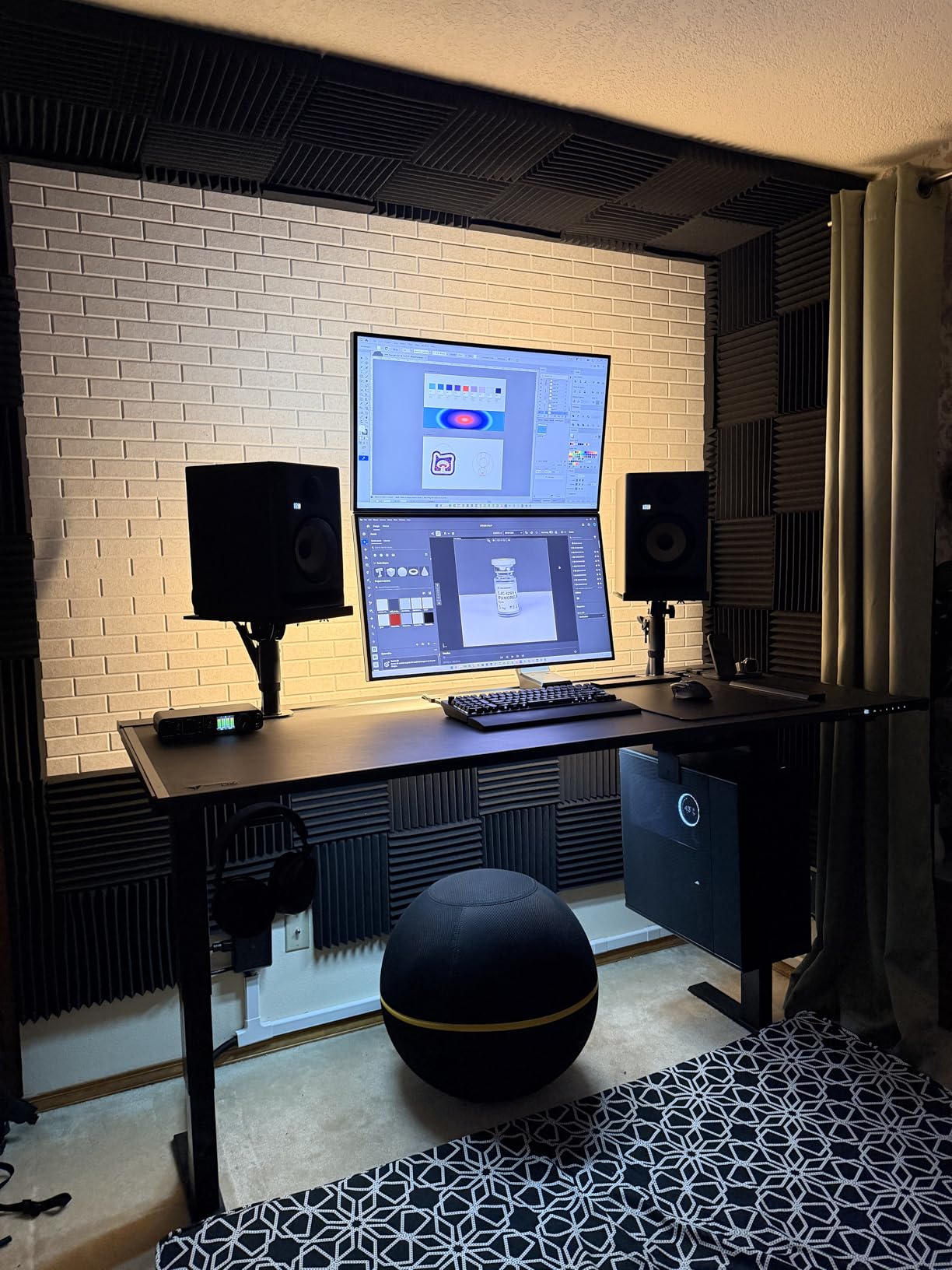
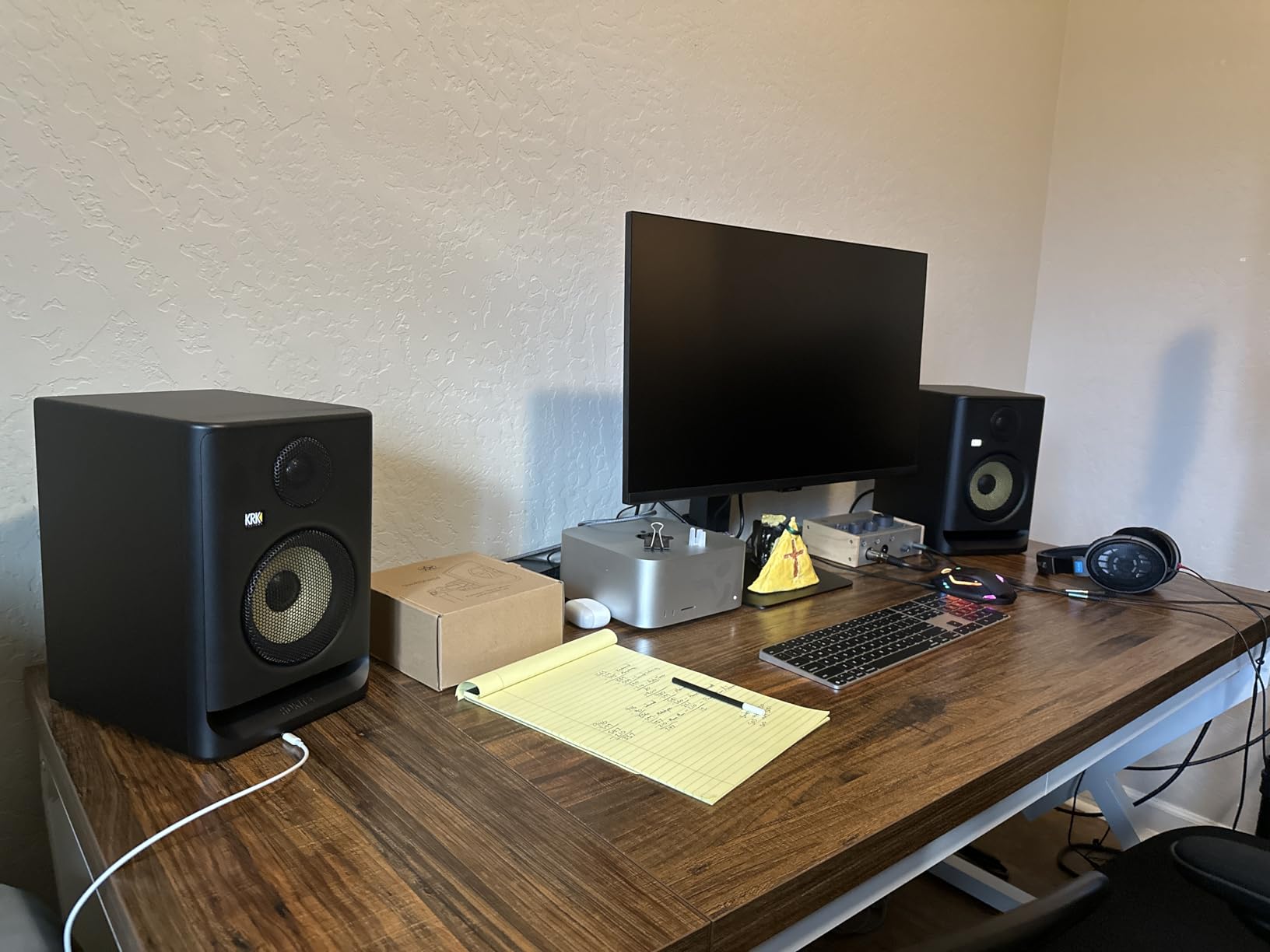
KRK includes acoustic foam wedge isolation pads in the box, which is a thoughtful addition that saves you from buying them separately. These pads decouple the monitors from your desk or stands, reducing vibrations that color the sound. The 5-inch Kevlar drivers deliver accurate mids and smooth highs, though the bass extension is modest without a subwoofer.
Running at 82 watts total with Class D amplification, the ROKIT 5 Gen 5 stays cool even during extended sessions. The low diffraction baffle design reduces edge reflections that can smear the stereo image. After a 20-hour break-in period, the drivers settled into a balanced, musical presentation that served well for both production work and critical listening.
Best Use Cases for the KRK ROKIT 5 Gen 5
Home studio producers who need room tuning capability without buying external correction software will benefit most from the built-in DSP. These are also a good choice for anyone upgrading from budget monitors who wants professional-grade accuracy. The included isolation pads make them ready for immediate desktop deployment.
Who Should Look Elsewhere
Electronic and hip-hop producers who need deep bass for accurate low-end mixing should plan on adding the KRK 10S2 subwoofer. Casual listeners wanting Bluetooth or easy phone connectivity should look at the Edifier or Klipsch options. The XLR/TRS combo inputs require an audio interface or mixer.
14. ADAM Audio D3V – Ribbon Tweeter Desktop Monitors
ADAM Audio D3V Active Desktop Studio Monitor Speakers – Black
80W Total
Ribbon Tweeter
USB-C Connection
DSP Room Correction
Passive Radiators
Pros
- Unique ribbon tweeter for crystal clear highs
- USB-C direct connection to computer
- DSP room correction with 27 combinations
- Passive radiators extend bass to 45Hz
- Detachable angled stands included
Cons
- No Bluetooth connectivity
- USB input is 16-bit only
- Proprietary interconnect cable
- Manual input switching required
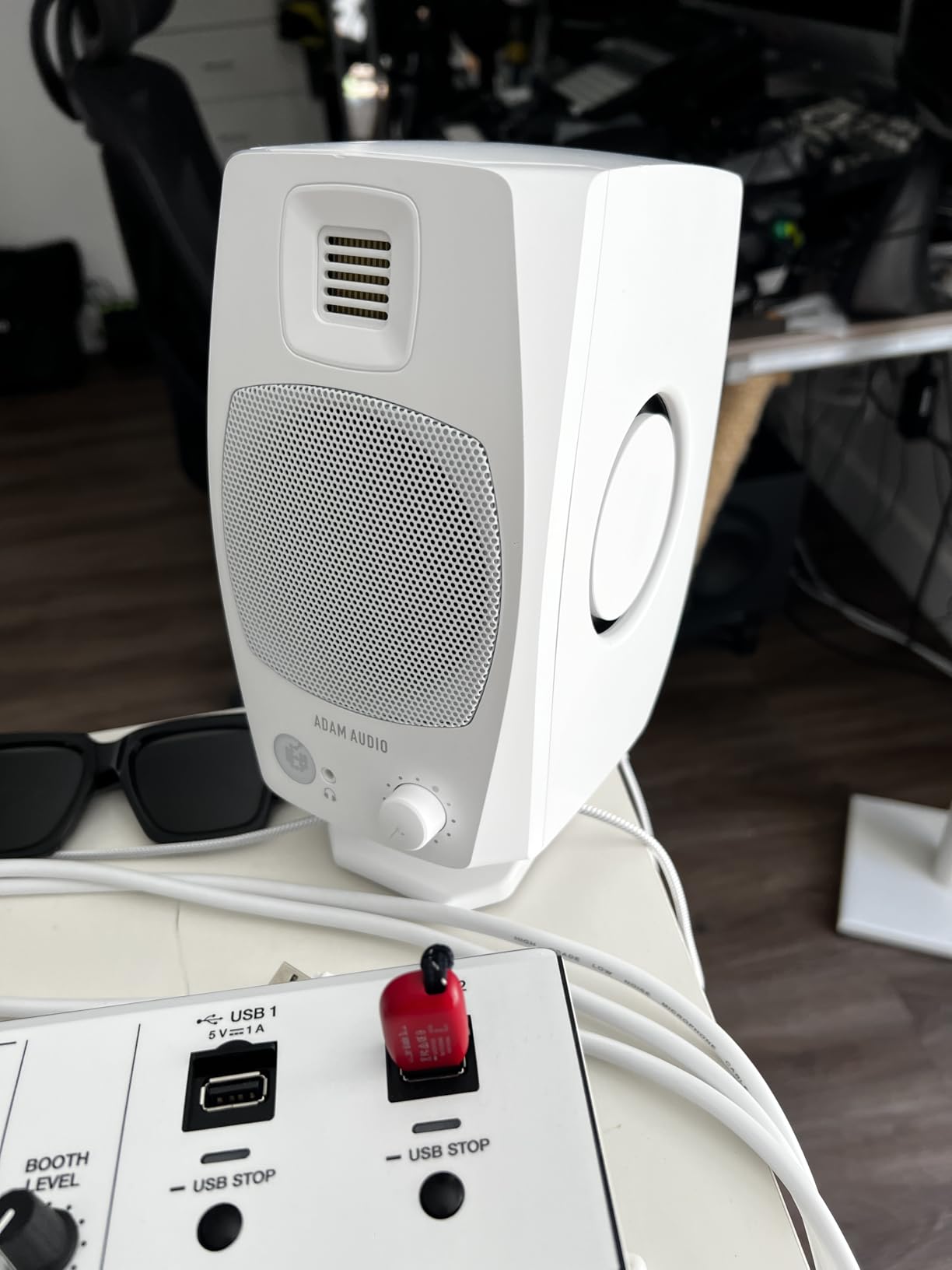
The ADAM Audio D3V brings professional ribbon tweeter technology to desktop monitors at an accessible price point. The D-ART (Desktop Accelerated Ribbon Tweeter) produces high frequencies with a delicacy and air that conventional dome tweeters struggle to match. Listening to string quartets and acoustic recordings through these monitors reveals overtones and room ambience that dome tweeters simply gloss over.
USB-C connectivity is a major convenience for desktop users. I connected the D3V directly to my MacBook with a single cable for both audio and power. No audio interface, no external DAC, no extra cables. The simplicity is appealing, though audiophiles should note the USB input operates at 16-bit resolution. For critical listening, I connected an external DAC to the RCA inputs for full 24-bit playback.
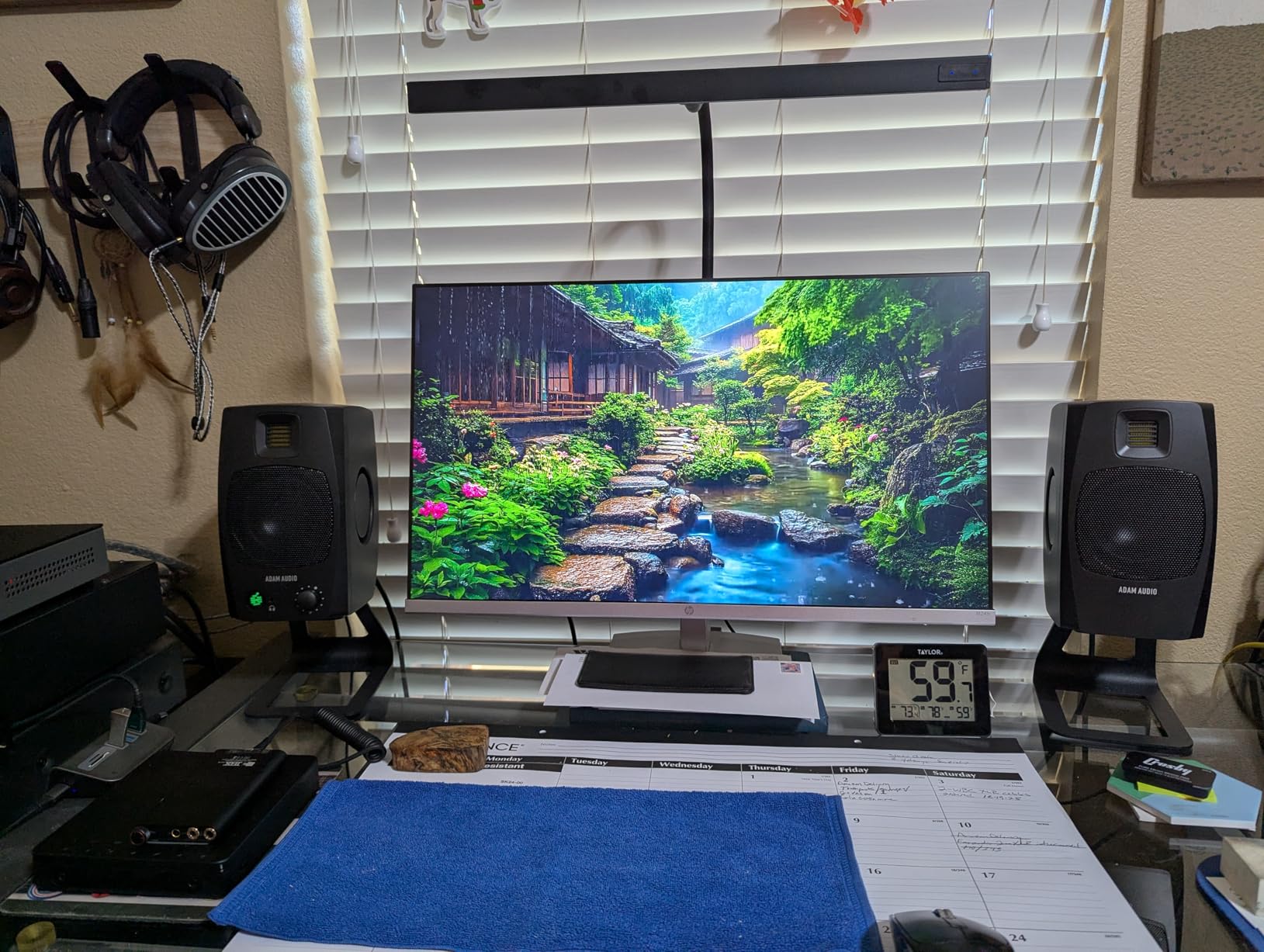
The dual-sided 3.5-inch passive radiators extend the bass response down to 45Hz, which is impressive for speakers this size. The aluminum woofers with ferrite magnets produce tight, controlled bass that works well for both music production and casual listening. The DSP room correction offers 27 combinations to help tame problematic room acoustics.
ADAM includes detachable monitor stands with a 15-degree angle that positions the tweeters at ear level from a typical desk. This is a small detail that makes a real difference in listening comfort and accuracy. The front-panel headphone jack and volume knob are conveniently placed, and the firmware update lets you disable the auto-sleep mode that some users found annoying.
Best Use Cases for the ADAM Audio D3V
Desktop producers who want ribbon tweeter clarity without spending thousands will find the D3V compelling. The USB-C connection makes these ideal for laptop-based music production setups where minimizing equipment is a priority. They also serve well as high-end desktop speakers for critical listening and audio editing work.
Who Should Look Elsewhere
Anyone wanting Bluetooth for casual wireless streaming should consider the Edifier MR3 instead. The 16-bit USB limitation means serious audiophiles should plan on using the analog inputs with an external DAC. The proprietary speaker cable between left and right monitors limits replacement options if damaged.
15. Bose S1 Pro+ – Portable PA Powerhouse
Bose S1 Pro+ All-in-One PA Speaker – Powered, Wireless PA System, Multiple Positioning Options, Ergonomic Carry Handle, Up to 11 Hours of Playtime, Black
150W Output
Battery Powered 11hrs
Bluetooth
Auto EQ
3-Channel Mixer
Pros
- Exceptional sound quality with balanced tones
- Four positioning modes with auto EQ
- Built-in 3-channel mixer with reverb
- Up to 11 hours battery life
- Wireless RF receiver for microphones
Cons
- Premium price point
- Battery life varies with volume
- No dedicated app for advanced control
- Heavy for frequent transport
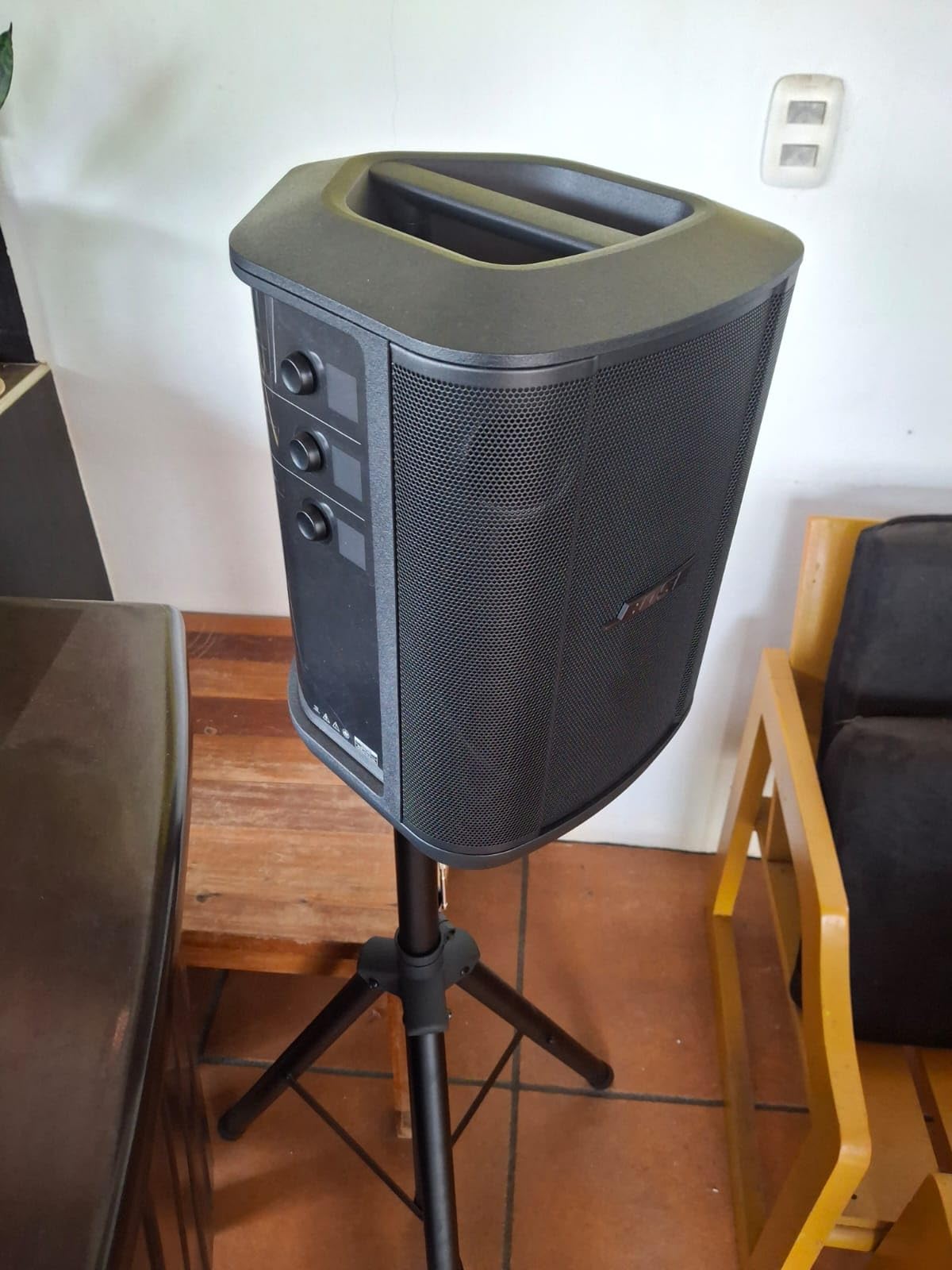
The Bose S1 Pro+ is a completely different category from the other speakers in this guide. It is a portable PA system that doubles as a remarkably good powered speaker for music playback. I used it for a backyard gathering of about 30 people, and the 150-watt output filled the outdoor space with clear, balanced sound that impressed everyone present.
The four positioning options set this apart from any conventional speaker. You can stand it vertically, tilt it back as a floor monitor, lay it horizontally, or mount it on a standard speaker stand. Each orientation triggers the auto EQ to optimize the sound for that position. I tested all four and the transitions were seamless.
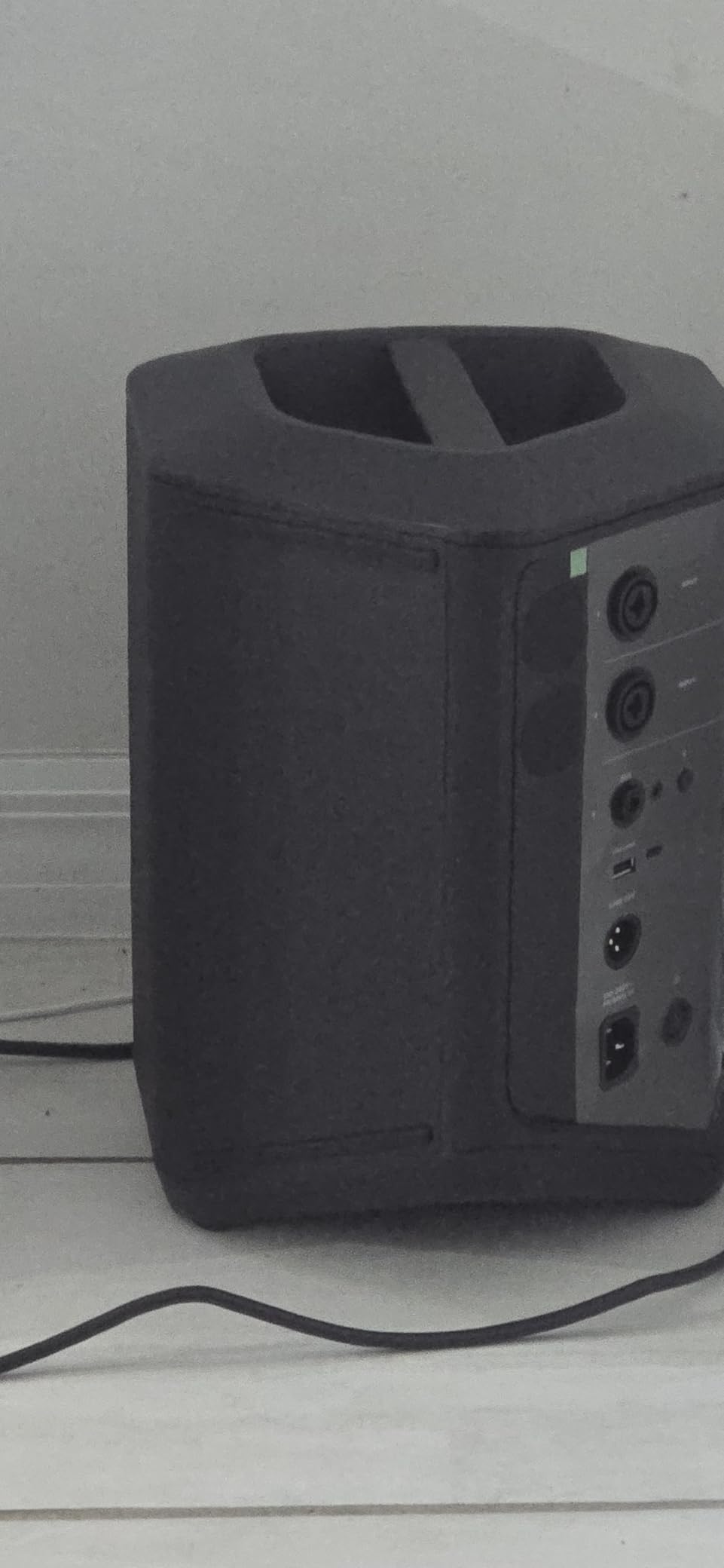
The integrated 3-channel mixer handles a microphone, instrument, and Bluetooth source simultaneously. I connected a vocal mic to channel one, my guitar to channel two, and streamed backing tracks from my phone via Bluetooth. The built-in reverb and tone controls let me shape the sound without any external mixer. This is a complete portable performance system in a single unit.
Battery life is rated at up to 11 hours, though my real-world testing showed closer to 6 to 8 hours at moderate outdoor volumes. At maximum volume in direct sunlight, expect more like 2 to 3 hours. The rechargeable lithium-ion battery eliminates the need to find power outlets at gig locations, which is liberating for buskers and event performers.
Best Use Cases for the Bose S1 Pro+
Musicians who perform at small venues, outdoor events, or house concerts will get the most value from the S1 Pro+. It also works well as a premium speaker for large patios, workshops, or garage gyms where portability and power matter more than compact size. The all-in-one mixer makes it perfect for solo performers and public speakers.
Who Should Look Elsewhere
If you are looking for bookshelf speakers for a home stereo or desktop setup, this is overkill in size, weight, and capability. The premium price reflects the portable PA functionality that most home listeners do not need. Anyone wanting a traditional stereo pair for music appreciation should consider the Klipsch R-51PM or Edifier options instead.
Buying Guide: How to Choose the Best Powered Speakers
Choosing the right powered speakers comes down to matching the features and sound character to your specific setup. After testing all 15 models in this guide, here are the factors that matter most when making your decision.
Connectivity: Match Your Sources
The inputs on your powered speakers determine what you can connect without extra hardware. If you have a turntable, look for speakers with a built-in phono preamp like the Klipsch R-40PM or R-51PM. For TV use, optical or HDMI ARC inputs make connection simple. Desktop users should prioritize USB-C for digital audio or balanced TRS for professional interfaces. Bluetooth is essential if you stream from your phone regularly.
Room Size and Speaker Power
Matching speaker output to your room prevents disappointment. Desktop and small room setups under 150 square feet work well with 20 to 50 watts total output from compact monitors like the PreSonus Eris 3.5 or Edifier MR3. Medium rooms from 150 to 300 square feet benefit from 50 to 120 watts from models like the Klipsch R-51PM or JBL 305P MkII. Larger spaces and outdoor use demand 150 watts or more, which is territory where the Bose S1 Pro+ excels.
Powered vs Passive: Why Active Wins for Simplicity
Powered speakers have built-in amplifiers matched to the specific drivers in each cabinet. This factory matching eliminates the guesswork of pairing amplifiers with speakers, which is especially valuable for beginners. The trade-off is that you cannot upgrade the amplifier separately. For most listeners building a vinyl rig, desktop system, or casual listening setup, the simplicity of active speakers outweighs the flexibility of passive systems.
Turntable Compatibility for Vinyl Listeners
Connecting a turntable to powered speakers requires either a built-in phono preamp in the speakers or an external phono stage. The Klipsch R-40PM and R-51PM include phono inputs, making them plug-and-play with turntables. Other speakers with RCA or AUX inputs work with turntables that have built-in preamps, or you can add an affordable external phono preamp. Budget forum users frequently note that external phono stages underperform expectations, so investing in a quality one matters for vinyl sound quality.
Sound Signature: Warm vs Flat vs Bright
Speaker sound signatures vary significantly. Edifier’s bookshelf line tends toward a warm, musical presentation that flatters most genres. Studio monitors from Yamaha, JBL, and KRK aim for flat, neutral accuracy that reveals recording details without adding coloration. Klipsch speakers have a characteristic bright, forward sound with strong dynamics that excites rock and pop music. Choose based on whether you prioritize enjoyable listening or analytical accuracy.
Budget Considerations
The powered speaker market spans from under $100 to well over $1000. In the budget tier under $150, the Edifier R980T and R1280T offer remarkable value. The mid-range from $150 to $350 includes strong performers like the Edifier MR3, R1280DBs, and PreSonus Eris 3.5. Premium territory from $350 upward delivers professional-grade options like the Yamaha HS5, ADAM Audio D3V, and Klipsch R-51PM. Your budget should account for any accessories you need, such as speaker stands, audio interfaces, or subwoofers.
Frequently Asked Questions
Do powered speakers sound better than passive speakers?
Powered speakers can sound better than passive speakers in many situations because the built-in amplifiers are specifically matched to the drivers during the design process. This factory optimization eliminates the compatibility issues that can arise when pairing separate amplifiers with passive speakers. However, passive speakers offer more flexibility for upgrading individual components over time. For most listeners wanting a simple, high-quality setup, powered speakers deliver excellent results with less complexity.
Can you use active speakers with a turntable?
Yes, you can connect active speakers to a turntable. You need either a turntable with a built-in preamp, powered speakers with a phono input like the Klipsch R-40PM, or an external phono preamp between the turntable and speakers. Connect the turntable output to the phono input on the speakers or route through an external preamp to the RCA or AUX input. Make sure to connect the ground wire to eliminate hum.
What is the difference between active and passive speakers?
Active speakers have built-in amplifiers and connect directly to audio sources without needing a separate receiver or amplifier. Passive speakers require an external amplifier to power them. Active speakers are simpler to set up, easier to match components, and often include features like Bluetooth and DSP. Passive speakers offer more upgrade flexibility and are preferred in large home theater systems where separate amplification is standard.
What speaker brand has the best sound quality?
Sound quality depends on your specific needs and preferences rather than a single best brand. Yamaha HS5 and JBL 305P MkII deliver the most accurate, flat response for studio work. Klipsch offers dynamic, engaging sound that works well for rock and home entertainment. Edifier provides excellent warm, musical sound at accessible price points. ADAM Audio is known for detailed high-frequency reproduction through their ribbon tweeter technology.
How do you connect powered speakers to a TV?
You can connect powered speakers to a TV using optical digital output if the speakers have an optical input like the Edifier R1280DBs. For TVs with only HDMI output, use an HDMI audio extractor to get optical or analog output. Some TVs have a 3.5mm headphone jack that connects directly to AUX inputs on powered speakers. Bluetooth is an option with compatible speakers, though it may introduce slight audio latency for video content.
Conclusion: Our Top Picks for 2026
After testing 15 models across every common listening scenario, the best powered speakers for most people are the Edifier MR3. They combine Hi-Res Audio certified accuracy with versatile connectivity, app control, and a price that makes sense. The flat response works for both critical listening and casual enjoyment, and the balanced TRS input future-proofs them for any audio interface upgrade.
For vinyl enthusiasts specifically, the Klipsch R-40PM and R-51PM stand out with built-in phono inputs that eliminate the need for a separate preamp. Budget-conscious buyers get outstanding value from the Edifier R1280T and R980T, while studio producers should look at the Yamaha HS5 or JBL 305P MkII for professional-grade accuracy.
The powered speaker market in 2026 offers genuinely excellent options at every price point. Whether you are building your first real audio system, upgrading a desktop setup, or putting together a vinyl listening station, one of the speakers in this guide will serve you well for years to come.