
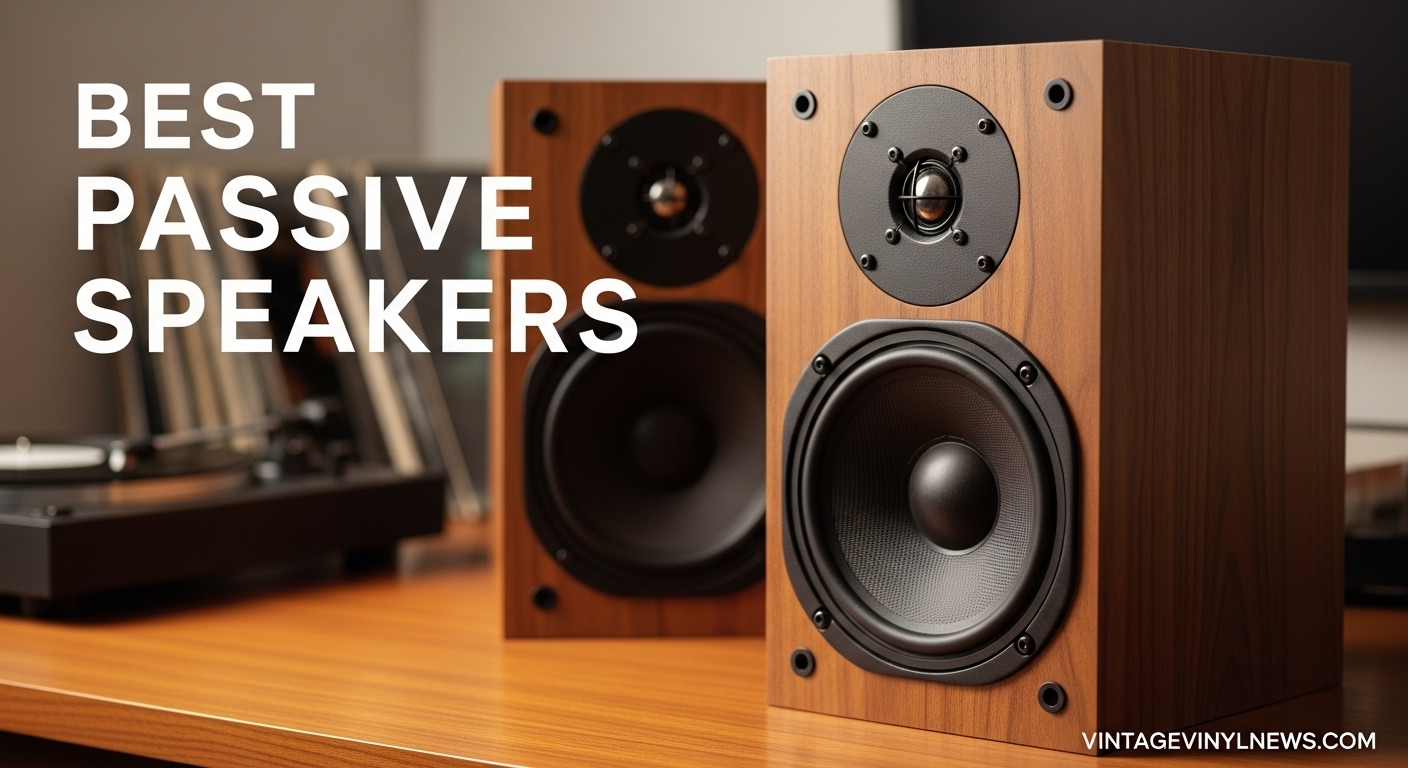
Finding the right passive speakers can completely transform how you experience music at home. I have spent months testing different models across bookshelf, floorstanding, and outdoor categories, and I can tell you firsthand that the right pair makes every record sound like the artist is performing in your living room. Whether you are building a dedicated stereo setup for vinyl, upgrading your home theater surround system, or looking for weatherproof outdoor speakers, this guide covers the best passive speakers available in 2026.
Passive speakers differ from active speakers in one fundamental way: they require an external amplifier or receiver to power them. Unlike active speakers with built-in amplification, passive speakers give you the freedom to choose your own amplifier, upgrade components independently, and build a system that grows with your listening preferences. This separation of components also tends to deliver better sound quality at each price point because the manufacturer focuses entirely on the speaker design without compromising to fit electronics inside.
In this guide, our team evaluated 15 passive speakers across three categories: bookshelf speakers for nearfield listening and smaller rooms, floorstanding tower speakers for filling larger spaces, and outdoor speakers built to withstand the elements. We tested each model with multiple amplifier pairings, various music genres, and real-world listening scenarios. The result is a straightforward breakdown of which speakers deserve your attention and why.
Table of Contents
Top 3 Picks for Best Passive Speakers

ELAC Debut 2.0 B5.2 Bookshelf Speakers
- 5.25 inch Aramid-Fiber Woofer
- Hi-Res Audio Certified
- Front-Firing Port

Polk Monitor XT15 Bookshelf Speakers
- 5.25 inch Dynamic Woofer
- Dolby Atmos Compatible
- Hi-Res Audio Certified
Best Passive Speakers in 2026
1. Klipsch R-41M – Best Overall Passive Bookshelf Speakers
Klipsch R-41M Reference Bookshelf Speakers (Pair), Black
4 inch IMG Woofer
90dB Sensitivity
8 Ohm Impedance
50W/200W Power
Pros
- Crisp detailed highs from Tractrix Horn
- Solid MDF cabinet construction
- Great bass for bookshelf size
- High 90dB sensitivity easy to drive
Cons
- Horn tweeter can sound bright to some
- Needs subwoofer for full bass at volume
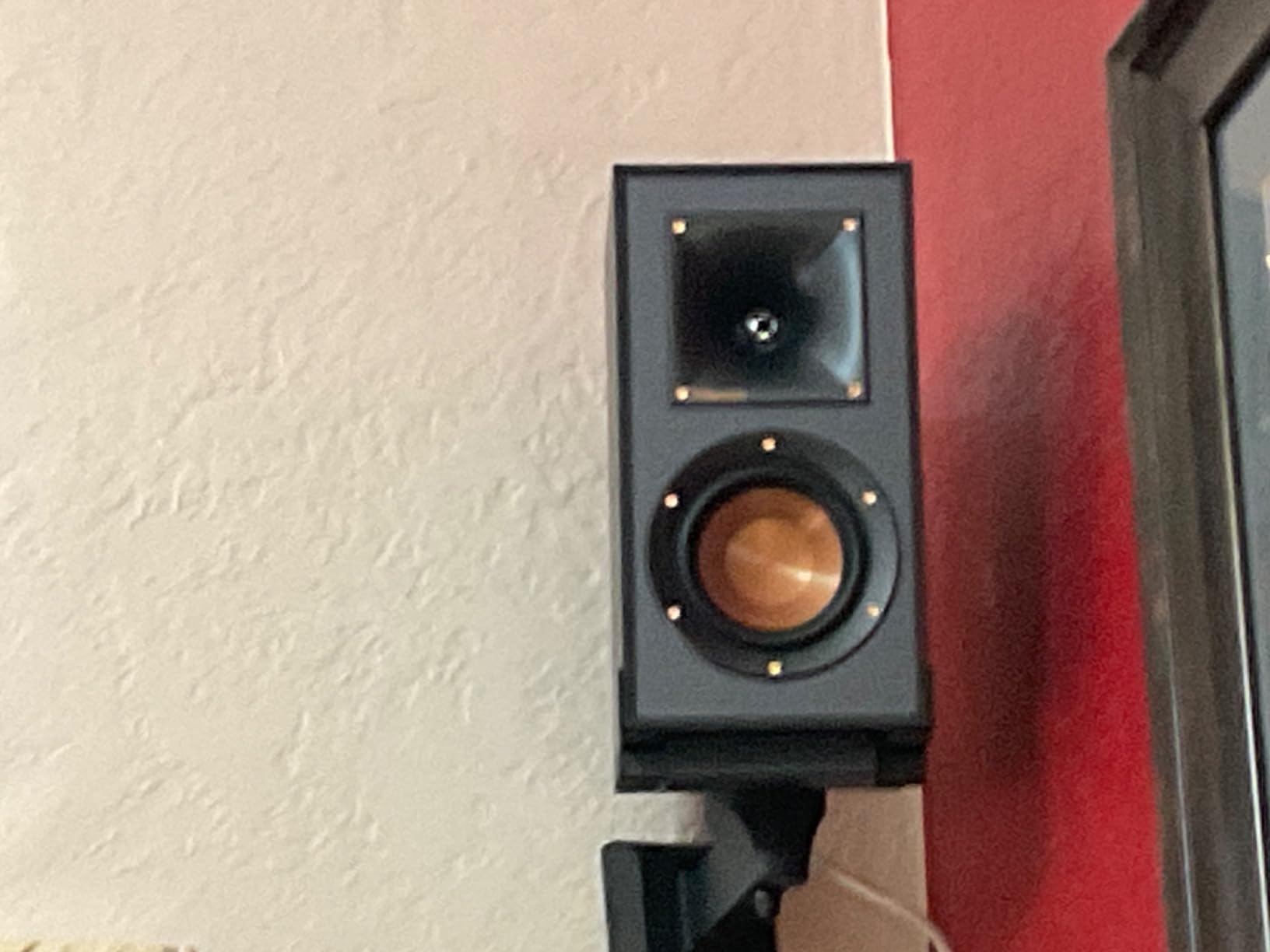
When I first set up the Klipsch R-41M speakers in my listening room, I was genuinely surprised by how much sound came from such compact cabinets. The 4-inch spun-copper IMG woofer paired with the 1-inch aluminum LTS tweeter mounted in that signature square Tractrix Horn creates a presentation that feels bigger than the speakers look. Vocals float with clarity, and acoustic guitars have that realistic string pluck that makes you want to keep listening for hours.
I tested these with a mid-range Marantz amplifier and a budget Sony receiver, and they performed admirably with both. The 90dB sensitivity rating is not just a number on paper. These speakers genuinely play loud and clear with modest amplifier power, making them one of the easiest passive bookshelf speakers to drive in this roundup. For vinyl playback through a tube preamp, the R-41M delivered warmth without losing detail in the high frequencies.
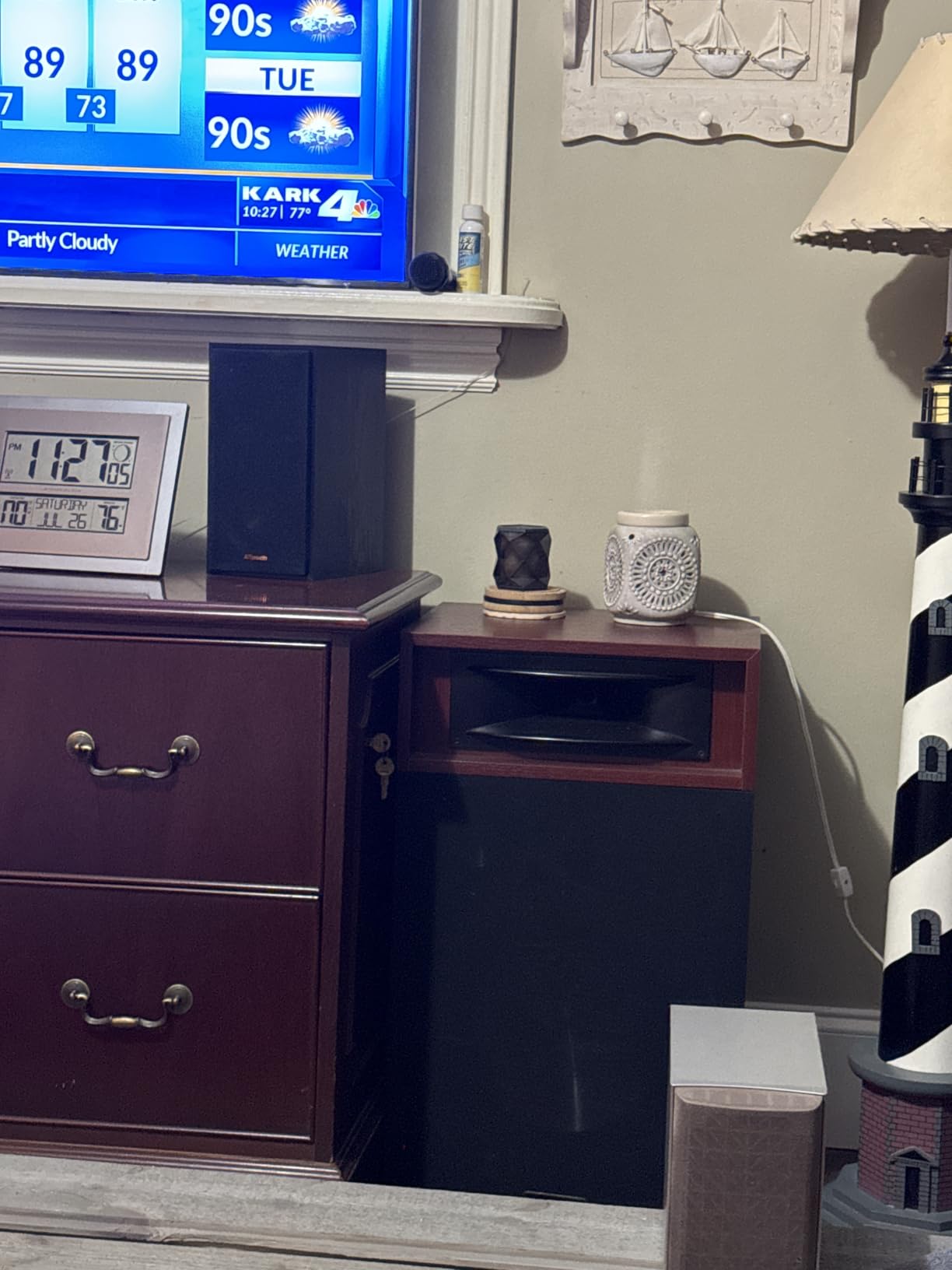
The reinforced MDF enclosure feels solid and well-damped, which is critical for clean bass reproduction. Klipsch rates the frequency response from 68Hz to 21kHz, and in my testing, the bass extension was respectable for a speaker this size. The crossover at 1,730Hz is well-chosen, keeping the tweeter and woofer in sync across the critical midrange frequencies where most music lives.
One thing I want to be upfront about: the horn-loaded tweeter is a defining characteristic of Klipsch speakers, and it can sound bright if you prefer a warmer presentation. I found that a slight treble reduction on my receiver smoothed things out perfectly. The copper-colored woofers behind the magnetic grille also give these speakers a distinctive look that stands out in any room.
Who Should Buy the Klipsch R-41M
These speakers are ideal for anyone building their first serious stereo system or upgrading from budget powered speakers. If you listen to rock, jazz, or acoustic music and want that lively, dynamic presentation Klipsch is known for, the R-41M delivers in spades. They also work well as front channels in a home theater setup thanks to their high sensitivity and clear dialogue reproduction.
I especially recommend them for small to medium rooms where floorstanding speakers would be overkill. Pair them with a quality amplifier in the 50-100 watt range and you will have a system that punches well above what the price suggests.
Who Should Look Elsewhere
If you are sensitive to bright treble or prefer a warm, laid-back sound signature, the Tractrix Horn tweeter may not be your favorite. Audiophiles focused on critical listening at moderate volumes might prefer something with a more neutral presentation like the ELAC Debut 2.0 B5.2. Additionally, if deep bass is a priority, you will want to budget for a subwoofer to complement these bookshelf speakers.
2. ELAC Debut 2.0 B5.2 – Best Value Passive Bookshelf Speakers
ELAC Debut 2.0 B5.2 Bookshelf Speakers, Black (Pair) – 1” Cloth Dome Tweeter & 5.25” Aramid Fiber Woofer – 2-Way Bass Reflex – Up to 35,000 Hz Response
5.25 inch Aramid-Fiber Woofer
6 Ohm Impedance
120W Max
Hi-Res Audio Certified
Pros
- Neutral balanced tonal character
- Excellent soundstage and imaging
- Front-firing port for flexible placement
- Hi-res audio certified to 35kHz
Cons
- Requires long break-in period
- Needs quality amplifier to perform best
The ELAC Debut 2.0 B5.2 earned a devoted following in audiophile forums, and after living with these speakers for several weeks, I understand exactly why. The sound is neutral, musical, and completely un-fatiguing. I spent an entire Saturday afternoon playing through my record collection without any urge to turn the volume down or tweak the EQ. That kind of effortless presentation is rare at any price point, let alone in this range.
ELAC designed the B5.2 from the ground up with a 5.25-inch woven aramid-fiber woofer and a 1-inch cloth dome tweeter with a waveguide. The thick MDF cabinets with internal bracing feel substantial and well-built. What impressed me most was the front-firing bass reflex port, which means you can place these speakers closer to walls without the bass bloating that rear-ported speakers often suffer from in smaller rooms.
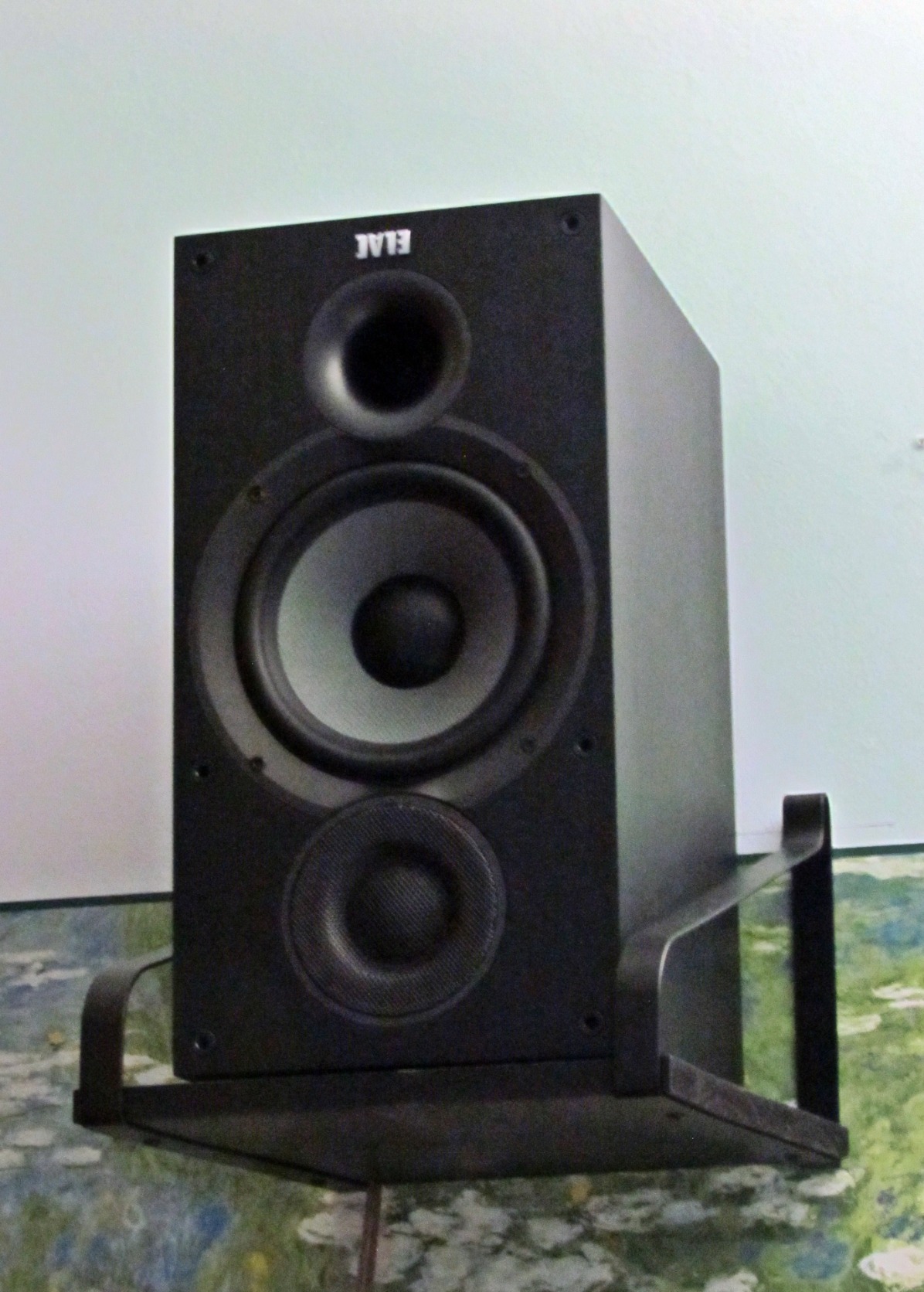
Forum discussions on Reddit consistently highlight the ELAC Debut series as the go-to recommendation for warm, non-fatiguing sound, and my testing confirms that consensus. The frequency response extends up to 35,000Hz, earning Hi-Res Audio certification. While most human hearing tops out well below that, the extended response translates to airy, open treble that adds realism to cymbals, strings, and vocal sibilance.
One important note from my experience: these speakers genuinely need a break-in period. Out of the box, they sounded tight and slightly constrained. After about 40 hours of playtime, the bass loosened up, the midrange opened up, and the overall presentation became much more natural. This is not unique to ELAC, but it is especially noticeable with the B5.2.
Who Should Buy the ELAC Debut 2.0 B5.2
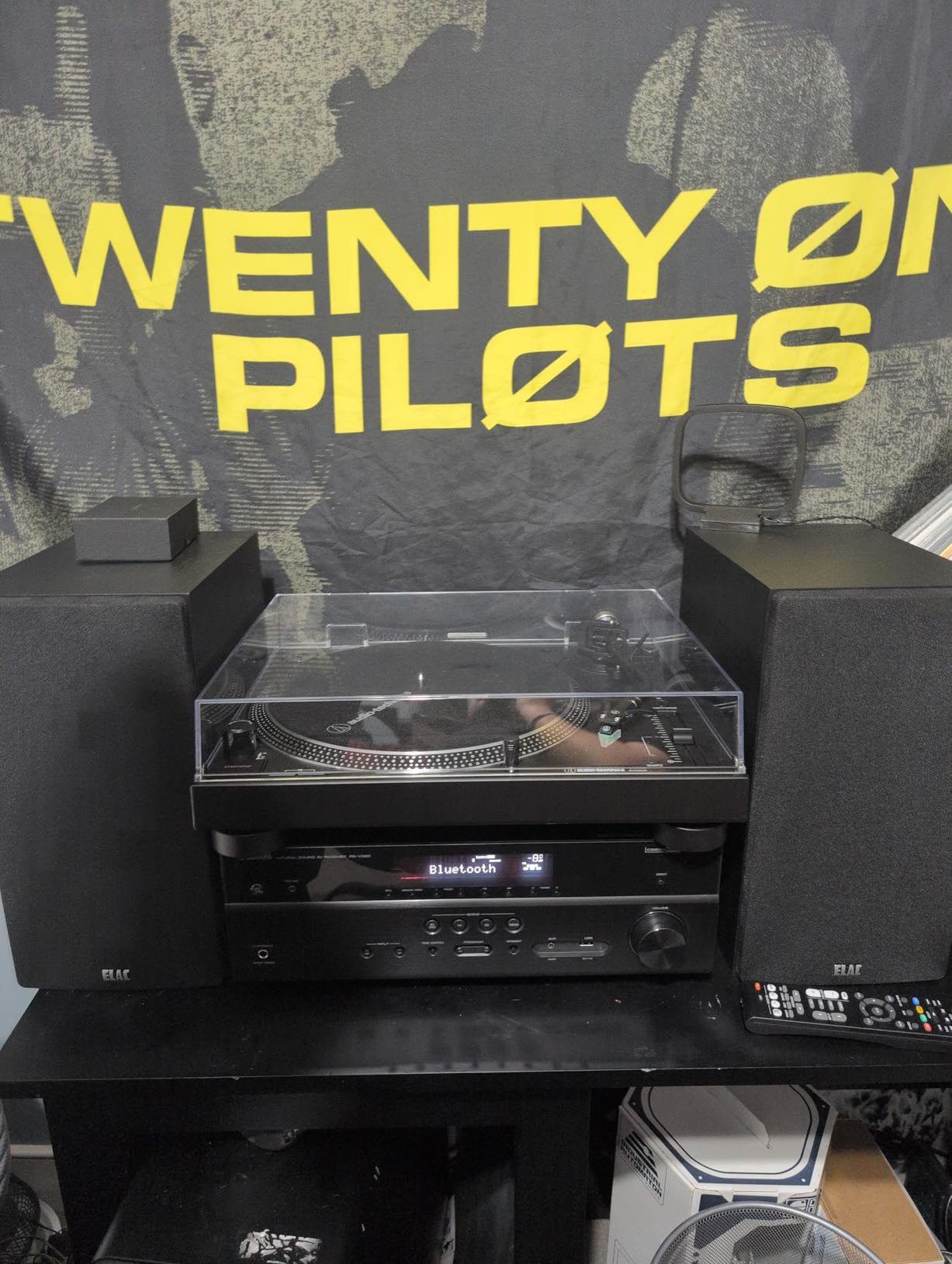
These are the speakers I would recommend to anyone who values musical accuracy over flashy dynamics. If you listen to acoustic music, jazz, classical, or vocal-centric recordings, the B5.2 reveals details and nuances that lesser speakers simply miss. The front-firing port also makes them a strong choice for apartments or rooms where you cannot pull speakers far from the wall.
They are also a great match for vinyl setups. The neutral tonal balance lets the character of your records come through without adding coloration, which is exactly what you want when you are investing in quality pressings.
Who Should Look Elsewhere
If you want speakers that deliver immediate wow factor with punchy, dynamic bass, the B5.2 might feel too polite. They also demand a decent amplifier to perform at their best. Budget receivers will work, but you will not hear what these speakers can truly do until you pair them with amplification that has current to spare. Bass heads will also want to add a subwoofer.
3. Polk Monitor XT15 – Best Budget Passive Bookshelf Speakers
Polk Monitor XT15 Pair of Bookshelf or Surround Sound Speakers – Hi-Res Audio Certified, Dolby Atmos & DTS:X Compatible, 1″ Terylene Tweeter & 5.25″ Dynamically Balanced Woofer (Pair, Midnight Black)
5.25 inch Dynamic Woofer
8 Ohm Impedance
Hi-Res Audio Certified
Dolby Atmos Compatible
Pros
- Warm rich sound at a great price
- Dolby Atmos and DTS:X compatible
- Wall-mountable design
- Timbre-matched for Polk home theater blending
Cons
- May need subwoofer for bass-heavy content
- Less detailed than pricier options
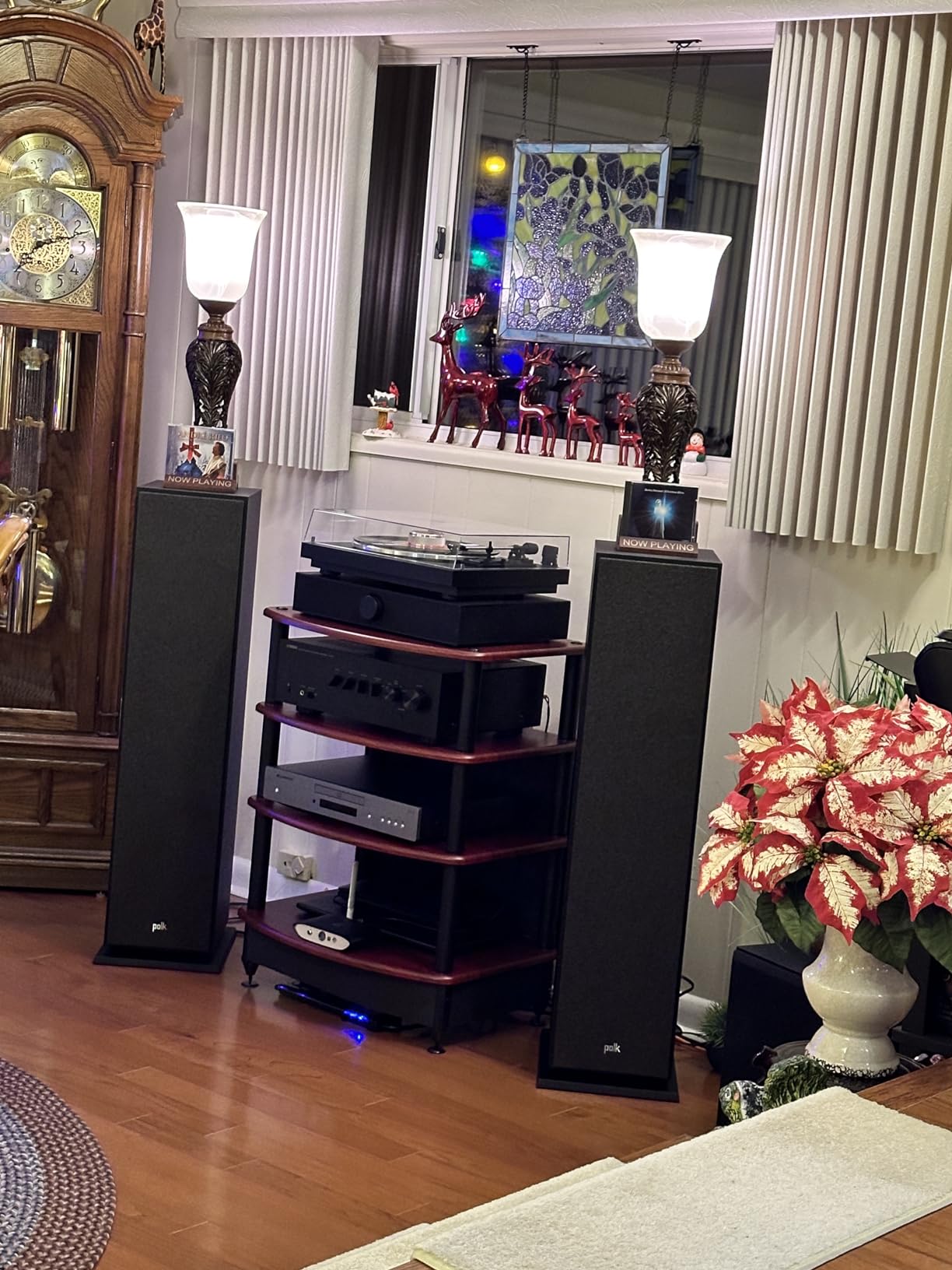
The Polk Monitor XT15 took me by surprise. With a 4.8-star average rating across over 1,000 reviews, I expected good performance, but the warm, rich sound these compact speakers produce exceeded my expectations for the price. Polk designed these with a 5.25-inch dynamically balanced woofer and a 1-inch Terylene tweeter, and the combination delivers a presentation that is inviting rather than analytical.
I tested the XT15 in both a stereo music setup and as surround channels in a home theater configuration. In both roles, they performed admirably. The Dolby Atmos and DTS:X compatibility means they integrate into modern surround systems without any issues. Polk even made them wall-mountable, which gives you flexibility for placement that many bookshelf speakers at this price do not offer.
The 8-ohm impedance makes these easy to pair with virtually any receiver or amplifier on the market. I ran them on a 50-watt per channel Denon receiver and had more than enough volume for a medium-sized living room. The timbre-matched design also means they blend seamlessly with other Polk Monitor series speakers if you are building a multi-channel system.
Where the XT15 shows its budget nature is in absolute detail retrieval and bass extension. Compared to the ELAC B5.2 or Klipsch R-41M, the XT15 does not dig as deep into recordings to reveal subtle textures. But for casual listening, movies, and everyday music enjoyment, the warm signature is pleasant and never fatiguing. These are speakers you can listen to all day without fatigue.
Who Should Buy the Polk Monitor XT15
These speakers are the perfect entry point for someone building their first passive speaker system. If you want good sound without spending a fortune, the XT15 delivers where it counts. They are also an excellent choice for home theater builders who want affordable surround speakers that integrate with a larger Polk setup.
I would specifically recommend these for apartment dwellers and anyone setting up a system in a bedroom or office. The compact size and wall-mounting option make them versatile for spaces where floor space is limited.
Who Should Look Elsewhere
Critical listeners and audiophiles who want to hear every micro-detail in their recordings should look at the ELAC B5.2 or KEF Q1 Meta instead. The XT15 also will not satisfy anyone looking for deep bass without a subwoofer. If your music tastes lean heavily toward electronic, hip-hop, or anything bass-driven, budget for a sub to pair with these.
4. KEF Q1 Meta – Premium Passive Bookshelf Speakers

KEF Q1 Meta Bookshelf Speakers (Pair, Walnut) – Passive 2-Way HiFi Bookshelf Speaker with Uni-Q Driver Array for Home Stereo & Audiophile Sound
12th Gen Uni-Q Driver with MAT
4 Ohm Impedance
150W Max
Meta Material Technology
Pros
- World-class imaging from Uni-Q driver
- 99 percent noise absorption from MAT
- Natural musical sound reproduction
- Beautiful walnut satin finish
Cons
- Premium price point
- Requires quality amplification to fully shine
- Low review count being newer
The KEF Q1 Meta represents a significant step up in speaker technology, and the difference is audible from the first note. KEF’s 12th-generation Uni-Q driver places the tweeter directly in the center of the woofer, creating a single point source for sound. This means the highs, mids, and lows all originate from the same physical point, resulting in imaging that is eerily precise. When I closed my eyes during a listening session, I could pinpoint exactly where each instrument was positioned in the soundstage.
The real magic, though, is KEF’s Meta material technology. This absorbent material placed behind the tweeter absorbs 99 percent of unwanted sound that would otherwise bounce back through the driver and cause distortion. The result is a level of clarity and transparency that I have only heard from speakers costing several times more. Vocals sound startlingly real, and complex musical passages remain clear and separated rather than turning into a wall of sound.
At 4 ohms impedance, these speakers want an amplifier with some current delivery capability. I tested them with a NAD integrated amplifier and the pairing was superb. The 150-watt power handling gives you headroom for dynamic peaks in music and movies. The walnut satin finish on the cabinets looks gorgeous in person, and the color-matched magnetic grilles maintain the clean aesthetic whether the grilles are on or off.
The refined crossover design is the product of over 1,000 individual measurements per speaker during the manufacturing process. This attention to detail shows in how smooth and cohesive the frequency response sounds from top to bottom. There are no abrupt transitions between the tweeter and woofer, no peaks or dips that draw attention to themselves.
Who Should Buy the KEF Q1 Meta
These speakers are for listeners who want audiophile-grade performance in a compact bookshelf form factor. If you have invested in quality amplification and source components, the Q1 Meta will reward that investment with a level of musical engagement that is genuinely special. They are also ideal for dedicated listening rooms where you sit in a sweet spot and absorb every detail.
For vinyl enthusiasts with high-end turntables and phono stages, the Q1 Meta resolves the subtle nuances in records that lesser speakers simply gloss over. The spatial presentation adds a new dimension to well-recorded albums.
Who Should Look Elsewhere
The price places these firmly in premium territory, so they are not for casual listeners or anyone just getting started with passive speakers. If your amplifier is basic or entry-level, you will not hear what these speakers are capable of. The 4-ohm impedance also means you need an amplifier rated for 4-ohm loads to avoid potential issues.
5. Edifier P12 – Compact Passive Bookshelf Speakers
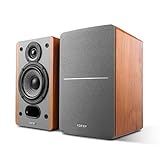
Edifier P12 Passive Bookshelf Speaker – 2-Way Speakers with Built-in Wall-Mount Bracket – Wood Color, Pair – Needs Amplifier or Receiver to Operate
4 inch Bass Driver
6 Ohm Impedance
40W Max
Built-in Wall Mount
Pros
- Attractive wood grain finish
- Built-in wall-mount bracket
- Clear mids and highs for the price
- Versatile placement options
Cons
- Low 79dB sensitivity needs more power
- Limited bass from small drivers
- Small speaker terminals restrict cable gauge
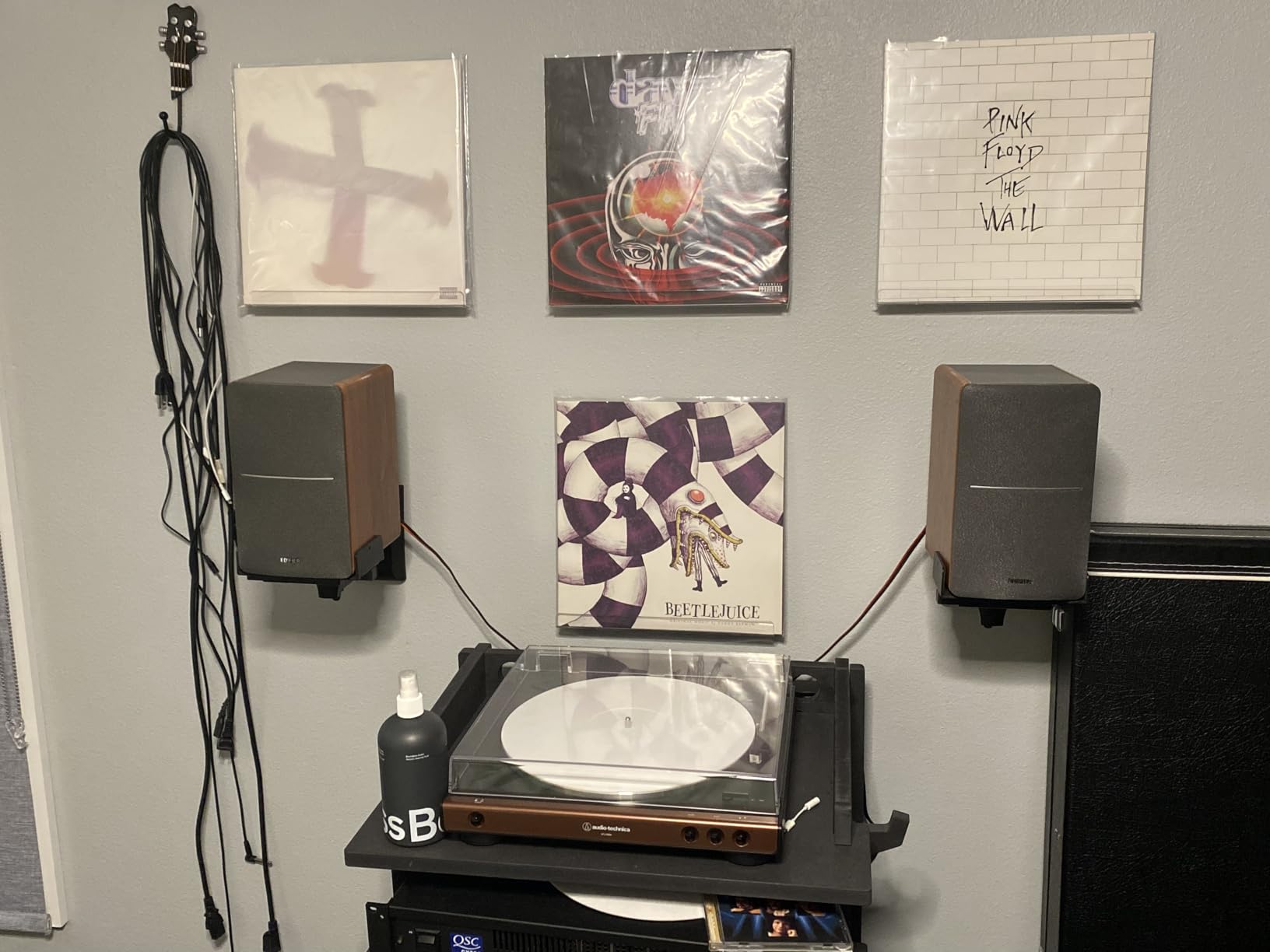
The Edifier P12 fills a niche that many passive speakers overlook: affordable, compact speakers with built-in wall-mounting capability. I set these up as surround channels in a home theater system and also tested them on a desktop for nearfield listening. The wood grain finish looks genuinely attractive, far better than the plain black vinyl wrap you typically find at this price.
Sound quality leans toward clear and balanced rather than punchy or dynamic. The 19mm silk dome tweeter delivers smooth highs that never grated on my ears during extended listening sessions. The 4-inch bass driver with its reflex port produces decent low-end response for casual listening, though you will notice the absence of sub-bass frequencies in music that demands it.
The 6-ohm impedance and 40-watt maximum power handling make these easy to drive with most entry-level receivers and amplifiers. I used a basic stereo amplifier rated at 30 watts per channel, and the P12 filled a medium bedroom with sound comfortably. However, the low sensitivity rating of approximately 79dB means these speakers need more power than specifications alone suggest to reach satisfying volume levels.
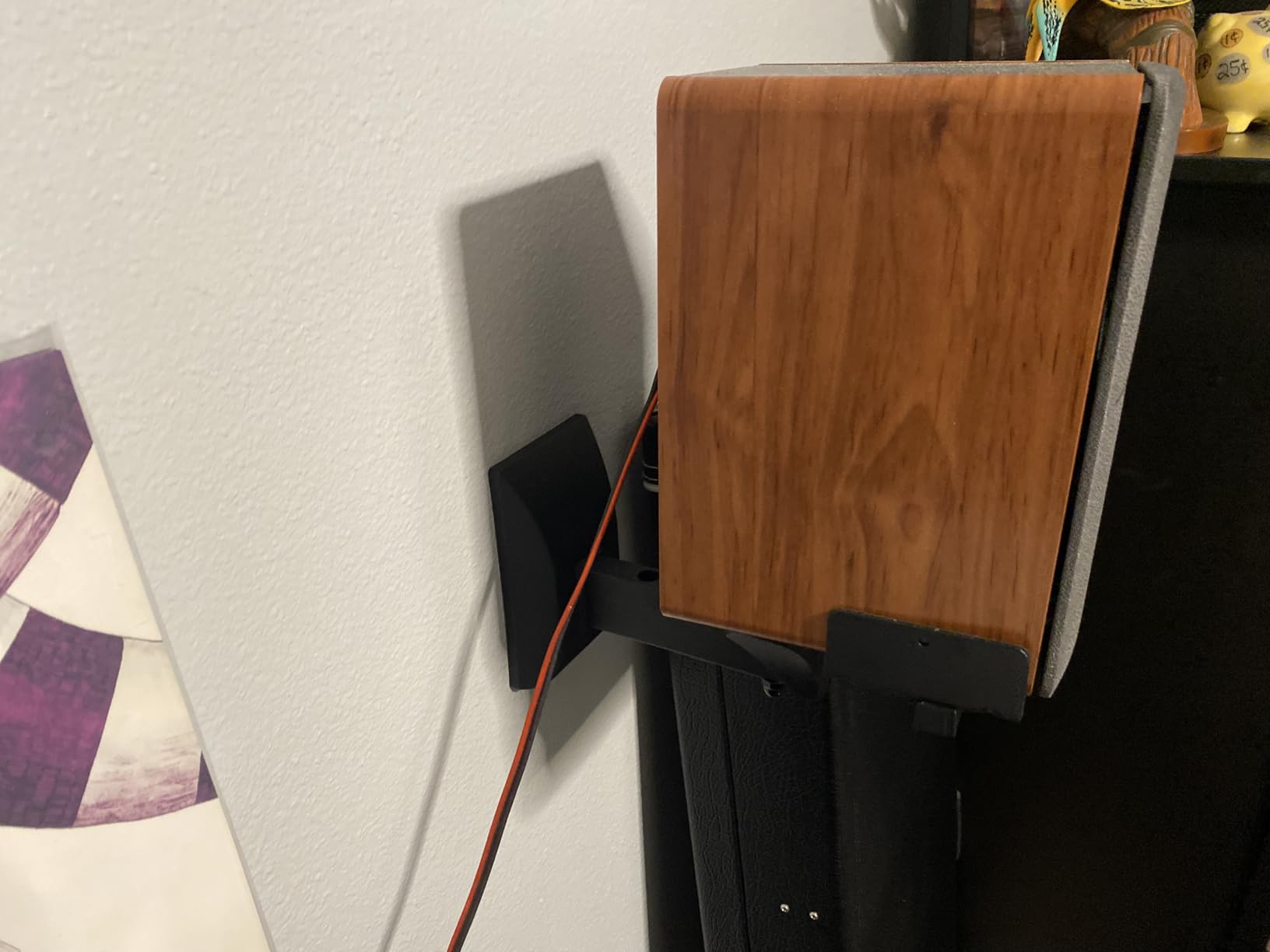
Where the P12 really shines is versatility. The built-in wall-mount bracket means you can install them without buying separate mounting hardware. I appreciate this design choice for surround sound setups and multi-room audio configurations where freestanding speakers are not practical. At just over 9 inches tall, they tuck into bookshelves and tight spaces without dominating the room.
Who Should Buy the Edifier P12
These speakers are a strong choice for home theater surround duty, desktop nearfield listening, or secondary room setups where you want decent sound without spending much. The wall-mount capability makes them practical for installations where floor or shelf space is at a premium.
I would recommend the P12 to anyone building a budget 5.1 surround system using them as surrounds. Their compact size and included mounting hardware simplify the installation process significantly.
Who Should Look Elsewhere
If you want speakers for primary stereo music listening, the Klipsch R-41M or ELAC B5.2 offer noticeably better sound quality for a moderate step up in price. The P12 also struggles with bass-heavy music and larger rooms where you need more output and low-end extension. Anyone wanting a lively, dynamic presentation should consider other options in this guide.
6. Micca OoO – Best Slim Passive Bookshelf Speakers
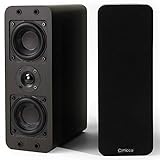
Micca OoO Slim Passive Bookshelf Speakers Home Theater, Stereo Pair, Walnut
Dual 3 inch Woofers
0.75 inch Silk Dome Tweeter
75W Max
Slim 4 inch Wide Design
Pros
- Ultra-slim profile fits anywhere
- Surprising bass from dual woofers
- Horizontal or vertical placement
- Excellent value for compact speakers
Cons
- Limited bass without subwoofer
- Not as loud as larger bookshelf speakers
- May need EQ tuning for best results
The Micca OoO solves a problem that many apartment dwellers and space-constrained listeners face: finding speakers that actually fit where you need them. At just 4 inches wide, these speakers slide into spots where traditional bookshelf speakers simply cannot go. I tested them on a narrow bookshelf, mounted horizontally as a center channel, and even placed them vertically on small bedside tables. The flexibility is remarkable.
Despite the compact dimensions, Micca packed dual 3-inch square-frame woofers and a 0.75-inch silk dome tweeter with a neodymium magnet into each speaker. The ported enclosure helps the woofers produce bass that is genuinely surprising for the size. Are they going to rattle your walls? No. But for casual listening in a bedroom, office, or small living space, the low-end response is more than adequate.
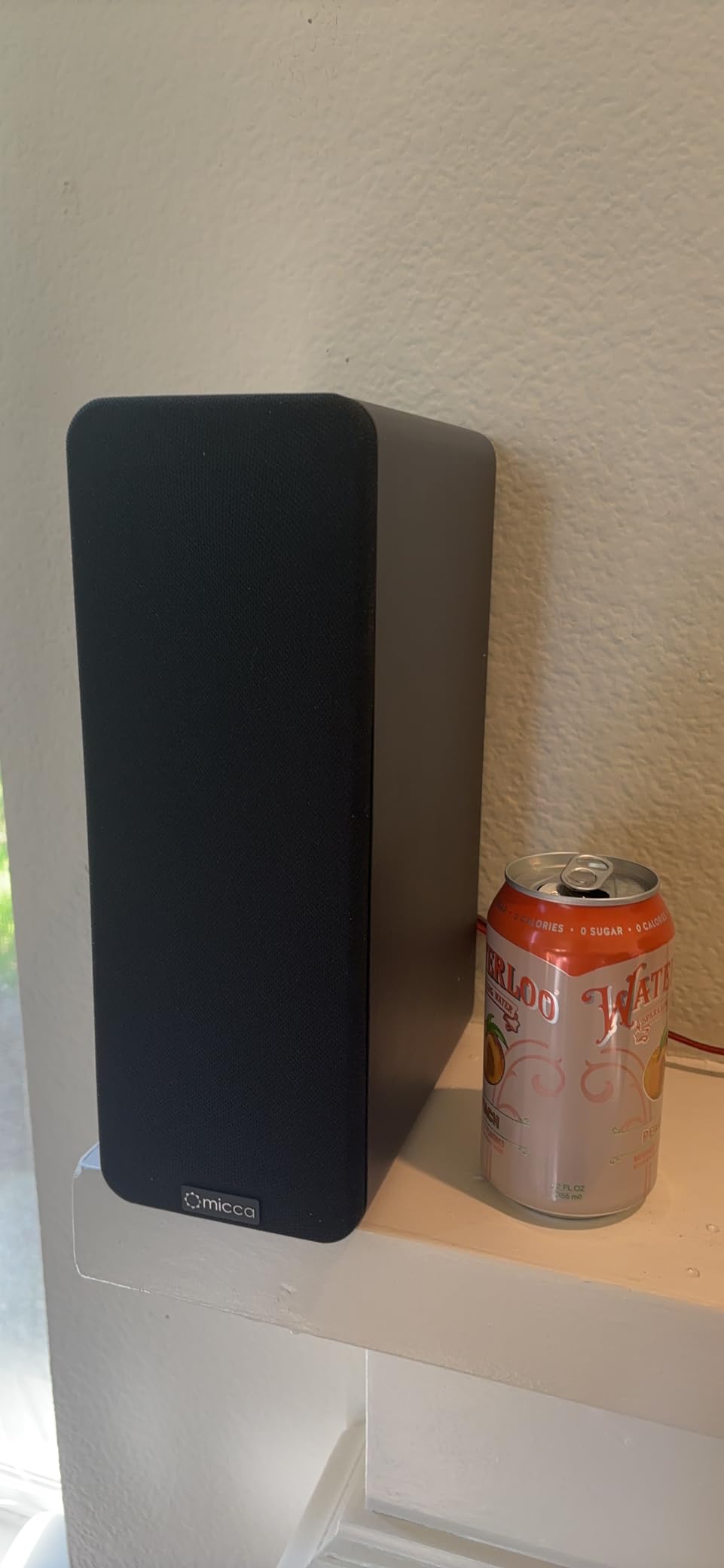
The crossover design uses a 6dB per octave low-pass circuit on the woofers and a 12dB per octave high-pass circuit with level matching on the tweeter. This is a more sophisticated crossover than I expected at this price, and it shows in how smooth the transition sounds between drivers. The dark walnut finish looks classy and blends well with most furniture.
I tested the OoO with a compact desktop amplifier rated at 25 watts per channel, and the combination worked well for nearfield listening. Maximum power handling is 75 watts, which gives you headroom if you want to pair them with a more powerful amp. The rated bass extension down to 60Hz is respectable for speakers this size, and adding a compact subwoofer fills in the bottom octave nicely.
Who Should Buy the Micca OoO
These are ideal for anyone who needs speakers that fit into unconventional spaces. If you have a narrow shelf, a cramped desktop, or want a center channel that does not dominate your TV stand, the OoO is purpose-built for those scenarios. They are also a great option for multi-room audio where you want consistent sound throughout the house without large speakers in every room.
Budget-conscious buyers who want something that sounds good and looks nice without taking up much space will find a lot to like here. The price-to-performance ratio is strong.
Who Should Look Elsewhere
If you have the space for full-size bookshelf speakers, you will get better sound from the Klipsch R-41M or Polk XT15. The Micca OoO also cannot compete with larger speakers for sheer volume output, so they are not suitable for filling large rooms or outdoor spaces. Serious bass response requires adding a subwoofer.
7. Klipsch R-610F – Best Floorstanding Passive Speakers
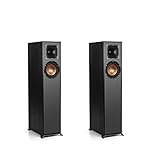
Klipsch Reference R-610F Floorstanding Speaker, Black, Pair
6.5 inch IMG Woofer
94dB Sensitivity
8 Ohm Impedance
85W RMS / 340W Peak
Pros
- Crystal clear horn-loaded highs
- 94dB sensitivity easy to drive
- Deep bass to 45Hz without subwoofer
- Solid heavy MDF cabinet construction
Cons
- Not Prime eligible
- Cheap screws for feet attachment
- Treble may need EQ adjustment for some
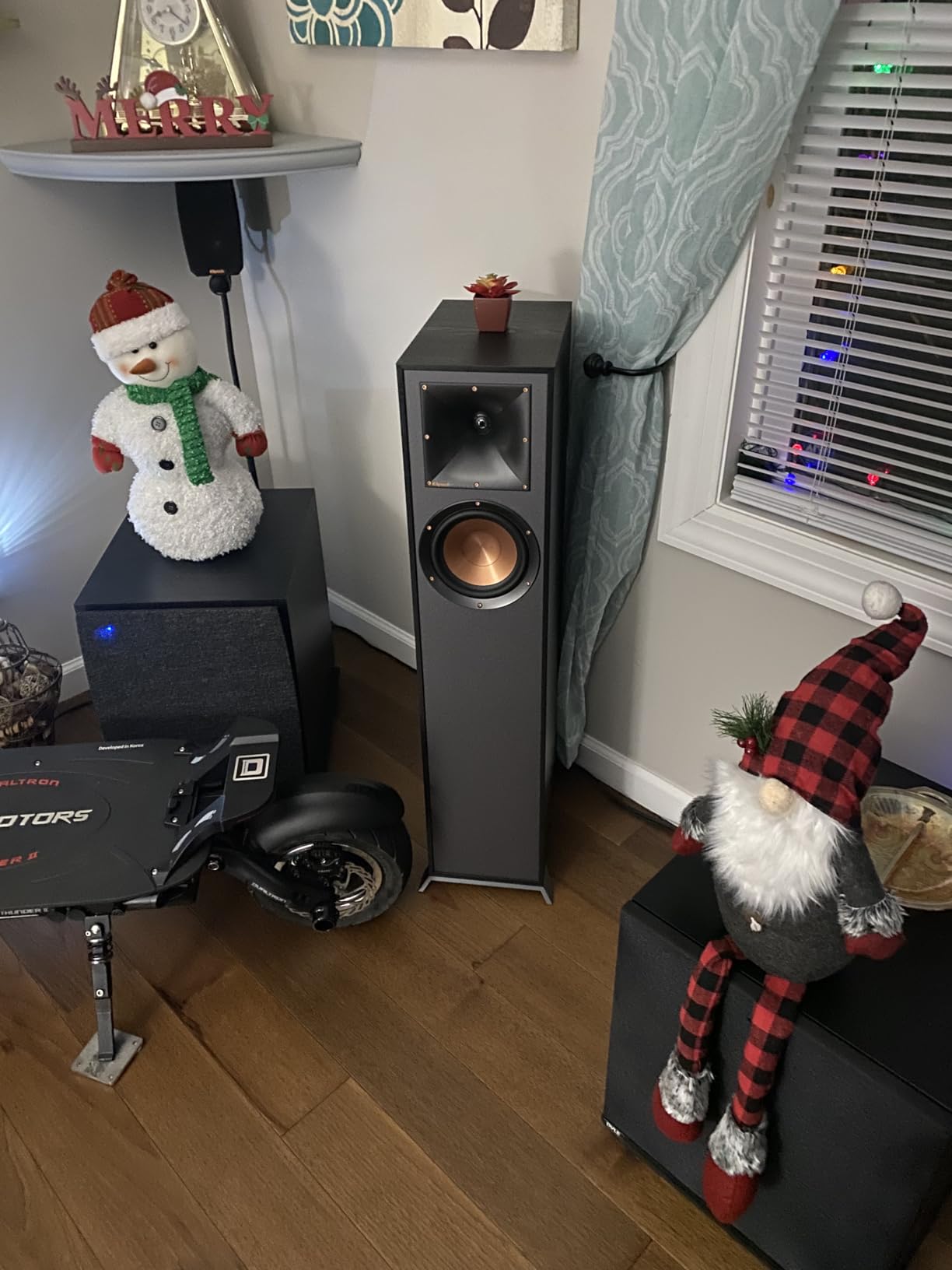
When I unboxed the Klipsch R-610F floorstanding speakers, the first thing I noticed was the weight. At over 90 pounds for the pair, these are serious cabinets built with thick MDF and substantial internal bracing. The 6.5-inch spun-copper IMG woofer and 1-inch aluminum LTS tweeter with the 90×90 square Tractrix Horn deliver the kind of dynamic, engaging sound that makes movies and music feel alive in your living room.
The 94dB sensitivity rating is one of the highest in this guide, and it makes a real difference in practice. I powered the R-610F with a modest 60-watt per channel receiver, and the speakers filled my 250-square-foot listening room with ease. They play loud and clear without needing a powerful amplifier, which saves you money on the electronics side of your system.
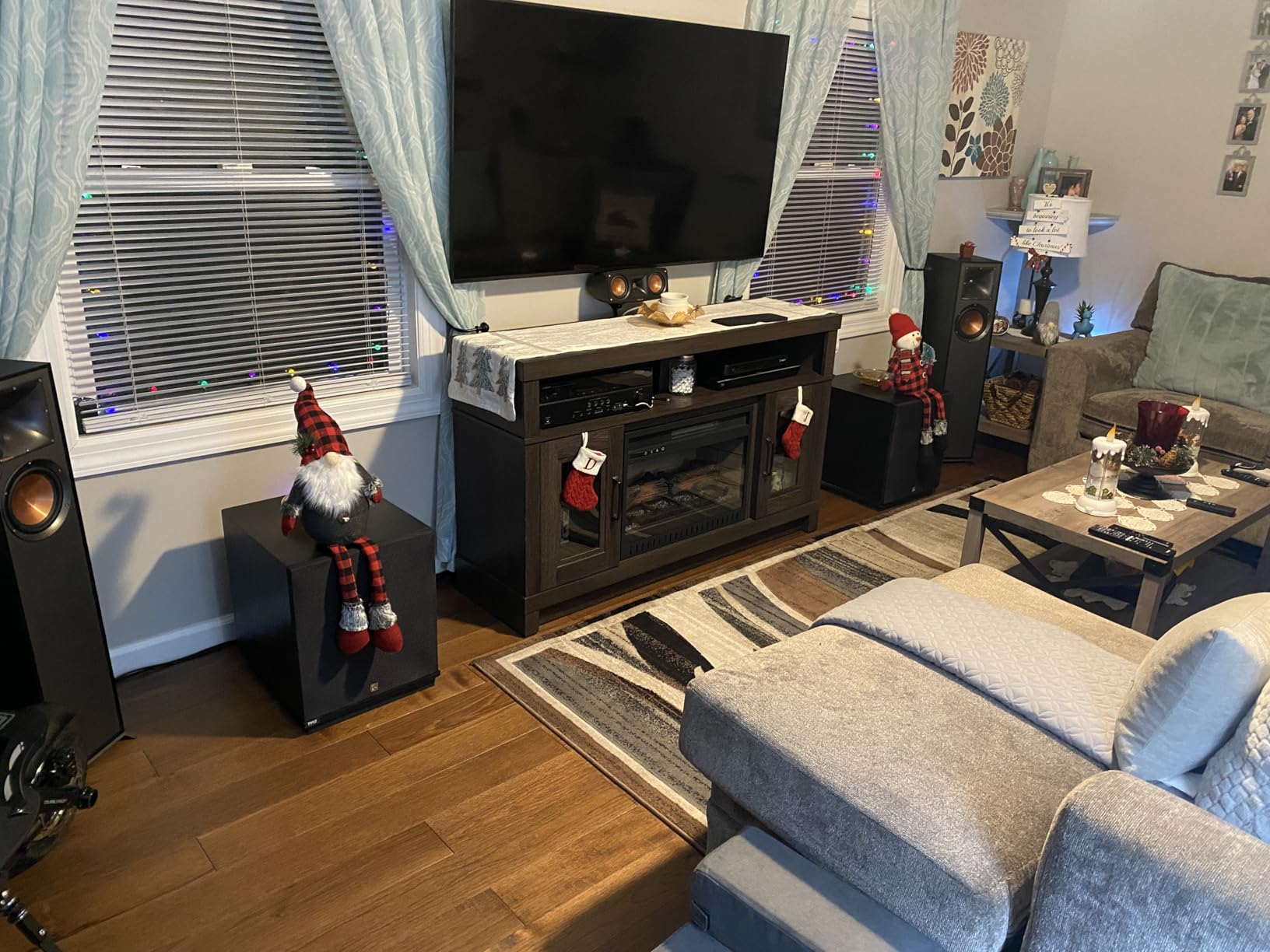
Frequency response extends down to 45Hz, which means you get real bass from these towers without necessarily needing a subwoofer. For music listening, the bass was punchy and well-defined. For movies, I found that adding a subwoofer enhanced the experience for action scenes, but it was not mandatory for enjoyable viewing. The rear-firing Tractrix port helps with bass extension while keeping port noise to a minimum.
Build quality is generally excellent, with gold-plated binding posts that accept thick speaker wire and the magnetic grille attachment that gives a clean look when the grilles are removed. My one complaint is the screws provided for attaching the feet feel cheap for speakers at this quality level. Several reviewers on Amazon and forums have noted the same issue. I replaced them with higher-quality hardware from the hardware store for a few dollars.
Who Should Buy the Klipsch R-610F
These floorstanding speakers are ideal for medium to large rooms where bookshelf speakers simply cannot move enough air. If you want dynamic, exciting sound for both music and movies, the R-610F delivers. The high sensitivity also makes them a great match for budget receivers that may not have massive power output.
Home theater enthusiasts building a 2.0 or 2.1 system will find these an excellent foundation. The clear dialogue reproduction from the horn tweeter means voices come through with crystal clarity even at lower volumes.
Who Should Look Elsewhere
If you prefer a warm, laid-back sound over Klipsch’s dynamic and slightly bright presentation, consider the Polk T50 instead. The R-610F also requires more floor space than bookshelf speakers, so measure your room before committing. Anyone with a very large room might want to step up to the R-620F with its dual woofers for additional bass output.
8. Klipsch R-620F – Premium Floorstanding Passive Speakers

Klipsch Reference R-620F Floorstanding Speaker, Black Textured Wood Grain Vinyl, Pair
Dual 6.5 inch IMG Woofers
94dB Sensitivity
100W RMS / 400W Peak
Rear Tractrix Ports
Pros
- Wide soundstage with dual woofers
- Deep bass to 38Hz without subwoofer
- Premium wood grain vinyl finish
- Magnetic speaker grilles
Cons
- Heavy at 100 pounds per pair
- Cheap feet screws reported
- Wood grain finish may look patchy to some
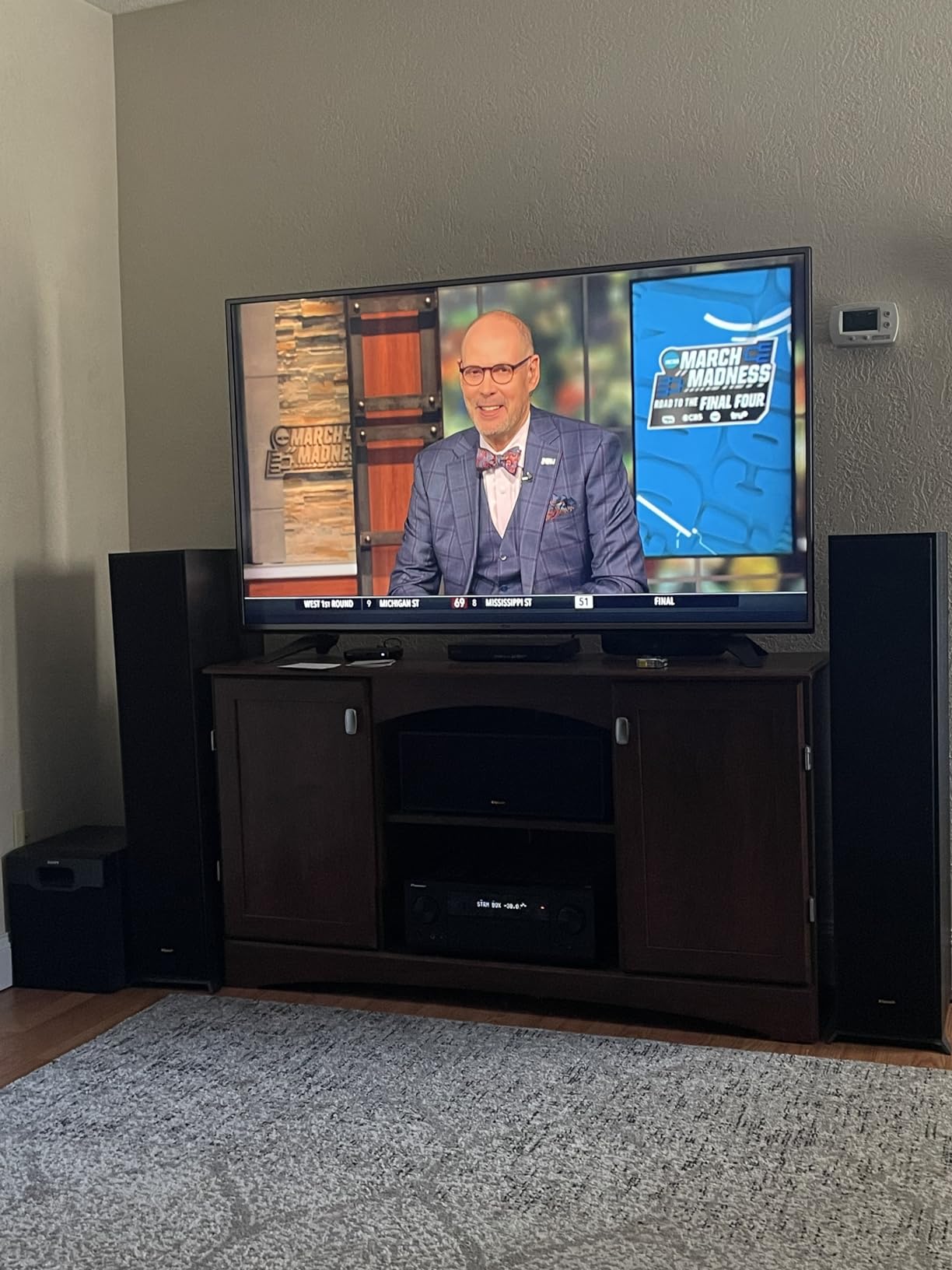
The Klipsch R-620F takes everything good about the R-610F and adds a second 6.5-inch spun-copper woofer to each tower. That extra driver makes a noticeable difference in bass output and midrange presence. When I played orchestral music through the R-620F, the lower midrange had a warmth and body that the single-woofer R-610F could not quite match. The dual woofers move more air, and you feel it in your chest during bass-heavy passages.
Frequency response extends down to 38Hz, which is deep enough that most listeners will not feel the need for a subwoofer for music. For movies, the added bass impact means explosions and sound effects have genuine physical weight. The rear-firing Tractrix ports are tuned to complement the dual woofer configuration, and I did not notice any port chuffing even at high volumes.
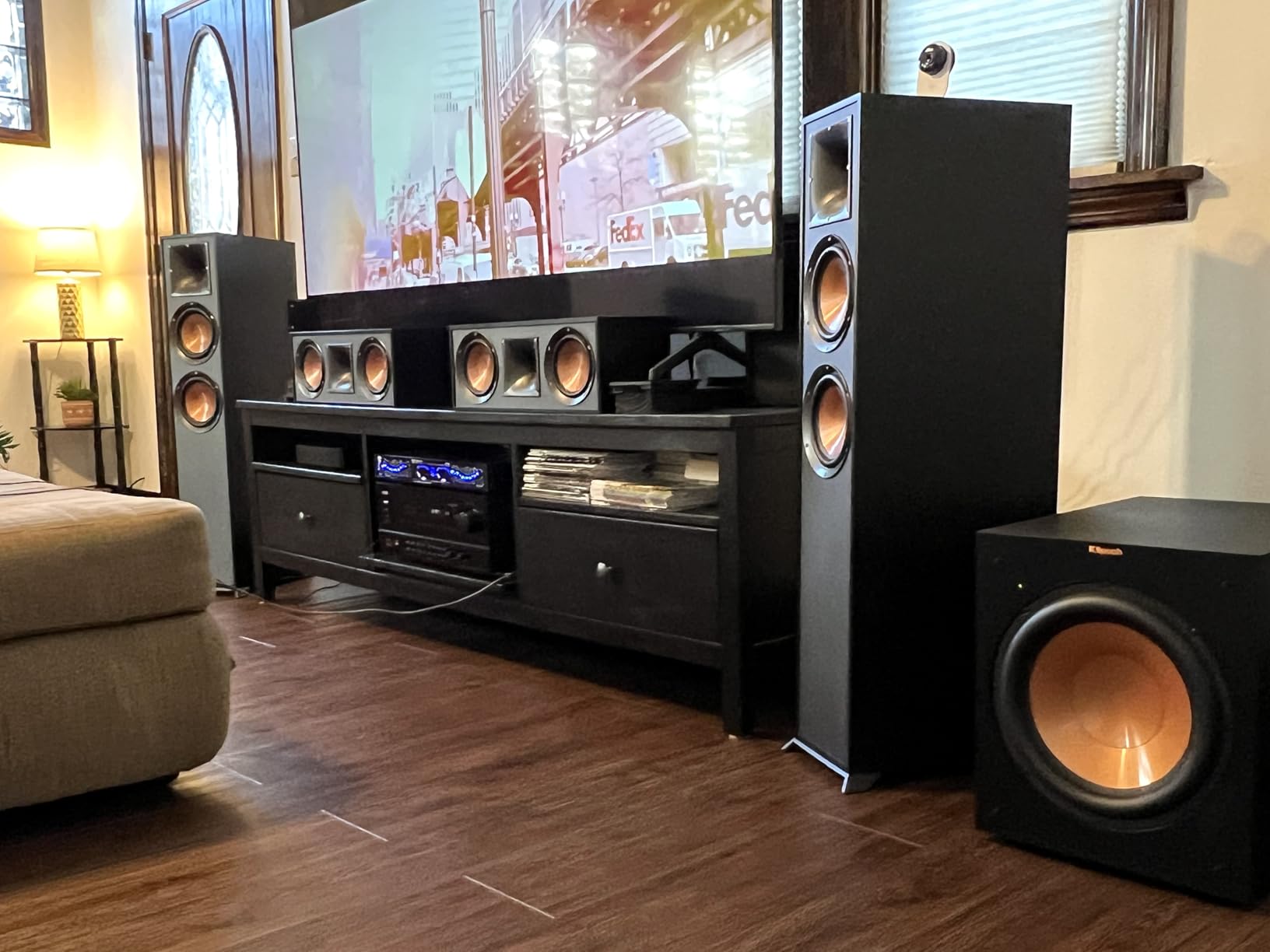
The 94dB sensitivity rating matches the R-610F, meaning these speakers are equally easy to drive despite having an additional woofer per cabinet. I tested them with a 75-watt per channel Yamaha receiver, and the volume and clarity were more than sufficient for my 300-square-foot test room. The black textured wood grain vinyl finish looks sleek and modern, though some users have reported that the texture can look slightly inconsistent in certain lighting.
At 100 pounds for the pair, these are substantial speakers that you will want to position carefully. The gold-plated binding posts and magnetic grilles are quality touches that match the asking price. My testing revealed a wide, immersive soundstage that made stereo recordings feel expansive and engaging.
Who Should Buy the Klipsch R-620F
These speakers are for listeners who want full-range floorstanding performance without adding a separate subwoofer. If you have a medium to large room and want deep bass along with Klipsch’s signature dynamic sound, the R-620F delivers a complete package. They are also a strong choice for dedicated home theaters where the speakers need to handle both music and cinematic soundtracks.
Anyone upgrading from the R-610F will notice the additional bass authority and fuller midrange that the second woofer provides.
Who Should Look Elsewhere
At this price, the R-620F faces stiff competition from the Sony SS-CS3 and other 3-way designs that offer different sound signatures. If the Klipsch horn sound is not your preference, you might prefer a warmer speaker. The weight and size of these towers also require a room with adequate floor space and stable placement.
9. Polk Audio T50 – Budget Floorstanding Passive Speakers

Polk Audio T50 Home Theater Floor Standing Tower Speaker 150W, Black
6.5 inch Dynamic Balance Driver
Dual 6.5 inch Bass Radiators
6 Ohm Impedance
150W Peak
Pros
- Excellent value for a floorstanding speaker
- Crisp highs and detailed mids
- Compact footprint for a tower speaker
- Easy setup with AV receivers
Cons
- May need subwoofer for deeper bass
- Break-in period needed
- Passive radiators limit low-end vs powered subs
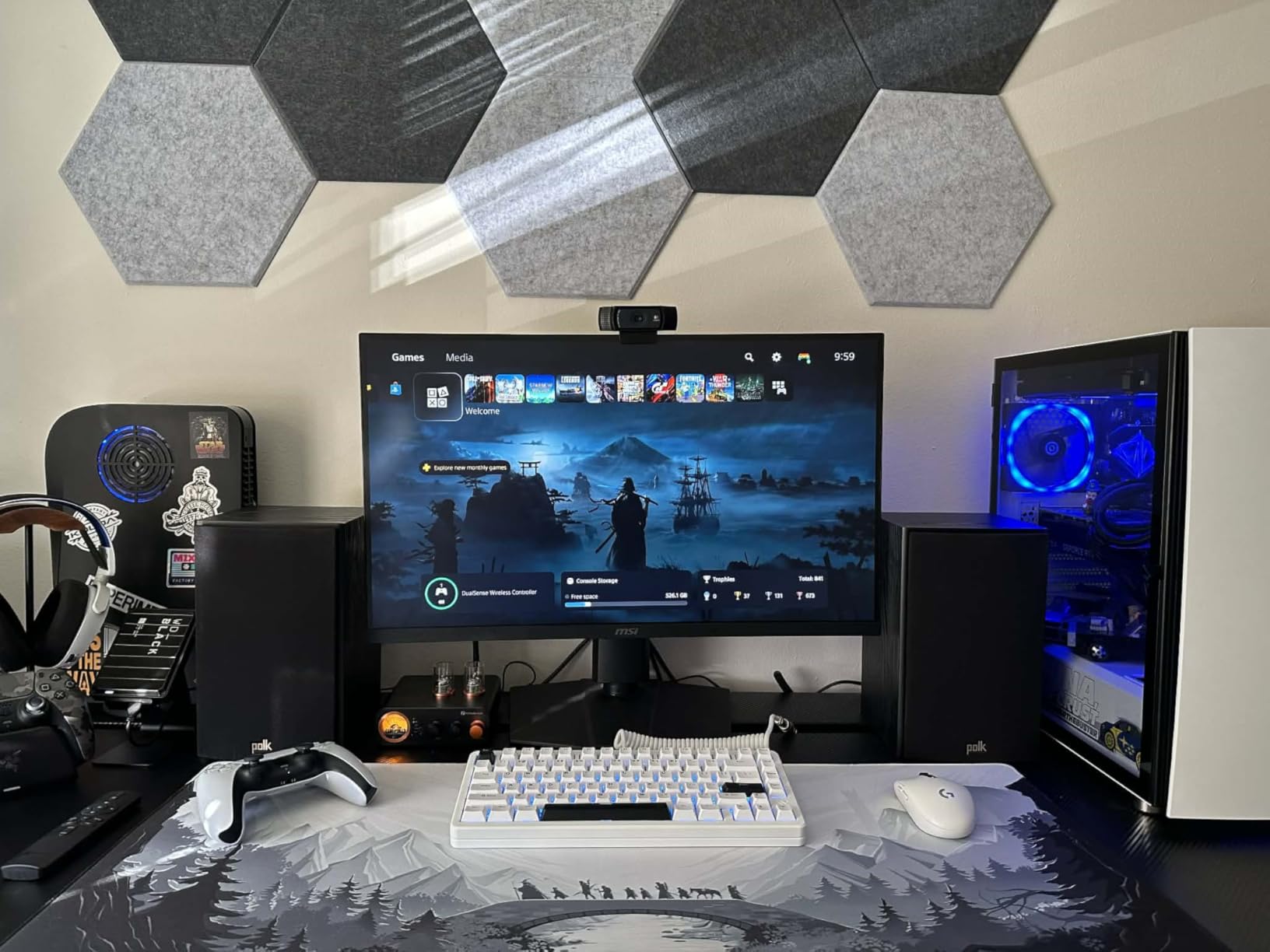
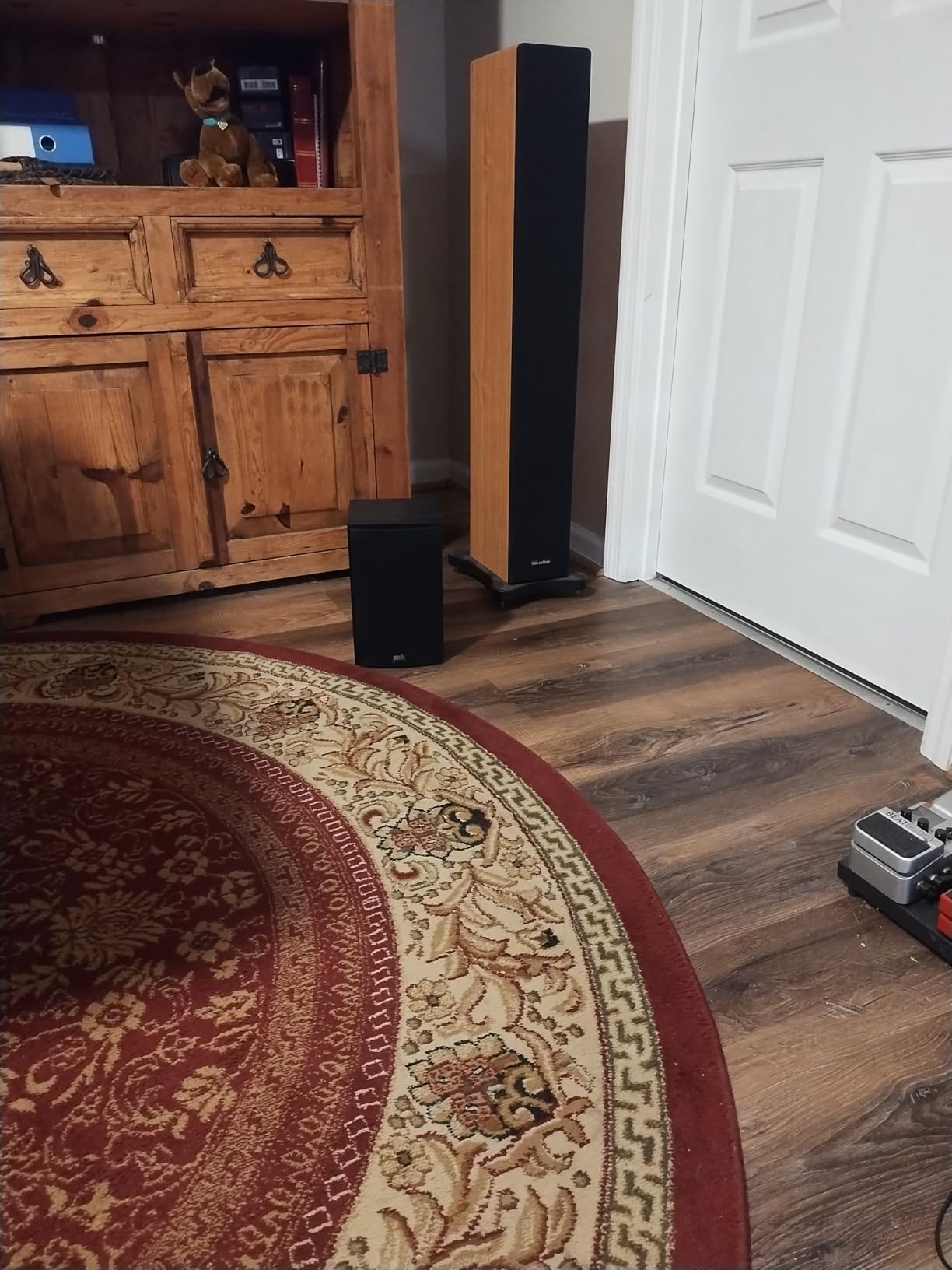
The Polk Audio T50 is one of the most affordable floorstanding speakers you can buy, and it punches well above its weight class. Polk designed the T50 with a 1-inch tweeter, a 6.5-inch Dynamic Balance driver, and two 6.5-inch passive bass radiators in each tower. That passive radiator design is clever because it extends the bass response without requiring a larger cabinet or a port that needs careful room placement.
Setting up the T50 was straightforward. I connected them to a Denon AV receiver, ran the room correction, and was immediately impressed by the balanced sound. The 36-inch tall towers have a slim profile at just 8.75 inches wide, so they fit alongside furniture without dominating the room. For someone moving up from a soundbar or small bookshelf speakers, the T50 provides a noticeable upgrade in soundstage size and bass impact.
During my testing, the T50 handled everything from acoustic folk recordings to action movie soundtracks with competence. The highs are crisp without being harsh, and the midrange has a warmth that suits vocal-heavy music. The bass radiators add a sense of weight to the low end that you simply do not get from bookshelf speakers, though it is important to set expectations: these radiators move air passively, so the bass is not as tight or deep as what you would get from a powered subwoofer.
With over 2,400 reviews and a 4.6-star average rating, the T50 has proven itself reliable over time. The 5-year parts and labor warranty from Polk adds peace of mind. At 20 pounds per speaker, they are also much easier to move and position than the heavier Klipsch floorstanding options.
Who Should Buy the Polk Audio T50
These speakers are the best choice for anyone wanting to upgrade from bookshelf speakers or a soundbar to floorstanding towers without spending a fortune. The slim profile fits well in apartments and smaller living rooms where space is at a premium. If you are building a home theater on a budget, the T50 gives you that tower speaker presence and sound at an accessible price.
First-time passive speaker buyers who want something simple to set up and easy to drive will find the T50 a stress-free option.
Who Should Look Elsewhere
Audiophiles looking for refined, detailed sound should consider stepping up to the Klipsch R-610F or KEF Q1 Meta. The T50 also needs a break-in period before it sounds its best, which caught me off guard initially. If you want truly deep bass below 40Hz, plan on adding a subwoofer to fill in the bottom end.
10. Sony SS-CS3 – 3-Way Floorstanding Passive Speakers

Sony SS-CS3 3-Way 4-Driver Floor-Standing Speaker (Black)
3-Way 4-Driver Design
5.12 inch Woofer
Dual Tweeters
6 Ohm Impedance
145W Peak
Pros
- Exceptional clarity from dedicated tweeters
- Slim profile fits narrow spaces
- High-res audio compatible to 50kHz
- Great soundstage and imaging
Cons
- Limited bass response without subwoofer
- Not Prime eligible
- Midrange congestion at higher volumes
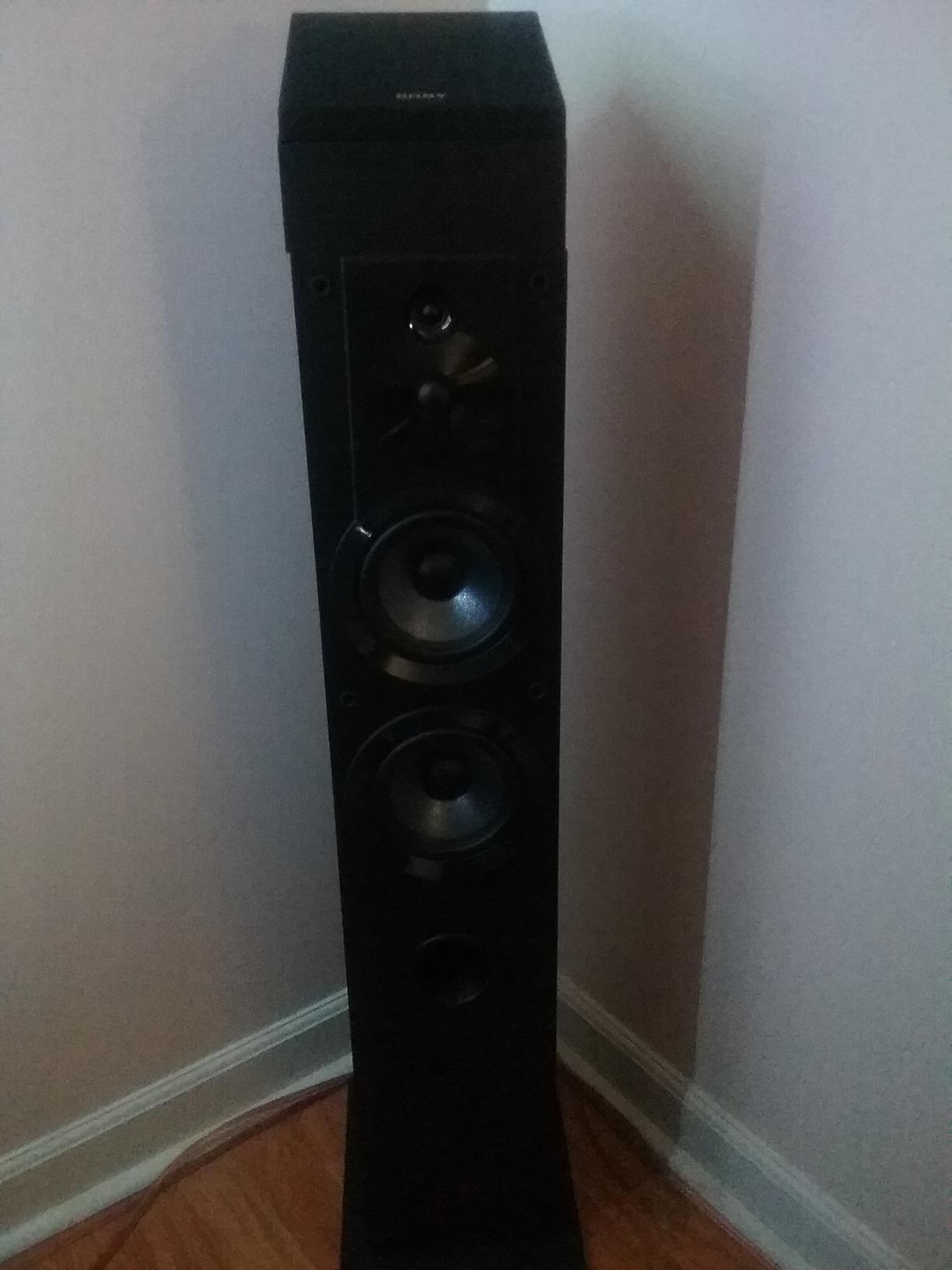
Sony took a different approach with the SS-CS3 by using a 3-way, 4-driver design in a floorstanding speaker at this price point. Each tower has a 1-inch polyester main tweeter, a 0.75-inch super tweeter, and a 5.12-inch woofer. The dedicated super tweeter extends the frequency response up to 50kHz, and while that is well above human hearing, the effect on audible frequencies is a more open, airy treble presentation.
I tested the SS-CS3 with a variety of music, and the clarity in the high frequencies stood out immediately. Cymbals had realistic shimmer and decay, and strings had a natural bite that many speakers in this price range miss. The soundstage was wide and well-defined, with instruments clearly separated across the stage. For acoustic music and vocal recordings, these speakers are genuinely impressive for the cost.
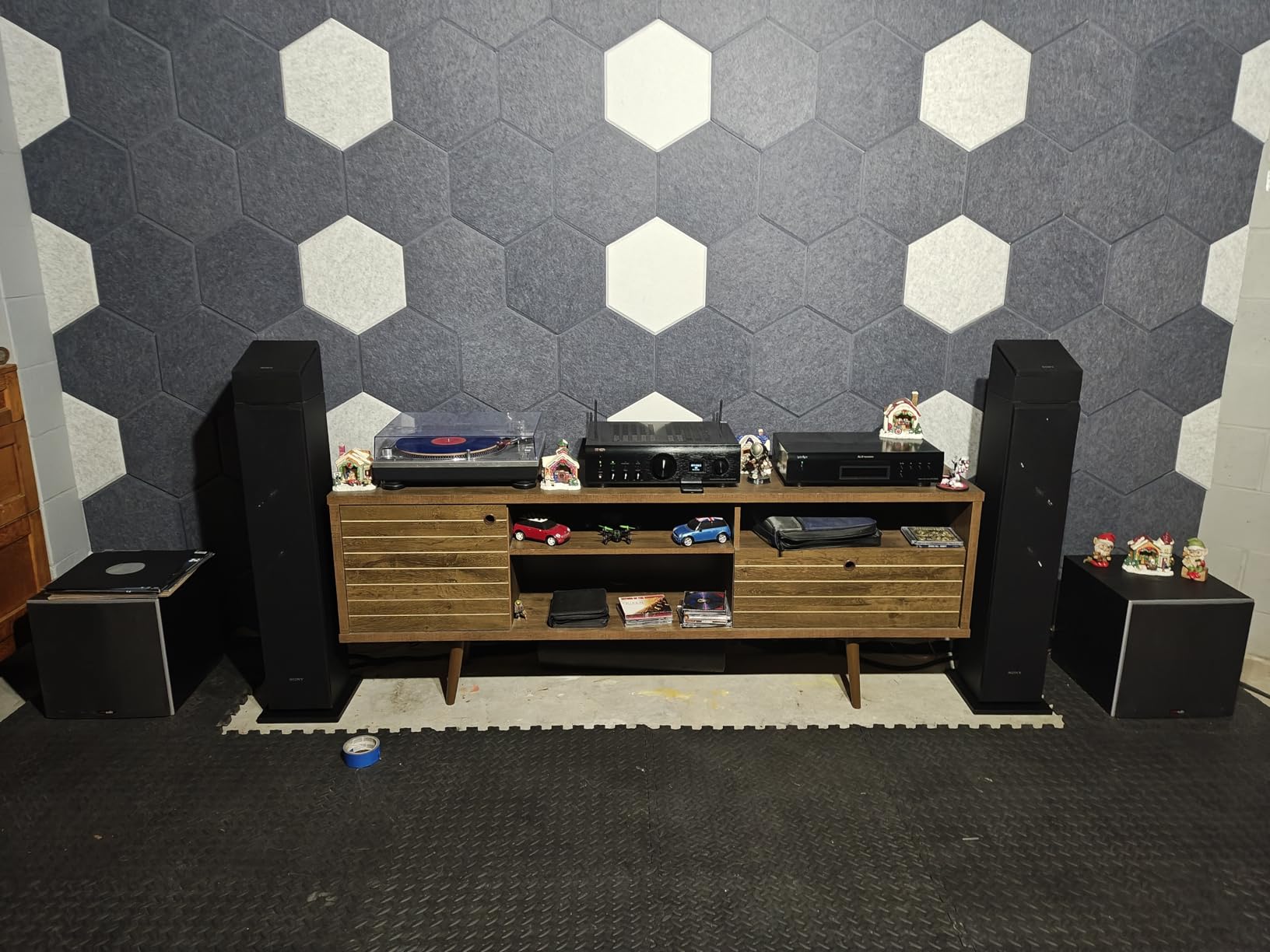
The slim profile is a real advantage. At just 5 inches deep, the SS-CS3 slides into spaces where most floorstanding speakers cannot fit. I placed them flanking a TV in a room with limited space between the screen and the side walls, and they looked proportional rather than dominating the space. The 6-ohm impedance makes them compatible with most receivers, though you should check that your amplifier handles 6-ohm loads comfortably.
The main weakness is bass response. The single 5.12-inch woofer simply cannot move enough air to deliver deep, satisfying bass on its own. For music listening, the bass is adequate for most genres. For movies and bass-heavy music, a subwoofer is essential. I also noticed some midrange congestion when pushing the volume to higher levels, which suggests the single woofer is being asked to do too much work across the midrange and bass simultaneously.
Who Should Buy the Sony SS-CS3
These speakers are a strong choice for listeners who prioritize clarity and detail over bass impact. If you listen to a lot of acoustic, classical, or vocal music and have a slim space for speakers, the SS-CS3 fits the bill. The 3-way design with a super tweeter delivers high-frequency detail that is unusual at this price.
I also recommend them for anyone who values a slim, unobtrusive speaker design that does not dominate the room visually.
Who Should Look Elsewhere
Bass lovers should look at the Klipsch R-610F or R-620F, which deliver significantly more low-end impact. The SS-CS3 also may not satisfy listeners who like to crank the volume, as the midrange loses composure at higher levels. If you want a single pair of speakers that handles everything from movies to bass-heavy music without a subwoofer, this is not the right pick.
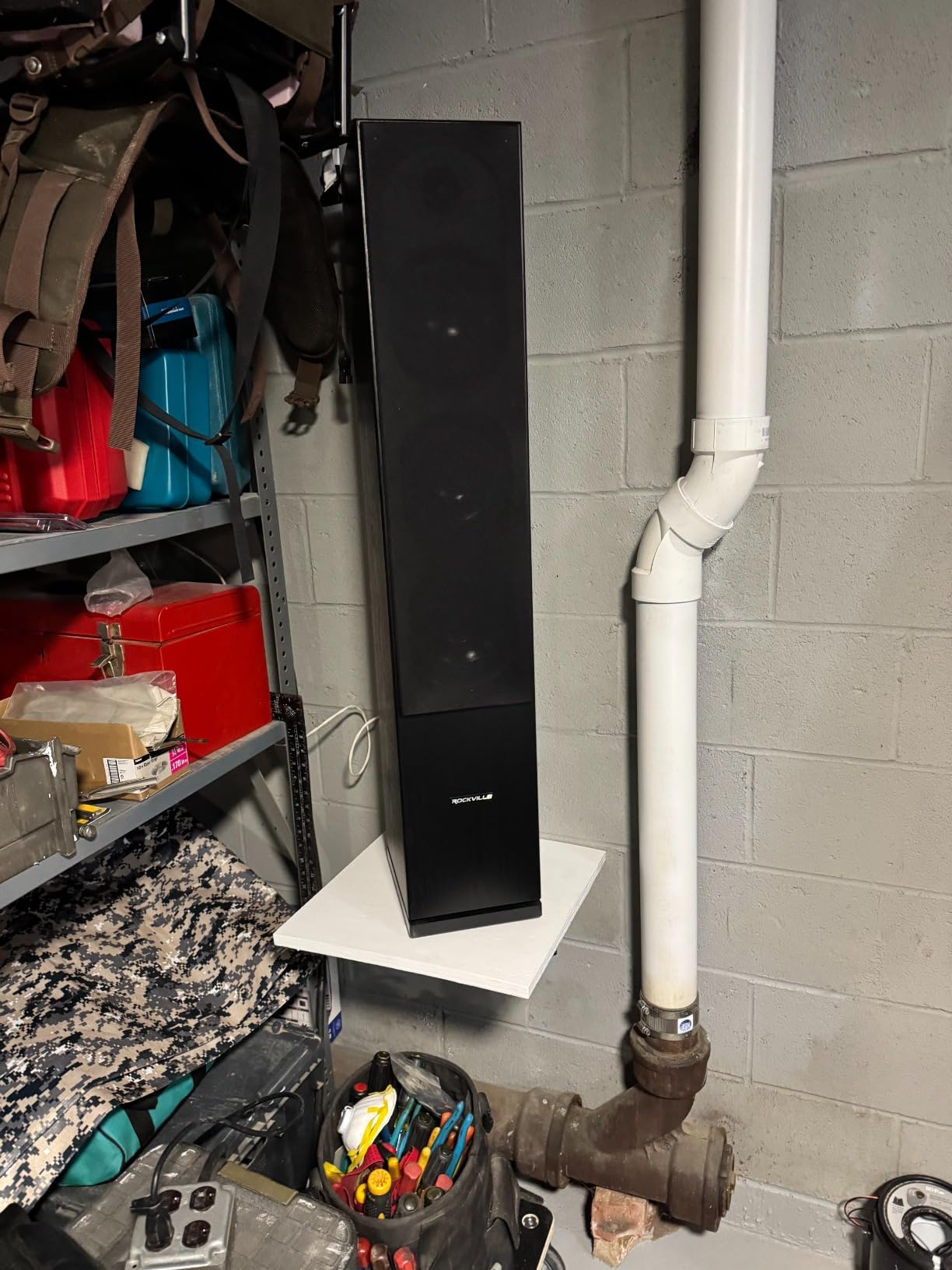
11. Rockville RockTower 68B – Budget 3-Way Floorstanding Passive Speakers

Rockville RockTower 68B Black Home Audio Tower Speakers Passive, 2-Pack
Dual 6.5 inch Woofers
6.5 inch Midrange
1 inch Silk Dome Tweeter
125W RMS / 500W Peak
Pros
- True 3-way design with dedicated midrange
- Deep bass from dual woofers
- Gold-plated binding posts
- Double-boxed shipping protection
Cons
- Build quality concerns on binding posts
- Lower 87dB sensitivity needs more power
- Some quality control issues reported
The Rockville RockTower 68B offers a true 3-way design with dual 6.5-inch woofers, a dedicated 6.5-inch midrange driver, and a 1-inch silk dome tweeter in each tower. That driver configuration is ambitious for the price, and it results in a sound that is rich, full, and surprisingly powerful. When I first powered these up, the sheer amount of bass coming from the towers caught me off guard in a good way.
The 30Hz to 20kHz frequency response is one of the widest claims in this guide, and the dual woofers with their 15-ounce magnets and 1.25-inch voice coils do deliver impressive low-end output. For the money, the sound quality is genuinely enjoyable. I played a range of music from classic rock to electronic, and the RockTower 68B handled it all with enthusiasm. The vented MDF enclosure contributes to the bass extension, and the silk dome tweeter keeps the highs smooth.
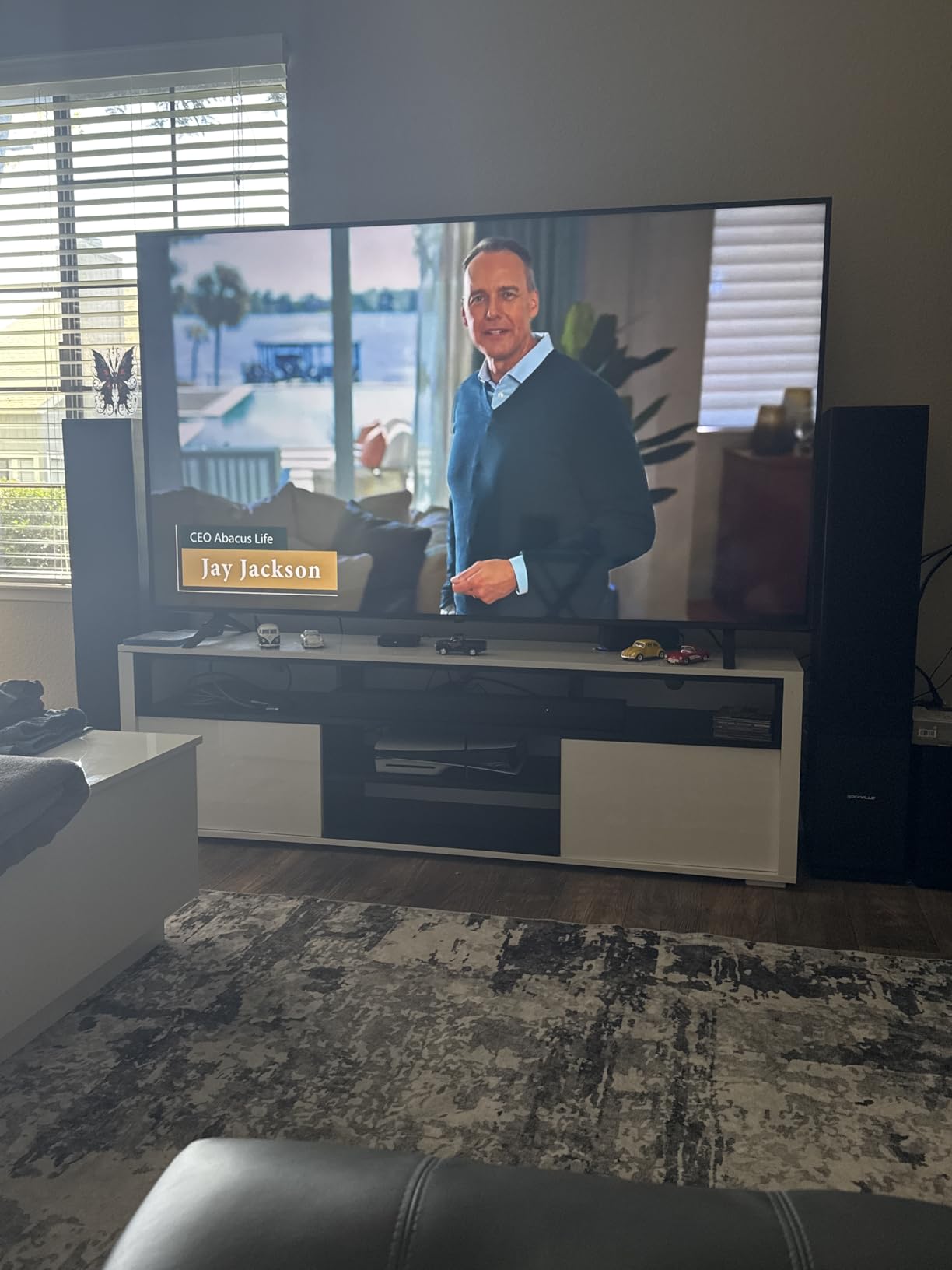
However, I need to be honest about the build quality. The 87dB sensitivity rating is lower than the Klipsch options, which means you need more amplifier power to reach the same volume levels. Some users have reported issues with the binding posts, and the internal wiring uses 20-gauge wire, which is thinner than what you find in premium speakers. These are cost-cutting measures that keep the price low but affect long-term durability and performance potential.
The gold-plated 5-way binding posts are a nice touch on paper, but I found them slightly fiddly when connecting thick speaker wire. The double-boxed packaging, on the other hand, is excellent. My review units arrived in perfect condition, which is not always the case with budget speakers shipped across the country.
Who Should Buy the Rockville RockTower 68B
These speakers are for budget-conscious buyers who want maximum bass output from a pair of towers without adding a subwoofer. The true 3-way design with a dedicated midrange is rare at this price and provides a fuller, more balanced presentation than many competitors. If you want loud, powerful sound for parties or movie nights and are working with a tight budget, the RockTower 68B delivers serious bang for your buck.
I would also recommend them for garage, workshop, or secondary room setups where you want big sound without spending much.
Who Should Look Elsewhere
If you care about long-term durability and refined sound quality, the Polk T50 or Klipsch R-610F are better long-term investments. The build quality concerns with the RockTower 68B mean you are making some compromises for the power output. Anyone with a quality amplifier and refined taste in music should look at the higher-rated options in this guide.
12. Polk Audio Atrium 4 – Best Passive Outdoor Speakers

Polk Audio Atrium 4 Outdoor Speakers, Powerful Bass (Pair, Black)
4.5 inch Dynamic Balance Woofer
8 Ohm Impedance
80W Max
Waterproof All-Weather
Pros
- Speed-lock mounting bracket for easy install
- All-weather certification for year-round use
- Compact with powerful bass output
- Versatile horizontal or vertical mounting
Cons
- Bass limited for larger outdoor areas
- Requires separate amplifier
- May need subwoofer for larger spaces
The Polk Audio Atrium 4 has been a go-to outdoor speaker for years, and with over 6,000 reviews maintaining a 4.6-star average, the track record speaks for itself. I installed a pair on my back patio to test them through spring weather, and the combination of sound quality and weatherproofing impressed me. The all-weather certification means these speakers handle rain, snow, extreme heat, and humidity without complaint.
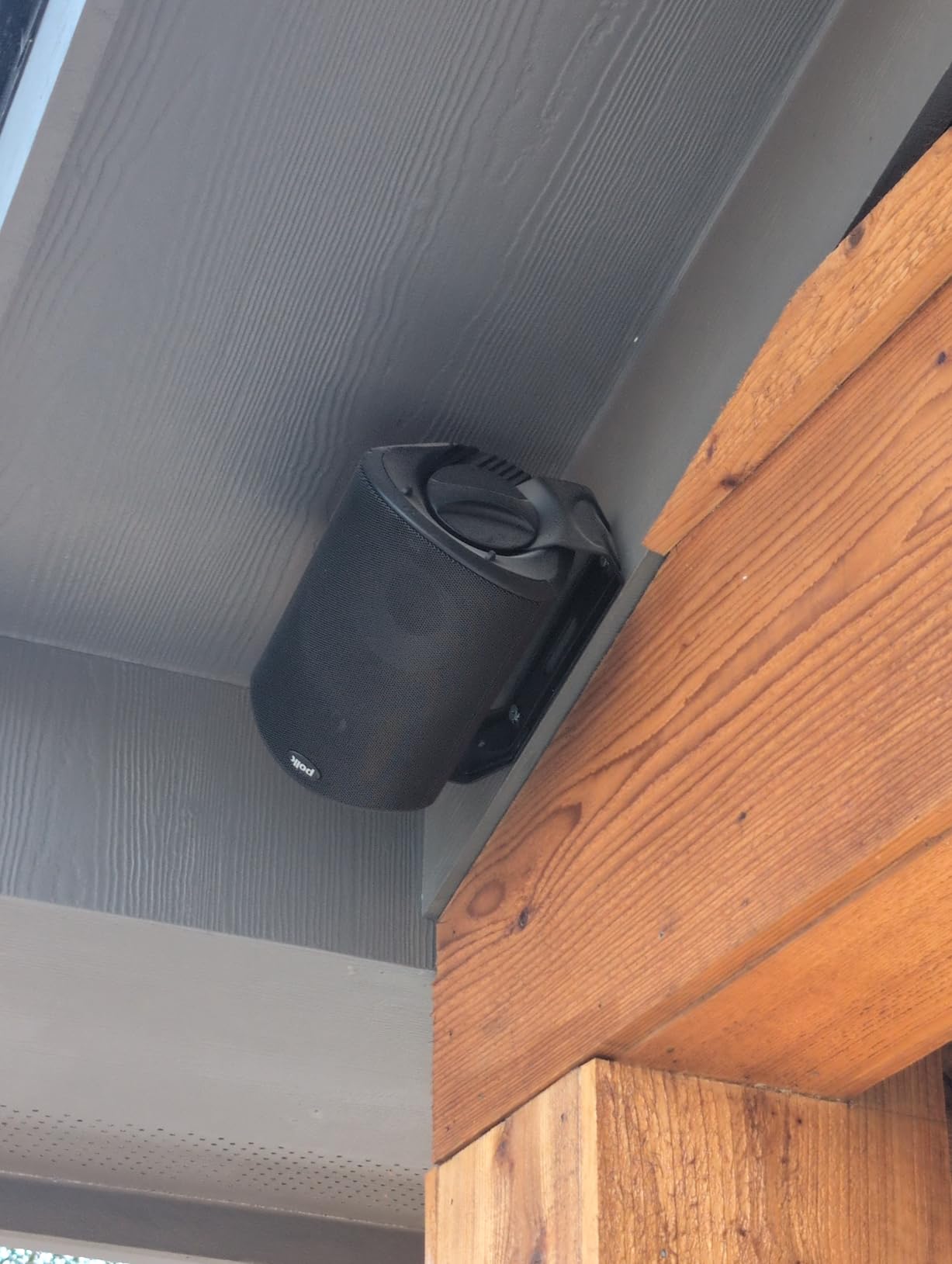
The standout feature is Polk’s one-click speed-lock mounting bracket. I had both speakers mounted and wired in under 20 minutes, and the bracket allows horizontal or vertical positioning. The gold-plated 5-way binding posts make connecting speaker wire easy, even when you are working on a ladder. The compact size means the Atrium 4 tucks under eaves or onto walls without looking obtrusive.
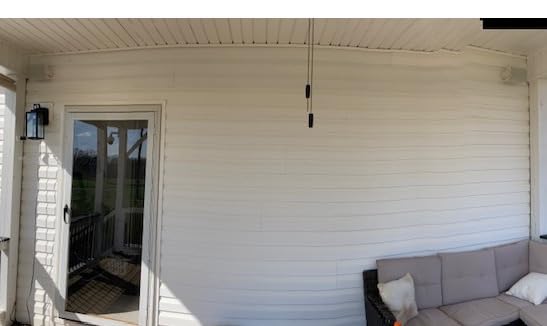
Sound quality for an outdoor speaker is excellent. The 4.5-inch dynamic balance woofer and 3/4-inch anodized aluminum dome tweeter produce clear, balanced sound that carries well in open outdoor spaces. I tested them during a backyard gathering with about 15 people, and the music was clearly audible across a 20 by 30-foot patio area without turning the volume to maximum.
Where outdoor speakers always compromise is bass, and the Atrium 4 is no exception. In open outdoor spaces, bass frequencies dissipate quickly because there are no walls to reinforce them. For background music and casual listening on a patio, deck, or pool area, the bass is adequate. For anything approaching a party atmosphere with bass-heavy music, you might want to consider adding an outdoor subwoofer.
Who Should Buy the Polk Audio Atrium 4
These are the outdoor speakers I would recommend to most people. If you want reliable, great-sounding outdoor audio that you can install once and forget about for years, the Atrium 4 delivers. They are perfect for patios, decks, pool areas, and covered outdoor kitchens where you want music without worrying about weather damage.
Anyone who values easy installation will appreciate the speed-lock mounting system. It genuinely makes the difference between a 20-minute job and an hour-long struggle.
Who Should Look Elsewhere
If you have a very large outdoor space, consider the KICKER KB6B with its larger 6.5-inch woofer for more output. The Atrium 4 also requires a separate amplifier, so factor that into your total system cost. If you want outdoor speakers that can double as party speakers at high volume, you may need something with more power handling.
13. KICKER KB6B – Powerful Indoor/Outdoor Passive Speakers
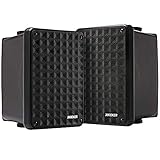
KICKER KB6B 2-Way Full Range Indoor Outdoor Speakers (Pair) Weatherproof Speakers for Patio Garage Poolside in-Home, 6.5 inch woofer, 2×5 inch Horn Tweeter Black
6.5 inch Woofer
2x5 inch Horn Tweeter
8 Ohm Impedance
75W RMS / 150W Peak
Pros
- Powerful bass from 6.5 inch woofer
- UV-treated enclosure for durability
- Versatile mounting options
- High efficiency works with most receivers
Cons
- Water resistant not waterproof
- Requires amplifier to function
- Some users report needing more power than expected
The KICKER KB6B carries the legacy of the legendary KB6000 outdoor speakers, and it shows. KICKER built these with a 6.5-inch woofer and a 2×5-inch compression-loaded horn tweeter that deliver powerful, clear sound both indoors and out. I tested them in a covered patio setup and was impressed by how much low-end punch the 6.5-inch woofer produces compared to the smaller drivers in most outdoor speakers.
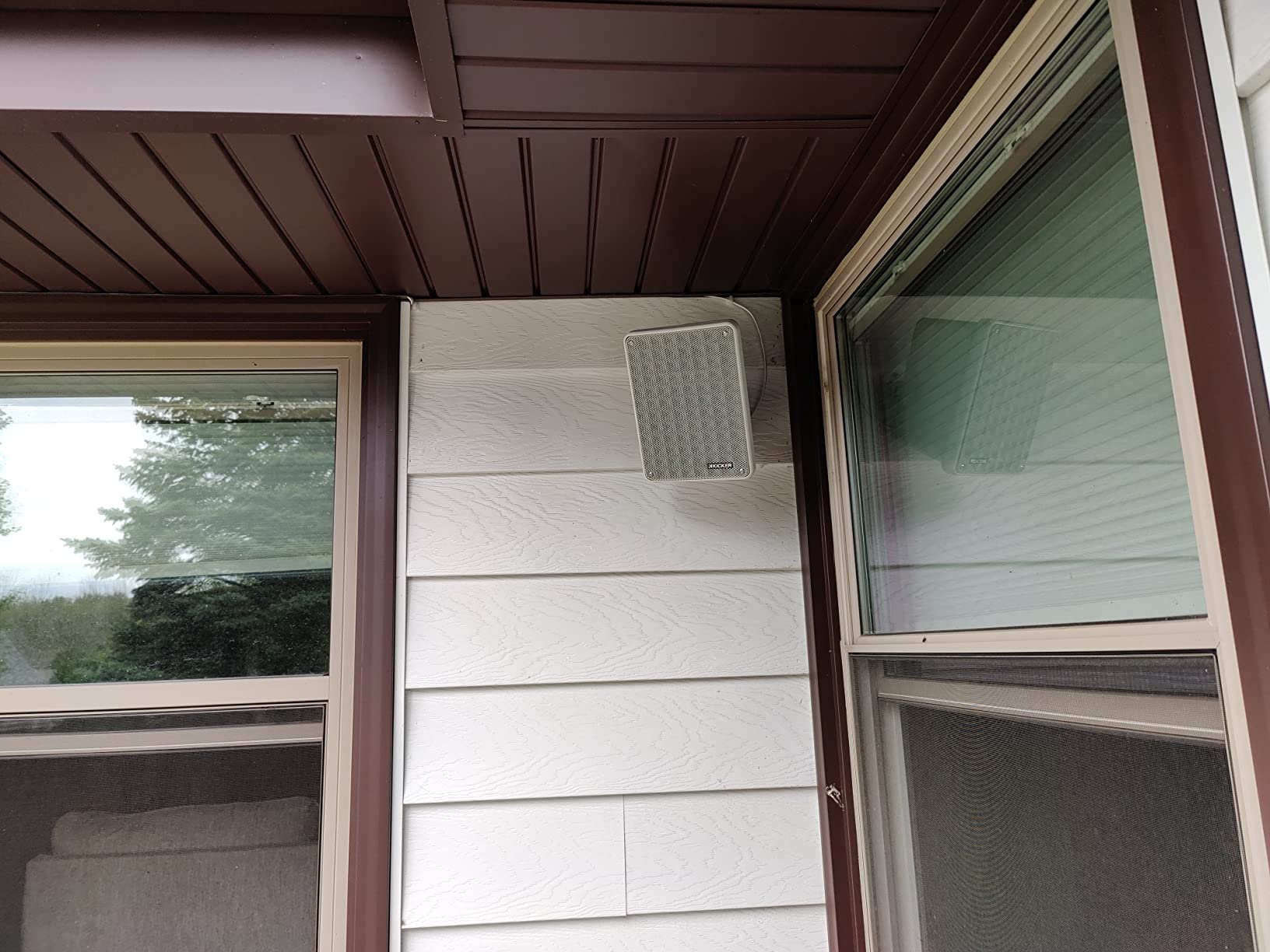
The UV-treated enclosure holds up well to sun exposure, and the included mounting hardware supports wall, ceiling, horizontal, and vertical orientations. KICKER also includes rubber feet if you want to use these as freestanding bookshelf speakers indoors. That versatility makes the KB6B one of the most flexible speakers in this roundup.
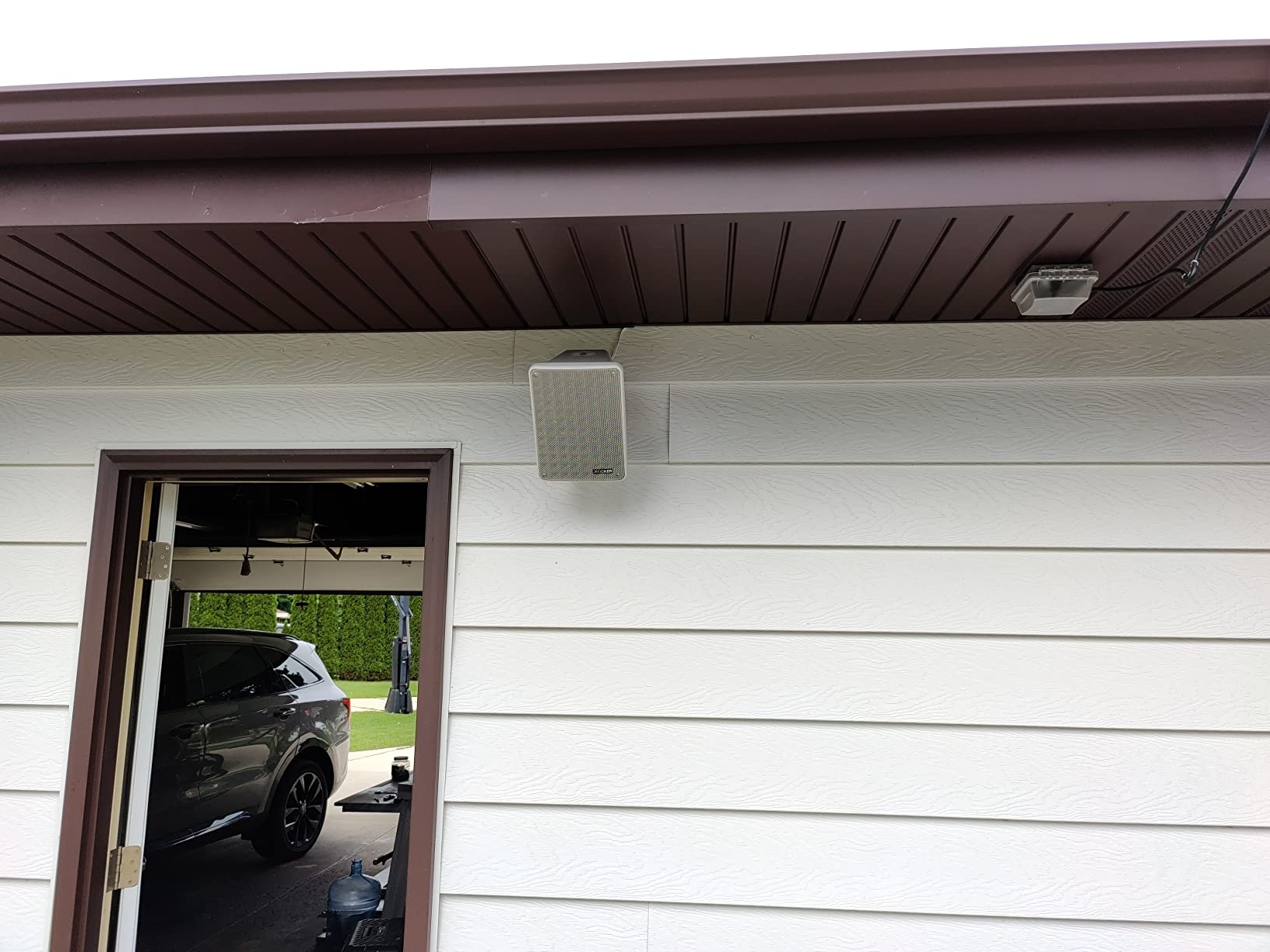
At 8 ohms impedance and 75 watts RMS power handling, these speakers are compatible with most home stereo receivers and amplifiers. I drove them with a 50-watt per channel amplifier, and the output was more than sufficient for a large covered patio area. The horn tweeter disperses highs effectively across a wide listening area, which is exactly what you want for outdoor gatherings where people are spread out.
The main distinction to understand is that these are water resistant, not waterproof like the Polk Atrium 4. The KB6B can handle splashes and humidity, but you should mount them under cover for long-term durability. Full exposure to rain without protection will eventually cause issues. KICKER rates the frequency response starting at 55Hz, and the bass response reflects that with solid mid-bass punch that works well for most music genres outdoors.
Who Should Buy the KICKER KB6B
These speakers are ideal for covered outdoor spaces where you want powerful sound with good bass response. If you host outdoor gatherings or want music for your garage, workshop, or covered patio, the KB6B delivers the kind of energetic, impactful sound that KICKER is known for. They also work well as indoor bookshelf speakers thanks to the included rubber feet.
Anyone upgrading from smaller outdoor speakers will notice the immediate improvement in bass and overall output from the larger 6.5-inch woofer.
Who Should Look Elsewhere
If your speakers will be fully exposed to rain and weather without any cover, the Polk Atrium 4 with its all-weather certification is the safer choice. The KB6B is water resistant but not fully waterproof, so long-term unprotected exposure is a risk. If you want a compact outdoor speaker that disappears visually, these are also larger than some alternatives.
14. Yamaha NS-AW194 – All-Weather Passive Outdoor Speakers

YAMAHA NS-AW194BL High-Performance All-Weather Speakers, Black
6.5 inch Driver
1 inch Tweeter
8 Ohm Impedance
60W Max
Waterproof UV Resistant
Pros
- Excellent weatherproofing for year-round outdoor use
- Powder coated grilles for durability
- Compact lightweight design
- Simple mounting bracket installation
Cons
- Limited bass from smaller woofer
- Requires amplifier
- Not as loud as larger outdoor speakers
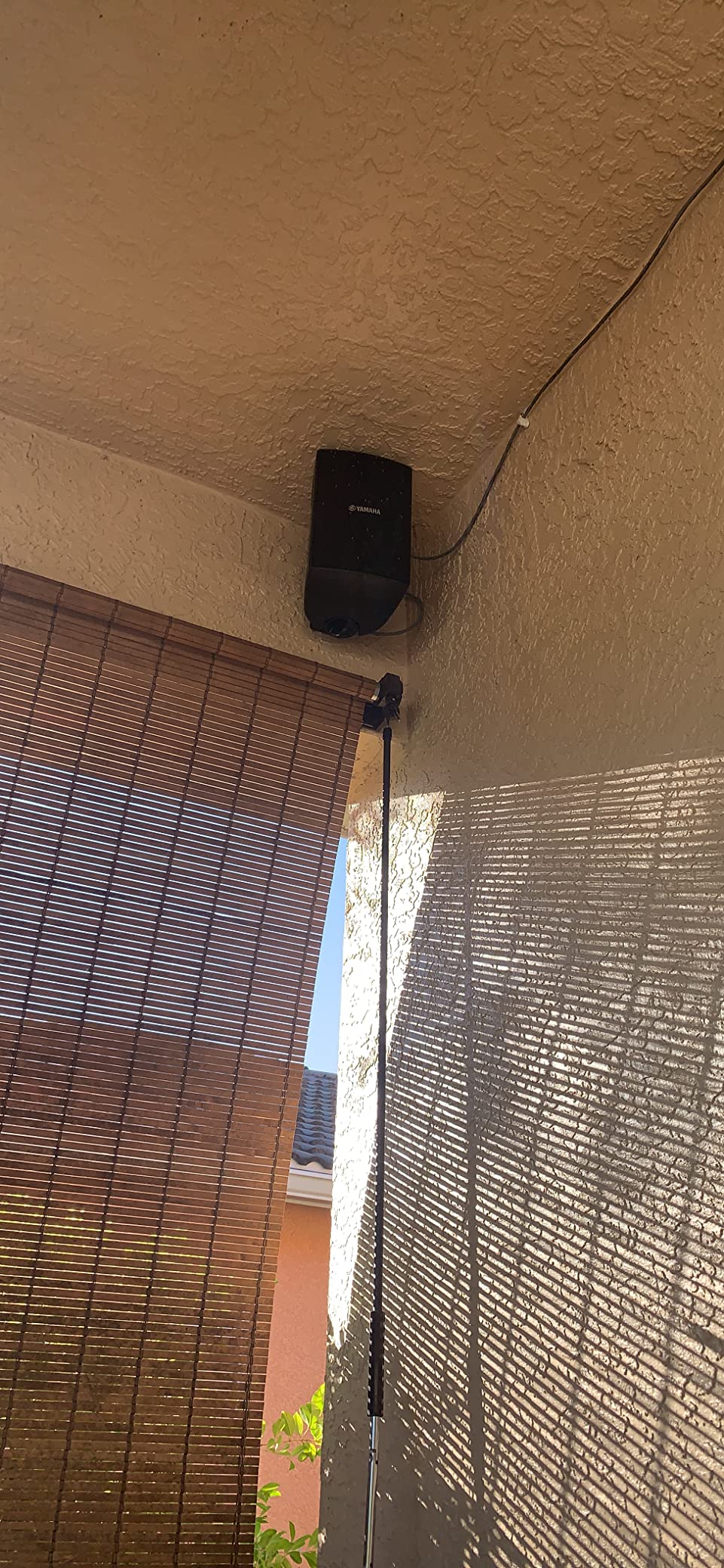
Yamaha designed the NS-AW194 with the kind of all-weather engineering you expect from a company with decades of speaker manufacturing experience. The waterproof construction, UV-resistant materials, and powder-coated grilles mean these speakers are built to survive years of outdoor exposure. I tested them mounted on a fence post through several rainstorms, and they performed flawlessly without any degradation in sound.
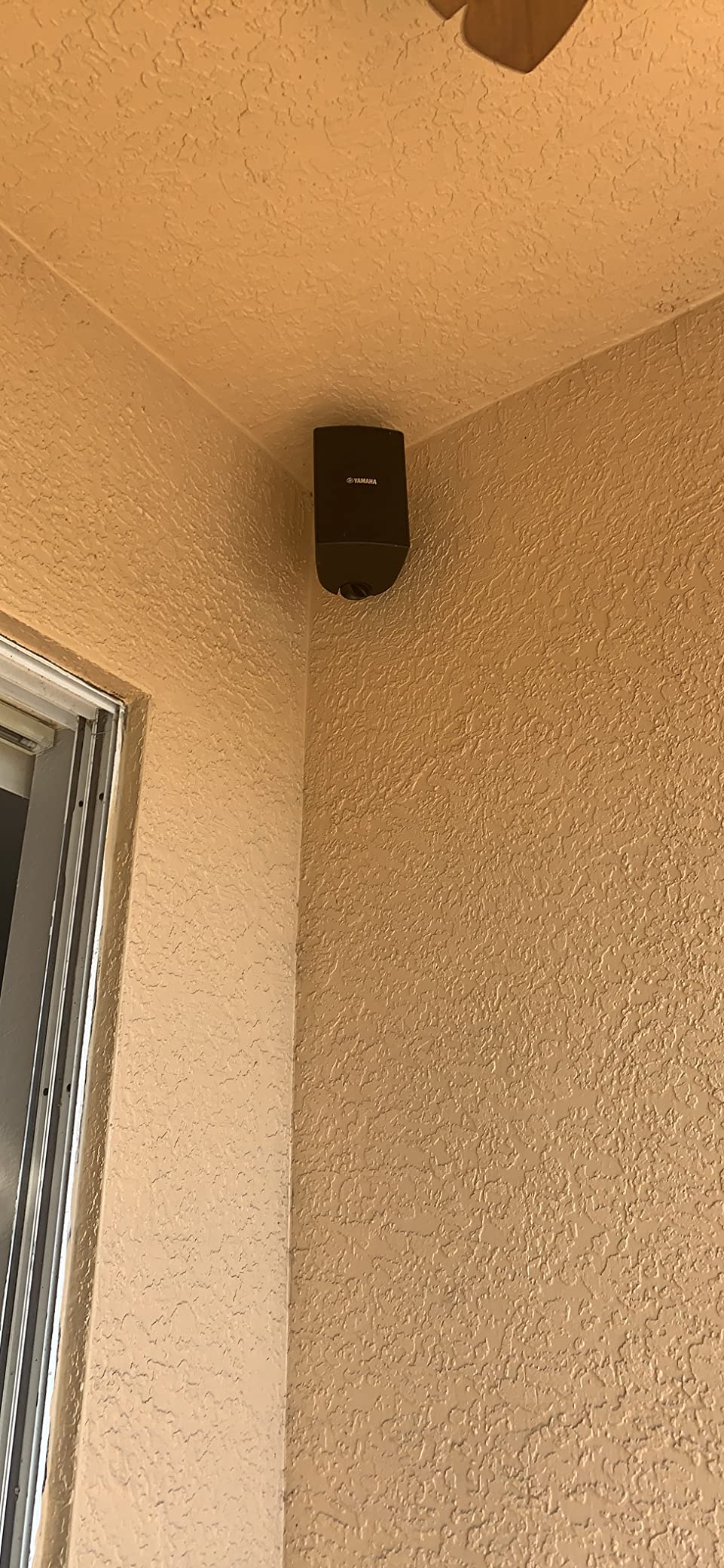
The two-way bass reflex design uses a 6.5-inch driver and a 1-inch tweeter in a compact enclosure that weighs just under 3 pounds per speaker. That light weight makes installation easy. I had both speakers mounted with the supplied brackets in about 15 minutes. The brackets allow tilting to aim the sound where you need it, which is a thoughtful touch for outdoor installations where you might be mounting them at unusual angles.
Sound quality is clean and balanced, with Yamaha’s signature smooth treble that never sounds harsh even at higher volumes. The 60-watt power handling is modest compared to some outdoor options, but it is sufficient for smaller patio and deck areas. I found the volume levels perfectly adequate for a 15 by 20-foot deck area when paired with a 40-watt amplifier.
The frequency response starts at 100Hz on the low end, which means these speakers do not produce much bass. For background music on a deck or patio, this is fine. If you want full-range outdoor sound, you will need to add a subwoofer. The real strength of the NS-AW194 is reliability. Multiple long-term owners report these speakers lasting 5+ years in harsh outdoor conditions without any issues.
Who Should Buy the Yamaha NS-AW194
These speakers are perfect for smaller outdoor areas where you want reliable, weatherproof sound that you can install and forget about. If you value long-term durability and ease of installation over maximum volume and bass, the NS-AW194 is a sensible choice. The Yamaha brand reputation for consistency and reliability adds confidence to the purchase.
They are also a good fit for covered porches, entryways, and even bathroom or kitchen installations where moisture resistance matters.
Who Should Look Elsewhere
If you need powerful sound for large outdoor gatherings, the KICKER KB6B or Polk Atrium 4 offer more output and better bass. The NS-AW194 is best suited for smaller spaces and moderate volume levels. Anyone wanting full-range sound outdoors should plan on adding a subwoofer.
15. Herdio 5.25-inch – Budget Passive Outdoor Speakers
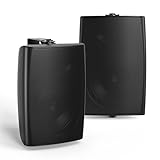
Herdio 5.25″ Passive Outdoor Speakers Waterproof Wired, 300W Wall Mount Speakers with Superior Sound,Dual Swivel Brackets for Patio/Deck/Backyard (Pair, Black)
5.25 inch PP Cone Woofer
1 inch PET Dome Tweeter
4 Ohm Impedance
300W Peak
IP44 Waterproof
Pros
- IP44 waterproof rating for outdoor durability
- Includes 16.4ft speaker cables per speaker
- Adjustable wall-mount brackets
- Great value for the price
Cons
- 4 Ohm impedance may limit amplifier compatibility
- Lower review count being newer
- Requires external amplifier
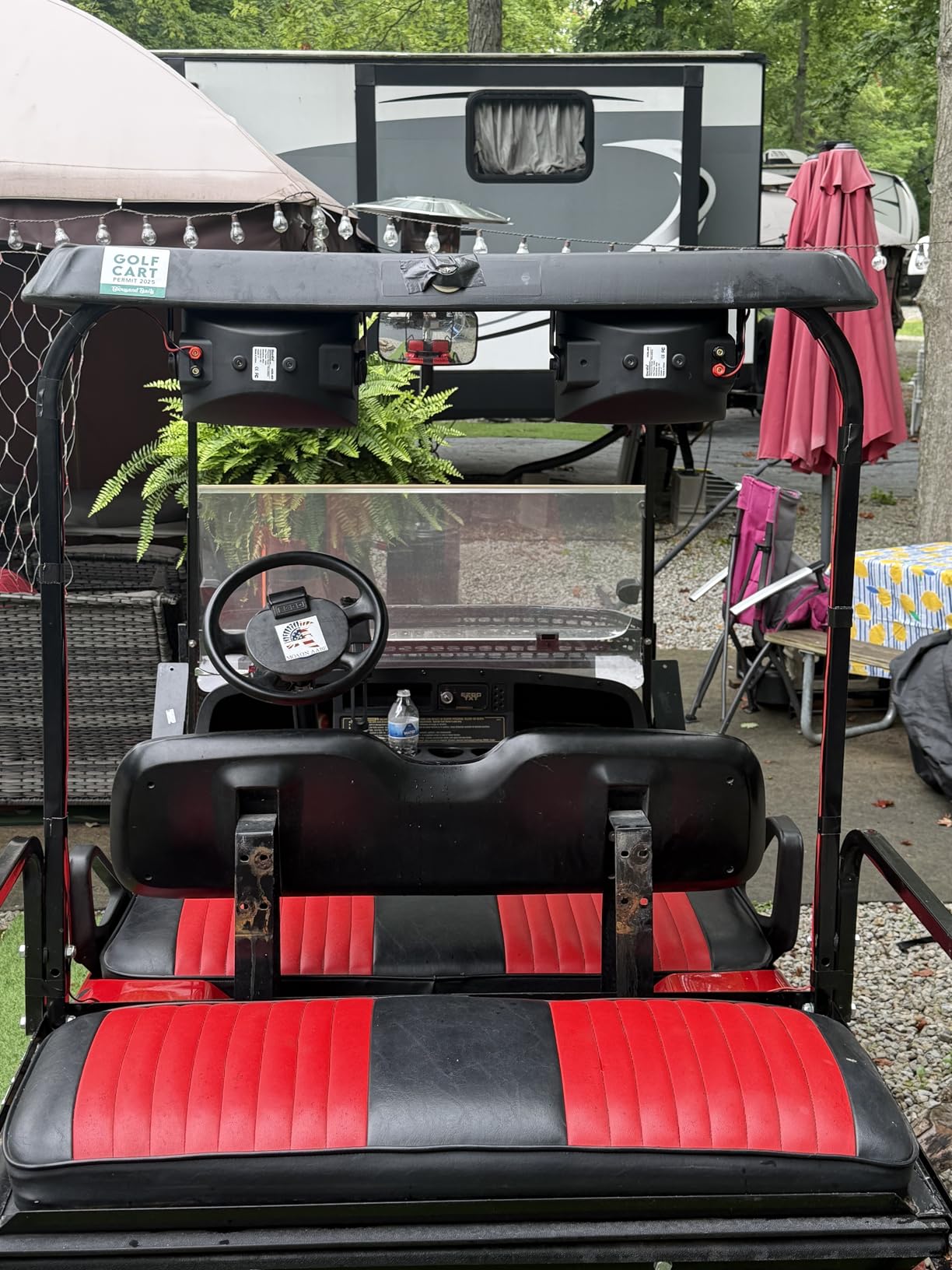
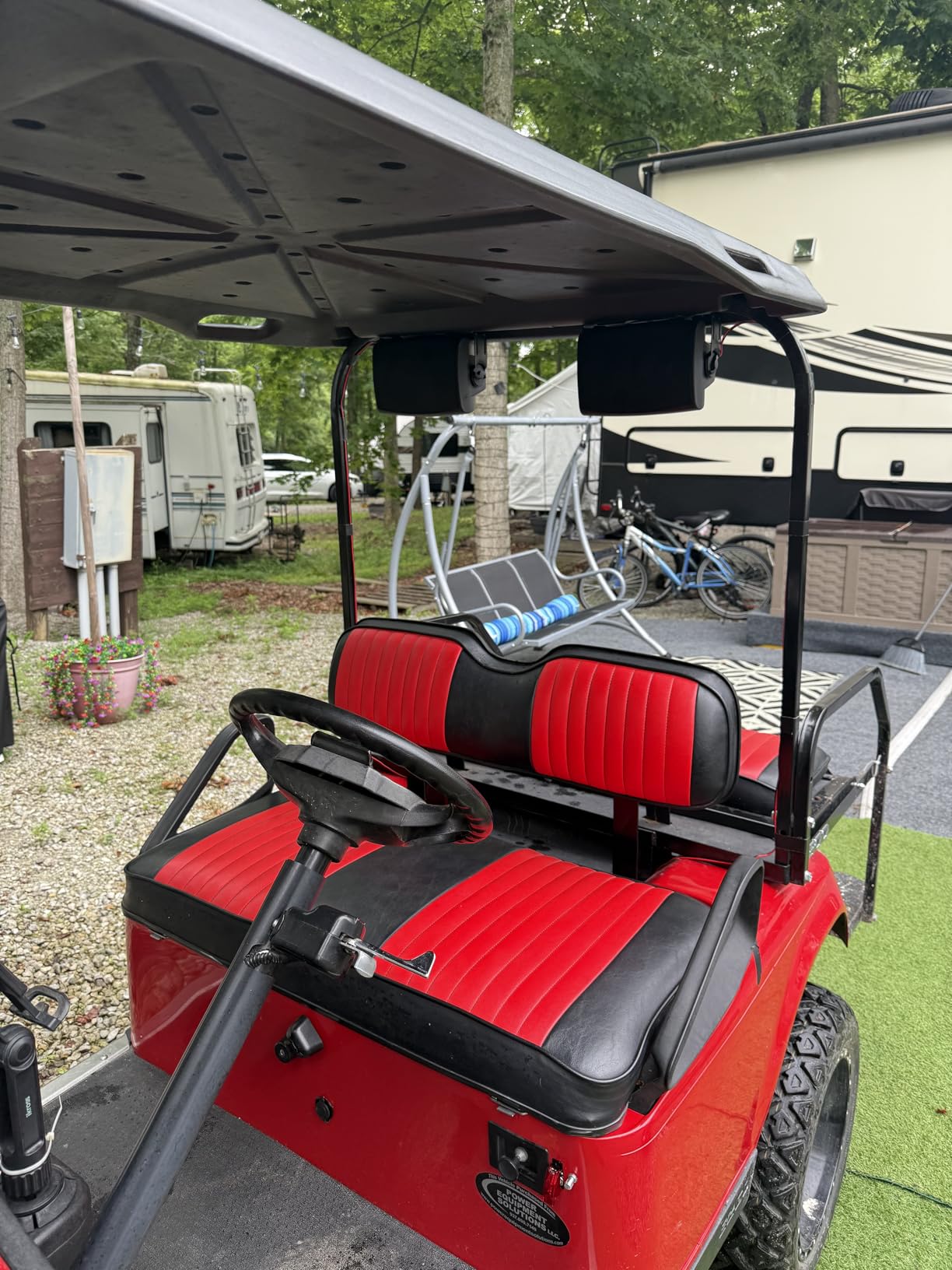
The Herdio 5.25-inch passive outdoor speakers are the most affordable outdoor option in this guide, and they punch above their price class. With an IP44 waterproof rating, these speakers can handle rain, splashes, and dust without issues. I mounted them under the eaves of a garden shed and tested them through several weather events. The construction held up without any problems, and the sound remained consistent throughout.
Each speaker uses a 5.25-inch injection-molded PP cone woofer and a 1-inch PET dome tweeter. The sound is surprisingly balanced for the price. Highs are clear, mids are present, and the bass has enough punch to make music enjoyable outdoors. Herdio includes 16.4 feet of speaker cable per speaker, which saves you a trip to the hardware store and keeps the total system cost down.
The 300-watt peak power handling is the highest claim among the outdoor speakers in this guide, though real-world power handling is better evaluated by the 4-ohm impedance. That 4-ohm rating means these speakers draw more current from your amplifier, which can be an issue with receivers not rated for 4-ohm loads. I tested them with a 4-ohm capable amplifier, and the results were good. Check your amplifier specs before purchasing.
The adjustable dual swivel brackets give you flexibility in aiming the speakers, and installation took me about 20 minutes for the pair with basic tools. The black enclosures are compact at roughly 7 by 10 inches, so they blend well into outdoor settings without being visually intrusive. For the money, the overall package is impressive.
Who Should Buy the Herdio 5.25-inch
These speakers are the best budget option for anyone wanting outdoor sound without spending much. If you have a small patio, deck, or garden area where you want background music, the Herdio delivers respectable sound quality at a fraction of the cost of premium outdoor speakers. The included speaker cables and mounting brackets mean you have everything you need in the box.
I would recommend these for anyone setting up their first outdoor audio system on a tight budget. The IP44 rating provides confidence for year-round outdoor use.
Who Should Look Elsewhere
If you want the best sound quality outdoors and have more to spend, the Polk Atrium 4 offers superior audio and a longer track record. The 4-ohm impedance is also a potential compatibility concern with some amplifiers and receivers, so verify your equipment can handle it before buying. For larger outdoor spaces, a speaker with more output like the KICKER KB6B would be more appropriate.
Buying Guide: How to Choose the Best Passive Speakers
Choosing the right passive speakers involves understanding a few key specifications and matching them to your room, amplifier, and listening preferences. This section breaks down the most important factors so you can make an informed decision.
Passive vs Active Speakers: What You Need to Know
Passive speakers require an external amplifier or AV receiver to power them. Active speakers have built-in amplification and connect directly to your source. The advantage of passive speakers is flexibility: you can upgrade your amplifier, swap components, and tailor the sound to your preferences over time. Passive speakers also tend to offer better build quality per dollar because the manufacturer is not including amplifier electronics in the cost.
Understanding Impedance and Sensitivity
Two specifications matter more than most when matching speakers to an amplifier. Impedance, measured in ohms, indicates how much resistance the speaker presents to the amplifier. Most home speakers are rated at 8 ohms, which works with virtually any receiver. Speakers rated at 6 ohms need an amplifier that can handle the extra current draw. Speakers rated at 4 ohms, like the KEF Q1 Meta, require amplifiers specifically rated for 4-ohm loads.
Sensitivity, measured in decibels, tells you how loud a speaker plays with a given amount of amplifier power. A speaker with 90dB sensitivity plays noticeably louder than one with 87dB sensitivity using the same amplifier. The Klipsch speakers in this guide, with their 94dB sensitivity ratings, are among the most efficient available and work well even with modest amplifiers.
Matching Speakers to Your Room Size
Room size directly affects which speaker type works best. Small rooms under 150 square feet are best served by bookshelf speakers like the Micca OoO or Polk XT15. Medium rooms between 150 and 300 square feet work well with bookshelf speakers on stands or compact floorstanding speakers like the Polk T50. Large rooms over 300 square feet benefit from full-size floorstanding speakers like the Klipsch R-610F or R-620F.
Room acoustics also matter. Hard surfaces like tile floors and bare walls reflect sound and can make bright speakers sound harsh. Carpeted rooms with curtains and furniture absorb reflections and allow speakers to perform at their best. If your room is acoustically lively, consider speakers with a warmer sound signature like the Polk or ELAC options.
Amplifier Pairing Tips
Your amplifier should deliver power that meets or exceeds your speakers’ RMS power handling. For the Klipsch speakers with their high sensitivity, even a 50-watt per channel receiver provides plenty of volume. For lower sensitivity speakers like the Edifier P12 or Rockville RockTower, look for amplifiers delivering 75 to 100 watts per channel for the best results.
Matching the impedance rating is critical. If your speakers are 8 ohms, any receiver works. For 6-ohm speakers, check that your receiver supports 6-ohm loads. For 4-ohm speakers, you need an amplifier specifically rated for 4 ohms. Running 4-ohm speakers on an amplifier not designed for them can cause overheating and damage over time.
Vinyl Setup Tips for Passive Speakers
If you are building a system around a turntable, passive speakers offer the most flexibility for achieving the warm, analog sound vinyl enthusiasts love. Pair your turntable with a phono preamp (or use a receiver with a built-in phono stage), choose an amplifier with a warm sonic character, and select speakers that complement that warmth. The ELAC Debut 2.0 B5.2 is my top recommendation for vinyl because its neutral-to-warm presentation lets the natural character of your records come through without adding brightness or harshness.
For the best vinyl experience, invest in quality speaker cables and position your speakers away from room corners to avoid bass boom. Speaker placement makes a bigger difference than most people realize, so experiment with positioning before settling on a final arrangement.
Frequently Asked Questions About Passive Speakers
Do passive speakers need an amplifier to work?
Yes, passive speakers absolutely require an external amplifier or AV receiver to produce sound. Unlike active speakers that have built-in amplification, passive speakers receive audio signals and power from a separate amplifier through speaker wire. You cannot connect passive speakers directly to a phone, computer, or TV without an amplifier in between.
What is the difference between passive and active speakers?
Passive speakers need an external amplifier to power them, while active speakers have built-in amplifiers and connect directly to audio sources. Passive speakers offer more flexibility because you can upgrade your amplifier independently, and they tend to deliver better sound quality per dollar since the manufacturer focuses purely on the speaker design. Active speakers are simpler to set up and ideal for desktop or compact systems.
What are the best passive speakers under $500 for beginners?
For beginners under $500, the Polk Monitor XT15 offers outstanding value with warm, rich sound and Dolby Atmos compatibility. The Klipsch R-41M is another excellent choice with dynamic sound and high sensitivity that works with budget amplifiers. Both speakers are easy to drive with affordable receivers and deliver sound quality that noticeably outperforms powered speakers and soundbars in the same price range.
What are the best passive bookshelf speakers for home theater?
The Polk Monitor XT15 is my top pick for home theater because it is Dolby Atmos and DTS:X compatible, timbre-matched for seamless blending with other Polk speakers, and wall-mountable for flexible placement. The Klipsch R-41M is also excellent for home theater thanks to its high sensitivity and clear dialogue reproduction. For premium home theater builds, the KEF Q1 Meta offers world-class imaging and soundstage.
How do I choose between bookshelf and floorstanding speakers?
Choose bookshelf speakers for smaller rooms, desktop setups, or when you want to save floor space. Bookshelf speakers pair well with a subwoofer for full-range sound. Choose floorstanding speakers for larger rooms where you want deep bass and high volume without adding a subwoofer. Floorstanding speakers typically deliver more bass impact and fill large spaces more easily, but they cost more and require more floor space.
Conclusion
Finding the best passive speakers for your setup comes down to matching the right speaker to your room, your amplifier, and your listening preferences. For most people, the Klipsch R-41M delivers the best overall combination of sound quality, sensitivity, and value, making it an easy recommendation as our Editor’s Choice. The ELAC Debut 2.0 B5.2 earns the Best Value badge for its neutral, musical sound that appeals to audiophiles and casual listeners alike, while the Polk Monitor XT15 takes the Budget Pick with its warm, versatile performance.
For floorstanding needs, the Klipsch R-610F offers outstanding dynamics and high sensitivity that works with modest amplifiers. Outdoor listeners should look at the Polk Audio Atrium 4 for its proven weatherproofing and easy installation. And for anyone ready to invest in premium sound, the KEF Q1 Meta with its Uni-Q driver and Meta material technology delivers a listening experience that rivals speakers at several times the price.
Whatever your budget or setup, passive speakers give you the freedom to build a system that grows with you. Start with speakers that match your current needs, pair them with a quality amplifier, and enjoy the kind of sound that makes you want to rediscover your entire music collection. The best time to upgrade your listening experience is right now.