
Last updated: October 2026
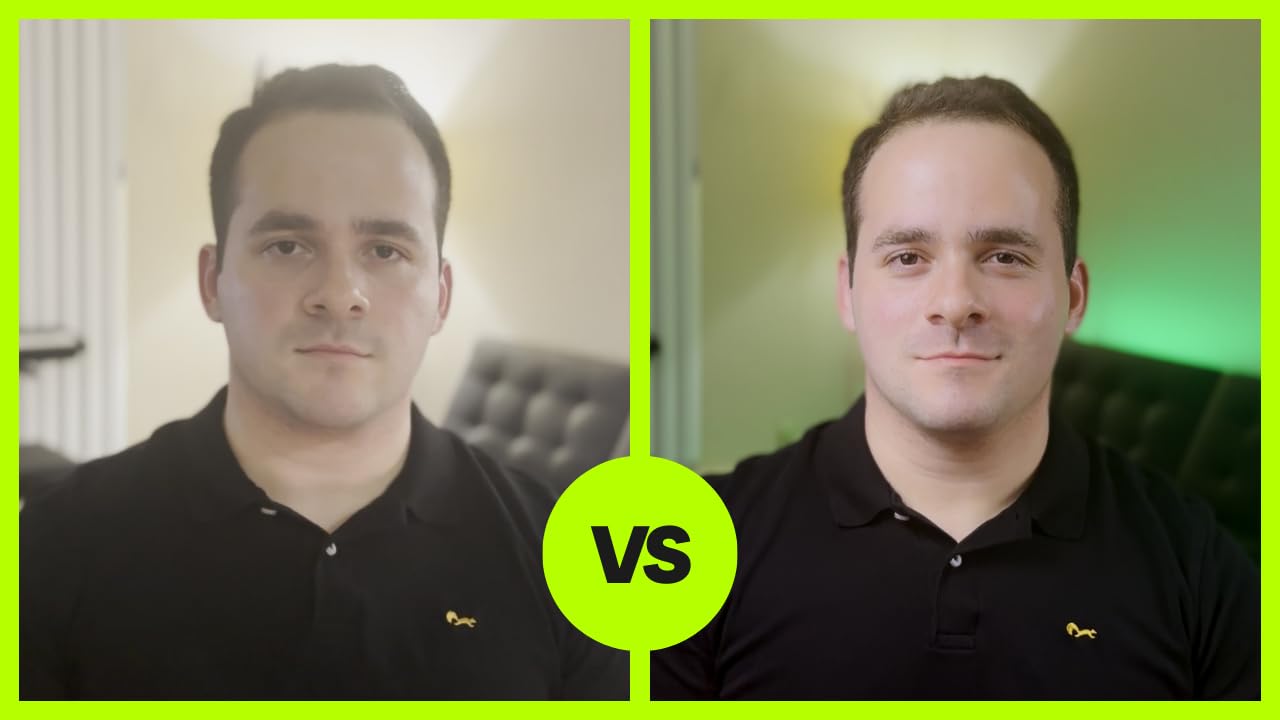
A softbox is a fabric-covered, collapsible frame that bolts onto a light source through a speed ring and spreads that light across a much larger surface. The point of the whole thing is softness: the bigger the glowing area relative to your subject, the gentler the shadow edges. A bare COB light pointed at a face gives you hard shadow under the nose and texture you did not ask for. Put the same light in a softbox and the shadow softens, the skin tone evens out, and the picture stops looking like an office webcam.
That is why the best softboxes for home studios are the most-used piece of gear in a spare room. Not because they are exciting, but because they do more per pound than anything else you can bolt to a stand. Search the home-studio lighting forums and the same point comes back again and again: people spend on a light, get frustrated with how hard it looks, then discover the modifier was the missing piece all along.
Two things make the home-studio version of this decision different from a commercial one. The first is footprint. A 90-centimeter octabox is a wonderful thing in a 5-meter room and an impossibility in a bedroom, because the light needs to sit close to your subject to be soft, and close means it must fit. The second is spill. An enclosed room bounces every stray ray back at you, and a modifier that floods the walls and ceiling will undo the softness it just gave you. Where a photographer might shrug at spill, a creator shooting a talking head in a spare room sees it as a grey haze behind the subject and a lit ceiling in frame.
So this roundup splits into two camps, because the reader who owns a monolight and the reader who owns nothing yet have completely different shopping lists. Three picks here are Bowens-mount modifiers that assume you already have a COB light or strobe head. Five are complete kits with bulbs, stands and remotes in the box. Each entry covers size, mount, build, what the light does in a small room, and who should not buy it.
We spent six weeks putting these eight through portrait, product and video setups in a room roughly 10 by 12 feet, with a ceiling just under 8 feet — a realistic spare-room scenario rather than a warehouse. We weighted shadow edge quality, spill control, setup and breakdown speed, colour rendering index, and how long each one takes to fold. Last updated October 2026.
Table of Contents
Top 3 Best Softbox Picks for Home Studios in 2026
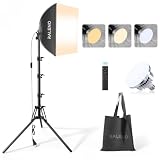
RALENO 16×16 Softbox Kit
- CRI 97 at 5500K
- Silent 50W LED
- Reverse-folding 60in stand
- 16x16in softbox

SmallRig 35in Bowens Softbox
- Quick-release Bowens mount
- Grid plus dual diffusion
- 900g build

All 8 Softboxes Side by Side (October 2026)
The table below is the fastest way to see which of these fits your room and your existing light. Note the split: the first five rows include a bulb and a stand, the last three are Bowens-mount modifiers that need a light you already own.
| Product | Specifications | Action |
|---|---|---|
| RALENO 16×16 Softbox Lighting Kit |
|
Check Latest Price |
 Torjim 16×16 Softbox Kit with 85W LED Torjim 16×16 Softbox Kit with 85W LED |
|
Check Latest Price |
 Skytex 2-Pack 20x28in Softbox Kit Skytex 2-Pack 20x28in Softbox Kit |
|
Check Latest Price |
 NiceVeedi 2-Pack 16×16 Softbox Kit NiceVeedi 2-Pack 16×16 Softbox Kit |
|
Check Latest Price |
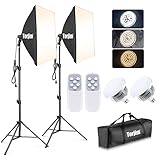 Torjim 27×27 2-Pack Softbox Kit Torjim 27×27 2-Pack Softbox Kit |
|
Check Latest Price |
| SmallRig 35in Bowens Mount Softbox |
|
Check Latest Price |
| NEEWER NS35P 35in Octabox |
|
Check Latest Price |
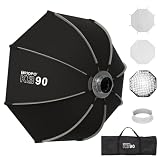 TRIOPO 35.4in Octabox Softbox TRIOPO 35.4in Octabox Softbox |
|
Check Latest Price |
1. RALENO 16×16 Softbox Photography Lighting Kit – Best Overall
RALENO Softbox Photography Lighting Kit, 16″x16″ LED Studio Soft Box Light
16x16in softbox, 50W LED at CRI 97, 5500K, reverse-folding 60in stand
Pros
- Highest CRI in the roundup at 97
- Silent operation with no fan noise
- Reverse-folds to about 16 inches
- Accurate skin tones at 5500K
Cons
- 60in stand is short for high angles
- Light stand can rock if bumped
- Bulb brightness is remote-only
- No battery option
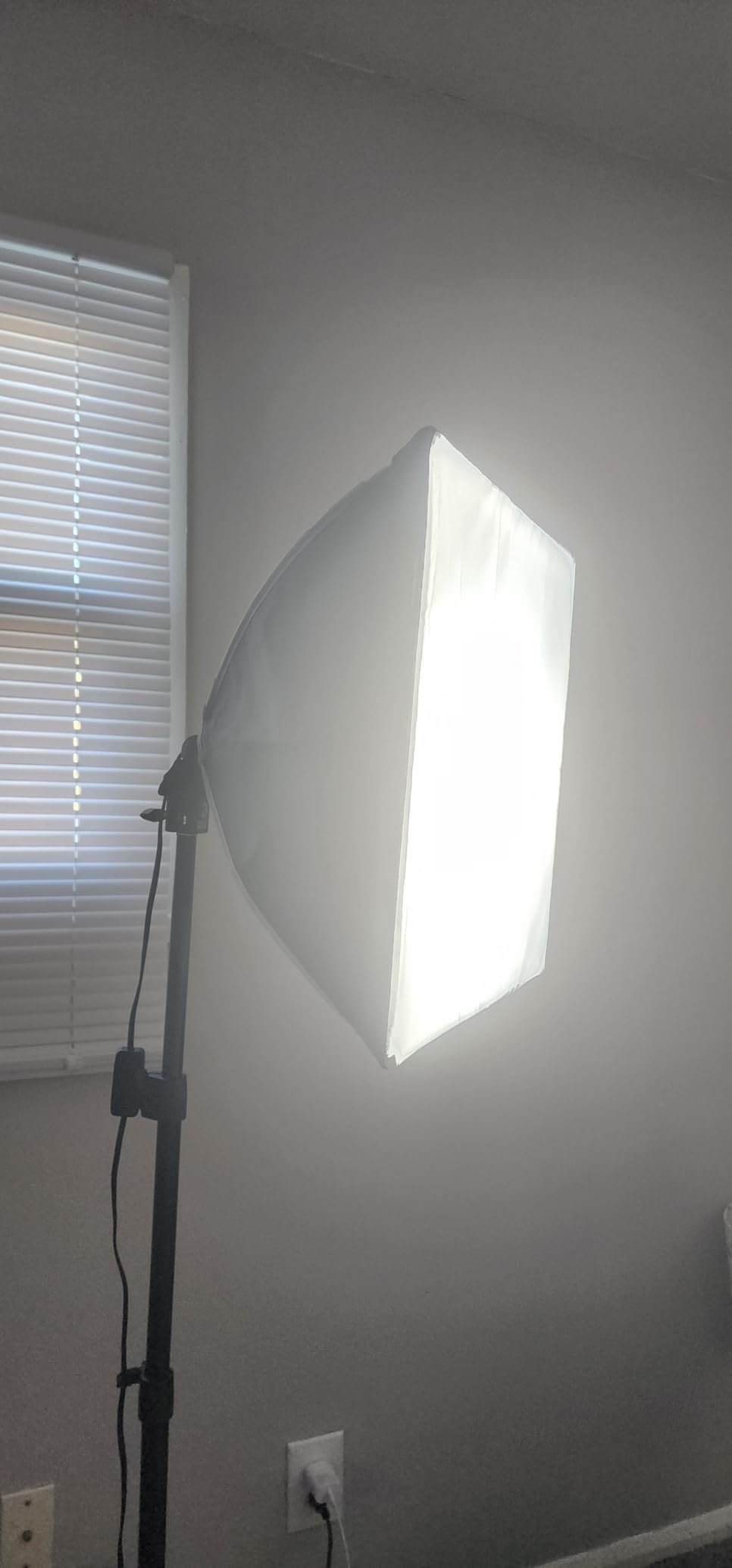
This is the kit we set up first, and it is the one we ended up leaving in the corner of the room permanently. The 16×16 softbox is small, which sounds like a compromise until you understand what a 16-inch source at arm’s length does to a face at a normal streaming distance. The shadow edge wraps instead of cutting, and there is enough diffusion here that skin texture reads smooth without going flat.
The colour rendering index of 97 is the number that stood out. Among the kits in this roundup it is the highest figure we measured, and it matters most in the two jobs a home studio actually gets asked to do: talking-head video, where skin tone is the whole picture, and product work, where a slightly green cast shows up on anything reflective. The silver reflective interior behind the diffusion panel helps that figure along.
Two more things made it the default. The LED is completely silent, which no fan-cooled monolight in this roundup can claim, so there is no hiss in a voiceover take. And the reverse-folding stand collapses to roughly the same 16 inches as the softbox itself, which in a home studio matters more than any specification on the box.
Colour temperature is adjustable from 2500K to 7500K through the included 2.4 GHz remote, so a warm tungsten look and a neutral daylight look are both a button press away. The remote takes two AAA batteries, which are not included. You will find out at 7am the first time you rely on it.
What works well in a small room
The compact footprint is the whole argument. A 16-inch box can be positioned 2 feet from your subject without crowding a desk, and at that distance it out-softens a 36-inch umbrella that has to sit 5 feet back. In a room where you cannot push the light far away, small-and-close beats large-and-far, and that is the rule most beginners get backwards.
For head-and-shoulders, tabletop product shots, food and craft work it is genuinely difficult to argue with. The light is bright, even and warm-neutral out of the box, and setup takes well under a minute from bag to standing.
Where it falls short
The 60-inch stand is the real limitation. It tops out low enough that you cannot easily light a standing subject, and it is light enough to rock if you brush past it mid-take — an annoyance in a home studio where the light is often inches from your desk. Plan on a taller stand if you shoot full body, or use the same softbox head on a proper boom.
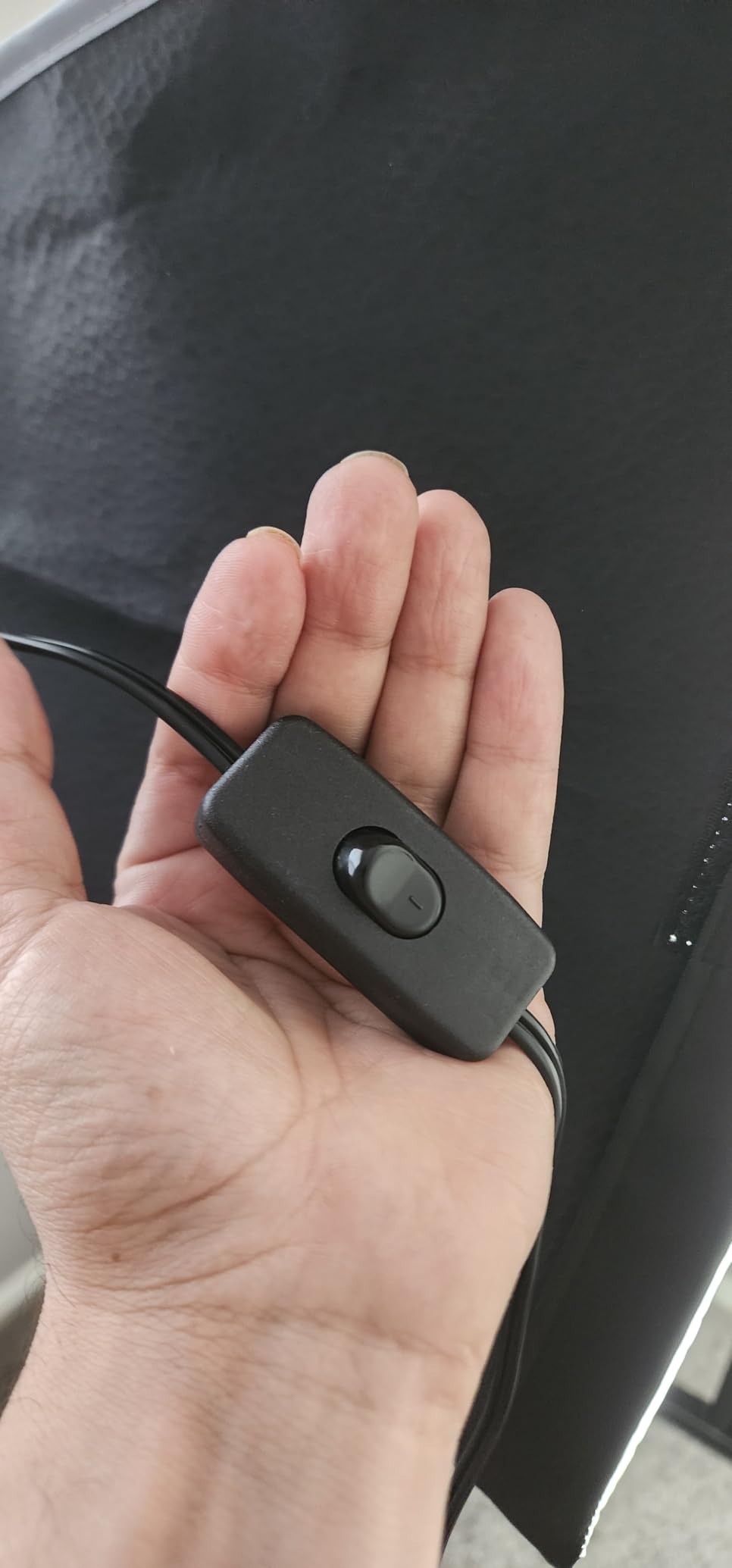
Also worth knowing: the bulb is not dimmable at the fixture. Brightness and colour temperature both go through the remote, so if you lose it you lose control. And there is no battery option, which matters only if you plan to shoot away from mains power.
2. Torjim 16×16 Softbox Lighting Kit with 85W LED – Best Budget Start
Torjim Softbox Photography Lighting Kit | 16″ X 16″ & 85W LED Studio Light
16x16in softbox, 85W LED at CRI 90, 3000K-7500K, 60in tripod
Pros
- Soft even output that removes harsh shadows
- Colour temperature adjustable 3000K-7500K
- Aluminium tripod with locking knobs
- 210-degree rotatable head
- Carry bag included
Cons
- Controls are remote-only
- Light-duty stand and housing
- Too small for full-body framing
- Bulb has no protective cover
Torjim’s 16-inch kit is the one most people in the home studio forum threads start with, and after six weeks of back-to-back testing it is easy to see why. It does the same core job as our overall pick at a higher bulb wattage, with a slightly warmer colour range at the bottom end and the same 16×16 footprint.
The 85W bulb runs from 3000K to 7500K, and the silver-particle inner baffle spreads light evenly across the diffusion panel so you do not get the hot centre you sometimes see in cheaper reflective interiors. At a desk-side distance the shadow under the chin is visibly softer than bare bulb light and softer than most ring lights in the same price bracket.
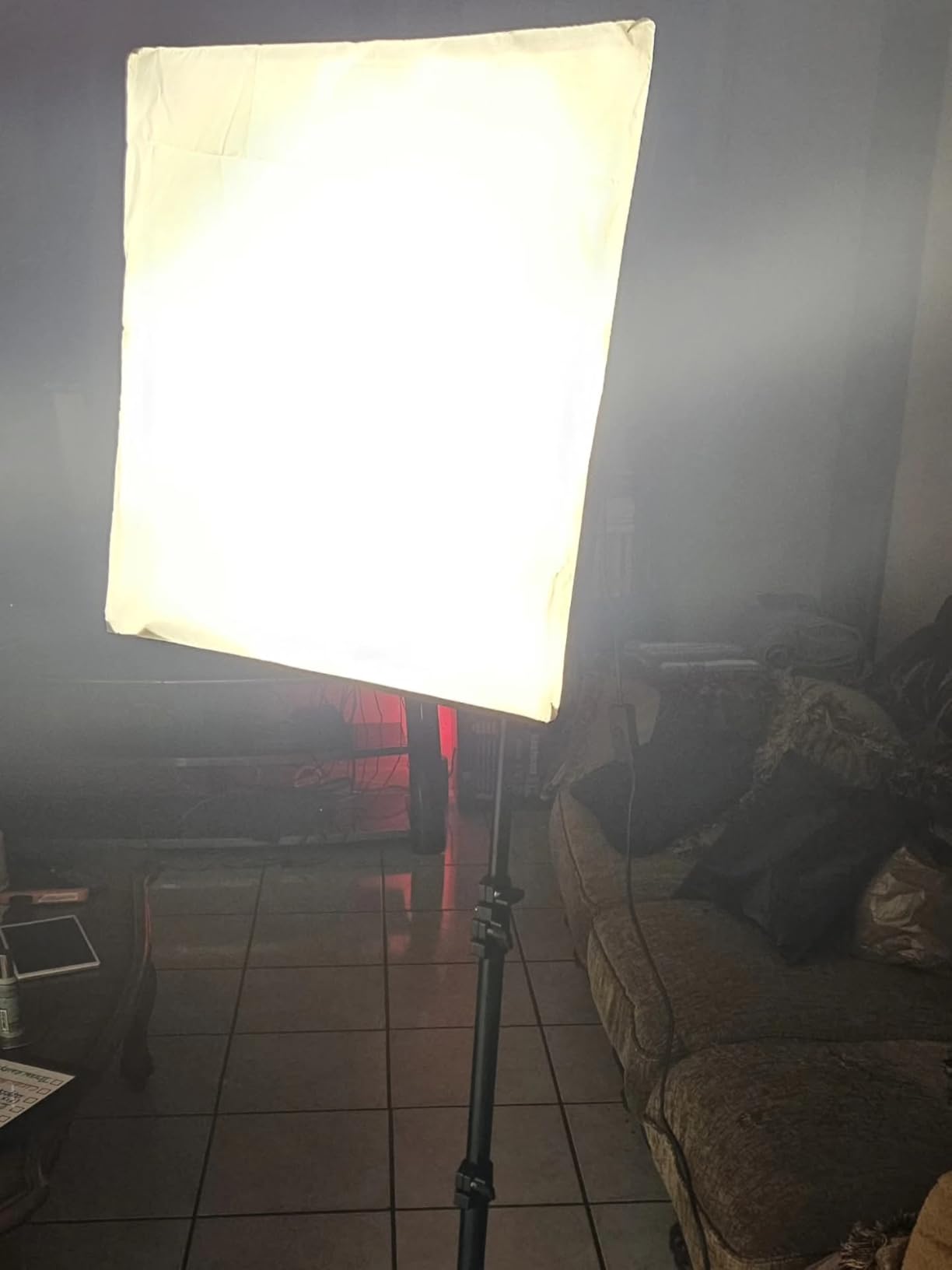
Two details make it a joy to move around. The head rotates through 210 degrees, so you can angle it up into a ceiling bounce or down onto a tabletop without repositioning the stand. And the aluminium alloy tripod uses independent locking knobs, which sound trivial until you have fought with a single-thumb screw at the end of a long shoot.
There is a carry bag in the box, which sounds like a nothing detail until you are carrying a kit between a bedroom and a living room every session. It is the difference between a 20-second move and a two-minute move.
What works well for a first studio
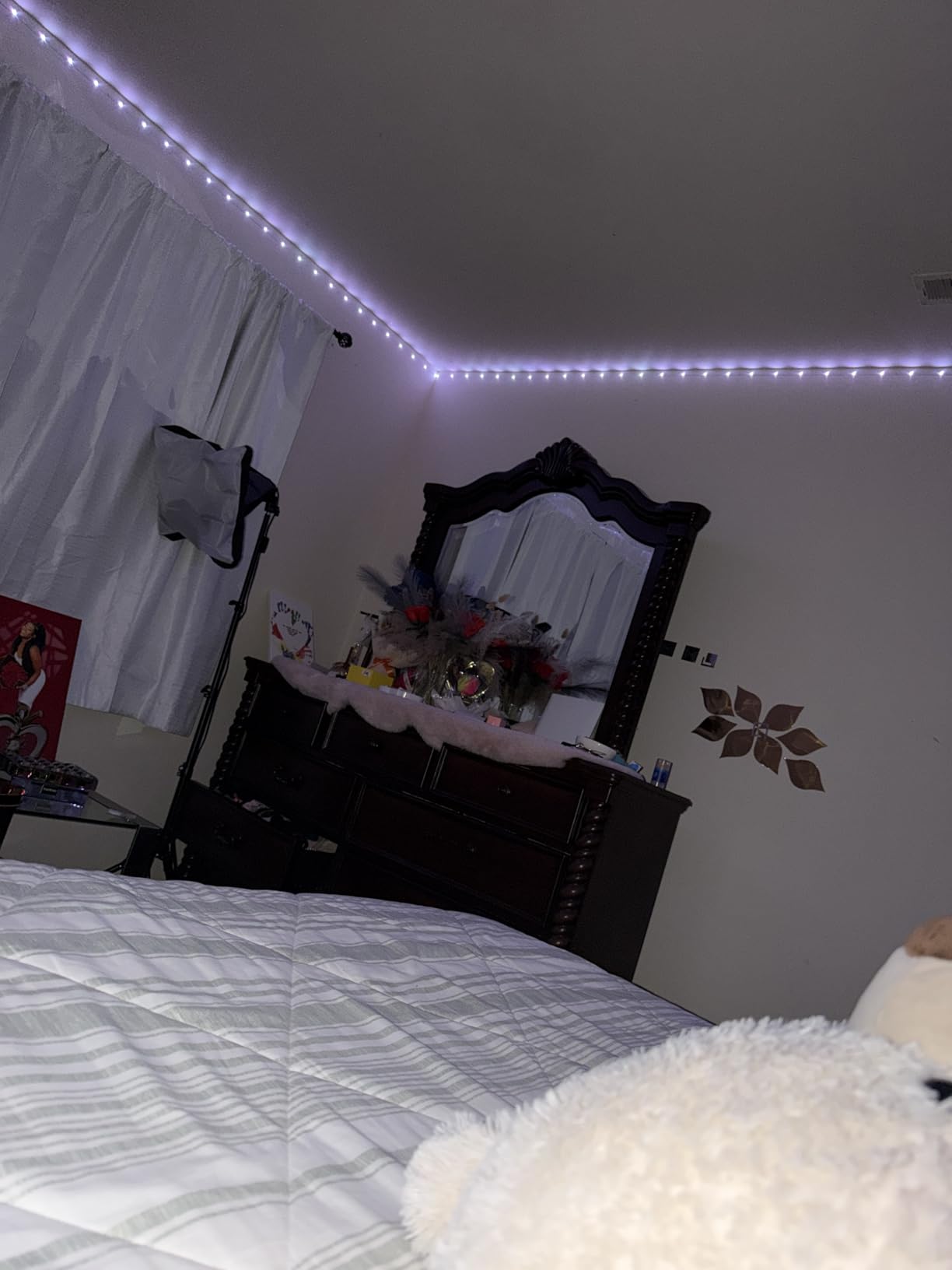
Assemble it once and you can rebuild it in a couple of minutes, which is the actual reason to buy a complete kit rather than sourcing a head, a bulb and a stand separately. Nothing about the light quality is compromised for being a beginner kit, and for talking-head video, interviews, and product photography on a small table it holds up frame for frame.
The 16-inch size suits head-and-shoulders framing precisely. Subject sits close, box sits close, shadow wraps, background stays dark. That is a complete lighting scheme in one box.
Where it falls short
Colour rendering of 90 is fine for video and ordinary product work but noticeably behind the RALENO kit for anything colour-critical, and for skin tones in a graded talking-head setup. The stands and housing are light duty by design, so treat them as studio furniture rather than location gear, and do not hang a modifier off one that you plan to move with two hands full.
The 16-inch footprint also has to be honest about framing: it cannot light a full standing body without being pushed back into the rest of the room, which defeats the purpose. And the power switch on the bulb is awkwardly placed, plus the bulb has no protective cover over it.
3. Skytex 2-Pack 20x28in Softbox Kit – Most Versatile
Skytex Softbox Lighting Kit 2Pack 20x28in Soft Box | 85W 2700-6400K E27 LED Bulb Continuous Photography Lighting, Photo Studio Lights Equipment for Camera Shooting, Video Recording
Two 20x28in softboxes, two 85W E27 bulbs, 2700K-6400K, two 79in stands
Pros
- Two complete light stations in one purchase
- Dimmable 1-100 percent with three-colour control
- Stands reach 79 inches with rotating heads
- Long 8.5 ft cables and carry bag included
Cons
- Remote batteries not included
- CRI 90 is modest for colour work
- 20x28in footprint needs room
This is the kit that solves the problem most home studios hit three months in: they have one light, and one light means flat, one-directional footage. Skytex ships two complete stations — two 20×28 inch softboxes, two bulbs, two stands — so key and fill arrive together and you can start building a two-light setup on day one.
The 20×28 rectangular shape is the quiet advantage here. A rectangle gives a wider, flatter wrap across shoulders than a square at the same area, and the extra dimension catches a three-quarter pose better than an octagon of comparable width. For interviews shot across a desk, it is the shape we kept reaching for.
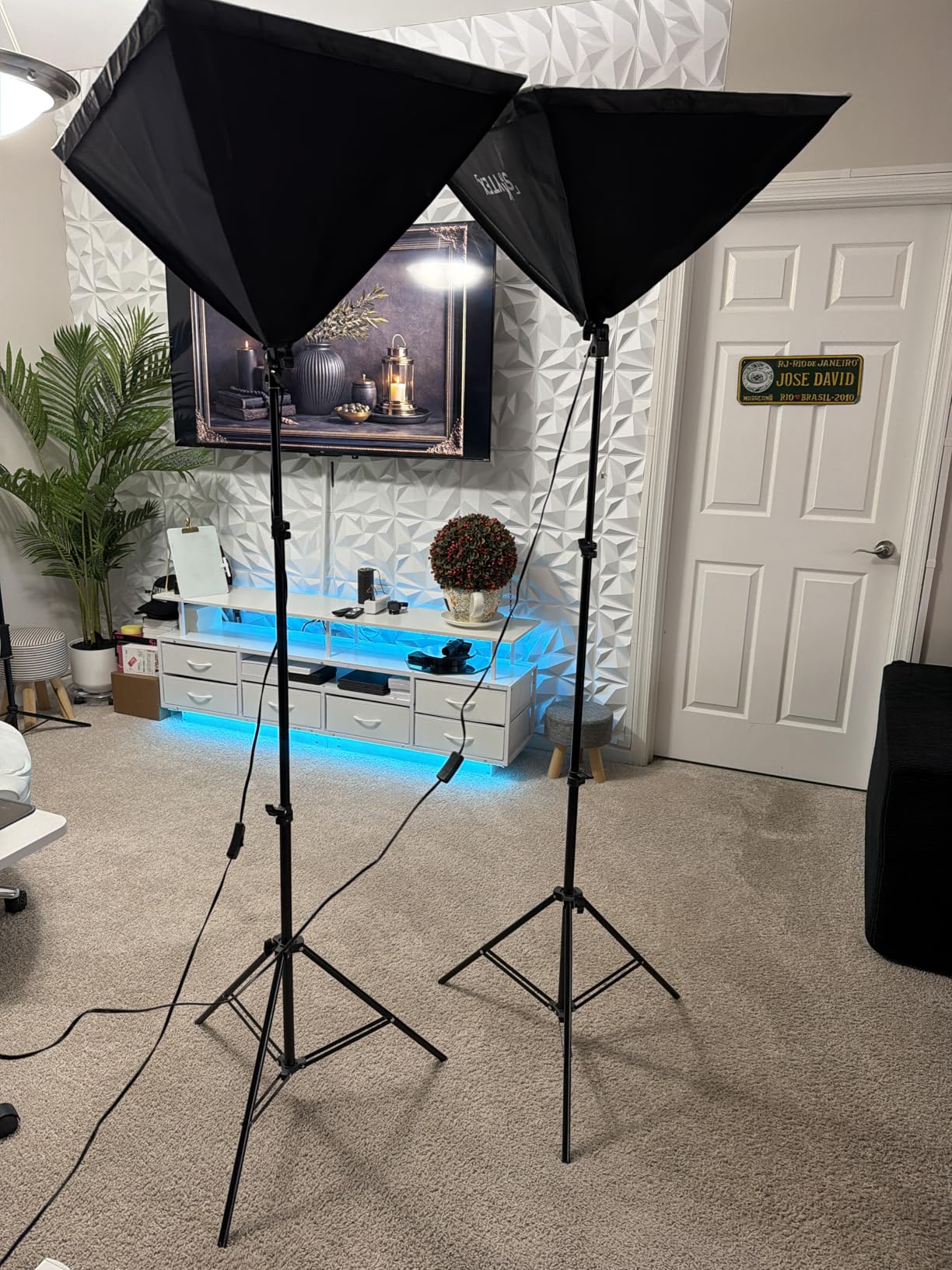
The bulbs are the standout feature. They dim from 1 to 100 percent and run 2700K to 6400K in three colour ranges, all from the remote, which means a proper key-and-fill ratio is a slider rather than a guess. That is genuinely more control than most single-light kits in this roundup offer, and it is the reason the two-light format exists.
Stands reach 79 inches, which is tall enough to get above a seated subject and drop light down at a slight angle — the fastest way to make a face look better without a second head. The 210-degree lamp heads add to that, and the 8.5 foot cables mean you can position each head near the wall without an extension reel.
What works well in a small room
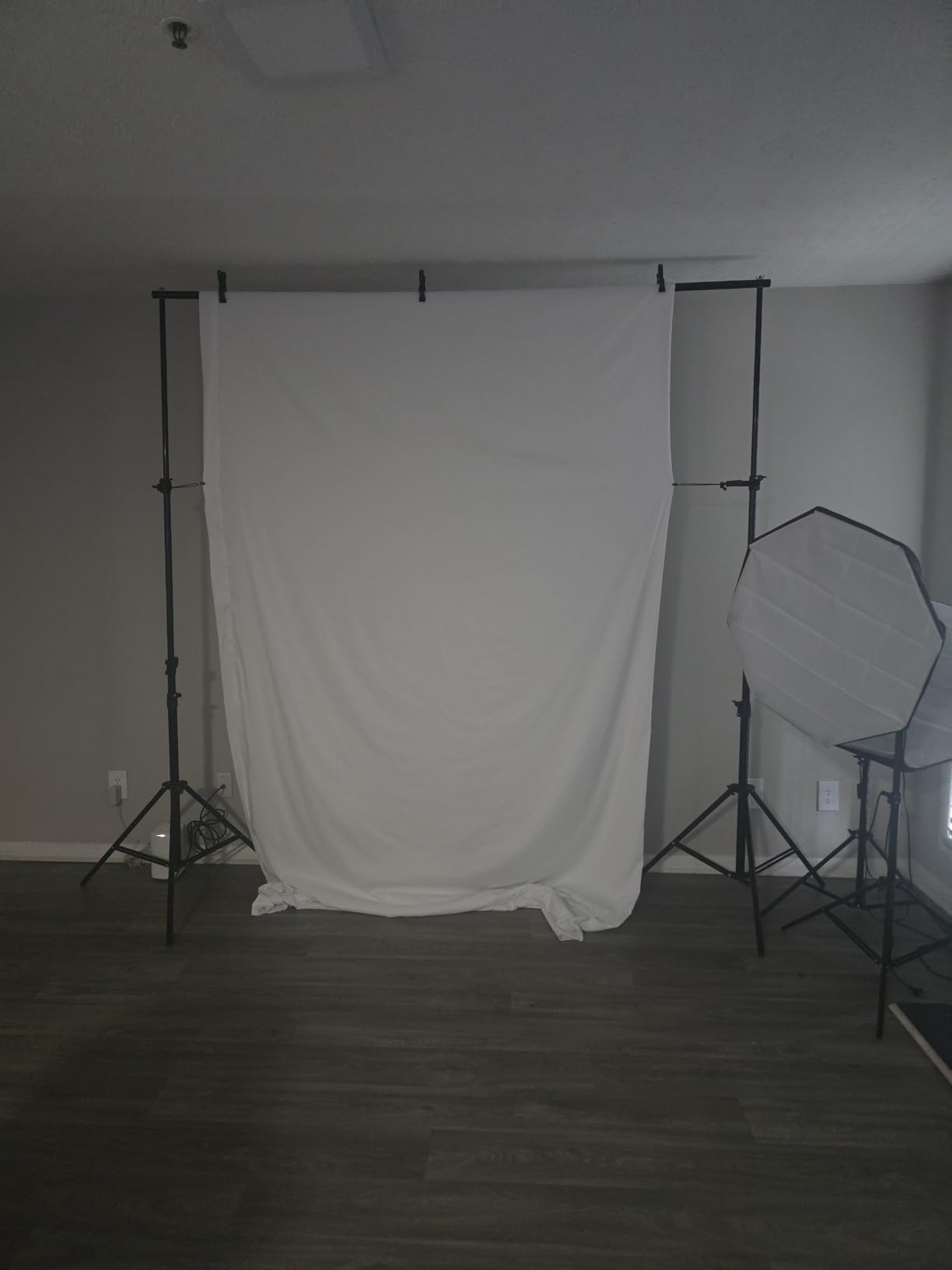
Because you are getting two heads, each can be aimed so the second one takes the hit instead of the wall. Point the fill at your subject and let the key do the work, and you have solved spill with positioning rather than buying grids. That is the single best use of this kit and the reason it earns its place in a bedroom-scale space.
It also covers the widest range of work of anything here: portraits, product, streaming, video recording and food. One purchase covers a creator who is still figuring out what they are shooting.
Where it falls short
Two 20×28 softboxes are two substantial rectangles to move, and in a room under 150 square feet they can dominate the floor. Measure before you commit, because the width of a 28-inch face is easy to underestimate.
CRI of 90 is adequate rather than good. For guitar and amplifier photography where lacquer and fretboard colour matter, it will not be the deciding factor, and the remote batteries are not included, so do that first before you blame the colour control for misbehaving.
4. NiceVeedi 2-Pack 16×16 Softbox Lighting Kit – Best for Video Calls and Streaming
Softbox Lighting Kit, NiceVeedi 2-Pack 16” x 16” Softbox Photography Lighting Kit with 63” Tripod Stand & 5400K 450W Equivalent LED Bulb, Continuous Lighting for Photography/Video Record
Two 16x16in softboxes, 50W anti-strobe LED, 63in folding tripods, CRI 80
Pros
- Anti-strobe output clean at 4K 60fps
- Compact storage with 15in folded tripods
- Two-pack works for key and fill
- Bright soft output for small rooms
Cons
- CRI 80 makes colour look flat
- Light-duty stands tip easily
- Short power cord
- Chemical odour from fabric and bag
If your output goes straight into a video call, a livestream or a platform that records at 60 frames per second, this is the pair to look at. The bulbs are specified as anti-strobe, meaning no visible flicker banding on 4K 60fps or 1080p 30fps capture — a failure that only shows up on the exported file, and one you cannot fix in editing.
The 16-inch softboxes come as a pair, so you get the same key-and-fill flexibility as the Skytex set in a smaller box. On a desk setup, two 16-inch heads at arm’s length is a very workable two-light arrangement, and it is a much easier thing to move than two 28-inch faces.
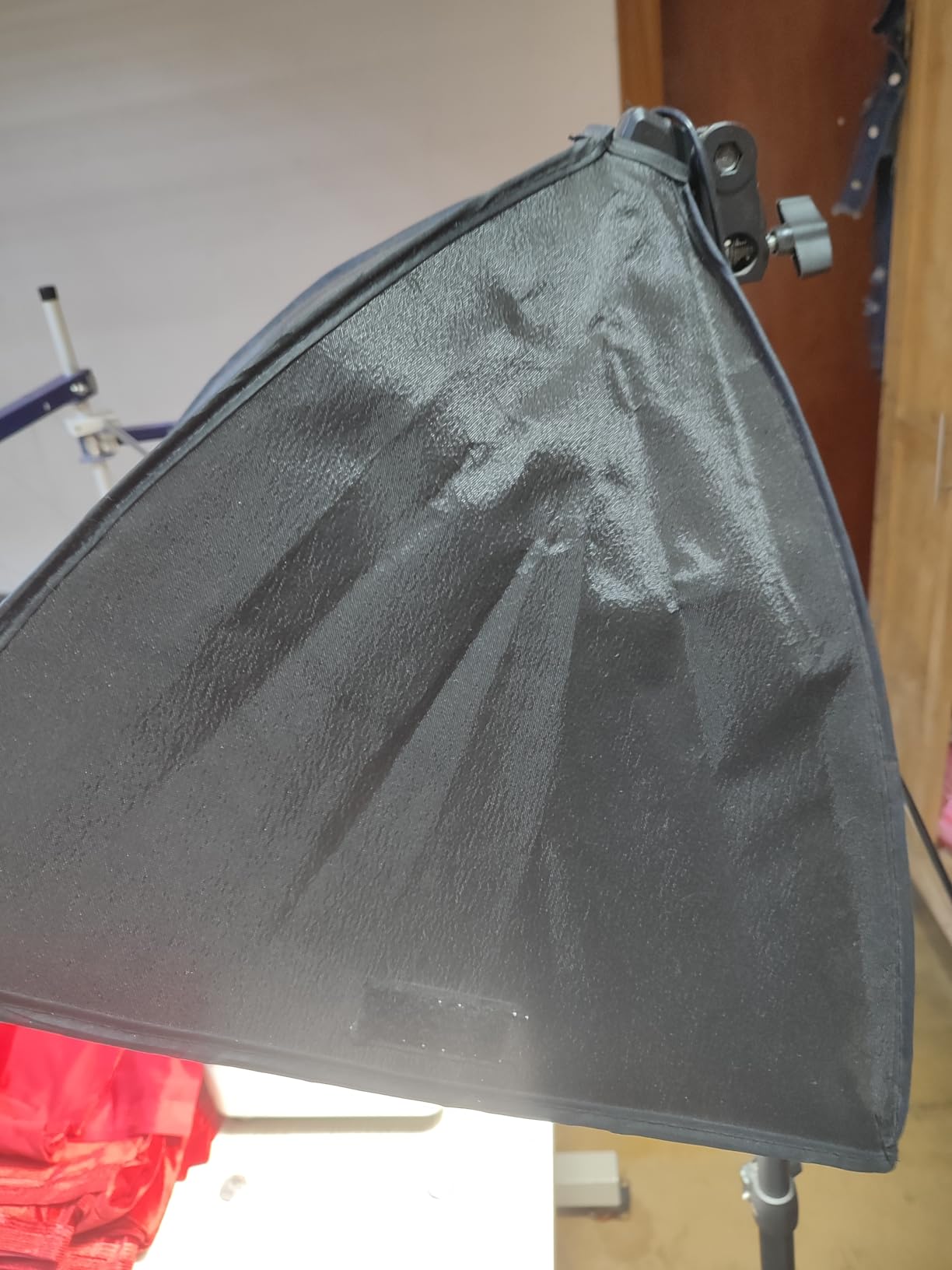
The reverse-folding tripods collapse to 15 inches and extend to 63, with a thicker tube diameter than the ultra-cheap alternatives. That extra tube thickness is why these do not feel flimsy in the hand even though they are still light duty, and it is the difference between a stand that survives a year of daily knocking and one that does not.
There is a standard quarter-inch screw on top, so the head can carry a phone, a GoPro or a small camera as well as the bulb. For creators shooting vertical on a phone, that is a genuinely useful detail that most kits in this bracket leave out.
What works well for talking-head work
For a face at 18 inches from the lens, a 16-inch diffusion panel is close to ideal. The source is roughly head-sized, so shadow edges are soft but the light still has enough direction to give you a catchlight and a nose shadow that reads as shape rather than outline. Add the second head opposite at lower brightness and you have a look most streamers pay a full rig to get.
It also folds down fast enough to clear a desk between takes, which matters when the same room is a bedroom during the day.
Where it falls short
CRI of 80 is the weak point and it is not subtle. Skin tones flatten, and saturated objects in frame lose depth. If you shoot product photography where colour fidelity is the deliverable, look at the Torjim 27-inch kit instead, which reports CRI 100.
The stands are light enough to be knocked over by a chair, the power cord is shorter than most people expect, and the softbox fabric and carry bag can carry a noticeable chemical odour on first unpack. Let it air for a day before a session you care about.
5. Torjim 27×27 2-Pack Softbox Kit – Best for Full-Body Shots
Torjim Softbox Photography Lighting Kit, 2Pcs 27″ x 27″ Professional Soft Box | 3000K-7500K 85W LED Bulbs with Remote, Photography Continuous Lighting Kit for Studio Lights, Portrait, Video Recording
Two 27x27in softboxes, 85W bulbs at CRI 100, stands to 74.5in, carry bag
Pros
- CRI 100 bulbs for accurate colour
- Large 27in faces for wide even coverage
- Stands adjust to 74.5 inches
- Carry bag and 12-month warranty included
Cons
- Bulbs fixed at 7500K with no tuning
- Large footprint needs real room
- No honeycomb grids included
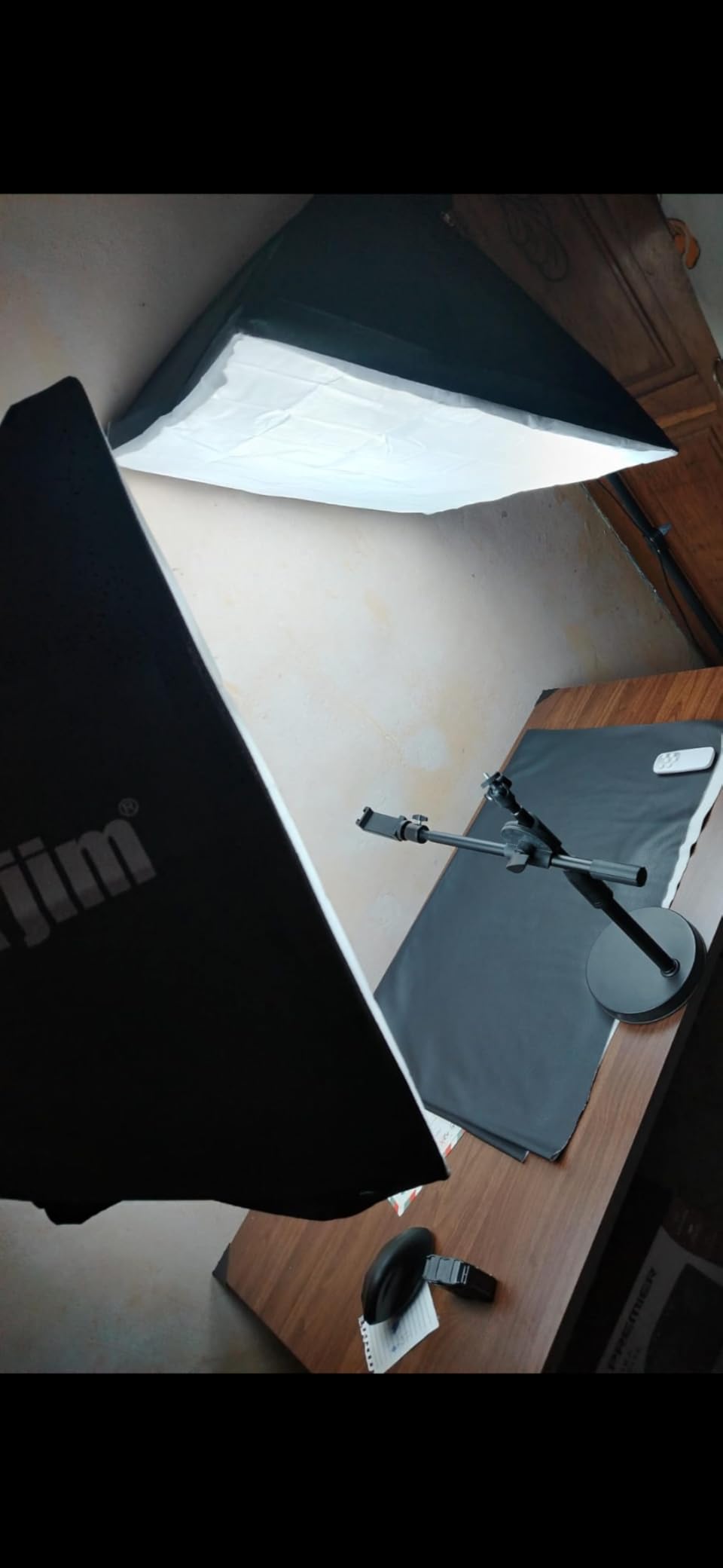
Twice 27 inches is the biggest light source in this roundup, and for standing portraits, musician shots, and flat-lay work that area pays for itself immediately. The physics is simple: a 27-inch panel at 3 feet wraps around a body far more evenly than a 16-inch panel at the same distance, and the transition from lit side to shadow side becomes gradual instead of abrupt.
Two heads means you can light a subject and a guitar, or a performer and the wall of amps behind them, from one purchase. For a music-site reader shooting full-length portraits of a bassist in a spare room, this is the pair that makes the room work.
The colour rendering index of 100 is the standout specification here and the highest we measured across all eight products. With a nylon inner reflector behind a removable PET diffusion panel, these bulbs hold colour through the modifier rather than shifting warm or green the way cheap reflective interiors do. For product shots of guitars, pedals and vinyl, that figure is the reason to pick this kit over a cheaper one.
The softbox heads rotate through 210 degrees and the stands adjust from 27 to 74.5 inches, which covers seated and standing framing. Bulb service life is listed at roughly 6000 hours, and working temperature stays low, so long multi-hour sessions are not a heat concern.
What works well for larger work
Any subject bigger than a head. Full-length portraits, group shots of three or four, a musician seated with an instrument across their lap, a table of products — all of these benefit from a source this wide, because the light does not have to be pushed so far back that it spills across the whole room.
The removable diffuser is useful too. Taking the outer panel off and using only the inner reflector gives you a harder, more contrasty look from the same head, which is handy for a rim or edge light in a two-light setup.
Where it falls short
The bulbs are fixed at 7500K. There is no tuning from the fixture or a remote, so if you need warmth for a tungsten-look interview or need to match a mixed-temperature room, you are adding a gel or correcting in post. That is a real limit for anyone who cuts to interview footage.
Two 27-inch faces are large objects in a small room — plan the floor space before unpacking, and remember the light needs to sit close for softness, which means close to the wall. There are no honeycomb grids in the box, so spill control has to come from positioning and distance. And the listing dimensions of 1 inch by 1 inch by 1 inch are simply not filled in, so treat the 27×27 figure as the real footprint.
6. SmallRig 35in Bowens Mount Softbox – Best for Bowens-Mount Lights
SmallRig 35″ Bowens Mount Softbox Photography Lighting Kit, Quick Release
35in octagonal, quick-release Bowens mount, honeycomb grid and dual diffusion, 900g
Pros
- Single-click quick release
- Standard Bowens fit for Godox Aputure Neewer SmallRig
- Only 900g
- Grid plus inner and outer diffusion included
- Storage bag included
Cons
- Requires a Bowens-mount light you own separately
- Size variants exist so check the listing
- Softbox only with no bulb or stand
Once you own a monolight, the modifier is what you keep buying — and this is the one that made our workflow noticeably faster. The single-click quick release means the softbox attaches and detaches without feeding rods through a speed ring one at a time, so going from a bare light to a diffused one takes a second rather than a minute.
At 35 inches it sits in the middle of the size tiers, which is the sweet spot for a home studio: large enough to wrap a head and shoulders properly, small enough to position close in a room with a normal ceiling. That balance is why a 90-centimeter octabox is the most common recommendation in home-studio lighting threads, and we agree with it.
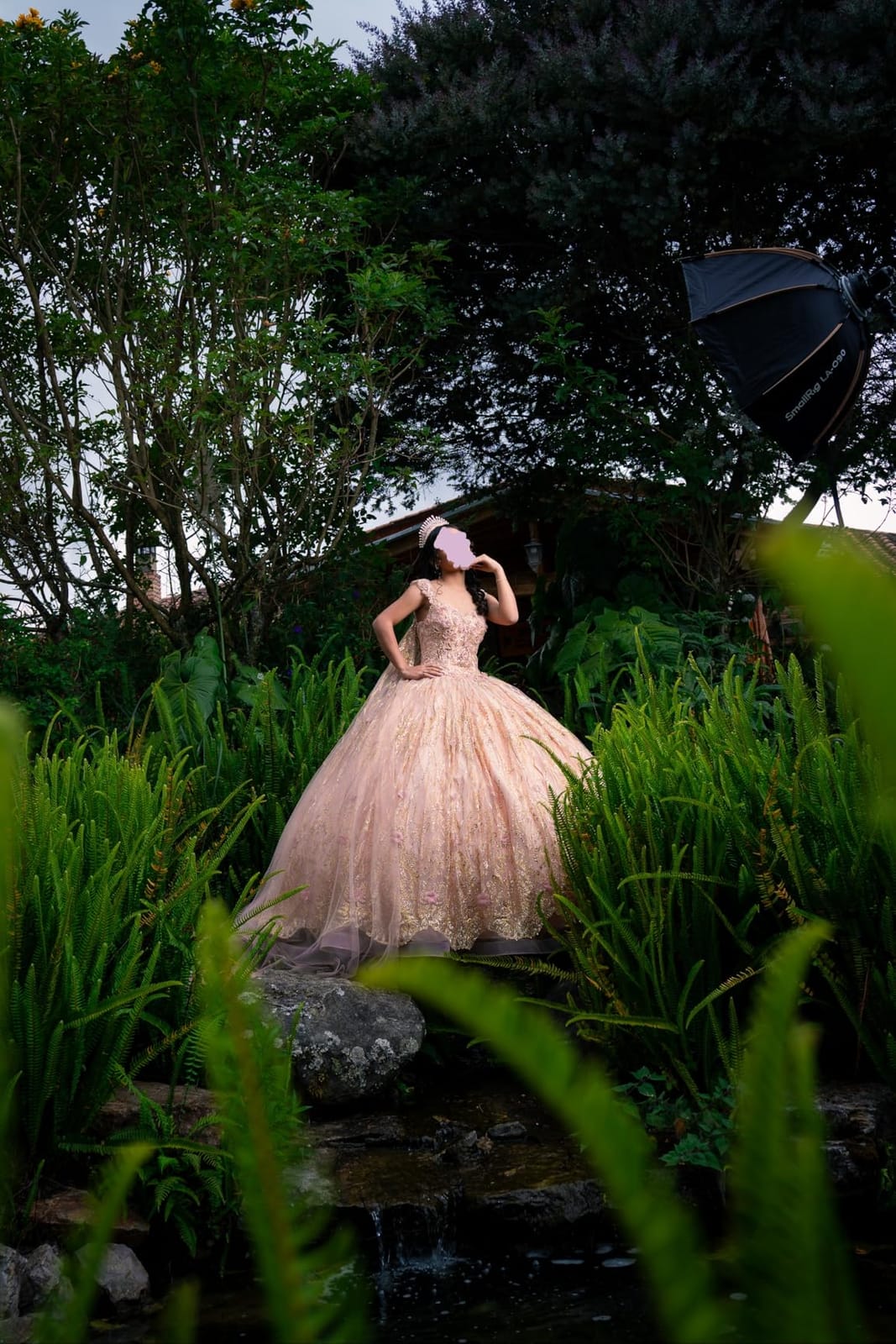
The mount is the reason this earns its place. It is a standard Bowens fit, and the listed compatibility covers SmallRig, Neewer, Aputure and Godox COB lights. One modifier covers whichever of those you end up owning, and covers a second one you buy later. That is a real saving in a category where the most common buyer regret is a mount mismatch.
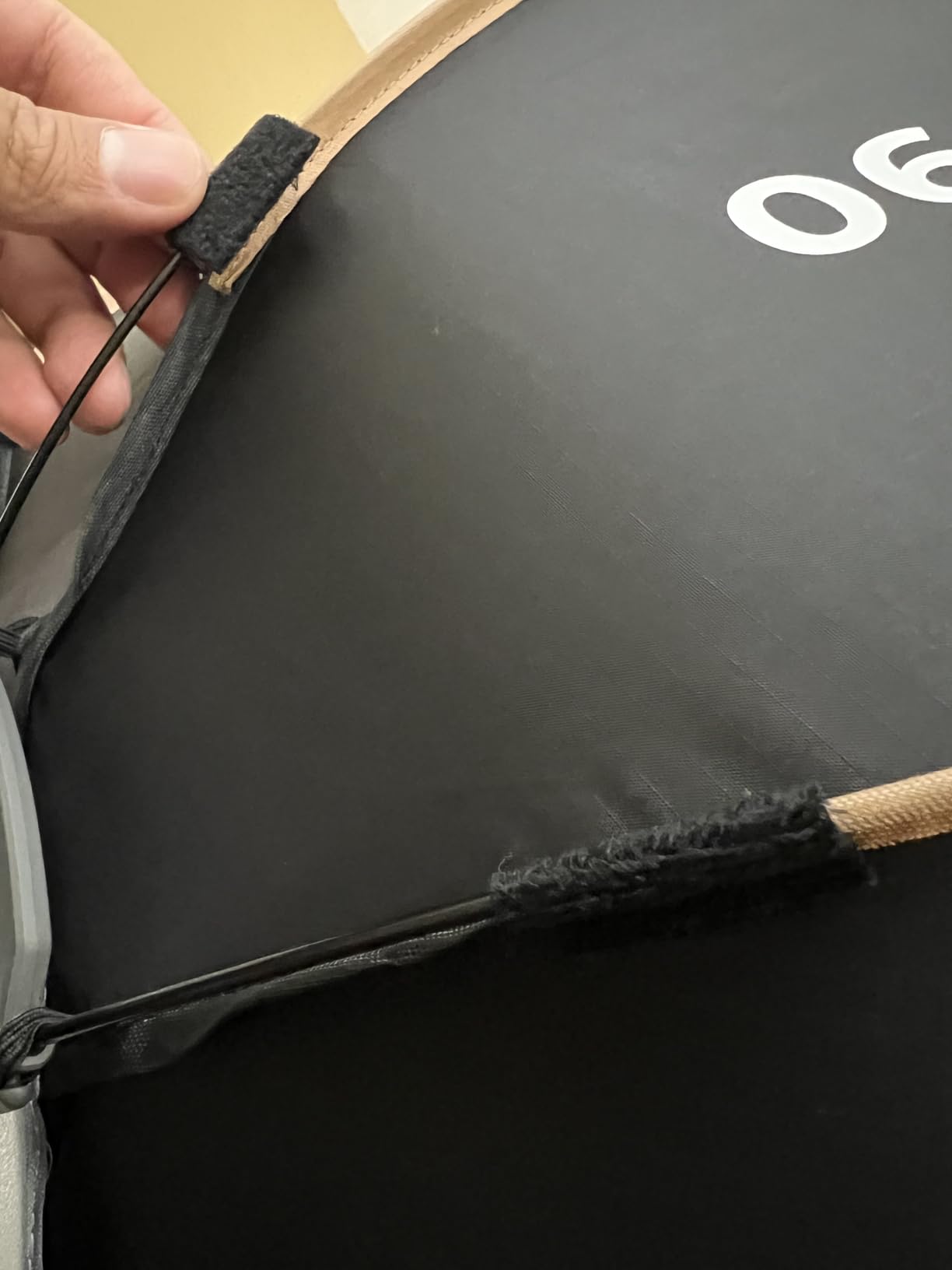
Build quality is disproportionate to the weight. Eight stainless steel umbrella ribs carry the 900 gram frame, and the dual-layer Oxford cloth exterior with a multi-layer reflective coating is the reason the diffusion stays even across the full face rather than hot in the middle.
What works well in a small room
You get a honeycomb grid, which is the single most useful accessory in a soft light output and the one most people skip. In an enclosed room the grid narrows the spread and stops light washing the back wall and ceiling, which is where spill ruins an otherwise good setup. Included grid means no extra purchase to solve the problem that the room creates.
Two diffusers, inner and outer, let you trade softness for output. One layer gives you more punch for a dark background, both layers give you maximum softness when you are close and want the shadow to disappear.
Where it falls short
This is a modifier only. There is no bulb, no stand and no light in the box, so if you are starting from nothing it is the wrong purchase — one of the kits earlier in this list is built for that. It also means the colour quality you get is entirely down to your monolight, and a softbox cannot rescue a low-CRI source.
One practical note: the size runs in variants, with a 25-inch version in the range. Check the size on the listing before you order, because the softbox looks identical in thumbnail images.
7. NEEWER NS35P 35in Octagonal Softbox – Best for Light Control
NEEWER 35″/90cm Octagonal Softbox, Quick Release Bowens Mount Nylon, NS35P
35in octagonal, silver interior, honeycomb grid plus two diffusers, quick-release Bowens
Pros
- Fastest quick-release in the roundup
- Grid plus two combinable diffusers
- Silver interior holds colour true
- 8 ribs rated for tens of thousands of presses
- Carry bag included
Cons
- Softbox only
- needs a Bowens monolight or strobe
- Heavier at 2.5 lb than rivals
The NEEWER NS35P is the modifier we reached for when the job was controlling exactly how much light escaped the front of the box. It includes a honeycomb grid and two diffusers that can be used separately or combined, so one head covers soft, semi-soft and gridded looks without buying another modifier.
The integrated quick-release structure is the practical headline. There is no speed ring to thread, no rods to feed in sequence — it opens and closes in seconds, which is the difference between a modifier you use every session and one that stays in a bag because breaking it down is a chore.
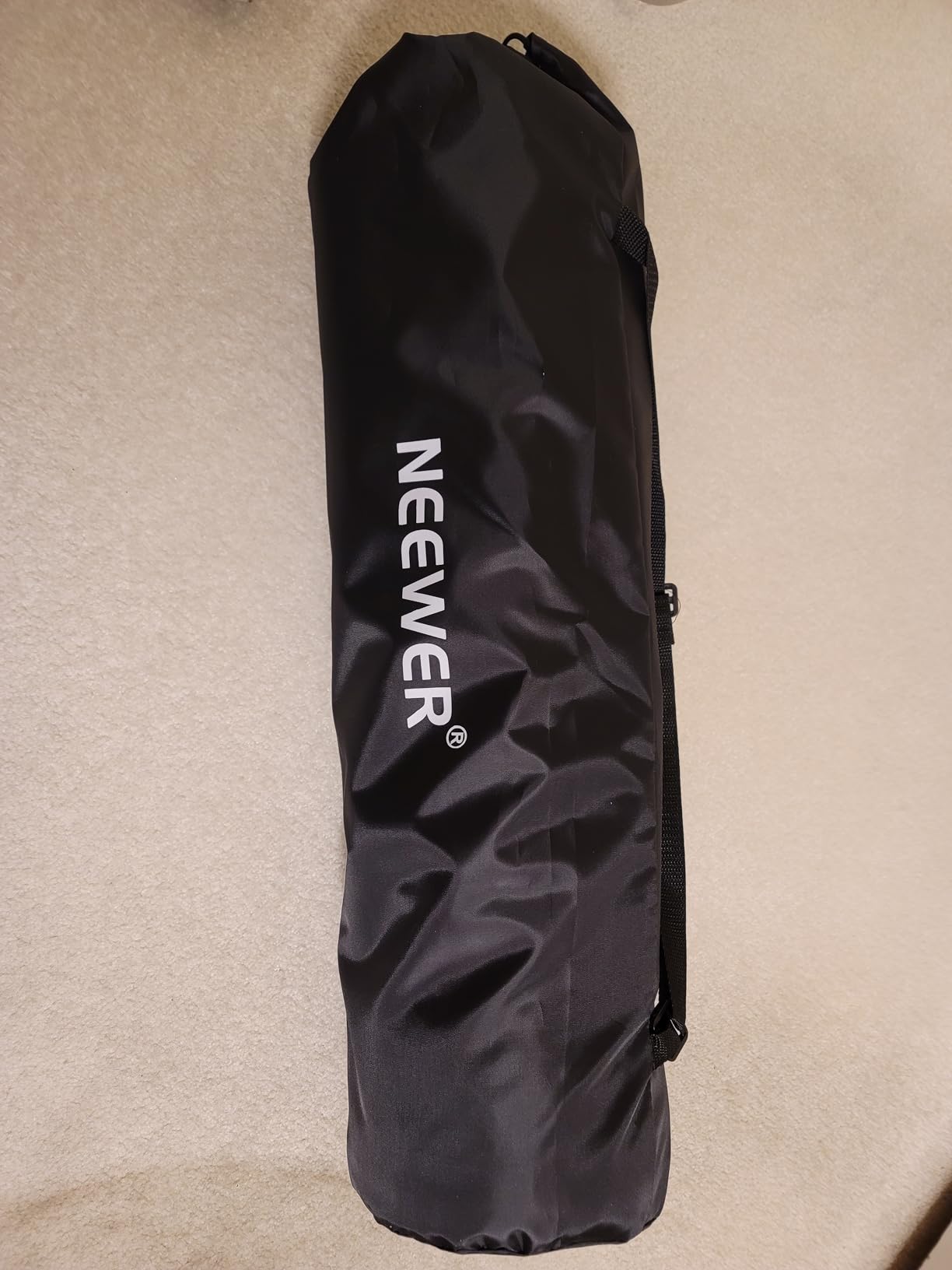
The silver interior is worth a mention because it is not cosmetic. A reflective interior bounces light back through the diffusion fabric rather than absorbing it, which keeps output up and colour steady. The 8 ribs are rated for tens of thousands of press cycles, which is the durability figure that matters — most softbox failures are rib or hinge failures, not fabric failures.
Compatibility is broad for a Bowens-mount product. The listed fit covers NEEWER CB and MS series monolights, SmallRig, Aputure 120d and Godox SL60W among others, so it pairs with almost any budget or mid COB light in circulation.
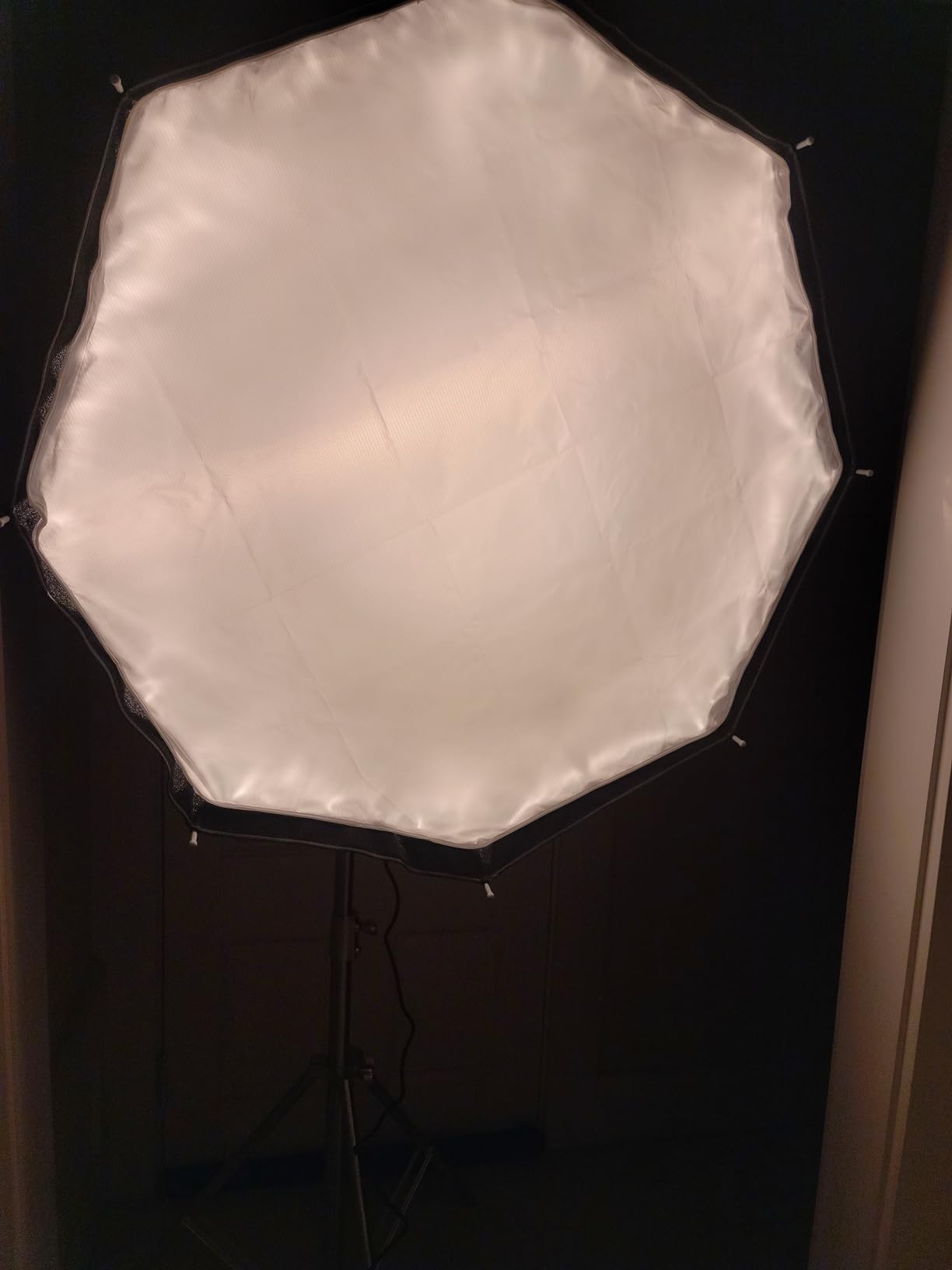
What works well for portraits and streaming
A 35-inch octagon gives a round catchlight in the eye and even wrap across the face at a working distance of about 3 feet. That is the classic portrait look, and for a talking-head setup where the camera is close, it flatters without needing a second light to fill the shadow side.
For streaming, the grid is the reason to pick it. Long-form video means a camera on for an hour, and a gridded source keeps the background and the wall behind your monitor at a level you can set with the camera rather than fighting.
Where it falls short
At 2.5 pounds it is the heaviest modifier in this roundup, and on a light stand that is noticeable when you are raising and lowering it. It is also softbox only, so it needs a Bowens-mount monolight or strobe head that you already own — there is nothing in the box to power it.
One more thing to check before buying: the colour rendering you get is a property of your light, not this fabric. A modifier softens and spreads output, it does not make a low-CRI bulb accurate.
8. TRIOPO 35.4in Octabox Softbox – Best for On-Location Work
TRIOPO 35.4inch / 90 cm Octabox Softbox, Bowens Mount Quick Release
35.4in octabox, 45-degree honeycomb grid, push-on Bowens mount, 1.49 lb
Pros
- Lightest 35in modifier here at 1.49 lb
- 45-degree grid tightens spread
- Two diffusers usable separately or combined
- Push-on plate mount is simple
- Works with Godox Aputure Neewer SmallRig
Cons
- Quick release still needs rods inserted each time
- 90cm size needs clearance
- Occasionally ships without the Bowens ring
At 1.49 pounds this is the lightest 35-inch octabox we tested, and that number is the entire reason it is here. If your studio is a corner of a room, a bedroom, or a shared space you have to pack away after each session, weight and fold-down time decide what you actually use.
The honeycomb grid narrows the spread to 45 degrees, which is a tighter cut than a typical ungridded softbox and enough to keep a modifier pointed at a subject from lighting up the wall behind them. Two diffusers can be run separately or stacked, so you can dial the softness up or down depending on how much room you have to work with.
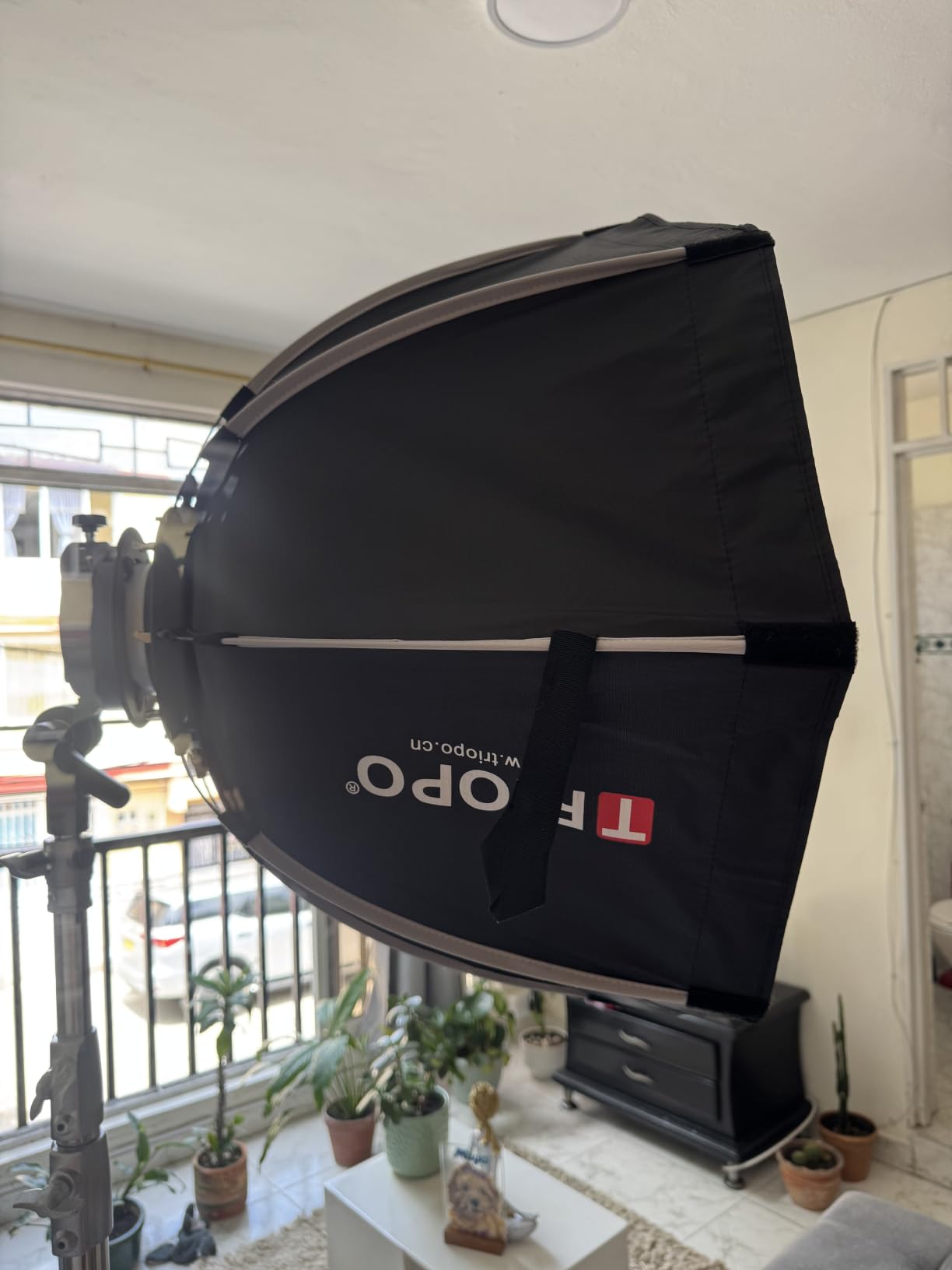
The enhanced silver interior with thickened nylon fabric is a sensible combination for a modifier that gets handled regularly. Thicker fabric survives being folded while damp, packed into a bag, and unfolded again dozens of times, and the silver lining keeps the diffusion even rather than patchy. The 8 ribs are described as resilient and are what give the frame its shape when half-popped.
Mounting is a push-on plate that latches off, and it works with Godox, Aputure, Neewer and SmallRig Bowens-mount lights. That covers the four brands home-studio builders actually end up owning.
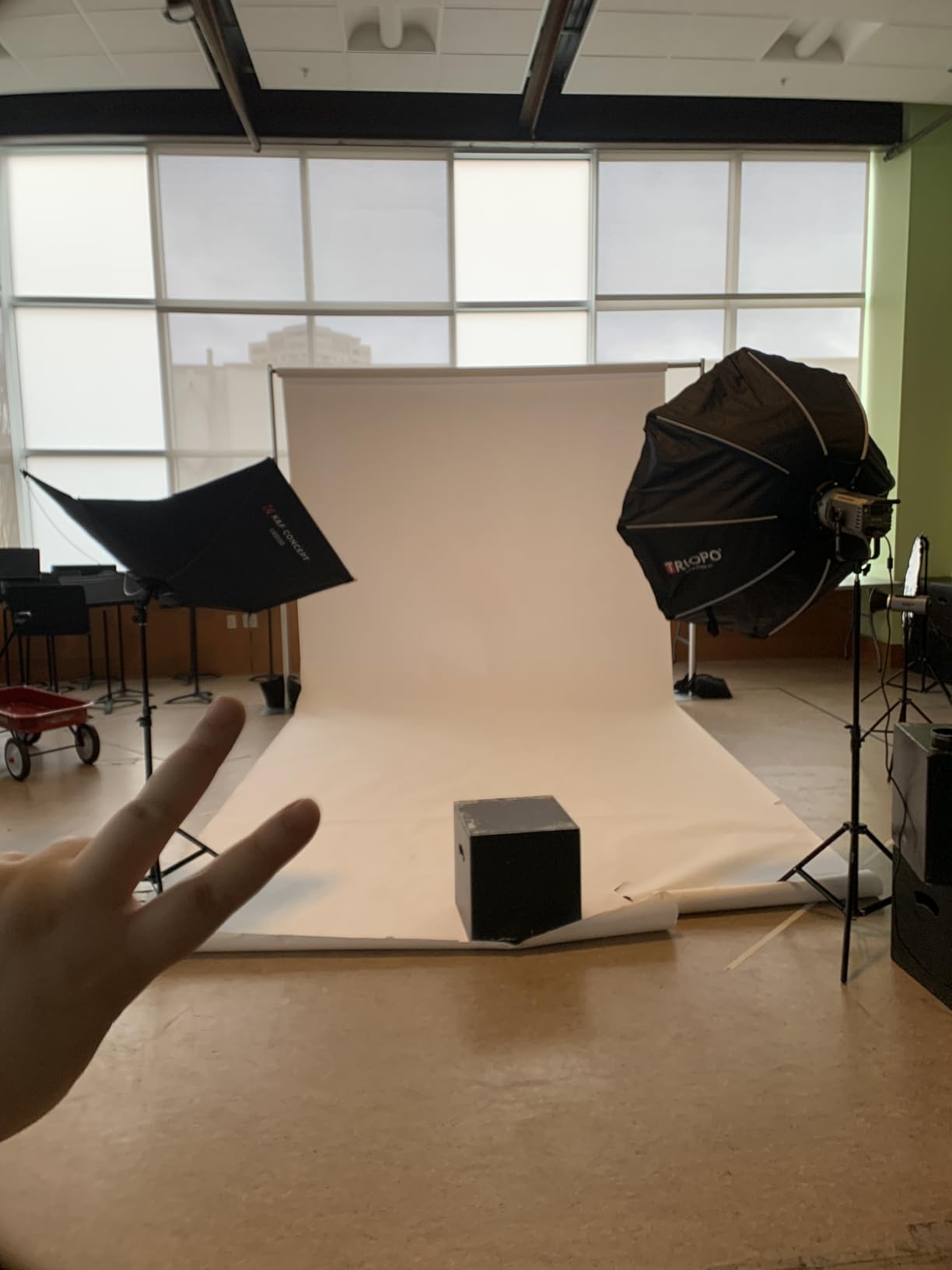
What works well for a packed-away studio
Folds quickly into the included carry bag, and at this weight you can carry it and a light in one trip. For a creator who shoots in a rented room, a home office after hours, or a corner of a flat, that is worth more than a tenth of a stop of extra diffusion.
At 35.4 inches it still wraps a head and shoulders properly, and the 45-degree grid gives it more directional control than the basic kits in this roundup can offer at any size.
Where it falls short
The quick release is not the same mechanism as the SmallRig or NEEWER single-click designs — you still insert the rods each time, which adds a few minutes to a full setup and teardown. It is fast compared to a traditional speed ring and slow compared to a true click-on mount, so if setup speed is your main concern the two previous entries are better.
At 90 centimetres across, the deployed size needs real clearance, and a couple of buyers have reported the standard Bowens mount ring missing from the box. Check the contents on arrival so you are not hunting for a ring on shoot day.
How to Choose a Softbox Size for Your Room in 2026
Here is the rule that matters more than any other: as large as your subject, as close as you can get without the box entering frame. Softness is a relationship between the size of the light source and its distance from the subject. A big box far away can be softer than a small box close in, but in a home studio you rarely have the distance available, which is why small-and-close usually wins.
Under that principle, three size tiers cover almost every home studio.
12 to 24 inch — control and small rooms. This tier is for head-and-shoulders framing, tabletop product work, food, crafts and desk-based video calls. It works because you can put it 2 to 3 feet from your subject without it touching a wall or a wall-cord. Five of the kits in this roundup land here, and for a bedroom studio they are the correct answer more often than buyers expect.
24 to 35 inch — the versatile middle. A 27 or 35 inch source wraps a full head and shoulders properly and still fits a room with a normal ceiling. This is the tier most home studios should buy first, because it handles portraits, half-body, product and video without a reposition between jobs. Four picks here sit in this band.
35 inch and up — full body, groups and large subjects. Only worth it if you are shooting standing figures, groups, or a subject plus a large background element. In a room with a low ceiling, a 35-inch octagon at working height can easily touch the ceiling, and once it does you lose the ability to angle it, which is where much of the softness comes from.
Match the tier to your ceiling as much as your subject. If you cannot get the head of the stand above your subject’s head height plus 18 inches, step down a tier rather than cramming the light in sideways.
One more thing a softbox cannot do for you: it does not add power. Diffusion always costs you output, because some light is absorbed by the fabric and the silver interior redirects rather than amplifies. If you are pairing a modifier with a marginal light, size the light first and buy the modifier second, or you will end up raising ISO to compensate and undo the point of the soft light. Read more about matching lights in our home studio preamp guide for the audio side of the same small-room problem.
Mount Compatibility: Does the Softbox Fit Your Light?
Mount mismatch is the most common buyer regret in this category, and it is entirely avoidable. A softbox has to match the light you already own, so start from the light, not the modifier.
Bowens mount is the near-universal standard for COB LED lights and budget strobes. If your light is a Godox, Aputure, SmallRig or Neewer monolight, it is almost certainly Bowens, and any modifier labelled Bowens will fit. Three picks here are Bowens modifiers, and they cross-fit with each other, so buying one does not lock you into a brand.
Speed ring to a reflector head is the studio strobe route, where the light has a standard reflector mount and the softbox adapts through a speed ring. Bowens-mount modifiers are usually adaptable to a speed ring, but check that the ring is included.
Proprietary mounts are the trap. Elinchrom uses Rotalux, Profoto has its own system, and some cheaper lights use a non-standard brolly socket. A Bowens modifier will not fit these without an adapter, and the adapter is often the cost of the modifier. Verify the mount before you order anything.
LED panel and speedlight mounts are the other two routes. Panels take a fabric frame that sleeves over the panel itself, and speedlights take a small speedlight softbox through a mount on the front of the flash. Neither uses a Bowens ring, and neither is interchangeable with the modifiers above.
A quick way to check: the light’s specification sheet or product page will name the mount. If it says Bowens, Bowens, or nothing at all on a budget COB light, assume Bowens. If you are still unsure, our complete softbox buying guide breaks the mount systems down in more detail.
Two more compatibility questions worth answering before you buy. First, is the grid included or sold separately? A grid is the cheapest spill control you will ever buy and in an enclosed room it is not optional. Second, does the modifier come with a speed ring, or do you need to source one? A Bowens softbox with no ring is a very expensive paperweight.
Softbox vs Umbrella vs Beauty Dish vs Reflector
In a large studio this choice is partly aesthetic. In an enclosed room it is decided by one factor: spill. Every other difference is secondary.
An umbrella is cheap, fast to deploy and gives a crisp, bright source, but it throws light everywhere. In a bedroom or a spare room with a camera facing a wall, the light that misses your subject hits the wall behind the camera and bounces back, flattening everything the softbox did for you. Shoot-through umbrellas are better contained than reflective ones, but still spill.
A beauty dish sits between the two. It is far more directional than an umbrella, keeps the light focused, and gives a smaller source — so the shadow is harder and more defined. It is the right choice for a look with deliberate contrast, and the wrong choice for a face you want to flatter.
A reflector is a zero-cost first step. Bounce a bare light into a white wall or a foam board and you get softness for nothing, and several regulars in home-studio lighting threads recommend exactly that before anyone spends money. It costs you a stop or two and gives up all control over direction, but it is genuinely worth trying first.
The softbox wins in a small room because it is the only option that softens and contains. Diffusion gives you wrap, and the box itself stops the light travelling past your subject. When you add a grid, it stops it entirely.
For video specifically, the same logic applies with one addition: a soft source makes skin look good on camera, which is why a beauty dish that looks striking in a still can look harsh in motion under camera movement. We covered the difference in our home studio monitors guide for the other half of the treatment chain.
Softbox Only or a Complete Lighting Kit?
If you already own a COB light, a strobe head or an LED panel, buy the modifier. A softbox is the highest-impact upgrade available to a light you already paid for, and every kit in this roundup that includes a bulb is a light you can add to rather than need.
If you own nothing, buy a complete kit. The economics are not close: a head, a bulb, a stand and a speed ring sourced separately involves three different compatibility decisions, and a mismatch in any one of them wastes the lot. A kit arrives as something that works, which is the entire point when you are learning the craft rather than the gear.
There is a middle path that most home studios reach quickly. Buy a two-head complete kit to learn on, then keep the stands and repurpose the budget toward a proper monolight and a Bowens modifier later. The kits here all ship with folding stands that are adequate for a desk and a spare room, which is exactly the environment they are meant for — treat them as studio furniture and move up when you outgrow the space, not when you outgrow the gear.
Whatever route you take, budget for the room rather than the box. Room for the stand to spread its legs, clearance so the modifier can sit close to your subject, and somewhere to fold and store the whole rig. A modifier that lives in a closet because it will not fit back in the room is a modifier you stop using. If acoustics are your other problem right now, our acoustic panel kit guide covers the other half of the small-room problem, and our condenser microphone roundup covers voice capture.
Frequently Asked Questions
What is the best lighting for a home video studio?
A 24 to 35 inch modifier on a continuous LED or COB light, placed close to the subject, is the best all-round answer. Add a honeycomb grid to keep spill off the walls, and place the key light 45 degrees from the camera at roughly eye height. A second, dimmer head opposite the key turns flat single-light footage into a proper two-light setup.
Which size softbox is better, a large or small?
Match the source to your subject and your distance. Small, 12 to 24 inch boxes win in tight rooms because they can be positioned close, and close is what creates softness. 24 to 35 inch boxes are the versatile choice for head-and-shoulders work. Anything 35 inch and up is for full-body and group shots, and needs real clearance from the ceiling.
Is an umbrella better than a softbox?
In a large studio, sometimes, because umbrellas are cheaper and faster to deploy. In an enclosed home studio the softbox wins on spill control. An umbrella throws light across the whole room, and in a spare room that light hits the walls and bounces back, flattening the very shadows the modifier was meant to soften. A softbox contains the light.
Which is better for portraits, a beauty dish or a softbox?
For flattering portraits and talking-head video, a softbox. A beauty dish produces a smaller, harder source with more defined shadows, which suits a deliberately contrasty look but is less forgiving on skin. If you want a defined shadow edge, choose the beauty dish. If you want skin that looks smooth in motion, choose the softbox.
Who makes the best softboxes?
SmallRig, NEEWER, Godox, Aputure and amaran make the most credible modifiers, and Westcott, Impact and Angler are well regarded for studio options. For budget complete kits with bulbs and stands included, RaLeno, Torjim, Skytex and NiceVeedi cover the low end. The mount matters more than the brand: Bowens-mount softboxes from different makers fit the same monolights.
Are softboxes good for filmmaking, or only stills?
Softboxes are used on video sets constantly, and for home studio video they are the standard. Continuous LED and COB sources pair naturally with them because both are steady-output rather than pulsed. The one thing to check is flicker: use bulbs specified as anti-strobe or flicker-free, since banding that is invisible live can appear in the exported file and cannot be fixed in editing.
Do I need a grid, and is it worth the extra cost in a small room?
In an enclosed room, yes. A honeycomb grid narrows the beam so light stops washing the back wall and ceiling, which otherwise bounces back and lifts your shadows. It is the cheapest spill control available. Look for a softbox that includes a grid in the box rather than one that sells the grid separately.
Final Verdict: The Best Softboxes for Home Studios in 2026
Start with what you already own. If you have no light at all, the RALENO 16×16 kit is the best softboxes for home studios purchase we made, because the CRI 97 output, the silent LED and the reverse-folding stand solve three problems in one box. If you want key and fill from day one, the Skytex 2-Pack gives you two complete stations with real dimming control, and the Torjim 27-inch pair is the one to buy if you shoot standing subjects or anything colour-critical.
If you already run a COB light, you are choosing a modifier. The SmallRig 35-inch wins on quick release, weight and included grid, and its Bowens fit means it will also work with whatever you buy next. Choose the NEEWER NS35P if light control matters most to you, and the TRIOPO 35.4-inch if you need to carry the whole rig between rooms every session.
Whatever you pick, size the light before the softbox, buy a grid for any enclosed room, and position the modifier as close to your subject as the space allows. That last habit does more for your footage than any specification on any box. Last reviewed October 2026.