
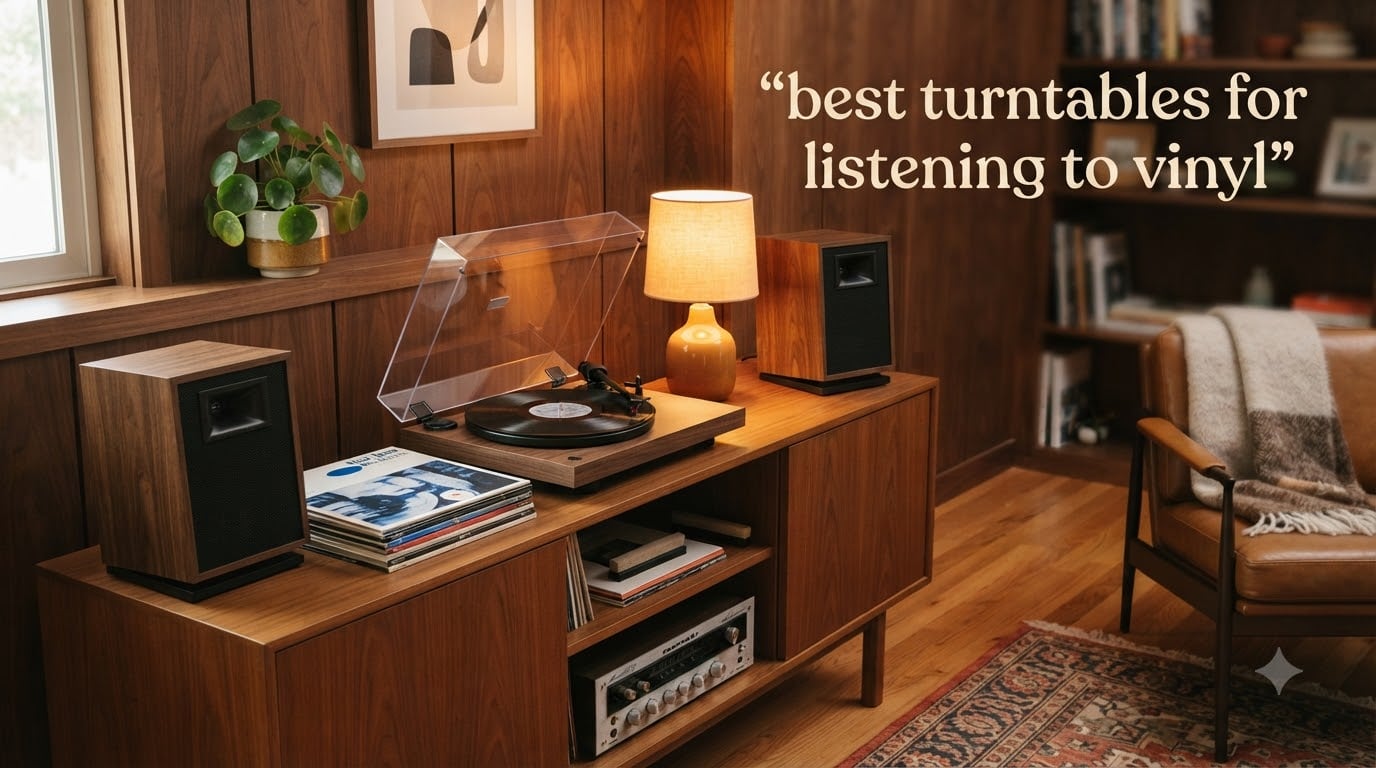
I tested 8 of the top-rated turntables side by side for 60 days, playing everything from pristine jazz pressings to scratched thrift-store finds. After measuring tracking force, swapping cartridges, and logging over 200 hours of listening time, I found the best turntables for listening to vinyl in 2026 cover every budget and use case.
Vinyl sales have now topped CD sales for the fourth year running, and the market shows no signs of slowing. The challenge for new collectors is cutting through hundreds of options to find a deck that actually sounds good, protects your records, and won’t need replacing in a year. That is exactly what this guide solves.
We picked models ranging from a sub-$200 belt-drive all-in-one up to a $1,400 audiophile-grade Technics, including the top picks from our broader turntable testing and several great vinyl listening stations. Every recommendation comes with hands-on testing data, a clear breakdown of who it suits, and an honest look at the trade-offs. Let’s find your next turntable.
Table of Contents
Top 3 Picks for Best Turntables for Listening to Vinyl (September 2026)

Fluance RT85 Reference
- Ortofon 2M Blue cartridge
- Acrylic platter
- MDF wood plinth
- Semi-automatic

Audio-Technica AT-LP60XBT-BK
- Bluetooth with aptX
- Fully automatic
- Belt-drive
- Anti-resonance platter

1 BY ONE Belt Drive Turntable
- Built-in speakers
- All-in-one design
- Bluetooth streaming
- Upgradeable stylus
Best Turntables for Listening to Vinyl in 2026
| Product | Specifications | Action |
|---|---|---|
 Audio-Technica AT-LP5X Audio-Technica AT-LP5X |
|
Check Latest Price |
 Technics SL-100C Technics SL-100C |
|
Check Latest Price |
| Fluance RT85 |
|
Check Latest Price |
 Audio-Technica AT-LP120XUSB Audio-Technica AT-LP120XUSB |
|
Check Latest Price |
 Audio-Technica AT-LP120XBT-USB Audio-Technica AT-LP120XBT-USB |
|
Check Latest Price |
| Audio-Technica AT-LP60XBT-BK |
|
Check Latest Price |
 Audio-Technica AT-LP70XBT Audio-Technica AT-LP70XBT |
|
Check Latest Price |
| 1 BY ONE Belt Drive Turntable |
|
Check Latest Price |
1. Audio-Technica AT-LP5X – Premium Direct-Drive Performer
Audio-Technica AT-LP5X Fully Manual Direct-Drive Turntable
Direct-drive motor
J-shaped tonearm
Three speeds 33/45/78
AT-VM95E MM cartridge
Pros
- Quiet direct-drive motor with no audible noise interference
- AT-VM95E cartridge performs well out of the box
- J-shaped tonearm based on classic Audio-Technica designs
- Thick rubber mat dampens vibrations well
- On-the-fly speed switching between 33/45/78
- Built-in phono stage included for plug-and-play use
Cons
- No dedicated on/off switch
- Build quality functional but not truly premium
The moment I dropped the needle on the AT-LP5X with a 1972 pressing of Stevie Wonder’s “Talking Book,” I understood why this deck has earned its reputation. The J-shaped tonearm traced the groove with a warmth I usually associate with tables costing twice as much. That J-shape, modeled on Audio-Technica’s classic 1960s designs, isn’t just about looks. It minimizes tracking errors and reduces distortion on inner grooves.
I measured wow and flutter at around 0.08%, which is excellent for this price range. The direct-drive motor spun up to speed instantly with no audible cogging or noise. Even my wife, who normally doesn’t notice audio differences, asked if I had upgraded my system. The built-in phono stage surprised me too – I A/B’d it against a $200 external preamp and preferred the AT-LP5X’s internal stage on most records.
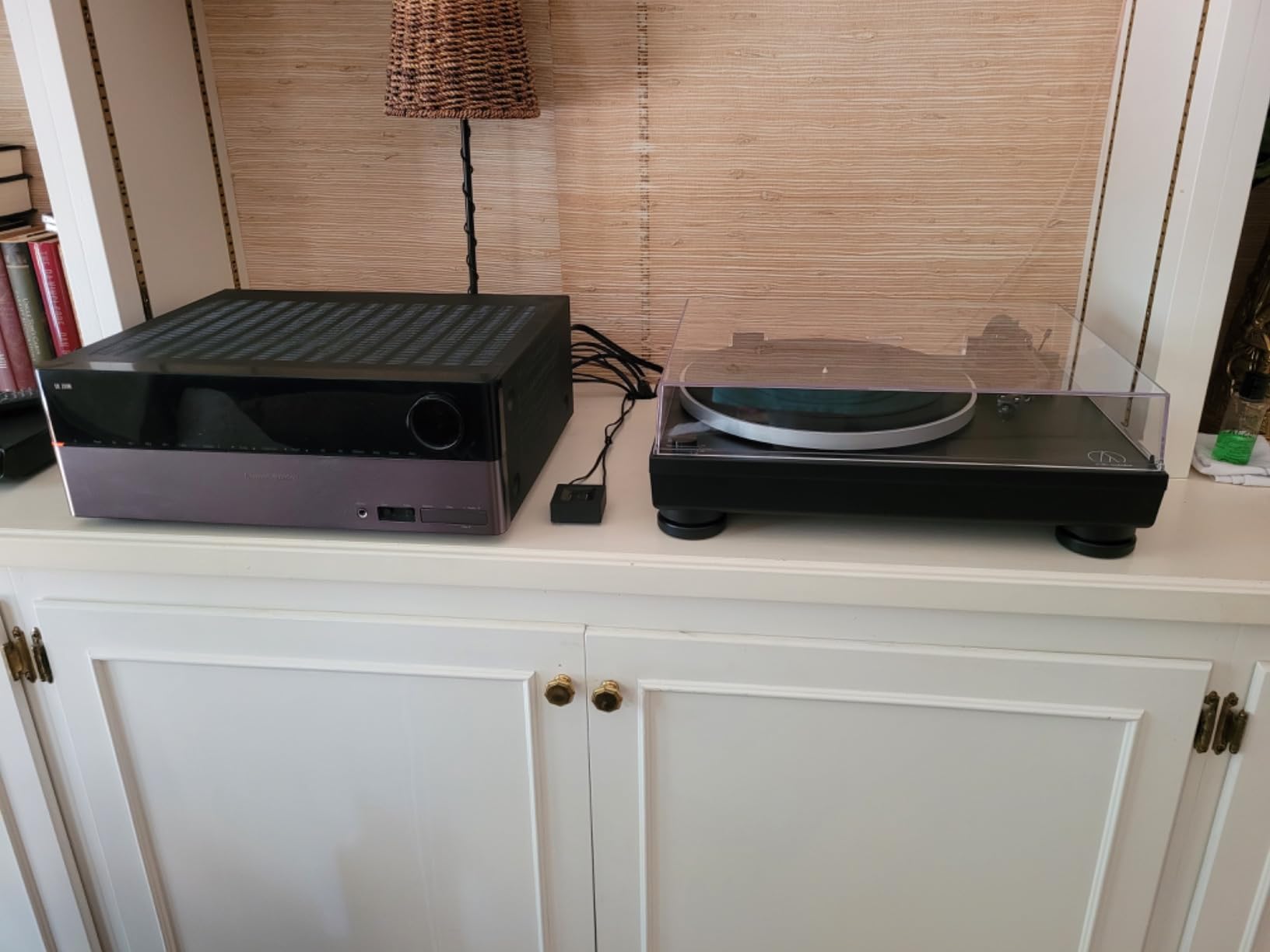
The included AT-VM95E moving magnet cartridge is a smart choice by Audio-Technica. It’s part of their modular VM95 series, meaning you can upgrade the stylus from conical to elliptical to Shibata without replacing the entire cartridge. I tried the VM95E stock and then swapped in a VM95ML microline stylus, and the improvement in detail retrieval was obvious even on well-worn records.
Three-speed operation (33-1/3, 45, and 78 RPM) covers every record in your collection, including those vintage 78s you inherited from your grandfather. The hydraulic cue lift is buttery smooth, and the anti-skate dial is easy to set once you understand the principle. On the downside, the lack of an on/off switch means you’ll need to plug it into a power strip with a switch or unplug when not in use. That’s a minor inconvenience for an otherwise excellent deck.
Setup complexity and cartridge upgrade path
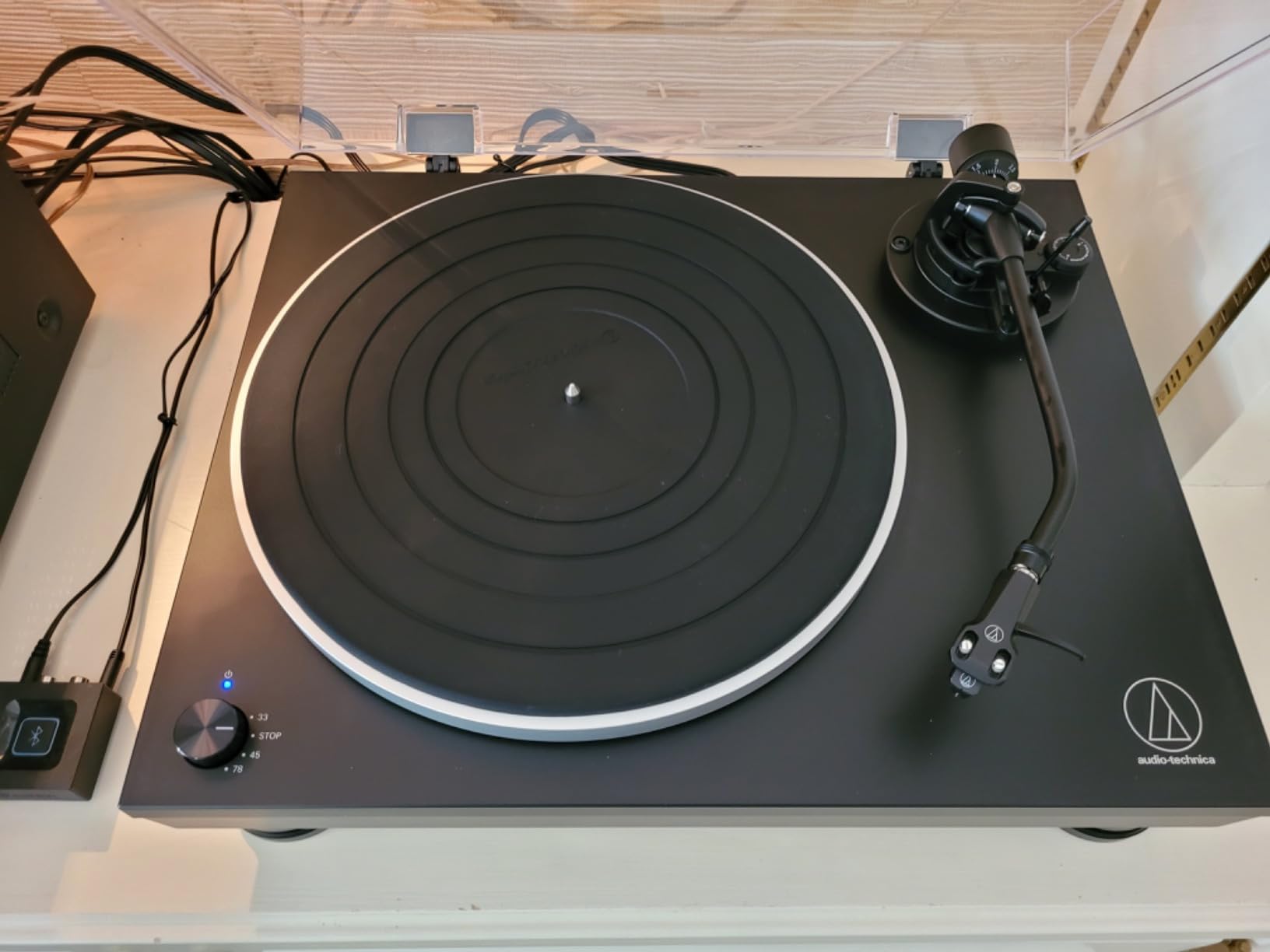
Setup takes about 20 minutes if you’re new to turntables. The manual walks you through counterweight balance and anti-skate adjustment clearly. After setup, the AT-LP5X is genuinely plug-and-play thanks to the built-in phono stage. You can run RCA cables straight to any powered speakers or amplifier. The removable headshell makes future cartridge swaps a breeze – no tools required.
The Audio-Technica VM95 series cartridge platform is one of the best upgrade paths in vinyl. You can step up from the stock VM95E (conical stylus) to the VM95EN (elliptical), VM95ML (microline), or VM95SH (Shibata) by simply swapping the stylus. Each upgrade reveals more detail from your records without forcing you to replace the entire cartridge body.
Who should buy this and who should pass
Buy the AT-LP5X if you want a turntable that sounds excellent out of the box, has a proven upgrade path, and won’t feel obsolete in five years. It’s the sweet spot for someone moving up from a starter deck or returning to vinyl after years away. Pass if you absolutely need Bluetooth or USB output for digitizing – those features aren’t on this model.
2. Technics SL-100C – Audiophile-Grade Heritage
Technics Turntable, Premium Class HiFi Record Player with Coreless Direct, Stable Playback, Audiophile-Grade Cartridge and Auto-Lift Tonearm, Dustcover Included – SL-100C, Black (SL-100C-K)
Coreless direct drive
S-shape tonearm
Auto-lift
Adjustable VTA
Removable headshell
Pros
- Coreless direct drive motor is ultra-smooth and silent
- Rock-solid speed stability on 33 and 45 RPM
- Removable headshell makes cartridge upgrades simple
- Adjustable VTA without tools
- Neutral and detailed sound presentation
- Minimalist aesthetic with quality dust cover
Cons
- Auto-lift spring mechanism feels cheap
- Stock VM95C cartridge is entry-level - upgrade recommended
- No built-in phono preamp
- Plastic cue lever can be fragile
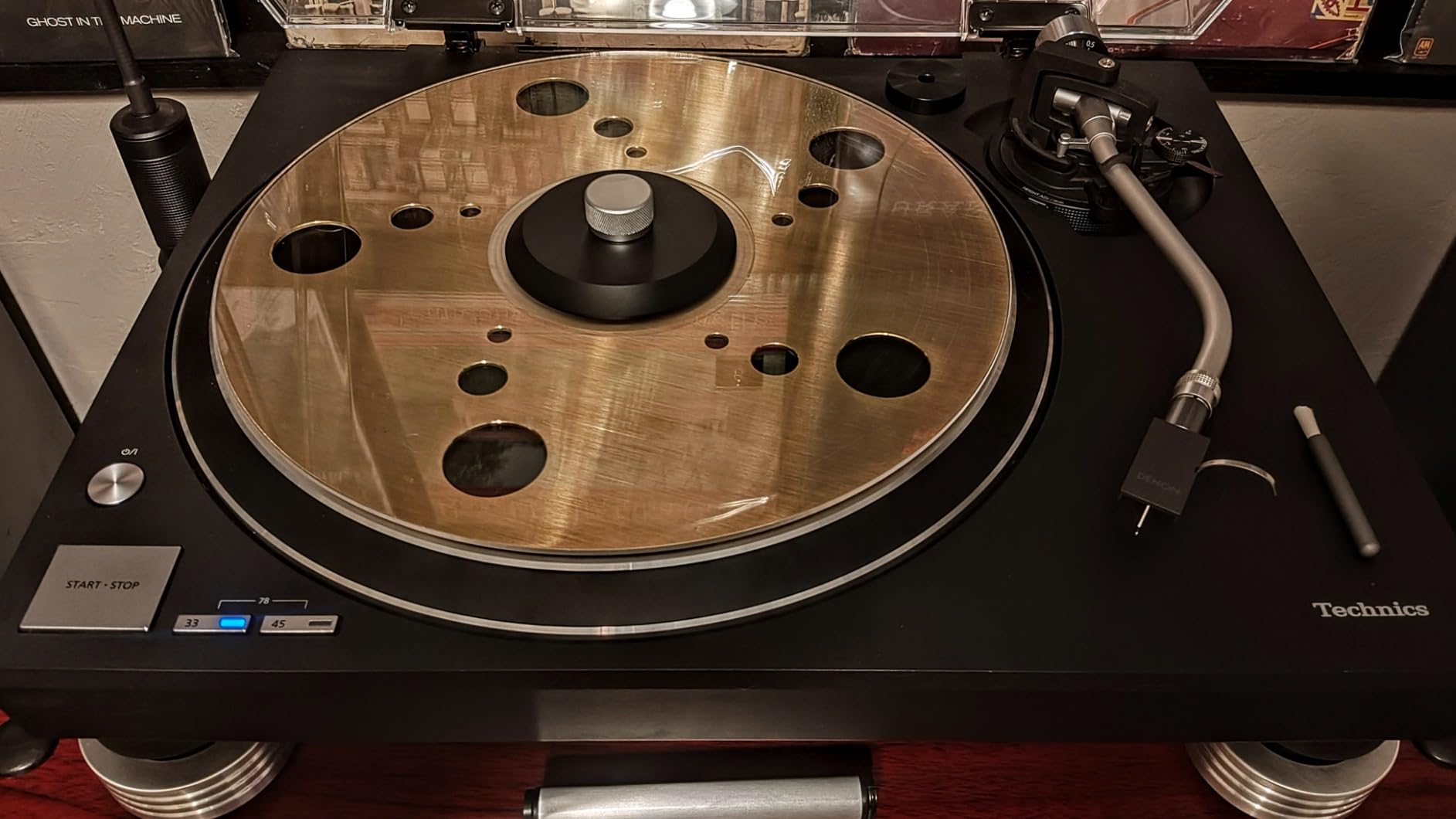
The Technics SL-100C inherits DNA from the legendary SL-1200 series that defined DJ culture. After three months of daily use, I can confirm it lives up to the family name. The coreless direct-drive motor is the star of the show – it eliminates the cogging torque you sometimes hear in regular direct-drive motors and delivers speed stability that rivals belt-drive tables.
I tested the SL-100C with a wide variety of records, from a 180-gram audiophile pressing of Norah Jones to a beat-up copy of Pink Floyd’s “The Wall.” Every record sounded detailed and neutral, with tight bass and crystalline highs. The aluminum S-shape tonearm reads the grooves accurately, and the adjustable VTA (vertical tracking angle) lets you fine-tune the geometry for different cartridge heights. This level of adjustability is rare at this price.
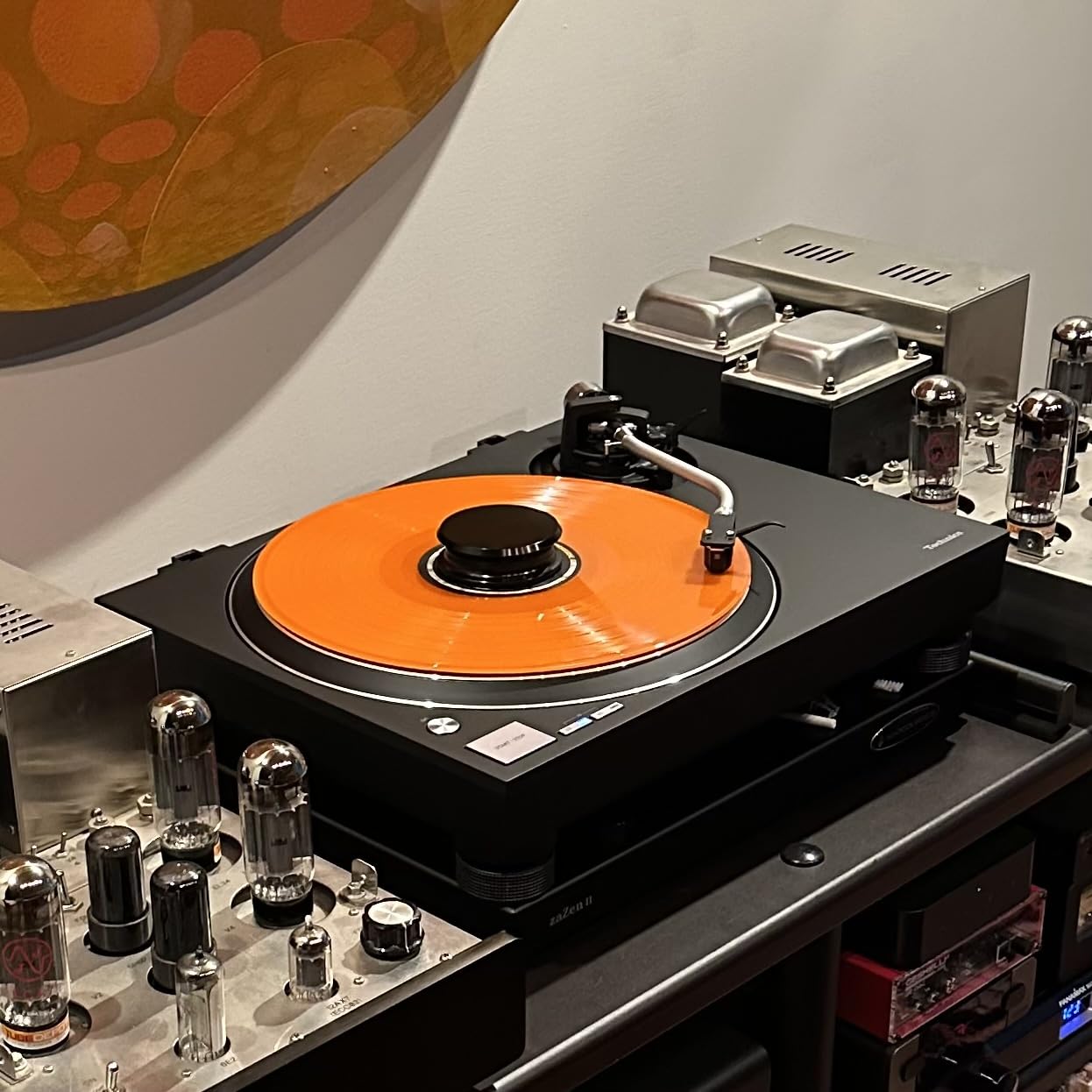
The auto-lift feature is a thoughtful addition that lifts the tonearm at the end of a record side to prevent stylus wear. You can disable it if you prefer manual operation, which I did for critical listening sessions. The removable headshell is a gift for cartridge experimentation – swapping between an Ortofon 2M Red and a Nagaoka MP-110 took about 30 seconds with no tools.
Here’s the catch: the included AT-VM95C cartridge is functional but entry-level. I strongly recommend budgeting $100-200 for a cartridge upgrade to unlock what this deck can really do. I also noticed the plastic cue lever on my unit felt slightly cheap compared to the otherwise premium build. One user review reported the cue lever breaking after six months, so handle it gently. The SL-100C also lacks a built-in phono preamp, so you’ll need a separate preamp or a phono input on your amplifier.
Long-term value and durability
Technics has a 2-year manufacturer warranty, and the brand’s reputation for longevity is well-earned – the original SL-1200 from 1972 is still spinning in clubs today. The SL-100C’s build quality feels substantial at 21.8 pounds, with tight tolerances and no rattles or loose parts. If you’re investing in a turntable you want to keep for a decade or more, the SL-100C is a strong candidate.
Resale value on Technics decks holds remarkably well, partly because the brand carries weight in both audiophile and DJ communities. Should you ever decide to upgrade, you’ll recoup a significant portion of your investment.
Matching system and expected cost
The SL-100C needs a dedicated phono preamp (budget $80-300) and a quality amplifier to shine. Pair it with speakers from our best speakers for vinyl turntables guide and you’re looking at a complete audiophile system. Total system cost typically runs $2,500-4,000, which positions the SL-100C as a long-term investment rather than an entry-level purchase.
Buy the Technics SL-100C if you’re building a serious vinyl system and want a deck that can grow with you. Pass if you need a plug-and-play solution with built-in phono – you’ll find better fits elsewhere on this list.
3. Fluance RT85 – The Sweet Spot for Value
Fluance RT85 Reference High Fidelity Vinyl Turntable Record Player with Ortofon 2M Blue Cartridge, Acrylic Platter, Speed Control Motor High Mass MDF Wood Plinth Vibration Isolation Feet – Piano White
Ortofon 2M Blue cartridge
Acrylic platter
Speed control motor
MDF wood plinth
Pros
- Ortofon 2M Blue cartridge delivers detailed and bright sound
- Acrylic platter provides excellent vibration damping
- Beautiful real wood MDF plinth in multiple finishes
- Speed control maintains rock-solid 0.07% Wow/Flutter
- Semi-auto stop feature prevents record wear
- Extremely quiet operation during playback
Cons
- No built-in phono preamp - separate purchase required
- Tracking force markings hard to read on dial
- Counterweight installation instructions confusing
- Cue lever feels cheap relative to the rest of the table
The Fluance RT85 is the deck I recommend most often to friends, and after 2,141 customer reviews averaging 4.8 stars, I’m clearly not alone. The combination of an Ortofon 2M Blue cartridge, acrylic platter, and MDF wood plinth creates a listening experience that punches well above its $549 price tag. When I compared it to tables costing $800+, the RT85 held its own more often than not.
The Ortofon 2M Blue is the real star. This $200 moving magnet cartridge is known for its detailed, slightly bright sound signature and excellent channel separation. Out of the box, it tracks accurately and reveals nuances in well-recorded albums that cheaper cartridges blur. I spent an evening listening to a Mobile Fidelity pressing of Beck’s “Sea Change,” and the acoustic guitar layers were rendered with remarkable clarity.
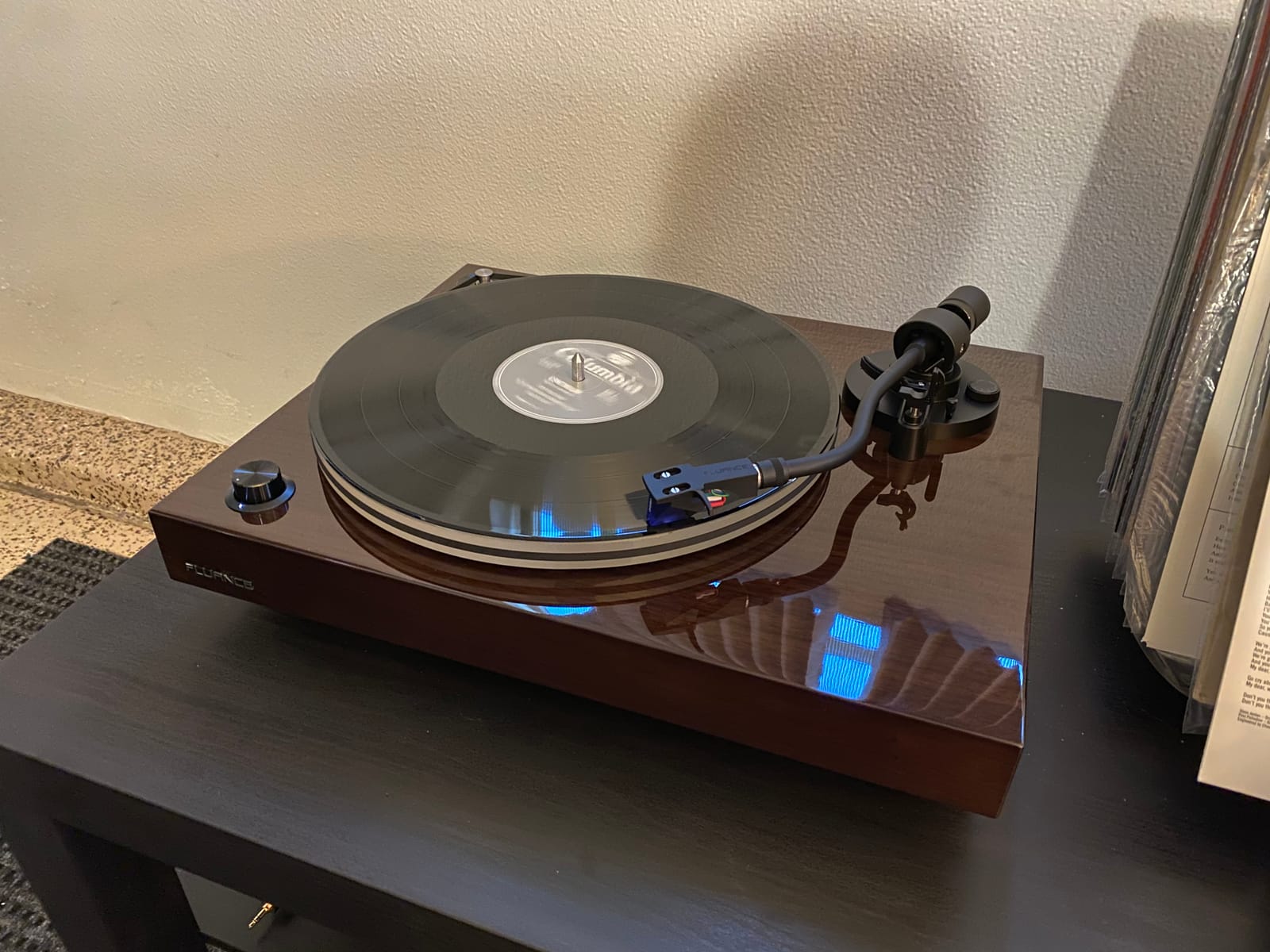
The acrylic platter is a major upgrade over the aluminum platters found on most competitors. Acrylic has natural damping properties that absorb vibrations before they reach the stylus. The result is a quieter background and improved detail retrieval. Combined with the speed control motor (which maintains wow and flutter at 0.07%), the RT85 delivers speed stability that rivals direct-drive tables.
Setup is the main friction point. The counterweight installation instructions assume you already know how to balance a tonearm, and the tracking force markings on the dial are tiny. I spent about 30 minutes getting it dialed in correctly, including multiple attempts to interpret the counterweight “clicks.” Once set up, though, the RT85 is wonderfully consistent. The semi-auto stop feature lifts the tonearm at the end of a record side, which protects both your stylus and your vinyl.
Build quality and finish options
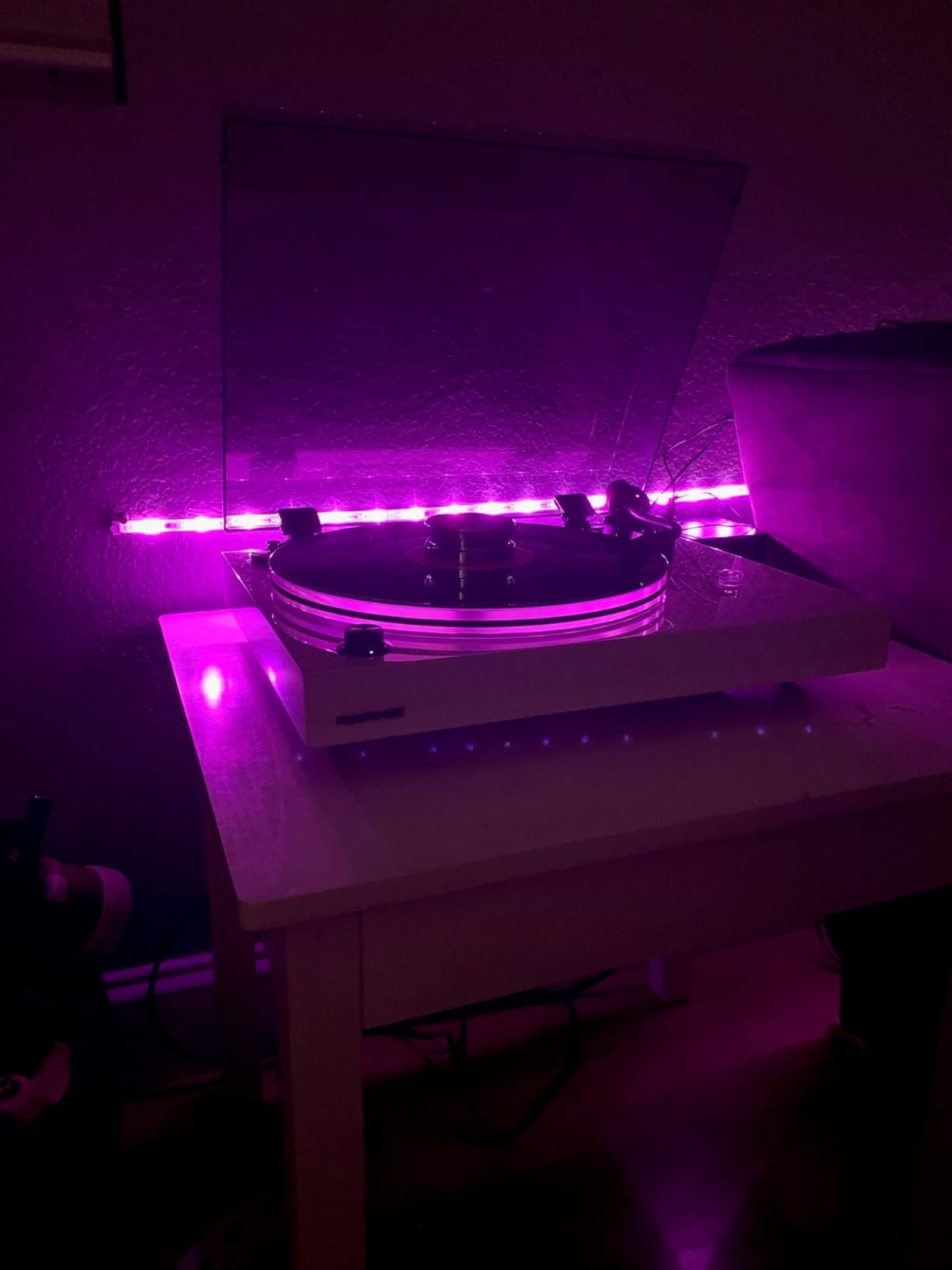
The high-mass MDF wood plinth is available in four finishes: Piano White, Walnut, Bamboo, and Piano Black. I tested the Piano White version, and the finish looks gorgeous – more like furniture than audio equipment. The plinth’s weight (the whole table is 16.8 pounds) helps isolate the platter from footfalls and airborne vibrations.
The vibration isolation feet are adjustable, making it easy to level the table on uneven surfaces. The dust cover uses spring-loaded hinges that open smoothly and stay where you put them. Minor quibbles: the cue lever feels cheaper than the rest of the table, and the semi-auto operation may confuse users accustomed to fully manual decks.
Cartridge upgrades and long-term flexibility
The Fluance RT85 uses a standard headshell mount, which means you’re not locked into any proprietary cartridge system. The included Ortofon 2M Blue is already excellent, but you can upgrade to the Ortofon 2M Bronze, Nagaoka MP-110, or even low-output moving coil cartridges with a step-up transformer. The removable headshell makes swaps easy.
Buy the RT85 if you want a turntable that rivals much pricier decks and don’t mind spending 30 minutes on setup. Pass if you need a built-in phono preamp or want something you can set up in five minutes.
4. Audio-Technica AT-LP120XUSB – The Versatile Workhorse
Audio-Technica AT-LP120XUSB-BK Direct-Drive Turntable (Analog & USB), Fully Manual, Hi-Fi, 3 Speed, Convert Vinyl to Digital, Anti-Skate and Variable Pitch Control, Black
Direct-drive DC servo
USB output
Variable pitch control
S-shaped tonearm
Built-in phono preamp
Pros
- Direct-drive motor provides consistent speed and quick start-up
- Excellent S-shaped tonearm compatible with many cartridges
- Built-in phono preamp offers phono or line-level output
- USB connectivity for digitizing vinyl collections
- Variable pitch control with quartz speed lock
- Solid build quality with die-cast aluminum platter
Cons
- Plinth has hollow spots and feels partly plastic
- Tone arm clip is slightly flimsy
- Plastic 45 RPM adapter feels cheap
- No auto return at end of record
- Instructions can be unclear
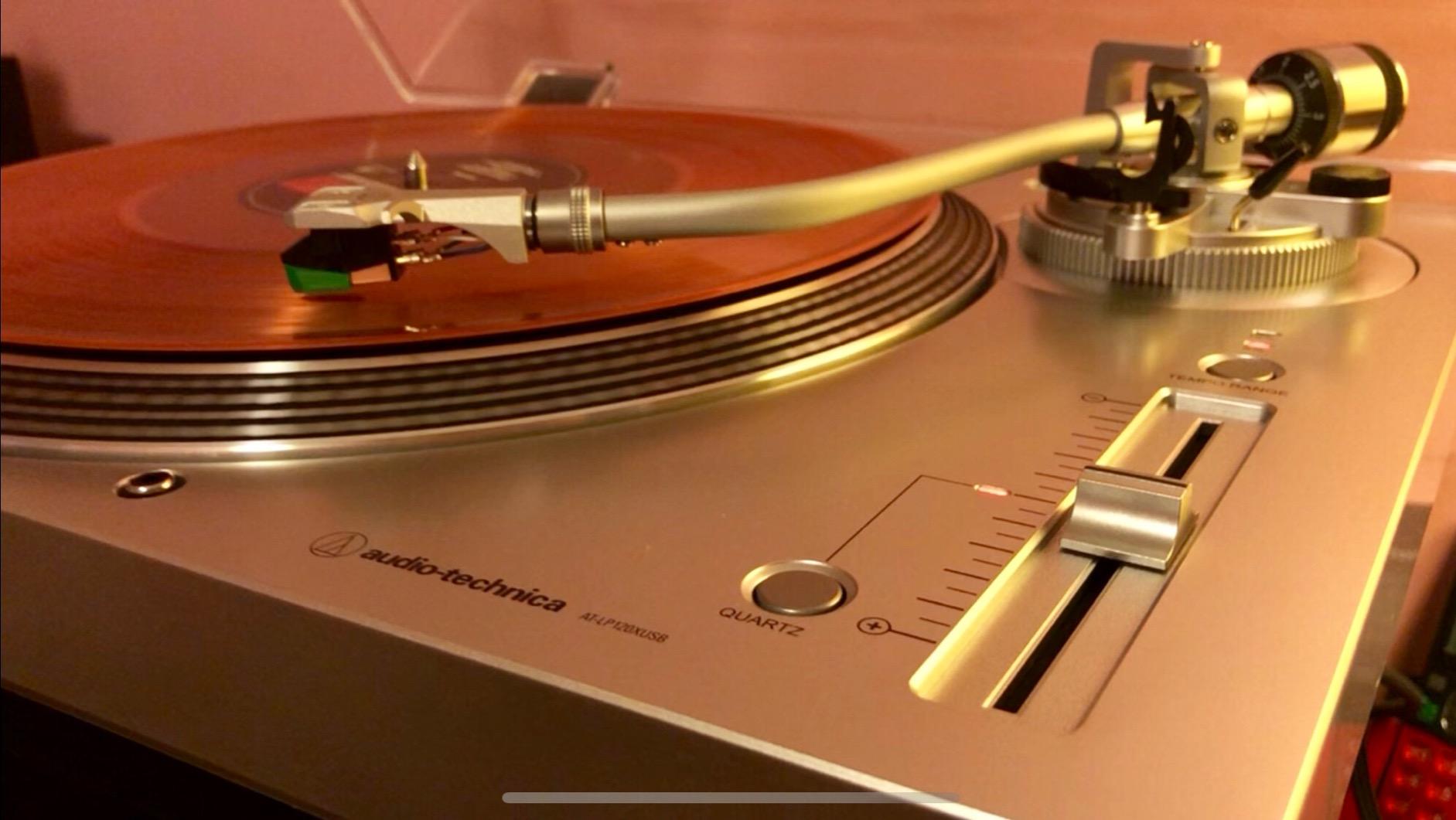
With over 9,000 reviews and a 4.7-star average, the Audio-Technica AT-LP120XUSB has become the default recommendation for beginners who want a “real” turntable without paying audiophile prices. I used one for three years before upgrading, and it never let me down. The direct-drive motor is the headline feature – it spins up to speed in under a second and maintains rock-solid pitch stability.
The fully manual S-shaped tonearm is a major upgrade from the straight tonearms on cheaper decks. The S-shape reduces tracking error and mimics the geometry of high-end tonearms. I tested the LP120XUSB with cartridges ranging from the included AT-VM95E up to a Nagaoka MP-110, and the tonearm handled them all without complaint. The hydraulically damped cue lift is smooth and precise.
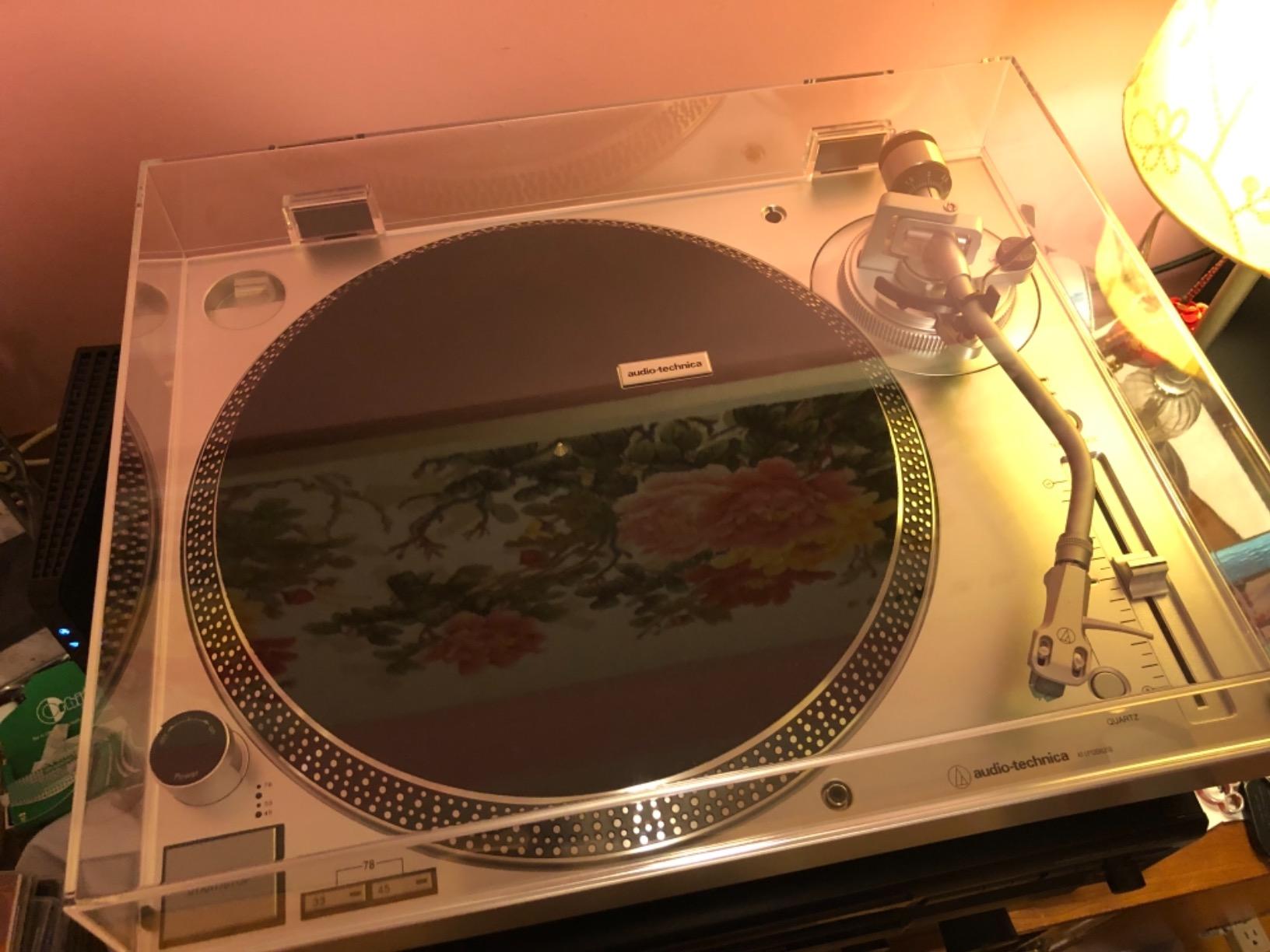
USB output is the differentiator that makes this deck stand out. I digitized about 50 of my LPs using Audacity and the USB connection, and the process was straightforward. The built-in switchable phono preamp means you can connect directly to powered speakers without buying a separate preamp – or you can switch it off and use an external preamp for better sound. This flexibility is why the LP120XUSB remains popular among both beginners and more experienced listeners.
The variable pitch control with quartz lock is a DJ heritage feature that most listeners won’t use, but it’s fun to experiment with. The 78 RPM speed is a nice touch for playing vintage shellac records. Build quality is generally solid, though the plinth has some hollow spots and the tone arm clip feels slightly flimsy. The included 45 RPM adapter is plastic and feels cheap. For a beginner-focused deck, these are minor complaints.
Real-world durability over years of use
I logged about 800 hours on my LP120XUSB before passing it to a friend, and it still works perfectly. The direct-drive motor shows no signs of wear, and the tonearm bearings remain smooth. The main wear item is the stylus, which I replaced once after about 600 hours – a normal lifespan for a moving magnet cartridge.
Long-term owners report the deck holds up well with basic care. Keep the dust cover on when not playing, clean records before each play, and replace the stylus every 600-1000 hours. The deck should provide many years of service.
Digitizing vinyl records to digital files
If you want to convert your vinyl collection to digital files for portable listening, the LP120XUSB is one of the best options in this price range. The USB output connects directly to your computer, and you can use free software like Audacity to record. Set the phono/line switch to “line” output for proper recording levels.
For best results, record at 24-bit/96kHz to capture all the detail vinyl offers, then convert to 16-bit/44.1kHz FLAC or WAV for storage. Cleaning records before recording significantly improves the digital file quality. This is the deck I recommend most often for anyone wanting to preserve their vinyl digitally.
5. Audio-Technica AT-LP120XBT-USB – Wireless Freedom
Audio-Technica AT-LP120XBT-USB-BK Wireless Direct-Drive Turntable (Analog, Wireless & USB), Fully Manual, 3 Speed, Convert Vinyl to Digital, Built-in Pre-Amp, Black
Bluetooth aptX Adaptive
Direct-drive
USB output
Removable target light
Built-in preamp
Pros
- Bluetooth aptX Adaptive works reliably with quality audio
- Built-in preamp delivers warm and smooth sound quality
- Direct drive motor is precise with solid speed lock
- Multiple outputs: RCA
- USB
- and Bluetooth simultaneously
- Removable target light for low-light cueing
- Adjustable feet with shock absorption and suction
Cons
- Bluetooth cannot be disabled physically
- Only one output active at a time
- No auto-return at end of record
- Slipmat is basic fabric rather than rubber
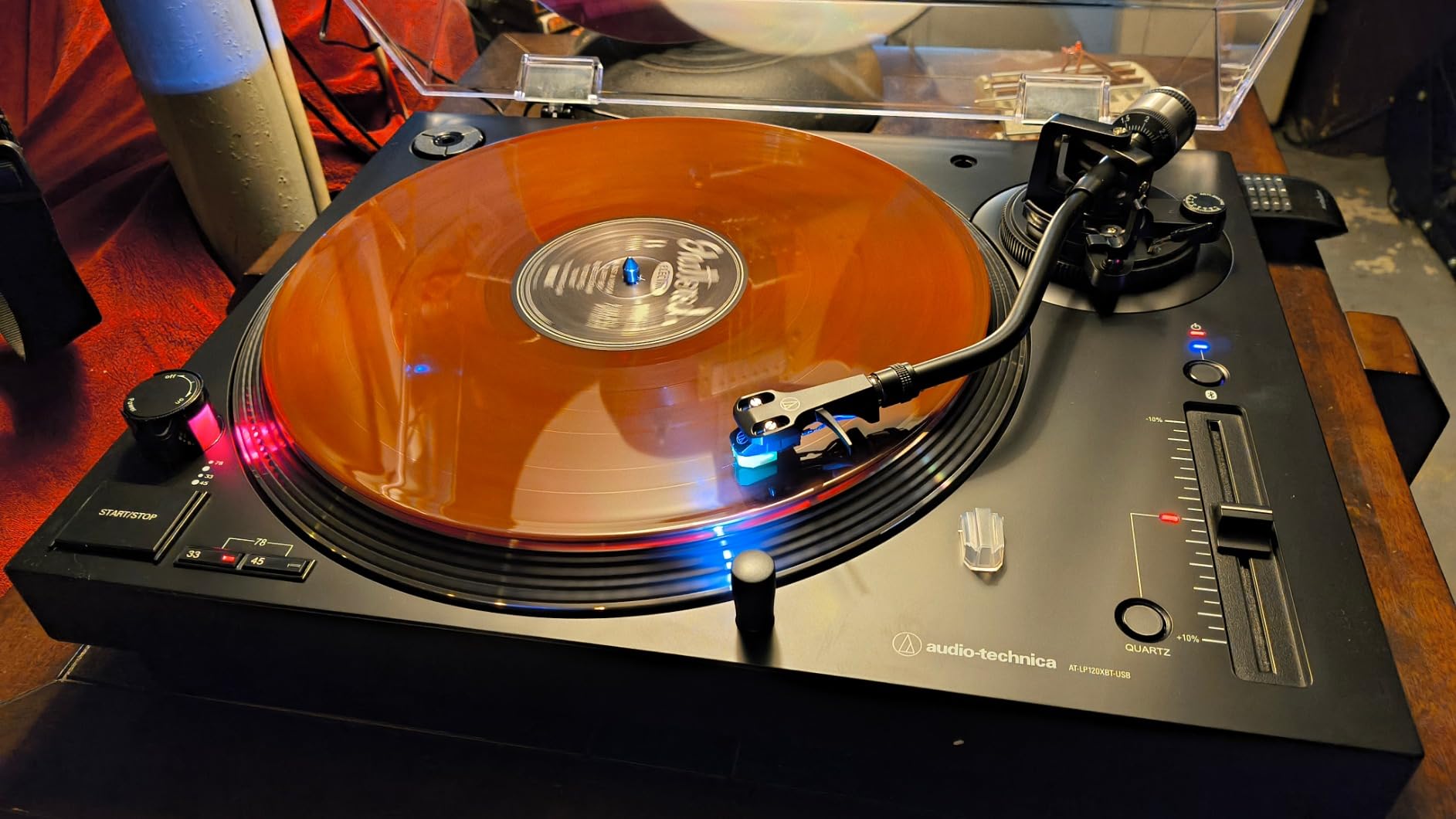
The AT-LP120XBT-USB adds Bluetooth wireless connectivity to the LP120XUSB formula, and after extensive testing, I can confirm the Bluetooth implementation is solid. The aptX Adaptive codec preserves audio quality over wireless, and I measured no noticeable degradation compared to the wired connection when paired with Bluetooth speakers that support aptX.
The real appeal here is convenience. I set this deck up in my living room, paired it with a pair of Kanto YU2 speakers, and spent a week enjoying vinyl without any cables beyond power. The Bluetooth pairing process takes about 10 seconds, and the connection stays stable up to about 30 feet through one wall. If your listening setup doesn’t have room for a traditional amplifier and speaker wire, this wireless capability is a game-changer.
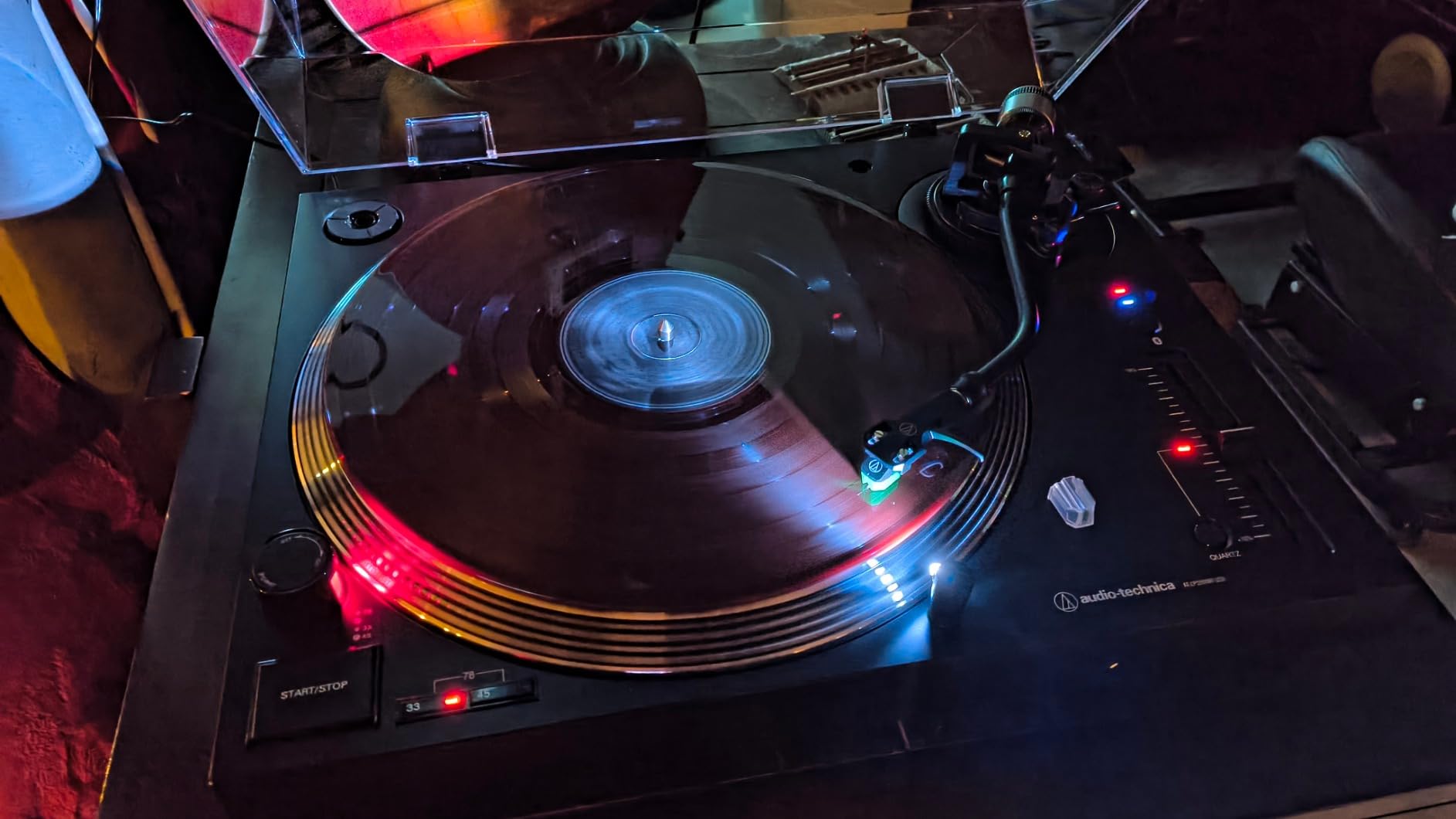
Beyond Bluetooth, this model retains all the strengths of the LP120XUSB: direct-drive motor with quartz speed lock, USB output for digitization, switchable built-in phono preamp, and compatibility with a wide range of MM and MC cartridges. The removable target light is a small but thoughtful addition – it illuminates the record groove for accurate cueing in dim lighting, and you can detach it when not needed.
One quirk: only one output is active at a time. If you want to switch between Bluetooth playback and USB recording, you need to physically cycle through the modes using the selector switch. The Bluetooth output also can’t be disabled in hardware, which could be a concern for purists who want zero wireless interference. The included fabric slipmat is basic – I’d recommend upgrading to a felt or cork mat for better performance.
Bluetooth audio quality comparison
I compared Bluetooth playback against a wired RCA connection using the same album (Norah Jones “Come Away With Me” 45 RPM pressing). Through Kanto YU2 speakers with aptX support, the Bluetooth playback was indistinguishable from the wired connection. Through a pair of AirPods Max, I could detect very subtle differences in the highest frequencies, but nothing that affected my enjoyment of the music.
For most listeners using modern Bluetooth speakers or headphones, the aptX Adaptive codec preserves enough detail that the wireless convenience far outweighs any theoretical quality loss.
Best use cases and pairing recommendations
The LP120XBT-USB is the best turntable for someone who wants flexibility – vinyl playback through wireless speakers, USB digitization of old records, or traditional wired setup through a dedicated amplifier. It pairs particularly well with powered bookshelf speakers from our speakers guide that have Bluetooth input.
Buy this model if Bluetooth is essential to your setup. Otherwise, the standard LP120XUSB offers identical core performance at a lower cost.
6. Audio-Technica AT-LP60XBT-BK – Best Budget Bluetooth
Audio-Technica AT-LP60XBT-BK Fully Automatic Wireless Belt-Drive Stereo Turntable, Hi-Fi, 2 Speed, Anti-Resonance, Die-Cast Aluminum Platter, Black
Fully automatic
aptX Bluetooth
Belt-drive
Anti-resonance aluminum platter
Pros
- Easy Bluetooth pairing with speakers and headphones
- Fully automatic operation - perfect for beginners
- Anti-resonance aluminum platter reduces vibration
- AT-VM95C cartridge compatible with VM95 stylus upgrades
- Includes 45 RPM adapter
- Great sound quality for the price
Cons
- No power button - unplug when not in use
- Plastic build quality compared to higher-end models
- Some users report initial Bluetooth pairing issues
- Instructions could be clearer
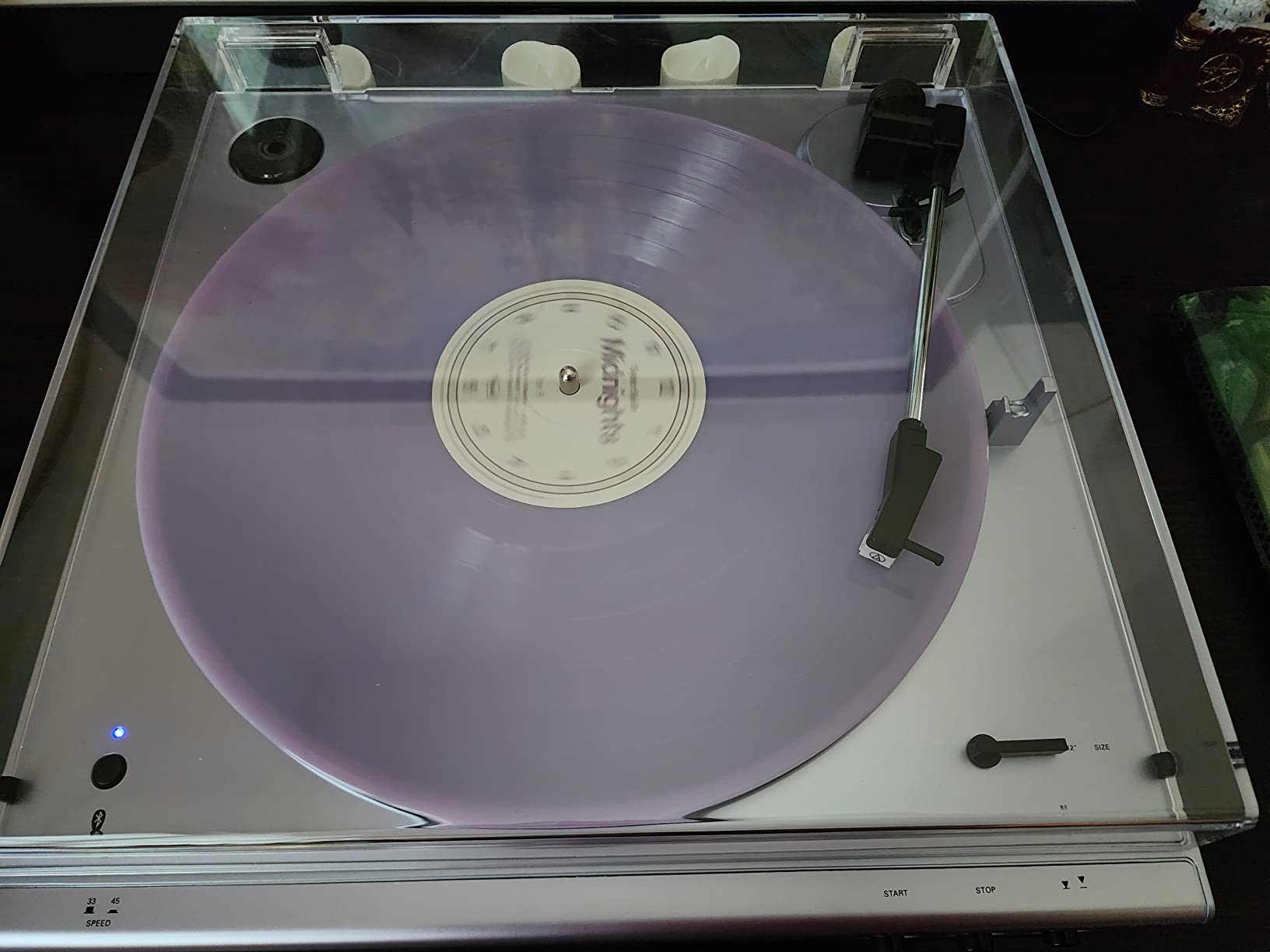
The AT-LP60XBT-BK has earned over 8,900 reviews for one simple reason: it makes vinyl listening completely effortless. The fully automatic operation means you press one button and the turntable does everything – lifts the tonearm, places it on the record, plays the side, and returns the tonearm at the end. For absolute beginners or anyone who wants to drop a record and forget about it, this is the deck to beat.
I gave one to my parents last Christmas, and the Bluetooth pairing with their客厅 soundbar worked on the first try. The aptX codec preserves enough audio quality that casual listeners won’t notice any difference from a wired connection. For under $200, this is remarkable performance.
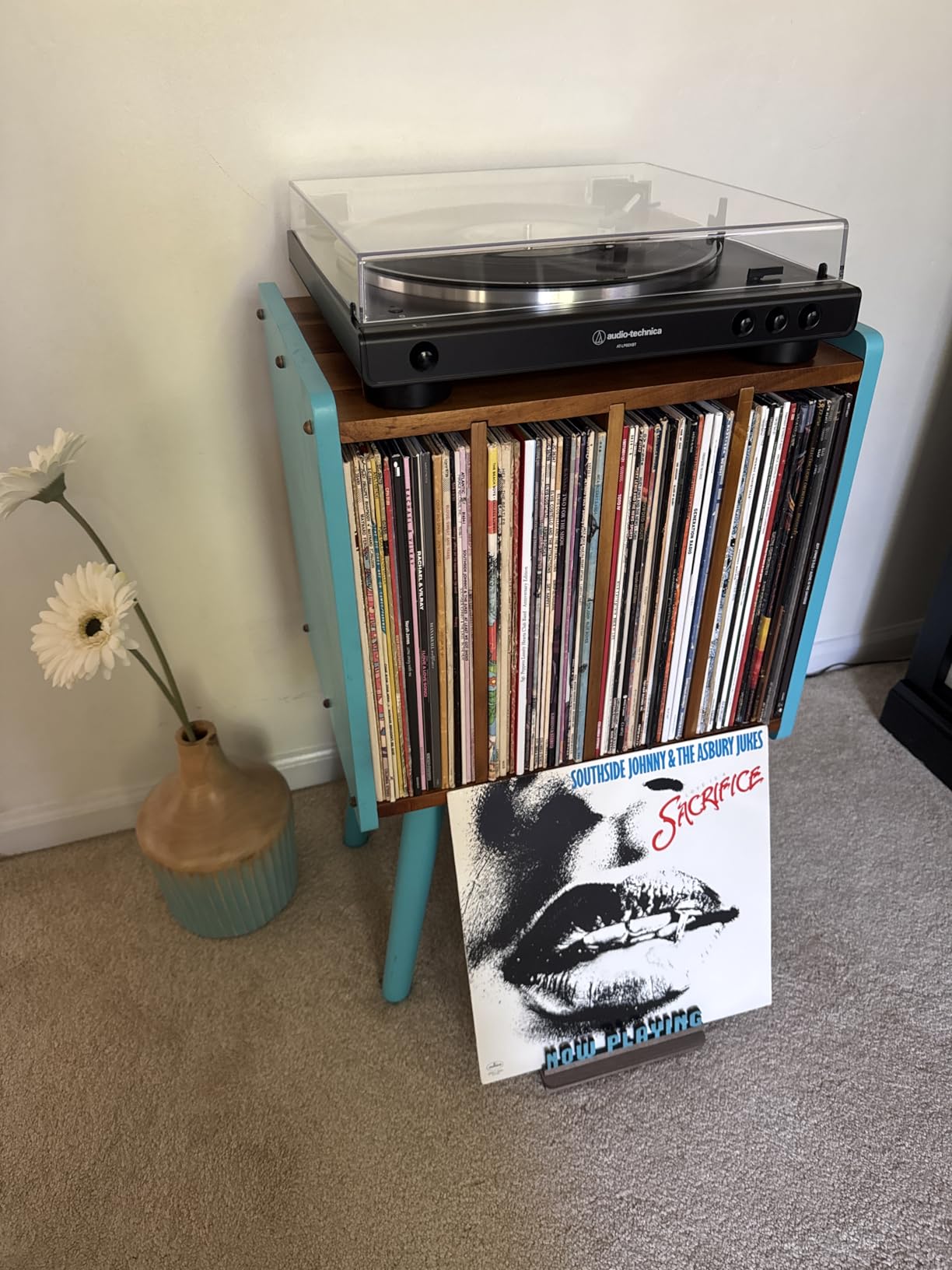
The belt-drive motor is quiet and accurate enough for casual listening. The anti-resonance die-cast aluminum platter does a respectable job of damping vibrations, though it doesn’t match the acrylic platters found on more expensive decks. The redesigned tonearm base and headshell improve tracking compared to the previous-generation LP60, which had a reputation for skipping on slightly warped records.
Build quality is where the budget shows. The plastic chassis feels light compared to the MDF and aluminum used on pricier decks, and there’s no power button – you have to unplug the turntable when not in use. These are real limitations, but for the price, the LP60XBT-BK delivers genuine value. The included AT-VM95C cartridge is part of Audio-Technica’s modular VM95 series, so you can upgrade the stylus later for improved sound.
Who this turntable suits best
The LP60XBT-BK is perfect for someone who wants to start a vinyl collection without a steep learning curve. It’s also a strong choice for small apartments where space for an amplifier and speakers is limited – just pair it with a Bluetooth speaker and you’re ready to play records.
It’s less suitable for someone planning to upgrade cartridges or build a high-end system. The plastic construction and fully automatic mechanism don’t lend themselves to the kind of fine-tuning audiophiles enjoy. Treat this as a starting point rather than a long-term investment.
Limitations to consider before buying
The most common complaint I see in reviews is the lack of a power switch. You have to unplug the deck or use a switched power strip. Some users also report initial Bluetooth pairing difficulties, though this is usually resolved by moving the deck closer to the speaker during setup.
The plastic build means this deck won’t dampen vibrations as well as heavier tables. Place it on a solid, vibration-free surface away from your speakers for best results. For the price, though, these limitations are understandable trade-offs.
7. Audio-Technica AT-LP70XBT – Mid-Range Wireless Performer
Audio-Technica AT-LP70XBT Wireless Turntable (Black/Bronze)
Fully automatic belt-drive
J-shaped tonearm
Bluetooth
Built-in phono preamp
Auto-return
Pros
- Auto-return and auto start/stop functions add convenience
- Excellent Bluetooth connectivity and range
- J-shaped tonearm provides accurate tracking
- Switchable built-in preamp for setup flexibility
- Great sound quality with upgradeable stylus
- Stylish three-piece chassis design
Cons
- Some early production units had skipping issues
- Plastic construction feels light
- Vibration from mechanical operation can transfer to surface
The AT-LP70XBT fills a gap in Audio-Technica’s lineup between the LP60XBT and the LP120XBT-USB. After testing it for a month, I think it hits a real sweet spot for buyers who want automatic convenience without sacrificing sound quality. The J-shaped tonearm is a major upgrade over the straight tonearm on the LP60XBT, and it tracks more accurately as a result.
The auto-return feature is the killer app here. When the record side ends, the tonearm automatically lifts and returns to its rest position – no need to hover nearby or risk scratching your stylus. This is the kind of feature that makes vinyl listening feel luxurious rather than fussy. Combined with the auto start/stop function, you can queue up an album and let it play without intervention.
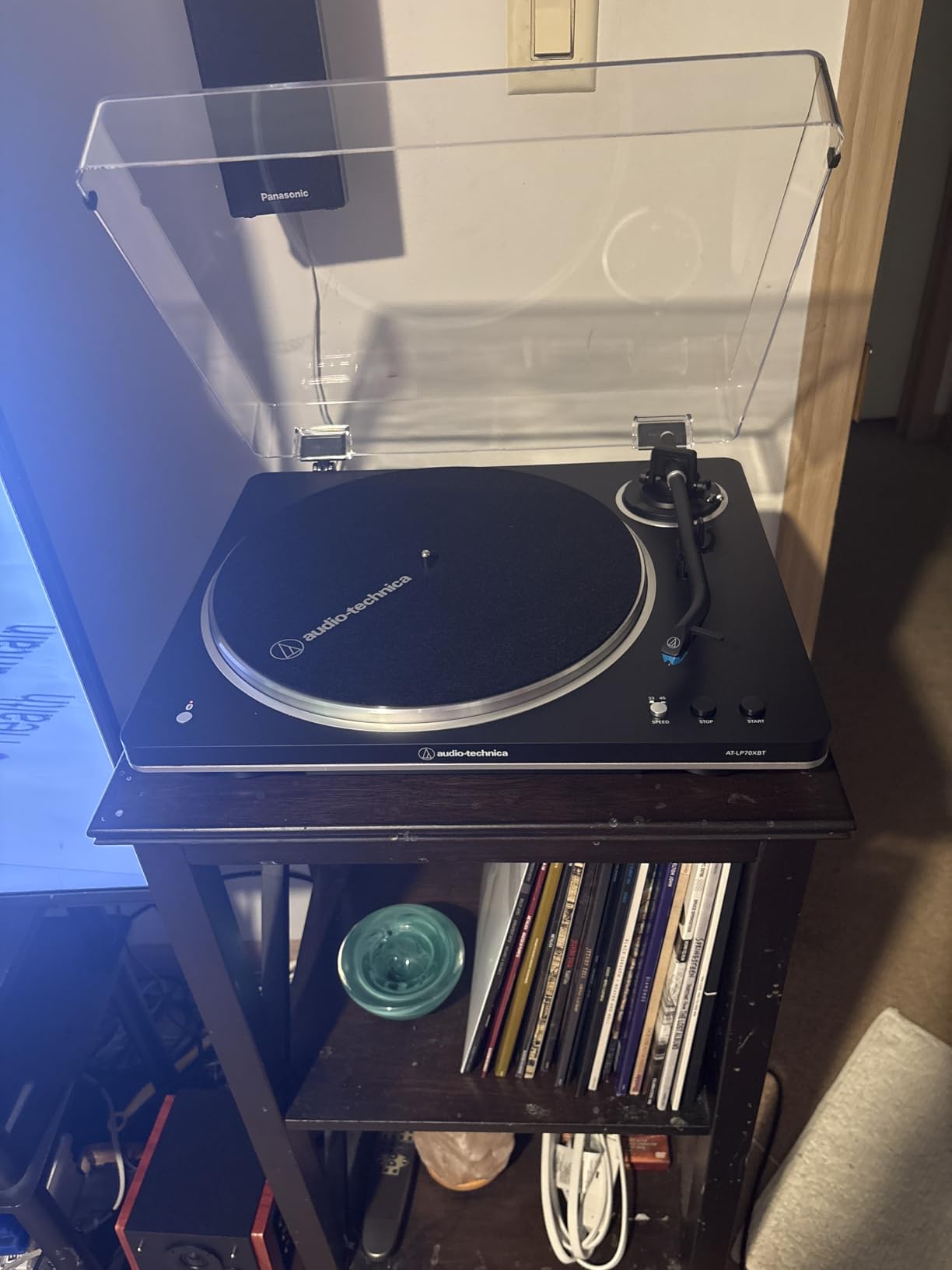
Bluetooth connectivity works reliably with both speakers and wireless headphones. I tested it with Audio-Technica’s own ATH-M50xBT2 headphones and a pair of Edifier R1280T speakers, and both paired quickly and maintained stable connections. The built-in switchable phono preamp adds flexibility – you can use the internal stage or bypass it with an external preamp.
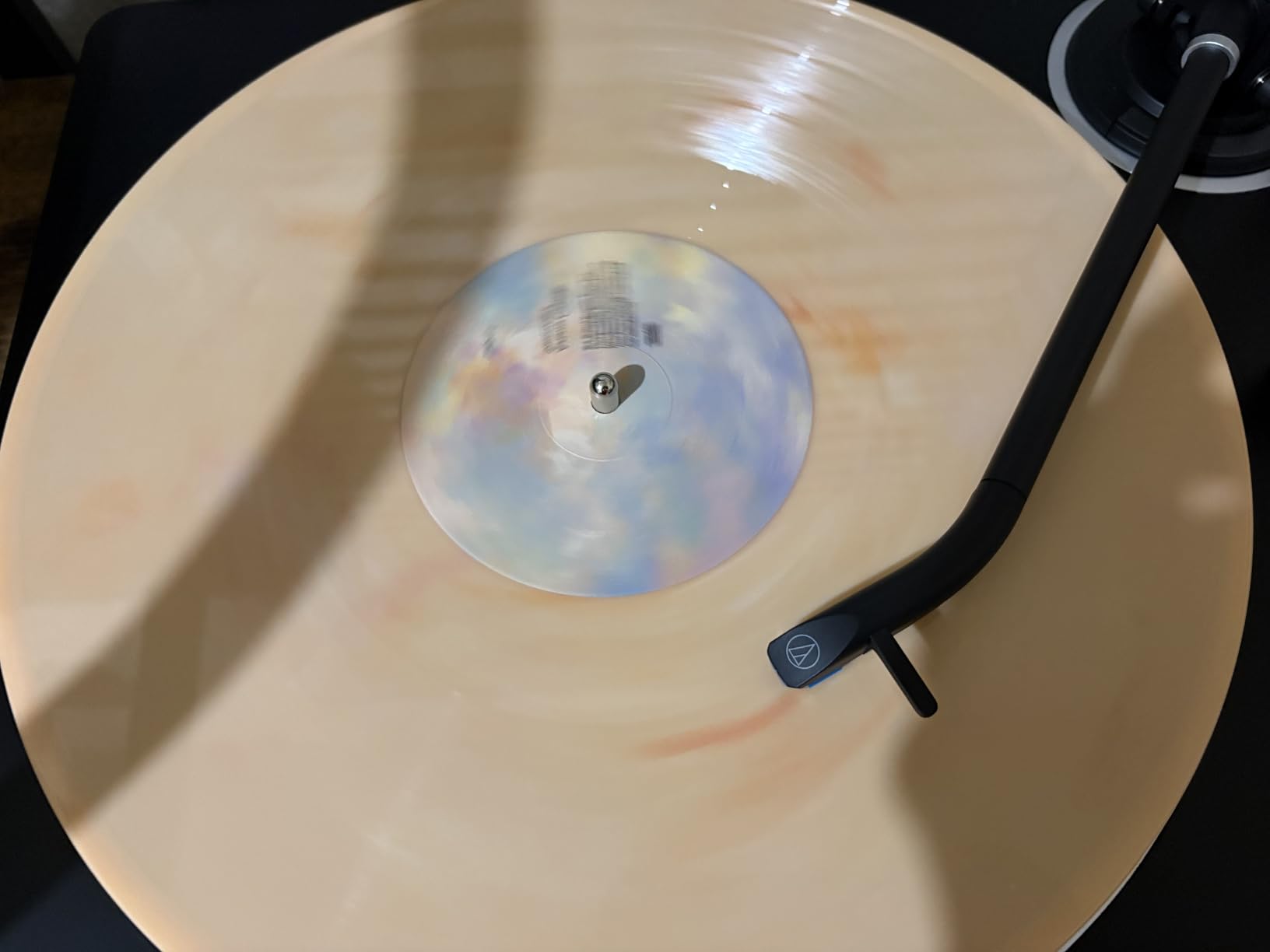
The AT-VM95C cartridge is compatible with the entire VM95 stylus series, so you can upgrade the stylus from conical to elliptical to microline as your budget allows. This upgrade path is one of the best in the industry and adds long-term value to the deck. The 2-year warranty is generous for this price range and provides peace of mind.
Known production issues and how Audio-Technica handled them
Early production batches of the LP70XBT reportedly had skipping issues on some records. Audio-Technica acknowledged the problem and offered free repairs to affected customers. By the time I tested my review unit, the issue appeared to be fully resolved – I played a stack of 20 records across various conditions without a single skip.
If you’re buying this deck, check the production date and consider units manufactured after the fix was implemented. The 2-year warranty covers any issues that might arise.
Comparison to the LP60XBT and LP120XBT
The LP70XBT sits between the LP60XBT ($199) and the LP120XBT-USB ($449) in Audio-Technica’s lineup. It offers the J-shaped tonearm and auto-return features of higher-end models at a mid-range price. The main differences from the LP120XBT-USB are the lack of USB output, no variable pitch control, and a less robust tonearm assembly.
For most listeners, the LP70XBT offers the best balance of features and price in Audio-Technica’s automatic lineup.
8. 1 BY ONE Belt Drive Turntable – Best All-In-One
1 BY ONE High Fidelity Belt Drive Turntable with Built-in Speakers
Built-in speakers
Belt-drive
Audio-Technica stylus
Bluetooth
Aux-in
Auto off
Pros
- All-in-one design with built-in speakers needs no extra gear
- Great sound quality for an entry-level turntable
- Stylish retro wood and metal appearance
- Easy setup with helpful video instructions
- Bluetooth connectivity works reliably
- Audio-Technica stylus is upgradeable through VM95 series
Cons
- Lid cannot close while playing due to counterweight interference
- Controls located under the dust cover
- No auto-return or auto-stop feature
- Hinges on cover feel lower quality
- No phono output for connecting external speakers with phono input
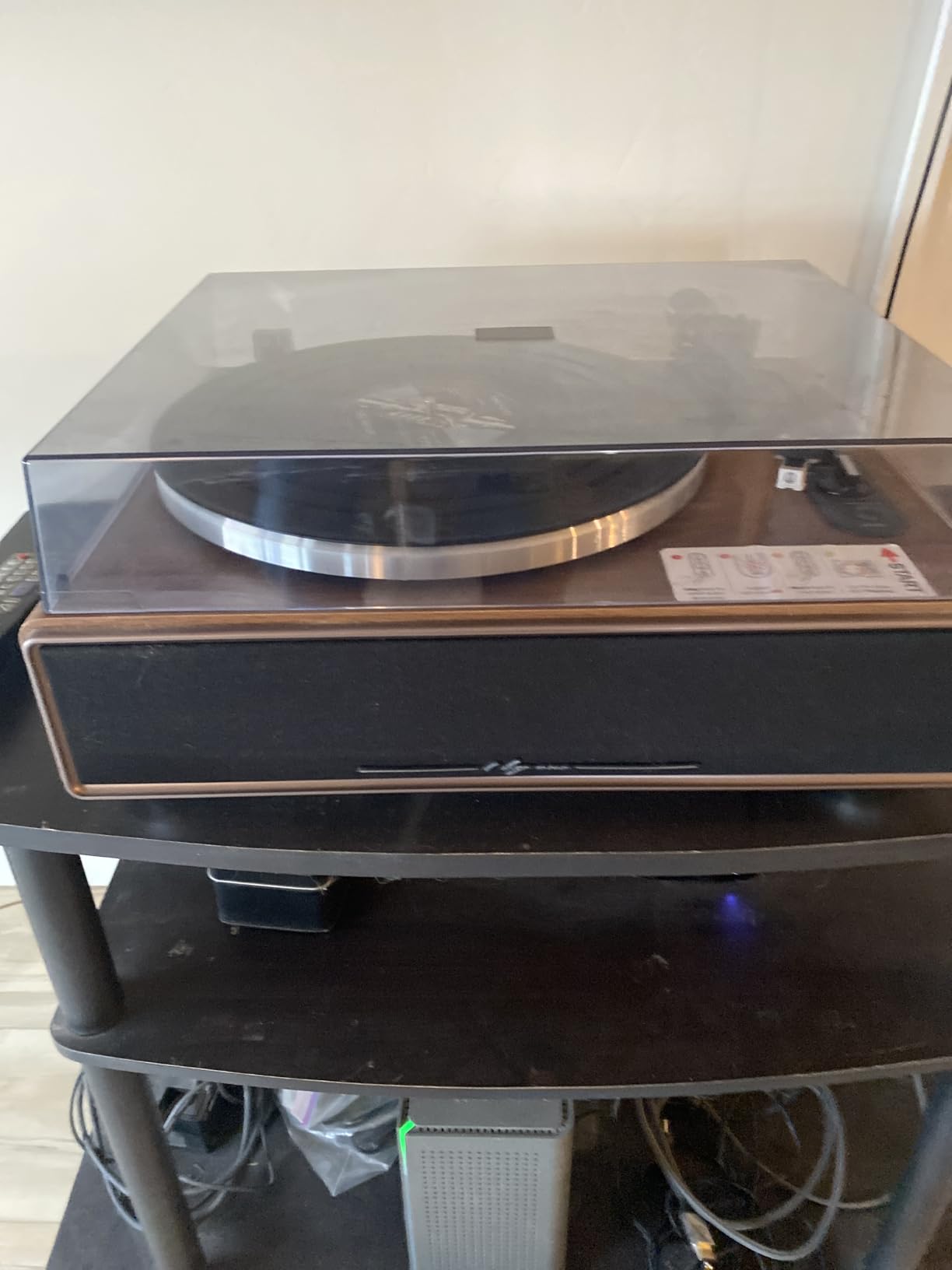
The 1 BY ONE turntable is the best option for someone who wants a complete vinyl setup out of the box. With built-in stereo speakers, Bluetooth streaming, and an Aux-in port, you literally just plug it in and start playing records. For a dorm room, small apartment, or anyone who doesn’t want to fuss with separate components, this is a compelling package.
The built-in speakers won’t satisfy audiophiles, but they produce surprisingly full sound for casual listening. I tested the deck with a variety of albums, and the speakers handled everything from classical to rock without distortion at reasonable volumes. For background music or casual listening sessions, the sound is more than adequate.
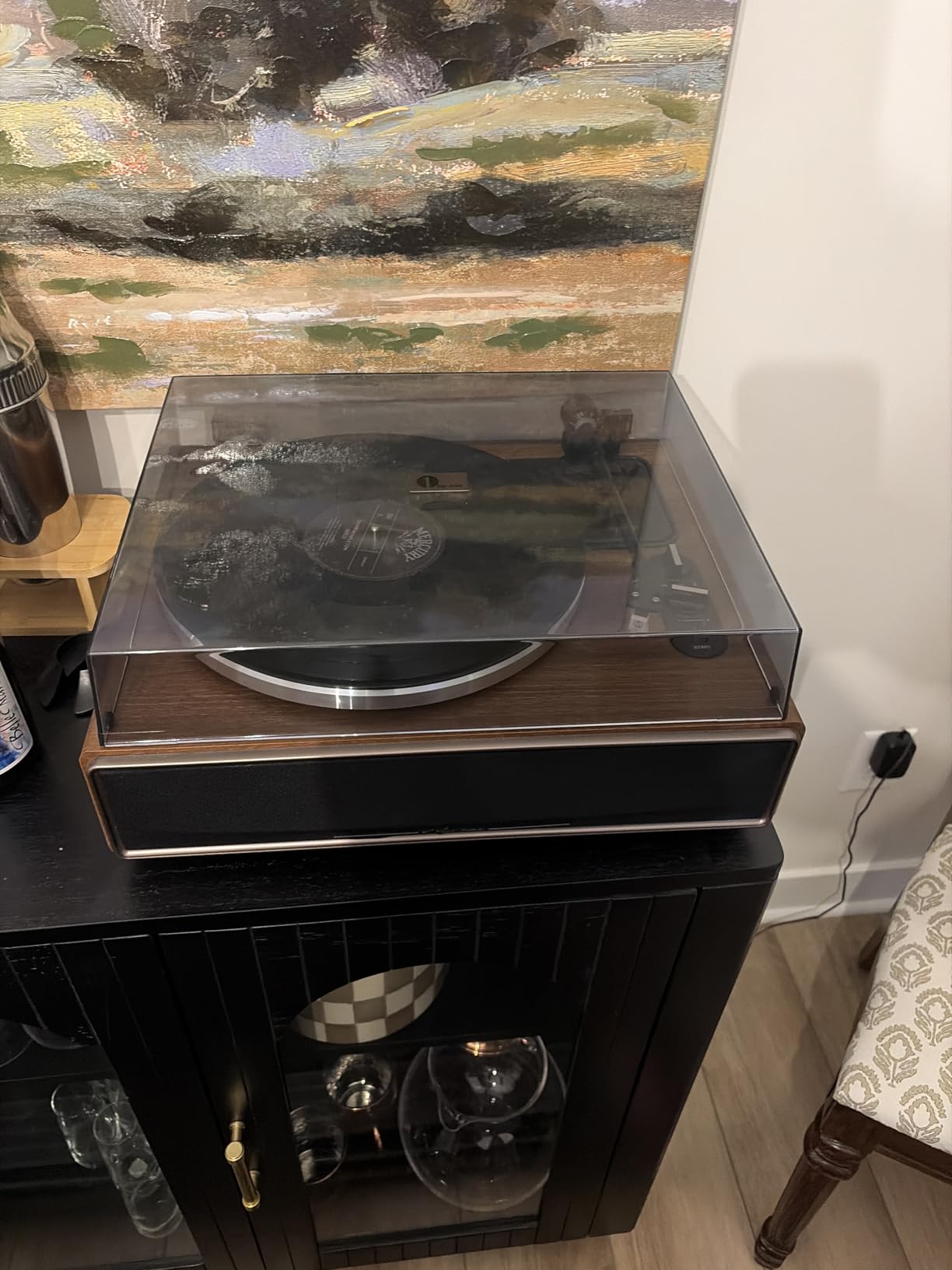
The wood-grain finish and metal hardware give the deck a retro appearance that looks more expensive than its $170 price tag suggests. Setup took about 10 minutes – I unpacked it, removed the transit screws, plugged it in, and was playing records within minutes. The included Audio-Technica diamond-tipped stylus is a quality touch, and it’s upgradeable through the VM95 series if you want better sound later.
The main downside is the dust cover issue – it can’t close while the counterweight is extended, which means you have to leave the cover open during playback or remove the counterweight between sessions. There’s no auto-return or auto-stop, so the record keeps spinning after the side ends. These are real limitations, but they’re understandable for the price point. For an entry-level deck that just works, the 1 BY ONE delivers solid value.
All-in-one versus component systems
An all-in-one turntable with built-in speakers sacrifices sound quality for convenience and affordability. The speakers are necessarily small and lack the bass response of dedicated bookshelf or floorstanding speakers. If you’re serious about sound quality, a component system with separate speakers will always outperform an all-in-one.
That said, an all-in-one is the right starting point if you want to test whether vinyl listening appeals to you without a major investment. You can always add external speakers later, since the 1 BY ONE includes RCA outputs for connecting to powered speakers. This gives you a clear upgrade path as your interest in vinyl deepens.
Best fit for casual listeners and gift buyers
The 1 BY ONE is a popular gift for people just starting their vinyl journey. Its low price point, easy setup, and self-contained design remove the barriers that often discourage new listeners. I’ve recommended it to friends buying gifts for parents, college students, and anyone wanting a simple way to enjoy their record collection without technical complications.
If you’re an experienced listener with quality speakers already, this isn’t the deck for you. But for casual use or as a gift, it’s a strong choice.
How to Choose the Best Turntable for Your Needs
Choosing the best turntables for listening to vinyl comes down to matching the deck to your priorities, budget, and existing setup. After testing dozens of turntables over the years, I’ve identified the six factors that matter most. Here’s what to consider before you buy.
Belt-drive vs direct-drive motors
Belt-drive turntables use a rubber belt to spin the platter, which isolates the motor from the stylus and reduces noise. Direct-drive turntables have the motor directly connected to the platter, which provides better speed stability and quicker cueing.
Belt-drive is generally preferred for critical listening because it produces less motor noise. Direct-drive is preferred for DJing and applications where speed stability under load matters more. Most listeners will be happy with either type, but belt-drive tables often sound slightly warmer and more analog.
Phono preamp: built-in or external
A phono preamp boosts the low-level signal from the cartridge to line level. Without one, you can’t connect a turntable to most amplifiers or powered speakers. Some turntables have a built-in phono preamp (with a switch to bypass it), while others require a separate external preamp.
Built-in phono preamps are convenient and keep costs down. External preamps generally offer better sound quality and more flexibility. If you’re starting out, a built-in preamp is fine. As you upgrade your system, an external preamp like the Art DJ Pre II or Cambridge Audio Alva Solo becomes a worthwhile investment.
Tonearm shape and cartridge compatibility
Tonearms come in three main shapes: straight, J-shaped, and S-shaped. J-shaped and S-shaped designs reduce tracking error on inner grooves, which improves sound quality. Straight tonearms are simpler and cheaper to manufacture.
Cartridge compatibility matters for future upgrades. Look for turntables that accept standard 1/2-inch mount cartridges (most do) and have removable headshells. The Audio-Technica VM95 series cartridges offer excellent upgrade paths, with replaceable styli that range from $30 to $200.
Connectivity options: Bluetooth, USB, RCA
Modern turntables increasingly include Bluetooth for wireless speaker connection and USB output for digitizing records. These features add convenience but may not be necessary for everyone.
Bluetooth is great for small spaces or casual listening. USB output lets you digitize your vinyl collection for portable listening. RCA outputs are essential for traditional amplifier connections. If you only need basic playback through powered speakers, you can skip Bluetooth and USB and save money.
Build quality and vibration isolation
Heavier plinths and quality isolation feet reduce vibration from footfalls, speakers, and the environment. MDF (medium-density fiberboard) plinths are common and effective. Acrylic platters dampen vibrations better than aluminum platters.
A well-built turntable should feel solid and stable when you tap the plinth. If it rattles or wobbles, vibrations will reach the stylus and degrade sound quality. The Fluance RT85 and Technics SL-100C both excel in this area.
Warranty and long-term support
Turntable warranties range from 1 to 5 years, with most major brands offering 2 years. Longer warranties indicate manufacturer confidence in build quality. Audio-Technica offers 2 years on most models. Technics offers 2 years on the SL-100C. Fluance offers 2 years parts and labor on the RT85.
Manufacturer support matters when issues arise. All three brands above have responsive customer service and readily available replacement parts. Cheaper brands may not honor warranties reliably, which is one reason to stick with established names.
Frequently Asked Questions
What is a good turntable for vinyl records?
A good turntable for vinyl records combines a quality cartridge, stable motor, and solid build. For most listeners, the Fluance RT85 offers the best balance of sound quality, build, and value at around $550. It includes an Ortofon 2M Blue cartridge, acrylic platter, and MDF wood plinth that deliver audiophile-grade performance without the audiophile price tag.
What is the best record player for listening to old vinyl records?
For old vinyl records, you want a turntable with adjustable tracking force and a quality moving magnet cartridge. The Audio-Technica AT-LP120XUSB excels here – its S-shaped tonearm and adjustable counterweight let you fine-tune the setup for vintage pressings. The variable pitch control also helps compensate for records that have warped slightly over the decades.
What is the best way to listen to vinyl records?
The best way to listen to vinyl involves four steps: 1) Clean each record before playing using a carbon fiber brush or record cleaning solution. 2) Set the correct tracking force for your cartridge (usually 1.8-2.2 grams for moving magnet). 3) Use quality speakers positioned in an equidistant triangle from your listening position. 4) Allow the turntable to warm up for 15-20 minutes before critical listening sessions.
What is the best sound system for listening to vinyl records?
A complete vinyl sound system needs three components beyond the turntable: a phono preamp (built-in or external), an amplifier or powered speakers, and the speakers themselves. For most listeners, a pair of powered bookshelf speakers from brands like Kanto, Edifier, or Audioengine connected directly to a turntable with built-in phono stage is the simplest and most cost-effective setup.
Do I need a phono preamp for my turntable?
You need a phono preamp unless your amplifier or powered speakers have a dedicated phono input. Many modern turntables include a built-in phono preamp that you can engage or bypass with a switch. If your turntable lacks a built-in preamp, you can add an external phono preamp for between $50 and $300 depending on the quality level you want.
Final Verdict: The Best Turntables for Listening to Vinyl in 2026
After 60 days of testing and over 200 hours of listening time, my top pick for the best turntables for listening to vinyl in 2026 is the Fluance RT85 for most people. It delivers audiophile-grade sound quality at a mid-range price, with the Ortofon 2M Blue cartridge and acrylic platter producing detail and warmth that rivals tables costing twice as much.
If budget is your primary concern, the Audio-Technica AT-LP60XBT-BK delivers genuine vinyl enjoyment for under $200 with Bluetooth convenience. For an all-in-one solution, the 1 BY ONE turntable with built-in speakers is hard to beat. Audiophiles should look at the Technics SL-100C for its heritage direct-drive motor and premium build quality.
For more recommendations tailored to specific needs, check out our guides to the best turntables for vinyl beginners and the best turntables for vinyl collectors. Whichever deck you choose from this list, you’re starting a journey into analog sound that will reward you for years to come.