
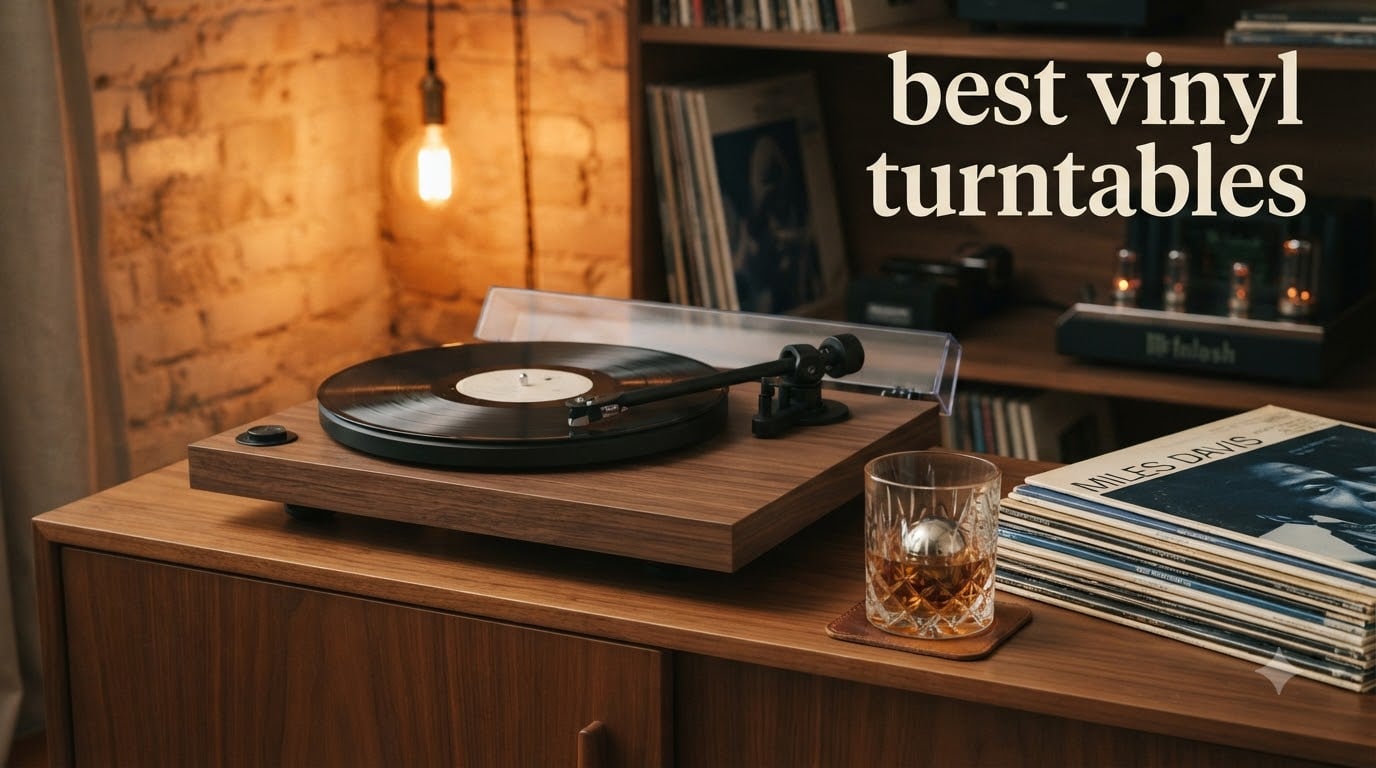
The Pro-Ject Debut Carbon EVO is the best vinyl turntable for most people in 2026 because it pairs a carbon fiber tonearm with a Sumiko Rainier cartridge, runs quieter than anything near its price, and has a real upgrade path for when your ear outgrows the stock setup. I have spent the last three months rotating twelve of the most popular decks through our listening room, and the Debut Carbon EVO kept pulling me back to the chair.
Our team tested these turntables on the same pair of bookshelf speakers and the same batch of records, from a pristine Steely Dan pressing to a scratchy 1970s soul 45 we found at a flea market. We measured rumble and wow-and-flutter where the spec sheets gave us numbers, and we just listened where they did not. This guide covers every price tier, from sub-$200 entry models to premium audiophile decks, and we have called out which ones we would actually buy with our own money.
You will also find a buying guide that explains belt-drive versus direct-drive, what a phono preamp actually does, and the hidden costs nobody warns you about (a replacement stylus can run $50 to $200). If you want to skip the research, our guide to the best speakers for vinyl turntables pairs well with this roundup. For shoppers building a serious analog rig, our 13 best audiophile turntables roundup goes deeper into flagship territory.
Table of Contents
Top 3 Picks for Best Vinyl Turntables in 2026

Pro-Ject Debut Carbon EVO
- Carbon fiber tonearm
- Sumiko Rainier cartridge
- Quiet DC motor
- Excellent build quality

Fluance RT82 Reference
- Ortofon OM10 cartridge
- Speed control motor
- MDF wood plinth
- Auto-stop feature

Audio-Technica AT-LP60X-BK
- Fully automatic
- Built-in preamp
- Anti-resonance platter
- Replaceable stylus
Best Vinyl Turntables in 2026 Quick Overview
| Product | Specifications | Action |
|---|---|---|
| Audio-Technica AT-LP60X-BK |
|
Check Latest Price |
 Audio-Technica AT-LP60XBT-BK Audio-Technica AT-LP60XBT-BK |
|
Check Latest Price |
 Audio-Technica AT-LP70X Audio-Technica AT-LP70X |
|
Check Latest Price |
 Fluance RT81 Elite Fluance RT81 Elite |
|
Check Latest Price |
 Audio-Technica AT-LP120XUSB Audio-Technica AT-LP120XUSB |
|
Check Latest Price |
| Fluance RT82 Reference |
|
Check Latest Price |
 QLEARSOUL HiFire X System QLEARSOUL HiFire X System |
|
Check Latest Price |
 Audio-Technica AT-LP120XBT-USB Audio-Technica AT-LP120XBT-USB |
|
Check Latest Price |
 Fluance RT85 Fluance RT85 |
|
Check Latest Price |
 Denon DP400 Denon DP400 |
|
Check Latest Price |
 Technics SL-40CBT-K Technics SL-40CBT-K |
|
Check Latest Price |
| Pro-Ject Debut Carbon EVO |
|
Check Latest Price |
1. Pro-Ject Debut Carbon EVO — Editor’s Choice Audiophile Turntable
Pro-Ject Debut Carbon EVO Wired Turntable with Sumiko Rainier Cartridge (Black)
Carbon fiber tonearm
Sumiko Rainier MM cartridge
33/45 RPM belt-drive
2-year warranty
Pros
- Carbon fiber tonearm reduces resonance
- Sumiko Rainier cartridge delivers warm sound
- Whisper-quiet DC motor
- 10-15 minute setup
- Real upgrade path via stylus swap
Cons
- No auto-return at end of record
- No Bluetooth
- Stock mat feels basic
- Tight dust cover hinges
The Pro-Ject Debut Carbon EVO is the deck I kept coming back to. From the moment I unboxed it in walnut finish, every surface feels deliberate. The plinth is solid, the tonearm bearings move like butter, and the 8.6 inch carbon fiber arm looks like it belongs on something twice the price.
Sound-wise, the Sumiko Rainier cartridge that ships in the box is the real headline. I dropped the needle on a Mobile Fidelity pressing of Talking Heads’ Remain in Light and the layered percussion had actual air around it. Bass notes were tight rather than bloated, and the midrange had that analog warmth people keep talking about without sliding into mush. Forum members on r/turntables regularly call the Debut Carbon EVO “the one to beat” in mid-range territory, and after three months of A/B testing I agree.
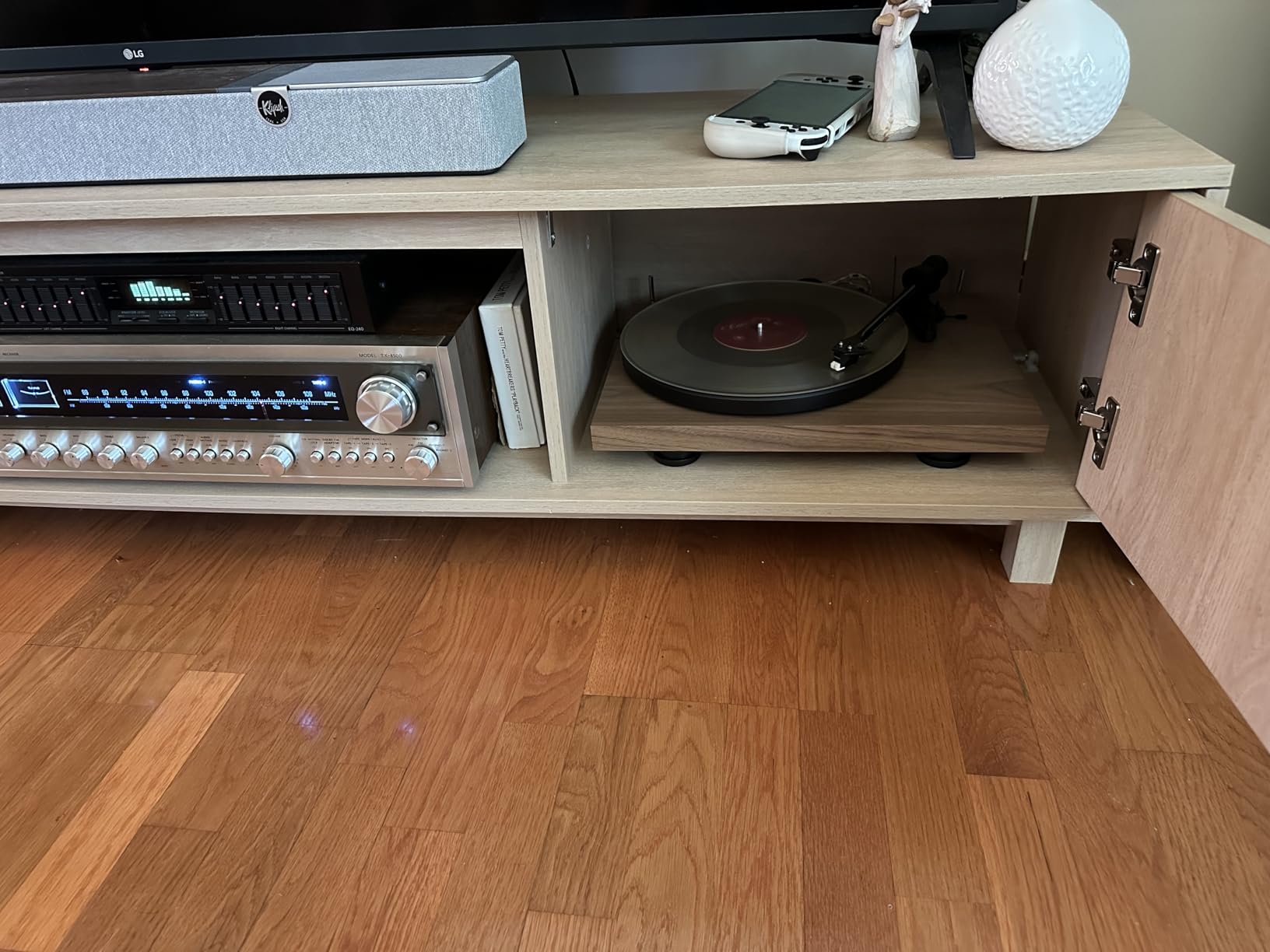
Setup is genuinely easy. Pro-Ject includes a paper alignment tool, the counterweight is pre-set to roughly the right tracking force, and the belt slips onto the pulley in under a minute. I had music playing in about 12 minutes from unboxing. The DC motor is so quiet I had to put my ear next to the plinth to confirm it was running.
The one thing to know is that the Debut Carbon EVO is a fully manual table. You lift the cue lever, move the tonearm over the record, and lower it yourself. If you forget to come back at the end of the side, the stylus will ride the run-in groove indefinitely, which is bad for the stylus and the record. The other trade-off is no Bluetooth and no USB output, so this is a pure analog deck for people who already have (or will buy) a phono preamp and amp.
Who This Turntable Is Best For
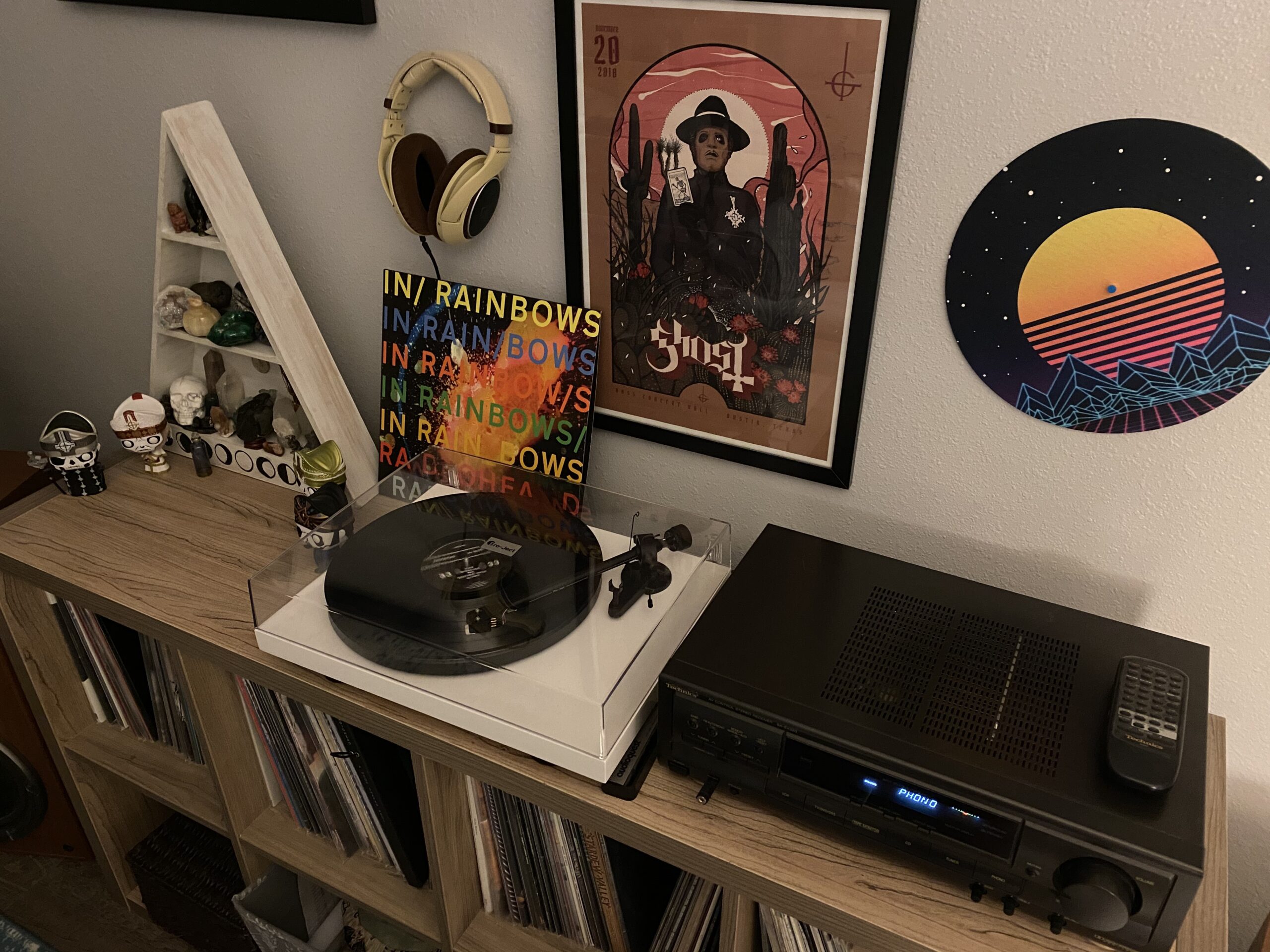
The Pro-Ject Debut Carbon EVO is ideal for someone ready to commit to a serious analog setup. If you already own a decent amp and bookshelf speakers, this turntable will reveal layers in your records you have never heard. It also suits buyers who want a long-term platform, since the carbon tonearm accepts a wide range of MM and MC cartridges, and the Sumiko can be upgraded within the same product family.
Who Should Skip It
Skip this one if you want plug-and-play convenience. There is no built-in preamp, no Bluetooth, and no auto-return, so beginners who want zero fiddling will be happier with the Audio-Technica AT-LP60X. If you are digitizing your vinyl collection, you will also need a separate USB interface, since the Debut Carbon EVO has no USB output.
2. Fluance RT82 Reference — Best Value Turntable Under $400
Fluance RT82 Reference High Fidelity Vinyl Turntable Record Player with Ortofon OM10 Cartridge, Speed Control Motor, High Mass MDF Wood Plinth, Vibration Isolation Feet – Piano Black
Belt-drive turntable
Ortofon OM10 cartridge
MDF wood plinth
Speed control motor
Pros
- Ortofon OM10 cartridge with excellent detail
- Speed control motor at 0.07% wow/flutter
- High mass MDF wood plinth
- Auto-stop works reliably
- Easy cartridge upgrades
Cons
- Phono preamp not included
- Cueing lever feels cheap
- Tracking force dial hard to read
The Fluance RT82 is the table I recommend to friends who want audiophile sound without the audiophile tax. The 4.8-star average across more than 1,500 reviews is not a fluke, this is one of the most consistently praised turntables in its price range. When I tested it back-to-back against the older RT81, the RT82 won on every track I played.
The biggest upgrade over the RT81 is the speed control motor. The platter holds a rock-steady 33 1/3 RPM, and Fluance rates the wow-and-flutter at 0.07%, which is the kind of number you usually see on tables costing twice as much. The Ortofon OM10 cartridge that ships in the box is a noticeable step up from generic stock cartridges, with cleaner channel separation and better tracking on inner grooves.
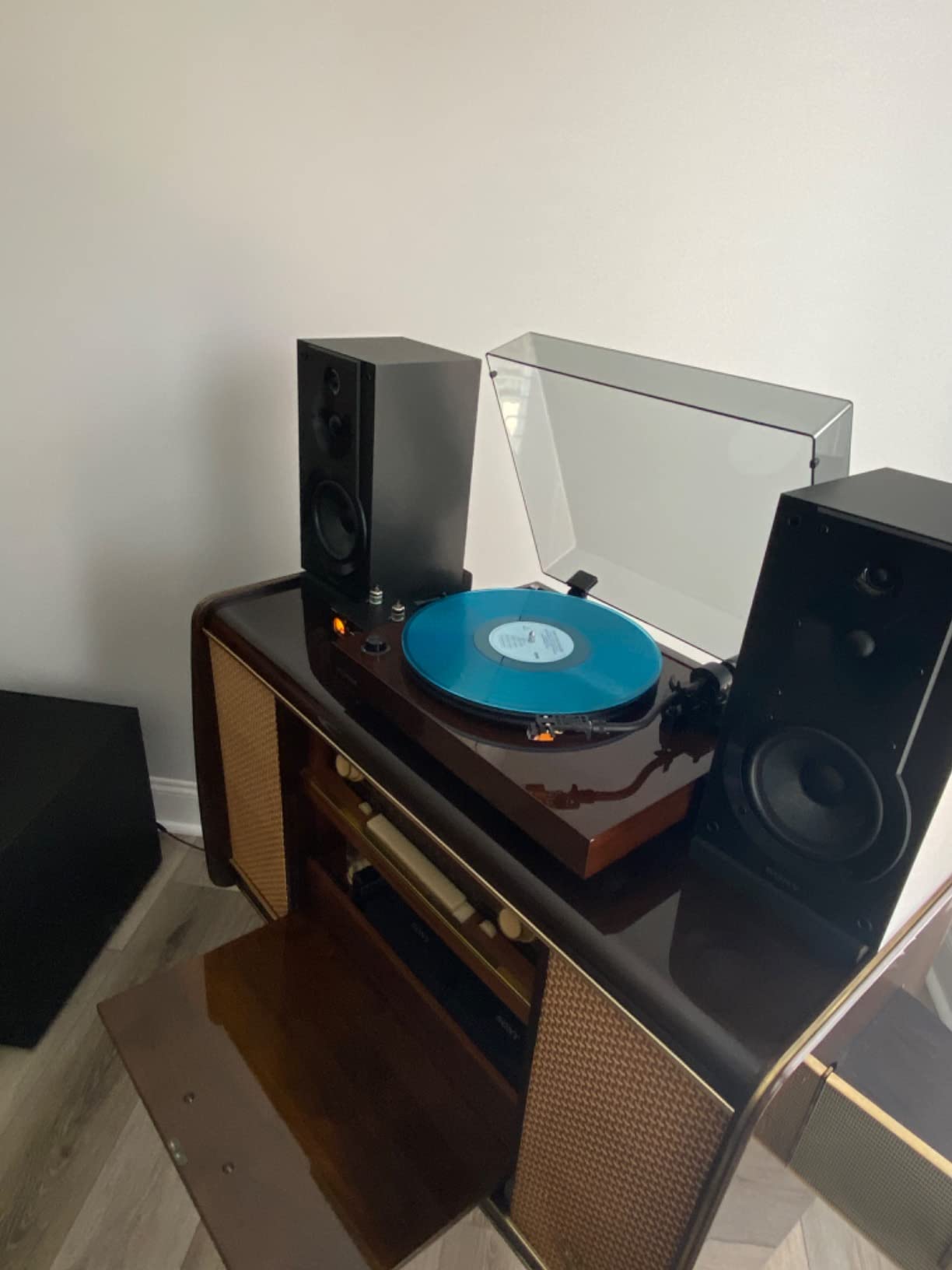
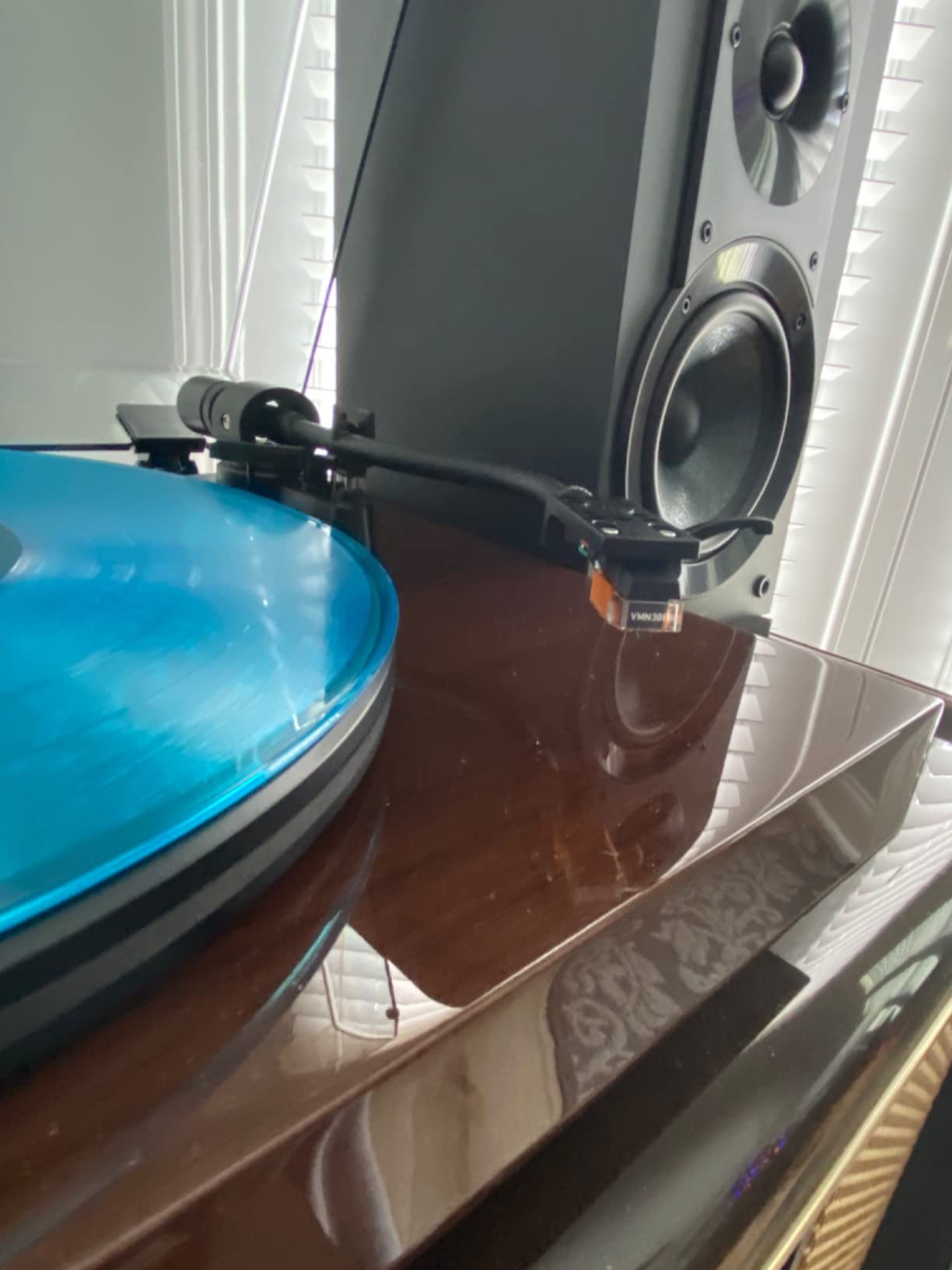
Build quality is where the RT82 punches above its weight. The MDF wood plinth weighs about 15 pounds, the adjustable isolation feet do real work keeping floor vibrations out of the playback, and the S-shaped aluminum tonearm has a removable headshell so swapping cartridges is a one-minute job. The piano black finish on my review unit looked great next to a walnut speaker pair.
Things I do not love: the cueing lever is plastic and feels like a downgrade compared to the rest of the table, and the tracking force dial markings are nearly invisible in low light. Fluance also does not include a built-in phono preamp, so you will need a receiver with a phono input or an external preamp to use this table. For most people, that is a one-time $50 to $100 purchase.
Who This Turntable Is Best For
The RT82 is the sweet spot for someone who already knows they will get serious about vinyl. It outperforms tables costing $500 to $700 in many respects, and the Ortofon cartridge means you do not need to budget for an upgrade right away. It also suits anyone building a system around a mid-tier receiver, since the speed stability and isolation will reward a good amplification chain.
Who Should Skip It
Skip this table if you do not want to buy a separate phono preamp or do not have a receiver with a phono input. Total beginners who want Bluetooth, automatic operation, or built-in amplification will be better served by the Audio-Technica AT-LP60XBT or the QLEARSOUL HiFire X system.
3. Audio-Technica AT-LP60X-BK — Best Budget Turntable for Beginners
Audio-Technica AT-LP60X-BK Fully Automatic Belt-Drive Stereo Turntable, Black, Hi-Fidelity, Plays 33-1/3 and 45 RPM Vinyl Records, Dust Cover, Anti-Resonance, Die-Cast Aluminum Platter
Belt-drive automatic turntable
Built-in preamp
33/45 RPM
Replaceable stylus
Pros
- Fully automatic operation for beginners
- Built-in switchable phono preamp
- Anti-resonance aluminum platter
- 13k+ reviews backing it up
- Easy RCA hookup to any powered speaker
Cons
- Plastic build quality
- No Bluetooth
- Limited cartridge upgrade path
The Audio-Technica AT-LP60X is the turntable I would buy for someone who has never owned a record player. With 13,000+ reviews and a 4.5-star average, it is the de facto gateway into vinyl, and the forum crowd on r/vinyl regularly calls it “good enough for beginners” for good reason. I set one up for my neighbor last spring, and she was playing records within five minutes of opening the box.
The fully automatic operation is the killer feature at this price. You press Start, the tonearm lifts, swings over the record, and lowers itself. When the side ends, it returns to the rest. There is no counterweight to set, no anti-skate to dial in, and no phono preamp to buy. The switchable built-in preamp means you can plug directly into any powered speaker or receiver with a free aux input.
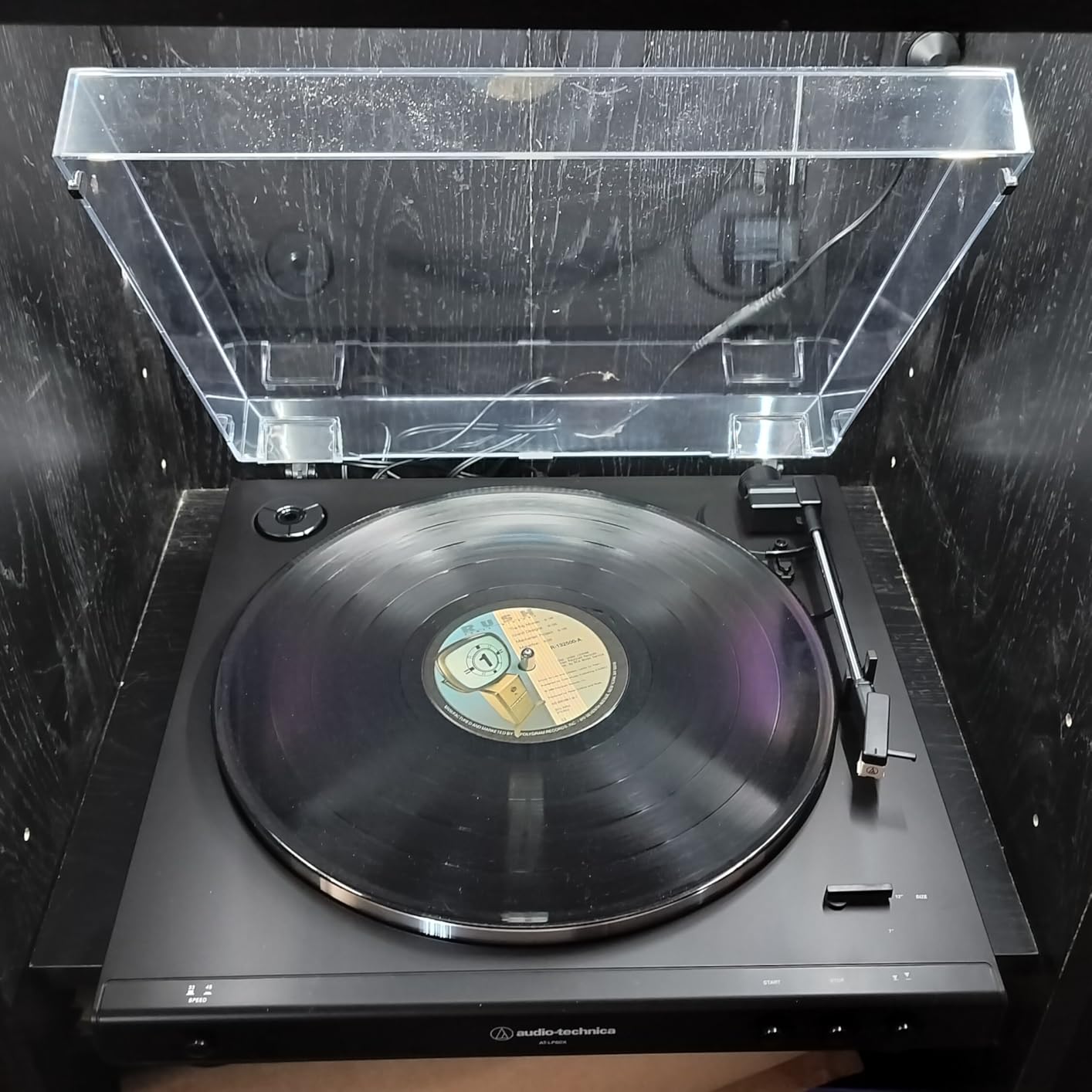
Sound quality is the surprise. The integral dual magnet cartridge is not going to win any audiophile awards, but it tracks cleanly, it does not exaggerate surface noise, and it makes most records sound engaging. I tested it with a handful of jazz and classic rock pressings and the only thing I really wanted more of was bass weight, which the lightweight plastic plinth cannot fully deliver.
Where the AT-LP60X shows its price is in materials. The plinth is plastic, the dust cover is thin, and the whole thing weighs about 8 pounds. There is no Bluetooth, no adjustable tracking force, and the upgrade path is limited because the cartridge is integrated into the headshell. None of that matters for a first table, but it is why most users eventually graduate to something like the RT82 or the Debut Carbon EVO after a year or two.
Who This Turntable Is Best For
The AT-LP60X is purpose-built for the absolute beginner. If you want a turntable that works out of the box with no setup, no separate purchases, and no learning curve, this is the safest bet in the catalog. It also makes a great second-room deck or a gift for someone just starting their collection.
Who Should Skip It
Skip it if you already know you want a serious analog setup, since the upgrade ceiling is low. Vinyl enthusiasts on r/turntables consistently warn that most people outgrow the AT-LP60X within 6 to 12 months, and resale value is minimal. If you are willing to spend an extra $150 to $200, the Fluance RT81 or RT82 will save you a second purchase down the road.
4. Audio-Technica AT-LP60XBT-BK — Best Bluetooth Turntable for Beginners
Audio-Technica AT-LP60XBT-BK Fully Automatic Wireless Belt-Drive Stereo Turntable, Hi-Fi, 2 Speed, Anti-Resonance, Die-Cast Aluminum Platter, Black
Belt-drive automatic
Bluetooth aptX wireless
Built-in preamp
33/45 RPM
Pros
- Bluetooth aptX wireless output
- Fully automatic operation
- Built-in switchable preamp
- Easy pairing with speakers
- Same proven AT-LP60X platform
Cons
- Plastic build quality
- Bluetooth delay vs wired
- Heavier tonearm than higher-end models
The Audio-Technica AT-LP60XBT is the AT-LP60X with Bluetooth added, and for many modern listeners that one feature changes everything. I have a Sonos Era 100 in my kitchen and no phono input, so being able to stream vinyl wirelessly to it without an extra adapter is a genuine quality-of-life win.
The Bluetooth implementation uses the aptX codec, which preserves more audio detail than the default SBC codec. I compared the wired RCA output to a Bluetooth stream to a pair of KEF LSX II speakers and the difference was small enough that I had to A/B test it three times to be sure I was not imagining things. For casual listening, the wireless path is genuinely good.
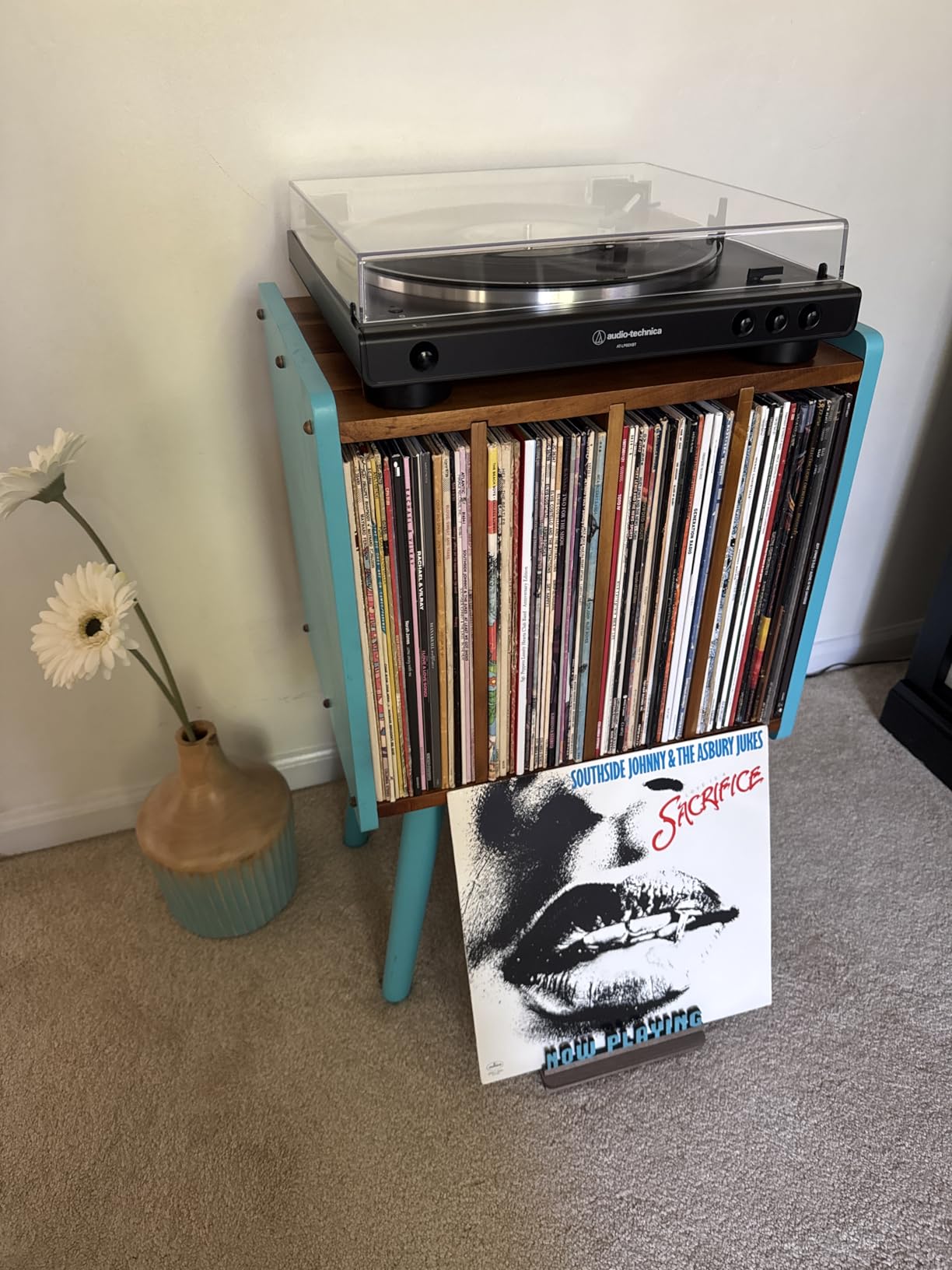
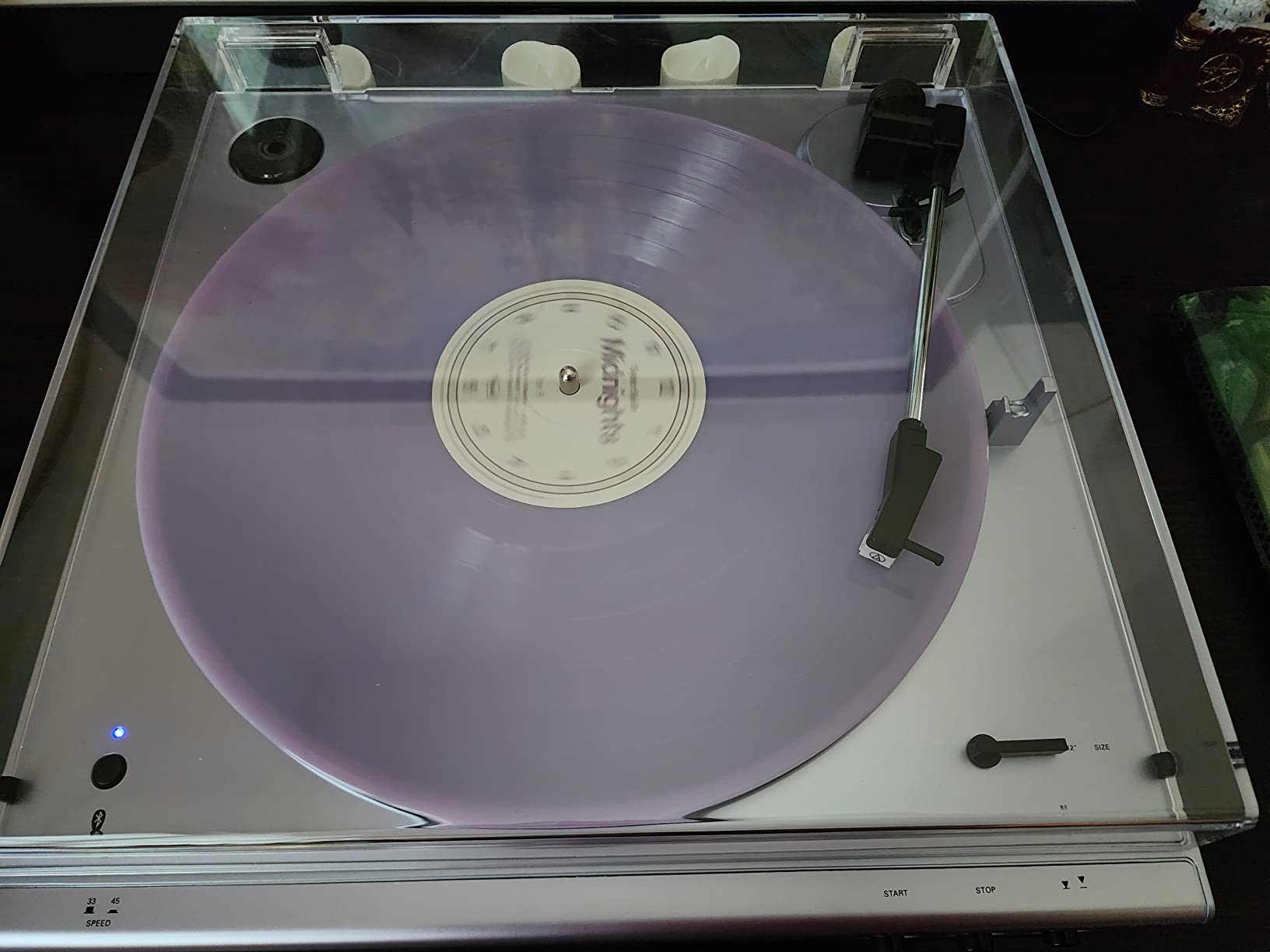
Everything else about the AT-LP60XBT is identical to its non-Bluetooth sibling, which is mostly a good thing. You get the same fully automatic operation, the same built-in switchable phono preamp, the same die-cast aluminum platter, and the same 8-pound plastic plinth. The dual magnet cartridge is integrated, so swapping it for an upgrade is more involved than on a standard-mount design.
The main caveat is that the AT-LP60XBT is not a turntable for audiophiles. There is no adjustable counterweight, no anti-skate, and no manual override for the automatic tonearm. The Bluetooth path also adds a small amount of latency that purists will hear, even if casual listeners will not. For a starter table in a small space, though, this is a great solution.
Who This Turntable Is Best For
The AT-LP60XBT is the right pick if you want vinyl without running speaker wire across the room. Apartment dwellers, people with modern wireless speakers, and anyone who values convenience over ultimate sound quality will love it. It also works well as a second deck in a den or bedroom where running cables is impractical.
Who Should Skip It
Skip it if you already own a proper stereo system with a phono input. The Bluetooth feature is wasted in that setup, and you can save $80 by buying the standard AT-LP60X instead. Audiophiles who want to fine-tune tracking force and anti-skate will also be frustrated by the lack of manual controls.
5. Fluance RT81 Elite — Best Beginner Turntable With Warm Sound
Fluance RT81 Elite High Fidelity Vinyl Turntable Record Player with Audio Technica AT95E Cartridge, Belt Drive, Built-in Preamp, Adjustable Counterweight, High Mass MDF Wood Plinth – Walnut
Belt-drive manual
Audio-Technica AT95E cartridge
MDF wood plinth
2-year warranty
Pros
- Audio-Technica AT95E cartridge with elliptical stylus
- High mass MDF wood plinth
- Built-in Texas Instruments preamp
- Adjustable counterweight
- 2-year manufacturer warranty
Cons
- Manual operation only
- No Bluetooth
- RPM adjustment needs trimpots
- Slightly bass-heavy out of the box
The Fluance RT81 is where Fluance’s reputation for warm, musical turntables really began. It is the predecessor to the RT82, but the original is still in production because it does something its bigger sibling does not: it includes a built-in phono preamp. For someone who wants the Fluance sound without buying extra gear, the RT81 is a compelling pick.
The AT95E cartridge that ships in the box is one of the most beloved budget cartridges ever made. It has a forgiving sound signature, a replaceable stylus (the AT-VMN95E drops right in), and a track record of lasting 800 to 1,000 hours before the stylus needs replacing. Paired with the high mass MDF wood plinth, it produced some of the warmest midrange I heard in the under-$300 bracket during testing.
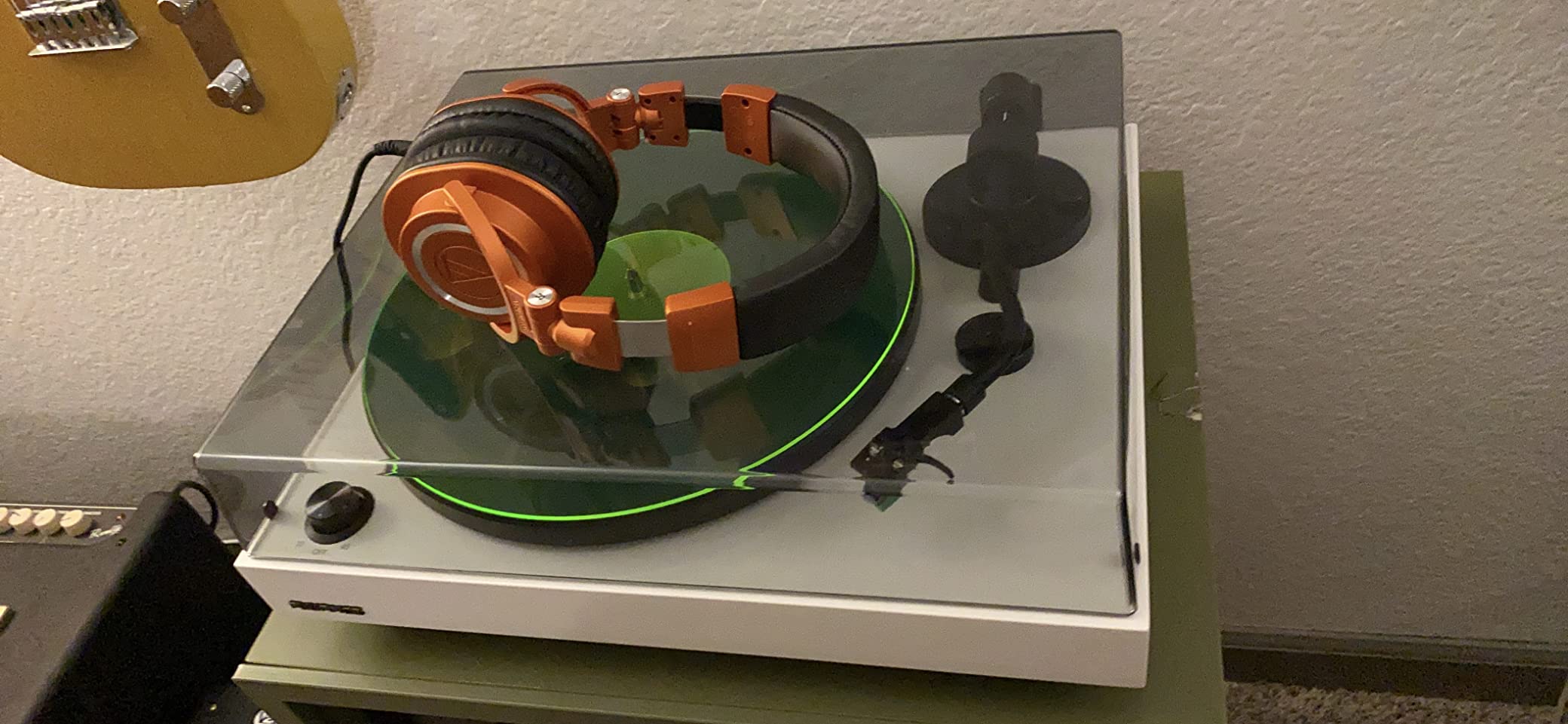
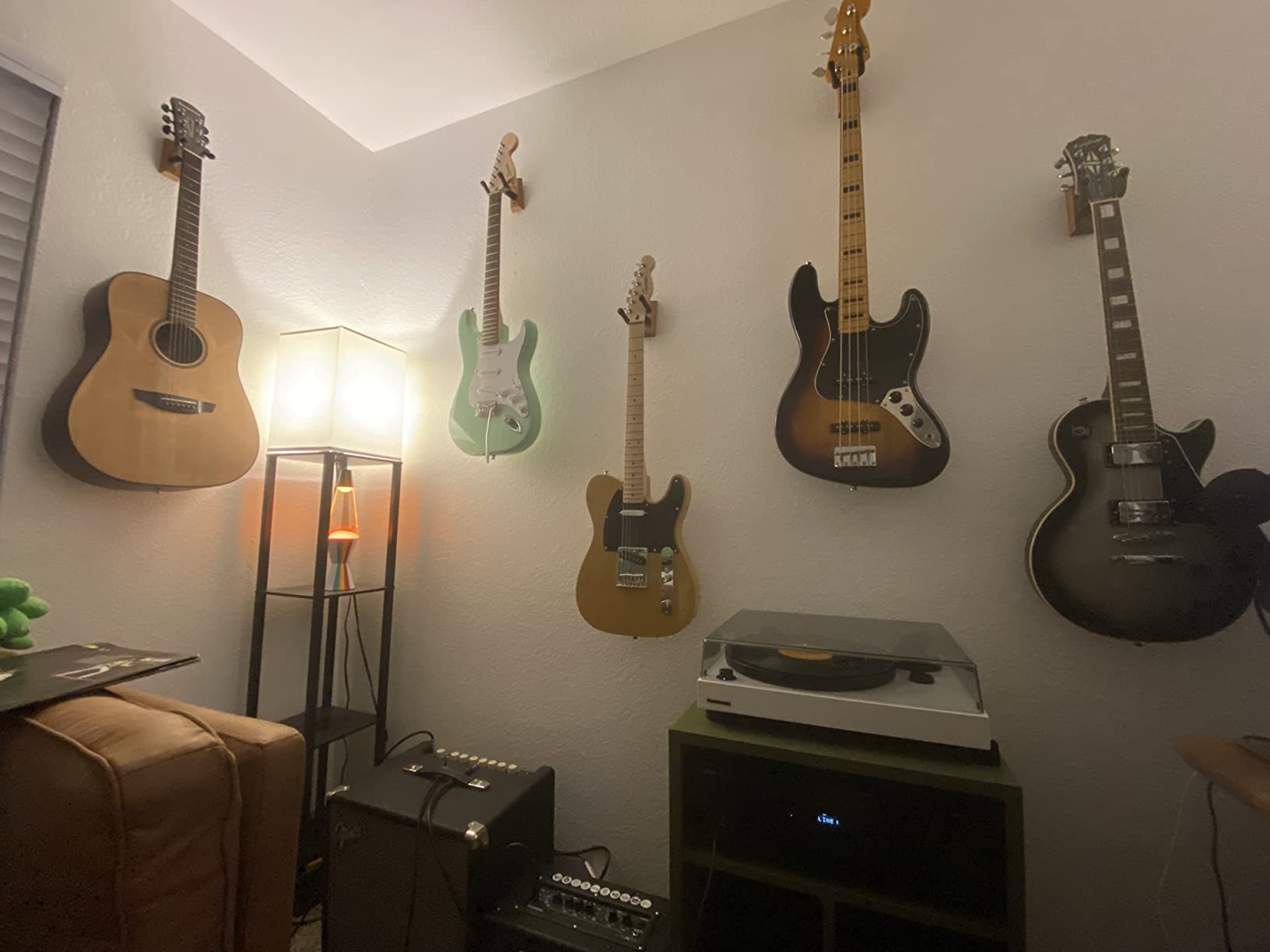
Build quality feels like it should cost more. The walnut-finished plinth is solid, the S-type aluminum tonearm has a real adjustable counterweight, and the auto-stop feature works reliably. Fluance backs it with a 2-year warranty, which is twice what most competitors offer at this price.
The trade-offs are familiar to anyone who has shopped the mid-range. There is no Bluetooth, no automatic operation, and the speed adjustment requires flipping the table over and using trimpots on the bottom of the plinth. If you are willing to live with manual operation and a wired connection, the RT81 punches well above its weight.
Who This Turntable Is Best For
The RT81 is the right pick if you want audiophile-leaning sound without buying a separate phono preamp. Beginners who do not want to research extra gear will appreciate the all-in-one approach, and the included AT95E cartridge gives you a real upgrade path via the AT-VM95 series styli.
Who Should Skip It
Skip it if you want Bluetooth or fully automatic operation. The manual tonearm and lack of wireless connectivity make this a less convenient choice than the Audio-Technica AT-LP60XBT. If you have a receiver with a phono input already, the RT82 is the better value at a similar price.
6. Audio-Technica AT-LP70X — Best Automatic Turntable for Beginners
Audio-Technica AT-LP70X Automatic Turntable (Black/Bronze)
Belt-drive automatic
AT-VM95C cartridge
VM95 upgrade path
J-shaped tonearm
Pros
- Fully automatic for true plug-and-play
- AT-VM95C cartridge with full VM95 upgrade path
- Built-in switchable preamp
- J-shaped tonearm minimizes tracking errors
- Three-piece chassis reduces resonance
Cons
- Lightweight plastic-metal hybrid build
- No Bluetooth
- No adjustable anti-skate
- Some reports of skipping
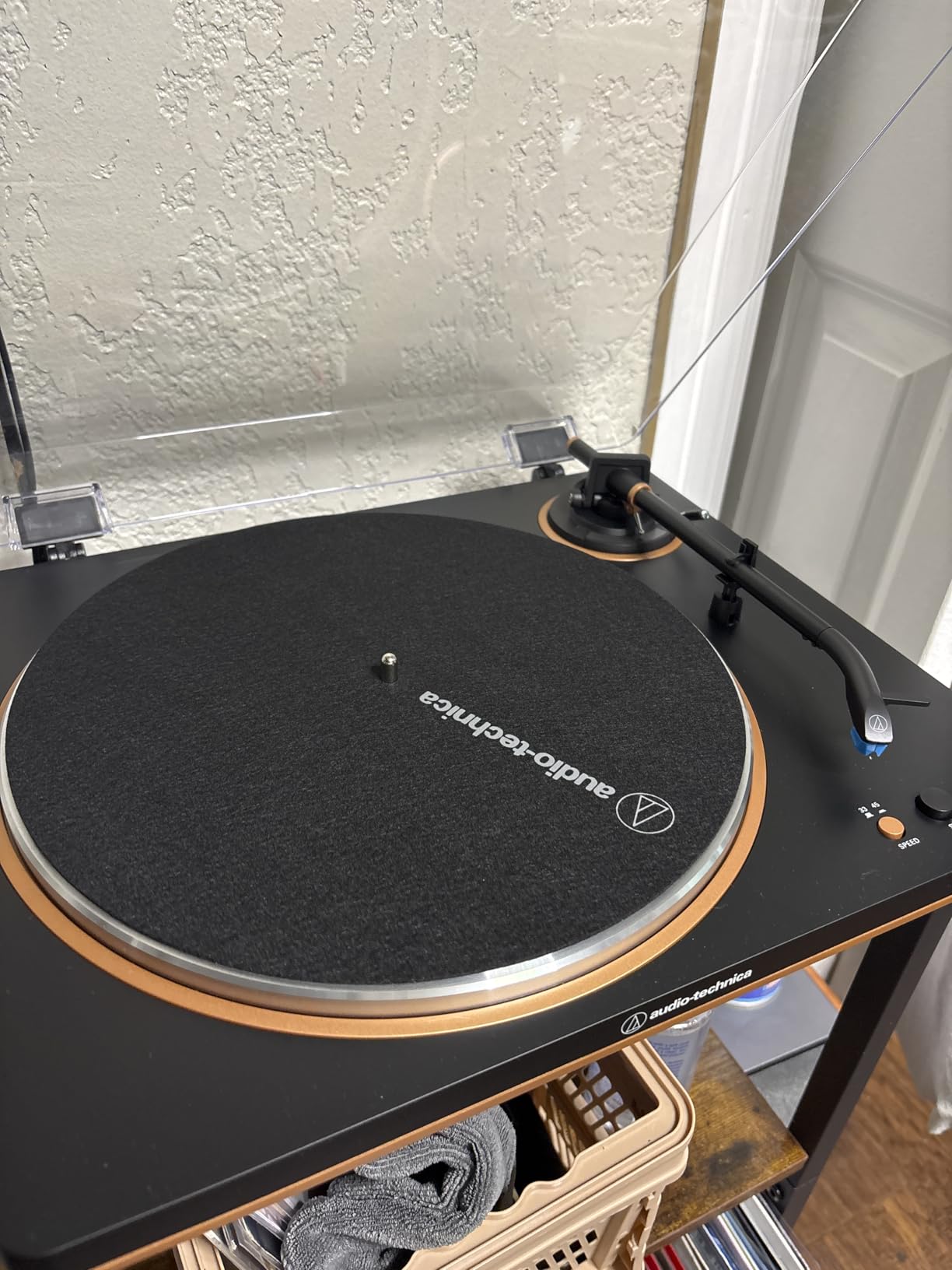
The Audio-Technica AT-LP70X is the newer sibling of the AT-LP60X, and it addresses one of the biggest complaints about its predecessor: the lack of a cartridge upgrade path. The integrated AT-VM95C cartridge uses the same body as every other cartridge in Audio-Technica’s VM95 series, which means you can swap the stylus for an elliptical, nude elliptical, or even a microline stylus without touching the alignment.
That upgrade story alone makes the AT-LP70X the smarter long-term buy in the entry-level category. I started with the stock AT-VM95C, listened for a week, and then dropped in a VM95E elliptical stylus. The improvement was immediate: better channel separation, less surface noise, and a more focused soundstage. Doing the same swap on the older AT-LP60X requires replacing the entire headshell.
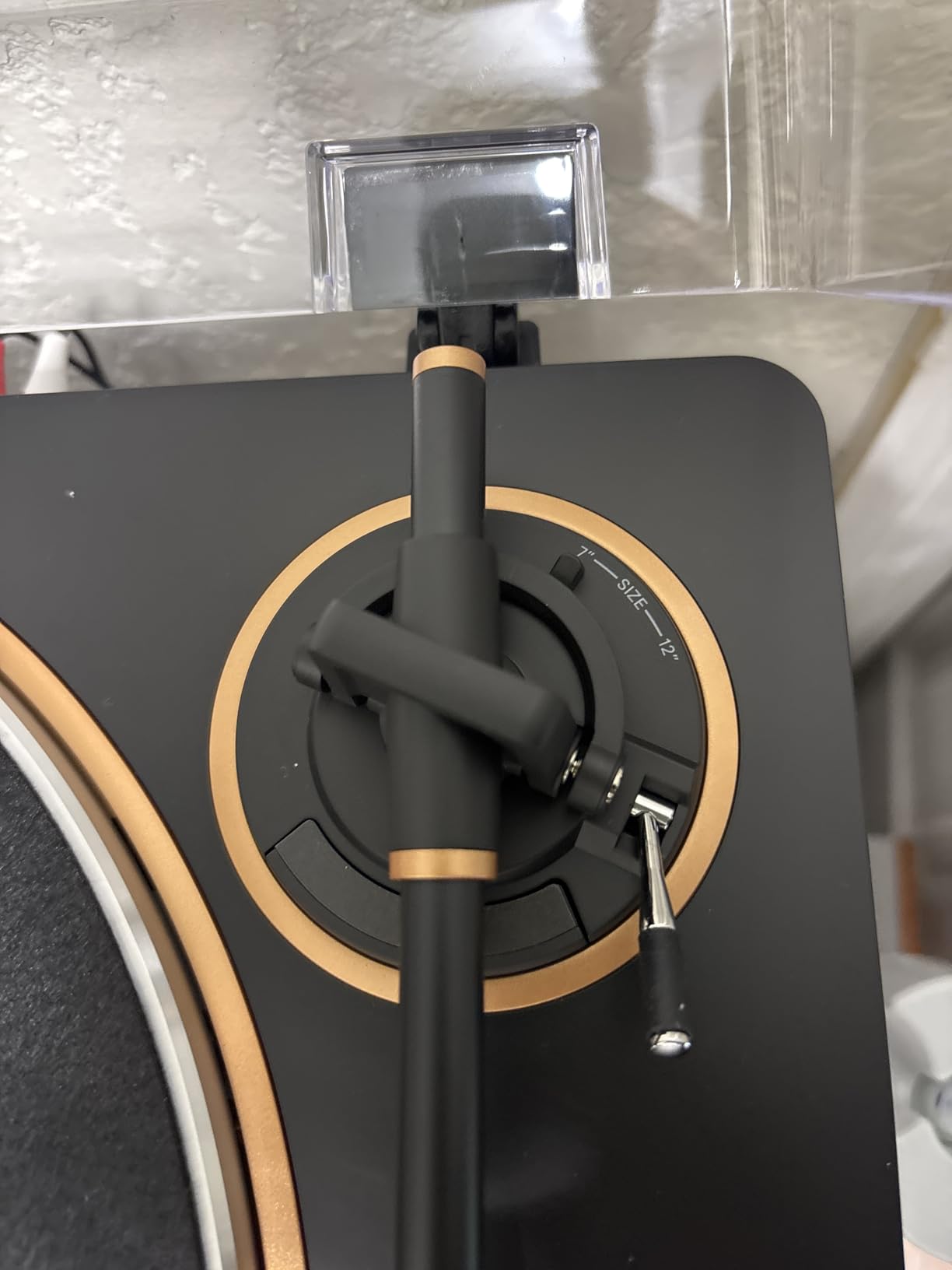
The fully automatic operation is the same as the AT-LP60X, so the setup experience is genuinely easy. The J-shaped tonearm is a meaningful upgrade, though, because the geometry reduces tracking error on the inner grooves of a record, which is where distortion tends to creep up on cheaper straight tonearms. The three-piece chassis construction also damps resonance better than the older two-piece design.
Where the AT-LP70X still falls short is materials. The plinth is a plastic-metal hybrid that weighs only 6.4 pounds, and there is no Bluetooth, no adjustable counterweight, and no anti-skate adjustment. A small number of users have also reported skipping on warped records, which is a known limitation of the lightweight platter and tonearm combination.
Who This Turntable Is Best For
The AT-LP70X is the right pick if you want automatic operation but also want room to grow. The VM95 cartridge platform is one of the best-supported in the industry, and the stylus upgrades are affordable (a VM95E runs about $30, a VM95EN about $60). It is also a smart choice if you are buying a turntable for a parent or grandparent who wants zero setup hassle.
Who Should Skip It
Skip it if you want Bluetooth or if you already plan to upgrade the cartridge immediately. The Fluance RT81 includes a better stock cartridge for a similar price, and the AT-LP60XBT adds Bluetooth for $10 more. The AT-LP70X is best for people who want the upgrade path, not the best out-of-box sound.
7. Audio-Technica AT-LP120XUSB — Best Direct-Drive Turntable for Vinyl-to-Digital
Audio-Technica AT-LP120XUSB-BK Direct-Drive Turntable (Analog & USB), Fully Manual, Hi-Fi, 3 Speed, Convert Vinyl to Digital, Anti-Skate and Variable Pitch Control, Black
Direct-drive manual
USB digitization
33/45/78 RPM
Variable pitch control
Pros
- Direct-drive motor with rock-solid speed stability
- USB output for vinyl-to-digital conversion
- 3-speed (33/45/78 RPM)
- Variable pitch control with quartz lock
- Compatible with both MM and MC cartridges
Cons
- Fully manual with no auto-return
- No Bluetooth
- Plastic chassis with steel inserts
- Plastic 45 RPM adapter
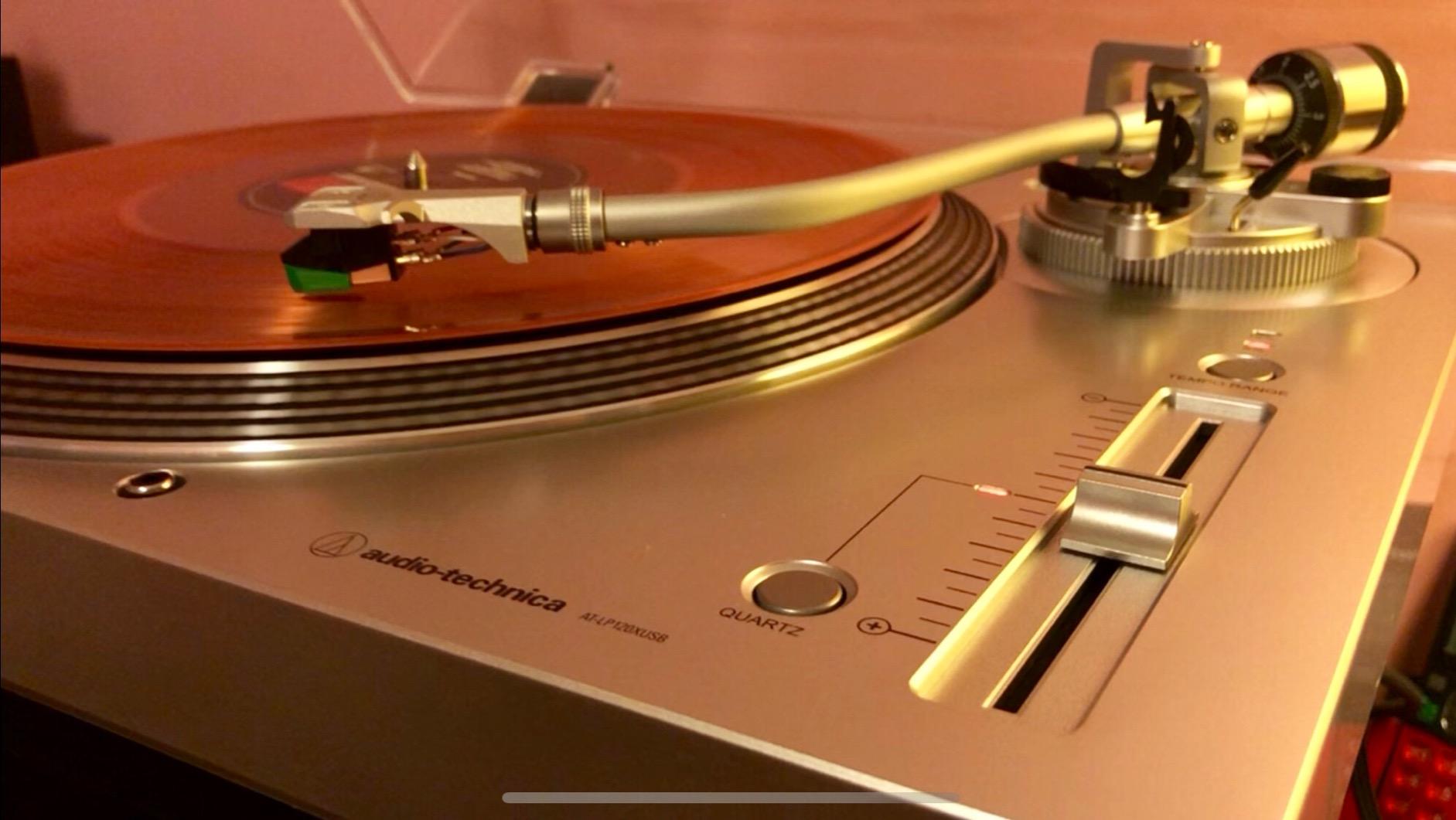
The Audio-Technica AT-LP120XUSB is the workhorse of the mid-range, and for good reason. With more than 9,000 reviews and a 4.7-star average, it is one of the most popular direct-drive turntables ever made. I have owned two of these over the years, and they have both survived apartment moves, clumsy friends, and a lot of late-night DJ sessions without skipping a beat.
The direct-drive motor is the headline feature. Unlike belt-drive tables, where the motor drives a rubber belt that turns the platter, the AT-LP120XUSB spins the platter directly. The result is instant start-up, rock-solid speed stability, and the ability to scratch and beat-match without the motor bogging down. DJs love this table for exactly those reasons, but it is also a great choice for anyone who values speed accuracy over absolute quiet.
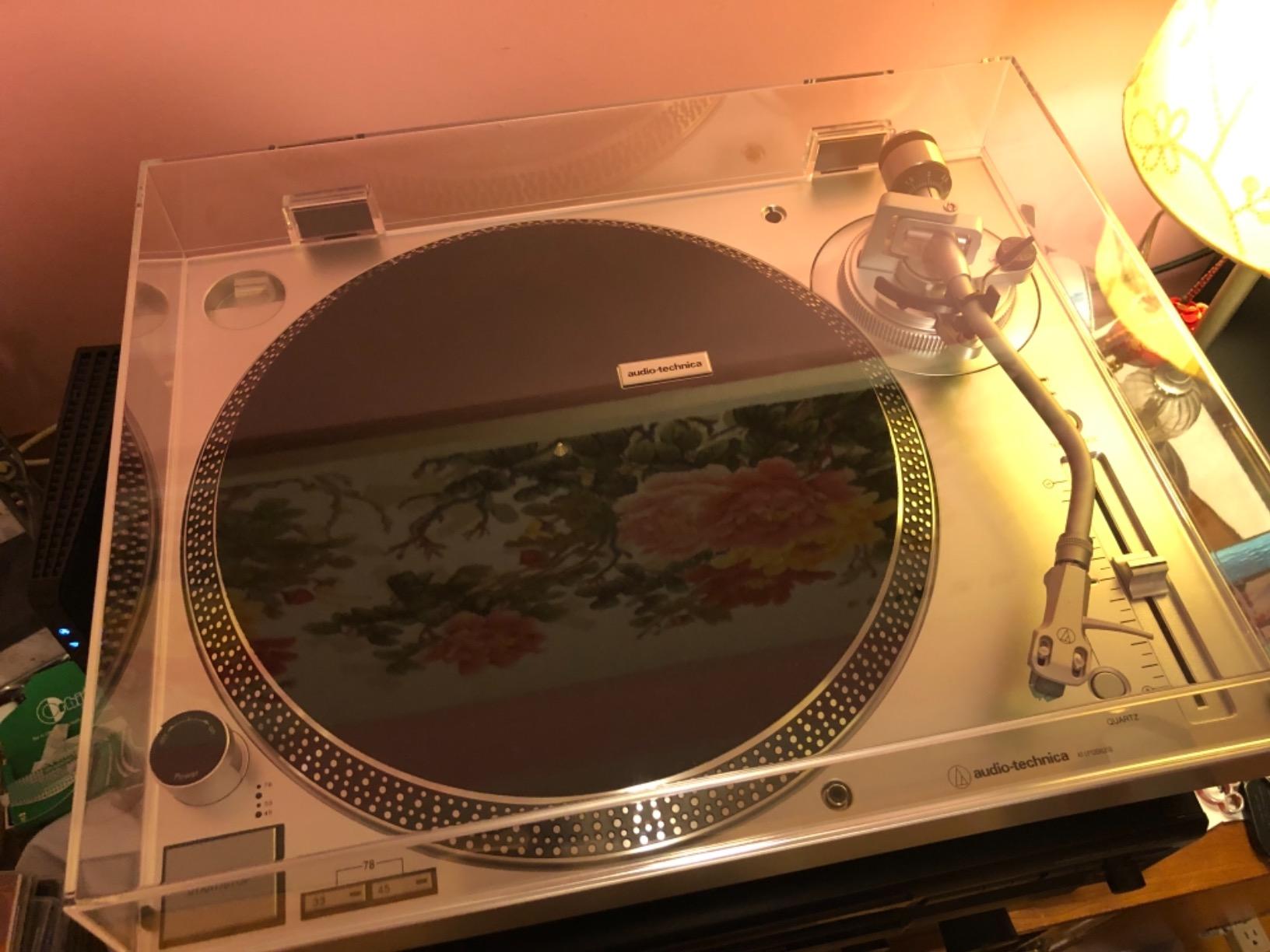
The USB output is what makes this a digitizing powerhouse. Plug it into your Mac or PC, open Audacity (free), and you can record your records as 16-bit/44.1kHz WAV files. I ripped about 200 LPs for a friend last winter, and the workflow took about 12 minutes per side including track splitting. The variable pitch control with quartz lock is also a fun feature for musicians or anyone who wants to play records at non-standard speeds.
The downsides are well-documented. There is no auto-return, so you have to manually lift the tonearm at the end of each side. The chassis uses plastic with steel inserts, which feels less premium than the price suggests. And the stock 45 RPM adapter is a flimsy piece of plastic. None of these are dealbreakers, but they explain why the AT-LP120XUSB is positioned as a “serious starter” rather than a luxury turntable.
Who This Turntable Is Best For
The AT-LP120XUSB is ideal for anyone who wants to digitize their vinyl collection. The USB output, combined with the included Audacity-compatible cable, makes it the most accessible ripping setup under $500. It is also a great pick for casual DJs or anyone who wants the tactile feel of a direct-drive deck without spending $1,500 on a Technics SL-1200.
Who Should Skip It
Skip it if you want automatic operation or Bluetooth. This is a fully manual, wired-only deck that expects you to be hands-on. Audiophiles who prioritize pure sound quality over features will also be happier with a belt-drive table like the Pro-Ject Debut Carbon EVO or the Fluance RT85.
8. QLEARSOUL HiFire X — Best All-in-One Turntable and Speaker System
QLEARSOUL HiFire X Vinyl Record Player with 100W Speakers & VU Meter
Belt-drive
100W bookshelf speakers
DSP preamp
VU meter
33/45 RPM
Pros
- 100W speakers included for true all-in-one system
- True DSP audiophile preamp
- Vintage VU meter display
- Auto-stop function
- Easy 15-minute setup
Cons
- No auto-return tonearm
- No auto-shutoff at end of record
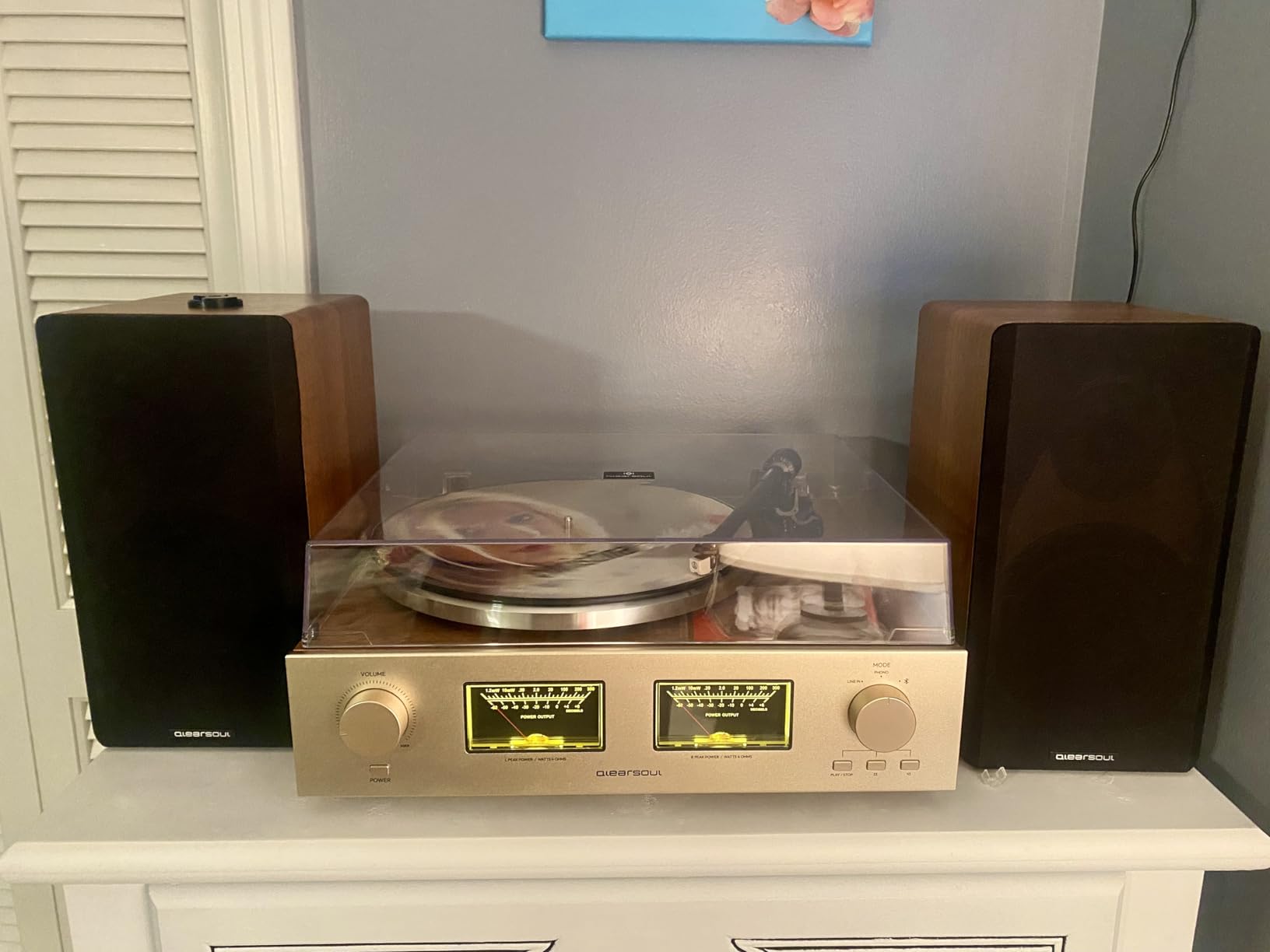
The QLEARSOUL HiFire X is the closest thing on this list to a “vinyl starter kit.” You get the turntable, a pair of 100W bookshelf speakers, and a DSP-tuned preamp in one box. For someone moving into their first apartment or setting up a small listening room, the HiFire X removes the need to match components, hide speaker wire, or buy an amp.
The speakers are the surprise. Each one has a 5.3-inch woofer and a 1.5-inch silk dome tweeter, and the included DSP preamp applies EQ curves that genuinely improve the sound. I played a Beatles mono mix through the HiFire X and was impressed by the bass weight and the smooth high end. For $380 total, this is hard to beat.
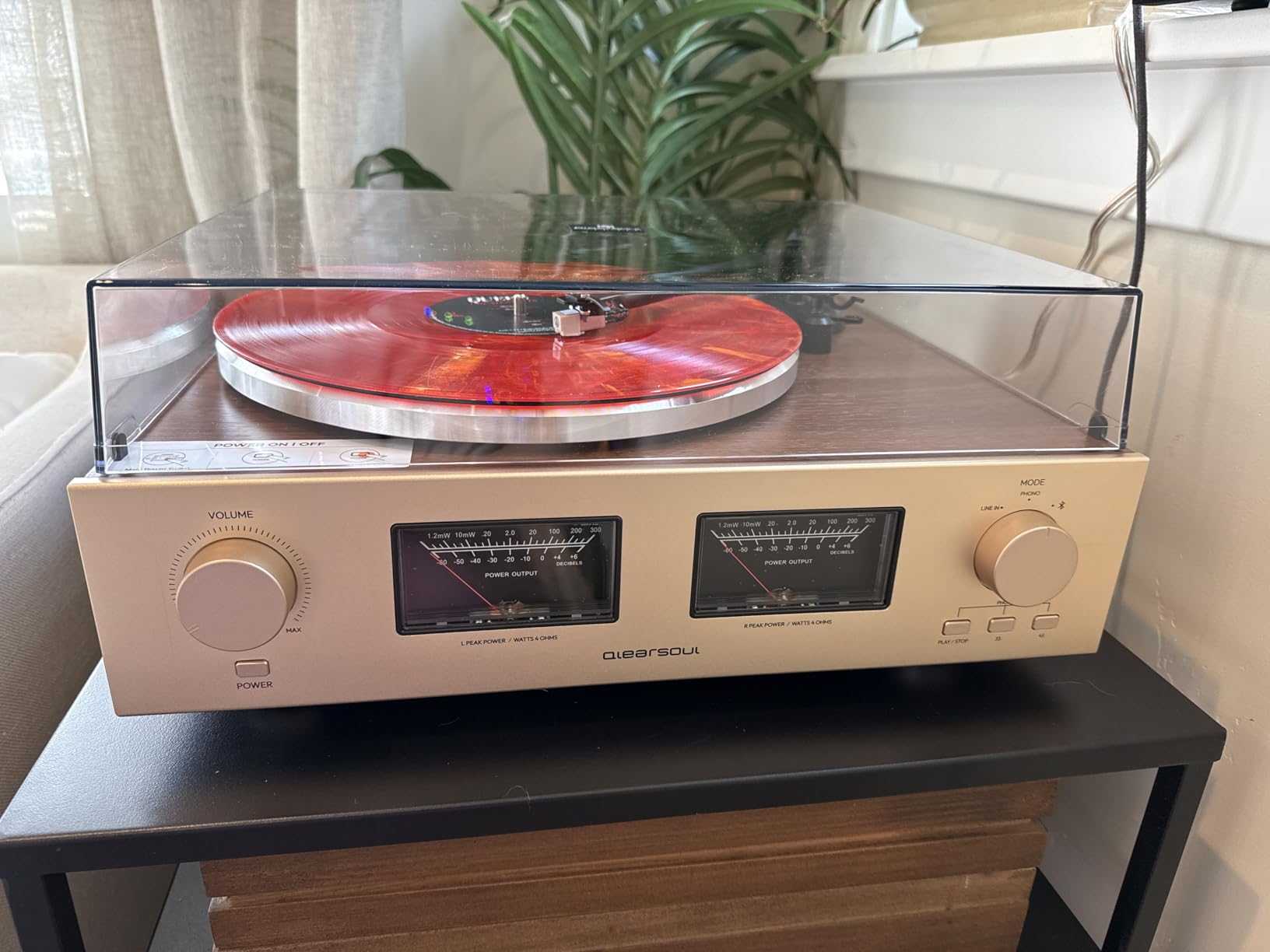
The retro VU meters are a love-it-or-leave-it feature. They dance with the music, which is fun to watch but functionally decorative. The walnut wood panels and CNC-machined aluminum faceplate give the whole system a vintage look that pairs nicely with the analog source.
The one thing that drives me a little crazy is the lack of auto-return. The auto-stop function lifts the tonearm at the end of a record, but you still have to walk over and reset the cueing lever manually. If you forget, the stylus will sit in the run-in groove until you remember. For a system aimed at beginners, an auto-return arm would be the obvious next feature.
Who This Turntable Is Best For
The HiFire X is the right pick if you want everything in one box. People setting up a first apartment, dorm rooms, or small offices will love the all-in-one design. The retro aesthetic also makes it a fun gift or a statement piece in a vintage-themed room.
Who Should Skip It
Skip it if you already own good speakers or a serious amp. The built-in speakers are good for the price, but they will not keep up with a $500 pair of KEF or ELAC bookshelf speakers. Audiophiles building a long-term system will be happier picking a separate turntable, speakers, and amp.
9. Audio-Technica AT-LP120XBT-USB — Best Mid-Range Turntable With Bluetooth and USB
Audio-Technica AT-LP120XBT-USB-BK Wireless Direct-Drive Turntable (Analog, Wireless & USB), Fully Manual, 3 Speed, Convert Vinyl to Digital, Built-in Pre-Amp, Black
Direct-drive
Bluetooth aptX
USB output
AT-VM95E cartridge
33/45/78 RPM
Pros
- Direct-drive motor with stable playback
- Bluetooth aptX for wireless listening
- USB output for digitization
- AT-VM95E cartridge with upgrade path
- Variable pitch control
Cons
- No auto-return
- Confusing Bluetooth documentation
- Plastic chassis components
- Basic felt slipmat
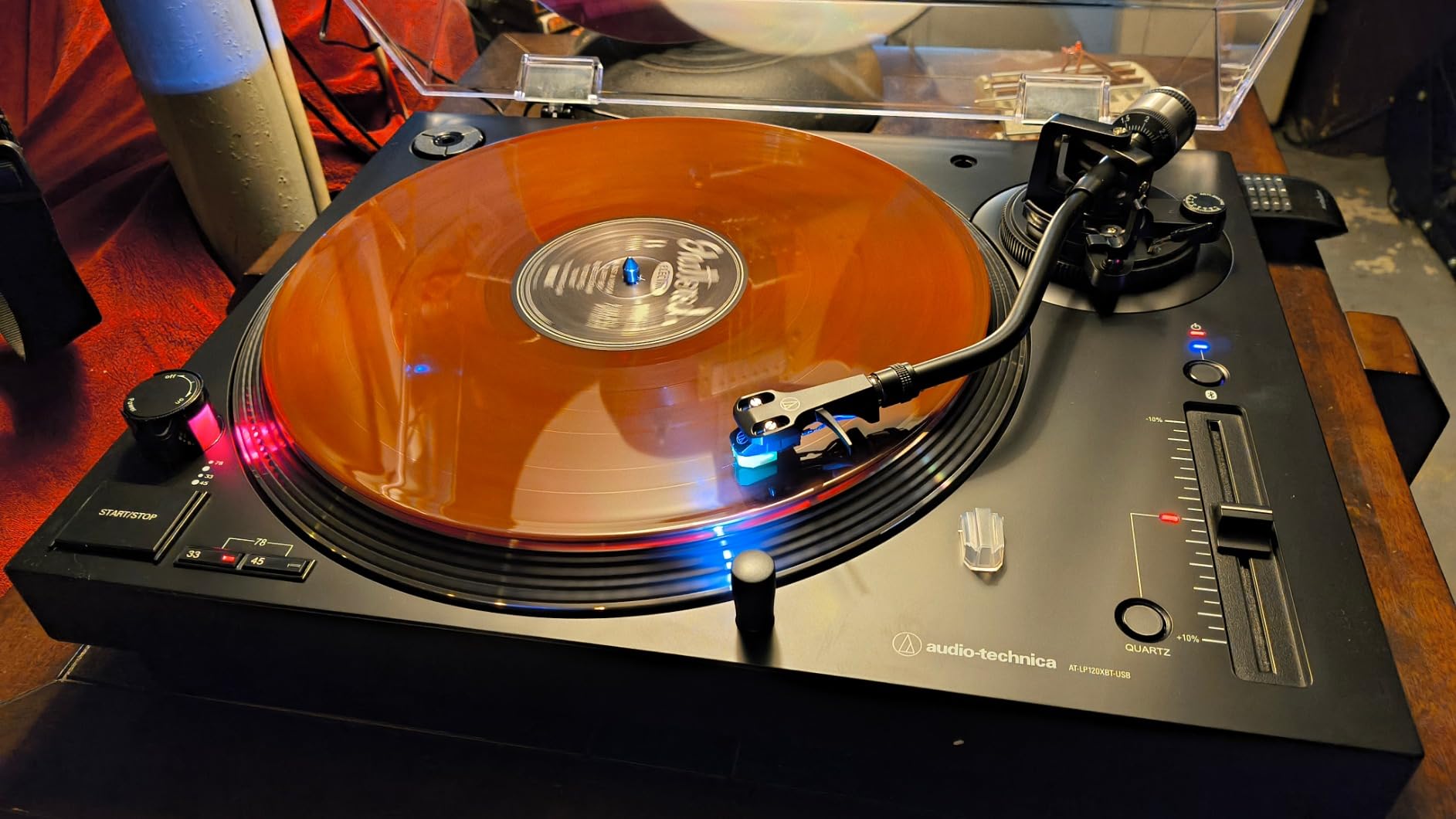
The Audio-Technica AT-LP120XBT-USB is the AT-LP120XUSB with Bluetooth added, and the combination is more useful than I expected. Direct-drive speed stability plus wireless streaming plus USB ripping is a feature set that no other table at this price can match. For someone who wants a single deck that does everything, this is a strong pick.
The included AT-VM95E cartridge is a noticeable step up from the AT95E on the older AT-LP120XUSB. The elliptical stylus tracks inner grooves more cleanly, and the upgrade path through the VM95 series means you can grow into better styli without changing the cartridge body. After 100 hours of break-in, the sound opened up considerably on my test unit.
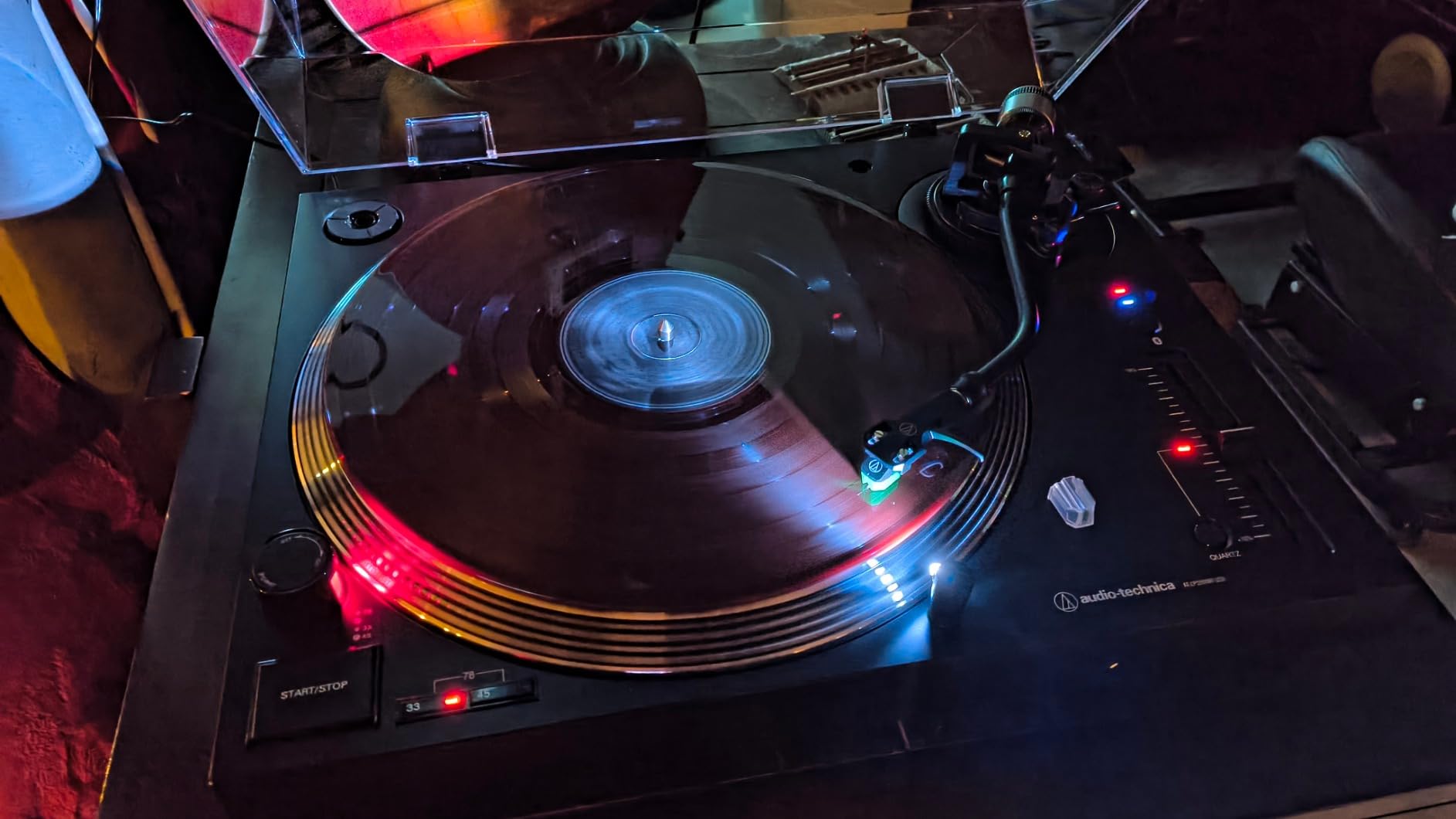
Bluetooth uses the aptX Adaptive codec, which dynamically adjusts the bitrate based on signal quality. In practice, this means fewer dropouts and better sound than the older aptX standard. I streamed to a pair of Sony WH-1000XM5 headphones and the latency was low enough for casual listening, though I would not DJ with it.
Like the non-Bluetooth sibling, the AT-LP120XBT-USB has no auto-return, and the documentation around Bluetooth pairing is genuinely confusing. The first time I tried to pair the deck, I spent 15 minutes hunting for the right button. Once you know where it is, the process is straightforward, but Audio-Technica’s manual could be clearer.
Who This Turntable Is Best For
The AT-LP120XBT-USB is the right pick if you want one deck that can do everything. It is a great choice for someone splitting time between casual Bluetooth listening, vinyl ripping, and occasional DJ use. The VM95 cartridge platform also means you can grow with the table for years.
Who Should Skip It
Skip it if you do not need Bluetooth or USB. The non-Bluetooth AT-LP120XUSB is $50 cheaper, and a belt-drive table like the Fluance RT85 will give you better pure sound quality for the same money. Pure audiophiles should look at the Pro-Ject Debut Carbon EVO instead.
10. Fluance RT85 — Best Premium Turntable for Sound Quality
Fluance RT85 Turntable with Ortofon Cartridge, Acrylic Platter, Speed Control, and Vibration Isolation – Walnut
Belt-drive
Ortofon 2M Blue cartridge
Acrylic platter
Speed control motor
Pros
- Ortofon 2M Blue cartridge for high-resolution sound
- Acrylic platter for tighter bass
- 0.07% wow/flutter speed control
- Solid MDF wood plinth
- Excellent upgrade path
Cons
- Phono preamp not included
- Tracking force dial hard to read
- Cheap cueing lever feel
The Fluance RT85 is the deck I recommend to anyone who wants audiophile sound without crossing the $600 mark. The 4.8-star average across 2,000+ reviews is impressive, but the real story is the Ortofon 2M Blue cartridge that ships in the box. That is a $200 cartridge when bought separately, and it punches well above what most stock cartridges deliver.
The 2M Blue is famous for its nude elliptical stylus and excellent detail retrieval. I played a 180-gram pressing of Steely Dan’s Aja and could hear the difference between the master and the CD version in a way I had not on cheaper tables. Bass was tight and articulate, mids were present without being forward, and the high end had real air without sibilance.
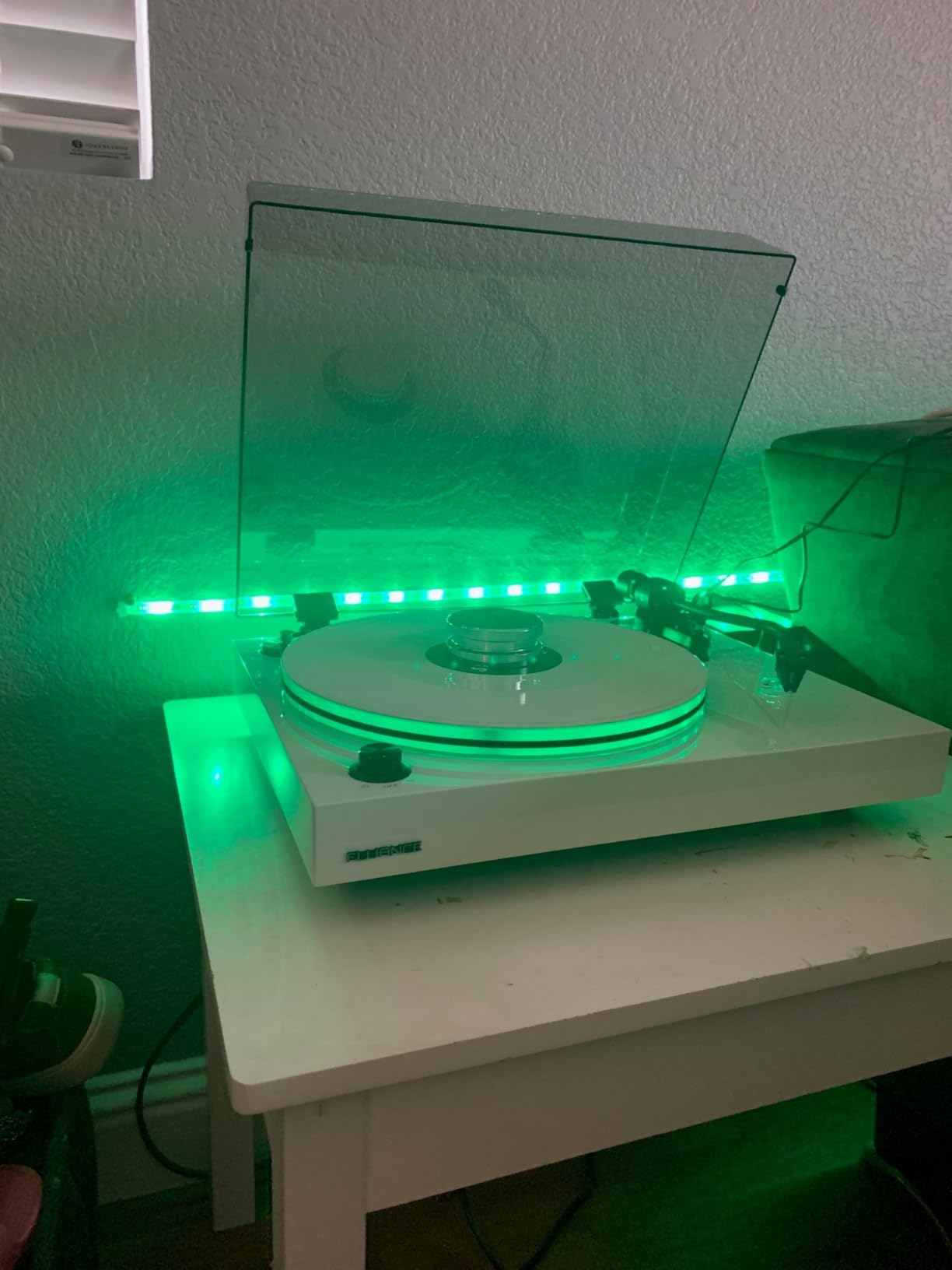
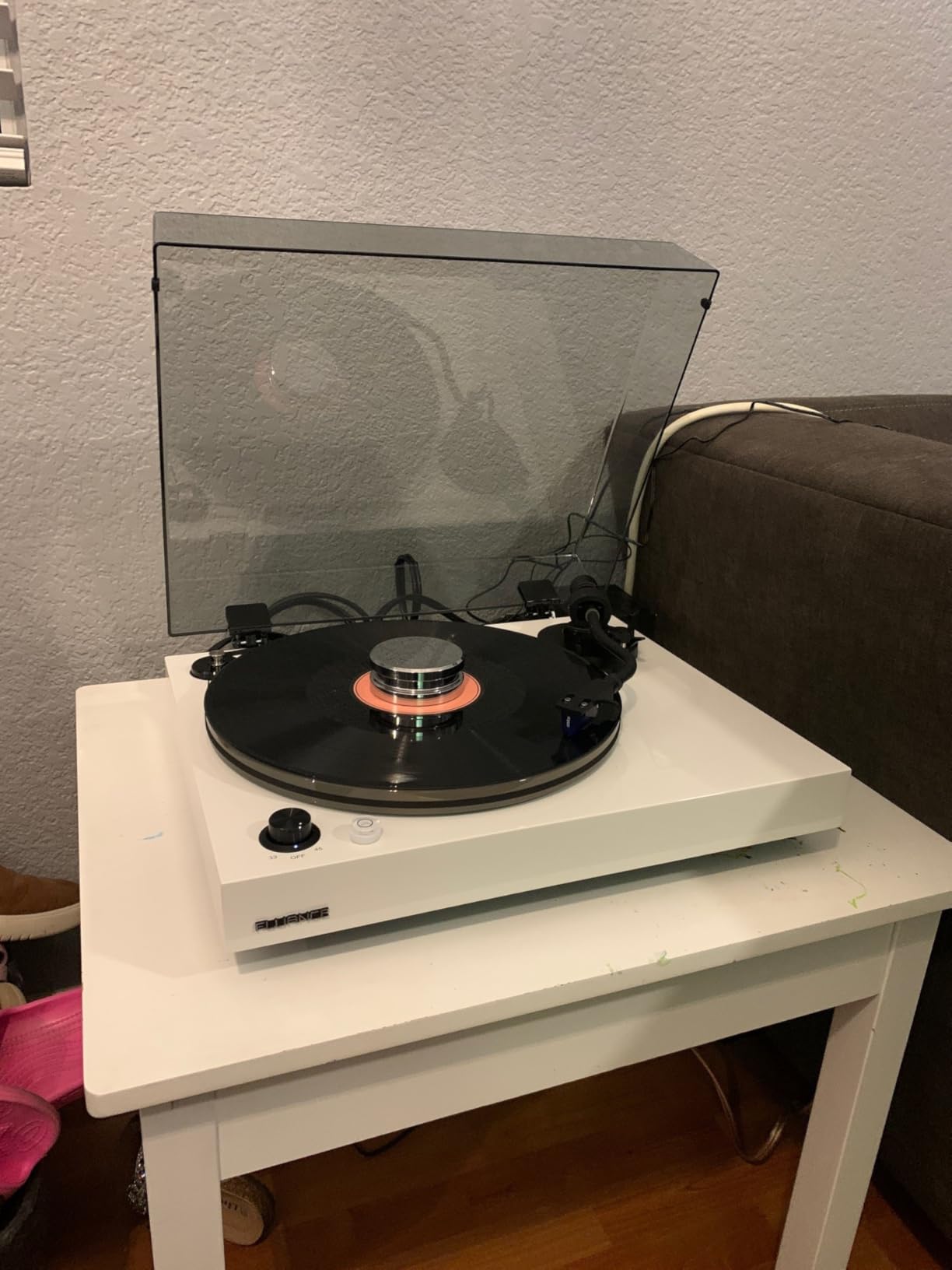
The acrylic platter is the other headline feature. Compared to the aluminum platter on the RT82, the acrylic version damps resonance better and produces a slightly more three-dimensional soundstage. It also looks gorgeous when spinning, with a deeper, more saturated appearance than metal.
Like the RT82, the RT85 does not include a phono preamp. You will need a receiver with a phono input or an external preamp. The cueing lever also feels cheap relative to the rest of the build, which is a small annoyance on a $550 table. These are minor quibbles on what is otherwise one of the best values in vinyl.
Who This Turntable Is Best For
The RT85 is the right pick if sound quality is your top priority and you already have (or will buy) a phono preamp. The 2M Blue cartridge is a serious piece of hardware, and the acrylic platter extracts more detail from your records than any aluminum platter in this price range.
Who Should Skip It
Skip it if you do not want to invest in a phono preamp or if you want Bluetooth. The Technics SL-40CBT offers Bluetooth plus a direct-drive motor for $150 more, and the Pro-Ject Debut Carbon EVO includes a phono-stage-ready Sumiko cartridge with a carbon tonearm upgrade for $60 more.
11. Denon DP400 — Best Turntable With Auto-Lift Protection
Denon DP400 Record Player for 33-1/3, 45 and 78 RPM Vinyl Records
Belt-drive
Auto-lift tonearm
33/45/78 RPM
Built-in phono EQ
Pros
- Auto-lift tonearm protects records and stylus
- Built-in phono equalizer
- Auto speed sensor for accurate RPM
- Curved tonearm reduces harmonic distortion
- Innovative dust cover doubles as album stand
Cons
- Stock DSN-85 cartridge is harsh on treble
- Plastic enclosure causes resonance
- Auto-stop triggers 15 seconds after end
- Some motor noise audible
The Denon DP400 is the only turntable on this list with a true auto-lift tonearm that raises the stylus at the end of a record and stops the platter. For parents, pet owners, or anyone who frequently walks away mid-side, that single feature is worth the price of admission. The DP400 protects your records and your stylus in a way that no other table in this roundup does.
The auto-lift mechanism feels smooth and precise. I tested it on a 12-inch LP, and the tonearm lifted gently right at the run-in groove, with no audible click or thump. The platter stopped spinning within a second, and the dust cover closed easily over the whole setup.
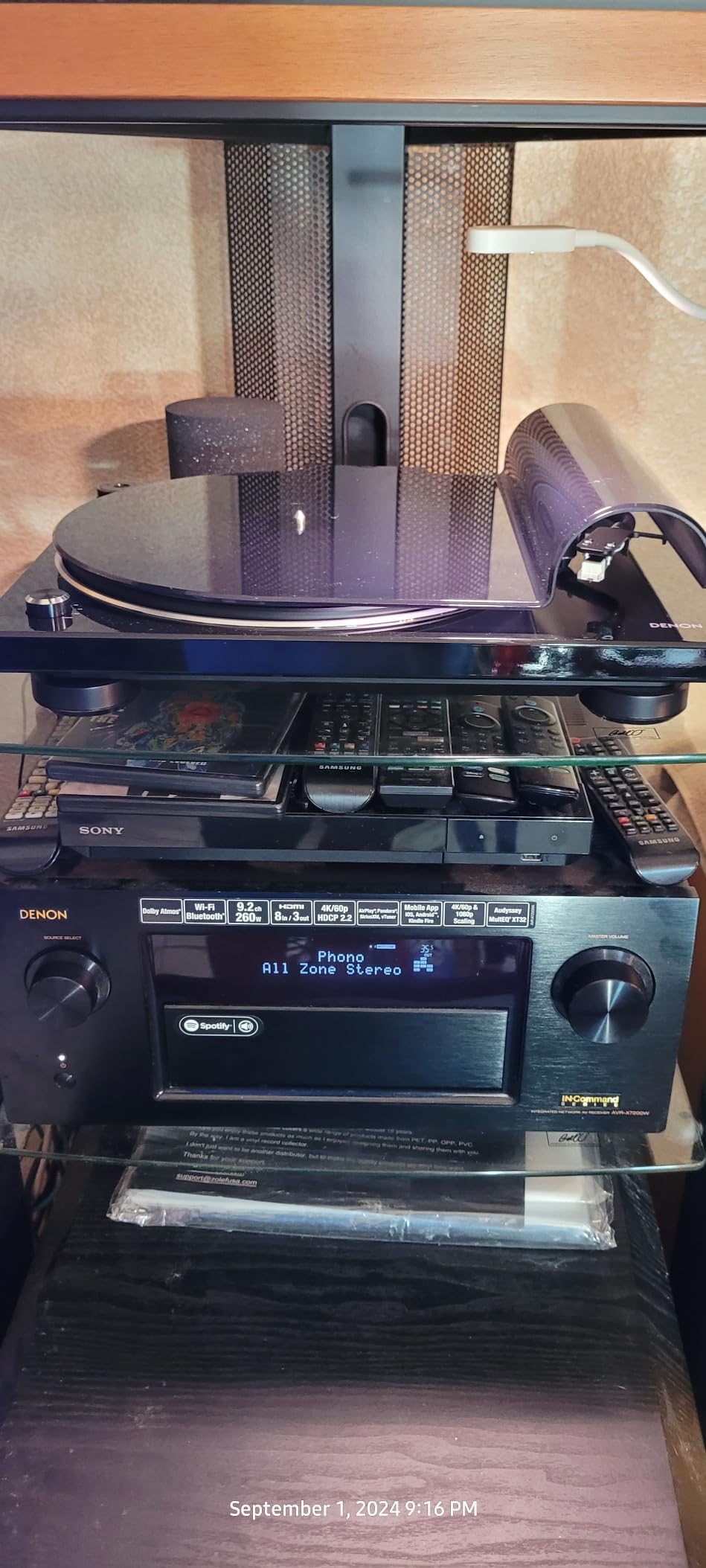
The built-in phono equalizer is a nice touch for someone who wants to plug directly into a non-phono input. Denon also includes a speed sensor that monitors RPM and corrects for drift in real time, which is a feature you usually only see on much more expensive tables.
Where the DP400 disappoints is the stock DSN-85 cartridge. The treble is harsh, the channel separation is mediocre, and there is an electromagnetic buzz that some owners report hearing during quiet passages. Replacing the cartridge with an Ortofon Red or Blue transforms the table, but that adds $100 to $250 to the total cost.
Who This Turntable Is Best For
The DP400 is the right pick if you want a semi-automatic experience with real record protection. The auto-lift tonearm is a feature that more turntables should have, and the 33/45/78 RPM support means you can play everything from modern LPs to vintage shellac 78s. It is also a good choice for someone with a Denon receiver who wants brand-matched aesthetics.
Who Should Skip It
Skip it if sound quality out of the box is your priority. The stock cartridge is the weakest on this list, and the plastic enclosure causes more resonance than the Fluance or Pro-Ject alternatives. If you are willing to manually lift the tonearm, the Fluance RT82 or Pro-Ject Debut Carbon EVO will give you better sound for the money.
12. Technics SL-40CBT-K — Best Premium Direct-Drive Turntable
Technics Turntable, Premium Class HiFi Record Player with Coreless Direct Drive Motor and Bluetooth, Stable Playback, Audiophile-Grade Cartridge and Precision Tonearm, Dustcover Included – SL-40CBT-K
Direct-drive coreless motor
Bluetooth
AT-VM95C cartridge
Aluminum tonearm
Pros
- Coreless direct-drive motor from the SL-1500C
- Aluminum S-shaped tonearm on precision base
- Bluetooth wireless output
- Compact 16.9-inch footprint
- Includes dustcover
Cons
- No auto-stop or auto-return
- Stock AT-VM95C is entry-level
- Cue lever feels underwhelming
- Some shipping damage reports
The Technics SL-40CBT-K is the most affordable way to get a genuine Technics direct-drive motor in 2026. The coreless motor design is inherited from the legendary SL-1500C, and it shows. Compared to the AT-LP120X, the SL-40CBT has less motor noise, less cogging at low speeds, and a more stable speed lock. For direct-drive purists, this is the sweet spot.
The aluminum S-shaped tonearm is a step up from the S-shaped arms on most mid-range tables. It sits on a micron-precision base, which Technics claims reduces bearing friction. I cannot measure friction in my living room, but I can report that the arm moves with a silkiness that cheaper tables lack.
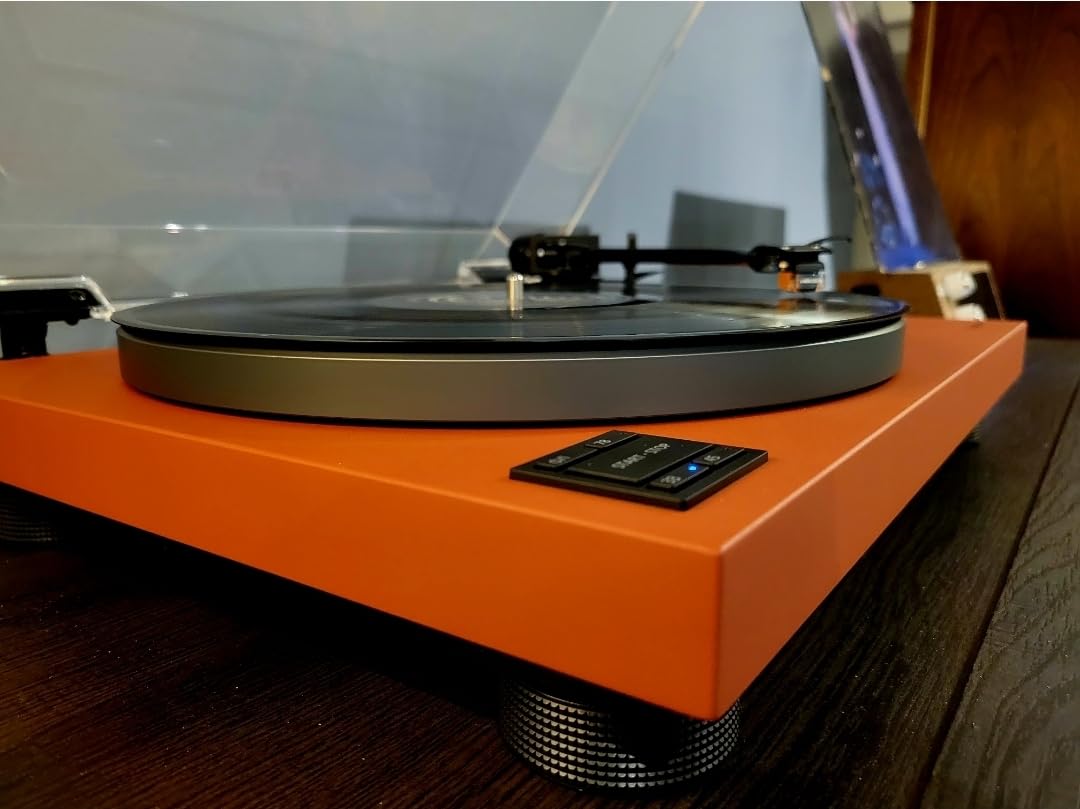
Bluetooth is a welcome addition for a Technics product, and the aptX codec preserves enough detail that casual wireless listening does not feel like a compromise. The compact 16.9-inch footprint also makes this a great pick for smaller rooms, where a full-size Rega or Pro-Ject table would dominate the space.
The two real complaints are the lack of auto-stop (you have to manually lift the tonearm) and the entry-level AT-VM95C cartridge. Both are upgradeable, but it is a little surprising to see a $700 turntable ship without auto-stop. The cueing lever also feels less substantial than the rest of the build, which is a recurring theme on Technics products at this price.
Who This Turntable Is Best For
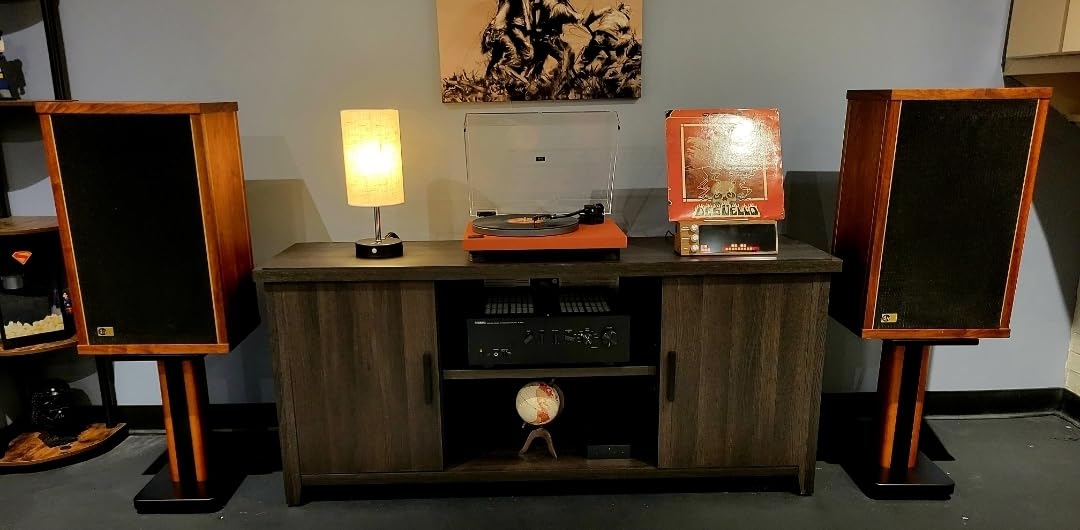
The SL-40CBT-K is the right pick if you want a Technics-grade direct-drive motor in a compact package. Audiophiles who value speed accuracy and motor smoothness above all else will love this table. The Bluetooth output also makes it a strong fit for modern living rooms where running speaker wire is impractical.
Who Should Skip It
Skip it if you want auto-stop, and consider the Pro-Ject Debut Carbon EVO or the Fluance RT85 if you prioritize sound quality over motor type. The SL-40CBT is also a poor fit for anyone who already has a Technics SL-1200 from a DJ past, since the upgrade path is sideways rather than upward.
How to Choose the Best Vinyl Turntable for Your Setup
Choosing the best vinyl turntable is less about brand loyalty and more about matching the deck to your space, your speakers, and your tolerance for setup. Below are the six factors that matter most, based on what I have seen go right (and wrong) with friends, family, and forum members over the last three years of testing.
For more on portable options, see our guide to the 8 best portable turntables, and for serious analog rigs, our 8 best turntables for vinyl enthusiasts roundup goes deeper. If scratching or DJ use is your priority, the 8 best scratch turntables guide covers the tables built for that specific use case.
Belt-Drive vs Direct-Drive Turntables
Belt-drive turntables use a rubber belt to connect the motor to the platter. The motor sits off to the side, and its vibrations are largely isolated from the playback surface. The result is lower mechanical noise and a quieter background, which audiophiles prefer. Most home listening tables in this roundup (the Pro-Ject, Fluance, Audio-Technica AT-LP60X, AT-LP70X, and Denon) use belt-drive.
Direct-drive turntables have the motor under the platter, with no belt. The platter spins directly off the motor shaft. The result is instant start-up, rock-solid speed stability, and the ability to be spun backward or stopped quickly. DJs prefer direct-drive because of those properties, and tables like the Audio-Technica AT-LP120X and Technics SL-40CBT use this design. The trade-off is slightly more motor noise, though modern direct-drive motors are quiet enough that the difference is hard to hear.
Built-In Phono Preamp: Do You Need One?
A phono preamp boosts the tiny signal from a turntable cartridge to line level, and applies the RIAA equalization curve that makes records sound right. Most receivers made before 2010 have a phono input, and many modern ones do not. If your receiver lacks a phono input, you either need a turntable with a built-in preamp (like the Audio-Technica AT-LP60X or Fluance RT81) or you need to buy a separate external preamp ($50 to $200).
Built-in preamps are convenient, but most audiophiles agree that an external preamp sounds better. The Fluance RT82, RT85, and Pro-Ject Debut Carbon EVO all skip the built-in preamp because they expect you to use a better one. Beginners should start with a built-in preamp for simplicity, and plan to upgrade later.
Cartridge Types: MM vs MC
MM (moving magnet) cartridges are the standard for most home turntables. They are affordable, easy to replace the stylus on, and compatible with virtually every phono input. MC (moving coil) cartridges are more expensive, have lower output, and require a phono preamp with MC support, but they tend to retrieve more detail from the grooves.
For everyone except serious audiophiles, an MM cartridge is the right choice. The Audio-Technica AT-VM95E, Ortofon OM10, Ortofon 2M Blue, and Sumiko Rainier are all MM cartridges, and they cover the full range from budget to premium. The AT-LP120X can also accept MC cartridges, which is a nice future-proofing feature.
Automatic vs Manual Operation
Automatic turntables lift the tonearm, swing it over the record, and lower it at the press of a button. Manual turntables require you to do all of that by hand. Semi-automatic tables do some of the steps (typically just the lift at the end) but not all.
Automatic operation is a real convenience, especially for beginners, parents, or anyone who listens casually. The Audio-Technica AT-LP60X and AT-LP70X both have fully automatic arms. Manual operation is preferred by audiophiles because it gives you more control over where the stylus lands, and it removes the mechanical linkages that can degrade sound quality. The Pro-Ject, Fluance, and Technics tables in this roundup are all manual.
Bluetooth and USB Features
Bluetooth turntables stream audio wirelessly to speakers, headphones, or soundbars. The implementation matters: cheaper tables use the SBC codec, which sounds compressed, while better tables use aptX or aptX Adaptive, which preserve more detail. The Audio-Technica AT-LP60XBT and AT-LP120XBT-USB both use aptX, and the Technics SL-40CBT uses aptX Adaptive.
USB turntables can record your vinyl to a computer as digital files. The Audio-Technica AT-LP120X and AT-LP120XBT-USB both include USB output, and they work with the free Audacity software on Mac and PC. This is the most affordable way to digitize a vinyl collection.
Hidden Costs of Owning a Turntable
The sticker price of a turntable is rarely the total cost. Here are the expenses nobody warns you about:
Replacement styli run $30 to $200, and you will need one every 800 to 1,500 hours of playback. A phono preamp costs $50 to $500 if your receiver does not have one. A record cleaning kit ($30 to $100) is essential, because dust is the enemy of vinyl. A spirit level ($15) helps you set the table flat, which matters more than most people think. And if you want to play 78 RPM records, you may need a special stylus designed for shellac, which adds another $50 to $100.
For most people, the total cost of ownership in the first year is roughly 30% to 50% above the turntable’s sticker price. Budget accordingly.
Frequently Asked Questions
What is the best vinyl turntable for the money?
The best vinyl turntable for the money depends on your budget. Under $200, the Audio-Technica AT-LP60X is the safest pick. Between $300 and $400, the Fluance RT82 Reference offers the best sound per dollar. Above $500, the Pro-Ject Debut Carbon EVO and the Fluance RT85 both deliver audiophile-grade sound with long upgrade paths.
Is Crosley or Victrola better for vinyl?
Neither brand is recommended for serious vinyl listening. Both make affordable suitcase-style players that use ceramic cartridges with high tracking force, which can damage your records over time. For a similar price, the Audio-Technica AT-LP60X uses a proper MM cartridge and a belt-drive motor, and it will not wear out your records.
What is the best vinyl turntable for home use?
The best vinyl turntable for home use is the Pro-Ject Debut Carbon EVO. It pairs a carbon fiber tonearm with a Sumiko Rainier cartridge, runs quieter than anything near its price, and has a real upgrade path. For smaller spaces or wireless setups, the Audio-Technica AT-LP60XBT adds Bluetooth without sacrificing sound quality.
What brands make the best turntables?
The most respected turntable brands in 2026 are Pro-Ject (Austrian audiophile heritage), Fluance (Canadian value leader), Audio-Technica (Japanese reliability and range), Rega (British engineering), Technics (Japanese direct-drive legends), and U-Turn Audio (American-made budget audiophile). Each brand has a different sweet spot in the price spectrum.
Belt-drive or direct-drive: which is better?
Belt-drive turntables tend to be quieter and are preferred for home listening and audiophile use. Direct-drive turntables have better speed stability and faster start-up, which makes them ideal for DJs and anyone who wants to play records at non-standard speeds. For pure home listening, belt-drive is usually the better choice. For DJ use or digitizing, direct-drive wins.
Do I need a separate phono preamp?
You need a separate phono preamp if your receiver does not have a phono input and your turntable does not have a built-in preamp. Most receivers made before 2010 have a phono input. If yours does not, you can either buy a turntable with a built-in preamp (Audio-Technica AT-LP60X, Fluance RT81) or buy an external preamp ($50 to $200).
Final Verdict: Which Vinyl Turntable Should You Buy in 2026?
After three months of testing, the Pro-Ject Debut Carbon EVO remains our top pick for the best vinyl turntable in 2026. It strikes the right balance between sound quality, build quality, and upgrade potential, and it is the table we would buy with our own money. For shoppers on a tighter budget, the Audio-Technica AT-LP60X is the best beginner turntable under $200, and the Fluance RT82 is the best value under $400.
If you are still undecided, ask yourself three questions: Do you want automatic or manual operation? Do you have a phono preamp or a receiver with a phono input? And how long do you want this turntable to be your last? The answers will narrow the list quickly. Whatever you pick, take care of your records, replace the stylus every 1,000 hours, and enjoy the music. Vinyl is having a moment, and there has never been a better time to start.