
There is something about dropping the needle on a vinyl record that streaming will never replicate. The warmth, the ritual, the album art spread across your lap. But if you are shopping for the best turntables under 1000 dollars, you already know that. What you might not know is that $1000 is the sweet spot where real audiophile performance becomes accessible without mortgaging your house.
Below this range, you are making real compromises in tonearm quality, cartridge performance, and speed stability. Above it, the gains get smaller and the prices climb fast. Our team has spent months listening to, setting up, and living with 8 turntables that all land under that four-figure mark. Some impressed us immediately. Others grew on us over weeks of daily listening. A couple disappointed in ways we did not expect.
This guide covers everything from plug-and-play automatic models to serious audiophile decks that demand a separate phono stage. Whether you are building your first real vinyl setup or upgrading from a beginner turntable, we have tested something here that fits your needs and budget in 2026.
Table of Contents
Top 3 Picks for Best Turntables Under 1000 Dollars

Best Turntables Under 1000 Dollars in 2026
| Product | Specifications | Action |
|---|---|---|
| Pro-Ject Debut Carbon EVO |
|
Check Latest Price |
 Fluance RT85 Fluance RT85 |
|
Check Latest Price |
 Audio-Technica AT-LP120XUSB Audio-Technica AT-LP120XUSB |
|
Check Latest Price |
 Technics SL-40CBT-K Technics SL-40CBT-K |
|
Check Latest Price |
 Fluance RT83 Fluance RT83 |
|
Check Latest Price |
 Sony PS-LX3BT Sony PS-LX3BT |
|
Check Latest Price |
 Pro-Ject Debut EVO 2 Pro-Ject Debut EVO 2 |
|
Check Latest Price |
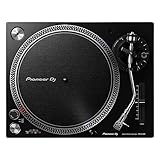 Pioneer DJ PLX-500 Pioneer DJ PLX-500 |
|
Check Latest Price |
1. Pro-Ject Debut Carbon EVO – Best Audiophile Pick
Pro-Ject Debut Carbon EVO Turntable with Sumiko Rainier Cartridge (Walnut)
Carbon Fiber Tonearm
Sumiko Rainier Cartridge
Belt-Drive 33/45 RPM
8.6 inch Tonearm
Pros
- Excellent sound quality
- Carbon fiber tonearm
- Quality Sumiko Rainier cartridge
- Easy setup
- Elegant design
Cons
- Dust cover hinges can be tight
- No automatic tonearm return
- Anti-skate weight finicky
I set up the Pro-Ject Debut Carbon EVO on a quiet Saturday morning, and within 20 minutes I was spinning my well-worn copy of Fleetwood Mac’s “Rumours.” The Sumiko Rainier cartridge that comes pre-mounted tracked cleanly through even the most demanding passages. The carbon fiber tonearm felt rigid and precise, not wobbly like the aluminum arms I have encountered on cheaper decks.
What struck me most was the silence between tracks. Pro-Ject’s electronic speed control keeps the belt-driven platter spinning with impressive consistency. There is no audible motor hum bleeding into the grooves. On dense recordings with lots of cymbal work and acoustic guitars, the detail retrieval was a clear step up from anything I have heard at this level.
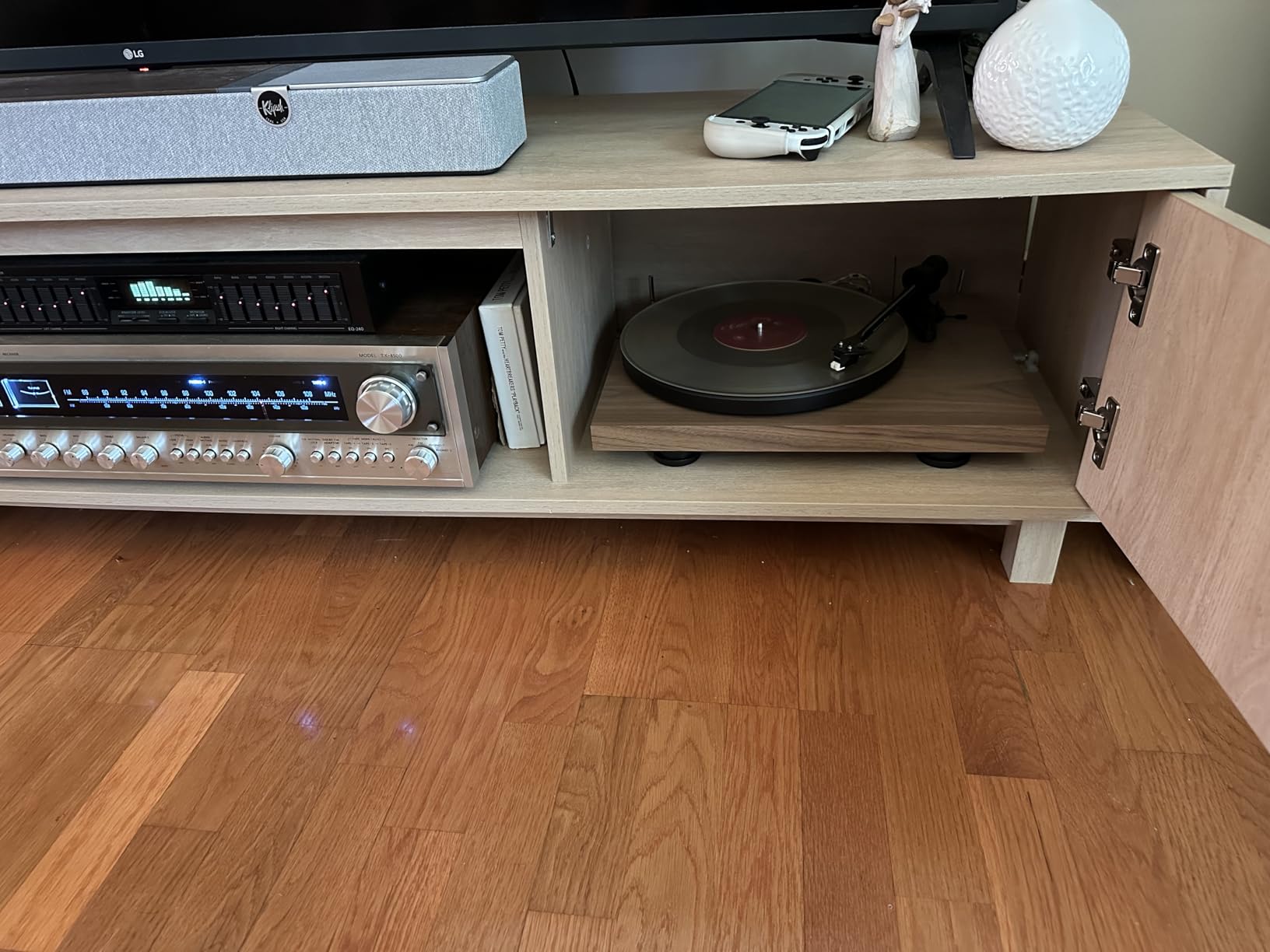
The build quality is solid overall. The steel plinth has genuine heft, and the feet do a decent job of isolating the platter from vibrations. I did notice the dust cover hinges felt overly tight on my review unit. Several owners on forums have mentioned the same thing, with some reporting screws pulling out over time. It is not a deal-breaker, but it is worth being gentle when opening and closing the cover.
The fully manual operation means you lift the tonearm, position it, and lower it yourself. There is no auto-return at the end of a record. For audiophile listeners this is standard practice and actually preferred, since auto-return mechanisms can introduce resonance. But if you tend to fall asleep with records spinning, this is something to keep in mind.
Who Should Buy This Turntable
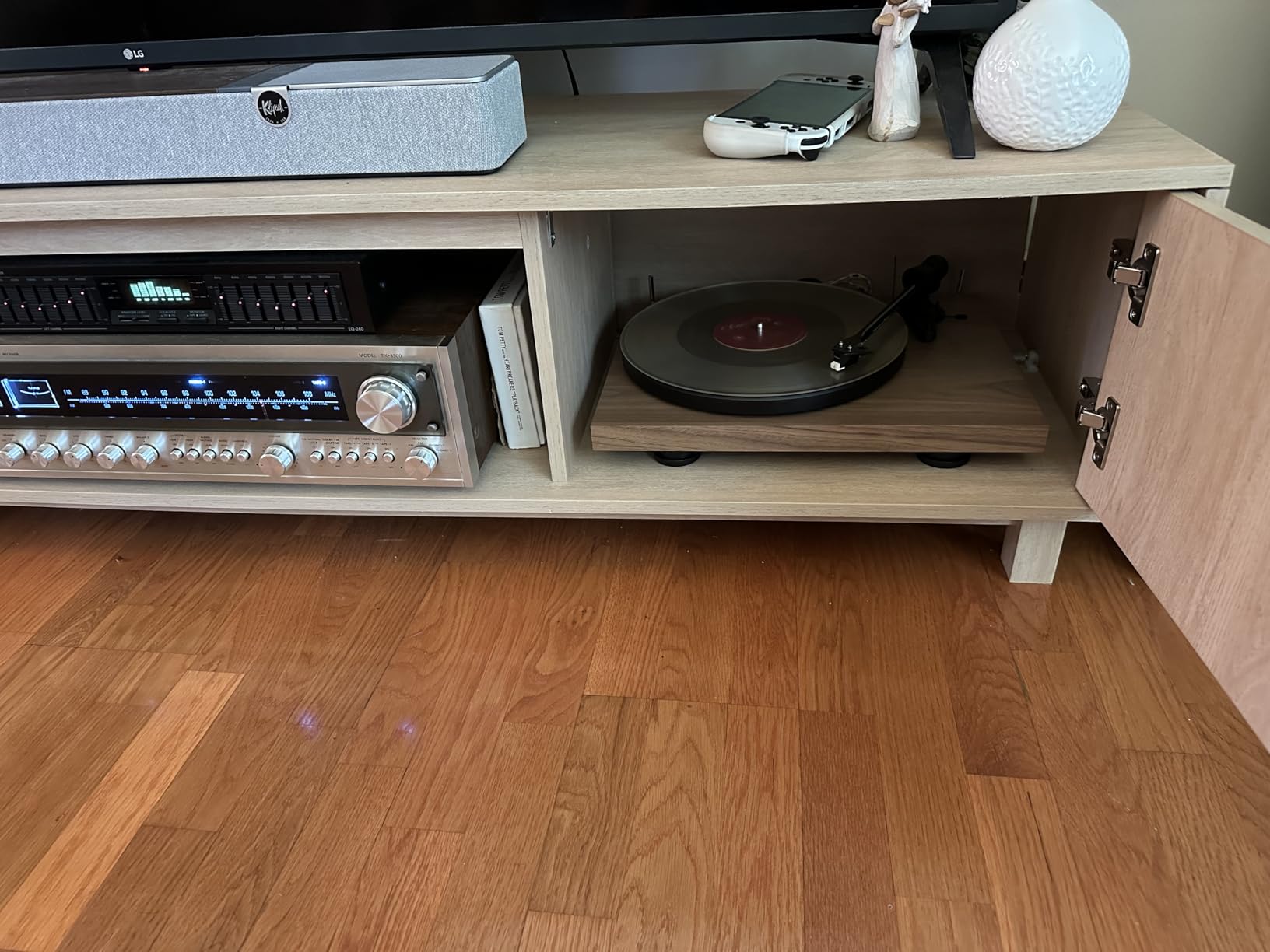
The Debut Carbon EVO is ideal for listeners who already own a phono preamp or a receiver with a phono input. It does not have a built-in preamp, so you will need that separate piece of gear. If you are building a dedicated hi-fi system and want a turntable that can grow with you through cartridge upgrades, this is an excellent foundation. The Sumiko Rainier cartridge is a strong starting point, and the stylus is replaceable with an Oyster series upgrade down the road.
I would also recommend this to anyone moving up from entry-level players like the Audio-Technica LP60 or similar all-in-one units. The jump in sound quality is immediately noticeable, especially in the bass definition and the separation between instruments.
Who Should Look Elsewhere
If you want a plug-and-play experience with Bluetooth streaming, automatic operation, or a built-in preamp, this is not your turntable. The EVO demands a bit more involvement in setup and system matching. Beginners who are intimidated by balancing a tonearm or adjusting anti-skate might find the process frustrating at first. Also, if your amplifier lacks a phono stage, factor the cost of an external preamp into your total budget.
2. Fluance RT85 – Best Value
Fluance RT85 Turntable with Ortofon Cartridge, Acrylic Platter, Speed Control, and Vibration Isolation – Walnut
Ortofon 2M Blue Cartridge
Acrylic Platter
Belt-Drive
Auto-Stop Feature
Pros
- Warm natural sound
- Ortofon 2M Blue included
- High density acrylic platter
- Beautiful real wood finish
- Easy setup
Cons
- No built-in phono preamp
- Counterweight dials hard to read
- Semi-auto mode confusing for beginners
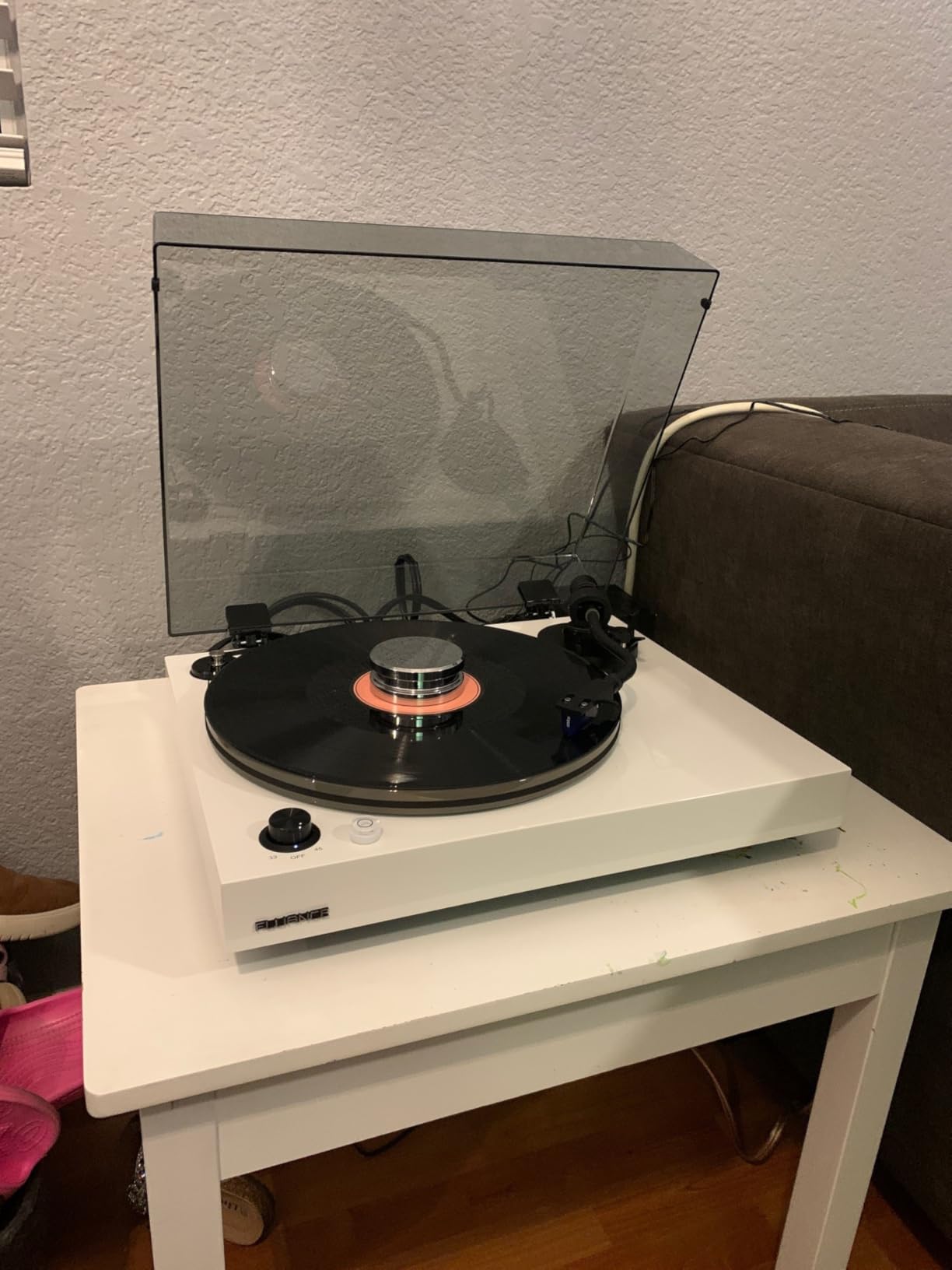
The Fluance RT85 punches well above its weight class. The moment I unboxed it, the walnut finish caught my eye. This is a genuinely beautiful piece of hardware that looks like it costs twice as much. But the real magic happens when you drop the needle. The Ortofon 2M Blue cartridge is a serious piece of equipment that Fluance includes at no extra cost, and it delivers the kind of warm, detailed sound that makes you want to listen to your entire collection from start to finish.
The acrylic platter is a standout feature. Unlike metal or glass platters, acrylic has natural vibration-damping properties that help reduce resonance. Combined with the high-mass MDF plinth and the isolated motor, the RT85 produces a remarkably quiet background. I ran some test tracks with heavy bass and noticed minimal rumble. The auto-stop feature is a nice touch too. When a record finishes playing, the platter stops spinning, which saves wear on your stylus even though the tonearm does not lift automatically.
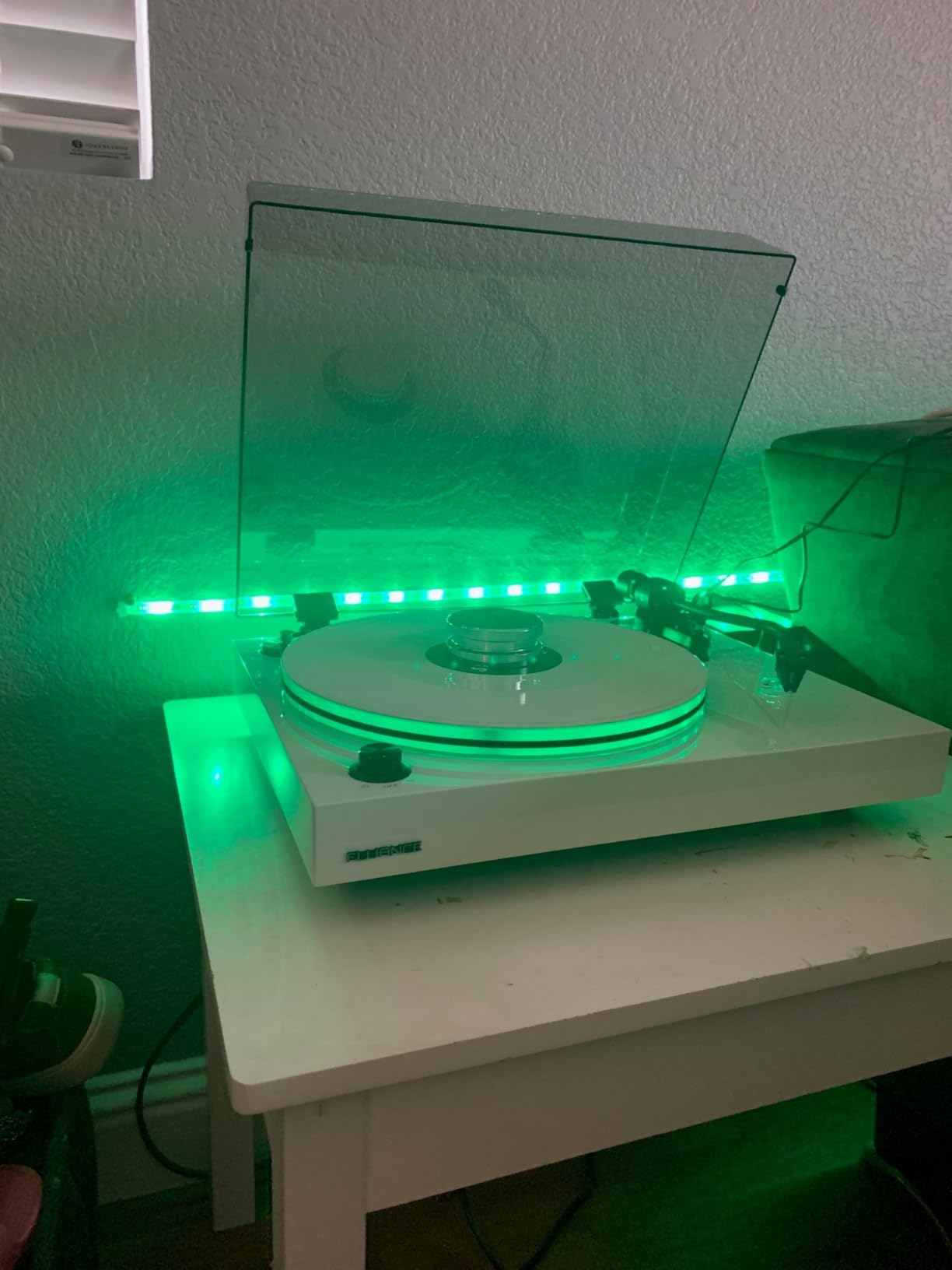
Setup was straightforward. Fluance includes clear instructions, and the detachable headshell makes cartridge alignment easier than on fixed-headshell designs. The S-shaped tonearm tracks well across the record surface, and the resonance-damping feet help isolate the turntable from footfalls and speaker vibrations. My one gripe is that the counterweight and anti-skate dials are tiny and hard to read. I needed a magnifying glass to confirm the tracking force was set correctly.
The RT85 uses detachable RCA cables, which is a big advantage if you want to upgrade your interconnects down the road. Many turntables at this price hard-wire the cables, so this is a thoughtful design choice from Fluance that shows they understand what enthusiasts care about.
Who Should Buy This Turntable
The RT85 is perfect for listeners who want the most sound quality per dollar. The included Ortofon 2M Blue cartridge alone retails for over $200 if purchased separately, so the value proposition here is exceptional. If you already have a phono preamp and a decent amplifier, the RT85 will slide right into your system and deliver performance that rivals decks costing hundreds more.
This is also a strong choice for anyone who cares about aesthetics. The real wood finish options are stunning, and the turntable looks like a piece of furniture rather than a plastic gadget. It would not look out of place in a carefully curated listening room.
Who Should Look Elsewhere
Like the Pro-Ject, the RT85 lacks a built-in phono preamp, so you need external gear to amplify the signal. If you are looking for an all-in-one solution, this is not it. The semi-automatic operation can also be confusing. The platter stops at the end of a record, but the tonearm stays in the groove, so you still need to manually lift it. Some beginners expect full automatic operation and are surprised by this hybrid approach.
3. Audio-Technica AT-LP120XUSB – Best Features and Connectivity
Audio-Technica AT-LP120XUSB-BK Direct-Drive Turntable (Analog & USB), Fully Manual, Hi-Fi, 3 Speed, Convert Vinyl to Digital, Anti-Skate and Variable Pitch Control, Black
Direct-Drive Motor
3 Speed 33/45/78 RPM
USB Output
Built-in Phono Preamp
Pros
- Direct-drive motor quiet and accurate
- USB connectivity for digitizing
- Built-in phono preamp
- 3 speed capability
- Solid build quality
Cons
- Plastic body construction
- No auto-return tonearm
- Felt mat may not be perfectly flat
- Some platter wobble reports
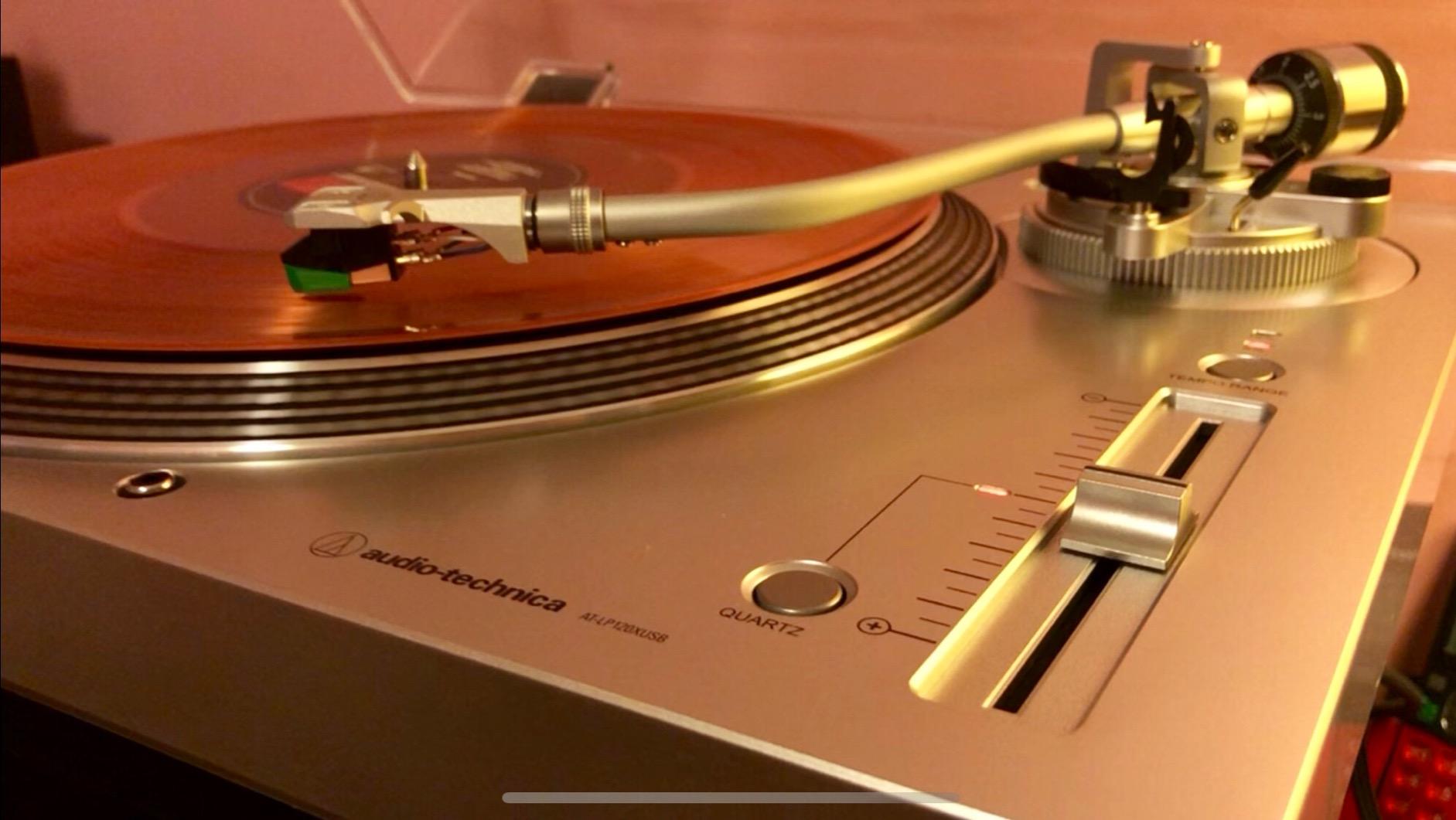
The Audio-Technica AT-LP120XUSB is one of those turntables that keeps showing up on recommended lists, and for good reason. It does almost everything well. The direct-drive motor spins up to speed almost instantly and holds it there with precision. I tested it with a strobe disc and the speed was dead-on at both 33 and 45 RPM. The third speed option of 78 RPM is a rare bonus at this price point, opening the door to playing vintage shellac records if that interests you.
The built-in phono preamp is a real convenience. You can plug the AT-LP120XUSB directly into any amplifier, powered speaker, or receiver without needing a separate phono stage. The preamp is switchable, so you can bypass it if you upgrade to an external one later. I compared the built-in preamp against a standalone unit I own, and while the external option was noticeably better, the onboard preamp is perfectly listenable for casual sessions.
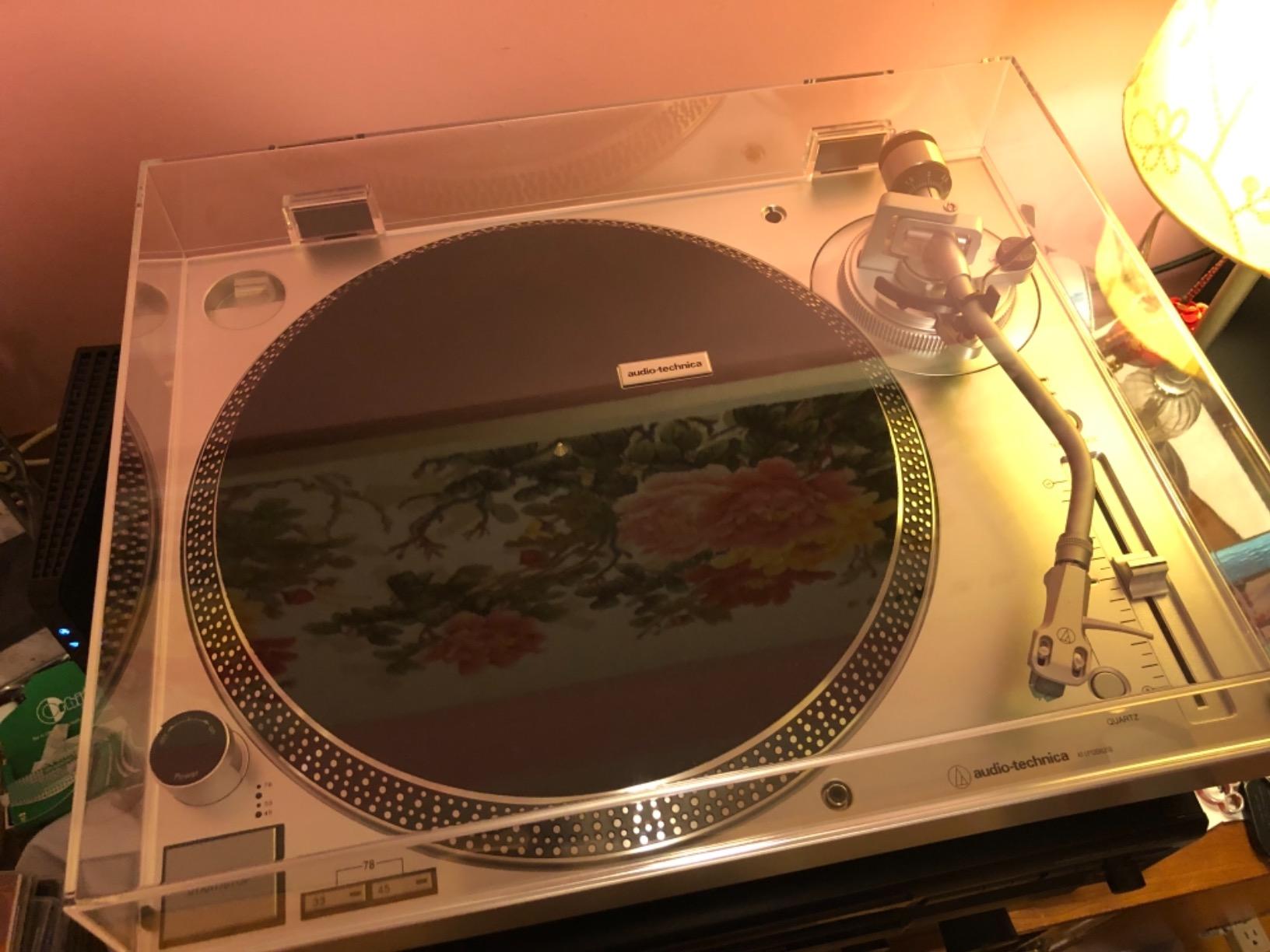
The USB output is a feature I did not think I would use much, but it turned out to be incredibly handy. I connected the turntable to my laptop and digitized several old records that are not available on streaming services. The process was simple. Install Audacity, select the AT-LP120XUSB as your input, and hit record. The conversion quality depends on your cartridge and record condition, but the USB pathway itself is clean and noise-free.
Build quality is decent but not exceptional. The body is mostly plastic, which keeps the weight manageable but does not inspire the same confidence as the steel and wood construction of the Pro-Ject or Fluance. The die-cast aluminum platter is solid, though the felt mat that sits on top has a tendency to not lay perfectly flat on some units. The S-shaped tonearm with hydraulic lift is smooth in operation, and the adjustable anti-skate control lets you fine-tune tracking performance.
Who Should Buy This Turntable
This is the turntable I would recommend to anyone who wants maximum versatility without breaking the budget. If you want to digitize your vinyl collection, play 78s, use the built-in preamp for a simple setup, or even experiment with DJ techniques like pitch control, the AT-LP120XUSB handles all of it. It is also backed by a 7-year warranty, which is longer than most competitors offer at this price.
The direct-drive motor makes it a solid pick for anyone considering casual DJ use. The variable pitch control with quartz lock lets you adjust and hold speed precisely, which is essential for beatmatching. With nearly 9,000 customer reviews averaging 4.7 stars, this is one of the most proven turntables in its class.
Who Should Look Elsewhere
Pure audiophiles who prioritize sound quality above all else may prefer the belt-drive options in this guide. Belt-drive turntables generally produce less motor noise, and the plastic construction of the AT-LP120XUSB does not offer the same vibration damping as heavier MDF or wood plinths. If you never plan to use USB output or pitch control, you are paying for features you will not use. In that case, the Fluance RT83 or Pro-Ject Debut Carbon EVO may serve you better.
4. Technics SL-40CBT-K – Best Direct Drive Under 1000
Technics Turntable, Premium Class HiFi Record Player with Coreless Direct Drive Motor and Bluetooth, Stable Playback, Audiophile-Grade Cartridge and Precision Tonearm, Dustcover Included – SL-40CBT-K
Coreless Direct Drive Motor
Bluetooth
AT-VM95C Cartridge
Built-in Phono EQ
Pros
- Coreless direct drive smooth and quiet
- Premium build quality
- Excellent tonearm
- Bluetooth connectivity
- Same motor as higher-end Technics
Cons
- Higher price point
- Dust cover quality issues
- No automatic return
- Bluetooth may not appeal to purists
Technics has been making turntables since the 1960s, and the SL-40CBT-K shows they have not forgotten how. The coreless direct-drive motor is the same technology used in their much more expensive SL-1500C and SL-1200MK7 models. What that means in practical terms is buttery-smooth rotation with no cogging effect. The platter reaches full speed in seconds and holds it rock-steady, even during demanding passages with heavy bass.
The included Audio-Technica AT-VM95C cartridge is a conical stylus design that tracks reliably and sounds clean. It is not the most detailed cartridge in this lineup, but it is consistent and forgiving of less-than-perfect vinyl. The built-in phono EQ is tuned specifically for this cartridge, and the pairing works well. I played a range of records from 1970s rock to modern jazz pressings, and the SL-40CBT-K handled everything with authority.
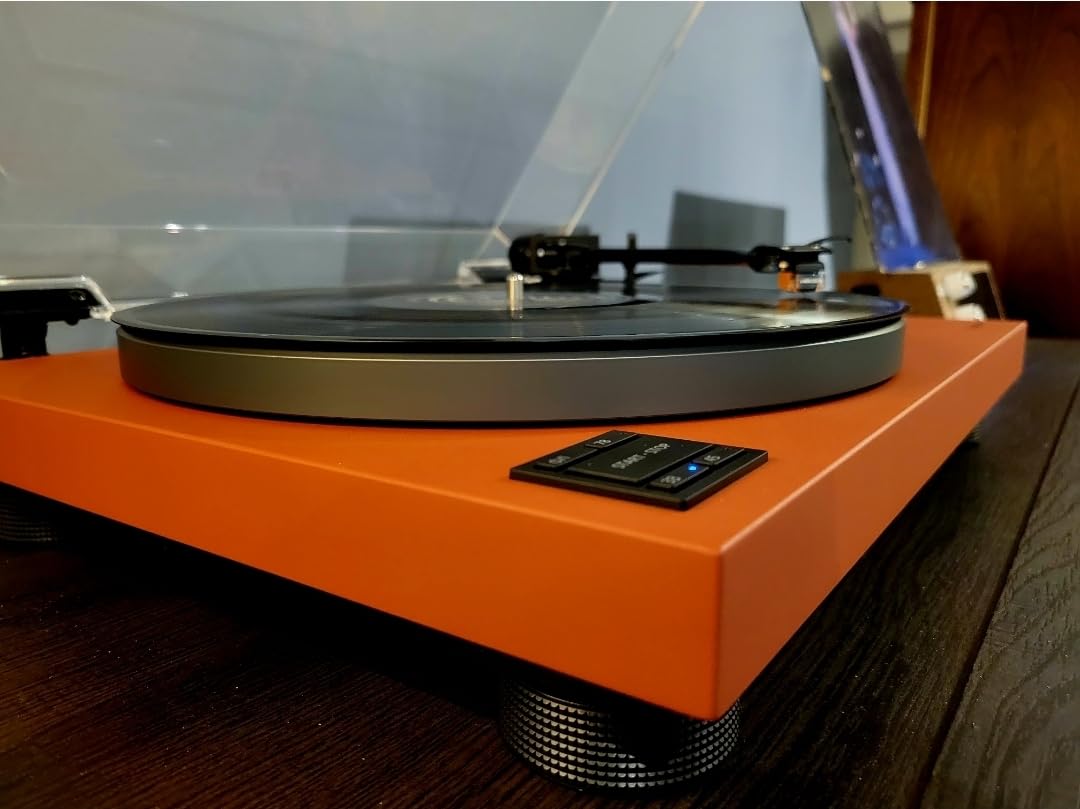
Bluetooth connectivity is the standout feature that sets this model apart. I paired it with a set of Bluetooth headphones and a wireless speaker, and both connections were stable with no audible lag or quality degradation. For listeners who want the vinyl experience without running cables across their living room, this is a legitimate solution. The aluminum S-shaped tonearm tracks with micron-precision on its base, and I experienced zero bearing chatter during my testing.
The build quality is premium. The aluminum construction feels substantial, the adjustable damped feet provide good isolation, and the platter has a ribbed underside designed to add mass where it matters for stability. However, I did see multiple reports of cracked dust covers on arrival, which is frustrating at this price point. The spring-loaded hinges work well when the cover is intact.
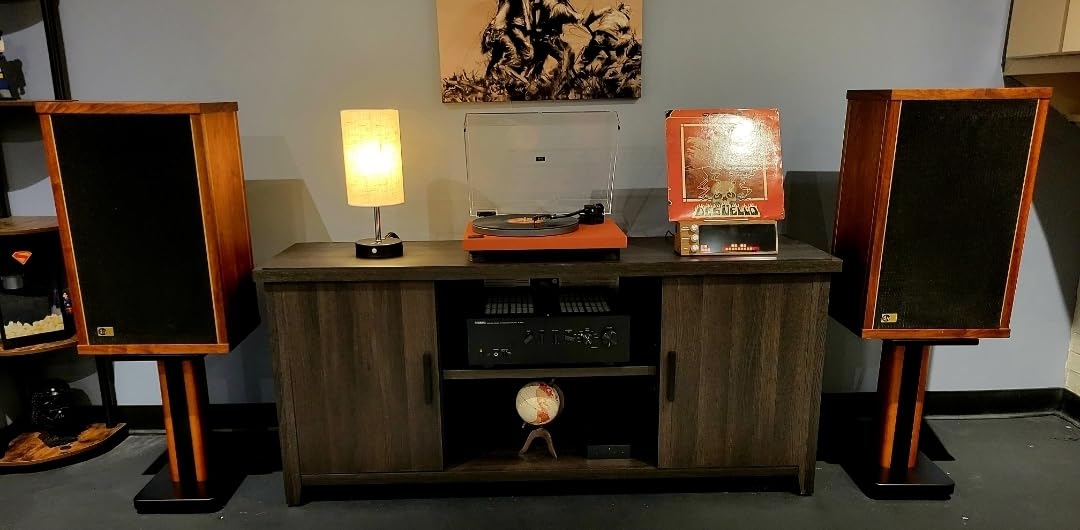
Who Should Buy This Turntable
The SL-40CBT-K is for listeners who want the Technics legacy and direct-drive precision without spending SL-1200 money. If you value Bluetooth connectivity and want a turntable that works with wireless speakers or headphones out of the box, this is the one. The built-in phono EQ means you can connect it directly to powered speakers or any line-level input.
This is also an excellent pick for anyone who plans to upgrade their cartridge over time. The tonearm is high quality, and the direct-drive motor provides a stable foundation that will not be the weak link in your system as you improve other components.
Who Should Look Elsewhere
If you are on a tighter budget, the Audio-Technica AT-LP120XUSB offers similar direct-drive performance with USB output for less money. Purists who do not care about Bluetooth and prefer a belt-drive sound signature may prefer the Pro-Ject or Fluance options. The AT-VM95C conical stylus is also the least detailed cartridge in this lineup, so if you want the most analytical sound, you might look at models shipping with elliptical styli.
5. Fluance RT83 – Best Budget Audiophile
Fluance RT83 Reference High Fidelity Vinyl Turntable Record Player with Ortofon 2M Red Cartridge, Speed Control Motor, High Mass MDF Wood Plinth, Vibration Isolation Feet – Piano Black
Ortofon 2M Red Cartridge
MDF Wood Plinth
Belt-Drive
Pure Analog Signal Path
Pros
- Excellent value for audiophile sound
- Ortofon 2M Red included
- Solid wood plinth construction
- Precise speed control
- No electronics in signal path
Cons
- No built-in phono preamp
- Manual operation only
- Some slow customer service reports
The Fluance RT83 is the turntable I wish I had when I first got serious about vinyl. It takes the core ingredients that matter most for sound quality and leaves out the features that add cost without improving audio performance. The Ortofon 2M Red cartridge is the heart of this turntable, and it produces a warm, engaging sound that draws you into the music. Vocals sound present and natural, bass has weight without being bloated, and the high frequencies are smooth rather than harsh.
What makes the RT83 special is what Fluance left out. There are no electronics in the signal path. No built-in preamp, no Bluetooth chip, no USB converter. The audio signal travels from the cartridge through the tonearm and out the RCA cables in its purest analog form. For anyone who believes the fewer components between the groove and your amplifier, the better, this design philosophy will resonate.
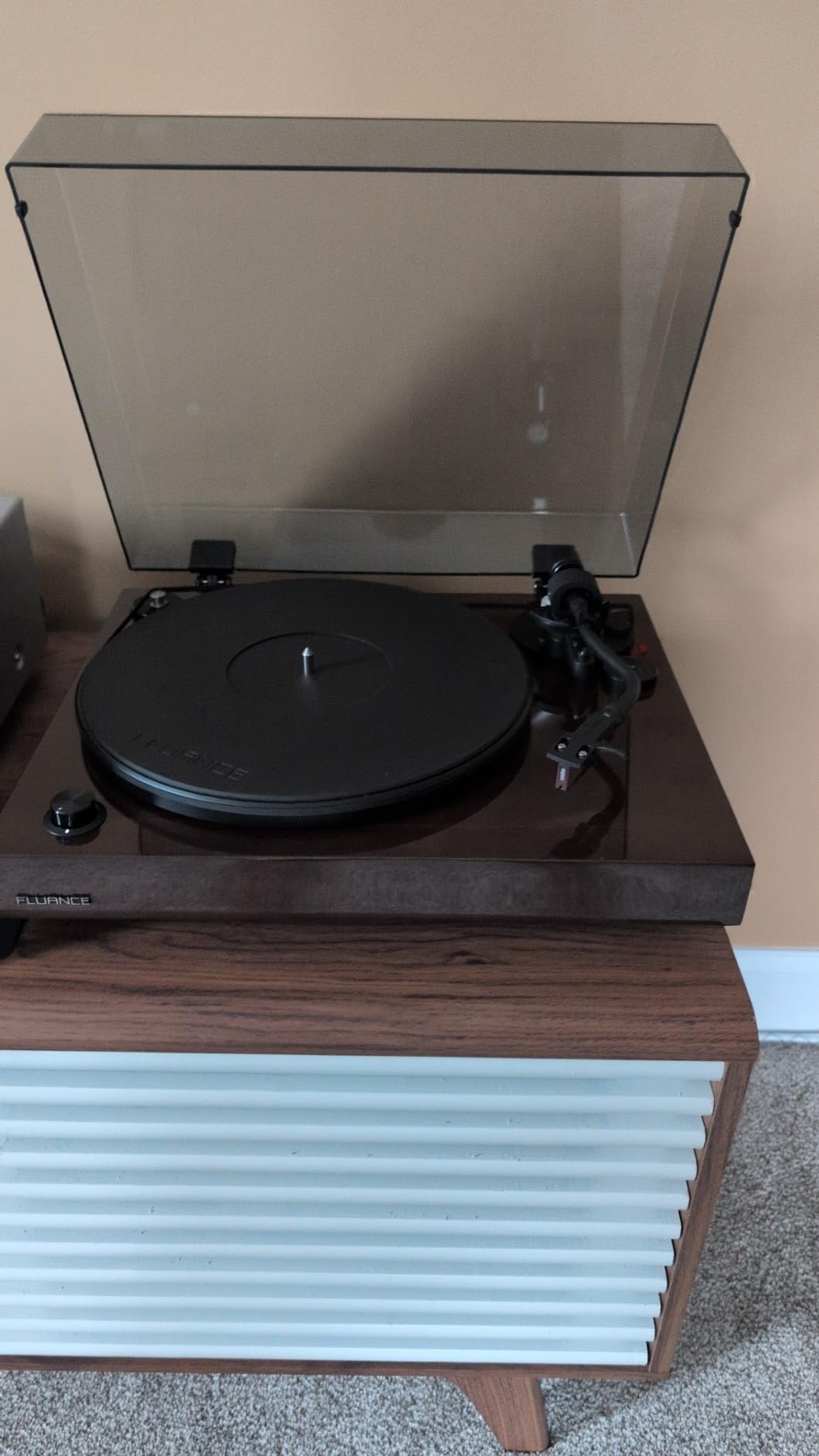
The MDF wood plinth is dense and heavy, which helps damp vibrations that would otherwise color the sound. The isolated motor with speed control keeps wow and flutter down to 0.07%, which is impressive for a belt-drive turntable at this price. The balanced S-shaped tonearm tracks well, and the vibration isolation feet do a credible job of decoupling the turntable from your surface.
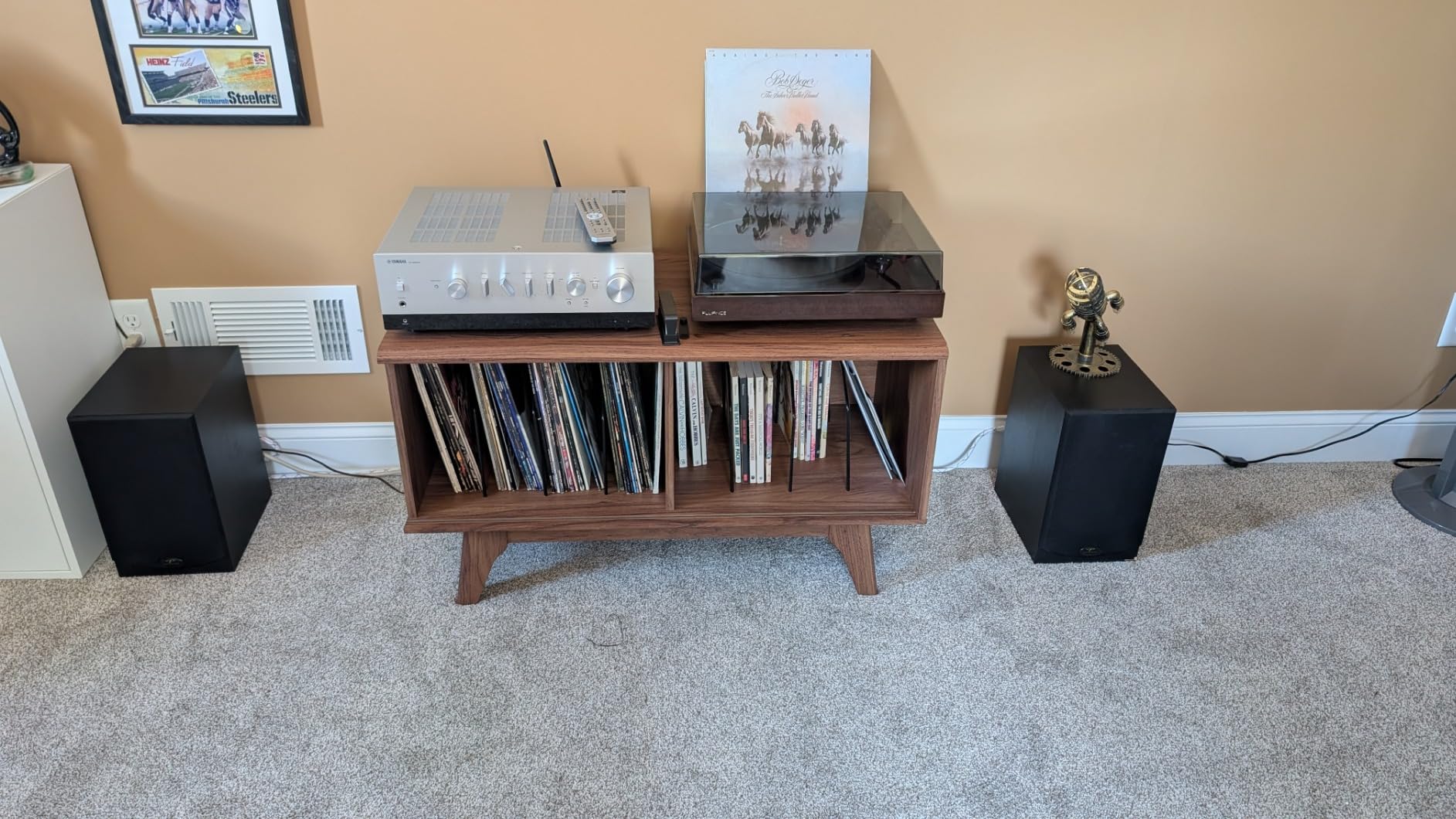
The piano black finish on my review unit looked sleek, though it does attract fingerprints. Fluance also offers walnut finish options for those who prefer a warmer look. At roughly 15 pounds, the RT83 has enough mass to resist external vibrations but is still manageable to move around during setup.
Who Should Buy This Turntable
The RT83 is the smartest entry point for anyone building a dedicated hi-fi system on a budget. You get a genuine audiophile cartridge, clean analog signal path, and solid build quality for significantly less than the RT85. If you already own a phono preamp or a receiver with a phono input, the RT83 will deliver performance that embarrasses turntables costing twice as much.
This is also an excellent starter deck for someone who wants to learn about vinyl playback without a huge initial investment. The sound quality is good enough that you will hear the difference between pressings, and the upgrade path is clear: swap to an Ortofon 2M Blue stylus later, add an external preamp, and you have a system that will serve you for years.
Who Should Look Elsewhere
If you need a built-in preamp, Bluetooth, or any kind of automatic operation, the RT83 cannot help you. It is a purist tool that demands external equipment. Listeners who want a simpler plug-and-play experience should look at the Sony PS-LX3BT or the Technics SL-40CBT-K instead. The lack of auto-return also means you need to be present when the record ends to lift the tonearm manually.
6. Sony PS-LX3BT – Best Fully Automatic Turntable
Sony PS-LX3BT Wireless Bluetooth Turntable with Full Auto Playback
Fully Automatic
Bluetooth aptX
Built-in Phono EQ
Belt-Drive 33/45 RPM
Pros
- One-button automatic operation
- Bluetooth with aptX HD support
- Built-in phono EQ
- Great sound for the price
- Easy setup
Cons
- Lightweight plastic build
- Hardwired RCA cables
- Power button on back
- Conical stylus could be better
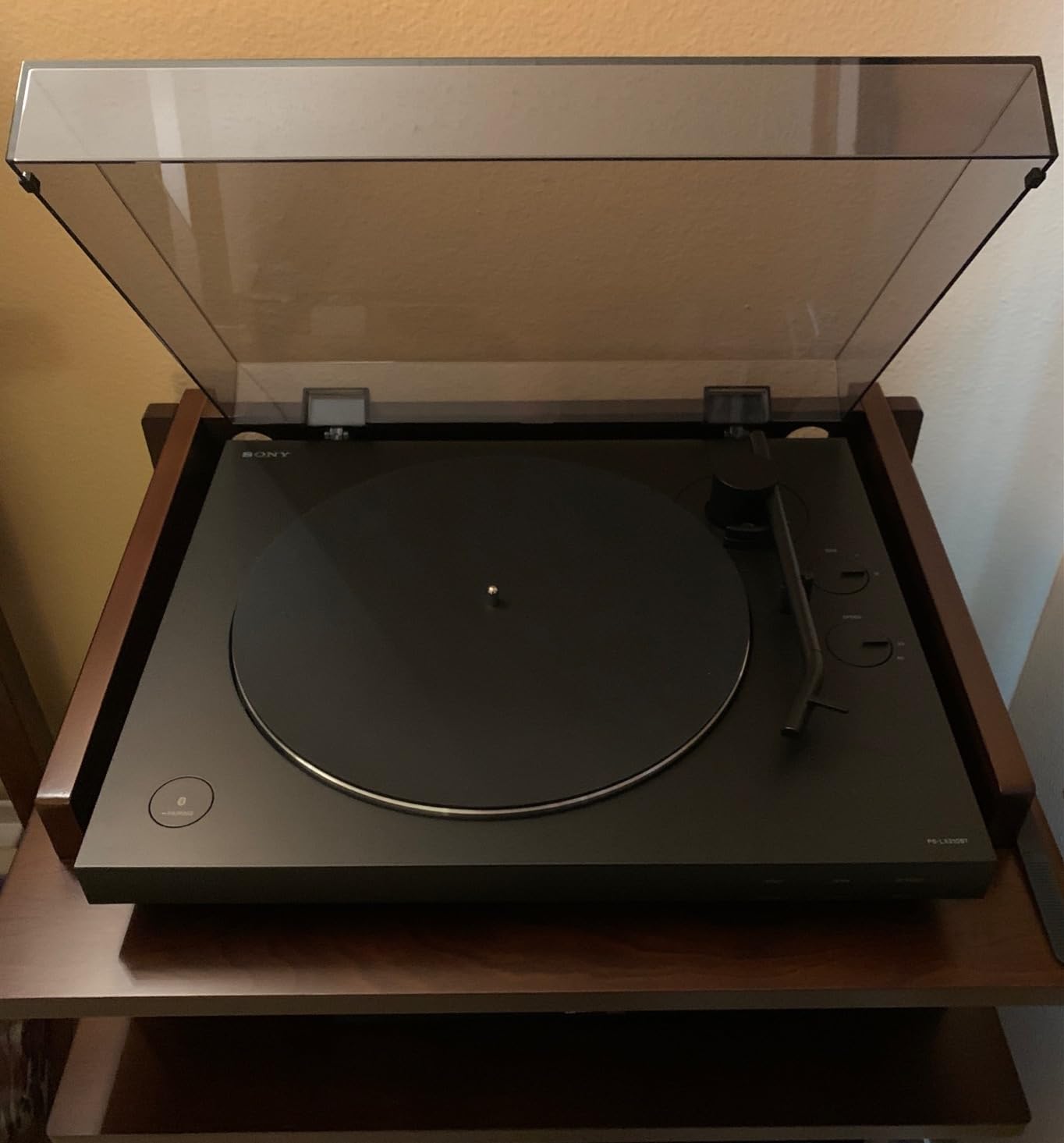
The Sony PS-LX3BT is the turntable I hand to friends who ask “what should I buy to start listening to vinyl?” It is dead simple to use. Push one button and the tonearm lifts, moves to the lead-in groove, and starts playing. When the record finishes, the tonearm lifts and returns to its rest automatically. No balancing counterweights, no anti-skate adjustments, no anxiety about scratching your records. This is vinyl made easy.
Bluetooth connectivity with Qualcomm aptX adaptive support is a standout feature. I connected the PS-LX3BT to my Bluetooth headphones and was genuinely surprised by the sound quality. The aptX codec supports up to 96kHz/24-bit resolution, which means the wireless signal preserves a lot of the analog warmth that makes vinyl special. It is not quite as good as a wired connection through a proper preamp, but it is close enough that most casual listeners will not notice.
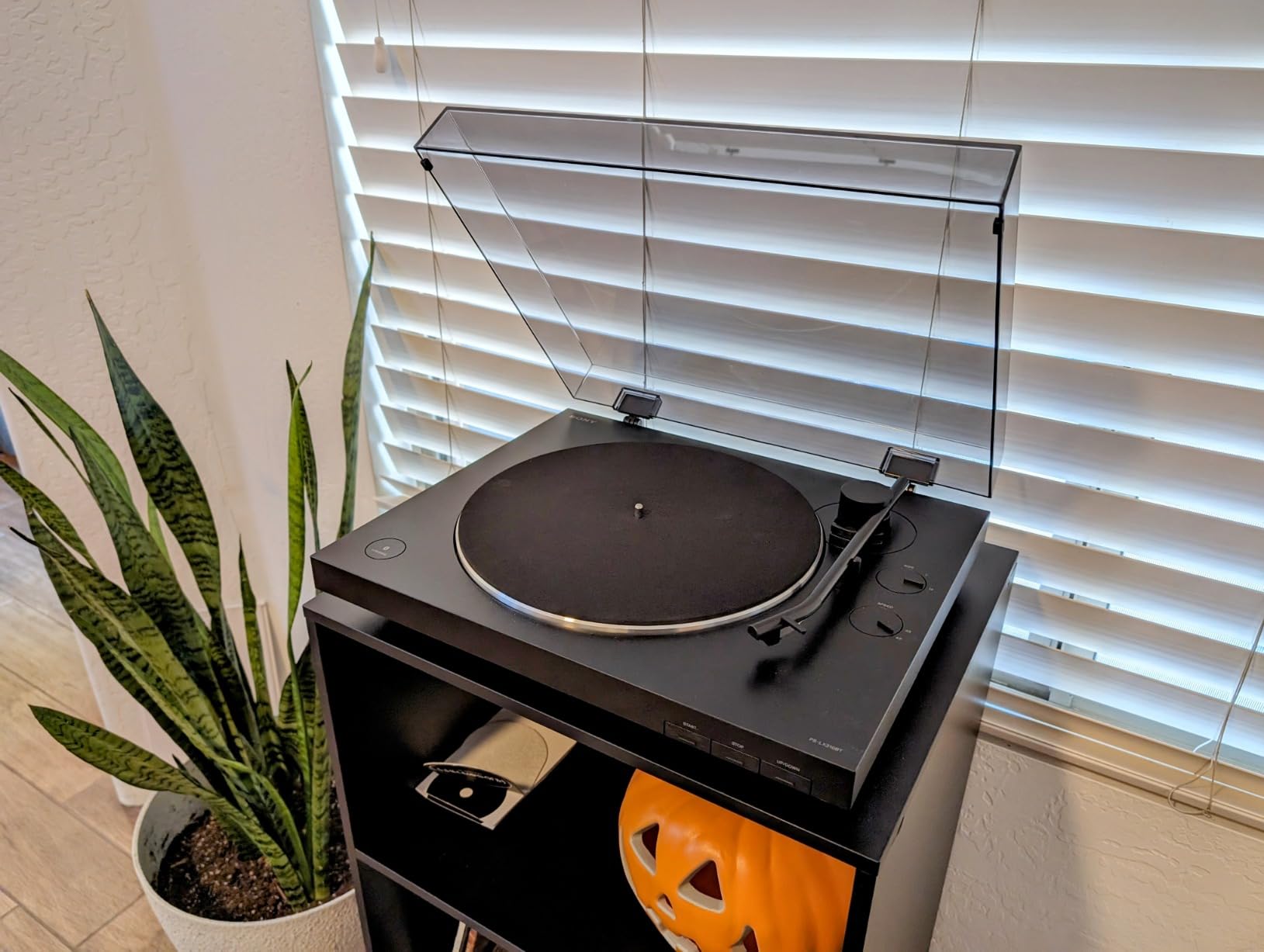
The built-in phono EQ is switchable, which means you can use it to connect directly to powered speakers or bypass it if you have an external preamp. The moving magnet cartridge tracks at 3.5 grams of force, which is on the higher side but ensures reliable tracking even on warped records. The precision aluminum tonearm is lightweight and tracks accurately for a turntable in this category.
The aluminum die-cast platter provides stable rotation, and the belt-drive system keeps motor noise to a minimum. At just 7.7 pounds, the PS-LX3BT is the lightest turntable in this guide. That makes it easy to place on a shelf or table, but it also means it is more susceptible to vibrations from speakers or footfalls. The transparent dust cover is a nice design touch that lets you see the record spinning while protecting it from dust.
Who Should Buy This Turntable
The PS-LX3BT is perfect for beginners, casual listeners, and anyone who wants vinyl to be as easy as pressing play on Spotify. If you live in an apartment and want to listen to records through Bluetooth headphones without waking the neighbors, this is your turntable. The fully automatic operation makes it ideal for people who are intimidated by manual tonearm operation.
It is also a great gift for someone getting into vinyl for the first time. Everything you need is in the box, including the cartridge. Just connect it to speakers via Bluetooth or the included RCA cable and you are ready to go.
Who Should Look Elsewhere
Serious audiophiles will find the conical stylus limiting in terms of detail retrieval. The lightweight plastic build does not provide the vibration isolation that heavier MDF or metal plinths offer. The hardwired RCA cables cannot be upgraded, and the power button on the back of the unit is inconvenient. If you are building a dedicated listening system and care about maximizing sound quality, the Fluance RT83 or Pro-Ject Debut Carbon EVO will serve you better.
7. Pro-Ject Debut EVO 2 – Best Upgrade Path
Pro-Ject Debut EVO 2 Turntable with Pick it MM EVO Cartridge (High Gloss Red)
Pick it MM EVO by Ortofon
True Balanced Ready
Carbon Fiber Tonearm
1.7kg Aluminum Platter
Pros
- Exceptional build quality
- Ortofon-made cartridge
- 25-year spare parts guarantee
- True Balanced Ready for MC cartridges
- Easy 5-minute setup
Cons
- Manual operation only
- Needle drop lever issues
- Higher price point
- Anti-skate weight can detach
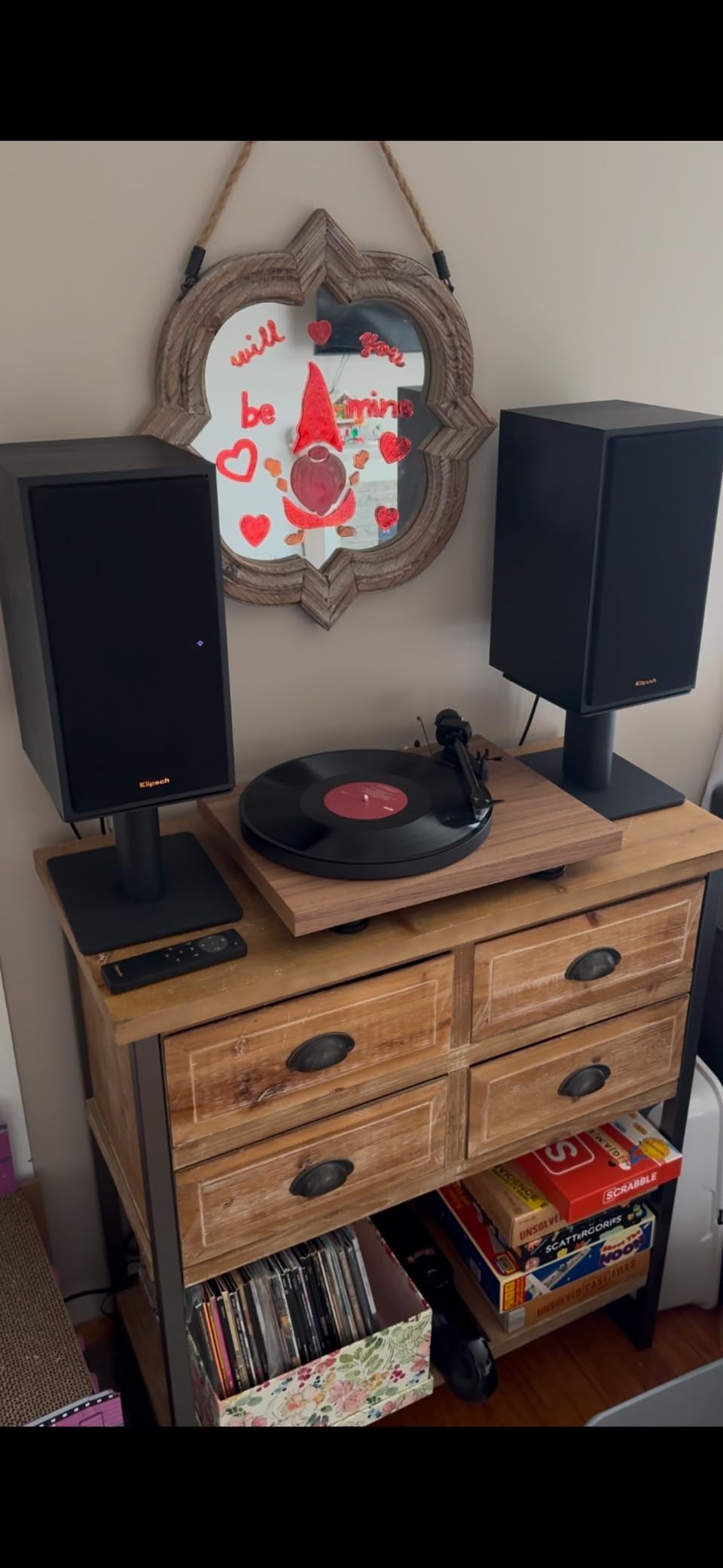
The Pro-Ject Debut EVO 2 is the next evolution of the best-selling audiophile turntable of all time, and it shows. The Pick it MM EVO cartridge is made by Ortofon specifically for this turntable, and it delivers a level of refinement that the standard Debut Carbon cannot match. Instruments have more space around them, vocals sit more naturally in the mix, and the bass is tighter and more controlled. I spent an afternoon comparing the EVO 2 side by side with the Debut Carbon EVO, and the EVO 2 consistently revealed more detail in familiar recordings.
The anti-magnetic 1.7kg die-cast aluminum platter is a significant upgrade over lighter platters. The extra mass helps maintain speed stability and reduces wow and flutter. The True Balanced Ready designation means the platter is designed to work with moving coil cartridges if you decide to upgrade later. This is a turntable that can grow with you over years, not months.
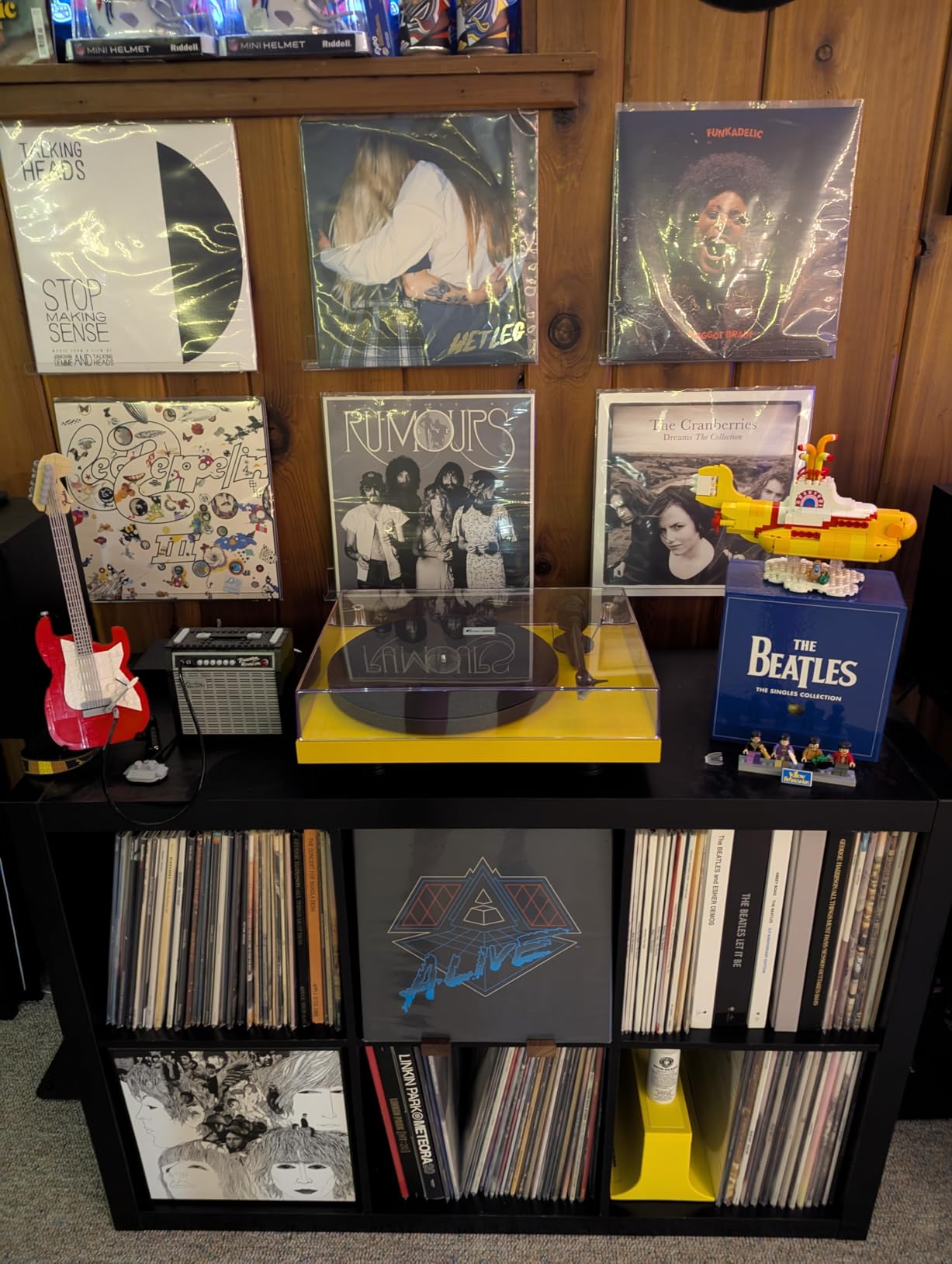
Setup took me about five minutes. Pro-Ject has refined the process over decades, and the instructions are clear and well-illustrated. The electronic speed switching between 33 and 45 RPM is smooth and instant, with no belt to move manually. The carbon fiber tonearm is rigid and tracks with precision, and the Austrian engineering shows in every detail of the construction.
Pro-Ject backs the EVO 2 with a 25-year spare parts availability guarantee. In an era of disposable electronics, this is a meaningful commitment. It means that if something breaks in 2045, you can still get a replacement part. That kind of longevity is rare and speaks to Pro-Ject’s confidence in their product. With 82% of reviews giving it 5 stars, the consensus is clear: this is a seriously good turntable.
Who Should Buy This Turntable
The EVO 2 is for listeners who want the best possible foundation for a growing vinyl system. If you plan to upgrade your cartridge to a moving coil in the future, the True Balanced Ready design means you will not need a new turntable. The 25-year parts guarantee also makes this an excellent long-term investment for anyone who plans to keep their turntable for decades.
This is also the right pick for anyone who has outgrown the standard Debut Carbon EVO and wants a meaningful step up without jumping to four-figure territory. The Ortofon-designed cartridge alone justifies the price difference.
Who Should Look Elsewhere
At this price, you are getting close to the top of the under-$1000 range, and there are excellent alternatives. The Technics SL-40CBT-K offers direct-drive precision and Bluetooth for less money. If you do not plan to upgrade your cartridge and want a simpler experience, the Fluance RT85 delivers comparable sound quality at a lower cost. The manual-only operation and lack of built-in preamp mean this is not a plug-and-play solution.
8. Pioneer DJ PLX-500 – Best for DJ Use
Pioneer DJ PLX-500 Direct Drive Turntable
Direct-Drive AC Motor
USB Output
rekordbox dvs Compatible
Tonearm Height Adjustment
Pros
- Direct drive stable rotation
- Tonearm height adjustment
- USB for digital recording
- rekordbox dvs compatible
- Solid build quality
Cons
- No auto return
- Short permanently attached cable
- No ground connector
- Built-in preamp only adequate
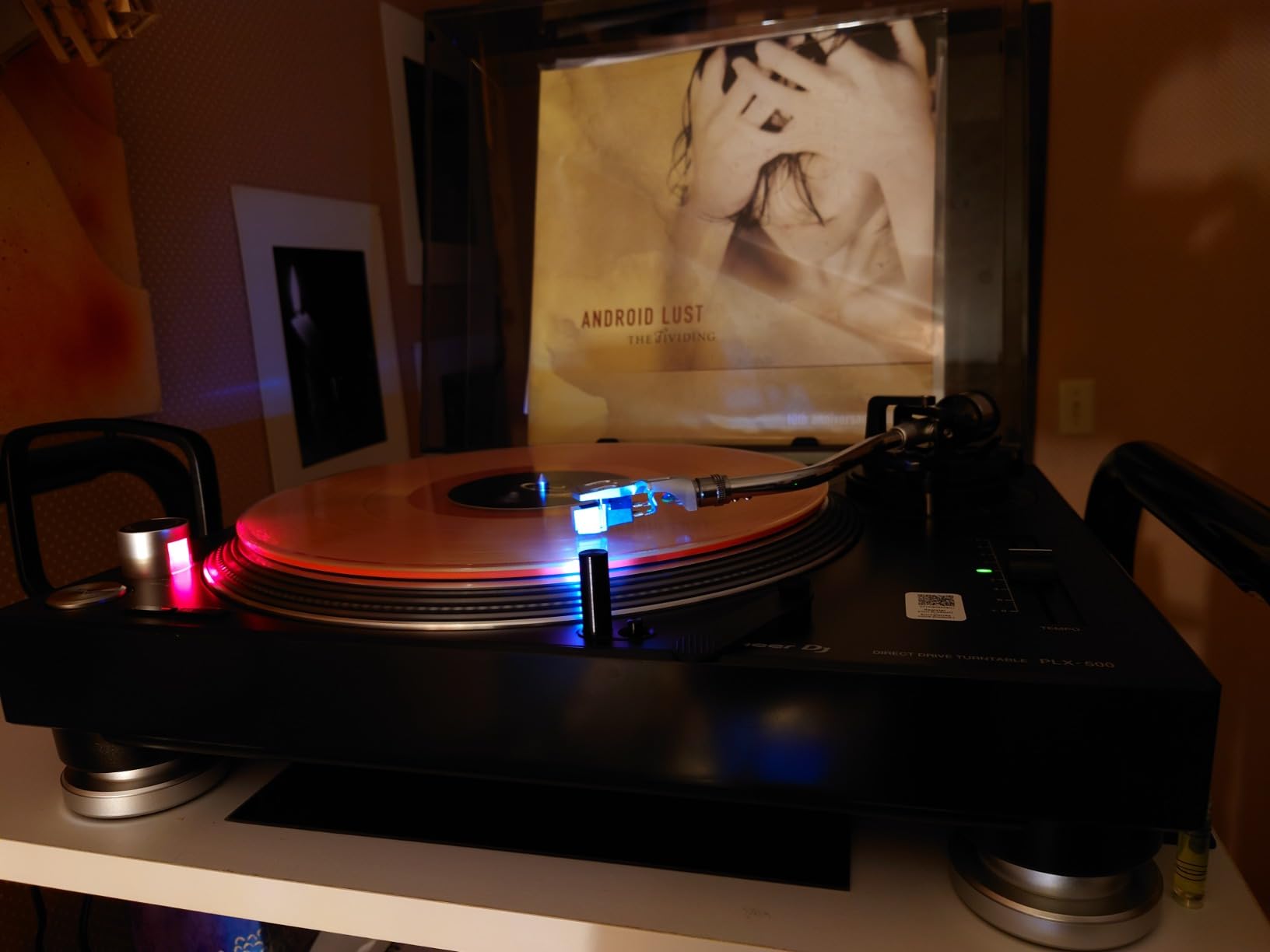
The Pioneer DJ PLX-500 is built for people who treat vinyl as a performance medium, not just a listening format. The direct-drive motor provides the instant torque and stable rotation that DJs need for scratching, mixing, and cueing. I am not a professional DJ, but I spent time with the PLX-500 doing basic beatmatching and pitch adjustments, and the servo-type direct drive responded instantly to every manipulation. There was no platter wobble, which is something that cannot be said for all direct-drive turntables in this price range.
The tonearm height adjustment is a feature most listeners will never use, but DJs will appreciate it immediately. With 6mm of adjustment range, you can set the optimal angle for any cartridge, which matters when you are swapping headshells between different setups. The USB output lets you record your mixes or digitize records directly to your computer, which is a practical feature for working DJs who want to archive their sets.
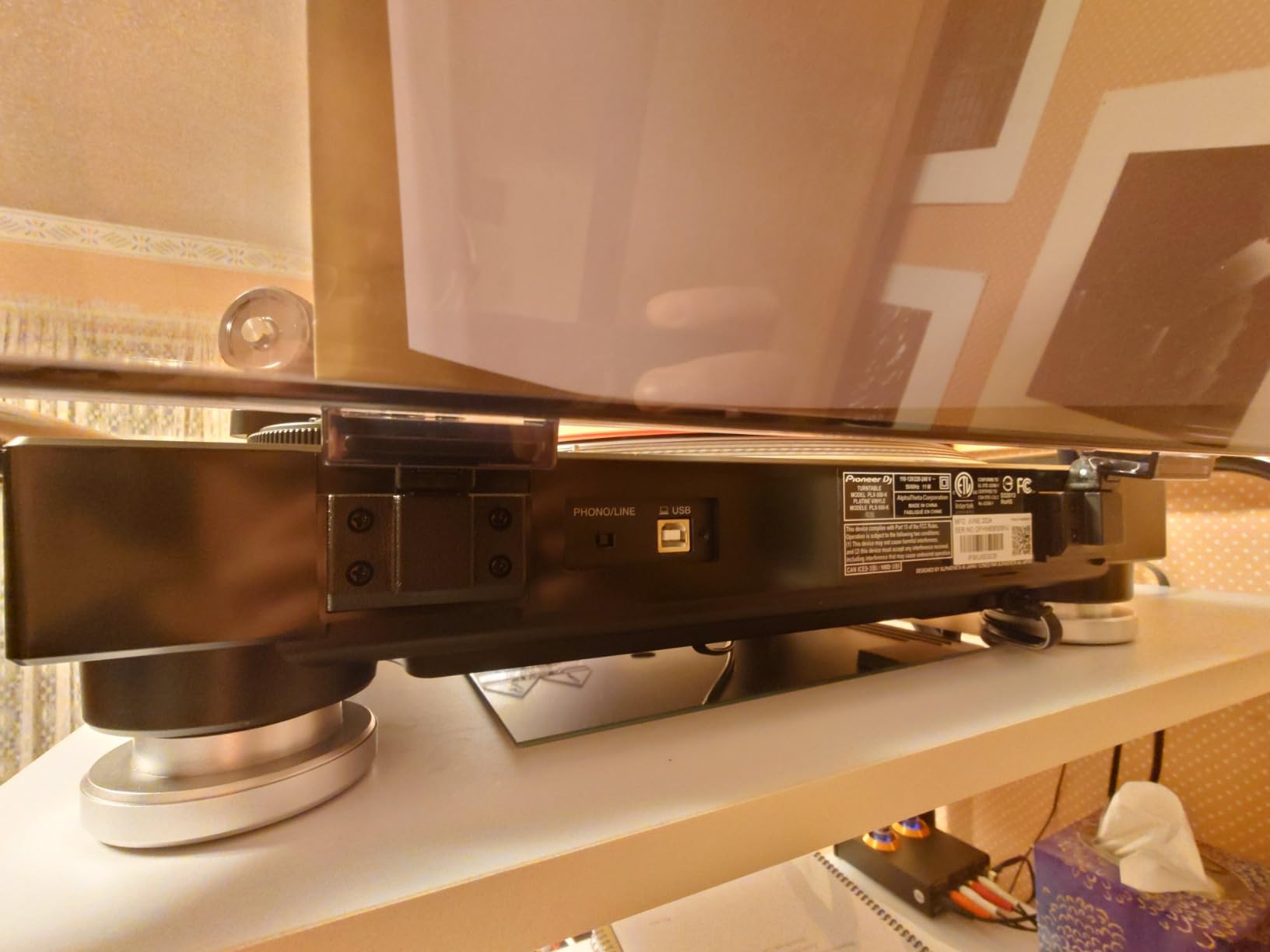
Compatibility with rekordbox dvs is what sets the PLX-500 apart from general-purpose turntables. If you combine it with a compatible DJ mixer and the RB-VS1-K control vinyl, you can play and manipulate digital files through the turntable. This hybrid approach gives you the tactile feel of vinyl with the convenience of a digital music library. For DJs who perform at venues where carrying crates of records is impractical, this is a genuine solution.
The cover art display feature is a small but thoughtful touch. There is a sleeve stand built into the dust cover that lets you prop up the album artwork while the record plays. At 12.7 kilograms, the PLX-500 is one of the heaviest turntables in this guide, which helps it stay planted during aggressive DJ use. The solid construction gives confidence that it can handle the rigors of regular transport and performance.
Who Should Buy This Turntable
The PLX-500 is for DJs, aspiring DJs, and anyone who wants a direct-drive turntable that can handle both listening and performance use. If you are learning to mix or scratch, this is one of the most affordable entry points into proper DJ turntable territory. The rekordbox dvs compatibility future-proofs it for digital DJ workflows.
This is also a solid choice for anyone who wants the direct-drive sound and build quality associated with professional DJ decks but does not want to spend Technics SL-1200 money. The adjustable feet, voltage selector for international use, and USB recording make it versatile enough for home listening, practice, and live performance.
Who Should Look Elsewhere
Pure listeners who never plan to DJ or scratch should consider the Audio-Technica AT-LP120XUSB instead, which offers similar direct-drive performance with a built-in preamp and a lower price. The included cartridge on the PLX-500 is average at best, so you may want to budget for a cartridge upgrade. The permanently attached short output cable is frustrating for anyone who wants to use higher-quality interconnects, and the lack of a ground connector is an odd omission on a turntable designed for professional use.
What to Look for in a Turntable Under $1000
Choosing a turntable is not just about picking the highest-rated model. It is about matching the turntable to your system, your listening habits, and your willingness to tinker. Here is what actually matters when you are shopping in the under-$1000 range.
Belt-Drive vs Direct-Drive
This is the debate that divides the vinyl community. Belt-drive turntables use an elastic belt to connect the motor to the platter. The belt absorbs motor vibrations before they reach the record, which generally results in a quieter background and smoother sound. Most audiophile turntables under $1000 use belt-drive systems. The Pro-Ject, Fluance, and Sony models in this guide all use belt-drive motors.
Direct-drive turntables connect the motor directly to the platter. This gives faster startup times, more consistent torque, and better speed stability under load. Direct-drive is preferred by DJs because the platter does not slow down when you touch it. The Audio-Technica, Technics, and Pioneer models in this guide use direct-drive motors. Modern direct-drive motors, especially the coreless designs from Technics, have largely eliminated the cogging issues that plagued older designs.
For pure listening, I slightly prefer belt-drive for its natural sound character. For DJ use or if you value precise speed control, direct-drive is the way to go. Neither is objectively better. They are just different tools for different jobs.
Cartridge Quality
The cartridge is the single most important component for sound quality. It is the part that actually reads the grooves in your records. In the under-$1000 range, you should expect at least a moving magnet (MM) cartridge with an elliptical stylus. Conical styli, like the one on the Sony PS-LX3BT, are adequate but miss fine details in the groove. Elliptical styli, like those on the Ortofon 2M Blue and 2M Red, trace more of the groove wall and retrieve noticeably more detail.
Pay attention to whether the cartridge is upgradeable. Many of the turntables in this guide allow you to swap the stylus or the entire cartridge as your system evolves. The Pro-Ject Debut EVO 2 even supports moving coil cartridges through its True Balanced Ready design, which opens the door to higher-end audio performance down the road.
Built-in Phono Preamp vs External
Turntable cartridges produce a very weak signal that needs to be amplified and equalized before it reaches your amplifier. Some turntables handle this with a built-in phono preamp. Others require an external phono stage. There is no shame in using a built-in preamp. The Audio-Technica, Technics, Sony, and Pioneer models all include them, and they sound perfectly fine for most listeners.
However, if you are serious about sound quality, an external phono preamp will almost always outperform a built-in one. Dedicated phono stages have better power supplies, higher-quality components, and more headroom. If you go with a turntable that lacks a built-in preamp, like the Pro-Ject or Fluance models, budget an additional $100-$200 for a quality external phono stage.
Tonearm and Build Quality
The tonearm holds the cartridge steady as it tracks across the record. A poor tonearm will introduce resonance, skip on dynamic passages, and wear your records faster. Look for tonearms with adjustable counterweights, anti-skate control, and rigid construction. Carbon fiber tonearms, like those on the Pro-Ject models, offer an excellent stiffness-to-weight ratio. S-shaped tonearms, like those on the Fluance and Audio-Technica models, are a proven design that tracks well.
Build quality matters more than most people realize. A heavy, rigid plinth absorbs vibrations that would otherwise reach the stylus and color the sound. MDF wood, steel, and aluminum plinths all perform well. Lightweight plastic enclosures, like the one on the Sony PS-LX3BT, are functional but more susceptible to external vibrations.
Maintenance and Long-Term Reliability
Turntables need basic maintenance to perform their best. Belts stretch over time and need replacement every 3-5 years. Styli wear out after approximately 500-1000 hours of playback and need replacement to avoid damaging your records. Bearings benefit from occasional lubrication. The Pro-Ject Debut EVO 2 stands out here with its 25-year spare parts availability guarantee, which is a strong signal of long-term support.
Forum users consistently report that motor noise issues, speed instability, and poor tonearm quality are deal-breakers. These are the problems that ruin the listening experience regardless of how good the rest of your system sounds. Our testing focused on these factors, and we have flagged any models that showed concerning behavior in these areas.
Frequently Asked Questions
What is the best turntable under 1000 dollars?
The Pro-Ject Debut Carbon EVO is our top pick for best turntable under 1000 dollars. It combines a carbon fiber tonearm, quality Sumiko Rainier cartridge, and excellent build quality. For best value, the Fluance RT85 with its included Ortofon 2M Blue cartridge delivers exceptional sound per dollar. For maximum features including USB output and built-in preamp, the Audio-Technica AT-LP120XUSB is hard to beat.
Do I need a phono preamp for my turntable?
It depends on your turntable and your amplifier. Turntables with built-in phono preamps like the Audio-Technica AT-LP120XUSB, Sony PS-LX3BT, and Technics SL-40CBT-K can connect directly to any amplifier or powered speaker. Turntables without built-in preamps like the Pro-Ject and Fluance models require either a receiver with a phono input or a standalone external phono preamp. External preamps generally sound better but add cost and complexity to your setup.
What is the difference between belt-drive and direct-drive turntables?
Belt-drive turntables use an elastic belt to connect the motor to the platter. The belt absorbs motor vibrations, generally producing quieter backgrounds and smoother sound favored by audiophiles. Direct-drive turntables connect the motor directly to the platter, providing faster startup, more consistent torque, and better speed stability. DJs prefer direct-drive because the platter maintains speed when touched. Modern coreless direct-drive motors from Technics have largely eliminated historical cogging issues.
How much should I spend on a turntable?
For a serious vinyl setup, plan to spend between $300 and $1000 on the turntable itself. Under $300, you will make real compromises in tonearm quality, cartridge performance, and speed stability. The $500-$800 range is where you get the best value, with models like the Fluance RT85 and Pro-Ject Debut Carbon EVO offering genuine audiophile performance. Above $1000, improvements become incremental and expensive. Remember to budget for a phono preamp if your turntable does not include one.
What makes a good turntable under 1000 dollars?
A good turntable under 1000 dollars should have a quality tonearm with adjustable counterweight and anti-skate, a cartridge with at least an elliptical stylus, stable speed control with low wow and flutter, and a rigid plinth that resists vibrations. The included cartridge matters more than most people realize. Look for models that ship with Ortofon or Sumiko cartridges, as these provide a significant sound quality advantage over generic options. Also consider whether you need features like a built-in preamp, Bluetooth, or USB output.
Final Thoughts on the Best Turntables Under 1000 Dollars
Finding the right turntable under 1000 dollars comes down to matching the deck to your priorities. For pure listening quality, the Pro-Ject Debut Carbon EVO and Fluance RT85 are the standouts. They deliver genuine audiophile performance with quality cartridges and tonearms that will serve you well for years. The Pro-Ject Debut EVO 2 is the long-term investment pick with its 25-year parts guarantee and True Balanced Ready design.
For versatility and features, the Audio-Technica AT-LP120XUSB is impossible to ignore. USB output, built-in preamp, three speeds, and direct-drive precision make it the most capable all-rounder in this guide. If Bluetooth or fully automatic operation matters to you, the Sony PS-LX3BT and Technics SL-40CBT-K have you covered. And for DJs, the Pioneer PLX-500 brings professional-grade direct-drive performance at an accessible price.
Whichever you choose, pair it with a decent phono preamp if it does not have one built in, invest in quality powered speakers or a good amplifier, and take care of your records. The turntable is just the beginning of what can become a deeply rewarding hobby in 2026.