
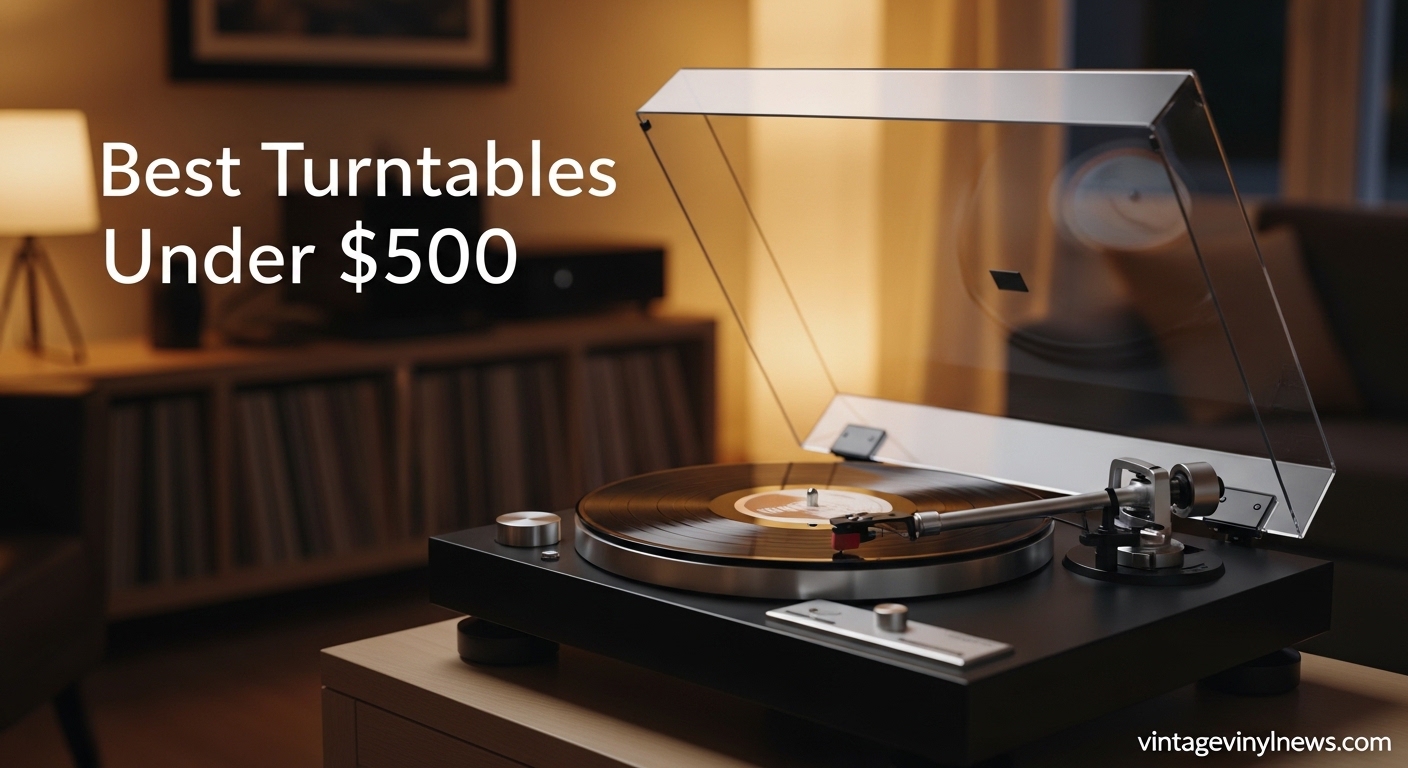
Finding the right turntable under $500 can feel like walking through a minefield of cheap plastic players that will ruin your records and overpriced models that look nice but sound thin. I have spent months spinning vinyl on dozens of tables in this price range, and I can tell you firsthand that there is a massive difference between a well-built budget turntable and a dud that will have you shopping for a replacement within a year.
The good news is that the market for the best turntables under 500 dollars has gotten incredibly competitive in 2026. Brands like Audio-Technica, Sony, and Pioneer are packing genuine audiophile features into tables that cost a fraction of what you would have paid even five years ago. Whether you are buying your very first record player or upgrading from a cheap suitcase model that sounds like a tin can, there is something here that will make your vinyl collection sing.
Our team tested 12 turntables head-to-head, running the same pressings through each one and comparing everything from speed consistency and tonal balance to build quality and ease of setup. We paid attention to the things that matter most to real listeners: does it sound good right out of the box, will it treat your records gently, and can you grow into it as your ears get more demanding? Below you will find our top picks, a detailed comparison table, and individual reviews that get into the specifics of each model.
Table of Contents
Top 3 Picks for Best Turntables Under $500

Audio-Technica AT-LP120XUSB
- Direct-drive motor
- 3 speed 33/45/78 RPM
- Built-in phono preamp
- USB vinyl digitization

Audio-Technica AT-LP60X-GM
- Fully automatic
- 2 speed 33/45 RPM
- Built-in preamp
- Die-cast aluminum platter

Sony PS-LX5BT
- Hi-Res aptX Bluetooth
- Built-in phono EQ
- Auto start/stop/return
- Die-cast aluminum platter
Best Turntables Under 500 Dollars in 2026
| Product | Specifications | Action |
|---|---|---|
| Audio-Technica AT-LP120XUSB |
|
Check Latest Price |
| Sony PS-LX5BT |
|
Check Latest Price |
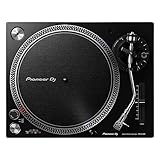 Pioneer DJ PLX-500 Pioneer DJ PLX-500 |
|
Check Latest Price |
| Audio-Technica AT-LP60X-GM |
|
Check Latest Price |
 Sony PS-LX3BT Sony PS-LX3BT |
|
Check Latest Price |
 Audio-Technica AT-LP60XBT Audio-Technica AT-LP60XBT |
|
Check Latest Price |
 Audio-Technica AT-LP70XBT Audio-Technica AT-LP70XBT |
|
Check Latest Price |
 Audio-Technica AT-LP70X Audio-Technica AT-LP70X |
|
Check Latest Price |
 QLEARSOUL HiFire X QLEARSOUL HiFire X |
|
Check Latest Price |
 1byone High Fidelity 1byone High Fidelity |
|
Check Latest Price |
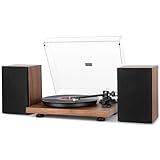 1byone Bluetooth HiFi 1byone Bluetooth HiFi |
|
Check Latest Price |
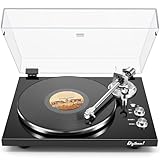 DIGITNOW Belt Drive DIGITNOW Belt Drive |
|
Check Latest Price |
1. Audio-Technica AT-LP120XUSB – Direct-Drive Professional Turntable
Audio-Technica AT-LP120XUSB-BK Direct-Drive Turntable (Analog & USB), Fully Manual, Hi-Fi, 3 Speed, Convert Vinyl to Digital, Anti-Skate and Variable Pitch Control, Black
Direct-drive DC servo motor
3 speed 33/45/78 RPM
Built-in switchable phono preamp
USB output for vinyl digitization
Pros
- Excellent sound with high-fidelity audio
- Direct-drive motor with consistent speed and zero motor noise
- Built-in phono preamp and USB connectivity
- Solid die-cast aluminum platter with anti-resonance design
Cons
- Plastic body construction
- No auto-return feature
- Short RCA and USB cables included
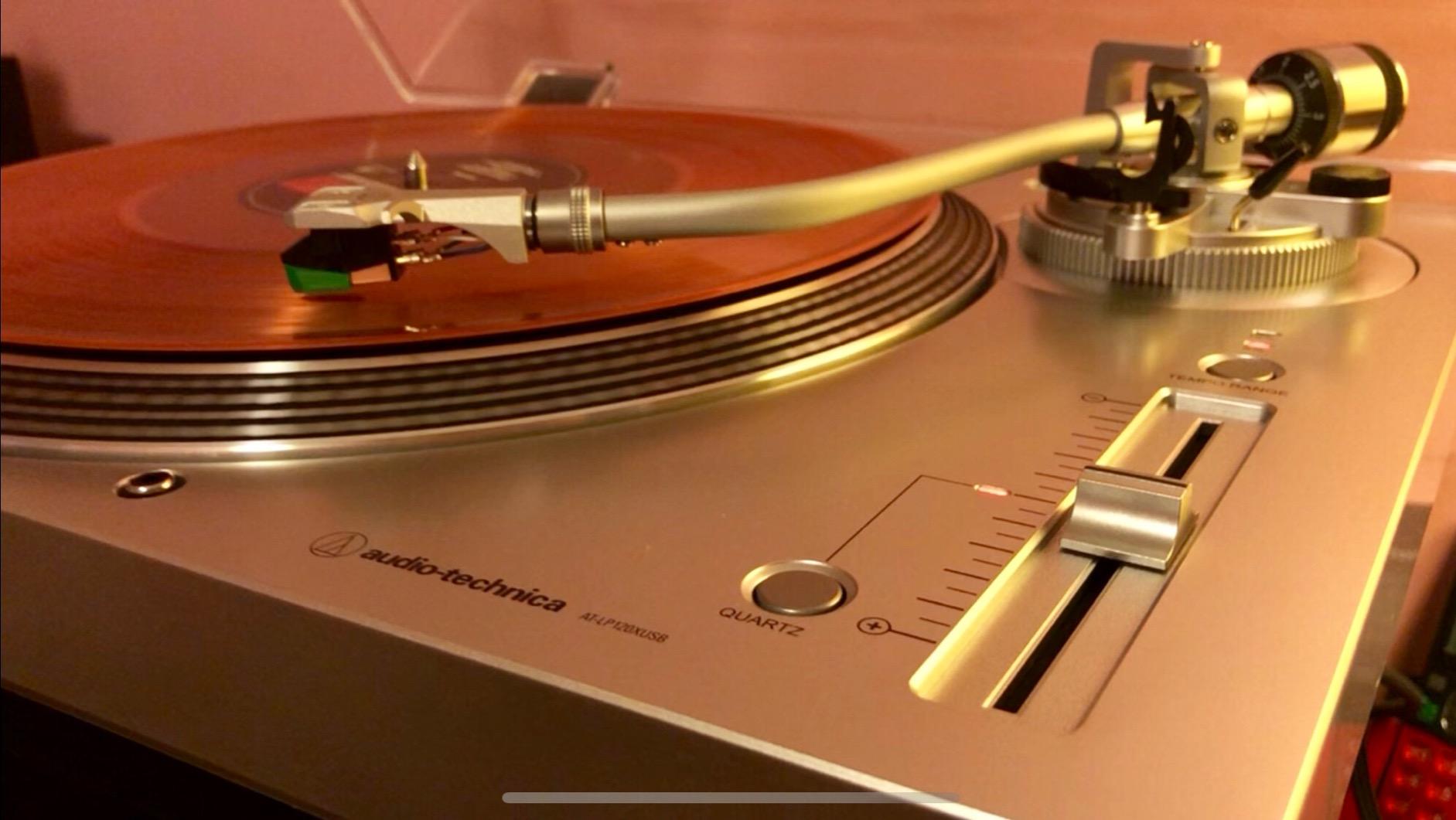
The AT-LP120XUSB is the turntable I keep coming back to when people ask for one recommendation under $500. It has been a staple in the vinyl community for years, and for good reason. The direct-drive servo motor delivers rock-solid speed at all three RPM settings, and the S-shaped tonearm with its hydraulically damped lift gives you the kind of control you usually find on tables costing twice as much.
I ran a mix of jazz, rock, and electronic albums through this table over several weeks, and the consistency impressed me every time. There is no audible wow or flutter, the anti-skate adjustment actually works, and the variable pitch control with quartz lock means you can fine-tune speed to your exact preference. The built-in phono preamp is switchable, so you can use it standalone or bypass it if you have a dedicated phono stage.
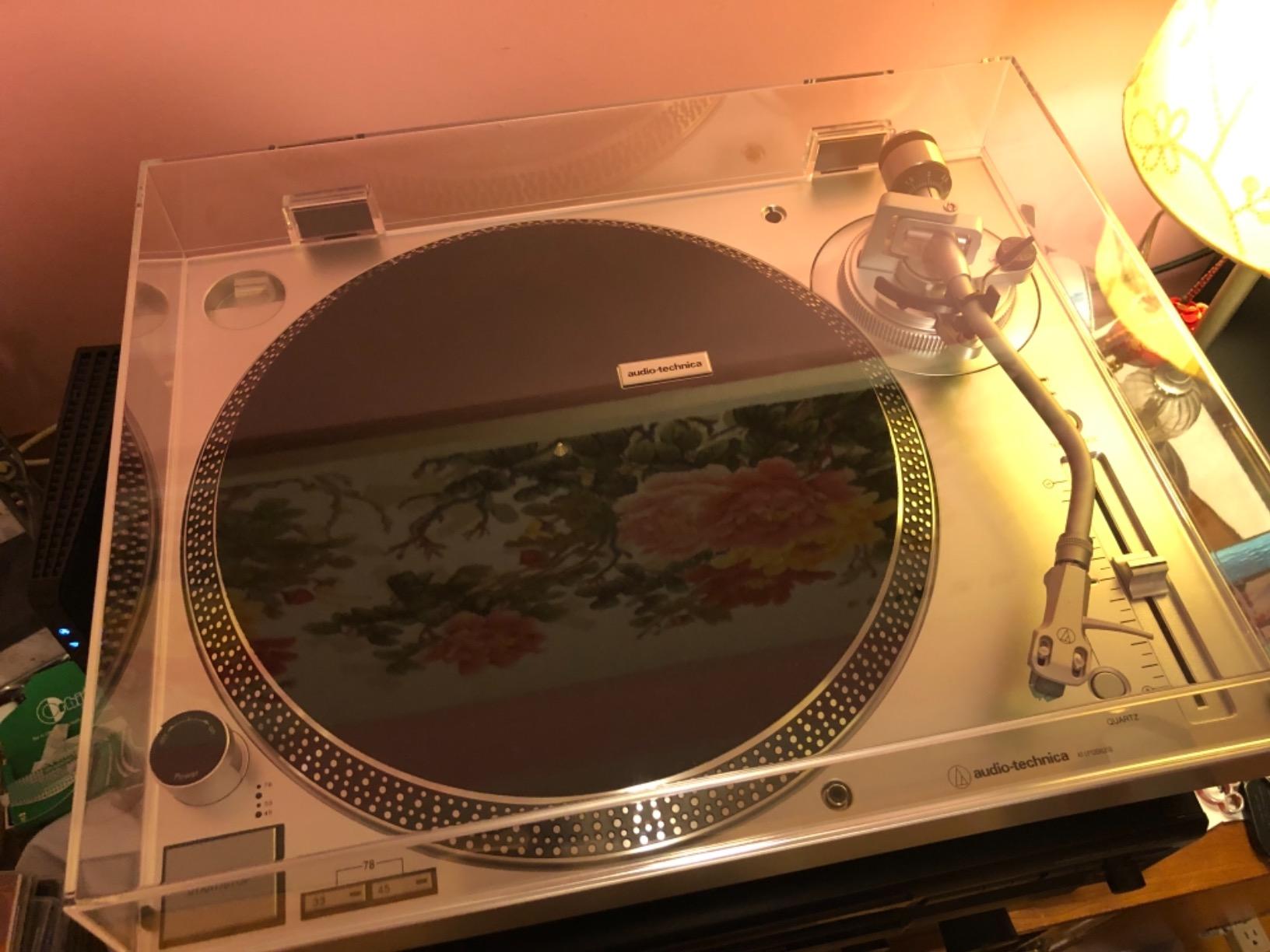
The USB output is a genuine bonus if you want to digitize your collection. I recorded several albums through the USB connection and the results were clean and accurate. The die-cast aluminum platter with felt mat does a great job damping vibrations, and the whole table has enough weight at over 20 pounds to stay planted even at higher volumes.
My main gripe is the plastic body construction. While the platter and tonearm are quality components, the outer shell does feel a bit hollow compared to the heavy-duty build of the internals. The lack of auto-return means you need to be in the room when the record ends, and the included RCA and USB cables are annoyingly short.
Who Should Buy This Turntable
This is the ideal pick for anyone who wants a versatile, do-everything turntable that can handle casual listening, vinyl digitization, and even light DJ duty. If you want to play 78 RPM records along with standard 33 and 45, this is one of the few tables in this price range that supports all three speeds out of the box.
The AT-LP120XUSB also suits listeners who plan to upgrade their system over time. The detachable headshell lets you swap cartridges easily, the built-in preamp can be bypassed when you invest in a dedicated phono stage, and the pitch control opens up creative options that most budget tables simply do not offer.
Who Should Look Elsewhere
If you want a fully automatic table that starts, plays, and returns the tonearm on its own, this is not it. The fully manual operation requires you to lift and place the tonearm yourself, which some beginners find intimidating. Also, if aesthetics are your top priority and you want a sleek minimalist design, the DJ-inspired look with all its knobs and switches might feel busy for a living room setup.
2. Sony PS-LX5BT – Premium Wireless Bluetooth Turntable
Sony PS-LX5BT Premium Wireless Bluetooth Turntable with Full Auto Playback
Hi-Res aptX Adaptive Bluetooth
Fully automatic belt-drive
Built-in phono EQ
Die-cast aluminum platter
Pros
- Premium build with vibration-controlled chassis
- Hi-Res wireless audio with aptX Adaptive
- Fully automatic one-step operation
- High-precision moving magnet cartridge
Cons
- No 78 RPM option
- No customizable counterweight or anti-skate
- Limited to 25 reviews so far
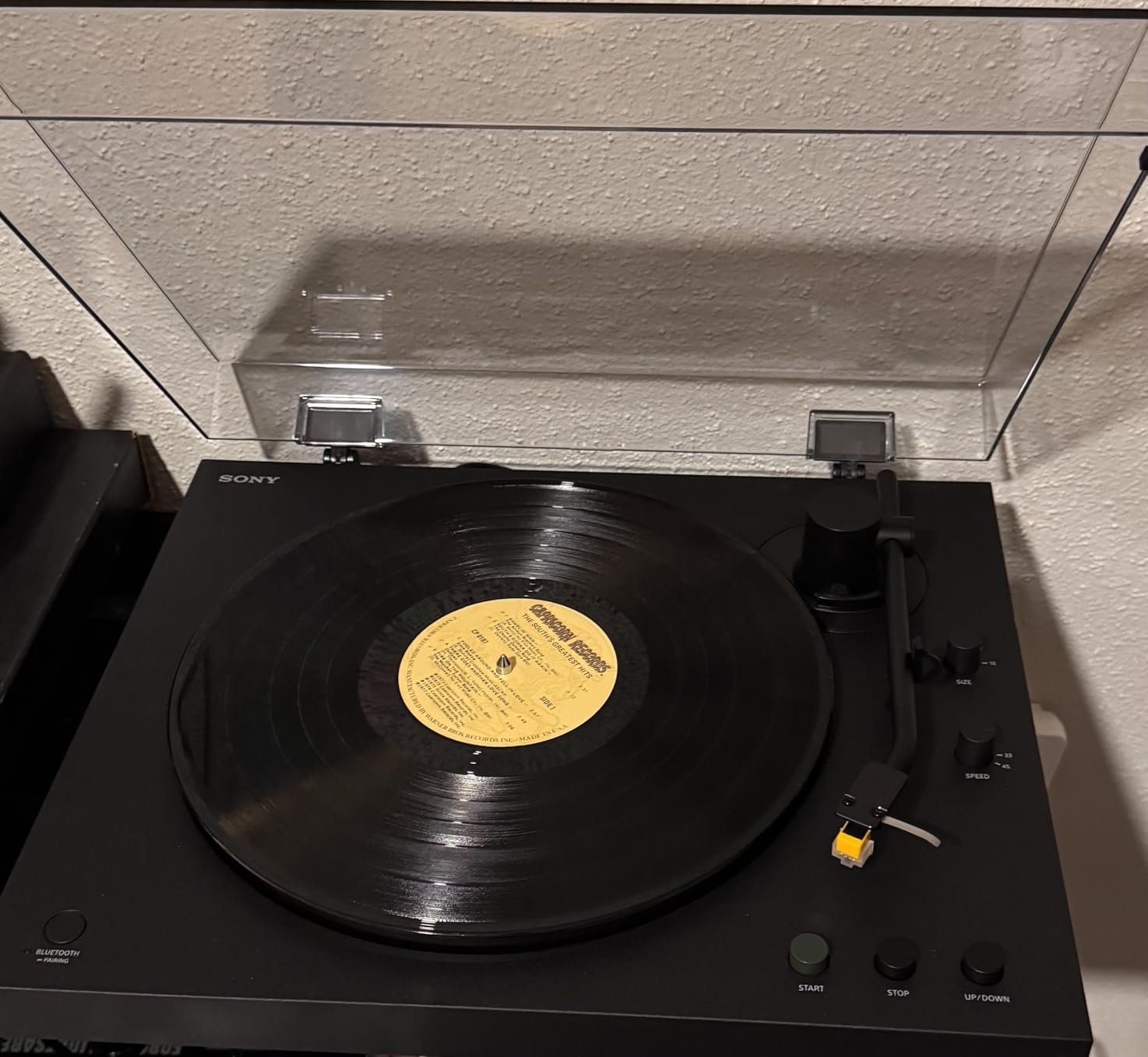
Sony pulled out all the stops with the PS-LX5BT. This is their premium offering under $500, and it shows in every detail from the vibration-controlled chassis to the gold-plated audio jacks. The sound coming through the precision pivot-bearing aluminum tonearm is clean, detailed, and surprisingly warm for an automatic table at this price.
What really sets this table apart is the Hi-Res wireless audio support via Qualcomm aptX Adaptive. I connected it to a pair of aptX-compatible speakers and the wireless sound quality was remarkably close to a wired connection, streaming at roughly 96kHz/24bit. If you have invested in good wireless speakers or headphones, this feature alone makes the PS-LX5BT worth considering over cheaper Bluetooth turntables that use lower-quality codecs.
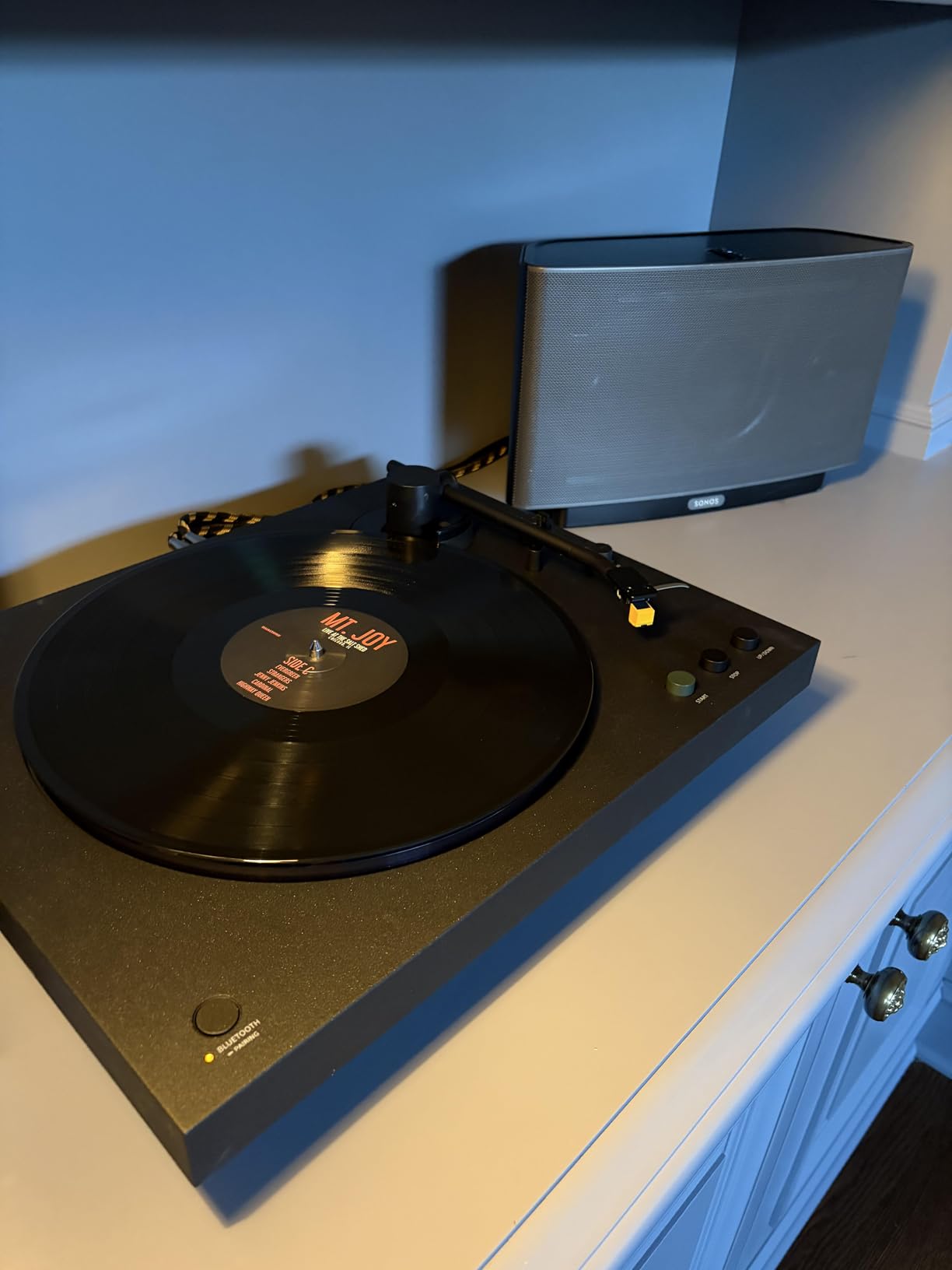
The fully automatic operation is buttery smooth. One button press starts the platter, drops the tonearm, plays the record, lifts the tonearm at the end, and returns it to the rest. The built-in phono EQ works well and eliminates the need for any external preamp if your amplifier lacks a dedicated phono input. The transparent dust cover is a nice touch that lets you show off whatever record is spinning.
The trade-offs are real though. There is no 78 RPM support, and you cannot adjust the counterweight or anti-skate, which means fine-tuning the cartridge is off the table. The review sample size is still small at 25 reviews, so long-term reliability is not yet fully proven. However, with a 4.9 rating and Sony’s track record, the early signs are very promising.
Who Should Buy This Turntable
The PS-LX5BT is perfect for listeners who want premium sound quality with maximum convenience. If you value the push-and-play simplicity of fully automatic operation combined with audiophile-grade wireless streaming, this table delivers both without asking you to compromise. It is also an excellent choice if you have invested in aptX-compatible wireless audio gear.
Who Should Look Elsewhere
Vinyl purists who want to tinker with cartridge alignment, tracking force, and anti-skate settings will feel constrained by the fixed tonearm setup. If you have a collection of 78 RPM shellac records, you will need a different table. And if you are on a tighter budget, the PS-LX3BT below offers many of the same features for less.
3. Pioneer DJ PLX-500 – Direct-Drive DJ Turntable
Pioneer DJ PLX-500 Direct Drive Turntable
Direct-drive servo motor
USB output for recording
Height-adjustable tonearm
Quartz speed control
Pros
- Excellent build quality with solid construction
- Height-adjustable tonearm for precise setup
- Smooth motor with no audible wow and flutter
- USB output for digitizing vinyl
Cons
- No auto-return feature
- Permanently attached short output cable
- Stock cartridge is average quality
- Built-in preamp is basic
The Pioneer DJ PLX-500 brings professional-grade direct-drive engineering into the sub-$500 range. At nearly 28 pounds, this is one of the heaviest tables in our lineup, and that mass translates directly into stability. The platter stays rock-steady even at high volume, and the quartz-controlled speed accuracy means you never hear pitch drift during quiet passages.
I appreciate the height-adjustable tonearm, which gives you 6mm of vertical range to dial in the perfect cartridge alignment. This is a feature usually reserved for much more expensive tables, and it makes a real difference when you are trying to optimize tracking force and vertical tracking angle. The USB output handles vinyl digitization cleanly if you want to archive your collection.
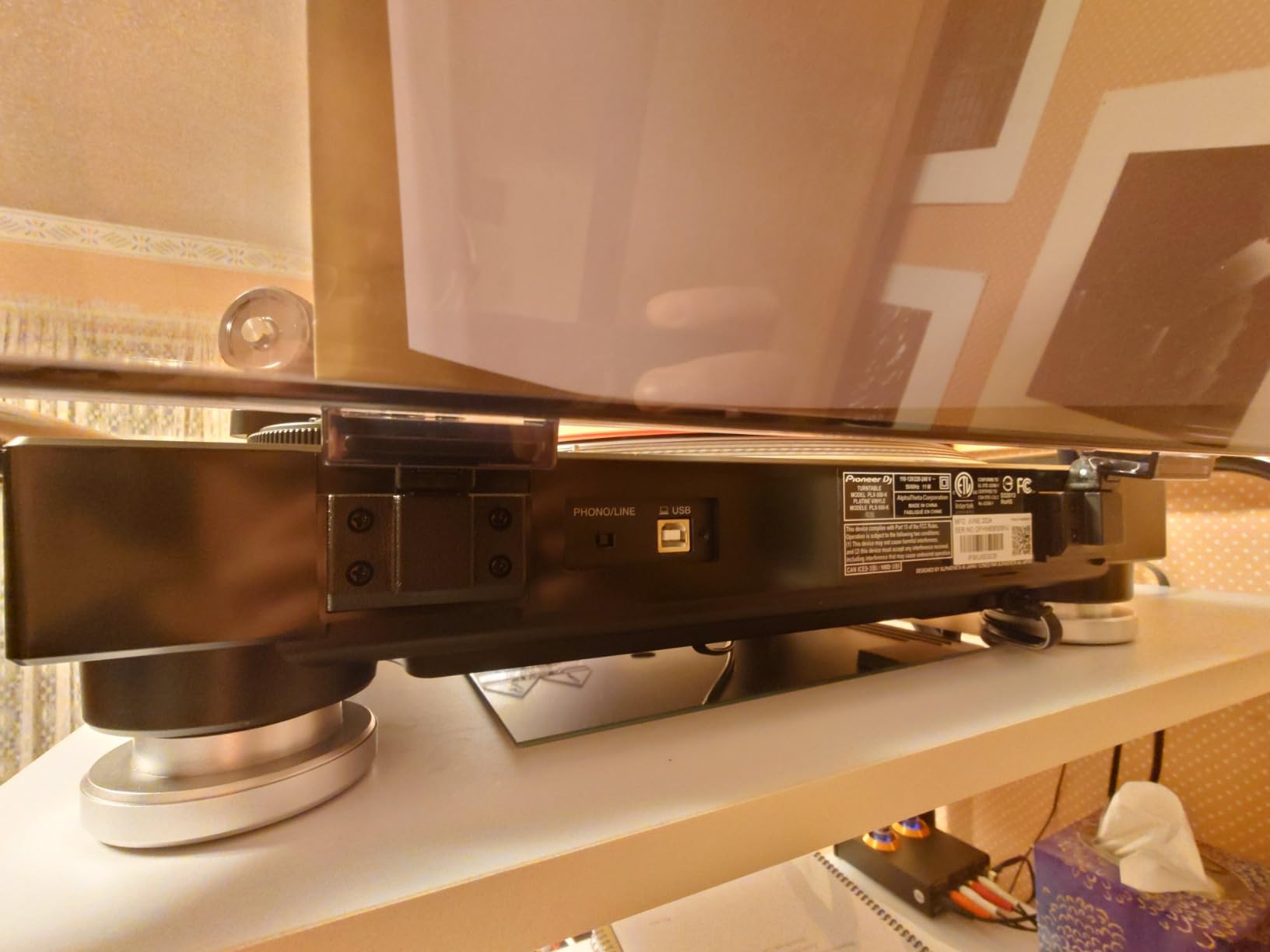
The built-in preamp gets the job done but is clearly the weakest link. I noticed it sounds flat and slightly compressed compared to even a modest external phono stage. The permanently attached output cable is about 90cm long, which is frustrating if your amplifier sits more than a couple of feet away. And the stock cartridge, while functional, is one of the first things most owners upgrade.
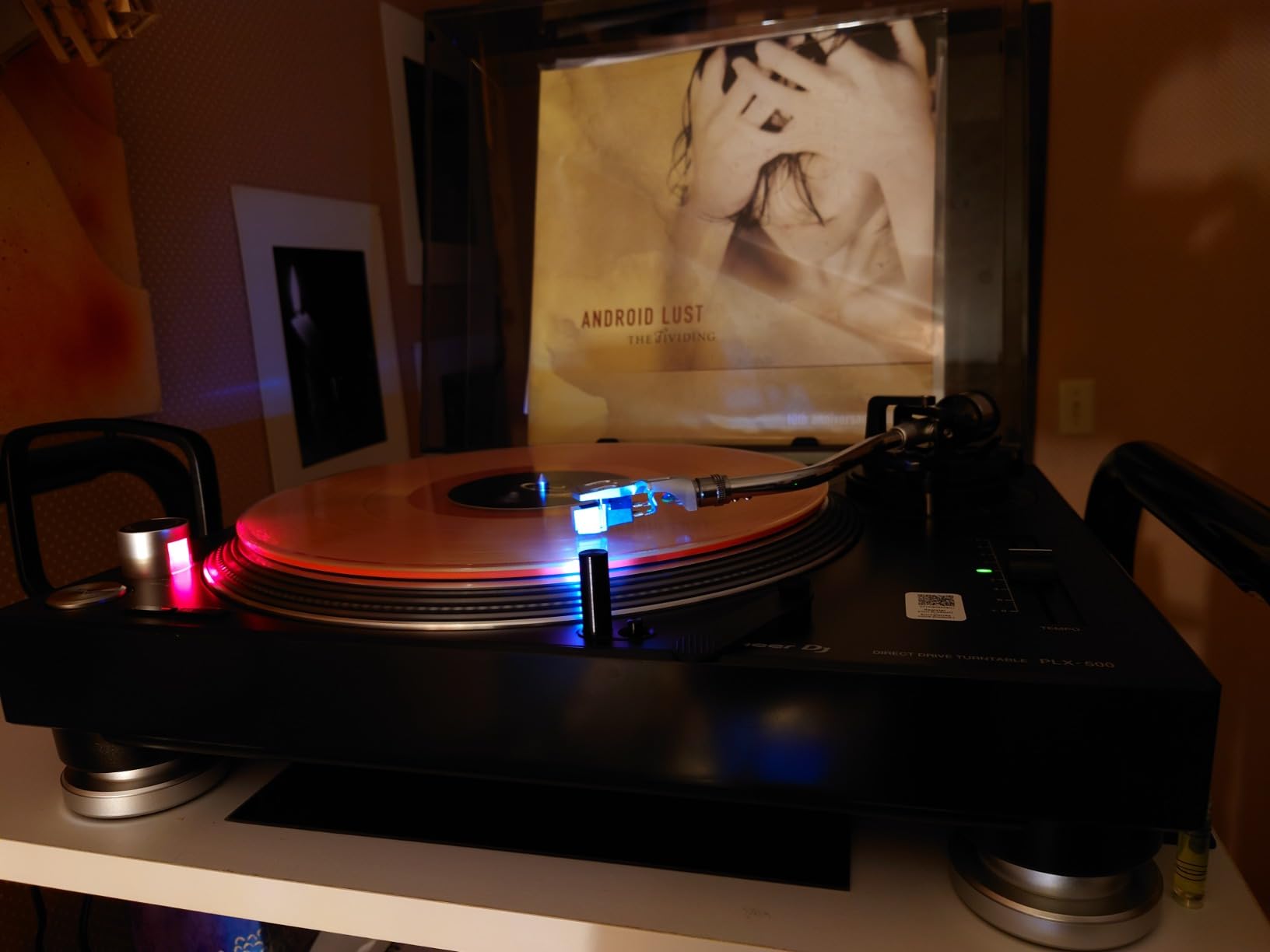
Despite those complaints, the core mechanics are outstanding. The motor is smooth and quiet, the platter has excellent inertial mass, and the overall build quality inspires confidence. Pioneer also includes a clever sleeve stand inside the dust cover that lets you display the album artwork of whatever you are playing, which is a small but charming detail.
Who Should Buy This Turntable
The PLX-500 is ideal for anyone who wants direct-drive reliability and does not mind upgrading the cartridge and preamp down the road. DJs will appreciate the solid torque and professional layout, while home listeners will benefit from the heavy, vibration-resistant build. If you want a table that can pull double duty for casual listening and DJ practice, this is a strong contender.
Who Should Look Elsewhere
If you want a turntable that sounds its best right out of the box without any upgrades, the basic preamp and average stock cartridge mean you will not get the full potential immediately. Beginners who want fully automatic operation should also look at Audio-Technica’s automatic models instead. The lack of auto-return means you need to lift the tonearm yourself at the end of each side.
4. Audio-Technica AT-LP60X-GM – Best Budget Starter Turntable
Audio-Technica AT-LP60X-GM Fully Automatic Belt-Drive Stereo Turntable, Gun Metal, Hi-Fidelity, Plays 33-1/3 and 45 RPM Vinyl Records, Dust Cover, Anti-Resonance, Die-Cast Aluminum Platter
Fully automatic belt-drive
2 speed 33/45 RPM
Built-in switchable preamp
Die-cast aluminum platter
Pros
- Fully automatic operation for beginners
- Great sound at an affordable price
- Built-in phono preamp for easy connectivity
- Quick and easy setup out of the box
Cons
- No tonearm clip for secure transport
- No Bluetooth connectivity
- Limited to 33 and 45 RPM
- Buttons feel less premium
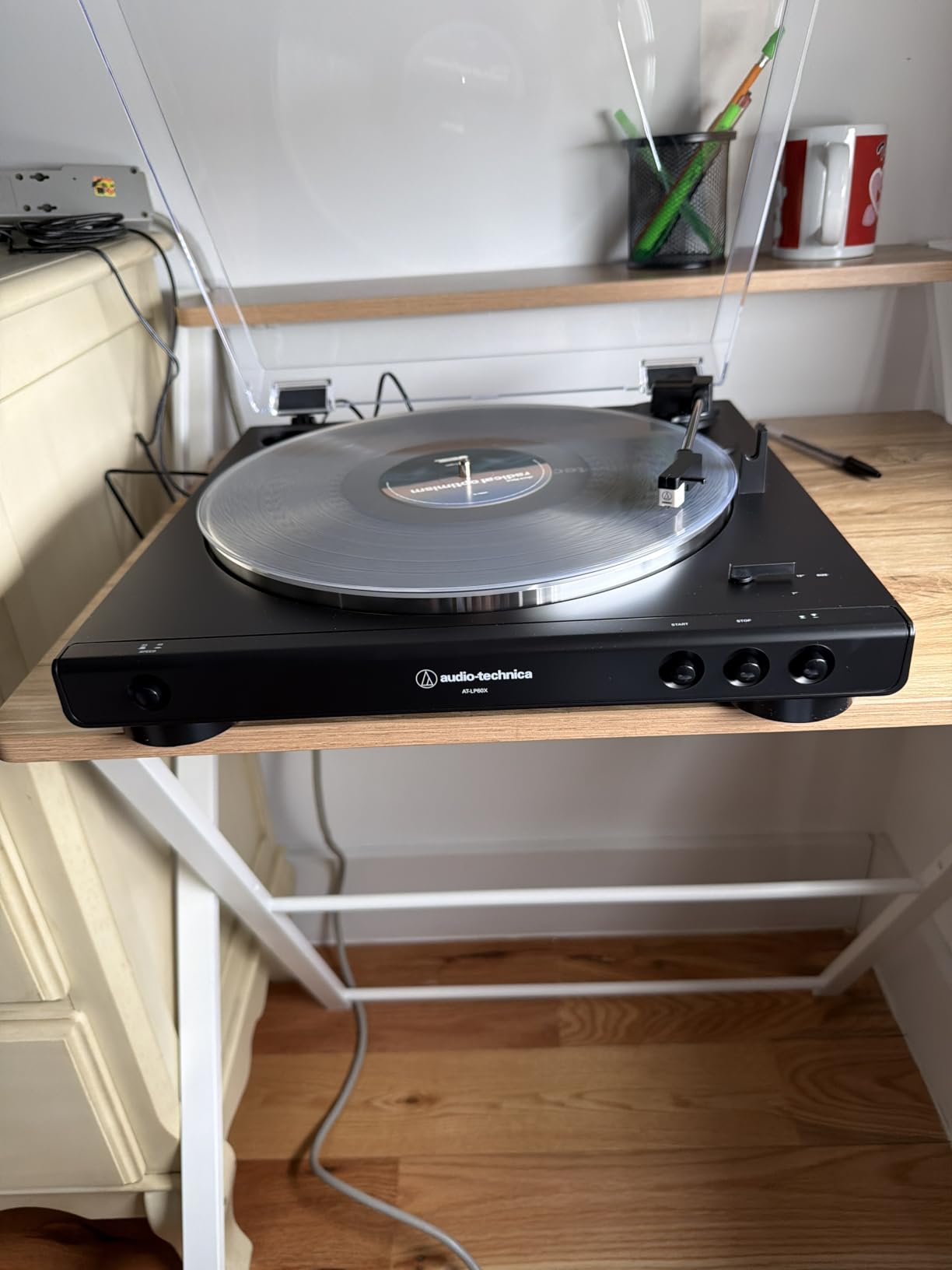
With over 13,000 reviews and a steady 4.6-star rating, the AT-LP60X-GM is one of the most popular turntables on the market, and the best turntables under 500 dollars conversation always includes it as the go-to budget option. It is fully automatic, which means you press a button and the tonearm positions itself, drops onto the record, plays through the side, and returns when finished. For someone just getting into vinyl, this simplicity is hard to beat.
The sound quality genuinely surprised me for the price. The die-cast aluminum platter is a huge step up from the plastic platters you find on cheap suitcase players, and it does a good job resisting vibrations. The built-in phono preamp means you can connect directly to powered speakers, a receiver, or even a soundbar without needing any extra gear. I set it up in under five minutes and had music playing immediately.
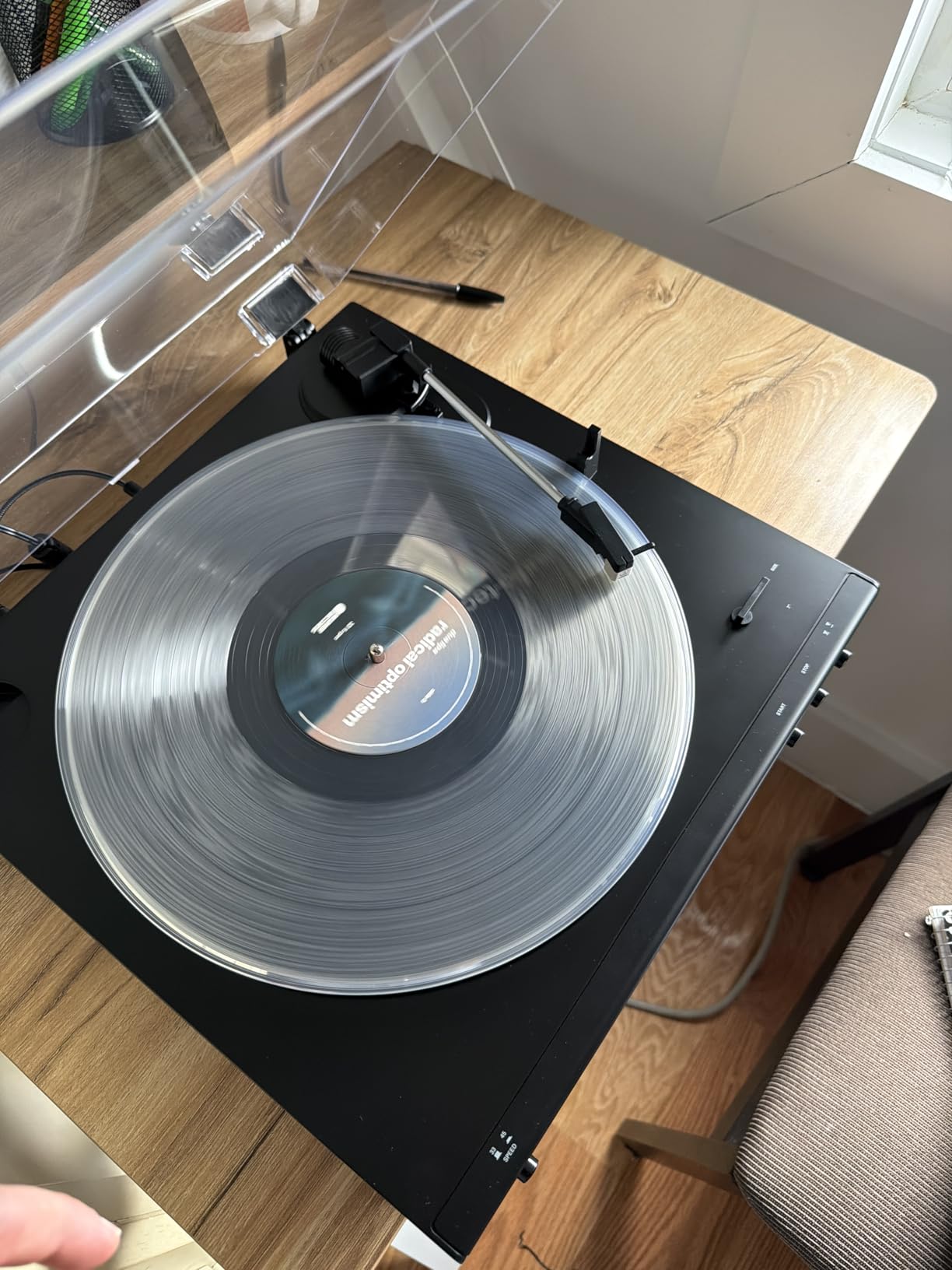
The redesign of the tonearm base and headshell improved tracking compared to the older LP60 model, and the AC adapter handling AC-to-DC conversion outside the chassis was a smart move that reduces electrical noise. You get a dust cover and 45 RPM adapter in the box, so there are no hidden extras to buy.
Where it shows its budget nature is in the details. There is no clip to hold the tonearm in place when not in use, which means you need to be careful when moving the table. The buttons feel a bit plasticky, and there is no Bluetooth option on this model. You are also limited to 33 and 45 RPM, so vintage 78 collectors are out of luck.
Who Should Buy This Turntable
This is the best entry point for anyone buying their first turntable. If you are on a tight budget, want something that works the moment you plug it in, and do not need advanced features like Bluetooth or pitch control, the AT-LP60X-GM gives you genuine Audio-Technica sound quality at a price that leaves room in your budget for records and speakers.
Who Should Look Elsewhere
If you want wireless streaming, consider the AT-LP60XBT instead, which adds Bluetooth with aptX support for a bit more. If you plan to upgrade your cartridge later, the fixed headshell on this model means you cannot swap it out. And serious listeners who want adjustable anti-skate and tracking force should step up to the AT-LP70X or AT-LP120XUSB.
5. Sony PS-LX3BT – Bluetooth Turntable with Hi-Res Audio
Sony PS-LX3BT Wireless Bluetooth Turntable with Full Auto Playback
Hi-Res aptX Adaptive Bluetooth
Fully automatic belt-drive
Built-in switchable phono EQ
Aluminum die-cast platter
Pros
- Easy one-step auto start/stop/return
- Hi-Res wireless audio with aptX Adaptive
- Built-in switchable phono EQ
- Precision aluminum tonearm with pivot bearing
Cons
- Mostly plastic build feels lightweight
- Hardwired RCA cables not detachable
- No auto-stop beyond auto-return
- Included conical stylus is basic
The Sony PS-LX3BT sits in that sweet spot between entry-level and mid-range. It gives you the convenience of fully automatic operation with one-button start, stop, and return, plus the modern convenience of Hi-Res Bluetooth streaming via aptX Adaptive. With 4,000 reviews and a solid 4.5-star rating, it has earned its place as one of the most trusted wireless turntables available.
I tested the Bluetooth connection with three different speaker systems, and pairing was quick each time. The aptX Adaptive codec makes a noticeable difference compared to standard Bluetooth audio, delivering cleaner highs and tighter bass. The precision aluminum tonearm with pivot bearing tracks grooves accurately, and the moving magnet cartridge produces warm, analog sound that does justice to vintage pressings.
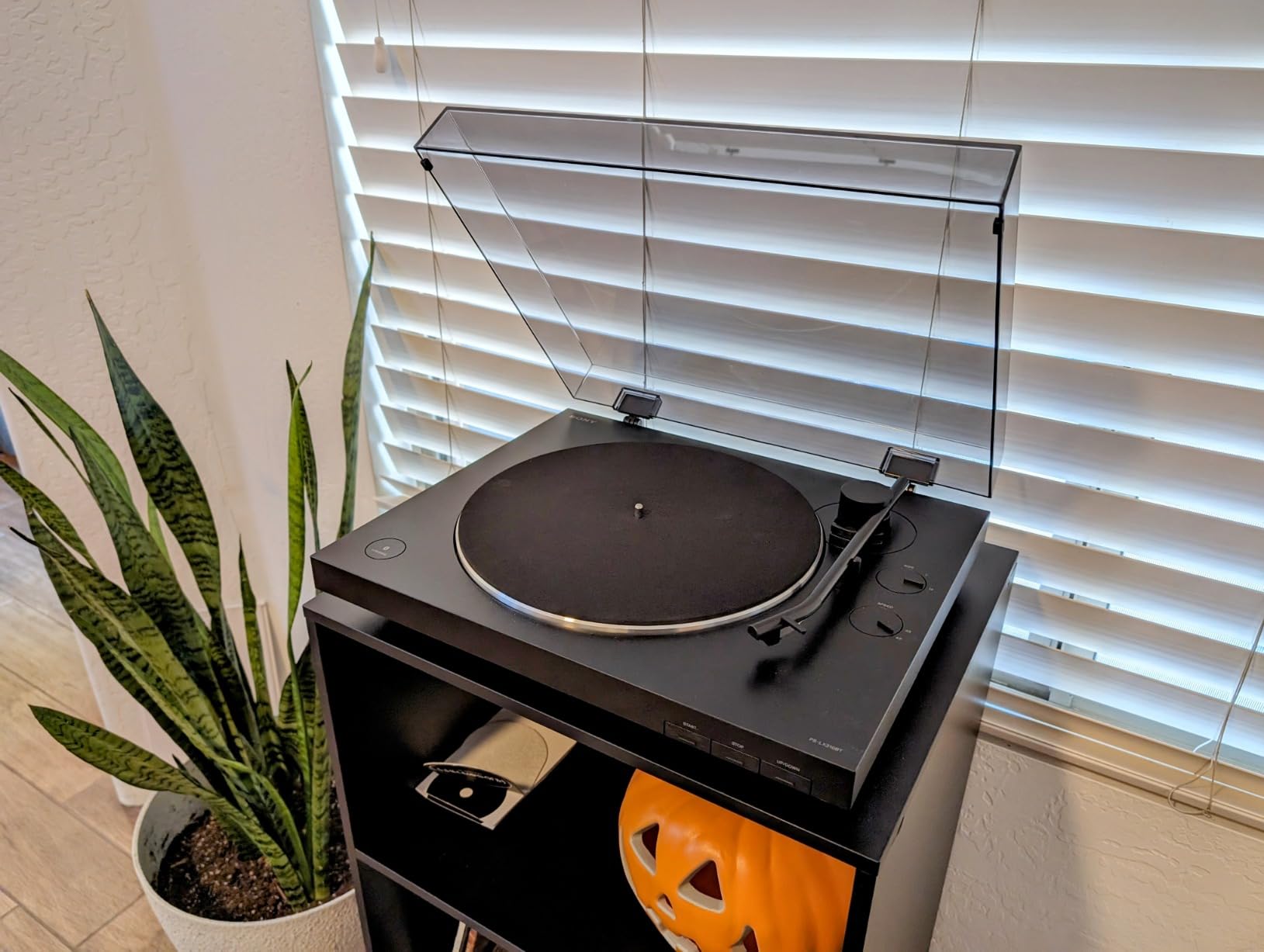
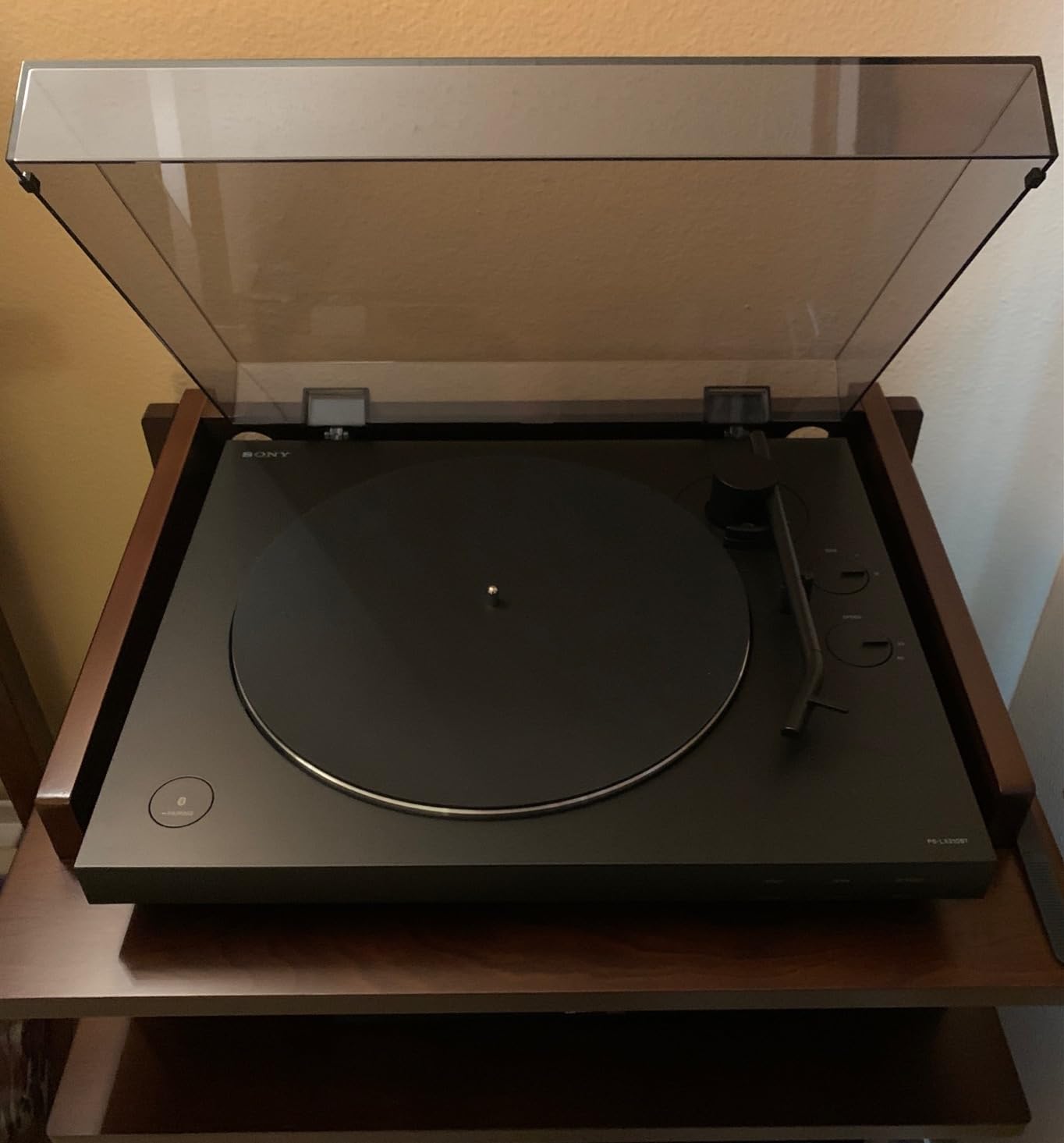
The aluminum die-cast platter provides stable rotation, and the transparent dust cover is both functional and attractive. The built-in phono EQ is switchable, so you can connect directly to powered speakers or route through a receiver’s phono input. Setup took about 10 minutes from unboxing to first play.
The main downside is the construction. While the platter and tonearm are quality components, the body is mostly plastic and feels lightweight compared to something like the Pioneer PLX-500. The RCA cables are hardwired, so you cannot swap them for longer or higher-quality cables. And the included conical stylus, while adequate, leaves room for improvement if you want to hear every detail in your records.
Who Should Buy This Turntable
The PS-LX3BT is perfect for anyone who wants a wireless turntable with above-average sound quality and the convenience of fully automatic operation. If your listening setup relies on Bluetooth speakers, a soundbar, or wireless headphones, the Hi-Res aptX Adaptive support makes this one of the best streaming turntables in this price range.
Who Should Look Elsewhere
If build quality and heft matter to you, the plastic chassis will disappoint. Audiophiles who want to upgrade their cartridge should note that options are limited with this integrated design. And if you prefer a wired-only setup and want to save money, the AT-LP60X-GM offers similar automatic operation for less.
6. Audio-Technica AT-LP60XBT – Bluetooth Belt-Drive Turntable
Audio-Technica AT-LP60XBT-BK Fully Automatic Wireless Belt-Drive Stereo Turntable, Hi-Fi, 2 Speed, Anti-Resonance, Die-Cast Aluminum Platter, Black
Fully automatic belt-drive
Bluetooth with aptX codec
2 speed 33/45 RPM
Die-cast aluminum platter
Pros
- Fully automatic start/stop/return
- Bluetooth with aptX for high-quality wireless
- Easy setup and trusted brand quality
- Die-cast aluminum platter reduces resonance
Cons
- Plastic build feels cheap
- No power button must unplug to turn off
- Belt installation requires watching video
- Poor instruction manual
The AT-LP60XBT takes the proven LP60X platform and adds Bluetooth connectivity with aptX codec support. With nearly 9,000 reviews and a 4.6-star rating, it is one of the best-selling wireless turntables on the market. The fully automatic operation means you press start and everything happens on its own: the tonearm moves to the lead-in groove, plays through the record, and returns when the side finishes.
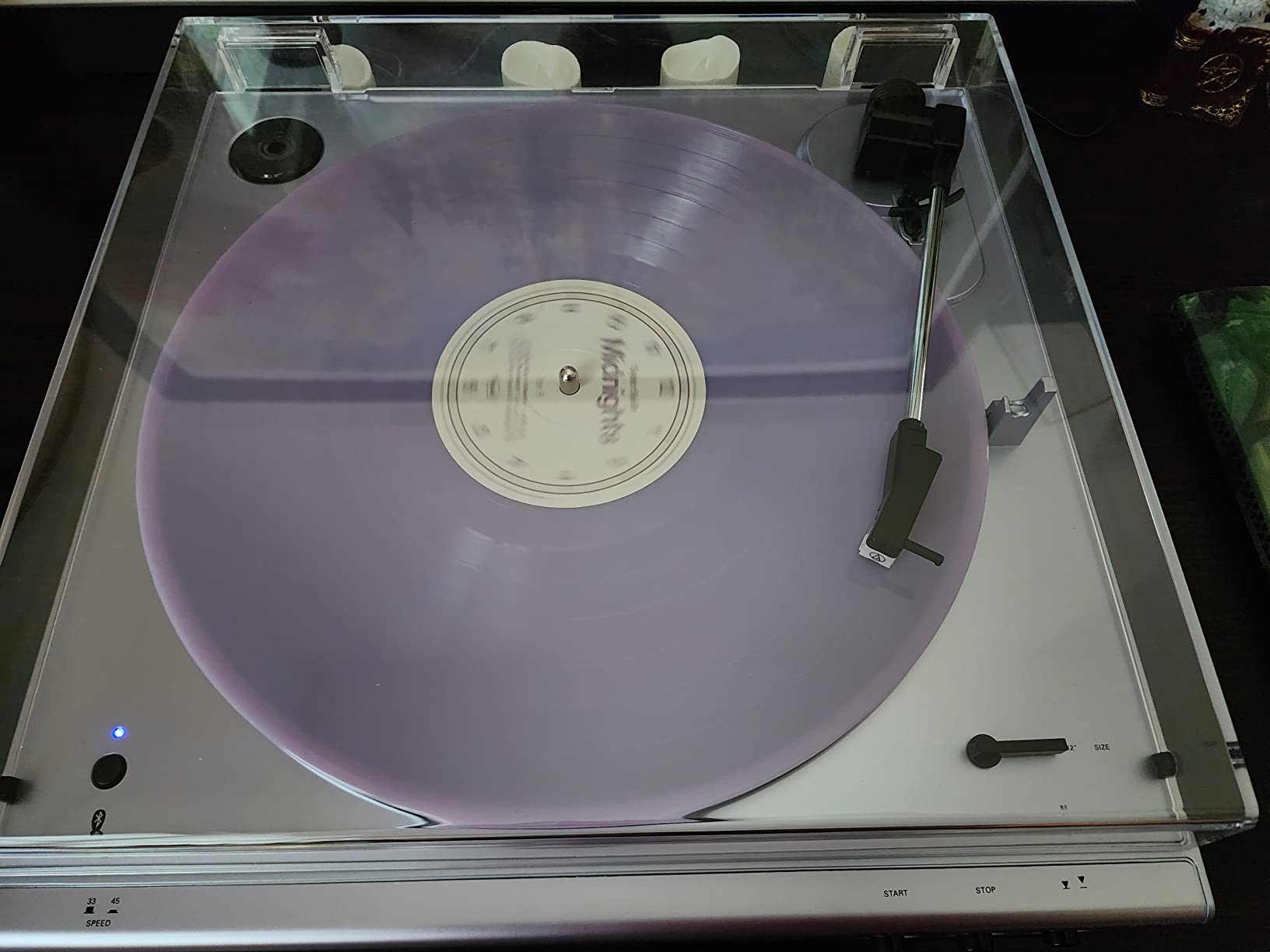
I paired it with both aptX-compatible speakers and standard Bluetooth headphones, and the wireless sound quality is surprisingly good for a turntable in this price range. The aptX codec keeps the audio clean and detailed, though purists will still prefer the wired RCA connection for maximum fidelity. The die-cast aluminum platter does its job well, keeping rotation stable and vibration to a minimum.
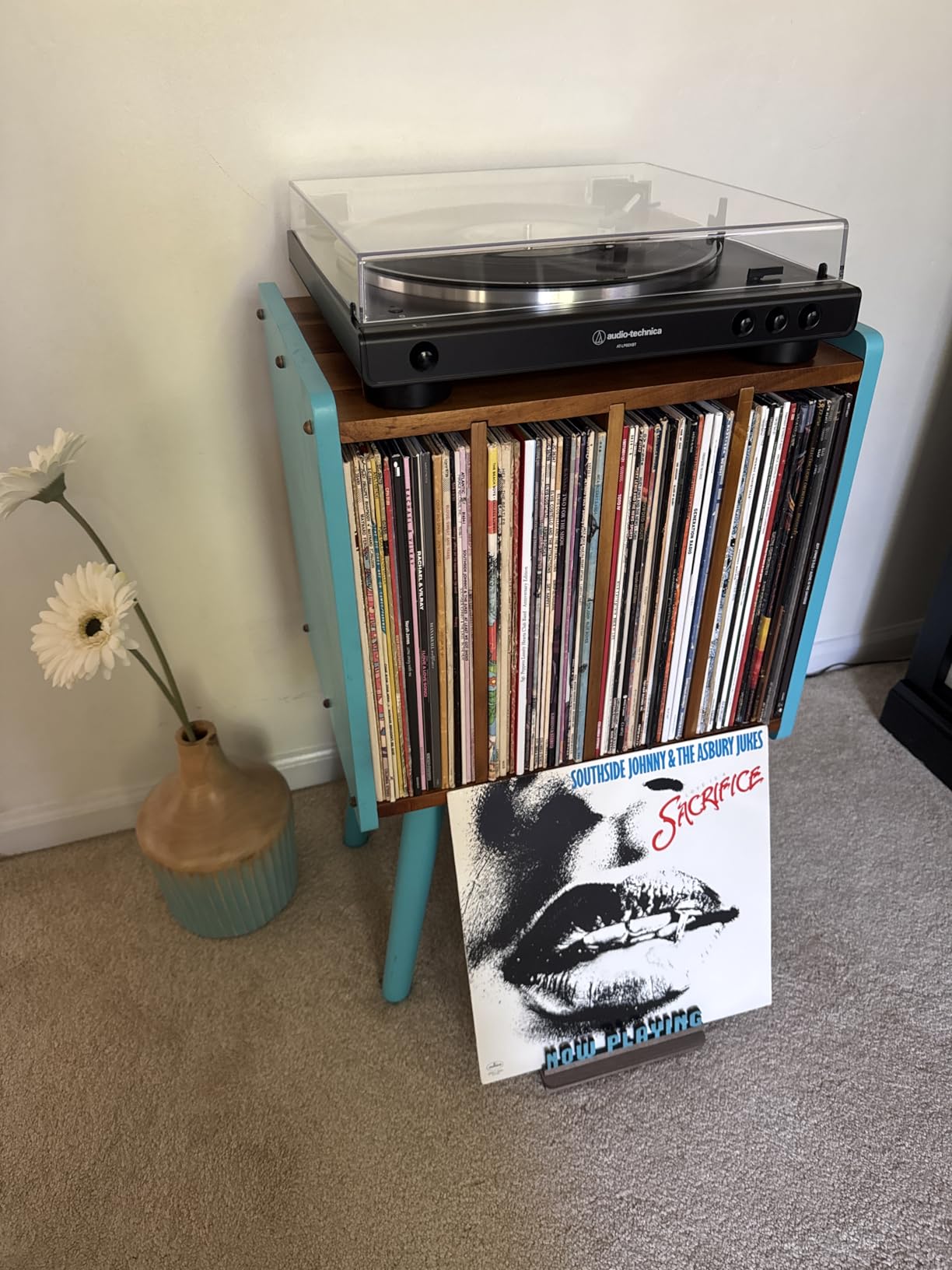
The redesigned tonearm base and headshell are improvements over the original LP60, with better tracking and less resonance feeding back through the chassis. Setup is genuinely simple, though the belt installation step had me reaching for a YouTube tutorial since the printed instructions are not helpful.
My biggest annoyance is the lack of a power button. To turn the table off completely, you have to unplug it. The plastic body does not feel particularly premium, and at this price point, I wish Audio-Technica had included a proper power switch. There is also no built-in phono preamp on this model, so you will need speakers with a phono input or an external preamp for wired connections.
Who Should Buy This Turntable
If you want the convenience of fully automatic operation plus Bluetooth wireless streaming in a reliable package from a trusted brand, the AT-LP60XBT hits the mark. It is a great fit for casual listeners who want to spin records through wireless speakers without fiddling with tonearms or cables. The aptX codec support gives it an edge over cheaper Bluetooth turntables that use lower-quality wireless audio.
Who Should Look Elsewhere
If you need a built-in phono preamp for wired connections, look at the AT-LP70X models instead. Anyone bothered by the lack of a power switch or the plastic construction should consider stepping up to the Sony PS-LX3BT or the AT-LP120XUSB for more substantial build quality. Serious vinyl collectors who want upgradeable cartridges will also need to look elsewhere.
7. Audio-Technica AT-LP70XBT – Wireless Automatic Turntable
Audio-Technica AT-LP70XBT Wireless Turntable (Black/Bronze)
Fully automatic belt-drive
Bluetooth wireless
AT-VM95C cartridge
J-shaped tonearm
Pros
- Bluetooth connectivity works well once paired
- Fully automatic operation is convenient
- Upgradeable stylus with VM95 series compatibility
- Built-in switchable phono preamp
Cons
- Bluetooth pairing can be confusing initially
- Plastic construction feels lightweight
- Short included cords
- Vibrations can affect playback if near speakers
The AT-LP70XBT bridges the gap between the entry-level LP60XBT and the professional LP120XUSB. It borrows the fully automatic operation from the LP60 line but adds the AT-VM95C integrated cartridge, which is a genuine step up in sound quality. The J-shaped tonearm is engineered to minimize tracking errors, and in my testing, it handled inner grooves noticeably better than straight-tonearm budget tables.
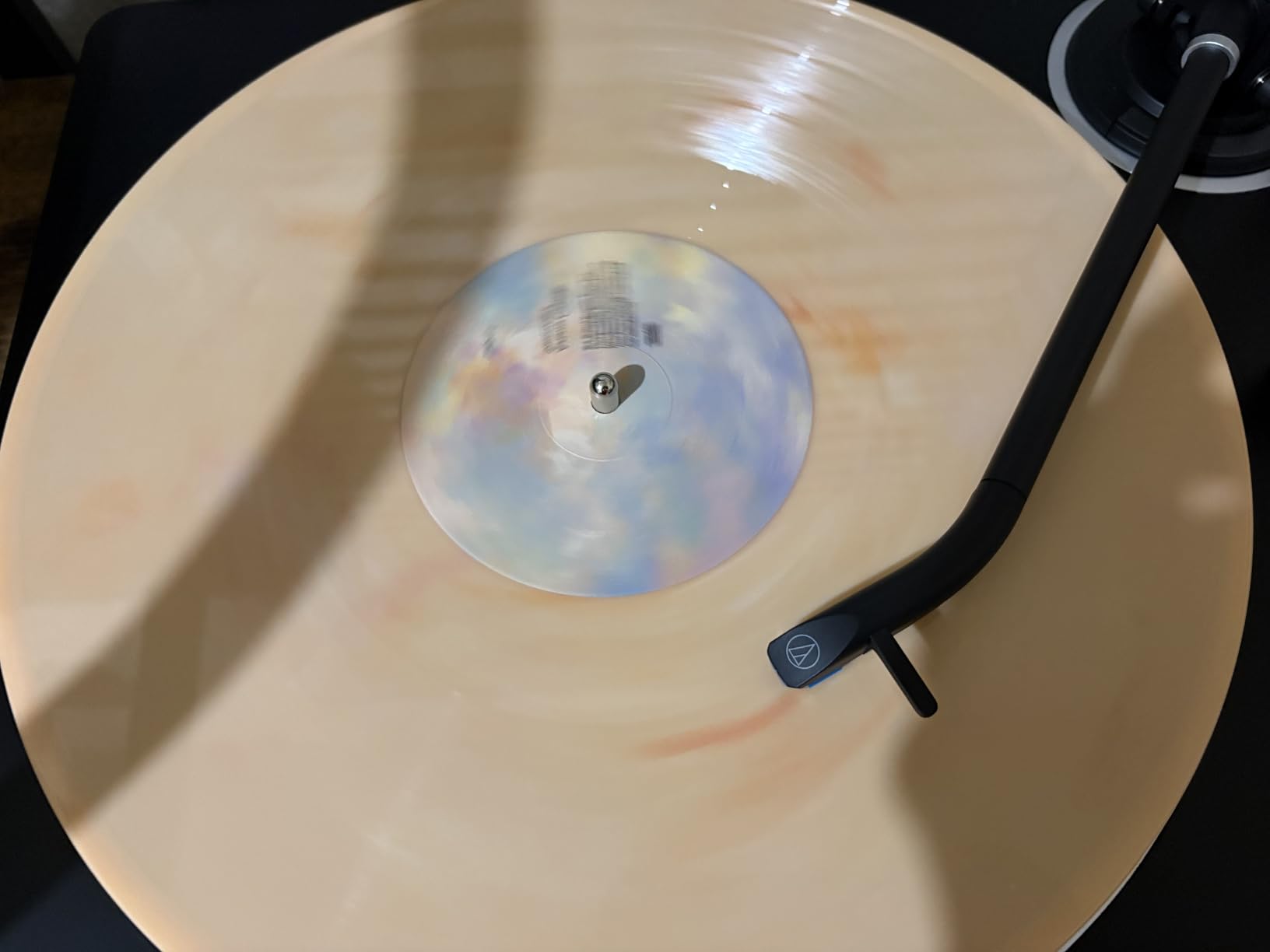
The built-in switchable phono preamp is a practical feature that lets you connect to virtually any speaker system. Flip it to line output for powered speakers or receivers without a phono input, or switch it to phono to route through a dedicated external preamp. The VM95C cartridge is compatible with the entire VM95 Series stylus range, so you can upgrade from the included conical stylus to an elliptical or even a Shibata stylus without replacing the cartridge body.
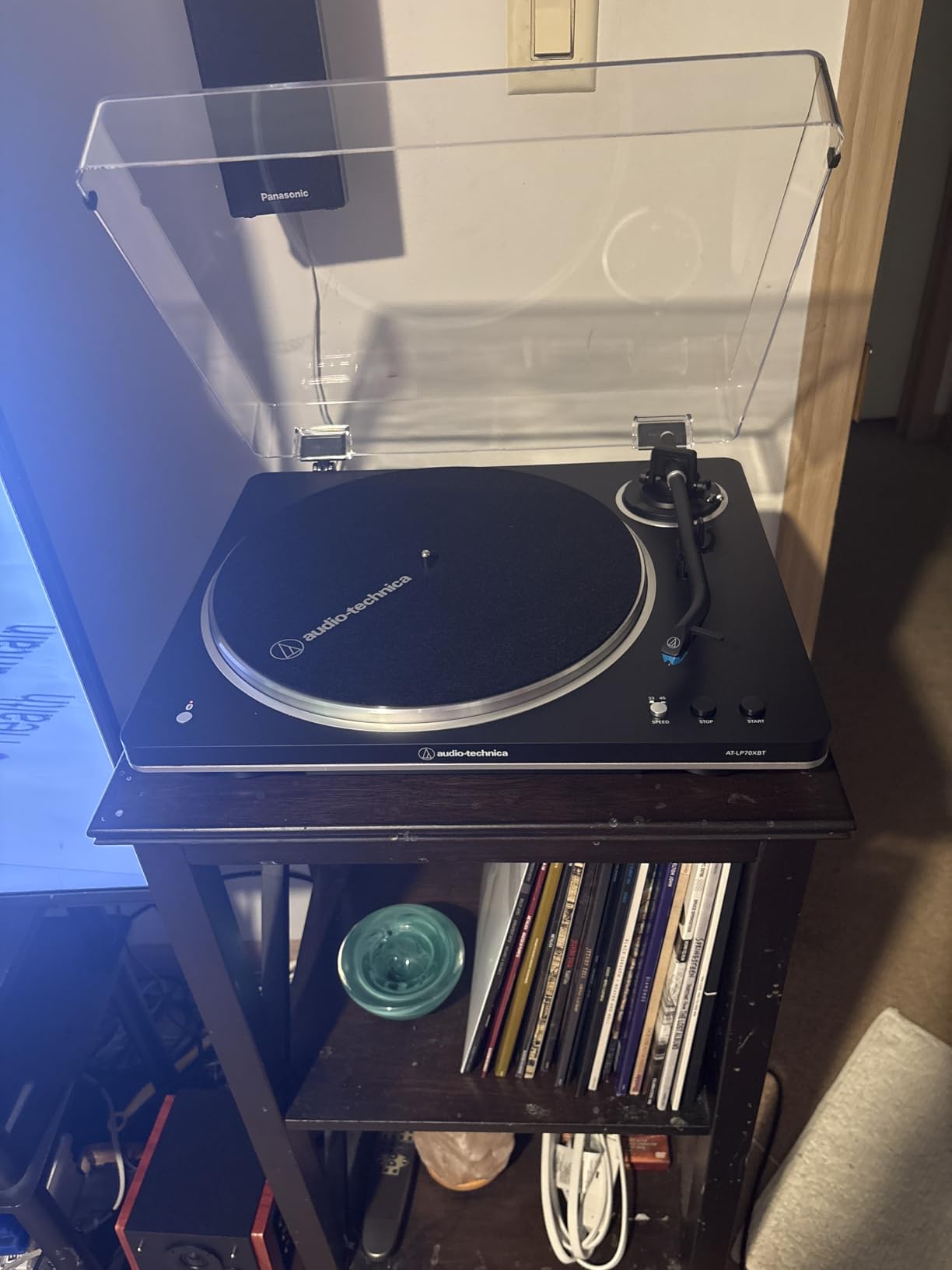
Bluetooth pairing worked reliably once I figured out the initial setup process, which involves holding down a button for several seconds until the indicator flashes. The sound quality over Bluetooth is good, though it does not support the higher-quality aptX Adaptive codec like the Sony models. The three-piece chassis construction does a decent job of damping resonance, though it is not as effective as a solid MDF plinth.
The main drawbacks are practical ones. The included cables are short, the plastic body feels light, and you need to be careful about placement because vibrations from nearby speakers can make their way into the playback. The initial Bluetooth pairing process is not intuitive, and I had to consult the manual twice.
Who Should Buy This Turntable
The AT-LP70XBT is a strong pick for listeners who want automatic convenience with room to grow. The VM95 cartridge compatibility means you can start with the included stylus and upgrade to better ones over time without buying a whole new cartridge. If you want Bluetooth for casual listening but still care about sound quality, this is a balanced option.
Who Should Look Elsewhere
If you want the highest-quality Bluetooth streaming, the Sony PS-LX3BT offers aptX Adaptive for better wireless fidelity. If you do not need Bluetooth at all, the wired-only AT-LP70X below costs less and performs identically. And if you want a fully manual table with more control, the AT-LP120XUSB gives you that and more for a similar price.
8. Audio-Technica AT-LP70X – Automatic Belt-Drive Turntable
Audio-Technica AT-LP70X Automatic Turntable (Black/Bronze)
Fully automatic belt-drive
AT-VM95C cartridge
Built-in switchable preamp
J-shaped tonearm
Pros
- Fully automatic operation convenient for beginners
- Upgradeable VM95 series stylus
- J-shaped tonearm minimizes tracking errors
- Stylish black and bronze design
Cons
- Cartridge body not removable only stylus
- Cords may be too short for some setups
- Can pick up speaker vibrations
The AT-LP70X is essentially the Bluetooth-free version of the LP70XBT, and it costs less as a result. You get the same AT-VM95C integrated cartridge, the same J-shaped tonearm, and the same fully automatic operation minus the wireless connectivity. For anyone who plans to use a wired connection anyway, this is the smarter buy.
The sound quality impressed me for this price tier. The VM95C cartridge tracks smoothly across the record surface, and the J-shaped tonearm geometry reduces tracking error in the inner grooves where cheaper tables often struggle. The three-piece chassis construction dampens resonance better than I expected from a table at this weight, and the tonearm lock is a nice safety feature that prevents accidental stylus damage.
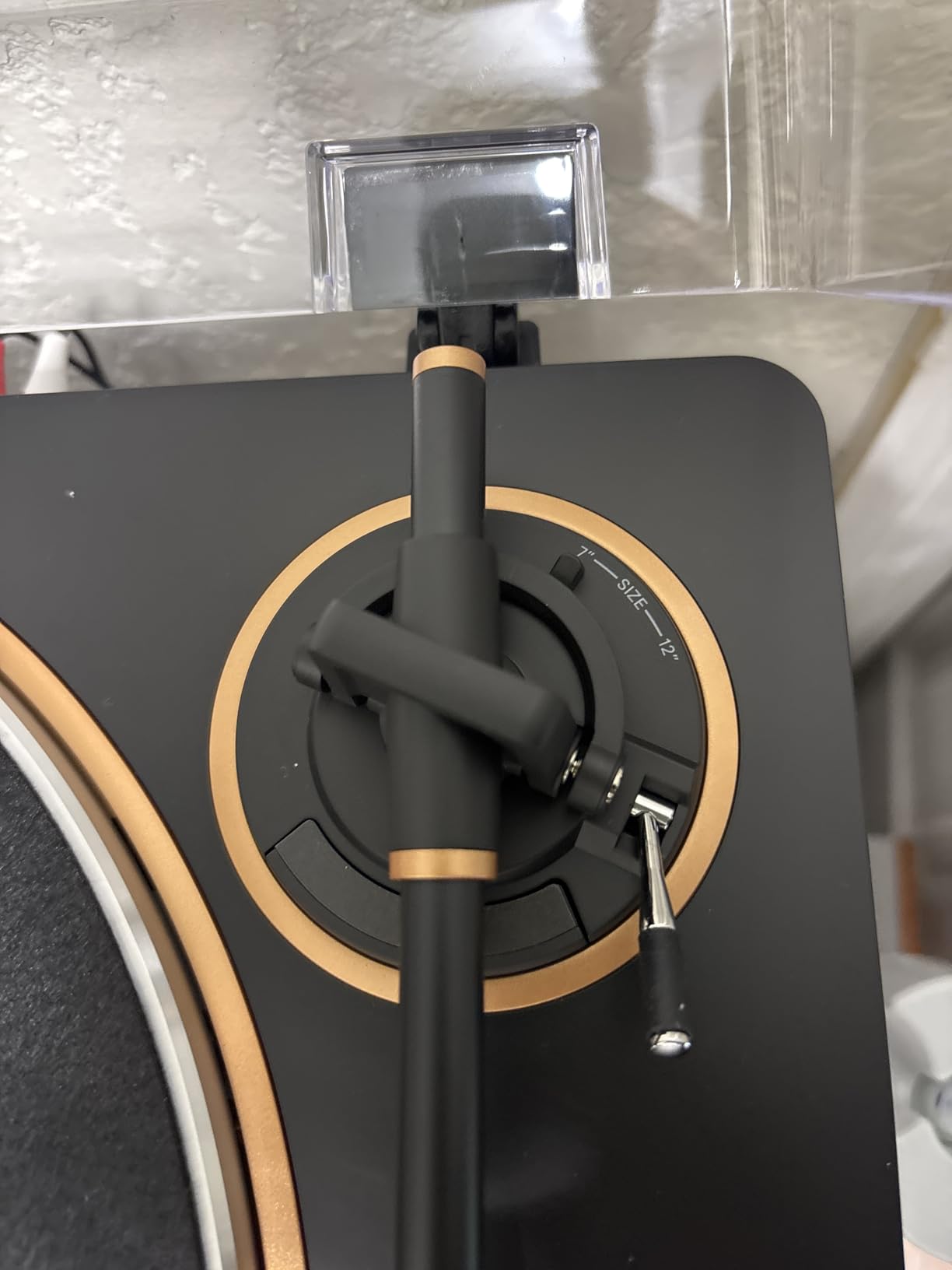
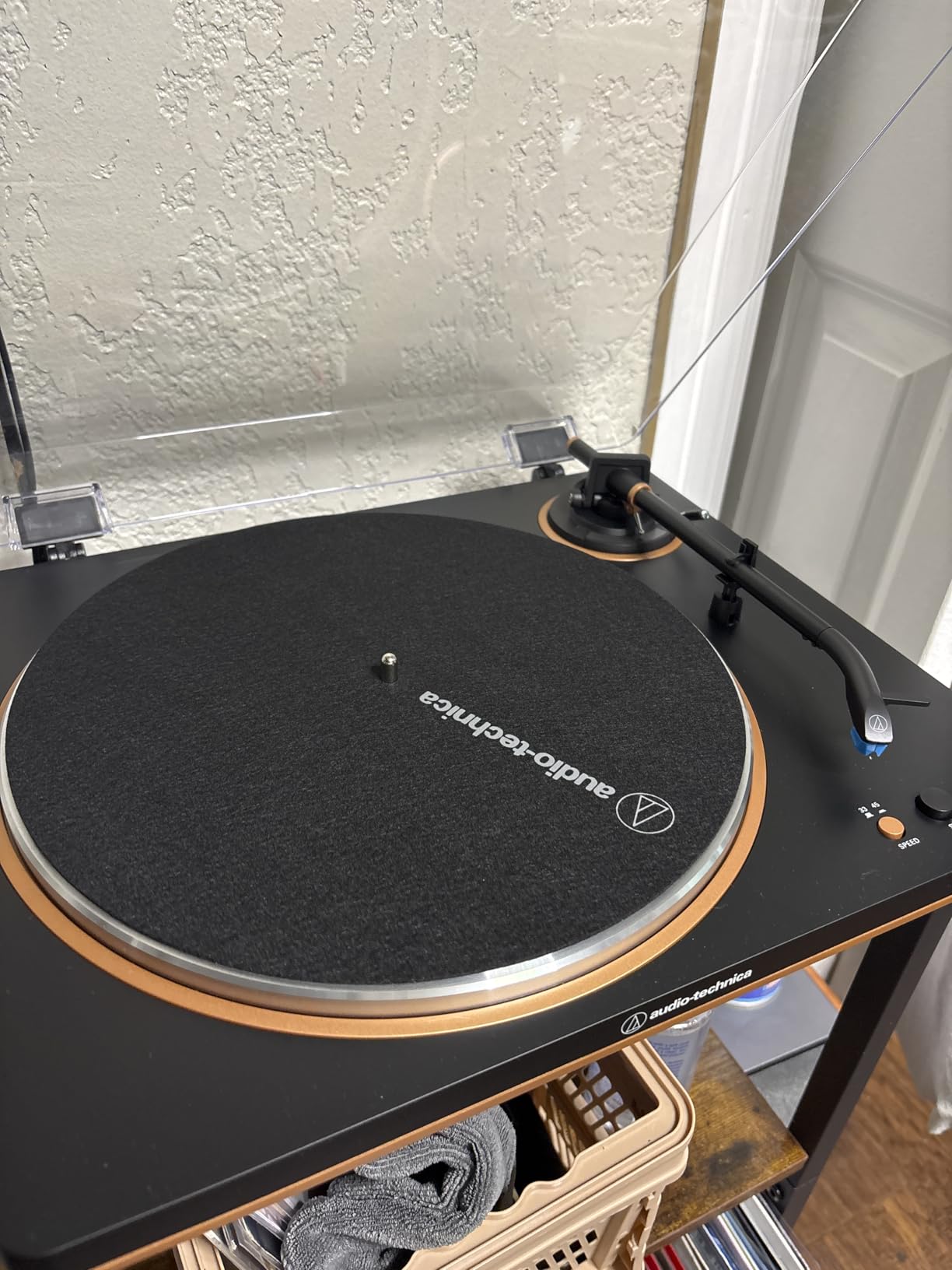
Setup was straightforward. The built-in phono preamp switches between phono and line output, so I had it connected to powered desktop speakers within minutes. The black and bronze color scheme looks sharp in person, more upscale than the standard all-black finish of the LP60 series. The removable hinged dust cover stays attached when open, which is a practical detail that prevents it from getting lost.
The limitation to be aware of is that while the stylus is replaceable with any VM95 Series option, the cartridge body itself is not removable. This means you cannot install a completely different cartridge system later, only swap stylus profiles within the VM95 range. The included cables are also on the short side, which could be an issue depending on your room layout.
Who Should Buy This Turntable
If you want a wired-only turntable with automatic operation and good upgrade potential through the VM95 stylus range, the AT-LP70X offers excellent value. It is a natural fit for someone building a traditional hi-fi system with a receiver and wired speakers, where Bluetooth adds unnecessary cost. The stylish black and bronze finish also makes it a nice-looking addition to a living room or office.
Who Should Look Elsewhere
Anyone who wants Bluetooth should get the LP70XBT instead for a modest price increase. If you want the flexibility to swap entire cartridges in the future, the AT-LP120XUSB with its detachable headshell is a better long-term investment. And if you are on the tightest possible budget, the AT-LP60X-GM delivers similar automatic convenience for less money.
9. QLEARSOUL HiFire X – Audiophile System with 100W Speakers
QLEARSOUL HiFire X Vinyl Record Player with 100W Speakers & VU Meter
100W dual bookshelf speakers
DSP preamp with EQ profiles
Retro VU meter
33/45 RPM
Pros
- Complete system with 100W bookshelf speakers
- DSP preamp adapts EQ for each input
- Retro VU meter adds nostalgic charm
- Auto-stop protects records and needle
Cons
- No tone controls
- Needle arm needs periodic rebalancing
- Speakers may be too powerful for apartments
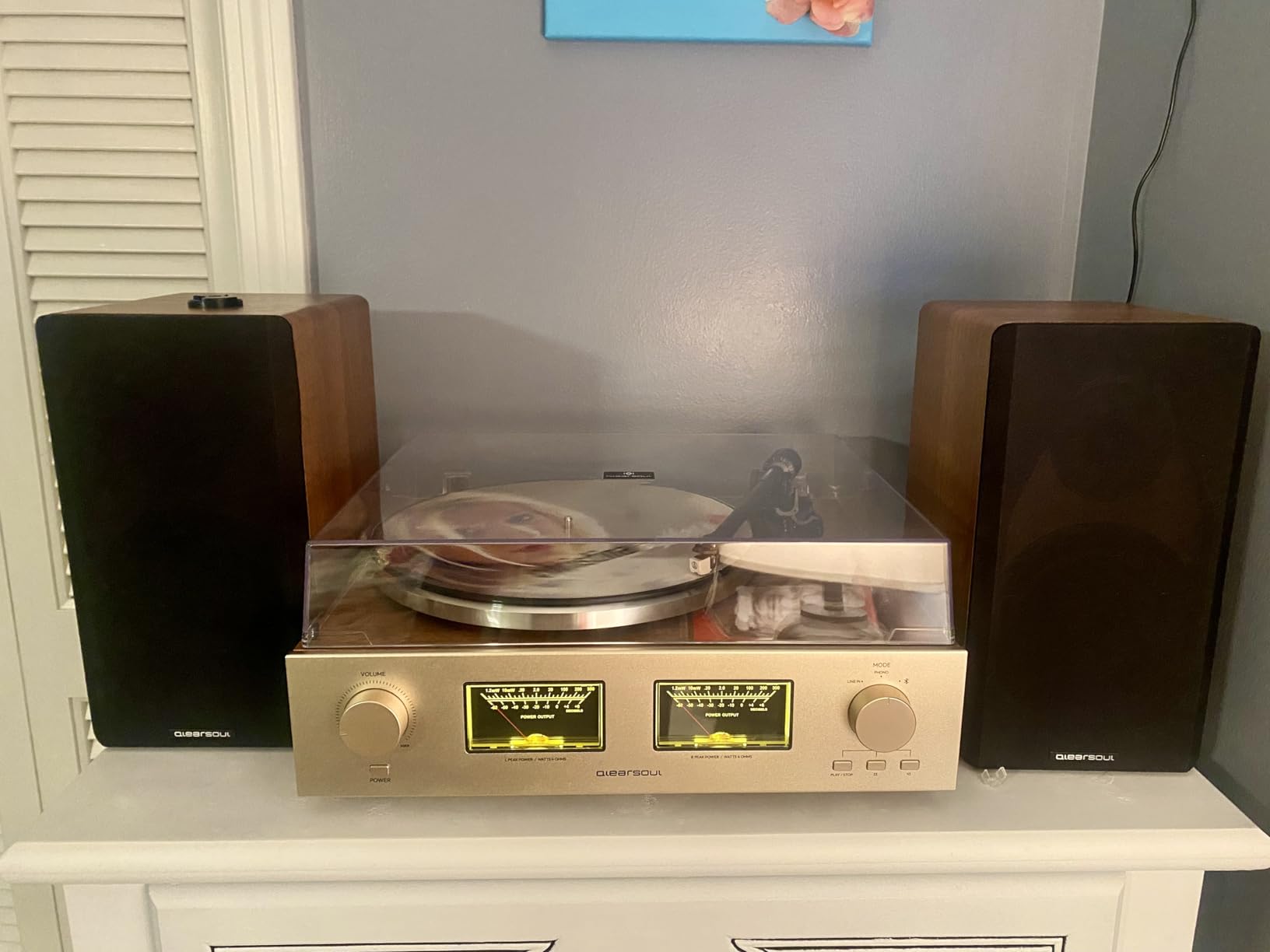
The QLEARSOUL HiFire X is the only turntable in our lineup that ships as a complete audiophile system with dedicated 100W bookshelf speakers, a DSP preamp, and retro VU meters all in one package. At 35 pounds total, this is a serious piece of kit that fills a room with sound the moment you plug it in. If you want everything in one box without shopping for separate components, this is an appealing option.
The built-in DSP preamp is the standout feature. It intelligently adjusts EQ profiles depending on whether you are listening to vinyl, streaming over Bluetooth, or using the RCA line-in. I tested all three inputs and each one sounded balanced and full, with the vinyl setting adding a gentle warmth that complemented the analog source nicely. The 100W speakers deliver plenty of volume for medium to large rooms.
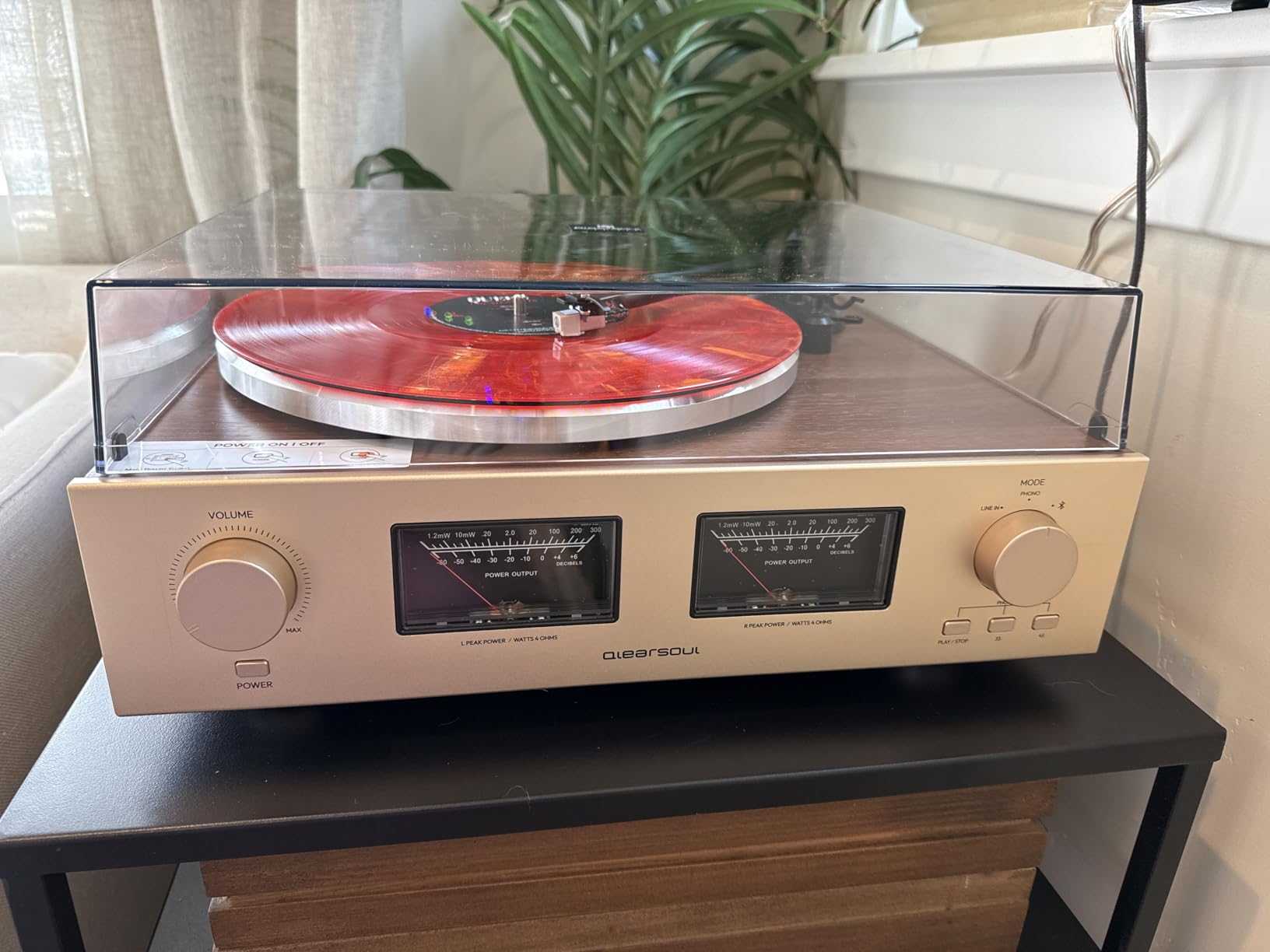
The retro VU meter on the front panel is not just decoration. It responds in real time to the audio signal, bouncing with the dynamics of whatever you are playing. It is a genuinely fun visual element that makes the listening experience more engaging. The CNC-machined aluminum control panel feels solid under your fingers, and the overall build quality is impressive for the price.
The downsides are relatively minor but worth noting. There are no tone controls, so you cannot adjust bass or treble to your preference. Some users report needing to rebalance the needle arm periodically, which suggests the tonearm assembly could be tighter. And at 100W, the speakers produce more volume than most apartment dwellers will ever need, which could be a problem if you have close neighbors.
Who Should Buy This Turntable
The HiFire X is made for someone who wants a complete, high-quality vinyl system delivered in a single package. If you do not want to research and buy a turntable, preamp, amplifier, and speakers separately, QLEARSOUL has done that work for you. The DSP preamp and 100W speakers mean you get room-filling sound from day one without any additional purchases.
Who Should Look Elsewhere
If you already have a hi-fi system and just need a turntable to add to it, the included speakers and preamp are redundant. Listeners in apartments or shared spaces might find the 100W speakers overpowered. And if you want fine-grained control over tone and cartridge setup, the fixed tonearm and lack of tone controls will feel limiting.
10. 1byone High Fidelity Turntable – All-in-One with Built-In Speakers
1 BY ONE High Fidelity Belt Drive Turntable with Built-in Speakers
Built-in speakers belt-drive
Audio-Technica stylus
Bluetooth and Aux-in
Auto off feature
Pros
- All-in-one design with built-in speakers
- Audio-Technica cartridge for clear sound
- Bluetooth streaming from devices
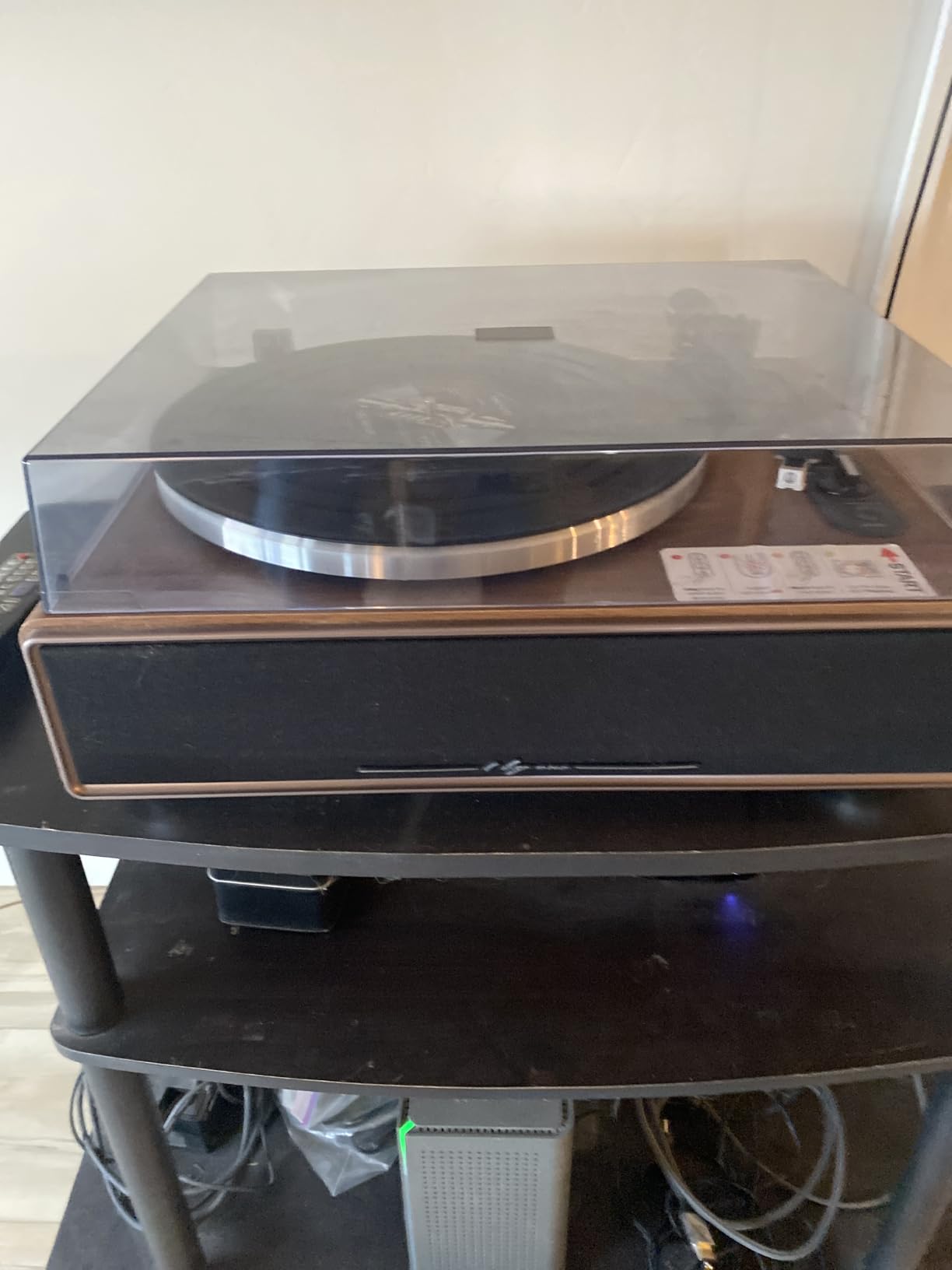
- Attractive walnut wood and metal build
Cons
- Built-in speakers lack power for large rooms
- Lid cannot close while playing
- No auto-retract for tonearm
- Controls located under the lid
The 1byone High Fidelity Turntable is built for the person who wants to start playing records immediately without buying anything else. The built-in speakers mean you can unbox it, plug it in, and start listening within five minutes. With nearly 4,000 reviews and a 4.4-star rating, it has proven itself as a reliable all-in-one solution.
The Audio-Technica diamond-tipped stylus cartridge is a genuine quality component that punches above this price point. It produces warm, clear sound that is noticeably better than the ceramic cartridges found in most all-in-one players. The magnetic cartridge with adjustable counterweight gives you the kind of tracking that protects your records while delivering authentic analog warmth. The auto-off feature turns the platter off when a record finishes, which is a nice safety net.
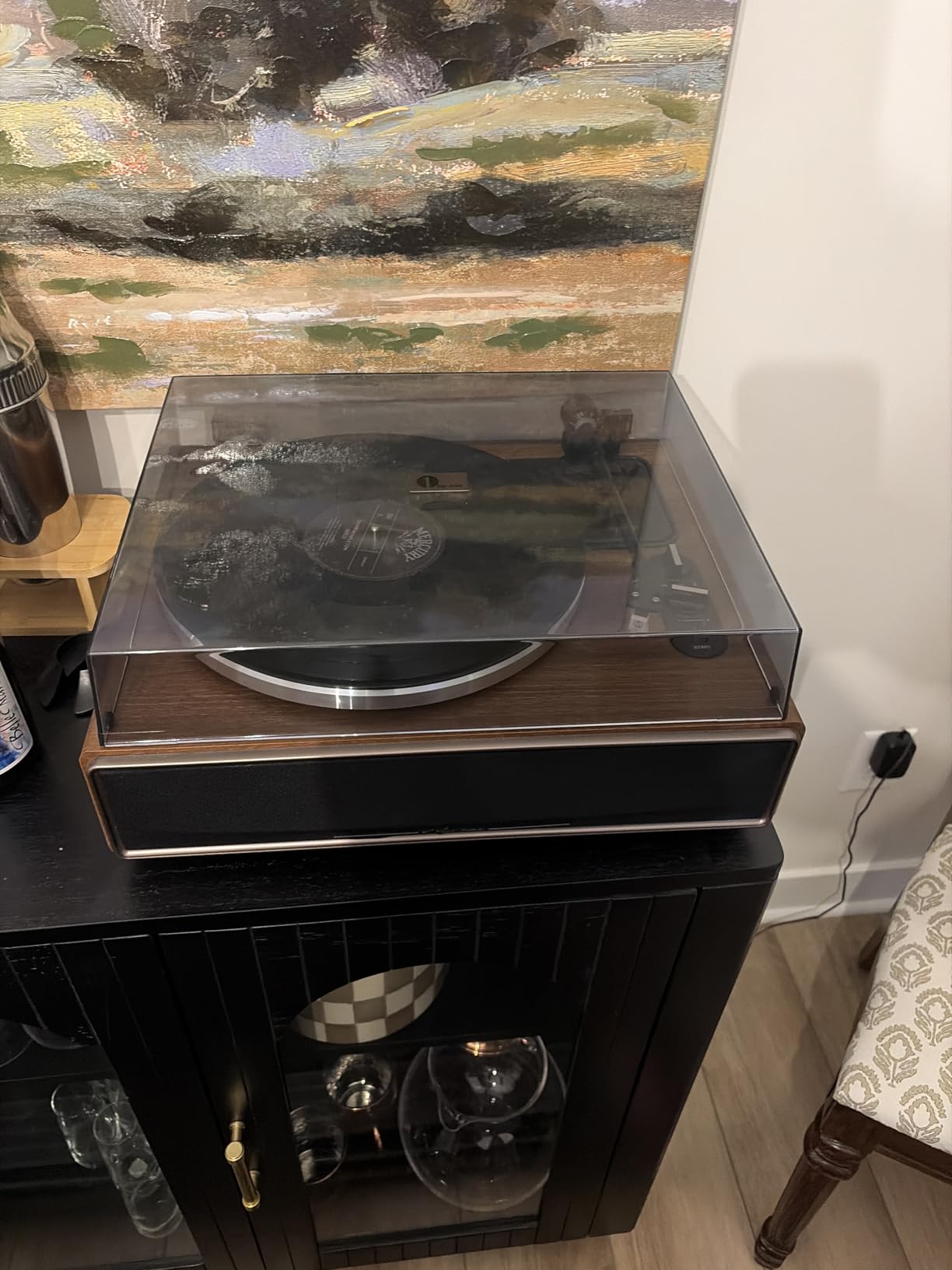
Bluetooth streaming works well for playing music from your phone through the built-in speakers, and the aux-in port adds another input option. The walnut wood and metal construction looks attractive in a living room, and the overall aesthetic is more furniture-like than the plasticky look of many budget players.
The built-in speakers are the obvious compromise. They are adequate for a bedroom or small living space, but they lack the depth and clarity to fill a larger room. The lid cannot close while playing because of a counterweight clearance issue, which means your record is exposed to dust during playback. Controls are tucked under the lid, which is an awkward placement, and there is no auto-retract when the record ends.
Who Should Buy This Turntable
If you want the simplest possible entry into vinyl with zero additional purchases, the 1byone all-in-one delivers a complete listening experience in one box. It is ideal for bedrooms, dorm rooms, or small apartments where space is limited and you just want to play records without building a full hi-fi system. The Audio-Technica cartridge ensures your records sound good and stay safe.
Who Should Look Elsewhere
Anyone serious about sound quality should look at the 1byone HiFi system with separate bookshelf speakers or the QLEARSOUL HiFire X for a more powerful complete system. The built-in speakers here are the weakest link, and you cannot connect passive external speakers without additional amplification. If you eventually plan to build a proper hi-fi system, start with a standalone turntable instead.
11. 1byone Bluetooth HiFi System – Complete System with Bookshelf Speakers
1 BY ONE Bluetooth Turntable HiFi System with 36 Watt Bookshelf Speakers
36W bookshelf speakers included
Solid iron platter
USB vinyl recording
Bluetooth streaming
Pros
- Complete system with 36W bookshelf speakers
- Solid iron platter for stable playback
- Great value with speakers included
- Warm romantic sound quality
Cons
- Tonearm assembly can be tricky for beginners
- Instructions considered difficult
- Bluetooth audio slightly quieter than wired
- 45 RPM adapter easy to lose
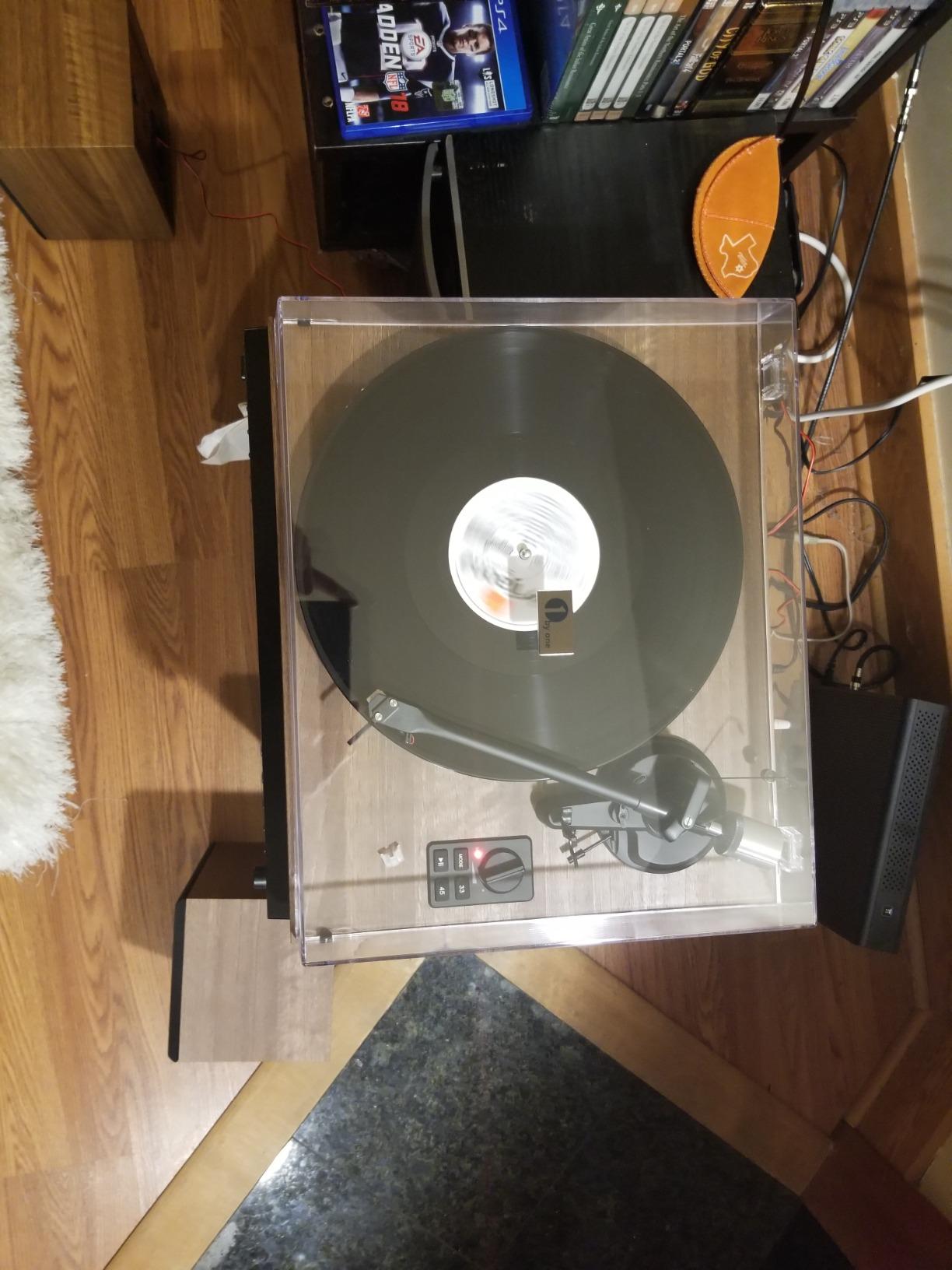
The 1byone Bluetooth HiFi System is the upgrade path from the all-in-one model above. Instead of built-in speakers, it ships with a pair of dedicated 36W bookshelf speakers that deliver significantly better sound. The solid iron platter is a standout feature at this price, providing the kind of rotational stability you normally find on tables costing much more.
I set this up in my office and the sound immediately filled the room. The AT3600L Audio-Technica cartridge produces warm, analog sound that is genuinely enjoyable for extended listening sessions. The anti-skating system and adjustable counterweight give you the tuning options that serious vinyl playback demands. The walnut wood finish looks great on a shelf or media console.
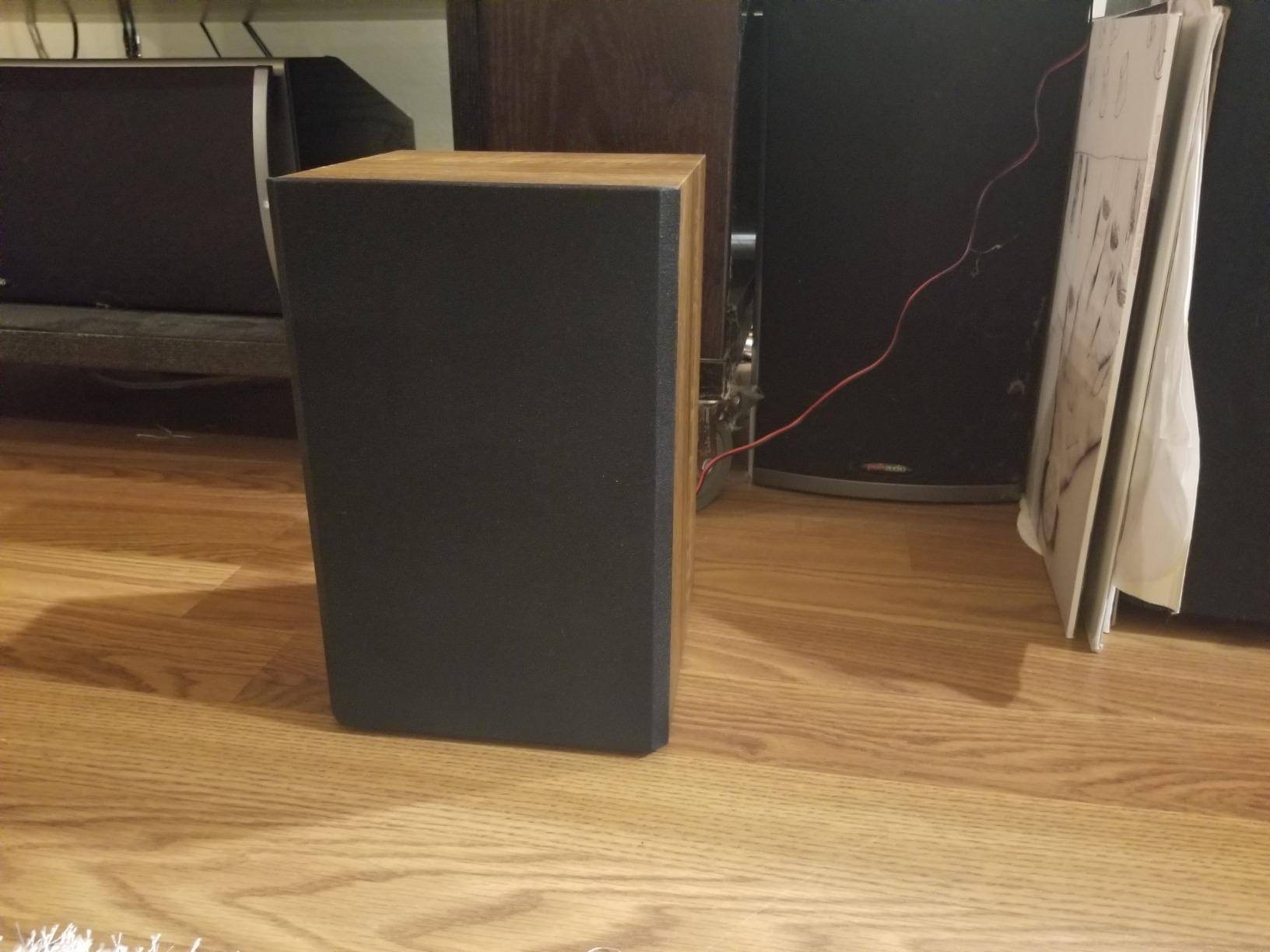
USB recording is a useful feature if you want to digitize your vinyl collection. I recorded several albums to MP3 format and the quality was clean and consistent. Bluetooth streaming lets you play music from your phone through the included speakers, though the volume is slightly lower over Bluetooth compared to wired connections. The phono preamp is switchable, so you can use the included speakers or connect to your own amplifier and speaker setup.
The setup process requires some patience. Installing the counterweight and anti-skate weight on the tonearm is not intuitive, and the included instructions are not much help. I recommend watching a setup video online before you start. The 45 RPM adapter has a tendency to get lost since there is no dedicated storage spot for it on the table.
Who Should Buy This Turntable
The 1byone HiFi System is perfect for anyone who wants a complete vinyl setup with separate speakers without spending a fortune on individual components. The included 36W bookshelf speakers are surprisingly capable, and the solid iron platter delivers the kind of stable playback that protects your records and sounds great. If you want a system that sounds good from day one but can also integrate into a larger hi-fi setup later, this is a smart buy.
Who Should Look Elsewhere
If you are not comfortable with basic tonearm setup including counterweight balancing and anti-skate adjustment, this might feel overwhelming as a first turntable. Anyone wanting a more powerful speaker system should look at the QLEARSOUL HiFire X with its 100W speakers. And if you want a fully automatic table, this manual operation model requires you to lift and place the tonearm yourself.
12. DIGITNOW Belt Drive Turntable – Budget Bluetooth Vinyl Player
Belt Drive Turntable for Vinyl Record Player, Bluetooth Output, Built-in Phono Preamp, USB Digital Output, Magnetic Cartridge, 33/45 RPM, High-Gloss Wood Design, No Built-in Speakers
Belt-drive with DC motor
AT3600L magnetic cartridge
Bluetooth and USB output
Piano lacquer wood design
Pros
- Sturdy build with good weight
- Bluetooth connectivity with speakers
- Adjustable counterweight and anti-skate
- High-gloss piano lacquer wood finish
Cons
- No built-in speakers requires external
- Not compatible with passive speakers
- Modest signal-to-noise ratio of 40 dB
- Tonearm balancing requires care
The DIGITNOW belt-drive turntable is the most affordable option in our lineup, and it punches well above its weight with a 4.8-star rating from nearly 700 reviews. The high-gloss piano lacquer wood finish is genuinely attractive and makes this table look more expensive than it is. At over 12 pounds, it has enough mass to stay stable during playback.
The AT3600L moving magnet cartridge is the same Audio-Technica cartridge found in more expensive tables, and it delivers solid performance for the price. The adjustable counterweight and advanced anti-skating system are features you do not usually find at this price point, and they make a real difference in tracking accuracy and record protection. Bluetooth output lets you stream to wireless speakers, and the USB connection handles vinyl digitization.
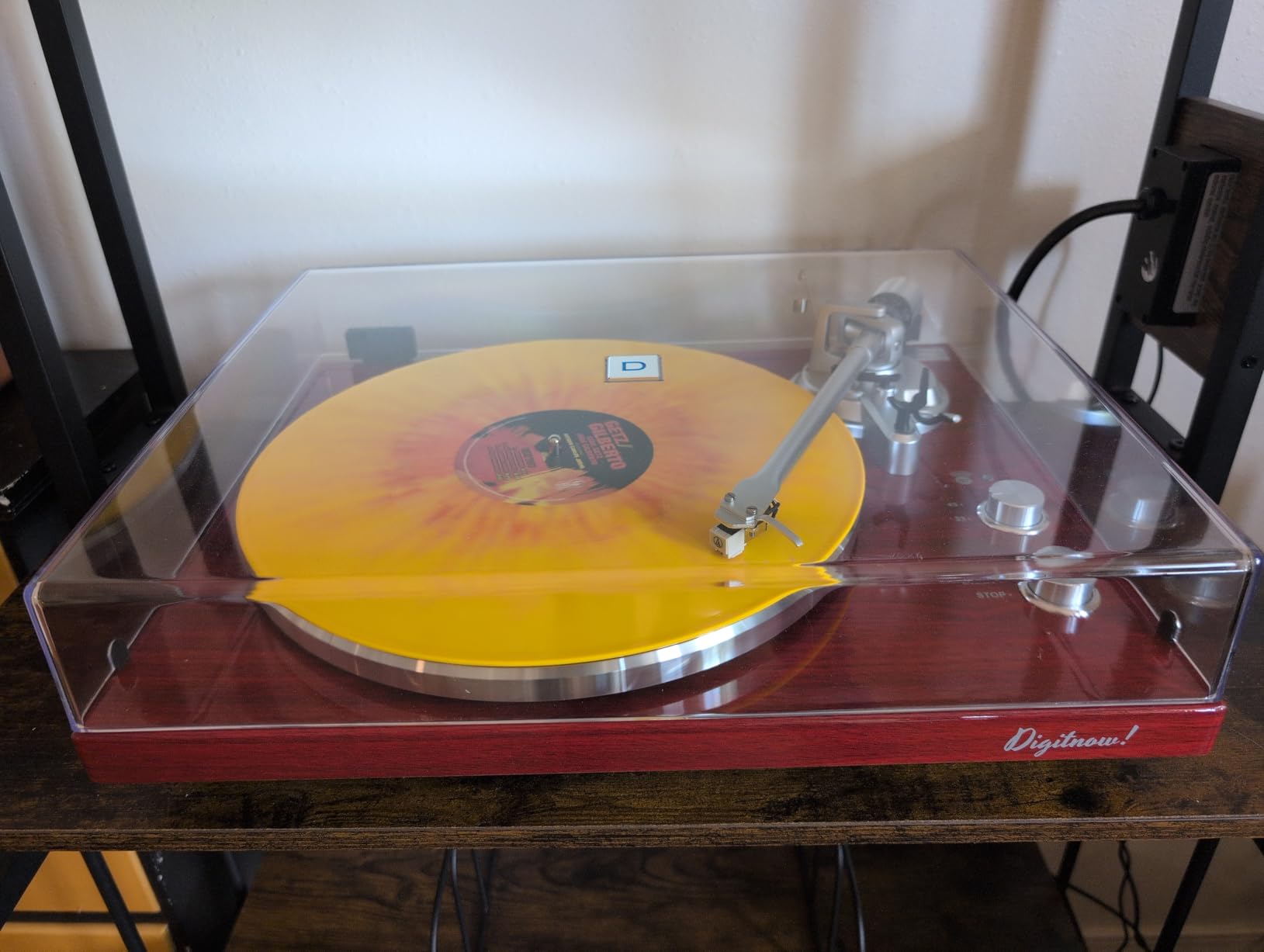
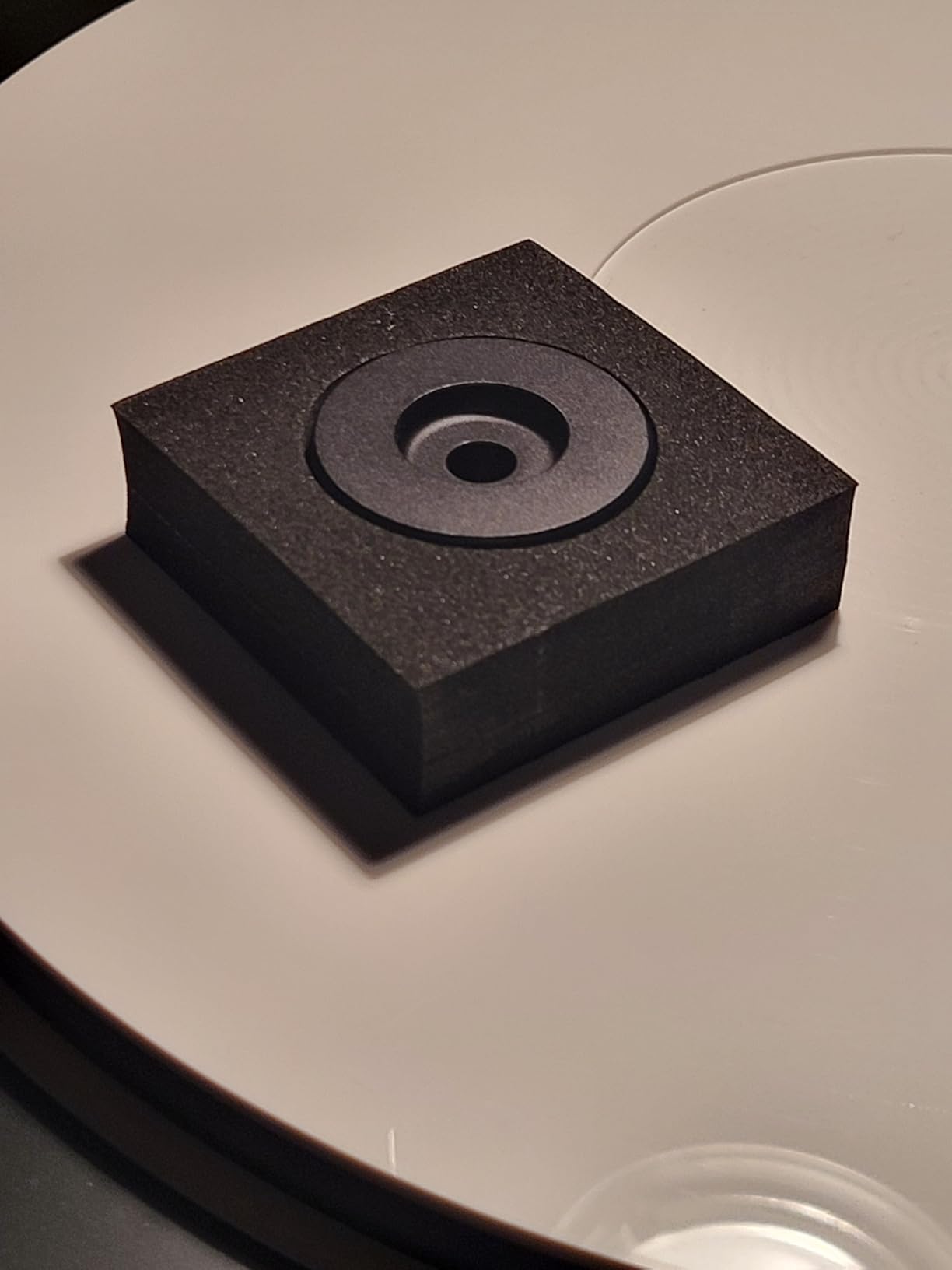
I was impressed by the overall build quality for the money. The plinth feels solid, the platter rotates smoothly, and the finish is genuinely attractive in person. The included cartridge alignment protractor is a thoughtful touch that helps you set up the tonearm correctly. For someone on a tight budget who still wants proper vinyl mechanics rather than a toy record player, this is a legitimate option.
The limitations are important to understand. There are no built-in speakers, so you need external powered speakers or an amplifier and speaker combo. It is not compatible with passive speakers directly. The signal-to-noise ratio of 40 dB is modest compared to the 50-100 dB range of higher-end models, meaning you might hear more background hiss during quiet passages. And setting up the tonearm balance correctly takes patience and a careful hand.
Who Should Buy This Turntable
If you are on the tightest budget but refuse to settle for a cheap suitcase player that will damage your records, the DIGITNOW gives you real turntable mechanics at the lowest price in our roundup. It is a smart choice for someone who already has powered speakers or a Bluetooth speaker system and just needs a quality vinyl source to connect to it.
Who Should Look Elsewhere
If you need speakers included, the 1byone models above offer complete systems with speakers for a similar total investment. Anyone sensitive to background noise should consider tables with higher signal-to-noise ratios like the AT-LP120XUSB at 100 dB. And if you want the convenience of fully automatic operation, this manual table requires you to handle the tonearm yourself for every play.
Buying Guide: How to Choose the Best Turntable Under $500
Choosing the right turntable comes down to understanding a few key factors that directly affect sound quality, convenience, and long-term satisfaction. Here is what our team considers the most important criteria when evaluating record players in this price range.
Belt Drive vs Direct Drive
The drive mechanism is one of the biggest decisions you will make. Belt-drive turntables use an elastic belt connecting the motor to the platter, which isolates motor vibrations from the record surface. This generally results in cleaner sound with less motor noise bleeding into your music. Most audiophile-oriented tables under $500 use belt drive.
Direct-drive turntables connect the motor directly to the platter spindle. This delivers faster startup times, more consistent torque, and typically better speed stability. Direct-drive tables are preferred by DJs because you can stop and start the platter manually without damaging the mechanism. The Audio-Technica AT-LP120XUSB and Pioneer PLX-500 are both direct-drive models in our lineup.
For home listening, either drive type works well. Belt drive tends to be quieter, while direct drive offers more speed consistency and versatility.
Do You Need a Built-In Phono Preamp?
A phono preamp (also called a phono stage) boosts the tiny signal from the cartridge to line level so your amplifier or powered speakers can process it. If your receiver has a dedicated phono input, you do not need a built-in preamp. If you are connecting to powered speakers, a soundbar, or a receiver without a phono input, a built-in preamp saves you from buying a separate external unit.
Most turntables under $500 include a built-in switchable preamp, which gives you the flexibility to use it or bypass it. Tables like the AT-LP120XUSB, Sony PS-LX3BT, and AT-LP70X all have this feature. If you plan to upgrade to a high-quality external phono stage later, make sure the turntable you choose has a bypass option.
Automatic vs Manual Operation
Fully automatic turntables handle tonearm placement, playback, and return at the touch of a button. This is convenient for beginners and casual listeners who want a push-and-play experience. The entire Audio-Technica LP60X and LP70X lines are fully automatic, as are the Sony models.
Manual turntables require you to lift and place the tonearm yourself. This gives you more control but demands more attention. Tables like the AT-LP120XUSB, Pioneer PLX-500, and the 1byone models require manual operation. Some listeners prefer manual tables because there are fewer mechanical parts that can malfunction over time.
Bluetooth and Wireless Connectivity
Bluetooth is increasingly common in turntables under $500, and the quality of wireless audio has improved significantly. Look for aptX or aptX Adaptive codec support if sound quality over Bluetooth matters to you. The Sony PS-LX5BT and PS-LX3BT both support Hi-Res aptX Adaptive at roughly 96kHz/24bit, which is a noticeable step up from standard Bluetooth audio.
Keep in mind that Bluetooth convenience comes with a slight quality trade-off compared to wired connections. If you have a traditional hi-fi setup with a receiver and wired speakers, you may not need Bluetooth at all and can save money with a wired-only model.
Upgrade Potential
One of the most overlooked factors is whether your turntable can grow with you as your ears get more demanding. Key upgrade paths include replacing the stylus, swapping the cartridge entirely, adding an external phono preamp, and upgrading the platter mat. The AT-LP120XUSB with its detachable headshell offers the most upgrade flexibility in our lineup, while the AT-LP70X models support VM95 Series stylus upgrades without replacing the entire cartridge.
Tables with built-in preamps that can be bypassed give you the option to add a better external preamp later. Fixed-output tables lock you into whatever preamp is built in. Think about where you want your system to be in two or three years, not just what sounds good today.
Frequently Asked Questions
What is the best turntable under 500 dollars for beginners?
The Audio-Technica AT-LP60X-GM is the best beginner turntable under $500 because it is fully automatic, includes a built-in phono preamp, and costs well under the $500 limit while still delivering genuine Audio-Technica sound quality. It works right out of the box with any powered speakers or receiver, and the automatic operation means you never have to manually handle the tonearm. For a bit more, the AT-LP60XBT adds Bluetooth convenience.
How much should I spend on a good turntable?
You can get a quality turntable starting around $150 to $200 for a basic automatic model like the Audio-Technica AT-LP60X-GM. Spending $250 to $400 gets you better cartridges, upgradeable stylus options, and features like Bluetooth or USB output. The $400 to $500 range is where you find direct-drive motors, detachable headshells, and true audiophile-grade components. Anything under $100 with built-in speakers is likely a toy that will sound poor and potentially damage your records over time.
Do I need a phono preamp with my turntable?
It depends on your speaker and amplifier setup. If your receiver has a dedicated phono input, you do not need a separate preamp. If you are connecting to powered speakers, a soundbar, or a receiver without a phono input, you need either a turntable with a built-in preamp or an external phono stage. Most turntables under $500 include a built-in switchable preamp that handles this for you. The preamp can typically be bypassed if you upgrade to a better external unit later.
Is a belt drive or direct drive turntable better for home listening?
For home listening, both drive types work well and the difference is subtle. Belt-drive tables isolate motor vibrations better, which can result in slightly cleaner sound with less background noise. Direct-drive tables offer faster startup, more consistent speed, and better torque. If you plan to DJ or want support for 78 RPM records, direct drive is the practical choice. If pure sound quality at a given budget is your priority, belt drive has a slight edge. The Audio-Technica AT-LP120XUSB proves that direct drive can deliver excellent sound quality under $500.
Final Thoughts on the Best Turntables Under 500 Dollars
After testing 12 turntables side by side, a few clear winners emerge. The Audio-Technica AT-LP120XUSB remains the most versatile pick in this price range, combining direct-drive reliability, three-speed support, USB digitization, and upgrade flexibility in a single package. The Sony PS-LX5BT is the premium choice for listeners who want push-button convenience with Hi-Res wireless streaming. And the Audio-Technica AT-LP60X-GM is the best value for beginners who want genuine sound quality without spending their entire budget.
The best turntables under 500 dollars in 2026 cover a wide range of needs, from fully automatic plug-and-play models to manual tables with professional-grade tonearms. Whether you are spinning your first record or your thousandth, there is a table in this lineup that will treat your vinyl right and deliver the warm, analog sound that makes this hobby so rewarding. Pick the one that matches your listening style, connect it to a good pair of speakers, and start building memories with your record collection.