
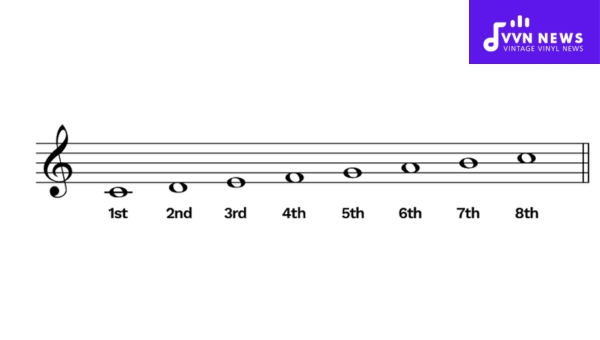
Mastering music scales can feel like decoding a secret language. Yet, these building blocks of music hold a certain charm and mystique that’s hard to ignore.
Music scales often serve as the foundation for songwriting and compositions, frequently dictating the mood, harmony, and spirit of a piece.
Music scales aren’t as intimidating as you might think. They are essentially just sequences of notes that provide musicians with thematic inspiration.
If you’re picking up an instrument for the first time or seeking to broaden your musical horizons, getting to know your scales can lead to exciting developments in your musical journey.
Table of Contents
What Are Music Scales?
Music scales are sequences of specific notes sorted by pitch in ascending or descending order. These musical alphabets form the basis of melodies and harmonies across various genres.
There are different types of scales, with the Western music industry favoring two primary types: major and minor scales. While a major scale exudes a cheerful or bright feeling, a minor scale is darker, often evoking sadness or melancholy.
In essence, learning to identify and use these scales effectively is like learning your ABCs in elementary school – it unearths infinite potential for communication and expression through the language of music.
Also Read: E Major: Scale And Chords [Exciting Sounds For Your Compositions]
How Do Music Scales Work in Composition?
Music scales, in essence, provide tone and enrich transitions between different parts of a piece.

They lay the groundwork for melodic lines and harmonies, offering a source of creativity to musicians.
Within the technicalities of songs, rhythms may seize most of our attention; it’s just as necessary to credit scales for playing their part in a composition’s emotional connection.
Role of Scales
Scales contribute significantly to shaping musical pieces’ perception and sentiment.
A spectrum ranging from Major scales bringing in cheeriness, to Minor scales imbuing music with more somber notes can change how a listener experiences the piece.
Measure Control
Utilizing scales allows you to manage melody measures expertly. Scales can guide how high or low your melody goes and ensure a seamless transition between notes.
This property makes them indispensable for compositions meant to evoke specific emotions.
Chord Building
Scales can also aid with chord building – another vital aspect of composition. Each scale possesses its own set of chords that harmonize well together.
You can create depth and dimensional richness by modulating these chords across an entire piece.
The exact methods may differ across various musical disciplines or instruments, but the fundamental principle remains constant: music scales provide an essential structure from which beautiful and expressive pieces bloom.
Also Read: F Sharp Major Triad [Enhance Your Musical Compositions]
What Are the Different Types of Scales?
Learning to navigate the world of music can be significantly easier when you understand the different types of scales.
Let’s deconstruct some of these basic musical building blocks to help you better comprehend this impressive lineup.
- Diatonic Scales: A diatonic scale encompasses seven notes and is typically major or minor. These scales are wildly prevalent in Western music and surface frequently in folk, blues, rock, pop, and classical compositions.
- Major Scales: Regarded as one of the most elemental and familiar-sounding scales, the major scale forms the basis for a huge amount of Western music. If a tune sounds cheerful or buoyant to you, there’s a good chance its harmonies are drawn from a major scale.
- Minor Scales: On the other end of the spectrum from major scales sits minor scales. These have an inherently sadder or more reflective sound compared to their major counterparts.
- Natural Minor Scale: Also identified as Aeolian mode, this remains unchanged no matter whether it ascends or descends. The mood it creates is somewhat melancholy and poignant.
- Harmonic Minor Scale: Unlike the Natural Minor scale where all notes remain constant on ascent or descent, the Harmonic Minor scale alters on ascent by raising its seventh note by half a step; resulting in an exotic and haunting mood that is unique.
- Melodic Minor Scale: This minor variant intelligently mixes elements from both the natural and harmonic variations depending on whether it is ascending (raises both sixth and seventh notes) or descending (matches the natural minor).
- Chromatic Scales: The chromatic scale integrates all 12 pitches that our ears can discern within an octave. This type manifests itself most clearly during a piano glide from one note to its closest octave counterpart.
- Whole Tone Scales: The whole tone scale comprises entirely of ‘whole steps’, without any ‘half steps’ between any of its six notes. This renders a very distinct and ambiguous sound, often associated with the impressionist composer Claude Debussy.
- Pentatonic Scales: Making up the backbone of numerous folk melodies worldwide, pentatonic scales consist of only five notes. Their relative simplicity allows for really engaging and catchy melodies.
- Blues Scales: A blues scale is a variant of the minor pentatonic, fortified with an added chromatic ‘blue note’ for that signature plaintive blues vibe.
- Modes: Modes are alternative tonalities (or scales) that can be derived from the familiar diatonic major scales. They expand your melodic palate hugely and are essential learning for all improvising musicians and composers.
- Arpeggios: Arpeggios may initially sound complex, but they are simply a sequence of notes in a chord that are played one by one, rather than simultaneously. They create an alluring sonic effect in many iconic compositions.
Each musical scale carries its unique mood and character. So take your time exploring these scales and feel their idiosyncratic vibrations flowing through you.
That resonance within you is what makes music such a personalized journey: it’s not solely about reading those black dots on white sheets but truly feeling them reverberating within your soul.
Also Read: How To Transpose Treble To Bass Clef [Music Guide]
How to Practice Scales Effectively?
To incorporate scales into your practice routine efficiently, consider the following guidance.

Start Slowly
Begin by playing each scale at a comfortable tempo where precision is achievable. Jumps in speed can lead to sloppy technique, so it’s crucial to gradually increase the tempo only when you’re ready.
Use a Metronome
A metronome is an indispensable tool for keeping time. Practicing with this device will ensure you maintain a steady pace and help internalize rhythm.
Integrate Variations
Don’t just ascend and descend; mix it up. Practice scales in thirds, perform rhythmic variations or play staccato and legato. These exercises enhance dexterity and musicality.
Memorize Scales
Committing scales to memory liberates you from sheet music and allows you to focus on technique. Picture the scale patterns on your instrument as you play.
Consistent Fingering
Adopt consistent fingering patterns for each scale to build muscle memory and efficiency when moving across notes.
Focus on Tone Quality
Emphasize producing a clear, consistent tone throughout each scale. This attention will significantly improve your overall sound quality.
By integrating these strategies into your practice routine, you’ll unlock the full potential of scales as a means to elevate your musicianship.
Why Are Scales Important for Musicians?
As a musician, scales are your roadmap to mastering the intricacies of harmony, melody, and expression.
They lay the groundwork for a robust musical foundation, regardless of which instrument captivates your interest. Here’s why delving into scales will transform your play:
- Building Technical Proficiency: Engaging with scales develops hand coordination and dexterity. Practicing these note sequences regularly sharpens your technical abilities, ensuring that when you perform, you have precise control over your instrument.
- Imbuing Melodic Sense: Scales are the alphabet of your musical language. By experimenting with different scale patterns, you cultivate a stronger melodic sense and an intuition for creating compelling tunes that resonate with listeners.
- Harmonization & Chord Construction: Harmony in music is like the color palette in a painting; it sets the atmosphere. Scale knowledge is pivotal; it’s the tool you use to construct chords that form progressions that underpin most musical pieces.
- Ear Training & Aural Skills: Regular scale practice attunes your ear to discern interval relationships within music—a crucial factor for effective improvisation and playing by ear. This sensitivity enables musicians to predict and react to harmonic changes deftly.
- Theoretical Knowledge & Improvisation: Lastly, scales unlock a comprehensive knowledge of music theory—vital for improvised solos and on-the-fly composition. Recognizing key signatures and modal differences within scales allows seamless navigation through complex pieces.
By incorporating these elements into your regimen, embracing scales becomes more than a practice routine—it evolves into an exploration of musical possibilities.
Also Read: 14 Most-Streamed Songs Of All Time On Spotify [The Greatest Hits]
FAQs
What is the easiest scale to learn for beginners?
The C major scale is considered the easiest because it has no sharps or flats. Its notes are C, D, E, F, G, A, and B.
Can learning scales improve my improvisation skills?
Absolutely, mastering scales provides the musical vocabulary needed for creative improvisation.
Do singers need to learn scales as well?
Yes, singers benefit from learning scales to improve their pitch accuracy and expand their vocal range.
Why do some scales sound happy or sad?
Scales evoke emotions; for instance, major scales tend to sound happy while minor scales often evoke a sad or melancholic feel.
How many notes are in a pentatonic scale?
A pentatonic scale typically contains five notes per octave.
Also Read: Mastering Chords In A Minor [Improve Your Composition Skills]
Conclusion
Music scales act as the backbone of melody and harmony, guiding musicians through the landscape of sound. They’re crucial for developing finger dexterity, ear training, and musical relationships.
As you invest time in practicing scales, your fluency across the fretboard or keyboard will blossom.
Scales are not just exercises; they are tools for expression. Embrace these sequences of notes, and you’ll unlock a world where improvisation and songwriting become second nature. Remember: every scale tells a story—yours is just waiting to be played.