
When we think about music, most of us naturally tune into the melody, rhythm, or even the lyrics.
But another critical aspect that gives music its distinctive flavor and emotion is something you might not be familiar with, and that’s musical modes.
Yes, musical modes! This fascinating concept is a hidden gem in the world of music theory which plays an integral role in defining a piece’s overall mood.
Amp up your musical knowledge as we delve into deciphering these intriguing scales together.
Table of Contents
What Are Musical Modes?
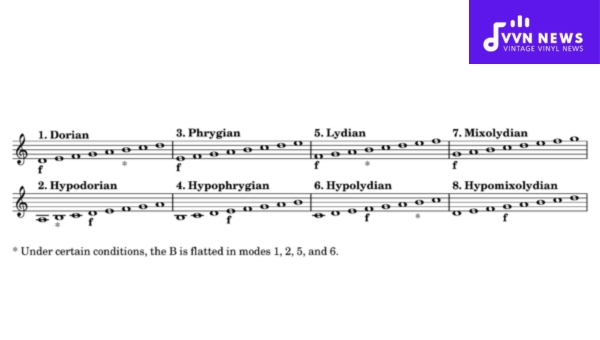
In music, modes are essentially scales that contain seven notes, and each note is considered a different degree.
Mode originates from the context where it’s placed within a musical piece. While there are numerous modes, seven ancient modes are most recognized.
- Ionian
- Dorian
- Phrygian
- Lydian
- Mixolydian
- Aeolian
- Locrian
Each has a unique sequence of half-steps and whole-steps between notes, with each giving a different emotional sound to the music.
Also worth noting, is the popularity of Ionian (the ‘happy’ mode) and Aeolian (the ‘sad’ mode), commonly referred to as major and minor scales in modern terminology.
Also Read: A Minor Scale [Unlock The Mysteries Of Musical Composition]
How Did Musical Modes Originate?
The origin of musical modes dates back to ancient Greece. They were essentially the discovered result of mathematical manipulations, aiming at creating unique musical scales for different mood expressions.

These original modes, known as Greek modes, had seven different pitches.
The Greeks observed the natural partials in the harmonic series and used those observations to construct their musical system.
Their approach involved a circulation between diatonic structures (using five whole and two half steps), thus naming these intervals as tetrachords.
Principally, they identified four main tetrachords – Diatonic, Chromatic, Enharmonic, and Harmonic.
From this musical science, we got significant foundations such as Dorian mode, Lydian mode, and Phrygian mode among others.
The transition from Greek modes to our modern knowledge of them didn’t happen until the Middle Ages, led by innovative European musicians.
They expanded upon the initial concepts that evolved into our prevalent system recognized today as major and minor scales or keys in Western music.
Therefore, playing around with modes in modern music links you back to an era of unfolding creativity and expression that has deep historical roots! Let this inspire you to mix it up with your creative musical compositions.
What Are the Characteristics of Different Modes?
Musical modes, in their simplest essence, are scales that consist of seven notes or pitches.
Though it may seem there are limitless possibilities with seven notes, we traditionally recognize seven modes, each offering unique sonic landscapes and emotional flavor.
Ionian Mode
Also known as the Major scale, the Ionian mode is the most commonly used in Western music.
It conveys an upbeat and joyous mood. For instance, think of a happy pop song; chances are it’s in Ionian.
Dorian Mode
The Dorian mode provides us with a great variety of emotions. It’s not as cheerful as the Ionian but isn’t too somber either.
Used widely in jazz and rock music alike, it creates a minor third which gives a more melancholic feeling than the Ionian.
Phrygian Mode
For a darker sound palette than even the Dorian mode can offer, look no further than the Phrygian mode.
This unstable-sounding mode is often found in flamenco and Middle Eastern music due to its Spanish roots.
Lydian Mode
Moving towards brighter horizons now, meet Lydian. Elevated by its raised fourth note over the Major or Ionian scale, Lydian offers an optimistic context used frequently in film scores to convey an otherworldly sense of optimism or wonder.
Mixolydian Mode
Looking for more chilled-out vibes? Enter Mixolydian! Resembling Ionian or Major Scale but with a flatted seventh note giving it a bluesy feel, it’s perfect for rock ‘n’ roll and blues genres.
Aeolian Mode
Also known as the Natural Minor scale or Pure Minor scale – this is where we delve back into those sadder musical narratives with Aeolian. This dark-sounding mode helps craft poignant musical pieces.
Locrian Mode
The rarest mode of all, Locrian, is the dramatic one! Rarely used due to its diminished fifth note (also known as the ‘devil’s interval’), this dissonant-sounding mode is perfect for introducing tension into your piece.
By learning to weave these various modes into your musical fabric, you can diversify your melodies and harmonies, adding exciting new dimensions to your musical creations.
Note these are not concrete rules but tools that you can harness to amplify the storytelling power of your music.
Also Read: E Major: Scale And Chords [Exciting Sounds For Your Compositions]
How Do Modes Affect Musical Composition?
Music is much more than a random collection of notes; it’s an expressive language that speaks directly to the soul.

This language consists of different dialects known as modes, and they significantly influence musical composition.
Let’s explore how these modes can shape a piece of music and provide it with a unique character.
Influence on Emotional Tone
Each mode carries its emotional color palette. For example, the Dorian mode is often associated with a plaintive yet soulful sound, while the Phrygian mode might evoke an exotic or mysterious atmosphere.
Composers choose specific modes to convey the precise emotional resonance they wish to express in their music.
Melodic Contour Variation
Modes give composers a broader set of options beyond major and minor scales.
By altering just one note, such as shifting from an Ionian (major scale) to Mixolydian mode by lowering the seventh note, the melodic contour changes, imparting a whole new vibe — in this case, slightly bluesy or less resolved feeling due to the flattened seventh.
Harmonic Creativity
Using modes opens up innovative harmonic possibilities. Chord progressions that arise from modal scales differ from those in traditional major or minor compositions.
When you’re composing in Lydian mode with its raised fourth scale degree, expect chords that might not typically occur in standard diatonic harmony, offering refreshing and unexpected paths for your compositions.
Rhythmic Flexibility
Some modes lend themselves well to certain rhythmic frameworks due to their note intervals.
For instance, Aeolian mode, commonly known as natural minor scale, pairs perfectly with driving rhythms for its haunting quality while the brighter-sounding Ionian adds bounce and cheerfulness to up-tempo beats.
Structural Expansion
Modal compositions can break away from classic song structures — verse, chorus, bridge — allowing for more abstract forms inspired by modes’ inherent qualities.
A piece in Locrian mode (the most dissonant of all due to its diminished fifth) could adopt an experimental form fitting its unconventional sound profile.
Incorporating various musical modes does more than expand your toolbox as a composer; it breathes new life into your creative process and solidifies music’s role as an ever-vibrant art form feeding on innovation and diversity.
Modes aren’t just textbook terms; they are instrumental in painting musical canvases bursting with personal expression and cultural storytelling.
Also Read: F Sharp Minor Pentatonic Scale [How To Use In Your Compositions]
How Can I Apply Modes in Modern Music?
Incorporating modes into contemporary music can reinvigorate your compositional approach, giving you a fresh palette of sounds to draw from.
If you’re crafting pop melodies or jazz solos, here’s how to use modes effectively in today’s music scenes.
Identify the Modal Roots
Firstly, start by identifying the key of your song. Once you have this determined, align it with one of the seven modes—Ionian (major scale), Dorian, Phrygian, Lydian, Mixolydian, Aeolian (natural minor scale), or Locrian. Each mode starts on a different step of the major scale.
Mode-Based Songwriting
Try songwriting within a specific mode to bring out its unique flavor. A piece composed in Dorian mode will sound very different from one in Lydian due to its distinctive intervallic structures.
Use these qualities to define verses or choruses with clear emotional tones.
Mood Setting Through Modes
Each mode sets a distinct mood; for instance:
- Lydian: Ethereal and dreamy
- Phrygian: Edgy and mysterious
By applying the right mode, you can shape your music’s emotion and atmospheric depth with precision.
Improvisation and Soloing
For improvising musicians or guitarists crafting memorable solos, utilizing modes is akin to choosing colors for a painting.
For example, Mixolydian’s flattened seventh lends a bluesy feel suitable for rock solos or funk grooves.
Experimentation Is Key
Don’t be afraid to experiment! Mixing modal elements within a single piece can yield compelling results while still maintaining tonal coherence.
If you’re feeling more adventurous, try creating pieces that modulate between various modes—offering listeners an intriguing journey through shifting emotional landscapes.
FAQs
What are the most commonly used musical modes?
The most common modes are Ionian (major scale) and Aeolian (natural minor scale), but there are five others: Dorian, Phrygian, Lydian, Mixolydian, and Locrian.
Can modes be used in any genre of music?
Absolutely! Modes are versatile and can be applied across genres, from jazz to rock to classical, giving each a unique ambiance.
Are musical modes still relevant in today’s music?
Yes, they continue to be relevant, offering contemporary composers and musicians new ways to express emotions and stories through harmonic diversity.
How do I know which mode a song is in?
Identify the mode by looking at the pattern of whole and half steps from the root note. You can also listen for the characteristic moods or ‘feels’ unique to each mode.
Do modes have specific emotional connotations?
While not prescriptive, certain modes tend to evoke characteristic emotions—Dorian feels jazzy or soulful, Lydian conveys brightness or an ethereal quality, whereas Phrygian has a more exotic or tense sound.
Also Read: How To Transpose Bass Clef To Treble Clef [A How-To Guide]
Conclusion
Our exploration of musical modes, I trust you’ve gained a valuable perspective on how these distinct scales carve the emotional and harmonic identity of compositions.
Experimenting with Ionian’s brightness or Dorian’s mellow swing, you now possess the tools to both appreciate and craft music with a richer, more nuanced palette.
Harness these modes to unlock creative doors and infuse your music with unprecedented depth – because in the grand tapestry of sound, every note matters. Your musical journey has just become more vibrant.