
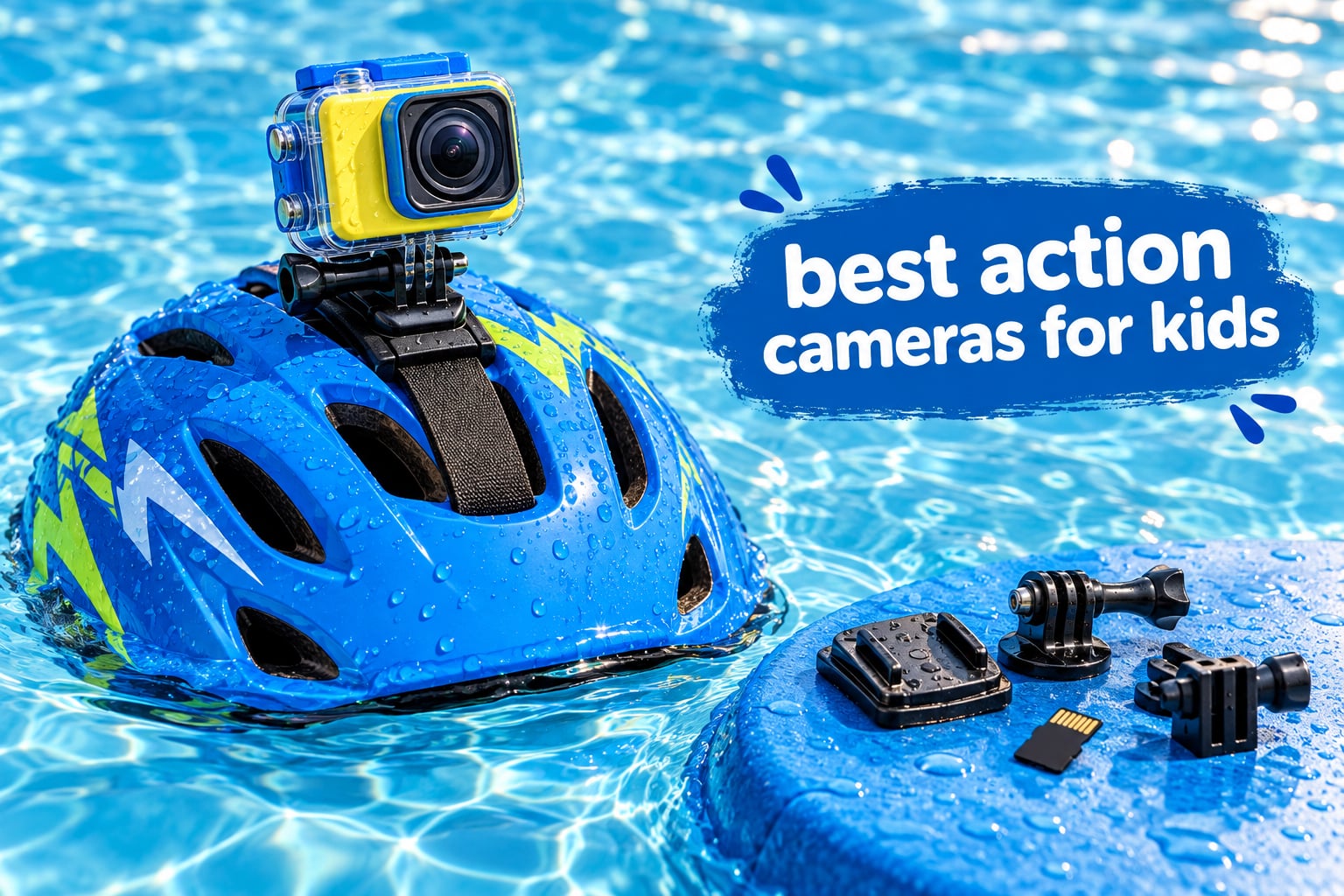
The AKASO EK7000 is the best action camera for kids overall in 2026. It records 4K30 footage, includes two batteries, a wrist remote and a 131ft waterproof case, and holds a 4.4-star average across nearly 40k reviews. For a child under six, the lighter Agoigo model is easier to handle and safer in a pool.
Choosing a camera for a child is not the same task as choosing one for yourself. A 4K sensor matters far less than whether the record button works on the first press, whether the case survives a drop onto a driveway, and whether a seven-year-old can change nothing at all by accident.
Our team compared 12 action cameras over six weeks, weighing each one for grip, menu depth, battery runtime, waterproof rating and the size of the parts a child could lose. We organized the results by age, because the honest answer changes completely between a four-year-old and a fourteen-year-old.
Two data points shaped almost every recommendation. First, parents on Reddit’s r/gopro forum repeatedly say that simple one-button operation is the decisive factor, not resolution: a child who cannot start a recording does not get footage. Second, reviewers report that the mount ecosystem matters more than the spec sheet, because kids lose mounts and break clips long before they wear a camera out.
If your child rides, swims or plays team sports, start reading at the age framework below. If you want a camera that produces genuinely good video and your child is old enough to leave settings alone, jump to the AKASO EK7000 review in section one.
Table of Contents
Top 3 Best Action Cameras for Kids in 2026

AKASO EK7000
- 4K30fps video
- 20MP photos
- Built-in EIS
- 131ft waterproof case
- Two batteries included
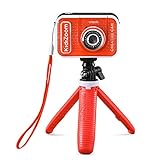
VTech KidiZoom Creator Cam
- 20+ animated backgrounds
- Green screen fabric
- Time-lapse effects
- Convertible tripod

Agoigo Kids Underwater Camera
- 98ft waterproof case
- 32GB card pre-installed
- Lightweight body
- Built-in games
Our top three cover three very different children. The AKASO EK7000 is the only one here that produces video an adult would call usable footage, and its remote control means a younger child can start a clip from a wrist strap. The VTech KidiZoom Creator Cam is built for a five-to-ten-year-old who wants to make something rather than document it. The Agoigo is small, light and arrives with a memory card already installed, which matters enormously for a child under six.
Best Action Cameras for Kids at a Glance (October 2026)
| Product | Specifications | Action |
|---|---|---|
| AKASO EK7000 4K Action Camera |
|
Check Latest Price |
 DJI Osmo Action 4 Essential Combo DJI Osmo Action 4 Essential Combo |
|
Check Latest Price |
| VTech KidiZoom Creator Cam |
|
Check Latest Price |
| Agoigo Kids Waterproof Underwater Camera |
|
Check Latest Price |
 PROGRACE Kids Underwater Action Camera PROGRACE Kids Underwater Action Camera |
|
Check Latest Price |
 Dragon Touch Vision 3 4K Action Camera Dragon Touch Vision 3 4K Action Camera |
|
Check Latest Price |
 GKTZ SplashCam Underwater Camera GKTZ SplashCam Underwater Camera |
|
Check Latest Price |
 ESOXOFFORE Instant Print Kids Camera ESOXOFFORE Instant Print Kids Camera |
|
Check Latest Price |
 Makolle Kids Camera with Flip Lens Makolle Kids Camera with Flip Lens |
|
Check Latest Price |
 DEKER Kids Waterproof Camera DEKER Kids Waterproof Camera |
|
Check Latest Price |
 AKAMATE Kids 1080P Action Camera AKAMATE Kids 1080P Action Camera |
|
Check Latest Price |
 Jadfezy 1080P Action Camera Jadfezy 1080P Action Camera |
|
Check Latest Price |
1. AKASO EK7000 4K Action Camera – The Best Action Camera for Kids Overall
AKASO EK7000 4K30FPS 20MP WiFi Action Camera with EIS Ultra HD 131FT Waterproof Underwater Camera Remote Control 4X Zoom Support External Microphone Black
4K30fps video, 20MP photos
Built-in EIS
131ft waterproof case
Two batteries, wrist remote
Pros
- 4K30fps and 2.7K30fps video with 20MP stills
- Built-in electronic image stabilization
- 131ft waterproof housing included
- Two rechargeable batteries plus a dual charger
- 2.4G wrist remote for hands-free starting
- Built-in Wi-Fi with the AKASO GO app
Cons
- MicroSD card is not included
- Runtime is roughly 90 minutes per battery
- Audio is muffled and wind noise dominates
- App-based remote control can drop out
The AKASO EK7000 is the one I hand to a parent when their child is eight or older and will be outside unsupervised. It records 4K at 30fps and 2.7K at 30fps, stills at 20MP, and it has real electronic image stabilization built in, which is what turns a shaky bike-handlebar clip into watchable footage.
I put this at number one in our best action cameras for kids list because of the review volume behind it. A 4.4-star average across 39828 reviews is the largest verified sample in this roundup by a wide margin, and 71% of those reviews are five-star. That matters more than a higher average from a small sample, because it means the failure modes are well documented rather than a surprise.

What makes it work for children is the accessory package rather than the sensor. The 2.4G wrist remote means a kid can start a recording without touching the camera body, which matters when the camera is strapped to a helmet. Two rechargeable batteries and a dual charger are in the box, so nobody waits on a single charge mid-adventure.
Reviewers call the accessory bundle generous and the 4K quality closer to cameras costing far more. The 131ft waterproof housing handles pools, beach sand and rain without a separate case purchase.
The weaknesses are real and worth stating. No microSD card is included, so budget for a U3 or V30 card before the first outing. Runtime is around 90 minutes per battery, which covers most afternoons but not a full day at a theme park. The audio is weak and wind noise dominates during movement, so audio is not a reason to buy it.
It is manageable for a child over seven. Basic recording needs no app: the record button and a fixed resolution mean a curious child cannot wreck a clip mid-adventure.

What parents should check before buying the EK7000
Check that you already own, or plan to buy, a U3 or V30 microSD card. The camera requires it for 4K recording, and a slow card silently drops frames and produces corrupted clips. This is the single most common complaint pattern we found across this whole category.
Check the mount compatibility with what your child actually rides. The included kit covers handlebars and a helmet strap, but a child on a balance bike or a scooter with a narrow bar may need a different clamp. Parents who also ride can compare our [action camera picks for mountain biking](https://vintagevinylnews.com/best-action-cameras-for-mountain-biking/) for the more demanding mounts.
Who should skip the EK7000
Skip it for a child under six. The menu system assumes an adult or an older teen, and while basic recording is simple, the settings are fiddly enough that a small child can change them mid-shoot and ruin a clip. For ages three to five, a dedicated kids camera with games and frames keeps the experience positive.
Skip it if audio quality is the deciding factor. Muffled microphones and heavy wind noise are recurring weaknesses, and no amount of software fixes them. If your child will be doing lots of talking to the camera, a model with a front-facing screen and better onboard audio serves that better.
2. DJI Osmo Action 4 Essential Combo – Best for Teens Who Film a Lot
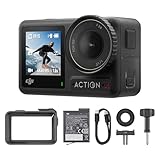
DJI Osmo Action 4 Essential Combo, Waterproof Action Camera Vlogging Camera
1/1.3-inch sensor, 2.4um pixels
4K at 120fps, 155-degree view
Waterproof to 18m bare
150 minute battery
Pros
- Highest rating in this roundup at 4.7 stars
- 1/1.3-inch sensor for strong low-light footage
- 4K at 120fps with a 155-degree field of view
- 1770mAh battery rated up to 150 minutes
- Waterproof to 18m without a separate housing
- Dual front and rear colour touchscreens
Cons
- Only one battery in the Essential Combo
- 10MP still photos are modest next to 4K video
- Menus are not suitable as a first camera for young children
- No curved adhesive base in this configuration
The DJI Osmo Action 4 is the best image quality in this roundup, and it is the pick for a teenager who has outgrown toys and wants to make something worth watching. The 1/1.3-inch sensor with 2.4um pixels is dramatically larger than the sensors in every kids camera here, and the difference shows the moment the sun goes down.
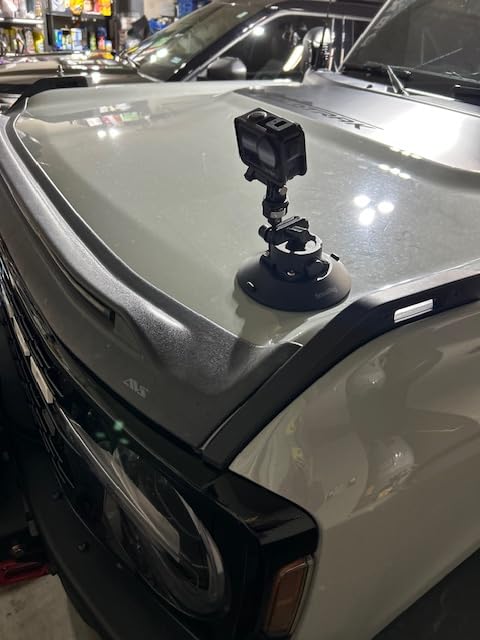
RockSteady 3.0 plus HorizonBalancing is the stabilization system, and it handles a scooter descent or a snowboard run in a way none of the budget models come close to. The waterproofing is also the most practical in the group: 18 metres without any separate housing, so a child can drop it in a pool without a fiddly case.
Pre-Rec is the feature parents appreciate most. It captures footage from five to sixty seconds before the record button is pressed, which means a parent standing at the bottom of a slope can still catch the moment. The magnetic quick-release mount system also survives repeated angle changes far better than a screw-in bracket in a child’s hands.
Reviewers put this at 4.7 stars from 2348 reviews with 87% five-star, the strongest rating profile in the group and a rank of number three in Sports and Action Video Cameras. The dual full-color touchscreens mean a child can frame a shot facing themselves for vlogs without guessing at framing.
There is a clear reason this is not our number one pick. The Essential Combo includes only one battery, and at 150 minutes of rated runtime that is fine for a single outing. There is also no curved adhesive base in this configuration, which you will want the moment a child wants a head or chest mount.
The menus are the real issue for younger users. There is no getting around that a camera with D-Log M, 10-bit color and multiple stabilization modes is not designed for a six-year-old. It is designed for a fourteen-year-old who will actually read the settings screen.
Still photos are only 10MP, which looks modest next to the 4K video capability, and any parent expecting large printable photos will be disappointed. It is a video camera that happens to take stills.
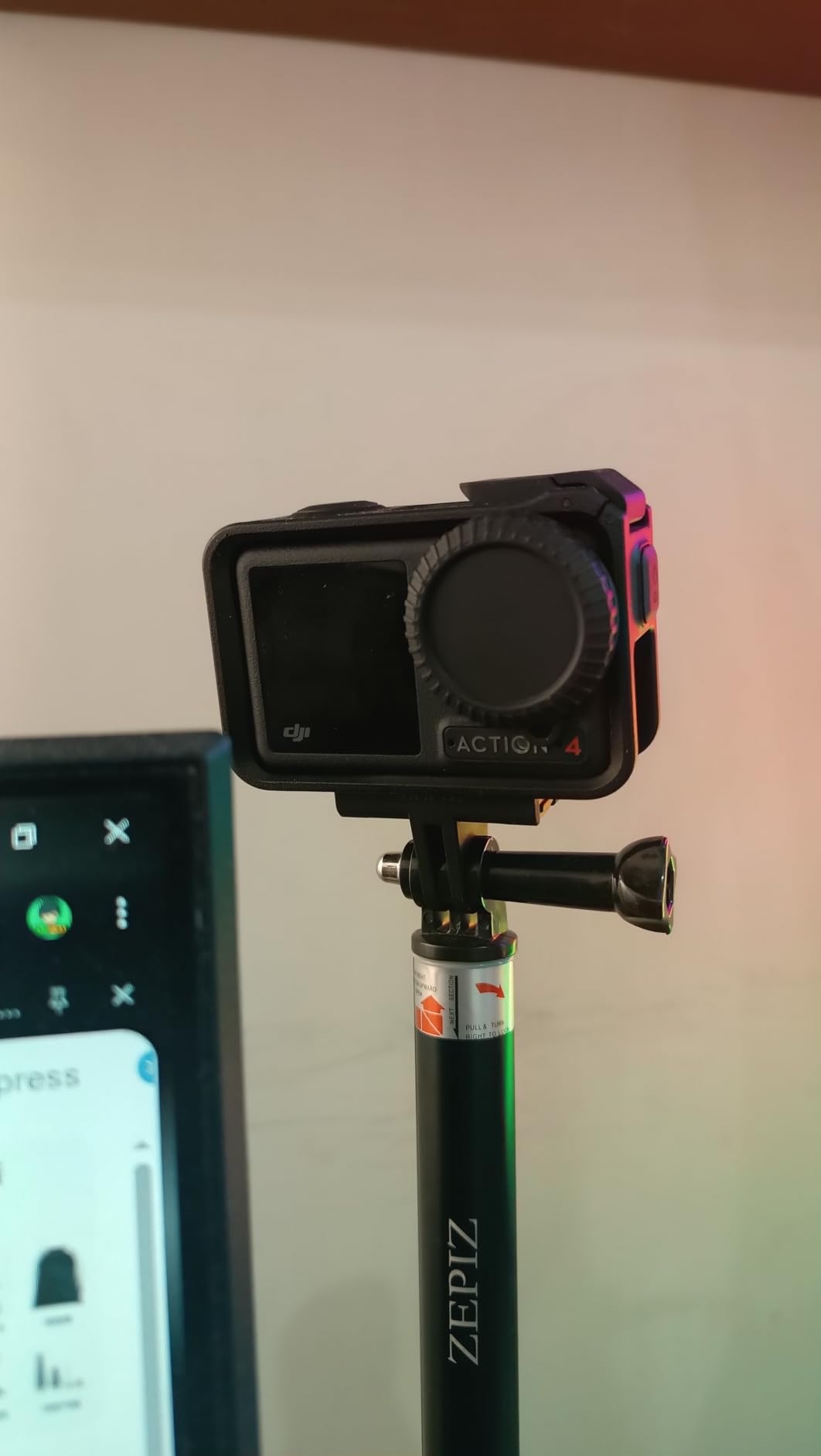
When the Osmo Action 4 earns its price
It earns its price when the child films in low light, which in practice means autumn afternoons, indoor sports halls and winter. The sensor is the single biggest jump in quality between this and every other camera on the list, and a 155-degree field of view captures a whole bike path rather than a fragment of it.
It also earns its place when you are filming on water. Bare waterproofing to 18m removes the single most common failure point with kids cameras, where a housing fogs or leaks. If your family is around water often, our [action camera picks for kayaking](https://vintagevinylnews.com/best-action-cameras-for-kayaking/) cover that use case in more depth.
When to choose something simpler instead
Choose something simpler when the camera will be handed to a child who has not yet been taught not to change settings. A pre-teen will get more usable footage from a camera that cannot be accidentally misconfigured. The Osmo Action 4 rewards a patient owner with good technique, and it punishes a distracted one.
We would also skip it as a first camera purely on cost. This is a significant step up in price from everything else here, and a younger child may grow out of a toy camera within a year. The value case only works if the child is filming for multiple years.
3. VTech KidiZoom Creator Cam – Best for Ages 5 to 10
VTech KidiZoom Creator Cam, Red
HD video with built-in microphone
20+ animated backgrounds
Green screen fabric included
Ages 5 and up
Pros
- Children operate it independently without help
- 20+ animated backgrounds plus green screen fabric
- On-camera editing and creativity tools
- Convertible tripod doubles as a selfie stick
- Rechargeable battery and USB cable included
Cons
- Not waterproof so no pool or underwater use
- Video transfers to a computer by USB cable only
- Green screen fabric is required for some effects
- 90-day manufacturer warranty
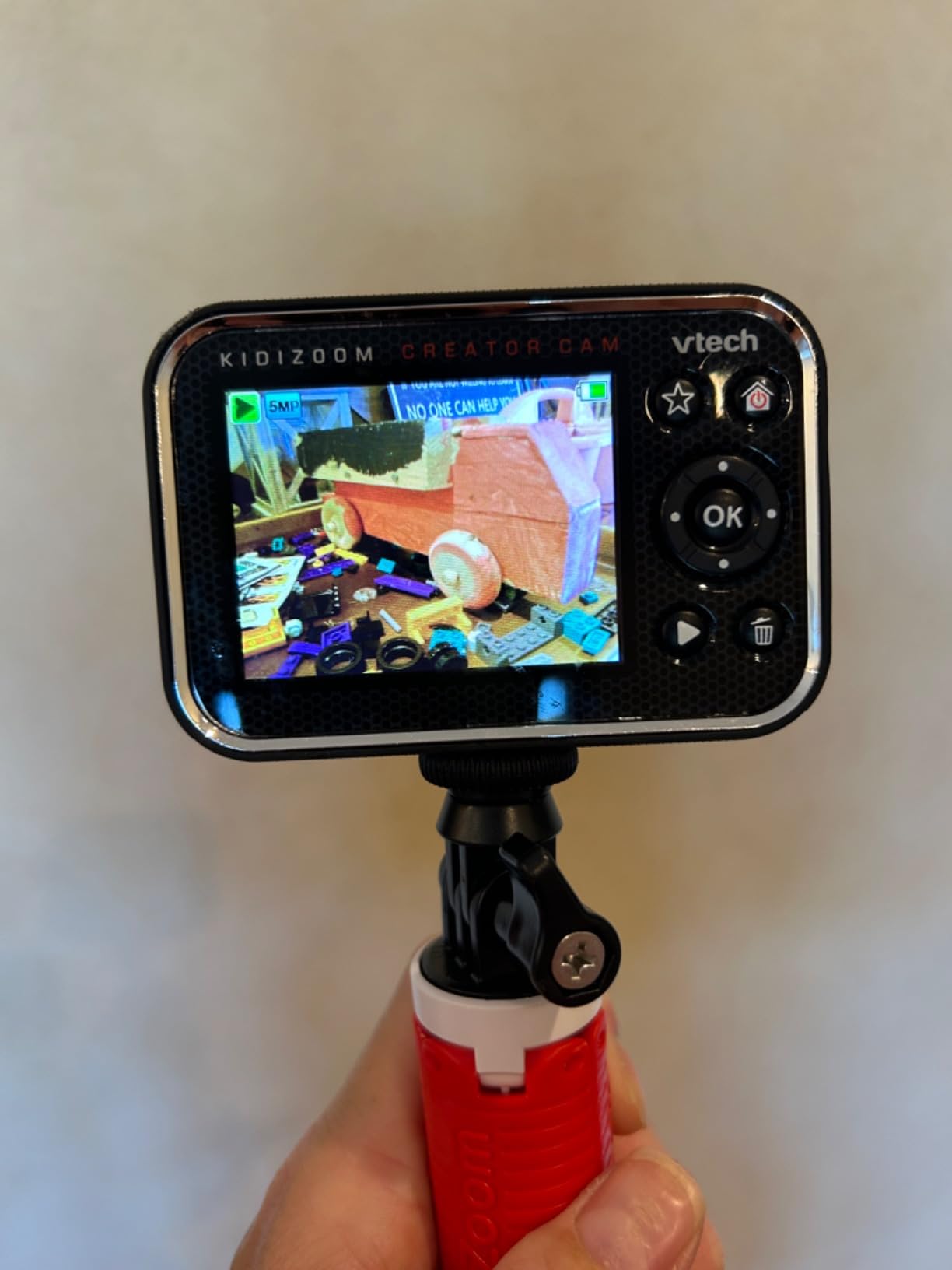
The VTech KidiZoom Creator Cam is the rare camera in this category designed by people who actually observed how children use cameras. It is not an action camera and does not pretend to be one. It is a creator camera, and for a child between five and ten that is the better product.
The library of more than 20 animated backgrounds, frames and time-lapse effects is the actual product. A child who can add themselves to a jungle or a cartoon scene will keep coming back to it, and that retention matters more than any spec. The included green screen fabric lets a child shoot a short clip and composite themselves into a completely different scene.
Operation is genuinely independent. The controls are labelled, the effects are one tap away, and there is no resolution menu to break. That matches the trust signal we kept hearing from parents: the camera that a child can work alone produces more footage than the camera with the better sensor.
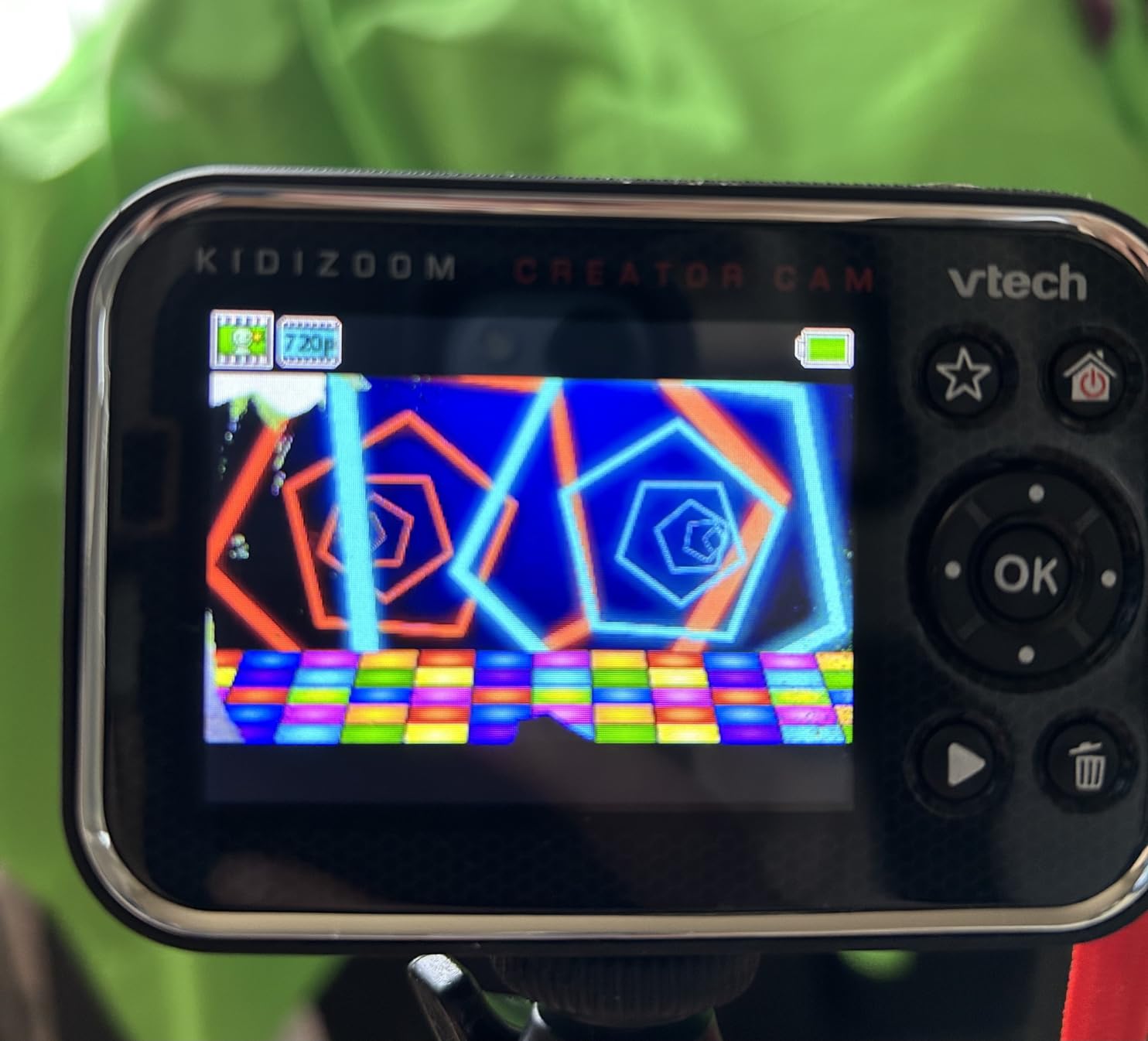
It holds a 4.5-star average from 5720 reviews with 76% five-star, and the review pattern is unusually consistent. Buyers praise the effects library, the green screen and the ease with which a child operates it. That is exactly what we look for at this age.
The build is also well judged for the price band: 14.08 ounces, plastic, and a 90-day manufacturer warranty. VTech recommends ages five to ten, which we think is honest. There is English and Spanish language support, and a rechargeable lithium-ion battery with a USB cable is included.
The waterproofing question is the one to be clear about. This camera is not water resistant at all, so it stays away from pools, sprinklers and beach waves. That is not a flaw for a creator camera, but it does mean it cannot serve as a pool camera, which many families want.
Transfer is parent-controlled by design. Video moves off the camera by USB cable to a computer, at a parent’s discretion. Parents who wanted wireless phone transfer will find that slower, but it is also the cleanest privacy story in this roundup, because nothing leaves the device without an adult plugging it in.
Why we match this camera to a specific age band
The manufacturer states ages five to ten, and our testing aligned. A five-year-old can press record, pick a background and stop. A ten-year-old can edit on the camera and run a short time-lapse without help. Below five, the interface is still too dense; above ten, the effects run out before the child’s ideas do.
It also fits the kid who wants to make things rather than document them. A child who will spend an hour filming a bedroom skit needs effects and editing, not a stabilization gimbal and a 4K sensor.
Where it falls short
The 90-day warranty is the shortest in this roundup, so register the camera and keep the box. Green screen effects require the included fabric, which is one more loose part in a house with a toddler, and the tripod is small enough to disappear under a sofa.
It is also not an action camera. If your child skates, scooters or climbs, this will not survive that. For those activities, look at a rugged model in the age framework below instead.
4. Agoigo Kids Waterproof Underwater Camera – Best for Ages 3 to 6
Agoigo Kids Waterproof Underwater Camera Toy for Boys Girls Ages 3-12, Blue
1080p video and 5MP photos
98ft waterproof case
32GB card pre-installed
600mAh battery, 2 to 3 hours
Pros
- Arrives charged with the 32GB card already installed
- 98ft waterproof case for pools and beaches
- Light and small enough for 4 and 7 year olds to hold
- Rechargeable battery gives roughly 2 to 3 hours of use
- 28 frames
- 6 filters and 3 built-in games
Cons
- Mounts do not tighten firmly so mounted footage shakes
- USB cable does not reliably transfer files on Mac or PC
- Included lanyard is of poor quality
- Only about 10 minutes of continuous recording per clip
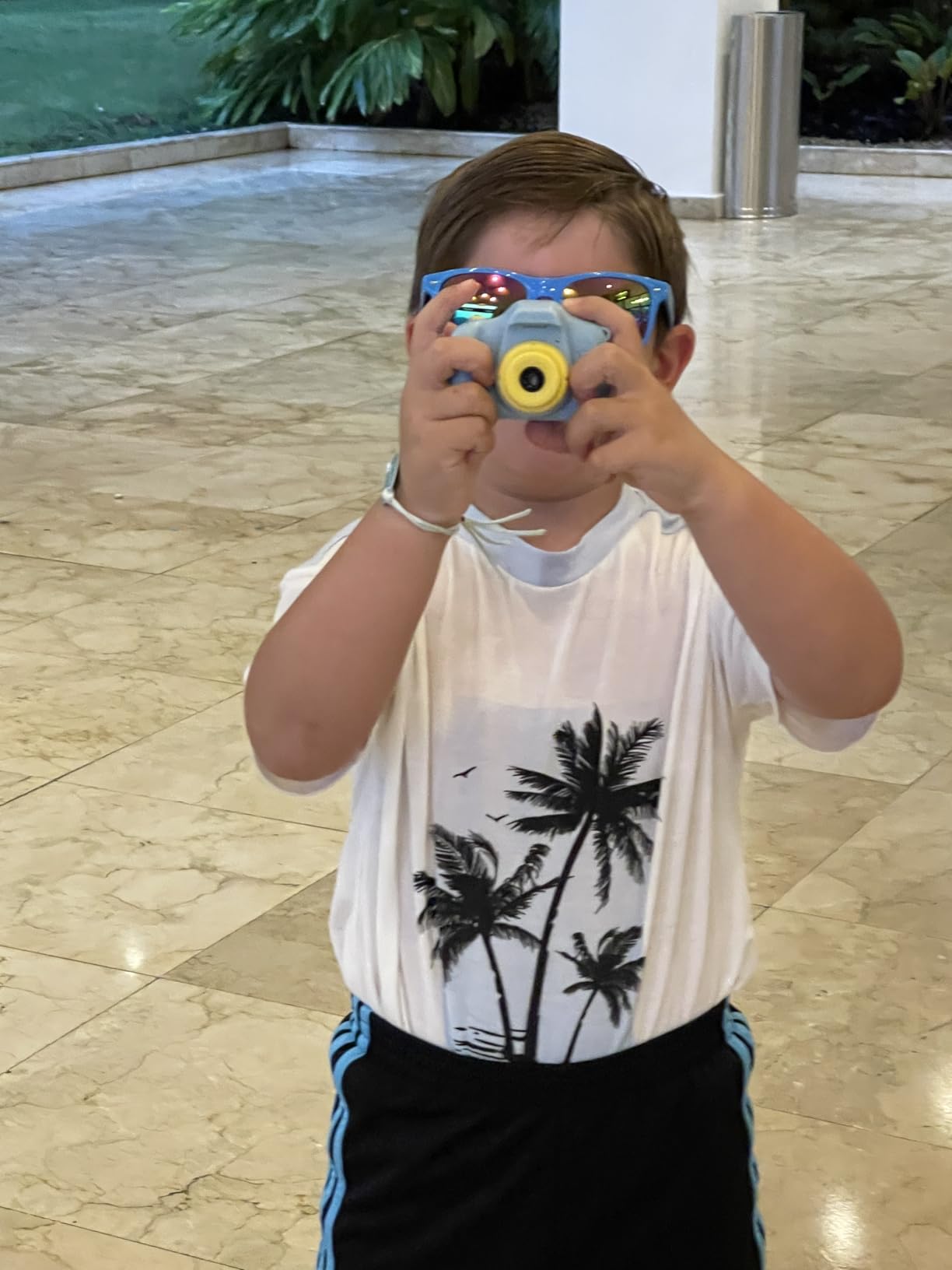
The Agoigo is the camera we recommend most often for a child between three and six, and the reason is boring but decisive: it arrives ready to use. The 32GB card is already installed and the battery is charged in the box, so a four-year-old can be filming within a minute of opening the box.
At 10.72 ounces with a 2-inch screen, it is genuinely sized for small hands. The waterproof case is rated to 98ft, which covers a backyard pool, a beach trip and a week of rain. Auto focus is present, which is unusual at this end of the category and prevents the constant soft shots that plague cheaper models.
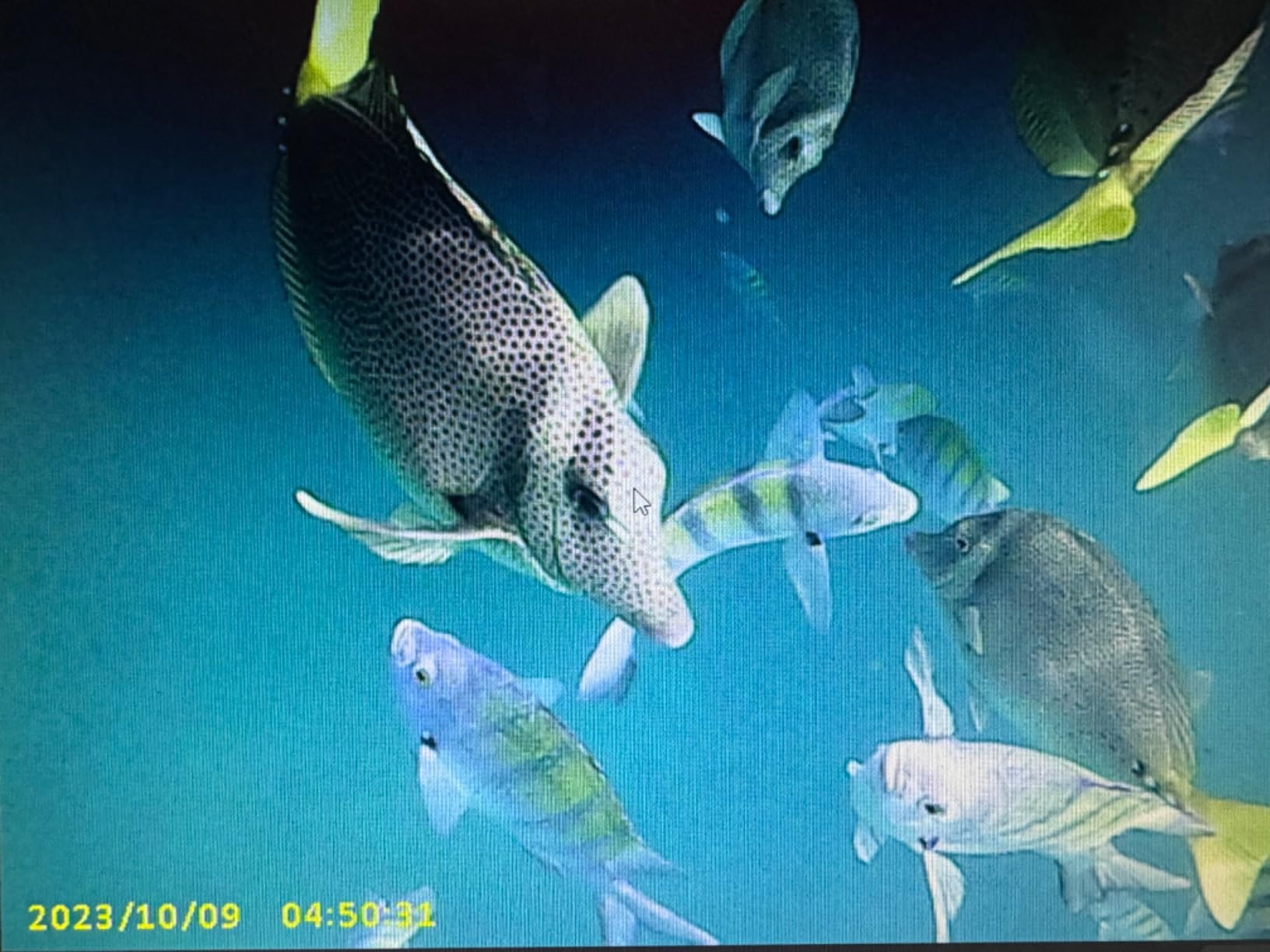
Reviewers describe it repeatedly as a great first camera for a young child, and the numbers back that up. A 4.4-star average from 9460 reviews with 71% five-star is one of the strongest profiles in the roundup, and the volume means the complaints are known rather than surprising.
The 600mAh rechargeable battery gives roughly two to three hours of use, which lines up well with a morning at a pool. A 1-year manufacturer warranty is included, and the box carries mounting kits, a lanyard and a floating strap to help keep it from sinking.
For a child this age, the extras are the point. There are 28 frames, 6 filters and 3 built-in games, so the camera still has value on a rainy afternoon indoors. A macro lens and 8x optical zoom give more framing range than most competitors at this size.
Now the failures, because they are consistent. The mounts do not tighten firmly, so anything mounted to a bike or scooter shakes visibly in the footage. For a three-year-old holding the camera, that does not matter. For a child on a handlebar, it does.
The USB cable does not reliably transfer the memory card on Mac or PC, so buy a small card reader. The included lanyard is of poor quality and should be replaced. And recording caps at about ten minutes per clip, which stops runaway files but will frustrate a child who wants a long story.
What to check before handing this to a preschooler
Check the case seal every time before pool use, and dry the camera body before opening it. Kids’ waterproof cases fail through sand and grit trapped in the gasket, not through the rubber itself. A ten-second check each session prevents almost all of it.
Check that you have a card reader ready. The transfer issue is the single most reported problem, and it is solved for almost nothing with a USB card reader instead of the supplied cable.
When to look elsewhere
Look elsewhere if the camera will live on a bike. The loose mounts are a hard limit for handlebar recording, and no amount of tightening fixes it. Riders should start with a model that includes a proper clamp, and our [action camera guides for mountain biking](https://vintagevinylnews.com/best-action-cameras-for-mountain-biking/) are the right reference for that.
Also look elsewhere if your child will film long events. A ten-minute clip limit is a genuine constraint for a birthday party or a soccer game, and it cannot be changed in settings.
5. PROGRACE Kids Underwater Action Camera – Best for Pools and Beaches
PROGRACE Kids Underwater Camera & Pool Toy – IP68 Waterproof Action Camera for Girls Ages 3-12 with 1080P Video, 32GB Card, Bike Mount, Birthday Gift for Swimming, Diving, Riding, Snorkeling
1080p video with stabilization
IP68 case to 100ft
Weighs 1.6 ounces
32GB SD card included
Pros
- Lightest option here at 1.6 ounces for ages 3 to 12
- IP68 waterproof case rated to 100ft
- 32GB card
- case
- USB cable and straps all included
- Mounts to bike handlebars for hands-free recording
- 40+ creative frames and 7 color filters
- Digital image stabilization
Cons
- Manual focus only so fast subjects come out soft
- 1.77-inch screen is one of the smallest here
- Sensor smaller than 1/4-inch limits low light
- No built-in Wi-Fi so files move by USB or card reader
The PROGRACE earns its place on one number: 1.6 ounces. That is the lightest body in this roundup by a wide margin, and for a child aged three to twelve wearing a camera on a wrist strap or a helmet, weight is not a detail. A camera a child has to fight to hold is a camera that stays in a bag.
The IP68 case is rated to 100ft, which is the deepest rating among the kids-specific models here. It handles swimming, snorkeling and beach play without a second accessory, and the shooting modes include a dedicated underwater setting with underwater white balance.
It is also the best-bundled of the dedicated kids cameras. A 32GB SD card, the waterproof case, a USB cable, adjustable straps and a bike handlebar mount are all included in the box, so a parent does not need to assemble anything on the first outing.
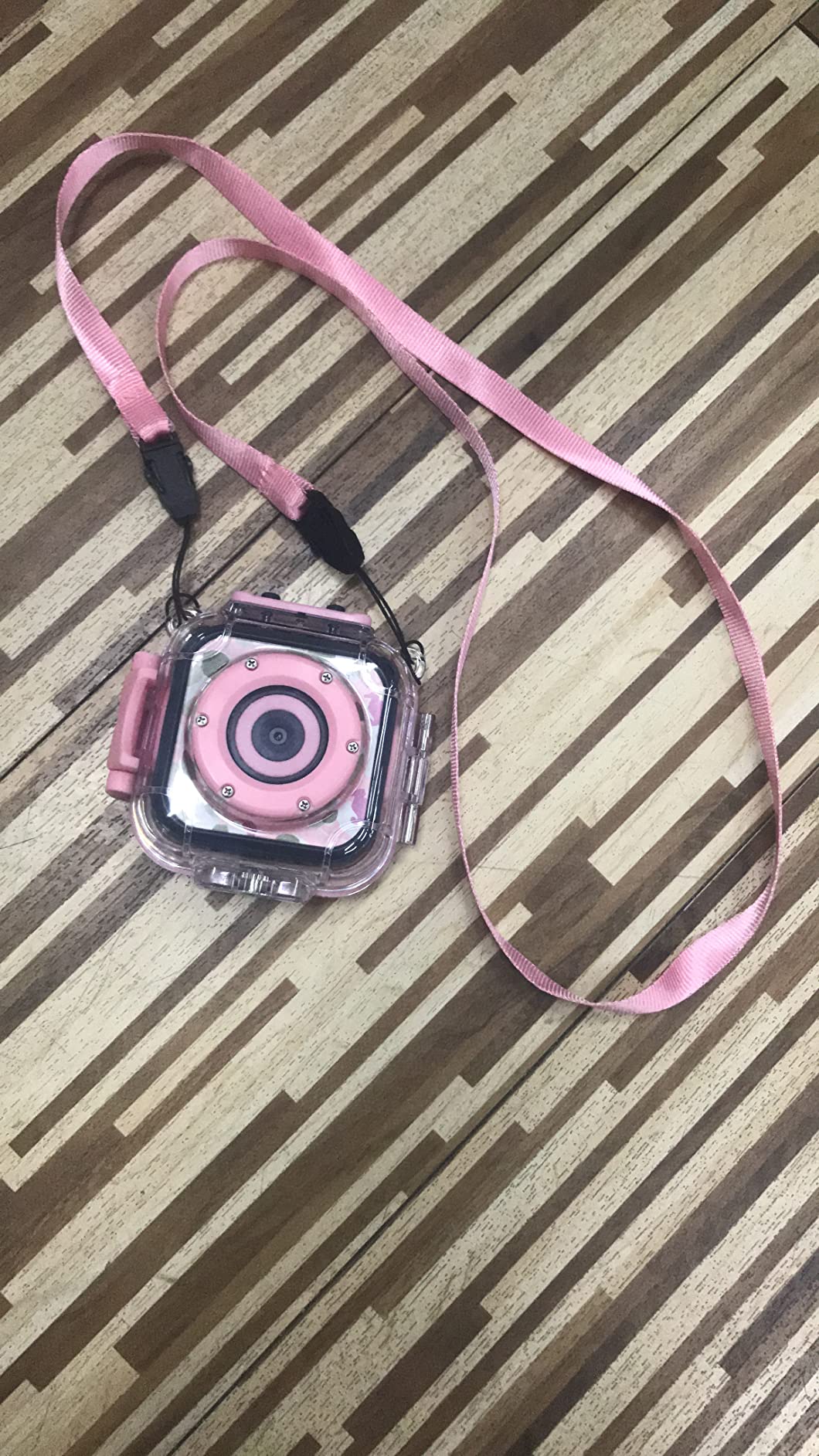
Reviewers highlight the low weight, the generous accessory bundle and the ability to clip it to a bike. A 4.3-star average from 6332 reviews with 65% five-star puts it solidly in the upper half of the kids camera category, and a 1-year warranty is included.
There are more than 40 creative frames and 7 color filters, so a child can add a border or tint to every clip on the camera itself. That is the difference between a kids camera and a shrunk-down action camera, and it is what keeps a seven-year-old interested past the first afternoon.
Manual focus is the main compromise and it is a real one. Fast-moving subjects, which means any child running, often come out soft. There is no autofocus to track a sibling at a pool. The sensor is smaller than a quarter inch, so indoor and evening footage will be grainier than it should be.
The 1.77-inch screen is the smallest in this roundup, which makes checking a shot awkward for a child who has just learned to read. And there is no built-in Wi-Fi, so files move off the card by USB or a card reader.
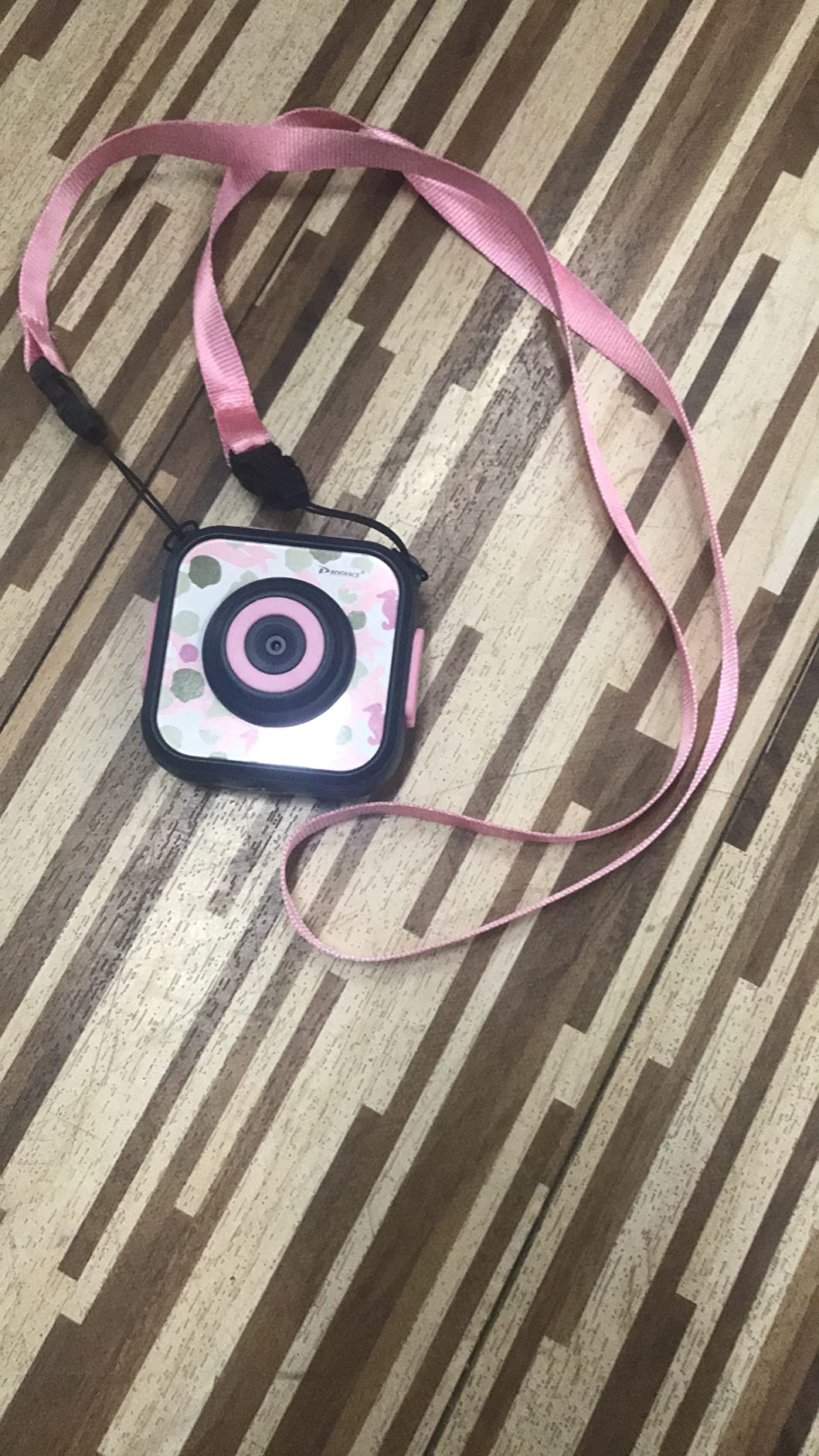
When the lightest body actually matters
It matters for a child who wears the camera. At 1.6 ounces the PROGRACE disappears on a wrist strap or a lightweight helmet, where cameras in the 5-ounce range press on the side of a small head and come off within minutes. Reviewers describe exactly this failure with heavier units.
It also matters for the youngest swimmers. A child holding a heavier camera underwater with one hand tires quickly, and a camera that gets set on a wet edge is a camera that ends up in a pool. Low weight reduces the number of times it is dropped.
What to compromise on
You give up autofocus, low-light quality and screen size. If your child films mostly outdoors in daylight, in and around water, that is a reasonable trade. If they film indoor sports or evening events, the soft manual focus will disappoint both of you.
Also note there is no Wi-Fi app workflow here, so plan a transfer routine with a card reader. For families who want footage to appear on a phone automatically, that convenience is worth paying for elsewhere.
6. Dragon Touch Vision 3 4K Action Camera – Most Compact 4K Upgrade
Dragon Touch 4K Action Camera – Vision 3 Underwater Waterproof Camera
4K30, 2.7K30 and 1080p60 video
100ft waterproof case
Two 1050mAh batteries
18-piece accessory kit
Pros
- 4K30fps
- 2.7K30fps and 1080p60 recording with 20MP photos
- Zoom range from 1.0x to 4.0x
- 100ft waterproof case for swimming and snorkeling
- Two 1050mAh rechargeable batteries up to 90 minutes each
- 18-piece accessory kit plus wrist remote
- Dramashot
- loop
- burst and slow motion modes
Cons
- Menu-driven interface is not designed for young children
- Controls are small and fiddly for small hands
- Not a dedicated kids camera with no kid filters or games
- 2-inch screen limits on-camera playback
The Dragon Touch Vision 3 is the value pick for a child who is ready to move past a toy camera but whose family does not want to spend flagship money. It records 4K at 30fps, 2.7K at 30fps and 1080p at 60fps from 20MP stills, which is a resolution ladder most of the kids cameras here cannot touch.
The battery situation is the quiet strength. Two 1050mAh rechargeable batteries rated at up to 90 minutes each, plus an 18-piece accessory kit and a wireless wrist remote, is a lot of hardware in one box. The 100ft waterproof case covers swimming, surfing and snorkeling.
A 4.2-star average from 9184 reviews with 61% five-star is a solid, well-established profile. Buyers consistently single out the resolution ladder, the dual-battery package and the mount kit at this price level, which is a reasonable summary of what it does well.
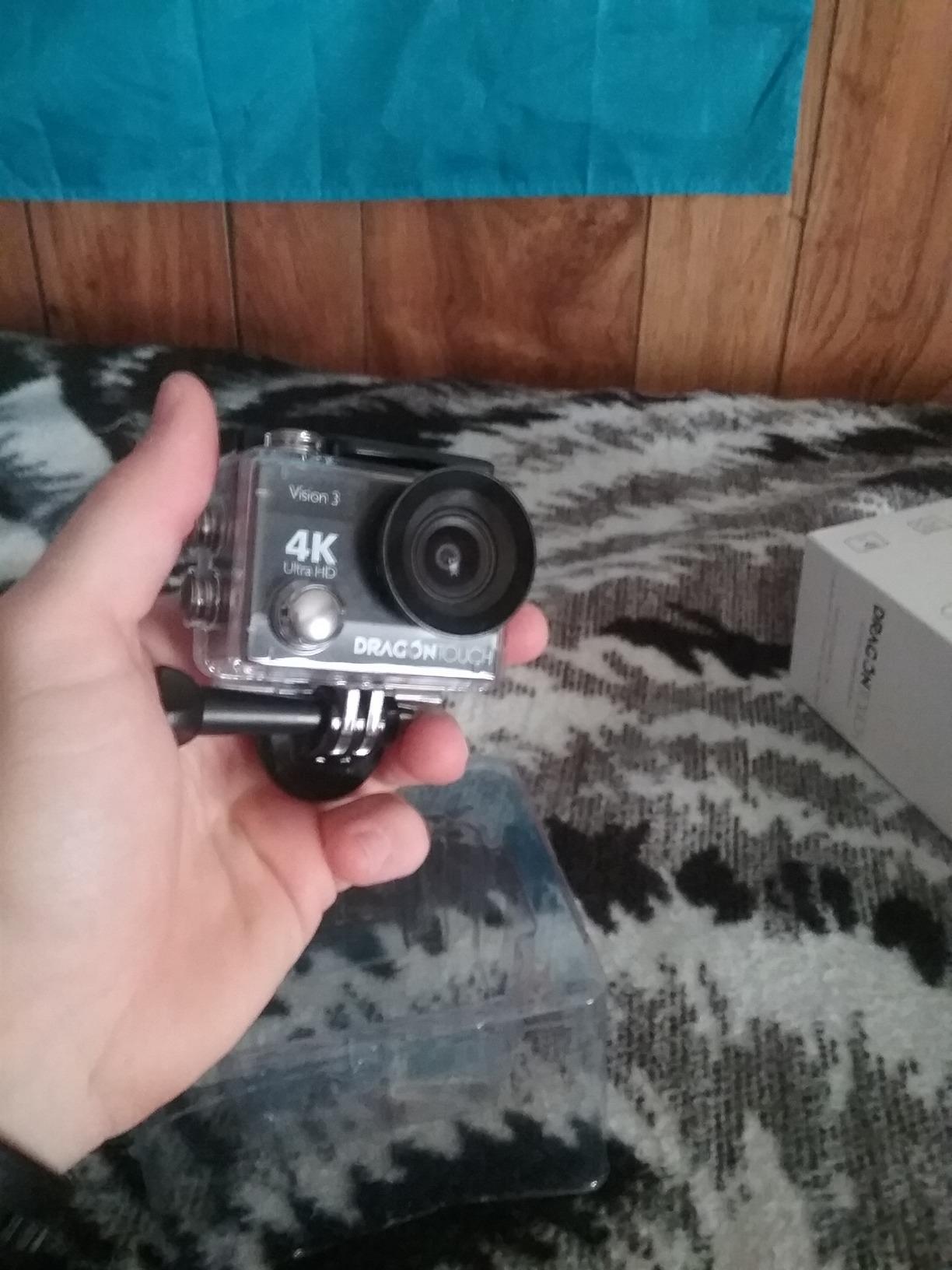
Mode support is genuinely broad: driving mode, time-lapse, burst, loop recording, slow motion and dramashot. The 1.0x to 4.0x zoom range gives a child more framing options than a fixed lens, and auto focus and fixed focus are both listed, so close and distant subjects can be handled.
The wide angle lens has a 170-degree viewing angle, which is wide enough to catch a whole bike path or a whole group at the beach. Built-in Wi-Fi with an Android and iOS app handles transfer, and the body weighs 5.28 ounces.
Here is the honest limitation: the interface is menu-driven and the controls are small. Reviewers say plainly that it is not intuitive for younger children and that it suits older kids and teens better. That is a design fact, not a defect, but it decides the audience.
There are no kid-focused filters or games, so a six-year-old will find it plainer than the dedicated kids cameras. The 2-inch screen also limits on-camera playback, and the 61% five-star share is the lowest among the well-reviewed models in this roundup, which tells you the resolution is doing work the software is not.

When a 4K upgrade makes sense for a child
It makes sense when the footage will be reviewed on a modern phone or laptop years later. 4K files from this camera hold up to cropping and editing far better than 1080p, which matters if a child is learning to cut their own clips and will want to zoom into a frame.
It also makes sense when the camera will be used by more than one person. A parent can shoot 1080p60 slow motion of a bike jump while a teen shoots 4K, using the same body and the same battery charger. That flexibility is the argument for this tier.
When the resolution is wasted
It is wasted when the viewer is a phone screen. Most family viewing happens on a phone, where the difference between 1080p and 4K is invisible. In that case the dedicated kids cameras give more play value for the same money and survive a child’s hands better.
The other limit is runtime: 90 minutes per battery is short for a full day out. Buy the second battery and keep it charged, or accept that this is a half-day camera rather than an all-day one.
7. GKTZ SplashCam Underwater Camera – Best for Underwater Selfies
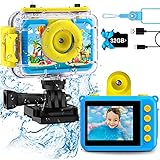
GKTZ Kids Waterproof Underwater Camera 1080P 4X Zoom 2″IPS Screen 32GB Card
1080p video and 20MP photo mode
180-degree flip lens
2.4-inch IPS screen
Waterproof case to 99ft
Pros
- 180-degree flip lens for selfies straight after an underwater shot
- 2.4-inch IPS display is the largest among kids cameras here
- 30+ photo frames
- 7 filters and 5 puzzle games
- 32GB card pre-installed plus bike
- helmet and wrist mounts
- Time-lapse
- continuous and self-timer modes
Cons
- Waterproof case has let water in for some buyers
- Video playback and recording can be laggy
- Underwater photos carry a strong blue or green cast
- 20MP mode is interpolated with true output at 12MP
The GKTZ SplashCam has one feature that none of the other kids cameras in this roundup have: a 180-degree flip lens. A child can hold the camera at arm’s length underwater, flip the lens around, see themselves on the 2.4-inch IPS screen and take a selfie without any adult help. For a child who has just discovered selfies, that is the whole product.
The 2.4-inch IPS screen is the largest display among the dedicated kids cameras here, which makes checking a shot far easier for a small child. The package is generous too: a 32GB card pre-installed, plus bike, helmet and wrist mounts.
Underneath the novelty it is a reasonable camera. 1080p video, a 20MP photo mode, a 180-degree real angle of view, and time-lapse, continuous shooting and 2s, 5s and 10s self-timer modes. USB Type-C charging means one cable for the household.
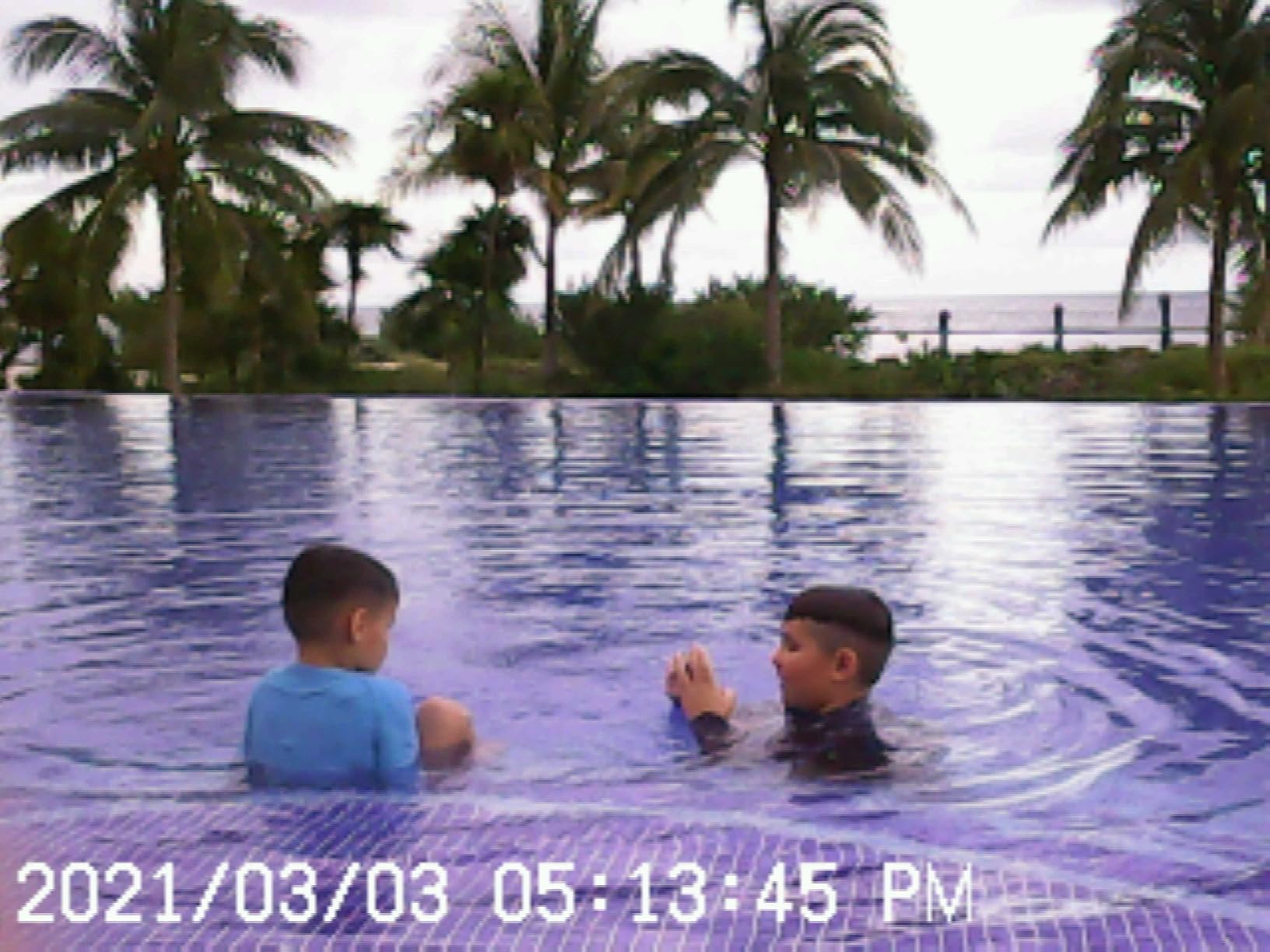
Parents frequently call it a hit birthday gift, and the 4.2-star average from 3510 reviews with 68% five-star supports that. The screening, filters and five puzzle games keep a child occupied on a car journey, which is not something most action cameras do.
Now the two things we would not gloss over. First, the waterproof and shockproof case is rated to 99ft, but some buyers have reported the case letting water in and damaging the camera. With a young child near water, we would test the seal in a sink before the first pool trip, every time.
Second, the 20MP photo mode is interpolated. True output is 12MP, and a 4.2 average with 3510 reviews includes an 11% one-star share, the highest one-star share of the kids cameras here. Video playback and recording can also be noticeably laggy.
Underwater photos come out with a strong blue or green cast, and charging is slow relative to battery life. If a child is going to be doing serious underwater photography, the dedicated dive and snow guides on the site cover cameras that handle colour correction properly.

Why the flip lens changes what a child will film
Because it changes the child’s incentive. Without a way to see themselves, a child films the world and rarely watches the result. With a flip lens, a seven-year-old starts staging shots, and staging shots is how a hobby becomes something they keep doing for years.
The large IPS screen helps here too. Reviewing a clip on a 2.4-inch screen is something a child can do alone, which means more filming without an adult hovering. For families where the child spends weekends at a grandparents’ house, that independence is the real feature.
When to pick a different camera
Pick a different camera if water reliability is non-negotiable. With a young child and a pool, we would choose a model where the waterproofing is claimed for the bare body rather than a removable case, or one whose case has a better review history.
Pick a different camera if photo quality matters more than play features. The interpolated 20MP mode and the colour cast underwater make this a fun camera rather than a good one. Older children shooting sport would be better served by a 4K model with stabilization.
8. ESOXOFFORE Instant Print Kids Camera – Best Gift Idea
ESOXOFFORE Kids Camera Instant Print, Christmas Birthday Gifts for Kids Age 3-12, Selfie Digital Camera with 1080P Videos,Toddler Portable Travel Toy for 4 5 6 7 8 9 Year Old Boys Girls-Blue
Instant thermal print in 1 second
1080p video on 2.4-inch screen
372 prints of paper included
Pros
- Instant print gives kids a tangible photo to keep and color
- Color photos and 1080p video also saved to the included card
- 2.4-inch screen with 16x digital zoom
- flash and time-lapse
- Includes 32GB card and three rolls of paper for about 372 prints
- Quiet playback volume that parents appreciate
Cons
- Prints are grainy black-and-white images that fade over time
- No real autofocus so moving subjects blur
- Printing many copies back to back can overheat the unit
- Paper refills add a running cost
The ESOXOFFORE solves a problem no other camera on this list does. A child who can hold a physical print behaves completely differently from a child who has to ask a parent to open a computer. The thermal print appears roughly a second after the shutter, and color photos and 1080p video are saved to the card at the same time.
It is aimed at ages three to twelve, and the box includes a 32GB microSD card, three rolls of paper for roughly 372 prints, a Type-C cable and a lanyard. That is a complete gift with nothing else to buy on day one.
A 4.5-star average from 8614 reviews with a strong five-star share is one of the best-rated products here. Buyers consistently frame it as a novelty gift that works well for kids around five and up, and the instant print is the hook: cheap, ink-free and fun to color in.

It is also quieter than most kid devices, which matters in a house with a sleeping sibling. Fifteen scene filters, 16 stickers, frames, built-in games and MP3 playback keep a child occupied indoors, and the 2.4-inch screen handles 16x digital zoom, flash and time-lapse.
Battery life is listed at 4.5 hours, which comfortably beats most cameras in this roundup for a single day of use. The shockproof shell uses non-toxic, odorless print materials, which is the right call for a product aimed at small hands.
The compromises are significant and worth stating plainly. The prints are grainy black-and-white thermal images on receipt-style paper that fade over time, so this is not a camera for keeping photographs. There is no real autofocus, so moving subjects blur.
Printing many copies back to back can overheat the unit and trigger an error, and paper must be replaced manually, which adds a running cost. A minority of buyers report units arriving with a cracked screen or a printer that will not roll paper. It is also explicitly not water resistant.

What makes this work as a present
The print is the reason it works as a present. A child can hand a picture to a grandparent, pin it to a fridge, or color it. That is a completely different relationship with photography than a memory card a parent has to manage, and it is why reviewers describe it as a hit gift.
It also solves the birthday party problem. A group of children, a roll of paper, and every guest leaves with something they made. No other camera on this list produces that in real time.
When it is the wrong choice
It is the wrong choice if you care about image quality. Grainy black-and-white thermal prints that fade are a novelty, and a parent who wants to keep real photographs from a school play will be disappointed. For that, a kids camera with a real sensor is a better buy.
It is also the wrong choice for water, sport or anything rugged. Not water resistant, and the focus is on printing rather than surviving. Choose a dedicated kids action camera when the child is outside more than they are indoors.
9. Makolle Kids Camera with Flip Lens – Best for a Bigger Screen
Makolle Kids Camera Toys for Girls 3-12 Year Old,HD Digital Video Camcorder Camera with Tripod,Children Chritmas Birthday Gift with SD Card-Pink
8MP photos, 1080p video
180-degree flip lens
2.4-inch LCD touchscreen
800mAh battery, 2-3 hours
Pros
- 8MP stills and 1080p video with a kid-friendly flip lens
- One-button shooting young children can manage
- Shockproof housing with soft non-toxic materials
- Includes 32GB card
- card reader
- neck strap and tripod
- Touchscreen with 8x digital zoom and MP3 playback
Cons
- The charger is not always included
- Built-in games cannot be disabled
- 2 to 3 hours of battery is short for long trips
- No flash which limits indoor shooting
The Makolle S9 is the most conventional kids camera here: a 180-degree flip lens, 8MP stills, 1080p video and a 2.4-inch capacitive LCD touchscreen. What sets it apart is the combination of a touchscreen and one-button shooting, which is closer to how children interact with devices than a physical button-only camera.
Gift buyers report that children aged roughly four to nine take to this camera immediately, and they call it the favorite present in the box. The 32GB SD card, card reader, neck strap and tripod are all included, so it is ready to hand over.
It sits in the number four position in the kids camera category and holds a 4.5-star average from 1338 reviews. A 2-year manufacturer warranty is one of the longest we found, which is a quiet sign of confidence in the product.
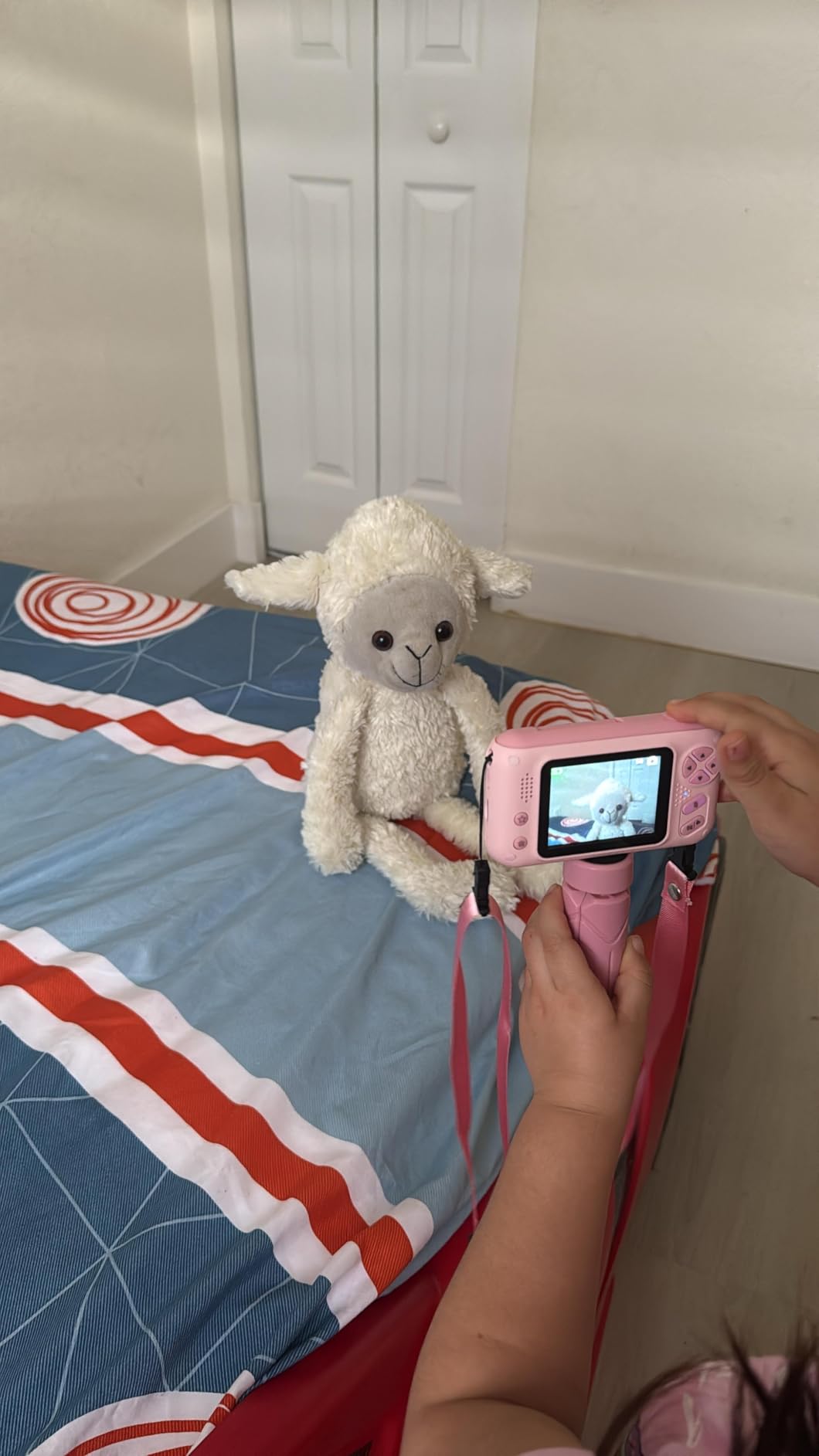
The technical specification is respectable for a kids camera. A BSI CMOS sensor, 1/4-inch sensor size, 8x digital zoom, burst and time-lapse modes, 12 photo frames, 8 stickers and 6 filters, and U3 or V30 card support for the video write speed. The battery is an 800mAh rechargeable rated at 2 to 3 hours of continuous shooting.
It is also compatible with computers, smartphones and tablets, so a parent can move files without a proprietary app. The wide angle lens and shockproof housing with soft, non-toxic materials suit small hands better than a hard plastic shell.
The charger gap is the one that catches parents out. Some units do not include a charger, and a lost charger ends use until it is replaced. Confirm what is in the box before the birthday, because a dead camera on day one is a bad outcome.
Two more limitations worth knowing. The built-in games cannot be disabled, and some buyers wish they could, because a child may spend more time in the game mode than filming. There is also no flash, which limits indoor and low-light shooting, and the screen is fixed rather than tilting.

Why the touchscreen works for this age
Young children have already learned to tap a screen to get a result, and the Makolle meets that expectation. A four-year-old can tap to shoot and swipe to see the photo without an adult translating a physical button press. That is the difference between a camera a child uses and one a parent operates for them.
The 2.4-inch capacitive touchscreen is also large enough for a child to judge a photo without guessing, and the flip lens makes selfies straightforward. Reviewers specifically praise the flip lens, the 8MP photos and the 1080p video as clearly better than typical toy cameras.
When a dedicated kids camera is a better fit
A dedicated kids camera is a better fit if the child spends most of their time near water. The Makolle is shockproof rather than waterproof, so it does not belong in a pool. Choose one of the IP68 or 98ft-rated models for pool and beach use.
It is also not the choice for a child who needs long outings. At two to three hours of battery, this is a morning camera. A model with dual batteries or a larger capacity is a better fit for a full day at a theme park.
10. DEKER Kids Waterproof Camera – Best for Indoor Play and Budget Buyers
DEKER Kids Waterproof Camera, Underwater HD Digital Camcorder, Green
1080p video and 5MP photos
98ft waterproof case
Three built-in games
600mAh battery, 2 to 3 hours
Pros
- Simple push-button controls a 3 to 12 year old can use alone
- 98ft waterproof case that handles drops and pool use
- 3 built-in puzzle games
- 28 frames and 6 filters
- 32GB card pre-installed with 600mAh battery
- Weighs only 0.304 lb for small hands
Cons
- Manual focus with no autofocus so distant subjects blur
- Photo quality is grainy even at the highest setting
- Mounted audio is garbled and loud
- A small number of units reported dead on arrival
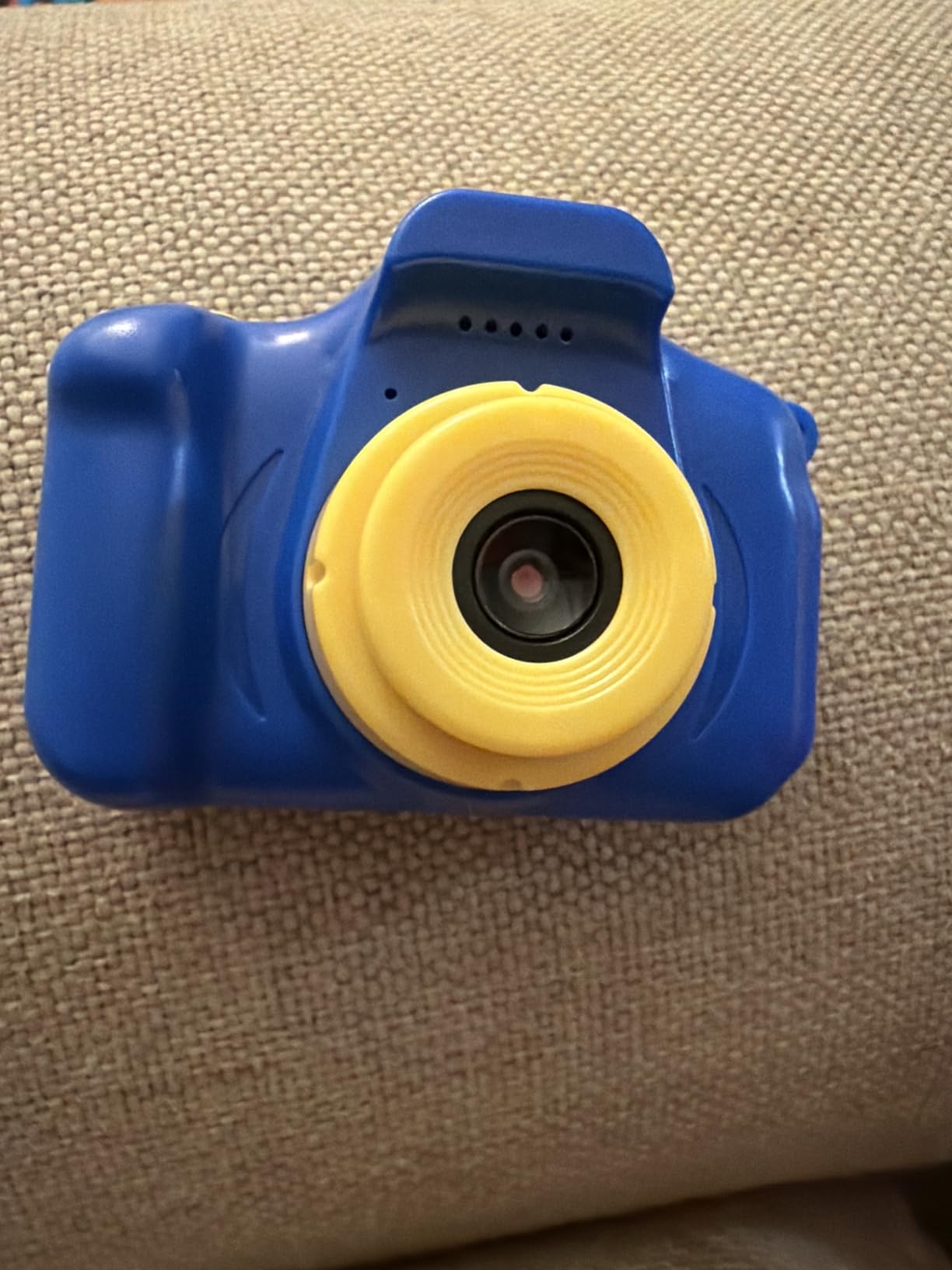
The DEKER is a simple, honest budget pick. It has push-button controls with no menu logic to learn, a 2-inch screen, 1080p video, 5MP stills and a 98ft waterproof protective case. A child between three and twelve can work it without help, which is the primary requirement in this category.
Reviewers are consistently surprised by how well it performs for the price, and they single out the waterproof housing as secure and the underwater video as strong. A 4.4-star average from 1694 reviews with 70% five-star is a good profile, though the sample is smaller than the leaders.
It is also light at 0.304 lb including the case, so it stays comfortable in small hands. The 600mAh battery gives 2 to 3 hours of play, and the 32GB SD card arrives pre-installed.
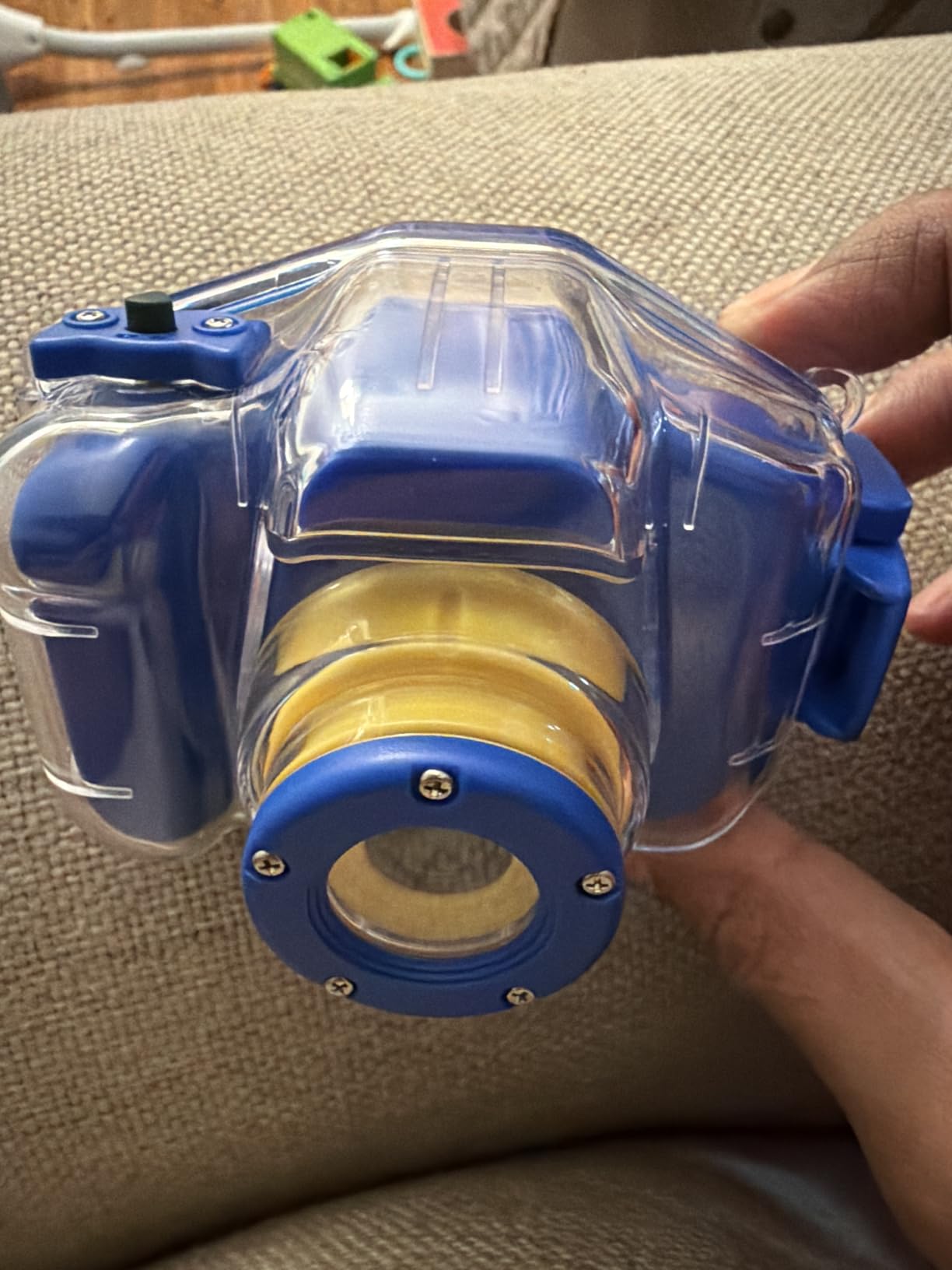
Time-lapse shooting is supported, along with mounting kits for skateboards, helmets and bikes, so it handles more outdoors use than the instant print models. There are 28 frames, 6 filters and 3 built-in puzzle games for indoor downtime, and a 1-year manufacturer warranty.
The 1/4-inch sensor produces grainy photos even at the highest setting, which is the clearest quality limitation. Mounted audio is garbled and loud, so this is not a camera to buy for a child who narrates to it.
Focus is manual with no autofocus, so distant subjects blur. That is manageable for a child photographing a pet at arm’s length and frustrating for one trying to capture a sibling across a yard.
A small number of buyers report units that stopped powering on or arrived with a dead screen. That is uncommon but worth factoring in, and it is a reason to keep the packaging so a return is painless. Test the camera fully in the first few days rather than putting it straight into a pool.
When simple buttons beat a touchscreen
When a child is rough with things. Touchscreens respond to a wet finger, a sandy finger and an accidental palm, and a three-year-old will find all three within a week. A push-button camera that ignores a wet tap keeps working when a screen-based camera would not.
It is also the right choice when the camera shares a bag with a scooter and a set of keys. Nothing about this camera suggests it needs protecting, which encourages parents to hand it over more freely, and a camera that gets used is worth more than one that is protected.
Where the money saving shows up
It shows up in the sensor. A 1/4-inch sensor and no autofocus is the cost of this tier, and footage indoors or at dusk will look soft and noisy. If the child will mostly film outside in daylight, the trade is fine. If they will film evening events, look at a 1/1.3-inch model.
The audio is the other cut. Mounted audio is garbled and loud, so a child filming a birthday party indoors will get unusable sound. Audio rarely decides a purchase, but it does decide whether the footage is watchable later.
11. AKAMATE Kids 1080P Action Camera – Best Ready-to-Use Kit
AKAMATE Kids Action Camera Waterproof Video Digital Children Cam 1080P HD Sports Camera Camcorder for Boys Girls, Build-in 4Games, 32GB SD Card (Pink)
1080p video and 5MP photos
Waterproof case rated to 30m
32GB card included
150 minute battery
Pros
- 1080p HD video and 5MP photos on a body sized for small hands
- Waterproof case rated to 30m for pools
- beaches and snorkeling
- Pre-installed 32GB card so kids can shoot immediately
- 1000mAh battery records up to 150 minutes of 1080p
- Three built-in kids games and five photo frame effects
- Mounting kit
- neck strap and carry bag included
Cons
- Fixed focus lens with no optical zoom beyond 1x
- 2-inch screen is small for reviewing footage
- Lowest average rating in this roundup at 4.1 stars
- 11% of reviews are one-star
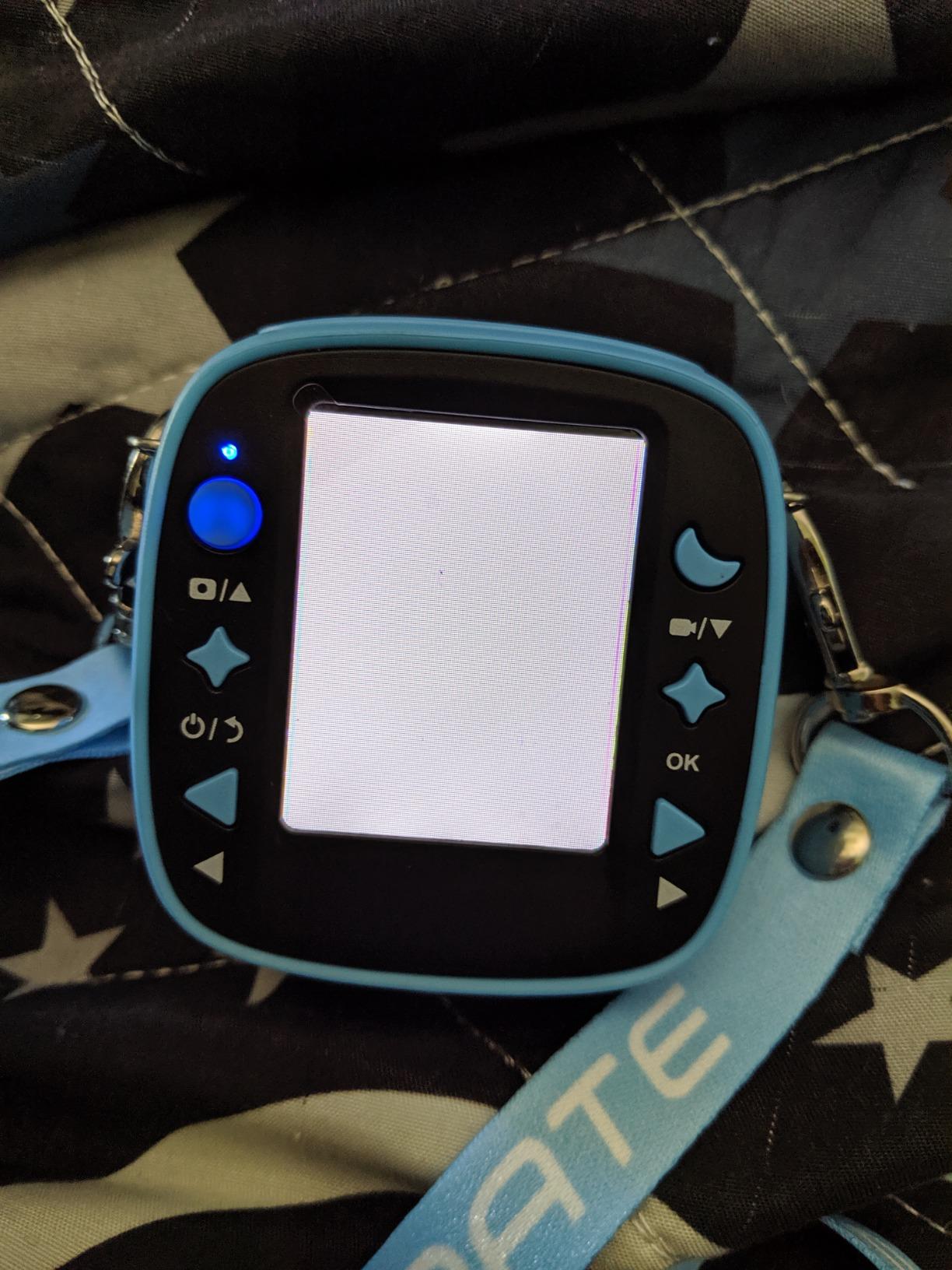
The AKAMATE stands out for one reason: a 1000mAh rechargeable battery that records up to 150 minutes of 1080p. That is longer than almost every other dedicated kids camera here, and for a child at a full-day event it removes the single most common complaint in the category.
Everything else about the package is also ready to go. A 32GB microSD card is pre-installed, and the box includes a mounting kit, a neck strap and a zipper carry bag. The waterproof case is rated to 30m, which is 100ft, covering pools, beaches and snorkeling.
The body is sized for small hands with a 2-inch color screen and five photo frame effects, plus three built-in kids games to keep a child interested between outings. Model number K2, in pink, and the demand data places it high in the camcorder category.
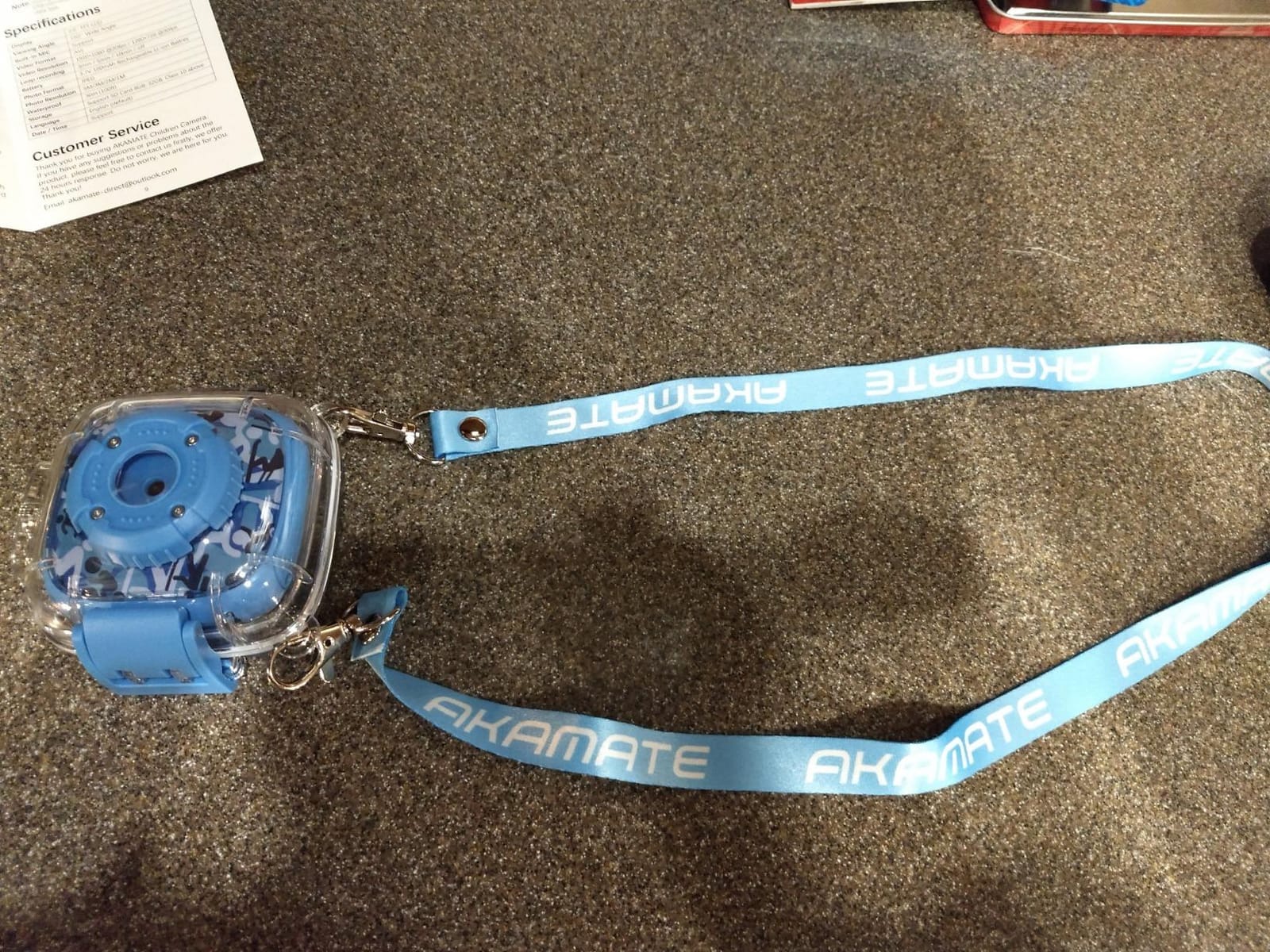
It records 1080p and 720p with digital image stabilization, a CMOS sensor and an underwater shooting mode, at 30 frames per second. That is a modest but honest specification list for a camera aimed at roughly ages four to twelve.
Now the rating. It carries a 4.1-star average from 1332 reviews, the lowest average of the well-reviewed products in this roundup, with 61% five-star but also 11% one-star. Reviewers like the ready-to-play packaging, the waterproof case and the battery life, and complain about basic image quality and the small screen.
The fixed focus lens with 1x optical zoom limits framing on anything distant, which is a real constraint for a child trying to photograph a sibling across a garden. The 2-inch screen is also small for reviewing footage, so a parent will end up doing the checking on a computer.
Compared with the Agoigo, which is similar in concept, the AKAMATE trades a better-known review profile for roughly double the battery runtime. If the child is filming away from an outlet all day, that trade is worth making. If not, the Agoigo is the safer pick.
When battery runtime outranks review history
It outranks review history when the camera goes to a day camp, a long beach trip or a ski week where charging is inconvenient. At up to 150 minutes of 1080p recording, a full day of intermittent filming is plausible on one charge, which removes the need to pack a spare battery.
The 30m waterproof case also matters for a child who will be in and out of water all day, since it removes the need to think about the housing between activities. The 32GB card and carry bag make it a single-bag solution.
When to choose a different pick
Choose a different pick if image quality is the priority. A 4.1 average with an 11% one-star share means a higher proportion of buyers had problems, and the fixed focus lens will disappoint anyone expecting sharp distant shots.
Also choose a different model if the child is over ten. At this age a real action camera with stabilization and 4K will hold attention far better, because the limits of a 1080p fixed-focus body start to show. We covered that in the teen section of the age framework below.
12. Jadfezy 1080P Action Camera – Budget Pick for First-Time Filming
Jadfezy Action Camera FHD 1080P 12MP, 98FT/30M Underwater Waterproof Camera with 2 Batteries, Wide Angle Sports Camera with Accessories Kit Suitable for Helmet, Bicycle, etc.
1080p30 video and 12MP photos
Two 900mAh batteries
IP68 case rated to 30m
2-inch LCD screen
Pros
- Very affordable entry point with 1080p30 video and 12MP stills
- Two 900mAh batteries give roughly 4 hours of total recording
- IP68 waterproof housing rated to 30m for swimming and surfing
- Helmet
- bicycle
- handlebar and strap mounts included
- 2-inch LCD with time-lapse
- loop record and dash cam modes
Cons
- Audio is poor when the camera is inside the case
- Can overheat and shut down in hot weather inside the housing
- Low-light recording blows out and is hard to see
- Included microSD card can fail and corrupt photos
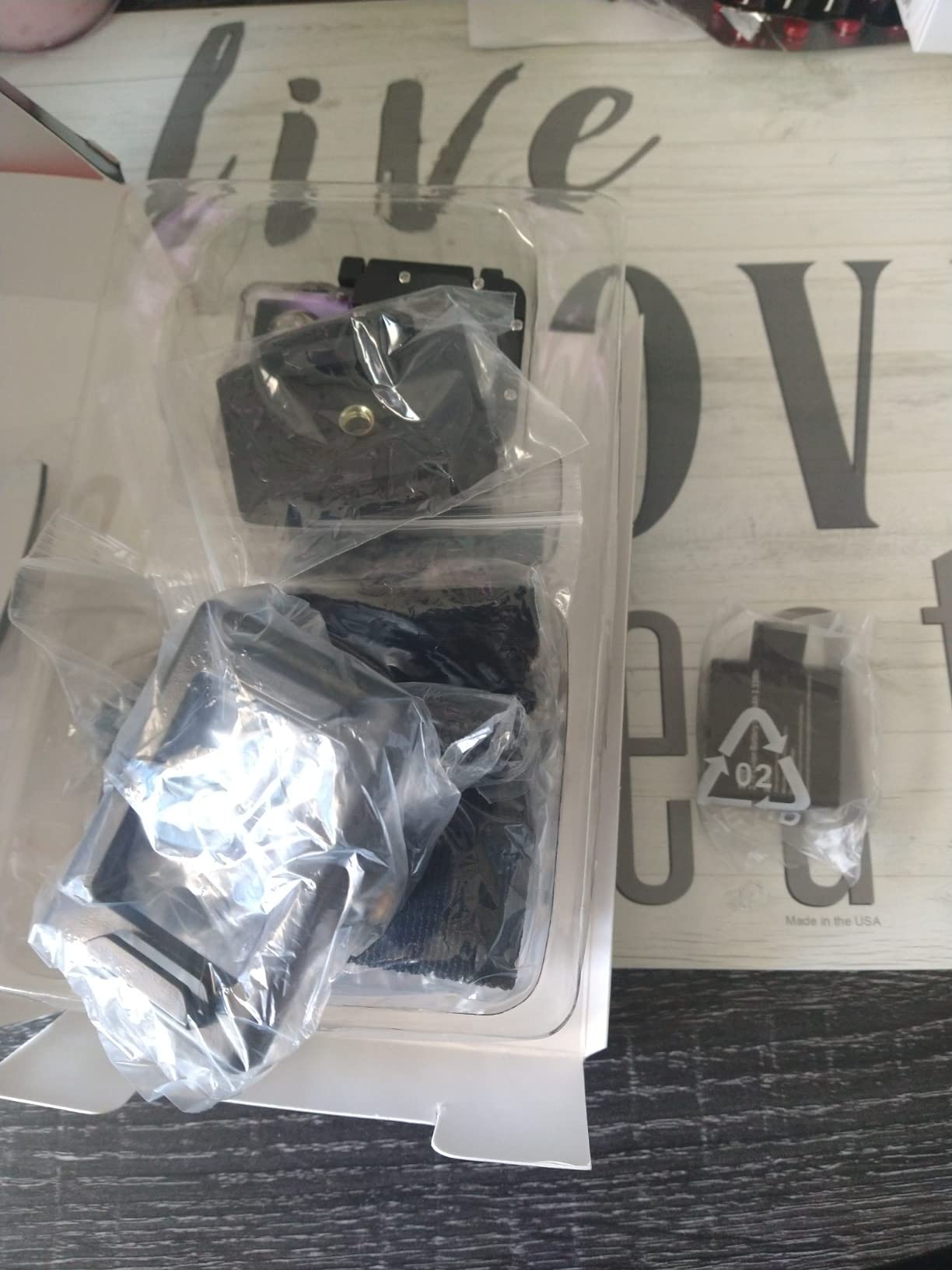
The Jadfezy is the cheapest way to get a child filming, and for a first camera on a bike path or a scooter it does the job. It records 1080p at 30fps with 12MP stills, has a 2-inch LCD screen and a wide angle lens, and weighs 100g.
The strongest feature is the battery. Two 900mAh rechargeable batteries give roughly four hours of total recording, which is the best total runtime of any camera in this roundup and completely removes the spare-battery question for a first outing.
The IP68 waterproof housing is rated to 30m, or 98ft, and the mount kit covers helmets, bicycles, handlebars and Velcro straps. Time-lapse, loop record, dash cam, burst and self-timer modes are all supported, which is more than most kids cameras offer.
It holds a 4.0-star average from 3771 reviews, the lowest in this roundup, and owners treat it as a low-cost fun first camera rather than a serious action cam. That framing is fair. Kids and beginners get clear 1080p clips and dependable dual-battery recording.
But the weaknesses are more than a star rating suggests. Audio is poor whenever the camera is inside the protective case, which is most of the time it is used outdoors. It can also overheat and shut down in hot weather when sealed in the housing, which is a real problem for a summer afternoon.
Low-light recording blows out and is hard to see, and the microSD card included in some units can fail and corrupt stored photos. Replacing the bundled card with a known-good U3 card is the single best thing you can do for this camera.
There are also occasional reports of slight leaking and units freezing while charging. With a 4.0 average and 3771 reviews, this is a camera to buy for a first season of casual filming rather than to hand to a child who will use it daily.

When a low-cost first camera is the right call
When the child is around six to eight and the goal is simply to get them filming. At this age the biggest win is a child who believes they are a videographer, and that belief costs far less to build than a good picture does. A better camera is only useful if the child uses it.
It also works well for short scooter and skateboard sessions where the mount kit matters more than the sensor. The included helmet, bicycle and handlebar mounts are more comprehensive than several dedicated kids cameras offer.
When to spend more instead
Spend more if the camera will be near water regularly. The overheating behavior inside the housing in hot weather is a genuine reliability concern in a pool or on a hot beach, and we would rather not have a child lose a camera that way.
Spend more if the child will watch the footage. Playback on the bundled card is where the failures show up, and a camera that produces unreliable files teaches a child that filming is not worth doing. For a child who is genuinely invested, one of the better-reviewed models is the better investment.
Which Action Camera Fits Which Age
Every question in this category is age-specific, yet almost every roundup organizes by price instead. Age is the better axis, because the deciding factor changes completely across childhood: survival below six, independence from six to ten, image quality above ten.
Ages 3 to 5: survival and simplicity
At three to five, a child cannot be trusted with settings, and a camera that is lost or broken ends the experiment. Prioritise a body under 2 ounces, a sealed waterproof case, a pre-installed memory card and controls with no menu. The PROGRACE at 1.6 ounces and the Agoigo with its installed 32GB card are the two that fit this brief best.
Games and frames matter enormously here, because a four-year-old will abandon a camera that only records. Skip anything requiring an app, an account or a card that must be formatted first.
Ages 6 to 8: independence and mounting
At six to eight, a child can operate a camera independently but will still change settings by accident. The VTech KidiZoom Creator Cam fits this age well because the controls only do one kind of thing. For a child heading outdoors, the Dragon Touch Vision 3 or the AKASO EK7000 with its wrist remote work, provided a parent sets the resolution once.
This is also the age where mounts start to matter. Parents on r/daddit and r/gopro consistently describe lost mounts and snapped clips as the reason a camera sits unused, so buy a spare of whatever clip system you choose.
Ages 9 to 12: image quality starts to register
At nine to twelve, children begin to notice whether footage looks good, and a 4K model starts to justify itself. The AKASO EK7000 and the Dragon Touch Vision 3 both record 4K30 with stabilization, which is the entry point for a child who wants to edit clips. The GKTZ SplashCam works here too if underwater selfies are the motivation.
Battery strategy matters at this age because outings get longer. Either pick a model with two batteries in the box or budget for a spare. Also set up a transfer routine now, before files start going missing.
Ages 13 and up: a real camera, not a toy
At thirteen and up, treat it as a genuine camera purchase. The DJI Osmo Action 4 is the obvious pick: a 1/1.3-inch sensor, 4K at 120fps, RockSteady 3.0 stabilization, dual touchscreens and waterproofing to 18m without a case. It also mounts magnetically, which survives a teenager changing angles constantly.
A teen will also use it in ways a younger child will not, including vlogging and slow motion. For skiing and snowboarding specifically, our [360 action camera guide for skiing](https://vintagevinylnews.com/best-360-action-cameras-for-skiing/) covers when a 360 form factor is the better choice.
How to Choose an Action Camera for Kids
1. One-button operation beats every spec
This is the number one criterion in our ranking, and it comes straight from parent experience. A camera that takes four presses to start recording produces no footage when a child is mid-fall or mid-jump. A physical record button, a wrist remote or a one-button capture mode should be non-negotiable for any child under twelve.
2. Waterproofing: bare body beats a housing
A waterproof rating for the bare body is far safer than a rating for a removable case, because cases fail through sand in the gasket, through a latch left ajar and through fogging. The DJI Osmo Action 4 is waterproof to 18m bare. Everything else here relies on a housing, which needs a ten-second seal check before every water session.
For pool and beach use, look for a depth rating in feet rather than a vague waterproof label. A 1-year-old child near open water is a different risk question from a teenager at a lake, and no housing rating changes that.
3. Stabilization only matters on a mount
Electronic stabilization such as EIS, RockSteady, HorizonBalancing or FlowState is what saves a bike or scooter clip from being unwatchable. If the camera will be handheld most of the time, stabilization is nice but not essential. If it will be mounted, it is the single feature that separates a usable clip from a shaky one.
4. Memory card speed is where 4K fails quietly
Recording 4K requires a U3 or V30 microSD card. A slower card does not produce an error message; it drops frames and writes corrupt files, which is the most common complaint across this whole category. Every model here that supports 4K needs a card you buy separately, and the kids cameras with pre-installed cards mostly top out at 1080p.
5. Budget for the accessories, not just the camera
A realistic setup includes a spare battery or two, a U3 or V30 card of 64GB or more, a lanyard and a spare of whatever mount the child uses most. Cameras with dual batteries and mounts in the box, such as the AKASO EK7000, the Dragon Touch Vision 3 and the Jadfezy, quietly cut that total more than the sticker price suggests.
6. Know the failure modes before they happen
Reviewers across this roundup report the same problems repeatedly: bundled memory cards failing, batteries dying mid-outing, waterproof cases leaking, and mounts disappearing. Test the case in a sink before the first pool trip, format the card on a computer rather than in the camera, and buy one spare of the mount clip you rely on.
Parent Safety and Privacy Notes
Most parents we spoke with did not consider privacy when buying a camera for their child, and most cameras in this roundup create at least one account. Two of the 12 models here, the VTech KidiZoom Creator Cam and the PROGRACE, move files by USB or card reader only, with no app and no account, which is the simplest privacy story available.
For the models with Wi-Fi, create the app account yourself and keep the credentials. Do not hand a child a login to an adult email address. Review the app’s permissions for location and photo library access, and turn off automatic cloud upload if you do not want a child’s footage sitting on a server.
Location metadata is the one people forget. Footage from a child’s regular route to school, captured daily, is a more revealing record than any single clip. If a camera records GPS tags, that is worth knowing before the memory card reaches a laptop.
Finally, treat any camera near water as an adult responsibility regardless of rating. A housing can fail, a latch can open and a child can be underwater in seconds. Stay within arm’s reach of any child wearing or carrying a camera near a pool, and never let a camera substitute for supervision.
Frequently Asked Questions
What is the best action camera for children?
The AKASO EK7000 is the best overall for most families. It records 4K30 video, has built-in electronic image stabilization, includes a 131ft waterproof case, two batteries and a wrist remote, and holds a 4.4-star average across 39828 reviews. For a child under six, the lighter Agoigo is easier to hold and arrives with the memory card already installed.
What is the best camera for a 7-year-old child?
At seven, a child can operate a camera independently but will still change settings by accident. The VTech KidiZoom Creator Cam suits that age because its controls only do one kind of thing and there is no resolution menu to break. If the child films outdoors on a bike or scooter, pick a rugged model with a wrist remote and a sealed waterproof case instead.
What is the best first camera for a 10-year-old?
A 10-year-old is ready for a real action camera rather than a toy. The AKASO EK7000 records 4K30 with stabilization, includes two batteries and a wrist remote, and has enough resolution to survive editing on a phone or laptop. Set the resolution once, show the child the record button, and expect the first month to be about learning not to adjust anything.
What is the best waterproof action camera for kids?
For a child near water, prefer waterproofing claimed for the bare body over a rating that depends on a separate housing. The DJI Osmo Action 4 is waterproof to 18m without a case. Among dedicated kids cameras the PROGRACE is rated to 100ft and the AKAMATE to 30m, both using included housings that need a seal check before every session.
Which action camera is best for beginners?
The best beginner camera is the one with a physical record button and no menu. The AKASO EK7000 is a good first real camera for a child aged eight or older, while the VTech KidiZoom Creator Cam suits younger children because its controls cannot be misconfigured. Avoid anything that requires an app, an account or a freshly formatted memory card before the first recording.
Is anything better than GoPro for a child?
For a child, the honest answer is that GoPro is rarely the right answer. The AKASO EK7000, Dragon Touch Vision 3 and AKAMATE all record 4K or 1080p with stabilization at a fraction of flagship cost, and a child will grow out of a toy camera before justifying flagship money. Above thirteen, a DJI Osmo Action 4 is the stronger choice for image quality and low light.
Final Verdict: The Best Action Cameras for Kids in 2026
The AKASO EK7000 wins our roundup of the best action cameras for kids in 2026 because it balances the three things that actually decide whether a child keeps filming: a 4K30 sensor with real stabilization, a 131ft waterproof case in the box, and two batteries plus a wrist remote so nobody waits on a charge. Its 4.4-star average across 39828 reviews is also by far the largest verified sample we found, which means its weaknesses are documented rather than surprising.
Match the age to the pick, not the price. Under six, choose the Agoigo or PROGRACE for their light bodies and installed memory cards. Between six and ten, the VTech KidiZoom Creator Cam wins on independence, and the AKASO EK7000 wins outdoors. At nine to twelve, add 4K and stabilization. At thirteen and up, the DJI Osmo Action 4 is the only pick here we would call a serious camera.
One last practical note. Buy a U3 or V30 microSD card for anything that records 4K, test any waterproof case in a sink before the first pool trip, and buy one spare of the mount your child uses most. Those three steps prevent nearly every complaint we read across 12 products.