
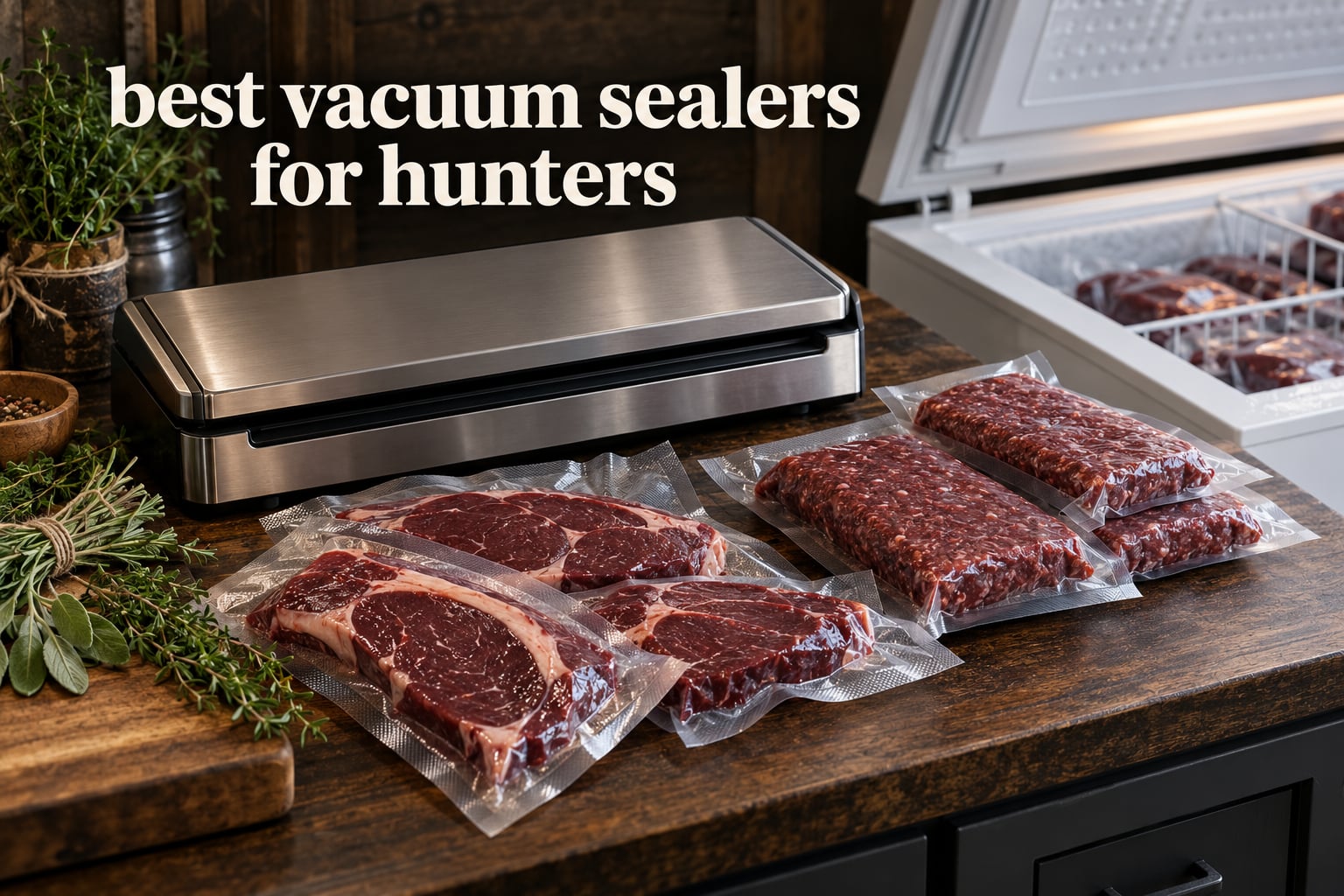
The processing table is the part of deer season nobody plans for. The truck is still running, the trim pile is stacked to the ceiling, and you have a cooler of steaks that need to be portioned, sealed and into a freezer before the meat temperature climbs. That is the moment a vacuum sealer earns its counter space.
Game is a hard test for a small kitchen appliance. Fresh venison is wet, the cuts are irregular, and half of them carry a rib or a shank bone that will puncture a bag mid-seal. A sealer that struggles in a grocery aisle usually falls apart on a processing night. I cross-referenced manufacturer specs against owner feedback on the biggest vacuum sealer roundups and against what hunters report on their forums, and the shortlist below is what came out of it.
If you want the fastest route, the best vacuum sealers for food storage guide covers the general household picks, and the chamber vacuum sealer breakdown goes deeper on the liquid-sealing machines. This one is scoped to hunters, anglers and anyone processing a real harvest.
Table of Contents
What Is the Best Vacuum Sealer for Hunters?
The Nesco Deluxe VS-12 is the best vacuum sealer for most hunters. Its 130-watt double pump, moist and double-seal modes, and wide sealing bar handle wet venison better than anything else in this lineup, and it holds up to back-to-back sessions. If you take five or more deer a season or seal brine and marinade, a chamber machine like the Avid Armor USV20 is the better investment.
The short version of the whole guide: one or two deer a year, buy a mid-tier edge sealer with a moist mode. Three to five deer, buy a heavy-duty unit rated for long continuous runs and with a wide sealing bar. Five-plus deer, a hunting camp, or anything involving liquid, buy a chamber sealer.
Top 3 Picks for Best Vacuum Sealers for Hunters (October 2026)

Nesco Deluxe VS-12
- 130-watt double pump
- Dry moist and double seal modes
- Built-in roll storage and cutter
FoodSaver V4400
- Automatic bag and moisture detection
- Removable drip tray
- Works with 8 and 11 inch rolls
Why Hunters Need a Different Vacuum Sealer?
Every vacuum sealer removes air from a bag. Very few are built for what comes out of a deer.
Moisture is the first failure mode. Venison carries a surprising amount of surface moisture, and a pump at full suction will drag that liquid toward the bag neck and into the seal channel. Once liquid is in the channel, the heat element cannot make a clean seal and the bag fails weeks later in the freezer. Hunters on r/bowhunting describe this as the single most common complaint, and it is why moist mode or pulse vac matters more than raw wattage for this audience.
Bone is the second. Ribs, shanks and shoulder blades have edges that puncture a bag during the pull. The bag looks fine when it comes off the bar and leaks air a week later. Double wall bags and a wider sealing bar reduce the amount of cramming and folding that creates the problem in the first place.
Volume is the third. A kitchen sealer is rated to make dinner. A hunter is running 60 to 200 pounds of meat through the machine in one night, back to back. Duty cycle – the number of consecutive bags a unit can seal before it needs a cool-down break – is the spec that matters most here, and it is almost never printed on the box.
None of that is a reason to skip vacuum sealing. Properly sealed game keeps far longer than freezer-wrapped game, and a single whitetail doe typically yields 50 to 60 pounds of usable meat. Losing a share of that to freezer burn over one winter is a bigger cost than any machine on this list.
All 10 Vacuum Sealers Compared for 2026 Season
| Product | Specifications | Action |
|---|---|---|
| Nesco Deluxe VS-12 |
|
Check Latest Price |
 Chef Preserve CP.V1.1 Chef Preserve CP.V1.1 |
|
Check Latest Price |
| FoodSaver V4400 |
|
Check Latest Price |
 Bonsenkitchen VS2000 Bonsenkitchen VS2000 |
|
Check Latest Price |
 FoodSaver FM2100 FoodSaver FM2100 |
|
Check Latest Price |
 Potane VS5736 Precision Potane VS5736 Precision |
|
Check Latest Price |
 Gasbye VS5166 Gasbye VS5166 |
|
Check Latest Price |
 Avid Armor USV20 Chamber Avid Armor USV20 Chamber |
|
Check Latest Price |
 LEM Ground Meat Packaging System LEM Ground Meat Packaging System |
|
Check Latest Price |
 Potane VS2736 Next Gen Potane VS2736 Next Gen |
|
Check Latest Price |
1. Nesco Deluxe VS-12 – The Best Vacuum Sealer for Hunters Overall
Nesco Deluxe Food VS-12 Vacuum Sealer, 130 Watts, Kit Bags & Viewing Lid, Compact, Silver
130-watt double pump
Dry moist and double seal modes
Double heat seal
6 pounds
Pros
- Double pump handles wet venison and large game packs consistently
- Moist mode and gentle vacuum protect juices and soft cuts
- Double heat seal resists freezer burn over a full season
- Viewing lid and easy-lock handle cut down on wasted bags
- Two bag rolls included plus built-in cutter
Cons
- Lowest average rating in this group at 4.3
- Manual operation means you manage each cycle
- No chamber design so very wet packs are fussier
The Nesco VS-12 is the machine most hunters already know by name, and the reason is simple: it was designed for volume rather than for leftovers. The 130-watt double pump is not marketing language on this one, it is the reason the bag comes off the bar hard and flat instead of soft and half-collapsed.
What separates it from cheaper edge sealers is the mode set. Dry, moist and double seal, plus a gentle vacuum option, give you a real answer to a wet backstrap. The double heat seal runs the element twice, which is what keeps a sealed roaster from failing in month three of a freezer full of last season’s venison.
On the technical side it sits at 15.75 inches long by 8 inches wide by 4.5 inches tall and weighs 6 pounds, so it is a permanent counter fixture rather than a portable one. Operation is manual, which is a real drawback if you want hands-off cycles, and the stated warranty is one year, the shortest of the multi-year options in this list.
Two bag rolls ship in the box, an 8.6 by 9.85 foot roll and an 11.8 by 9.85 foot roll, and the built-in roll storage and sliding cutter mean you are cutting custom sizes from the start. Across 15,070 ratings it holds a 4.3 average, with roughly 71 percent five-star. The one-star share points almost entirely at a small group of owners who say suction weakened over several seasons rather than at any single defect.
When the VS-12 is the right call
Buy this one if you take one to four deer a season and want a single machine that handles steaks, roasts, ground venison and a few fish fillets. The wide bar and the included rolls mean you are not constantly re-cutting bags for large cuts, which is where most budget machines fall apart.
Hunters on r/bowhunting converge on this model for good reason, describing it as the best vacuum sealer they have used despite its size. If you process a lot of fish, the moist mode and gentle vacuum also make it one of the better choices in the group for delicate fillets.
When to skip it
Skip it if you are sealing brines, soups or heavy marinade in a bag, because an edge sealer pulls liquid toward the seal channel and the VS-12 is not a chamber design. If you are putting up five or more deer a season, a machine rated for a longer continuous duty cycle will save you more time than this one loses.
Also weigh the 6-pound body and the one-year warranty against a competitor with a five-year warranty and a replaceable gasket. If you keep the machine in a cold garage or an unheated cabin, the shorter coverage is worth factoring in.
2. Chef Preserve CP.V1.1 – Best for Camp, Cabin and RV Use
Chef Preserve Compact Vacuum Sealer for Food (Vacuum Sealer Machine + 30 Reusable Vacuum Bags) Powerful Handheld Vacuum Sealer Machine, Seal Meal Saver, Portable Food Sealer
Cordless rechargeable handheld
5 second cycle
2.2 pounds
30 reusable bags
Pros
- Fast five second cycle with automatic shutoff
- Wireless and small enough for a field kitchen
- Reusable bags are dishwasher and freezer safe
- Thirty bags cover common portion sizes
- Two-year manufacturer warranty
Cons
- Only works with prepacked bags so no custom sizes from a roll
- Not a chamber design so liquid is messy
- Bag replacement depends on proprietary reusable bags
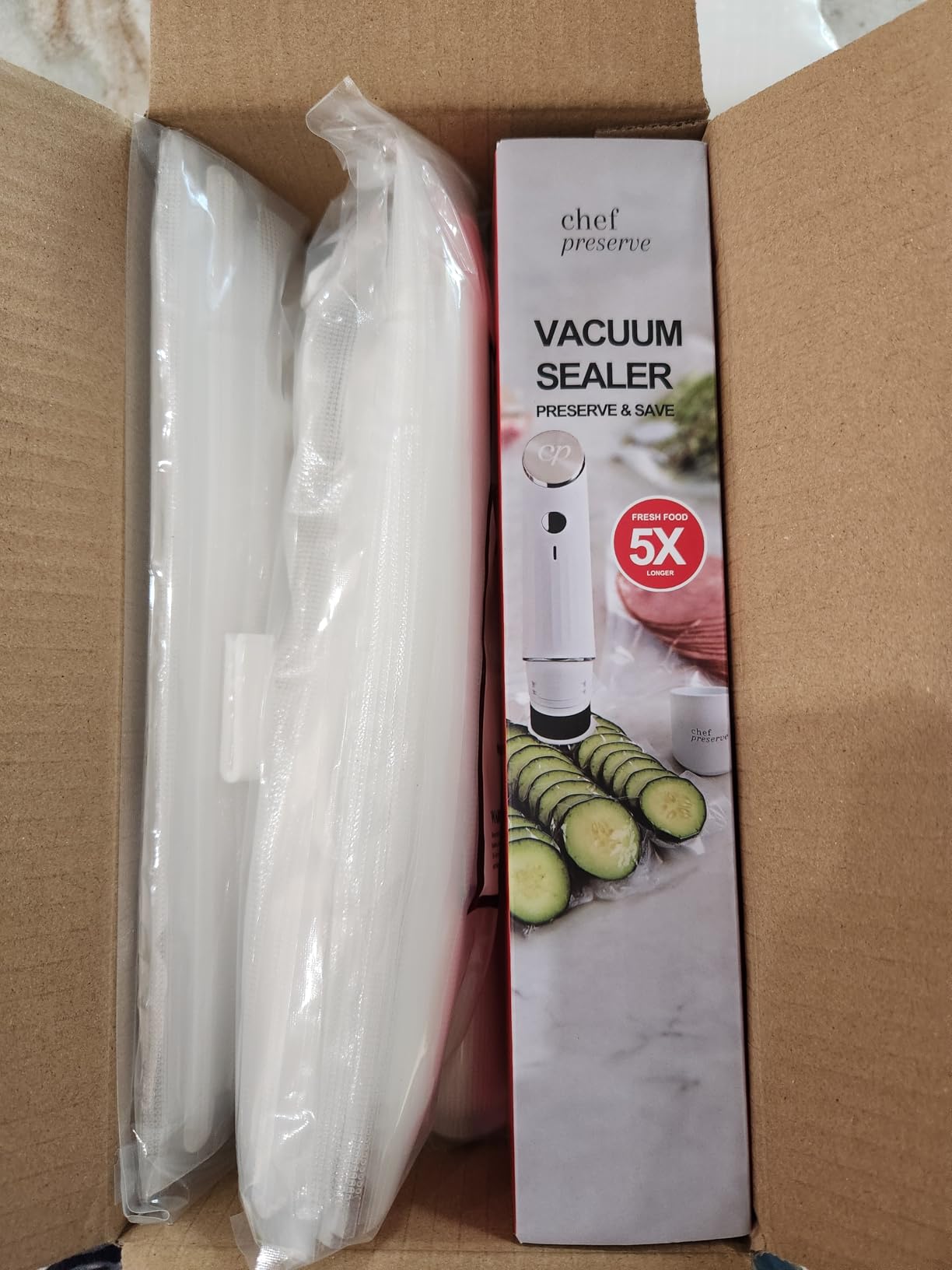
The Chef Preserve is roughly the size of a pepper grinder and weighs 2.2 pounds, which changes the whole conversation if you process meat away from a kitchen counter. It runs cordless off a rechargeable battery and one charge is rated for up to 1000 bags.
The cycle is a single button: vacuum, seal, automatic stop in about five seconds. Thirty reusable bags in three sizes are included, and they are rated dishwasher, freezer, refrigerator and microwave safe, so a bag that held a venison roast can be washed and used again for a different cut.
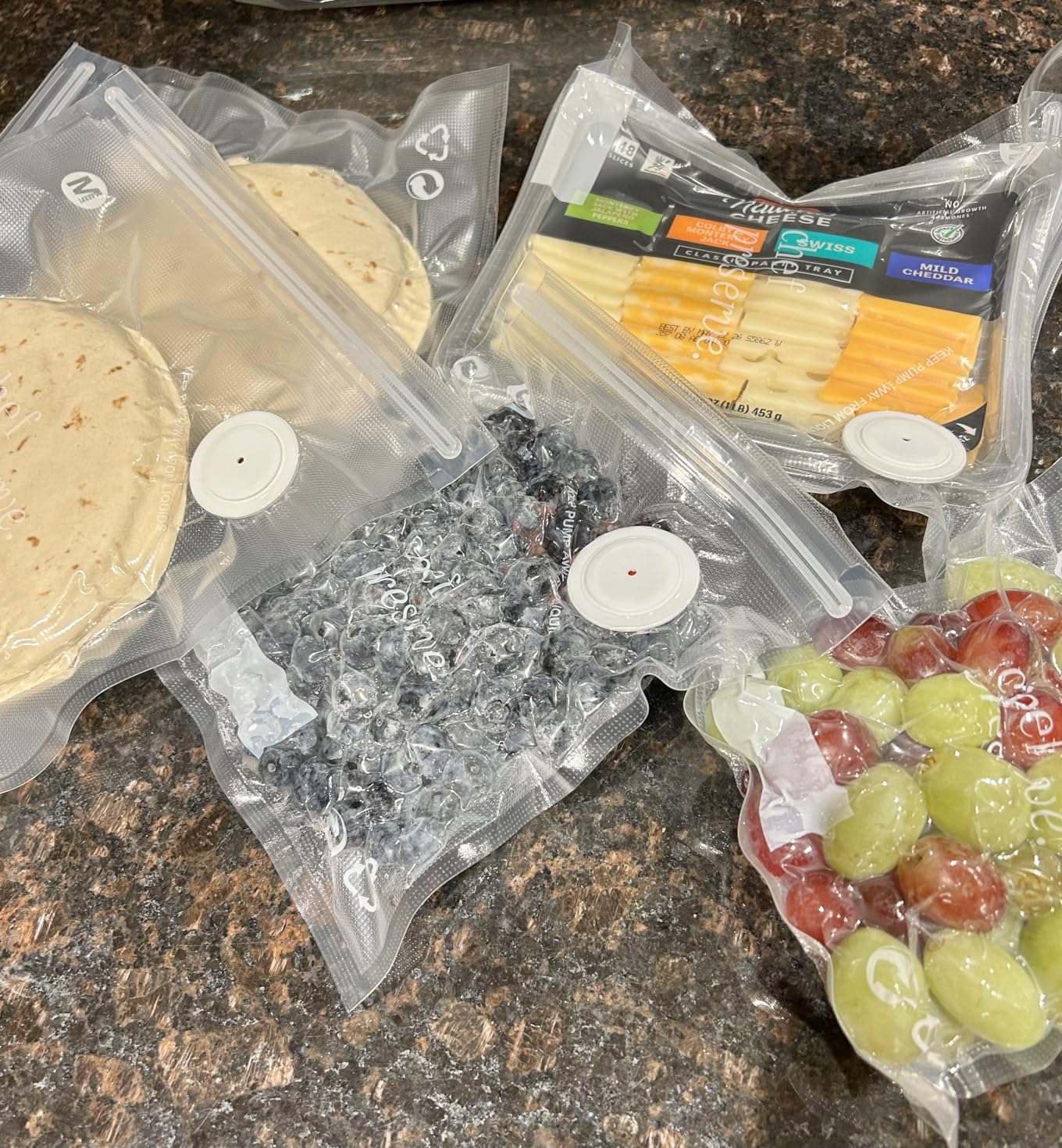
Its 4.6 average across 15,568 ratings puts it in the top three in this lineup, with 79 percent five-star reviews. Reviewers consistently praise the speed and the portability, and just as consistently note that it is built for small pre-portioned bags and simple foods rather than wet or liquid-heavy game meat.
That is the tradeoff to understand before you buy. Because it is a handheld format, it cannot seal a whole roaster or cut a custom bag from a roll. It is a portioning tool, not a processing-session machine.
Where it genuinely helps
This is the pick for a hunter who quarters meat in a hunting camp, works out of an RV, or processes a deer in a cabin with no counter space to spare. It also works well as a second unit for single-serving venison portions once the bulk cutting is done.
Because the bags are reusable and washable, the recurring consumable cost across a season is much lower than with channeled vacuum bags, which matters if you are portioning a whole deer into meals.
Where it falls short
Skip it as your primary processing sealer. It is not a chamber design, so blood-rich cuts and brines will leak toward the nozzle, and it has no way to handle a bone-in roast or a whole bird.
Buying more bags later means buying this brand’s reusable bags, so check that the sizes you want for your typical portion are available before you commit. The two-year warranty is solid, but the sealed bag is the consumable and it is proprietary.
3. FoodSaver V4400 – Best for Bulk Processing Batches
FoodSaver V4400 2-in-1 Vacuum Sealer Machine with Automatic Vacuum Sealer Bag Detection and Starter Kit
Automatic bag detection
Moisture detection
Removable drip tray
800 watts
Pros
- Automatic bag and moisture detection reduce failed seals
- Removable dishwasher-safe drip tray handles wet game cleanup
- Large starter kit with rolls and precut bags
- Works with the widest accessory ecosystem
- LED indicators guide each cycle
Cons
- Heaviest unit in the group at 10 pounds
- Bulkier footprint than most competitors
- Bag-detect design is less forgiving with liquid
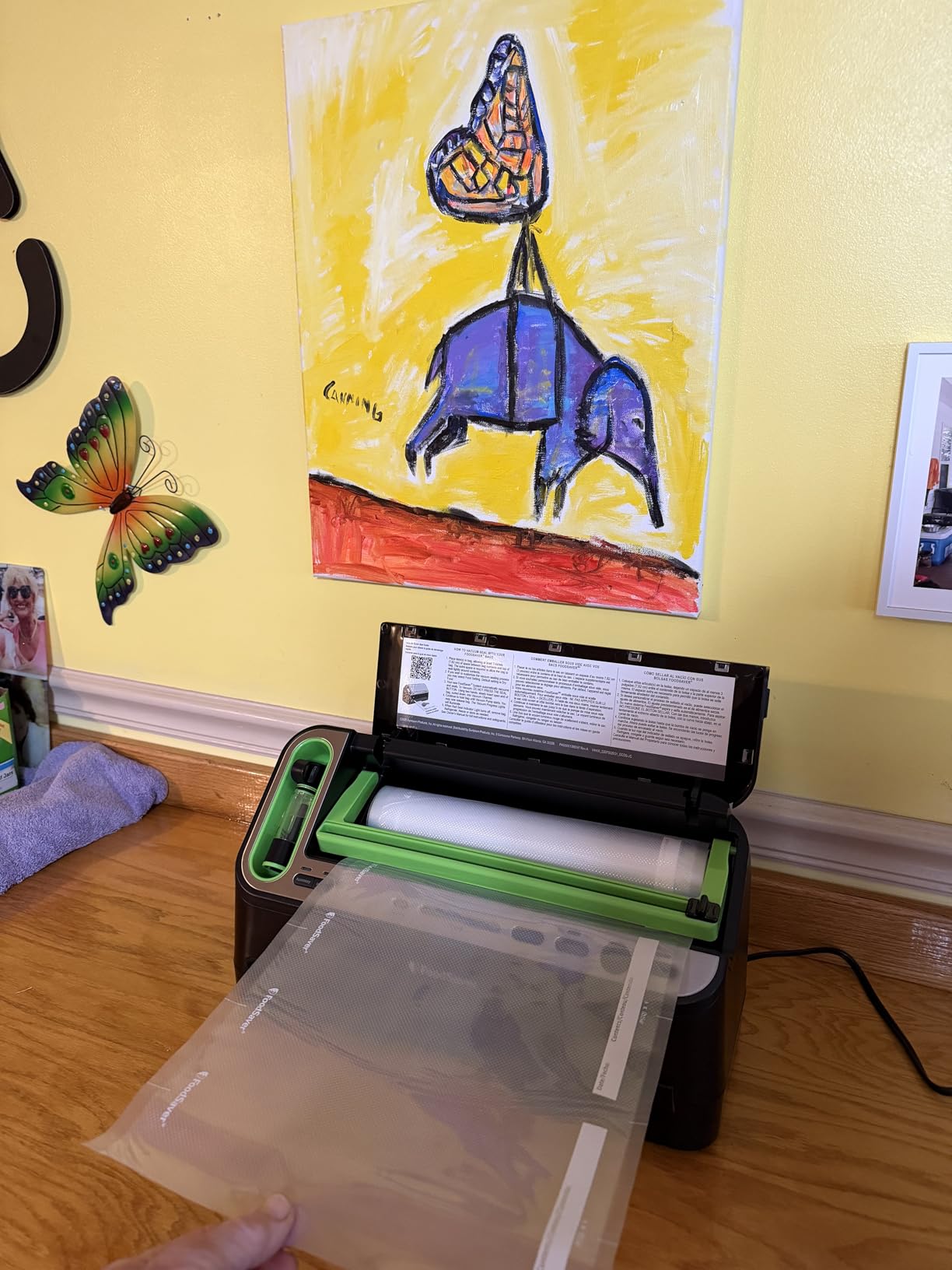
The V4400 is the automation king of this list. You drop the bag in the chamber and the machine works out the rest – it detects where the bag is and how wet the contents are, then picks the mode. For a hunter running 100 pounds of meat in a night, removing the decision from every single bag matters.
The removable dishwasher-safe drip tray is the feature that hunting-specific owners notice first. Fresh venison and turkey push liquid out of the bag under vacuum, and being able to pull the tray out and run it through a dishwasher after a session is a real difference versus units where liquid has to be wiped out of the machine body.
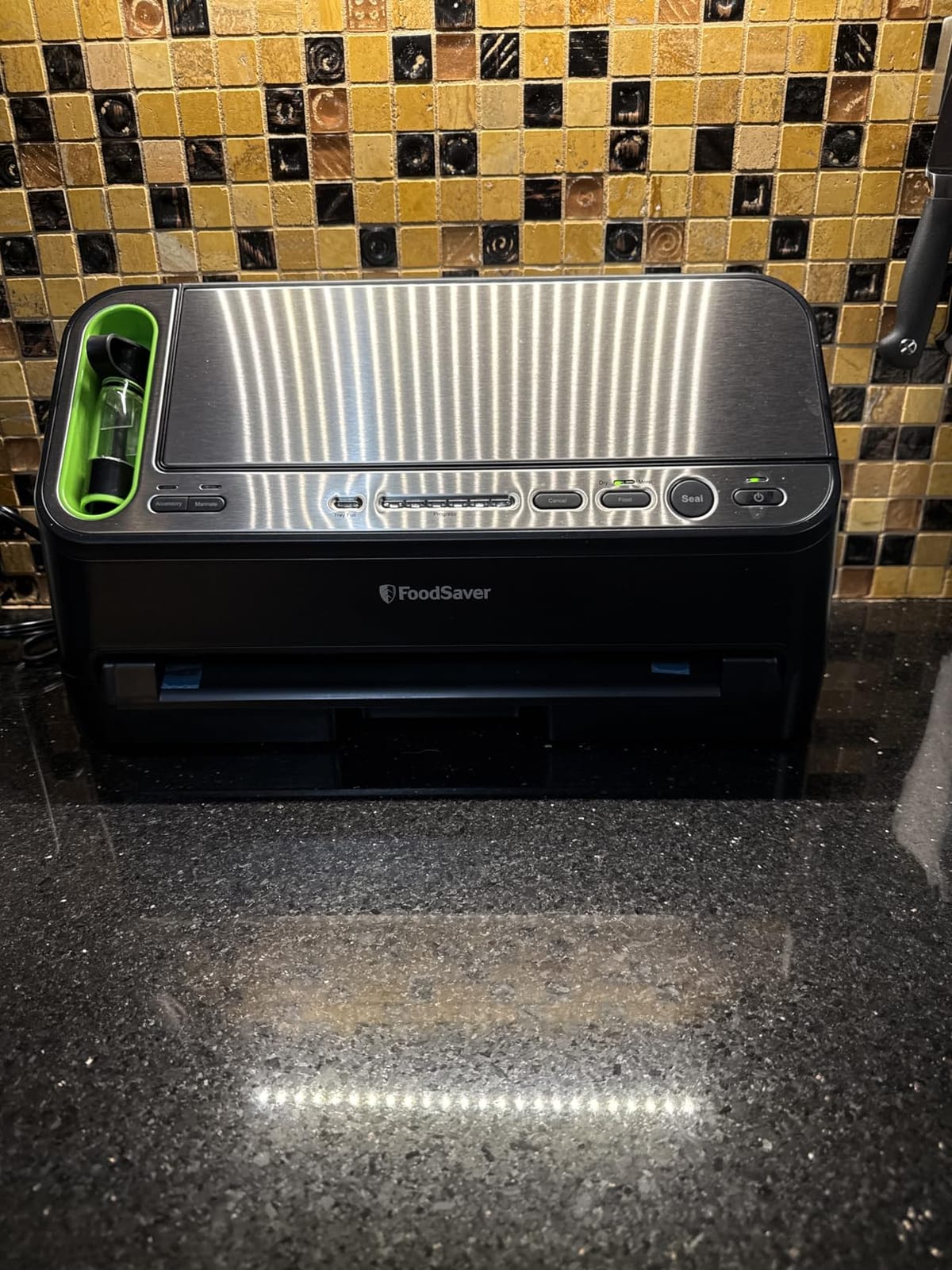
It is also the most connected machine here. It works with 8-inch and 11-inch rolls, precut bags, zipper bags, canisters and jar sealers, so if you also make jerky or dried game you can use one machine for both jobs.
The catch is size and weight. At 10 pounds and a listed 11 by 20 by 12 inches, it is the bulkiest unit in the lineup, and the warranty listing is inconsistent, with one year stated alongside a five-year highlight in the same description. It holds a 4.6 average across 11,305 ratings with 79 percent five-star.
Why it beats the alternatives for volume
If your season involves two to five deer, a lot of ground venison, or a mix of wild turkey and waterfowl with the odd fish fillet, the set-and-forget cycle is worth the counter space. Nobody wants to stand at a machine at midnight tweaking seal time on bag after bag.
It is also the machine to buy if you expect to keep using the same ecosystem for years, because the accessory range is the broadest of any brand on this list. Our commercial vacuum sealer guide covers the heavier commercial tier if your volume eventually outgrows this one.
What gives buyers pause
The 10-pound weight and deep footprint rule it out for a camp kitchen or an RV. And bag-detection machines of this style are still edge sealers underneath, so a bag of brine or marinade is not a good idea here.
Confirm the warranty terms with the seller before you buy, since the listing states both a one-year and a five-year term. If seal quality on very wet meat is your main worry, look at a pulse-mode unit instead.
4. Bonsenkitchen VS2000 – Most Versatile for Smaller Harvests
Bonsenkitchen Vacuum Sealer Machine With 5 Vacuum Bags,Black
Four sealing modes
About 30 bags in 15 minutes
2.7 pounds
Three-year warranty
Pros
- Pulse vac mode handles wet and soft foods
- Seals roughly 30 bags in 15 minutes
- Lightest full-size option at 2.7 pounds
- Accessory mode with included suction hose
- Three-year warranty is above the category norm
Cons
- Lowest average rating here at 4.2 with 10 percent one-star
- Starter kit includes only five bags
- Some owners report needing multiple passes on wet foods
At 2.7 pounds and just over 15 inches long, this is the machine that lives in a cabinet and comes out twice a year. For a hunter taking a single deer, that is often exactly the right level of hardware.
The mode set is unusually good for the tier. Vac and Seal is a one-touch automatic cycle, Pulse Vac gives you manual control over soft or wet food, there is a Seal Only mode, and Accessory mode works with the included suction hose for jars and sous vide bags.
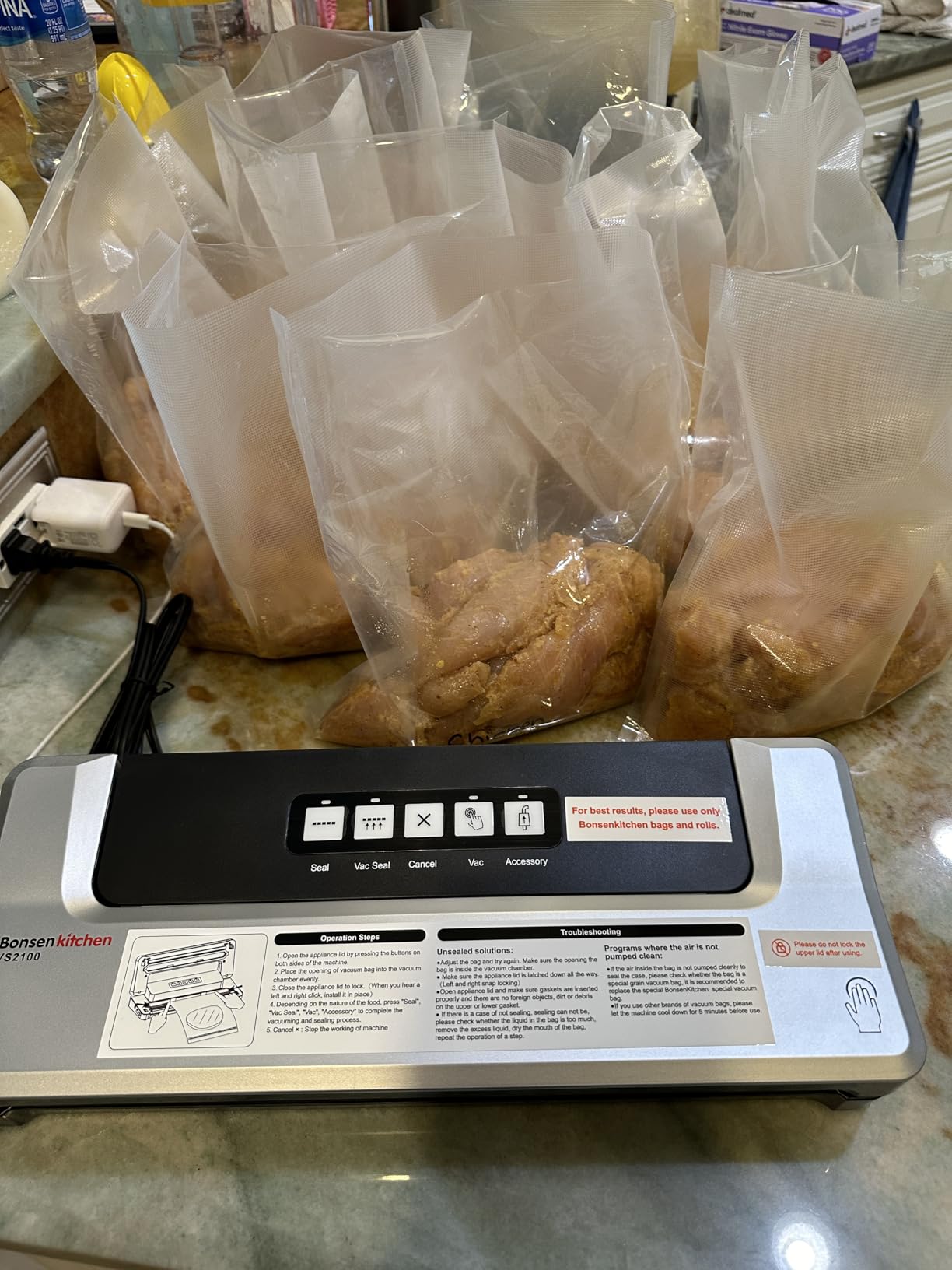
The stated throughput is about 30 bags in 15 minutes, which is genuinely useful when you have a deer broken down into portions and steaks. A 135-watt motor and a three-year warranty round out a spec sheet that punches above where this machine usually sits.
What holds it back is consistency rather than capability. Its 4.2 average is the lowest of the ten here, with 68 percent five-star and a 10 percent one-star share. Owners who like it point to modes and throughput; the unhappy reviews focus on seal consistency and the thin supply of starter bags.
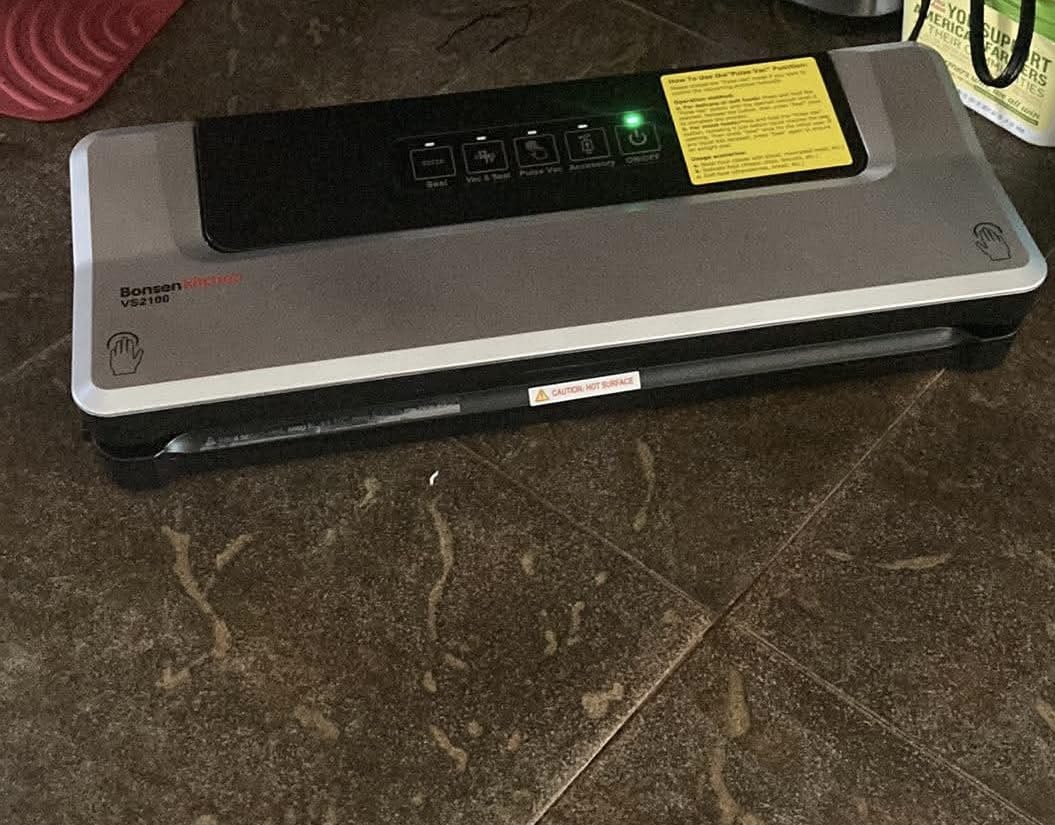
Good fit for a one-deer season
If you take one deer a year, or you are sealing a few days of camp meals and fish, this handles the load without a large counter commitment. The pulse mode gives you a fighting chance on wet cuts, which is the failure that sinks cheaper units.
Budget the bags separately. Five bags in the box is not a season’s worth of consumables for anyone processing a whole animal.
Where you will feel the limit
Skip it for a multi-deer season or for large bone-in roasts. Multiple passes on wet foods and a lower star average than everything else here mean it is not the machine to be halfway through a processing night with.
Multiple passes also waste bags and time, which defeats the purpose of buying something that advertises 30 bags in 15 minutes. For a bigger harvest, spend up and get a longer duty cycle.
5. FoodSaver FM2100 – Best for Hunters New to Vacuum Sealing
FoodSaver Vacuum Sealer Machine, Automatic Bag Detection, Sous Vide Friendly, with sealer bags, roll, handheld vacuum sealer, black
One-touch dry and moist sealing
Dual heat strips
Built-in cutter
5 year warranty
Pros
- One-touch operation for dry and moist food
- Dual heat sealing strips for consistent results
- Built-in roll cutter cuts custom bag sizes
- Accessory port works with jars and canisters
- Five-year limited warranty
Cons
- Older bag design leaves liquid less forgiving
- Far fewer automatic settings than newer models
- 6.6 pound weight limits portability
The FM2100 is the most common first vacuum sealer in America, and for a hunter just getting started it removes almost all of the guesswork. One button, dry or moist, and it runs the cycle.
Two details make it more useful than a bare-bones starter machine. The dual heat sealing strips give you two passes across the bag mouth, and the built-in roll cutter lets you cut exactly the bag size you need rather than trying to cram a large cut into a precut bag that is too small.
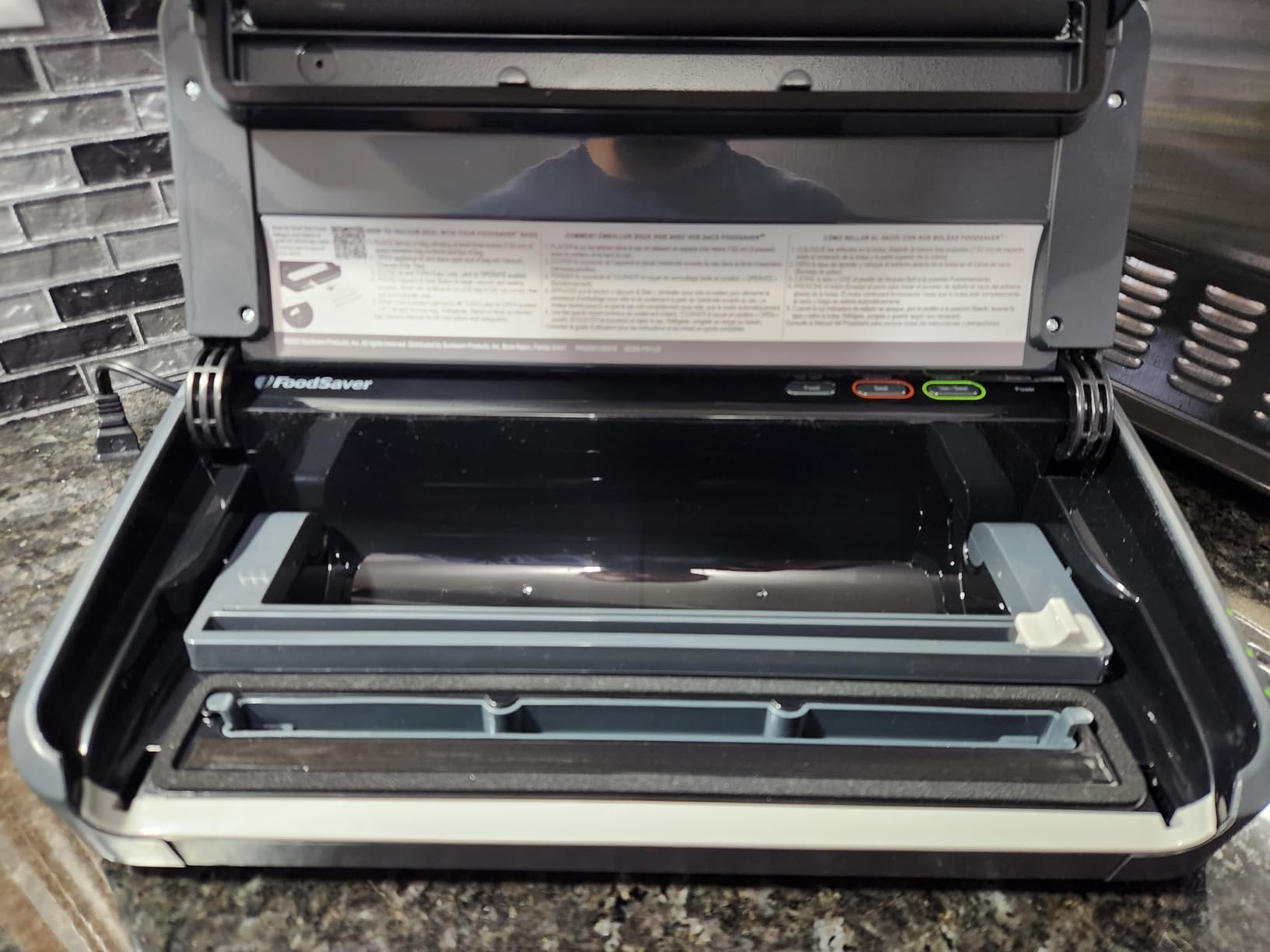
The accessory port and included hose open up jars, canisters and a handheld attachment, so the same machine can handle dried venison or a mason jar of jerky later in the season. The package includes an 11 by 10 foot roll, three quart bags, two gallon bags and the hose.
It holds 4.5 across 9,219 ratings with 77 percent five-star. The five-year limited warranty is the standout for a first machine, and owners frequently describe it as a sensible step up rather than a toy.
A safe first machine
Pick this if you are sealing your first deer and you want something that will not punish you for a beginner mistake. The five-year warranty means a motor problem is not a season-ending expense, and the roll cutter prevents most of the frustration that comes from bags that are the wrong size.
It is also a good match if you cook sous vide. Hunters who bag venison for a water bath need a strong, even seal, and the dual strips deliver that without extra fiddling.
Its limits are design, not defects
The bag sits outside the chamber on this design, so liquids are less forgiving than on a bag-detection or chamber machine. If you plan to seal brines or heavy marinade, choose something else.
At 6.6 pounds and 16.3 by 9.2 by 4 inches it is not a portable unit either. It also has fewer automatic settings than the newer FoodSaver models, so expect to pick the mode yourself rather than letting the machine decide.
6. Potane VS5736 – BEST VALUE for Long Processing Sessions
Potane Precision Vacuum Machine,Pro Food Sealer with Built-in Cutter and Bag Storage(Up to 20 Feet Length), Both Auto Manual Options,2 Modes,Includes 2 Bag Rolls 11”x16’ and 8”x16’,Compact Design
8 mm sealing element
Over 100 continuous cycles
Brushless motor
Five-year warranty
Pros
- Wide 8 mm seal bar outlasts narrow elements
- Brushless motor rated for 100 plus continuous cycles
- One-hand C-type chamber locks easily and stays clean
- Spare foam gasket included in the box
- Built-in cutter storage and accessory port standard
Cons
- Included bag rolls are shorter than the storage accepts
- Accessory mode needs an external hose
- Corded power so no camp or off-grid use
Everything a hunter cares about shows up in this spec sheet. The 8 mm sealing element is physically wider than the narrow strips on cheaper machines, and the brushless motor is rated for more than 100 continuous sealing cycles. That rating is the number most relevant to a deer night.
The C-type half-wrapped chamber is a smart shape for game. The lid locks with one hand, and the wrapped design keeps dust and rust away from the mechanism – which matters if the machine lives in a garage or a hunting cabin between seasons.
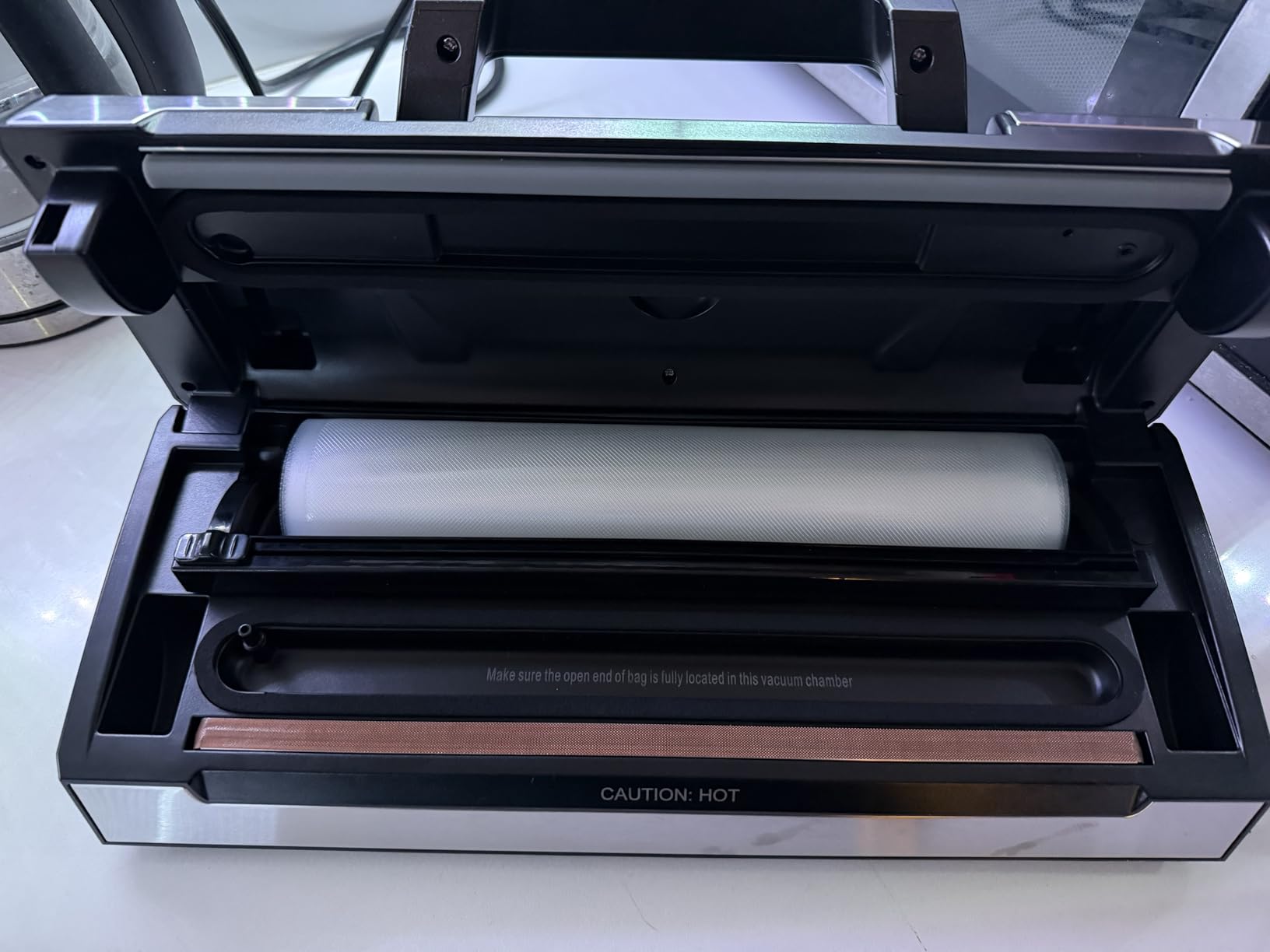
The package is unusually complete: built-in bag storage, a cutter bar, an accessory port for containers and jars, two bag rolls at 11 by 16 feet and 8 by 16 feet, and a spare foam gasket so you do not end a season with a dead seal.
It scores 4.6 across 6,294 ratings with 79 percent five-star. At 4.6 pounds and 11 by 6.5 by 5 inches it is also one of the more compact serious machines here, and the five-year warranty is the longest coverage in the group alongside the newer Potane.
Why this is the value pick
If you process two to five deer a season and want a machine that will not ask for cool-down breaks, this is where the money goes. The 100-plus cycle rating and the wide seal bar are the two specs you are actually buying.
The spare gasket matters more than it looks. Foam gaskets compress and harden over time, and on most machines a dead gasket ends the machine’s life. Here you can replace the part instead.
What to know before buying
The included rolls are 16 feet long, shorter than the built-in storage compartment can accept, so plan on buying longer rolls to get the most from the space. You will need an external hose for jar and canister sealing.
It is corded electric, so it is a home counter machine. If you need to seal meat in a camp or an RV, use the cordless handheld instead.
7. Gasbye VS5166 – Highest Suction Power in the Lineup
Gasbye 95kPa Precision Vacuum Sealer Machine, Double Heat Seal for Dry/Moist Food, Easy-Lock Handle, Built-in Bag Storage & Cutter, Progress Display, Pulse Mode, Removable Drip Tray, Silver
95 kPa dual pump
Double heat seal
Pulse mode
Removable drip tray
Pros
- 95 kPa dual pump is the strongest suction here
- Pulse mode keeps liquid out of the pump
- Double heat seals reduce long cook leaks
- Replacement gaskets tray and cutter sold individually
- Stainless steel body with progress display
Cons
- Smallest review base here at 1736 ratings
- Manufacturer advises against reusable zipper bags
- Food container sold separately
The VS5166 pulls harder than anything else on this list. Its 95 kPa dual-pump rating is the headline number, and on big game packs that extra pull is the difference between a bag that lies flat and one that still holds air at the corners.
Unlike most machines at this level, it separates the two measurements hunters usually confuse. kPa is how hard the vacuum pulls. Watts, listed here at 130, describe the motor that drives it. You cannot compare a 300-watt chamber to a 95 kPa edge sealer on paper, and the forums are full of hunters who tried.
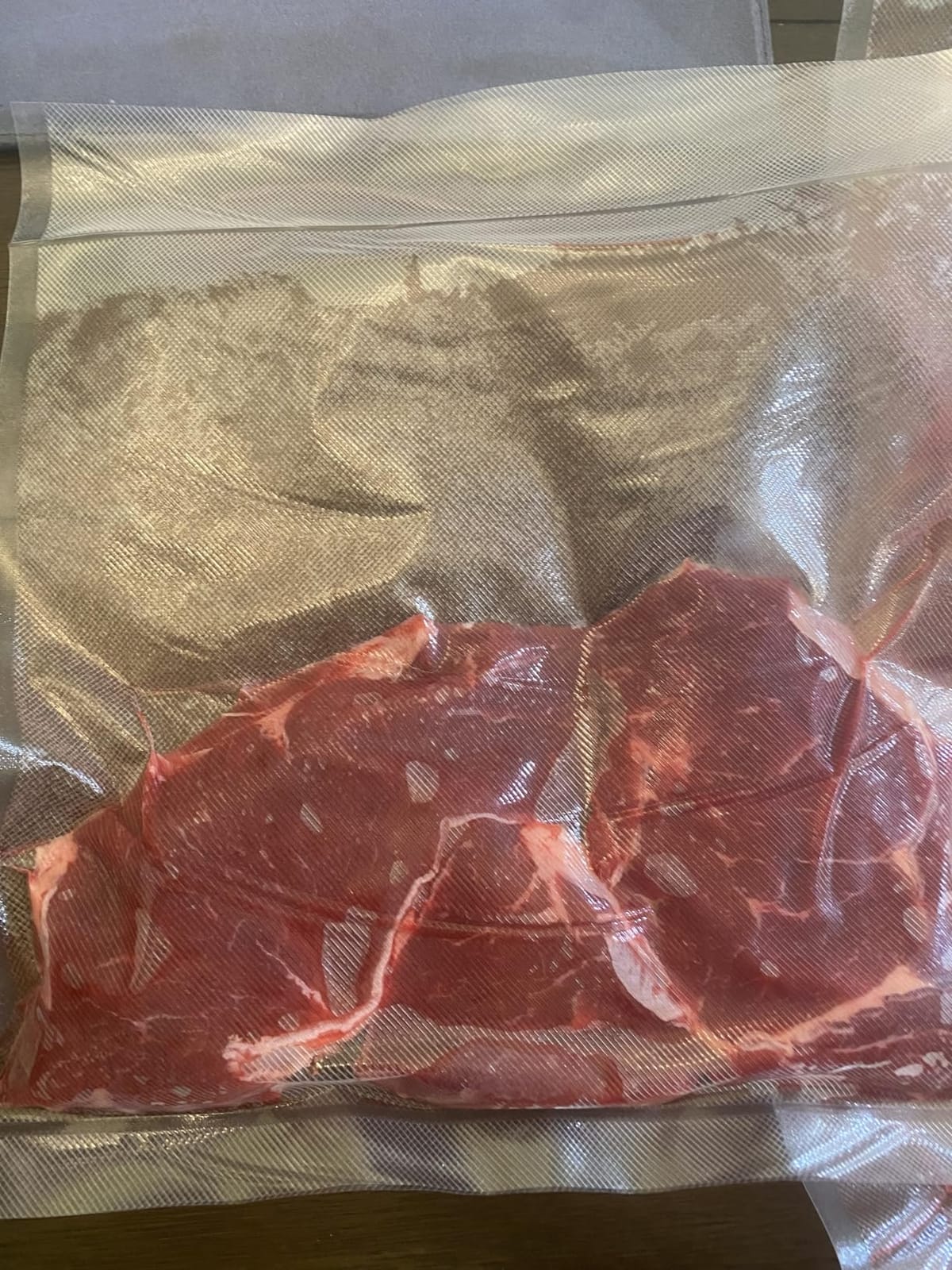
Pulse mode steps the vacuum rather than slamming it on, which is what keeps blood and surface moisture inside the bag instead of in the pump. Double heat seals run for dry and moist food, and a removable drip tray catches whatever still makes it through.
It carries the highest average rating in this selection at 4.7 with 85 percent five-star, and a top-five category rank. The honest caveat is the review base: 1,736 ratings is the smallest here, so long-term durability data is thinner than the star count suggests.
Where the extra suction pays off
Buy this one for large, wet packs – a whole deer hindquarter section, a turkey breast, a heavy bag of ground venison. Strong vacuum plus pulse control is the combination that handles both size and moisture.
It is also the easiest machine here to keep alive. The foam gasket, drip tray and built-in cutter are all sold individually as inexpensive replacement parts, so a worn part does not mean a new machine.
What gives buyers pause
The small review base is the main risk. A 4.7 from 1,736 ratings tells you current owners are happy, not that the machine has survived four deer seasons.
The manufacturer does not recommend reusable zipper bags, which limits your options if you like the reusable approach. The dedicated vacuum food container is sold separately, so budget for it if you want to seal saucy or marinated food.
8. Avid Armor USV20 – Best Chamber Sealer for Game and Brine
Avid Armor USV20 Chamber Vacuum Sealer Machine – High-Volume 11.5” Sealer
4 liter stainless chamber
11.5 inch heating bar
Adjustable vacuum and seal time
Pros
- Only true chamber here so juices and brines stay in the bag
- Adjustable vacuum from 15 to 60 seconds
- Works with inexpensive smooth pouches
- User-replaceable seal bar extends machine life
- Handles jars and canisters laid on their side
Cons
- Heaviest unit at 17.3 pounds
- 3 inch chamber depth excludes large roasts
- No dust cover included for counter storage
This is the machine that solves the problem every other sealer here has. A chamber sealer puts the entire bag inside an airtight chamber and removes the air from around it, so liquid has nowhere to go except the bag. Edge sealers pull air through the open neck, which is why they cannot handle a bag of marinade or a pack of raw venison with a lot of juice in it.
The 4-liter stainless steel chamber measures 12.25 by 8.5 by 3 inches with an 11.5-inch heating bar, and vacuum time is adjustable from 15 to 60 seconds. That control is what lets it protect a delicate fish fillet on one setting and collapse a bulk bag of ground venison on another.
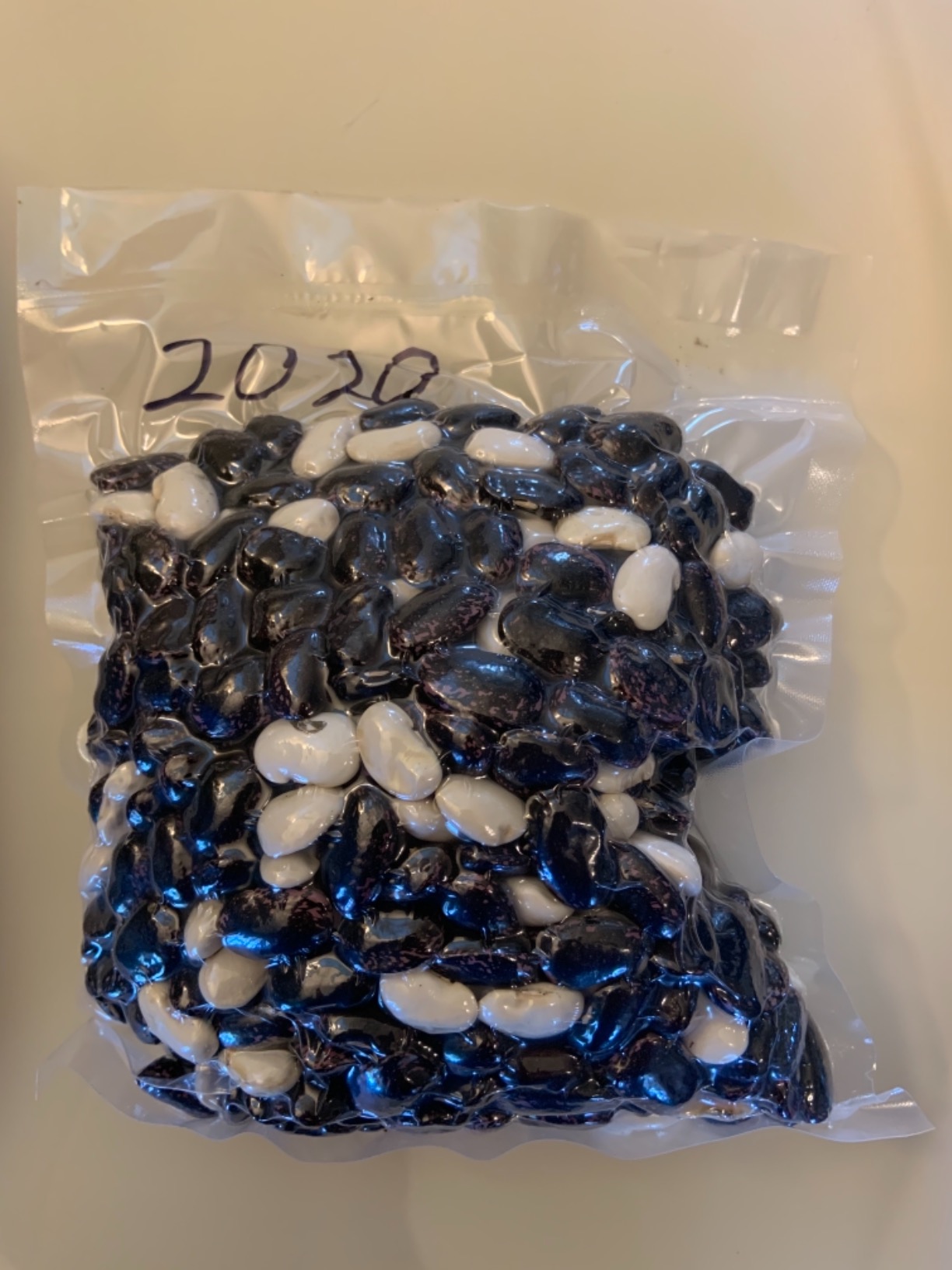
It also accepts smooth pouches up to 11 by 10 inches, which are cheaper than channeled vacuum bags across a season, and it will run textured bags and Mylar with a longer seal time. Mason jars and canisters can be laid on their side inside the chamber.
Rating is 4.7 across 1,170 reviews with 84 percent five-star. Reviewers consistently point to the elimination of the liquid problem as the reason to own one. The criticisms are physical: 17.3 pounds, a 3-inch chamber depth that will not accept a large roast, and no dust cover included.
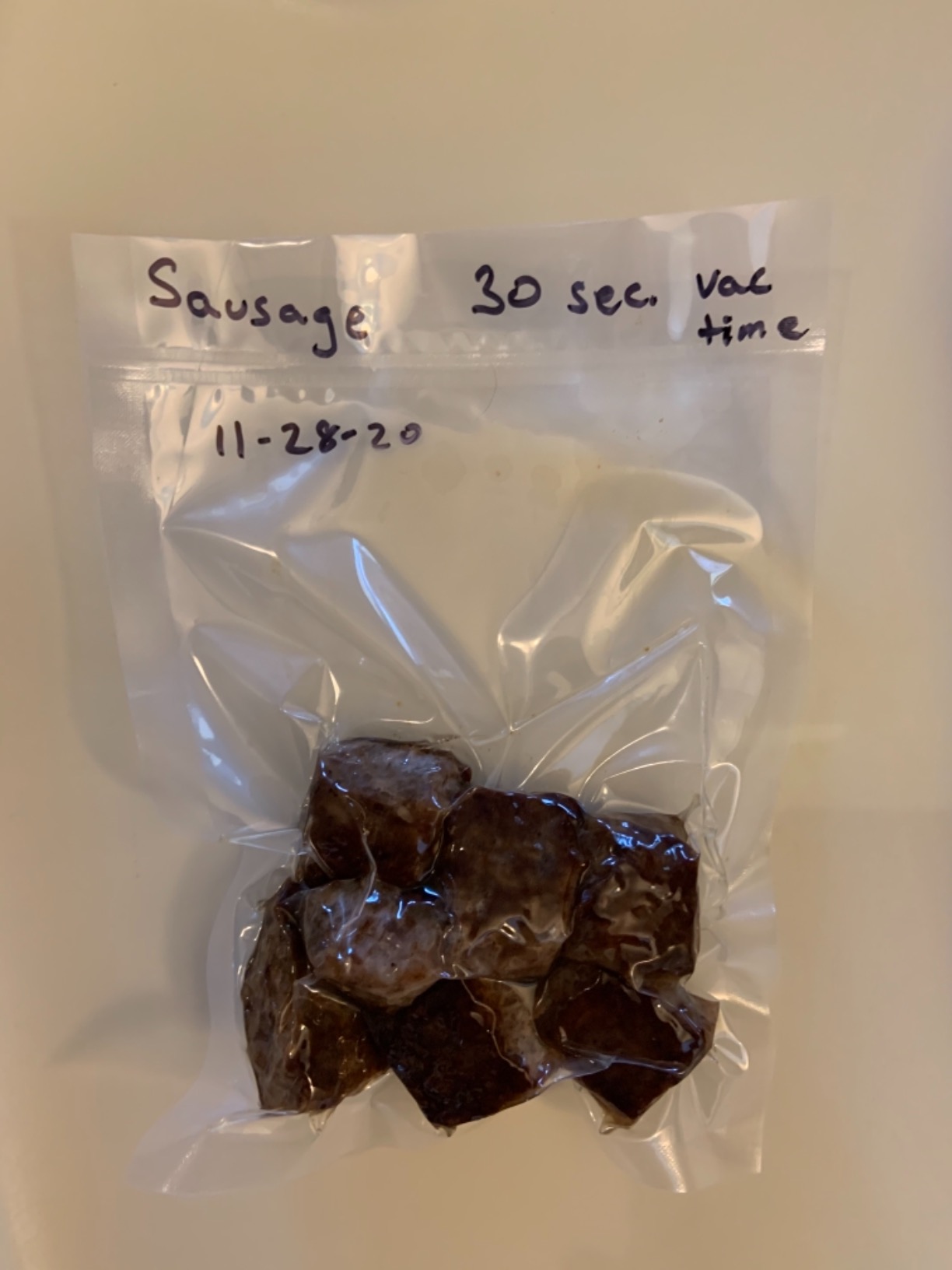
Who needs a chamber
If you process five or more deer a season, run a hunting camp, seal brines and marinade, or make sausage and jerky, a chamber pays for itself in saved bags and avoided failures. Forum owners on RefugeForums consistently second the chamber recommendation specifically for high volume, and an owner on HuntTalk runs a higher-end chamber unit for an Alaska fishing lodge.
The replaceable seal bar is the detail long-term owners care about most. When the bar fails on a machine without a user-replaceable part, the whole unit is finished. Here the part is inexpensive and swappable.
Honest limits
Even a chamber has size limits. The 3-inch depth means a whole turkey, a large ham, or a bone-in rib section will not fit flat, so you still break those down first. Buying a chamber does not remove the need to portion.
It stays on the counter at 17.3 pounds, and there is no included cover, so plan where it lives. If your volume is one deer a year, this is a lot of machine for the job.
9. LEM Ground Meat Packaging System – Best for Ground Venison and Sausage
LEM Products Ground Meat Packaging System, Sealer Machine, Tape, Meat Bags
Tape sealing machine not a vacuum
About 1200 seals per roll
50 one pound game bags
2.55 pounds
Pros
- Purpose-built for hunters processing ground venison
- Extremely fast for closing bulk sausage and ground bags
- Kit includes machine tape and fifty one pound bags
- Stays stable without being fixed down
- Metal body with serrated tape blade
Cons
- Not a vacuum sealer so it will not prevent freezer burn
- Some owners describe it as slightly wobbly
- Short learning curve on the twist and seal technique
Call this one out early: the LEM system is not a vacuum sealer. It applies poly tape across the top of a bag instead of evacuating air. If you are trying to stop freezer burn, it will not do that job and no product claim in this guide should be read as saying it will.
What it does better than any vacuum sealer is close the end of a bag fast. Load the tape, twist the neck of the bag, press down, and you have a sealed one-pound bag of ground venison in a couple of seconds. For someone who grinds 40 pounds of venison and links sausage after a hunt, that speed is the point.
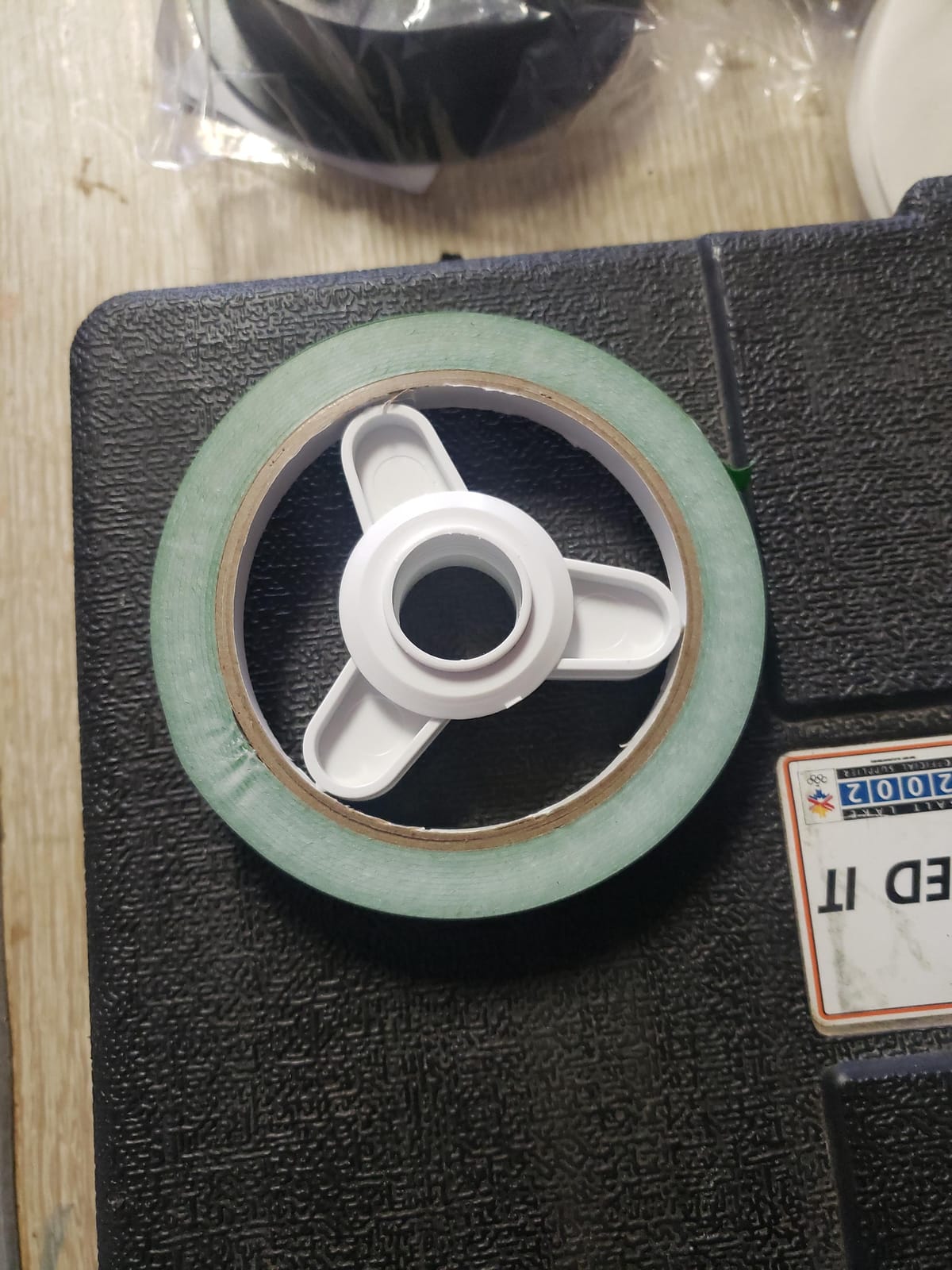
The kit is complete: the taping machine, one roll of freezer-safe poly tape good for roughly 1,200 seals, and 50 one-pound wild game meat bags sized for venison, beef, pork or poultry. An optional two-inch stuffing tube mounts over a grinder plate so you can grind directly into the bag.
It weighs 2.55 pounds, measures 9.1 by 6.1 by 3.5 inches, and carries a one-year factory warranty with lifetime customer support and replacement parts. At 4.7 across 2,140 ratings with 84 percent five-star, owners frequently report moving up from a cheaper knockoff for the rubber feet, the snug tape dispenser and the serrated blade.
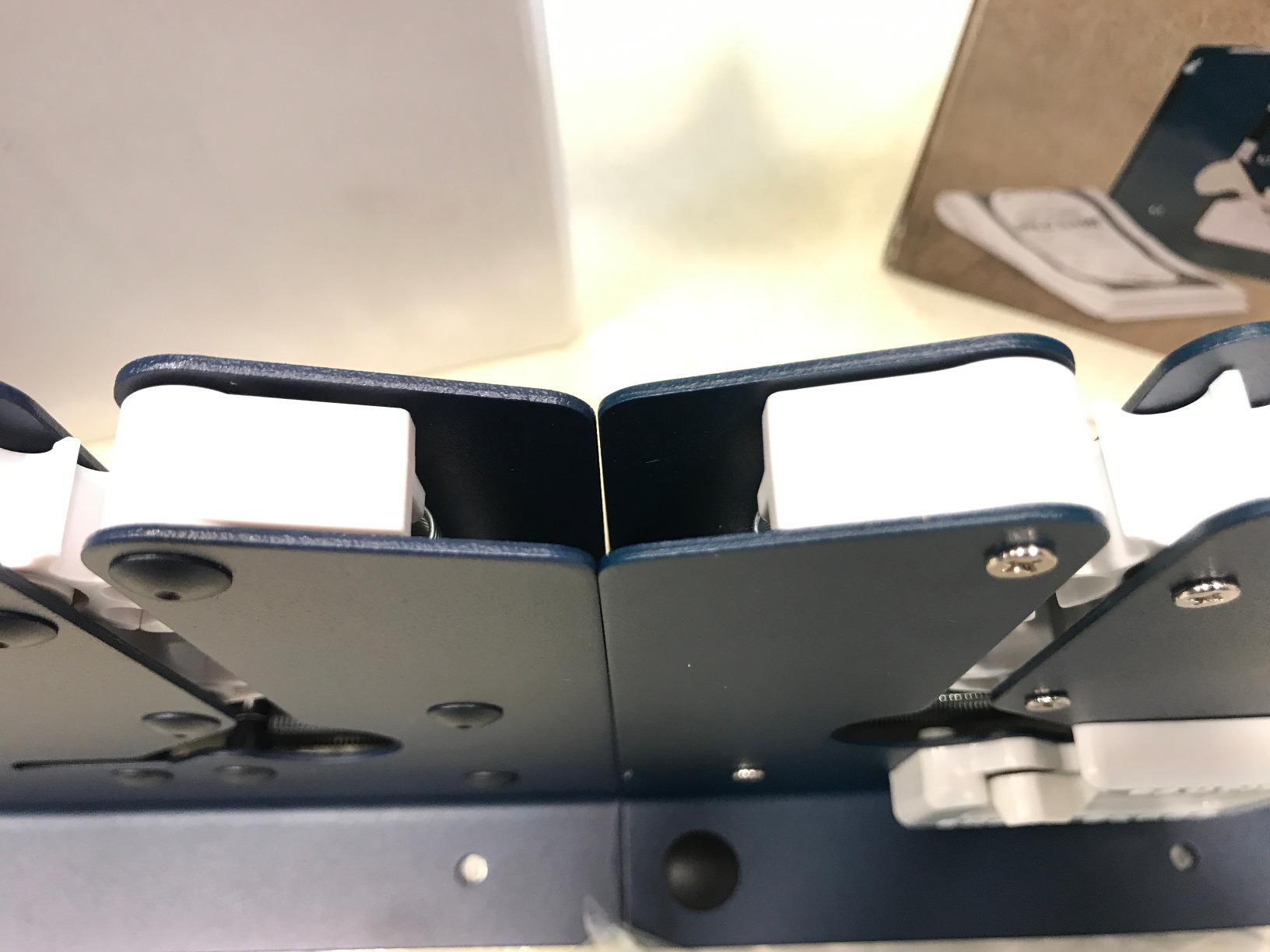
Where it belongs in the workflow
This is a companion machine, not a competitor to the ten others. Seal your steaks and roasts with a vacuum sealer, then use the LEM to close every bag of ground venison, summer sausage and salami. A Rokslide owner describes running a heavy duty sealer across hunting, fishing, sausage and salami for four years, and grinding output is exactly where tape sealing wins.
It is also the easiest of the ten to store between seasons. It is small, light, and works on a hunting cabin counter with no power at all.
Where it will disappoint you
If you buy it expecting a vacuum sealer, you will be disappointed, because nothing leaves the bag. For freezer-burn protection you need one of the air-removing machines on this list.
Plan on a short learning curve for the twist and seal technique, and a few owners describe the unit as slightly wobbly. The stuffing tube for grinding directly into bags is a separate purchase.
10. Potane VS2736 Next Gen – Best for Wet Game Meat on a Budget
Next Gen Vacuum Sealer Machine, Potane Double Pump Food Vacuum Saver With Smart Visual Status System, Full Auto/Manual Functions, Built-in Safety Cutter&Guided Seal Bar, Start Kit Bags to Seal a Meal
Commercial-grade dual pump
Moist mode triples heat time
Liquid isolation tray
3.9 pounds
Pros
- Dual pump extracts air fast even on large bags
- Moist mode and liquid tray handle wet game packing
- Guided seal bar keeps bag alignment consistent
- Built-in safety cutter and simple buttons
- Lightweight with a five-year warranty
Cons
- No built-in bag storage so rolls are stored separately
- Viscous fluids and oil need manual vacuum mode
- Corded electric only
The VS2736 is built around one problem: wet meat. Its moist mode triples the heating time, and a liquid isolation tray plus absorbent memory foam gaskets sit between the bag and the pump so overflow does not reach the mechanism.
The dual pump gives it suction comparable to machines well above its tier, and vacuum-only mode lets you dial suction from zero to 100 percent. That matters with game, because a full-power pull on a bag of ground venison can drag liquid toward the seal faster than you can react.
The guided seal bar is a small design idea with a real effect. It physically holds the bag mouth in alignment, which means fewer wasted bags over a season of 100-pound processing sessions. A built-in safety cutter and a plain button layout with an LED status system keep it approachable.
It scores 4.4 across 10,117 ratings with 74 percent five-star. The recurring owner note is that oily or heavily marinated meat still wants manual vacuum mode, and that there is no integrated bag storage, since the manufacturer traded it for pump performance.
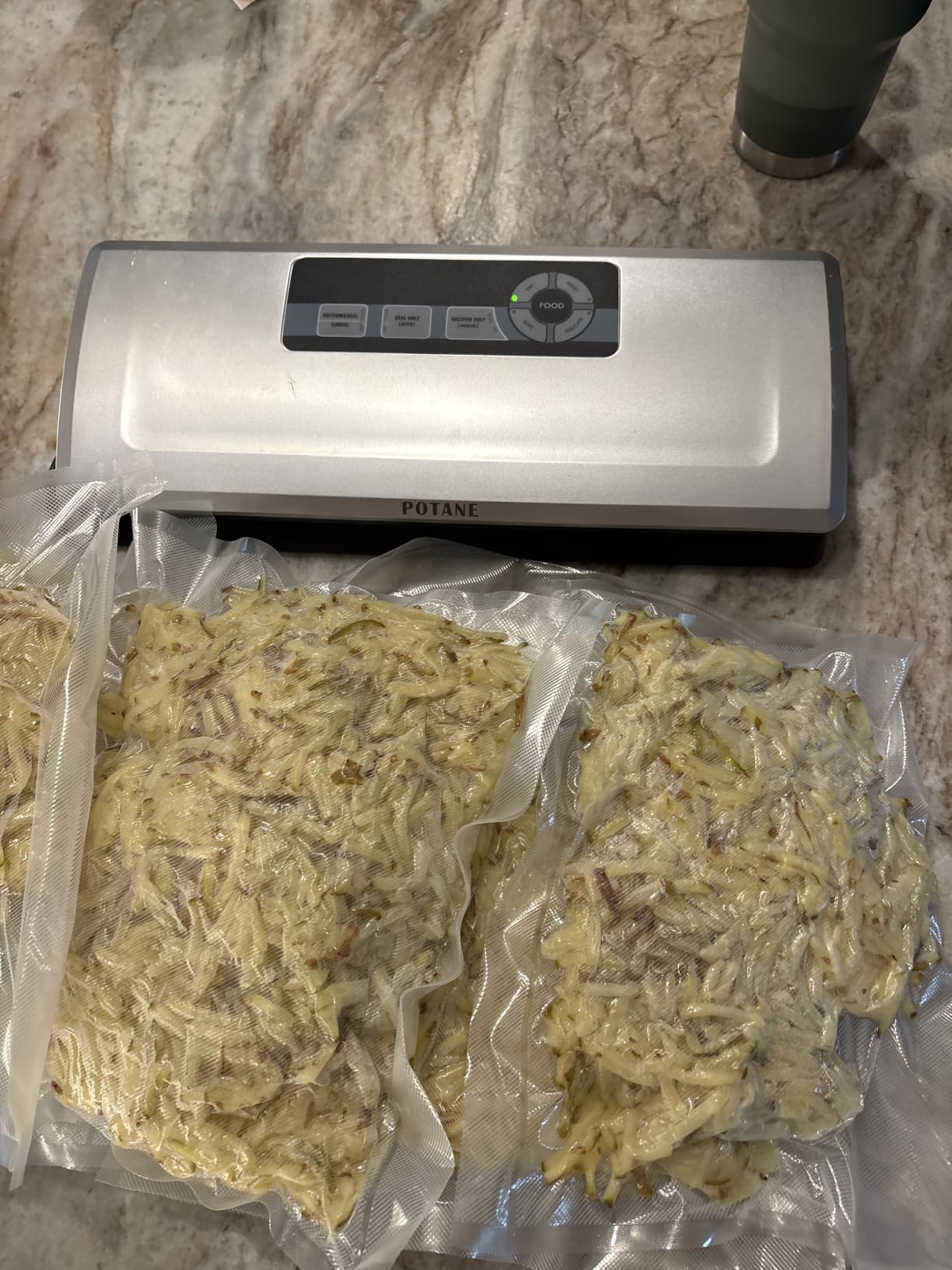
Why hunters like it
Choose this one for fatty game – goose breast, pork shoulder, backstrap with a heavy cap of fat – where a standard dry cycle gives up early. Handles bags up to 12 inches wide, which is wider than most machines here, and works with textured bags from other brands.
At 3.9 pounds it is light for its output, and the five-year warranty plus multi-seal operation make it a low-risk purchase over multiple seasons.
Its compromises
Losing the built-in bag storage is a real inconvenience when you are cutting custom sizes in a dark garage. Plan on storing rolls elsewhere and keeping a cutter nearby.
Very viscous liquids, oil and heavy marinade still need manual vacuum control, so it does not replace a chamber sealer for brines. And it is corded, so all of this happens in a kitchen.
Chamber vs. Edge Vacuum Sealers for Game
An edge sealer pulls air out through the open end of the bag and then runs a heating element across the mouth. A chamber sealer encloses the entire bag in an airtight chamber and removes the air from around it. That single design difference explains nearly every practical difference between the two.
Because the bag mouth is open in an edge sealer, liquid has a path straight into the seal channel. That is why edge machines struggle with brine, marinade and blood-rich cuts, and why moist mode or pulse vac exists. A chamber gives liquid nowhere to go, so juices stay in the bag.
Liquid sealing: chamber only. Edge sealers cannot do it reliably.
Maximum bag width: chamber units here cap out around 11.5 inches, while edge units like the Potane VS2736 handle 12 inches. The widest practical difference is chamber depth, not width.
Back-to-back use: chambers are built for repeated cycles because nothing has to thread into an open bag neck. Edge units with high duty cycle ratings perform well too.
Bag cost over a season: chambers accept inexpensive smooth pouches, edge machines need embossed or channeled bags.
Size and weight: chamber units are heavy and stay on the counter. The one in this roundup is 17.3 pounds.
Are chamber vacuum sealers worth it? Above roughly five deer a season, for sealing brine and marinade, or for a hunting camp, yes. Hunters on Habitat-Talk put it the same way, noting that chamber machines are really for the people processing a larger number of deer each year. For one deer a year, an edge sealer with a good moist mode is the sensible purchase and the machine will not be the limiting factor in how much meat you keep.
How to Vacuum Seal Wild Game the Right Way
Technique matters as much as the machine. Six steps separate a bag that holds vacuum for a year from one that fails in a month.
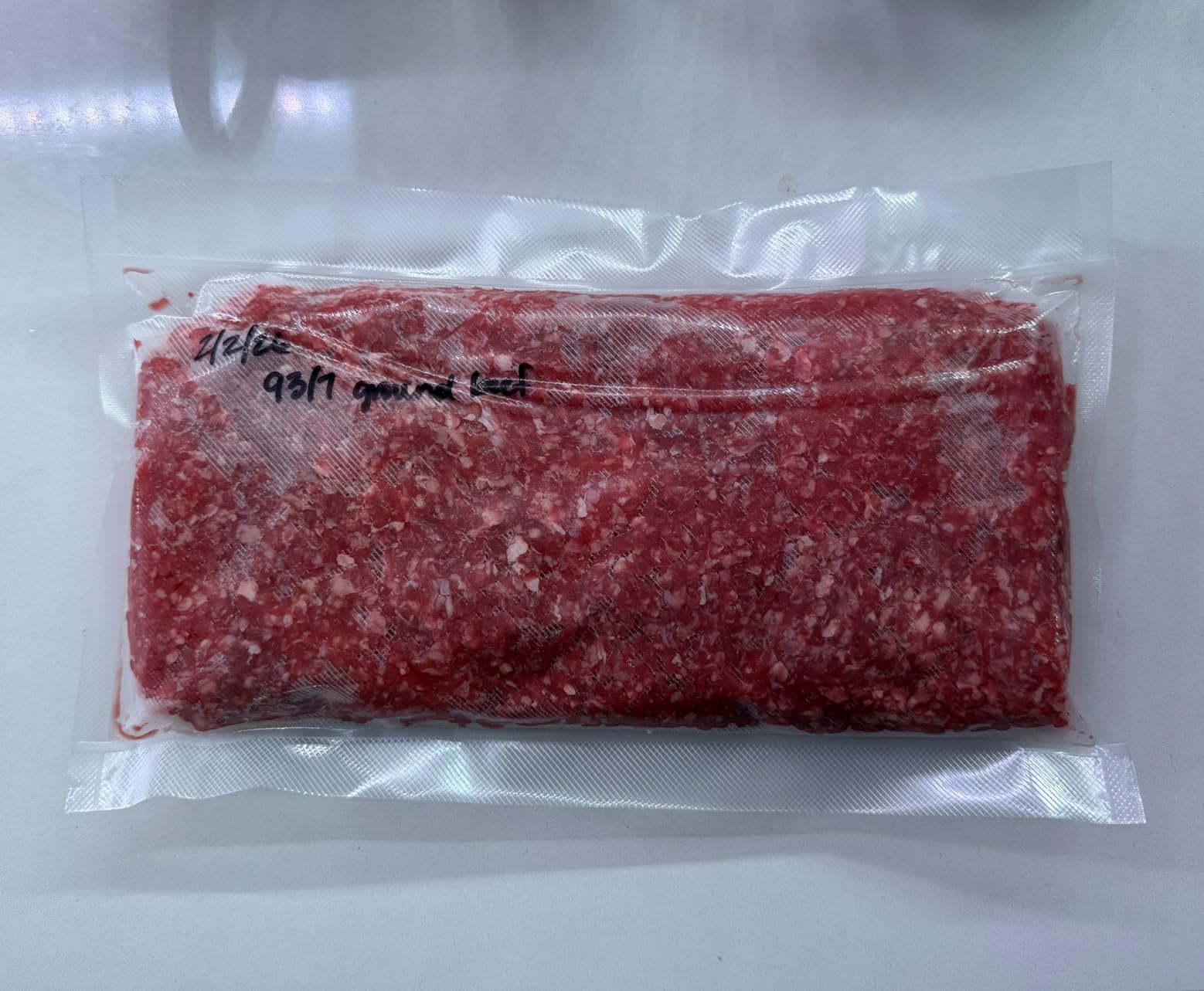
1. Pre-freeze for 30 to 60 minutes. Experienced hunters treat this as non-negotiable. Firm meat compresses predictably, liquid stays put, and bone edges are less likely to puncture. This single step solves more failures than any machine setting.
2. Trim and portion before sealing. Seal the size you will cook, not the size the animal came in. A shoulder you cannot break down at the counter will not break down frozen either.
3. Label before the bag goes on. Write the cut, the date and the animal on the bag with a marker. Once it is sealed and stacked flat, the label is your only reference.
4. Leave about 3 inches of headspace. The bag needs room to gather at the top or the seal pulls unevenly and pinholes form along the edge.
5. Double-seal anything going past six months. Use the double seal mode or run a second pass. Bone-in cuts and anything with a sharp edge deserve a second pass regardless of time.
6. Freeze flat. Bags stacked flat freeze faster and thaw faster, and they use the shelf space in a chest freezer properly.
For bone-in cuts specifically, double bag heavy-duty wall bags. For fish, pat the fillet dry first and use a lower vacuum setting so the flesh is not crushed – a growing number of anglers on Tidalfish have been improvising with water-filled zip bags to keep catch fresh, which is exactly the problem a real sealer solves. The chamber sealer guide for meal prep covers the liquid side of this in more detail.
How to Choose the Right Vacuum Sealer for Hunters
1. Match the machine to your volume. One or two deer a year needs a mid-tier edge sealer with a moist mode. Three to five deer needs a heavy-duty unit rated for long continuous cycles. Five or more, or a camp, needs a chamber. This single question eliminates most wrong purchases.
2. Read duty cycle, not wattage. Watts describe motor power. kPa and inHg describe suction. Only the suction figures compare between machines, and duty cycle – consecutive bags before a cool-down – tells you whether you will be waiting mid-session.
3. Check sealing bar width against your largest cut. A 15 or 16-inch bar takes a whole breast or a leg without folding the bag. An 11.5-inch bar means cramming, and cramming is how pinholes happen.
4. Look for real moist handling. Moist mode, pulse vac, an adjustable vacuum time and a removable drip tray are the features that decide whether a wet pack seals. Confirm which of those the machine actually has rather than trusting a single mode name.
5. Budget the bags before the machine. Embossed bags for dry and general meat, heavy-duty double wall for bone-in cuts, and roll stock if you want custom sizes. Consumables across a season easily exceed what most people expect, and proprietary bag systems cost more. Our food storage sealer comparison breaks down the bag types in more detail.
6. Check warranty length and parts. Coverage here runs from one year to five. A machine with a spare gasket or a user-replaceable seal bar is one you will still own in four seasons. Cheap replacement parts sold individually are worth more than an extra year of coverage.
7. Plan where it lives. Counter space, cabinet clearance and storage temperature all matter. Gaskets harden in a hot garage, and a machine too heavy to move will end up in the corner. A cordless handheld covers the camp and RV gap if you need both.
Troubleshooting the Four Hunting Failure Modes
Liquid pulled into the pump. The most common complaint on every hunter forum. Stop the cycle, empty the drip tray and the chamber, dry the seal channel, and switch to moist mode or pulse vac. If the machine is bag-detection style, this will keep happening – it is a design limit, not a fault.
Pinholes from bone. A bag that looks sealed and leaks air is almost always a puncture. Double bag with heavy-duty wall, keep sharp edges wrapped in a thin layer of trim, and pre-freeze so the bone does not shift during the pull.
Seals that will not hold. Usually thin or incompatible bags, or a dirty seal element. Use bags sized for the machine, and never run a vacuum sealer with nothing in the bag for a test cycle – it cooks the element.
Mid-session overheating. Entry machines hit a thermal limit after a run of bags and need a cool-down break. This is why duty cycle is a hunting spec and not a kitchen one. If you are hitting it regularly, you bought the wrong tier.
Storage between seasons is worth a sentence too. Do not leave a machine in an unheated garage or a hot shed. Wipe the chamber dry, coil the cord loosely, and keep gaskets from being crushed – that is what kills them.
Frequently Asked Questions
What is the best vacuum sealer for hunters?
The Nesco Deluxe VS-12 is the best vacuum sealer for most hunters. Its 130-watt double pump, dry moist and double seal modes, and generous sealing bar handle wet venison and large game packs better than the alternatives. Hunters processing five or more deer a season, or sealing brine and marinade, should use a chamber sealer such as the Avid Armor USV20 instead.
Are chamber vacuum sealers better than vacuum sealers?
A chamber sealer is better for liquid, brine and high-volume work. It encloses the whole bag in an airtight chamber and pulls air from around it, so juices stay inside. An edge sealer pulls air through the open bag neck, which is why it cannot reliably seal liquid and why wet game triggers its failure mode. For dry cuts and normal portions, an edge sealer is simpler and cheaper.
Are chamber vacuum sealers worth it?
A chamber sealer is worth it above roughly five deer a season, for sealing brines and marinades, or when you run a hunting camp. Below that volume, a mid-tier edge sealer with a good moist mode will protect the same meat at a fraction of the cost. Even chamber units have size limits, so a 3-inch chamber depth will not take a whole turkey or a large rib section.
Is Nesco or FoodSaver better?
Nesco wins on raw suction and on wet game, with a 130-watt double pump and moist and double seal modes. FoodSaver wins on automation and on ecosystem, with automatic bag and moisture detection, a dishwasher-safe drip tray, and the widest range of accessories. Nesco is the usual hunter pick; FoodSaver is the better choice if you want set-and-forget cycles or also seal jars and canisters.
How long does vacuum sealed game meat last in the freezer?
Vacuum sealed whole cuts of venison, wild turkey and lean fish typically hold quality 12 to 18 months in a steady freezer, compared with roughly 3 to 6 months for ordinary freezer wrap. Ground venison holds 10 to 12 months sealed versus 3 to 4 wrapped. Waterfowl and fatty fish are shorter, around 8 to 12 months sealed versus 2 to 3 wrapped. Vacuum sealing improves quality, not safety – frozen game at a steady zero degrees is safe well beyond those windows.
Can you use freezer bags in a vacuum sealer?
Standard zipper freezer bags do not work because they are not designed to hold a vacuum channel. You need embossed vacuum bags, channel bags with a removable air strip, or bags with a one-way valve. Plain zip bags filled with water to keep fish fresh are a common improvisation, but they do not remove air and will not prevent freezer burn.
What foods should never be vacuum sealed?
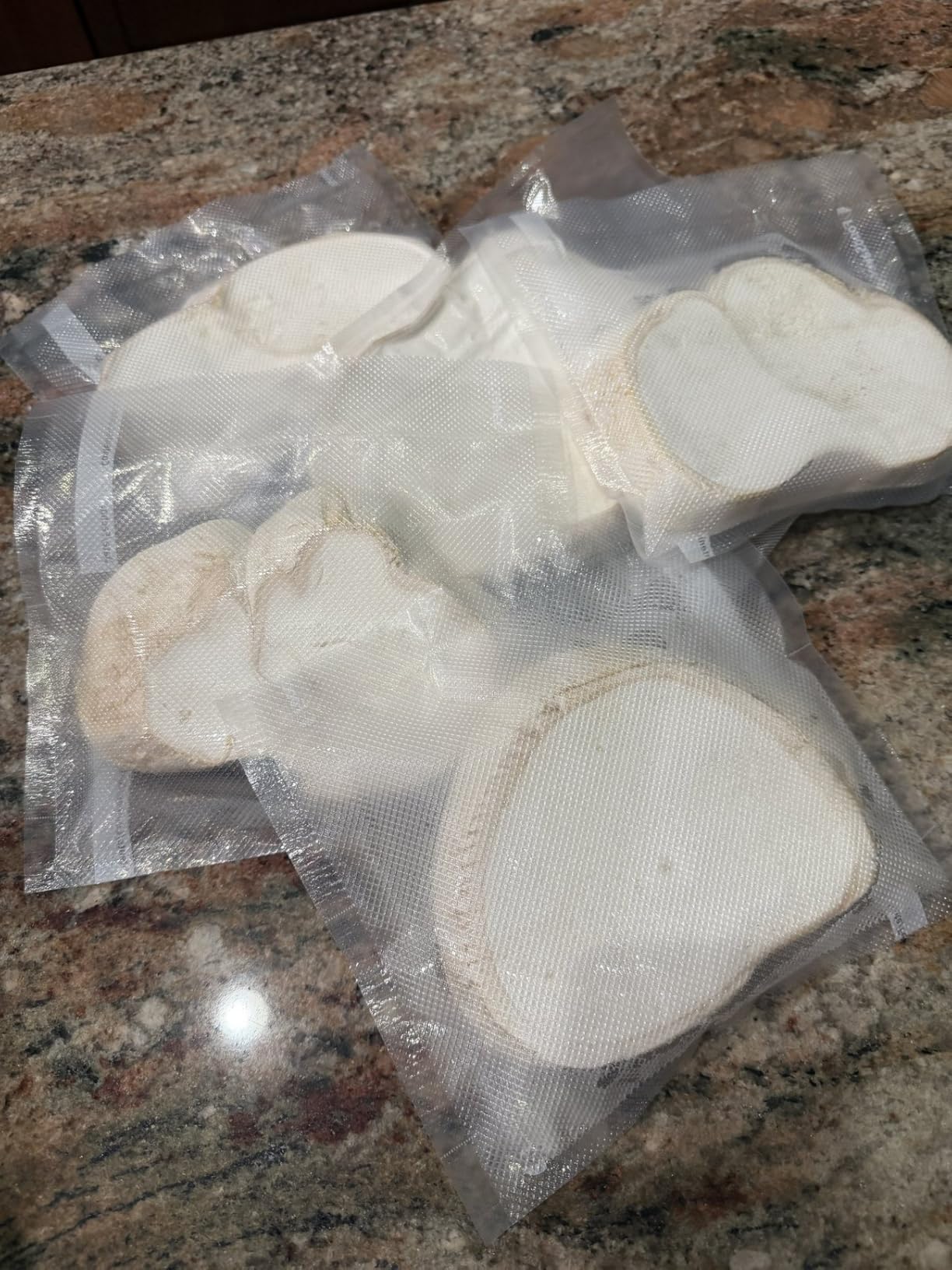
Avoid vacuum sealing liquids in an edge sealer, sharp bone edges in a standard bag, soft crumbly items that will be crushed by full suction, and any whole mushroom or soft food that needs gentle handling. Use pulse vac or a lower vacuum setting for bread, berries and soft cuts, double bag bone-in pieces, and move to a chamber sealer if brines and marinade are part of your season.
What are common problems with FoodSaver vacuum sealers?
The recurring complaints are declining suction as the pump ages, bags that will not hold a full vacuum, liquid reaching the seal channel on wet game, and the cost of proprietary bags across a season. Heaviest criticism goes to weight and countertop bulk, particularly on the larger bag-detection models. A five-year warranty and individually sold gaskets and drip trays are the best defense against a mid-season failure.
The Bottom Line
For most hunters, the best vacuum sealers for wild game come down to volume. The Nesco Deluxe VS-12 handles a normal season with wet venison, double pumps and a moist mode, and it is the pick for anyone taking one to four deer. The Potane VS5736 is the smarter buy for two to five deer because it is rated for more than 100 continuous cycles and ships with a spare gasket.
Push the volume higher and the choice narrows. The Avid Armor USV20 is the chamber to buy above five deer, for brines, or for a camp, and the Potane VS2736 is the best value answer when the meat is fatty and wet. Keep a cordless handheld in the truck for camp portions, and add the LEM tape system if you grind.
Whichever you choose, pre-freeze the meat, leave headspace, and bag for the portion size you will actually cook. That technique protects the harvest for a fraction of what the machine costs, and it works every season from here.