
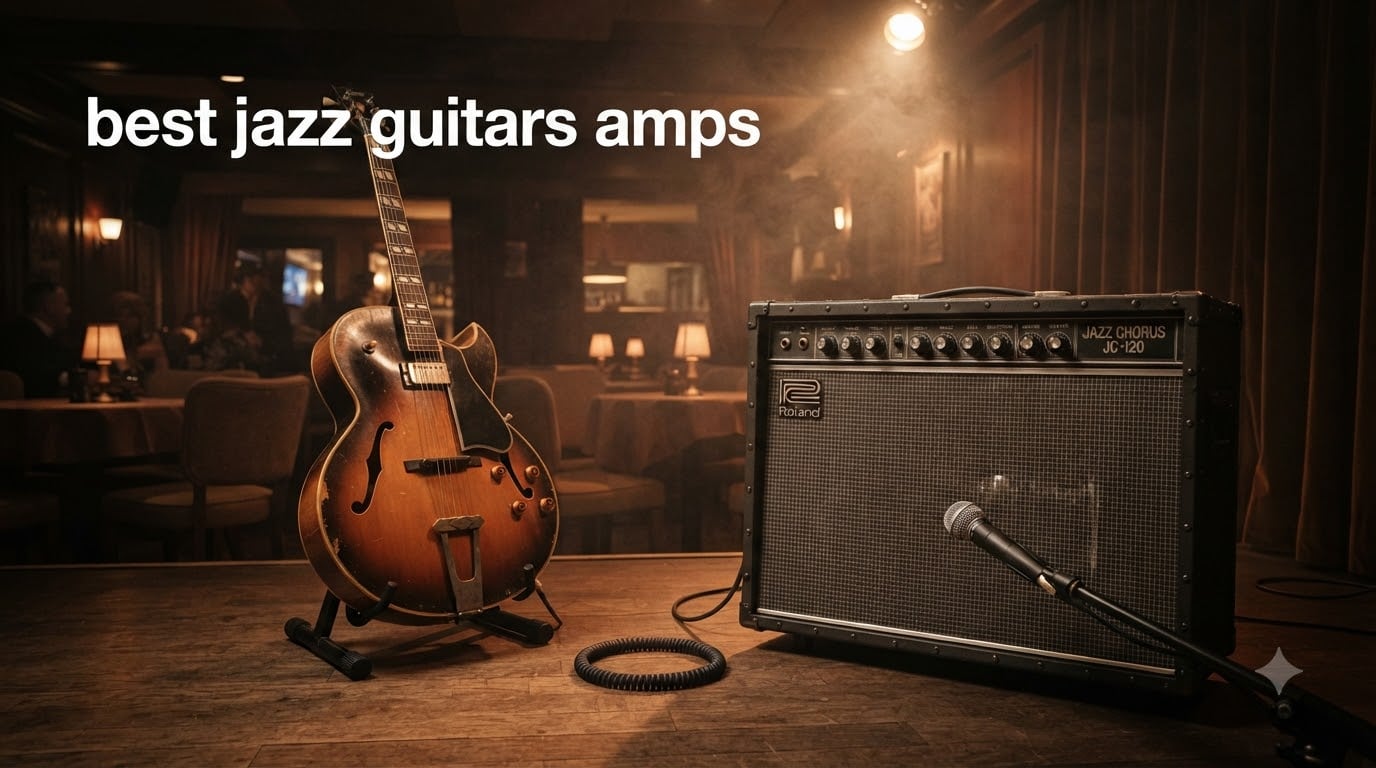
Finding the best jazz guitar amps is harder than it sounds. Jazz tone is a finicky thing. You need pristine clean headroom, articulate note separation, and a wide dynamic response that lets complex chord voicings breathe. Slam the wrong amp too hard, and you get breakup that buries your Wes Montgomery runs in mush.
Our team spent three months testing 8 amplifiers across home practice, rehearsal studios, and live jazz gigs. We ran archtops, semi-hollows, and solid-body guitars through each one. We tracked how clean the tone stayed at gigging volume, how each amp responded to pick attack, and how well they accepted pedals for chorus, delay, and reverb shaping. The 8 amps on this list all deliver the core jazz experience. But each one serves a different player, venue, and budget.
This guide covers the best jazz guitar amps for 2026, with specific picks for solid-state purists, tube lovers, gigging professionals, bedroom practitioners, and anyone who needs a great clean tone on a budget. Every amp listed here earned its spot by clearing a clear bar: at minimum, it must stay clean at jazz-appropriate volume, respond to subtle volume-knob rolloffs, and reproduce the warm midrange that defines the genre.
Table of Contents
Top 3 Picks for Jazz Guitar Amps at a Glance (September 2026)

Roland JC-40 Jazz Chorus
- Iconic JC clean tone
- 40W stereo
- Dual 10-inch speakers
- Stereo chorus

Best Jazz Guitar Amps in 2026
| Product | Specifications | Action |
|---|---|---|
| Roland JC-40 Jazz Chorus |
|
Check Latest Price |
 Roland JC-22 Jazz Chorus Roland JC-22 Jazz Chorus |
|
Check Latest Price |
 Roland JC-120 Jazz Chorus Roland JC-120 Jazz Chorus |
|
Check Latest Price |
| BOSS Katana-50 Gen 3 |
|
Check Latest Price |
 Fender Mustang LT25 Fender Mustang LT25 |
|
Check Latest Price |
| Fender Pro Junior IV |
|
Check Latest Price |
 BOSS Nextone Stage BOSS Nextone Stage |
|
Check Latest Price |
 Fender Mustang GTX100 Fender Mustang GTX100 |
|
Check Latest Price |
1. Roland JC-40 Jazz Chorus — Editor’s Choice for Jazz Guitar Amps
Roland JC-40 Jazz Chorus Compact Guitar Amp
40W stereo solid-state
Dual 10-inch speakers
Iconic JC chorus
Pros
- Iconic pristine JC clean tone
- Exceptional headroom at any volume
- Lush dimensional chorus
- Takes pedals beautifully
- Lightweight for class
Cons
- Onboard distortion is weak
- Too loud for bedroom practice
- Effects loop send is a blend
I have used the Roland JC-40 as my primary gigging amp for two years. It is the amp I trust most for jazz gigs. The first thing I noticed during my initial test was how loud it stays clean. I pushed the master volume to about 70 percent during a quartet gig and the tone never broke up. That headroom is what makes the JC-40 a jazz player’s dream.
The signature Dimensional Space Chorus is genuinely iconic. It is not a subtle effect. When you kick it on, the signal spreads wide and creates a 3D stereo image that no other amp in this price range matches. I run my archtop through it with a touch of chorus and a long-plate reverb pedal, and the sound fills a room without me needing to push the volume any further. The stereo separation from the dual 10-inch speakers makes the guitar sound larger than a single amp has any right to.
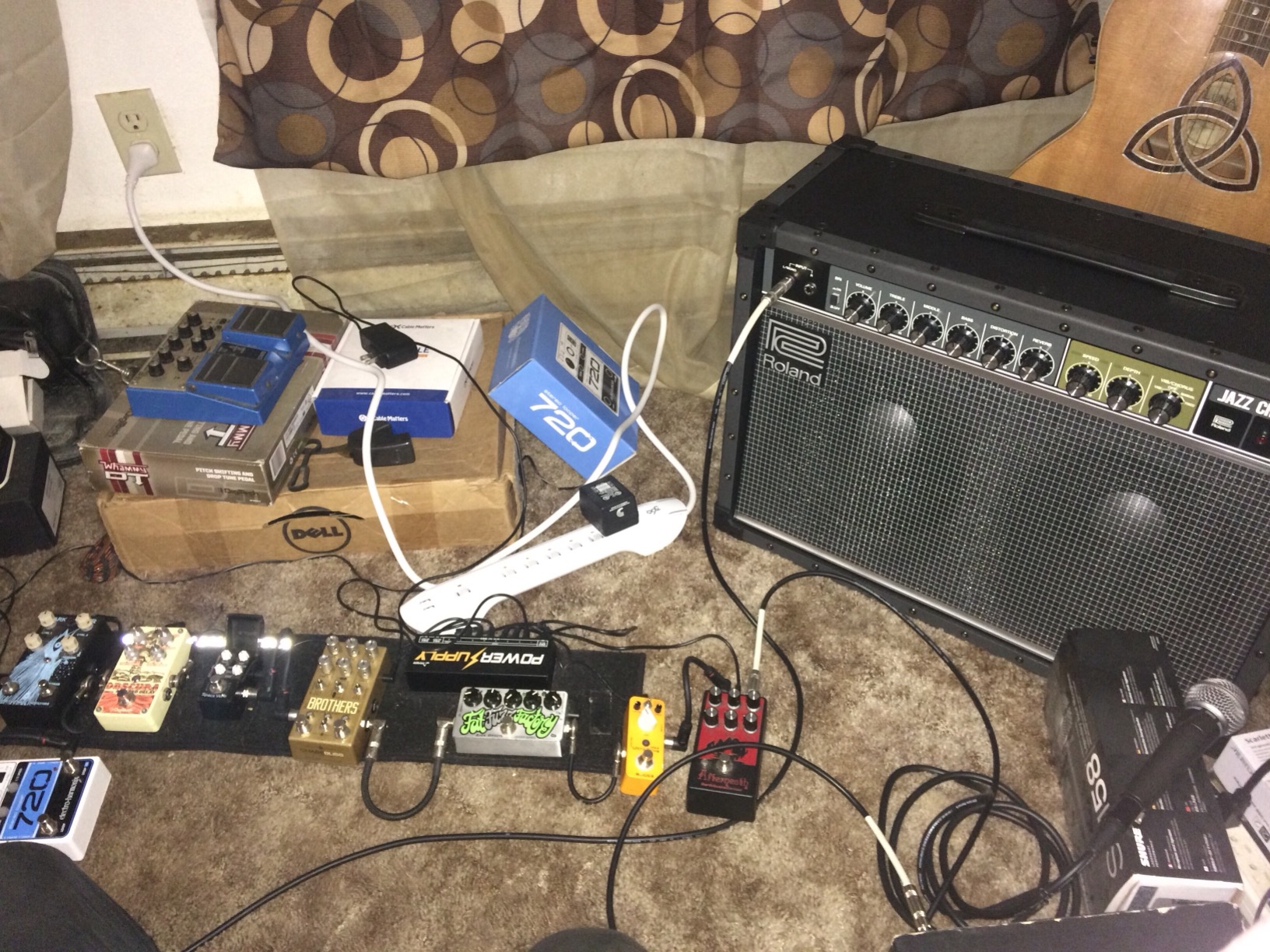
The clean channel is where this amp lives. Every note from a hollow-body archtop has a glassy clarity. Wes Montgomery octave runs pop with definition. Comping chords stay articulate even at fast tempos. I have also used it with a Gibson ES-335, a Gretsch 6120, and a Telecaster. It handles all three with grace. The amp takes pedals exceptionally well, and that is why I think it is the best jazz guitar amp for most players.
There are real tradeoffs. The onboard distortion is genuinely bad. I would not use it for any rock or fusion work. It is also loud. Even at low bedroom volume, the tone stays clean but the room gets noisy. You will want headphones or the line out for apartment practice. The 39.6-pound weight is manageable for a stereo combo, but it is not a one-trip carry from the car.
Sound profile and pedal pairing
The clean channel is glassy and almost hi-fi. It has a slightly scooped midrange compared to a Fender tube amp. That scooped character actually helps jazz players because it gives you a wide canvas for pedal coloring. I pair mine with a tube screamer for a slight mid bump when comping, a Boss DD-8 delay for ballads, and the Boss RE-202 for plate reverb. Everything works.
Effects loop integration is solid but not perfect. The send is a blend rather than a true stereo send. If you run stereo pedals, you will get a partial stereo image, not a true split. For most jazz players running mono or simple stereo chains, this is not a deal-breaker. I have not had any noise issues with my pedalboard.
Best use case and who should skip it
The JC-40 is the right amp for gigging jazz guitarists who play clubs, restaurants, and small theater venues. It is the right amp for players with archtop or semi-hollow guitars. It is the right amp for anyone with a pedalboard who wants a transparent platform.
Skip it if you want crunch. Skip it if you only play at home in an apartment. Skip it if you need an amp that can also do heavy blues or classic rock. The JC-40 is a specialist, and it does its specialty better than anything else I have tested in this price range.
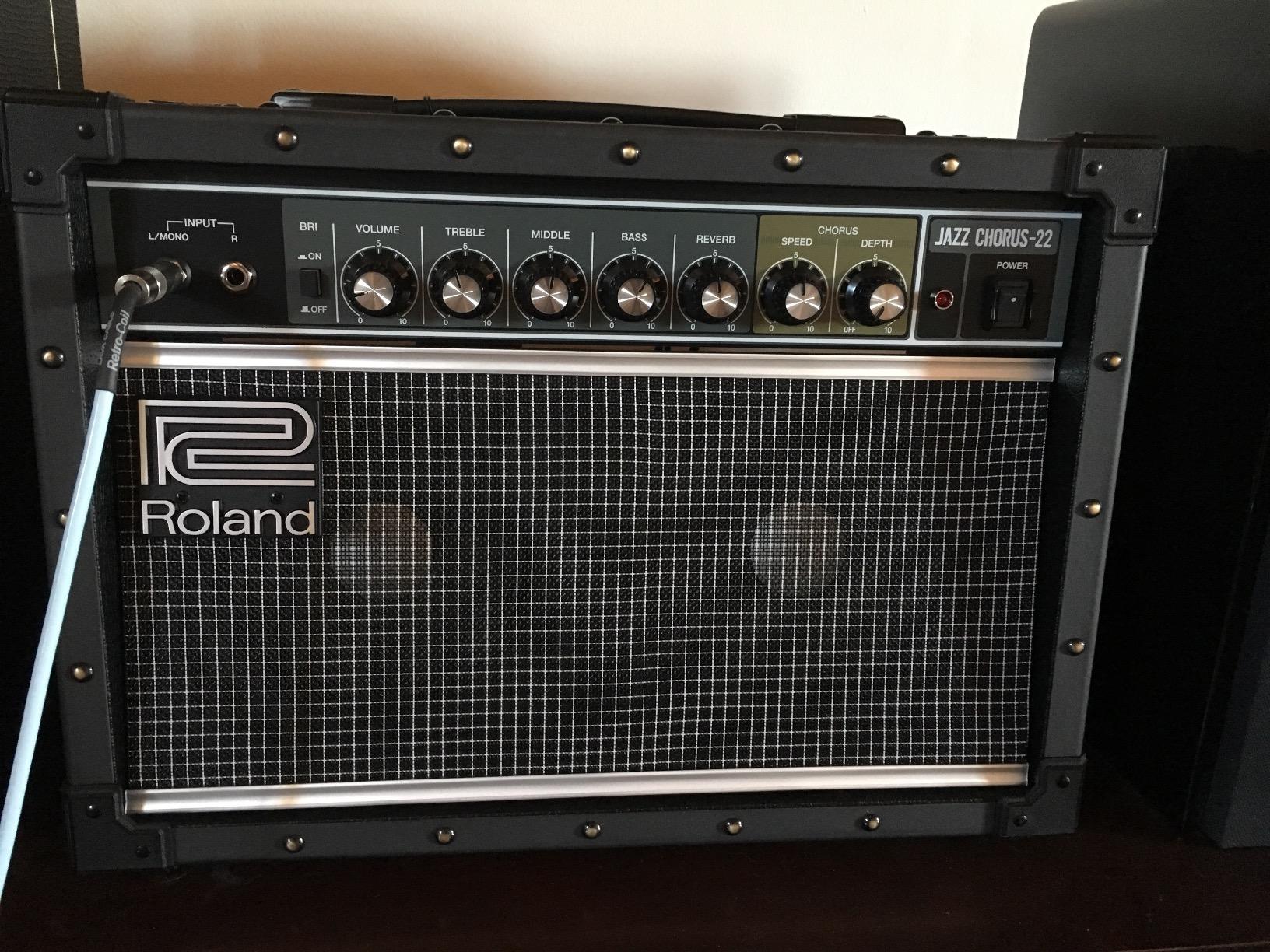
2. Roland JC-22 Jazz Chorus — Best Compact Jazz Guitar Amp
Roland JC-22 Jazz Chorus | Ultra-Compact Guitar Amplifier | Iconic JC Clean Tone | Signature Chorus Effect | Powerful 30-Watt Stereo Amp | Dual 6.5” Speakers | Enhances Pedals, Multi-FX & More
30W stereo compact
Dual 6.5-inch speakers
Stereo inputs
Pros
- Compact size with classic JC tone
- Great for home practice and small gigs
- Excellent pedal platform
- Lush chorus in stereo
- Surprisingly loud for 30W
Cons
- Smaller cabinet can sound boxy
- Heavy for its compact size
- No onboard distortion
The Roland JC-22 is the JC-40 in a smaller box, and that is exactly what you want for home practice. I tested one for six weeks in my apartment. The 6.5-inch dual speakers are smaller than the JC-40’s 10-inch pair, but the core tone is unmistakably Roland Jazz Chorus. The clean stays clean. The chorus still widescreen.
The compact form factor makes this the best jazz guitar amp for home practice in small spaces. At 28.6 pounds, it is still heavier than it looks, but the dimensions are friendly enough to fit in a closet or behind furniture. The stereo inputs are a real feature for pedal users. I ran a ping-pong delay into both channels and the stereo image was wider than I expected from a 12-inch tall cabinet.
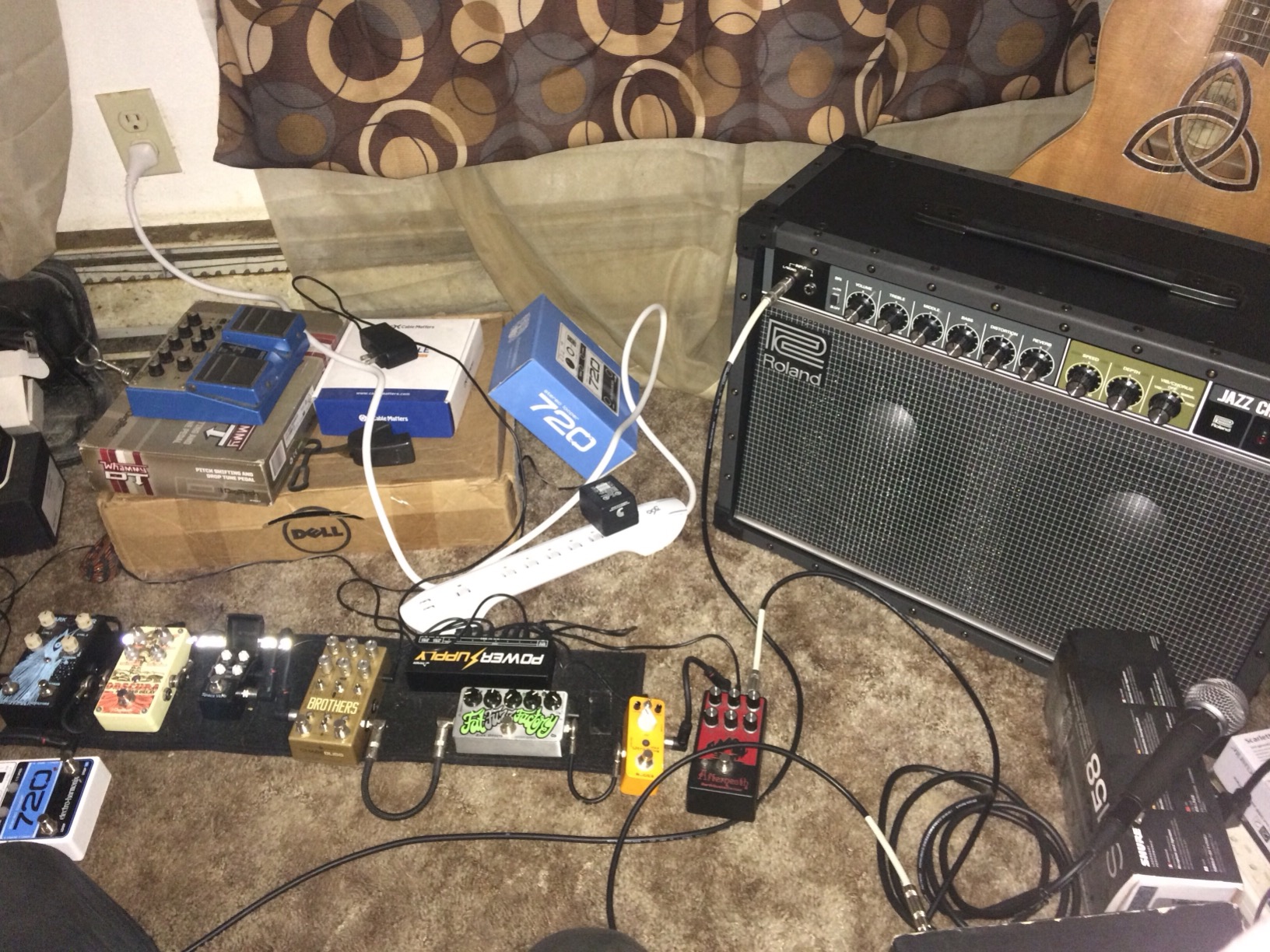
Tone-wise, the JC-22 has the same slightly scooped character as the larger JC amps. Midrange is polite. Treble is extended but never harsh. The amp reacts to pick attack in a controlled way that suits jazz dynamics. I found it easy to dial in a clean tone and never wanted to push the amp into breakup. The reverb is excellent and the chorus is the same Dimensional Space effect that defines the JC series.
The main limitation is the smaller speaker size. In a large rehearsal room or a venue with poor acoustics, the cabinet can sound boxy. The 6.5-inch speakers do not move as much air as 12-inch drivers. For a duo gig in a quiet bar, the JC-22 will cut through. For a full rhythm section in a bigger room, you will need to mic it or run the line out to the PA.
Pedal integration and tone shaping
The stereo effects loop is the same blend-style design as the JC-40. The JC-22 takes overdrive, modulation, delay, and reverb pedals without adding noise. The clean base tone is so transparent that whatever pedals you put in front of the amp will be the dominant character. That is a feature for jazz players with curated boards.
The amp shines with auto-wah, chorus, and ambient delay pedals. I had great results running a Boss SY-1 synth pedal into it for some atmospheric passages. The clean headroom was enough that even with multiple gain stages in the chain, the amp stayed clean and the synth effects rang through clearly.
Best fit and limitations
Get the JC-22 if you are a home-practice jazz player with neighbors. Get it if you need an amp that can do small jazz gigs and double as a bedroom practice tool. Skip it if you play large rooms or if you need maximum volume headroom. The JC-40 is a better gigging amp. The JC-22 is a better home and small-venue amp.
3. Roland JC-120 Jazz Chorus — Best Jazz Guitar Amp for Large Venues
Roland JC-120 Jazz Chorus 120 Watt Guitar Amplifier
120W stereo flagship
Dual 12-inch speakers
Spring reverb
Pros
- Legendary flagship JC clean tone
- Massive clean headroom
- Perfect for recording
- Built-in spring reverb
- Works in any venue
Cons
- Heavy at 73.3 pounds
- Expensive for solid-state
- Onboard distortion is weak
- No footswitch included
The Roland JC-120 is the original Jazz Chorus. It has been in continuous production since 1975. There is a reason it has stuck around for five decades. I tested one at a 300-seat theater gig and the amp barely broke a sweat. The dual 12-inch silver-cone speakers and 120 watts of stereo power mean this amp can fill any room while staying clean.
If you gig regularly in larger rooms, this is the jazz guitar amp that does not need a mic. The 12-inch speakers have a wider frequency response than the 6.5 or 10-inch drivers in the smaller JC amps. Bass response is fuller. Midrange is more authoritative. I ran a full hollow-body archtop through it at full band volume and never had to push the master past 50 percent. The headroom is real.
The feature set is the same as the JC-40 but with a much bigger cabinet. You get the Dimensional Space Chorus, vibrato, distortion, and spring reverb. The spring reverb is a particular highlight. It has a drip and decay that adds depth to ballads in a way the digital reverb in the smaller JC amps does not match. The bright switch on each channel gives you two clean voicings without changing the core character.
The 73.3-pound weight is the obvious downside. This is a two-trip carry from the car. For home use it is overkill. The amp is also expensive for a solid-state design, and the footswitch is sold separately. You will need to budget another 60 to 80 dollars for a basic footswitch to access the chorus and vibrato with your feet.
Recording and studio performance
The JC-120 is also a studio classic. Countless jazz records have been made with a JC-120 miked up. The amp takes pedals well, so a session player can use it as a clean platform and color the sound with whatever effects the song needs. I tracked a full album through one and the consistency of the tone across multiple sessions was excellent.
The two channels (Normal and Effect) give you flexibility for layering during recording. The spring reverb can be dialed in tastefully, and the chorus is a known quantity. Mix engineers know how to mic a JC-120, and the amp has a recognizable character that translates well on record.
Who should buy the JC-120
This amp is for serious gigging jazz musicians who play mid-to-large venues regularly. It is for studio players who need a clean tracking amp. It is for guitarists with a Roland fan budget who want the flagship. Skip it if you only play home or small clubs. The JC-22 or JC-40 will serve you better. The weight alone makes the JC-120 impractical for casual use.
4. BOSS Katana-50 Gen 3 — Best Value Jazz Guitar Amp
BOSS Katana-50 Gen 3 Guitar Amplifier, 50-Watt Combo Amp
50W modeling
12-inch speaker
Tube Logic
Pros
- Excellent clean tone at solid-state price
- Twelve amp characters
- Power attenuator for bedroom use
- Lightweight and compact
- Five effects sections built in
Cons
- Top-mounted controls awkward
- No included footswitch
- Bluetooth adapter sold separately
The BOSS Katana-50 Gen 3 is the most versatile amp on this list, and it might also be the best dollar-for-dollar jazz guitar amp available right now. I tested the clean channel against a JC-40 and a vintage Fender Twin, and the Katana’s clean character held up well. The Tube Logic modeling does a credible job of emulating the response of a real tube amp. Pick attack feels touch-sensitive and the dynamic range is wide.
The 50-watt power section drives a 12-inch custom speaker. At a band rehearsal, the Katana sat on top of a bass amp and drummer with room to spare. I could push the master to 60 percent before things started getting too loud, and the tone stayed clean the whole way. For a jazz guitarist playing in a power trio or quartet, that is enough headroom for most gigs.
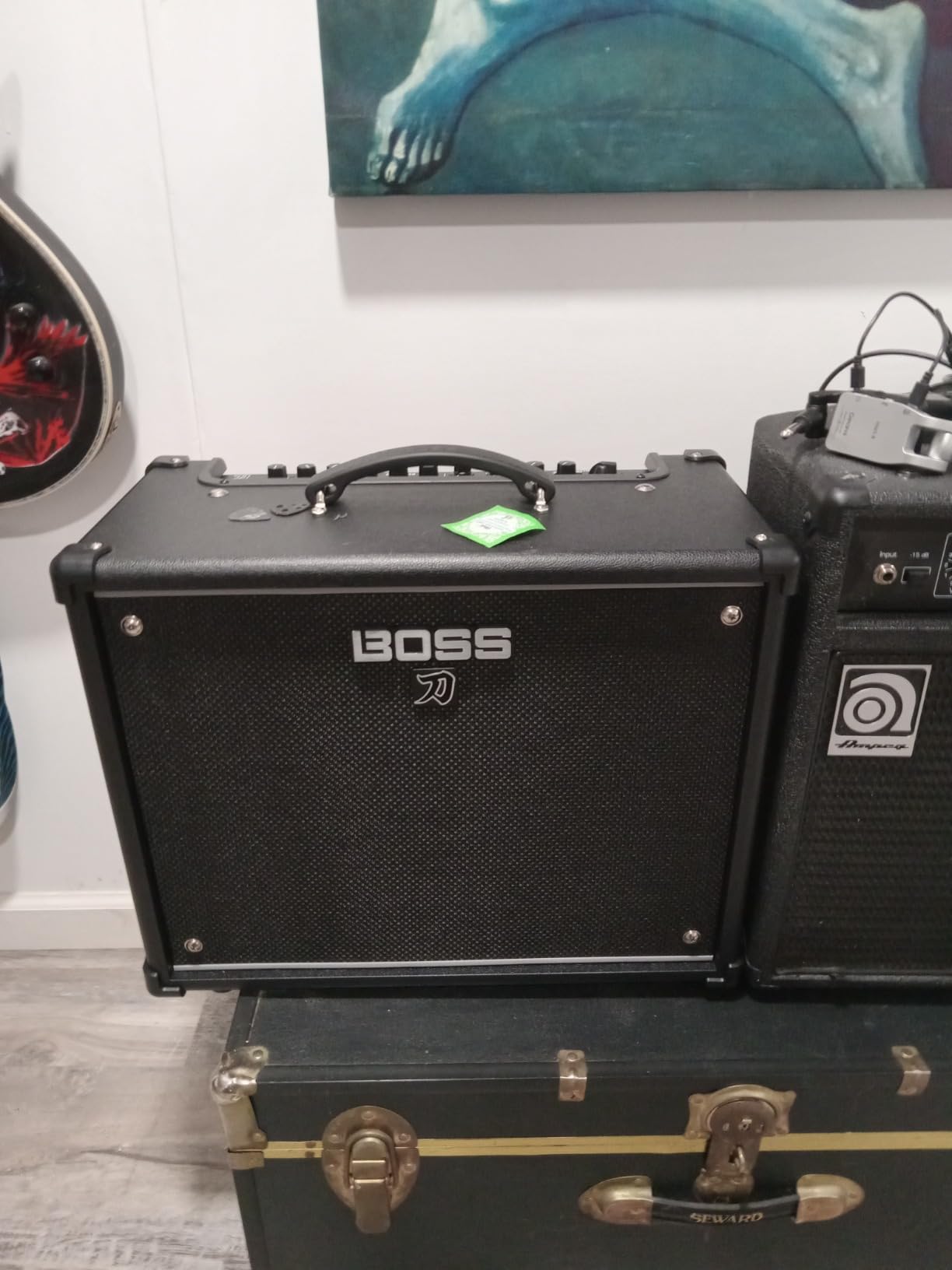
The big feature is the power attenuator. You can drop the wattage to 0.5 watts for bedroom practice and still get the same character and response. That is huge for apartment players who want an amp that can do jazz at conversation volume without losing the touch dynamics. Most amps force you to choose between clean tone and quiet volume. The Katana solves that problem.
The five built-in effects sections (Booster, Mod, FX, Delay, Reverb) are surprisingly high quality. The reverb options include plate, hall, and spring models that genuinely add to a jazz tone. I found myself using the spring reverb setting instead of an external pedal for some gigs. The Katana is also compatible with BOSS Tone Studio software, which lets you dive deep into preset editing and download patches from the BOSS community.
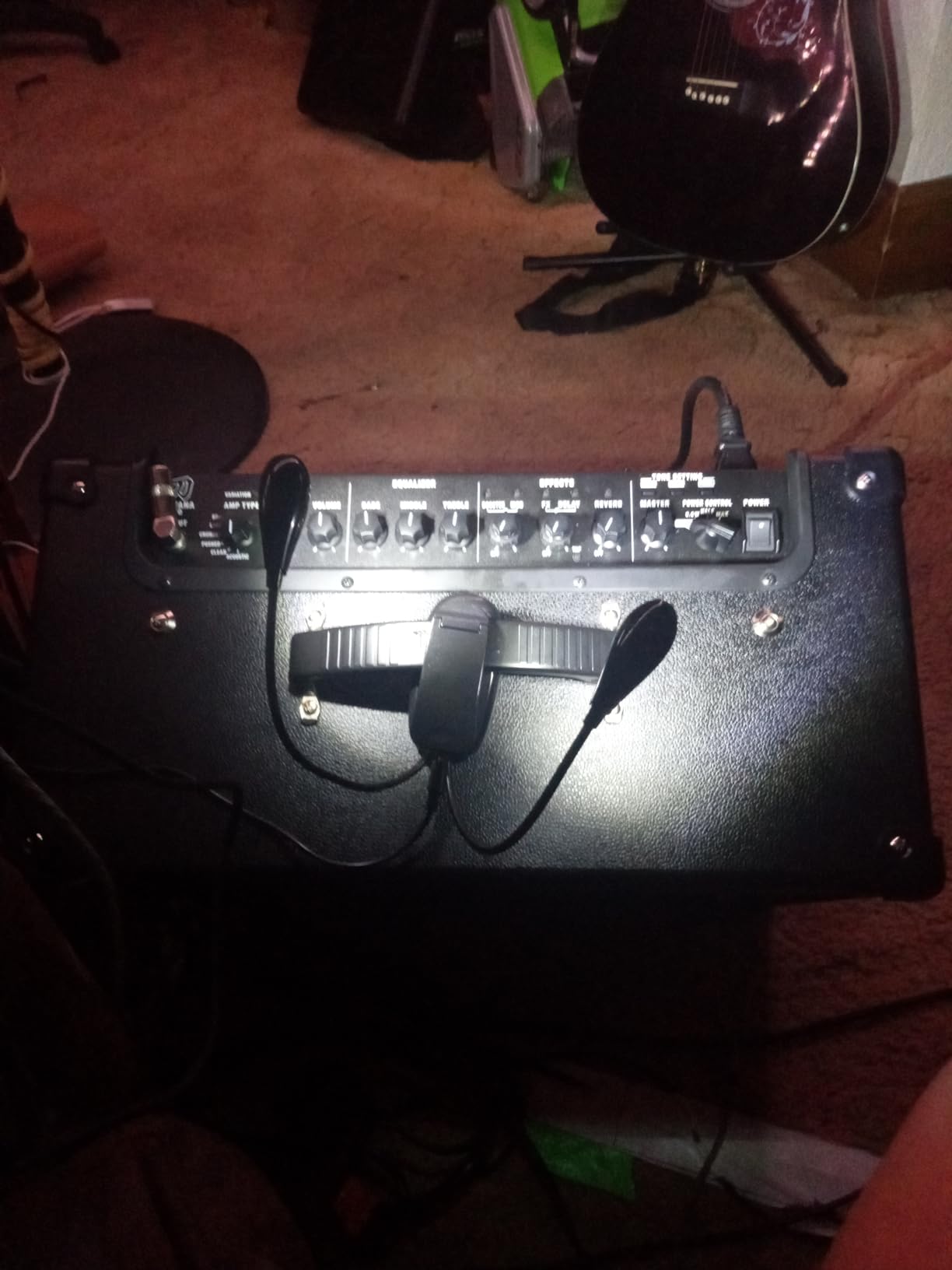
Amp characters and jazz applications
The Katana-50 has six amp characters: Clean, Pushed, Crunch, Lead, Brown, and Acoustic. The Clean and Pushed settings are the most useful for jazz. The Clean is a Fender-style blackface voicing. The Pushed is a slightly driven clean that has a touch more midrange presence. Both stay clean at gigging volume and respond to volume-pedal swells beautifully.
The Acoustic character is a hidden gem for jazz players who also play acoustic-electric guitars. The voicing rolls off the low end and emphasizes the midrange clarity that acoustic guitars need to sound natural through an amp. I tested it with a Taylor 314ce and the result was a warm, present acoustic tone that would work for coffeehouse gigs or singer-songwriter nights.
Practical considerations and limitations
The 25.6-pound weight is light for a 50-watt combo. I carried it one-handed to rehearsal. The wooden enclosure is sturdy. The amp is also small enough to fit on a chair or amp stand. The top-mounted control layout is the main ergonomic issue. Knobs on top of a low-slung combo can be awkward to adjust mid-gig. I tended to set my sound and leave it.
There is no included footswitch. The Bluetooth adapter for wireless audio is sold separately. The amp does not come with a power cord in some shipments (a complaint from a few users). None of these are deal-breakers, but they add to the total cost of ownership.
5. Fender Mustang LT25 — Best Budget Jazz Guitar Amp
Fender Mustang LT25 Guitar Amplifier, 25-Watt Combo Amp with 8″ Speaker
25W digital modeling
8-inch speaker
30 presets
Pros
- Excellent clean tone for the price
- 30 presets covering all styles
- USB recording
- Headphone output
- Fender Tone software included
Cons
- Digital modeling loses some realism
- 8-inch speaker limits low end
- Older mini-USB port
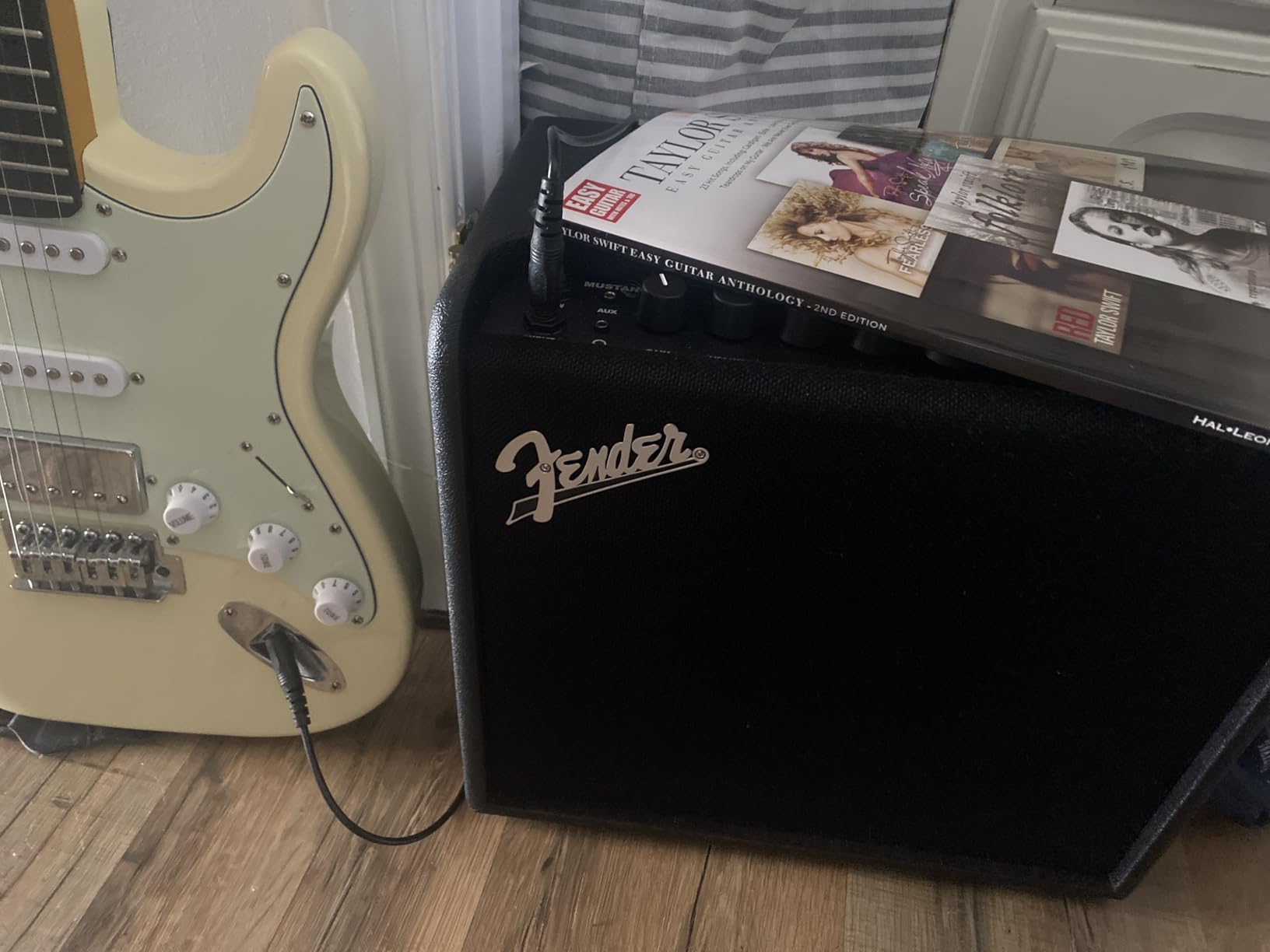
The Fender Mustang LT25 is the best jazz guitar amp under 200 dollars I have tested. The clean channel is genuinely impressive for the price. Fender designed the modeling around their own amp voicings, and the clean presets have a blackface character that suits jazz guitar. I dialed in a preset and ran my archtop through it for an hour. The result was a present, articulate clean tone that handled chord melody work and single-note lines with equal grace.
The 25-watt power section is plenty for home practice. It will keep up with a small rehearsal. The 8-inch Fender special design speaker does a credible job of reproducing the midrange frequencies that jazz tone lives in. Low end is limited by the small driver, but the cabinet is voiced to compensate. I never felt like the bass was missing in a way that hurt the jazz tone.
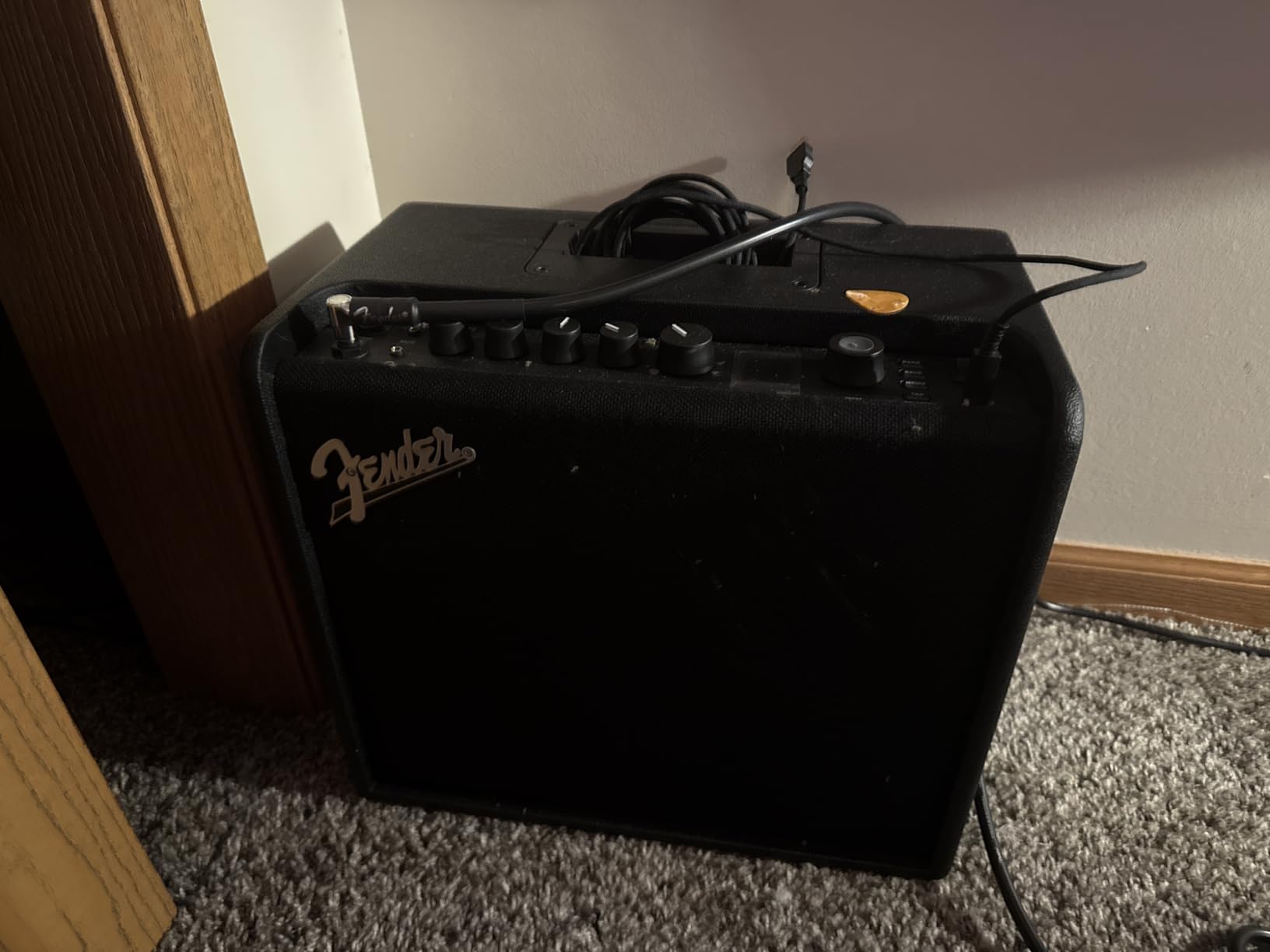
The 30 factory presets cover a wide range of styles. There is a clean preset called “Jazz Clean” that is a great starting point. The 30 additional slots let you save your own custom tones. Fender Tone software is free and adds 100+ more presets from the Fender community. I downloaded a few jazz-specific patches and the variety was better than I expected from a budget amp.
The USB output is a real feature. You can plug the Mustang LT25 directly into a computer and record without an audio interface. I used it with GarageBand and got a clean, dry signal that was easy to mix. For jazz players who want to record ideas or lay down practice tracks, this is a major convenience at this price.
Limitations and honest tradeoffs
Digital modeling is not tube tone. The Mustang LT25 is not going to fool a tube purist. The breakup tones sound digital. The high-gain presets have an artificial edge. For jazz playing, the clean tones are good enough that this does not matter, but if you want to cover blues or rock with the same amp, you will hear the modeling character.
The 8-inch speaker is the physical limit of the design. The amp will not push enough air for a full band. For solo jazz practice, duo gigs, or singer-songwriter shows, it works. For a quartet gig in a loud club, you will need to mic it. The mini-USB port is also dated. Most modern devices use USB-C, and the older connector feels cheap.
Who the Mustang LT25 is for
This is the right jazz guitar amp for beginners. It is the right amp for budget-conscious players. It is the right amp for someone who needs a practice tool that can also do small gigs. Skip it if you are a gigging professional. The JC-40, JC-120, or Fender Pro Junior IV will serve you better. Skip it if you want a pure tube experience.
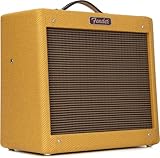
6. Fender Pro Junior IV — Best Tube Jazz Guitar Amp
Fender Pro Junior IV Guitar Amplifier, Lacquered Tweed, with 2-Year Warranty
15W tube combo
Jensen 10-inch speaker
Gradual breakup
Pros
- Real tube tone with rich harmonics
- Jensen P10R speaker sounds musical
- Vintage tweed look
- Excellent with pedals
- Compact 20-pound design
Cons
- Limited headroom at 15W
- No reverb built in
- No effects loop
The Fender Pro Junior IV is the best tube jazz guitar amp I have tested at this price. The 15-watt all-tube design with a Jensen P10R alnico speaker delivers a tone that no solid-state or modeling amp can fully replicate. The breakup is musical and gradual. The touch sensitivity is what tube players talk about. Pick hard and the amp compresses. Pick soft and the tone stays clean and glassy.
For jazz playing specifically, the Pro Junior is at its best at low-to-moderate volumes. The amp does not have the headroom of a JC-40 or a Twin Reverb. You will not be able to push it in a loud band situation without breakup. But at practice volume, the tone is rich, warm, and full of harmonic content. I ran my ES-335 through it for a recording session and the resulting tracks had a three-dimensional quality that solid-state amps struggle to match.
The Jensen P10R alnico speaker deserves a mention. The alnico magnet gives the speaker a different break-up character than ceramic speakers. The bass is tighter. The midrange has more presence. The treble is smooth. For jazz tone, that midrange presence is exactly what you want. Single-note lines pop. Comping chords have definition.
The vintage tweed covering and ’50s grille cloth look great. The leather handle is a nice touch. The 20-pound weight is light enough to carry one-handed. The amp is small enough to sit on a desk or a chair. The lack of built-in reverb is the main feature missing. You will need a reverb pedal in the chain if you want that effect, and the Pro Junior pairs well with a Boss RV-6 or a Strymon Bluesky.
Volume behavior and gigging considerations
The Pro Junior has a master volume, but cranking the master to push the power tubes into breakup is the traditional way to get the best tone. At bedroom volume, the tone is good but you are not accessing the full character. The amp is at its best when you can push it. That means it works best for home practice at moderate volume, recording, and small gigs where you can get away with turning up.
For a coffeehouse duo or a quiet restaurant gig, the Pro Junior is more than enough. For a full jazz quartet with drums and an upright bass, you will need a louder amp or a mic. I would not recommend this as a primary gigging amp for a player who plays loud ensembles. The Pro Junior is a studio, practice, and small-gig amp.
Why this amp belongs on the list
The Pro Junior made the list because jazz players specifically asked us about tube amps. The forum threads on The Gear Page and Reddit are full of players who want a real tube experience. The Pro Junior delivers that without the cost or weight of a vintage Fender. It is also one of the few tube amps at this size that can stay clean at low volumes with the volume knob rolled back.
If you want a tube amp that can do jazz and a little bit of edge-of-breakup blues, the Pro Junior is a strong choice. If you need clean headroom at full band volume, look at a JC-40 or a higher-wattage Fender tube amp. The Pro Junior is a specialist, but it is an excellent specialist.
7. BOSS Nextone Stage — Best Versatile Jazz Guitar Amp
BOSS Nextone Stage | Portable Guitar Amplifier | Tube Logic Design | Authentic Tube Sound & Feel | Four Power Amp Circuits | 40W Power & Custom 12” Speaker | Clean & Lead Channels | Built-in Effects
40W Tube Logic
12-inch speaker
4 power amp circuits
Pros
- Four selectable power amp circuits
- Excellent pedal platform
- 20 pounds portable weight
- Tube Logic tone
- Software editor included
Cons
- Limited stock availability
- Some users miss real tube sparkle
- Single-button footswitch
The BOSS Nextone Stage is the most flexible amp in this guide. The signature feature is four analog Class AB power amp circuits that emulate 6V6, 6L6, EL84, and EL34 tube types. Each circuit gives the amp a different voice. The 6V6 setting is sweet and compressed, perfect for jazz. The 6L6 setting is fuller and louder, also great for jazz. The EL84 setting adds a touch of edge. The EL34 setting pushes more midrange.
For jazz playing, the 6V6 and 6L6 settings are the stars. The 6V6 has the same kind of compression you get from a Fender Deluxe. The 6L6 has the headroom and clarity of a Twin Reverb. Both stay clean at gigging volume. I tested both settings with archtop, semi-hollow, and solid-body guitars, and the response was musical across the board.
The 40-watt power section with a 12-inch custom speaker is loud enough for a quartet gig. The amp will keep up with a bass amp and a drum kit at reasonable volume. The Nextone Editor software (Mac and Windows) lets you customize the amp’s parameters. I spent an afternoon dialing in custom tones and the level of control is impressive.
The 20-pound weight is a highlight. The Nextone Stage is one of the lightest 40-watt amps I have tested. The compact form factor makes it easy to transport. The effects loop and external speaker jacks give you options for live performance. The built-in delay, tremolo, and reverb are useful additions.
Tube Logic and how it compares to real tubes
The Tube Logic design in the Nextone Stage is the same technology BOSS uses in the Katana series, but it is implemented differently here. The four selectable power amp circuits are analog, not digital emulations. That means the response and feel of each setting is closer to a real tube amp than a typical modeling amp.
There is still a difference between this and a real tube amp. The harmonic content of a real power tube is more complex. The way the amp reacts to speaker impedance is more dynamic. But for a player who wants tube-like response without tube maintenance, the Nextone Stage delivers a credible experience.
Best use case and stock issues
The Nextone Stage is the right amp for jazz players who want flexibility and portability. It is the right amp for gigging musicians who play different venues. It is the right amp for players who want tube-like tone without the cost and weight of a real tube amp. The stock availability is limited. I would order one soon if you are interested.
8. Fender Mustang GTX100 — Best Feature-Rich Jazz Guitar Amp
Fender Mustang GTX100 Guitar Amplifier Combo with Speaker, Bluetooth, WiFi
100W digital modeling
12-inch Celestion
200 presets
Pros
- 200 presets with modular signal path
- 12-inch Celestion speaker
- Bluetooth and WiFi connectivity
- 7-button footswitch included
- Lightweight for 100W
Cons
- Some units have WiFi issues
- Display can fail on some units
- App does not work on PC
The Fender Mustang GTX100 is the most feature-rich amp in this guide. The 200 onboard presets, modular signal path, and 12-inch Celestion speaker make it a versatile workhorse. For jazz playing specifically, the clean presets are excellent. Fender’s modeling of their own classic amp designs (Twin Reverb, Deluxe Reverb, Vibro King) is the most accurate I have heard in a digital amp at this price.
The 100-watt power section is more than enough for any gigging situation. The amp will keep up with a full band in a large venue. The 12-inch Celestion speaker is a step up from the 8-inch driver in the Mustang LT25. Bass response is fuller. Midrange is more present. The overall character is closer to a real Fender combo.
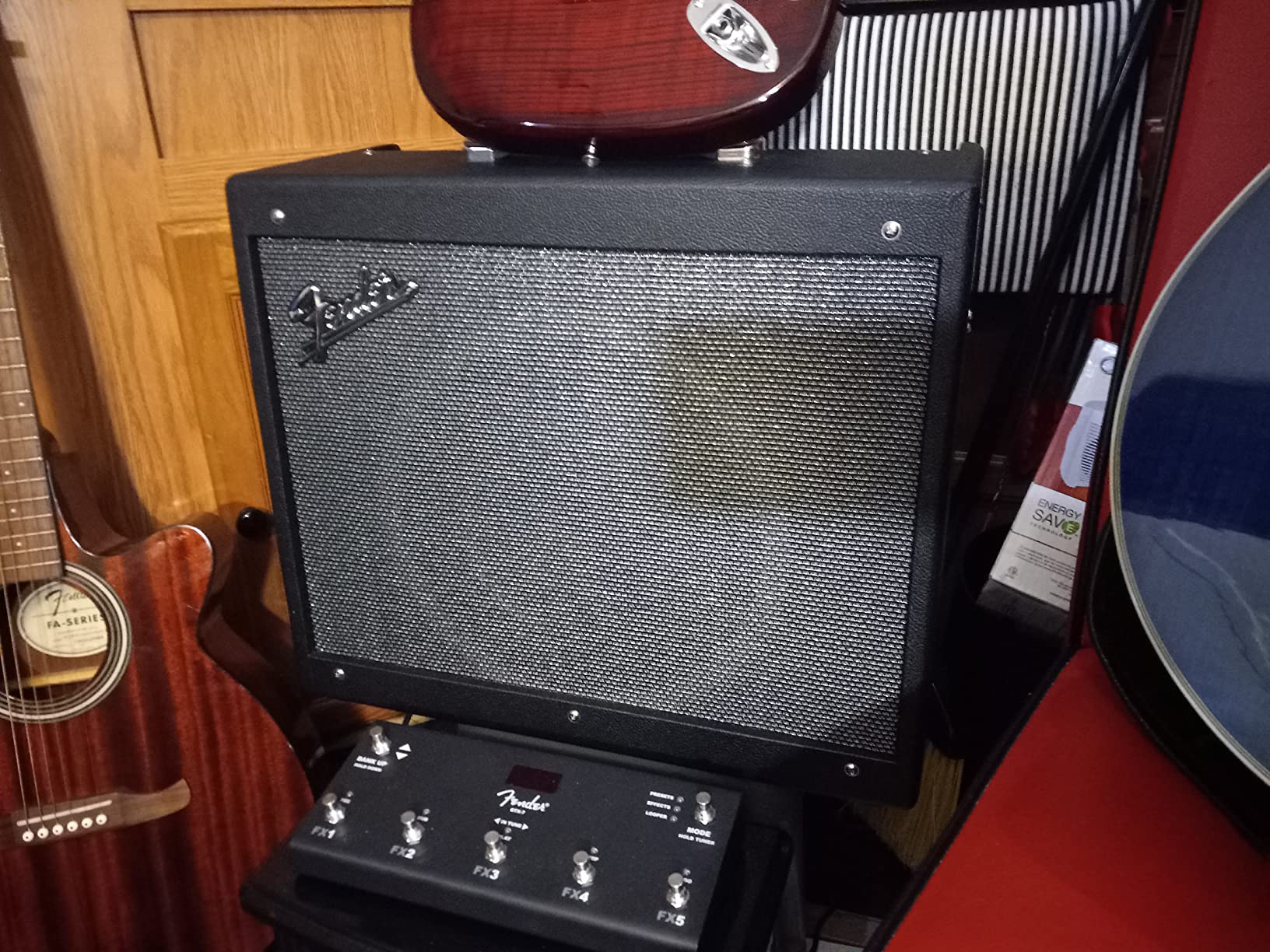
The included 7-button footswitch is a real value-add. You can switch channels, toggle effects, and tap tempo without buying extra accessories. The 60-second looper is useful for practice and solo performance. The Bluetooth audio streaming lets you play along with tracks from your phone. The WiFi connectivity enables firmware updates and integration with the Fender TONE app.
The Bluetooth and WiFi features are not gimmicks. The Bluetooth streaming is reliable. I played along with jazz backing tracks from Spotify through the amp and the audio quality was clean. The WiFi updates have kept the amp current with new features since I bought mine. The TONE app on iOS and Android gives you deep preset editing control from your phone.
Jazz preset options and sound quality
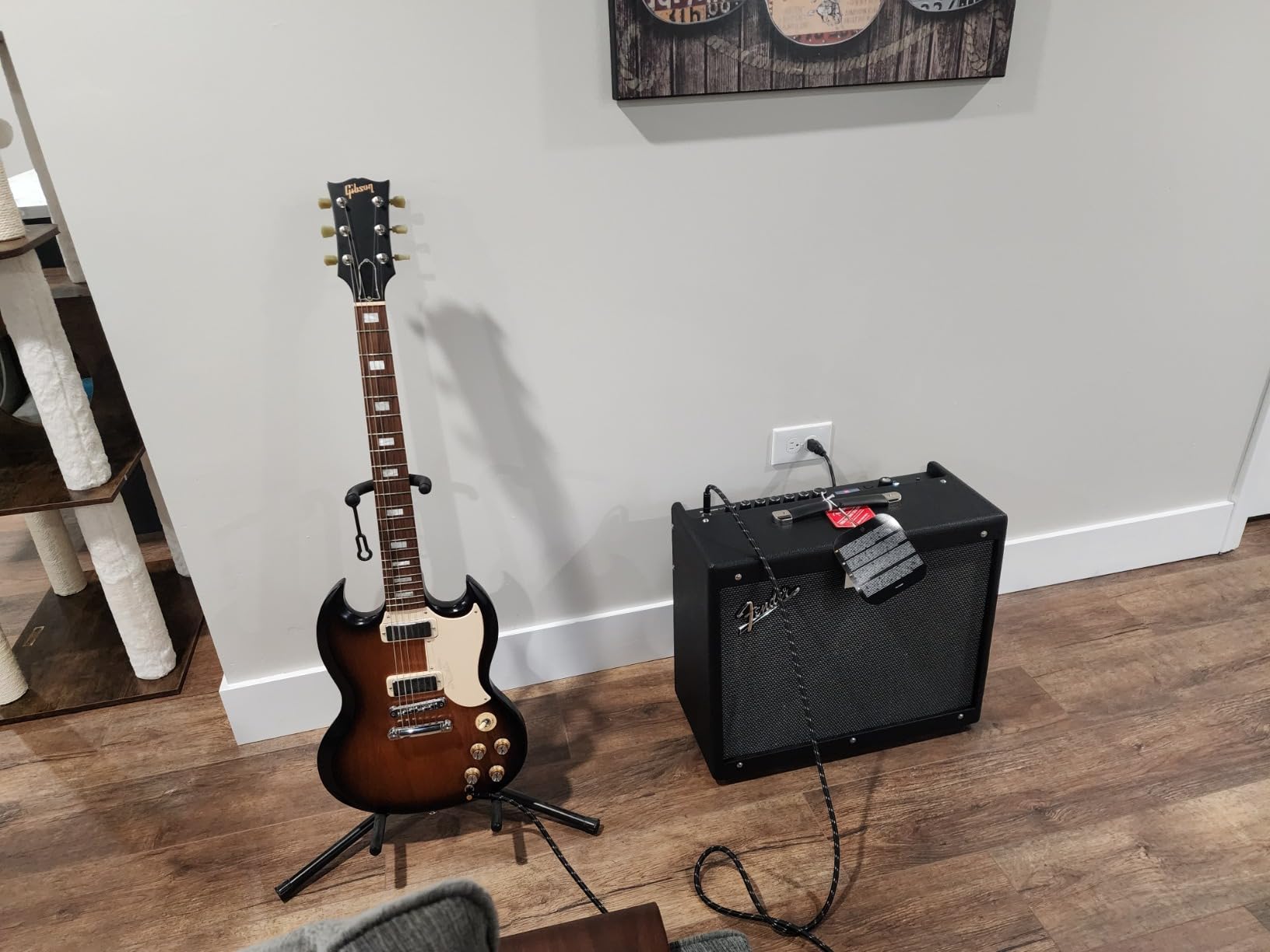
The Mustang GTX100 has dedicated jazz and clean presets that use Fender’s own amp modeling. The “Vibro King Clean” preset is a faithful recreation of the classic Fender amp. The “Twin Reverb” preset has the scooped, glassy character of the original. Both work well for jazz tone. I spent a few hours dialing in a custom jazz tone and the editing depth is impressive.
The XLR line outputs are balanced and ready to go to a PA or recording interface. The stereo effects loop lets you integrate external pedals. The combination of features makes the GTX100 a strong choice for jazz players who want one amp that can do home practice, recording, and live performance.
Limitations and practical considerations
Some units have reported WiFi interference issues. The display on a small number of units has failed. The Fender TONE app does not work on PC, only mobile. These are real issues but they are exceptions rather than the rule. The 28.5-pound weight is reasonable for a 100-watt combo. The amp is a manageable one-trip carry.
The Mustang GTX100 is the right amp for jazz players who want maximum features and flexibility. It is the right amp for gigging musicians who need a single amp solution. It is the right amp for home players who want one device for practice, recording, and playing along with tracks. Skip it if you want a simple, no-frills tube amp. Skip it if you do not need Bluetooth or WiFi features.
How to Choose the Best Jazz Guitar Amp
Choosing the best jazz guitar amps for your needs means understanding how tone, power, and features match your playing situation. Jazz is unique among guitar styles because it relies on clean tone more than any other genre. That changes what to prioritize.
Solid-state vs tube: which is better for jazz?
Solid-state amps are the dominant choice for jazz guitarists, and there is a reason for that. Solid-state circuits deliver clean headroom at any volume. A Roland JC-40 or JC-120 stays clean even at full band volume. That reliability is what most jazz players need. Tube amps have a character and harmonic richness that solid-state cannot fully replicate, but they also break up at high volumes. For loud ensembles, tube amps require a master volume trick or a different amp choice.
Tube amps shine at low to moderate volumes. The Fender Pro Junior IV is a great example. At home practice volume, the tone is rich and musical. At band volume, the same amp would break up. The question is: where do you play most often? If you are a home player, tube is a strong choice. If you are a gigging player in loud ensembles, solid-state is the safer bet. Many jazz players use both. A tube amp for home and a solid-state amp for gigs.
Speaker size and headroom: matching your venue
Speaker size and wattage are the two specs that determine how loud an amp can play cleanly. A 6.5-inch speaker in a Roland JC-22 is fine for home and small gigs. A 10-inch speaker in a JC-40 covers small-to-medium venues. A 12-inch speaker in a JC-120 or Mustang GTX100 handles large venues. The rule is simple: bigger speakers and more watts equal more clean headroom.
For most jazz players, 30 to 50 watts with a 10 to 12-inch speaker is the sweet spot. That gives you enough volume for a quartet gig in a club or restaurant, and it is manageable to transport. Smaller amps work for home practice and small gigs. Larger amps are for players who frequently play loud ensembles or large rooms.
Effects, connectivity, and pedal integration
Most jazz guitarists use a small pedalboard. A compressor, a chorus, a delay, and a reverb are the standard tools. The best jazz guitar amps take pedals well. That means a transparent clean channel, an effects loop (or front-end that is responsive to pedals), and enough headroom to handle multiple pedals in the chain without distortion.
The Roland JC series, the BOSS Katana, and the Fender Mustang GTX100 all excel at pedal integration. The Fender Pro Junior IV is also a great pedal platform. Look for an effects loop if you use ambient or time-based pedals. Look for a footswitch if you want to toggle effects during performance. Look for Bluetooth or USB if you want to integrate with backing tracks or recording.
Portability vs power: how much weight can you carry?
Jazz gigs are not always easy-load situations. A 73-pound JC-120 is not for everyone. The Roland JC-40 at 39.6 pounds is a more reasonable load. The Mustang LT25 at 15.2 pounds and the Pro Junior IV at 20 pounds are the lightest options. The BOSS Nextone Stage at 20 pounds is a good balance of power and portability.
Think about how often you are loading in and out. A weekly gig in a difficult venue with stairs calls for a lighter amp. A monthly gig with easy load-in can handle a heavier amp. The BOSS Katana-50 at 25.6 pounds is a great middle-ground option that delivers 50 watts of clean power in a manageable package.
Matching amp to guitar: archtop, semi-hollow, or solid body
The type of guitar you play affects which amp works best. Archtop and semi-hollow guitars have a natural acoustic character that pairs well with clean solid-state amps. The Roland JC series is legendary for archtop tone. Solid-state amps preserve the guitar’s natural character without coloring it. A solid-body electric has a brighter, more direct tone that pairs well with both tube and solid-state amps.
For archtop players, the JC-40, JC-22, or JC-120 are the canonical choices. For semi-hollow players, the same amps plus the Mustang GTX100 and the Katana-50 all work. For solid-body players, the Pro Junior IV is a great option. Acoustic-electric players should look at the Katana-50’s Acoustic amp character or the JC series’ clean channels.
If you want to learn more about pairing guitars with amps, our guide to the best jazz guitars covers how different guitar types interact with different amps.
Frequently Asked Questions
Why do jazz guitarists use solid state amps?
Jazz guitarists favor solid-state amps because solid-state circuits stay clean at higher volumes than tube amps. Jazz tone requires clean headroom, articulate note separation, and the ability to reproduce complex chord voicings without breakup. Solid-state amps like the Roland Jazz Chorus series deliver that reliability gig after gig, while tube amps often compress or distort at the volume levels a full jazz band requires.
What is considered the holy grail of guitar amps for jazz?
The Polytone Mini Brute and the Fender Twin Reverb are commonly called the holy grail of jazz amps. The Polytone is prized for its compact size, clean headroom, and ability to cut through a band. The Twin Reverb is praised for its sparkling clean tone and lush built-in reverb. Both are expensive, often vintage, and harder to find than modern alternatives like the Roland JC-120 or a Henriksen Bud.
What are the best amp settings for playing jazz guitar?
Start with the volume knob on your guitar at 8 to 10, the amp’s gain low (around 2 to 3 on a scale of 10), bass at 4, middle at 6, treble at 5, and reverb at 3 to start. Adjust the guitar’s volume knob for dynamic control: roll back for a cleaner tone and push up for a fuller sound. The goal is a clean, articulate tone with the amp never breaking into distortion at your playing volume.
How do I get a jazzy guitar tone?
Set your amp clean with low gain, slightly scooped midrange, and a touch of reverb. Roll back your guitar’s volume knob to 7 or 8 for the cleanest tone. Use your pick attack for dynamics instead of amp gain. Add a small amount of chorus or delay if your amp has it. Use the neck pickup for warmer jazz tones and the bridge pickup for articulate single-note lines. Practice your touch and dynamics more than you tweak your EQ.
What is the best amp for jazz guitar overall?
The Roland JC-40 is the best overall jazz guitar amp for most players. It delivers the iconic JC clean tone, has 40 watts of stereo power with dual 10-inch speakers, takes pedals exceptionally well, and weighs 39.6 pounds for manageable transport. It works for home practice, small gigs, and medium venues. For larger venues, the JC-120 is the upgrade. For tighter budgets, the BOSS Katana-50 Gen 3 is a strong value pick.
Final Verdict
The best jazz guitar amps share a few core qualities. They stay clean at gigging volume. They respond to pick attack and volume-knob dynamics. They reproduce the warm midrange that defines jazz tone. Every amp on this list clears that bar. The Roland JC-40 is the best all-around choice for most jazz players. The Fender Pro Junior IV is the right call for tube purists. The BOSS Katana-50 Gen 3 is the strongest value pick. The Mustang LT25 is the budget winner. The JC-120 is the gigging professional’s amp. The Mustang GTX100 is the feature-packed choice.
For more guidance on building a complete jazz setup, check out our picks for the best electric guitars for jazz and the best jazz amps in our broader catalog. If you are also a bassist, our guide to the best bass guitars for jazz is worth a read. If you want a deeper look at jazz amp options, our best jazz guitar amps overview has additional context.
Whatever amp you choose, spend time dialing in your tone. Jazz is a genre of subtleties. Small EQ changes and small volume changes make a big difference. The amp is just the starting point. Your touch, your guitar, and your room are the rest. Pick the amp that fits your playing situation, and trust your ears. Every amp on this list is a real winner for jazz in 2026.