
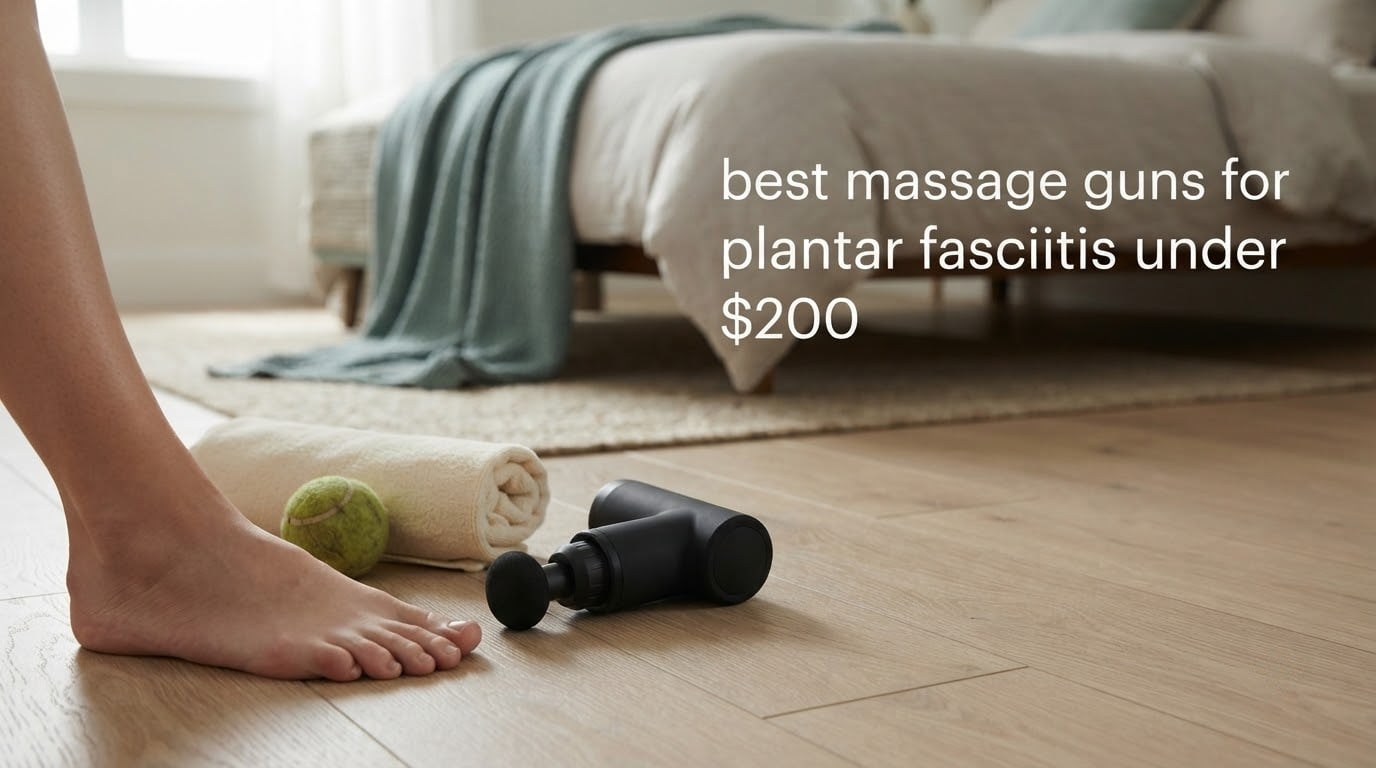
Does a massage gun help with plantar fasciitis? Yes, indirectly, and this is the single most important thing to understand before you buy one. A percussion massager does not repair the plantar fascia. It loosens the calf, arch and ball-of-foot tissue that pulls on it, which is what makes your first steps of the morning hurt less. Use it on the surrounding muscle, never on the tender heel spot where the fascia attaches to the heel bone.
That distinction is the whole ballgame. Plantar fasciitis is a load problem and a micro-tear problem, and the tissue doing the loading is the calf and the arch, not the underside of the heel itself. Percussing the calf reduces how hard the fascia is being pulled with every step. Percussing the tender insertion point does the opposite, and people reliably regret it.
We spent the last several weeks working through eight massage guns for plantar fasciitis under 200 dollars, reading the owner feedback on each, and mapping every one of them against the specs that matter for a foot rather than a quadricep. This guide covers what is safe, what each gun does well, and where the cheap end of the budget genuinely holds up.
A note on evidence before we go further. Percussive therapy research mostly examines muscle recovery, the myotatic reflex and post-exercise soreness, not plantar fascia healing. Most of the strong claims you will read about fascia guns are marketing language rather than trial data. What you are really doing is symptom management, and that is still worth doing, but manage your expectations accordingly.
If your heel pain responds to rolling a tennis ball under your arch and eases once you are up and walking, a massage gun is a reasonable daily tool. If it does not, or if you have numbness, burning or swelling, skip the device and see a clinician. Nothing on this page is medical advice.
Table of Contents
Can You Use a Massage Gun on Plantar Fasciitis? Safe Zones and Avoid Zones
You can use a massage gun for plantar fasciitis, but not on the plantar fascia itself. The tender medial heel, where the fascia connects into the heel bone, is the one place on the foot that should stay untouched.
The mechanism is simple. Plantar fasciitis is typically driven by micro tears in the fascia and by sustained tension across it. Percussive therapy adds load and tension. Add load to tissue that is already irritated and micro-torn and the result is a flare, which is exactly what people report. A runner in r/firstmarathon put it plainly: a massage gun made their plantar fasciitis worse, and specifically warned against massaging the tender part of the heel. Another user in r/PlantarFasciitis described working the calf and the fascia together and then realizing the fascia work was causing the flare.
Where it is safe to work
The calf, both heads, at medium to high speed. This is the highest-value target and the one most often skipped.
The inner lower leg above the ankle, which people frequently confuse with the heel.
The arch of the foot, using a soft or ball head, kept moving and off the tender spot.
The ball of the foot and around the big toe joint, brief passes only.
The area around the ankle and the back of the heel, not the underside.
Where to stay away
The tender medial heel pad where the plantar fascia inserts into the calcaneus.
Any area that is bruised, swollen, visibly inflamed or acutely injured.
Directly over a suspected fracture, or any spot that makes you flinch at rest.
A numb or burning foot, where you cannot reliably feel pressure.
Post-operative feet or anywhere a clinician has restricted you.
When to stop self-treating and see a doctor
Book an appointment if heel pain is still there after two weeks of consistent self-care, if the first steps in the morning have not improved at all, or if the pain is waking you at night. Numbness, tingling, burning, marked swelling or a foot that feels unstable also need a professional look. So does pain that follows a specific injury rather than creeping in gradually.
One more caution borrowed directly from community experience. Some people report that only working the calves hard enough to leave marks the next day produced results, and that gentle foam rolling did nothing. There is a real ceiling here, and bruising is the signal that you crossed it. Percuss until the tissue is warm and responsive, not until it is damaged.
Top 3 Picks for the Best Massage Guns Under Two Hundred Dollars In 2026
The Opove M3 Pro 2 takes our top slot on the strength of stall force, long stroke amplitude and a review base in the tens of thousands. Mebak 3 is the value pick on build quality and quiet running, and the Medcursor is the one to buy when the budget itself is the deciding factor.
Best Massage Guns for Plantar Fasciitis (September 2026): All Eight Picks Compared
Short version: pick the Opove M3 Pro 2 for overall power, the Medcursor if the budget is the deciding factor, the RENPHO Active Thermacool 2 if you work early and need quiet, and the Hypervolt Go 2 if the gun lives in a gym bag. Every model below sits under the 200-dollar ceiling. None of them should ever be pressed into your tender heel.
We deliberately left out two well-known flagships that the shopping results push hard, because both sit above the ceiling you asked for. The rule we applied was simple: if it breaks the budget, it does not go in the list, no matter how good it is or how many reviews it has.
| Product | Specifications | Action |
|---|---|---|
| Opove M3 Pro 2 |
|
Check Latest Price |
 Mebak 3 Mebak 3 |
|
Check Latest Price |
 LifePro Sonic LifePro Sonic |
|
Check Latest Price |
 BOB AND BRAD X6 Pro Max BOB AND BRAD X6 Pro Max |
|
Check Latest Price |
 RENPHO Active Thermacool 2 RENPHO Active Thermacool 2 |
|
Check Latest Price |
 TheraGun Therabody Relief TheraGun Therabody Relief |
|
Check Latest Price |
 Hyperice Hypervolt Go 2 Hyperice Hypervolt Go 2 |
|
Check Latest Price |
 Medcursor Medcursor |
|
Check Latest Price |
1. Opove M3 Pro 2 – The Most Power You Can Get Under the Ceiling
Opove M3 Pro 2 Massage Gun Deep Tissue for Workout Recovery, Black
70 lbs stall force
12mm amplitude
5 speeds to 2500 RPM
4-8 hour battery
Pros
- Deepest stall force in this group
- Long 4-8 hour runtime suits daily morning use
- Quiet shell
- Carrying case included
Cons
- Heavier than most at 2.4 lb
- Grip diameter is wide for long sessions
This is the gun we reach for first when someone says their calves are locked up like ropes. The 70-pound stall force is the highest figure in this roundup, and stall force matters more for feet than most spec sheets suggest, because a foot is a small target and a weak motor simply bounces off dense tissue instead of doing anything useful.
The 12mm amplitude also matters here. Amplitude is how far the head travels per stroke, and a longer stroke reaches deeper into the calf without you having to lean on the gun and crush your own hand. Five speeds up to 2500 RPM give you the low end for the arch and the high end for the calf, and the battery runs four to eight hours depending on speed, which covers weeks of daily morning work on a single charge.
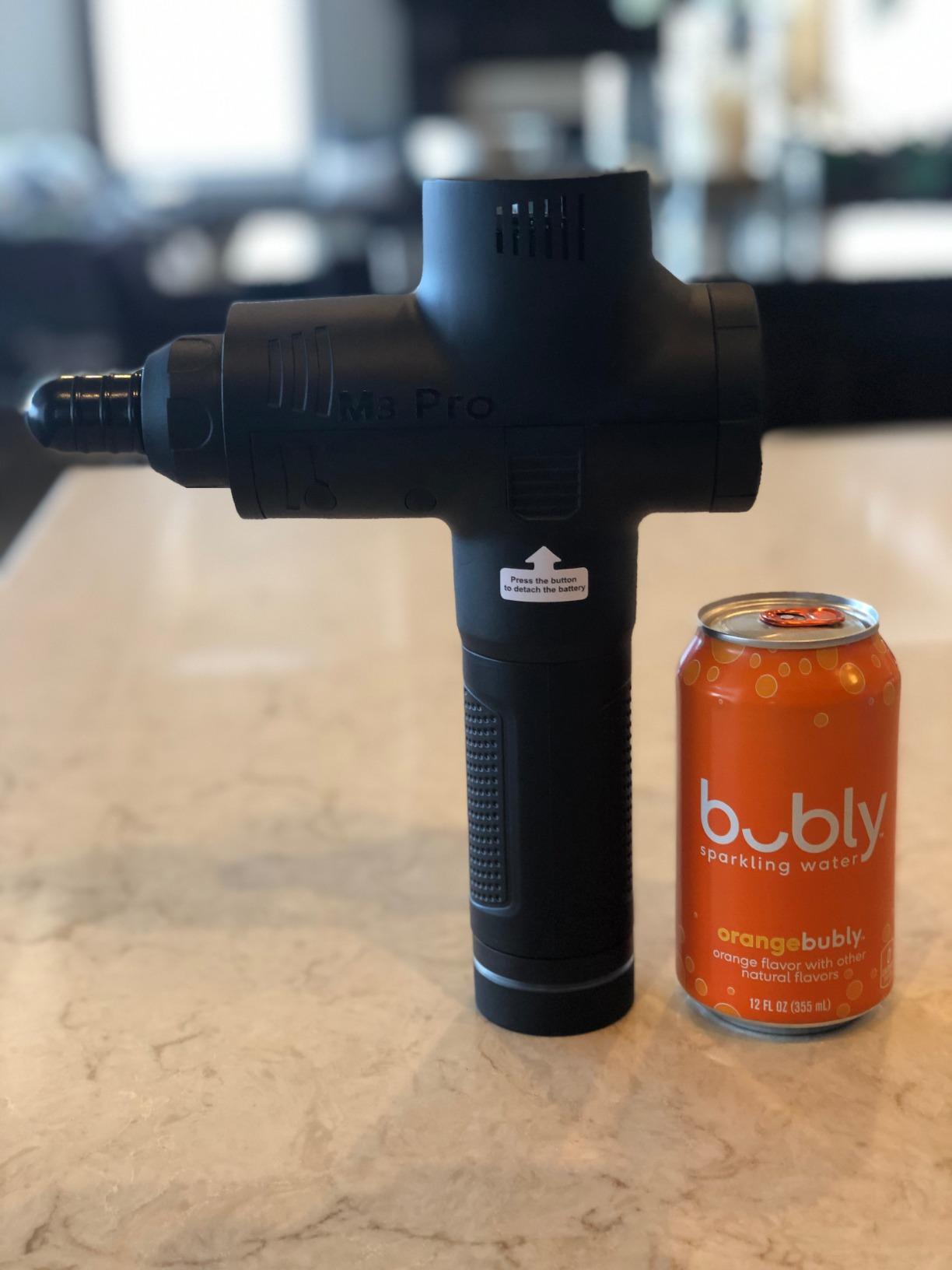
Owner feedback is overwhelmingly positive on the percussion depth, and the most common criticism is physical rather than mechanical: at 2.4 pounds this is one of the heavier units here, and a few people find the handle diameter tiring after a long session. That is a real consideration when you are working your own foot, because a heavy gun plus an awkward angle adds up.
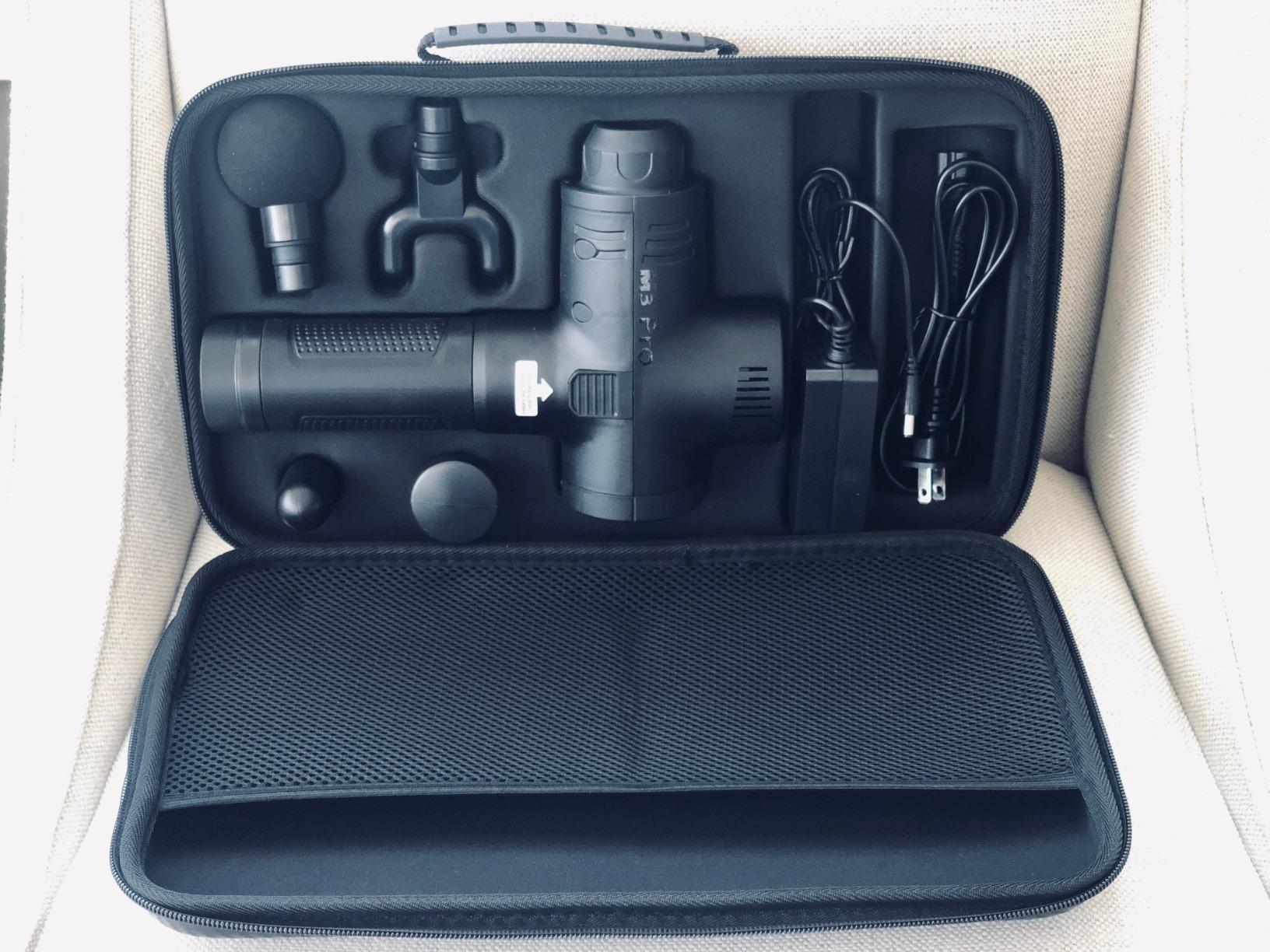
Construction has held up well, with a drop-resistant outer shell and hidden vents that move heat away from the motor. The sound-absorbing shell keeps it on the quieter side of budget units, which matters more than people expect if your routine happens at 6am. The included case is a nice touch for anyone splitting time between home and a running bag.
Is the Opove M3 Pro 2 right for your foot
It suits anyone whose problem is a tight calf rather than a sore arch. The stall force gives you the ability to work the muscle hard enough to actually change something, and one runner described the calves as the place where results showed up while foam rolling did nothing at all. If your morning routine is ten minutes on the calf, this is the gun that will not bore you halfway through.
It is less ideal if you are travelling light or working with numb feet and want something featherweight. Two pounds four is manageable but noticeable, and after fifteen minutes of daily use you will feel it. Anyone with grip sensitivity should also know the handle is on the chunky side.
Where it falls short
There is no softest-head-first design here, so if your arch is very tender you will want to pair it with a rubber or foam attachment rather than the standard ball. The lack of a pressure sensor also means you are judging pressure by feel, which takes a few sessions to calibrate accurately against your own pain threshold.
Its 2.4-pound body is the second-heaviest in this roundup, so it is a poor fit for small hands or for anyone who wants one device for a desk, a gym bag and a bedside table. And with 2500 RPM at the top rather than the 3200 RPM some rivals reach, it is the gentler of the high-speed options rather than the hottest one.
2. Mebak 3 – The Best Balance of Power, Quiet and Price
Mebak 3 Massage Gun Deep Tissue, Muscle Massager for Athletes Pain Relief
53 lbs stall force
12mm amplitude
7 heads
Pressure sensor
39-50 dB
Pros
- Pressure sensor helps you find a safe working pressure
- 7 heads more than most rivals
- Quiet 39-50 dB motor
- Light at 1.68 lb
Cons
- No power adapter included
- Top-end stall force is modest against premium models
The Mebak 3 is the one we recommend to people who are nervous about pressing too hard. The LED pressure sensor lights up as you lean in, which turns an invisible guess into a readable number, and on a foot that is already painful that feedback loop is worth a lot. It removes the guesswork that causes people to flare themselves up.
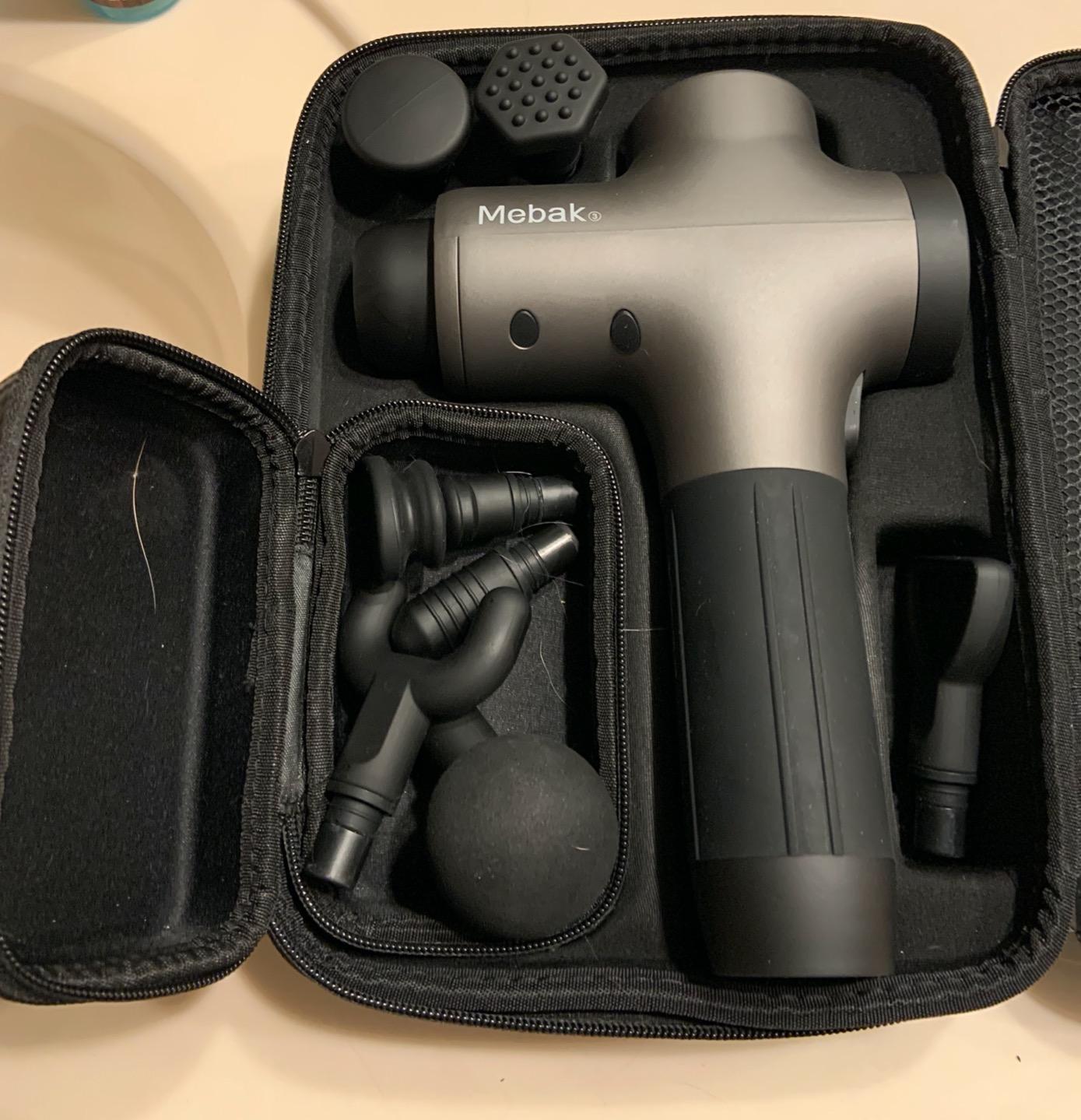
Underneath, it is a serious machine. Twelve millimeters of amplitude and 53 pounds of stall force is a genuine deep-tissue combination, and the five speeds spanning 950 to 3000 RPM cover everything from gentle arch work to fast calf work. Seven attachments is more than most competitors in this bracket, which means you can keep a flat head for calves and a ball head for the arch without hunting for a replacement.
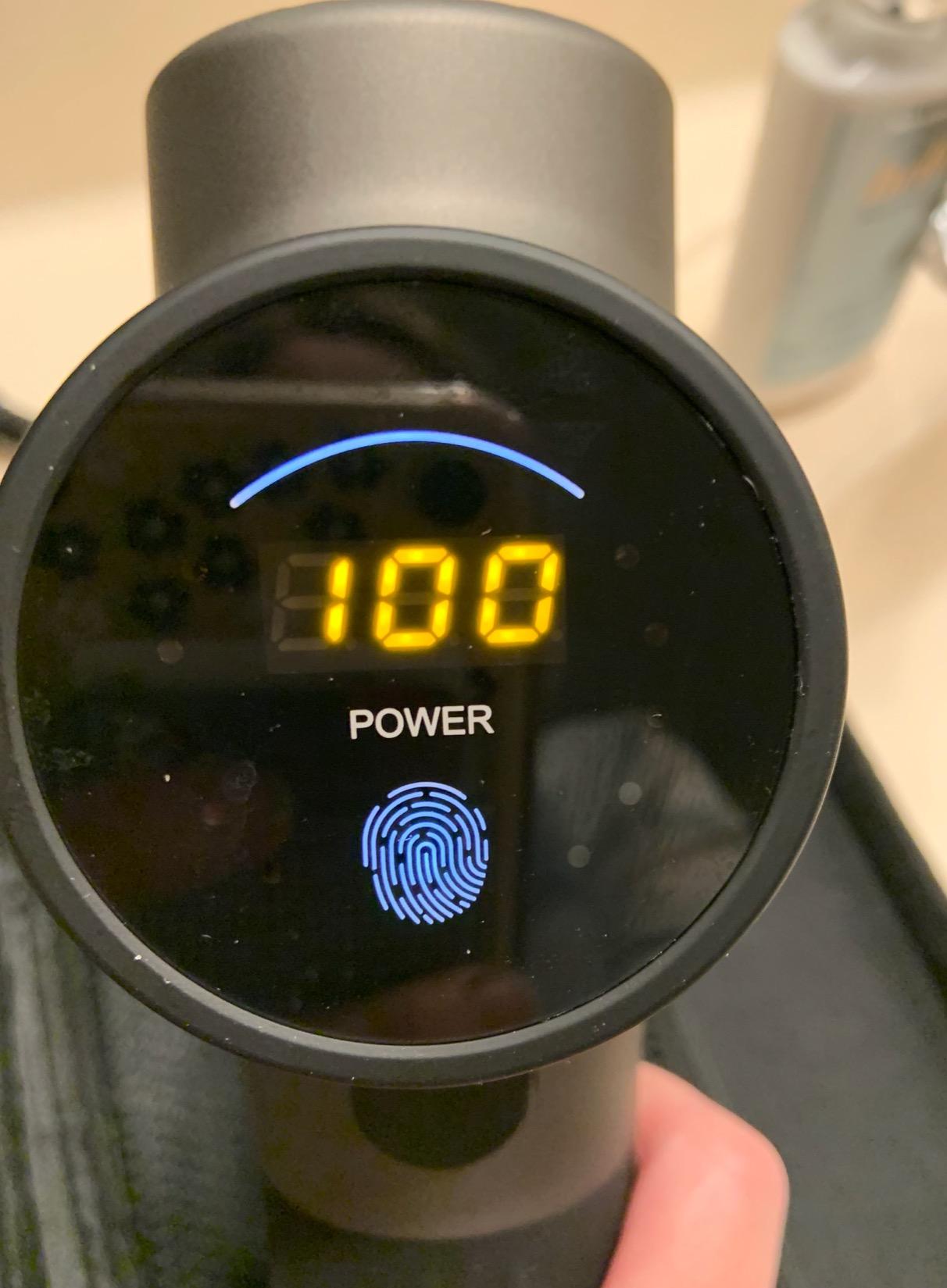
At 1.68 pounds it is light enough to work your own foot without wrist fatigue, and at 39 to 50 dB it is quiet enough to use while someone else is sleeping. That combination of low weight and low noise is unusual at this price, and it is the reason this gun shows up on so many running-fellowship wish lists. Six AA batteries mean no charging downtime and no adapter hunt.
Two things to know before you commit. The power adapter is not in the box, so you will need a 5V/2A adapter or use your own USB supply. And while 53 pounds of stall force is plenty for a foot, owners who also use it on quads and glutes sometimes wish for more power at the top end than this provides.
Is the Mebak 3 right for your foot
It is a strong match for beginners, for anyone with a sensitive arch, and for households where one person works out at 5am. The pressure sensor is the feature that separates it, because the majority of flare-ups we read about came from people pressing too hard on tissue that was already angry. A light that tells you when you have crossed from useful to harmful is a real safety net.
Seven heads and a 3000 RPM ceiling also make it the most versatile gun here for people who want one device for feet and calves and shoulders. If you travel, the compact case and the AA battery setup mean there is nothing to charge at a hotel.
Where it falls short
You will need to supply your own charging brick, which trips up a lot of buyers on day one. If you want a gun that arrives ready to charge out of the box with nothing to buy, look elsewhere. The stall force also does not match the top of this lineup once you start working dense muscle for longer sessions.
It is heavier with its case than without, so if you are packing for a trip the case is optional rather than essential. And the pressure sensor is an aid rather than a guarantee, which means you still need to respect the tender-heel rule rather than trusting the light to keep you safe.
3. LifePro Sonic – The Best Starting Gun for Calf Work
LifePro Sonic Massage Gun Percussion Muscle Massager, 8 Heads & 5 Speeds
6 speed levels
8 interchangeable heads
Up to 6 hours runtime
Travel case
Pros
- Very large owner base in the budget tier
- Eight heads give real head-choice flexibility
- Six-hour runtime
- Quiet enough for morning use
Cons
- Feels heavy and the grip is wide
- Few durability reports of internal parts loosening
- Case layout is unlabelled
This is the entry point most people should actually start at. It punches above its weight on percussion, and the enormous owner base means there is very little that can go wrong with it that someone has not already flagged. Plenty of buyers report going on to order a second one for a partner, which tells you how little friction it creates.
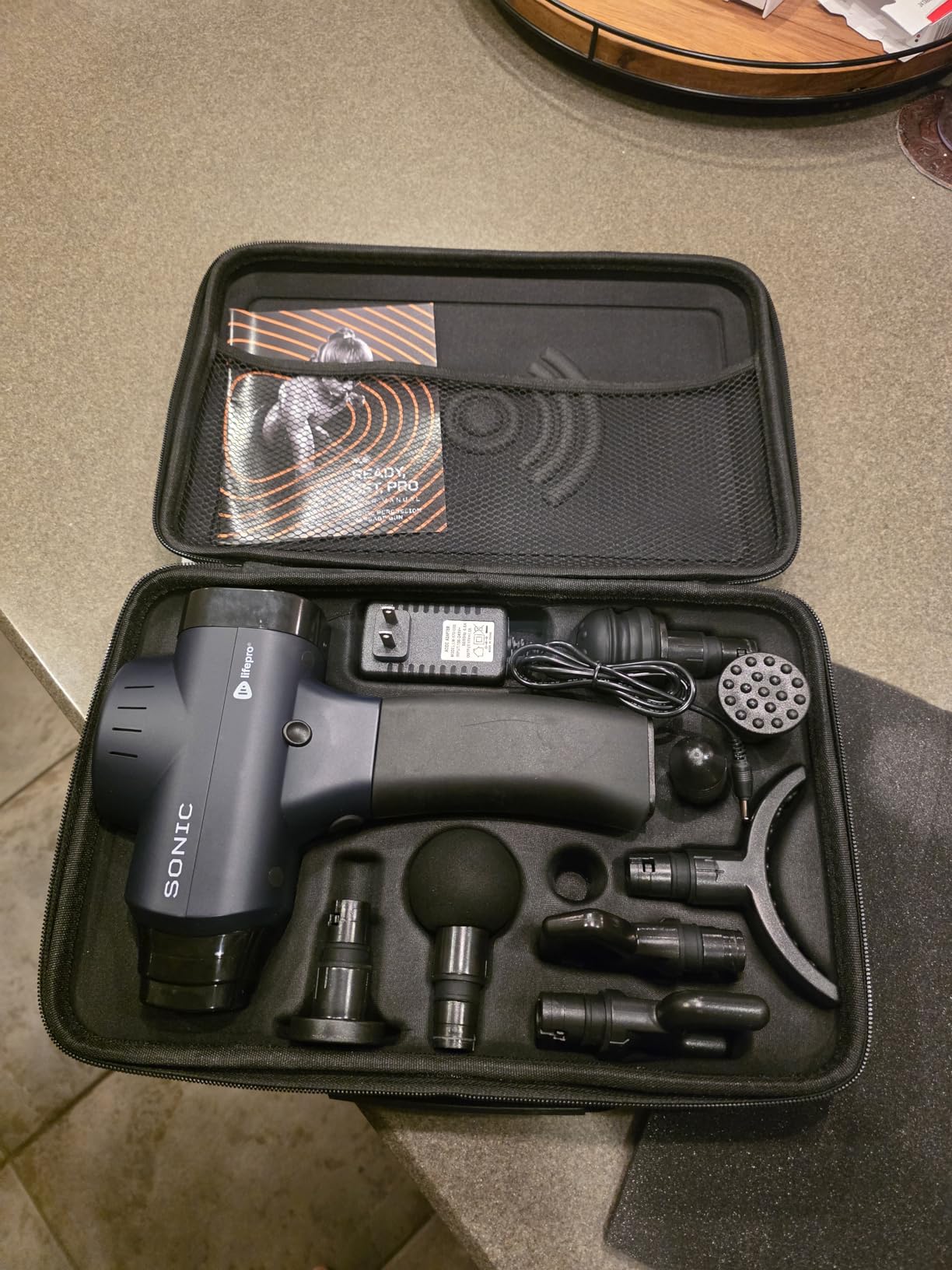
Eight interchangeable heads is the standout for our purposes. Foot work rewards head variety more than any other body area, and having a ball, a flat and a thumb-style head on hand means you can move between arch, calf and ball of the foot in a single session without stopping. Six speed levels and up to six hours of runtime per charge cover a full month of daily use on one charge.
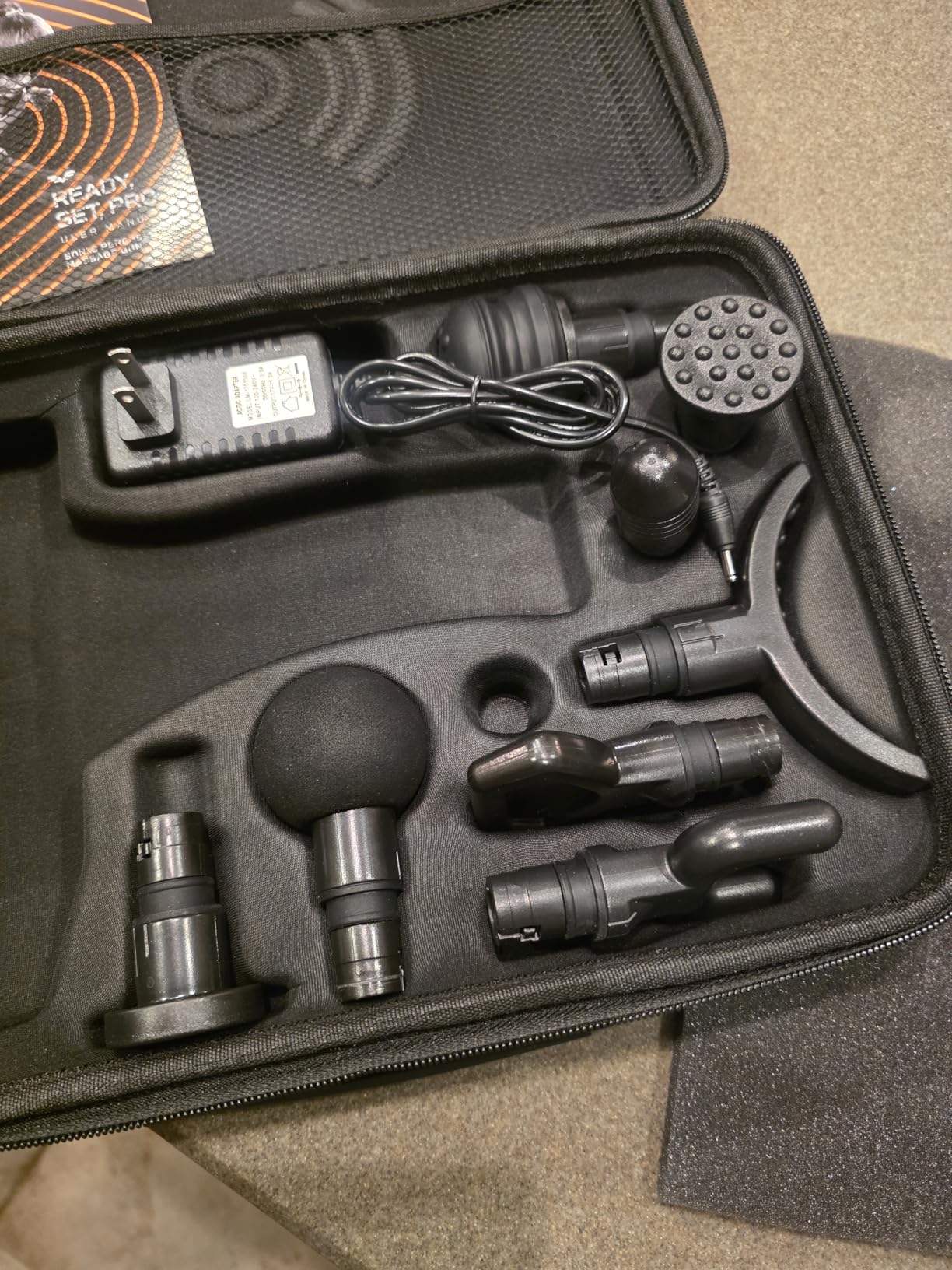
Users consistently report strong, effective percussion at a budget price point and a motor quiet enough to run during work or rest. The included travel case is a genuine plus for anyone splitting sessions between a desk and a gym bag, and the whole package is light enough to move between rooms without thinking about it.
The grip is the main issue. At 2.2 pounds with a wide handle, working your own foot is more effort than it needs to be, and if you have small hands or wrist problems you will notice this within a few sessions. A small number of owners have also reported internal components loosening after light use, which is not widespread but is worth knowing.
Is the LifePro Sonic right for your foot
It fits anyone who wants to try percussion therapy without committing much and without risking a bad first experience. If a massage gun is a tool you are considering as a daily habit rather than a single purchase, starting here keeps the entry low and the learning curve short. Six hours of runtime also means you barely think about charging.
It also works well as a second gun. Plenty of households end up with a heavy daily unit in a bag and a lighter one at the bedside, and the eight heads make this a useful companion machine for calves while a more powerful gun handles the rest.
Where it falls short
It gives you no published stall force figure, so if you care about the physics of deep penetration you will have to judge by feel, and feel is less reliable on a foot than on a calf. There is no pressure sensor either, which is the feature that makes the Mebak 3 easier for a beginner to use safely.
The unlabelled carrying case is a small daily irritation, since attachments come out and go back in without a map. And the wide handle is a genuine problem for people treating the underside of their own foot, where you need fine control more than raw power. If precision matters to you, pick a gun with a slimmer chassis.
4. BOB AND BRAD X6 Pro Max – Best for Heat and Cold Work
BOB AND BRAD X6 Pro Max Massage Gun with Heat and Cold, FSA Eligible HSA
Heat to 113F and cold to 50F in 3 seconds
55 lbs stall force
10.5mm amplitude
9.65 inch chassis
Pros
- Switches between heat and cold in about 3 seconds
- Long chassis reaches the arch and calf without wrist twisting
- USB-C fast charging
- Two-year warranty
Cons
- Aluminum attachment is hard on sensitive skin
- Cold mode needs time to reach its lowest setting
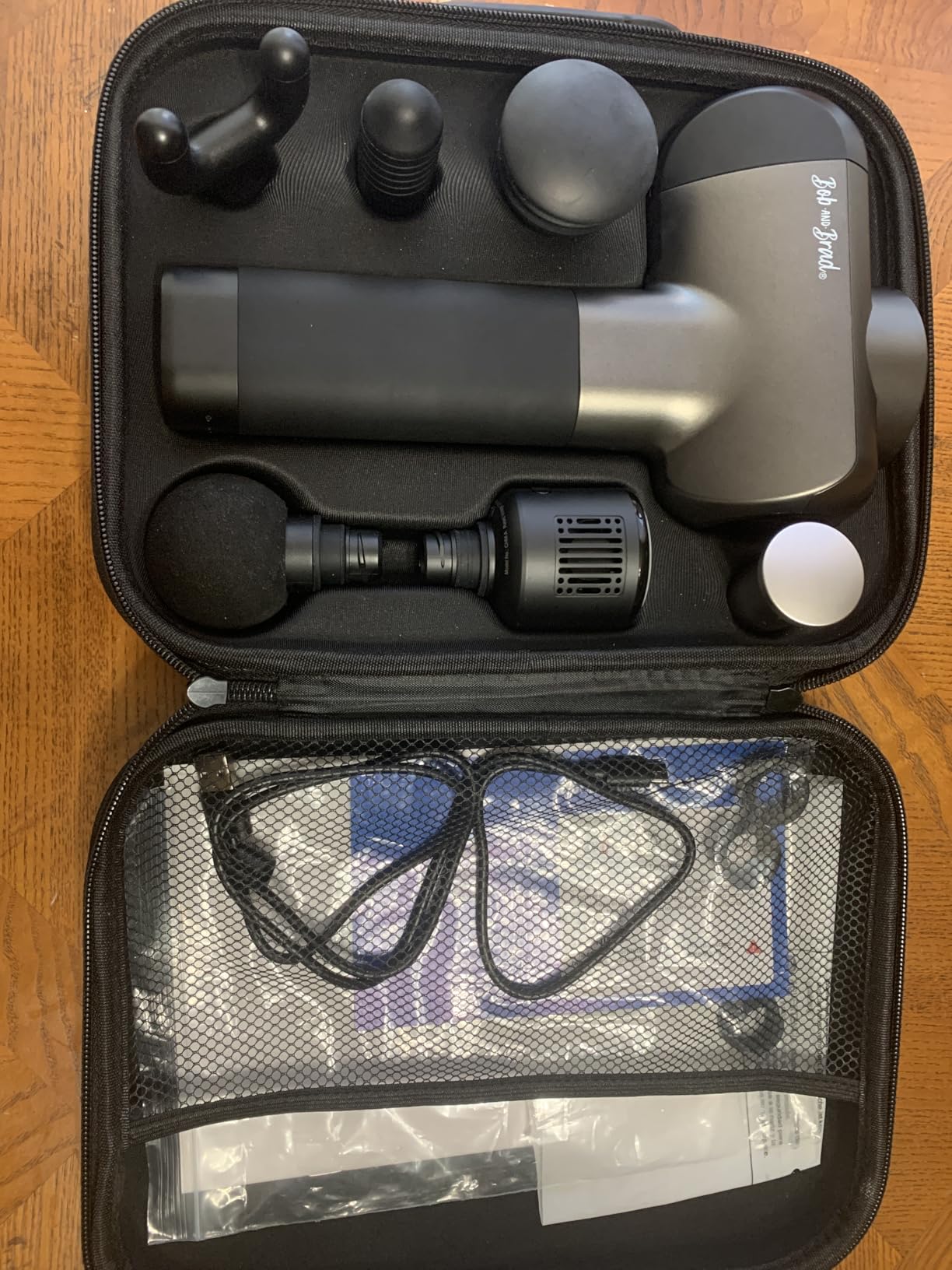
Heat is the feature that separates this from everything else in the roundup. Switching to heat up to 113F or cold down to 50F takes roughly three seconds, which means you can warm a stiff calf, work it, then drop the temperature on the arch without waiting around. Owners consistently single this out as the reason their routine became something they look forward to.
The rest of the specification sheet is strong. Fifty-five pounds of stall force, 10.5mm amplitude and five speeds from 2000 to 3200 RPM make it a genuine deep-tissue machine, and the 2600mAh cells with USB-C PD charging reach full charge in about two and a half hours. The brushless motor stays under 55 dB, which is quiet but not the quietest here.
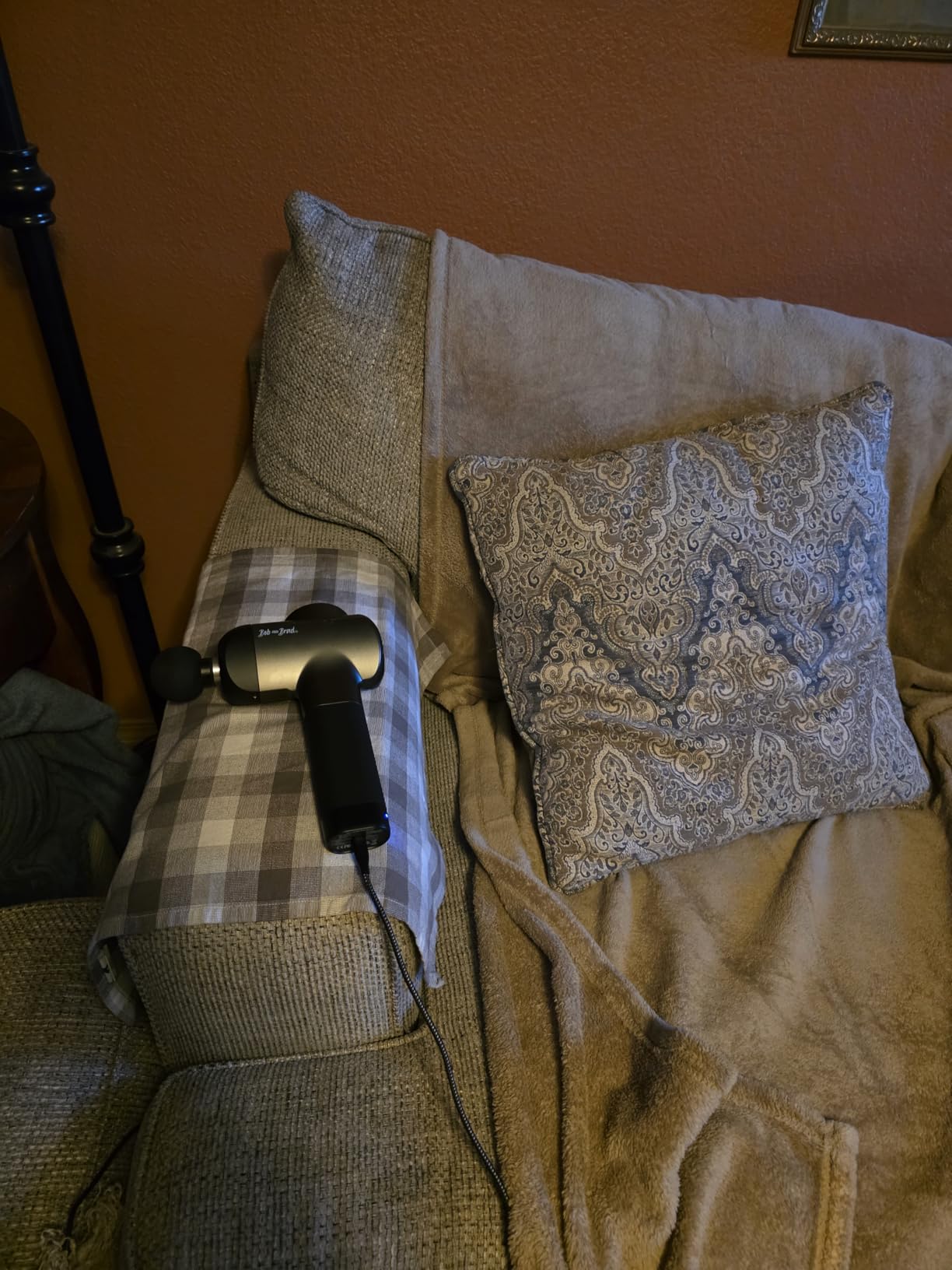
The 9.65-inch extended chassis is genuinely useful for feet specifically. Reaching the arch of your own foot with a short gun forces your wrist into an awkward angle, and this is the one in the roundup built to avoid that. The flat anti-slip grip also stays put when you are braced against a bed or a chair, which you will be.
Two things temper the recommendation. The aluminum alloy attachment is firm, and on a tender arch you will want to swap to a foam or rubber head. And while the mode change is fast, the coldest setting still needs a little time to settle, so do not assume it is ready the moment you press the button.
Is the X6 Pro Max right for your foot
It is a strong fit for anyone whose pain is worst in the morning and eases with movement. Warming the tissue first changes how it feels to stretch it, and the ability to go cold at the end is useful after a long run or a day on your feet. If your routine is a two-stage warm and cool session, this is the only gun here that does both without a pause.
The long reach also makes it a good choice if you treat a partner as well as yourself, or if you also use it on shoulders and back. Its two-year warranty and FSA eligibility add a layer of reassurance that the entry-level guns do not offer.
Where it falls short
It is the firmest-feeling gun here, which is a problem on exactly the tissue some people are trying to treat. If your arch is acutely tender, expect to work around that with a softer head for most of the session. The 55 dB motor is also not the quietest option, so it is a poor choice for a shared wall in a small flat at dawn.
The cold mode is the slower of the two to reach temperature even though the switch itself is fast. And at 1.9 pounds it is not the lightest tool here, so if weight is your main constraint you should look at a smaller travel model instead.
5. RENPHO Active Thermacool 2 – Quiet Enough for a 5am Routine
RENPHO Active Thermacool 2 Massage Gun with Intuitive Heat and Cold Control
40 dB motor
45 lbs stall force
3200 RPM
4 heat and 4 cold levels
VA display
Pros
- Quiet 40 dB motor suited to early-morning use
- Largest review base of any gun here
- Four heat and four cold levels give real control
- VA display shows speed
- battery and temperature
- Ten-minute auto-off
Cons
- Cold mode needs time to cool down
- Some owners report a short charging cable
The RENPHO is the pick for anyone who does their foot work before the household wakes up. At 40 dB it sits at the quiet end of everything we looked at, and with a review base larger than any other gun in this guide, its long-term reliability is the best documented in the roundup.
The VA display is the underrated part. It shows the speed level, the battery and the temperature status on the body itself, so you are not guessing which of the eight heat and cold settings you have landed on. For foot work, where the difference between level two and level three heat can be the difference between helpful and too much, that visibility matters.
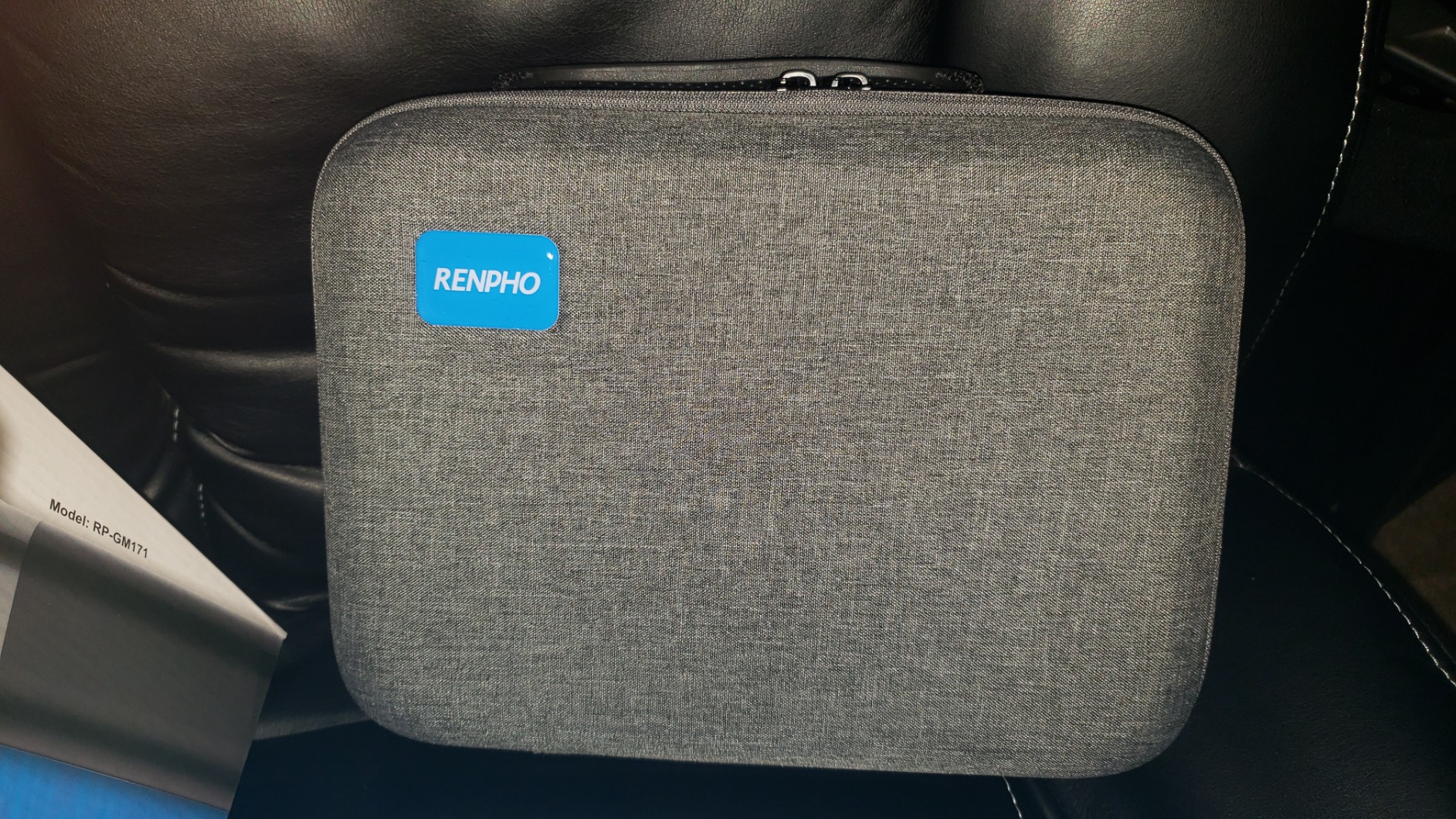
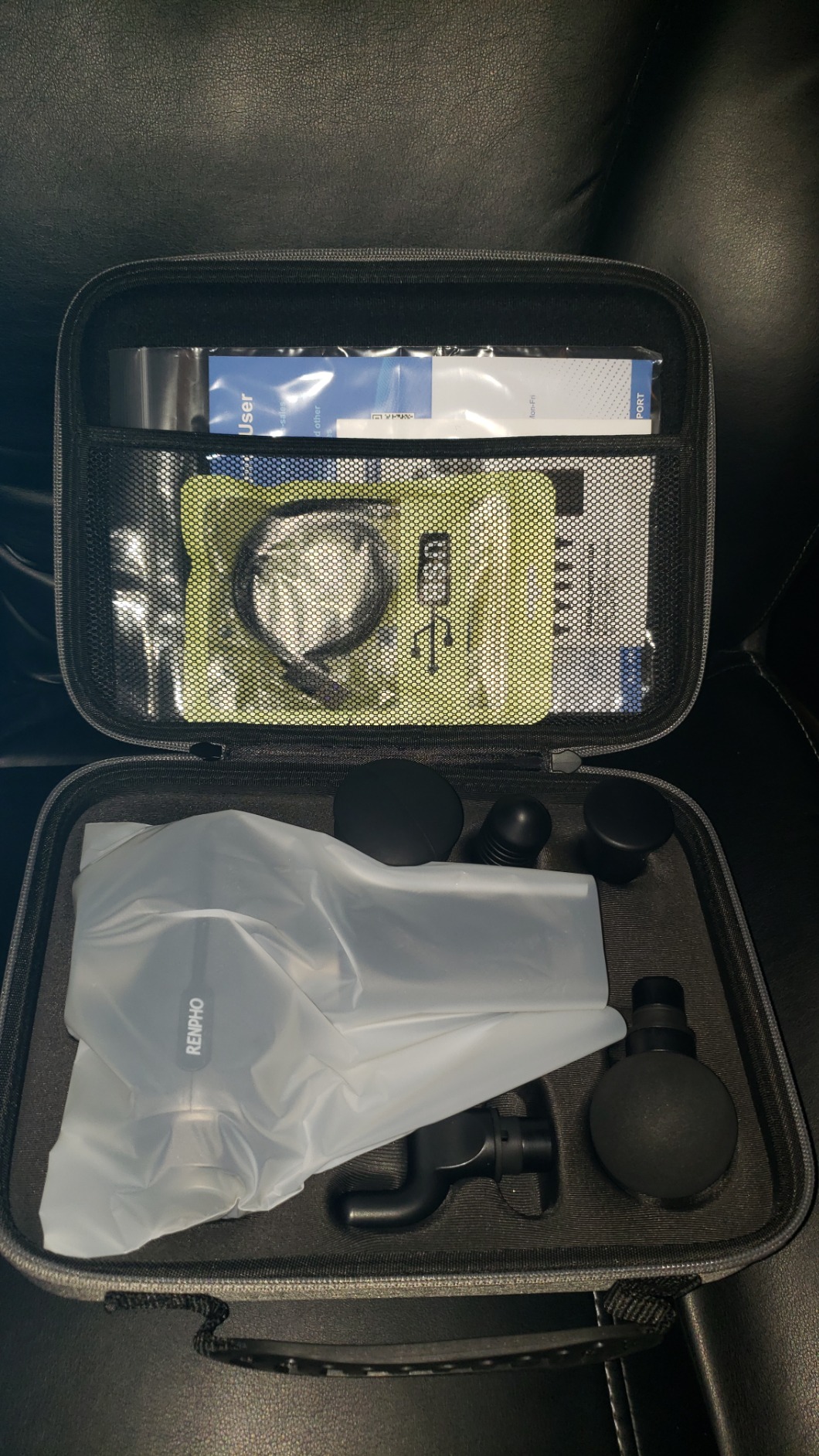
Mechanically it is competitive. Ten millimeters of amplitude at 3200 RPM with 45 pounds of stall force from a brushless motor is enough to reach the calf properly, and the 2500mAh pack runs longer than the previous generation. The ten-minute auto-off is a sensible safety feature on a device you might fall asleep holding.
Weight is 1.79 pounds, which keeps it manageable for self-treatment, and the body is compact enough to store in a drawer between uses. The two recurring gripes are minor: the cold setting takes time to reach its lowest temperature, and a few owners mention the charging cable being on the short side.
Is the RENPHO right for your foot
It suits people who are treating a chronic condition rather than a post-run ache. A gun that you can dial to a specific temperature and see on the display, without waking anyone, is the one you will actually keep using for months.
It is also a good pick if you want a single machine for feet, calves and shoulders and would rather not hunt for extra heads. The ten-minute cut-off gives you permission to be a bit reckless with session length, which is a genuine comfort when you are new to this.
Where it falls short
Forty-five pounds of stall force is mid-pack, and if your calves are genuinely dense you may find yourself leaning on it harder than feels comfortable. The auto-off at ten minutes also interrupts a long calf session, so plan two rounds rather than one. And while eight temperature settings sound like a lot, the cold end is slow to arrive.
The short charging cable is a small quality-of-life irritation rather than a real problem. The bigger consideration is that this is a general-purpose massager rather than a foot-specific tool, so nothing about the shape or the heads is optimised for the underside of a foot.
6. TheraGun Therabody Relief – The Gentlest Option for a Tender Arch
TheraGun Therabody Relief Massage Gun | for Daily Comfort | 3-Speed | Navy
3 speeds
3 attachments including a dampener
Patented triangle grip
Whisper-quiet motor
Pros
- Gentlest setting on any gun here
- Triangle grip reaches awkward areas solo
- Whisper-quiet
- FDA registered medical device
Cons
- Only 3 speeds and 3 attachments
- No storage case included
- No printed guide
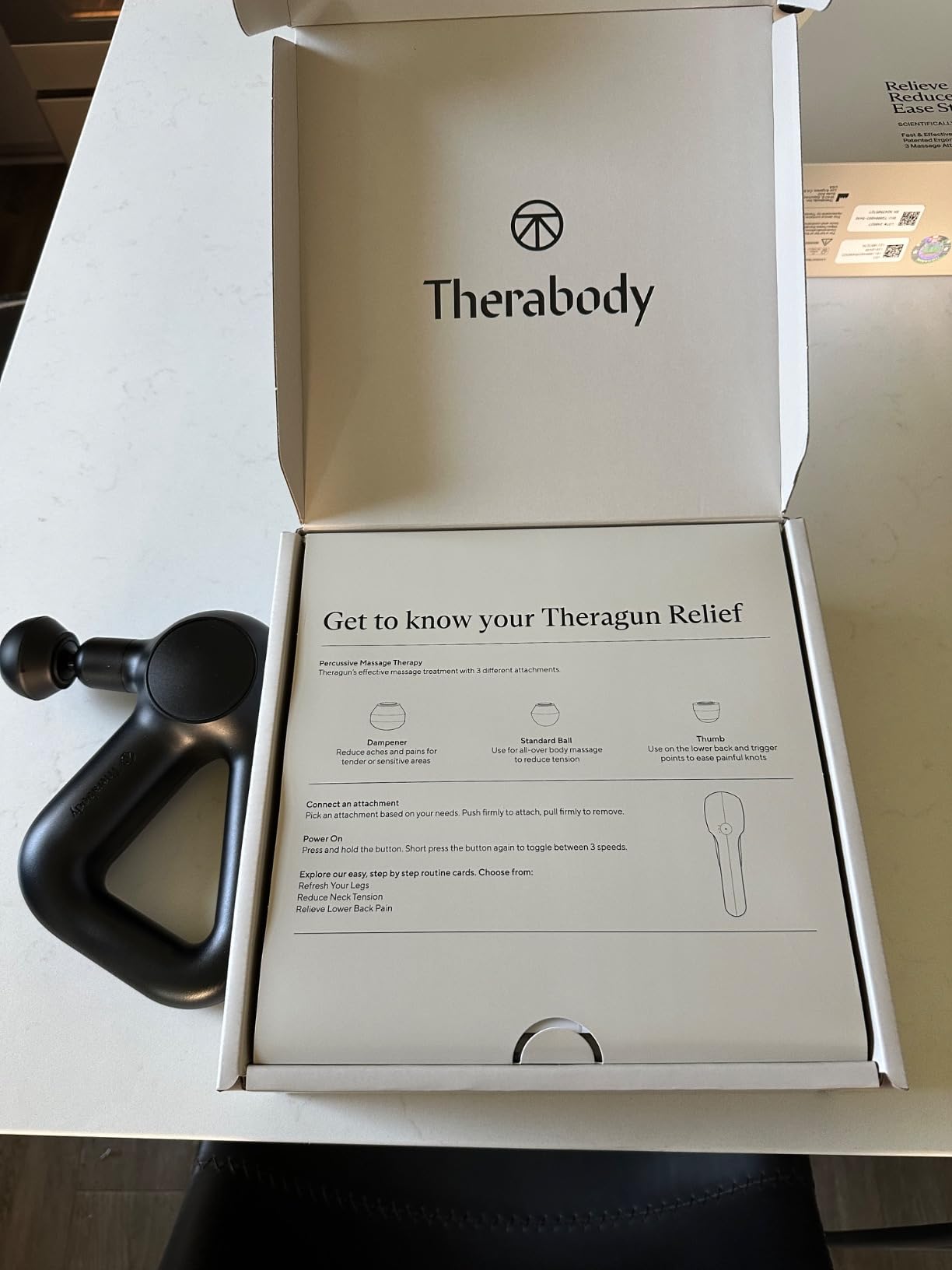
This is the gun we would hand to someone whose arch flinches at the thought of percussion. The TheraGun Relief runs a deliberately gentle curve, and the included dampener head is specifically designed to spread force across a wider area rather than concentrating it, which is exactly what a sore arch needs.
It is also a registered medical device with more than thirty completed studies behind the brand, which does not make it a treatment for plantar fasciitis but does mean the manufacturer operates to device standards. For a condition where the biggest risk is aggravating yourself, a device built on the gentle end is a defensible choice.
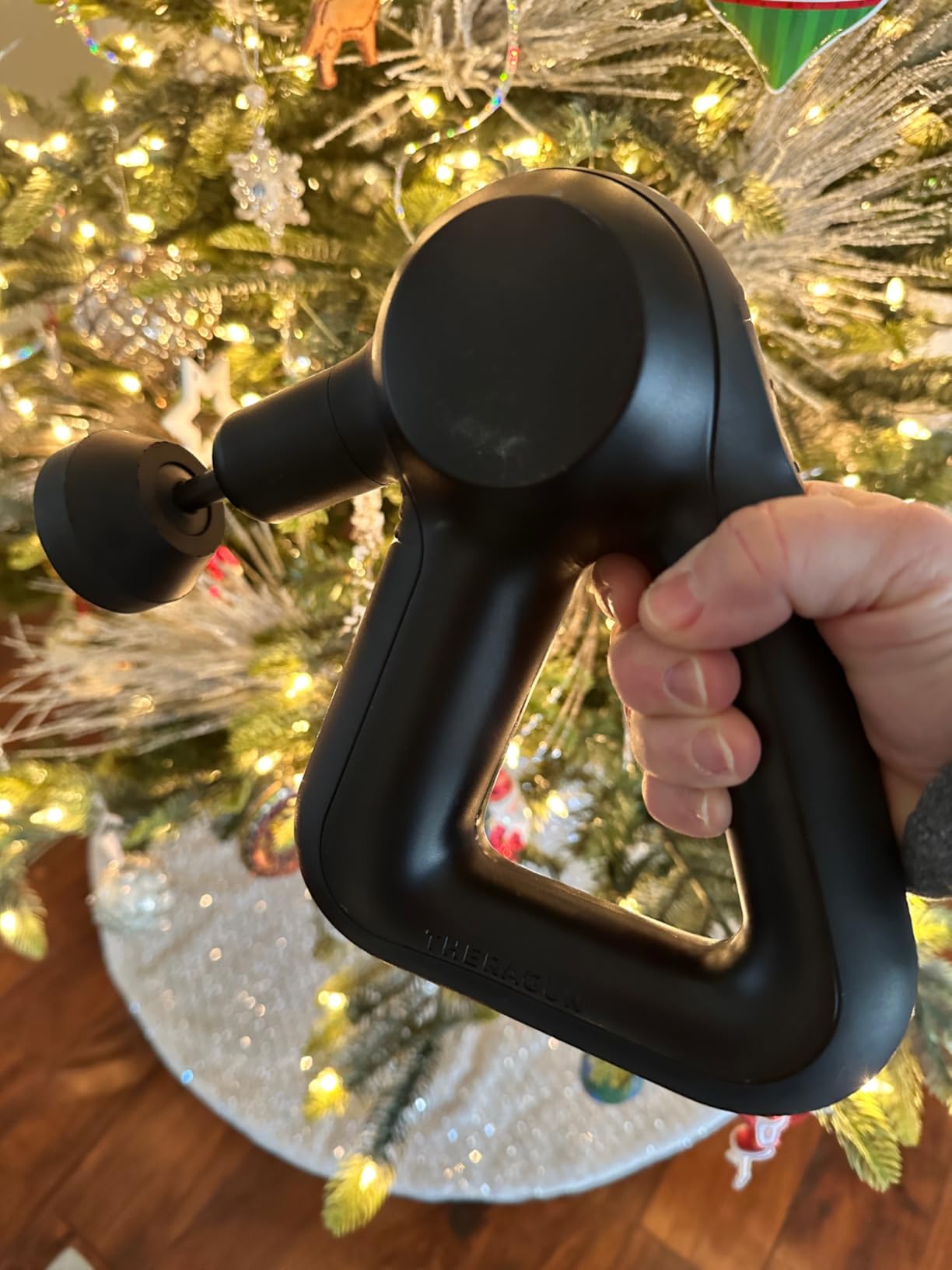
The patented triangle grip is the underrated feature. It lets you reach the arch of your own foot, the sole of your opposite foot and your lower back without contorting your wrist, and reviewers repeatedly single it out as the reason the device feels different in the hand. The motor is quiet enough to use in a bedroom, and attachments swap quickly.
The compromise is obvious once you hold it. Three speeds and three attachments, at 2.65 pounds, is the least versatile and heaviest configuration here. If you want to work calves hard at high speed you will find it underpowered, and there is no case in the box for taking it anywhere.
Is the TheraGun Relief right for your foot
It fits people early in their recovery, or anyone who tried a harder gun and felt it in their arch afterwards. The dampener head and the lowest speed give you a starting point that will not provoke a flare, which makes it a sensible first purchase for someone whose symptoms are currently unpredictable.
It is also the best choice here for anyone who wants to work on two feet at once or on a foot that is genuinely difficult to reach, because the grip geometry solves a problem the others do not. The quiet motor means it works in a bedroom without a door open.
Where it falls short
Three speeds is very few, and the lack of a printed guide means the angles take a couple of sessions to figure out on your own. At 2.65 pounds it is the heaviest gun in this roundup, and the lack of a case is a genuine miss for anyone who wants to move it between a desk and a bedside table.
A small number of one-star reviews mention a plastic rattling sound after brief use, which is uncommon feedback for this brand. If your calf is tight rather than your arch is sore, this is the wrong tool and you should spend your money on something with more power and more heads.
7. Hyperice Hypervolt Go 2 – The One That Lives in a Gym Bag
Hyperice Hypervolt Go 2 Handheld Percussion Massage Gun Deep Muscle Tissue
1.5 lb cordless
3 speed settings
40W brushless motor with QuietGlide
3 hour battery
TSA approved
Pros
- Light 1.5 lb cordless body that fits a gym bag
- QuietGlide motor is genuinely quiet
- TSA approved for carry-on
- Simple three-speed control
Cons
- Only 3 speed settings
- Charging brick not included
- Not compatible with USB-C to USB-C cables
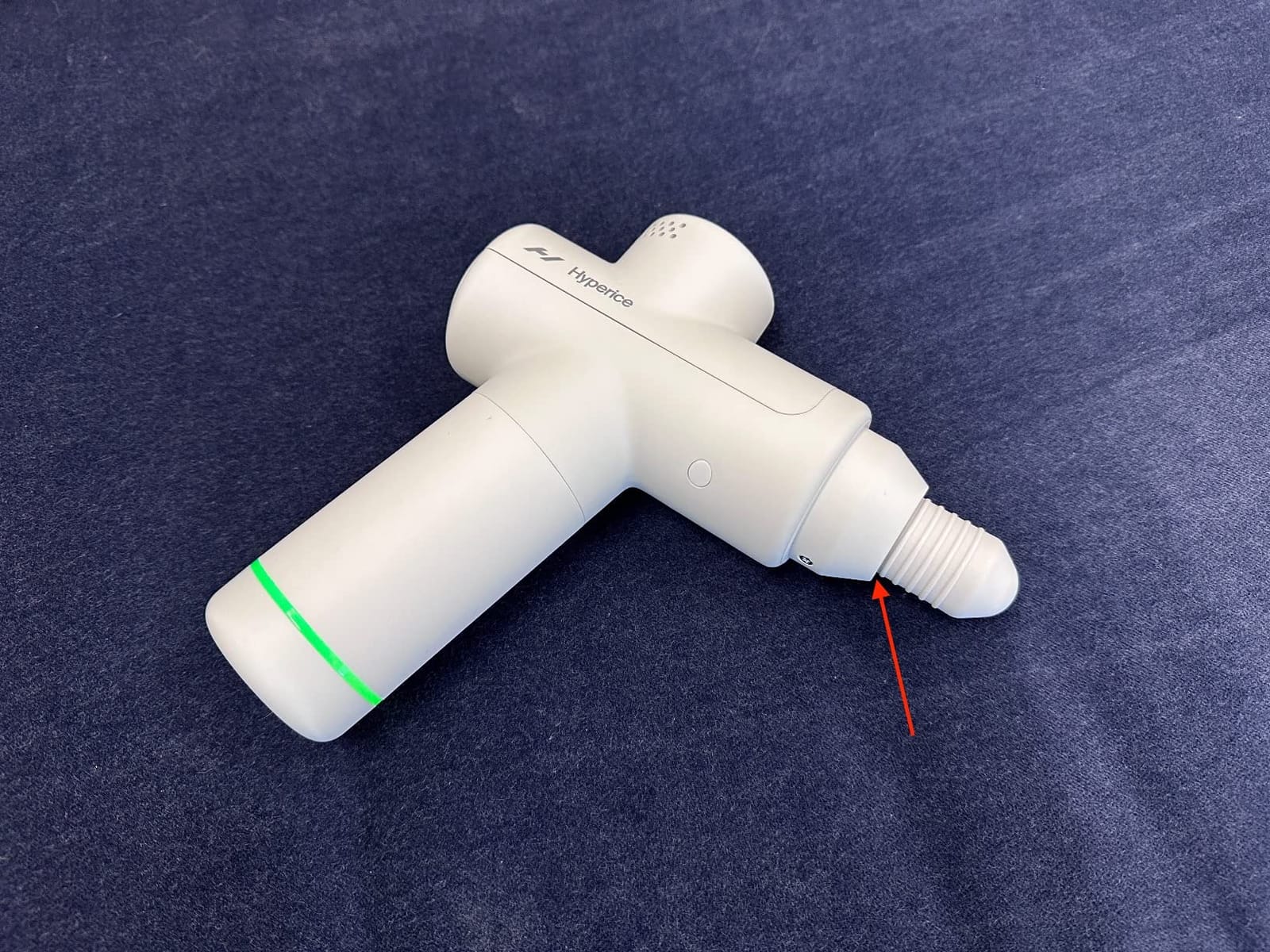
Hyperice is treated as one of the benchmark brands in this category, and the Go 2 is the version that finally fits inside a budget. At 1.5 pounds it is among the lightest-feeling guns here, small enough to live permanently in a training bag rather than coming out of a cupboard twice a week.
The 40W brushless motor with QuietGlide technology is quiet enough to use while music plays without competing with it, and the whole thing is TSA approved so it flies. Three speed settings with a simple press-and-hold control is fewer options than most, but for a ten-minute foot routine it is more than sufficient and it means there is nothing to fumble at 6am.
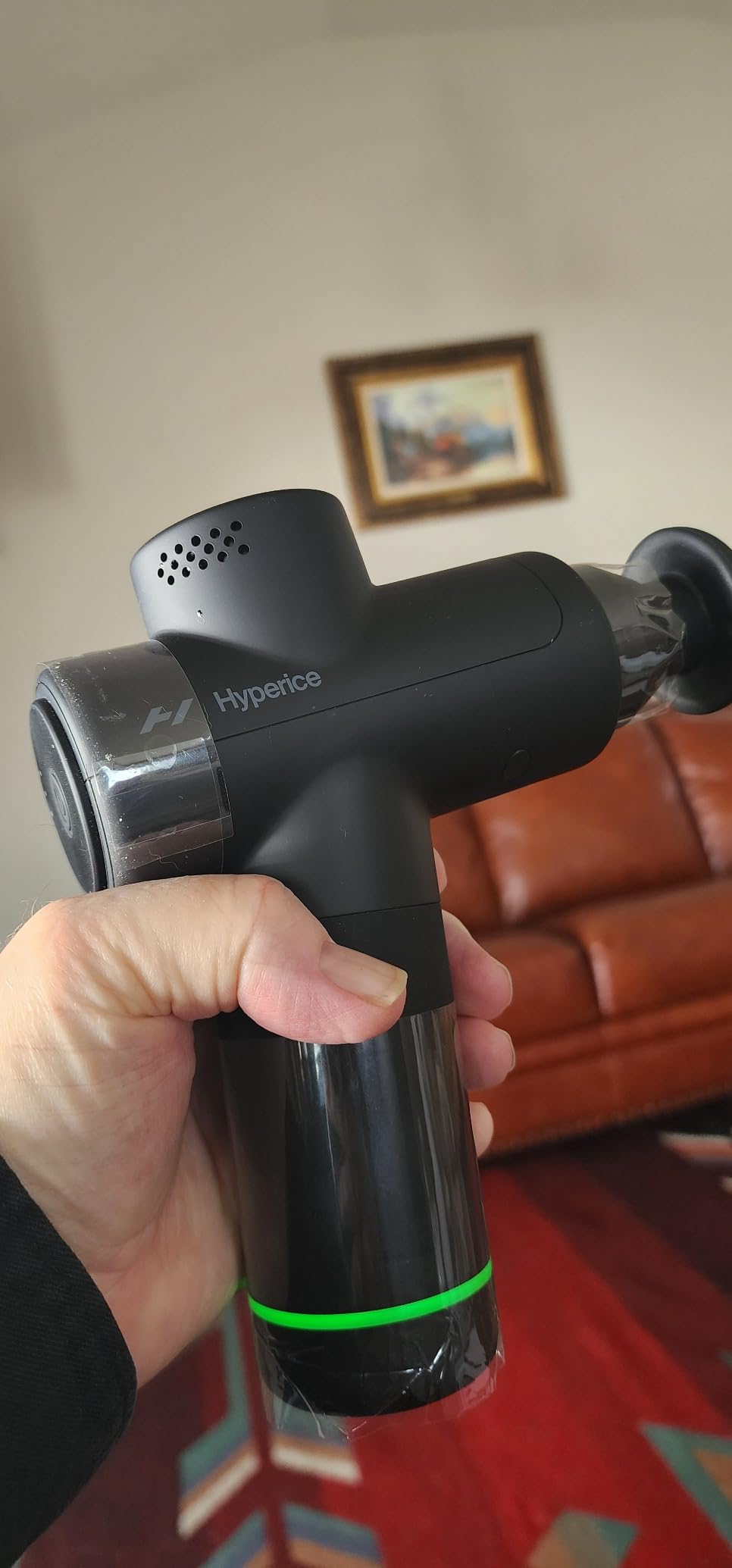
Owners value portability above all and report it works well on feet and arches for quick sessions. The three-hour battery covers several mornings of use, and the dimensions are small enough that it does not dominate a bag. For a runner who wants post-run foot work at the track rather than at home, that convenience is the entire selling point.
The tradeoffs are real. You will need your own 5V USB-A charging brick since only the cable is included, and the unit will not charge from a USB-C to USB-C cable. Three speeds is the fewest in this roundup, which limits how you can progress as your calves get stronger.
Is the Hypervolt Go 2 right for your foot
It is the answer for people whose problem is logistics rather than power. If the reason you do not currently do foot work is that the device is in a cupboard across the house, this solves that. Light, quiet and carry-on approved means it can be used in a hotel room or a changing room without anyone objecting.
It also suits anyone who wants a gentle, low-effort introduction. Three speeds and a small body mean there is very little to learn, which lowers the chance of you pressing too hard on a day when your foot is already angry.
Where it falls short
It is not a tool for dense, tight calves. Owner feedback notes a nine percent one-star share, which points to some unit-quality inconsistency, and three speeds gives you no headroom to work harder later. The missing charging brick is the most common practical complaint and it catches people out immediately.
There is also no case and no attachment variety to speak of, so this is a quick-session tool rather than an all-purpose one. If you already own a fuller gun and want a second, the small body is a plus, but if you need calf power this is the wrong spend.
8. Medcursor – The Budget Pick That Surprises People
Medcursor Massage Gun – High Intensity Brushless Motor, Handheld Percussion Deep Tissue Massager with 6 Massage Heads for Sore Muscle and Stiffness, Gifts for Father/Dad (Black)
11 mm percussion depth
35 dB brushless motor
5 speeds 1200-3200 RPM
4.5 hour runtime
1.5 lb
Pros
- Genuine deep percussion at an entry-level price
- Quiet 35 dB brushless motor
- Four and a half hours of runtime
- Five heads plus carrying case
Cons
- Battery arrives only partly charged
- Ten-minute auto timer cuts longer sessions
- Build quality is basic
The Medcursor exists because the most common piece of forum advice in this condition is that people already use cheap guns and get results. At the bottom of the budget this one punches well above its weight, and owners repeatedly describe it as a device that genuinely penetrates rather than just buzzing on the surface.
Eleven millimeters of percussion depth is a serious figure for this tier, and the brushless motor runs at around 35 dB, the lowest published figure in this roundup. Five speeds from 1200 to 3200 RPM, up to four and a half hours of runtime and five interchangeable heads make the specification sheet look like a mid-range gun.
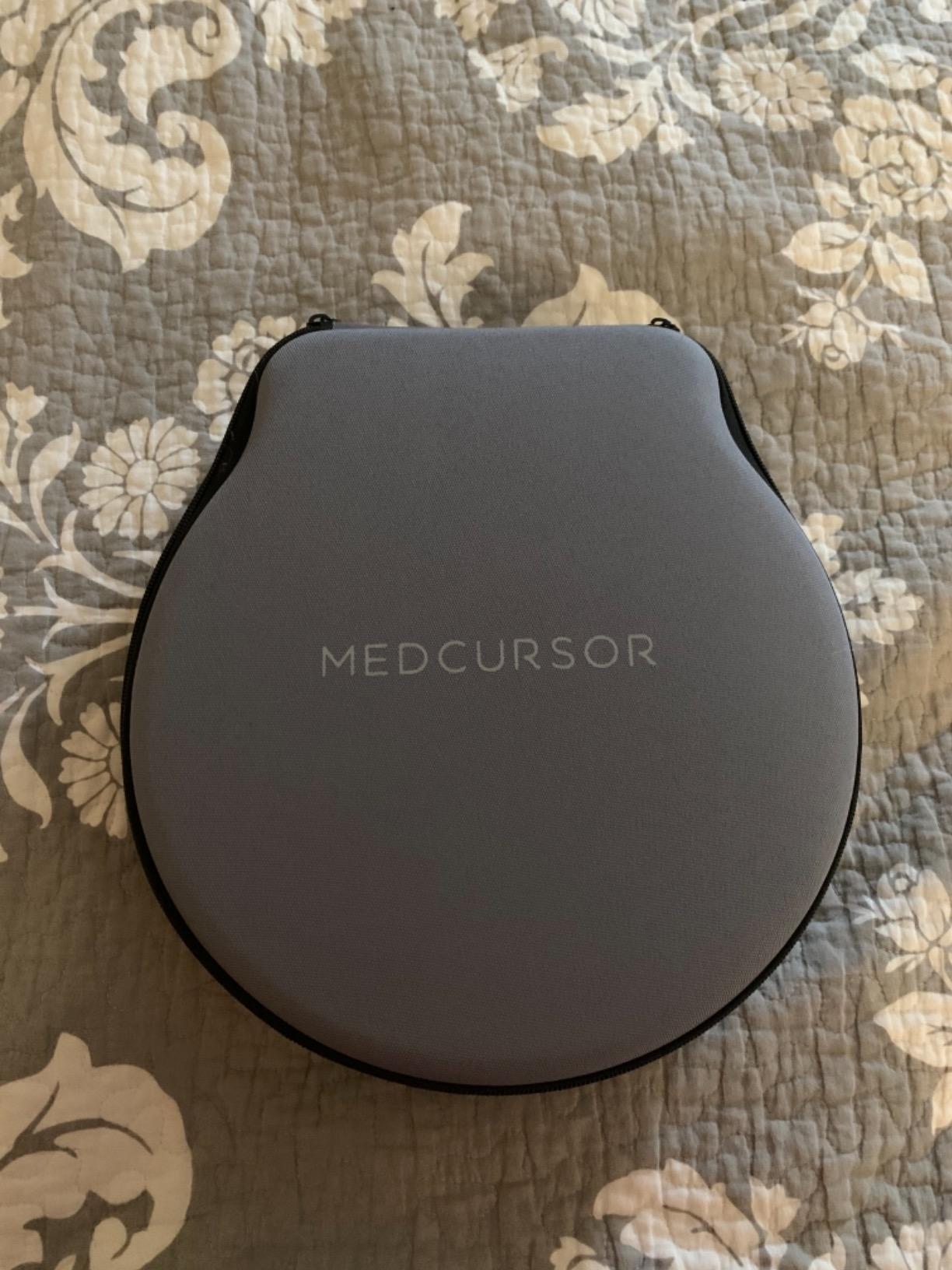
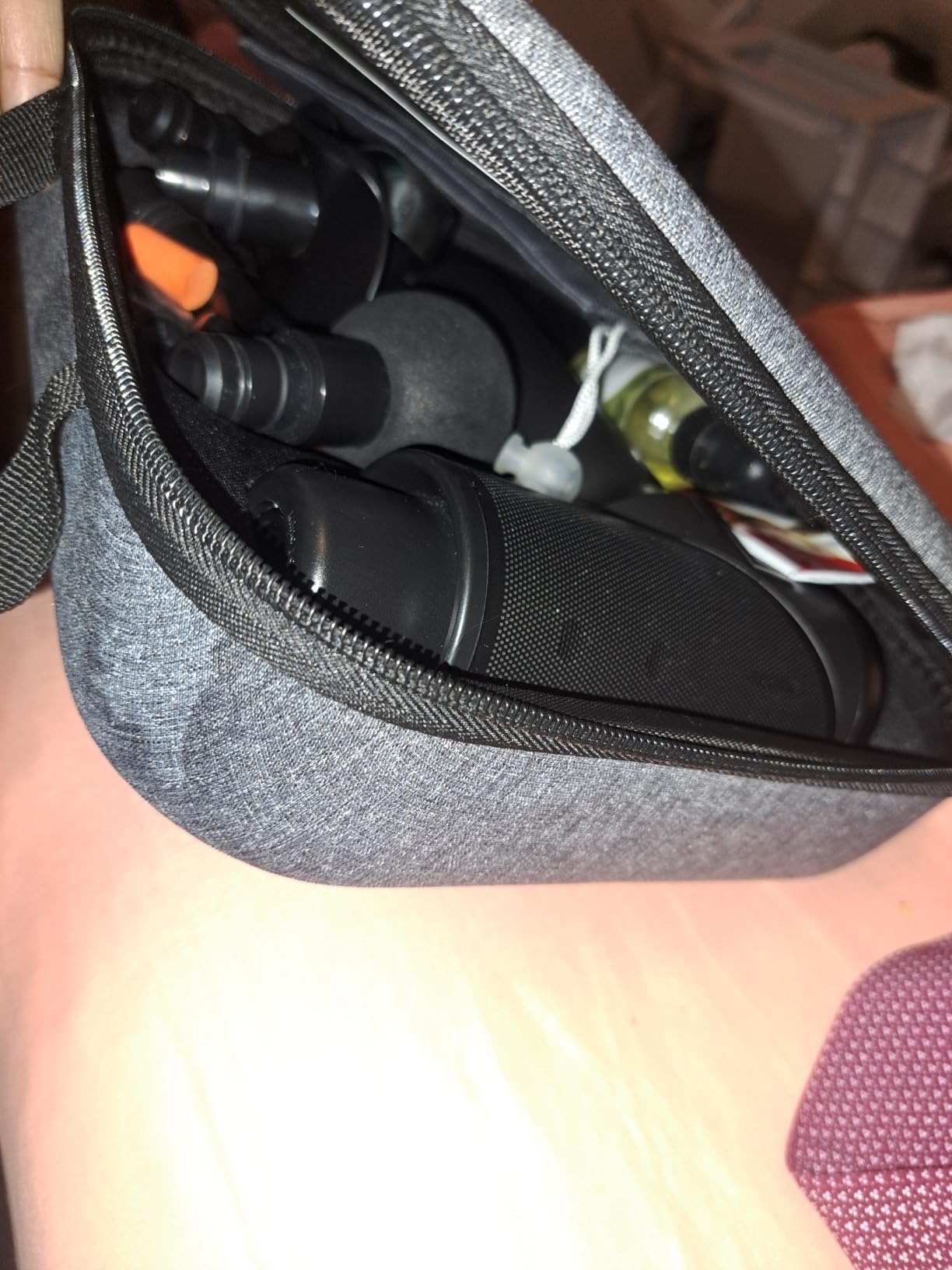
At 1.5 pounds with a handle long enough to reach the mid back, it is light for a gun with this much power and it will not tire your wrist during a foot session. A sixty-second standby shutdown and a ten-minute timer are sensible safety behaviours for a device used on a painful area, and the carrying case is a nice extra at this price.
Three honest caveats. The battery arrives only partly charged, so give it a full charge before your first session or you will judge it unfairly. The ten-minute timer will cut off a longer calf session, which is mildly annoying but not harmful. And the build quality is basic, so treat it as a tool rather than an heirloom.
Is the Medcursor right for your foot
It is the right pick if the whole question was about money, and it deserves a fair hearing rather than a dismissal. Users report the same deep, satisfying percussion they get from far more expensive units, and the quiet motor means a routine you start on a tight budget can still be a routine you keep. For someone whose main hesitation is spending a lot on something that might not help, this is the lowest-risk way to find out.
It is also a sensible gym-bag or travel companion given the weight and the case. If you end up loving percussive foot work and later want a daily machine with more power, this is a perfectly good first step rather than wasted money.
Where it falls short
There is no published stall force figure and no pressure sensor, so you are working entirely by feel, which is the part that matters most on a foot. Build quality is the first thing you will notice, and a small number of owners have reported internal components loosening sooner than expected on similar budget units.
The ten-minute timer is the biggest practical limitation because a thorough calf session often runs longer. And the partly charged battery on arrival genuinely catches people out, so plan a full charge before you judge whether the percussion is deep enough for you.
How to Use a Massage Gun on Your Foot: A 10-Minute Morning Routine
Ten minutes, once a day, worked in this order, is the routine that recurs most often in the community accounts we read. One runner described hitting the foot with a massage gun every morning for about fifteen minutes and then rolling the foot on a tennis ball, with noticeable change after roughly two weeks. Another combined the gun with a lacrosse ball and was walking several thousand steps a day without pain after about six weeks.
Work from the top down. The calf releases first, the arch comes second, and the tender heel gets nothing at all.
Calf, both legs, three minutes. Start at speed two or three. Move the ball head slowly from just below the knee to the ankle, pausing on any tight band. This is the highest-value part of the session, not the warm-up.
Inner lower leg, one minute per leg. This is the tissue people confuse with the heel. Percuss it freely with a flat or thumb head at medium speed.
Arch, two minutes. Use a soft or ball head, stay off the tender heel pad, and keep the gun moving rather than pressing into one spot. Stay on the lowest one or two speeds.
Ball of the foot, one minute. Brief passes around the metatarsal heads and the base of the big toe. No lingering on a single point.
Around the ankle, one minute. The outside and back of the ankle, moving gently. Skip the front of the ankle where nerves run close to the surface.
Ball rolling, two minutes. Sit in a chair and roll the arch over a tennis ball or lacrosse ball under the same bodyweight you would use to test a wall. Stop before it hurts, not when it hurts.
Which attachment head to use on a foot
Ball head for the arch, always. It distributes force across a small area without concentrating it on a single point, which is exactly what thin tissue over bone needs. Flat head for calves and the outer leg, where there is more muscle to work through. Thumb head for the inner lower leg and the heel region you are not pressing, used at low speed.
Avoid the hard flat or pointed heads on the arch. The tissue between the arch and the floor of the foot is thin, and a concentrated pulse there is how people talk themselves into a flare. If your arch is very tender, hold the gun against the arch and let the palm take some of the weight instead of pressing through.
How often and how hard
Daily is the pattern that shows up in the accounts that worked. Once a day for two weeks is a fair test, and if nothing has changed by then the device is not the problem. Hard enough to feel the muscle work is the target, and visible bruising the next day is the signal that you went past it.
Expect weeks, not days. The most commonly reported timeline is noticeable change around two weeks and fuller resolution between six weeks and three months, and that assumes you are also stretching, rolling and wearing supportive footwear. If you want a non-device option to pair with all of this, our picks for the best foot massagers and the best plantar fasciitis insoles cover the ground from both ends. Our broader guides to the best massage guns and the best percussion massage guns are worth a look if you also treat larger muscle groups.
Buying Guide: The Specs That Matter for Feet, Not Quads
Massage gun spec sheets are written for people with quads and glutes. For a foot, four things genuinely decide whether the device is useful, and everything else is preference.
Stall force and amplitude
Stall force is how much pressure the motor delivers before it stalls out against your body. It matters more for a foot than intuition suggests, because a foot is a small, dense target and a weak motor simply bounces off. Anything from 45 pounds upward will work, and if your calves are genuinely tight, more is better. Amplitude, the distance the head travels per stroke, tells you how deep it reaches; 10mm or more is a good floor.
A foot is also easy to overwork, so more power is not automatically better. If your arch is currently tender, a gentler machine with a dampener head is a smarter purchase than a powerful one you will use at low speed.
Noise level
This is the spec nobody considers until their partner is annoyed. Most foot work happens at dawn because that is when the pain is worst, and a motor rated under 50 dB is the difference between a routine you keep and one you abandon. The RENPHO and the Mebak 3 are the quiet picks here; the Mebak publishes a range and the RENPHO publishes a single figure.
Battery life
A daily ten-minute routine uses far less battery than people assume, so anything at three hours or more will cover a week without a charge. Below that, and you are charging more often than you are massaging. Look for the runtime at your normal working speed rather than the headline maximum, because the headline is measured on the lowest setting.
Head selection and grip
More heads is genuinely useful for feet, because the arch, the calf and the ball of the foot all want different contact. A ball head is non-negotiable. On grip, favour something slim and slip-resistant, and think hard about weight: working the underside of your own foot is an awkward angle, and a heavy gun with a wide handle will lose you sessions you never start.
Heat, cold and warranty
Heat relaxes tissue before you work it and makes stretching feel meaningfully better. Cold afterwards is useful after a long run. If you are going to use either, buy the gun that does both, because switching mid-session is the whole benefit. Finally, the longer the warranty the better, since these are devices with moving parts and a five-year-old gun with a two-year warranty is a risk you do not need to take.
Price tiers inside the budget ceiling
Within the sub-two-hundred-dollar range there are three distinct bands and the differences are real. The entry band covers the genuinely cheap guns, which work for feet and cost very little, though build quality and features are thin. The mid band is where most people should land, adding stall force figures, quieter motors and more heads. The upper band is the premium end of the budget, where you get heat and cold, longer bodies and warranty cover, without the flagship price jump that sits just above the ceiling.
Our general roundups cover the best massage guns across every price band and the best percussion massagers for larger muscle groups. For the load side of the problem, our guide to the best running shoes for plantar fasciitis and our picks for the best plantar fasciitis insoles both matter more than most people expect. If you would rather use no device at all, our review of the best foot massagers for plantar fasciitis covers the non-percussive side.
Frequently Asked Questions
Does a massage gun help with plantar fasciitis?
Yes, indirectly. A massage gun does not repair the plantar fascia, but loosening tight calf, arch and ball-of-foot tissue reduces the tension pulling on it, which makes your first steps of the morning less painful. It is symptom management rather than a cure, and the research on percussive therapy mainly covers muscle recovery rather than fascia healing.
Can plantar fasciitis be massaged out?
No, and trying is how people make it worse. Plantar fasciitis involves micro tears, and heavy percussive tension on already irritated tissue can trigger a flare. Do not put a massage gun on the tender medial heel where the fascia connects into the heel bone. Work the calves, the arch with a soft head, the ball of the foot and around the ankle instead.
What foot massager is best for plantar fasciitis?
For percussion, the Opove M3 Pro 2 is the best overall under the two-hundred-dollar ceiling, the Medcursor is the pick if the budget is the deciding factor, and the RENPHO Active Thermacool 2 is the one to buy for early-morning use. Whatever you choose, use it on the calf and arch rather than on the tender heel. See the comparison table above for all eight.
What finally cured my plantar fasciitis?
Almost nobody is cured by one thing. The most commonly reported win is a combination: daily percussive work on the calves and arch for ten to fifteen minutes, ball rolling, stretching, supportive footwear and load management, sustained over six to twelve weeks. Expect noticeable change around two weeks and fuller resolution measured in months, not days.
How long should I use a massage gun on my foot each day?
Ten to fifteen minutes once a day is the pattern that recurs most often in accounts that worked. Split it into three minutes on each calf, one minute per inner lower leg, two minutes on the arch, one minute on the ball of the foot and one minute around the ankle, then finish with two minutes of ball rolling. Stop if the tissue feels bruised rather than warm.
Our Verdict for Plantar Fasciitis Massage Guns in 2026
The best massage gun for plantar fasciitis under 200 dollars is the Opove M3 Pro 2, on the strength of 70 pounds of stall force, 12mm of amplitude and more than twenty thousand owner reviews. If the budget is the real constraint, the Medcursor delivers more percussion than its tier suggests and the quietest motor in the group. If you work before dawn, the RENPHO Active Thermacool 2 keeps the noise down. If your arch is currently tender, start with the TheraGun Relief and work up.
None of that matters if you press it into the heel. Work the calves, work the arch with a soft ball head, keep the tender insertion point off the gun entirely, and follow it with two minutes of ball rolling. Do that consistently for two weeks before you decide whether any of this is working for you, and see a clinician if it is not, or if you have numbness, burning or swelling in the foot.
Use the comparison table above to pick your gun, then stick with it long enough to judge it fairly.