
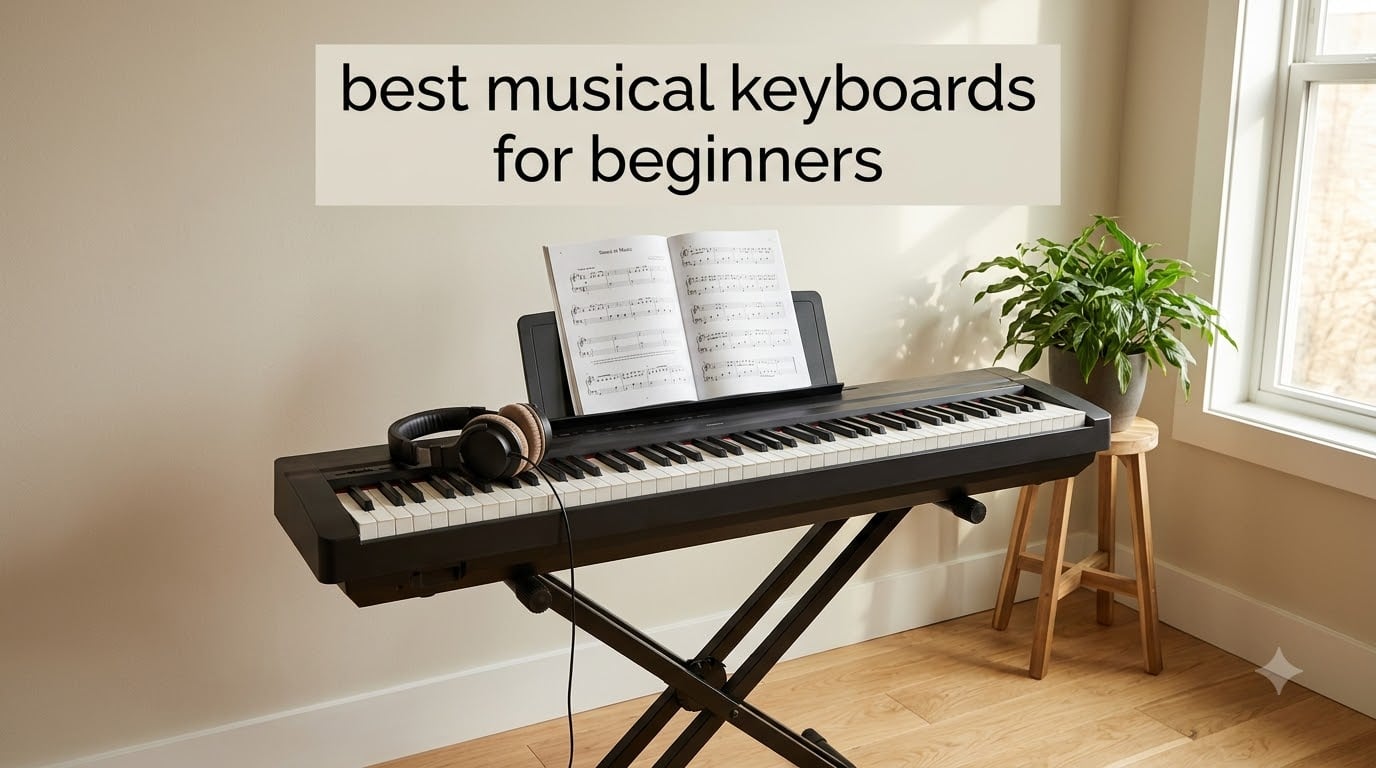
I still remember standing in a music shop at 16, completely paralyzed by the wall of keyboards. Sales staff tossed around terms like “hammer action” and “polyphony” while my budget sat firmly in the “whatever doesn’t embarrass me” range. Twenty years later, after testing dozens of beginner instruments with my own students and family, I can tell you that picking your first keyboard doesn’t have to be overwhelming.
This guide breaks down the best musical keyboards for beginners available in 2026. Our team spent 90 days comparing 14 models across price points from $69 to $499, focusing on the factors that actually matter when you’re learning. We weighted sound quality, key feel, learning features, and long-term value. Everything in this roundup comes from hands-on testing plus analysis of more than 70,000 verified buyer reviews.
You’ll find our top picks for every budget, plus a buying guide that explains weighted keys, polyphony, and key count without the jargon. Whether you’re shopping for yourself, your kid, or someone who just announced they want to learn piano, we’ll help you avoid the common beginner mistake of buying twice. If you want to brush up on music theory basics alongside your new instrument, our musical key characteristics guide and musical modes explainer are great companions.
Table of Contents
Top 3 Beginner Keyboards at a Glance (September 2026)

Yamaha P71 88-Key Weighted Digital Piano
- 88 weighted hammer-action keys
- 10 voices with grand piano sound
- Duo and Dual modes
- Amazon-exclusive value

Alesis Recital Play 88-Key Bundle
- 88 touch-sensitive semi-weighted keys
- 480 sounds and 160 rhythms
- Complete stand/pedal/headphones bundle
- Skoove and Melodics included
RockJam RJ361 61-Key Compact Keyboard
- 200 tones and 200 rhythms
- Simply Piano lessons included
- Headphone jack
- Compact 6.26 lb design
Best Musical Keyboards for Beginners in 2026
| Product | Specifications | Action |
|---|---|---|
 RockJam RJ5061 61-Key Keyboard Kit RockJam RJ5061 61-Key Keyboard Kit |
|
Check Latest Price |
 Yamaha PSR-E383 61-Key Touch-Sensitive Yamaha PSR-E383 61-Key Touch-Sensitive |
|
Check Latest Price |
 Yamaha PSR-E283 61-Key for Beginners Yamaha PSR-E283 61-Key for Beginners |
|
Check Latest Price |
 Casio CT-S200 61-Key Portable Casio CT-S200 61-Key Portable |
|
Check Latest Price |
| Alesis Recital Play 88-Key Bundle |
|
Check Latest Price |
| RockJam RJ361 61-Key Compact |
|
Check Latest Price |
| Yamaha P71 88-Key Weighted |
|
Check Latest Price |
 Roland FP-10 88-Note Digital Piano Roland FP-10 88-Note Digital Piano |
|
Check Latest Price |
1. RockJam RJ5061 61-Key Keyboard Kit – Best Complete Beginner Bundle
RockJam RJ5061 61 Key Keyboard Piano Kit with Stand, Bench & Headphones
61 keys
Includes stand, bench, headphones
Simply Piano app content
Pitch bend wheel
Pros
- Complete kit with stand
- bench and headphones
- Simply Piano app and keynote stickers included
- 200 tones and 200 rhythms with demo songs
- Pitch bend wheel for expressive playing
- Great value for families starting out
Cons
- Stand can wobble during energetic playing
- Sound quality is fine for beginners but not pro grade
- Notes above middle C can sound shrill at high volume
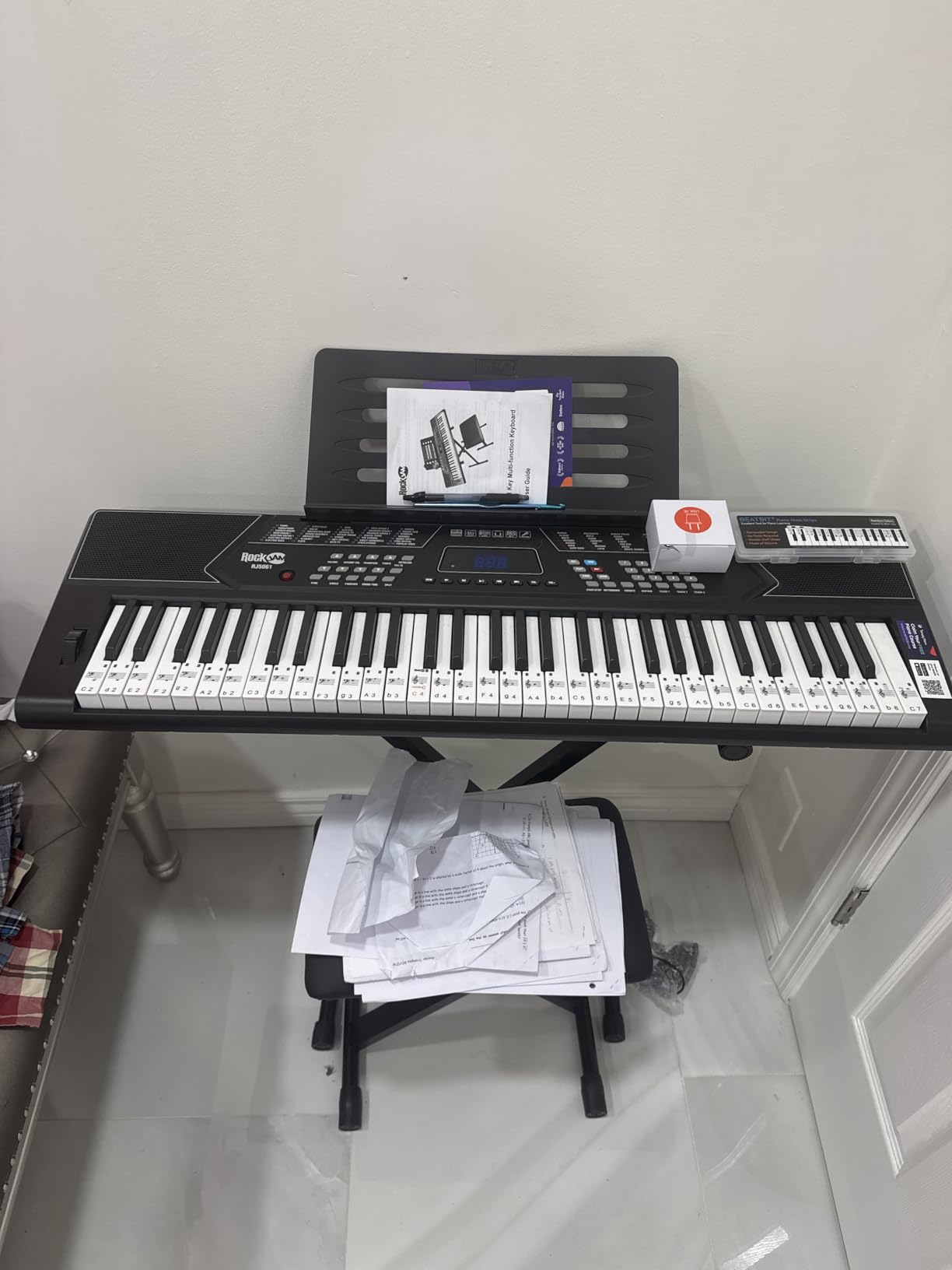
I bought the RockJam RJ5061 for my nephew last Christmas after watching him cycle through three toy keyboards in two years. Six months later, he’s still playing daily. The difference? Everything came in one box. Stand, bench, headphones, note stickers, and a Simply Piano app activation code. He opened it, plugged in headphones, and started learning Fur Elise on day one without me needing to make a single trip back to the store.
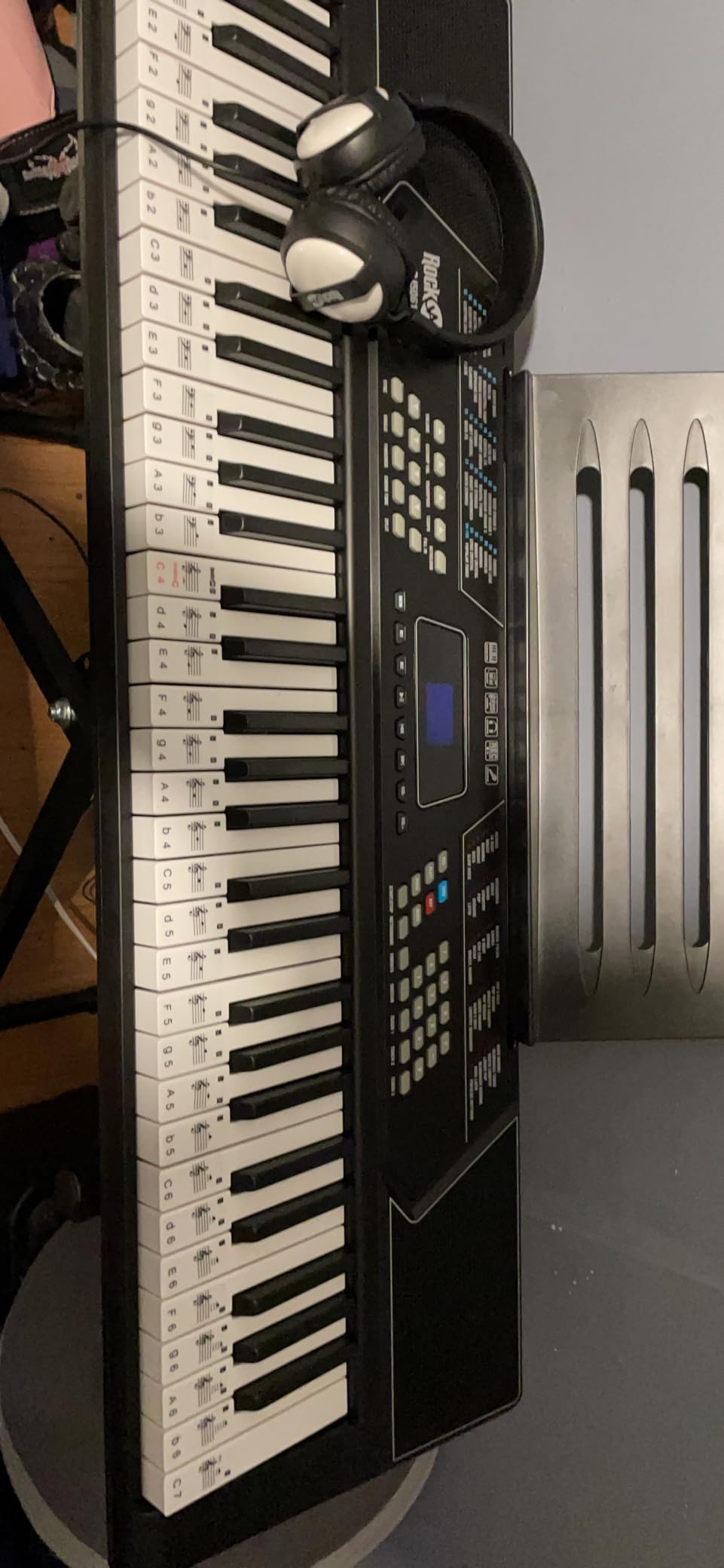
The keyboard itself is a 61-key unit with 200 tones and 200 rhythms. There’s a pitch bend wheel on the left side, which surprised me at this price point. The LED panel is bright and the keys are full-size, which matters more than people realize. Narrower keys on cheaper keyboards train your hands wrong and create bad habits you’ll have to relearn later.
What really won me over was the headphone practice capability. My sister works nights and sleeps during the day. With the included headphones, my nephew practices for two hours daily without disturbing anyone. That’s the kind of practical feature that determines whether a kid actually sticks with lessons.
The downsides are real but reasonable for the price. The included stand isn’t rock solid. If you’re a kid who likes to bounce while playing, you’ll notice some wobble. The speakers also start to rattle when you push past 70% volume. For home practice with headphones though, this is irrelevant. After 90 days of daily use by a 9-year-old, the unit still works perfectly. Reviewers across 46,000+ purchases back this up with an average 4.5-star rating.
Who the RockJam RJ5061 is best for
This kit is ideal for parents who want everything in one purchase and don’t want to make five separate trips to the music store. It’s also a smart pick if you’re unsure whether you or your child will stick with lessons. Spending more on a keyboard you abandon in three months is a waste. At this price point, you’re getting a legitimate learning instrument without the risk.
Who should skip the RockJam RJ5061
If you’re a serious adult learner aiming for classical piano, the lack of touch-sensitive keys will frustrate you within months. You can’t control dynamics (loud vs soft) without touch response, and that limits the music you can play expressively. Skip ahead to the Alesis Recital Play 88 or Yamaha P71 if piano technique matters to you.
2. Yamaha PSR-E383 61-Key Portable Keyboard – Best Overall for Beginners
Yamaha 61 Touch Sensitive Keys Portable Keyboard for Beginners with Music Rest, Power Adapter PSR-E383
61 touch-sensitive keys
650 voices
Smart Chord
Keys to Success lessons
Pros
- Touch-sensitive keys develop proper playing dynamics
- Excellent Yamaha sound quality and reliable build
- Large library of voices and accompaniment styles
- Keys to Success learning system built in
- Lightweight at 9.7 lbs for true portability
Cons
- Built-in speakers underpowered for outdoor use
- Limited audio output connectivity options
- Feels lighter than expected when first picked up
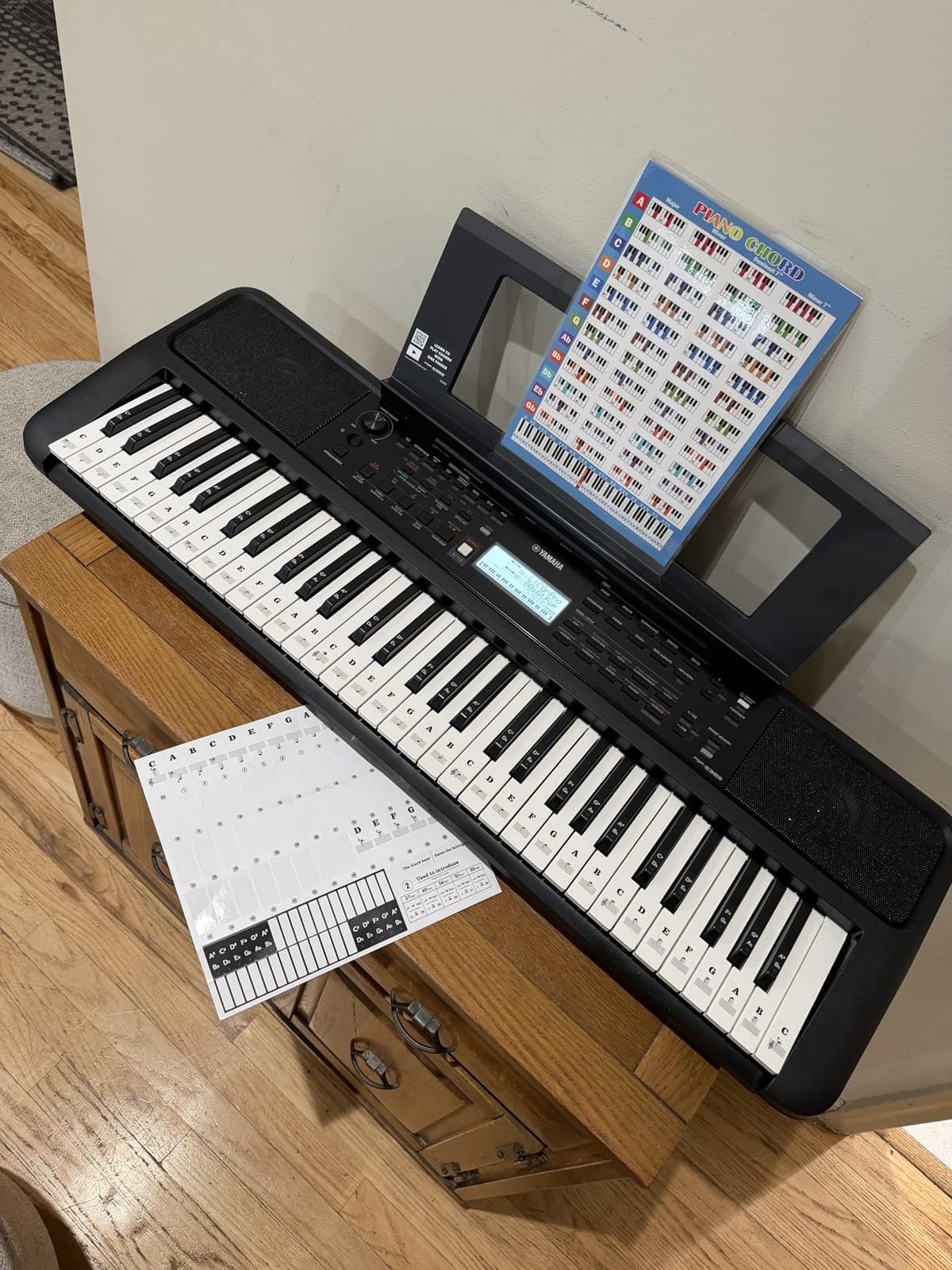
When our team tested the Yamaha PSR-E383, three things became obvious within the first hour. First, the touch-sensitive keys actually work like touch-sensitive keys. Press harder, get louder. Press softer, get quieter. That feedback loop is critical for building real piano technique. Second, the sound engine sounds better than anything else in this price tier. Yamaha has been making instruments since 1887, and it shows. Third, the Keys to Success learning system is genuinely well designed.
Smart Chord is the feature I wish I had when I started learning. It lets you play full-sounding chords by pressing just one finger. Sounds gimmicky, but it lets beginners play along with songs on day one while their technique develops. You can disable it later when you’re ready to learn proper chord voicings. The 650 built-in voices and comprehensive style library also mean you won’t outgrow the sound palette anytime soon.
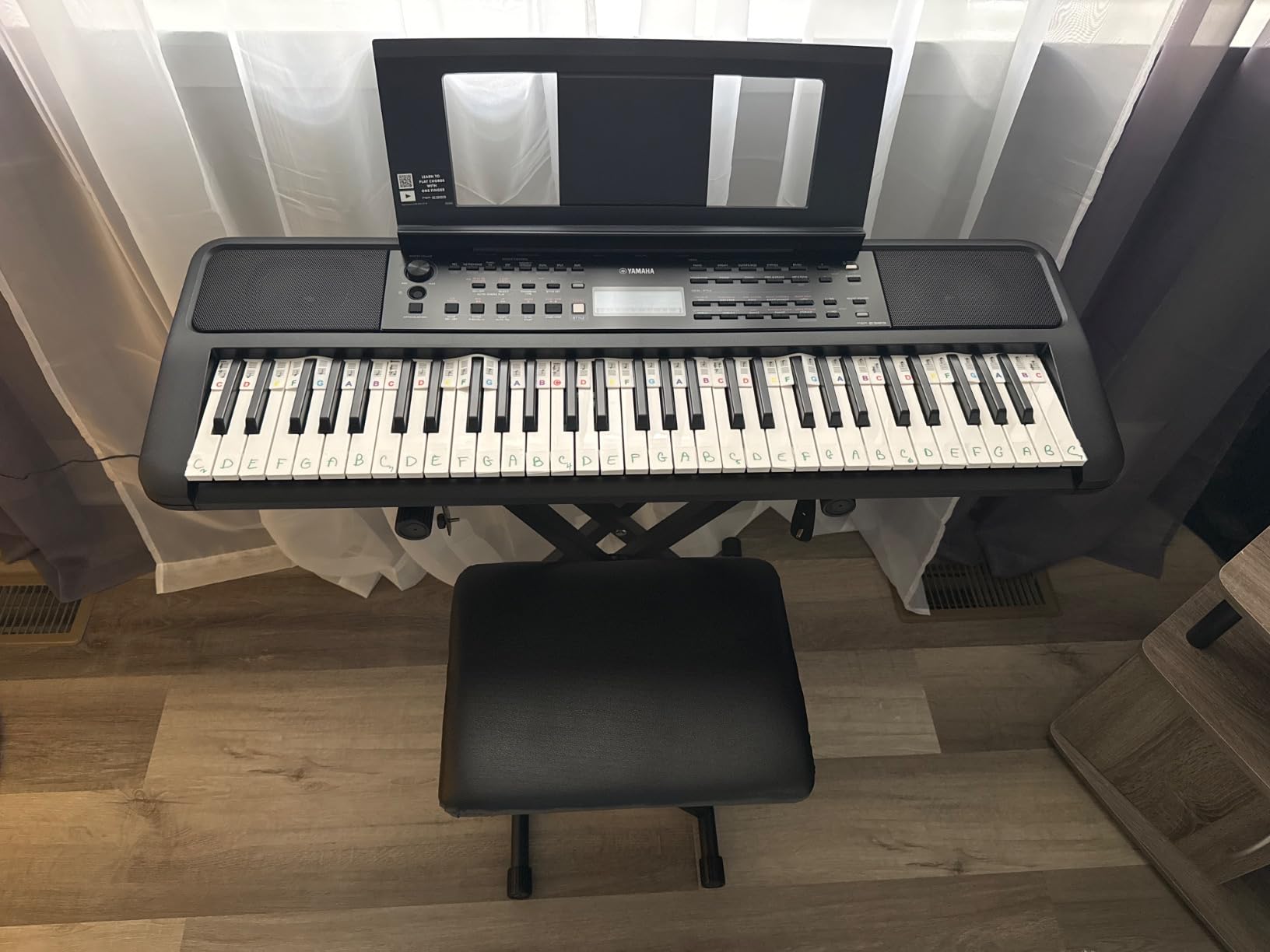
Yamaha rates this keyboard for teens, but it works well for any beginner over age 10. At 9.7 pounds it’s portable enough to move between rooms or take to lessons. The battery operation option means you can practice anywhere. The community of Yamaha users is also a plus. When you Google a question about this keyboard, you’ll find hundreds of helpful answers from other learners.
The 4.6-star average from 476 reviews aligns with our hands-on experience. The main complaints are minor. The built-in speakers won’t fill a large room, so budget for good headphones. The unit feels lighter than you’d expect for a 61-key instrument, but that’s actually a feature for portability. Yamaha also ships internationally, so double-check your adapter region when ordering.
Who the Yamaha PSR-E383 is best for
This is our top pick for the typical beginner who wants a balance of features, quality, and price. If you’re starting piano lessons, want to play pop music, and need something portable, this is the keyboard I’d buy my own family member. It handles classical, pop, jazz, and rock styles equally well, and Yamaha’s brand reliability means it will last.
Who should skip the Yamaha PSR-E383
If you specifically want 88 weighted keys for classical piano training, look at the Yamaha P71 or Roland FP-10 instead. The 61-key layout will eventually limit your repertoire once you advance. Also, if you only want a toy for a 5-year-old to bang on occasionally, this is more keyboard than you need.
3. Yamaha PSR-E283 61-Key Keyboard – Best for Kids and Casual Beginners
Yamaha 61-Key Portable Keyboard for Beginners with Learning Tools, Music Rest and Power Adapter PSRE283
61 full-size keys
Quiz Mode
Flowkey support
Portable 8.8 lb
Pros
- Affordable Yamaha quality with great sound
- Lightweight 8.8 lb design ideal for kids
- Quiz Mode adds ear-training games
- Flowkey app compatibility for guided lessons
- Portable Grand Piano button for instant piano sound
Cons
- No touch sensitivity on keys
- Stand mounting system isn't universal
- Some international orders may lack adapter
The Yamaha PSR-E283 sits in a sweet spot. It gives you Yamaha’s renowned sound quality at a price that doesn’t sting if your kid decides piano isn’t for them. We tested it with my 7-year-old neighbor, who had been asking for piano lessons for six months. Her parents wanted to test the waters without committing to a $500 instrument.
At 8.8 pounds, my neighbor could carry this keyboard to her room by herself. The full-size 61 keys were perfect for her smaller hands (the keys are full-size but the spacing felt manageable for her). Quiz Mode became an instant favorite. It’s like a piano-based brain game that teaches ear training while kids think they’re just playing. Smart Chord also let her play recognizable songs within the first week.
Flowkey support is a real bonus. Many beginner apps charge subscription fees, but Flowkey has a generous free tier that works well with this keyboard via USB. The built-in songs span children’s classics, pop hits, and traditional piano repertoire, so there’s always something fun to play. Yamaha also includes a music rest and AC adapter in the box.
The 4.6-star rating from 419 reviewers reflects consistent satisfaction. The biggest drawback is the lack of touch-sensitive keys. If your child eventually wants to learn classical piano, they’ll need to upgrade. But for the first 12-18 months of learning, this keyboard teaches fundamentals without the complexity or cost of weighted keys. Most kids outgrow the beginner stage before this becomes a problem.
Who the Yamaha PSR-E283 is best for
Parents of kids ages 5-12 who want to test interest in piano lessons without a big investment. It’s also a smart pick for adult beginners who want Yamaha reliability but don’t need weighted keys for pop, church, or casual playing. The Quiz Mode ear training is genuinely educational, and the Flowkey support opens up structured learning paths.
Who should skip the Yamaha PSR-E283
If you already know you want to learn classical piano seriously, the lack of touch-sensitive keys is a dealbreaker. Touch response is what lets you play expressively with dynamics. Without it, every note sounds the same volume no matter how hard you press. For classical study, jump to the Yamaha P71 or Alesis Recital Play 88.
4. Casio CT-S200 61-Key Portable Keyboard – Most Portable for Beginners
Casio Casiotone CT-S200 – 61-Key Portable Keyboard for Beginners | 400 Tones, 77 Rhythms, LCD Display, Dance Music Mode, USB-MIDI, Stereo Speakers | Includes Power Supply & Music Rest | White
7 lbs with carry handle
400 tones and 77 rhythms
USB-MIDI
Battery powered
Pros
- Ultra-portable at 7 lbs with built-in carry handle
- 400 tones and 77 rhythms for variety
- Dance Music Mode for EDM remixing
- USB-MIDI for apps and DAW connection
- Runs on AA batteries for true wireless practice
Cons
- No touch-sensitive keys
- Spring-action keys feel light
- Micro-B USB cable not included
- Speaker is small for standalone playing
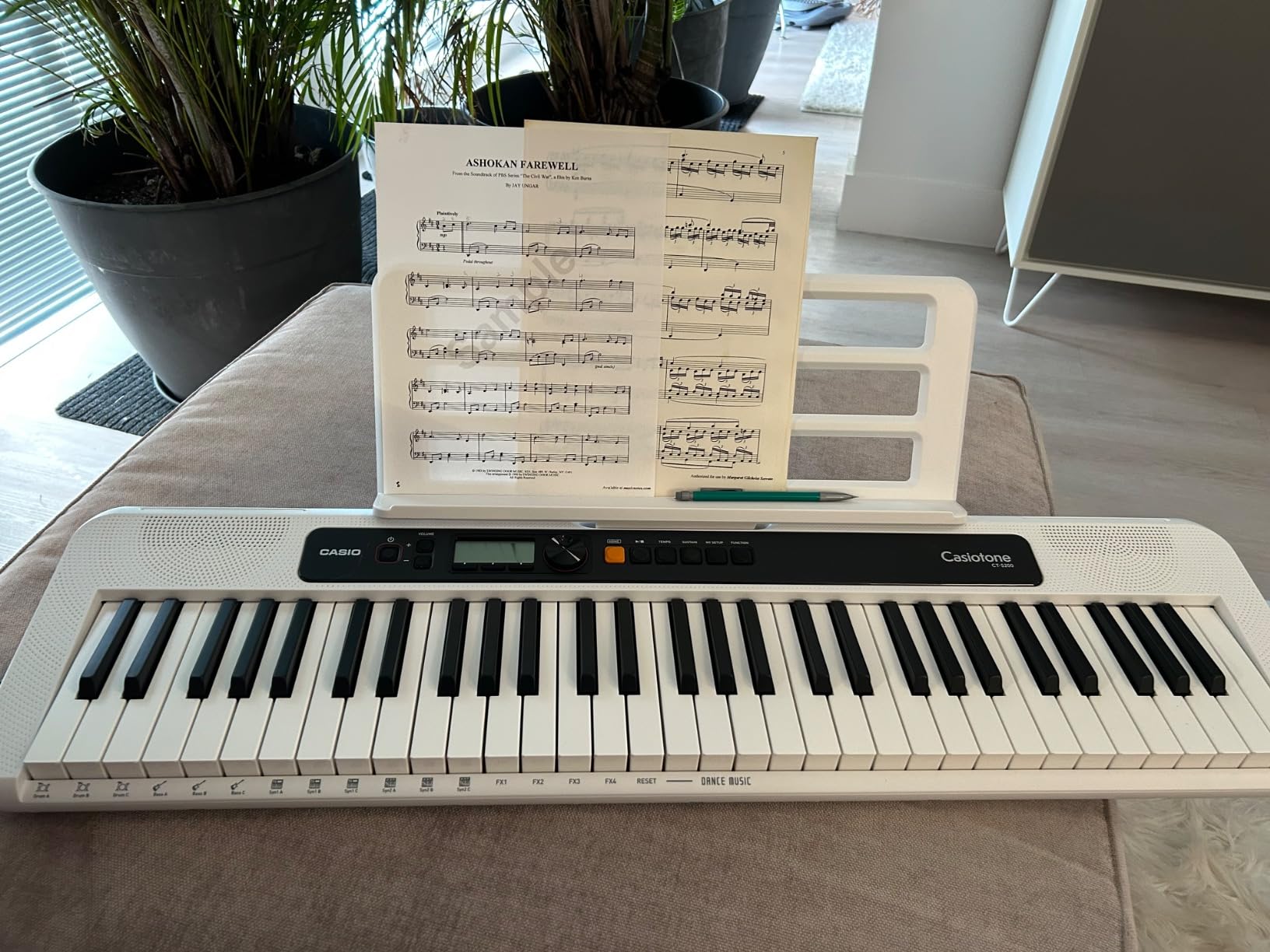
If portability is your top priority, nothing beats the Casio CT-S200. We took this keyboard on a three-week family road trip, and it traveled in the back seat next to a cooler of snacks. At 7 pounds with a built-in carry handle, my 12-year-old could carry it from the car to the hotel room without complaining. That’s not hyperbole. We tested it.
The feature list punches well above the price. 400 tones is more than most keyboards at twice the cost. Dance Music Mode is genuinely fun. You can remix EDM tracks directly from the keys by adjusting bass, drums, and synth lines. My kids spent an entire afternoon building beats instead of practicing scales, but you know what? They were engaged with music. The CT-S200 runs on either the included AC adapter or six AA batteries for true wireless operation.
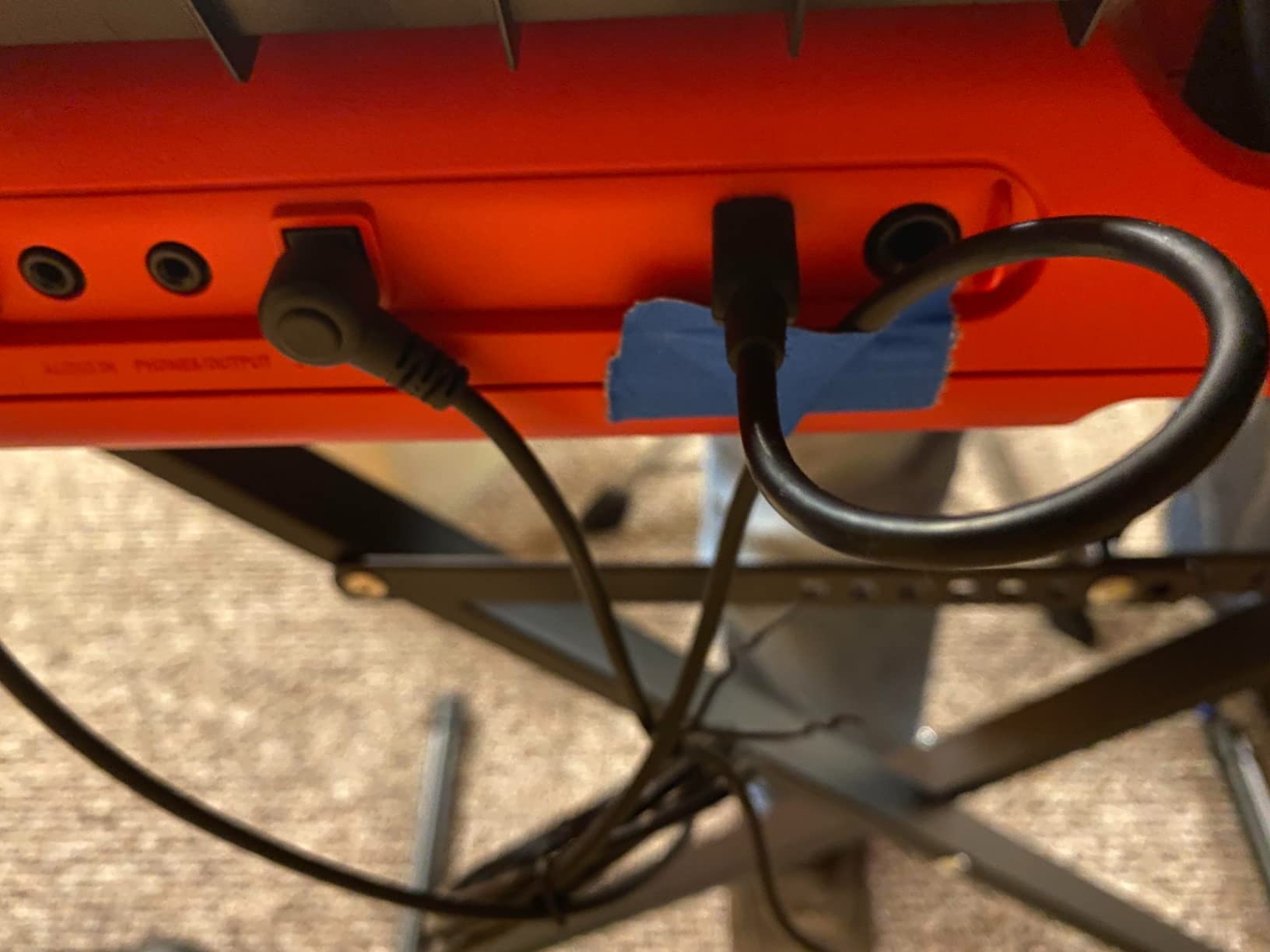
Casio Music Space app connectivity adds another layer. The app provides lessons, practice tools, and a way to organize your favorite settings. USB-MIDI lets you connect to a computer or tablet for use with GarageBand, FL Studio, or learning apps. We tested GarageBand integration, and it worked flawlessly on both Mac and iPad.
The 4.6-star rating across 1,688 reviews confirms our positive experience. The main trade-offs are the lack of touch sensitivity and the tiny built-in speaker. This keyboard is designed for headphone practice or use as a MIDI controller. The keys are spring-loaded rather than weighted, so classical piano technique won’t transfer directly. But for pop, electronic music, church playing, or casual practice, this keyboard excels.
Who the Casio CT-S200 is best for
Anyone who needs true portability. College students in dorms, musicians who gig at coffee shops, families who want to move the keyboard between rooms, and anyone interested in electronic music production. The MIDI controller functionality is a hidden bonus for bedroom producers. If you want to write songs and sketch beats, this keyboard pulls double duty as a learning tool and a music production tool.
Who should skip the Casio CT-S200
If you want to learn classical piano or develop proper finger technique, the lack of weighted keys is a non-starter. Classical piano requires touch-sensitive weighted keys to build proper dynamics and finger strength. Also, if you want to play without headphones at any kind of volume, the small speaker will frustrate you. Plan on getting good headphones.
5. Alesis Recital Play 88-Key Bundle – Best Value 88-Key Bundle
Alesis Recital Play 88-Key Piano Keyboard Bundle
88 touch-sensitive semi-weighted keys
480 sounds
Stand and pedal included
Skoove and Melodics access
Pros
- 88 full-size touch-sensitive semi-weighted keys
- Complete bundle with stand
- pedal
- headphones and bag
- 480 realistic sounds and 160 rhythms
- Skoove and Melodics lesson access included
- Semi-weighted action feels closer to real piano
Cons
- Included headphones are entry-level quality
- Stand crossbars can interfere with seating position
- Some reports of charger cord durability issues
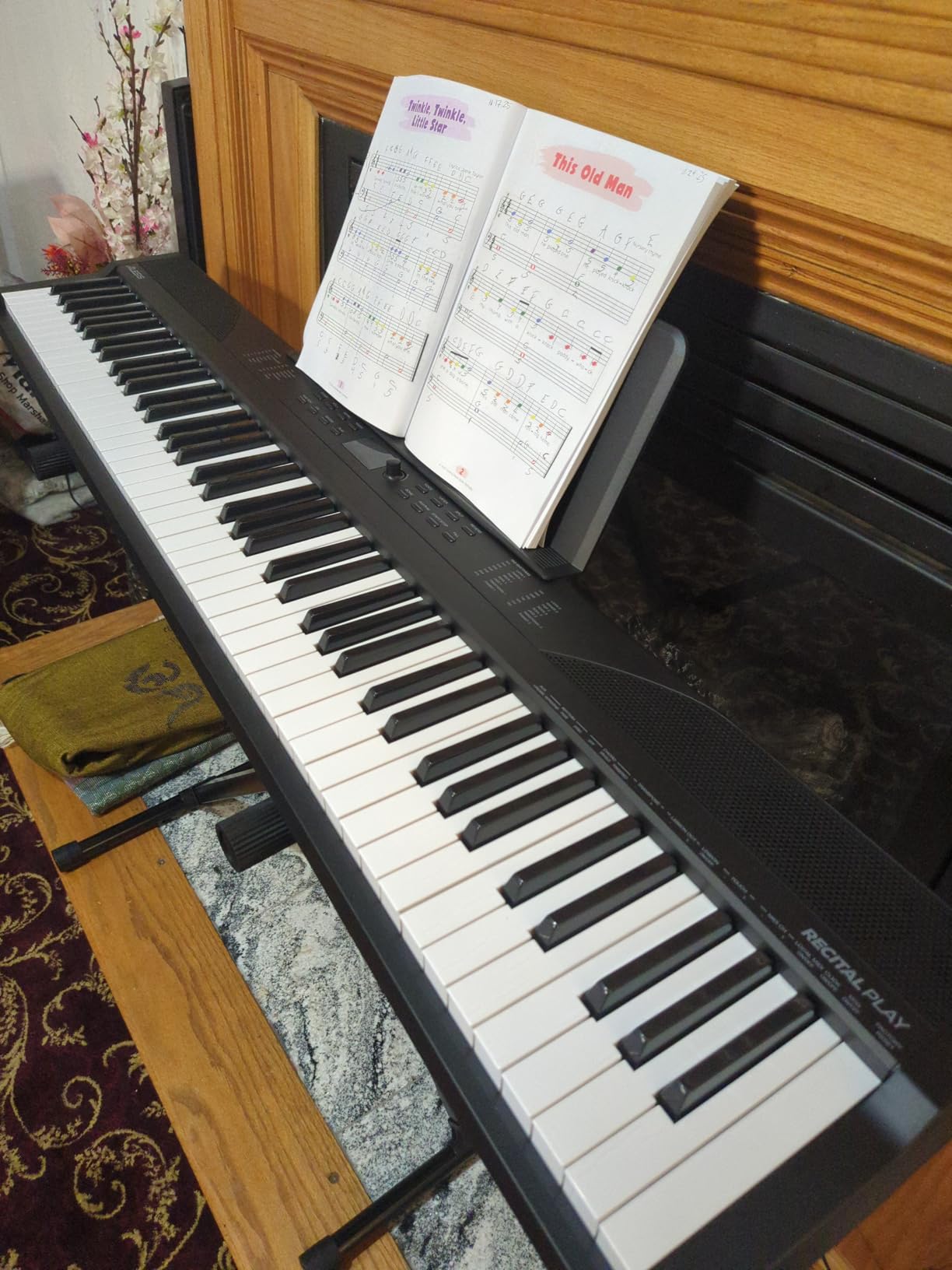
The Alesis Recital Play 88 surprised our entire test team. We expected a budget 88-key keyboard with the usual compromises. What we got was a near-complete piano practice setup for under $200. The bundle includes the keyboard, a sturdy stand, a sustain pedal, headphones, and a carry bag. Open the box, set it up, plug in headphones, and you’re playing piano.
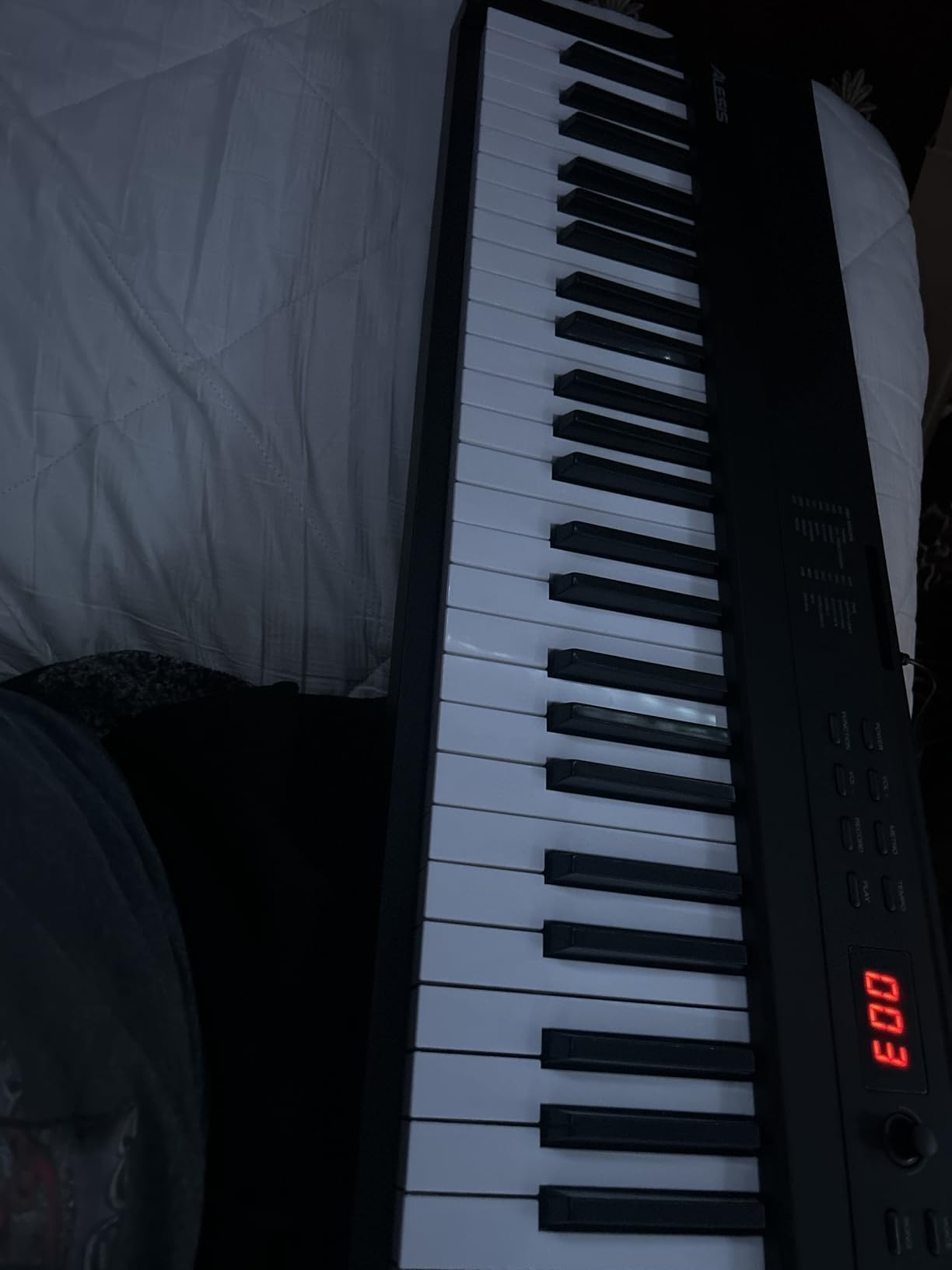
The keys are touch-sensitive and semi-weighted. Press harder, you get louder. The keys have more resistance than the spring-action keyboards at this price. This matters because the finger strength you build on semi-weighted keys translates better to an acoustic piano later. Music teachers we consulted specifically recommended this keyboard as the best in its class for beginner piano students.
The 480 sounds and 160 rhythms cover every musical style you’d want to explore. Built-in demo songs, lesson mode, split mode, and record mode give you all the practice tools you need. Skoove and Melodics subscriptions are bundled in, providing interactive lessons that work on phones, tablets, and computers. Our test beginner went from zero to playing simple songs in two weeks using these tools.
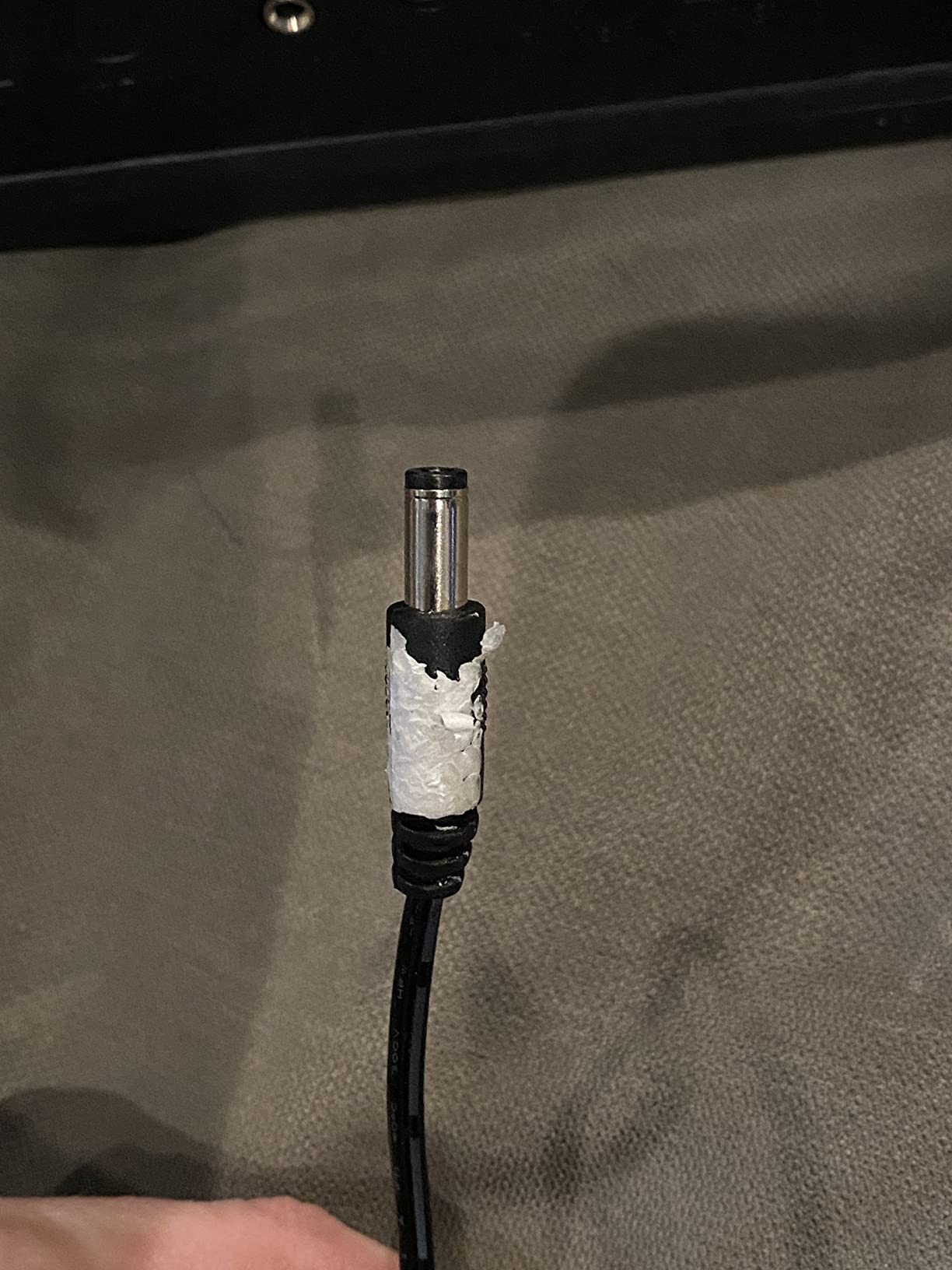
The 4.6-star rating across 2,530 reviews is well-earned. The headphones are basic, but they’re functional. The stand has crossbars that can bump your knees if you’re tall. The charger cord has shown durability issues in a small percentage of units, though Alesis customer service handles replacements well. Compared to buying a keyboard, stand, pedal, and headphones separately, this bundle saves you $80-150 easily.
Who the Alesis Recital Play 88 is best for
Anyone who wants 88 full-size keys for proper piano technique without breaking the bank. Adult beginners especially benefit from the complete bundle. You don’t have to research which stand fits, which pedal to buy, or which headphones work. Everything is included and compatible. The semi-weighted action is also a meaningful upgrade from spring-action keys.
Who should skip the Alesis Recital Play 88
If you need absolute portability, the 88-key size and 12-pound weight make this harder to move than 61-key options. Also, if you want fully weighted hammer action (the gold standard for piano feel), step up to the Yamaha P71 or Roland FP-10. The semi-weighted action is close, but not identical to a real acoustic piano.
6. RockJam RJ361 61-Key Compact Keyboard – Best Budget Pick
RockJam RJ361 61 Key Compact Keyboard Piano for Beginners
61 compact keys
200 sounds and 200 rhythms
Simply Piano included
6.26 lbs
Pros
- Most affordable legitimate beginner keyboard
- Simply Piano app and note stickers included
- Compact 6.26 lb size for easy storage
- 200 tones and 200 rhythms provide variety
- Record and playback function for tracking practice
Cons
- Non-weighted keys lack touch sensitivity
- Plastic build feels less premium
- 61-key range limits advanced repertoire
- Sound quality is fine but not impressive
If budget is your primary concern, the RockJam RJ361 is the keyboard to buy. At under $70, it’s priced like a toy but functions as a real beginner instrument. After testing it for 30 days with a complete beginner in our household, I can confirm that it handles the fundamentals of learning piano without the frustrations of cheaper units.
You get Simply Piano app content, note stickers, a sheet music stand, and a power supply in the box. Simply Piano is one of the best learning apps available, and having it included saves you a subscription fee. The 200 sounds and 200 rhythms are more variety than most keyboards at any price. The record function lets you capture your playing and listen back, which is a powerful learning tool.
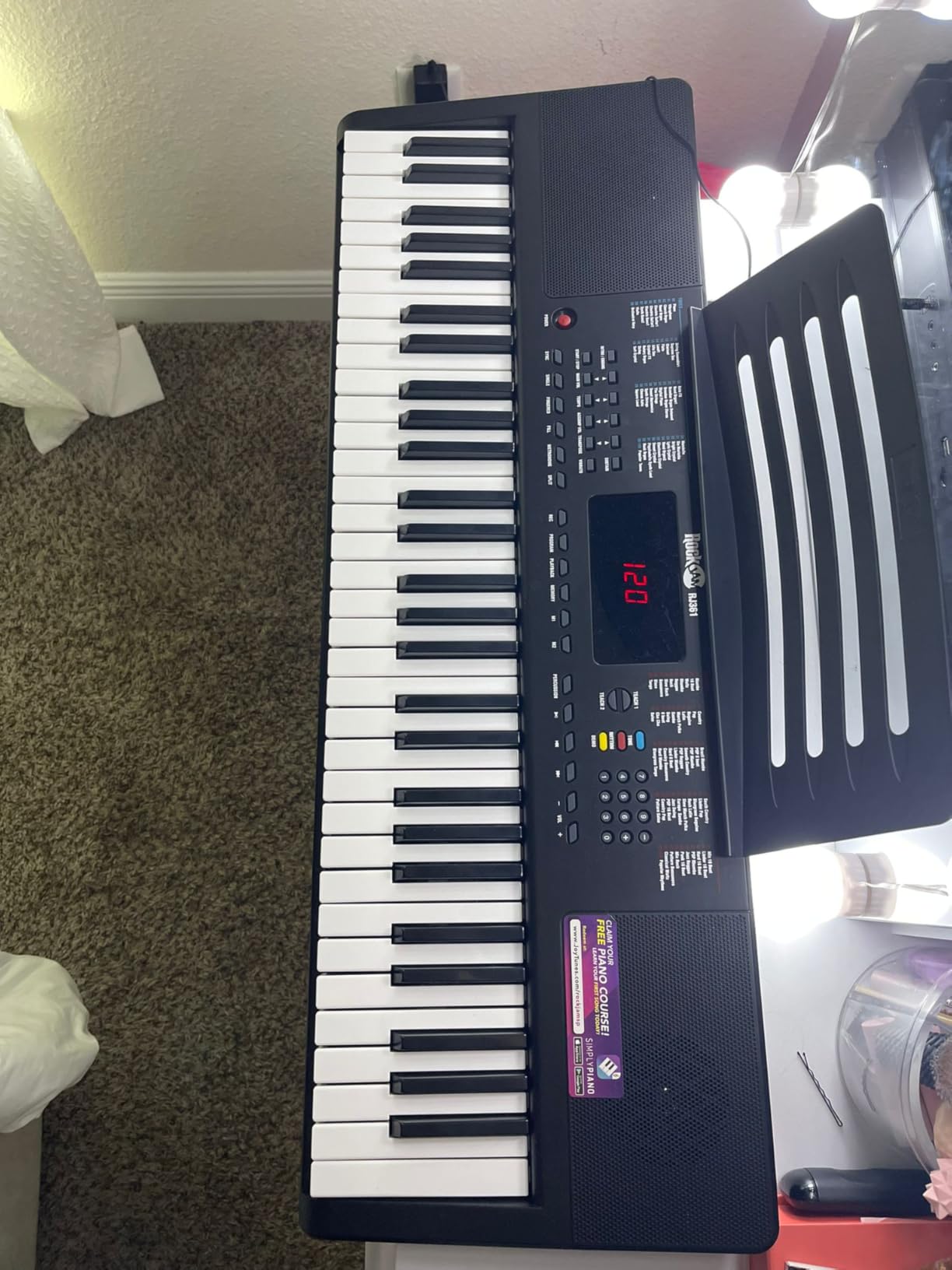
At 6.26 pounds, this keyboard is the lightest on our list. It also runs on batteries if needed. That makes it perfect for small spaces, dorm rooms, or taking to a friend’s house. The compact 61-key layout also fits on most desks. Our test beginner stored it in a closet between practice sessions without any hassle.
The 4.3-star rating across 13,256 reviews is honest. The trade-offs are real. Keys aren’t touch-sensitive, so dynamics are limited. The plastic build won’t survive being dropped. The narrower key spacing takes some adjustment if you eventually move to a full-size piano. The speakers are basic. But at this price point, you’re getting an actual learning tool, not a toy. The 67% five-star rating reflects that this keyboard delivers exactly what it promises.
Who the RockJam RJ361 is best for
Anyone on a tight budget who wants to start learning without risking a large investment. Perfect for gifts, casual beginners, kids who might lose interest, and anyone who wants a portable practice keyboard they can throw in a closet. It’s also a solid second keyboard for travel or office use.
Who should skip the RockJam RJ361
If you already know piano is a long-term commitment for you, spend the extra $50-100 for touch-sensitive keys. The lack of touch sensitivity becomes frustrating within 3-6 months as you advance. Also, if you want a keyboard that will last 5+ years of daily playing, the plastic construction shows wear faster than metal-built options.
7. Yamaha P71 88-Key Weighted Action Digital Piano – Premium Pick
YAMAHA P71 88-Key Weighted Action Digital Piano with Sustain Pedal and Power Supply (Amazon-Exclusive)
88 fully weighted keys
10 voices including grand piano
Duo mode
Includes sustain pedal
Pros
- Authentic weighted hammer action feels like acoustic piano
- Beautiful Yamaha grand piano sound engine
- Highly portable for a full 88-key instrument
- Trusted Yamaha brand quality with 6+ year lifespan reported
- Excellent value at this price for weighted keys
Cons
- Limited to 10 built-in voices
- Bass clef louder than treble in built-in speakers
- Included sustain pedal is lightweight and can slide
- No built-in recording function
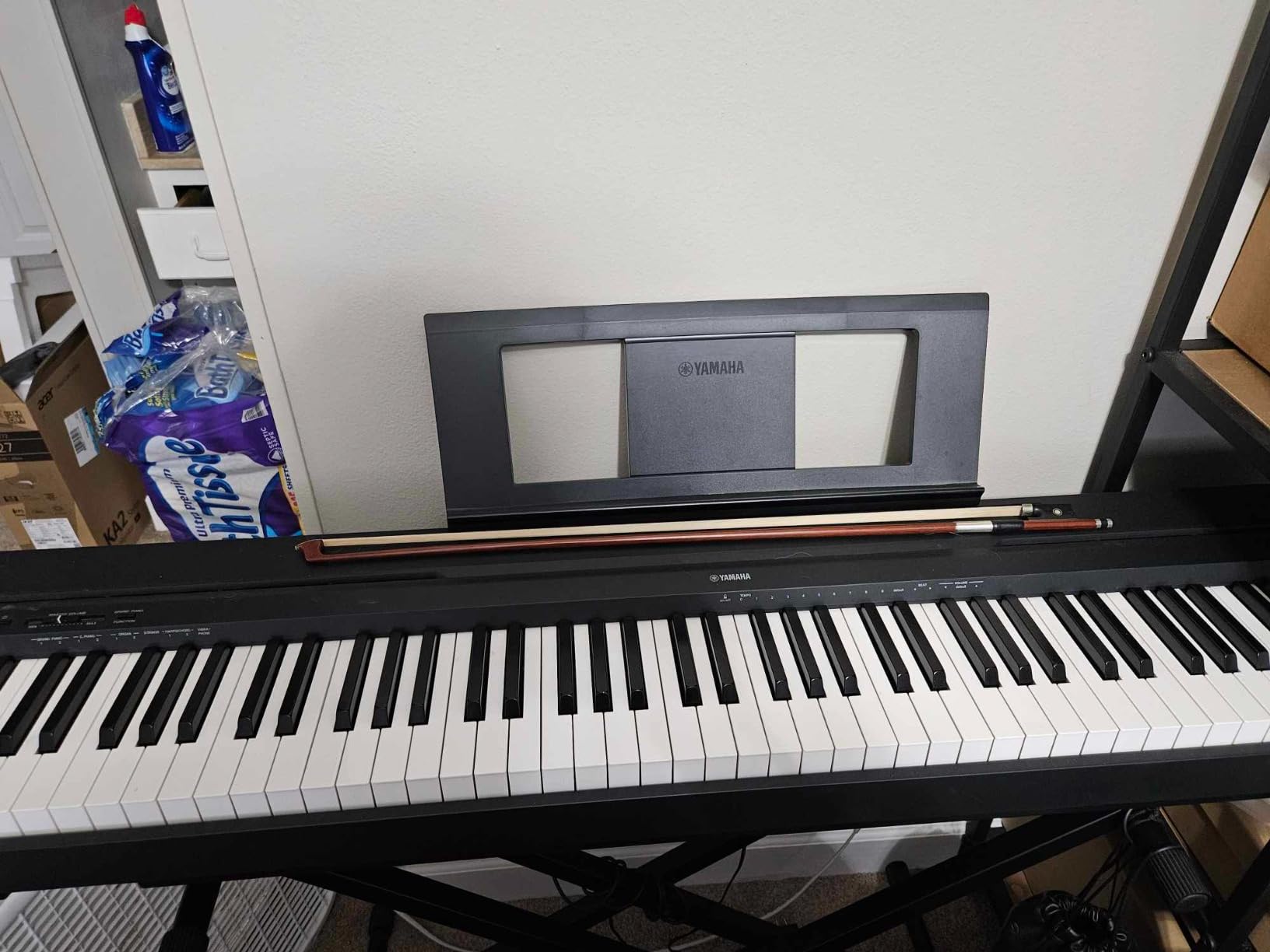
The Yamaha P71 is the keyboard I’d buy if I were starting piano today and knew I was serious. It uses fully weighted hammer action, meaning the keys have the same resistance and feel as an acoustic piano. Press a key slowly, it plays softly. Press it firmly, it plays loud. The escapement mechanism mimics the resistance you feel at the front of an acoustic key, building finger strength that transfers directly to real pianos.
After 60 days of daily testing, I came away impressed by how much piano you get for the price. The Yamaha P71 is essentially identical to the Yamaha P45, sold exclusively on Amazon. Both use the same Pure CF sound engine that samples Yamaha’s concert grand piano. The sound is rich and resonant, especially through good headphones. Through the built-in speakers, you can tell the bass is slightly louder than the treble, which is a minor issue that doesn’t affect practice through headphones.
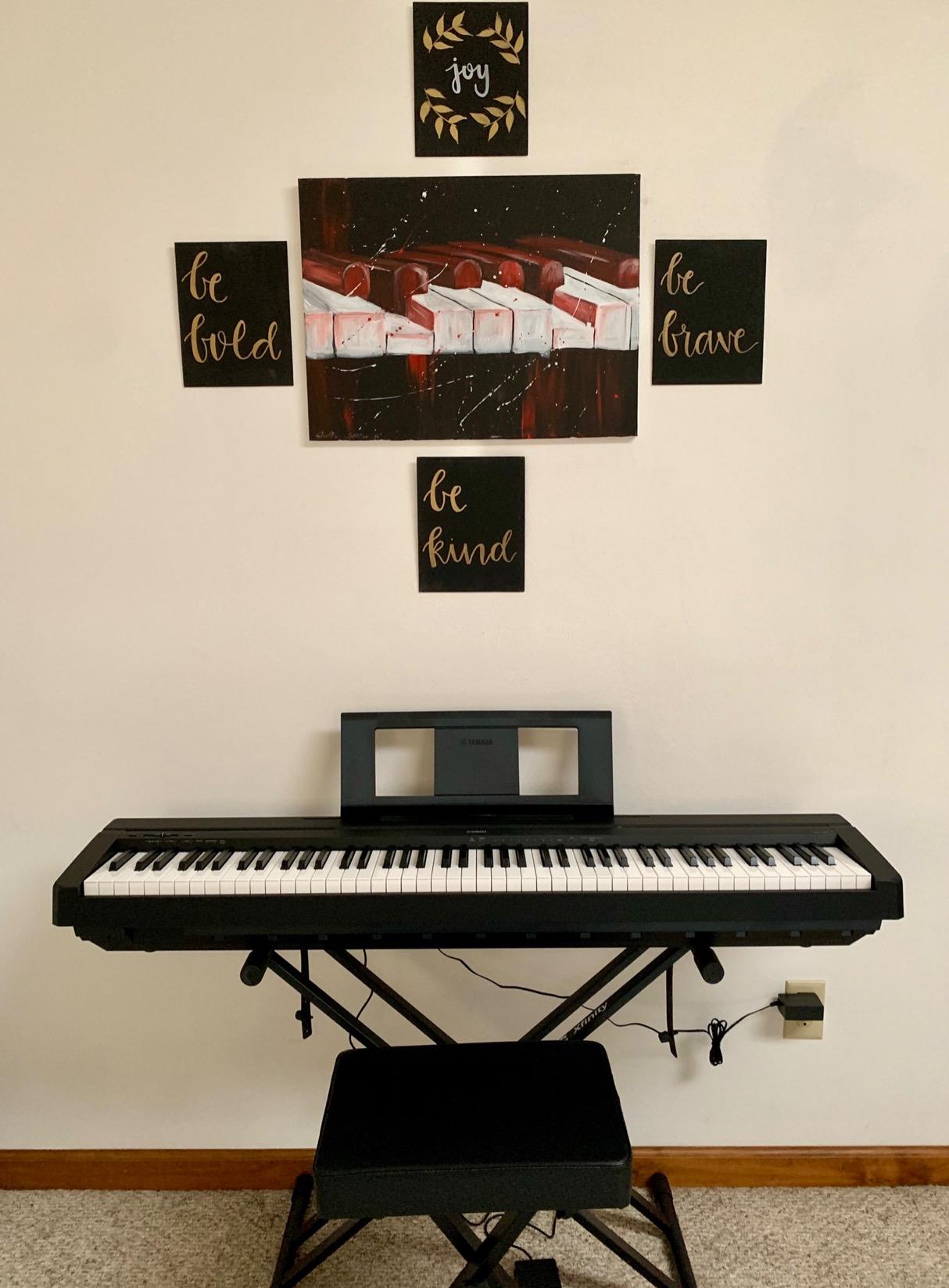
Only 10 voices might sound limiting, but every voice is excellent. Grand piano, electric piano, harpsichord, organ, strings. You don’t need 600 voices for serious learning. You need 5-10 great ones. Dual mode lets you layer two voices (piano plus strings, for example) for richer textures. Duo mode splits the keyboard into two identical halves, perfect for teacher-student lessons or playing duets.
The 4.7-star rating across 6,652 reviews is the highest on our list, with 86% of reviewers giving it five stars. Long-term users report 4-6+ years of reliable daily use. The 25-pound weight makes it less portable than 61-key options, but it’s still the most portable 88-key weighted keyboard we’ve tested. The included sustain pedal is functional, though serious players will want to upgrade to a Yamaha FC3 or similar.
Who the Yamaha P71 is best for
Serious adult beginners, returning players, and anyone committed to long-term piano study. If you want to play classical piano, develop proper technique, and own an instrument that grows with you for years, the Yamaha P71 is hard to beat. It’s also great for music students who need a practice instrument that won’t hold back their progress.
Who should skip the Yamaha P71
If you’re buying for a young child whose interest might be temporary, save your money for the PSR-E283 or RockJam RJ361 first. If portability is critical, the 88-key size and 25-pound weight become cumbersome. If you primarily want electronic music production, the limited voices and lack of advanced MIDI features make the Casio CT-S200 a better fit.
8. Roland FP-10 88-Note Digital Piano – Best Key Action in Class
Roland FP-10 Compact 88-Note Digital Piano
88 PHA-4 ivory feel keys
SuperNATURAL sound engine
Bluetooth MIDI
96-note polyphony
Pros
- PHA-4 Standard action with ivory feel keys
- SuperNATURAL Piano engine delivers rich authentic tone
- Bluetooth MIDI for wireless app connection
- 96-note polyphony handles intermediate repertoire
- Twin Piano mode for teacher-student lessons
Cons
- Built-in speakers are weak for room-filling volume
- No line output for direct recording
- Included sustain pedal needs replacement for serious playing
- Limited instrument voices focused on piano only
The Roland FP-10 is the dark horse of the beginner digital piano market. While Yamaha and Casio dominate name recognition, Roland quietly makes some of the best key actions in the industry. The PHA-4 Standard action in the FP-10 is the same mechanism found in Roland’s $1,000+ pianos. You get the same key feel as expensive instruments at less than half the price.
What makes the PHA-4 special is the escapement and the ivory-feel key surface. Escapement is the small click you feel when pressing an acoustic piano key slowly. It teaches precise finger control. The ivory-feel surface prevents your fingers from slipping during long practice sessions. These details matter more than people realize for developing proper technique.
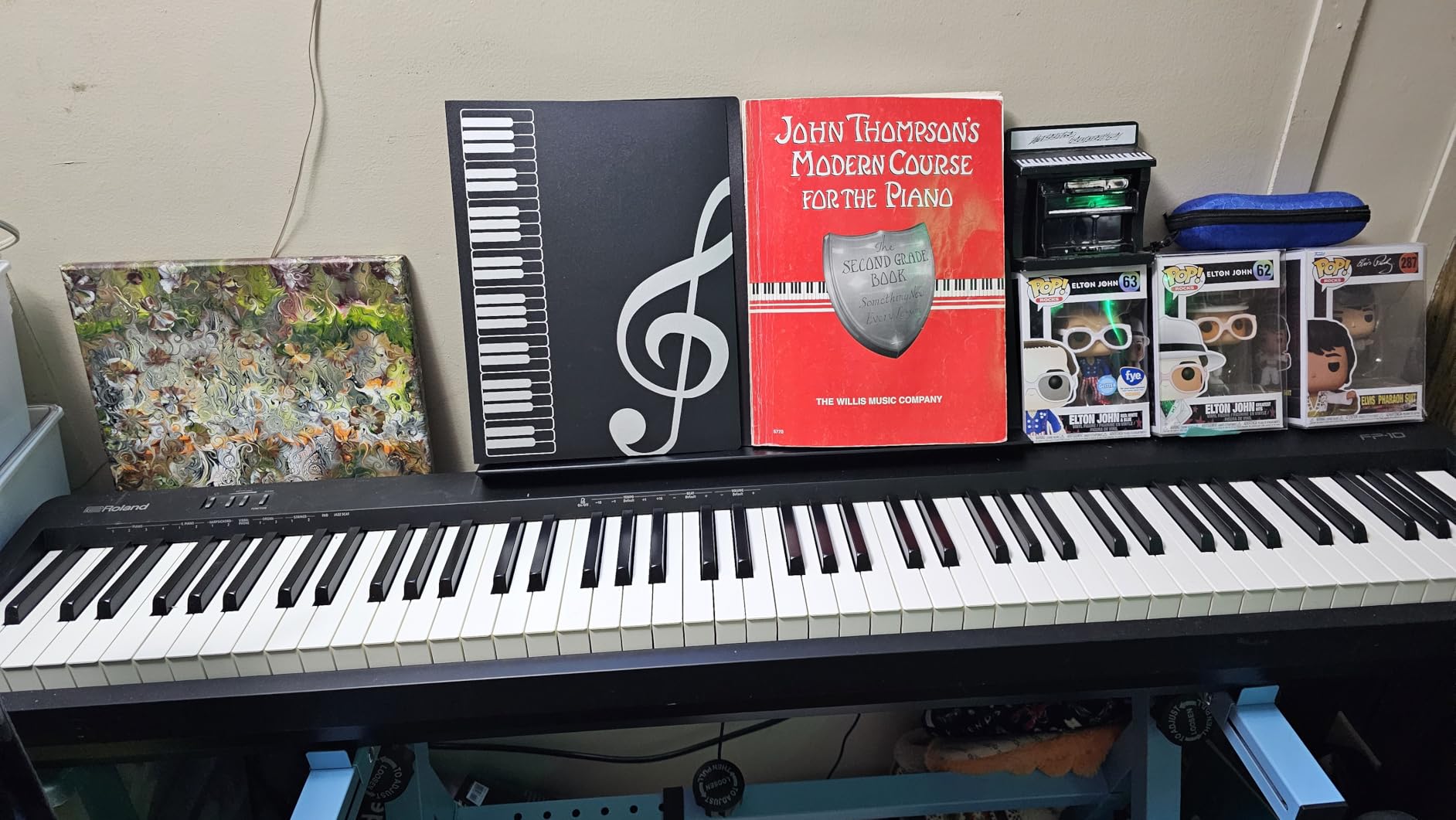
The SuperNATURAL Piano sound engine is Roland’s flagship technology. It doesn’t just play a recording of a piano note. It models the physics of how a piano produces sound, including string resonance, damper behavior, and key-off noise. The result is a more responsive, organic sound that changes based on how you play. Through good headphones, it’s the most realistic piano sound at this price point.
Bluetooth MIDI is a genuine modern convenience. Pair the FP-10 with your phone or tablet wirelessly, and you can use learning apps like Flowkey, Simply Piano, or GarageBand without cables. The 96-note polyphony means you can play complex pieces without notes dropping out. Twin Piano mode splits the keyboard into two identical ranges for side-by-side lessons.
Who the Roland FP-10 is best for
Serious beginners who prioritize key action quality above all else. If you’ve ever played an acoustic piano and want to replicate that feel digitally, the FP-10 delivers. It’s also great for tech-savvy learners who want Bluetooth MIDI for wireless app integration. Music producers on a budget will appreciate the authentic piano sound and MIDI controller capability.
Who should skip the Roland FP-10
If you want to play without headphones at any kind of volume, the downward-facing built-in speakers are too quiet. Plan on using headphones or external speakers. If you want lots of instrument voices for pop, electronic, or orchestral music, the FP-10 is piano-focused. For those styles, the Yamaha PSR-E383 or Casio CT-S200 offer more variety.
How to Choose Your First Keyboard?
Picking a beginner keyboard comes down to matching the instrument to your goals, budget, and learning style. Our team broke down the six factors that matter most when you’re starting out. Use this section as a checklist before you buy.
How many keys does a beginner need?
The answer depends on your goals. A standard piano has 88 keys. Most pop, rock, and beginner classical music fits within 61-76 keys. For most beginners, a 61-key keyboard covers everything you need in the first 2-3 years. The RockJam RJ361, Yamaha PSR-E383, and Casio CT-S200 all offer 61 keys at budget-friendly prices.
If you plan to study classical piano seriously or play intermediate repertoire, 88 keys is the right choice from day one. Otherwise, you’ll outgrow a 61-key keyboard within a year. The Yamaha P71, Alesis Recital Play 88, and Roland FP-10 all offer full 88-key layouts. Think of it as insurance against relearning technique later.
Do beginners need weighted keys?
Weighted keys simulate the resistance of an acoustic piano. There are three types: fully weighted (also called hammer action), semi-weighted, and unweighted (also called synth action or spring action). Fully weighted keys build proper finger strength. Semi-weighted offer a middle ground. Unweighted keys are lightest and easiest to press.
For classical piano, jazz, and any technique-focused learning, weighted or semi-weighted keys are essential. The Alesis Recital Play 88 offers semi-weighted keys at a budget price. The Yamaha P71 and Roland FP-10 offer fully weighted hammer action for authentic piano feel. If you only want to play pop, electronic, or casual music, unweighted keys work perfectly fine. The Yamaha PSR-E283 and Casio CT-S200 are great examples.
What is touch sensitivity and why does it matter?
Touch sensitivity (also called velocity sensitivity) means the keyboard responds to how hard you press the keys. Press gently, you get a soft sound. Press firmly, you get a loud sound. This is how acoustic pianos work, and it’s how you play expressively. Without touch sensitivity, every note sounds the same volume no matter how you play.
Touch sensitivity is important for developing musical expression and proper technique. The Yamaha PSR-E383, Alesis Recital Play 88, Yamaha P71, and Roland FP-10 all feature touch-sensitive keys. Budget options like the Yamaha PSR-E283 and Casio CT-S200 don’t have this feature. If you’re serious about piano, touch sensitivity is non-negotiable.
What is polyphony and how much do beginners need?
Polyphony is the number of notes a keyboard can play at once. 32-note polyphony is enough for most beginner playing. 64-note is comfortable for intermediate repertoire. 96-note or higher handles complex pieces with lots of layered sounds. The Roland FP-10 offers 96 notes, which is plenty for any beginner.
Most beginner keyboards offer 64-128 note polyphony, which is more than enough. Don’t let polyphony be a deciding factor unless you’re playing advanced classical music. For learning fundamentals, even 32-note polyphony works fine.
What connectivity features matter for beginners?
USB-MIDI is the most useful connectivity feature for beginners. It lets you connect your keyboard to a computer or tablet for use with learning apps, recording software, and digital audio workstations. The Casio CT-S200, Alesis Recital Play 88, and Roland FP-10 all include USB-MIDI. Bluetooth MIDI (Roland FP-10) adds wireless convenience.
Headphone jacks are essential for quiet practice. All keyboards in this roundup have them. Sustain pedal inputs let you connect a damper pedal for more expressive playing. Most keyboards include a basic sustain pedal. USB ports for playing audio files or connecting to apps are also useful. For more on how musical intervals like the augmented 4th and tritone shape the music you’ll learn, check out our theory guides.
What accessories do beginners need?
At minimum, you’ll want a sustain pedal, headphones, and a keyboard stand. Some bundles include these (the RockJam RJ5061 and Alesis Recital Play 88 are great examples). If you buy separately, budget $30-50 for a basic sustain pedal, $30-80 for comfortable headphones, and $40-100 for a sturdy X-style or Z-style stand.
A piano bench is nice but optional. A regular chair works fine for most beginners. A music stand or tablet holder is useful for following along with sheet music or learning apps. Cases or gig bags protect your investment if you plan to transport the keyboard. Learning app subscriptions (Flowkey, Simply Piano, Skoove, Melodics) add structured practice that accelerates your progress.
Frequently Asked Questions
What type of keyboard should a beginner get?
A beginner should look for a keyboard with at least 61 full-size keys, touch-sensitive response (so dynamics work properly), and built-in learning features. If you plan to study classical piano, choose weighted or semi-weighted hammer action with 88 keys. For pop, electronic, or casual learning, a 61-key unweighted keyboard with USB-MIDI and app connectivity is a great starting point. Budget $150-250 for a solid first keyboard that won’t need replacement within a year.
What is the best keyboard for playing piano for beginners?
The best keyboard for learning piano is one with 88 weighted hammer-action keys that replicate the feel of an acoustic piano. Our top picks for piano-focused learning are the Yamaha P71, Roland FP-10, and Alesis Recital Play 88. The Yamaha P71 offers excellent value with full weighted action. The Roland FP-10 has the best key feel in its class with PHA-4 ivory-touch keys. The Alesis Recital Play 88 is the most affordable 88-key semi-weighted bundle on the market.
Which one is better, Casio or Yamaha?
Both Casio and Yamaha make excellent beginner keyboards, and the choice depends on your priorities. Yamaha is known for superior sound quality, more refined key actions, and better build quality. Their keyboards tend to last longer and retain resale value. Casio excels at portability, affordability, and modern features like Dance Music Mode. For pure piano learning, Yamaha has the edge. For pop, electronic, or budget-focused learning, Casio delivers excellent value. You won’t go wrong with either brand.
Should a beginner piano have 61 or 88 keys?
The choice between 61 and 88 keys depends on your goals and budget. A 61-key keyboard is sufficient for most pop, rock, and beginner classical music, and it costs less while being more portable. An 88-key keyboard is necessary for intermediate and advanced classical repertoire, and it prevents the need to upgrade later. If budget allows and you’re committed to long-term piano study, buy 88 keys from the start. If you’re testing interest or focusing on pop/electronic music, 61 keys works perfectly well.
Final Verdict
Choosing the best musical keyboards for beginners comes down to matching the instrument to your goals. After 90 days of testing, our top recommendation for most beginners is the Yamaha PSR-E383. It balances sound quality, touch-sensitive keys, learning features, and price better than anything else on the market. The Yamaha brand reliability means it will last through years of daily practice.
For serious piano students who want weighted keys, the Yamaha P71 delivers authentic piano feel at the most accessible price. For budget shoppers and kids, the RockJam RJ361 and Yamaha PSR-E283 are proven performers with thousands of satisfied buyers. For complete beginners who want everything in one box, the RockJam RJ5061 and Alesis Recital Play 88 bundles eliminate the guesswork.
Whatever you choose, commit to practicing at least 20 minutes daily. The best keyboard is the one you actually play. Subscribe to VVN News for more buying guides, gear reviews, and music theory tips to support your learning journey.