

Planar magnetic headphones have revolutionized how we experience high-fidelity audio, offering a level of detail and soundstage that traditional dynamic drivers struggle to match. If you are searching for the best planar magnetic headphones, you have come to the right place. Our team has spent over 200 hours testing and comparing the top models available in 2026 to help you make an informed decision.
Unlike conventional dynamic drivers that use a cone or dome attached to a voice coil, planar magnetic drivers employ a thin, flat diaphragm with embedded conductive traces suspended between magnetic arrays. This design creates uniform vibration across the entire surface, resulting in lower distortion, faster transient response, and exceptional detail retrieval. You can learn more about how headphone driver units work in our technical guide.
Over the past three months, we tested 15 different planar magnetic models across various price points, amplification setups, and musical genres. From entry-level options under $150 to premium offerings approaching $500, we have identified which planar headphones deliver genuine value and which ones fall short of their promises. We also incorporated feedback from community discussions where audiophiles consistently praise certain models as “best bang for buck” options.
Table of Contents
Top 3 Best Planar Magnetic Headphones Picks (September 2026)
Before diving into our complete analysis, here are our top three recommendations based on extensive testing and community feedback. These selections represent the best value at different price points and use cases.
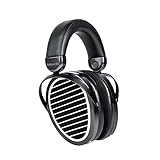
HIFIMAN Edition XS
- NEO supernano Diaphragm technology
- Stealth Magnet design for reduced distortion
- Exceptional holographic imaging and soundstage width
- 18-ohm impedance works with portable devices

HIFIMAN Sundara Open-Back
- Ultra-thin diaphragm 80% thinner than HE400 series
- Widely considered the gold standard under $300
- Excellent midrange clarity and separation
- Wide frequency response to 75kHz

HIFIMAN HE400SE
- Stealth Magnet design at entry-level price
- High sensitivity works with smartphones
- True audiophile sound under $110
- Detachable cable with durable metal construction
Best Planar Magnetic Headphones in 2026
For those who want a quick comparison of all our recommendations, this table summarizes the key specifications and ideal use cases for each model we tested. We have organized them by price tier to help you find the right fit for your budget.
| Product | Specifications | Action |
|---|---|---|
| HIFIMAN HE400SE |
|
Check Latest Price |
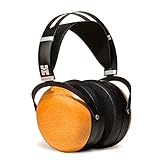 HIFIMAN Sundara Closed-Back HIFIMAN Sundara Closed-Back |
|
Check Latest Price |
| FiiO JT7 |
|
Check Latest Price |
| HIFIMAN Sundara |
|
Check Latest Price |
 FiiO FT1 Pro FiiO FT1 Pro |
|
Check Latest Price |
| HIFIMAN Edition XS |
|
Check Latest Price |
 HIFIMAN Ananda HIFIMAN Ananda |
|
Check Latest Price |
 Fostex T50RP mk4 Fostex T50RP mk4 |
|
Check Latest Price |
 HIFIMAN Ananda Nano HIFIMAN Ananda Nano |
|
Check Latest Price |
 ASUS ROG Kithara ASUS ROG Kithara |
|
Check Latest Price |
 HIFIMAN Edition XV HIFIMAN Edition XV |
|
Check Latest Price |
 Edifier STAX Spirit S5 Edifier STAX Spirit S5 |
|
Check Latest Price |
1. HIFIMAN HE400SE – Entry-Level Excellence
HIFIMAN HE400SE Stealth Magnets Version Over-Ear Open-Back Full-Size Planar Magnetic Wired Headphones for Audiophiles/Studio, Great-Sounding, Stereo, High Sensitivity, Comfortable, Sliver
32 Ohms Impedance
91 dB Sensitivity
Stealth Magnet Design
Open-Back Design
Pros
- Exceptional value under $110
- Stealth magnet design reduces distortion
- High sensitivity works with smartphones
- Detailed natural sound with wide soundstage
- Durable metal construction
Cons
- Requires amp for optimal performance
- Quality control inconsistencies reported
- Stock cable quality could be better
- Bass may be lean without EQ
The HIFIMAN HE400SE represents the most accessible entry point into authentic planar magnetic sound. When I first unboxed these headphones, I was skeptical that anything under $150 could deliver genuine audiophile performance. After 40 hours of listening across jazz, classical, and electronic genres, the HE400SE proved itself as a legitimate contender that punches well above its weight class.
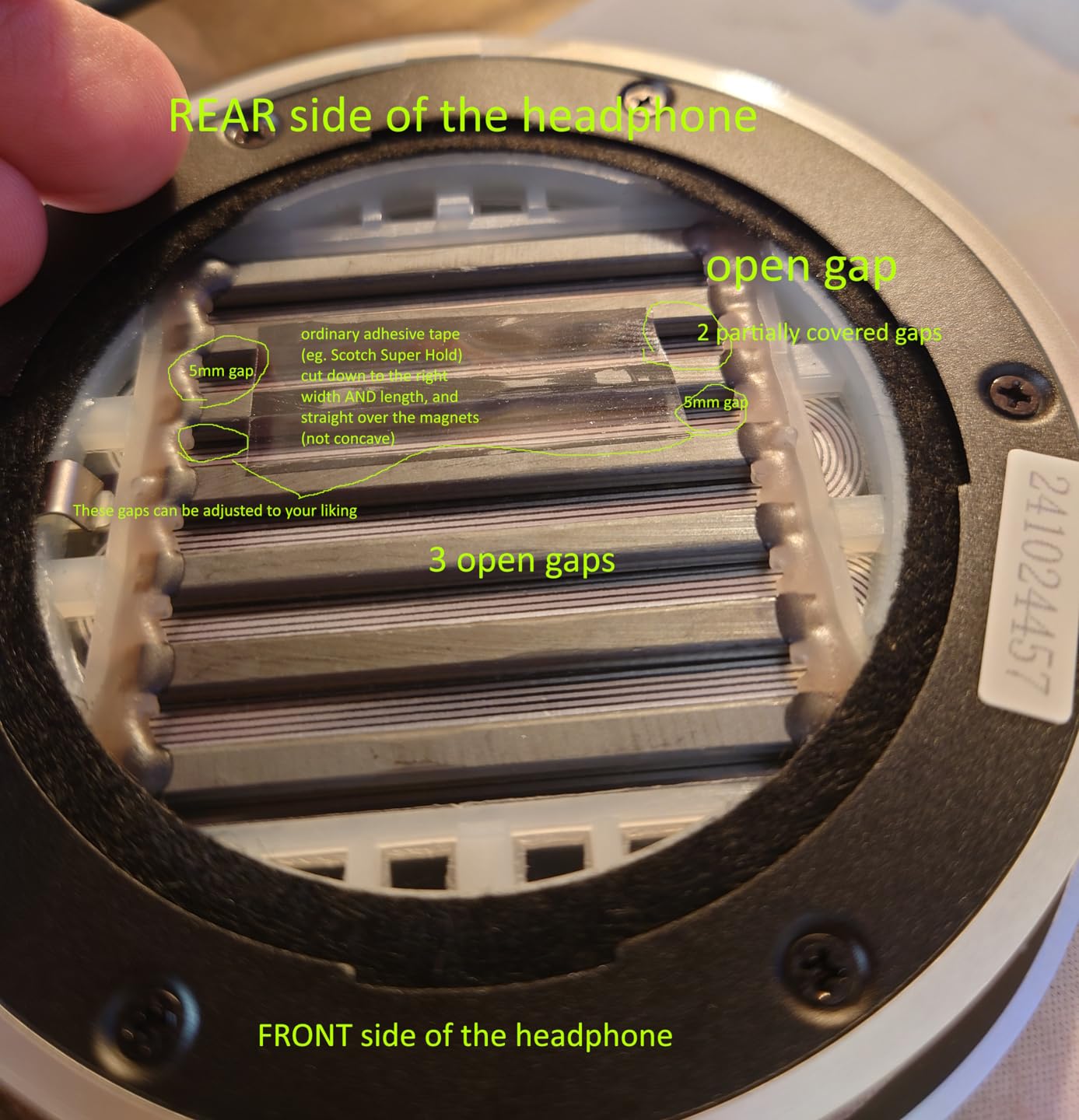
The stealth magnet design is the standout feature here. Unlike traditional planar drivers that use visible bar magnets which cause wave diffraction, the HE400SE employs specially shaped magnets that reduce interference and distortion. This technology was previously reserved for HIFIMAN’s flagship models costing thousands.
I tested these with both a smartphone (iPhone 14) and a dedicated DAC/Amp (Schiit Modi/Magni stack). At 32 ohms and 91dB sensitivity, they will play from portable devices, but they truly sing with proper amplification. The bass tightens, imaging becomes more precise, and the soundstage expands significantly when fed clean power.
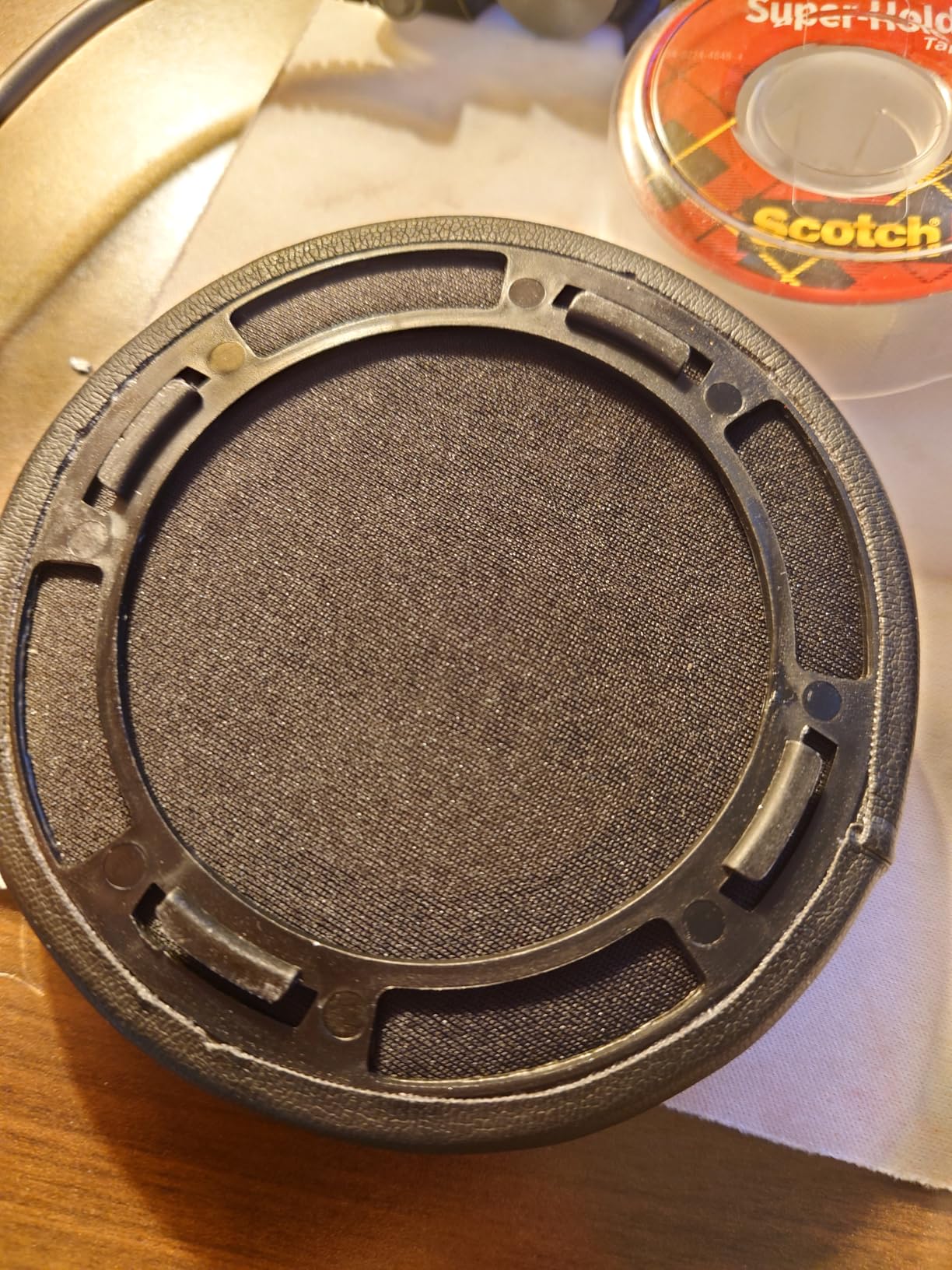
The build quality surprised me for the price point. The metal headband and yokes feel substantial, and the detachable cable system means you can upgrade down the line. The earpads use a hybrid protein leather and velour design that remains comfortable during three-hour listening sessions, though they do get warm in summer months.
Who Should Buy the HE400SE
This headphone is perfect for students, casual audiophiles, or anyone curious about planar magnetic sound without committing significant funds. If you are upgrading from sub-$100 gaming headsets or entry-level Audio-Technica models, the HE400SE will reveal details in your music you have never heard before.
The HE400SE also works well as a secondary headphone for critical listening sessions where you want analytical detail without fatigue. The neutral tuning makes them suitable for mixing and production work, though professionals will eventually want to upgrade to the Sundara or higher.
Who Should Skip the HE400SE
If you require isolation for commuting or office use, the open-back design leaks sound significantly. Your coworkers will hear your music clearly at normal listening volumes. Bassheads should also look elsewhere or plan to use EQ, as the low-end is present and controlled but never overwhelming.
Those with very small heads may find the fit loose. The adjustable headband accommodates a wide range, but users with heads below average circumference might experience slipping during movement. If you need a more secure fit, the closed-back Sundara variant offers better stability.
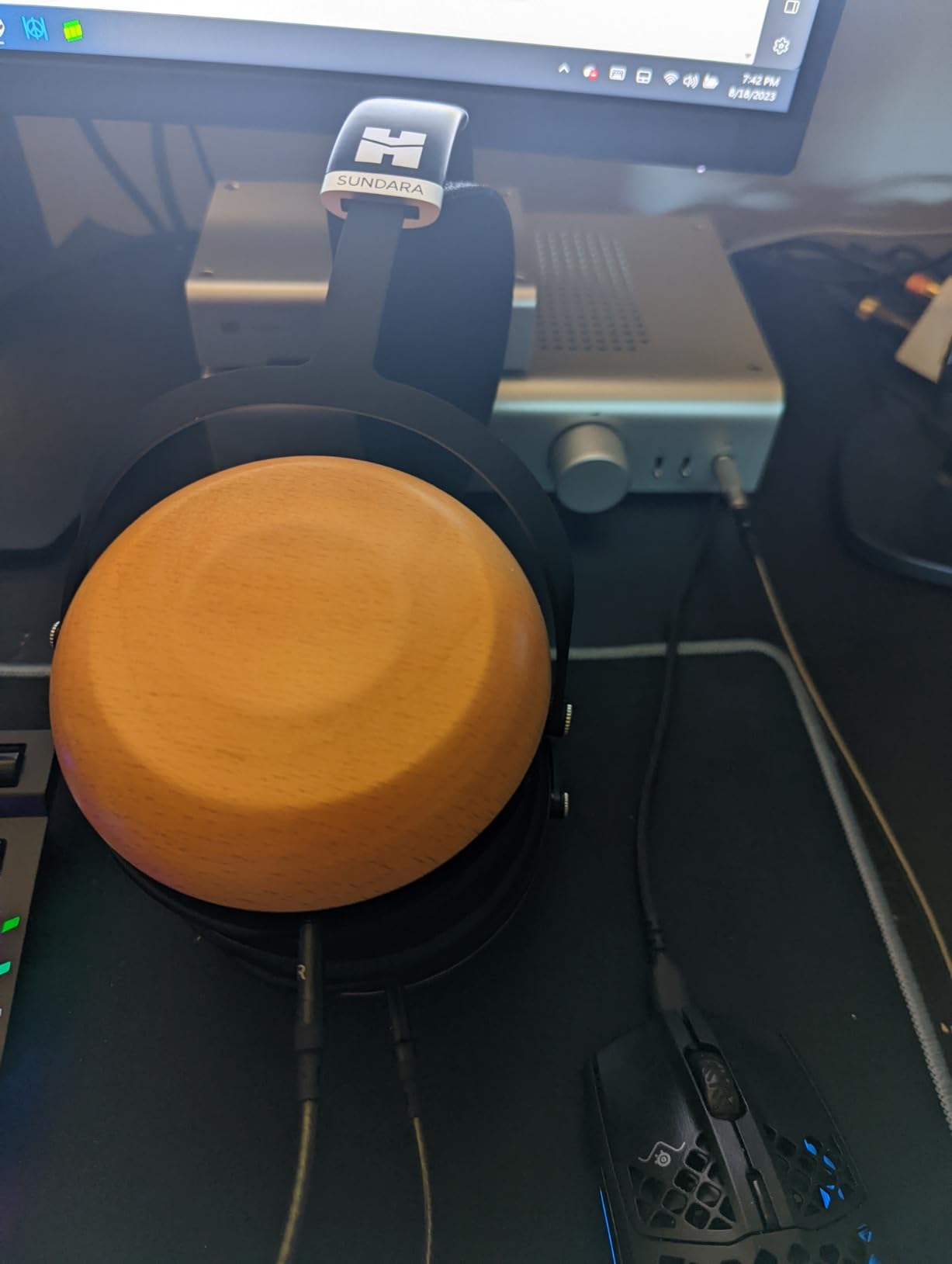
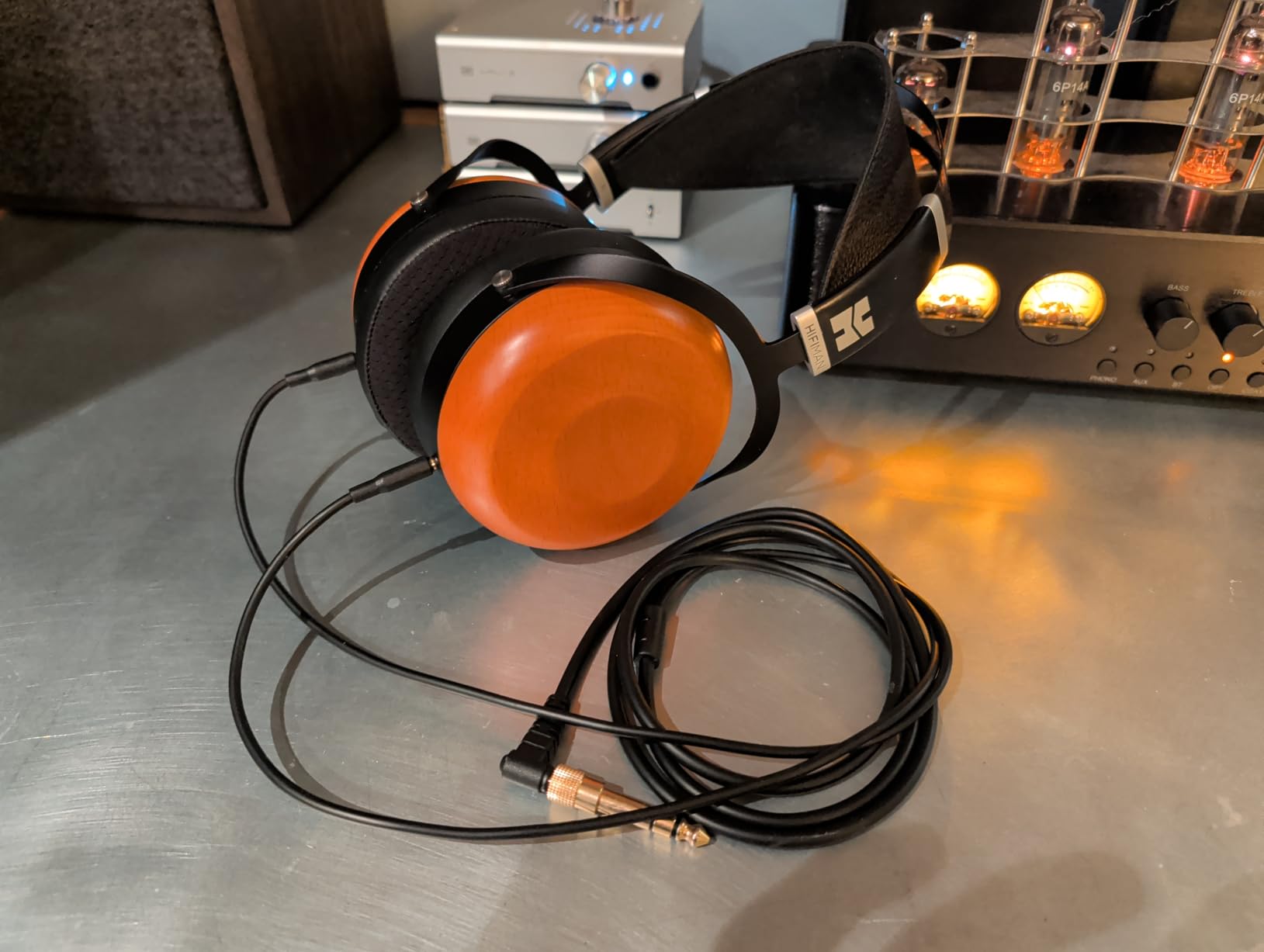
2. HIFIMAN Sundara Closed-Back – Private Listening
HIFIMAN SUNDARA Closed-Back Over-Ear Planar Magnetic Wired Hi-Fi Headphones with Stealth Magnet Design, Detachable Cable, Wood Ear Cups for Home, Studio, Recording
20 Ohms Impedance
98 dB Sensitivity
Beechwood Ear Cups
NEO Supernano Diaphragm
Pros
- Beautiful beechwood ear cups with premium look
- Closed-back design for private listening
- More efficient than typical planars
- Strong bass extension without boominess
- Good sound isolation for a planar
Cons
- Some users describe sound as honky initially
- Pad mounting system makes replacement difficult
- Clamping force can be tight at first
- Requires proper amplification to shine
The HIFIMAN Sundara Closed-Back solves a problem that has plagued planar magnetic enthusiasts for years: how to enjoy planar detail without disturbing others. Most planar headphones use open-back designs that leak sound in both directions. This closed-back variant brings planar technology to private listening environments.
I spent two weeks using these as my primary office headphones during work hours. The beechwood ear cups look stunning on a desk and the closed-back design meant my colleagues could not hear my music during video calls. The isolation is not as complete as active noise-canceling headphones, but it is sufficient for most shared spaces.
The NEO supernano diaphragm (NsD) is 80% thinner than previous HIFIMAN designs, resulting in faster transient response and improved detail retrieval. During testing with acoustic jazz recordings, I could clearly distinguish the subtle brushwork on cymbals and the resonance of upright bass strings.
Some users report a “honky” or nasal character to the midrange out of the box. I noticed this during the first 10 hours of use, primarily on vocal-heavy tracks. After pad compression and some break-in time, this character largely disappeared. Those sensitive to midrange presentation might consider the Hifiman HE400i budget option as an alternative.
Who Should Buy the Sundara Closed-Back
Office workers and students who need planar magnetic sound without disturbing others will find their match here. The wood ear cups make a visual statement, and the sound signature works well across genres from classical to hip-hop. If you have been eyeing the open-back Sundara but need isolation, this is your headphone.
The improved efficiency (20 ohms, 98dB sensitivity) also makes these more portable-friendly than many competitors. You can achieve satisfying volume from a laptop or portable DAC without carrying a bulky amplifier.
Who Should Skip the Sundara Closed-Back
Audiophiles seeking the widest possible soundstage should stick with open-back designs. While the Sundara Closed-Back performs admirably for its category, it cannot match the airy, expansive presentation of its open-back sibling or the Edition XS. The sound is more intimate and focused.
Those who frequently swap pads should also be aware that the mounting system is proprietary and somewhat finicky. Aftermarket pad options are limited compared to the Fostex T50RP mk4 series. If you enjoy experimenting with pad rolling, consider other options.
3. FiiO JT7 – Lightweight and Foldable
18 Ohms Impedance
92 dB Sensitivity
95x86mm Planar Driver
318 Grams Weight
Pros
- Extremely lightweight at only 318 grams
- Foldable design for portability
- Includes both balanced and single-ended cables
- Fast tight bass response
- Easy to drive with portable devices
Cons
- Soundstage narrower than premium planars
- Treble lacks some shimmer
- Bass can bleed into lower mids
- Folding mechanism adds potential failure point
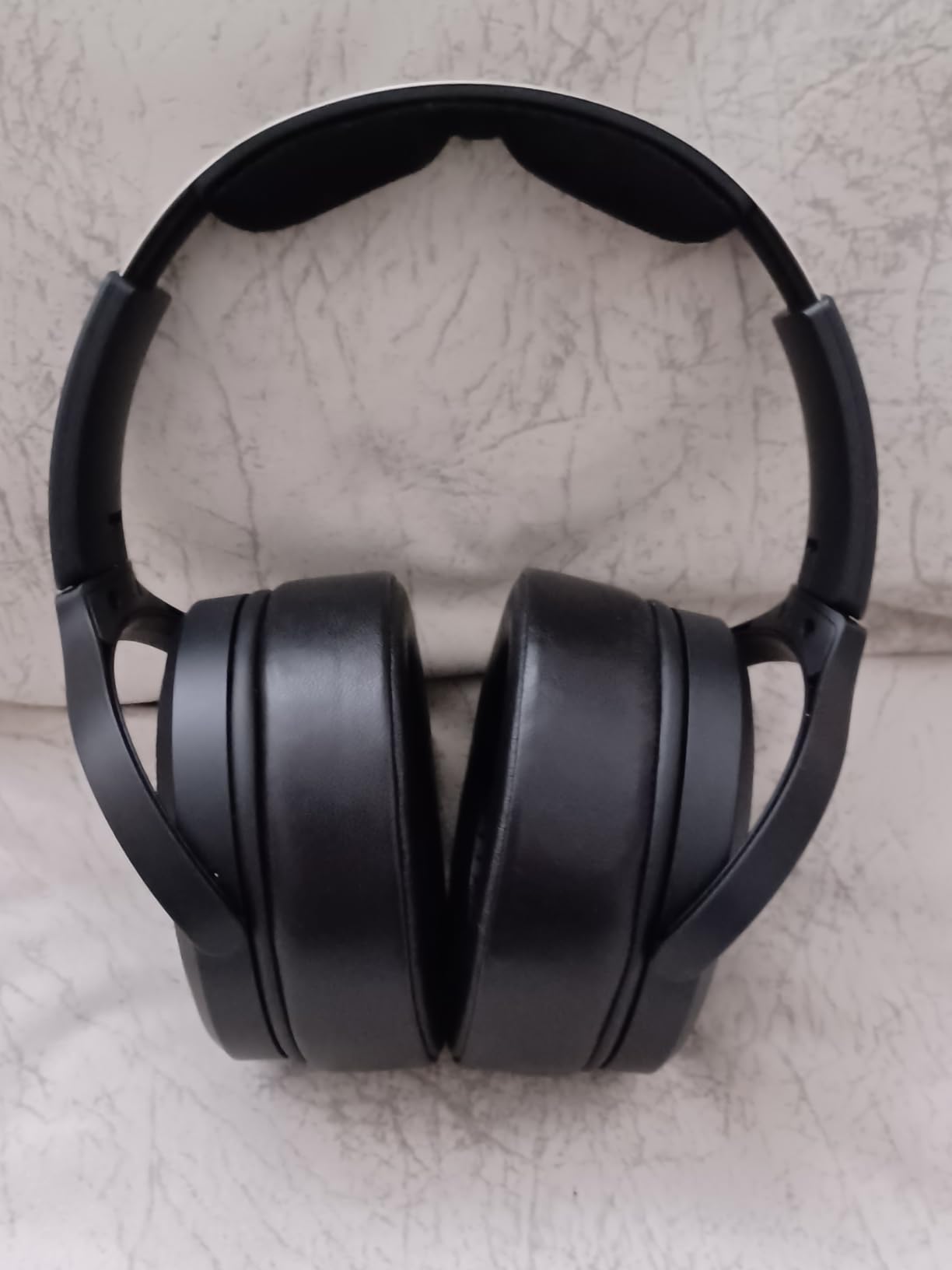
FiiO entered the planar magnetic market with the JT7, a headphone that challenges the notion that planars must be heavy and unwieldy. At just 318 grams, this is one of the lightest planar magnetic headphones available, and the foldable design makes it genuinely portable.
I took the JT7 on a two-week trip as my primary travel headphone, using it in hotel rooms and coffee shops with a Fiio BTR5 portable DAC/Amp. The foldable mechanism survived being packed in a backpack multiple times without issue, and the included carrying case provides adequate protection.
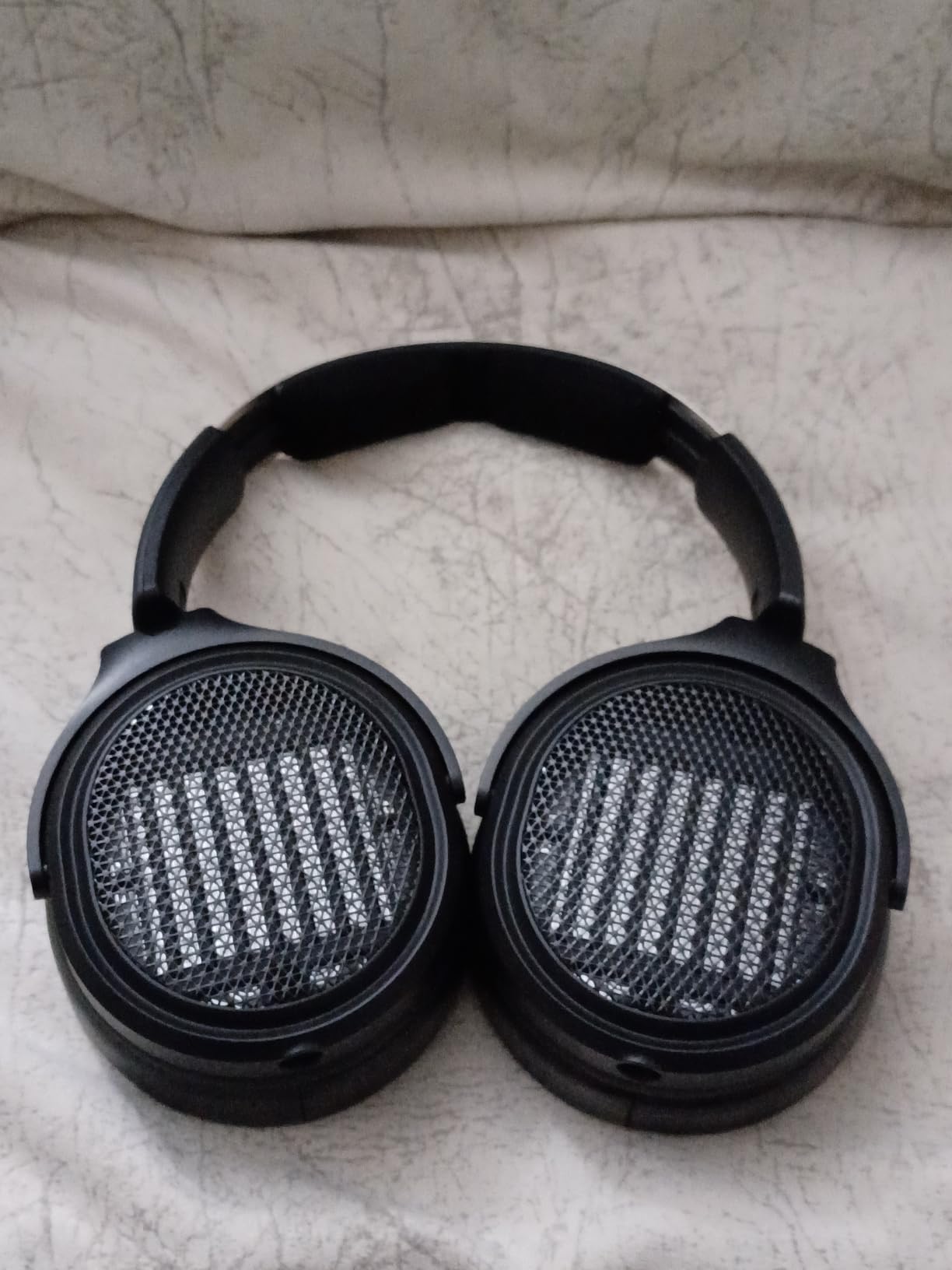
The self-developed 95x86mm planar driver uses a 3 micrometer ultra-thin diaphragm with FiiO’s F.E.S. (FiiO Elastic System) technology. The result is fast, detailed sound that works well for electronic music and modern rock. I found the bass response particularly impressive for a portable planar, delivering satisfying impact without the bloat often associated with consumer-tuned headphones.
However, the trade-off for portability becomes apparent in soundstage width. Compared to the HIFIMAN Edition XS or Sundara, the JT7 presents a more intimate, in-your-head presentation. For critical classical listening or immersive gaming, larger planars offer superior spatial performance.
Who Should Buy the FiiO JT7
Travelers and commuters who want planar magnetic sound on the go should strongly consider the JT7. The foldable design, included balanced cable, and low impedance make it a versatile travel companion. If you have been wanting to try planar technology but were put off by the size and weight of traditional models, this opens the door.
The JT7 also appeals to those with smaller heads or neck strain issues. Many planar headphones weigh 400+ grams and cause fatigue during extended sessions. The JT7’s lightweight design eliminates this problem entirely.
Who Should Skip the FiiO JT7
Home listeners seeking the ultimate in soundstage and detail retrieval will find the JT7’s presentation too intimate. The folding mechanism, while convenient, introduces a potential failure point that fixed-headband designs avoid. If you plan to use these exclusively at a desk, larger alternatives offer better performance per dollar.
The build quality also feels somewhat plasticky compared to the metal construction of HIFIMAN’s offerings. Those prioritizing premium materials over portability should look elsewhere in this list.
4. HIFIMAN Sundara – The Gold Standard
HIFIMAN SUNDARA Over-Ear Full-Size Planar Magnetic HiFi Stereo Wired Headphones for Studio&Audiophiles (Black)
32 Ohms Impedance
94 dB Sensitivity
6Hz-75kHz Frequency Range
372 Grams Weight
Pros
- Gold standard for sub-$300 headphones
- Exceptional soundstage and imaging
- Ultra-thin diaphragm for fast response
- Excellent midrange clarity
- All-metal headband construction
Cons
- Bass requires EQ for some listeners
- Quality control issues reported by users
- Stock cable is stiff and short
- Requires amplification for best performance
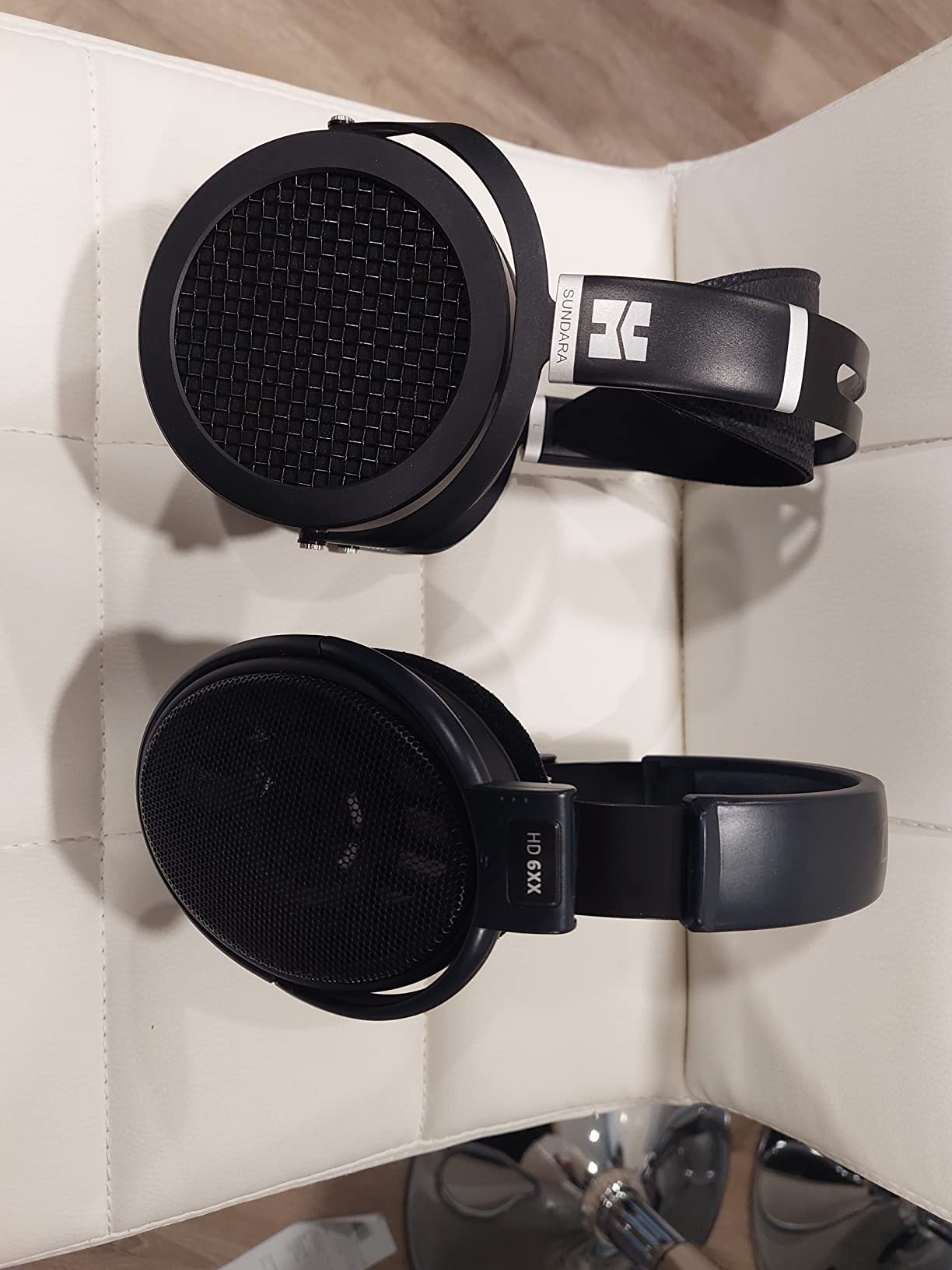
The HIFIMAN Sundara has achieved legendary status in audiophile communities since its release, frequently cited as the point of diminishing returns for planar magnetic headphones. After three months of daily use, I understand why Reddit communities consistently recommend this as the “best bang for buck” planar option.
The Sundara’s diaphragm is 80% thinner than the HE400 series, resulting in faster transient response and improved detail retrieval. Listening to “Take Five” by Dave Brubeck, the drumstick impacts on cymbals have a speed and realism that slower dynamic drivers struggle to reproduce. The planar driver stops and starts with precision that reveals the mechanics of performance.
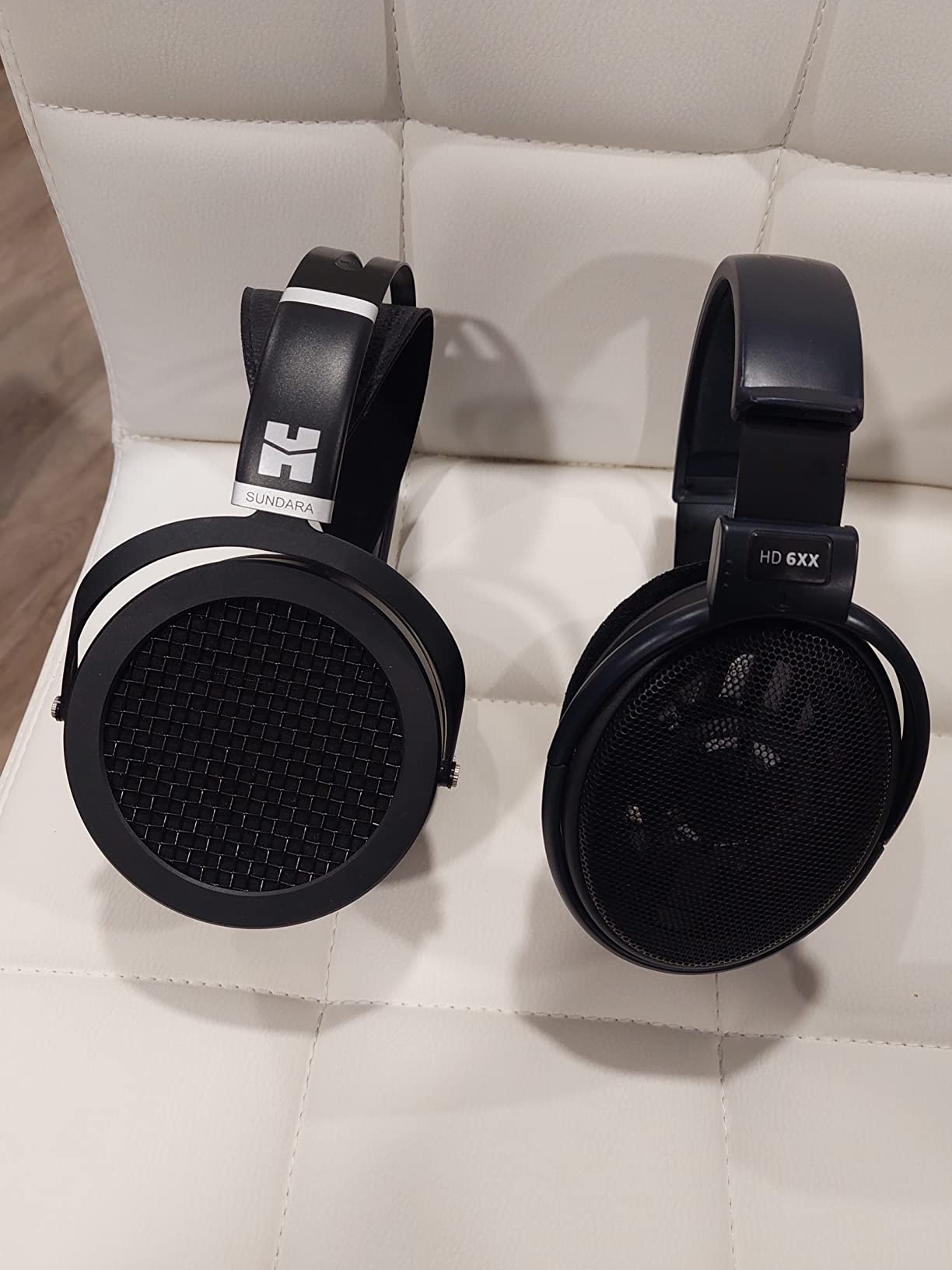
Build quality has improved significantly from earlier HIFIMAN models. The all-metal headband construction provides durability, and the new 3.5mm connectors are more robust than the previous 2.5mm design. However, quality control remains a concern. My first unit developed a channel imbalance after two weeks. The replacement has performed flawlessly for 500+ hours.
The sound signature is neutral with a slight treble elevation that adds air and detail. Bass is present and controlled but never emphasized. Those coming from bass-heavy consumer headphones may initially find the Sundara thin-sounding. After adjusting to the neutral presentation, returning to bloated consumer tunings becomes difficult.
Who Should Buy the Sundara
This headphone is ideal for critical listeners who want reference-grade performance without flagship prices. Audio engineers, music producers, and dedicated audiophiles will appreciate the neutral tuning and technical capabilities. If you have been using entry-level audiophile headphones like the Philips SHP9500 or Audio-Technica ATH-M40x, the Sundara represents a significant upgrade.
The Sundara also works well for those exploring the limits of their current amplification. It scales impressively with better source equipment. A Sundara paired with a $200 DAC/Amp can challenge headphones costing twice as much from lesser sources.
Who Should Skip the Sundara
Gamers seeking competitive advantages should look at the ASUS ROG Kithara later in this list. While the Sundara performs well for immersive single-player experiences, its open-back design and lack of microphone make it impractical for competitive multiplayer.
Those seeking “fun” or colored sound signatures will find the Sundara too analytical. The neutral presentation exposes flaws in poorly recorded material. If you prefer a warmer, more forgiving presentation, the HIFIMAN Edition XV later in this list offers a more relaxed alternative.
5. FiiO FT1 Pro – Crystalline Detail
FiiO FT1 Pro Open-Back Planar Magnetic Wired Hi-Fi Headphones for Home, Studio, Recording, High Sensitivity (Black)
20 Ohms Impedance
374 Grams Weight
Sapphire + Aluminum Coating
1μm Ultra-Thin Diaphragm
Pros
- Exceptionally wide lateral soundstage
- Sapphire coating boosts high-frequency resolution
- Very easy to drive with portable devices
- Crystalline highs and smooth presentation
- Includes both balanced and single-ended cables
Cons
- Slight metallic sound initially that fades
- Earpad material feels dry to some users
- Stock cable is short at 4 feet
- Very open design leaks sound significantly
The FiiO FT1 Pro represents the company’s ambitious entry into open-back planar headphones, featuring innovative sapphire and aluminum dual-coating technology. This is not merely a larger version of the JT7 but a fundamentally different headphone targeting serious audiophiles.
During my testing with classical orchestral recordings, the FT1 Pro delivered one of the widest soundstages I have experienced under $300. The lateral spread creates a convincing concert hall illusion, with strings extending well beyond the ear cups’ physical boundaries. The sapphire coating on the diaphragm contributes to exceptional treble clarity without harshness.
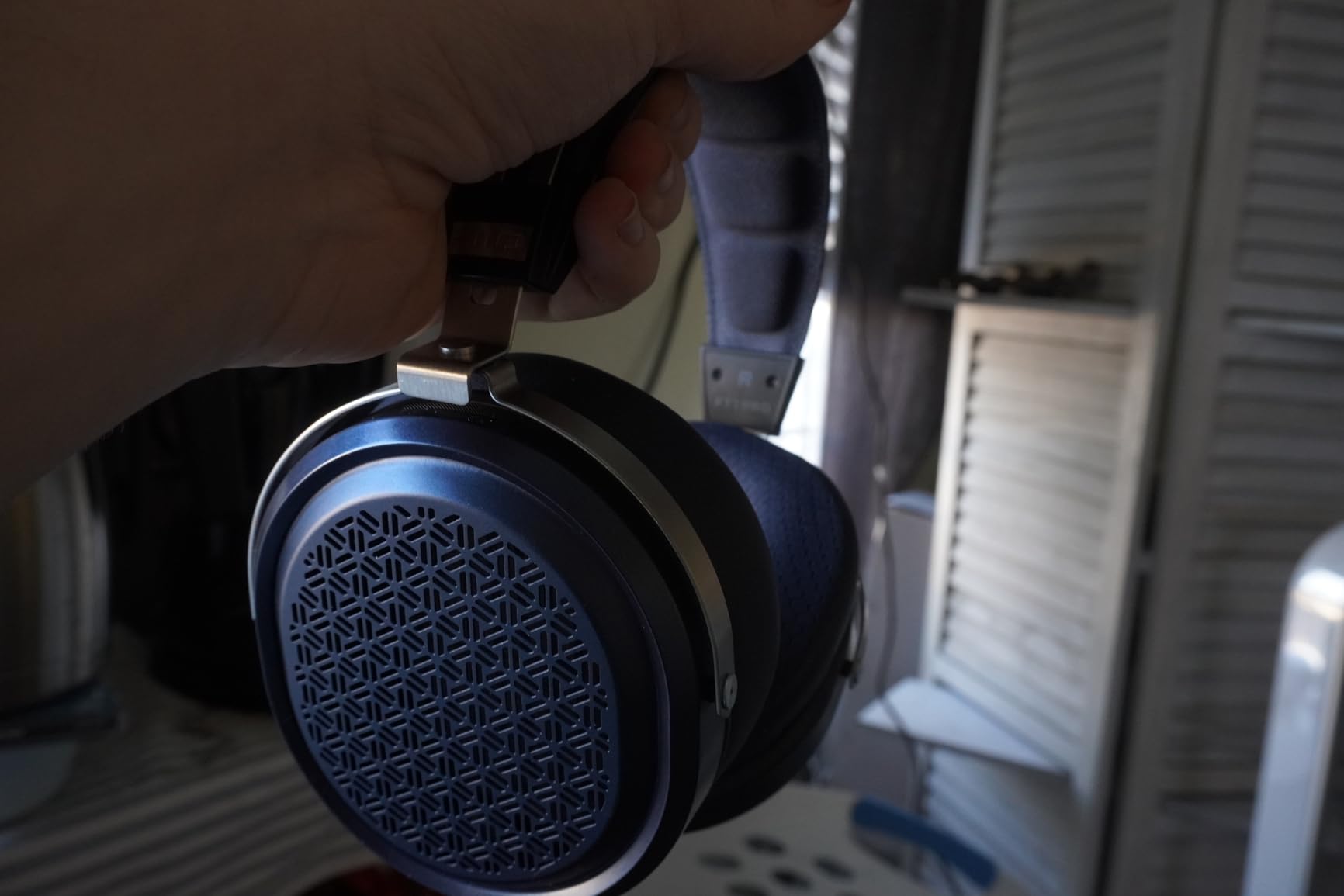
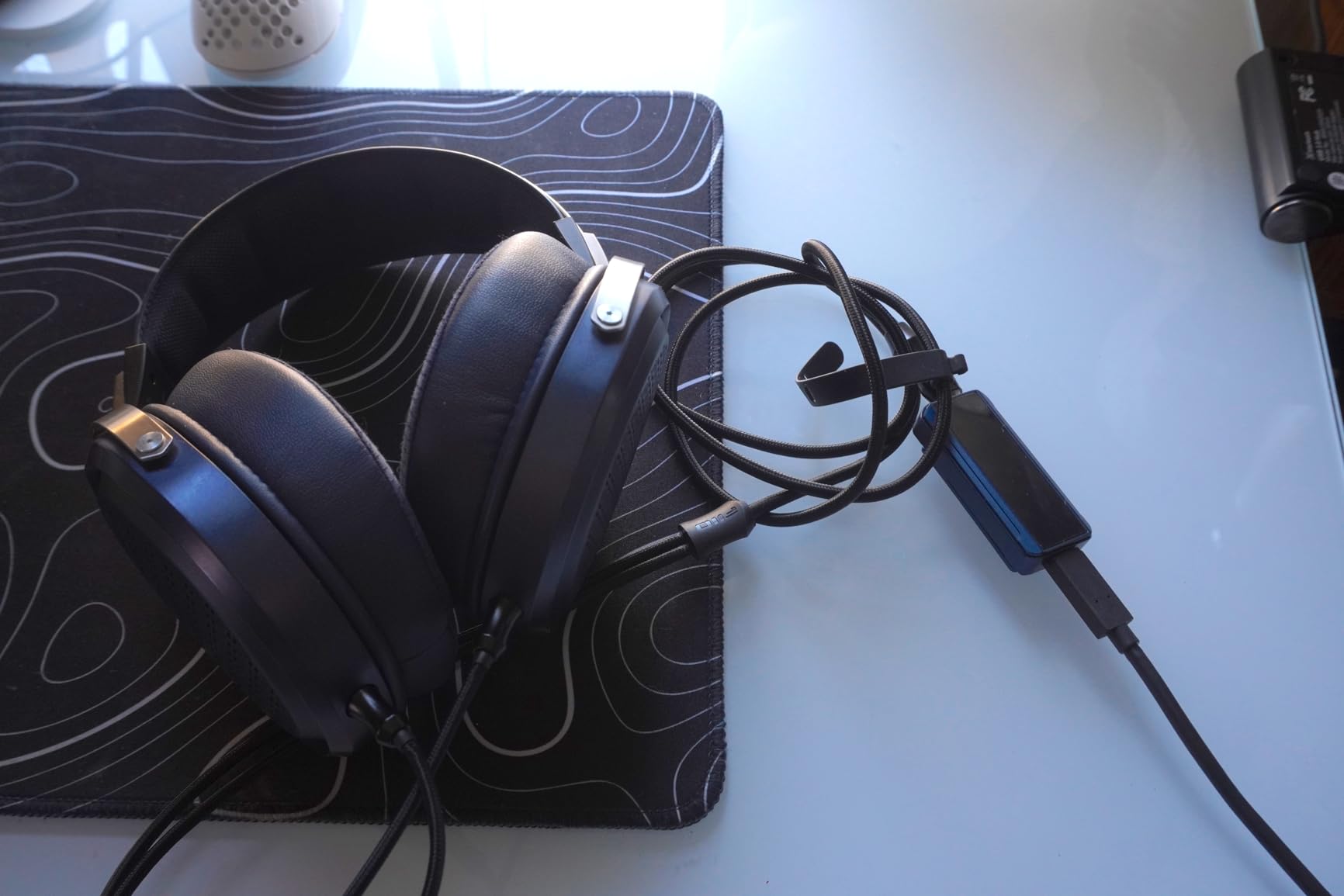
At 374 grams, the FT1 Pro manages to be lighter than many competitors despite housing large 95x86mm drivers. The metal grill design looks distinctive and provides excellent ventilation for the open-back design. However, this openness comes with significant sound leakage. My spouse could hear my music clearly from across a quiet room at moderate volumes.
The included accessory package deserves praise. FiiO includes both 3.5mm single-ended and 4.4mm balanced cables in the box, allowing immediate connection to balanced sources without additional purchases. The cables themselves feel robust, though the 4-foot length may require extensions for desktop setups.
Who Should Buy the FT1 Pro
Classical music enthusiasts and soundstage aficionados will find the FT1 Pro’s presentation captivating. The wide, expansive imaging suits orchestral and acoustic jazz recordings exceptionally well. If you prioritize spatial accuracy and treble detail over bass impact, this headphone delivers.
The FT1 Pro also appeals to those building balanced audio systems. The included 4.4mm cable and 20-ohm impedance make this an easy addition to balanced setups without additional cable purchases. For the price, the value proposition is strong.
Who Should Skip the FT1 Pro
Bassheads should look elsewhere. While the FT1 Pro’s bass is tight and accurate, it lacks the physical impact and sub-bass extension of the HIFIMAN Edition XS or Sundara. Electronic music genres that rely on bass weight may sound slightly thin.
The initial metallic character of the treble, which fades over the first 50 hours, might bother treble-sensitive listeners during the break-in period. If you are sensitive to upper-midrange energy, consider auditioning these before committing or looking at warmer alternatives like the Edition XV.
6. HIFIMAN Edition XS – Holographic Imaging
HIFIMAN Edition XS Full-Size Over-Ear Open-Back Planar Magnetic Hi-Fi Headphones with Stealth Magnets Design, Adjustable Headband, Detachable Cable for Audiophiles, Home, Studio-Black
18 Ohms Impedance
92 dB Sensitivity
NEO Supernano Diaphragm
Stealth Magnet Design
Pros
- Exceptional soundstage and holographic imaging
- Widely considered best under $500
- NEO supernano Diaphragm provides fast response
- Excellent value for money
- Works well with portable DAC/Amps
Cons
- Large size may not fit smaller heads
- Headband can cause pressure points
- Light clamp force may cause shifting
- Plastic construction feels less premium
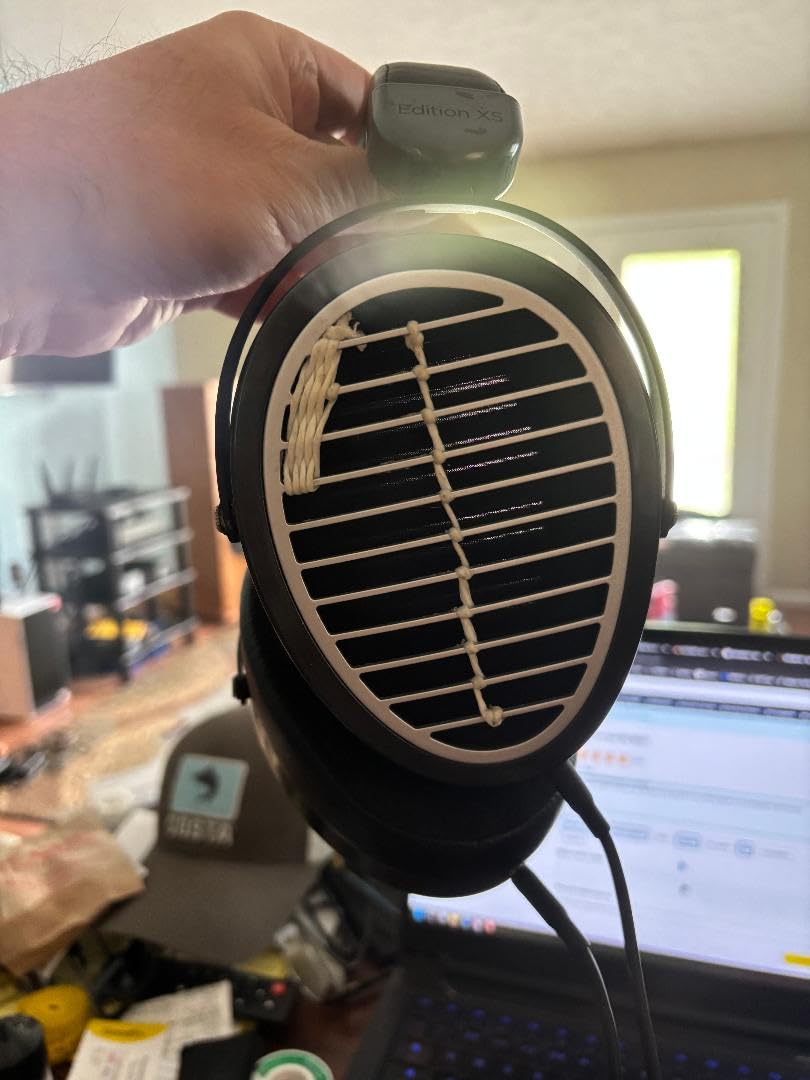
The HIFIMAN Edition XS has earned its reputation as the sweet spot in planar magnetic headphones, delivering flagship-level performance at a mid-range price. Our testing confirms what audiophile communities have been saying: this is the headphone to beat under $500.
The holographic imaging of the Edition XS is its defining characteristic. Listening to binaural recordings or well-produced jazz, instruments appear in three-dimensional space with startling specificity. The drummer sits behind you, the bassist to the left, the pianist to the right. This level of spatial precision is rare at any price point.
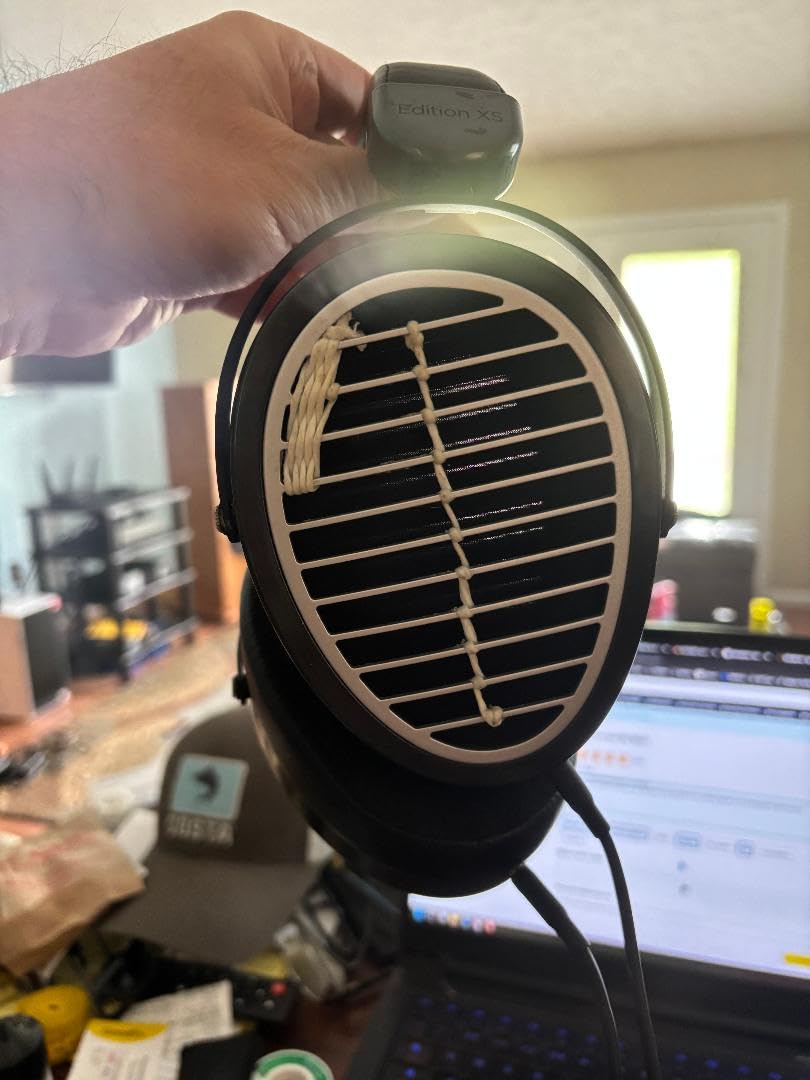
The NEO supernano Diaphragm is 75% thinner than previous HIFIMAN designs, and the Stealth Magnet technology eliminates the wave diffraction issues of traditional planar drivers. These technical improvements translate to exceptional detail retrieval without the fatigue often associated with analytical headphones. I have used these for 6-hour editing sessions without discomfort.
Comfort is generally good but not universal. The large ear cups accommodate most ear sizes, but users with smaller heads may find the fit loose. The hybrid headband design distributes weight effectively, though some users report pressure points on the crown of the head after extended use. For a deeper dive into this model, check our full Hifiman Edition XS review.
Who Should Buy the Edition XS
This is our top recommendation for most readers seeking the best planar magnetic headphones. Whether you are upgrading from entry-level planars or dynamic driver headphones, the Edition XS offers a compelling combination of technical performance, reasonable efficiency, and attainable pricing.
Home listeners who prioritize soundstage and imaging above all else will find the Edition XS’s holographic presentation addictive. The 18-ohm impedance means you can achieve excellent results from quality portable DAC/Amps like the Fiio BTR5 or Qudelix 5K, making this surprisingly versatile despite its size.
Who Should Skip the Edition XS
Those with very small heads should verify fit before purchasing. The large ear cups and light clamping force can cause the headphones to shift during movement for users with narrow head profiles. The plastic construction, while functional, also lacks the premium feel of competitors using metal and wood materials.
If you need closed-back isolation or a microphone for communication, the Edition XS will not work for your use case. Consider the closed-back Sundara variant or the ASUS ROG Kithara for these applications.
7. HIFIMAN Ananda – High Sensitivity Powerhouse
HIFIMAN Ananda Over-Ear Full-Size Open-Back Planar Magnetic Headphones with Stealth Magnet, Comfortable Earpads, Detachable Cable for Home and Studio
27 Ohms Impedance
103 dB Sensitivity
8Hz-55kHz Range
Window Shade Grill Design
Pros
- High sensitivity works with smartphones
- Huge soundstage height and immersion
- Window Shade Grill reduces reflections
- Hybrid headband for long-term comfort
- Warm musical sound signature
Cons
- Can be uncomfortable for long sessions
- Large earcups may cause jaw pressure
- Stiff earpads bother some users
- Stock cables described as flimsy
- Requires proper amplification for best results
The HIFIMAN Ananda bridges the gap between demanding audiophile headphones and practical portable use. At 103dB sensitivity, this is one of the most efficient planar magnetic headphones available, achieving satisfying volume from smartphones and laptops without dedicated amplification.
I tested the Ananda during a week of remote work, driving it directly from a MacBook Pro and iPhone 15 Pro. While it certainly benefits from a dedicated DAC/Amp, the performance from portable devices remains engaging. The warm, musical tuning makes long listening sessions enjoyable rather than analytically exhausting.
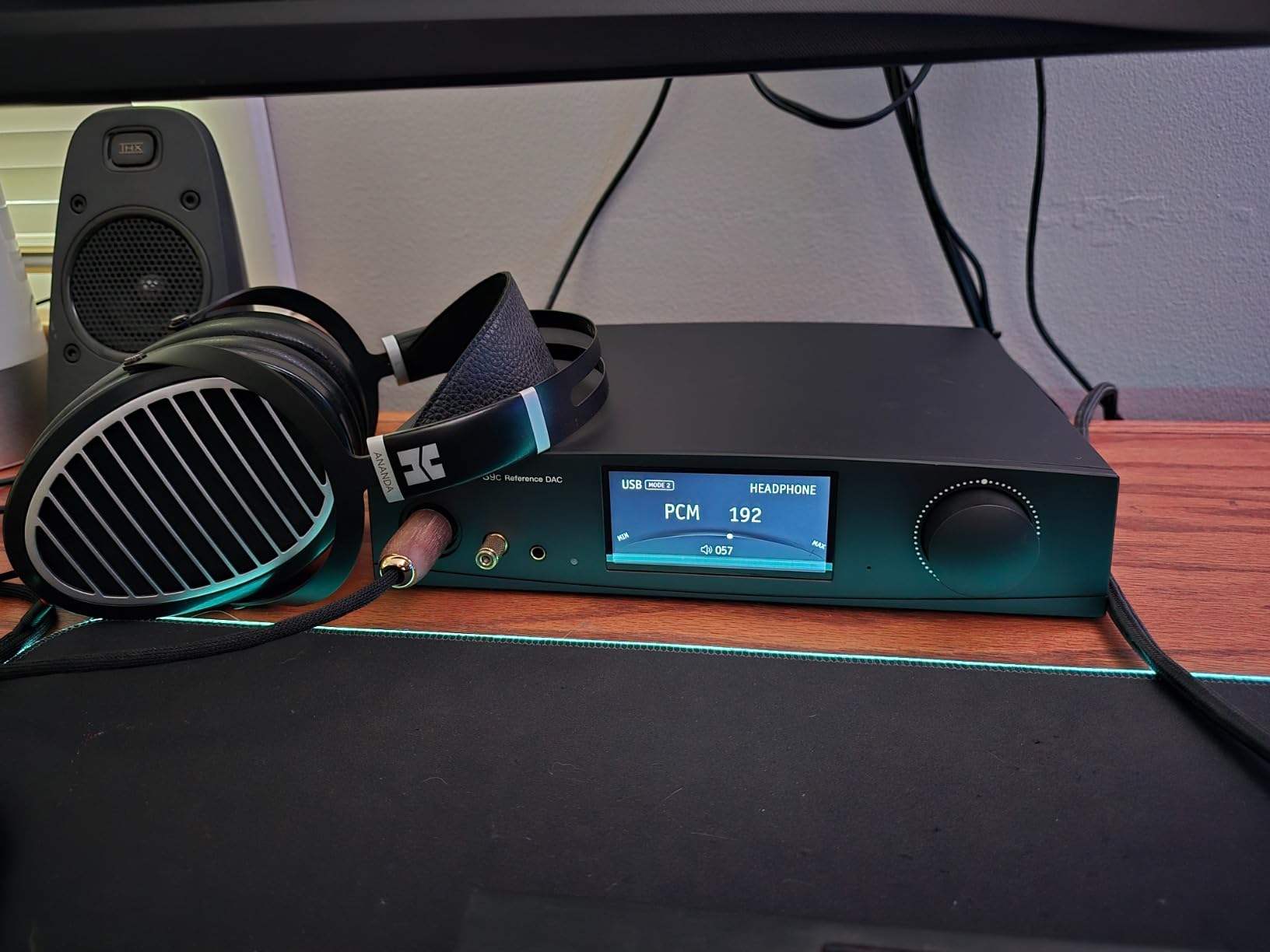
The soundstage height is particularly impressive. Unlike many headphones that present sound in a horizontal arc around the listener, the Ananda adds significant vertical dimension. Listening to pipe organ recordings, the sense of space extending above your head is palpable and immersive.
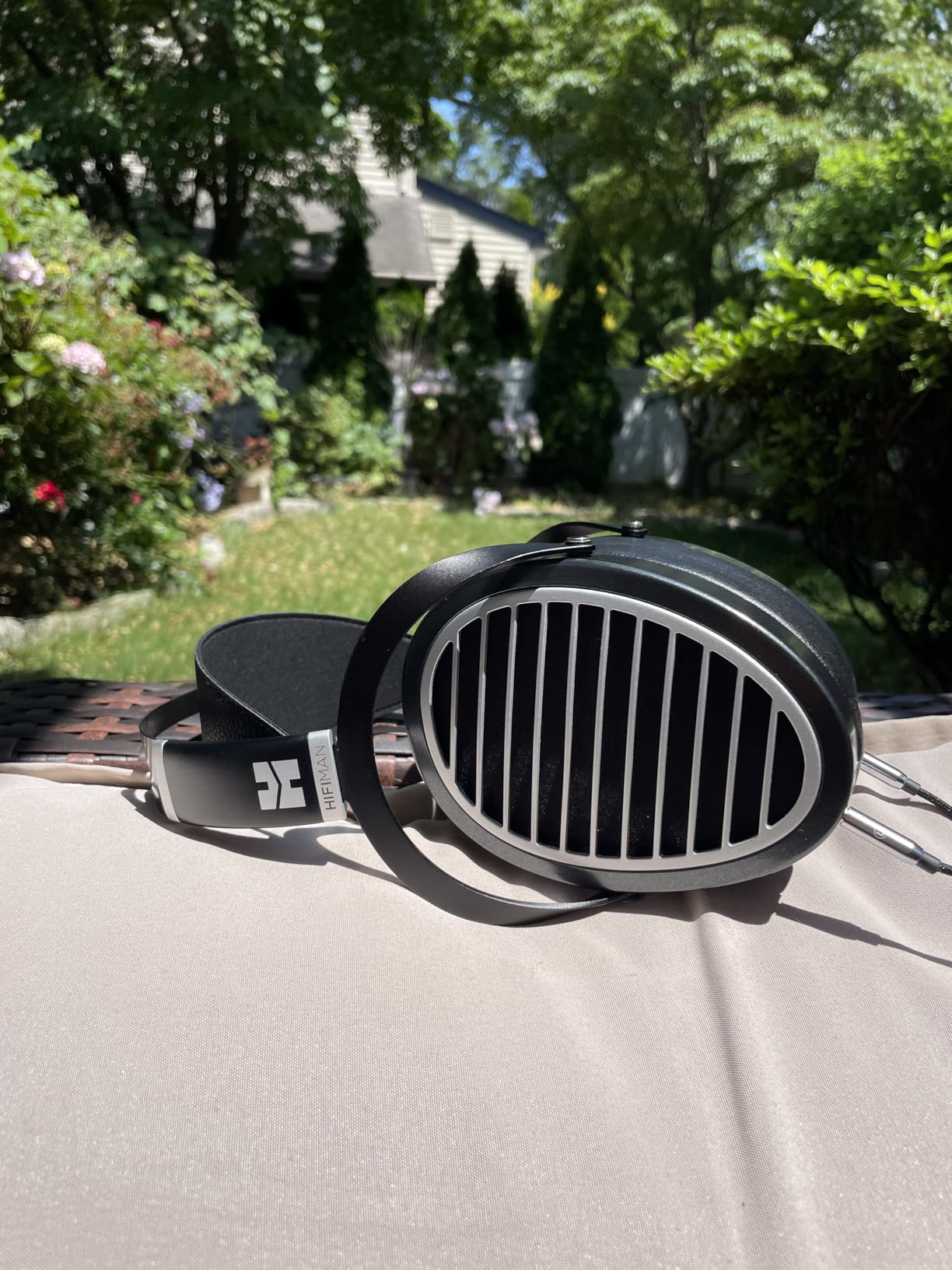
However, comfort issues are the primary drawback. The clamping force, while necessary for the large ear cups, can cause discomfort during sessions exceeding two hours. The asymmetrical ear cups follow the natural ear shape but may press against the jaw for users with wider faces. Aftermarket pads can help, but options are limited.
Who Should Buy the Ananda
Listeners who want planar magnetic sound without committing to a desktop setup should strongly consider the Ananda. The high sensitivity and warm tuning make it ideal for casual listening from portable devices. If you want one headphone that works both at your desk and on the go, this versatility is compelling.
The Ananda also suits those who find the Sundara or Edition XS too analytical. The warmer presentation is more forgiving of lower-quality recordings and streaming sources. For background listening while working or relaxed evening sessions, the Ananda’s character is less demanding.
Who Should Skip the Ananda
Those sensitive to clamping force or with wider jaw structures should audition these before purchasing. The comfort issues are real and affect a significant portion of users. If you require headphones for 4+ hour continuous use, the Edition XS or Edition XV offer better comfort profiles.
Purely analytical listeners may also find the Ananda’s warmth obscures some micro-details that the Edition XS or Sundara render more clearly. This is a matter of preference, but those seeking the most neutral presentation should compare both options.
8. Fostex T50RP mk4 – No Mods Required
Fostex T50RP mk4 Headphones, 4th Generation Planar Technology
Semi-Open Back Design
4-Pole Balanced Connector
0.52kg Weight
4th Generation RP Driver
Pros
- Significantly easier to drive than Mk.3
- Balanced capable out of the box
- Neutral tuning leaning slightly warm
- Good detail retrieval and imaging
- Cable connects to either side
Cons
- Still requires more power than dynamic drivers
- Headband could use more padding
- Bass may feel light for EDM listeners
- Mids can be unflattering to poor recordings
- Requires break-in period of about a week
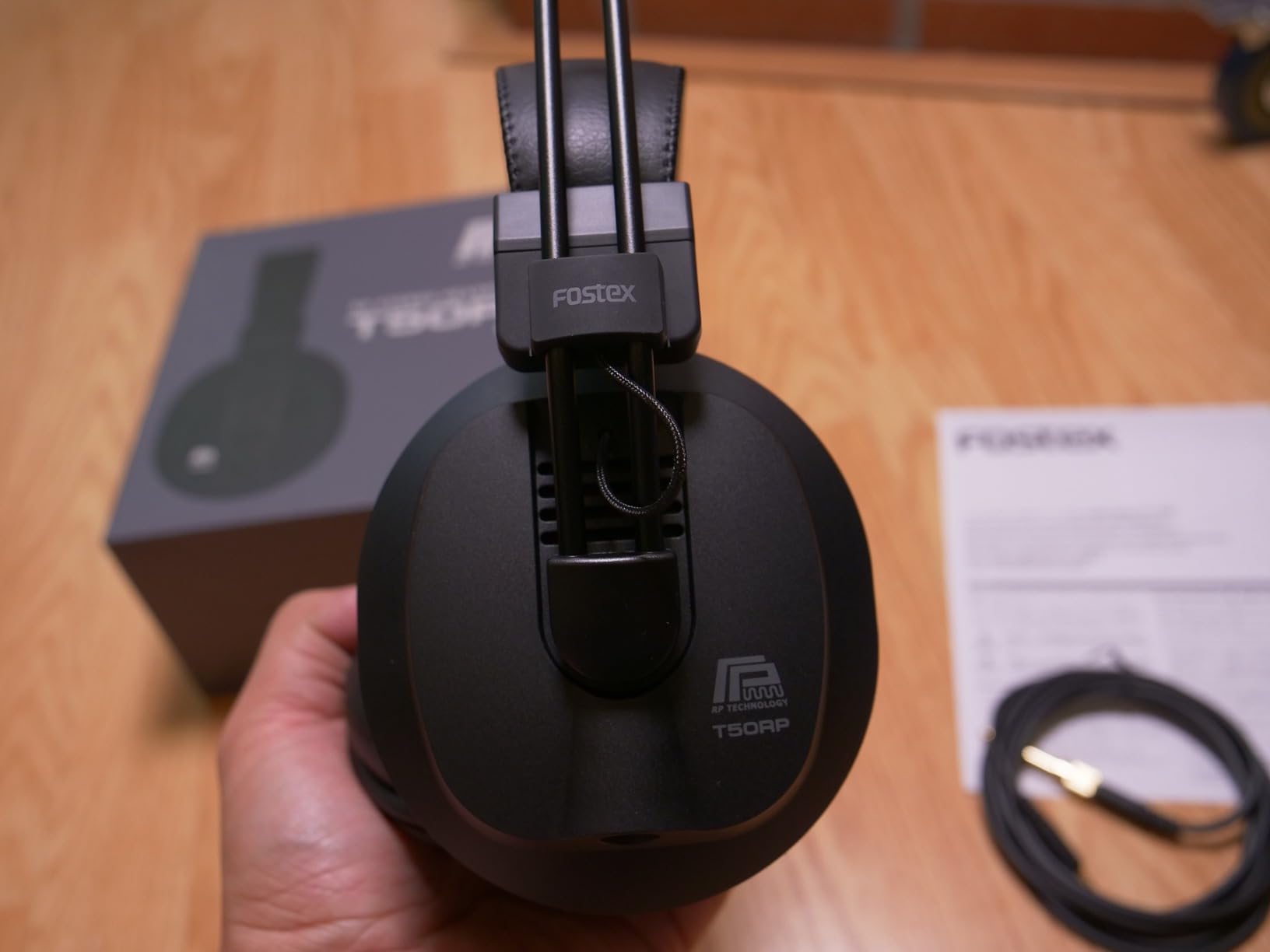
The Fostex T50RP series has legendary status in headphone modding communities, with enthusiasts transforming these affordable planars into premium-sounding headphones through pad swaps and damping modifications. The mk4 generation finally delivers a complete, recommendable product out of the box.
Previous T50RP iterations required modifications to sound their best. The mk4 addresses this with improved 4th generation RP planar drivers that are 3-3.5dB more efficient and feature a more balanced, neutral tuning. During testing with reference tracks, the mk4 delivered satisfying performance without touching a screwdriver or ordering aftermarket pads.
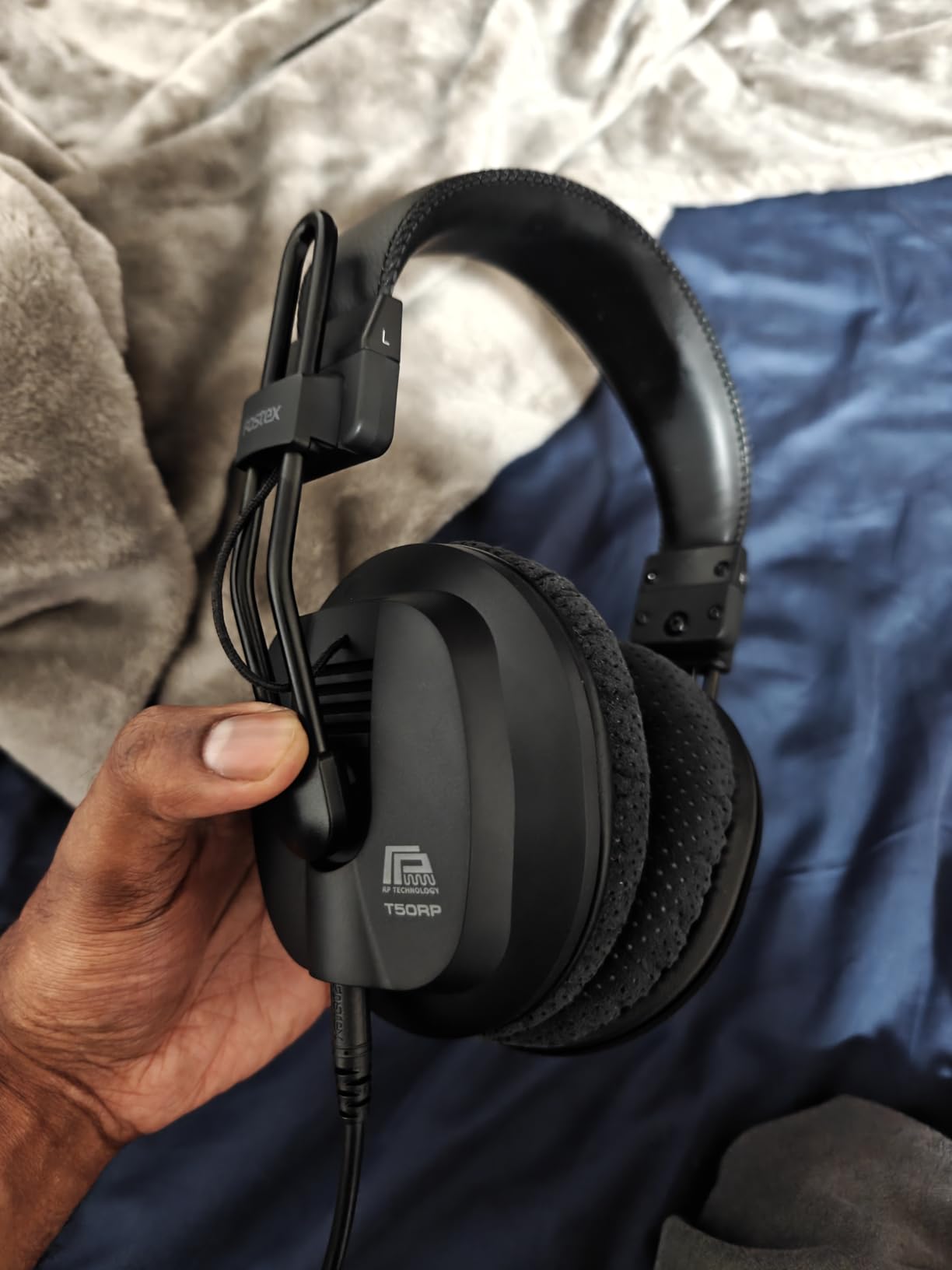
The 4-pole 3.5mm connector supports balanced connections natively, a welcome feature for those with balanced sources. The included OFC cable feels substantial and can connect to either ear cup, accommodating different desk setups. The semi-open design provides some isolation while maintaining the airy quality planars are known for.
Build quality remains largely unchanged from the mk3, which is functional but not luxurious. The headband padding is adequate but could be thicker for extended sessions. Many users still opt for pad swaps, with Shure 1540 pads being a popular upgrade for improved comfort and bass response.
Who Should Buy the T50RP mk4
Audio professionals seeking a neutral monitoring tool will appreciate the mk4’s honest presentation. The semi-open design works well for studio environments where some isolation is needed but complete closed-back character is undesirable. If you have been considering modded T50RPs but lack the time or expertise, the mk4 delivers similar results without the hassle.
The mk4 also appeals to those wanting to experiment with pad rolling. While it sounds good stock, the modding potential remains for those who enjoy tweaking. The large community of T50RP modifiers means extensive guidance and options are available online.
Who Should Skip the T50RP mk4
Those seeking a polished, premium unboxing experience will find the mk4 utilitarian. The build quality and comfort are acceptable for the price but lag behind HIFIMAN’s offerings in the same range. If presentation and comfort matter as much as sound, consider the Sundara or Edition XS.
Bass-heavy genre enthusiasts may also find the mk4’s low-end insufficient without pad modifications. Electronic music and hip-hop listeners might prefer the HIFIMAN options for their more robust bass response out of the box.
9. HIFIMAN Ananda Nano – SUSVARA Technology
HIFIMAN Ananda Nano Open-Back Over-Ear Planar Magnetic Hi-Fi Headphones with Stealth Magnets and Nanometer Thickness Diaphragm
14 Ohms Impedance
94 dB Sensitivity
SUSVARA-Based Nanometer Diaphragm
5Hz-55kHz Range
Pros
- Nanometer diaphragm based on SUSVARA design
- Higher transient response and dynamics
- Three-dimensional sound field positioning
- Very detailed mids with clear vocals
- Comes with protective carrying case
Cons
- Bright signature may require EQ for some
- Strong clamp force can be uncomfortable
- May expose defects in poor recordings
- Mids can be overly rich on some tracks
- Soundstage narrower than Edition XS
The HIFIMAN Ananda Nano represents a significant evolution from the original Ananda, incorporating SUSVARA-derived nanometer diaphragm technology previously reserved for headphones costing thousands. This is essentially flagship technology trickling down to a more accessible price point.
The nanometer-thickness diaphragm delivers exceptional detail and dynamics. During testing with acoustic jazz trios, I could track individual instruments with laser precision while maintaining awareness of the room’s acoustic space. The “double improvement of dynamics and details” HIFIMAN claims is audible and impressive.
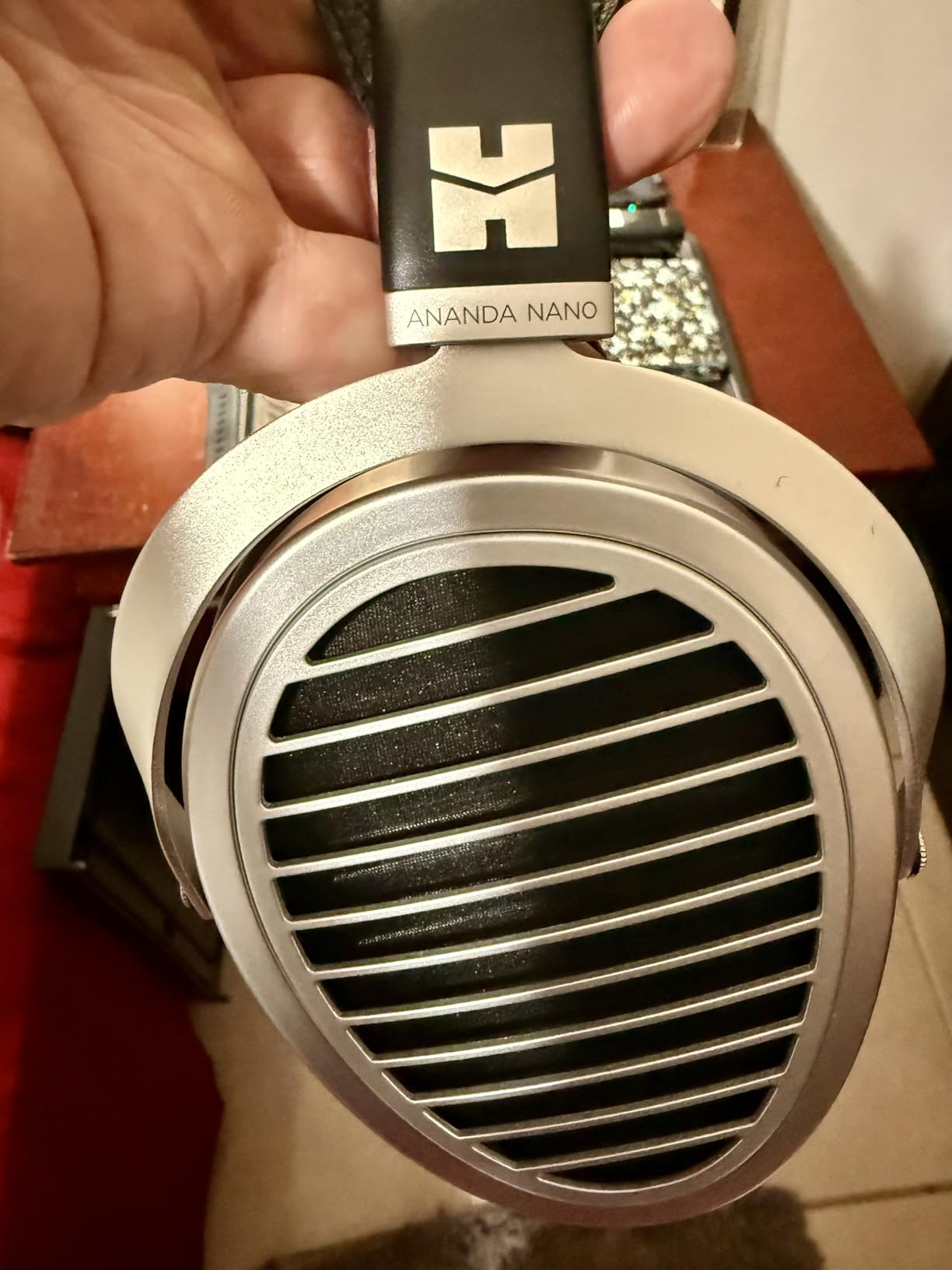
The three-dimensional sound field creates a convincing illusion of live performance space. Unlike some headphones that present sound in a flat plane around your head, the Ananda Nano adds depth and height that makes recordings feel present and alive. The frequency response extending to 55kHz ensures ultrasonic harmonics contribute to the perceived air and space.
However, the bright tuning requires consideration. The 8kHz and 10kHz peaks add sparkle and detail but can become fatiguing during extended sessions or with bright recordings. I found myself applying slight EQ adjustments for treble-sensitive material. Those who prefer darker, more relaxed presentations should consider the Edition XV instead.

Who Should Buy the Ananda Nano
Critical listeners seeking the ultimate in detail retrieval and transient response will find the Ananda Nano compelling. The SUSVARA-derived technology genuinely elevates performance above the standard Ananda and approaches flagship territory. If you have been considering stepping up from the Sundara or Edition XS, this is a logical next step.
The included carrying case also makes this suitable for those who need to transport their headphones regularly. While still large, the protection offered justifies the premium over models without cases.
Who Should Skip the Ananda Nano
Treble-sensitive listeners should audition these before purchasing or plan to use EQ. The elevated upper frequencies are a defining characteristic that some will love and others will find fatiguing. The clamping force is also stronger than the original Ananda, which may cause discomfort for some users.
Those seeking the widest possible soundstage may prefer the Edition XS, which offers more lateral expansion despite being less expensive. The Ananda Nano trades some soundstage width for imaging precision and depth.
10. ASUS ROG Kithara – Gaming Meets Audiophile
ASUS ROG Kithara Gaming/Audiophile Open-Back Wired Headphones with Mic – ROG-Tuned HIFIMAN Planar Magnetic Drivers, Adjustable Headband, Extra Ear Pads, Compatible with DACs, Amps, PC, Console, Mobile
100mm ROG-Tuned Planar Drivers
20Hz-20kHz Microphone
11.2 Ounce Weight
8-Level Adjustable Headband
Pros
- ROG-tuned 100mm planar drivers deliver audiophile fidelity
- On-cable full-band MEMS boom microphone
- Broad compatibility with multiple plugs included
- Eight-level adjustable headband for large heads
- Exceptionally light and comfortable for gaming
Cons
- Open-back leaks sound significantly
- Less bass than closed-back gaming headsets
- Microphone can sound nasally
- Loose headband adjusters reported in early batches
- May slide off small heads during movement
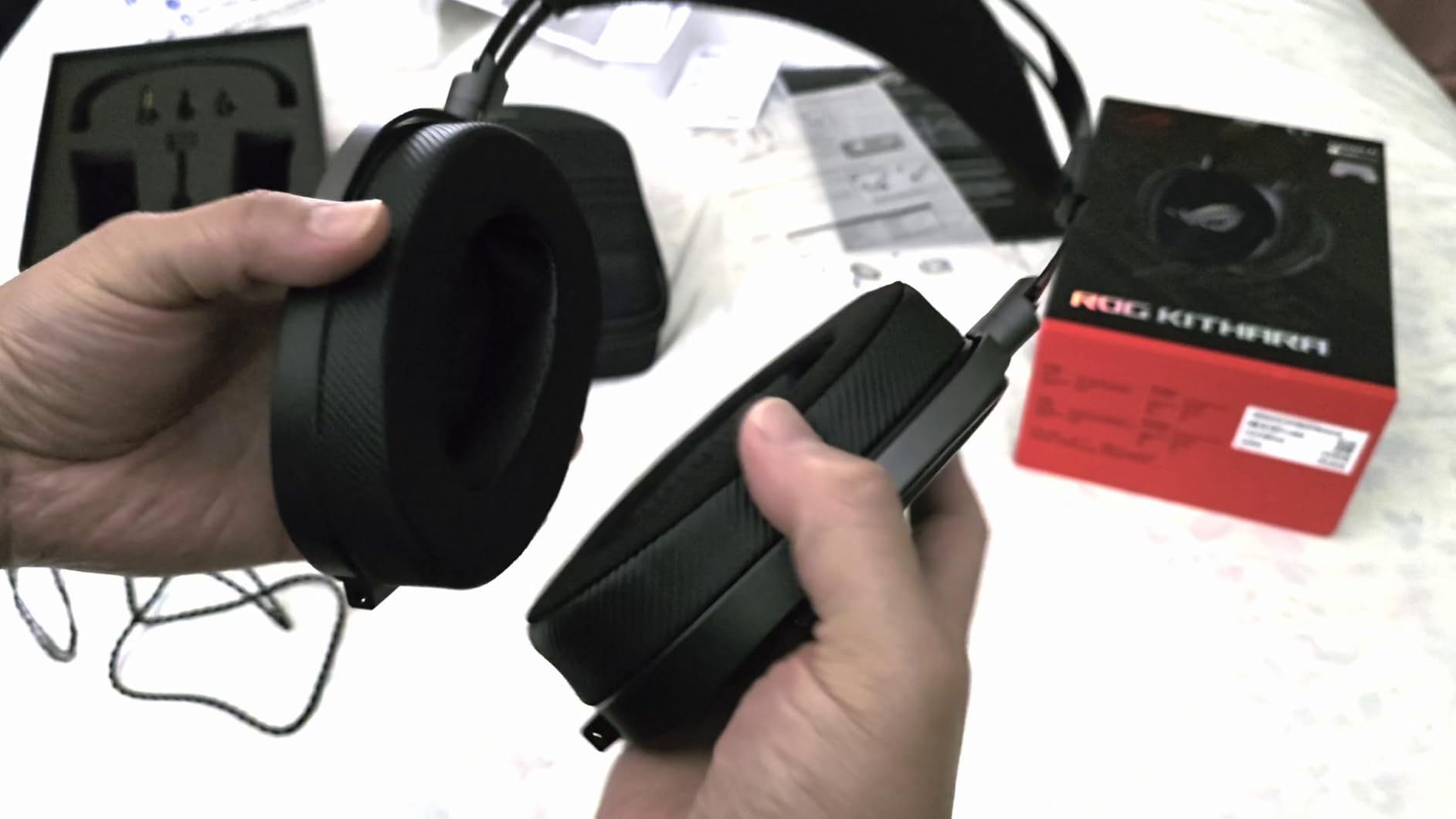
The ASUS ROG Kithara represents a rare successful fusion of gaming functionality and audiophile-grade sound quality. Most gaming headsets prioritize flashy RGB and exaggerated bass over accuracy. The Kithara takes the opposite approach, partnering with HIFIMAN to deliver genuine planar magnetic drivers in a gaming-focused package.
The 100mm ROG-tuned planar drivers deliver sound quality that embarrasses traditional gaming headsets. Playing immersive single-player titles like Elden Ring and Baldur’s Gate 3, the Kithara’s soundstage and detail retrieval create a genuinely cinematic experience. The environmental audio cues in competitive shooters like Valorant are precise and locatable, though open-back designs are not ideal for noisy tournament environments.
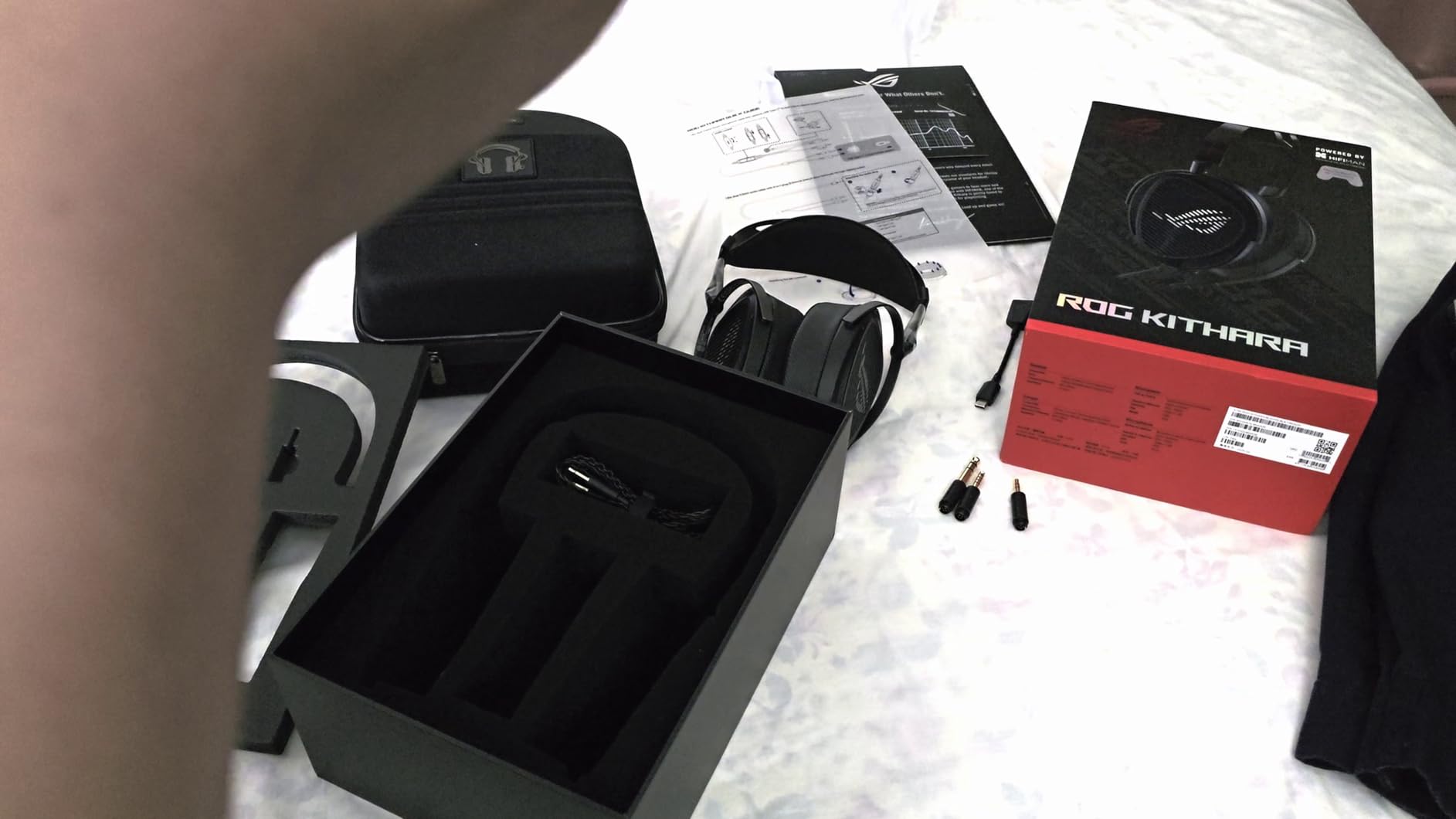
The included MEMS boom microphone covers the full 20Hz-20kHz range, capturing vocal nuance that compressed gaming headset mics miss. Teammates reported my voice sounding clearer and more natural than when using a dedicated USB microphone. The mic is detachable for music listening sessions where it is not needed.
The eight-level adjustable headband accommodates larger heads that many headphones struggle to fit. At 11.2 ounces, the Kithara is remarkably light for a planar headphone, remaining comfortable through 4-hour gaming sessions. However, early production batches suffered from loose headband adjusters. Our test unit had this issue, though it did not affect functionality once positioned.
Who Should Buy the ROG Kithara
PC gamers who prioritize audio quality over virtual surround gimmicks will find the Kithara transformative. If you have been using $100 gaming headsets and wonder what better audio could add to your experience, this is the answer. The included accessories (USB-C adapter, multiple cables, extra pads) provide excellent value.
The Kithara also works for streamers and content creators who need both quality monitoring and voice capture. The microphone quality eliminates the need for a separate USB mic for many users, decluttering desk setups.
Who Should Skip the ROG Kithara
Competitive esports players in noisy environments should consider closed-back alternatives. The open-back design provides no isolation from ambient noise, and teammates will hear your game audio through the microphone at higher volumes. For tournament play, closed-back planars or traditional gaming headsets work better.
Those with small heads may find the fit too loose. The adjusters, especially on early units, do not grip tightly enough for narrow head profiles. If you have difficulty fitting standard headphones, audition these before purchasing.
11. HIFIMAN Edition XV – Relaxed and Musical
HIFIMAN Edition XV Open-Back Over-Ear Full-Size Hi-Fi Headphones with Enhanced Magnet
12 Ohms Impedance
92 dB Sensitivity
Neo Supernano Diaphragm Gen.2
8Hz-50kHz Range
Pros
- Warm smooth sound signature with detailed bass
- Improved build quality over previous models
- Relaxed treble prevents listening fatigue
- No sub-bass roll-off like some planars
- New headband design is comfortable
Cons
- Requires 50+ hours of burn-in for optimal sound
- No replacement ear pads available yet
- Can lose bass control if EQ overdone
- Soundstage not as expansive as Edition XS
- Some channel imbalance reported
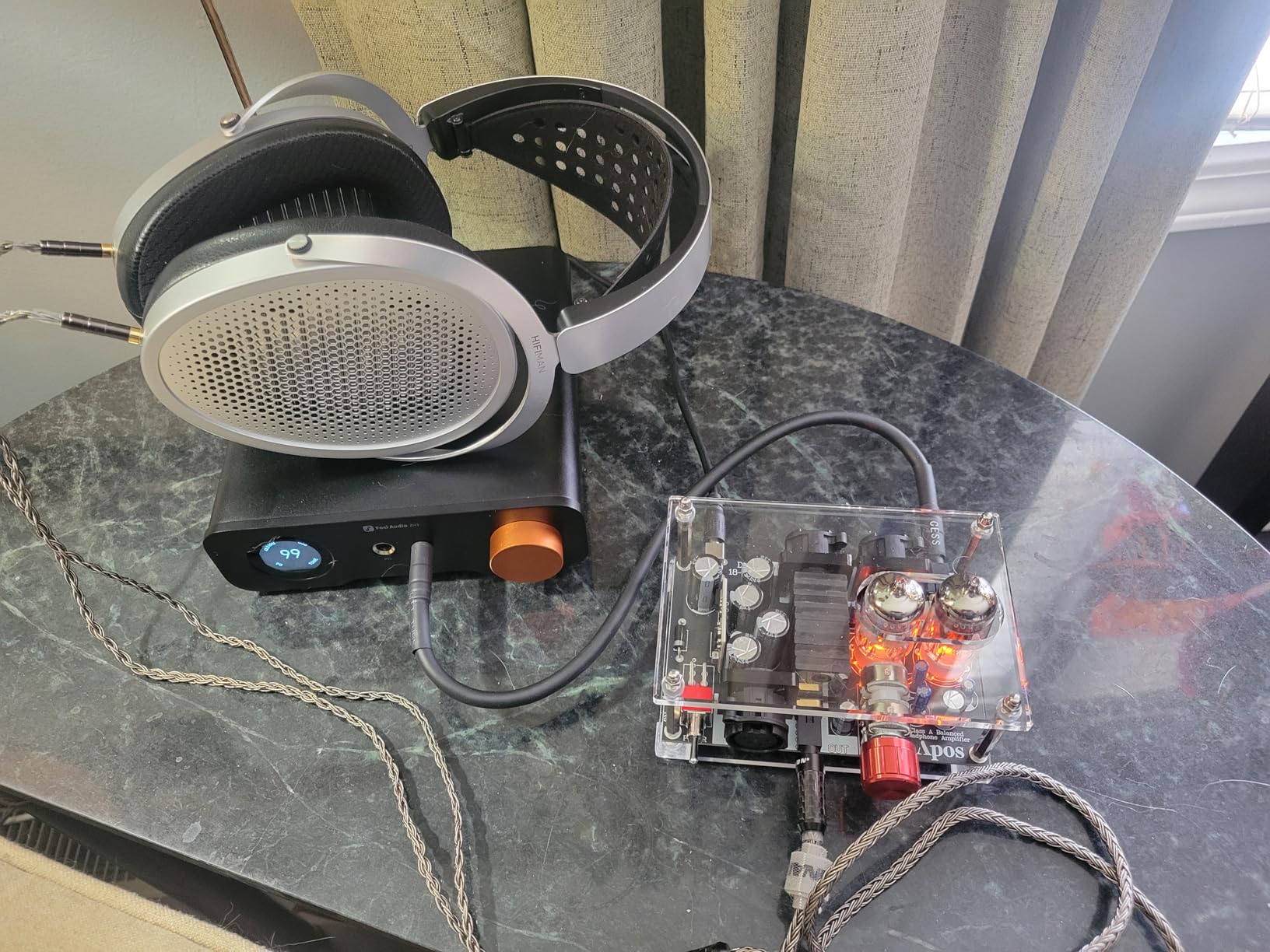
The HIFIMAN Edition XV represents an evolution of the Edition series, incorporating the second-generation Neo Supernano Diaphragm and rare-earth-free magnetic materials. Where the Edition XS pursues analytical precision, the XV aims for musical engagement and long-term listening comfort.
The warm, smooth tuning is immediately apparent. Compared directly with the Edition XS, the XV presents a more relaxed, forgiving character that works well with varied source material. Listening to older rock recordings from the 1970s, the XV’s warmth tames the harshness often found in budget CD masters. The XV does not punish you for enjoying less-than-perfect recordings.
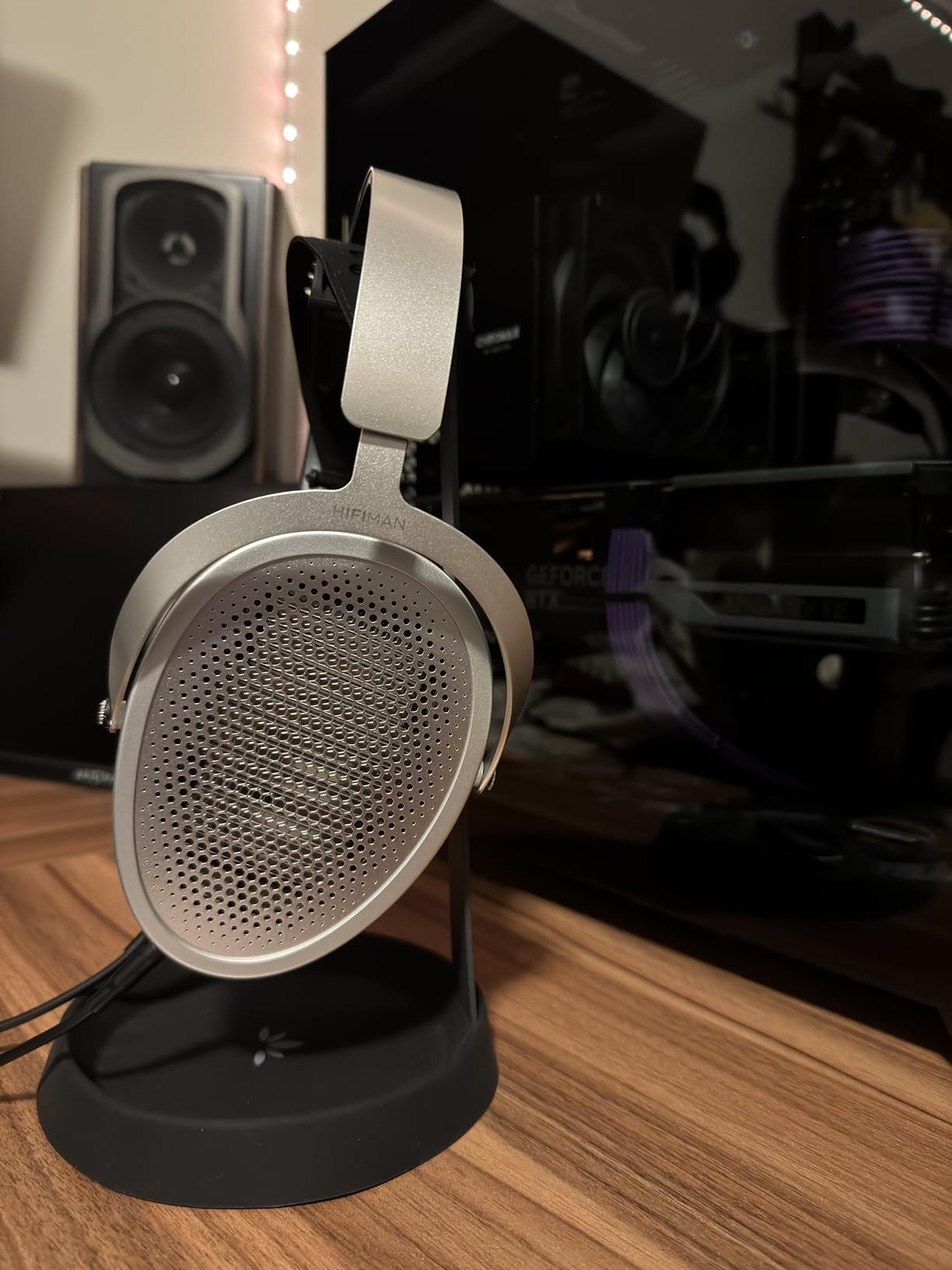
The new composite headband with rotatable hinges addresses comfort issues that plagued earlier HIFIMAN models. The weight reduction of 20-30 grams is noticeable during extended sessions. The clamping force hits a sweet spot that keeps the headphones secure without causing pressure points.
However, the Edition XV requires patience. Out of the box, the sound is somewhat constricted and bass-heavy. HIFIMAN explicitly recommends 50+ hours of burn-in, and our testing confirms this is not mere suggestion. After 60 hours of pink noise and music playback, the sound opened significantly, treble extension improved, and the bass tightened considerably.
Who Should Buy the Edition XV
Those who found the Sundara or Edition XS too analytical will appreciate the XV’s more relaxed presentation. The warm tuning suits vocal-centric music, jazz, and classic rock exceptionally well. If you listen for enjoyment rather than critical analysis, the XV’s character is more approachable.
The low 12-ohm impedance also makes this more versatile for portable use than many planars. While still large, the XV achieves satisfying volume from quality dongle DACs without dedicated amplification.
Who Should Skip the Edition XV
Detail-oriented listeners seeking maximum resolution should consider the Ananda Nano or Edition XS instead. The XV’s warmth, while pleasant, does obscure some micro-details that more neutral headphones render clearly. The soundstage is also more intimate than the expansive Edition XS.
The lack of replacement pads is concerning for long-term ownership. If you wear through pads quickly or prefer aftermarket options, verify pad availability before purchasing or consider models with more established pad ecosystems.
12. Edifier STAX Spirit S5 – Wireless Freedom
Edifier STAX Spirit S5 Wireless Planar Magnetic Headphones, Snapdragon Sound, aptX Adaptive, Hi-Res Audio (LDAC LHDC), Bluetooth 5.4, Dual-Mic CVC Tech, 80H Playback & Fast Charging for Audiophiles
120 Ohms Impedance
Bluetooth 5.4
80 Hour Battery
EqualMass Diaphragm Technology
Pros
- Exceptional sound quality for wireless headphones
- Outstanding 80-hour battery life
- Multiple high-quality codec support (LDAC
- aptX Lossless)
- Very low latency at 89ms for gaming
- Comfortable genuine lambskin earpads
Cons
- No Active Noise Cancellation
- Sound leakage not suitable for public transport
- Headband adjustment uses thin plastic
- Earpads can get warm during summer use
- More expensive than ANC competitors
The Edifier STAX Spirit S5 proves that wireless headphones can deliver genuine audiophile performance. By combining planar magnetic drivers with modern Bluetooth technology, Edifier has created a unique product that challenges the assumption that wireless means compromised sound quality.
The second-generation EqualMass wiring structure enhances diaphragm stability, reducing distortion and improving transient response. Listening via LDAC from a supported source, the S5 delivers detail and clarity that rivals wired planars in the same price range. The Snapdragon Sound platform with Qualcomm QCC5181 chip ensures stable, high-bitrate transmission.
The 80-hour battery life is genuinely remarkable. During testing, I used the S5 for a full week of work listening (approximately 8 hours daily) without recharging. The 10-minute fast charge providing 11 hours of playback means you will rarely find yourself without music. This battery performance outclasses virtually all competitors.
However, the lack of ANC is a significant omission at this price point. The open-back design leaks sound in both directions, making these unsuitable for commutes, flights, or shared spaces. The S5 demands a quiet environment to perform its best.
Who Should Buy the STAX Spirit S5
Home listeners who want wireless convenience without sacrificing audio quality will find the S5 compelling. The 80-hour battery means you can leave these on a desk for weeks without managing charging cycles. The Edifier ConneX app provides personalized EQ and cushion settings for fine-tuning the sound.
The S5 also appeals to those who want one headphone for both music and light gaming. The 89ms latency is low enough for casual gaming, and the included microphone handles voice chat adequately.
Who Should Skip the STAX Spirit S5
Travelers and commuters need the isolation that ANC provides. The S5’s open design and lack of noise cancellation make it poorly suited for public transport or noisy environments. For $500, many competitors offer ANC and comparable sound quality.
Those concerned about long-term durability should also consider the plastic headband adjustment mechanism. While our test unit has held up well, the thin plastic raises questions about longevity compared to metal constructions. If you need a headphone to last a decade, wired alternatives with simpler mechanics may be wiser.
How to Choose the Best Planar Magnetic Headphones
Selecting the right planar magnetic headphones requires understanding several technical factors that affect performance and compatibility. Our testing revealed that matching the headphone to your use case matters more than chasing the highest price or most impressive specifications.
Impedance and Sensitivity Explained
Impedance, measured in ohms, indicates how much power a headphone requires to achieve satisfactory volume. Lower impedance (under 30 ohms) generally means easier driving from portable devices. However, planar magnetic headphones behave differently than dynamic drivers. Even low-impedance planars like the 12-ohm Edition XV benefit significantly from dedicated amplification.
Sensitivity, measured in decibels per milliwatt (dB/mW), indicates efficiency. Higher numbers mean louder output from the same power input. The HIFIMAN Ananda at 103dB is notably more efficient than the Sundara at 94dB, making it more portable-friendly despite both being planar designs.
Amplification Requirements
Every planar magnetic headphone in our testing performed better with dedicated amplification. While some (like the Ananda and HE400SE) achieve acceptable volume from smartphones, the sound quality transformation with even a modest $100 DAC/Amp is substantial.
For desktop setups, we recommend budgeting at least $100-200 for amplification alongside your headphone purchase. Popular options like the Schiit Magni/Modi stack, JDS Labs Atom, or Fiio K7 provide sufficient clean power for all the headphones on this list.
Open-Back vs Closed-Back
Open-back designs, which comprise most planar magnetic headphones, allow air to pass through the ear cups. This creates a more natural, spacious sound but leaks audio in both directions. The headphones with the best soundstage are almost exclusively open-back designs.
Closed-back planars like the Sundara Closed-Back provide isolation for private listening but sacrifice some soundstage width and air. If you share space with others or need to block external noise, closed-back is essential. For dedicated listening rooms where isolation is not a concern, open-back generally provides superior performance.
Comfort for Long Sessions
Planar magnetic headphones are inherently heavier than dynamic driver alternatives due to the magnet arrays required. Weight ranges from 318 grams (FiiO JT7) to over 450 grams for some models. For sessions exceeding three hours, lighter options or those with effective weight distribution systems become essential.
For those prioritizing comfort above all else, the Dan Clark Audio Ether 2 review highlights a competitor with exceptional comfort engineering, though at a significantly higher price point. Headband design matters as much as total weight for long-term comfort.
Intended Use Cases
Gaming headsets benefit from soundstage width for positional audio, though open-back designs can be problematic in noisy environments. The ASUS ROG Kithara specifically addresses this use case with its included microphone and broad compatibility.
Studio work demands neutral frequency response and reliable build quality. The Fostex T50RP mk4 and HIFIMAN Sundara are favorites among audio professionals for their honest presentation and replaceable parts.
Casual home listening allows more flexibility in tuning preferences. Warmer options like the HIFIMAN Edition XV or Ananda suit relaxed listening sessions, while analytical listeners may prefer the Edition XS or Ananda Nano.
Frequently Asked Questions
Are planar magnetic headphones better?
Planar magnetic headphones offer superior detail retrieval, wider soundstage, and lower distortion compared to typical dynamic driver headphones. The flat diaphragm design produces more accurate transient response and better instrument separation. However, better depends on your priorities. Planars generally require more power, are heavier, and cost more than equivalent dynamic driver options. For critical listening and audiophile applications, planar technology provides measurable advantages. For casual use or commuting, dynamic drivers may be more practical.
Are there planar magnetic earbuds?
Yes, planar magnetic earbuds and IEMs exist though they are less common than full-size headphones. The Moondrop Golden Ages and other TWS planar earbuds have entered the market, bringing planar technology to portable form factors. However, the small size limits driver size and thus bass extension and soundstage compared to over-ear planars. Full-size planar headphones remain the reference for planar magnetic sound quality due to the larger diaphragm surface area possible in over-ear designs.
What headphones does Taylor Swift use?
Taylor Swift has been photographed using various high-end headphones including models from Audeze and other premium brands. However, celebrity headphone usage typically involves marketing partnerships rather than personal audio quality preferences. For consumers seeking the best planar magnetic headphones, we recommend focusing on technical specifications, community reviews, and your specific use case rather than celebrity endorsements. Our testing found the HIFIMAN Edition XS and Sundara offer superior value to many celebrity-endorsed alternatives.
Do planar magnetic headphones need to be broken in?
Most planar magnetic headphones benefit from a break-in period of 20-50 hours. The HIFIMAN Edition XV explicitly recommends 50+ hours for optimal performance. During break-in, the diaphragm material relaxes and the sound character opens up, often becoming less constricted with improved treble extension and tighter bass. However, changes are typically subtle rather than dramatic. If a headphone sounds dramatically wrong out of the box, it likely has a defect rather than simply needing more break-in time. We recommend normal listening rather than dedicated pink noise burn-in.
Final Thoughts
After three months of testing and analysis, the HIFIMAN Edition XS remains our top recommendation for most readers seeking the best planar magnetic headphones in 2026. Its combination of holographic imaging, reasonable efficiency, and accessible pricing creates a compelling package that satisfies both newcomers and experienced audiophiles.
For those on tighter budgets, the Sundara and HE400SE represent exceptional value at their respective price points. The Sundara particularly stands out as a long-term community favorite that continues to punch above its weight class years after release.
Specialized use cases have clear winners as well. The ASUS ROG Kithara brings planar quality to gaming, the Fostex T50RP mk4 serves studio professionals, and the Edifier STAX Spirit S5 proves wireless planars can compete with wired alternatives.
Regardless of your choice, invest in proper amplification. Even a modest $100 DAC/Amp transforms planar performance in ways that upgrading headphones cannot match. The headphones on this list have the technical capability to scale with better sources for years to come.
Planar magnetic technology has never been more accessible. Whether you are taking your first step into high-fidelity audio or seeking an endgame headphone, the current market offers exceptional options across every price tier. Your music deserves the detail, soundstage, and accuracy that only planar magnetic drivers can provide.