
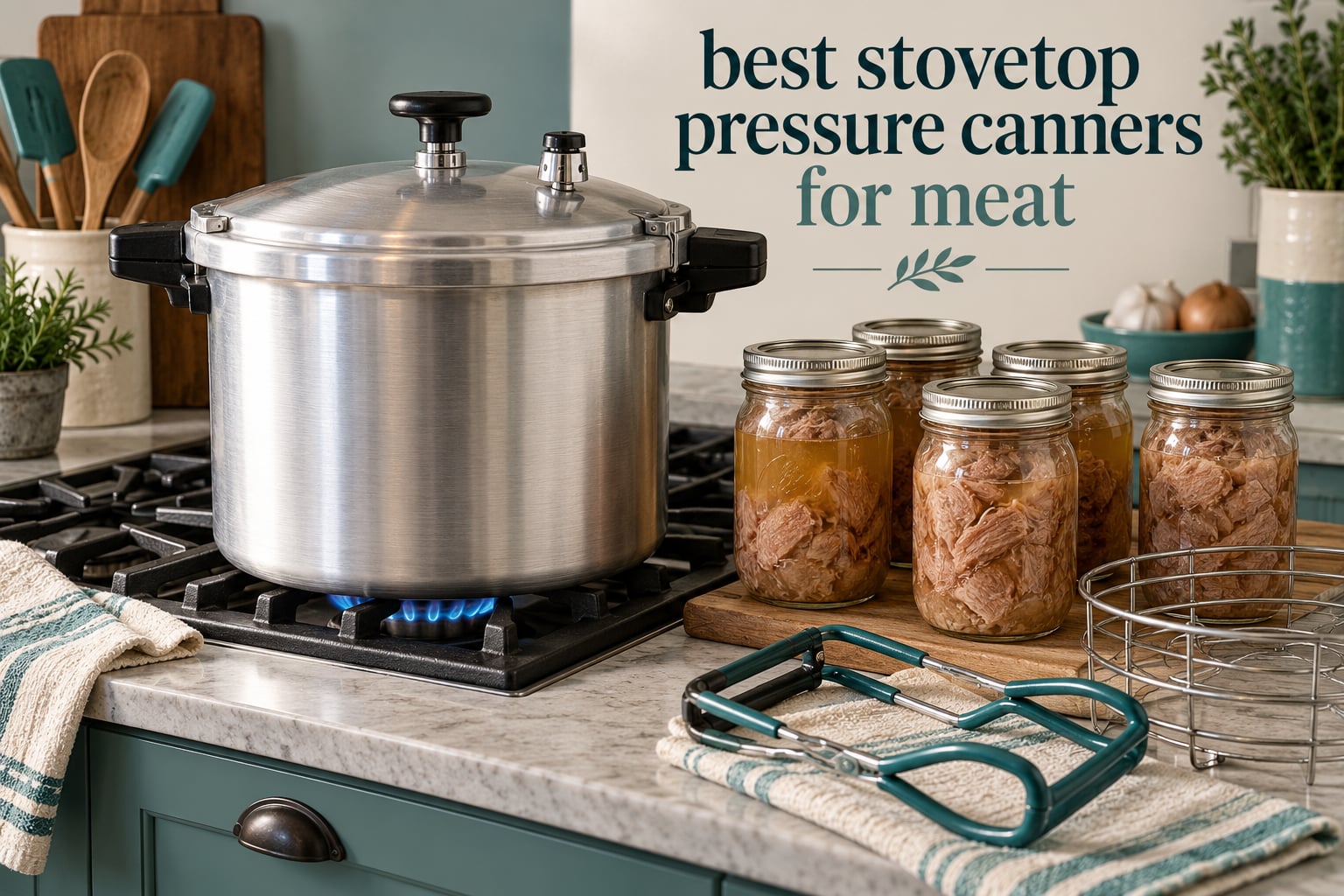
Meat is the one food that gives home canners no room for shortcuts. A boiling water bath tops out at 212 degrees F, which is fine for tomatoes and jam but nowhere near enough to destroy the spores of Clostridium botulinum that hide in low-acid foods like beef, pork, poultry, venison and broth. Only a pressure canner, running at 240 degrees F or hotter, closes that gap.
That safety requirement is also what makes picking a canner harder than it looks. A stovetop pressure canner for meat has to hold steady pressure, carry a rack full of heavy jars, and stay honest about the pressure it is producing. The best stovetop pressure canners for meat all do that, but they differ in ways that matter: gasket versus metal-to-metal seal, dial gauge versus weighted regulator, bare aluminum versus anodized or stainless, and 12 pounds of empty weight versus 18.
We spent weeks reading owner reviews, comparing jar capacities, and weighing the practical details that separate a canner you will keep for twenty years from one you replace in three. The ten models below cover every realistic use case, from a compact 12-quart pot for a single deer shoulder to a 24-quart batch canner for a whole side of beef. If you are still working out the basics, our broader pressure canner roundup covers equipment that is not specifically meat-focused.
One note before we start. The processing times and pressure levels that follow are general guidance only. Always pull the exact time for your cut, jar size and pack method from a USDA-tested recipe in the Complete Guide to Home Canning or the National Center for Home Food Preservation, and follow it exactly.
Table of Contents
Top 3 Picks for Canning Meat Safely (October 2026)
The Presto 01781 takes our top spot for the combination of capacity, a true dial gauge and the deepest review history of anything in this group. The All American 1930 wins on build quality and its gasket-free metal seal. The T-Fal 22-Quart is the pick if you want selectable pressure settings built into the regulator weight rather than a dial to read.

Presto 01781 23-Quart
- Dial pressure gauge
- 26 half-pints or 7 quarts
- dual-use boiling water canning
- 12-year warranty

All American 1930 15.5-Quart
- Gasket-free metal-to-metal seal
- cast aluminum
- made in the USA
- 7 quart jars
T-Fal 22-Quart
- Three PSI settings in the weight
- 24 half-pints or 7 quarts
- two racks included
Quick Overview: Best Stovetop Pressure Canners for Meat in 2026
Every model below is capable of safely processing low-acid meat at USDA processing pressure, but they are not equal. Read this table as a map of what each pot is optimized for, then jump to the full review for the details that decide your purchase.
| Product | Specifications | Action |
|---|---|---|
| Presto 01781 23-Quart Pressure Canner and Cooker |
|
Check Latest Price |
| T-Fal 22-Quart Aluminum Pressure Canner |
|
Check Latest Price |
| All American 1930 15.5-Quart Pressure Cooker and Canner |
|
Check Latest Price |
 Granite Ware 20-Quart Pressure Canner Cooker and Steamer Granite Ware 20-Quart Pressure Canner Cooker and Steamer |
|
Check Latest Price |
 Mirro 92116 16-Quart Pressure Cooker and Canner Mirro 92116 16-Quart Pressure Cooker and Canner |
|
Check Latest Price |
 WantJoin 16-Quart Aluminum Pressure Cooker and Canner WantJoin 16-Quart Aluminum Pressure Cooker and Canner |
|
Check Latest Price |
 Granite Ware F0732-2 12-Quart Pressure Canner and Cooker Granite Ware F0732-2 12-Quart Pressure Canner and Cooker |
|
Check Latest Price |
 Hestroney 12.68-Quart Aluminum Pressure Canner Hestroney 12.68-Quart Aluminum Pressure Canner |
|
Check Latest Price |
 kilogorge 24-Quart Pressure Canner with Gauge kilogorge 24-Quart Pressure Canner with Gauge |
|
Check Latest Price |
 Buffalo QCP415 15-Quart Stainless Steel Pressure Cooker Buffalo QCP415 15-Quart Stainless Steel Pressure Cooker |
|
Check Latest Price |
1. Presto 01781 23-Quart Pressure Canner and Cooker – Our Top Pick for Meat
Presto 01781 23-Quart Pressure Canner and Cooker
21.8 liter aluminum body
Dial pressure gauge
12 lb empty weight
12-year limited warranty
Pros
- Dial gauge reads actual processing pressure
- which matters at altitude
- 23-quart capacity holds 26 half-pints 20 pints or 7 quarts
- warp-resistant heavy-gauge aluminum heats evenly
- doubles as a boiling water canner for high-acid foods
- 76-page instruction and recipe book included
Cons
- Bare aluminum reacts with acidic foods
- large footprint needs a big burner and counter space
- filled jars load and unload on the stovetop
The Presto 01781 is the canner we put in front of anyone who asks which single model to buy. It is a 23-quart polished aluminum pot with a real dial gauge mounted on the lid, and that gauge is the feature that decides it for meat. Weighted regulators hold pressure by physics, which works well, but a dial lets you confirm the actual pounds per square inch inside the pot while a raw pack of ground beef is coming up to temperature.
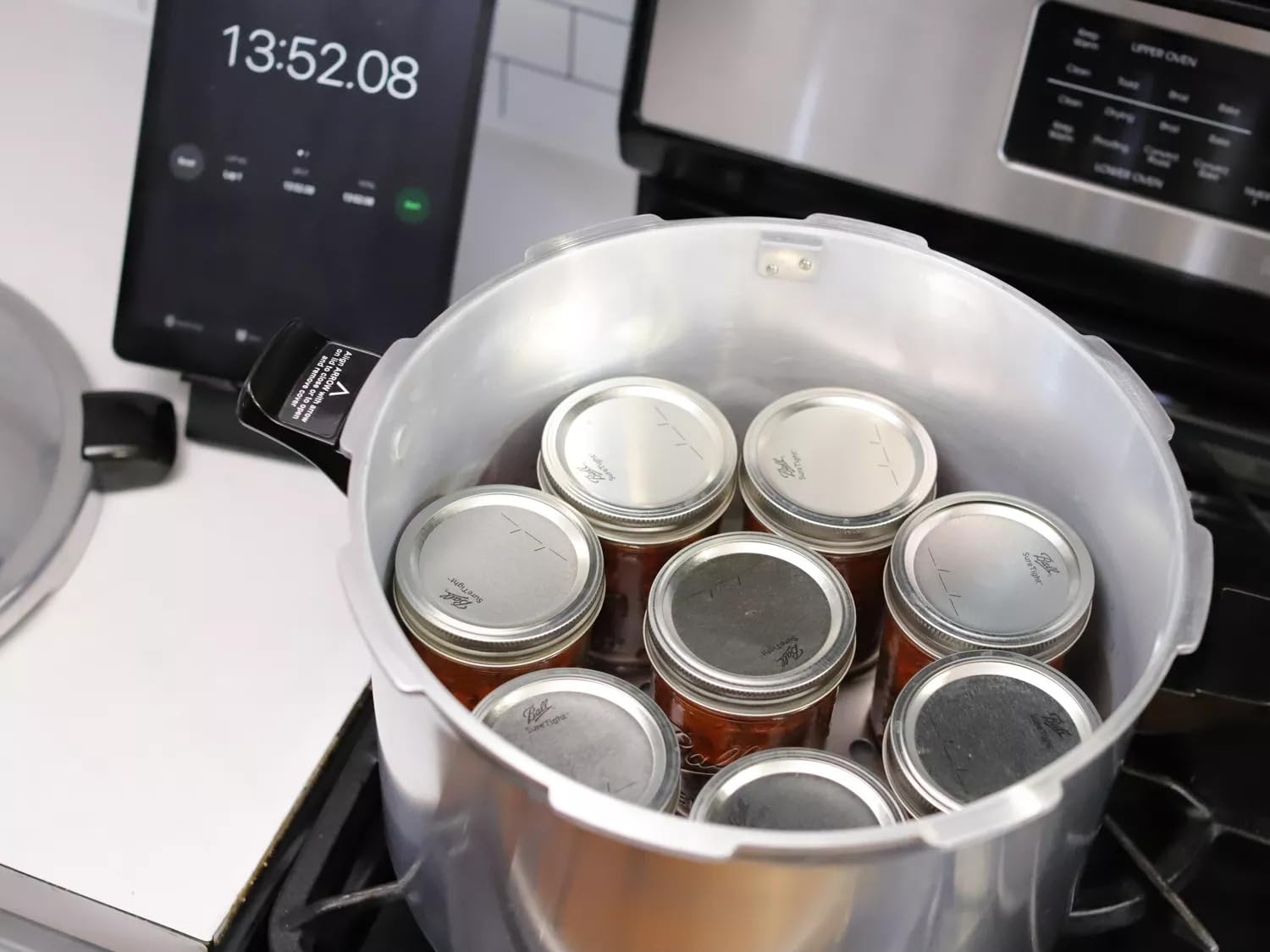
Capacity is the other reason it wins. Per the manufacturer specifications it holds 26 half-pint, 20 pint or 7 quart jars in a single load. A deer shoulder or a whole side of beef breaks down into more jars than most people expect, and being able to clear a batch in one run keeps the timeline short enough that you are not standing over a hot burner at midnight.
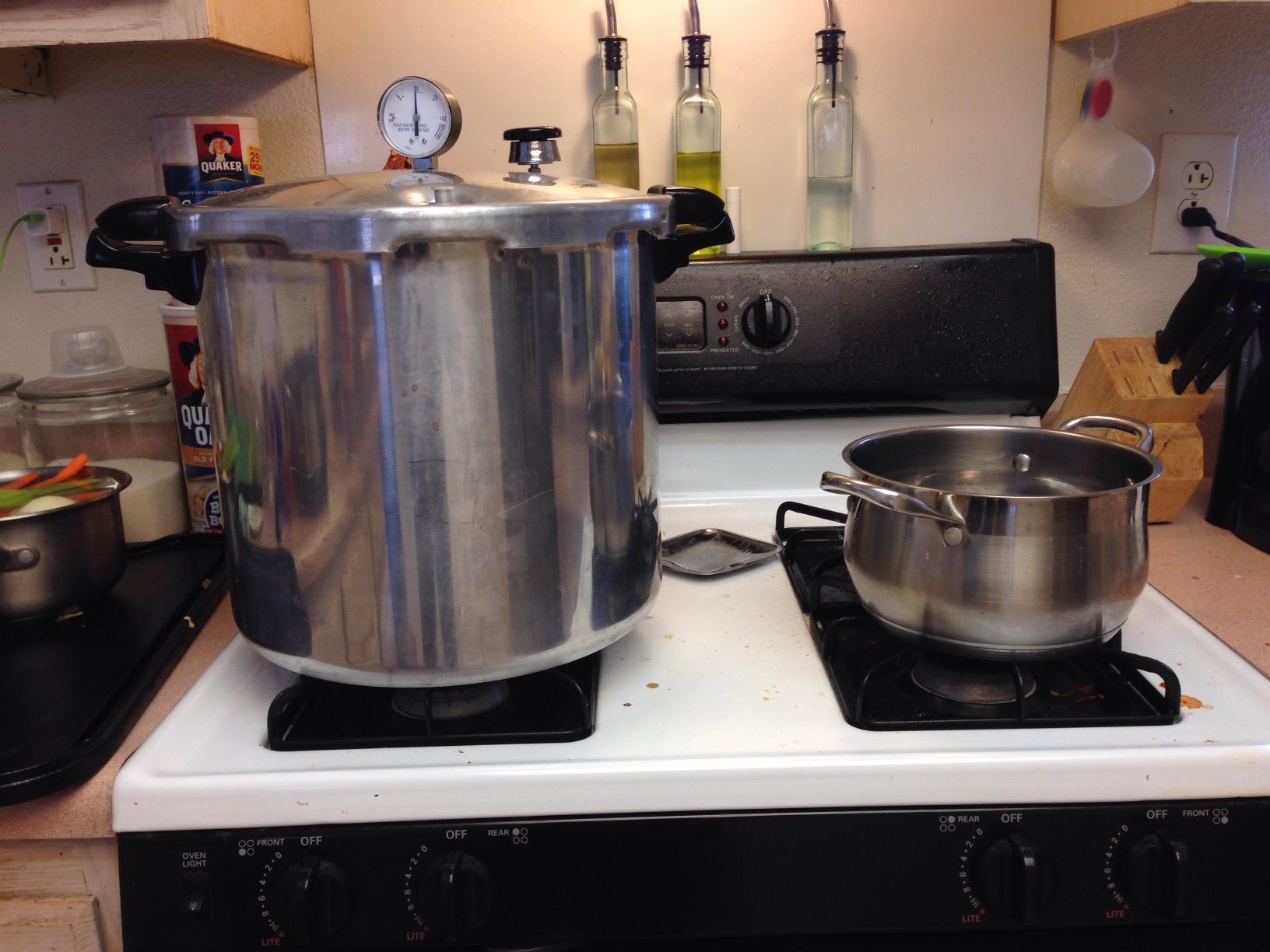
Owner reviews mention the same three things over and over: even heating from the warp-resistant heavy-gauge aluminum, how simple the dial is to read at altitude, and how straightforward the included 76-page manual makes the first batch. Reviewers describe the same step sequence repeatedly: load cold jars, add measured water, bring the pot to pressure, then follow the USDA-tested time for the cut and jar size without adjusting anything on the fly.
The construction trade-offs are real, though. Bare aluminum will pit and discolor if you put vinegar-based pickles or tomato sauce in it, so this is a low-acid canner only. At 12 pounds empty and roughly 15.5 by 17.5 inches across, it also needs a large burner and a chunk of counter space, and you load and unload it where it sits rather than carrying a full vessel to the sink.
The extended 12-year limited warranty is the best in the group, and combined with more than 20,000 ratings the feedback record here is the deepest we could evaluate.
What makes it work for heavy meat batches
A full load of seven quart jars plus the pot itself is a serious amount of mass on a burner, and heavy-gauge aluminum is what keeps that load from cooking unevenly. Even heat means every jar in the rack sees the same 240 degree F environment instead of the jars near the flame running hotter than the ones on the far side.
The included canning rack is the other quiet hero. Jars sitting flat on the canner bottom will scorch, and a proper rack keeps the canning liquid circulating underneath them for the full processing time.
Where it falls short
If your canning plan includes canning tomatoes, applesauce or pickled vegetables alongside the meat, the aluminum is a real limitation and you would be better served by a stainless body. Our picks for those cases are further down the list.
The other drawback is purely physical. This is a large pot that stays on the stove, so plan your workflow around it rather than trying to move it. Owners who adapted to that constraint report very few problems over the long term.
2. T-Fal 22-Quart Aluminum Pressure Canner – Three PSI Settings in the Regulator
T-fal 22-Quart Aluminum Pressure Canner, 3 PSI Settings, Home Canning, Includes Racks & Canning Guide, Large Capacity, Pressure & Water Bath Canning for Vegetables, Meats, Seafood & Fruits, Silver
22 quart aluminum body
Three PSI weight settings
14.8 lb empty weight
One-year warranty
Pros
- Three selectable PSI settings built into the regulator weight remove the need for loose caps
- holds 24 half-pints 18 pints or 7 quarts
- readable gauge and beginner-friendly steam release valve
- two canning racks plus a step-by-step canning guide included
- doubles as a water-bath canner
Cons
- Indicator gauge is not calibrated to true 5/10/15 PSI
- rubber gasket can leak a little steam if the lid is not reseated
- very large and heavy when full and awkward to wash
The T-Fal 22-Quart has three selectable PSI settings built directly into the regulator weight rather than living in separate loose caps. Instead of hunting for a 5 or 15 pound cap in a drawer, you set the weight to the pressure your recipe and your elevation call for. For meat canning that is a genuine convenience, because 10 PSI is the standard processing pressure and being able to set it directly removes a step that trips up beginners.
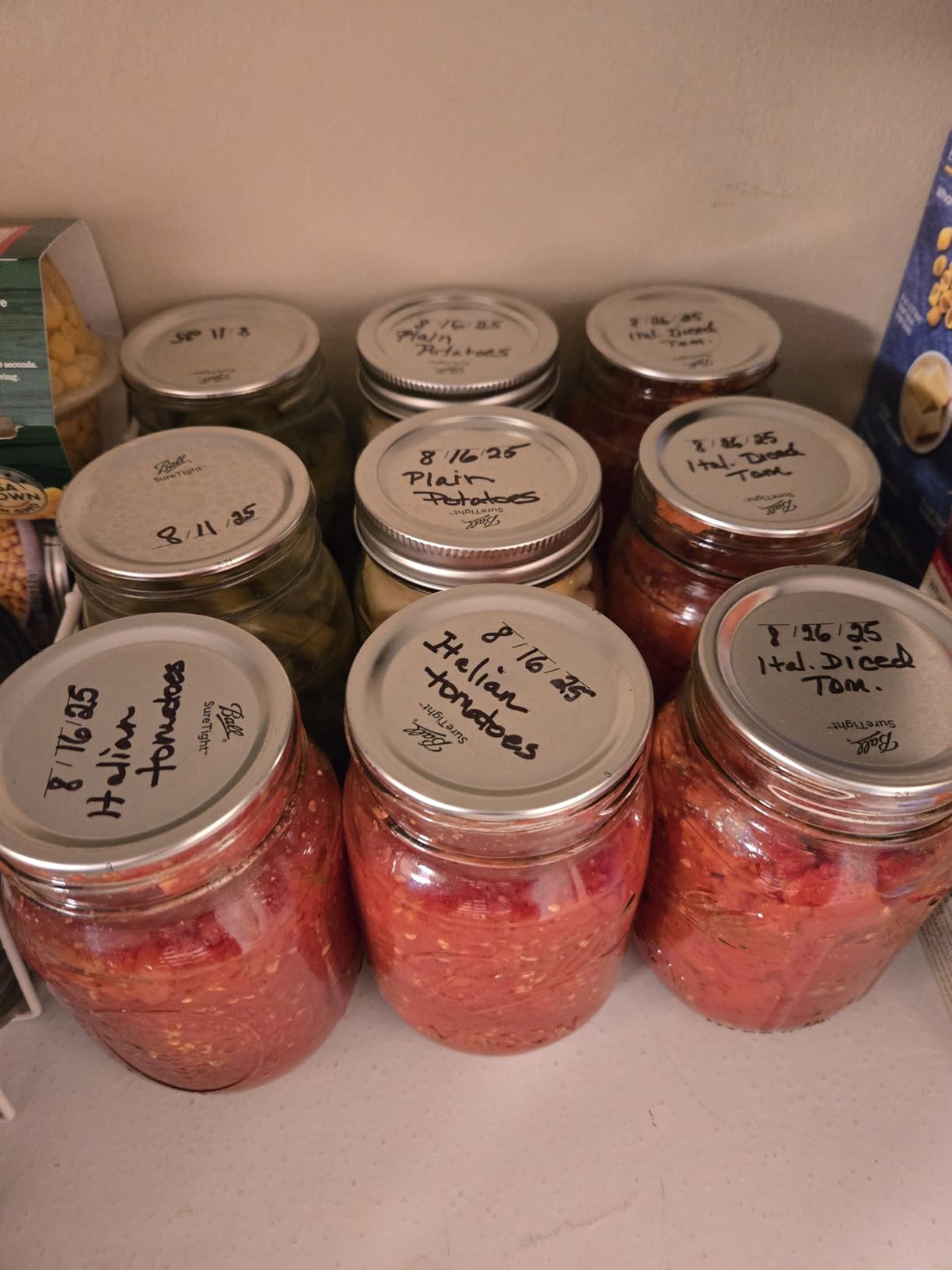
Capacity is the equal of the Presto at the quart end, holding 7 quarts or 18 pints or 24 half-pints per load. Multiple reviewers specifically mention using it for venison and other large game cuts, which is the kind of batch that fills a canner fast and benefits from processing everything at once.
The reviews split neatly into two camps, and both are worth hearing. Novices describe it as the easiest canner they have operated, praising the dial-set weight and the included guide. Experienced canners point out that the indicator gauge is not calibrated to true 5, 10 or 15 PSI, so it cannot be used to verify processing pressure, and that the rubber gasket occasionally needs a second reseat before it stops weeping a small amount of steam at the vent.
Defect reports do exist. Some owners received pots with cracked manometers or a gasket that did not match the lid, though the common experience in reviews is that the manufacturer handled the returns and replacements smoothly and those buyers rate the replacement highly afterward. The one-year warranty is among the shortest we see here, which is a fair trade for the jar capacity it offers.
It also works on gas and electric coil cooktops, so you are not locked into one type of range.
Why the built-in PSI weight matters for meat
Meat is a low-acid food, and low-acid foods need to reach 240 degrees F inside the jar. Water boils at 212 degrees F at sea level and only gets there under pressure. A weighted regulator works by holding a set amount of steam pressure against the weight, which pushes the internal boiling point up to that range. A dial gauge, by contrast, shows you the pressure directly.
Having the selector built into the weight means you are less likely to grab the wrong cap on a tired evening, which is one of the most common ways a batch gets under-processed.
Where it falls short
The uncalibrated indicator gauge is the honest limitation here. If you want to read actual PSI while a batch runs, this is not the canner. The gasket is also a consumable wear item, and while reseating usually solves a small leak, it is the failure point you will be replacing eventually.
At 14.8 pounds empty and nearly 20 inches deep, plan on dedicating real space to it and washing it outside or in a large utility sink.
3. All American 1930 15.5-Quart Pressure Cooker and Canner – Gasket-Free Cast Aluminum
All American 1930: 15.5qt Pressure Cooker/Canner (The 915) – Exclusive Metal-to-Metal Sealing System – Easy to Open & Close – Suitable for Gas, Electric, or Flat Top Stoves – Made in the USA
14.67 liter cast aluminum
Metal-to-metal seal, no gasket
18 lb empty weight
1 year limited warranty
Pros
- Gasket-free metal-to-metal seal removes the rubber gasket that wears out and leaks
- heavy cast aluminum rated for 15 PSI processing pressure
- lid opens by hand with no tools once pressure releases
- made in the USA with domestic service and parts
- large manual doubles as a cookbook
Cons
- Very heavy empty and far heavier loaded so jars must unload on the stove
- lid can occasionally vapor-lock at zero pressure
- bare aluminum corrodes with acidic foods
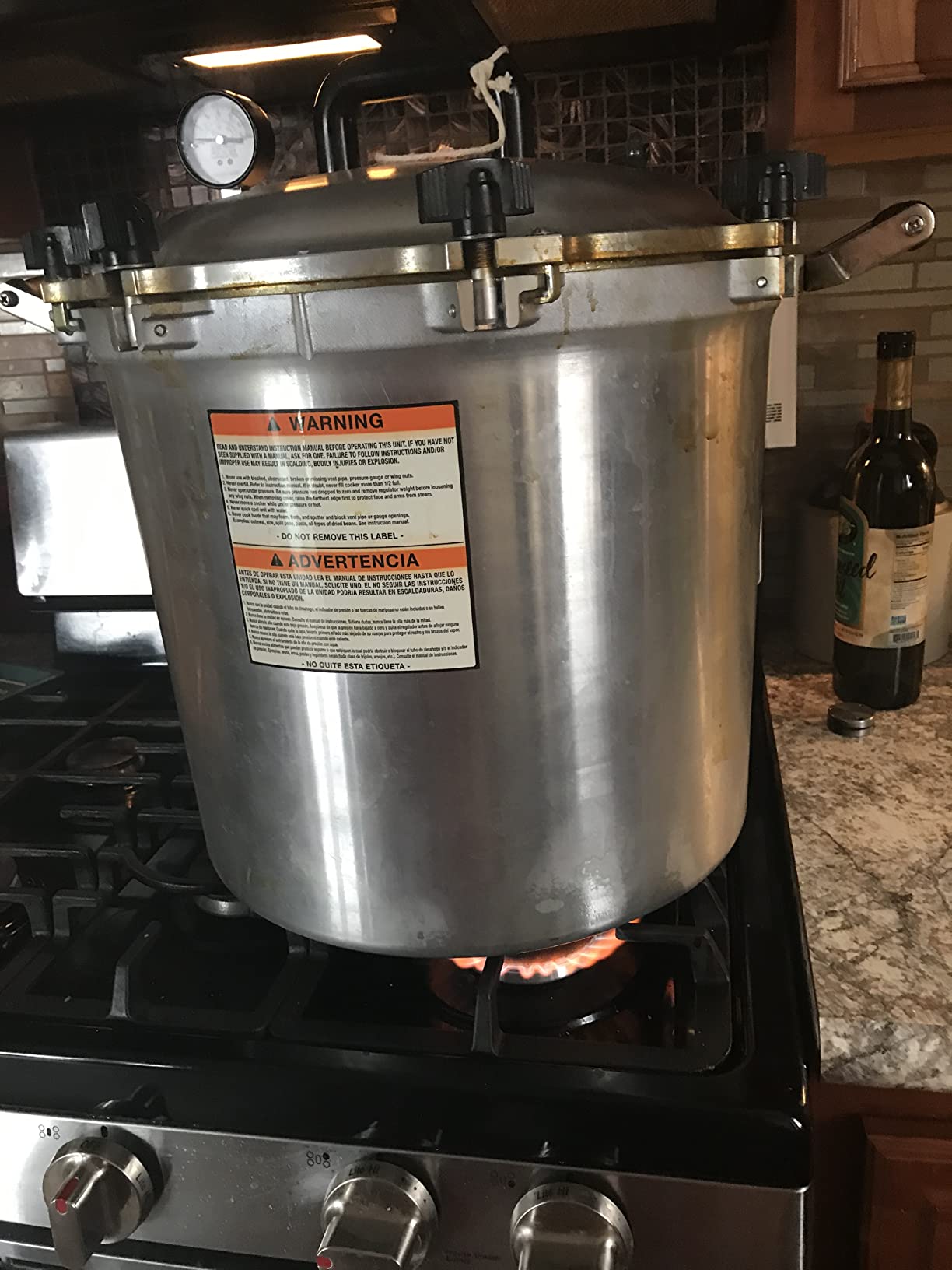
The All American 1930, sold as the Model 915, is the one canner here that does not have a rubber gasket at all. The lid clamps down on the rim with wing nuts tightened in alternating sets, creating a machined metal-to-metal seal. For anyone who has ever had a gasket swell, tear or leak steam halfway through a batch, that design removes the single most common failure point in home canning.
It is also the highest rated model in this group at 4.9 stars across more than 9,700 ratings. The dominant theme in those reviews is simple: this is equipment you buy once. Owners describe it as near-indestructible cast aluminum, made in the USA at the Wisconsin Aluminum Foundry, with factory service and parts availability that smaller brands cannot match.
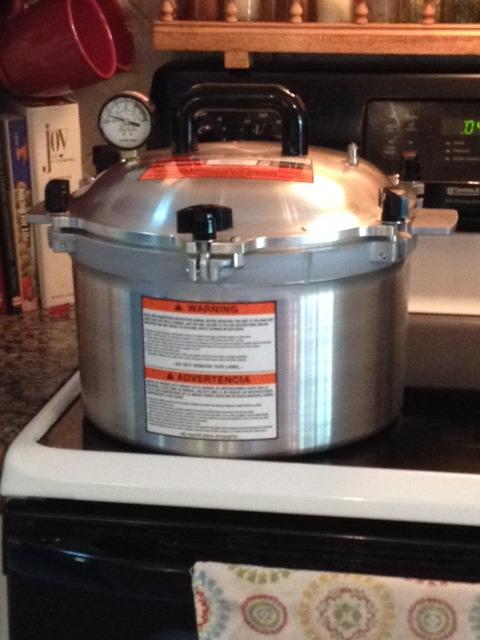
At 15.5 quarts it holds about 10 pint or 7 quart jars. That is a smaller canner than the Presto or the T-Fal at the pint end, and it does not fit a second row of pints without a separate stacking rack, but for meat canning the quart capacity is what matters and 7 quarts is the same figure the larger pots deliver.
The precision machined regulator weight gives weighted-gauge control, and the easy-to-read steam reference gauge tells you that pressure has been reached without pretending to be a calibrated PSI dial. It is a reference indicator, so treat it that way and let the weight do the work.
Two cautions come up repeatedly and are worth planning around. First, weight. At 18 pounds empty it becomes far heavier loaded, and owners consistently advise loading and unloading jars on the stovetop rather than carrying a full vessel. Second, a rare lid vapor-lock at zero pressure can occur, and owners describe freeing it with a wrapped screwdriver once the pot is fully depressurized.
Why a metal-to-metal seal matters for long batches
Rubber gaskets degrade with heat, age and repeated compression. When one fails mid-batch, steam escapes, pressure drops, and the jars in that load have not received the processing time they need. The All American design removes that variable entirely, which is why owners consistently describe it as set-and-forget equipment.
There is a second benefit. Because there is no gasket to remove and clean, and no elastic to stretch when you clamp the lid, the sealing surface stays flat and consistent year after year.
Where it falls short
Heat-up and cool-down times are noticeably longer than on smaller aluminum canners, and cast aluminum holds heat, so a full pot stays hot long after the burner is off. Budget more clock time per batch than you would with a spun aluminum pot.
Bare aluminum also means no vinegar pickles or tomato sauce. And the one-year limited warranty is notably shorter than the Presto’s, though the domestic parts support is a meaningful offset.
4. Granite Ware 20-Quart Pressure Canner, Cooker and Steamer – Anodized Body for Triple Duty
Granite Ware Pressure Canner/Cooker/Steamer, 20-Quart
20 quart hard anodized aluminum
Adjustable 5 10 and 15 PSI regulator
10.5 lb empty weight
Pros
- Hard anodized surface resists rust and staining better than bare aluminum
- adjustable three-piece regulator calibrated at 5 10 and 15 PSI for elevation
- doubles as a pressure cooker and steamer
- non-stick interior simplifies cleanup after meat
Cons
- 20-quart size is dated next to 22 and 24-quart competitors
- aluminum body still cannot handle acidic foods
- mechanical knob control lacks dial-gauge readouts
The Granite Ware 20-quart is one of the most versatile canners in this group, and the larger of the two hard anodized models here. That anodized layer is the difference between a pot that stains after a few batches of tomato-heavy stew and one that does not, and it also resists the rust that eventually pits bare aluminum after years of wet heat cycles.
The regulator is a three-piece adjustable system calibrated at 5, 10 and 15 PSI. Being able to change the pressure level matters for meat because processing time changes with pressure, and if you live at altitude the higher setting is the one you will be running most often.
Owners also point out the triple functionality. The same pot handles pressure canning, pressure cooking and steaming, and the non-stick interior is a genuine convenience after processing ground beef, where fat and collagen leave a mess behind.
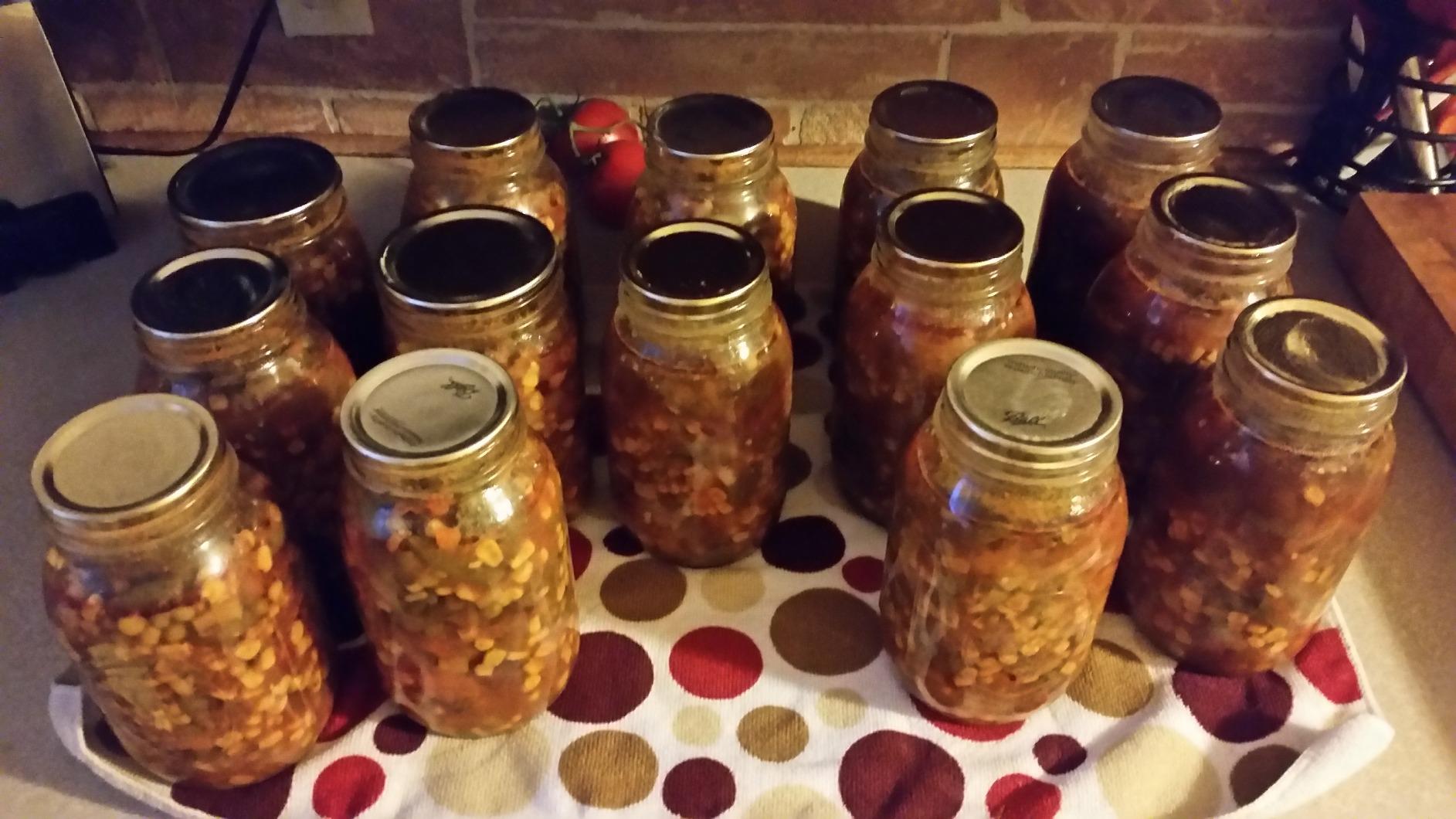
At 4.6 stars from about 800 ratings, the feedback base is solid but much thinner than the Presto or the All American, and that thinner record is the main thing to weigh. Hundreds of reviews rather than thousands means less evidence about how a model holds up over a decade of service.
The mechanical knob control is straightforward, but it is not a pressure readout. There is no dial to check, so the regulator weight is your only reference for how much pressure is inside.
The 20-quart size is also the capacity compromise. It is smaller than the Presto and T-Fal for pints, and a full load of canning racks will crowd a 20-quart body faster than the larger pots.
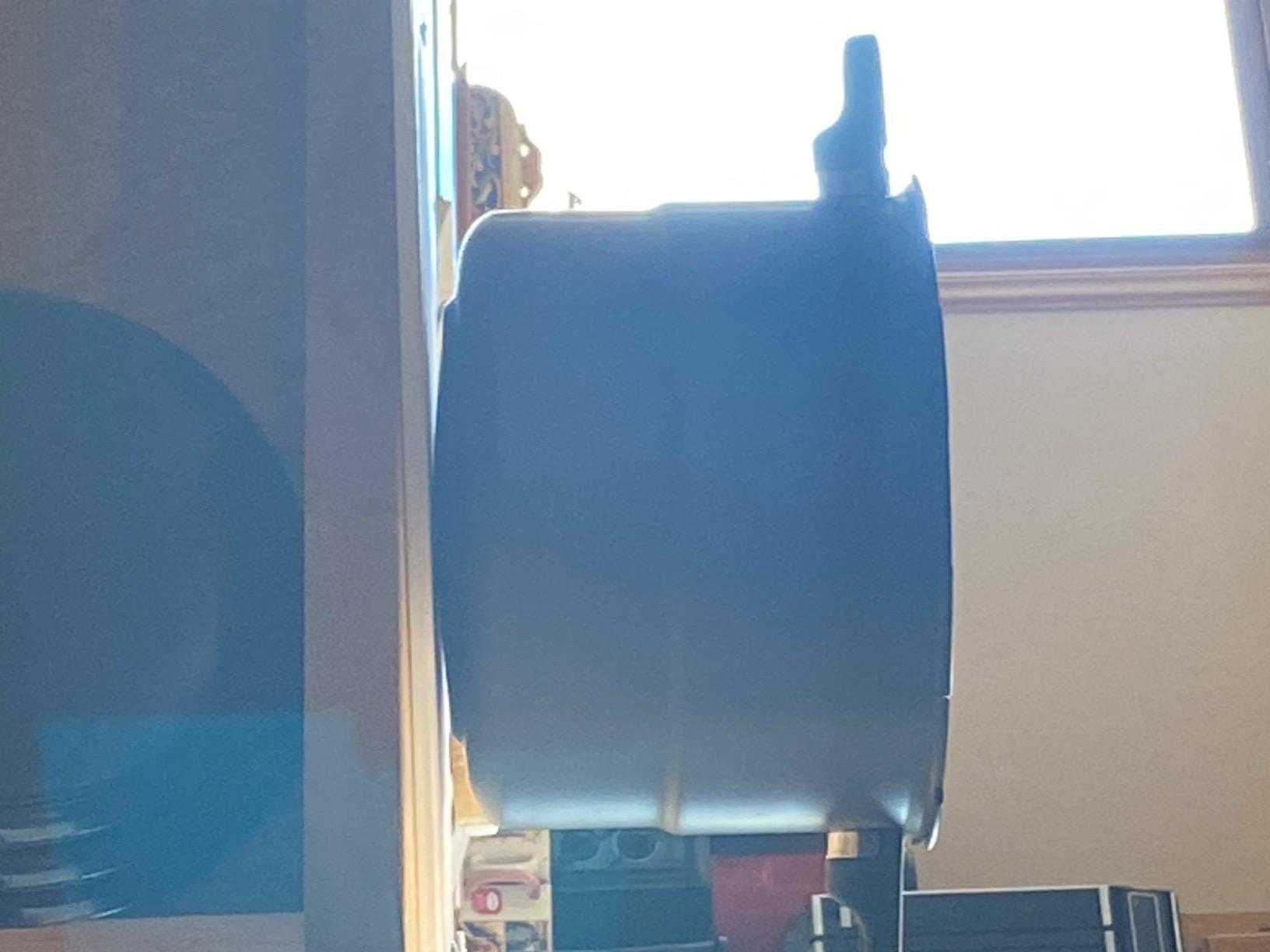
When anodized aluminum earns its keep
Hard anodizing is an electrochemical layer grown into the aluminum itself, not a coating sitting on top. It is harder than the bare metal, non-porous, and it does not chip off the way a spray coating can. For a canner that sees heat, water, acid and fat in rotation, that surface holds up better over time.
It also makes the pressure-cooker and steamer function viable. If you are going to run a pot at high heat for an hour outside of canning, the interior finish matters more than it would for a canner you only use twice a year.
Where it falls short
Anodizing does not make the pot acid-proof. It is still an aluminum vessel and should stay on low-acid foods, which in practice means your meat, poultry, broth, beans and vegetables, not your pickles.
The other limitation is pure logistics. Twenty quarts is no longer a large size in this category, and if your goal is to clear a whole deer or a large beef batch in one load, the 23-quart and 24-quart models fit more jars.
5. Mirro 92116 16-Quart Pressure Cooker and Canner – Three Pressure Controls, Cool-Touch Handles
Mirro 7114000228 92116 Polished Aluminum 5 / 10 / 15-PSI Pressure Cooker / Canner Cookware, 16-Quart, Silver
16 liter aluminum body
Selectable 5 10 and 15 PSI
9.5 lb empty weight
Pros
- Three selectable pressure controls at 5 10 and 15 PSI
- holds 16 pint or 5 quart jars
- cool-touch side handles are safer to lift when loaded
- reusable overpressure plug adds a second safety layer
- two canning racks and a recipe guide included
Cons
- Five quart jars per load is fewer than most 16-quart competitors
- bare aluminum rules out acidic foods
- side gasket is a wear item
- coil electric cooktops not supported
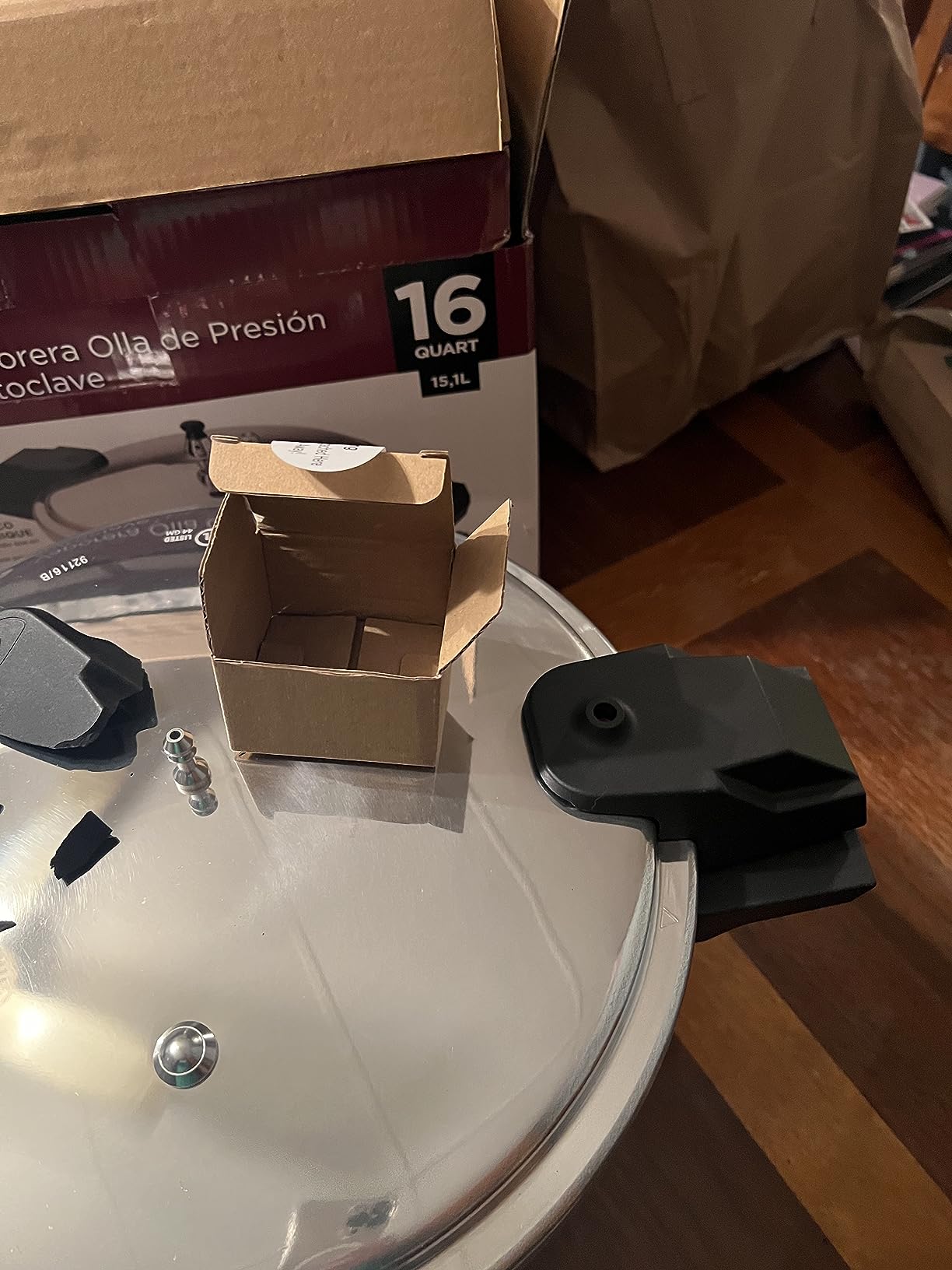
The Mirro 92116 lists the lightest empty weight in this group at 9.5 pounds, and the dual cool-touch side handles are the practical reason. When a canner holds 16 pints of meat, the difference between handles you can grip and bare metal you cannot is the difference between a comfortable batch and a two-person lift.
Pressure control is handled by a regulator with three selectable settings at 5, 10 and 15 PSI, and the sure-locking lid includes a reusable overpressure plug plus a side gasket pressure release. Two layers of pressure relief on a pot that holds 16 pints of cooked meat is a reasonable combination.
At 16 quarts it holds 16 pint jars or 5 quart jars. That is enough for a weekend of ground beef or a good batch of venison stew without committing your whole kitchen to one pot.
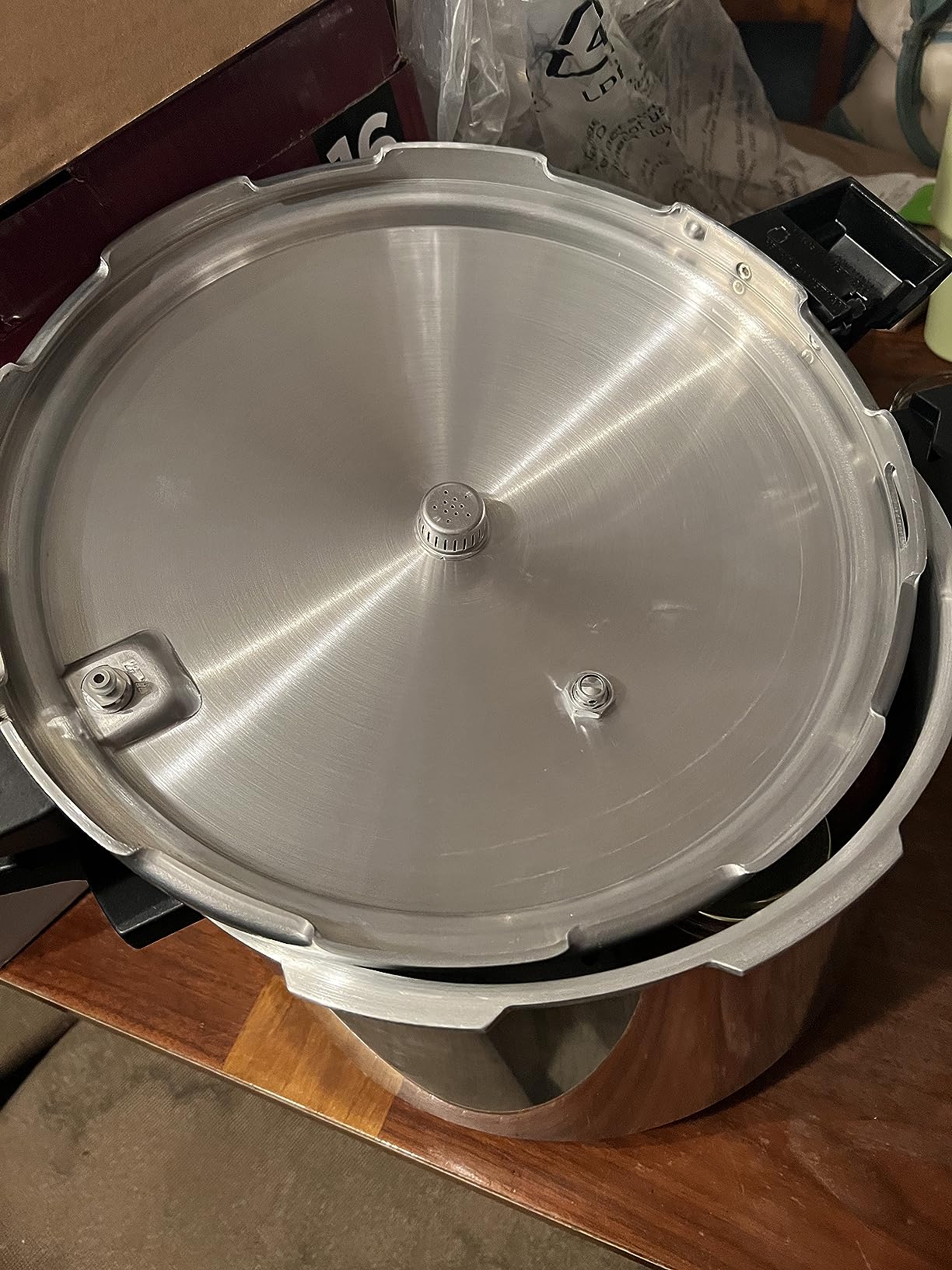
Owner reviews come in at 4.5 stars from around 740 ratings with roughly 79 percent five-star, and the praise concentrates on the pressure controls, the rustproof heavy-gauge aluminum body and the handles. Buyers who cook smaller seasonal batches rather than maximum throughput tend to be very happy with it.
Two limitations are worth planning for. The first is capacity: 5 quart jars per load is the low end of what a 16-quart body can do, and experienced canners frequently note that a second row of pints is where a 16-quart pot really earns its keep rather than the quart count. The second is the cooktop. It is rated for gas and flat or ceramic tops but not coil electric cooktops, so check what is under your pot before you commit.
The side gasket pressure release is also a consumable. It is the piece you will replace at some point, and it is a normal part of maintaining a gasket-sealed canner.
Weight matters more than people expect
Anyone who has lifted a loaded canner off a burner knows that empty weight is only half the story. A 10-pound pot holding 16 pints of hot meat is a very different object than a 10-pound pot, and the cool-touch handles here are engineered for that specific moment.
For a first canner doing small batches, a lighter pot you can move confidently is worth more than a larger pot you are afraid to lift.
Where it falls short
If you are processing whole cuts or a large game animal, five quart jars per load means more batches. Each batch is a full heat-up and cool-down cycle, and more cycles is more burner time.
And as with every aluminum canner here, the vessel is for low-acid foods only. Canning acidic tomatoes or pickled vegetables in it will discolor the pot and eventually pit the interior.
6. WantJoin 16-Quart Aluminum Pressure Cooker – The One Rated for Induction Cooktops
WantJoin 16Qt Aluminum Pressure Cooker w/Release Valve & Multiple Protective Devices,Pressure Canner Compatible with Gas & Induction Cooker,Canner Rack Included
16 quart aluminum alloy
70 KPa max and 239 F boiling point
4.72 kg empty weight
Pros
- Rated for induction as well as gas and stays under 50 pounds when loaded
- eight built-in safety devices give redundant protection
- top weight reported to jiggled at 15 PSI
- size range from 4 to 23 quarts
Cons
- Included tray only reaches halfway down so a second rack is needed
- thin aluminum can discolor after one use
- no readable PSI gauge
- customer support slow to answer specification questions
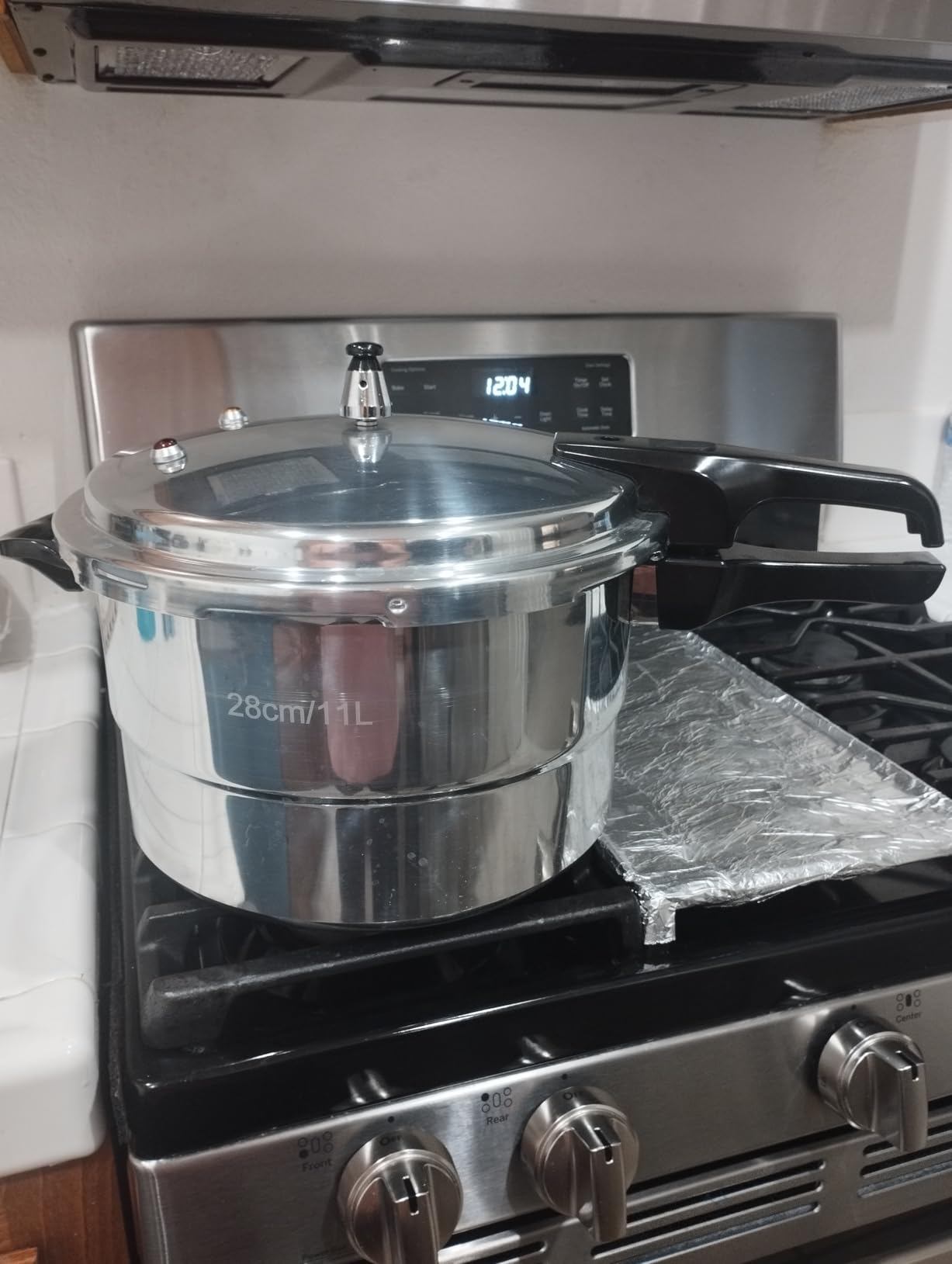
Most aluminum pressure canners sold today are rated for gas and electric coil only, because plain aluminum does not play nicely with induction. The WantJoin 16-quart is one of the few options in this group that works on induction, and that alone makes it the pick if your kitchen has an induction cooktop and you refuse to give up canning meat on it.
Loaded, it weighs roughly 45 pounds, which stays under the 50-pound limit many induction cooktops impose. Induction zones also have a minimum pan diameter, so measure your burner before buying anything this size.
Safety is where this pot leans in. Eight built-in safety features are listed, including a self-locking valve, a limit valve, an anti-blocking lid, a safety valve and a pressure release window. Maximum pressure is 70 KPa, which raises the boiling point to 239 degrees F, and reviewers report that the included top weight reaches a jiggled state at 15 PSI, the level USDA processing calls for.

At 4.3 stars from around 770 ratings, it sits in the lower half of the ratings here, and 9 percent one-star reviews point at inconsistent finish quality. The specific complaints repeat: thin aluminum that discolors after a single use, a customer service team that is slow to respond to specification questions, and no readable PSI gauge, which means pressure has to be judged from the behavior of the weight alone.
The rack situation is the one that actually affects canning. The included steam tray only reaches halfway down the pot, so canning jars rest on the bottom unless you add a second rack to lift them into the steam. For pressure canning that is not a small detail. Budget for the extra rack.
On the positive side, the manufacturer offers a size range from 4 to 23 quarts, so you can match the pot to your batch instead of the other way around.
What induction compatibility actually changes
On a conventional burner, heat transfers from flame or coil to the flat aluminum base. Induction instead creates a magnetic field in the cooktop that makes the pan itself generate heat. That is faster and more efficient, but it requires a magnetic base and it means the heating pattern is strictly circular from the zone center outward.
That circular pattern is also why a pot with a wide base needs a large enough zone. Induction cooktops typically shut down or refuse to start a zone that is too small for the pan, and a load of canning jars on an undersized zone can heat unevenly.
Where it falls short
The lack of a gauge is the main gap. Several canners here include either a true dial or a readable reference, and this one has neither. If verifying pressure during a batch matters to you, this is not the model.
Add the half-height tray issue, the discoloration and the thinner rating average, and this is a canner for induction households that accept those trade-offs in exchange for the ability to can at all.
7. Granite Ware F0732-2 12-Quart Pressure Canner – Smallest Batch, Fewest Moving Parts
Granite Ware F0732-2 Pressure Canner and Cooker/Steamer, 12-Quart, Black by Granite Ware
11.36 liter hard anodized body
Fail-safe weight control
4 quart jar capacity
Pros
- Fail-safe weight control holds internal pressure without constant gauge monitoring or calibration
- adjustable 5 10 and 15 PSI for high-altitude processing
- U/L certified specifically for home canning
- hard anodized finish resists staining and also steams
- compact 12-quart footprint is easy to store
Cons
- Four quart jars per load
- the smallest batch among the models that publish a figure
- aluminum unsuitable for acidic foods
- review base of about 100 ratings means thin long-term data
- no canning racks mentioned
The Granite Ware 12-quart is a compact canner, and that is exactly why it is on the list. If you are canning a few pounds of meat at a time rather than a whole animal, a 12-quart pot heats up faster, cools down faster, stores against a wall, and does not need a dedicated burner.
Its pressure control is the most hands-off in the group. Rather than asking you to watch a dial, the fail-safe weight control holds internal pressure automatically. Nothing needs calibrating, and nothing needs watching. You set the weight for 10 or 15 PSI according to the recipe and the elevation, and the pot does the rest.
It is also the only model here with explicit U/L certification for home canning, which is a meaningful mark on a piece of equipment that runs at 240 degrees F in your kitchen.
Capacity is 4 quart jars, 7 pints or 8 half-pints per load.
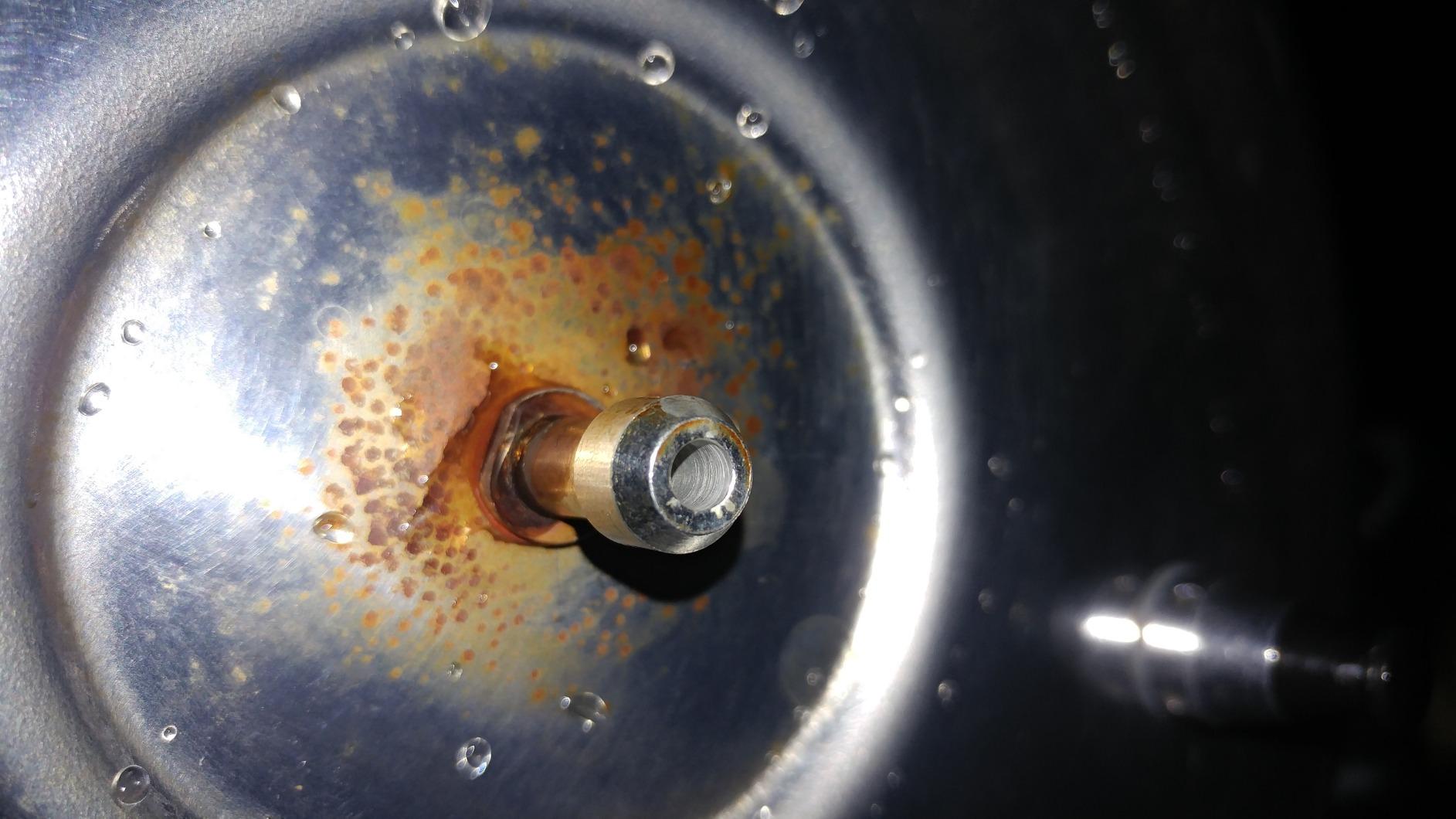
The honest issue with this canner is its feedback base. About 100 ratings is thin next to 20,000 on the Presto, and in a category where longevity is the whole point, less history means more uncertainty. Owners who have had it rate it well at 4.5 stars, but we would not call the long-term record established.
No canning racks are mentioned in the included components, and you will want a rack so jars are not sitting on the canner bottom during a full processing cycle. Plan to buy one separately.
Everything else is straightforward: 5, 10 and 15 PSI adjustment for elevation, a hard anodized interior that resists staining, and the ability to double as a pressure cooker or steamer when the canning season is over.
When four quarts per load is plenty
Batch size is not a status symbol. If you process meat in quantities of a few pounds at a time, a 4-jar load is a full load. The savings show up in burner time, in how quickly the pot returns to pressure between batches, and in how little counter space you have surrendered for the privilege.
For a first canner, or for anyone in a small kitchen, a pot this size is far easier to learn on than a 23-quart vessel weighing in the same ballpark as a small turkey.
Where it falls short
If you hunt, bulk buy or split a large animal, four quarts per load becomes a bottleneck. Each additional batch means another full heat-up and cool-down, and the cool-down alone is the part you cannot shorten.
The thin rating history and the absence of included racks are the other two reasons this is not our first pick for a large-batch meat canner.
8. Hestroney 12.68-Quart Pressure Canner – Triple-Valve Compact Design
12.68 Quart Aluminum Pressure Canner, Large Capacity Stovetop Pressure Cooker with Multi Safety Valve, Heavy Gauge Aluminum Pot for Home Canning Meat, Vegetables, Soups, Compatible with All Stoves
12.68 quart commercial-grade aluminum
Three safety valves
13 inch wide footprint
Pros
- Three separate safety valves give redundant pressure protection
- thick commercial-grade aluminum distributes heat evenly and resists corrosion
- works on gas electric and ceramic cooktops
- dishwasher-safe parts
- owners report a consistently tight lid seal
Cons
- No readable pressure gauge so processing pressure cannot be verified
- silicone sealing ring is a consumable and one owner reported a ring that twisted and would not close
- supplied tray is a steamer tray rather than a canning rack
- review base of about 60 ratings
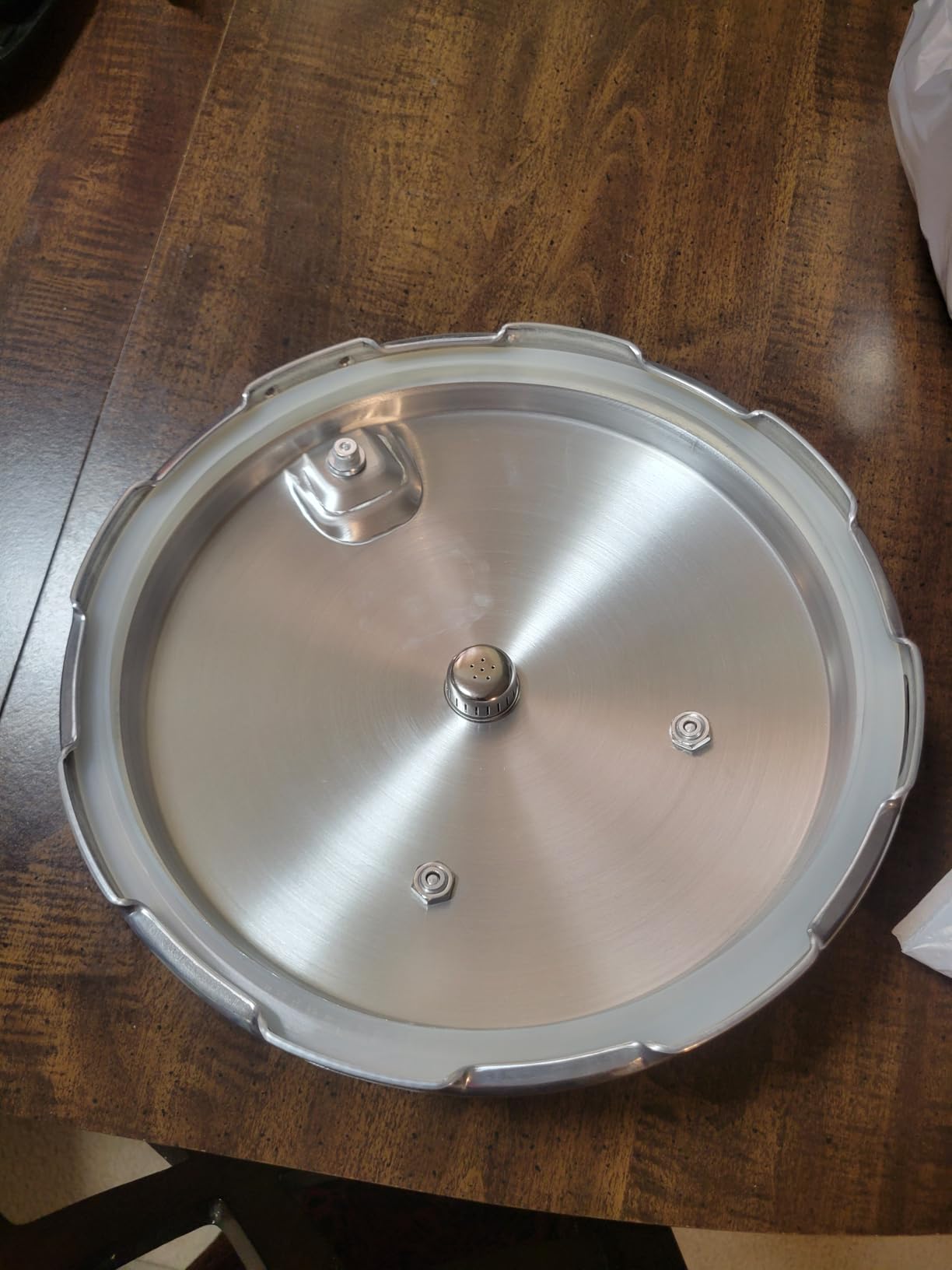
The Hestroney 12.68-quart is a newer entry with a compact 13.27-inch footprint, and owners consistently highlight three things: the triple safety valve arrangement, the thick commercial-grade aluminum that heats evenly, and a lid seal they describe as tight and leak-free.
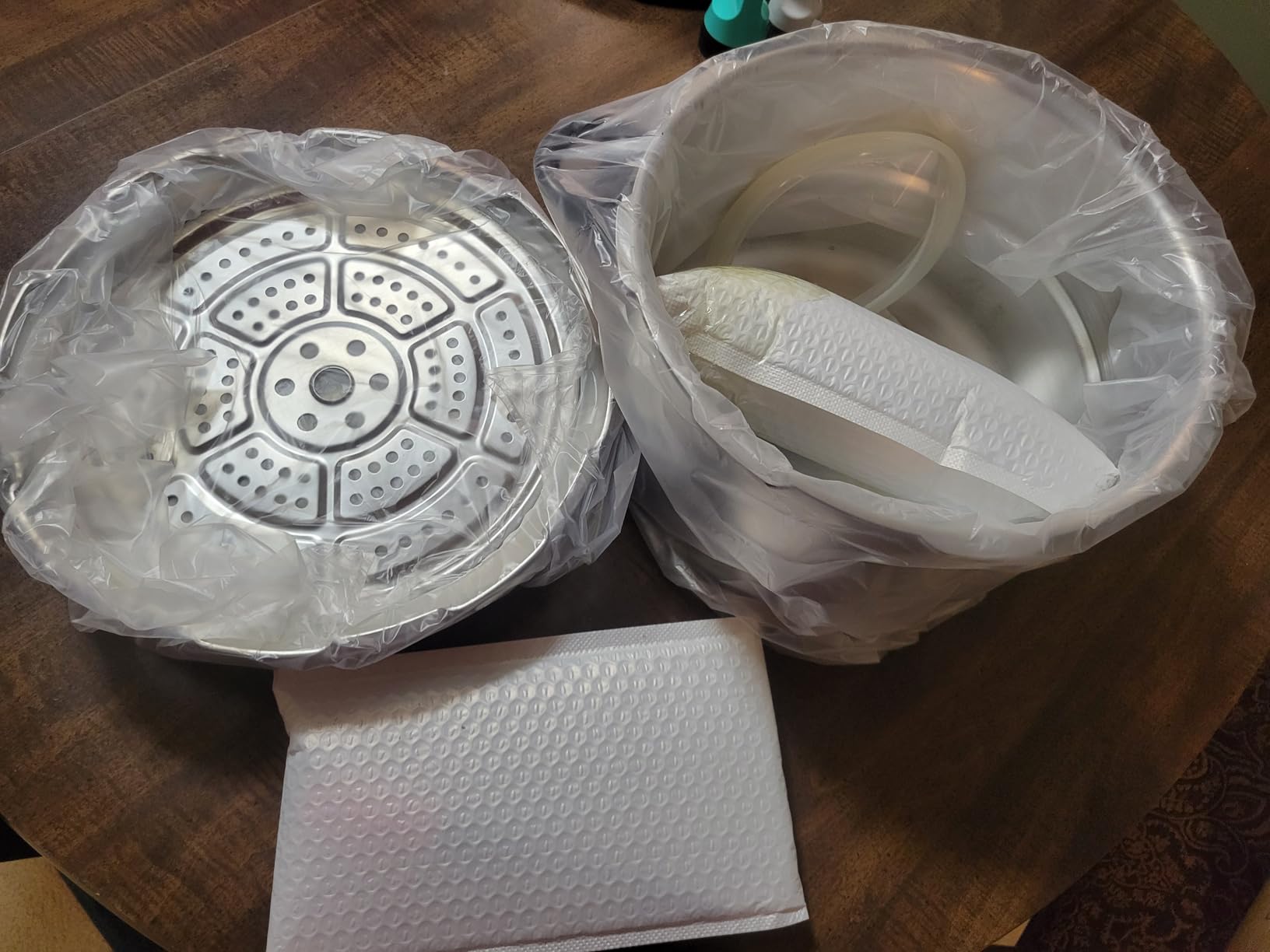
Three independent safety valves is meaningful redundancy for a vessel that will hold hot meat under pressure. The included components cover the basics, with a pressure limiting valve, a silicone sealing ring, a heat-resistant handle and a stainless steel steamer tray.
It works on gas, electric and ceramic cooktops, and the dishwasher-safe parts are a genuine advantage over large cast aluminum vessels that never go near a dishwasher.
At 4.3 stars from about 60 ratings, this is one of the thinnest evidence bases in the roundup, and we would rather say so than dress it up. A newer canner with limited long-term history deserves a different kind of caution than a model with tens of thousands of reviews.
The silicone sealing ring is the specific component to watch. It is a consumable, and one owner reported a ring that twisted out of position and would not close properly. That is a replaceable part rather than a structural flaw, but it is the piece most likely to need attention.
There is no readable pressure gauge of any kind, and the supplied stainless tray is a steamer tray rather than a purpose-built canning rack. For pressure canning meat you will want a canning rack that keeps jars off the bottom.
Redundancy versus instrumentation
These are two different safety philosophies and neither is wrong. Redundancy means more components that can vent in an emergency. Instrumentation means more visibility into what the pot is doing right now.
For a canner that will be used for small batches a few times a year, redundant venting valves and a compact footprint may matter more than a pressure readout. For a canner processing large quantities of meat on a schedule, knowing the actual pressure is more useful.
Where it falls short
The 12.68-quart size means this is not a batch canner. It handles the same general class of load as the Granite Ware 12-quart, and it shares the same limitation: whole cuts and bulk meat exceed what you can process in one pass.
With about 60 ratings behind it, we would look at this as a compact option rather than a long-term investment, and the missing rack means an extra purchase before your first meat batch.
9. kilogorge 24-Quart Pressure Canner – Biggest Batch and a Real Gauge
KILOGORGE 24 qt Pressure Canner,Canning Pressure Cooker with Gauge,14.5PSI,Large Capacity Aluminum Pressure Canners for Compatibility Gas and Induction Cooktops
24 quart aluminum alloy
14.5 PSI default
11 lb empty weight
32 cm composite base
Pros
- Largest stated capacity in the lineup at 24 quarts
- built-in readable pressure gauge
- 14.5 PSI default close to the 15 PSI level USDA uses for meat
- composite base for gas electric flat top and induction
- safety lock cover valve prevents opening until pressure is exhausted
Cons
- Lowest average rating in the group at 4.0 with 16 percent one-star reviews
- no canning racks or jar capacity figures included
- adjustable regulator for other pressure levels sold separately
- 32 cm base heats unevenly on small induction zones
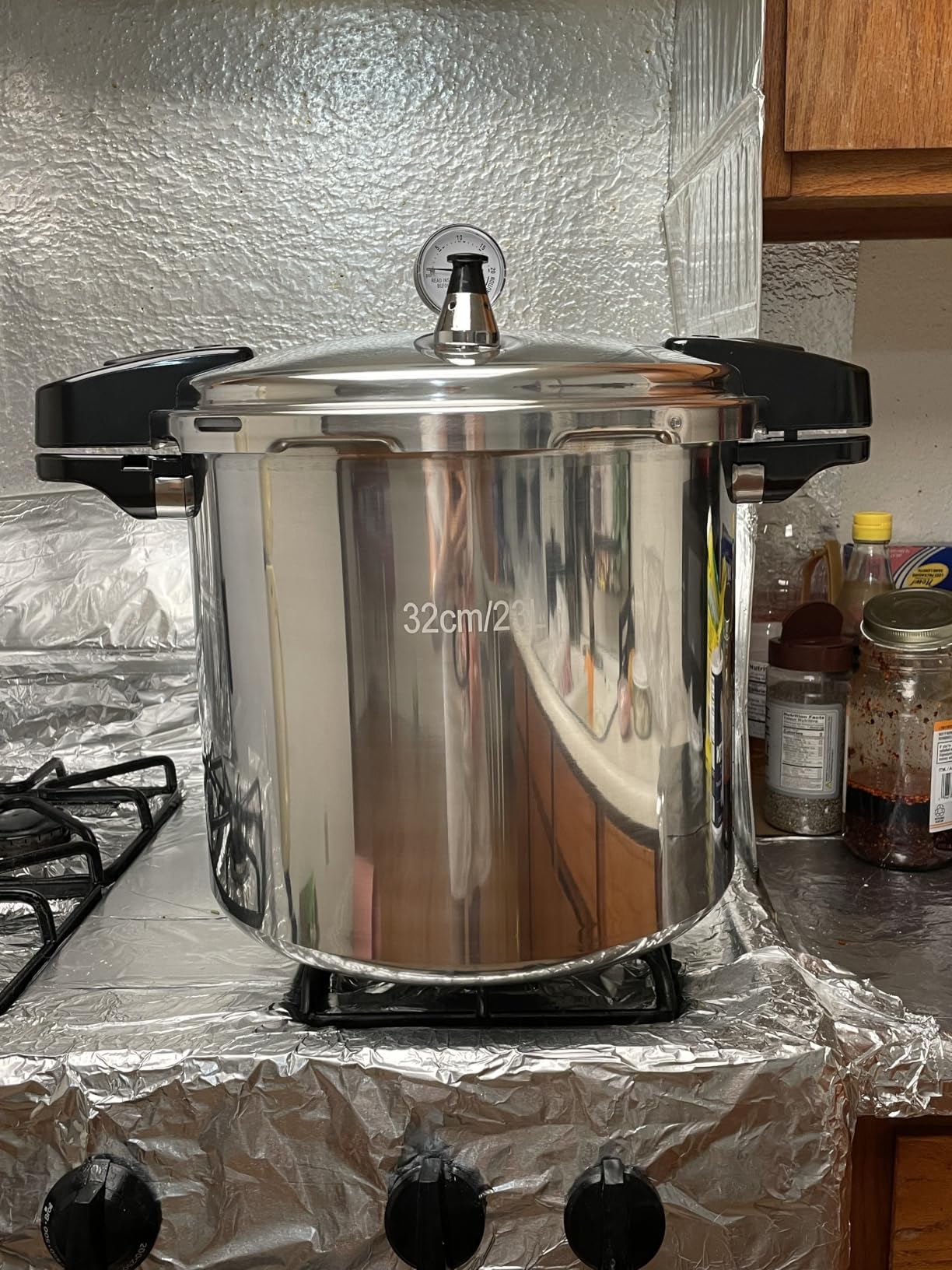
The kilogorge 24-quart is the largest stated capacity in the lineup, and unusually for that, it comes with a genuinely readable pressure gauge mounted on the lid. At 24 quarts with a 32 cm base, this is a pot built for clearing a whole deer or a large beef side in a single pass rather than for everyday cooking.
The default operating pressure of 14.5 PSI is the detail that catches attention. USDA processing for meat is done at 10 PSI at low altitude or 15 PSI at higher elevations, and a canner sitting at 14.5 PSI out of the box is close to the level you need for high-altitude processing without any adjustment.
There is a safety lock cover valve that will not let the lid open until pressure is fully exhausted, plus two independent relief valves, and the composite base is rated for gas, electric, flat top and induction cooktops.
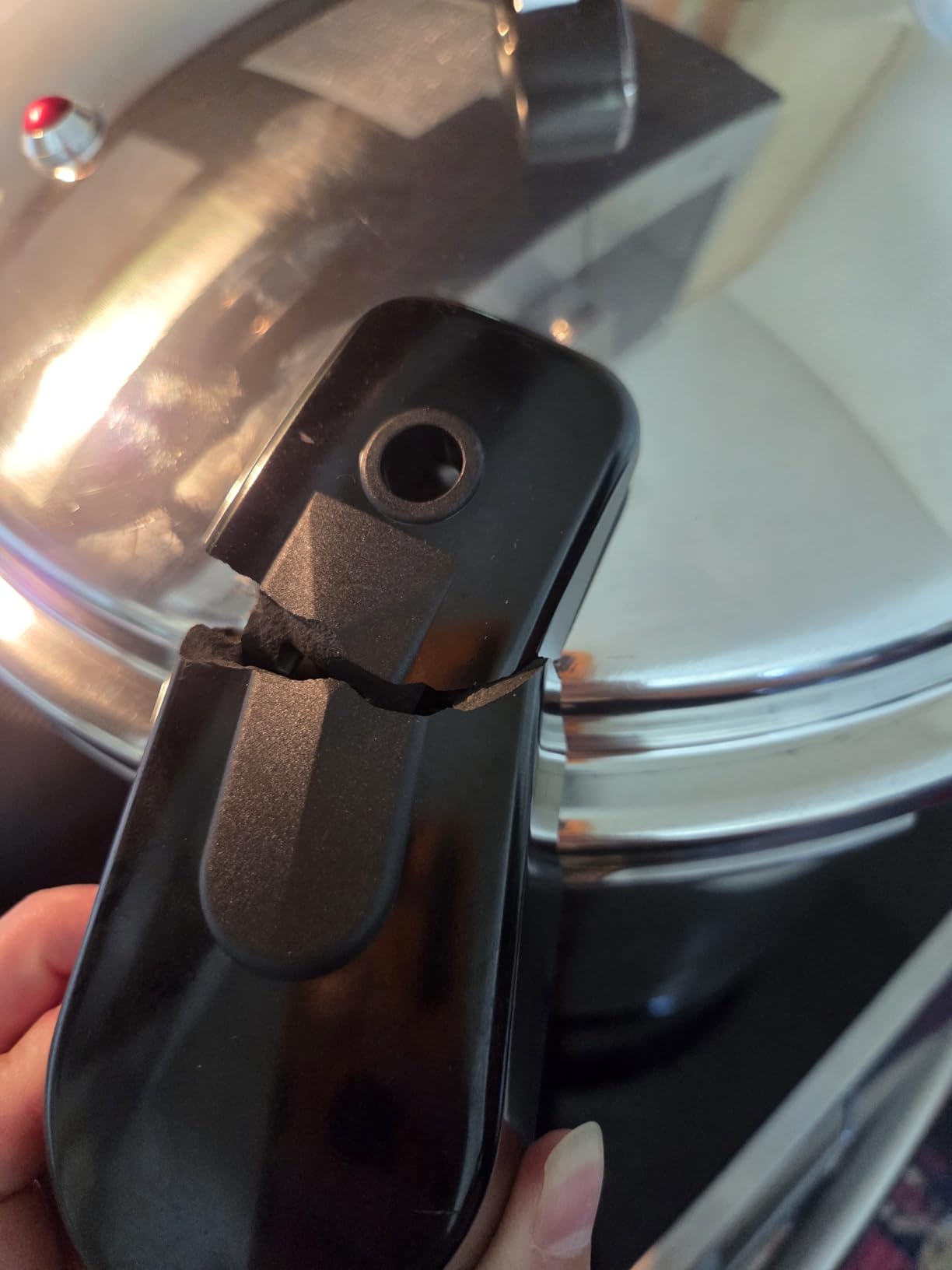
Now the part we have to be straight about. This is the lowest rated product in the roundup at 4.0 stars, with 16 percent one-star reviews. That is a meaningful gap, and buyers should treat it as a caution rather than a detail. Several complaints center on finish quality and on unclear documentation.
It also arrives with no canning racks and no jar capacity figures. You are not told how many quart or pint jars fit, which is exactly the information you need when you are buying a batch canner. The adjustable regulator for other pressure levels is sold separately, so the 14.5 PSI default is what you get out of the box.
One more practical warning: a 32 cm base will not heat evenly on a smaller induction zone. Measure the cooking area and make sure the pot is centered and fully supported before you trust an induction batch with meat in it.
When a 24-quart pot pays for itself
Capacity is only worth the burner time if you fill it. If you process meat once a year in 5-pound increments, a 24-quart pot means you are heating a large vessel of water to process a small amount of food, over and over. In that case a 16-quart model is the better match.
If you hunt, split whole animals, buy beef in bulk or run a small food operation, the calculus inverts completely. Filling a 24-quart vessel with meat jars in a single pass changes your workflow from dozens of cycles to a handful.
Where it falls short
The rating is the honest concern. 4.0 stars with a 16 percent one-star share is the weakest feedback in the group, and for a pressure vessel that is the number that should slow you down more than any spec sheet.
Missing racks, missing capacity figures and a separately sold regulator add up to a product that needs a bit of assembly and research before the first batch. If you want the capacity but not the uncertainty, the Presto 23-quart is the steadier choice.
10. Buffalo QCP415 15-Quart Stainless Steel Pressure Cooker – Fully Stainless Body
Buffalo 15 Qt Pressure Cooker Stainless Steel – Large Stove Top Canner
14.2 liter multi-ply stainless
QCP415 model
11 lb empty weight
10-year handle warranty
Pros
- Fully stainless interior handles acidic foods and hard water unlike aluminum canners
- multi-ply clad construction conducts heat faster and more evenly
- dishwasher-safe unlike large aluminum canners
- works on gas electric induction and ceramic
- 10-year limited warranty on handles and knobs
Cons
- Only 5 quart jars per load and the 15-quart body is not tall enough for some larger jars
- canning rack not included
- no pressure gauge and limited canning guidance
- plastic lid-handle locking button reported to break and leak steam
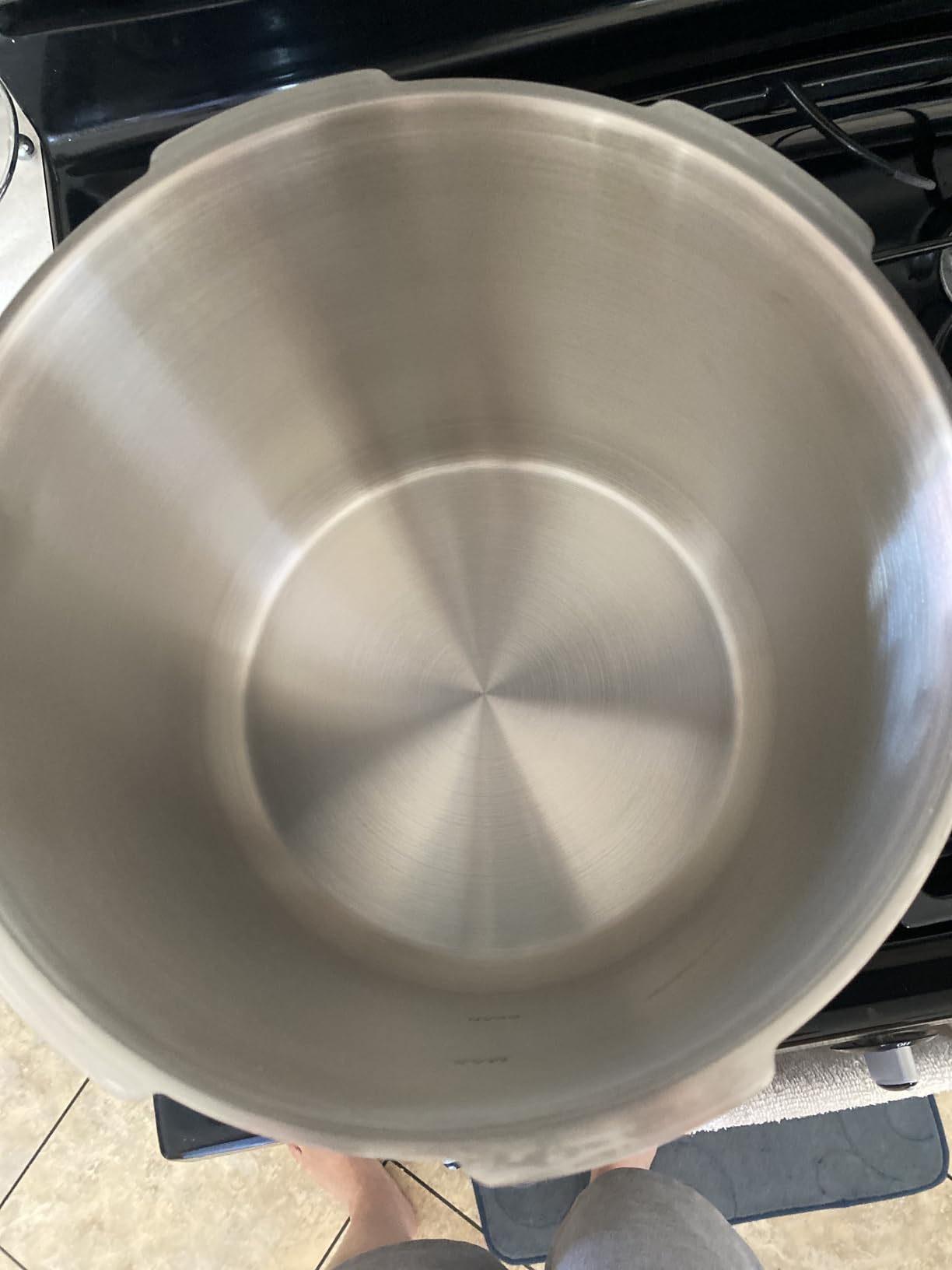
The Buffalo QCP415 is the one fully stainless steel canner in this group, and that single fact changes who it is for. If you have hard water, if you have ever watched an aluminum canner pit and stain over a few seasons, or if you want to pressure can tomatoes and pickles in the same pot as your venison, stainless removes the single most common complaint about every other model here.
The construction is BUFFALO Clad, a multi-ply stainless approach that conducts heat faster and more evenly than single-layer stainless, and it runs on gas, electric, induction and ceramic cooktops. The interior tolerates acid, and the whole thing goes in the dishwasher, which none of the large aluminum canners can claim.
It is also larger than a typical home pressure cooker. The 15-quart body is roughly double the volume of a standard 8-quart cooker, which is why owners use it for stocks, broth and large cuts alongside canning.
The limitations are about capacity and documentation, and they are significant. It holds 5 quart jars per load, fewer than most aluminum canners at similar size, and the 15-quart body is not tall enough for some larger jar styles. No canning rack is included, so you need to buy one to lift jars off the bottom during processing.
There is no built-in pressure gauge and the canning guidance that comes with it is thin, which means you will be following instructions from elsewhere for the processing times and pressure levels. A few owners also report the plastic locking button on the lid handle breaking and leaking steam, and there is no clearly identifiable safety lock despite what the manual claims.
One more physical note: bringing this much heavy stainless up to pressure takes a lot of heat, and food that touches the bottom can scorch while you wait. Owners who rotate jar positions report fewer scorched jars.
Stainless steel and the canning question
Aluminum reacts with acid, which is why every aluminum canner in this roundup is restricted to low-acid foods. Stainless steel does not. That means one pot can handle meat, poultry, broth, beans and vegetables on one day and pickled vegetables or tomato products on another, without the corrosion you would get from an aluminum vessel.
It is also a better answer to hard water. The mineral content that pits aluminum over years does not have the same effect on stainless, which is why owners with well water and hard water gravitate to this model.
Where it falls short
Five quart jars per load and no included rack make this more of a medium-batch canner than a bulk one. If you are processing a whole animal, the number of cycles adds up quickly.
At 4.3 stars from about 63 ratings, the evidence base is among the thinnest in the group. Combined with no pressure gauge and limited canning documentation, this is a canner to buy for the material and cooktop compatibility, not for the instrumentation.
How to Pressure Can Meat Without Cutting Corners
Every canner in this list can process meat safely, and every one of them will fail you the same way if you skip steps. The process itself is not complicated, but the order matters, and most spoilage incidents trace back to one of four mistakes: an untested recipe, a missing altitude adjustment, an unverified pressure reading, or a canner that was forced open too early.
Start with a tested recipe. Use the USDA Complete Guide to Home Canning or the National Center for Home Food Preservation. Look up your specific cut, your jar size and your pack method, and treat the time and pressure in that table as a floor rather than a starting point for your own judgment. Recipes written for canning are not interchangeable with recipes written for pressure cooking.
Fill cold jars with a set headspace. Wipe the rims clean with a damp cloth, place the lid on flat with the screw band on until it is just fingertip tight, and do not tighten it further. A band tightened hard is a band that will not vent properly during processing.
Vent before you pressurize. Every USDA-tested process for meat begins with a venting step. With a weighted-gauge canner, bring the pot to a steady release of steam and leave it there for the time the recipe specifies before the weight is seated and processing pressure begins. Raw-packed cold meat takes noticeably longer to reach pressure than hot-packed meat because the pot has to heat the food as well as the water.
Read the pressure, do not assume it. If you have a dial gauge, confirm it is at the processing level and not fluctuating wildly. A gauge that is not holding a stable reading is a failed gauge, and an inaccurate dial is far more dangerous than a weighted regulator that simply holds a fixed pressure.
Cool naturally, then remove the weight. When processing time is complete, turn the heat off and let the canner sit until it stops venting entirely before you remove the weight. Forcing a hot canner releases pressure too fast, which is how people get steam burns and damaged jars.
Wait before testing seals. Jars should cool undisturbed for 12 to 24 hours before you press the center of each lid to check the seal. Testing too early gives you a false negative while the contents are still hot enough to have pressure inside.
Raw pack versus hot pack is worth understanding before you start. A raw pack puts cold, uncooked meat directly into jars, which requires a longer processing time and means the pot has to heat both the water and the food. A hot pack precooks the meat first, which shortens processing time and reduces how much the meat shrinks, but it takes extra prep work at the stovetop.
Ground meat is handled differently from whole chunks for exactly this reason, since ground meat has a much larger exposed surface area that needs more aggressive heat treatment.
Pressure Canner vs Pressure Cooker: Why the Difference Matters for Meat
A pressure canner and a pressure cooker do the same physics, but they are built for entirely different jobs, and the gap between them is where unsafe home canning happens. A pressure cooker is designed to cook food fast in small volumes. A pressure canner is designed to hold sustained processing pressure long enough to destroy spores.
That difference shows up in the hardware. Canners are built with a weighted or dial pressure regulator that maintains a specific, verifiable pressure, room for canning racks, and enough volume to hold full rows of jars. Electric pressure cookers like the Instant Pot are built with an electric element, a thermostat and a gasket designed to manage a few quarts of food under a timed program.
Home canning guidance from the National Center for Home Food Preservation is direct on this point. The agency has not tested any electric pressure cooker as a canning device, and its position is that electric multi-use cookers should not be used for canning.
The reasons are physical. There is not enough evidence that they hold a stable 240 degree F processing pressure across a full load of jars for the length of a USDA-tested process, and a jar rack in place of a full load changes how the vessel behaves in ways the manufacturer has not validated.
This is worth stating plainly because the marketing blurs it constantly. The word cooker is a safety signal, not a technicality. If your goal is shelf-stable jars of ground beef that will sit in a pantry for a year, the tool has to be a canner, on a stovetop or a dedicated electric canner that has been tested and listed for the purpose. If you are curious about electric options, our review of electric pressure canners built for home canning covers the category difference in more detail.
Yes, you can use a pressure canner to cook meat. Every canner here doubles as a pressure cooker or steamer. Just do not use a pressure cooker to can meat.
Altitude Adjustments and Stovetop Compatibility for Meat Canning
Water boils at 212 degrees F at sea level, and atmospheric pressure drops as elevation rises, so the boiling point drops with it. That is why a batch that processes correctly at sea level can under-process at 3,000 feet. USDA guidance calls for increasing processing time or pressure above 1,000 feet, with the adjustment growing as elevation climbs.
There are two ways to handle it. With a dial gauge canner, you increase processing time. With a weighted canner, you increase the weight, stepping up from a 10 pound weight to a 15 pound one so the internal boiling point stays high enough. That is precisely why adjustable regulators, like the 5, 10 and 15 PSI settings on the T-Fal, Mirro and both Granite Ware models, matter more than they might appear to. A fixed-weight canner forces you to buy a different weight when you move, or to extend times in a way that is easy to get wrong.
Know your elevation before you start, and write it in your recipe notes. If you have never tested a dial gauge, your county extension office will typically do it, and many do it free or for a nominal fee. A dial that reads low is an unprocessed jar with no visible warning sign, which is the most dangerous failure mode in home canning.
Stovetop compatibility is the other practical filter. Aluminum bodies are generally safe on gas, electric coil and smooth-top glass or ceramic, which is the case for the Presto, All American, Granite Ware and T-Fal. The Mirro is the exception in this group, rated for gas and flat or ceramic tops but not coil electric. Induction requires a magnetic base, which is why the WantJoin and the kilogorge, both with composite bases, and the stainless Buffalo are the three models here carrying that rating. Buffalo is naturally induction-ready because stainless is magnetic.
Two cautions for glass and ceramic tops. Check the manufacturer guidance before placing an aluminum canner on a smooth top, since some finishes are sensitive to direct contact from heavy cookware. And if you are canning on induction, confirm your cooktop’s pan size limit and maximum weight limit before you buy, because a full load of canning jars plus a heavy pot can exceed both. Newer canners do keep raising the pot, so our glass and smooth-top specific picks are worth a look if your range is not gas.
Buying Guide: Features That Decide a Meat Canner
Once you know the safety rules, choosing between ten capable canners comes down to a handful of features. These are the ones that actually change your day-to-day experience.
Capacity in quarts, not in marketing quarts. Advertised capacity rarely matches the jar count you can fit. Look for the stated jar capacity, and remember that meat canning is driven by the quart count. Seven quart jars is the practical ceiling for the models here that publish a figure, including the 23-quart Presto. A larger pot with more room is not automatically a better batch canner.
Gasket versus metal-to-metal seal. A gasket-sealed canner is cheaper and lighter, and the seal can be replaced when it wears. A metal-to-metal seal, as on the All American, never wears out and never needs replacing, at the cost of weight and a heavier lid. If you plan to can for decades, the All American’s approach removes a recurring maintenance item and a recurring failure point.
Dial gauge versus weighted regulator. A weighted regulator is a physical constant and it cannot drift, which is its main virtue. A dial gauge tells you what is actually happening inside the pot, which is its main virtue, and it also has to be tested. For high-altitude canners, a dial plus a weighted backup is the combination experienced preservers tend to prefer.
Material and what you plan to can. If meat, poultry, game, broth, beans and vegetables are the plan, aluminum works and costs less. If you also want tomato sauce, pickles or anything acidic, or if you have hard water, stainless is the only sensible choice. Hard anodizing sits in between, resisting rust and staining but not acid.
Weight and how you will actually move it. Empty weight runs from about 9.5 to 18 pounds across the models that publish a figure, and loaded weight is considerably more. If you cannot lift a full pot off the burner, plan to load and unload jars where the pot sits. Every weight and handling issue is much easier to live with once you accept that constraint.
Included racks. This is a quiet but expensive oversight. The Presto, T-Fal, Mirro and All American include canning racks. The WantJoin tray only reaches halfway down, the Hestroney and Buffalo include steamer trays instead, and the Granite Ware 12-quart does not list racks. A canner without a rack means jars sit on the bottom and can scorch.
Replacement parts availability. A gasket or silicone ring is a consumable on most of these models. Brands with domestic parts support and long warranty terms, like the Presto and the All American, make a five-year ownership plan much simpler to reason about. If you are new to canning, our beginner-friendly canner guide covers the simpler setups, and our value picks on a tighter budget cover the budget side of the market.
Frequently Asked Questions
What pressure do I use for canning meat?
USDA-tested processes for meat are done at 10 PSI at low altitude, which raises the boiling point to 240 degrees F inside the jars. Above 1,000 feet you increase processing time with a dial gauge canner or step up to a 15 PSI weight with a weighted canner. Always take the exact pressure and time from a USDA-tested recipe for your cut, jar size and pack method.
Which pressure canner is best for canning meat?
The Presto 01781 23-quart is the best all-around choice for meat because of its 7 quart jar load and true dial pressure gauge. The All American 1930 is the best for long-term ownership because its metal-to-metal seal removes the gasket entirely. The T-Fal 22-quart is the best value pick, and the Buffalo QCP415 is the best choice if you need a stainless interior for acidic foods or hard water.
How long do you process meat in a pressure canner?
Processing time depends on the cut, the jar size, whether it is raw packed or hot packed, and your elevation. Do not estimate. Look up your exact combination in the USDA Complete Guide to Home Canning or the National Center for Home Food Preservation and follow that time precisely, then add the extra time required above 1,000 feet.
Is there a USDA approved electric pressure canner?
Home canning guidance from the National Center for Home Food Preservation does not test multi-use electric pressure cookers as canning devices, and they are not recommended for canning. They are designed for fast cooking in small volumes, not for holding a verified processing pressure across a full load of jars for a USDA-tested process. Use a stovetop pressure canner or a dedicated electric unit that is tested and listed for canning.
What are the differences between All American and Presto pressure canners?
The All American 1930 uses a gasket-free metal-to-metal sealing system in heavy cast aluminum, holds about 10 pint or 7 quart jars, is made in the USA and carries a one-year warranty. The Presto 01781 uses a rubber gasket, is spun aluminum at 12 pounds, holds 26 half-pints 20 pints or 7 quarts, includes a true dial pressure gauge and carries a 12-year limited warranty.
Conclusion
After comparing all ten, the Presto 01781 23-quart remains the best stovetop pressure canner for meat for most households. It is the one model in this group that pairs a 7 quart jar load and dual-use boiling water capability with a true dial pressure gauge and a 12-year limited warranty, and its review history is deep enough to trust.
Choose differently only for a specific reason. Pick the All American 1930 if you want a gasket-free seal and plan to keep this canner for decades. Pick the T-Fal 22-Quart if you want selectable PSI settings built into the regulator weight.
Pick the Buffalo QCP415 if you need stainless for acid or hard water. Pick the WantJoin or the kilogorge if you cook on induction. Pick the Granite Ware 12-quart or the Hestroney if you process meat in small batches and need the pot to fit your kitchen.
Whichever you choose, buy a proper canning rack if one is not included, note your elevation before your first batch, and pull the processing time from a USDA-tested recipe rather than from memory. When you are ready, check the current listing for the model that fits your stove and your batches.