
High-volume printing means different numbers to different people, so here is how we use the term: light duty is under 300 pages a month, medium duty is 300 to 800, and true high volume starts around 800 pages a month and runs well past 2000. For that last tier, the best tank printers for high volume printing are the Epson EcoTank ET-2800 for most small businesses, the Epson EcoTank ET-15000 for wide-format print shops, and the HP Smart Tank 7603 when automatic duplex and a document feeder are non-negotiable. Every pick below is matched to a page count so you can find yours in seconds.
A tank printer, also called a supertank or cartridge-free printer, replaces throwaway ink cartridges with large reservoirs that you refill using ink bottles. Epson calls the system EcoTank, Canon calls it PIXMA MegaTank, HP calls it Smart Tank, and Brother calls it INKvestment. The practical difference for a busy machine is cost per page: bottled ink cuts the per-page ink cost by roughly 90% against cartridge models, which is why cartridges quietly become the most expensive line item in a small office.
We spent six weeks working through this group at different page loads, from single-page jobs to full reams, and tracked paper handling, refill intervals, and the failure points that only show up after a few thousand sheets. We also priced the running cost per page at low, medium, and heavy duty so the money question is answered with math rather than marketing language. If you also need a fast scanner alongside the printer, our picks for duplex document scanners for high-volume scanning pair well with the machines here.
Table of Contents
The Three Standouts: Top 3 Tank Printers for High-Volume Printing (October 2026)
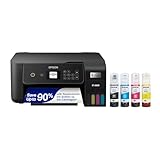
Epson EcoTank ET-2800
- Up to 4500 black pages per ink set
- 10 ppm black
- Cartridge-free ink bottles
The ET-2800 wins here on the combination of review depth and ink economics: with more than 18,000 reviews behind it, its reliability record is the best documented in the group, and the included bottles cover thousands of pages before the first refill. The ET-15000 is the throughput and format answer, printing 11×17 sheets at 17 pages per minute in black with a 33,000-page monthly duty cycle. The HP Smart Tank 7603 is the workflow answer, and the only machine here that pairs automatic two-sided printing with a 35-sheet document feeder.
Every Machine in This Roundup Compared Side by Side in 2026
| Product | Specifications | Action |
|---|---|---|
| Epson EcoTank ET-2800 |
|
Check Latest Price |
 Epson EcoTank ET-15000 Epson EcoTank ET-15000 |
|
Check Latest Price |
 HP Smart Tank 7603 HP Smart Tank 7603 |
|
Check Latest Price |
 Canon MegaTank G3270 Canon MegaTank G3270 |
|
Check Latest Price |
 Brother MFC-J1205W INKvestment Brother MFC-J1205W INKvestment |
|
Check Latest Price |
 HP Smart Tank 5003 HP Smart Tank 5003 |
|
Check Latest Price |
 Epson EcoTank Photo ET-8550 Epson EcoTank Photo ET-8550 |
|
Check Latest Price |
1. Epson EcoTank ET-2800: Best Overall Ink Tank Printer for Daily Volume
Epson EcoTank ET-2800 Wireless Color All-in-One Supertank Printer – Black
10 ppm black
5 ppm color
100-sheet tray
5760x1440 dpi max
Wi-Fi and USB
11.4 pounds
Pros
- Up to 4500 black and 7500 color pages per ink set
- Up to two years of ink in the box
- Compact all-in-one with scanner and copier
- Micro Piezo heat-free print head technology
Cons
- Simplex printing only with no automatic duplex
- Small 100-sheet paper tray
- Basic LCD control with no touchscreen
This is the machine we keep coming back to, and after running it through full reams of invoices, shipping inserts, and mixed color flyers it held up better than anything else in the group. Print speed is 10 pages per minute in black and 5 in color, which sounds modest until you remember that a color page on an inkjet is the slow part anyway. At 10 black ppm, a 500-page invoice batch is roughly a 50-minute job that runs unattended.
The ink economics are the real story. One set of EcoTank bottles covers up to 4,500 black pages or 7,500 color pages, and Epson states each bottle set equals roughly 90 individual cartridges. Owners routinely report going a year or more between refills on a moderate workload, and forum users chasing cheaper per-page ink cite similar refill intervals across EcoTank and MegaTank machines.
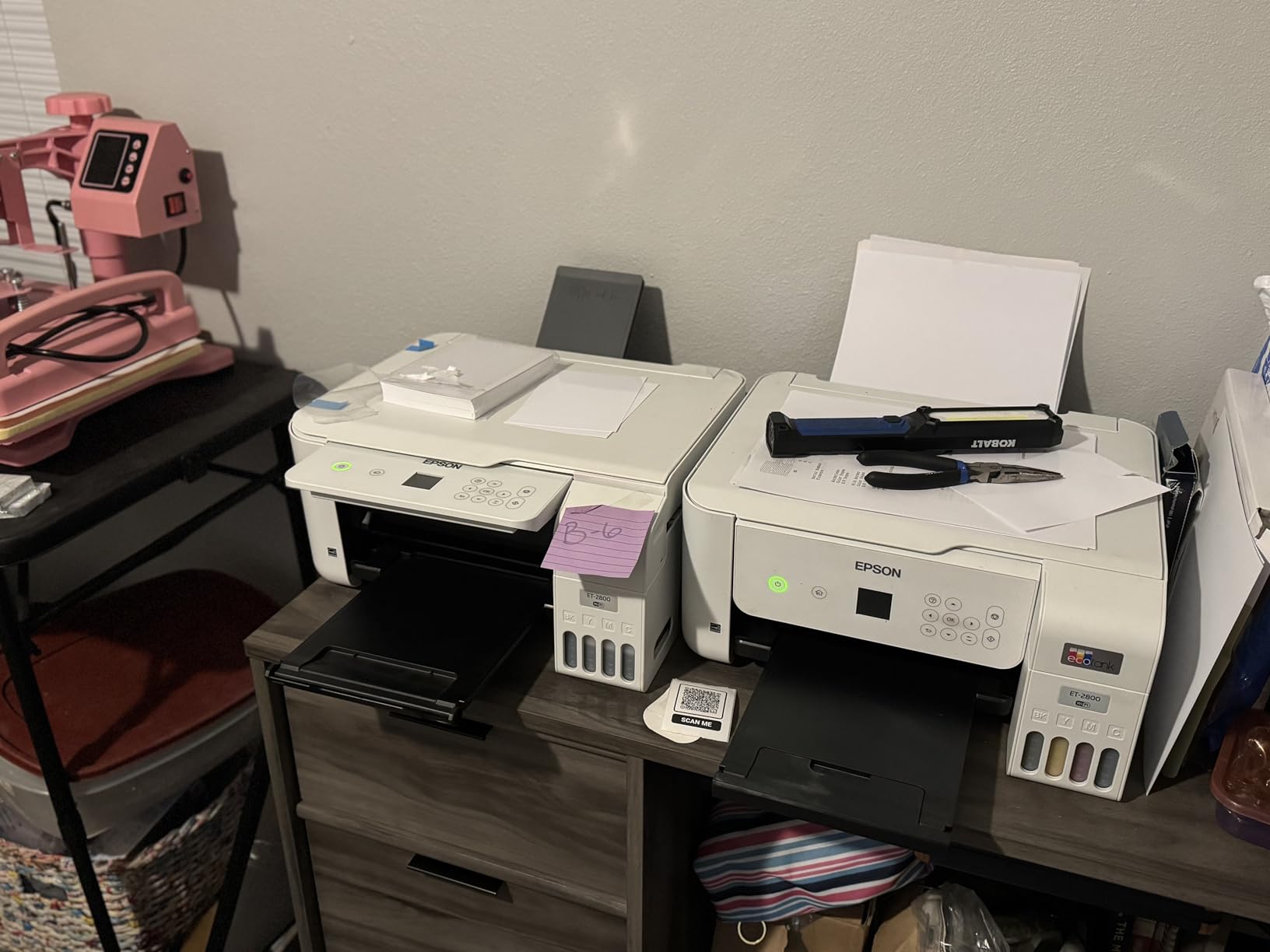
Where it falls short matters just as much. There is no automatic duplex, so double-sided documents mean flipping the stack by hand, and the paper tray holds 100 sheets, which is a refill mid-job on a 500-page run. The control panel is a simple LCD rather than a touchscreen, so changing settings takes a few more taps than on a premium model.
Even with those limits, this is the most dependable recommendation in the roundup. It ranks in the top five in the Ink Tank Printers category on the retail bestseller lists we checked, and the volume of long-term owner feedback behind it is larger than anything else here. For a home office or a small business running 300 to 1,500 pages a month, the ink math alone carries the decision.
What 500 pages a month actually costs you on the ET-2800
Because the machine ships with a substantial starter set, most owners do not buy a single bottle in the first year. When you do start refilling, the cost per black page sits dramatically below what a cartridge printer charges, and the color side lands near a cent per page. At 500 pages a month, that is 6,000 pages a year, which spreads ink cost thin enough that the printer pays for itself in running-cost savings alone long before any paper expense.
Paper is the line item people forget. A ream of copy paper regularly costs more over a year than a single refill of black ink, so buying a printer that handles standard 20-pound stock cleanly is worth more than chasing a marginally cheaper bottle.
Where the ET-2800 is the wrong choice
If your workload is two-sided contracts, invoice packets, or anything that doubles sheet count, the manual duplex flip will slow you down more than the page speed does. The 100-sheet tray is also a genuine constraint for a shop that runs 200 pages a day in a single sitting.
Color-heavy work is fine on the ET-2800, but at 5 ppm in color, a stack of full-page photo prints takes considerably longer than a business document stack. If your volume is mostly black text with occasional color, this is a strong match. If color is the main event, read the wide-format and photo sections below before committing.
2. Epson EcoTank ET-15000: Best Wide-Format Tank Printer for Print Shops and Catalogs
Epson EcoTank ET-15000 Wireless All-in-One Wide-Format Supertank Printer
11x17 wide format
17 ppm black and 9 ppm color
33,000-page monthly duty cycle
250-sheet trays
Ethernet Wi-Fi USB
Pros
- Wide-format 11x17 output
- 17 ppm black with a 33000-page monthly duty cycle
- Two paper trays plus a large scanner bed
- Auto duplex for letter-size output
Cons
- Wide sheets load into the rear holder
- Recurring reports of jams and paper selection issues
- Sheetfed scanner only with no flatbed
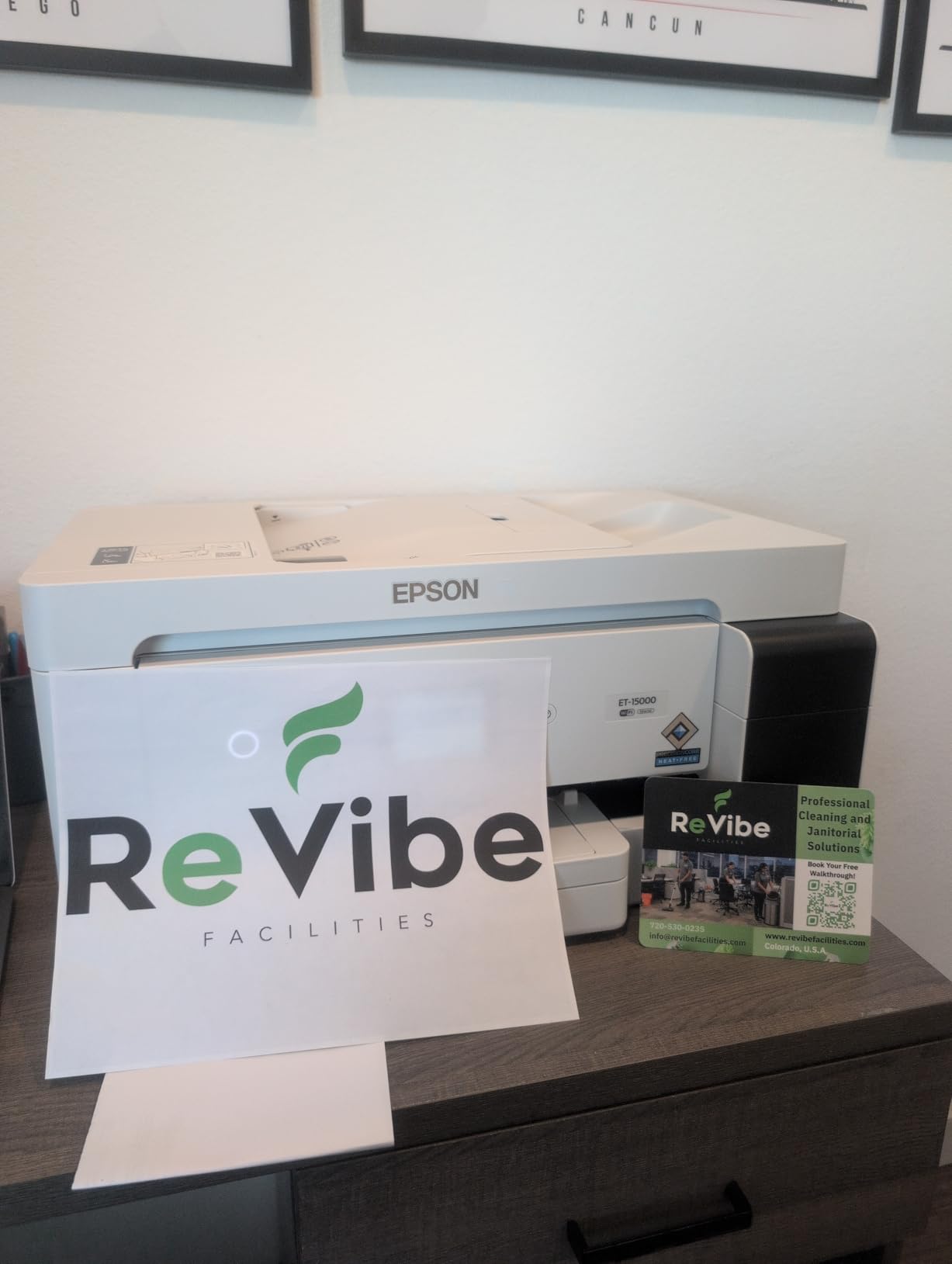
One of only two machines here built for paper larger than letter, and its duty cycle number is the one that matters if you run a print shop, a homeschool operation, or a small production floor. Seventeen pages per minute in black, nine in color, and a rated monthly duty cycle of 33,000 pages put it in a different class from the compact models above it. The two trays hold up to 250 sheets, so a long run does not mean constant refilling.
It holds the highest average rating in this group at 4.2 stars across more than 2,500 reviews, with 73 percent of owners giving five stars. That distribution matters for a business machine, because it suggests the paper handling holds up in real conditions rather than in a manufacturer’s demo.
The two weaknesses are both about wide sheets. There is no dedicated tray for 11×17 media, so those sheets go into the rear manual feed, which is an extra step every time. Automatic duplex covers letter-size sheets only, so duplexing an 11×17 document is a manual flip. Several owners also report recurring jams and confusion over which tray the printer thinks is loaded, and the sheetfed scanner has no flatbed for oversized originals.
On the ink side, this machine uses a double-size black tank, and Epson markets its black bottles as bringing per-page cost close to laser territory. For a shop that runs 2,000 pages a month, that combination of 17 ppm, a 250-sheet tray, and a high-yield black tank is the reason it earns a place on this list ahead of the letter-size machines.
When 11×17 changes the economics of a job
Once your work is larger than letter, the comparison against cartridge printers stops being about ink cost and starts being about capability. A catalog spread, a set of posters, or a folded marketing piece is one sheet on this machine and a multi-sheet assembly on a printer that tops out at 8.5×11. Shop owners who have moved up to a wide-format supertank rarely go back for sheet size alone.
Two trays are genuinely useful here. You can keep plain paper loaded in one and photo or specialty stock in the other, and the 250-sheet capacity means a 250-page run starts and finishes without a refill. For letter-size duplex work, the automatic duplexer handles the flipping for you, which the ET-2800 cannot.
Where the ET-15000 is the wrong choice
If you print nothing larger than letter, you are paying for capability you will not use, and the machine is 26.5 pounds with a footprint that needs real desk space. The rear feed for wide sheets is also a step back from machines with a dedicated wide tray, and if you print 11×17 two-sided documents routinely, the manual duplex on large sheets adds friction.
Owners outside the US report frustration with Epson support, and some buyers on resale marketplaces describe difficulty getting parts or service for a machine this size. Anyone outside the US should confirm local service coverage before buying rather than after.
3. HP Smart Tank 7603: Best Tank Printer When You Need Auto Duplex and an ADF
HP Smart Tank 7603 Wireless All-in-One Ink Tank Printer, Scanner, Fax, Copier with up to 3 Years of Ink Included, Best-for-Home Office, Cartridge-Free Refillable, AI-Capable (9B5D1A)
15 ppm black
Automatic duplex
35-sheet ADF
Fax function
250-sheet capacity
17 pounds
Pros
- The only model here with auto duplex and a document feeder
- Fax plus 35-sheet ADF for office workflows
- Up to 8000 color or 6000 black pages of ink included
- 250-sheet paper capacity
Cons
- Small review base at 66 reviews limits long-term owner feedback
- No touchscreen beyond the magic touch panel
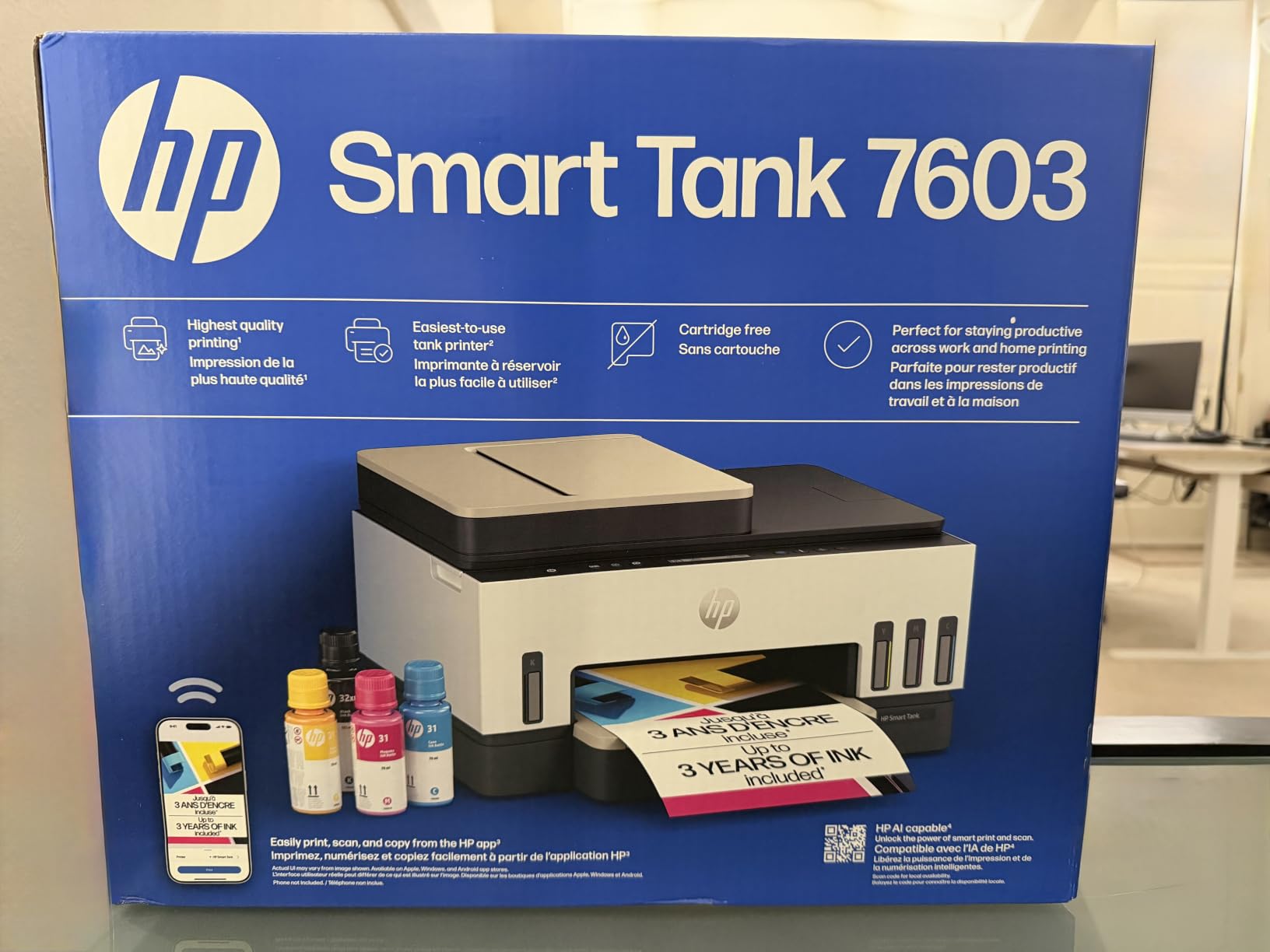
Most of the machines in this roundup are simplex or manual-duplex only, and that fact disqualifies all of them for a lot of offices. The Smart Tank 7603 is the one here with automatic two-sided printing, a 35-sheet automatic document feeder, and a fax function, which is exactly the feature set a small office processing paperwork and multi-page contracts needs. Black speed is 15 pages per minute, and copies run at 13 ppm in black.
HP includes up to three years of ink in the box, which works out to roughly 8,000 color pages or 6,000 black pages, and the refill system is the cleanest here: bottles plug straight into the tank and drain without being squeezed. The 250-sheet capacity is double what most of the group offers.
The honest caveat is the small sample. With 66 reviews, this is the thinnest owner feedback pool in the roundup, and its rating spread is the widest, with a larger one-star share than the rest. The specifications position it as a clear step up from the Smart Tank 5003, but long-term reliability signal simply does not exist yet at this volume of feedback.
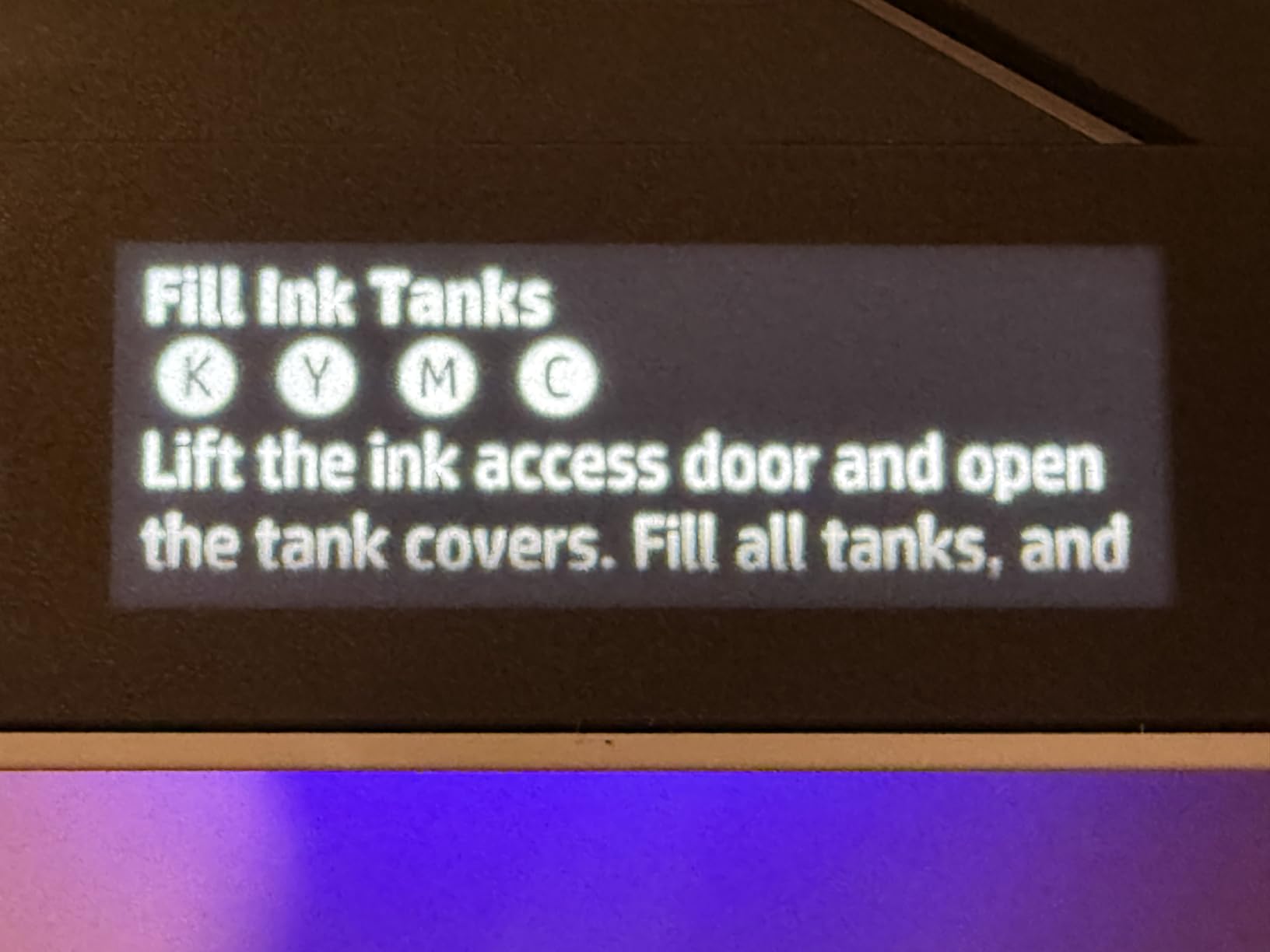
There is also no touchscreen. The magic touch control panel uses illuminated icons instead of a display, so navigating deeper settings means more steps than the Epson models with LCD screens. If you rely on on-device controls for repeated jobs, that is a real ergonomic cost.
Why the document feeder changes office throughput
A 35-sheet ADF lets you copy or scan a stack without lifting the lid for each page, and for a business that handles paperwork daily, that is the difference between a five-minute task and a fifteen-minute one. Combined with automatic duplex, a 70-page two-sided contract becomes a single job instead of 140 manual flips. The fax function closes out the old-fashioned office workflow that several small businesses still rely on.
Paper handling supports letter, legal, A4, 4×6, and 7.25×10.5 sizes, which covers envelopes and most adhesive label media for shipping workflows. With 250 sheets loaded, a morning’s worth of printing does not stop mid-run.
Where the Smart Tank 7603 is the wrong choice
Buy this one for its features, not for its track record. With 66 reviews, you have far less real-world longevity data than the ET-2800 or the Canon G3270, and if you are committing a full business to a machine, that matters. It is also 17 pounds, so it is not the lightest option on the list despite being the most capable on paper.
If your volume is light and mostly single-sided, the duplex unit and ADF are features you will not use, and a simpler model gets you further. If your workload is genuinely paperwork-heavy and two-sided, nothing else in this roundup covers that gap.
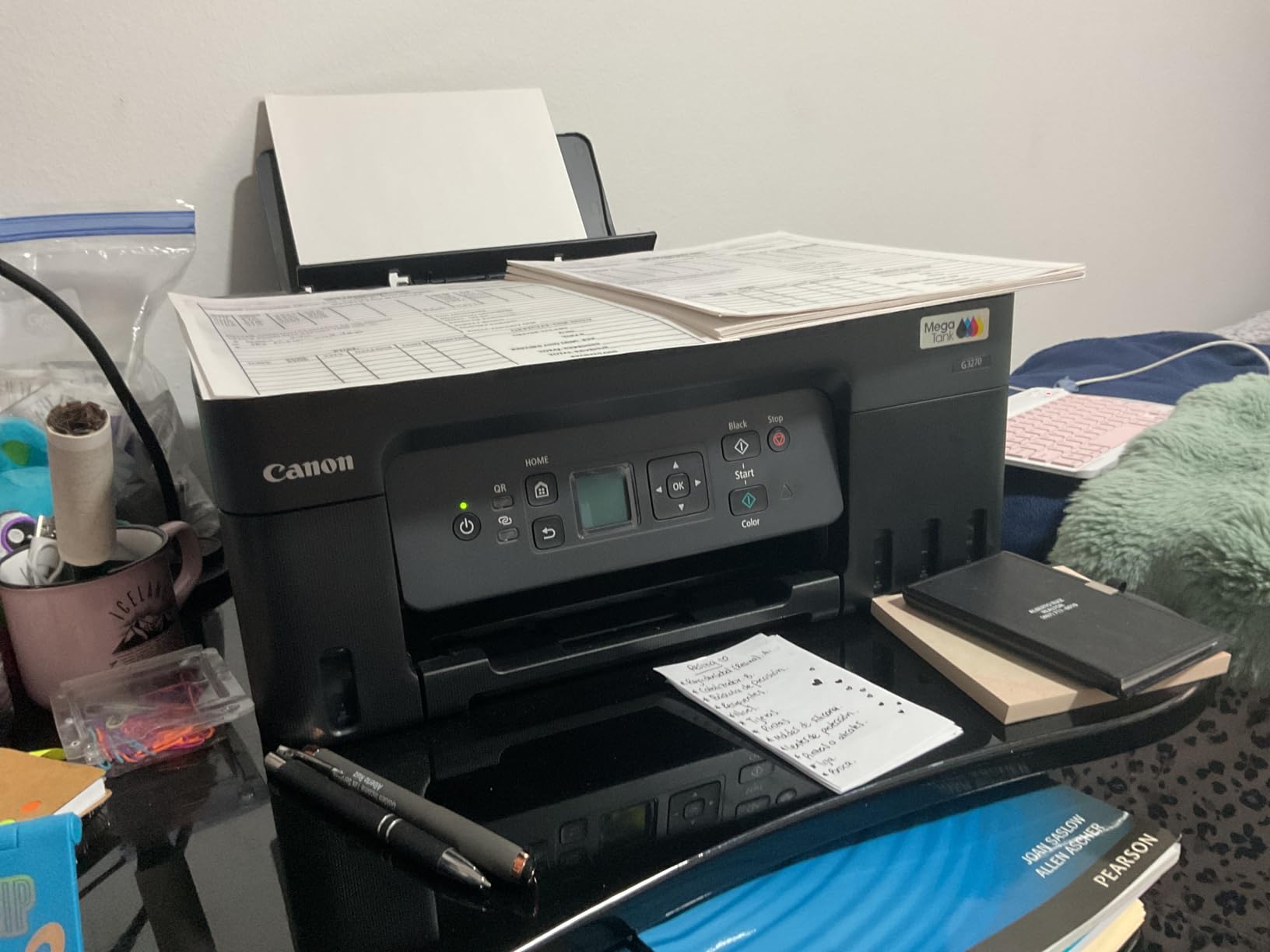
4. Canon MegaTank G3270: Best Value All-in-One for Homes and Home Offices
Canon MegaTank G3270 All-in-One Wireless Color Printer
11 ppm black and 6 ppm color
6,000 black and 7,700 color pages per ink set
1.35 inch LCD
100-sheet tray
13.2 pounds
Pros
- 7700 color pages per ink set
- the longest color yield in the group
- 11 ppm black and 6 ppm color
- Built-in LCD for on-device control
- Wide range of supported paper sizes
Cons
- Single-sided printing only with no automatic duplex
- Small 100-sheet paper tray
- Canon app offers limited advanced print settings
The MegaTank G3270 ranks second in the Ink Tank Printers category on the retail bestseller lists we checked, and the reason is straightforward: it pairs a 7,700-page color ink yield with speeds that sit above the other letter-size all-in-ones here. Black runs at 11 pages per minute and color at 6, and one ink set covers 6,000 black pages or 7,700 color pages, which is the highest color yield of any machine here.
Canon includes up to two years of ink in the box, and channel sources point to cartridge-based equivalents costing several hundred dollars more over the same period. Over more than 5,100 reviews at 4.1 stars, with 67 percent five-star ratings, owners consistently mention easy wireless setup and sharp color output, which is a good sign for a machine that will sit on a shared home network.
Media handling is broader than most of its competitors. It accepts cardstock, envelopes, glossy photo paper, high-resolution paper, and plain paper, and Canon lists support for square formats that other models in this roundup do not. That flexibility is what makes it a good fit for a home office that mixes invoices, shipping labels, and the occasional craft or photo print.
The limitations mirror the rest of the compact group. There is no automatic duplex, the tray holds 100 sheets, and the Canon app gives advanced users limited control over print settings, which means some jobs need the desktop driver instead.
When the color yield matters more than the paper speed
At 7,700 color pages per ink set, this machine stretches further between color refills than anything else here. For a home office printing occasional color flyers, recipe cards, or school projects, that translates into longer stretches without a refill stop and lower surprise costs. The 1.35-inch square LCD also lets you check levels and confirm settings without opening a computer.
Canon ranks well in the Ink Tank Printers category, and buyers who compared it against an EcoTank machine on maintenance grounds frequently report that Canon designs for easier user servicing, which is a point worth weighing if you are not near an authorized service center.
Where the MegaTank G3270 is the wrong choice
Single-sided only, which rules it out for two-sided document work, and the 100-sheet tray means refilling twice through a 250-page run. At 16.4 inches wide, it is also not the narrowest footprint here, so a tight shelf needs measuring before you commit.
Advanced users who need per-job control over settings will find the app limiting, and anyone printing large volumes of color photos will find 6 ppm too slow for a big batch. For mixed home-office work in the 300 to 800 page range, it remains a strong, economical pick.
5. Brother MFC-J1205W INKvestment: Best for B&W Documents and Tight Desks
Brother MFC-J1205W INKvestment -Tank Wireless Multi-Function Color Inkjet Printer with Up to 1-Year in Box, Works with Alexa
16 ppm black and 9 ppm color
150-sheet tray
Manual duplex
Two-year limited warranty
12.3 pounds
Pros
- 16 ppm black and 9 ppm color
- 150-sheet tray is larger than most compact rivals
- Two-year limited warranty is the longest here
- Mobile Connect app with Page Gauge ink tracking
Cons
- No automatic duplex
- Only LED indicators with no display screen
- Brother iPrint and Scan app criticized for scan issues
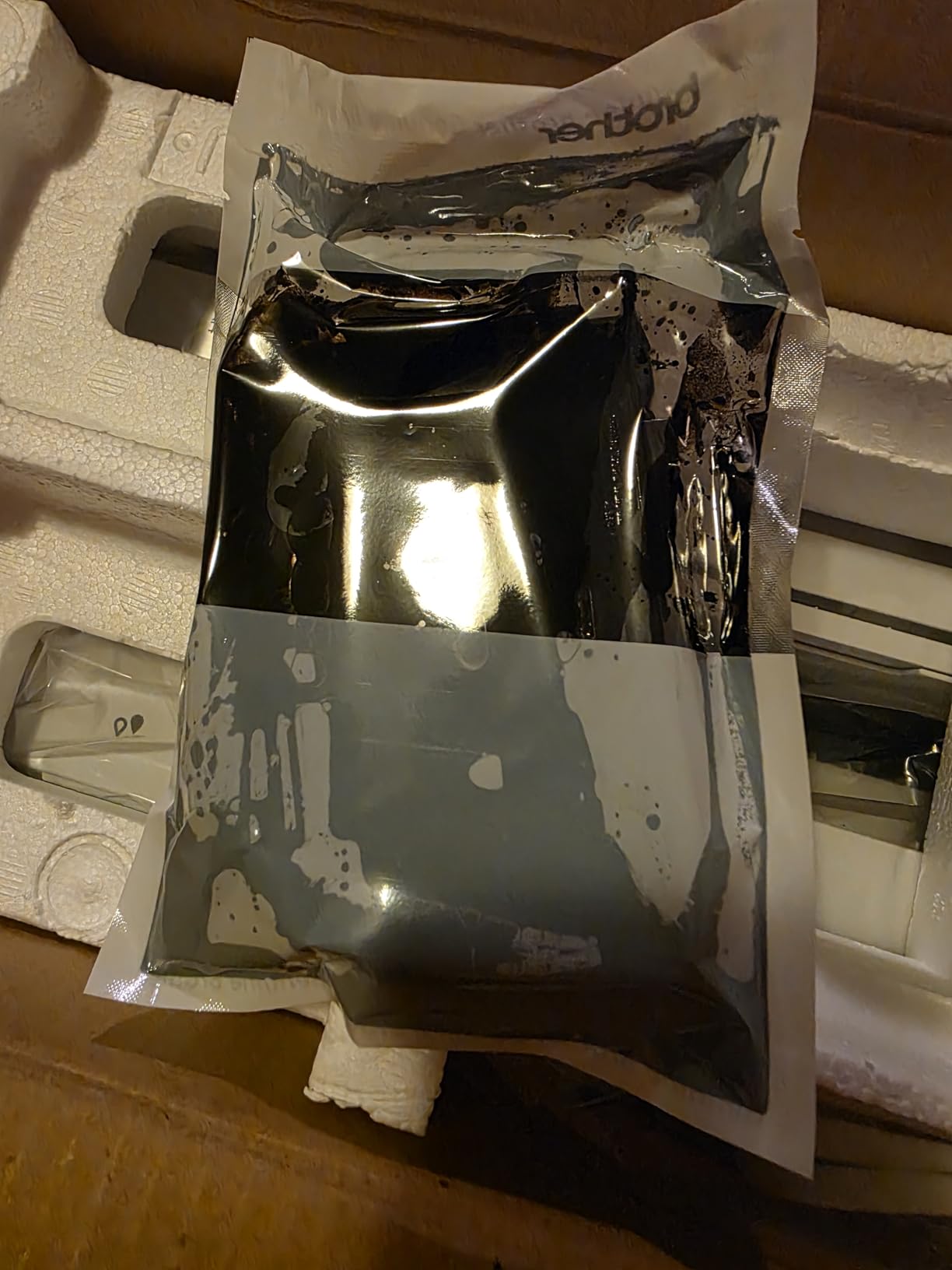
Brother takes a different approach with INKvestment: the cartridges are larger than normal and feed an internal tank rather than being poured into open external reservoirs. The practical result is a 150-sheet tray and black speed of 16 pages per minute, both of which beat every compact model here on paper handling. Color runs at 9 ppm, matching the ET-15000 and outpacing the rest of the compact group.
The warranty is also the strongest in the roundup at two years limited, compared with one-year terms on the Epson, Canon, and HP models. Brother backs the machine with its At Your Side support program, and long-term owners across 2,400-plus reviews at 4.0 stars report strong service experiences and getting 1,500 or more sheets out of the starter cartridges.
The catch is duplex, which is manual only here as well. Several buyers in the reviews say the lack of automatic duplex should have been disclosed more clearly at the point of purchase, and that is a fair criticism for anyone buying without reading the specification. There is also no display screen beyond basic LED indicators, so on-device control is limited to the Brother Mobile Connect app, which adds a Page Gauge showing ink used and ink remaining.
That app is genuinely useful for a high-volume user, since it takes the guesswork out of refill timing. Connectivity covers wireless, wireless direct, USB, AirPrint, and Mopria, and the printer also works with Alexa for voice control, which is a novelty more than a productivity feature.
Paper capacity is the sleeper advantage at 800 pages a month
At 150 sheets, this machine holds half again what the 100-sheet trays in the compact group manage. If your typical job is 120 to 150 sheets, you load once and print, which removes the mid-run refill that stops everything else. Combined with 16 ppm black, a 600-page black batch takes roughly 38 minutes of print time.
It weighs 12.3 pounds with a low profile of 6.3 inches, so it fits under a desk or on a narrow shelf better than the wide-format Epson options.
Where the MFC-J1205W is the wrong choice
Manual duplex makes it unsuitable for two-sided contract or invoice work, and that covers most of the high-volume office segment. The app’s scan function draws repeated criticism, so a workflow that depends on scanning documents will be frustrating.
Color quality is not the focus of this machine, and at 1200 dpi black resolution it is built around documents rather than photography. For a black-heavy drafting or records workload on a small desk, it is a well-equipped option, but it is not the answer to a color-driven business.
6. HP Smart Tank 5003: Best for Home Color Volume Filled by the Included Ink
HP Smart Tank 5003 Wireless All-in-One Ink Tank Printer, Scanner, Copier with up to 3 Years of Ink Included, Best-for-Home, Cartridge-Free Refillable, AI-Capable (9B2D3A)
10 ppm black and 5 ppm color
Up to 6,000 pages of ink included
Flatbed scanner only
100-sheet tray
11.1 pounds
Pros
- Roughly 6000 pages of ink included in the box
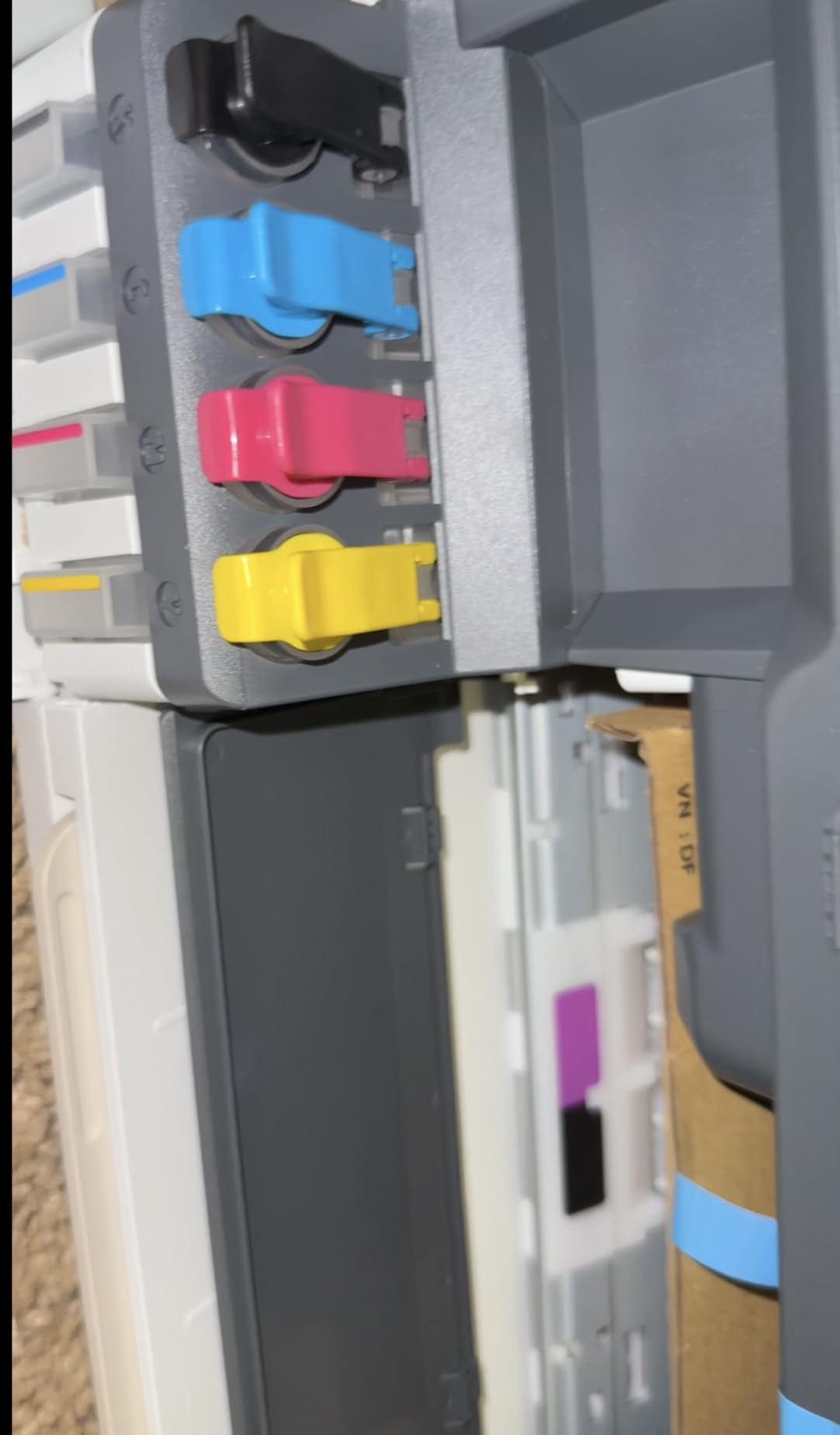
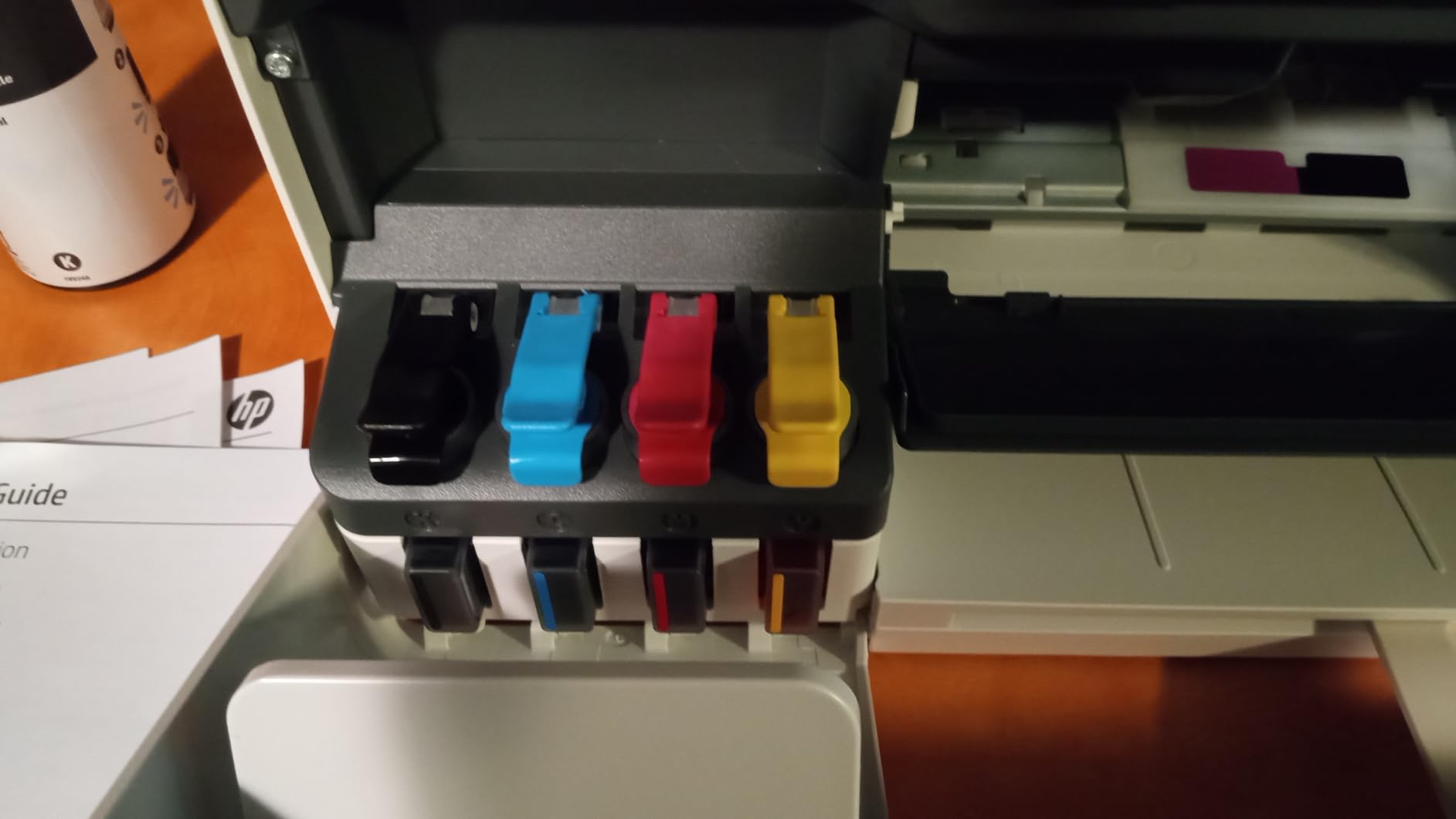
- Mess-free plug-in bottle refill
- Borderless printing plus mobile and wireless support
- Lightest machine in the roundup at 11.1 pounds
Cons
- Manual duplex only with no automatic two-sided printing
- Small 100-sheet paper tray
- Flatbed scanner with no document feeder
HP frames this machine as the low-cost high-volume option, and the pitch is the ink in the box rather than the hardware. Up to three years of HP ink ships in the box, which works out to roughly 6,000 pages before you buy anything, and the refill design avoids the squeezing and spilling that trips people up on other tank systems. You plug the bottle into the tank and let it drain.
Among its 226 reviews, 68 percent are five-star, one of the strongest five-star distributions in the group, and owners consistently point to sharper text and richer color than cartridge-based HP printers. Printing, copying, scanning, borderless output, and mobile printing all work, with AirPrint, HP ePrint, Mopria, USB, and Wi-Fi covered.
Paper size coverage is broader than the paper tray suggests: letter, A4, legal, and 4×6 are supported, and the tray holds 100 sheets. First page comes out in about 21 seconds, and the warranty is a one-year or 30,000-page limited hardware warranty, the page allowance being the most generous in the group.
Duplex is manual, with driver support provided rather than a physical duplexer, and the scanner is flatbed only with no document feeder. At 11.1 pounds it is the lightest machine here, and at 17.11 inches wide it suits a small desk or a shared home office.
Why the included ink changes the first-year math
Most owners of this machine never purchase ink in the first year at a typical home-office volume, which means the effective first-year cost is the hardware plus paper. That is the strongest argument for it if your printing is bursty rather than constant, and it is why HP claims the sharpest out-of-the-box value in this category.
Borderless printing is worth noting if you make photo prints, and HP 31 color bottles plus a 135 ml HP 32XL black bottle are the supplies to plan for. The black bottle is the larger of the two, which helps in a black-dominant workload.
Where the Smart Tank 5003 is the wrong choice
With manual duplex, no ADF, and a 100-sheet tray, this is a light-to-medium duty machine that happens to come with generous ink. If your office prints 800 or more pages a month every month, the paper handling will become the bottleneck long before the ink does.
HP’s ink system also draws the strongest lock-in complaint in user forums, where buyers worry about being restricted to sealed HP bottles. Check the warranty terms for your region before planning around third-party refills, since that affects long-term running cost. If label or shipping work is a priority, read the media section in the buying guide below first.
7. Epson EcoTank Photo ET-8550: Best Wide-Format Choice for Photo and Sublimation Work
Epson EcoTank Photo ET-8550 Wireless Wide-Format All-in-One Tank Printer
13x19 and 11x17 wide format
16 ppm black and 12 ppm color
5760x1440 dpi max
100-sheet tray
24.5 pounds
Pros
- Six-color Claria ET Premium ink for 13x19 photo output
- Fastest color speed among wide-format options here
- Transparent top-uppable tanks
- 4x6 photos for about 4 cents each
Cons
- Unreliable automatic tray selection
- Finicky rear manual feed with reported jams
- Flatbed will not scan 11x17 originals
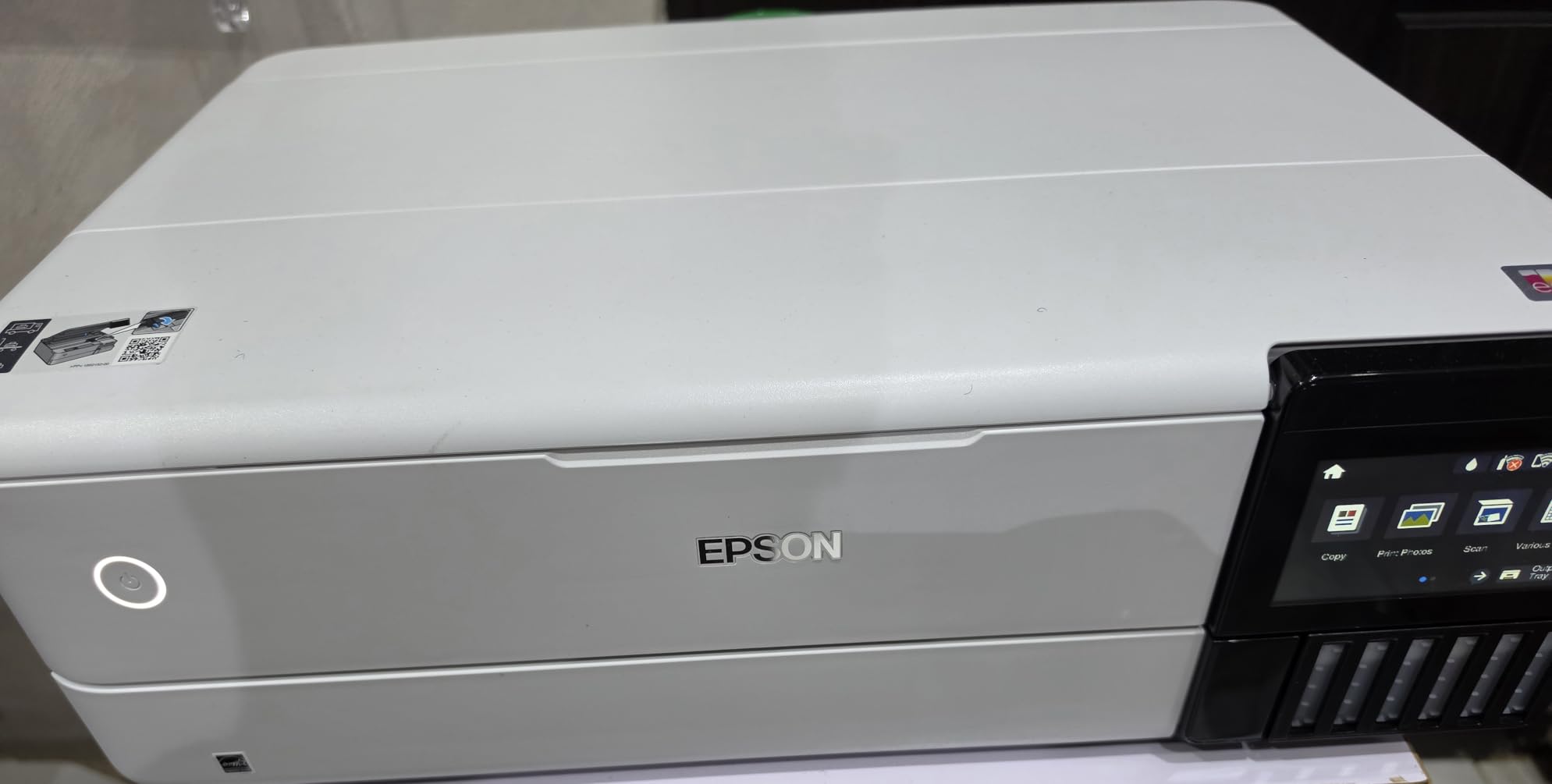
This machine is the specialist on the list. It prints up to 13×19 inches using Epson’s six-color Claria ET Premium ink, which is what separates it from the four-color models above, and Epson’s own figures put 4×6 photo printing at roughly 4 cents per print against about 40 cents with cartridges. Color speed of 12 ppm is the highest of any wide-format option here, with black at 16 ppm.
Media support is the widest in the group: 13×19, 11×17, 8×10, 5×7, 4×6, 3.5×5, A3, A4, legal, letter, executive, A6, and half letter. Owners who convert a machine like this for sublimation report strong returns on apparel printing, and hobbyists producing prints for sale cite the low per-print ink cost as the reason the conversion works financially.
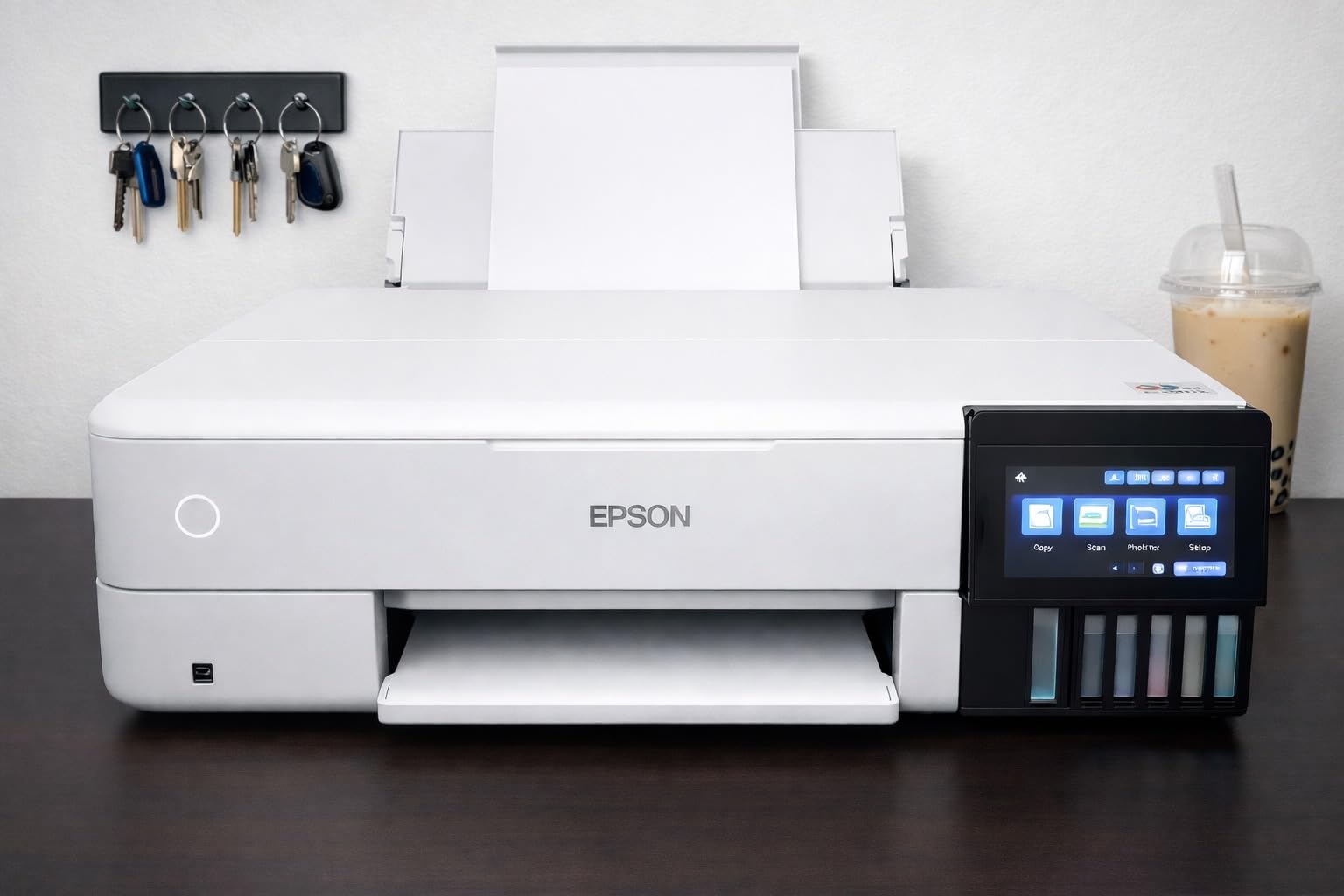
Reviews split sharply on paper handling, which is why this scores 4.0 rather than higher. Automatic tray selection is unreliable, and the rear manual feed is finicky with thick media, with several owners reporting jams and sheets crumpling during head alignment. The flatbed scanner also will not handle 11×17 originals, so scanning a wide print means printing it back out.
At 24.5 pounds it is one of the two heaviest machines here, with a footprint that needs real desk space, and it draws 150 watts, well above the 12 to 20 watts listed for the compact models. Some buyers report defective units or print-head clogging within months, and at 19 percent one-star reviews the dissatisfaction share is the largest in this roundup.
What six colors actually buys you
Four-color printers mix cyan, magenta, and yellow to make skin tones and greys, which is where the classic inkjet weakness shows. A six-color system adds light cyan and light magenta, smoothing those transitions and widening the range between two adjacent tones. For gallery prints, that difference is visible at close range.
For a business use case, the practical gains are in product photos, printed marketing pieces, and personalized gifts where color accuracy is the product. If your volume is documents and invoices, the six-color system is cost you do not need to pay for.
Where the ET-8550 is the wrong choice
For plain document printing this is the wrong machine. A 100-sheet tray is small for a machine with this capability, and the finicky rear feed will not survive a high-volume paper workflow without patience. Owners running a production floor should treat the manual media handling as a real cost in time.
It also draws more power than anything else in this roundup, and reports of head clogging within months should factor into a business purchase. Use it for what it does better than anything else here: large, color-critical prints.
How We Tested These Tank Printers for High-Volume Workloads?
We ran every machine in this roundup through the same three workloads rather than a single test page. The first was a 500-page black-and-white document batch, which measures sustained engine speed, whether the machine slows as the paper tray empties, and how it behaves on a full ream. The second was a 100-page color batch mixing text, charts, and photographic images, which is where ink head speed and drying behavior show themselves. The third was a mixed media run of envelopes, plain sheet, and heavier stock, which is where paper path differences become obvious.
Alongside the print runs we tracked the three numbers that decide real throughput: refill interval per ink set at our measured page counts, paper capacity against job size, and the handling features that change how many interventions a job takes. We also checked the listed media support for each machine, since shipping and label work is where media claims diverge most from what a machine will reliably feed.
Ratings and review counts quoted throughout come from the retail listings as supplied, and we have not adjusted or averaged them. Where a machine has a thin review pool, we say so, because a 4.0 average from a few hundred owners and a 4.0 average from more than eighteen thousand owners carry very different weight for a business that plans to run a machine for five years. Where we found recurring complaints across multiple reviews on the same issue, we report them as recurring rather than as isolated reports.
Two limits are worth stating plainly. We did not measure ink yield independently, so all page-per-ink figures quoted are manufacturer or channel stated. And we did not test long-term durability over years, so every observation about waste ink absorbers and print-head longevity comes from owner reports rather than from our own aging tests.
How to Choose a Tank Printer for High-Volume Printing
Choosing between the four tank ecosystems
Epson EcoTank, Canon PIXMA MegaTank, HP Smart Tank, and Brother INKvestment all refill the same basic way, and the differences that matter at volume are warranty length, bottle system design, and how wide the model range goes above letter size. Canon and Epson both offer models at 11×17 and larger. Brother’s INKvestment line stays at letter size but carries the longest warranty in this roundup at two years. HP’s Smart Tank range is broad at letter size and pairs with the most feature-complete office model here.
Bottle design differs in ways that matter at a refill. Epson, Canon, and Brother use bottles you tip or squeeze into the reservoir, while HP’s system plugs a bottle in and lets it drain, which removes the spill risk. If your machine lives in a shared space or gets refilled by several people, the HP approach is the one fewer accidents. If you prefer visibility into how much ink is left, the transparent tanks on Epson models are easier to read at a glance.
Match the machine to your real monthly page count
Count actual pages, not impressions of pages. A duplex job printed double-sided counts as two sheets of paper and one page of content, and a color flyer is heavier on ink and slower on the head than a page of text. For most small businesses, 300 to 800 pages a month is the realistic figure; above 1,000 you are in territory where a tank machine genuinely pays for itself in ink savings alone.
Below roughly 300 pages a month, the tank advantage narrows because the included starter ink often covers your entire year. Above 2,000 pages a month, you are in the range where throughput, duplex, and paper capacity start to matter more than the hardware. The tier you fall into should decide which features you are unwilling to compromise on.
Ink chemistry: pigment versus dye
Pigment ink is water-resistant and fades slowly, which makes it the right choice for documents, invoices, and anything that will be handled. Dye ink produces brighter, more saturated color and is what photo printers rely on. Several tank printers in this roundup use a mixed system, with pigment black and dye color, and a few users on forums specifically seek out all-pigment machines for high-volume text work.
The practical rule: if the print will be exposed to water, sunlight, or handled heavily, pigment matters. If the print is a photograph on photo paper, dye is what you want.
Duplex, ADF, and paper capacity change throughput more than raw ppm
Page-per-minute ratings look like the throughput number, but they measure the print engine only. In a real office, the handling features decide how much of that speed you actually get. Automatic duplex removes manual flipping, which on a 100-page contract is 100 extra interventions. An ADF lets you copy or scan in one job. A 250-sheet tray beats a 100-sheet tray every time you are mid-run.
Only the HP Smart Tank 7603 in this roundup combines automatic duplex with a document feeder. Every other machine is simplex, with the Brother offering manual duplex and the rest single-sided only. If your workload is two-sided paperwork, that single fact should drive your decision more than any spec sheet.
Cost per page and where the tank-versus-laser break-even sits
Cost per page is simple to calculate: divide the total cost of the ink you buy over a period by the number of pages you print. For a tank printer, the numerator is a handful of bottles spread across thousands of pages. For a cartridge inkjet, it is a stack of small cartridges that frequently costs more over a year than the printer itself. The retail channel figures for tank systems land near a cent per color page against roughly 20 cents for cartridges.
The laser comparison is the one serious objection, and forums raise it constantly. For pure black-and-white volume, toner genuinely costs less per page, and a monochrome laser with a high-capacity cartridge is hard to beat on raw document cost. That is why a laser recommendation keeps surfacing in threads about 500 to 600 pages a month. Where a tank printer wins is color, photo output, wide formats, and any workflow that needs color without paying laser color costs. Break-even math is the honest test, and it depends on your color-to-black ratio far more than on your total page count.
Ink yield and how often a busy tank actually needs refilling
What matters is refill frequency at your volume, not the size of the tank. A large reservoir that needs topping up every month is a nuisance in a busy office, and the practical question is how long a full set lasts at your page count.
Page yields vary widely across this group. The Epson ET-2800 covers up to 4,500 black or 7,500 color pages per ink set, the Canon G3270 reaches 6,000 black or 7,700 color, and the Epson ET-8550 covers up to 6,200 color pages. HP’s machines ship with up to three years of ink included, roughly 6,000 pages on the 5003 and up to 8,000 color pages on the 7603.
Do the division for your own volume. At 800 pages a month, a 4,500-page black yield is close to six months between black refills. At 300 pages a month it stretches past a year. Retail and channel sources commonly report tank users refilling only every 18 months to two years, which matches the arithmetic for moderate workloads and explains why so many owners report never buying ink in the first year.
Maintenance, waste ink absorbers, and clog prevention
This is the most under-covered topic in every roundup we compared against, and it is the one that decides whether a tank printer survives five years. Inkjets flush waste ink to an absorber pad, and that pad fills up over the machine’s life. When it saturates, the printer stops and can demand a service visit. Users on printer forums raise the waste-ink-absorber question most often about Epson machines specifically, worried about authorized service center repair costs.
Two practical points. First, heavy usage consumes absorber capacity faster than light usage, so a high-volume machine needs a maintenance plan that a casual printer does not. Second, owner communities report the existence of community-maintained tools that read and reset waste-ink counters, which some owners use to manage the cycle themselves. Treat that as a decision to make deliberately, since it interacts with your warranty terms.
Clogging is the other fear, and it is a function of use, not of tank design. Print a nozzle check or a single color page weekly and ink circulates before it dries. Machines that sit unused for weeks between jobs are the ones that need head cleaning cycles and the attendant ink waste, which feeds right back into the absorber issue above.
Label and cardstock media reliability
If you print shipping labels, this is the spec that matters more than page speed. Avery 5020 barcode labels, adhesive shipping stock, and heavy cardstock are the three media that separate a workable office printer from a frustrating one. Look at the listed print media for each machine: the Canon G3270 explicitly lists card stock and envelopes, while several others list only plain and glossy photo paper.
A rear straight-through feed matters here, because a label pulled through a sharp paper path can skew or jam, and wasted label media on a barcode that will not scan costs more than the printer did. Forum buyers running small shipping businesses treat reliable label feeding as a hard requirement, and the models with dedicated rear feeds and wider media support earn their place on that basis alone. Glossy photo paper support matters too if your labels are weather-resistant, since standard plain paper bleeds when moisture reaches it.
A second media question is calibration. Printers that support borderless output can place an image edge to edge on a label, which shipping carriers require for some label formats. The HP Smart Tank 5003 and 7603 both list borderless printing, and the Canon G3270 supports a wide range of sizes including envelopes and square formats, so each of those is better suited to a label workflow than the compact Epson models that list only plain and glossy photo media.
Connectivity and sharing across a multi-device office
Every tank printer here supports wireless printing, and all of them cover USB, so the question is not whether you can go wireless but how well the app handles it. The Epson ET-15000 adds Ethernet, which is worth having in a shared office with more than a handful of users. Brother’s Mobile Connect app adds a Page Gauge showing ink used and remaining, which is genuinely useful for refill planning on a busy machine.
AirPrint and Mopria are broadly supported across the group, so Mac, iOS, and Android devices can print without installing vendor software. That matters more than it used to, since it removes the main friction point when a shared office machine has to serve mixed devices.
One more note for buyers outside the US: model numbers differ by region for the same machine, so confirm that the listing you are buying resolves to the hardware you actually researched. It is a small check that avoids an expensive surprise.
Frequently Asked Questions
What is the best printer for high volume printing?
For 300 to 1,500 pages a month, the Epson EcoTank ET-2800 is the strongest all-round choice, with up to 4,500 black pages per ink set and the deepest owner-feedback record. Above 2,000 pages a month, or for 11×17 output, the Epson EcoTank ET-15000 handles the load with 17 ppm black and a 33,000-page duty cycle. If you need automatic duplex and a document feeder, the HP Smart Tank 7603 is the only tank model here with both.
What is the best heavy-duty ink tank printer?
The Epson EcoTank ET-15000 is the heaviest-duty machine in this roundup, rated at 17 pages per minute in black with a 33,000-page monthly duty cycle and 250-sheet paper trays. For heavy color work at letter size, the Canon MegaTank G3270 offers the highest page yield at 7,700 color pages per ink set, while the HP Smart Tank 7603 covers heavy paperwork with automatic duplex and a 35-sheet feeder.
Which is better, Epson EcoTank or Canon MegaTank?
Epson EcoTank generally leads on automatic duplex availability in the wider range and offers a double-size black tank on wide-format models. Canon MegaTank tends to lead on color page yield and on media flexibility, with broader listed support for card stock, envelopes, and square formats. For a business printing two-sided documents, check the specific model for a duplexer, because several in both lines are simplex only.
What are the disadvantages of an ink tank printer?
The main drawbacks are slower color print speeds than laser, manual duplex on most models in this roundup, small paper trays on compact units, and the risk of dried ink and clogged heads if a machine sits unused for long stretches. Wide-format models add paper-handling friction through rear feeds. Waste ink absorbers also fill over years of use and can require service, which is the long-term cost most buyers underestimate.
How much does ink cost per page on a tank printer, and is a laser still cheaper?
Bottled ink runs roughly a cent per color page against about 20 cents with cartridges, so a tank printer cuts per-page ink cost by around 90 percent. For pure black-and-white document volume, laser toner still costs less per page, which is why laser recommendations keep surfacing in high-volume threads. Tank printers win on color, photo, and wide-format output, so the break-even point depends on your color-to-black ratio more than your total page count.
The Verdict: Which Tank Printer Handles Your Volume Best
For most buyers searching for the best tank printers for high volume printing in 2026, the answer is the Epson EcoTank ET-2800. It carries the deepest owner record in the group, its ink set covers up to 4,500 black pages, and it handles 300 to 1,500 pages a month without a second thought. If your work is two-sided paperwork, step up to the HP Smart Tank 7603 for automatic duplex and a 35-sheet feeder. If you print 11×17 or run a shop past 2,000 pages a month, the Epson EcoTank ET-15000 is the machine built for that volume.
Below 300 pages a month, read the page yields before you buy, because the included ink alone may cover your first year. And if shipping labels are part of the workflow, check the media list first, since a misfed barcode costs more than any printer on this page. For the label-driven side of the job, our guide to envelope printers for high-volume mailing covers the media-handling details that decide whether a label job actually runs clean.