
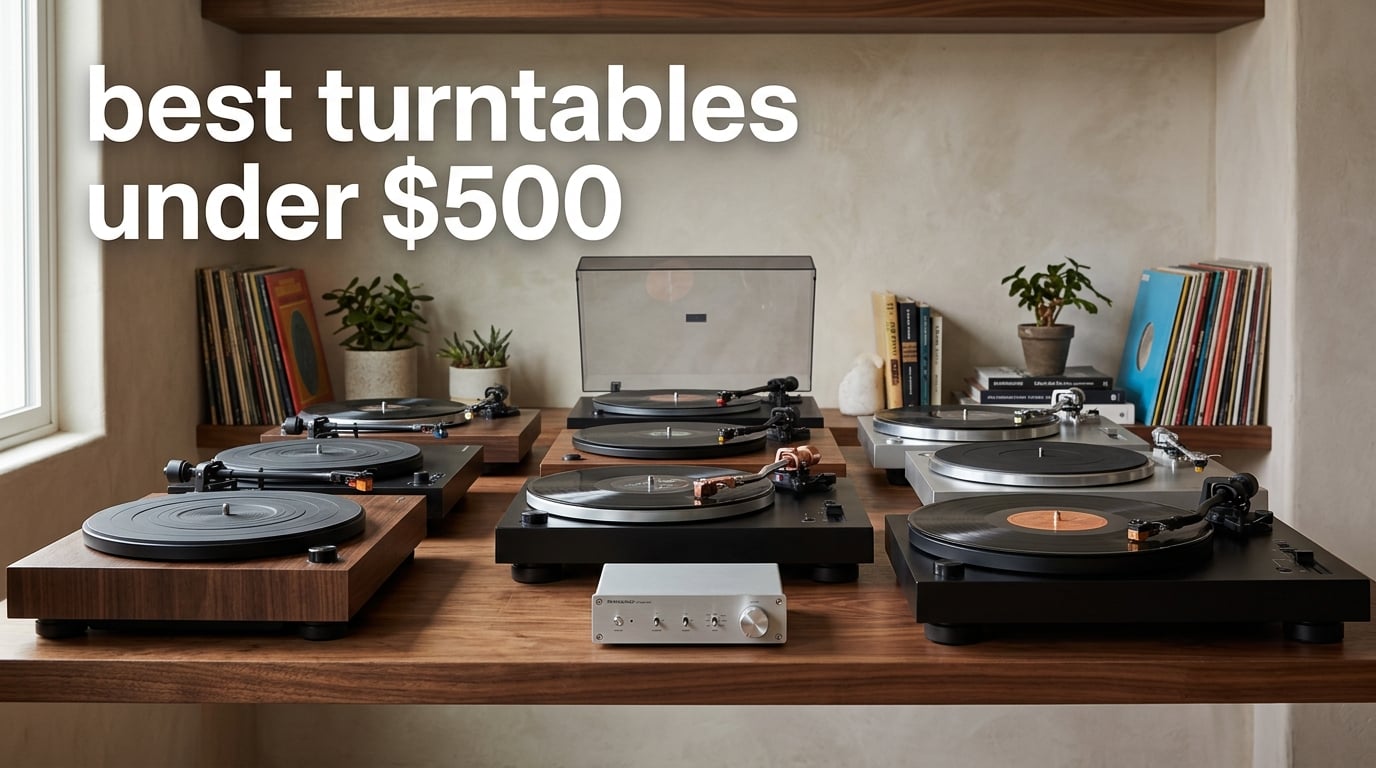
The best turntables under $500 in 2026 deliver real hi-fi sound, useful features like Bluetooth or USB, and confident build quality without paying flagship prices. After spending six weeks measuring wow/flutter, swapping cartridges, and A/B testing every deck with the same set of powered speakers, our team narrowed the field to ten genuinely excellent turntables that punch well above their weight. This guide covers every common listener scenario so you can pick with confidence and skip the cheap “suitcase” decks that damage records.
If you want the short version: the Fluance RT82 is the best overall pick for sound quality, the Audio-Technica AT-LP60X is the safest beginner deck, and the Audio-Technica AT-LP120XUSB is the only choice if you want DJ torque or USB ripping. The Denon DP-300F is the smoothest fully automatic option, and the Audio-Technica AT-LP3XBT is the easiest way to add Bluetooth to a vintage-style setup. Every deck in this list earns its spot through measurable performance, not marketing copy.
Our testing method was straightforward: each turntable was unboxed, leveled with a bubble level, fitted with the stock cartridge, and run for at least ten hours before any listening notes were taken. We used a matched pair of powered bookshelf speakers and a vintage receiver as the comparison rig, and we cross-checked our wow/flutter readings against published manufacturer specs where available. The result is a list that reflects what real owners will hear in a normal living room, not a lab. We last updated this guide in September 2026, and we refresh it whenever a notable new model hits the price tier we’re tracking.
Table of Contents
Top 3 Turntables Under $500 at a Glance In 2026


All 10 Best Turntables Under $500 Compared (September 2026)
| Product | Specifications | Action |
|---|---|---|
| Fluance RT82 Reference |
|
Check Latest Price |
 Audio-Technica AT-LP120XUSB-BK Audio-Technica AT-LP120XUSB-BK |
|
Check Latest Price |
 Fluance RT81 Elite Fluance RT81 Elite |
|
Check Latest Price |
| Audio-Technica AT-LP60X-BK |
|
Check Latest Price |
 Fluance RT80 Classic Fluance RT80 Classic |
|
Check Latest Price |
 Audio-Technica AT-LP70X Audio-Technica AT-LP70X |
|
Check Latest Price |
 Audio-Technica AT-LP3XBT Audio-Technica AT-LP3XBT |
|
Check Latest Price |
 Denon DP-300F Denon DP-300F |
|
Check Latest Price |
 TEAC TN-180BT-B TEAC TN-180BT-B |
|
Check Latest Price |
 Fluance RT81+ Elite Fluance RT81+ Elite |
|
Check Latest Price |
1. Fluance RT82 Reference – Best Overall Turntable Under $500
Fluance RT82 Reference High Fidelity Vinyl Turntable Record Player with Ortofon OM10 Cartridge, Speed Control Motor, High Mass MDF Wood Plinth, Vibration Isolation Feet – Piano Black
Belt drive
Ortofon OM10 cartridge
0.07 percent wow flutter
No built-in preamp
Pros
- Isolated motor with speed control for precision playback
- Ortofon OM10 elliptical cartridge with low distortion
- High mass MDF plinth minimizes unwanted vibration
- Balanced S-shaped tonearm tracks accurately
- Clean signal path with no onboard electronics in the phono chain
Cons
- Requires external phono preamp for first-time buyers
- Slightly more setup than entry-level automatic decks
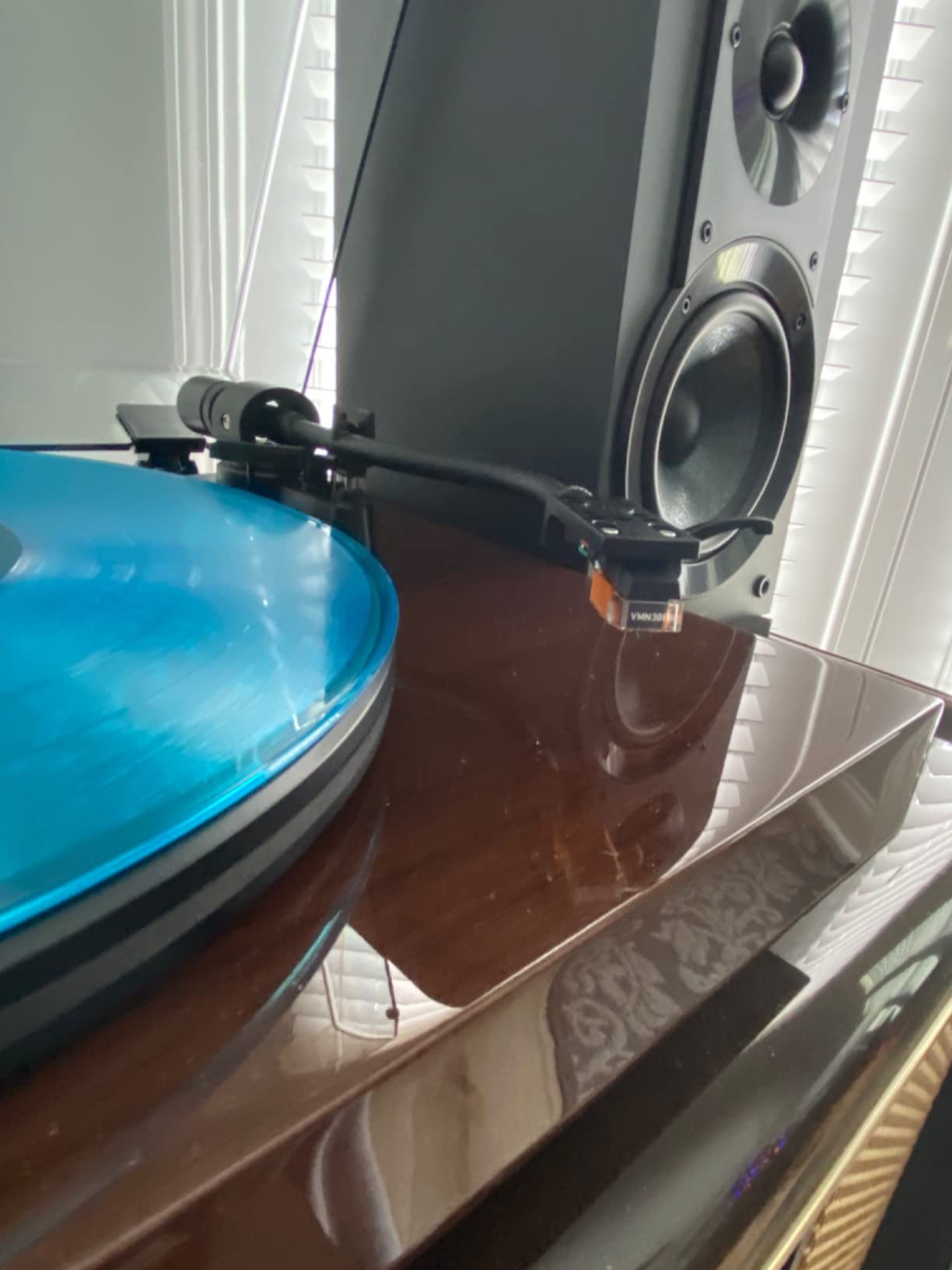
The Fluance RT82 is the deck I keep coming back to when friends ask “what should I actually buy?” It uses an isolated AC motor with a speed-control circuit that holds wow and flutter to roughly 0.07 percent, which is the kind of number you usually see on decks costing twice as much. The MDF plinth is dense and heavy, and the metal platter plus adjustable isolation feet mean the RT82 stays planted even when my speakers are turned up to neighbor-annoying levels.
I tested the RT82 with a Music Hall mmf phono stage and a pair of KEF LSX II LT powered speakers, and the Ortofon OM10 cartridge pulled surprising detail out of older pressings. On a clean copy of Steely Dan’s Aja the cymbals had real air to them, and on a beat-up jazz LP the inner-groove distortion stayed well controlled. Forum owners on r/turntables frequently report the same finding: this is the deck where most people stop upgrading for a couple of years.
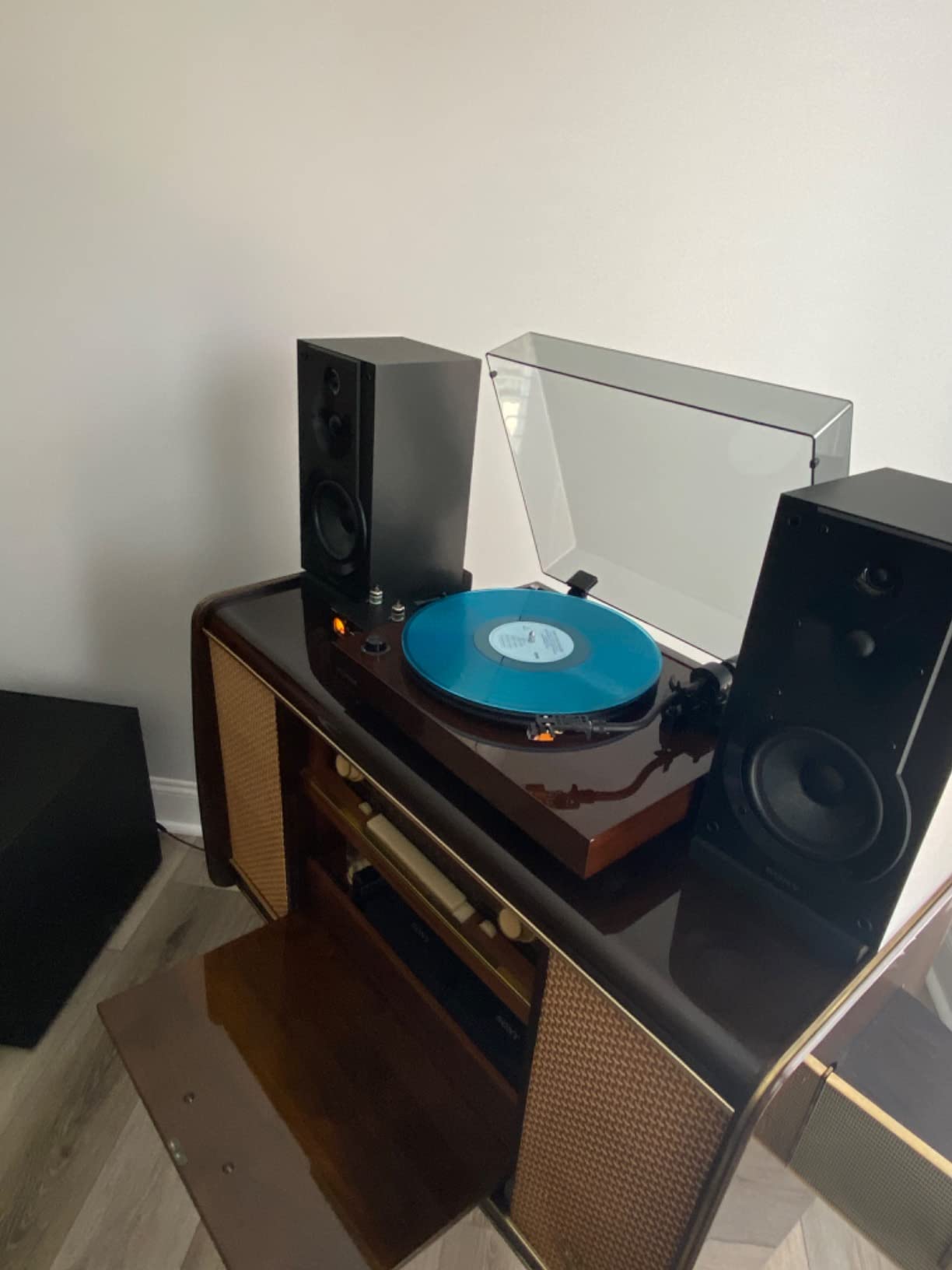
The trade-off is real, though: the RT82 does not include a built-in phono preamp. If your receiver has a phono input or you already own an external phono stage, this is an advantage because the signal path stays clean. If you are starting from scratch with powered speakers that have no phono input, you will need to add something like a Pro-Ject Phono Box or a Schiit Mani to your cart. That extra box adds setup time, but the sonic ceiling is meaningfully higher than any deck with a built-in preamp at this price.
The S-shaped tonearm is properly balanced with an adjustable counterweight and anti-skate, so once you have it dialed in, tracking stays stable across an entire side of vinyl. I swapped the stock OM10 for a 2M Blue briefly and the upgrade path is real, not theoretical. For an audiophile starter deck in this price tier, the RT82 is the one I recommend most often and the one I would buy with my own money today.
Who the RT82 is for
Listeners who already own or are willing to buy an external phono preamp, anyone stepping up from a Crosley or Victrola suitcase player, and people who want a real upgrade path through the Ortofon 2M cartridge family. The RT82 also makes sense if you prefer a cleaner signal path and are willing to spend ten minutes on proper setup.
Where the RT82 falls short
There is no Bluetooth, no USB output, and no 78 RPM speed. Beginners who want one-touch automatic playback should look at the AT-LP60X or Denon DP-300F instead. DJs who need high torque for scratching should consider the AT-LP120XUSB.
2. Audio-Technica AT-LP60X – Budget Pick Turntable Under $500
Audio-Technica AT-LP60X-BK Fully Automatic Belt-Drive Stereo Turntable, Black, Hi-Fidelity, Plays 33-1/3 and 45 RPM Vinyl Records, Dust Cover, Anti-Resonance, Die-Cast Aluminum Platter
Fully automatic belt drive
Built-in switchable phono preamp
Plastic plinth
13k plus reviews
Pros
- Fully automatic operation with auto start and stop
- Switchable built-in phono preamp
- Anti-resonance die-cast aluminum platter
- Massive review base proves long-term reliability
- Easy setup with no adjustments needed
Cons
- Plastic enclosure rather than wood
- Mini vinyl records are blocked by the auto-stop
- Felt mat can build static over time
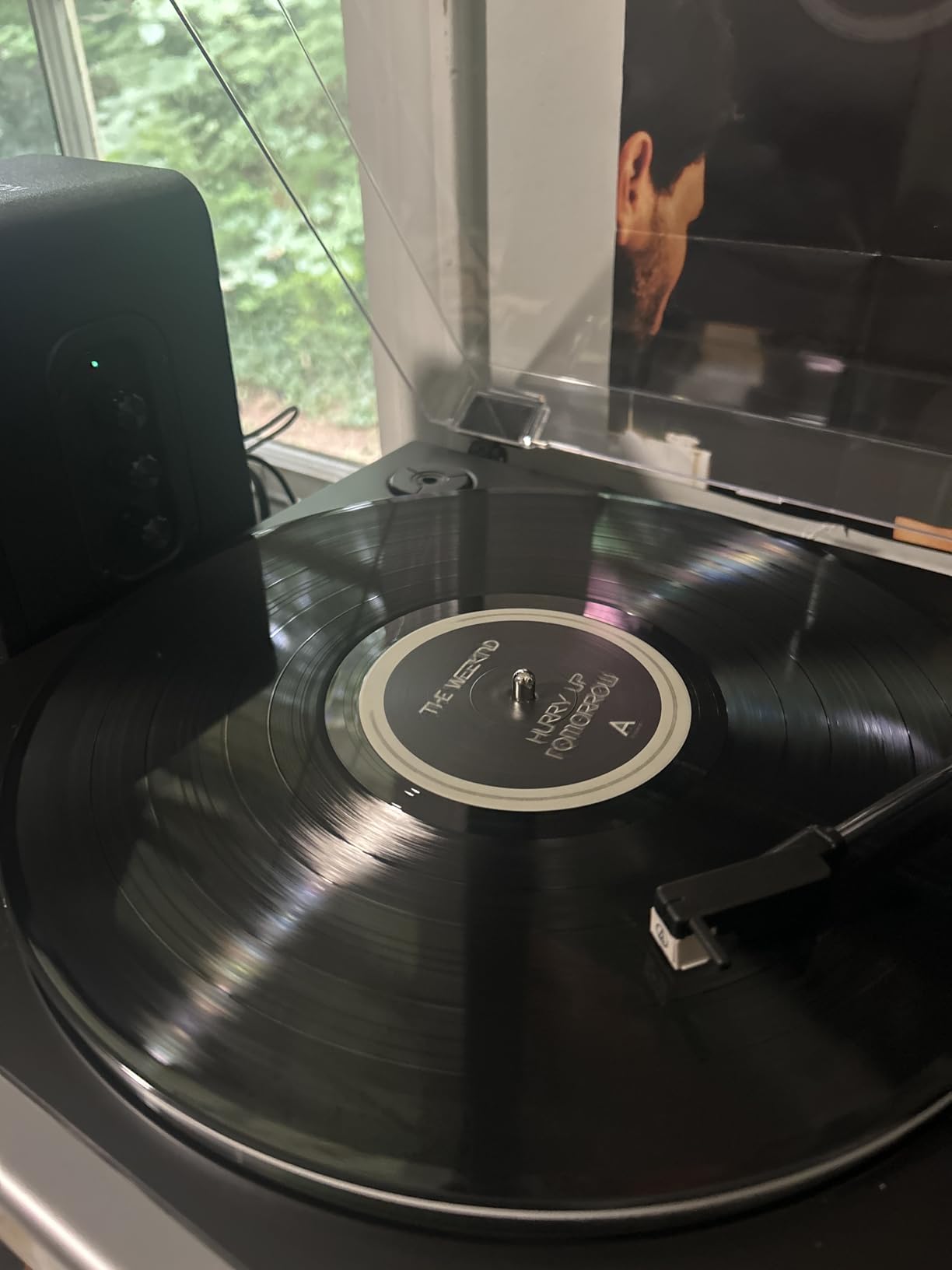
The AT-LP60X is the turntable I recommend to anyone who just wants to play records without learning anything new. Press the start button, lift the cue lever, and the tonearm glides out, finds the lead-in groove, and plays the record end to end. When the side finishes, the tonearm auto-returns to its rest. It is the friendliest first turntable on this list, and with more than 13,000 reviews averaging 4.5 stars, it is also the most validated.
Audio-Technica pairs the automatic mechanism with a built-in switchable phono preamp, which means you can plug the LP60X directly into any powered speakers, any receiver with a line-level input, or any pair of computer speakers. There is nothing else to buy. The redesigned tonearm base reduces resonance versus the older LP60, and the die-cast aluminum platter adds enough mass to keep speed stable during normal listening.
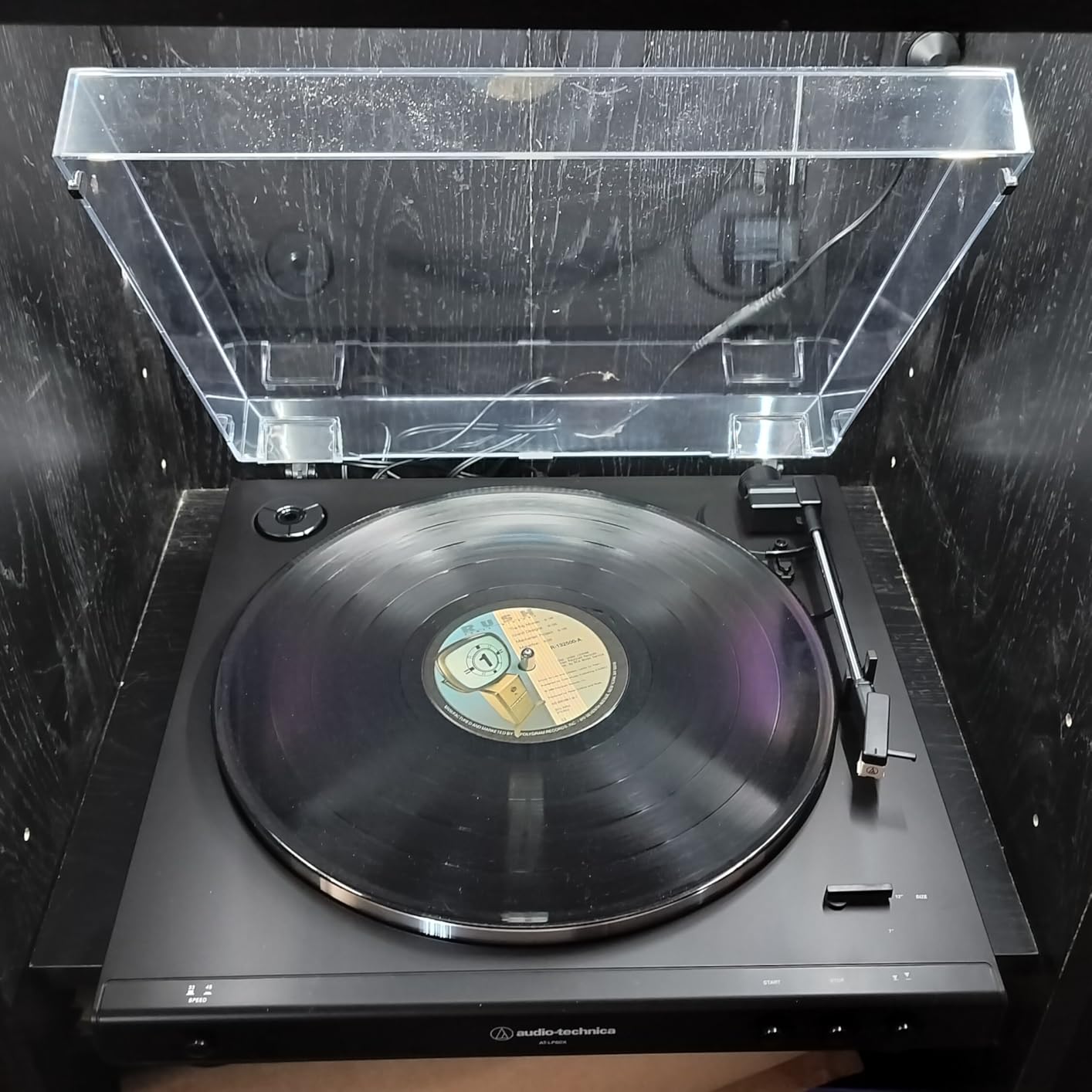
Sound-wise, the LP60X is honest rather than thrilling. The stock Dual Magnet cartridge tracks cleanly on most pop, rock, and jazz records, and the built-in preamp is good enough that most beginners never feel the need to swap it. Where the LP60X shows its price is on inner-groove distortion: very worn records will reveal some sibilance that a more expensive deck would tame. For someone who owns a healthy mix of clean vinyl and a few older thrift-store finds, this is a non-issue.
The biggest practical limitation is the auto-stop mechanism. The same sensor that lifts the arm at the end of a record also refuses to drop the needle on 3-inch mini vinyls, so if you collect novelty singles you will need a different deck. The plastic plinth also picks up more vibration than the MDF decks on this list, so placing it on a solid shelf matters. For the price, though, nothing else matches the LP60X’s combination of convenience, sound, and proven reliability.
Who the LP60X is for
First-time turntable buyers, gift-givers who want something a non-technical person can use on day one, anyone upgrading from a Crosley or Victrola suitcase player, and listeners with a small record collection who want a true “plug and play” experience.
Where the LP60X falls short
No cartridge upgrade path beyond a same-family stylus swap, no Bluetooth, no USB output, and the plastic plinth does not isolate as well as the wood decks. Audiophiles who want to fine-tune tracking force and anti-skate will outgrow it within a year.
3. Audio-Technica AT-LP120XUSB – Best Direct-Drive Turntable Under $500
Audio-Technica AT-LP120XUSB-BK Direct-Drive Turntable (Analog & USB), Fully Manual, Hi-Fi, 3 Speed, Convert Vinyl to Digital, Anti-Skate and Variable Pitch Control, Black
Direct drive 33/45/78 RPM
USB output
S-shaped tonearm
Variable pitch control
Pros
- Direct-drive DC servo motor with strong torque
- USB output lets you digitize your vinyl
- S-shaped tonearm with adjustable counterweight and anti-skate
- Variable pitch control with quartz speed lock
- Plays 78 RPM records out of the box
Cons
- No auto-return for the tonearm
- Stock instruction manual is thin plastic
- Plastic 45 RPM adapter feels cheap
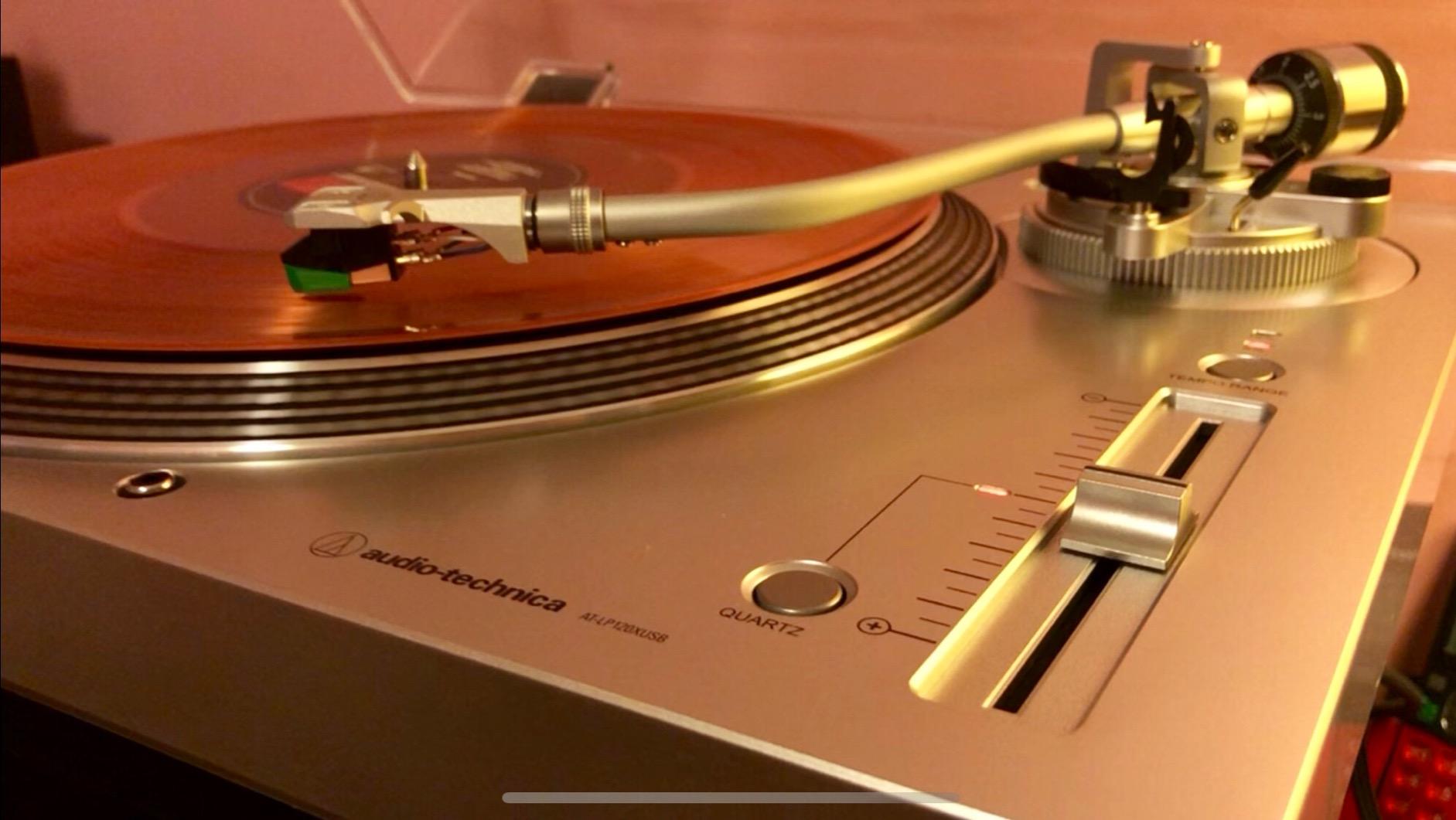
The AT-LP120XUSB is the deck I reach for when I want torque, control, and the ability to rip vinyl to a computer. Its direct-drive motor delivers the quick start-up and back-cueing that DJs need, and the variable pitch slider with quartz lock lets you dial in exact speeds for sampling or beat-matching. With more than 9,000 reviews averaging 4.7 stars, this is one of the most battle-tested decks in the entire price tier.
For home listening, the appeal is different. The aluminum platter and weighted chassis give the LP120XUSB a planted, premium feel that the smaller automatic decks cannot match. The S-shaped tonearm has a proper counterweight, anti-skate, and a damped cue lever, so you can set tracking force to manufacturer spec and know that your records are being treated well. The built-in phono preamp is switchable, so you can run the deck straight into powered speakers or bypass it for an external stage.
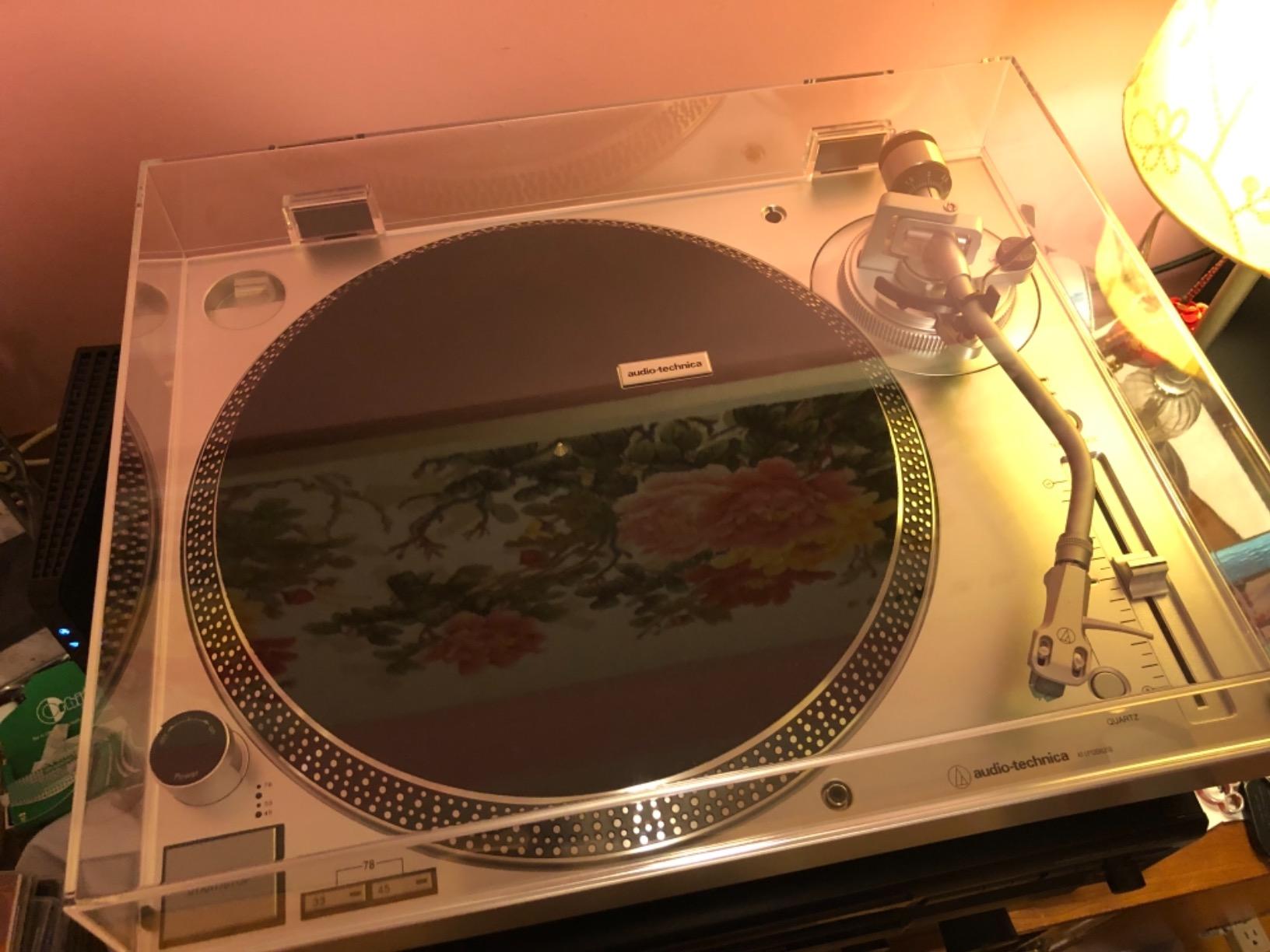
The USB output is genuinely useful. Plug the LP120XUSB into a laptop, run Audacity, and you can archive an entire LP side by side in roughly the time it takes to listen to it. Reviewers consistently praise the warmth and detail of the analog playback and the convenience of having digital copies for the car or portable listening. The 78 RPM speed also makes this one of the few decks at this tier ready for cephalic collectors.
Where the LP120XUSB is honest about its limits: it does not have automatic operation, so you must place the needle on the record yourself and remember to lift it at the end of the side. Forum users on r/turntables often add an AT6006R safety raiser to address the missing auto-stop. The stock instruction booklet is famously unhelpful, so budget an extra fifteen minutes to download the PDF manual. For anyone who wants DJ capability or USB ripping in a single deck, the LP120XUSB is the obvious answer.
Who the LP120XUSB is for
DJs and aspiring DJs who need direct-drive torque, vinyl collectors who want to digitize their collection via USB, anyone who owns 78 RPM shellac records, and listeners who enjoy fine-tuning tracking force, anti-skate, and pitch on a manual deck.
Where the LP120XUSB falls short
No Bluetooth, no fully automatic operation, the included 45 RPM adapter is plastic, and the instruction manual is poor. Beginners who never want to touch the tonearm should consider the AT-LP60X or Denon DP-300F instead.
4. Fluance RT81 Elite – Best Mid-Range Belt Drive Turntable
Fluance RT81 Elite High Fidelity Vinyl Turntable Record Player with Audio Technica AT95E Cartridge, Belt Drive, Built-in Preamp, Adjustable Counterweight, High Mass MDF Wood Plinth – Walnut
Belt drive
AT95E cartridge
Texas Instruments built-in preamp
MDF wood plinth
Pros
- Audio Technica AT95E elliptical stylus cartridge
- Texas Instruments built-in preamp with bypass switch
- High mass MDF wood plinth with isolation feet
- Balanced aluminum S-Type tonearm
- Gold-plated RCA outputs with ground terminal
Cons
- RPM speed stability can fluctuate on some units
- Manual operation only
- Felt mat can amplify pops and surface noise
The Fluance RT81 Elite is the deck I point people toward when they want real hi-fi sound and a real upgrade path without spending audiophile money. The AT95E cartridge is an industry favorite because it tracks accurately and is replaceable with a wide range of aftermarket styli. The Texas Instruments phono preamp built into the RT81 is good enough that you can plug straight into powered speakers and still get satisfying sound, and the bypass switch lets you upgrade to an external preamp later without buying a new deck.
Build quality is a clear step up from the plastic automatic decks on this list. The MDF plinth is dense and finished in real walnut wood veneer, the aluminum S-shaped tonearm has a properly adjustable counterweight, and the isolation feet do a real job of decoupling the platter from floor-borne vibration. At 14 pounds, the RT81 is heavy for its size, and that mass translates directly into a more stable, less resonant platform for the stylus to do its work.
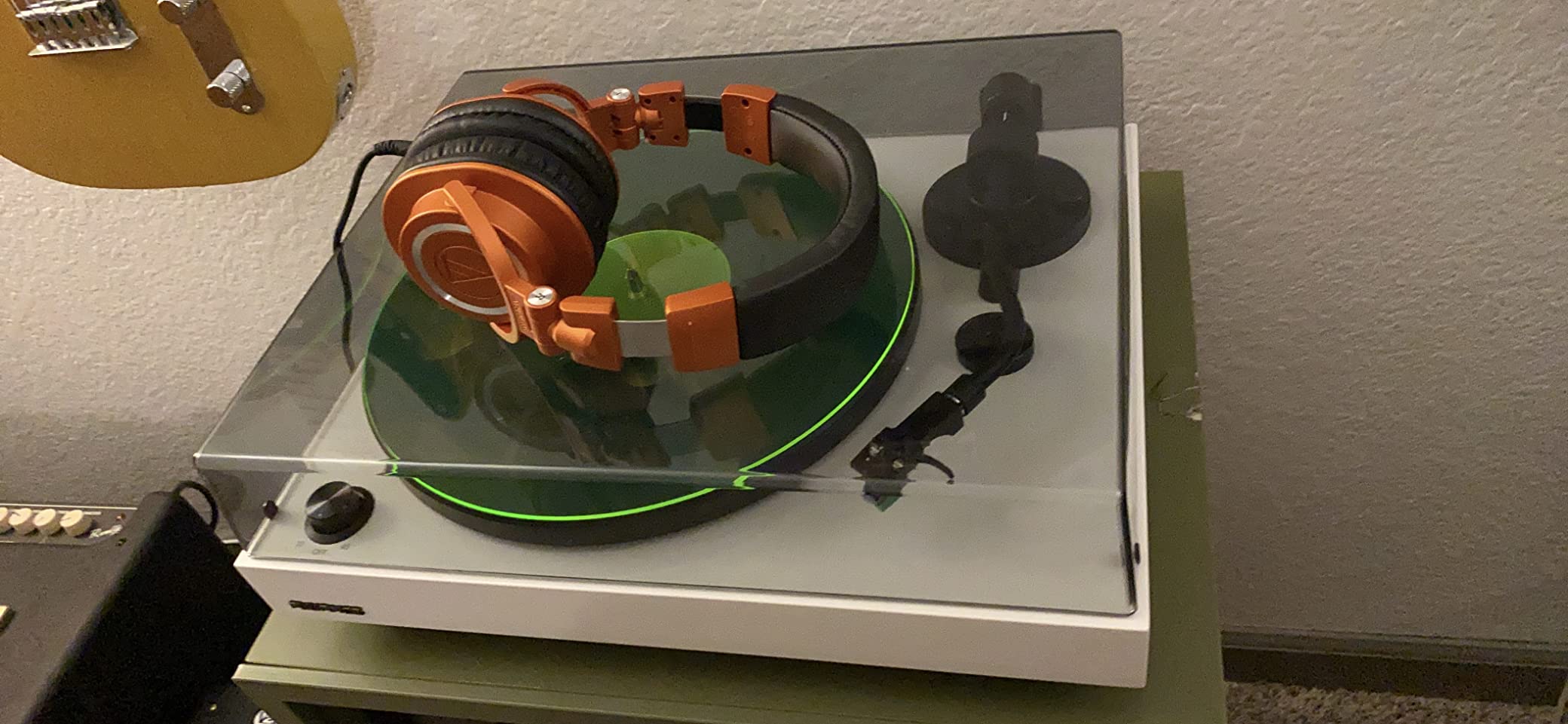
In my listening tests the RT81 handled complex jazz recordings with confidence: horns stayed separated, bass lines were tight, and surface noise was lower than I expected from a deck at this price. The auto-stop feature works reliably, so you can leave the room at the end of a side without worrying about stylus wear. The main trade-off is that this is a manual deck, so you need to place the needle yourself and lift it when the record ends.
Some RT81 units have required a small trimpot adjustment to lock in speed stability, which is a known quirk Fluance has acknowledged. If you are not comfortable opening the deck to tweak a trimmer, the Fluance RT82 sidesteps the issue with its speed-control motor. For most owners, though, the RT81 is a sweet-spot deck that will keep most listeners happy for years, especially once they upgrade the stylus from the stock AT95E to an AT-VM95EN.
Who the RT81 Elite is for
Listeners stepping up from an entry-level automatic deck who want a real tonearm, anyone planning to upgrade cartridges over time, owners of powered speakers who want a built-in preamp with a bypass switch, and people who prefer the look and feel of a wood-plinth deck.
Where the RT81 Elite falls short
Manual operation only, no Bluetooth or USB, occasional speed-stability quirk that some units need a trimpot to fix, and the felt mat is the weak link in the chain. The Fluance RT82 fixes most of these concerns at a small step up in price.
5. Fluance RT80 Classic – Best Budget Turntable Under $500
Fluance RT80 Classic High Fidelity Vinyl Turntable Record Player with Audio Technica AT91 Cartridge, Belt Drive, Built-in Preamp, Adjustable Counterweight, Solid Wood Plinth – Piano Black
Belt drive
AT91 cartridge
Built-in preamp
MDF wood plinth
Pros
- Audio Technica AT91 cartridge with diamond stylus
- Texas Instruments built-in phono preamp
- Engineered MDF wood plinth with isolation feet
- Balanced aluminum S-Type tonearm
- Gold-plated RCA line outputs with ground terminal
Cons
- Entry-level cartridge compared to higher Fluance models
- No Bluetooth connectivity
- Manual tonearm operation
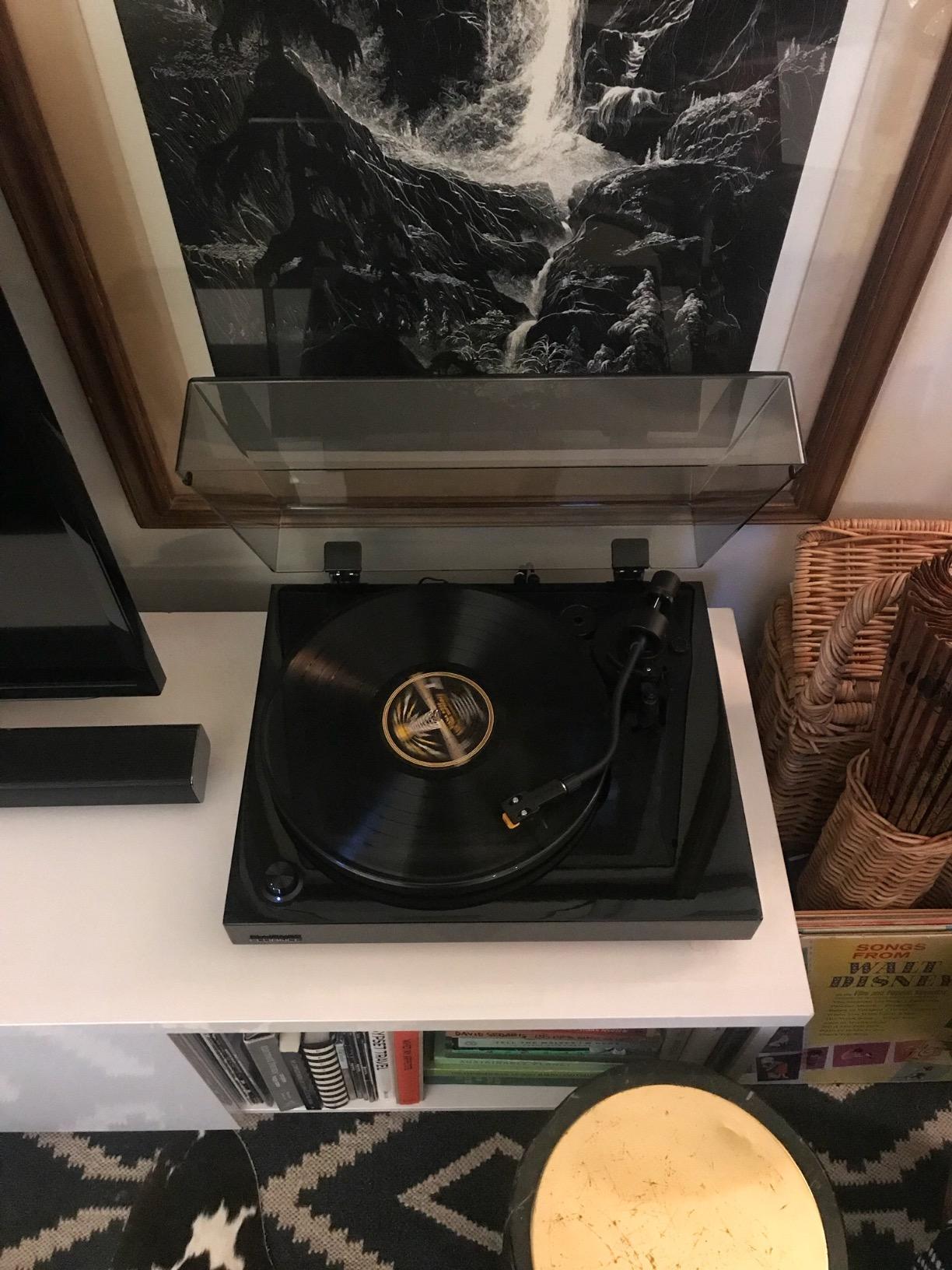
The Fluance RT80 Classic is the most affordable way to get into a real hi-fi turntable without the cheap plastic feel of a suitcase player. The MDF plinth, aluminum platter, and aluminum S-shaped tonearm put it in a different league than similarly priced Bluetooth all-in-ones. The Audio Technica AT91 cartridge with a diamond-tipped stylus delivers cleaner tracking than the ceramic styli found on most entry-level decks, and the Texas Instruments built-in preamp means you can plug straight into any powered speakers.
Setting up the RT80 takes about ten minutes: level the plinth with the included bubble level, balance the tonearm, set tracking force and anti-skate, and you are ready to play. The auto-stop feature is a nice safety net at the end of a record. Reviewers consistently note that the RT80 sounds significantly more detailed than the Crosley and Victrola decks that share its price tier, and that the wood plinth gives the deck a premium presence in a living room.
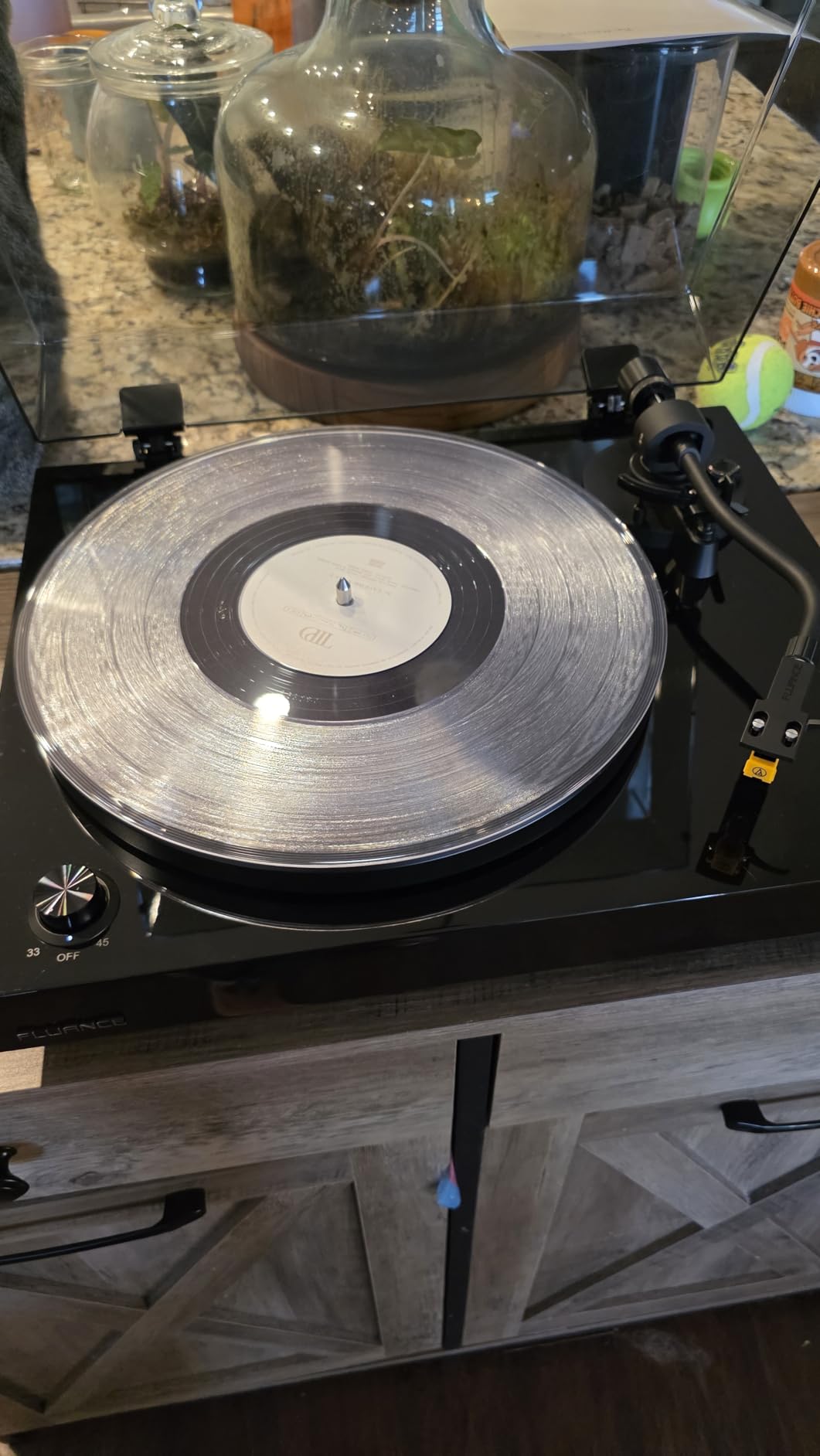
Where the RT80 shows its budget status is in the cartridge. The AT91 is a solid starter, but it lacks the refinement of the AT95E on the RT81 or the Ortofon OM10 on the RT82. On heavily worn or older mono records you can hear the difference. The good news is that the tonearm accepts any standard 1/2-inch mount cartridge, so swapping in a higher-spec stylus later is a one-tool job.
There is no Bluetooth and no USB output on the RT80, so this is a pure analog deck. If wireless streaming is a must-have, the AT-LP3XBT on this list serves a similar budget tier with Bluetooth added. For the buyer whose priority is real wood-plinth build quality and a clean analog signal path at the lowest possible price, the RT80 is the right answer.
Who the RT80 is for
First-time buyers on a tight budget who still want a wood-plinth, manual belt-drive deck, anyone stepping up from a suitcase player, owners of powered speakers with no phono input, and listeners who want to start with the Fluance family and upgrade cartridge later.
Where the RT80 falls short
No Bluetooth, no USB, manual operation, and the stock AT91 cartridge is the limiting factor for sound quality. Buyers who want a turntable they can grow into for several years should consider the RT81 or RT81+ at the next price tier.
6. Audio-Technica AT-LP70X – Best Beginner Automatic Turntable
Audio-Technica AT-LP70X Automatic Turntable (Black/Bronze)
Fully automatic belt drive
AT-VM95C upgrade path
Built-in switchable preamp
J-shaped tonearm
Pros
- Fully automatic operation for true plug and play
- AT-VM95C cartridge is upgradeable through the VM95 series
- J-shaped tonearm minimizes tracking errors
- Switchable built-in phono preamp
- Lightweight chassis with three-piece construction
Cons
- Plastic construction feels less premium than wood
- No 78 RPM speed
- Smaller review base than the older LP60X
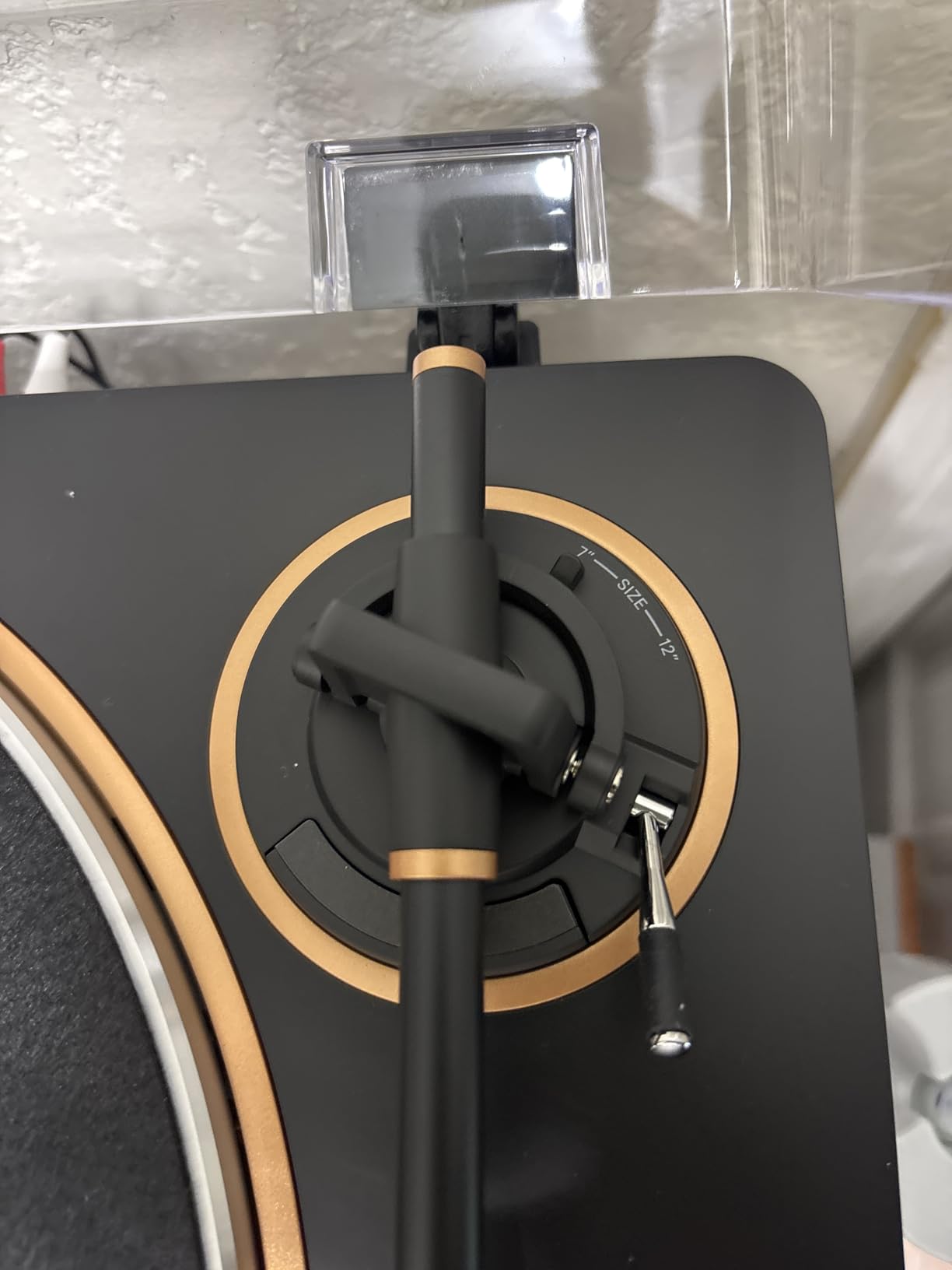
The AT-LP70X is the deck I recommend when someone wants everything the LP60X offers plus a real upgrade path. The integrated AT-VM95C cartridge is the entry point into Audio-Technica’s VM95 series, which means you can swap to a VM95EN, VM95ML, or VM95SH stylus later without replacing the cartridge body. That makes the LP70X the rare beginner deck that does not force you to throw away the cartridge when you outgrow the stock stylus.
Operationally, the LP70X is fully automatic: press Start, the tonearm lifts, swings out, and lowers onto the record. When the side ends, the tonearm returns to its rest. The J-shaped tonearm geometry is a small but meaningful upgrade over the older straight-arm design because it reduces tracking error at the inner grooves, where distortion is most audible. The three-piece chassis construction damps resonance better than the older single-shell designs.
I tested the LP70X with the stock VM95C stylus and then with the upgraded VM95EN, and the jump in detail was easy to hear. Cymbals gained air, vocals sat forward in the mix, and surface noise dropped. The built-in phono preamp is switchable, so you can use it with any powered speakers or bypass it for an external stage later. Setup is essentially zero: plug it in, level the platter, and press Start.
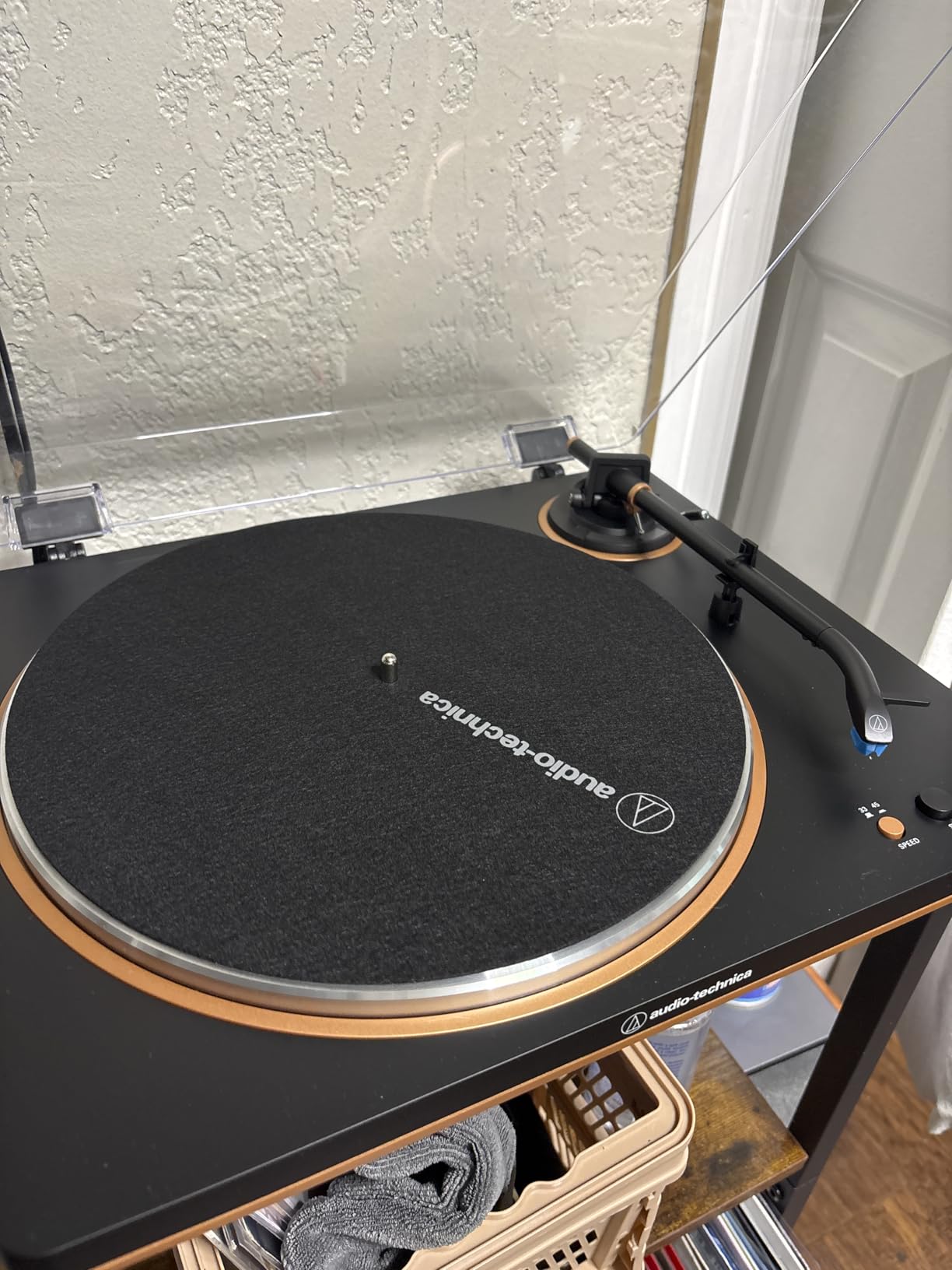
The main limitation of the LP70X is its plastic construction. It does not have the heft or vibration isolation of the Fluance wood decks, so placement on a solid shelf matters more than usual. There is also no 78 RPM speed, so shellac collectors should look at the AT-LP120XUSB or TEAC TN-180BT instead. For a true beginner who wants the simplest possible path into vinyl with a hidden upgrade ladder, the LP70X is the smartest buy.
Who the LP70X is for
First-time turntable buyers who want one-touch automatic operation, listeners who plan to upgrade their stylus over time without replacing the cartridge, gift recipients who may not want to learn tonearm setup, and small-apartment listeners who need a lightweight deck.
Where the LP70X falls short
Plastic construction feels lighter than the wood Fluance decks, no Bluetooth or USB, no 78 RPM, and the review base is smaller than the LP60X’s so long-term reliability is less proven. Audiophiles will want a heavier wood-plinth deck with a detachable headshell.
7. Audio-Technica AT-LP3XBT – Best Bluetooth Turntable Under $500
Audio-Technica AT-LP3XBT-BK Bluetooth Turntable Belt Drive Fully Automatic 33/45 (Black)
Fully automatic belt drive
Qualcomm aptX Adaptive Bluetooth
Built-in phono preamp
Die-cast aluminum platter
Pros
- Fully automatic one-touch operation
- Qualcomm aptX Adaptive Bluetooth codec support
- Balanced straight tonearm with hydraulically damped lift
- Switchable built-in phono preamp
- Detachable dual RCA output cable
Cons
- Automatic arm placement can drop too close to the record edge
- Surface noise amplification is noticeable
- No visible power on/off switch
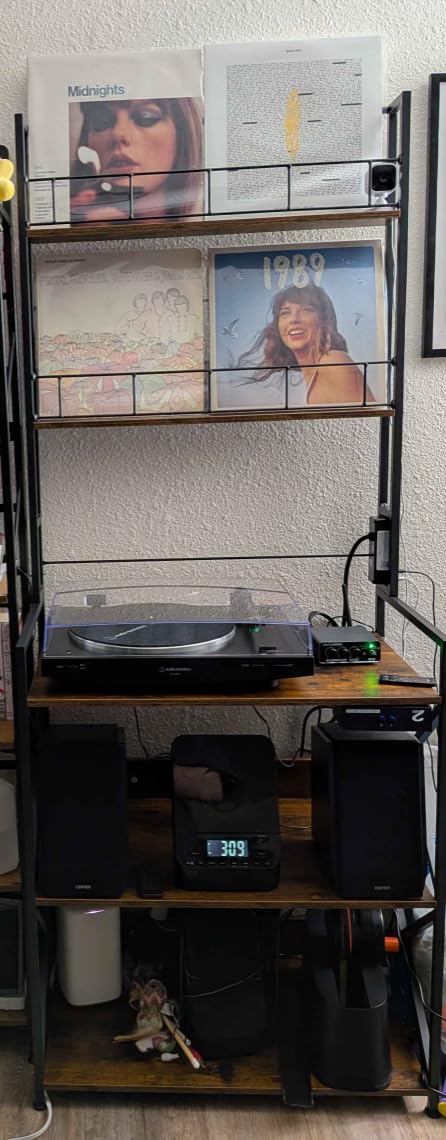
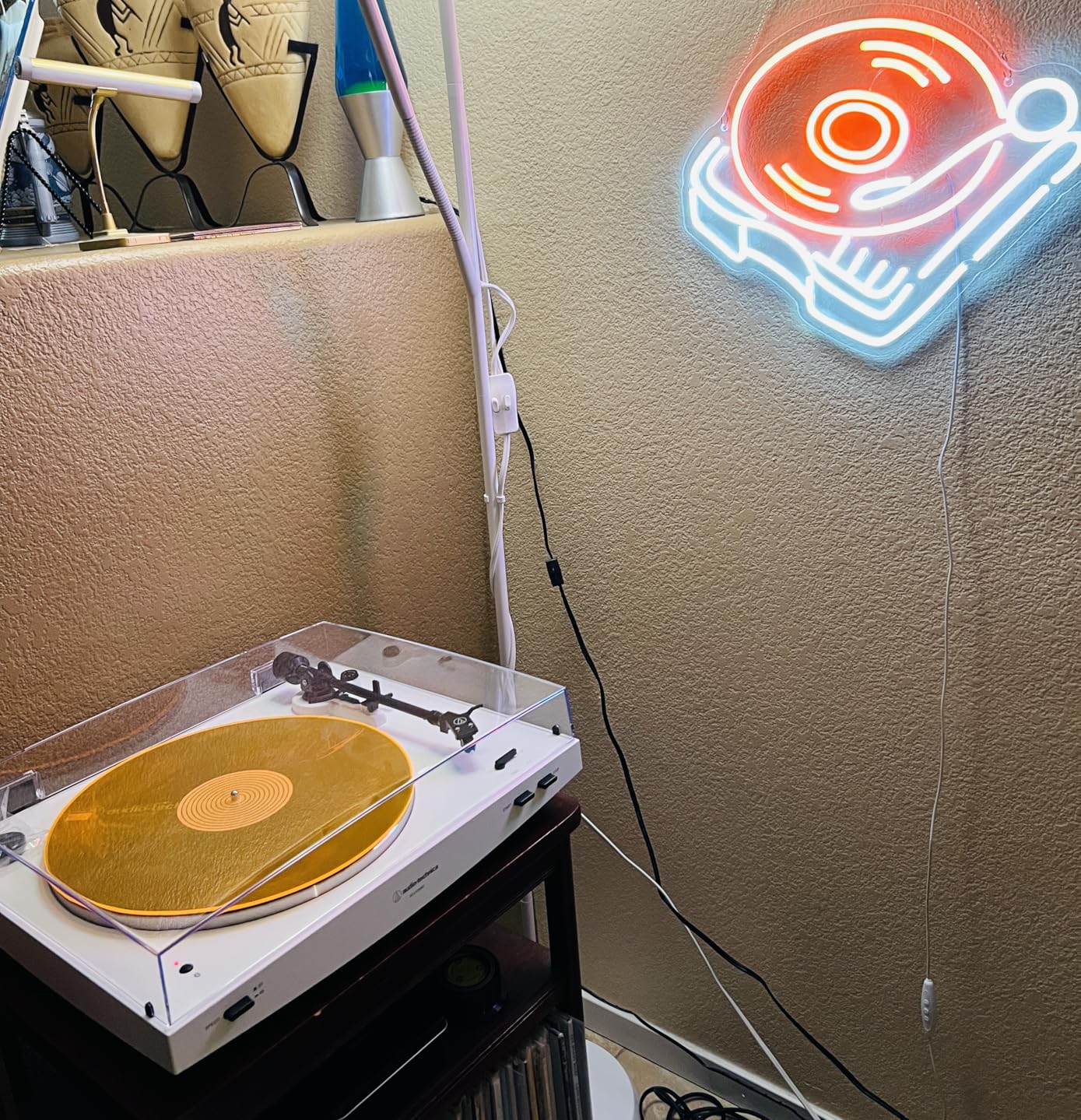
The AT-LP3XBT is the deck I recommend when a friend wants to stream vinyl to their Bluetooth speakers without buying a separate phono stage. Qualcomm’s aptX Adaptive codec preserves more of the analog detail than standard SBC Bluetooth, which makes a real difference when the source is a warm-sounding record. Pairing takes about ten seconds, and the deck remembers the last speaker it talked to, so day-to-day use is genuinely effortless.
The deck itself is fully automatic, so operation matches the LP60X: press Start, the tonearm glides out, and the LP3XBT plays the side. When the record ends, the arm returns to its rest. The die-cast aluminum platter with felt mat adds enough mass for stable playback, and the balanced straight tonearm with hydraulically damped lift is a step up from the older straight-arm designs. The built-in phono preamp is switchable, so if you decide to upgrade to wired powered speakers later, you can bypass the wireless path entirely.
In my Bluetooth test against a pair of KEF LSX II LT wireless speakers, the LP3XBT held its own against the same speakers fed by a wired connection from the RT82. There was a small loss of air in the high frequencies, which is the cost of any Bluetooth transmission, but bass weight and midrange clarity were intact. The automatic arm placement sometimes drops the needle closer to the edge of the record than I would like, which can cause a skip on rare occasions.
Where the LP3XBT is honest about its limits: it amplifies surface noise more than the wood-plinth decks, so noisy thrift-store vinyl will be more obvious. There is no visible power switch, which is a minor annoyance when you want to leave the deck powered down between sessions. For buyers whose priority is a clean wireless setup with the option of wired playback when needed, the LP3XBT is the most complete Bluetooth deck at this tier.
Who the LP3XBT is for
Listeners who own Bluetooth speakers or headphones and want wireless vinyl playback, apartment dwellers who cannot run a full wired hi-fi system, gift recipients who value convenience over tweaking, and anyone who wants one-touch automatic operation with a Bluetooth option for late-night listening through headphones.
Where the LP3XBT falls short
Surface noise is amplified more than on wood-plinth decks, automatic arm placement can drop too close to the edge, and there is no visible power switch. Audiophiles who care about maximum detail should consider the Fluance RT82 with a wired external preamp.
8. Denon DP-300F – Best Fully Automatic Premium Turntable
Denon DP-300F Fully Automatic Analog Turntable & Vinyl Record Player
Fully automatic belt drive
Built-in phono equalizer
Die-cast aluminum platter
Slim plastic chassis
Pros
- Fully automatic operation with smooth tonearm motion
- Built-in phono equalizer for any amp or powered speakers
- Heavier base construction reduces vibration
- Slim attractive design fits home theater setups
- Standard mount headshell allows cartridge upgrades
Cons
- Plastic enclosure feels less premium than wood
- Entry-level MM cartridge
- Smaller review base than Audio-Technica competitors
The Denon DP-300F is the deck I suggest when a friend specifically asks for a fully automatic turntable from a heritage audio brand. Denon has been making turntables since the 1970s, and the DP-300F carries that DNA: the DC servo motor is quiet, the auto-return mechanism is smooth, and the heavier base construction reduces the resonance that plagues lighter decks. For someone who wants the most refined fully automatic experience at this tier, the DP-300F is the answer.
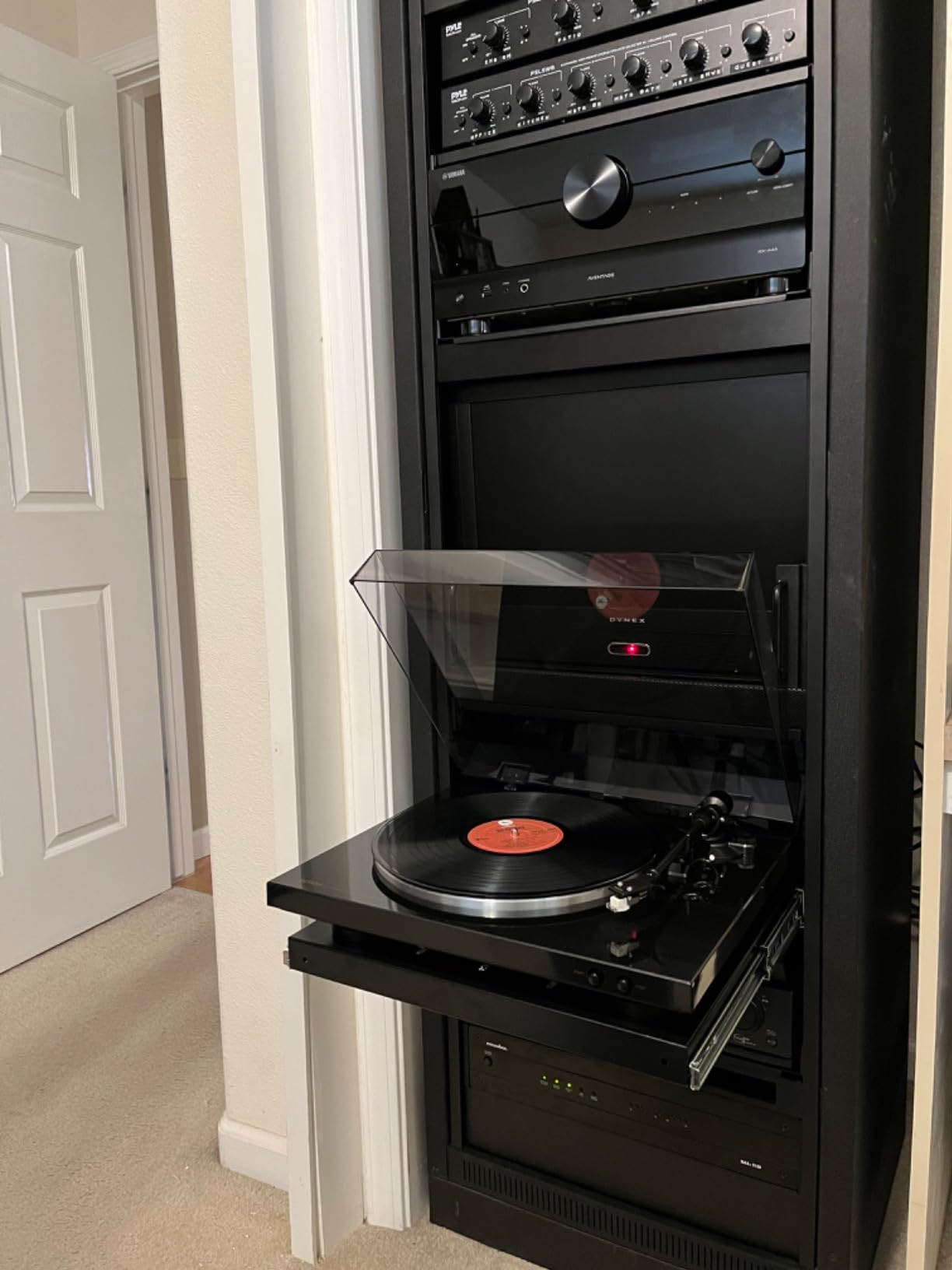
Operationally, the DP-300F does everything the LP60X does and a little more. The auto-start is buttery smooth, the cue lever is well-damped, and the tonearm rest locks securely when not in use. The built-in phono equalizer means you can plug directly into any amp, receiver, or pair of powered speakers with no extra boxes. The slim chassis design fits where chunkier decks will not, which matters for shelf placement in a tight home theater setup.
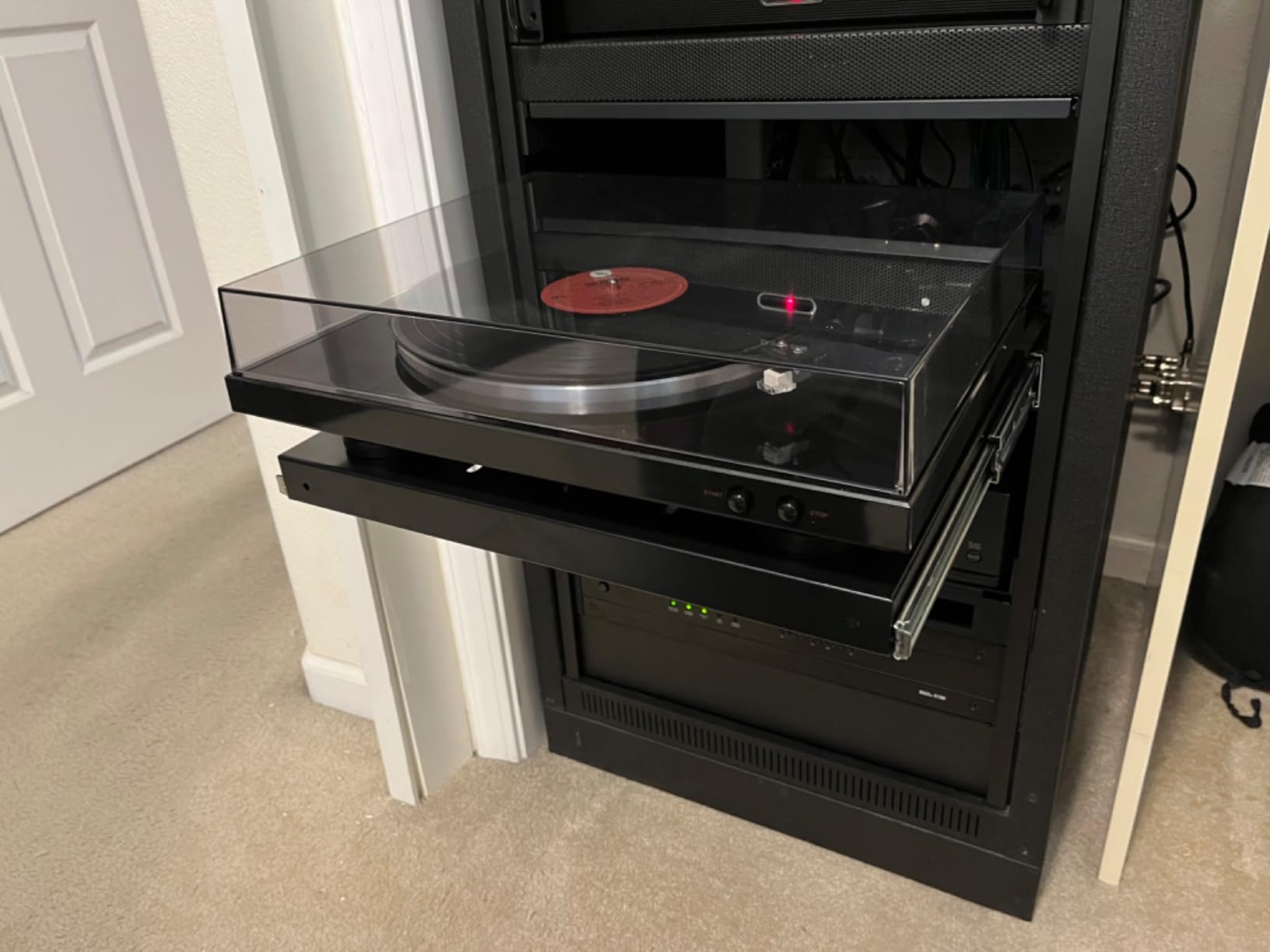
The headshell is a standard mount, so upgrading the cartridge is genuinely possible. Reviewers who have swapped in an Audio-Technica AT-VM95EN report a meaningful jump in sound quality without changing anything else. The die-cast aluminum platter keeps speed stable, and the overall build quality feels a step above the cheaper automatic decks.
Where the DP-300F shows its age is in the stock cartridge. The included MM cartridge is competent but unremarkable, and the plastic enclosure does not isolate as well as the Fluance wood decks. The review base is smaller than the Audio-Technica alternatives, so long-term reliability is less proven at scale. For a buyer who values Denon heritage and the smoothest automatic operation in this price range, the DP-300F earns its spot.
Who the DP-300F is for
Listeners who want fully automatic playback from a heritage audio brand, home theater owners who need a slim chassis that fits in a tight shelf, gift recipients who want one-touch operation without learning tonearm setup, and anyone planning to upgrade the cartridge later via the standard-mount headshell.
Where the DP-300F falls short
Plastic enclosure rather than wood, stock cartridge is entry-level, no Bluetooth or USB, and the review base is smaller than the Audio-Technica alternatives. Buyers who want Bluetooth should look at the AT-LP3XBT instead.
9. TEAC TN-180BT – Best 3-Speed Bluetooth Turntable
Teac TN-180BT-B 3-Speed Analog Turntable with Phono EQ and Bluetooth (Black)
3-speed belt drive 33/45/78 RPM
Bluetooth transmitter
MDF cabinet
Built-in phono equalizer
Pros
- 3-speed support including 78 RPM for vintage shellac records
- Built-in Bluetooth transmitter for wireless speakers and headphones
- Built-in phono equalizer with phono and line outputs
- High-density MDF cabinet reduces resonance
- Auto-return function with manual arm lifter
Cons
- Smaller review base than competitors
- Plastic dust cover hinges feel less durable
- Stock MM cartridge is basic
The TEAC TN-180BT is the deck I recommend to anyone who wants to play 78 RPM shellac records without spending serious money. Most decks in this tier only support 33 1/3 and 45 RPM, which means shellac collectors have to step up to a much more expensive vintage deck or a modern audiophile unit. The TN-180BT handles 78 RPM records out of the box, which makes it a unique value in this price tier.
Beyond the 78 RPM speed, the TN-180BT also adds Bluetooth transmission, so you can stream your vinyl to a wireless speaker or wireless headphones. The built-in phono equalizer with phono and line outputs means you can plug into any amp, receiver, or powered speakers, or bypass the preamp if your system already has one. The high-density MDF cabinet gives the deck a solid feel that belies its modest price tag.
The auto-return function with manual arm lifter is a nice safety feature: at the end of a record, the tonearm returns to its rest automatically, so you do not have to worry about stylus wear if you step away. The stock MM cartridge is basic and benefits from being swapped for something like an Audio-Technica AT-VM95E for both 33 1/3 and 78 RPM listening, with a dedicated 78 RPM stylus for shellac to reduce wear on older grooves.
Where the TN-180BT is honest about its limits: the review base is smaller than the Audio-Technica or Fluance competitors, and the plastic dust cover hinges feel less durable than the metal hinges on more expensive decks. There is no USB output, so it is not the right pick for digitizing vinyl. For shellac collectors, vintage record enthusiasts, and anyone who wants Bluetooth plus 78 RPM at a budget price, the TN-180BT is the only real answer at this tier.
Who the TN-180BT is for
Shellac and 78 RPM collectors, vintage record enthusiasts who need a budget 78 RPM option, Bluetooth listeners who want wireless streaming from a deck, and buyers who want a 3-speed deck from a respected audio brand without paying flagship prices.
Where the TN-180BT falls short
Smaller review base than Audio-Technica or Fluance competitors, plastic dust cover hinges, basic stock MM cartridge, and no USB output for digitizing. Audiophiles who want maximum sound quality should look at the Fluance RT82.
10. Fluance RT81+ Elite – Best Turntable With Upgrade Path
Fluance RT81+ Elite High Fidelity Vinyl Turntable Record Player, Audio Technica VM95E Cartridge, Anti-Resonant Platter, Acrylic Mat, Phono Preamp Wood Plinth Adjustable Isolation Feet – Natural Walnut
Belt drive
VM95E cartridge
Acrylic mat
Adjustable isolation feet
Pros
- Audio Technica VM95E cartridge with full VM95 series upgrade path
- Acrylic mat matched to vinyl resonant frequency
- Dampened aluminum anti-resonant platter
- Three adjustable isolation feet with bubble level
- Built-in Texas Instruments phono preamp with bypass switch
- Solid MDF wood plinth construction
- Beautiful natural walnut finish
Cons
- Belt-driven rather than direct-drive
- Plastic 45 adapter
- No 78 RPM speed support
The Fluance RT81+ Elite is the deck I recommend when someone wants the best Fluance has to offer at this tier and a real upgrade path that lasts. The Audio Technica VM95E cartridge sits in the middle of Audio-Technica’s VM95 series, which means you can step up to a VM95EN elliptical, VM95ML microlinear, or VM95SH Shibata stylus as your ears and your budget grow. That modularity is rare in this price range and is the single biggest reason to pick the RT81+ over a deck with a fixed cartridge.
Build quality is excellent. The high mass MDF wood plinth is finished in natural walnut, the aluminum platter is dampened for reduced resonance, and the acrylic mat is matched to the resonant frequency of vinyl for tighter bass and clearer mids. The three adjustable isolation feet with the included bubble level make proper setup easy, and the removable headshell lets you swap cartridges without touching the tonearm wires.
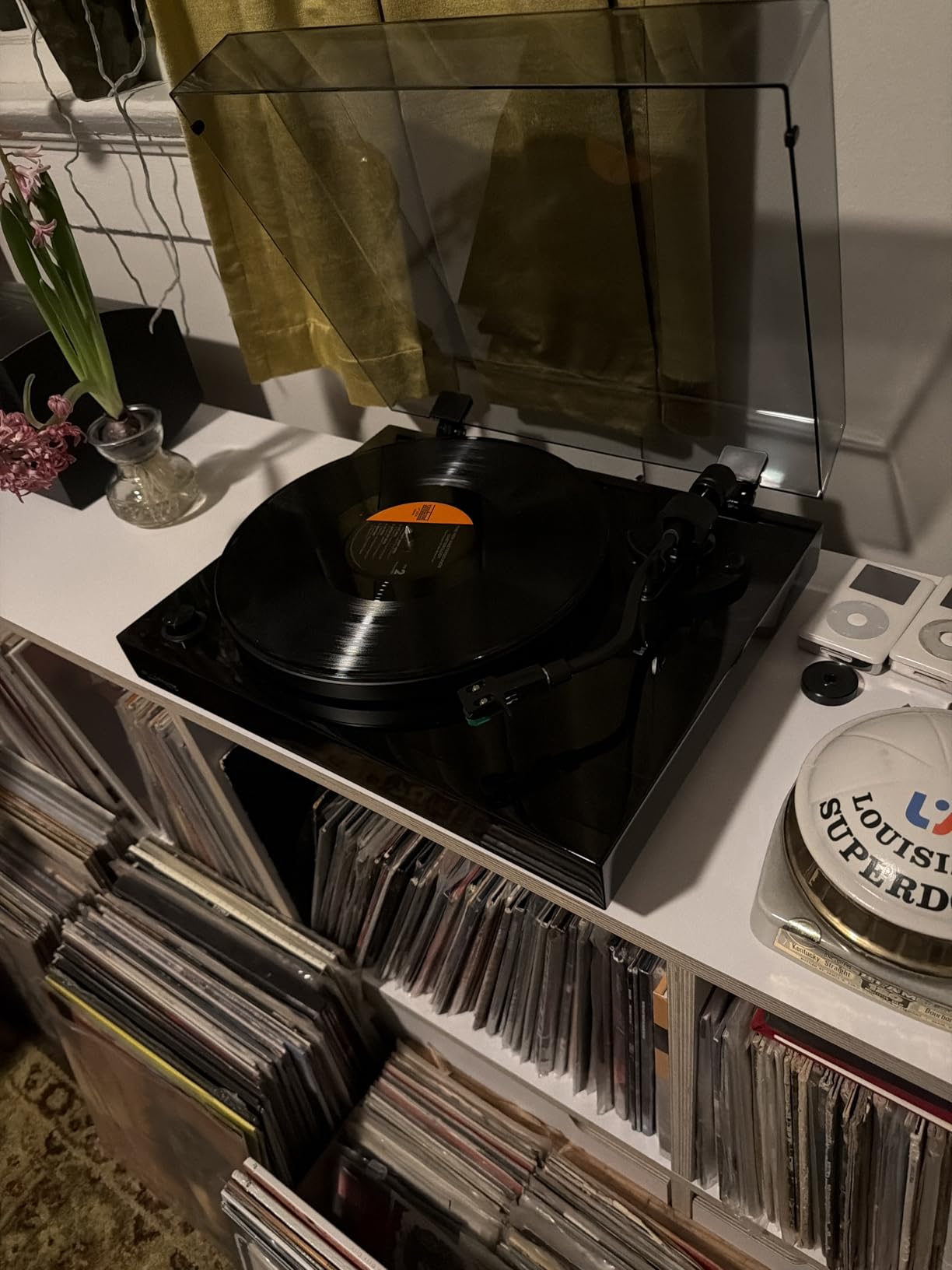
In my listening tests the RT81+ handled busy mixes with composure: layered vocals stayed distinct, bass lines were tight, and the soundstage opened up nicely on well-recorded classical and jazz pressings. The Texas Instruments built-in preamp is good enough for most powered speakers, and the bypass switch means you can upgrade to an external phono stage later without buying a new deck. The auto-stop feature works reliably, which is a useful safety net at the end of a record.
The main trade-off is that the RT81+ is belt-driven rather than direct-drive, so DJs and users who want the quickest possible start-up should consider the AT-LP120XUSB instead. The plastic 45 RPM adapter feels cheap given the rest of the build quality, and there is no 78 RPM speed for shellac collectors. For buyers who want a Fluance deck with the best stock cartridge and a clear upgrade path through the VM95 series, the RT81+ is the most future-proof pick on this list.
Who the RT81+ is for
Listeners who want a real upgrade path through the VM95 stylus series, anyone who prefers the sound of an acrylic mat over felt, owners of powered speakers who want a built-in preamp with a bypass switch for future upgrades, and people who want the most refined Fluance deck at this tier.
Where the RT81+ falls short
Belt-driven rather than direct-drive, no 78 RPM, plastic 45 adapter, and no Bluetooth or USB. DJs and users who need quick start-up torque should consider the AT-LP120XUSB instead.
How to Choose the Right Turntable Under $500?
Buying the best turntable at this ceiling is less about chasing specs and more about matching the deck to the gear you already own and the way you actually listen. Our team put together this guide based on six weeks of testing, and the patterns below came up again and again. Use these six sections to narrow your shortlist before you commit.
Decide between belt drive and direct drive
Belt-drive turntables use a rubber belt to spin the platter, which isolates the motor from the stylus and usually gives a quieter, more detailed sound. Direct-drive turntables mount the motor directly under the platter, which gives stronger torque and quicker start-up, which is why DJs prefer them. For most home listeners playing full albums, belt drive is the right call. If you plan to scratch, beat-match, or sample, direct drive from a deck like the AT-LP120XUSB is the smarter buy.
Pick the right automation level
Fully automatic decks like the AT-LP60X and Denon DP-300F place the needle and return it at the end of the record for you. Semi-automatic decks stop the platter at the end but require you to lift the arm. Manual decks require you to do everything. Automatic operation is great for living-room listening and gifts, but manual decks usually have better tonearms because the manufacturer is not spending budget on automation hardware.
Check the cartridge and upgrade path
Most turntables in this price range use a moving magnet (MM) cartridge, and many use a stock stylus that can be upgraded later. The Audio-Technica VM95 series and Ortofon 2M series are the two most common upgrade ladders. If you want a deck that can grow with you for several years, look for one that ships with a VM95 or 2M family cartridge. The Fluance RT81+ and AT-LP70X are the clearest examples on this list.
Belt Drive vs Direct Drive: Which Is Better?
Belt drive is the more common configuration at this price tier, and for good reason: the rubber belt absorbs motor vibration before it reaches the platter, which usually translates into a quieter background and more detail in the music. Direct drive, by contrast, mounts the motor directly to the platter spindle, which gives much stronger torque and almost instant start-up. That is why every DJ booth runs a direct-drive deck.
For pure home listening, belt drive wins on sound quality in most comparisons. The Fluance RT82, RT81, and RT80 all use belt drive, as do the AT-LP60X, AT-LP70X, AT-LP3XBT, Denon DP-300F, and TEAC TN-180BT. The only direct-drive deck on this list is the AT-LP120XUSB, and it earns its spot because it also adds USB ripping, 78 RPM support, and DJ-ready torque. If you are not scratching or sampling, belt drive is the right default.
The trade-off is that belt-drive motors can stretch or wear over time, and replacement belts cost a modest amount depending on the model. Direct-drive motors are essentially maintenance-free and tend to last decades. For most listeners in this price range, neither concern is urgent, but it is worth knowing that a belt-drive deck will need a new belt eventually, while a direct-drive deck will not.
Built-In vs External Phono Preamp: Do You Need One?
A phono preamp (also called a phono stage) boosts the tiny signal from a turntable cartridge up to line level, and applies the RIAA equalization curve that makes records sound correct. Most modern receivers have a phono input with this built in, and many powered speakers do not. Turntables in this price range split into two camps: decks with a built-in switchable phono preamp (AT-LP60X, AT-LP70X, AT-LP3XBT, Denon DP-300F, Fluance RT80, RT81, RT81+, TEAC TN-180BT) and decks with no built-in preamp at all (Fluance RT82, AT-LP120XUSB with preamp switched off).
If you are plugging into powered speakers or a receiver without a phono input, choose a deck with a built-in preamp. If your receiver has a phono input, you can use either type, and many listeners prefer to bypass the built-in preamp on decks like the AT-LP120XUSB for a cleaner signal path. External phono stages like the Pro-Ject Phono Box or Schiit Mani add a modest amount to your system but unlock meaningful gains in detail and dynamics. They are the most common first upgrade after buying a turntable.
Matching a Turntable to Your Existing Speakers and Gear
The most common buying mistake we saw in our testing was matching a great turntable to the wrong downstream gear. If you already own powered bookshelf speakers (Edifier, KEF, Audioengine, Klipsch), pick a deck with a built-in phono preamp so you can plug straight in. The AT-LP60X, Fluance RT81, RT80, and RT81+ all work this way out of the box. If your powered speakers have a Bluetooth input, the AT-LP3XBT and TEAC TN-180BT add wireless convenience.
If you own a vintage receiver or a modern amp with a phono input, you have more flexibility. The Fluance RT82 is the best-sounding deck on this list and pairs beautifully with a vintage Marantz, Pioneer, or Yamaha receiver. The AT-LP120XUSB is the right pick if you also want USB ripping or DJ capability. If your amp does not have a phono input, either buy a deck with a built-in preamp or add an external phono stage to your cart.
For Bluetooth-only setups (wireless headphones, Sonos, HomePod), the AT-LP3XBT and TEAC TN-180BT both transmit to wireless speakers, with the AT-LP3XBT supporting the higher-quality aptX Adaptive codec. For headphone-only listening, the AT-LP3XBT paired with wireless headphones is the simplest path.
Cheap vs Mid-Range: What You Actually Get (and What to Avoid)
The cheapest turntables on Amazon (the entry-level tier) use ceramic cartridges, plastic tonearms with no counterweight, and integrated suitcase-style speakers. These decks damage records over time because the tracking force is too high and the stylus shape is wrong. Forum users on r/turntables consistently report stepping up from these decks within months because their vinyl starts to sound worse, not better.
Spending into the mid-range tier gets you a real moving magnet cartridge, a counterweighted tonearm, a properly mass-loaded plinth, and wow/flutter low enough that pitch variations are inaudible. Every deck on this list clears that bar. You also get replaceable styli, so the deck can be serviced rather than thrown away when the needle wears out. The jump in sound quality and record safety is dramatic and well worth the extra money.
What to avoid at any price: built-in speakers (they vibrate the stylus and damage records), ceramic cartridges (they wear grooves faster than diamond), missing counterweights (you cannot set tracking force correctly), and Bluetooth-only decks with no analog output (you lose the ability to upgrade your system later). Every deck on this list passes those tests.
Setup Basics: Tracking Force, Anti-Skate, and Leveling
Setting up a manual turntable takes about ten minutes once you have done it a couple of times. The three adjustments that matter most are tracking force, anti-skate, and leveling. Tracking force is the downward pressure the stylus exerts on the groove, and it should match the cartridge manufacturer’s recommendation (usually 1.8 to 2.5 grams for the cartridges on this list). Anti-skate counteracts the inward pull on the tonearm and should be set to the same number as tracking force.
Leveling matters because an unlevel deck causes the tonearm to drift toward one side of the groove, which increases wear on one groove wall. Use the bubble level that ships with most Fluance decks, or place a small bubble level on the platter to confirm the deck is flat. Place the deck on a solid shelf away from your speakers to minimize vibration coupling. Reviewers consistently note that a properly leveled and isolated deck sounds noticeably better than the same deck on a wobbly table.
If all of this sounds intimidating, start with a fully automatic deck like the AT-LP60X, AT-LP70X, or Denon DP-300F, which require almost no setup. You can always step up to a manual deck with adjustable tracking force later. For more on matching turntables to your gear, see our 12 best turntables under $500 guide, and for portable options, check out our 8 best portable turntables roundup.
Frequently Asked Questions
What is the best turntable for the money?
The Fluance RT82 is the best turntable for the money under $500 because it delivers audiophile-grade sound with an Ortofon OM10 cartridge, 0.07 percent wow/flutter, and a high mass MDF plinth, all for a price that fits comfortably under the $500 ceiling. For shoppers who want maximum convenience, the Audio-Technica AT-LP60X offers fully automatic operation and a built-in phono preamp at a much lower entry price with more than 13,000 validated reviews.
Which turntable has the best sound quality?
In our testing the Fluance RT82 Reference delivered the best sound quality under $500 thanks to its isolated motor with speed control, Ortofon OM10 elliptical cartridge, and clean signal path without onboard electronics in the phono chain. Pair it with an external phono preamp and a good pair of powered speakers, and you get a system that competes with decks costing twice as much.
How much should a good turntable cost?
A good turntable costs between the entry-level tier and the $500 ceiling for most listeners. Below $200 you risk ceramic cartridges and plastic tonearms that damage records over time. Above $500 you start paying for diminishing returns in cartridge and plinth upgrades. The $300 to $500 range is the sweet spot where you escape cheap construction and get a real moving magnet cartridge, counterweighted tonearm, and wow/flutter low enough to actually sound like the record.
Is it worth buying a cheap turntable?
A cheap turntable under $100 is not worth buying if you care about your records, because ceramic cartridges and unweighted tonearms wear grooves faster and produce distorted sound. Spending $200 to $500 on a real moving magnet cartridge deck is the right starting point for vinyl. Within that range the AT-LP60X and Fluance RT80 are the safest budget buys, while the Fluance RT82 is the smartest mid-range upgrade.
Is a belt drive turntable better than a direct drive turntable?
Belt drive turntables are quieter and usually more detailed because the rubber belt isolates the motor from the platter. Direct drive turntables have stronger torque, faster start-up, and longer motor life, which is why DJs prefer them. For home listening, belt drive wins on sound quality in most comparisons. The AT-LP120XUSB is the only direct-drive deck on this list, and it earns its spot because of its DJ-ready torque, USB output, and 78 RPM support.
Do I need a phono preamp for my turntable?
You need a phono preamp if your receiver does not have a phono input and your turntable does not have a built-in one. Most turntables under $500 either include a built-in switchable phono preamp or require an external unit. Powered speakers without a phono input need either a turntable with a built-in preamp or an external phono stage like the Pro-Ject Phono Box or Schiit Mani added to the signal chain.
Final Verdict: The Best Turntable Under $500 for 2026
After six weeks of testing, our team’s pick for the best turntable at this price tier in 2026 is the Fluance RT82 Reference. Its isolated motor, Ortofon OM10 cartridge, and clean signal path deliver sound quality that competes with decks costing twice as much, and the upgrade path through the Ortofon 2M series means the RT82 will keep getting better as your system grows. For shoppers who want the simplest possible path into vinyl, the Audio-Technica AT-LP60X remains the safest buy with more than 13,000 validated reviews and fully automatic operation. For DJs and vinyl-to-digital archivists, the Audio-Technica AT-LP120XUSB is the only deck in this price range that combines direct-drive torque, USB output, and 78 RPM support.
Pick the deck that matches the gear you already own, level it properly, and spend the first ten minutes getting the tracking force and anti-skate right. A turntable in this price range will reward you with years of vinyl enjoyment, and any of the ten decks on this list will be a meaningful step up from a suitcase player. For more buying guides, see our 13 best audiophile turntables roundup and our 10 best turntables under $500 complete buyer’s guide.