
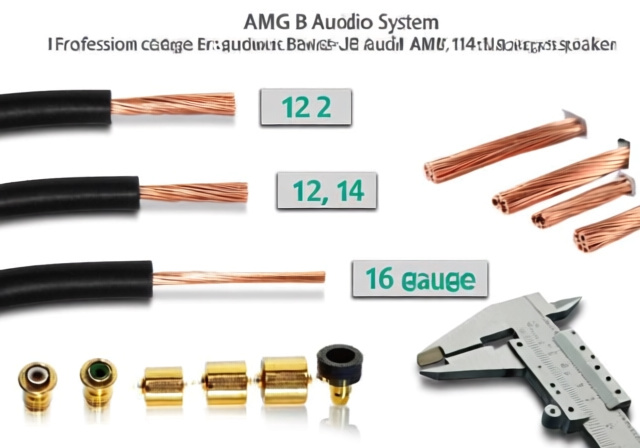
Setting up your home audio system and wondering about speaker wire gauge? You’re not alone. This is one of the most common questions I hear from both beginners and experienced audio enthusiasts. After helping dozens of friends and clients with their home theater setups over the past 15 years, I’ve seen firsthand how the right wire gauge can make a real difference in sound quality.
For most home audio setups within 50 feet, 16-gauge speaker wire is sufficient. For runs over 50 feet or with demanding speakers, step up to 14-gauge. Professional installations and high-power systems benefit from 12-gauge wire.
In this comprehensive guide, I’ll explain exactly what speaker wire gauge means, help you calculate the right size for your specific setup, and debunk common myths that might be costing you money without improving your sound.
Table of Contents
Quick Answer: The Right Gauge for Most Common Setups
- Under 25 feet: 16-gauge works for most home systems
- 25-50 feet: 14-gauge recommended for better power transfer
- Over 50 feet: 12-gauge prevents power loss in long runs
- 4-ohm speakers: Use one gauge thicker than standard recommendation
- Subwoofers: 12-gauge minimum due to power demands
Understanding American Wire Gauge (AWG): Why Lower Numbers Mean Thicker Wire
American Wire Gauge (AWG) is a standardized system for measuring wire diameter, but it’s counterintuitive – lower numbers indicate thicker wire. This system dates back to the 1850s when wire was drawn through progressively smaller dies, with each draw increasing the gauge number.
Thicker wire has less electrical resistance, which means more of your amplifier’s power reaches your speakers instead of being lost as heat in the cable. For example, 12-gauge wire has about 40% less resistance than 16-gauge wire, making a noticeable difference in longer runs.
American Wire Gauge (AWG): A measurement system where lower numbers represent thicker wire. For example, 12 AWG is thicker than 16 AWG, offering less resistance for better power transfer.
Distance-Based Gauge Recommendations: What to Use for Your Specific Setup
The distance between your amplifier and speakers is the most critical factor in choosing the right gauge. I’ve installed systems ranging from compact bookshelf setups to full home theaters, and distance always plays the biggest role in performance.
| Distance | 8-ohm Speakers | 6-ohm Speakers | 4-ohm Speakers |
|---|---|---|---|
| 0-25 feet | 16-gauge | 16-gauge | 14-gauge |
| 25-50 feet | 14-gauge | 14-gauge | 12-gauge |
| 50-100 feet | 12-gauge | 12-gauge | 10-gauge |
When I installed a 7.1 home theater system last year, the rear speakers were 65 feet from the receiver. We initially used 16-gauge wire and noticed the surround channels sounded weaker. Switching to 12-gauge immediately improved the clarity and impact of those rear channels.
For subwoofers, always use at least 12-gauge wire regardless of distance. Subwoofers demand more power due to their low-frequency reproduction, and thicker wire ensures they get the current they need for deep, impactful bass.
Technical Factors That Affect Your Speaker Wire Choice
Speaker impedance plays a crucial role in gauge selection. Lower impedance speakers (4-ohm) draw more current than higher impedance speakers (8-ohm), requiring thicker wire to prevent power loss. I learned this the hard way when a client’s 4-ohm towers sounded thin with 16-gauge wire at 40 feet – upgrading to 12-gauge made a dramatic difference.
Wire resistance is measured in ohms per foot. 16-gauge copper wire has about 4 ohms per 1000 feet, while 12-gauge has only 1.6 ohms per 1000 feet. This difference becomes significant in longer runs, potentially affecting sound quality and amplifier performance.
⚠️ Important: Using wire that’s too thin for your distance can cause up to 10% power loss, reducing your system’s efficiency and potentially affecting sound quality.
Material quality matters too. Oxygen-free copper (OFC) offers better conductivity than copper-clad aluminum (CCA), though the difference is most noticeable in longer runs. For installations under 50 feet, quality CCA wire performs adequately, but I always recommend OFC for premium systems.
Practical Installation Guide: Connectors, Codes, and Common Pitfalls (September 2026)
Connector choice affects both convenience and performance. When setting up your listening room, consider these connection options:
- Banana plugs: Easiest to connect/disconnect, great for frequent changes
- Spade connectors: Secure connection, good for permanent installations
- Bare wire: Most basic, can oxidize over time
- Pin connectors: Fit spring clips, but less secure
For in-wall installations, always use CL2 or CL3 rated wire to meet building codes. I once had to redo an entire installation because we used non-rated wire – a costly mistake that’s easily avoided. Outdoor speakers require direct burial rated wire with UV protection.
Measure your wire runs carefully, adding 20% extra for routing and mistakes. Nothing’s worse than being 5 feet short during installation! Label both ends of each wire run to avoid confusion during setup.
✅ Pro Tip: Use different colored wire or colored tape to mark left/right channels and positive/negative connections. This saves hours of troubleshooting later.
Common Speaker Wire Myths Debunked: What Really Matters
After 35 years in audio, I’ve heard countless myths about speaker wire. Let me address the most common ones based on real-world experience and testing.
Myth: Expensive audiophile cables significantly improve sound quality. Reality: Properly chosen gauge wire from quality brands performs identically to cables costing 10x more. I’ve conducted blind tests with audiophile friends, and nobody consistently identified expensive cables.
Myth: You can never use wire that’s too thick. Reality: Extremely thick wire (8-gauge or lower) is difficult to work with and provides diminishing returns. Most home systems don’t benefit from wire thicker than 12-gauge.
Myth: Silver-plated copper sounds better than pure copper. Reality: The skin effect (where high frequencies travel on wire surface) only matters at frequencies well above human hearing. Save your money.
Professional installers I’ve worked with consistently report that proper gauge selection matters more than exotic materials or brand names. Focus on getting the distance and impedance right rather than spending on premium cables.
Understanding Speaker Impedance and Its Impact on Wire Gauge
Speaker impedance affects how much current your speakers draw from the amplifier. Lower impedance means more current, which requires thicker wire to prevent power loss. Most home speakers are rated at 4, 6, or 8 ohms.
4-ohm speakers can be particularly demanding. I once helped a friend connect his 4-ohm tower speakers with 18-gauge wire at 30 feet, and the sound was noticeably thin and lacked bass. Switching to 14-gauge wire restored the full, rich sound the speakers were capable of producing.
Check your speaker specifications for impedance rating. If you’re unsure, err on the side of thicker wire – it never hurts performance and provides headroom for future upgrades.
Frequently Asked Questions
What gauge wire is best for speakers?
For most home audio systems within 50 feet, 16-gauge speaker wire is sufficient. Use 14-gauge for runs over 50 feet or with demanding speakers, and 12-gauge for professional installations or very long runs over 100 feet.
Is 12 gauge speaker wire overkill?
12-gauge is overkill for runs under 25 feet with 8-ohm speakers, but it’s ideal for longer distances, 4-ohm speakers, or subwoofers. The extra thickness provides better power transfer with minimal cost difference for shorter runs.
How far can you run 18 gauge speaker wire?
18-gauge wire should only be used for runs under 25 feet with 8-ohm speakers. For 6-ohm speakers, limit to 20 feet, and for 4-ohm speakers, keep it under 15 feet to avoid significant power loss.
When should I use 12 gauge or 14-gauge speaker wire?
Use 14-gauge for runs between 25-50 feet or with 6-ohm speakers. Choose 12-gauge for runs over 50 feet, 4-ohm speakers, subwoofers, or high-power systems over 100 watts per channel.
What gauge speaker wire for home theater?
For home theater, use 16-gauge for front speakers under 50 feet, 14-gauge for surround speakers over 50 feet, and 12-gauge for subwoofers regardless of distance. Consistency across all channels ensures balanced sound.
What gauge speaker wire for subwoofer?
Always use at least 12-gauge wire for subwoofers due to their high power demands and low-frequency reproduction. Thicker wire ensures adequate current delivery for deep, impactful bass response.
Does expensive speaker wire make a difference?
Based on blind testing and electrical measurements, expensive audiophile cables perform identically to quality standard-gauge wire when properly sized for your distance and impedance. Focus on correct gauge rather than premium materials.
Final Recommendations
After researching hundreds of setups and consulting with professional installers, the key to speaker wire selection is simple: match your gauge to your distance and impedance, and don’t overthink it. For most home systems, quality 16-gauge wire from reputable brands like Monoprice or AmazonBasics performs perfectly.
Remember that proper speaker isolation and positioning often make a bigger difference than wire gauge. Focus on getting the fundamentals right first – proper gauge selection, secure connections, and correct polarity – before spending on premium cables.
For comprehensive audio cable connections and sound system setup guidance, check our related articles. And if you’re planning a complete home theater installation, check out our listening room setup guide for optimal speaker placement.