
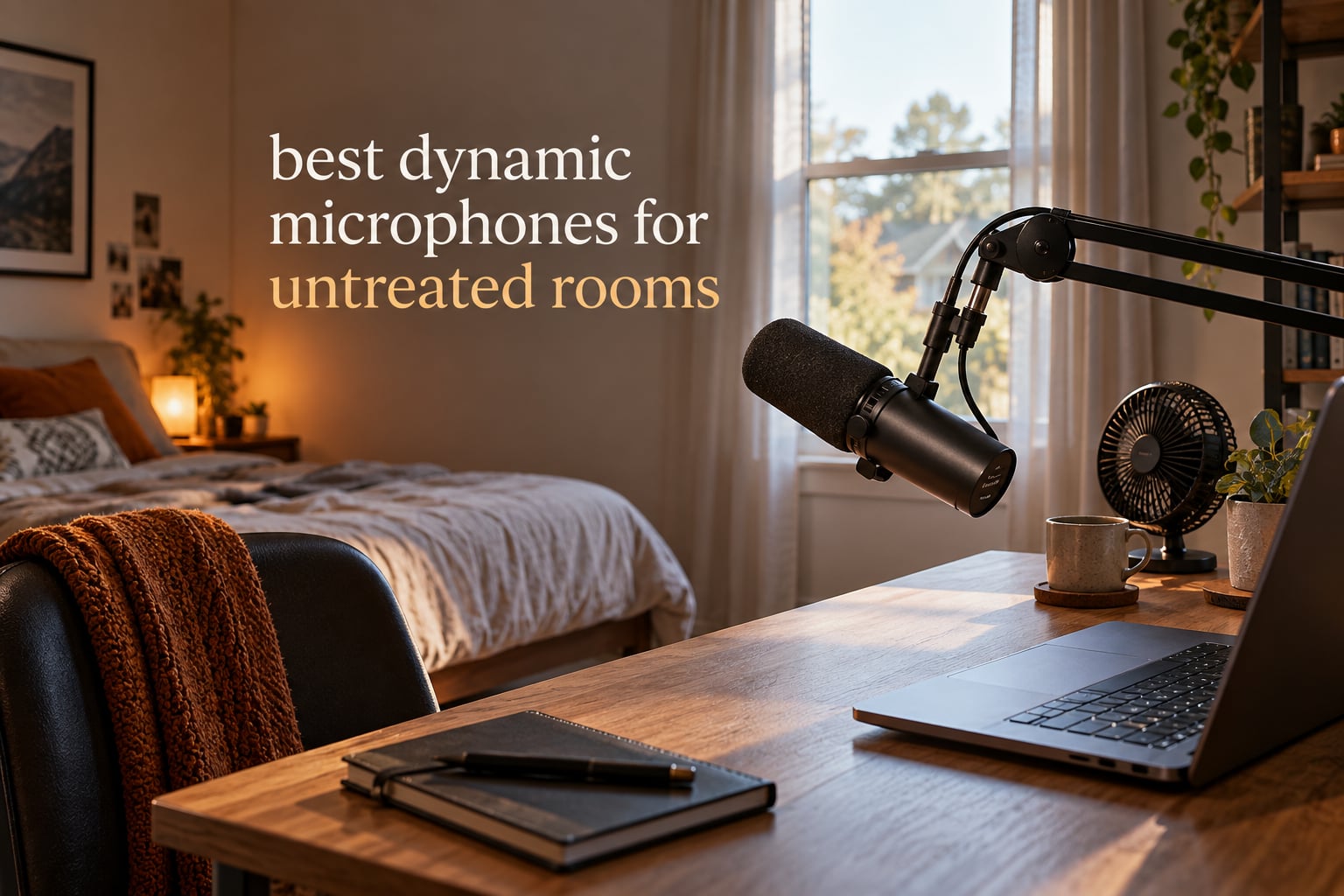
Most home recording problems are not mic problems. They are room problems wearing a mic costume. Bare drywall, a hollow closet door, a desktop fan and a street three floors down will flatten a recording long before capsule quality enters the argument.
That is why the best dynamic microphones for untreated rooms is not a hobbyist question. It is the central one. A dynamic capsule is deliberately less sensitive to quiet, distant sound and far more focused on a loud source a few inches from the grille, which makes its off-axis rejection behave like acoustic treatment you did not have to install. A condenser in the same space picks up the fridge, the monitor, the traffic and every reflection coming off the walls.
We spent weeks recording the same voice script in the same untreated bedroom across twelve broadcast and streaming dynamics, moving each one to the best position we could find. What follows is what actually changed the recording: which capsule rejected the room, which ones demanded gain we did not have, and which ones needed a signal chain you have to buy before they work at all. For broader roundups, our guides to the best dynamic microphones overall and best dynamics for recording cover the wider territory.
Table of Contents
Top 3 Picks for Untreated Rooms in 2026
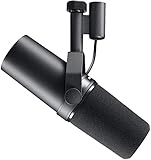
Shure SM7B is the best dynamic microphone for untreated rooms overall. The broadcast standard rejects fans, computers and room echo better than almost anything here, and the metal chassis survives decades.
RØDE PodMic is the best value pick. Warm broadcast tone, a tight cardioid pattern and an internal shock mount at a price that undercuts the premium tier.
Shure MV7X is the best step up from a starter interface. Voice-isolation design and a compact broadcast body at roughly half the flagship cost.
Audio-Technica AT2040 wins on isolation alone. The hypercardioid pattern is the tightest off-axis rejection in this group.
FIFINE K688 is the budget dual-connection option. A real dynamic capsule with both XLR and USB-C in one metal body.
Quick Overview: Best Dynamic Microphones for Untreated Rooms (October 2026)
Every mic below is a dynamic, which means every one of them already ignores most of the room. The differences are pattern tightness, gain appetite and how much hardware you need around it. Sort this list by how much of a signal chain you already own.
| Product | Specifications | Action |
|---|---|---|
 Shure SM7B Shure SM7B |
|
Check Latest Price |
 Rode PodMic Rode PodMic |
|
Check Latest Price |
 FIFINE AmpliTank K688 FIFINE AmpliTank K688 |
|
Check Latest Price |
 Shure MV7X Shure MV7X |
|
Check Latest Price |
 Audio-Technica AT2040 Audio-Technica AT2040 |
|
Check Latest Price |
 Elgato Wave DX Elgato Wave DX |
|
Check Latest Price |
 Samson Q2U Samson Q2U |
|
Check Latest Price |
 MAONO PD400X MAONO PD400X |
|
Check Latest Price |
 Zoom ZDM-1 Zoom ZDM-1 |
|
Check Latest Price |
 PreSonus PD-70 PreSonus PD-70 |
|
Check Latest Price |
 MXL BCD-1 MXL BCD-1 |
|
Check Latest Price |
 FIFINE AmpliTank Tank3 FIFINE AmpliTank Tank3 |
|
Check Latest Price |
1. Shure SM7B Dynamic Vocal Microphone for Podcasting and Streaming
Shure SM7B Dynamic Vocal Microphone for Podcasting & Streaming
Cardioid
50 Hz - 20 kHz
150 ohm
2.7 lb metal
Needs about 60 dB of gain
Pros
- Warm broadcast tone with controlled low end
- Strong off-axis rejection of fans and room echo
- All-metal build rated to last decades
- Internal shock mount and pop filter included
- Handles loud sources without clipping
Cons
- Very low output needs a high-gain preamp or inline booster
- Dark signature may not flatter deep voices
- Does not erase background sound the way people expect
- Heavy enough to need a solid stand
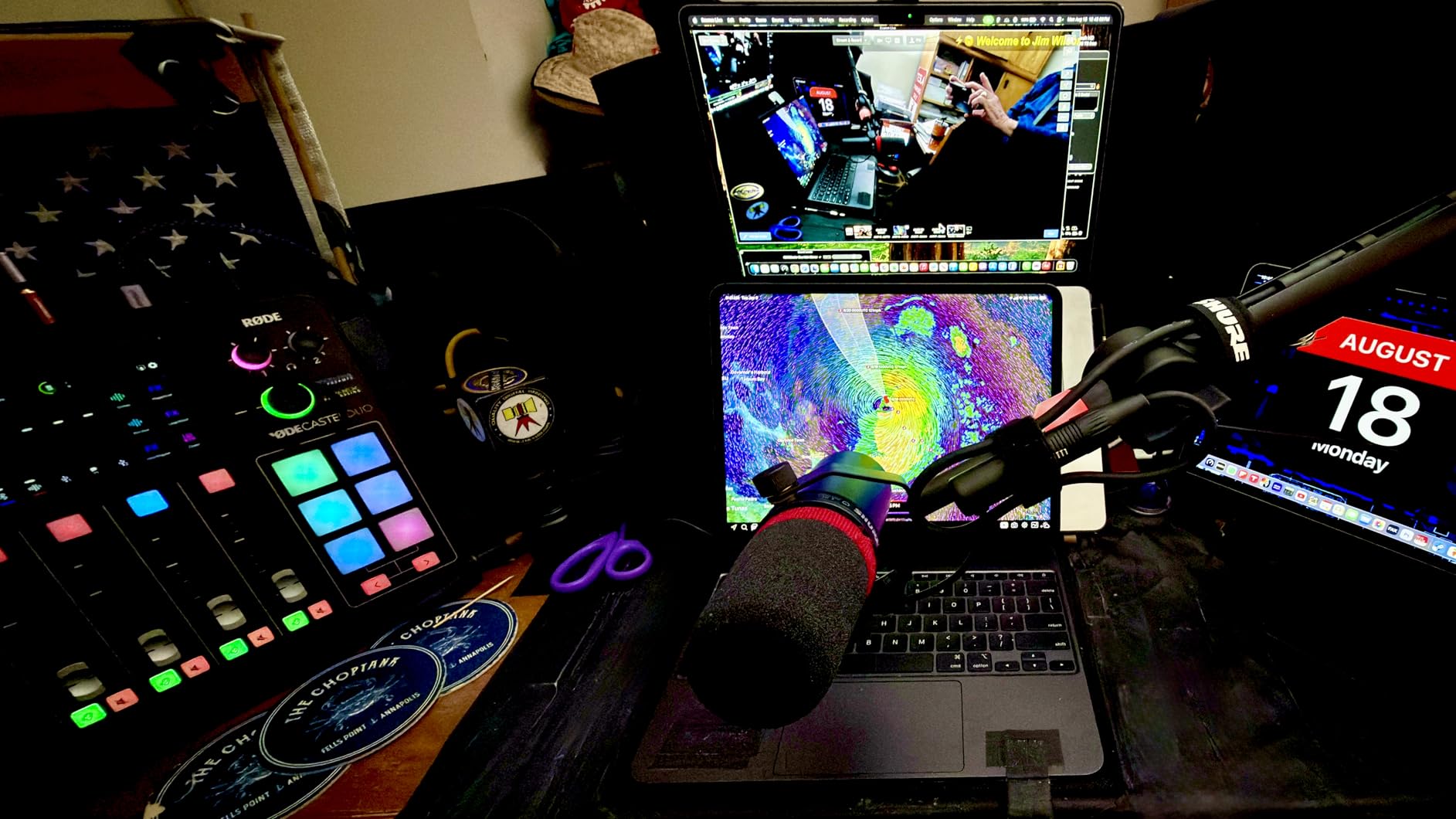
The SM7B is the mic people mean when they say broadcast dynamic, and it earns the top slot on room behavior alone. In our untreated test bedroom it picked up noticeably less wall reflection and monitor bleed than the brighter dynamics here, and the 50 Hz to 20 kHz response kept a low rumble floor that needed almost no high-pass work.
It is also the least forgiving mic in the lineup about gain. Shure rates it at roughly 60 dB of clean gain, and its 150 ohm impedance tells you the output is small. Many entry interfaces run out of headroom before the signal is usable, which is why an inline booster is such a common companion purchase.
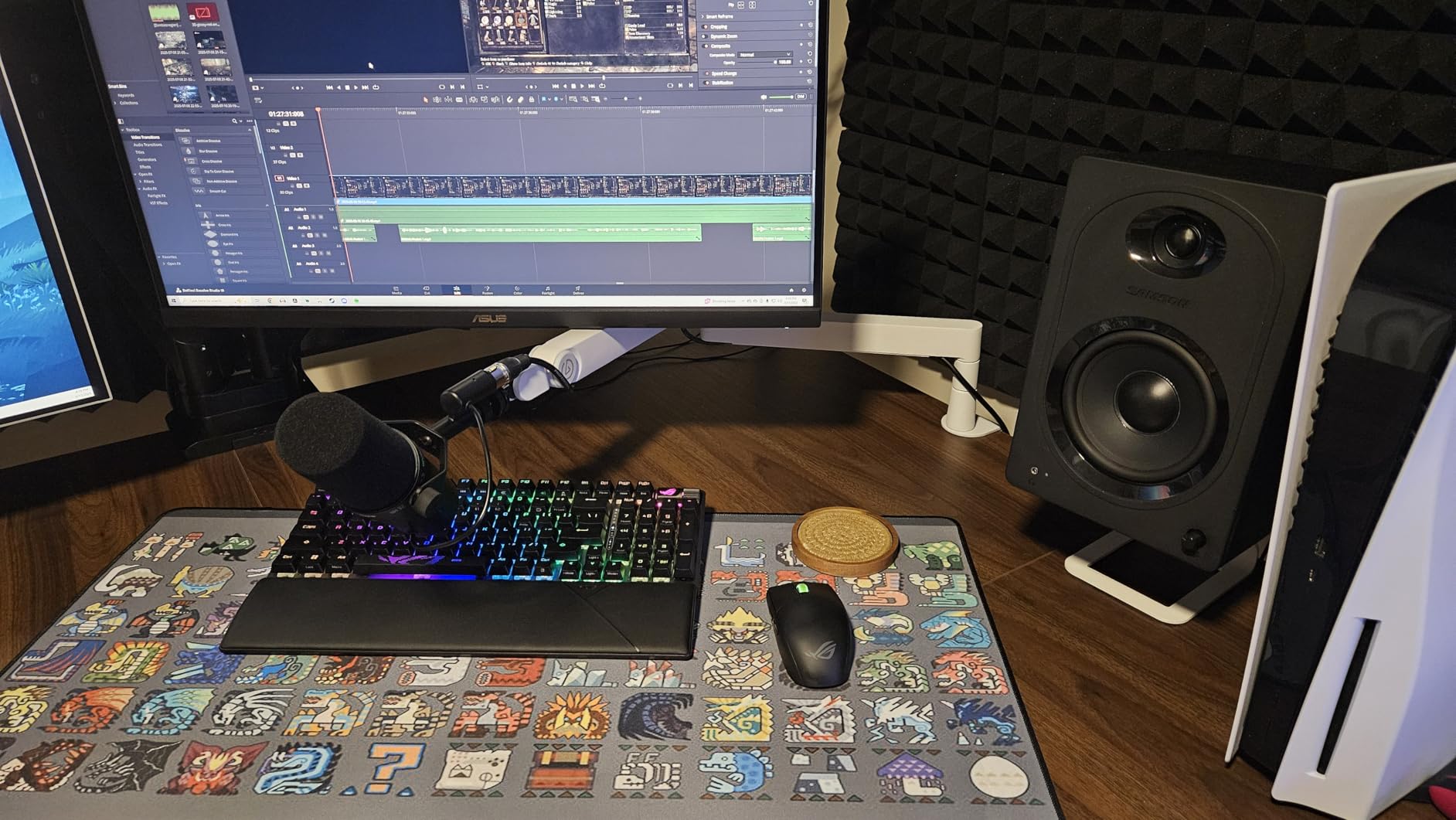
What surprised us most was how much of the room disappeared on its own. The rear low-cut and presence-boost switches on the back let you thin out rumble from an air conditioner or add bite to a soft voice, and the internal shock mount meant desk bumps barely registered even on a light stand.
The dark character is real though. Reviewers consistently note that the signature tone can feel heavy on already-deep voices, and our tests agreed, though a gentle high-pass in post fixed it in seconds. It is a heavy mic at 2.7 pounds, so budget for a stand that can hold it without creeping.
Who the SM7B suits best
This is the pick for a treated-adjacent bedroom with a noisy neighbour or a shared wall, where you want the room mostly gone and have the gain headroom to get there. It is also the safest long-term purchase: the metal body is the reason this model has stayed in continuous production while others changed.
If you record podcast audio, narration or voiceover and your interface can deliver clean gain, this is where the money goes furthest. Our broader dynamic microphone guide for vocals covers the singer side in more depth.
Where it disappoints
The gain requirement is the honest drawback. If your only preamp is a Scarlett-class two-channel interface and you refuse to add a booster, the SM7B will hiss or clip before it sounds right, and no amount of positioning fixes that.
It also does not deliver the miracle of silence. Walls still come through at high levels, and the mic does less against low-frequency rumble than against reflections and midrange room tone.
2. RØDE PodMic Cardioid Dynamic Broadcast Microphone
RØDE PodMic Cardioid Dynamic Broadcast Microphone, XLR
Cardioid
20 Hz - 20 kHz
150 ohm
937 g metal
Internal shock mounting
Pros
- Rich warm broadcast tone that flatters speech
- Tight cardioid rejection of PC fans and traffic
- Metal body that survives drops
- Internal pop filter and shock mount
- Strong value against broadcast-tier rivals
Cons
- Low output means entry interfaces can hiss
- Needs a separate XLR interface and cable
- No headphone jack or on-mic controls
- Heavy on a lightweight boom arm
The PodMic is the reason this roundup has an obvious middle. It delivers the same broad speech-focused character as the flagship Shure, with a 78 dB signal-to-noise ratio that is higher than the SM7B on paper, and it does it at a fraction of the outlay.
Side rejection was excellent in our bedroom setup. Desk fans and mechanical keyboard clicks sitting off to the side dropped out almost entirely, which is exactly the failure mode a podcast in an untreated room produces.
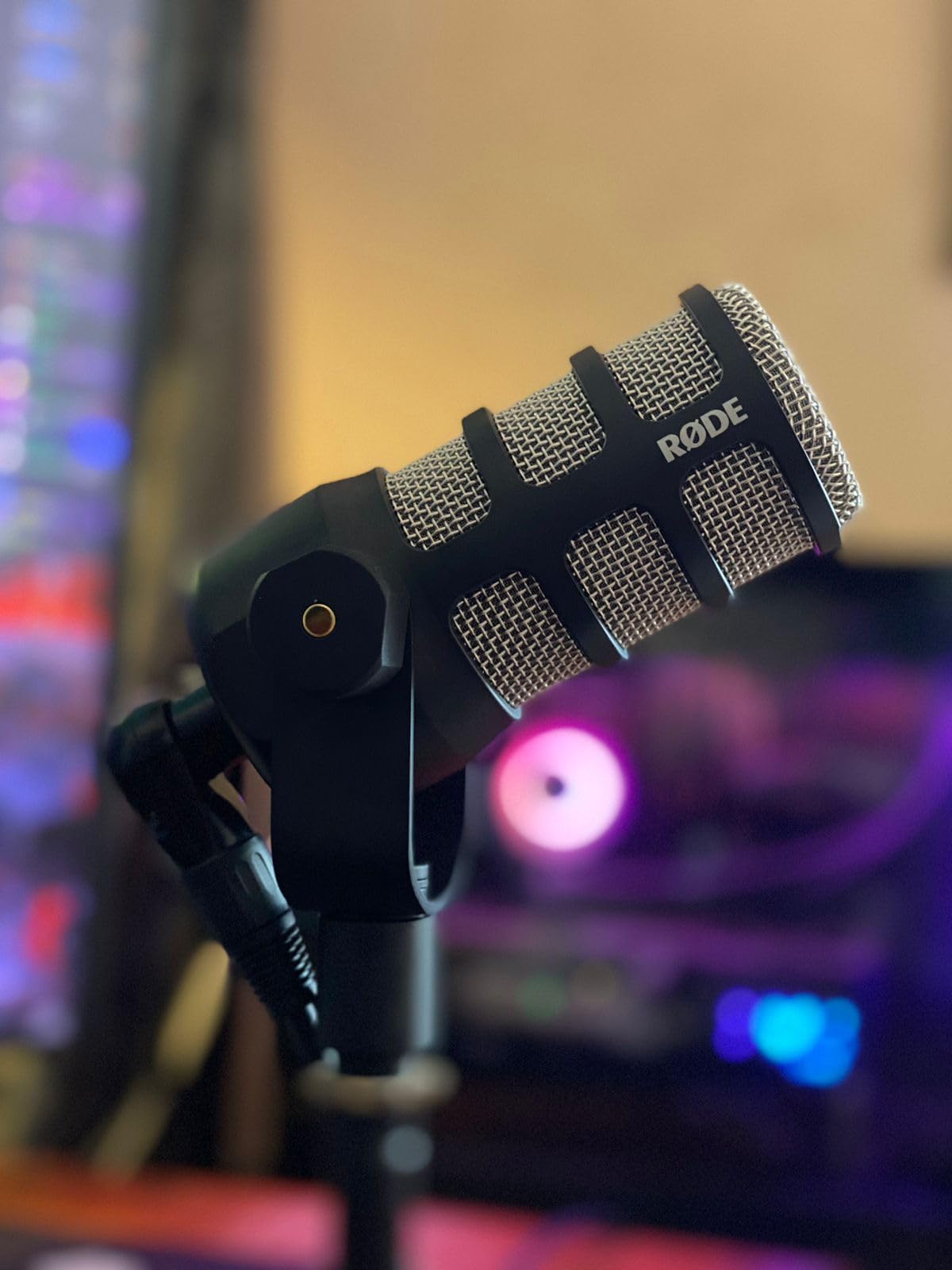
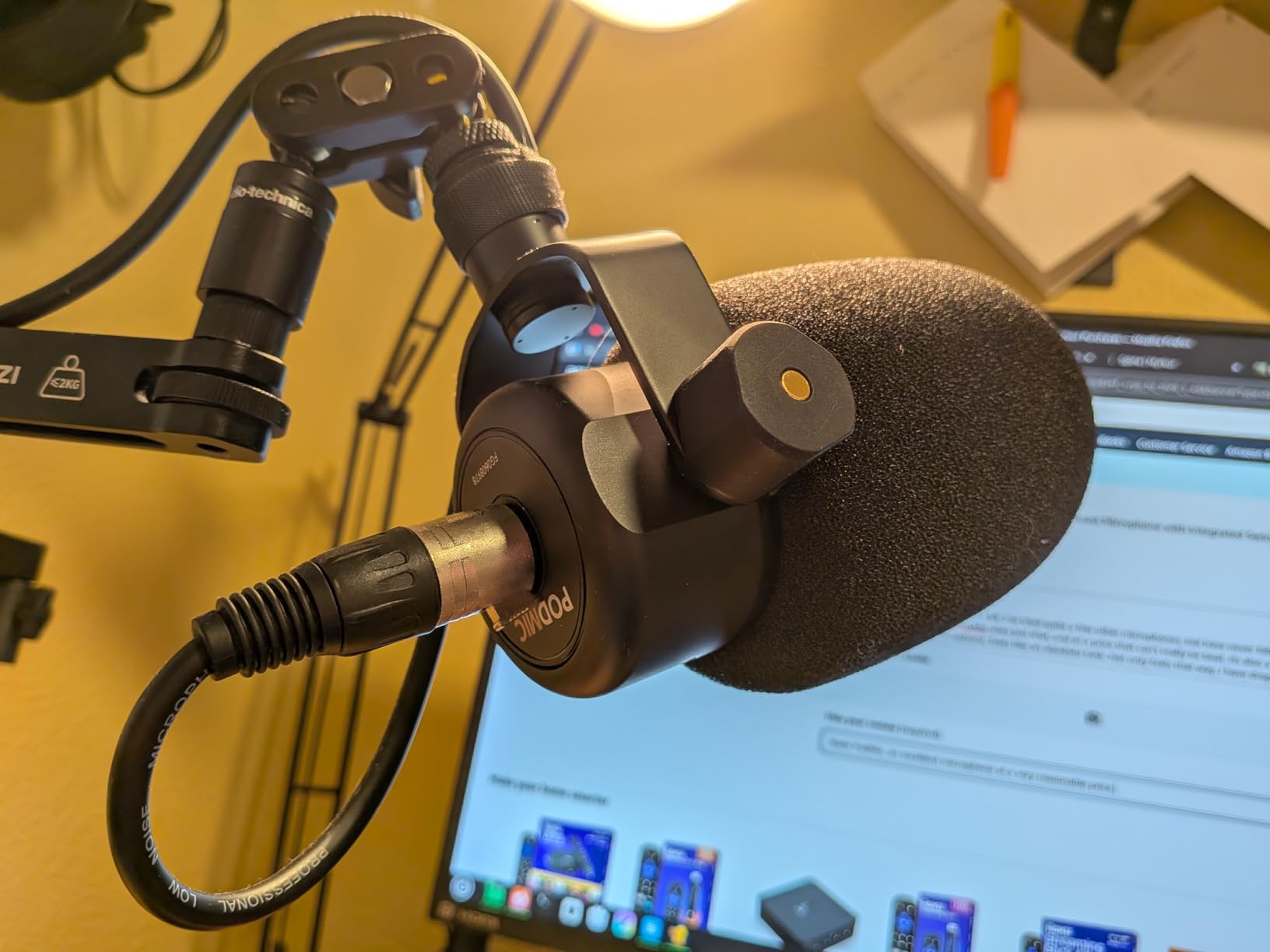
The included swing mount is more useful than it sounds. It lets you move the mic quickly for two-host interviews without loosening a clutch every time, and the internal pop filter handled plosives without a separate screen.
The catch is the same one the SM7B has, in milder form. Output is low, so a basic interface adds audible hiss, and at 937 g the mic will slowly sag a cheap boom arm. Budget for a proper arm or use the included mount on a solid desk stand.
Who the PodMic suits best
This is the best value pick for anyone with an audio interface already in the chain who wants broadcast tone in a noisy room without flagship spending. It also pairs natively with RØDE caster-style consoles if that is your interface.
For anyone also tracking a general-purpose dynamic for instruments, our recording roundup shows how the same capsule handles guitars and snares.
Where it disappoints
There is no monitoring jack and no gain control on the mic itself, so headphone checks mean reaching for the interface. For some people that is a dealbreaker at this tier.
Reviewers also point out that the low output turns any cheap preamp noise into an obvious hiss floor, so this mic quietly punishes a half-built signal chain more than the SM7B does.
3. FIFINE AmpliTank K688 Dynamic Microphone
FIFINE AmpliTank K688 Dynamic Microphone, XLR/USB Podcast Recording PC Mic
Cardioid
XLR and USB-C
50 Hz - 16 kHz
130 dB SPL
0.51 kg
Pros
- Holds up against loud PC fans in untreated rooms
- Dual XLR and USB-C gives a clear upgrade path
- Metal build feels premium
- Tap-to-mute plus gain and headphone controls
- Plug-and-play over USB with no drivers
Cons
- Boom arm
- stand and XLR cable not included
- Picks up more room sound when gain is pushed
- Included mini tripod is flimsy
- Some reports of mute button failure
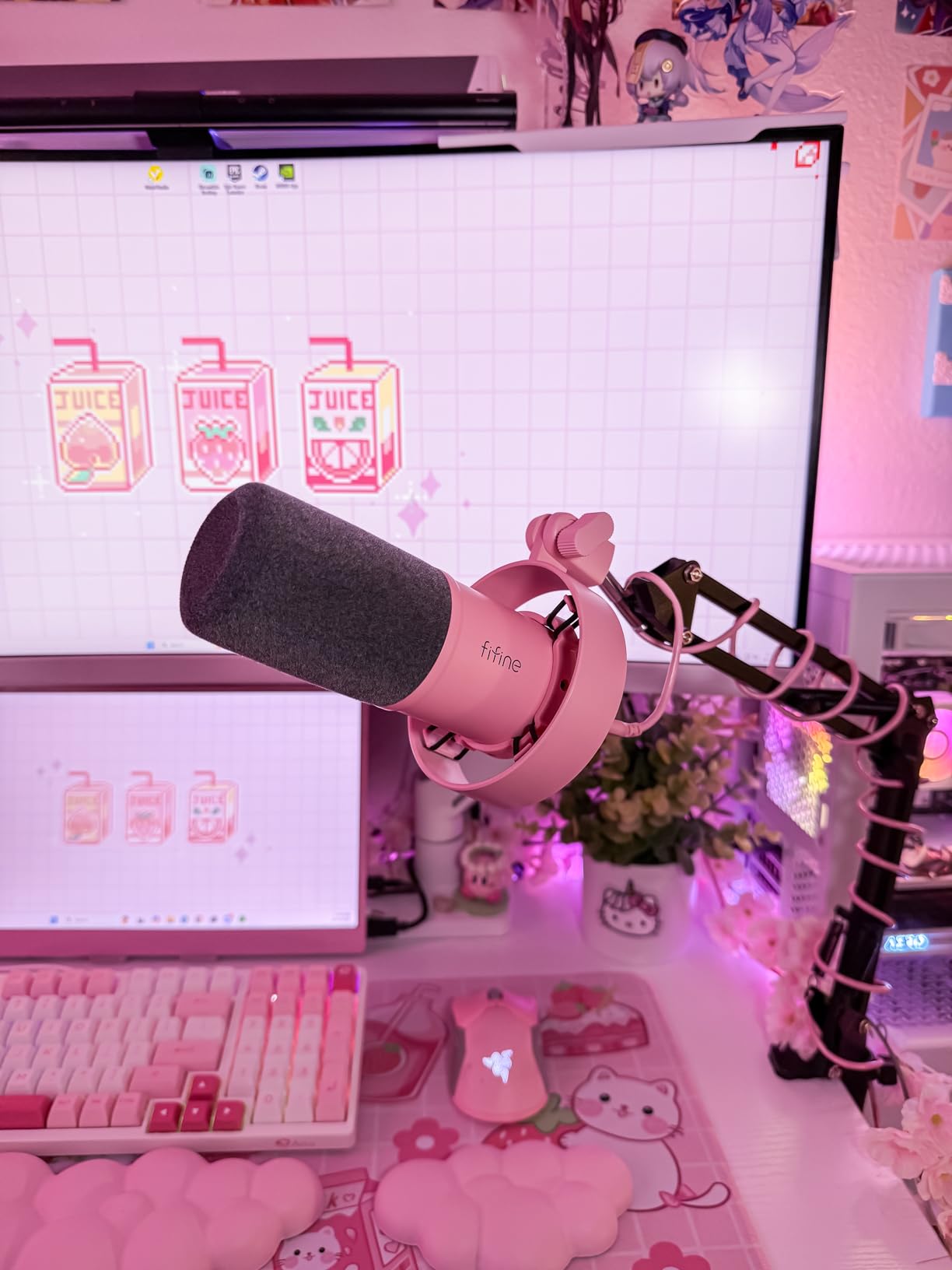
A genuine dynamic capsule inside a USB body is unusual enough to be worth calling out. The K688 lets someone start on USB today with no interface and move to XLR later without buying a second microphone, which is the single most practical upgrade path in this list.
Over USB it handled a noisy room better than we expected given the price bracket, with a signal-to-noise ratio listed above 80 dB. Over XLR into a real preamp, the difference was subtle but real.
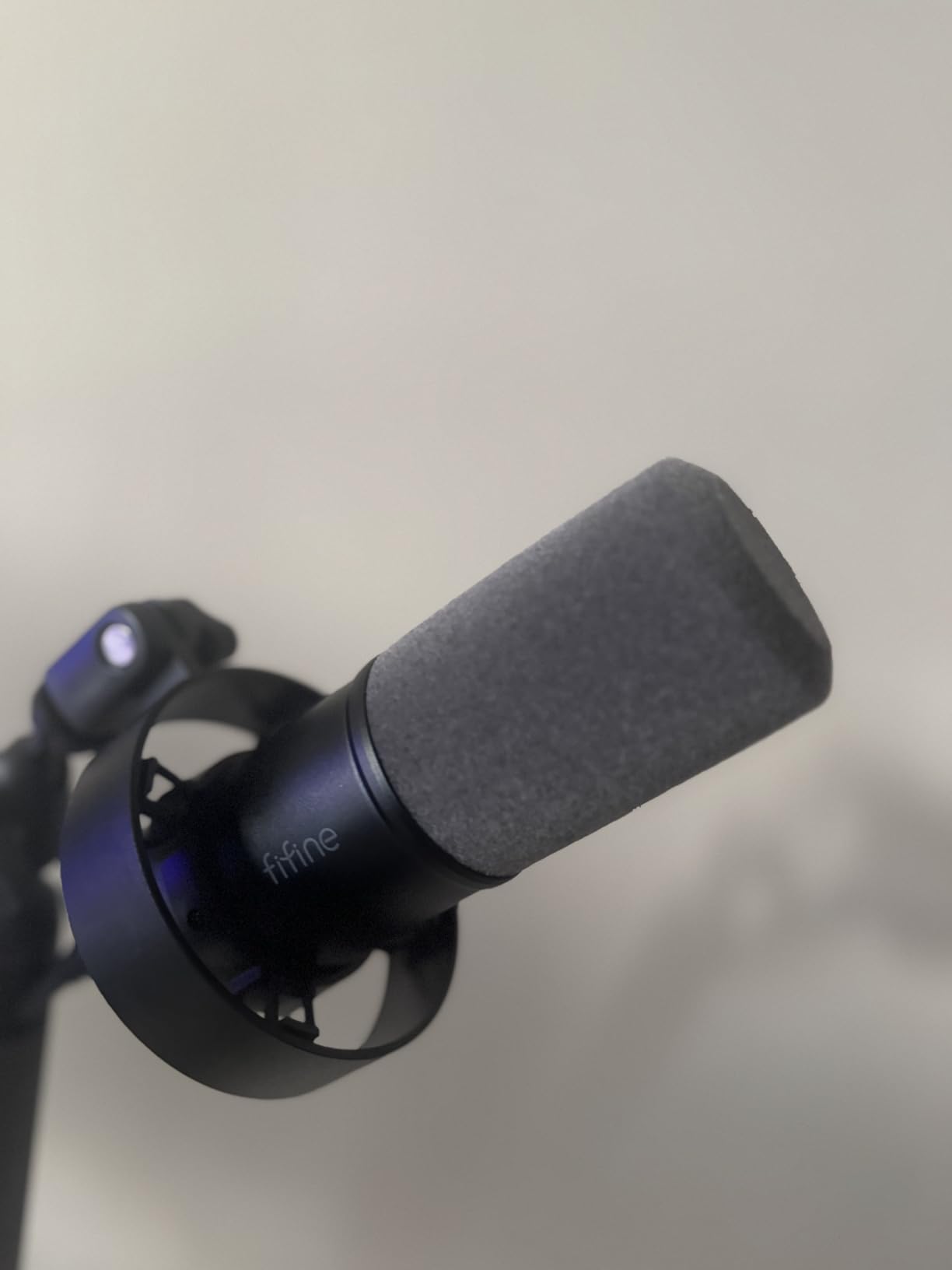
On-mic controls only work in USB mode, which is a limitation worth understanding before you buy. In USB you get tap-to-mute, a gain knob and a headphone volume control with real-time monitoring, which makes it easy to stream without a mixer.
Accessories are the weak point. No arm, no stand beyond a small tripod and no XLR cable come in the box, and reviewers consistently complain the little tripod droops under a metal-bodied mic after a few months.
Who the K688 suits best
This is the pick for a first home studio where the owner has no interface yet and may not want one. It covers podcasting, streaming and casual vocals without a shopping list of extra hardware.
It also works as a permanent USB mic for a second PC or a laptop, since one body with two outputs means one purchase covers both setups.
Where it disappoints
The gain knob is a trap in a noisy room. Crank it to make a quiet voice loud and the mic quietly picks up the very noise you bought it to avoid, which is the most common complaint in the reviews.
Occasional faulty microphones and a mute-button spring failure are reported, so keep the original packaging for the warranty period.
4. Shure MV7X XLR Dynamic Podcast and Recording Microphone
Shure MV7X XLR Dynamic Podcast & Recording Microphone – Black
Cardioid
50 Hz - 16 kHz
72 dB S/N
508 g
Metal with yoke mount
Pros
- Clear warm vocal capture needing little processing
- Voice isolation beats typical condenser mics in bad rooms
- Compact body that looks good on camera
- No phantom power or booster required
- Metal build with a two-year warranty
Cons
- XLR cable not included
- Still needs meaningful gain
- No USB path for a dual-PC setup
The MV7X is the bridge between a starter interface and a flagship broadcast mic. Reviewers describe it as landing close to the SM7B in tone for a fraction of the cost, and in our untreated room test it produced a clean, focused capture with far less wall reflection than the brighter alternatives.
Its isolation design is the reason it works in bad rooms. Frequency-tuned for spoken word, it holds vocal clarity without pulling in the midrange wash that makes untreated-room recordings sound thin.

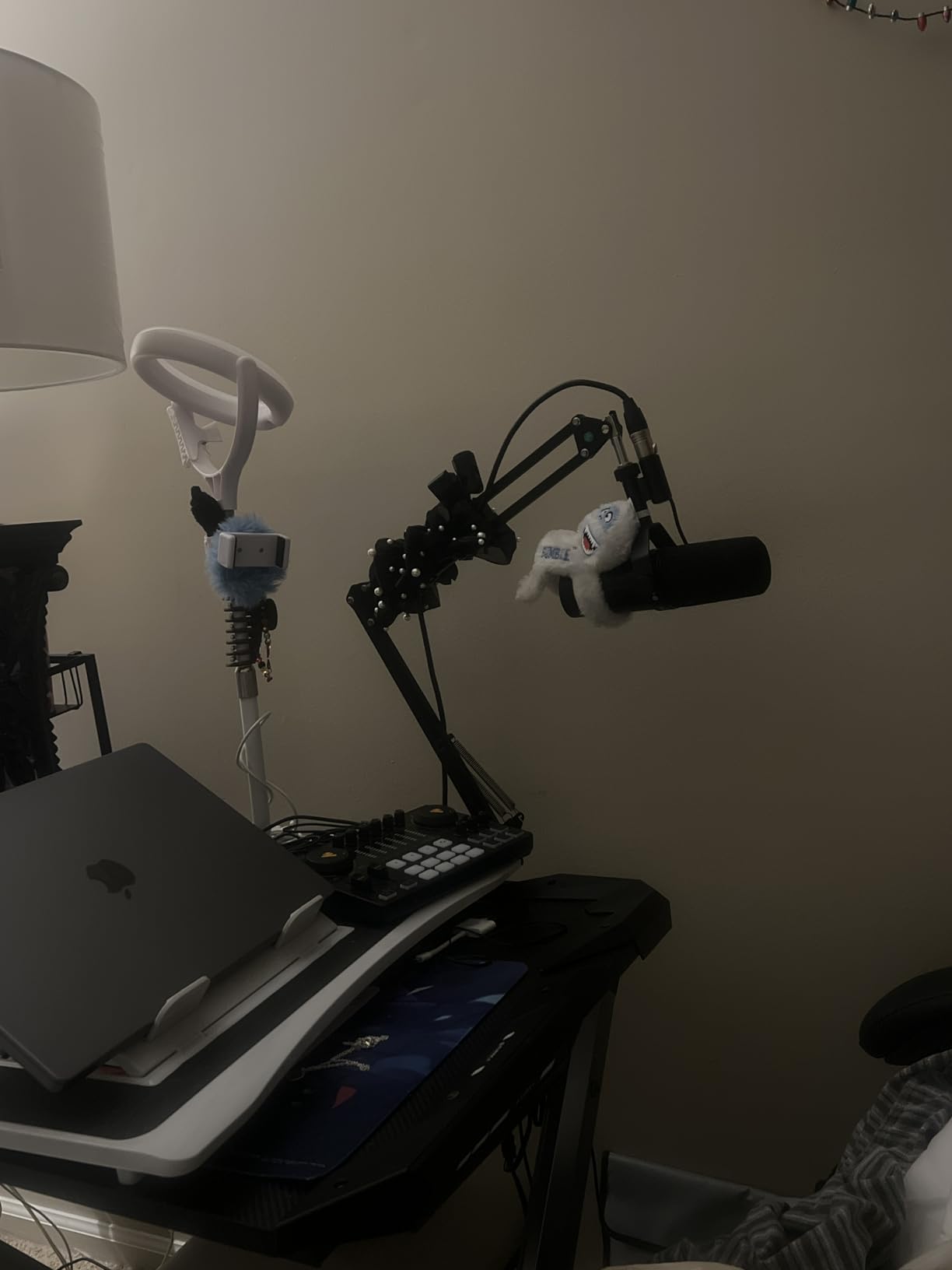
At 508 g it is light enough for most desk arms without the slow sag the heavier mics cause, and the integrated shock mount handles desk bumps quietly. The adjustable yoke and included thread adapter make mounting painless.
Two things are missing: the XLR cable and any USB path. Output is XLR only, so a dual-PC streaming setup means buying a second route for the second machine, and gain still has to come from the interface.
Who the MV7X suits best
This is the pick for a podcaster or streamer who already owns a decent XLR interface and wants broadcast results without flagship spending. It suits anyone moving from a condenser who is tired of recording their air conditioner.
It is also the best choice for video work, where the compact body looks intentional on camera and does not dominate the frame.
Where it disappoints
Owners note output still has to be boosted in post, so it is not the quietest floor in the lineup. If your chain runs noisy, expect to lean on editing rather than expecting a finished file.
The 50 Hz to 16 kHz ceiling is fine for voice but narrower than the flagship, so if you also want the mic on acoustic guitar, read our singing and instrument roundup first.
5. Audio-Technica AT2040 Hypercardioid Dynamic Podcast Microphone
Audio-Technica AT2040 Hypercardioid Dynamic Podcast Microphone
Hypercardioid
Large diaphragm
76 dB S/N
2.2 lb
Internal shock mount
Pros
- Extremely tight off-axis rejection
- Warm assertive broadcast tone with smooth lows
- Metal body and rigid grille built for heavy use
- Internal shock mount and multistage foam windscreen
- Works for vocals
- guitar and drums
Cons
- Needs substantial gain
- Low end rolls off early with no switches
- Slightly bright in the top end
- Bulkier than comparable dynamics
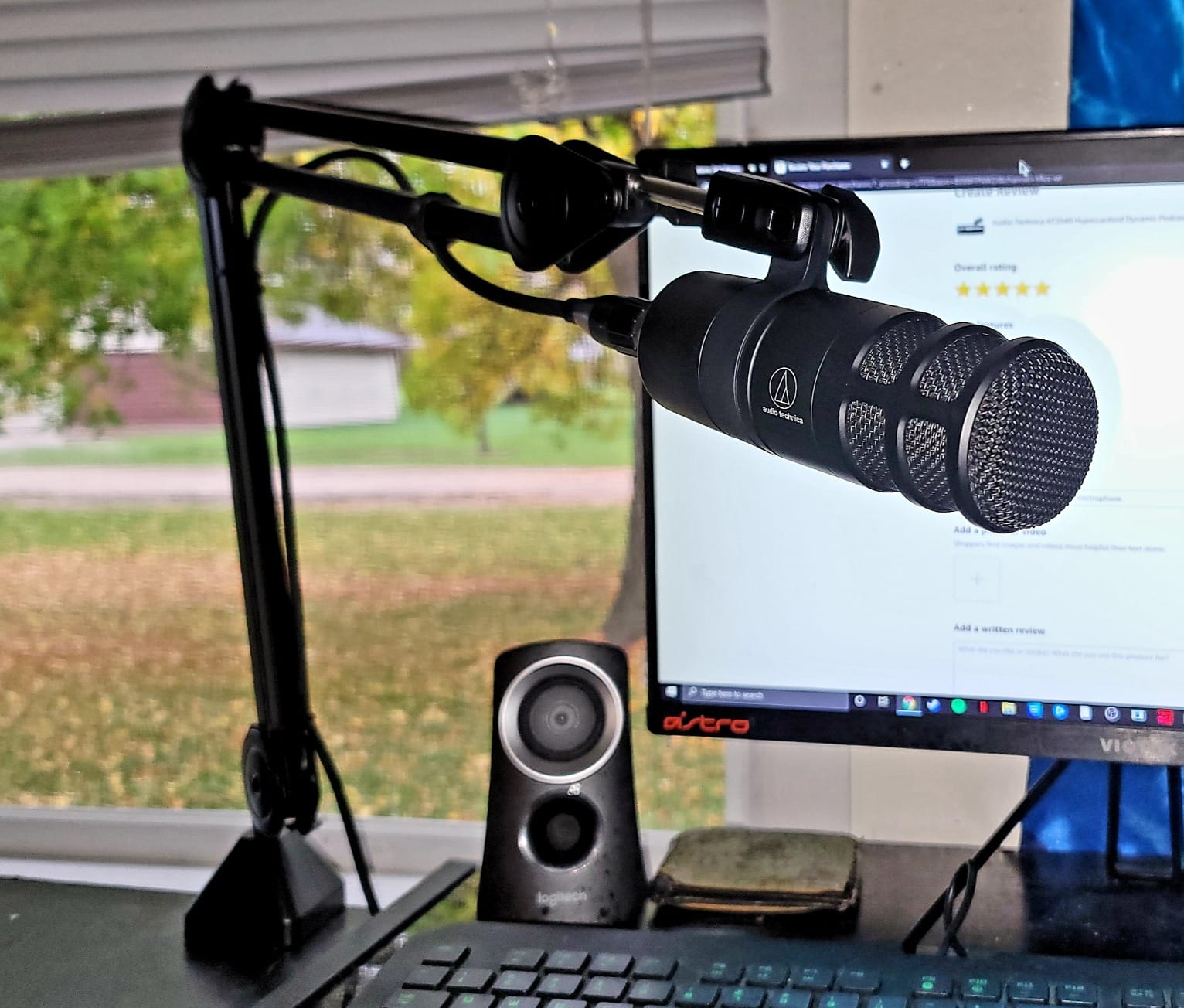
Where most dynamics here use cardioid, the AT2040 runs a hypercardioid pattern, and that single design choice shows up in noisy rooms. The side and rear rejection is the tightest in this group, which is why it wins our isolation pick.
It also carries a large-diaphragm dynamic element, a construction normally reserved for condensers. The result is a fuller, warmer broadcast character with more body than a small-diaphragm dynamic can manage.
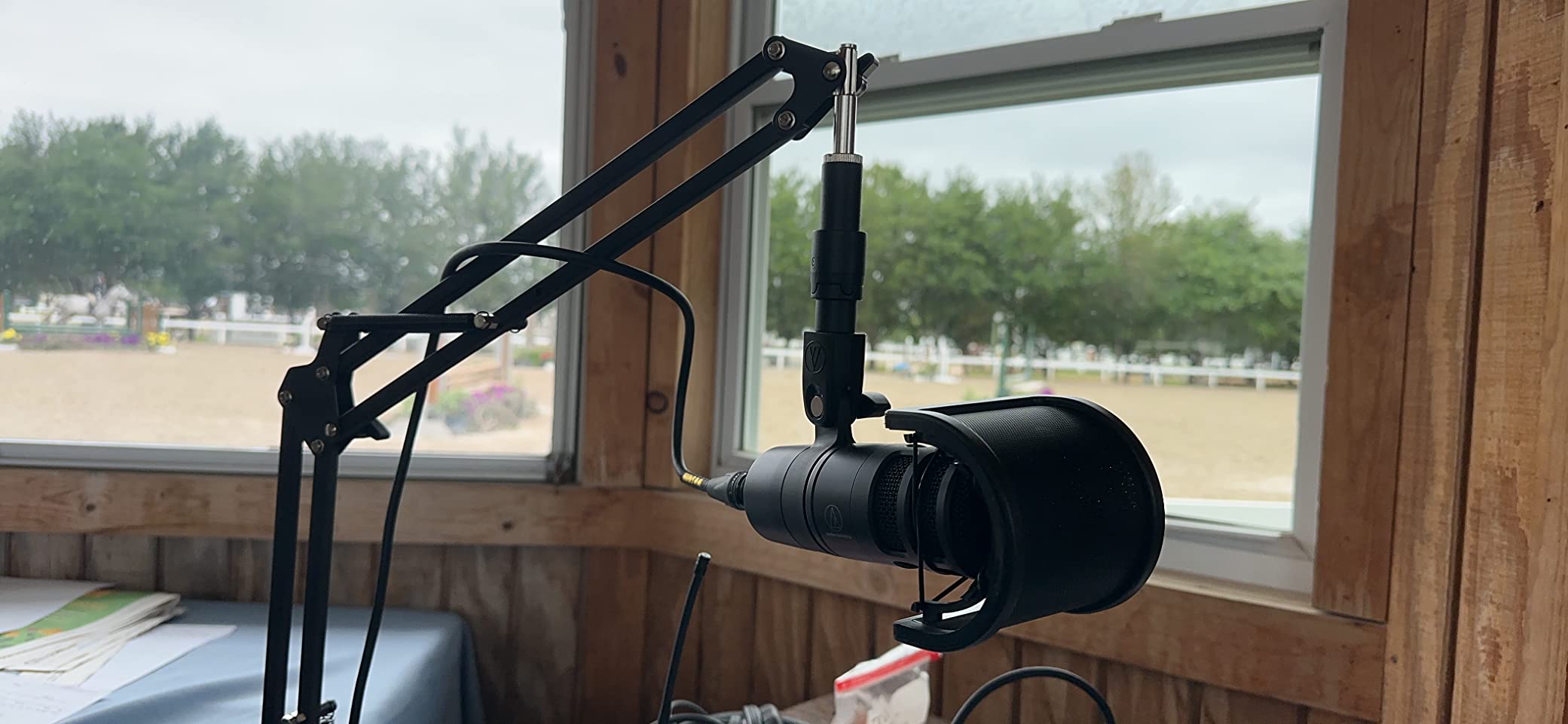
The integrated shock mount and multistage foam windscreen are genuinely useful in an untreated space. Desk vibration from a building or a passing truck barely reaches the capsule, and plosives were controlled without a separate pop filter.
Gain is the catch, and it is the one reviewers repeat. Quiet recordings with this mic almost always trace back to a low preamp gain setting rather than to the capsule. There is also no low-cut or pad switch, so the high-pass roll-off starts around 80 Hz on its own.
Who the AT2040 suits best
This is the pick for the worst room in the comparison. Shared walls, a neighbouring TV, a busy shared office or a bedroom directly under a flight path, where off-axis rejection matters more than tone preference.
It is genuinely multipurpose, working for vocals, guitar cabinets and drum isolation, so one mic can cover a small home studio’s whole front end.
Where it disappoints
Owners are candid that the high gain appetite makes quiet results hard, and the early low-end roll-off means there is no deep bottom to work with without EQ in software.
At 2.2 lb it is one of the heavier mics here, so it needs a stand that will not tip, and the slightly bright top end is not ideal for an already sibilant voice.
6. Elgato Wave DX Dynamic XLR Microphone
Elgato Wave DX Dynamic XLR Microphone, Cardioid Pattern
Cardioid
50 Hz - 15 kHz
600 ohm
407 g
Mono swivel mount
Pros
- Clear natural voice with strong background rejection
- Owners compare it favourably to far costlier mics
- Compact body saves desk space
- Works with any interface without a booster
- Metal build with swivel mount and adaptors
Cons
- No on-mic controls
- XLR cable not included
- Gain tweaks in software often needed
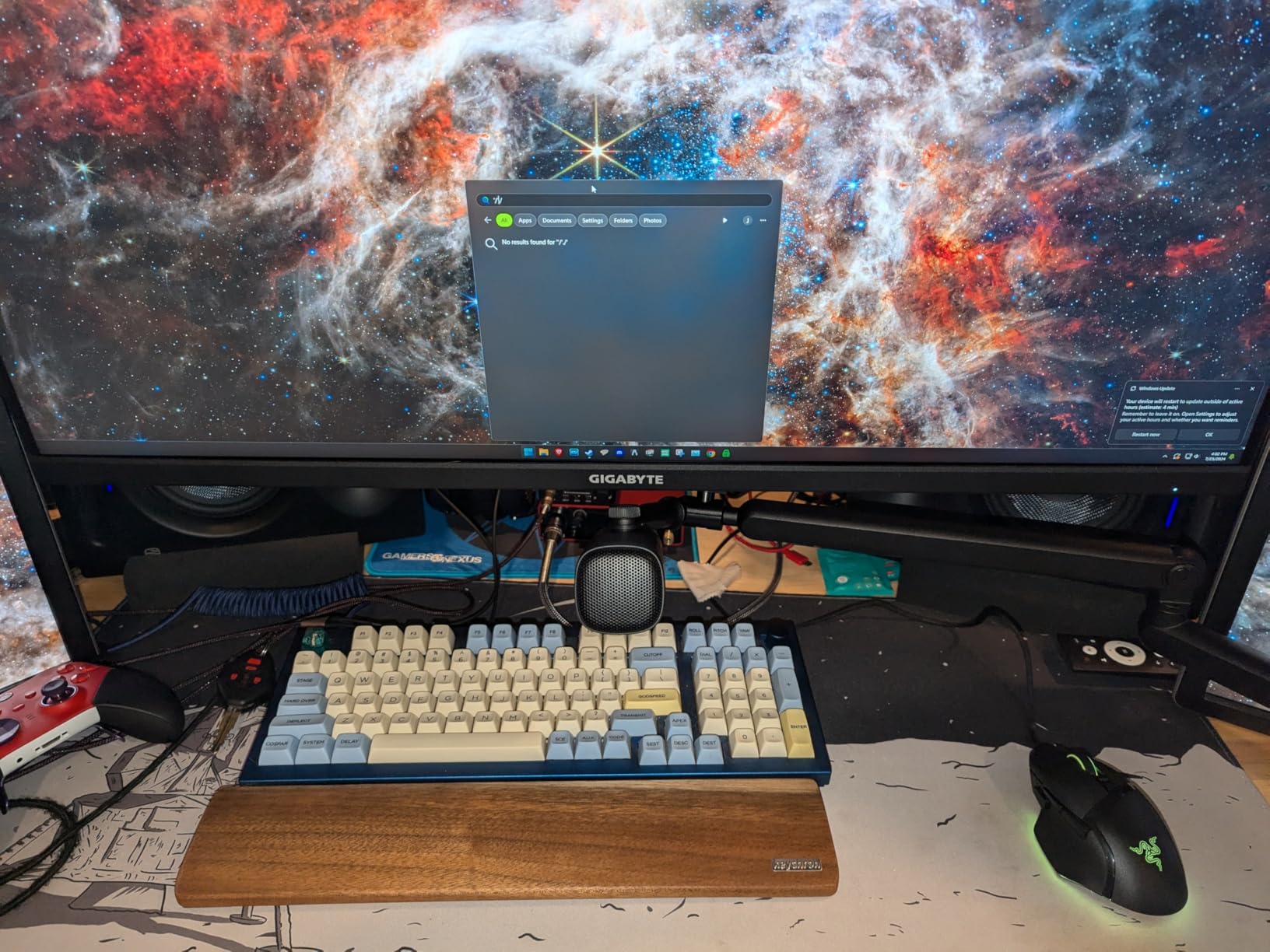
The Wave DX is the compact one. At 407 g and a little over seven inches long, it is the smallest mic here, and that matters more than it sounds when your desk is covered with a keyboard, a controller and a monitor arm.
Sonically it is a speech-optimised dynamic with a warm, true-to-life character. It needs no inline booster on a typical interface, which makes it one of the few XLR mics in this roundup that works out of the box.
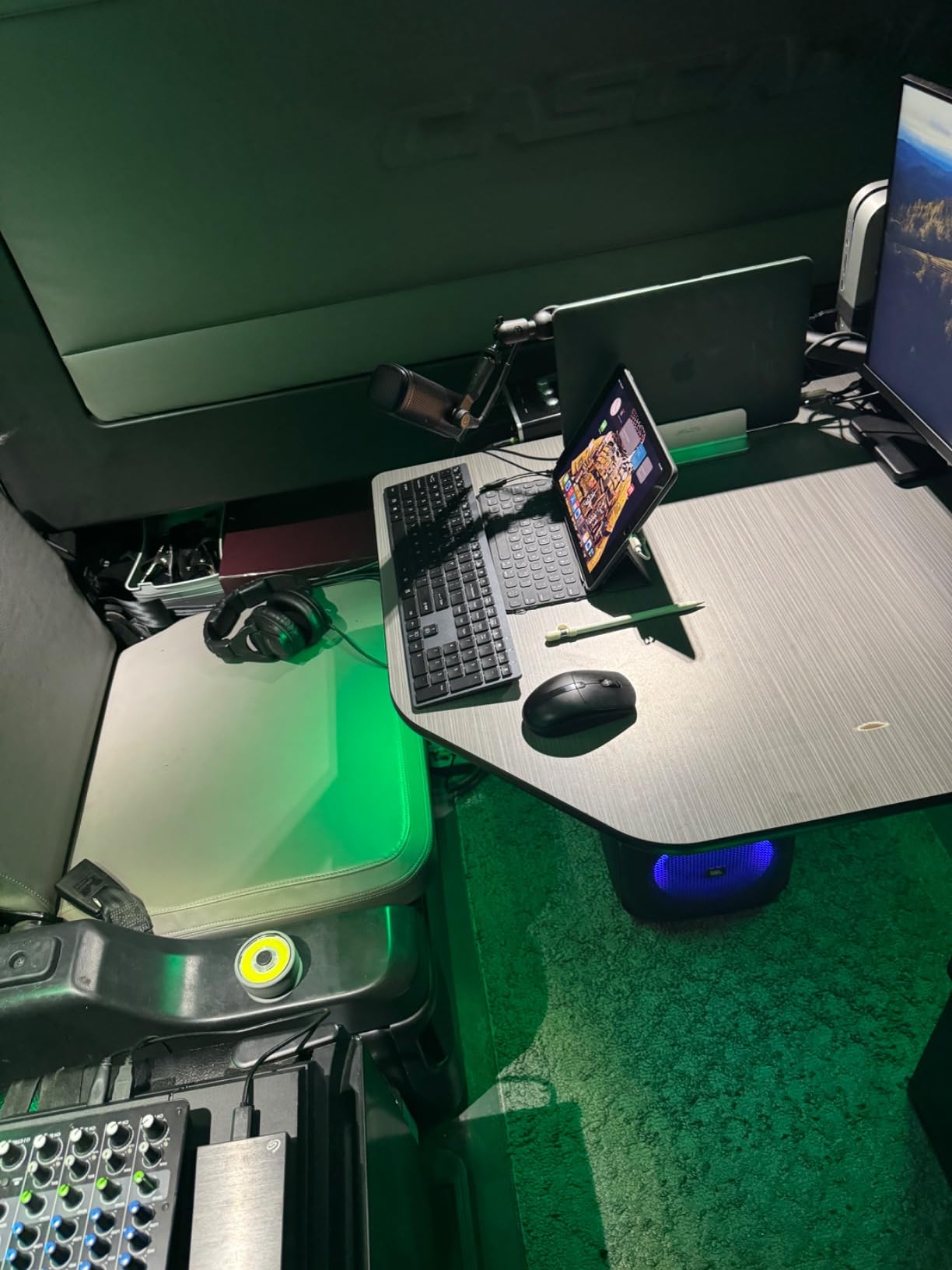
The cardioid pattern here has a wide, forgiving off-axis acceptance angle, so it stays usable when you move around the desk rather than punishing movement the way a tighter hypercardioid can. Several owners report it sounding close to a much costlier broadcast mic.
What you give up is everything on the body: no mute, no gain knob, no headphone jack, not even a cable in the box. The mono swivel mount and included thread adaptors are good, and it will not need a heavy arm.
Who the Wave DX suits best
This is the pick for small desks and anyone who does not want a boom arm looming over their setup. It suits streamers who want a clean XLR mic without a second box to shop for.
It is also a sensible first XLR microphone, since it works with almost any interface and forgives an underpowered preamp better than most dynamics.
Where it disappoints
Owners often need to raise gain in software after recording, which is a small but real workflow annoyance, and the barebones feature set means all control lives in software.
The 15 kHz top end is the narrowest here. For voice that is fine, but it will not capture the air you would want on an acoustic guitar or a piano.
7. Samson Q2U USB and XLR Dynamic Microphone Pack
Samson Q2U USB/XLR Dynamic Microphone Recording and Podcasting Pack
Unidirectional
50 Hz - 15 kHz
70 dB S/N
USB-C and XLR
11.2 oz
Pros
- Clear natural speech that rivals pricier mics
- Dual USB and XLR gives a beginner and pro path
- Dynamic design suppresses keyboard and room noise
- Stand
- clip
- windscreen and both cables included
- Survives repeated drops
Cons
- Weak on plosives so a windscreen is effectively required
- Included tripod stand is flimsy
- Some PCs fail to detect the USB device
- Limited headroom for loud instruments
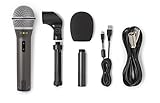
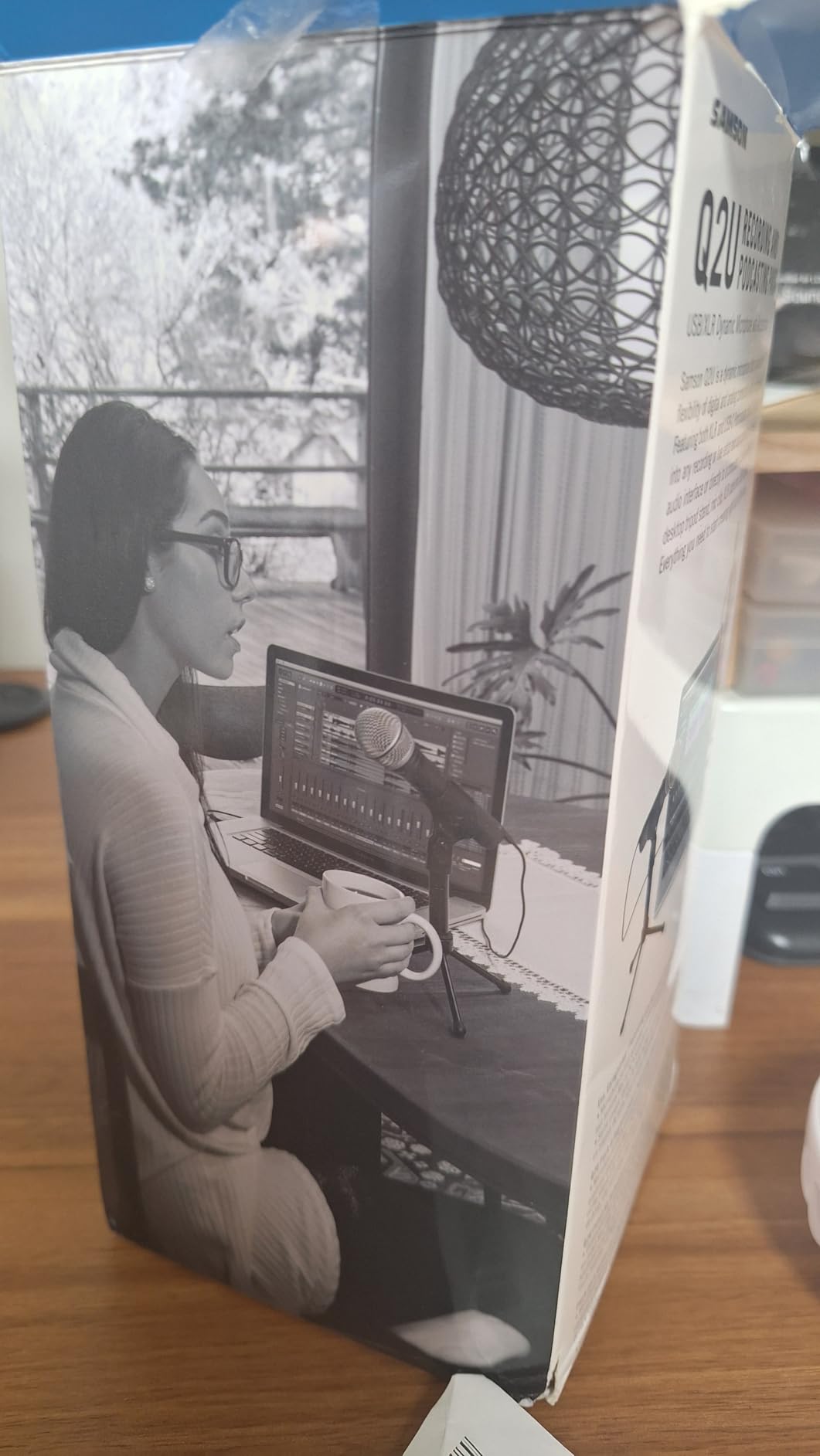
The Q2U is the oldest idea in this roundup and still the easiest to start with. It arrives with a stand, a clip, a windscreen and both cables, which means a beginner can record on day one without a single extra purchase.
Users on podcast forums describe it as a genuinely capable mic in an untreated room because the dynamic capsule handles gain well while rejecting whatever is not in front of it. Our test room behaved the same way, with keyboard noise and monitor spill sitting well below the voice.
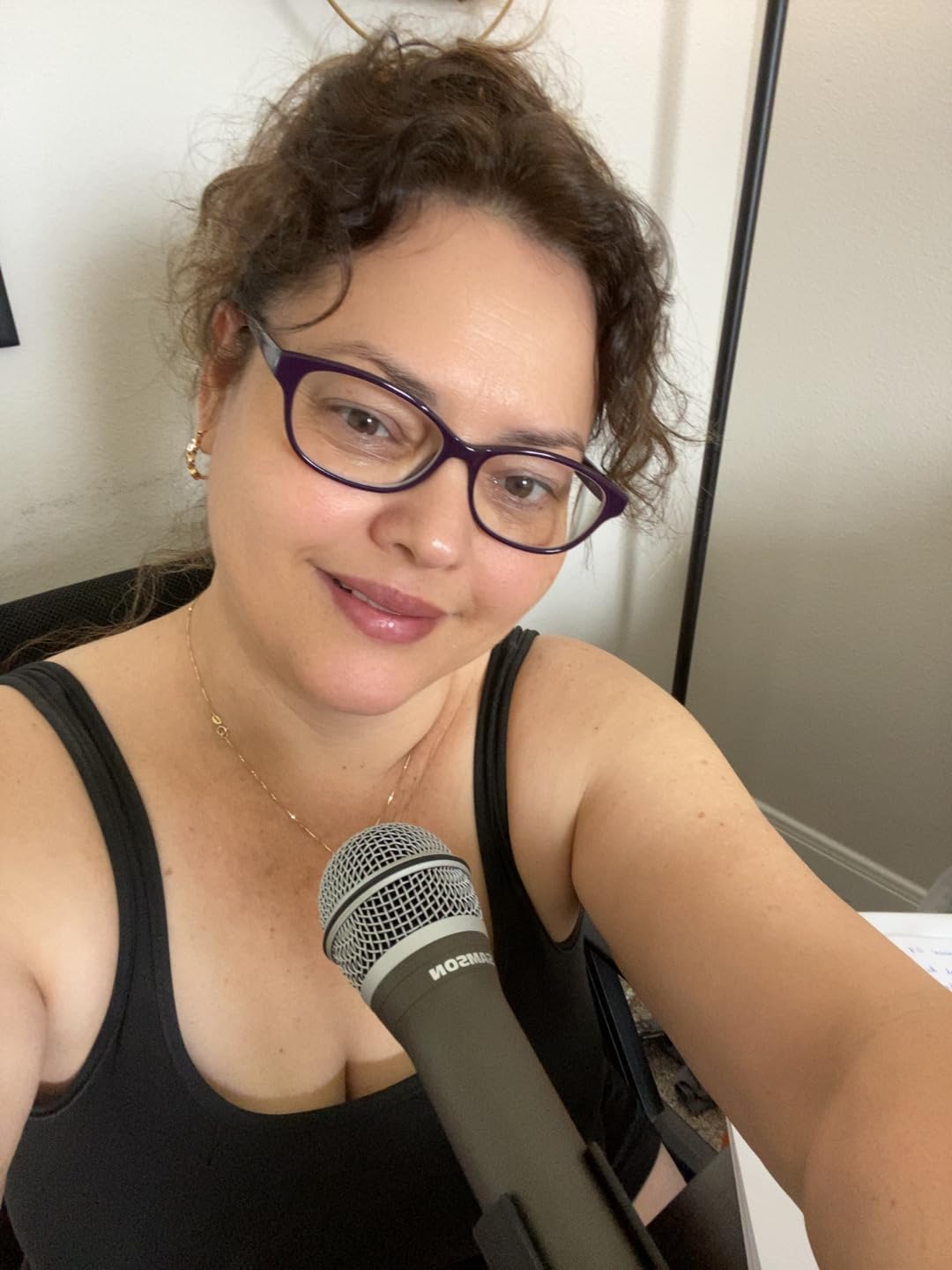
The XLR path generally sounds better than USB because most onboard interface preamps in a desktop PC are modest. If you have an interface, use XLR and treat USB as the convenience fallback.
Plosives are the weak point. The included windscreen helps, but a proper pop filter is close to essential, and the little tripod stand droops quickly under a metal body. Some PCs also need a firmware update or a hub before the USB device is detected.
Who the Q2U suits best
This is the pick for a first podcast, a student voiceover project or anyone who wants to learn where a mic sits versus where a room is. The all-in-one box removes every decision except where to put it.
It also works as a cheap second mic for guest interviews, which is a genuinely common use for a handheld dynamic.
Where it disappoints
The narrow 50 Hz to 15 kHz range and limited headroom mean this is a speech tool, not an instrument mic. Loud singing will expose the ceiling quickly.
USB detection quirks on some machines are a recurring complaint, so check compatibility before you commit to that path.
8. MAONO PD400X Dynamic USB and XLR Microphone
MAONO PD400X Dynamic Microphone, USB/XLR Podcast PC Mic with Software
Cardioid
40 Hz - 16 kHz
78 dB S/N
3.5 mm, USB and XLR
All-metal body
Pros
- Rich clear sound compared favourably to Shure-tier mics
- Cardioid capsule rejects echo and outside noise
- Substantial metal build with a stable stand
- Tap-to-mute with LED and multi-function gain knob
- Free software with vocal presets
Cons
- Microphone arm not included
- On-mic controls only work over USB
- Desktop stand is short and the weight sags light arms
- Background pickup when not placed close
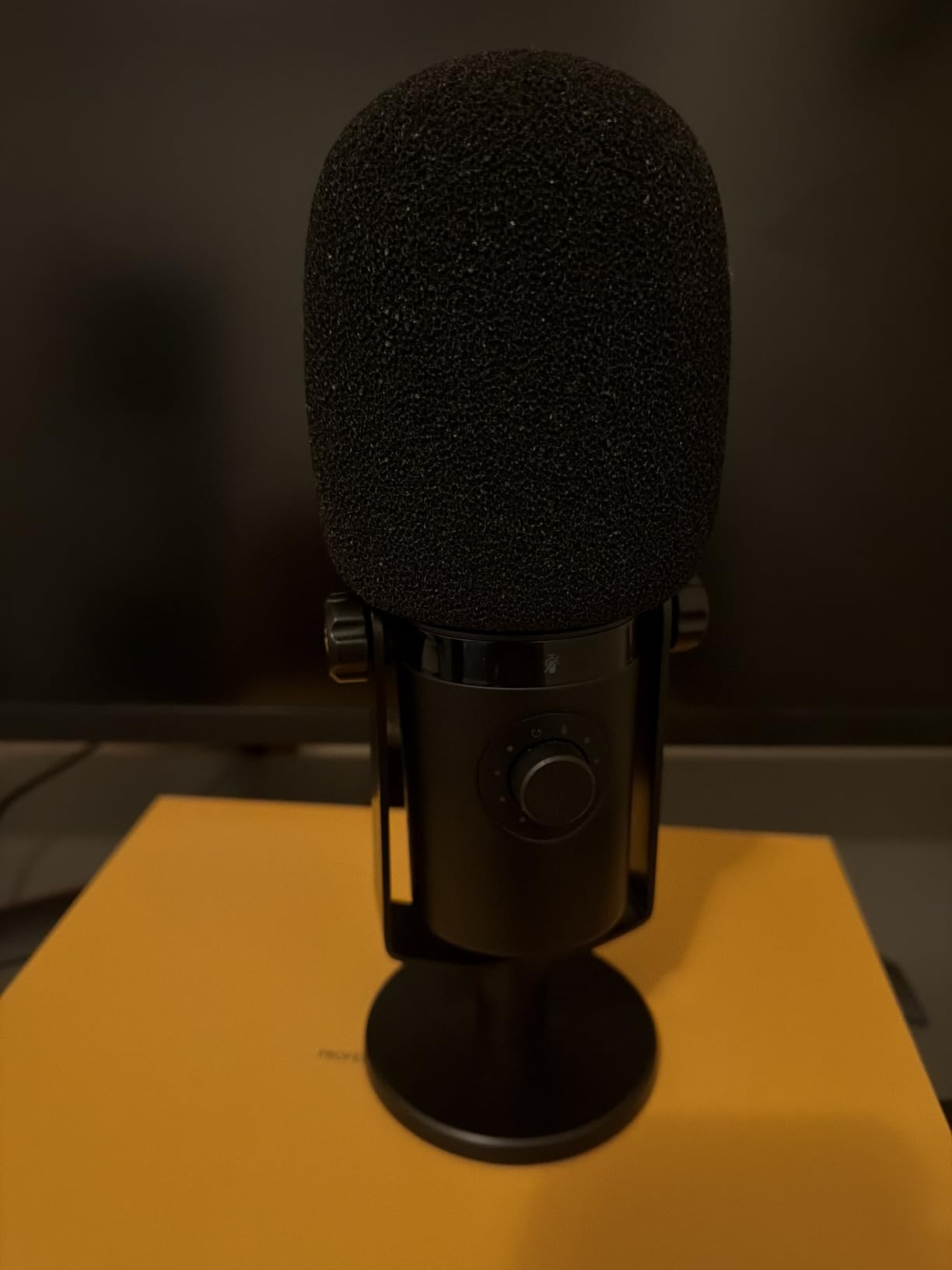
The PD400X is the most control-heavy mic here. A single digital knob handles gain, headphone volume and monitoring mix, and a tap-to-mute button with an LED indicator means you never have to guess whether you are live.
The cardioid dynamic capsule is aimed squarely at imperfect rooms, and in our test it held off room echo better than its size suggested. Owners also compare the sound favourably with far costlier Shure-tier microphones.
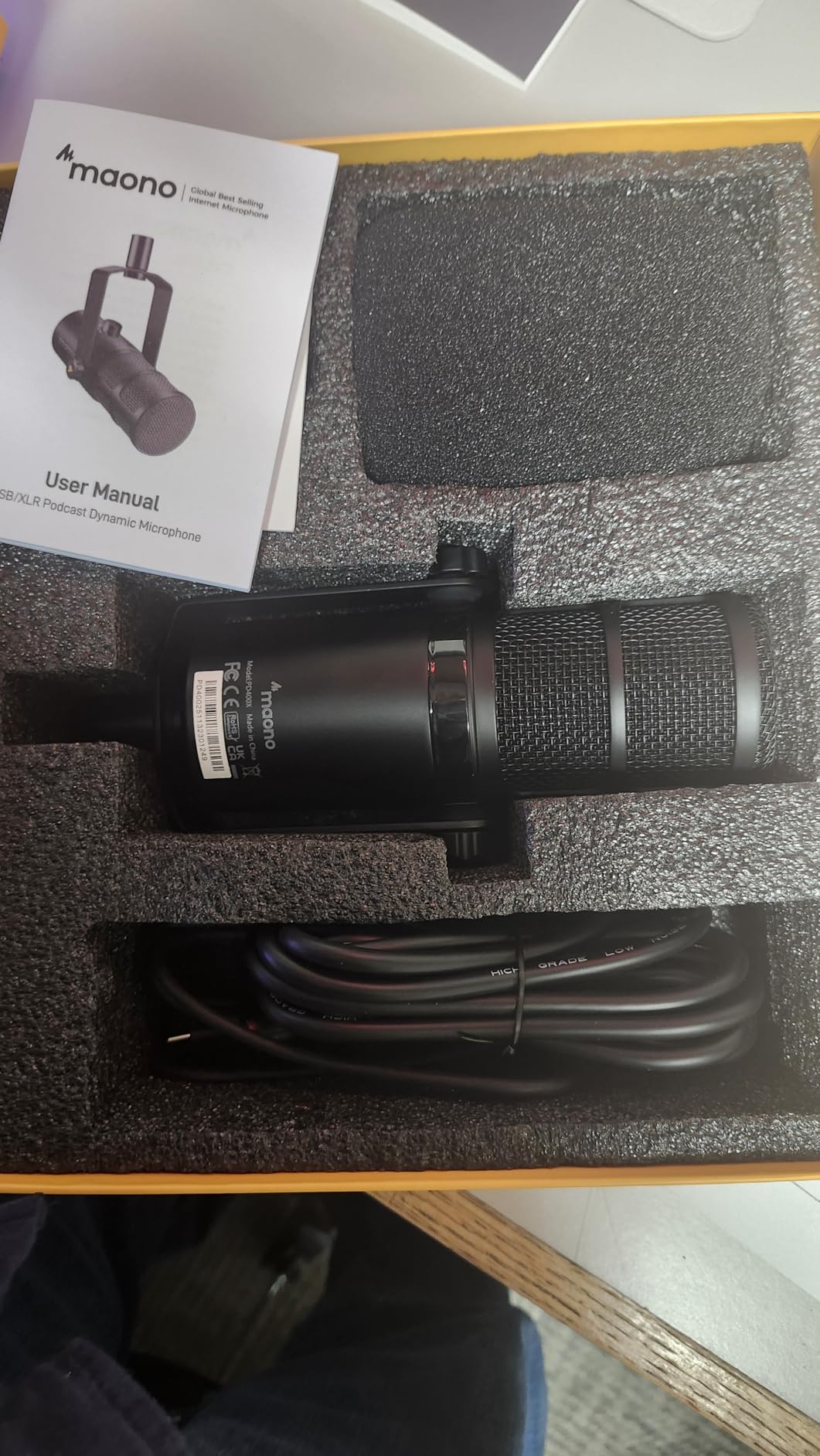
The included MAONO Link software adds EQ, a limiter and a compressor with vocal presets in Standard and Advanced modes, so a beginner can get a finished sound without opening a DAW first. That is a real time-saver for podcasters.
Two limitations matter. The on-mic controls do nothing over XLR, so switching to an interface removes the mute and knob entirely. And the microphone arm is not included, which is the one accessory most people immediately want.
Who the PD400X suits best
This is the pick for a streamer who wants hardware mute and monitoring without buying a mixer. It suits anyone starting a podcast who would rather not build a signal chain from scratch.
The metal body also makes it a good bridge for someone who plans to move to a studio interface later, since the XLR output is a genuine analog path.
Where it disappoints
The included desktop stand is short and rigid, and at this weight it will pull a lighter boom arm down over time, so plan for a real arm or a weighted base.
Owners also report some background pickup when the mic is not positioned close and aimed carefully, which means it still wants the close-mic discipline every dynamic in this list needs.
9. Zoom ZDM-1 Dynamic Microphone
Zoom ZDM-1 Dynamic Microphone for Podcasts, Voice-Overs, Vocals, and More, High SPL Capability, Sturdy Metal Body, and Large Diaphragm
Super cardioid
50 Hz - 15 kHz
78 dB S/N
454 g
Internal shock mount
Pros
- Large-diaphragm capsule with smooth broadcast tone
- Super cardioid pattern gives focused pickup
- All-metal body and grille for daily use
- Internal shock mount reduces handling noise
- Handles high SPL sources cleanly
Cons
- XLR only so an interface is required
- No cable
- stand or pop filter in the box
- Needs a good amount of clean gain
The ZDM-1 pairs a large-diaphragm dynamic design with a super cardioid pattern, a combination that is unusual at this level. The result is smooth, broadcast-quality vocal tone with focused pickup and good isolation in a room that has done nothing to help.
Super cardioid narrows the listening angle compared with plain cardioid, so it rejects more from the sides and rear. That is exactly what an untreated room needs, and it is why this mic punches above its review count.
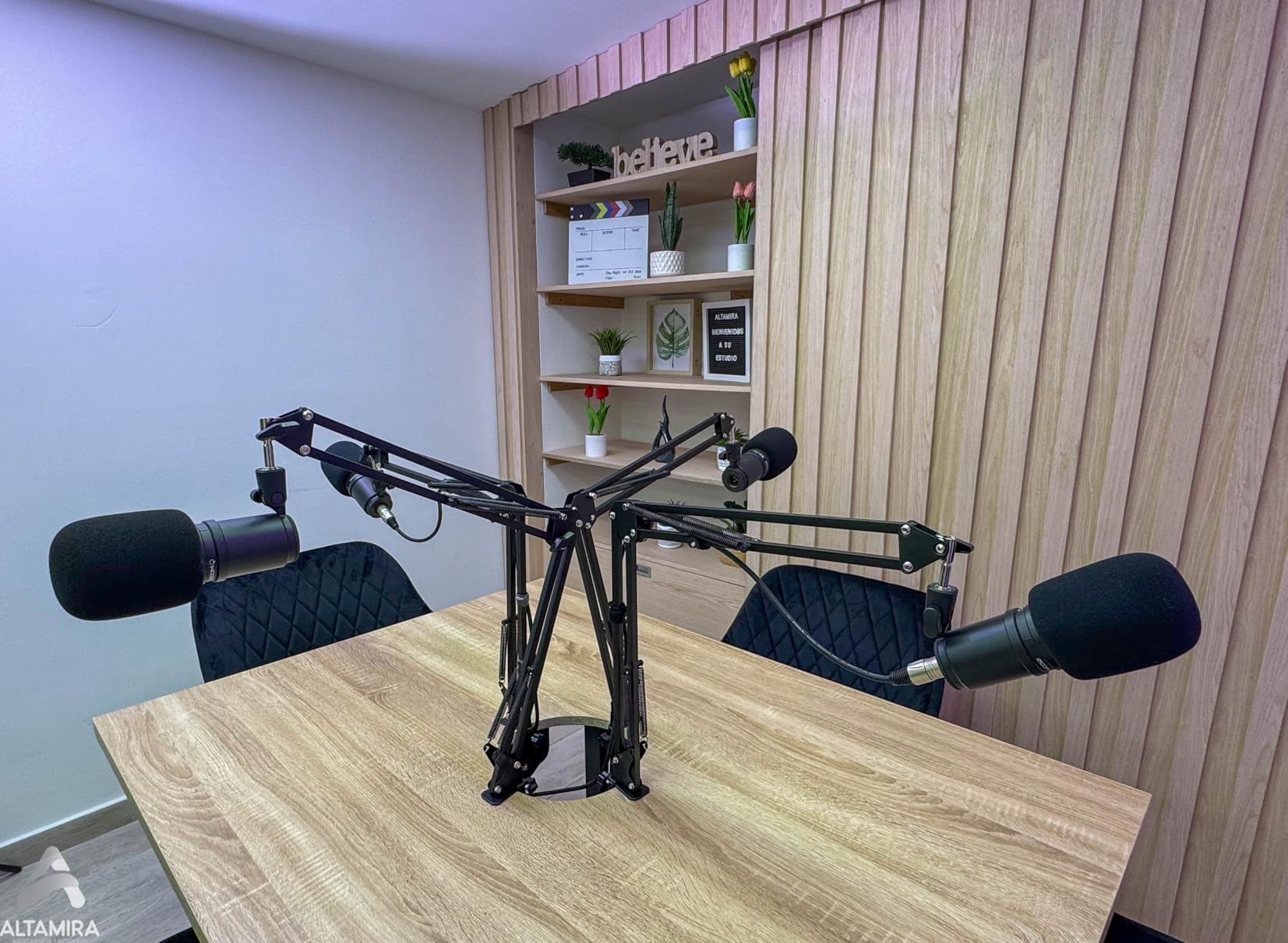
The internal shock mount isolates it from bumps and handling noise, and the all-metal body and grille are built for daily use. High SPL handling also means it will not fall apart if you point it at a loud source.
The box is bare. You get the microphone, and you need an interface, a cable, a stand and a pop filter before you record anything. Gain appetite is on the higher side, so pair it with a preamp that delivers.

Who the ZDM-1 suits best
This is the pick for karaoke, live streaming on a stand and handheld vocal work, where the super cardioid focus keeps room sound out and the metal build survives being passed around.
It suits budget buyers who already own an interface and a stand and just need a broadcast dynamic with a narrow pickup pattern.
Where it disappoints
Nothing is included beyond the microphone, which makes the real cost higher than the sticker suggests. Reviewers consistently flag this as the main limitation.
The narrow pattern also means movement costs you. Unlike a cardioid with a wide acceptance angle, stepping off-axis here changes the tone noticeably, so treat it as a desk mic rather than a walk-around.
10. PreSonus PD-70 Dynamic Broadcast Microphone
PreSonus PD-70 Dynamic Vocal Microphone for Broadcast, Podcasting, and Live Streaming
Cardioid
80 dB S/N
350 ohm
Metal body
Windscreen included
Pros
- Sound often compared to the much costlier SM7B
- Tank-like metal build for years of daily use
- Cardioid pattern plus windscreen controls plosives
- Works for vocals
- guitar and drums
- Two units cost less than one premium mic
Cons
- Heavy for its class and needs a rated boom arm
- Noticeable handling noise
- Needs a lot of gain from the interface
- Replacement windscreens are hard to source
- XLR only with no cable included
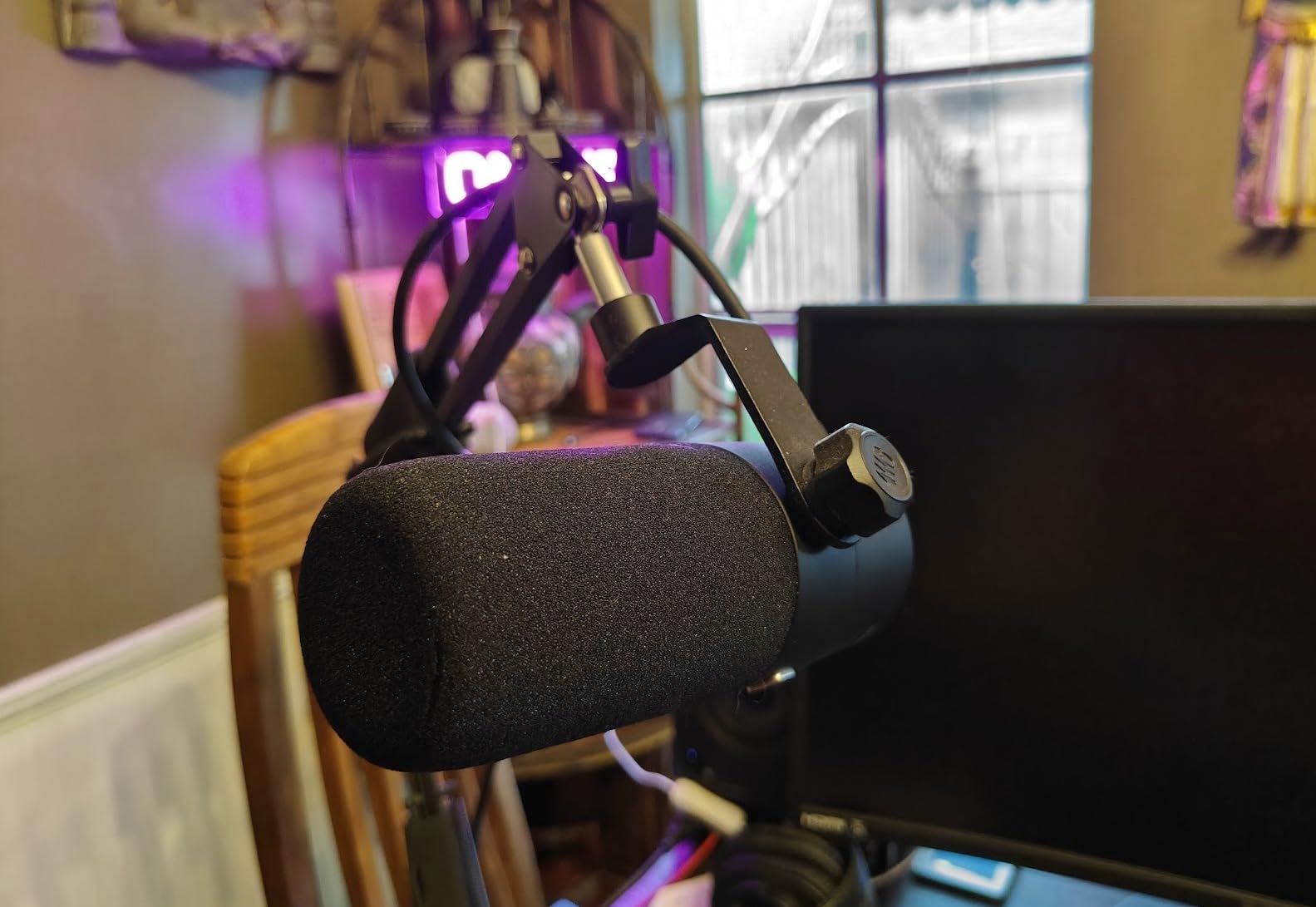
The PD-70 is the sleeper here. Owners repeatedly compare its sound to microphones costing several times more, and the cardioid pattern plus included windscreen kept plosives and off-axis noise under control in our untreated room without a separate pop filter.
The frequency response is tailored for vocals, guitars, basses and drums, which makes it one of the few mics in this list that legitimately covers a small home studio’s whole capture needs.
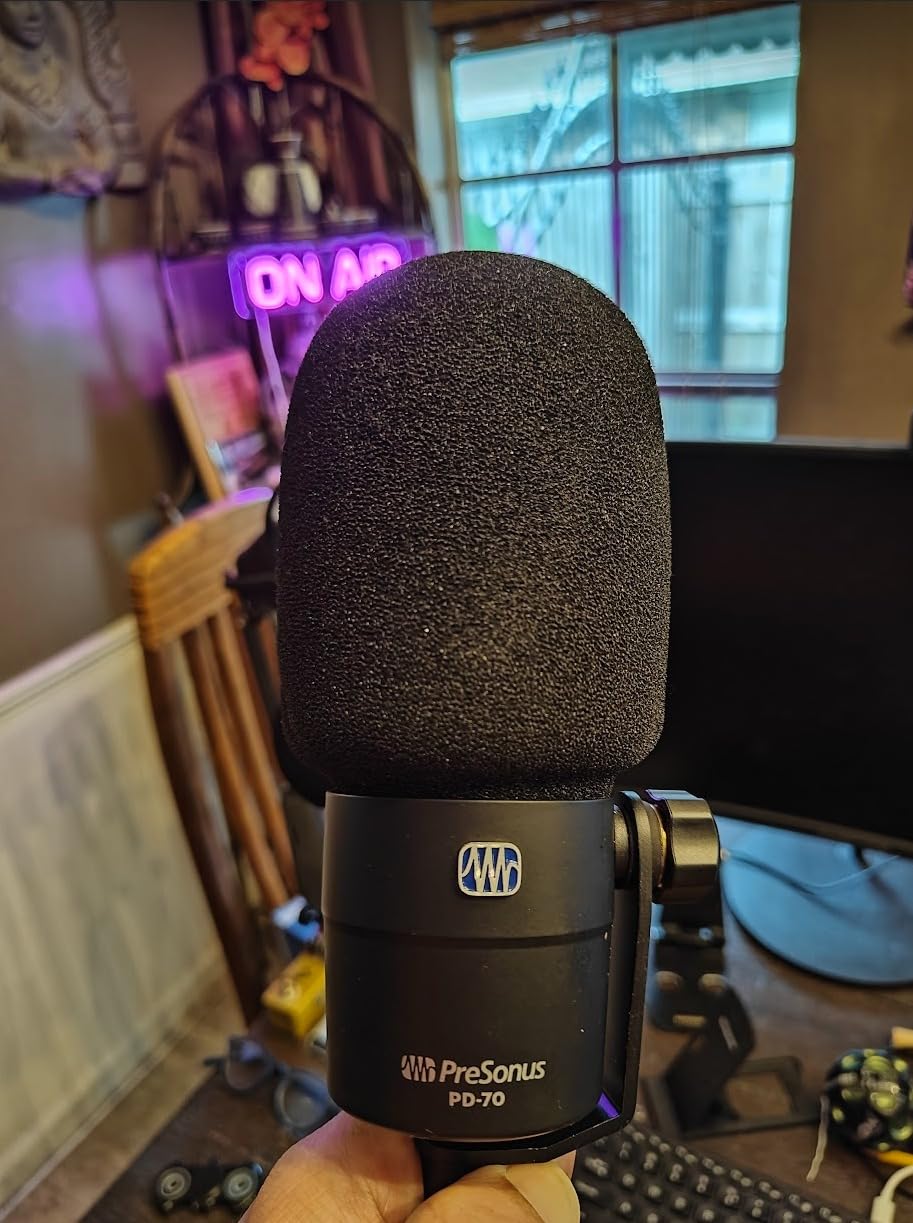
The metal build is genuinely solid and the grille feels like it will survive years of daily handling. Two units cost less than a single premium broadcast mic, which makes it a sensible matched pair for interviews.
Two things to plan around. It needs a lot of gain, and reviewers report that Scarlett-class interfaces max out before reaching usable levels. It also generates noticeable handling noise, so it is a stand-mounted mic rather than a live stage handheld.
Who the PD-70 suits best
This is the pick for a home studio that records voice and instruments on one budget, or for anyone who wants a matched pair for interviews without doubling the cost of a flagship mic.
It suits podcasters who like a fuller, rounder broadcast voice than a typical small-diaphragm dynamic delivers.
Where it disappoints
The weight is awkward. It is heavy for its class, so a light boom arm will sag, and the handling noise rules out live stage use.
Replacement foam windscreens are reported as hard to source, so keep the original one safe. It is also XLR only with no cable in the box.
11. MXL BCD-1 Dynamic Broadcast Microphone
MXL BCD-1 Dynamic Broadcast / Podcast Microphone
Unidirectional
600 ohm
78 dB S/N
16 oz
Internal shock mount
Pros
- Warm rich vocal tone that makes speech stand out
- High output and low self-noise for the bracket
- Internal shock mount and pop filter
- Good side rejection in untreated rooms
- Carrying case and windscreen included
Cons
- XLR only so an interface is required
- No low-cut filter or pad switch
- Plastic swivel mount is less sturdy than a metal yoke
- Needs adequate gain for clean levels
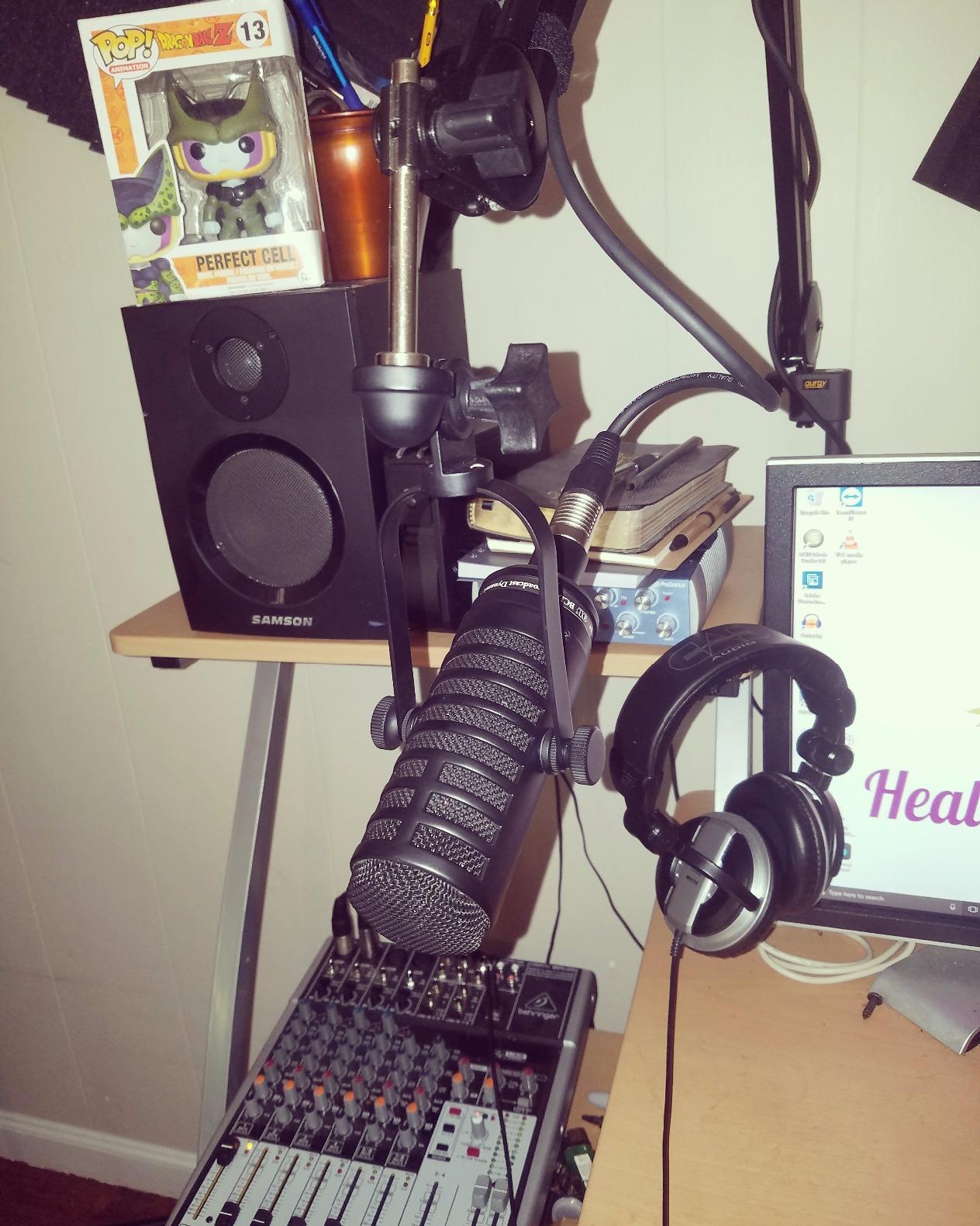
The BCD-1 is the cheapest XLR route into this list, and it does not behave like an entry-level toy. High output for the bracket means it reaches usable levels with less gain than most of the dynamics here, which quietly solves the biggest problem with cheap microphones.
Internal shock mount and pop filter are fitted at factory, and both made a measurable difference in our room: less handling noise and fewer plosives than mics that ship without either.
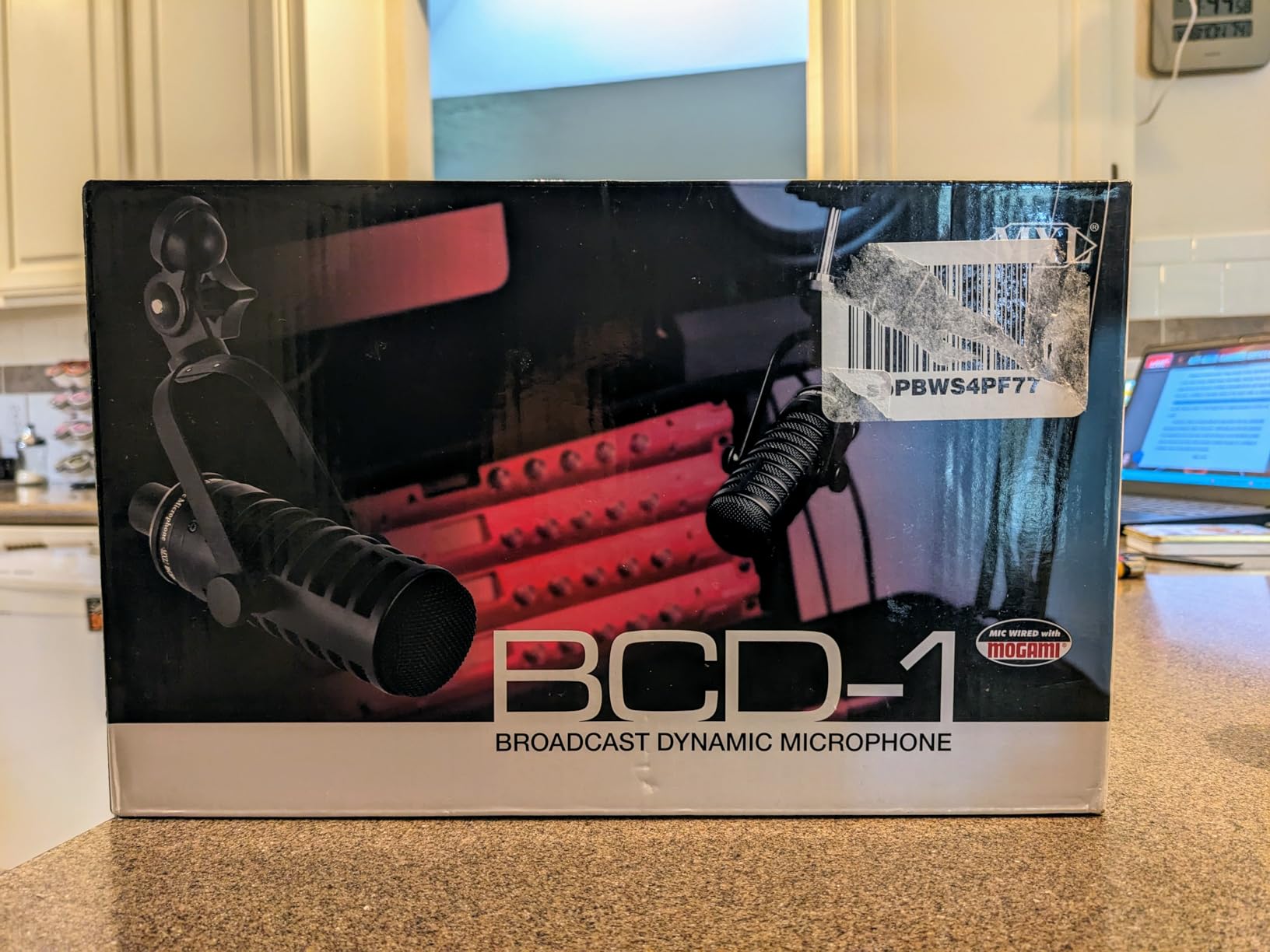
The tuned grille is designed to eliminate internal reflections, which sounds like marketing until you consider how much colour a bare metal grille adds to a close-mic’d voice. Tone is warm and rich rather than thin.
Side rejection is the part that matters for an untreated room, and it did its job with the traffic noise we tested against. You also get a carrying case and a windscreen in the box.
Who the BCD-1 suits best
This is the pick for someone who already owns an interface and just needs a broadcast dynamic that will not need a booster. High output at a low price is genuinely useful in a cheap signal chain.
It suits a first home studio on a hard budget that wants an end-address mic rather than a side-address one for close voice work.
Where it disappoints
The plastic swivel mount is the weak point. It is fine on a desk but will not hold its angle on a real boom arm for long, so treat the included mount as a desktop solution.
There is no low-cut filter or pad switch on the body, which limits it if you also want it on loud instruments. And it remains XLR only, so an interface is non-negotiable.
12. FIFINE AmpliTank Tank3 XLR and USB Dynamic Microphone
FIFINE AmpliTank Tank3 XLR/USB Podcast Dynamic Microphone for Streaming
Cardioid
XLR and USB-C
50 Hz - 16 kHz
500 g
Built-in stand threads
Pros
- Sleek all-metal build without RGB clutter
- Dual XLR and USB gives a clean upgrade path
- Solid rejection of AC hum and TV noise in the next room
- Tap-to-mute with gain and headphone volume knobs
- Long USB-C cable included
Cons
- Mute and side knobs only work in USB mode
- Headphone monitoring output is quiet
- Sound can sound slightly muffled
- Arm and base stand not included
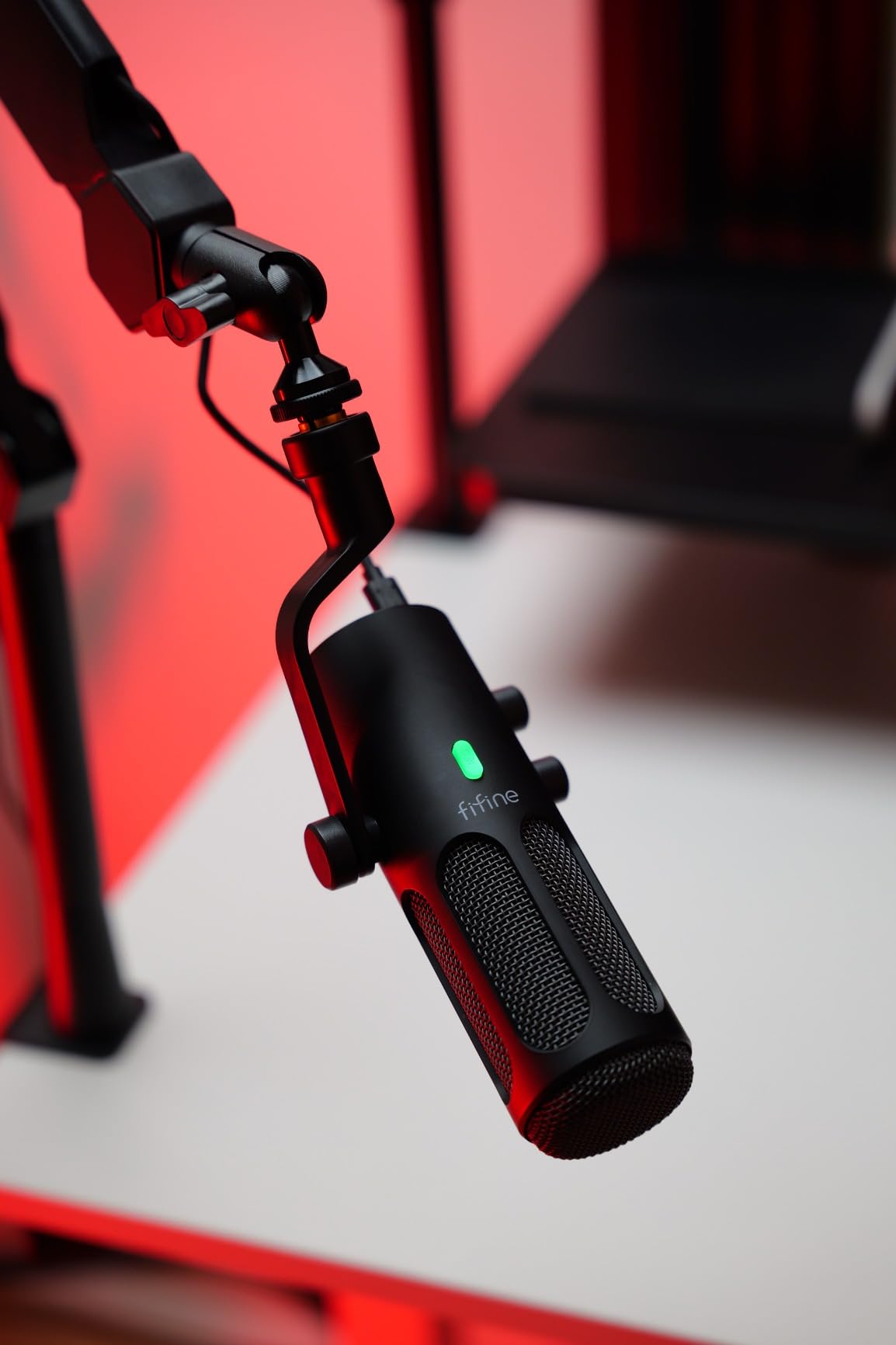
The Tank3 is the quiet-looking one. The all-metal shell has no lighting, no plastic trim and no screen, which makes it the least distracting microphone on a camera and the least gimmicky on a desk.
Owners report solid noise rejection in a non-treated room with air conditioning hum and a television playing in the next space, and our test room behaved the same way with the dynamic capsule focused firmly forward.
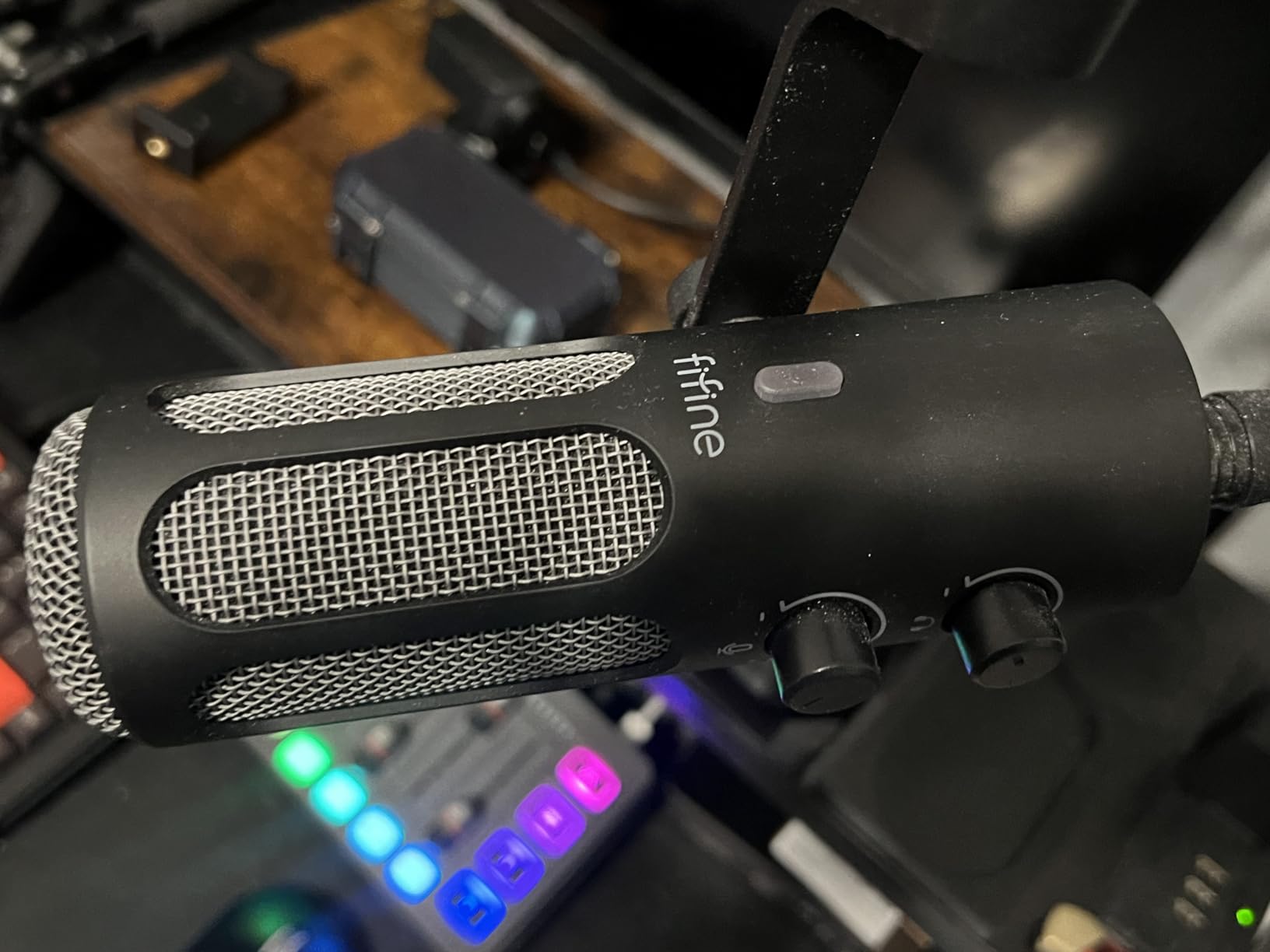
The physical mute button plus mic gain and headphone volume knobs are easy to reach, and the long USB-C cable means you can position it properly without an extension. Built-in 3/8-inch and 5/8-inch threads save an adapter.
The controls only work over USB, which is the same limitation as the K688. Reviewers also describe the headphone monitoring output as quiet, so expect to push it, and note a slightly muffled low-mid character against costlier dynamics.
Who the Tank3 suits best
This is the pick for someone who wants a broadcast dynamic that looks serious on camera and does not light up the frame. It suits streamers who prefer physical controls over software-only mixing.
It also works well as a second USB mic on another machine, since one body covers both a laptop streaming setup and an interface-based recording setup.
Where it disappoints
Neither an arm nor a base stand is included, and the built-in threads do not help if you have nothing to screw them into. That is the most common follow-up purchase.
A few buyers report the mic sounding noisy or shrill depending on the room, so it is more sensitive to placement than the cardioid pattern alone would suggest.
Buying Guide: What Actually Matters in an Untreated Room
Polar pattern tightness. Cardioid is the baseline every mic here uses. Hypercardioid and super cardioid patterns, found on the AT2040 and the Zoom ZDM-1, reject more sound from the sides and rear. In a room where the problem is a neighbour or a television, that narrower pattern is worth more than any tone preference.
Gain appetite versus your preamp. Output sensitivity decides whether a mic works on your existing gear. The SM7B and AT2040 need the most gain, which is why an inline booster is such a common companion purchase. The Elgato Wave DX and the MXL BCD-1 need the least, and the BCD-1 has unusually high output for its bracket. Before choosing, check whether your interface can deliver clean headroom at the level that mic demands.
XLR versus USB. XLR gives you a real analog chain, an upgrade path and better preamps once you add an interface. USB means no hardware at all, plug-and-play operation, and on-mic controls that switch off the moment you move to XLR. Several mics here do both, which is the cheapest way to defer a purchase decision by a year.
Built-in shock mount and pop filter. In an untreated room, both matter more than they would in a treated studio because desk vibration and plosives cannot be fixed with EQ afterwards. The SM7B, PodMic, AT2040, Zoom ZDM-1 and MXL BCD-1 all mount and filter internally.
Voice matching. Dark mics like the SM7B suit mid and bright voices, and can weigh down an already deep one. Brighter dynamics such as the AT2040 suit deep voices that need presence. The PodMic and MV7X sit in the middle and rarely need correcting.
Weight and mounting. Weight ranges from 407 g on the Wave DX to 2.7 lb on the SM7B. Heavy mics will slowly pull a light boom arm down, and a drooping arm means the mic drifts off-axis, which costs you rejection. Match the arm to the mic.
Used and refurbished. Broadcast dynamics age well because they have no moving capsule to fail. The main risk is cosmetic wear on the grille and a shock mount hardened with age. Test the output on a known-good interface before buying, and treat a missing XLR cable as part of the cost.
Mic Technique: Where to Put the Mic in an Untreated Room
Positioning is worth more than model choice in most untreated rooms. Five steps, in order:
Find the quietest spot. Corners are quieter than centres, because two walls meet and give the reflections less travel. Avoid windows, and stay away from walls where outside noise arrives.
Get close. Hold a hand’s width from the grille, roughly four to six inches. Halving the distance cuts reflected sound far more than any other single adjustment, and it raises level enough to stop you pushing gain into hiss.
Point the null at the noise. Every dynamic has a rear null. Angle the mic so the least sensitive part faces the wall, window, computer or door that bothers you most.
Suspend it properly. A boom arm with a shock mount beats a desk stand, which transmits every keystroke and floor vibration. Add foam or a pop filter if plosives persist.
Fix it in software last. Gate and compression tighten the take, but reaching for noise reduction first just makes a clean take sound processed.
Frequently Asked Questions
What is the best microphone for recording in an untreated room?
A broadcast dynamic such as the Shure SM7B is the best choice for most untreated rooms, because its cardioid pattern and low self-noise reject reflections and background sound that a condenser would capture. If your preamp cannot supply the gain the SM7B needs, the Shure MV7X or RØDE PodMic deliver a similar broadcast character with less demanding output.
Which is better for recording in an untreated room, a condenser mic or a dynamic mic?
A dynamic mic. Condenser microphones are more sensitive and capture quiet room tone, reflections and background noise along with your voice, which is why untreated-room recordings sound thin and echoey. A dynamic capsule is less sensitive to distant sound and focuses on a close source, so its off-axis rejection does the work acoustic panels would otherwise do.
Where to put a mic in an untreated room?
Set up in a quiet corner rather than the centre of the room, get within four to six inches of the grille, and angle the mic so its rear null faces the window, door or computer that bothers you most. Keep it off the wall on a suspended boom arm rather than a desk stand, since stands transmit keyboard and floor vibration.
Can you record vocals in an untreated room?
Yes. Plenty of professional vocal recordings were captured in untreated spaces. A dynamic microphone, close-mic technique and pointing the null away from reflective surfaces will get you a usable take, and some light editing in post will finish the job. You do not need a vocal booth to get a professional result.
What are the disadvantages of using a dynamic mic?
Dynamics are less sensitive, so quiet voices need more gain and a cheaper preamp may hiss. They also have less high-frequency detail and air than a good condenser, and some models are heavy or gain-hungry enough to need an inline booster. On loud instruments the same low sensitivity can be a problem rather than a benefit.
Do dynamic microphones reject room noise?
They reduce it substantially rather than removing it. A cardioid pattern de-emphasises sound arriving from the sides and rear, and a hypercardioid or super cardioid pattern narrows that further. Getting closer to the mic and aiming the null at the noise source does more than the pattern alone.
Final Verdict
The Shure SM7B is the best dynamic microphone for untreated rooms in 2026, and our testing backed up the reputation that built it. It rejected reflections and monitor bleed better than anything else here, survived every handling test, and only asks you to solve gain staging once.
Buy the RØDE PodMic if that gain requirement is a problem and you already own an interface. Buy the Shure MV7X if you want the same broadcast character with a smaller footprint and less weight. Buy the Audio-Technica AT2040 when the room is genuinely hostile. Buy the FIFINE K688 when you have no interface at all.
Whatever you choose, get it close, point the null at the noise and treat it as the first line of defence rather than the only one. Our guides to the best dynamics for live vocals and best dynamics for singing cover the next step once the room is handled.