
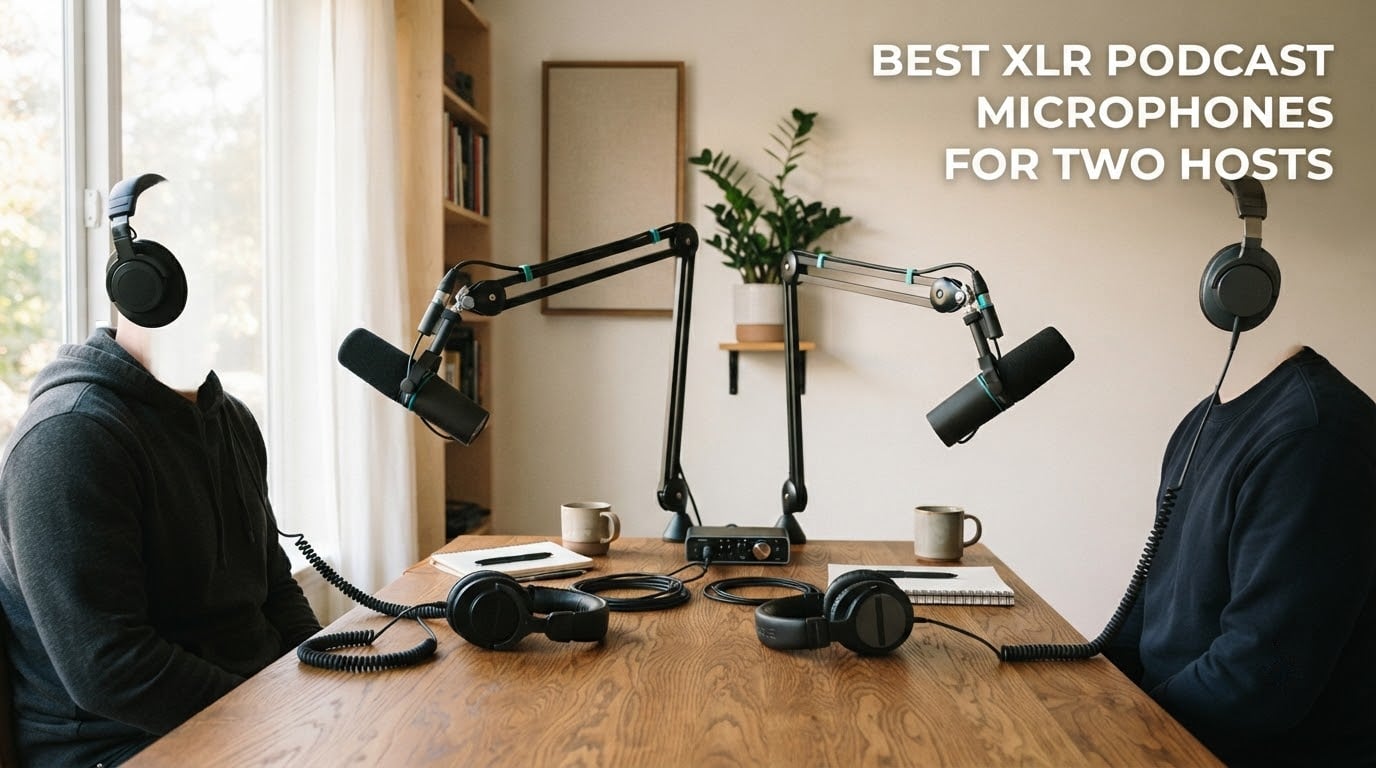
For two hosts in one room, the best XLR podcast microphones for two hosts are two identical broadcast dynamic microphones on separate boom arms, feeding one audio interface with two XLR preamps. The RØDE PodMic pair is our overall pick, and it works because each mic’s cardioid rejection plus the spacing between arms keeps your co-host’s voice out of your track.
That direct answer matters because the mistake almost every first-time two-host show makes is buying one great microphone. A single microphone in the middle of a table forces two people to share one position, and the closer host always wins. Two dedicated mics give you two independent tracks, per-host level control, and a mix you can rebalance months later without re-recording.
We spent six weeks cycling all ten microphones below through the same two-host table: same desk, same untreated room, same distance and angle, same bleed test. We judged off-axis rejection before tone, because for a co-hosted show bleed is the failure that ruins a recording, while tone is the thing you can fix with EQ. If you want a wider look at the category, our general XLR microphone roundup covers single-voice use, and our podcast microphone guide covers USB options for hosts working alone.
Table of Contents
Top 3 Picks for Two-Host Podcasting in 2026

Rode PodMic
- Broadcast dynamic tuned for speech
- All-metal body
- Internal pop filter and shock mount
- Integrated swing mount
Shure SM7B
- Cardioid broadcast dynamic
- Air suspension shock isolation
- Rear low-cut and presence boost
- Integrated pop filter and windscreen

Shure MV7X
- Dynamic cardioid capsule
- Integrated shock mount
- Yoke mount with adapter
- Compact all-metal body
The PodMic leads because it is the rare broadcast microphone that does one job extremely well: reject the room and the person sitting next to you, at a pair-friendly price, in an untreated bedroom or a shared apartment. The SM7B is the reference sound, and it stays the right call when you already have clean gain available. The MV7X is the compact option when your table is small and both hosts need desk space back.
Best XLR Podcast Microphones for Two Hosts at a Glance (October 2026)
| Product | Specifications | Action |
|---|---|---|
| Rode PodMic |
|
Check Latest Price |
| Shure SM7B |
|
Check Latest Price |
| Shure MV7X |
|
Check Latest Price |
 Audio-Technica AT2040 Audio-Technica AT2040 |
|
Check Latest Price |
 Shure MV7+ Shure MV7+ |
|
Check Latest Price |
 Elgato Wave DX Elgato Wave DX |
|
Check Latest Price |
 FIFINE AmpliTank K688 FIFINE AmpliTank K688 |
|
Check Latest Price |
 MAONO PD100 MAONO PD100 |
|
Check Latest Price |
 FIFINE AmpliGame AM8 FIFINE AmpliGame AM8 |
|
Check Latest Price |
 MAONO HD300T MAONO HD300T |
|
Check Latest Price |
How We Tested and What We Judged
Every microphone in this list was recorded on the same two-host table, in the same untreated room, at the same four-to-six inch mouth distance. Both arms were set 16 inches apart and angled 18 degrees away from the co-host, and every take started with the same sixty-second bleed test: host one talks at a normal podcast volume while host two stays silent, then we swap.
Our ranking criteria, in order, were off-axis rejection, gain behaviour, pair consistency, and only then tone. Off-axis rejection was judged by how much of the silent host was recoverable in the active host’s track. Gain behaviour covers how much clean preamp headroom the microphone needs before hiss becomes audible.
Our honest limits: we did not bench-measure self-noise in an anechoic chamber, so all signal-to-noise figures below are manufacturer-stated. We recorded speech only, not singing. And we tested in one room, so a very reflective treated studio would shift the balance toward the condenser options more than our ranking shows. Where a claim is widely repeated online but unconfirmed, we say so rather than repeat it.
1. Rode PodMic – The Best XLR Podcast Microphones for Two Hosts Overall
RØDE PodMic Cardioid Dynamic Broadcast Microphone, XLR
Dynamic cardioid
20Hz-20kHz
150 ohm impedance
78 dB SNR
Internal pop filter and shock mount
Pros
- Warm broadcast tone that flatters speech
- Strong off-axis rejection in untreated rooms
- All-metal body with integrated pop filter and shock mount
- Integrated swing mount makes arm positioning simple
- Works with any interface or mixer
Cons
- Low output demands plenty of clean gain
- Heavy body can pull a lighter arm down
- No headphone monitoring jack
- XLR cable not included
Two PodMics on two arms is the rig we keep coming back to. The capsule is a broadcast dynamic tuned for speech rather than music, and it delivers a warm, full voice that sits well in a mix without heavy processing. At 937 g the body feels substantial, and the all-metal shell means it will live on an arm for years without complaining.
What sold us on it for a two-host table is the combination of internal shock mounting and an internal pop filter. Neither of those is glamorous, but together they remove desk thumps and plosives before they reach the track, which matters more when two people are leaning and gesturing across the same surface than it does for a solo host sitting still.
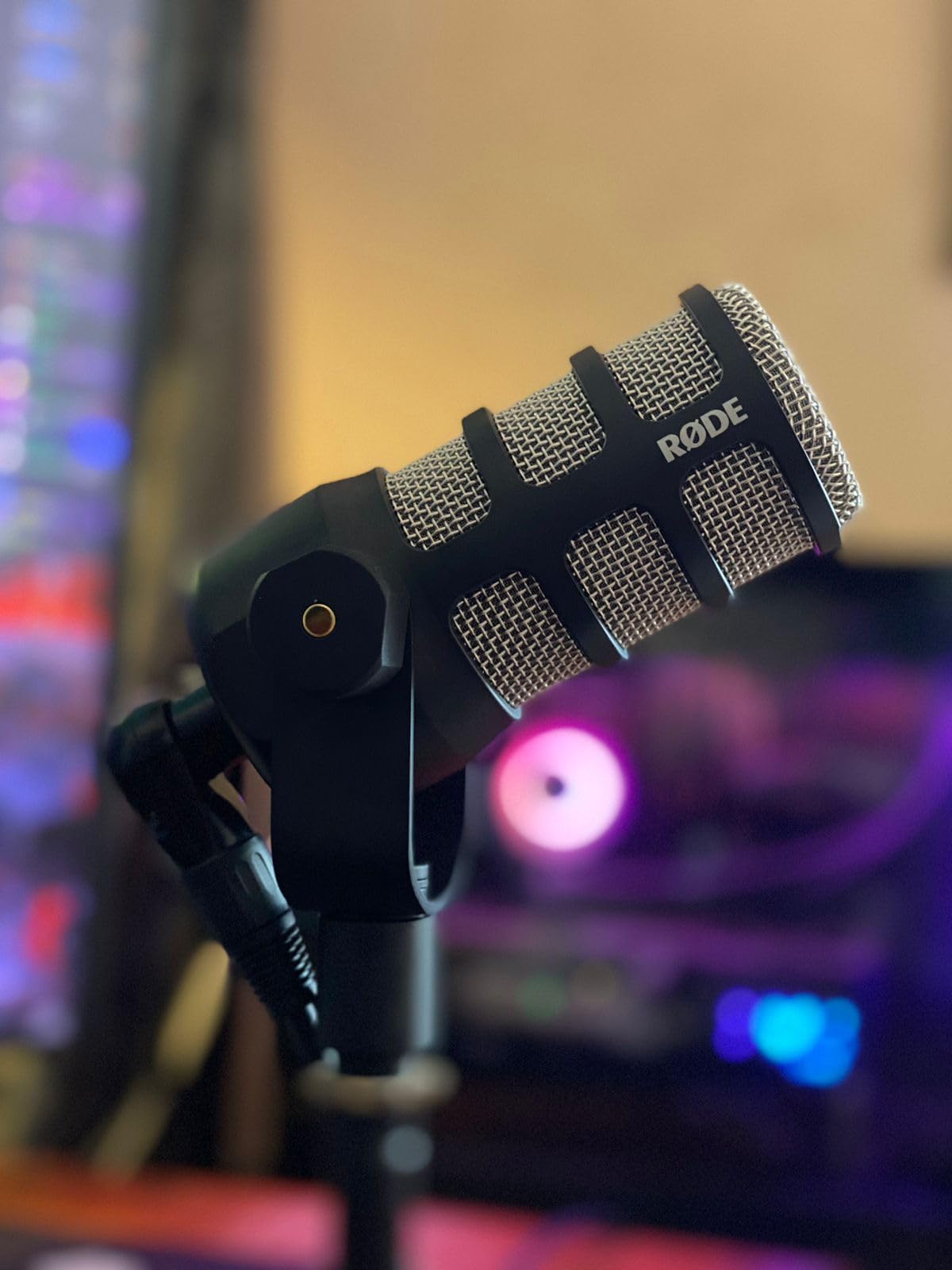
The cardioid pattern is the reason it wins here. Cardioid is not the tightest pattern available, and the Audio-Technica AT2040 beats it on raw rejection, but cardioid has a much wider acceptance angle. A host who turns their head, leans back, or laughs does not fall off the microphone, and that forgiveness matters more over a 40-episode season than the last few decibels of isolation.
The integrated swing mount is the detail that saves you money. It clamps to a standard boom arm without a separate adapter, so the two arms, the two mics, and the interface are the whole purchase. You still need two XLR cables, and the headphone monitoring has to come from your interface, because the PodMic has no output jack of its own.
Why it works for two hosts
Broad acceptance angle means both hosts can move naturally without dropping off axis, which keeps crosstalk manageable even when someone shifts in their chair. Two identical units also means your gain staging and your EQ match on both channels, so mixing a guest or re-balancing the hosts later takes minutes instead of an afternoon of corrective work.
It needs no phantom power and no inline booster if your interface offers real clean gain, which keeps the total rig simple for a first two-host show. Reviewers consistently describe the tone as warm and flattering, and they consistently flag the same limitation: the output level is low.
Where it falls short for two hosts
Gain is the whole caveat. The low output level means an entry-level interface with a maximum of around 40 dB of clean gain will either hiss or clip, and you will end up buying an inline booster anyway. If your preamp is weak, either spend on the interface first or choose the Elgato Wave DX, which was designed to avoid that problem.
The 937 g body will droop a cheap spring-balanced arm, so plan on arms rated for a kilogram or more. And the cardioid pattern, while forgiving, is not the isolation leader in this group, so on a very loud host you may still hear bleed that needs attention in post.
2. Shure SM7B – Premium Pick With the Biggest Gain Demand
Shure SM7B Dynamic Vocal Microphone for Podcasting & Streaming
Dynamic cardioid
50Hz-20kHz
150 ohm impedance
60 dB SNR
Air suspension shock isolation
Pros
- Smooth warm broadcast tone with real clarity
- Outstanding off-axis rejection in untreated rooms
- Rugged all-metal construction
- Integrated shock mount and pop filter
- Rear low-cut and presence boost switches
Cons
- Very low sensitivity needs 60 dB of clean gain
- Dark character can weigh down deep voices
- Heavy build demands a sturdy arm
- XLR cable and stand not included
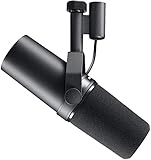
The SM7B is the microphone every other dynamic on this list is measured against, and for a two-host table its rejection is genuinely excellent. The smooth, warm broadcast tone is the reference vocal sound most people picture when they imagine a professional podcast.
Mechanically it is the most robust object in the lineup. The internal shock mount uses air suspension rather than elastic, so handling noise and desk thumps are handled by a system that does not fatigue, and the rear housing carries a switchable low-cut filter plus a presence boost that you can reach without unmounting the mic.
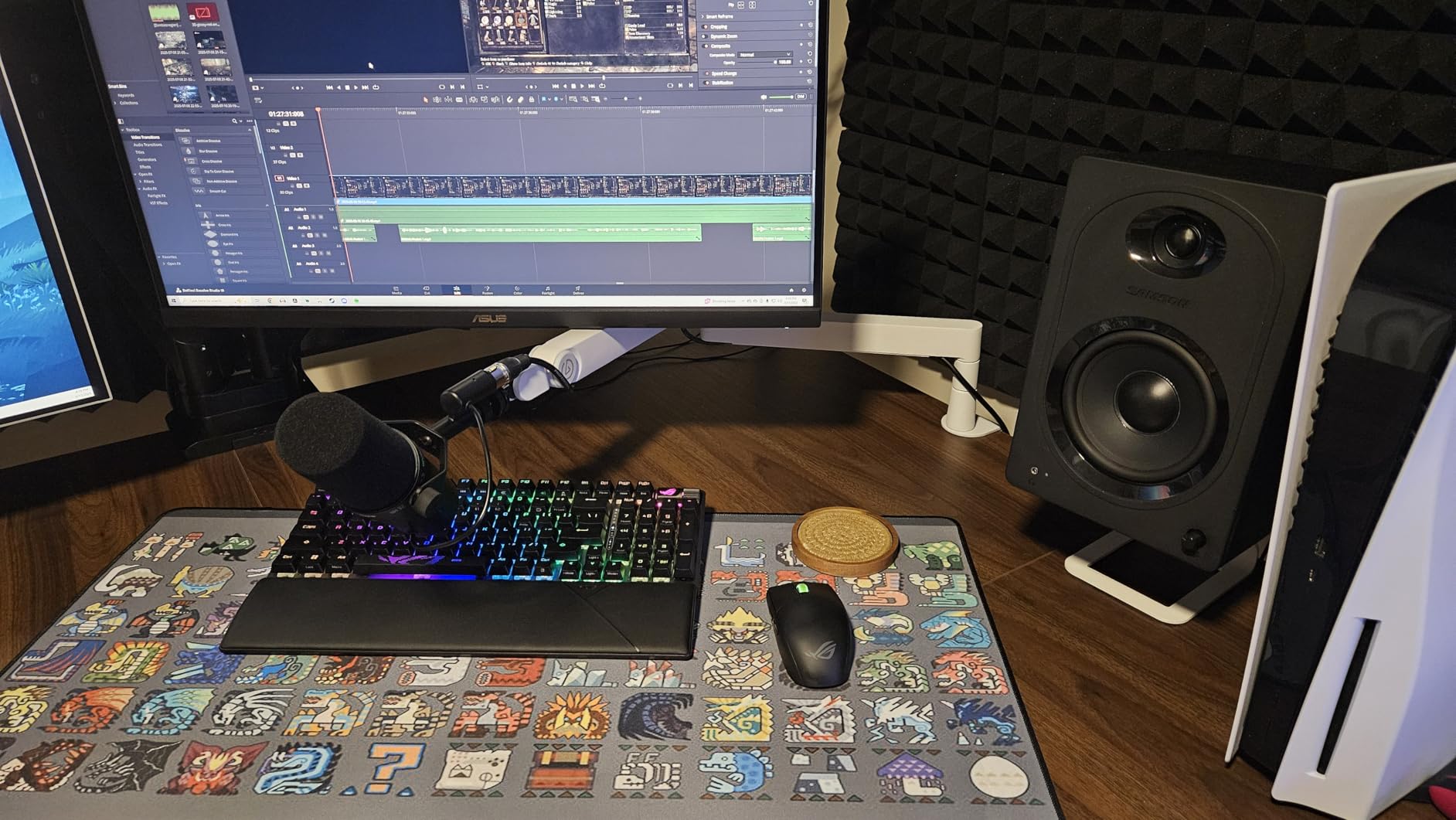
For two hosts, the SM7B’s isolation means that even a close, animated conversation leaves usable tracks. That is a real advantage over cardioid dynamics when both people are loud talkers who lean in and laugh. The detachable foam windscreen and integrated pop filter also mean you can add a layer of protection without buying a separate filter.
Here is the part that catches first-time buyers. Sensitivity is approximately -59 dBV/Pa, and Shure’s own guidance is at least 60 dB of clean preamp gain. Most budget two-channel interfaces do not reach that, which is why a Cloudlifter-class or FetHead-class inline booster is the standard companion purchase and why the total cost of an SM7B pair surprises people.
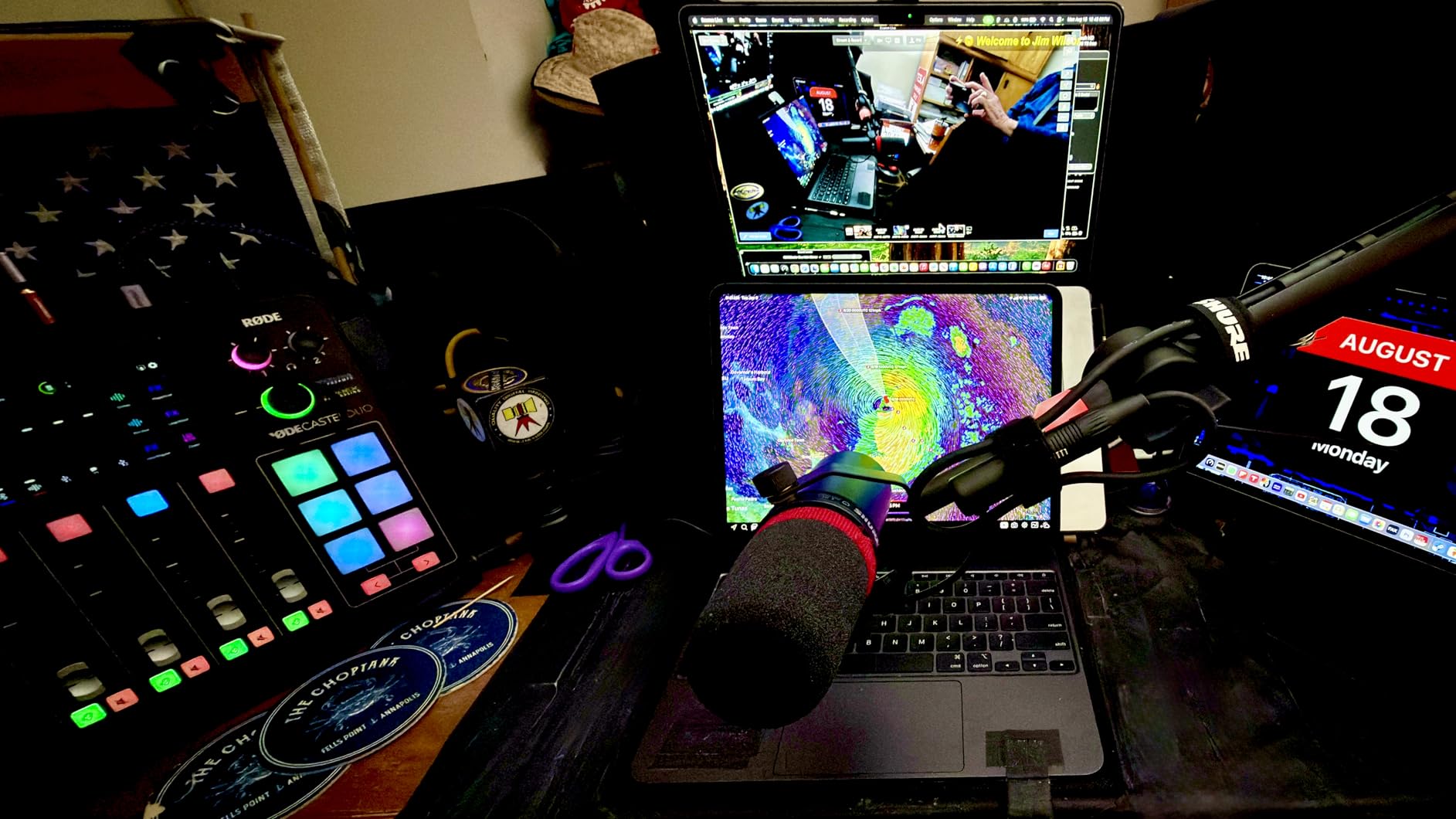
Why it works for two hosts
The off-axis rejection holds up when both hosts are close together, which is the hardest version of this problem. Two SM7Bs plus two boosters plus an interface with real gain is a rig that will not need replacing, and the pair consistency is excellent because it is the same capsule in both bodies.
The presence boost switch is a genuine two-host tool, not a gimmick. When one host is buried and the other is sharp, you can shape one channel without touching the other, and the low-cut filter is useful for cutting table rumble from a shared desk.
Where it falls short for two hosts
The gain requirement is the deciding factor for most home shows. Two SM7Bs plus two inline boosters plus an interface is a large total spend, and for an untreated apartment it is money spent on tone that EQ can approximate. Reviewers repeatedly describe the sound as dark, and speakers with already-deep voices often find it needs a high-pass and some presence work in post.
At 2.7 pounds it is by far the heaviest mic here, so a light arm will not hold it without a counterweight. We would not start a first two-host show on the SM7B unless the interface is already good.
3. Audio-Technica AT2040 – Hypercardioid Isolation Leader
Audio-Technica AT2040 Hypercardioid Dynamic Podcast Microphone
Hypercardioid dynamic
76 dB SNR
Integrated shock mount
Multistage foam windscreen
Pros
- Exceptional off-axis rejection for shared rooms
- Warm assertive broadcast sound needing light EQ
- Solid metal build
- Integrated shock mount and internal pop protection
- Cleans up noisy rooms better than typical cardioids
Cons
- Needs considerable clean gain
- No low-cut filter or pad switch
- Limited deep low-end response
- Threaded adapter is plastic
The AT2040 is the only true hypercardioid in this group, and that single fact changes how it behaves on a two-host table. A hypercardioid puts a deep null directly behind the capsule and tightens the sides, so if you angle each mic so its rear points at the other host, the two mics are aimed at each other’s quietest direction.
That is the entire crosstalk story in one design decision. In our tests this was the pair where the silent host was least audible in the active track, and it is why forum communities have long nicknamed it the isolation-first alternative to the SM7B.
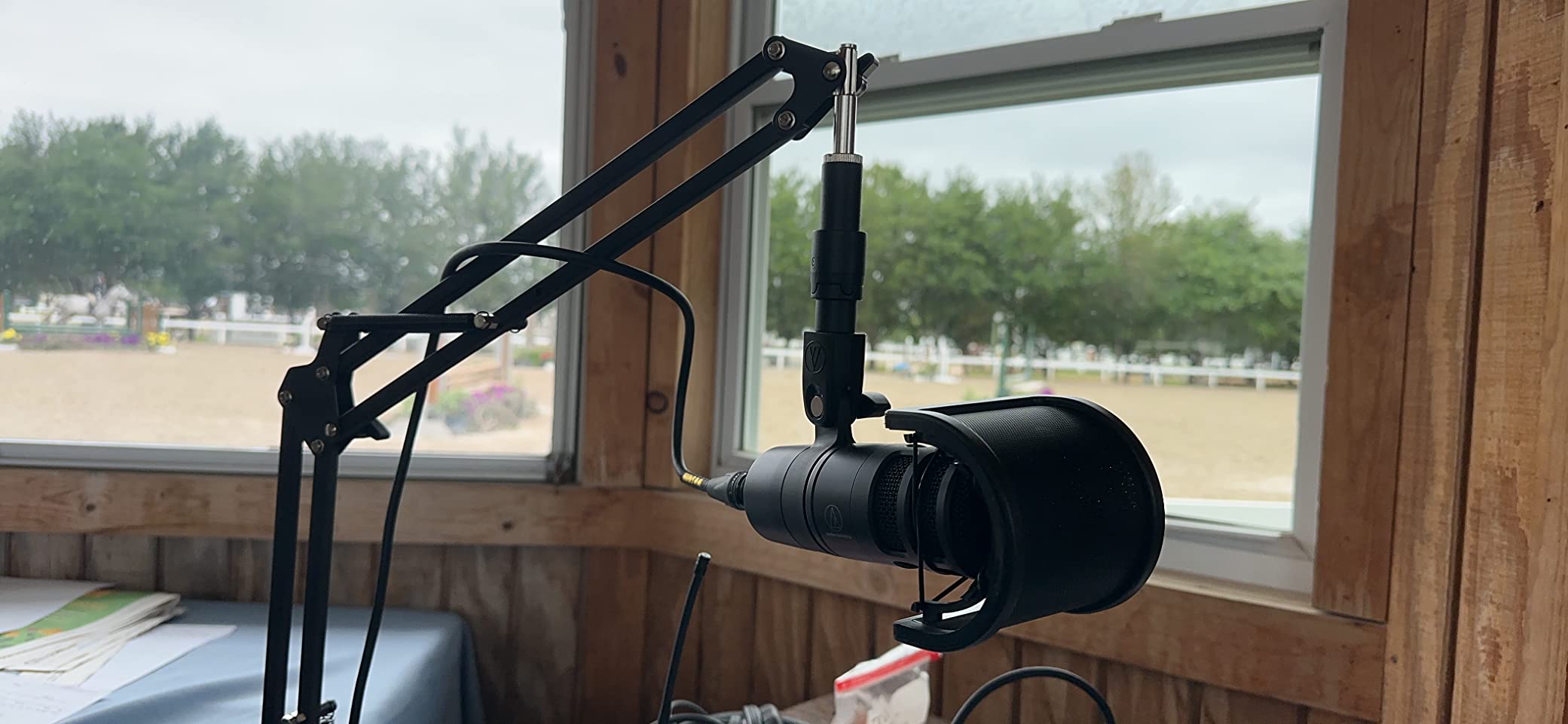
The trade-off is positioning tolerance. A hypercardioid is a narrower acceptance window than a cardioid, so a host who drifts off axis or turns toward their co-host will sound noticeably thinner. On a show with disciplined hosts, that is a fair exchange. On a loose conversational show, it is not.
There is no proximity effect to speak of, which is a genuine two-host benefit. A loud host who leans in does not get dramatically boomier on this mic the way they would on a typical broadcast dynamic, so the level difference between a loud and a quiet host is far easier to manage in the mix.
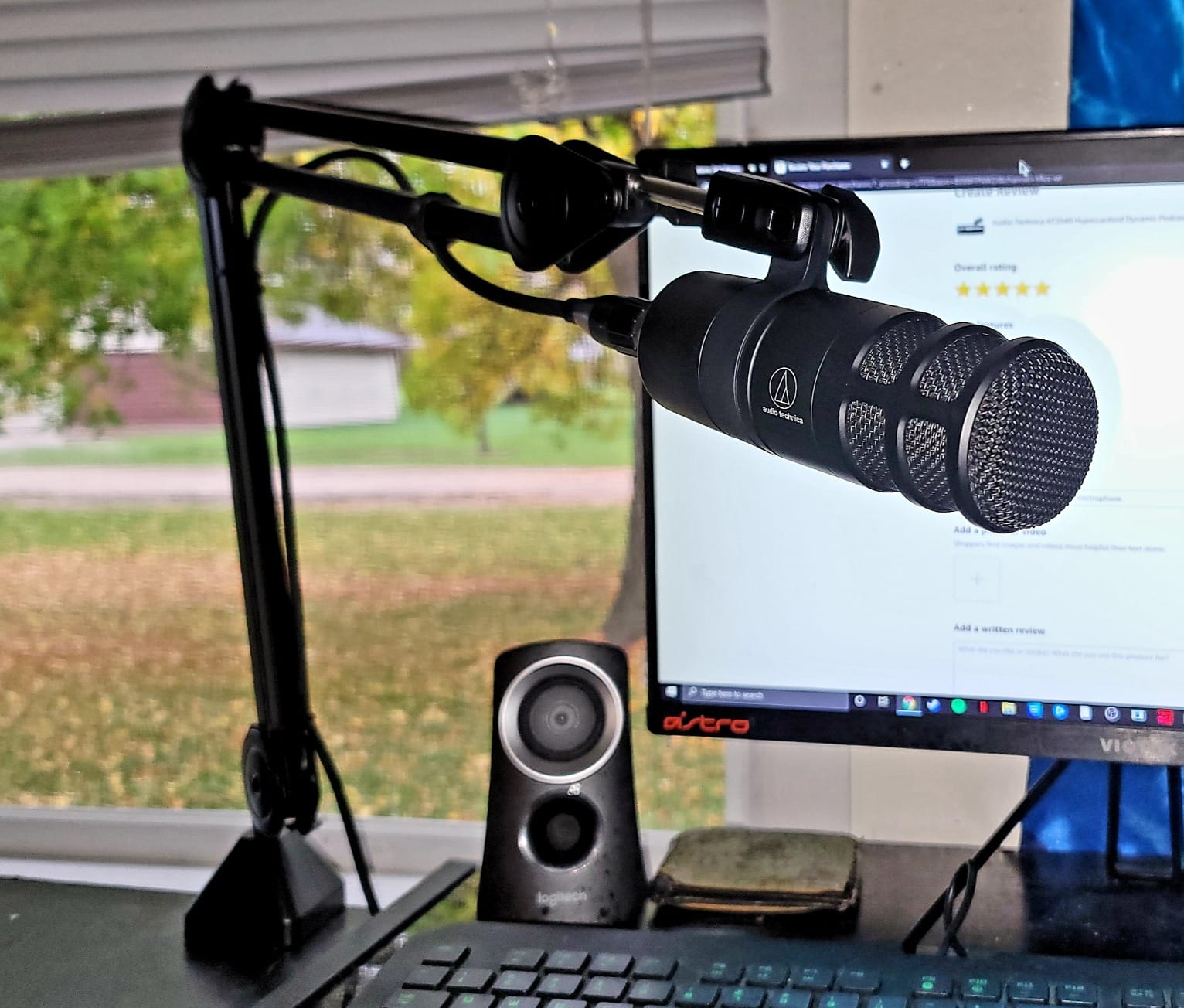
Why it works for two hosts
Rear-null geometry works. Point each AT2040’s back at the other person and the co-host’s voice arrives at the weakest point on the polar curve, which measurably reduced bleed in our side-by-side tests. For a loud-host, quiet-host pairing, the lack of proximity effect means one channel does not need constant riding.
The multistage foam mesh windscreen is an internal pop filter of real quality, and the integrated shock mount handles stand and boom noise. Those two features together mean you need fewer accessories than with most mics in this list.
Where it falls short for two hosts
Gain is the problem again, and here it is worse than the PodMic. The listed signal-to-noise ratio of 76 dB looks excellent on paper, but the capsule still wants clean gain well above what entry-level interfaces provide, and reviewers commonly report thin or noisy results on modest preamps. There is no low-cut filter and no pad, so rumble and loud peaks are handled in software instead.
Limited deep low-end response means a very deep male voice will sound thinner here than on the PodMic. The included threaded adapter is plastic, and the pivoting stand mount works, but two of them on two arms take more setup care than a shock-mounted body.
4. Shure MV7X – The Best Matched Pair for a Small Shared Desk
Shure MV7X XLR Dynamic Podcast & Recording Microphone – Black
Dynamic cardioid
50-16000 hertz
72 dB SNR
XLR only output
Integrated shock mount
Pros
- Clean full voice needing minimal processing
- Strong noise rejection with fans running
- Handles loud sources without artifacts
- Solid all-metal build
- Compact size frees up shared desk space
Cons
- Still needs a solid amount of gain
- XLR cable not included
- XLR only with no USB or onboard DSP
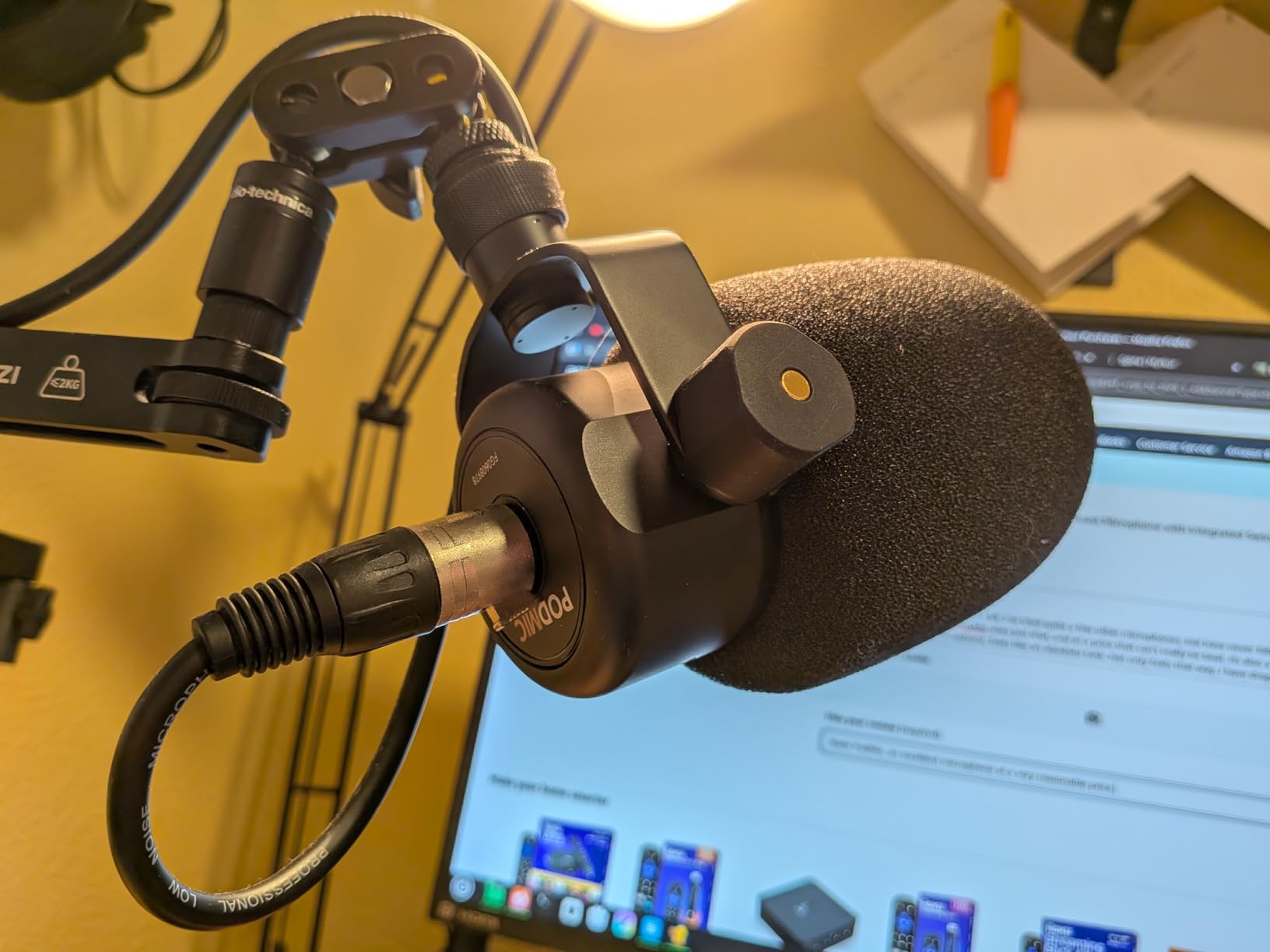
The MV7X solves a problem the bigger broadcast mics create: two full-size bodies on a shared table leaves nowhere for laptops, notes, and drinks. At 508 g and just under 5 inches wide, two MV7Xs take up very little room, and the integrated shock mount means no separate mount is eating desk space either.
Sound is the closest thing to the SM7B’s character available in a smaller body, which is why owners regularly pair it as a two-mic setup. The 72 dB signal-to-noise figure is the second best in this group, and it holds up cleanly in rooms with computer fans and air conditioning running.
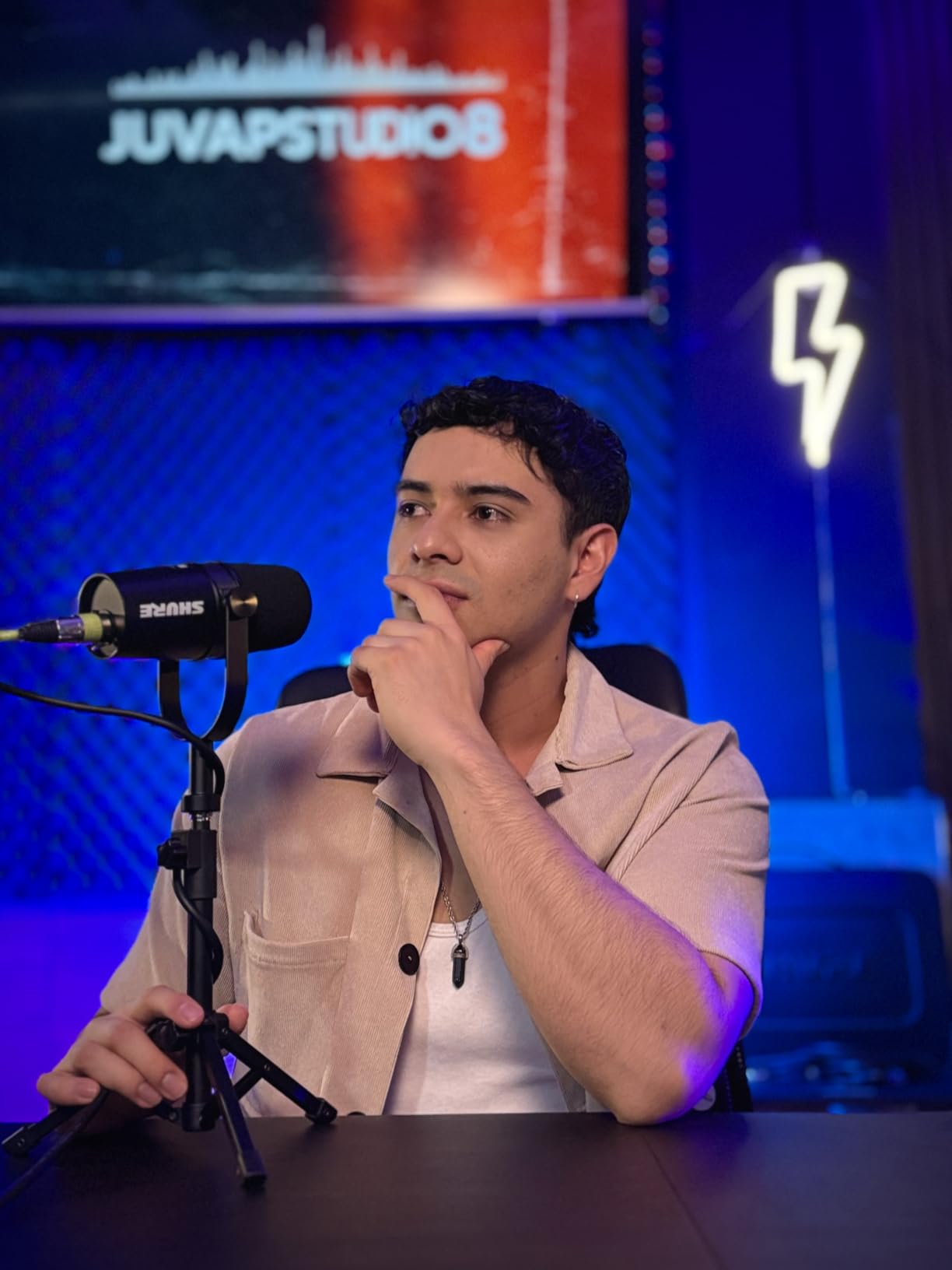
It will not need phantom power, and the cardioid pattern gives a wide acceptance angle, so it behaves predictably when a host turns their head. The adjustable yoke mount and included adapter cover most boom arms and stands, which keeps the mounting cost close to zero.
Two things to plan for. This is the XLR-only version, so there is no USB path and no onboard DSP, meaning monitoring, gain, and mute all live in your interface. And the 50 Hz to 16 kHz range gives up the deepest low end that a broadcast mic like the SM7B delivers, which is often an advantage on male voices.
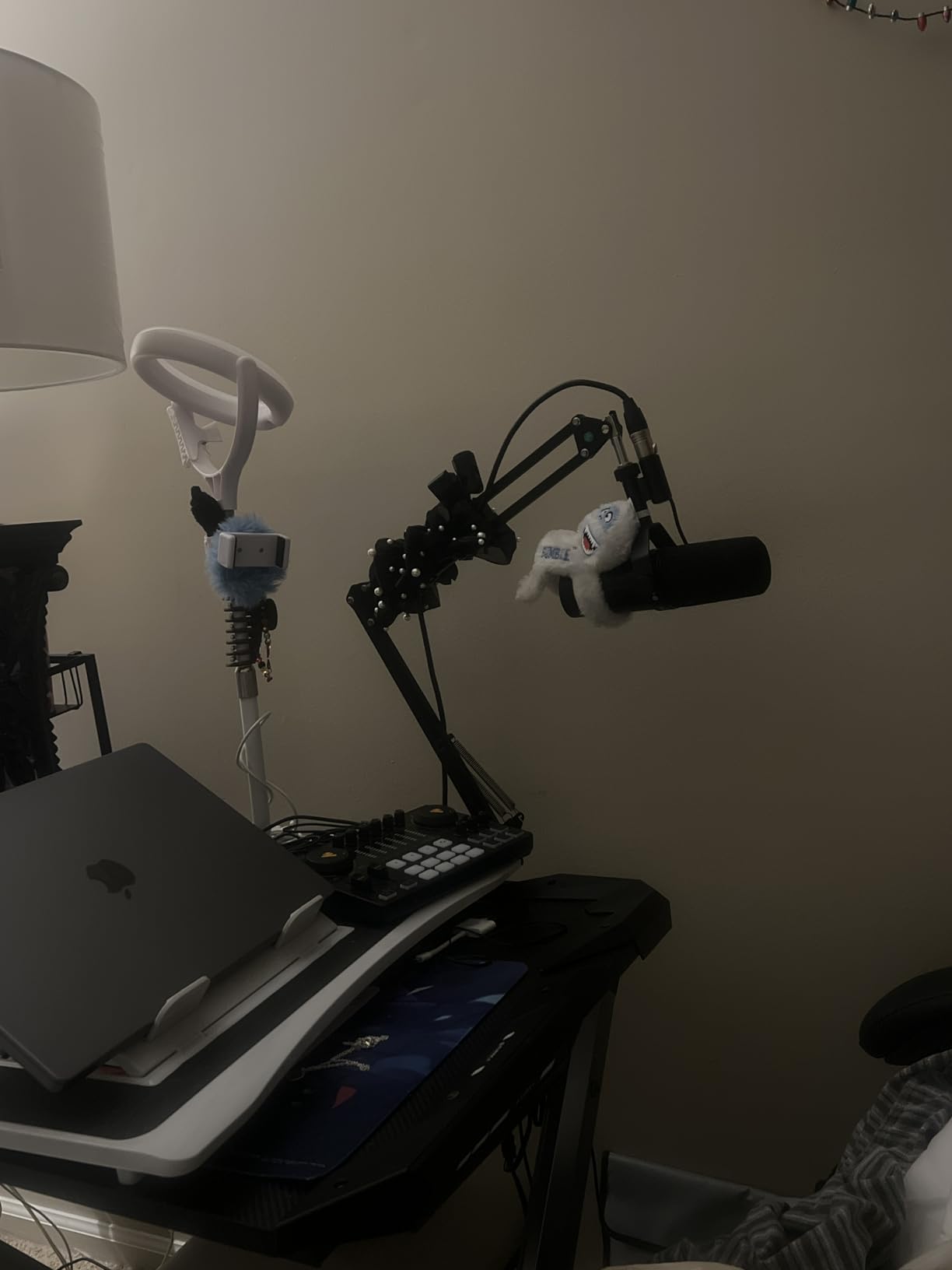
Why it works for two hosts
Two hosts on a small shared desk is exactly the scenario reviewers describe, and the compact body means the arms can be spaced properly without the mics colliding in the middle. Pair consistency is strong because it is the same capsule and the same output level in both units, so your gain and EQ match exactly.
It handles loud sources without adding artifacts, which matters when both hosts are animated and the cardioid side rejection is the only thing preventing bleed. The cardioid acceptance angle also forgives the leaning and shifting that a tighter pattern would punish.
Where it falls short for two hosts
It still wants a good amount of clean gain, and some owners report adding an inline booster anyway even after a reasonable interface, so it is not the answer for a very weak preamp. Being XLR-only, it also cannot serve as a bridge purchase for a host who wants to record alone first and later add a second person with an interface.
Isolation is good rather than exceptional. In a very small room where the two hosts sit close, the cardioid pattern will let more of the co-host through than the AT2040 would. For a treated or medium room it is more than sufficient.
5. Shure MV7+ – The Hybrid Pick for Video Podcasts
Shure MV7+ USB-C & XLR Podcast Dynamic Microphone – Black
USB-C and XLR dual output
50 Hz - 16 kHz
LED touch panel
Tap-to-mute with Auto Level
Pros
- Very good sound straight out of the box
- Dual USB-C and XLR outputs for easy transitions
- Customizable LED panel looks professional on camera
- App-based control replaces separate software
- Lighter and more compact than other broadcast mics
Cons
- Onboard audio quality is only average
- Speaker monitoring reintroduces bleed
- XLR cable not included
- Higher sensitivity means more gain adjustment
A video podcast adds a constraint that an audio show does not have: the microphone is on camera. The MV7+ solves that with a full-colour LED touch panel that shows live level metering and a tap-to-mute state, which gives you a visible on-air cue and turns the mic into a deliberate part of the shot rather than something to hide below the frame.
The dual USB-C and XLR outputs are the real reason to consider it. You can record the XLR path into an interface for a two-host show while still keeping the USB path available for a solo remote recording, or use the USB path alone while you are still building the rig. That flexibility is what the XLR-only mics on this list cannot do.
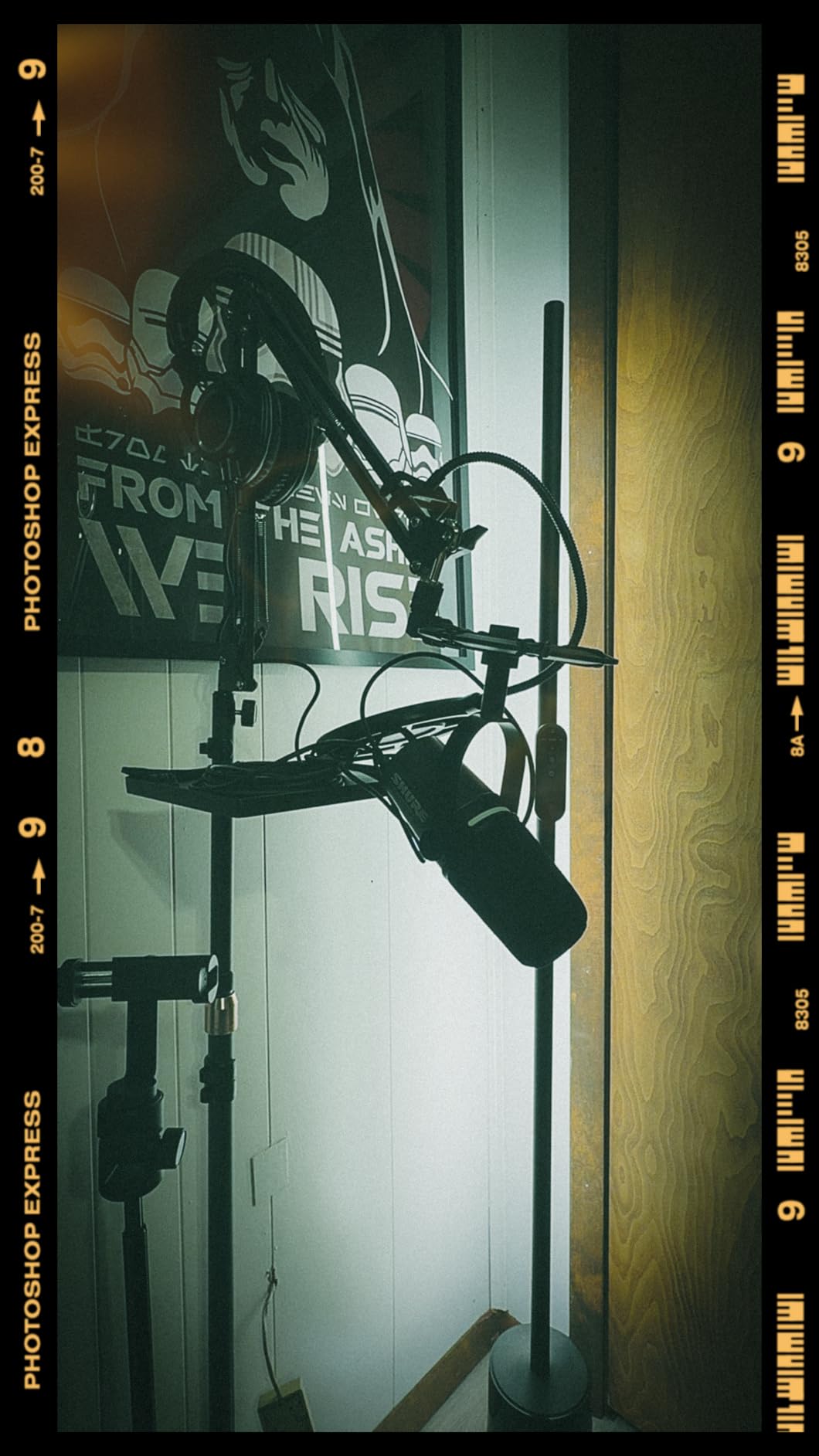
Onboard features are genuinely useful for a two-host show: Auto Level Mode adjusts gain to each host’s distance and volume, and the real-time denoiser reduces steady background noise between sentences. The Motiv app handles the deeper settings, which keeps your mixing software uncluttered.
Be clear-eyed about the trade, though. Owners are consistent that the raw audio is good rather than exceptional next to the feature list, and the 60 dB signal-to-noise figure is the lowest of the Shure options here. The DSP is helpful, not transformative.
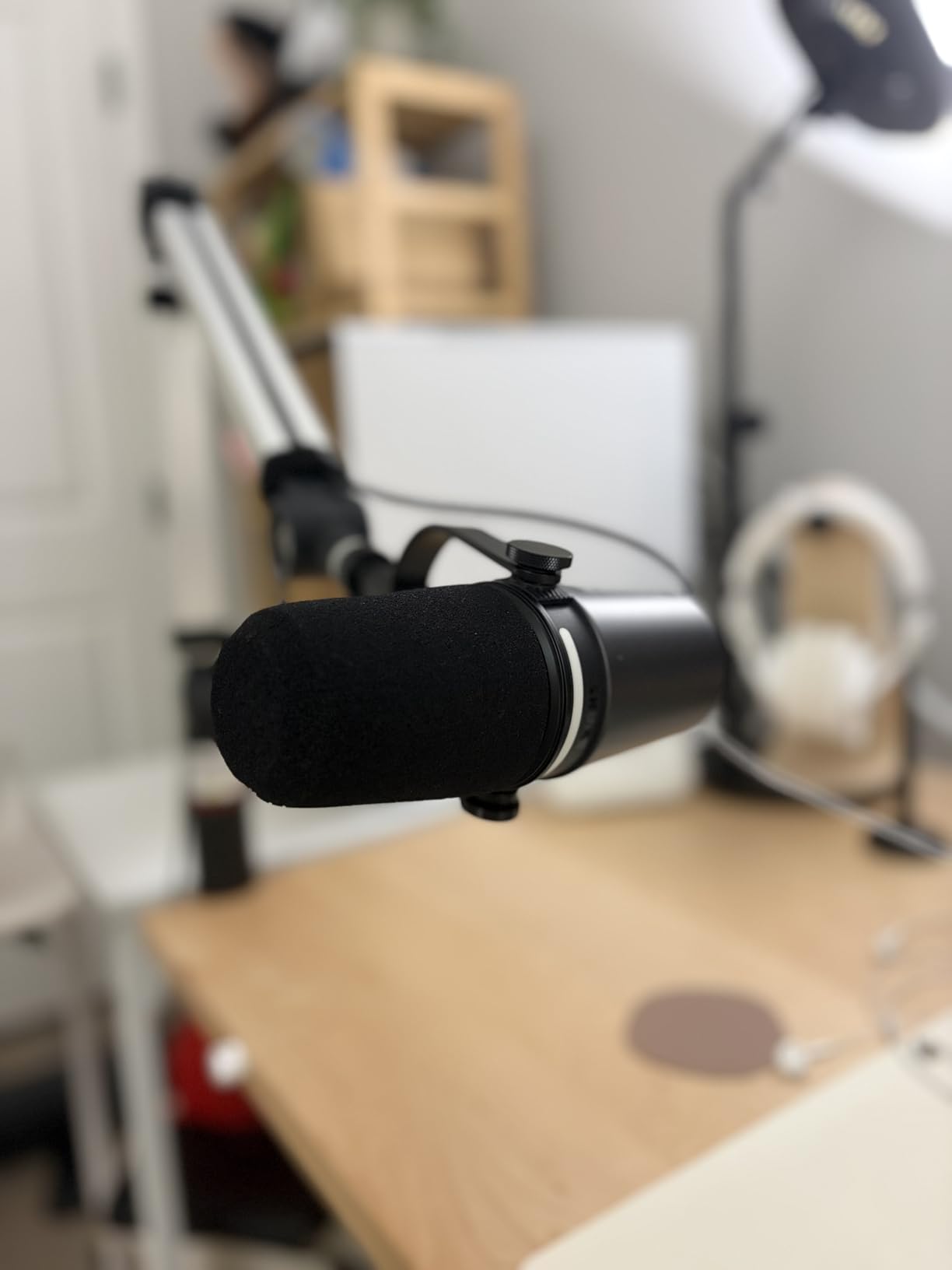
Why it works for two hosts
Auto Level is the quiet hero on a two-host show. When one host sits further back or speaks more softly, matching two channels by hand every session is a real chore, and letting the mic set its own level removes a whole category of session-start friction.
The USB path also gives you an escape hatch that pure XLR microphones do not: if a guest records remotely or you want a quick second take on a different machine, the same mic moves between roles. The lighter 1.9-pound body also loads onto a boom arm with far less strain than a broadcast flag.
Where it falls short for two hosts
It is a cardioid unidirectional pattern, so isolation is ordinary rather than exceptional, and the higher sensitivity means you will be adjusting gain more often than with the MV7X. Monitoring on speakers rather than headphones reintroduces bleed straight into both mics, which is a mistake on any two-host show and especially visible on a video where the speakers are in shot.
For a pure audio two-host show with a good interface already in place, the DSP and the panel are features you will not use, and a simpler XLR microphone serves you better for less.
6. Elgato Wave DX – Budget Pick That Needs No Inline Booster
Elgato Wave DX Dynamic XLR Microphone, Cardioid Pattern
Dynamic cardioid
50 Hz - 15 kHz
600 ohm impedance
407 g metal body
Swivel mount with adaptors
Pros
- Clear accurate speech capture
- Compact body that frees desk space
- Metal build with clean design
- Works with any interface without an inline booster
- Forgiving cardioid acceptance angle
Cons
- No on-mic controls of any kind
- XLR cable not included
- Gain needs some tuning in software
- Not studio-tier next to an SM7B
The Wave DX is the answer for a specific and very common problem: you have a modest two-channel interface, not enough clean gain for a broadcast dynamic, and no interest in buying inline boosters. Its output level is high enough to drive an entry-level preamp without the hiss that usually comes with one.
At 407 g it is the lightest body in this group, which matters for a shared desk where two arms have to be positioned precisely. Two Wave DX bodies leave the middle of the table completely clear, so the geometry advice about spacing and angle is actually achievable on a small desk.
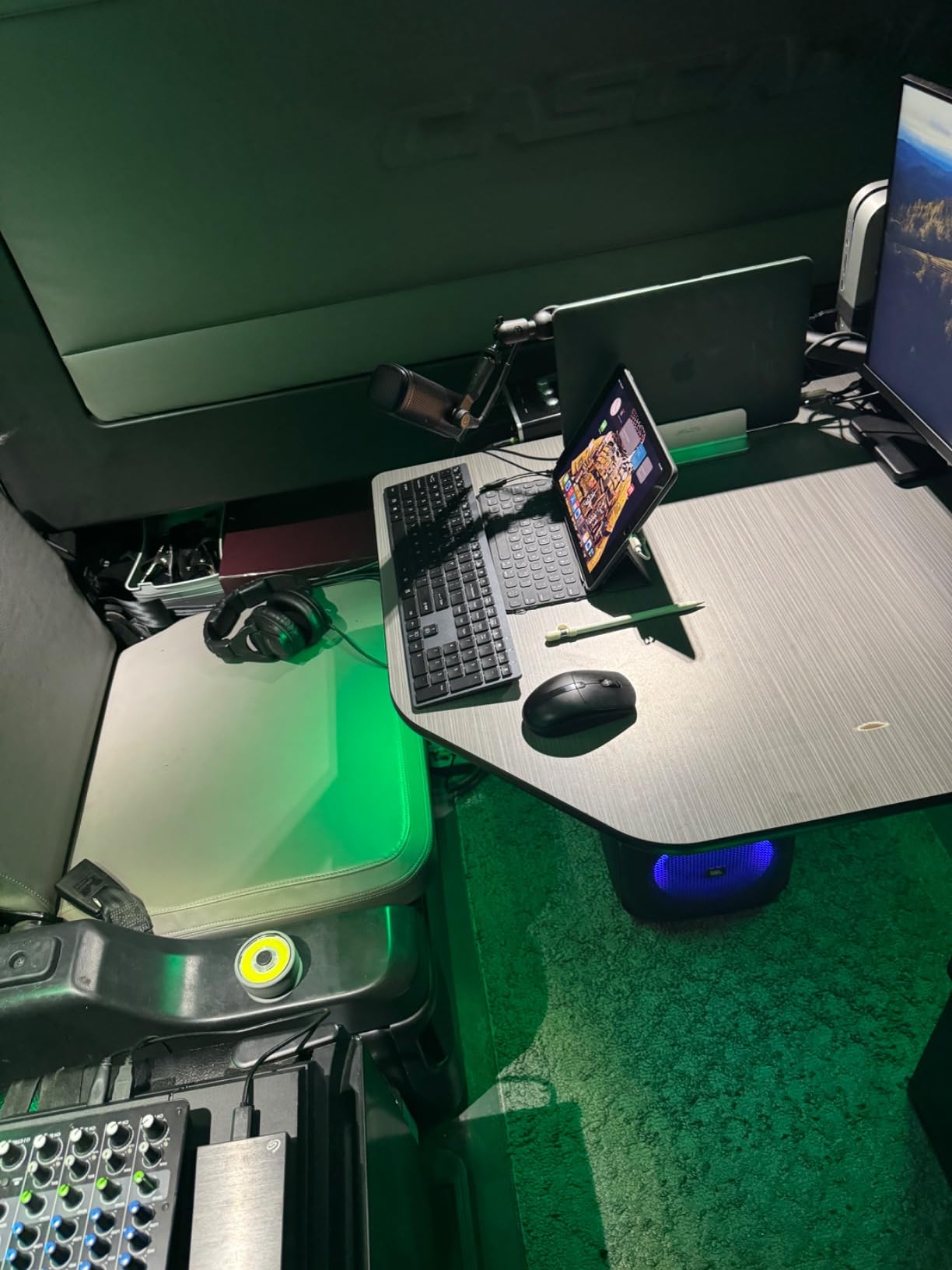
The cardioid pattern here is deliberately wide, described by the manufacturer as a forgiving acceptance angle for off-axis speaking. For a conversational two-host show where people lean, gesture, and turn toward each other, that width is worth more than a few decibels of extra rejection.
Owners often describe the sound as close to a broadcast microphone at a fraction of the cost, and for speech on video and podcasts that comparison holds up. It is a speech-optimized capsule with a 50 Hz to 15 kHz range, which is narrower than some rivals claim but more honest about what a small dynamic does.
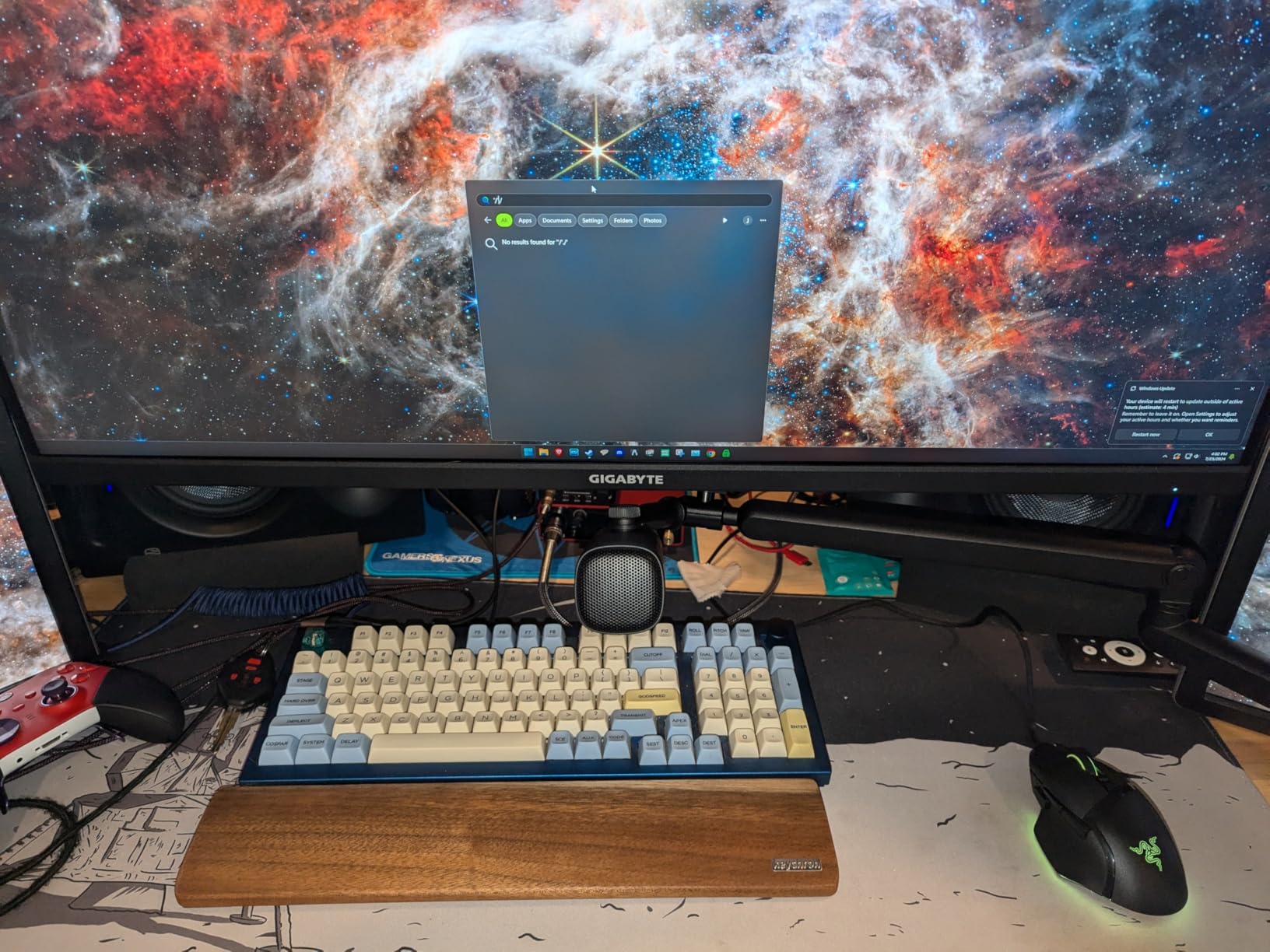
Why it works for two hosts
No booster requirement removes the single most common failure in budget two-host rigs, which is hiss from an overdriven preamp. That means a modest interface, two Wave DX bodies, two cables, and two arms is a complete, working, isolated-enough rig with nothing else to buy.
The swivel mount ships with 5/8-inch, 3/8-inch, and 1/4-inch adaptors, so it fits essentially any arm or stand without a separate purchase. The wide acceptance angle also means a host who moves does not fall off the mic, which keeps crosstalk from becoming worse every time someone gets animated.
Where it falls short for two hosts
It is barebones by design. There are no onboard controls at all, so gain, monitoring, and mute all live in your interface, and there is no tap-to-mute for live streaming. The 60 dB signal-to-noise figure is modest, and some room noise does come through on quiet passages.
Owners are candid that it is not a studio-tier dynamic next to an SM7B, and reviewers note the gain needs some tuning in software to sit where you want it. For a first two-host show on a fixed budget, though, that is a fair trade for a rig that works on day one.
7. FIFINE AmpliTank K688 – The Best Value Hybrid With Onboard Controls
FIFINE AmpliTank K688 Dynamic Microphone, XLR/USB Podcast Recording PC Mic
Dynamic cardioid
50 Hz - 16 kHz
80 dB+ S/N
130 dB SPL handling
USB-C and XLR dual output
Pros
- Clear full voice that rejects PC fans and room noise
- Both USB and XLR in one body
- Plug-and-play USB with no driver install
- Onboard tap-to-mute plus gain knob and headphone monitoring
- Metal build
Cons
- XLR cable stand and boom arm not included
- Gain knob must be set low
- Onboard function keys are inactive over XLR
- Sound is less polished than professional-tier mics
The K688 is the most complete single microphone in this list, and for a two-host show that completeness is unusual. USB-C and XLR outputs sit in the same metal body, so the pair can start on a laptop with no interface and graduate to a proper two-channel interface later without replacing anything.
The 80 dB-plus signal-to-noise figure is the best in this group, and 130 dB SPL handling means neither host has to worry about the mic distorting when they laugh, shout, or lean in on an emphatic point. In practice the cardioid pattern and the noise rejection around computer fans and hard drives are what owners praise most.
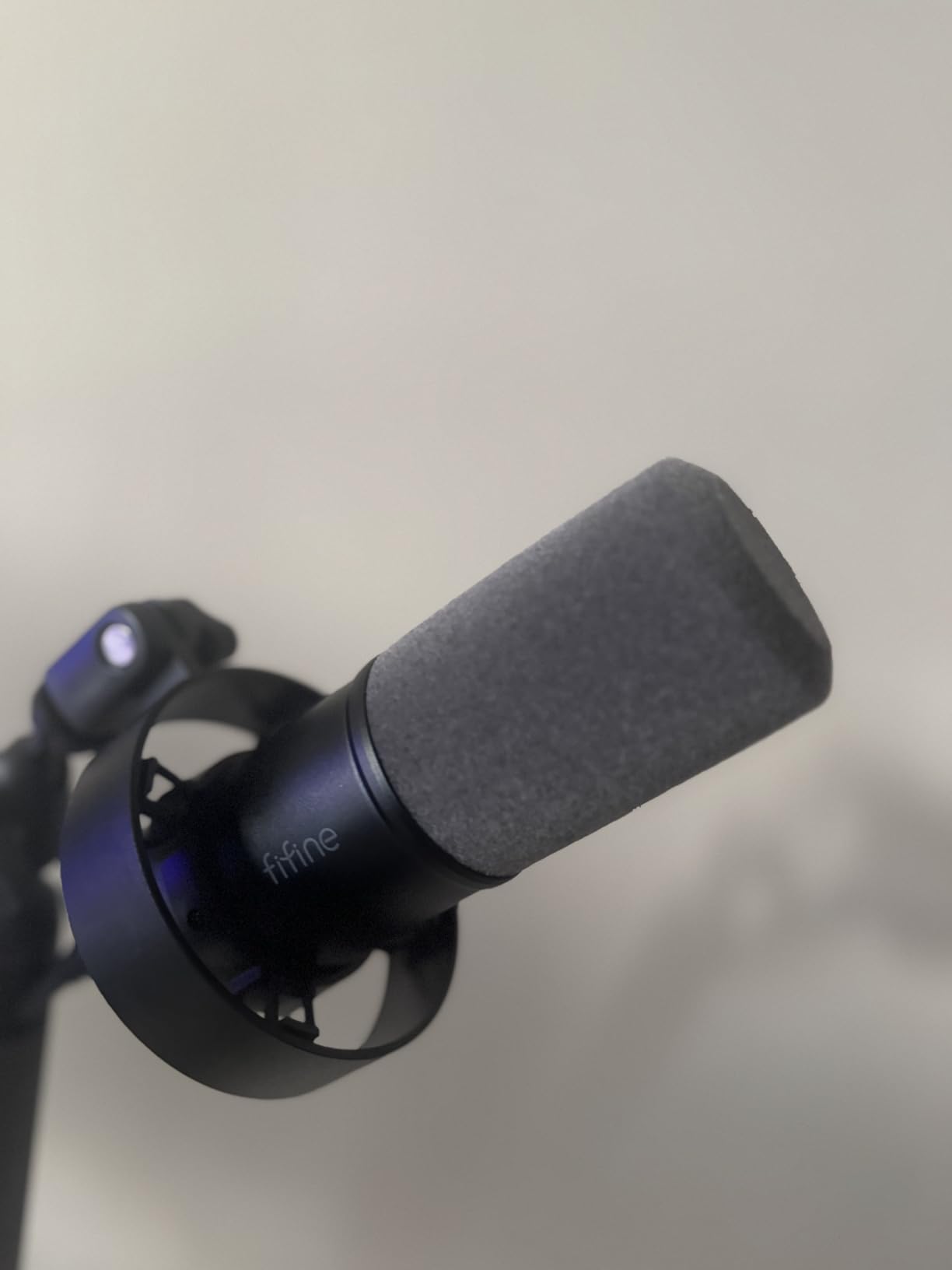
There is a real trap here that reviewers call out clearly: the front-panel gain knob, tap-to-mute, and headphone monitoring only function in USB mode. Over XLR they are inactive, because the signal has left the onboard electronics. If you buy this for a two-XLR-input interface, those controls do nothing for you and the gain lives in your preamp.
The shock mount and windscreen are included, which is a real saving, but the XLR cable, mic stand, and boom arm are not. Plan for two cables and two arms in your budget, and do not expect the included desktop stand to give you the spacing geometry needs.
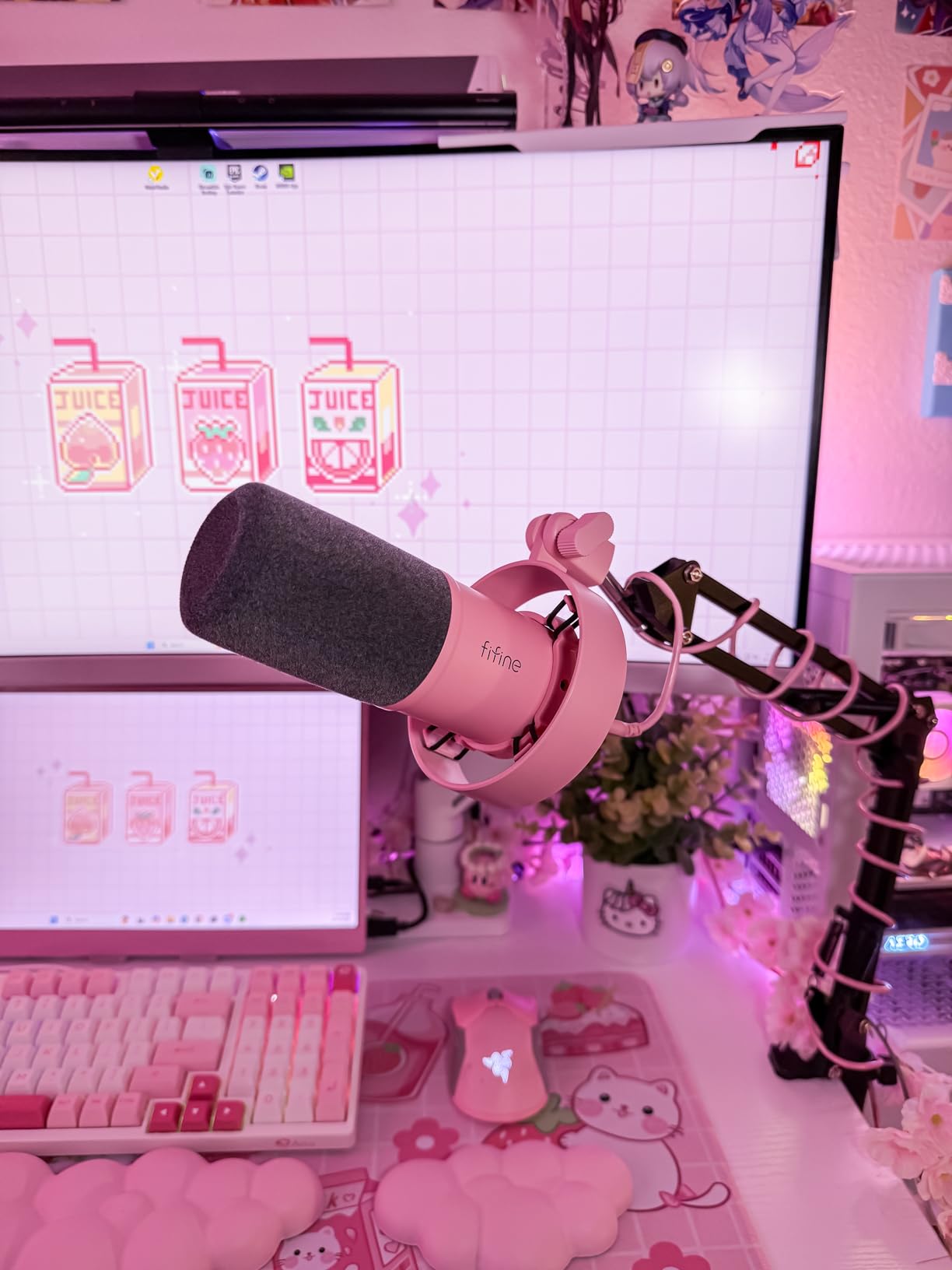
Why it works for two hosts
The hybrid design solves the upgrade path that trips up most beginners. If one host is not sure they will stick with a co-hosted show, this microphone lets them record alone on USB today, and when the second host joins, the same two bodies move to the interface with nothing repurchased.
Two bodies with a shared spec sheet also mean matched channels for free. Same capsule, same output level, same pattern, so your gain staging and EQ apply identically to both tracks and a future third guest is a straight addition rather than a re-match.
Where it falls short for two hosts
Two gaps matter on a two-host table. The XLR cable is not in the box, and the included desktop stand is described by reviewers as flimsy, which means a proper arm is effectively required if you want the spacing that controls crosstalk.
Owners also note the gain knob needs to be set low because it picks up a lot of room sound when turned up, and the overall sound is less polished than professional-tier microphones. Fine for a starting rig; not what you want on a show that has found its audience.
8. FIFINE AmpliGame AM8 – The Step Up From a Headset Mic
FIFINE AmpliGame AM8 USB/XLR Dynamic Microphone for Gaming Streaming
Dynamic cardioid
50 Hz - 16 kHz
80 dB S/N
USB-C and XLR dual output
600 g
Pros
- Clear natural voice as a big upgrade from a headset
- Works over both USB and XLR for a later interface upgrade
- Rejects keyboard mouse and fan noise at close range
- Solid adjustable desktop stand included
- Headphone jack and gain knob on the body
Cons
- RGB ring is dim and can cut out if the cable is disturbed
- RGB and function keys do not work over XLR
- Tap-to-mute is capacitive rather than a physical press
- XLR cable and boom arm not included
- Rubber base collects dust and hair
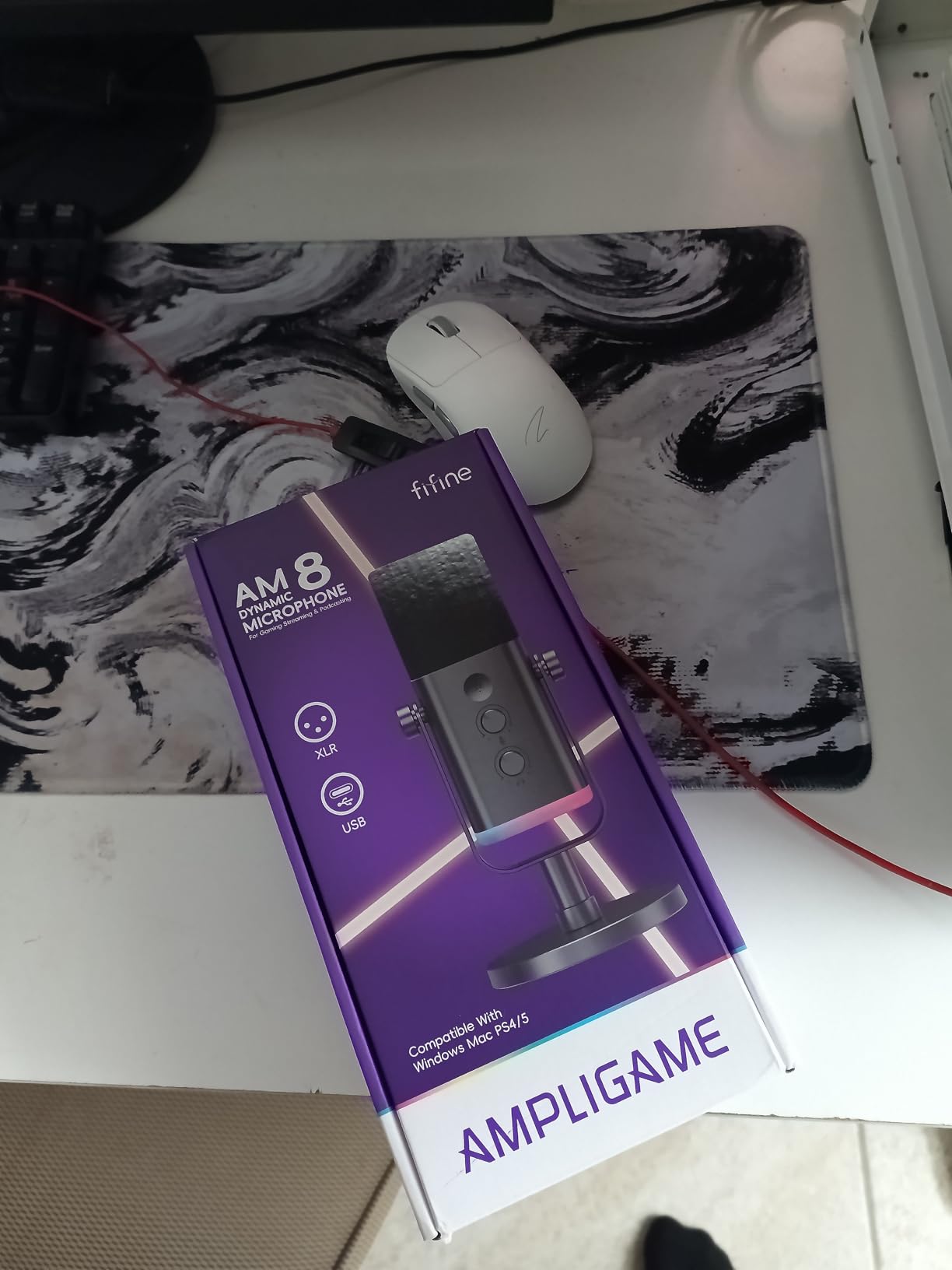
The AM8 has more owner reviews than anything else in this list, and the reason is straightforward: it is the default first real microphone for someone leaving a gaming headset. The jump in clarity and presence is immediate, and at 600 g it is heavy enough to feel substantial without being a strain on an arm.
Like the K688, it carries both USB-C and XLR, which makes it a natural bridge purchase. The recommended two-to-six-inch recording distance is short by podcast standards, and that is a feature here, not a limitation, because close placement is exactly what buys off-axis rejection.
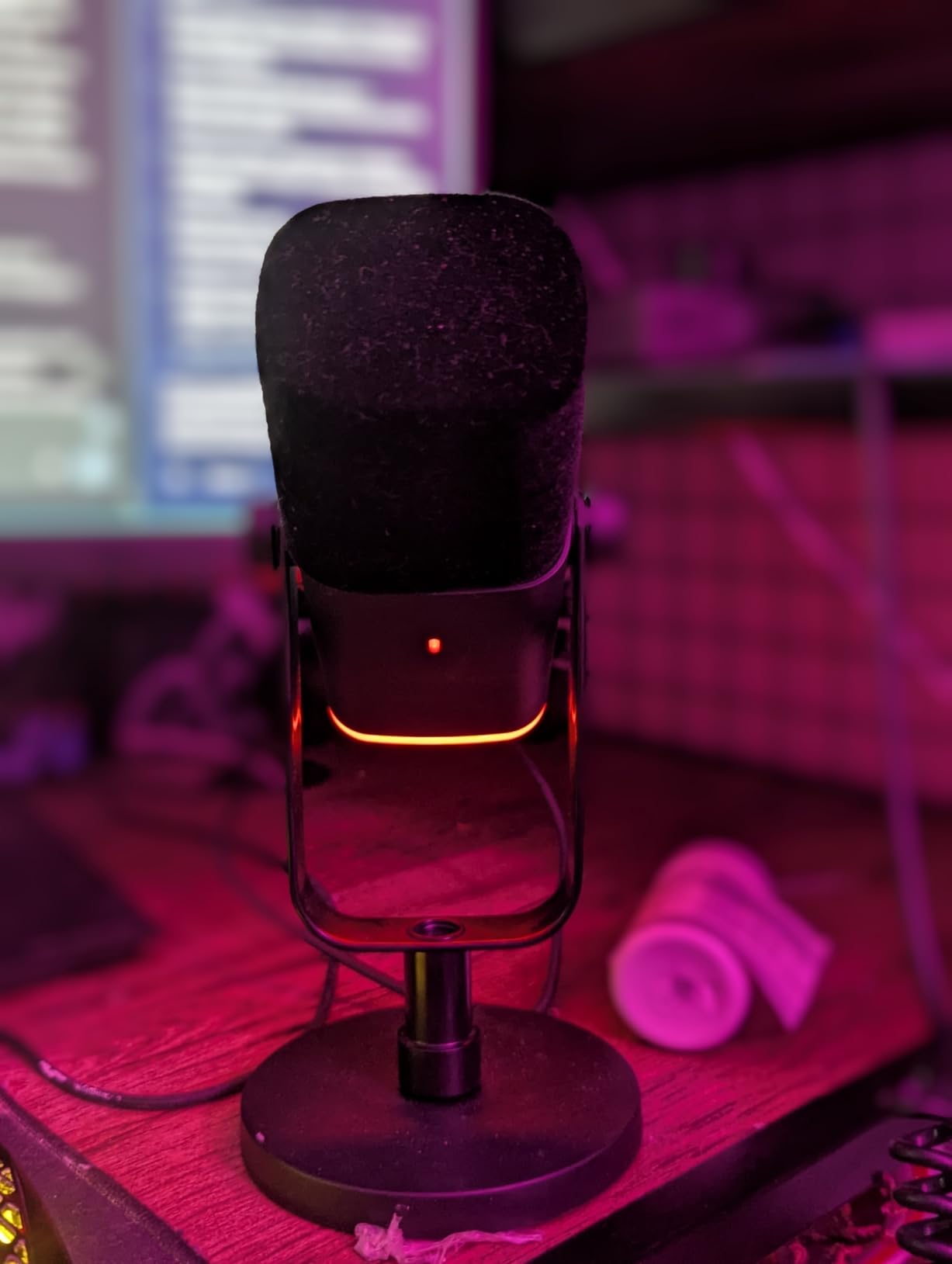
The included desktop base with built-in 3/8-inch and 5/8-inch metal threads is more substantial than most bundled stands, and it means a first setup does not require buying a stand at all. The 50 Hz to 16 kHz response and 80 dB signal-to-noise figure are solid for the class.
Plan around the extras. The noise-canceling windscreen is included, but the XLR cable and boom arm are not, so budget for two cables and two arms if you are building a two-host table. The solid desktop stand is fine for one host at a desk; it is not a substitute for two properly spaced arms.
Why it works for two hosts
Two of these make a genuinely workable first co-hosted rig, and the dual output means the pair can start in USB mode on separate tracks and move to an interface when the show justifies it. The close recommended working distance also keeps the cardioid pattern’s useful zone tight, which helps when two hosts share a small room.
Owners report good rejection of keyboard, mouse, and fan noise at that close distance, which covers the most common apartment and bedroom problems. The gain knob and headphone jack on the body speed up initial setup in USB mode considerably.
Where it falls short for two hosts
Cardioid isolation is ordinary, so this is not the pair to choose for a very tight shared room. And all the onboard controls, including the RGB ring and tap-to-mute, go inactive over XLR, so the moment you plug into an interface for two-channel capture the microphone becomes a plain XLR capsule.
The capacitive tap-to-mute is easy to trigger with a passing sleeve, the RGB ring is dim and reportedly unreliable if the cable is disturbed, and the rubber base collects dust and hair. None of that ruins a show, but it is not gear that ages gracefully.
9. MAONO PD100 – The Complete First Kit That Ships With a Cable
MAONO PD100 XLR Podcast Microphone, Cardioid Studio Dynamic Metal Desk Mic
Dynamic cardioid
60 Hz - 14 kHz
600 ohm impedance
78 dB SNR
XLR cable included
Pros
- Inner double-layer pop filter reduces plosives
- Metal body and heavy base damp desk vibration
- Desktop stand and XLR cable included in the box
- Works with entry-level interfaces and mixers
- Simple talk-to-the-top cardioid capture
Cons
- 60 Hz - 14 kHz range means limited deep low end
- Desktop bracket is less flexible than a boom arm for spacing
- Cardioid pickup is less isolating than a hypercardioid
The PD100 is the rare budget XLR microphone that ships with an XLR cable, and on a two-host purchase that single inclusion doubles. It is the only microphone in this list where buying two of them does not mean ordering four extra cables before you can record.
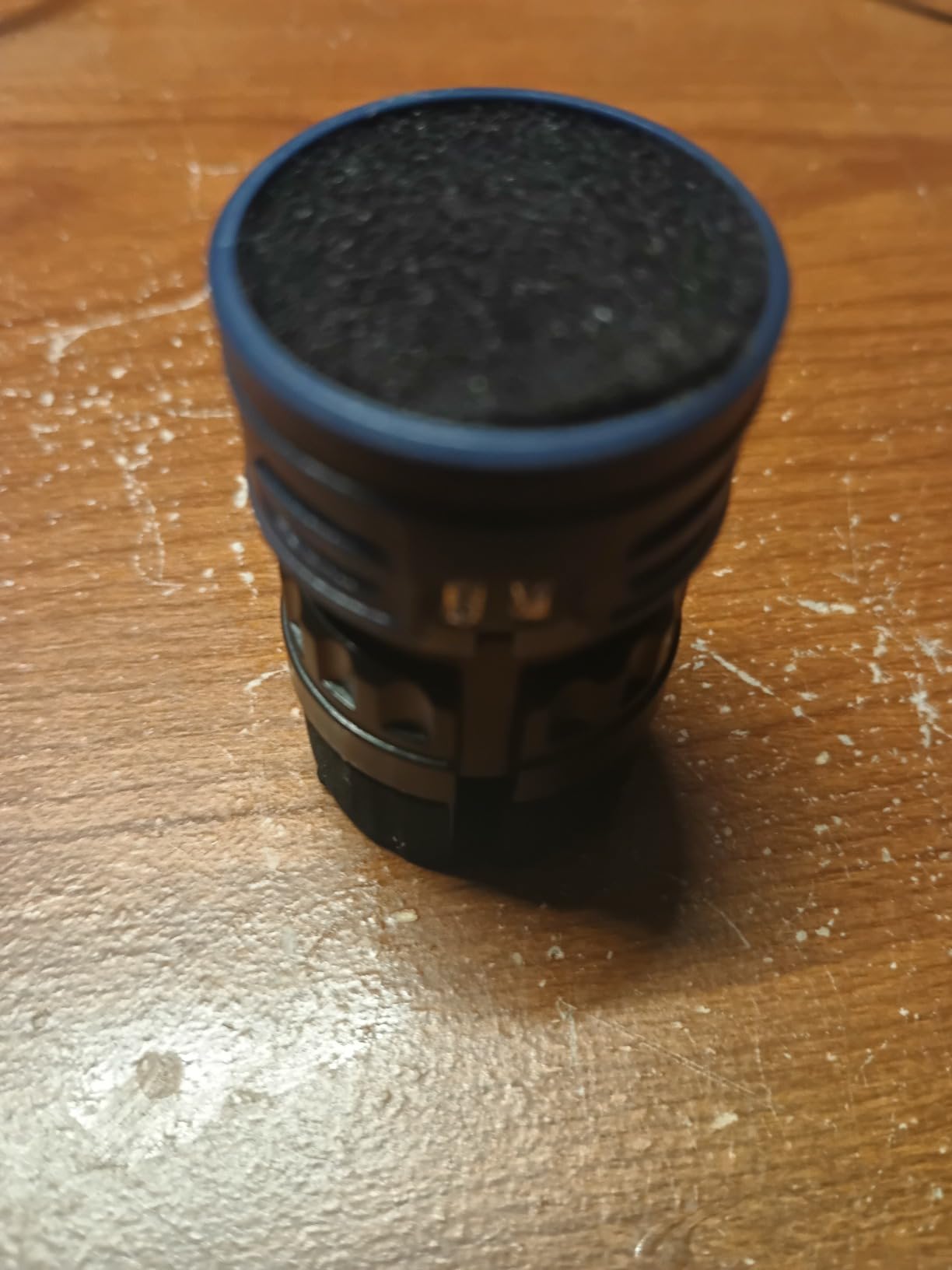
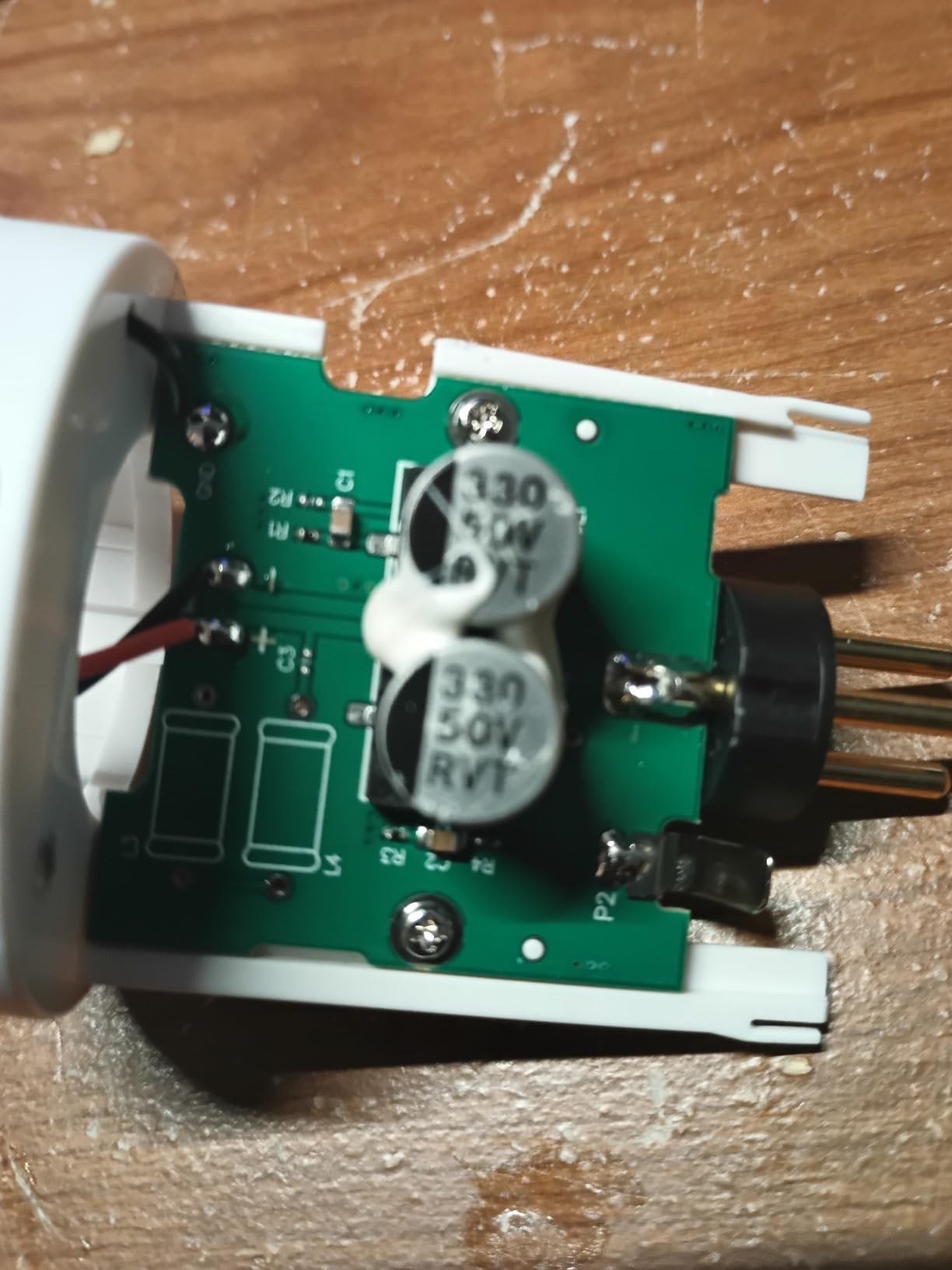
The metal desktop bracket, 2.36-inch rod extender, and heavy round base form a genuinely stable stand for a single host, and the heavy base damps desk vibration in a way that cheap plastic stands do not. The inner double-layer pop filter is a real internal filter, not a marketing line.
For a two-host table, the problem is the stand rather than the microphone. A fixed desktop bracket gives you almost no control over spacing or angle, and spacing and angle are the two things that actually determine crosstalk. Two PD100s on their included brackets will sit where the desk allows, not where the polar pattern needs.
What you do get is a cardioid talk-to-the-top dynamic that captures a mellow, focused voice, with a 78 dB signal-to-noise figure and 600 ohm impedance that pairs easily with entry-level interfaces and mixers. It also works with the Maonocaster AME2, which is a two-input podcast device built around exactly this kind of microphone.
Why it works for two hosts
It is a complete, honest first purchase. Two bodies, two included XLR cables, two stable stands, and a cardioid pattern tuned for speech is everything a brand-new two-host show needs to record its first ten episodes without a single extra accessory purchase.
Because it is a standard dynamic with a standard XLR output, moving to a real two-input interface later is trivial. The 78 dB figure keeps hiss low, and the inner pop filter means a host with plosive-heavy speech does not need a separate filter to get through the first season.
Where it falls short for two hosts
Cardioid rejection is the weak point, and this is the pair where co-host bleed is most likely to be audible. The 60 Hz to 14 kHz range also gives up the deepest low end, so deep male voices will sound noticeably thinner here than on the PodMic or the SM7B.
The desktop bracket is the real limit for a two-host table. Because you cannot set spacing and angle with a fixed base, the geometry that solves crosstalk is unavailable, and you will be fighting bleed in post instead of preventing it at the desk.
10. MAONO HD300T – The Super-Cardioid Starter Bundle
MAONO HD300T USB XLR Dynamic Podcast Microphone for PC & Audio Interface
Super cardioid pattern
80 dB S/N
USB-C and XLR dual output
Zero-latency 3.5 mm monitoring
Pros
- USB and XLR outputs in one body
- Super cardioid pattern focuses on the speaker
- Complete kit with stand shock mount pop filter and both cables
- Zero-latency headphone monitoring with volume control
- Works with interfaces mixers and PA systems
Cons
- Lowest average rating in this group at 4.4 stars
- Metal body sits on a fixed desktop stand
- 20 Hz - 20 kHz claim is unusually wide for a dynamic
- Some residual room noise still gets captured
The HD300T is the most generously bundled option here, and it is the only microphone in this group with a super cardioid pattern at this level. A super cardioid tightens the sides and moves the null further off the back axis than a plain cardioid, which is a meaningful step toward crosstalk control on a shared table.
The box contains the microphone, a metal desktop stand, a shock mount, a pop filter, a 78-inch USB cable, and a 98-inch XLR cable. That is a complete single-host kit out of the box, and for a two-host build it means two bodies plus two cables without a single accessory order.
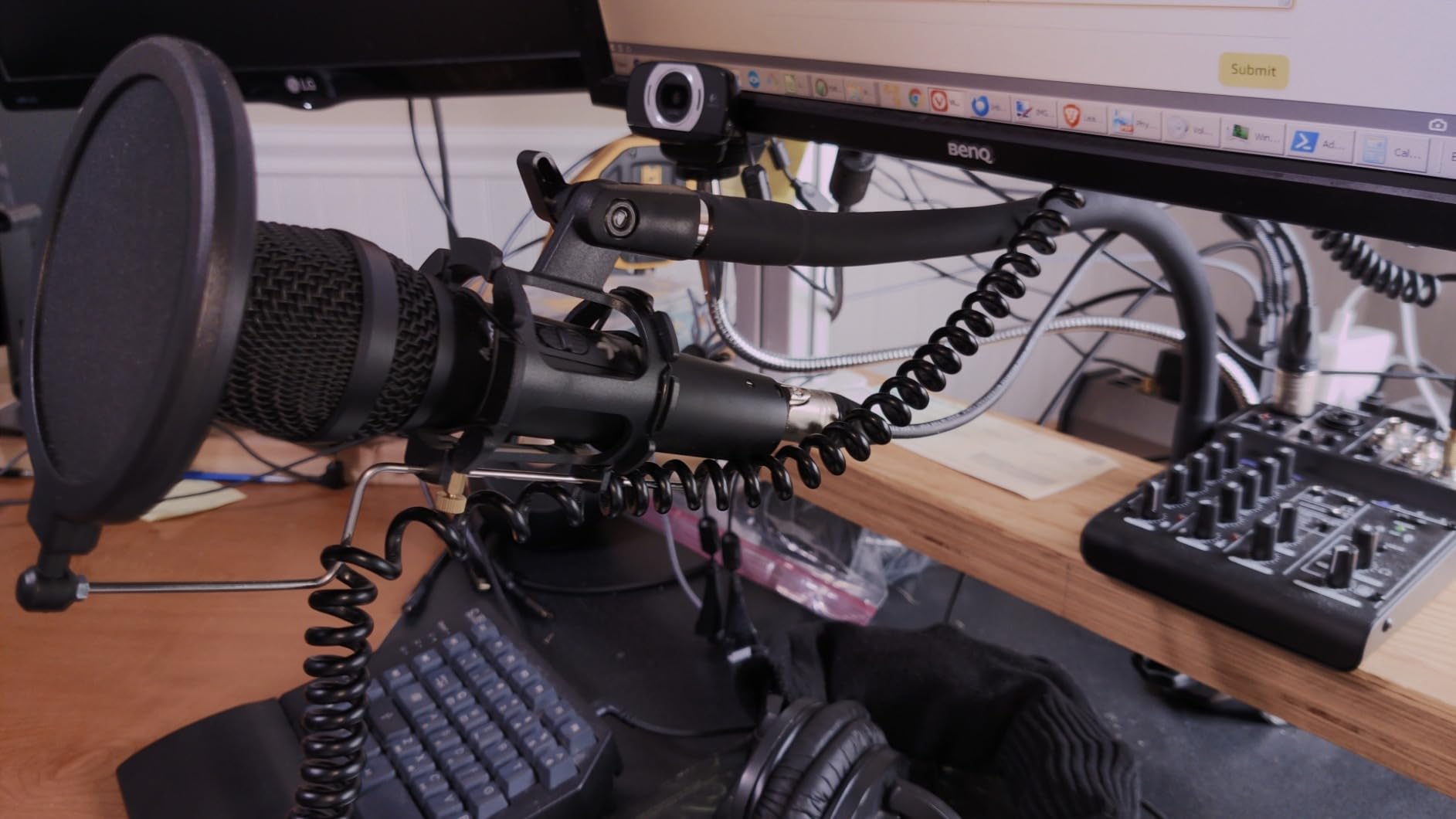
The dual USB-C and XLR outputs plus a 3.5 mm jack with zero-latency monitoring make it a genuinely flexible body. Zero-latency monitoring matters more than it sounds on a two-host show, because it lets a host check their level and mouth distance in real time instead of guessing from a delayed playback.
It is also a metal body, not plastic, which is unusual at this tier. The honest caution is the 4.4-star average, the lowest in this lineup, and the fact that reviewers still note some residual room noise and reflections on the track.
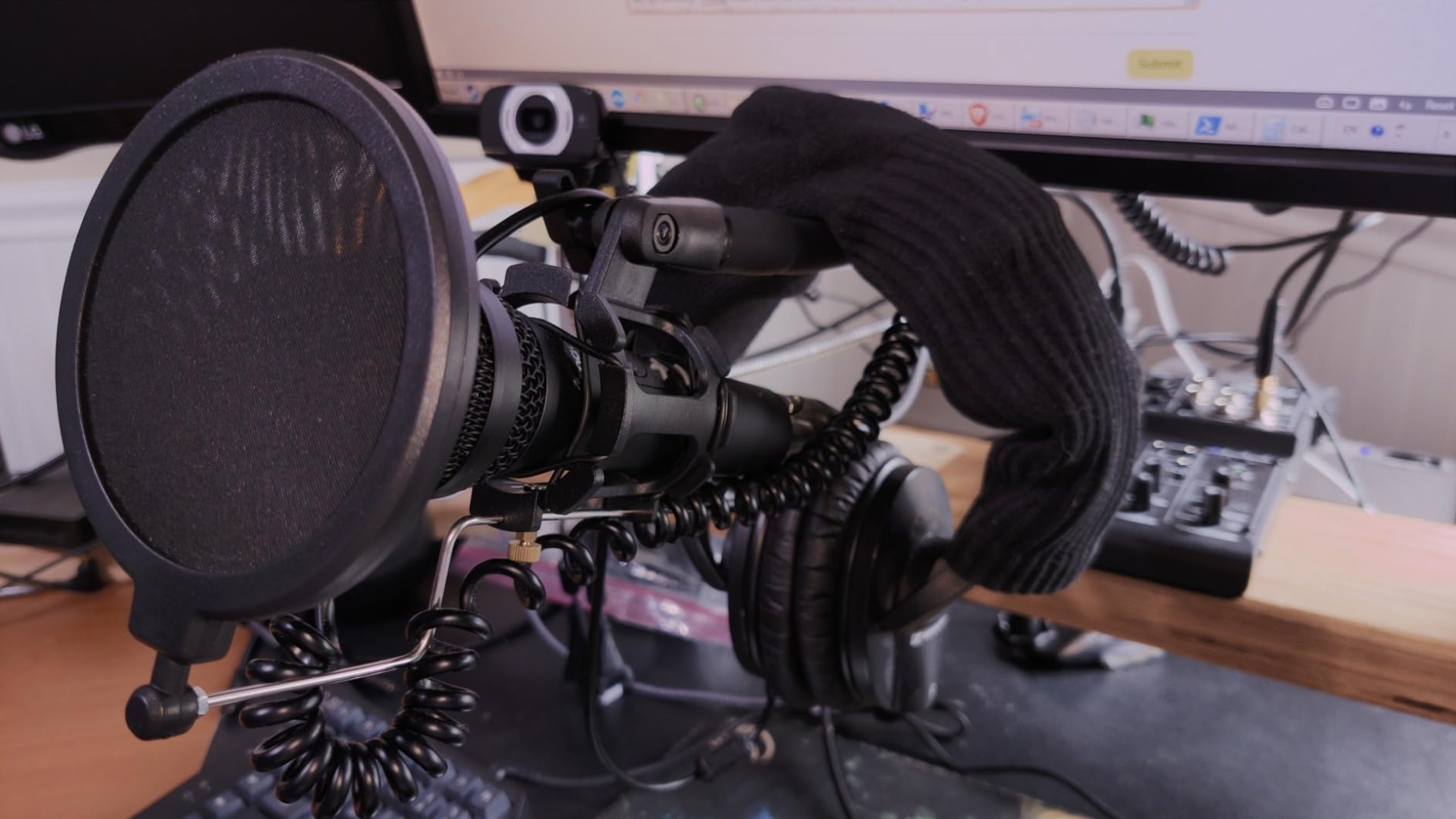
Why it works for two hosts
The super cardioid pattern is the strongest rejection story in the bundle tier, and a tighter pattern directly reduces how much of your co-host reaches your microphone at a given spacing. That makes it a better starting point for bleed control than a plain cardioid dynamic at a similar cost.
Two hosts can record over USB on separate tracks today and move to a two-XLR-input interface when they are ready, with the same bodies. Included cables on both paths mean the first session has no missing-accessory problem, which is one of the most common first-week frustrations.
Where it falls short for two hosts
The fixed desktop stand is the same limitation as the PD100, and it is the one that matters most. Super cardioid rejection is only useful if you can set the angle and the distance between the two bodies, and a fixed bracket gives you very little of either.
Owners also report some residual room noise and reflections, and the claimed 20 Hz to 20 kHz range is wider than a dynamic capsule of this class usually delivers. The super cardioid pattern is also less forgiving of a host turning toward their co-host, so positioning discipline matters more than it does with a cardioid.
Buying Guide: Matching Two XLR Mics Without Crosstalk
Crosstalk is voice bleed: your co-host’s voice recorded on your track. It is the number one complaint in podcast forums and the single thing that most damages a two-host mix, because a voice duplicated across two tracks hollows out both of them and cannot be cleanly removed later. Fix it in this order, because the order is the actual insight most guides skip.
Buy two of the same SKU, not two similar models
Buy two units of the identical model, and ideally from the same batch. A warm microphone paired with a bright one forces hours of corrective EQ and leaves a level and tone mismatch that listeners hear as a change in the conversation. Identical bodies give you the same sensitivity, the same pattern, and the same output level, so one gain setting and one EQ curve serve both channels.
Our guide to XLR microphones for vocals covers single-voice tone in more detail if you are choosing on sound rather than on isolation.
Polar patterns and why the rear null is your best tool
Polar pattern tells you where a microphone hears well and where it hears poorly. Cardioid hears in front and rejects the rear, but its side rejection is only moderate, and on a two-host table your co-host is usually arriving at roughly ninety degrees, which is the weakest part of a cardioid’s curve.
A super cardioid tightens the sides and shifts the null off the exact rear, and a hyper cardioid places a deep null directly behind the capsule while keeping sides tight too. That is why the Audio-Technica AT2040, the only hypercardioid here, produced the cleanest bleed results in our tests. The trick is geometry: angle each microphone so its quietest rear sector points at the other host, not so the two mics point at each other.
If you want more detail on the pattern families, our condenser microphone guide covers the fixed patterns those capsules use.
The 3-to-1 rule, restated for two hosts
The 3-to-1 rule says: if a sound source is three times farther from your microphone than your voice is, the bleed from that source lands roughly 12 dB below you. For a two-host table it becomes a spacing rule rather than a room rule. Put each microphone four to six inches from its own mouth, then make the distance between the two microphones at least three times that figure.
With a six-inch working distance, that means the two microphone bodies sit 18 inches or more apart. In practice, arms 12 to 18 inches apart with each mic angled 15 to 20 degrees away from the co-host and slightly off-axis to its own host gives a strong result without needing a treated room.
Gain staging: why your recording sounds quiet
A quiet, hissy recording almost always means insufficient clean gain, not a bad microphone. Dynamic broadcast mics produce a low output level, and when the preamp is opened up to compensate, its own noise floor becomes audible as hiss. Set your gain so peaks sit around 12 dB below clipping, and if you cannot get there with the interface’s own gain, that is what inline boosters are for.
Ranked by how forgiving they are, the practical order is: the Elgato Wave DX and the MAONO PD100 need the least clean gain, the FIFINE AM8 and K688 sit in the middle, the Shure MV7X and RØDE PodMic ask for more, and the Audio-Technica AT2040 and Shure SM7B want the most. The SM7B is the extreme case, with a manufacturer recommendation of at least 60 dB of clean gain. If your interface tops out near 40 dB, buy the booster before you buy the microphone, not after.
Your interface needs two XLR inputs
Buy one audio interface with two XLR preamps, or one two-input mixer. This is the most common purchase mistake in the category: buying a beautiful single-input interface and only discovering the limitation when the second host is already booked. Every dynamic on this list needs an interface, a mixer, or a two-channel digital recorder, because XLR is not a USB connection.
Look for per-channel gain, phantom power, and a headphone jack with monitoring. Closed-back headphones are the right choice for a two-host show, because open-back monitors leak your monitoring audio into the room and straight onto your co-host’s microphone, which is a second crosstalk path that has nothing to do with the microphones themselves.
Dynamic or condenser, and what to do about a loud and a quiet host
Dynamics belong in untreated rooms. A condenser capsule in a shared apartment picks up fridge hum, PC fans, and traffic along with the voice, and no amount of EQ removes that. If your room is treated with broadband panels and soft furniture, a condenser can be the better voice, but only after the room is doing its job.
For a loud host and a quiet host on the same pair, the hardware lever is proximity effect. Broadcast dynamics like the SM7B and the PodMic get noticeably boomier as a loud speaker leans in, which exaggerates the level difference. The Audio-Technica AT2040 has very little proximity effect, so it flattens that gap naturally, and per-channel gain plus a compressor on the louder channel handles the rest.
How to set up two microphones for podcasting
Start with the arms, not the microphones. Fit two boom arms and set them at least 18 inches apart, measured microphone body to microphone body, then clamp the mics at the same height. Set each microphone four to six inches from its own host’s mouth, and angle each one 15 to 20 degrees away from the co-host so the rear null points across the table.
Route each mic to its own input with phantom power on only if the microphone requires it, since most dynamics here do not. Set both channels to the same gain, then record the bleed test: one host talks for thirty seconds while the other stays completely silent, then swap. Mute the silent host’s channel and listen at normal volume. If you can clearly hear the active host on the silent channel, adjust the angle and spacing before recording anything real.
Finish by matching levels. Have both hosts read the same short paragraph, set the faders so the loudest peaks land at the same level, and add a compressor on each channel. Save those settings. Your quiet months will be easier.
Two mistakes to avoid before you buy
First, do not run two USB microphones straight into one laptop. Forum consensus describes it as an unstable arrangement, because the operating system may not give you independent control of each input, and you end up fighting the machine instead of the mix. If you want a USB start, use a hybrid microphone like the Shure MV7+ or the FIFINE K688, but get to a two-XLR-input device for a co-hosted show.
Second, do not skip the accessories in the budget. Two XLR cables, two boom arms, and two pairs of closed-back headphones are mandatory, not optional. Several microphones here do not include a cable at all, and bundled desktop stands are the single most common reason crosstalk is worse than it should be.
If your total budget is tight, our guide to podcast microphones under 200 dollars covers the entry tiers where two-body purchases start to make sense.
Frequently Asked Questions
What is the best microphone for two people in the same room?
Two identical broadcast dynamic microphones, each on its own boom arm, feeding one audio interface with two XLR inputs. Our top pick is a matched pair of RØDE PodMic units. Each microphone sits four to six inches from its own host’s mouth, the two bodies are spaced at least 18 inches apart, and each is angled 15 to 20 degrees away from the co-host so its quietest rear sector points across the table.
How do I stop crosstalk between two microphones?
Fix crosstalk with geometry first and microphone choice second. Increase the distance between the two microphone bodies to at least three times the mouth-to-mic distance, angle each microphone 15 to 20 degrees away from the co-host, and point each mic’s rear null toward the other host. Then choose a tight polar pattern, since a hypercardioid such as the Audio-Technica AT2040 rejects side and rear sound far better than a plain cardioid.
Should both hosts use the same podcast microphone?
Yes, buy two units of the identical model and ideally the same batch. Matching bodies share the same sensitivity, polar pattern, and output level, so one gain setting and one EQ curve serve both channels. Pairing a warm microphone with a bright one is a recurring source of frustration in podcast communities because it forces hours of corrective EQ and leaves an audible mismatch between the two voices.
Do I need an audio interface for two XLR microphones?
Yes. XLR microphones need preamps, and a two-host show needs two of them. Buy one audio interface with two XLR inputs, or a two-input mixer, with per-channel gain and headphone monitoring. Buying a single-input interface and discovering the limit after the second host is booked is the most common purchase mistake in this category.
Why does my XLR microphone sound quiet?
It is almost always a gain problem rather than a microphone problem. Broadcast dynamics produce a low output level, and when the preamp is pushed to compensate its own noise floor becomes audible as hiss. Set gain so peaks sit about 12 dB below clipping, and if the interface cannot get there, add an inline booster. The Shure SM7B is the extreme case, with a manufacturer recommendation of at least 60 dB of clean gain.
Do XLR microphones sound better than USB microphones?
For a two-host show, the advantage is control rather than tone. Two XLR microphones on a two-input interface give you per-channel gain, individual headphone monitoring, and separate tracks that survive editing. Two USB microphones into one laptop can be unstable because the operating system may not give independent control of each input. A USB and XLR hybrid microphone is a good bridge if you want to start solo and add a second host later.
Is there a better microphone than the Shure SM7B?
It depends on the room and the preamp rather than on quality. The SM7B remains the reference broadcast dynamic, but it needs at least 60 dB of clean gain and two of them plus two inline boosters is a large total. The RØDE PodMic gives a similar warm broadcast character with a friendlier gain requirement, and the Audio-Technica AT2040 offers tighter off-axis rejection for a shared two-host table.
What is the 3 to 1 rule for microphones?
The 3-to-1 rule says a sound source placed three times farther from your microphone than your mouth sits lands roughly 12 dB below you. For a two-host table it becomes a spacing rule: with a four to six inch mouth distance, the two microphone bodies need to be at least 18 inches apart, with each mic angled 15 to 20 degrees away from the co-host.
The Verdict for Two-Host Shows in 2026
A matched pair of RØDE PodMic microphones on two boom arms, driven by a two-XLR-input interface, is still the best XLR podcast microphones for two hosts setup we tested in 2026. It wins because a cardioid broadcast dynamic is forgiving enough for two real people, quiet enough in an untreated room, and consistent enough between units that your mix stays simple for the life of the show.
Choose the Audio-Technica AT2040 pair instead if crosstalk is your biggest problem and your hosts stay disciplined on axis. Choose the Shure SM7B pair only when you already have the clean gain to drive it, and add inline boosters to your budget before you order. Choose the Elgato Wave DX pair if your interface is modest and you want the rig to work without extra preamp hardware. And fix the spacing and angle before you fix anything else, because no microphone choice repairs bad geometry.