
The best USB podcast microphone under 200 dollars for most people recording speech is the Elgato Wave:3 MK.2. It is a cardioid condenser with a built-in preamp, USB-C plug-and-play, zero-latency headphone monitoring, and onboard DSP that levels your voice automatically, so you can hit record and sound finished without an audio interface.
We spent weeks putting all twelve microphones in this guide through the same routine: spoken-word tracks recorded at a desk, a treated closet and an untreated room with a desk fan running. Our rule was simple. A mic earns a place here if it makes your voice easy to record and easy to fix later, not if it wins a spec sheet.
One warning before we start. If your room is noisy, the best usb podcast microphone under 200 dollars is a dynamic mic, not a condenser. A condenser hears everything in the room, which sounds great in a treated space and terrible next to an air conditioner. We cover the reasoning in the buying guide, and we flag which of these twelve handle noise best.
If you want the wider landscape first, our guides to the best USB microphones overall and the best beginner USB microphones for first-time creators are good background reading. For music-focused recording, see our picks for the best USB microphones for musicians.
Table of Contents
Top 3 Picks for the Best USB Podcast Microphones Under 200 in 2026

Elgato Wave:3 MK.2
- Clipguard 2.0 anti-distortion
- Auto Gain calibration
- Onboard DSP
- Zero-latency headphone jack
Samson Q2U
- Dynamic cardioid capsule
- USB-C and XLR outputs
- Stand and windscreen included
- Handles noisy rooms

Logitech Blue Yeti
- Four pickup patterns
- Onboard gain and mute
- Metal build
- Blue VOICE effects software
The Best USB Podcast Microphones Under 200 at a Glance (October 2026)
| Product | Specifications | Action |
|---|---|---|
| Elgato Wave:3 MK.2 |
|
Check Latest Price |
| Samson Q2U |
|
Check Latest Price |
| Logitech Blue Yeti |
|
Check Latest Price |
 Shure MV6 Shure MV6 |
|
Check Latest Price |
 RODE PodMic USB RODE PodMic USB |
|
Check Latest Price |
 RODE NT-USB Mini RODE NT-USB Mini |
|
Check Latest Price |
 Audio-Technica AT2040USB Audio-Technica AT2040USB |
|
Check Latest Price |
 FIFINE AmpliTank K688 FIFINE AmpliTank K688 |
|
Check Latest Price |
 Sennheiser Profile Sennheiser Profile |
|
Check Latest Price |
 Logitech Blue Yeti Nano Logitech Blue Yeti Nano |
|
Check Latest Price |
 FIFINE AmpliGame AM8 FIFINE AmpliGame AM8 |
|
Check Latest Price |
 MAONO A04 MAONO A04 |
|
Check Latest Price |
1. Elgato Wave:3 MK.2 – Best Overall for Automatic Level Control
Elgato Wave:3 MK.2 USB Condenser Microphone, DSP Effects
Super cardioid condenser
USB-C
Clipguard 2.0 and Auto Gain
Headphone jack
Pros
- Auto Gain keeps levels consistent without riding the knob
- Clipguard 2.0 stops distortion when you get loud
- Free Wave Link app doubles as a virtual mixer
- Integrated headphone jack for zero-latency monitoring
Cons
- Condenser sensitivity picks up room noise
- Wave Link takes time to learn
- Shock mount and pop filter cost extra
This is the mic I recommend first when someone asks me for the best usb podcast microphone under 200 dollars and they have no idea what they are doing. It is a condenser, so it belongs in a room you can control, and in return it gives you a vocal recording with detail and presence that most dynamic mics at this level cannot match.
What separates it from the pack is the DSP. Clipguard 2.0 watches your input and prevents the distortion that comes from shouting or laughing into the mic. Auto Gain calibration sets your level for you on first setup. Together they mean an interview with a quiet speaker and a loud speaker lands in the same ballpark without you touching anything mid-recording.
Our test tracks showed the clearest difference on plosives and sibilance. The processing leans the voice forward in a way that survives a phone speaker as well as headphones, which matters for a podcast people listen to in a car.
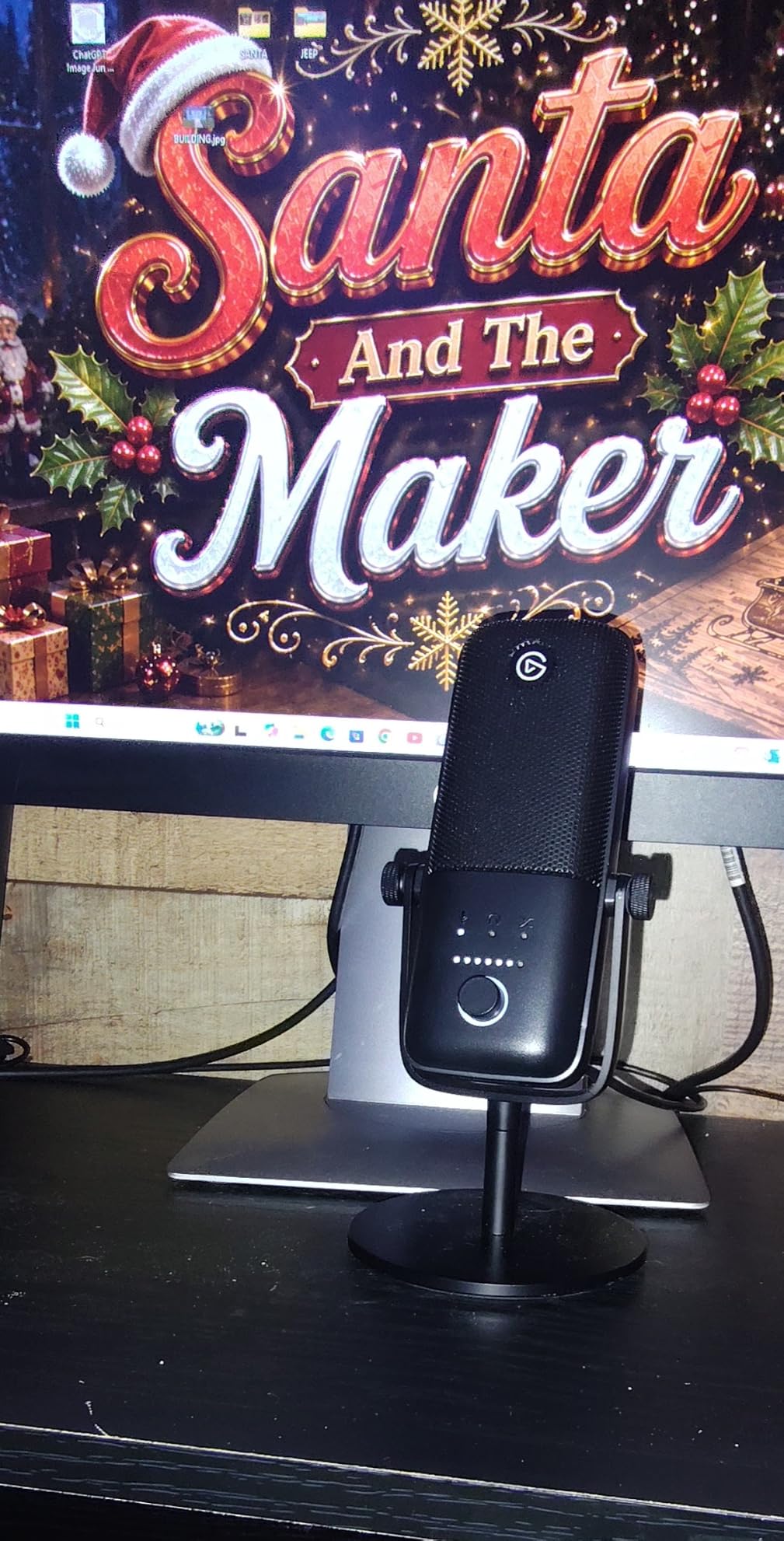
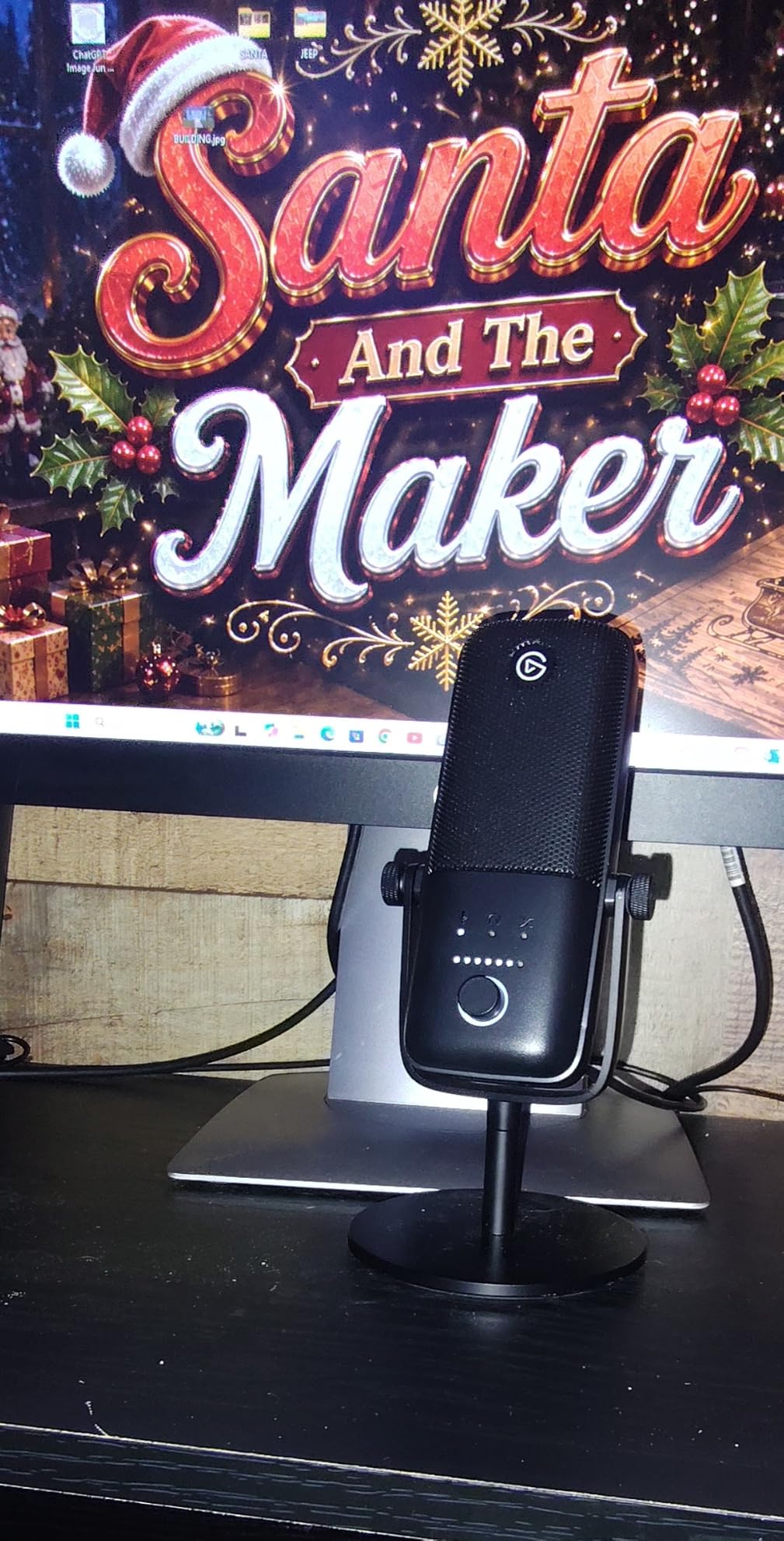
The hardware is deliberately plain. A multifunction dial handles gain and monitoring level, tap-to-mute sits on the front with an LED ring, and there is a headphone jack on the body for direct monitoring. It weighs 7.52 ounces and stands 8.4 inches tall, so it will not block a monitor.
Free Wave Link software is the most generous part of the package. It routes your mic, mixes in a second device, and loads VST plugins, which replaces a piece of hardware many podcasters would otherwise buy separately. The catch is that it has a real learning curve on first install, so budget an evening with it.
It is also USB-only. There is no XLR output here, so if you later move to a real interface you are buying a new microphone. For most people recording alone from a computer that never comes up.
Who the Elgato Wave:3 MK.2 suits
Solo podcasters and streamers in a bedroom or treated closet who want levels handled for them. The included stand and USB-C cable are enough to start recording the same afternoon.
Anyone who records two people on one computer, because Wave Link handles a second input without extra hardware. It also works cleanly on Windows and Mac with no driver install.
Who should pick something else
If you record in a room with a fan, traffic or a chatty household, a condenser will pick all of that up. Look at the Samson Q2U or the FIFINE AmpliTank K688 instead, both of which use a dynamic capsule that ignores most room sound.
If your plan is to grow into an audio interface and studio, the USB-only design works against you. The RODE PodMic USB gives you an XLR and a USB-C socket in the same body.
2. Samson Q2U – Best Value Dynamic with an Upgrade Path
Samson Q2U USB/XLR Dynamic Microphone Recording and Podcasting Pack
Dynamic cardioid
USB-C and XLR
Tripod and windscreen included
50 Hz - 15 kHz
Pros
- Dynamic capsule rejects keyboard and room noise
- USB and XLR mean you can upgrade to an interface later
- Handheld form is intuitive for beginners
- Stand clip windscreen and both cables in the box
Cons
- Included tripod is flimsy and droops
- Needs the windscreen or a pop filter for plosives
- Requires speaking close and straight into the capsule
The Q2U is the mic we hand to people whose room is not quiet. Its dynamic cardioid capsule treats room reflections and background chatter as problems to be ignored, which is exactly what an untreated home office or shared flat throws at you.
The reason it keeps coming up in podcasting communities is the dual output. The USB-C side plugs straight into a laptop and needs nothing else. The XLR side means that when you outgrow the built-in preamp, you keep this microphone and spend your budget on a proper interface instead of replacing everything.
Its 50 Hz to 15 kHz response is narrower than the condensers here. That is not a flaw for speech. Radio-style voice has little content above 15 kHz, so the dynamic path throws away hiss without thinning the voice.
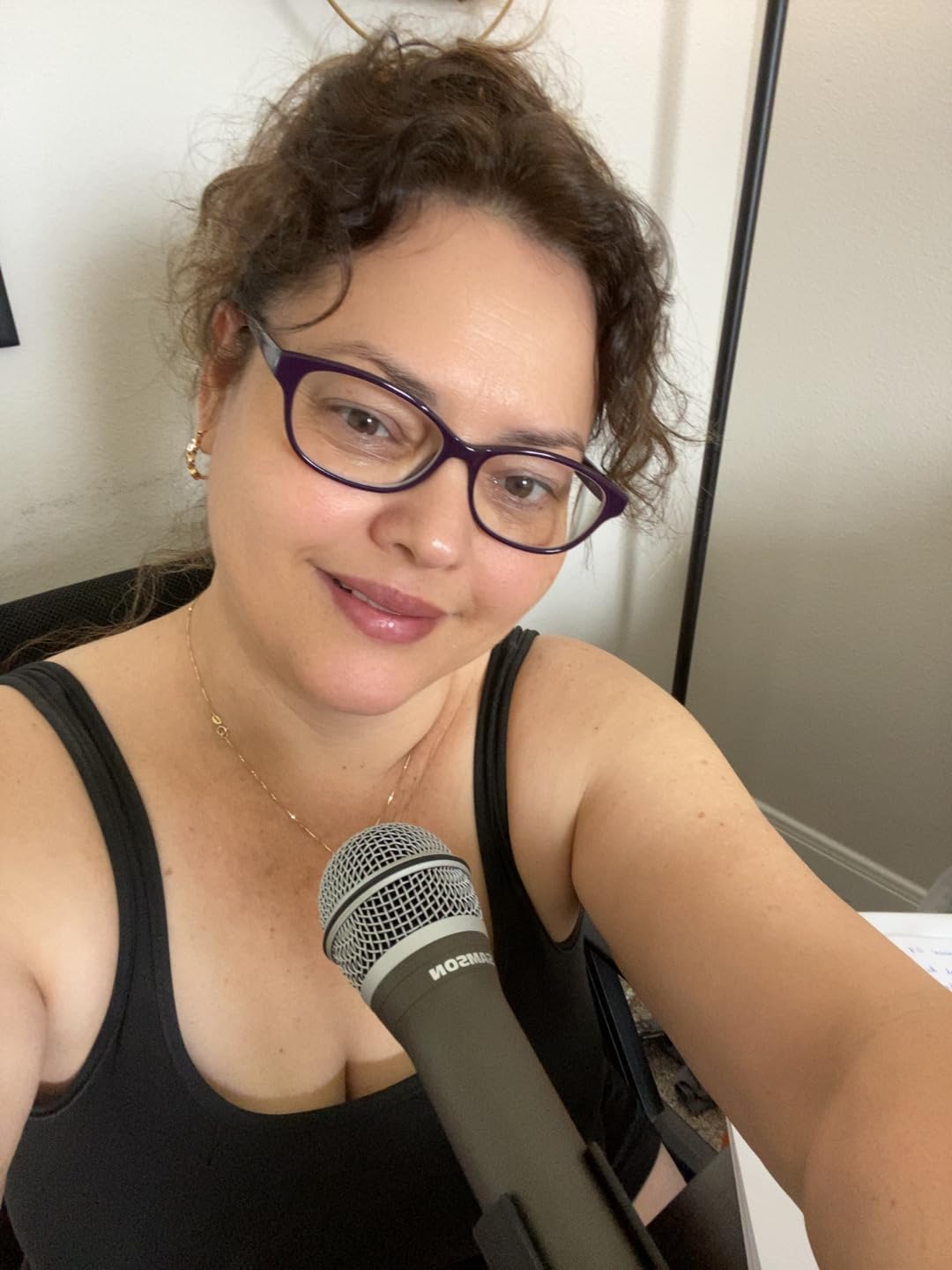
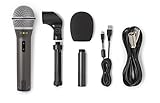
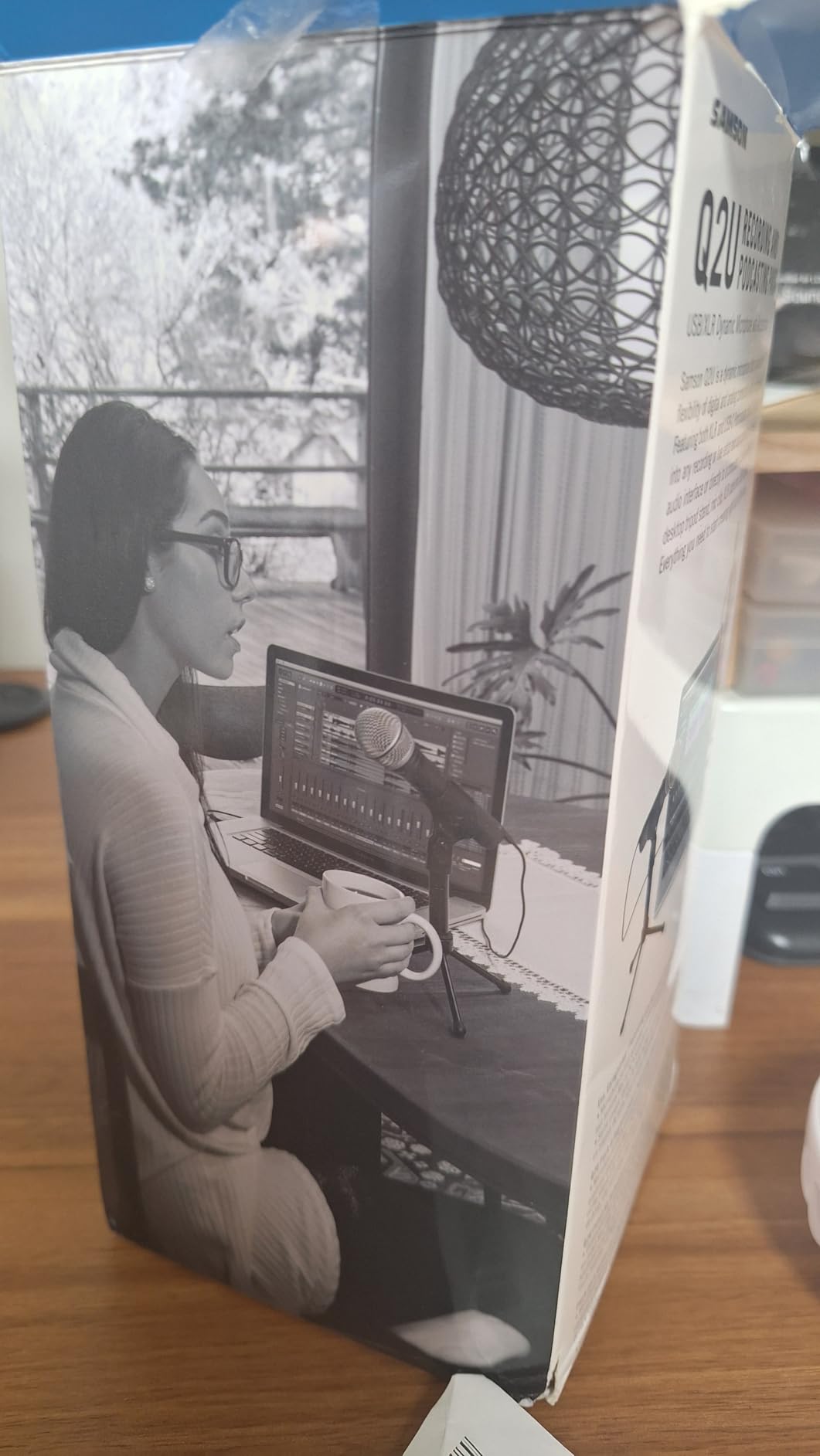
The pack is unusually generous for the money. You get a tripod desktop stand, a tripod extension, a mic clip, a foam windscreen, a USB-C cable and an XLR cable. The handheld shape also teaches good technique, because you naturally hold a microphone a few inches from your mouth rather than six inches away.
Plosives need the windscreen. Reviewers consistently note that bare P and B sounds spike without one, and the included foam does most of that work for free. Adding a proper pop filter improves it further.
One reported quirk deserves a mention. A small number of owners hit a static-filled signal after a power cycle until the USB cable was re-seated or the mic was moved to another port. It is uncommon, and a re-seat or a USB hub fixes it, but if you hit it, that is what to try.
Who the Samson Q2U suits
First-time podcasters in an untreated room who will keep recording for months. The dynamic capsule means you will not be chasing noise reduction in post for every episode.
Anyone who thinks they will buy an audio interface eventually. This is the cheapest way to start today without buying the microphone twice.
Who should pick something else
If you want a warm, detailed vocal for voiceover and your room is genuinely quiet, a condenser captures more nuance. The Sennheiser Profile or the Elgato Wave:3 will sound more open.
If you record music as well as speech, the narrower frequency response will not capture cymbals and air the way a condenser does. Our USB microphone picks for musicians cover that case.
3. Logitech Blue Yeti – Best for Four Pickup Patterns
Logitech Creators Blue Yeti USB Microphone for PC, Mac, Gaming, Recording, Streaming, Podcasting, Studio and Computer Condenser Mic with Blue VO!CE effects, 4 Pickup Patterns, Plug and Play – Blackout
Multipattern condenser
USB
Four pickup patterns
20 Hz - 20 kHz
Pros
- Four selectable patterns cover solo interview and stereo recording
- Onboard gain mute and headphone volume controls
- Huge review base from long-term owners
- Solid metal build that survives transport
Cons
- Large body crowds a small desk
- Condenser sensitivity without a pop filter
- Micro-USB rather than USB-C
With more than 57,000 ratings and a long owner history, the Blue Yeti is the default first USB microphone for a reason. It is the one people usually mean when they say a USB mic is good enough, and for solo narration it is.
The three-capsule array lets you switch between cardioid, omnidirectional, bidirectional and stereo from a dial on the body. That flexibility matters for two-person interviews across a table and for ambient room recording, which is why it shows up on so many beginner lists.
Sound quality sits at the top of the condenser group here. The 20 Hz to 20 kHz range captures far more upper detail than the dynamics in this roundup, and the 100 signal-to-noise ratio keeps the hiss down.
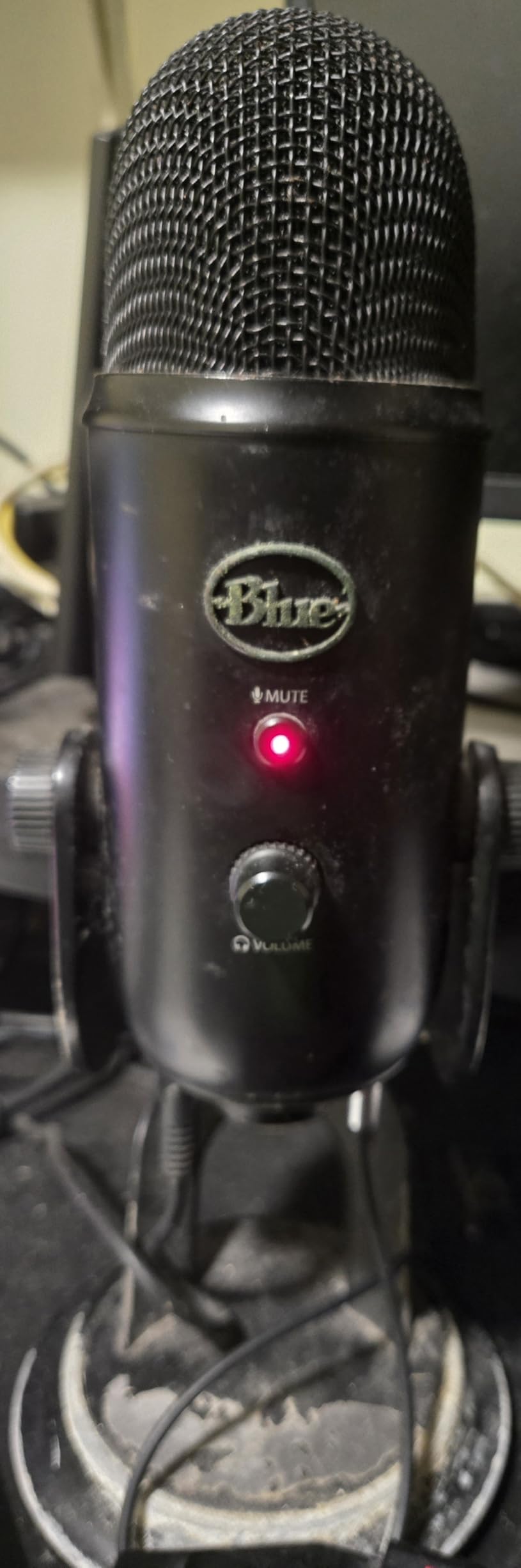
Everything is controlled from the mic. Headphone volume, gain, pattern selection and mute all sit on the body, so you never open a settings panel mid-session. Latency monitoring is direct through the headphone output, which is what podcasters actually want when they are monitoring their own voice live.
The body is the honest drawback. At nearly 12 inches tall and 4.92 inches wide, it eats desk space and sits squarely between you and your monitor. On camera it is a visible object rather than a background detail.
The port is micro-USB, which dates the design. It works, but a modern laptop may need an adapter, and the cable is thinner and easier to damage than the USB-C leads on the newer mics here. No shock mount is included either.
Who the Blue Yeti suits
Recordists who need more than one pickup pattern, especially anyone filming two-person interviews on one microphone. The bidirectional and omni modes have no real equivalent at this budget.
People who want a mic that will not need replacing. The metal body and enormous owner base make it the safest long-term choice for a beginner.
Who should pick something else
If your room is noisy, the condenser capsule will record that noise with the same enthusiasm as your voice. A dynamic pick like the Shure MV6 handles a busy room far better.
If desk space or on-camera appearance matters, the Yeti Nano gives you the same brand voice at a fraction of the size, and the RODE NT-USB Mini disappears onto a boom arm.
4. Shure MV6 – Best for a Noisy Room
Shure MV6 USB Gaming Microphone for Streaming & Recording
Dynamic cardioid
USB-C
Auto Level and denoiser DSP
Headphone output
Pros
- Dynamic capsule gives rich full tone while rejecting room and keyboard noise
- Auto Level keeps levels steady without riding the gain
- Zero-latency headphone monitoring from the mic
- MOTIV app adds real DSP control when you want it
Cons
- Tap-to-mute is very sensitive to accidental touches
- Mute LED can face away from you
- Included USB cable is very short
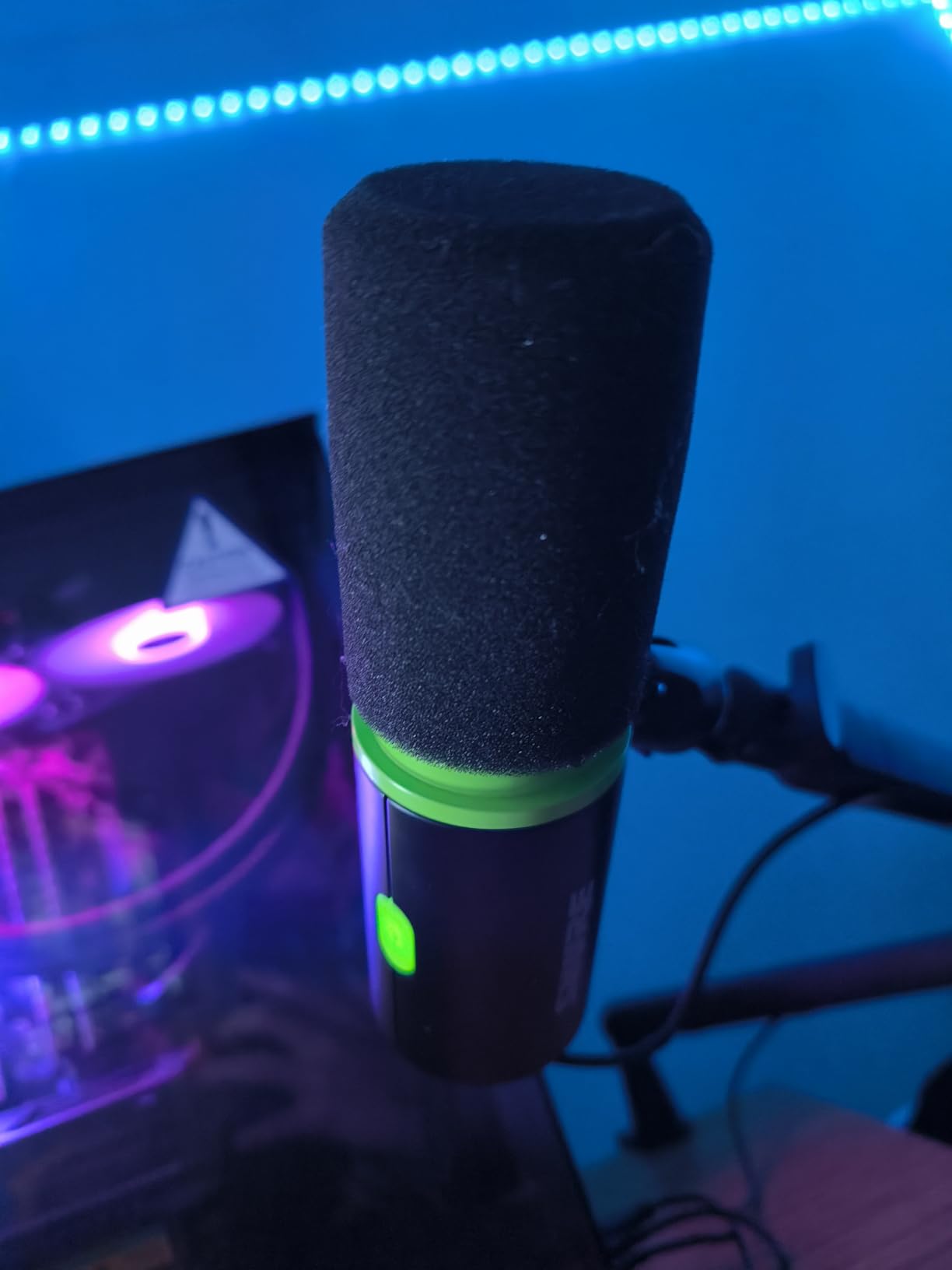
The Shure MV6 is the answer to the noisy-room problem that dominates podcasting forums. A dynamic cardioid capsule plus Shure Voice Isolation Technology means traffic, air conditioning and mechanical keyboard noise sit far below your voice in the recording.
It sits at the upper end of this guide, and the stainless steel body at 1.7 kg is heavier than it needs to be. What you are paying for is the processing layer, and that layer is genuinely different from anything else here.
Auto Level mode watches your gain and holds your voice at a consistent level. There is also a real-time denoiser and a Digital Popper Stopper that tames plosives in hardware, before the signal ever reaches your computer.
Monitoring is direct through the 3.5 mm headphone output with no latency, so you can hear yourself as the audience will. Tap-to-mute sits on the body and the desktop stand is included and stable, which means you are recording the same day it arrives.
Two practical notes from long-term owners. The tap-to-mute is very sensitive and can fire when you brush past the body while adjusting the stand, so set it once and leave it. The included USB cable is also unusually short, so plan on buying a longer one for a boom arm.
The Shure MOTIV Mix app gives you control over the DSP settings and monitor mix. You do not need it for recording, and reviewers describe it as feeling dated, but the automatic modes work fine without opening it.
Who the Shure MV6 suits
Anyone recording in a room they cannot control. Between the dynamic capsule, Auto Level and the denoiser, this is the mic that needs the least post-production cleanup for the worst rooms.
Solo presenters and streamers who change speaking volume. Auto Level removes the constant riding of a gain knob from your workflow.
Who should pick something else
If your room is quiet and you want maximum vocal detail, a condenser will still outclass it on nuance and air. Shure trades a little top-end sparkle for noise rejection.
If your plan includes an audio interface, there is no XLR output here. The RODE PodMic USB gives you the same broadcast-dynamic character with both connection types in one body.
5. RODE PodMic USB – Best for the XLR Upgrade Path
RØDE PodMic USB Dynamic Broadcast Microphone, XLR + USB-C
Broadcast dynamic
XLR and USB-C
APHEX DSP over USB
Swing mount included
Pros
- Broadcast dynamic capsule rejects keyboard clatter and room echo
- Onboard APHEX DSP gives a finished studio-like sound over USB
- XLR and USB-C in one body means a gradual upgrade
- Zero-latency monitoring and an included swing mount
Cons
- Widest spread of owner experiences of this group
- Nearly 2 pounds is heavy on a small boom arm
- USB DSP is less flexible than a full software chain
The PodMic USB is the mic we would buy if we expected to be podcasting in two years. It has an XLR output and a USB-C output in the same body, so the same microphone covers a laptop today and a studio interface later.
That single design decision is what makes it more future-proof than the USB-only condensers here. The other thing you notice in the first ten minutes is the on-board APHEX DSP, which applies compression and presence shaping when you are on USB. Your raw track arrives closer to finished.
The broadcast dynamic capsule is built for speech. Reviewers consistently describe it as rejecting keyboard noise and room echo, which puts it in the same family as the Shure MV6 for untreated spaces.

Zero-latency headphone monitoring runs off the mic, and a swing mount plus a carry pouch are in the box. It also works on Mac, PC, iPad and Android, which makes it one of the easier options for recording an interview on a phone or tablet.
It is the heaviest microphone here at nearly 2 pounds, and that is fine on a proper arm but tiring on a cheap scissor stand. Plan your mount accordingly.
Be aware of the ratings spread. With more one-star reviews than the other picks in this guide, some owners report trouble getting the USB path to behave as expected. The XLR side is the sturdier half of the proposition.

Who the RODE PodMic USB suits
Beginners who are confident they will still be making podcasts a year from now. The upgrade path removes the most common regret about buying USB first.
Anyone who moves between computers. USB-C plus Mac, PC, iPad and Android support makes it the most portable of the broadcast-style mics in this guide.
Who should pick something else
If you want a quiet, treated room capture with the most vocal detail, this is a dynamic capsule and will sound tighter than a condenser. The Elgato Wave:3 MK.2 is the opposite trade.
If you want the same dynamic performance for less money, the Samson Q2U also carries XLR and USB-C and costs a good deal less. You give up the APHEX processing layer.
6. RODE NT-USB Mini – Best for a Small Desk or Boom Arm
RØDE NT-USB Mini Studio-Quality USB Condenser Microphone
Cardioid condenser
USB-C
Built-in pop filter
Zero-latency monitoring
Pros
- Compact body that mounts on a boom arm without blocking a monitor
- Metal and nylon build that feels durable for the size
- Built-in pop filter handles plosives with no extra accessories
- Strong headphone amp that drives higher-impedance headphones
Cons
- Single cardioid pattern with no switching
- Included desk stand is short
- Brighter noise floor at higher gain
The NT-USB Mini solves a specific problem: you want a proper condenser microphone but you do not have desk space for a large body or a monitor arm in the way. At 7.28 inches long and just under 2 inches wide, it mounts out of the way and stays out of your camera frame.
It also sits at the more affordable end of the condenser options here, and it captures a genuinely neutral voice with zero-latency monitoring. The voice comes out natural rather than hyped, which makes it easy to process later.
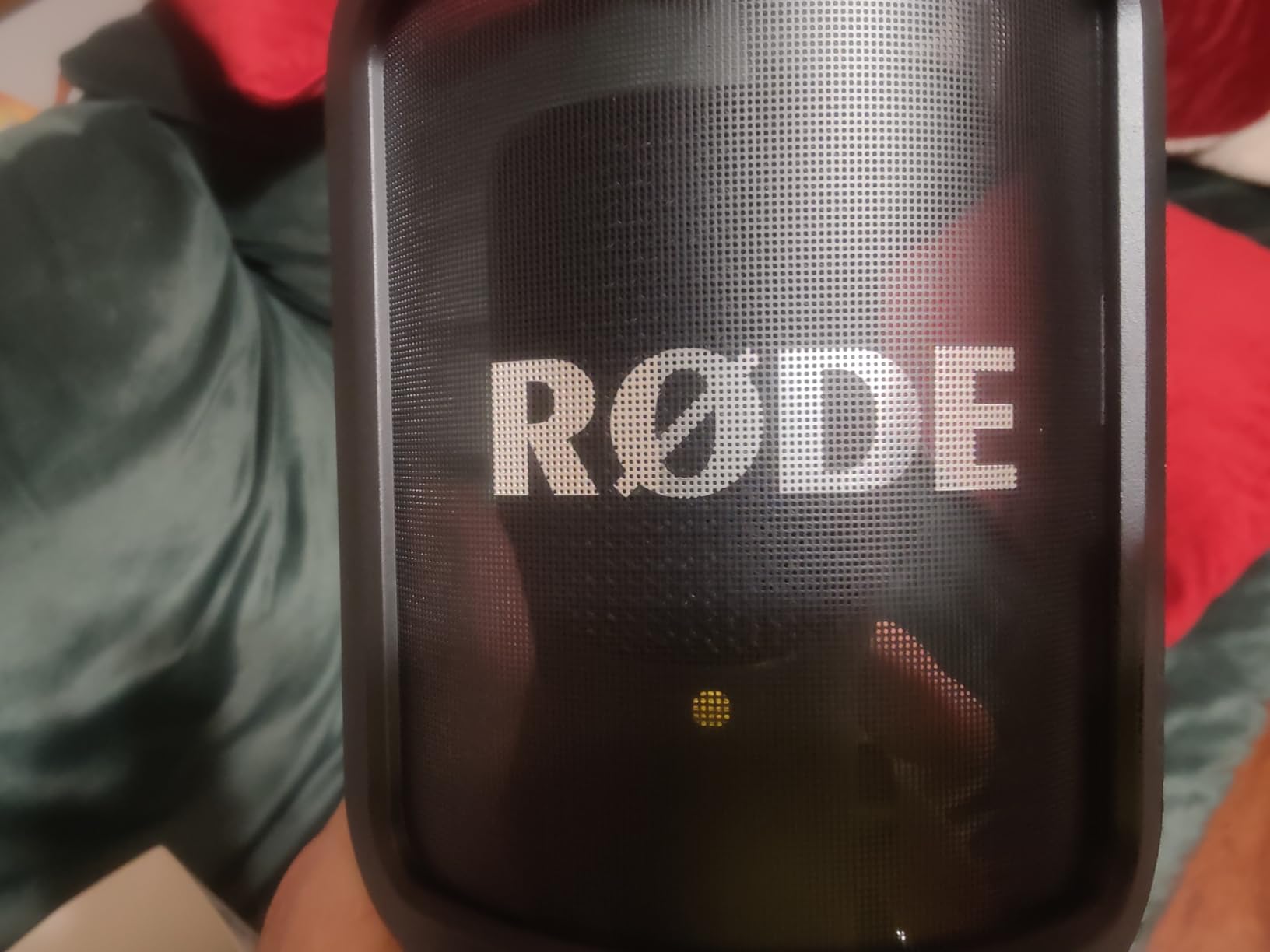
The built-in pop filter is the sleeper feature. It is tuned for the capsule, so P and B sounds stay controlled without you buying a separate filter, and that is one accessory you never have to think about again.
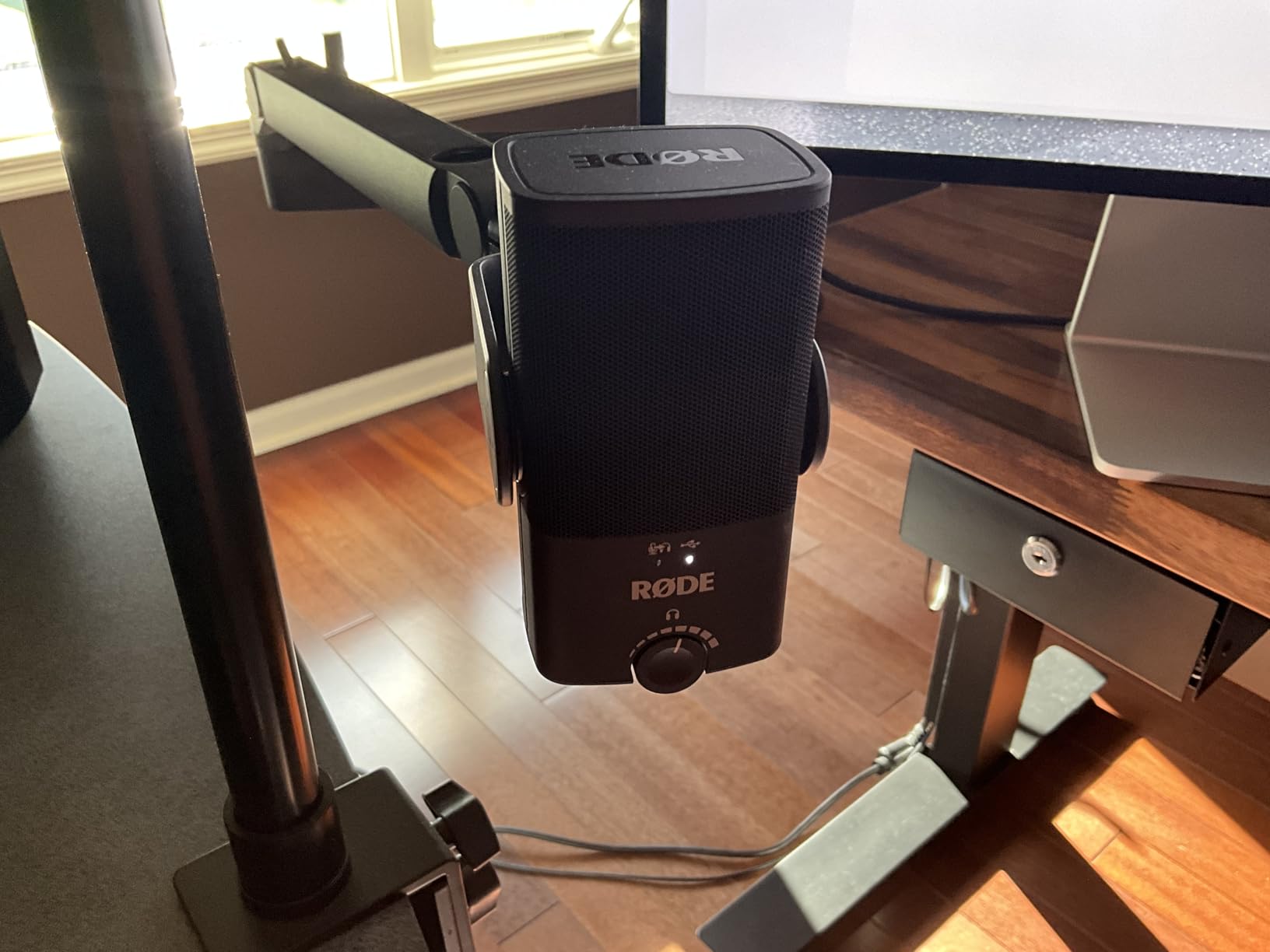
USB-C plug-and-play works on Mac, PC and iPad with no drivers and no interface. The magnetic desk stand detaches and leaves a standard thread mount, so any boom arm will take it.
Owners rate it as a large step up from a headset microphone for voiceover and narration. The noise floor gets slightly bright once you push the gain hard in a quiet room, so leave some headroom rather than winding it up.
The included stand is short, and almost every owner ends up buying an arm. That is the honest cost of this mic in practice, though the NT-USB Mini also fits any of the arms in our podcast microphone guide.
Who the RODE NT-USB Mini suits
Narrators and voiceover artists working in a treated space who want a clean, natural capture. The built-in pop filter removes one purchase from your list.
Anyone on a small desk, a dual-monitor arm setup, or filming themselves. The footprint is the smallest serious condenser here.
Who should pick something else
If you need to switch patterns for a two-person interview, this has cardioid only. The Blue Yeti covers that use case at the other end of the size range.
If your room is loud, a condenser is the wrong tool. The Shure MV6 or the Samson Q2U will handle a noisy space without dragging the noise into your recording.
7. Audio-Technica AT2040USB – Best for Hypercardioid Focus
Audio-Technica AT2040USB Dynamic USB Microphone
Hypercardioid dynamic
USB Type-C
Headphone jack with volume
Two-state LED ring
Pros
- Hypercardioid pattern keeps room noise and echo out of the capture
- Built-in headphone monitoring with a high-output amplifier
- Two-state LED ring is an unambiguous power and mute indicator
- Silent soft-touch mute button
- Both USB-C cable and adapter included
Cons
- No stand or boom arm included
- Single fixed pattern with no switching
- Requires speaking close and dead center
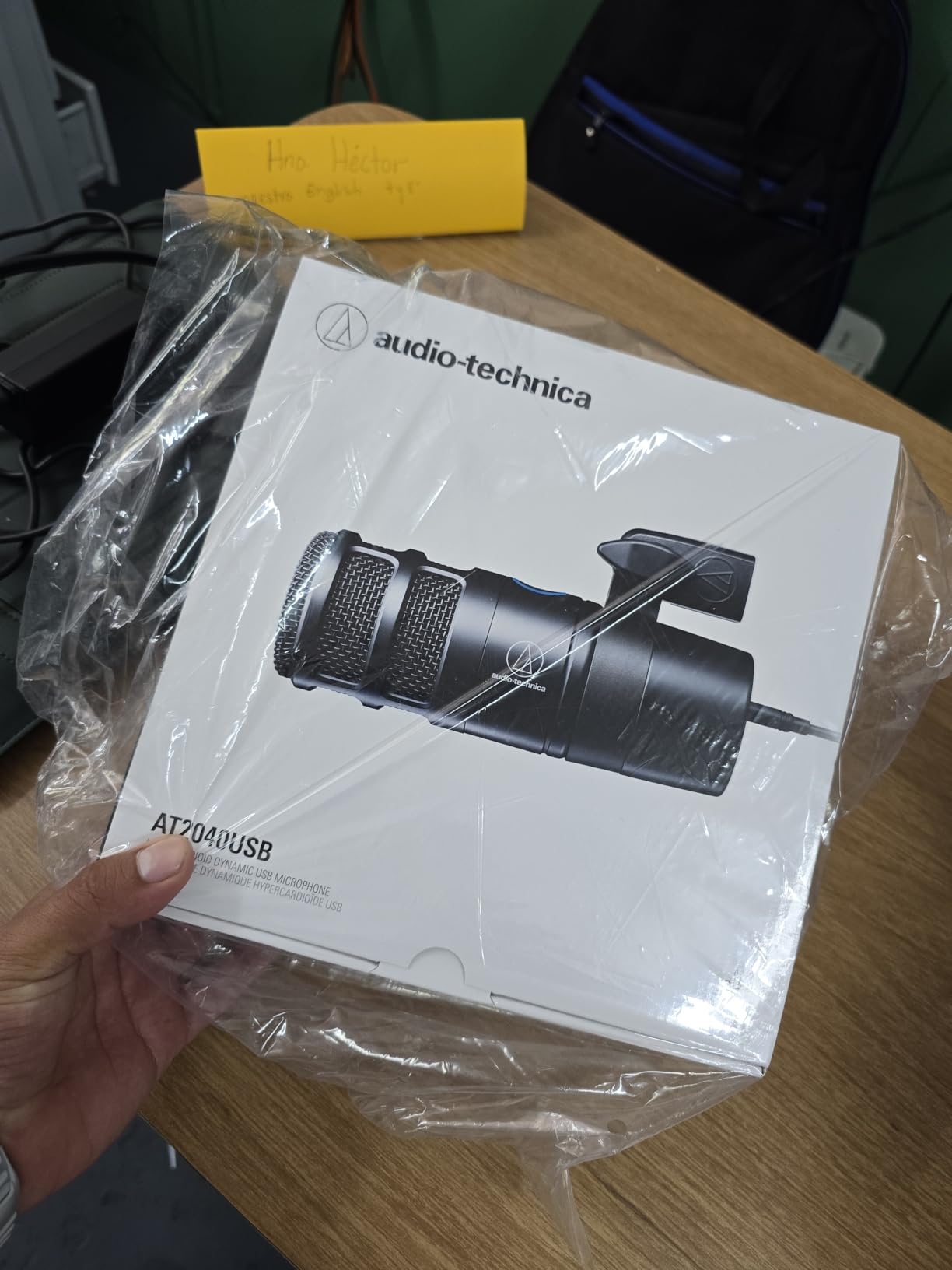
The AT2040USB is the most focused microphone in this guide. Where most cardioid mics pick up a little room behind you, the hypercardioid pattern narrows the rear rejection further, which is why reviewers single it out for cutting echo and background noise.
That makes it a strong choice for voiceover read at a table in a room with hard surfaces, and for anyone whose main complaint about their current mic is reverb rather than hiss.
It is also a dynamic, so the sensitivity is low enough that you can talk at normal volume without the level jumping. Broadcast microphones were built for exactly this: people who move, who laugh, who lean back.
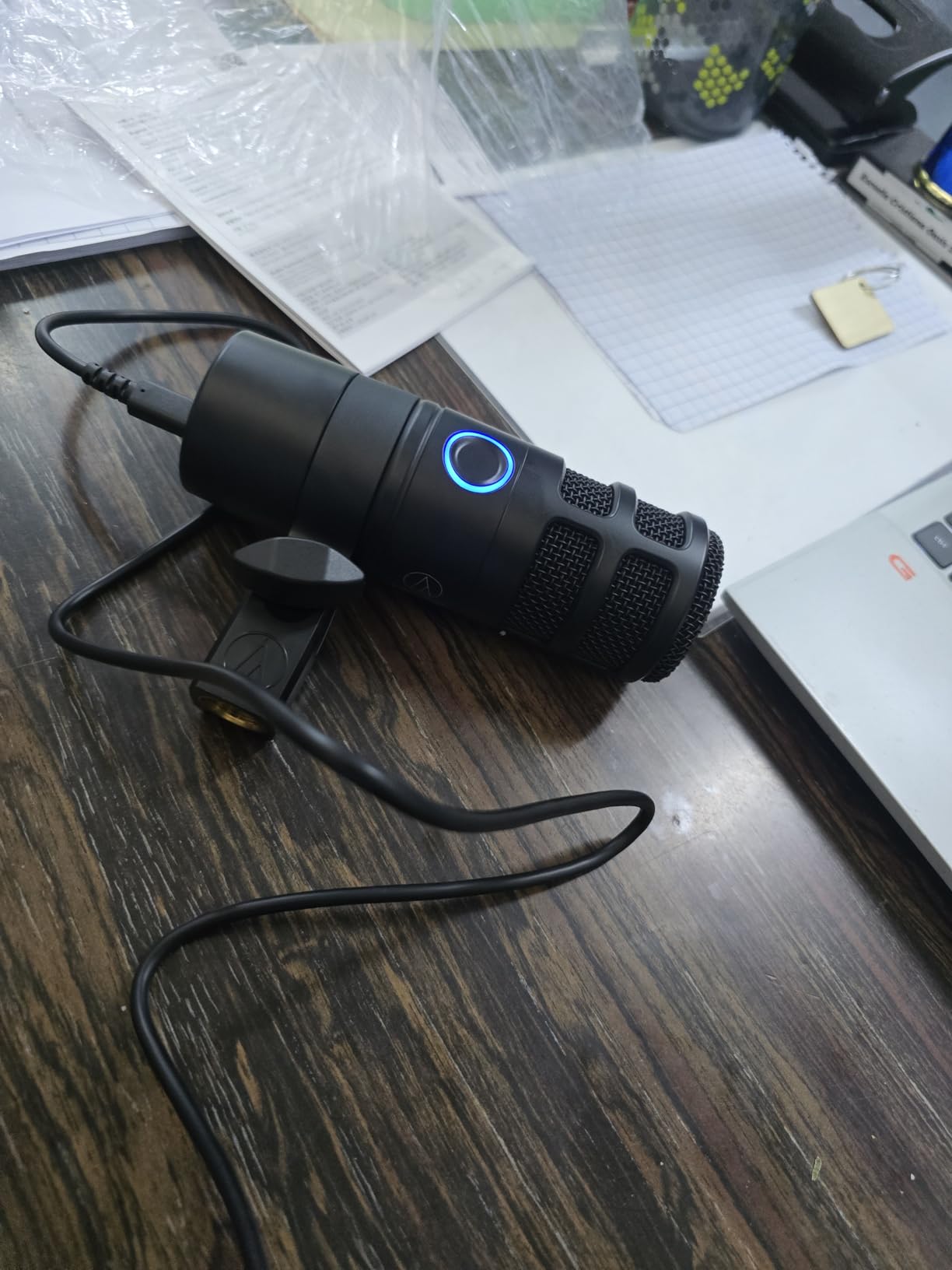
The hardware details are unusually well thought out. The headphone jack runs through a high-output amplifier with its own volume control, the mute is a silent soft-touch button, and the two-state LED ring glows blue for power and red for mute so you can check status at a glance without looking closely.
Both a USB-C to USB-A cable and a USB-C adapter are in the box, and no external power supply is needed. That covers most current setups without an extra purchase.
What is not in the box is any kind of stand. Budget for a boom arm or a proper desk stand, and remember that hypercardioid means speaking close and dead center. That technique is worth learning early anyway.
Who the Audio-Technica AT2040USB suits
Voiceover artists and audiobook narrators who want maximum rejection of room sound from a single mic. The hypercardioid pattern is the narrowest and most isolating here.
Anyone who has already learned to work close to a microphone and wants a broadcast-style dynamic rather than a delicate condenser.
Who should pick something else
If you want monitoring features plus DSP, this has neither processing nor software. The Shure MV6 gives you Auto Level and a denoiser for a comparable dynamic capsule.
If this will be your first microphone and you want everything in one purchase, the missing stand is a real extra cost. The MAONO A04 kit includes arms, shock mount and pop filter.
8. FIFINE AmpliTank K688 – Best Metal Build with Headphone Control
FIFINE AmpliTank K688 Dynamic Microphone, XLR/USB Podcast Recording PC Mic
Dynamic cardioid
USB and XLR
130 dB SPL rating
Headphone monitoring
Pros
- Dynamic capsule cuts fans hard drives and air conditioners cleanly
- USB and XLR outputs give a straight path to a future interface
- Metal construction feels far more premium than the price suggests
- Tap-to-mute gain knob and monitoring all work without software
- Shock mount and windscreen included
Cons
- Gain needs care because the mic picks up a lot
- Onboard controls do nothing when running XLR
- Bundled desk stand is flimsy
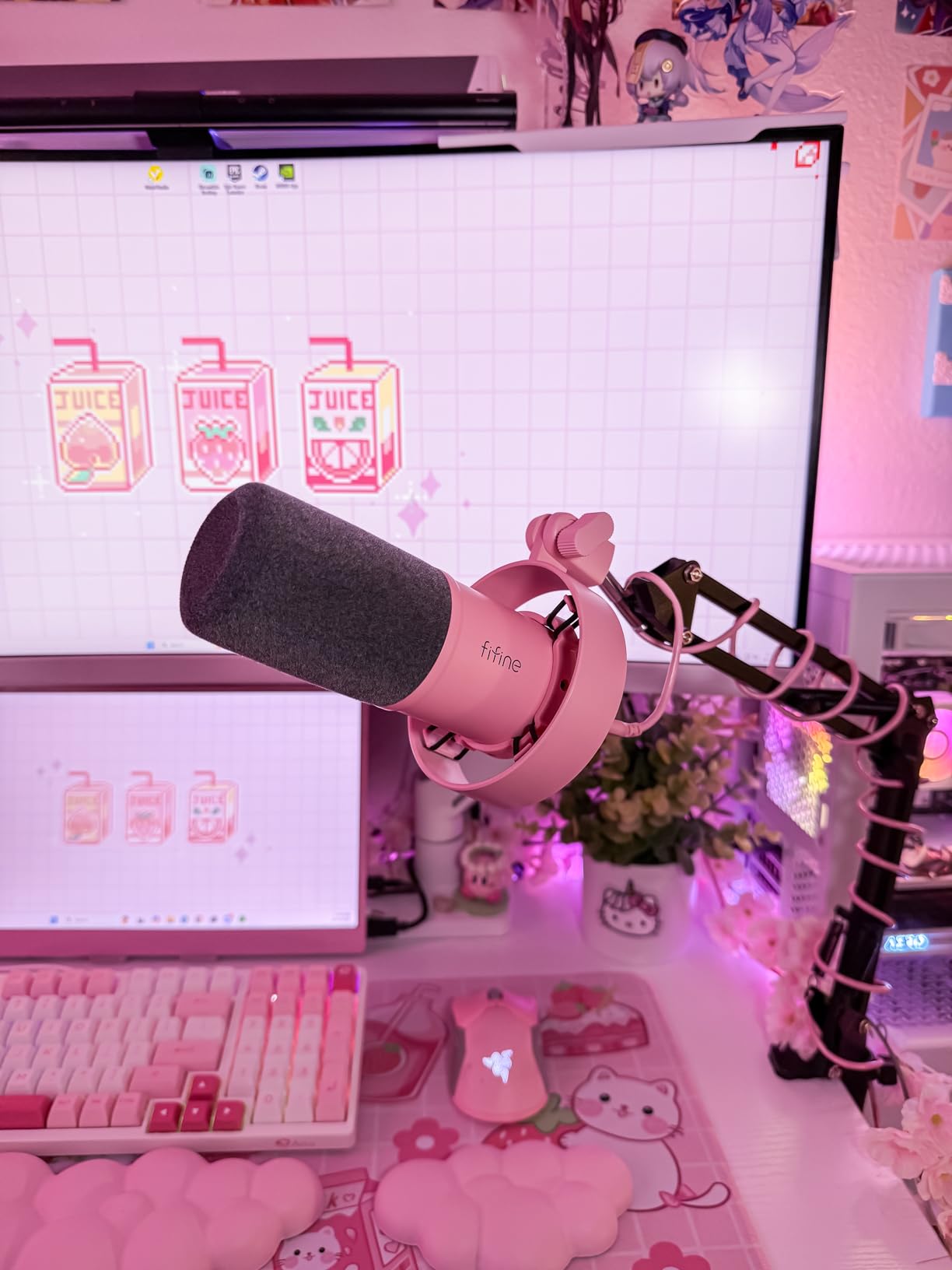
The K688 is the one we recommend when someone asks how a dynamic microphone at this level can sound this solid. The metal body has no creak or flex, and it takes desk knocks without complaint, which matters more than people expect from a daily-use tool.
Owners frequently describe it as outperforming microphones costing several times more. The 130 dB SPL rating and an 80 dB signal-to-noise ratio give it real headroom, and in an untreated room the dynamic capsule keeps computer fans and hard drives out of the track.
Like the other dynamics here, it is USB and XLR, so it also survives a move to an interface. The difference from the Samson Q2U is the monitoring control and the metal chassis.
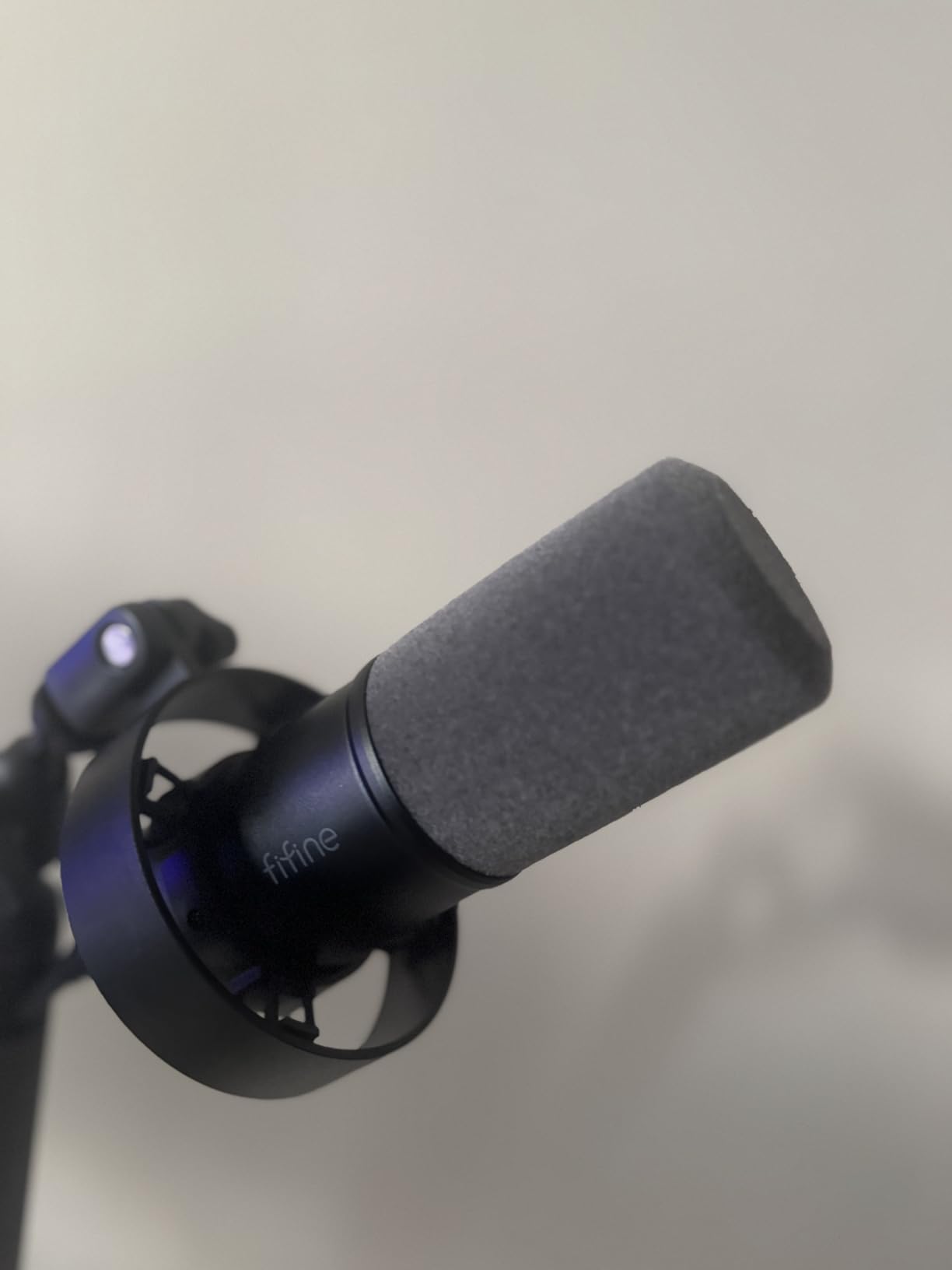
The controls are hardware, not software. Tap-to-mute on the front, a gain knob at the rear, and a 3.5 mm headphone jack with its own monitoring volume, all operating over USB. You can record without installing anything at all.
One thing to know: every one of those function keys stops working the moment you switch to XLR. If you buy the K688 for the upgrade path, the mute and monitoring behaviour will be whatever your interface provides.
A shock mount and windscreen are included, along with 5/8 and 3/8 inch adapters. The small bundled desk stand is the weak point and reviewers often replace it early, and the XLR cable is not in the box.
Who the FIFINE AmpliTank K688 suits
Anyone recording in a room with constant mechanical noise, particularly computers with loud fans or spinning drives close to the desk. The cardioid dynamic pattern is built for that.
People who prefer hardware controls to software. Every function you need on a recording day works from the mic itself.
Who should pick something else
If your room is quiet and you want sparkle and air on voiceover, the dynamic path will sound plainer than a condenser. The Elgato Wave:3 MK.2 is the opposite choice.
If you want a kit that includes a boom arm and pop filter from the start, you will be adding accessories here that other options bundle.
9. Sennheiser Profile – Best for a Warm Tone Without Software
SENNHEISER Professional Profile – USB Cardioid Condenser Microphone & Table Stand, 1.2 m USB-C Cable – Mute Button, Built-in Headphone Jack, Gain, Mix & Volume Control, for PC & Mac,Black
Cardioid condenser
USB-C
Gain mix and volume dials
Metal housing
Pros
- Warm natural voice tone instead of the thin sound of cheaper USB mics
- Works with no drivers and no companion software
- Physical gain mix and volume dials plus a mute button
- Compact metal body that fits on a boom arm
Cons
- Single cardioid pattern with no switching
- Included table stand is basic
- Lower signal-to-noise ratio than competing condensers
The Profile is the answer for anyone who distrusts microphone software. It uses the universal USB audio standard and needs no drivers, no app and no login. In five years it will very likely still work on whatever computer you own then.
Sonically it leans warm. Where several budget USB condensers come across thin and slightly honked, the German-engineered capsule in this one sits closer to the centre and keeps a natural roundness through the midrange, which is flattering on extended speaking.
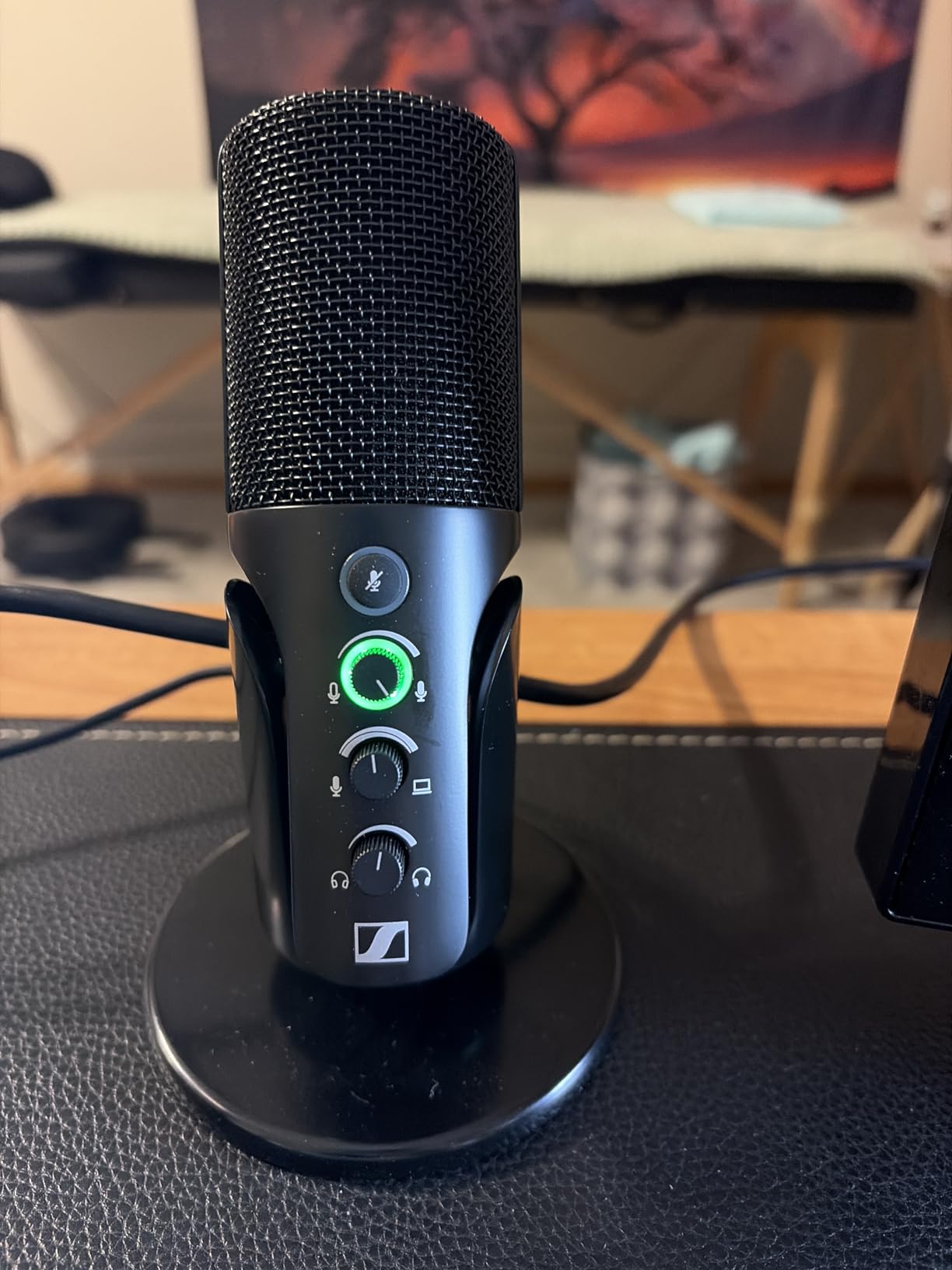
All three controls are physical dials on the front: gain, mix and headphone volume, with a mute button underneath. You can set levels without looking at a screen, which some recordists prefer.
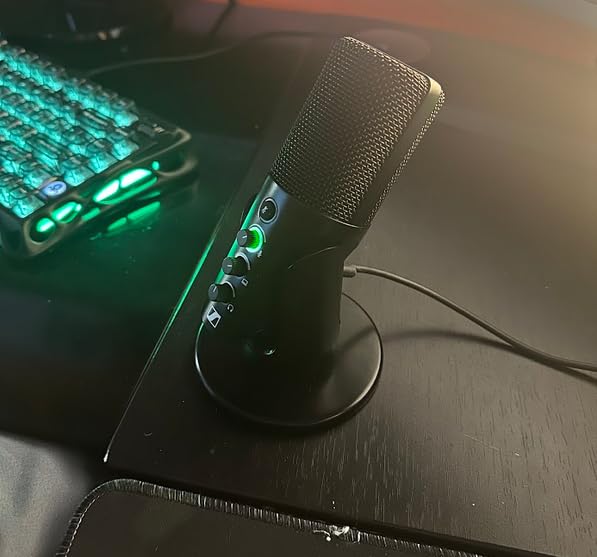
The built-in headphone jack gives direct monitoring, and the mix dial lets you blend your own voice with playback audio. That is genuinely useful for remote interviews, where you want to hear the other person without the level jumping every time they talk.
The body is metal and weighs 717 g, small enough to disappear on a boom arm. A table stand and a 1.2 m USB-C cable are included, and the stand is fine to start with even though most owners move to an arm.
Two honest notes. It is cardioid only, with no pattern switching for interviews. And the 60 dB signal-to-noise ratio is the lowest of the condensers here, so you want a quiet room and moderate gain.
Who the Sennheiser Profile suits
Long-term owners who hate depending on vendor software. No app means no broken driver after an operating system update, which is a real and recurring complaint about some rivals.
Anyone doing remote interviews, because the mix dial blends playback with live mic audio instead of forcing you to balance it in software.
Who should pick something else
If you want automatic gain staging and voice processing, the Elgato Wave:3 MK.2 does more out of the box. This mic hands you dials and leaves the rest to you.
If you are recording in a noisy room, its lower signal-to-noise ratio works against you. Take a dynamic instead.
10. Logitech Blue Yeti Nano – Best for Streaming and Small Rooms
Logitech for Creators Blue Yeti Nano USB Microphone for Gaming, Streaming, Podcasting, Twitch, YouTube, Discord, Recording for PC and Mac, Plug & Play -Blackout
Cardioid and omni
USB
Onboard mute and headphone volume
16 ounces
Pros
- Compact desktop footprint that fits a small desk and looks unobtrusive on camera
- Cardioid and omni patterns with onboard mute and headphone volume
- Blue VOICE effects noticeably improve call and stream voice
- Light and easy to move between setups
- Strong value for a condenser USB mic
Cons
- Condenser sensitivity picks up fans and room noise
- No pop filter included
- Logitech G Hub software can be frustrating
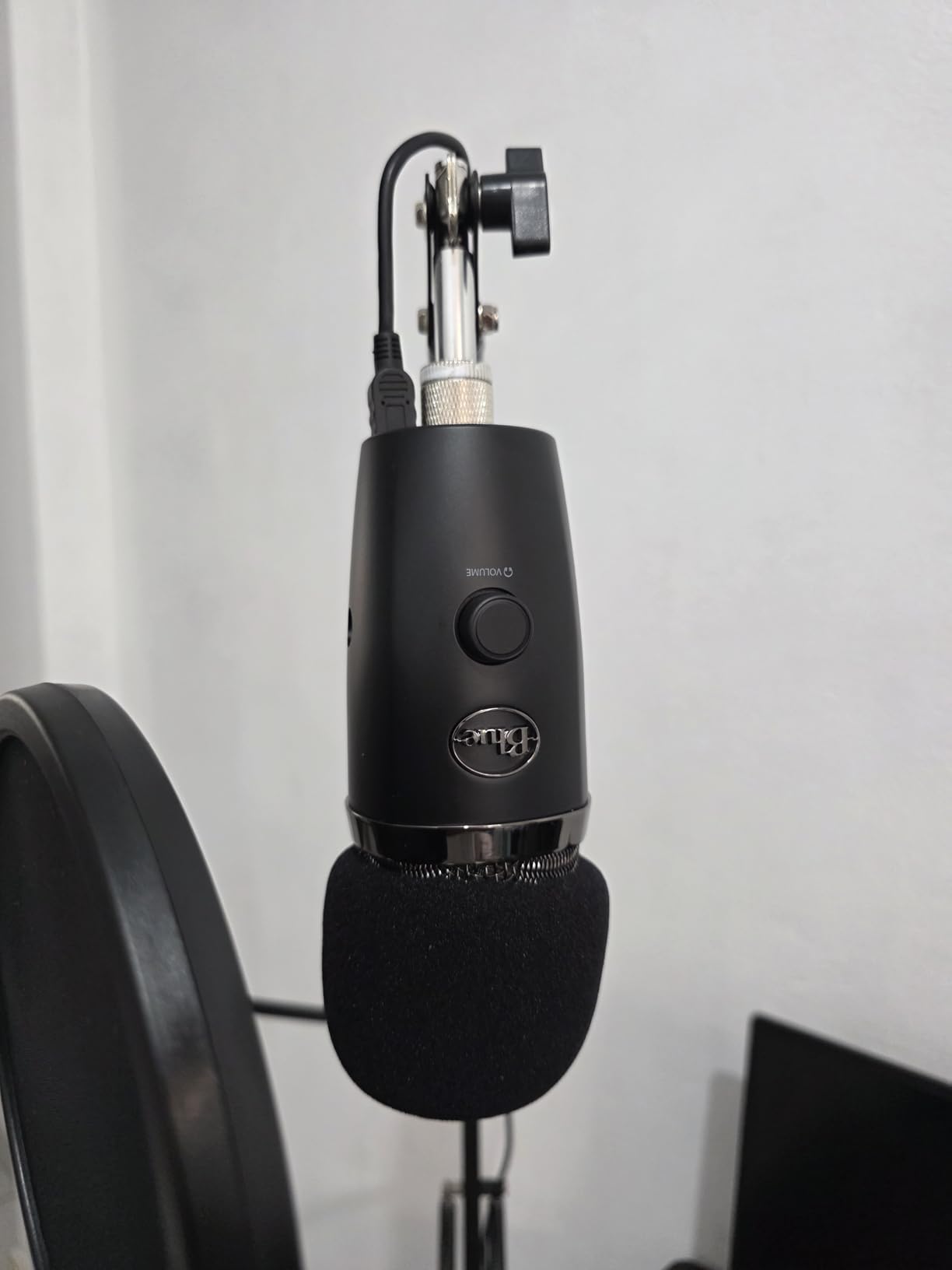
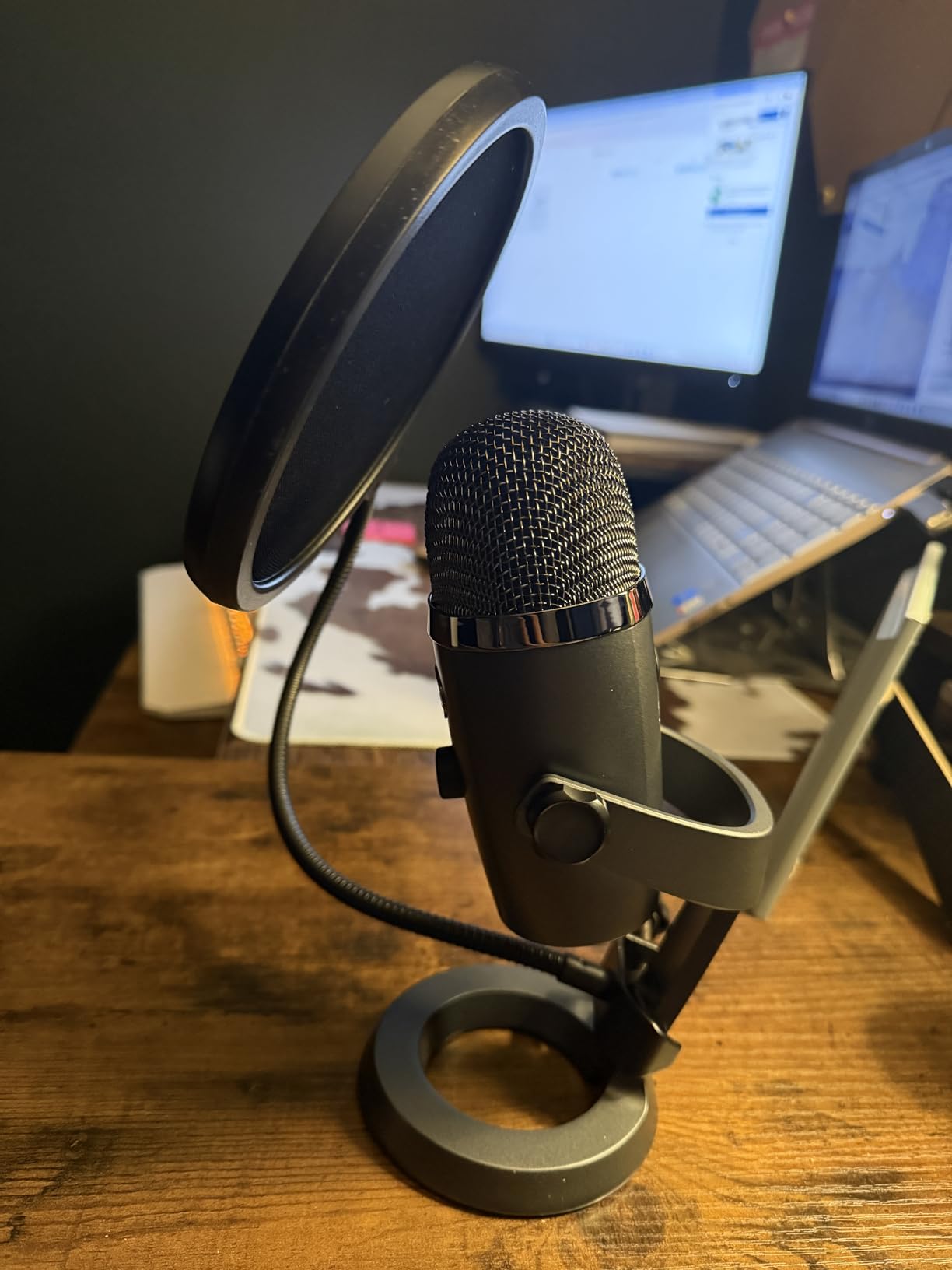
The Yeti Nano is the compact sibling of the Yeti and the version we suggest for streamers and anyone filming themselves. At 16 ounces and 8.37 inches tall it takes up a fraction of the desk, and it does not sit in the middle of your camera frame.
It carries two custom condenser capsules tuned for vocal presence, plus cardioid and omnidirectional patterns. Omnidirectional is the useful one for a small group conversation, and a tap-to-mute button sits on the body next to a headphone output with its own volume control.
Blue VOICE software applies broadcast vocal effects that most owners notice immediately on a stream or a video call. It takes the thin edge off a laptop mic in one click.
Sound quality is a step above most mics at this level and clearly below the Elgato Wave:3 MK.2. For a streamer who mostly talks and reacts, that gap rarely matters.
The recurring complaints are all setup issues rather than sound issues. There is no pop filter in the box, so buy one if you speak close. The Blue VOICE features need Logitech G Hub, which owners describe as unintuitive or occasionally buggy.
The port is micro-USB. It works on any current machine with the right cable or adapter, but if you are buying new gear with USB-C everywhere, that is friction you did not need.
Who the Logitech Blue Yeti Nano suits
Streamers and video creators who need a mic that looks good on camera and takes up no desk space. The Blackout finish suits a dark streaming setup.
People running calls and quick voice work who want broadcast effects without touching mixing software.
Who should pick something else
If your room has a fan or traffic noise, the condenser capsule will bring it in clearly. A dynamic microphone such as the FIFINE AmpliGame AM8 costs less and ignores it.
If you want the most capable automatic processing here, the Wave:3 MK.2 does more with Clipguard and Auto Gain than any other mic in this roundup.
11. FIFINE AmpliGame AM8 – Best Budget Hybrid
FIFINE AmpliGame AM8 USB/XLR Dynamic Microphone for Gaming Streaming
Dynamic cardioid
USB and XLR
RGB ring and tap-to-mute
50 Hz - 16 kHz
Pros
- Dynamic cardioid capsule keeps keyboard fan and room noise out of the recording
- Dual USB and XLR design lets you move to an interface later
- Tap-to-mute gain knob and headphone monitoring all work over USB
- Good included desktop stand
- One of the few low-cost USB and XLR mics with this feature set
Cons
- Mute is a touch button rather than a physical press
- RGB lighting is weak and USB-only
- RGB ring can switch off if the cable is jostled
- Rubber on the stand base collects dust and hair
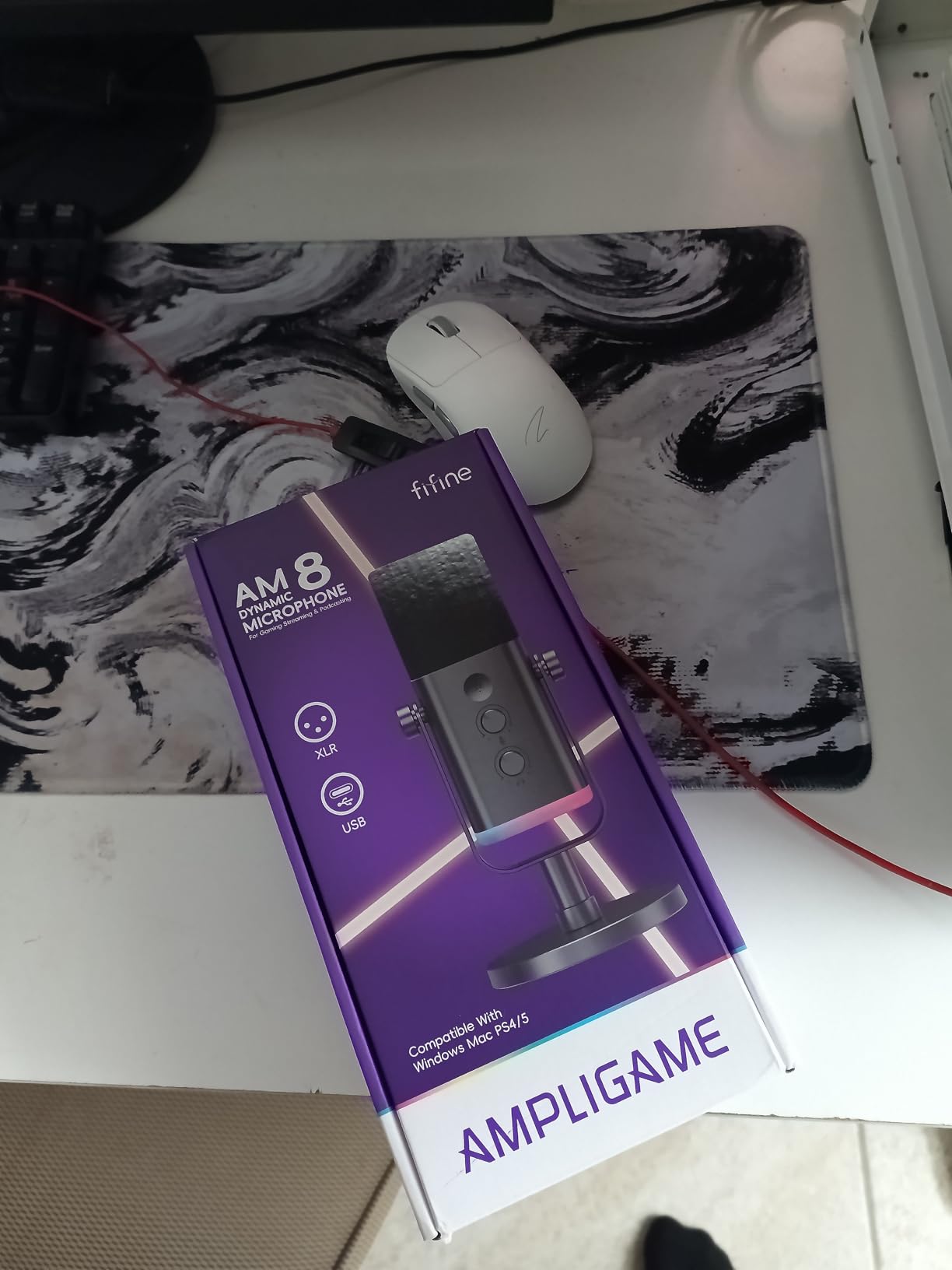
The AM8 is the cheapest microphone in this guide and one of the most reviewed, passing 12,000 ratings. For a first podcast in an ordinary room, it does the two things that matter most: it records clear speech, and it does not drag your keyboard and fans into the track.
The dynamic cardioid capsule is the reason. It costs 57 dollars and behaves like a broadcast mic for spoken word, which is a combination that is hard to find at this budget.
Like the other FIFINE model here, it carries both USB and XLR. That means the 57 dollars is not a dead end if you later buy an interface. It also ranks first in its category on Amazon, which tells you how much of the podcast community has landed on the same conclusion.
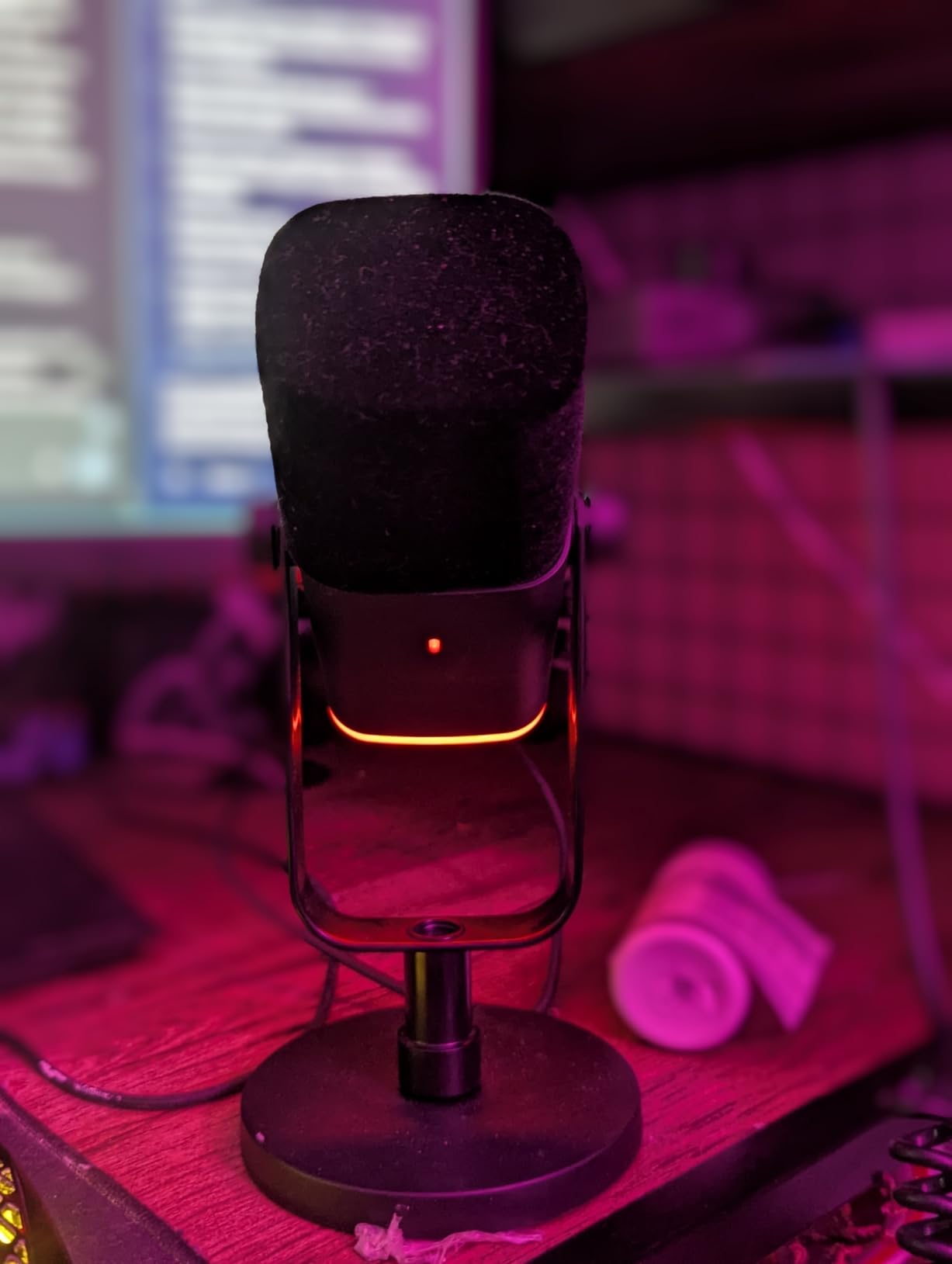
Controls sit on the body: tap-to-mute with an LED reminder, a gain knob, and a 3.5 mm headphone jack with monitoring volume. The RGB ring has three modes, more than ten colours and a memory function, so your setting survives a power cycle.
Two practical notes. Mute is a capacitive touch button rather than a physical press, so a stray sleeve can trigger it. And the RGB ring and function keys only operate over USB, which is standard for this hybrid format.
The included desktop stand is better than the floppy tripods in this price range and doubles as a workable alternative to an arm, though the rubber base does collect dust and hair over time.
Who the FIFINE AmpliGame AM8 suits
Beginners on the tightest budget here who record in a shared home. The dynamic capsule handles a normal room without post-production noise reduction.
Anyone who wants a USB and XLR microphone without spending real money. Very few hybrids exist at this level.
Who should pick something else
If you want a genuinely premium feel, the metal chassis of the FIFINE AmpliTank K688 is a different object entirely for roughly ten dollars more.
If you want the maximum voice detail in a quiet room, this is a dynamic mic and will not provide it. A condenser such as the Sennheiser Profile suits a treated space better.
12. MAONO A04 – Best Complete Starter Kit
MAONO A04 USB Microphone, 192kHz/24Bit Condenser Mic Kit for PC Podcast
Cardioid condenser
USB and USB-C
192 kHz and 24-bit
Full accessory bundle
Pros
- 192 kHz and 24-bit capture gives clear detailed results
- Kit includes scissor arm shock mount pop filter windscreen and clamp
- Metal construction feels durable
- Works with PC Mac PS4 PS5 and phones
- Cardioid pattern plus included pop filter controls plosives
Cons
- No onboard mute button and no headphone jack
- Input level is very hot and can spike
- Often picks up distant room sound
- Boom arm hinge can crack with use
- Not compatible with the Maono Link app
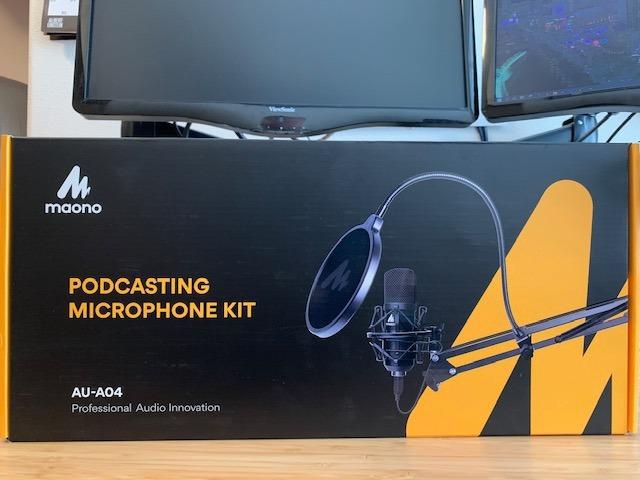
The A04 is the only microphone here that arrives as a complete kit. The box contains a scissor arm stand, a boom base with a table clamp, a shock mount, a pop filter, a foam windscreen and the cable. Nothing else in this guide needs a second purchase before you can record.
With close to 20,000 ratings it is also the most-reviewed product we included, and owners consistently call it unbeatable value for a first podcast or YouTube channel. The 192 kHz and 24-bit chipset produces a clear, detailed recording that punches above its weight.
The 16 mm electret condenser capsule has a strong bass response for a budget mic, and the stated best working range of 2 to 6 inches is a useful, honest specification. Get inside that range and the included pop filter does its job.
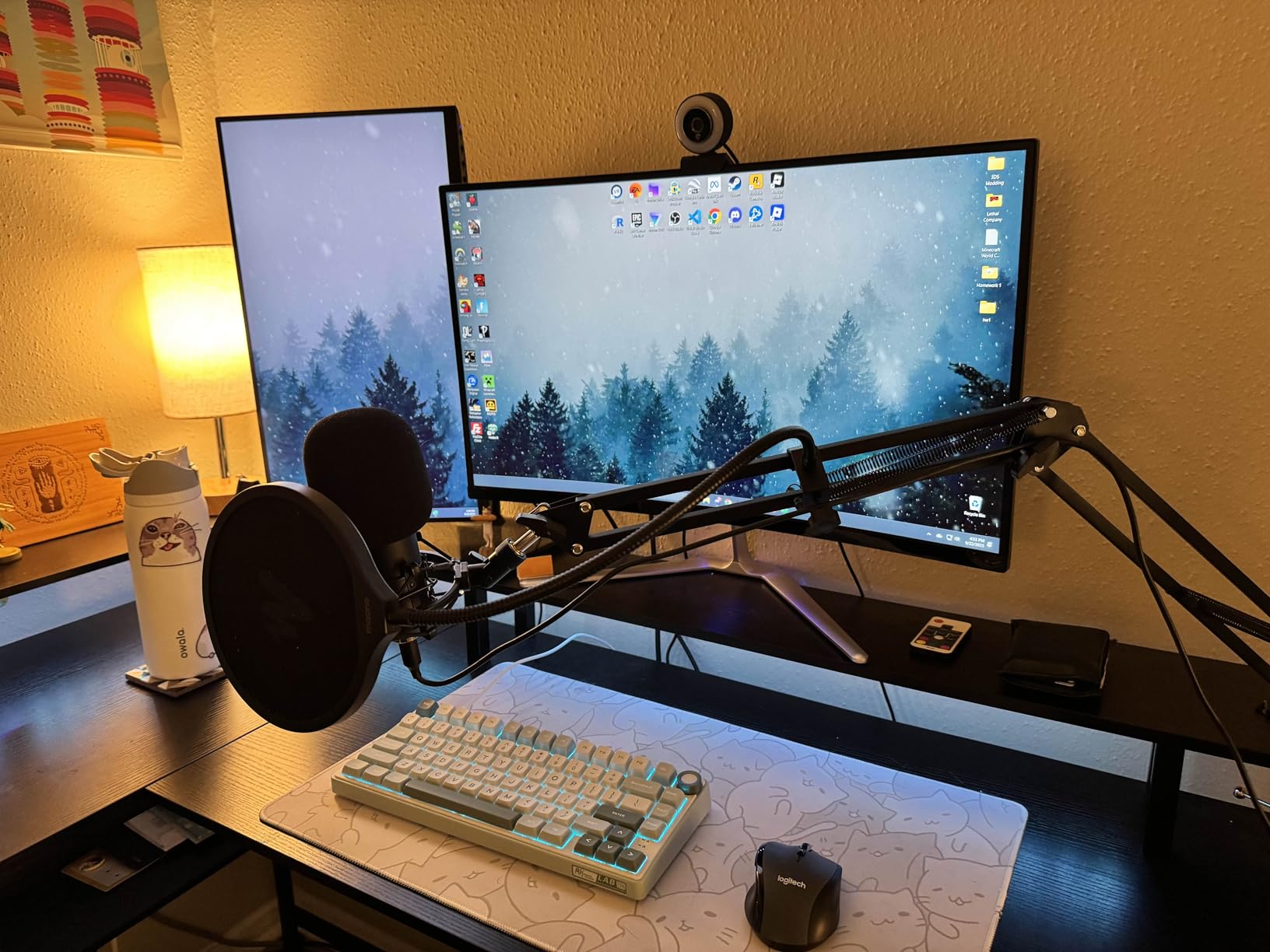
It works with PC, Mac, PS4, PS5 and mobile phones, which makes it one of the most flexible options for recording away from your desk. Console compatibility is rare at this budget.
The compromise is the hardware. There is no onboard mute button and no headphone monitoring jack, so you cannot hear yourself while recording without buying a cheap headset. That is the single biggest gap for a podcast mic.
Owners also report a hot input level that can spike, and sensitivity to distant room sound that needs post-production cleanup. The boom arm hinge can crack with heavy use, so tighten it rather than forcing it.
Who the MAONO A04 suits
Absolute beginners who want to record today with nothing else to buy. The accessory bundle alone costs more than the difference between this and some rivals.
Anyone recording on more than one kind of device, since it works on computers, consoles and phones from the same body.
Who should pick something else
If you want to monitor your voice live, you need a headphone jack and this does not have one. The FIFINE AmpliTank K688 or the RODE NT-USB Mini both provide direct monitoring.
If you are recording in a noisy room, the condenser will capture it. Take a dynamic and spend the difference on a boom arm instead.
How to Choose a USB Podcast Microphone Under 200 in 2026
Dynamic or condenser for spoken word
A condenser microphone is more sensitive. It captures breath, mouth noise, room reflections, computers, traffic and the hum of a light fixture, and it rewards you with detail and air in the voice. A dynamic microphone is less sensitive and built to reject sound that arrives from anywhere but straight in front of the capsule.
For speech in an untreated room, dynamic wins. For speech in a treated closet or a room with soft furnishings, condenser wins. This is the single decision that matters most, and it is the reason a 67 dollar microphone can beat a 169 dollar one in the wrong room.
A third option worth knowing is the hypercardioid pattern, a tighter version of cardioid. The Audio-Technica AT2040USB uses it and gets the most rear rejection of the twelve we tested.
USB only or USB and XLR hybrid
A USB microphone contains its own preamp and analog-to-digital converter, so it connects straight to a computer. An XLR microphone outputs a balanced analog signal that needs an interface, which costs extra money but gives you a better preamp and a proper gain structure.
A hybrid has both sockets in one body. You can start with USB at zero cost and move to an interface later without replacing the microphone. Four picks here do this: the Samson Q2U, the FIFINE AmpliTank K688, the FIFINE AmpliGame AM8 and the RODE PodMic USB.
On the hybrids, note that the onboard mute, gain and headphone controls usually stop working when you switch to XLR, because they live in the USB electronics. What you get from XLR is a clean signal and nothing else.
Headphone monitoring and zero latency
Monitoring means hearing yourself through headphones while recording. Zero latency, also called direct monitoring, means the signal reaches your ears with no round trip through your computer, so what you hear matches what is being captured.
It removes the most common recording mistake, which is talking too quietly because you cannot hear your own level. Ten of the twelve mics here have a headphone jack. The Samson Q2U and the MAONO A04 do not, so if you record regularly, treat the jack as close to mandatory.
Onboard DSP and noise suppression
DSP runs processing on the mic itself before the signal reaches your computer. It is the most useful development in this category, and it is what separates the newer picks from the older ones.
The Elgato Wave:3 MK.2 offers Clipguard 2.0 anti-distortion and Auto Gain calibration. The Shure MV6 offers Auto Level, a real-time denoiser and a Digital Popper Stopper. The RODE PodMic USB carries APHEX compression and presence shaping. All three work without opening any software, which is why they rank at the top of our list.
Placement and the 3 to 1 rule
The 3 to 1 rule says microphones should be spaced at least three times their own diameter apart. Closer microphones can be used at lower gain, and lower gain means a lower noise floor and less risk of clipping.
For a solo USB podcast there is no second microphone to space out, so apply the principle to gain instead. Move the mic four to eight inches from your mouth rather than pushing the gain up. That one change fixes more problems than any software plugin.
Downsides of USB microphones
There are five real drawbacks worth stating plainly. First, no upgrade path: unless it is a hybrid, the preamp and converter are fixed and you replace the whole microphone when you outgrow them.
Second, monitoring quality varies widely, and some mics skip headphone output entirely. Third, DSP features depend on the manufacturer’s software, which can break or be abandoned when an operating system updates. Fourth, cable and port wear matters, because these microphones get unplugged and moved constantly. Fifth, a USB mic is less repairable than a component-based XLR setup where only a cable or a capsule needs replacing.
The accessories you actually need
A boom arm is the first thing worth buying. It gets the microphone into the 4 to 8 inch sweet spot and takes desk vibration out of the recording. Most of the mics here that ship with a short desk stand are much better on an arm.
A pop filter is the second. The MAONO A04 and the RODE NT-USB Mini include one or have one built in, and the Samson Q2U and the dynamics generally need one to control P and B sounds.
Finally, treat your room. A microphone cannot remove echo, and reviewers across every budget point to untreated rooms as the biggest source of disappointment. Heavy blankets or moving panels help more than an expensive microphone does.
Frequently Asked Questions
Which microphone is best for podcasts?
For most people recording speech at a desk, the Elgato Wave:3 MK.2 is the strongest all-round choice in this price range. It is a cardioid condenser with Clipguard 2.0 anti-distortion, Auto Gain calibration and zero-latency headphone monitoring, so levels stay steady and you can hear yourself while recording. If your room is noisy rather than quiet, choose a dynamic instead: the Samson Q2U or the Shure MV6 reject room sound far better. A quiet, treated room is the one situation where a condenser is the right call.
What are the downsides of using USB microphones?
The main drawbacks are a fixed upgrade path, uneven monitoring support and software dependence. A USB-only microphone has a built-in preamp and converter you cannot change, so outgrowing it means replacing it. Some models have no headphone jack at all, so you cannot monitor your voice while recording. Onboard DSP features depend on vendor software that can break with operating system updates. Finally, these mics are unplugged and moved constantly, so cable and port wear is more common than with a permanently installed XLR setup.
What is the 3 to 1 rule for microphones?
The 3 to 1 rule says microphones should be spaced at least three times their own diameter apart from each other and from reflective surfaces. Spacing matters because a microphone placed close can be run at a lower gain setting, and lower gain produces a lower noise floor and a cleaner recording. The logic behind the rule is level control. For a solo USB podcast you have no second microphone to space out, so apply the same principle to your own voice: move the mic four to eight inches from your mouth instead of turning the gain up.
Do I need a condenser or dynamic mic for podcasting?
It depends almost entirely on your room. A condenser microphone is more sensitive and captures more vocal detail, but it also picks up fans, traffic, keyboard noise and room echo, so it needs a quiet or treated space. A dynamic microphone is less sensitive and rejects most of that background sound, which makes it the safer choice in an untreated home office. If you cannot control the noise in your room, buy dynamic. If your room is genuinely quiet, a condenser such as the Elgato Wave:3 MK.2 will sound more open and detailed.
Can I use a USB mic with an audio interface later?
Only if it is a hybrid with an XLR output. The Samson Q2U, the FIFINE AmpliTank K688, the FIFINE AmpliGame AM8 and the RODE PodMic USB each have both USB-C and XLR, so you can record on a computer today and move to an interface later without buying a new microphone. Be aware that the onboard mute button, gain knob and headphone controls on these hybrids only function over USB. Fully USB-only models such as the Elgato Wave:3 MK.2 cannot be moved to an interface at all.
What sample rate and bit depth do I need for podcasting?
24-bit at 48 kHz covers speech comfortably and is the practical standard for podcasting and voiceover. Podcast distribution platforms typically compress everything anyway, so recording far above 24-bit and 48 kHz does not improve what listeners hear. The MAONO A04 claims 192 kHz and 24-bit capture and the RODE NT-USB Mini tops out at 96 kHz, and neither difference is audible in finished speech. Record mono, set your levels so peaks land around minus 6 dB, and leave the extra resolution alone.
Best USB Podcast Microphones Under 200: Our Final Verdict for 2026
The Elgato Wave:3 MK.2 is our pick for the best usb podcast microphone under 200 dollars in 2026. Automatic gain, anti-distortion processing and zero-latency monitoring mean a beginner can record a full episode on day one, and its 4.7 rating across more than 10,000 reviews backs that up.
If your room is loud, buy the Samson Q2U for value or the Shure MV6 for maximum noise handling. If you want the smallest condenser on a boom arm, the RODE NT-USB Mini. If you want to avoid software entirely, the Sennheiser Profile.
Whichever you pick, add a boom arm, get the microphone four to eight inches from your mouth, and treat your room before you spend another dollar on gear. For broader comparisons, our guide to the best USB microphones and our full list of podcast microphones under 200 dollars cover options outside this price band.