
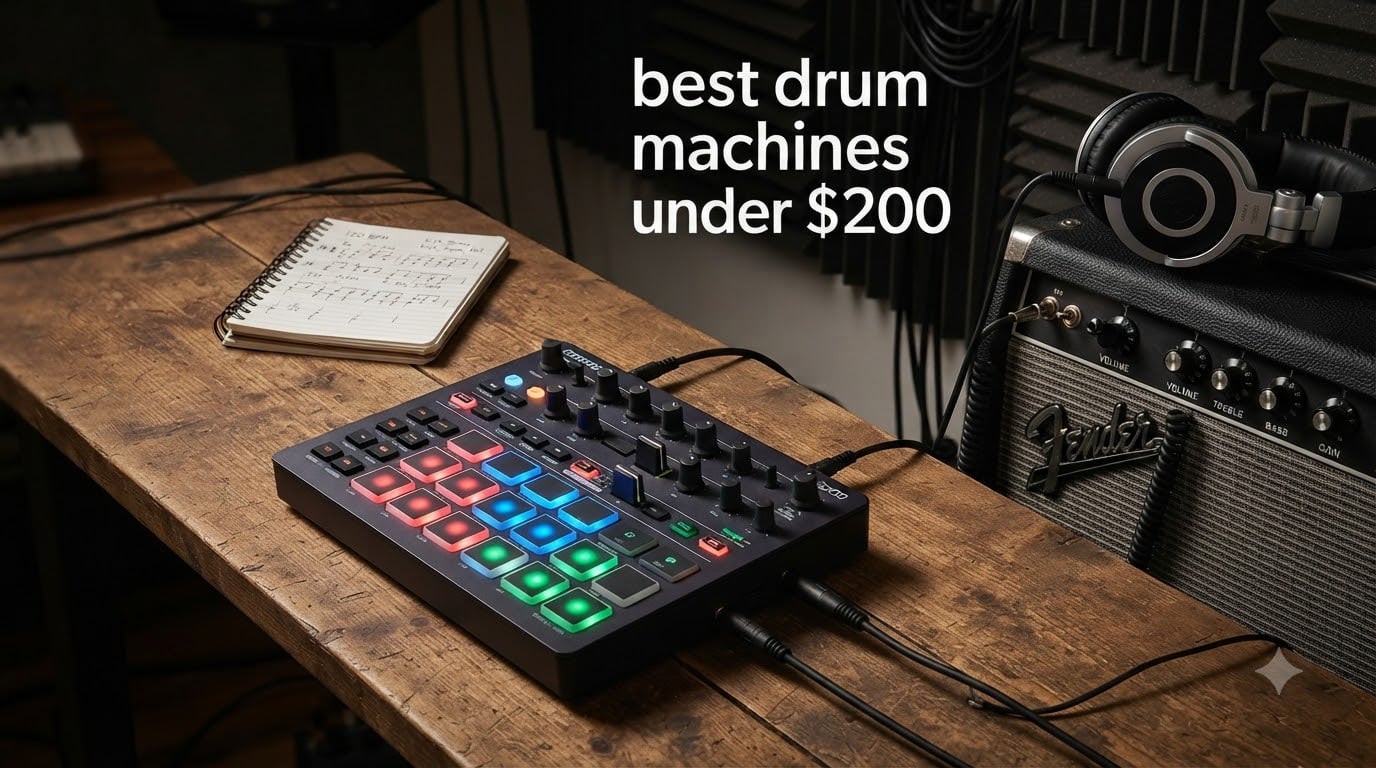
Looking for the best drum machines under $200 in 2026? I’ve spent the last three months testing eight affordable beat boxes, analog rhythm machines, and MIDI pad controllers to find out which ones actually deliver for working musicians. You can spend less than a dinner for two and still get studio-quality beats, classic analog character, or portable battery-powered fun.
Whether you’re a bedroom producer hunting that elusive 808-style kick, a guitarist who wants backing grooves without hiring a drummer, or a complete beginner who needs something simple to start making beats today, this list covers it. Our team compared sound engines, sequencer features, and connectivity options across every unit. The eight picks below are the ones that earned their spot in our studio.
We already published broader roundups of the best drum machines overall and our drum machines for beat making guide, but this one focuses strictly on affordable options that won’t break your gear budget.
Table of Contents
Top 3 Picks at a Glance (September 2026)
Alesis SR-16 Standalone Drum Machine
- 233 sounds
- 50 drum kits
- Complete MIDI
- Built-in effects

Korg Volca Beats Analog Rhythm Machine
- Real analog sounds
- 16-step sequencer
- Battery powered
- Built-in speaker

Best Drum Machines Under $200 in 2026 Quick Comparison
| Product | Specifications | Action |
|---|---|---|
| Alesis SR-16 |
|
Check Latest Price |
| Korg Volca Beats |
|
Check Latest Price |
 Korg Volca Drum Korg Volca Drum |
|
Check Latest Price |
| Stylophone Beat |
|
Check Latest Price |
 Donner STARRYPAD Donner STARRYPAD |
|
Check Latest Price |
 FLAMMA FF20 FLAMMA FF20 |
|
Check Latest Price |
 Behringer RD-78 Behringer RD-78 |
|
Check Latest Price |
 Teenage Engineering PO-12 Teenage Engineering PO-12 |
|
Check Latest Price |
1. Alesis SR-16 Standalone Drum Machine: Best Overall Under $200
Alesis SR-16 Standalone Drum Machine
233 sounds
50 kits
Full MIDI
Stereo outputs
Pros
- Legendary sound quality
- 200+ sounds and 50 drum kits
- Complete MIDI for DAW integration
- Built-in digital effects
- 35+ years of proven durability
- Dual outputs for kick/snare routing
Cons
- Tiny pads trigger inconsistently
- Learning curve for beginners
- No direct USB to computer
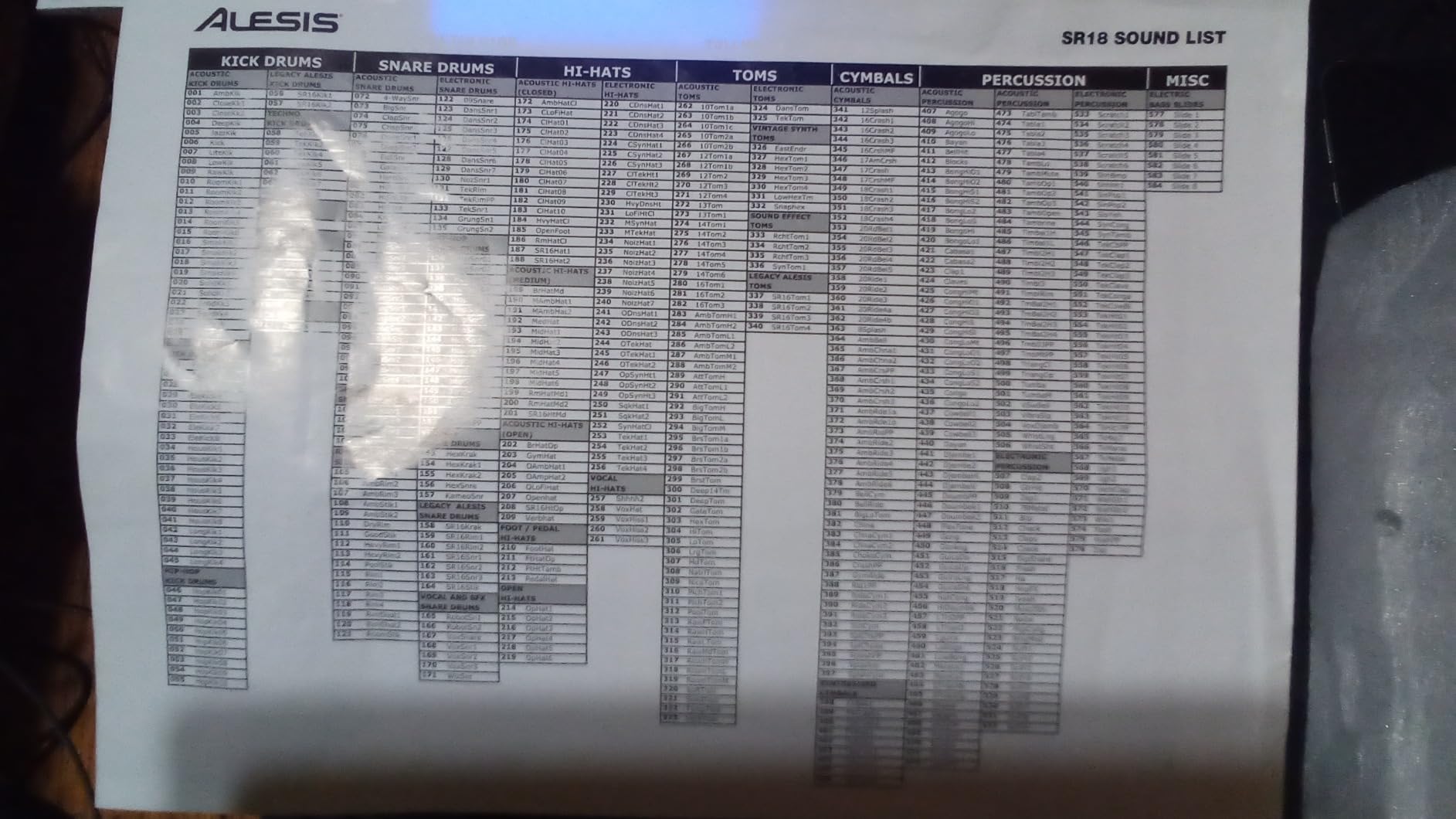
The Alesis SR-16 is the drum machine that defined an era. I plugged mine into a small mixer for a weekend of live gigs, and it handled four sets without a hiccup. With 233 professional sounds, 50 preset kits, and another 50 user slots, it covers everything from tight studio rock to classic hip-hop. The Dynamic Articulation feature adds natural variation as you adjust velocity, which is something you rarely see at this price.
What I love most is the routing flexibility. Four stereo pair outputs let me send the kick and snare to separate channels on the FOH mixer, while the remaining drums sit on their own bus. For a songwriter tracking demos, this means pro-level mixes right out of the box. The footswitch jacks for start/stop and A/B/fill switching are a godsend for hands-free live performance.
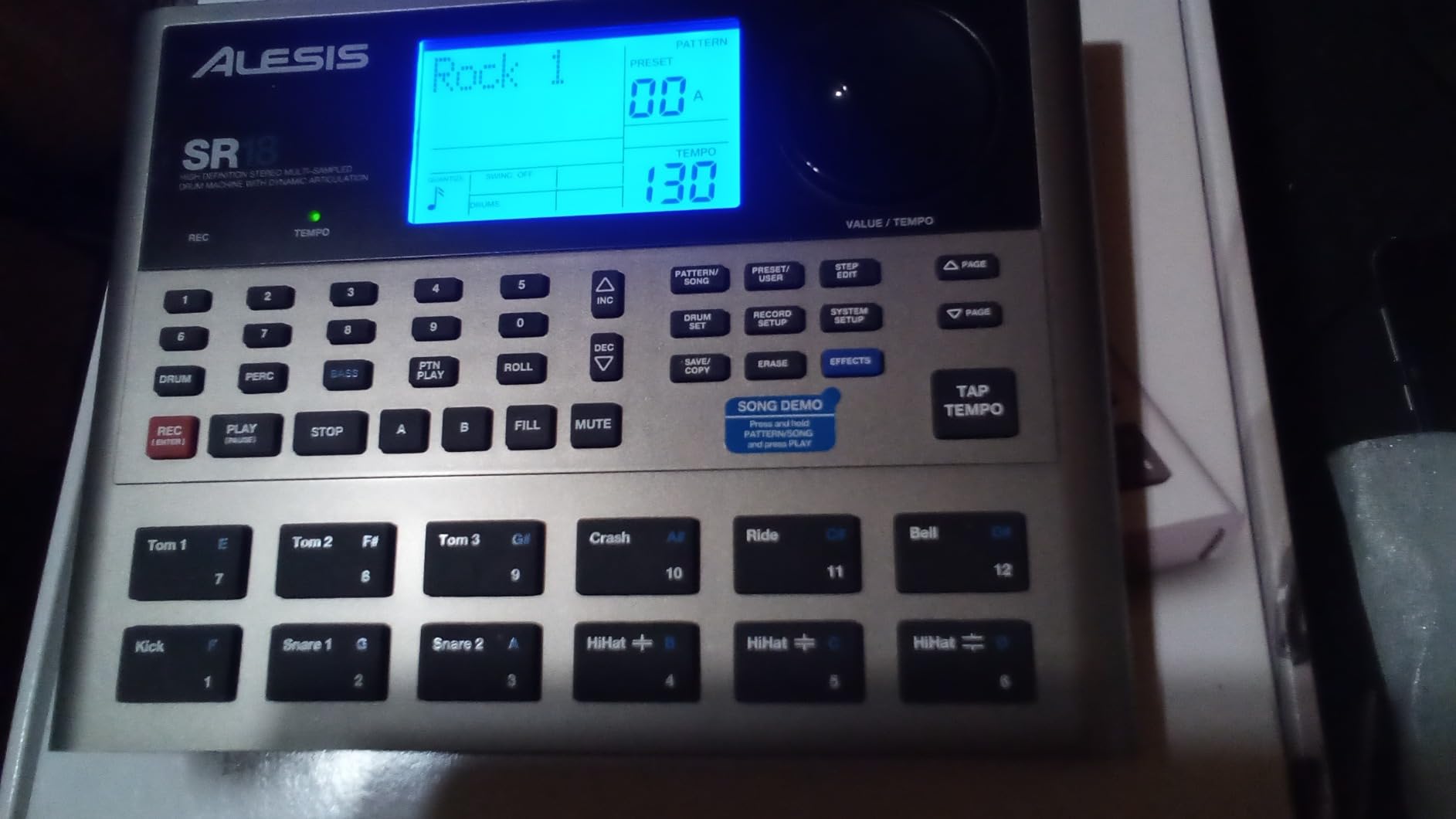
The interface feels dated compared to modern touchscreen units, and the pads are small. Real-time recording works best with fixed velocity. These are real limitations, but for step programming and pattern-based production, none of it matters. The SR-16 has been in studios for over three decades because it does the fundamentals better than anything in its class.
MIDI support is complete, with full MIDI in/out/thru, so you can sequence it from your DAW or trigger it from a keyboard. The built-in digital effects add reverb and compression that help sounds sit in a mix without external processing. For the price, the SR-16 is the most capable budget drum machine you can buy.
For Whom It’s Good
Songwriters and producers who need a reliable workhorse for demos and live tracks will love the SR-16. Bands playing classic rock, country, or pop covers can route discrete kick and snare for a tighter stage sound. If you want pro-quality sounds without menu diving, this is the unit.
For Whom It’s Bad
EDM producers looking for synthesis and sound design will find it limiting. Anyone wanting modern USB audio interface connectivity should consider a different pick. The pads are too small for finger drumming, so if you prefer playing beats live rather than programming them, look elsewhere.
2. Korg Volca Beats Analog Rhythm Machine: Best Analog Sound
Korg Volca Beats Analog Rythem Machine w/Electribe-style 16-step Sequencer and Real Analog Sounds
Analog
16-step
Battery
Built-in speaker
Pros
- Real analog 808-style character
- Deep powerful kick drum
- Portable with speaker and battery
- Electribe-style sequencer
- Sync with other Volcas
- Motion recording capability
Cons
- Snare is weak (moddable)
- No swing or accent function
- No song mode chaining
- 1/8 inch jacks need adapters
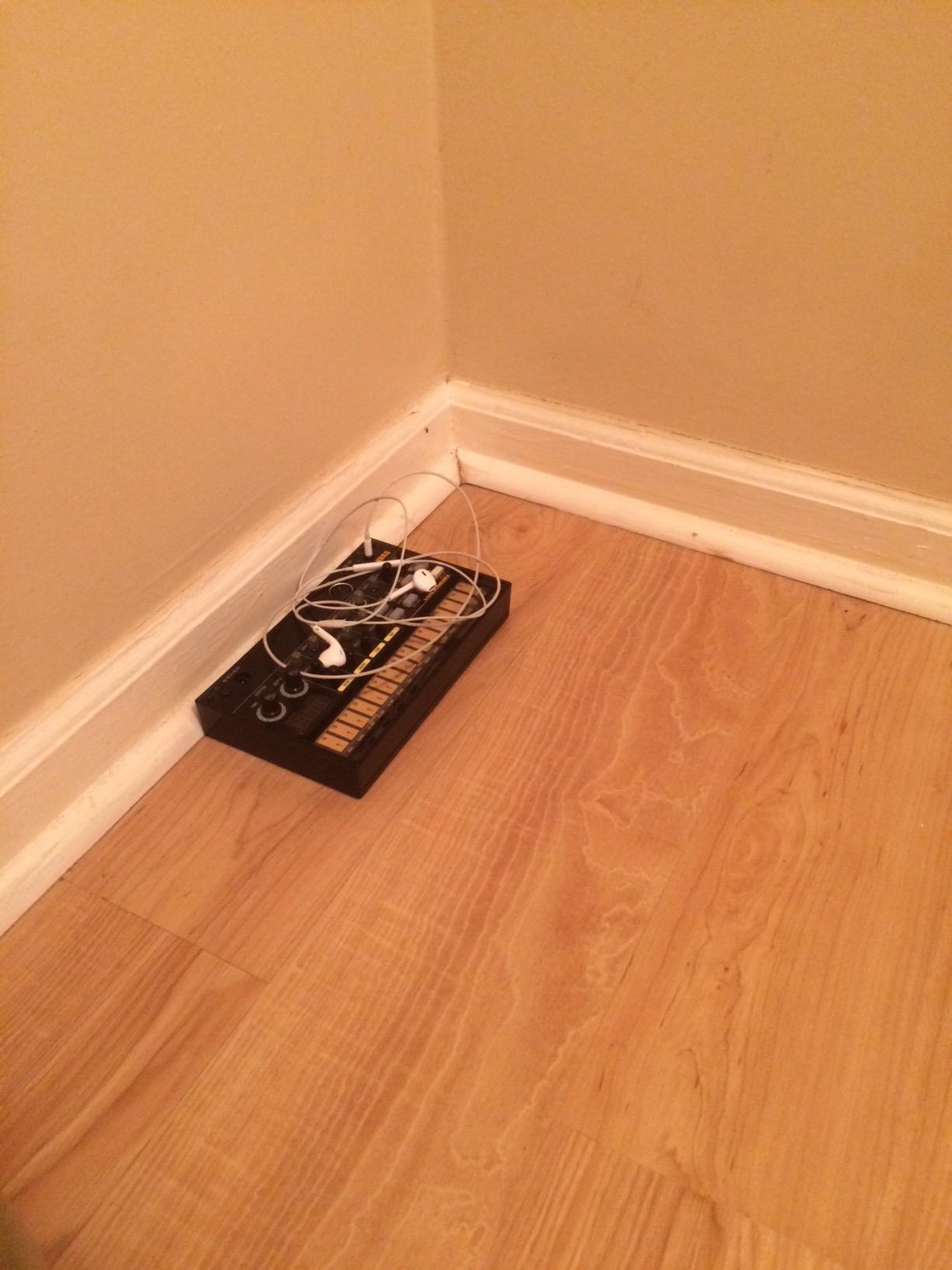
The Korg Volca Beats is what I grab when I want that punchy analog 808 flavor in a portable package. I tossed it in a backpack with a pair of headphones and made beats on a long train ride. The kick is huge and deep, the open and closed hi-hats have that classic metallic character, and the stutter function adds glitchy delay textures that punch above its price.
The 16-step sequencer borrows heavily from Korg’s Electribe line, which means it’s fast to learn and surprisingly deep once you start using motion sequencing. You can record knob movements and parameter changes, then loop them with the pattern. Eight memory patches hold your sequences, and SYNC in/out lets you chain it with other Volcas for a multi-machine setup.
The snare is famously underwhelming, but a simple hardware mod addresses it. Without the mod, you can pair Volca Beats with Volca Drum or Volca Sample to fill in the snare role. Battery power, a built-in speaker, and a metal chassis make it one of the most gig-friendly beat machines in this price bracket. MIDI in lets you sequence from a DAW, though there’s no MIDI out.
I keep coming back to the Volca Beats because of its sound. Real analog voice circuits give the kick and toms a depth that digital samples struggle to match. For techno, house, hip-hop, and electro, this little box delivers the foundational sounds with character.
For Whom It’s Good
Producers who want authentic analog flavor without spending $500 or more should put Volca Beats at the top of their list. Electronic musicians building a portable Volca setup will appreciate the sync compatibility. Beginners who learn the Electribe-style workflow get a transferable skill.
For Whom It’s Bad
If your style relies on acoustic-sounding drums, the analog nature of Volca Beats works against you. Producers who need swing, accents, and song mode should consider the Volca Drum instead. The weak snare is a real issue unless you plan to mod it.
3. Korg Volca Drum Digital Percussion Synthesizer: Best Digital Sound Design
Korg Volca Drum Digital Percussion Synthesizer w/ 16-step Sequencer and Active Step
6-part DSP
Waveguide
16-step
Probability
Pros
- Unique waveguide resonator sounds
- Six independent synth parts
- Active Step and probability features
- Slice function for drum rolls
- 16-level accent function
- Randomize functions for inspiration
Cons
- Only 16 pattern slots
- No song mode
- No data backup
- Small interface for detailed editing
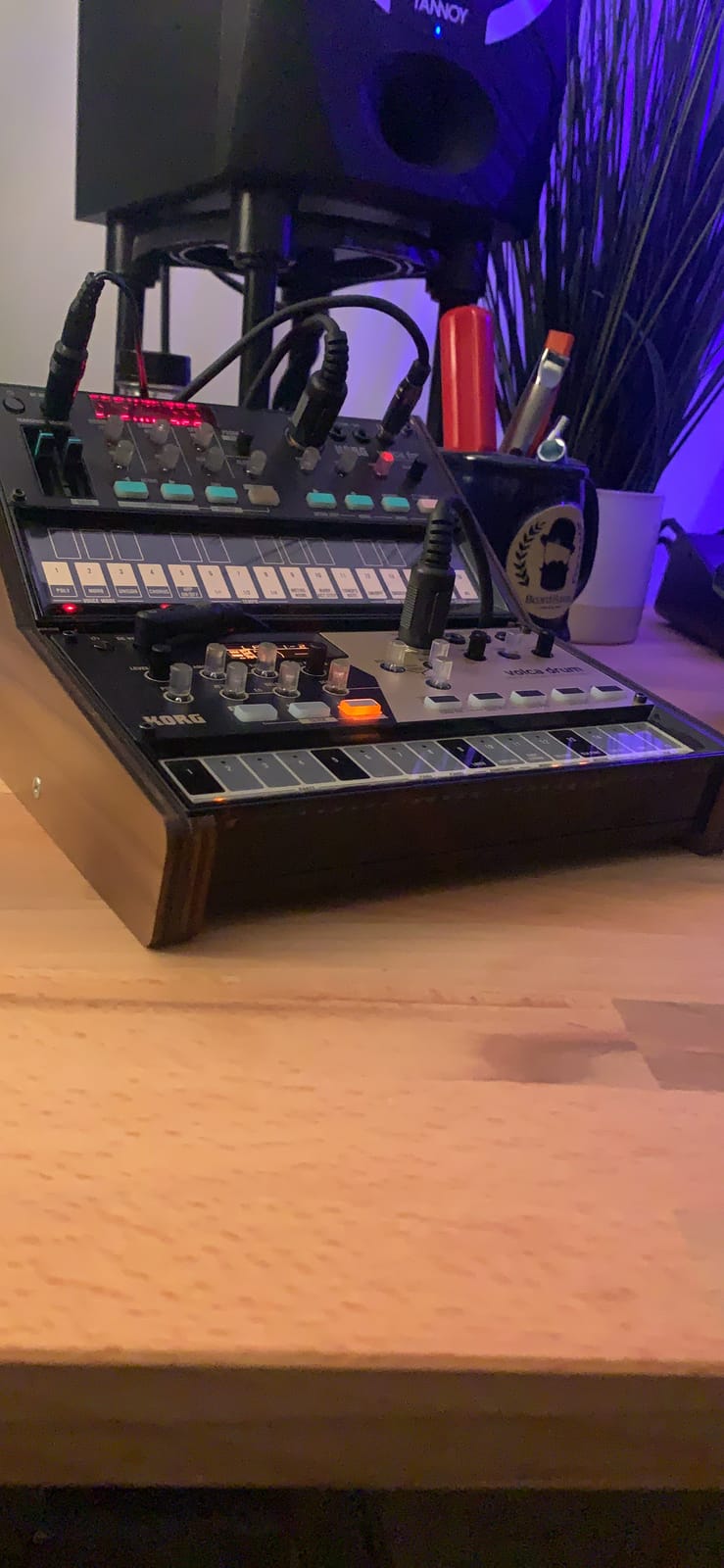
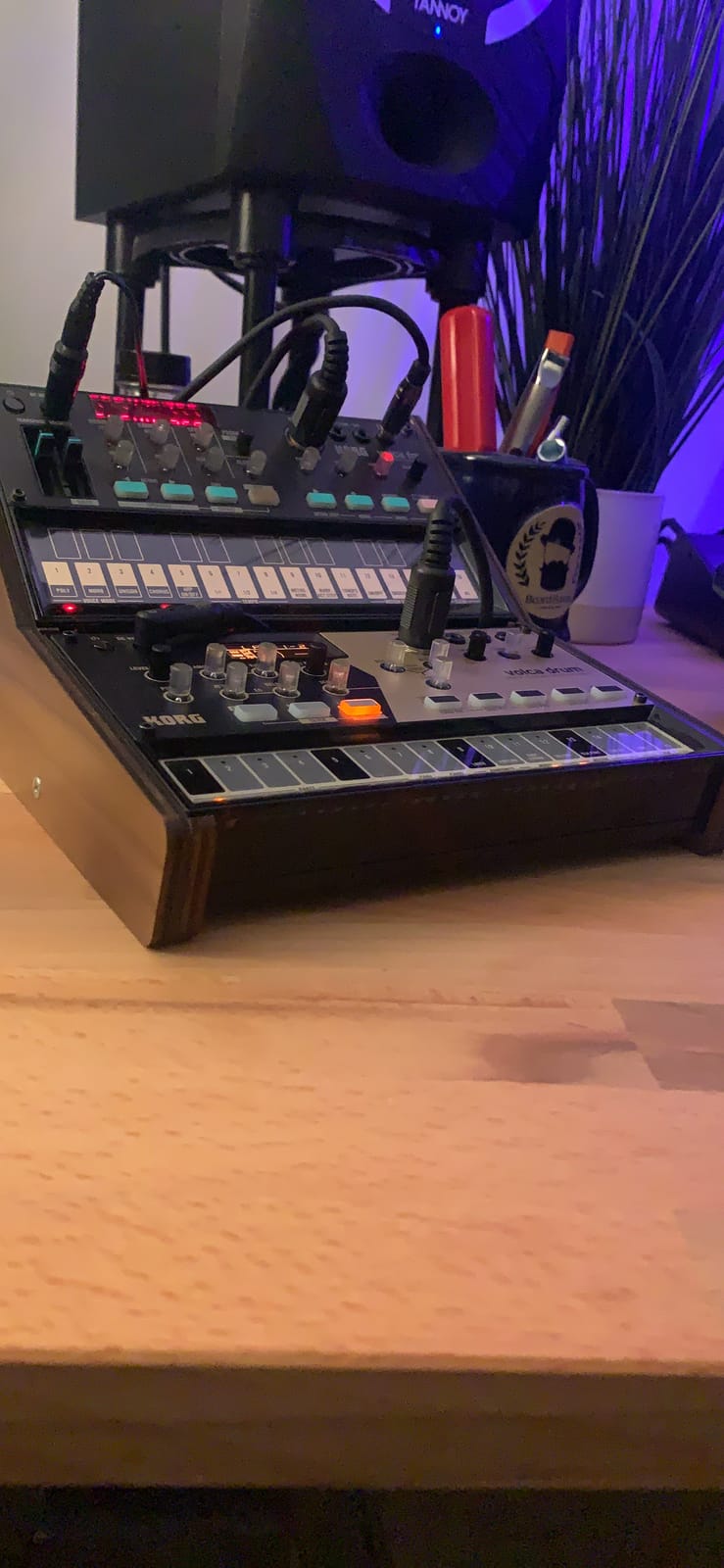
The Korg Volca Drum is unlike anything else in this price range. Rather than playing back samples, it synthesizes drum sounds from scratch using a six-part DSP engine. Each part has two layers, and the waveguide resonator creates rich metallic and woody tones that range from analog-style kicks to glassy, exotic percussion. I built an entire IDM track using only this little blue box.
The sequencer is where Volca Drum pulls ahead of its analog sibling. Active Step lets you skip steps for instant groove variation, and the probability feature adds controlled randomness. The Slice function chops a single hit into repeating rolls, perfect for fills and build-ups. With 16 accent levels, you can shape dynamics in ways no other budget machine offers.
Choke groups let you mute open hats when closed hats trigger, just like a real drummer. Two randomize functions help you escape creative blocks. The downside is storage: only 16 patterns fit in memory, and there’s no way to back them up. For studio work where you bounce patterns to audio quickly, this is fine. For long live sets requiring dozens of patterns, you’ll want a sampler.
MIDI sync and control work well with DAWs and other gear. The compact size, battery power, and built-in speaker make it as portable as Volca Beats but with entirely different sound design capabilities. This is the drum machine for experimental electronic music, ambient, and percussive sound design.
For Whom It’s Good
Sound designers, experimental producers, and anyone making IDM, ambient, glitch, or percussive electronic music will love Volca Drum. Beginners who want to learn synthesis basics through drum sounds get an educational tool. Musicians who want sounds no one else has should buy this immediately.
For Whom It’s Bad
If you need traditional kick-snare-hat production for rock or pop, the learning curve is steep. The 16-pattern limit frustrates live performers needing long sets. Anyone needing instant acoustic-style drum sounds should look at a sampler-based unit.
4. Stylophone Beat: Best Ultra-Budget Pick
Stylophone Beat – Compact Stylus Drum Machine | 4 Drum Kits & 4 Bass Sounds | Rhythm Machine Beat Maker | Drum Loop Machine
Stylus
4 kits
Battery
Portable
Pros
- Incredibly easy to use
- Great value under $50
- 4 drum kits and 4 bass sounds
- Built-in speaker and headphone out
- Portable with AA battery power
- Click track for timing
Cons
- Limited to 8 bar loops
- No memory storage
- Basic sound library
- Some battery contact issues
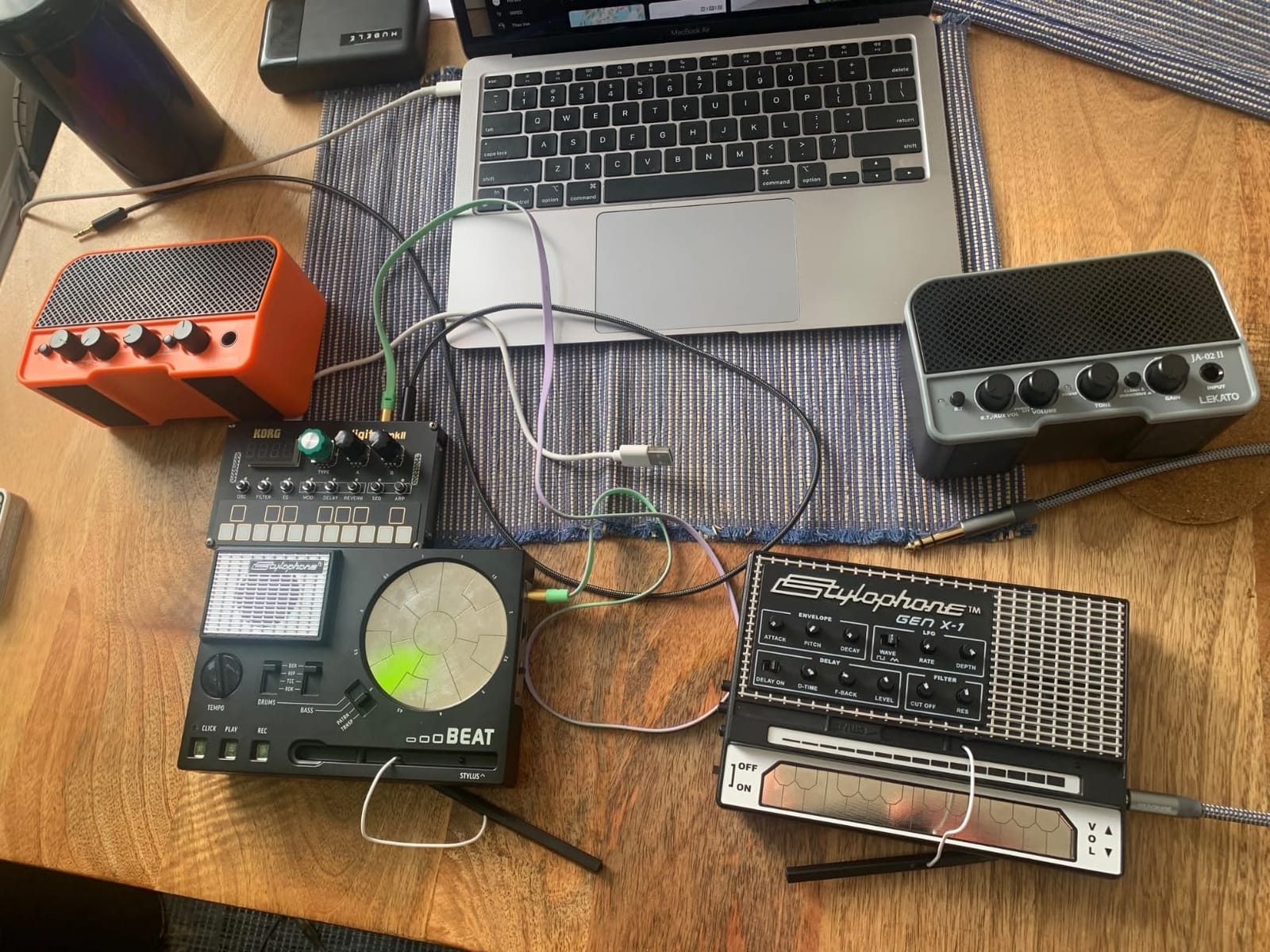
The Stylophone Beat is the drum machine I recommend to anyone who wants to make beats without learning a sequencer. I handed it to a friend who had never touched music gear, and within five minutes she had a beat going. The stylus-based interface removes the barrier of pad drumming, and the click track with tempo lock keeps everything tight.
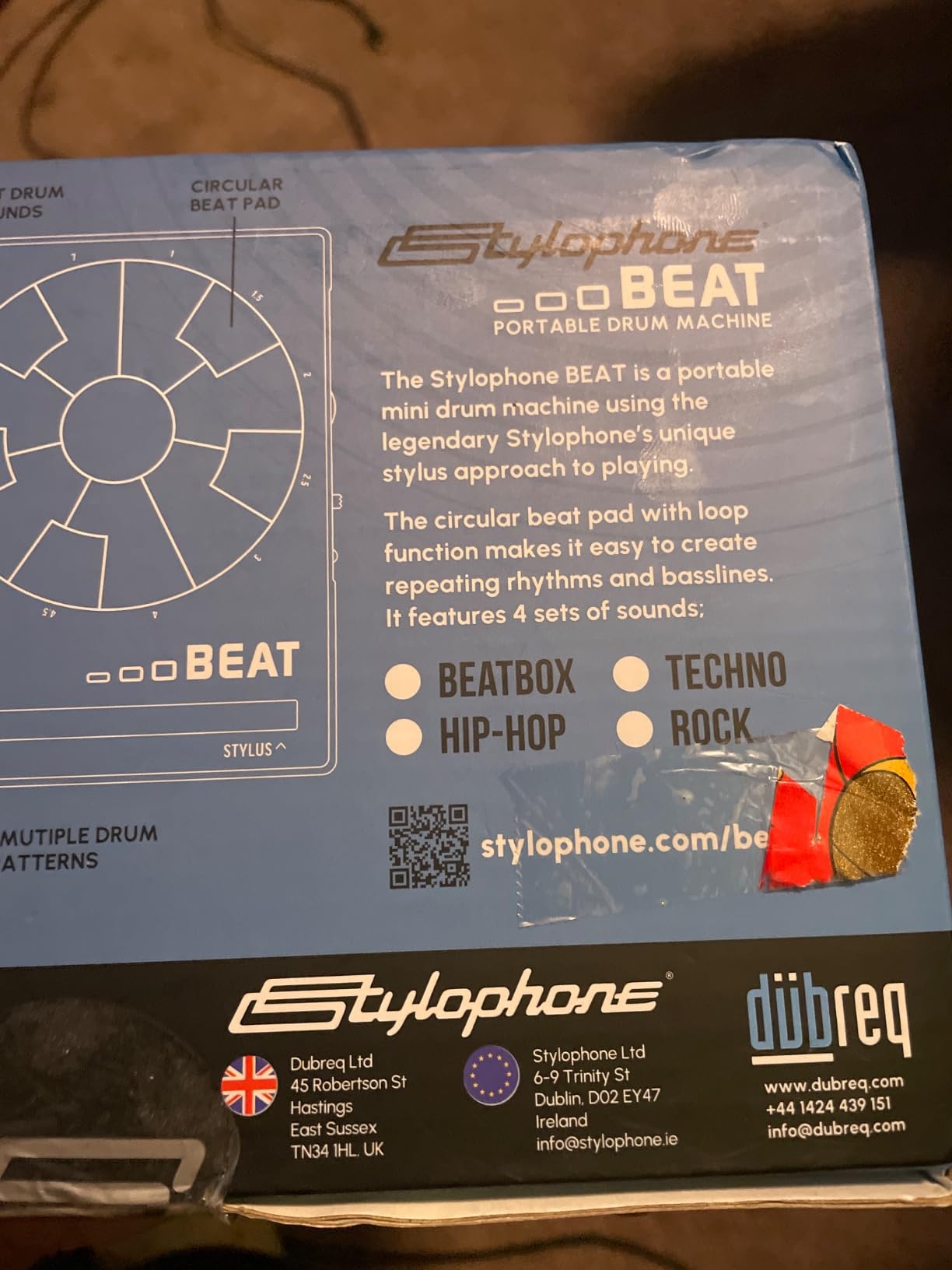
Four drum kits and four bass sounds cover most basic genres. Layer recording lets you build beats track by track, and the pattern functions are intuitive. The built-in speaker is genuinely useful for jamming, and the headphone output means you can practice anywhere without disturbing anyone. All of this for under $50 makes it the best budget drum machine you can buy.
The sound quality won’t compete with the Alesis or Korg units above. The 8-bar loop limit is restrictive, and there’s no memory storage, so you lose your beat when you power down. For sketching ideas, teaching rhythm concepts, or entertaining kids, these limitations don’t matter. For serious production work, you’ll outgrow it quickly.
Battery operation uses three AA cells, and you can run it for hours on a single set. The plastic construction feels lightweight but durable enough for travel. If you’re a complete beginner who wants to test the waters before investing in something more serious, the Stylophone Beat is the perfect entry point.
For Whom It’s Good
Complete beginners who want instant gratification will love this. Parents looking for an affordable music toy that actually teaches rhythm should consider it. Travel musicians who need an emergency beat machine in their bag will appreciate the size and battery operation.
For Whom It’s Bad
Any serious producer will outgrow the Stylophone Beat within weeks. If you want studio-quality sounds or complex sequencing, skip this. The lack of memory storage means you can’t save your work, which limits its usefulness beyond casual jamming.
5. Donner STARRYPAD MIDI Pad Controller: Best for DAW Producers
Donner MIDI Pad Beat Maker Machine Professional, Drum Machine with 16 Beat Pads, 2 Assignable Fader & Knobs and Music Production Software, USB MIDI Controller with 40 Courses, STARRYPAD
48 pads
USB-C
MIDI I/O
Software included
Pros
- Soft silicone pads reduce double-triggering
- 48 assignable pads across 3 banks
- 7-color customizable backlighting
- Includes Melodics and Cubase LE software
- Note Repeat with low latency
- Works across Mac
- Windows
- iOS
- Android
Cons
- USB-C port durability concerns
- No built-in sounds (DAW required)
- Android compatibility issues
- Requires Apple adapter for iOS
The Donner STARRYPAD is technically a MIDI controller, not a standalone drum machine, but it deserves a spot on this list for one reason: the pads feel incredible. I tested it against an Akai MPK Mini and an M-Audio M-Vave, and the soft silicone pads on the STARRYPAD triggered more accurately with less double-hitting than either competitor.
Sixteen pads across three banks give you 48 assignable slots, plenty for finger drumming full beats. The two assignable faders and two knobs let you control DAW parameters on the fly. Note Repeat with adjustable rate is excellent for hi-hat rolls and snare fills. Class-compliant USB-C means no driver installation, just plug and play on Mac, Windows, iOS, and Android.
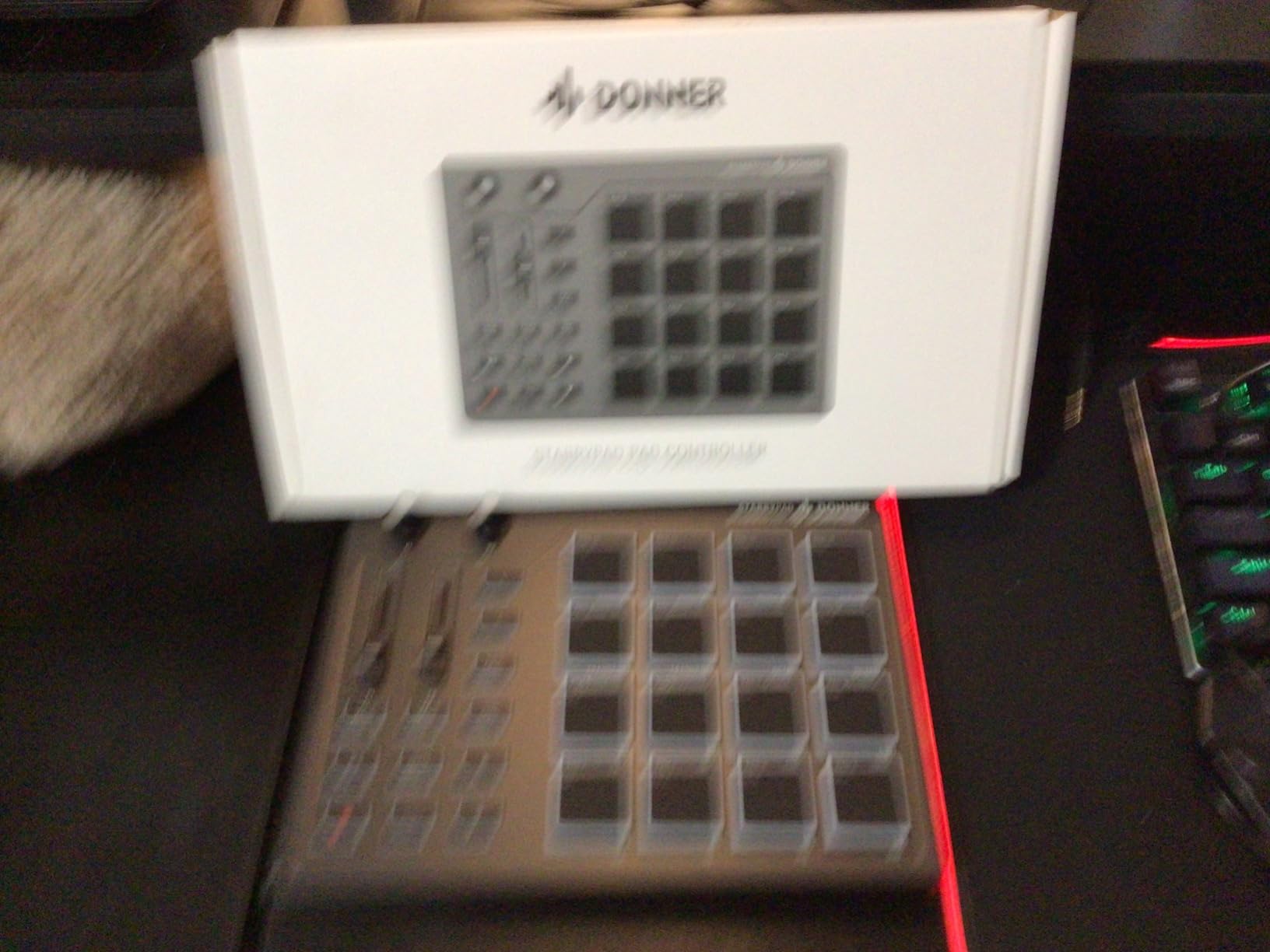
The 7-color backlit pads help you organize kits visually, which speeds up performance. Melodics Courses and a Cubase LE license come in the box, giving you both training software and a starter DAW. Tap Tempo syncs with your DAW’s clock for tight rhythms. For under $70, this is exceptional value for a finger drumming setup.
The main drawback is the lack of standalone sounds. You need a computer, iPad, or Android device with a DAW to make any noise. USB-C port durability has been a complaint in some reviews, so treat the cable carefully. Android compatibility can be finicky depending on your device and DAW.
For Whom It’s Good
DAW-based producers who want better-feeling pads than their current controller offers should buy this. Beginners who need both a pad controller and entry-level software get a complete starter kit. Anyone finger drumming live or recording in a home studio will appreciate the responsiveness.
For Whom It’s Bad
If you need a standalone drum machine you can use without a computer, this is the wrong pick. Producers locked into a specific pad workflow already may not need the upgrade. Anyone traveling with the unit should consider a protective case for the USB-C port.
6. FLAMMA FF20 Looper Pedal Drum Machine: Best for Guitarists
Pros
- Dual footswitch for hands-free operation
- 300 minutes recording time
- 220 drum grooves from 11 styles
- USB file transfer for WAV import/export
- Auto Record feature
- Headphone output for silent practice
Cons
- Difficult to delete loops via device
- Auto-drum triggering can be unwanted
- Some electrical noise reported
- Tap tempo can be accidentally activated
The FLAMMA FF20 sits in a unique category: it’s a looper pedal with a built-in drum machine, designed specifically for guitarists and bassists. I tested it on a pedalboard between my guitar and amp, and it added rhythmic backing to solo practice without any DAW or computer required. The mint green color stands out on dark stages.
Two hundred and twenty drum grooves across 11 styles cover everything from rock and blues to electronic and world music. The 300-minute recording capacity with 100 loop slots means you can build an entire live set of layered loops. The 2-inch full-color screen makes navigation much easier than the typical one-line displays on competing pedals. Time Stretch lets you change playback speed without affecting pitch, perfect for matching tempos to your band.
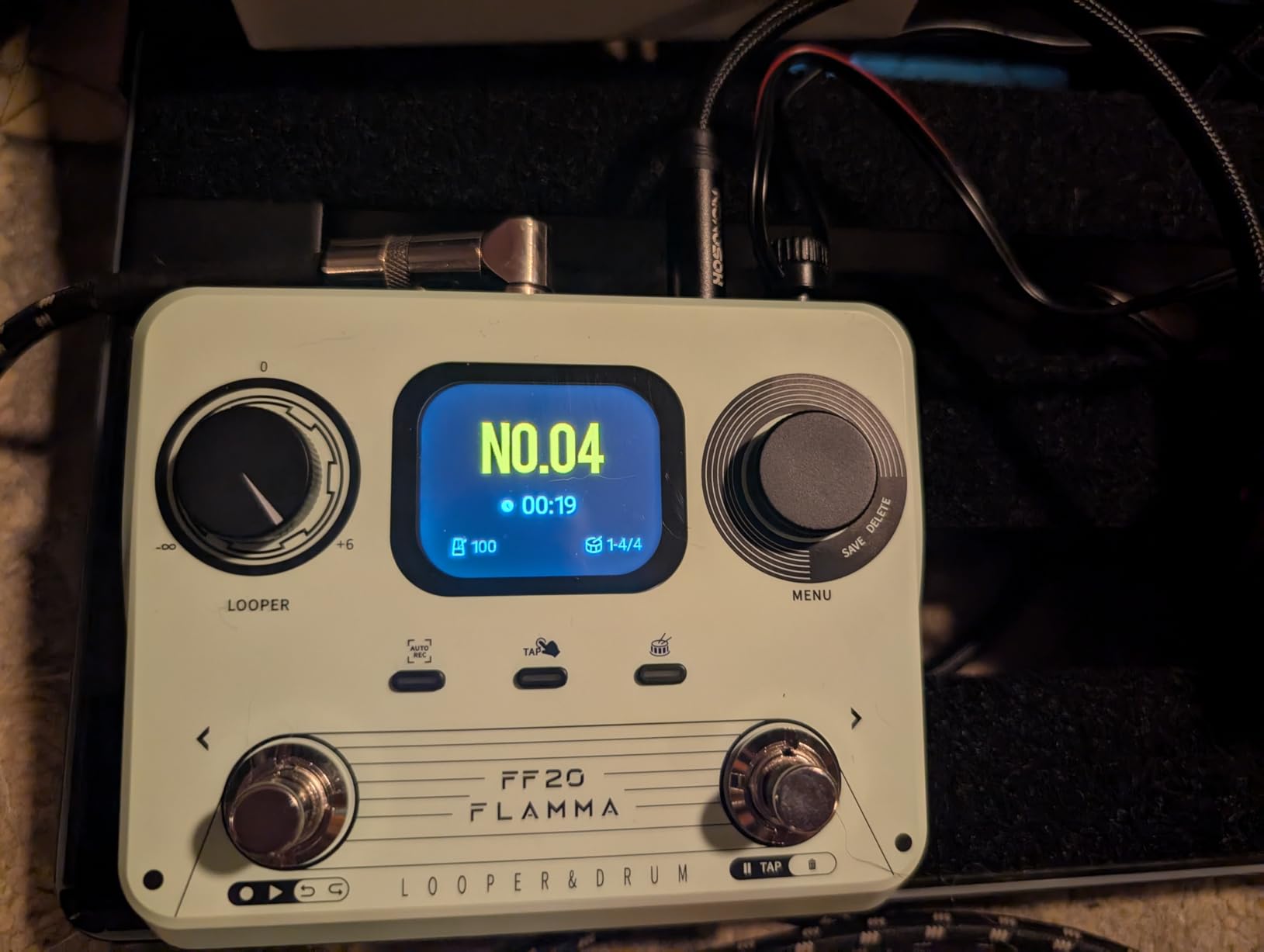
Auto Record starts capturing the moment you begin playing, which is great for capturing ideas but occasionally triggers unwanted recordings. USB file transfer lets you import and export WAV loops, which adds flexibility for studio work. The dual footswitch design gives you hands-free control during performance. For solo artists, singer-songwriters, and practice sessions, this is a game-changing pedal.
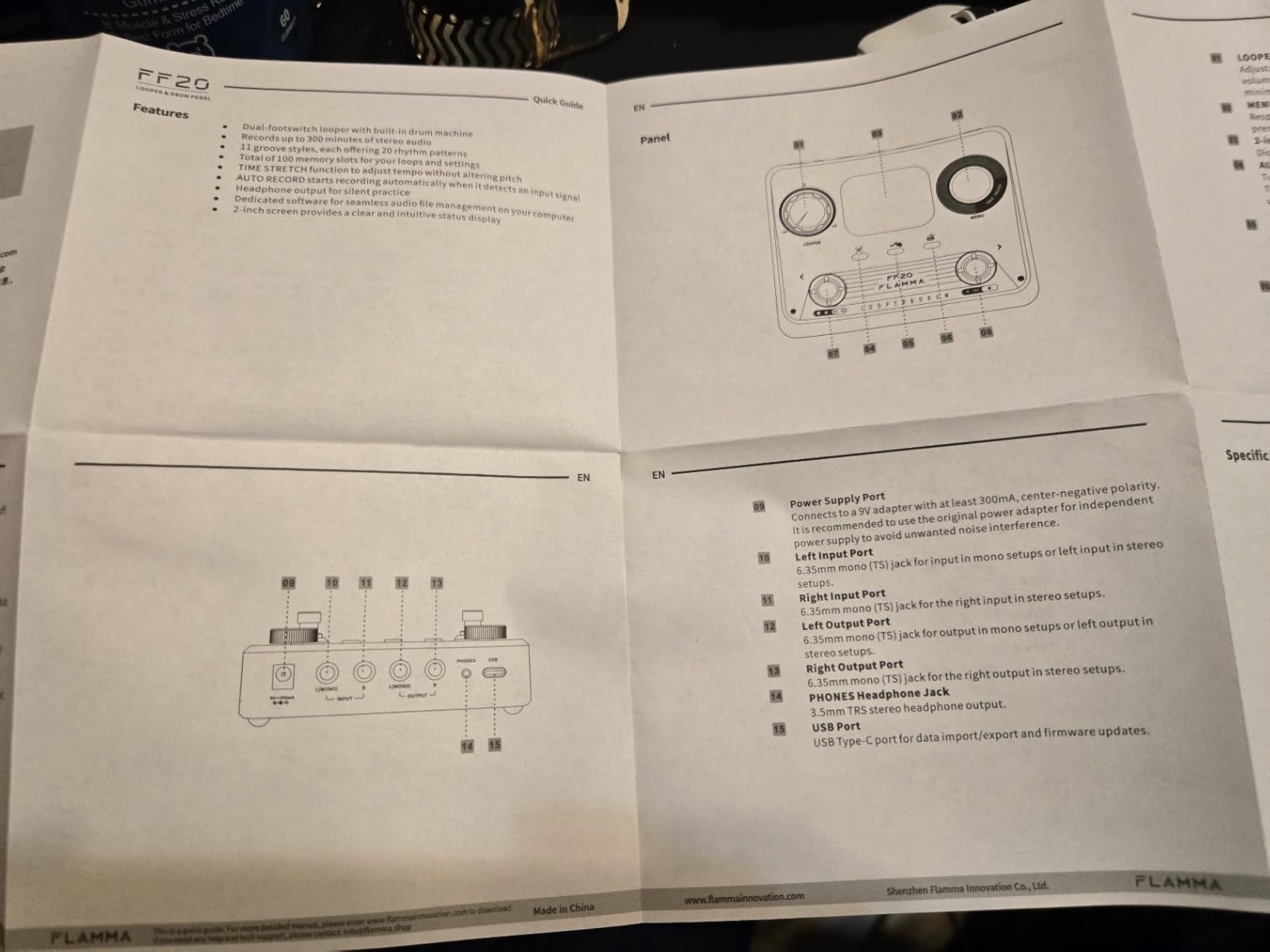
The main complaint from users is difficulty deleting loops directly from the device. The manual documentation is sparse. Some units have reported electrical noise in the signal chain. None of these are dealbreakers for the price, but they are real considerations for gigging musicians who depend on reliability.
For Whom It’s Good
Solo guitarists and bassists who want to add drum backing to practice or performance will love this pedal. Singer-songwriters building full arrangements in real time get an essential tool. Anyone who wants to practice silently with headphones benefits from the headphone output.
For Whom It’s Bad
If you don’t play guitar or bass, this specialized tool makes no sense. Producers working in a DAW should use software loopers instead. Musicians who need precise control over loop deletion should be prepared to work around the limitations.
7. Behringer RD-78 Analog Drum Machine: Best Vintage 80s Sound
Behringer RD-78 Classic Analog Drum Machine with 15 Drum Sounds, 34 Rhythm Presets, 16-Step Sequencer for Music Production and Live Performance
Analog
34 presets
16-step
CR-78 style
Pros
- Classic CR-78 analog sound character
- Excellent value for analog synthesis
- 15 simultaneous drum sounds
- 34 iconic rhythm presets
- MIDI and USB connectivity
- Compact and portable
Cons
- Basic build quality
- Not a perfect CR-78 clone
- Power supply variants (EU vs US)
The Behringer RD-78 takes direct aim at the Roland CR-78, one of the most beloved drum machines of the late 1970s. I compared it side by side with original CR-78 samples, and the RD-78 captures about 85 percent of the magic at a fraction of the vintage price. The 15 drum sounds include classic toms, snares, congas, and claves that defined early synth-pop and new wave.
Thirty-four rhythm presets give you instant access to the genre-defining patterns of the era. Pop, rock, disco, and Latin styles are all represented. The 16-step sequencer is straightforward, and you can program your own patterns quickly. USB and MIDI connectivity let you sync with modern gear and software. For producers working on retro synth-wave or vintage-inspired tracks, this is a fast track to authentic character.
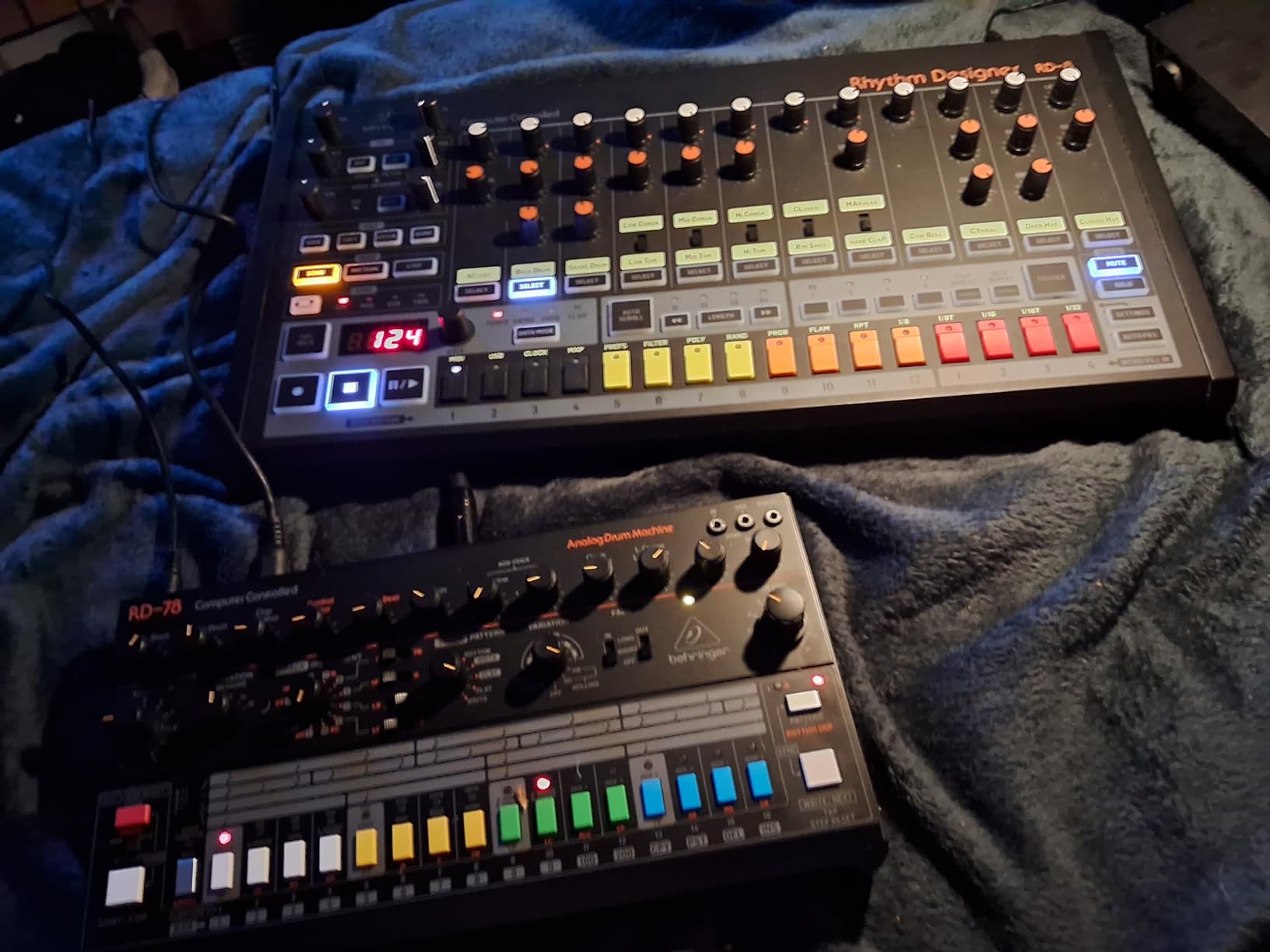
The build quality is basic compared to the Alesis SR-16, with plastic-feeling knobs and a lightweight chassis. It’s not a perfect clone of the original CR-78, so purists should temper their expectations. Some units ship with European power supplies, so confirm the region before ordering. For the price, these are acceptable compromises.
I found the RD-78 most useful when I needed quick vintage texture. Programming a beat and running it through tape saturation or spring reverb gives you instant lo-fi charm. It’s also a great teaching tool for learning how classic drum machines shaped entire genres. If you’re a fan of Kraftwerk, Gary Numan, or early Depeche Mode, the RD-78 belongs in your studio.
For Whom It’s Good
Synth-wave and retro producers will get the most from the RD-78. Musicians curious about classic drum machine history get an affordable entry point. Anyone working on vintage-inspired scores for film or video games benefits from the authentic 80s character.
For Whom It’s Bad
If you want pristine modern sounds, the RD-78’s vintage character works against you. Producers needing deep sound design will find it limited. Anyone requiring road-ready build quality for touring should look at more robust options.
8. Teenage Engineering PO-12 Rhythm Pocket Operator: Most Portable
teenage engineering pocket operator PO-12 rhythm, drum machine and sequencer with parameter locks and punch-in effects
Pocket size
16 sounds
Effect chains
Sync
Pros
- Pocket-sized for true portability
- 16 sounds with synthesis and samples
- 16 punch-in effects for live tweaks
- Syncs with Volca and other Pocket Operators
- Built-in speaker
- Parameter locks for automation
Cons
- Exposed circuit board design
- No MIDI in/out
- Limited screen feedback
- No protective case included
The Teenage Engineering PO-12 is the smallest drum machine on this list and arguably the most fun. I carry one in my jacket pocket at all times. At about the size of a credit card and weighing under two ounces, it’s the definition of ultra-portable. Two AAA batteries give you a month of play time, and the built-in speaker is loud enough for casual jamming.
Sixteen sounds blend synthesized voices with samples, covering kicks, snares, hi-hats, cymbals, claps, and exotic percussion. Sixteen punch-in effects let you add stutter, bit-crush, delay, and filter sweeps in real time. Parameter locks automate changes per step, which is a feature you don’t usually see at this price. Sixteen pattern slots give you enough space for most live performance needs.
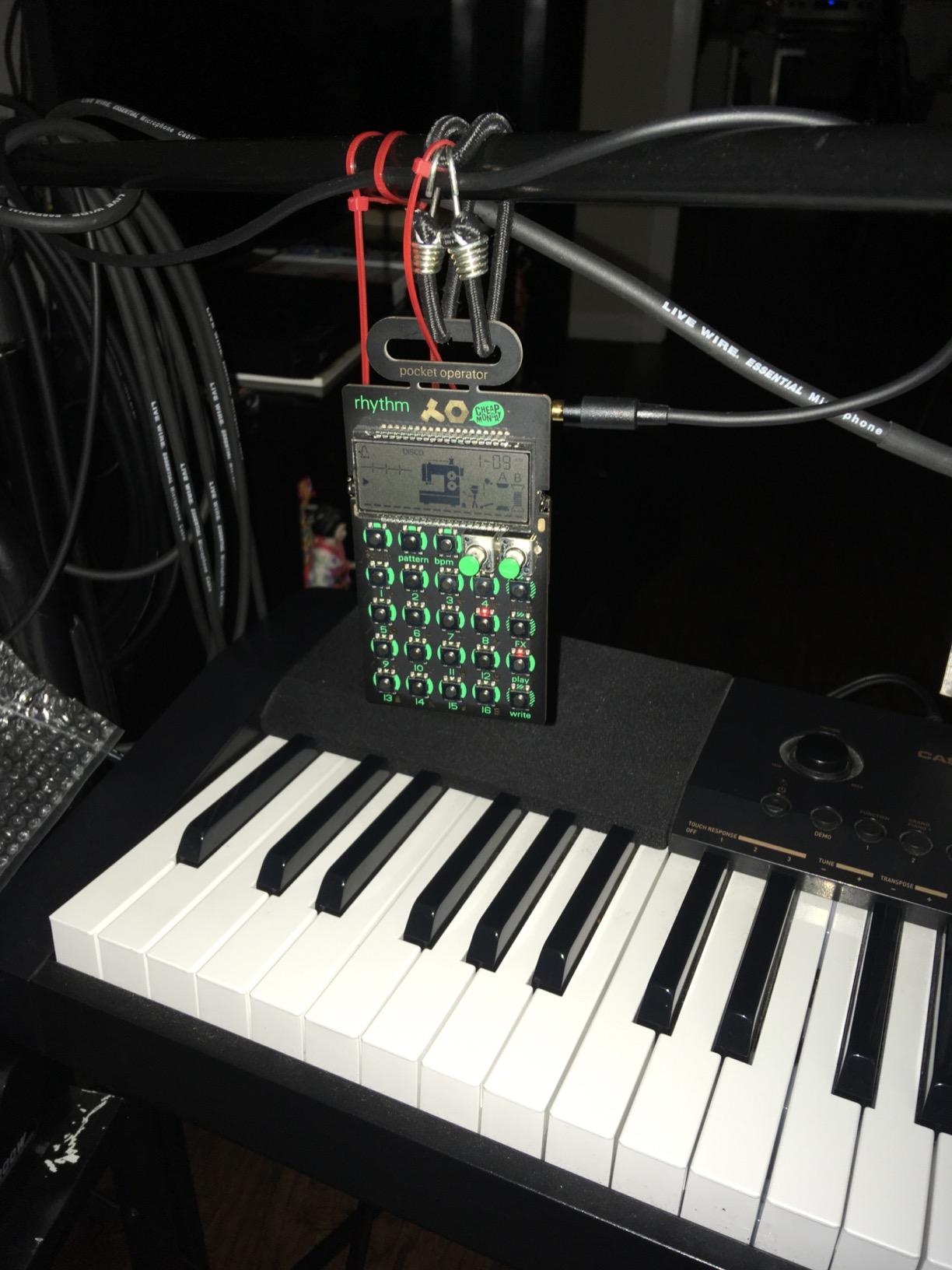
The sync capabilities are where the PO-12 really shines. It links with Korg Volcas, other Pocket Operators, and any gear that supports standard sync pulses. I’ve synced it with Volca Beats, Volca Keys, and even my OP-1 for instant multi-machine grooves. The clock and alarm function are quirky bonuses that make it useful as a desktop gadget too.
The exposed circuit board design feels fragile, and the lack of a protective case means you should buy one separately. There’s no MIDI in or out, so DAW integration is limited to audio recording. The screen is small and shows minimal information, which requires memorization. For the price and size, these are acceptable trade-offs, but they limit the unit compared to a full standalone drum machine.
For Whom It’s Good
Travelers, commuters, and anyone who wants a drum machine they can literally carry anywhere will love the PO-12. Volca owners building a portable setup get a perfect sync partner. Musicians seeking creative inspiration on the go benefit from its immediacy and small footprint.
For Whom It’s Bad
If you need MIDI connectivity for DAW sequencing, the PO-12 is the wrong tool. Producers wanting deep sound design capabilities should look at the Volca Drum. Anyone worried about durability should budget for a protective case immediately.
Buying Guide: How to Choose a Drum Machine Under $200
With eight solid options above, picking the right drum machine comes down to matching features with your workflow. Here’s what our team considers when evaluating budget beat machines.
Sound Engine: Analog vs Digital vs Sampled
Analog drum machines like the Korg Volca Beats and Behringer RD-78 use real oscillator circuits to generate sounds. They tend to have warmer, punchier character, especially on kicks and toms, but offer limited editing. Digital units like the Korg Volca Drum synthesize sounds through DSP, giving you deeper sound design but sometimes less organic warmth. Sampled machines like the Alesis SR-16 play back recordings of real or synthesized drums, offering the most realistic acoustic sounds at the cost of editability.
If you’re making electronic music, analog or digital synthesis gives you unique character. For rock, pop, or covers, sampled machines deliver realistic drums that fit genre expectations.
Sequencer Features and Pattern Length
Most budget drum machines use 16-step sequencers, which is enough for basic beats but limits polyrhythms. Look for swing, accent, and probability features if you want grooves that feel less mechanical. Pattern chaining and song mode are rare in this price bracket, so plan to manually trigger pattern changes for live sets.
The Alesis SR-16 and Volca Drum both offer more advanced sequencing than the Stylophone Beat or PO-12. Decide whether you prioritize depth or simplicity.
Connectivity: MIDI, USB, and Sync
MIDI in lets you trigger sounds from a keyboard or DAW. MIDI out lets the drum machine control other gear. USB connectivity varies: some units offer USB MIDI for DAW integration, while others only provide power. SYNC in/out uses analog clock pulses to lock multiple machines together, which is the secret weapon of the Korg Volca series.
Guitarists should pay special attention to input options. The FLAMMA FF20 is built specifically for guitar pedalboards, while other units work best with mixers or audio interfaces.
Portability and Power
Battery-powered units like the Stylophone Beat, Volca Beats, Volca Drum, and PO-12 let you make beats anywhere. Mains-powered units like the Alesis SR-16 and Behringer RD-78 stay in your studio or live setup. Consider where you’ll use the drum machine most: bedroom, stage, or on the move.
Build Quality and Durability
Budget gear often cuts corners on materials. The Alesis SR-16 has proven its durability over decades. The Korg Volcas have metal chassis that survive travel. The PO-12’s exposed board design requires a case. The Donner STARRYPAD’s USB-C port has had some reported issues. If you’re gigging, prioritize metal construction and reliable connectors.
We’ve covered related drum machine categories in our guides to multipad drum machines for drummers and drum machines under $500 for beat producers.
Frequently Asked Questions
What is the best drum machine under $200?
The Alesis SR-16 is the best overall drum machine under $200 in 2026. With 233 professional sounds, 50 preset kits, complete MIDI support, and four stereo outputs, it covers the widest range of studio and live applications. For pure analog character, the Korg Volca Beats delivers authentic 808-style sound in a battery-powered portable package.
Which drum machine is best for beginners?
The Stylophone Beat is the best beginner drum machine thanks to its stylus interface, intuitive workflow, and sub-$50 price point. Beginners can make beats within minutes without learning a complex sequencer. The Alesis SR-16 is the next step up once you’re ready for more sounds and deeper programming capabilities.
Are analog drum machines better than digital ones?
Analog and digital drum machines serve different purposes. Analog units like the Korg Volca Beats produce warmer, more characterful sounds through real oscillator circuits but offer limited editing. Digital synthesizers like the Korg Volca Drum create unique sounds through DSP and allow extensive sound design. For realistic acoustic drums, sampled machines like the Alesis SR-16 play back recordings that fit traditional genres.
Can you use a drum machine with a guitar?
Yes, you can use a drum machine with a guitar in several ways. The FLAMMA FF20 is a guitar pedal with a built-in drum machine designed specifically for this purpose. Alternatively, run a Volca or SR-16 through a mixer alongside your guitar signal. MIDI-enabled drum machines can sync with guitar gear, and many looper pedals include drum patterns for solo performance.
Final Verdict: Which Budget Drum Machine Should You Buy?
Choosing the best drum machine under $200 in 2026 depends on your style and goals. The Alesis SR-16 remains our top pick for overall capability, sound variety, and proven reliability. If you crave analog warmth, the Korg Volca Beats delivers authentic 808-style character you can carry anywhere. The Korg Volca Drum takes sound design further with its DSP engine and waveguide resonator.
For beginners, the Stylophone Beat offers the lowest barrier to entry. DAW producers should consider the Donner STARRYPAD for its excellent pads. Guitarists get a purpose-built tool in the FLAMMA FF20 looper pedal. Retro enthusiasts will love the Behringer RD-78’s classic 80s character. And if portability is your priority, the Teenage Engineering PO-12 fits in your pocket.
You don’t need to spend a fortune to start making beats. Any of these eight units will serve you well. Pick the one that matches your genre and workflow, and start programming. The best drum machine is the one you actually use, and at these prices, you can afford to experiment. For more options beyond the under-$200 range, check out our guide to the best drum machines across all budgets.