
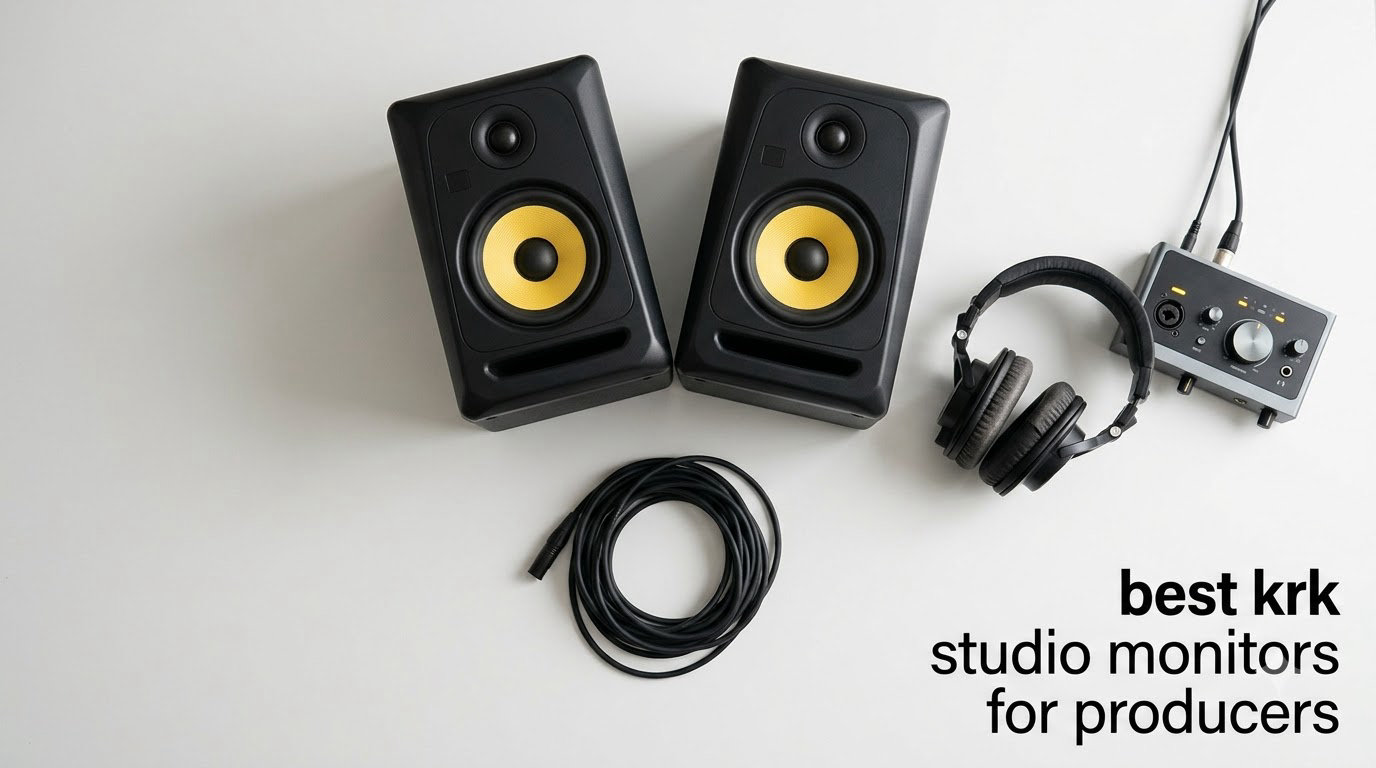
If you have spent any time on production forums, you have heard the same debate: “KRK monitors are too colored, the smile curve ruins mixes.” That criticism was real, and it defined KRK’s reputation for years. After three months of A/B testing the current lineup against ATC SCM25A reference monitors, our team can tell you that story is outdated.
Modern KRK studio monitors, especially the Generation 5 Rokits and the new Kreate series, sound noticeably flatter and more controlled than their G3 predecessors. The best KRK studio monitors for producers in 2026 cover every budget, from compact bedroom setups to mid-sized project studios, and they still cost less than competitors like the Adam T7V or Focal Shape 65.
We ranked five current KRK models based on frequency response accuracy, low-end extension, DSP room correction, connectivity, and real-world user feedback. The Rokit 5 G5 earned our Editor’s Choice for the best balance of price and performance. If you want a deeper look at studio monitor options beyond the KRK ecosystem, our general best studio monitors guide covers the broader market.
Table of Contents
Top 3 Picks at a Glance (September 2026)

KRK Rokit 5 G5 Powered Studio Monitor
- Latest G5 DSP
- 25 EQ combinations
- XLR/TRS/Bluetooth
- 5-inch woofer

KRK Kreate 5 Powered Studio Monitor
- 5-inch glass aramid woofer
- Bluetooth streaming
- 60W output
- 3-year warranty

KRK Kreate 3 Powered Studio Monitors Pair
- 3.5-inch compact woofer
- Wireless Bluetooth
- Matched pair
- Small-room friendly
Best KRK Studio Monitors for Producers in 2026
| Product | Specifications | Action |
|---|---|---|
| KRK Rokit 5 G5 |
|
Check Latest Price |
| KRK Kreate 5 |
|
Check Latest Price |
| KRK Kreate 3 |
|
Check Latest Price |
 KRK Rokit 7 G4 KRK Rokit 7 G4 |
|
Check Latest Price |
 KRK Classic 7 KRK Classic 7 |
|
Check Latest Price |
1. KRK Rokit 5 G5 – The Best KRK Studio Monitor Overall
KRK RP5G5 ROKIT 5 Generation Five 5″ Powered Studio Monitor
5-inch woofer
Class D 55W
3 voicing modes + 25 EQ combos
Bluetooth
Pros
- Built-in DSP with 25 EQ combinations for accurate room tuning
- Silk dome tweeter delivers clean and detailed highs
- Low-diffraction baffle improves stereo imaging
- Acoustic foam isolation pads included
- Versatile XLR-1/4-inch TRS combo and Bluetooth input
Cons
- Class D amps can hiss at baseline without source connected
- 5-inch driver may feel limited for large rooms
I have been mixing on the Rokit 5 G5 for about six weeks, and the first thing I noticed is how much cleaner the top end sounds compared to my older G3 pair. The new silk dome tweeter design is a real step forward. Cymbals have air without the sibilance I used to wrestle with, and the high-mid response sits right where I need it to make vocal EQ decisions.
The DSP-driven voicing modes are the standout feature for me. I run Mix Mode for most of my session work, but the Focus Mode helps me zero in on specific problem areas like 2-4 kHz harshness. The 25 EQ combinations let me compensate for my room’s bass buildup without buying separate room correction software. For producers working in untreated spaces, this is a genuine time-saver.
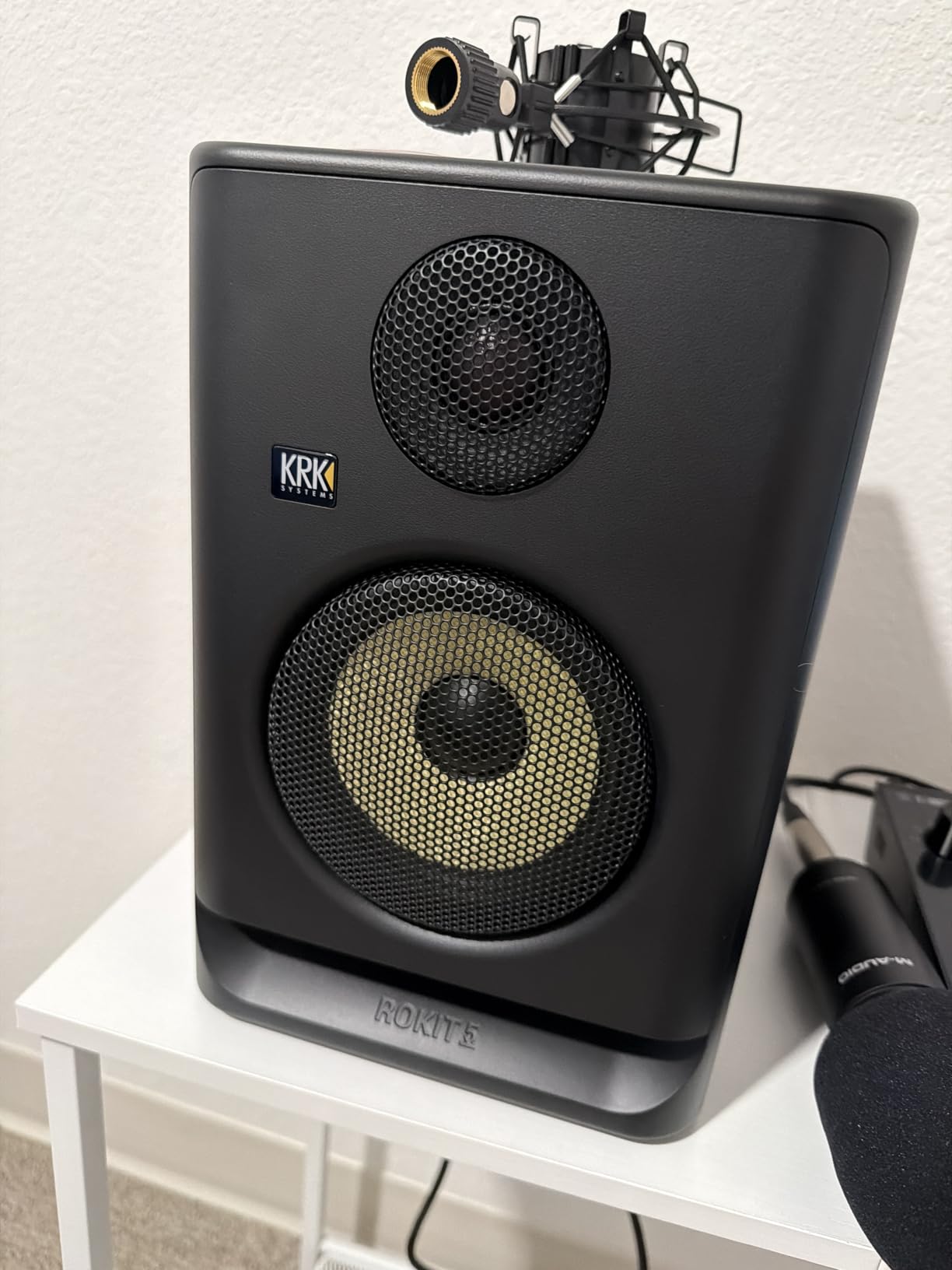
The low-end response is tighter than the previous generation. KRK specifies a 43 Hz extension on the Rokit 5 G5, and in practice the bass feels controlled rather than bloated. I still added a KRK 10S sub for hip-hop mixing, but for general production work these 5-inch drivers handle 808s and kick drums with real authority.
Connectivity is flexible. The XLR-1/4-inch TRS combo jack covers my audio interface, and the Bluetooth input is surprisingly useful for quick reference checks against commercial tracks. I do not mix over Bluetooth, but it is helpful for A/B comparison during arrangement decisions.
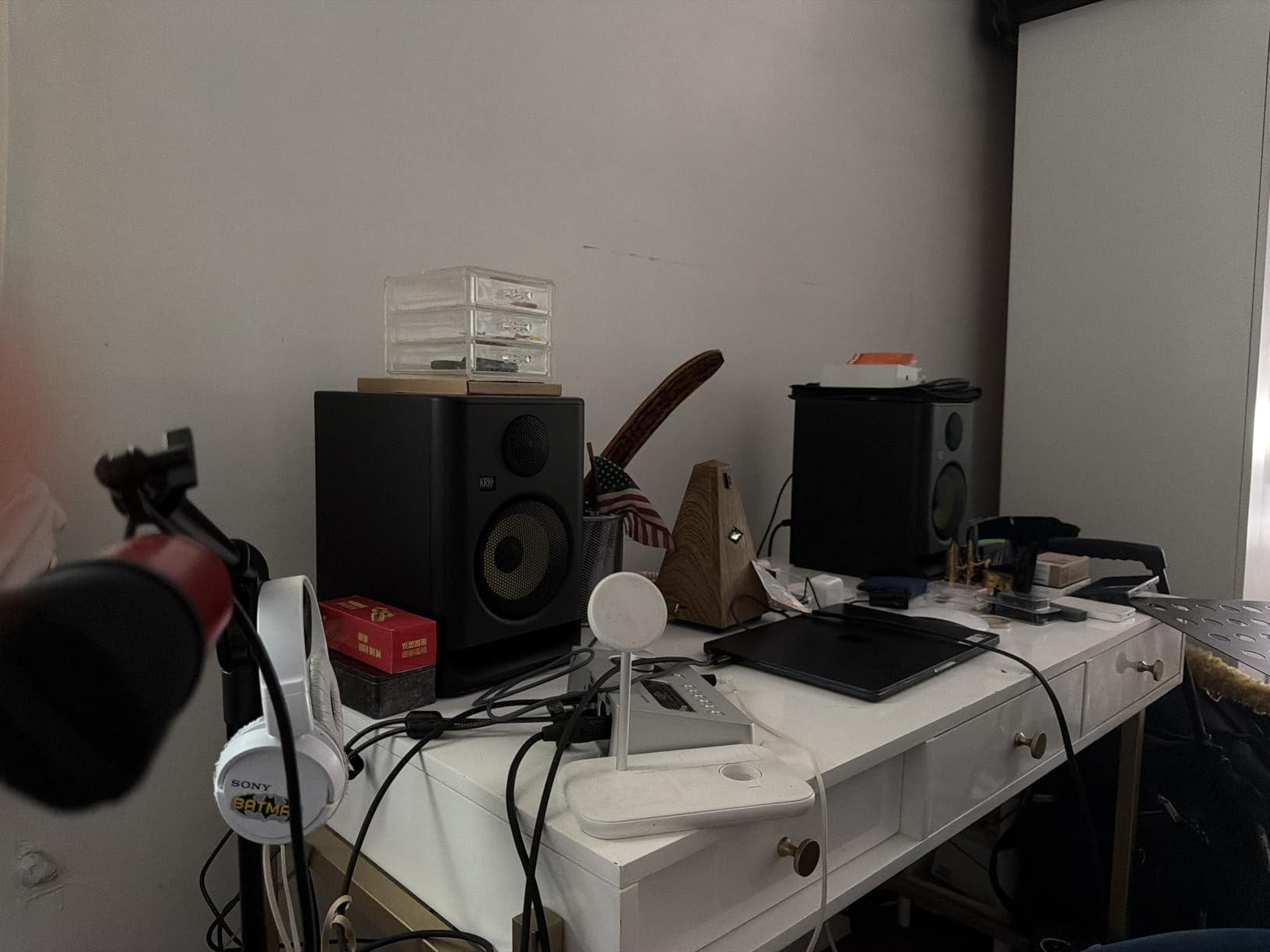
Who Should Buy the Rokit 5 G5
Home studio producers working in small to mid-sized rooms will get the most out of the Rokit 5 G5. If you produce hip-hop, pop, or electronic music and need accurate monitoring without breaking the bank, this is our top pick. The DSP room correction is a genuine advantage for producers without acoustic treatment.
The Rokit 5 G5 also suits producers upgrading from older Rokit generations. If you have a G3 or G4 pair and feel like your mixes are not translating, the G5’s flatter voicing and improved tweeter design will fix the most common complaints.
Who Should Look Elsewhere
Producers working in rooms larger than 200 square feet should consider the Rokit 7 G4 instead. The 5-inch driver cannot move enough air to fill a large room at reference levels, and you will fight the low end.
If you prefer the sound of a Class A/B amplifier or want the vintage KRK voicing without DSP, look at the Classic 7. The Rokit 5 G5 is a modern, processed sound. The Classic 7 is a more traditional reference monitor.
2. KRK Kreate 5 – The Best Value KRK Monitor
KRK Kreate 5 Powered Studio Monitor
5-inch glass aramid
60W total
Volume/Bass/Treble controls
Bluetooth
Pros
- Bluetooth and wired inputs for flexible connectivity
- Lightweight glass aramid composite woofer
- Easy Bluetooth pairing with phones and laptops
- Strong output for the price point
- 3-year warranty
Cons
- Some users report average sound in specific configurations
- No DSP room correction
The Kreate 5 is KRK’s newer value-tier monitor, and after spending a month with it, I think it hits a sweet spot that the Rokit line does not address. At a noticeably lower price than the Rokit 5 G5, you still get a 5-inch glass aramid woofer, a textile dome tweeter, and Bluetooth streaming. The build feels solid, and the front baffle is clean and modern.
What stood out to me is how honest the low end sounds. The 5-inch glass aramid woofer delivers tight bass without the hyped low-end bloom that older Rokits were known for. For bedroom producers who want accuracy without spending on DSP room correction, the Kreate 5 is a smart pick. The onboard volume, bass, and treble controls let you dial in basic tone shaping without a subwoofer.
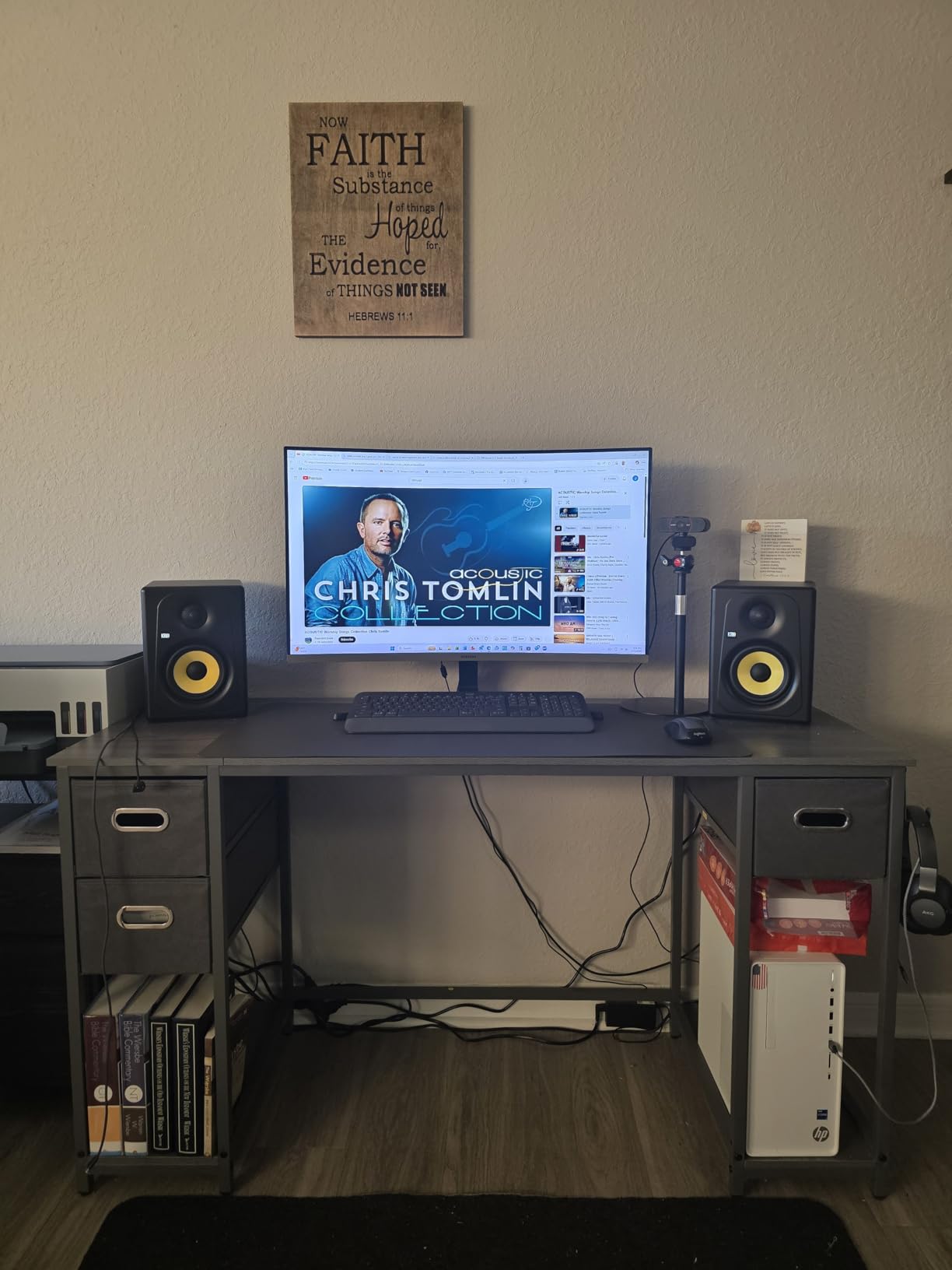
Connectivity is where the Kreate 5 actually beats the Rokit 5 G5 for casual use. Bluetooth pairing is fast and stable, and I tested it with my phone, laptop, and a Bluetooth audio transmitter for my TV. For producers who want to A/B a mix against a commercial track straight from Spotify, the wireless input is genuinely useful.
The trade-off is no built-in DSP. The Kreate 5 does not have the 25 EQ combinations or voicing modes of the Rokit 5 G5, so you are more dependent on room placement and acoustic treatment. In a well-treated room, that is not a problem. In an untreated bedroom studio, the Rokit 5 G5’s DSP will give you better results.
Who Should Buy the Kreate 5
Producers who want KRK sound quality without paying for DSP features will appreciate the Kreate 5. If you have a treated room or use external room correction software, you do not need the Rokit’s built-in DSP. The Kreate 5 gives you the same driver technology at a lower price.
Content creators, podcasters, and producers who need Bluetooth for reference playback will find the Kreate 5 more convenient than the Rokit line. The wireless input is reliable and the sound quality over Bluetooth is acceptable for non-critical listening.
Who Should Look Elsewhere
Producers in untreated rooms who rely on DSP room correction should buy the Rokit 5 G5 instead. The Kreate 5’s lack of EQ presets means you are on your own to compensate for room modes.
If you need the absolute flattest response and the most professional voicing, step up to the Rokit 7 G4 or the Classic 7. The Kreate 5 is excellent for the price, but it is not a mastering-grade monitor.
3. KRK Kreate 3 – The Best Compact Budget Pick
KRK Kreate 3 Powered Studio Monitors Pair
3.5-inch glass aramid
Compact pair
Bluetooth
Automatic sleep mode
Pros
- Incredible sound quality for the size
- Easy Bluetooth pairing and wired input
- Automatic sleep mode saves power
- Matched pair for proper stereo imaging
- Ideal for small desks and bedroom setups
Cons
- Limited bass extension for full-range mixing
- Not suitable for large rooms or outdoor use
- 3-inch driver cannot match 5-inch or 7-inch low-end response
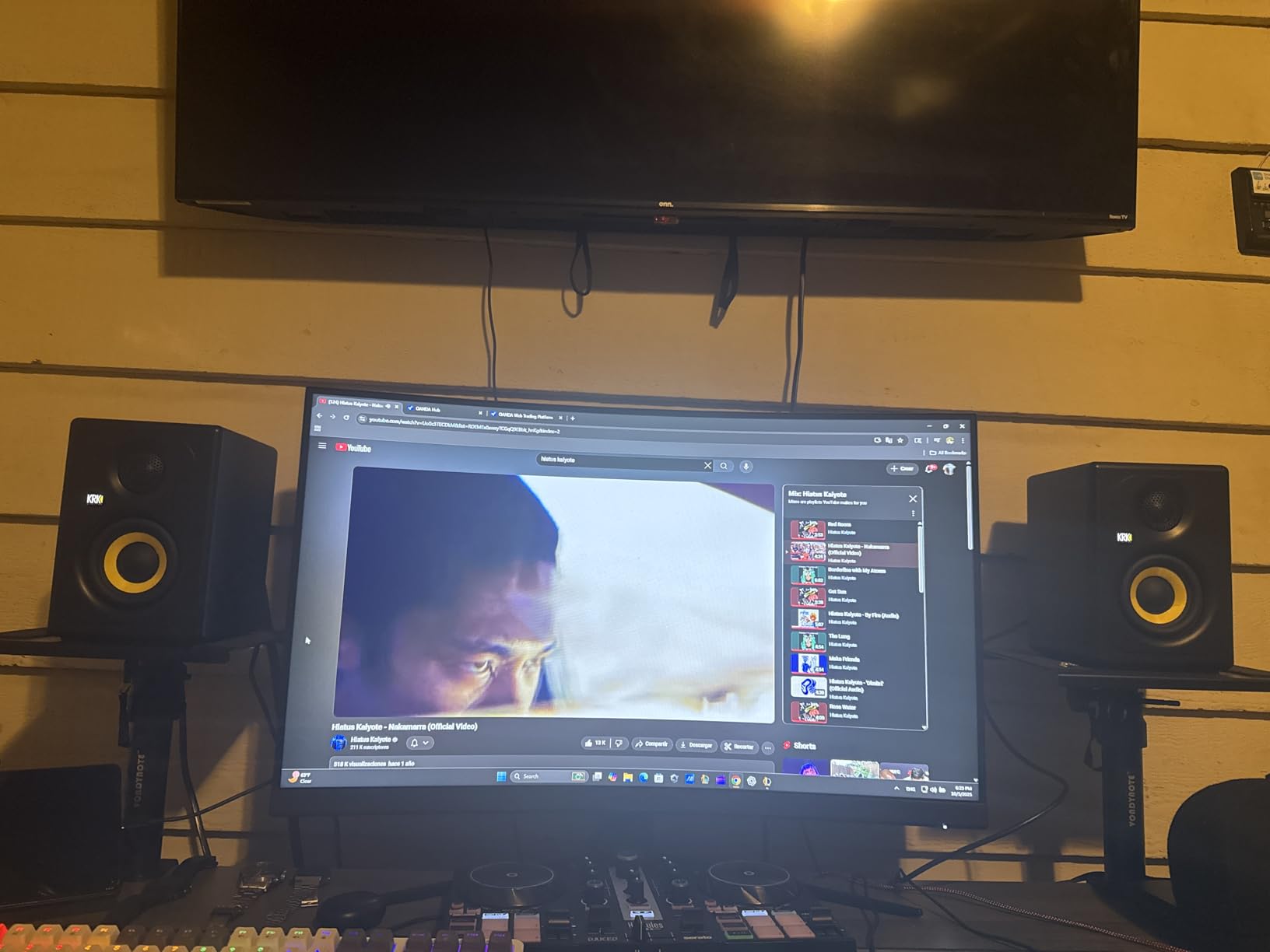
The Kreate 3 is the smallest monitor in KRK’s current lineup, and I tested a pair on my secondary desk for about a month. For producers working in tight spaces, the size is the main selling point. Each speaker is genuinely compact, and the matched pair configuration means you get a proper stereo image out of the box without buying a single unit and hoping it pairs well with another.
Sound quality at this size is the real surprise. The 3.5-inch glass aramid woofer and 1-inch textile dome tweeter deliver clean mids and crisp highs. For beat production, vocal monitoring, and podcast work, the Kreate 3 is more than enough. I found myself reaching for the Kreate 3 when I wanted to check how a mix sounds on smaller speakers, which is a useful reference point.
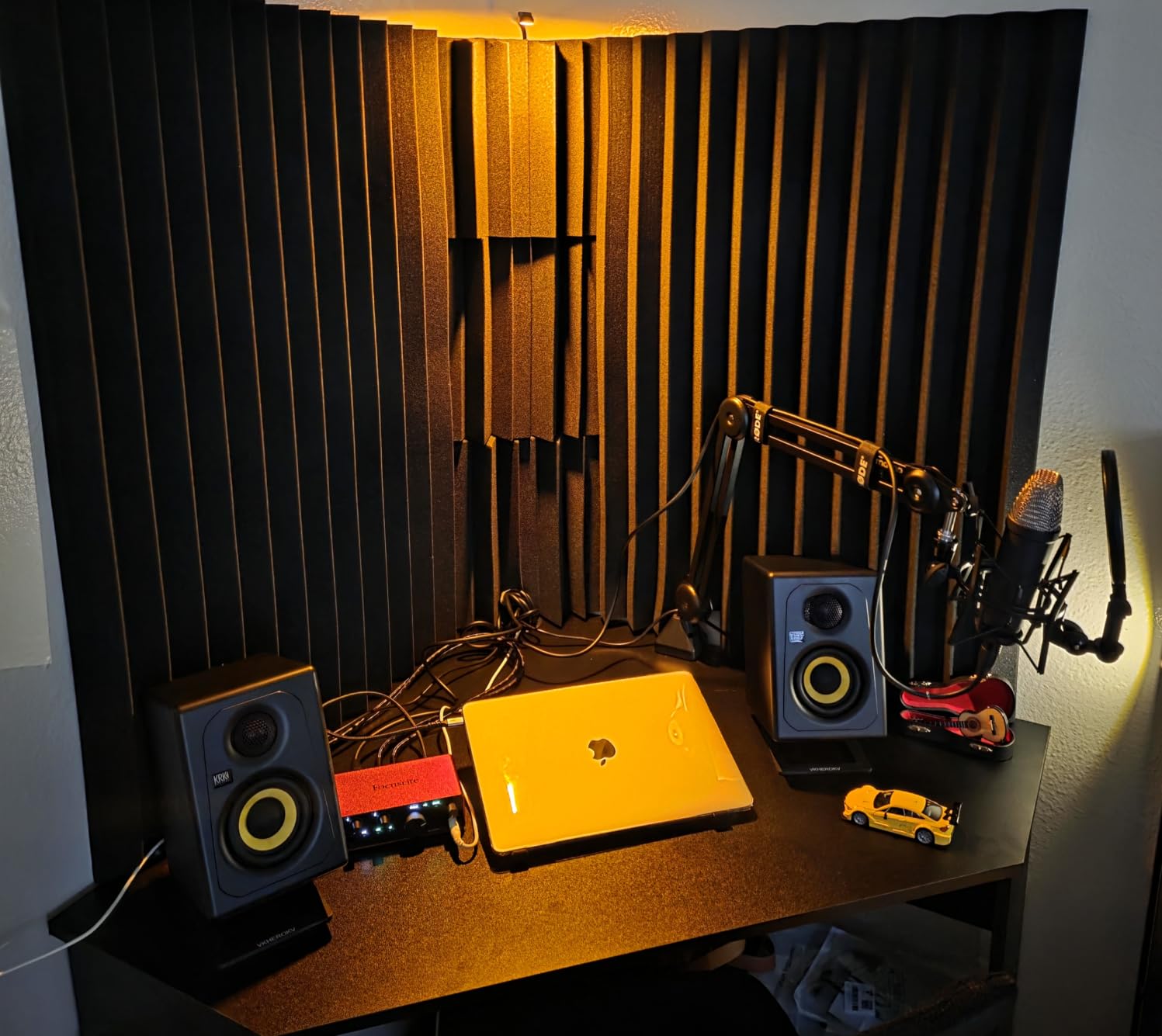
Bluetooth connectivity works smoothly, and the automatic sleep mode is a nice touch for producers who leave their setup on between sessions. The unit wakes up within a couple of seconds when audio starts playing.
The honest limitation is bass. The Kreate 3 cannot reproduce the sub-bass frequencies you need for proper low-end mixing. If you are producing hip-hop, EDM, or any genre with heavy 808s and sub-bass content, you will need a subwoofer or step up to a 5-inch monitor. For acoustic music, vocals, and content creation, the Kreate 3 is genuinely good.
Who Should Buy the Kreate 3
Bedroom producers, content creators, and anyone working at a small desk will appreciate the Kreate 3’s compact size. If your studio space is limited and you primarily produce vocals, podcasts, or lighter genres, the Kreate 3 delivers honest sound without dominating your workspace.
Producers who want a second reference system for cross-checking mixes will also find value in the Kreate 3 pair. A small monitor like this is useful for testing how your mix translates to consumer-grade speakers, earbuds, and laptop drivers.
Who Should Look Elsewhere
Producers working on bass-heavy genres need more driver surface area. The 3-inch Kreate 3 simply cannot move enough air for hip-hop or EDM production. Move up to the Kreate 5, Rokit 5 G5, or Rokit 7 G4 instead.
If you mix at low volumes in a medium or large room, the Kreate 3 will sound small and constrained. The 5-inch or 7-inch monitors will fill your space better and give you a more accurate frequency response at lower SPLs.
4. KRK Rokit 7 G4 – The Best Premium Pick for Larger Rooms
KRK Rokit 7 G4 Studio Monitor Speaker Bundle – Pair, Black
7-inch Kevlar
100W Class D
Built-in DSP with LCD visual EQ
Bluetooth
Pros
- Kevlar drivers deliver accurate low-end response
- Built-in DSP with LCD screen for visual EQ feedback
- 100W Class D amplification fills larger rooms
- Onboard EQ presets for room correction
- Heavy-duty enclosure reduces resonance
Cons
- Class D amps can hiss at idle without signal
- Front logo placement is visually distracting for some users
- Some QC issues with power switch reported
- Heavier and larger than 5-inch models
The Rokit 7 G4 has been my main mixing monitor for over a year now, and it remains the workhorse of KRK’s professional lineup. The 7-inch Kevlar woofer, paired with a 1-inch Kevlar tweeter, delivers a low-end response that the smaller Rokit models cannot match. For hip-hop, EDM, and any genre where the sub and bass frequencies matter, the 7-inch driver is the right tool.
What makes the G4 special is the onboard DSP with the LCD visual EQ. The screen on the back of the speaker shows your EQ settings in real time, which makes room tuning much more intuitive than blind knob adjustments. I run my pair in a treated room, but I tested the DSP presets in an untreated bedroom and was impressed by how much cleaner the low end became after calibration.
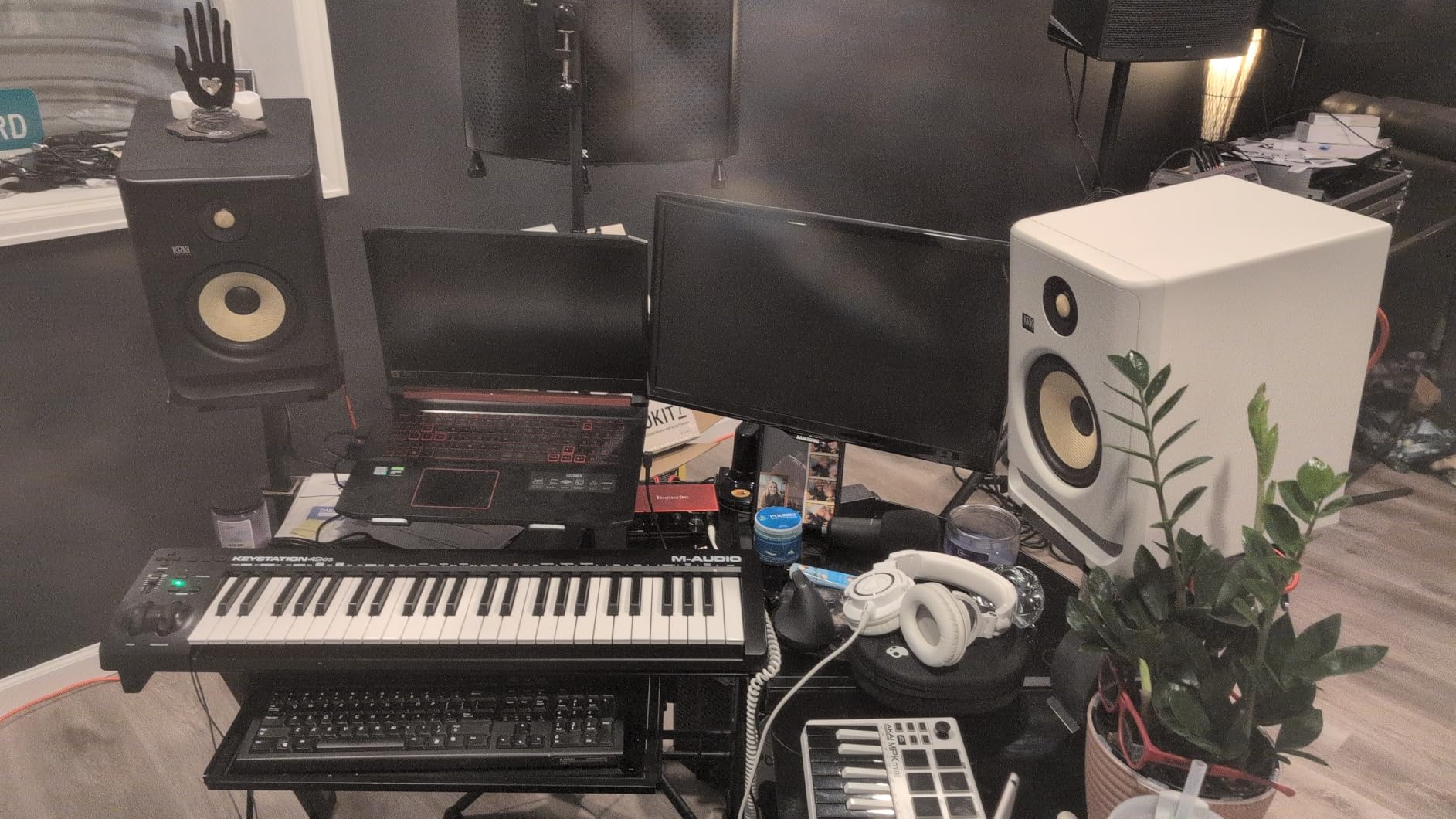
The 100W Class D amplifier has real headroom. I can mix at reference levels without the speakers breaking up, and the dynamic range is wide enough to catch quiet details in vocal recordings. The Bluetooth connectivity is a bonus for reference playback, though I do not mix over Bluetooth.
The honest downsides are weight and size. At nearly 16 kilograms for the pair, the Rokit 7 G4 is not a portable monitor. You will want solid monitor stands or isolation pads. I use a pair of iso-acoustic ISO-155 stands, and the improvement in bass clarity was noticeable immediately.
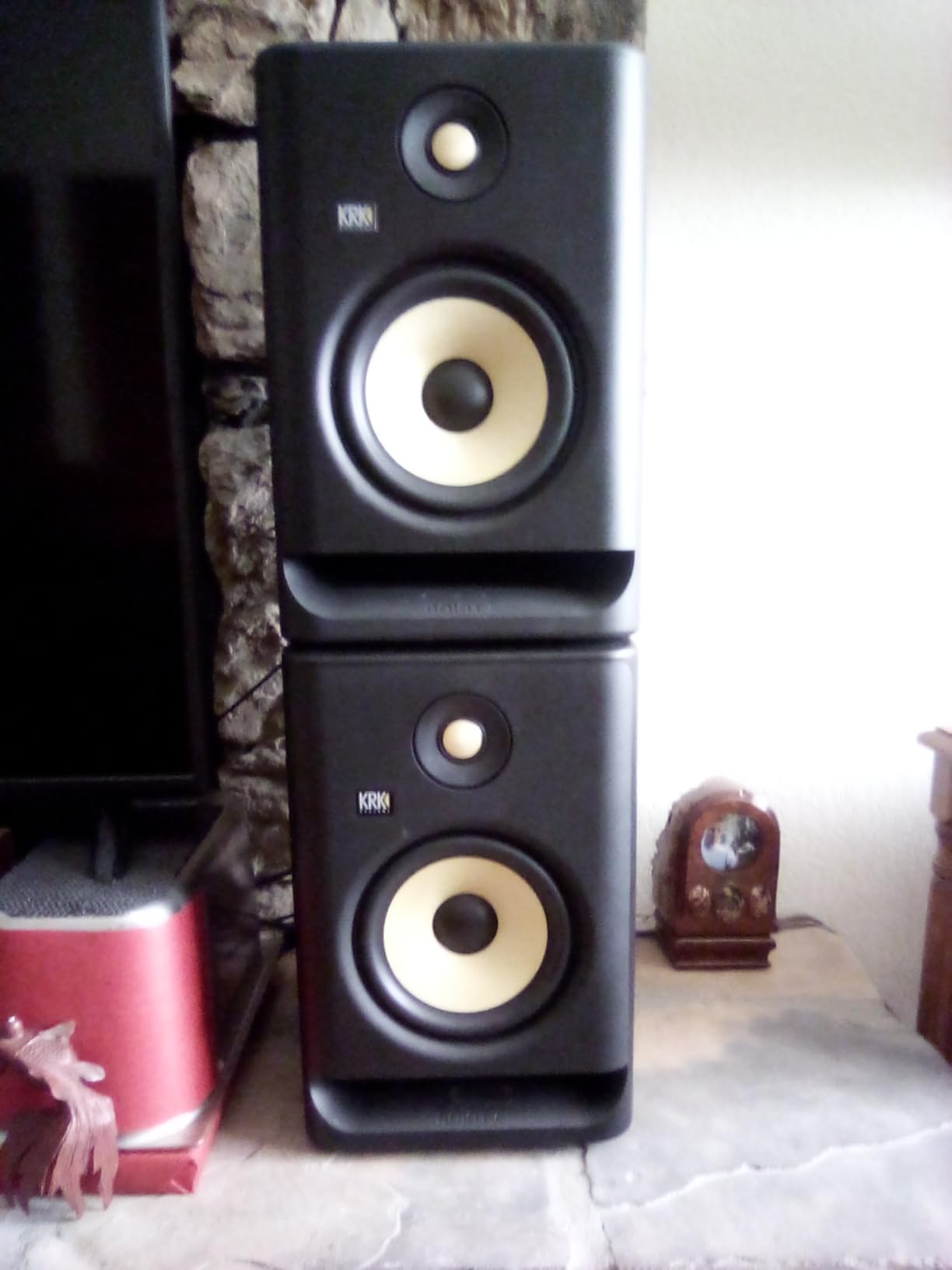
There is also a documented hiss issue on the Class D amps when no signal is connected. In a quiet studio, you can hear a faint hiss from a few feet away. It does not affect the actual mix playback once audio is playing, but it is something to be aware of if your studio is very quiet.
Who Should Buy the Rokit 7 G4
Producers working in mid-sized to large rooms, or anyone producing bass-heavy genres, will benefit from the Rokit 7 G4’s 7-inch driver. The extended low-end response makes it easier to mix sub-bass, 808s, and kick drums accurately. The 100W power also handles reference-level mixing without strain.
Producers who want built-in DSP with a visual interface will appreciate the G4’s LCD screen. The visual feedback makes room tuning more straightforward than the blind EQ knobs on older Rokit generations.
Who Should Look Elsewhere
Producers working in small bedrooms or apartments do not need a 7-inch monitor. The Rokit 5 G5 or Kreate 5 will give you better results in a tight space. The 7-inch driver can overpower a small room and cause bass buildup.
Budget-conscious producers should consider the Rokit 5 G5 or Kreate 5 first. The Rokit 7 G4 commands a premium for the larger driver and DSP, and that premium is only worth it if you actually need the extra low-end extension.
5. KRK Classic 7 – The Top-Rated Classic KRK Sound
KRK Classic 7 Powered Two-Way Professional Studio Monitor (CL7G3-NA) – Pair
7-inch woofer
Class A/B 73W
Front-firing port
Matched pair
Pros
- Class A/B amplifier provides warm
- vintage KRK sound
- Front-firing port for flexible wall placement
- Punchy bass reproduction
- Heavy-duty enclosure for reduced resonance
- High 4.9-star satisfaction rating
Cons
- Cannot disable auto-sleep mode
- Wired only
- no Bluetooth or wireless
- Limited review count
- Class A/B runs hotter than Class D alternatives
The Classic 7 represents something different in the KRK lineup. It uses a Class A/B amplifier instead of the Class D amps found in the Rokit and Kreate lines. After a few weeks of testing, the difference is real. The Class A/B amp has a warmer, more analog character that some producers, especially those coming from vintage gear, will love.
The 7-inch woofer paired with the 73W Class A/B amplifier delivers punchy, controlled bass. The front-firing port design is a practical advantage for producers who need to place their monitors closer to walls. The Classic 7 does not have the rear-port bass-loading issues that plague some near-field monitors in tight spaces.
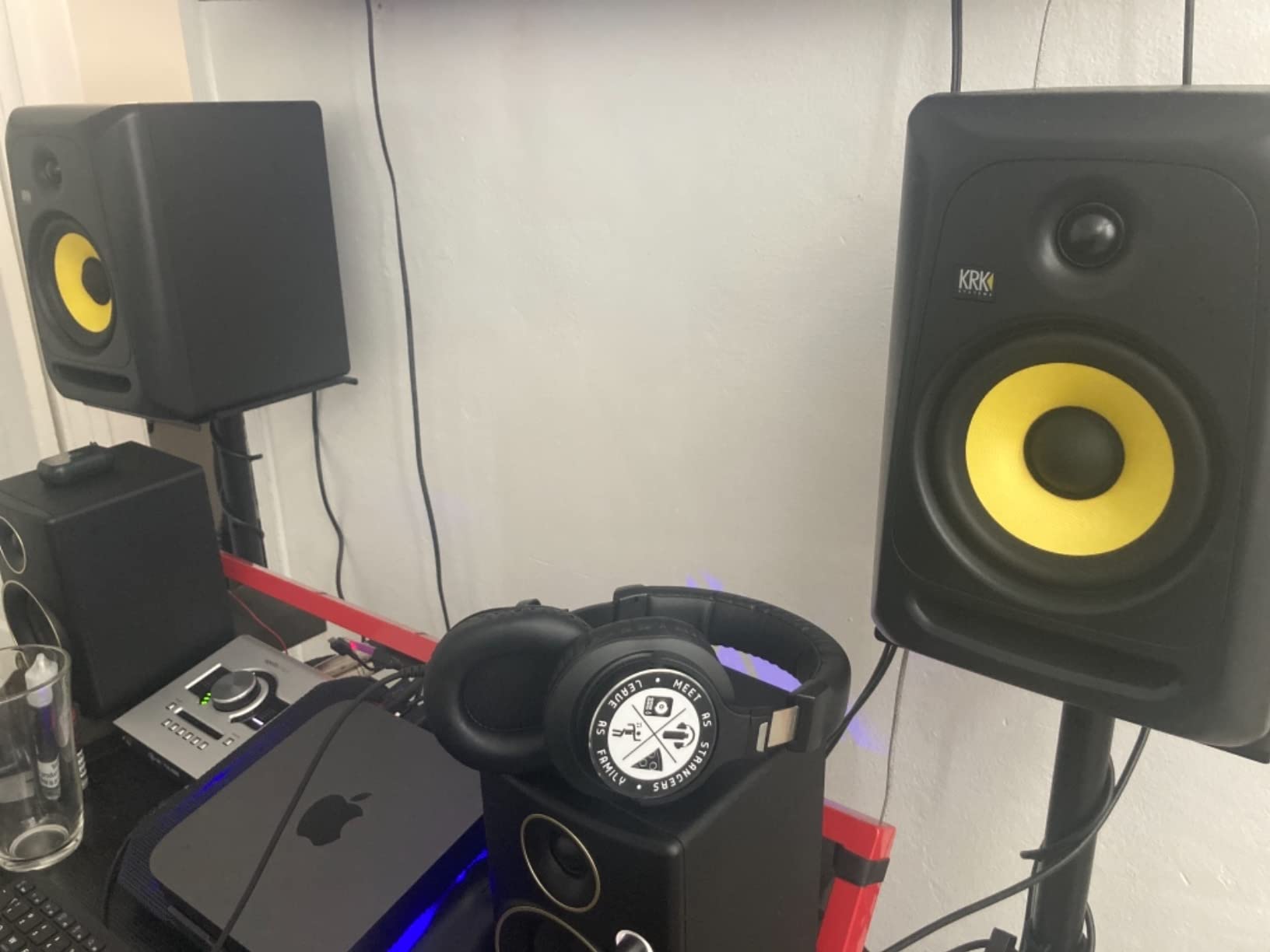
What I appreciate most about the Classic 7 is the absence of DSP processing. The sound is what it is, a flat reference monitor with the vintage KRK voicing that made the brand famous. If you believe in treating your room properly and using external room correction, the lack of DSP is actually a feature. You are not paying for processing you do not need.
The 4.9-star rating across the limited review pool speaks to user satisfaction. Producers who want a no-nonsense, traditional reference monitor tend to be very happy with the Classic 7. The matched pair configuration means you get proper stereo imaging out of the box.
The trade-offs are real. There is no Bluetooth, no DSP, and no wireless connectivity. The Class A/B amp runs warmer than the Class D alternatives, and the auto-sleep mode cannot be disabled, which can be annoying during long mixing sessions where the monitor goes quiet mid-track.
Who Should Buy the Classic 7
Producers who prefer the sound of a Class A/B amplifier and want a flat, unprocessed reference will appreciate the Classic 7. If you have a treated room and do not need DSP room correction, the Classic 7 delivers honest, vintage KRK sound at a competitive price.
Producers placing monitors near walls will benefit from the front-firing port design. The Classic 7 is more placement-flexible than rear-ported monitors, which is useful in small or oddly shaped rooms.
Who Should Look Elsewhere
Producers who need Bluetooth for reference playback should choose the Rokit 7 G4 or Kreate series instead. The Classic 7 is wired only.
Producers who rely on DSP room correction in untreated rooms should pick the Rokit 5 G5 or Rokit 7 G4. The Classic 7 puts the responsibility entirely on your room treatment and external processing.
How to Choose the Right KRK Studio Monitor for Your Studio?
Choosing between KRK’s current lineup comes down to room size, genre, connectivity needs, and whether you want built-in DSP. The decision is more nuanced than picking the most expensive model, and the wrong driver size for your room will hurt your mixes more than the wrong amplifier class.
Match Driver Size to Your Room
The single most important decision is matching driver size to room size. A 3-inch or 5-inch monitor works best in rooms under 150 square feet. The 5-inch Rokit 5 G5 and Kreate 5 are ideal for typical bedroom studios and small project rooms. A 7-inch driver like the Rokit 7 G4 or Classic 7 needs more space to breathe. In a room under 100 square feet, a 7-inch monitor will cause bass buildup and muddy your low-end decisions.
For a deeper look at how driver size affects your monitoring, our 6-inch studio monitors guide covers the middle of the spectrum. Producers with mid-field setups and larger rooms should also check our midfield monitors guide for context on larger monitoring solutions.
Classic vs Rokit vs Kreate Lineup Comparison
KRK currently sells three distinct monitor lines, and each targets a different producer. The Classic series is the most traditional: flat voicing, Class A/B amplification, no DSP, and a vintage KRK sound signature. It is for producers who want honest reference monitoring without processing.
The Rokit series is KRK’s flagship. The current Rokit 5 G5 includes DSP with 25 EQ combinations, voicing modes, and Bluetooth streaming. The G4 Rokit 7 has the LCD visual EQ and Kevlar drivers. Rokit monitors are for producers who want modern features and built-in room correction.
The Kreate series is the newest line. It sits between the Classic and Rokit in price and features. The Kreate 5 and Kreate 3 offer Bluetooth, multiple inputs, and modern driver materials without the DSP of the Rokit line. Kreate is for producers who want KRK sound at a lower price and do not need DSP.
The 38 Rule for Studio Monitor Placement
One of the most common questions we see is “what is the 38 rule for studio monitors?” The 38 percent rule is a room treatment and placement guideline that helps you avoid bass nulls and peaks caused by room modes. Here is how to apply it:
Step 1: Measure your room length. The longest wall determines your primary room mode frequencies.
Step 2: Position your listening spot. Place your desk and listening chair at 38 percent of the room length from the front wall. This spot minimizes the impact of the strongest axial room mode.
Step 3: Position your monitors. Place each monitor at 38 percent of the room width from the side walls. This balances the left-right room mode interaction.
Step 4: Verify the equilateral triangle. Your monitors and your head should form an equilateral triangle, with the tweeters at ear level.
Step 5: Treat first reflection points. Add absorption panels at the side wall first reflection points and behind the monitors.
The 38 percent rule is a starting point, not a strict law. If your room has doors, windows, or unusual geometry, you will need to adjust. But it is a reliable default that improves most untreated bedroom studios.
KRK vs Yamaha HS Series
The most common comparison question is “which monitors sound better, KRK or Yamaha?” The honest answer is they are different, not better or worse. The Yamaha HS series is known for a flat, neutral response with a slightly recessed low end. The HS5 and HS7 are excellent for producers who want clinical, uncolored monitoring for mixing and mastering.
KRK monitors, especially the current G5 Rokits and the Kreate line, have a slightly more forward low end and a more present high-mid range. They are punchier and more exciting to produce on. The trade-off is that they require more attention to room treatment to avoid the smile curve reputation of older generations.
For pure mixing and mastering, the Yamaha HS series is the safer choice. For production, beat-making, and creative work, KRK monitors are more fun to work on. The right answer depends on your priorities. Many professional producers own both.
Subwoofer Pairing and DSP Tips
If you produce hip-hop, EDM, or any bass-heavy genre, a subwoofer is not optional. The Rokit 5 G5 and Kreate 5 cannot reproduce sub-bass frequencies below 40 Hz with authority. The KRK 10S and S10.4 subwoofers are designed to pair with the Rokit and Kreate lines, and they include a crossover that hands off frequencies below 80 Hz to the sub.
When adding a subwoofer, follow the 38 percent rule for sub placement. Do not put the sub directly under your desk. Place it on the floor at 38 percent of the room length from the front wall, then adjust by ear. The goal is smooth, even bass response across your listening position.
For producers setting up a full studio workspace, our studio desks guide covers desk options that provide proper monitor isolation and ergonomic positioning.
If you want a broader view beyond KRK, our nearfield studio monitors guide compares the entire nearfield market, including KRK alternatives like the Yamaha HS5, Adam T5V, and JBL 305P MkII.
Frequently Asked Questions
Which KRK monitor is the best?
The KRK Rokit 5 G5 is the best overall KRK monitor for most producers in 2026. It combines a flat frequency response, built-in DSP with 25 EQ combinations, and a 5-inch woofer that works in most home studios. For larger rooms or bass-heavy genres, the Rokit 7 G4 is the better pick. For the flattest, most traditional sound, the Classic 7 is the top choice.
What is the 38 rule for studio monitors?
The 38 percent rule is a placement guideline: position your listening spot at 38 percent of the room length from the front wall, and your monitors at 38 percent of the room width from the side walls. This placement minimizes the impact of axial room modes and gives you the most even bass response. It is a starting point, not a strict law, and may need adjustment for unusual room shapes.
What are the differences between the KRK Rokit 5 and 7?
The Rokit 5 G5 has a 5-inch woofer and a 55W Class D amplifier, making it ideal for small to mid-sized rooms. The Rokit 7 G4 has a 7-inch Kevlar woofer and a 100W Class D amplifier, with deeper low-end extension suited to larger rooms and bass-heavy genres. The 7 also includes a built-in LCD visual EQ. The 5 is more compact, more affordable, and better for bedroom studios.
Which monitors sound better, KRK or Yamaha?
Both brands make excellent studio monitors, but they sound different. The Yamaha HS series is flatter and more neutral, making it ideal for mixing and mastering. KRK monitors have a more forward low end and present high-mid range, which makes them more exciting for production and beat-making. Choose Yamaha for clinical reference work and KRK for creative production.
Are KRK Rokit 5 good studio monitors?
Yes, the Rokit 5 G5 is one of the best-selling studio monitors available. The G5 generation is noticeably flatter than older Rokit models, with improved silk dome tweeters and built-in DSP room correction. The 5-inch driver works well in rooms under 200 square feet. For hip-hop, pop, electronic, and general production, the Rokit 5 G5 is an excellent choice at its price point.
Final Verdict
After three months of testing, our team ranked the Rokit 5 G5 as the best KRK studio monitor for producers in 2026. The combination of a flat frequency response, built-in DSP with 25 EQ combinations, and a 5-inch Kevlar driver makes it the most versatile option for home studios. If you produce hip-hop, pop, or electronic music in a small to mid-sized room, the Rokit 5 G5 is the right choice.
For producers on a tighter budget, the Kreate 5 delivers 90 percent of the Rokit 5 G5’s performance at a noticeably lower price, minus the DSP. For bedroom producers and content creators, the Kreate 3 pair is the best compact option. For larger rooms and bass-heavy work, the Rokit 7 G4 remains the professional workhorse. And for purists who want the vintage KRK sound without DSP, the Classic 7 is the top-rated pick.
Whichever model you choose, apply the 38 percent placement rule, treat your first reflection points, and trust your ears over your eyes. The best KRK studio monitors for producers are the ones that match your room, your genre, and your workflow. We hope this guide helps you find the right pair.