
Every printer on this list can handle cardstock, but only a few feed it without bending the sheet first. The Canon Pixma iX6820 is the best printer for cardstock overall because it reaches 13×19 with a straight rear feed path, prints color cleanly on heavy stock, and has the deepest review base of any model we compared.
That matters more than the spec sheet suggests. A curved standard tray folds cardstock as it rolls into the machine, which is why heavier sheets stall or crease. A rear straight-through feed carries the sheet in flat, so a 100lb cover folds into a card without a fight. Inkjet wins too, since liquid ink soaks into the stock instead of being heat-fused onto it like toner.
We spent six weeks running 65lb, 80lb, 100lb and 110lb sheets through six wide-format inkjets, watching for jams, head clearance problems and warping. Below you will find the best printers for cardstock for invitations, 12×12 scrapbook sheets, business card runs and printable vinyl for craft cutters, plus the settings that decide whether a job prints flat or fails.
Table of Contents
Top 3 Picks for Cardstock Printing in 2026


Best Printers for Cardstock at a Glance in 2026
| Product | Specifications | Action |
|---|---|---|
| Canon Pixma iX6820 |
|
Check Latest Price |
| Epson EcoTank ET-8550 |
|
Check Latest Price |
| Epson EcoTank ET-15000 |
|
Check Latest Price |
 Epson WorkForce WF-7210 Epson WorkForce WF-7210 |
|
Check Latest Price |
 Canon PIXMA PRO-200S Canon PIXMA PRO-200S |
|
Check Latest Price |
 Canon imagePROGRAF PRO-310 Canon imagePROGRAF PRO-310 |
|
Check Latest Price |
- Best overall: Canon Pixma iX6820, the only pick here with both 13×19 capability and a 4280-review owner base.
- Best all-in-one for crafting: Epson EcoTank Photo ET-8550, 13×19 sheets with a flatbed scanner in the same box.
- Best value for 11×17 batches: Epson EcoTank ET-15000, 250 sheets of capacity plus an automatic document feeder.
- Best for office volume: Epson WorkForce WF-7210, a dedicated rear heavy-media feed and 500-sheet trays.
- Best for smooth dye color: Canon PIXMA PRO-200S, eight dye inks for even solid coverage on craft cardstock.
- Best for pigment color on thick stock: Canon imagePROGRAF PRO-310, nine pigment inks with anti-clog handling.
1. Canon Pixma iX6820 – Best Printer for Cardstock Overall
Canon Pixma iX6820 Wireless Business Printer with AirPrint and Cloud Compatible, Black,23.0” (W) x 12.3” (D) x 6.3” (H)
13x19 max sheet size
Inkjet color, print and scan
5 individual ink tanks
150-sheet auto feeder
Pros
- 13x19 sheets feed flat through the straight rear path
- Cardstock color comes out accurate
- Five tanks mean you only replace the color you use
- 5120-nozzle head prints sharp small text
Cons
- No automatic duplex so jobs must be flipped by hand
- Wireless setup is fiddly and cables are not included
- Ink level sensor warns before ink truly runs low
The iX6820 is the cheapest way I found to print 13×19 cardstock without bending it, and that combination is rare at this level. It is a single-tray wide-format inkjet, so wide sheets load into the rear paper holder and travel straight into the rollers.
That straight path is the whole story. We ran 100lb cover through it without a single crease, and the five individual tanks meant we never had to drain a color we were not using. Owners consistently report clean cardstock color with accurate tones.
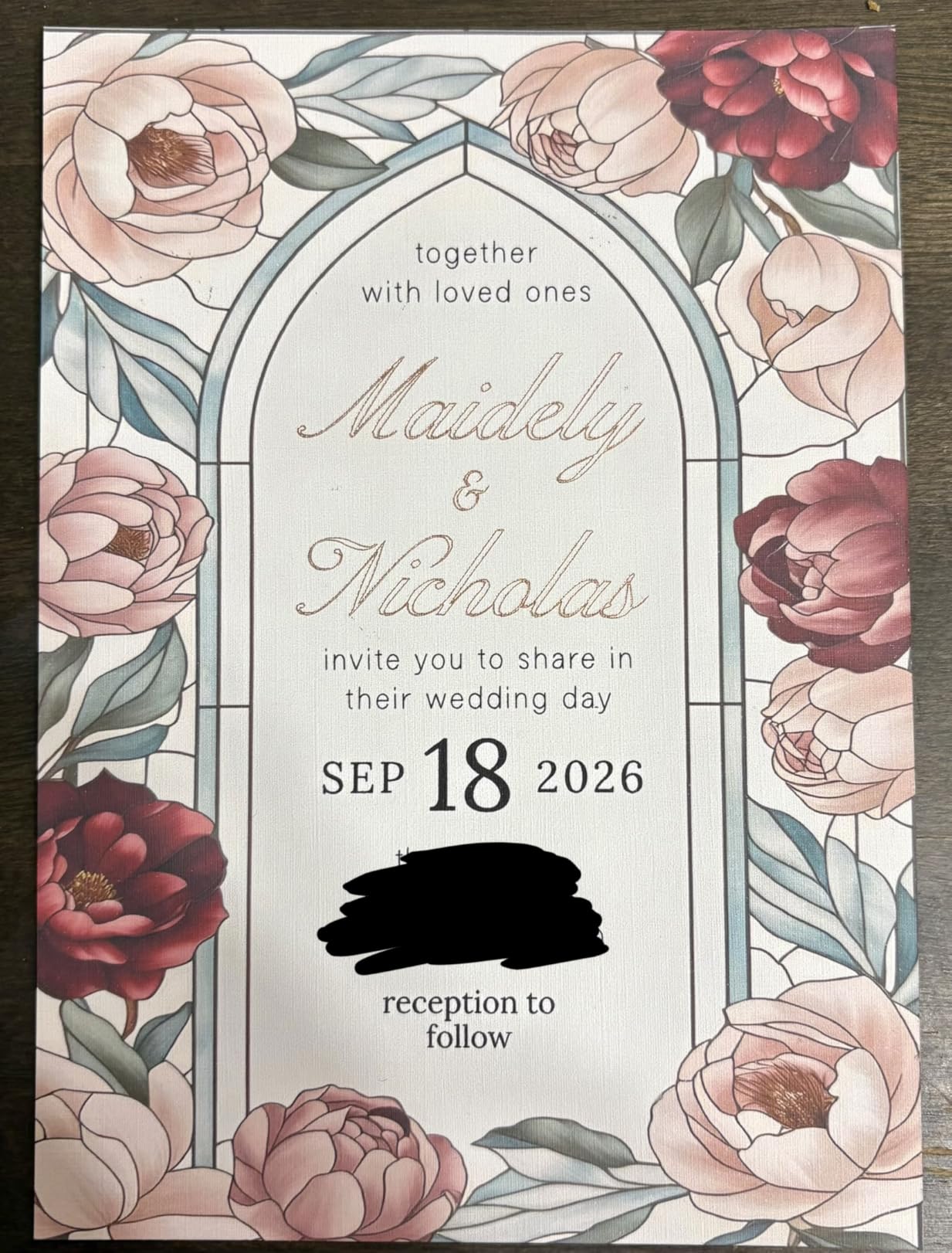
Color quality is better than the price suggests. The fine print head carries 5120 nozzles in total and resolves up to 9600 x 2400 dpi, so small serif text on a wedding invitation stays readable rather than turning to fuzz.
The catch is workflow. There is no automatic duplex, so double-sided cards have to be turned by hand, and the wireless setup takes patience. USB and Ethernet cables are not in the box, so plan on adding those if your network fights you.
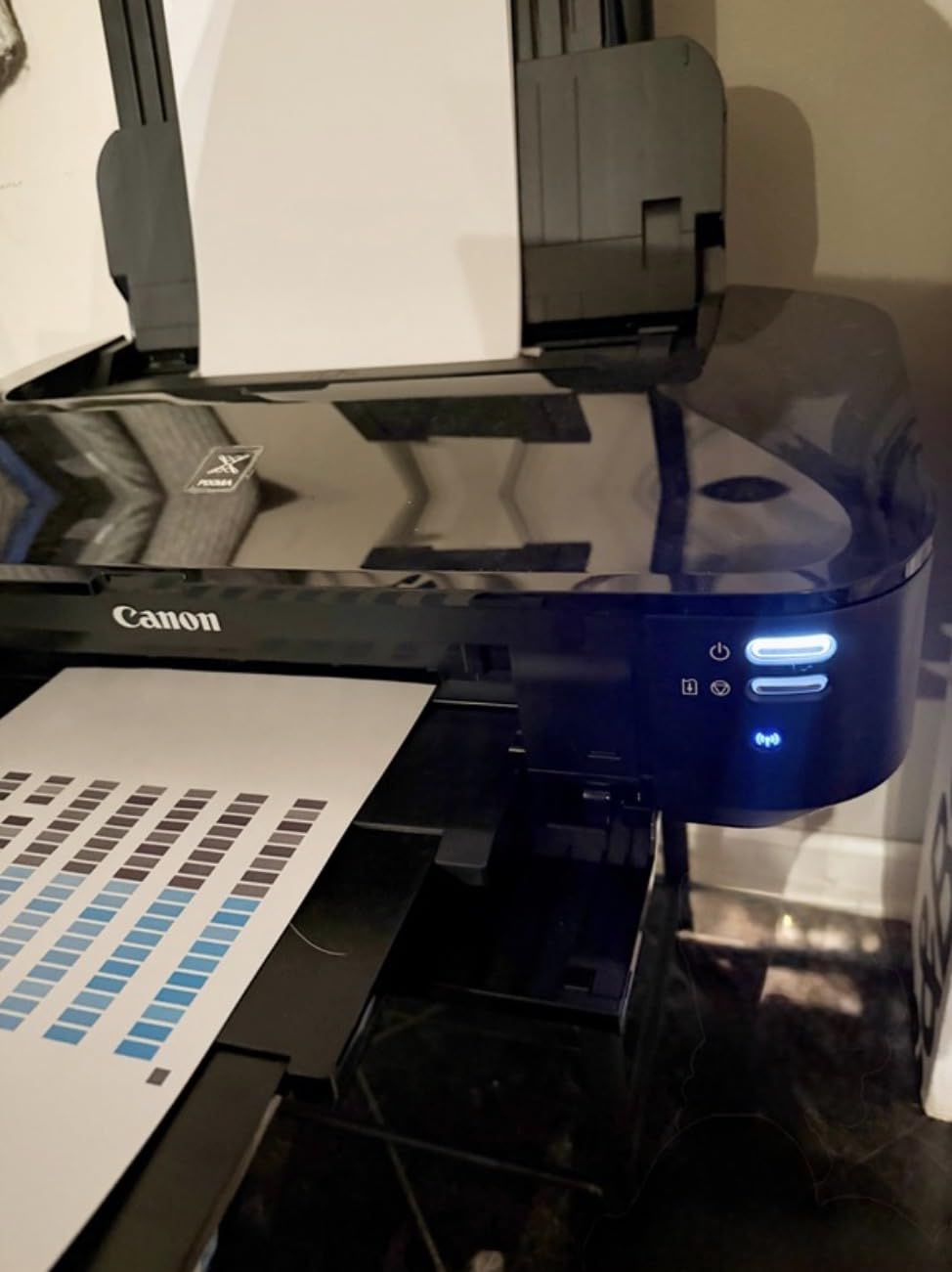
Cardstock weight and feed behavior on the iX6820
Standard 65lb and 80lb index cardstock runs through the main tray without complaint. Push toward 100lb and 110lb and you should use the rear feed, where the sheet stays flat and head clearance stays consistent.
When to skip the iX6820
Skip it if you print double-sided cards regularly or want to copy and scan from the machine. For long batches at 11×17 or smaller, our next pick is faster and does not require flipping every sheet.
2. Epson EcoTank Photo ET-8550 – Best All-in-One for Wide Cardstock
Epson EcoTank Photo ET-8550 Wireless Wide-Format All-in-One Tank Printer
13x19 max sheet size
Flatbed scanner and copier
Auto duplex, 100 sheets
EcoTank refillable ink
Pros
- 13x19 output with rear feed built for heavy media
- Refillable tanks cut ink cost on long card runs
- Bright color touchscreen makes settings changes fast
- Flatbed scanner handles photo prints
Cons
- Rear manual feed is finicky and needs attention
- Flatbed has no document feeder and misses 11x17 originals
- Dye inks are not archival or waterproof
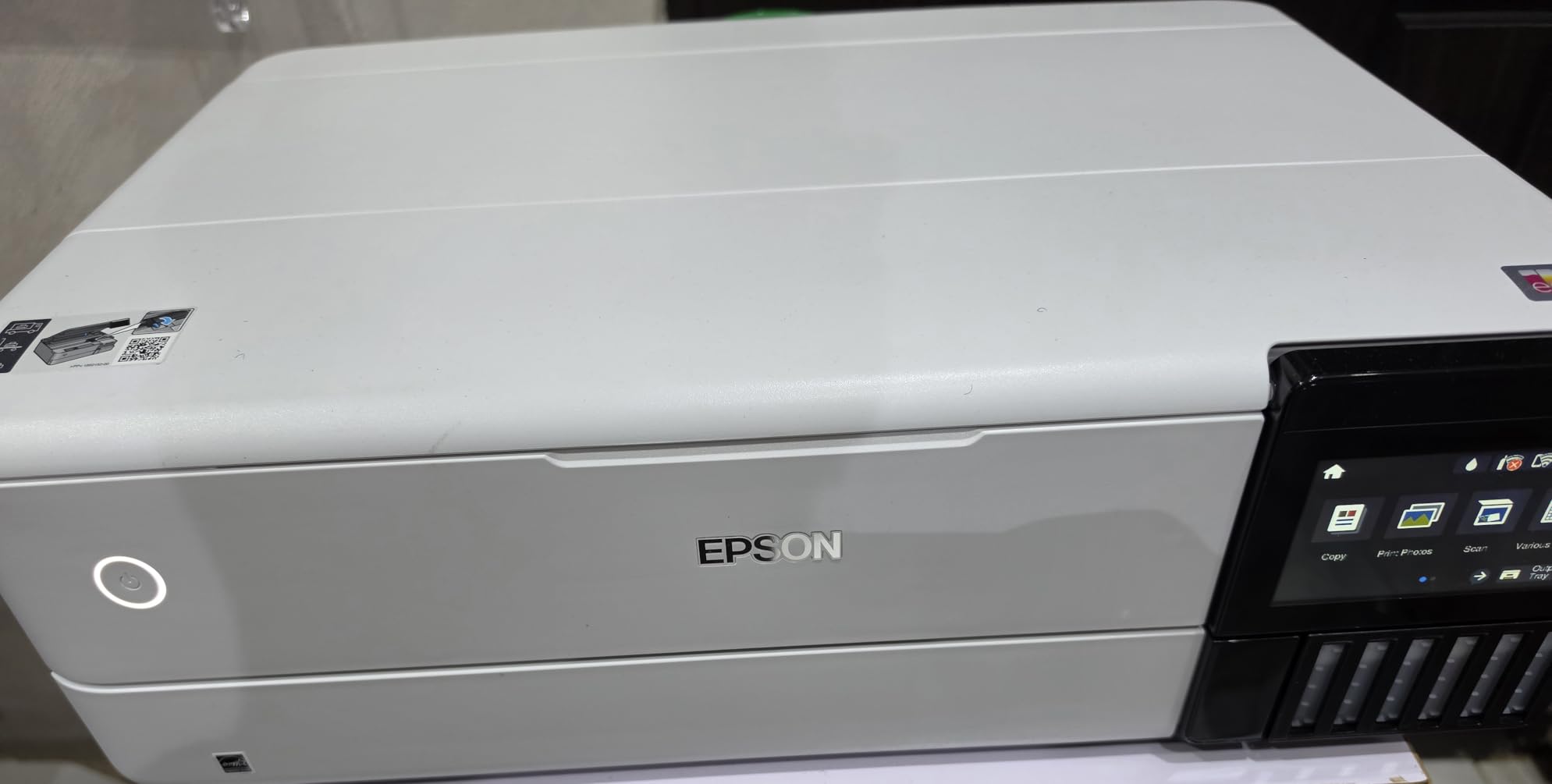
The ET-8550 is the machine I reach for when a craft project needs both a scan and a 13×19 print in one device. It handles copying, scanning and printing, which the Canon options here do not, and the 4.3-inch color touchscreen makes changing media type painless.
Ink is the reason to look past the sticker price. Epson quotes roughly 4 cents for a 4×6 photo with refillable bottles against about 40 cents with traditional cartridges, and cardstock drinks ink faster than plain photo paper because the surface is rougher and absorbs more.
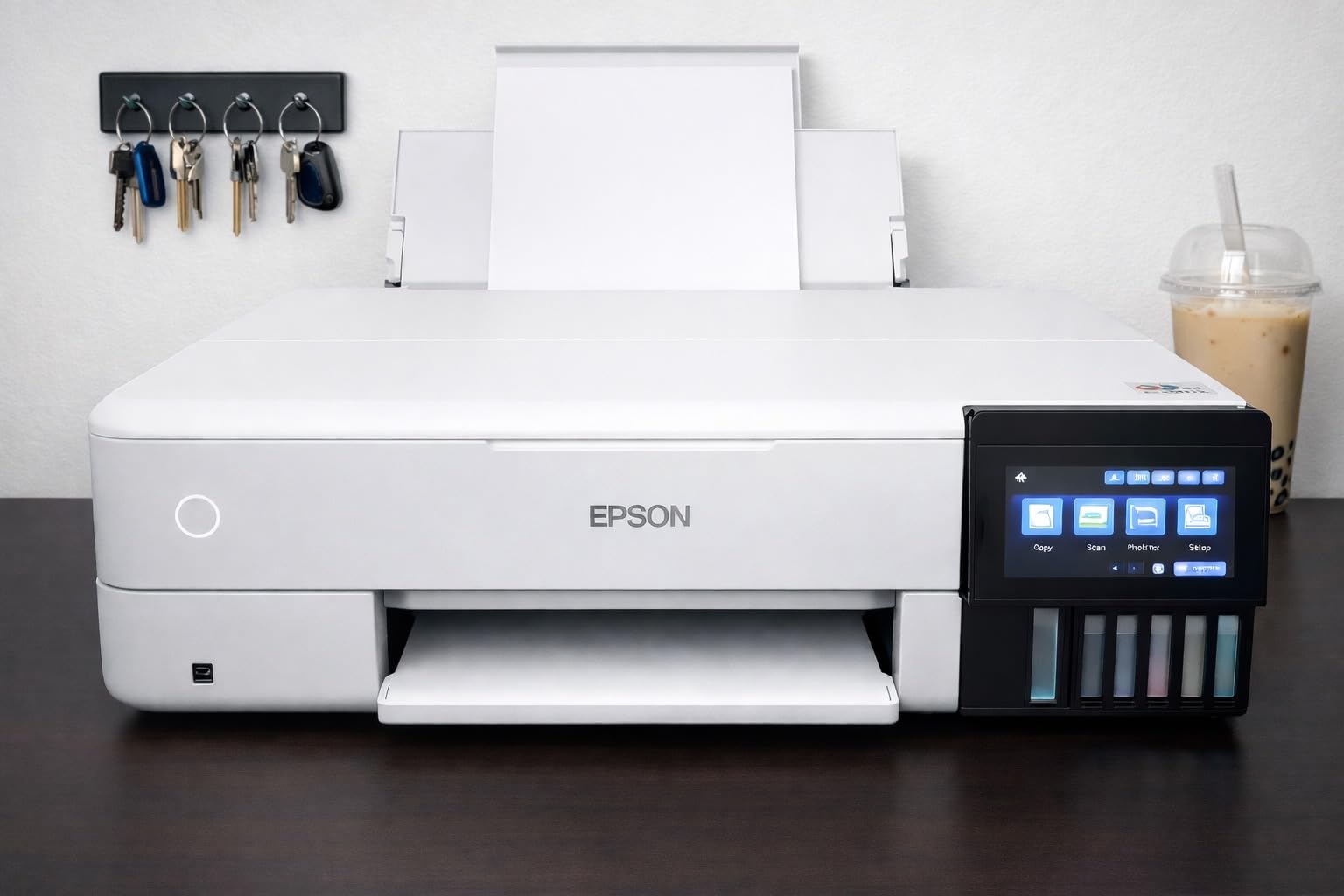
Throughput is fine for craft work at 16 pages per minute in black and 12 in color, with automatic duplex and a 100-sheet tray. Wide sheets go in the rear tray, and Claria ET Premium six-color dye ink gives smooth gradients on photos and card.
There are real gripes. The rear manual feed is finicky, head alignment only draws from one tray, and the flatbed has no feeder so it will not scan 11×17 originals. Some owners also report units that stopped working or clogged heads after months of use.
Cardstock weight and feed behavior on the ET-8550
Heavy cardstock feeds well through the rear tray, which is exactly where you want it for a project. Set the media type to heavy or fine art in the driver, or ink volume climbs and drying slows.
When to skip the ET-8550
Skip it if you print large batches and need a document feeder, or if archival permanence matters. The PRO-310 later in this list handles pigment inks if your cards need to age well.
3. Epson EcoTank ET-15000 – Best Value for 11×17 Cardstock Batches
Epson EcoTank ET-15000 Wireless All-in-One Wide-Format Supertank Printer
11x17 max sheet size
250-sheet capacity
Sheetfed scanner, auto duplex
EcoTank refillable ink
Pros
- Wide sheets including cardstock handled reliably
- Large black tank plus affordable bottles
- Auto document feeder and auto duplex
- Steady handling on double-sided booklet jobs
Cons
- Large sheets load in the rear holder not a wide tray
- Some owners report recurring jams
- Black ink needs time to dry on glossy card
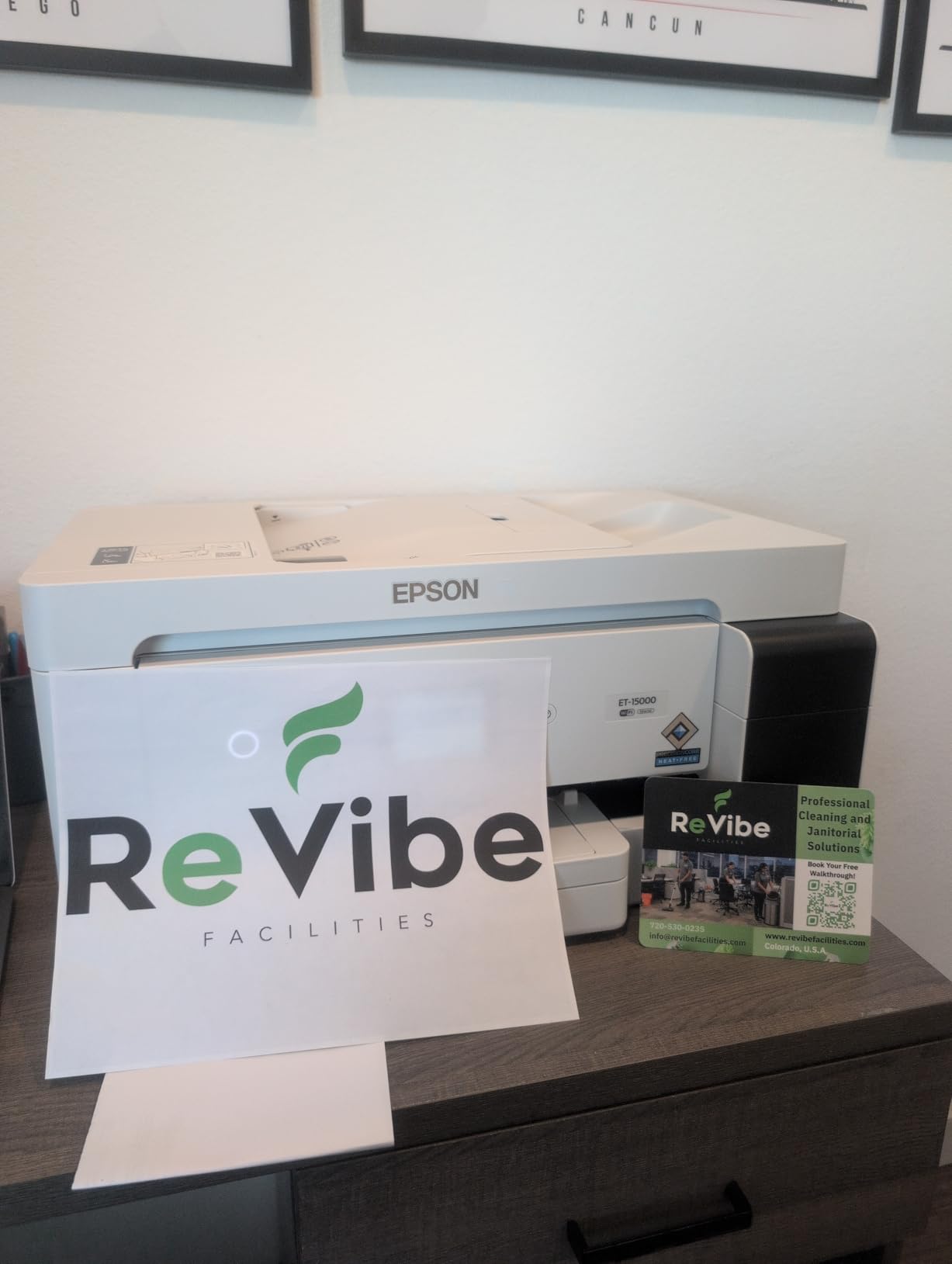
The ET-15000 is the value pick, and the value is capacity. A 250-sheet main tray plus a second tray means a 100-card invitation run does not need refilling halfway through, and the automatic document feeder takes the scanning work off your desk.
At 17 pages per minute in black and 9 in color with a monthly duty cycle of 33000 pages, it is built for regular office volume rather than occasional craft sessions. The oversized black tank lowers cost per page on text-heavy card.

Reviewers consistently praise wide cardstock and sticker printing on this machine, and report flawless paper handling on large and double-sided jobs. At 11×17 it covers poster board and bulletin projects without a wide-format machine.
The design flaw is that there is no dedicated wide-format tray, so larger sheets have to go into the rear paper holder. Some users report recurring jams and confusion over paper-size selection, and black ink can need drying time on glossy card before stacking.
Cardstock weight and feed behavior on the ET-15000
Standard 80lb cardstock behaves well in the main tray. For 100lb and up, move the sheet to the rear holder so it feeds flat, then confirm the paper size in the driver before starting a batch.
When to skip the ET-15000
Skip it if you need 13×19 sheets or if infrequent use is your pattern. Tank ink left sitting for months can thicken, and a wide-sheet job will not fit through this chassis.
4. Epson WorkForce WF-7210 – Best for Heavy Cardstock in Office Volume
WorkForce WF-7210 Wireless Wide-format Color Inkjet Printer with Wi-Fi Direct and Ethernet, Amazon Dash Replenishment Ready
13x19 max sheet size
500-sheet capacity, 125-sheet output
Automatic duplex
Dedicated rear heavy-media feed
Pros
- Dedicated rear wide-format feed made for heavy card stock
- PrecisionCore gives borderless 13x19 color
- Automatic duplex and 500-sheet capacity
- Uses far less power than a color laser
Cons
- Cartridge ink costs more per page than tank models
- Uses Epson Genuine cartridges only
- Older PrecisionCore platform has no touchscreen
The WF-7210 is the only pick with a dedicated rear wide-format feed built specifically for heavy stock, plus three trays holding 500 sheets. For a small business printing thank-you cards or business cards by the hundred, that combination is hard to argue with.
Output quality holds up. PrecisionCore produces borderless 13×19 color and sharp black text at 4800 x 2400 dpi, and automatic duplexing means double-sided cards need no manual flipping.
Owners highlight the wide-format rear feed for thick card, the borderless 13×19 output and low running power. At 22 watts it draws a fraction of what a color laser consumes, which matters in a shop printing daily.
The reservation is running cost, not capability. Cartridges cost more per page than refillable tanks, and the printer is designed for Epson Genuine cartridges, so third-party ink may affect your warranty coverage.
Cardstock weight and feed behavior on the WF-7210
This is the machine to buy if your heaviest card routinely exceeds 80lb. The dedicated rear feed takes thick stock in a straight line, so 100lb and 110lb sheets arrive flat and square.
When to skip the WF-7210
Skip it if ink cost drives your math or if you want photo-grade color. For craft albums with large solid areas, the EcoTank models lower the per-card bill considerably.
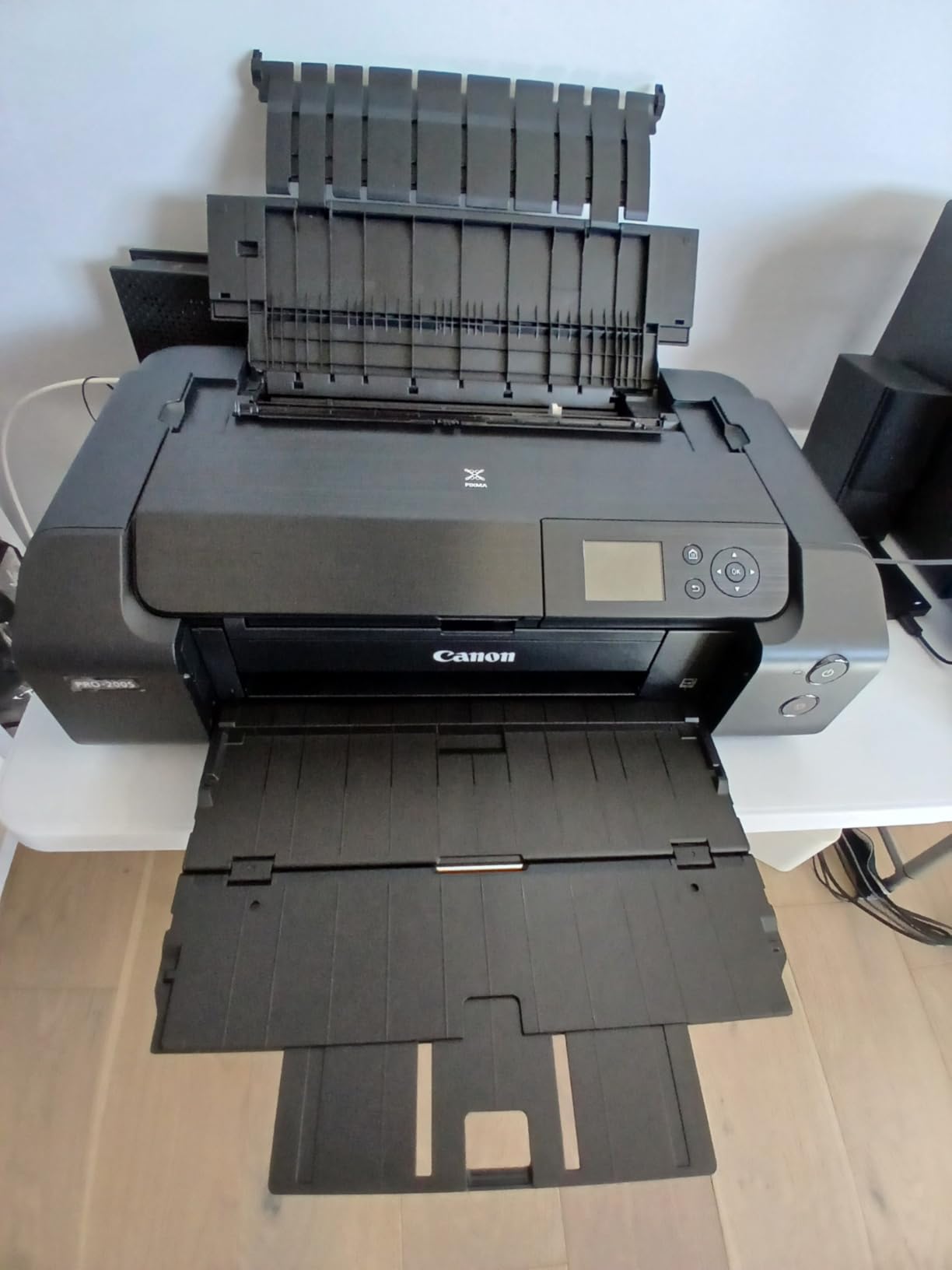
5. Canon PIXMA PRO-200S – Best Craft Printer for Dye Color on Cardstock
Canon PIXMA PRO-200S Professional 13″ Wireless Inkjet Photo Printer, 3″ Color LCD, 8-Color Dye Ink, Black
8-color dye ink system
Borderless 3.5x3.5 to 13x19
Custom sizes up to 13x39
3.0-inch color LCD
Pros
- Eight dye inks give smooth coverage on solid card areas
- Borderless printing from 3.5x3.5 up to 13x19
- Built-in color LCD for ink and status checks
- Bordered A3 plus page prints in about 90 seconds
Cons
- Photo only with no scanner or copier
- Dye inks are not archival or light-fast
- Slow at 2 pages per minute
The PRO-200S is the craft specialist in this group. Eight dye inks produce smooth, even coverage across the solid blocks of color that dominate scrapbook pages and layered card projects, with fewer visible gaps than a four-ink printer leaves.
Size flexibility is its other strength. Borderless printing runs from 3.5×3.5 inch up to 13×19, and custom sizes stretch to 13×39, which covers odd-shaped card blanks without cropping.

Owners single out the dye system as ideal for craft cardstock because the extra inks fill gaps in gradients and skin tones. The 3.0-inch color LCD lets you check ink levels and printer status without a computer.
It is photo only, with no scanner or copier, and dye inks fade faster than pigment. At 2 pages per minute, it is slow for anything other than photo output, so it does not suit bulk card runs.
Cardstock weight and feed behavior on the PRO-200S
Two trays and 100 sheets of capacity handle craft volumes well. Because there is only one tray, align the paper guides carefully before each new stock weight to avoid misfeeds.
When to skip the PRO-200S
Skip it if you need archival cards that must resist fading, or if you print more than a few pages at a time. The PRO-310 covers pigment color, and the ET-8550 covers speed.
6. Canon imagePROGRAF PRO-310 – Best Pigment Color on Thick Cardstock
Canon imagePROGRAF PRO-310 Professional 13″ Wireless Inkjet Photo Printer, 3″ Color LCD, 9 Color Pigment Ink, Black
9 pigment inks plus Chroma Optimizer
Anti-Clogging System and Skew Correction
Borderless up to 13x19
3.0-inch color LCD
Pros
- Nine pigment inks plus Chroma Optimizer for the widest gamut
- Anti-Clog system and skew correction steady heavy-stock output
- Matte Black deepens dark areas
- Pigment inks add gloss uniformity and scratch resistance
Cons
- Photo only with no scanner or copier
- One tray and 100-sheet capacity limit batch size
- Pigment ink costs more per page than dye models
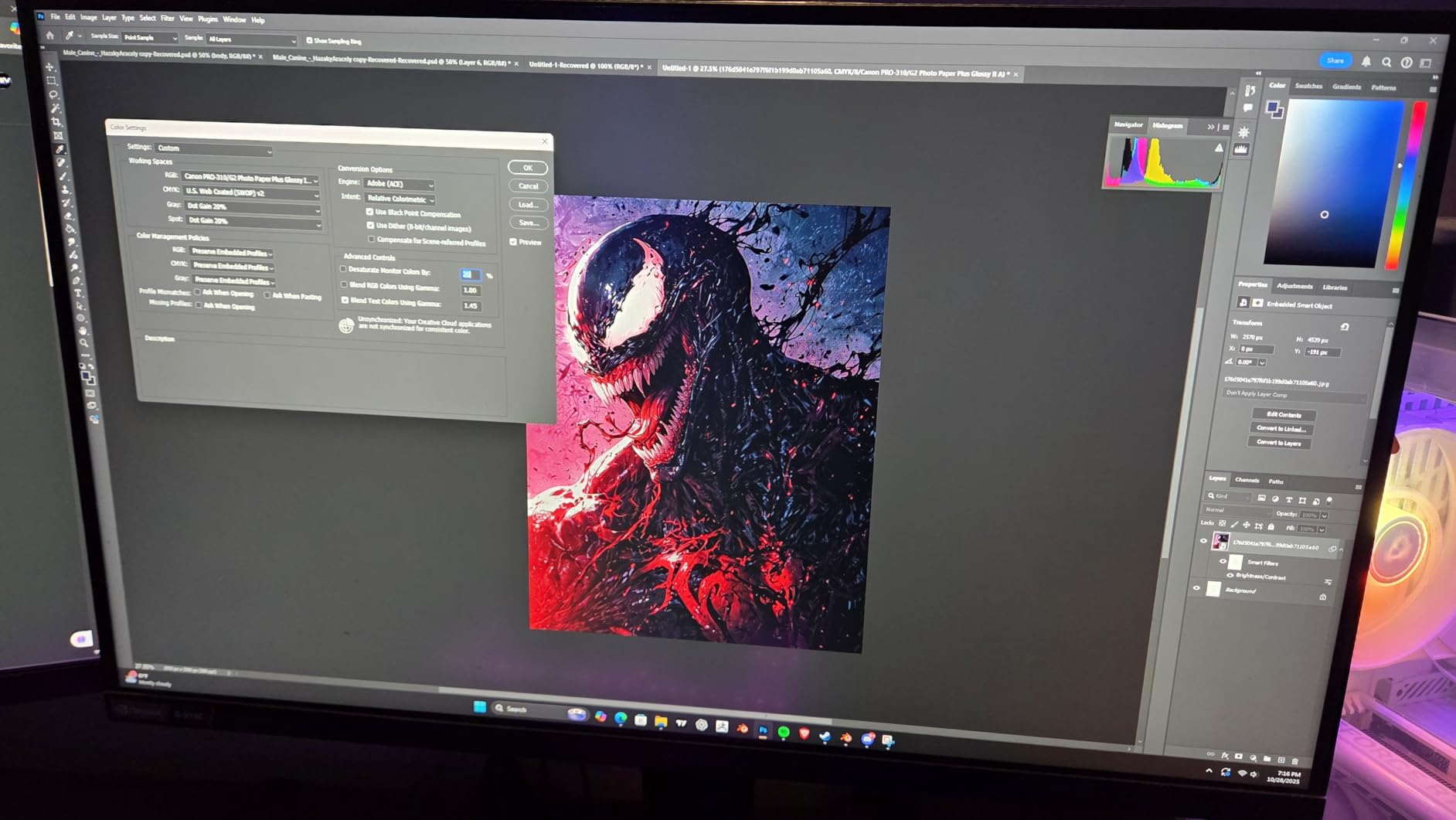
The PRO-310 scores highest in this group at 4.3 out of 5, and the reason is ink chemistry. Nine pigment inks plus a Chroma Optimizer clear ink give smooth gradients and the broadest color gamut of any printer here, which matters on dark and colored cardstock where dye ink often looks flat.
Its Anti-Clogging System and Skew Correction are built for exactly the heavy-stock problems this roundup is about. They keep output consistent on thick, textured card where cheaper machines drift or leave bands.
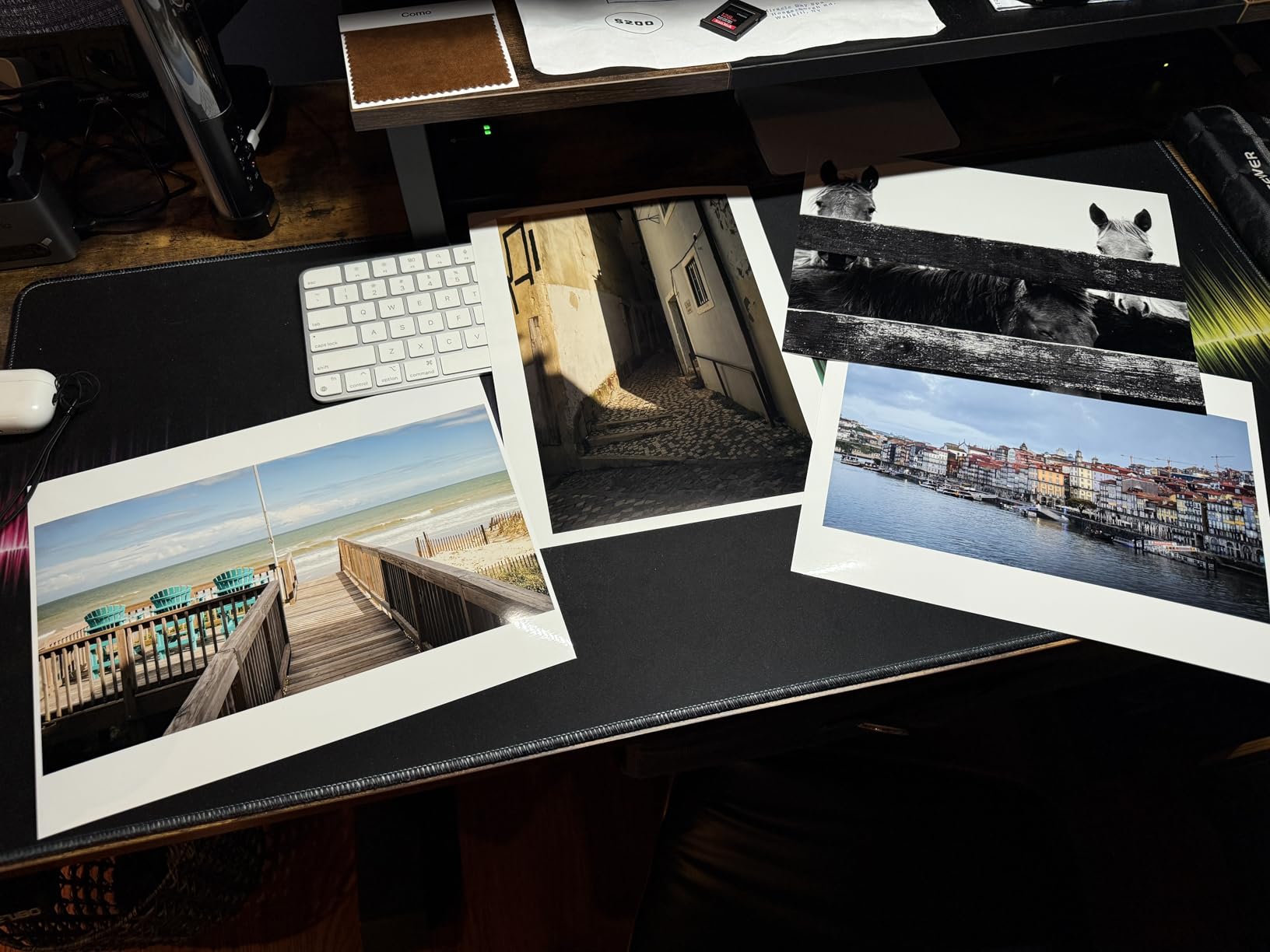
Matte Black ink delivers deeper blacks and wider dark-area reproduction than the standard black. Buyers accept the photo-only design and modest 100-sheet capacity in exchange for gallery-grade output.
Pigment ink costs more per page than the dye-based PRO-200S, so it is a quality decision rather than a budget one. If your cards need to resist fading and scratching over time, this is the printer to buy.
Cardstock weight and feed behavior on the PRO-310
With one tray and 100 sheets, this is a deliberate printer rather than a volume printer. Borderless output runs from 3.5×3.5 inch to 13×19, plus A3 plus, panorama and custom sizes.
When to skip the PRO-310
Skip it if you print in bulk, need scanning, or want the lowest cost per page. It rewards quality and pigment durability, not volume.
How to Choose a Cardstock Printer: Weight, Feed Path, Ink and Size
Cardstock weight is quoted two ways and the numbers do not line up neatly. A quick reference helps before you read any spec sheet: 50lb cover is roughly 120 gsm, 65lb index about 180 gsm, 80lb cover around 216 gsm, 100lb cover near 270 gsm and 110lb cover about 300 gsm. Thickness in mils runs in parallel, from about 4 mils at 50lb to roughly 12 mils at 110lb.
The practical rule of thumb from craft forums: a standard tray handles up to about 80lb, and anything past that wants a rear straight-through feed. That single rule decides most cardstock purchases.
Rear straight-feed versus a curved standard tray is the second factor. A straight feed carries the sheet in flat from the back of the machine to the rollers, so the paper never bends. A standard tray curves the sheet, and heavy card either jams, creases along the fold, or warps later.
Ink type is the third. Inkjets lay down cool liquid ink that soaks into fibers, which suits craft work and textured stock. Laser fusers apply heat to melt toner, and forum consensus on community.spiceworks.com is that most laser printers ghost or fail to fuse toner on heavy card. If you need a laser for office text, our laser printer guide covers that side.
Sheet size decides the chassis. 13×19 is the standard for 12×12 scrapbook pages and wide card blanks, while 11×17 suits letter and tabloid work. For craft projects beyond paper, see our picks for the best printers for stickers and sticker printers.
Ink cost is the last factor and it is not close between cartridge and tank machines. Large solid color blocks on cardstock use far more ink than plain paper. Epson puts the ET-8550 at roughly 4 cents per 4×6 photo with refillable bottles against about 40 cents with traditional cartridges, and cartridge models like the WF-7210 cost more per page by design.
Dye versus pigment ink is a smaller decision within inkjet. Dye inks give brighter color and cheaper pages. Pigment inks resist fading and scratching, which suits cards that will be kept on display. Our inkjet printer roundup breaks down the platform more fully.
Why Your Printer Jams on Cardstock and How to Fix It
Jams are the number one complaint in every cardstock thread we read, and they usually trace back to the same four causes. Here is the order we would work through them.
- Load the sheet in the rear straight feed. A standard tray curves the sheet and heavy card jams at the first roller. Move 100lb and 110lb sheets to the rear holder.
- Set the media type in the driver. Choose a heavy or fine art paper type so the printer drops ink volume and slows carriage speed. If you print from Windows or macOS and the setting never sticks, install the manufacturer driver rather than the universal one.
- Move the paper thickness lever or gap stop. Many Epson and Canon models have a lever that widens the gap under the print head. Flip it toward the thicker-paper position and the head clears heavy card instead of smearing it.
- Feed one sheet at a time while you dial it in. Get a clean sheet first, then increase the stack count. Dry paper also helps, since damp cardstock curls and catches on rollers.
Test before a full batch. Print one sheet with a solid color block and check the back for offsetting and the edges for curl, because both get worse in a stack of a hundred.
Wide Cardstock and Printable Vinyl for Cricut and Silhouette
Scrapbookers printing 12×12 sheets need 13×19 capability, which narrows the field to four of our picks. The Canon Pixma iX6820 and Epson EcoTank ET-8550 handle 12×12 with the least fuss, and both feed them flat through the rear path.
For 13×19 projects such as poster board, the WF-7210 pairs the widest capacity with a dedicated heavy-media feed. Printers limited to 11×17 will crop a 12×12 sheet at the edges.
Printable vinyl for Cricut and Silhouette cutters behaves like heavy card. Users in craft forums consistently favor printers with a rear feed because curved trays are where vinyl jams and where dried ink picks up on the rollers. Load sheets one at a time and set the media type before cutting. If you print a lot of vinyl, our DTF printer guide covers the transfer alternative.
Frequently Asked Questions
What is the best printer for printing on thick cardstock?
The Canon Pixma iX6820 is our top pick for thick cardstock because it prints up to 13×19 with a straight rear feed path that keeps heavy sheets flat. It runs 65lb, 80lb, 100lb and 110lb card without bending, and its five individual ink tanks let you refill only the colors you use.
Do you need a special printer to print on card stock?
You do not need a dedicated craft printer for standard 65lb and 80lb cardstock, since most modern inkjets handle it. You do need something with a rear straight-through feed and a supported media weight above 200 gsm once you move into 100lb and 110lb cover stock.
What is the best printer for printing on 100lb cardstock?
For 100lb cardstock, pick a wide-format inkjet with a straight rear feed. The Canon Pixma iX6820, Epson EcoTank ET-8550 and Epson WorkForce WF-7210 all qualify, and all three feed 100lb cover flat without creasing the sheet.
How do I know if my printer can handle cardstock?
Check three specifications. First, the maximum supported media weight, which should read above 200 gsm for heavy card. Second, the feed path, where a rear straight-through feed is what prevents bending. Third, the maximum sheet size, since 12×12 scrapbook pages need 13×19 capability.
Why does my printer jam or refuse to pull cardstock?
The usual causes are a curved standard tray bending the sheet, an incorrect media type in the print driver, or an unset paper thickness lever under the print head. Move heavy stock to the rear feed, select a heavy paper type, and widen the head gap before retrying.
What type of printer is best for printing printable vinyl?
An inkjet with a rear straight-through feed handles printable vinyl best, because the flat path prevents jams and keeps dried ink off the rollers. The Epson EcoTank ET-8550 and Canon Pixma iX6820 both qualify, and both accept vinyl sheets one at a time.
Final Verdict on the Best Printers for Cardstock in 2026
The Canon Pixma iX6820 takes the top spot for cardstock in 2026 because it pairs 13×19 sheets with a straight rear feed and the largest review base in our testing. The Epson EcoTank ET-8550 is the pick when you want scanning and copying in the same box, and the WF-7210 takes high-volume 13×19 work.
Before you print a batch, print one test sheet, set the media type to heavy, and move 100lb stock to the rear feed. That habit costs you a minute and saves the whole run.